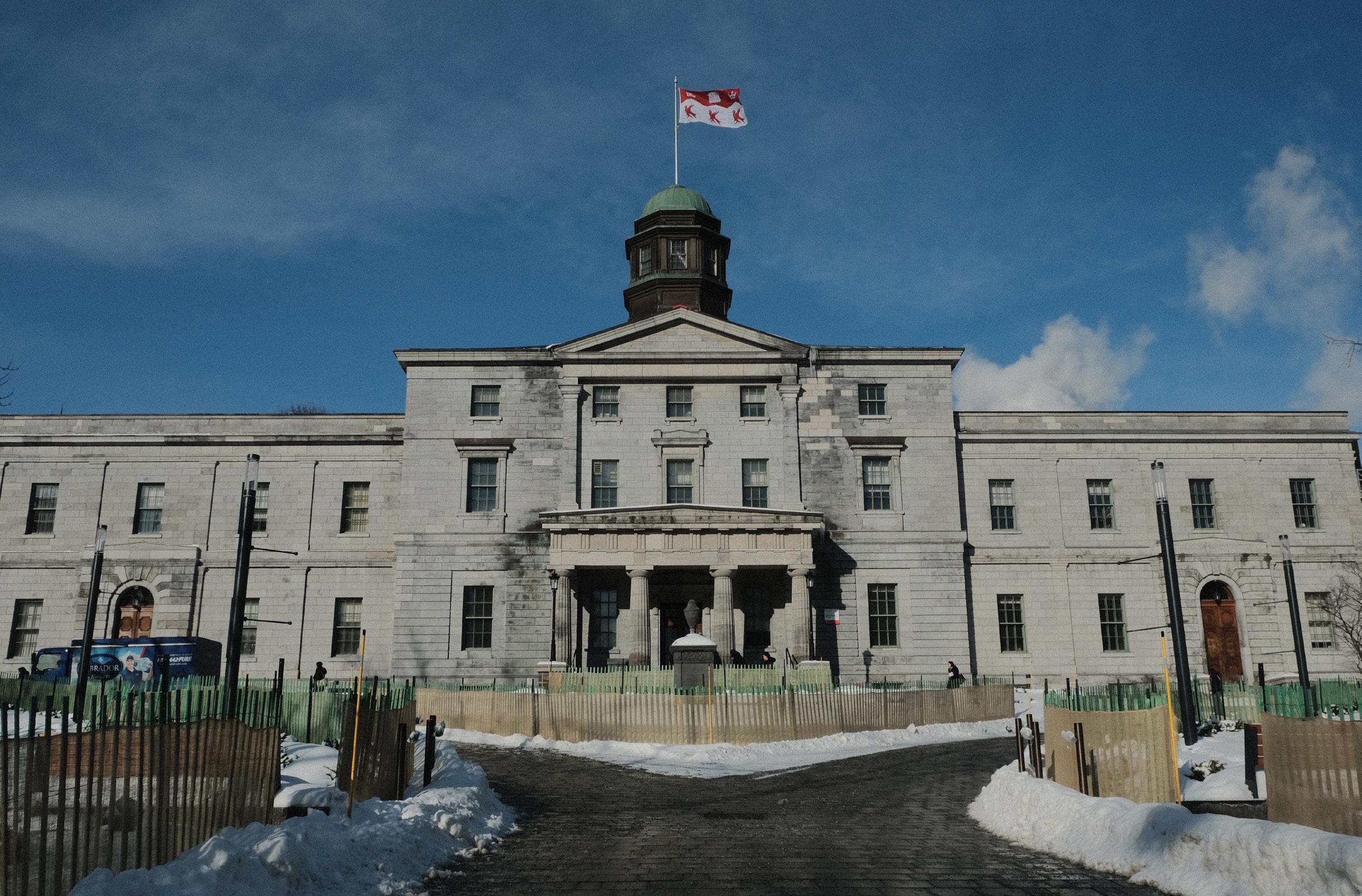
For an institution that prides itself on global engagement, McGill’s response to the crisis in Iran isn’t just inadequate—it’s indefensible. On Jan. 13, Dean of Students Tony Mittermaier sent an email to all students who hold an Iranian passport on McGill’s records. The message acknowledged the “civil unrest and disruptions to communications in Iran” and directed students to the Wellness Hub and GuardMe for mental health support. For academic accommodations, Mittermaier advised students to speak directly with their instructors. What the email did not provide was a clear, centralized protocol, or any standardized guidance to ensure that students receive consistent accom-
modations across courses.
McGill regularly positions itself as a “globally engaged” institution. Still, as the Iranian government’s violent crackdown on protesters intensifies amid a nationwide internet blackout and mass arrests, the university has failed to offer comprehensive support systems for students and faculty during this time of crisis.
The email’s recommendation that students speak directly with their instructors is not a neutral signal of support. It forces students to disclose personal distress as they navigate fear and uncertainty, unable to contact loved ones back home. This perfunctory response creates unequal access by design, as the accommodation outcome is likely to vary significantly depending on the instructor and the student’s comfort with disclosure.
Student
Lulu Calame Contributor
After completing a Bachelor’s degree in Information Technology (IT) from the Islamic University in Gaza, Nada stayed on to begin an IT Master’s program in September 2023. By Oct. 11, 2023, the Israel Defense Forces (IDF) had razed her university to the ground.
“I felt like, ‘Okay, [...] I can’t go back. I cannot go back there now,’” Nada said in an interview with The Tribune
In May 2024, Nada evacuated the Gaza Strip to Cairo, Egypt, with her family. From there, she applied to McGill. With funding and application support from the Palestinian Students and Scholars at Risk (PSSAR) network and McGill Computer Science Associate Pro-
fessor Paul Kry, she was accepted to the Computer Science Master’s Program in July 2024.
“[McGill] was my first choice because it’s one of the top universities in Canada, and I’ve heard a lot of good things about it,” Nada told The Tribune. “So I felt like, ‘I’m going to be welcome there.’”
She submitted her student visa application in December 2024, and today, more than a year later, Nada remains stuck in Cairo, working as a remote lecturer for students in Gaza. She is currently waiting for Immigration, Refugees and Citizenship Canada (IRCC) to approve her visa in time for the Fall 2026 semester. Without the visa, her McGill admission will be revoked.
Nada is one of 130 Palestinian students accepted into Canadian universities but barred from travel to begin their studies.
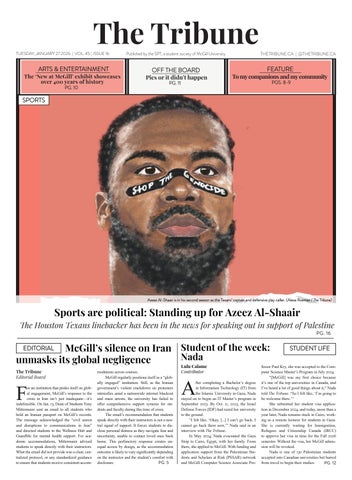
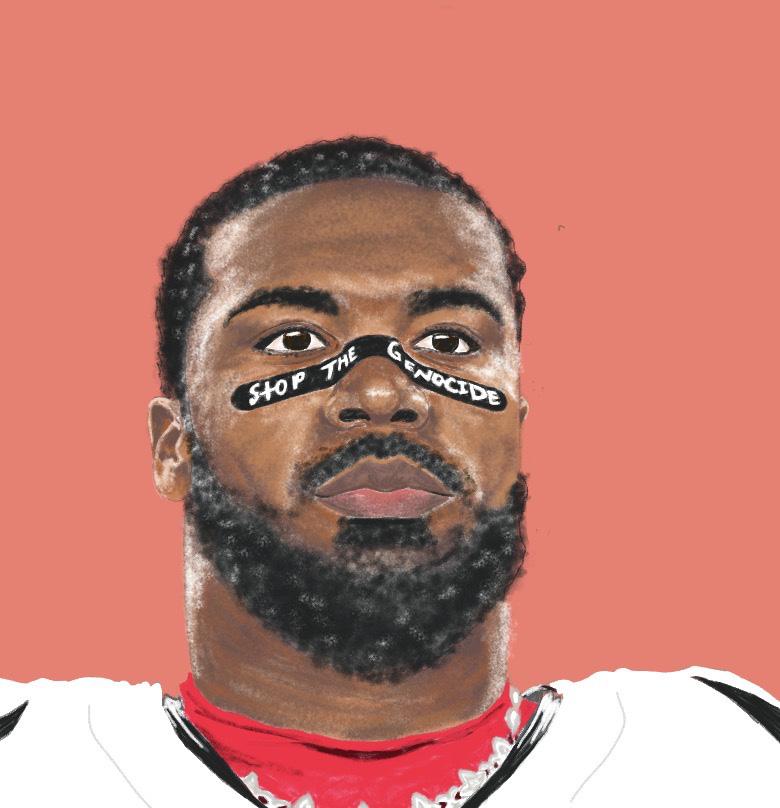
Azeez Al-Shaair is in his second season as the Texans’ captain and defensive play caller. (Alexa Roemer / The Tribune)
PG. 16
COFAM continues negotiations with McGill over CAS precarious faculty employment McGill counter-proposes a teaching-intensive tenure-track position
Asher Kui News Editor
In July 2025, the Confederation of Faculty Associations of McGill (COFAM), composed of four faculty unions, began bargaining with McGill over the working conditions of Contract Academic Staff (CAS).
COFAM consists of the Association of McGill Academic Staff of the School of Continuing Studies (AMASCS/AMPEEP), the Association of McGill Professors of Education (AMPE), the Association of McGill Professors of the Faculty of Arts (AMPFA), and the Association of McGill Professors of Law (AMPL/AMPD). This bargaining process primarily concerns CAS faculty members at McGill.
Tenure-track academic staff must fulfill three areas of work: Teaching, researching, and contributing to the university community. CAS faculty, however, only need to fulfill two out of the three categories. Even though staff in both streams are expected to work full-time, they do not receive the same contract length, hiring benefits, and pay as other tenure-track academic staff.
In an interview with The Tribune, Kyle Kubler, AMPFA treasurer and CAS faculty lecturer at the McGill Writing Centre, explained that the main purpose of this negotiation is to fix the discrepancy in employment conditions between tenure-track and CAS faculty.
“We recognize that tenure-track professors have more job responsibilities in the sense [that] they have these three categories instead of two, but it’s not like […] by having more categories, they work more than us,” Kubler said. “We all work the same. Each individual person works slightly different hours depending on their setup, but there’s not an expectation that what we do is less than full-time and what they do is full-time or more than full-time.”
CAS faculty members generally must have six years of teaching experience at McGill before they may obtain a permanent contract. Kubler explained that this contract renewal system could create job instability.
“For CAS members, the university has the right to give you a contract of however long they want [….] There’s a lot of variability in those first six years before you become permanent,” he said. “That makes our jobs really insecure [….] Our proposal into bargaining is that we want to take the people that are currently CAS faculty lecturers and CAS professors and put them into the tenure stream [….] Where we get one for three years, we do a renewal process, and we get another for three years.”
On Jan. 20, COFAM met with the McGill administration for a bargaining meeting. McGill rejected COFAM’s initial proposal to eliminate the CAS system, instead offering a counter-proposal, which introduces teachingintensive tenure-track positions.
Kubler expressed that while it is a step in the right direction, McGill’s decision remains inadequate in pragmatically improving working conditions for existing CAS faculty.
“What they’ve offered us right now is obviously insufficient in the sense that it doesn’t really address any of our concerns,” he said. “We’re happy to see them move in that direction, and we need a lot more information about details before we really know what to do with it.”
Julie Sénat, AMPFA vice president and French Language Centre faculty lecturer, was hired as a CAS faculty member on a twoyear contract in 2022. In an interview with The Tribune, Sénat mentioned that amid McGill’s recent budget cuts, many CAS faculty are left questioning their job security.
“When I was hired, my colleagues and I were under the impression that [our jobs were] stable, [as] having a longer contract made me feel as if I was more secure,” Sénat said. “Later on, as McGill started budget cuts and I started getting more information, I realized that my position could be cut [….] If that were to happen, let’s say they were deciding to cut CAS positions, [...] they could give me a non-renewable [contract] and I would not have any seniority. What would happen is that I would just [have to teach] the leftover courses.”
Kubler explained that while the current contract-length policy allows McGill to maintain maximum flexibility, it is unfair to CAS members.
“I’m not trying to say that this is something nefarious, but this is of course something they want,” Kubler said. “And then, of course, it makes sense for us why we wouldn’t want that, because we want certain clarity in terms of our employment. It becomes tricky [when] you’ve got someone who’s one year
away from getting their permanent contract, and then they don’t know if they’re going to get renewed for that last year.”
Sénat then expressed dissatisfaction with McGill’s lack of transparency with its employees.
“We are way more precarious than our tenure-track colleagues, we’re way less paid,” she noted. “The feeling is that McGill’s culture has always been like everything is silent, things are not clear. It’s handled case by case. What we’re trying to do is to put together and clarify everything, negotiating together.”
The Tribune reached out to the McGill Labour and Employee Relations group, but they did not respond in time for publication.
In an interview with The Tribune, Steve Jordan, president of the McGill Association of University Teachers (MAUT) and associate professor in the Faculty of Education, explained that although COFAM and MAUT differ legally, they work in parallel to promote the interests of faculty members and staff.
“The Contract Academic Staff faculty lecturers are represented in MAUT,” Jordan said. “The MAUT Council is the governing body, and it’s composed of about 20 people [….] There’s a CAS representative [….] MAUT has been actively working with CAS around their working conditions. For example, in the last couple of years, we’ve had town halls and workshops specifically aimed at CAS, where we’ve invited CAS members to come along to air their concerns, their issues, as far as to provide support and feedback.”
He then explained that improving the working conditions of CAS members remains a priority.
“We have the Committee on Academic [Staff] Compensation, which is […] our body
where we negotiate directly with the administration on salary, working conditions, and so forth,” Jordan said. “We’re quite concerned about CAS, because they have grown in numbers over the last several years, and so they become a really important part of our negotiations and our membership.”
Kubler also elaborated on why the collective bargaining process could take longer than expected.
“Because we’re unionized, the working conditions themselves get determined in collective bargaining,” he explained. “We’re in that process right now of trying to create this first collective agreement for faculty members [….] Employers are generally busy, and there’s not a huge incentive on their end to get things done super quickly […] there’s lots of unions on campus that they have to navigate with too, and some of them are also in bargaining.”
For many CAS faculty members, their ability to contribute meaningfully to the university is closely tied to a sense of stability in their employment at McGill. Kubler reiterated that McGill’s ambiguity around the working conditions of CAS faculty members will continue to dissuade them from committing long-term to the university.
“The best way that we can contribute to McGill is primarily through our teaching, because that’s largely what we do,” Kubler said. “If we want to develop new courses, and if we want to go to pedagogical conferences, if we end up doing advising [for] students or developing different kinds of programs […] these are all things that are there, like multiyear projects that require long-term investment. But if we don’t have these long-term contracts, then it makes it really difficult for us to commit and invest in that work and actually invest in McGill.”
QPIRG-McGill encourages students to run for SSMU SSMU allegedly institutes policies that are unfavourable for undergraduates
Russel Ismael Contributor
On Jan. 22, McGill’s Quebec Public Interest Research Group (QPIRG-McGill) chapter held an information session on how to run for student government positions at the Students’ Society of McGill University (SSMU), titled “Fix Student Democracy.” The talks explored how student involvement in these administrative positions can enact positive change for the undergraduate student body.
In an interview with The Tribune, Nelly Wat, outreach coordinator at QPIRG-McGill, emphasized the importance of holding educational events.
“QPIRG really tries to serve as a hub for students who are really invested in social and environmental justice,” Wat said. “What we try to do is keep students politically engaged and connected with their community.”
Former SSMU Vice-President External Hugo-Victor Solomon began the talk with an
overview of how the SSMU is run, illustrating how students can pursue their passions through student government.
Throughout his tenure, Solomon pursued goals such as increasing visibility of the Mohawk Mothers, ratifying the Policy Against Genocide in Palestine, and implementing a fee for Francophone initiatives. Solomon described these projects as part of his vision to run SSMU as a union.
“A union has an obligation to deliver for its membership. A business has an obligation to deliver for its shareholders to protect its own kind of commercial well-being,” Solomon said. “You should not accept that type of framework, even though it might feel a bit more easy.”
Solomon also cautioned potential candidates against overworking themselves for a SSMU position. He advised that candidates should instead economize their work.
“Understanding where your [political] pressure is most effective will be kind of the difference between burning out and getting noth-
ing done and accomplishing as many of your goals as possible,” Solomon said. “There’s a large number of people [on the External Affairs] team, and if you can cultivate a shared team identity and pursue goals that everybody already cares about, it can actually be really fun.”
Some SSMU representatives, however, find it difficult to optimize political authority due to perceived systemic issues. The next presenter, a SSMU employee who wished to remain anonymous, criticized SSMU for its alleged restructuring of political power, moving authority from General Assemblies (GAs) to the Legislative Council. The member argued that this change is detrimental to student democracy.
“GAs are the highest governing body of a student union,” the member explained. “One of the most telling things about how bad SSMU is right now is that they never hit quorum with their GAs unless there’s a vote on Palestine happening. So there are a bunch of democratic things that have been pushed to the side in SSMU.”
They also expressed their discontent toward SSMU’s handling of Midnight Kitchen (MK)—which SSMU shut down in October 2025 without consulting the kitchen’s staff. The member stated that, after MK was shut down, SSMU reappropriated its democratically allocated funding to instead hire private catering companies.
The member was also alarmed by the new Student Code of Conduct, which was approved by both student senators and the SSMU executive team on Nov. 12. They claimed that the new Code of Conduct facilitates punishments for students involved in political activism, citing an alleged uptick in the number of disciplinary cases made against students by the university.
However, SSMU President Dymetri Taylor disputes these claims, writing in an email to The Tribune that, had student senators not engaged with the administration, the outcomes for undergraduates would have been worse. He also explained that if the Code is causing too many issues for students, then student senators will petition for amendments.
“On the claim that there’s been a sudden increase in disciplinary cases this semester, that’s not accurate,” Taylor wrote. “There was definitely more enforcement activity around the [pro-Palestine] strikes, but that’s because people were blocking classes from taking place, which has always been against the Code.”
The member also alleged that these issues stem from the McGill administration’s intervention in SSMU, stating that these systemic changes were made at the request of President and Vice-Chancellor Deep Saini and Interim Deputy Provost (Student Life and Learning) Angela Campbell. They alleged that issues such as limited student services funding and strikes became more difficult to organize as a result of these changes.
However, Taylor asserted that these framings are incorrect. He stated that the lack of student funding is due to the student body voting against an increase and that SSMU, as a student society, cannot legally mandate strikes like a union can.
“We’ve been working more productively with [McGill] in order to get results and make sure student voices are heard. But the idea that people are doing this for personal gain isn’t true,” Taylor wrote. “In my experience, only a couple of executives in prior years approached the role that way, and they’re, thankfully, no longer here.”
Due to these issues, the member believes that SSMU finds itself in a precarious situation. They listed how many other organizations, such as the Concordia Student Union and Co-op Bar Milton-Parc, are more hesitant to work with SSMU now because of this paradigm shift. Despite this, the member is still optimistic about SSMU’s future.
“Those systems, those relationships are all being eroded really, really quickly in a way that is going to be hard to come back from,” the member said. “But it will just take people who are elected, who are motivated, who are excited about political change to change that and undo the damage that’s been done.”
Recap: AGSEM in the process of bargaining for better invigilator contract
New contracts are expected to last three years
Russel Ismael Contributor
The Association of Graduate Students
Employed at McGill (AGSEM) is bargaining for an improved contract for invigilators after the Collective Agreement between the university and the association expired on Dec. 1, 2025. The new contract demands a pay increase from $18 CAD per hour to a comparable wage between Université de Montréal’s $27 CAD per hour and the University of Toronto’s $50 CAD per hour. They are also demanding a minimum number of invigilators hired commensurate with the number of students who need to be invigilated.
Sneha Vaishali, a PhD candidate and doctoral researcher at McGill’s Montreal Neurological Institute-Hospital who is part of AGSEM’s Unit 2 Bargaining Committee, clarified their requests in a written statement to The Tribune, stating that these demands were democratically decided upon at their Unit Assembly.
“We expect a wage of $26 [CAD per
hour] going up to $32 [CAD per hour] by 2028,” Vaishali wrote. “We currently have a huge number of no-shows [in shifts], and this is because the wage is not high enough to keep invigilators motivated enough to work.”
As Canada’s leading university, Vaishali believes that McGill can most certainly meet their principal demands along with accessory ones, which may be instated pending final negotiations. These include a mandate to instate retroactive pay for invigilators who worked after the previous Collective Agreement.
Lara Herlah, currently enrolled in McGill’s biological and biomedical engineering Master’s Program, also shared her experiences as an invigilator in an interview with The Tribune. She stated that, while she did not feel overworked in the position, the pay was still inadequate considering the hours.
“It’s [graduate] students that are being hired for these positions, so I do think it would be fair to pay them more because our time is also money,” Herlah explained. “So, what would be a fair wage? Definitely more than $18 [CAD] an hour.”
If a new agreement is signed, it will last for three years before it expires. Vaishali stated that these negotiations typically last a couple of months, but that AGSEM hopes to finish as soon as possible.
“Our first bargaining session will be on
[Feb. 9], and we hope to meet McGill where our members are,” Vaishali wrote. “We have been doing open bargaining during negotiations, which means that anyone that’s interested in bargaining or would like to support can join either in person or online.”
SSMU had no financial deficit for the 2024-25 fiscal year and projects no deficit this year. (Armen Erzingatzian / The Tribune)
Teaching assistants at McGill make
The Tribune Explains: The No More Loopholes Act
Canadian military exports arms to Israel through a U.S. ‘loophole’ despite regulations
Josette Chandler Contributor
On Sept. 19, Jenny Kwan, current New Democratic Party Member of Parliament (MP) for the Vancouver East Riding, introduced Bill C-233. While Canada has ceased direct military exports to Israel, Canadian arms can reach Israel and other conflict zones unregulated through a U.S. ‘loophole.’ The Tribune explains Kwan’s proposal, which aims to close this gap, and how McGill students can get involved to stop the flow of Canadian-made weapons to Israel.
What does Bill C-233 do?
Bill C-233—more commonly known as the No More Loopholes Act—is a law that intends to amend the Export and Import Permits Act, originally created in 1947. The House of Commons has since amended the act many times, including following the Arms Trade Treaty (ATT), which was adopted by the UN General Assembly in 2013 to regulate the international trade of conventional arms. Canada acceded to the ATT in 2019. Currently, the Export and Import Permit Act regulates the international trade of arms with international standards, but certain loopholes allow Canada to send military exports to the U.S. without a permit. Bill C-233 intends to amend the act to
ensure Canada abides by this international treaty more closely, preventing Canada from sending arms to foreign war zones via the U.S.
How does it work?
Currently, Canada may export military arms to the U.S. without the permits that other countries require. These arms are then integrated into larger weapon systems exported to Israel and other war zones. No human rights risk assessment is conducted under this method, allowing Canada to sidestep regulations intended to prevent human rights violations. Reports find that hundreds of shipments of Canadian explosives and fighter jet components have reached Israel through this technicality over the past two years.
The No More Loopholes Act would end the U.S. exemption from regulations, meaning that if Parliament passes the amendment, the government’s Export Controls Division would have to check all military export permits for any potential association with human rights violations and war crimes.
How are Canada and McGill complicit in international warfare?
Canada exports around $1 billion CAD in military goods to the U.S. each year. Due to diplomatic agreements between the two countries, these exports are almost entirely
unregulated. The components Canada ships to the U.S. are used in many major weapons systems, such as fighter jets, drones, and missiles. From here, these weapons are often shipped to Israel, contributing to the ongoing genocide in Palestine. While direct export to Israel has been well regulated, Canada is nonetheless complicit in genocide through its exports to the U.S. McGill, too, is implicated in international warfare through its current investments in the defence contractors Lockheed Martin, Thales SA, and Safran, which all have ties to Israel’s military, manufacturing, and surveillance activities.
What can McGill students do?
In late February, Parliament will vote on Bill C-233. Students may participate in the campaign by contacting their MP and expressing their support for the amendment. Students may fill out this form to email their MP directly.
Students can also
SSMU BoD debates PGSS food pantry access
Eren
Atac News Editor
The Students’ Society of McGill University (SSMU) Board of Directors (BoD) debated restricting Post-Graduate Students’ Society (PGSS) members’ access to the SSMU food pantry, and approved new funding for Indigenous student aid during its meeting on Jan. 20.
contribute by encouraging their friends and family to get involved. In a movement briefing for the No More Loopholes Campaign, Shatha Mahmoud, organizer at the Palestinian Youth Movement, emphasized the importance of taking action.
“We are now in the final stretch before [Kwan’s] bill comes to a vote in Parliament [....]The government is counting on us to be delayed, to be confused, and we are ensuring we are doing the exact opposite,” Mahmoud said. “Silence is how this violence is normalized.”
Canada complies only partially with the International Arms Treaty. (Lilly Guilbeault / The Tribune)
student aid and reviews Fall 2025 election turnout
said. “I’d be uncomfortable disallowing based on purely political or convenience reasons, if really there’s no case to be made for legal or operational necessity.”
The board did not reach a definitive conclusion on restricting PGSS member access to the food pantry during the meeting.
bers do vote,” Lee said. “When I first started, we really questioned whether people don’t vote because they simply didn’t know if they had to vote or not. This clearly shows that they do get their Simply Voting emails. They do know they can vote. It does depend on what they think is relevant.”
wants the application process for scholarships to be non-invasive.
The BoD also reviewed a report from SSMU Elections on the Fall 2025 referendum and Plebiscite questions. Chief Officer of SSMU Elections Mike Lee addressed voter turnout, noting that low participation was not due to a lack of awareness.
“So the analysis here is that SSMU mem-
The board also ratified a revised 2025–26 budget previously approved by the Legislative Council, suspending the Internal Regulations of Finance, and appointed Director Simon Ngassam to the Accountability Committee. The meeting concluded with a confidential session. BoD approves funding for Indigenous
The debate surrounding the food pantry stemmed from a motion approved at the most recent SSMU Legislative Council (LC) meeting, which proposed implementing a fee for PGSS members to access the service. SSMU Vice-President (VP) External Seraphina CremaBlack told the BoD that the motion’s final wording did not reflect the intent of the LC’s position.
“We discussed what this motion would look like during the Legislative Council [meeting],” Crema-Black said. “During this discussion, we spoke of stopping the disallowance of the food pantry after a discussion about the fee levy had happened between PGSS and SSMU representatives. The motion was still approved in its writing.”
Crema-Black moved to remove the food pantry provision from the motion, arguing that restricting access to the food pantry would disproportionately affect graduate students who rely on the service. In response, Alumni Representative Joshua Chin cautioned against overturning a decision approved by the Legislative Council without clear legal justification.
“Ultimately, I get the feeling that this motion is more or less a political decision that was approved by the Legislative Council,” Chin
The board later approved a motion allocating $180,000 CAD in four installments over four years to fund Indigenous student aid and scholarships. VP University Affairs Susan Aloudat emphasized the motion’s goal of increasing accessibility for Indigenous students seeking to study at McGill, stating that SSMU
“Our mandate is to support and empower our Indigenous students,” Aloudat said. “We want to encourage Indigenous student enrollment. The idea is that McGill was supposed to increase how many Indigenous students we had, but we actually found that it’s decreasing. So the purpose of this award is to decrease the barriers to entry to education at McGill as much as possible for Indigenous students.”
Moment of the Meeting
The board approved an advance loan of $60,000 CAD for MustBus, a student-run SSMU service group which provides transportation for students.
Soundbite
“I think that it’s very, very bad for the SSMU’s reputation if we go ahead with [pulling PGSS access to the food pantry] [....] We’ve been speaking with them about a fee levy and introducing a fee for the food pantry. I want to know whether that’s something that they would consider before we pull access, especially because it’s used disproportionately by PGSS members, and food insecurity is a very important issue.” — VP External Seraphina Crema Black
The board discussed changing the date of future meetings, possibly moving them to Thursdays. (Anna Seger / The Tribune)
on the motion to restrict PGSS access to the SSMU food pantry.
TUESDAY, JANUARY
Editor-in-Chief
Yusur Al-Sharqi editor@thetribune.ca
Creative Director Mia Helfrich creativedirector@thetribune.ca
Social Media Editor Mariam Lakoande socialmedia@thetribune.ca
Business Manager Laura Pantaleon business@thetribune.ca
McGill’s silence on Iran unmasks its global negligence
The Tribune Editorial Board
Continued from page 1.
The McGill administration frequently offers vague, decentralized guidance to faculty members during exceptional circumstances and events, harming the consistency of accessibility measures. When this institutional obscurity is practiced during times of international crisis, students and faculty are left to face compounded uncertainty.
McGill’s decision to only send this email to students with Iranian citizenship also raises the issue of visibility. Many students with loved ones or community in Iran do not hold an Iranian passport but are still deeply affected by the government’s violent repression of protestors. By deciding that passport-holders are the only appropriate recipients of this email communication, McGill is actively narrowing who gets recognized as impacted and, by consequence, who is connected
COMMENTARY
Nello Giuliani Contributor
Lost jobs, accumulated tardies, and expensive Ubers are just some of the effects of the Société de transport de Montréal (STM) strikes that froze public transit from 2025 until the beginning of 2026. On four separate occasions, bus drivers, train operators, and maintenance workers, led by their respective unions, went on strike.
The strikes followed over 100 failed negotiation efforts between unions and the STM, with employees seeking a 25 per cent wage increase and compensation for time spent doing peripheral tasks such as snowcleaning or moving from station to station, which the STM currently does not recognize as salaried labour.
On the surface, it seems the STM strikes merely hurt the public and farebox revenue, as ridership dropped approximately 6.4 per cent compared to 2024, and monthly pass sales dropped 10 per cent between June and December 2025 alone. However, to avoid labelling the strikes as merely an inconvenience or aberration, it is important to look at not just their effects but the grievances from which they arise. These concerns—low salaries, private subcontracting, and
with resources and support systems.
Yet regardless of the mechanism through which administrators determine if a student ‘counts’ as Iranian for an email communication, McGill should express solidarity and treat international crisis as a collective, campus-wide concern.
McGill has shown in the past that it can respond publicly and with empathy. When Russia launched its war on Ukraine in 2022, the Office of the Provost and Executive VicePresident issued a public statement strongly condemning the Russian invasion, expressing solidarity with Ukraine, and explicitly highlighting local and university-sanctioned resources available to McGill community members affected by the war, such as accelerated admissions and tuition waivers. McGill’s lack of institutional coordination to support students tied to Iran testifies to the university’s inconsistency in dictating how, when, and which students receive visibility, urgency, and empathy. This double standard is exacerbated by the disparity in enrollment numbers—in the 2024-
2025 academic year, roughly 300 students with Iranian passports enrolled at McGill, compared to 17 students with Ukrainian passports. If McGill wants to continue claiming its title as a “motor of social inclusion,” it must confront and cease its discrepant treatment of different global crises. This is not a critique of McGill's response to Ukraine—that statement reflected precisely the kind of institutional leadership and support students deserve during the crisis. The problem is: If the administration demonstrated its capacity for coordinated, public solidarity then, what explains its choice to withhold the same level of support now?
The gap between McGill’s stated values and its actions is hard to miss. For a university that emphasizes global engagement as central to its identity, its minimal, lacklustre response is striking. When McGill engagement is framed primarily through partnerships, prestige, recruitment, and research ties, while the university simultaneously neglects the well-being of its
own community members by refusing to offer tangible support, it becomes extractive by default. If McGill wants to benefit from internationalism, it consequently inherits the obligation to uplift and advocate for the international and diasporic students who make this globalized status a reality.
McGill can do better, and this does not require inventing a new system from scratch. Right now, the university’s approach makes the crisis in Iran feel unnecessarily isolated, when crisis communications should be public and centralized. By leaving students to rely on student associations and one-off conversations with professors, McGill is outsourcing its obligations in lieu of a proper response.
If McGill cannot respond to global crises with the same standard of care every time, then that gap becomes a statement in itself. McGill has shown what it can do. Now is the time to apply that capacity consistently—because silence is a choice, and so is negligence.
Montreal’s public transit is in crisis due to underfunding
overtime—are all consequences of the systemic underfunding of the STM; the root source of rider discontentment is the transit system’s budget failings, not the decision of workers to strike.
The STM’s $1.8 billion CAD budget announced for 2026— and funded almost entirely by the Autorité régionale de transport métropolitain—includes major austerity measures, eliminating 300 jobs. Although maintenance cutbacks address budget deficits, they counterintuitively put further strain on metro assets, 42 per cent of which are already in poor condition. Furthermore, STM projects aimed at modernizing transit offerings— repairing aging infrastructure (tunnels, stations, and MR-73 trains), electrifying buses, extending the Blue Line, and making every station accessible—are in need of funding. Given that day-to-day operation of the transit system is shrinking, the STM’s service interruptions and drop in ridership that these infrastructure projects are trying to address will only deepen.
The STM depends on provincial and federal funding for these infrastructure projects. Under the 2025-2035 Quebec Infrastructure Plan (QIP), $14.5 billion CAD is allocated for public transit. This is $258 million CAD less than the STM requested for
The most recent strike, led by 2,400 CSN workers in protest of excessive overtime, lasted a month, ending on Jan. 11, 2026. (Sophie Schuyler / The Tribune)
supporting the metro system, and $21.3 billion CAD less than was allocated for road networks. An additional $37.8 billion CAD in public transit investment is allocated under the QIP, but these funds are designated for electrification and the Metropolitan Express Network (REM), not asset maintenance in the STM. In fact, only $2.8 billion CAD out of the $15.2 billion CAD designated by the STM as priority investments in maintenance and service has actually been confirmed.
The Legault administration has prioritized flashy non-QIP projects over the basic functioning of the transit sector: Projects like the REM are designed to be profitable, whereas the STM, which is a public good, is less so.
A solution that avoids deepening Quebec’s deficit is to reallocate a portion of provincial and federal funding currently devoted to road systems toward both the infrastructure and the operations of the STM. Any shortfall in road funding can then be covered through congestion pricing for vehicles driving on busier, downtown streets. These fiscal reforms would increase the reliability and expansiveness of the transit system while simultaneously reducing traffic in cities and decreasing the costs of road maintenance.
The reason you are late to your class is not because of strikers, but because our government has not invested in you getting there on time.
Shatner University Centre, 3480 McTavish, Suites 404, 405, 406
Simona Culotta, Defne Feyzioglu, Alexandra Hawes Silva, Lialah Mavani, Nour Khouri, Laura Pantaleon, Amy Xia
TPS BOARD OF DIRECTORS
Rachel Blackstone, José Moro Gutiérrez, Ethan Khan, Antoine Larocque, Lialah Mavani, Talia Moskowitz,Julie Raout, Parisa Rasul, Alex Hawes Silva, Michelle Yankovsky, Ivanna Zhang Lilly Guilbeault, Emiko Kamiya, Alexa Roemer
Lulu Calame, Josette Chandler, Josette Chandler, Nello Giuliani, Dylan Hing, Russel Ismael, Will Kennedy, Sammi Lai, Julia Lok, Romane Musquet, Camila Sierra Ordóñez, Ella Paulin
Sunny Bell, Charlotte Bénard, Sophie Schuyler
Julie Raout Staff Writer
SQuebec language laws over-police bilingualism instead of protecting the French language
ince the Legault administration adopted the 1977 Charter of the French Language, only students possessing a Certificate of English Eligibility can attend anglophone elementary and high schools. Not possessing the certificate has further limited access to anglophone education at the Collège d’enseignement général et professionnel (CEGEP) level since the passage of Bill 96 in 2022. With Legault’s resignation this January, the next Premier now has an opportunity to preserve linguistic heritage without fostering a narrative of division. Strategies framing English as an adversary to French are unsuitable in a province where bilingualism is vibrant, and linguistic plurality should, as a result, be particularly celebrated.
The Coalition Avenir Québec (CAQ) government uses education to advance a francophone protectionist agenda. Requiring an English eligibility certificate limits students’ right to choose their language of instruction in a bilingual province. This restriction is part of a wider trend of reforms that suppress linguistic plurality in a misguided attempt to preserve francophone culture.
Students can only obtain an English eligibility certificate if they have attended an anglophone school in Canada for the majority of their education, or if a parent, sibling, or close relative has received their education in English in Canada.
Students holding the certificate have priority admission to anglophone CEGEPs and, if admitted, complete their education by passing the English Exit Exam. Noncertificate holders, even if attending anglophone CEGEPs , are instead required to pass the French Exit Exam—and take additional classes to prepare for it. This adds an unfair workload and undue stress for noncertificate holders, making it harder for them to succeed academically.
The certificate requirement impedes students from choosing which language they will use to pass their exams, and which language to strengthen through mandatory language-learning classes. It also hinders students from accessing specific CEGEP programs simply because they might only be offered in English.
With a certificate requirement, education goes from being a choice to a product of cultural inheritance. Firstgeneration Anglophone Canadians are thrust into an education system in a language they may not be proficient in on account of their families not meeting the historical criteria for English education. In a system where the right to study in English is inheritancebased, immigrants whose families received their education in English outside of Canada do not meet the requirements for certificate eligibility. This lowers their chances of accessing English CEGEPs, and the pressure to be fluent in French complicates their adjustment to a new environment.
Pushing Francophone students to receive their education in French also
disadvantages them if they aim to improve their English by attending an anglophone CEGEP. Regardless of how fundamental the French language is to Quebec’s culture, the government cannot disregard the province’s prevalent bilingualism nor undermine the importance of English as a skill in academia, work, and international communication.
The certificate policy also affects teachers in English CEGEPs who lack French proficiency— at risk of losing their jobs if they cannot switch to teaching in French. Additionally, if Anglophone students do not get their certificate in time, they lose the right to pass eligibility on to their children, further entrenching the difficulties of accessing education in English.
Policies that promote French learning are necessary in an unequivocally bilingual province. However, the CAQ government has repeatedly opted to actively disadvantage the anglophone community in their mission to defend French as the sole official language. Bill 96 imposed enrollment caps on English CEGEPs, cut their funding to support French CEGEPs, and raised international tuition at
English-speaking universities like McGill to deter non-Francophones from applying. The certificate is yet another policy that weakens Anglophone institutions in favour of Francophone ones—deluded in its idea that protecting French requires suppressing English.
A government confident in its linguistic heritage would invest in French fluency without foreclosing students’ access to English—recognizing that in a bilingual province, the two languages can coexist and even strengthen one another. After all, attending an English CEGEP does not isolate students into a purely English-speaking community—and forcing Anglophone students to study in French will not erase their original linguistic identity.
COMMENTARY Safety isn’t one-sided when harm reduction saves lives
Camila Sierra Ordóñez Contributor
McGill University researchers from the Department of Epidemiology, Biostatistics, and Occupational Health recently found that overdose prevention and supervised consumption sites in Toronto were not associated with long-term increases in local crime, with rates remaining stable or even declining over a decade. Yet fear about public safety continues to shape opposition to these initiatives, often projecting discrimination and stigma onto individuals who use drugs. However, people’s perceptions of safety and comfort should not take precedence over protecting human lives, especially when harm reduction has been proven effective to save them.
Fear drives much of the resistance to supervised consumption sites. In neighbourhoods such as Milton-Parc in downtown Montreal, many residents recount uncomfortable or distressing encounters with unhoused individuals— but the discomfort these interactions may bring does not justify eliminating initiatives that have positive impacts on the people they serve.
When access to regulated substances is restricted without adequate investments in harm reduction, drug use does not simply disappear. Instead, it finds another
way to survive. This often results in the creation and expansion of unregulated drug markets that offer cheaper, more potent, unpredictable, and consequently toxic substances. This push-pull dynamic reflects what is often described as the iron law of prohibition: When governments and authorities intensify efforts to eliminate drug supply or circulation, markets respond by producing increasingly dangerous substances. Additionally, the criminalization of substance use corners people who use drugs into hidden and unsafe conditions, where they face higher risks of infection, disease, and, above all else, overdose. Ultimately, deprioritizing harm reduction to accommodate public perceptions of safety only creates the very risk it claims to prevent.
Harm reduction is necessary for saving lives. However, framing it as a cure-all solution—or as enabling substance use— is as damaging as rejecting it altogether, as it suggests that lives are only worth saving if individuals are working toward a single, prescribed goal: sobriety. Instead, the objective should be unconditional care that promotes well-being and, most importantly, the autonomy, dignity, and safety of people who use drugs.
Society often frames individuals who use drugs as socially disengaged or incapable of care, but this perspective overlooks the reality of their lived experiences. Many of them actively
participate in informal systems of mutual aid as caregivers, advocates, and sources of support for those around them. For instance, at Kensington Market Overdose Prevention Services, a community-led, supervised consumption site (SCS) in Ontario, individuals not only access lifesaving care but also contribute to their communities’ well-being. Some go on to become peer educators and staff. Through these roles, they teach safer drug use practices and overdose reversal, and ultimately save lives.
Addressing this situation requires not only a shift in perspective but also a great deal of honesty. It means abandoning standardized and linear visions of recovery while also recognizing that fear surrounding SCSs should not dictate decisions that determine who lives and who dies. Effective harm reduction embraces the complexities of human experience and prioritizes care. Listening to people who use drugs, including those who are
unhoused, is essential. Their expertise, grounded in lived experience, should guide decisions about which interventions work best for them. In the end, safety cannot be defined solely by the absence of discomfort for the public; it must also include the security, health, and autonomy of those most affected by systemic failures.
Rejecting harm reduction is not a neutral act; it produces measurable harm and deepens inequality. People who use drugs should not forfeit their right to healthcare, housing, or dignity because of public discomfort or moral judgment. This fight is no longer about drug use. It is about human rights.
One of the founders of the Drug Use Liberation Front (DULF) shared that she has attended over 100 overdoses, with many cases requiring multiple naloxone doses. (Mia Helfrich / The Tribune)
The Quebec provincial government continues to favour French as a language of instruction in collegial education. (Anna Seger / The Tribune)
‘Partition’ views Palestine from the interwar period to modern-day experiences Diana Allan explores human experience through her own lens
Josette Chandler Contributor
McGill’s Department of Anthropology and the Institute for the Study of International Development hosted a screening and Q&A session for Diana Allan’s film Partition on Wednesday, Jan. 14, at McGill’s Critical Media Lab (CML). Allan, a filmmaker and professor of Anthropology at McGill, considers Partition a collaborative work; other members of the lab—Co-Directors Lisa Stevenson and Megan Bradley, as well as Associate Director Julian Flavin—worked on the film with Allan.
When Allan introduced her film, she emphasized how the project would not have been possible without the people she worked with at the CML.
“[This film] is a product of this space and the friendships and collaborations that it has enabled,” Allan said. “If Montreal is the home of [this film], CML is the heart [….] Thank you for the partners in this project.”
Partition explores the impact of British colonialism in Palestine by combining 1900s black-and-white visuals with modern-day audio and stories. The film showcases photos and footage from the time of the British Mandate for Palestine, which spanned from 1917 to the establishment of an Israeli state in 1948. The footage, which was recorded by British soldiers, depicted daily Palestinian life as well as British military activity during the mandate.
The archival footage is taken from the Imperial War Museum Collection in London, accompanied by music and interviews from Al-
lan’s own collection.
“[The film] was bifocal in the sense that you’re seeing images from 100 years ago and sound from today,” Allan said.
Partition is not Allan’s first attempt to shed light on the ongoing genocide in Palestine through film. She has published a book, “Refugees of the Revolution: Experiences of Palestinian Exile,” which explores the daily struggles of Palestinian refugees in Lebanon. She is also the co-director of the Nakba Archive, an oral history collective recording and commemorating Palestinian refugees in Lebanon who lived through the Nakba.
Allan focuses on the Palestinian experience, with all language in the film either written or spoken in Palestinian Arabic. Throughout the film, she interviews Palestinians about their lived experiences, as well as their families’ experiences in Palestine. Much of the film revolved around interviews with Sumaya, a former student of Allan’s. Through these interviews, Allan shares modern-day stories of Palestine as well as historical ones through the accounts of Sumaya’s family.
In the Q&A session, Allan explains how this documentary shares similarities with many of her other films. Like Partition, Allan’s other films focus primarily on the human condition— specifically memory and the emotional impact it can have on the lives of refugees.
“All of my films have been about memory [….] Reference photos and through movement, through space, activates this sort of process of memory, and this form is about the experience of the archive itself,” Allan said.
Paloma Masel, U2 Arts, said that the film’s
focus on memory and human experience drew her to the screening. She emphasized the role of a traditional song Sumaya referred to as “the camel driver’s song.”
“That song being followed by what sounded like the songs of thousands of families […] that might have gone through that sort of trauma really stuck with me,” Masel said. “And I wanted to hear more encapsulation of that […] experience in the final sequence.”
Before the Q&A began, Lisa Stevenson, co-director of the CML, warned attendees about using colonial images, as they could risk inadvertently uplifting colonial oppressors.
“I think that working with the colonial images is a very faulty endeavour and there’s a danger of you, obviously, questioning forms of colonial violence, that are the context for the making of these images and how you both make
these images visible, these histories visible,” Stevenson said.
By using this footage in a film centred on the Palestinian cause, told by Palestinians themselves, Allan repurposes a tool of imperial control as a testimony of resistance against occupation.
Allan shows aerial and ground surveillance footage, women hiding their faces from British soldiers, and British bombings of Palestine during the British Mandate. Palestinians were encouraged or forced to join the British military, which had placed them under constant watch.
“You’re aware of the colonial violence. You’re very aware of the colonial gaze,” Allan says. “Images that seem to carry that kind of violence, […] something really malicious, frightening, and fearful. By the end, we transformed it into something else.”
Sixty years of song and community celebrated at the Marvin Duchow Music Library New exhibition honours the ecosystem supporting generations of musicians
Dylan Hing Contributor
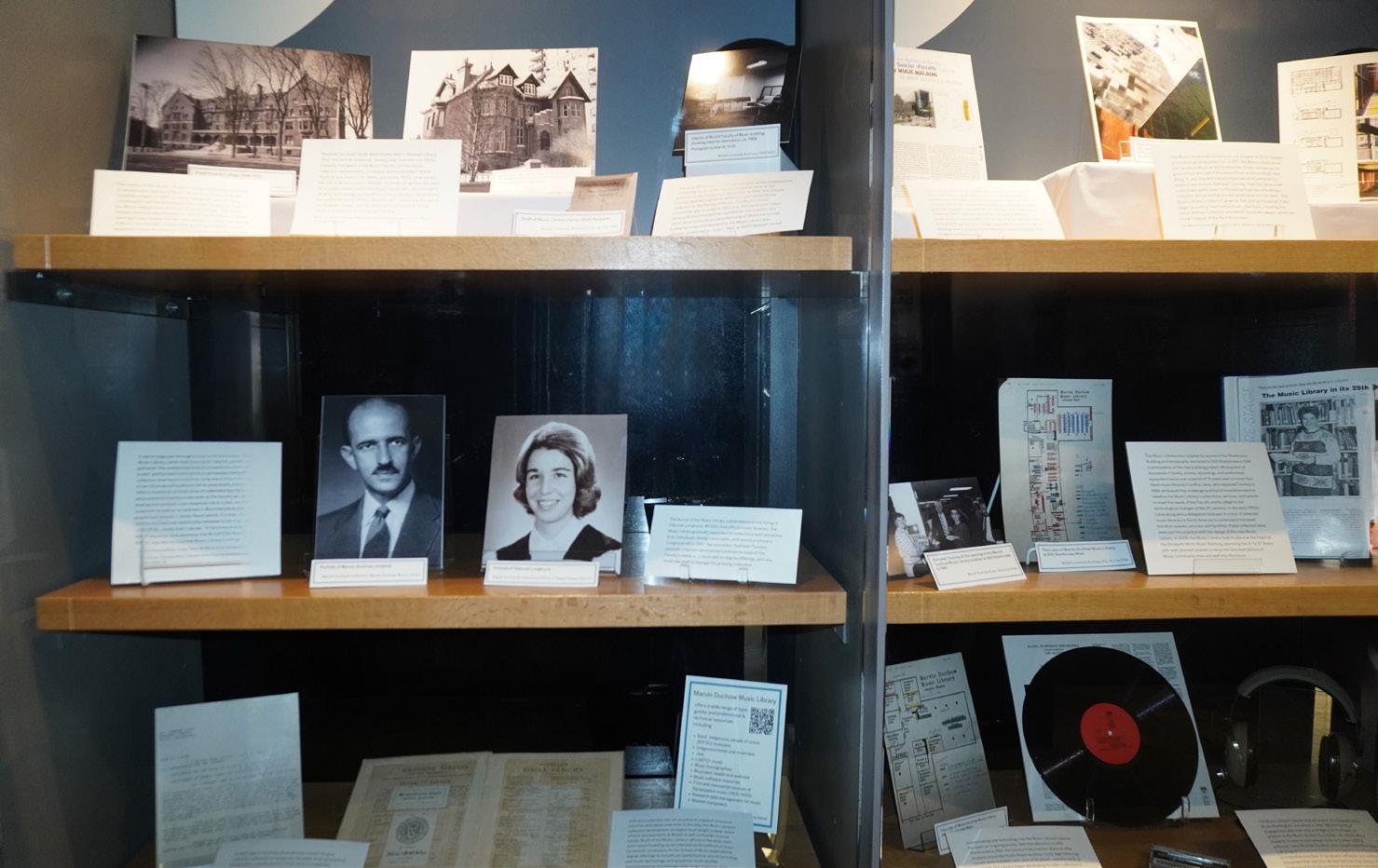
Since its inception 60 years ago, the Marvin Duchow Music Library has seen McGill students through the good, the bad, and the never-ending tears that accompany late-night cramming sessions. Wandering the aisles for the first time, I passed towering shelves lined with scores of music I doubt I will ever learn to decipher. Compared to the hectic atmosphere of rue Sherbrooke below, the library feels like a greenhouse for one of
the most instinctive forms of art.
To mark its anniversary, the library is presenting Marvin Duchow Music Library at 60: Interplay of Community, Service, and Discovery, exhibiting artifacts drawn from the library and the university’s archives, with one display near the entrance and another inside. When I first explored the exhibit, a bright red record from 1982, featuring the McGill Symphony Orchestra conducted by Uri Mayer, immediately caught my eye. Like the musicians themselves, the record’s bold colours draw viewers into the intertwined histories of the Schulich
School of Music and its ever-evolving library.
Rather than simply documenting the library’s history, the exhibit celebrates the efforts of those who sustained the space as a resource for the music community on campus and beyond. Marvin Duchow, a former Schulich School of Music Dean, understood how integral these two institutions were to each other. In a featured address to the Canadian and American Music Library Associations, he emphasized the reciprocal role music faculties and libraries play in sustaining one another.
Also featured are various administrative and informational artifacts, including a visitors’ log, The McGill Daily’s articles detailing students’ and librarians’ fight for a larger facility, photographs showing the library’s various iterations, and words from the many librarians who have looked after the collection over the decades. An obituary for Marvin Duchow is, of course, featured prominently in the collection—a fitting tribute to the man who dedicated himself to the pursuit of community knowledge.
Through the care taken in curating the exhibit and the honouring of those who fought for the library, the space is not only celebrated as somewhere to study but as a necessary resource for musicians. In a featured statement, former head librarian Cynthia Leive underscored the library’s role as a learning institution on its 25th anniversary.
“Students [...] haven’t the years and money necessary to build a personal collection of books and scores,” Leive said. “So
they start by coming here [....] They become more interested, more literate, and start studying scores [....] What they will take away with them is a love of music and knowledge, and of learning that will be with them for the rest of their lives. That, in essence, is the spirit of the library.”
The exhibit exemplifies Duchow’s belief that libraries are the heartbeat of an academic community by focusing on both the library’s evolution in the Elizabeth Wirth building and on the strong connection to its faculty. The library is loved through the care that librarians and staff put into keeping it going, day and night, for whatever one might need. The library, as its namesake hoped it would, continues to reflect the changing needs of the musicians it houses. Of course, the one thing that never changes is the music community’s commitment to protecting the space.
In 1975, a decade after the library’s opening, Librarian Emirata Kathleen Toomey humorously recounted the quirks that come with her job, highlighting the work the exhibit celebrates. Her words, like the exhibit itself, find hope in the library’s future through the foundations of the past, and still resonate on its 60th anniversary.
“A library is not always such a frivolous place,” Toomey said. “There are those who rely on it for their life’s work, and it is of prime importance that it continues to grow— especially in its holdings. If the past ten years are an example of things to come, I can foresee only a bright future ahead.”
The Marvin Duchow Music Library houses more than 200,000 music scores, journals, recordings, and books. (Emiko Kamiya / The Tribune)
The Critical Media Lab offers classes in ethnography and provides various resources for students interested in anthropological filmmaking. (Eliot Loose / The Tribune)
To my companions and my community Understanding coming out narratives in queer
Written, designed, and illustrated by Mia
INT. LIVING ROOM — EVENING
TJ’s parents are chatting on the sofa. He stands in front of them. They stop talking to look at him.
TJ
(wipes the sweat off his hands) Mom, Dad… I have something to tell you.
NARRATOR (V.O.)
But wait… haven’t we seen this before?
For some, coming out is an integral part of their queer journey, but to others, it is a casual statement about one aspect of their lives. The queer community encompasses a wide range of lived experiences. Yet, films and television often rely on a familiar pattern: Framing a queer character’s narrative around coming out, positioning it as the climax of their journey. While coming-out narratives provide essential representation for the queer community, they can also narrow the scope of what the queer experience is allowed to look like.
A history of queer representation in film
From 1934 to 1968, the Hays Code required Hollywood movies to depict homosexuality negatively, forcing filmmakers to vilify or queercode queer characters. During the Gay Liberation Movement of the ‘60s, ‘70s, and ‘80s, activists urged people to “Come Out, Come Out, wherever you are,” and increased queer representation in television followed suit. Still, many stories treated queerness as a defect. An episode of the medical drama The Eleventh Hour, released in 1963, attributed Hallie Lambert’s (Kathryn Hays) lesbian identity to her overbearing mother, reinforcing the idea that queerness stems from familial failure. In response, advocacy groups such as the Gay Media Task Force, the National Gay Task Force, and the Gay Activists Alliance held protests against these offensive representations. Their pressure pushed television producers to reconsider how they represented queerness on screen. Thus, in ‘70s sitcoms, a side character’s coming out became a plot device for cisgender, straight leads to confront their own views on homosexuality. However, television shifted from this structure after Ellen DeGeneres’ trailblazing performance as the show’s lead Ellen Morgan on Ellen in 1998. Her appearance as a beloved lesbian character marked a shift toward the implementation of recurring mainstream queer characters. Since its formation in 2005, GLAAD,
formerly the Gay & Lesbian Alliance Against Defamation, has tracked queer representation in media and publishes a report each year analyzing queer representation on broadcast television. According to GLAAD, 2SLGBTQIA+ characters in broadcast series today make up 9.3 per cent of all leads. While queer representation has moved far beyond early vilification, the continued focus on coming-out narratives in media reveals that queer media still needs to represent a diversity of stories for queerness to be widely normalized.
*Dramatic pause* …I’m gay
Despite the increased positive representation of queerness, not everyone relates to the coming-out narrative. Movies like Love, Simon, released in 2018 Happiest Season, released in 2020, and shows like Heartstopper, released in 2022, Heated Rivalry, released in 2025, and One Day At A Time, released in 2017, feature lesbian, gay, and bisexual (LGB) characters who reach an emotional climax when they come out. These narratives stem from decades of underrepresentation, but a focus on these plots may amplify grand emotional scenes, which unintentionally push aside other queer experiences.
Al Dervisevic, U4 Arts and Resource Coordinator for Queer McGill, discussed his own experiences watching coming-out scenes in an interview with The Tribune.
“I’m sure there are queer people who have had these big sit-down moments with their loved ones, but it’s not something I’ve ever felt represented by. It’s not always this narratively satisfying moment,” Dervisevic said. “When we’re talking about normalizing queerness, taking it to be just a part of people’s lives, which it is, these grand scenes of coming out confessions are probably detracting from that.”
This type of narrative, similar to ‘70s sitcom representation, also centres the queer character’s relationship with the straight people in their lives. Coming-out narratives are not just about how a queer character feels about their identity, but also about how they expect straight characters to react to hearing about it. It portrays a character’s queerness as the relationship between their identity and the heteronormative expectation to reveal it.
“The queer narrative becomes a part of straight people’s narratives too, because suddenly they have a role to play,” Dervisvic explained. This feeds into an underlying problem of many coming-out narratives: They are actually outings.
Helfrich,
Creative
Characters are placed under an external pressure to come out, which forces them to reveal their sexuality.
Mae Johnson, U3 Science, touched on the theme of outings in film in an interview with The Tribune.
“Many LGBTQ+ stories feature characters who don’t get to come out on their own terms, and while this is unfortunately the reality for some people, it’s sad when it seems to be one of the most common coming-out tropes,” Johnson said.
In Love, Simon, Simon Spier (Nick Robinson) is blackmailed by his classmate, who uses evidence of Simon’s closeted queerness as a bargaining chip. He is eventually outed at school. In a situation with enough circumstantial pressure to come out, the moment can seem as forced as an outing. In season 5, episode 7 of Stranger Things, Will Byers (Noah Schnapp) feels anxious that the resident villain with a world-demolishing agenda, Vecna, will target his sexuality unless he comes out publicly. While the expressed support from his friends and family serves as a cathartic moment for Will, the decision to tell his friends was Hobson’s choice—he would rather come out than risk their deaths.
Other outings with similar
community queer media
Creative Director
conditions can be found in Heated Rivalry, Young Royals, and Red, White, and Royal Blue. While these portrayals represent a traumatic reality for many queer people, presenting an outing as a coming out reframes the conflict between heteronormative expectations and a queer person’s internal desires as a simple act of ‘bravery,’ rather than as a constrained or coerced response.
“These stories allow characters to show strength, resilience, and claim their identity in the face of scrutiny,” Johnson said. “However, I think that featuring queer characters coming out on their own terms is as important, though less seen.”
She also wonders if a pattern of coming-out narratives creates a perceived pressure to come out in real life.
“I think it’s important to validate the idea that coming out is not what makes your queer identity real. If you’re not ready, or not in a safe space to make that happen, you don’t have to,” Johnson said.
These sentiments sug-
gest that the coming-out narrative is itself a staple of queer media, yet simultaneously a source of frustration for many queer people.
Who’s missing from the narrative? Coming out narratives also underrepresent the stories of transgender people, racialized people, and queer elders. A study that analyzed the top 10 coming-out films recommended by IMDb found that while there are many interpretations of characters’ reactions to coming out, there is little diversity in race, gender, or the sexual orientation of the characters themselves.
Val Muñoz, the Administrative Coordinator for Queer McGill, expressed that they would like to see more representation of queer stories from Central and South America, where queerness in many countries is persecuted.
“I would want to see their stories highlighted and their community, and the fight that they have in their home countries,” they said in an interview with The Tribune.
The genre conventions of coming-out narratives further narrow representation. These stories most often appear in teen romantic comedies or sitcoms, leaving little room for queer elders. This framing perpetuates the idea that queerness is a phenomenon within a younger generation, despite the reality that 2SLGBTQIA+ people have always existed.
“These coming-out narratives are always in YA [young adult] or teen romance. But what about the people who weren’t able to come out until they were much older?” Muñoz said. “Even now, with social spaces in Montreal, it’s always catered to under-25s. We’re missing a whole generation of our queer ancestors who paved the path before us. It would be really nice to see and hear these people’s stories.”
This absence highlights the wider lack of representation for transgender and characters of colour. In their 2024-2025 report, GLAAD found that of the 489 queer characters last year, 86.5 per cent were LGB, while there were only 33 transgender characters. They also reported that 51 per cent of characters were of colour. While this may seem balanced on paper, this does not necessarily translate into equitable representation on screen, nor does it address whether these characters occupy leading roles or are portrayed beyond stereotypes.
“We all have different experiences coming out, and I think it’s important to see that reflected in how we tell [these] stories,” Johnson said.
Beyond coming out
Media representation can have tangible effects on youth mental health and well-being. In a study which surveyed adolescents across the country, Bradley Bond, a Communications professor at the University of San Diego, found that more queer media exposure correlated with feeling less sad, dejected, and depressed. He theorized that positive depictions of 2SLGBTQIA+ characters could decrease
suicidal feelings within queer youth. LGB youth are nearly five times more likely to attempt suicide than their heterosexual peers (CDC). Considering the high rate of depression and suicide among queer youth, accurate and inclusive portrayals of queer characters take on a new importance. Positive portrayals of queer characters in film and television could significantly affect not only the general public but our community itself.
Within this context, the rom-com convention offers a unique opportunity to portray a healthy coming out and a happy ending. It can model what an appropriate acceptance looks like for friends and family. When shows and films follow the character’s emotional journey, the viewer is privy to thoughts and feelings about how their identity fits within their world. This fosters empathy and understanding for the character, which transfers to queer people in real life.
Ana Gomez, U3 Arts, voiced her feelings about watching coming-out scenes in an interview with The Tribune.
“While I can’t relate, I have a lot of friends who are queer, so I feel a lot of empathy and admiration for my friends. I also just get very emotional for them, especially if it’s something that they have thought about for a while, and that they feel vulnerable and comfortable sharing with me.”
It can also depict the experience of stepping into the queer community as a teen and what community support should resemble. Heartstopper, for example, features an ensemble of queer characters, most of whom help other characters fall in love, come out, or transition.
“I love watching characters being able to live more authentically, and these stories are in many ways what encouraged me to come out as a teenager,” Johnson said. “I also think it is important to discuss the nuances around this experience and not pigeonhole what coming out looks like.”
Ultimately, queerness is not dependent on coming out, nor is it a precursor to being a part of the queer community. With the improvement of queer representation in television, producers may move away from outing plots and include more transgender characters, characters of colour, and queer elders. They should also acknowledge that a character does not need a public declaration for their queerness to be real. For viewers within our community, we should continue to ask ourselves how particular depictions of coming out contribute to expectations and stereotypes for our community.
TJ looks down and hides his sweaty hands behind his back.
NARRATOR (V.O.) — CONTINUED
Do you see that? Are you going to ask, “Haven’t we seen this before?”
The ‘New at McGill’ exhibit showcases over 400 years of history McGill’s archival collection highlights fascinating pieces of history and modern artworks
Julia Lok Contributor
Most students don’t realize that one of McGill’s busiest study spots— McLennan Library’s fourth floor— houses extensive historical archives. Its New at McGill exhibit features a wide variety of subjects ranging from Voltaire’s literature and modern architecture plans, to embargoed letters and natural science collections in astronomy and botany. The collection’s diversity is a testimony to the careful work of the archival team.
When funding is limited, archivists must determine whether an item truly adds value to the collection before acquiring it. This careful selection process makes the exhibit special, with objects from different periods placed side by side. It features modern works, such as a pop-up book made by Collette Fu from her 2008 to 2023 project titled We Are Tiger Dragon People and presentation models of the Mangaf Beach Development Project in Kuwait from 1996. Elsewhere in the exhibit, you can view Icones Historiarum Veteris Testamenti, published in 1547, which is in near-mint condition.
I initially browsed the exhibit, walking through the Reading Room and reading the captions in the two rows of cases on display. I started with the left case, where Monica Ong’s 2021 Planetaria, a work of visual poetry about astronomy, was juxtaposed with a perpetual calendar from 1810.
Among the most striking items are letters by Canadian short story writer Mavis Gallant.
Canadian filmmaker and journalist William Weintraub, a close friend of Gallant, donated the letters to McGill in 2002 under embargo. The embargo expired in 2025, allowing the shipment to be opened for the first time. Eve Majzels, one of five curators of this exhibit, was given the honour of opening the collection and now manages it. Inside were 118 letters and six postcards from the William Weintraub fonds. These letters offer a peek into the private life of Gallant, an important literary figure of Montreal, with the letters’ topics revolving around Quebec politics, personalmatters, and her and
Weintraub’s careers. Among these letters, Majzels selected two for display in the exhibit because of the quality of their writing and Gallant’s humour.
The exhibit also nods to the expansion of women’s literacy and education. L’origine des fleurs and Hommage aux dames are two beautiful, handcrafted books on display that were published for a female audience in the 19th century. These books are evidence of women’s increasing access to literature at the time.
For the botanical collection, the curators chose a 1910 book of pressed flowers detailing
the locations from which they were picked. The page displayed counts three flowers: Heather, foxglove, and pomegranate, each gathered from different locations in Italy. Another book on exhibit, British Sea-Weeds, published in 1872, introduced women and non-scientists to the study of algae. Lauren Williams, the curator of this case, said during a recorded presentation that botany “was one of the few subjects to be appropriate for women to engage with at the time.” When the exhibit closes, the items will return to archival storage on the fourth floor’s shelves or to their designated collection locations. While they won’t be publicly displayed anymore, anyone can request to see them for research or personal interests, as all items are now in McGill’s Archival Collections Catalogue. Ursula Charmichael, one of two coordinators of New at McGill, emphasized that the team is constantly working to expand their collections to support teaching and research at McGill and across Montreal. The recently unveiled Gallant letters are a prime example of McGill’s role in presenting new discoveries to the global research community.
New at McGill allows us to recognize collection development as a crucial role of librarians and archivists. If you need a break from studying, consider visiting this exhibit. Not only will you find significant relics of history on display, but you will also see the dedication and teamwork that went into putting the collection together.
New at McGill is open to the public until Jan. 30.
Why we forgive holiday movies How holiday movies trade cinematic excellence for comfort
Romane Musquet Contributor
When winter arrives and snow piles up outside, a strong, familiar urge tends to overtake us: The desire to curl up with a good holiday movie. Whether with family, friends, or snuggled up alone, the act feels mandatory. Even solitary viewings feel like a communal experience, one grounded in shared rituals and familiar lines. The film selection becomes essential to capturing the essence of the merry spirit. But what is this seasoning that constantly makes us return to the same prototypes? Why are we so forgiving when rewatching the same tropes and predictable pinnacles over and over again?
Watching holiday movies feels more like a ritual than a true discovery of an old classic. Nothing is ever particularly jawdropping, nor is it meant to be. Most of the time, we are watching not to critically analyze but rather for the feeling that these films revive. With Home Alone’s enduring popularity, the exaggerated performances and implausible scenarios are not flaws of the film, but part of its charm. We are tied to that first experience, the one of initial discovery that made us feel so comfortable and cozy behind the TV. In a sense, it is a way of coming home: Looping back to an old version of ourselves and spending a bit of time with them. This familiarity explains why we condone so much of what we would otherwise be
so critical of. Poor performance? Awkward dialogue? Formulaic and foreseeable ending? You name it, we let it slide. Holiday movies act as emotional safety nets, and it is difficult to tear yourself away from something that promises warmth and reassurance.
This genre of movies is, more often than not, about community, love, and friendship. Their narratives weave these familiar spheres together, usually by introducing some anxiety or emotional distance at the beginning and resolving it neatly by the end. Conflict is rarely permanent; misunderstandings are easily forgiven, and loneliness does not linger very long. Love Actually crystallizes this objective: Its narrative and tone consistently shift, yet audiences still love it for its mosaic of affection and reconciliation.
Resolution often relies on an idealized version of reality, where viewers get to escape their own lives for a couple of hours and indulge in comforting fantasies. This escapism becomes particularly relevant during politically or socially anxious times, when the holidays, and by extension holiday movies, offer the mind a chance to rest and disconnect.
However, these idealized narratives tend to promote the same values: Generosity, forgiveness, and the preservation of a compact family unit. While these themes are comforting, their repetition raises questions about who is included and excluded from the holiday ideal. The insistence on traditional structures can promote a subtle form of con-
servatism, reinforcing the status quo and sidelining alternative family models or lived experiences. In this way, the very predictability that makes holiday movies comforting can also limit their representational scope.
Temporality also plays an important role in shaping our outlook on holiday films. Part of what makes them pleasurable is not only what is on screen but the conditions under which we watch them. Being bundled up under the blankets while it’s snowing outside enhances the experience; the same movie would feel strangely hollow after a sunny day
at the beach in the middle of July. Holiday movies are inseparable from their season. They are designed to slow us down, to match the rhythm of winter, and to invite a collective pause.
No matter when you come looking for them, the seasonal classics will always be there for you when you need them. It may be that the secret ingredient in their success lies less in cinematic quality than in their ability to accompany our emotional agendas, and that is, perhaps, what truly makes a good holiday movie.
Rare Books and Special Collections boasts thousands of items from literature to puppets. (Armen Erzingatzian / The Tribune)
Four different plot lines were cut from Love Actually, before the final story was finalized. (Charlotte Bénard / The Tribune)
OFF THE BOARD
Pics or it didn’t happen
Kaitlyn Schramm Managing Editor
If a tree falls in a forest and no one is around to hear it, does it make a sound? If I met Timothée Chalamet in Bushwick and didn’t post a selfie of us on Instagram, did I even meet him? Pics or it didn’t happen.
At the heart of these questions lies the same trepidation: Whether experience exists without witness.
Galileo Galilei says, “Tastes, odors,
colours, and so on [...] reside only in consciousness. If the living creature were removed, all these qualities would be wiped away and annihilated.”
On consciousness, Immanuel Kant says, “I have no knowledge of myself as I am but only as I appear to myself.” Is consciousness starting to predominantly exist in the digital world? Did I even go on a run if I didn’t make a Strava post about those 10 kilometres?
Ocean Vuong writes, “I touch the world not as myself but as an echo of who I was. Can you hear me yet? Can you read me?”
By nature, experience is fleeting. We are not meant to remember each and every moment perfectly, but the desire to commemorate endlessly is encapsulating. Now that it is possible to capture, track, log every event on the internet, to do so has become almost addictive.
Unlike a scrapbook, documenting our lives on social media inherently invites feedback from those around us—the validation that what we did was
To read or not to read?
cool, fun, appealing. The innate desire to remember our lives has rotted into the desire to be remembered for these events. Music, movies, experiences, hobbies all become intertwined with identity itself: A friend once told me, “My Instagram is my whole identity.”
In an attempt to immortalize human experience, digital tracking has transformed how we understand our experiences. As a society, we are moving towards a Black Mirroresque lifestyle where the concept of 24/7 recordings through our eyes is not totally unfathomable. By making ourselves overly digitally accessible, we are losing the essence of real human interaction. Spending a concert recording it, to post with a tastefully placed emoji later, strips you of the experience of closing your eyes, throwing your hands in the air, and truly feeling the music with a bunch of strangers who all have at least this one thing in common. The authentic human experience is being boxed into a digital consciousness that ceases to
Slip between the pages of Montreal’s independent bookstores
Parisa Rasul Staff Writer
Montreal’s independent bookstores offer readers a hearty supplement for their cultural and intellectual curiosities. Walking into each store feels like meeting a new character, each built from the ground up with unique qualities they hope to share with readers, if you’re willing to get to know them.
To show you where to start, The Tribune has compiled a guide to some of the best independent bookstores scattered across the city so you know exactly where to find the next comfort read to keep in your rustic messenger bag.
The Word
The Word, located just a few steps from McGill’s downtown campus on rue Milton, has been selling secondhand books since 1975. The store itself is small but plentiful, with floor-to-ceiling bookshelves stocked with every genre, from classics to music, fiction, and history. Rare first-edition, antiquarian, and collectible tomes sit among copies of Harry Potter and The Hunger Games . The gas stove that rests against the wall of the store is a testament to its timeless nature, despite the ever-changing variety of books available.
L’euguélionne
L’euguelionne (pronounced: lergay-lee-onn , for novice French speakers) is located a bit further from campus on Rue Beaudry in The Village. The store is named for its specialty: French feminist literature; its name is aptly taken from
Quebec’s first feminist novel, L’Euguélionne: roman triptyque (1976) by Lucile Durand under the pen name Louky Bersianik. As a nonprofit solidarity coop, its values radiate through its collection of new and used books, zines, and print art. The store’s diversity of media effectively conveys its commitment to anti-racism, anti-colonialism, feminism, and queer-positive principles.
Librarie MAKTABA
MAKTABA (meaning ‘bookshop’ in Arabic) awaits you in Montreal’s Old Port, cobbled into the neighbourhood’s stony aesthetic. Inside, a vast red Persian rug adorns the space for comfortable and effective reading. MAKTABA seeks to open visitors’ eyes with its collection of English-language books curated from far corners of the world. If you happen to be looking for an analogue soundtrack to accompany your reading, vinyl records are also sold in-store.
Librairie Gallimard
exist beyond the online realm. After all, it really is that damn phone
Instead of keeping track of every like and dislike, logging every book, movie, or running trail, we need to start leaving our day-to-day lives up to the imagination of those around us—no more Spotify Wrapped or Goodreads reading challenge.
Jean Baudrillard skillfully warns, “We live in a world where there is more and more information, and less and less meaning”—a condition reflected in our compulsive need to document rather than experience.
Between ChatGPT and Instagram feeds and hours of doomscrolling on TikTok, it is easy to fall victim to the endless information at our fingertips. In a time where anything and everything is accessible with one Google search, find solace and meaning in disallowing yourself to float into the infiniteness of digital consciousness. Do not let your human experience exist solely in the ripples of social media. Live with intention and lean into the analog life.
“It is better to know one book intimately than a hundred superficially.”—
the books inside are sure to ensnare you as well. Literary essays, philosophy, history, youth, Quebec history (if you don’t know where you live), and more line the shelves. Be sure to check out their website for literary events like their recent Against excess - Authoritarian excesses in America discussion with Jonathan Durand Folco, Mark Fortier, and Alain Roy.
Librairie Anarchiste L’Insoumise
Looking for a great Francophone establishment? Ouais! Librairie Gallimard is nestled in Montreal’s Plateau-MontRoyal district with an excellent selection of books en français . Its bright red exterior is hard to miss if you pass by, and
Do you swing both ways? Librairie Anarchiste L’Insoumise is perfect for bilingual speakers with a propensity toward sudden and vigorous anarchism. Nestled down on boul. Saint-Laurent, be sure to bring cash, not card, because this store’s
commitment trickles down to its accepted payment methods. After all, who else will fight against the ever-expanding power of the plastic card owned by the banks and corporations who seek to control you? Be sure to stop at Librairie Anarchiste L’Insoumise for radical and subversive texts rooted in the Libertarian Socialist movement.
Physical media allows us to be conscious of worlds, languages, and cultures that we would have otherwise never touched. Without this consistent supply of maps to the foreign from independent bookstores, we run the risk of sleeping through the changes that seek to suffocate us into unconsciousness.
Donna Tartt, The Secret History. (Emiko Ka- myia / The Tribune)
In search of books Five places where you can still find old-school volumes
Ella Paulin Contributor
You never know what you will find with a keen eye in a good library. While library databases bring the world of academic publications to your fingertips, there’s something about wandering the stacks, leafing through covers, and stumbling across unexpected gems that the library website’s “Browse the Shelf” function just can’t replicate.
With the majority of books at the McLennan Library having been moved off-site for the sake of the Fiat Lux renovation project—which is now indefinitely suspended—it might be time to start finding alternative places to browse. For those who never checked out books in person but are now finding that empty, bereft stacks deepen the despair of a late-night study session, read on for some suggestions of alternative study spaces.
If you’re in search of good books—or just a better studying backdrop—here are some places to check out.
Quebec Public Interest Research Group
McGill (QPIRG McGill) Alternative Library
QPIRG McGill’s library, located on av. du Parc, just 10 minutes from campus, is a great spot if you are looking for politically engaged books that challenge traditional power structures and go beyond the dominant narratives of your textbooks. They have a great selection of activist non-fiction books, zines, and graphic novels. You can browse their catalogue
online or check out their cozy physical library space.
The Union for Gender Empowerment (UGE) Alternative Library
Conveniently located on the top floor of the SSMU building, the UGE offers a curated selection of books with a focus on queerness, gender, sexuality, and feminist studies. The collection includes fiction, non-fiction, poetry, and zines, and the office contains armchairs and a couch if you
want
out.
Bibliothèque et Archives nationales du Québec (BAnQ)
The BAnQ’s Grande Bibliothèque, located 15 minutes away from campus on rue Berri, is one of the only libraries in Montreal that can rival McLennan-Redpath in size. Although the English selection is a little thin, it’s worth checking out, and you can easily register for a free
Student of the week: Nada
Lulu Calame Contributor
Continued from page 1.
70 of these students remain trapped in Gaza even after the ceasefire, while 30 have evacuated to Egypt. For those in Gaza, where there is no visa application centre, obtaining the biometric data required for a visa application is impossible. But even those who, like Nada, evacuated from Gaza and submitted the requisite biometrics, still find themselves paralyzed by IRCC’s discretionary impunity.
When asked about the value of education for her, Nada set aside her long list of personal accolades to explain that the pursuit of education lies at the heart of being Palestinian.
“[Pursuing higher education is] actually not unusual, and it has nothing to do with the situation that we’re in right now. Most of the [Palestinian students] are looking for postgraduate degrees. We have one of the highest literacy rates in the whole world,” Nada said.
Gaza has an illiteracy rate of 1.9 per cent, making it one of the most literate territories in the world. In fact, literacy
has continued to improve despite Israel’s genocide in the Gaza Strip.
Today, all twelve universities in Gaza have been destroyed by the IDF. Still, Palestinian students and scholars have only redoubled their efforts to attain an education that now reflects not only a hunger for learning, but an investment in the reconstruction of Gaza—their home.
“Most of the people who are look -
library card if you go in person. It’s also a great place to work if you’re getting sick of McGill’s study spaces. If you’re one of the many McGill students currently trying to learn French, the BAnQ can also be an opportunity to find free reading and listening material. If you go in person, check out their large collection of bandes dessinées (graphic novels) on the second floor. After getting your library card, you can also access their online collection of audio and e-books.
Concordia’s Webster Library
While you can’t check out books as a McGill student, you can always wander into Concordia’s main library during opening hours, browse the shelves, and pretend you’re a student of a university with a functional library space. The collections at Concordia skew newer than those at McGill as well, so there’s always an interesting find waiting for you in the stacks.
Bonus: There is something left in the McLennan Library
While the books have been removed, the second floor’s microfilm collection remains onsite. While the collection can be hard to engage with at first, if you spend some time exploring, you’ll find some unexpected treasures—from 100-year-old New York Times articles to declassified CIA documents from the 1950s. If something catches your eye, there’s a viewing room on the second floor with machines to enlarge the film.
ing for opportunities to study abroad [are] looking to have, like, two years or three years outside to see the world and then come back to their normal life, their people, their community, or their house and everything that they own,” Nada explained to The Tribune
“I want to live the experience of studying abroad and getting the knowledge from a very different perspective
than the one that I know [….] And I really, really want to take this back, and I want to share it with my students. I want to share the information. I want to share the knowledge.”
But before the ongoing advocacy for Palestinian students and scholars admitted to Canadian universities can elicit substantial results, Palestinians must be afforded individuality independent of their relationship to suffering.
“When it comes to the situation that we are in right now, whether it’s the students who are still in Gaza or the students who are outside of Gaza, we all are stuck waiting for something to happen, for a miracle,” Nada said. “I guess I would love for the people to see us as individuals.”
When asked what she looks forward to upon eventually landing in Montreal, Nada smiled.
“I’m very excited for feeling a new beginning,” she said. “I’ve been feeling stuck in Egypt for the past two years, and I’ve been waiting and waiting and waiting [....] If I got my visa accepted and I was able to come to Canada, I feel like [there would] be so much joy [from] having a new beginning, and having a new experience, and having an actual life.”
to test-drive your selections before checking
In June 2024, McGill’s library collections were relocated to a 45,000 square-foot complex in Valleyfield, Quebec. (Anna Seger / The Tribune)
According to the Office of the United Nations High Commissioner for Human Rights (OHCHR), the last remaining university in the Gaza region was destroyed by the Israel Defense Forces in 2024.
(Armen Erzingatzian / The Tribune)
Take
the
Tribune’s
Science and Technology quiz Test your general knowledge
Malika Logossou Managing Editor
In 1989, Alan Emtage, a graduate and system administrator at McGill, created the first Internet search engine, which present-day search engines still rely on.
What did he call his search engine?
a) WebCrawler
b) Yahoo
c) Archie
d) ChatGPT
As of Fall 2025, which faculty had the largest number of students enrolled?
a) Arts
b) Medicine and Health Sciences
c) Science
d) Engineering
Two of the three ‘Godfathers’ of Artificial Intelligence are Canadians. Who are they?
a) Yann LeCun and Yoshua Bengio
b) Ray Solomonoff and Arthur Samuel
c) Geoffrey Hinton and Yoshua Bengio
d) Yann LeCun and Alan Turing
Which of these CEGEPs was named after a McGill alumnus?
a) LaSalle College
b) Dawson College
c) Marianopolis College
d) Vanier College
In what year did Carrie Derrick become Canada’s first female professor, having been appointed as a Professor of Morphological Botany at McGill?
a) 1912
b) 1950
c) 1963
d) 1934
McGill was the first Canadian university to award a degree in which discipline?
a) Medicine
b) Arts
c) Engineering
d) Religious Studies
The first McGill psychology course was taught in 1850, but psychology did not become its own department at the university until 1922. Under which department did psychology originate?
a) Sociology
b) Philosophy
c) Biology
d) Anthropology
Who was the second Canadian woman to go to space and the first to board the International Space Station, all while holding a degree from McGill?
a) Valentina Tereshkova
b) Katy Perry
c) Roberta Bondar
d) Julie Payette
d) Julie Payette
b) Philosophy
a) Medicine
a) 1912
b) Dawson College
c) Geoffrey Hinton and Yoshua Bengio
a) Arts
c) Archie
Answers:
The link between mental health and breathlessness Anxiety and depression are associated with worse breathlessness in daily life and during exercise
Sammi Lai Contributor
Have you ever trudged through the snow up rue University, about to write a final exam that will make or break your grade? By the time you reach the top of that hill, you might be feeling more out of breath than usual.
A recent study involving Dennis Jensen, a clinical exercise and respiratory physiologist at the Research Institute of the McGill University Health Center (RI-MUHC), reveals that anxious and depressive feelings may intensify the sensation of breathlessness during exercise and in daily life. In this case, breathlessness, also referred to as shortness of breath or dyspnea, a feeling of struggling to take in enough air into the lungs, is estimated to affect one in ten adults.
“These are people that, oftentimes because of their health condition, experience breathlessness that can become so difficult and so severe and so unpleasant that they avoid physical activity. In that way, it becomes disabling,” Jensen explained in an interview with The Tribune. “They start to make decisions around not climbing stairs, not going for a walk, not participating in activities of daily life that require physical activity with friends and family [….] The burden of breathlessness or breathing discomfort becomes an impediment to them to lead physically active lifestyles.”
Jensen and his colleagues analyzed a cohort of 1155 adults between the ages of 40 and 91. They found that increased symptoms of depression correlated with greater
breathlessness in daily life. The researchers also identified a strong association between both depression and anxiety and increased breathlessness during exercise, or exertional breathlessness.
These relationships remained even after controlling for factors that may otherwise affect one’s degree of breathlessness, including age, sex, body mass index (BMI), smoking status, and the presence of heart and lung conditions such as asthma, cardiovascular disease, and obstructive lung disease. By controlling for these confounding variables, Jensen and his team identified anxiety and depression as independent contributors to breathlessness.
“We used this large cohort to examine the associations between people’s self-reports of anxiety and depression using a standard scale called the Hospital Anxiety and Depression Scale,” Jensen said.
Participants also self-reported their experience of exertional breathlessness in daily life and completed the Cardiopulmonary Exercise Test (CPET), the gold standard for assessing breathlessness during exercise. Sports scientists commonly use the CPET to measure VO2 max, which describes how efficiently one’s body circulates and uses oxygen. The test typically has participants pedal a cycle ergometer, also known as a stationary bike, and breathe through a mouthpiece, all while the bike’s resistance slowly increases.
“While I think our results are important and an important step forward, we recognize that the analysis was cross-sectional, so we didn’t follow people over time,” Jensen said. “While the exercise test was very stan-
dardized, and I would say the gold standard, and while the Hospital Anxiety and Depression Scale is a widely used screening tool for symptoms of anxiety and depression, it wasn’t clinically diagnosed.”
The researchers believe that clinically diagnosed depression or anxiety could potentially show even stronger associations with breathlessness, especially in the unstable, non-laboratory setting of stressful daily life. Thus, this study points to the idea that by treating symptoms of anxiety and depression, we can potentially alleviate daily and exertional breathlessness.
“Say, for example, […] you’ve taken somebody with a lung disease and you’ve optimized their condition with inhaled steroids and bronchodilators and stuff, but they’re still breathless [….] Maybe you have to dig a little bit deeper and recognize that some of the residual breathlessness might not go away unless you address the comorbid anxiety or depression,” Jensen explained.
Overall, Jensen’s research supports existing observations on the link between anxiety and depression with greater exertional breathlessness in daily life,
and it is the first to show that this association is also reflected in greater exertional breathlessness during a standardized CPET.
“Anxiety and depression and breathlessness, you know, all of them have independent effects on quality of life. I think ultimately, we not only want to understand […], but to make people’s lives better through the work that we do,” Jensen said.
While breathlessness is often a symptom of heart and lung problems, it can also signal other conditions like asthma, allergies, or anxiety.
(Sunny Bell / The Tribune)
In 1884, Donald A. Smith, later Lord Strathcona, donated $120,000 CAD to McGill University under the condition that it opened its degree programs to women, allowing them to pursue higher education. (Mia Helfrich / The Tribune)
Goat and sheep milk allergies point to underlying cow’s milk allergy…Most of the time
Case report explores a patient’s unusual combination of dairy allergies
Leanne Cherry Science & Technology Editor
Despite the meteoric rise of plantbased milk’s popularity over the past few years, cow’s milk continues to dominate the global milk market. It is an excellent source of vital minerals, vitamins, and proteins, and is often recommended for young children—that is, assuming they are not allergic. Even with all of its essential nutrients, cow’s milk allergy remains the most common food allergy among children. Furthermore, this allergy is typically cross-reactive with goat and sheep milk due to similarities in the milks’ pro - teins, although this is not always the case.
In a recent report published in Allergy, Asthma, & Clinical Immunology , Dr. Michael Aw, a resident physician in Internal Medicine at McGill University, detailed the unusual case of a 27-year-old Mediterranean man who developed an allergy to goat and sheep milk, but not to cow’s milk. Despite having no issues with goat and sheep milk for most of his life, the patient later experienced anaphylactic reactions after having goat- and sheepmilk-based cheeses. Doctors later confirmed his allergies with skin prick tests, and it was during these tests that they discovered the lack of cow’s milk sensitization.
In an interview with The Tribune , Aw explained how this co-occurrence of cow, goat, and sheep milk allergies typically works.
“Goat milk and sheep milk allergies are not a very rare thing. It’s a relatively common allergy, but almost always it’s because people were pre-sensitized to milk allergy,” Aw said. “We were often exposed to milk protein because of our diets, and definitely in a Western society. Milk, cheese, and all sorts of even premade or dried products contain cow’s milk. And often people who get allergic to one type of food can get sensitized to a bunch of foods within the same family, because the protein structure that you’re allergic to is very similar between the different animals or the different species.”
Aw further explained how the initial sensitization to cow’s milk occurs, pointing in particular to the milk’s immunogenic proteins, which can induce an immune response and cause an allergic reaction. In the case report, the patient appeared to be sensitive only to immunogenic proteins in goat and sheep milk, not to those in cow milk.
“The main two classes [of milk proteins] are casein and whey,” Aw said.“Whey protein, which is a collection of different proteins, loses some of its allergenic properties when you heat it up because you denature the protein. The protein and its structure become deformed, and it’s no longer as immunogenic, versus casein, which can maintain [its structure]. With milk allergy, some people are sensitized to particular epitopes, or parts of the protein, of the casein within goat milk that is just different enough
to cow’s milk, that they don’t react [to cow’s milk].”
When conducting a literature search on isolated goat and sheep milk allergies, Aw found that the vast majority of studies corroborated the hypothesis of sensitivities to particular casein epitopes. They noted that these kinds of goat and sheep milk products are typically consumed after being made into cheeses, which is a process that denatures the whey and leaves only the immunogenic casein behind.
Another factor that made this case slightly unusual was that the patient developed the allergy in adulthood. While it is not uncommon to develop allergies later in life, children are more susceptible to them.
“A lot of things in immunology are unknown, but proposed hypotheses or mechanisms are, just how a baby’s developing, its immune system is developing, and it’s not very well educated,” Aw said. “So an immune system that’s not well educated isn’t very specific or welladjusted [….] It’s getting exposed to all of these different allergens and antigens, and it doesn’t really know how to differentiate between good and bad. And that’s why children often react to foods which they then outgrow, because as their immune system matures, they are better able to tolerate it.”
As infants, our immune systems are hyper-aware of differences in the nutrients we ingest because these substances are relatively new to us; this potentially contributes to our tendency to develop allergies during those years.
“ There’s a distinction between cow’s
milk and human’s milk, where it’s just different enough that your body is used to human’s milk, and the extra proteins that you don’t see in human’s milk that you see in cow’s milk kind of freaks out the immune system [….] If you get exposed to it enough times and nothing bad happens, sometimes the immune system forgets and develops what we call a tolerogenic profile, amongst other factors that can cause you to ‘outgrow it,’” Aw explained.
However, as mentioned, for our patient of interest, this was no childhood allergy.
“Allergies can occur, unfortunately, at any time in life, and it just takes a bit of bad luck to just have food at the wrong time, the wrong place, with the wrong co-factors that caused you to get sick or to cause you to develop an allergy,” Aw noted.
Aw also pointed to the diversity of circumstances under which adult allergies can develop.
“Sometimes it’s people who have never seen a food or an allergen for many years, and then when they get re-exposed, the immune system overreacts,” he said. “But sometimes, it’s people that work with the same chemical, the same food their whole life, and then just one day, the immune system decides, you know, ‘Enough is enough, and we’re going to be allergic.’ To really see why it happens is very nuanced and a poorly understood mechanism. But yeah, it just happens.”
While this case was certainly interesting, Aw noted that randomized control trials and further meta-analyses of said trials would need to take place in order to
make any general statements about differences in milk allergies overall.
“With a case report, people like to get excited [and think], ‘Oh, is this going to be the next big thing?’ I always like to highlight the fact […] that a case report is the lowest level of evidence in any medical reporting [….] We’re just saying, ‘This is what we observe.’ It’s very hard to draw conclusions from this. I think the big takeaway from this paper is to be aware that it exists.”
Aw clarified that the purpose of a case report like this, at least in his view, is to provide clinicians with an unusual case of milk protein sensitivities they can keep in the back of their mind. This can be useful if they witness something similarly odd in their own practice.
“Just because someone can tolerate cow’s milk may not necessarily mean they can tolerate goat milk or sheep milk. Do we recommend that you target a test specifically for that? No, not necessarily, but […] just know that it’s possible that they may not tolerate goat and sheep milk.”
Immunology is one of the most misunderstood fields in medicine, by both the general public and the medical community. Myths circulate long and widely enough that they become difficult to eradicate, so much so that they become accepted as truth—a phenomenon worsened by the fact that there is sparse allergy-specific training in many medical and residency programs. It is therefore essential that case studies such as Aw’s and the larger trials that he mentioned receive the resources and funding they need to continue unravelling the mysteries of the immune system.
Indiana’s impossible season ends in a National Championship
Built without five-star depth, recruiting hype, or football pedigree, Indiana’s championship season defied every conventional marker of elite college football success
Zain Ahmed Staff Writer
In a defining moment for college football, the Indiana University Hoosiers capped a perfect 16–0 season by beating the University of Miami Hurricanes 27-21 in the College Football Playoff National Championship on Jan. 18 at Hard Rock Stadium in Miami Gardens, Florida. What makes this title run truly historic is not just the undefeated record, but the context behind it: A program that just a few years ago finished 3–9; a quarterback once overlooked by Miami itself; and a 64-year-old coach who rewrote expectations faster than anyone expected.
Head Coach Curt Cignetti arrived in Bloomington just two years before the championship and inherited a team with one of the worst recent records in Division I history. By the time the title game rolled around, his Hoosiers had transformed into the number one team in the nation, the Big Ten champions, and consensus national champions. Cignetti’s path was storied, from Division II stops to the pinnacle of college football. He lived up to his coaching lifer reputation with his measured leadership and bold fourth-down calls in the championship game which rewrote the narrative on what a turnaround could look like.
The emotional core of Indiana’s story was quarterback Fernando Mendoza. Originally from the Miami area, Mendoza transferred from the University of California, Berkley and became the heartbeat of Indiana’s
offence. In the championship game, he completed 16 of 27 passes for 186 yards and rushed for a crucial 12-yard touchdown on 4th-and-4 late in the fourth quarter, which was the play that shifted momentum and gave the Hoosiers a 24-14 lead they would not relinquish. He would earn Offensive Player of the Game honours for his efforts.
Earlier in the season, Mendoza had already collected a shelf-full of awards, including the Heisman Trophy, the Maxwell Award, the Davey O’Brien Award, and Walter Camp Player of the Year, leading the Big Ten in key passing categories.
Indiana set the tone early with a sustained opening drive, capping it with a 34-yard field goal by kicker Nico Radicic to take a 3-0 lead. They followed with a methodical march downfield ending in a 1-yard touchdown run by tight end Riley Nowakowski, putting them ahead 10-0 at halftime. The Hoosiers’ defence, disciplined and opportunistic throughout the night, held Miami’s explosive offence in check through the opening two quarters.
Miami cut the deficit to 10-7 with a long rushing score by Mark Fletcher Jr., but Indiana responded in spectacular fashion: Defensive lineman Mikail Kamara blocked a punt, which Isaiah Jones recovered in the end zone for a touchdown, flipping the energy of the game back to the Hoosiers’ favour. That play kept Indiana ahead despite Miami’s persistent rally attempts.
With the Hurricanes closing the gap to 17-14 in the third quarter, Cignetti’s offence
manufactured a late game-defining drive: On 4th-and-5 from Miami’s 37, Mendoza connected with Charlie Becker for a 19-yard first down. On 4th-and-4, Mendoza’s bruising 12yard run gave the Hoosiers a convincing lead with under ten minutes to play. Miami continued to fight back, cutting the lead to 24-21, but a late interception by Jamari Sharpe sealed the title for Indiana.
This was not a championship built on one game alone; it was the culmination of a 16–0 season, the first perfect campaign in modern college football since Yale University in 1894, and the first national championship in program history. Their path included a stunning Big Ten Championship Game win over Ohio State, 13-10, with Mendoza orchestrating the offence, a 38-3 Rose Bowl rout of Alabama, and dominance in the Peach Bowl vs. Oregon, winning 56-22. For a team with one of the lowest composite
Know Your Athlete: Lily Rose Chatila
roster talent rankings in Power-4 football, Indiana’s rise to the top was nothing short of remarkable.
Focusing on disciplined coaching and clutch performances, Indiana carved a place and identity for itself that few analysts saw coming. From Cignetti’s improbable ascent to Mendoza’s poetic redemption against his hometown program, this Hoosier season will not justbe remembered, it will be studied as history. In the annals of college football lore, Indiana’s 2025 campaign will be looked back on as a legacy-defining moment that will be studied for years to come.
Martlets Basketball’s newest record-breaker reflects on her start to the sport and what she’s learned from her time on the court
Lialah Mavani Staff Writer
Growing up in Quebec City, Martlets Basketball Guard Lily Rose Chatila, U3 Science, found basketball by chance. At just 10 years old, she was introduced to the sport unexpectedly while watching her older sister’s High School Musical school play. What began as a coincidence has since grown into a defining part of her life. Now at 22 years old, Chatila is one of the Martlets’ key players, steadily making her mark in McGill basketball history.
On Jan. 17, Martlets Basketball faced the Concordia Stingers after falling short just two days prior. After a quick turnaround, the team captured a decisive 62-51 win over the Stingers, with Chatila leading on the scoreboard. The young guard scored 33 points, with the majority of her points coming from two-point field goals and free throws. Chatila’s historic performance measures up to a previous record set in 2008 by Catherine Parent, making her one of four Martlets to ever score 33 or more points in a game.
Despite her outstanding results, Chatila reflected that she is not focusing on the score in most games.
“I wasn’t necessarily aware of my points, but just the flow of the game was really good. I think it was one of our best games,” Chatila said. “[The] team gets re-
ally good things off of our defence, and we had amazing defence, which we put into offence.”
Like most varsity athletes, Chatila has had her fair share of injuries, and this season was no exception. In October she suffered a minor concussion, and in December she had a quadricep strain, which put her out of the team’s matchups before winter break.
Reflecting on how injuries can reshape an athlete’s perspective, Chatila extended lessons she learned off the court before facing the challenge of returning to play. Recovery is rarely straightforward, and navigating a season marked by injuries takes a toll not only on the athlete, but on the team as a whole.
“I just want to go and give my best, because yes, I’ve had one game that I played well, and then the next I couldn’t play,” Chatila said. “Our biggest thing this year is for every game to go out there and give our best, because it’s really up and down for injuries.”
Looking ahead at her remaining time at McGill, Chatila is optimistic about remaining a force to be reckoned with on court— despite not having any specific records in mind to break.
“My main goal is going to be to try and stay consistent,” Chatila said. “Obviously, I want to improve on everything. You always want to keep improving, but I think for me, the key is going to be consistent in practices
and games, and then the summer, to be consistent with the work I’m putting in.”
Beyond her personal experience on the court, Chatila also touched on the broader landscape of women’s sports and the responsibility that comes with being a high-level university athlete. Reflecting on her journey from a chance introduction to basketball to becoming a leader on the Martlets roster, she emphasized the importance of confidence, perseverance, and embracing opportunity, especially for young women athletes hoping to carve out a place for themselves in the game.
“Even when it’s going good, bad, or not the way you want it to, I think if you’re surrounded by a good group [of people] and your mindset is right, you can find ways to have fun,” Chatila said. “Even if you lose some games, I think the important thing is, really, to enjoy it. Because if
you don’t, then I don’t really think there’s a point to doing it, especially at a high level. Just enjoy it and make sure you surround yourself [with] a team where you feel like you can be yourself.”
Chatila earned McGill’s athlete of the week for the past two weeks. (Lilly Guilbeault / The Tribune)
Indiana entered the season with the most losses of any Power Five program in FBS history, making its national championship run one of the most unlikely in college football. (Mia Helfrich / The Tribune)
Taking the NHL by storm: The habits behind 19-year-old Macklin Celebrini’s breakout
The North Vancouver athlete has more bite than most veterans, and the calmness to match
Jenna Payette Staff Writer
Before Macklin Celebrini became one of the National Hockey League (NHL)’s most electric young phenoms, he was a kid running up a hill.
Not a metaphorical hill—an actual one.
At the end of workouts in their North Vancouver neighbourhood, Celebrini and his brother Aiden would finish with a routine: Sprint up the hill near their house, jog back down, repeat. Five minutes was normal. 10 minutes was the limit. But one day, 10 became 12. 12 became 15, then 20.
This was not about cardio. It was about mindset.
Celebrini’s father, Rick, is known for having a favourite phrase: “One more.” One more rep. One more drill. One more time up the hill. The family learned quickly that asking when a workout would end was a great way to keep it going.
It sounds intense—and it was—but it says everything about who Macklin Celebrini is now: A teenager who plays professional hockey like he’s already been through every trial you could imagine.
Celebrini’s upbringing was deliberate. His family’s world revolved around training, recovery, and the small details that make elite athletes different. Rick Celebrini is a highly respected athletic trainer who now works as the Vice President of Player Health and Performance for the National
Basketball Association (NBA)’s Golden State Warriors. Macklin’s mother, Robyn, captained her university soccer team. Aiden was drafted by the Vancouver Canucks and played with Macklin at Boston University. His sister, Charlize, plays competitive tennis.
When people ask why Macklin Celebrini looks so calm—why the moment never seems to overwhelm him—the answer might be simple: He was raised to outlast discomfort. The hill that others may have seen as punishment, Celebrini saw as a tool to build discipline.
That tenacity now shows up every night on NHL ice.
Celebrini is 19, but he plays with the composure of someone far older. Hockey moves fast, and for most young players, the NHL looks like chaos: Bodies flying, passes missed, mistakes punished instantly. Celebrini slows the game down when things get frantic, speeds it up when defenders hesitate, and makes the simple play at exactly the right time.
It also helps explain his jaw-dropping numbers. In his second NHL season, Celebrini has already become the essence of the San Jose Sharks’ offence. Earlier this month, he factored into 50.8 per cent of his team’s goals, meaning he either scores the goal himself or assists it more than half the time. That rate is the highest ever recorded by a teenager in NHL history. For context, it is even higher than what Wayne Gretzky and
Sidney Crosby produced at the same age—two players who eventually became faces of the sport.
The Sharks need him, too. Celebrini has become “hockey’s ultimate one-man show,” carrying an otherwise underwhelming team into an unexpected playoff spot.
He plays both offence and defence. He wins loose puck battles. If he loses possession, he does not give up; he fights to get it back. His relentless work ethic is what separates flashy talent from true greatness. Coaches have described him as someone with the skill, intelligence, and drive to become an elite twoway centre, and even a future captain.
His rise also feels bigger than statistics because it is happening in real time. Celebrini is not just having a strong sophomore campaign—he is changing the direction of a franchise. As the Sharks’ number-one overall draft pick in 2024, he was expected to be
Sports are political: Standing up for Azeez Al-Shaair
their future. He became their present almost immediately.
Now, with Hockey Canada’s Olympic program calling, Celebrini’s story is ready for its biggest stage yet in Milano-Cortina. The next chapter will bring brighter lights and tougher competition, but if the hill taught him anything, it is that difficult moments on the ice are not something to fear. They are something to chase.
The points and accolades speak for themselves. But Macklin Celebrini’s habits—his routines, his discipline, and his calmness—speak louder.
The Houston Texans linebacker has been in the news for speaking out in support of Palestine
Will Kennedy Contributor
On Jan. 12, the Houston Texans dominated the Pittsburgh Steelers en route to a 30-6 victory in the Wild Card playoff game. After the game, Pro Bowl linebacker and defensive captain Azeez Al-Shaair appeared on ESPN for an interview with the words “Stop The Genocide” written in white letters across his eye black.
Al-Shaair was fined $11,593 USD by the National Football League (NFL), which called his show of solidarity a “violation of the NFL uniform and equipment rules.” This is the standard fine for a firsttime violation of the personal message policy—the same fine that San Francisco 49ers star Nick Bosa received for wearing a Make America Great Again hat during a post-game interview, and also the same fine Dallas Cowboys receiver George Pickens received for writing “Open Fucking Always” on his eyeblack.
The NFL is notoriously strict on uniforms. Former NFL lineman Isaac Rochell shared that he had been fined twice for uniform violations, totalling over $11,000 USD—once because his socks were not covering his knees, and on another occasion because his undershirt was visible below the cutoff of his jersey. The league’s most infamous fines came against two Pittsburgh Steelers in October 2015.
Defensive back William Gay received a fine for wearing purple cleats as a show of support for domestic violence victims— Gay’s mother was killed by his stepfather when he was seven years old. Meanwhile, running back DeAngelo Williams was fined for writing “Find the Cure” on his eye black, honouring his mom who died of breast cancer.
Al-Shaair knew the fine was coming, and seemingly accepted it as the price of his activism. He has consistently been a vocal advocate for peace in the region, being one of only two NFL players to sign the Athletes for Ceasefire letter directed toward U.S. President Joe Biden in 2024. Additionally, he supported the Palestine Children’s Relief Fund during the NFL’s My Cause My Cleats campaign.
Al-Shaair has received criticism for his activism online, with author Kevin Deutsch going so far as to say that AlShaair’s message is one spread “by those who seek a genocide of Israelis” and that his message has “helped fuel widespread discrimination, vandalism, harassment, and violence against Jews globally.” AlShaair has publicly condemned the attacks of Oct. 7 and violence against Israel, stating, “on either side, people losing their life is not right. In no way, shape or form am I validating anything that happened.” He simply does not want to see children die because of where they were born, stating “I have no affiliation, no connection
to these people other than the fact I’m a human being.”
Despite Al-Shaair and Bosa’s differing views, both should be allowed to use their platform to speak about politics. The NFL has tried to remove politics from sport in order to appease a certain ‘shut up and dribble’ crowd, something that is, frankly, wrong. Sports, as a source of soft power, are political in nature. Whether it is the NFL constantly pushing the American flag and military imagery upon fans or nation-states attempting to distract from abhorrent human rights violations, sports are constantly used for political gain. Qatar hosted a World Cup in stadiums built by exploited migrant workers through a system akin to modern-day slavery. Meanwhile, Saudi Arabia is trying to become the global centre of sport while simultaneously killing its own citizens in order to clear land for megaprojects. Even in 1936, Nazi Germany hosted the Olympics as a massive propaganda campaign to make Germany appear peaceful.
Even in less intentional examples, such as Canada winning the Four Nations Faceoff or Shai Gilgeous-Alexander winning NBA MVP, sports have the power to make us proud of where we come from and shape national identity. Sports are woven into the fabric of our societies, as are the politics that shape them. Al-Shaair understands that his activism may make sports fans uncomfortable, but his opinions should never cost him thousands.
As of Jan. 25, Celebrini is fourth on the NHL point leader list with 74, behind superstars Connor McDavid (90), Nathan Mackinnon (87), and Nikita Kucherov (78). (Eliot Loose / The Tribune)
Azeez Al-Shaair is in his second season as the Texans’ captain and defensive play caller. (Alexa Roemer / The Tribune)