Sociological forces shape almost everything in our lives, and we in turn affect those forces. It takes a well-developed sociological imagination in order to see and understand how this interaction happens. It is our hope that Sociology Unlocked will not only unlock your sociological imagination, but will also help you understand why this skill is so important.
In preparing this new book, we had one paramount goal: to produce the most authentic, applied, and accessible introduction to sociology available to Canadian students. We hope that as you browse through the pages that follow, you will see why Sociology Unlocked is the most practical and relatable textbook available to Canadian sociology students today.
What Makes This a One-of-a-Kind Textbook
A Canadian Textbook for Twenty-first Century Canadian Students
While people raised in Canada may find it difficult to understand why female circumcision is allowed to continue, many girls and women allegedly choose to have the procedure, and women have resisted and even opposed changing these practices in some countries (Althaus, 1997). Research reveals that, often, in the cultures in which female circumcision occurs, if a woman has not been circumcised she will not be viewed as marriageable and thus will live a life of poverty (Althaus, 1997).
Additionally, attempts by England, the United States, Canada, or the United Nations to impose change are often seen by citizens of these countries where it is practised as patronizing and just another attempt at colonialism— the practice of acquiring control over another country and then exploiting it economically (Althaus, 1997).
British Columbia are known for their wine, many Canadians assume French or Italian wines are superior (whether they drink wine themselves or not). Japanese electronics, German cars, and Swiss chocolate are also perceived to be superior to domestic-made products.
Canadian Culture
xenocentrism The preference for a culture other than one’s own.
Is there a Canadian culture that distinguishes us from, for example, Americans—our nearest neighbours? Where researchers do find cultural differences between Canadians and Americans, they find Canadians to be less traditional and elitist. Both in our social policies, such as medicare, and in our attitudes toward the disadvantaged, Canadians are much more egalitarian than Americans. Other likely differences in preferences are between liberty (Americans prefer more) and order (Canadians prefer more).
Another explosive topic is the treatment of animals. Bullfighting is a traditional spectacle in Spain, parts of southern France, and some Latin American countries in which humans (called matadors) fight one or more bulls in a bullring. Although in North America this practice is seen as cruel and unnecessary, within the areas where it is practised, bullfighting is considered a highly ritualized cultural event and art form, which some see as deeply tied to Spanish culture and identity. Dogfighting is also commonly practised for revenue in many places. Traditionally, the dogs fight until one dies and the owner of the winning dog earns all of the money. While this is illegal in many countries, it is common practice in some cultures.
An extension of cultural relativism is xenocentrism, whereby rather than merely attempting to assess another culture based on its own merit, people assume that everything about another culture is superior to their own. For example, even though the Niagara Region in Ontario and the Okanagan Valley in
Written by Canadians for Canadians, Sociology Unlocked uses recent major events relevant to Canadians— such as Gord Downie’s final tour, the Humboldt crash, the opioid crisis, the National Inquiry into the Missing and Murdered Indigenous Women and Girls’ Final Report, the body positivity movement, and many more—to illustrate sociological concepts.
An Accessible yet Academic Approach
different experiences, women and men view the world differently and respond to it in different ways.
Summarizing the Four Classical Sociological Perspectives I understand that theory is difficult (and quite frankly uninteresting and definitely not fun) for most first-year students. However, these theoretical positions have very
Table 2.1 The Four Key Sociological Approaches
Theory Insight
Conflict Theory
Key Contributors: Karl Marx Max Weber, W.E.B. du Bois
Functionalism
Key Contributors: Emilé Durkheim Robert Merton
Key
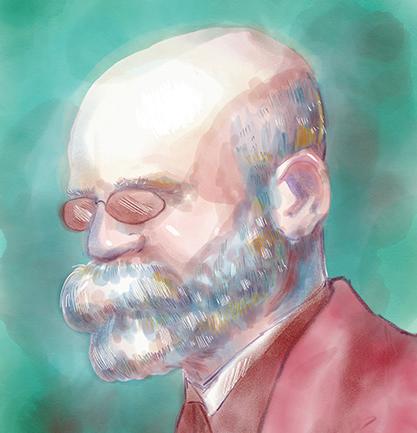
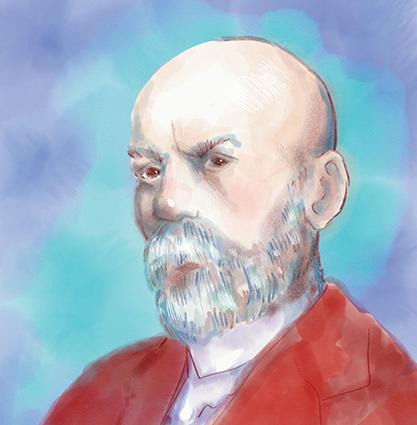
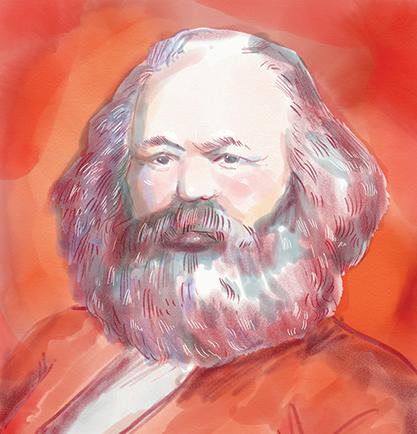
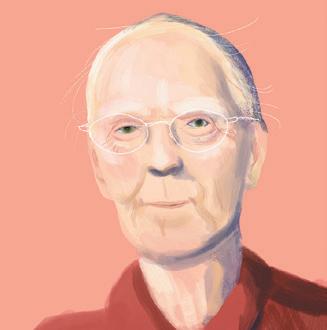
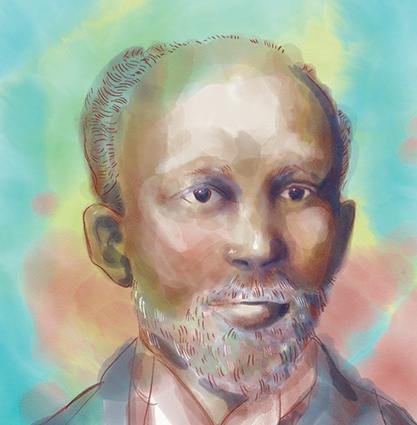
so understanding them early is important. To help you remember the theorists in relation to each specific theory, caricatures of the key theorists have been developed. These caricatures will show up throughout the book whenever we are discussing their particular theoretical paradigms. Table 2.1 summarizes the key insights
Believes we are all in a struggle over scarce resources States that inequality is persistent and pervasive but that it can be changed
• Believes those with wealth and power work hard to maintain their position at the detriment of everyone else
• Has an overriding concern with how social order is maintained, especially during times of change Views human society as being similar to an organism, such as
Source: Illustrations by Alannah Astorquiza, used with permission.
Author Sara Cumming’s unique and authentic narrative voice presents complex topics including key theories in every chapter—in easy-to-understand, relatable language that helps to unlock students’ sociological imaginations.
Practical Application in Every Chapter
In addition to the engaging examples and clear explanations throughout, every chapter includes a Practicing Sociology box, which is an interactive activity that helps students apply what they have learned. These activities can be done alone or assigned in class in order to help students immediately see how sociology interacts with their everyday lives.
A Student-Friendly Visual Presentation
Chapter 4
Socialization
Do you love or hate to read? Do you think your feelings about reading are purely related to your personal interests or to your intellectual abilities? If you love reading, can you trace where and when this love began? Researchers have found that reading to children every day improves their understanding of words and concepts at young ages and also improves their memories throughout their lives (Hutton, Horowitz-Kraus, Mendelsohn, DeWitt, & Holland, 2015). In addition to these positive developmental effects, spending this one-on-one time with a child helps to foster the parental bond, transmitting different types of knowledge such as how to parent and how to develop a routine. In this chapter you will learn how your interactions with different social agents, such as your parents, friends, school, and the media, have helped shape who you are today. You will begin to see how your relationships with people and your interests (such as reading) have been socialized into you from a young age.
blaming the system A perspective that views environmental factors and systemic discrimination as responsible for an individual’s circumstances.
cum31016_ch04_063-086.indd 63
Swanson employs a perspective often referred to as blaming the system. This approach is much more consistent with a sociological view, as it takes environmental factors into consideration and recognizes the systemic discrimination that exists within society when considering an individual’s circumstances.
Top 10 Takeaways
Social stratification is the hierarchical arrangement of individuals based on wealth, power, and prestige.
Most assume Canada to be a meritocracy—a system whereby if you work hard you have equal chances for success.
There are four systems of stratification: slavery, caste, clan, and class.
The four theoretical approaches look at different elements of inequality. Functionalists use the Davis-Moore hypothesis to argue that inequality is functional and necessary for the well-being of society. Conflict theorists argue that inequality is a result of the bourgeoisie exerting their power over the proletariat. Feminist theorists are concerned with the gendered patterns of inequality apparent both in the home and in the workplace. Symbolic interactionists highlight the ways in which people display their wealth through conspicuous consumption.
Most of the elites in Canada were born into their wealth and continue to pass it down generationally.
pp. 107–112
pp. 107–108
pp. 110–112
pp. 112–113
The Florida Project Dir. Sean Baker (2017). A documentary that centres on a run-down motel that houses poor families in Florida. The motel is located close to Walt Disney World and provides the characters with constant reminders of their economic position. The film examines the cycle of poverty that is created and the coping skills that children develop to deal with their social position.
01/13/20 07:36 PM
Learning Outcomes
1.
Introduction
Socialization is one of the most important forces acting on us throughout our lives. Like culture, socialization is also essential for the survival and stability of a society. And as members of society, we must learn how to be active members of our communities to maintain the social structure. We need to learn how to follow rules and to develop a work ethic, and we also learn to purchase products to maintain capitalism. We also need to learn how to reproduce—not simply the act of
The Role of Socialization
Socialization
5.
Key Terms
(including language, accent, and slang), food preferences, music tastes, and expected lifestyle are all functions of the culture in which we are raised. We are also, at the same time, influenced by other social influences, such as the class in which we are raised, our ethnicity, whether
Poverty is a term used to describe situations in which people lack opportunities available to the average citizen. Absolute poverty refers to the inability to afford particular goods, while relative poverty refers to the perceived difference between your own circumstances and those around you.
pp. 116–117
The most common measures of poverty are the LICO (an absolute measure based on the percentage of income spent on necessities), LIM (a relative measure that is calculated based on 50 per cent of the median income, adjusted for household sizes), and MBM (an absolute measure based on the cost of a set of goods representing a modest standard of living). p. 117
pp. 117–119
pp. 114–116
The middle class is slowly disappearing in Canada. p. 116
The five most disadvantaged groups in Canada are women, single adults, Indigenous people, visible minority and recent immigrants, and disabled people.
There are two prominent explanations for poverty. One blames the victim, stating that individuals are responsible for their life situations. The second blames the system, which takes environmental factors into consideration.
pp. 119–120, 122
Student learning is scaffolded throughout the text , with each chapter starting with clear learning objectives and key terms, and ending with a list of top ten takeaways for each chapter, questions for critical thought, and additional resources. Key sociological theories within the chapter are accompanied by icons that visually signal to students when and which theory is being discussed, and helps them draw connections between theories introduced elsewhere in the book.
Icons that Appear Throughout the Book
Image Name Signifier
Sara Cumming
Personal reflections of the author
Émile Durkheim Functionalism
Charles H. Cooley Symbolic interactionism
Karl Marx Conflict theory
Dorothy Smith Feminist theory
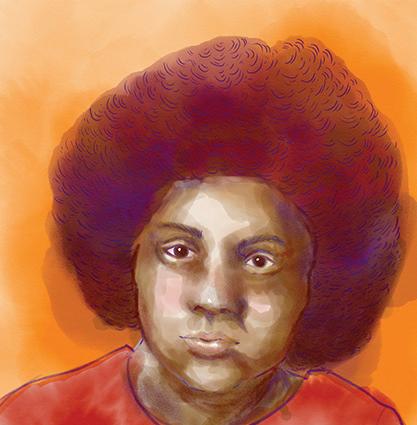
W. E. B. Du Bois Critical race theory
bell hooks Intersectional theory
xiv Guided Tour of . . . Sociology Unlocked
Sources: Illustration of Sara Cumming provided by David Bragdon; Illustrations of Durkheim, Cooley, Marx, Smith, Du Bois and hooks provided by Alannah Astorquiza; used with permission
Media Recommendations Throughout
Pop culture examples are integrated into the chapters and appear as media recommendations that provide suggested videos, websites, television, films, and podcasts related to the topics under discussion, encouraging students to apply concepts in the chapter beyond the book. Note: Some of these recommendations are available for free streaming as part of our Sociology Streaming Video Collection (see below).
Kayden Chan
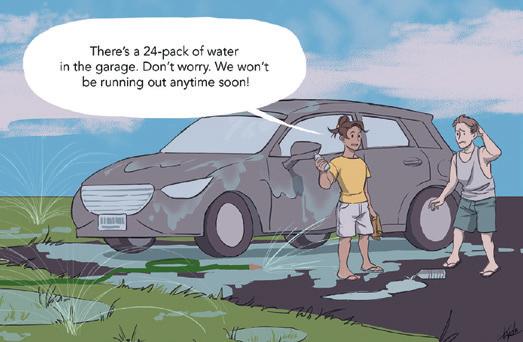
Because of the abundance of resources in Canada, and the time scales at which resource depletion is occurring, it can be difficult to see that we are running out of precious resources, such as water, when we look around our environment. And keep in mind that over 100 Indigenous communities in Canada do not have access to clean water (see Chapter 9). Inequality can also hide the scarcity of certain resources.
energy, industrial uses, and human consumption. Most agricultural production is water intensive, and “agriculture alone accounts for 70% of all water withdrawn by the combined agriculture, municipal and industrial (including energy) sectors” (ENESCO, 2017). Thus, as the global population continues to grow, and the demand for food continues to grow, the demand for water will grow accordingly. Like water, most of the natural resources we need are non-renewable: there is only so much petroleum, aluminum, iron, etc., on (or in) the earth. Once we have used it all . . . well, no one knows how to finish that sentence yet. One strategy is recycling these materials to get more use out of them. Another is to invent alternatives (for example, synthetic rubber to replace rubber extracted from a rubber tree) or find natural alternatives (for example, wind or solar power to replace petroleum). A third strategy is to look for new resources in currently inaccessible places (for instance, under the sea, at the centre of the earth, or on asteroids). A fourth is to reduce the rate at which we use these resources; however, this is only a short-term answer as it only slows down the inevitable disappearance of these finite resources.
Cowspiracy: The Sustainability Secret Dir. Kip Andersen and Keegan Kuhn (2014). A documentary exploring the effects on the planet of large-scale farming. This documentary argues that these large-scale farming operations are the leading cause of global warming, water depletion, species extinction, deforestation, and ocean dead zones.
Before the Flood Dir. Fisher Stevens (2016). A documentary featuring actor and environmental activist Leonardo DiCaprio. The film discusses all of the opposition to climate change. DiCaprio critiques the level of fossil fuels emitted by the US.
Theoretical Approaches to the Environment
With global temperatures and sea levels rising, we have begun to see new issues developing that we may not be entirely prepared for. While sociology has generally kept its distance from natural sciences, the effects of climate change are generating problems that need to be understood from a sociological perspective as much as a scientific one. We need to not only understand the effects of climate change on the population but also the causes that can be traced back to how our society is organized, functions, and is reproduced. Furthermore, each of the sociological theories has a part to play in understanding these issues.
Functionalism
cum31016_ch11_213-234.indd 227
Contemporary Cases and Compelling Viewpoints
In addition to the Practicing Sociology boxes, Sociology Unlocked features five other types of boxes that illustrate sociological concepts by highlighting how contemporary issues, events, and ideas relate to the topics at hand.
#Sociology
#CommitSociology
In 2013 and again in 2014, then prime minister Stephen Harper urged Canadians not to “commit sociology.” His 2013 comments were in reference to an alleged terrorist plot against VIA Rail, where he proclaimed that Canada was facing a serious threat and thus it was not a time to “commit sociology.” His comments in 2014 were in reference to a national inquiry into missing and murdered Indigenous women. He urged Canadians to stop viewing the tragedy of missing and murdered Indigenous women as a “sociological phenomenon” and instead “view it as a crime.”
In response, critical thinkers from many disciplines fought back
with articles and information on why these issues were precisely sociological phenomenon. Crime is a social phenomenon that is most often shaped by powerful historical social forces, and so it needs to be understood and examined more deeply than as someone’s simply choosing to “break the law.”
Treating these “crimes” as standalone cases erases the colonial history of Canada as well as the current disadvantages experienced by Indigenous people in this country that put them at higher risk of violence. Such disadvantages include infrastructure issues, poverty and lack of access to employment, and lack of social services (Amnesty
International Canada, 2018). The oppression of Indigenous people, who were removed from their homes, stripped of their culture and language, and far too often physically and sexually abused, has led to a society that too often dehumanizes Indigenous peoples and ignores their demands for justice. As you will learn in this chapter, there is a strong link between what happens to individual people and the broader social forces at work in society. A Twitter feed was started, #commitsociology, to keep sociological inquiry at the forefront of a variety of events and issues. Look up #sociology on your social media platform of choice: What kinds of social issues are being discussed?
Documentaries on Missing and Murdered Indigenous Women and Girls
Kairos Canada. Several documentaries on missing and murdered Indigenous women in Canada. https://www.kairoscanada.org/missing-murderedindigenous-women-girls/films at the grocery store (also one of the primary reasons for the “freshmen 15” phenomenon). Preparing healthy food also takes longer. A person who is considered obese might think this is his or her personal trouble, and to some extent it is; however, once people understand that there is a link between widespread poverty and obesity, it becomes clear that it is also a public issue. Furthermore, that we even have measures that decide if someone’s body shape is within an
Functionalists, concerned especially with the proper and effective functioning of society and how that can be reproduced, are concerned with how climate change will disrupt our social systems and infrastructure. For example, higher than average summer temperatures mean there is more demand on power systems as people try to shelter themselves from the heat, while more intense and frequent storms can cause damage resulting in even more outages (Dominianni et al., 2018). This can
01/13/20 07:44 PM
#Sociology boxes describe online social phenomena related to chapter content in order to help students relate chapter content to their everyday experiences on social media.
In the News
The Burden of Proof in Rape and Sexual Assault Cases
three more women (Donovan & Hasham, 2015).
Prior to being charged with sexual assault, Jian Ghomeshi was a household name across Canada among those 40 years of age and older. Throughout the 1990s, he was a member of the band Moxy Früvous, and he became a television and radio broadcaster in the early 2000s. He held many positions at CBC, with his most prominent being Q, a talk show that featured interviews with prominent entertainment and cultural figures. The show, which ran from 2007 until his dismissal in 2014, was the highest rated show in CBC history (Zekas, 2010).
In 2014, an ex-girlfriend of Ghomeshi’s made accusations that he had engaged in non-consensual rough sex—an accusation he denied. A few months later, CBC terminated Ghomeshi, stating that evidence had come to light that required CBC to discontinue its relationship with him. The evidence included private pictures and videos related to his sexual life. Less than a month later, Ghomeshi was charged with four counts of sexual assault and one count of overcoming resistance by choking. The charges were in relation to three separate women (CBC News, 2014).
Ghomeshi’s trial began on 1 February 2016 and lasted eight days. Despite six women sharing very similar stories of non- consensual sexual violence, Ghomeshi was found not guilty. In a number of the cases the women had engaged in what could be considered amicable, or even flirtatious, behaviour with Ghomeshi after the alleged attack occurred. The judge ruled that this behaviour problematized their accusations and went against what he deemed to be appropriate behaviour by a victim. Experts on victimization, however, argue that putting the victims’ post-incident behaviour on trial is unfair as there is often much confusion following an assault, with some women at least partially blaming themselves for the incident (Donovan, 2016).
In the News boxes tie chapter content to contemporary news stories, helping students understand sociology in the real world.
Three months later, Ghomeshi was charged with three additional counts of sexual assault related to
can get missed. For example, while Indigenous offenders are disproportionally represented in the criminal justice system, the fastest-growing group of incarcerated people is Indigenous women (Savage, 2019). Feminists argue that if we are to successfully deter women from crime and rehabilitate women who commit crime, we must do criminological research on women.
208 Sociology Unlocked
cum31016_ch10_191-212.indd 208
The Ghomeshi case draws our attention to the intersections of class, gender, and power in the criminal justice system—Ghomeshi was a well-known, wealthy man— but also to the difficulties associated with the burden of proof being on the female accuser. The criminal justice system’s understanding of sexual assaults and the responses of (mostly) female victims is still gravely misunderstood.
Furthermore, there is almost no criminology on non-binary people, and because the criminal justice system is set up based on the gender binary, people (particularly transgender people, who are also overrepresented in prisons) can get misgendered within the criminal justice system, which can have negative impacts on their rehabilitation (Kirkup, 2016).
World Events
Where Does Our Technology Go?
Companies such as Apple (as an example) are always competing to release a newer and faster model. During the writing of this textbook, for example, Apple released the iPhone X, the iPhone XR, and the iPhone XS, with an expectation that the iPhone 11 would be released before this book publishes. Apple sold an estimated 30 million of these new iPhones in the first few months. What happened to those phones that most of those 30 million people already had prior to obtaining the newest release?
01/13/20 07:47 PM
World Events boxes bring global content into each chapter, ensuring that students understand how topics connect not just to their lives in Canada, but to the rest of the world as well.
According to a recent United Nations report, China is the largest e-waste—electronic waste consisting of computers and cellphones, among other items―dumping site in the world (Watson, 2013). Many of these products were initially manufactured in China and are returned
How many smart phones have you gone through in your lifetime? Have you ever thought about the environmental impact of discarding your old smart phone for a new model?
have a cascading effect as power outages could affect health-care systems, food supplies, transit, communication, and public safety—all of which need to be taken into consideration for a society to properly function.
Conflict Theory
On an even larger scale, we are starting to see the first climate change refugees, as people are being forced to
to China when no longer in use. Indeed, the United Nations data suggests that about 70 per cent of global electronic waste ends up there (Watson, 2013).
For the past decade, Guiyu, a town located in China’s main manufacturing zone, has been the largest hub for disposal of e-waste (Watson, 2013). The United Nations report indicates that Guiyu is experiencing an “environmental calamity” as a result of this disposal industry. Toxic pollutions are released during the recycling processes, contaminating workers and the environment with heavy metals—such as lead, beryllium, and cadmium—while simultaneously releasing hydrocarbon ashes into the air, water, and soil (Wason, 2013). In 2018, however, Beijing officially stopped accepting garbage from other countries and China has embarked on a mission to rid the country of toxic waste (Petric, 2018).
Canada produces more solid waste per capita than any other country in the world, and recently our attempts to dump this waste in other countries (such as the Philippines and Malaysia) have been denied (Ferreras & Drolet, 2019).
We will need to find new strategies for processing our own waste (and, ideally, producing less of it in the first place) if we want to avoid further international incidents.
leave their homes and even their countries because of severe climate effects and in order to survive (Berchin, Valduga, Garcia, & de Andrade Guerra, 2017). With deforestation and desertification, the rising ocean levels and temperatures, and the resulting economic issues, some estimates predict there will be nearly 150 million climate
Jian Ghomeshi, centre left, with his lawyer, arriving to court in 2016.
From My Perspective
Katie and Jess
Unlike the majority of couples we know, we are high school sweethearts! We were both known as jocks in high school and quickly became inseparable friends at the age of 14. Feelings developed on both sides just as they would in any other typical young romance. For us it was quite simple—we met, we dated, we fell in love— just like we see all couples falling in love in the media. It was, however, not that simple for society. Being a same-sex couple meant that we had to “come out of the closet.” Such a ridiculous concept when you don’t feel as though you were ever in a closet to begin with! Our “coming out” story is a lot less terrible and dramatic than many others we know of; however, it was still accompanied by the loss of some friendships and the loss of communication with some family members. There were feelings of exclusion and people stumbling over words because they seemed to no longer know how to speak to us, as if the fact that we were gay changed the people we had been our entire lives. Some people overcompensate while trying to be careful to not offend, and others just throw out offensive remarks freely.
cum31016_ch08_147-166.indd 158
Current Research boxes describe contemporary social research on the topic, helping students to understand how sociological research is done.
As the stages of life progressed, we watched siblings and cousins enter heterosexual relationships and new partners were welcomed into the family fold with no questions asked. There was an almost immediate banter about marriage and babies with these couples, but nobody ever jokes or speaks about these things with us. Most people likely do not even realize they are doing this. Society says that the next step in a relationship is marriage, so that is what we did. Please don’t get us wrong—we loved each other and were very committed to one another, but the internal desire to follow the norm was an influencing factor in the decision to legally marry. Contrary to popular belief, lesbian relationships go through all the same kinds of difficulties as straight relationships. Life happens, people change, we forget to put each other first, we don’t equally share the household responsibilities, partners are taken for granted, and marriages struggle. We ended up needing to go see a counsellor, which should have been a simple process of looking up local practitioners, phoning, and making an appointment. However, for gay couples, the process is a little more complex as we must first find out which counsellors are open to working with same-sex couples. After a lot of work and self-reflection, reconnecting, and refocusing on what is truly important, we have decided to start a family! We are surrounded by nieces and nephews and have known for a long time that we wanted our own child. We want nothing more than to welcome a little bundle of joy into our lives that will eventually become a teenager and make us question every life decision we have ever made (we have watched our siblings struggle through their children’s teen years with half their sanity intact). For most heterosexual couples starting a family, it is as simple as no longer using your method of birth control. As a same sex couple we had far more decision making ahead of us: Would we adopt or carry? Which one of us would carry? Would we both carry? Where and how would we get the semen? How do we choose the donor? How do we pay for the insemination? If we adopt, which agencies support gay adoptions? How long are the lists? How much money will it cost? We are still on this journey and can tell you that it is very difficult to continuously be jumping over hurdle after hurdle in our quest to be a family.
Source: Provided by Jess Collins, used by permission.
Figure 12.2 Longevity Inequality vs. Income Inequality in 28 Countries, 1974–2011
From My Perspective boxes incorporate diverse voices from contributors who relate their experiences to the chapter topic, modelling the sociological imagination for students.
The Canadian Institute for Health Information (CIHI, 2015) released a report called The Trends in IncomeRelated Health Inequalities in Canada examining whether the health gaps between lower- and higher-income individuals had changed from 2005 to 2015. The report indicated that inequalities persist in Canada with little to no progress being made in reducing inequalities in health by income level (CIHI, 2015). Since the early 2000s, inequalities have widened for 3 out of 16 health indicators in particular. The incidence of smoking, chronic obstructive pulmonary disease (COPD), and mental health–related illnesses have lowered in higher income groups while increasing in lower income groups (CIHI, 2015). While the gap between low- and high-income Canadians did not widen for 11 out of 16 indicators, they remained steady for 9 of them, with the lower income group experiencing worse health. For example, obesity, especially among women, remains higher among the lower classes
The Relationship between Housing and Health
Housing and income are two of the most important social determinants of health (SDOH). Research shows that being unhoused can lead to poor mental and physical health. Conversely, experiences of poor mental and physical health place people at greater risk of experiencing housing loss. Most people who experience homelessness in Canada do so on a short-term basis. However, health outcomes are much worse for the small proportion of individuals who are homeless for long periods of time.
A recent study conducted by Julia Woodhall-Melnik et al. (Woodhall-Melnik, Dunn, Svenson, Patterson, & Matheson, 2018) investigated the journeys of 25 men into chronic or long-term homelessness. Dr Woodhall-Melnik and her team conducted a thematic analysis of transcripts from semi-structured interviews with men who had been homeless for 30 days or longer in 2014. They found that all of the men interviewed had experienced trauma or adversity in youth. Examples of this trauma or adversity included living in severe poverty; having interactions with the youth justice and child protection systems; experiencing physical injury; having early onset mental illness; experiencing early substance use; witnessing parental or caregiver substance use; being abandoned by a caregiver; and undergoing physical, sexual, or emotional abuse.
Woodhall-Melnik et al. (2018) theorize that the men who experienced youth trauma and long-term homelessness followed one of three paths:
1. Entry into homelessness during youth. The men in this pathway described leaving their caregivers’ homes, couch surfing, and living in other unstable conditions before the age of 18. They left high school and ultimately ending up on the streets or in emergency shelters.
2. Entry into homelessness during adulthood. The men in this pathway lived with their caregivers until they were able to move into rented accommodations. This was often done with friends or romantic partners. These men held jobs and many experienced layoffs, job loss, or workplace injuries, which were followed by problematic substance use and relationship loss. For many of these men, their entry into homelessness corresponded with the loss of their relationships.
3. Entry into homelessness during later adulthood. The men in this pathway experienced mental illness or developmental delays and remained with their parents or caregivers until they passed away. These men were then left without the means to care for themselves and subsequently entered homelessness.
These pathways indicate a need to provide youth who experience trauma or adversity with targeted services to improve health, housing, and social outcomes in later life.
Source: Provided by Dr Julia Woodhall-Melnik.
158 Sociology Unlocked
Jess Collins Katie and Jess, a 33-year-old married couple currently living and working in Yellowknife, Canada.
Online Resources
Sociology Unlocked is part of a comprehensive package of learning and teaching tools that includes resources for both students and instructors.
Dashboard: OUP’s Learning Management System platform
Dashboard is a text-specific integrated learning system that offers quality content and tools to track student progress in an intuitive, web-based learning environment. It features a streamlined interface that connects students and lecturers with the functions used most frequently, simplifying the learning experience to save time and put student progress first.
In addition to the functionality of Dashboard as a platform, Dashboard for Sociology Unlocked includes the following content:
• Integrated ebook
• Interactive Flash Cards
• Student sociological survey with viewable results
• Self-grading quizzes for students. Each chapter has:
• 25 multiple choice questions
• 10 true/false questions
• Integrated test bank
Dashboard for Sociology Unlocked is available through your OUP sales representative, or visit dashboard. oup.com.
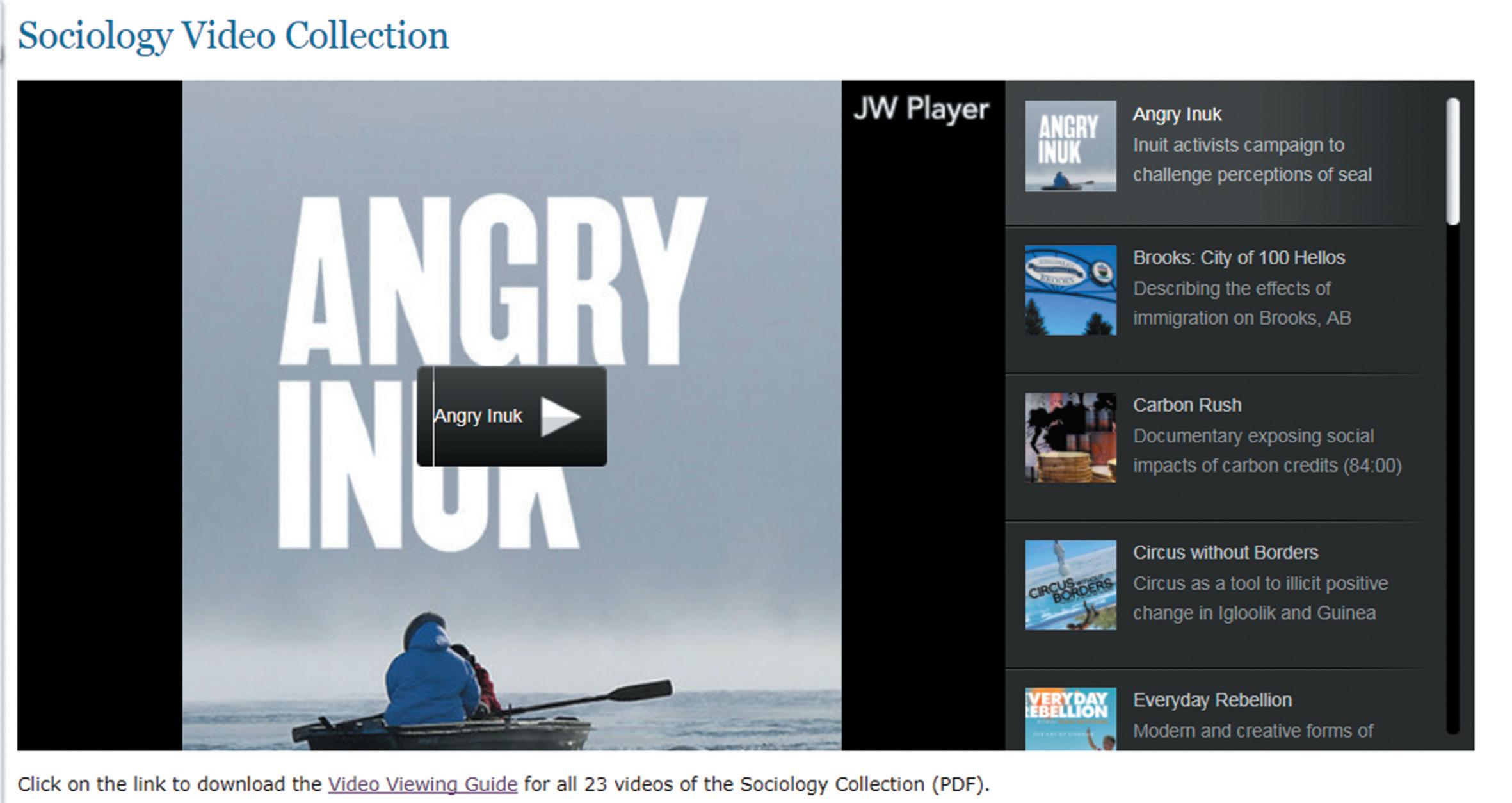
OUP Canada’s Sociology Streaming Video Library
Over 20 award-winning feature films and documentaries of various lengths (feature-length, short films, and clips) are available online as streaming video for instructors to either show in the classroom or assign to students to watch at home. An accompanying video guide contains summaries, suggested clips, discussion questions, and related activities so that instructors can easily integrate videos into their course lectures, assignments, and class discussions. Access to this collection is free for instructors who have assigned this book for their course. The ebook version of Sociology Unlocked offers links to relevant videos integrated throughout, with no additional login required. For access when using the print version of this book, speak to your OUP sales representative, or visit www.oupcanada.com/SocVideos.
Student and Instructor Supplements to the Text
OUP Canada offers a wide range of supplementary online items for students and instructors alike, all designed to enhance and complete the learning and teaching experience. These resources are available at www.oup.com/he/Cumming
For Students
A comprehensive Student Study Guide includes lists of learning objectives and key terms, critical thinking questions, recommended readings, recommended online resources, and self-grading quizzes to help you review the textbook and classroom material and to take concepts further.
For Instructors
The following resources are free to qualified adopters of the textbook. Please contact your OUP sales representative for more information:
• An extensive Test Generator enables instructors to sort, edit, import, and distribute a bank of questions in multiple-choice, true–false, and short-answer formats.
• A comprehensive instructor’s manual provides an extensive set of pedagogical tools and suggestions for every chapter, including a sample syllabus, lecture outlines, suggested in-class or assigned activities, suggested teaching aids, cumulative assignments, and cumulative essay questions.
• Classroom-ready PowerPoint slides summarize key points from each chapter and incorporate graphics and tables drawn straight from the text.
About the Author
Sara Cumming is a professor of sociology at Sheridan College and is the chair of Applied Sociology in Canada, a research cluster under the Canadian Sociological Association. Her primary research interest is in the area of gender and social inequality, focusing particularly on social assistance, subsidized housing, subsidized child care, and student loan programs. Dr Cumming’s most recent research grant is a collaboration with Dr Michael McNamara, which relies on qualitative research and creative problem solving to help community partners produce new, creative, and fundable projects aimed at ameliorating hardships for Halton’s vulnerable populations. She has also taken on the role of executive director for the non-profit Home Suite Hope, a program offering wrap-around services to move lone mother–led families from homelessness to self-sufficiency.
Acknowledgements
Although I remain solely responsible for the content of this textbook, it reflects the collective input and support of numerous people, only a handful of whom are named in the paragraphs that follow. Whether they are named or not, my heartfelt thanks go out to them all.
I would like to send a special thank you to Lorne Tepperman, who first introduced me to the idea of writing this introductory text for the college classroom and who acted as a mentor throughout the process. Lorne’s talent to write quickly and effectively is remarkable, as is his ability to bring his students into the process. Thank you for checking up on me throughout the process and for continuing to cheer me on in the final stages.
I would like to acknowledge two promising former students with whom I have had the pleasure to work: Mark Omiencinski and Tierney Kobryn-Dietrich provided invaluable assistance in the editing phases of the text and ensured that the examples used were current and would resonate with the student body. In addition, I would like to thank the team of animation and illustration students from Sheridan College, who provided much material for the text: Alannah Astorquiza, David Bragdon, Kayden Chan, Zach Gray, and Alexandria Phillips. In addition, I would like to thank all of the people who contributed to the “In My Perspective” boxes. I am grateful that you were willing to share pieces of your life with the readers in hopes of offering a new lens through which they might view a social issue.
Throughout my academic journey I have been very fortunate to find myself surrounded by a strong group of mentors who continue to inspire and motivate me. I will be forever thankful to Michelle Webber, Viola Shuart, Kate Bezanson, June Corman, Ann Duffy, and Lea Caragata for first believing in me and then convincing me to believe in myself. I would also like to thank three colleagues, Jessica Pulis, Morgan Dennis, and Michael McNamara, who have provided me with countless hours of intellectual discussion, feedback, and support in every project that I take on and, in the process, have become important friends. Lastly, I would like to thank Augie Fleras, a man of few words in face-toface interactions but a prolific researcher and writer. I never had the pleasure of working under Augie during my doctorate at the University of Waterloo, yet I count him as one of the most influential people in that experience. Augie’s love and dedication to the writing process is beyond admirable as is his advice on getting it done: “Stop whining, sit down and do it. End of discussion.”
Leah Burton
To my family by birth and by choice, thank you for always encouraging me to reach higher, even when that requires an unbelievable amount of patience and tolerance on all of your parts. Tom, you always offer me incredible patience and support—even when you are visibly exhausted by my never-ending list of projects. Talor, Maddy, Ryleigh, and Kennedy: thank you first for providing me with many of the anecdotes throughout this text; and second, for always accepting that I share our trials and tribulations in my classrooms and now in text. Watching the four of you grow into adulthood has been the most rewarding experience of my life (although scary and exhausting, too). I can’t wait to see where all your paths take you next and to see what kind of material it provides me for future use.
I would like to thank the team at Oxford University Press, particularly Ian Nussbaum, who convinced me to take on this endeavour and believed in my vision for something less formal and more practical for the college classroom. Amy Gordon, my developmental editor, is also deserving of the sincerest thank you for patiently guiding me to the version of the text that is presented here. In writing anything of this magnitude, I experienced many tough days where I couldn’t clearly see the vision or how to move forward. Amy’s kindness and incredible knowledge helped me to keep moving forward, strengthening difficult sections and bringing fresh ideas to the project. I would also like to thank copy editor Colleen Ste. Marie.
Finally, I would like to thank the following reviewers, as well as the anonymous reviewers, who spent many hours reading the manuscript in rough form and offering constructive criticisms and insightful suggestions for the new edition:
• Angela Aujla, Georgian College
• Alexa Carson, Humber College
• Joel Casséus, Vanier College
• Erin Dolmage, Seneca College
• Kathleen Flynn, Durham College
• Tara Gauld, Confederation College
• Cindy Gervais, Fleming College
• Melanie Greene, Memorial University of Newfoundland and College of the North Atlantic
• Thomas Groulx, St Clair College
• Monique Harvison, Humber Institute of Technology and Advanced Learning
• Anthony Iafrate, Lambton College
• Lise Kozlinski, Durham College
• Peter Laurie, Fleming College
• Mikhael Missakabo, George Brown College
• Monireh Mohammadi, University of Guelph-Humber
• John Patterson, Canadore College
• Krista Robson, Red Deer College
• Marlene Santin, Sheridan College
Sara Cumming, Professor of Sociology Department of Social and Life Sciences
Sheridan Institute of Technology and Advanced Learning Oakville, Ontario e-mail: sara.cumming@sheridancollege.ca
Chapter 1
What Is Sociology?
We all like to believe that we are individuals who make our own decisions and choices about most of the aspects of our lives. Think about a simple choice you made this morning: You woke up and chose a particular pair of shoes to wear. You might say that those shoes were the ones that you felt best matched your outfit or were the most comfortable. However, look around the room at your classmates’ shoes. You will most likely see that many people made choices similar to yours.
There is, in fact, much more going on here than simply personal choice. Personal choice is shaped by many factors external to you, including your financial circumstances, your family, your peers, and the media. Examining these factors and how they have influenced you is an example of sociological inquiry. A sociological analysis requires us to look beyond your personal circumstances to the larger social, economic, and cultural environment in which you reside.
Discovering Diverse Content Through Random Scribd Documents
Not I, Sweet Soul, not I Love
Lyrics
M, G:
At Dinner she is Hostess Modern Love
Love within the Lover’s Breast.
M, C: A Dead March Corn and Poppies
M, L:
Fair Star that on the Shoulder of yon Hill Gwen
Thy Shadow, O Tardy Night “
M, W:
The First Lyric Love is Enough
The Concluding Lyric “ “
M, L C:
Beside a Bier In the Garden of Dreams
Hereafter “ “ “
M, G:
Fortunio’s Song Verses and Versions
N, E. (M. H
B):
Splendide Mendax Lays and Legends, Second Series
The Kiss Leaves of Life
The Mill Lays and Legends, Second Series
N, J. B. B.: A Pastoral Love in Idleness
Vigilate Itaque “ “
N, J A:
The Horizon Verses of a Prose Writer
O’C, J:
Shadows Poems
O’S, A:
A Farewell Music and Moonlight
Song “ “
Supreme Summer “ “
P, G:
As One would stand who saw a Sudden Light A Lover’s Diary
P, C:
Departure The Unknown Eros
P, J: Cadences Songs of Life and Death
Chant Royal of the God of Love New Poems
R, E:
A Dream of Diana A London Rose, and Other Rhymes
R, J W:
When She comes Home Old-Fashioned Roses
R, A. M F. (M J
D):
Poplar Leaves Lyrics
R, C G.:
After Death Poems
Somewhere or Other “
R, D
G:
First Love Remembered The House of Life
Love Enthroned “ “
Sudden Light “ “
S, C: A Perfect Day The Hills of Song
S, C:
Rus in Urbe Lays and Lyrics
S, W:
Song.
The Coming of Love
The Pagan Review
S, E R:
Recall Poems
S, H
P:
Fantasia Poems
Only a Leaf “
S, E
C:
Song from a Drama Poems
S, W. W.:
The Violet Poems
S, E
F:
To my Lady Palissy in Prison, and Other Verses
S, A
C:
At Parting Poems and Ballads, Second Series
August Laus Veneris Between the Sunset and the Sea Chastelard
The Oblation Songs before Sunrise
S, A: On Judge’s Walk Silhouettes
T, J:
The Song of Tristram The Second Book of the Rhymers’ Club
T, G R.
(R M
W):
Aubade A Summer Night, and Other Poems
Love the Guest The Bird Bride
T, C
T:
A Blush at Farewell Collected Sonnets
The Kiss of Betrothal “ “
The Parting-Gate “ “
T, K:
Irish Love Song Irish Love Songs
T, C. C. F
(M. E L):
Good-Night Songs in Minor Keys
V, W H.:
I know ’tis Late, but let Me stay Melodies of the Heart
W, E:
Cashel of Munster Irish Love Songs
W, J L
(L T):
The Peace of the Rose The Countess Kathleen, and Various Legends and Lyrics
Y, W:
The Bridal Pair
Wishmakers’ Town
The Triflers “ “
C blows the wind against the hill, 75
Come, oh, come to me, voice or look, or spirit, 22 Comrades! in vain ye seek to learn, 168
Countess, I see the flying year, 118 “D,” he said, “I never meant”, 103 Dawn, with flusht foot upon the mountain tops, 54 Day after day of this azure May, 269 Dear, let me dream of love, 104 F star that on the shoulder of yon hill, 160 Far away hangs an apple that ripens on high, 45 Farewell my Youth! for now we needs must part, 286 Fold your arms around me, Sweet, 92 For a day and night, Love sang to us, played, 244 For the man was she made by the Eden tree, 216 From out the past she comes to me, 243
love and peace be with thee, where,
Gone!,
H summer come without the rose, 186 Hath any loved you well down there, 183 Herald of peace and joy,
Her tears are all thine own! how blest thou art!,
How, as a spider’s web is spun, 70 How like her! But ’tis she herself, 116