Advancing Responsible Material Specification
Senior Sustainable Design Specialist Amie Kremer-Blankenship has been an advocate and firmwide resource for sustainable materials in architecture and interior design for many years. Since LS3P signed the AIA Materials Pledge in 2023, she has been spearheading efforts to implement the pledge firmwide. We sat down with her to talk about what the AIA Materials Pledge is, why it matters, and how we can all be involved in designing a healthier future.
LS3P signed the AIA Materials Pledge in 2023, but you have been a leader in the realm of sustainable materials for much longer than that. Can you explain the big ideas behind the pledge, and why being a signatory is so important for the industry and for our firm?
The Materials Pledge is fundamentally about being more responsible with the specification power we hold as designers. It’s not just about the health of our clients and end-users; the decisions we make impact everyone who touches a material during its life cycle, from extraction of raw materials to manufacturing to installation to demolition. It’s where public health meets thoughtful, considerate, and equitable design. It’s part of our responsibility to protect people and the environment all along the supply chain. With the scale of our firm, now over 500 people and 12 offices, our choices at LS3P have significant industry impact. It’s essential that we use our influence to drive positive changes in the built environment.
Choosing better materials involves understanding the impacts to human health, social health and equity, ecosystem health, climate health, and a circular economy. Since finding a material that supports all five aspects of the pledge can be challenging, focusing on any one or more of those
categories is still a great step! Just asking for transparency and disclosure or certification documentation from manufacturers and vendors through Environmental Product Declarations (EPDs), Health Product Declarations (HPDs), and other similar documentation communicates to manufacturers that we care where our materials come from and what they contain. Transparency is helpful for each individual project so that we and our clients know what’s going into their buildings, but it’s also helpful at the industry level because demand moves the market, another impact we can have in our specifications.
How did your passion for sustainable materials begin, and how has it evolved?
My interest in sustainability started early as a child who played outside a lot. As my Mom used to say, “don’t try to change Mother Nature,” and that mantra stuck with me, along with seeing land that is stripped completely of any trace of nature. Of course, with most things in life, we must find compromises and ways to meet in the middle to make progress. As an interior designer, I’ve always tried to prioritize materials that are bio-based and minimize negative impacts on well-being, ecosystems, and the environment. The products we use in
our buildings can and do affect our health, our concentration, how we feel in the space and even once we leave, and our overall wellness. As an interior designer, I’ve always looked at projects through that lens and tried to advocate for products that support healthier environments and promote better indoor air quality.
As my knowledge has grown, I’ve learned more about how to make wiser choices in our work, and have continued to advocate for best practices across our portfolio. My current role as Senior Sustainability Design Specialist has broadened my reach to a wider variety of projects. Since we signed the pledge, I’ve had the opportunity to be more deeply involved in firmwide processes and implementation efforts. We’ve made substantial progress in a short time.
Driving change across a big group of people is not a small task. What has that looked like so far?
Implementing the pledge has been a collaborative effort across disciplines. Our internal sustainability team worked with LS3P’s leadership to initiate the process of signing the pledge. We then assembled a Materials Pledge Task Force representing a range of stakeholders. Interior designers, architects, and specifications team
members came together to develop and execute an implementation plan and various other protocols. To manage information at the office level, we created a Materials Champion program with two representatives in each office (one focused on exterior materials and one focused on interior materials). This team has been hard at work identifying pledge-compliant options in our materials libraries and as pledge advocates.
We wouldn’t be where we are without this level of multidisciplinary enthusiasm. Everyone involved has played an important part in getting us up and running with the pledge, and the breadth of expertise and experience among participants has been a huge asset.
We’ve been implementing the pledge here at LS3P for a couple of years now, but for people who are just kicking off a project and familiarizing themselves with the process, where do you recommend they start? Are there particular tools that help people get up to speed quickly?
Ecomedes is a great place to start digitally. It’s a free platform available to all project teams for organizing and exporting product information. We’re also beta testing Project Builder from Sustainable Minds, another online digital platform, which integrates
with their Transparency Catalog. Our Materials Champions have been hard at work identifying pledge-compliant materials in each office’s materials library for hands-on compliant product access. Color-coded stickers make it easier for busy team members to find what they need quickly. All these tools and steps for using them can be found in the latest version of LS3P’s Materials Pledge Implementation Guide on FRANK, our firm’s internal knowledge management portal.
Our Specifications Team has been invaluable in this process, too. They’re working through the top twenty-two most impactful products within projects and creating pledge-compliant specs for each of those categories. Having a go-to spec for these common
materials will save teams a lot of time and effort. Teamwork is critical, and we really appreciate the enthusiastic collaboration from these crossdisciplinary groups!
Are you finding that some product categories are further along than others in terms of pledge compliance?
Division Nine materials—primarily finishes like ceilings and much of the flooring—are leading the way, with many manufacturers making strides in transparency disclosures and certifications. Lighting and insulation still pose challenges, especially in eliminating plastics. While recycled content is valuable, we’re really looking for alternatives that avoid plastics
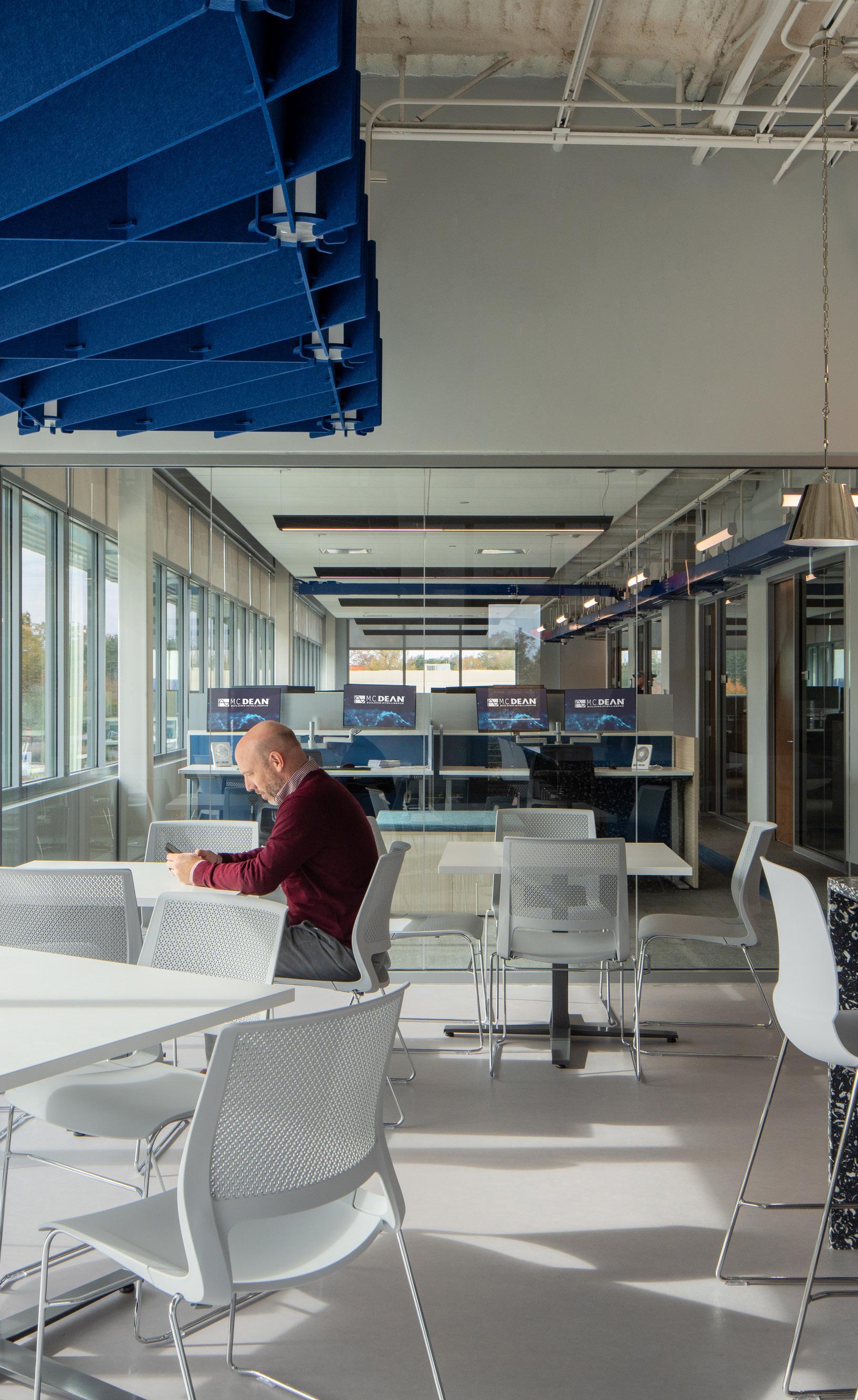
TEN30 CORPORATE CAMPUS

altogether, such as all-natural materials like wool rather than recycled plastic bottles for acoustic products. Steel is one example of a material that typically already has a high recycled content, and reminds us that material salvage and reuse can reduce carbon and contribute significantly to a circular economy.
We’ve seen many large manufacturers leading the way in developing better materials and better processes for transparency and disclosure. It’s important not to overlook smaller manufacturers as well, especially those supporting local jobs and economies,
even if they lack the resources for transparency documentation. We’re encouraging teams to engage with these manufacturers and help them navigate the process where we can, so that eventually all manufacturers have documentation to share, and all products align with this industry effort.
What are you excited about as we continue to implement the pledge in the coming years?
Our next steps involve finalizing our internal Materials Action Plan, and aligning with industry leaders who have already eliminated red list materials.
We want to help raise awareness of human rights abuses in the material supply chains, increasing our work toward positive social health and equity impacts. Over time, we want to increase the depth and quality of transparency documentation. Ultimately, we want everyone from project teams to clients to be able to speak confidently about the Materials Pledge and contribute to a more sustainable materials ecosystem.
I’m also excited to take things up a notch each year during our reporting cycle. We’ve had leeway in these initial stages to select the number and types
of projects we report. In the coming years we have the opportunity to raise the bar for what we’re reporting, how much we’re reporting, and the quality of transparency documents we can access. We can move closer to eliminating problematic materials and replacing them with better options in our specifications. These incremental steps are all leading us to better health outcomes for everyone along the supply chain, from extraction of raw materials, fence line communities, all the way to the end users who occupy the buildings we design.
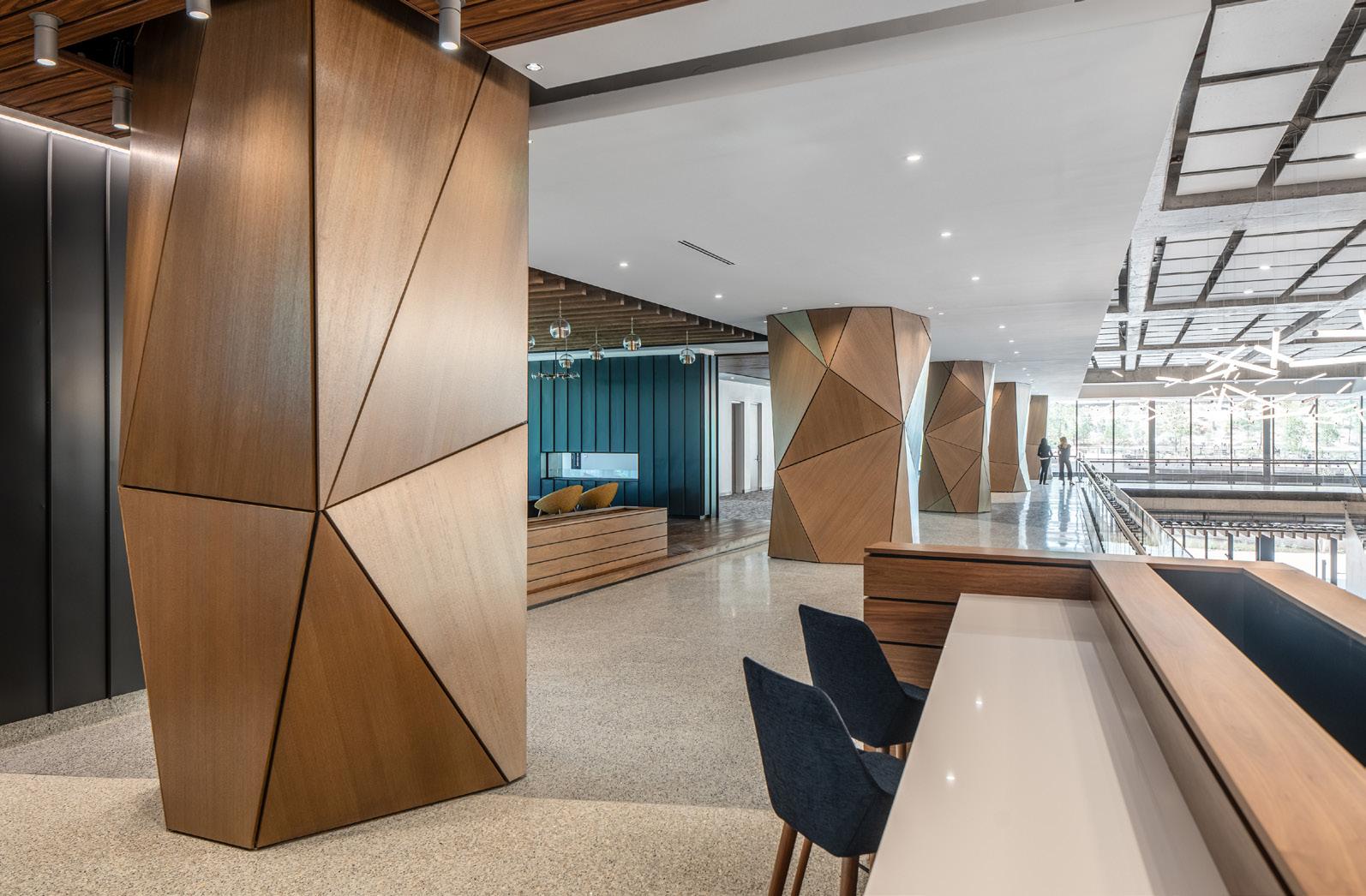
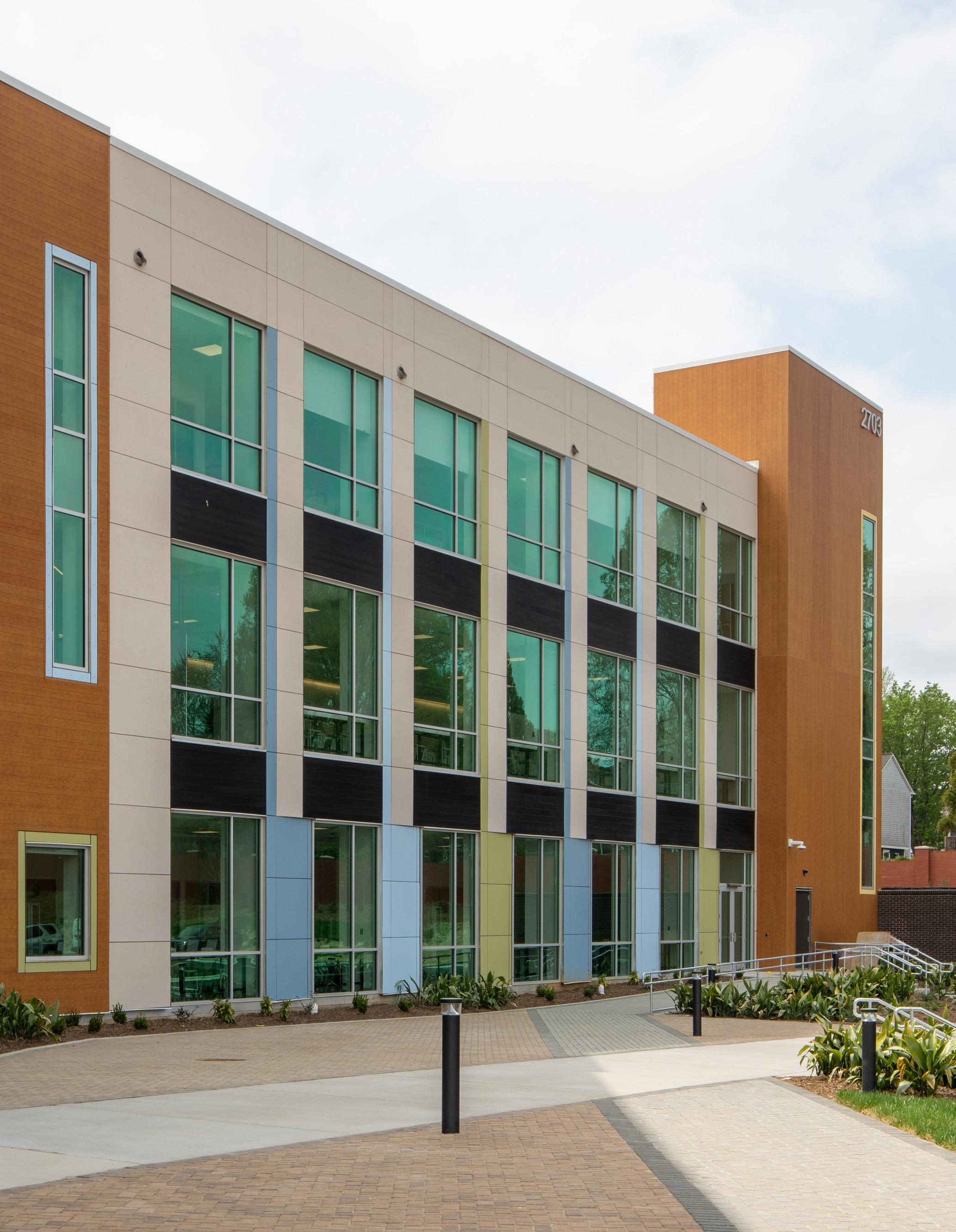
GUILFORD COUNTY SCHOOLS PROFESSIONAL & COMMUNITY EDUCATION CENTER
Meet Amie

Senior Associate Amie Kremer-Blankenship brings a varied skillset and a passion for human health, sustainability and resiliency, client dedication, and organization to her work at LS3P. Her experience includes LEED Gold and WELL Gold project administration for a corporate warehouse and office upfit in Charleston and securing LEED Gold for a training center project in Atlanta, among others. She has also assisted project teams with Green Globes Certification and GBCI’s Guiding Principles Compliance.
Amie serves as a firmwide resource and advocate for creating healthier, more resilient buildings by guiding project teams in specifying safer materials. She is spearheading LS3P’s commitment to the AIA Materials Pledge by creating education and content firmwide and leading various teams who are also contributing to this effort.
Amie earned a Bachelor of Fine Arts in Interior Design from the University of Georgia. Her professional and community engagement activities include mentorship, USGBC Carolinas involvement and a Community Garden co-chair position at a local elementary school where she spearheaded a rain barrel art and installation project on the school grounds and contributed to various environmental education efforts for the program.