Past Perfect: Adaptive Reuse as a Blueprint to Future Sustainability
Adaptive reuse – the process of renovating an old building for a new function – is an increasingly popular construction option. Converting factories to workplaces, car dealerships to churches, or textile mills to concert venues are all examples of repurposing existing structures, benefiting the “triple bottom line” of people, planet, and profit.
Why Reuse?
Why reuse an old building instead of investing in new construction? Firstly, the character and history of an older building can enrich a community. Whether it’s a landmark structure or a humble building integrated into the streetscape, people love the texture and stories inherent in older buildings. These structures often come with beautiful, durable materials that can be salvaged and celebrated, and their unique architectural elements help to create an authentic sense of place
and community. Depending on the condition of the building and the scope of the renovation, adaptive reuse projects may also save money over new construction, particularly when land costs and construction schedules are considered, and can create significant environmental benefits.
It has been said that “the greenest building is one that already exists.” In fact, choosing to repurpose an existing building instead of building new
construction yields far greater carbon reduction impacts than any other strategy. When the carbon required to extract, manufacture, transport, install, maintain, and dispose of construction materials is calculated, it would take a new energy efficient building between 10 and 80 years to recoup the carbon savings generated by repurposing an existing building.i
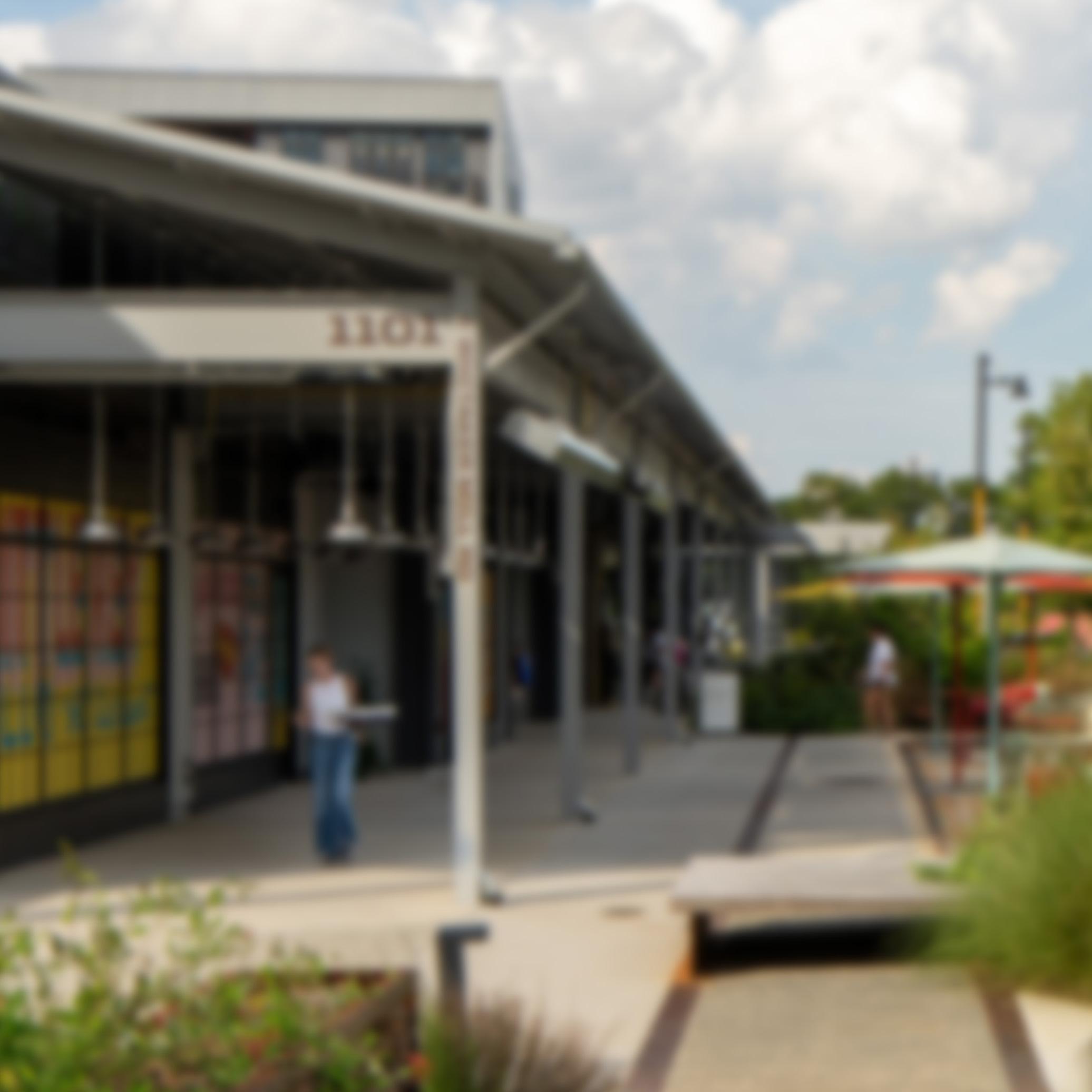
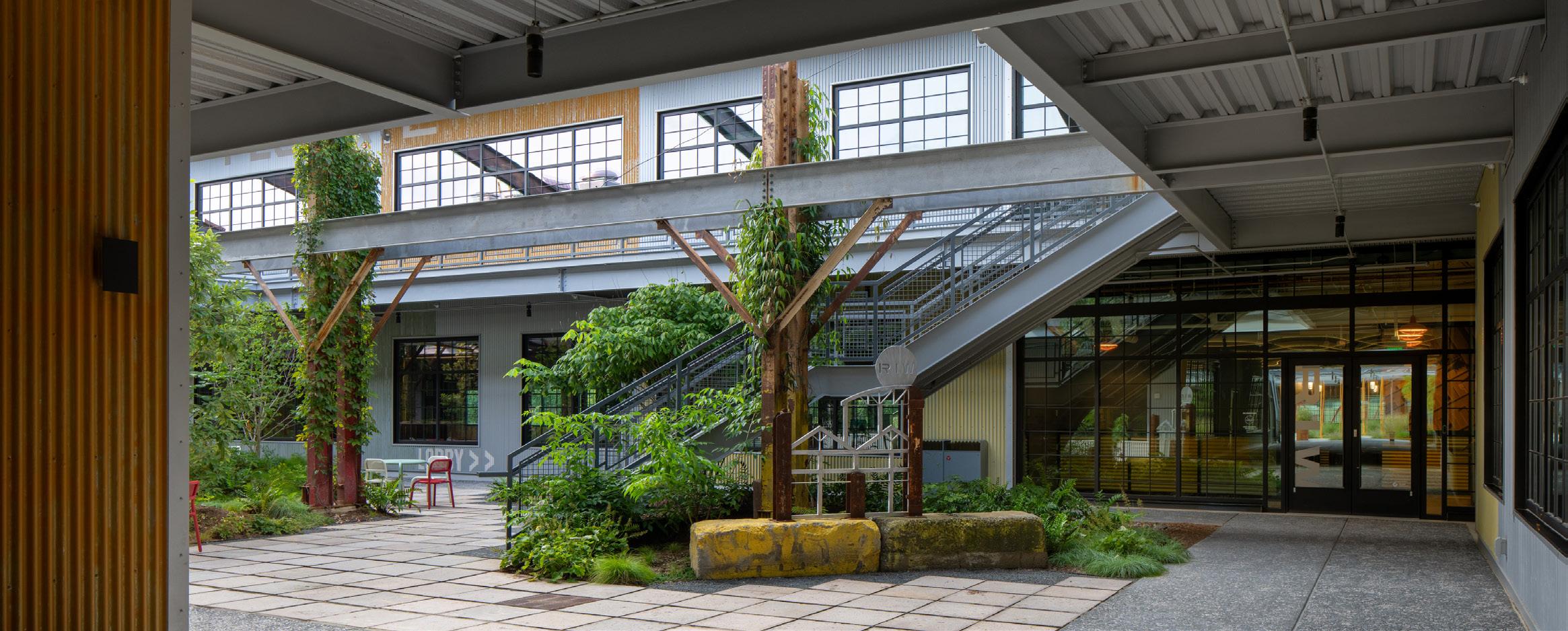
RALEIGH IRON WORKS RALEIGH, NC
Adaptive reuse is a great fit for a variety of existing building types. Examples include:
HISTORIC DOWNTOWN BUILDINGS
ALREADY INTEGRATED INTO THE CITY
FABRIC
These structures often come with unique community stories to tell, and are familiar and valued parts of a cohesive streetscape. As a bonus, construction materials may include highly desired elements such as textured brick walls, heart pine floors, ornate molding and trim, or old tin ceiling tiles that lend themselves well to an updated aesthetic. Historic downtown buildings are often of the right scale to be converted to coffee shops, small office buildings, or gallery spaces.
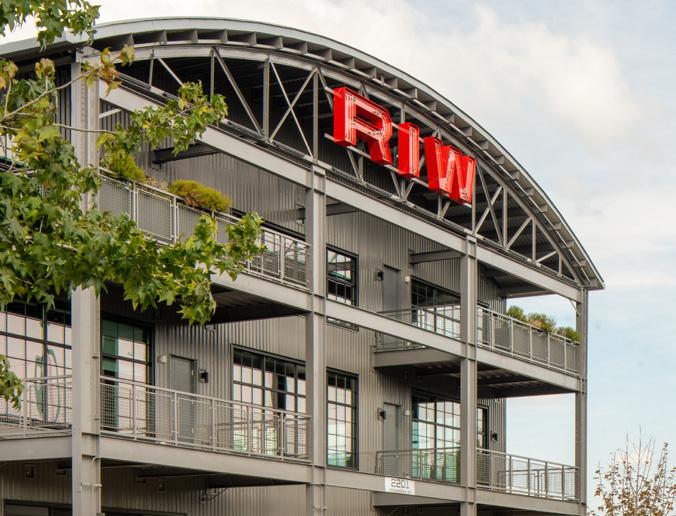
VACANT INDUSTRIAL BUILDINGS
These structures may be located outside of the downtown core, and as such tend to have larger footprints, higher ceilings, and flexible floor plates. Industrial buildings may be suited for reuse as a company headquarters or other large tenants. “Industrial chic” materials and elements can be salvaged and celebrated. Depending on the use, these properties may also come with opportunities (and challenges) of environmental remediation.
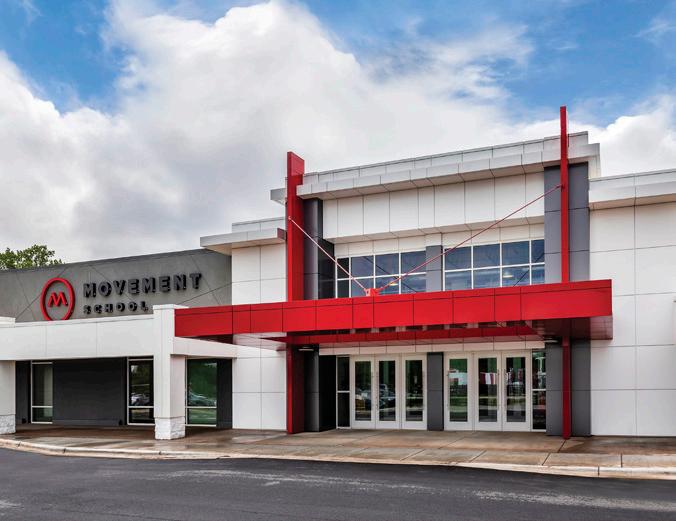
FADING “BIG BOX” STORES
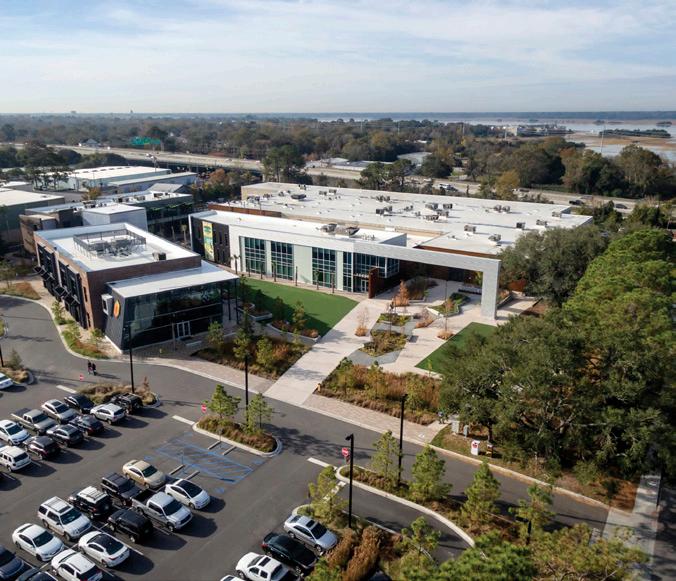
The rapid rise of the big box typology created a proliferation of large-scale structures built for economy of construction and ease of parking. When tenants vacate, these properties can become eyesores for the community. However, with large lots typically located near circulation arteries, refurbishing these structures can create new community anchors. With strategic interventions – new facades, interior courtyards to bring in natural light, or vast parking lots reclaimed for new landscape uses – these properties can support new educational, medical, office, or other functions. (The same principles apply to fading malls from the 1980s.)
The decision to reuse an old building or build new involves considering impacts on culture and community, cost, and the environment. Owners considering adaptive reuse will need to weigh priorities carefully and invest in due diligence. Not every building is ideal for reuse for every program or situation. However, when adaptive reuse is a viable option, the benefits can be substantial.
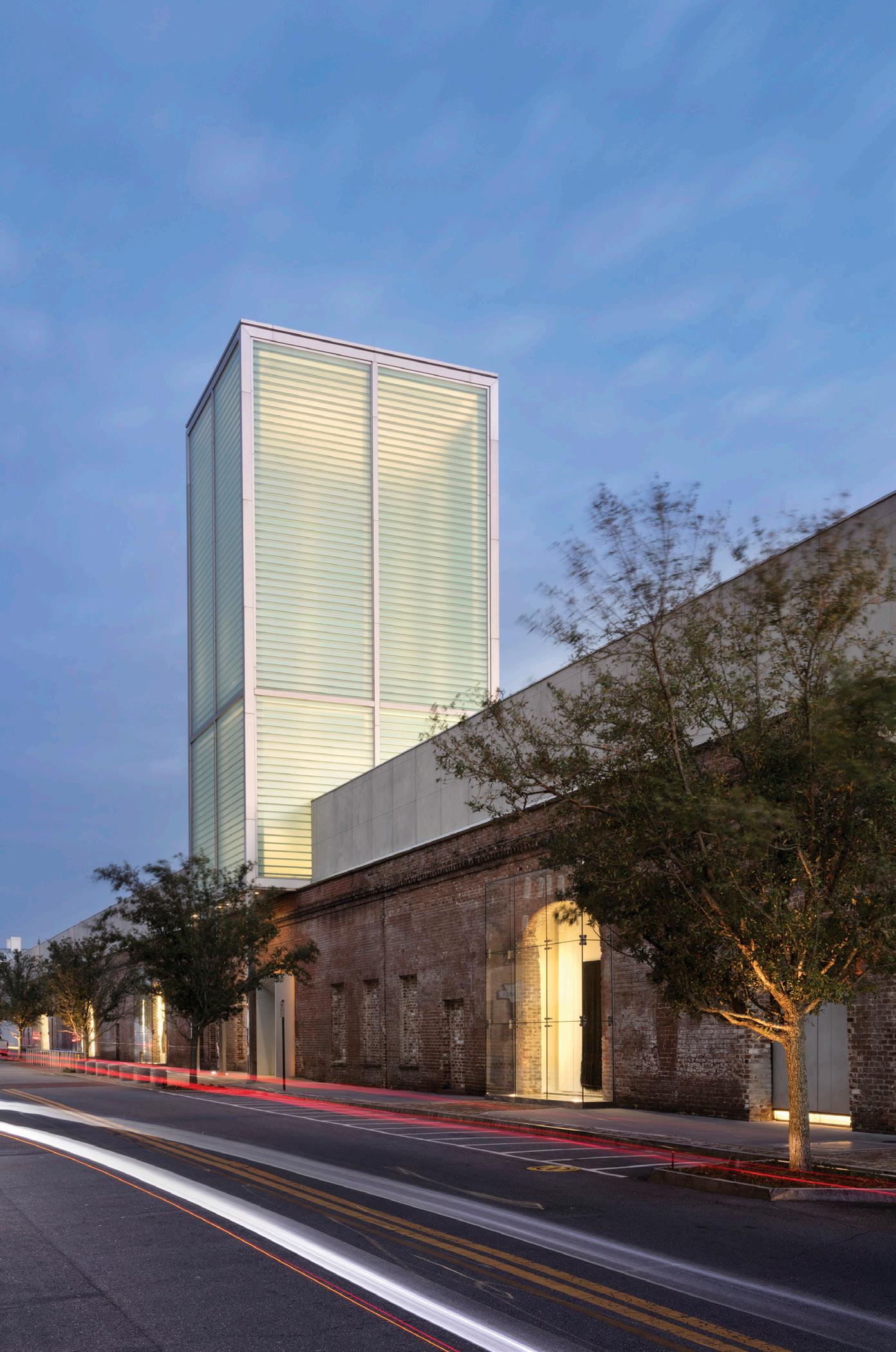
SAVANNAH
COLLEGE OF ART & DESIGN MUSEUM OF ART SAVANNAH, GA | RAILROAD DEPOT TO MUSEUM
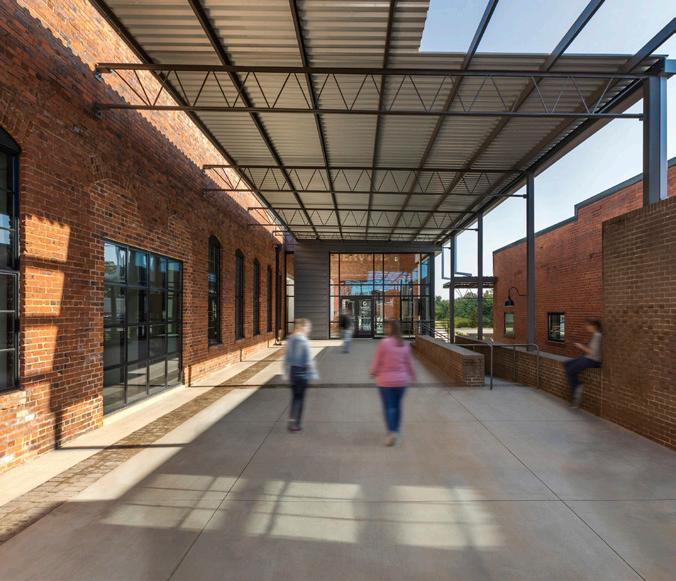
1 PACIFIC BOX & CRATE INDUSTRIAL TO MIXED-USE
GRACE CHURCH GREER CAMPUS CAR DEALERSHIP TO CHURCH
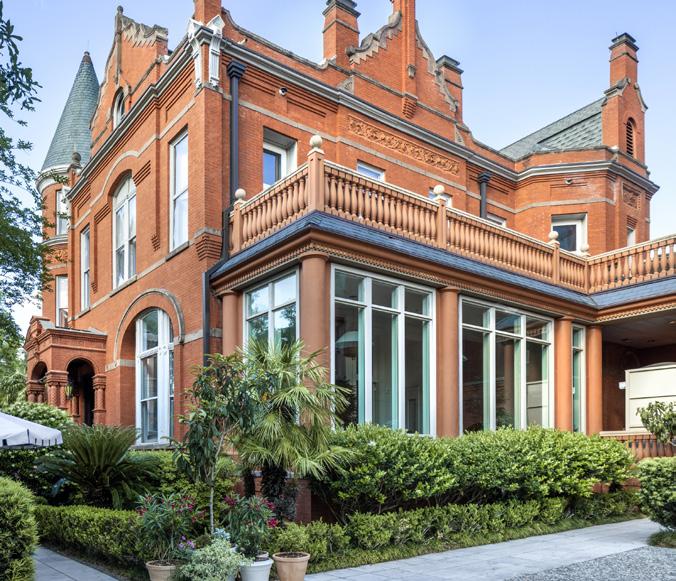
HOTEL BARDO HISTORIC MANSION TO HOTEL
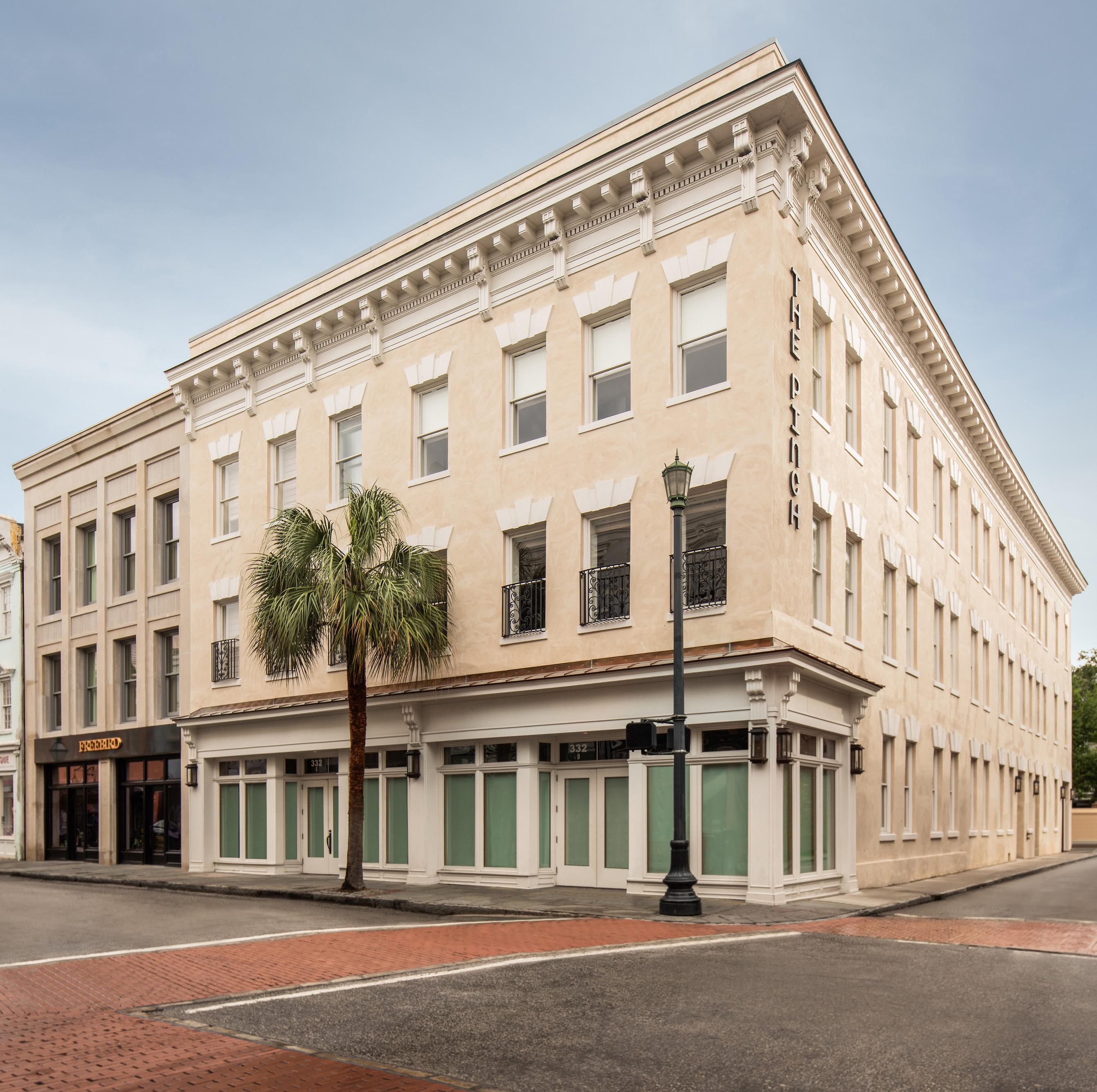
THE PINCH CHARLESTON, SC | RETAIL TO HOSPITALITY
Culture & Community Benefits
For better or worse, our buildings shape our communities. A building that is deeply connected to the story of a place, anchors a city block, or is beloved for unique architectural elements has real value to its neighborhood.
Such buildings contribute to the character of the public realm and may continue to serve the community with new uses. Conversely, a vacant or underutilized building may be a liability in its current state, creating unsightly or unsafe conditions. Through strategic adaptive reuse, even these dilapidated buildings can be transformed into new points of civic pride
Adaptive reuse projects can catalyze new economic development. In many cases, adaptive reuse opportunities coincide with high-value real estate. For example, in dense urban areas where available land is scarce, reclaiming an
existing building can take advantage of a desirable location already embedded within the community. In under resourced areas, transforming an outdated property for a new use can create a node for new commercial or residential uses nearby, building social equity. For business owners, finding an existing building with a strong story and unique character can be a differentiator to attract and retain talented employees or appeal to new customers.
Adaptive reuse projects can also provide exciting opportunities for design excellence. In many cases, older buildings such as former
warehouses or factory spaces were designed for maximum daylight and natural ventilation, which are highly desirable for modern uses. Mass timber structural elements, high ceilings, and flexible floor plates lend authenticity and character while providing maximum adaptability. Even the constraints of existing floor plates can drive creativity and innovation within the design process, yielding buildings that are rooted in the past but fit for contemporary functions.
Cost Implications
While it may seem like repurposing an existing building would yield automatic project cost savings, owners must balance potential savings with possible added costs to evaluate the true costs of the project.
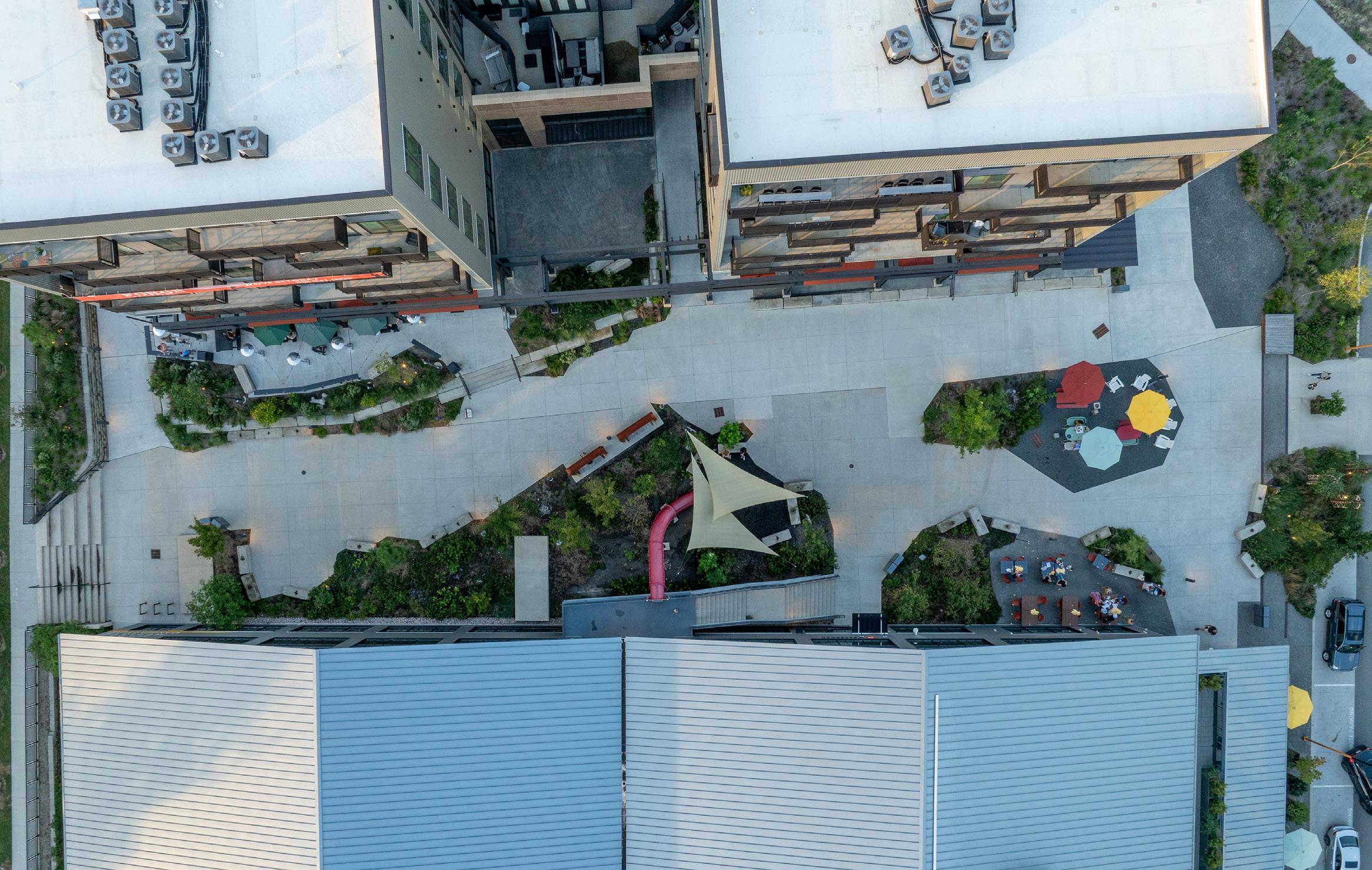
RALEIGH IRON WORKS RALEIGH, NC | INDUSTRIAL TO MIXED-USE
POTENTIAL COST SAVINGS Particularly in urban areas where real estate may be limited or costly, reuse of an existing building may prove less expensive than procuring an empty lot or demolishing an existing building.ii
Some projects may be eligible for local, state, or federal tax credits and incentives. For example, the Federal Historic Rehabilitation Tax Credit may provide up to a 20% tax credit over five years for qualifying projects.iii Other grants or tax credits may help to defray costs as well.
Reuse or salvage of existing building elements may significantly reduce materials costs. This may include structural components such as foundations, steel, or masonry walls; finishes such as wood flooring or millwork; or even furnishings and fixtures which can be refurbished for a new use.
Reusing an existing structure potentially increases speed to market. The faster a building can be occupied, the faster it can start turning a profit and providing a return on investment.
POTENTIAL ADDED COSTS In order to be cost effective, the existing building must suit program needs. If the layout doesn’t work for the intended purpose with minimal reconfiguration, substantial alterations to the floor plate may be expensive and time-consuming.
A thorough due diligence process is required to understand any project liabilities. Mold, asbestos, or soil contamination from previous uses may require substantial abatement costs as well as additional time in the schedule.
Adaptive reuse projects require a large contingency fund; selective demolition or other construction activities could uncover unforeseen conditions that impact the budget or schedule.iv
Before committing to the project, the owner needs to develop a deep understanding of the value of the property, including the “highest and best use” analysis that may impact lending and project funding.v
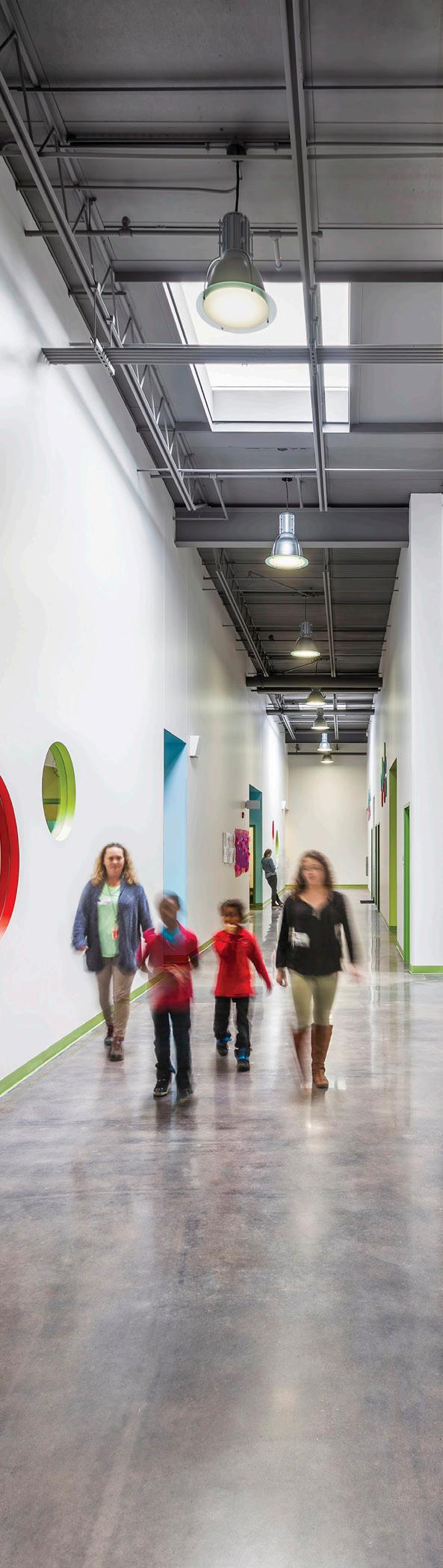
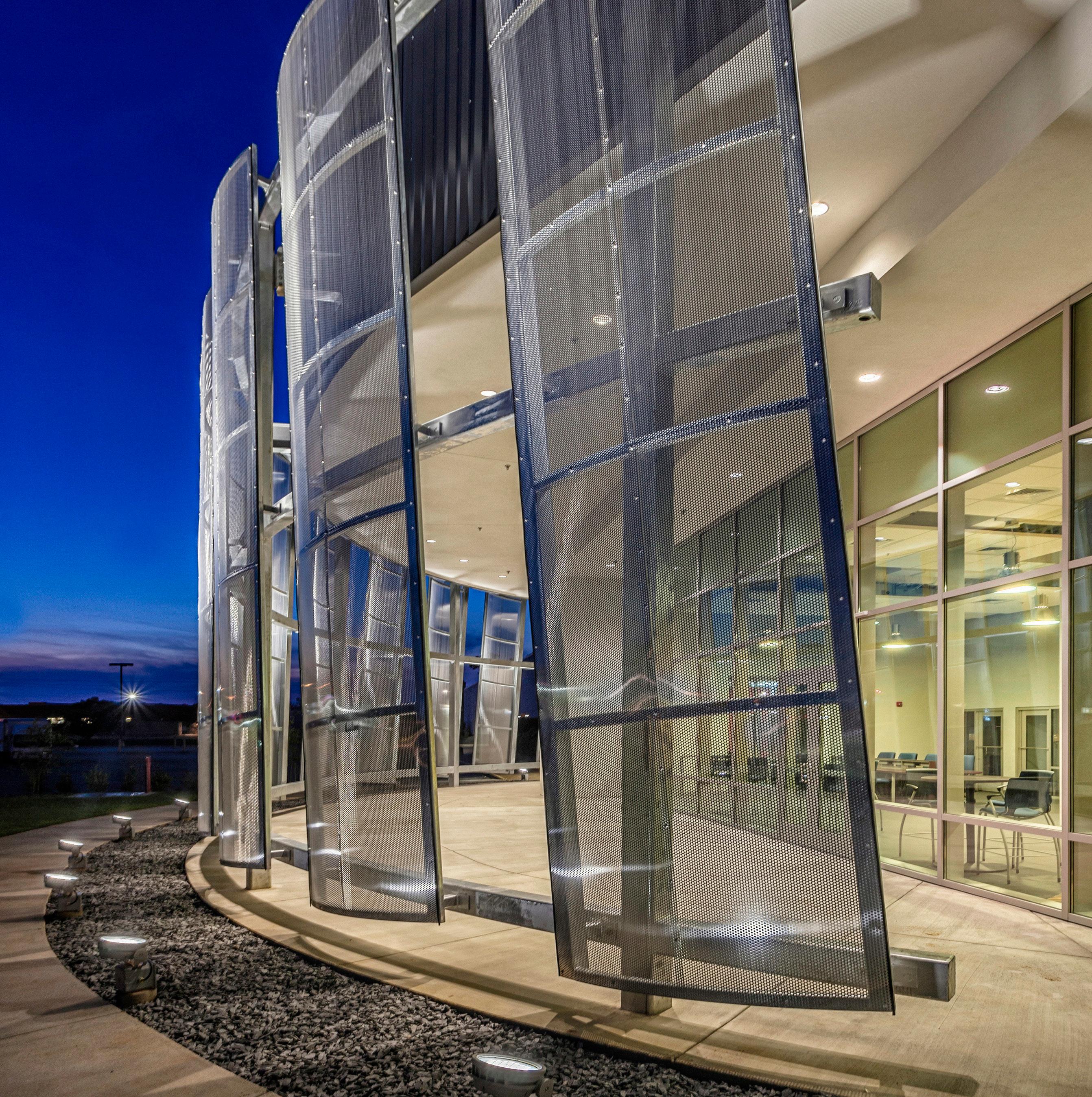
CENTRAL CAROLINA TECHNICAL COLLEGE
ADVANCED MANUFACTURING TRAINING CENTER
SUMTER, SC | RETAIL TO EDUCATION
Understanding Carbon
Understanding the carbon reduction impacts of adaptive reuse begins with understanding the difference between operational and embodied carbon.
Operational carbon is the carbon required to occupy a building over time and is closely tied to energy use. How much carbon will it take to illuminate, heat, and cool the building over its predicted lifespan? How much carbon is required to fuel plug loads and maintain the facilities? Operational carbon can be lowered significantly by smart design moves such as passive solar strategies, daylighting, energy-efficient fixtures, and high-performance mechanical equipment. Designing for operational carbon reductions across the built environment is a vital tool in mitigating climate change (and can save building owners a significant amount of money through reduced energy bills).
Embodied carbon, on the other hand, is the carbon required to construct a building. This calculation doesn’t begin once a material arrives onsite: each individual material must be
extracted, manufactured, packaged, shipped, installed, and eventually removed at the end of a building’s life. The structure of a building usually represents the biggest carbon impact. Concrete, the most carbon-intensive building material, often represents a substantial percentage of a project’s construction materials due to the weight of the foundation. Steel is also carbon intensive due to its high heat production process; masonry products must likewise be kiln-fired. Envelope materials, fixtures, and furnishings all come with their own carbon costs.
According to the Carbon Leadership Forum (CLF), 15% of all global greenhouse gas emissions are related to construction materials vi Every building component that can be reused takes advantage of the initial carbon investment and reduces the need for new carbon expenditures.
In reducing carbon in the built environment, both operational and embodied carbon are important. Understanding which strategies have the greatest impact can guide project decisions. If we consider a targeted carbon budget for each project, where can we save and where should we invest in order to reach project goals? One way to think about the adaptive reuse vs. new construction decision is analyzing the “crossover point.” For example, what interventions will be required to insulate, heat, cool, and operate the building economically and efficiently? How long will it take for the operational savings of a new energyefficient building to make up for the cost of the embodied carbon required to construct a building from the ground up?
Quantifying Carbon Impacts
Quantifying embodied carbon has become a core component of responsible building design because material extraction, manufacturing, transportation, installation and end-of-life processing all contribute to a project’s overall environmental impact.
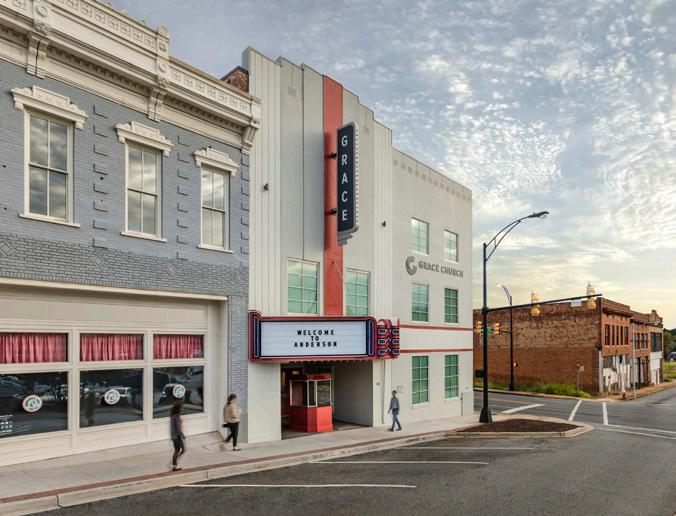
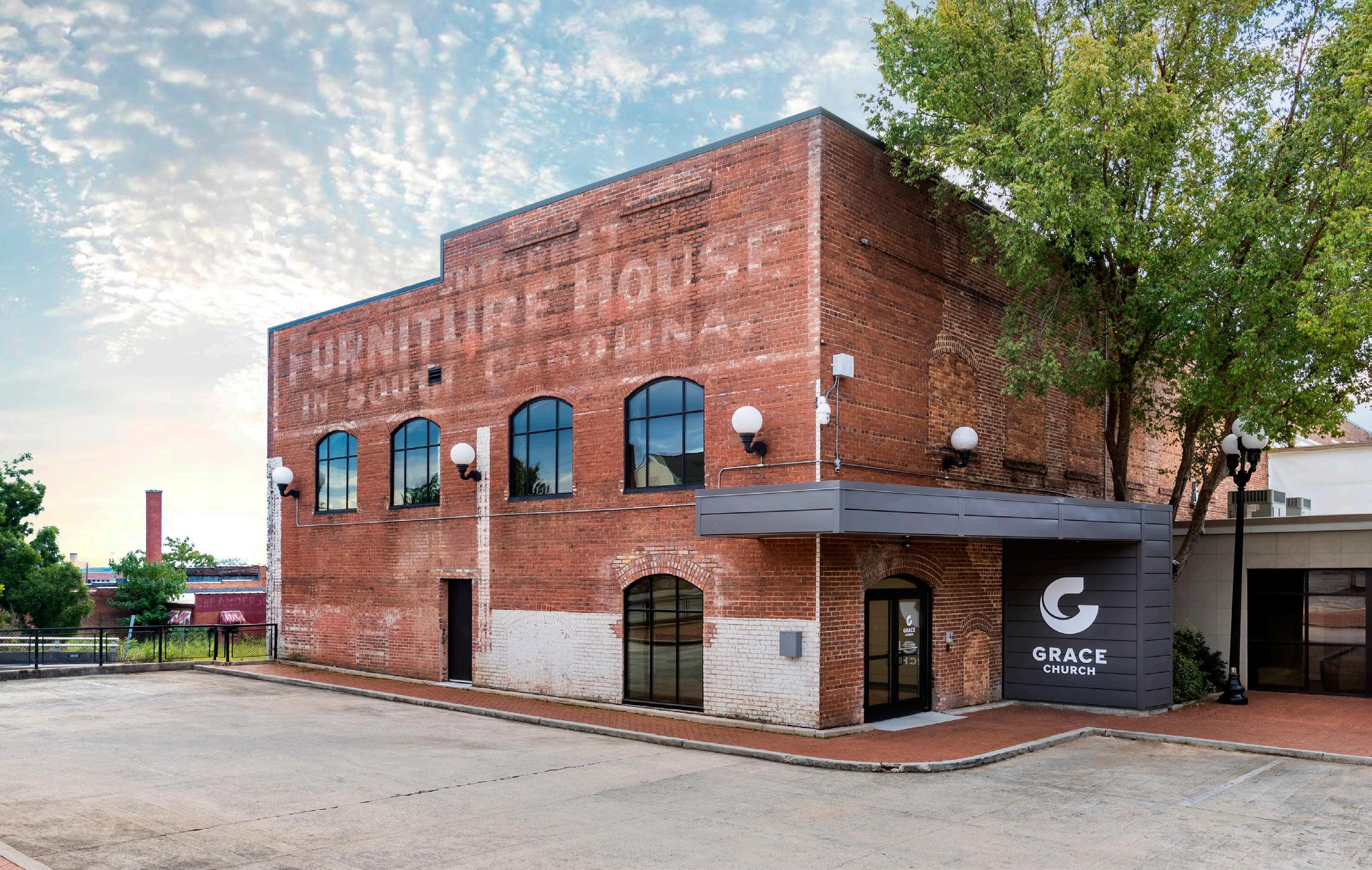
GRACE CHURCH ANDERSON ANDERSON, SC | THEATRE TO CHURCH
A Life Cycle Analysis (LCA) can help project teams measure the impacts of decisions for specific project scenarios.
LCAs provide the most comprehensive method for understanding these impacts across every stage of a material’s existence. By evaluating materials from cradle to grave, LCAs allow design teams to identify where emissions concentrate, compare alternatives, and make informed decisions that meaningfully reduce the carbon footprint of a project.
During the earliest phases of design, teams often work with limited information, yet these early choices can lock in a large share of total embodied carbon. In these moments, rapid assessment tools (such as the in-house carbon tracker created by engineering firm KPFF Consulting Engineers—a nationally recognized firm engaged by LS3P for this study) help approximate the impact of massing options, material selections and system types. As projects advance and data becomes more refined, industry platforms such as C.Scale offer intuitive visualizations that support communication with clients and collaborators. When detailed BIM models are available, LCA-specific tools including Tally and OneClick provide precise quantification by linking model components to established datasets and Environmental Product Declarations (EPDs). This progression from conceptual analysis to detailed
LCA keeps carbon considerations central to, and integrated throughout, the design process.
Life cycle thinking also highlights the importance of material longevity and reuse. Every additional year of a building component’s service life reduces the need for raw material extraction, processing, and transport. Studies indicate that demolishing a building results in significant carbon emissions, and that a new high efficiency building can take roughly sixty-five years to recover that carbon through energy efficiency. Demolition produces more than 90% of building related waste, underscoring the environmental value of retaining existing structures whenever feasible. Adaptive reuse leverages the embodied carbon already invested in a building
and often represents the most impactful decision available before new materials are even considered.
As climate goals tighten, reducing operational energy consumption will not be enough. Some building materials can store carbon over their lifespan, shifting the conversation from minimizing emissions to potentially increasing carbon storage where appropriate. LCAs allow design teams to quantify these opportunities and evaluate how material choices influence both near-term and long-term climate outcomes. By grounding decisions in transparent life cycle data, teams can align design intent, sustainability targets, and client priorities with clarity and confidence.
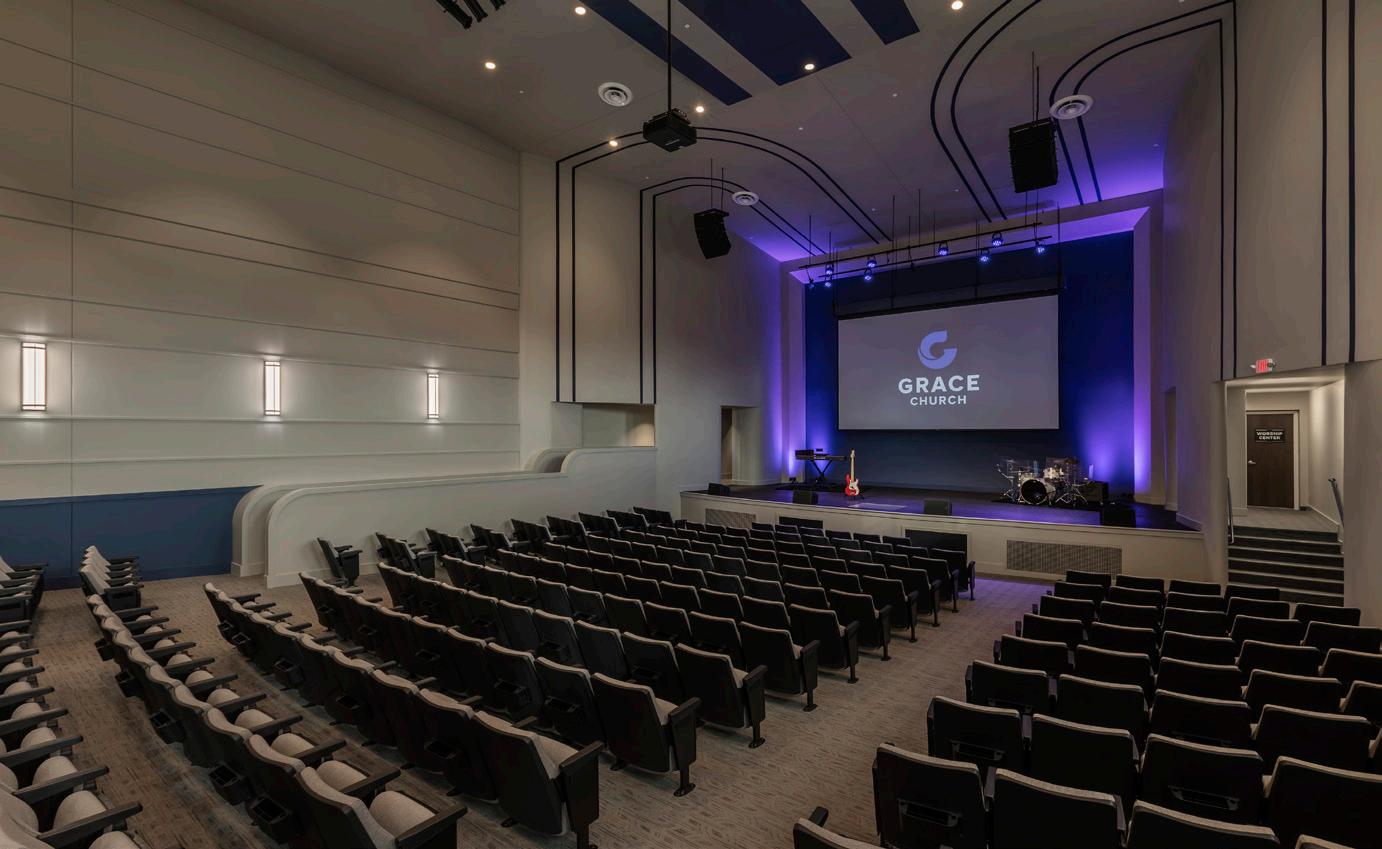
GRACE CHURCH ANDERSON ANDERSON, SC | THEATRE TO CHURCH
Additional Considerations
Remember that adaptive reuse doesn’t have to be all or nothing.
Maybe the foundation requires selective demolition, or vertical structural elements need to be replaced in some areas, or an addition is required to accommodate new functions. Even factoring in necessary new components or additions, every element of a building that can be reused reduces the embodied carbon footprint, and strategies can be tailored to each project. An LCA will help guide decisions about upfront costs, carbon impacts, and ROI. For example, energy efficiencies gained from re-skinning the building must be weighed against the cost and carbon cost of the materials required, and determining the crossover point is a helpful decision-making exercise.
Be sure that the existing building is appropriate for the intended new purpose.
A building with many interior columns might be difficult to reconfigure as a retail space, which needs longer clear spans for flexibility for merchandising and customer flow. A high-rise office building with deep floor plates may require substantial alteration to suit residential uses with a need for natural light and windows in living spaces. Former industrial buildings are among the easiest to reconfigure due to generous floor heights and minimal columns. Challenges to existing building reuse may include zoning; remember that a change in use type may require a rezoning application process that varies by city and may be time consuming.
Do your due diligence—but be prepared for surprises.
Unlike new construction on a cleared site, adaptive reuse comes with a degree of uncertainty. In addition to unforeseen issues that can be uncovered during selective demolition and construction, remember that working within an existing structure can create challenges in terms of maneuvering room, equipment, and staging.
Understand the relevant vocabulary.
Adaptive reuse is different from historic preservation. The Secretary of the Interior recommends different approaches for preservation, rehabilitation, restoration, and reconstruction.vii Adaptive reuse falls under rehabilitation, which is “the act or process of making possible a compatible use for a property through repair, alterations, and additions while preserving those portions or features which convey its historical, cultural, or architectural values.” The Rehabilitation Standards acknowledge the need to alter or add to a historic building to meet continuing or new uses while retaining the building’s historic character.” These definitions may come into play if a team is pursuing financing or tax credits.
While the decision to repurpose an existing building will be influenced by many factors, adaptive reuse stands out as a powerful strategy for sustainable development by offering substantial environmental, economic, and community benefits. By repurposing existing buildings, whether historic downtown structures, vacant industrial sites, or fading big box stores, communities can preserve cultural heritage, reduce carbon emissions, and often realize significant cost savings compared to new construction. The process leverages the embodied carbon already invested in a building, minimizing the need for new materials and the associated environmental impact. While adaptive reuse requires careful due diligence and may present unique challenges, its ability to catalyze economic development, foster an authentic sense of place, and support design innovation makes it a compelling choice for owners and designers committed to sustainability and community enrichment.
conclusion
Case Study
Raleigh Iron Works
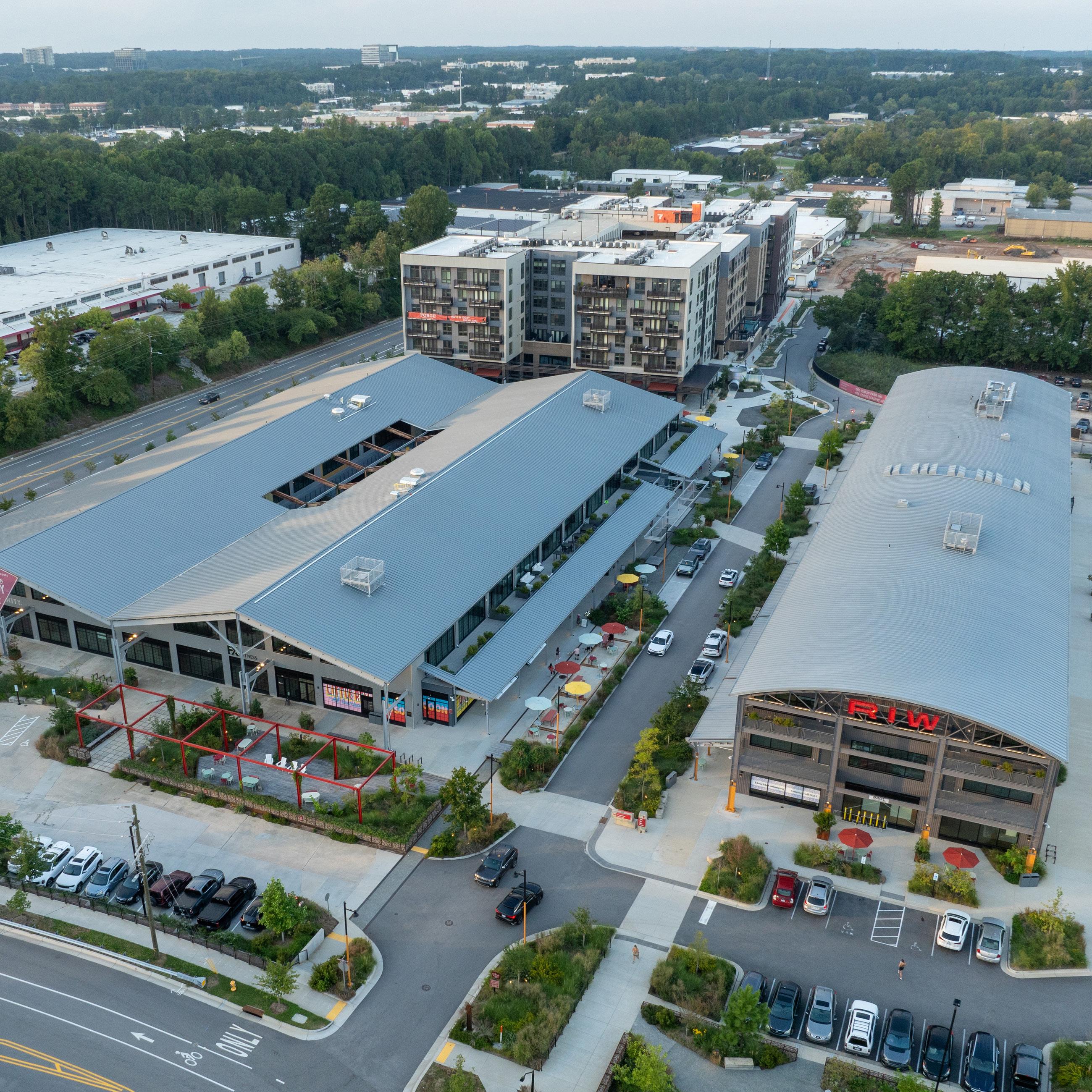
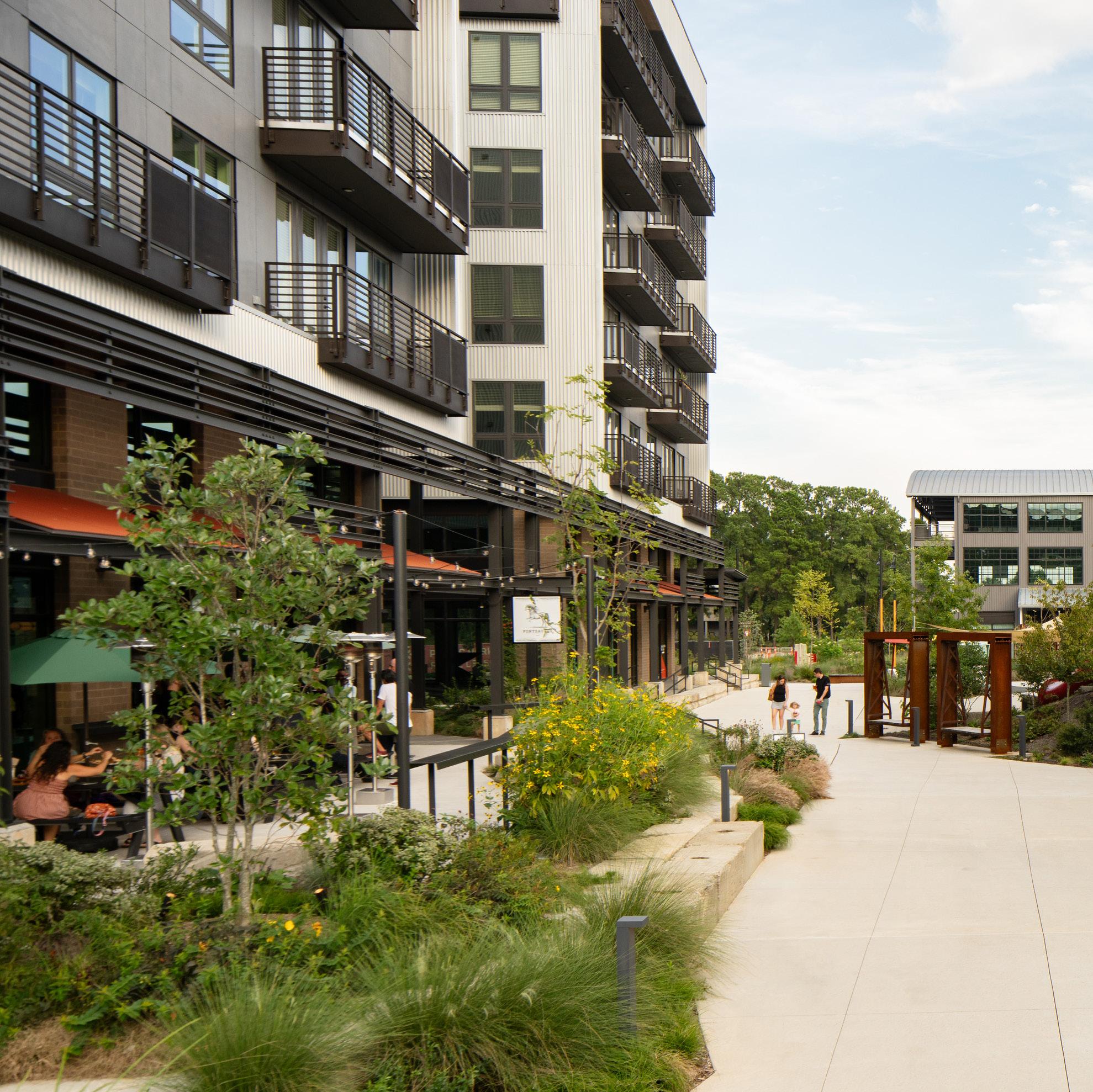
Raleigh Iron Works, a popular live/work/play destination in Raleigh’s Midtown district, is a hub of mixed-use activity. As the name suggests, however, there is more to this story; today’s local gathering spot was yesterday’s gritty industrial plant.
DEVELOPMENT PARTNERS Grubb
Ventures and Jamestown
DESIGN TEAM LS3P in association with S9 Architecture as Architect of Record (core and shell design of the office and retail buildings)
CONSULTANT TEAM Lynch Mykins
Structural Engineering; Atlantic Engineers, PA
CONTRACTOR Brassfield & Gorrie
RIW ACROSS THE
ERAS
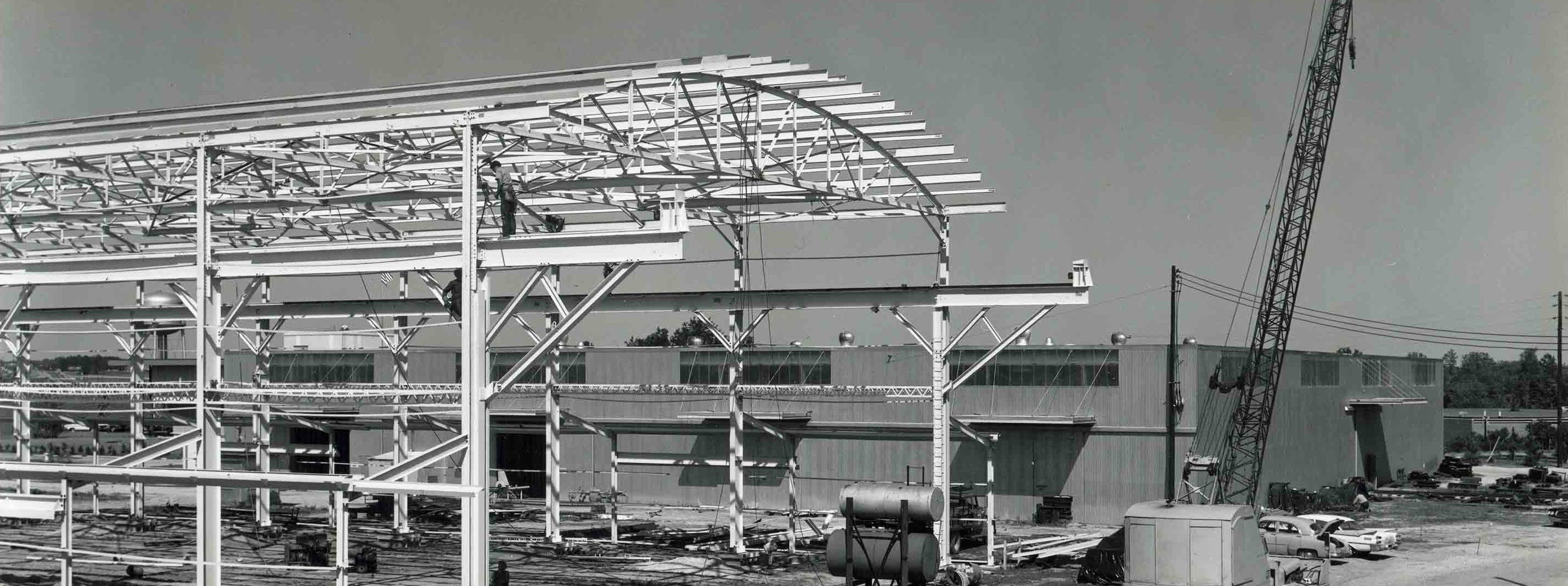
Before it featured office space, retail, restaurants, and apartments, the site was owned by Peden Steel, a prominent local steel manufacturer. The company moved to the site in 1956, and constructed a new building with two distinctive gables to house steel fabrication operations. A second structure, which dated back to the 1800s and was moved across town from another site, featured a bow truss roof and served as a welding shop.
At the time, the company’s location far northeast of downtown Raleigh was ideal for industrial uses. Due to the unique topography of the site, the buildings nestled a story below the welltraveled street above; dense vegetation further shielded the site from view. As the years passed, the site became grittier, the landscape grew wilder, and the manufacturing activity was downgraded to a recycling center.
Raleigh’s steady outward expansion over the decades brought new opportunities. The neighborhood, once at the city limits, was dubbed the “Midtown District.” Proximity to downtown activity and a wave of new investment made this area a central, easily accessible destination – ideal for a live/work/play development.
Grubb Ventures had already transformed a warehouse across the street from the Raleigh Iron Works site into the trendy “Dock 1053,” which houses a brewery, restaurants, retail, offices, and event space. The Grubb Ventures Team, along with partner Jamestown, saw the potential in the dilapidated, overgrown recycling center and launched an adaptive reuse transformation.
FROM RECYCLING TO UPCYCLING
The latest iteration of the site honors its history and character with an eye towards “restoring the past and forging the future.” From the beginning, placemaking was a key goal. The holistic design process began with a contextual analysis of the history of the buildings, and everything from the site design to the interiors to the signage and light fixtures became part of the project’s character and story.
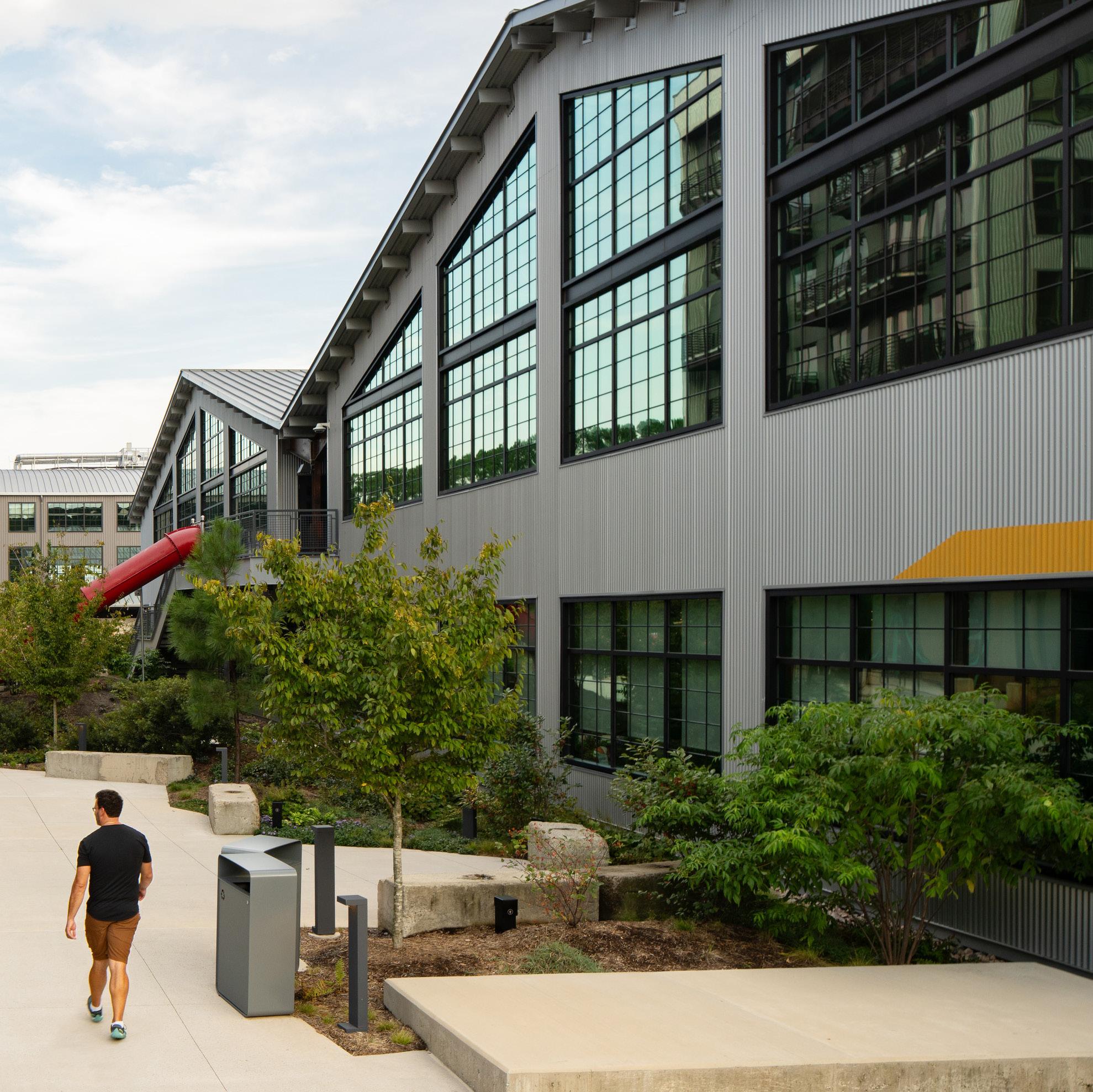
The project adapted the two original structures, dubbed the “Double Gable Building” and the “Bow Truss Building.” The design team added a second floor to the expansive Double Gable Building
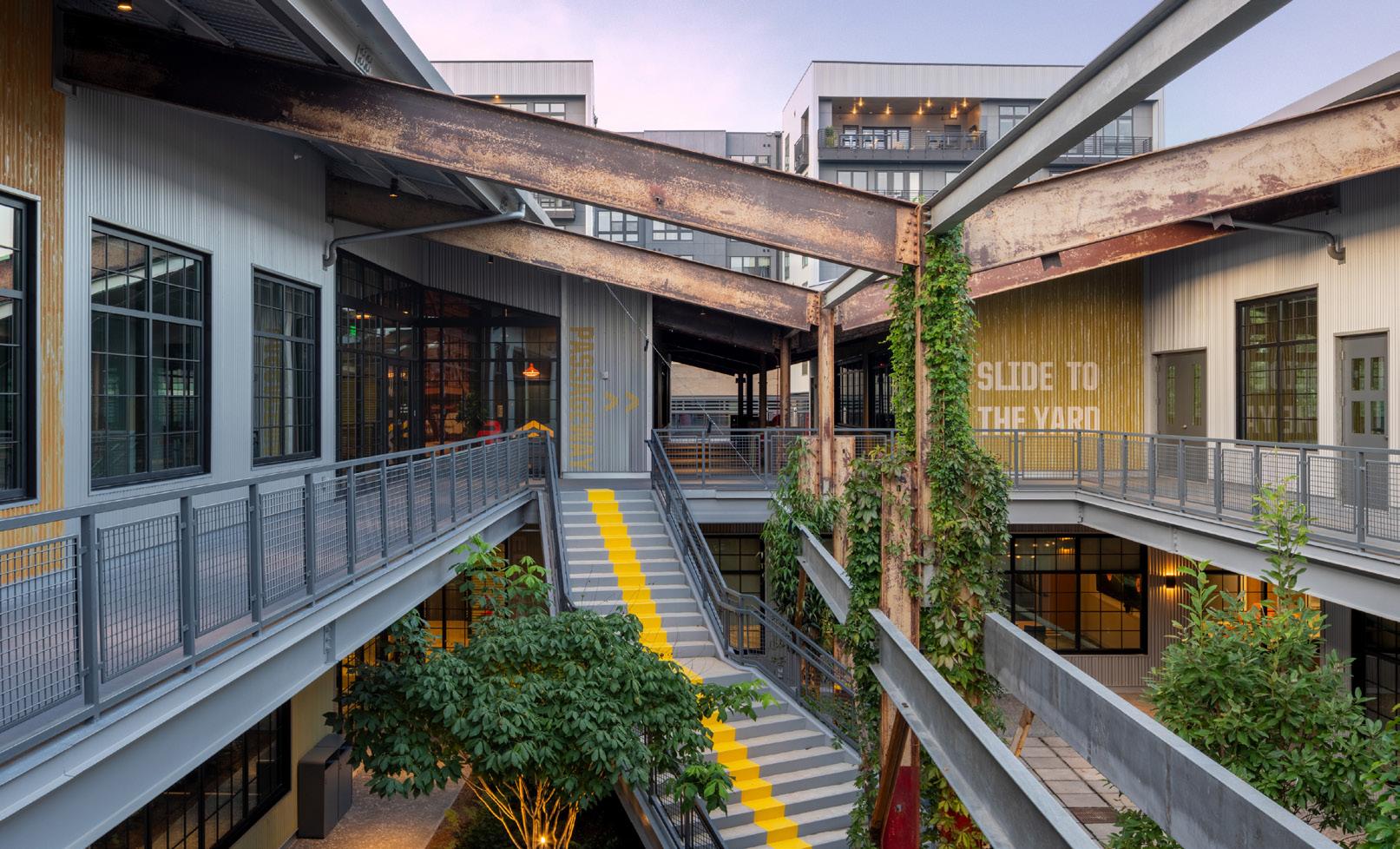
in which steel was once fabricated. The first floor now houses event space, restaurant, and retail, while the second floor is Class-A office space accessed by an exterior monumental stair. The design retains the architectural character of the exposed roof structure and replaced a lean-to addition with a terrace.
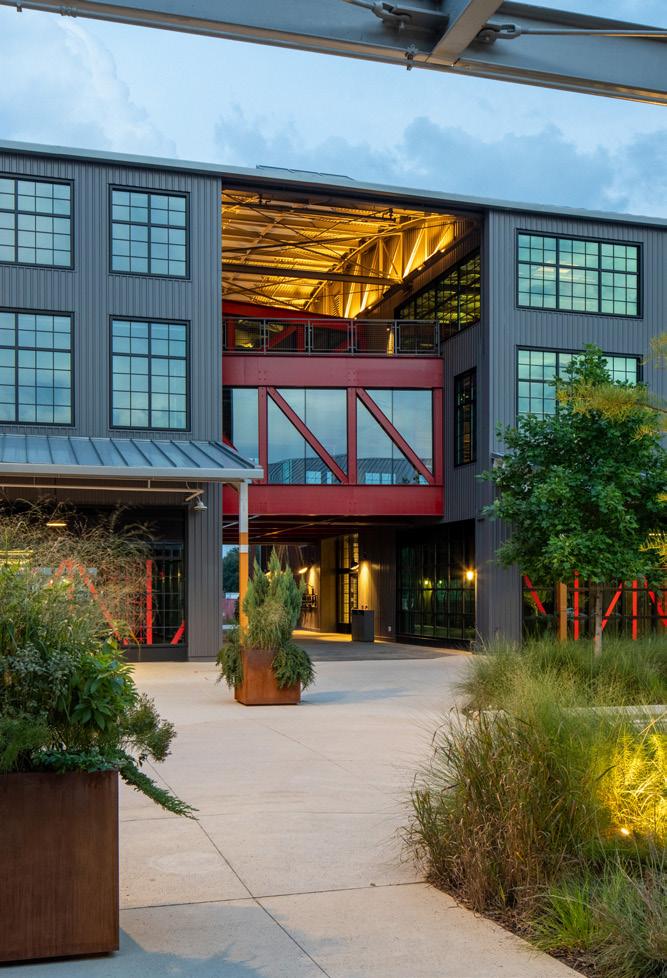
The team added two floors of office space to the Bow Truss Building, with retail on the ground floor. This building houses the main RIW lobby and features a partially exposed braced frame structure and a bridge connector through the center. A skylight fills the voluminous space with natural light.
Woven throughout the development are purposeful, varied outdoor spaces that support everything from individual work to events. Built-in fireplaces encourage multi-season use, and indoor courtyards and walkways likewise serve as gathering places and nodes of connection and community. For office workers, practical amenities such as generous bike storage, easy access to restaurants and services, a private courtyard building entrance, and open but secluded terraces are all enticing; the adult slide between the second-floor office and the plaza, however, offers pure fun. Installations by local artists animate the buildings, inside and out.
MEASURING SUCCESS In addition to the “wow” factor of the development, its sustainability is a huge point of pride. The decision to re-use the existing buildings greatly reduced the embodied carbon of the project as compared to new construction.
When compared to the median embodied carbon intensities (as measured by kgCO2eq/ft2) for new buildings providing program equivalent to the renovations, the Double Gable Building resulted in an approximate 40% reduction in embodied carbon, or 510,000 kgCO2. The Bow Truss Building surpassed even those savings and resulted in a nearly 75% reduction in embodied carbon, or 2,075,000 kg CO2. (Note, both of these figures rely on embodied carbon intensities provided by the CLF Benchmark Explorer and include only the embodied carbon savings of the building structure).
To help put the adaptive reuse impacts in perspective, the combined embodied carbon savings from the two buildings —2,585,000 kg CO2—is comparable to the carbon sequestration power of 2,583 acres of forest land for a year. It’s also equivalent to saving the carbon generated byviii:
6,582,856 miles of driving 603 gas-powered cars for one year
208,988,909 smartphone charges One year of energy consumption for 347 homes
2,585 round-trip transcontinental flights
The project achieved the rigorous LEED-ND v4 Gold standard, the first development in North Carolina to do so and one of only eleven in the nation at the time. Its proximity to public transit, an emphasis on pedestrian activity, innovative design, and green infrastructure all contributed to the high level of certification.
iGlobal Wellness Institute. “What Is Wellness?” Global Wellness Institute. Accessed September 24, 2025. https:// globalwellnessinstitute.org/what-is-wellness/.
iiNational Trust for Historic Preservation. “Making the Case for Adaptive Reuse.” Saving Places. Accessed November 18, 2025. https://savingplaces.org/stories/ making-the-case-for-adaptive-reuse.
iiiForbes Real Estate Council. “Nine Adaptive Reuse Considerations Property Owners Should Know.” Forbes. October 26, 2020. https://www.forbes.com/councils/ forbesrealestatecouncil/2020/10/26/nineadaptive-reuse-considerations-propertyowners-should-know/.
ivInternal Revenue Service. “Rehabilitation Credit.” IRS.gov. Accessed November 18, 2025. https://www.irs.gov/businesses/ small-businesses-self-employed/ rehabilitation-credit.
vNAIOP. “Insights: Adaptive Reuse.” NAIOP. Accessed November 18, 2025. https://www.
naiop.org/insightsadaptivereuse. https:// www.naiop.org/insightsadaptivereuse
viForbes Real Estate Council. “Nine Adaptive Reuse Considerations Property Owners Should Know.” Forbes. October 26, 2020. Accessed November 18, 2025. https://www.forbes.com/sites/ forbesrealestatecouncil/2020/10/26/nineadaptive-reuse-considerations-propertyowners-should-know/?sh=15acc899633f.
viiU.S. Environmental Protection Agency. “CMORE.” EPA.gov. Accessed November 18, 2025. https://www.epa.gov/greenerproducts/ cmore.
viiiNational Park Service. “About Us.” NPS.gov. Accessed November 18, 2025. https://www. nps.gov/orgs/1739/index.htm.
ixU.S. Environmental Protection Agency. “Greenhouse Gas Equivalencies Calculator.” EPA.gov. Accessed November 18, 2025. https://www.epa.gov/energy/ greenhouse-gas-equivalencies-calculator.
citations



Senior Associate Katherine Ball, AIA, LEED AP, serves as LS3P’s Practice Research Strategist. Based in the Raleigh office, Katherine guides research efforts that elevate our work in service to our clients and communities. Katherine earned a Master of Architecture at NC State University’s College of Design and a Bachelor of Arts in English from Wake Forest University. Her architectural experience includes programming, design, and construction administration for civic clients; her previous professional experience is in public education.
KPFF’s Chad Simms, PE, SE, LEED AP BD+C, is a Senior Structural Engineer with eight years of experience delivering efficient, coordinated solutions that support long-term building performance and environmental responsibility. Chad brings a thoughtful, collaborative approach to each project, with a focus on clear communication and structurally efficient systems that reduce material use while meeting project goals. An embodied carbon champion within KPFF, he helped launch the Carbon Leadership Forum Ohio Regional Hub, contributing to industry conversations around lowcarbon structural systems and practical pathways to decarbonization. He is valued by project teams for his steady leadership, strong relationships, and commitment to aligning technical decisions with client priorities and sustainable outcomes.
KPFF Birmingham Team Lead, Associate Nathaniel Hardy, PE, SE, brings enthusiasm, diligence, and specialized expertise to his projects. Starting his career with KPFF on the West Coast, he relocated and now leads KPFF’s office in Birmingham, Alabama. Nathaniel has acquired extensive experience in several key areas throughout his time at KPFF, including high-rise construction, various mixed-use projects, mass timber construction, and design of buildings exposed to extreme loading conditions (including hurricanes, tornadoes, earthquakes, and blast loading). Additionally, Nathaniel and his team have used Life Cycle Analyses (LCAs) to help owners make conscious, sustainable design decisions. His thoughtful approach and technical versatility continue to drive successful outcomes for clients and project teams alike.
contributors