



VIBES PODCAST VIBES PODCAST VIBES PODCAST



Discover more Discover more about the about the people, places people, places & events in & events in Scottsdale. Scottsdale.



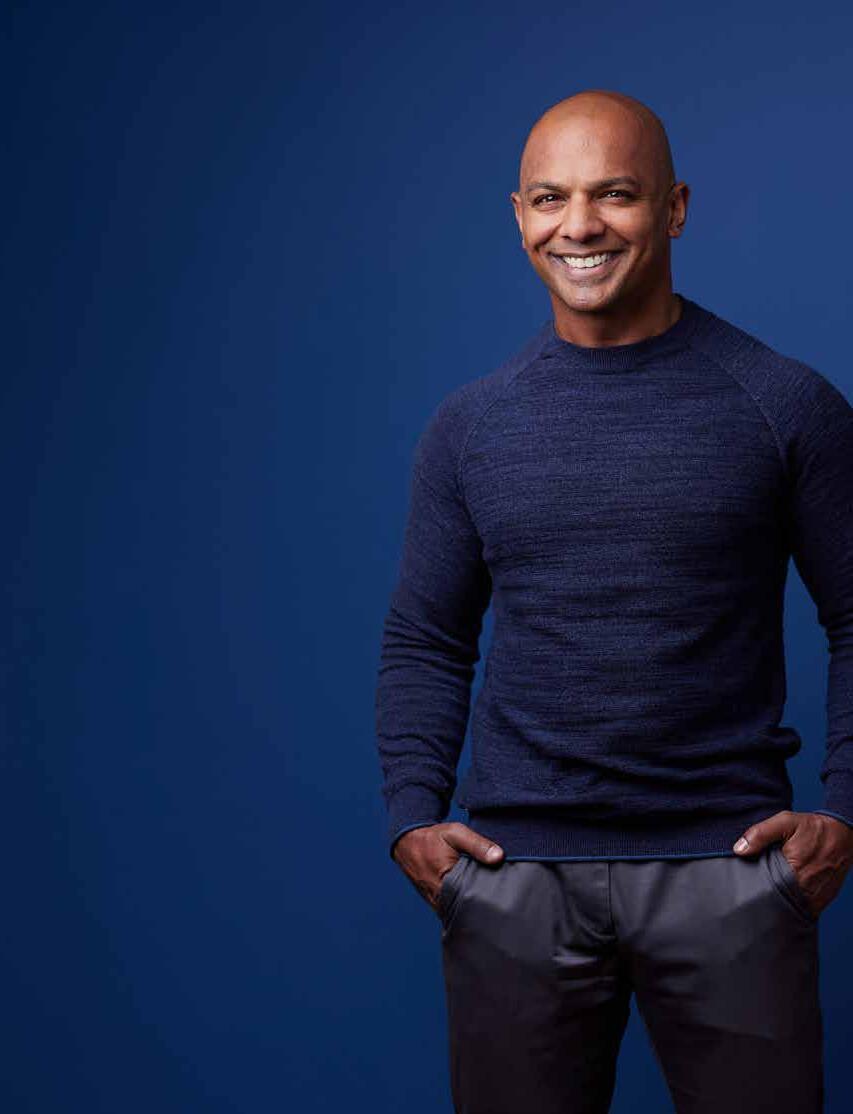
Gagandeep “Gaugs” Singh, M.D. Chief of Surgery and Medical Director of Surgical Operations, City of Hope Phoenix

Pursuing cancer cures at the speed of life. City of Hope’s outcomes exceed national standards. That’s groundbreaking science you want on your side. As one of the nation’s largest and most advanced cancer research and treatment organizations, a cancer free future is fueled by hope.
Make an appointment now. cityofhope.org/phoenix
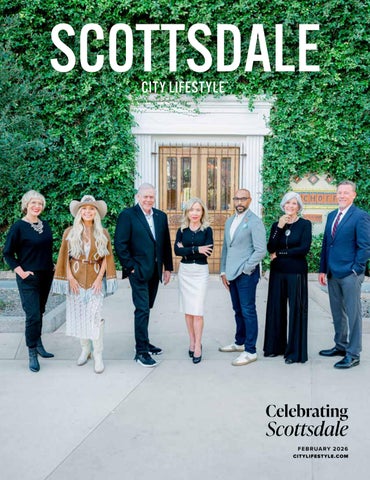
Scottsdale has always been more than a place—it’s a vision shaped by bold leadership, deep roots, and an unwavering sense of community. As we celebrate the city’s 75th anniversary in 2026, this Love Local issue honors the people, traditions, and moments that have defined Scottsdale’s past while continuing to shape its future.

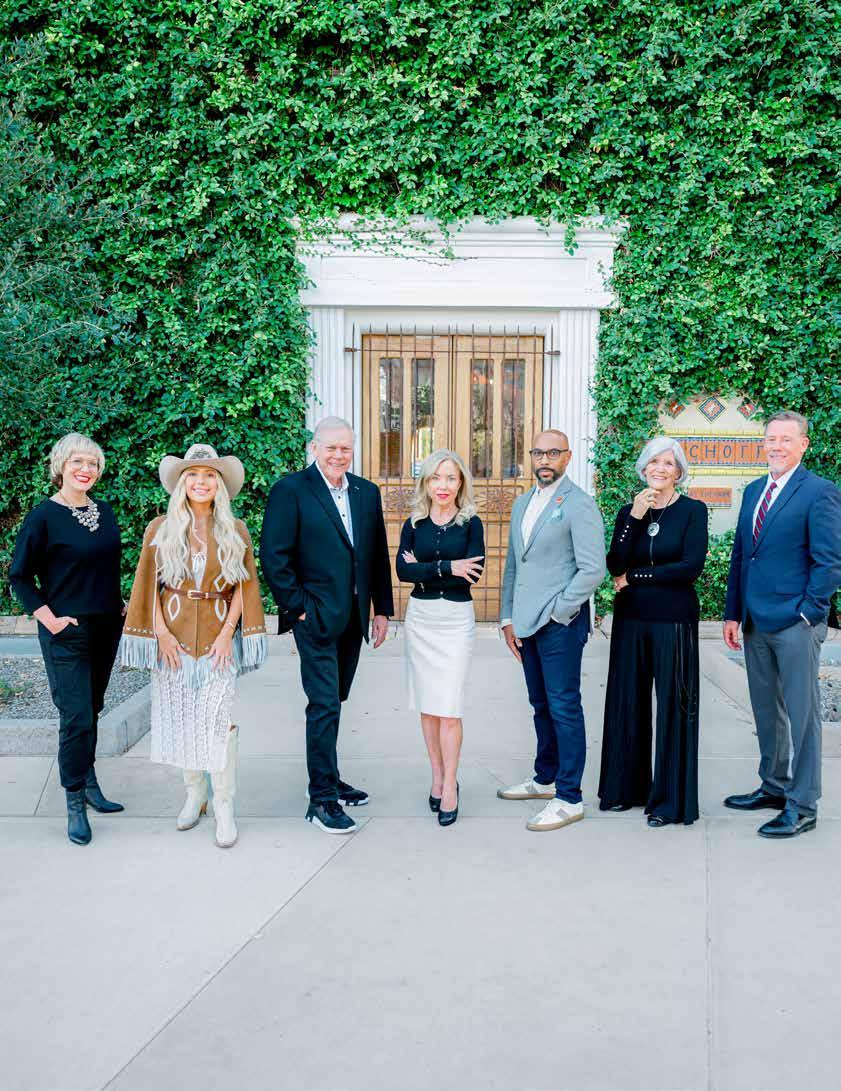
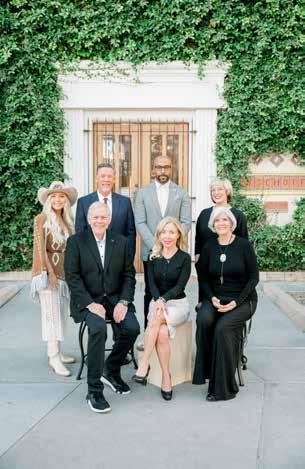
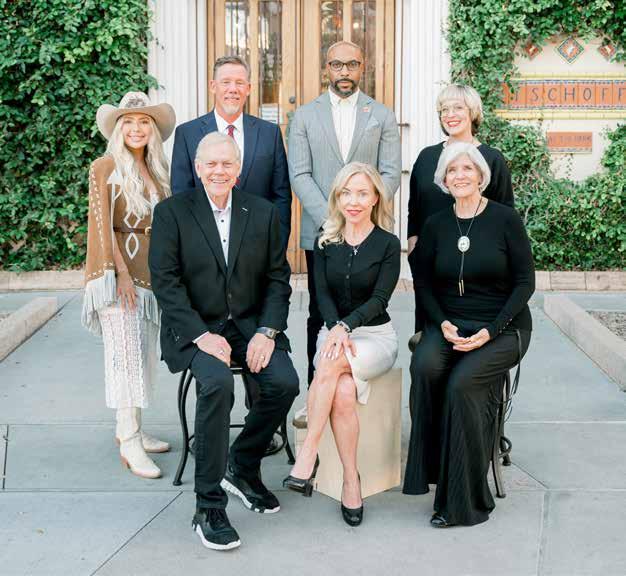
Our cover story spotlights seven individuals whose influence has helped guide Scottsdale’s evo lution—from civic leadership and iconic institutions to business and philanthropy. Their stories reflect the spirit that has made Scottsdale a city known not only for its beauty but also for its ambition and heart.
Throughout this issue, we revisit the traditions that give Scottsdale its character: the iconic restaurants and dishes we return to time and again, the legacy of the Scottsdale Arabian Horse Show, and the leadership programs investing in the city’s next generation of changemakers. You’ll also find a nod to one of our most beloved modern traditions— the Phoenix Open—with style inspiration fit for the fairways and beyond.
As we look back on 75 remarkable years, we’re reminded that Scottsdale’s story is still being written—by those who lead, those who serve, and those who simply love this city enough to invest in it every day.
Here’s to honoring where we’ve been, celebrating where we are, and embracing what’s next.
And to you—thank you for being part of our journey to share the stories of our incredible city month after month.
Happy 75th, Scottsdale!
Yours,

MICHELLE GLICKSMAN, EDITOR
February 2026
PUBLISHER
Alicia Haygood | alicia.haygood@citylifestyle.com
EDITOR
Michelle Glicksman
michelle.glicksman@citylifestyle.com
ACCOUNT MANAGER
Faith Morello | faith.morello@citylifestyle.com
CONTRIBUTING WRITERS
Alison Bailin Batz, Gabby De La Rosa, DeAnna DuPree, Joan Fudala
CONTRIBUTING PHOTOGRAPHER
Danielle Muccillo
CEO Steven Schowengerdt
President Matthew Perry
COO David Stetler
CRO Jamie Pentz
CoS Janeane Thompson
AD DESIGNER Rachel Otto
LAYOUT DESIGNER Andi Foster
QUALITY
SPECIALIST Megan Cagle


Learn how to start your own publication at citylifestyle.com/franchise.

Once reserved for the world’s elite- from Kobe Bryant to Alex Rodriguez- the groundbreaking Regenokine Program is now available locally with Dr. Ashu Goyle, one of only a few U.S. physicians trained and approved to perform the procedure, and the only provider in Arizona.
Developed in Germany, this advanced treatment isolates powerful proteins that calm inflammation, protect joints, and promote natural healing helping patients return to work, travel, or train the very next day, often without surgery.
At Integrated Spine, Pain & Wellness, Dr. Goyle combines Cleveland Clinic-level expertise with a personalized, restorative approach to pain relief.
His mission: move patients beyond pain and back to life.

Curious if you’re a candidate?
Call 480-660-8823 or visit ispwscottsdale.com to schedule your consultation.
Ashu Goyle | Integrated Spine, Pain & Wellness


Scottsdale
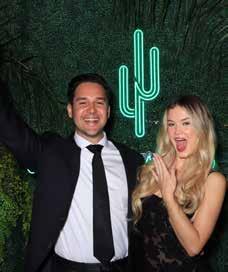
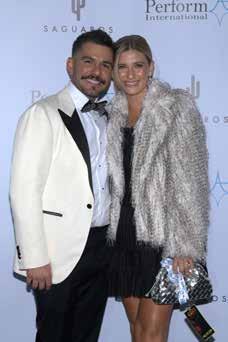

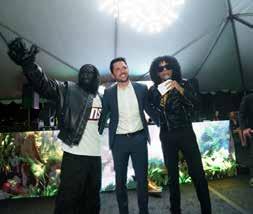
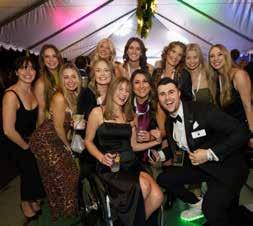
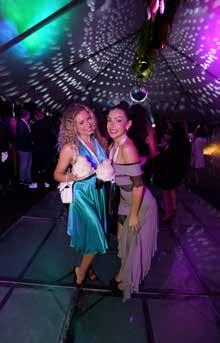
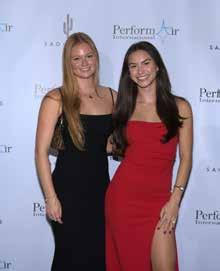
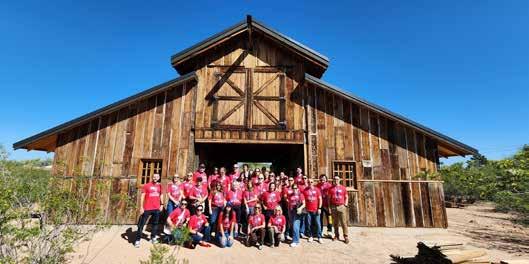
1-7: The Saguaros’ Niteflite Golf & Gala fundraiser raised $1.37 million over the two-day event. All proceeds from Niteflite benefited Saguaros Children’s Charities, which supports dozens of nonprofits that serve Arizona children. Photography courtesy The Saguaros
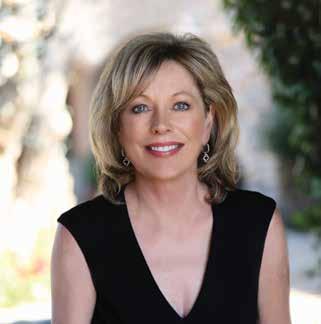





If there is one sentiment I have returned to time and again in these pages, it is my deep affection for Scottsdale. Never has it felt more fitting to say so than now, as we celebrate the 75th anniversary of this extraordinary city.
As a relatively newer resident, it’s almost impossible to imagine what life here looked like 75 years ago. From the early days of Main Street to the rise of North Scottsdale and the development of the 101, the city has continually evolved. Yet even as Scottsdale has grown in size, sophistication, and global recognition, its soul remains unchanged. The charm, character, and sense of place that drew people here decades ago still define it today.
This issue is dedicated to one simple purpose: celebrating Scottsdale. From our powerful cover featuring community game changers, to stories that trace our rich history, such as the legacy of Arabian horses, to the remarkable evolution of our culinary scene, these pages reflect a city that is both storied and forward-looking. Scottsdale is, quite simply, exceptional.
It is my hope that as you turn these pages, you discover something new, or reconnect with something familiar, and gain a deeper appreciation for the place we call home. Here’s to honoring the past, celebrating the present, and looking ahead with pride.
Cheers to 75 years of Scottsdale!
Alicia Haygood Owner/Publisher

STORIES FROM THE PEOPLE WHO KNOW IT BEST
ARTICLE BY MICHELLE GLICKSMAN | PHOTOGRAPHY BY DANIELLE MUCCILLO
As Scottsdale celebrates its 75th birthday, there’s no better moment to reflect on the people who have helped shape the city’s past, present, and future. For our Love Local issue, Scottsdale City Lifestyle sat down with several of our top leaders, visionaries, and community champions— from longtime public servants and cultural stewards to business icons and creative entrepreneurs—each offering a personal perspective on how Scottsdale has evolved and what continues to make it extraordinary. Their stories reveal a city defined not just by growth and glamour, but by deep civic pride, philanthropy, creativity, and an enduring commitment to community.

Mayor, City of Scottsdale
WHAT IS THE BIGGEST CHANGE YOU’VE SEEN IN SCOTTSDALE OVER THE YEARS?
I grew up here, so I’ve seen Scottsdale transform from a quiet desert town into a vibrant, world-class city. What stands out to me is how we’ve managed that growth while keeping our sense of community and natural beauty intact. Every time I walk through Old Town or visit the Preserve, I’m reminded of how important it is to protect what makes Scottsdale special.
WHAT IS THE ONE CONTRIBUTION TO THE CITY THAT YOU’RE MOST PROUD OF?
I’m most proud of creating the Citizen Budget Review Commission. It was important to me that residents have a real voice in how we allocate resources and prioritize spending. Growing up here, I learned that Scottsdale thrives when government and community work hand in hand. This commission ensures transparency and accountability, and it reflects my belief that the best ideas often come from the people who call Scottsdale home.
WHAT IS ONE THING PEOPLE WOULD BE SURPRISED TO LEARN ABOUT YOU?
I have been known to risk my life to save a stray animal, having done so numerous times. But surprisingly, I suffer from a fish phobia!
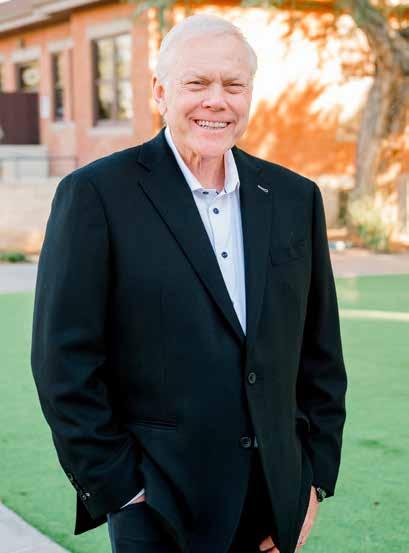
Chairman & CEO, Barrett-Jackson Auction Company
WHAT IS THE BIGGEST CHANGE YOU’VE SEEN IN SCOTTSDALE OVER THE YEARS?
My family and I have been in Scottsdale since the 1960s, and for over five decades, I’ve seen Scottsdale evolve from a quiet Western town into a sophisticated urban center with a diversified economy, significant population growth, and a thriving tourism industry. I am extremely proud that the Barrett-Jackson auction has been a key driver in this transformation. It’s been a privilege to work with the city to expand WestWorld and see the auction evolve into a world-renowned automotive lifestyle event that attracts international visitors, supports the local economy, and helps cement the city’s reputation as a luxury destination.
WHAT IS THE ONE CONTRIBUTION TO THE CITY THAT YOU’RE MOST PROUD OF?
Our company has a long history of giving back to the community, and I am incredibly proud that BarrettJackson’s legacy began with a philanthropic vision. Before we officially became an auction house in 1971, my parents—Nellie and Russ Jackson—and Tom Barrett held a charity car show in the late 1960s called the Fiesta de los Autos Elegantes. What started as a modest fundraiser to buy books for Scottsdale’s new library and support the local arts center proved so successful that it paved the way for our very first collector car auction. Today, we honor that history by auctioning charity cars at every event, a tradition that has allowed us to raise over $164 million to date for various nonprofit organizations.
WHAT IS ONE THING PEOPLE WOULD BE SURPRISED TO LEARN ABOUT YOU?
People might be surprised to know that I still get my hands dirty. Restoring a lot of my own personal cars isn’t just a hobby; it’s my passion and like therapy to me. I love performing the metal work and painting the cars. Along with my team, I’ve restored dozens of cars, including unique Shelby prototypes like Little Red and the Green Hornet, as well as my 1948 Delahaye that scored 100 points at the Classic Car Club of America Grand Classic. I even had the privilege of learning pinstriping skills from the legendary Von Dutch himself, back in the day.
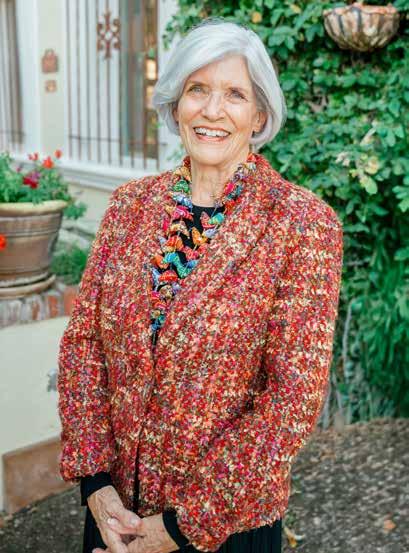
Former Mayor/City Councilmember, City of Scottsdale Walk N About Scottsdale, Owner/Tour Guide
WHAT IS THE BIGGEST CHANGE YOU’VE SEEN IN SCOTTSDALE OVER THE YEARS?
To quote Mayor Bill Jenkins, “Everyone thinks Scottsdale was at its finest the day they moved here!” But change has made us better, stronger. Citizens gathered together, through six votes, and saved almost one-third of our city—the McDowell Mountains and the Sonoran Desert they’re nestled in. We were the last Valley city with a freeway—a glorious public art concrete canvas! Welcome to The West’s Most Western Town—and change!
WHAT IS THE ONE CONTRIBUTION TO THE CITY THAT YOU’RE MOST PROUD OF?
My children! Political capital is useless unless you spend it! Dino DeConcini and Ron Warner shared that with me when I was a young professional—and I’ve lived that credo. If there’s an issue I can help resolve, a project that needs a boost, a friend who needs an advocate, I want to spend that political capital and assist. My children saw that (maybe suffered some for it), but Cassidy and Katie have led their lives to do the same in Scottsdale, the Valley, and Arizona; even Richie and Melissa in their Irish community. I’m most proud of them!
WHAT IS ONE THING PEOPLE WOULD BE SURPRISED TO LEARN ABOUT YOU?
No surprises here—my life has been an open book! I recently moved to Scottsdale House, where my wedding reception was 50-plus years ago! Just a few blocks from the modest apartment my high school BFF and I rented when we moved here from rural Idaho. And now, literally only a few doors from where I lived during my time on council and as mayor. I love Scottsdale—and crafted a small-town life here. A rich, rewarding, even exciting life with my extended family in our Most Livable City. Also, I now lead tours in Downtown Scottsdale.
>
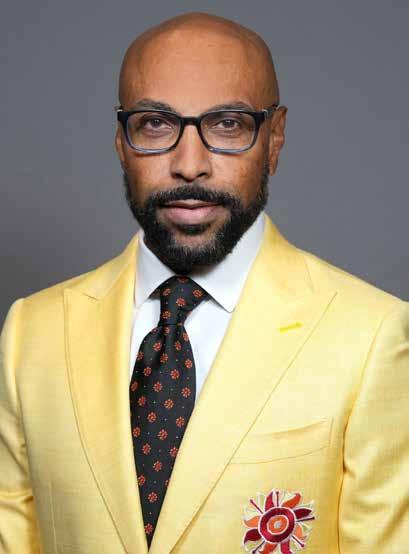
Executive Director and Chief Executive Officer, Fiesta Sports Foundation
WHAT IS THE BIGGEST CHANGE YOU’VE SEEN IN SCOTTSDALE OVER THE YEARS?
In my three years living in Arizona, the main change I have noticed is in the way Scottsdale is actively positioning itself to potential visitors. Between the city and the great team at Experience Scottsdale, it’s clear that Scottsdale is seeking to be a vacation destination for families and couples, and not simply a bachelor/bachelorette party destination. I also see those of us involved in the hospitality industry being more intentional about attracting sporting events, sports tourism, and entertainment events that appeal to our local community, in addition to visitors.
WHAT IS THE ONE CONTRIBUTION TO THE CITY THAT YOU’RE MOST PROUD OF?
The Fiesta Sports Foundation has had a successful 20-year partnership with the City of Scottsdale that started when our administrative offices moved from Tempe to the Scottsdale Waterfront. We are proud of the contributions our foundation has made over that time to bolster the hospitality and tourism industry in Scottsdale by housing our Fiesta Bowl and Rate Bowl teams in Scottsdale and promoting Scottsdale to fans across the country. In addition, the Fiesta Bowl Museum at the Scottsdale Waterfront—free of charge to visitors— has become a popular spot for college football fans and tourists alike.
WHAT IS ONE THING PEOPLE WOULD BE SURPRISED TO LEARN ABOUT YOU?
Before accepting this job, I was a bigger fan of college basketball than college football, probably because I’m an alum of the University of North Carolina, which has traditionally had a top basketball program but not a consistently successful football program.
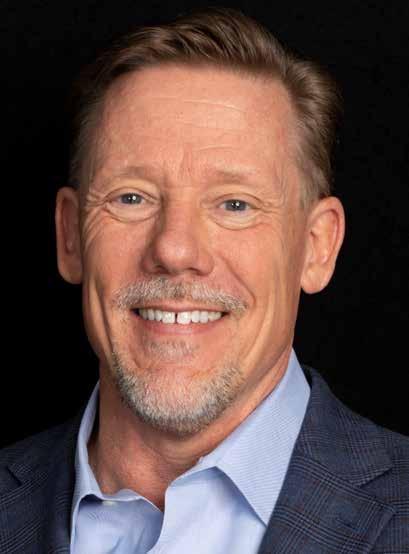
Courtesy Dennis Robbins
Executive Director, Scottsdale Charros

WHAT IS THE BIGGEST CHANGE YOU’VE SEEN IN SCOTTSDALE OVER THE YEARS?
Scottsdale has changed in many ways over the years, some for the better, some not. On the positive side, Scottsdale offers a lifestyle and community for all ages, and everyone is welcome. On the negative side, the traffic can be suffocating.
WHAT IS THE ONE CONTRIBUTION TO THE CITY THAT YOU’RE MOST PROUD OF?
I am most thankful for the opportunity to serve as the executive director of the Scottsdale Charros. I have a hand in the Charros’ long-term impact in Scottsdale, from small donations to a nonprofit that provides wigs for children fighting cancer to scholarships for future teachers in the Scottsdale Unified School District. The Charros’ impact on the community is vast and deep.
WHAT IS ONE THING PEOPLE WOULD BE SURPRISED TO LEARN ABOUT YOU?
I was a DJ in college. I loved listening to and playing the popular music of the day. It let me stretch creatively, be a little weird, and nobody seemed to care!
This time of year, visitors are filling the streets, scooping up restaurant reservations and generating impactful tax revenue for the city of Scottsdale.
Experience Scottsdale, the city’s destination marketing organization, positions winter and spring as the premier time to visit for the best events, weather and outdoor recreation. Visitor spending in the months ahead will help sustain local businesses for the remainder of the year.
With additional seasonal campaigns and promotions, Experience Scottsdale establishes the city as a year-round luxury travel destination. Discover events, activities and special offers all year long at ExperienceScottsdale.com.
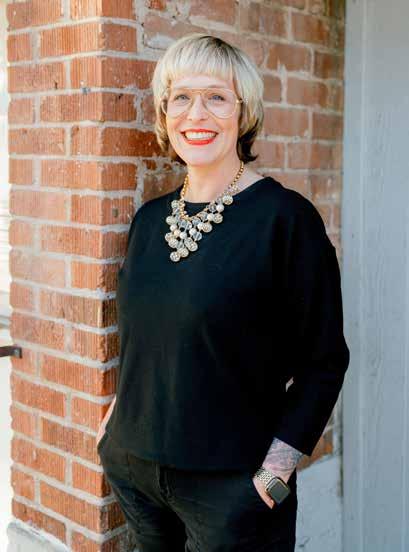
Marsh Director of Learning & Innovation, Scottsdale Arts
WHAT IS THE BIGGEST CHANGE YOU’VE SEEN IN SCOTTSDALE OVER THE YEARS?
When I first moved to Scottsdale 10 years ago, it was generally accepted that summers were slower because it wasn’t tourist season. Our programming tended to focus only on schools or visitors. However, now we have workshops and programs happening every month of the year, thanks to our city’s population growth and the need for creative activities for our year-round residents.
WHAT IS THE ONE CONTRIBUTION TO THE CITY THAT YOU’RE MOST PROUD OF?
It’s hard to pick a favorite, but I’m particularly proud of the Scottsdale Family ArtsFest! On March 6 and 7, we will host our fourth consecutive year of this event in collaboration with the Scottsdale Unified School District. It’s a two-day festival of family and artful fun for everyone at the Scottsdale Civic Center, with student performances, art exhibitions, and activities from artists and community partners. It’s a fabulous way to showcase our creative community.
WHAT IS ONE THING PEOPLE WOULD BE SURPRISED TO LEARN ABOUT YOU?
I am a puzzle geek. I once had a 550-day Wordle streak, I can finish the Sunday New York Times crossword puzzle in 30 minutes, and a 1,000piece puzzle usually takes over my dining room table.

Founder and CEO, Rancher Hat Bar
WHAT IS THE BIGGEST CHANGE YOU’VE SEEN IN SCOTTSDALE OVER THE YEARS?
Scottsdale has grown into a true destination city. While it has always had beauty and character, there’s been a noticeable shift toward elevated experiences, trendy restaurants, higher expectations, and a stronger appreciation for quality and originality. It’s exciting to see the city embrace both growth and creativity while still maintaining its unique personality and Western heritage.
WHAT IS THE ONE CONTRIBUTION TO THE CITY THAT YOU’RE MOST PROUD OF?
I’m most proud of helping elevate the retail experience in Scottsdale by introducing something that feels both personal and memorable. Creating moments that bring people together— whether through celebrations, corporate gatherings, or community events—and seeing those experiences become part of someone’s lasting memory is incredibly rewarding. Rancher has also increased tourism so much for the city; we have thousands of people who come to Scottsdale for Rancher and turn it into a trip that helps the Valley’s tourism. They will dine at restaurants, stay at local resorts, and indulge in shopping around the city. We are very proud of that.
WHAT IS ONE THING PEOPLE WOULD BE SURPRISED TO LEARN ABOUT YOU?
People are often surprised to learn how much intention and structure goes into everything I do. While the brand feels fun and effortless on the outside, there’s a strong foundation of planning, discipline, and attention to detail behind everything I do.






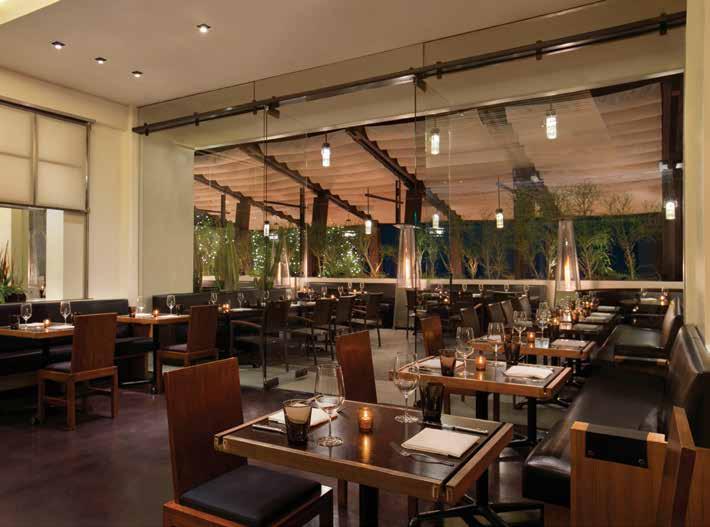
Scottsdale’s Most Iconic Restaurants and Dishes Helped Define a City and a State
ARTICLE BY ALISON BAILIN BATZ
February is a month of celebration in the Sonoran Desert. As Arizona marks another year since achieving statehood on Feb. 14, 1912, Scottsdale celebrates a milestone of its own, honoring its 75th birthday since incorporation. Together, the anniversaries offer a fitting moment to reflect on how food, hospitality, and gathering around the table helped transform a oncesleepy desert outpost into one of the most influential dining destinations in the Southwest.
At the heart of that evolution are dishes that have transcended menus to become part of Arizona’s culinary identity, and few tell that story better than The Original Chopped Salad ($22). Created in 1997 by chef Bernie Kantak while he was leading the kitchen at Cowboy Ciao, the salad was born of necessity and instinct. Tasked with replacing a wildly popular chopped salad already beloved by guests, Kantak reached for what was available. Asiago, dried sweet corn, black currants, pepitas, marinated tomatoes, arugula, pearled couscous, pear vinaigrette, and smoked salmon came together in a composition that felt both unexpected and deeply Arizonan. Today, The Original Chopped Salad remains a staple at Kantak’s Citizen Public House and Beginner’s Luck. The Arizona Senate even designated it as an “Iconic Dish of The State of Arizona” and dedicated May 1 as its very own day.
At Diego Pops, another Scottsdale favorite has earned cult status through playful reinvention. The Brussels Sprouts Nachos ($14) take the familiar format of tortilla chips and elevate them with crispy Brussels sprouts, street corn queso, Oaxaca cheese, Fresno peppers, pickled onions, and a fried egg. Yet it is the vivid pink crema, made from local purple beets blended with cream and roasted garlic, that sealed its legacy. So beloved is the sauce that Diego Pops adopted its hue as the restaurant’s signature color, turning a garnish into a brand and a dish into an Arizona classic.
CONTINUED >

Greater Scottsdale’s rise as a dining destination also owes much to concepts built around gathering. When Postino opened in 2001, it introduced a relaxed, neighborhood-driven wine bar inspired by Italian wine culture. Its Bruschetta Board ($17.50) quickly became the restaurant’s defining offering. Instead of a single topping, guests choose four selections atop thick-cut, toasted bread, ranging from fig and mascarpone with prosciutto to goat cheese with pepper jam or mushrooms with mascarpone. For a supplemental fee, there is also a gluten-free version.
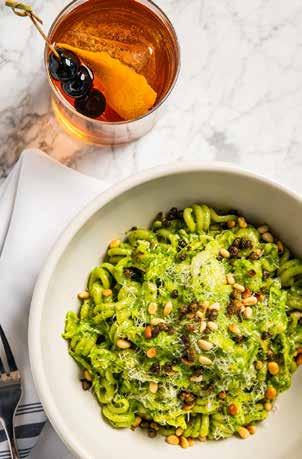
Italian cuisine has also had a massive role in Scottsdale’s culinary ascent. When North Italia opened at Kierland Commons in 2002, it was a startup concept rooted in simplicity and craft. While menus evolved, one dish never left. The Chicken Pesto ($24), made with fresh basil pesto prepared daily, tender chicken, and pasta, and today utilizing spiral trottole noodles rather than the original campenelle, has become a signature across the brand’s now-nationwide footprint while remaining a point of pride in its Scottsdale birthplace.
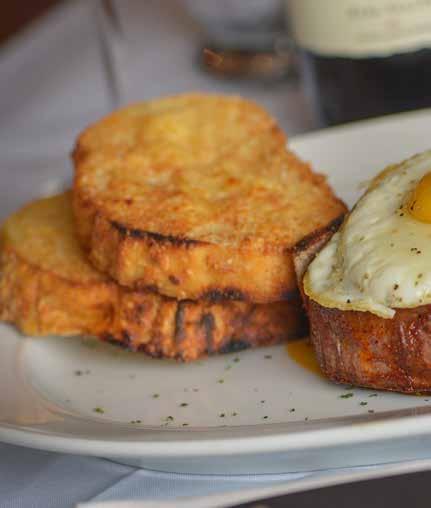
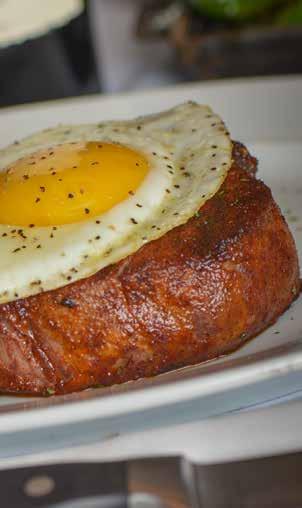
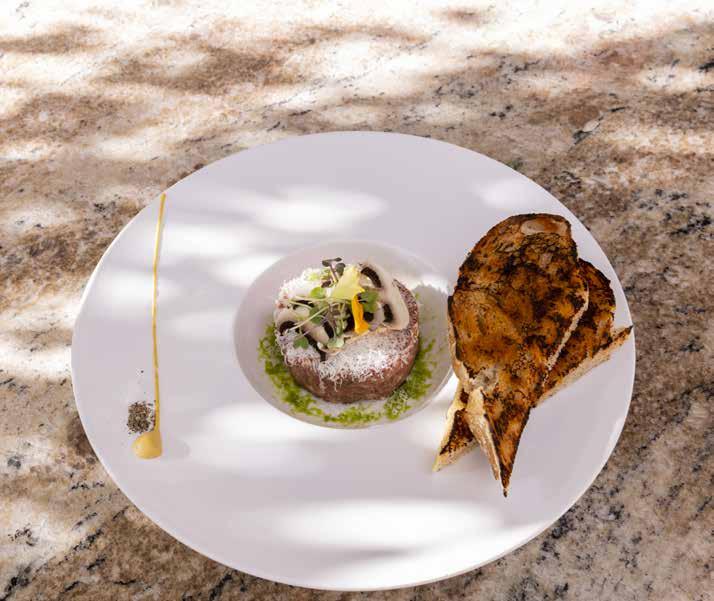
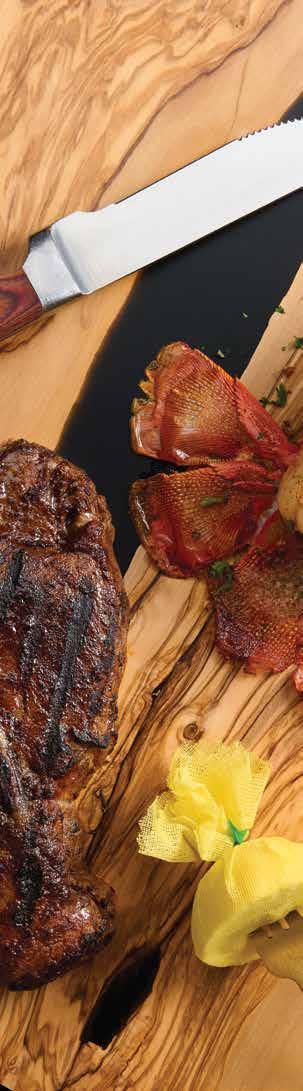
Of course, fine-dining dishes also helped Scottsdale make its mark. At Ocean 44 and Dominick’s, the Steak Farina ($83) stands as both a culinary indulgence and a personal tribute. Featuring a 12-ounce, bone-in filet topped with a fried egg and served with toasted bread, the dish honors the late actor Dennis Farina, a close friend of the Mastro family, who specially ordered his steaks in that fashion. The dish reflects the personal relationships and storytelling that have long defined Scottsdale’s dining scene.
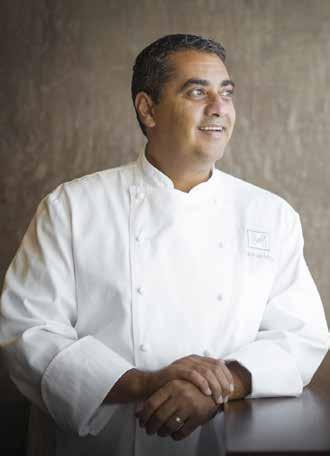
In recent years, Scottsdale has become a hotspot for celebrity-owned eateries, but the first true celebrity chef to create something special locally was Michael Mina. He opened the world’s first Bourbon Steak at the Fairmont Scottsdale Princess in 2007.
Designed as a modern steakhouse with a sense of whimsy, Bourbon Steak introduced duck fat fries, lobster pot pie, and butter-poached steaks to a market hungry for innovation. The Scottsdale flagship sparked a national expansion that now includes more than a dozen Bourbon Steak locations, all tracing their lineage back to Arizona.
Few restaurants are as synonymous with Scottsdale fine dining as Mastro’s. Opened in North Scottsdale in 1999, the original Mastro’s introduced a new standard of big-city steakhouse glamour to the desert. Known for USDA Prime steaks, dramatic presentations, live music, and a celebratory atmosphere, the restaurant quickly became a power dining destination for locals and visitors alike. That vision expanded into two


equally celebrated sister concepts, both still calling Scottsdale home. Mastro’s City Hall offered a grand, urban take on the classic steakhouse experience, complete with soaring ceilings, live entertainment, and a see-and-be-seen dining room that feels tailor-made for South Scottsdale’s energy. Mastro’s Ocean Club followed, bringing a seafood-forward counterpart to the brand, pairing pristine fish, shellfish towers, and signature butter cake with a polished coastal sensibility.
Joining in on the fine-dining revolution is Café Monarch, which opened its doors in 2013. Here, candlelight, epic coursed tasting menus, and family stewardship have earned national acclaim. Owned and operated by the Lewkowicz family and known for its use of caviar, truffles, and wagyu, Café Monarch has become one of the most celebrated fine-dining destinations in the country, offering prix fixe and tasting menus that balance luxury with warmth. Not all icons are formal. Since opening on Christmas Eve in 1958, the Sugar Bowl has served
as Scottsdale’s original family-friendly restaurant, welcoming generations with ice cream, burgers, and nostalgia wrapped in cotton-candy pink. In a city known for reinvention, the Sugar Bowl’s constancy has made it a beloved landmark and a keeper of memories.
Nearby, AZ88 has been setting the tone for Scottsdale nightlife since 1988. Equal parts art installation, cocktail bar, and cultural hub, the Old Town institution is renowned for its expansive martini program, rotating art installations, and design-forward ethos. It remains a testament to Scottsdale’s creative spirit and its willingness to push boundaries.
And finally, there is Zinc Bistro, opened in 2001 by Scottsdale native chef Matthew Carter. Trained in France and known for classic technique, Zinc brought Parisian flair to the desert with its seafood bar, indulgent French fare, and enduring appeal. It represents the global influences that Scottsdale embraced as it matured.








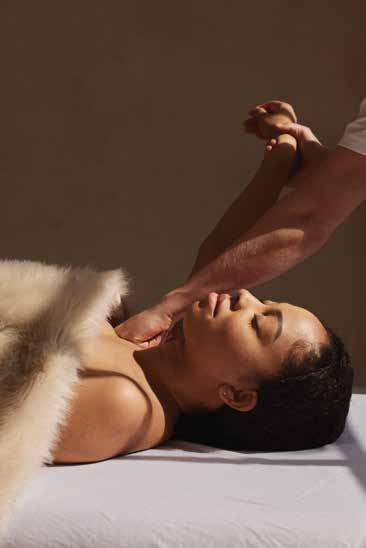

CHOOSE BETWEEN THREE SWEDISH-INSPIRED MASSAGE STYLES
Customize your service with one of our eight enhancements including Deep Tissue, Scalp Renewal, Herbal Heat Therapy, Gua Sha, Prenatal Glow, Hemp Calm Balm, Fresh Eyes & Gliding Cupping
The NOW North Scottsdale 15435 N Scottsdale Rd, Suite 150 Scottsdale, AZ 85254 480.618.5788
thenowmassage.com/north-scottsdale | @thenowmassage


• Green pants: Montauk Trouser in Jesper, Greyson Clothiers available at Q. Contrary, QContraryShop.com
• Pink polo: Barren Summit Polo, Greyson Clothiers, available at Q. Contrary
• White polo: Pack Mentality Polo, Greyson Clothiers, available at Q. Contrary
• Green and blue vest: The Swenson Vest - Ivy/Navy, Holderness & Bourne, available at Q. Contrary
• Dark jeans: Jimmy Westgate Denim, Fidelity Denim, available at Q. Contrary
• Sneakers: Ralph Lauren Men’s Heritage Aera Suede Sneakers, available at RalphLauren.com
• Sneakers: Bayliss 119 1 U Sneaker, Lacoste, available at Lacoste.com
STYLING BY THE FABULOUS DEANNA DUPREE PHOTOGRAPHY BY DANIELLE
• Sunglasses: Ray-Ban, available at Ray-Ban, Ray-Ban.com
• Watch: Versace Medusa Heritage, available at Versace, Versace.com
• Earrings, ring: Available at DeAnna’s Style Haus, Biltmore, DeAnnaStyleHaus.com
• Denim cropped jacket: Jessica Simpson, available at DeAnna’s Style Haus, Biltmore
• White tank: Orion Tank Top, Greyson Clothiers, available at Q. Contrary, QContraryShop.com
• Navy polo: Scarlett Luxe Short Sleeve Polo, Greyson Clothiers, available at Q. Contrary
• Navy skirt: Phoenix Luxe Flare Skirt, Greyson Clothiers, available at Q. Contrary

It's Time for the WM Phoenix Open! Here's What to Wear to 'The Greatest Show on Grass'

• Sunglasses: Carrera, available at US.CarreraWorld.com
• Coral floor-length silk dress: Available at DeAnna’s Style Haus, Biltmore, DeAnnaStyleHaus.com
• Denim cropped jacket: Jessica Simpson, available at DeAnna’s Style Haus
• Coral lace-up leather sandals: Schutz Kaya Flats, available at Schutz-Shoes.com
• Sneakers: Vegan leather sneakers, “The Nean,” Wholehearted Brand, available at WholeHeartedBrand.com
• Accessories: Gold clutch, bangle, necklace, and rhinestone hoops, all available at DeAnna’s Style Haus, Biltmore

ARTICLE BY JOAN FUDALA, SCOTTSDALE COMMUNITY HISTORIAN
PHOTOGRAPHY PROVIDED
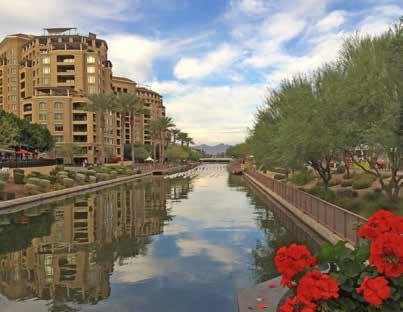
Often referred to as a ‘diamond in the desert,’ Scottsdale officially celebrates its 75th, or diamond, anniversary in 2026.
Only 75, you say? Technically, Scottsdale is a very young city in a very old place. Geologists estimate the area’s bedrock, including the McDowell Mountains, is 1.8 billion years old. Indigenous people were here over 8,000 years ago, and Army Chaplain Winfield and Helen Scott homesteaded what became Scottsdale in 1888. The settlement’s first 60 years saw slow growth as a modest farming and ranching community, with a smattering of tourist/health camps and artists’ studios. In the booming years after World War II, everything Western—climate, opportunities, affordable land and lifestyle, and the glamour Hollywood portrayed on the silver screen—drew new residents and visitors to Scottsdale.
With only one paved street and lacking a police or fire department, street signs, zoning ordinance, or business licensing, the town was ill-equipped to meet the expectations of new families, tourists, and businesses. The Scottsdale Chamber of Commerce was formed in 1947 and acted as a voluntary community organizer, hosting public hearings to debate the pros and cons of incorporating as a town.
A chamber committee circulated petitions among property owners in January 1951 in support of incorporation; the issue was dissected weekly in the local newspaper. By May, the committee had amassed enough petition signatures that the Maricopa County Board of Supervisors decreed Scottsdale incorporated as a town without the need for a special election. On June 25, 1951, the Town of Scottsdale
became a municipality, boasting 2,032 residents living in about a half a square mile (now the heart of Old Town). The county appointed five town councilmen, who, in turn, elected Malcolm White Scottsdale’s first mayor. Within weeks, the town had a zoning ordinance, contracted with Rural Fire for fire protection (a relationship that lasted until the city formed its in-house fire department in 2005), and hired a town marshal and clerk.
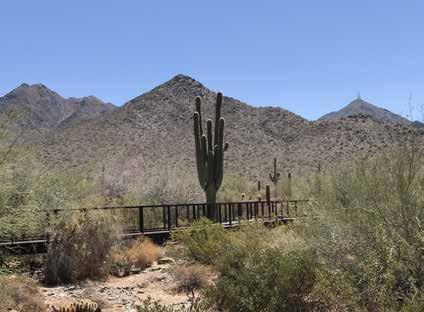
Although Scottsdale’s council didn’t enact a sales or property tax until 1960, Scottsdale gained a reputation as an innovative, citizen-driven community with amenities that added to the cachet of its natural environment. To control its image and future, Scottsdale annexed land in all directions, reaching today’s 184.5 square miles with the last annexation northward in 1984. Residents participating in the 1964-65 Scottsdale Town Enrichment Program advocated for a new Civic Center, a municipal airport, an arts center, a Western museum, and more. Voters approved bonds to fund the Indian Bend Wash Greenbelt Flood Control Project, avoiding a miles-long, ugly concrete channel, and approved a modest sales tax increase in 1995 to buy land for the McDowell Sonoran Preserve, which is now over 30,000 acres and our signature landmark.
In 75 years, Scottsdale has evolved into a world-renowned tourism destination; profitable business location; desirable place to live, raise a family, and retire; and a city that encourages creative solutions to infrastructure and livability challenges. Now that’s worth celebrating!

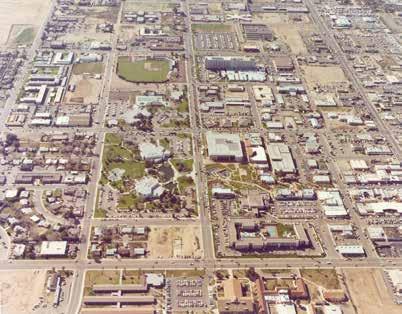
After incorporation
This 1954 aerial shows Scottsdale’s municipal area (now Old Town) surrounded by farm fields. Courtesy Scottsdale Historical Society
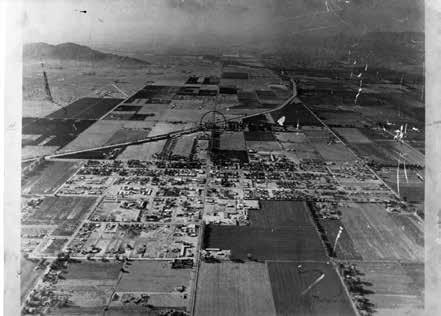
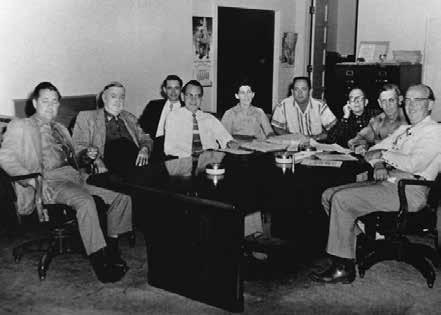
The Town Council and staff, circa 1954, was led by Mayor Malcolm White (center, in the vertical striped shirt). Courtesy Scottsdale Historical Society
Voters passed a modest sales tax increase in 1995 to fund land purchases for the











Scottsdale Leadership Is ‘Like Getting a Ph.D. in Scottsdale’
For four decades, Scottsdale Leadership has quietly shaped many of the leaders who help guide the city forward. At the helm today is Executive Director Lee Ann Witt, whose passion for community, connection, and stewardship reflects the organization’s founding spirit—and its future vision.
Scottsdale Leadership began with a simple but powerful idea. As Witt explains, it was founded by four community leaders, three of whom were involved in the early days of Valley Leadership. They believed Scottsdale deserved something of its own.
“They believed Scottsdale deserved its own leadership organization—one that reflected the city’s unique character and needs,” she says. “The story goes that the idea was literally sketched out on a napkin, fueled by a shared vision to make leadership development even better for Scottsdale.”
At its core, Scottsdale Leadership exists to serve the community through informed leadership, with its mission statement noting it is to “… inform, inspire, and empower leaders to champion and strengthen the interests of the community. Our values are engagement, inclusion, connection, courage, and stewardship.”
In practice, Witt says, that means developing leaders who are deeply invested in Scottsdale’s people and future, immersed in “the real story of Scottsdale—its people, challenges, and opportunities—so they are equipped to lead with perspective, integrity, and purpose. At its heart, our work is about relationships and stewardships: bringing leaders together across sectors and preparing them to step up, serve, and strengthen Scottsdale now and in the future.”
ARTICLE BY MICHELLE GLICKSMAN PHOTOGRAPHY COURTESY SCOTTSDALE LEADERSHIP
The program itself—which is a nine-month experiential training program, running each September to May, with 15 interrelated, topic-focused learning days during that timeframe—is known for its immersive, full-day class experiences that explore nearly every facet of the city. Topics range from economic development and city government to public safety, education, health care, arts and culture, technology, and human services.
“Some say it is like getting a Ph.D. in Scottsdale!” Witt says. While economic development and city government days stand out to her for the way they “pull back the curtain on how Scottsdale works,” Witt says her favorite moments come from watching participants discover what resonates with them. “There’s always a moment when something clicks and changes how they see the community.”
Staying relevant is a constant priority. Witt emphasizes that Scottsdale Leadership listens closely to its community—participants, alumni, board members, advisory councils, and community partners—to ensure the curriculum evolves alongside the city. That same philosophy guides how the organization collaborates with civic leaders, nonprofits, and businesses.
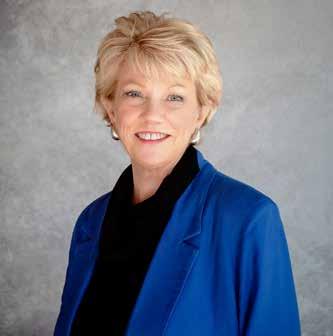
“We engage our community partners, civic leaders, and local businesses by building real, long-term relationships, not transactional ones,” she says.
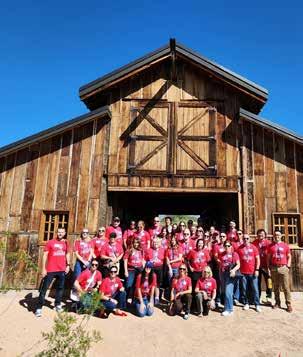
One of the most tangible expressions of that collaboration is Project Lead It Forward (PLIF), Scottsdale Leadership’s signature community service initiative. Since 2008, the program has completed 78 projects and contributed more than 66,000 volunteer hours, partnering with organizations ranging from Miracle League Arizona and UMOM to Saguaro High School.
“The impact on both the organizations and our leaders is truly priceless,” Witt says. Looking ahead, Witt sees Scottsdale Leadership continuing to deepen its role as a civic cornerstone.
“Ultimately, I want Scottsdale Leadership to be a trusted steward of leadership in our city—an organization that not only develops leaders but also leaves Scottsdale stronger because of them,” she says.
As the organization celebrates 40 years, new initiatives underscore that commitment, including the first-ever alumni PLIF project and a CEO Executive Program launching this fall. Together, Witt says, these efforts “honor our legacy while ensuring Scottsdale Leadership continues to grow, evolve, and lead well into the future.” ScottsdaleLeadership.org


ARTICLE BY JOAN FUDALA, SCOTTSDALE COMMUNITY HISTORIAN
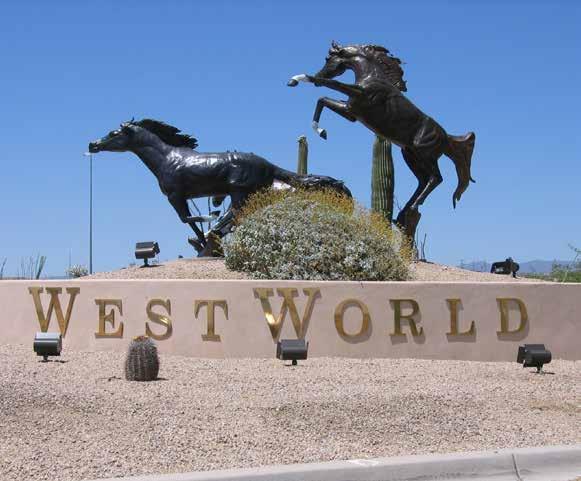
every February since 1989.
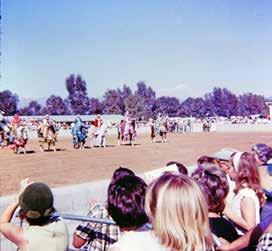
Scottsdale’s Arabian Horse Show has been a much-anticipated signature event since 1956, celebrating the community’s long-time love affair of everything equestrian. The show has generated tourism and a significant economic impact for over 70 years, serving as a global gathering of Arabian owners and aficionados.
Scottsdale’s horse history dates back at least 12,000 years. During excavation of a lake for the McCormick Ranch master-planned community in 1971, the fossilized bones of prehistoric horses— as well as ground sloth, land tortoises, and giant mammoth—were unearthed. Coincidentally, that prehistoric grazing ground became the Scottsdale home of the year-old All Arabian Horse Show in 1956, when Arabian horse owner Anne McCormick hosted the show at her ranch near the northeast corner of Scottsdale and Indian Bend roads.
During and after World War II, the Scottsdale area became a center for raising and showing Arabian horses. Big names among early Arabian
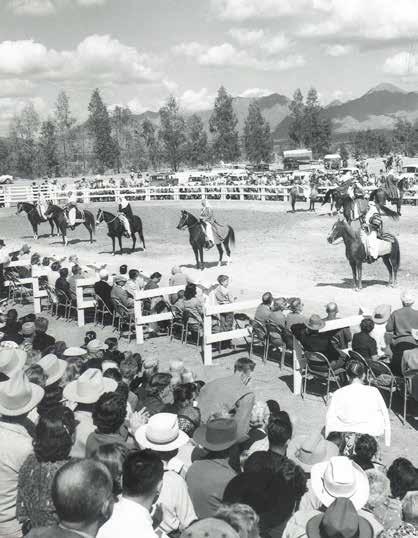
ranches included Wrigley, Tweed/BruSally, McCormick, Cheney, Aste, Chauncey, LaCroix/Lasma, Bardon’s, Sun Ray, El Mirage, Jen-Mar, Melde’s, Heaton’s, Gainey, Clay’s, Collin’s, Desert Arabian, and more. Scottsdale Arabian owners Ed and Ruth Tweed, along with Anne McCormick, Mrs. Wrigley, and others, chartered the Arabian Horse Association of Arizona in 1954, which led to the founding of the show and auction to showcase their stately breed.
Although the first Arabian Horse Show was held at the Wrigleys near the Arizona Biltmore in 1955, it became a Scottsdale fixture the following year. After outgrowing Anne McCormick’s Arabian horse ring, she and husband Fowler (then chairman of the board of International Harvester) built Paradise Park on the northwest corner of Pima Road and Shea Boulevard to accommodate the expansion of the annual Arabian show and other equestrian events. When the McCormicks’ 4,200-acre horse and cattle ranch was sold for development in 1970, the Arabian Horse Show moved to a new Paradise Park near Bell and 60th Street. In 1989, it moved to WestWorld in Scottsdale, where it continues its annual run, including this year from Feb. 12 to 22.
Hosted by the Scottsdale-based Arabian Horse Association of Arizona, the Scottsdale Arabian Horse Show is the highlight of the group’s annual calendar of events that celebrate Arabians. The show has a long tradition of donating proceeds to local charities. Producing the show involves an army of volunteers who stage the show and auction, as well as help accommodate the hundreds of out-of-town Arabian owners and trainers who bring their Arabians to show, sell, and breed. The show also includes competitions, family events, and a shopping expo of equestrian accoutrements and upscale merchandise.




Understanding your long-term care insurance policy can make all the difference for you and your loved ones.
What benefits are in my policy? When should I use it? Why do some people struggle with claims?
We'll cover these topics and more during our February and March educational sessions.

Scan to RSVP for dates and times.
AmadaPhoenix.com | 480.999.5250
Serving Phoenix And The East Valley



FEBRUARY 2026
THROUGH MARCH 29TH
Arizona Fine Art EXPO
Southwest corner of Scottsdale and Jomax roads
Renowned artists from across the globe gather at this show and sale, which features approximately 125 art studios within a 44,000-square-foot tent in North Scottsdale. Also enjoy sculpture garden tours, music in the sculpture garden on the weekends, and an on-site café. ArizonaFineArtEXPO.com
THROUGH MARCH 29TH
Celebration of Fine Art
Corner of Hayden Road and Mayo Boulevard
Connect and collect at this annual event, where 100 renowned and emerging artists gather, create, and showcase their work in more than 40,000 square feet of working studios. You can also expand your art knowledge with the Art Discovery Series events, explore the sculpture court, and dine at the on-site café. CelebrateArt.com
FEBRUARY 2ND-8TH
WM Phoenix Open
TPC Scottsdale
"The People's Open" returns with great golf, four days of Coors Light Birds Nest concerts (Bailey Zimmerman, Ludacris, Nelly, and more), the most iconic hole on the PGA Tour— the famed 16th hole Coliseum—and another year of being a zero-waste event. WMPhoenixOpen.com
FEBRUARY 12TH-22ND
Scottsdale Arabian Horse Show and Shopping Expo
WestWorld of Scottsdale
The world’s largest Arabian horse show includes nearly 2,000 of the world’s best Arabian horses. The extensive shopping expo has more than 200 vendor booths, offering everything from fine art, crafts, and clothing to jewelry and more. ScottsdaleShow.com
FEBRUARY 14TH
12th Annual Concours in the Hills
Fountain Park, Fountain Hills 10:00 AM
Celebrate a day of heart and horsepower at this event, which is known as the “Greatest Car Show on Grass.” Held from 10 a.m. to 3 p.m., Concours in the Hills showcases some of the world’s most stunning cars, motorcycles, helicopters, and military vehicles, all in support of Phoenix Children’s Center for Cancer and Blood Disorders and Cardiothoracic Surgery Fund. PhoenixChildrens Foundation.org/signature/concours
FEBRUARY 14TH
25th Annual Arizona Strong Beer Festival
Salt River Fields at Talking Stick 11:30 AM
Be ready to see your favorite breweries again, explore new brews, and enjoy a fun-filled day with friends and family at this event, which runs from 11:30 a.m. to 5 p.m. There will be offerings of more than 500 beverages, live entertainment, and many more activities. ChooseAZBrews.com
GET IN TOUCH AT CITYLIFESTYLE.COM/ SCOTTSDALE


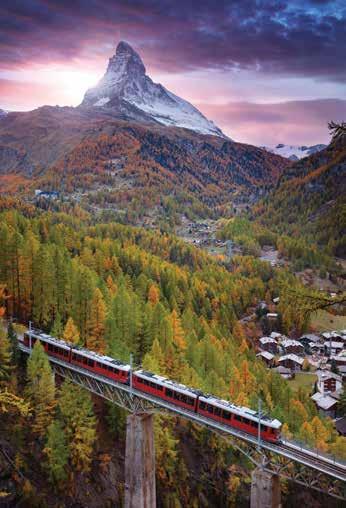
DIS COVER THE VALAIS REGION OF SWITZERLAND, WHERE ALPINE TRAILS, THERMAL SPRINGS, AND LOCAL TRADITIONS CREATE RESTORATIVE TRAVEL.
In Switzerland’s Valais region, wellness and adventure are always part of the same itinerary. Morning could bring a high-alpine hike, afternoon a soak in mineral-rich springs, and evening a table set with traditional cuisine, always including delicious wine and cheese. For travelers, the best part will be finding the perfect balance between exploring the outdoors and relaxing with wellness-infused activities in the heart of the Swiss Alps.
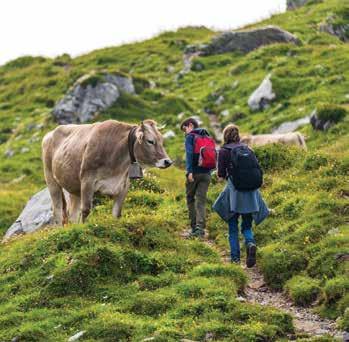
An easy train ride from Zurich lands visitors in the Aletsch Arena, a high-alpine region on the south side of the Bernese Alps, home to three villages: Riederalp, Bettmeralp, and Fiescheralp. Known for its ski slopes in winter and hiking in summer, the area is entirely car-free, making walking and local buses the main modes of transportation through its quaint chalet-lined streets.
One of the main attractions of the ski-in/ski-out area is the Aletsch Glacier, the longest glacier in the Alps. A UNESCO World Heritage Site, the 12-mile glacier is visible from several vantage points, shaping every experience in the area.
ARTICLE BY GABI DE LA ROSA
Located in the heart of Bettmeralp, Hotel Panorama provides no-fuss accommodations steps away from the picturesque Chapel Maria Zum Schnee. The hotel’s restaurant offers delicious regional cuisine, including raclette paired with Swiss wine. A good bottle of Pinot Noir or Gamay is also easy to come by because the Valais region of Switzerland is one of the largest wine-producing areas in the country, with vineyards dotting the steep slopes of the Rhône Valley. In addition to wine and cheese, eating cholera, a covered vegetable pie invented in the region during the cholera epidemic, is a must.
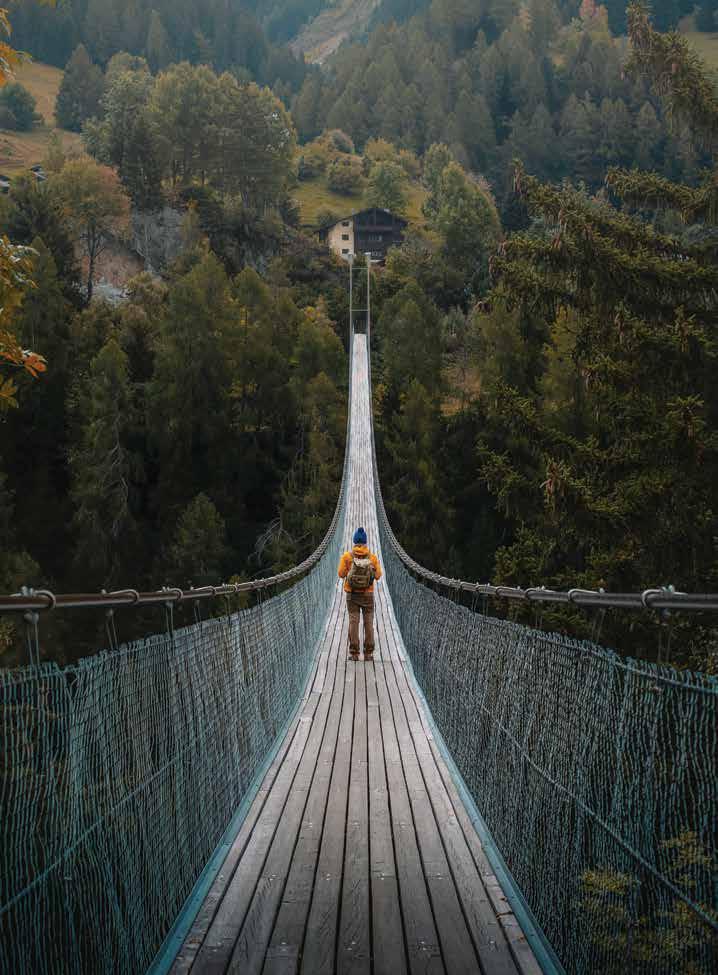
Begin at Viewpoint Moosfluh, the closest and lowest vantage point of the Aletsch Glacier. From there, trailheads lead to Villa Cassel, once the home of a British financier and now a museum focused on history and conservation. The hike passes through a thousand-yearold forest with views of both the glacier and the Matterhorn.
Walk over Goms Bridge, a nearly 1,000-foot-long suspension bridge that connects two hiking areas over the Rhône River. For a final look at the majestic glacier, take the cable car to Viewpoint Eggishorn. At nearly 10,000 feet above sea level, it offers panoramic views of the Matterhorn, Mont Blanc, Jungfraujoch, or the “Top of Europe,” and the most comprehensive view of the Aletsch Glacier.
After miles of hiking in the Aletsch Arena, it is time to relax and recharge in the mountain village of Leukerbad.
Hotel Restaurant Quellenhof Leukerbad is steps away from many of the area’s best thermal pools. The hotel also has a restaurant serving breakfast, lunch, and dinner with several regional specialties.
Since the 1500s, the area has been a well-known destination for wellness and healing due to over 65 natural hot springs that
flow into the alpine village. Several public bathhouses welcome visitors year-round, including Leukerbad Therme, the largest thermal wellness resort in Europe. The family-friendly wellness center includes ten pools and a range of hot and cold plunge options. Walliser Alpentherme & Spa and Therme 51 also offer public access to the mineral-rich waters.
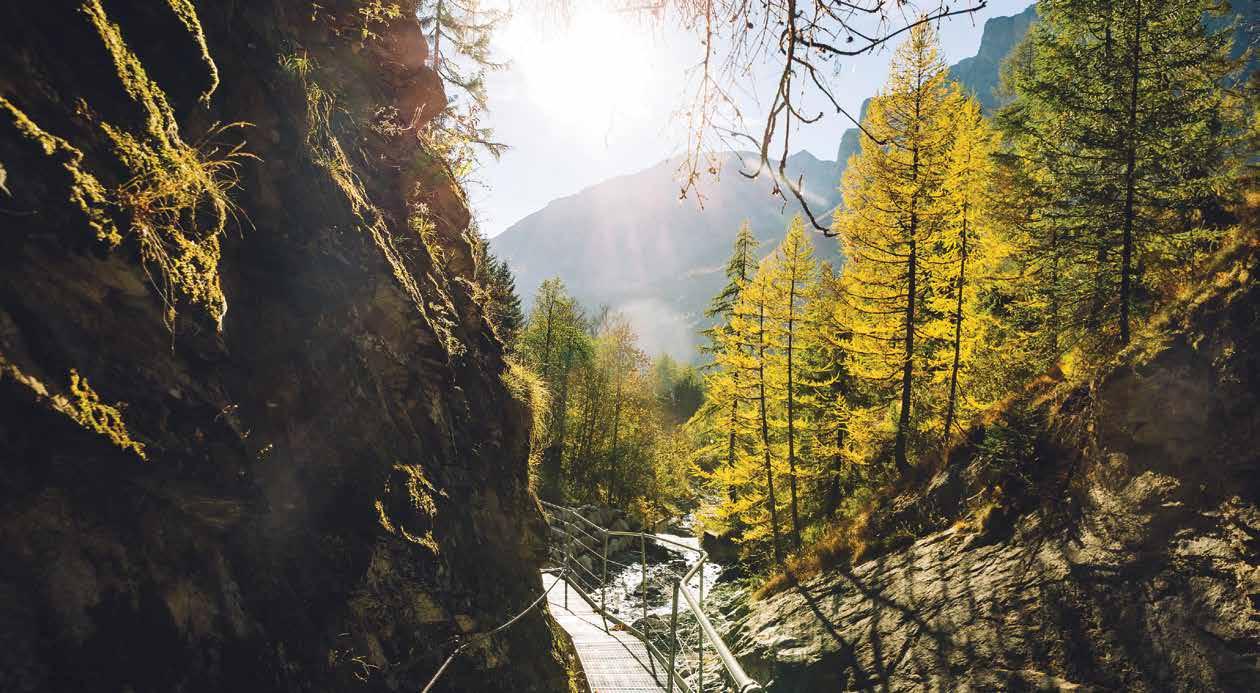
A hike through Dala Gorge provides beautiful mountain views while traversing a 2,000-foot suspension bridge over the Dala River. Hikers can also experience a 100-foot waterfall before the forested hiking trail leads back to Leukerbad.
The village is considered one of the most traditional and beautiful alpine settings in the country. It lacks the pretentiousness of Switzerland’s larger metropolitan areas and offers a storybook atmosphere with a friendly small-town feel. Walking through
Leukerbad reveals gorgeous chalets, small shops, bakeries, and restaurants worth exploring.
No trip to Switzerland is complete without fondue. Dating back to the 17th and 18th centuries, fondue, which translates to “melt” in French, is a national dish consisting of a blend of Gruyere and Emmental cheeses. One of the oldest family-owned restaurants in Leukerbad, Restaurant Sternen offers traditional fondue along with a variety of mix-ins and dipping options. Pair the fondue with Valais wine for a celebratory meal. Restaurant Waldhaus is one of the most elevated restaurants in the village and is another family-run establishment offering a seasonal menu and over 70 different grappas to choose from.
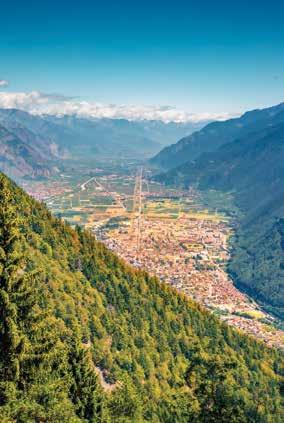
A short train ride takes visitors to one of the largest cities in the Valais region of Switzerland. The city is a crossroads between Italy and France, with a history dating back to Roman times. Visitors can tour Roman ruins, including a well-preserved amphitheater, ancient settlements, and Roman baths.
Martigny Boutique Hotel is minutes from the train station and is one of the few establishments in the city employing people with disabilities. The light and bright hotel provides a comfortable base for exploring the city.
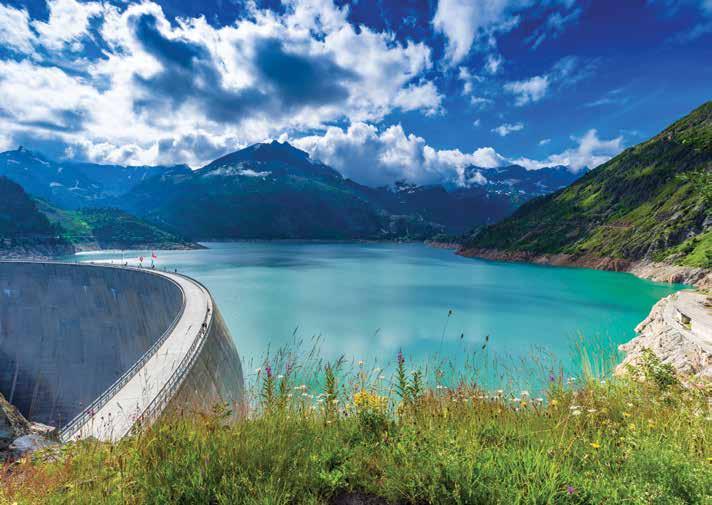
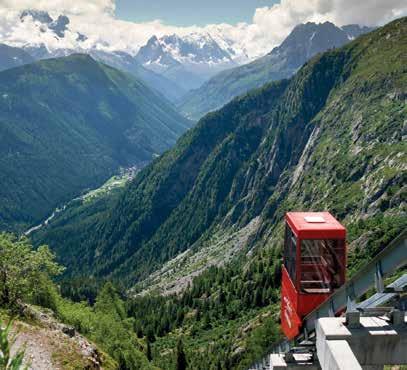
Take the steepest funicular in the world, the Mont-Blanc Express, on a scenic ascent through the Alps. The funicular connects to a smaller train that leads to the Trient Valley on the French-Swiss border, where, at the top, a full day of activity begins. Hiking, biking, zip-lining, or traversing the Emosson Dam, which straddles France and Switzerland, are all options. The crystal clear blue waters of Emosson Lake are perfect for a picnic or a break between adventures.
Back in Martigny, Barryland, the only theme park in the world dedicated to St. Bernard dogs, offers a look at the history of the dog, bred by monks in the 17th century for alpine rescue work. The Barry Foundation, founded in 2005, continues to preserve the breed and educate visitors about it. Guests can watch the dogs train, play, and interact as they learn about their role in the region.
Roman influence remains visible across the city, including at Les Bains Publics at Hotel Borsari, where visitors can soak in cement wine barrels located in the hotel’s spa. The baths sit on the site of a former wine tank factory and offer a circuit of hot and cold pools in a historically inspired, wine-colored setting.