


Dear Readers,
February invites us to pause and reflect on love — not just the romantic kind, but the deep, enduring connection we share with the place we call home. In this issue of Northland City Lifestyle, we celebrate Local Love: the people, businesses, and places that make our community feel personal, vibrant, and truly ours.
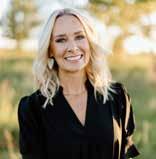
To me, local love shows up in a thousand quiet ways. It’s in the familiar faces that greet us by name, the small businesses that pour heart and craftsmanship into everything they do, and the neighbors who show up — again and again — because this community matters to them. It’s the pride we feel when we support one another and the sense of belonging that grows stronger with every shared experience.
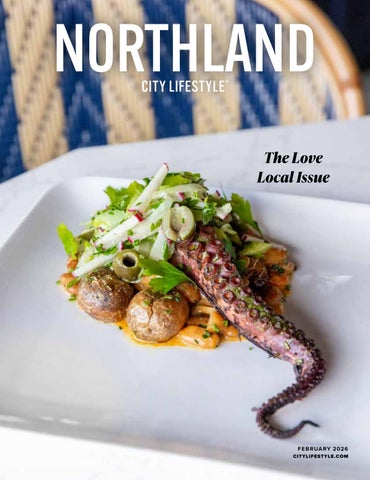
Our February issue is a love letter to the Northland itself. Inside, you’ll find stories that honor those who invest their time, talent, and passion right here — people like Betty Brown, president of the Derrick Thomas and Neil Smith Third and Long Foundation, who works hard to keep Thomas' legacy alive and give back to the community — a story written by local high schoolers through our partnership with Northland CAPS. We also have more sports coverage, but for our baseball fans, in an interview with the voice of the Royals, Joel Goldberg. Our cover story this month is a return to one of the Northland's favorites with the new Parker Hollow restaurant in Parkville, owned and run by Jonathan Justus and Camille Eklof. And finally, a true labor of love with a story by Parkville resident and train professional Stephen Priest, who worked to restore a bicentennial-era locomotive to its historic glory.
As you turn these pages, we invite you to discover, rediscover, and support what’s local. When we choose our community, we strengthen it — and in doing so, we deepen our connection to one another. Thank you for loving the Northland as much as we do. We’re honored to share its stories with you.
With love,
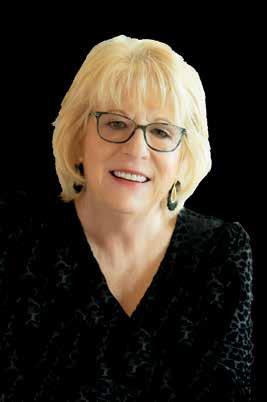
NATALIA KREINBRING, PUBLISHER
Photo by Hannah Schreinder
February 2026
PUBLISHER
Natalia Kreinbring | Natalia.Kreinbring@citylifestyle.com
EDITORIAL COORDINATOR
Katie Currid | katie.currid@citylifestyle.com
SOCIAL MEDIA COORDINATOR
Laura Schierhoff
CONTRIBUTING WRITERS
Dahkotah Brooks, Sue G. Collins, Lauren Powers, Stephen Priest
CONTRIBUTING PHOTOGRAPHERS
Amiah Battles, Dahkotah Brooks, Janie Jones, Stephen Priest
CEO Steven Schowengerdt
President Matthew Perry
COO David Stetler
CRO Jamie Pentz
CoS Janeane Thompson
AD DESIGNER Mary Albers
LAYOUT DESIGNER Emily Lisenbee
QUALITY CONTROL SPECIALIST Anna Minnick


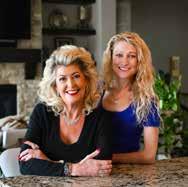









The heart of the community is right here. With the right care just for you.
At Liberty Hospital Heart Center, we’ve built lasting trust by caring for neighbors, families and friends through every stage of heart health, from routine care to complex emergencies. As part of The University of Kansas Health System, our patients benefit from the same personal connections plus streamlined access to one of the largest and most experienced teams of cardiovascular subspecialists in the region.
Together, we’re combining the art of care with the science of innovation, right here in the Northland. That’s the power of what’s next.
This is where health happens: libertyhospital.org/heartcenter
Part of The University of Kansas Health System
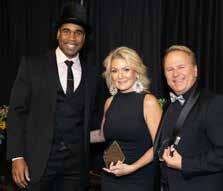
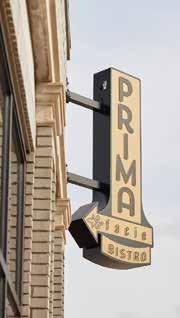
Prima Facie Market and Bistro celebrated another award at the end of 2025. The Northland Chamber of Commerce recognized Prima Facie Market and Bistro as the Newcomer Business of the Year. We would like to thank our outstanding team members for making it a true success.
Scan to read more
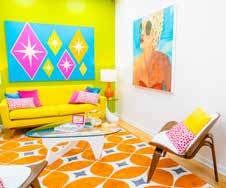
Zona Rosa continues to expand its lineup of experience-driven retail offerings with the upcoming arrival of Hula Hoop KC, a local, vibrant vintage boutique and social shopping concept founded by Andrea Boswell-Burns, opening at 7106 NW 86th Terrace. The 2,120 square foot storefront is slated to open Spring 2026, bringing Hula Hoop KC’s signature pop-up energy to the Northland. This is the second brick-and-mortar location for Hula Hoop KC and the first in the Northland.
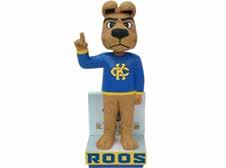
To celebrate National Bobblehead Day, the National Bobblehead Hall of Fame and Museum unveiled an officially licensed Kansas City Roos Bobblehead featuring the school’s mascot Kasey the Kangaroo. National Bobblehead Day is celebrated annually on January 7th, and this bobblehead is one of over 50 new releases. The bobbleheads will be individually numbered to only 2,026, and they’re now available for pre-order in the National Bobblehead Hall of Fame and Museum’s Online Store, found at store.bobbleheadhall.com/products/kcroo
Sometimes care can't wait. That's why Cloverkey has added short-term subscriptions to our offerings, so loved ones transitioning into hospice or waiting for a place in a senior living center can get the care they need right away, with no long-term commitments. If you or someone you know needs help managing their home, visit cloverkeykc.com to see how we can take the work out of home ownership without breaking the bank.
Scan to read more

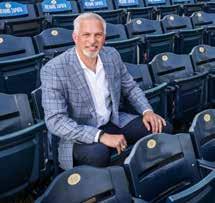
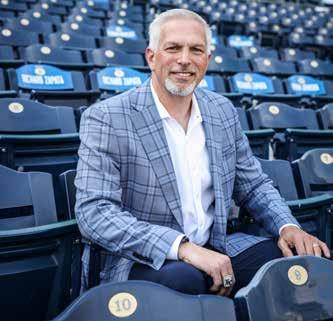
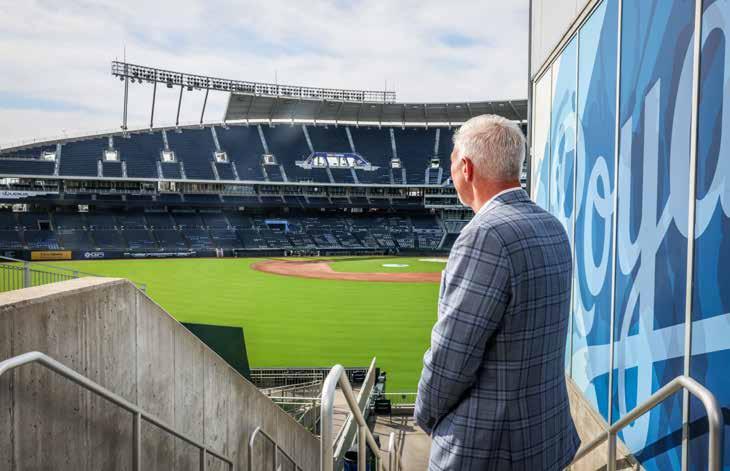
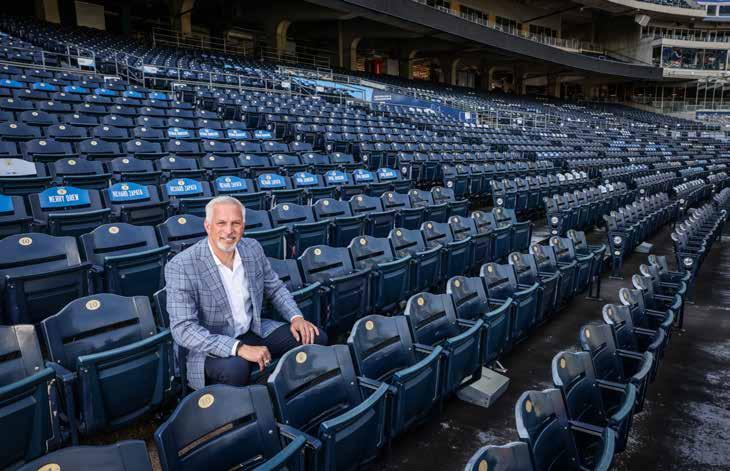
If you ask Joel Goldberg when he “made it” in sports broadcasting, he doesn’t point to the glitter of a Super Bowl press box or the roar of a World Series crowd. Those moments came— Super Bowl XXXIV in New Orleans in 2000, Fenway Park during the 2004 Fall Classic—but the true arrival didn’t happen under the stadium lights. It happened later, in Kansas City, when he realized for the first time in his career that he was right where he wanted to be.
That sense of contentment wasn’t won easily. Goldberg’s path into broadcasting wasn’t paved with connections or shortcuts. He broke in the old-fashioned way, knocking on doors, cold calling executives, sending out demo tapes, and weathering rejection after rejection. “It was never handed to me,” he admits. Instead, he built it the same way he builds interviews, with persistence, preparation, and a knack for finding the story no one else was telling.
His storytelling roots were planted in small markets, where the spotlight rarely shines. Rhinelander, Wisconsin, was first, where high school and community features dominated his workload. In Madison, he added college sports to the mix, sharpening his instincts. St. Louis opened the door to the big leagues: the NFL, NHL, and Major League Baseball. By the time Kansas City called, Goldberg was battle-tested and ready.
ARTICLE BY LAUREN POWERS
PHOTOGRAPHY BY JANIE JONES
“At each stop, I learned that everyone has a story to tell,” he says. “The under-the-radar or less famous ones are often the most meaningful.”
One of those lessons came courtesy of Albert Pujols. Goldberg was there when the slugger broke into the majors in 2001, but it took eight years to earn his trust. The breakthrough, when it finally came, reshaped Goldberg’s approach. “The biggest names crave normalcy,” he says. “They just want to be treated like regular people.” That perspective has guided his interviews ever since, whether he’s talking to a Hall of Famer, a rookie, or a CEO.
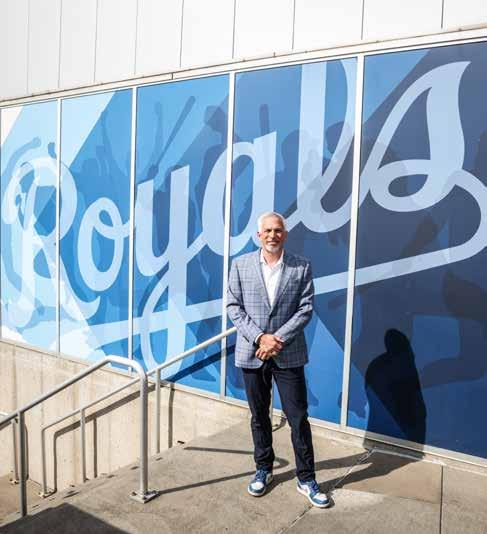
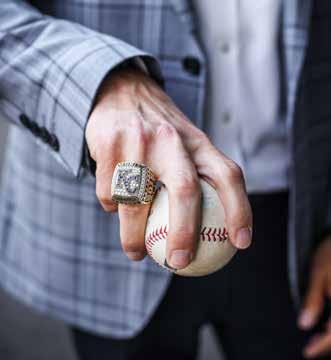
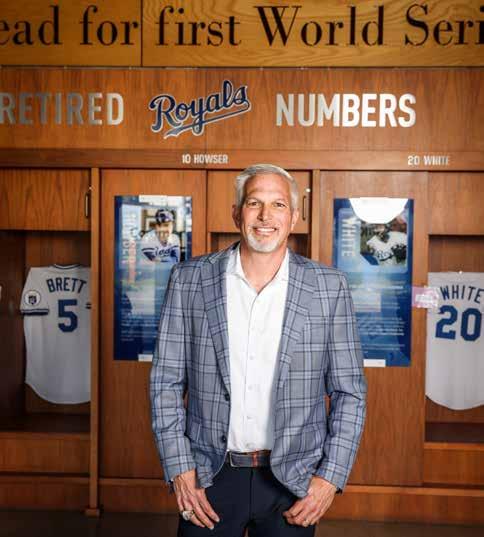
For Kansas City fans, Goldberg is more than a broadcaster; he’s part of the fabric of the Royals experience. His voice has carried fans through both heartbreak and triumph, from the long rebuilding years to the electric 2014–2015 championship run. While many point to the 2014 Wild Card game as a franchise-defining moment, Goldberg’s personal favorite came days earlier in Chicago, when
Salvador Perez squeezed the final out that clinched the team’s first playoff berth in 29 years.
“That celebration was unforgettable,” he recalls. “It felt surreal that one of the losingest franchises in baseball had finally ended such a long drought.”
Kansas City, he says, brings a different flavor to baseball fandom. “There’s a Midwest kindness here that extends to the ballpark,” he explains. “Fans take pride not just in the team, but in the city and the people who represent it. That loyalty shows players they’re embraced as part of the community, no matter the record.”
For Goldberg, the real magic is in the quieter moments. “Interviewing a player after his big league debut never
gets old,” he says. He recalls Nate Eaton in Toronto, hearing only his mom’s voice in the stands as he circled the bases, or Samad Taylor hitting a walk-off in his first game at Kauffman and telling him, ‘This is something you don’t even dream of.’ “I held back some tears hearing their raw emotions and was honored to be a part of their journeys.”
He’s quick to note what makes an interview truly great: humility, honesty, perspective, and passion. “The best interviews come from people unafraid to be themselves,” he says. ”That kind of openness goes a long way with fans and their teammates.”
Among the thousands of stories he’s told, one stands above the rest. In 2011, Goldberg hosted a 30-minute tribute to Royals legend and former broadcast partner Paul Splittorff following his passing. “It was both incredibly challenging and profoundly meaningful,” he says. “He mattered as much to us in the booth as he did to the fans.”
While broadcasting remains his anchor, Goldberg’s work has expanded far beyond the ballpark. After the Royals’ 2015 World Series championship, he began connecting the lessons of winning teams to the business world, launching his Game Changer Speaking Series. The parallels, he explains, are undeniable.
“Championship culture isn’t just about pulling the rope the same way,” Goldberg says. “It’s about trust. When trust is built and sustained day after day, it creates an environment people genuinely want to be part of.”
His speaking events often pull back the curtain on the unseen teamwork that powers a broadcast. “Showing that behind-the-scenes teamwork highlights how every role is essential
to success,” he says. “People begin to see how their own role matters, while others recognize the value of the roles around them. That shift in perspective can change the way a team looks at its culture.”
After 30 years, what keeps him excited? For Goldberg, it’s the unpredictability of the game. “Who else gets to go to a job where you truly never know what’s going to happen day to day?” he says. “Win or lose, I’ve got a job to do and someone’s watching somewhere at home, in a hospital bed, on a military base overseas and beyond.”
For Kansas City, Joel Goldberg isn’t just the man on the screen after the final out. He’s a storyteller who’s built a career on trust, a voice that’s carried a city through heartbreak and triumph, and a guide reminding us that, whether in baseball or business, culture is the true game changer.
To learn more about Joel and the Game Changer Speaker Series, visit www.joelgoldbergmedia.com
816-599-3610
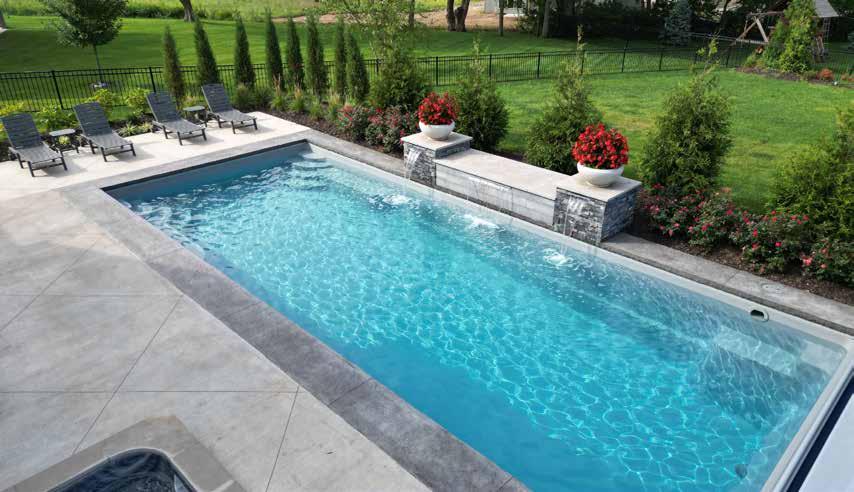
At Tiger Pool and Patio, we’re dedicated to turning your everyday spaces into extraordinary retreats. Our mission is to offer a VIP customer experience that makes your journey with us exceptional from start to finish. We recognize that your outdoor area is an extension of your lifestyle, and we’re here to help you craft a personalized oasis that mirrors your distinctive style and preferences. Partner with us to create a space that truly reflects your dream backyard oasis.




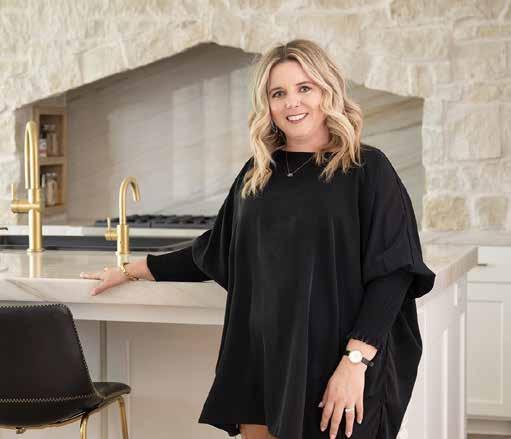




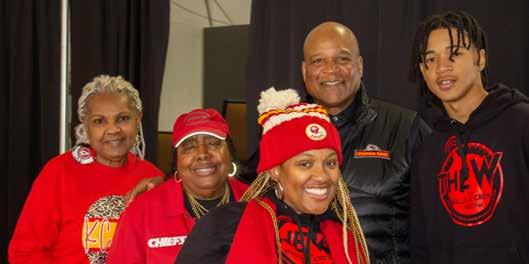
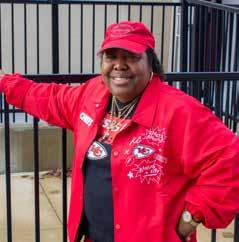
HOW BETTY BROWN KEEPS DERRICK THOMAS’ LEGACY ALIVE THROUGH HIS LOCAL FOUNDATION
Betty Brown
ARTICLE BY DAHKOTAH BROOKS PHOTOGRAPHY BY DAHKOTAH BROOKS AND AMIAH BATTLES
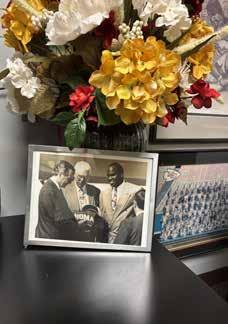
When Betty Brown worked at Coors Brewing Company, the local distributor participated in a program that paid Kansas City Chiefs linebacker Derrick Thomas $580 for every sack he made.
“That’s how I first met him and first got involved with him,” says Betty. The relationship she built with Derrick through this work later became the foundation for her leadership role.
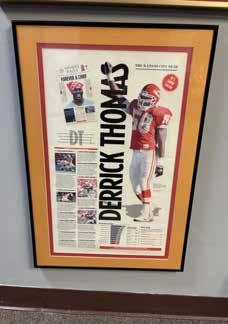
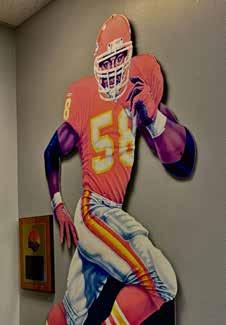
Today, Betty Brown serves as the president of the Derrick Thomas and Neil Smith Third and Long Foundation, an organization dedicated to education, community support, and carrying on the legacy of two legendary Kansas City Chiefs players.
Betty did not originally seek out the position of president. Instead, she was asked to take on the role because she had a close relationship with Derrick and was one of the few people who could keep him on schedule.
“They made me president because Derrick and I were very close, and I could get him to be on time, which he never was,” Betty recalls. Once she understood the mission and impact of the foundation, she felt connected to the work.
“After I found out exactly what we were going to be doing, I wanted to be a part of it,” she says.
“PEOPLE WANTED TO PICK THINGS apart . I STOOD FOR IT. WE JUST worked THROUGH IT AND MADE SURE WE DID WHAT WE WERE supposed TO DO. WE TRIED TO pattern WHAT DERRICK STARTED.”
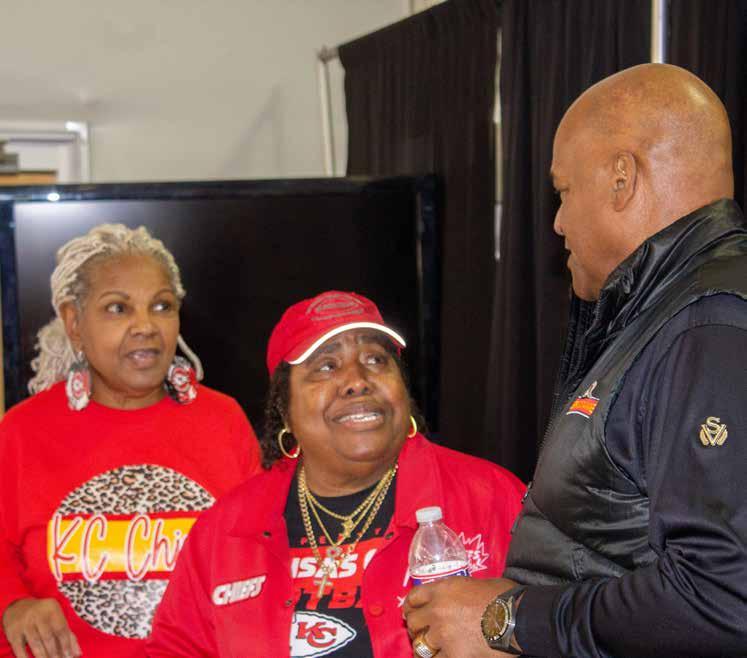
Being president holds deep meaning for Betty, who views the role as both an honor and a responsibility.
“It gives me a sense of pride and leadership,” she says.
In her view, a president must be someone who is humble, understanding, and willing to work with many different people. She believes leadership is not about power but about serving others and staying grounded.
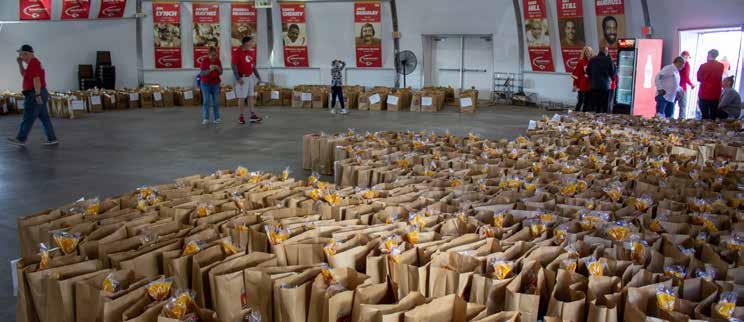
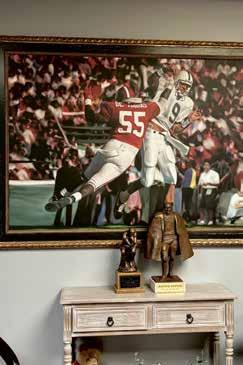
The foundation supports the Northland and Kansas City metro communities through education and outreach programs. One major component is a tutoring program that provides after-school help for 58 students across two schools. The foundation also awards scholarships and supports community service activities for youth athletes, including football players and girls’ soccer teams. Betty takes great pride in the foundation’s continued reach.
She feels especially proud that the organization remains strong even after Derrick’s passing in 2000, noting that his best friend, Neil Smith, still serves as the chairman.
Betty has faced major challenges during her time as president, especially after Derrick Thomas’ tragic death. That period brought uncertainty about the foundation’s future.
“People wanted to pick things apart,” Betty recalls. “‘Are you doing a good job? Are you going to stay with the foundation? Who’s going to run it?’” Despite the pressure, she stayed committed. “I stood for it,” she says. “We just worked through it and made sure we did what we were supposed to do. We tried to pattern what Derrick started.”
Keeping Derrick’s legacy alive is one of Betty’s top priorities. She explained that Derrick cared deeply about giving kids opportunities they normally wouldn’t have access to.
“WE DON’T WANT TO GET too BIG. WE JUST WANT TO DO THE SAME THINGS AND DO THEM better EACH YEAR.”
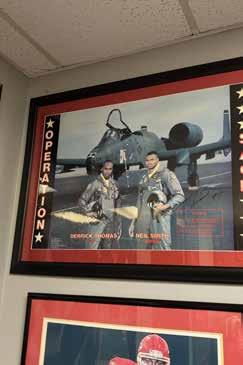
“He always wanted to make sure the kids had a cultural event,” she says, describing trips to performances, camps, and football games that the foundation continues to offer.
Betty says her board members keep her motivated.
“My board has been there forever,” she says. “They have a passion for what we do.”
Looking forward, she wants the foundation to stay focused, consistent, and committed to doing things well.
“We don’t want to get too big,” she explains. “We just want to do the same things and do them better each year.”
If you want to read more about the Derrick Thomas/Neil Smith Third and Long Foundation, you can visit their website, thirdandlong.org . This story was produced in partnership with the Northland Center for Advance Professional Studies, or NCAPS, and was pitched, written and produced by local high school students. Amiah Battles contributed to this article by conducting the interview with Betty Brown.
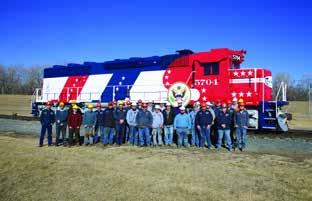
HOW A PARKVILLE RESIDENT AND KC TEAM HELPED RESTORE A LOCOMOTIVE TO ITS BICENTENNIAL GLORY
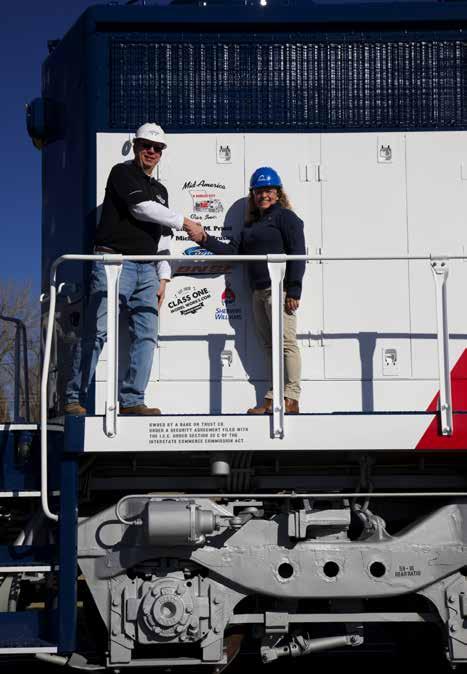
In the early 1970s, bicentennial fever descended on our country. American flags and patriotic red, white, and blue colors adorned all sorts of industrial machinery, from semi-trailers to locomotives to heavy earth-moving equipment. I clearly remember the 1976 bicentennial logo: a star with rounded points and the call-out 1776–1976.
The U.S. Mint even made bicentennial quarters, and I have a few tucked away for posterity. Now, 50 years later, America celebrates its semi-quincentennial, or simply the 250th anniversary of the United States.
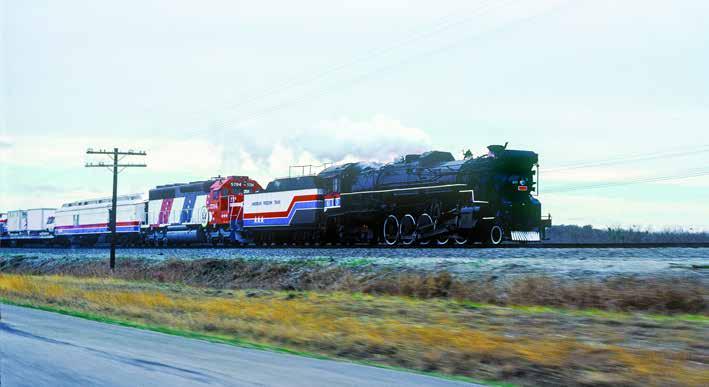
Back then, dozens of railroads painted new or freshly rebuilt locomotives in classy, colorful bicentennial paint schemes.
“The 5704 is now safe from scrapping and has a wonderful, preserved future where she receives the attention worthy of her bicentennial paint and heritage.”
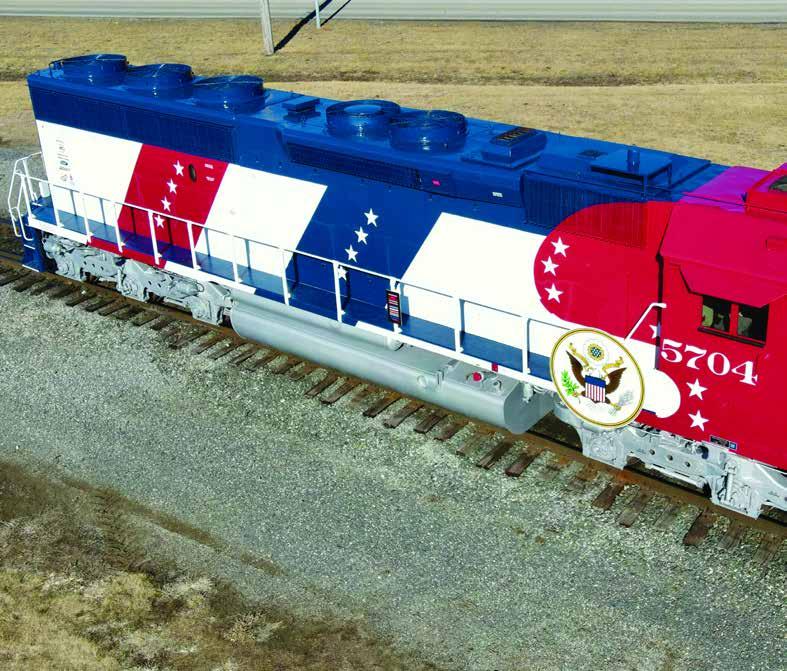
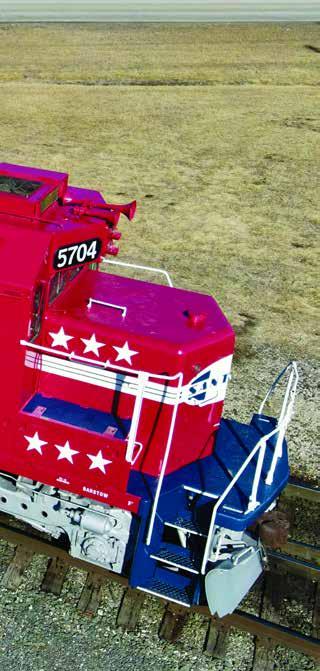
The Atchison, Topeka & Santa Fe Railway was no exception. They chose to paint five newly-delivered locomotives in a stunning honorary paint scheme, complete with two 59-inch metal signboards bearing the Seal of the United States. These units (a generic term for locomotive) operated throughout the ATSF rail network, running through towns large and small served by the railroad. Municipalities could request these specially painted locomotives at local bicentennial events and celebrations. The railroad spotted the locomotives (a railroad term similar to parking) and opened them up for tours and photographs. The five bicentennial units roamed
the Santa Fe rail network from Chicago to Dallas, from Denver to Los Angeles, from Phoenix to Kansas City, and hundreds of cities in between. The ATSF made every attempt to keep them clean and on the point (in the lead) when used with other locomotives to pull a train. The railroad also worked diligently to keep these units on point of “hot” (priority) mail trains that quickly traveled between Chicago and Los Angeles or San Francisco.
As a child growing up in the Kansas heartland, I only saw one of the bicentennials one time, or at least I only remember the chance meeting. Many of my friends who grew up trackside in the early 1970s
remember seeing at least one of them almost every day. I am jealous!
After the bicentennial year passed and operations returned to normal, the ATSF slowly repainted the units back into its standard blue-and-yellow corporate colors, with the last of the bicentennials repainted by 1978. Their freight-hauling lives then settled down to the daily shuffling of traffic across the ATSF system.
In 2021, the ATSF began retiring this class of locomotive, and an opportunity arose that I just could not ignore. I have always been interested in railroads and railroading; in fact, I spent a good deal of my career working for the ATSF (later
“I set about putting together a proposal explaining why the locomotive was a historical artifact and why it was worthy of preservation. That document included a detailed history and many stunning color photographs and images of the locomotive in service.”
BNSF railroad). A friend of mine who keeps track of equipment “retirements” (when a railroad relinquishes ownership through various methods) called me to discuss the latest round of locomotives being sold off or scrapped. At the time, I did not realize the impact of that phone call. It was April 26, 2021. He mentioned that a former bicentennial was slated to be scrapped in Memphis, Tennessee. His words immediately made me wonder if anything could be done to save her. In fact, I clearly remember thinking, “This is terrible news! What a great piece of railroad and American history.” However, I also realized that there are many people whom I could at least talk with to see what could be done. I have heard it stated that one day you realize that it is your generation in charge of the world. You can make a difference with some consistent action and a focused approach.
I immediately called Eric Goodman, a close friend, model railroader, and, at that time, a member of the BNSF management team. I also approached Paul Duncan, who, at the time, was the Vice President of Service Design and Performance at BNSF. Eric and Paul became crucial to this project. Eric began working with BNSF Public Relations and Rich Wessler (who, at the time, managed passenger trains and special movements) to determine what needed to be done, if anything could be done, to pull the unit and set it aside for a
period of time, thus preventing its scrapping. I set about putting together a proposal explaining why the locomotive was a historical artifact and why it was worthy of preservation. That document included a detailed history and many stunning color photographs and images of the locomotive in service.
While Eric was working his magic inside the BNSF, I set about contacting museums that might be interested in adding the 5704 to their collection. I specifically targeted operating museums that can rebuild and maintain operating locomotives and subsequently have trackage to operate large motive power. Eventually, the list was narrowed, and after some careful culling, the Southern California Railway Museum was chosen. They have a good history of rebuilding and maintaining older historic pieces of railroad lore.
While I awaited the signing of contracts and donation paperwork, I again set my sights on the restoration of the 5704 and began contacting vendors to see what I could procure in donations. Mid-America Car (a local freight car and locomotive rebuild business) was the first to step on board and volunteered to strip, rework, and paint the unit for free. I had completed several “for pay” projects with MidAmerica, doing contract work for several railroads, and they are wonderful to work with and do excellent repair and paintwork.
CONTINUED >
Sherwin-Williams volunteered the paint and paint shop managers to ensure the paint was applied correctly. They also worked hand in hand with me to ensure we landed on a spot-on match for the red, white, and blue paint. There was always a Sherwin-Williams representative on site while the unit was being painted. They were wonderful people to work with!
I had recently completed the design work for BNSF’s 25th Anniversary fleet of locomotives, and the graphics were printed at Eagle Graphics in Wichita, Kansas, for that project. As luck would have it, one of the owners of Eagle Graphics is a railfan, and they kindly and enthusiastically donated all the graphics and printing for this project. Masking was donated and produced by InSight Print and Display in Kansas City. It is truly amazing how large real railroad graphics are — one set of painting masks filled the back seat of my SUV. At this point, we were set to cosmetically restore the locomotive to its early 1970s appearance.
After BNSF agreed to donate the locomotive, we set about arranging for the unit to be routed to Kansas City. Eric worked with the BNSF Mechanical Department and the Operations Department to deliver the unit to Kansas City. Once in Kansas City, the locomotive was stored awaiting a shop opening and scheduled rebuild time at Mid-America Car. Once all the official donation paperwork was signed, the BNSF delivered former bicentennial 5704 to Mid-America Car on August 23, 2021.
A pre-grit blast inspection of the carbody was performed by Mid-America Car, and many items were added to the list of work needed to restore the unit. An initial list of parts that needed to be fabricated was created, including a new antenna ground plane, twin roof-mounted strobe bases, and an airhorn. Many items were also slated for removal from the unit, since they were not present in the 1976 rendition of the 5704. The goal was to restore all the machinery and items removed over the years as technology improved, and to remove all items added to the 5704 as part of improvements. We wanted the unit to appear as she did in
the early 1970s. Parts-on and parts-off was the first study and report completed and delivered to Mid-America Car.
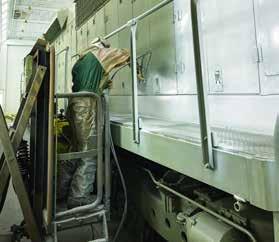
The locomotive could not simply be moved into the blast booth and be gritblasted. Many items that could potentially be damaged by the very abrasive high-pressure blasting particulates needed to be removed from the locomotive or at least covered for protection prior to the blasting. Headlights, rear view mirrors, and other items were removed from the carbody and stored in a large bin marked “5704.” All the window glass was carefully masked as well. Air intakes, traction motors, dynamic brake grids, radiator intakes, and all other openings to the unit had to be covered with fabric to prevent incursion by the blasting media. Once all the openings were covered, the unit was rolled into the blast booth to begin the transformation.
The blast booth at Mid-America Car is modern and very efficient. The booth is enormous and designed with two levels, both open grid, to allow the blast media to fall to the ground and then pass through grids in the floor for separation and recycling. Its media recycling system does a remarkable job of removing and separating the blast media from the blasted paint and years of accumulated dirt. The employee who is blasting wears a protective suit and is supplied with clean air via a circulation hose. It all has a very NASA feeling. Blasting is basically the process of “un-painting” using high-pressure air and gritty media to physically scour the paint from the locomotive’s steel carbody. The worker simply guides the blast media across the locomotive’s surfaces in a loud, dusty process that rips paint from the locomotive. This process can take up to a day. The 5704 and most other Santa Fe locomotives originally had their paint applied over a reddish zinc-chromate primer that resists removal, making the task all the more difficult and lengthier. Once the locomotive was blasted and inspected, residual blasting media was swept and blown off the unit, and the masking and protective coverings were removed. It was thrilling to see a completely bare locomotive stripped down to raw, shiny metal. She looked brand new — from a distance.
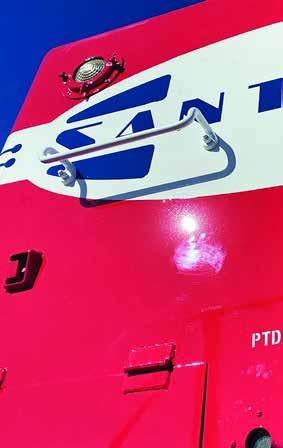
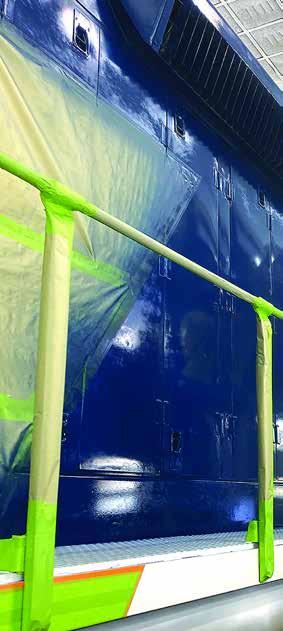
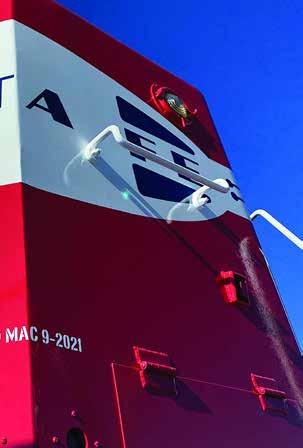
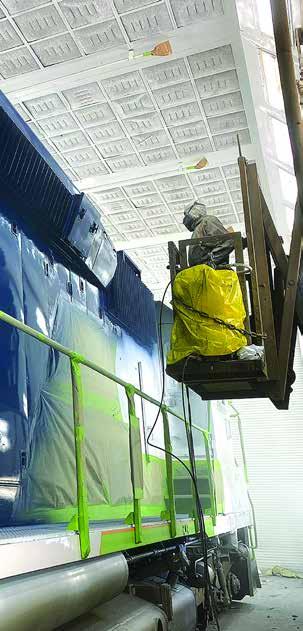
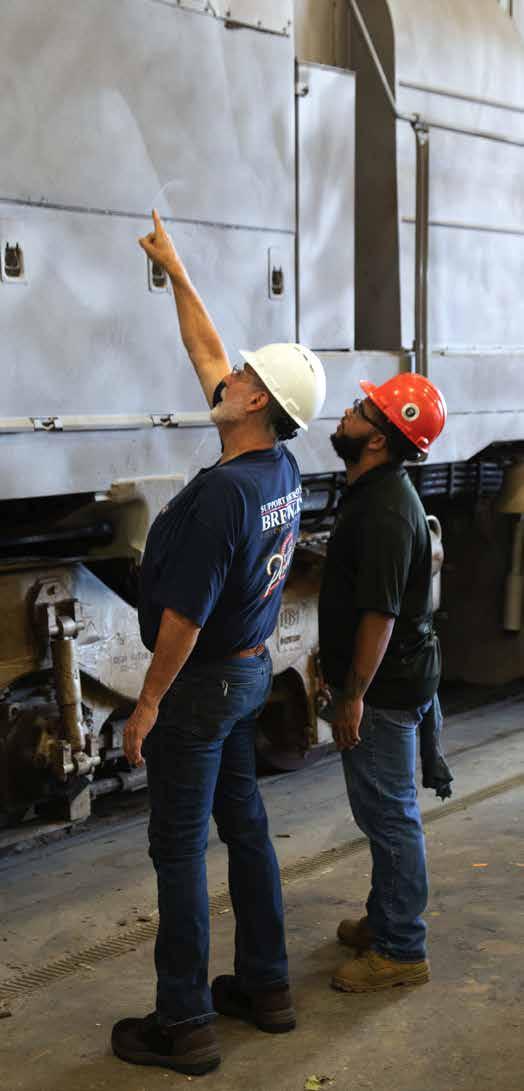
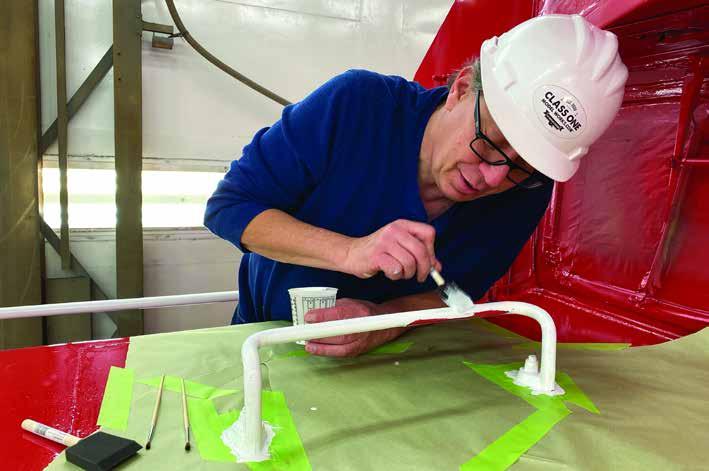
The 5704 was pulled from the blast booth by the Mid-America Car shop switcher (a smaller locomotive) and placed in a well-lit area so that carbody inspections could begin. Almost immediately, we notice salt pitting all along the walkways. Some lower carbody areas also had severe corrosion. Some areas had holes completely through the 1/8-inch steel carbody. Other areas were just decayed, including a spot fore of the engineer’s side dynamic brake blister. This particular decayed area was huge, measuring almost eight inches across. The crews at MidAmerica Car made a thorough assessment of the body condition and presented me with the list. It was my job to decide what needed to be done, and I spent a fair amount of time talking with Hank Winn, Vice President and Chief Operations Officer at the Southern California Railway Museum. I made a list of the appliances that had been removed or needed to be altered, including: creating the original radio ground plane and can antenna, reinstalling class lights, reworking the cabtop plumbing and conduit layout, adding large 60-inch herald plates, making the ACI label plates, relocating the headlight to its upper position and blanking the low nose hole, cutting in the oval sight glass window, designing and installing the twinstrobe mounting points, and many more items. Just as many
things needed to come off the unit (dummy MU receptacles, ETD antenna, modernized ground plane, knuckle holders, AEI tags, and ditch lights). Removing the items was straightforward. Adding them required creating dimensioned engineering drawings. I worked with original plans for the Santa Fe SD45–2s, as they provided most of the information needed. A mounting system for the large shields was fabricated to prevent them from oscillating due to the moving air at track speed, up to 70 mph. Bolting them on and adding lift rings allows the shop to perform necessary maintenance. These were very heavy!
Dimensionally accurate scale drawings of the unit were made to reproduce the complex paint scheme. The body paint and lettering design were then added to that base drawing, followed by detail drawings of each piece of lettering. We were fortunate to have very good images of these units while they were in service. Even the serial number on the builder’s plates was accurately reproduced. The ACI labels (original bar codes) were printed on Scotchlite reflecting material and were faithfully reproduced so it could be scanned by the Car-Trak system (if it were not extinct). The Shields of the United States of America were hand-drawn and just fit the Eagle Graphics printer at 59
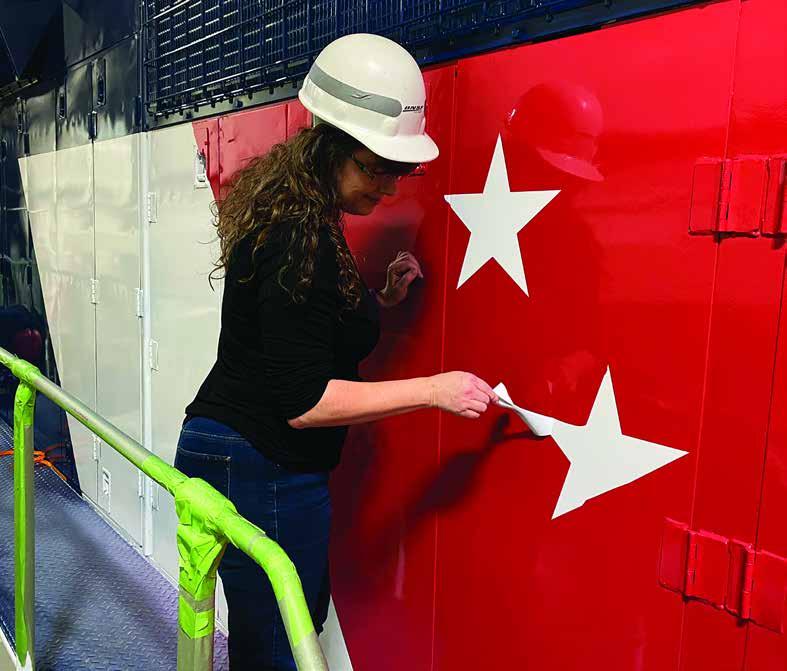
inches across. Small clusters of letters, like the trust information and gear ratios, had thin transparent paper added to the outer surface so the tacky back surface would be applied to the locomotive and burnished prior to the front material being removed. This allowed all lettering, spacing, etc., to remain in their designed locations. The actual release date was Tuesday, March 1, 2022.
Matching the colors turned out to be a challenge and a mystery. What colors were used for the units and why? Fortunately, we found original documentation and notes from a former ATSF employee who had preserved them and graciously provided them to us for this project. It turns out that the original paint colors and formulas were sourced by the Sterling Laquer Company in St. Louis, Missouri. Sterling Laquer was also providing paint for McDonald Douglas and happened to be painting American Airlines aircraft at the time. The ATSF units used AA colors — mystery solved.
Sherwin-Williams used a computerized color-matching system to recreate the original paint codes, and we ordered the paint needed to refinish the unit. The unit was primed and allowed to sit for a day before the white paint was applied. The 5704 had to be masked four times, once to cover the window glass and once for each color. The subsequent layers of masking were built up over the earlier layers as the different colors were added and more areas needed to be covered. The unit was primed, then the white, blue, and red were added — in that order — followed by the silver on the trucks, fuel tanks, underframe, and pilots. By the time the painting was completed, the unit was cocooned in masking. Removing the masking was the most enjoyable part of the project. Thrilling would be an understatement.
All the small lettering and warning labels were made from vinyl and applied in their appropriate locations on the unit.
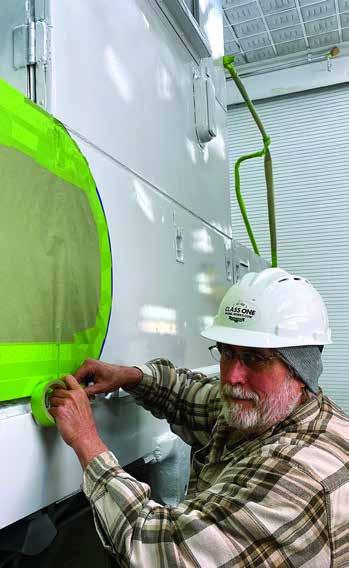
Photographs were used to accurately place the lettering. After all the masking was removed and the stencils were peeled off the unit, a high-gloss clear coat was applied. She was rolled out of the Mid-America Car shop and delivered to the BNSF at Argentine on March 10, 2022. She was on display at Union Station for a few days so that all who had lent a hand and volunteered could visit the locomotive in her completed form.
As of January 2026, the 5704 is at the Southern California Railway Museum in Perris, California. The skilled staff there is restoring the unit to operating condition. I have visited her several times, and she looks great. It will be a pleasure to go out and see her operate someday once her mechanical restoration is complete. The 5704 is now safe from scrapping and has a wonderful, preserved future where she receives the attention worthy of her bicentennial paint and heritage.







TO THE NORTHLAND
ARTICLE AND PHOTOGRAPHY BY
KATIE CURRID
“WE HAVE A DEDICATED OYSTER GUY. BRANDON KNOWS MORE ABOUT OYSTERS THAN ANYONE I'VE EVER MET.”
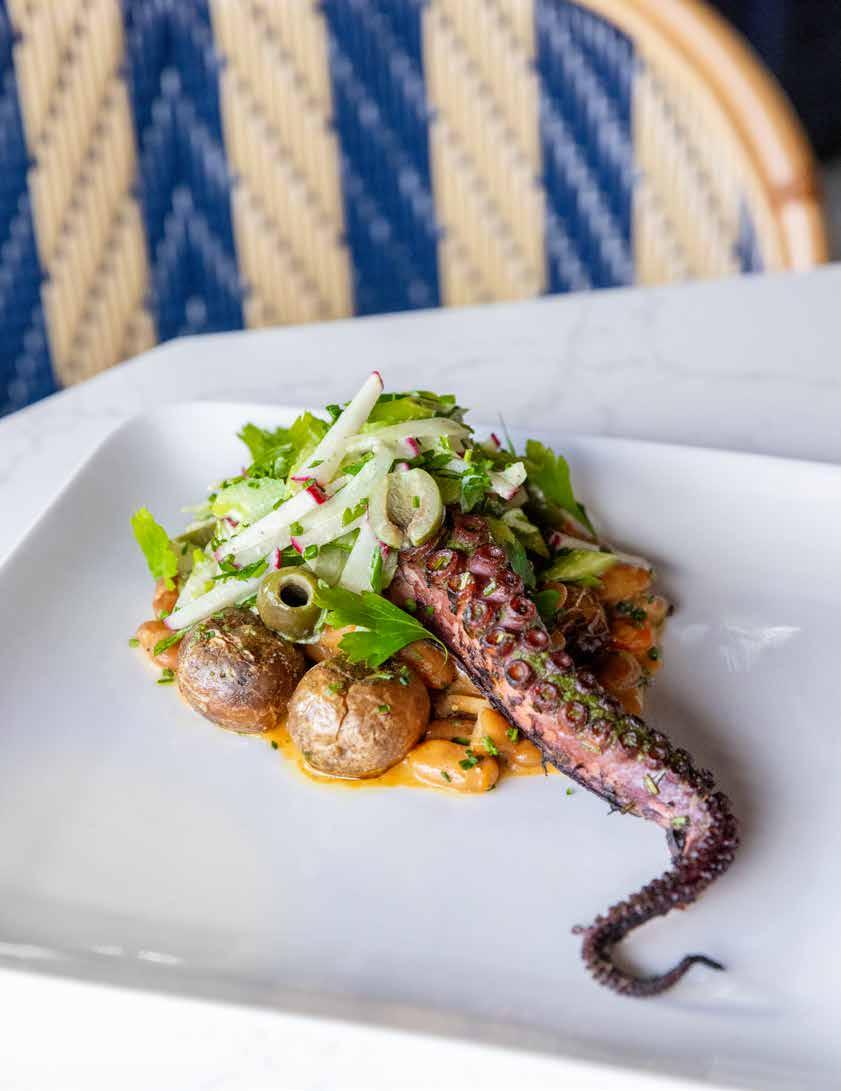
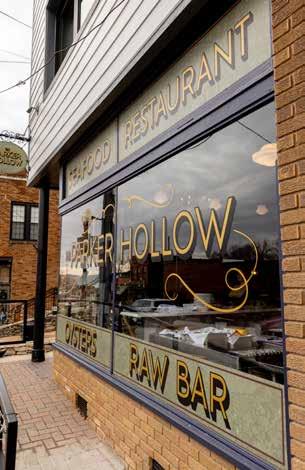
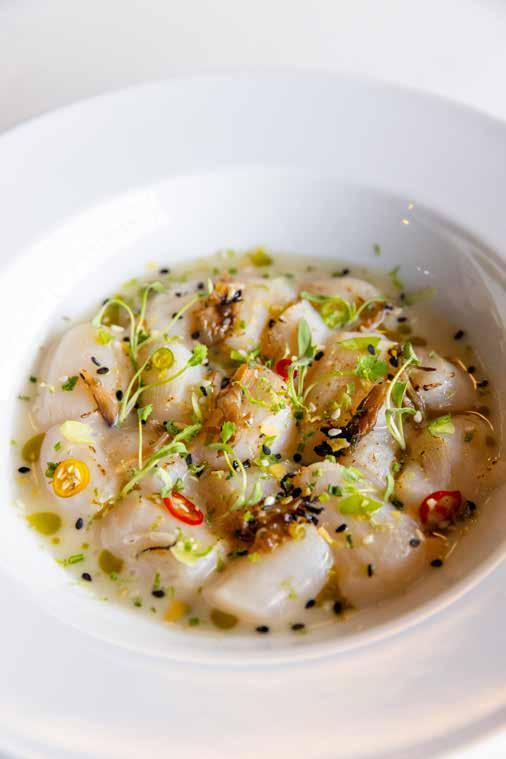
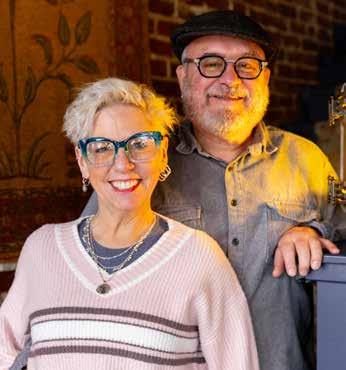
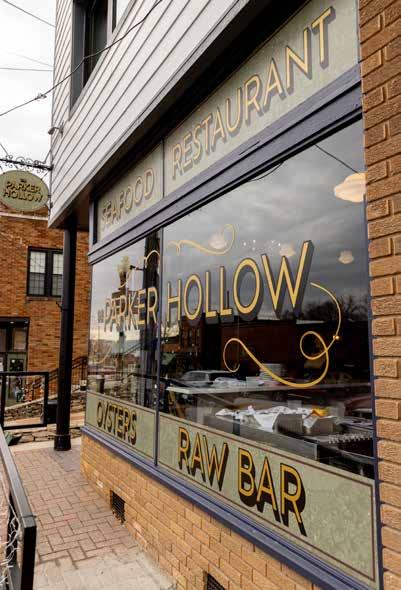
Jonathan Justus and Camille Eklof have come back to the Northland with their newest restaurant, The Parker Hollow, and the Northland couldn’t be more excited.
“It’s been really different that we’ve been very embraced here, and people keep saying, ‘We’re so glad that you came here. We’re so glad that you’re here,’” says Jonathan. “It feels nice to be able to feel wanted, rather than to feel that, ‘Why did you come here?’”
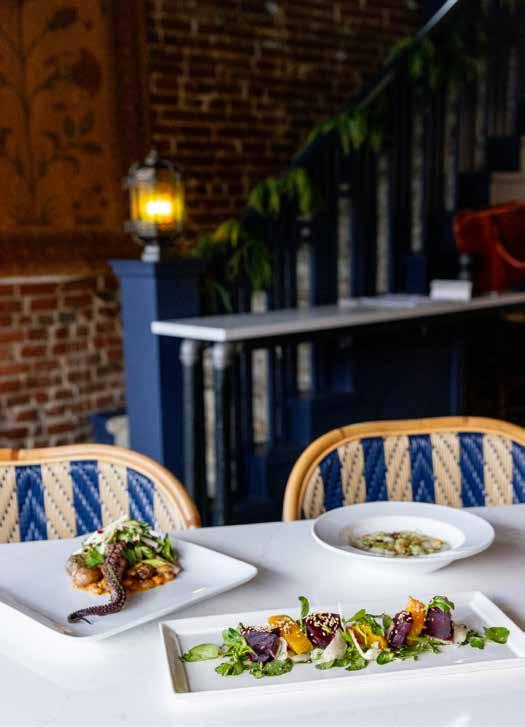
The husband and wife team, who ran the highly acclaimed chefowned Justus Drugstore in Smithville, quietly opened The Parker Hollow in Parkville in October. The restaurant is located on the historic Main Street in a 175-year-old building that used to be Frank’s Italian Restaurant.
Since closing Smithville’s Justus Drugstore in 2018 after they received an offer they couldn’t refuse for the building, the two have been involved in a few different projects. Another one of their restaurants, Black Dirt on the South Plaza, closed after just two years in 2020, and the couple has been hosting pop-up dinners out of their home in Paradise.
It was actually while consulting on another Northland restaurant that Jonathan realized that maybe there was a hunger for seafood in the area that wasn’t being met.
“IT'S BEEN REALLY DIFFERENT THAT WE'VE BEEN VERY EMBRACED HERE, AND PEOPLE KEEP SAYING, ‘WE'RE SO GLAD THAT YOU CAME HERE. WE'RE SO GLAD THAT YOU'RE HERE.'”
“We were going through 80 pounds of mussels, 110 pounds of calamari, 120 pounds of shrimp, 65 pounds of salmon and 50 pounds of sea bass every five days,” says Jonathan of his consulting project. “At the time, I was like, there’s a dearth of seafood in the Northland. Our biggest selling item there was a cioppino and it was outselling our steaks.”
The vision for The Parker Hollow wasn’t just born out of a need for seafood in the Northland. It’s a natural fit for Jonathan and Camille, who spent the early part of their career in restaurants in France.
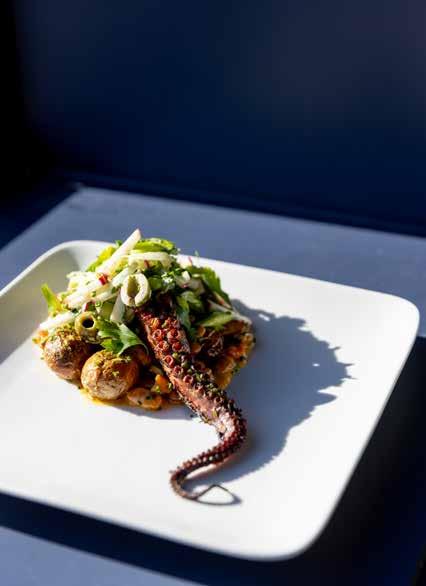
While The Parker Hollow is definitely not just a reimagined Justus Drugstore, it does apply many of the same philosophies that were present at the Smithville restaurant, which was a semifinalist for the James Beard Award’s Best New Restaurant in 2007 and where Jonathan was twice nominated for the James Beard Award for Best Chef: Midwest. While Justus Drugstore was known for its nose-to-tail cooking, you could say The Parker Hollow is fish-to-gill.
“I’m buying whole fish,” says Jonathan. “There are not many restaurants in Kansas City that are doing whole fish butchery.”
Despite the skepticism that can surround serving whole fish in the Midwest, Jonathan remains confident that diners are more open-minded than they’re given credit for.
“Over and over, again and again, people said, ‘People are not going to buy fish with bones in it — it freaks them out,’” says Jonathan. “I tell people that we’re going to be serving species that you’re not used to seeing, and we’re going to be serving parts of fish you’re not used to seeing, and people are genuinely excited about it.”
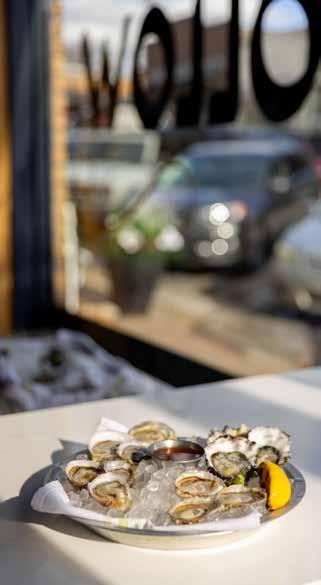
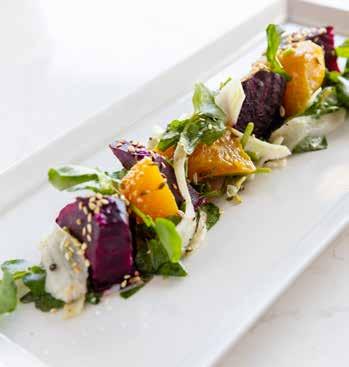
In addition to their rotating seafood offerings and Waygu burger, The Parker Hollow has a raw bar with a focus on West Coast oysters, served with a Norton verjus mignonette that came from grapes at Smithville’s Ladoga Ridge Winery.
“We have a dedicated oyster guy,” says Jonathan. “Brandon knows more about oysters than anyone I’ve ever met.”
Anyone who has eaten food prepared by Jonathan Justus — whether it was at Justus Drugstore or elsewhere — knows that, even if the food is unfamiliar, you just trust the chef.
“I used to get this a lot at the Drugstore, and to speak in the vernacular as it is often told to me, ‘Your menu is [wild], but I’ve learned to trust you over time, because when I
eat here, I’ve never had anything that wasn’t good,’” says Jonathan.
Beyond just the food, Jonathan feels that The Parker Hollow is where it’s supposed to be and they’re excited to add to the community in historic downtown Parkville.
“We don’t have any interest in being in a strip mall anywhere,” says Jonathan. “This building has so much character. The street has so much character. And I hadn’t realized — people keep saying that how Parkville, compared to a year and a half ago, what it is right now, and how much more there is here. And I think that it’s nice to be riding a crest wave somewhere that’s just finding itself.”
The Parker Hollow
100 Main Street, Parkville (816) 569-0033
Open Tuesday-Thursday 4-10 p.m. and FridaySaturday, 4-11 p.m.
Find reservations on Tock at exploretock.com/ the-parker-hollow
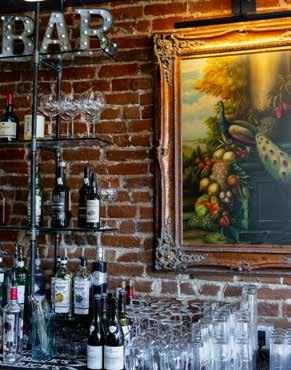
“I’M BUYING WHOLE FISH,” SAYS JONATHAN. “THERE ARE NOT MANY RESTAURANTS IN KANSAS CITY THAT ARE DOING WHOLE FISH BUTCHERY.”

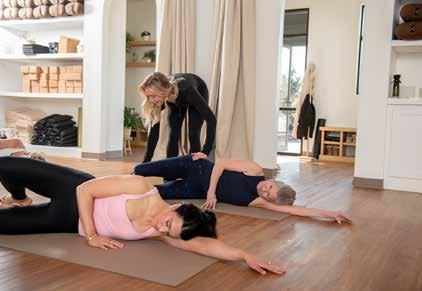

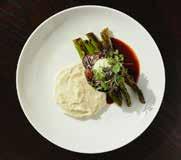
This February, fall in love with teaching yoga—confidently. This February, fall in love with teaching yoga—confidently. Our 2-month mentorship bridges the gap between certified and confident. Move beyond overthinking and performance anxiety. Learn to teach with clarity, presence, and purpose. Four Sunday intensives starting March 1st. Scan the QR code to apply now— limited spots available.


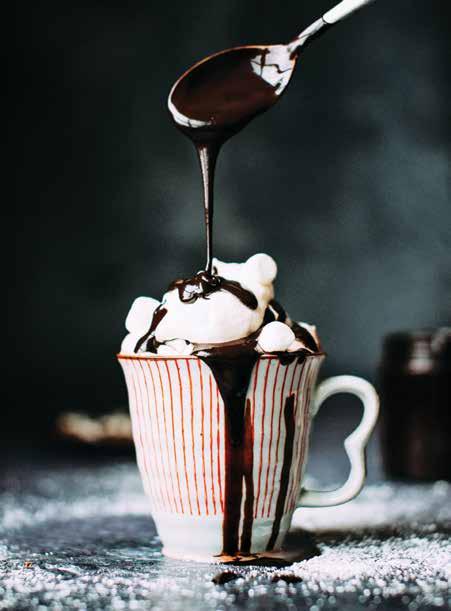
Chocolate Fondue
• 2 cups heavy cream
• 1 pound premium semisweet chocolate (recommended: Lindt or Callebaut)
• 1 tablespoon pure vanilla extract
• 1 tablespoon brandy
• Strawberries, bananas, pineapple, brownies, waffles, marshmallows, Oreos, pound cake, pretzels or any other dipping item of your choice!
Put approximately four inches of water in a saucepan and bring to a slow boil. Place a mixing bowl on top and pour in the heavy cream. Let heat. Or, use a double boiler. Meanwhile, break up or chop the chocolate into small pieces. When the cream feels hot to the touch, add chocolate and whisk until smooth. Whisk in vanilla and brandy (optional). Pour into the fondue pot and light the handy fuel underneath. Keep the flame low as not to burn the fondue. Arrange dippers on a platter and enjoy. For the grown-ups, a spiked chocolate drink from our friend, Martha Stewart.
The Spiked Jones
• 1/2 cup milk
• 1 cup heavy cream
• 1/4 cup whole coffee beans
• 2 ounces semisweet chocolate (61% Valrhona), chopped
• 2 tablespoons Kahlua
• 1 teaspoon confectioners’ sugar
• 1 tablespoon dark chocolatecovered coffee beans, chopped
In a saucepan over medium heat, combine milk, 1/2 cup cream, and whole coffee beans. Bring to a simmer, turn off heat, cover, and steep beans for 1 hour. Strain liquid and return to saucepan; discard beans. Bring the milk-and-cream mixture back to a simmer, add chocolate, and whisk until incorporated. Remove from heat; whisk in Kahlua. Whip remaining 1/2 cup cream and the confectioners” sugar until soft peaks form. Divide the hot chocolate between 2 cups and garnish each portion with a dollop of whipped cream and a sprinkling of chopped chocolate-covered coffee beans.
ARTICLE BY SUE G. COLLINS
When my kids were little, we would address valentines to classmates, deliver flowers to neighbors and decorate the house with hearts and snowflakes (cut from white coffee filters). For dinner, I would make their favorite meal: dessert! Why not? I'd melt chocolate (the good stuff) and let them line up their dippers. They thought dessert for dinner was magical. Of course, I'd fed them a protein-packed after-school snack and served “dinner” early so they could get their sugar wiggles out before bed. Delightful! Happy Valentine's Day!
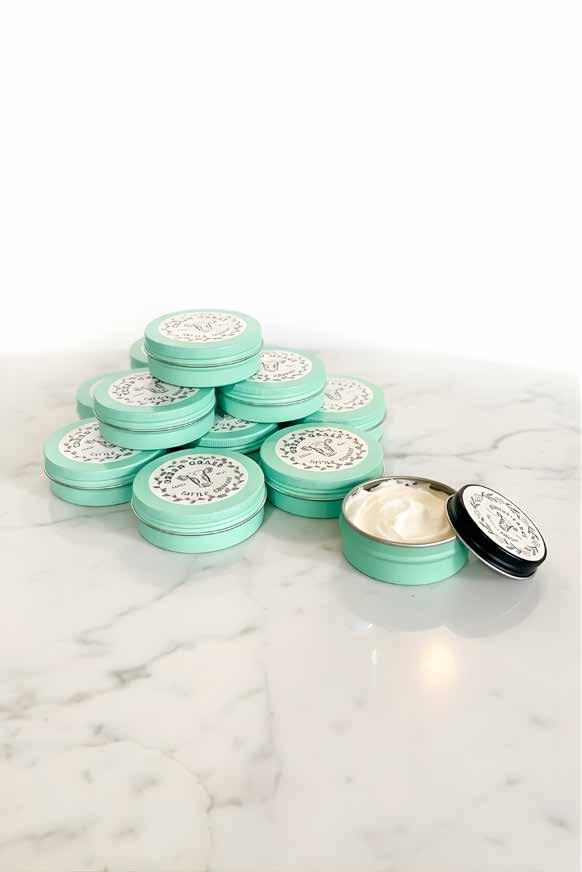
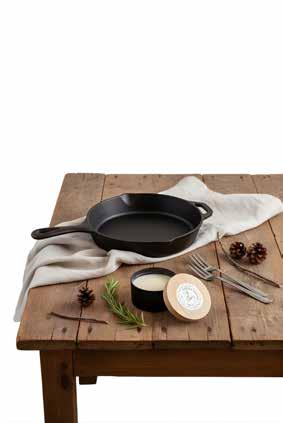
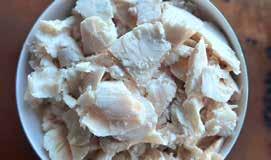
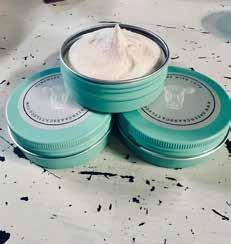
another byproduct of these amazing animals...
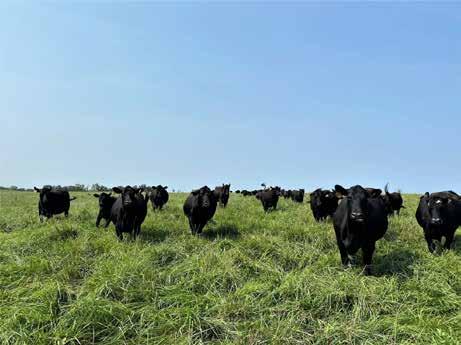
The tallow we use come from cattle humanely raised on our regenerative farm. Stop by our store to check out our full collection of products.
FEBRUARY 4TH, 11TH, 25TH AND MARCH 4TH
North Kansas City Public Library meeting room | 5:30 PM
Learn to knit or bring your current project and stitch alongside others in a welcoming, low-pressure setting. Beginners and experienced knitters alike can enjoy guidance, conversation, and community while working at their own pace with fellow fiber enthusiasts. Find more information and register at nkcpl.org.
FEBRUARY 6TH
Park ICM Orchestra Valentine’s Concert with Guest Conductor Filippo Ciabatti
Graham Tyler Memorial Chapel, 8700 NW River Park Drive, Parkville | 7:30 PM
The annual Valentine’s week concert will highlight the many moods of dance music, including the Romanian Folk Dances of Bela Bartok, the lilting Waltz from Tchaikovsky’s Serenade for Strings, and the boisterous Hoedown from Aaron Copland’s ballet Rodeo.
FEBRUARY 12TH
Preschool Valentine’s
North Kansas City Public Library | 10:00 AM
A heart-filled storytime designed especially for preschoolers, featuring Valentine’s-themed stories, simple crafts, sensory play, and joyful movement activities that encourage creativity, kindness, and hands-on fun for little learners. Find more information and register at nkcpl.org.




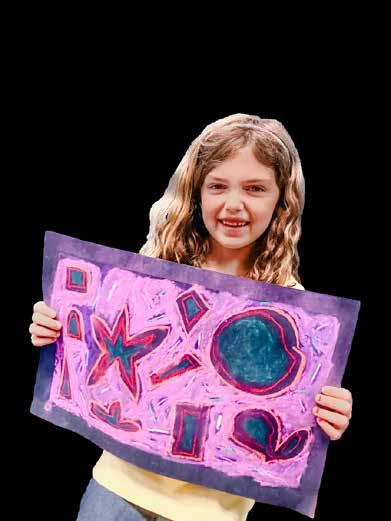

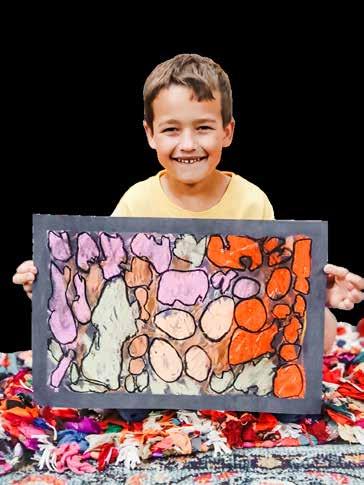

At Oakhill, we guide tomorrow’s leaders through creativity, character, and community.
A Place Where Your Child Is Seen & Known
At Oakhill, small class sizes and caring teachers ensure your child isn’t a number — but a valued, unique learner in a supportive community.
Challenge, Enrichment & Experiential Learning
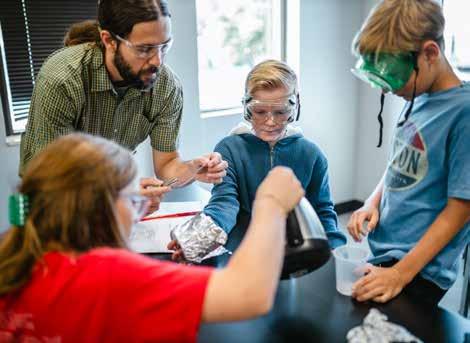
At Oakhill, learning goes beyond the classroom — students explore nature, tackle hands-on projects, try new ideas, and learn about the world around them.
Helping Every Child Grow and Thrive
We emphasize not just what students learn, but who they become — nurturing character, problemsolving, and 21st-century readiness in a missiondriven independent school setting.
CONTINUED
FEBRUARY 13TH
Galentine's Day
Downtown Parkville | 4:00 PM
Time to shop, wine and dine with your besties! Bring your gal pals down to Parkville to enjoy a fun night out.
FEBRUARY 14TH
Valentine’s Makers Lab
Both Orange Easel locations | Platte Woods, 7617 NW Prairie View Road and Liberty, 249 W Mill St Suite 107
Celebrate Valentine’s Day with a morning or afternoon of creative fun! This station-based workshop features 8 hands-on Valentine projects that kids can make independently using simple examples and visual steps. From watercolor heart donuts to love bugs and stained-glass hearts, artists can explore at their own pace and create as many projects as they’d like. 10 a.m. for Platte Woods location and 1 p.m. for Liberty location
FEBRUARY 19TH
DIY Mini Zen Garden
North Kansas City Public Library | 6:00 PM
Create a calming mini Zen garden while exploring creativity and mindfulness. Participants will design their own peaceful tabletop garden using provided materials, making this a relaxing, hands-on experience perfect for tweens, teens, and adults alike. Find more information and register at nkcpl.org
FEBRUARY 21ST
Historic Downtown Liberty | 12:00 PM
Sample 25+ American-made wines, enjoy local shopping, and sip your way through a festive winter wine walk celebrating America’s 250th anniversary. Find more info at historicdowntownliberty.org.

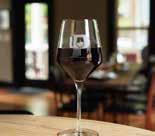
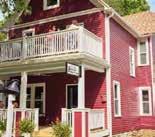
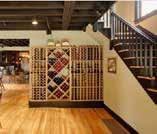
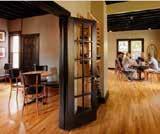
We've transformed a 120-year-old-home into a vibrant, energetic wine bar in downtown Parkville. Enjoy curated wine flights, premium spirits, local craft beers, and refined shareable plates in a space that honors its original charm. With exclusive clubs, live music, and private event opportunities, every visit invites you to savor exceptional taste in an unforgettable setting.

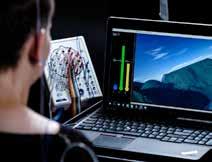

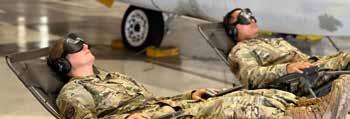
Kansas City Neuroplasticity Institute offers mental health services, neurofeedback and the Shiftwave Chair to support sleep, focus, stress regulation, and recovery. We regularly work with first responders, veterans and active-duty service members using non-invasive, evidence-informed methods that support the brain’s natural ability to regulate and adapt.
Now accepting Blue Cross, Aetna, TriCare, VACCN, and Medicare. www.kcnpi.com | 816-407-7706 x208 10 Westowne Street, Liberty, MO




At Serenity Holistic Wellness Medical Spa, we believe that true beauty radiates from within.
Our luxurious, comfortable studio setting is your sanctuary for healing—whether you’re seeking rejuvenating skin treatments, relief during life transitions, or support for your mental wellness. Discover personalized care crafted to nurture your mind, body, and skin. From wrinkle relaxers and dermal fillers, to our microneedling, chemical peels and expert in-depth facials, we have your best interests at heart and your unique
Mention “City


Financing Options Now Available. Scan the QR Code To See If You Qualify! www.serenityholisticmedspa.com @SerenityHolisticWellnessMedSpa
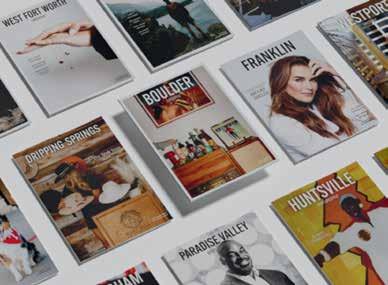



Set your schedule. Make an impact. Build a life you’re proud of.
Behind each of our 200+ City Lifestyle magazines is someone who cares deeply about their community. Someone who connects people, celebrates businesses, and shares the stories that matter most. What if that someone was you?
Or maybe it’s someone you know. If this isn’t the right time for you, but you know someone who could be the perfect fit, we’d love an intro.
Markets available nationwide. Learn more at future.citylifestyle.com
FEBRUARY 22ND
The Best of Both (Band) Worlds!
Staley High School Performing Arts Center | 3:00 PM
You’re invited to join the Kansas City Jazz Orchestra and the NorthWinds Symphonic Band for a FREE combined concert featuring these two amazing ensembles! This is a rare opportunity to hear exceptional artists from two closely related musical traditions—jazz and wind band—on the same program. Your financial contribution at https:// givebutter.com/I4iUUk would also be greatly appreciated!
MARCH 1ST-2ND
Montgomery Event Venue, Excelsior Springs, MO | 6:00 PM
Enjoy an interactive whodunit performed by a lively local cast, complete with dinner and plenty of twists. Guests work together to uncover clues, question suspects, and solve the mystery while supporting local fine arts scholarships. Doors for the production on March 1 open at 6 p.m., and doors for March 2 are at 1:30 p.m. Find more information at esculturalguild.com.
MARCH 28TH
Downtown Weston | 5:00 PM
Get a taste of Americana in historic downtown Weston during the monthly car cruise. No registration necessary — stop by with your beloved vehicle and park or cruise, or come by to admire the cars of others!
Want to be featured?
IN TOUCH AT