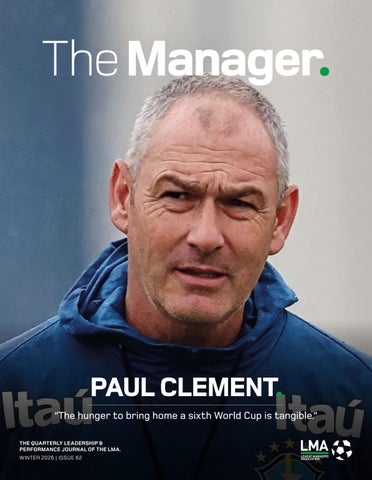
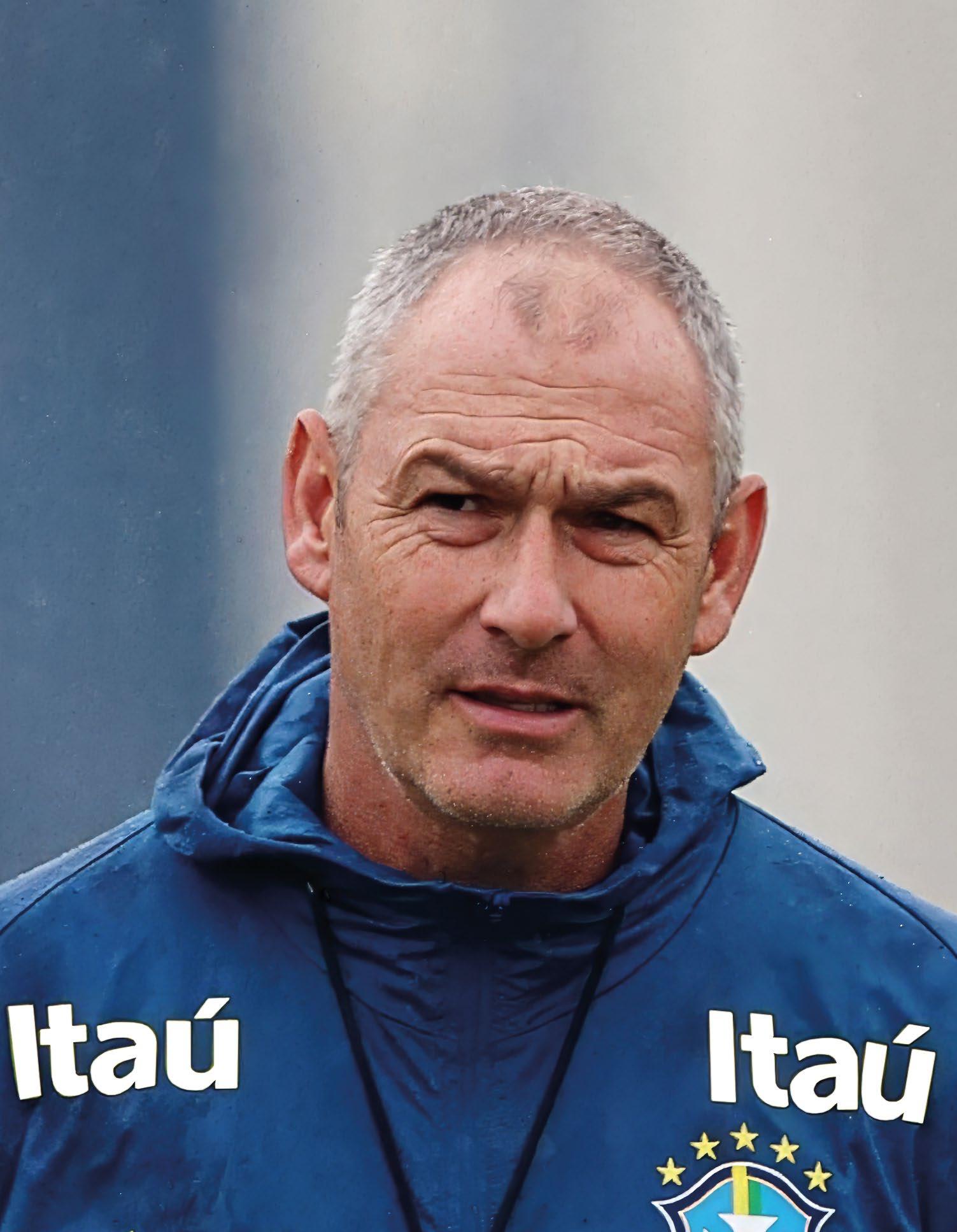
PAUL CLEMENT.
“The hunger to bring home a sixth World Cup is tangible.”
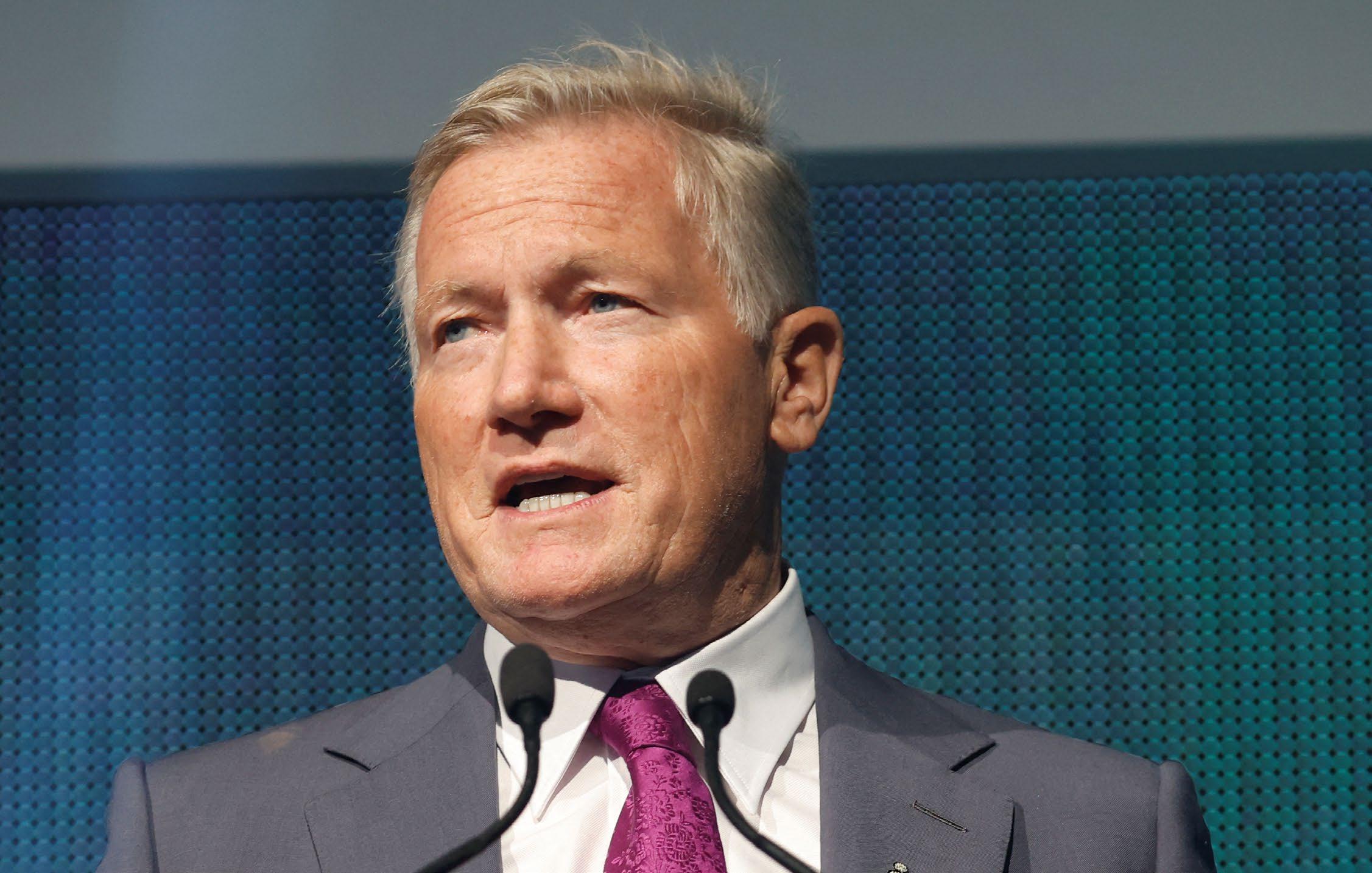
LMA Chief Executive
RICHARD BEVAN OBE.
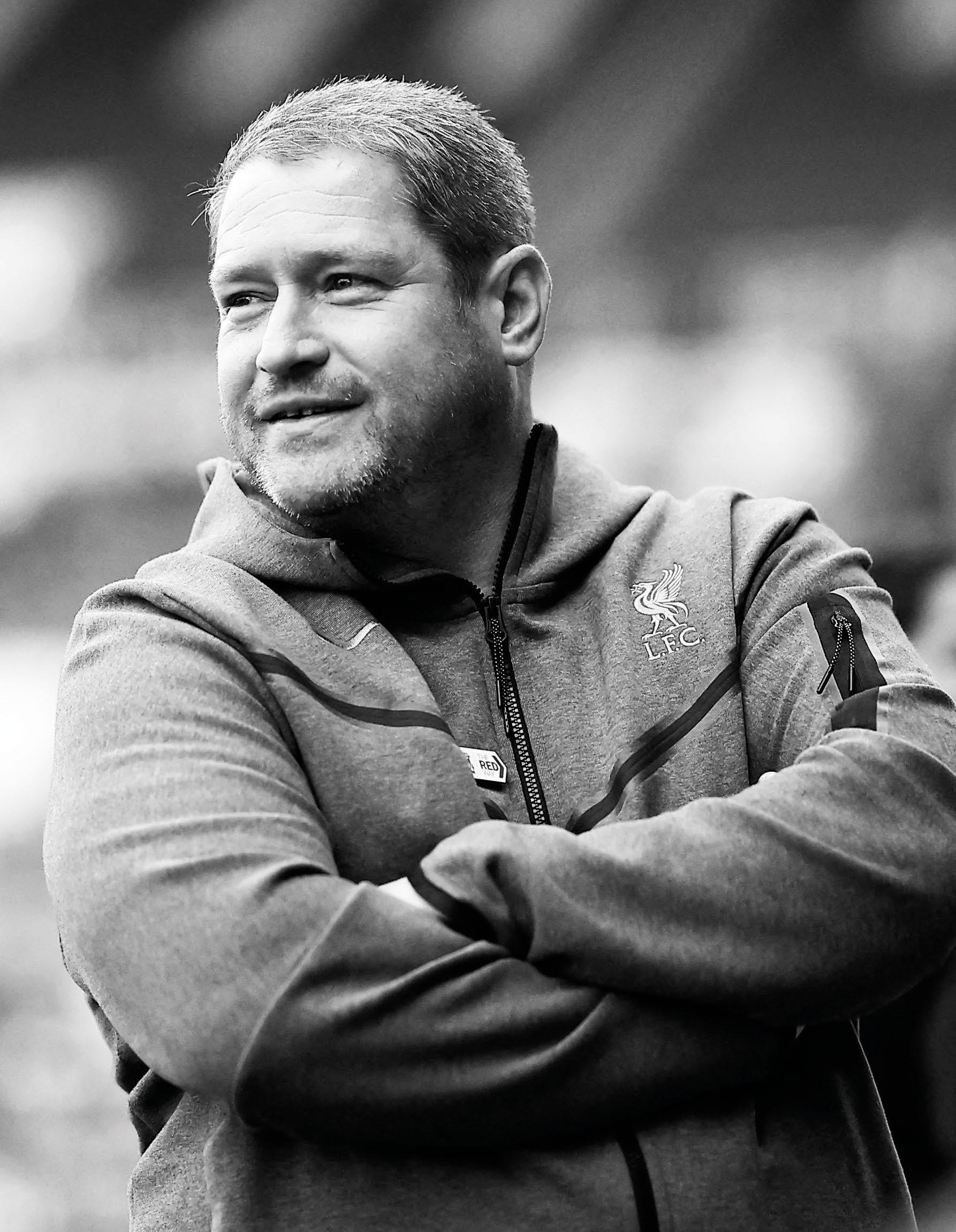
In September, the LMA and the wider football community were deeply shocked and saddened by the passing of Matt Beard. Matt was highly respected in the game and admired by his peers, and I echo LMA Committee member Emma Hayes’ touching words: “Matt was an incredible investor in the women’s game and someone who will be remembered by his players, staff and colleagues for the amazing character that he was. He was one of a kind, and his loss will be felt by all.” We extend our sincere condolences and continue to offer support to Matt’s wife and family.

The LMA places member health and wellbeing at the heart of everything we do. Over the past year, more than 200 members have accessed our healthcare services, including physical health assessments, mental health support and related wellbeing provisions.
The LMA Institute continues to grow and adapt to meet the evolving needs of our members in an increasingly demanding environment. In 2025, more than 150 members engaged in five new online short courses, benefiting from tailored and vocationally relevant learning
experiences. Nearly 900 attendees also participated in our wider CPD programme, led by industry experts.
Our international footprint continues to expand through an increasing range of provisions for members based overseas. The LMA’s focus is still on building strong relationships across football worldwide, supporting access to short- and long-term career opportunities, and developing tailored CPD pathways and learning resources for members in an interconnected global game.
2026 is an important year,
and the LMA continues to serve as the collective and representative voice of managers and coaches. Guided by member feedback, we will conduct research into the working environment of our members, including a technical area review, a survey on abuse experienced on and off the pitch, and an assessment of how ownership structures can impact a manager’s role.
With the Independent Football Regulator now established in law, the LMA has been engaging actively to ensure that the views of the coaching workforce are represented. The financial sustainability
of clubs, governance proposals and spending controls will play defining roles in shaping the future of the game, and we remain committed to ensuring our members’ voices are heard. We have already participated in the initial stakeholder consultation and will contribute further this spring.
Looking ahead, the LMA and LCA Annual Technical Masterclass, our flagship coaching education event, will take place over two days on 30 April and 1 May at St. George’s Park. In addition, the prestigious LMA Annual Awards Dinner will be held at Grosvenor House in London on 26 May.
We also edge closer to the FIFA World Cup this summer, and I would like to congratulate all members who have secured qualification for the tournament, particularly LMA President and England manager Thomas Tuchel and Scotland manager Steve Clarke.
The LMA and LCA are also represented proudly by the members working with 12 other competing nations. We send our very best wishes to Portugal Head Coach Roberto Martínez, having achieved qualification, and all those involved in the forthcoming play-offs, including Northern Ireland, the Republic of Ireland and Wales.

Alice Hoey
FROM THE EDITOR.
‘Can AI do my Christmas shopping?’ There was a time when a headline like this would have raised an eyebrow. Today, with AI constantly in the news and its tools playing an ever greater role in our lives, it feels like the tip of a very big iceberg.
Increasingly, though, I find myself questioning the rationale behind some of its common uses and whether we might be shooting ourselves in the foot. After all, while AI can do some quite incredible things, for the most part we use it simply to save time and effort. The question then is, why do things need to be easier? In handing tasks over to an artificial brain might we be holding back our own cognitive development?
As Mary Taylor points out in our feature on page 44, to get better at any skill and to expand the range of our abilities we need to purposely put ourselves into new situations, difficult ones that test us to ever greater extents. “When you avoid a difficult situation, the scale of the challenge simply amplifies in your mind,” says Taylor, “whereas when you walk towards it, and tackle it
repeatedly with increasing levels of severity, you become better at handling it.”
When we turn to ChatGPT to summarise a research paper rather than reading it, or use Copilot for an email instead of writing it ourselves, correcting our mistakes as we go along, we absolutely save time. However, we also deny ourselves the opportunity to practise, learn and improve.
In our piece on neuroplasticity on page 104 we examine this further, looking at why engaging in new and varied activities has multiple benefits for brain health, learning and professional performance. Rather than taking the easy route because it saves us half an hour, we need to walk the long road, accept the uncomfortable and embrace the new.

The League Managers Association, St. George’s Park, Newborough Road, Needwood, Burton upon Trent DE13 9PD
The views and opinions expressed by contributors are their own and not necessarily those of the League Managers Association, its members, officers or employees. Reproduction in whole or in part without written permission is strictly prohibited.
www.leaguemanagers.com
EDITOR
Alice Hoey AliceHoey1@gmail.com
EDITOR FOR THE LMA
Sue McKellar
Sue.McKellar@leaguemanagers.com
ART DIRECTOR
Matt Draycott Matt.Draycott@leaguemanagers.com
CONTRIBUTING EDITOR
Luke Johnson Luke.Johnson@leaguemanagers.com
SENIOR WRITER
Marc Williams
Marc.Williams@leaguemanagers.com
PUBLISHER
Jim Souter
Jim.Souter@leaguemanagers.com
BUSINESS DEVELOPMENT
Adam Tarrant
Adam.Tarrant@leaguemanagers.com
DESIGN
Luna Studio
PHOTOGRAPHY
Action Images, Alamy, Amy Merricks, CBF Images, Gama Aviation, Greenhouse Sports, iStock, Jeonbuk Hyundai Motors, John Gorman, Liverpool FC, Paul Philips, Premier League, Reuters, Royal Lancaster
PRINT PARTNER
Jellyfish Solutions Limited

LMA
LMA
LMA Institute
LMA In the Game
Column: Chris Shambrook
DR KATHRYN OAKLAND
Photography: Reuters // Action Images
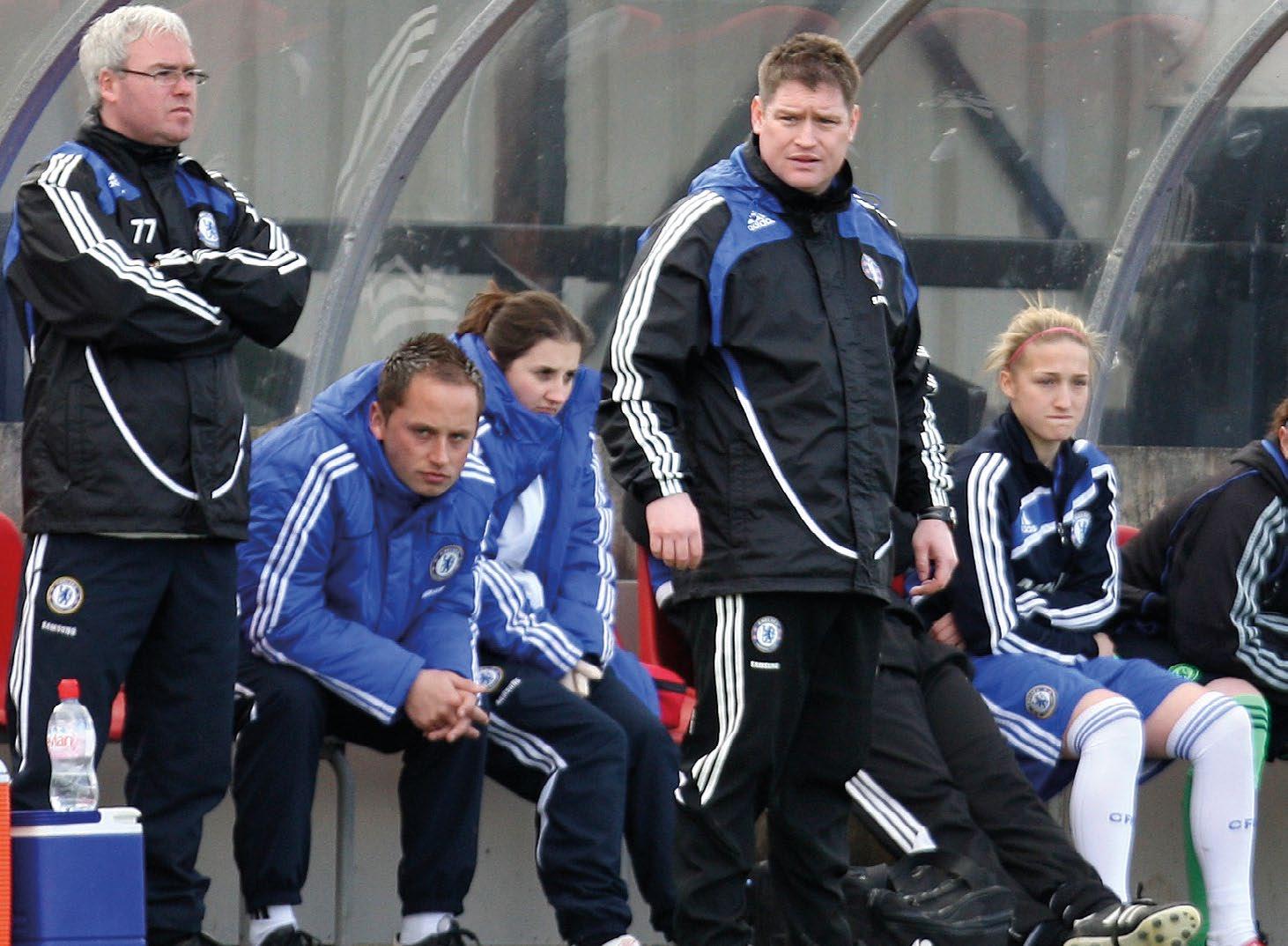
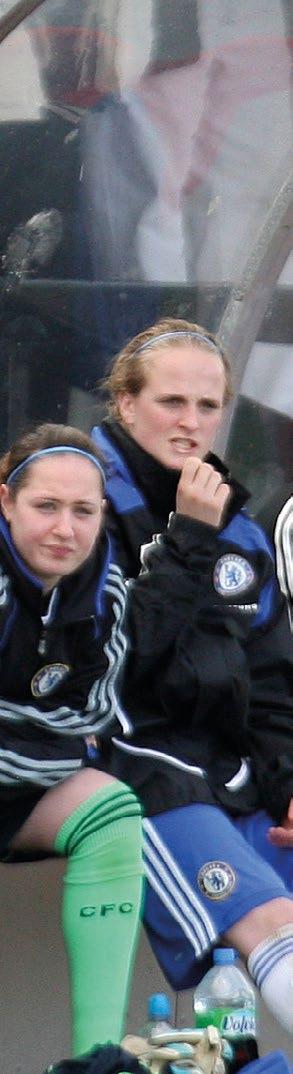
Matt Beard launched his managerial career with Millwall Lionesses in 2008, impressively steering the team to promotion in his very first season. This success led to a move to Chelsea, where he spent three years, guiding the team to an FA Cup Final.
He cemented his reputation as one of the best coaches in the game at Liverpool, where he orchestrated back-to-back FA WSL title wins in 2013 and 2014, also being named FA WSL Manager of the Year. A move to Boston Breakers in the US followed, before returning to the WSL in key managerial roles at West Ham United and Bristol City.
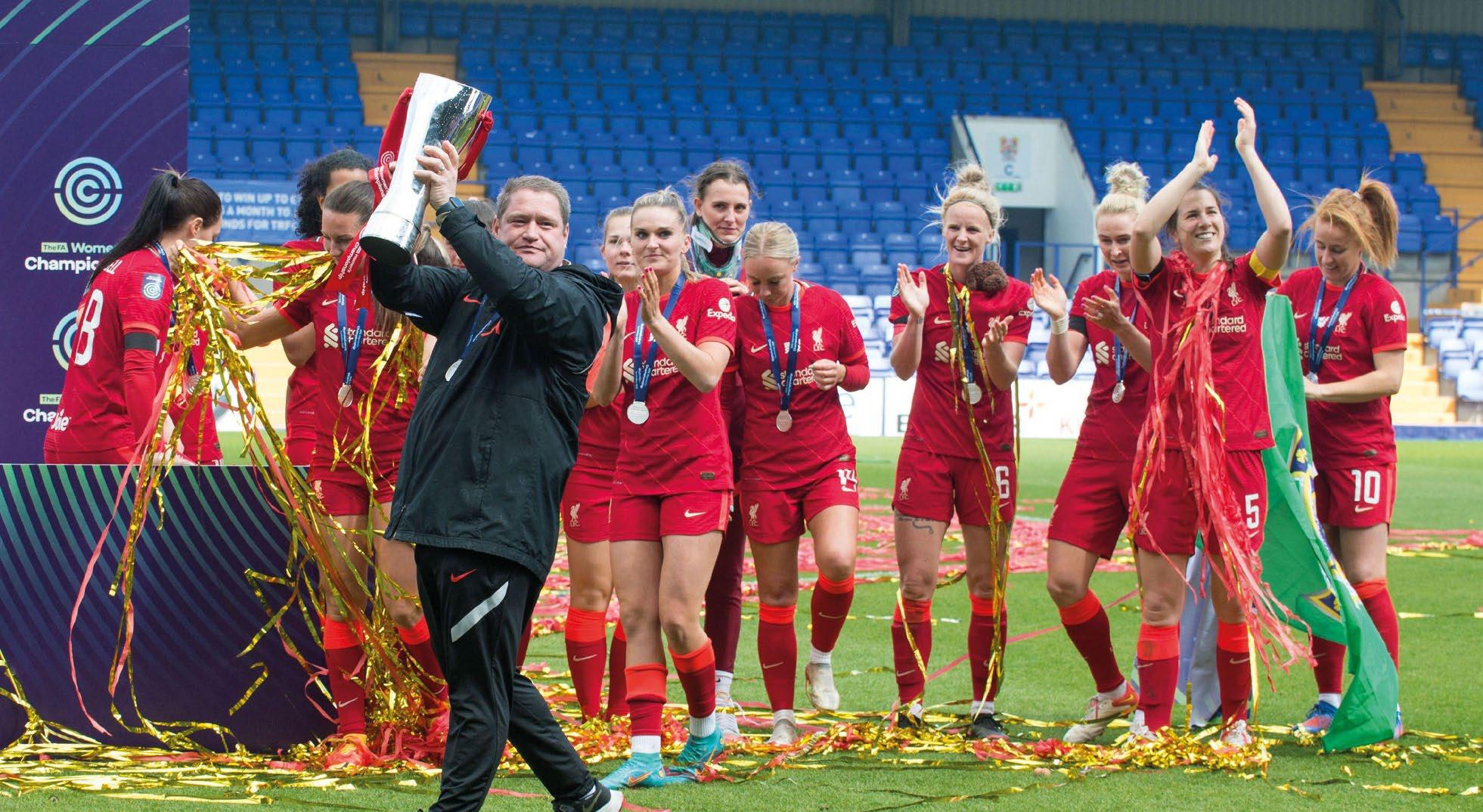
In 2021, Beard returned to Liverpool, leading them to the Women’s Championship title in 2022 and stabilising the team in the WSL, before leaving in early 2025. He briefly took charge of Burnley Women before departing at the end of August.
“AWAY FROM FOOTBALL, MATT WAS HUGELY POPULAR AND LOVED BY THOSE WHO KNEW HIM WELL. HIS SENSE OF HUMOUR AND BIG PERSONALITY WERE MATCHED BY HIS EMPATHY AND KINDNESS, AND HE WILL BE SORELY MISSED BY HIS FRIENDS IN THE LMA .”
Richard Bevan OBE LMA Chief Executive
Paying tribute to Matt, LMA Chief Executive Richard Bevan said, “Matt was a true champion of women’s football and dedicated his early career to advancing the game on its path to professionalisation. He played an integral role in the development of players, coaches, and the wider game as one of the most active managers in women’s football over the past 15 years, achieving success at some of the biggest clubs in the game.
“He was an extremely passionate football manager, who demonstrated his drive and ambition to us while studying the LMA Diploma in Football Management in 2023. In recent years, his managerial acumen was recognised by his peers; the LMA was pleased to award him Manager of the Year awards in 2022 and 2024, showing the impact he had while manager of Liverpool.
“Away from football, Matt was
hugely popular and loved by those who knew him well. His sense of humour and big personality were matched by his empathy and kindness, and he will be sorely missed by his friends in the LMA.
LMA Committee Member Emma Hayes paid tribute, saying, “Matt was an incredible investor in the women’s game and someone who will be remembered by his players, staff, and colleagues for the amazing character that he was.
“He was always smiling, always coaching from the touchline. He was someone who gave a huge deal to the game and to his players. Everyone across the game can speak to the qualities and character of Matt and he will leave a huge void in the women’s game. He was one of a kind, and his loss will be felt by all.”
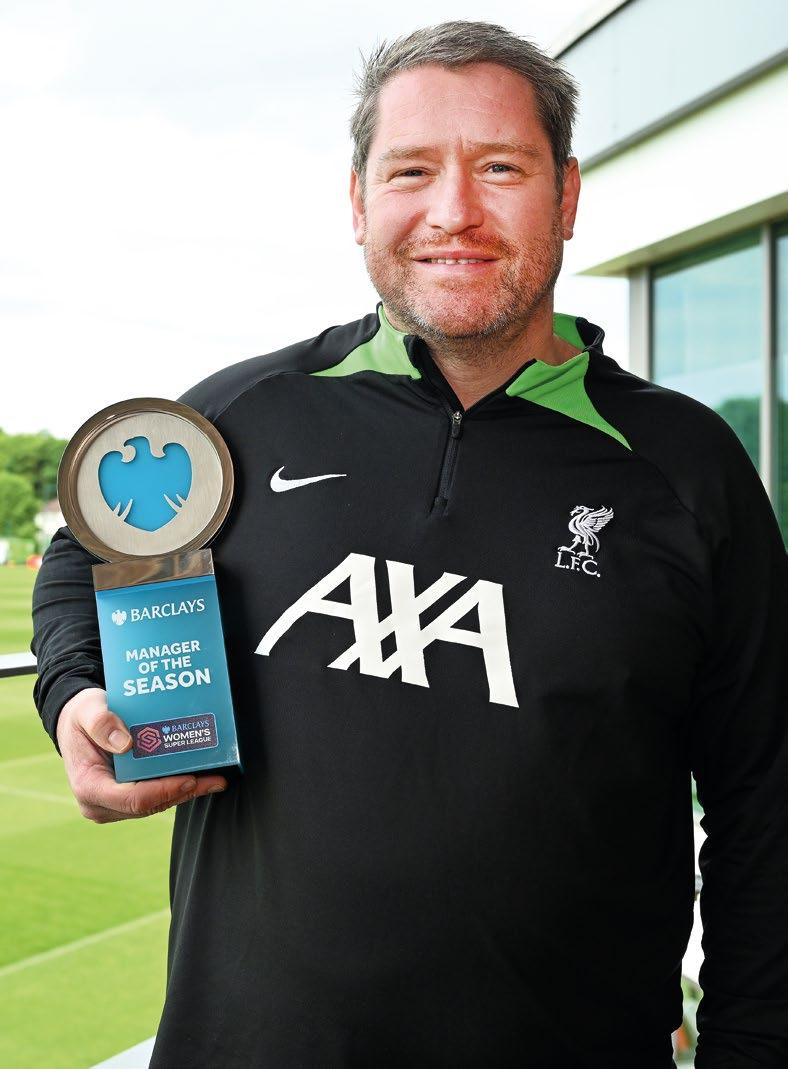
Matt Beard was awarded WSL Manager of the Season in 2013 and 2024. Liverpool FC
Chelsea manager Matt Beard at the Women’s FA Cup semi-final against Arsenal, 2010. Action Images // Steven Paston
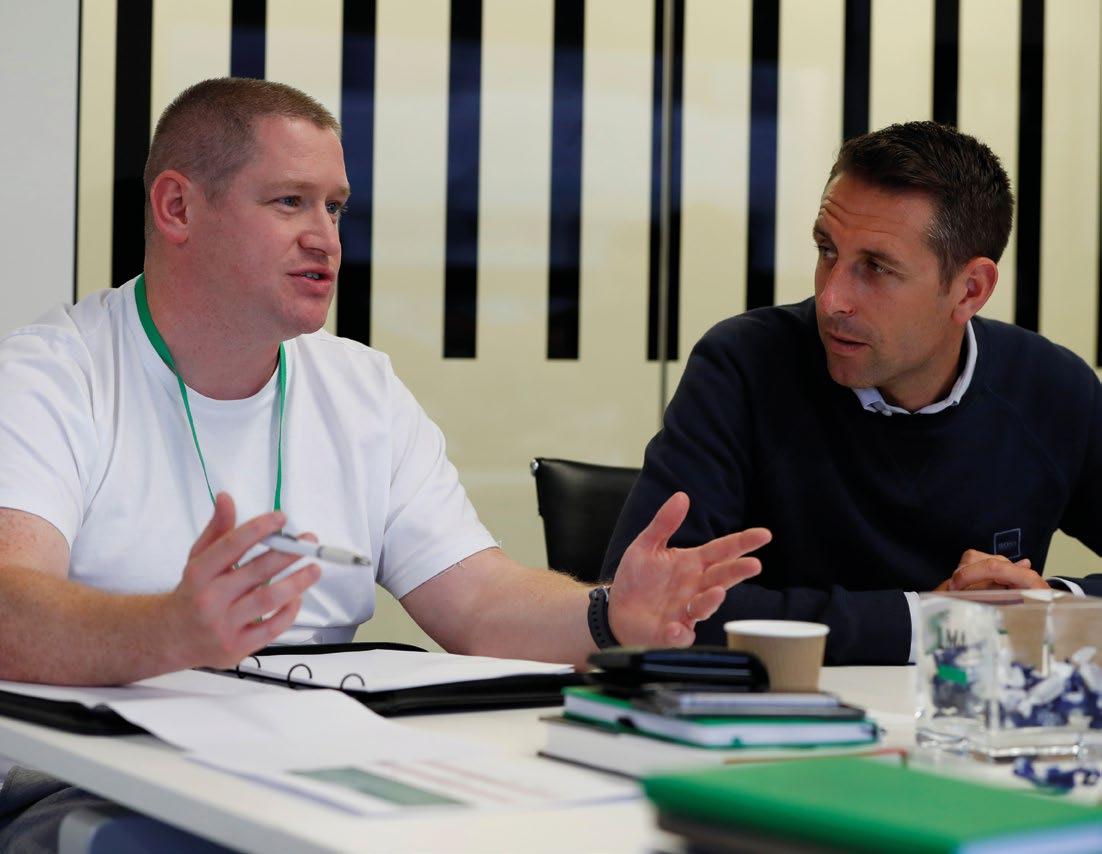
Matt Beard participates in an LMA Diploma Masterclass, Liverpool University, 2019.
Reuters // Action Images
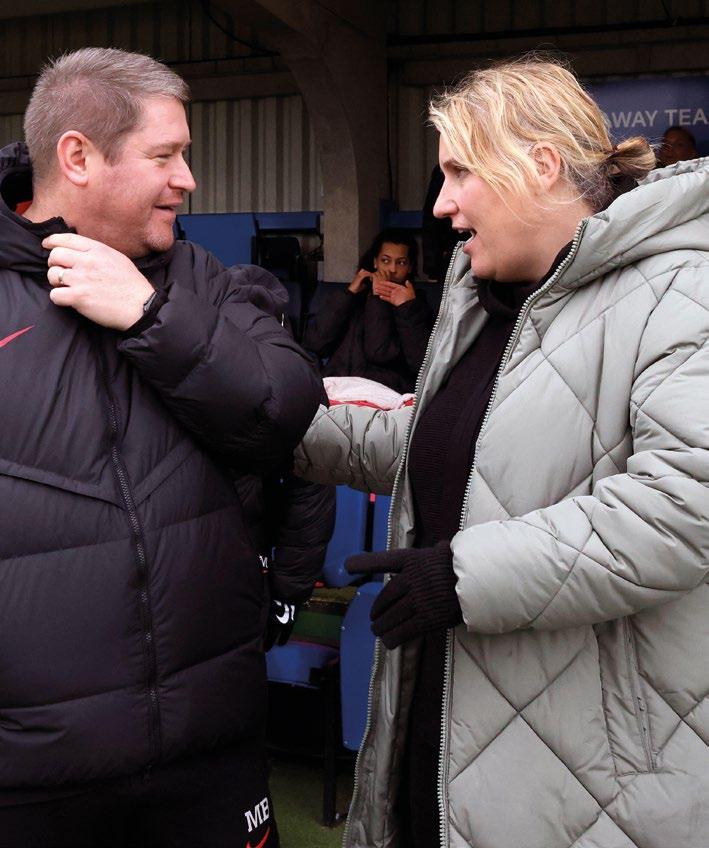
Chelsea manager Emma Hayes chats with Liverpool manager Matt Beard during their Vitality Women’s FA Cup match, 2023.
Alamy
“ HE WAS ALWAYS SMILING, ALWAYS COACHING FROM THE TOUCHLINE. HE WAS SOMEONE WHO GAVE A HUGE DEAL TO THE GAME AND TO HIS PLAYERS.”
Emma Hayes OBE LMA Committee Member
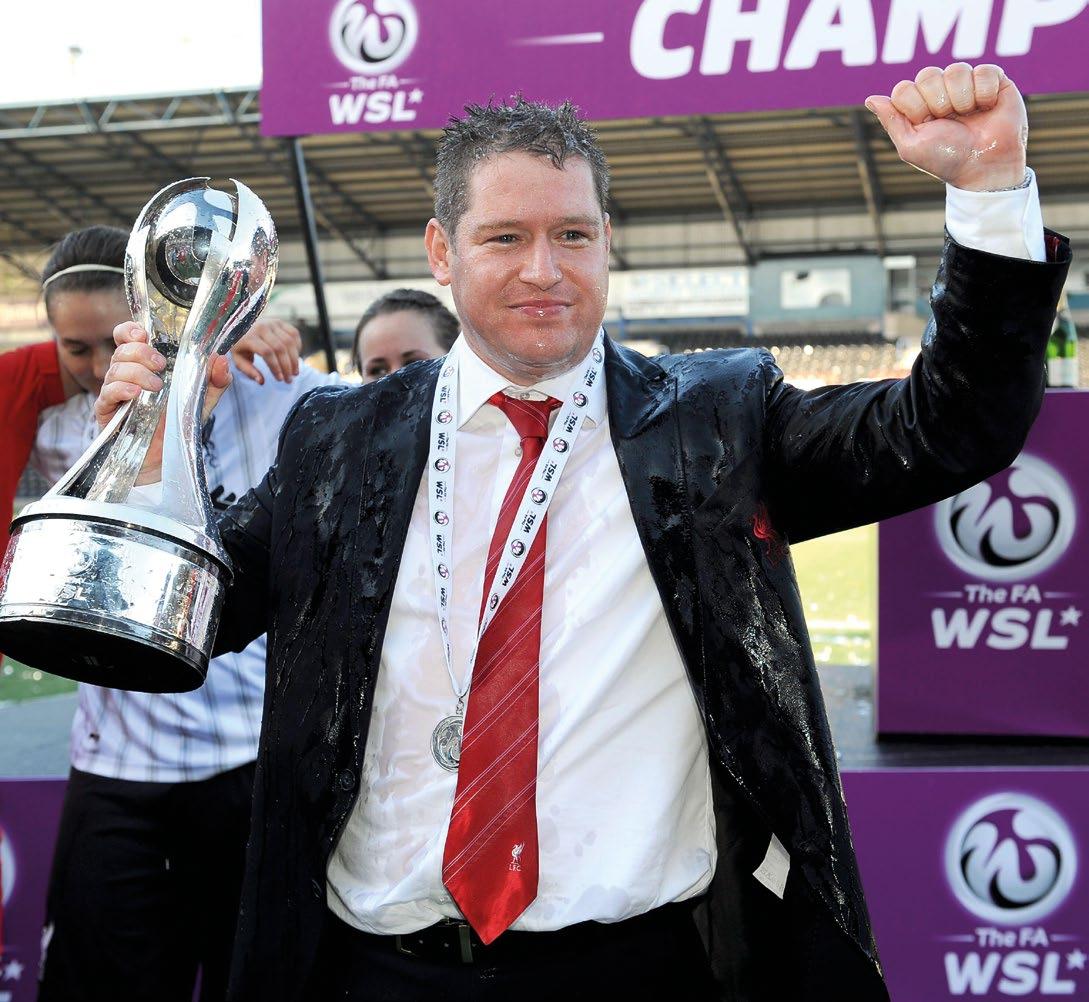
Liverpool manager Matt Beard celebrates after winning the WSL, 2013.
Alamy
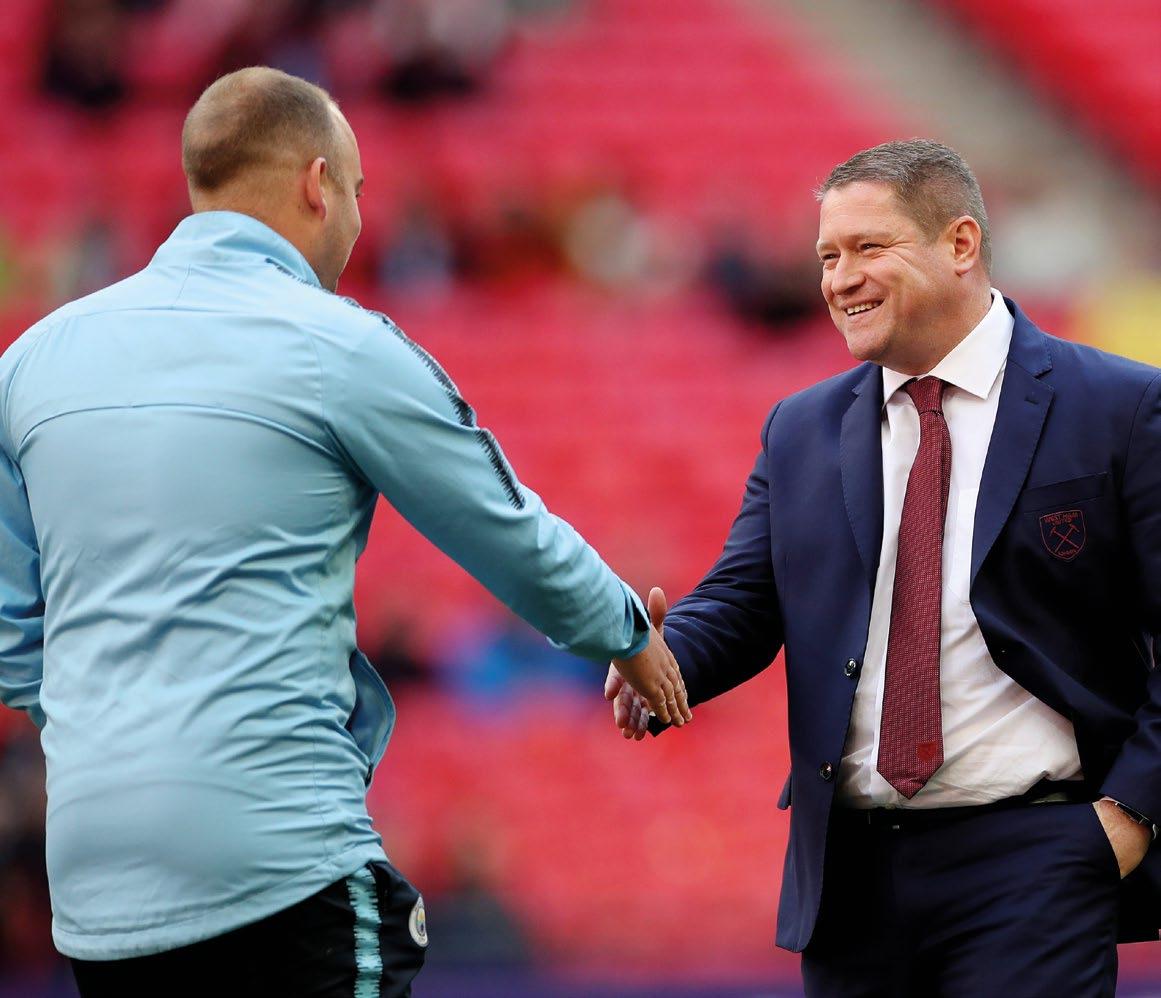
West Ham manager Matt Beard shakes hands with Manchester City’s Nick Cushing before the Women’s FA Cup Final, 2019.
Reuters // Action Images
Liverpool manager Matt Beard celebrates after winning the FA Women’s Championship 21/22, beating Sheffield Utd 6-1 at Prenton Park. Alamy
Photography: Reuters // Action Images
1940-2025
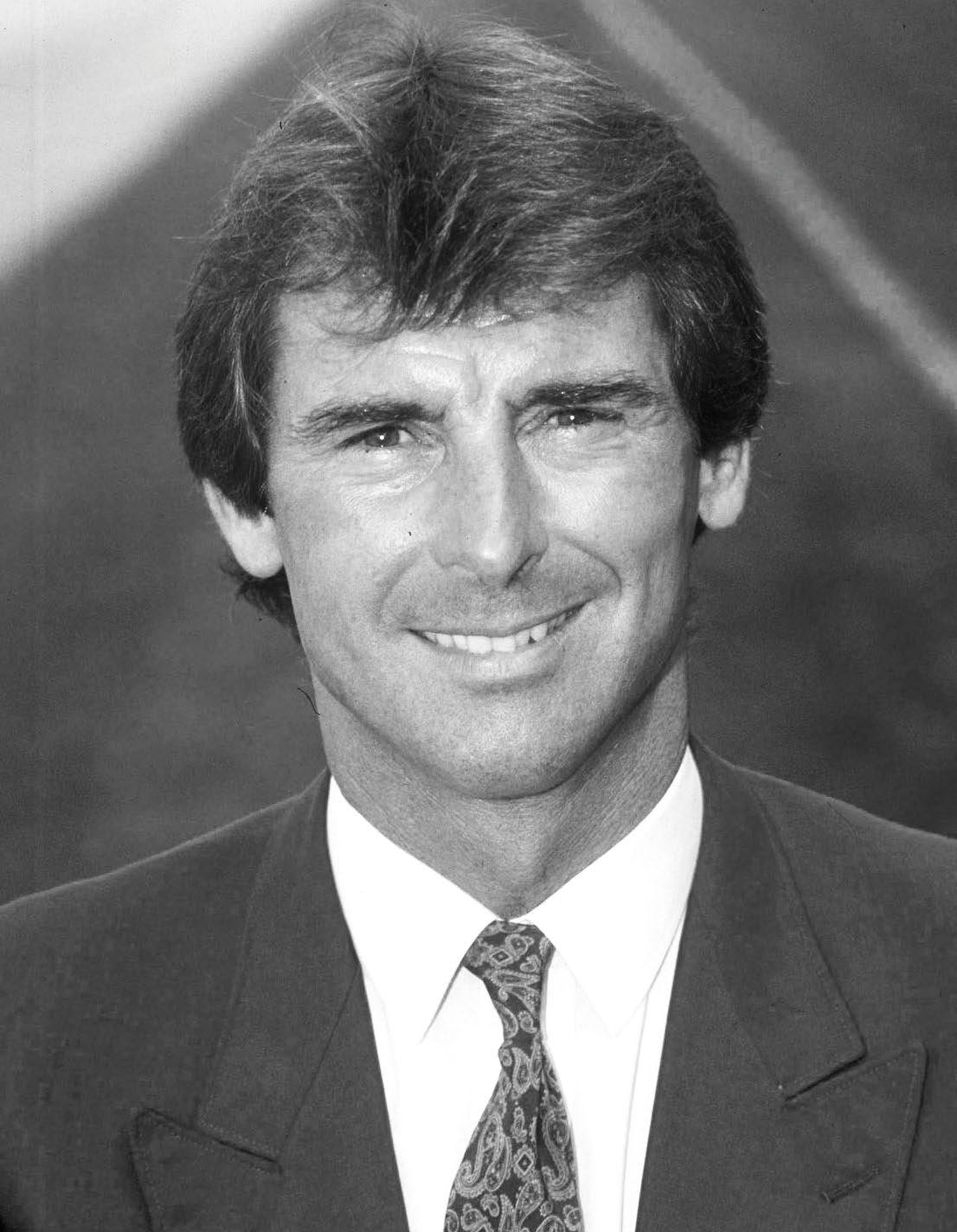
Colin Addison enjoyed an exceptional career in English and global football, both as a highly respected player and manager. Beginning his playing days with York City, he moved to Nottingham Forest, Arsenal and Sheffield United, making a significant impact at each club. As player-manager, Colin famously led Hereford United through their historic FA Cup run in 1972, a giant-killing achievement that remains a highlight in the club’s history.
Beyond his success at Hereford, Colin managed teams across the UK, and overseas in Spain, South Africa, Kuwait and Qatar, notably guiding Celta Vigo into
La Liga in his first season, and Al-Arabi to the Kuwait Premier League title. His legacy includes major contributions at Newport County, Derby County, West Bromwich Albion, Swansea City and Yeovil Town, among others.
Paying tribute to Colin, LMA
Chief Executive Richard Bevan said, “Colin was a trailblazer of English football. He dedicated his life to the game, and found a great joy and passion in coaching and management, leading his players and staff to many successes. He was generous with his time and, above all, was a true gentleman to all he worked closely with.”
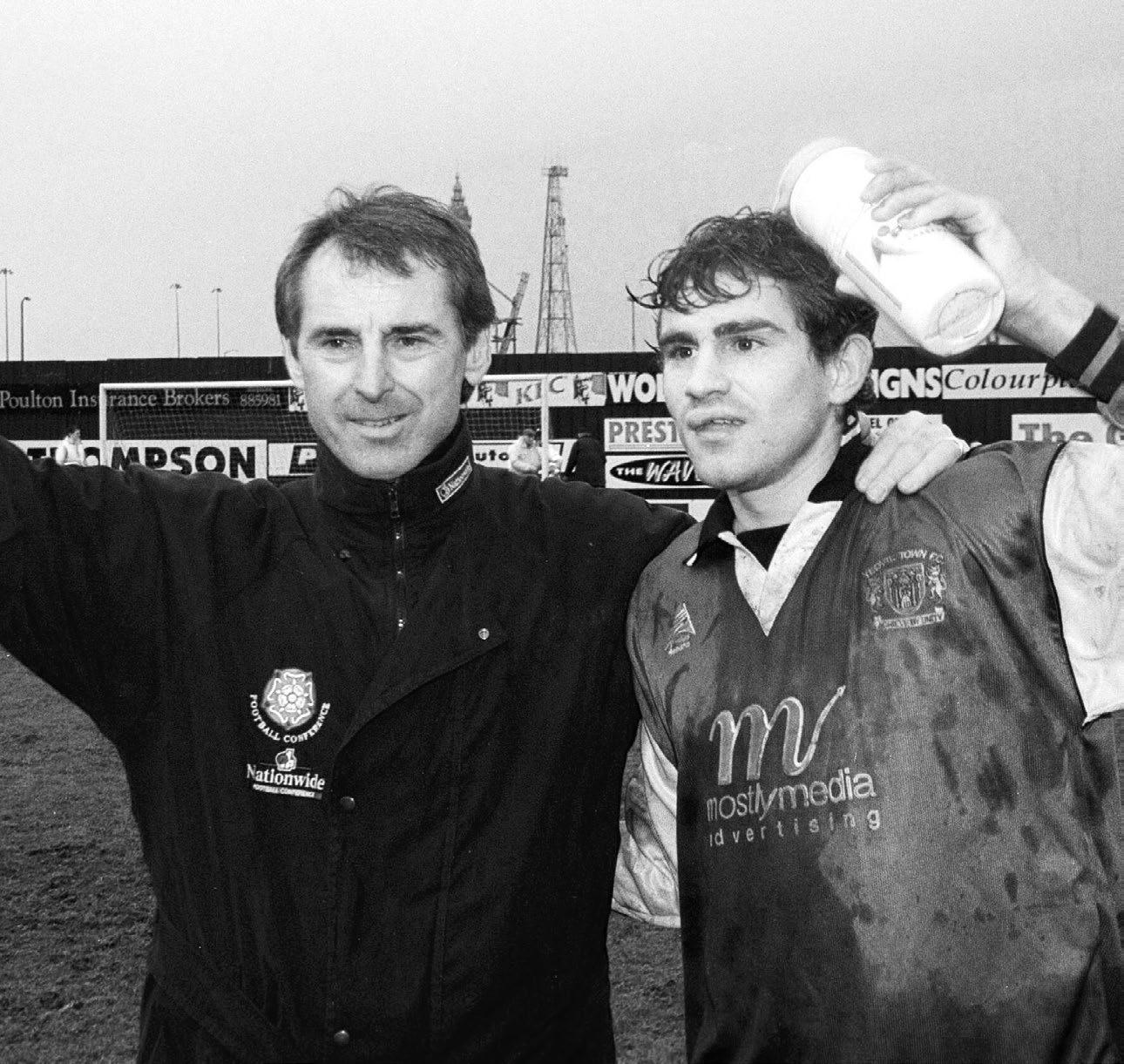
Colin Addison, Manager of Yeovil Town, with Nick Crittenden at the side’s FA Cup 2nd Round match against Blackpool, 2000. Reuters // Action Images
JOHN NEWMAN IN TRIBUTE
1933- 2025
Photography: Alamy
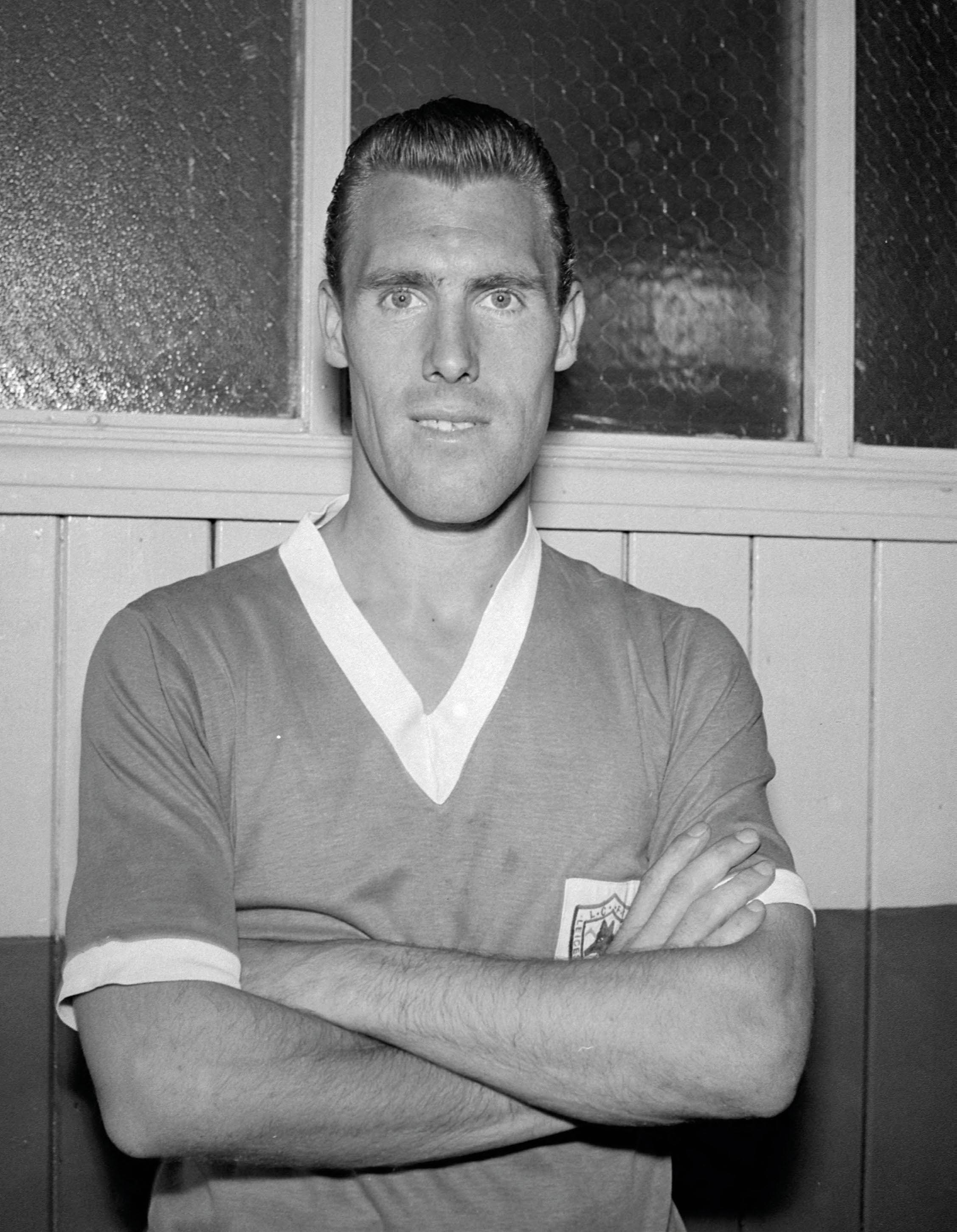
John Newman forged a distinguished career in English Football spanning four decades, leaving a lasting mark on every club at which he served. Starting his playing career as a central defender at Birmingham City, John won the Division Two title in 1954/55 and played in the 1956 FA Cup Final. He later moved to Leicester City and Plymouth Argyle, before finishing his playing career at Exeter City, where he transitioned into management.
During his career on the touchline, John managed over 780 games at Exeter City, Grimsby Town, Derby County and Hereford United. He also
enjoyed successful spells as an assistant manager with Colin Addison and Bobby Saxton.
While in charge of his hometown club, Hereford United, John was at the helm for numerous memorable games, most notably two FA Cup meetings with Arsenal, one being a celebrated 1-1 draw at Edgar Street, leading to a replay at Highbury.
John was a well-respected figure in the game, who dedicated his life to the profession, and was cherished by so many of his peers who had the privilege of spending time in his company.
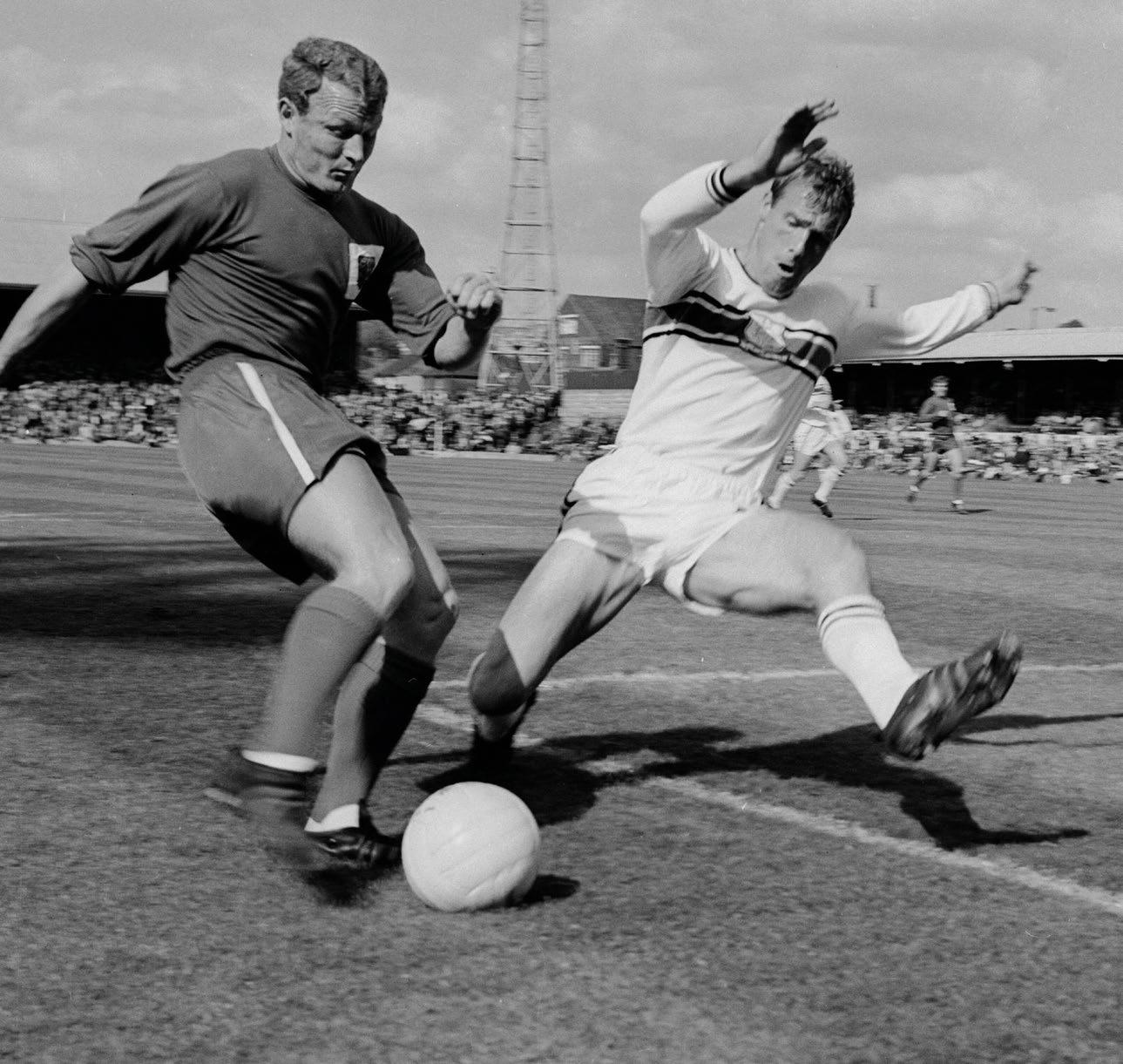
Plymouth Argyle’s John Newman tackles Ipswich Town’s Joe Broadfoot, 1965. Alamy
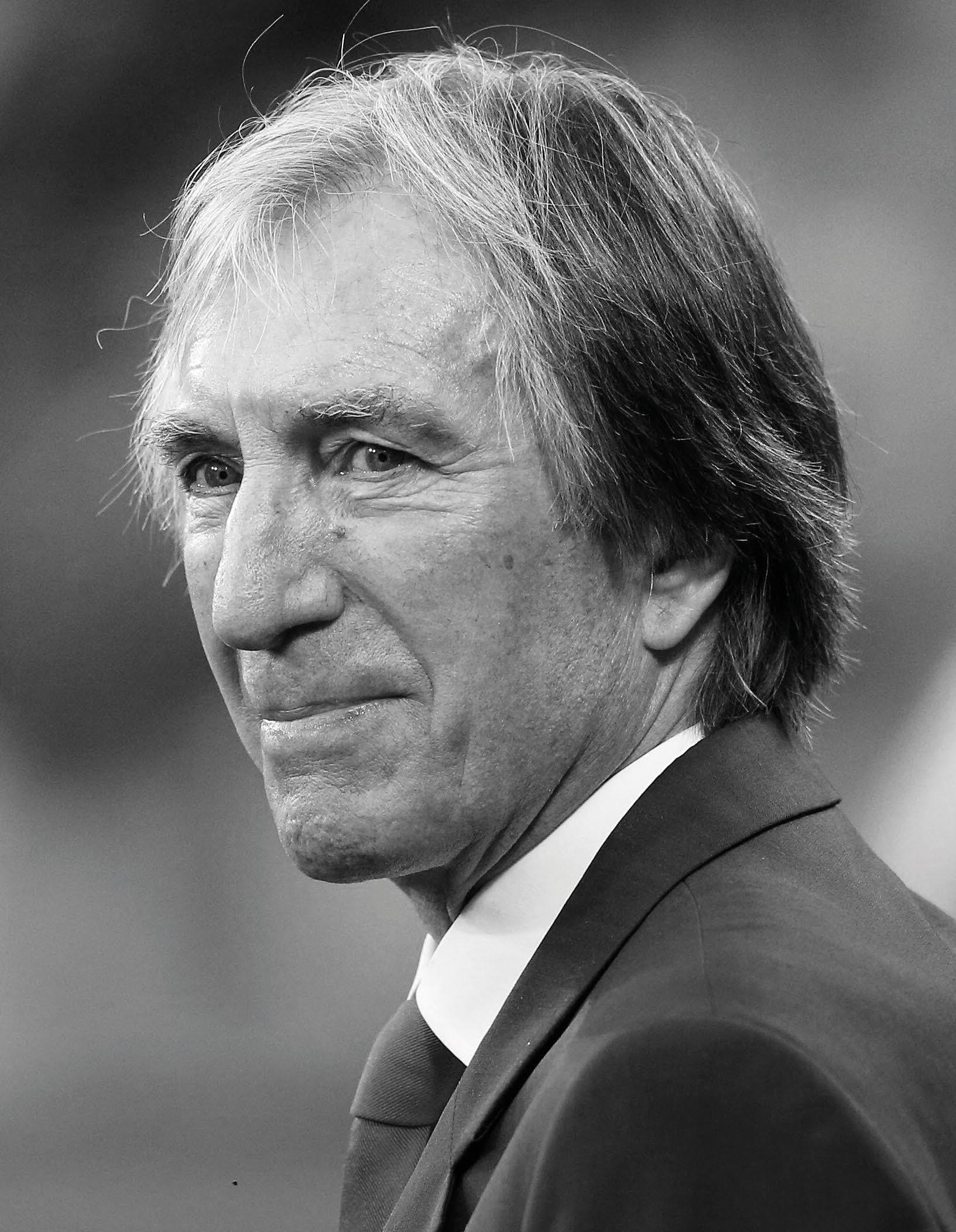
BILLY BONDS MBE IN TRIBUTE
1946-2025
Photography: Alamy
1946-2025
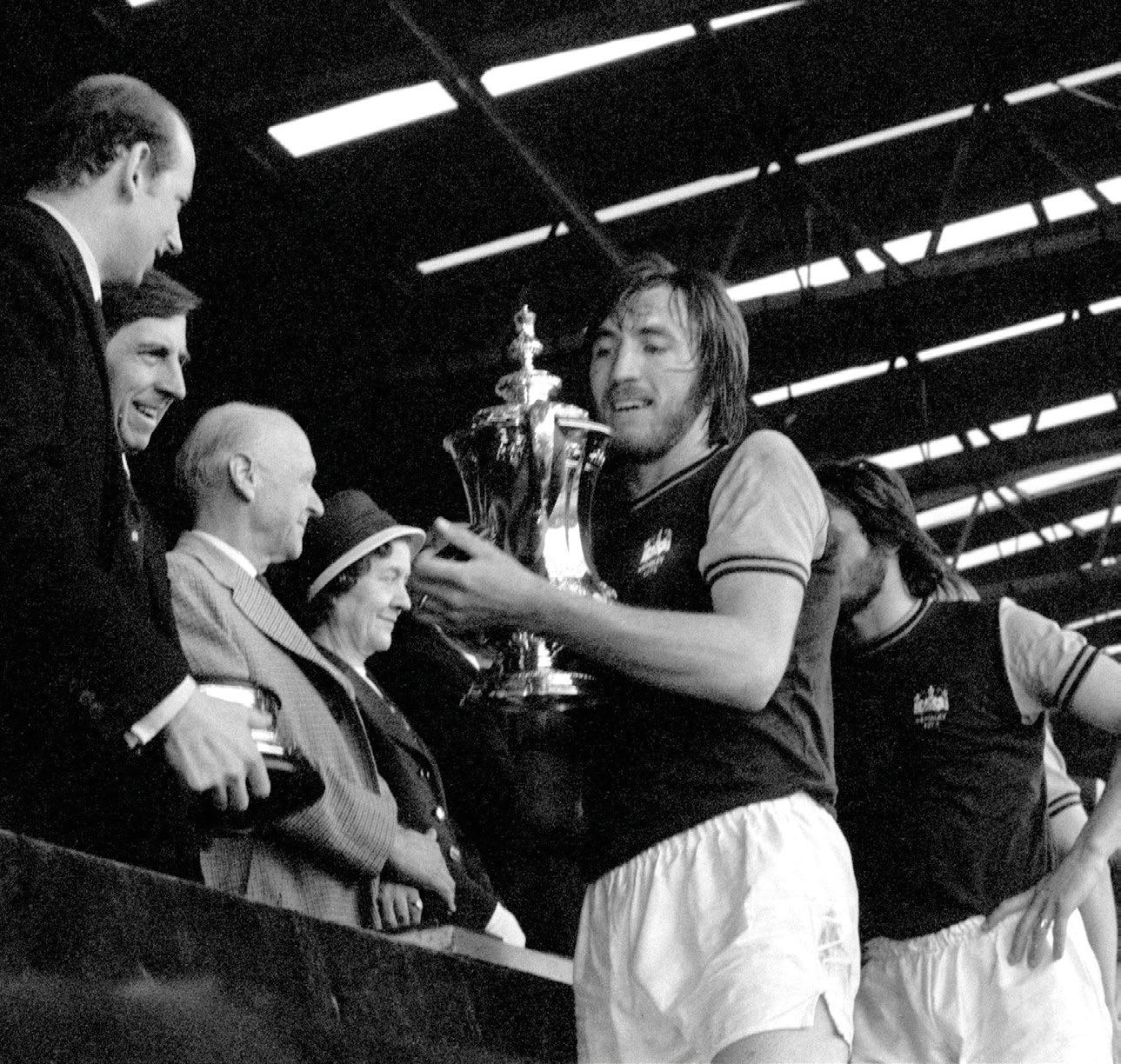
Having made a record number of appearances for West Ham and acting as the club’s captain during two FA Cup triumphs, Billy Bonds MBE will be remembered as one of the most inspirational and legendary figures in the game.
Billy joined West Ham from Charlton Athletic in the 1960s and went on to make an incredible 799 appearances over a 21-year playing career at Upton Park. He twice led West Ham to FA Cup success, reached the European Cup Winners’ Cup final in 1976, and lifted the second division title five years later, also appearing in the Football League Cup final.
After hanging up his boots at the age of 41, Billy worked with West Ham’s youth team, before being appointed first-team manager. He guided the club to two promotions from division two and an FA Cup semi-final over a four-year period, before spells at Queens Park Rangers, Reading and Millwall.
Renowned as a brave and commanding leader on the pitch, yet humble and modest off it, Billy was voted by fans as the club’s greatest player in 2018 and is forever etched in history at the London Stadium, where the East Stand proudly bears his name in honour of his remarkable legacy.
West Ham’s Billy Bonds holds the FA Cup after the side beat Fulham 2-0 in the final at Wembley, 4th May 1975.
Alamy
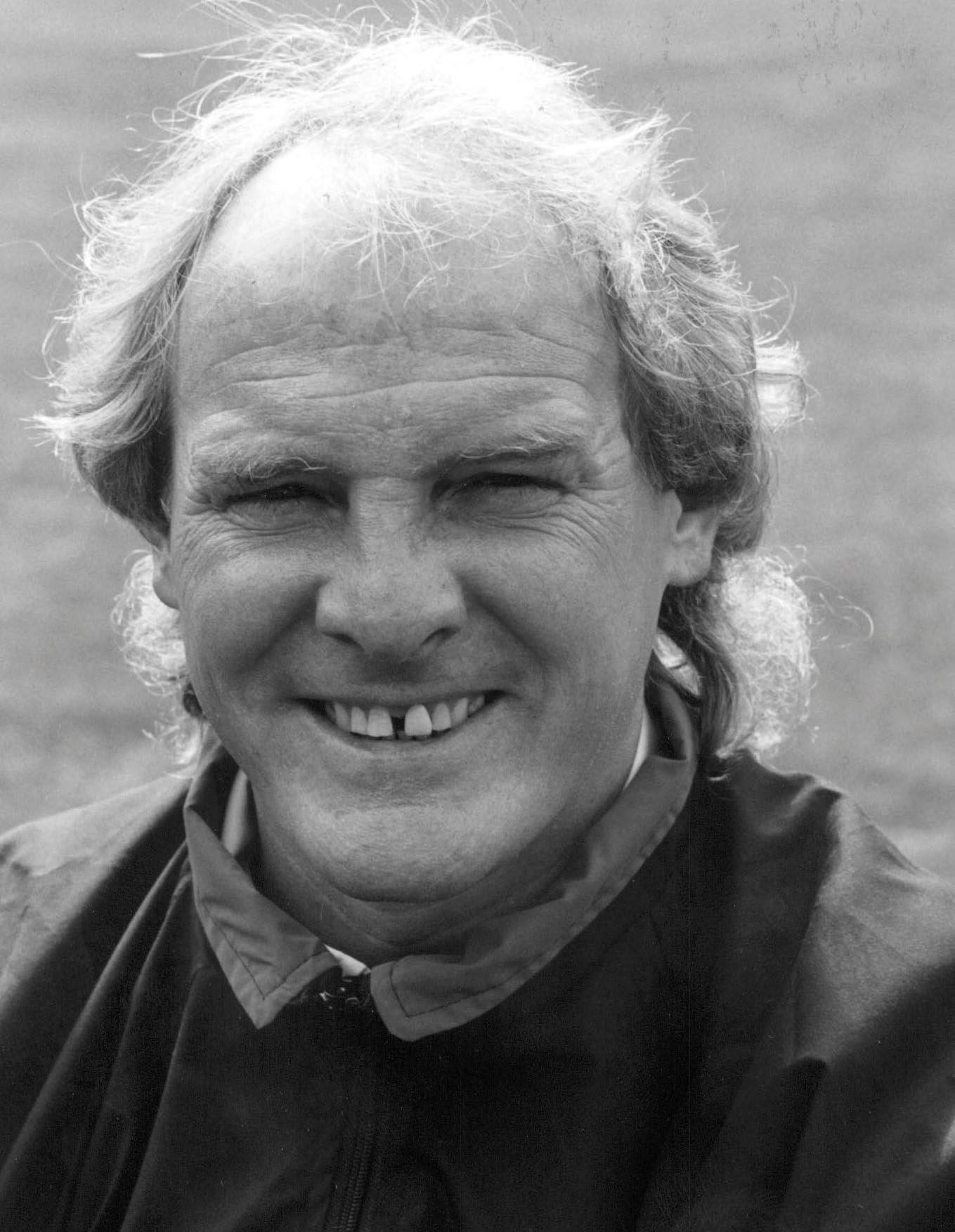
TERRY YORATH IN TRIBUTE
1950- 2026
Photography: Alamy
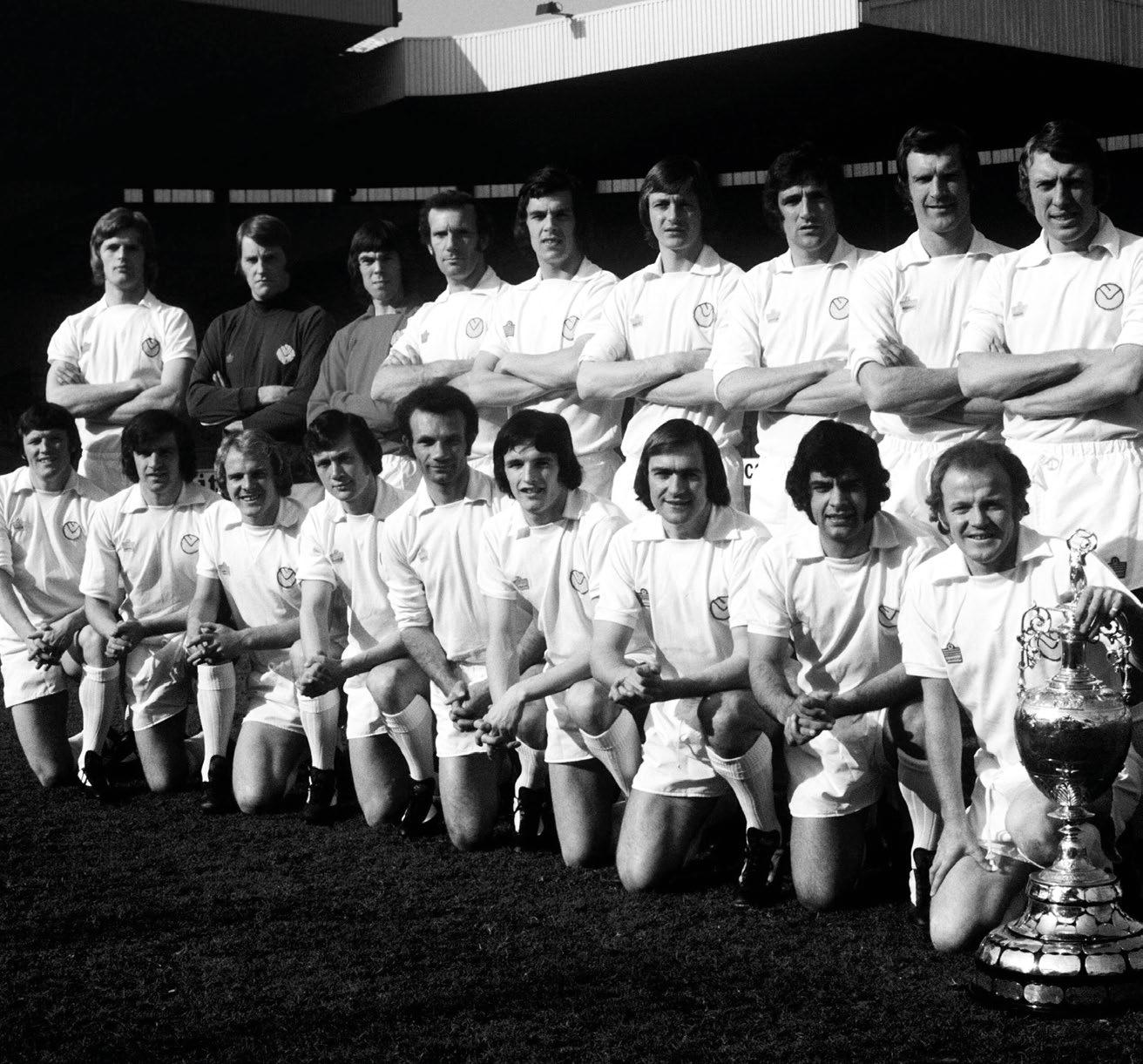
Terry Yorath was a combative midfielder who emerged through the youth ranks at Leeds United. Between 1967 and 1976 he made nearly 200 appearances, establishing himself as one of the club’s most respected players, during one its most successful eras, under Don Revie.
During his time at Elland Road, Terry won the first division title and collected runners-up medals in the FA Cup, European Cup and European Cup Winners’ Cup. He went on to play for Coventry City, Tottenham Hotspur, Bradford City and Swansea City, with a brief spell in Canada for the Vancouver Whitecaps.
At international level, Terry captained Wales in 42 of his 59
appearances, before embarking on a 23-year managerial career that began at Swansea City. He later managed Bradford City, Cardiff City, Lebanon and Sheffield Wednesday, as well as returning for a second spell at Swansea.
A member of an exclusive group to have both played for and managed his country, Terry led Wales between 1988 and 1993, narrowly missing out on a place at the 1994 FIFA World Cup finals in the United States.
Terry will be remembered as one of Welsh football’s greatest figures, and his outstanding contribution to the game was recognised in 2017 when he was inducted into the Welsh Sports Hall of Fame.
Leeds United pose with the League Championship trophy, 1st August 1974. Alamy

At Arbuthnot Latham, we understand the rewards and uncertainties of a career in football. That is why we work closely with players, managers, coaches, and their advisers to manage, protect, and grow their wealth – from first contract to retirement and beyond.
Private banking and wealth management that matches your ambitions.
Sam Green
Senior Private Banker
M: +44 (0) 7795 308180
E: SamuelGreen@arbuthnot.co.uk
arbuthnotlatham.co.uk/sportsmedia
THE LEADER.
LEADER COLUMN
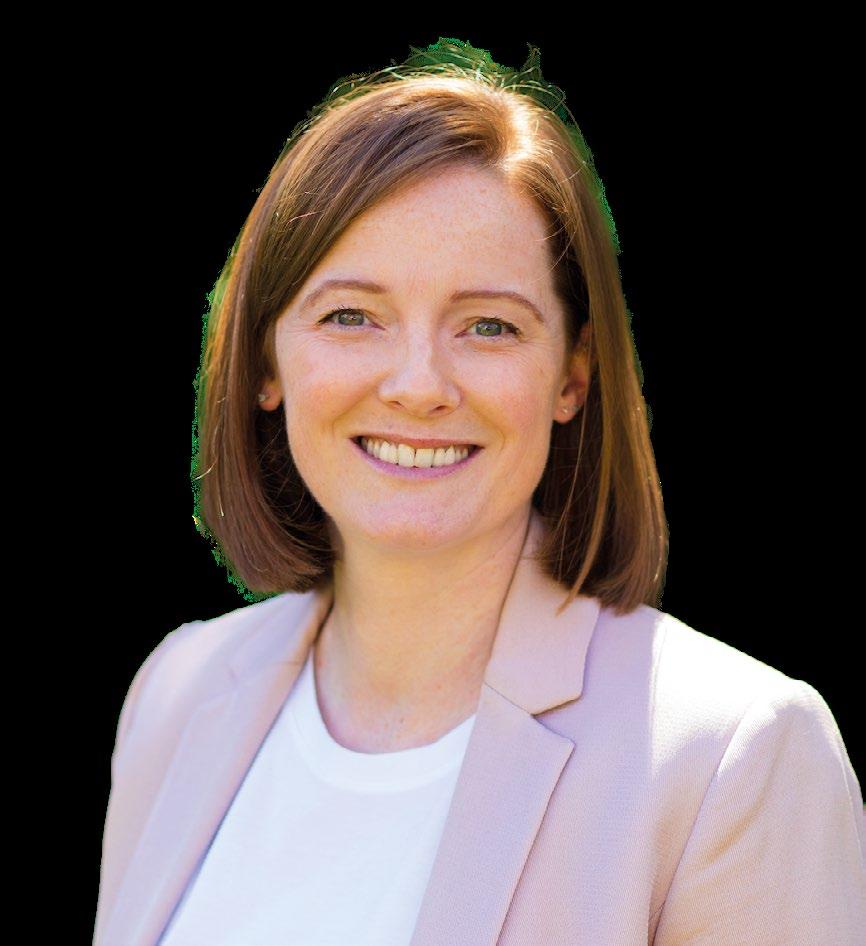
Helen Richardson-Walsh
BE A COURAGEOUS LEADER.
When emotions run high, people look to their leaders for steadiness, clarity and courage. Courage, however, isn’t the absence of fear, it’s the decision to act despite it.
Fear is a constant in our lives, and as an athlete something I had to become accustomed to. Before a match, fear was inevitable, whether it was pre-game nerves, performance anxiety, thoughts of messing up or losing, not living up to expectations, or the fear of being negatively judged. In those moments, I realised I had two choices, turn away from the fear, or embrace it.
Embracing fear became what I did best; I thrived in highpressure situations. Those qualities weren’t innate, however, they were learned and refined over time. Today, as a psychologist, I continue to develop these skills myself while helping leaders do the same.
As an experienced GB hockey player, I would pause before every match to ask two simple questions: ‘Where am I?’ and ‘Where do I need to be?’. This allowed me to check in with myself, mentally, emotionally and physically, and adjust if need be.
Performing a ‘top-to-toe scan’, where you notice the fear, and think about whether you are calm or tense, open or defensive, energised or drained, is a powerful tool.
As a leader, pausing in this way enables you to lead from a place of consciousness, where you’re in control of how you behave, rather than being driven by impulse or fear. Performing a ‘top-to-toe scan’, where you notice the fear, and think about whether you are calm or tense, open or defensive, energised or drained, is a powerful tool. It gives you the chance to recalibrate before facing a meeting, a tough conversation, or an important decision.
In her book, ‘Walking the Talk’, Carolyn Taylor describes how, when we feel under threat, our responses tend to fall ‘below the line’, and we blame others, justify our behaviour, deny responsibility, or avoid the issue altogether. Leading ‘above the line’ is to recognise that we always have the ability to respond, to take responsibility and choose how to act, even in the face of discomfort or uncertainty.
Doing this successfully depends
on good self-awareness, something US psychologist and author Daniel Goleman defines as ‘having a deep understanding of one’s emotions, strengths, weaknesses, needs and drivers’. Developing high levels of selfawareness is a lifelong process. It takes curiosity about our internal lives and a willingness to be coached, because few of us are capable of getting there without outside support.
One of the most valuable exercises we did within our Olympic gold medal-winning squad helped us to develop self-awareness and recognise the signs that we were slipping below the line. We also learned our triggers and, importantly, how to bring ourselves back up. In this exercise, called ‘Good Day/Bad Day’, each of us would explore how we showed up at our best and at our worst. To explore these inner thoughts and feelings even personally was challenging, but to share them with teammates, was both incredibly tough and very
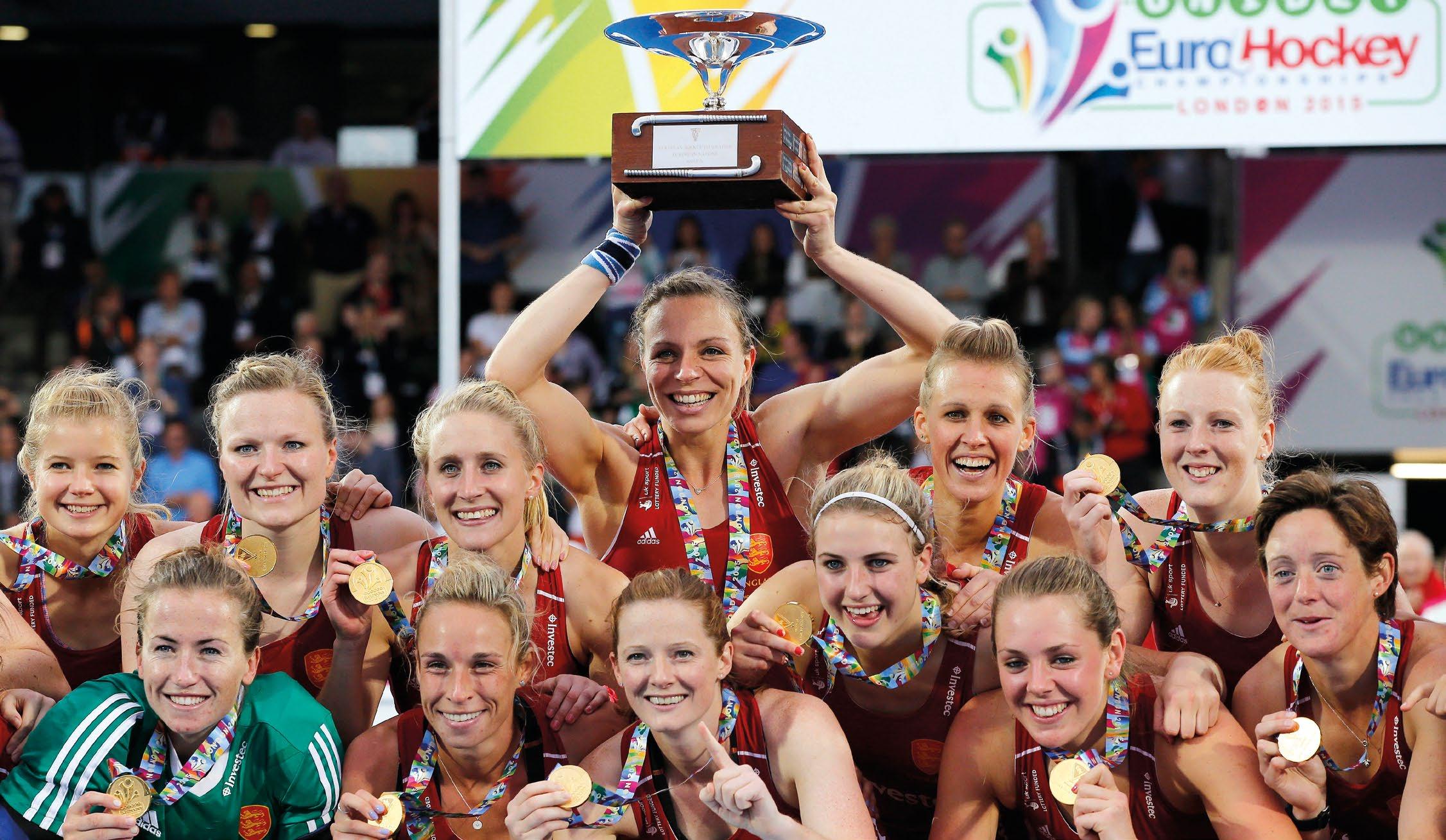
Richardson-Walsh (bottom row, 3rd from left) celebrates with her England teammates after winning the Unibet Euro Hockey Championships 2015. Reuters // Action Images
powerful. It proved key to our collective success.
Self-awareness doesn’t just help us to manage our own behaviour, it deepens our compassion and our ability to attune to others. When we accept that we’re all made of both strength and struggle, we’re more likely to treat others with empathy and kindness. Leadership, at its core, is about relationships and connection, about creating spaces where people feel seen, heard and respected. Compassion and empathy are the bridges that make that possible.
Uncertainty and fear are constants, in elite sport, in business, and in life in general. When emotions run high,
people look to their leaders for steadiness, clarity and courage. Courageous leadership is not about eliminating fear, but about replacing armour with a steadiness built on selfawareness, empathy and the willingness to keep showing up.
But courage isn’t the absence of fear; it’s the decision to act despite it. As Brené Brown’s research shows, the real barrier to courageous leadership isn’t fear itself, it’s how you respond to it. Courage and vulnerability always coexist; you can’t have one without the other. That’s what courage looks like in action. The ability to stay open and present in those moments; to ‘rumble’ with vulnerability, as Brown puts it, is at the heart of courageous leadership.
When you feel exposed or under threat, you have two choices: fall below the line and self-protect, deflect or shut down; or stay above the line, acknowledge the discomfort, and act from your values. In whichever context, the skill remains the same – to notice the fear, take a breath, and step forward anyway.
So, the next time you’re about to lead a meeting, conversation or a match, take a moment to pause and ask yourself, ‘Where am I? Where do I need to be?’
Helen Richardson-Walsh is a former England and GB hockey player, who was part of the gold-medal-winning team at the 2016 Olympics. She now works as a sport psychologist and is a sought-after keynote speaker.




PAUL
CLEMENT
FEVER PITCH.
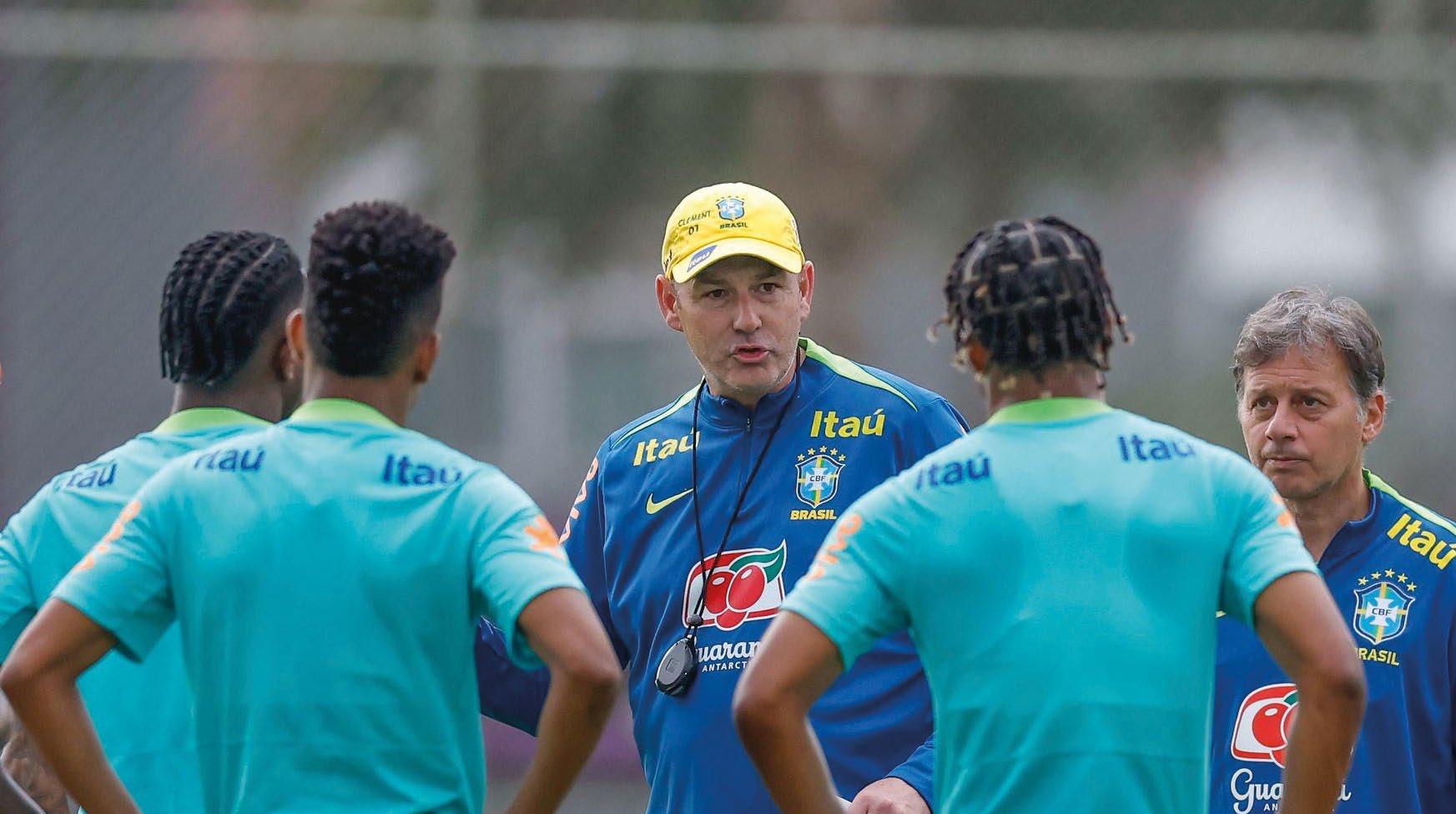
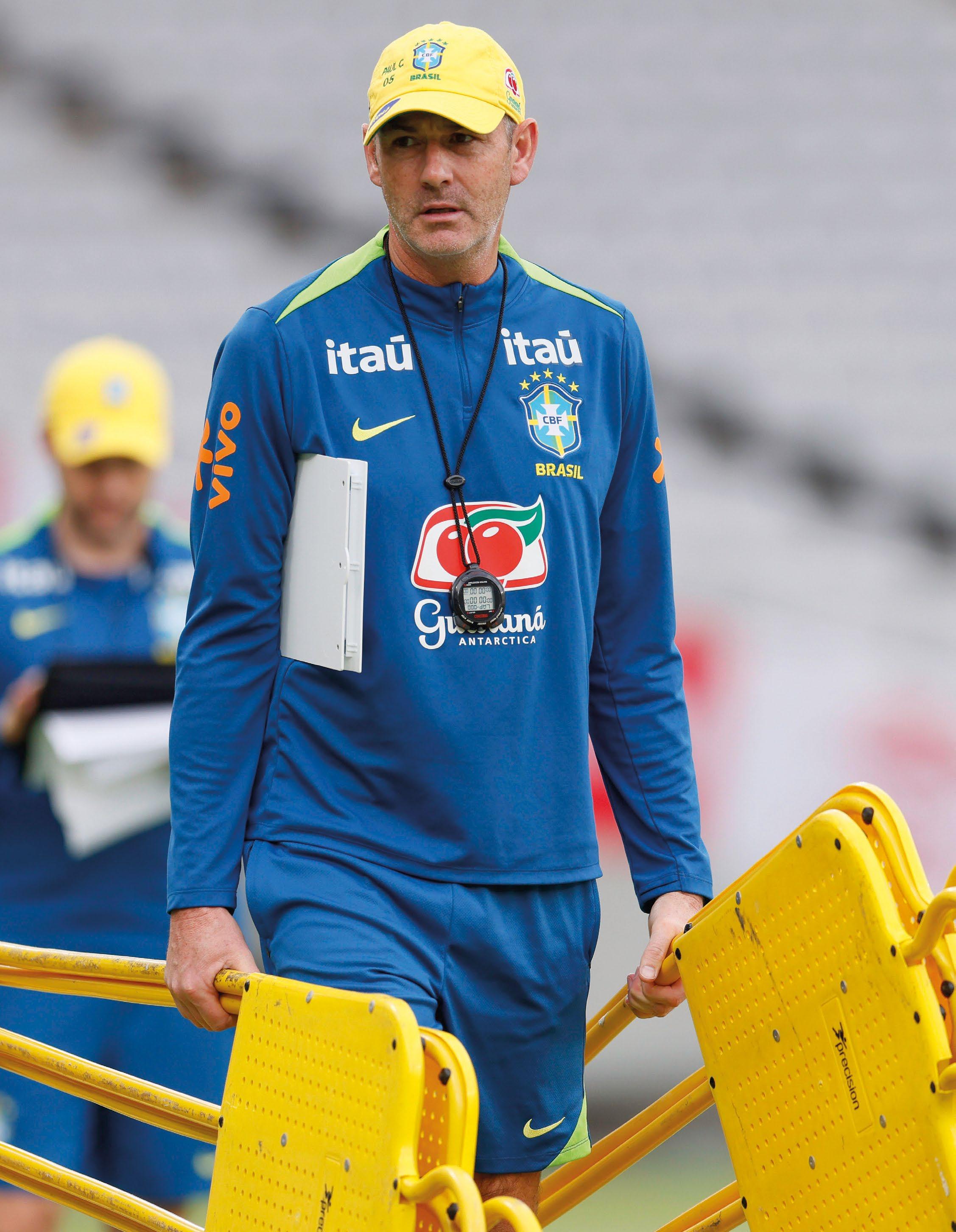
Carlo Ancelotti and Paul Clement are one of football’s most successful manager-assistant partnerships, winning trophies at Chelsea, PSG, Real Madrid and Bayern, and now leading Brazil in its 2026 World Cup campaign. Here, Clement opens up about his career as a manager and assistant manager, and the passion and pride at the heart of Brazilian football.
Interview: Marc Williams
Photography: Reuters // Action Images // CBF Images

PAUL CLEMENT
PAUL CLEMENT
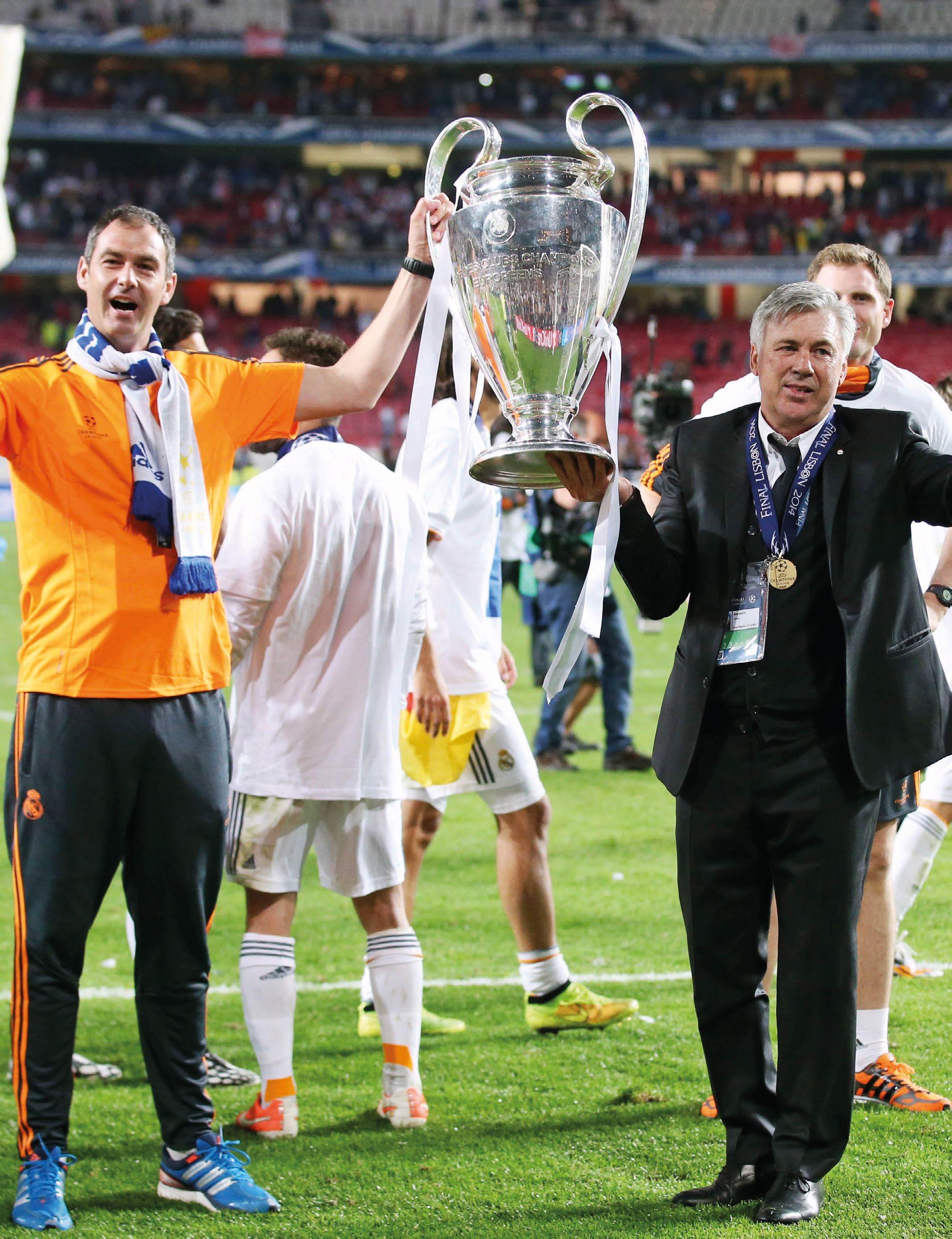
Real Madrid Manager Carlo Ancelotti and Assistant Manager Paul Clement celebrate after winning the 2014 UEFA Champions League.
Reuters // Action Images
“We’ve sat side by side for countless matches, travelled thousands of miles on coaches and airplanes, and eaten hundreds of meals together. That kind of shared time builds trust, respect and friendship,” says Clement of his longstanding relationship with Carlo Ancelotti. “What’s more, we’ve grown together as professionals.”
The duo first worked together at Chelsea in 2009, when Ancelotti arrived and offered Clement the chance to be his assistant, alongside Ray Wilkins. Given his only taste of first-team coaching had been as assistant to interim manager Guus Hiddink, it was a daunting offer he felt ill-prepared for. Yet having the courage to accept it and venture out of his comfort zone was, he says, the best decision he ever made.
BOTH SIDES
After taking Chelsea to the Premier League title and FA Cup in their first season, Ancelotti and Clement moved to
Paris Saint-Germain, winning Ligue 1, and then Real Madrid, where they won the Copa del Rey, La Liga, UEFA Champions League, UEFA Super Cup and the FIFA Club World Cup.
“My two years at Chelsea, working with the likes of John Terry, Petr Čech, Didier Drogba, Frank Lampard and Michael Essien, all captains of their national teams and in their prime, laid the foundation for that later success at Paris Saint-Germain. There I worked with big-name players like Zlatan Ibrahimović, and then at Real Madrid with the likes of Cristiano Ronaldo, Sergio Ramos, Xabi Alonso, Casemiro and Karim Benzema,” he says. “With each step I was growing, learning and gaining in selfbelief.” Clement then became a manager himself at Derby, before joining Ancelotti as assistant at Bayern Munich, winning the Bundesliga and DFL-Supercup.
Clement has also managed at Swansea City, Reading and Cercle Brugge, and believes that the fact he has held both assistant and manager roles throughout his career is a huge advantage. “I have much more empathy for the head coach, and a clearer sense of what they are dealing with,” says Clement. “I once read a quote from an NFL coach that really resonated. He said that as an assistant he thought he was the smartest man in the room, until he became the head coach. When you’re not the one under scrutiny, it’s easy to have opinions. But when every decision you make is publicly examined, the weight of responsibility feels very real.”
Likewise, understanding the challenges of being an assistant can help a manager ensure they have the support they need and get the most from their unique experience and expertise. “For example, as an assistant you have to find ways to bring enthusiasm and positivity to the players,
When you’re not the one under scrutiny, it’s easy to have opinions. But when every decision you make is publicly examined, the weight of responsibility feels very real.
every day, including those who aren’t picked to play,” says Clement. “It takes real energy and skill to maintain a positive, high-performance environment.”
Of his own partnership with Ancelotti, meanwhile, Clement says that their differences are as much a factor in their success as their commonalities. “We share a similar outlook on football, but it’s not identical, and that’s healthy,” he says. “Likewise we don’t have the same skill sets, which means we’re better able to cover one another’s blind spots. Carlo recognised early on my strength in teaching and coaching, but over the years I’ve developed a good understanding of all departments, so I can support him more effectively.”
THE LANGUAGE OF LEARNING
The fact that Clement has won trophies at PSG, Real Madrid and Bayern alongside Ancelotti speaks not only of his skills
It takes real energy and skill to maintain a positive, high-performance environment.
and experience as an assistant manager but also his ability to adapt to new clubs, countries and football cultures. While he says it’s all part of the development journey, moving abroad, dealing with the logistics of settling with a family, and working with a language barrier can be major challenges.
When Clement moved from Chelsea to PSG it was his first job abroad, and despite having only rudimentary French, he was in at the deep end, coaching in the language from day one. “That meant scripting training sessions and instructions in French, rehearsing pronunciation with my staff, and taking lessons.”
He also learned Spanish while working at Real Madrid, and is currently having online tutoring in Portuguese three times a week, as well as plenty of study in his own time.
As well as learning the language

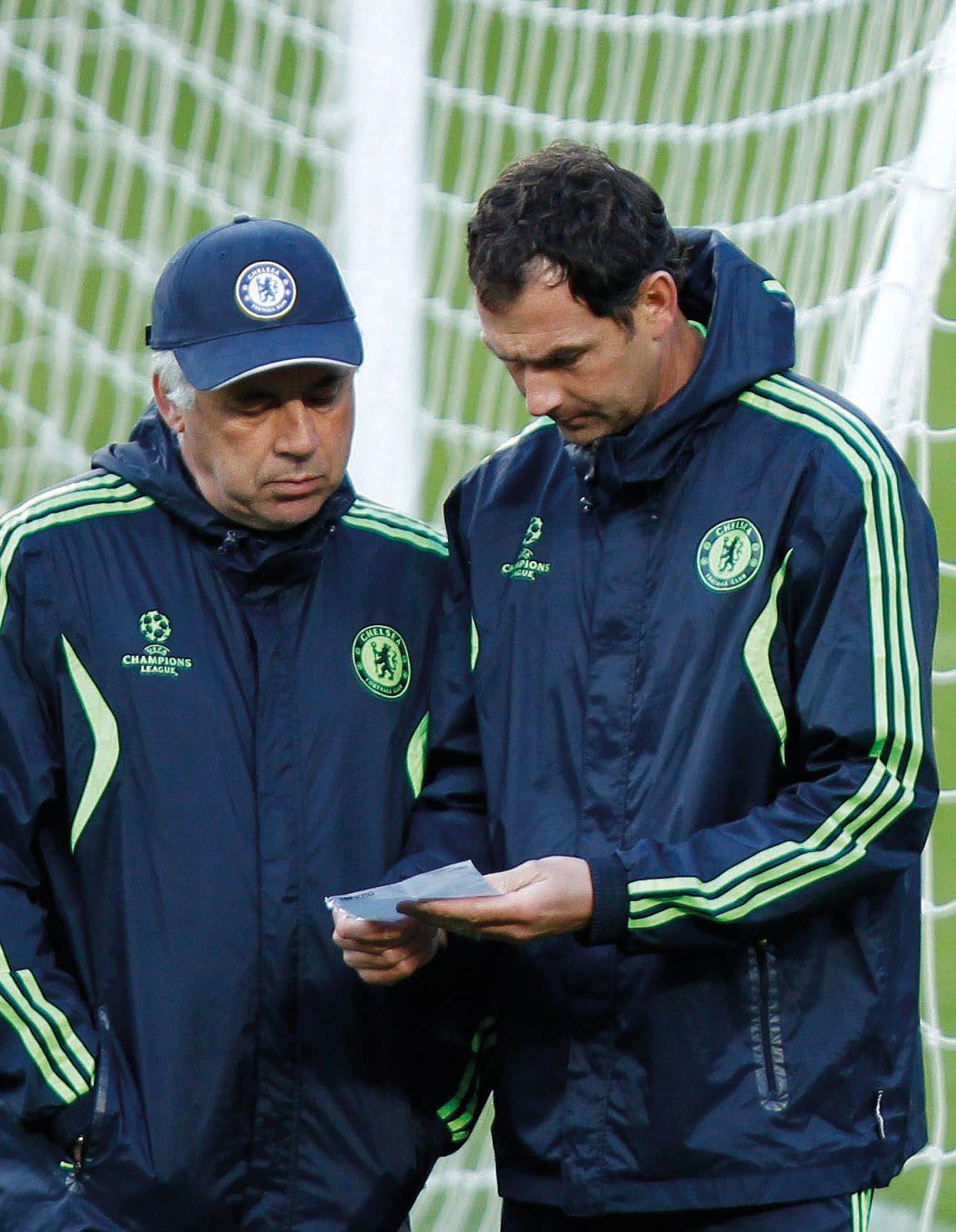
Chelsea Manager Carlo Ancelotti and Assistant Manager Paul Clement discuss tactics during training, 2011. Reuters // Action Images
Clement makes it a priority to embrace and respect the culture, values and working practices of each country he moves to. “You have to really understand your new environment, what matters to people, what the nonnegotiables are that must not change, and what you can look to improve,” he says.
PRIDE RUNS DEEP
As for Brazil, he says football is an integral part of the national identity. “It’s almost like a religion. You see it everywhere, on the beaches, and in urban neighbourhoods, and that constant exposure means there’s always a new wave of talent coming through,” says Clement.
“One of the things that struck me immediately was how physically tough and intense Brazilian footballers are,” he adds. “I anticipated a flair, finesse and free-flowing style, and that’s certainly there, but there’s also a relentless competitive edge, a resilience and physicality that you can’t fully appreciate until you see it up close. Many players come from hardship. They’ve had to fight for everything, often growing up in difficult circumstances, and that struggle gives them an incredible will to succeed.”
Clement has also been impressed by the leadership structure in the Brazil set up, with senior
players commanding particular respect. “There’s an old-school hierarchy that you no longer see so much of in European club football, whereby the more experienced players set an example for the younger ones coming through, ensuring they understand what it really means to wear the shirt. There’s also a deep pride throughout the group, in their identity, heritage, and role in inspiring others back home. You can feel the weight of the shirt, but also the joy that comes with it. It’s contagious.”
NEW GROUND
At Brazil, Clement is experiencing a range of firsts, despite his extensive experience in the game. Not least is the fact he’s coaching at international first-team level, with its shorter preparation time and less day-to-day player contact. “It’s a different kind of work, compressed into shorter, high-pressure cycles, with extensive preparation, scouting, and planning throughout the year,” he says.
Then there are South America’s sometimes challenging environments. “In Ecuador, for example, we played in Guayaquil, a city with serious security concerns,” says Clement. “The presence of military escorts, armoured vehicles and soldiers with heavy weapons was surreal, and a
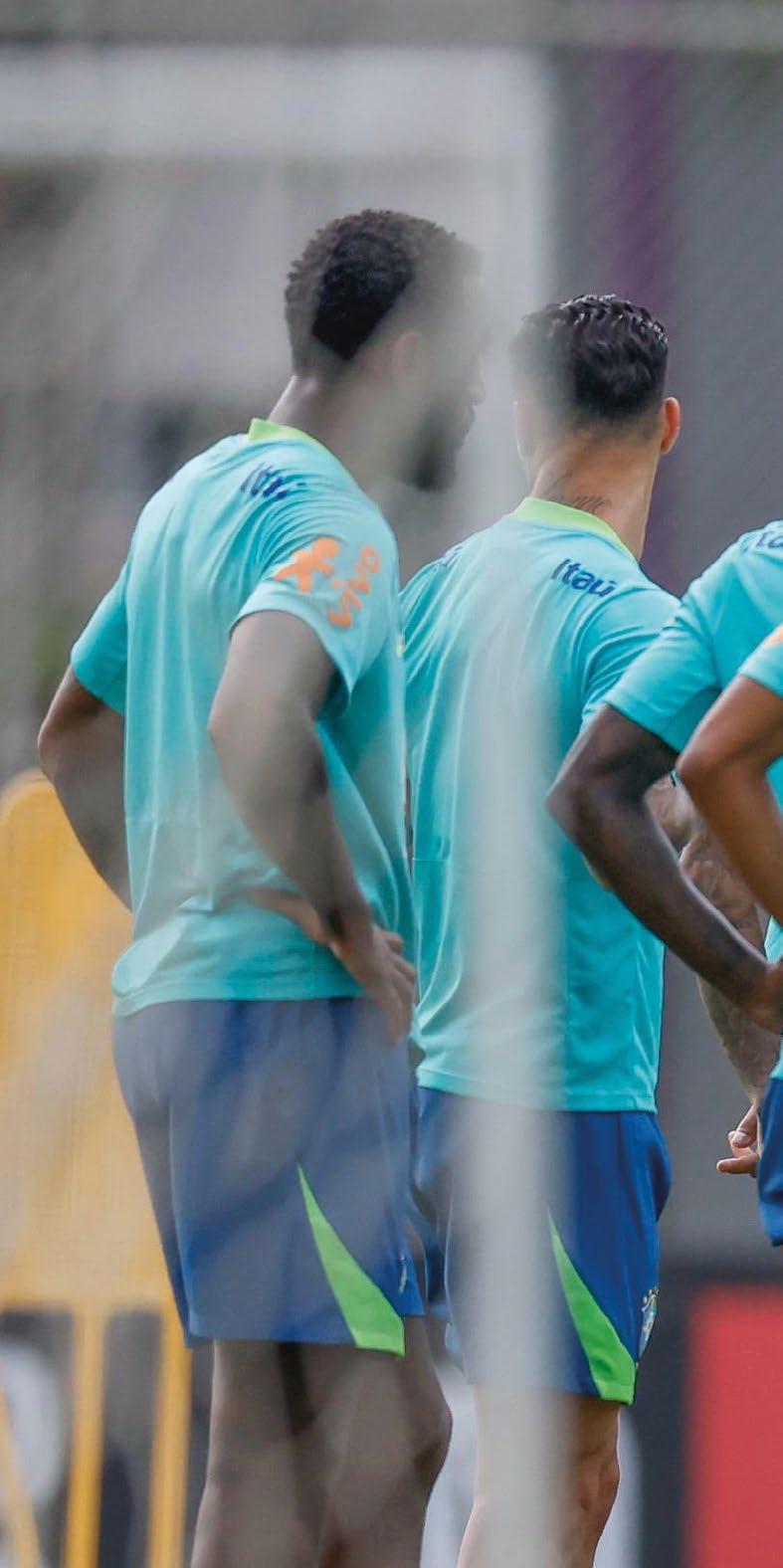
You can feel the weight of the shirt, but also the joy that comes with it. It’s contagious.
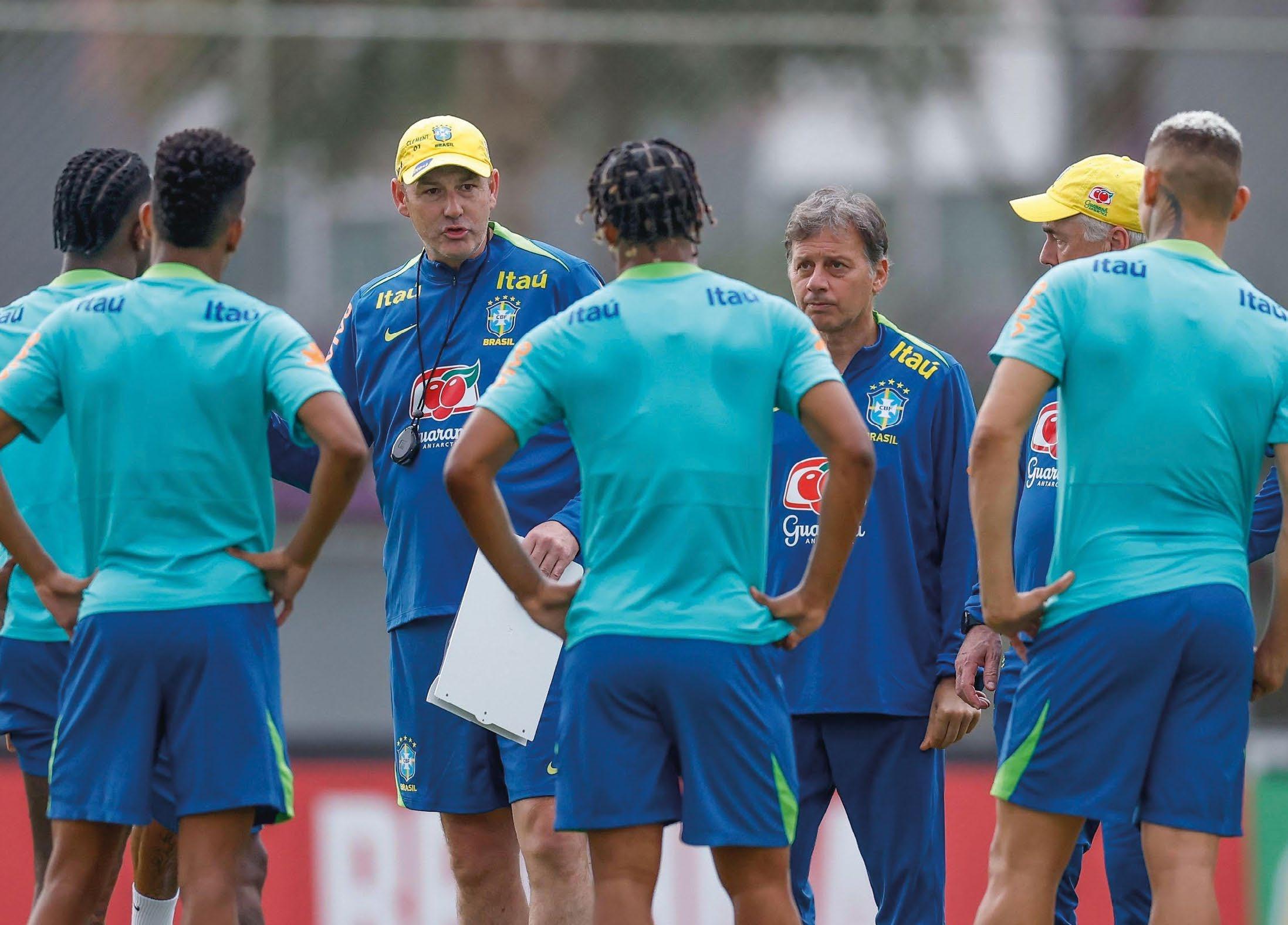
Ancelotti and Clement are currently focused on strengthening the sense of unity and cohesion in the Brazil team ahead of the 2026 World Cup. CBF images
world away from what you’d find in Europe.”
Another match in Bolivia, meanwhile, meant playing at an altitude of over 4,000m, something Clement describes as ‘brutally difficult’. “It would have taken a long time to acclimatise, so we flew in as late as possible to minimise the effects, and the players used supplementary oxygen at halftime and afterwards,” he says. “At that altitude, even walking up a flight of stairs leaves you light-headed, so playing a full game of football
is an incredible physical test. It really gives you a sense of how the conditions you’re playing in can change the whole nature of the game.”
Since he and Ancelotti joined Brazil in May, the focus has been on building a strong, cohesive squad ahead of the World Cup and, since securing qualification, strengthening the chemistry, shared identity and unity of the group.
“Of course, pressure to get results comes with the territory,”
he adds, saying the hunger to bring home a sixth World Cup is tangible. “But this is where Carlo’s experience is invaluable. He’s able to stay calm, block out the noise and focus only on the controllables. It’s going to be hot, demanding and fiercely competitive, but one thing that’s certain is we’ll arrive exceptionally well-prepared. When the first whistle blows, we’ll be ready – organised, united, and completely focused on representing Brazil in the right way.”

FROM
ANOTHER SPORT:
TANER ADU
PASS IT ON.
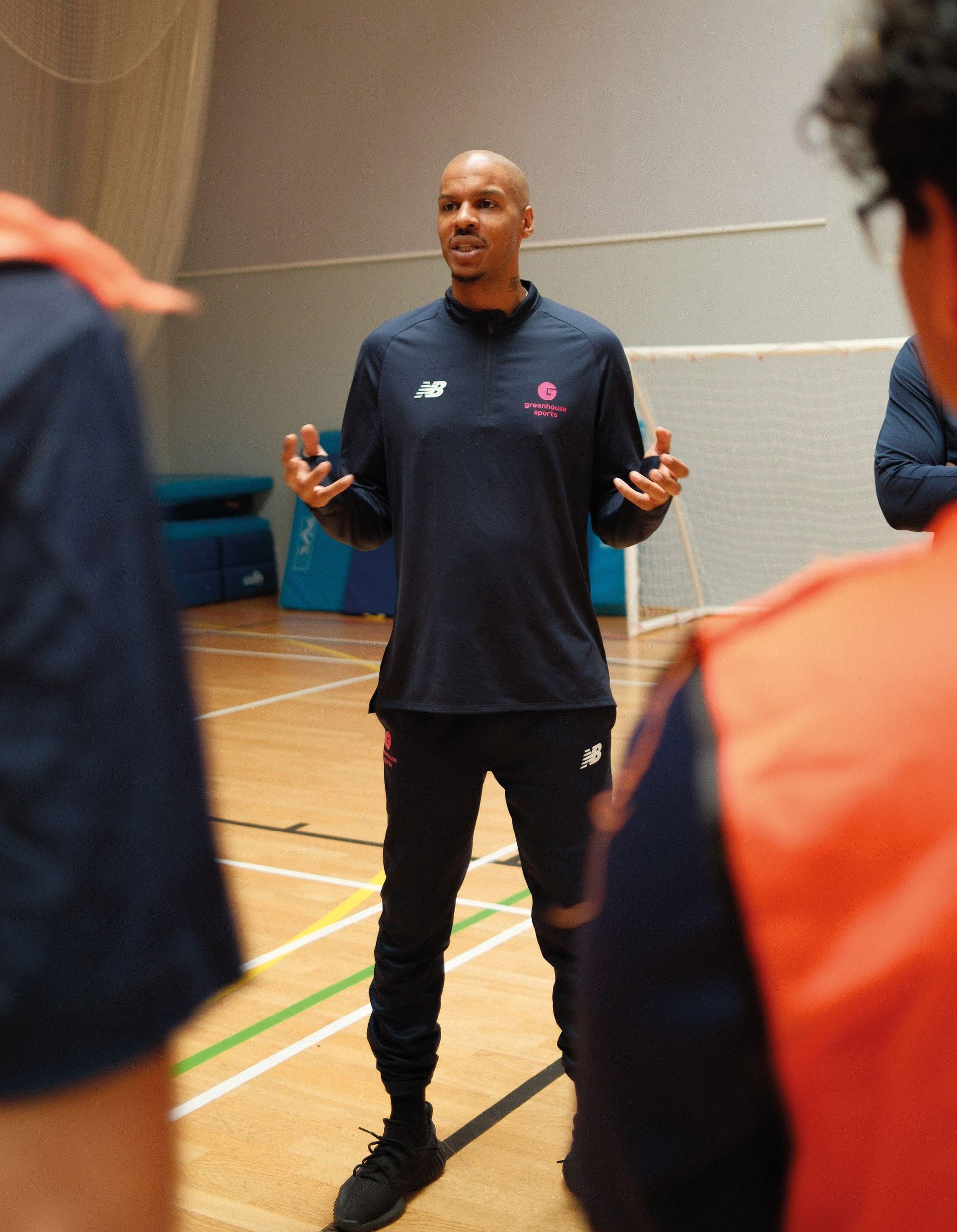
Former England basketball player Taner Adu has seen first hand the power of sport in developing not only technical ability but also essential life skills, aspiration and positivity. Now, as a Coach Development Manager at Greenhouse Sports, he is using his experience to transform the life chances of young people.
Photography: Greenhouse Sports // Paul Philips
Interview: Alice Hoey
BASKETBALL
SAVED MY LIFE.
Growing up on a council estate in Walthamstow, I got into a lot of trouble. My life could have gone down a very different route, but basketball gave me purpose, and when I won a scholarship to go to the US as a student-player, my mum persuaded me to accept it. She knew that it would open doors and, importantly, take me away from London and the crowd that I was hanging around with. She sacrificed so much that I might embark on that basketball journey. My purpose back then wasn’t, therefore, just to make it as a basketball player, it was to give back to my mum. In fact, that is really what has driven my whole career.
EARLY
CHALLENGES TAUGHT ME A LOT.
I’ve played for clubs in the British Basketball League, and for the England side, as well as in Lisbon, Milan and New Orleans, each time having to move to new cities, and adapt to different cultures and team environments. Joining the University of New Orleans team in the NCAA was especially tough, because I went from being the number two player in England to one of the weakest players in the side. Then, towards the end of my basketball career, I tore my Achilles tendon and was diagnosed with MS; a shaking hand isn’t helpful in this sport. Suddenly, I found myself unsure of what I might do next.
There was a sense of, ‘wow, I’m starting over again’.
MANY PEOPLE STRUGGLE WHEN THEY RETIRE.
However, the experiences I’d had since the start of my career made me very adaptable and, maybe thanks also to my networking and sociable side, I landed an opportunity almost immediately. When I started work as Partnerships Manager at Basketball England I was a little hesitant because playing the sport was all I’d known. However, I quickly felt at home. I’d played in the leagues as a junior, and then later for England, so I really felt a strong sense of belonging and respect within the organisation. While in the job I created the world’s first junior NBA, which is now present in 53 countries, before moving into a role running the National League. That’s when I realised the passion was gone; I was working more heavily on admin, and my heart wasn’t in it.
WHEN IT’S YOUR PASSION,
IT DOESN’T FEEL LIKE WORK.
I joined Greenhouse Sports initially as a youth coach, using basketball to help kids growing up in poverty gain life skills and realise their potential. I knew at once that was where I should be. Having myself come from a disadvantaged background, I now had a purpose that I could really connect with. Whereas at
Basketball England you wouldn’t hear from me after five when my day ended, at Greenhouse I would lose track of time. I might be in a school until late, just getting to know the kids and listening to their stories.
COACHING ADULTS IS JUST AS FULFILLING.
I was soon promoted to Coach Development Manager, managing a team of between 10 and 15 coaches at any one time. At first, I was apprehensive about moving from coaching kids to coaching coaches; I loved seeing young people develop, both in terms of their sporting ability and more generally. However, I saw quickly that I’d get to have the same impact via the coaches that I’m working with, and that’s incredibly rewarding. Especially given my background and how much sport has helped me in the past, it means a lot that I’m now able to pass that on.
VISION AND PURPOSE ARE SO IMPORTANT.
Our coaches at Greenhouse Sports are hugely passionate about our objective – to transform people’s life chances and raise their aspirations through sport. Some of the people I work with have been club basketball coaches all their lives, so it has taken a shift in thinking to move from an environment where it’s all about sporting performance to taking
Given my background and how much sport has helped me in the past, it means a lot that I’m now able to pass that on.
© Paul Phillips
a more holistic approach. At Greenhouse Sports, the technical sport aspects take a back seat to working on things like resilience, leadership skills, communication and confidence. I’m currently writing our first ever curriculum in order to guide our coaches in helping young people to develop those essential life skills through basketball.
MENTORING IS A WIN-WIN.
My work with Greenhouse Sports, and also as a mentor for the London Coaches programme, has really made me think about my mentoring practice, and I know that I’m
growing all the time. With experience, self-reflection and research, I’m always trying to improve my ability to get the best out of the coaches and mentees I work with. That isn’t about telling people what to do, or deciding what’s right or wrong, but about sharing, encouraging reflection and using open questioning. If you can help someone come to their own conclusions it’s always far more constructive than simply telling them the answer. That’s true whether you’re a coach or a mentor, and whether you’re working with young people or adult coaches.
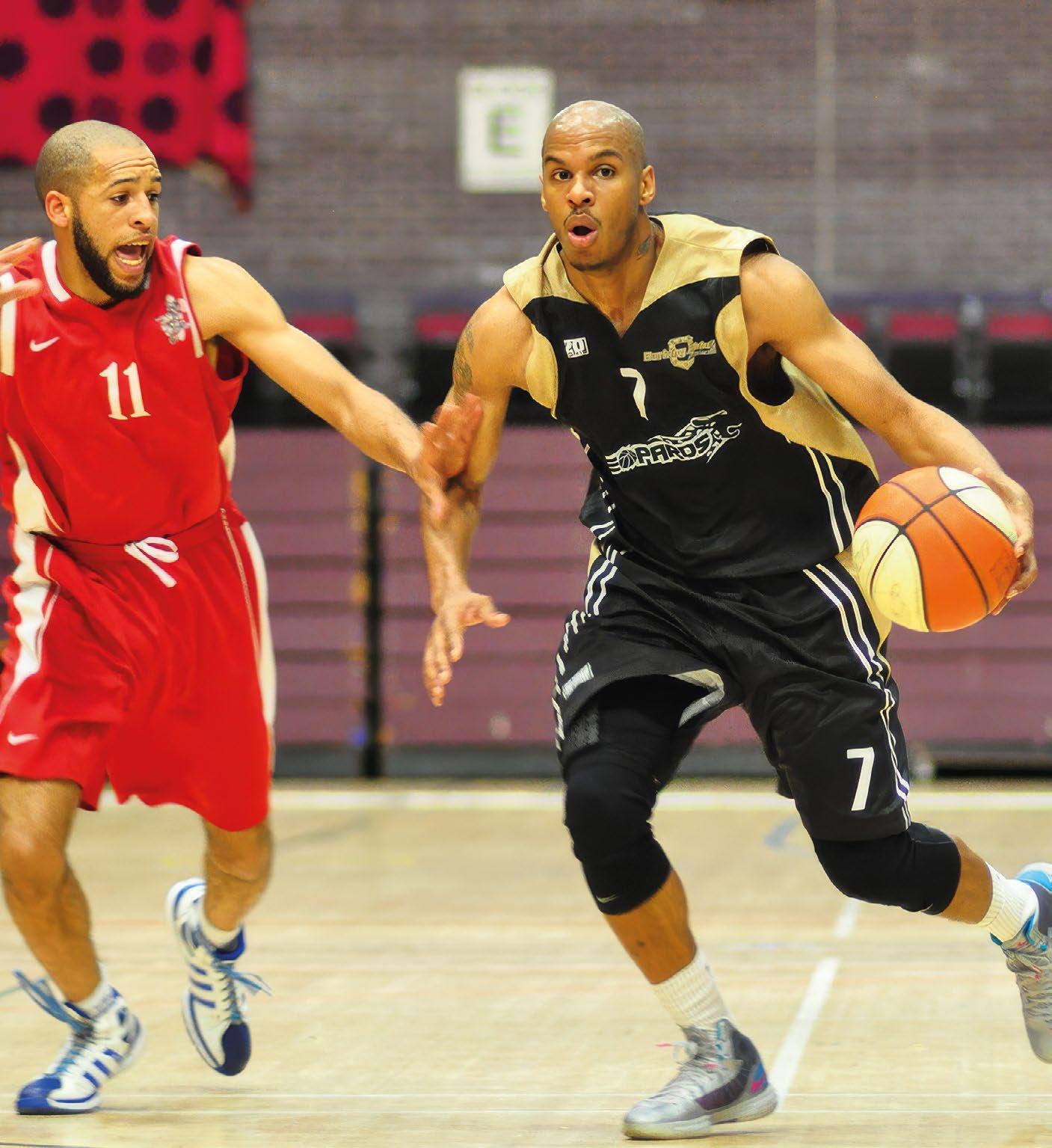
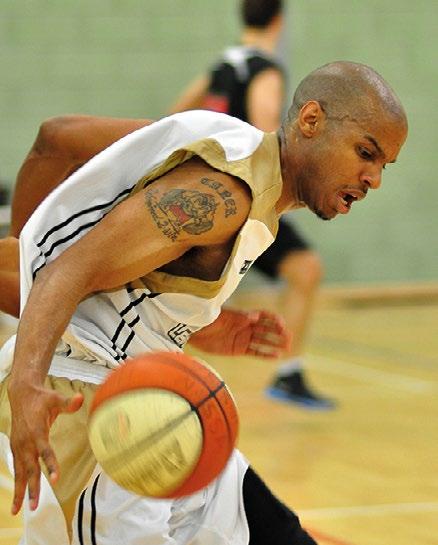
Taner Adu in action on court for the Essex Leopards.
About Taner Adu
Londoner Taner Adu played college basketball for the University of New Orleans in the NCAA and is a former Plymouth Raiders and Essex Pirates player in the British Basketball League. He also has 11 caps for England. Adu is now a Coach Development Manager at Greenhouse Sports and a London Coaches Programme mentor.

KEY TAKEAWAYS
TOUGH TO BEAT. JOHANN VAN GRAAN
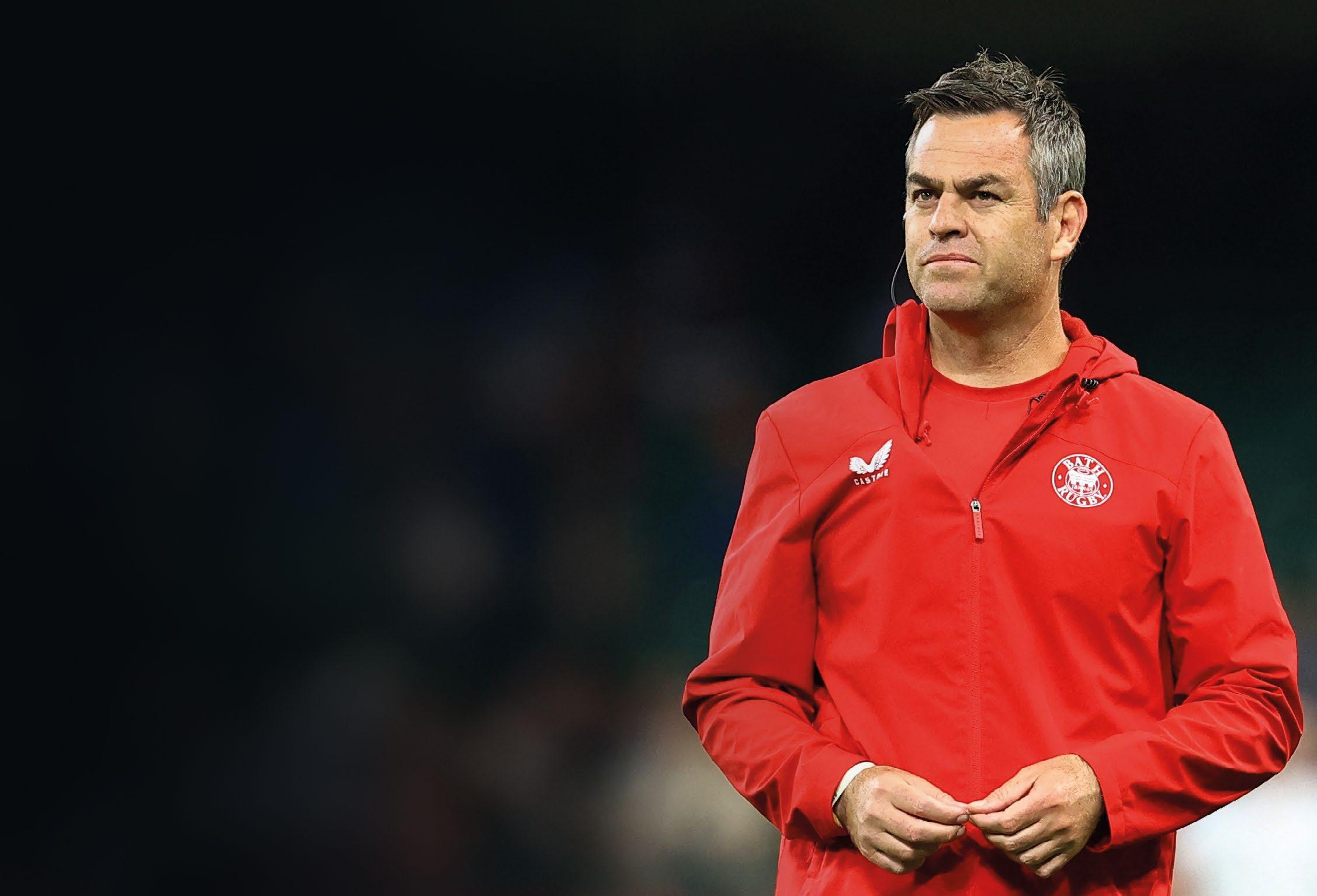
In a recent LMA Webinar, Johann van Graan reflected on a career that’s taken him from Analyst, through coaching roles with the Springboks and Munster, to Head Coach of Premiership champions Bath. Here are our highlights.
Reuters // Action Images
Photography:
If somebody asked me a question back then, and I didn’t know the answer, I would say so, and then go and find it out.
YOU HAVE TO CREATE YOUR OWN OPPORTUNITIES.
I started out as an analyst in a department that I created myself, but I knew early on that what I really wanted to do was coach. I was fortunate to have great support and advice from the coaches around me. They said that starting out so young, I should ensure that my knowledge was beyond reproach, and try to make myself indispensable. You have to work hard and do the things that others aren’t willing to do. I learned also how important it is to know yourself, your strengths and weaknesses, and be honest about your
knowledge and understanding. If somebody asked me a question back then, and I didn’t know the answer, I would say so, and then go and find it out.
I HAVE A RULE OF THREE.
A wise old coach, who has helped me a lot throughout my career, once told me that the best way to improve your decision making is to limit the number of decisions that you make. I therefore limit myself to three options and then make a decision out of those three. It’s also important that when you make a decision, you stand by it.
About Johann van Graan Johann van Graan’s career in rugby union started at the Blue Bulls when he became Technical Adviser, moving into Assistant Coach and then Forwards Coach roles. He spent five years as Forwards Coach with South Africa and then as Head Coach with Munster before taking the Head Coach role at Bath in 2022.
BECOMING MUNSTER HEAD COACH WAS TOUGH.
I remember we [the Springboks] played a test match against France in 2017, and the next morning I said goodbye to the team and flew from Paris to Cork. I started as Head Coach of Munster right in the middle of the season and, thinking back to it now, I don’t know how I did it. To go to a country that’s so different to South Africa, coaching in another language (because Afrikaans is my first) was a big challenge, but I loved it. I think when faced with something like that, it helps if you really know who you are and can stay true to that. I’ve never pretended to be anyone other than myself.
WHEN I JOINED BATH, THE CLUB WAS IN A DESPERATE STATE.
It dawned on me as I walked out onto the training pitch what a mountain there was to climb, and I wondered what I’d gotten myself into. What was most important initially was getting the right people on board, because you can’t achieve anything on your own. I brought in former 2015 World Cup GB captain Fran Leighton as Operations Manager, Alex Martin, who I’d met many years ago at Leicester Tigers, as Head of Performance, and Brody Murray to totally revamp the
South Africa Assistant
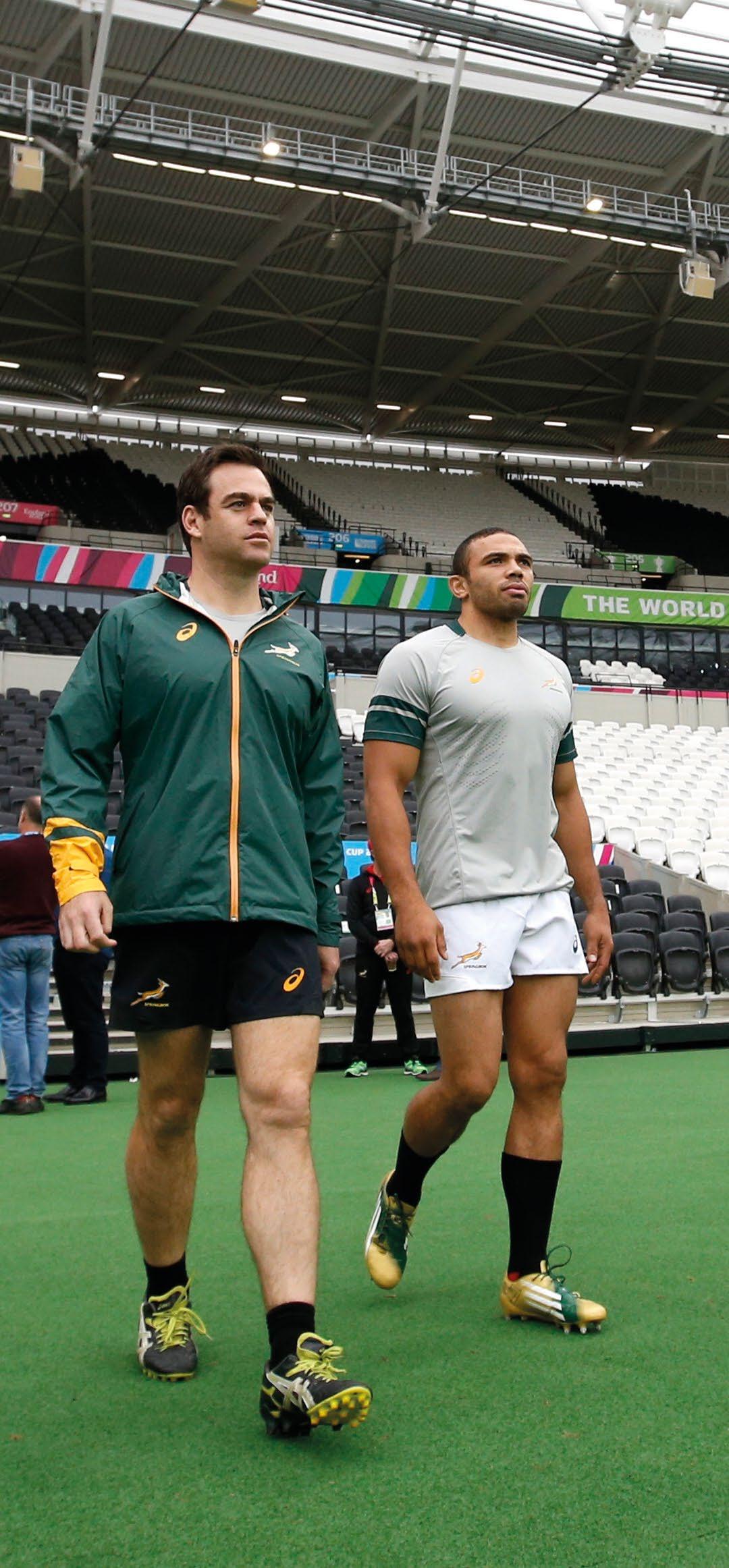
Coach Johann van Graan and Bryan Habana walk out to training. 29th October 2015.
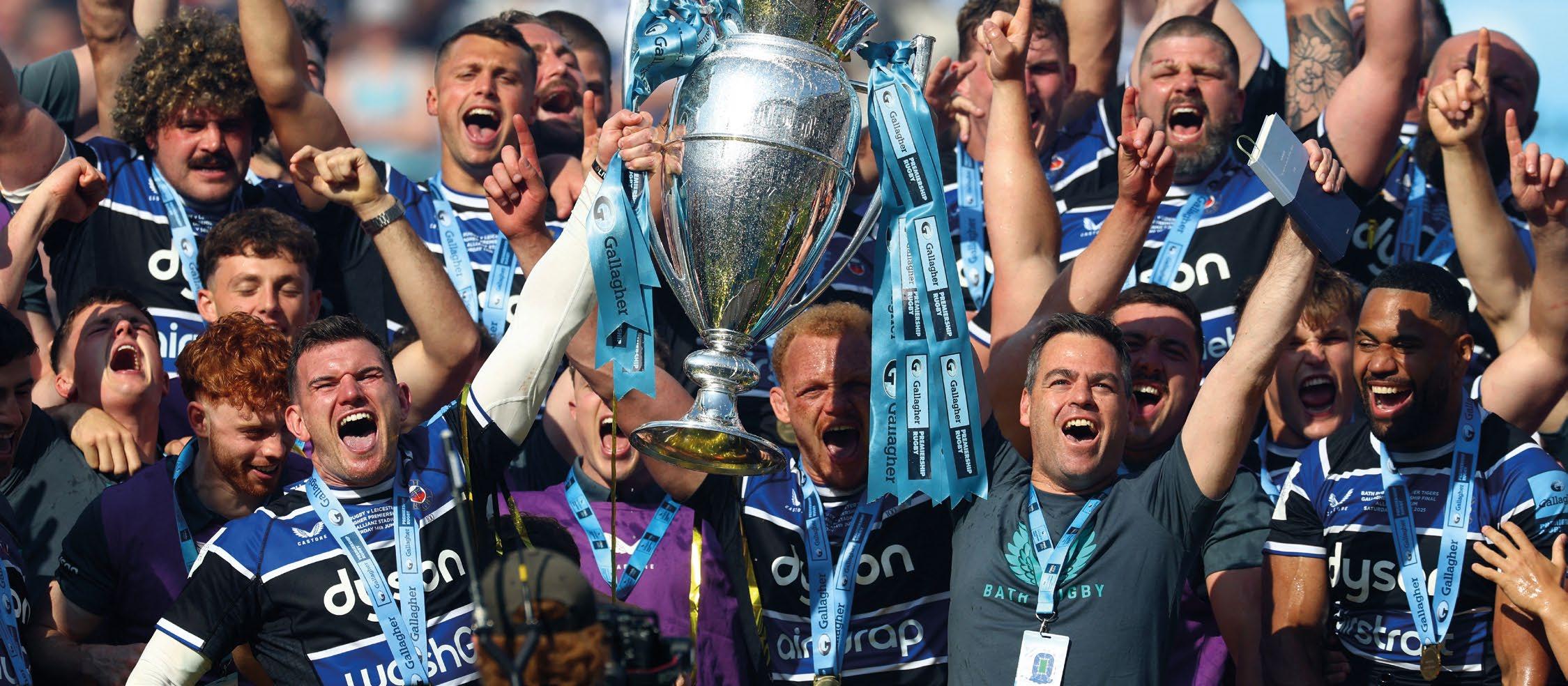
Bath Rugby’s Ben Spencer and Head Coach Johann van Graan celebrate after winning the Premiership Rugby Final. June 14th 2025. Reuters // Action Images
Every single action would be about ‘tough to beat’ – how we tackled, how we got up off the floor, what our body language was like.
medical department. Then, on the coaching front, aside from some immediate changes in our defence, I took my time. I went to the owner and the board, and was very honest with them, saying, ‘Here’s the plan of exactly what we’re going to do, but there is no timeframe to this. We’re going to take it one day at a time. We have to reset the club at zero, because nothing that we currently have is good enough. Aside from the walls of the buildings, we can take nothing forward.’
THE RELATIONSHIPS
WERE STRONG ENOUGH.
I met Bruce Craig, owner of Bath Rugby, for the first time back in 2016, and we set out from the start how our relationship was going to work. That was really important. I understood just how much he cared about the club and reassured him that I wouldn’t spend one pound without due cause. In return, he let me
know that I could speak with him at any time, and reassured me that he would always have my back.
YOU HAVE TO SET MEANINGFUL GOALS.
All I had was my past experience, but I had people around me, my support staff and players, asking me for answers. They said, ‘Just tell us what we need to do and we’ll do it.’ I couldn’t say to them, however, that we were going to win games, because rugby is a brutal sport and at that stage we had nothing. So, I remember presenting to the group and giving them just three words, ‘tough to beat’. Every single action would be about ‘tough to beat’ – how we tackled, how we got up off the floor, what our body language was like. Given that in June we went on to win our first Premiership title in 29 years, we more than achieved that goal. It’s amazing what you can do when you’re all in it together.
INTERVIEW
MARY TAYLOR
I PREDICT A RIOT.

As a criminal psychologist, lawyer and executive coach who started out in maximum security prisons, Mary Taylor has a unique perspective on leadership under duress.
Interview: Alice Hoey
Photography: iStock

On the surface, there might seem to be few parallels between the leadership challenges in sport and business, and those of the prison wings where Mary Taylor cut her teeth. In both environments, however, successful outcomes depend on leaders being skilled negotiators, confident and decisive under pressure, and capable of keeping themselves and those around them calm in the most difficult of situations.
The key to much of this is preparation, says Taylor, who started out in criminal psychology, and spent a year working in maximum security prisons as part of her degree. “Given there are normally only a limited number of scenarios that can occur in any one setting, it’s possible to visualise each one in relative detail, creating a mental plan of how you might feel and act in each eventuality,” she explains.
“In a high-security prison, for example, there might be a riot or a hostage taking. You might lose control of a wing and be faced with chaos. While these are extremely difficult, time-sensitive situations, they’re not entirely unexpected.” she says. “So while of course you have to adapt to each new circumstance, if you’ve mentally prepared then you have the backbone of what you
need to do and know where your focus needs to be. In the moment, you’re not debating with yourself, you’re simply executing the plan.”
DECISION PARALYSIS
This mental readiness can help leaders be more decisive, even if they don’t feel fully equipped to make the right move. Under pressure, people will often hold off making a decision, says Taylor, because they fear getting it wrong or hope that more or better information will come their way. “This, however, is the most damaging outcome of all,” she says, “because everything stalls. When you make a decision, even an imperfect one, you create forward momentum, which enables you to get to the next decision.
“To take the example of a prison riot, what I decide to do in the moment will make a huge difference, but actually so will what I do in the moments afterwards, because these are cumulative decisions. It’s not just the decision itself, but the consequences that flow on from that.”
It’s worth remembering too, adds Taylor, that while it might be tempting to wait for better information, few decisions can ever be made with absolute certainty. “Instead, we should
be looking to be more than 50 per cent sure,” she says, “to ask ‘what will achieve a better outcome than waiting and doing nothing?’ The more that you do this, the better you become at it.”
ARE YOU WITH ME?
Key thereafter is really owning that decision, and communicating the reasoning and logic behind it in such a way that people stand with you, even if they don’t wholly agree. Do that in the right way, says Taylor, and it will ensure the success of your decision, because it’s not just about what you choose to do, but how you go about it that counts: “If the team around you sees that you are confident, can justify your decision-making rationally and logically, and proceed with forward momentum, they’re more likely to follow you with an attitude that brings about success.
“With 300 prisoners out of their cells rioting, I’d have 30 officers all looking to me for what to do and how to behave,” she continues. “Should we get kitted up in riot gear and fight our way in or sit it out? If we send officers in, they risk injury or even death, but if we don’t then prisoners not involved in the riot may be hurt. There is no perfect solution, but whatever we
While it might be tempting to wait for better information, few decisions can ever be made with absolute certainty.

choose to do, it will only work if everyone is totally behind me as the leader.
“I saw it so many times in the prison service,” she says. “Officers would literally put their lives on the line for a leader they had respect for. For others, they wouldn’t even change their shift pattern by half an hour.”
REASONING AND RESPECT
According to Taylor, to earn that trust and respect you have to lead with humility and honesty, building a personal connection with the people around you: “Let them know how you’re feeling, that you share their concerns, and explain how you’re going to move forward together, and why.”
Mastering this requires not only expert communication skills, but also high levels of emotional regulation, something that comes with both practice and experience.
Taylor admits that when she first found herself surrounded by dangerous criminals in a highsecurity prison, she was terrified. However, over time she became almost neutral to the events around her, able to choose how she was going to feel and respond, rather than allowing instinctive fear and anxiety to kick in.
Officers would literally put their lives on the line for a leader they had respect for.
About Mary Taylor
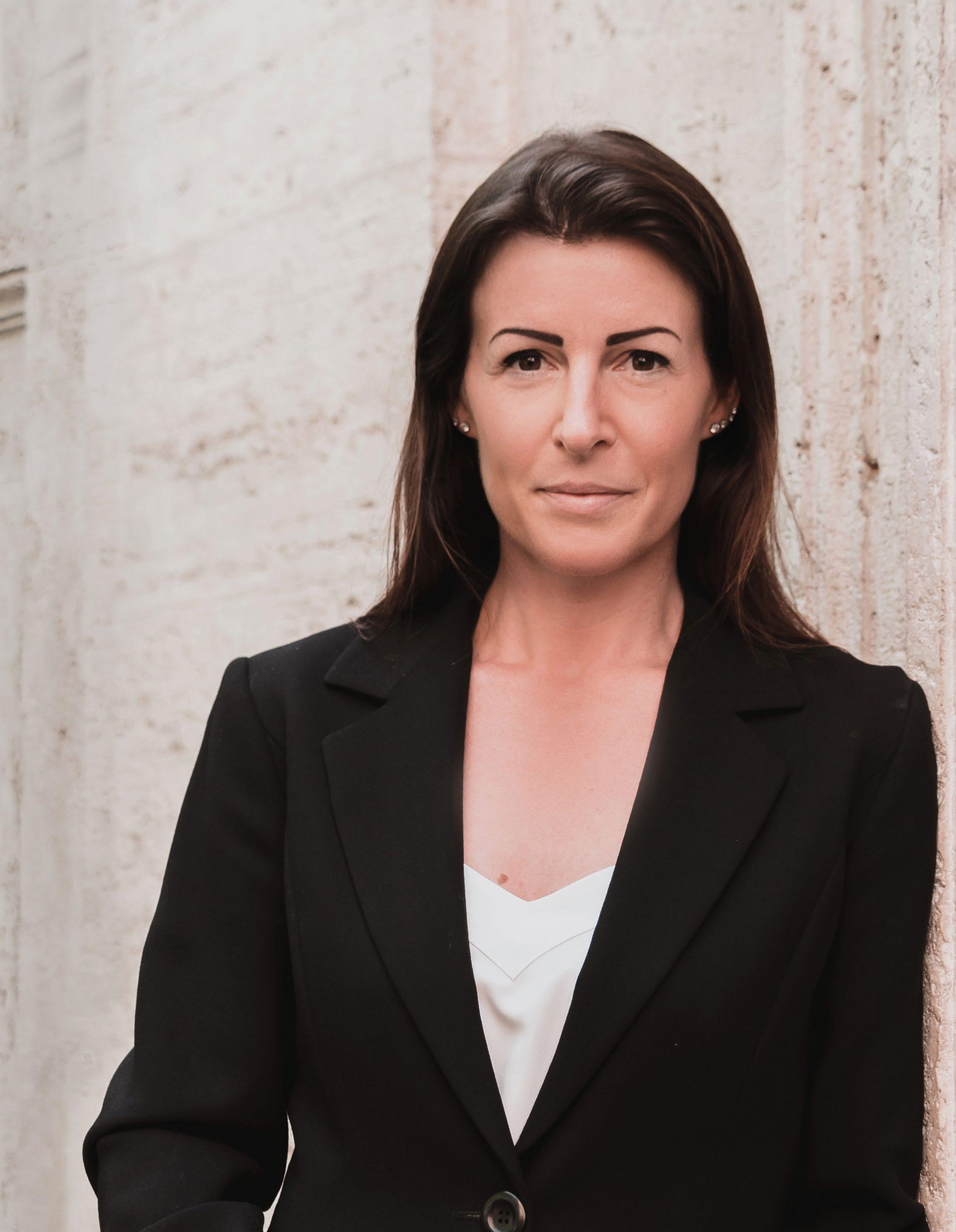
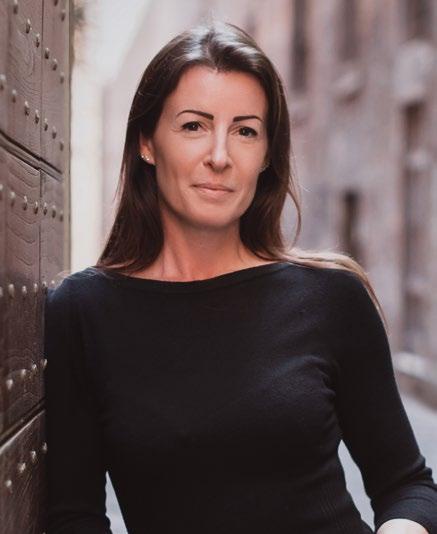
Now providing leadership and executive coaching, Mary Taylor started out in criminal psychology, and spent a year working in maximum security prisons as part of her degree. Fascinated by the prison environment, but keen to be more hands on, she joined an accelerated promotion scheme, which enabled her to move quickly through the ranks of prison management.
Taylor later shifted career track onto corporate law, and after working increasingly with businesses and leaders, moved into executive, leadership and business coaching.
“Partly that’s repeated exposure, but largely it’s down to a constructive internal conversation,” she says. “To return to the riot analogy, as I’m sitting in my riot gear waiting to go into the prison wing, I have a choice. I can think about how I might be stabbed or hit, or that my officers are going to die, or I can recognise this as lazy thinking, and instead see the situation as a challenge. After all, the symptoms of fear and anxiety –the heart pumping, the sweating and feelings of nerves – are very similar to those of anticipation and excitement,” she says. “What’s more, the surge in adrenaline allows your brain to reach heightened levels of concentration and awareness.”
MIND GAMES
Taylor has found that the key to controlling her emotions is being able to purposely divert her focus away from anxious or unconstructive thoughts. Although she admits that this is neither quick nor easy to achieve, certain methods have proved useful over the years.
“I would practise all the time, working quite deliberately to shift my focus from one thing to another,” she explains, describing the process as similar to mindfulness. “I could never
just focus on an inanimate object, however. I found it most effective to choose something that was equally compelling or powerful as whatever I was trying to shift my thoughts away from. It became a powerful tool when I faced a situation where I needed to stay calm, rational and outcome focused.”
As with any skill, to improve emotional regulation it needs to be practised in a conscious manner, pushing yourself out of your comfort zone and maintaining that practice over time.
“That means deliberately putting yourself in challenging scenarios, where you might have to make decisions under pressure or duress,” says Taylor. “When you avoid a difficult situation, the scale of the challenge simply amplifies in your mind, whereas when you walk towards it, and tackle it repeatedly with increasing levels of severity, you become better at handling it.
“However bad things might seem, the reality rarely matches up to the expectation. With mental preparation, regular deliberate practice, and your team at your side, you’ll be ready for anything.”
MARTIN DUBIN
FIND YOUR BLIND SPOTS.
In his new book, psychologist, entrepreneur and executive coach Martin Dubin explores the impact of self-awareness and emotional intelligence on leadership performance, and looks at how to recognise and manage any gaps.
Words: Alice Hoey
Illustrations: iStock
Success, for many of us, is the purest form of validation. The fact that we’ve achieved a goal set for us, or by us, is proof that we got it right. In truth, however, among the many actions, approaches and behaviours that we deploy over the course of a project, there will be those that fuelled momentum and success, and those that didn’t. In fact, success, and to an even greater extent, repeated success, can mask faults in our own leadership, shortfalls that often go unnoticed until our situation changes. When success suddenly evades us, we may wonder what’s going on, but still not accept that the problem, and therefore solution, lies with us.
In ‘Blindspotting’, Martin Dubin argues that even the most successful or experienced leaders can grow and improve by identifying gaps in their skills or behaviours that they didn’t realise were there. Because, while we are acutely conscious of the need to reflect on and review the performance of our teams, we are perhaps not, says Dubin, as self-aware as we think we are.
“In business, as in sports, you learn the skills that are necessary, but what is most important of all is self-awareness, because
ultimately you are the tool by which the skills and learning are expressed. While you and I might read the same book on how to lead a good meeting, for example, and come away with the same five key lessons, how we go on to manage that meeting and our level of success will be totally different, because of who we are, our identity, empathy, experience, intellect, and so on.”
HIDDEN DOWNSIDES
How effective your behaviour and decisions are will also depend on each situation and the connection you have with the people around you. What worked with one group of people and in one context might therefore not apply in the same way elsewhere. Importantly, some of the same things that you see as your strengths, and that have achieved results in one setting, might prove ineffective in the next. In this way, those strengths can themselves become blind spots.
As an executive coach, Dubin regularly carries out 360-degree assessments with the leaders he works with, ending up with a ‘bucket of strengths’ and a ‘bucket of opportunities for improvement’. While initially he
Even the most successful or experienced leaders can grow and improve by identifying gaps in their skills or behaviours.
saw these buckets as quite separate things, he soon realised there was a connection.
“Often those same strengths could become weaknesses if overplayed or leaned on too much,” he says. “You might, for example, see a very confident manager become arrogant, or a really organised leader be unwilling to listen to new ideas. Similarly, someone who is highly creative and open to new ideas might become easily distractable, their priority list changing all the time. We don’t always see the potentially negative sides to these traits because they’re the things that come naturally to us and that probably work for us 90 per cent of the time. The problem is the other 10 per cent, which can make all the difference in a team.”
FROM PEACETIME TO WARTIME
Drawing on an example from his own career to illustrate the point, Dubin recalls how he went from being a clinical psychologist to running a successful business, managing the mental health provision of large insurance companies. “We discovered that a contract that we’d been working on for some time had been acquired based on bad data, and we were losing money. If it went on much longer it could sink the business, so we needed to act, and fast,” he says. “Perhaps unsurprisingly given my professional background, my natural response was to listen, to mediate, negotiate and try to find a harmonious solution, and that gave away some of our bargaining position. My partner,
meanwhile, saw that what we really needed to do was sue them for bad information, and that ultimately is what saved us.”
In other words, what had worked brilliantly for Dubin as a therapist was no longer appropriate. It’s something he says is fairly common when people change roles, especially when they go from working independently to leading or managing a team. “To give another example, being smart, confident and decisive are positive traits, especially as an entrepreneur,” he says, “but if those strengths are overplayed in a collaborative group environment, that person might try to solve every problem themselves, be overbearing and act without considering the
team’s input, which will have a negative impact.”
ALL KINDS OF CLEVER
It’s important also to realise that being the smartest, most senior or best qualified person in the room doesn’t always mean you’ll have the answers, or be the best leader. Intellect, points out Dubin, while undoubtedly a great strength, can mean many things and be of varying use depending on the situation.
“I’ve come to realise throughout my career that intelligence isn’t all about IQ. There are people who are capable of processing a lot of information and making good conclusions based on that, while others have fast processing

speeds, so they can make great decisions in the moment, and under pressure. There are also very creative thinkers, who see things and make connections that others don’t, and finally those with a kind of street savviness and emotional intelligence as a result of the hardships and challenges they’ve dealt with in their lives.”
The best leaders, he argues, understand the need for all of these different types of intelligence around the table and are self-aware enough to know how they fit into the picture.
FEELING MATURE
A change in role can also throw up issues around how we see ourselves, and how others perceive us, something Dubin says can lead to us underplaying certain attributes or leaning too heavily on others. “Throughout your career, as you move from one company to another, how you see yourself and how others perceive you needs to match each role,” he says. “However, if you’ve always been an expert in one field then your identity and what you feel are your core strengths are likely to be tied to that, so there can be a sense of grief at losing that. If you’re promoted to manager,
for example, you might still see yourself as one of the team. You might not bring to the fore certain skills that you have and now need as a leader, but that haven’t previously been a big part of who you are.”
Recognising that we may have these underused skills is as important for selfimprovement as reflecting on those ‘strengths’ that might at times be holding us back. Ultimately, this calls for regular self-assessment, a willingness to seek out and take seriously feedback, and high levels of emotional intelligence.
“Emotional mastery is the ability to recognise and manage your emotions, and those of other people in order to be more strategic,” says Dubin, adding that it goes back to the idea of you being the tool through which you apply those leadership theories and approaches. “Rather than just reacting in the moment, you have to acknowledge your behaviour and recognise those blind spots, always thinking about the downstream impact of that. If you can be self-aware enough to do this, then it’s an incredible opportunity to extend your leadership.”
About Martin Dubin
Martin Dubin is a clinical psychologist, serial entrepreneur, business coach and adviser to C-suite executives and Silicon Valley entrepreneurs. He founded several companies, including a multimilliondollar healthcare company, where he also served as CEO.
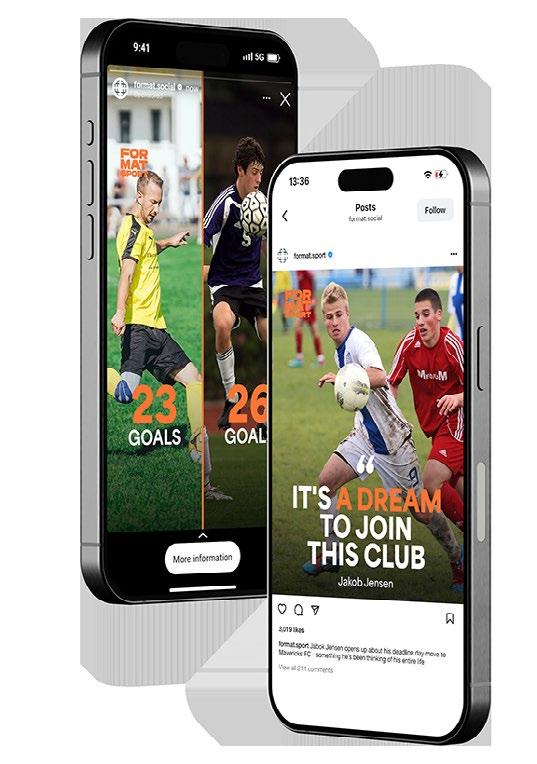
Format’s your productivity partner for creating high-volume, pixel perfect and on-brand video and graphics - fast.
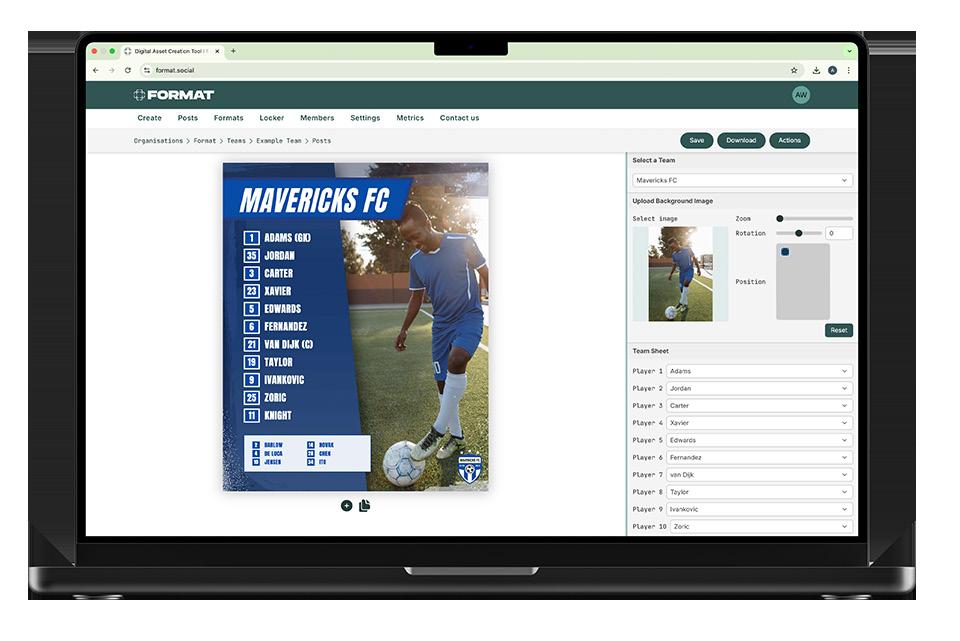
Design confidence for non-designers
Built to support your creatives
A productivity partner for busy teams
Book a demo to see how Format can help your team visit format.social
GUS POYET
K-TOP.

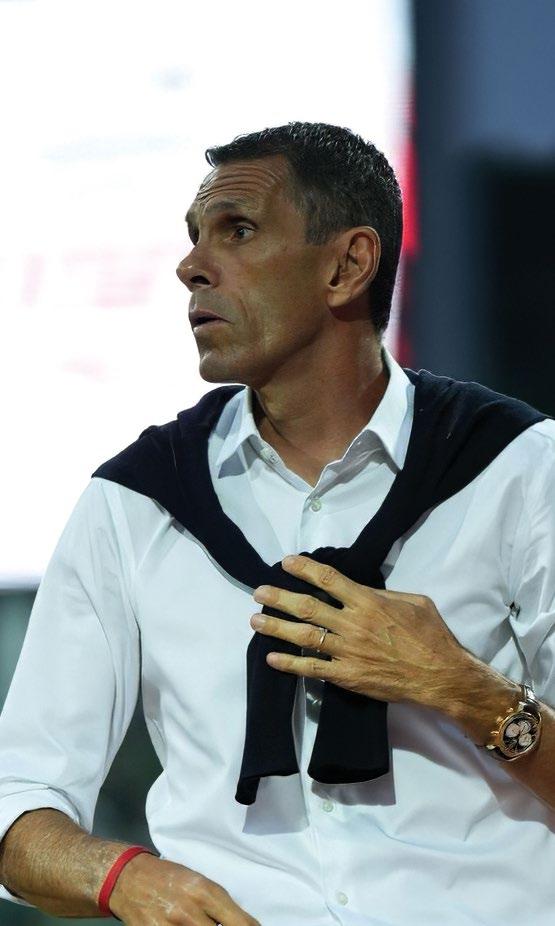
With invaluable experience managing in the UK, Greece, Spain, China, France and Chile, Gus Poyet arrived in South Korea a year ago to lead Jeonbuk Hyundai Motors out of several years of decline. Despite narrowly escaping relegation last season, they became 2025 K League 1 champions under Poyet, and won the Korean Cup. Here, he reflects on his time with the club.
Interview: Sue McKellar
Photography: Jeonbuk Hyundai Motors
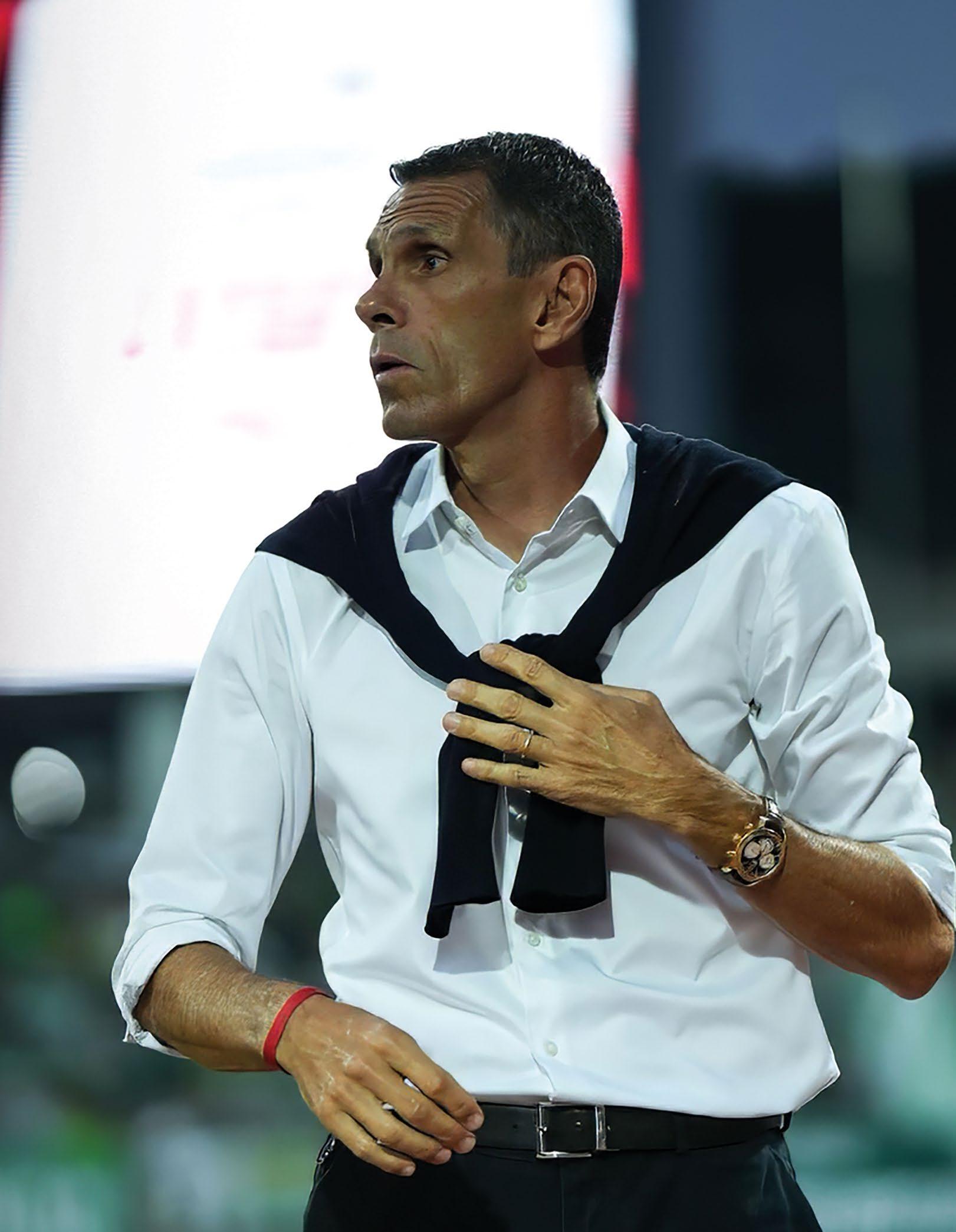
Many Korean players prefer to have clear guidelines and boundaries, so what’s most important is that you get to know them individually and work with who they are as people.
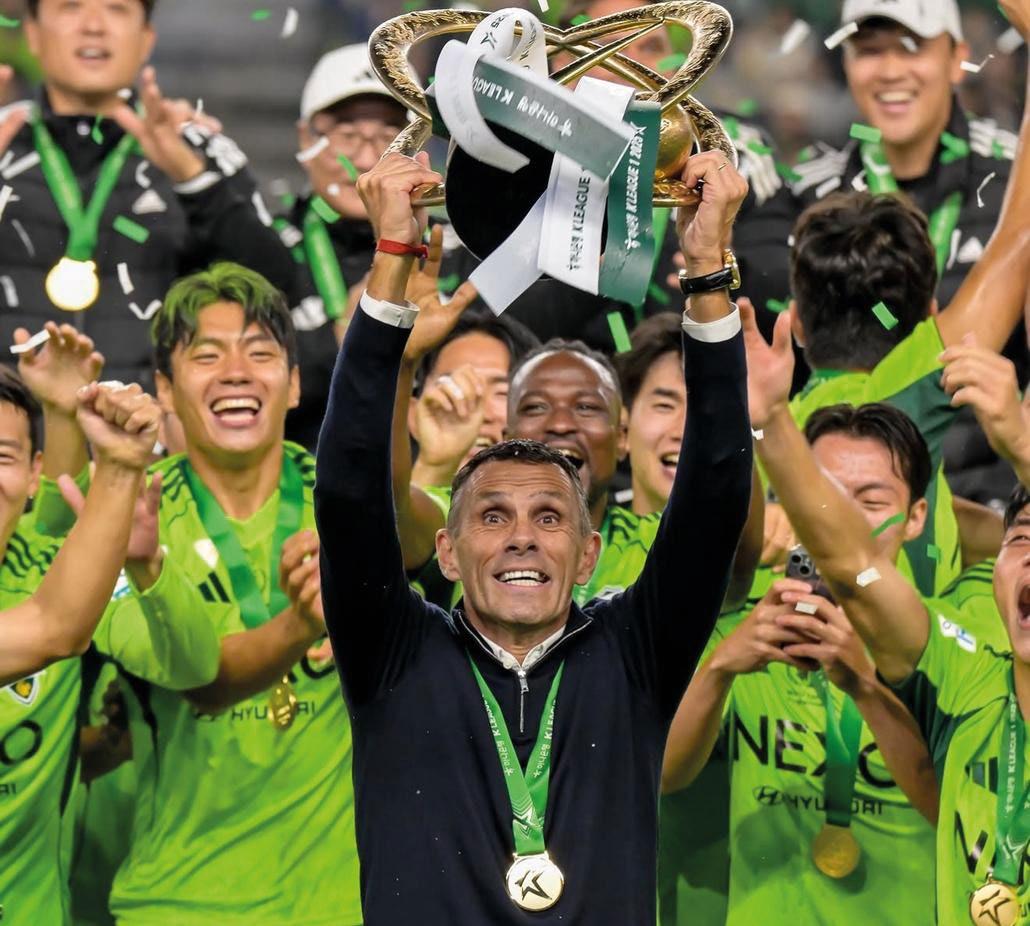
Gus Poyet lifts the K League cup after leading Jeonbuk to the title with five games to spare.
Jeonbuk Hyundai Motors
YOU LEARN AND GROW WITH EACH EXPERIENCE ABROAD.
When I was 20, I moved away from home for the first time as a player, to Grenoble, France. If there’d been an airport anywhere nearby I would probably have flown home straight away, because it was really tough. Away from my family, suddenly I had to sort out my own meals and settle the bills for the first time. I really suffered, but at the same time I grew as a person and it taught me a lot. Everything after that seemed so much easier as a result.
I DO A LOT OF RESEARCH BEFORE MOVING TO A NEW COUNTRY.
I’ll ask a lot of questions and try to speak to people who have worked there before. The fact that I’d spent time in Shanghai previously helped me to integrate into Korean culture; it wasn’t quite so much of a shock, as it
had been when I first arrived in China. The Korean culture is really interesting. It’s a very safe, honest and respectful society. If I were to leave my phone on a park bench by accident, I could go back several hours later and it would still be there. No one crosses the road until the lights change, even if the road is clear, and during the summer, when it’s very hot, you’ll find umbrellas next to the crossing so you can wait patiently in the shade without getting burned.
AGE-BASED HIERARCHY IS ALSO VERY IMPORTANT. People in South Korea will look to the oldest in the room to speak first and be the leader. Even in our squad, the younger players would wait for their elders to speak before having their say and would form a queue behind them for food. This made my relationship with the senior players more serious in a way,
because they held more influence in the group. However, I still needed to ensure that younger players had the confidence and freedom to express themselves and make suggestions, if they wanted to. Because you can’t make assumptions or push selfexpression. Many Korean players prefer to have clear guidelines and boundaries, so what’s most important is that you get to know them individually and work with who they are as people.
SPEAKING FOUR LANGUAGES HAS OPENED DOORS.
I wouldn’t have got the job as Greece manager, prior to this role, without being able to speak English, and it was important that I speak French when I went to coach at Bordeaux, as they didn’t want a translator. In Korea, the language is so different that it was more difficult, so I used two
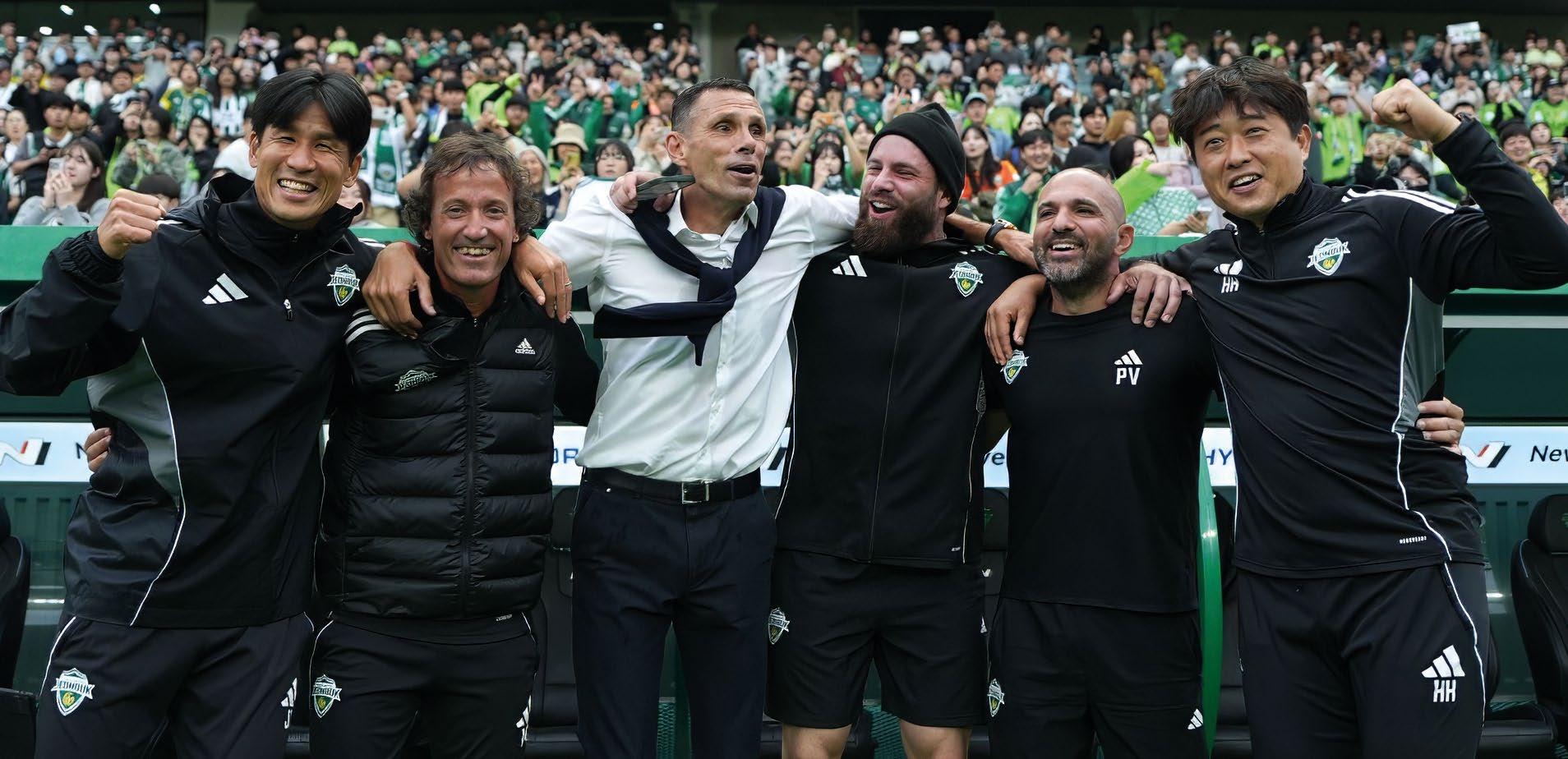
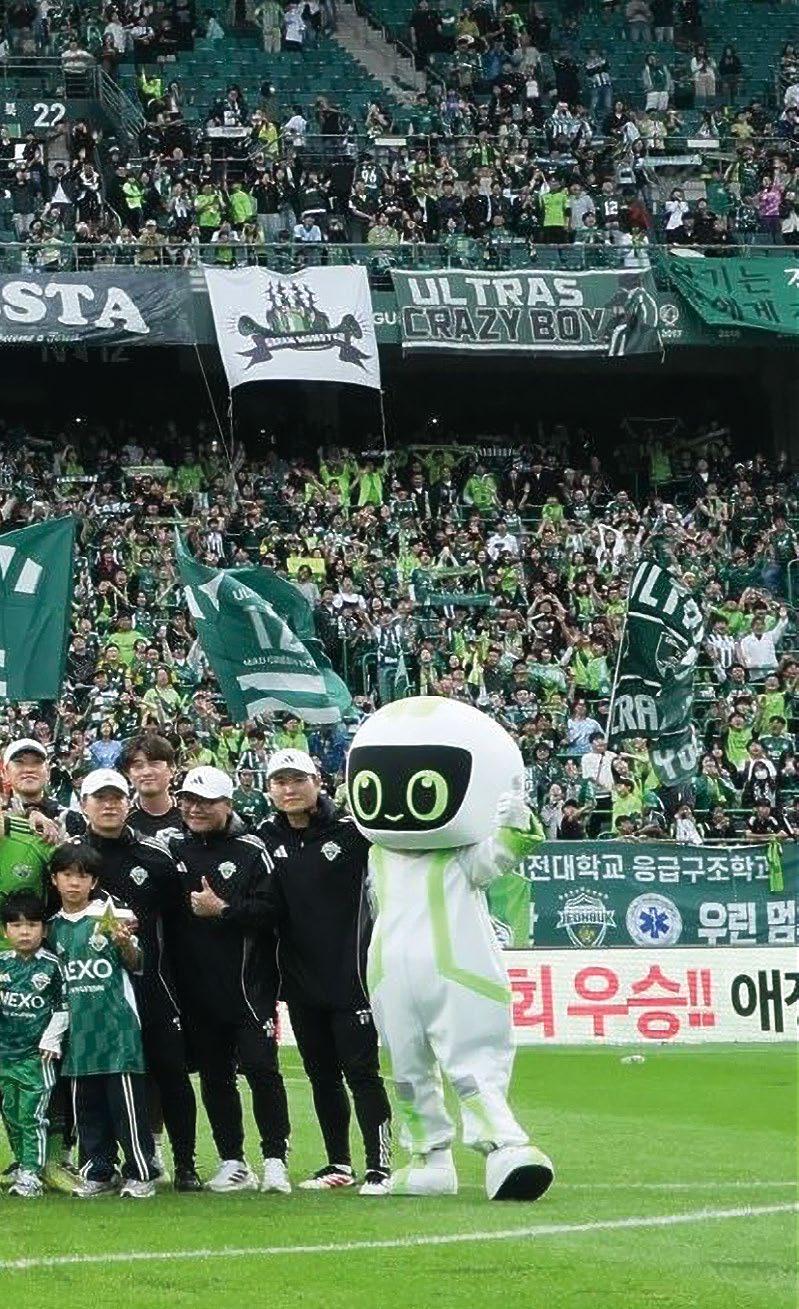
Poyet celebrates victory with his coaching team. The K League title marks the side’s return to form, having narrowly avoiding relegation in 2024. Jeonbuk Hyundai Motors
We brought back the winning mentality that had been lost in recent years and ended up winning the K League with five games to spare.
translators. One was great at the technical coaching side of things, while the other was skilled at translating longer messages with meaning during press conferences and meetings. One thing I’ve learned is to be careful using phrases that have different meanings, or no meaning at all, when translated. For example, once during training, I commented
that a skill we were practising was something my 87-year-old mum could do, and while I simply meant it was really easy, the translator communicated it literally. The players looked at me in amazement, asking, ‘Wow, can she really?’
SOMETIMES IT WOULD HIT ME HOW FAR AWAY WE WERE. We had four Brazilians in the
team (the maximum allowed in any team in the K League is five) and I was really keen that they should make it home or to Europe to see their families during the break. They chose not to, though, because it would have taken so long in total for the return trip. Even travelling within Asia for Champions League games can be tough. When we went to play in Bangkok, for example, it was
alongside three Korean coaches in front of some 50 journalists, all speaking Korean, and me in the middle, waiting my turn. I definitely felt like a foreigner then, and questioned what I was doing there, but there’s always a period of integration early on, and I settled really well after that. I also felt a lot of scrutiny, especially after our incredible run early on in the season. People wanted to know what we were feeding the players, how many days off they were given and how long they were training for. All of this intense interest was a good sign that we were bringing something different to the mix.
I DIDN’T FEEL ANY PRESSURE.
a journey of over 10 hours each way. We played on the Thursday night, and flew back on Friday, getting in at midnight. Then we trained in the morning and had a match on the Sunday.
I WAS THE ONLY FOREIGN COACH IN THE KOREAN PROFESSIONAL LEAGUES.
I remember an early press conference finding myself
The club president, who I only met once in 10 months, trusted me to get on with the job, which was incredibly empowering. It was a more relaxed environment than anywhere I’ve worked. Nobody said to me when I arrived that we needed to win the league, even though this is, historically, the most successful team in Korea. The objective was simply to get as close as possible to the top three, bringing us into a position
where we might be contenders next year. In the end, though, we achieved something unexpected. After a mixed start, we were unbeaten for 22 games, a club record and a personal one for me as a coach. We brought back the winning mentality that had been lost in recent years and ended up winning the K League with five games to spare, and then also the Korean Cup.
THE CROWDS IN KOREA ARE A PLEASURE TO PLAY TO.
There’s a polite appreciation, a passion but without aggression. It’s spectacular. To give you an example, Jeonbuk’s biggest local derby is against Ulsan and I remember one game where we beat them 0-2 away from home. As we left the grounds via the main entrance we were greeted by a big group of Ulsan fans, all cheering us and wanting photos and shirt signings. So, rather than being swiftly herded to the team bus as you might find in many countries, I ended up spending 15 minutes with the fans of our fiercest rivals in a derby that we won at their home ground. I’ve never experienced anything like that.
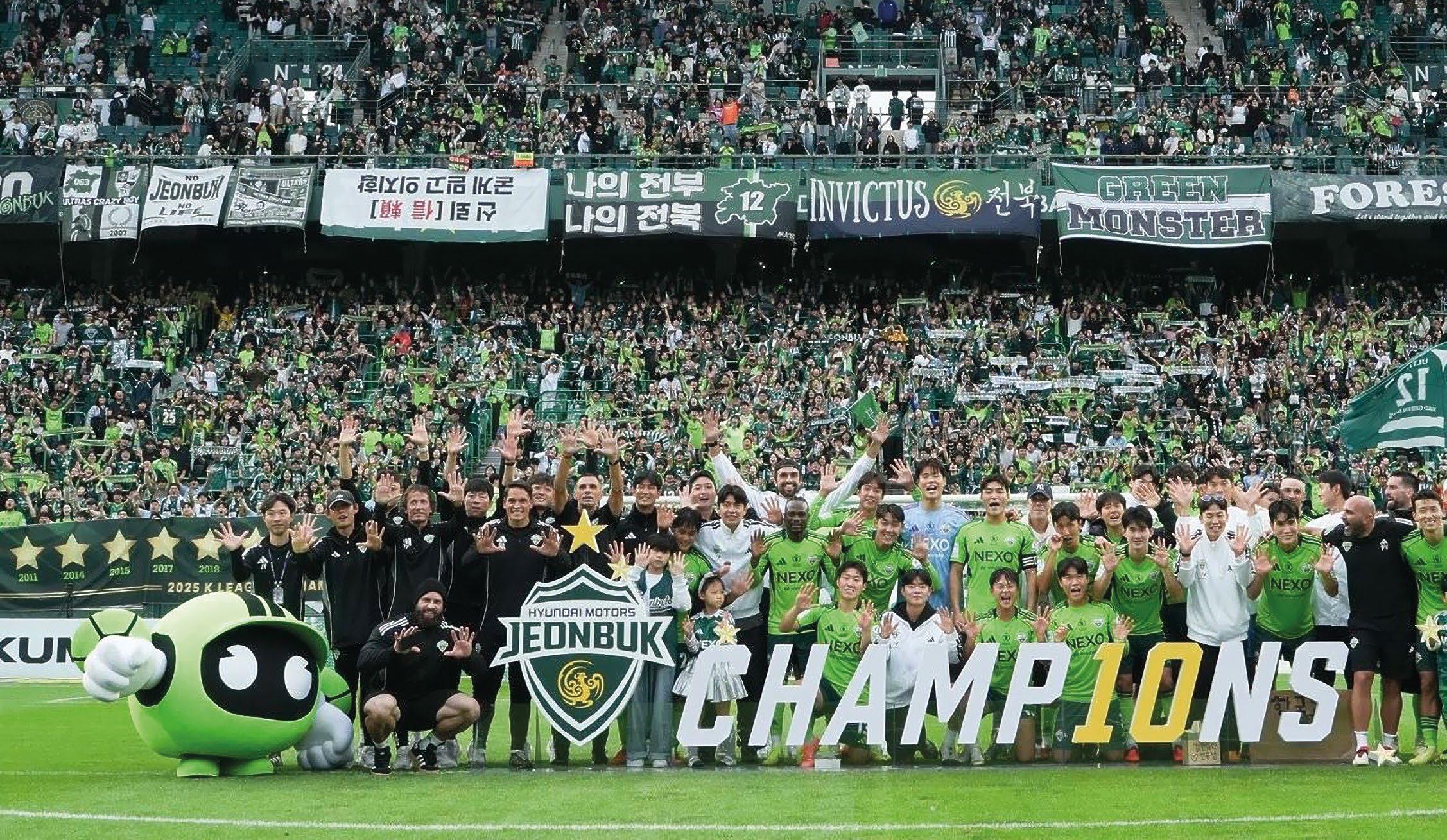
Jeonbuk celebrate their record 10th K League title. The side won the league five successive times between 2017 and 2021.
Jeonbuk Hyundai Motors
IN CONVERSATION WITH
MARWAN KHALEK
THE HIGH-FLIERS.
Since founding Gama Aviation over 40 years ago, CEO Marwan Khalek has developed the company into a leading multinational aviation services group. Speaking with The Manager’s Alice Hoey, Khalek says at the heart of the business are not planes, but people.
Interview: Alice Hoey
Photography: Gama Aviation
While corporations and high-net-worth individuals often only need their planes sporadically, Gama ensures they are always maintained and ready to fly. Gama Aviation

Alice: There are risks in setting up any business, and it takes courage and vision...
Marwan: I’m not sure I was terribly courageous at the age of 23. I think being entrepreneurial had more to do with my Lebanese background. I had seen my parents and uncles do it, so it didn’t occur to me that it was anything particularly adventurous or special. It’s often only once you get going, of course, that you realise the risks and responsibilities you’ve taken on. The learning curve was steep at the beginning, but I’ve been learning and developing ever since; that’s what drives me, the joy of challenge and discovery.
Alice: Did it weigh on you to have all these new responsibilities as a leader?
Marwan: I’d say those responsibilities came into sharp focus during the late 80s, when we experienced severe economic challenges. I was still in my 20s, and faced the choice of either making redundancies or risking the whole business. Given there were only about 15 of us, and all were family or friends, it was incredibly hard. I vowed, then, that I’d to do everything in my power to ensure I’d never be in that position again, and remain committed to the thousand people that work with us, their families and dependants. It’s a responsibility that I take very seriously, but rather than weighing on me, it drives me forward.
Alice: You steered the business safely through that financial crisis and others, as well as 9/11
and the pandemic. Do you have a strategy for dealing with setbacks?
Marwan: There’s no onefits-all response, because each event challenges us in different ways. However, while there’s no template you can apply, certain things are always critical. You have to assess the impact, look at the options available, and then engage with those people who can best help to inform your decisions. Then, once those decisions have been made, you have to communicate them throughout the business in such a way that you bring people with you on the journey. From my experience, the best way to do that is by being open and honest, having difficult discussions
Admitting that you got it wrong, or that you need to change your approach, is never a sign of failure or weakness.
if need be. You can’t often go wrong telling the truth. Finally, while you have to have a plan, it’s important to never be too proud to change that plan along the way. Admitting that you got it wrong, or that you need to change your approach, is never a sign of failure or weakness.
Alice: With VoIP, people can connect seamlessly, 24/7. Why, then, is face-toface communication still so important?
safeguard the business’ success while building for the future?
About Marwan
Marwan is Chief Executive Officer of Gama Aviation Plc, and was one of the co-founders of the business back in 1983. Since 2011, he has also been Chairman of the British Business and General Aviation Association.
Marwan: Technology has given us incredible ways to connect, and for many business purposes these solutions are invaluable. However, face-to-face communication is irreplaceable. There is something so powerful about being together, in the same room as a colleague or client, or bumping into someone and chatting over a cup of tea. It’s unplanned, authentic, and teaches you so much more about the health of the business and what people are feeling than if you were to listen only to those reporting to you. It gives you the pulse of the business and builds trust. Given that we’re a service business, our most important intangible asset is our people, so the trust and connection that our people build, with our customers and with each other, is crucial.
Alice: How do you look to
Marwan: Since our inception, we’ve adapted, which has developed resilience. Originally, our business model was simply to buy aircraft and operate them almost like an air taxi service, but that meant we were especially vulnerable to sudden changes in demand, such as during an economic downturn or a pandemic. Over the years, therefore, we migrated to a model whereby we provide availability, rather than being demand led. Many of our government contracts, for example, depend on having aircraft in the right place at the right time, ready to deploy. Likewise, corporations and high-net-worth individuals may not use their aircraft all of the time, but they still need to be maintained and ready to fly. Adapting has made us more resilient and robust, and better able to weather financial, geopolitical and natural events. However, even if you’re looking to safeguard or stabilise a business, it’s important not to become overly defensive or complacent. At Gama Aviation, we still want to push the boundaries.
Wellbeing-Performance-Leadership Insights from Elite Sport

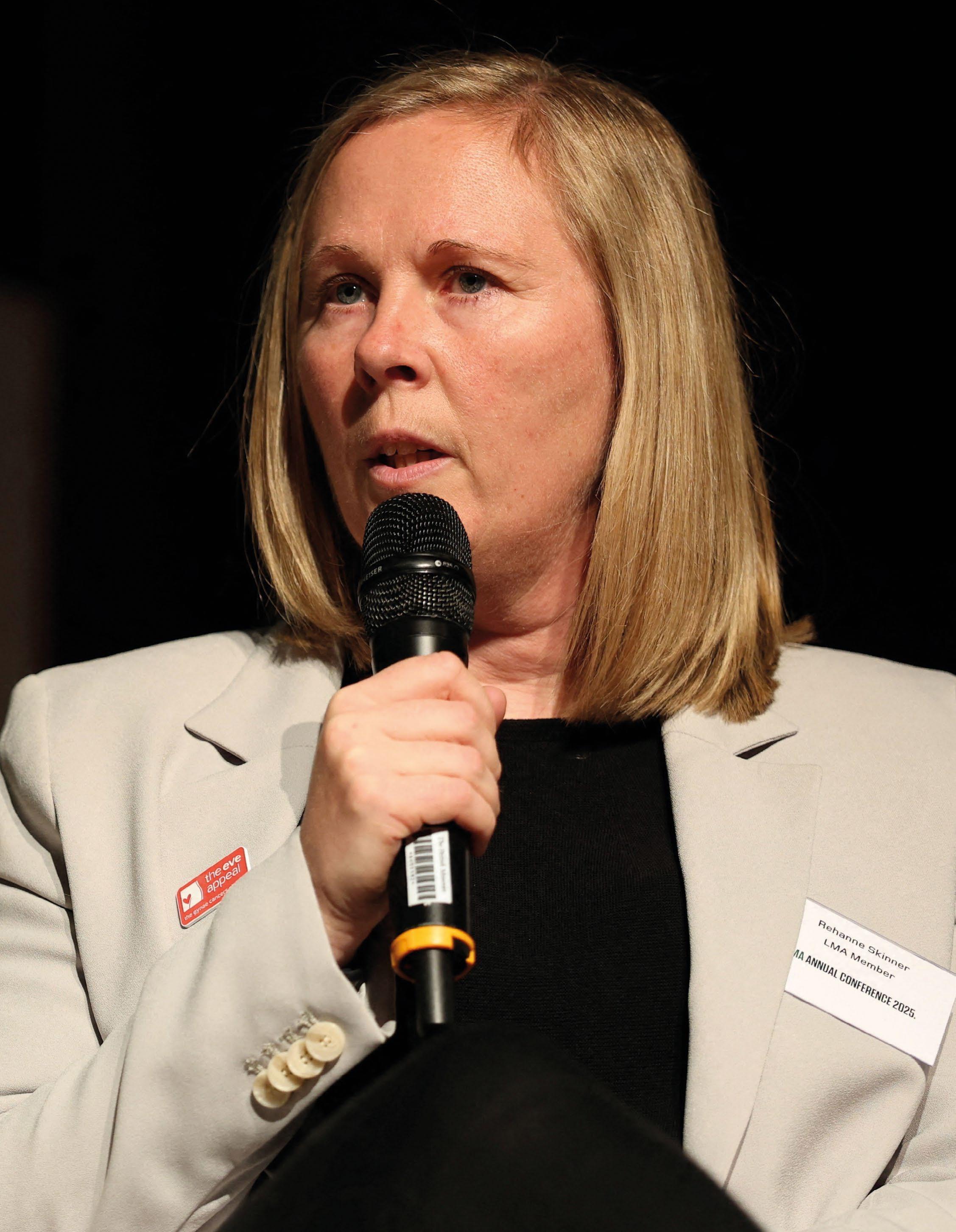
Rehanne Skinner
Cody Royle
Dr James Hewitt
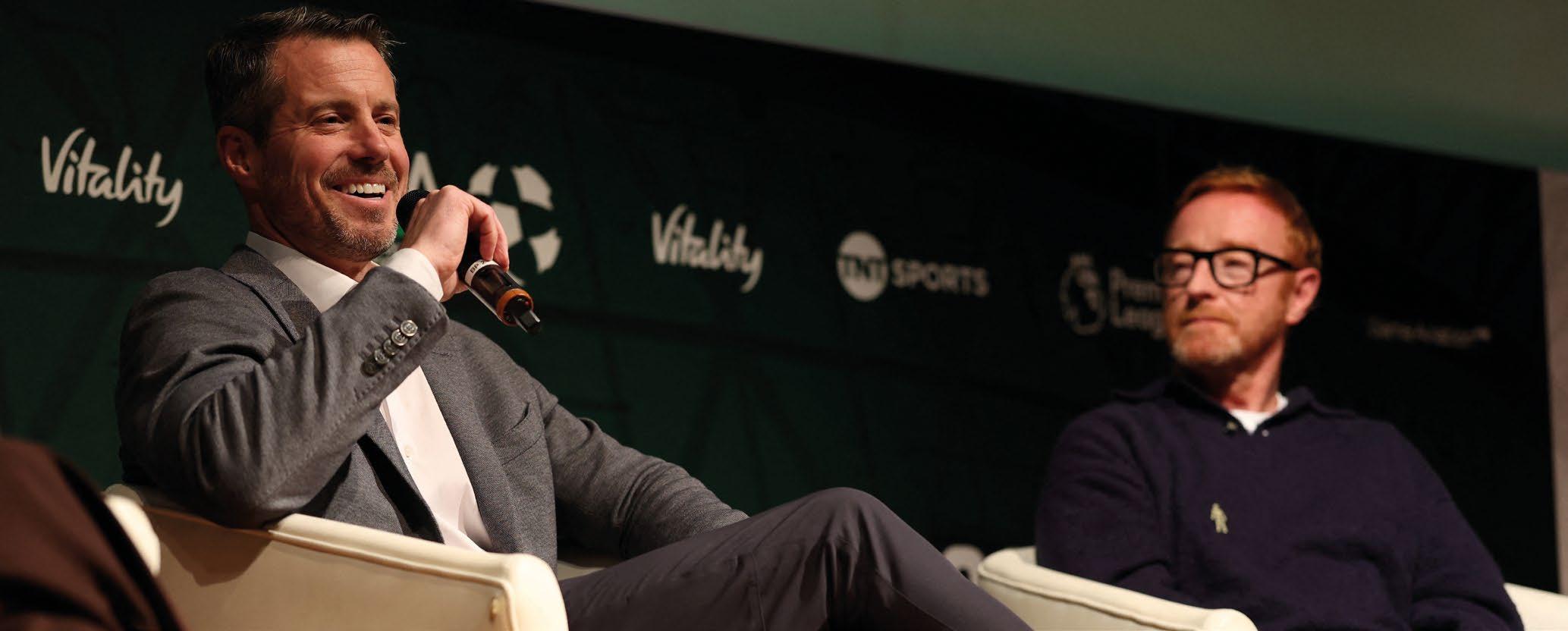
Billy Hogan and Ben Ryan
SCAN THE QR CODE TO VIEW THE LMA ANNUAL CONFERENCE 2025 FILM.
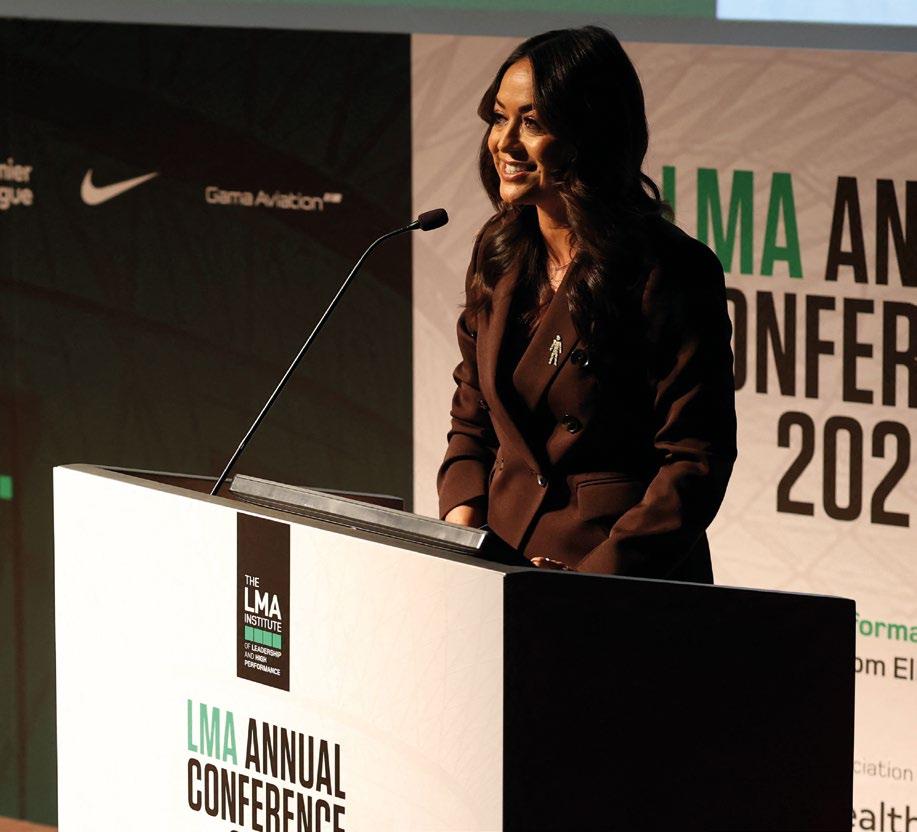
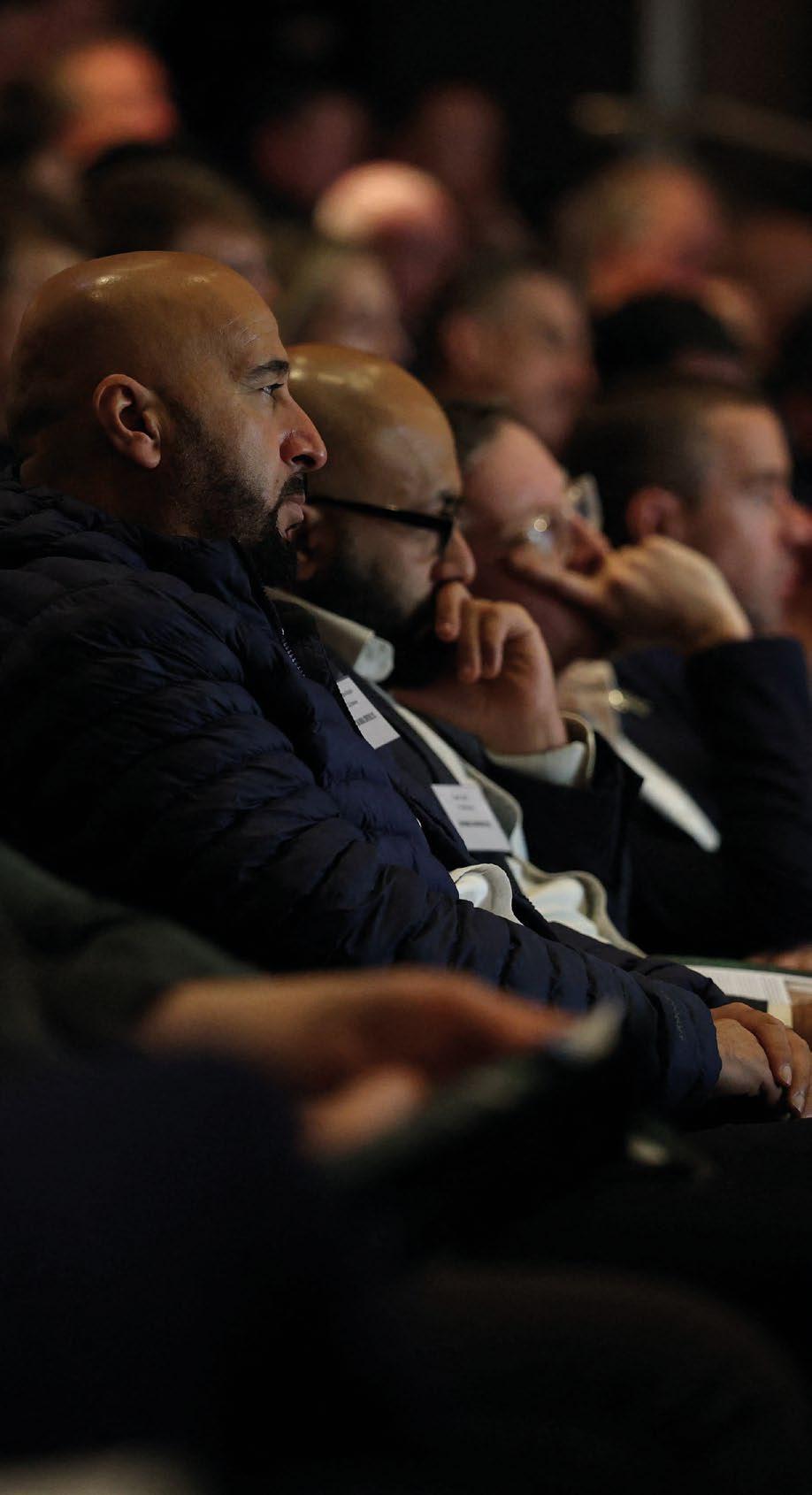
The LMA held its Annual Conference, in association with HCA Healthcare UK, at London’s British Museum in November.
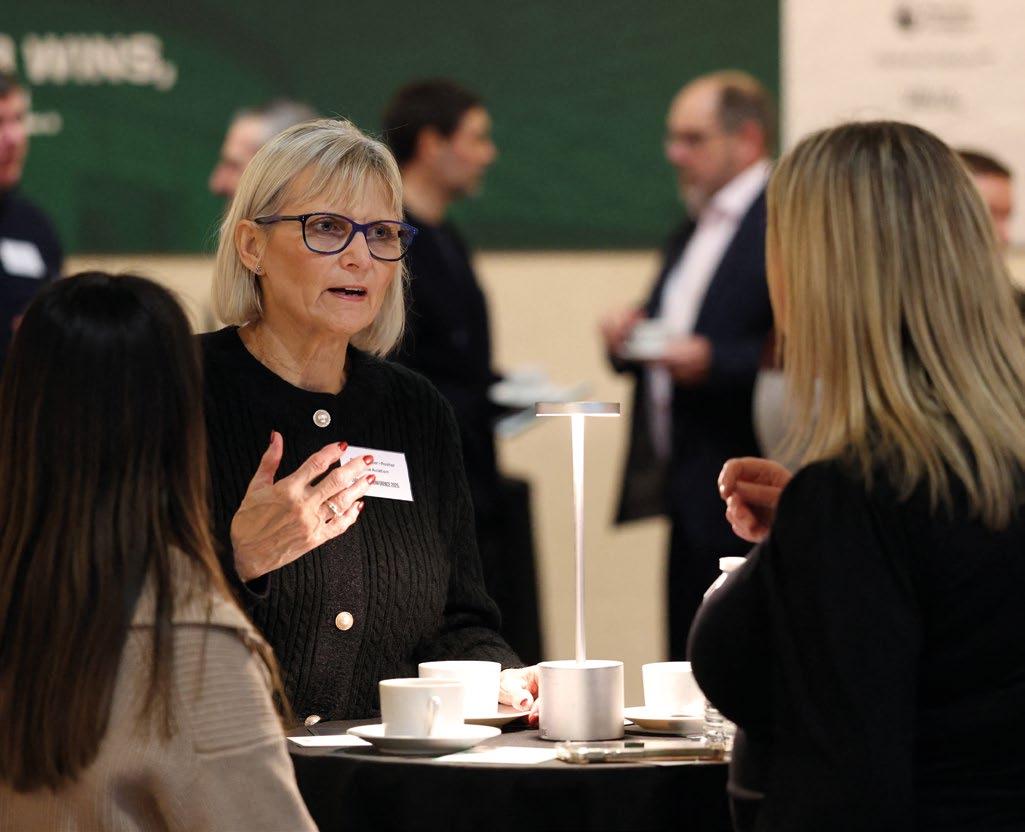
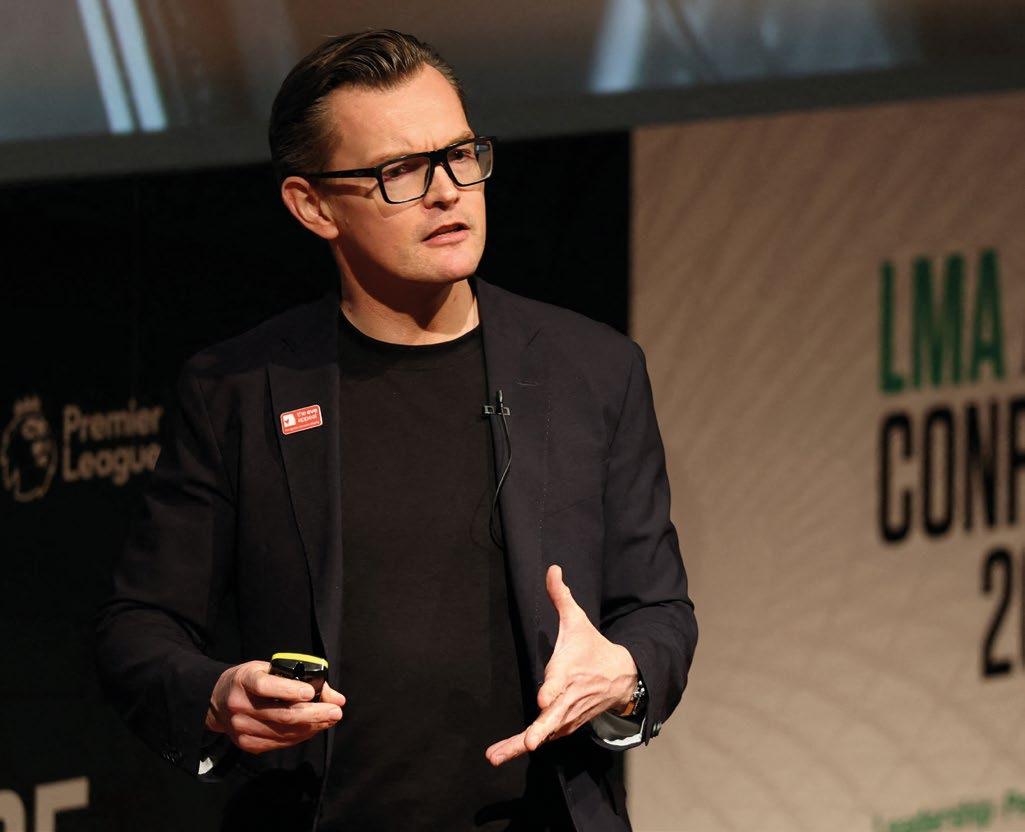
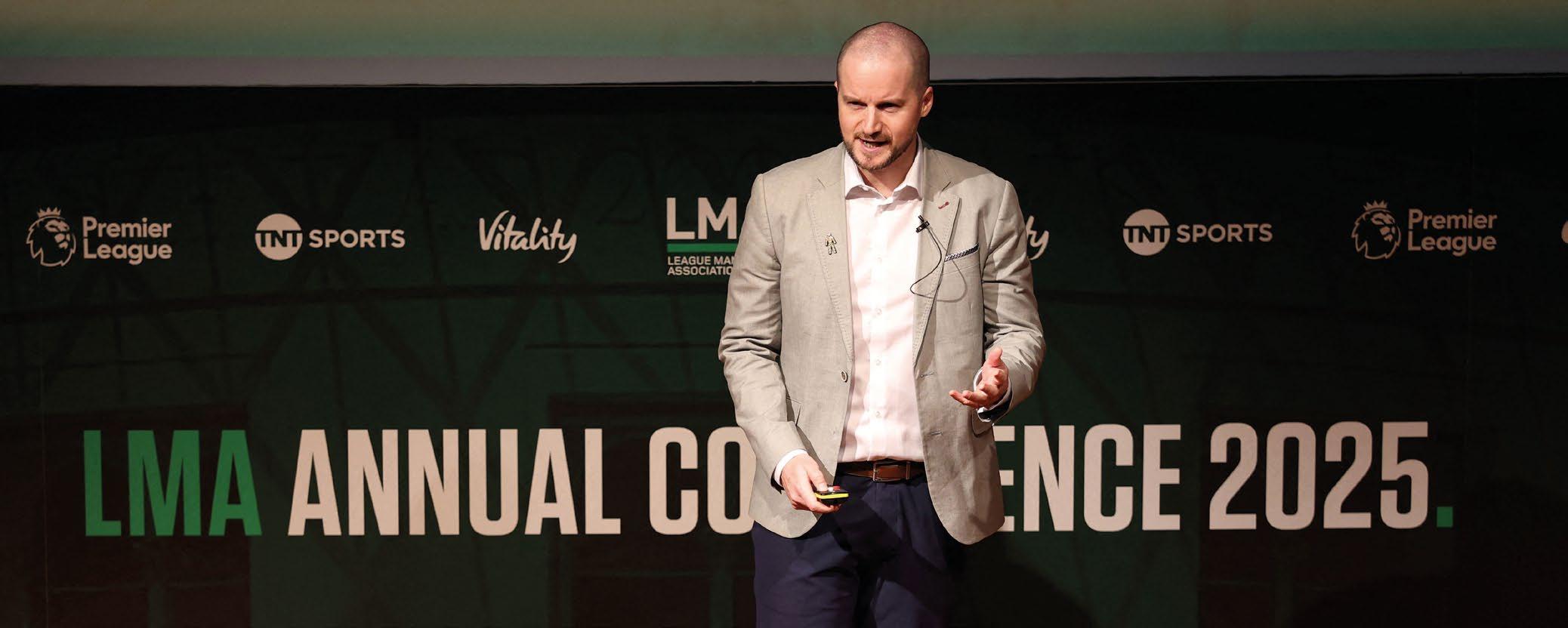
Members from across the LMA and LCA, Commercial Partners, and stakeholders enjoyed a day of thought-provoking and educational expert insight, centred on wellbeing, performance and leadership.
Many thanks to our Event Partners, including HCA Healthcare UK, the Premier League, Gama Aviation, Vitality, Nike and TNT Sports, for their ongoing commitment, to the guest speakers, the British Museum, and to TNT Sports presenter Jules Breach for hosting the event.
HOST.
Jules Breach
TNT Sports Broadcast Journalist PANEL.
Billy Hogan CEO at Liverpool Football Club
Ben Ryan Performance Director at Brentford Football Club
Rehanne Skinner LMA Committee Member
SPEAKERS.
Dr James Hewitt Human Performance Scientist
Professor Alex Hill Co-Founder and Dir., The Centre for High Performance
Dr Kathryn Oakland MD, MRCS, EMML
HCA UK’s Medical Director
Samuel Okafor Chief Executive Officer at Kick It Out
Cody Royle Coach of Head Coaches
Jules Breach
PROF ALEX HILL KEY TAKEAWAYS
FUTUREPROOF YOUR ORGANISATION.
Speaking at the LMA Annual Conference, Prof Alex Hill, co-founder and Director of the Centre for High Performance, shared how to develop a sustainable high-performance culture. Here are our highlights.
Photography: Reuters // Action Images
We found that organisations at the top of their game are all very similar in terms of their mindset and approach.
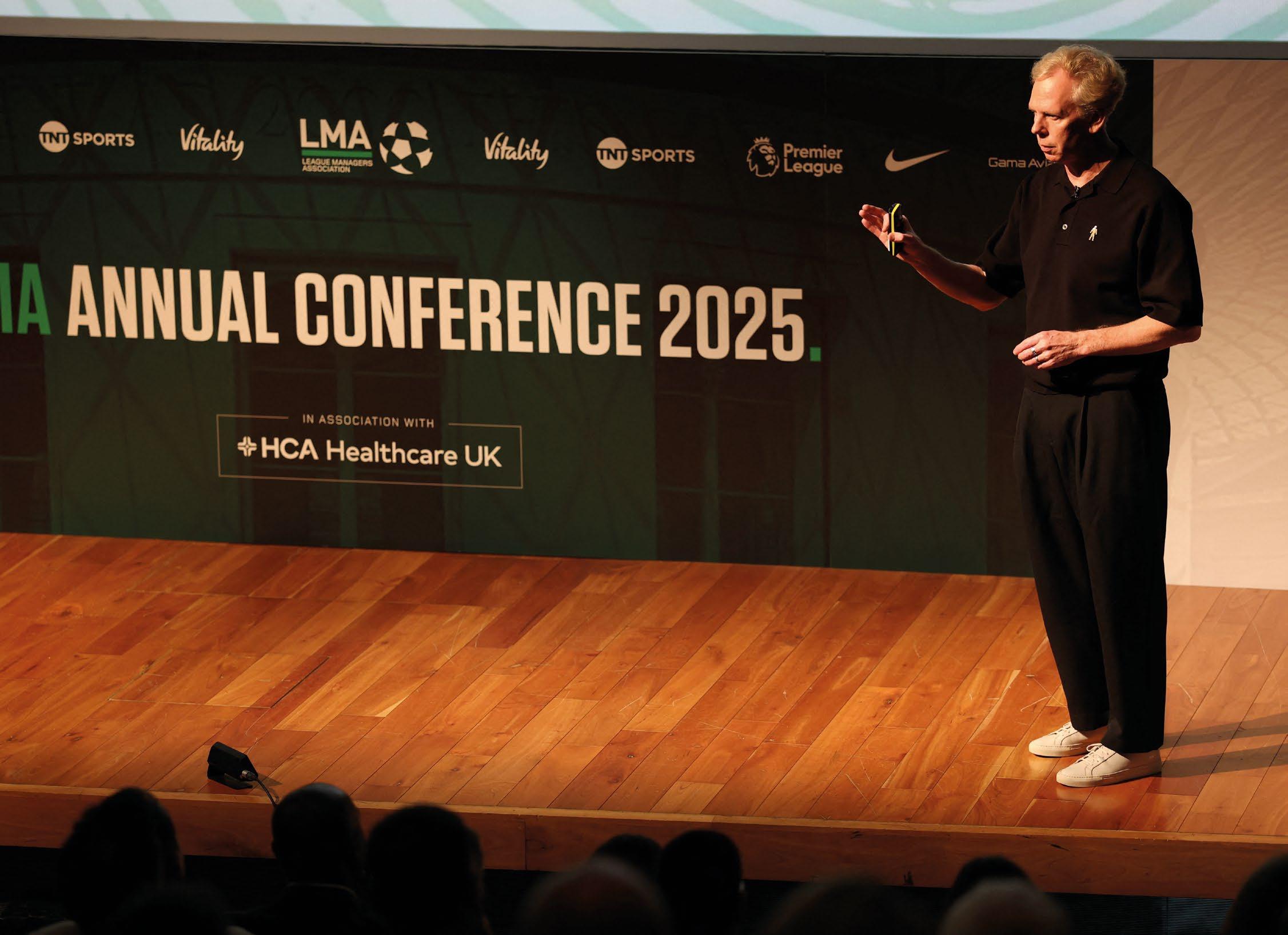
About Prof Alex Hill
Professor Alex Hill is the co-founder and Director of The Centre for High Performance. Over the last 20 years, he has studied and engaged with dozens of highperforming organisations, learning the lessons that can help others change the world.
GO FROM
CULT TO CULTURE.
Too many of our teams are effectively cults, where if one or two individuals go, the whole thing falls apart. What, then, does it take to build something where it doesn’t matter if people come and go, where the knowledge, wisdom and ideas are fundamentally embedded into your world. Over a 13-year period, we studied the approaches of high-performance organisations across industries to better understand what it takes to be successful in the long term, i.e. for 100 years or more.
HIGH-PERFORMING ORGANISATIONS HAVE MUCH IN COMMON.
We found that organisations at the top of their game are all very similar in terms of their mindset and approach. The way fights are debriefed in British boxing, for example, is identical to how they unpick a student’s work at the Royal College of Arts. All of these high-performance organisations are essentially wrestling with the same questions, even if some manage to find better answers than others. It doesn’t
really matter what field you’re in, high performance is high performance, and that means there’s a real opportunity to learn from people outside of your immediate world.
SHARING IS A STRENGTH.
It tends to lead to innovation and brings more money and talent into your world. Medical research is the perfect example. The best highperforming medical research centres share everything they find, and more money and talent comes to them, not less. After all, if you’re publishing really fascinating stuff, everyone’s curious about what you’re doing.
BUSINESS THINKING
DOESN’T ALWAYS APPLY. The thinking around leadership and management tends to come from business, but while that can provide great insight into how to achieve success in the short term, it’s not terribly useful for long-term success. Businesses
In great organisations you’ll always find three or four generations working alongside each other.
in the UK and US survive on average for only 15 years; they extract as much wealth as possible before moving onto the next thing. However football clubs are a fundamental part of their communities, so it’s not just about winning or making a big profit this year; you have to think far more long term.
GET INTERGENERATIONAL.
There will be people in your organisation who are desperately trying to hold onto the past and to protect what has brought success to date, while others, normally the younger generations, are trying to pull the organisation into the future. While it’s the younger team members who often bring in wins by taking risks and doing the unexpected, you need the longstanding members of the team, the stewards, to guide them. In great organisations you’ll always find three or four generations working alongside each other.
HIGH-PERFORMING ORGANISATIONS ENABLE ACCIDENTS.
They put people together who are most different, not most similar. They design their environment so that people have to walk around the building to get what they need, and often have only one entrance point, so that people bump into each other by accident. Their people eat and hang out with each other for at least an hour every day. In US fire service stations where they put in vending machines, performance fell immediately, because people were getting pre-made sandwiches rather than cooking and eating together as they did previously.
EVERY GREAT ORGANISATION IS WORRIED.
They think things are rubbish or not as good as they once were. That nervousness needs to be managed, but at the same time it’s really good, because it’s when you think you’re good that you’re really in trouble. It’s good to be constantly searching, tweaking and trying to change things.
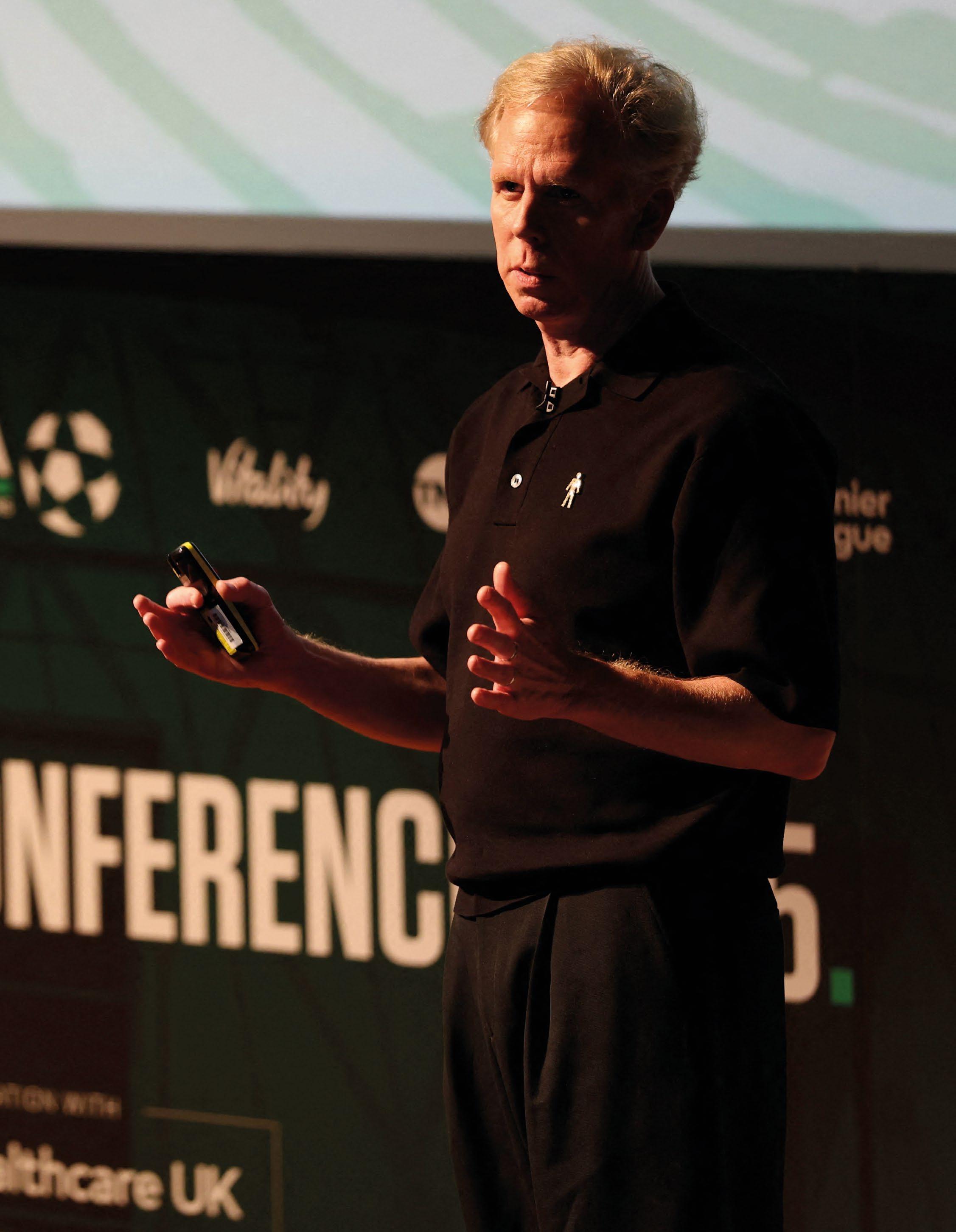
DR KATHRYN OAKLAND
CANCER: TRUTH AND HOPE.
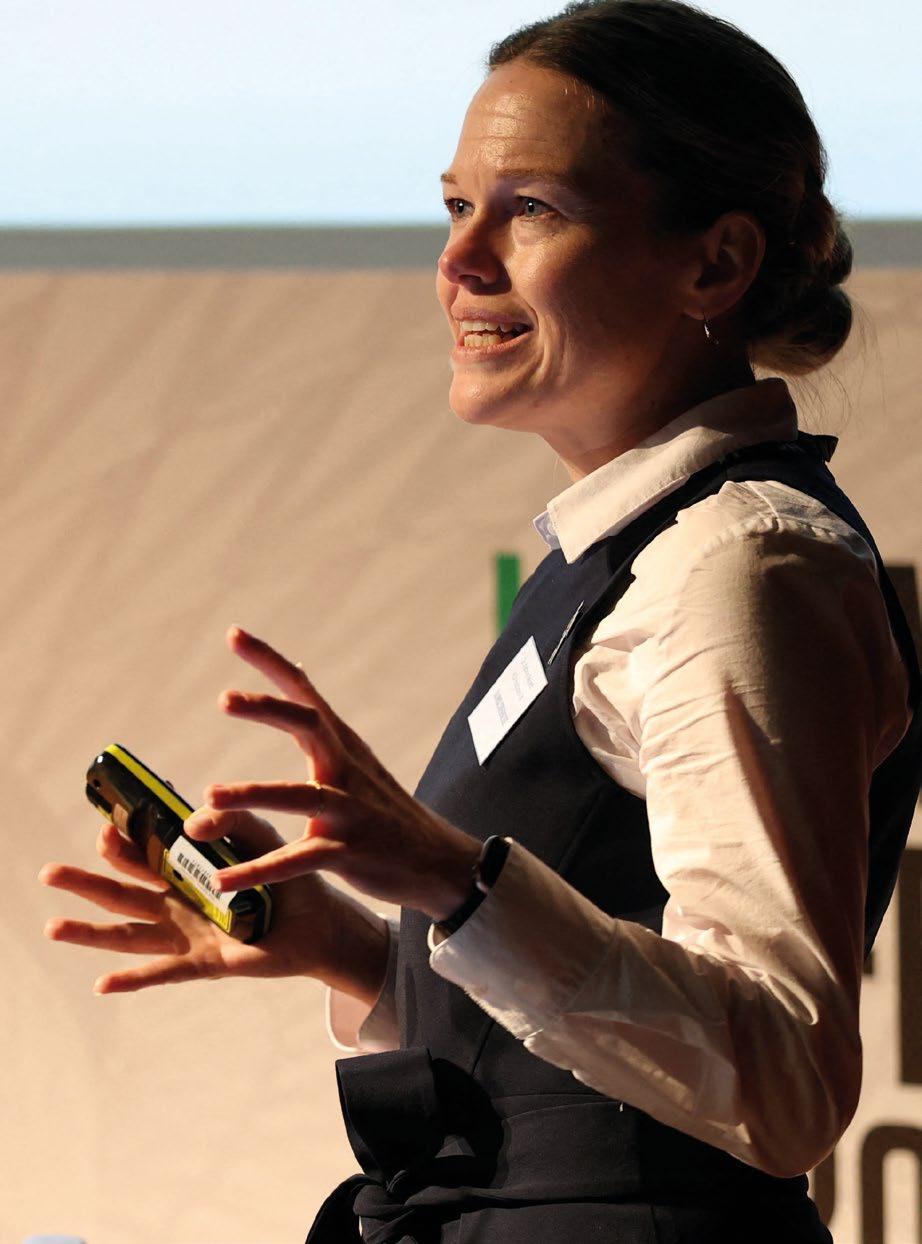
At the LMA Annual Conference, Dr Kathryn Oakland MD, MRCs, EMML, Medical Director at HCA Healthcare, spoke about the scale and significance of cancer across the UK, and what this means for leaders and their teams.
Words: Alice Hoey
Photography: Reuters // Action Images
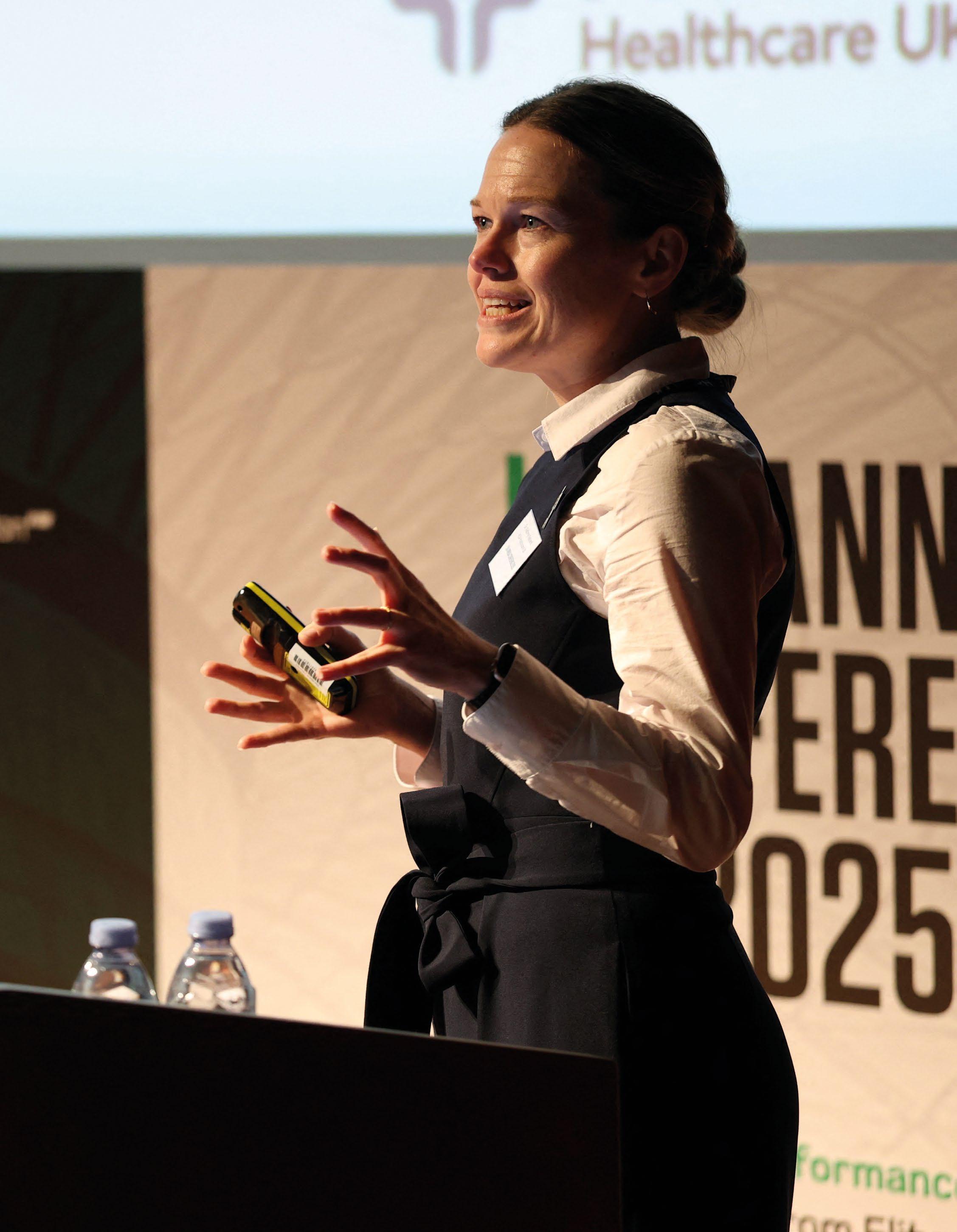
“While cancer is predominantly a disease of older people, over half of people currently under the age of 65 will receive a cancer diagnosis at some point in their lifetime.” It was with this premise that Dr Kathryn Oakland opened her speech to delegates at the LMA Annual Conference in November, adding that diagnoses among young people are on the rise.
It means there’s a fair chance that even if we are never diagnosed with cancer ourselves, we will at some stage have a loved one or a colleague who is. It’s important, therefore, that we think about how we might deal with that as leaders, says Dr Oakland. How might we communicate with them, support them and understand their needs?
“For example, high-performing teams have a shared collective goal, but what happens if a critical person in your team suddenly has a different goal?” she asks. “High-performing teams have a culture of psychological safety and authenticity, but how does someone bring their true self to work if they’re also dealing with the physical and psychological aspects of cancer? They may question whether they want to share that with you and what it might do to the way that you treat them.”
It’s also useful to equip ourselves with an understanding of the wider healthcare landscape when it comes to cancer because, as Dr Oakland points out, cancer treatment today and in the coming years might not be what you expect. “When we think about a cancer patient, we imagine a frail, ill-looking individual hooked up to a drip. Possibly they’ve lost their hair,” she says. “The good news is that for many of our cancer patients, that is simply not their reality anymore.”
NEW PROMISE
While the pandemic was tough for the UK, Dr Oakland says it also enabled innovation and technology to advance at an unprecedented scale and speed. “Someone’s cancer journey may now look very different to that of somebody who experienced the same cancer even three years ago,” she says. “The diagnostics used to detect cancers early on are now less invasive, and treatments are more precise and less debilitating.”
Through the NHS, we have access to four good screening programmes (bowel, breast, cervical and lung), but Dr Oakland says there has also been a lot of research looking at single tests that can identify multiple cancers.
“All cancers have abnormal DNA and some release that
into your bloodstream,” she says. “The Grail Galleri test is a blood test that can detect this, identifying around 20 cancers. This is currently undergoing a massive study, the results of which will be out in the spring, and it has the potential to transform the way we approach screening for cancers where there is no alternative test.”
What, then, does treatment look like in the age of cancer innovation? According to Dr Oakland, one of the reasons cancer treatment was so challenging and devastating in the past was because chemotherapy was aimed at targeting any cell that divided rapidly. “While cancer cells do this, so do hair follicles, the lining of your mouth and your skin, which is why the side effects are so terrible,” she says. “Now, however, we have targeted treatments, which only attack abnormalities found in tumour cells, reducing the crossfire to normal cells. We can also tailor the treatments not only to a certain type of cancer, but to the genetic abnormalities found in an individual’s cancer, making it really precise.”
Meanwhile, there are vaccines to protect against infections that cause cancer, which can even be used to treat it. “We take a sample of somebody’s cancer, send it to the lab, create a vaccine to that cancer and give
The diagnostics used to detect cancers early on are now less invasive, and treatments are more precise and less debilitating.
it back to the patient,” explains Oakland. “That vaccine means that the immune system can spot if the cancer is recurring and kill it.”
Some treatments, meanwhile, avoid medical intervention entirely. Histotripsy, for example, is a new technology where an ultrasound beam is fired at cancer cells and gas bubbles destroy them. There is also now chemotherapy in tablet form, which is less invasive and can be monitored by patients using an app on their phone.
LASTING CHALLENGES
Despite the advances, it is cautions Dr Oakland, still a serious business treating cancer, and there are various longer-term side effects that we should be aware of, especially if someone is returning to work following or during treatment. As well as cancer-related fatigue, there may be chemotherapy-induced peripheral neuropathy, where the chemotherapy has damaged the nerves to the hands, face or feet leading to numbness, pain and tingling.
impairment, which has a direct impact on people’s cognitive function and often it persists after treatment, particularly when people are thinking about coming back to work.”
She shared some of what we can do as individuals, leaders and managers to reduce our risk of cancer. “Given that two in every five cancers is preventable, it’s important to make sensible choices, while taking symptoms seriously,” she says. “Early detection can improve your chance of curative treatment and survival, while misinformation is its own health hazard. As people follow what we say, what we say has power, so the accuracy of what we say is really important.”
Lastly, there is screening, something Dr Oakland fully advocates. “If you have the opportunity to go to a screening programme, take it, because it could make the difference between identifying your cancer early and surviving, or not.”
About Dr Kathryn Oakland
“There’s evidence that cancer survivors and those in remission may have increased rates of heart attacks, particularly those who had heart and lung disease to begin with,” adds Dr Oakland. “There may also be chemotherapy-related cognitive
She closes her presentation with a message of hope. “Cancer isn’t inevitable, but if it does happen to you, your experience of it may well not be what you were expecting. Today, the diagnostic tools are more precise, the treatments are kinder, and survival more likely than ever before. You can live well with cancer.”
Dr Kathryn Oakland is Medical Director, Clinical Service Lines, at HCA Healthcare UK, with a special focus on cancer.
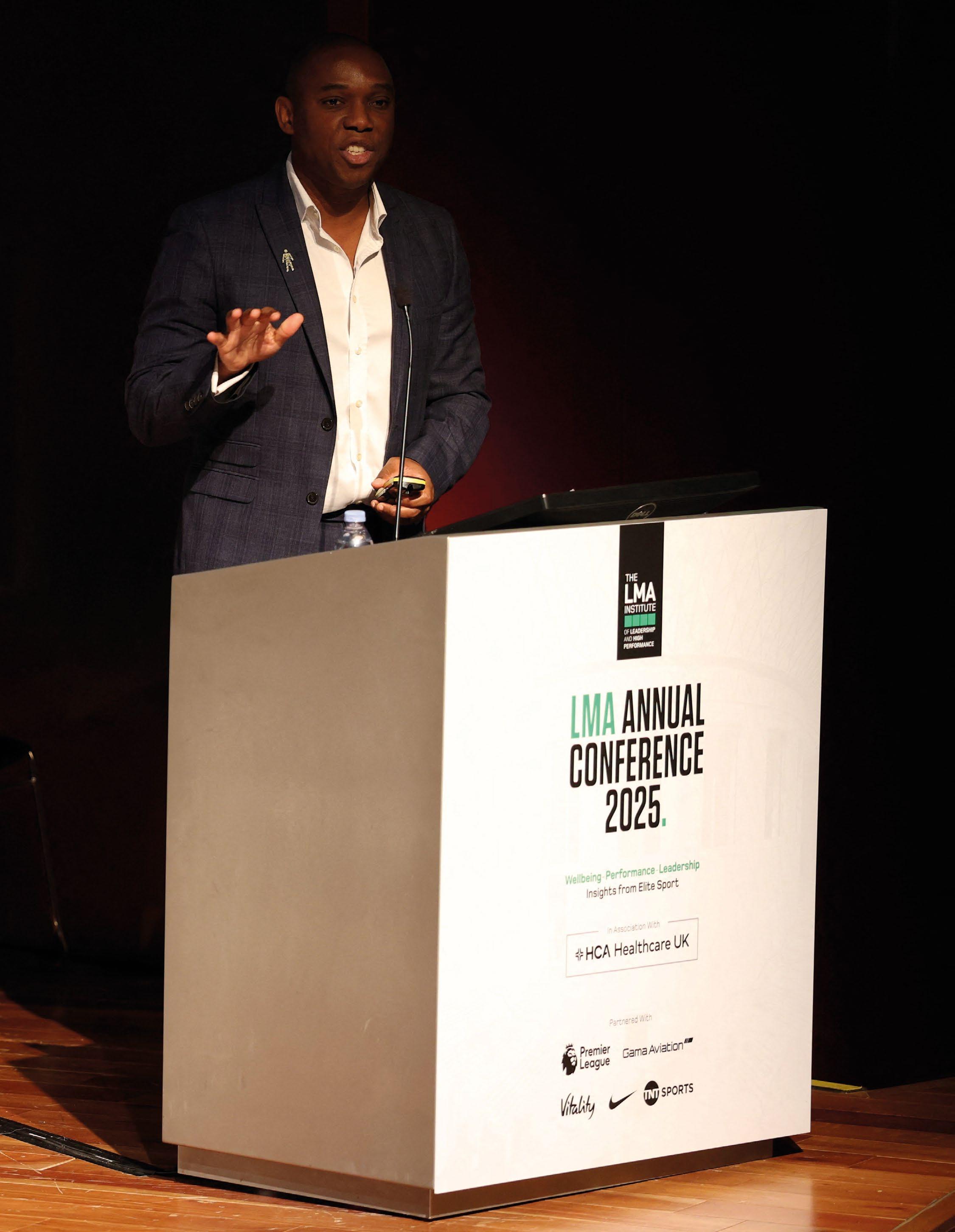
SAMUEL OKAFOR
SEVEN KEY LEADERSHIP TRAITS.
At the LMA Annual Conference, Kick it Out CEO Samuel Okafor outlined the leadership attributes that enable you to deliver on your mission.
Photography: Reuters // Action Images
01
PROVIDE A CLEAR VISION.
Our strategic goals are to create a game where everyone feels included, and where there are no barriers to representation on the pitch. We want to remove the challenges and obstacles that people face in obtaining executive, coaching and boardroom roles, and tackle discrimination, from grassroots to the professional game. Our vision and goals are our north stars, giving people something to align with, and providing clarity, meaning and motivation.
02
DEVELOP CULTURAL INTELLIGENCE.
Our work spans numerous communities, with people of different races, faiths, ages, sexual orientation, physical and mental abilities. If we’re going to connect with, and adapt to the needs of, those people, we need to develop cultural intelligence. We must learn how different cultures influence behaviours, values and social norms.
03
HAVE COURAGE TO ENACT CHANGE.
Change disrupts. It challenges routines, structures and assumptions, and surfaces fears. Every time we push the boundaries of what’s familiar, resistance follows, so at Kick it Out we know that delivering on our goals will require great courage. Courage is not the absence of fear, but the decision to act despite of it. Courageous leaders make bold decisions even when there is risk, uncertainty and discomfort. They challenge the status quo for the sake of progress, and stand up for what matters, even when it is unpopular and difficult.
05
LISTEN, EVEN WHEN IT’S UNCOMFORTABLE.
Good leaders listen to the data, because it tells you what’s happening, where the patterns are and where there are gaps. But then they go even further, listening to the lived experiences and challenges that people face on a day-to-day basis. Listening helps you to understand how your decisions are landing, where the need is, what obstacles people face and what inspires them most. Listening also grows trust and alignment, because people feel seen and heard, and that changes everything.
06
BE ADAPTABLE.
We live in a world that is constantly changing, and the solutions that worked yesterday won’t necessarily work tomorrow. Adaptable leaders don’t cling to the plans of the past. They evaluate what’s working and what isn’t, and are comfortable rethinking and reimagining. They also model that adaptability, giving everyone permission to embrace change rather than fear it.
07
UPHOLD HIGH STANDARDS.
Leadership is measured not only by what we say, but by what we do and what we tolerate. What leaders walk past becomes the new standard. If you walk past poor behaviours, inconsistencies or actions that contradict your values, then they become your new culture. The reverse is also true. If you uphold high standards consistently, visibly and fairly then you send a clear message about what you value and expect.
04
BALANCE COURAGE WITH HUMILITY.
Humility reminds us that leadership is not about having all the answers, or being the smartest person in the room. It’s about recognising the value and expertise that others bring, and the meaningful change that you can achieve together. Transformation is always done through the power of the collective. At Kick it Out, our goals are too ambitious, our challenge too complex and our mission too important for any single person or organisation to deliver alone.
About Samuel Okafor
Samuel Okafor had a successful career in the financial services industry, in particular advancing the diversity, equity and inclusion agenda at NatWest Group, before becoming CEO at Kick it Out. He also holds several board positions.
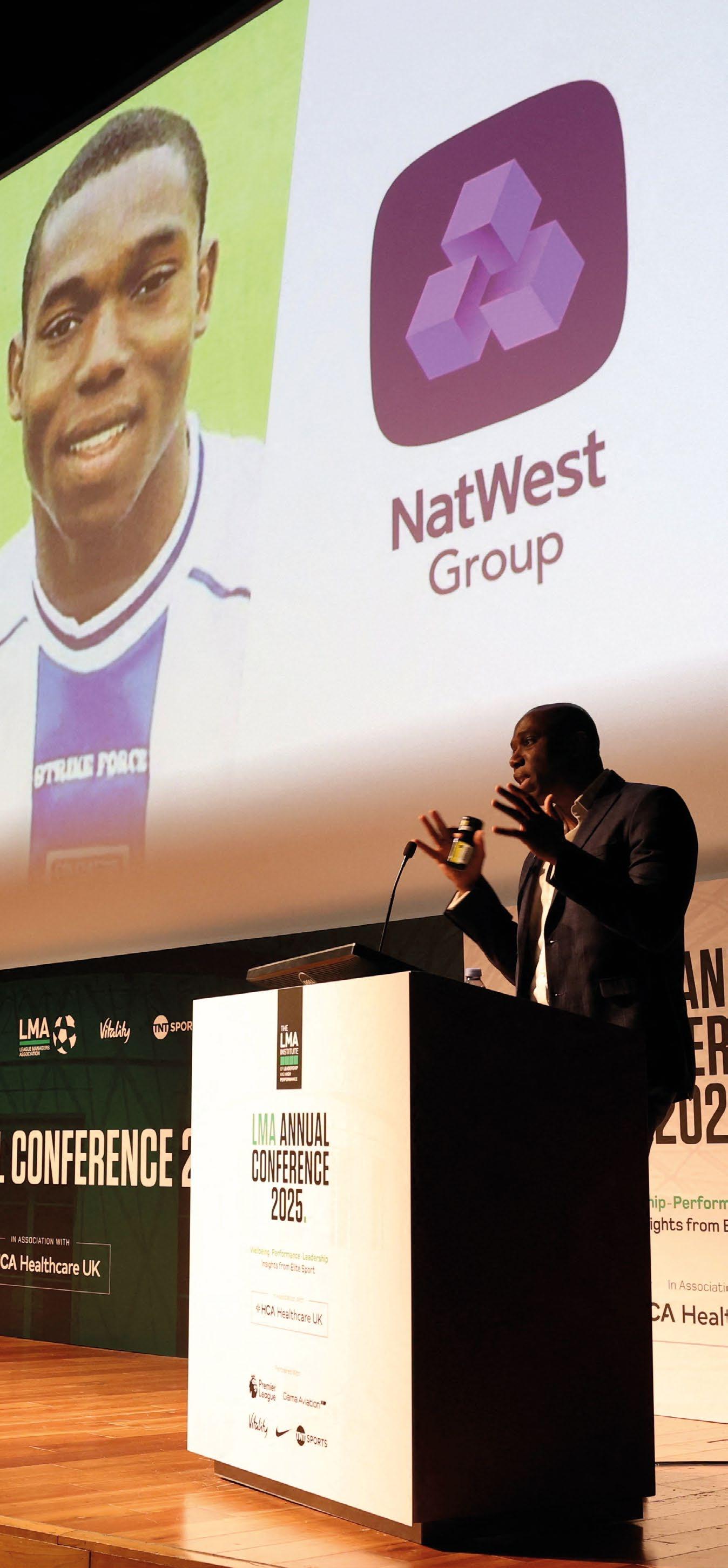

LMA NEWS.
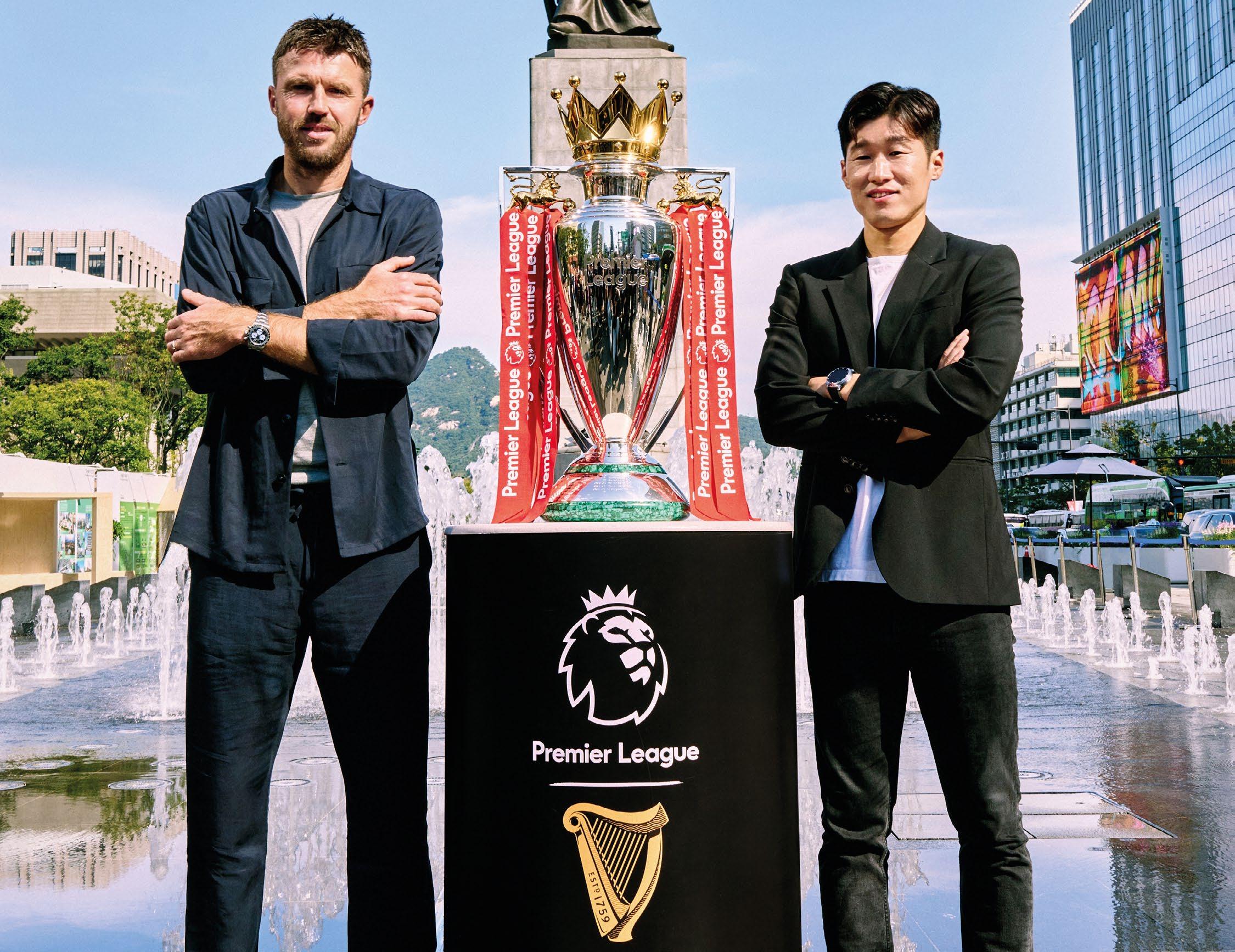
LMA EVENTS & CORPORATE ACTIVITY.
Michael Carrick in South Korea with Guinness
> MICHAEL CARRICK
The LMA was proud to provide Premier League Legend and LMA member Michael Carrick for three days in Seoul, South Korea, where he took part in video shoots, meet-and-greets, and photo opportunities. Carrick joined Ji-Sung Park to provide content for football channel Shoot For Love, and met with fans in locations such as Gwanghwamun Square, The Gukho building, and an Irish bar for a Premier League watch-along party.
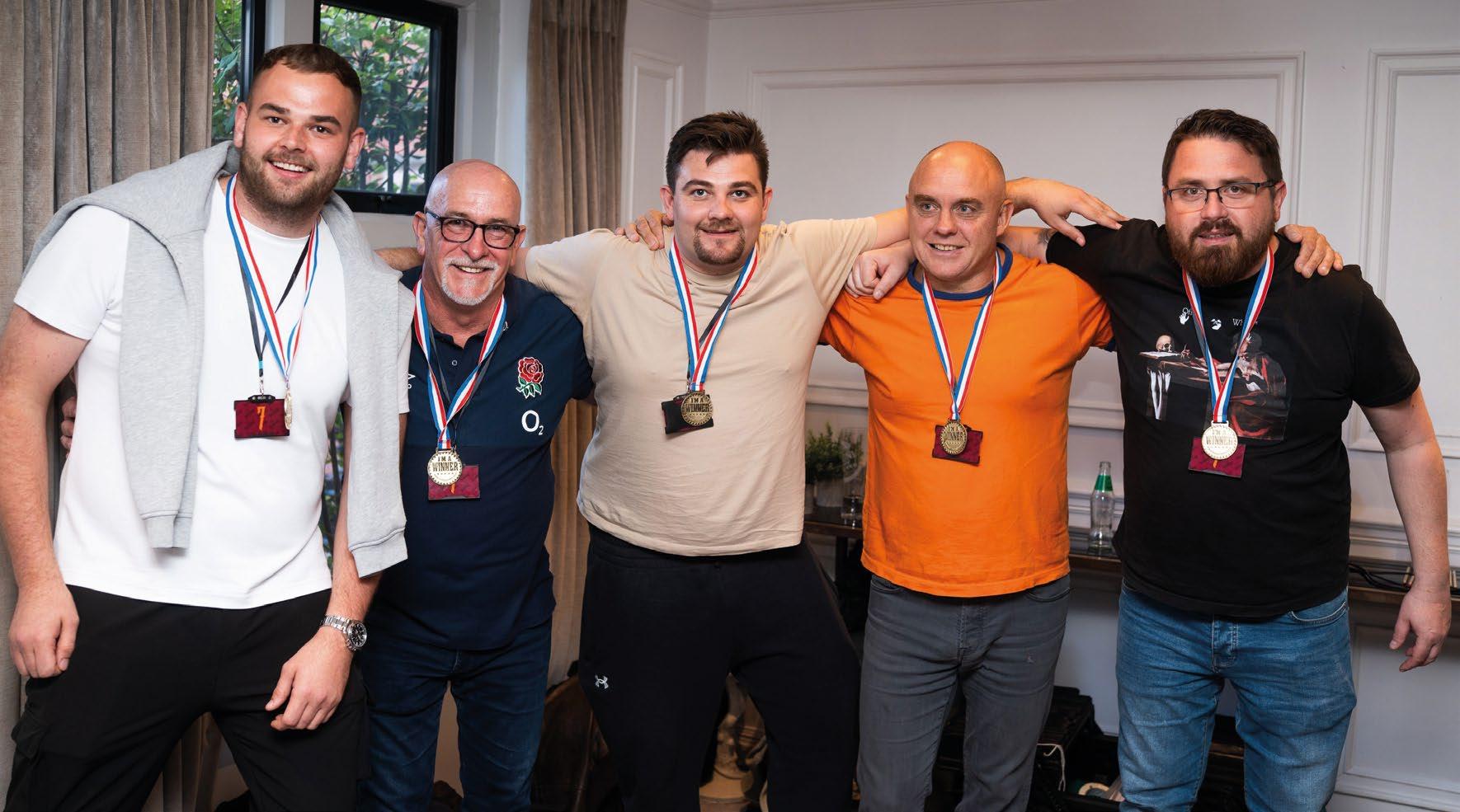


Anglian, Everest and Safestyle at Hoar Cross Hall
As part of the year-round incentive programme of Anglian Home Improvements, Everest Home Improvements and Safestyle, the LMA ran a team bonding day at partner hotel Hoar Cross Hall, hosted by KDM Events. The day included a Traitors style game, encouraging teamwork and leadership, dinner and presentations.
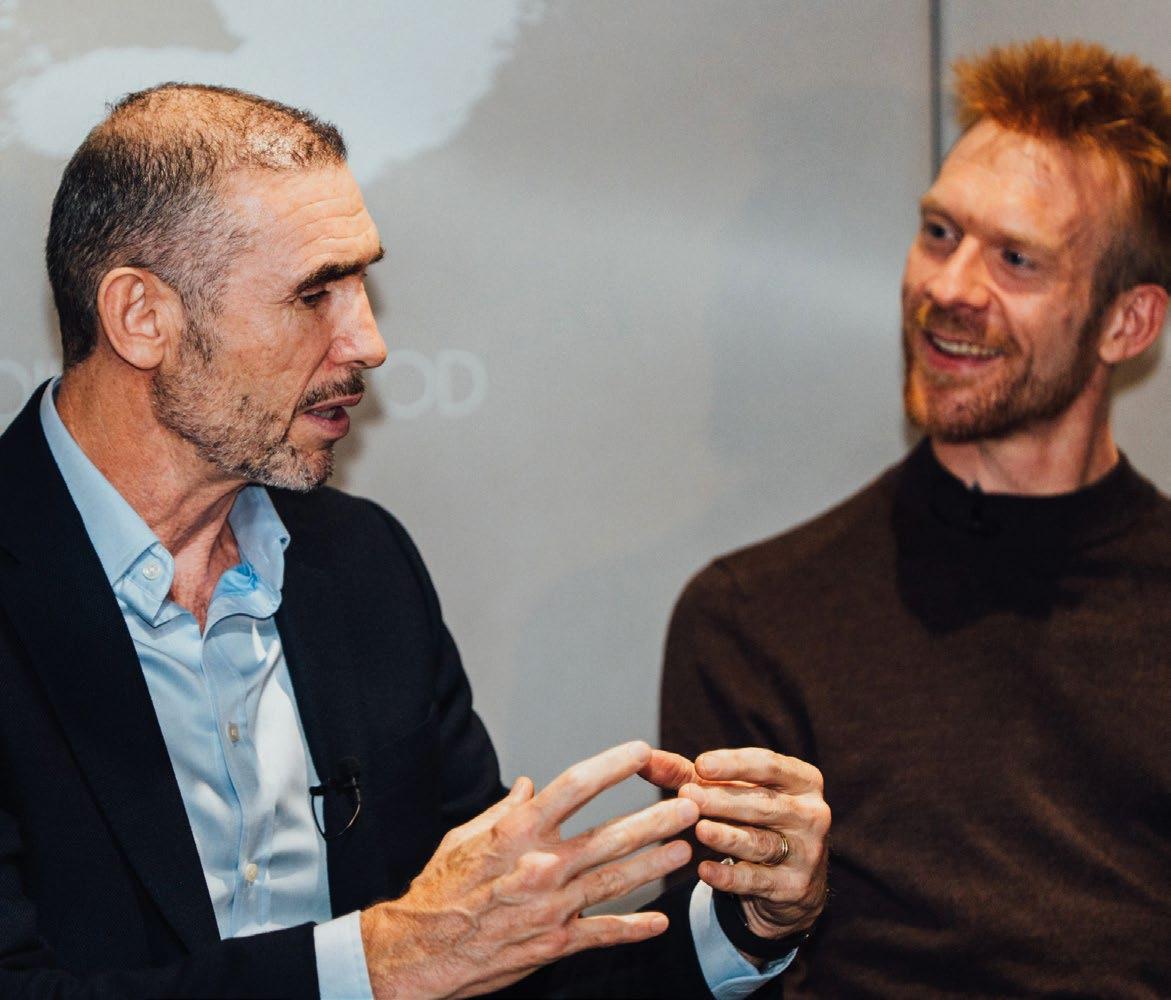
Indeed Masterclass at the Emirates Stadium
> MARTIN KEOWN
Hosted by Sky Sports presenter Hayley McQueen, leaders from multiple organisations attended an Indeed Masterclass by Simone Lewis, Founder and Director of Performance Focus, on individual, team and organisational development. There was also a panel discussion, including three-time Olympic champion Ed Clancy OBE, and former footballer and Premier League Invincible Martin Keown.
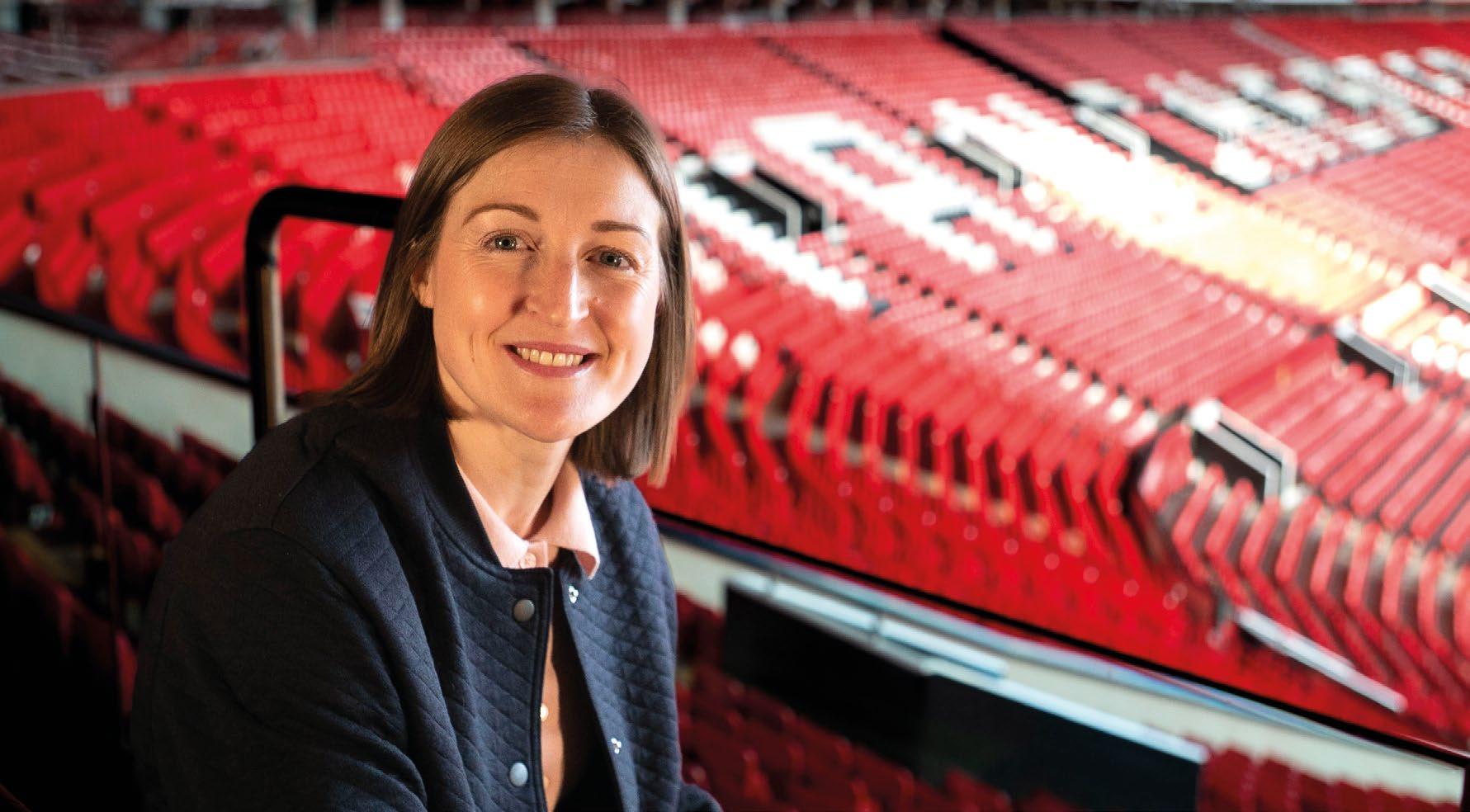
UCFB appearance with Ellen White MBE
> ELLEN WHITE
Former Lioness Ellen White MBE supported UCFB with an experience day for students, one of a number to be held at its campuses. White took part in a Q&A on her time as a footballer and her post-sport career.
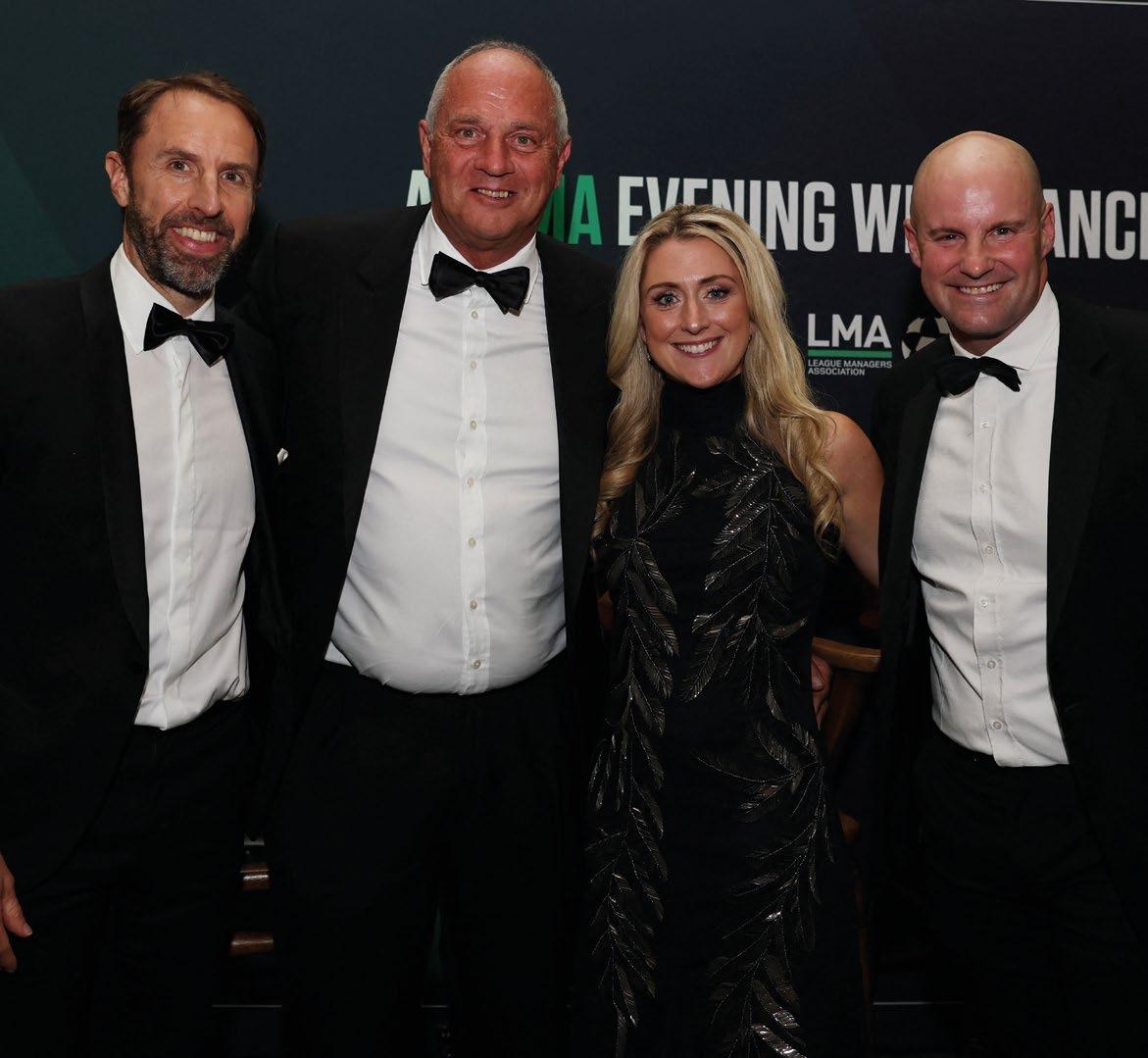
LMA and Cancer Research UK Dinner
> GARETH SOUTHGATE
The LMA was proud to organise and host a unique evening for Cancer Research UK at Lord’s Cricket Ground. Invited guests included LMA members and partners, alongside multiple stakeholders from professional sports. Sir Gareth Southgate OBE, Sir Andrew Strauss OBE, Dame Laura Kenny DBE, and Sir Steve Redgrave CBE DL were the guests of honour, taking part in a panel Q&A, hosted by Hayley McQueen.
Anglian Home Improvements at The Stafford
Anglian Home Improvements held an event in the famous Wine Cellar of The Stafford hotel as part of their incentive programme. 30 of the highest performers across Anglian, Everest and Safestyle came together for an evening of wine, history and fine dining. Through the LMA’s relationship with The Stafford, guests were treated to a hosted event, with access to the secret bunker next to the wine cellar, a drinks reception, and dinner around the long table.
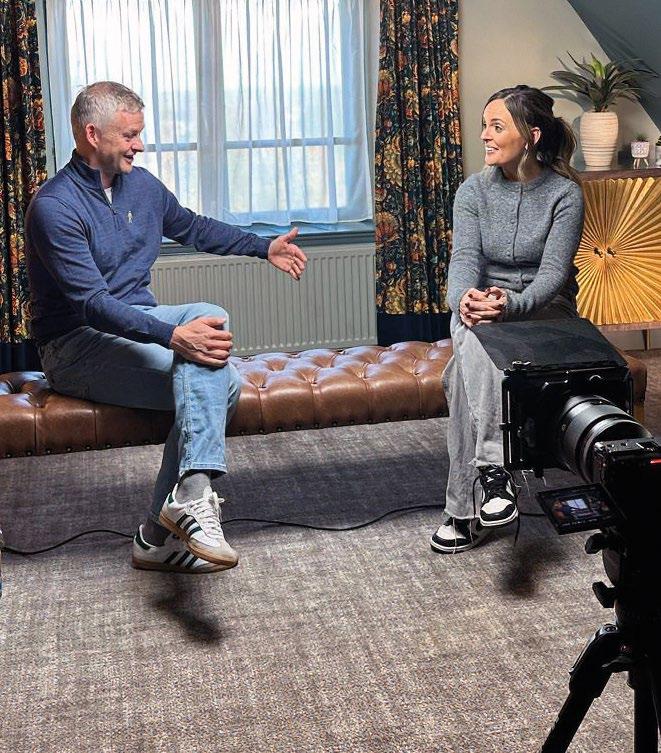
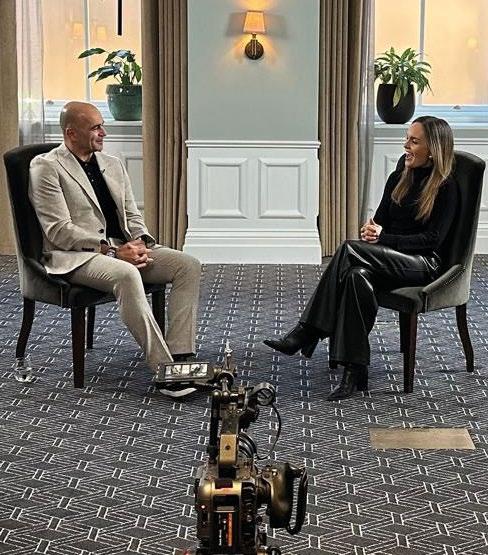
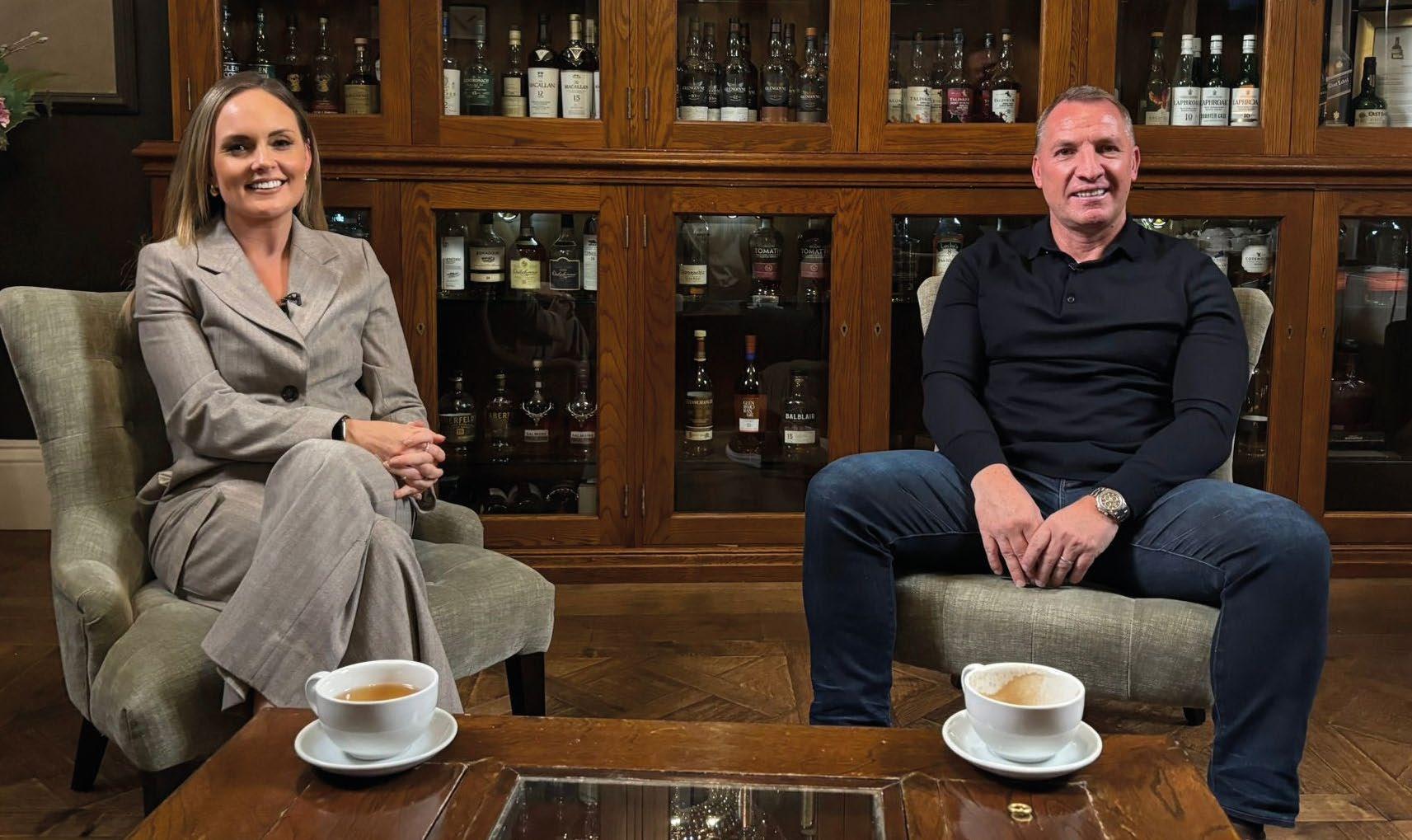
LMA members with BBC Sport and Kelly Somers > BRENDAN RODGERS // ROBERTO MARTÍNEZ // OLE GUNNAR SOLSKJAER
LMA members Brendan Rodgers, Roberto Martínez and Ole Gunnar Solskjaer took part in interviews with Kelly Somers for LMA Broadcast Partner BBC Sport.
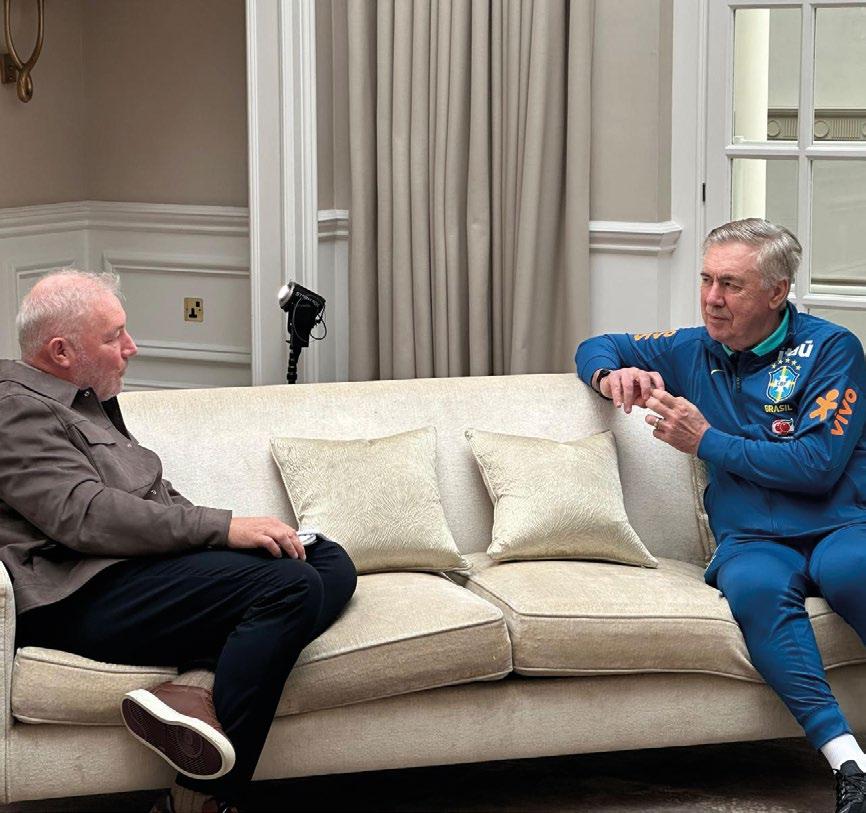
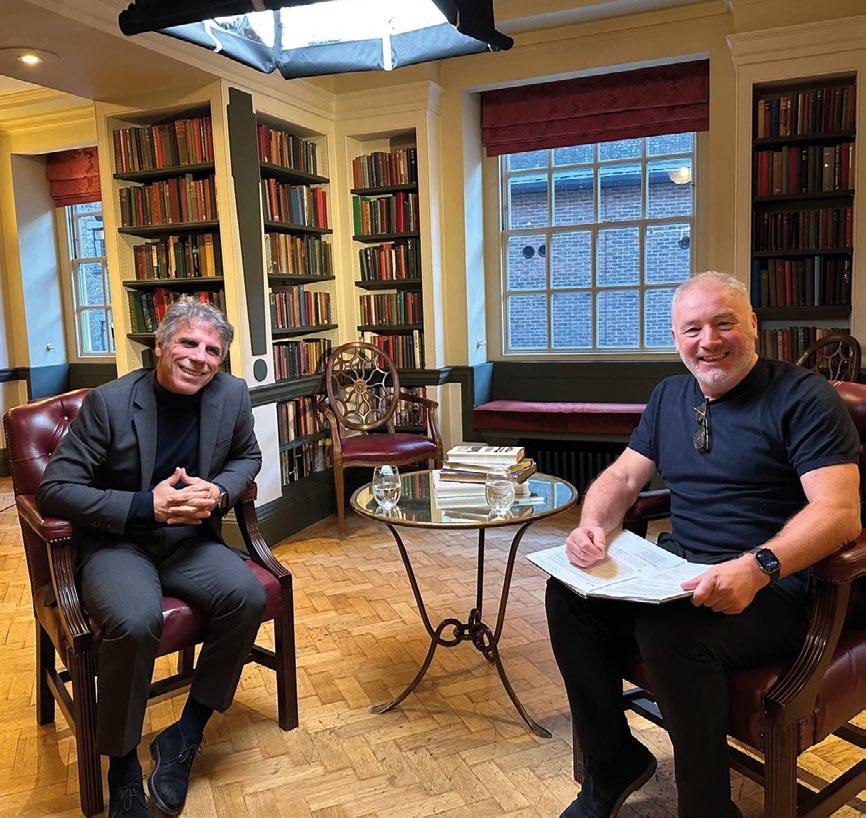
LMA members with TNT Sports and Ally McCoist
> CARLO ANCELOTTI // GIANFRANCO ZOLA
LMA members Carlo Ancelotti and Gianfranco Zola took part in leadership interviews with Ally McCoist for LMA
Broadcast Partner TNT Sports.
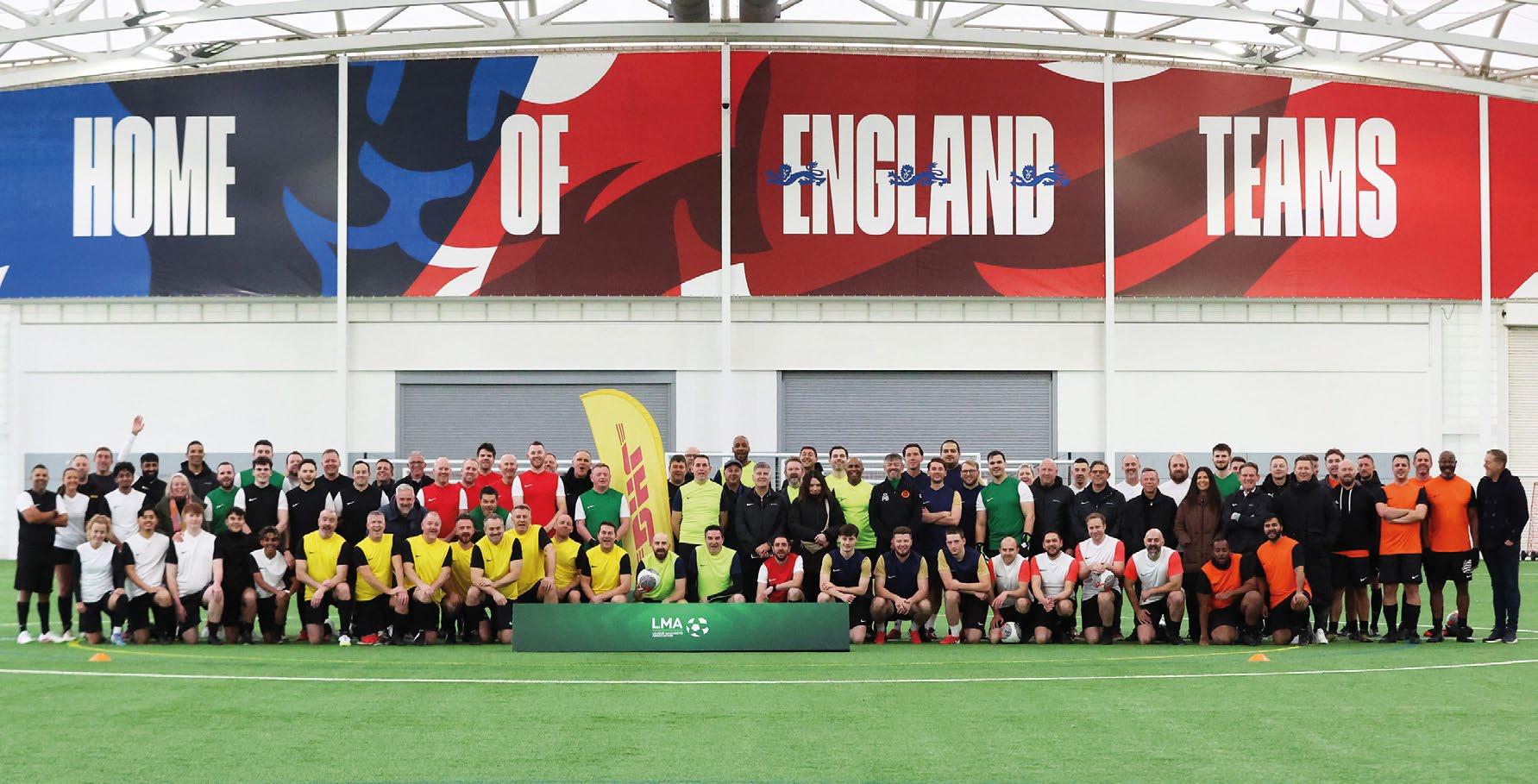
DHL St. George’s Park football tournament
> RACHEL YANKEY // DAVID JAMES // DAVID DUNN // BRIAN LAWS // ALAN STUBBS // PHIL BROWN // KEITH CURLE // GARRY MONK // PAUL DICKOV
The LMA was delighted to host DHL for its first ever event at St. George’s Park. After a pre-event evening Q&A, hosted by Rachel Yankey OBE, on women’s football, and a Champions League-style draw, the tournament kicked off. David James MBE, David Dunn, Brian Laws, Alan Stubbs, Phil Brown, Keith Curle, Garry Monk and Paul Dickov each managed a team and took part in a Q&A to round off the day.
LMA AND CANCER RESEARCH UK DINNER .
The LMA hosted a unique event for Cancer Research UK in October. The evening, at Lord’s Cricket Ground, welcomed LMA members and Partners, and multiple stakeholders from professional sports. Sir Gareth Southgate OBE, Sir Andrew Strauss OBE, Dame Laura Kenny DBE, and Sir Steve Redgrave CBE DL were the guests of honour, taking part in a panel Q&A, hosted by Hayley McQueen.
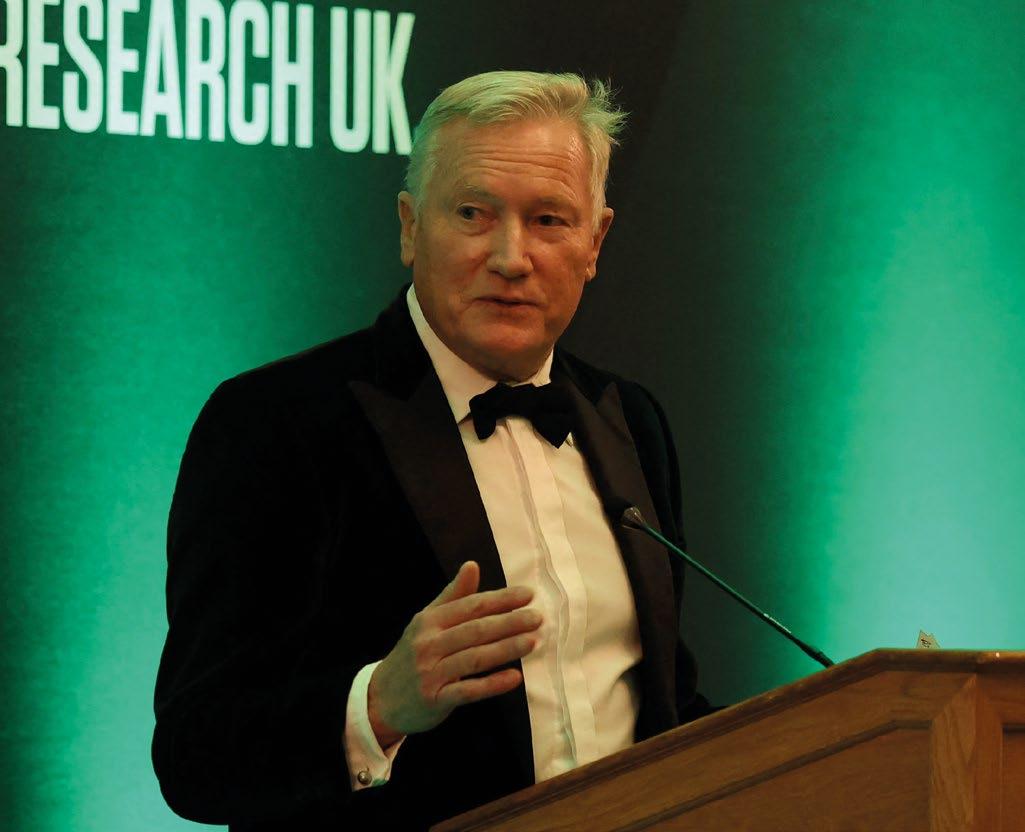
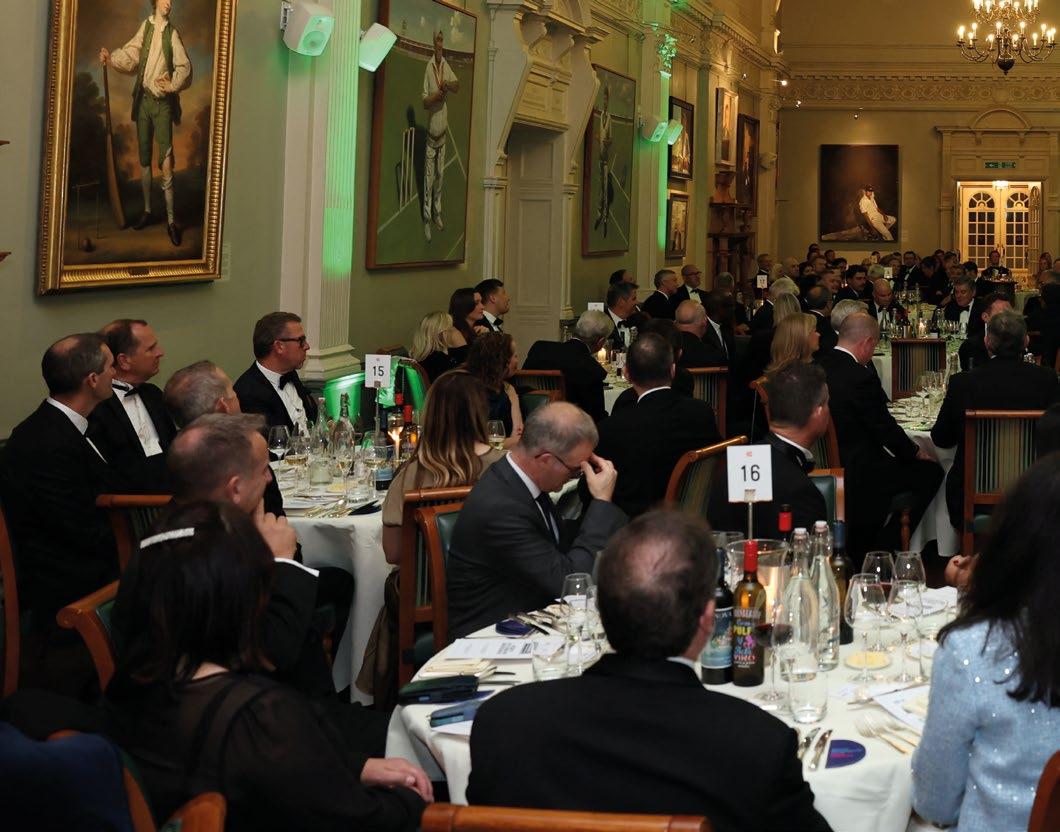
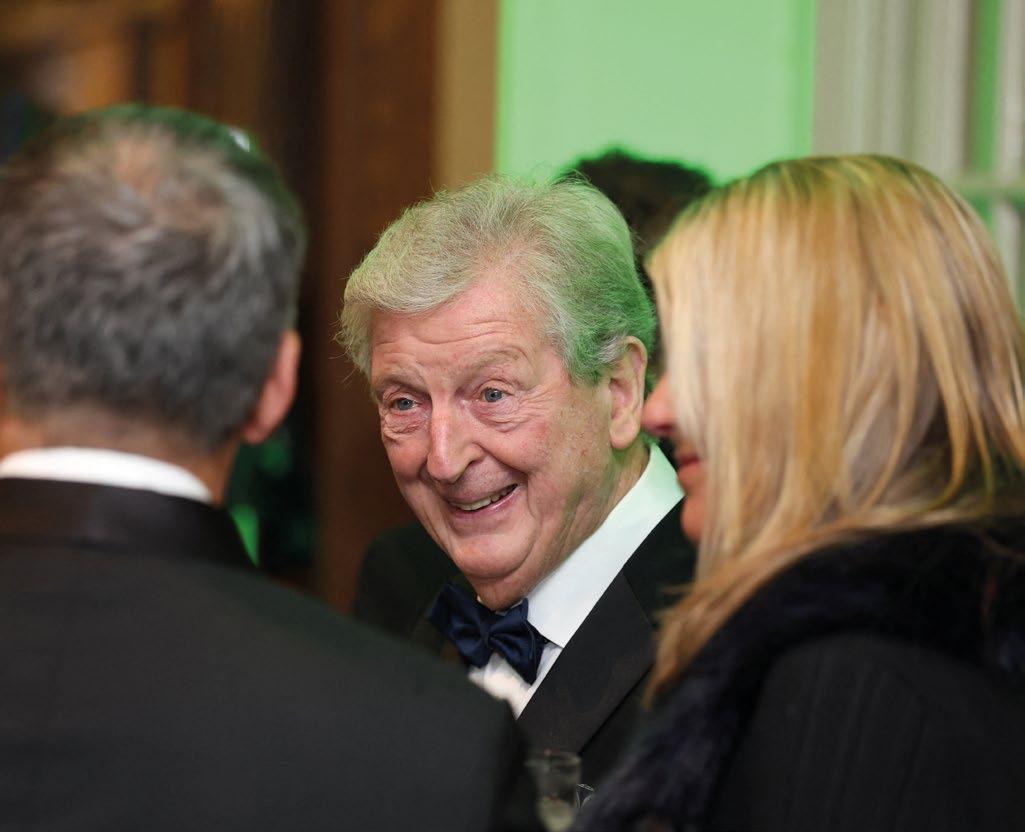
Roy Hodgson CBE
Richard Bevan OBE
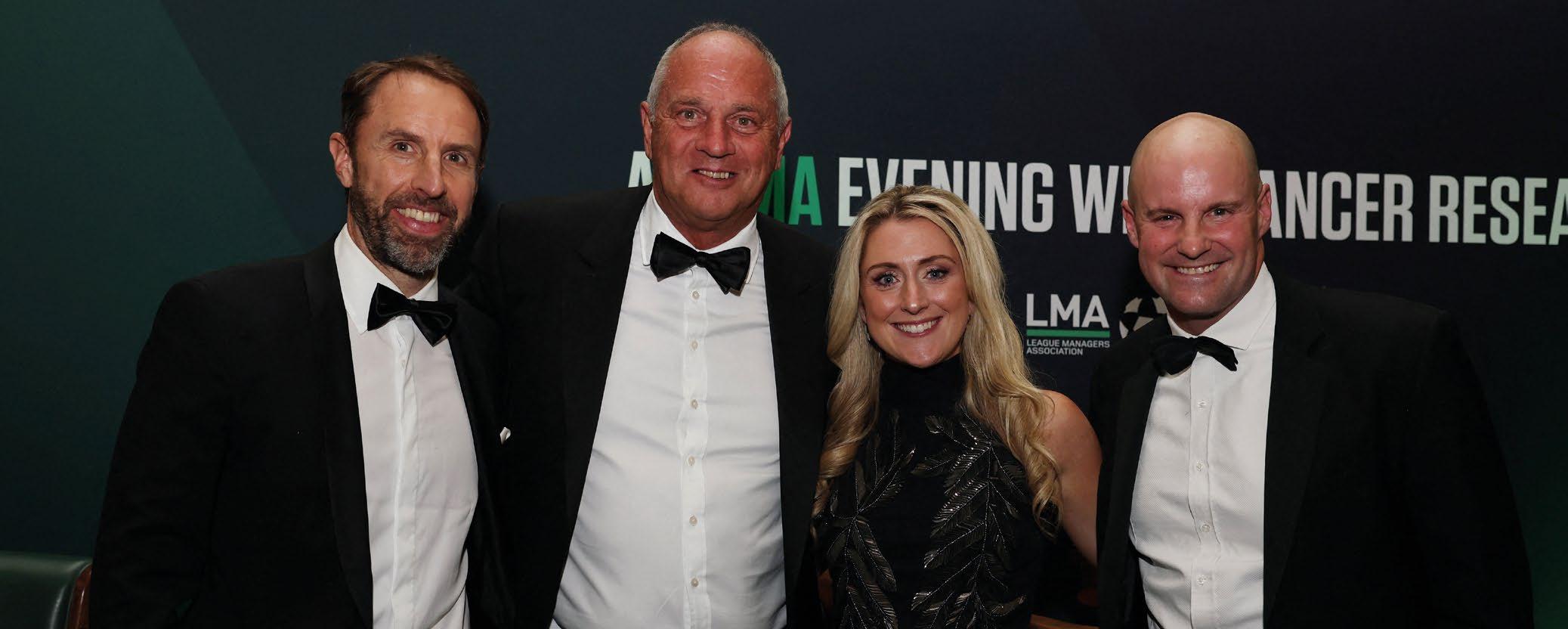
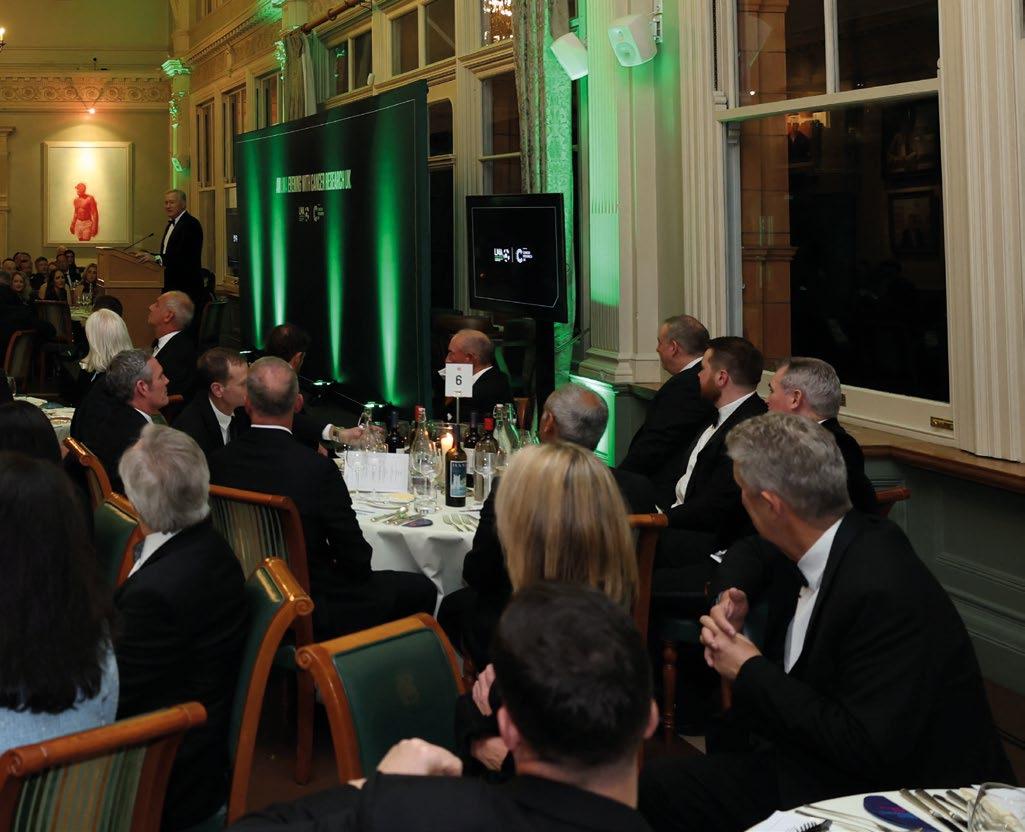
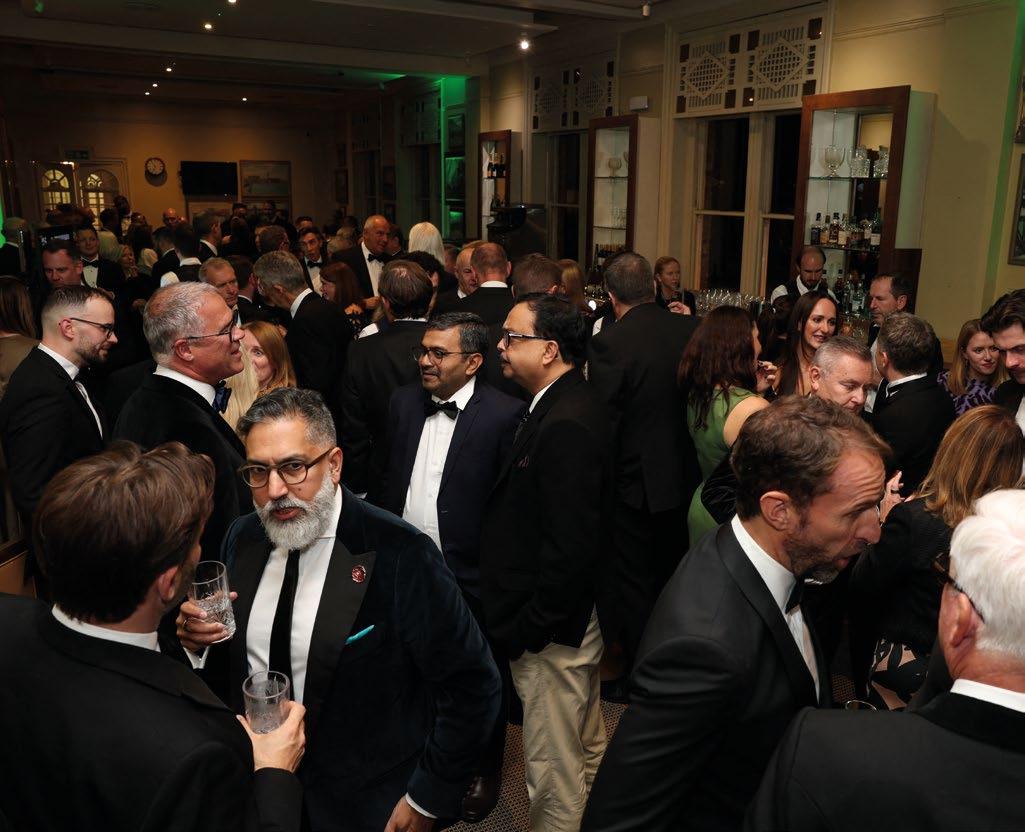
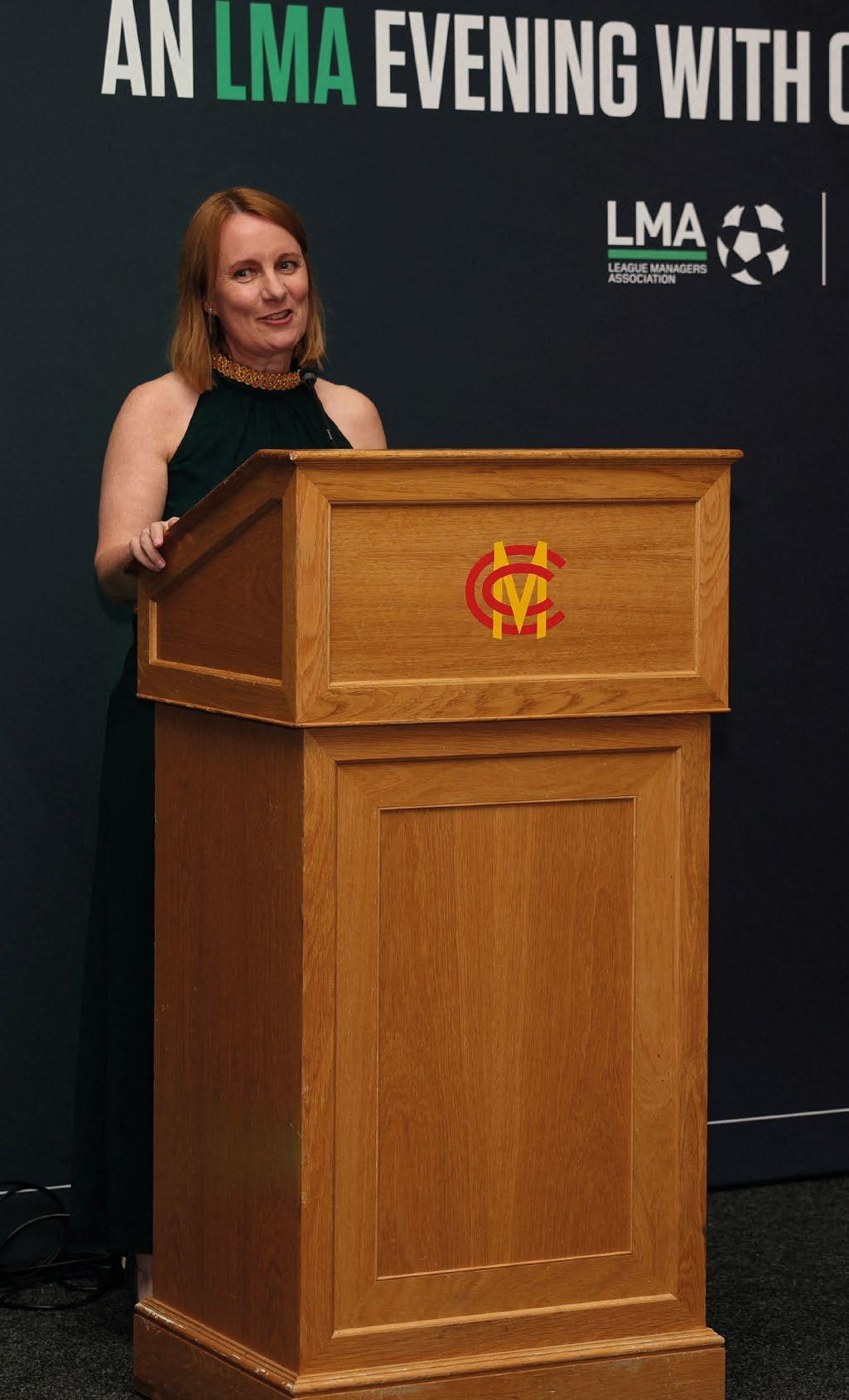
Michelle Mitchell OBE Chief Executive at Cancer Research UK (CRUK)
Sir Gareth Southgate OBE, Sir Andrew Strauss OBE, Dame Laura Kenny DBE, and Sir Steve Redgrave CBE DL
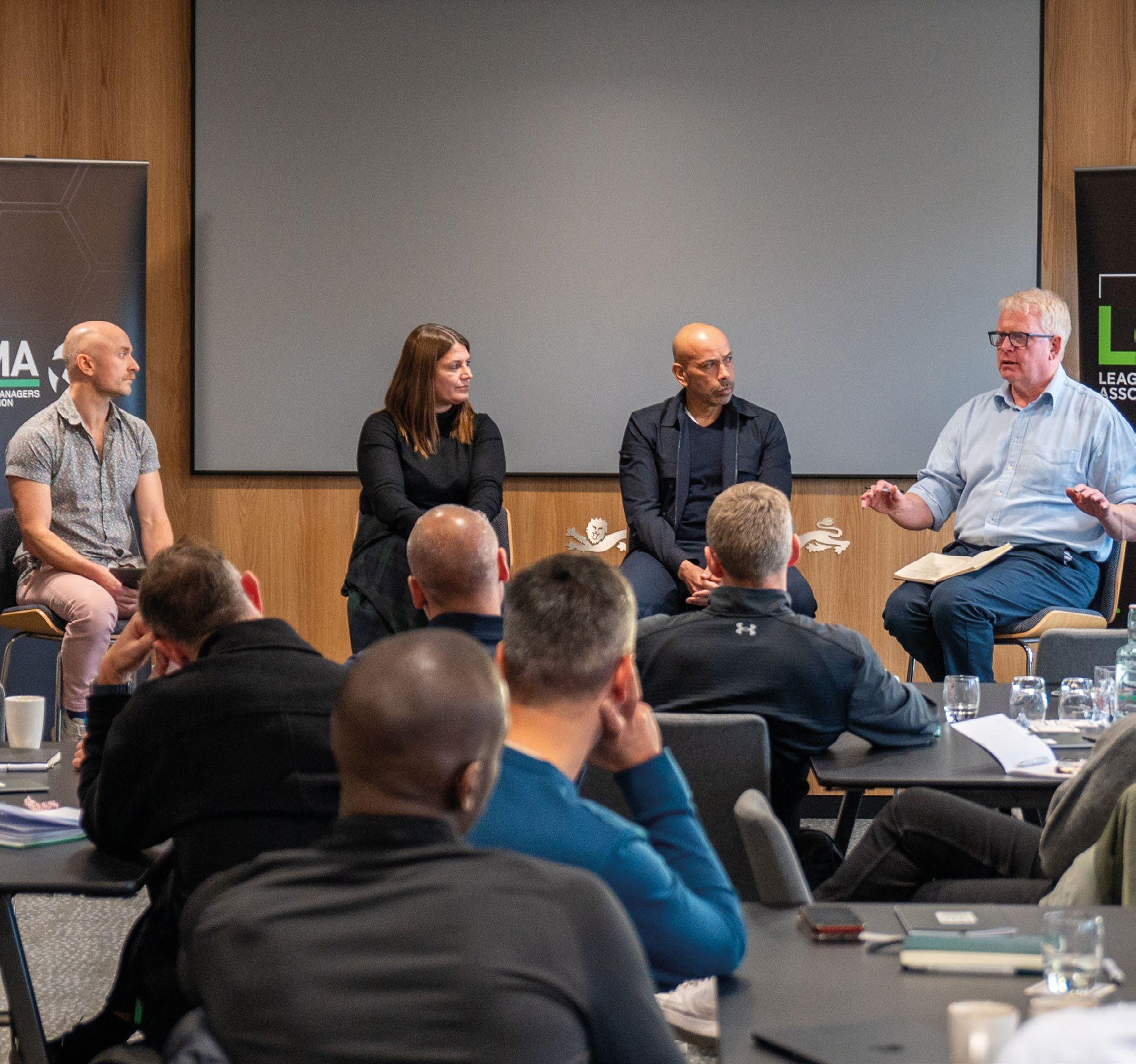
01 LMA Diploma – Leading a Diverse Team
As part of the 2025/26 LMA Diploma in Football Management programme, students spent the day at St. George’s Park learning about leading diverse teams, including the importance of inclusive language, understanding what equality, diversity and equity are, and neurodiversity in sport. The day concluded with a panel discussion with LCA member and Stoke City Assistant Manager Paul Nevin, LMA Legal Director Lindsay Gordon and Paul Burrows, Neurodiverse Sport.
02 LMA Lead Short Course
October saw the launch of the latest LMA Institute Short Course, LMA Lead, which aims to increase participants’ understanding of effective leadership, and develop their ability to design, build and manage successful and high-performing teams. The 30 LMA members taking part include current and former managers of the men’s and women’s national teams, and Premier League, WSL and Football League managers.
03 Career Masterclass at Emirates Old Trafford
The latest LMA and LCA Career Masterclass, led by Elite Performance Partners (EPP) at Emirates Old Trafford Cricket Ground, focused on ‘Preparing for your next role’. EPP works with elite sports teams, national federations and governing bodies to advise, recruit and develop senior leaders and teams around the world. EPP’s Dave Slemen and Anna Edwards delivered sessions on brand and visibility, and employability skills, linking to the LMA’s own career development model and services.

IN THE GAME: SHINING A LIGHT ON SUICIDE.
On 10th September, World Suicide Prevention Day, the LMA launched a new suicide prevention awareness video. Narrated by Jürgen Klopp, Eddie Howe, Mayor Andy Burnham and Richard Bevan OBE , the video features personal messages from over 50 LMA members from across the PL, EFL and WSL 1 & 2.
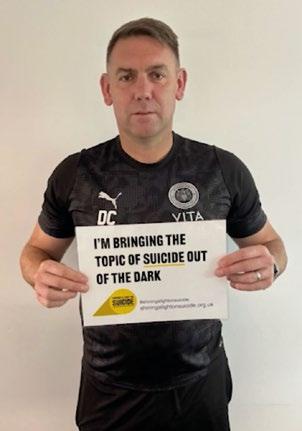
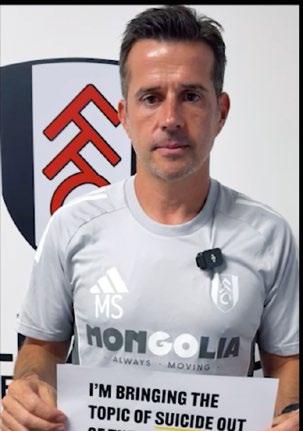
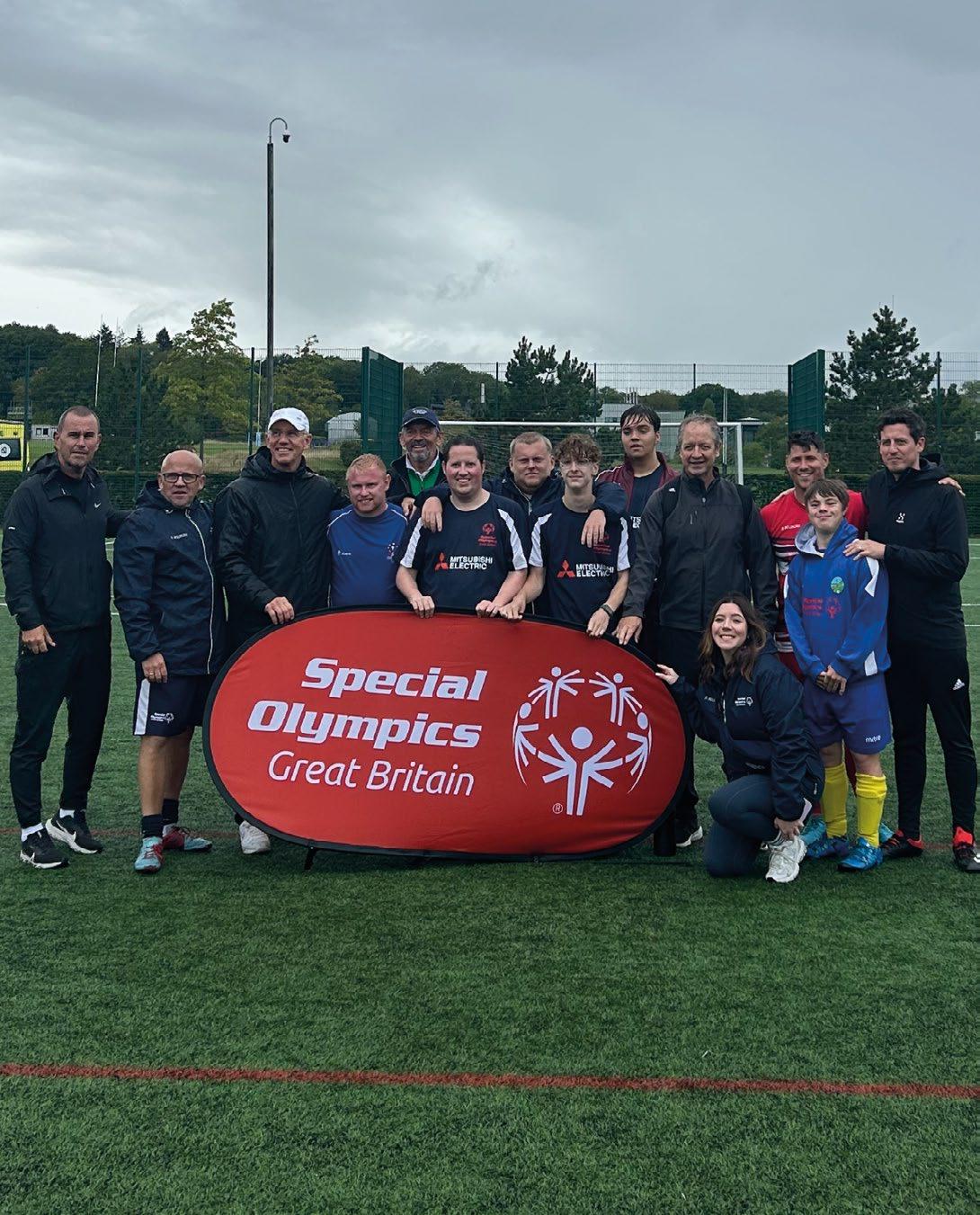
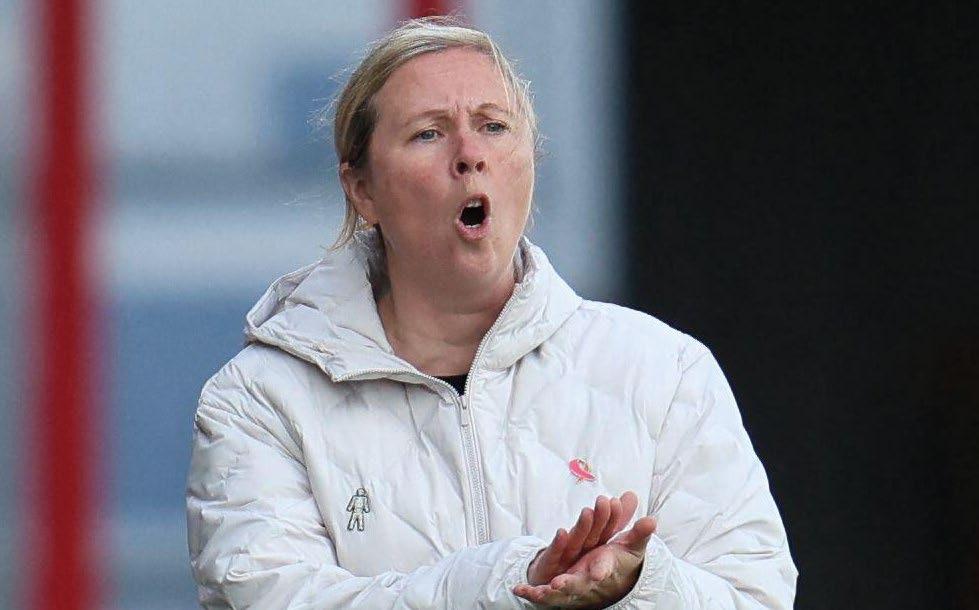
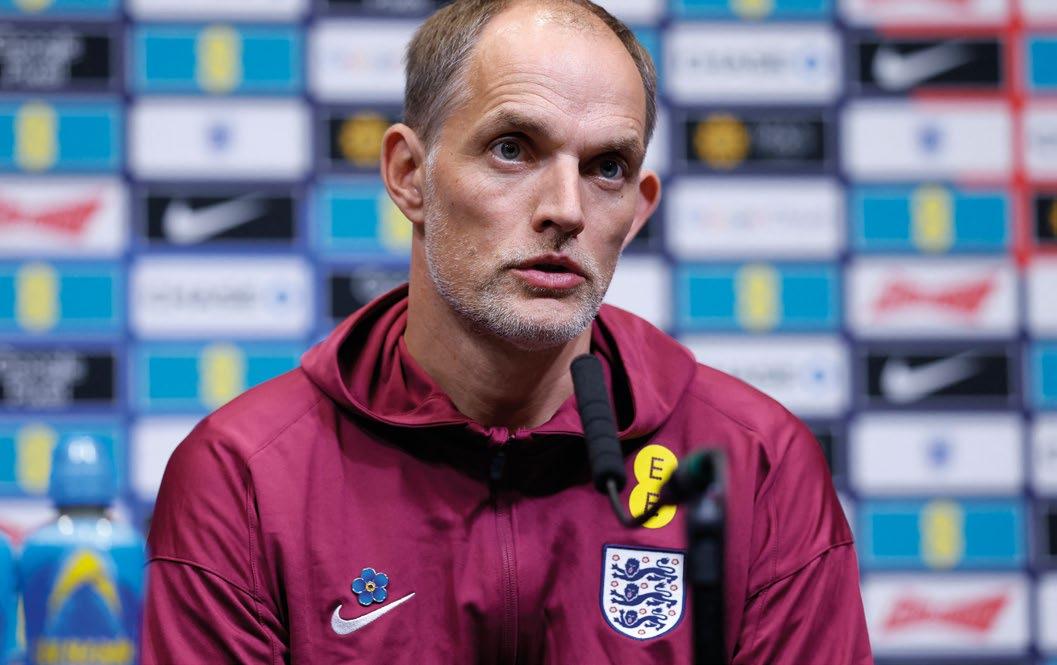
01 Special Olympics
LMA members Nigel Adkins, Phil Brown, Stuart Gray and Mark Robinson supported the Special Olympics Unified Football tournament.
02 Prostate Cancer UK Badge campaign
The LMA teamed up with Prostate Cancer UK again this year to help raise awareness of the charity’s work, with managers wearing Man of Men badges on the touchline over the campaign weekend. There were over 16.1K interactions on social media following LMA member Fabian Hurzeler’s post on the Prostate Cancer UK campaign, and over 2.9K interactions from the LMA X post.
03 Alzheimer’s campaign
During World Alzheimer’s Month, the LMA supported the Alzheimer’s Society with a pitch-side badge campaign and video messages from managers. 116 badges were sent out to managers to wear, 17 managers provided messages, and there were 26.4K views on social media.


MSc Performance Football Coaching (distance-learning)
As an LMA institute partner, St Mary’s University invites LMA and LCA members to apply for its MSc Performance Football Coaching degree.
The innovative online football coaching master’s degree will empower you to advance your football coaching knowledge and explore coaching methodologies to develop players underpinned by our expert-led teaching.


PERSONAL WELLBEING & PERFORMANCE.
PERSONAL
WELLBEING & PERFORMANCE COLUMN
Chris Shambrook
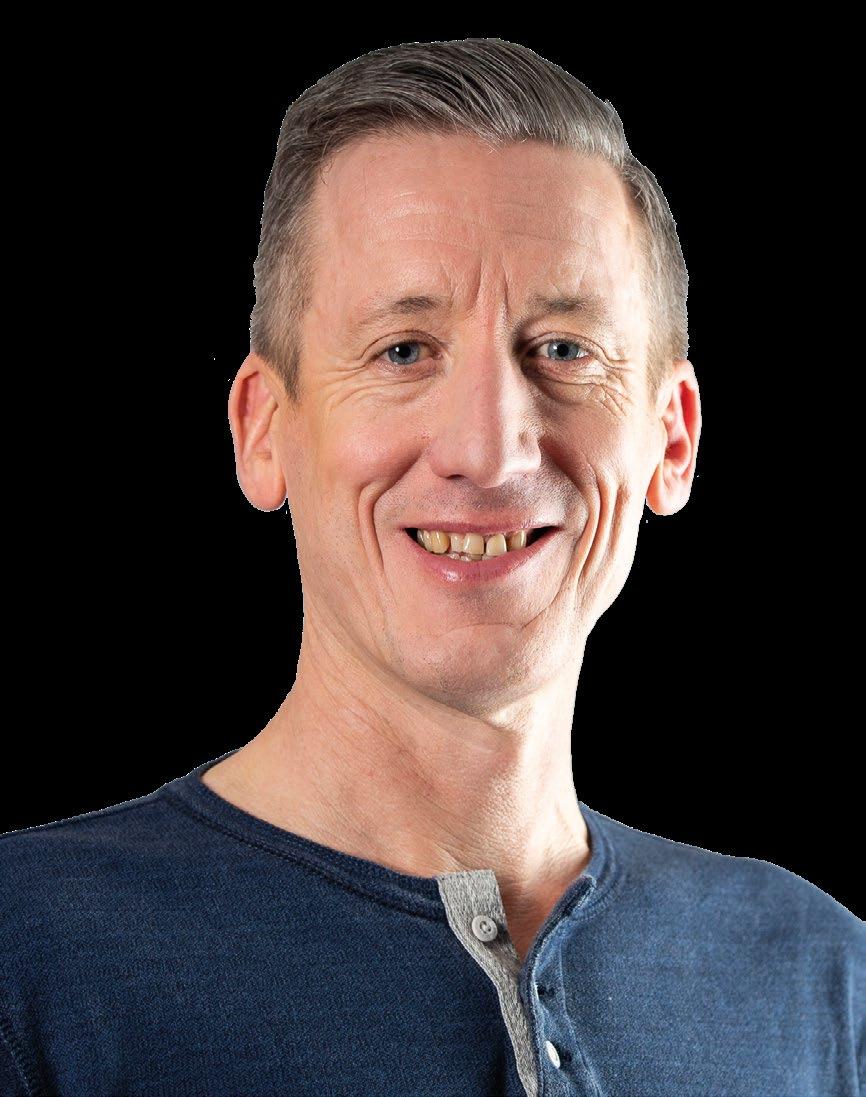
WHAT’S YOUR GAME PLAN?
Managers starting a new role should think carefully about how they might tackle the transition, not only tactically and strategically but mentally.
Getting this right will have great knock-on effects on your performance and that of your team.
Starting any new role can be challenging, exciting and daunting all at the same time, and there will always be uncertainties about how your skills, personality and work philosophy might slot into your new organisation and team. If you’re taking colleagues with you, the result will almost be a blend of two cultures, but if it’s just you you’ll have to bring your true self, and be ready to be smart about how you adapt your ambition and character to your new environment.
Determined to hit the ground running and make a positive impact early on, most managers will give serious thought as to how they’re going to approach their new role and responsibilities – new talent they’re keen to bring on board, a fresh direction they want to take the team in, or perhaps a cultural shift they hope to influence. To do all of this, there’s a dependence on building high-trust, high-value relationships from the outset.
However, it’s important to remember that any change in role, responsibilities or environment is likely to have a big impact on you, so be ready to ensure you’re managing your mindset, energy and health at a time when all of these can take a hit. Getting this right will have great knock-on effects on
your performance and that of your team. As well as thinking practically, strategically and tactically, therefore, we need to take time to reflect on how we might make any mental transition in the best way possible.
For example, in the early days in a new role, it’s easy to feel isolated, and to worry whether you’re having the kind of influence that you want and need to have. Instead of thinking too much about the things that aren’t going exactly as you’d like, make concerted efforts to focus on the relationships that are building well, the positive responses from key people and the confidence that gives you.
Most of all keep focused on the opportunity, on progress and doing things your way. By staying focused on the things that keep motivation high (feeling in control, confident and connected to key people) you can keep building as much of this as possible every day, for those first critical weeks.
Confidence, in particular, is key in those first weeks and months in the job. In any effective team dynamic, you need confidence not only in yourself, but also in your people and in your ability to function together as a team. Therefore, before you come into a new team environment it’s important to find ways to bolster

We need to take time to reflect on how we might make any mental transition in the best way possible.
that confidence in yourself –your ability to come in and get to grips with the situation, demonstrate your credibility, communicate in such a way that people understand you and stand with you, and build individual relationships. It’s a great chance for you to lead with your strengths and to see how much impact you can have when you do so.
Key to finding that confidence is self-awareness, reflecting on comparable situations you’ve faced in your career, as well as professional highlights and personal successes. Importantly, think about which of your strengths and qualities contributed to those stand-out moments, and which character traits have helped you turn things around when things haven’t gone so smoothly.
Self-awareness, however, must come accompanied by selfacceptance. Self-awareness without self-acceptance leaves you open to unnecessary self-doubt, because there is a tendency to think that we need to be different or more like someone else. A great question to ask is, ‘why would anyone be lucky to be led by me?’. Consider also which of your strengths and
qualities are most valued by other people. While most of us understand the importance of self-awareness in developing and improving as professionals, we may be reluctant to dwell on and accept the positive traits that make us who we are, focusing instead on what needs to be ‘fixed’.
The managers with the most robust confidence that I know have both high self-awareness and an acceptance of how this knowledge of themselves helps them to achieve success. They also focus on how they might add to that accepted strength base rather than trying to remove any weaknesses that they feel are holding them back. With this kind of outlook, you’ll always step into new environments full of curiosity about how well you can use your strengths, and with the ambition to develop some new ones. That’s a mindset worth committing to.
Chris Shambrook is Group Performance Director at PlanetK2. Since its formation in 2003, PlanetK2 has coached leaders, teams and organisations in over 30 countries worldwide.
BRANCH OUT.
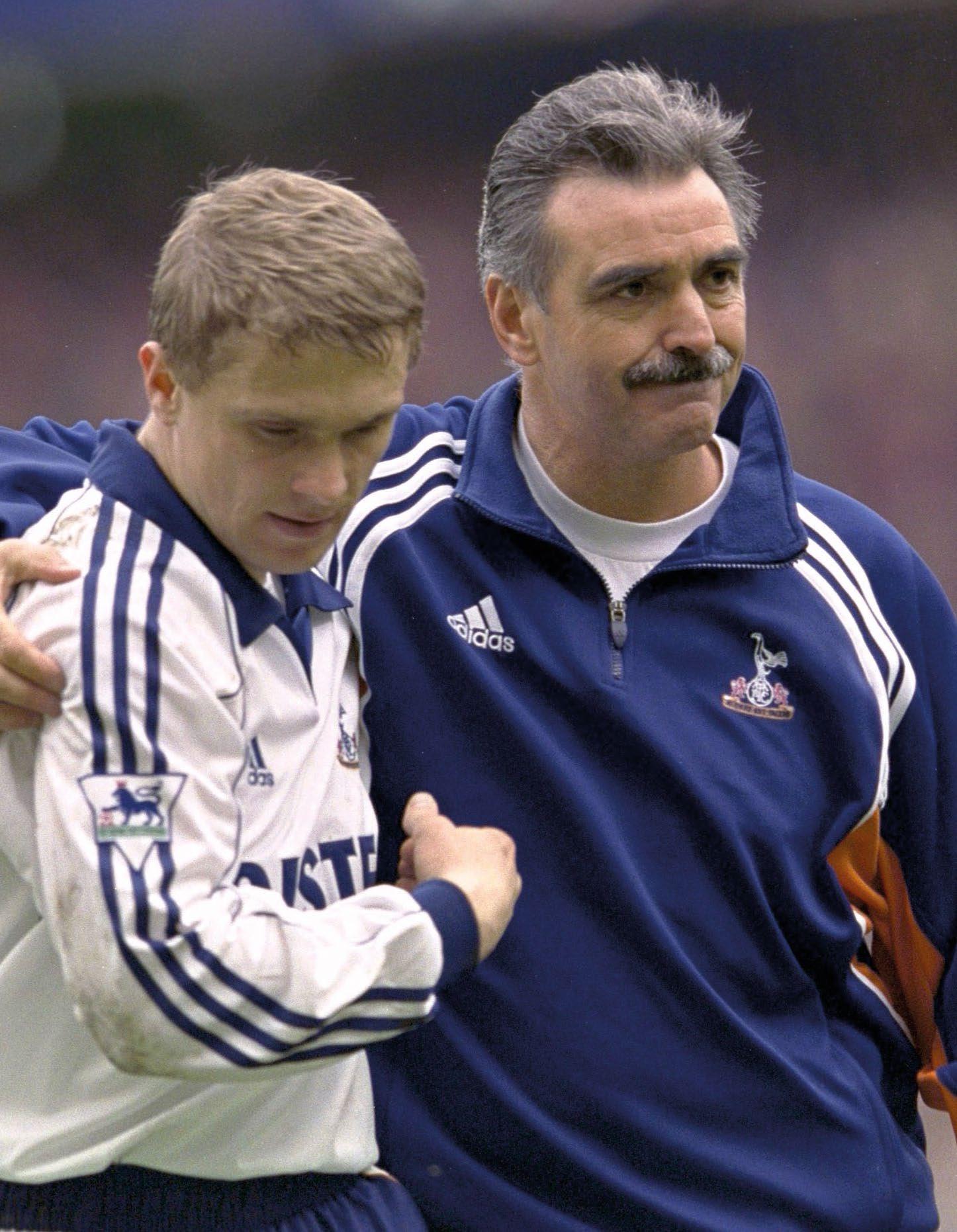
Engaging in leisure activities, pursuing personal interests and mastering new skills outside of your sphere of work can be surprisingly beneficial.
Words: Alice Hoey
Photography: Reuters // Action Images // John Gorman // Amy Merricks

A couple of years ago, a paper, published in Nature magazine, compiled the findings of five studies into the positive impact of hobbies. These studies, which tracked more than 93,000 over65s across four-to-eight years in 17 countries, found that in every location participants who pursued some kind of leisuretime pursuit suffered fewer symptoms of depression, were in better overall health, and said they were happier and more contented than those who didn’t have a hobby.
While we can look to many factors to explain these results, a good place to start is psychology and the essence of what makes us happy as humans. Among Maslow’s
now famous ‘hierarchy of needs’ there are social needs, where we need to feel that we belong to something; esteem needs, where we feel good about ourselves and that we have the respect of others; cognitive needs where we are feeding our curiosity and challenging our brains; and self-actualisation, where we feel we’re good at something and achieving our potential.
While we might look primarily to our careers to satisfy these fundamental human needs, in reality they are fed by all the activities, interests and roles that make up our identities, be that engaging in historical reenactments, hosting a book club, or practising taekwondo.
IN THE FRAME
For former football player and coach John Gorman, a love of art has given him a boost, mentally and socially, at various times in his life. While he had been sketching and painting portraits and landscapes since he was very young, it was during his playing career that he became particularly known as an artist.
“I was out for 18 months due to injury, and while I was recuperating I’d do cartoons of some of the players, which were then published in the
matchday programme,” he recalls. “It was a great way of keeping my spirits up and staying connected to the game during what was otherwise a pretty difficult time.”
Over the years, Gorman has continued to create his incredibly detailed and unique works of art, many of which have gone to charity. “Most of my paintings have either been donated by me to good causes or given to footballers and others in the world of sport to be auctioned for charity,”
he says. “It’s great to be able to maintain links with the football community in this way, and to give something back to the sport I love.”
More recently, Gorman says his artwork has also been a means of connecting with his local community. “I took some of my pictures to sell at the local village shop and so people have come to know me that way. It’s a nice feeling to be recognised and acknowledged by people for something outside of the game,” he says.
Former player and coach John Gorman has become known for his incredible caricatures, many of them having been auctioned off for charity. John Gorman
BRAIN GAINS
In addition to the feel-good effects of engaging in personal interests and activities, there can also be wide-ranging physical benefits, some of them more obvious than others. While activities involving exercise, such as yoga or gardening, will benefit physical health, recent studies suggest that even slow, tactile tasks such as knitting, wood carving or drawing can support long-term cognitive health. Activities like these engage memory, attention and motor function, while helping to regulate stress.
A 2024 study in Frontiers in Behavioural Neuroscience demonstrated how these kinds of high-focus creative pursuits activate the brain’s dopamine release system in such a way that spikes and troughs are avoided in favour of a slower, steadier reward.
Activities that involve planning, sequencing or problem-solving go even further, activating the brain’s executive function alongside motor and emotional systems. Studies have found that this helps to maintain the brain’s flexibility and resilience as we age.
But, while continuing with pastimes we’ve had for a while
Glenn Hoddle holds the cartoon that his longtime friend and former assistant manager John Gorman did of him. John Gorman
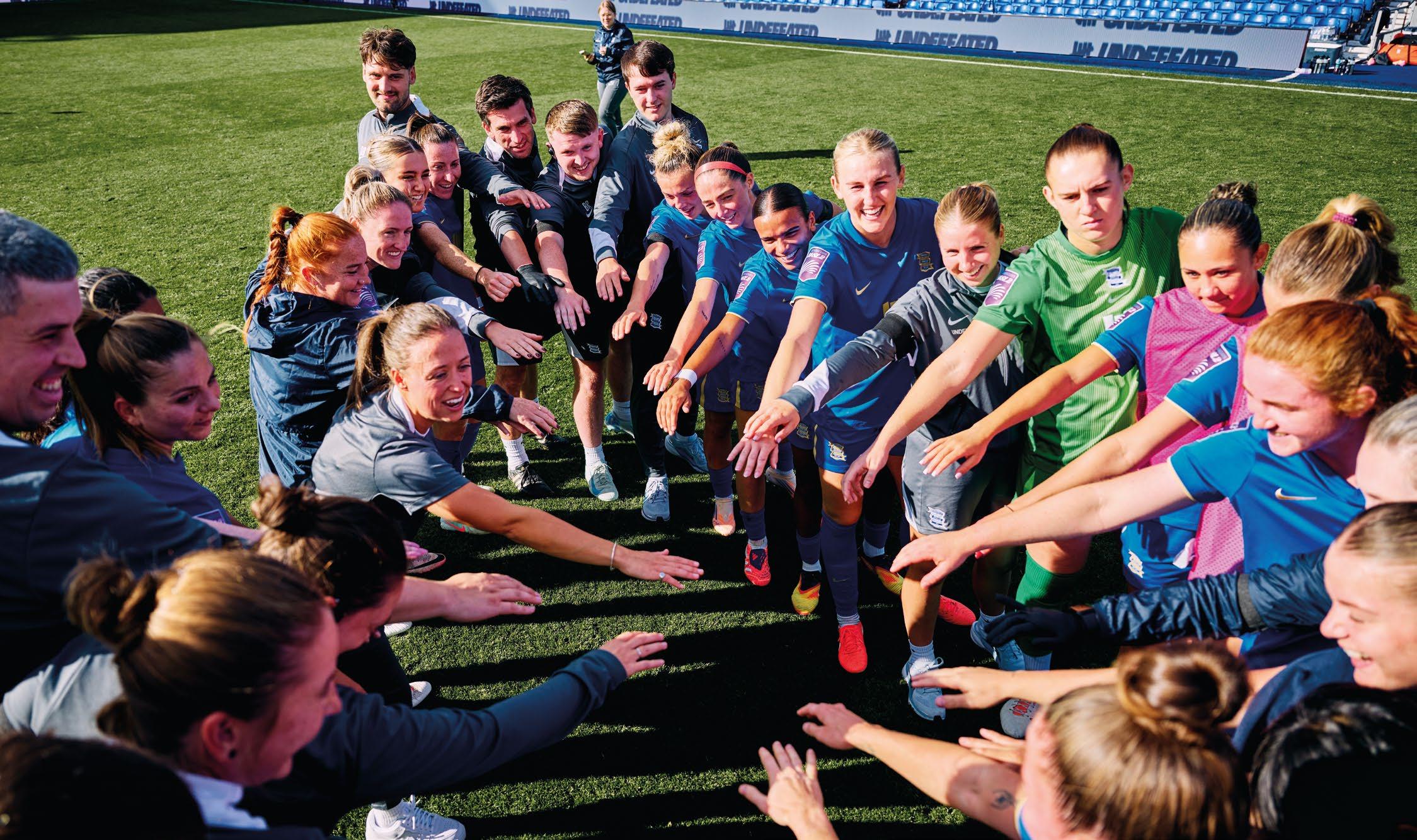
will provide some or all of these benefits, even greater gains can be had by starting something new. Engaging in an activity that we’re as yet unfamiliar with, or adding a new layer of challenge to something within our comfort zone, helps to maintain what is known as ‘neuroplasticity’.
This is the process by which the brain adapts, structurally and functionally, in response to intrinsic or extrinsic stimuli such as learning, experience or injury. When we start a new hobby and challenge the brain in new ways, it stimulates the development of new neural pathways, which aids learning and memory retention.
PRIORITY NOT LUXURY
Given the myriad benefits, it’s important that we don’t
become so engrossed in our professional responsibilities that we sideline personal interests and curiosity. Indeed, according to Birmingham City Women Head Coach Amy Merricks, prioritising quality time spent away from the job can have hugely positive effects, not only on mental wellbeing but on overall performance.
“I find that often my most valuable reflections, and sometimes even flashes of creativity, happen not when I’m consciously thinking about work, but when I’m doing something completely different,” she says. “It allows my mind to reset and gives me a sense of perspective that’s hard to find during the intense pace of a working day.”
In fact, what Merricks describes has been backed up by scientific studies that have explored the neurological processes at play when we switch off from actively trying to solve a problem or come up with ideas. Neuroscientist Alice Flaherty found that dopamine plays a key role in creativity; the more that’s released, the more creative we are. Activities and events that make us feel good, therefore, such as taking a warm shower, exercising or going for a walk, increase dopamine flow and improve our chance of having new ideas.
Dopamine, alone, however, is not enough. For creativity to flow we also need another ingredient – distraction. This is
Now, I’m far more deliberate about protecting my downtime, making sure there are key moments each week when I can properly switch off.
because the subconscious mind is always working away to come up with solutions and ideas in what scientists term the ‘incubation period’, but it’s only when you’re relaxed and distracted that those ideas can surface into your conscious mind.
Merricks therefore actively seeks out pursuits that give her a good balance, personally and professionally, and that allow her mind to wander. “For example, I’ve recently taken up golf, which I find brilliant for switching off, and I’m learning Spanish,” she says. “That’s both satisfying on a personal level and really valuable professionally, because it might enable me to speak directly with staff and players in the future and build stronger relationships with them.”
While Merricks admits that it isn’t always easy to find the time for personal hobbies and interests, she believes it should
be viewed as a necessity rather than a luxury and prioritised as such. “In the past, I really struggled with finding that balance, because I’d become completely absorbed in the job,” she says. “However, over time I recognised that this wasn’t sustainable; it was affecting my performance and led to burnout. Now, I’m far more deliberate about protecting my downtime, making sure there are key moments each week when I can properly switch off, even if it’s just for a few hours.”
While that takes discipline, she has noticed a huge change in her energy and focus. “Having seen the benefits firsthand, I always encourage my team members to find moments to recharge and engage in activities and interests outside of the sport,” she says. “It’s not just healthy, it’s vital for long-term performance and perspective.
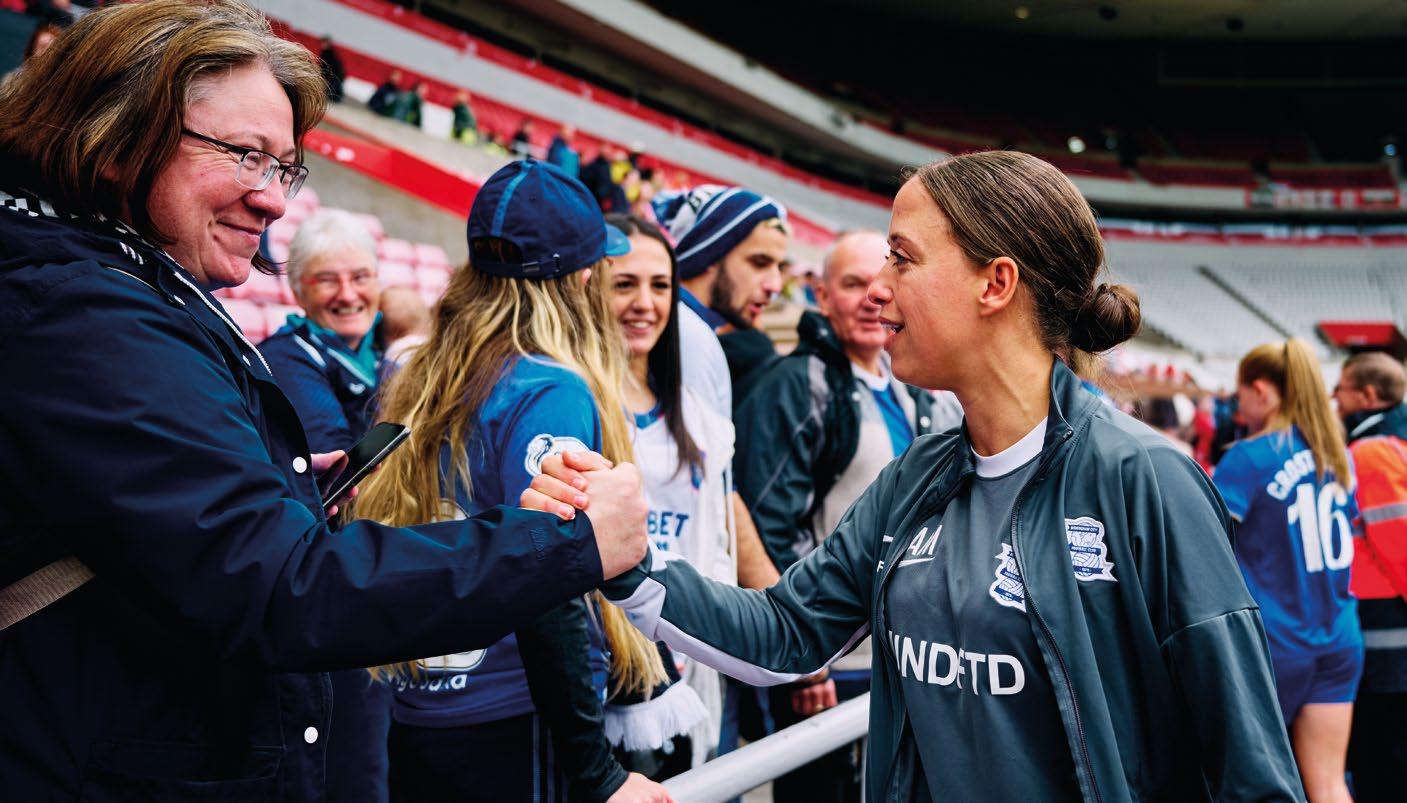
Left: In 2023, Amy Merricks was England Women’s U19 Head Coach, helping the Young Lionesses secure qualification for the second round of the 2024 UEFA WU19 Euros.
Right: Amy Merricks is currently in her second season as Women’s Head Coach of Birmingham City. Amy Merricks
10 IDEAS: LEARNING AND CONCENTRATION.
AN AGE-OLD PROBLEM.
Our ability to focus mental effort on a task, and how long we can do that for, depends on how well the brain can filter out all the external and internal stimuli that try to pull our attention elsewhere. Noises, lights, thoughts, emotions, and even physical sensations can cause lapses in concentration that reduce our productivity and overall performance. As we age, the natural shrinkage that occurs in the brain tends to reduce our ability to shut distractions out, but other age-related physiological changes, such as inflammation, vascular changes or protein build up in the neural pathways can also have an impact.
LEARNING IS GOOD FOR YOU.
The brain constantly builds, strengthens, adapts and reorganises its neural connections in response to learning and experience, as well as environmental stimuli, injury and disease. This process, known as neuroplasticity (see the article on page 104 for more), is crucial in developing and maintaining brain function, including learning and memory, as well as in recovery from brain injury and adaptation to environmental changes.
NEED A LIFT?
How well we’re able to focus in order to digest and memorise new information depends on a variety of factors, including our environment, our physical and mental energy, and even our emotional state. Depression, anxiety, stress, shame and fear can all have a dramatic and deleterious effect on learning, activating the limbic system, which interferes with memory generation, affects how we perceive information and impedes our ability to solve problems. Any tools and practices that help to improve mental wellbeing will thereby have additional benefits in terms of our ability to focus and learn.
BRAIN DRAIN. 2 4
Your immediate environment plays an important part in how well you can focus on a particular task, whether that’s creating, planning, sharing information or learning. It isn’t only unexpected calls and notification pings that are a distraction. A study in 2017 by the University of Texas found that our relationship with our phones is so strong that we need only be able to see one for it to reduce our cognitive capacity. It is thought that even while we’re not consciously giving a phone our attention, the effort it takes to not be distracted by it saps our mental energy.
FALSE ECONOMY.
We may boast about being able to multitask, but rather than doing multiple things at once we’re actually just switching rapidly from one thing to another. This is rarely the most productive way of getting things done, because each time we switch we have to refocus our attention. Neuroscientists have found that this uses up oxygenated glucose, which we need to focus on a task, causing greater mental fatigue and poorer concentration than if we were to simply tackle each task at a time.
FORCED BREAKS.
While jumping constantly from one thing to another drains mental energy and impairs concentration, research has shown that there are benefits in taking forced breaks from tasks. Allowing the brain to rest for short periods enables you to return to the job in hand refreshed and with renewed refocus. This idea was formalised in the Pomodoro Technique, whereby you take a five-minute break after 25 minutes of work (a ‘Pomodoro’) and then a longer 15-to-30minute rest after four Pomodoros.
FEEL THE RHYTHM.
Research published in Psychology Compass has highlighted the importance of the body’s circadian rhythm in how it functions, in particular noting the change in our mental energy and concentration as the day progresses. In most cases, we are more energised, alert and focused in the morning, and thereby better able to take in, memorise and use new information. Given that this cognitive ability then decreases throughout the day, it emphasises the importance of mental rests and switching to less cognitively challenging tasks.
POWER UP.
Physical exercise has been demonstrated to have an important effect on cognitive function, including concentration, by boosting dopamine, norepinephrine and serotonin levels. A study published in the British Medical Journal found that even short 10-to-40-minute bouts of exercise result in measurable improvements in focus, while separate studies have shown that the positive impact of exercise on concentration lasts for two-to-three hours.
PICK UP A PEN.
Researchers in Japan and Norway have compared the neural activity in the brains of people performing handwriting and typewriting, finding that connectivity between different brain regions is greater when people put pen to paper. This brain activity and connectivity is crucial in memory building and information encoding, indicating that writing by hand is better for learning than using digital devices.
While repetition has long been touted as an effective means of memorising information, numerous studies have shown that it’s more useful to think in terms of how cognitively challenging the repetition is or how effortful the method of learning. Compared to simply rereading or highlighting texts, for example, actively retrieving information to answer questions or test your knowledge is likely to result in deeper and longer-term retention of knowledge.
Words: Alice Hoey
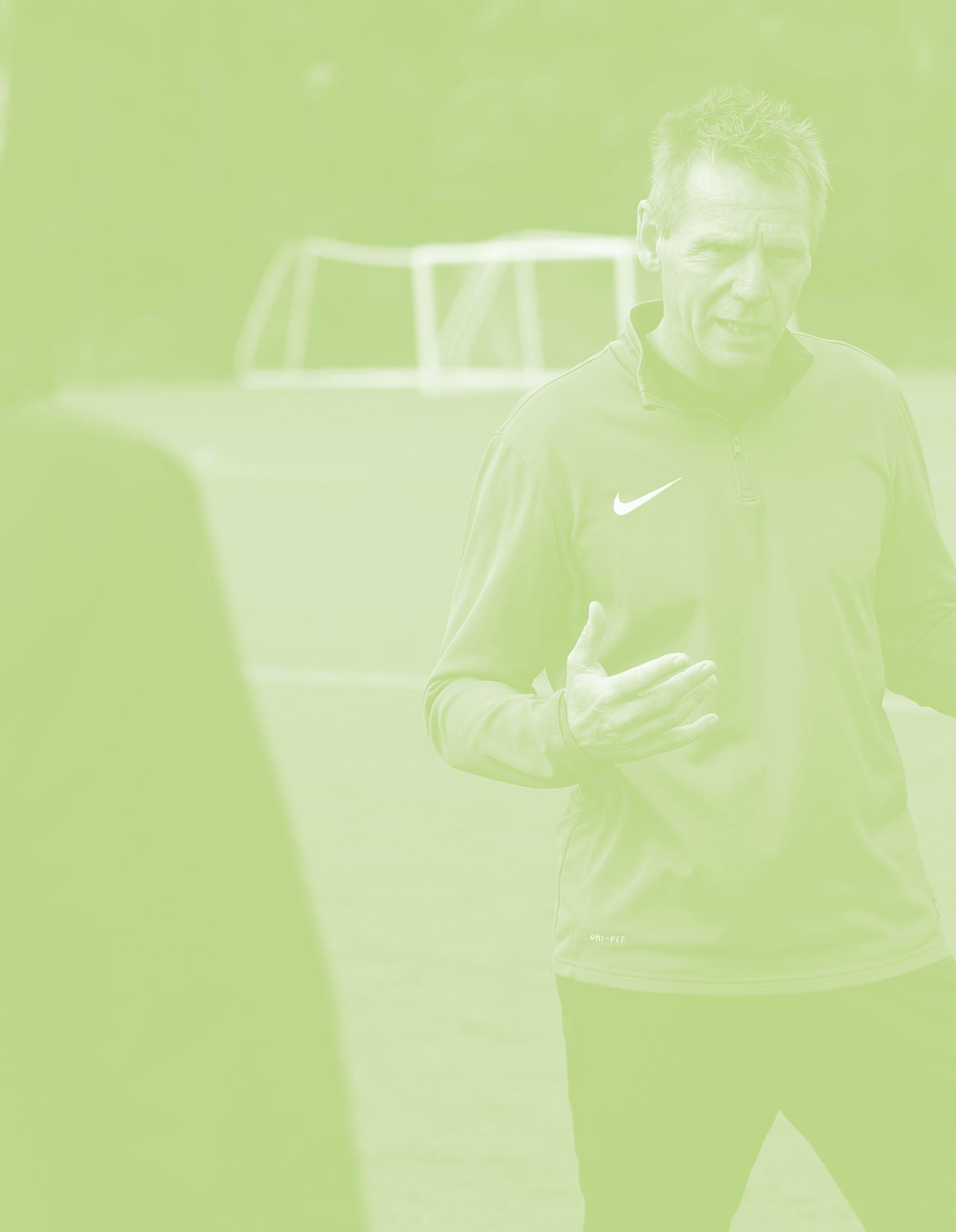
HOW TO: MENTOR.
LET THEM LEAD.
Mentoring works best when it’s the mentee who drives the relationship, processing the conversations and seeking to clarify key issues and actions. “It is the mentee who must commit to action and behavioural change,” says sports psychologist and former coach and manager Andy Cale, “and in this way they grow their skill set and become more confident, resilient and selfsufficient.” Great mentors, therefore, act as what Cale refers to as ‘thinking partners’, creating an environment in which the mentee can work things out for themselves. “They hold up a mirror and ask questions about what the mentee sees.”
PRIORITISE LEARNING .
With so many means and avenues for continuous professional development, it’s important for the mentee to define and understand where their priorities lie, and how they might best invest their time and energy. It’s the mentor’s role to not only help the mentee identify any gaps in their knowledge and skills, but also find the best ways to fill them, whether by taking a formal qualification, completing a course in their own time or participating in masterclasses and workshops. A good mentor will challenge the mentee to question and develop themselves and will encourage them to be proactive in doing so.
BE READY TO SHARE.
Mentoring is not about the mentor advising the mentee or steering them in a particular direction, emphasises Cale. Rather, they provide another perspective by communicating what they know, digging into their own experience and sharing some of the lessons they’ve learned and mistakes they’ve made. “This requires openness, honesty and selfawareness, because mentoring is most effective when the mentor shares not only what they did, but how they felt, and they are able to relate to, and empathise with, the mentee and their situation.”
SET GOALS.
A skilled mentor understands the importance of realistic goals and will help the mentee to plan, prioritise and consider key decisions around them. These goals should be driven by a healthy mix of internal and external motivators, and focused on the things the mentee has full control or influence over. They enable them to make small steps towards a longer-term target, so they can celebrate each small achievement along the way, and maintain motivation and morale.

USE YOUR CONNECTIONS.
A good mentor will encourage the mentee to think about their professional and personal support networks, and how they might make optimum use of them to learn and develop. Having this information to hand ensures they can get the best possible support and advice when they need it, says Cale, while simply knowing it is there can reduce feelings of stress and anxiety. Ask, for example: to whom can you go to discuss your physical and mental health, or a financial issue? Where can you find advice and resources to help you further your career, and what other professional spheres and performance environments might you be able to learn from?
Members can benefit from an LMA Mentor and find out about the recent LMA mentoring course by contacting Mike.Gilmore@leaguemanagers.com
IN CONVERSATION WITH
SALLY BECK
BE FLEXIBLE, THINK CREATIVELY.
Whether navigating challenges or embracing change, Sally Beck is nothing if not resourceful. Alice Hoey caught up with the Royal Lancaster London GM to find out more about her leadership approach.
Interview: Alice Hoey
Photography: Royal Lancaster

Alice: Sally, we last spoke midpandemic. Are you proud of how the hotel came through it all?
Sally: I think we handled both lockdown and the whole recovery period really well. For example, we were one of the few hotels to hold onto our events staff during the pandemic; most let their people go, knowing that the events business would be the last to recover after Covid. However, many regretted making such quick, deep cuts, because it left them short of talented staff when they needed them. At Royal Lancaster London, we kept our events staff on board, but asked them to be flexible during the pandemic, to work on food and beverage, in security, to do painting and decorating, whatever was needed. That meant that when the events side of the business got back up and running, we had our full team ready to go, with all their knowledge, loyalty, professionalism and experience.
Alice: So, adaptability was key?
Sally: Absolutely, and that’s always the case when you’re running a hotel; you have to be prepared to be flexible and to think creatively. To give another example, we opened very quickly following lockdown, a good six-to-eight months before many other hotels, and were a host hotel for the 2021 Euros. It meant that, despite having
been at only three per cent occupancy in summer 2020 we suddenly needed enough staff to cater for a full hotel. To find a solution I turned to the many colleges and universities whose hospitality and catering students hadn’t been able to find any work experience during lockdown. We invited them to come to live for five weeks at K West, which was closed at that point, gave them training, and then employed them during the Euros. Some of them are still part of our team to this day.
Alice: The hotel has achieved EarthCheck silver certification. Why is tracking and reducing your environmental impact important to you?
Sally: A central pillar of our vision statement is ‘we always care’ and a commitment to sustainability is a big part of that. We know that it matters to our guests, and to our staff. Gen Z and millennials, in particular, will vote with their feet if they think you’re just pretending to care about such issues. They need to see action.
We did a lot of research to find the right partner to benchmark with environmentally and chose EarthCheck because rather than simply giving you a line in the sand on the day of the inspection, they track everything over time. You know not only where you stand now,
In our hotel there’s a collective ownership of problems, and people are empowered and equipped to solve them.
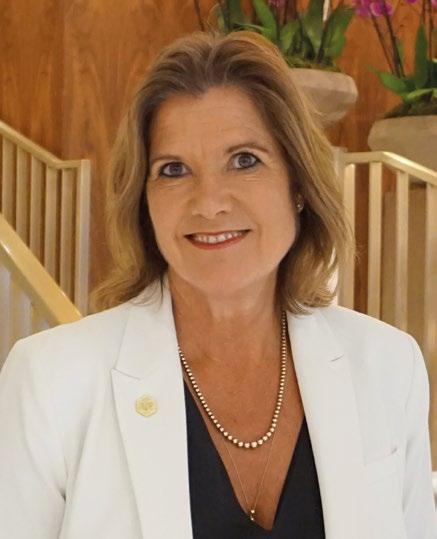
Sally Beck has been General Manager of Royal Lancaster London since 2013, prior to which she was Director of Sales and Marketing at sister hotel The Landmark London. She was named Hotelier of the Year in 2019.
About Sally Beck

but what to aim for in the future. Everyone in our 465-strong team is involved in achieving that – to turning off, recycling, reusing and reducing waste. We’re soon to go even further by adding a carbon calculator to our website. This would enable someone who wanted to hold an event at the hotel to work out what its carbon footprint would be, and then work with us to find ways to reduce that.
Alice: You lead across so many different departments, from marketing to housekeeping and catering. What’s the key?
Sally: We believe in an inverted hierarchy, so rather than sitting at the top of the triangle telling people what to do, I sit at the bottom and ask ‘what do you need?’. At the top of the triangle is the frontline team – the most
important element. Unless they’re happy, fulfilled, engaged, safe, and not bullied, they’re not going to be able to look after our guests the way we need them to. There’s no fear or blame here.
Importantly, everyone also has a platform to talk. We don’t want any ‘hippos’ (highest paid person’s opinion) in our meetings. If I give my opinion first, it’s likely that half the heads in the room will go down because they’ll think I’ve already decided, and won’t want to go against that. If, instead, I put the problem out there and say nothing as it goes around the table, we’ll have a great, constructive discussion and will move forward. Empowerment, trust, engagement and confidence are hugely important. In our hotel there’s a collective
ownership of problems, and people are empowered and equipped to solve them.
Alice: You have a long-standing relationship with the LMA. What does that mean to you and your staff?
Sally: It exposes us to a completely different industry, which is really valuable to us as a learning organisation. We have the opportunity to network at LMA events, such as the annual conference, to take part in webinars, and to receive regular insight via the LMA newsletter, for example, which I tend to forward onto everyone in the team. We always find something of relevance, because whatever industry or department we’re working in, we’re all leaders or future leaders, looking to develop.

Phone: 0808 802 0019*
Email: nurse@eveappeal.org.uk
Website: www.eveappeal.org.uk/nurse
THE GAME.
THE POWER TO SUPPORT CHANGE.
The Premier League and its clubs remain committed to tackling discrimination and highlighting the importance of diversity in football.
Photography: Premier League
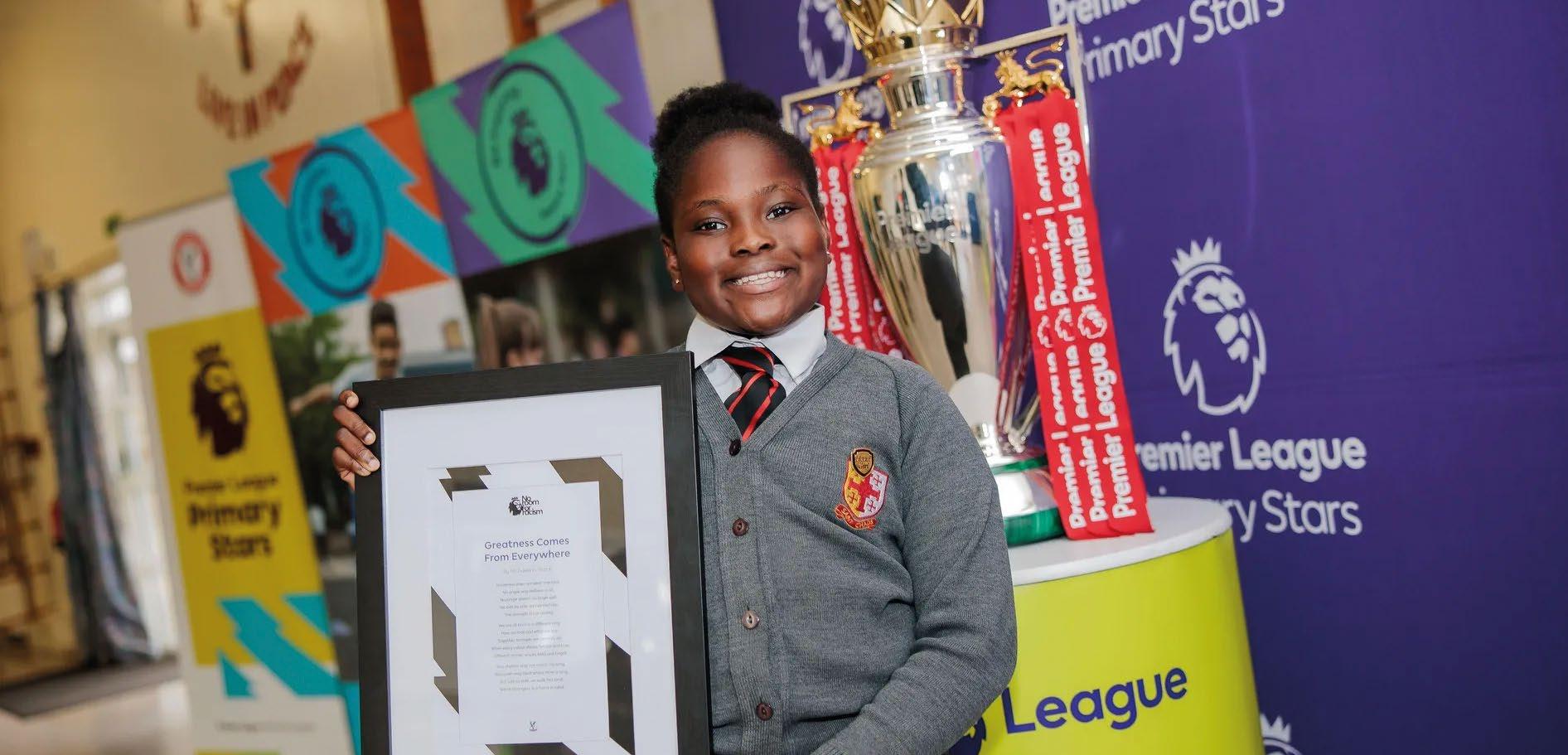
This commitment was reiterated in October with a week of matches dedicated to the No Room For Racism campaign. Launched in 2021, the No Room For Racism Action Plan outlines a series of targets and commitments aimed at creating greater access to opportunities and career progression for Black, Asian and other minority ethnic groups in football. It also suggests steps to eradicate racial prejudice.
A core part of this is educating young people through community programmes, encouraging discussion on the strength of diversity and the harm that is caused by discrimination. To this end, a new resource was made available to all primary schools throughout England and Wales at the start of the academic year through the Premier League Primary Stars initiative.
This has seen Premier League clubs taking part in a poetry competition themed ‘Greatness Comes From Everywhere’, encouraging pupils to celebrate diversity in all areas of life.
“The Premier League and our clubs strongly believe that football is for everyone,” says Premier League Chief Executive Richard Masters. “We remain steadfast in our belief that there is no place for racism in football and wider society. We will continue to support players and others within the game who are subjected to this unacceptable abuse, and will do all we can to ensure action is taken against those responsible.
“I am proud of all the work that underpins No Room For Racism and this will remain a priority for us. We know there is more that can be done to provide opportunities for people from
all backgrounds and we will continue to reinforce the message that discrimination will not be tolerated.”
Premier League Champion Wes Morgan, who sits on the League’s Black Participants’ Advisory Group, adds, “Reading the children’s poems has reminded me of the pride felt by so many across the country in our diversity, even at a young age. Celebrating that, and the positive impact that so many nationalities and ethnicities have on the Premier League, is hugely impactful.
“We want the young people who contributed their excellent poems to grow up in a world without discrimination, where everyone has the same opportunities, regardless of their background. Football has the power to support that change, which is why No Room For Racism is so important.”
The proud winner of the Premier League poetry competition, themed ‘Greatness Comes from Everywhere’.
FUTUREFIT.
Changes are on the way that aim to enhance the experience of all young players.
Photography: iStock

When changes were made by The FA back in 2012 to the way that youth football was played, it had a profound effect. There was a hugely positive impact on the technical development and personal enjoyment of young players, from grassroots all the way through to the England teams.
While youth football has never been stronger, The FA believes it’s time to take the lead again in order to shape an even greater experience for the next generation. The aim is to lead youth football into a brighter, better-fitting future, where every child has the opportunity to thrive.
To this end, The FA announced in 2024 that, from the 2026/27 season, it will make certain changes to youth football, under the name FutureFit. These changes will focus on championing children’s rights and promoting the spirit of the game, and include the introduction of 3 v 3 games to give U7s the best introduction to football, with more chances to learn, play, make decisions, score and stop goals.
In another change, small formats will be maintained for longer, encouraging players to move more and in more technical ways. 11-a-side will now be introduced for U14s, so
that players get to play smaller formats for longer. The FA is also evolving the laws of the game, adjusting game restarts so that there’s more ball-inplay time, and adding more complex rules as players go into secondary education.
These changes are part of an ongoing effort to give children more opportunities to play in different ways, exploring how seasons might be structured, competitions delivered and football formats might be used in order to keep players playing and enjoying the game for longer.
To learn more about the changes, visit futurefit.englandfootball.com

LMA member and Scotland manager Steve Clarke celebrates with his coaching team after the side’s victory over Denmark secures qualification for the World Cup for the first time since 1998. Clarke is the first Scotland boss to lead the men’s side to three major tournaments.
Reuters // Action Images