IN CONVERSATION WITH
IN CONVERSATION WITH
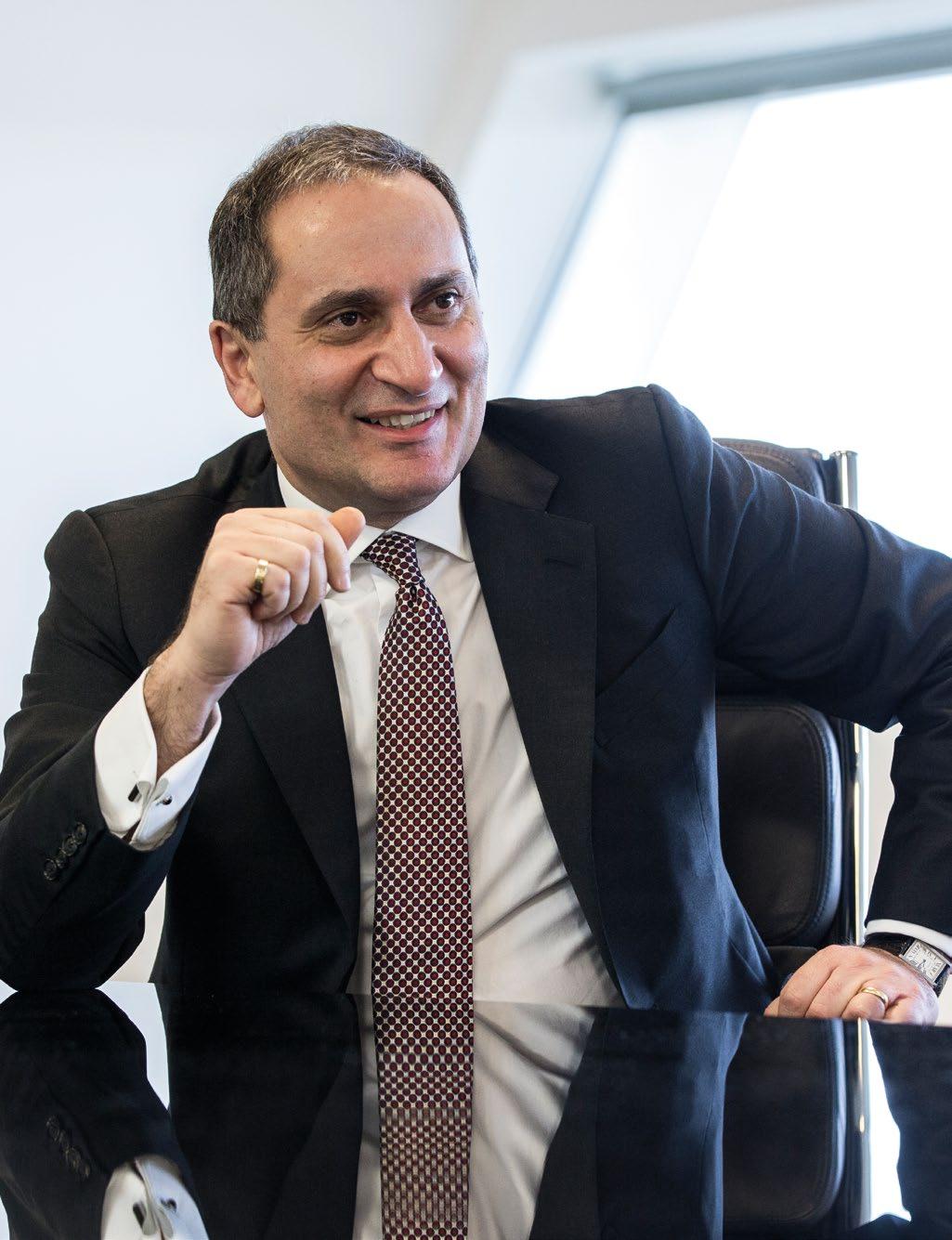
Since founding Gama Aviation over 40 years ago, CEO Marwan Khalek has developed the company into a leading multinational aviation services group. Speaking with The Manager’s Alice Hoey, Khalek says at the heart of the business are not planes, but people.
Interview: Alice Hoey
Photography: Gama Aviation
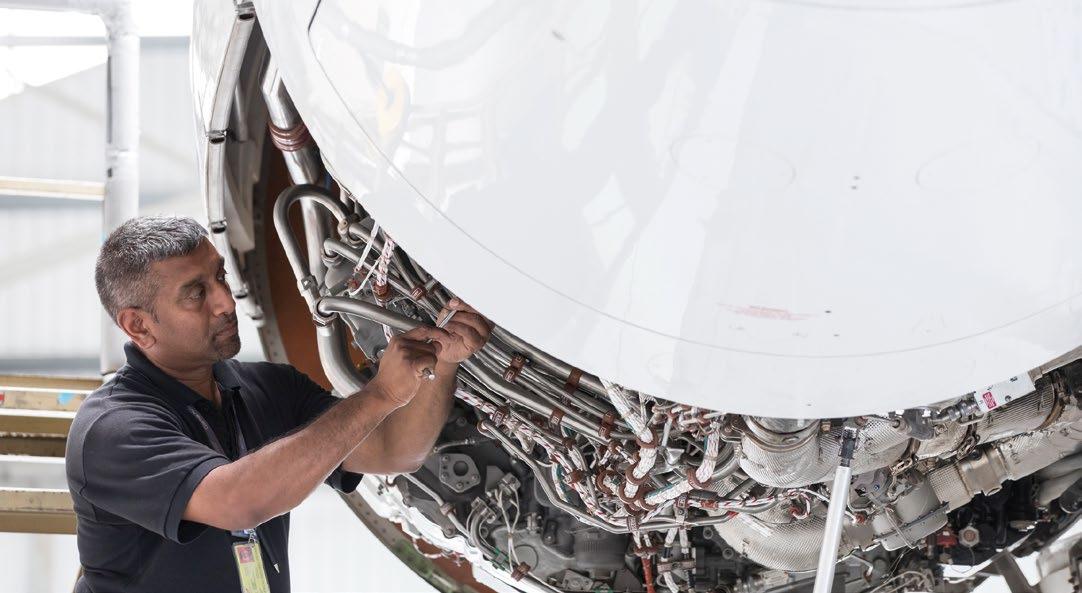
While corporations and high-net-worth individuals often only need their planes sporadically, Gama ensures they are always maintained and ready to fly. Gama Aviation
Alice: There are risks in setting up any business, and it takes courage and vision...
Marwan: I’m not sure I was terribly courageous at the age of 23. I think being entrepreneurial had more to do with my Lebanese background. I had seen my parents and uncles do it, so it didn’t occur to me that it was anything particularly adventurous or special. It’s often only once you get going, of course, that you realise the risks and responsibilities you’ve taken on. The learning curve was steep at the beginning, but I’ve been learning and developing ever since; that’s what drives me, the joy of challenge and discovery.
Alice: Did it weigh on you to have all these new responsibilities as a leader?
Marwan: I’d say those responsibilities came into sharp focus during the late 80s, when we experienced severe economic challenges. I was still in my 20s, and faced the choice of either making redundancies or risking the whole business. Given there were only about 15 of us, and all were family or friends, it was incredibly hard. I vowed, then, that I’d to do everything in my power to ensure I’d never be in that position again, and remain committed to the thousand people that work with us, their families and dependants. It’s a responsibility that I take very seriously, but rather than weighing on me, it drives me forward.
Alice: You steered the business safely through that financial crisis and others, as well as 9/11
and the pandemic. Do you have a strategy for dealing with setbacks?
Marwan: There’s no onefits-all response, because each event challenges us in different ways. However, while there’s no template you can apply, certain things are always critical. You have to assess the impact, look at the options available, and then engage with those people who can best help to inform your decisions. Then, once those decisions have been made, you have to communicate them throughout the business in such a way that you bring people with you on the journey. From my experience, the best way to do that is by being open and honest, having difficult discussions
Admitting that you got it wrong, or that you need to change your approach, is never a sign of failure or weakness.
if need be. You can’t often go wrong telling the truth. Finally, while you have to have a plan, it’s important to never be too proud to change that plan along the way. Admitting that you got it wrong, or that you need to change your approach, is never a sign of failure or weakness.
Alice: With VoIP, people can connect seamlessly, 24/7. Why, then, is face-toface communication still so important?
Marwan: Technology has given us incredible ways to connect, and for many business purposes these solutions are invaluable. However, face-to-face communication is irreplaceable. There is something so powerful about being together, in the same room as a colleague or client, or bumping into someone and chatting over a cup of tea. It’s unplanned, authentic, and teaches you so much more about the health of the business and what people are feeling than if you were to listen only to those reporting to you. It gives you the pulse of the business and builds trust. Given that we’re a service business, our most important intangible asset is our people, so the trust and connection that our people build, with our customers and with each other, is crucial.
Alice: How do you look to
safeguard the business’ success while building for the future?
Marwan: Since our inception, we’ve adapted, which has developed resilience. Originally, our business model was simply to buy aircraft and operate them almost like an air taxi service, but that meant we were especially vulnerable to sudden changes in demand, such as during an economic downturn or a pandemic. Over the years, therefore, we migrated to a model whereby we provide availability, rather than being demand led. Many of our government contracts, for example, depend on having aircraft in the right place at the right time, ready to deploy. Likewise, corporations and high-net-worth individuals may not use their aircraft all of the time, but they still need to be maintained and ready to fly. Adapting has made us more resilient and robust, and better able to weather financial, geopolitical and natural events. However, even if you’re looking to safeguard or stabilise a business, it’s important not to become overly defensive or complacent. At Gama Aviation, we still want to push the boundaries.