
International Research Journal of Engineering and Technology (IRJET) e-ISSN:2395-0056
Volume: 12 Issue: 06 | Jun 2025 www.irjet.net p-ISSN:2395-0072
International Research Journal of Engineering and Technology (IRJET) e-ISSN:2395-0056
Volume: 12 Issue: 06 | Jun 2025 www.irjet.net p-ISSN:2395-0072
Dr. D. Koteswara Rao1, Sajida Sulthana Mohammed2 , Sangepu Sairam3 , Palli Sridharan Karthikeya4
1Professor, Head of The Civil Engineering Department, OSD to Hon’ble Vice Chancellor, University College of Engineering Kakinada(A), JNTUK, Kakinada, Andhra Pradesh, India
2Assistant Professor(C), Department of Civil Engineering, University College of Engineering Kakinada(A), JNTUK, Kakinada, Andhra Pradesh, India
3&4Post graduation Student, Department of Civil Engineering, University College of Engineering Kakinada(A), JNTUK, Kakinada, Andhra Pradesh, India
Abstract - Marine clay is widely known for its poor engineering characteristics, such as low shear strength, high compressibility, and significant volumetric changes with moisture fluctuations. These unfavourable properties make it a problematic subgrade material for pavement construction, often resulting in early pavement deterioration and increased maintenance requirements. This study presents a comprehensive laboratory investigation to assess the effectiveness of steel slag as a stabilizing agent for marine clay subgrades. Steel slag, an industrial by-product, not only offersasustainablesolutionforwasteutilizationbutalso showspromisein improvingthe strengthand durability of weak soils. The experimental program involved preparing marine clay samples mixed with varying proportions of steel slag (10%, 20%, 30%, and 40% by dry weight of soil). Both treated and untreated samples were subjected to a series of laboratory tests, including Atterberg limits, Standard Proctor compaction, unconfined compressive strength (UCS), and California Bearing Ratio (CBR) tests. The results demonstrated a considerable reduction in the plasticity index, an increase in maximum dry density, and significant improvements in both UCS and CBR values with the addition of steel slag. The optimum enhancement in soil properties was achieved at a steel slag content of 30%. Furthermore, pavement design analysis based on the improved subgrade properties indicated an increased load-bearing capacity and extended pavement service life. The study concludes that incorporating steel slag is an efficient, sustainable, and cost-effective approach to enhancing marine clay subgrades, offering substantial environmental and economic advantages for flexible pavementconstruction.
Key Words: SteelSlag,Geo-composites,SoilStabilization, CBR,FlexiblePavement
Pavements play a crucial role in modern infrastructure and urban development. They serve several important functions and offer a range of benefits, making them an integral part of transportation and urban planning. Pavements are essential elements of influencing mobility, safety, economic development, and overall quality of life. Properly designed, constructed, and maintained pavements play a critical role in the wellbeingandprosperityofsocieties.
A pavement is a durable, often hard, and usually flat surface that is constructed for various purposes, primarily for people and vehicles to walk or travel on. Pavements are typically made from a variety of materials, including concrete, asphalt, bricks, stones, or even compacted earth, depending on the intended use and location. They serve several functions, such as providing a safe and level surface for pedestrians, facilitatingthe movementof vehicles,and enhancingthe aesthetics of an area. Pavements can be found in urban andrural areas,onroads,sidewalks,driveways,parking lots, and in various other settings. The specific design andmaterialusedforapavementdependonfactorslike the expected traffic load, climate, and local construction practices. There are three types of pavements which include Rigid Pavement, Semi-Rigid Pavement and FlexiblePavement
Marine Clay is a type of clay found in coastal regions around the world. These deposits are found both in the coast and in several offshore areas. These soft deposits aretermedMarineclays.Indiabeingapeninsularcountry has a large area coming under coastal region and also it has been the habitat for considerable percentage of population. The marine clays are widely spread over the states of West Bengal, Odisha, Andhra Pradesh, Tamil Nadu, Kerala, Karnataka, Maharashtra and some parts of
International Research Journal of Engineering and Technology (IRJET) e-ISSN:2395-0056
Volume: 12 Issue: 06 | Jun 2025 www.irjet.net p-ISSN:2395-0072
Gujarat. These soils are highly saturated, soft, sensitive and normally consolidated. These usually have low densityandlowshearstrength.
Constructing flexible pavements on marine clays can present unique engineering challenges because marine clays are often characterized by high moisture content, low shear strength, and high compressibility. These soil properties can lead to settlement, instability, and other issuesifnotproperlyaddressedduringpavementdesign and construction. Here are some considerations when buildingflexiblepavementsonmarineclaystheyaresoil investigations, subgrade preparation, drainage, pavement design, Geosynthetic reinforcement, constructionpractices,monitoringand maintenance. It's important to note that the specific strategies and solutions for constructing flexible pavements on marine clays may vary depending on the local soil conditions and project requirements. Consulting with geotechnical engineers and following best practices in pavement design and construction is crucial to ensure the longterm performance and durability of the pavement in suchchallengingsoilenvironments.
The technology of road construction is subjected to changes to cope up with changing vehicular pattern, constructionmaterialsandsub-gradecondition.Majority of the pavement failures could be attributed to the presenceofpoorsubgradeconditionsandexpansivesub grade is one such problematic situation. Marine soils, becauseofthespecificchemicalmakeuparesubjectedto volume changes with changes in their ambient environment. The losses due to extensive damage to highwaysrunningoverexpansivesubgradeareestimated to be in billions of dollar shall over the world. In many countries like India, these soils are so aerially extensive that alteration of highways routes to avoid the materials isvirtuallyimpossible.
For successful construction of road network, the pavementshouldbelocatedonsuchsubgradesoilwhich requires the least thickness for base course and wearing course over it. In ancient days soil was the only material
for the construction of pavements. The performance of the pavement largely depends on the strength ofthe sub grade. Hence, for the better stability and performance of pavement,subgradesoilshouldbestableandstrong.The problematic soils have to be treated with different types of admixtures to optimize the characteristics of the soil such that they can be suitably used for various engineeringconstructions.
1. The present study is carried out with the followingobjectives.
2. To determine the engineering properties of the marineclay.
3. To find out the engineering properties of the SteelSlag(SS).
4. To determine the behavior of marine clay stabilizedwithSteelSlag(SS)byvaryingthesteel slagcontent.
5. To construct off lane test tracks of flexible pavement, with the experiences gained in laboratory for evaluating the relative performanceofvarioustreatments.
6. To compare the performance of un-treated and treated marine clay as sub-grade in the off-lane testtrackstudies.’
7. To evaluate the performance of reinforced treated marine clay as sub-grade in the off-lane testtrackstudies.
2.1 Laboratory studies on the properties of stabilized marine clay from Kakinada Sea Coast, India by Dr.D. Koteswara Rao and Dr. G.V.R. Prasada Raju carried out laboratory research on the stabilized marine clay's properties from India's Kakinada Sea Coast. Engineering properties including liquid limit, plastic limit, shrinkage limit, unconfined compressive strength, shear strength, duration of consolidation, and load-carrying capability arecalculatedinadditiontophysicalparameters.
2.2 Consolidation Characteristics of Treated Marine Clay for Foundation Soil Beds by Dr. D. Koteswara Rao, andDr.G.V.R.PrasadaRajucarriedoutnumerousteststo determinetheconsolidationpropertiesoftreatedmarine clayforfoundationsoilbeds.Thisworkhasexaminedthe consolidation and strength qualities of untreated and treated marine clay with the effects of GBFS, calcium chloride,ferricchloride,andlime.
International Research Journal of Engineering and Technology (IRJET) e-ISSN:2395-0056
Volume: 12 Issue: 06 | Jun 2025 www.irjet.net p-ISSN:2395-0072
2.3 Laboratory Studies on the Properties of Stabilized Marine Clay from Kakinada Sea Coast, India by Dr. D KOTESWARA RAO, Ch Sowjanya & J.Purnachandra Rao It wasobservedfromlaboratorytestresultsthattheLiquid limit, plastic limit, and the plasticity index were significantlyhighandtheoptimummoisturecontentwas belowtheplasticlimit.Itisnoticedthatswellpressureis 160KN/m2, cohesion is 0.12KN/m2 & angle of internal friction is 3.5 degrees. The time required for 90% consolidationis311.6days.
2.4 D.Koteswara rao and G.Sravani et.al.,(2014) has conducted a Laboratory study on the effect of Steel Slag for improving the properties of Marine clay for foundationbeds.FromthelaboratorytestresultsOMCof the marine clay has been decreased by 29.3% an additionof13%steelslag,whileMDDofthemarineclay improvedby9.36%andCBRvalueofthemarineclayhas been increasedby 973.2% onaddition of13% steel slag whencomparedwiththeuntreatedMarineclay.
2.5 Hussien Aldeeky et.al.,(2017) the researchers examined that "utilization of Fine Steel Slag (FSS) on stabilizing high plastic sub-grade soil". This study intended to explore the effectiveness of using fine steel improvingthegeotechnicalpropertiesithighplasticsubgradesoil.Fromtestresultsitwasobservedthat20%FSS will reduce plasticity index and free swell by 26.3% and 58.3% respectively. Furthermore, 20% FSS will increase the unconfined compressive strength, MDD and CBR values by 100%, 6.9% and 154% respectively when comparedwithuntreatedsoil.
2.6 Magdi Mohamed Eltayeb zumrawi et.al.,(2017) the authorobservedthatthe "LaboratorystudyofSteelSlag used in stabilizing expansive soil". A series of tests to measure consistency limits, free swell index, compaction parameters and unconfined compressive strength of natural and stabilized sods. Addition of steel slag has improvement in plasticity and swelling properties and alsoincreasedthedrydensityanddecreasedtheOMCas wellasincreasedtheunconfinedcompressivestrength.
Materials Used in the Study and their properties:
MarineClay
SteelSlag
GeoComposite
Marine Clay
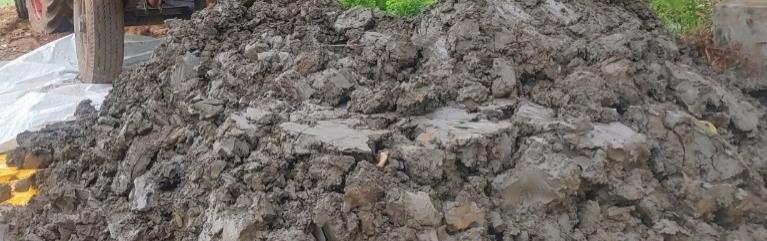
The marineclaywas collected from the Kakinada Sea PortLimited,Kakinada District,Andhra Pradesh,Indiaat
adepth0.5m-1.0m.Softmarineclaysareverysensitiveto changes in the stress system, moisture content and system chemistry of the pore fluid. Geotechnical engineers feel a necessity to improve the behavior of these deposits using any one of the available ground improvementtechniques.
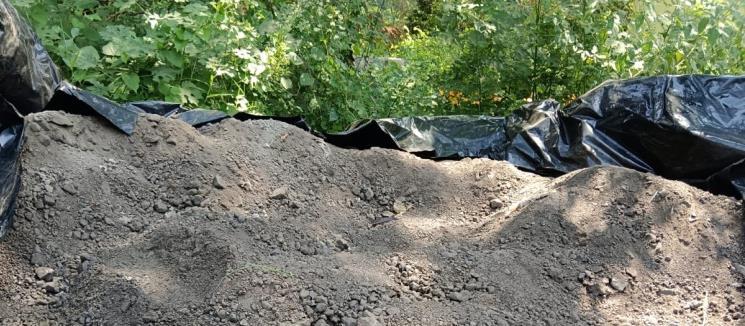
The Steel slag used in this study was bought from Rastriya I spat Nigam Limited (RINL), Visakhapatnam District,AndhraPradesh,India.Itisaby-productofsteel making,isproducedduring theseparationofthemolten steel from impurities in steel-making furnaces. The slag occursasa moltenliquidmeltandisa complexsolution of silicates and oxides that solidifies upon cooling. The steelslagwasproducedduringtheprimarystageofsteel production is referred to as furnace slag or tap slag. Therearemanygradesofsteelthatcanbeproduced,and the properties of the steel slag can change significantly witheachgrade.Gradesofsteelcanbeclassifiedashigh, medium, and low, depending on the carbon content of thesteel.High-gradesteelshavehighcarboncontent.To reducetheamountofcarboninthesteel,greateroxygen levelsarerequiredinthesteel-makingprocess
-3.1: EngineeringPropertiesofSteelSlag
International Research Journal of Engineering and Technology (IRJET) e-ISSN:2395-0056
Volume: 12 Issue: 06 | Jun 2025 www.irjet.net p-ISSN:2395-0072
5
Table-3.2 ChemicalPropertiesofSteelSlag S
1
2
3
4
5
6
7
Courtesy by Rastriya I spat Nigam Limited (RINL), Visakhapatnam
Geo-Composite:
Ageocompositeisamaterialorproductmadeupoftwo or more different types of geo synthetic materials that arecombinedtotakeadvantageoftheuniqueproperties of each component. Geo-synthetics are engineered materials used in civil and geotechnical engineering applications to improve the performance of the soil and other construction materials. Geo composites are typicallyusedinvariousconstructionandenvironmental applications to provide functions such as filtration, drainage, separation, and reinforcement. They are designed to address specific engineering or environmental challenges. Geo-composites designed specifically for drainage purposes. They can consist of various combinations of geo-synthetic materials to enhance drainage efficiency, such as geo-nets, geotextiles, and geo-pipes. These are used in applications like subsurface drainage in sports fields and highway edgedrains.
Table -3.3: PropertiesofGeo-Composite
S.No Property Value
1 Tensilestrength(CD)KN/m2 40
2 Tensilestrength(MD)KN/m2 44
3 Elongationatbreak(CD/MD),% 45/45
4 Massperunitareag/mm2 660
5 CBRpuncture,N 2150
6 Dynamicpuncture,mm 8
Tests were conducted in the laboratory on the expansive soil to study the behaviour of marine clay, when it is treated with admixtures. The following tests wereconductedasperIScodeofpractice.
1.SpecificGravityTest
2.GrainSizeAnalysis
3.DifferentialFreeSwellTest
4.AtterbergLimits
5.ModifiedProctorCompactionTest
6.CaliforniaBearingRatioTest
7.CyclicPlateLoadTest
:
AllthelaboratorytestswereconductedasperIScodeof practices. The detailed results are given in the following sections.
Table 3.4: EngineeringPropertiesofUntreatedMarine Clay
6 CompactionParameters
The results of the Differential free swell on the soil samplesina natural stateandwhen mixed withvarying percentagesofSteelSlag
International Research Journal of Engineering and Technology (IRJET) e-ISSN:2395-0056
Volume: 12 Issue: 06 | Jun 2025 www.irjet.net p-ISSN:2395-0072
Table 3.5: DFSValuesofMarineClayblendedwith differentproportionsofSteelSlag
Differential Free Swell
Chart -1:DFSValuesofMarineClaywhenTreated DifferentPercentagesofSteelSlag
Table 3.6: WL,Wp andIp ValuesofMarineClayblended withvaryingpercentageofSteelSlag
Chart -2:WL, WP &IP ValuesofMarineClaywhen TreatedDifferentPercentagesofSteelSlag
Table 3.7 CompactionPropertiesofMarineClayTreated withVaryingPercentageofSteelSlag
2025, IRJET | Impact Factor value: 8.315 |
Represents the MDD & OMC Values of Marine Clay TreatedwithVaryingPercentagesofSteelSlag
Volume: 12 Issue: 06 | Jun 2025 www.irjet.net
3. 8
S
1
0 1 2 3 4 5 6 7 8 9 10 11 12 13 14 15 16
Represents the CBR Values of Marine Clay Treated with DifferentPercentagesofSteelSlag
PHYSICAL
The results obtained from the laboratory and the field tests were presented in the previous chapter. This chapter summarizes the whole work carried out in the study, the conclusions drawn from the results and thescopeofthefurtherresearchinthisarea.
Conclusions Drawn from The Laboratory Investigations
The following conclusions are derived from the laboratory study to assess the optimum percentage of additive for improving the weak Marine Clay subgrade and chosen industrial waste i.e., Steel Slag also the laboratory cyclic load tests conducted on different flexiblepavementsconstructedondifferentsubgrades.
1. The soil chosen for the study was a weak Marine Clay classified as CH with high liquid limit and low strengthparameters.
2. The optimum dosage of steel slag for attaining the soakedCBRvalueof8%wasfoundtobe13%.
3. Itisnoticedfromthelaboratorytestresultsthatthe differential swell index of the marine clay has been decreasedby41.11%withtheadditionof13%steel slagwhencomparedwithuntreatedMarineclay.
4. It is observed from the laboratory test results that the liquid limit of the Marine clay has decreased by 18.31% with the addition of 13% steel slag when comparedwithuntreatedMarineclay.
5. It is observed from the laboratory test results that theplasticlimitof theMarineclayhasdecreased by 33.14% with the addition of 13% steel slag when comparedwithuntreatedMarineclay.
6. It is noticed that the plasticity index of the Marine clay has been decreased by 5.39% with addition of 13% steel slag when compared with untreated Marineclay.
7. It is observed from the laboratory test results that the Optimum Moisture Content of the Marine clay has decreased by 29.37% with the addition of 13% steel slag when compared with untreated Marine clay.
8. It is observed from the laboratory test results that the Maximum Dry Density of the Marine clay has decreasedby27.64%withtheadditionof13%steel slagwhencomparedwithuntreatedMarineclay.
International Research Journal of Engineering and Technology (IRJET) e-ISSN:2395-0056
Volume: 12 Issue: 06 | Jun 2025 www.irjet.net p-ISSN:2395-0072
9. ItisobservedfromtheresultsthattheC.B.R.valueof the Marine clay has been increased by 972.86% on addition of 13% steel slag when compared with untreatedMarineclay.
4.3
The following few points are listed for further investigation.
A. The long-term durability of the proposed techniqueinthepresentworkcanbestudiedby conducting on lane track studies for longer periodsofdryandwetseasons.
B. The treatment of marine clay can be tried with different additives and the same experimental programmed can be conducted to ascertain the effectivenessofdifferentadditives.
C. A comparative study of different alternative stabilizedsubbasescanbedonetoascertainthe useofdifferentwastesinbulkquantities.
1. A.K.Jain et.al (2000), Design, construction and performance of Flexible construction over pond ash fills,IndianHighways,March,2000.
2. Agarwala, V.S and Khanna, J.S (1969), Construction techniques for foundations of buildings on black cotton soils, proceedings of the symposium on characteristics and construction techniques in black cottonsoil,thecollegeofmilitaryEngg.,Poona,India.
3. Al Quadi, I.L(1994), Laboratory Evaluation of Geosynthetics Reinforced Pavement Sections, TRR1739,TRB,1994,pp.25-31.
4. Al-Tabbaa, A., 2012. General report session 3-soil mixing 1-soil stabilisation: Surface mixing and laboratory mixtures. Cambridge University, United Kingdom.
5. AmericanSocietyforTestingand Materials.Standard TestMethodforParticle-SizeAnalysisofSoilsD422–63WestConshohocken,Pa,Reapproved2002.
6. American Society for Testing and Materials. Laboratory Compaction Characteristics of Soil using Standard Effort (12,400 ft-lbf/ft3(600 kN-m/m3)) ASTM D 698 – 00a, Annual Book of ASTM Standards, WestConshohocken,Pa,1998.
7. AmericanSocietyforTestingandMaterials.Standard Test Method for Liquid Limit, Plastic Limit, and Plasticity Index of Soils. ASTM D 4318-95a, Annual Book of ASTM Standards, West Conshohocken, Pa, 1998.
8. AmericanSocietyforTestingandMaterials.Standard Test Method for Laboratory Compaction Characteristics of Soil Using Modified Effort (56,000 ft-lb/ft3, 2,700 kN-m/m3). ASTM D 1557-91, Annual Book of ASTM Standards, West Conshohocken, Pa., 1998.
9. AmericanSocietyforTestingandMaterials.Standard Test Method for One-Dimensional Consolidation PropertiesofSoilsASTMD2435–96,AnnualBookof ASTMStandards,WestConshohocken,Pa.1998.
10. Anandarajah. A and Chu. J (1997), Laboratory Determination of shear strength parameters for Marine clay, Journal of the Institution of Engineers, Singapore,Vol.14,No.3,pp39-46.
11. AnandJ.Puppala, Ekarin Wattanasanticharoen and Laureano R.Hoyos (2003), Ranking of Four Chemical and Mechanical Stabilization Methods to Treat LowVolumeRoadSub-gradesin Texas,Jr.-Transportation ResearchRecord,Vol.1819B,2003,pp.63-71.
12. Balasubramaniam, A.S., Bergado, D.T., Buensuceso, B.R.andYang,W.C(1989),Strengthanddeformation characteristicsoflimetreatedsoftclays,Geotechnical Engineering(AIT),20,1989,pp.49-65.
13. Balasubramanium et al., (2003) proved the effects of additives on Soft Clay Behaviour and concluded that the strength characteristics of the soft clays are improvedbyusingvariousadditives.
14. Bansal R.K., Pandey P.K. and Singh S.K(1996), Improvement of a Typical Clay for Road Sub-grades, Proc of National Conf. on Problematic Sub Soil Conditions, Terzaghi-96, Kakinada, India, 1996, pp. 193-197.
15. Bell, F., 1996. Lime stabilization of clay minerals and soils.Eng.Geol.,42(4):223-237.
16. Bell,F.G.,"EngineeringTreatmentofSoils",Published by E and FN Spon, an imprint of Chapmen and Hall, BoundaryRow,London,1993,p.302.
17. Brandl, H., 1981. Alteration of soil parameters by stabilization with lime. Proceeding of the 10th International Conference on Soil Mechanics and FoundationEngineering.Stockholm,3:587-594.
18. “California bearing ratio behavior of soil/fly ash mixtures, ” Journal of Testing and Evaluation, Vol. 29(2),pp.220-226.
19. Casagrande, A. “The structure of clay and its importance in Foundation Engineering” Journal BostonsocietyofCivilEngineers,Vol.19,1932