
International Research Journal of Engineering and Technology (IRJET) e-ISSN:2395-0056
Volume: 12 Issue: 07 | Jul 2025 www.irjet.net p-ISSN:2395-0072
International Research Journal of Engineering and Technology (IRJET) e-ISSN:2395-0056
Volume: 12 Issue: 07 | Jul 2025 www.irjet.net p-ISSN:2395-0072
1Pranshu Yadu, 2Anurag Wahane
1PG Scholar, 2Assistant Professor, Department of Civil Engineering, Shri Shankaracharya Institute of Professional Management and Technology, Raipur (C.G.)
Abstract: This study investigates the development of geopolymer concrete (GPC) using low-calcium (Class F) fly ash as theprimarybinder,withafocusonutilizinglocallyavailablematerialssuitableforambientcuringconditions.Multiplemix designapproacheswereexploredtoidentifythemosteffectiveformulationforproducinggeopolymerconcreteunderlocal environmental conditions.Thefreshpropertiesoftheprepared mixeswere evaluatedtoassessworkabilityand handling characteristics. Furthermore, compressive strength tests were conducted to compare the performance of different GPC formulations. The results demonstrate that with an optimized mix design, low-calcium fly ash-based GPC can achieve desirable mechanical properties and present an environmentally sustainable alternative to conventional concrete for structuralapplications.
Keywords: GPC, Low Calcium, Fly ash, Compressive, 1. Introduction
Thegrowingdemandforsustainableconstructionmaterialshasledtoincreasedinterestingeopolymerconcrete(GPC)as a potential alternative to conventional Portland cement concrete. Geopolymer concrete, produced by activating aluminosilicatematerialswithalkalinesolutions,offerssignificantenvironmentalbenefitsbyutilizingindustrialby-productssuch asflyash.Amongthese,low-calcium(ClassF)flyashisconsideredasuitableprimarybinderduetoitsfavorablechemical composition for geopolymerizationunderambientcuringconditions.Several studieshaveexplored differentapproaches for developing GPC using locally available materials to reduce dependency on imported resources and adapt to regional conditions. Research by Davidovits (1991) highlighted the environmental advantages of geopolymers, while subsequent works emphasized the influence of raw material selection, alkaline activator concentration, and curing methods on the performance of GPC. Hardjito and Rangan (2005) demonstrated that Class F fly ash-based GPC can achieve satisfactory mechanical properties when cured at ambient temperatures, making it practical for field applications. Fresh properties such as workability, setting time, and consistency are critical for ensuring the ease of placement and compaction of GPC. Studies indicate that mix design parameters, including activator ratio and aggregate selection, significantly impact these properties. Moreover, compressive strength remains the primary indicator of structural performance. Previous research hascomparedvariousgeopolymerformulations,showingthatoptimizedmixdesignscanachievestrengthcomparableto or even exceeding that of conventional concrete. In addition to technical performance, the economic feasibility of GPC is crucialforitspracticaladoption.Researchcomparingthecostofgeopolymerconcretetotraditionalconcreterevealsthat whileinitialmaterialcostsmayvary,thelong-termenvironmentalanddurabilitybenefitsoftenoffsetthesedifferences.
2. Research Objective
To explore multiple approaches to develop geopolymer concrete using local materials and select the most suitable one. Designalow-calciumflyash(ClassF)basedgeopolymermixthatcuresunderambientconditions.Assessfreshproperties andcompressivestrengthofdifferentgeopolymerconcretetypes.
3. Material & Methodology
Fly ash: Flyashprimarilycomposedofsilica(SiO₂)andalumina(Al₂O₃),isthekeybinderingeopolymerconcrete.ClassF fly ash, with low calcium content (CaO < 10%), is preferred for its superior long-term strength and durability. Typical chemical composition includes SiO₂ (50–60%), Al₂O₃ (20–30%), and Fe₂O₃ (5–10%). The fine particle size (mostly < 45 microns) enhances workability and reactivity. The amount of fly ash in the mix significantly influences the strength and settingpropertiesofgeopolymerconcrete.
Alkaline Liquid: It is typically a combination of sodium hydroxide (NaOH) and sodium silicate (Na₂SiO₃), activates the fly ash in geopolymer concrete. It dissolves silica and alumina, forming a binding alumino-silicate gel. The concentration of
International Research Journal of Engineering and Technology (IRJET) e-ISSN:2395-0056
Volume: 12 Issue: 07 | Jul 2025 www.irjet.net p-ISSN:2395-0072
NaOH (commonly 8–16 M) and the ratio of sodium silicate to sodium hydroxide significantly affect the workability and strengthofthemix.
Preparation of liquids: The alkaline liquid is prepared by mixing sodium hydroxide (NaOH) solution and sodium silicate (Na₂SiO₃)solution.NaOHpelletsaredissolvedinwatertoachievethedesiredmolarity(typically8–16M)andallowedto coolfor24hours.Itisthenmixedwithsodiumsilicatesolutionintherequiredratiojustbeforeaddingtothegeopolymer concretemix.
OPC: A small amount of Ordinary Portland Cement (OPC) is added to enhance early strength and improve setting time. Typically, 5–10% OPC by weight of the binder is used. The addition of OPC can improve the bonding and mechanical propertiesbutmayslightlyreducetheenvironmentalbenefitsofthemix.
GGBS: GGBSisaby-productofthesteelindustryrichincalcium,silica,andalumina.Itisoftenusedingeopolymerconcrete to enhance strength, durability, and setting time. Adding GGBS (10–40% by weight of binder) improves early strength developmentandoverallperformance,especiallyunderambientcuringconditions.
Lime Powder: Limepowder(CaO)isusedingeopolymerconcretetoenhanceworkabilityandearlystrength.Itreactswith silica and alumina to improve the binding properties. Typically, 10–30% lime by weight of the binder is added to modify settingtimeandstrengthdevelopment.
3.1 Preparation and Testing of Specimens
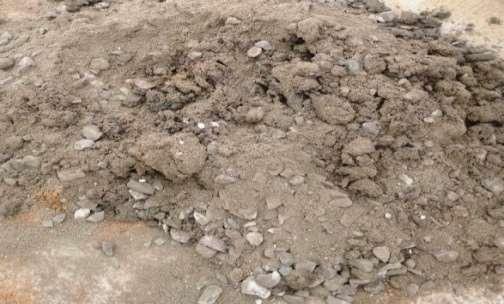
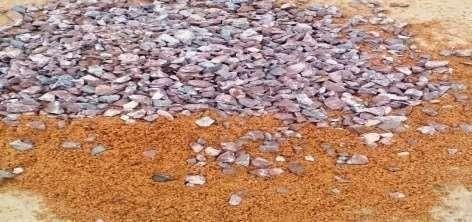
Fourgeopolymerconcretemixeswereprepared:thefirstwithflyashalone,thesecondwithflyashandOPC(10%,20%, 30%),thethirdwithflyashandGGBS(10%,20%,30%),andthefourthwithflyashandlimepowder(10%,20%,30%). NaOHsolutionwaspreparedonedaypriorforcompletedissolution.Locallyavailablecoarseaggregatesandgood-quality sandwereused.Foreachmix,100mm×100mm×100mmconcretecubeswerecastafterthoroughdryandwetmixing. Workabilitywasassessedusingaslumpconetest.Specimenswithonlyflyashasthebinderwereoven-curedat60°Cfor 24hours,whilethosecontainingadditiveswerecuredatroomtemperature.Compressivestrengthwastestedat7and28 days,andtheaverageofthreespecimenswasrecorded.
© 2025, IRJET | Impact Factor value: 8.315 |
International Research Journal of Engineering and Technology (IRJET) e
Volume: 12 Issue: 07 | Jul 2025 www.irjet.net
4. Results & Discussion
Table 1 Slump Values for Different Mixes (AAS/Binder Ratio = 0.35) Mixtures
Flyash+10%GGBS(G10) 19
Flyash+20%GGBS(G20) 17
Flyash+30%GGBS(G30) 16
Flyash+10%OPC(O10) 18
Flyash+20%OPC(O20) 17
Flyash+30%OPC(O30) 17
Flyash+10%Limepowder(L10) 18
Flyash+20%Limepowder(L20) 17
Flyash+30%Limepowder(L30) 16
Table 2 Slump Values for Different Mixes (AAS/Binder Ratio = 0.40)
Flyash+10%GGBS(G10) 18
Flyash+20%GGBS(G20) 16
Flyash+30%GGBS(G30) 17
Flyash+10%OPC(O10) 18 Flyash+20%OPC(O20) 16
Flyash+30%OPC(O30) 15
Flyash+10%Limepowder(L10) 17
Flyash+20%Limepowder(L20)
5. Conclusions
Theexperimentalresultsshowedthattheslumpvalueincreasedfrom55mmforflyash-onlymixesto70–75mmwiththe addition of GGBS and OPC, indicating improved workability. For compressive strength, the fly ash-only mix achieved 22 MPaat28days,whilemixeswithOPCreachedupto38MPa,GGBS-basedmixesachievedthehigheststrengthof42MPa,
International Research Journal of Engineering and Technology (IRJET) e-ISSN:2395-0056
Volume: 12 Issue: 07 | Jul 2025 www.irjet.net p-ISSN:2395-0072
Reference
1. Davidovits, J. (1991). Geopolymers: Inorganic polymeric new materials. Journal of Thermal Analysis, 37, 1633–1656. https://doi.org/10.1007/BF01912193
2. Hardjito, D., & Rangan, B. V. (2005). Development and properties of low-calcium fly ash-based geopolymer concrete CurtinUniversityofTechnology.Retrievedfromhttps://espace.curtin.edu.au
3. Mehta, A., & Siddique, R. (2016). An overview of geopolymers derived from industrial by-products. Construction and BuildingMaterials, 127,183–198.https://doi.org/10.1016/j.conbuildmat.2016.09.136
4. Singh, B., Ishwarya, G., Gupta, M., & Bhattacharyya, S. K. (2015). Geopolymer concrete: A review of some recent developments.ConstructionandBuildingMaterials, 85,78–90.https://doi.org/10.1016/j.conbuildmat.2015.03.036
5. Sathonsaowaphak, A., Chindaprasirt, P., & Pimraksa, K. (2009). Workability and strength of lignite bottom ash geopolymer mortar.JournalofHazardousMaterials, 168(1),44–50.https://doi.org/10.1016/j.jhazmat.2008.02.059
6. Bakharev, T. (2005). Geopolymeric materials prepared using Class F fly ash and elevated temperature curing. Cement andConcreteResearch, 35(6),1224–1232.https://doi.org/10.1016/j.cemconres.2004.06.031
7. Palomo, A., Grutzeck, M. W., & Blanco, M. T. (1999). Alkali-activated fly ashes: A cement for the future. Cement and ConcreteResearch, 29(8),1323–1329.https://doi.org/10.1016/S0008-8846(98)00243-9
8. Rangan,B.V.(2008). Fly ash-based geopolymer concrete.InProceedingsoftheInternationalWorkshoponGeopolymer CementandConcrete,AlliedPublishers,India.
9. Kumar,S.,Kumar,R.,&Mehrotra,S.P.(2010). Influence of granulated blast furnace slag on the reaction, structure and properties of fly ash based geopolymer cement. Journal of Materials Science, 45, 607–615. https://doi.org/10.1007/s10853-009-3934-5
10. Panda, S., & Sanjayan, J. G. (2017). Ambient cured fly ash geopolymer concrete: Effect of mix design parameters on strengthand workability.MaterialsandStructures, 50,1–12.https://doi.org/10.1617/s11527-017-1028-5
© 2025, IRJET | Impact Factor value: 8.315 | ISO 9001:2008 Certified Journal | Page212 and lime powder mixes showed moderate strength between 25–33 MPa. Thus, GGBS was found to be the most effective additiveforenhancingbothworkabilityandstrengthofgeopolymerconcreteunderambientconditions.