
International Research Journal of Engineering and Technology (IRJET) e-ISSN: 2395-0056
Volume: 12 Issue: 12 | Dec 2025 www.irjet.net p-ISSN: 2395-0072
International Research Journal of Engineering and Technology (IRJET) e-ISSN: 2395-0056
Volume: 12 Issue: 12 | Dec 2025 www.irjet.net p-ISSN: 2395-0072
Devyani D Sonawane1 , Mohammed Ishtiyaque2
1PG Student Dept. of Civil Engineering, MIT College of Engineering Chh. Sambhajinagar, Maharashtra, India
2Dr. Mohammed Ishtiyaque Dept. of Civil Engineering, MIT college of engineering chh. sambhajinagar, Maharashtra, India
Abstract - This study looks at bamboo's potential as a costeffective and environmentally friendly replacement for steel reinforcement in concrete structures. Three locally available bamboo species were evaluated for their mechanical properties and suitability for structural applications using tensile testing. To improve bonding performance and durability, each bamboosamplewas sand-coatedandtreated with a water-based epoxy resin prior to being embedded in concrete. Concrete beams reinforced with each species of bamboo were cast and tested under centre-point loading for seven, fourteen, andtwenty-eightdays.Steel-reinforcedbeams andregular concrete were testedfor comparison. Toevaluate the effect ofbambooreinforcementontheoverallbehaviourof concrete, workability and compressive strength tests were performedonall mixes. Comparingtheflexuralstrength,loadbearing capacity, and general performance of beams reinforced with various bamboo species was the main goal of the experimentalprogram. The findingsshowedthatthethree species' structural behaviour varied significantly. Among these, Solid Chewali/Chivari (Dendro calamus stocksii) outperformed the others in terms of strength and load resistance. This suggests thatit has a greatdealofpotential as a useful reinforcing material. The results show that solid chewali/chivari (Dendroca lamus stocksii) bamboo is an efficient, sustainable, and cost-effective reinforcement option that is appropriate for rural housing applications where accessibility, affordability, andenvironmentaladvantagesare crucial. Overall, the study supports the creation of substitute reinforcement techniques for environmentally friendly buildingandoffers insightfulinformationaboutthestructural behaviour of bamboo-reinforced concrete.
Keywords:Tensilestrength,compressionstrength, flexural strength, steel reinforced concrete, experimental investigation, bamboo reinforced concrete,UTM
Thegrowingenvironmentalandfinancialissuesfacingthe constructionsectorhaveraiseddemandforaffordableand environmentallyfriendlysubstitutesforsteelreinforcement. Due to its high tensile strength, quick renewability, and widespread availability, bamboo has drawn interest as a possible reinforcing material. However, more research is neededtounderstanditsstructuralperformanceinconcrete,
particularlyhowitbehavesundervariouscuringconditions. This study compares the performance of several locally accessiblebamboospeciestoascertainwhichisbestsuited for construction applications. It also looks at the flexural behavior of bamboo-reinforced concrete beams under differentcuringregimes.Thestudyintendstoofferuseful informationonhowtochooseeffectivebamboospeciesfor reinforcementandassesstheirfeasibilityasenvironmentally friendlysteelsubstitutes.
[1]Melocannabaccifera(Bamboomurali/mulifromassam)
[2] Dendrocalmus stocksii (bamboo solid chewali/chivari fromkonkan)
[3]Dendrocalmusstocksii(bamboohollowchewali/chivari fromkonkan)
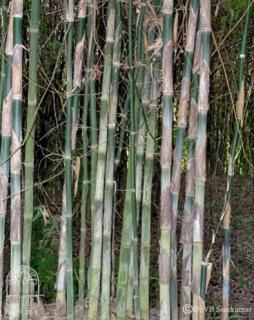
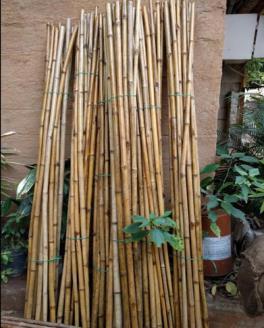
1. Dendrocalamus Stocksii (Solid and Hollow Chewali/Chivari – Konkan)
The Western Ghats of Maharashtra, Goa, Karnataka, and Kerala are home to this robust, clump-forming species of bamboo. It is found naturally in both solid and hollow varieties,withaheightof6–9mandaculmdiameterof2.5–4cm.Itiswidelyusedinconstruction,agriculturalsupports, andhandicraftsbecauseofitsexcellenttensilestrength,high durability, and quick growth. The species grows well in a variety of soil types and tropical climates, but it rarely producesseedsandneedscarefulclumpmanagement.
International Research Journal of Engineering and Technology (IRJET) e-ISSN: 2395-0056
Volume: 12 Issue: 12 | Dec 2025 www.irjet.net
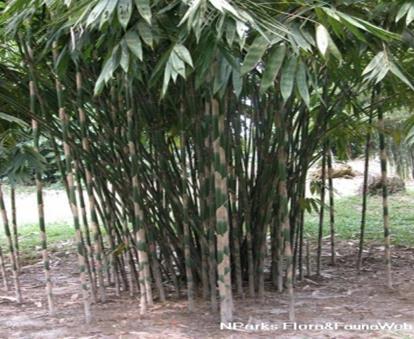
2. Melocanna Baccifera (Murali/Muli – Assam)
This tall species of bamboo is common in Northeast India and Assam. It has long internodes and thin-walled culms with a diameter of 3–7 cm, reaching a height of 10–20 m. Well-drainedsoilsandhumidtropicalclimatesareidealfor the species' growth. Every 40 to 50 years, it experiences gregariousflowering,whichresultsinmassivefruitclusters linked to the "Mau tam" phenomenon. M. baccifera is appropriateforlightconstruction,scaffolding,handicrafts, andthepaperindustrybecauseofitsflexibleandlightweight culms.Itsthinculmwallsandecologicalproblemsassociated with mass flowering make it less suitable for heavy structural use, despite its quick growth and strong soilbindingability.
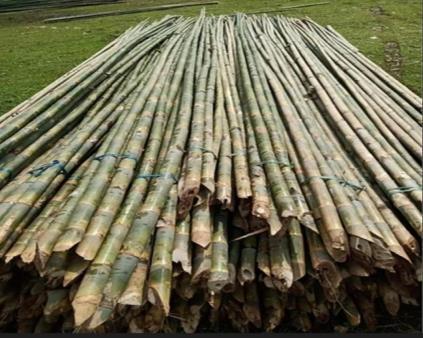
Toincreasedurabilityandstructuralperformance,anumber of preparation steps must be completed before using bamboo as reinforcement. To lessen moisture-related shrinkage and decay, mature culms between the ages of threeandfivearechosenandthoroughlydried.Toimprove resistance against insects and fungi, the bamboo is subsequentlytreatedwithpreservativeslikesmokecuring orboricacid-borax.Theculmsaresplitorshaped,andtheir surfacesaresmoothedforconsistentplacementinconcrete, dependingonthereinforcementdesign.Toimprovebonding andlessenwaterabsorption,aprotectivecoating typically bitumenorepoxy isapplied.Thetreatedbambooisthen cut to the proper length, secured with wire or clamps as needed, and placed in the mold with a suitable concrete cover.
Todeterminewhether bambooisa suitablesubstitutefor steelreinforcement,asystematicexperimentalmethodology isrequired.Thereisinsufficientdataonthetensilestrength ofbamboo species,theirbehaviourin reinforcedconcrete beams, and their comparison with conventional steel reinforcement. Therefore, this study adopts a structured methodology involving material testing, specimen preparation,bambootreatment,casting,andloadtestingto
p-ISSN: 2395-0072
obtain reliable and comparable results. Specifically, three locally available bamboo species will be compared by measuringphysicalproperties(density,moisturecontent), mechanicalproperties(tensilestrength,bendingstrength), bondbehaviorwithconcrete(flexuraltests),anddurability characteristics.Identicalbeamspecimenswillbecastusing each bamboo species as tension reinforcement and tested under flexure; results will be benchmarked against steelreinforced beams to provide a performance baseline. Statistical analysis of repeated tests will determine which localspeciesoffersthebestcombinationofstrength,bond, ductility,durability,andpracticality(availabilityandeaseof treatment) for structural use, leading to clear recommendationsforbamboo-reinforcedconstruction.
The purpose of this paper is to assess whether bamboo reinforcementforconcretebeamsisfeasible.Ontheother hand,steel-reinforcedconcrete'smechanicalcharacteristics and behavior have been extensively researched and documented. Thus, the purpose of this study is to make a preliminarycontributiontothecollectionofthemechanical characteristics and behavior of bamboo reinforced beams withregardtoparticularbamboospeciesinaccordancewith theiravailability.
Amit Singh et al. [2016] evaluatedbamboo'ssuitabilityfor use as concrete reinforcement. The IS code 10262-2009's designrequirementshavebeenmetbytheconcretemixfor M-25gradeconcrete.Twobeamsizes 150x150mmand 150x200x700mm,werechosenforthisproject.Forevery sizeofbeam,beamsmadeofsteelreinforcedconcrete(SRC), bamboo reinforced concrete (BRC), treated bamboo reinforced concrete (TBRC), and plain cement concrete (PCC)werecastandputthroughaflexuraltestingmachine. For every type of beam, there were six samples. For both sizesofbeams,theareaofreinforcementinsteelreinforced concretebeams(SRC),bambooreinforcedconcretebeams (BRC), and treated bamboo reinforced concrete beams (TBRC)remainedconstant.BRC,TBRC,andSRCbeamswere reinforced with Fe 415 grade steel and treated bamboo sticks, respectively. After being seasoned for two to three weeks, the bamboo sticks were utilised as reinforcement. According to the results of the flexural test, the steelreinforcedconcretebeamoutperformedtheothersinterms of flexural strength. In contrast to plain cement concrete beams,theflexuralstrengthofbambooreinforcedconcrete beams both treated and untreated showed a notable improvement.Forlightload-bearingstructureslikebeams and slabs for small panels, it is therefore advised to use bamboo-reinforcedconcretebeams.Itcanalsobeappliedto temporarystructures.
International Research Journal of Engineering and Technology (IRJET) e-ISSN: 2395-0056
Volume: 12 Issue: 12 | Dec 2025 www.irjet.net p-ISSN: 2395-0072
Sri murnidewi et al. [2017] studied the effect of adding pegs along the bamboo reinforcement to boost the tog capacity of bamboo reinforced concrete beams was the subject of his research. The beams' capacity and strain energyareincreasedbyinsertingpegs.Theaveragetensile stress of the reinforcement also increased. The collapse beganwithcracksonthetensileareaofthebeam,andasthe numberofcracksincreased,theyeventuallycontinuedatthe compressionarea.Therearesomelooseandtornpegs,but noneofthe24testobjectsdropthebeamreinforcement.
Syed Faraz Siddique et al.[2017] examinedthebehaviorof a composite material made of bamboo as a substitute for concrete reinforcement. Bamboo's mechanical characteristicsareexamined,andfundamentaltestssuchas water absorption tests with two different coatings and bamboo compression tests are performed. To lessen the amountofsteelreinforcementinabeamelement,bamboo culms are positioned beneath the reinforcement. The analytical results from the ANSYS software's analysis of bamboo-reinforcedbeamsarecompared.totheoutcomesof the experiment. 8.09% of the water was absorbed by the polyesterresin-coatedbamboo.Bamboowithoutknotshasa higher ultimate compressive strength than bamboo with knots, according to a comparison of the ultimate compressivestrength(N/mm)ofthetwotypesofbamboo.It wasdiscoveredthatbambooreinforcedconcretewithan8 mm diameter bar had a flexural strength of 38 MPa. In ANSYS software, the bamboo reinforced beam element's finalcrackingloadis26KN.
Ayesha Siddika et al. [2017] examinedthemechanicaland physical characteristics of bamboo reinforcements. Specimens of bamboo-reinforced concrete beams were tested with various ratios of reinforcement, and the load capacity, deflection, and failure patterns were noted. The flexuralstrengthofbamboo-reinforcedcolumnswasfound to be comparable to steel-reinforced concrete beams and sufficiently higher than that of plain cement concrete. Additionally,theultimatecompressivestrengthandfailure pattern were tested and observed in bamboo reinforced concretecolumnswithvaryingreinforcementratios.Itwas discoveredthattheconcretecrushingcausedallthecolumns tofailinasimilarmanner.Amongplaincementconcreteand steel reinforced concrete, bamboo reinforced beams and columnswithamoderatereinforcementratiodemonstrated thebeststrength-costratio,accordingtocostanalysis.
Abhijeet Deya et al. [2018] conductedtestsfortheuseof bamboo reinforced concrete beams, which are straightforward,effective,andaffordableforruralbuildings. This study compares the frictional characteristics of bamboo-reinforcedconcretebeams.Byrollingthebamboo reinforcementswithsand,G.I.wire,andcoir,thefrictional qualitiesof bambooreinforcedconcrete beamshave been attained. Steel stirrups make up the majority of the web material, which aids in preventing bamboo reinforced concretebeamsfromshearing.Thefour-postbendtestwas
used to test eighteen of these beams until they failed. For comparison,flexuralstrengthsat28,45,and60dayshave beentakenintoaccount.Beamswithlongercuringtimesand larger reinforcement sizes have been found to perform betteratfailurethanbeamswithshortercuringtimesand smaller reinforcement sizes. Furthermore, beams with G have been found to have higher bond stress. I rolled reinforcements made of bamboo. Therefore, it can be suggested that bamboo can serve as a good potential reinforcement for inexpensive housing and can easily replace steel, saving a significant amount of natural resources.
Mr. Mahesh Sadashiv Sarode et al. [2019] did investigation to determine design parameters and the possibility of using bamboo as reinforcement in concrete slabs to make up for the concrete's low tensile strength. Consideringthecost,steelreinforcementisaverysuitable materialtocomplementthelowtensilestrengthofconcrete. Incertainregionsoftheworld,peopleconstructtheirhomes entirely of mudbrick or concrete, which is extremely vulnerable.Bamboocouldbeusedtoreplacethereinforcing bar in concrete for less significant structures in order to solvetheseissuestensiontestwasperformedonabamboo specimen to assess these characteristics. This test yielded satisfactoryresultsregardingthetensilestrengthandstressstraincharacteristicsofbambooforuseasreinforcementin concrete.Thetensilestrength,proofstrength,andmodulus ofelasticitywerecalculatedfromthestress-straincurvefor bambooreinforcement.
Durga G et al, [2019] examined the use of bamboo reinforcementinM20gradeconcretebeamsandcylinders. Tests have been carried out to examine the impact of substituting bamboo for steel reinforcement. split tensile strengthandflexuralstrength.Wecancutconstructioncosts by twenty-five percent by using bamboo. Composite structural members made of bamboo concrete can offer more affordable, customized solutions for eco-housing projects.
R. Shivkumar et al. [2023] examinedtheimpactofusing bamboo instead of steel reinforcement in concrete. To demonstratebambooasabuildingmaterial,a200x500mm concrete beam is constructed, and 1 to 4% of the reinforcement area is made up of bamboo bars with a diameter of 20 mm. After 28 days of curing, a number of testswereconductedtodeterminewhetherbamboocould beusedasbuildingmaterials;theresultsshowedpromise. There are numerous tests in the study, such as flexural strength, tensile test, pull-out test, axial compression test, andratecomparison.Theultimatetensilestrengthofmild steelandbamboorangesfrom140N/mm2to280N/mm2, accordingtoexperimentalresearch.Only25%ofwearand tearwasfoundintheimpacttest.Additionally,comparedto steelreinforcedconcrete(SRC),bambooreinforcedconcrete (BRC) offered 50% axial compressive strength without alteringcrosssections.Nevertheless,BRCperformedbetter
International Research Journal of Engineering and Technology (IRJET) e-ISSN: 2395-0056
Volume: 12 Issue: 12 | Dec 2025 www.irjet.net p-ISSN: 2395-0072
thanSRCinthetensiletest,offering50%greaterresistance against tensile load. Rate analysis between SRC and BRC revealedthat,onasmallscale,itnearlycutcostsby
Laboratory experiment was carried on the specimen of Chivari (Dendrocalamus Stocksii) and Muli (Melocanna baccifera) Bamboo under the UTM (Universal Testing Machine).
3.1.1 Selection of bamboo
Initially, one-meter-long bamboo samples were gathered. Using a chisel, each sample was then divided into four sections,eachofwhichwasthenfurtherdividedinhalfto produceatotalofeightpieces.Atleasttwoorthreeknots werepresentineachsample.Achiselandothercarpentry toolswereusedtocarefullyremoveanysurfaceundulations.
3.2.1 Preparation of Bamboo
Cuttingwasthefirststepinthebamboopreparationprocess. Mature,threetofour-year-oldbambooculmswerechosen, cutintostripsofthenecessarylength,andthenodeswere trimmed to guarantee a uniform cross-section. The strips werethenseasonedbyair-dryingthemintheshadefortwo tothreeweekstominimizemoisturecontent,shrinkage,and dimensionalchanges.Followingseasoning,thestripswere coatedwithawater-basedepoxyandcoveredwithfinesand to improve bonding, waterproofing, and mechanical interlockwithconcrete,allofwhichincreaseddurability.To enhanceanchorageandlowerthechanceofpullout,grooves wereaddedattheendsofthecoatedstripsaftertheyhad beenallowedtoofullydry.
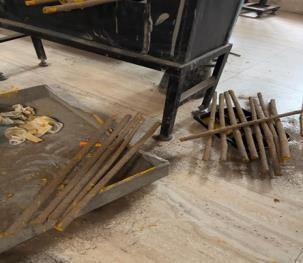
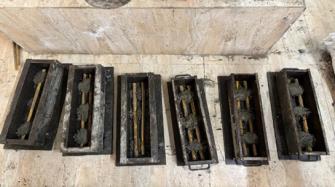
Twoofthe48-cm-longbambooreinforcementstripswere positionedineachbeam'stensionzone.Toconcentrateonly ontheflexuralbehaviorofthebeams,stirrupswerenotused andaclearcoverof20mmwaskeptonallsides.Toimprove anchorage,theendsofthestripswereroughenedandgiven nails or grooves. Three beams were made for each of the three bamboo species that were tested, for a total of nine beams.
Before casting, the treated bamboo strips were precisely positionedinsidethemold.Inordertostopanymovement duringthecastingprocess,stiffconcretewasthenpositioned andcompactedaroundthestrips.
3. Beam Casting
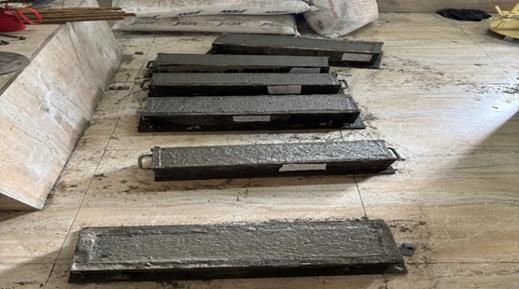
Themoldsusedtocastthe500×100×100mmbeamswere thoroughly cleaned and oiled to make demolding them easier.Forcasting,M20gradeconcretewithawater–cement ratioof0.50andamixproportionof1:1.5:3wasutilized.To ensureadequateconsolidation,atablevibratorwasusedto compacteachofthetwolayersofconcretethatwerepoured. Finally,atrowelwasusedtosmoothoutthetopsurface.

International Research Journal of Engineering and Technology (IRJET) e-ISSN: 2395-0056
Volume: 12 Issue: 12 | Dec 2025 www.irjet.net p-ISSN: 2395-0072
Thebeamswerecuredforseven,fourteen,andtwenty-eight days in water that was kept between twenty-seven and thirty degrees Celsius. The beams were taken out of the waterandtestedrightawaywhilestillwetaftereachcuring period.
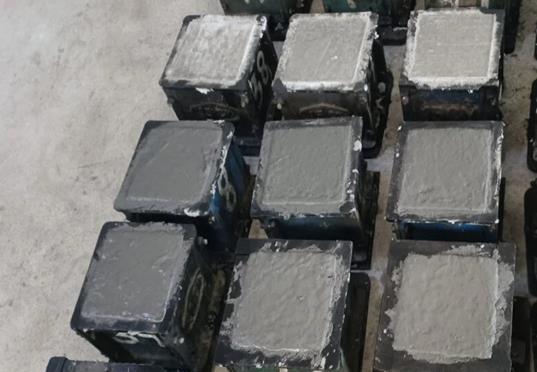
To guarantee that all ingredients such as cement, sand, andaggregates werethoroughlyblended,concreteforthe cubes was combined using a machine mixer. A consistent mixwasmadepossiblebythemixer'srevolvingdrumand blades. While continuous mixers provided concrete for larger needs, batch mixers were used to prepare smaller quantities.
Toensureeasydemolding,cleanmoldscoatedwithoilwere usedtopreparecubesmeasuring150×150×150mm.To eliminateairspacesandguaranteeadequateconsolidation, freshly mixed concrete was put into the molds and compactedusingatampingrod,usingatleast35strokesper layer. As soon as the concrete was mixed, the cubes were cast.
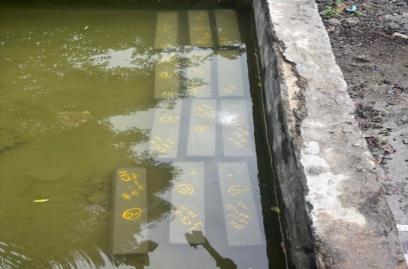
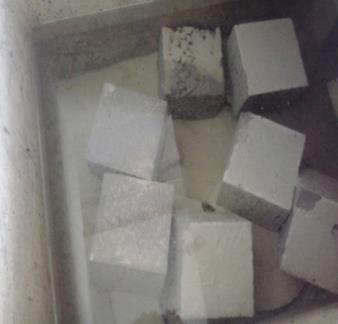
Followingcasting,thecubeswerekeptatatemperatureof 27°±2°Candarelativehumidityofatleast90%forafull day.Afterthat,theywereplacedineithercleanwaterora lime-saturated solution to cure; the water was changed every seven days to ensure ideal conditions. Tests of
compressive strength were performed after seven and twenty-eightdays.
4.1
Bamboo was subjected to a tension test to ascertain its tensile strength and axial loading behaviour. The bamboo culmswerecutintouniformstripsforthistest,andtheends were securely clamped to stop them from slipping when beingloaded.Tensileloadwasappliedgraduallyuntilfailure occurredwhilethespecimensweremountedinaUniversal TestingMachine.Toexaminethestress-strainbehaviour,the corresponding load and elongation were noted. The test helpedinunderstandingthepotentialstrengthofbamboo
BMH–Bamboomulihollow
BHC-Bamboohollowchivari
BSC-Bamboosolidchivari
Table-1: Tensiletestonbamboospecies
Thecapacityofamaterialtotoleratebendingforcesapplied perpendicular to its longitudinal axis is known as flexural
International Research Journal of Engineering and Technology (IRJET) e-ISSN: 2395-0056
Volume: 12 Issue: 12 | Dec 2025 www.irjet.net p-ISSN: 2395-0072
strength.Concrete'sflexuralstrengthiscalculatedusingthe formula.
f=PL/(bd²),
Where,
fistheconcrete'sflexuralstrength(inMPa),
Pisthefailureload(inN),andListhebeam'seffectivespan
4.1.1 A 7-day flexural strength test on a bambooreinforced beam
Table-2: Flexuralstrengthtestfor
4.1.1 A 28-day flexural strength test on a bamboo-reinforced beam
Table-4: Flexural strength test for seven days on a beam reinforcedwithbamboo
4.1.1 A 14-day flexural strength test on a bamboo-reinforced beam
Table-3: Flexuralstrengthtestforsevendaysonabeam
Acubecompressiontestisperformedonstandardcubesof size 150 x 150 x 150 mm after 7,14 and 28 days of immersion in water for curing The following formula is usedtodeterminethespecimen'scompressivestrength.
F=P/A
Where
A is the estimated cross-sectional area in mm, P is the maximum applied load by N, and F is the specimen's compressivestrengthinMPa.
Table-4:Compressiontestoncubes
International Research Journal of Engineering and Technology (IRJET) e-ISSN: 2395-0056
Volume: 12 Issue: 12 | Dec 2025 www.irjet.net p-ISSN: 2395-0072
SolidChewalibamboooutperformedtheothertwospecies by roughly 35% out of the three locally available bamboo speciesthatweretested.Itcontributedtobeamspecimens that carried greater loads and demonstrated enhanced flexural strength, as well as superior tensile strength. Additionally, the solid chewali-reinforced beams showed more stable failure modes and more controlled crack patterns. Furthermore, following treatment, this species exhibitedimprovedbondingbehaviorwithconcrete.Among thetestedspecies,SolidChewaliwasfoundtobethemost dependable reinforcement material due to its improved mechanicalstrengthandfavorablestructuralbehavior.Its characteristics imply that it might be particularly appropriate for low-cost and rural housing applications where accessibility and affordability are crucial. Solid Chewalibambooisaviableandefficientsubstituteforlight reinforcement in non-critical concrete elements, even thoughitcannotcompletelyreplacesteelinheavystructural applications.
1) Amit Singh, Shyam Kishor Kumar, A K Singh, ‘Experimental investigation on flexural strength of bamboo’InternationalJournalofInnovativeResearchin Science, Engineering and Technology (An ISO 3297: 2007CertifiedOrganization)Vol.5,Issue5,May2016
2) SyedFarazSiddique,PriyankaS,NishanthL,“behaviour of reinforced cement concrete beam with bamboo as partial replacement for reinforcement”, International Journal of Civil Engineering and Technology (IJCIET) Volume8,Issue9,September2017
3) Sri Murni dewi et al’, “Increasing bamboo reinforced concrete beam performance by using pegs along reinforcement”, International journal of civil engineeringandtechnology10,2017
4) Ayesha Siddika,Md.AbdullahAl MamunandMd.Abu BakarSiddiqueEvaluationofbambooreinforcementsin structural concrete member, Journals of construction engineeringandprojectmanagementvol7.Issue4,2017
5) AbhijeetDey, NayanmoniChetiabExperimentalstudyof bamboo reinforced concrete beams having various frictionalpropertiesvol5,issue1,2018
6) Mr. Mahesh Sadashiv Sarode, Mr. Sumeet Gannure AssistantProfessorDholePatilCollegeofEngineering, Pune,‘Designparametersofbambooreinforcementone wayslab”IJEDR,Volume7,Issue22019
7) DurgaG,R.G.DhilipKumar,B.JyothiPandurangaPrasad, CBUjwal,“Comparisonincharacteristicsofbambooand steelreinforcement”IRJETjournal,vol6,issue4,2019
8) R. Shivkumar et al’, “Experimental analysis on the feasibility of bamboo reinforcement in concrete mix designandcomparisonwithsteelreinforcedconcrete”, AdvanceinMaterialScienceandEngineering,2023