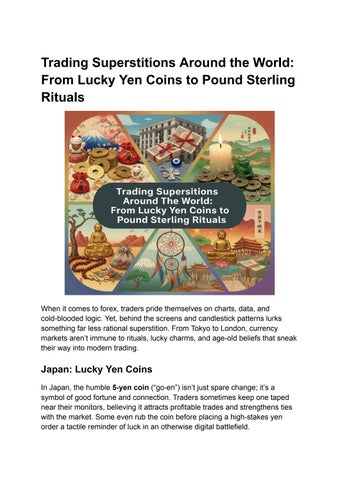
Trading Superstitions Around the World_ From Lucky Yen Coins to Pound Sterling Rituals

Page 1


Trading Superstitions Around the World: From Lucky Yen

Coins to Pound Sterling Rituals

When it comes to forex, traders pride themselves on charts, data, and cold-blooded logic. Yet, behind the screens and candlestick patterns lurks something far less rational superstition From Tokyo to London, currency markets aren’t immune to rituals, lucky charms, and age-old beliefs that sneak their way into modern trading

Japan: Lucky Yen Coins

In Japan, the humble 5-yen coin (“go-en”) isn’t just spare change; it’s a symbol of good fortune and connection Traders sometimes keep one taped near their monitors, believing it attracts profitable trades and strengthens ties with the market Some even rub the coin before placing a high-stakes yen order a tactile reminder of luck in an otherwise digital battlefield.

Japan – The Lucky Yen Coin

● 5-yen coin = symbol of good fortune (“go-en”).

● Traders tape one to their desk or screen

● Ritual: rub the coin before making a big yen trade.

London: Sterling Rituals and the “Full English”

The City of London, home of pound sterling trading, carries its own quirks Veteran traders joke that a Full English breakfast on Mondays sets the tone for a strong trading week Others swear by wearing the same cufflinks or tie whenever GBP/USD hits a winning streak. These rituals may sound quaint, but for those caught in volatile Brexit-era markets, any edge rational or not, was worth clinging to

London – Sterling Rituals

● Monday Full English breakfast for a strong week

● “Lucky cufflinks” or a tie repeated on GBP winning streaks.

● Superstition peaked during Brexit chaos - any charm was welcome

China: Numbers and the Forex Feng Shui

In China, numerology casts a long shadow over trading desks. The number 8 symbolizes prosperity, while 4 is avoided like a market crash, as it sounds like

the word for “death ” Some Chinese traders set stop-loss levels or account balances ending in “8” to attract good fortune. Screensavers with flowing water or koi fish, both feng shui symbols of wealth, are surprisingly common in trading offices.

China – Feng Shui & Numbers

● 8 = prosperity → account balances ending in 8 feel “safe ”

● 4 = death → avoided at all costs.

● Screensavers: koi fish, flowing water = wealth flow

Middle East: Coffee, Prayer, and Patience

In parts of the Middle East, forex trading is often intertwined with ritual coffee breaks Strong Arabic coffee isn’t just for stamina; it’s believed to sharpen focus and clear the mind before making big trades. Some traders also begin their sessions with a short prayer for patience, a virtue highly prized in markets where holding positions calmly can mean the difference between ruin and reward.

Middle East – Coffee & Patience

● Strong Arabic coffee before trading session.

● Short prayer for calmness and patience

● Ritual designed to keep emotions steady in volatile markets.

New York: Wall Street’s Quirky Charms

Even Wall Street, the epicenter of hard-nosed capitalism, has its share of rituals. Some traders won’t start the day without touching the Charging Bull statue near Bowling Green, hoping to channel its aggressive energy Others keep a lucky dollar bill framed above their desk, the first profit they ever made, serving as both motivation and superstition rolled into one

New York – Wall Street Charms

● Touch the Charging Bull statue before the market opens.

● Keep a framed first profit dollar as a lucky charm

● Some won’t trade without their “winning pen” or desk talisman.

Why Superstitions Thrive in Trading

In a market worth trillions, where algorithms battle algorithms, why do intelligent traders still cling to rituals? The answer lies in psychology. Superstitions give traders a sense of control in a game that feels unpredictable and chaotic. They act as mental anchors, calming nerves and boosting confidence, sometimes making all the difference between hesitation and decisive action.

Final Word

Whether it’s a yen coin, a lucky tie, or numbers steeped in cultural meaning, trading superstitions remind us that markets are as human as they are mathematical After all, even the sharpest chartists sometimes look for comfort in a charm, a ritual, or a quiet wish whispered before clicking “buy.”

In the end, perhaps superstition itself is the greatest currency of all belief

Turn static files into dynamic content formats.

Create a flipbook
Issuu converts static files into: digital portfolios, online yearbooks, online catalogs, digital photo albums and more. Sign up and create your flipbook.