Executive

Executive
SBB’s Deputy Chief Executive Officer on money management, access to finance and why financial literacy could be the key to a successful business
two creatives turned anime fandom into one of Guyana’s most talked-about creative enterprises
By Shaniya Harding
WHAT began as a shared love for anime between a young creative couple has grown into one of Guyana’s most recognisable event organisers. Through Sozo’s Enterprise, and their flagship event Mars, and a slate of creative pop culture events, George Jacobs, along with wife and business partner Marissa, have built a business rooted in creativity, community and innovation.
Speaking candidly to the Pepperpot Magazine about their journey, Jacobs reflected on the origins of the enterprise, the challenges of operating in an uncharted market in Guyana, and the vision driving Sozo’s continued expansion.
The love and support that Sozo’s Enterprise is known
for today were sparked by its first-ever anime convention, Mars, in 2022. The event saw more than six hundred patrons show up to support, and that support has been growing ever since.
The business does a lot more than niche events and conventions, however. As Jacobs told Pepperpot Magazine, Sozo’s Enterprise provides event management, animation, and artwork.
“Our business has a few sectors. We are into event management, which involves hosting and planning events.
We are also into arts and animation. We have an animation section with our illustrator, who does all the animations and artwork. Some of the artwork we have done recently includes every single Mars badge or character you would have seen, all made by our illustrator,” he shared.
While Sozo’s offers and has pioneered a wide variety of events across various sections of pop culture, from themed garden get-togethers to unique and captivating parties, anime is still the core of the enterprise. As Jacobs shared, the husband-and-wife duo, now 26, launched the business almost 6 years ago, seeking to create a community of fellow anime lovers. That community garnered support, which kick-started the idea for Sozo’s Enterprise. “What really got us into this is that my partner and I are huge anime fans. Growing up, people often looked at us as being weird for liking cartoons so much. It felt like we could not showcase the thing we loved. After learning about conventions and realising there were other people like us who enjoyed the same


things, we decided to take a big step and try to host our own convention here,” he said. “It was out of love for anime and the community that we decided to do this. The business itself stemmed from that desire to provide for the community.”
Established in passion for the art form and creativity of anime, Jacobs and his partner have been keen to ensure that their products, events and services stay affordable, while being made and produced to the highest quality possible. “Our business was created to be a bridge of affordability and quality between the anime community and the general public.
That was our initial mindset and it remains our mindset today. It is still the goal we continuously pursue. We try to host events at an affordable price and give people the most they can get for an extremely affordable cost,” he said. This, Jacobs shared, was the mindset that started the business and has kept it going. “We realised
people wanted anime merchandise but could not afford it because it was being sold at very high prices. We decided that we could make items ourselves. My partner is very artistic and creative and was able to create giant wall stickers and various character designs. That is really how the soul of the enterprise started.”
Like so many entrepreneurs, Jacobs and his partner, Marissa, faced the biggest challenge in developing the business in their own selfdoubt and fear. “Our biggest challenge was ourselves. We constantly thought that nothing would sell, that nobody would want it, and that people would look down on it because it was so niche and not common in Guyana.
When we made our first sale, which came from friends and family, it gave us a huge spark.” Holding on to that spark, the duo pushed forward, learning the ins and outs of the business along the way. “At that time, we also lacked knowledge about
sourcing materials, importing them to Guyana, and understanding what supplies were best.
We started connecting with other artists in Guyana, who guided us and helped us develop further. Eventually, we were able to realise a vision that was larger than what we initially imagined.”
That vision is now much more of a reality than ever before, but it has also been a rollercoaster, says Jacobs. Opening a business in an uncharted niche as young first-time entrepreneurs in Guyana is challenging. As he explained, the field can be hectic, and the supply and logistics of one of Guyana’s most unique ventures come with a unique host of challenges.
“The journey has been a complete rollercoaster. We are often our own worst enemies, constantly comparing ourselves to other businesses that may not even be in our niche. We look at numbers, influence and progress and TURN TO PAGE VII
By Shaniya Harding
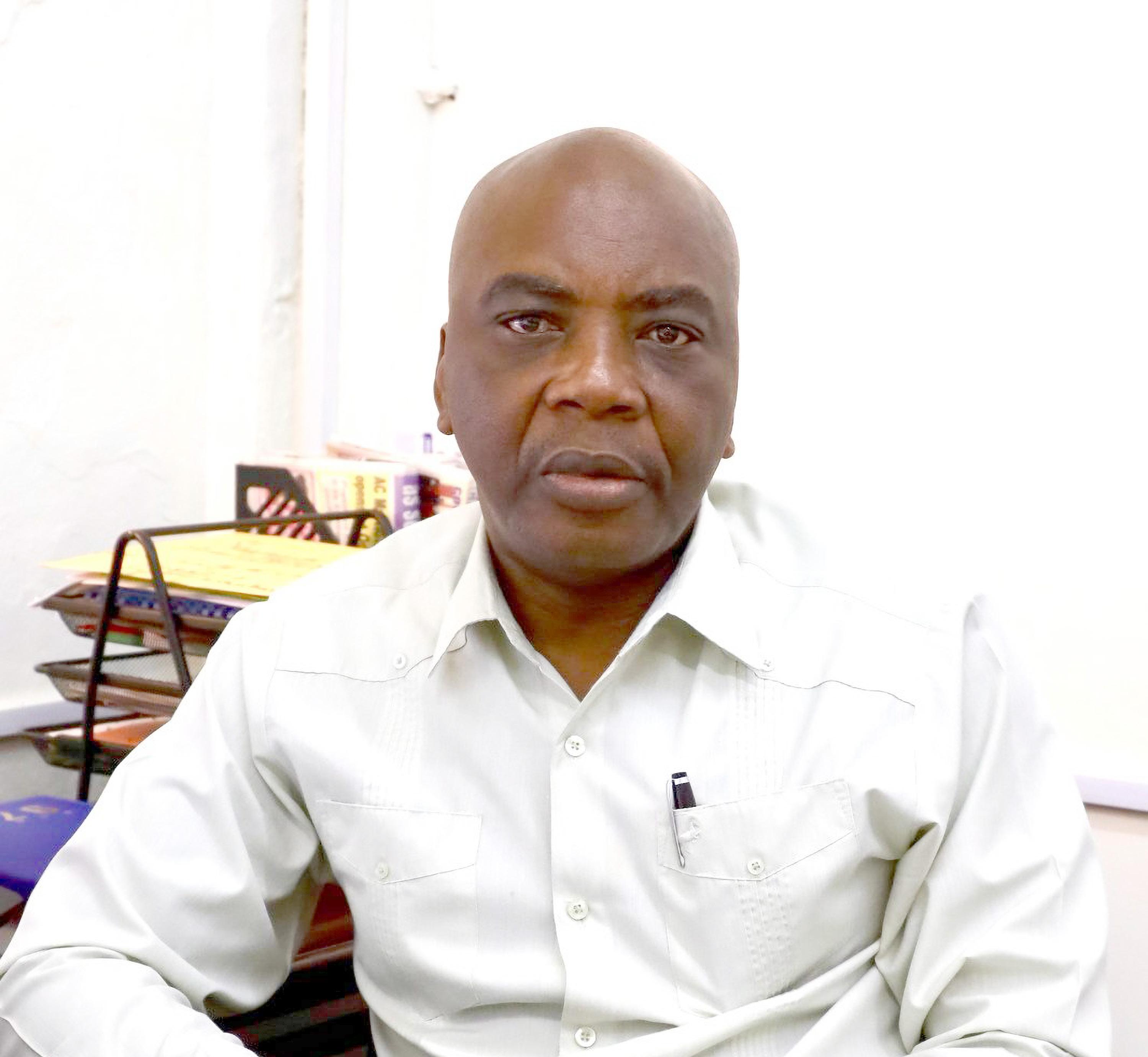
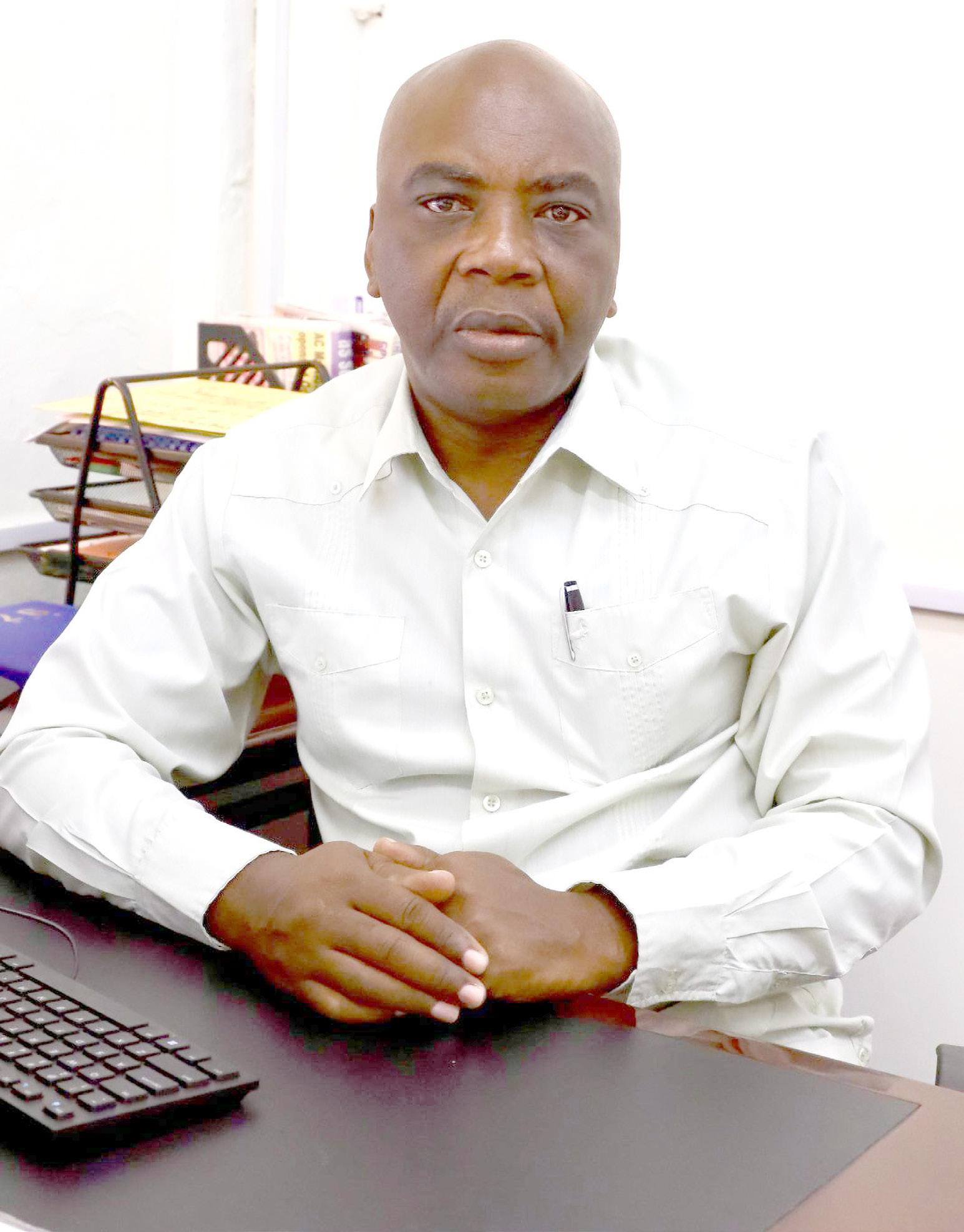
IN a business environment where many entrepreneurs learn by trial and error, financial literacy often determines which businesses survive and which ones struggle to grow. For Deputy Chief Executive Officer of the Small Business Bureau, Simon Pollard, understanding money management is not just a technical skill but a necessary foundation for small businesses hoping to evolve, remain compliant and access financing.
From budgeting and taxation to reserves and financial planning, Pollard sat down with the Pepperpot Magazine this week to outline some helpful tips for small business owners in Guyana, how financial literacy could help you overcome the “guava season” and why equipping entrepreneurs with practical financial knowledge is now more critical than ever as Guyana continues its upward trajectory.
This year marks a decade since Simon Pollard, now Deputy Chief Executive Officer of the Small Business Bureau, first entered the Bureau. Today, he is one of the most well-known, go-to persons within Guyana’s business sector. After studying accounting at the University of Guyana, Pollard began his career as an accounting clerk, then taught for almost a decade before entering the corporate world as a finance officer at the Bureau. Today, his role has changed quite a bit, as he and his team work to fulfil a very impressive mandate to develop the business sector’s biggest player: small and medium-sized enterprises (SMEs). “At the Small Business Bureau, we are mandated to develop the small business sector in Guyana in accordance with the Small Business Act,” he said. Pollard’s career has taken him to work in almost every facet of business, education, training, and finance, and throughout those years, there have been a number of persistent challenges within the
why financial literacy could be the key to a
small business sector here in Guyana and internationally, with the biggest being finance.
There is a simple solution to accessing finance, however, financial literacy. Pollard says understanding finance is one of the key factors in an entrepreneur’s ability to access finance. “One of the things affecting small businesses globally is access to finance. Financial literacy is essential for small business owners and managers to ensure their businesses remain financially sound and operational.
Financial literacy is being knowledgeable about money management and applying that knowledge to make sound financial decisions,” he shared. “As an entrepreneur, if you do not have this skill, it is one you must develop because it is what will keep you going. It allows you to adjust your methods and strategies, especially when accessing finance, which is often difficult for small businesses.”
Budgeting is a common term in and out of the business world, but Pollard says any successful business seeking to succeed should go a step beyond simply budgeting and practise financial planning. As he explained, while budgeting helps businesses plan shorter-term goals to ensure the business stays alive and afloat, financial planning assesses the business’s longer-term goals: new markets, expansion, and weaknesses. “Budgeting focuses on planned income and planned expenses.
Many small business owners confuse budgeting with financial planning, but they are different. Budgeting is short-term, while financial planning is long-term,” he added. “Financial planning sets long-term financial goals over five to ten years, while budgeting deals with planning expenses for the next month, quarter, half-year, or year.” The two do go hand in hand, Pollard added. “Budgeting assists in financial planning because you budget
to make a surplus, not a loss. That surplus is then allocated towards financial goals, reserves, and reinvestment into the business.”
Guyana is in the height of what many Guyanese have coined the ‘guava season’, that seemingly endless period after the holidays and before payday, when many people find themselves in a pinch.
Accountants call this post-holiday cash shortfall, and this is why SMEs should create and utilise reserves and avoid practising drawings. In business, reserves are funds set aside for rough financial periods, while drawings refer
to anything a business owner takes from the business for personal use, whether cash or goods. Many small businesses are hit particularly hard by this rough period and lack reserves, leading them to draw down.
This practice, Pollard says, could be stifling businesses. “In business, reserves are funds set aside for specific events or activities. Having reserves keeps a business in line and prepares it for difficult periods, or guava season as they call it here in Guyana,” he said. “Drawings reduce business capital and limit growth opportunities.
Business owners must separate themselves from the business entity. A business is a legal entity, and the owner is a separate person. Business owners should pay themselves a salary and stick to it once the business can support it, ensuring financial stability and growth.”
Taxation is also an area in which many small businesses struggle to find their footing.
But according to Pollard, taxation for small businesses does not have to be complex, troublesome or seen as a threat to your business.
“Many small businesses are unaware that taxes are based
on profit, not income or sales. A business only begins paying taxes when its monthly profit exceeds $130,000. If a business owner has children under the age of 18, the tax threshold increases by $10,000 per child per month. With three children under 18, the threshold moves to $160,000 per month before any tax is payable,” he further noted. “However, even if a small business does not meet the tax threshold, it is legally required to submit an annual tax return. This ensures tax compliance and allows businesses to access tax compliance certificates when bidding for government opportunities.”
While there are countless other skills a business owner could learn in the field of financial literacy, Pollard emphasises that these simple steps could have a major impact on a business, especially in an economy as rapidly developing as this one. “Financial literacy is critical for small businesses to think outside the box and take advantage of opportunities. With Guyana’s economy poised for upward mobility, small business owners must be financially equipped to tap into emerging opportunities,” Pollard shared.
The Bureau is a leader in the growing number of organisations that could help kick-start businesses. “The Bureau provides business advisory services through trained business advisors who offer one-on-one guidance. Advice is free of charge, and business owners are not obligated to follow it.
The Bureau also provides access to a resource centre, digital readiness training, labelling support and other capacity-building programmes to assist small businesses.” Business in Guyana is thriving more than ever, with more Guyanese stepping up to the mantle to innovate and create, and with financial literacy and a little consultancy, small entrepreneurs can ensure their businesses grow, develop, and expand.
By Michel Outridge
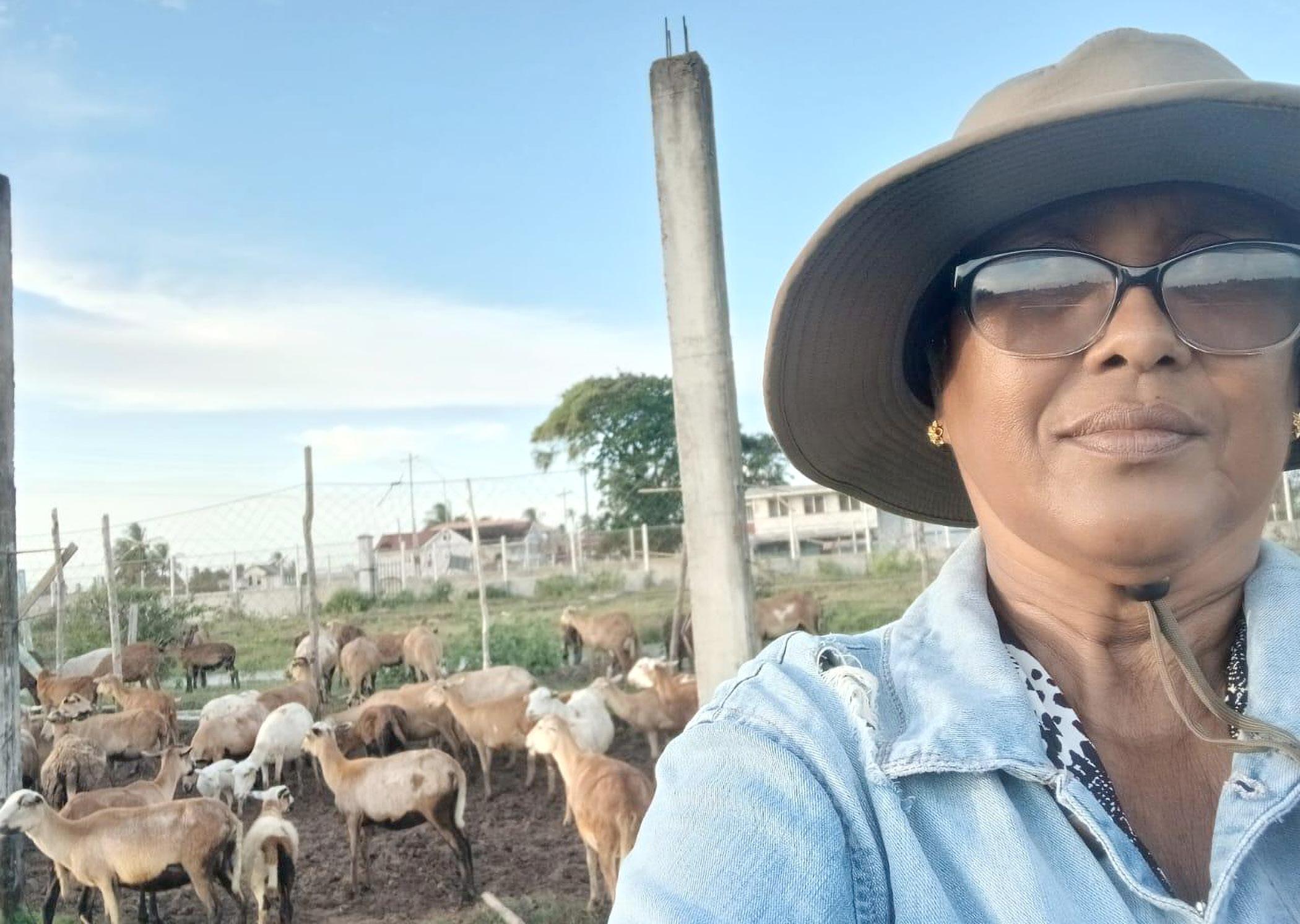
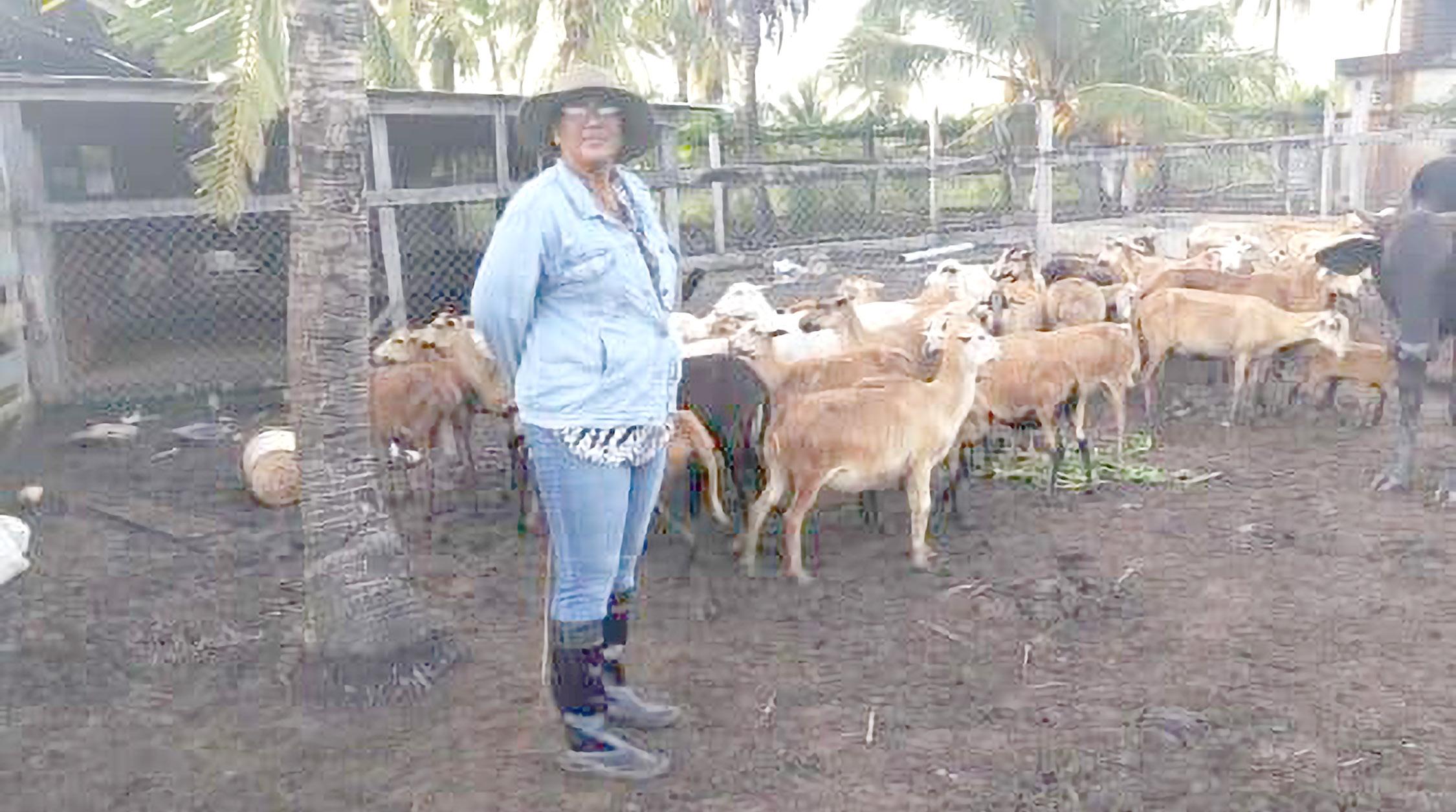
FOR Monica Evans, farming was never part of a carefully charted life plan. It emerged instead from grief, necessity and a quiet determination to rebuild meaning after loss.
Five years ago, with no formal training in animal husbandry and little family encouragement, Evans made the unconventional decision to enter livestock farming as her primary livelihood. Today, at 59 years old, the Armadale, West Coast Berbice resident stands as a compelling example of how resilience, state support and adaptive learning are reshaping the face of agriculture in Guyana, particularly for women in a traditionally male-dominated sector.
Evans, a mother of three, was once a housewife searching for purpose beyond the confines of domestic life. The deaths of her mother and later her nephew marked a turning point. “When my nephew died, it was the last straw,” she reflected. Seeking a way to remain mentally and emotionally engaged, she began purchasing livestock, initially
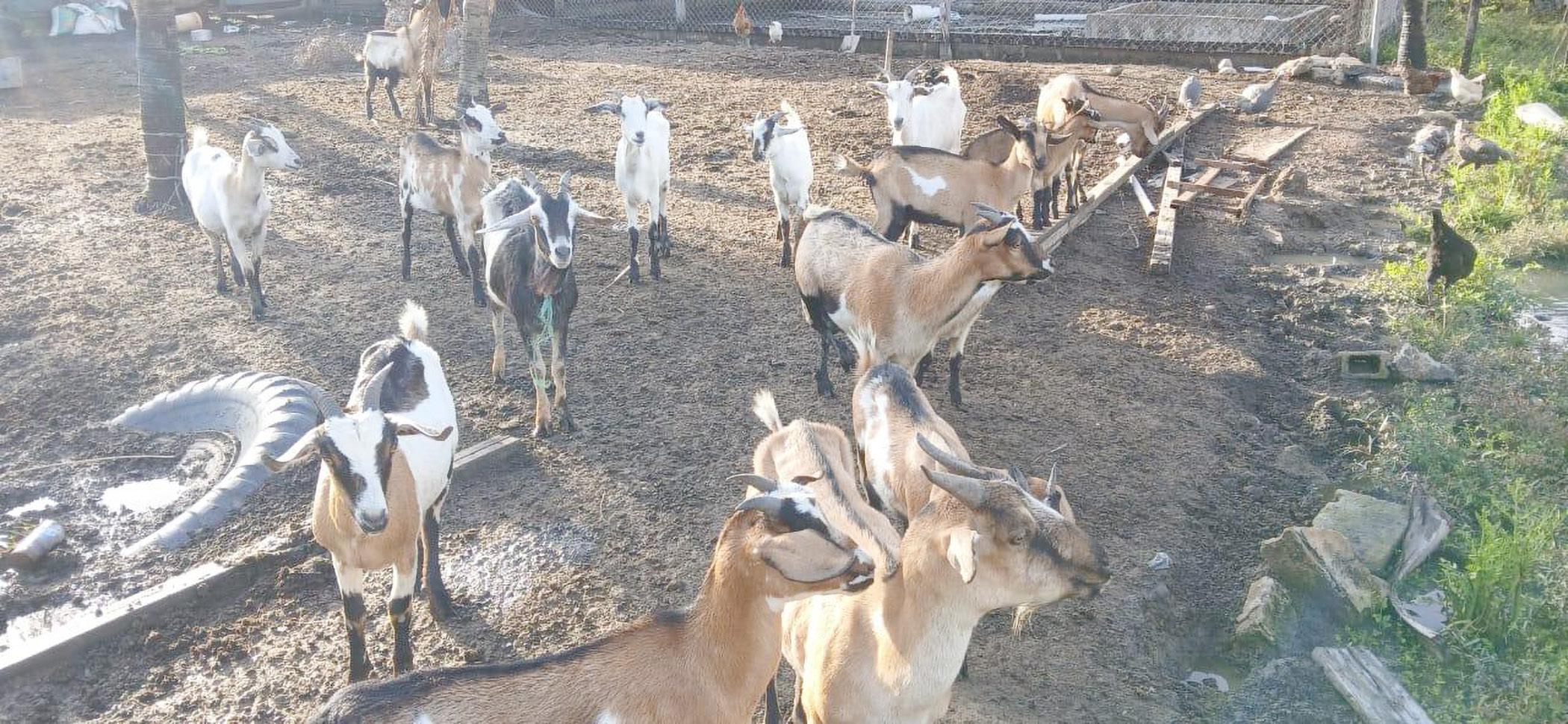
five sheep bought from a friend despite knowing little about their care. That modest beginning quickly expanded into a growing flock as she acquired more sheep, goats and eventually cattle and poultry.
Her early years in farming, however, were defined
as much by hardship as by hope. An outbreak of disease devastated her goat herd, killing nearly three-quarters of the animals she had painstakingly accumulated. The loss was profound. Discouraged and emotionally drained, Evans considered abandoning farming alto -
gether, even contemplating selling off what remained of her livestock, at the urging of family members. Yet, in a defining moment of resolve, she chose instead to rebound.
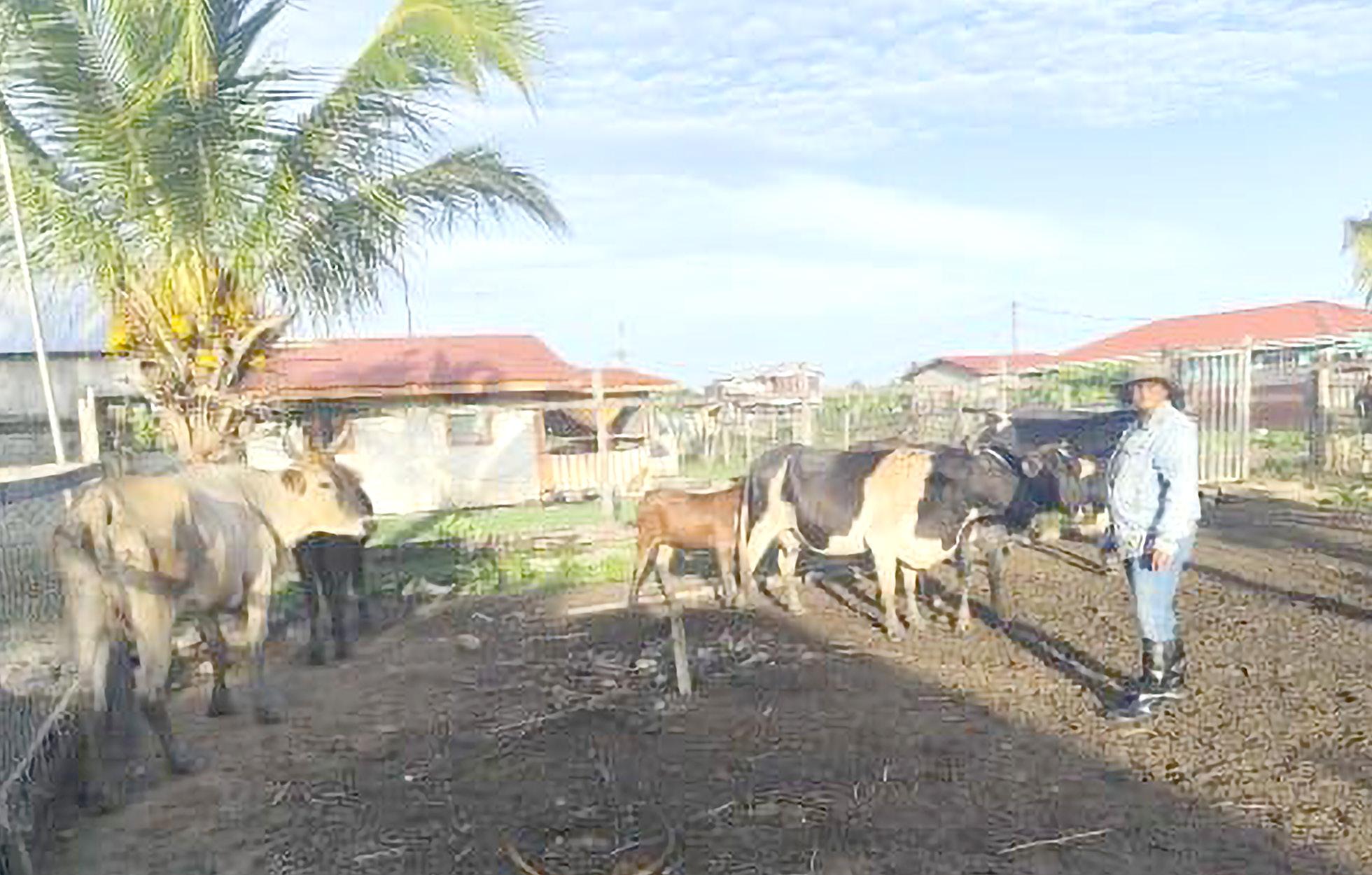
That decision marked the beginning of a more informed and structured phase of her farming journey. Today, Evans manages a diverse operation that includes approximately 74 sheep, 29 goats, six cows, four calves, turkeys, creole chickens, ducks, guinea birds and black giant poultry. Her cattle are reared strictly for breeding, reflecting a strategic shift towards sustainability rather than short-term gain.
Central to her progress has been the support of Guyana’s evolving agricultural policy framework, particularly initiatives aimed at
strengthening livestock production and empowering small-scale and women farmers. Through the Ministry of Agriculture (MoA) and its implementing agency, the Guyana Livestock Development Authority (GLDA), Evans has received technical, material and advisory assistance that has significantly improved her capacity as a farmer.
She credits the Region Five Livestock Extension team, led by Coordinator Dr Joel Dilchand, for boosting her confidence and competence. Regular farm visits by extension officers have guided on animal nutrition, disease management and overall husbandry practices, transforming what was once trial-and-error learning
TURN TO PAGE XI
By Michel Outridge
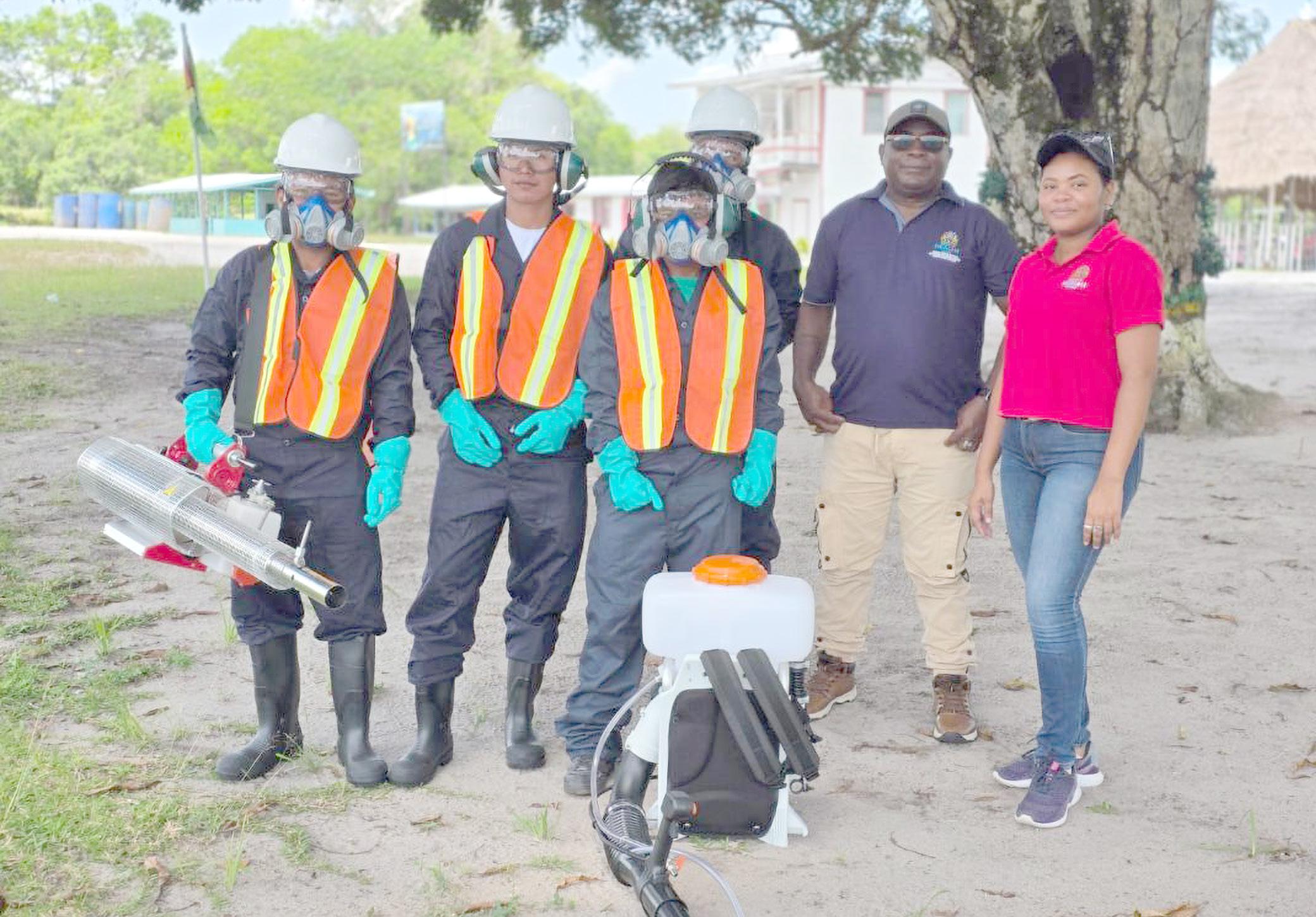
DAVID Selwyn Allister Williams does not describe his life in superlatives. Yet, when viewed in full, his journey from a labourer in the Malaria Unit to Chief Inspector of Vector Control Services (VCS) within Guyana’s Ministry of Health stands as a compelling testament to perseverance, public service and quiet leadership.
Born on June 14, 1971, at Lot 9, Section ‘C’, Christianburg, Wismar, Linden, Williams grew up in a large, close-knit household as the 10th of 13 siblings. His childhood was shaped by discipline and structure: school during the week, homework in the evenings, an early bedtime, and Sundays reserved strictly for church and Sunday school. Recreation came on weekends when he
and his brothers and friends swam in the Demerara River, a pastime that remains one of his fondest memories. His mother managed the home as a housewife, while his father worked at Guyana Mines (Guymine) until retirement, instilling in the family a strong ethic of responsibility and hard work.
Williams’ formal education began at Christianburg Primary School (1975–1979), followed by Christianburg Wismar Multilateral School (1980–1986). His early working life reflected the economic realities of Linden at the time. Between 1988 and 1989, he was employed at Guymine as a trained steel welder and fabricator.
He later served briefly in the Guyana Police Force (1990–1991), before working with a private timber company in 1992. It was during this period that his path intersected decisively with public
health.
That same year, a malaria outbreak at Mabura, Region 10, prompted the Ministry of Health to request local volunteers to assist with vector control, malaria diagnosis and treatment and Williams was among those selected. After several months of voluntary fieldwork, his exposure to the realities of malaria control and the impact of timely intervention on vulnerable communities sparked a lasting commitment. Vector control, he recalls, was no longer simply a job; it became a calling rooted in service and compassion.
In 1993, Williams formally joined the Ministry of Health as a labourer in the Malaria Unit under the Vector Control Services. Over the next 33 years, he steadily advanced through the ranks: Field Assistant, Operator Inspector, Senior Operator Inspector, Charge Operator In-
spector, Senior Inspector and ultimately Chief Inspector of Vector Control Services, attached to the outpatient department of the Malaria Unit at the Georgetown Public Hospital Corporation (GPHC).
A sustained commitment to learning matched his professional progression. Williams obtained certification as a microscopist in malaria, filaria, leishmaniasis and tuberculosis (Ministry of Health, 1997), and later specialised in malaria quality control and in vivo studies (2003). His training extended internationally, including routine malaria diagnosis certification in Peru (PAHO, 2004), integrated vector management (GOG/PAHO), and malaria monitoring and evaluation tools (PAHO, 2008). Over the years, he further qualified in medical entomology, Aedes aegypti
TURN TO PAGE XVIII


By Michel Outridge
RAMNARINE Ramkishore
is not a man of grand certainties. Life, he says, has taught him that too much can change without warning. Yet, on one matter, he remains unwavering: farming is not simply what he does, it is who he is. At 56, the cattle and cash-
crop farmer of Temple Street, Windsor Forest, West Coast Demerara, affectionately known throughout the village as “Uncle Lalah,” embodies a way of life shaped by land, livestock and perseverance. Born into a farming family, Ramkishore was raised in an environment where rearing animals and working the soil were not choices but
most of them untamed and roaming semi-wild in the backlands pasture. Praedial larceny has been the most devastating blow. Cows were stolen from the pasture, gradually eroding what he had built over years of labour.
necessities—the sole means through which his household survived.
For more than three decades, he has remained rooted in agriculture, even as that livelihood has been repeatedly threatened. Once the owner of a herd of about 50 cattle, Ramkishore witnessed his numbers dwindle to just 36 creole-breed cows,
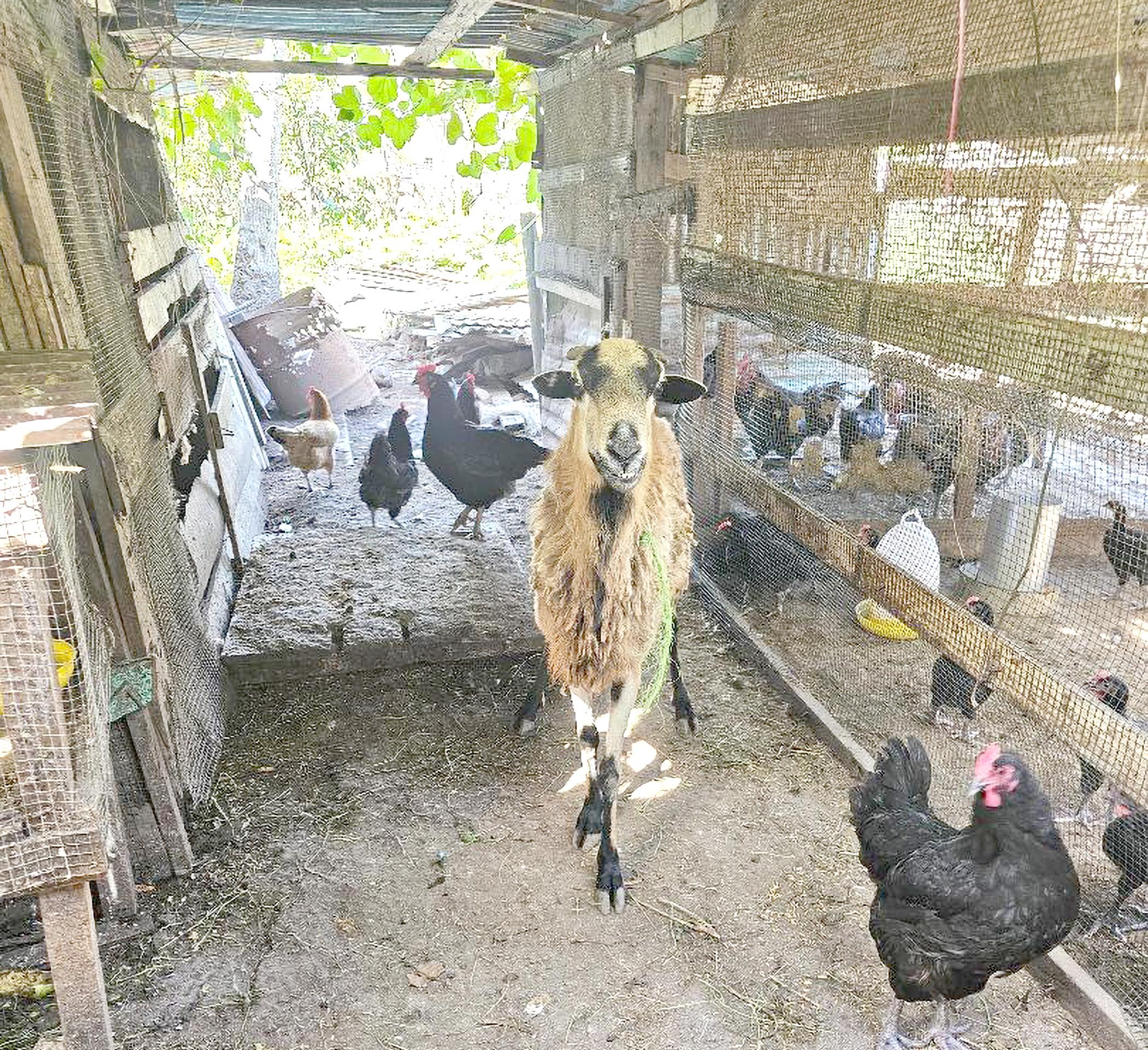
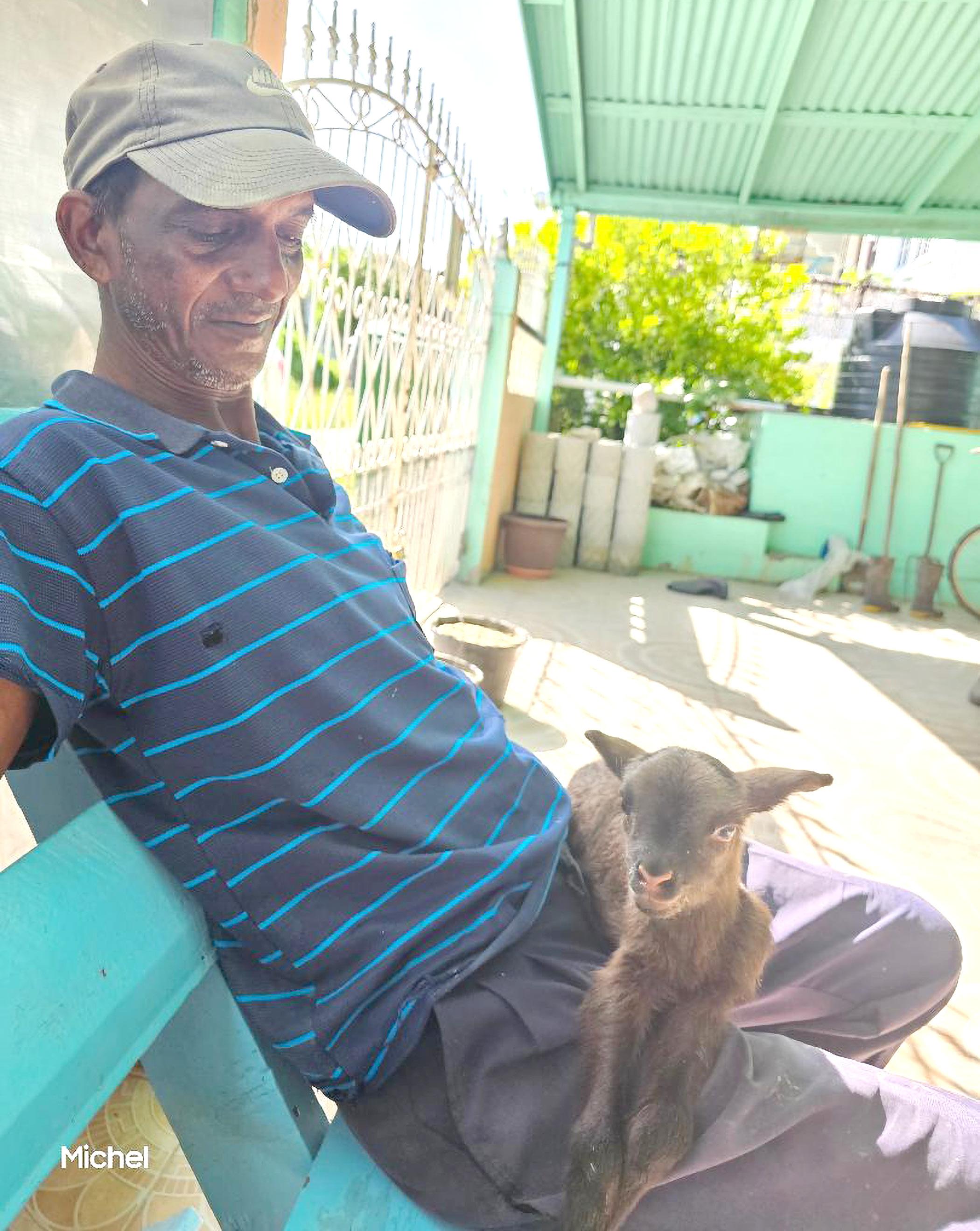
His losses did not stop there. Ramkishore also keeps small ruminants—sheep and goats—but thieves showed no mercy. Animals were taken, sometimes in broad daylight. Of the 10 sheep stolen, he has managed to retain only a few, along with a newborn lamb and one animal he recently purchased. Plans are now underway to construct an elevated pen in his backyard to better secure his sheep and goats.
Despite these setbacks, Ramkishore continues to rear cattle for both milk and beef production. Traditionally, he would sell a cow annually for Eid-ul-Adha, a practice that provided a modest but reliable source of income. In earlier years, he rode daily to sell fresh cow’s milk in the community. Today, after the theft of most of his milking cows, only one remains productive, though several calves have recently been born in the pasture—small signs of renewal amid loss.
What makes Ramkishore’s story particularly compelling is that his labour is carried out under physical constraint. Living with a disability—one of his legs no longer functions as it should—he nonetheless insists on earning an honest living through farming. His condition traces back to years of work in neighbouring rice fields, where he undertook various tasks, including spraying. Prolonged exposure to agricultural chemicals, often without adequate protective gear, left him ill and resulted in lasting injury.
Unable to perform the most strenuous forms of manual labour, he redirected his efforts towards ruminant rearing and cash-crop cultivation, areas where his lifelong familiarity with animals and plants could still sustain
him. Together with his wife, Rayoutie Nandreballi, Ramkishore operates a small but productive cash-crop farm on an empty plot within the village. For the past 30 years, the couple has worked as a team cultivating vegetables, milking cows and transporting their produce to the Leonora Market every Friday. They take pride in using minimal chemicals, a choice shaped by both health experience and principle. The income, though modest, supports their household and affirms their independence.
Institutional support has played a limited but meaningful role in sustaining his efforts. Ramkishore has benefitted from the building materials provided by the Guyana Livestock Development Authority (GLDA) to construct a cow pen. While extension visits are not always consistent, he values technical guidance when it is available. In particular, he speaks with gratitude of the GLDA’s Region Three Extension Officer, Mr Prakash, whose regular visits and TURN TO PAGE IX

THOUGHTS are the fuel for our actions. As we navigate our lives, engaging in various pursuits of trial and error, it is only our thoughts which guide the choices we make. When our thoughts are not actively affecting our actions, they are, at the very least, changing our disposition. When we choose to think about something for a long period of time, our lives become centred on that idea. Sometimes, it is people we think about. Sometimes, our thoughts are about a goal or an object we wish to attain. Most times, however, the thoughts that occupy our minds are simply about the tasks we need to accomplish
that day. We spend most of our time thinking about what we need to do, where we need to be and how we can complete simple daily chores. Before we realise it, we stop thinking about anything significant at all. Our minds and our bodies become trained to traverse the routines we have seemingly perfected. We become cogs in a wheel, destined to fit into a perfectly sculpted niche, but never desiring to understand the greater world that surrounds the role we have adopted. Perhaps the easiest way to introspect is to ponder this question: if we were stopped at a random point during the course of our day and offered
a penny for our thoughts, would our answer be worth the penny?
For the younger generations, life is only at the very beginning of its bloom. We are mostly engaged in building the foundation for our later years or establishing habits that can shape us for the better. What we often forget to do, however, is train our thoughts to a pattern that not only results in productivity, but also in the ability to consciously perceive the world and understand our impact on it. In truth, our thoughts are worth far more than a penny. Their value weighs equal to the future of our world.
Strangely enough, while
feel discouraged,” he said.
“Then we host an event, see a massive turnout, and feel reassured that we are building something meaningful. In 2023, things really began to transform for us, and we were able to do much more.” While the business continues to see massive support, challenges of operating in an almost unexplored niche in Guyana persist.
“It can be extremely hectic. People can be unreliable and can even lie directly to your face. Contracts can be broken, and it becomes challenging, especially when what you are doing has never been done before. There is no template or guide to follow.”
As a young entrepreneur, Jacobs believes that the biggest gap in Guyana’s entrepreneurship sector, particularly for young people, is knowledge.
Citing his own experience launching Sozo’s at just twenty years old, Jacobs believes that while the ideas and drive to start businesses exist among Guyana’s young people, more knowledge is
needed. “Knowledge is a major gap. Many people do not truly understand what it takes to create a business. They may know parts of the process but miss critical steps.
Workshops could be improved by explaining things in plain and simple terms. Many workshops provide information, but it is not always straightforward,” he said.
“There should be clearer, step-by-step guidance and more forums where larger businesses share real experiences and practical advice rather than just motivational talk. Creating spaces where business owners can meet suppliers, wholesalers, and industry contacts would be extremely helpful.”
To young entrepreneurs taking the first step, however, Jacobs urges them to hold on to their passion, ideas and drive.
Moving forward into 2026, Jacobs and the entire Sozo team already have three events slated for the year, including the Whimsical CakeNic and Garden Party, which
FROM PAGE II
combines a cake picnic and a garden party. They also have an event planned for June, a mix of a party, a mixer, and a games day. The highlight of the year, however, is Mars, slated for this August. Jacobs says work has already begun to make Mars 2026 the best one yet.
“Our final major event is Mars, happening from August 21st to the 23rd. It is the largest anime convention in Guyana and we are working to bring it to an international standard. It is a packed threeday event with new activities and the regional cosplay summit,” he shared.
At its core, Sozo’s Enterprise continues to be driven by passion, creativity and a deep commitment to the community that helped shape it. With several other events already confirmed for 2026 and Mars set to raise the regional standard for anime conventions, George and Marissa remain focused on growing the brand while staying true to the niche culture that started it all.
our years of socialisation and schooling often teach us how to act and speak, the process of thinking is something we develop mainly on our own. By perceiving our environment and learning from our friends and family, we subconsciously adopt a specific way of thinking. Sometimes, this even includes beliefs and opinions that we may later question as we grow and learn more. To start thinking in a way that can positively impact the world, we must shift from a passive to an active mode of thinking.
We must seek out information and develop our own understanding, rather than simply inheriting it from our mentors or peers. Most importantly, we must be aware that there is always
something else to learn, even in the things we believe we have already mastered.
There is an infectious apathy that seems to plague us. It prevents us from contributing to solving a problem or even from noticing its existence in the first place.
Contrary to initial beliefs, this apathy is not a mark of indifference, but of our inability to give space to thoughts that extend beyond the boundaries of our own lives.
In the same way that beliefs and opinions can be learned, compassion and understanding can also be learned. They can be learned by actively seeking knowledge, especially about places and people we do not encounter in our daily lives.
Within an hour, we can
learn a great deal about a different culture. We can learn about a war or a global issue that people are suffering from.
As we learn, we can also begin to think differently. Specifically, we can think about how our own small actions can make a difference in the extent of those issues we have learned about.
Training ourselves to think in this manner is not just about ensuring that we live a more fulfilling and compassionate life; it is also about ensuring that when we make choices capable of shaping the world, even in the smallest of ways, we do so with the awareness that we are leaving behind a mark that will affect others around us, as well as future generations.


FOR decades, a serious environmental concern has plagued our streets. Unfortunately, that phenomenon still continues to this very day. It is a sad reminder of how much our culture disregards environmental cleanliness and sustainability.
There is currently an on-
line debacle about littering and the state of our streets after a foreign YouTube vlogger pointed out a canal filled with garbage in our city. I noticed many people online started to attack the vlogger because they believed he is in no position to “tell us what to do.”
He suggested keeping
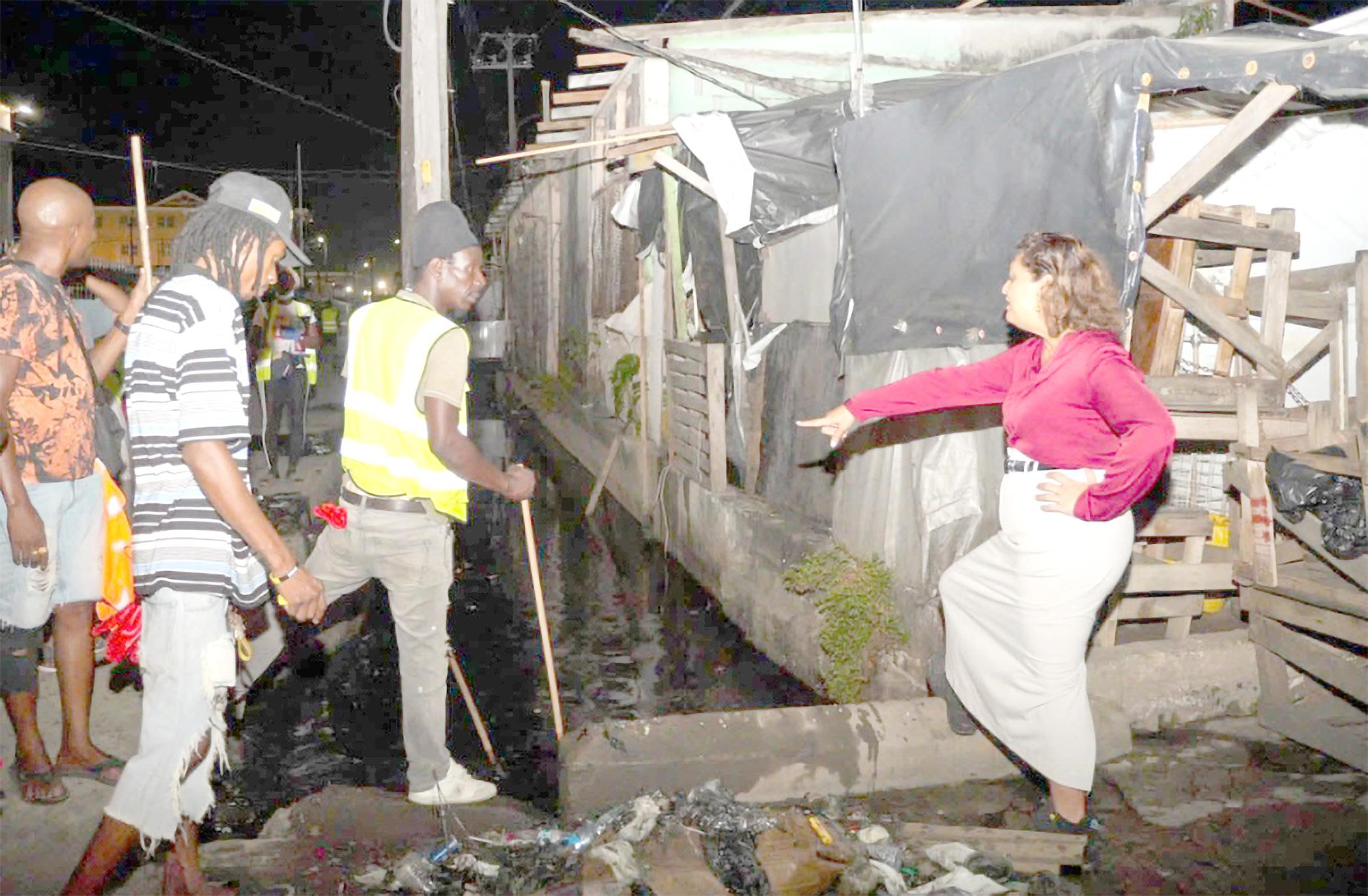
the city clean and keeping our surroundings cleaner. In my observations, I wondered exactly where he was wrong to say what he did. Shouldn’t environmental change and the cleanliness of our streets be things we should be concerned about?
In my opinion, when people hold mirrors up to us

and show us a reflection of who we are—a side of ourselves we don’t always get to see—we become defensive. Could the YouTuber have presented his suggestions in a more engaging tone to foster more meaningful dialogue? Sure, he could have. Does his country of residence have garbage on their streets as well? They probably do. Could he also have pointed out the cleaner areas of our city and shown that not all of the streets are dirty? He could have.
These answers, however, should not deflect from the sore issue at hand. Who he is, his country of origin, and his tone do not detract from the fact that we have poor control over waste-management systems in Guyana. People would rather dispose of their plastic, glass, paper, and food waste in our streets and drains than use suitable bins.
When there is a big “lime” at the No. 63 Beach in Berbice or the Kingston seawall, I urge you to take
a look afterwards to see the state of those areas.
No amount of bins or bags can stop people from littering.
I’m convinced it’s because that mindset is embedded far too deeply into our society and culture.
From my childhood to now, there have been dozens of clean-up campaigns and outreach efforts. I can recall that every year, while I was attending university, there was the annual “Coastal Clean-up” initiative. University students like myself volunteered on the beaches to clean up.
Despite this, we never saw a reduction in the amount of trash on the beach. It was always the same, or it increased. As such, I concluded that no amount of campaigns or awareness programmes could help us improve the cleanliness of our streets. I believe the time for that is over, and it’s unacceptable after all this time to plead ignorance. I believe stricter enforcement is needed to
tackle this issue.
The councils and authorities have been trying. I’ve personally seen many reports of the newly installed Ministry of Local Government carrying out dozens of cleanup and maintenance efforts. However, it requires 50 per cent effort on their part and 50 per cent effort on our part. I hope that, as you read this, you remember why it is important to keep our streets clean.
It is imperative for animals, for plants to thrive, for our waterways to stay clean and for our overall health and well-being. Tourism can also be severely affected if tourists, like that vlogger, view our country as an unhygienic place to visit.
This can ultimately affect our economic development. If we continue, this vlogger won’t be the last to highlight this sore issue. Nonetheless, we should keep our streets clean not because foreigners think so, but simply because it’s the right thing to do.


ALL families need time together, but finding a time and place to connect can be difficult. In today’s busy culture, families are pulled in many different directions. To combat this, parents must intentionally create a structure that allows the family to have meals together.
This requires planning, as someone needs to buy groceries, cook the meal, gather the family and clean up. Parents can ensure these tasks are completed by establishing roles and responsibilities for each family member. In Fellowship at the Family Table, Geary Reid discusses how to do this.
Once the family is gathered, the dinner table should be a place of formality and safety where family members feel listened to and respected. During mealtimes, family members can facilitate discussion, teach social skills to younger children or siblings, and emphasise the importance of nutrition. Families can share important news or discuss decisions together. Every family needs time to connect, and the dinner table
is the perfect place to do so.
1. Gathering the family
With a large family, several people may have their own rooms. To participate at the family table, however, the family must be gathered together.
1.1 Set a time for the family to feast
Each family member may sleep and wake at different times. However, if the family is going to be strengthened and feast at the same table, then they must all be ready at the same time. When families eat together, it encourages them to grow together, and the family can become stronger.
There may be complaints from some family members who would like to sleep longer hours. People who spend too much time sleeping may miss many important opportunities. Sleep is essential, but there is no additional benefit to longer sleep duration, especially when there are important things to be done. Hopefully, persons will manage their sleeping hours, which may require going to bed early and waking early.
Sometimes it takes one family member to be the main person to gather the others, but it is important to establish a time for family members to awake. This will help them stay committed and remove the burden of having to wake the others. Those who love to sleep late in the morning often feel offended when they have to wake up early. Nevertheless, it is important to have the family together to participate in breakfast. Waking up early should not be limited to breakfast; it should become a lifestyle for people to embrace. Those who are accustomed to waking early will have few challenges in doing so to attend work, especially if they are working for an employer.
During the week, people may wake up at a different time than on the weekend. Some people, especially those who work Monday to Friday, often look forward to the weekend because it offers them the opportunity to get some additional rest.
Those employed on a shift system may not always be able to wake up at a spe-
advice were instrumental in helping him access resources and improve animal care.
More recently, Ramkishore received black giant chickens and constructed a pen to rear them before transitioning to a free-range system. Yet challenges persist. He needs a ram to improve the genetics of his small ruminants and, like many farmers, looks forward to participating in the national animal genetic improvement programme for both cattle and sheep. He views the initiative as an important intervention, one that could help farmers with special needs rebuild livestock systems crippled by theft and limited capital.
“Cattle and sheep production is not for the faint-hearted,” Ramkishore reflects. Praedial larceny, rising costs and the physical demands of farming make survival increasingly difficult. There are no days off, no fixed hours;
FROM PAGE VI
farming is a 24-hour responsibility, extending into nights and early mornings. Still, it is the only life he knows, and the only one he wishes to pursue.
To ease his workload, especially given his disability, Ramkishore hopes to access a tiller to assist with land preparation for his cash crops. Such support, he believes, would allow him to remain productive and self-reliant despite physical limitations.
Simple in manner but steadfast in spirit, “Uncle Lalah” continues to rise each day to tend animals and crops, determined to endure despite repeated losses. His story is not merely one of hardship, but of quiet resilience—a testament to the enduring role of small farmers in Guyana’s food system, and to the human capacity to adapt, persist and find dignity in honest work.
cific time with the family, as they may be returning home when others are leaving. However, there must be an understanding within the family to respect one another and be there for each other.
1.2 Respect each other If one person has to wake the others, then everyone must respect that individual. Additionally, the person who has to wake the others must do so respectfully. When both parties show each other respect, the family will have
fewer conflicts to deal with, and when everyone is seated at the family table, it will be a time for fewer conflicts and more togetherness.
1.3 Is there a need for a family gathering?
Some people do not see the need for family members to gather; they may believe that family gatherings are a waste of time. On the other hand, some people know how family gatherings have benefitted them.
During family gatherings,
family members gain valuable information, including family history. This may even lead to the realisation that people they have known for a long time are actually related to them, something they may never have known if they had refrained from attending the family gathering. No single member of the family has all the answers, but as each person shares their ideas, a common understanding may develop.
For example, if it is an
TURN TO PAGE XI


THE DESCRIPTION OF THE ACTIONS IN OUR SOCIETY WAS NOT EXACTLY SCRIPTED IN A DICTIONARY, BUT IT WAS BOLDLY OUTLINED BY REFERENCES ACTED OUT BY PEOPLE WE KNEW…
THIS realisation did not come from special lessons, but from the definitions of elders and people we know; cultural behaviour is distinctive, as this reference captures. A lady we all knew often visited the home of a female relative.
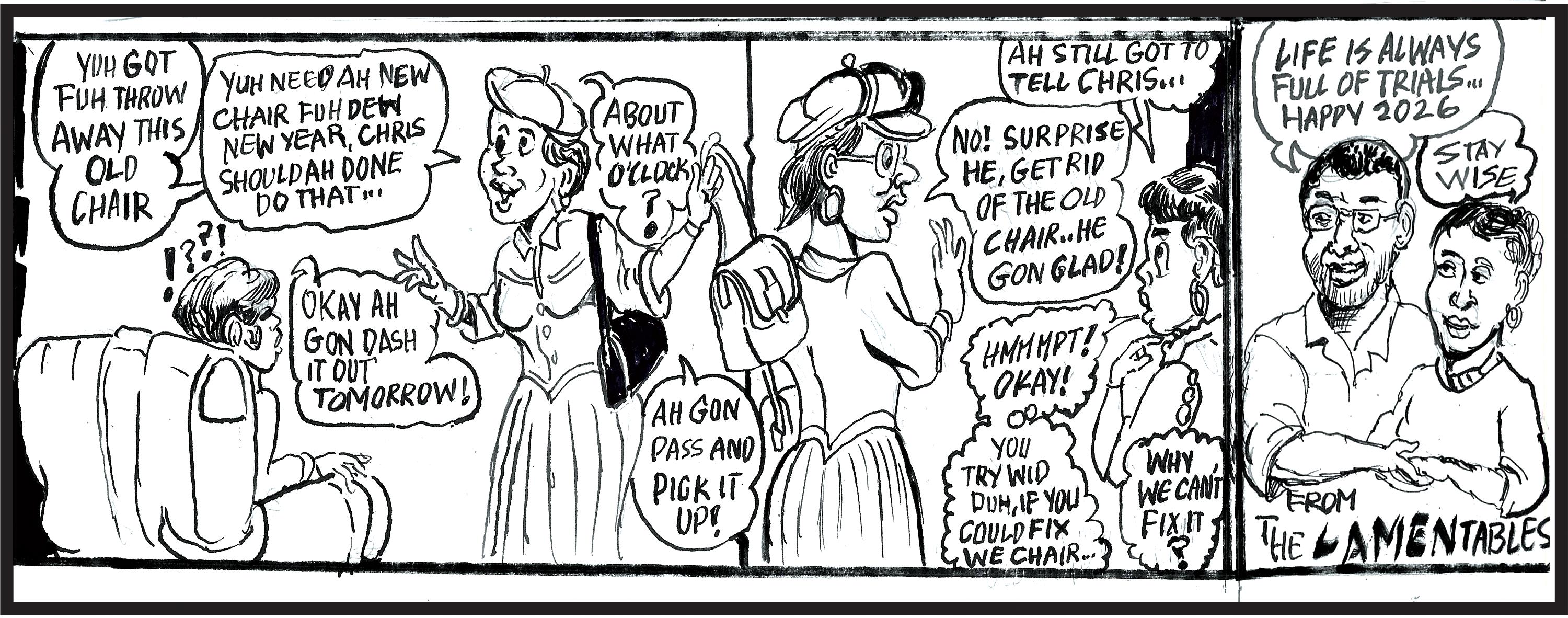
I was waiting for the relative to take an envelope to my godparents, whom I lived with, when a conversation began. This visitor told my relative she had to get rid of a specific chair in the hall. This is how the conversation went:
“Ah gon decide upon that,” responded the relative, but the visitor was not satisfied. She continued,
“Imagine yuh got a man and gon sit down in a chair like this fuh de holidays.”
“I’ent gon throw it out,” was the reply.
The visitor responded, “If yuh give me the chair you would be surprise how I would nice it up. Anyway, tell meh when yuh ready.”
“Hm, ah got fuh run along now, girl,” and she passed me on the step. “Eh! Eh! Yo ent gone yet, bway?”
“No, auntie, ah tying fuh tie me shoe.”
“Yuh know is not good manners fuh listen to big people talk?”
“Yes, auntie, ah know that. I ent
listening to nobody,” but one of the last bursts: “Try deh quick, I gone.”
My aunt looked through the window. “Yuh see Dorothy, she always know wuh good fuh everybody, in she interest. Yuh uncle already decide fuh fix the chair. She is one petit-bourgeois, talk yuh down fuh mek she happy.”
Down the road, up comes some work by the koker. Nobody ent too sure is what deh doing… but the biggest voice is not the machine, but Brigga Bobby shouting orders. Though everybody is active, the sudden turn bossman mekking sure that Brigga Bobby gon shout loudest, suh everybody knows that he’s
the bossman, that deh pon de wuk.
Then we pass a gate, some people calling out ‘fuh Cousin Dexter’ in front of a nice wooden building. Cousin deh inside but ent want fuh answer. He done fo-get he own family since he a big boy now. He’s a big-shot lawyer, drink with any and everybody. If he did only come out and listen to them people in scrawly, wash-out clothes, he might have learned that he old-time “tek a drink” pardner, who used to give he all de information, get lonely fuh friend and go back and tek a tuks.
With the same people he cochure and big lawyer put in jail, and deh give he bad liquor. Now
family come fuh tell he that he friend burying tomorrow… if he did only pause from the call from the new lady friend, he and all wouldn’t a take the invitation fuh go to a high-class place that evening, and enjoy much more of his true aristocratic life of honesty, patience and success, than the days that followed.
Clouded by bad feelings all over he body, too late he remember the old-time parable: “Dem sweet ah tap friend dem” always ready fuh big deception.
And so, from Yansen’s sensible Creole jargon: You and yours have a sensible 2026.
into evidence-based decision-making.
One notable intervention was the provision of a high-quality Barbados Black Belly ram by GLDA to improve the genetic stock of her flock, along with a nutrition and vitamin supplementation hamper.
These inputs, while modest, reflect a broader policy emphasis on improving productivity through genetics, extension services and farmer education, which are key pillars of Guyana’s agricultural-diversification strategy.
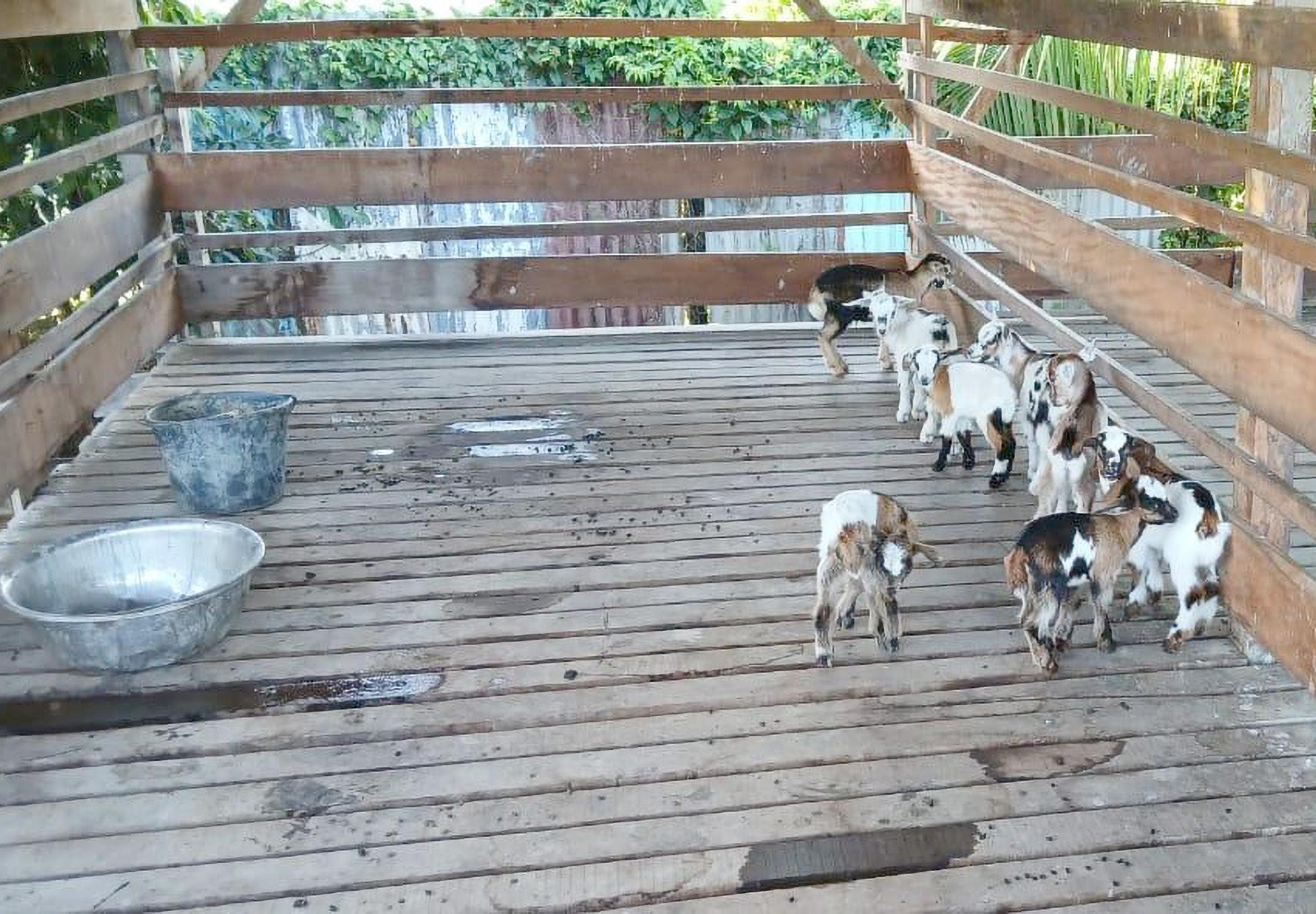
Evans has also embraced innovation in farm design. She constructed elevated pens for her sheep and goats, a system increasingly promoted by GLDA extension officers for the management of small ruminants. Elevated housing reduces parasite load, minimises contact with floodwater and enhances overall animal health, a critical consideration in low-lying coastal regions prone to flooding.
Although her animals initially preferred to remain at ground level, the design has already proven beneficial during heavy rains, reinforcing Evans’ commitment to adopting best practices, even when adaptation takes time.
Land access has further strengthened her prospects.
As a beneficiary of the government’s land-distribution programme in Region Five, Evans received five acres earmarked for agricultural development. The plot is currently being prepared and fenced, and she intends to utilise it fully for expanded livestock housing and production.
She is also hopeful that the Agriculture Development Bank’s interest-free loan facility will enable her to venture into pig rearing, with plans already underway to construct a pig pen capable of accommodating 20 sows.
Despite these advances, structural challenges persist. Poor road construction has contributed to yard-flooding during periods of heavy rainfall, resulting in the loss of some livestock. Yet, Evans remains cautiously optimistic, believing that continued infrastructural improvements and institutional support will yield better outcomes.
Though separated from her husband, Evans notes that he still assists with animal care, underscoring the informal networks that often sustain small farmers. Still, she is candid about the isolation she has faced as a woman farmer without strong family backing.
In this context, the role of public agricultural institutions such as GLDA has been especially significant, not only in providing resources, but also in validating her place within the sector.
“I am trying my best to become the best version of myself in caring for these animals,” Evans says. Her story is emblematic of a broader transformation underway in Guyana’s agricultural landscape, where policy-driven support, gender inclusion and grassroots resilience are converging.
For women like Monica Evans, farming is no longer merely an act of survival; it is a statement of agency, empowerment and enduring faith in the land.
extended family and several people have young children, those with older children may be able to share their experience with those who need guidance. The advice from one family member may be the answer that helps another.
Those family members who work know that some days at work can be very stressful. The stress that some working people experience does not always have anything to do with them.
Some customers feel they can say and do whatever they want, and some managers and business owners treat employees in unprofessional ways. Those employees who are
stressed may return home after a challenging day and share their concerns and observations with a family member when they sit at the family table. During the discussion, possible solutions may be provided, which may be the specific steps needed to resolve the issues at hand.
1.4 Sharing of traditions and customs
Some families are known for their traditions. As families sit at the table, they may share family traditions and customs passed down from one generation to another.
Parents often enjoy the opportunities when their children, and
possibly their grandchildren, are with them at the family table. As they dine together, elderly persons will instil certain values into their children and grandchildren and encourage them to embrace those customs. Not all children may see the benefits of those traditions, but it may be important for them to practise them, since they will need such customs for their future journey. The wisdom gained by grandparents is passed down from one generation to the next. Some grandchildren clearly remember what their grandparents taught them. Those children often stay connected with their parents, as they feel
secure and learn many important traditions. The information shared by some parents at the family table can help other family members avoid problems that may not be easily seen or understood by a young person.
1.5 Opportunities to counsel and motivate family members
When family members gather, they can be motivated by those who offer positive advice. Everyone has challenging moments, but if someone is there for them, they will feel motivated to overcome them. As the family gather, they provide counselling for one another.
This counselling session may help a family member find an appropriate solution to their problems. After the counselling session, the family member who may have been hurt may now feel like a champion and know that there is hope for their future.
For more information about Geary Reid and his books, please use the following contact information:
Amazon: http://www.amazon. com/author/gearyreid
Website: www.reidnlearn.com
Facebook: Reid n Learn
Email: info@reidnlearn.com Mobile #: 592-645-2240

THE Environmental Protection Agency (EPA) wishes to advise developers and stakeholders that March 31, 2026 is the deadline for submitting annual environmental reports, a critical requirement for those dedicated to sustainable and responsible development.
What is an Annual Environmental Report?
An annual environmental report is a clear, structured document that assesses both the potential and actual environmental effects of a business or project. It provides key information on resource use, land modification, waste generation and other activities undertaken by the developer during the year. The environmental report also outlines the strategies implemented to reduce environmental harm, meet legal requirements, and improve environmental performance.
Why Should Developers Complete and Submit Their Annual Environmental Reports?
Developers should submit their annual environmental reports to demonstrate compliance with environmental laws, regulations, and permit conditions administered by the Environmental Protection Agency (EPA). By completing these reports, developers can avoid legal penalties, fines, or project delays that may result from non-compliance.
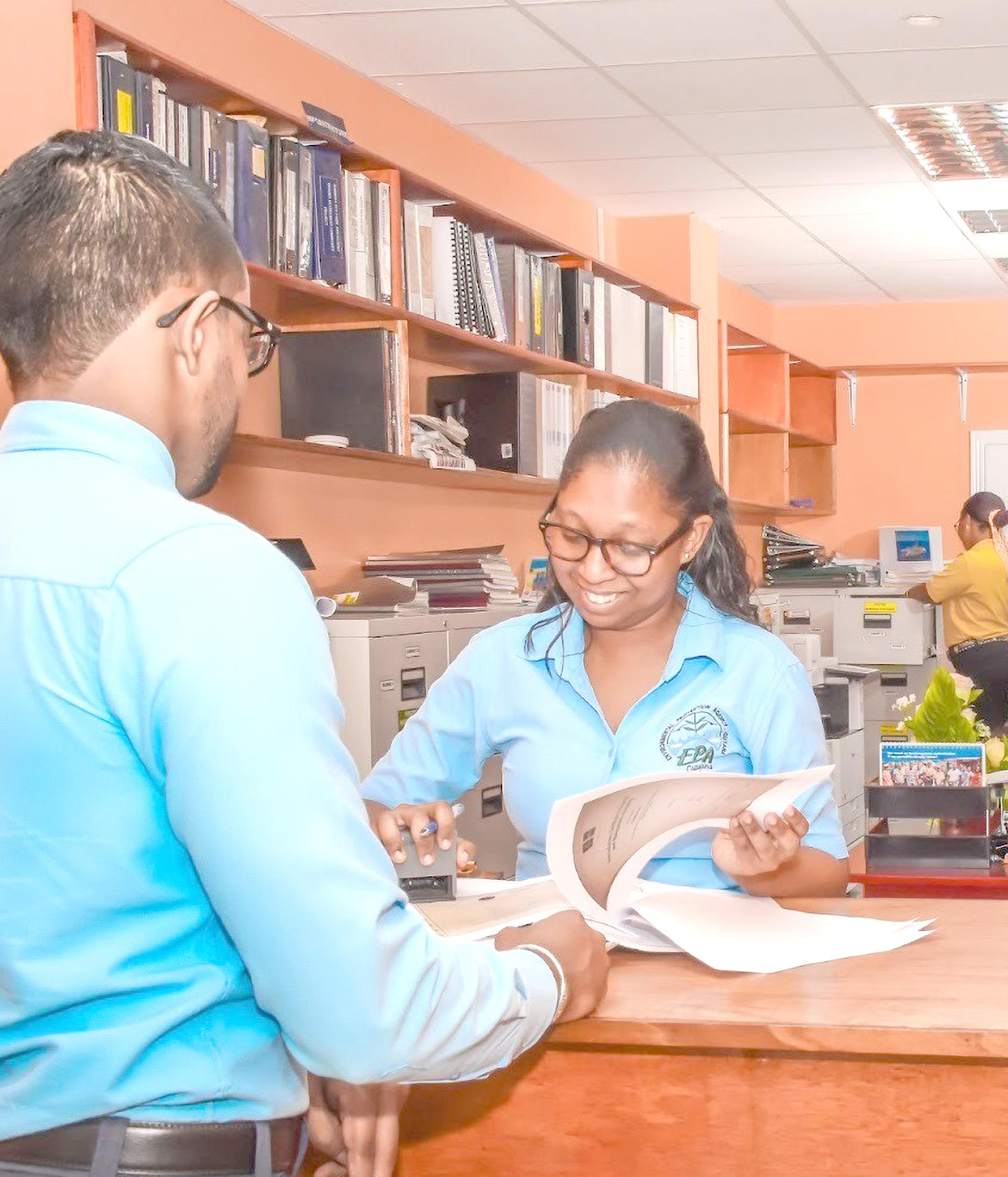
Additionally, environmental reporting provides transparency, allowing the public and regulatory bodies to see how developmental activities affect air, water, land and wildlife. Ignoring environmental impacts can
lead to long-term ecosystem damage and serious health risks for people. For this reason, taking proactive steps to comply with environmental standards is important not only to protect natural systems and public health but
also to strengthen a developer’s position in a marketplace where environmental responsibility and stewardship are increasingly valued.
Furthermore, since these reports offer a detailed summary of a project’s environ-
mental impacts, they allow the EPA to effectively monitor, evaluate and support the operations of the business or project. To assist developers in fulfilling this obligation, there are two clearly defined options for preparing and submitting annual reports to the Agency, each structured to ensure a thorough presentation of the environmental performance of operations.
Under the first option, developers describe key aspects of their operations, including daily activities and any changes made during the reporting period; how waste and hazardous materials were managed, treated and disposed of, with measures taken to reduce environmental impact; and how compliance with applicable environmental standards was monitored and maintained.
Under the second option, developers focus specifically on how they fulfilled each of the permit conditions set out in their Final Environmental/Operation Permit, documenting how every condition was met over the year. Both approaches ensure that the Agency receives a complete and accurate account of the project’s environmental impacts and compliance efforts.
Submit Your Annual Report Using These Two Approaches:
1. Online Submission:
• Visit the official EPA-Guyana website.
• Navigate to the Annual Report section.
• Submit the report to the EPA’s email address: epa@epaguyana.org
• Receive confirmation of successful submission.
2. Physical Submission:
• Visit the official EPA-Guyana website.
• Navigate to the Annual Report section.
• Download the Annual Report form.
• Complete the form with accurate and detailed information.
• Submit the physical copy to the EPA office by the specified deadline.
The EPA is urging all developers to submit their annual reports by March 31, 2026, to demonstrate compliance with environmental permit conditions.
According to the Environmental Protection Act, Cap. 20:05, “Any person who holds an environmental authorisation and fails to comply shall be guilty of an offence and shall be liable to a fine of not less than thirty thousand dollars ($30,000) nor more than eighty thousand dollars ($80,000).”
The Environmental Protection Agency offers compliance assistance to developers throughout this process. By working together and meeting these reporting requirements, we can promote responsible development that protects our environment for generations to come.





I DIDN’T allow that thought to dwell in my mind as I continued the tour of that part of the estate grounds. Nature was at her fantastic best, and I looked in amazement at the orchards of mango, cashew pear, soursop, French cashew and cherry.
“Gosh!” I exclaimed, not sure how much more amazed I could be.
From the many books I had read since I was a young girl—always fascinated with princes, mansions and beautiful gardens—I had never dreamt, the simple country girl I was, that I would be swept off my feet by a charming rich man to live in this splendid place.
And here I was!
I still hadn’t toured the entire flower garden, having had to put that on hold for a short period as I focused on registering my son and daughter at a new school. I also had to find new shopping centres, markets, plant shops and a beauty salon.
As the days and weeks went by, family and friends came by on visits, and my husband and I began entertaining on special occasions. On his birthday, he had a cocktail party on the lawn, and one middle-aged woman, an ex-office assistant, said to me, “You have brought life back to the place.”
I smiled warmly, for life there was, in a wonderful way—different—and in my journal there was always something interesting to write about.
Then came the mystery!
One morning, after washing my hair, I let it dry naturally in the wind as I walked in the garden.
The old gardener woman, who did not speak much, said to me in broken English, “She had long hair tuh.”
I looked at her a bit perplexed and asked, “Who?”
She hesitated a little, then answered with a smile, her eyes twinkling, “De ole missus.”
I made to say something but didn’t bother, for like the male gardener, it was her memory of the past.
I just smiled a little and continued my walk, but stopped when I heard her say quietly, “She still deh hay.”
I turned, but the old lady had already gone back to her work.
“This is getting weirder,” I said to myself. “Now I guess I have to look out for a ghost.”
I wasn’t too thrilled about that, not sure I wanted any encounter
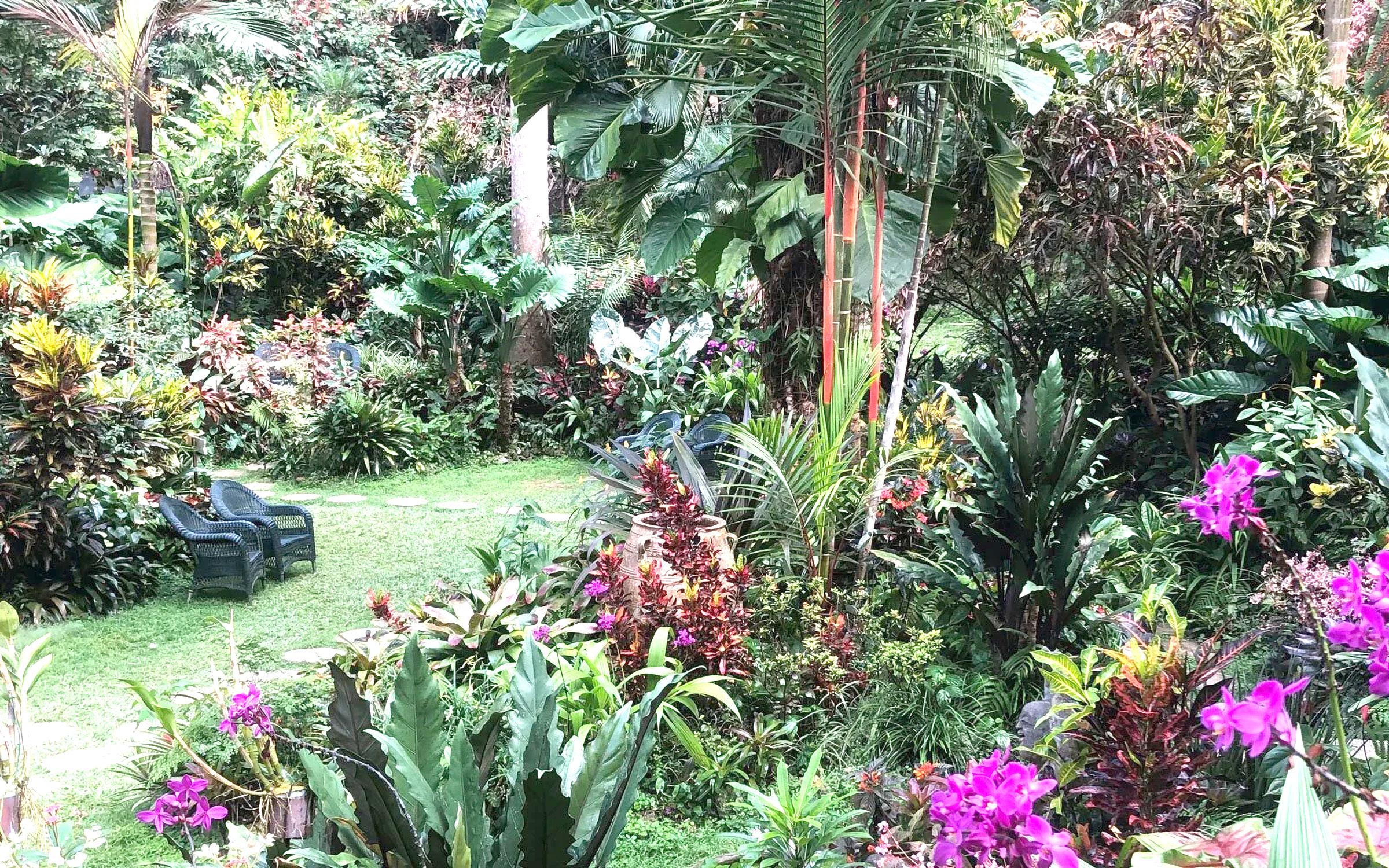
plants, and on the other side were psidium, carambola and guava trees. In the middle of that little garden was a huge flamboyant tree, and close to the fence was a yellow poui tree.
The small garden, it seemed, was a private place where the fruit and flower trees cast shade but let in a little light. The peacefulness and serenity were hushed wonders of
and on closer look, I saw it was a gold cross embedded in the ground.
A slight shiver ran through my body, and I whispered quietly, “Does this mean…?”
I left the thought unfinished.
In bed that night, I couldn’t sleep, wondering about that private garden, wondering about what I saw. My husband was in blissful sleep after a busy day, and I stepped
with a ghost from the long-gone past.
“Could the false statement I made to scare my mother-in-law come back to haunt me?”
I took a deep breath to shake that off my mind and entered a secluded part of the garden I hadn’t explored yet.
It was over a long, narrow waterway with exotic lilies growing on the banks. Over the concrete bridge was an intricately designed arch with white and orange bougainvillaea growing from both sides, intertwined in a fusion of colours.
I walked down a paved path where, on one side, were large relic pots with crotons and hibiscus
nature, and I voiced quietly, “Someone created a little paradise here.”
And the old gardener’s words came back to me.
“She still dey hay.”
My eyes searched every inch of the ground, but there was nothing to indicate someone had been laid to rest there.
I smiled wryly and shook my head. “Crazy of me to think that way.”
As I made to leave, a sudden gust of wind blew up my hair and dress, and as I straightened myself, I saw a tiny glint of something near the carambola tree. I did not feel the need to leave anymore, for my eyes were drawn to the glinting object,
out onto the patio, looking across the grounds to the garden.
“What happened here over a century ago?” I asked silently.
“What was their story?”
The next day, I did some research on the house’s previous occupants when the sugar estate was a hub of sugar production, but I could not find enough information, so I summoned both of the old gardeners.
“You told me you had worked here from a young boy during colonial times.”
“Yes, missus.”
“Were you here still with the last colonial master and mistress?”
“Yes, missus.”
“And when they left…?” I left the question hanging.
A look of sadness glinted in his eyes, and he said in a low tone, “De missus never go back to England wid de master.”
“What happened to her?”
“She fell sick,” he said, the sadness deepening in his eyes. “Nothin’ doctors hay coulda do tuh save her, and by de time the doctor from England reach, it was too late.”
“What happened after that?”
The gardener said nothing for a short while, but the old lady, who had been silent, spoke up. “He buried she hay,” she spread her arms to indicate the entire grounds.
“All dis was she idea, so he said she mus be here foreva.”
Those words impacted me so deeply that they left me a bit stunned.
“He didn’t wan tuh leave,” the male gardener said, “but he had tuh, and asked us tuh continue working hay suh she could have company.”
Going back in that time, in my mind, it was kind of heartbreaking.
“But is a good thing yuh come hay now.”
“Why?”
“Because yuh just like she,” said the male gardener.
“And yuh bring light in dis place,” the old lady stated.
Somehow, a warm feeling entered my being, and I smiled, happy to be a new feature in this century-old story.
The two gardeners and I cleaned her resting place that had been hidden from others, the golden cross now casting a luminous glow in the night.
That night, standing on the patio and looking across the garden to where she lay, I said silently, “Once upon a time, you stood here and slept in this room—a woman from a different era. Now, I’m here, the new mistress, but the place will remain your forever home.”
Two women of different ethnicities.
The past and the present. One home.


IT has been a banner year for Hungarian writers, and by extension, Hungarian literature. In October,
László Krasznahorkai was awarded the 2025 Nobel Prize in Literature—the world’s most prestigious
literary honour—accompanied by a monetary award of 1 million Swedish kronor (SEK), equivalent to rough-
ly US$1.17 million. Only two months later, his compatriot David Szalay received the International


Booker Prize for his novel Flesh (Jonathan Cape, £25.53), the subject of this review.
Perhaps these accolades signal a broader renaissance in contemporary Hungarian letters; time will tell. What Flesh makes immediately clear, however, is a decisive turn away from the gimmicky post-modernism that so often works against a reader’s desire for pleasure, coherence or vision.
Too many award-winning novels today mistake density for depth, enshrining simplicity beneath layers of prose so thick that meaning becomes a chore to excavate. Such writing can feel impenetrable—no axe sharp enough to split it—leaving the reader dazed, alienated and tempted to abandon the book altogether. Reading these novels often resembles Sisyphean labour, failing the most basic requirement of
fiction: to entertain. Flesh is a throwback in the best sense. It is a novel of life, rendered in full, with its peaks and valleys intact. It is at once an immigrant story, a love story and, ultimately, a tragedy; a novel deeply concerned with filial bonds and the consequences of their erosion. Szalay’s work carries the sweep and moral resonance of Philip Roth at his best, recalling the social scope of American Pastoral alongside the fleshly, transgressive energy of Sabbath’s Theater. Stripped of post-modern filigree, Flesh reads as an honest novel. Szalay avoids the contemporary impulse to over-psychologise—where every impulse is assigned a diagnosis, every action reduced to pathology, and the author’s hand becomes visible behind the strings. Too much literary fiction TURN TO PAGE XX

surveillance (CARPHA, 2019), adult mosquito identification (MOH/UF/IFAS/ UWI, 2025), rodent management, phosphine gas fumigation and emergency risk management, among numerous other technical competencies.
His dedication did not go unnoticed. Williams is a twotime recipient of gold medals for outstanding service to the Global Fund Malaria Programme (2007 and 2009) and has received multiple certificates of appreciation from the Ministry of Health (2014, 2015 and 2020).
Yet, beyond accolades and certifications, it is his field experience that most vividly defines his career. In the early years, Williams frequently worked in Guy -
ana’s hinterland, often for months at a time, conducting vector-control activities in remote Amerindian villages, mining camps and timber concessions. Transportation was rudimentary; there were no all-terrain vehicles. Teams were sometimes dropped deep in the jungle with specific targets and minimal support.
He recalls sleeping outdoors, navigating rugged terrain during heavy rains, crossing paths with snakes and jaguars, and climbing mountains to reach isolated communities. These challenges, he reflects, deepened his respect for the country’s geography and its people.
Among his most enduring memories is the cultural rich-
ness of Guyana’s Amerindian communities. Exposure to their traditions, resilience, and hospitality fostered a profound appreciation for the nation’s diversity and reinforced his belief in equitable health-service delivery, particularly for populations living far from coastal centres of care.
Outside his professional duties, Williams remains actively engaged in community life. Since 2021, he has served as Chairman of the Section ‘C’ Sophia Community Policing Group, continuing a lifelong pattern of civic involvement and local leadership.
Colleagues describe him as steady, disciplined and deeply committed. His jour-
ney from labourer to Chief Inspector reflects not only institutional mobility, but also the transformative power of sustained learning and service. For Williams, success has never been defined by title alone, but by impact measured in reduced disease burden, strengthened surveillance systems and healthier communities across Regions One through 10.
In an invited comment, Williams emphasised that the sustainability of vector-control efforts in Guyana depends not only on institutional action, but on widespread community participation. He stressed that households represent the first and most critical line of defence against vector-borne diseases.

According to Williams, residents can significantly reduce mosquito breeding and other vector risks through simple, consistent practices: eliminating stagnant water by emptying or covering water storage containers; clearing drains and gutters; properly disposing of cans, bottles and old tyres; trimming overgrown vegetation; and ensuring timely garbage disposal.
He also highlighted the importance of sealing septic tanks and water tanks, maintaining clean yards and animal pens, and using window screens where possible.
Inside the home, Williams recommends using bed nets in high-risk areas, particularly for children and the elderly, and using approved insect repellents responsibly. “Vector control starts at home,” he noted. “When people take responsibility for their immediate surround-
ings, they protect their families and strengthen the health of the entire community.”
He further called on youth groups, community organisations and local leaders to become actively involved in public health education and prevention efforts, arguing that collective responsibility is essential to sustaining gains against malaria, dengue, filaria and other vector-borne diseases.
After 33 years of service, David Selwyn Allister Williams stands as a fit and proper representative of Guyana’s public-health workforce: a professional shaped by humble beginnings, guided by discipline and faith, and driven by an enduring belief that safeguarding health, especially against vector-borne diseases, is both a national duty and a personal responsibility.
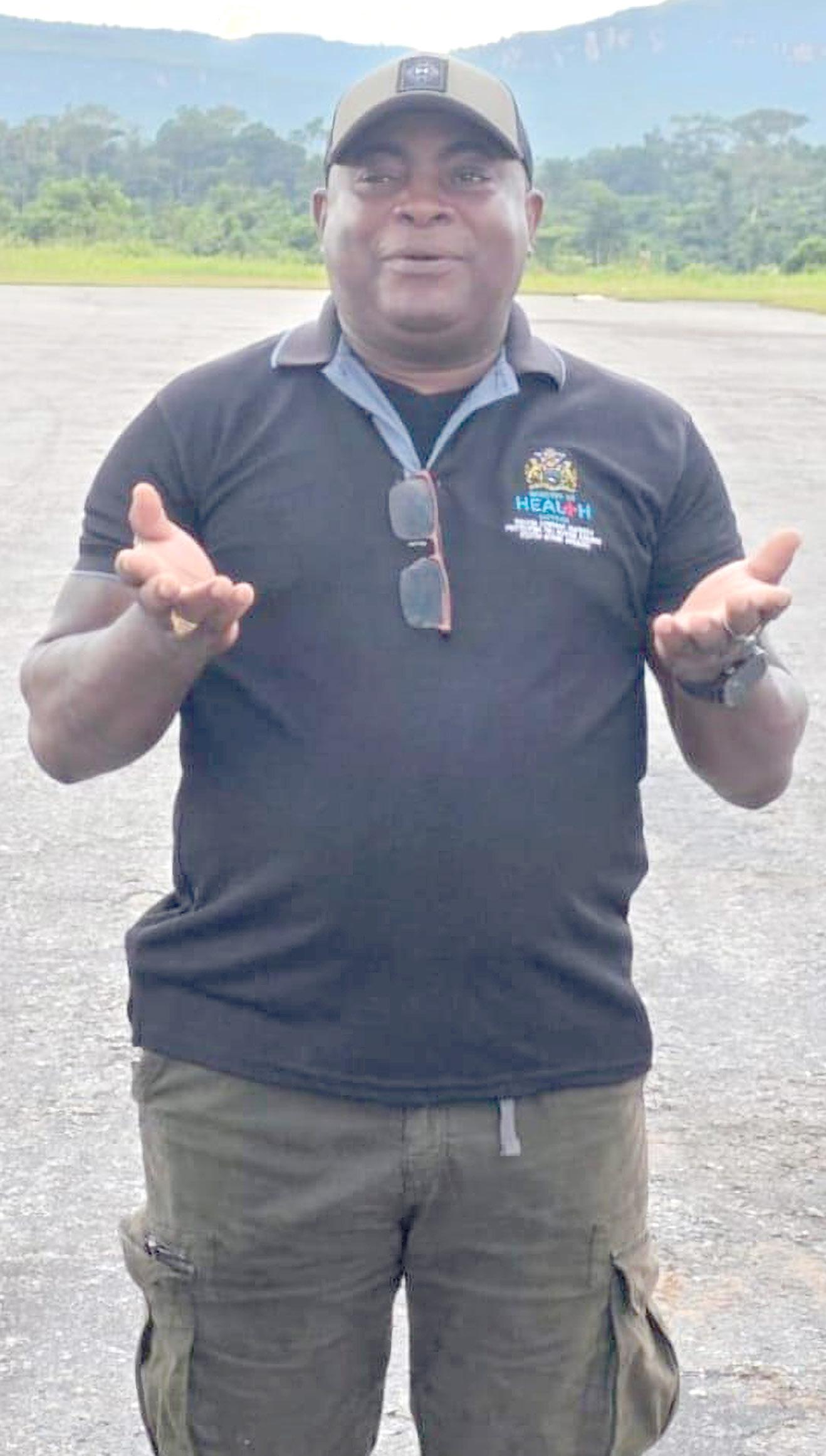
David Williams






today reads like an annotated edition of the DSM. Flesh refreshingly does not.
The novel’s protagonist is István, whom we first meet as an unremarkable fifteenyear-old in a small Hungarian town.
Awkward and isolated amid his sexual awakening, István is seduced by an older woman—the wife of his employer. The affair lasts nearly a year before she abruptly ends it. Shattered,

István spirals into obsession. He follows her, confronts her and eventually arrives at her home.
When her husband answers the door, a verbal dispute escalates into a physical struggle. István pushes the man down the stairs; he strikes his head and dies.
This violent rupture determines the trajectory of István’s life. He is committed to a psychiatric facility, later deployed as a soldier to Iraq and eventually emigrates to England.
Walt Whitman once wrote in “A Woman Waits for Me”, “all were lacking if sex were lacking,” continuing:
Sex contains all, bodies, souls,
Meanings, proofs, purities, delicacies, results, promulgations…
All the governments, judges, gods, follow’d persons of the earth,
These are contain’d in sex as parts of itself and justifications of itself.
There, he struggles, marries well and has a son. He grows wealthy, loses everything and ultimately returns to where he began. The narrative is circuitous, marked by abrupt temporal leaps and unflinching descriptions of sex. The title Flesh is no accident: the word signifies not merely carnality, but the blunt, embodied fact of human existence.
István loses nearly everything over the course of the novel—his wife, his son, his security. Yet Szalay resists the temptation to anatomise his grief. István possesses the immigrant’s dexterity: a hard-earned resilience that allows him to endure, adapt and move forward without indulgence or self-pity.
Flesh is a bildungsroman of the highest order. Lyrical, unsentimental and rich with insight into living, loving and dying, it rejects the fashionable contrivances of its contemporaries in favour of something rarer: a true distillation of a human life. It is a memorable and deeply entertaining achievement, and a thoroughly deserving recipient of the Booker Prize.
Whitman suggests that pleasure affirms our presence in the world—that intimacy is not a diversion from life, but its confirmation. Flesh advances a related idea: that what we seek in moments of loneliness, boredom or despair is not simply sex, but flesh itself—the proximity of another body, the reassurance of touch, scent and warmth. Flesh is our most elemental comfort; without it, we drift.











Welcome, reading friend. As you revise and prepare for examinations, aim to cultivate a sense of positive anticipation. This mindset energises you and gets you ready to tackle your work. It enhances your focus, boosts alertness, and helps you concentrate deeply.
You’ll find your energy levels rising, your pace increasing, your attention to detail sharpening, and your examination performance improving. Preparing for exams should never feel tiresome — after all, the strategies you use today shape your success for tomorrow.
Love you.
Reminders of some difficult sentence structures
Today we continue to remind you about agreement between subject and verb which often causes trouble for some users of the language. Look at what is prepared for you and try to use the structures successfully.
1. A long line of sick people was waiting to be healed. (‘Line’ is the subject; the
singular ‘was,’ is needed. Do not be misled by the phrase ‘of sick people’ that follows the subject.)
2. Debbie, as well as her brothers, is here. (‘Debbie’ is the subject; the singular ‘is’ is needed. If the singular verb sounds awkward to you, recast the sentence: Debbie is here, as are her brothers.)
3. More of this church issue needs clearing up. (If the subject is ‘all,’ ‘more,’ ‘most,’ ‘part,’ ‘some’; ‘a fraction’; or ‘a percent’ and is followed by an “of” phrase, use a verb that agrees with the subject in that phrase.)
4. More of my friends have left recently for the U.S.A. (Please see explanation immediately above.)
5. All of it is yours. 6. All of these are family property. 7. Most of the day has been rainy. 8. Most of the days have been rainy. 9. Part of the bush hog carcass is missing, said the observant lieutenant.
GRAMMAR
Usage 1. Remember that the subject of a verb is never the object of a preposition. Do
not mistake a word in a prepositional phrase for the subject of a sentence. The verb must agree with the simple subject, not with the object of the preposition.
Examples:
1. The colour of the African lace dresses pleases us singers greatly. (Here the subject ‘colour’ is singular; ‘of the African lace dresses’ is a prepositional phrase; the verb, ‘pleases,’ is singular because it agrees with the singular subject.)
2. The frills for the mosquito net are broad and silvery. (The subject, frills, is plural; ‘for the mosquito net’ is a prepositional phrase; the verb, are, is plural because it agrees with the plural subject.)
Note: Do not be confused by a predicate nominative that is different in number from the subject. Only the subject affects the number of the linking verb.
Examples:
1. At dinner, the last course was green and red cherries with cheesecake.
(The singular verb, was, agrees with the singular subject, course; not with the
January 18th, 2026
predicate nominative, cherries.)
2. The main courses for the dinner were a selection of Caribbean seafood dishes. (The plural verb, were, agrees with the plural subject, courses; not with the predicate nominative, selection.)
3. My favourite part of the concert is the Mexican dances. (The singular verb, is, agrees with the subject, part; not with the predicate nominative, dances.)
Looking at informational material Night is falling. It is getting dark. You can barely see. But now … Lights come on. Car headlights sweep the road. Windows light up. Neon lights glow red and green. Street lights shine; bright as noon. So, who cares if it is night? But what if you are camping in a forest? Or a storm blows down your power lines? Then the night would be inky. To see, you would have only star twinkle, or the moon’s pale shine.
Until about 1900, when electric power networks began spreading, that is how
You may drive out nature with a pitchfork, yet she’ll be constantly running back.
HORACE (65-8 B.C.) “Epistles” around 20 B.C.
nights were dark. Roger Ekirch, an historian at Virginia Tech., studied those long-ago dark nights. For light, our ancestors had only candles, hearth fires, torches, walnut-oil lamps. And that made their nights different from ours.
“It used to be, when it got dark, people felt “edgy,” Ekirch says. He studied the years from about 1500 to 1830, when mostly only the wealthy could afford even candles. Our ancestors imagine werewolves roaming at night, and demons. In their minds, they populated the darkness with witches, fairies, and elves, and malignant

spirits. Night had real dangers, too, robbers and murderers, but also ditches and ponds you could fall into …
About the excerpt
This kind of writing is called informational material. Informational writing can be found as an article in a magazine. A magazine article is a short work of non-fiction. Some articles are human-interest stories that offer insights about interesting people. Some explain or investigate specific subjects, like animal behaviour or new technology. There are often additional attached features. We hope you have read at least one.
See how this writer for younger people begins with an attention-grabbing opening paragraph to keep readers interested in reading more! Ekirch then goes on to write about “What was it like, when nights were so dark” in his article to keep his readers occupied with this subject which many writers do not write about in totality.
Pay strict attention now and respond to the following questions.
1. How do you see the following phrases and sentences helping readers to appreciate the content of the article? Which words are used figuratively:
a) “Car lights sweep the road.” b) Then the night would be inky.”
c) “Street lights shine, bright as noon.”
d) “In their minds, they populated the darkness with witches, fairies, and elves, and malignant spirits.”
2. Who is the narrator of the story? What role does the narrator play?
3. Detail to what extent the writer shows appreciation for the research done by Roger Ekirch.

YOU can improve the appearance of your smile by doing one or more of eight things, starting with regular visits to your dentist. Then there are proper brushing and flossing. While you most likely already know this, I emphasise it because they are so vital. Then there are implants, braces, bonding (surface restoration), veneers, crowns, bridges, dentures and finally, whitening.
If you want to take years off your smile – and your overall looks – ask your dentist about cosmetic pro-
cedures that can help. Your chronological age should never stand in the way of a more pleasing appearance. Dentistry’s role in improving appearance is often misunderstood and underrated.
For example, many people believe that only dentures can alter the appearance of their smile, yet nothing could be further from the truth. Cost-effective techniques such as cosmetic contouring, bleaching, or bonding often work wonders – typically in a single office visit.
Consumers spend billions of dollars each year
on services and products designed to make them look younger, enhance their appearance and remain competitive in job markets where looking youthful is an asset. While many patients benefit from plastic surgery, others could be helped with cosmetic dentistry alone. After all, your smile is one of the most critical parts of your face. If your smile is attractive and healthy-looking, it will take years off your appearance. If, on the other hand, your smile reveals worn, discoloured, chipped or missing teeth, you’ll look older than you
should, and no amount of plastic surgery can change that.
Here are 10 tips to keep your smile young:
1. Watch for unnatural wear and avoid grinding your teeth.
2. Take preventative oral hygiene seriously to prevent gum and bone loss.
3. Replace faulty fillings before they cause problems.
4. If crowns or bridges are worn down, replace them.
5. Lighten any discoloured teeth.
6. Replace any miss-
ing teeth as soon as possible.
7. Correct a bad bite.
8. Never chew ice or hard candy, or suck lemons.
9. Avoid abrasive habits such as aggressive tooth brushing.
As we age, the edges of the front teeth wear down until they are about the same length as the others.
At the same time, the upper and lower lips lose muscle tone.
The upper lip may sag, covering more or all of the upper teeth. The lower lip may also drop, allowing more of the lower teeth to show.
The teeth will become darker. These conditions create an older-looking smile.
As people get older, they sometimes stop taking proper care of themselves, including their teeth. If this sounds like you, remember that it’s never too late to start taking care of yourself again.
Many older adults today are seeking treatment to correct dental problems and improve their appearance. Don’t be left out. Visit your dentist today and get an expert opinion about enhancing your smile.