Deepening Roots in Europe & the U.S., Bullish on Southeast Asia's Potential
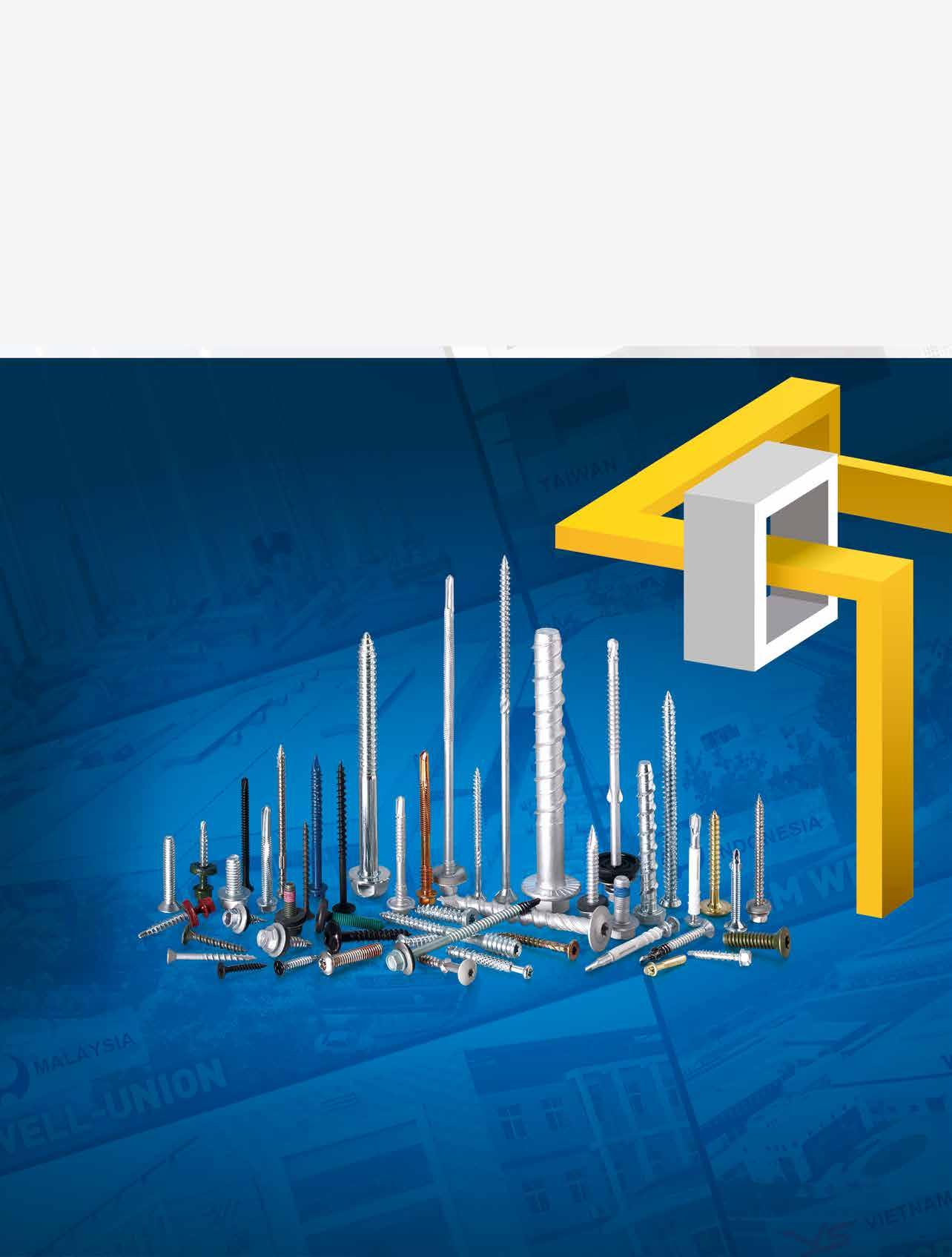
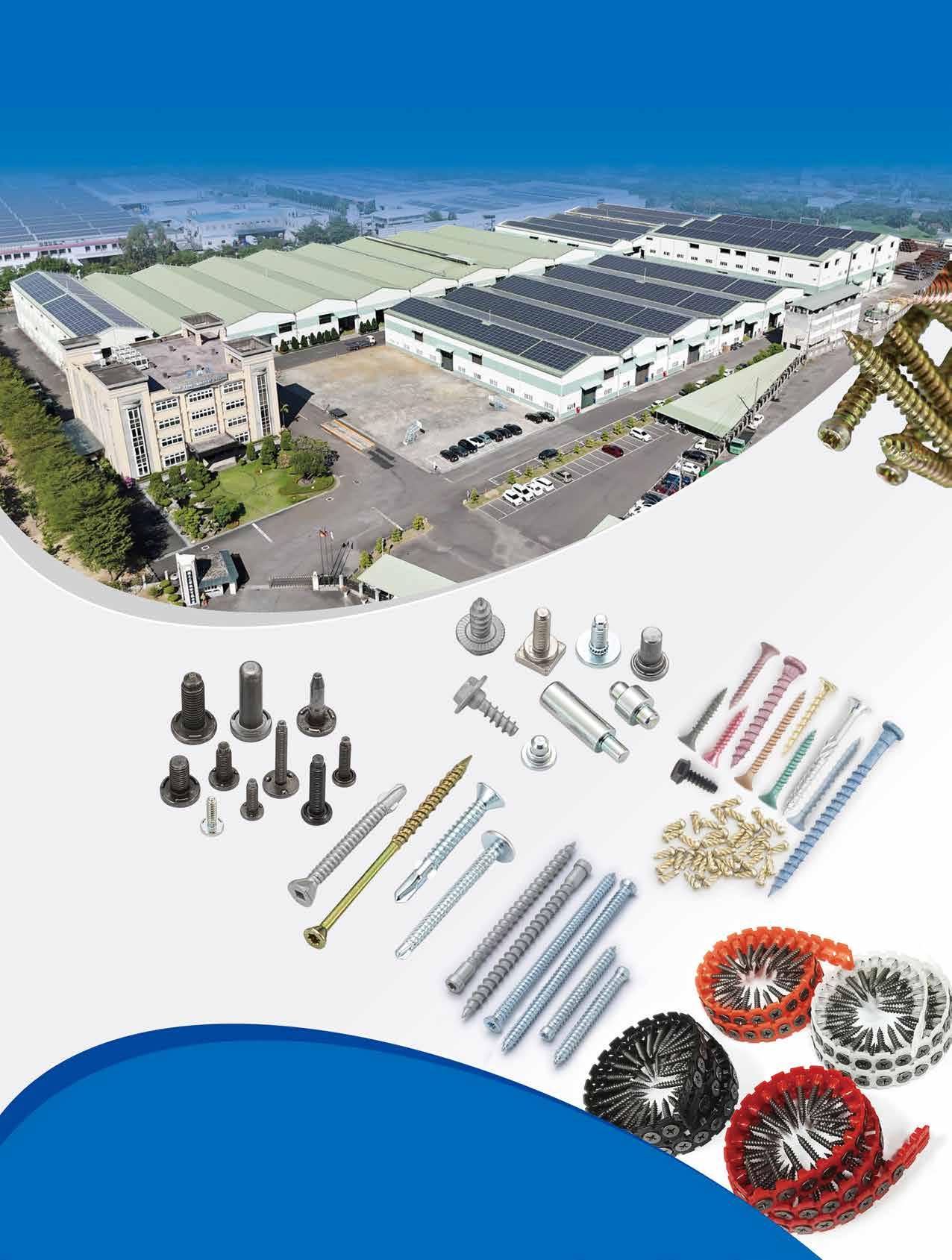
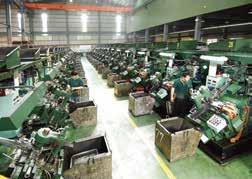
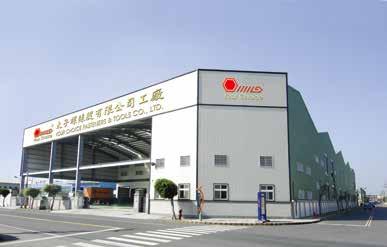
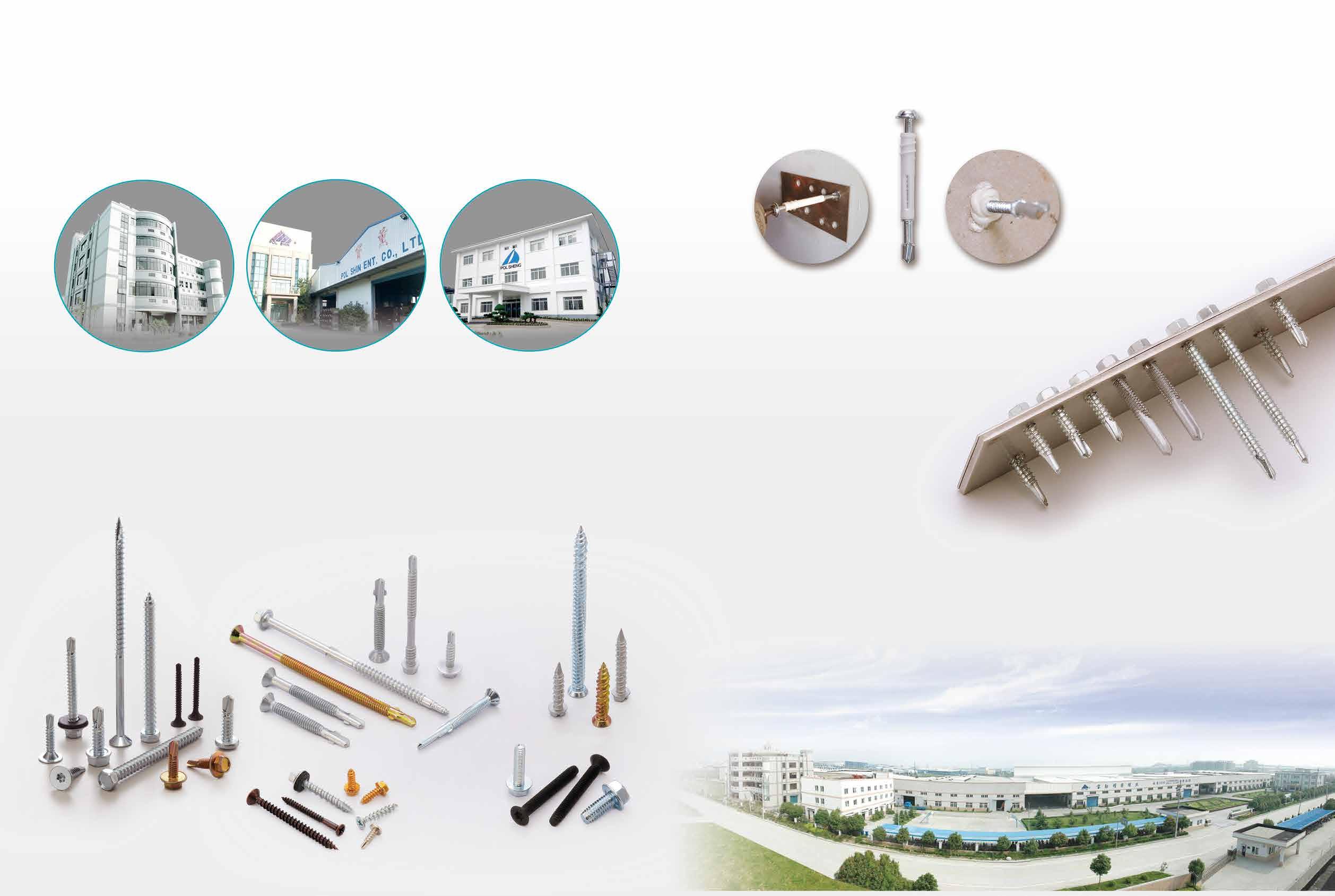
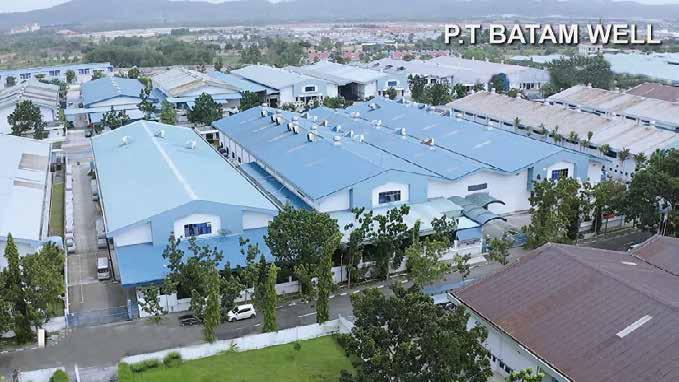
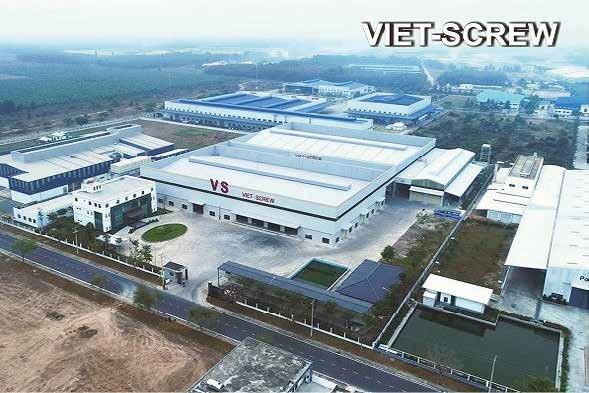
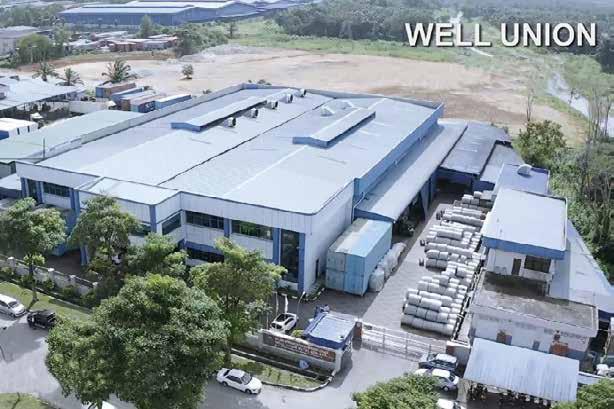
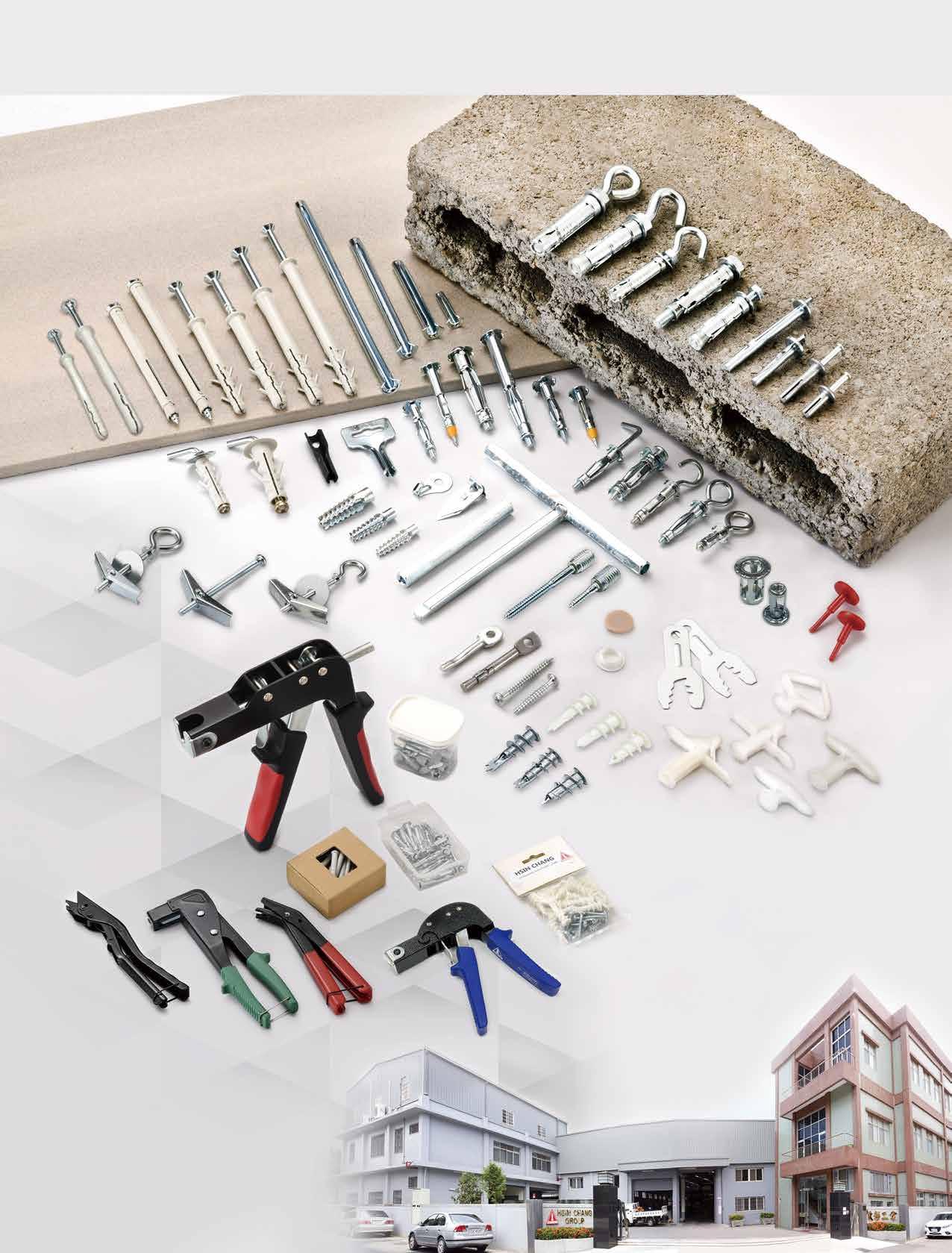
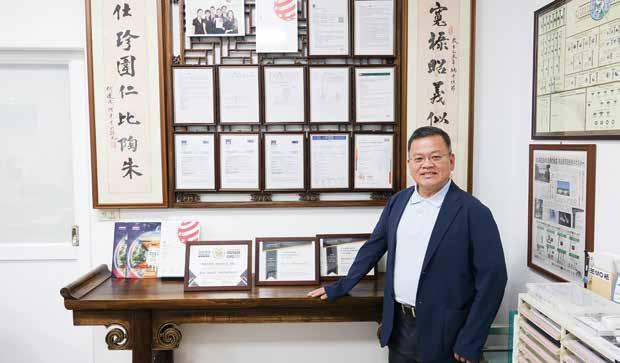
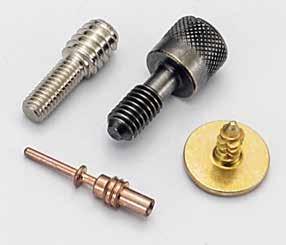
Linkwell, with its full range of fasteners, multi-site (including Taiwan, China, Indonesia, Malaysia, Vietnam, etc.) production lines, and one-stop services, has been deeply rooted in the construction and industrial markets for 49 years, earning high praise and trust from numerous global clients. In 2025, the fastener industry faced unprecedented political and economic turbulence, with fluctuating demand in Europe and America impacting orders for Taiwanese suppliers. However, Linkwell relies on its business resilience to continue providing stable supply to its European and American clients. President Kosky Yen stressed: "Drawing on nearly half a century of global trade experience, we've observed that overseas fastener demand fluctuates but follows an overall upward trend. Europe and America remain the largest demand markets and won't disappear—we will always be the most reliable backbone for our clients there!"
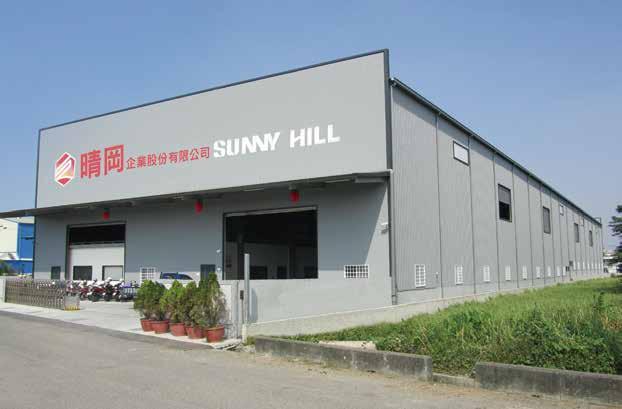
SUNNY HILL
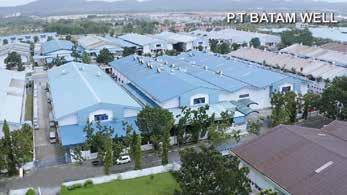
CHINA
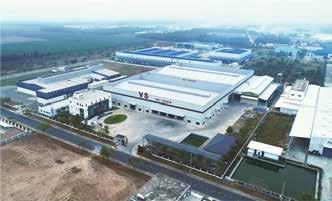
FASTWELL
Competitive Supply System Enables Global Adaptability
Moreover, Linkwell has long laid out its strategy in the Asian market, optimistic about the steady continuous growth in Southeast Asian fastener demand in recent years. It has established factories in Malaysia, Vietnam, and Indonesia, positioning them as a solid foundation for stable business growth—a clear positive for Linkwell.
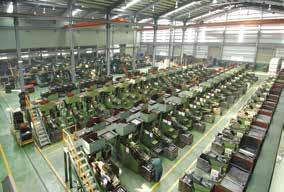
Southeast Asian countries, particularly Indonesia, Malaysia, Vietnam, and Thailand, impose extremely strict environmental regulations on foreign-invested factories. Linkwell's factories in these Southeast Asian nations have been cultivated for years, with their fastener products meeting high self-standards in environmental technology and quality, giving the company a key competitive edge in the Southeast Asian market. The Taiwan headquarters leverages support from diverse partner factories to achieve a complete production supply chain. By integrating sites in Taiwan, China, and Southeast Asia, Linkwell has built a onestop supply chain that flexibly meets global clients' diverse needs in quality, cost, environmental protection and volume.
Responding to Energy Savings & Carbon Reduction with Digital Systems
To comply with the EU's CBAM, Linkwell engaged professional consultants for guidance and required all factories to jointly promote energy savings and carbon reduction. Meanwhile, in response to client demands, it actively introduced ERP systems into its plants and production processes, demonstrating its commitment to sustainable operations.
Brand Management Drives Business Upgrades
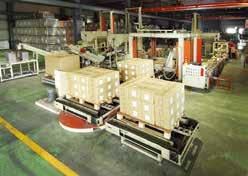
Facing various competitions and uncertainties from U.S.China trade tensions, Kosky believes that the "strength of stability" and "solidifying brand reputation" are the keys to a company's sustainability. Therefore, Linkwell is upgrading equipment automation to reduce labor costs and enhance quality stability. Looking ahead to future challenges, Linkwell looks forward to forging even closer ties with its partners to achieve new successes.
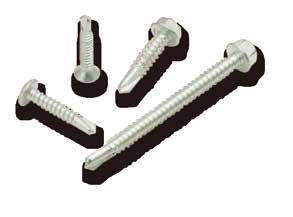
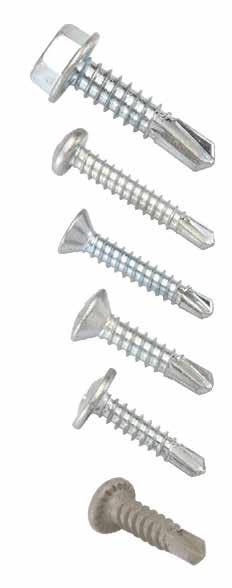
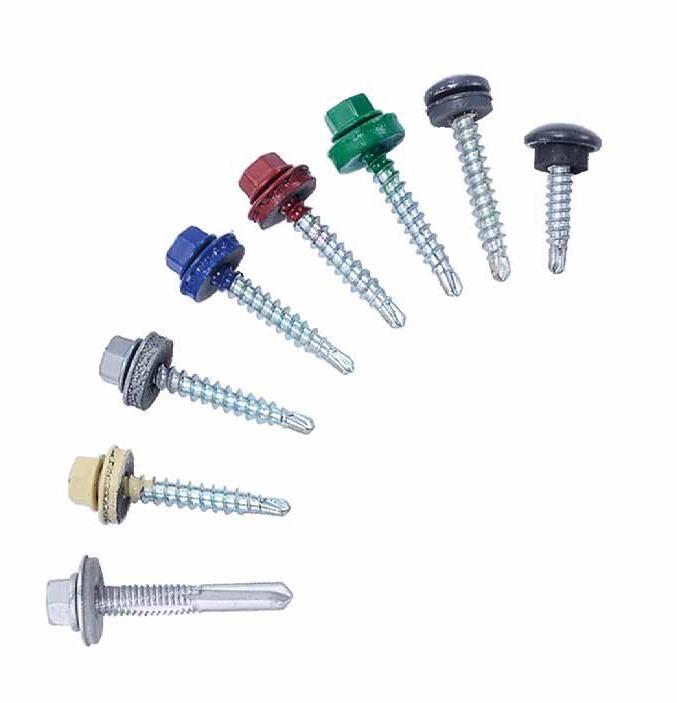
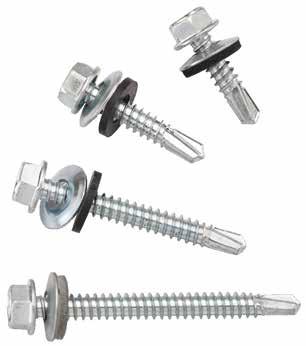
High Drilling Speed and StabilityALEX SCREW’s Self-drilling Screw Technology Stands Out from Peers
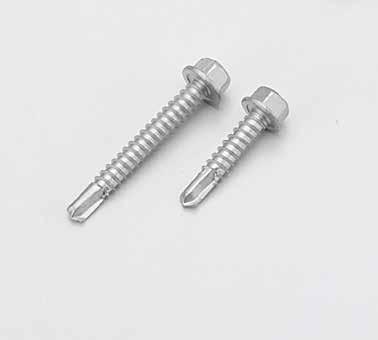
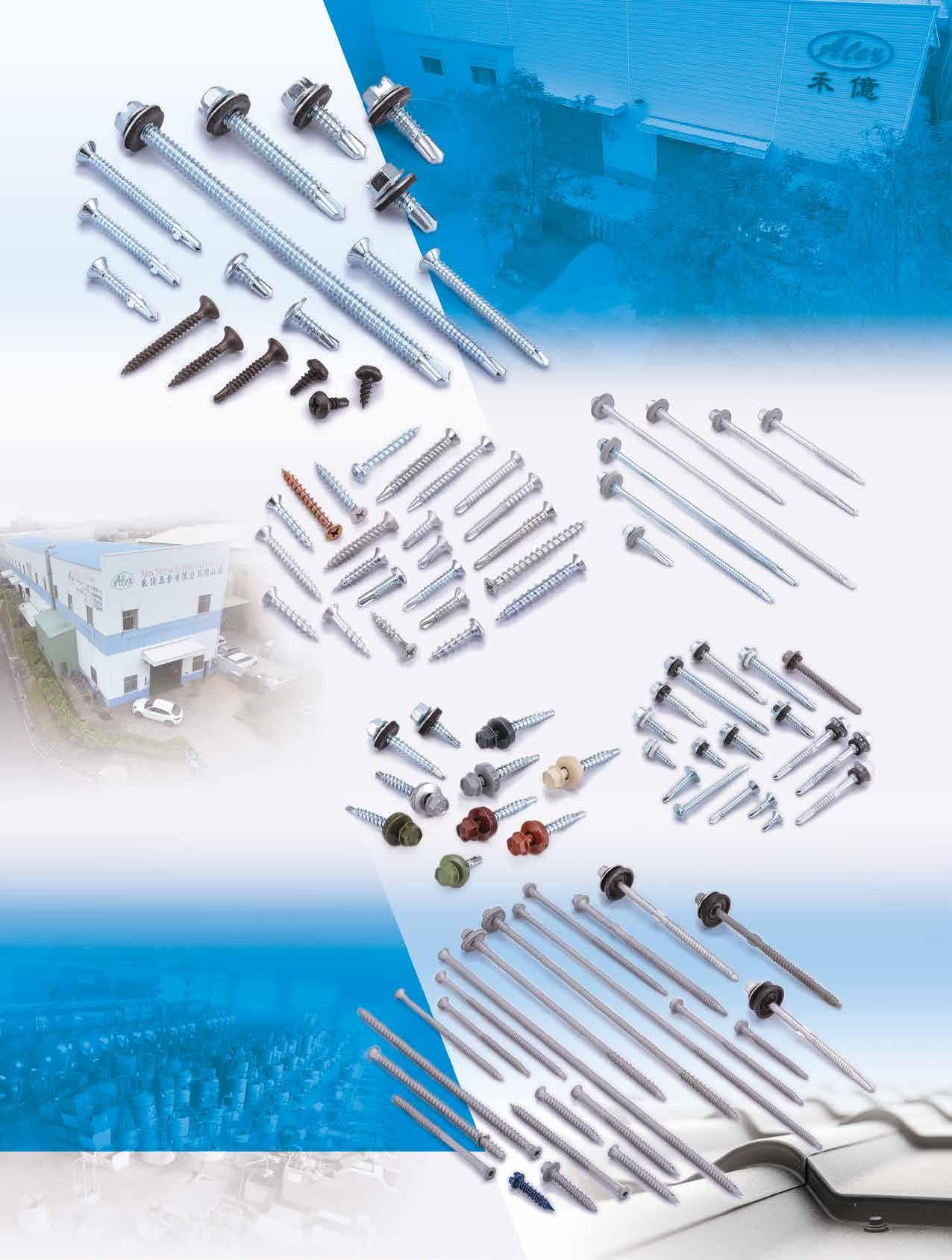
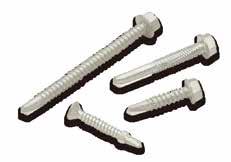
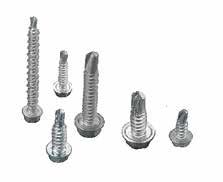
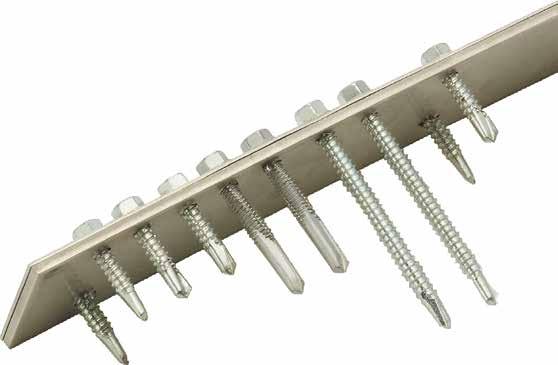
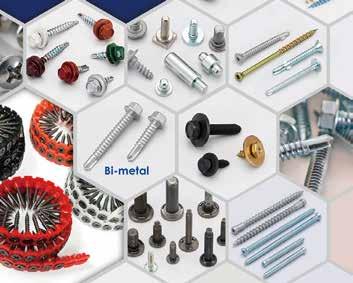
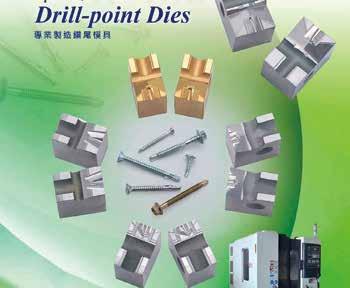
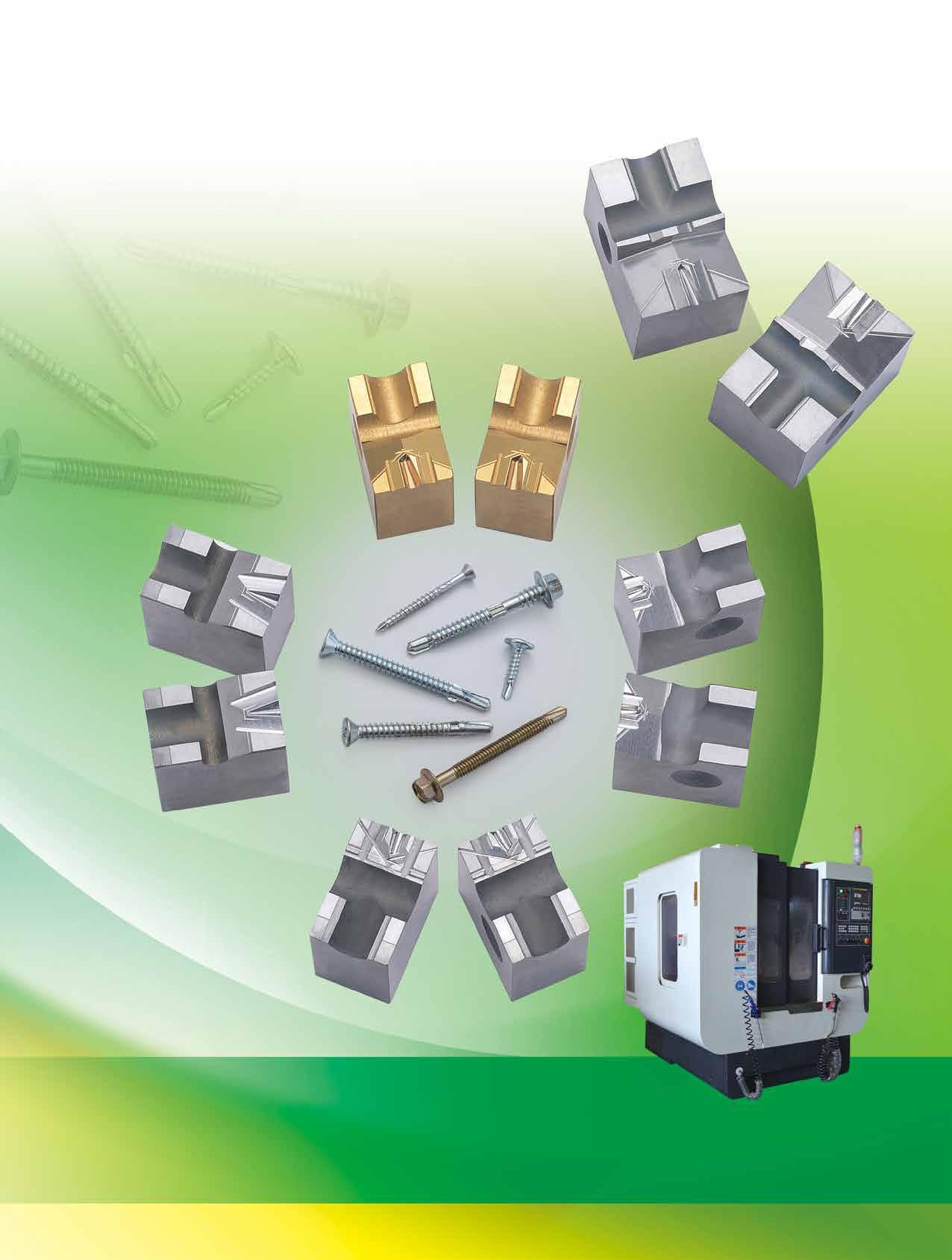
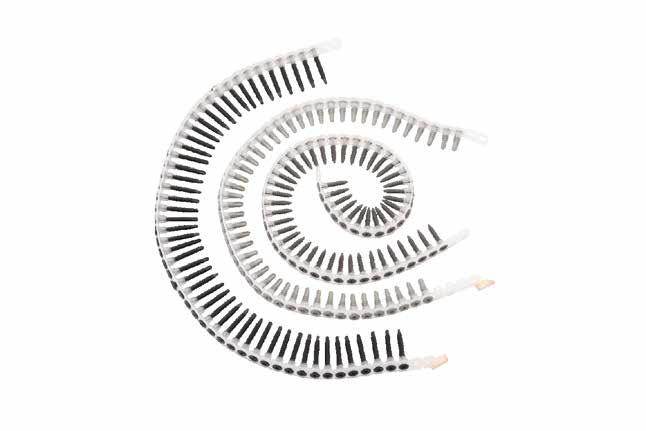
Self-drilling screws are commonly used fasteners in many outdoor and construction fastening operations, but their performance sometimes may not meet customer expectations due to insufficient technical expertise from manufacturers. Recognizing the potential market demand and application advantages of self-drilling screws, Alex Screw Industrial Co., Ltd., with its extensive screw manufacturing knowledge, has invested heavily in selfdrilling screw technology in recent years, in addition to window screws and building screws. It aims to provide global customers with product solutions that combine performance and durability through its superior technology and design capabilities.
Penetrating Through 12 mm Thick Steel Plates in 15 Seconds
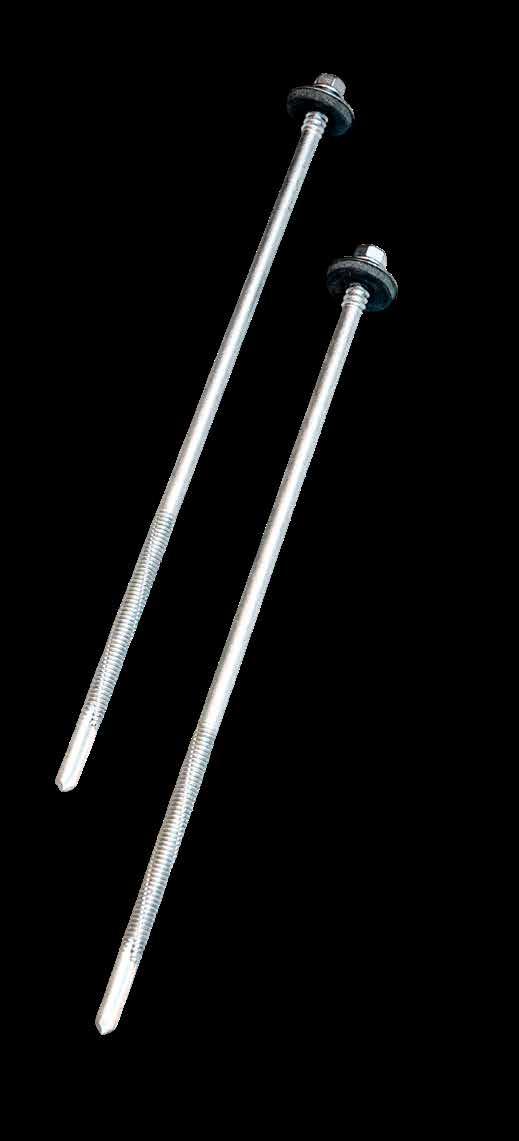
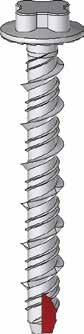
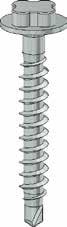
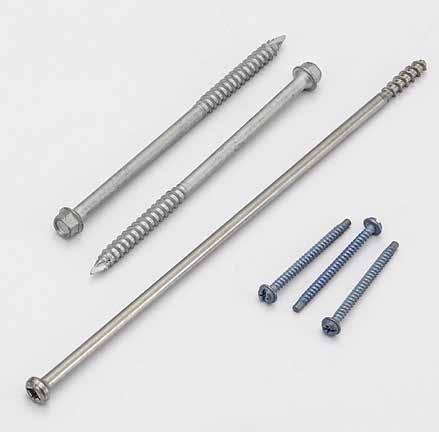
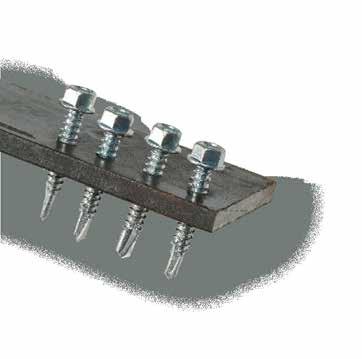
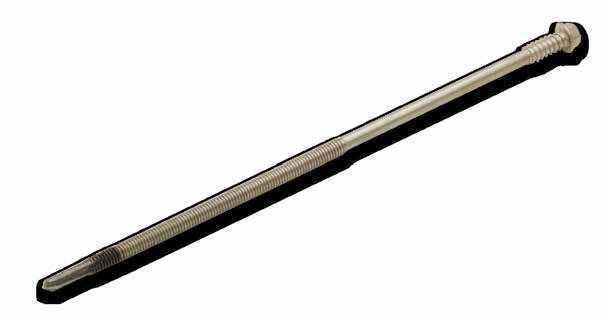
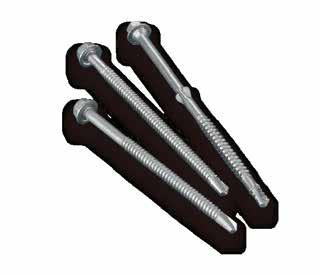
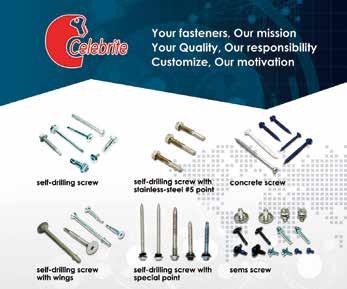
mong various short, medium, and long self-drilling screws, the one with a #5 point is arguably the most technically demanding. Previously, customers often encountered inconsistent penetration performance or fluctuating penetration times when using these screws for fastening sheet metal. However, Alex Screw's technical team conducted in-depth research into the shape and processing steps of self-drilling screws, introduced professional appearance measurement fixtures, and carried out precise control of mold service life, successfully developing the self-drilling screws whose penetration speed and stability have amazed customers. These screws will be also showcased at the Taiwan International Fastener Show 2026. "Making self-drilling screws with good quality is not easy, but making a longer #5 point self-drilling screw is even more difficult! Thanks our #5 point self-drilling screw can penetrate a 12 mm thick steel plate in 1516 seconds, demonstrating excellent drilling speed and high stability, and has received extremely high praise from many of our clients. Not only does it have a differentiated technological advantage, but it is also more pricecompetitive compared to other major manufacturers' products," Sales Manager Anne of Alex Screw said.
Quality Control Fully Upgraded to the "Bluetooth
nderstanding the differences in customers' knowledge of products and two-way communication skills, Alex Screw skilled in customer communication can tailor the most suitable solutions for customers, covering materials, specifications, and technology, and can also create greater value for customers through quality control upgrades and shortened delivery times. Starting with rigorous control over associate service providers for heat treatment, electroplating, and surface treatment, it implements inspection step by step. In addition to purchasing X-ray film thickness and salt spray testing machines to control quality, its QC personnel have fully switched to Bluetooth-interconnected instruments to integrate accurate data directly into the ERP system, avoiding human-made errors and inaccurate reports. "Quantitative data make it easier for us to analyze and improve. In the future, we will gradually replace large instruments that have exceeded their service life to create a more complete interconnected quality control system," Sales Manager Anne said.
Flexible Delivery Capacity- the Top Choice for Customers in Emerging Markets
In addition to stable deliveries to mature markets such as Europe, Alex Screw continues to focus on the needs of customers in emerging markets such as the Middle East, Russia, and Central/Eastern Europe who demand "good prices but not low quality," and also has suitable products to meet the needs of various building projects or structural fastening applications. "Emerging markets have significant demand for self-drilling screws, but their ordering and inquiry patterns differ greatly from those of customers in Europe and the U.S. We can flexibly adjust shipments from our own factories in China or Taiwan to suit the regulations and customer requirements of different markets, and we are happy to offer customers discounts without compromising quality while maintaining reasonable profits. We hope to expand our presence in emerging markets while fully satisfying our customers' needs," Sales Manager Anne said.
Copyright owned by Fastener World
Article by Gang Hao Chang, Vice Editor-in-Chief
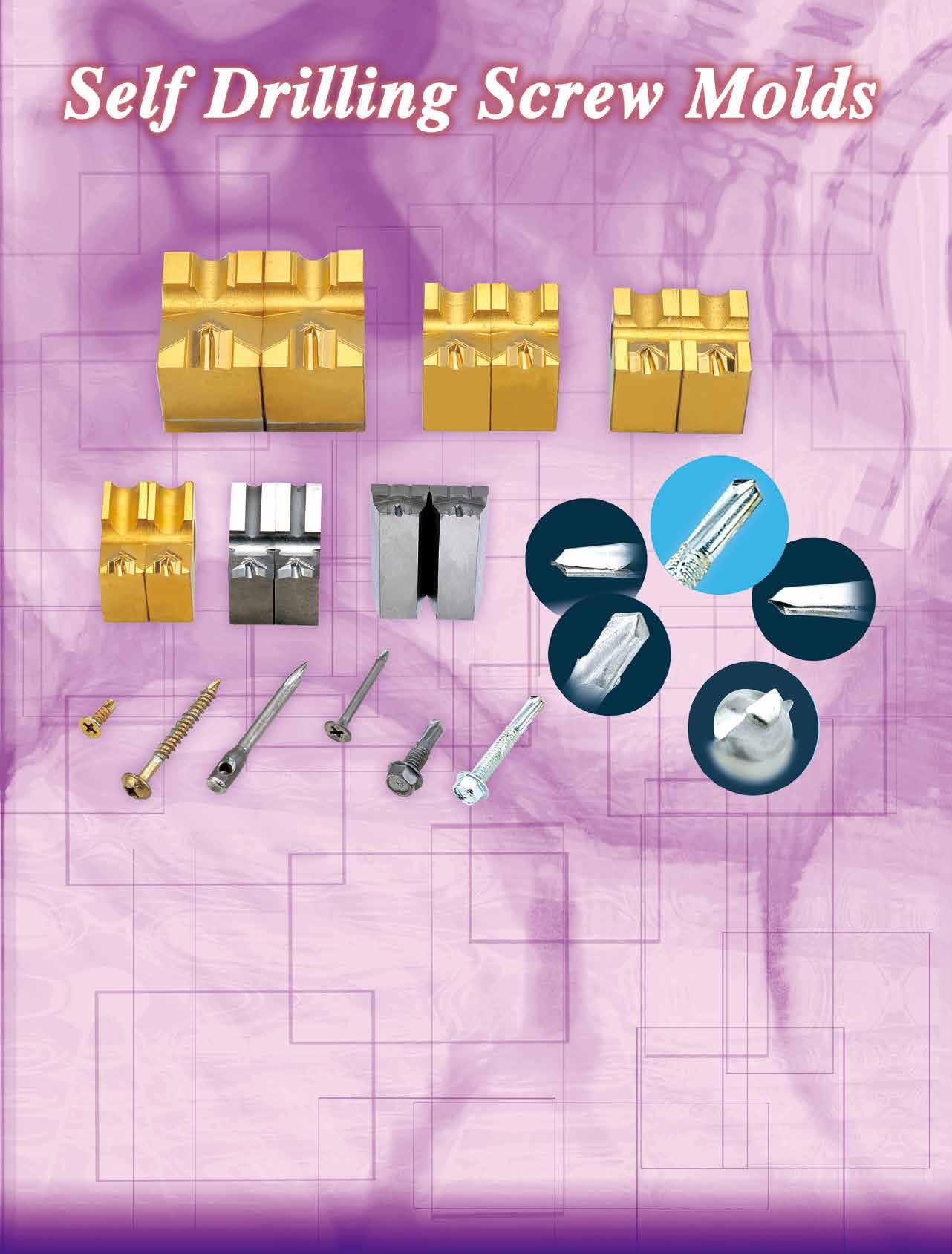
Self-drilling
Customers Travel Great Distances to Seek Cooperation.
KWANTEX Wins Market
Dominance Through "Innovation"
"If you're looking for unreleased leading products and technologies, look no further than Kwantex in Taiwan!" This statement from an overseas customer not only highlights Kwantex's successful investment over the past 30 years, transforming from packaging & wire drawing to R&D in fasteners, but also demonstrates its long-established leadership at a different level among its Taiwanese counterparts in terms of product development, technological innovation, and brand positioning.
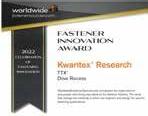
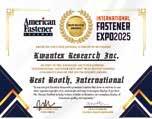
In recent years, Kwantex has consistently conveyed its focus on R&D and its strong R&D capabilities to the international market. Its outstanding innovation is reflected in its annual product development, with many products receiving recognition such as the German Red Dot Design Award, the Fastener Innovation Award from U.S. Worldwide Fastener Sources, the Best Booth Award at IFE 2025, etc. Furthermore, Kwantex actively keeps pace with environmental protection and carbon reduction trends, such as achieving ESG certification in 2024 and planning to release its latest ESG report in 2026, demonstrating its significant commitment and responsibility to environmental friendliness and sustainable development.
Incredibly Eye-catching Products! A New Product is Adopted Every 5 Years
"To turn the market around, there's no chance without innovation," Kwantex President Jack Lin said. Kwantex develops over 100 improved, innovative, and patented products annually, with R&D and patent maintenance costs reaching tens of millions NTD. For Kwantex, a product's ability to revolutionize the market requires a balance of functional and aesthetic innovation, along with optimal adjustments to meet customer needs. President Lin believes, "Only innovative products can give us pricing power." Therefore, since securing its 1st European customer order, Kwantex has been working at full speed. Through continuous development, testing, and product refinement, an average of 1 new product is adopted by customers every 5 years, with some new products already surpassing the design and functionality of many well-known European and U.S. brands.
5 Major Features of Kwantex Wood Screws and Industrial Assembly Screws: Quick Fastening, Force-saving, Anti-split, Shear-resistant, and High Pull-out Strength
The relatively poor rust and deformation resistance of traditional industrial steel beams has led markets in Europe, USA, and Japan to shift towards Cross Laminated Timber (CLT) construction, thereby driving demand for wood screws. Coupled with rising labor costs, the demand for
President Jack Lin ▼
wood screws that can meet automated & rapid fastening requirements without cracking or insufficient anti-loosening force, as well as industrial assembly and construction screw sets with high clamping force and easy maintenance & reuse, is also increasing daily.
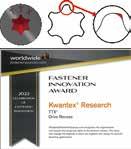
These needs can now be met through Kwantex's full-size and high-performance product offerings, such as wood screws that offer quick & easy fastening and anti-split performance while maintaining a clean and aesthetical finish; the TTX® Drive & Bit series, which fasten securely when turned (including the patented TTX® Drive with its 6-lobe hook design to prevent slippage and which won the Worldwide Fastener Sources Fastener Innovation Award in 2022); the Cutters series, a leading brand in the Nordic and N. American furniture/construction markets, known for its ease of use and crack resistance; and the Torpedo series, which allows for quick tapping
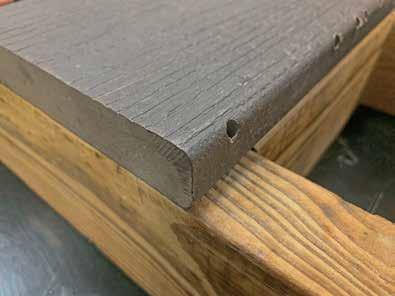
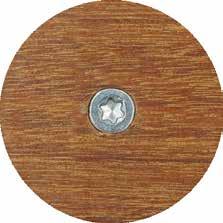
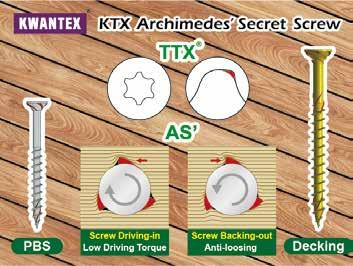
(including the KTX-Torpedo Plastic Decking Screw, which fastens wood surfaces without cracking edges and features reverse threads to prevent mushrooming); the 3rd-generation Archimedes’ Secret Threads (AS’) series (the best alternative to the TY-17, double cut design and Torpedo thread) that can prevent wood cracking without damaging the wood fibers and reducing driving torque, and maintain high pull-out force; the KTX Convex (VK) Head that can replace traditional hex washer heads and prevent slippage and wear after installation (suitable for various steel structure, wood structure, and concrete screws and bolts, which are easy to use with VN nuts); the KTX-Jig (for Hidden Decking Screw System) that can create a clean, fastener-free surface by side fastening, which won the Worldwide Fastener Sources Fastener Innovation Award in 2025; and the stainless steel KTX Terrace (IPE) Screw that can drill into extremely hard wood without pre-drilling and snapping-off.
Kwantex Still Achieves a 20% Growth Amid Market Sluggishness
"Kwantex products have consistently achieved positive results in each market. A high percentage of customers who have used our products become our agents or use our patents for private label sales. When customers are experiencing economic downturns or excessive market competition and shift towards product upgrades, it presents an opportunity for us to leap forward. With hundreds of product improvements and innovations every year, we still achieved growth of over 20% in
2025." President Lin said. Kwantex's innovation extends from product design to subsequent packaging and logistics, and it aims to integrate concepts such as environmental protection, storage, and reuse with users' home life. Kwantex will celebrate its 30th anniversary in 2026. President Lin also announced that in the 2nd half of 2026 the company will present more groundbreaking innovations to global customers in product design, packaging, and
logistics, showcasing Kwantex's worldclass R&D capabilities and quality strength on par with international giants. "When Kwantex received the Best Booth Award at IFE 2025, the judges praised us as 'an industry leader and a model of innovation in Taiwan.' I believe that a large part of the reason we won this award is based on our consistent efforts to demonstrate the core value of our products and our forward-looking vision of future market trends," President Lin said.
Focusing on ESG, Ensuring Environmental Sustainability, and Caring for Employees
In addition to its commitment to product innovation, Kwantex also values environmental protection and carbon reduction. The company's representative color “purple” conveys Kwantex's aspiration to maintain its business development while striving to reduce pollution in the screw manufacturing process and coexist sustainably with the Nature, because screws are not just products, but an integral part of everyone's life. "Kwantex products are certified by the EU CE/ETA, US ICC, and SGS quality management systems. They can be reused in various fields such as industrial assembly, civil engineering, bridges, vehicles, ships, and aviation, eliminating the problem of needing to scrap a large number of screws due to failure. This perfectly aligns with the spirit of ESG environmental protection and carbon reduction," President Lin said. Regarding corporate responsibility, Kwantex creates a safe workplace for its employees. In addition to
professional safety and fitness managers stationed at the factory, there are also dedicated factory nurses and external occupational physicians providing employees with regular medical check-ups and assistance. On the occasion of the company's 30th anniversary, President Lin said, "We will continue to focus on product innovation and corporate sustainability, so that our employees can work with peace of mind and we can attract more customers from more countries to adopt Kwantex products or our brand."
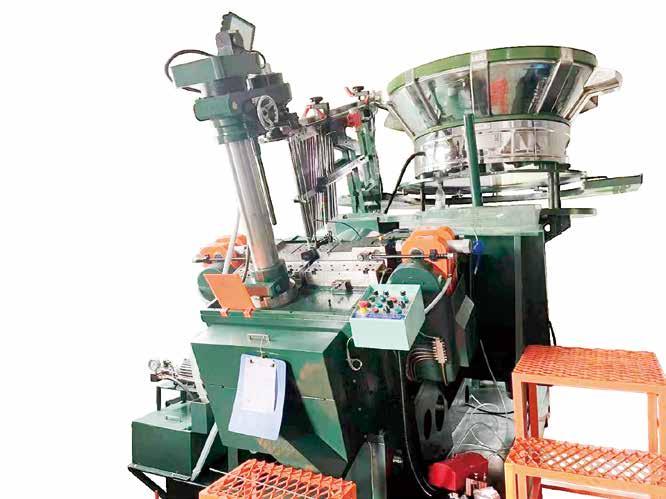
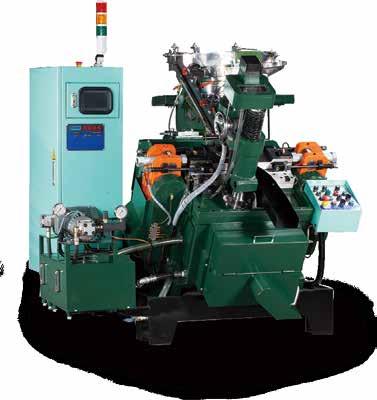
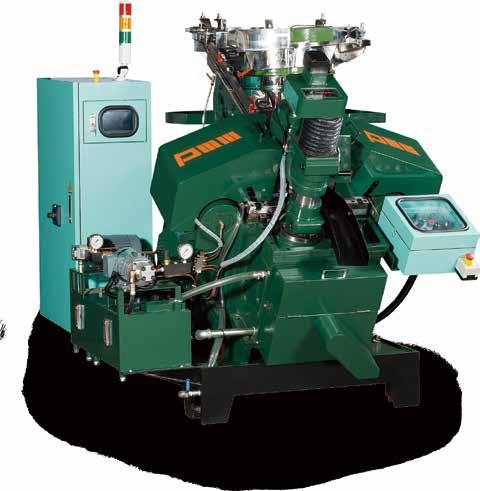
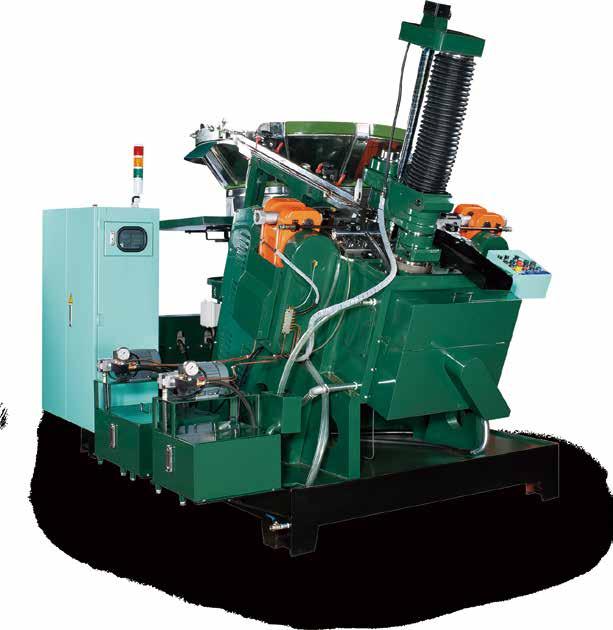
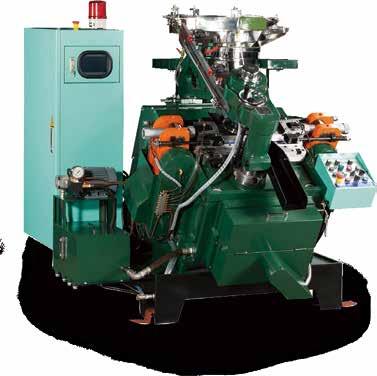
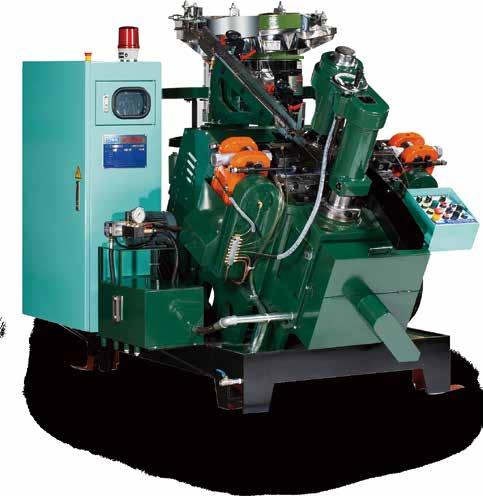
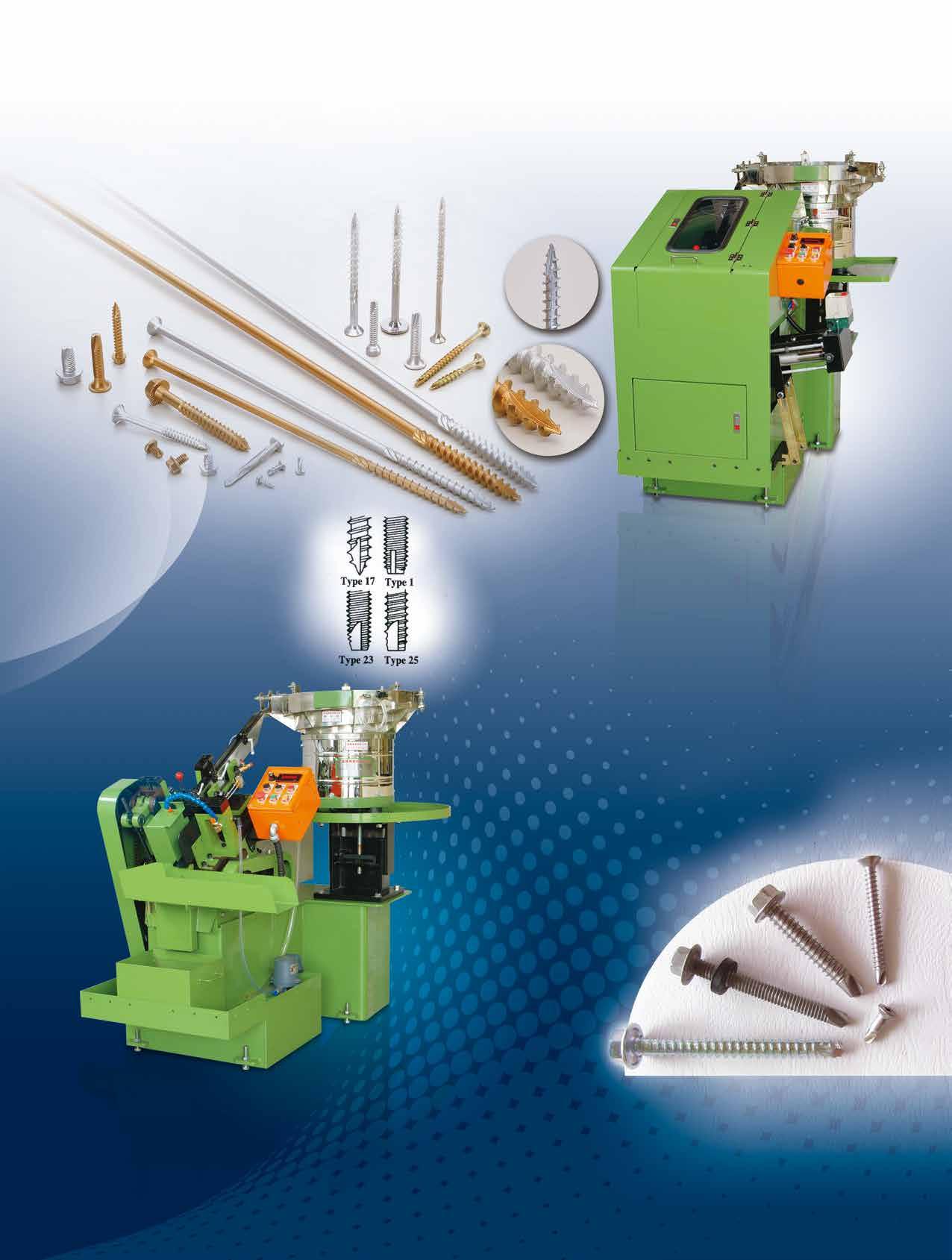
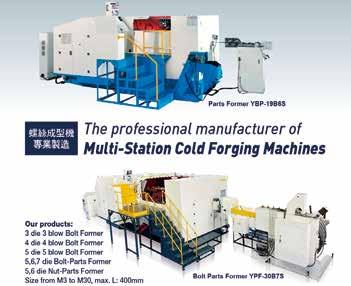
Pointmaster Machinery has researched self-drilling screws for nearly 30 years. At its founding, it had only one machine model, but has always sticked to co-developing with clients and listening to their needs, continually developing new products. It is currently the most comprehensive manufacturer of self-drilling screw formers.
Founded in November 1998, Pointmaster reached a milestone on January 8, 2019 with the 1,000th self-drilling screw former shipped, and the 1,500th one shipped on April 11, 2024. Looking back, there used to be words that Pointmaster would close its doors, along with shareholder disputes, a factory auction crisis, and three years of legal battles. General Manager Mr. Chi-Wei Liao recalls with mixed emotions, “It is winning the court case at that time that culminates to Pointmaster’s success today.” With the 1,633rd machine shipped to this day, Pointmaster’s commitment to quality and service remains the constant tenet for 27 years.
Diverse Specifications, Durable & Robust Design
Self-drilling screw formers are essentially for self-drilling screws production only, so they have a relatively smaller market demand than other fastener machines. Yet this has not dimmed Pointmaster’s passion for manufacturing selfdrilling screw formers. It continually researches in this field, and whenever clients report deficiencies, Pointmaster tests and improves the designs. No matter how much time and energy is required, they insist on delivering the best.
Pointmaster’s current self-drilling screw formers are available in single or double-stroke structures, with sizes categorized by the fastener size they produce. The doublestroke design is intended for stainless steel screws, while the single-stroke model mainly produces carbon steel screws. The models include popular PM-100, PM-100S, PM-200, and PM-210S, reaching production speeds of up to 600 pieces
Email: tforever@ms29.hinet.net
per minute. Besides standard models, custom machines are available, such as the PM-W250S tailored to client requests. The largest model can produce self-drilling screws up to 600 mm in length. Pointmaster’s R&D has yielded multiple patents; the use of different cast iron materials strengthens the machines’ rigidity and robustness, delivering a tonnage output about 1.25 times higher than competitors.
Pointmaster utilizes a patent “dual clutch control system” that can rapidly disengage the front flywheel inertia, allowing instant braking even at high speeds. This prevents quality issues from misfeed or empty-die collisions and also protects the dies, boosting production efficiency. Even many Chinese manufacturers prefer Pointmaster’s forming machines over cheaper locally-made options. All models have CE certification, with quality recognized in EU countries.
Efficient After-Sales Service, Expansion into Emerging Markets
Pointmaster does not skimp on after-sales service. To rapidly diagnose and resolve client issues, it operates a service center in Gangshan of Kaohsiung, Taiwan’s fastener heartland. For Chinese clients, to avoid the need for on-site technicians, there are authorized service partners in Guangzhou and Zhejiang, China, to provide after-sales service. The company continually trains its technicians, and should there be problems that cannot be resolved remotely, head office personnel can fly abroad to provide global clients with support.
Currently, its sales are primarily export-driven. In recent years, as production prerequisites in emerging markets mature, demand has surged, especially in Vietnam, Indonesia, and India where Pointmaster’s orders continue to rise. Pointmaster does not have exclusive distributors for the time being but welcomes interested parties to discuss collaborations.
Copyright owned by Fastener World / Article by Dean Tseng
Pointmaster Machinery’s contact: Mr. Chi-Wei Liao, General Manager
Jern Yao's 12,560 sqm New Factory Inaugurated Massive Investment to Build “Self-use Parts” Processing Plant
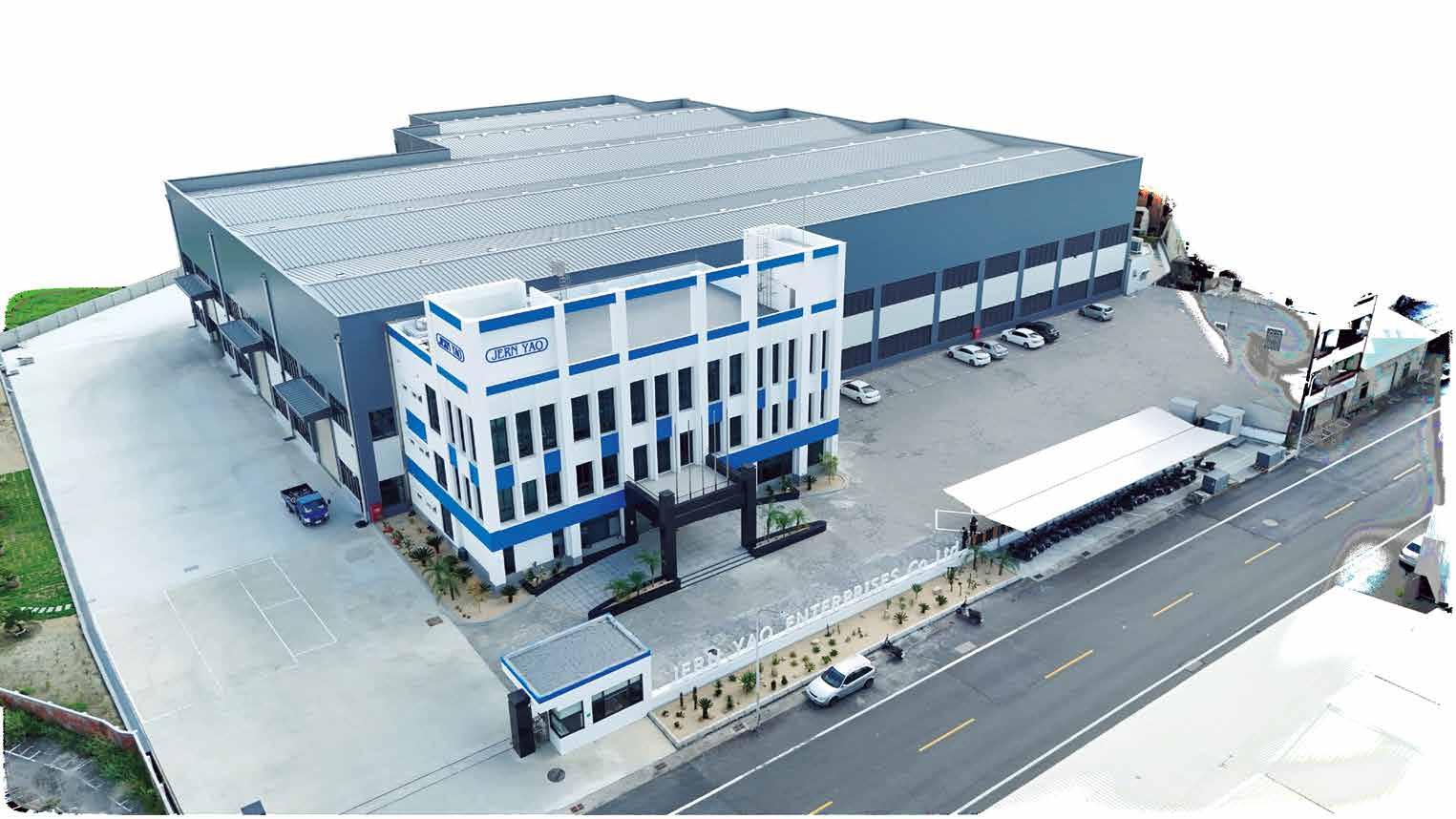
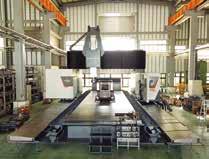
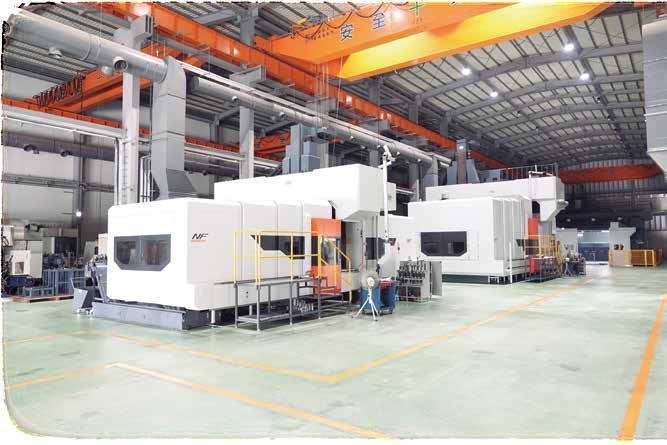
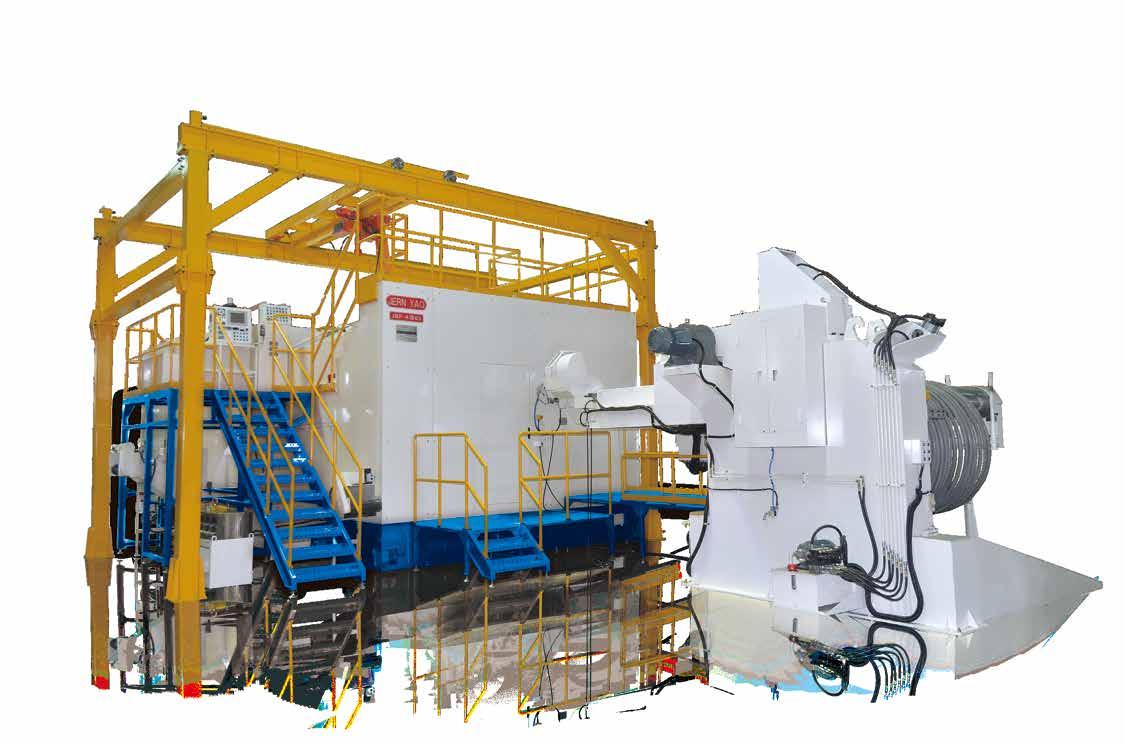
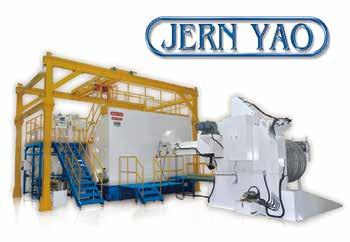
Jern Yao Enterprises, one of the world's largest manufacturers of mid-to-high-end screw, nut, and part formers, with cumulative global sales nearing 5,000 units, officially inaugurated its self-use parts processing plant in Rende (Tainan) at the end of 2024. Unlike the original Plant 1, handling assembly, outsourcing, quality assurance, warehousing, and maintenance, the primary mission of Jern Yao's 2nd new plant will be to “increase the percentage of self-use parts production” and “enhance the precision, speed, and stability of machined parts.”
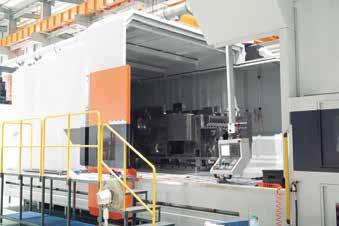
Nearly 50 Five-face and Advanced Milling Machines Now Operational, Securing Its Lead in High-Precision Product Manufacturing
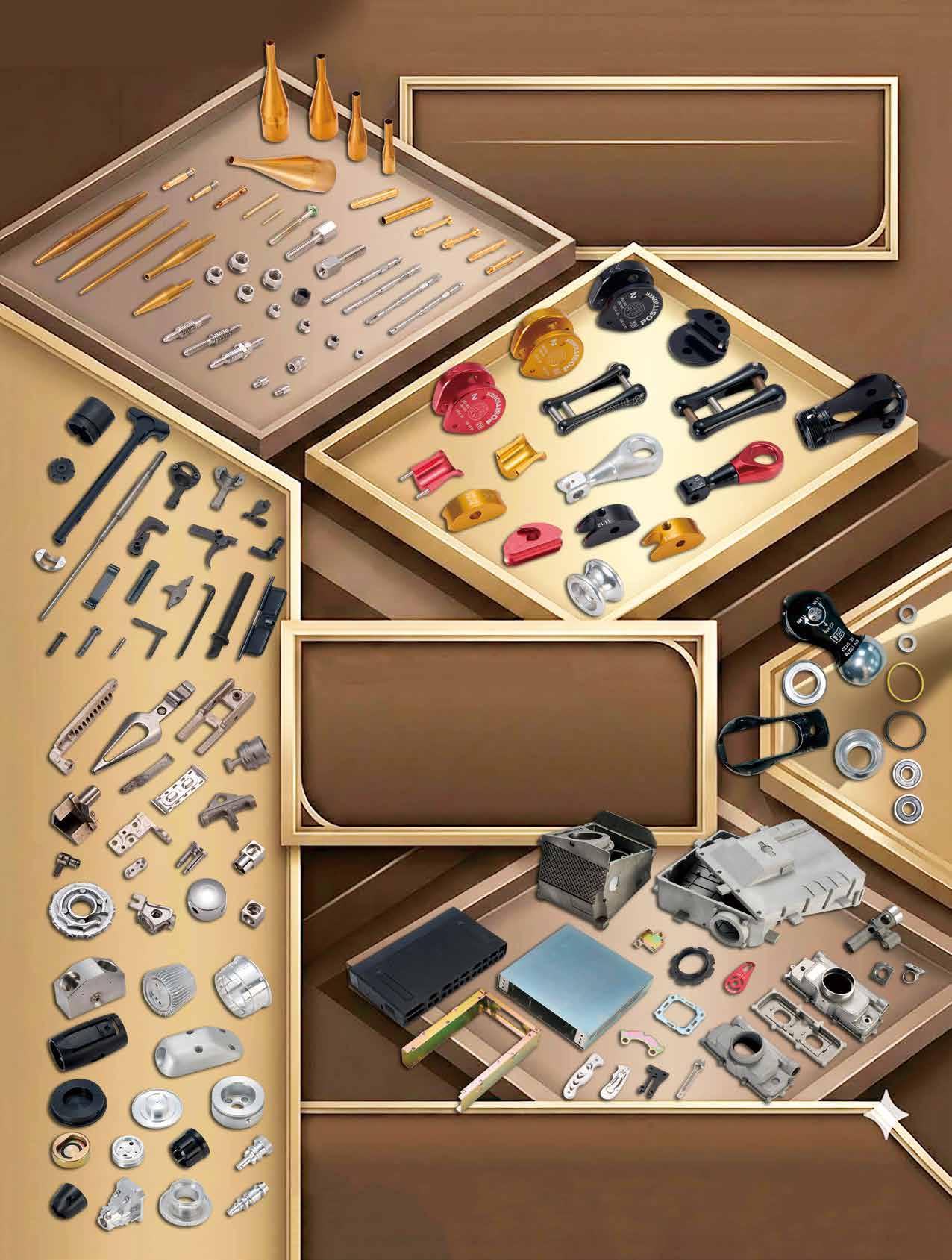
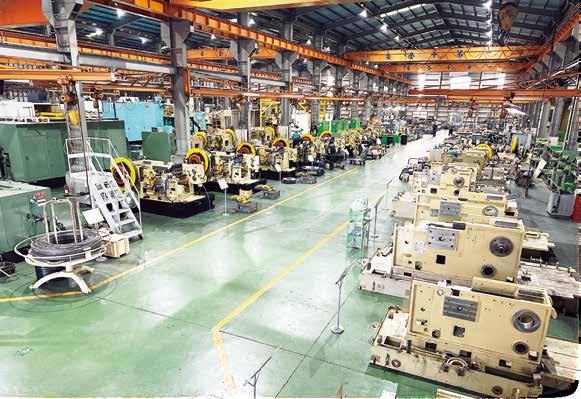
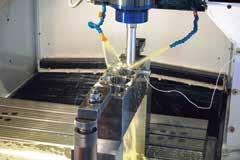
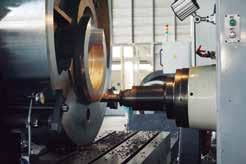
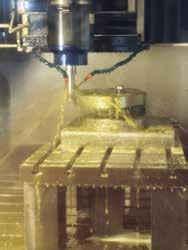
The 12,560 sqm second plant dedicated to producing self-use parts represents a significant endeavor that sets Jern Yao apart from its competitors in the former manufacturing industry. The percentage of Jern Yao's self-use parts production was previously ~30%, primarily consisting of small-batch custom orders. Considering the challenges such as emerging succession gaps among partner factories, equipment upgrades, and parts lead times increasingly failing to meet the industry's stricter demands, coupled with the company's own desire to accelerate production schedules and enhance finished product precision, Jern Yao made a substantial investment in introducing 45 advanced and 4 fiveface milling machines. This initiative aims to rapidly elevate Jern Yao's product precision and manufacturing capacity to a level unmatched by competitors within a short timeframe. At a time when an increasing number of former manufacturers are heard to directly source cheap yet questionable-quality parts from China and have them assembled in Taiwan to “wash the origin” for cost reduction, Jern Yao not only refuses to follow suit by steadfastly rejecting Chinese raw materials and parts that fail to meet its high-standard quality requirements, but also invests heavily in acquiring dozens of advanced milling machines to enhance its self-use parts production capabilities, demonstrating Jern Yao’s unwavering commitment in recent years to actively frame itself as the world's premier former brand and solidify its position as the global leader.
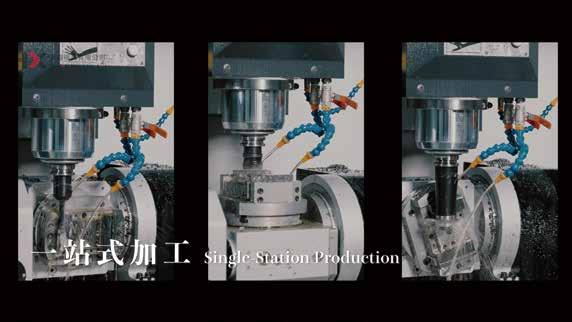
“Currently, few Taiwanese former manufacturers possess five-face milling machines. Unlike traditional CNC machines, the advantage of five-face machines lies in eliminating the need to flip workpieces, significantly boosting machining capacity. It can operate with only a single setup, reducing humanmade errors while enabling us to execute more complex designs and achieve higher precision levels. To ensure precision for both tooling and workpieces, we even maintain our plant air conditioning at a constant 28°C. With the introduction of five-face milling machines, we now have the opportunity to further increase our core part self-sufficiency ratio to a 5:5 split, ” stated President Alec Tsai.
JernYao currently offers machine models ranging from 2-die to 8-die configurations. To meet customer demands for automated processing speed and efficiency, it actively integrates AI into product design (e.g., machine troubleshooting functions). It also recalibrates existing models (e.g., increasing their production from 240 pcs of M8 screws per min. to 300pcs) and accelerates die change efficiency through external adjustment of male/female dies. These measures comprehensively address increasingly stringent customer requirements for precision, speed, and stability.
“Price cutting represents Jern Yao's most significant challenge at present. However, the superior performance, the capability to produce more precise products, and the stability of our machines remain unmatched by competitors. Moving forward, we will strive to gain greater customer recognition by reducing unnecessary costs in the manufacturing process, ensuring smoother production line operations, and shortening lead times, in order to pave the way for Jern Yao's next era of successes,” added President Tsai.
New Plant Welcomes
President Alec Tsai to Office; Jern Yao Ready to Sail with New Management
Jern Yao, which has dominated the industry for 32 years with its exceptional high-
back simply because someone is a supervisor. He believes that eliminating the hierarchical distance that inhibits openness will enable smoother progress across all company operations.
President Tsai stated: “I aspire to build Jern Yao into a company where employees are genuinely motivated to work hard and even feel a sense of belonging, like it's their home. Traditional industries in central and southern Taiwan often adopt a management style where criticism
performance machines, welcomed new leadership in July 2024 as Alec Tsai formally took over the helm from former President Ted Tsai. His first initiative was a sweeping overhaul of Jern Yao's corporate culture, aiming to introduce Western management philosophies emphasizing “frank communication and treating managers as partners.” While the initial implementation proved challenging, the shift in corporate atmosphere is evident today. When employees now feel comfortable addressing President Tsai directly as “Alec,” it signals a departure from the previous era where management dictated every detail.
constructive suggestions, fearing they might be held accountable for any shortcomings. Instead, I prefer a collaborative approach where we sit down together to discuss problems and find solutions, encouraging everyone to voice ideas that benefit the company's future development."
Before assuming the role of President, Alec had served at Jern Yao for over a decade, gaining deep familiarity with all departments. His years of study, work, and life in the US and Canada also instilled in him a strong emphasis on fostering open communication between employees and management holding different viewpoints. Therefore, in his first year in office, he vigorously promoted reforms in the company's internal management culture. He hopes to eliminate the corporate atmosphere of the older generation that overly emphasizes hierarchical systems, allowing Western management thinking that encourages bold expression of opinions and mutual growth and progress to further take root in all departments. President Tsai believes: “The invisible distance between employees and supervisors hinders corporate growth and progress. This barrier prevents employees from promptly voicing concerns or suggestions, resulting in valuable input failing to reach management and issues not being resolved through timely team brainstorming.”
To bridge the gap with employees, President Tsai himself frequently addresses staff and managers by their first names in a friendly manner at the company. He actively encourages them to speak up whenever issues arise, emphasizing that even urgent matters can be brought directly to him for discussion—there's no need to hold
Corporate culture and employees determine a company's future trajectory. To strengthen employees' sense of identification and belonging with the company, President Tsai has actively promoted knowledge transfer and technical training across departments. His goal is to equip the company team with more robust capabilities to tackle future market challenges. Under his leadership philosophy that “new equipment demands new ways of thinking,” Jern Yao stands ready to secure a decisive victory for the next 30 years.
Jern Yao’s contact: Mike Huang, Sales Section Chief Email: mike@jernyao.com
Copyright owned by Fastener World
Article by Gang Hao Chang, Vice Editor-in-Chief
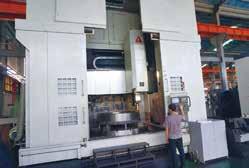
The largest five-face milling machine in the plant
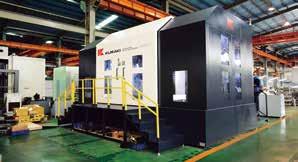
Five-face milling machines
President Alec Tsai
Upgrade and Transformation No Price Cutting!
Despite the bleak market atmosphere, with Taiwanese businesses complaining that reduced customer demand and lower unit prices have led to lower-than-expected overall order volume and profitability, is the situation really that bad?
Looking at the export data for the first 11 months of 2025, Taiwanese fastener industry is fortunate to have maintained a stable export volume of over 1.1 million tons. Compared to the same period in 2024 (approximately 1.2 million tons), exports to developed countries (such as Germany, Japan, Canada, Poland, France, Sweden, Denmark, Slovakia, Finland, and the Czech Republic) and emerging markets (such as Thailand, India, Saudi Arabia, Vietnam, Brazil, and the Philippines) have shown varying degrees of growth, with some countries even experiencing increases of several tens of percent. This conveys a message: the sluggish market does not mean that fastener demand is shrinking in all countries; some countries or regions are still experiencing growth against the trend.
In a market where opportunities and pressures coexist, businesses that can uncover potential opportunities others haven't yet seen to offset the enormous challenges posed by external pressures, amplify their unique advantages over competitors, and accelerate the adjustment of their development strategies, can definitely break through against the odds, attract customers to switch orders, and continue to achieve excellent performance.
Price Cutting Ignites Global Trade Protectionism;
Transformation is the Best Risk Mitigation Strategy
The massive dumping of Chinese products at below-market prices is gradually disrupting the existing balance of supply chains in many countries. The overwhelming influx of low-priced goods into local markets is causing substantial damage to local businesses, forcing many countries to seriously consider whether to impose protective import tariffs or high AD measures on manufacturers from China and other countries. This means that the era of trade liberalization created by the WTO framework is gradually coming to an end, and may also have ripple effects on Taiwan and other export-oriented fastener producing countries.
According to the foreign trade data released by China's General Administration of Customs, China's total import and export value for the first 11 months of 2025 reached US$5.75 trillion, a year-on-year increase of 2.9% (of which exports were US$3.41 trillion, a year-on-year increase of 5.4%; and imports were US$2.34 trillion, a year-on-year decrease of 0.6%). The overall trade surplus was approximately US$1.07 trillion (approximately NT$33.3 trillion), exceeding the US$1 trillion mark for the first time and surpassing the surplus for
the entire year of 2024. Many industries (not only fasteners) in China operate on a large-scale dumping competition model, with exports often exceeding hundreds of thousands of tons, making it extremely difficult for competitors to compete on price alone. Under such circumstances, if one would like to maintain profit margins and avoid losing orders, it's essential to find breakthroughs beyond price. With the low-price competition for market share seemingly a dead end, many industry associations in Taiwan are calling for a rapid pace of transformation and upgrading.
This includes accelerating product differentiation, digitizing production lines, and reducing carbon emissions to promote industrial upgrading. In addition, increasing participation in international exhibitions to solidify customer loyalty in Europe and the United States and expanding brand awareness in emerging markets will help alleviate the pressure caused by low-price competition or trade protectionism.
Rate Fluctuations of NTD Become Stabilized, Temporarily Alleviating the Profit Erosion Crisis
Industry
policies and foreign exchange market adjustments. In contrast, the NTD experienced a sharp appreciation in a short period of time. This is quite unfavorable for Taiwan's traditional industries and fastener industry, which rely heavily on exports. In particular, Taiwan has fewer domestic resources compared to other countries, and it cannot compete with China's strong dumping and subsidized prices for steel raw materials and wire rods. Various unfavorable conditions for competition have left many businesses in a difficult position.
Therefore, Taiwanese government should play a key role in considering the difficulties faced by industrial development and doing its utmost to maintain the stability of the NTD exchange rate without being regarded as a currency manipulator .
2026 is a Crucial Year for the Development of Taiwanese Fastener
Historical data show that Taiwanese fastener industry has remained stable despite fluctuations in the past two years. With the support of the government and related industry associations, it is estimated that exports would still hover around 1.2 million tons in 2025. However, it is important to note that although there are no signs of deterioration in exports at present, some countries may further implement AD duties due to trade protectionism or competition from Chinese manufacturers. Furthermore, the EU's CBAM and the U.S. tariffs on steel and aluminum pursuant to Section 232, and even the potential expansion of trade protection policies by Canada, Mexico, the EU, or Japan, will inevitably have varying degrees of impact on major markets, and Taiwan cannot be excluded from these scenarios.
Some manufacturers believe that the impact of the U.S. Section 232 may last for at least 5 years. In other words, the next year or two will be a critical period for the survival of Taiwanese businesses. If they do not upgrade and transform, and actively seek potential development opportunities, their advantages may soon be overtaken by competitors from China and emerging countries.
2025 has passed. Although the overall economic environment remains uncertain, if we look ahead to 2026 and even 2027, the market still holds a lot of potential and development opportunities. Facing economic cycles and external challenges, businesses and individuals inevitably experience pressure; however, this is not the time to be discouraged or to stop moving forward. Only by continuously striving to improve your capabilities, strengthening your professional skills and competitive advantages can you maintain the foundation during downturns. Through continuous learning, adjusting strategies, and accumulating energy, you can seize opportunities and make the best preparations for future growth and breakthroughs when the overall economy gradually improves.
When the NTD appreciated to NT$28-29 to 1 USD, it wiped out the profits of many Taiwanese manufacturers. Fortunately, it has recently recovered to a more stable level of NT$31-32, which has temporarily alleviated businesses' concerns about the continued erosion of profits by the exchange rate. For the past 2 decades, the NTD exchange rate has been closely influenced by fluctuations in the U.S., China, Japan, and S. Korea. However, observing the changes in the Japanese yen, Korean won, and Chinese yuan against the US dollar in 2025, the Japanese yen fluctuated significantly but did not form a one-way sharp appreciation or depreciation trend throughout the year. The Korean won also fluctuated moderately within a range. The Chinese yuan appreciated moderately due to the influence of Chinese Copyright owned by Fastener World / Article by Gang Hao Chang, Vice Editor-in-Chief
EMERGING FASTENER MARKETS NEWS
全球新興市場新聞
compiled by Fastener World
Association News
The Fasteners Cooperative Association of Kansai Visits Manila, Philippines
The Overseas Information Committee of Fasteners Cooperative Association of Kansai (Western Japan) led a delegation of 7 members on a tour to Manila, Philippines, from October 22 to 24, 2025. The purpose was to gain insights into local market dynamics and business environment while exploring potential future collaboration opportunities.
The group departed from Kansai International Airport and, upon arriving in Manila, they first toured the historic Intramuros district to experience remnants of the Philippine colonial era. The following day, the delegation visited Yamaguchi Nut Philippines Corporation (affiliated with Japan's Yamaguchi Nut Company), where they received a company overview and details on future development plans. Discussions focused on Philippine market trends and business challenges, followed by a tour of the nut factory to examine production processes. The group then proceeded to Philippines Ogami Corporation (affiliated with Japan's Ogami Co.), listened to a company briefing, and conducted an tour of the mold factory to gain a deeper understanding of local operations. After concluding the tour, the delegation returned home from Manila. This activity not only gathered valuable overseas information but also strengthened ties between Japanese and Philippine companies, contributing to the association's future internationalization efforts.
2.0
Trump’s Steel Tariffs Stifle India’s Metal Industry Amid Global Trade Tensions
For years, the US has been a major market for Aditya Garodia, director of Corona Steel Industry Pvt Ltd, exporting over 100 steel products like fasteners from his West Bengal factory. However, after US President Trump imposed tariffs, business slowed significantly. Garodia said clients delayed orders and payments, with 30 percent of orders canceled after the tariff increase. Domestic demand also dropped due to cheaper Chinese competition. He stressed that India’s future steel exports depend on negotiating lower US tariffs.
Foundry owners across India report a steep decline in orders from US clients, describing the tariffs as a “nail in the coffin” for their businesses. Despite vigorous efforts by Indian industry representatives and the government to secure tariff exemptions and explore alternative markets, the trade restrictions remain firmly in place. With ongoing challenges from global trade tensions and economic instability, the tariffs exacerbate pressures on India’s metal industry. The situation highlights the broader risks facing exporters amid shifting international trade policies under US administration changes. Indian foundries are now forced to innovate and seek new opportunities, but the shadow of the tariffs continues to limit growth and profitability. The persistence of these tariffs serves as a cautionary tale about the long-term consequences of protectionist trade policies on global supply chains and developing economies.
Market Watch: Trump Tariff
Market Watch:CBAM
CBAM Takes Effect: Thailand's Steel Industry to Bear the Brunt
CBAM上路
With CBAM effective on January 1, 2026, Thai analysts predict that Thailand's iron and steel sector will face the heaviest impact. K-Research estimates the mechanism will affect 3.8% of Thailand's exports to the EU, equivalent to 28 billion bahts. Iron and steel, along with aluminum, will be hit first; in 2024, Thailand exported US$95.1 million worth of iron and steel to the EU and US$56.7 million in aluminum. Cement and fertilizer exports are negligible, while electricity and hydrogen have no sales to the EU.
Thai steelmakers are already under pressure from cheap Chinese imports and the US decision to raise steel and aluminum tariffs from 25% to 50%. CBAM will further erode competitiveness. Analysts warn that while initial financial burdens are limited, failure to adjust quickly could undermine Thailand's manufacturing edge. To support exporters, the Thai government is advancing the climate change bill approved by the cabinet on December 2, 2025, demonstrating Thailand's commitment to global decarbonization. The Federation of Thai Industries chairman stated: "This bill will bolster industry and exports, protect Thai products in international markets, and prevent lagging behind global climate standards." He emphasized that if Thailand fails to keep pace with CBAM and similar regulations, it risks declining export competitiveness, slower economic growth, and widening industry inequality.
European High-Energy-Intensive Industries Criticize: Carbon Border Tax Too Lenient on China's "Dirty Imports"
Starting in 2026, the EU imposes carbon fees on cement, iron, steel, aluminum, and fertilizers imported from countries with weaker emissions standards, ensuring "dirty" imports do not gain unfair advantages. EU domestic products must pay around €80 per ton of CO₂. European highenergy-intensive industries are deeply concerned that the CBAM is too soft on heavily polluting imports from China, Brazil, and the US, undermining the mechanism's original purpose. The main challenge lies in foreign producers not providing precise emissions data, so the EU plans to use default formulas for calculations. Drafts show that default emissions values for Chinese steel products are even lower than EU equivalents, sparking industry criticism. Green steelmaker Stegra is surprised that some EU production routes have "higher emissions than China" and suggests adjusting the values.
Industry warns that low default values will weaken incentives for clean production, allowing high-emission imports to enter the market at low carbon costs, potentially backfiring. CBAM Alliance Acting Chair Leon de Graaf stresses that default values should be set high to "punish" those not reporting real data, or importers will lack motivation to comply. Incorrect values could harm EU producers for two years. In response, Chinese media reports that these European industry figures overlook China's steel sector's green transformation achievements, claiming that by 2024, China's steel industry had 660 million tons of capacity engaged in energy efficiency benchmarking, saving 105,000 tons of standard coal annually per 10 million tons of capacity—totaling 10.5 million tons saved and 27.5 million tons of carbon reduced yearly, equivalent to the annual carbon sink of 570 million trees. China's Ministry of Commerce has urged the EU to uphold fairness, transparency, WTO rules, minimize trade disruptions, and avoid protectionism and green trade barriers.
Industry Development
Canada Imposes 25% Additional Tariff on Steel Derivative Products
The Canadian government has issued an official announcement imposing a 25% surtax on specified steel derivative products effective December 26, 2025. This measure applies to steel derivatives imported from all countries worldwide, aimed at protecting the domestic steel industry. Importers must declare and pay through the Canada Border Services Agency (CBSA). Goods in transit on the effective date are exempt. Affected fastener HS codes include: 731811, 731812, 731813, 731814, 731815, 731816, 731819, 731821, 731822, 731823, 731824, 731829.
EMERGING FASTENER MARKETS NEWS
Exemptions: Goods covered by existing surtax orders (e.g., China/U.S. steel surtax orders), casual goods, Chapter 98 goods, and in-transit goods. Temporary Exemptions: Until July 1, 2026, goods for manufacturing motor vehicles or vehicle chassis, or parts/ accessories thereof; goods for aircraft, ground flight simulators, or spacecraft, or parts thereof.
Remissions: Case-by-case relief available for goods unavailable domestically or causing severe economic impact. Existing U.S. import remissions temporarily extended through January-June 2026 (depending on use). 中國螺絲出口量前11個月衝破510萬噸
China's Fastener Exports Exceed 5.1 Million Tons in First 11 Months of 2025 Despite Price Decline
Despite persistently falling export prices, China's fastener industry demonstrates strong resilience. According to the latest data, China's fastener exports reached 5.107 million tons in the first 11 months of 2025, up 7.5% year-over-year. Full-year exports are projected to grow substantially for the second consecutive year, though the average price stood at just USD 1.921 per kg, down 2.7% from the previous year. January's exports soared to 587,339 tons, setting a historical single-month record. Volumes contracted sharply to 249,243 tons in February and fell further to 411,424 tons in October—the second-lowest monthly figure of the year. November saw a rebound to 493,438 tons, up 19.93% month-over-month and 4.31% year-over-year, approaching the 500,000-ton mark and signaling demand recovery.
On pricing, August 2024 plunged to USD 1.85 per kg— the lowest in 6 and half years. In 2025, January dipped to USD 1.857 per kg, while March briefly rose to USD 2.008 per kg, ending nine straight months below the USD 2 threshold. October and November slid again to USD 1.893 and USD 1.874 per kg, respectively, both annual lows. By contrast, December 2022 peaked at a record USD 3.278 per kg, with March 2023 at the second-high USD 3.205 per kg. In 2024, full-year exports totaled 5.289 million tons, up 16.66%, but prices crashed 14.3% to USD 1.97 per kg. Analysts note that low pricing remains a key competitive edge, driving volume growth amid price-volume divergence. Historical lows, like February 2023's 190,000 tons, underscore volatility, yet the overall upward trend bolsters China's global market share.
Vietnam’s Auto Parts Industry Accelerates
As of May 2025, Vietnam boasts 858 enterprises and manufacturing facilities certified to International Automotive Task Force (IATF) standards—a 22-fold increase in just 18 months—signaling rapid industry maturation. Vietnamese manufacturers now produce advanced components such as electric motors and electronic modules, moving beyond the so-called "screw curse" of only basic parts.
With a growing domestic auto market, experts urge a strategic push to develop the full supply chain, attracting foreign direct investment and supporting local SMEs. For example, Ho Chi Minh City’s An Thinh Technology shifted from household electrical goods to automotive wiring and jacks in 2019, achieving double-digit sales growth annually. Vnines Innovation in Dong Nai focuses on EV motors and controllers, exporting to North America, Europe, and Asia. Amphenol RF Vietnam, established in 2024, assembles automotive RF connectors.
Vietnam’s auto parts sector is increasingly integrated globally, valued at USD4.5 billion in 2023 and forecasted to exceed USD 13 billion by 2032. Despite challenges in skilled labor and environmental compliance, companies are expanding capacity and diversifying products, driving fastpaced growth.
Industry Leaders Unite to Drive Asia’s First Carbon Capture and Storage Initiative
產業巨頭攜手推動亞洲首個碳捕捉與封存計劃
A pioneering cross-industry consortium comprising global steelmakers, energy giants, and mining companies has initiated Asia's first independent, industry-led study to explore Carbon Capture, Utilization, and Storage (CCUS) hubs across the region. Participants include BHP, ArcelorMittal Nippon Steel India, JSW Steel, Hyundai Steel, Chevron, and Mitsui & Co. The study aims to identify large-scale CCUS projects with strong potential for CO2 storage and commercial use, focusing on hard-to-abate sectors like steelmaking. By leveraging shared infrastructure and economies of scale, the initiative targets cost reduction and economic viability. The year-long project will also examine regulatory frameworks, cross-border CO2 transport, and commercialization pathways. This landmark effort seeks to accelerate decarbonization efforts in Asia’s steel sector and create practical solutions that contribute to regional climate goals while supporting economic growth and industrial sustainability.
Companies Development
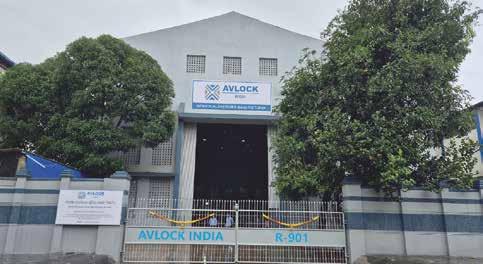
Avlock International India Inaugurates Manufacturing Facility in Mumbai
India啟用位於新孟買的扣件製造廠
On July 21, 2025, Avlock International India Pvt Ltd, a South African Joint Venture in India, inaugurated its new state-of-the-art fastener manufacturing plant in Rabale, Navi Mumbai. The event was led by founding member Mr. Lachhman Kewalramani and attended by Country Head Mr. Nishant Bagwe alongside key officials and partners.
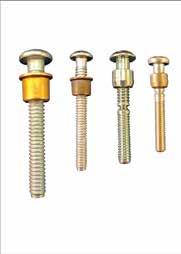
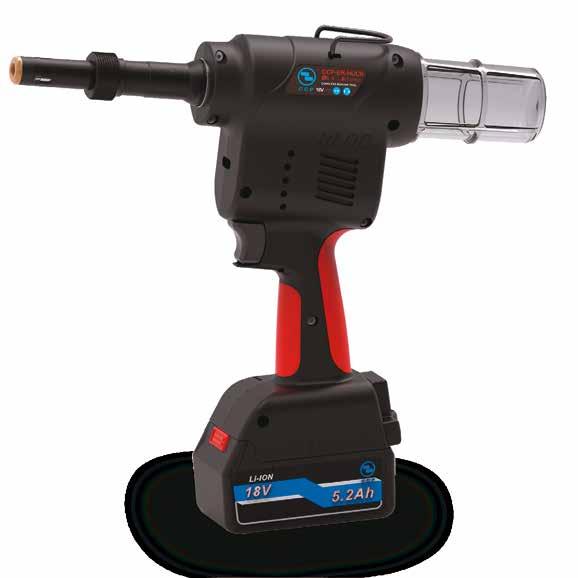
The facility is equipped with advanced CNC and hydraulic machinery as well as in-house R&D, significantly boosting production capabilities to serve domestic and global markets. This move supports India’s "Make in India" initiative by strengthening local manufacturing and reducing import dependency. Products include lockbolts, blind fasteners, rivet nuts, and hydraulic and pneumatic installation tools, serving critical industries such as automotive, railways, renewable
energy, oil & gas, and more. Director Mr. Sameer Bulchandani highlighted that the Rabale plant marks a new chapter for scaling production and fostering innovation, efficiency, and sustainability, aligning with the company’s vision to become a globally recognized fastener brand.
BSRM to Invest Tk400 Crore in Fastener Plant
孟加拉BSRM公司投資
BSRM Group, Bangladesh’s steelmaker, has announced a Tk400 crore investment in building a state-of-the-art fastener manufacturing plant under BSRM Wires Limited at Mirsharai in Chattogram. The plant will produce high-quality bolts and nuts, reducing reliance on imports. Investment comes from both BSRM Limited and BSRM Steel, each contributing Tk200 crore. Construction will take over a year, creating at least 200 new jobs.
This strategic move enhances BSRM’s position in the steel value chain, aiming to support large infrastructure, shipbuilding, and energy projects while strengthening Bangladesh’s regional market competitiveness.
EMERGING FASTENER MARKETS NEWS
Businesses Including Deepak Fasteners Plan Rs 15,000 Crore Investment in Madhya Pradesh
Deepak Fasteners等多家企業將在 中央邦投資1500億盧比
Sundram Fasteners Announces New Global Engine Program
Sundram Fasteners 宣布全新全球引擎計畫
Newly inducted Punjab Industry Minister Sanjeev Arora faces a challenge as several Ludhiana-based industrialists plan to invest Rs 15,000 crore in Madhya Pradesh (MP) over the next five years. This surge follows MP Chief Minister Dr. Mohan Yadav’s recent visit to Ludhiana, where discussions with business leaders led to this investment boost. Concerned about Punjab’s investment outflow, MP Vikram Sawhney stressed the need to build a strong local ecosystem with world-class infrastructure and industrial zones to retain investment and jobs.
The move threatens Punjab’s economy. Gurmeet Singh Kular, president of the Federation of Industrial and Commercial Organizations (FICO), criticized the Punjab government for insufficient support, citing issues with promised fiscal incentives and refund schemes excluding major sectors. Shiromani Akali Dal president Sukhbir Badal highlighted lawlessness and gang violence in Punjab as reasons for the exodus, accusing political instability of damaging the state’s economy.
Key investors committing to MP include Deepak Fasteners (Rs 1,300 crore) and others, with expected employment for 20,000 youth. An industrialist noted better subsidies and safer conditions in MP compared to Punjab, influencing investment decisions.
Marmon Fastener Leases Factory in Southern Vietnam
Marmon Fastener公司租用越南南部工廠 擴展製造鏈
Marmon Fastener will lease a 6,000-square-meter readybuilt factory in Dong Nai Province, southern Vietnam, to manufacture screws for the North American market. The deal was facilitated by property firm Savills Vietnam. After two years of studying the country, Vietnam was chosen for its first investment, according to Chairman Steve Semmler. Leasing a ready facility reduces deployment time and leverages Vietnam’s skilled labor, stable investment environment, and competitive costs, while strengthening global manufacturing capacity and diversifying supply chains beyond North America.
Savills HCMC’s industrial services manager Phan Cuu Chi said this move reflects growing American investor confidence in Vietnam as a manufacturing hub within Asia’s supply chain. Vietnam’s advantages in cost, human resources, and location continue to attract multinational expansion.
Automotive components leader Sundram Fasteners recently unveiled a new global internal combustion engine (ICE) program and expressed a positive outlook for the coming months. This strategy capitalizes on robust domestic industry momentum and export recovery potential. The company revealed a long-term initiative set to launch between 2029-2031, demonstrating its innovation commitment and ability to secure future business amid automotive industry transformation.
Q4 and Q1 order schedules are expected to optimize, with management optimistic about the next six months, driven by:
• Strong domestic industry conditions
• Potential export market recovery
• Increased customer orders in Q1 and Q2
New products account for over 20% of revenue, developed over the past three years, showcasing market adaptability. Stainless steel and railway fasteners are key growth areas, targeting double-digit annual growth next year. The wind energy segment matches automotive profitability with superior capital return, focused on domestic markets, highlighting successful diversification.
Despite export challenges, management anticipates recovery within six months, with customers planning increased Q1-Q2 orders to significantly boost overall performance. Through the global engine program, product innovation, and diversification, Sundram Fasteners solidifies its growth foundation. Positive domestic and export outlooks plus strong wind energy results signal achievable targets, with investors watching quarterly financials closely.
Nitto
Seiko
Meets with Haryana State Chief Minister to Deepen Business Expansion in India
日本日東精工與印度哈里亞納邦首相會面,強化日印合作
On October 7, 2025, Nitto Seiko (Japan) held a significant meeting with Nayab Singh Saini, Chief Minister of Haryana State, India, during the "India Haryana State Investment Promotion Roadshow." Facilitated by Nippon Indo Cultural and Economic center, this meeting marked an important opportunity to strengthen India-Japan economic cooperation.
Since Mr. Saini took office in March 2024, bilateral economic collaboration has deepened. Earlier this year, Nitto Seiko completed the acquisition of Vulcan Forge Private Limited and Vulcan Cold Forge Private Limited subsidiaries in India to leverage local manufacturing and supply chain integration. The meeting featured an introduction of the Vulcan Group based in Haryana and acknowledged by the Chief Minister through a commemorative gift symbolizing a lasting friendship. Looking ahead, Nitto Seiko plans to expand business in India, deepen local partnerships, enhance technology exchange, and accelerate its global growth strategy.
UK-Ghana Industrial Partnership Strengthened as British High Commissioner Visits Springs and Bolts Factory
英國高級專員訪問Springs and Bolts工廠,
英國與非洲加納工業合作再添新章
British High Commissioner Harriet Thompson visited Springs and Bolts Co. Ltd. in Kumasi, Ghana, marking a significant milestone in UK-supported investments in Ghana’s manufacturing sector during her farewell tour in the Ashanti Region. The visit underscored the UK’s role in advancing Ghana’s ambitions as a competitive manufacturing hub in West Africa. Through the UK’s Jobs and Economic Transformation (JET) program, implemented by the Palladium Group, Springs and Bolts received technical support and grant funding, enhancing its capacity and enabling investor readiness. Early this year, the company secured significant follow-on investment via the Ghana Investment Support Programme (GhISP), enabling construction of a new, modern factory for large-scale production of automotive leaf springs and launching Ghana’s first fasteners manufacturing plant. This expansion will boost local value chains, create over 200 skilled jobs, and expand exports to five new West African markets.
CEO Derrick Asamoah Boahen praised UK support for enhancing investor confidence and enabling growth and diversification. Commissioner Thompson highlighted the factory as a prime example of British investment fostering local businesses, innovation, and stronger UK-Ghana ties. Springs and Bolts has begun full production since the end of 2025.
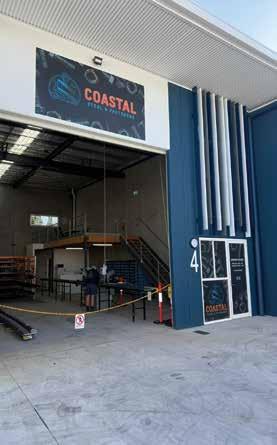
Coastal Steel and Fasteners Launches in Beerwah Industrial Park, Australia
Coastal Steel and Fasteners公司
在澳洲Beerwah工業園區開業
A fresh player in steel supplies and fasteners has opened its doors in Beerwah's expanding industrial estate, delivering premium products and dedicated service to the local Hinterland area. Situated conveniently in the new industrial zone off Roy's Road (adjacent to Reece Plumbing), Coastal Steel and Fasteners is now serving customers with an extensive selection of steel materials, fasteners, and bespoke cutting services designed for projects big and small.
Owner and founder Brendan Flesser, a certified boilermaker with more than 10 years of practical expertise, guarantees professional guidance, accurate fabrication, and dependable support. "Our goal is to equip local tradespeople, companies, and DIY enthusiasts with top-grade materials and tailored solutions," Brendan shared.
He invites nearby residents and professionals to stop by, discuss their needs, and browse the inventory. "We're building more than a business—we're becoming a community staple. I'm eager to partner on turning ideas into reality." Emphasizing knowledge, customer care, and real partnership, Coastal Steel and Fasteners is set to establish itself as the go-to local resource for the long haul.
Global Fastener Supply Chains Operate with Close Collaboration Emerging Nations Gradually Exert Greater Influence
全球扣件供應鏈合作緊密 新興國家漸展影響力
Emerging Fastener Market
Emerging markets outside advanced economies like Europe, the United States, and Japan (including Southeast Asia, South Asia, Central Asia, Central and South America, the Middle East, and Africa) have actively participated in the global fastener industry supply chain in recent years. Their contribution to the global fastener industry continues to rise, with specific countries accumulating influence annually that has even begun exerting intangible pressure on competitors from other nations. As many of these emerging markets are developing countries, their economic growth momentum has been relatively stronger compared to other mature economies. Coupled with local governments accelerating infrastructure development to catch up with advanced nations and improve living standards, they have allowed foreign investment for building manufacturing plants. Furthermore, substantial official resources have been allocated to support domestic industries in developing sectors such as automobiles, motorcycles, 3C electronics, renewable energy, machine tools, and CNC precision machining products. This dual approach enables these nations to not only manufacture and supply relevant fastener products for other countries, but also generates significant demand for fasteners required to meet the manufacturing needs of these emerging industries. This article will further explore the collaborative relationship between these emerging markets and the fastener (HS Code 7318) supplydemand dynamics of Europe, USA, and Japan, analyzing the shifting influence of these emerging markets within the import-export landscape of these mature fastener markets.
USA (Unit: million USD / ranked by 2025 data / data published through August 2025 / source: U.S. DoC)
Import
Among the top 10 import sources for the U.S., emerging economies include India and Mexico, ranked 8th and 9th respectively. India also recorded the most significant year-on-year growth rate (24.73%) among the top 10 import sources, with the cumulative import reaching US$189 million in the first eight months of 2025. Its import scale was comparable to that of South Korea (ranked 6th) and Italy (ranked 7th); Imports from Mexico also saw a modest 4.61% increase compared to the same period in 2024, reaching US$129 million. Among the top ten import sources, Mexico’s growth rate was only second to India and Italy.
Export
Among the top 10 export destinations for the U.S., emerging economies include Mexico, Brazil, and Singapore, ranking 1st, 7th, and 10th respectively. While Mexico remained the largest export destination for U.S. fasteners, with its export reaching US$1.285 billion in the first eight months of 2025, representing a slight 5.77% decline compared to the same period in 2024. Brazil, however, showed strong performance, with the export in the first eight months of 2025 surging 20.02% year-on-year to US$106 million, ranking second among the top ten export destinations in growth rate (behind French 41.33%); exports to Singapore experienced a notable 15.17% decline in the first eight months of 2025, marking the largest decrease among the top ten export destinations.
Import
Among Canada's top 10 import sources, emerging economies include Vietnam and India, ranked seventh and eighth respectively. Vietnam's import value reached approximately US$28.5 million in the first eight months of 2025, a significant 22.81% increase compared to the same period in 2024. This growth rate was only second to France, which ranked 10th. India also saw notable double-digit growth, with the import in the first eight months of 2025 rising 13.71% year-on-year to approximately US$25 million.
Export
Among Canada's top 10 export destinations, emerging economies include Mexico, Singapore, Australia, and Brazil. The export to Mexico during the first eight months of 2025 saw a significant 22.41% decline compared to the same period in 2024, reaching US$13.61 million. This marks the secondlargest contraction among the top 10 export destinations and the only decline among the aforementioned four emerging economies; the export to Singapore reached US$3.73 million in the first eight months of 2025, marking a 15.43% increase compared to the same period in 2024; the exports to Australia increased by 58.19% to US$2.41 million in the first eight months of 2025, marking the highest growth rate among the top ten export destinations. The export to Brazil rose by 11.02% to US$2.35 million in the first eight months of 2025 compared to the same period in 2024.
Import
EU’s fastener imports also receive significant support from suppliers of emerging countries, including Turkey with its geographical advantage, as well as Vietnam, India, Thailand, and Malaysia in Asia. Turkey ranked as the EU's third-largest fastener import source, with the 2024 imports totaling 335,800 metric tons, a mere 4.31% decrease compared to the same period in 2023; Vietnam
Canada (Unit: US dollars / ranked
EU (In
INDUSTRY FOCUS
in 2024; imports from India plummeted 22.55% to 88,000 metric tons in 2024, marking the steepest decline among the top ten import sources; imports from Thailand also declined by 15.26% in 2024 to 60,000 tons, marking the second-largest decrease among the top 10 import sources; Malaysia's imports reached 24,000 tons in 2024, showing a slight increase of 1.25% compared to the same period in 2023.
Export
Among the EU's top 10 export destinations, emerging economies include Mexico, Turkey, Brazil, India, and Morocco. Mexico, the fourth-largest market, imported 40,000 metric tons from the EU in 2024, marking a slight 6.86% decrease compared to the same period in 2023; the export to Turkey was comparable to Mexico's, reaching 39,000 tons, a 3.27% decrease from the same period in 2023; Brazil showed the most impressive performance among the top 10 countries, with the export surging 15.04% to 31,400 tons in 2024 compared to 2023; India procured approximately 20,300 metric tons from the EU in 2024, a slight decrease of 1.32% compared to the same period in 2023. Morocco in North Africa is particularly noteworthy, as its 2024 procurement of fasteners from the EU not only reached 18,100 metric tons (approaching India's scale) but also recorded the second-highest growth rate among the top 10 countries (9.64%).
Japan (Ranked by weight of 2025 / data published through October 2025 / source: Ministry of Finance, Japan)
Import
Japan's fastener imports originated not only from China and Taiwan, but also significantly from emerging nations such as Vietnam, Thailand, Malaysia, and India. From January to October 2025, Japan imported 12,400 metric tons from Vietnam, a slight decrease of 3.20% compared to the same period in 2024; imports from Thailand, though only 3,500 metric tons, saw a substantial increase of 14.03% year-on-year; imports from Malaysia totaled 1,249 tons, a slight decrease of 1.81% compared to the same period in 2024; among the top ten import sources, India showed the strongest growth, surging by 92.42% year-onyear.
Export
Thailand, Indonesia, India, Mexico, Brazil, Malaysia, and Turkey were among Japan's top 10 export partners for fasteners. From January to October 2025, fastener exports to Thailand totaled approximately 27,700 metric tons, marking a slight 1.07% increase compared to the same period in 2024; the export to Indonesia reached 14,900 metric tons, showing a significant 10.23% decline; the export to India was comparable to Indonesia at 14,500 metric tons, down 2.79% year-on-year; the export to Mexico reached 13,800 tons, down 11.50% year-on-year; the export to Brazil totaled 9,129 tons in the first ten months of 2025, an increase of 6.11%, making it the best performer among emerging markets; the exports to Malaysia amounted to approximately 5,855 tons, a slight decrease of 3.73% compared to the same period in 2024;
Turkey recorded the steepest year-on-year decline among the aforementioned emerging markets, falling 18.29% to 4,053 tons in the first ten months of 2025.
Taiwan (Ranked by weight in 2025 / data published through October 2025 / source: Taiwan's Bureau of Foreign Trade)
Import
Although Taiwan is a fastener export-oriented country, it also imports certain fasteners. Among emerging import sources are Vietnam, the Philippines, Malaysia, and Thailand. Vietnam, the thirdlargest source, reached 969 metric tons in the first ten months of 2025, a 32.67% decrease compared to the same period in 2024; the import from the Philippines totaled 436 metric tons during the same period, down 15.58% year-on-year; the import from Malaysia reached 307 tons in the first ten months of 2025, a decrease of 19.37% compared to the same period in 2024. Thailand saw the most significant year-on-year decline among all emerging countries, decreasing by 49.34% compared to the same period in 2024.
Export
Among Taiwan's top 10 export destinations, only Mexico is an emerging economy. From January to October 2025, Taiwan's exports of fasteners to Mexico reached 25,400 metric tons, a 9.25% decrease compared to the same period in 2024. This represents the second-largest decline among its top 10 export destinations.
Conclusions
The global fastener supply and demand industry chain maintains close cooperative relationships. Many developed countries, responding to high domestic manufacturing and labor costs, increasingly shift procurement orders to emerging-market supply chains capable of producing competitively priced products while meeting their technical standards and after-sales service requirements. This trend has inadvertently fostered the gradual growth and development of fastener suppliers in these emerging economies. Although the demand for fasteners in advanced economies like Europe, the U.S., and Japan is still largely met by manufacturers from China and Taiwan, emerging players from Southeast Asia, Latin America, and Turkey with support from local government policies and through collaborations with clients to acquire more technical expertise and experience have been gaining traction in recent years, making them successfully penetrate the industrial supply chains of Europe, the U.S., and Japan and capture a significant share of the market. Many manufacturers in Europe, the U.S., and Japan are also attempting to diversify their procurement sources to mitigate risks amid pressures from geopolitical tensions, import tariffs, and regulatory changes.
In terms of exports, a significant portion of exports from Europe, the U.S., and Japan is also destined for emerging economies, indicating that the demand for mid-to-high-end fasteners is also growing in these markets, which may be attributed to either the needs of overseas factories established by European, U.S. and Japanese companies in emerging economies or the increased focus of emerging economies on developing mid-to-high-end industries. However, while Taiwanese fastener manufacturers are striving to enter the mid-to-high-end market segment, their primary export partners remain predominantly European and American countries based on the data. This indicates that there is still room for improvement in developing emerging markets.
Copyright owned by Fastener World / Article by Gang Hao Chang, Vice Editor-in-Chief
“Government Policies Support”
“Collaborations with Clients”
Guatemala
Introduction
Guatemala is not a headline fastener market in the way Mexico or Brazil is, but it is quietly attractive for suppliers and investors who know how to win in mid-sized, import-dependent, project-driven economies. Demand is anchored in construction and infrastructure, industrial maintenance, light manufacturing, and the constant need for reliable MRO supply across logistics, utilities, and commercial facilities. What makes Guatemala interesting is not just consumption. It is the combination of importled supply, fragmented distribution, and predictable demand categories where a focused player can build share without needing large local production from day one.
Macro and Investment Context That Matters to Fasteners
Guatemala’s growth profile has been relatively steady, which matters more to fasteners than headline growth numbers. Stability supports continuous building activity, ongoing facility expansion, and steady maintenance spend rather than boom-bust cycles. From a fastener perspective, that translates into recurring orders for general-purpose bolts and screws, anchors and fixing systems, washers, and MRO replenishment lines.
Infrastructure is also a direct demand multiplier. Road rehabilitation and upgrading programs are fastener-intensive through guardrails, signage, drainage systems, bridge works,
temporary works, and contractor maintenance cycles. Even when fasteners are not the largest bill-of-material item, they are embedded across installation and repair tasks.
Nearshoring adds another layer. Guatemala has positioned itself as a complementary Central American destination for selected manufacturing investments. The practical impact for the fastener industry is less about one plant opening and more about the lifecycle demand that follows: construction, equipment installation, then long-run MRO.
What Trade Data Says About Guatemala’s Fastener Supply Base
Trade data confirms that Guatemala’s fastener market is fundamentally import-led. Domestic production exists, but it is limited in scale and largely concentrated on basic hardware and small-batch fabrication. It does not materially offset demand generated by construction, infrastructure works, industrial maintenance, or commercial facilities. As a result, competitive advantage in the Guatemalan fastener market is shaped primarily by import sourcing strategies, inventory positioning, and downstream distribution reach, rather than by local manufacturing capacity.
Copyright owned by Fastener World / Article by Shervin Shahidi Hamedani
INDUSTRY FOCUS
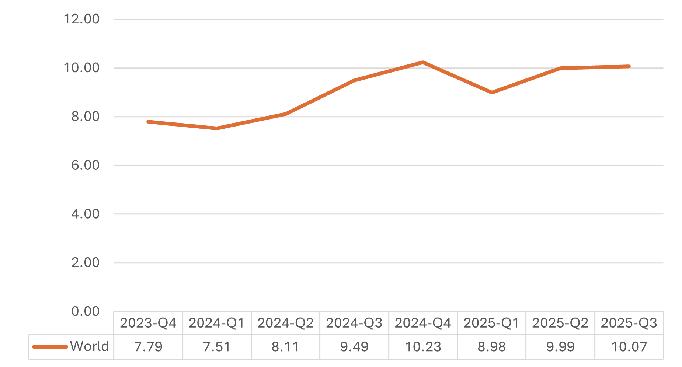
▼ Chart 1. Quarterly Import Values (Million USD) to Guatemala from the World
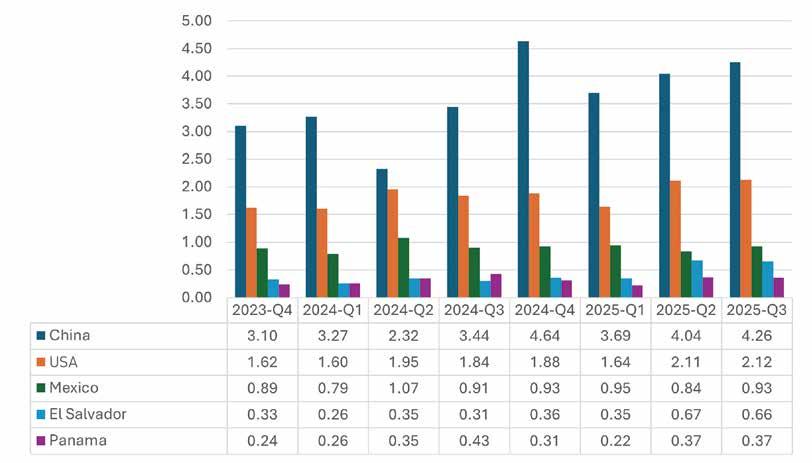
Chart 2 shows quarterly import values (million USD) to Guatemala from the five largest exporting countries, China, the United States, Mexico, El Salvador, and Panama, from 2024-Q1 to 2025-Q3. China consistently accounts for the largest share of imports and absorbs most incremental demand as the market expands. Its quarterly import values range from USD 2.32 million to USD 4.64 million, representing roughly 40-45 percent of total imports in most quarters and reaching about 45 percent in 2024Q4. This confirms China’s role as the reference supplier for standard, price-sensitive fasteners and the primary source used by distributors to reset inventory when volumes rise.
The United States plays a more stable, specificationdriven role. US imports generally remain between USD 1.60 million and USD 2.12 million per quarter, with less volatility than China. This pattern aligns with demand from industrial facilities, infrastructure projects, and MRO applications where reliability, documentation, and standards compliance matter more than unit price.
Chart 1 shows quarterly import values (million USD) to Guatemala from the global market (“World”) from 2024-Q1 to 2025-Q3. Imports increased steadily through 2024, rising from USD 7.51 million in 2024Q1 to a peak of USD 10.23 million in 2024-Q4. In 2025, imports eased temporarily to USD 8.98 million in Q1, before rebounding to USD 10.07 million by Q3. This pattern indicates a structural shift toward a higher and more stable import baseline rather than a one-off surge driven by short-term stocking.
▼ Chart 2. Quarterly Import Values (Million USD) to Guatemala from the 5 Largest Exporting Countries
Mexico functions as a practical regional supplier, with quarterly imports typically in the USD 0.84-1.07 million range. Its importance lies less in cost leadership and more in logistics efficiency, including shorter lead times, mixed shipments, and predictable replenishment cycles for distributors and contractors.
El Salvador stood out as the most notable mover in 2025. Imports from El Salvador rose sharply to around USD 0.67 million in 2025-Q2 and USD 0.66 million in 2025-Q3, roughly doubling its earlier quarterly range. This shift highlights the growing importance of regional suppliers when speed and responsiveness become critical, particularly in periods of tight project schedules or inventory pressure.
Panama remains a smaller but recurring supplier, consistent with a regional logistics and redistribution role. Its imports peaked at USD 0.43 million in 2024-Q3 and returned to about USD 0.37 million in 2025-Q2 and Q3, reinforcing the role of Central American trade hubs in supporting regional fastener supply chains.
Exports in Context
In contrast, Guatemala’s fastener exports remained modest and regionally concentrated. Total exports to the world typically ranged between USD 0.24 million and USD 0.39 million per quarter, a small fraction of import volumes. The majority of exports were directed to neighbouring Central American markets. El Salvador was consistently the largest destination, with quarterly exports commonly around USD 0.14-0.18 million, followed by Honduras at approximately USD 0.06-0.11 million, and Nicaragua at lower levels, often below USD 0.04 million per quarter. These figures suggest that exports are driven by regional redistribution and limited cross-border demand, rather than by Guatemala functioning as a production or export hub.
The imbalance between imports and exports reinforces a clear conclusion for suppliers and investors: Guatemala is primarily a consumption and distribution market for fasteners. The most attractive opportunities therefore lie in import optimization, local and regional warehousing, inventory reliability, and channel execution, rather than in export-oriented manufacturing strategies.
Where Demand Comes From: Key Opportunity Zones
Guatemala’s fastener demand is generated across several stable and recurring use cases rather than a single dominant sector. Construction remains the largest volume driver, supported by urban development, commercial buildings, and housing repairs. Demand in this channel centers on fast-moving items such as wood screws, anchors, general-purpose bolts, and washers, where availability, correct sizing, and practical packaging outweigh brand considerations.
Infrastructure and road works contribute a second layer of demand. Fasteners are embedded throughout guardrails, signage, drainage systems, bridge maintenance, and temporary works. Although rarely a headline cost item, fasteners are operationally critical, creating opportunities for suppliers that can deliver reliably and support contractors across project phases.
Industrial maintenance, repair, and operations represents a smaller but higher-value segment. Utilities, logistics facilities, food processing plants, and light manufacturing sites require consistent replacement supply to avoid downtime. In this segment, correct specifications, fast response, and inventory reliability matter more than the lowest unit price. Nearshoringrelated industrial parks add incremental demand. Even modest manufacturing investments generate fastener requirements across construction, equipment installation, and ongoing maintenance, often with higher standards and reliability expectations.
Overall, Guatemala’s demand is steady, fragmented, and execution-driven, favoring suppliers that align inventory and logistics closely with end-user needs.
Competitive Landscape and Strategic Implications
Competition in Guatemala’s fastener market reflects its import-led structure. Asian suppliers, led by China, dominate commodity fasteners and set reference pricing for standard items. Regional suppliers, particularly from Mexico and Central America, compete on speed, flexibility, and mixed shipments, which are critical when lead time matters. US and selected European suppliers focus on specification-driven demand in industrial and infrastructure applications. The most effective market strategies combine these approaches. Cost-efficient sourcing for core volumes, regional supply for responsiveness, and selective higher-spec offerings for industrial customers tend to outperform single-origin or price-only models.
What Investors and Suppliers Should Watch
Guatemala is best viewed as a consumption and distribution market, not a manufacturing or export hub. Trade data shows imports operating at a higher and more stable level since late 2024, with China anchoring volume supply and regional suppliers gaining importance where responsiveness is critical. The most attractive opportunities lie in import optimization, local and regional warehousing, inventory discipline, and strong distributor relationships. In Guatemala, suppliers that reduce friction for buyers through availability and reliability are more likely to build durable market positions than those competing solely on price.
GLOBAL FOOTPRINTS in 2025
International Fastener Expo 2025 09/16-17
Mandalay Bay Convention Center
Fastener Fair USA 2025 05/28-29
Music City Center
Fastener Fair Global 2025 03/25-27
Messe Stuttgart
Fastener Poland 2025 10/15-16
Expo Krakow
METALCON 2025 10/21-23
Las Vegas Convention Center
Egypt Projects 2025 09/06-08
Egypt International Exhibition Center
SteelFab 2025 01/13-16
Expo Centre Sharjah
IFS China 2025 05/22-24
Shanghai World Expo Exhibition & Convention Center (SWEECC)
Fastener Trade Show Suzhou & NEV Parts Exhibition 2025 10/22-24
Suzhou International Expo Center
Manufacturing Expo 2025 06/18-21 BITEC
Fastener Expo Shanghai 2025 06/17-19
National Exhibition and Convention Center (Shanghai)
Korea Metal Week 2025 10/29-31
KINTEX Exhibition Hall
Vietnam Hardware & Hand Tools Expo 2025 12/04-06
Saigon Exhibition and Convention Center (SECC)
Manufacturing World Japan 2025 07/09-11
Makuhari Messe
Fastener Fair India 2025 05/08-10
Exhibition Centre
TiTE x IHT 2025 10/21-23
Taichung International Convention & Exhibition Center METALEX 2025 11/19-22
MTA Vietnam 2025 07/02-05
Fastener and Fixing
Vietnam 2025 08/06-08
VEC Hanoi
Saigon Exhibition and Convention Center (SECC)
▶ Fastener Expo Frankfurt 2026
2026德國法蘭克福緊固件專業展
03/23-25
Messe Frankfurt
Positioned to become Europe’s central sourcing and innovation platform for fastening and fixing technologies, FEF will bring together 300+ international exhibitors and thousands of professional buyers across automotive, aerospace, machinery, construction, renewable energy, and next-gen manufacturing applications. FEF’s inaugural edition will host strong national pavilions (Germany/Turkey/China), each presenting unique capabilities from across the world’s major fastener-producing regions. Together, the pavilions create one of Europe’s most comprehensive global sourcing opportunities. Interactive programs to strengthen sourcing & collaboration include VIP Buyer Program, Technical Workshop Series, and Automotive Fasteners Demonstration.
EXHIBITIONS
▶ Taiwan International Fastener Show 2026
2026台灣國際扣件展
04/22-24
Kaohsiung Exhibition Center
Fastener Taiwan 2026 serves as a significant international trade show for the global fastener industry. Under the theme “Sustainable Fasteners, Precision in Action!”, the show focuses on the practical applications of sustainability, green innovation, and smart manufacturing, driving the industry’s transition toward a net-zero future.
In the face of net-zero transformation and global supply chain realignment, Taiwan has firmly retained its position as the world’s third-largest exporter of fasteners, thanks to its well-integrated industrial clusters, strong precision manufacturing capabilities, and highly flexible supply chain. Fastener Taiwan 2026 emphasizes value-added manufacturing and low-carbon development. The show will highlight breakthroughs in R&D, smart manufacturing, and carbon reduction, offering the latest fastener applications across advanced sectors such as EVs, aerospace, semiconductors, medical devices, and construction. More than 10,000 buyers and industry professionals from around the world are expected to attend to explore cross-border and cross-sector business opportunities.
▶ Fastener
& Hardware Indonesia 2026
2026印尼雅加達國際緊固件五金展
05/20-22
JIExpo Kemayoran Jakarta
With the continued growth of the automotive, construction, and manufacturing industries, demand for fastener and hardware products is now at an all-time high.
The global market is projected to grow by over 7% annually through 2030, opening up significant opportunities for manufacturers, suppliers, and providers of fastener technology and industrial equipment.
Held in conjunction with INAPA 2026, the FASTENER & HARDWARE Indonesia 2026 exhibition provides a strategic platform for companies to showcase the latest products and technologies in fasteners, tools, and hardware, meet directly with thousands of potential buyers and industry professionals, and expand business networks in the automotive and manufacturing supply chain hubs of Southeast Asia.
PREVIEW 2026
▶ International Fastener Show China 2026
2026中國上海國際緊固件工業博覽會
05/20-22
Shanghai World Expo Exhibition & Convention Center
International Fastener Show China is the meeting place of fastener peers to share the latest and leading products and solutions, and strengthen competitive powers in the fastener industry. IFS China offers an exclusive showcase and networking platform in one of the world's leading industrial economies. Fastener and fixing systems are vital components in various manufacturing sectors, from common parts to high-tech applications in the industries of automobile, aerospace and construction. The 3-day IFS China aims to enhance the technological and commercial communion between China Fastener Industry and global colleagues.
▶ Metaltech & Automex 2026
2026馬來西亞吉隆坡工具機暨金屬加工設備展
05/20-23
Malaysia International Trade and Exhibition Centre (MITEC)
For the past decade, METALTECH & AUTOMEX has pioneered the growth of metalworking, machinery, robotics and automation industry in Malaysia being the first dedicated business event to represent various sectors of the manufacturing industry including electrical & electronics, automotives, aviation, food & beverages, plastics & rubbers, pharmaceuticals and medical technology.
METALTECH is world renowned by the manufacturing industries as the most effective platform for suppliers to launch their new products and services to local and regional buyers, gaining new leads and attaining new businesses. The show will feature the latest technologies from 33 specialised profiles; attracting more than 20,000 visitors over the four day duration.
EXHIBITIONS
▶ Fastener Expo Shanghai 2026
06/24-26
National Exhibition & Convention Center (Shanghai)
As one of the world’s three major fastener exhibitions and a key barometer for the Asian fastener industry, the 2026 edition will be further upgraded in both scale and content. The exhibition is expected to cover over 70,000 sqm, host approximately 1,300 exhibitors, and attract 25,000 professional visitors. The exhibition will occupy Halls 1.1, 2.1, and 3, with clearer functional zoning and displays closely aligned with key segments of the industry chain. The show will comprehensively present technological progress and development trends across finished fasteners, equipment, wire rods, dies, and related sectors.
MEDIA COLLABORATION 2026
ASIAMOLD SELECT GUANGZHOU
03/04-06
NEW YORK BUILD 美國紐約建材展 03/18-19
CHINA INTERNATIONAL HARDWARE FAIR
03/24-26 STOM-FIX 波蘭凱爾采緊固技術及零件展 03/24-27
▶ Fastener Fair India 2026
2026印度大諾伊達螺絲展
07/24-26
India Expo Mart, Greater Noida
Step into the heart of India’s fastener and fixing technology sector at Fastener Fair India—the ultimate platform for industry professionals. This is where connections are built, innovations unveiled, and businesses scaled. Whether you're looking to launch a new product, explore the latest trends, or expand your network, this is the show you can’t afford to miss! Exhibitors of this fair mainly come from the fields of industrial fasteners and fixings, fastener manufacturing technology, construction fixings, storage/distribution/factory equipment, assembly and installation systems, information, communication & services.
PREVIEW 2026
▶ Fastener Fair Mexico 2026
2026墨西哥瓜達拉哈拉螺絲展
09/03-05
Expo Guadalajara
Fastener Fair Mexico, part of the global Fastener Fair exhibitions, is the leading platform in Latin America for fastening and fixing professionals. It connects manufacturers, distributors, and buyers from around the world with the latest innovations to strengthen business relationships in this dynamic and specialized industry. This fair brings solutions to the following industries, such as chemical, aerospace, automotive, construction, medical equipment, lighting, furniture, communication, manufacturing, metalworking, textile, industrial refrigeration, heating, electrical, maintenance, sanitary, air-conditioning, hardware, naval, etc.
▶ International Fastener Expo 2026
2026美國鳳凰城螺絲暨機械設備展
10/07-09
Phoenix Convention Center
The International Fastener Expo is the premier business-to-business trade show for all types of fasteners, machinery & tooling, and other industrial products. IFE is the largest fastener event in North America and caters to every level of the supply chain. Held annually, the event consists of a conference program and a show floor with hundreds of exhibitors from around the world. Each year, thousands of attendees travel to IFE to network and do business with hundreds of suppliers showcasing every type of fastener for several industries including construction, aerospace, military, electrical, and automotive.
EXHIBITIONS
MEDIA COLLABORATION 2026
NEPCON MICROELECTRONICS
CHINA
中國上海國際電子生產設備暨微電子工業展 04/21-23
INTERNATIONAL CONSTRUCTION HARDWARE, FASTENERS AND WIRE MESH EXHIBITION
中國東北瀋陽國際建築五金、緊固件及釘絲網 展覽會 04/24-26
TURKEYBUILD
土耳其伊斯坦堡國際建材展 04/27-30
SYDNEY BUILD EXPO
澳洲雪梨建材展 04/29-30
AUTOPAR
巴西古里提巴國際汽車零配件展 05/06-09
CHINA (GUANGZHOU) INT'l FASTENERS & EQUIPMENT EXHIBITION
中國廣州國際緊固件及設備展覽會 05/16-18
ITM INDUSTRY EUROPE
波蘭波茲南國際工具機展 05/26-29
FORMNEXT ASIA SHENZHEN
中國深圳國際3D列印、增材製造及精密成型 展覽會 05/27-29
▶ Fastener Poland 2026
2026波蘭克拉科夫螺絲展
10/14-15
EXPO Krakow
For several years now, the FASTENER POLAND ® trade fair has been the most important meeting for the fastener industry, where key purchasing decisions are made. During the last edition, over 170 exhibitors from 17 countries presented their products. Among the products on display at the booths were high-tensile screws, structural rivets and double-ended fasteners, riveting tools, an optical screw measurement system, and fasteners for the automotive industry. Last year's event attracted 3,054 visitors from 36 countries.
9 th International Trade Fair for Fas tener and Fixing Technology
14th-15th October 2026
The largest representation of companies from outside Poland was made up of entrepreneurs from the Czech Republic, Slovakia, Italy, Germany, and Romania. Guests from as far away as Saudi Arabia, Japan, and South Korea were also present.
The FASTENER POLAND ® trade fair is also an opportunity to gain expert knowledge about the current market situation. The annual conference attracts audiences interested in current and future challenges, such as CBAM.
PREVIEW 2026 展前預告
SUBCON
英國伯明罕國際工業零組件展 06/03-04
KENYA TOOLS & HARDWARE
肯亞奈洛比五金工具展 06/03-05
INTERNATIONAL HARDWARE
FAIR SAUDI ARABIA
沙烏地阿拉伯利雅德五金展 06/15-17
FESQUA
巴西聖保羅國際門窗及五金配件展 09/09-12
METALCON
美國拉斯維加斯建築金屬展 10/07-09
AUTOMECHANIKA HO CHI
MINH CITY
越南胡志明市國際汽車零配件及售後服務 展覽會 06/18-20
TAIWAN HARDWARE SHOW
台灣五金展 10/20-22
FASTENER TRADE SHOW SUZHOU & NEV AUTO PARTS EXHIBITION
中國蘇州緊固件與技術展暨新能源汽車零件展 10/21-23
ASEAN Fastener Trade Statistics Insights: New Investment Opportunities for Enterprises
東協扣件貿易統計洞察:企業投資新機遇
Which One Tops ASEAN Market?
The global situation has become more unstable and turbulent since 2025. Besides Taiwanese companies, operators from other countries also regard Southeast Asia as an investment target to diversify political and economic fluctuation risks. Over the past 5 years, demand for fasteners in Southeast Asia, especially in ASEAN countries, has shown a growing trend. ASEAN's main economic indicators also reveal growth momentum. Can we discern local fastener demand trends from the statistical data of these indicators? This article analyzes ASEAN's economic indicators, compiles the fastener trade statistics and rankings for the 10 ASEAN countries, and lists the top 10 import & export trade partners for each ASEAN country, providing readers with references for future business investments. Additionally, the latest data available at the time of writing are all from 2024, sourced from the official ASEAN statistics website (ASEANstats).
ASEAN's 7 Major Economic Indicators Continue Growth
Table 1 lists 7 major economic indicators of ASEAN. In 2024, ASEAN ranked third globally in population, accounting for 8.4% of the world's total, with nearly half the population under 30 years old and over half living in urban areas, reflecting a very young population and rapid urbanization in this region. From 2020 to 2024, ASEAN's “population” grew by 3.8%, reaching 682 million people. During the same period, “GDP” grew 28.8% to 3.98 trillion USD; “GDP per capita” grew 22.6% to 5,768.30 USD; “merchandise trade volume” grew 43.9% to 3.84 trillion USD, with “exports” up 39.8% to 1.95 trillion USD and “imports” up 48.5% to 1.89 trillion USD; and “foreign direct investment inflows” grew 88.6%.
Except for the single-digit growth in population, all other indicators exhibit double-digit growth, clearly showing that ASEAN's economic growth momentum and potential are surging upward. Could fastener products also be part of this upward trend?
ASEAN Fastener Trade Statistics by Region
Fig. 1. Global Fastener Import Value of ASEAN by Region
Import Demand Surges, with China and Japan Topping Market Share
Fig. 1. Global Fastener Import Value of ASEAN by Region
Figure 1 shows the total value of fasteners imported by the 10 ASEAN countries from the world, reaching a 5-year peak of USD 3.91 billion in 2024, up 37.0% from 2020. Except for a decline in 2023, all other years in this period recorded positive growth, indicating substantial overall expansion across ASEAN. Key drivers include large-scale expansion in manufacturing and infrastructure, along with vibrant automotive and electronics industries boosting demand for industrial-grade fasteners. Post-pandemic supply chain diversification and increased foreign investment in factories have further contributed to recovery in raw materials and parts imports. ASEAN nations' push for Industry 4.0 and smart manufacturing policies has also spurred demand for high-specification fasteners. Overall, ASEAN fastener demand has risen sharply, benefiting from industrial development, infrastructure investment, and global supply chain reconfiguration.
Fig. 2. ASEAN Region's Top 10 Fastener Import Sources in 2024
Figure 2 shows ASEAN's top five import sources: China (USD 1.44 billion, taking up 36.9%), Japan (USD 747 million, 19.0%), the U.S. (USD 328 million, 8.37%), Taiwan (USD 207 million, 5.29%), and Malaysia (USD 168 million, 4.31%). China's market share far exceeds the others, nearly 7 times that of Taiwan.
Fig. 1. Global Fastener Import Value of ASEAN by Region
1. Global Fastener Import Value of ASEAN by Region
3,500,000,000
Fig. 2. ASEAN Region's Top 10 Fastener Import Sources in 2024
Fig. 3. Global Fastener Export Value of ASEAN by Region
China Japan USA Taiwan Malaysia Singapore S. Korea Germany Thailand UK
[HS 7318] Screws, bolts, nuts, coach screws, screw hooks, rivets, co�ers, co�er-pins, washers (including spring washers) and similar ar�cles of iron or steel 1,448,458,981
7318] Screws, bolts, nuts, coach screws, screw hooks, rivets, co�ers, co�er-pins, washers (including spring washers) and similar ar�cles, of iron or steel 1,448,458,981 747,047,513 328,024,813 207,379,543 168,698,893 161,987,838 157,266,616 114,434,053 100,768,103 53,211,639 0 500,000,000 1,000,000,000 1,500,000,000 2,000,000,000 Unit: USD
Fig. 2. ASEAN Region's Top 10 Fastener Import Sources in 2024
ASEAN Export Capacity Recovers, Targeting the US Primarily
Fig. 4. ASEAN Region's Top 10 Fastener Export Des�na�ons in 2024
Figure 3 shows the total value of fasteners exported by the 10 ASEAN countries to the world, peaking at USD 2.33 billion in 2022, then dropping 17.4% in 2023 due to weak global demand, inflationary pressures, and end market inventory adjustments. In 2024, exports rebounded 7.8%, signaling restored growth momentum , driven by global economic stabilization, vibrant regional manufacturing, construction, and automotive sectors, plus order replenishment after inventory depletion. The economic recovery in China at the time and the ASEAN regional agreements drove regional export growth, also prompting an increase in export volumes from ASEAN countries. In
Fig 5 Global Fastener Import Value of ASEAN Countries in
Fig. 4. ASEAN Region's Top 10 Fastener Export Des�na�ons in 2024
Fig. 3. Global Fastener Export Value of ASEAN by Region [HS 7318] Screws, bolts, nuts, coach screws, screw hooks, rivets, co�ers, co�er-pins, washers (including spring washers) and similar ar�cles, of iron or steel 259,724,397
addition, the capacity enhancements and price competitiveness in ASEAN countries, and flexible adjustments of international supply chains were also important forces driving the recovery of exports.
Figure 4 shows ASEAN's top 5 export destinations: the U.S. (USD 259 million, 12.4%), Germany (USD 176 million, 8.4%), Japan (USD 162 million, 7.7%), Indonesia (USD 157 million, 7.5%), and India (USD 139 million, 6.6%). ASEAN primarily exports fasteners to the U.S.
Fig. 4. ASEAN Region's Top 10 Fastener Export Des�na�ons in 2024
Fig. 3. Global Fastener Export Value of ASEAN by Region [HS 7318] Screws, bolts, nuts, coach screws, screw hooks, rivets, co�ers, co�er-pins, washers (including spring washers) and similar ar�cles, of iron or steel 259,724,397 176,067,543 162,298,783 157,689,067 139,506,204 106,045,069
Fig. 6. Global Fastener Export Value of ASEAN Countries in
Fig. 5. Global Fastener Import Value of ASEAN Countries in 2024 [HS 7318]
Fig.
Fig. 4. ASEAN Region's Top 10 Fastener Export Des�na�ons in
Thailand Leads ASEAN in Fastener Imports and Exports
Fig 5 Global Fastener Import Value of ASEAN Countries in 2024 [HS 7318]
Figure 5 shows Thailand as ASEAN's top fastener importer in 2024 at USD 1.03 billion, followed by Vietnam (USD 872 million), Malaysia (USD 620 million), Indonesia (USD 500 million), Singapore (USD 494 million), Philippines (USD 286 million), Cambodia (USD 81.58 million), Myanmar (USD 9.75 million), Brunei (USD 8.44 million), and Laos (USD 7.47 million).
These countries feature strong industrial bases, rapid automation and industrialization, regional manufacturing hub status, and expanding infrastructure and export processing zones. Thailand excels in automotive, appliances, and infrastructure; Vietnam attracts foreign production bases with strong electronics, machinery, and construction fastener demand; Malaysia’s and Indonesia’s imports benefit from automotive, electronics, and construction; Singapore demands precision manufacturing despite its small market size; the Philippines sees demand driven by residential and industrial infrastructure. These economies together indicate a strong fastener demand from the major manufacturing and export-oriented countries in ASEAN. Figure 6 shows Thailand also leads ASEAN in fastener exports in 2024 at USD 594 million, followed by Vietnam (USD 541 million), Singapore (USD 409 million), Malaysia (USD 328 million), Indonesia (USD 131 million), Philippines (USD 75.14 million), Myanmar (USD 1.94 million), Brunei (USD 392.18 thousand), Cambodia (USD 124.99 thousand), and Laos (USD 48.47 thousand).
Fig. 5. Global Fastener Import Value of ASEAN Countries in
Fig 6 Global Fastener Export Value of ASEAN Countries in
Fig 6 Global Fastener Export Value of ASEAN Countries in 2024
Thailand boasts complete automotive, electronics, and appliance supply chains, high capacity, and regional logistics advantages as ASEAN's top exporter. Vietnam drives growth via foreign factories, export-oriented industries, and low labor costs, enabling local production and global transshipment. Although Singapore has a small industrial scale, it focuses on precision manufacturing and high-tech industries, making it competitive in exporting high-value fasteners. Malaysia leverages diverse industries, foreign clusters, and port infrastructure. Indonesia grows via population scale, strengthening manufacturing, and rising regional output. The common traits among
these countries include solid manufacturing foundations, strong global supply chain links, and good infrastructure.
As Southeast Asia's key production base, Thailand offers mature processing, logistics integration, re-exporting imported materials and parts after reprocessing and assembly—exhibiting high volume import and high export characteristics. Active foreign investment attraction, export processing incentives, and complete supply chains position it atop both import and export markets. Diverse industry structure, international supply chain integration, and regional hub role give Thailand a competitive edge in fasteners.
ASEAN Fastener Trade Statistics by Country
Next, our focus shifts to each ASEAN country's fastener trade dynamics, each of their top 10 trade partners in 2024, and each trade partner's proportion in the top 10 partners, detailed in Figure 7 (arranged alphabetically by country names).
Brunei's Global Import Value
Brunei's Global Export Value
▼ Fig. 7. Each ASEAN Country's Fastener Trade Dynamics and Top 10 Trade Partners in 2024
Brunei
Brunei's Top 10 Import Sources in 2024 (in USD)
Switzerland, 170,496, 2 15%
UAE, 201,595, 2 55%
Germany, 209,145, 2 64%
Taiwan, 227,775, 2 88%
Japan, 422,814, 5 34%
UK, 726,575, 9 18%
Singapore, 2,461,098, 31 09%
Malaysia, 1,561,876, 19 73%
China, 1,080,639, 13 65%
Brunei's Top 10 Export Des�
Vietnam, 1,154, 0 30%
Thailand, 1,233, 0 32%
UAE, 1,994, 0 51%
Nepal, 5,135, 1 32%
USA, 8,887, 2 29%
UK, 20,059, 5 16%
Singapore, 152,575, 39 24%
Netherlands, 88,910, 22 87%
Malaysia, 75,273, 19 36% Indonesia, 33,610, 8 64%
Brunei's Top 10 Import Sources in 2024 (in USD)
USA, 854,396, 10 79%
Brunei's Top 10 Import Sources in 2024 (in USD)
Switzerland, 170,496, 2 15%
UAE, 201,595, 2 55%
UAE, 201,595, 2 55% Switzerland, 170,496, 2 15%
‧ From 2020 to 2024 (hereafter referred to as "the same period"), total imports fell 46.8% to USD 8.44 million. Brunei's import demand shrank sharply after the pandemic outbreak, showing recovery by 2024 but lacking strong rebound momentum.
Germany, 209 145 2 64%
Germany, 209,145, 2 64%
Taiwan, 227,775, 2 88%
Taiwan, 227,775, 2 88%
Japan, 422,814, 5 34%
Japan, 422,814, 5 34%
Brunei's Top 10 Export Des�na�ons in 2024 (in USD)
Brunei's Top 10 Export Des�na�ons in 2024 (in
Vietnam, 1,154, 0 30%
Thailand, 1,233, 0 32%
Vietnam, 1,154, 0 30%
Singapore, 2,461,098, 31 09% Malaysia, 1,561,876, 19 73%
1,080,639, 13 65%
‧ Main import sources: Singapore (31.0%), Malaysia (19.7%), China (13.6%), the U.S. (10.7%). Imports from Southeast Asian nations—Singapore and Malaysia—totaled 50.8%. Imports from European countries—UK, Germany, and Switzerland— accounted for 13.9%, slightly above China.
52,906,760 53,962,486 56,113,220 73 438
854,396, 10 79% UK, 726,575, 9 18%
Singapore, 2,461,098, 31 09% Malaysia, 1,561,876, 19 73% China, 1,080,639, 13 65% USA, 854,396, 10 79% UK, 726,575, 9 18%
‧ From 2020 to 2024 (hereafter referred to as "the same period"), total exports surged 921% to USD 392.18 thousand, but the small scale and high fluctuations limit trend predictions.
Thailand, 1,233, 0 32%
UAE, 1,994, 0 51%
UAE, 1,994, 0 51%
Nepal, 5,135, 1 32%
Nepal, 5,135, 1 32%
‧Brunei mainly imports from Southeast Asia, Europe, China, and the U.S.
1,314,146, 1 62%
Cambodia's Top 10 Import Sources in 2024 (in USD)
S Korea, 448,567, 0 55% USA, 339,408, 0 42% Malaysia, 98,989, 0 12% Italy, 95,494, 0 12%
S Korea, 448,567, 0 55% USA, 339,408, 0 42% Malaysia, 98,989, 0 12% Italy, 95,494, 0 12%
‧ During the same period, total imports rose 54.2% to USD 81.58 million, with 5 consecutive years of growth indicating steady fastener demand momentum.
‧ 85.0% imported from China, showing tight import ties between Cambodia and China. Cambodia mainly imports from China.
Singapore, 152,575, 39 24%
Singapore, 152,575, 39 24%
‧ Main export destinations: Singapore (39.2%), Netherlands (22.8%), Malaysia (19.3%). Exports to 5 Southeast Asian countries—Singapore, Malaysia, Indonesia, Thailand, Vietnam—totaled 50.8%.
USA, 8,887, 2 29%
UK, 20,059, 5 16%
Malaysia 75 273 19 36% Indonesia, 33,610, 8 64% UK, 20,059, 5 16% USA, 8,887, 2 29%
Netherlands, 88,910, 22 87%
Netherlands, 88,910, 22 87%
‧Brunei mainly exports to Southeast Asia and the Netherlands.
Malaysia 75 273 19 36% Indonesia, 33,610, 8 64%
Cambodia's Top 10 Export Des�
Cambodia's Top 10 Export Des�na�ons in 2024 (in USD)
S Korea, 70, 0 06%
S Korea, 70, 0 06%
PDR, 119, 0 10%
Lao PDR, 119, 0 10%
Denmark, 290, 0 23%
Hong Kong, 389, 0 31% Denmark, 290, 0 23%
Hong Kong, 389, 0 31%
Japan, 438, 0 35%
3,651, 2 92%
‧During the same period, total exports increased 55.9% to USD 124.99 thousand; small amounts and high fluctuations hinder trend predictions.
‧About one-third each exported to China (35.4%) and Vietnam (32.4%), followed by the U.S. (15.3%), Thailand (12.7%). Exports to 3 Southeast Asian countries—Vietnam, Thailand, Laos—totaled 45.2%, exceeding China overall.
‧Cambodia mainly exports to Southeast Asia, China, and the U.S.
Cambodia's Top 10 Import Sources in 2024 (in USD)
USA, 339,408, 0 42%
Malaysia, 98,989, 0 12%
S Korea, 448,567, 0 55%
Taiwan, 1,120,521, 1 38%
Japan, 1,314,146, 1 62%
Hong Kong, 2,172,340, 2 68%
Thailand, 2,903,382, 3 58%
Italy, 95,494, 0 12%
China, 68,862,687, 85 01%
Indonesia
Cambodia's Top 10 Export Des�na�ons in 2024 (in USD)
S Korea, 70, 0 06%
Lao PDR, 119, 0 10%
Denmark, 290, 0 23%
Hong Kong, 389, 0 31%
Japan, 438, 0 35%
Kenya, 3,651, 2 92%
Thailand, 15,987, 12 79%
Vietnam, 3,651,936, 4 51%
Indonesia's Top 10 Import Sources in 2024 (in USD)
300,000,000
250,000,000
‧Imports peaked in 2022 at USD 591.45 million, but declined for 2 consecutive years afterward; by 2024, still above 2021 levels. 40.8% (over one-third) from Japan, followed by China at 23.4%.
Indonesia's Top 10 Import Sources in 2024 (in USD)
Malaysia, 10,438,330, 2 27%
Taiwan, 11,764,007, 2 56%
Italy, 8,434,303, 1 84%
Indonesia shows clear heavy reliance on Japan and China for imports.
S Korea, 16,985,392, 3 70%
Singapore, 21,221,160, 4 62%
‧Imports from 3 Southeast Asian countries—Thailand, Singapore, Malaysia—totaled 15.5%, second to China.
Australia, 27,261,986, 5 94%
China, 44,348, 35 49%
Vietnam, 40,485, 32 40%
USA, 19,181, 15 35%
Indonesia's Top 10 Export Des�na�ons in 2024 (in USD)
3,061,240, 2 73%
3,268,898, 2 91%
6 23% India, 5,104,642, 4 55%
2,630,731, 2 34%
Indonesia's Global Export Value [HS 7318]
‧ Total exports dipped in 2023 but grew 71.8% during the same period to USD 131.57 million, maintaining an upward trajectory with strong demand momentum.
Indonesia's Top 10 Export Des�na�ons in 2024 (in USD)
USA, 3,268,898, 2 91% Malaysia, 3,061,240, 2 73% Australia, 2,630,731, 2 34%
‧Nearly half exported to Philippines (48.1%), followed by Germany (10.6%). Exports to 4 Southeast Asian countries—Philippines, Thailand, Singapore, Malaysia—totaled 65.4%.
India, 5,104,642, 4 55%
Singapore, 6,992,122, 6 23%
‧Indonesia mainly exports to Southeast Asia and Germany.
Indonesia mainly imports from Japan, China and Southeast Asia.
‧ Imports peaked in 2023 at USD 25.23 million, then plunged 70.3% in 2024 to USD 7.47 million.
‧Over half imported from China (55.3%), followed by Thailand (27.7%). Imports from 4 Southeast Asian countries—Thailand, Vietnam, Singapore, Malaysia—totaled 33.7%, second to China. Laos mainly imports from China and Southeast Asia.
Australia, 185,105, 2 51%
USA, 337,199, 4 58%
‧During the same period, total exports fell 54.1% to USD 48.47 thousand; too small with too high fluctuations for clear trend predictions.
‧ Export destinations are limited to 3 countries, indicating low export demand.
, 9,448,766, 3.96%
10,211,938, 4.28%
Imports peaked in 2022 (USD 612.29 million), then hit new high in 2024 at USD 620.13 million; 61.5% growth during the same period indicates strong momentum.
Exports peaked in 2021 (USD 363.75 million), declined, then recovered in 2024 to USD 328.48 million; 21.4% growth during the same period, with momentum slowing.
Nearly half imported from China (40.6%), followed by Singapore (18.4%), Japan (11.0%), and the U.S. (10.1%). Imports from 3 Southeast Asian countries—Singapore, Thailand, Indonesia—totaled 23.9%, second to China.
57,371,968, 10 13%
China, 230,208,656, 40 65%
Malaysia mainly imports from China and Southeast Asia, with Japan and the U.S. each holding at least 10%.
62,743,826, 11 08%
104,503,810, 18 45%
Myanmar
4.16%
Thailand took up nearly one-quarter (24.7%), followed by Singapore (22.2%), the U.S. (16.4%). Exports to 3 Southeast Asian countries—Thailand, Singapore, Indonesia—totaled 51.0%.
Exports to 4 European countries—Germany, Netherlands, Turkey, Poland—totaled 20.4%, second to Singapore.
Malaysia mainly exports to Southeast Asia, Europe and the U.S.
India, 113,515, 1 20%
101,346, 1 07%
‧ During the same period, total imports fell 75.5% over 5 years to USD 9.75 million, with demand momentum sharply declining.
Italy, 118,075, 1 25%
Over one-third imported from China (35.8%) and Thailand (35.4%) each. Imports from 2 Southeast Asian countries—Thailand, Vietnam—totaled 37.3%, higher than China.
145,346, 1 53%
Myanmar mainly imports from Southeast Asia and china, with at least 10% from Japan.
‧Exports peaked in 2022 (USD 4.66 million), then declined; despite 234% growth during the same period, momentum clearly slowed.
1,835, 0 09%
Export destinations are limited to 5 countries, indicating low demand.
2,762, 0 14%
79,296, 4 08%
Korera, 245,552, 12 64%
1,612,653, 83 04%
Philippines' Top 10 Import Sources in 2024 (in USD)
Thailand, 6,032,023, 2 35%
Vietnam, 12,600,647, 4 91%
Singapore, 12,846,982, 5 00%
Germany, 13,122,069, 5 11%
Taiwan, 14,162,385, 5 51%
Hong Kong, 5,447,106, 2 12%
China, 89,499,499, 34 85%
Japan, 58,395,454, 22 74%
Philippines' Top 10 Export Des�na�ons
Spain, 1,251,218, 1 82%
China, 1,166,600, 1 69%
Brazil , 1,507,935, 2 19%
Thailand, 2,760,100, 4 01%
Taiwan, 3,029,116, 4 40%
S Korea, 3,453,519, 5 01%
France, 3,788,963, 5 50%
Japan, 26,801,217, 38 91%
USA, 19,400,935, 28 16%
(in
Philippines' Top 10 Import Sources in 2024 (in USD)
USA, 16,654,733, 6 48%
Malaysia, 28,083,627, 10 93%
Thailand, 6,032,023, 2 35% Hong Kong, 5,447,106, 2 12%
‧Total imports dipped in 2022 but grew 92.0% during the same period to USD 286.52 million, maintaining an upward trend with strong momentum.
Vietnam, 12,600,647, 4 91%
Singapore, 12,846,982, 5 00%
Germany, 13,122,069, 5 11%
Germany, 5,728,114, 8 32%
China, 1,166,600, 1 69% Philippines' Top 10 Export Des
Spain, 1,251,218, 1 82%
Brazil , 1,507,935, 2 19%
‧Exports peaked in 2021 (USD 142 million), declined, recovered in 2024 to USD 75.14 million; down 31.2% during the same period, indicating weakening momentum.
Thailand, 2,760,100, 4 01%
‧China took up over one-third (34.8%), followed by Japan (22.7%), Malaysia (10.9%). Imports from 4 Southeast Asian countries— Malaysia, Singapore, Vietnam, Thailand—totaled 23.1%, slightly above Japan, second to China.
Taiwan, 14,162,385, 5 51%
‧Philippines mainly imports from China, Southeast Asia, and Japan.
Singapore's Top 10 Import Sources in 2024 (in USD)
UK, 14,583,386, 3 51%
Indonesia, 15,153,734, 3 64%
Italy , 15,378,126, 3 70%
Japan, 17,070,991, 4 11%
Germany, 17,165,809, 4 13%
Liechtenstein, 20,136,399, 4 84%
USA, 128,424,135, 30 88%
China, 106,439,446, 25 60%
Japan, 26,801,217, 38 91%
Taiwan, 3,029,116, 4 40%
‧Japan took up over one-third (38.9%), followed by the U.S. (28.1%). Exports to 3 European countries—Germany, France, Spain— totaled 15.6%, second to the U.S.
S Korea, 3,453,519, 5 01%
France, 3,788,963, 5 50%
Germany, 5,728,114, 8 32%
Singapore
USA, 19,400,935, 28 16%
‧Philippines mainly exports to Japan, the U.S., and Europe.
Singapore's Top 10 Export Des�na�ons in 2024 (in USD)
Hong Kong, 14,048,992, 4 24% S Korea, 6,954,196, 2 10%
Philippines, 17,104,126, 5 17%
USA, 17,501,407, 5 29%
Australia, 18,248,860, 5 51%
China, 20,441,810, 6 18%
Indonesia, 104,889,770, 31 68%
Malaysia, 75,734,366, 22 88%
Singapore's Top 10 Export Des�na�ons in 2024 (in USD)
Taiwan, 26,869,522, 6 46%
UK, 14,583,386, 3 51%
Indonesia, 15,153,734, 3 64%
Italy , 15,378,126, 3 70%
Japan, 17,070,991, 4 11%
Germany, 17,165,809, 4 13%
Liechtenstein, 20,136,399, 4 84%
Taiwan, 26,869,522, 6 46%
Malaysia, 54,592,442, 13 13%
Singapore's Top 10 Import Sources in 2024 (in USD)
USA
USA, 128,424,135, 30 88%
882,213,198 1,147,314,022
China, 106,439,446, 25 60%
Malaysia, 54,592,442, 13 13%
Liechtenstein
Thailand, 21,593,849, 6 52%
Hong Kong, 14,048,992, 4 24% S Korea, 6,954,196, 2 10%
Philippines, 17,104,126, 5 17%
USA, 17,501,407, 5 29%
Australia, 18,248,860, 5 51%
China, 20,441,810, 6 18%
Thailand, 21,593,849, 6 52%
India, 34,522,744, 10 43%
Indonesia, 104,889,770, 31 68%
Malaysia, 75,734,366, 22 88%
India, 34,522,744, 10 43%
Total imports dipped in 2023 but grew 36.7% during the same period to USD 494 million, steady upward with solid momentum.
‧ The U.S. took up nearly one-third (30.8%), followed by China (25.6%), Malaysia (13.3%). Imports from 4 European countries— Liechtenstein, Germany, Italy, UK—totaled 16.1%, above Malaysia, and second to China.
Top 10 Import Sources in 2024 (in USD)
‧ Singapore mainly imports from the U.S., China, Europe, and Malaysia.
Total exports dipped in 2023 but grew 37.9% during the same period to USD 409.70 million, steady upward with solid momentum.
Indonesia took up nearly one-third (31.6%), followed by Malaysia (22.8%), India (10.4%). Exports to 4 Southeast Asian countries—Indonesia, Malaysia, Thailand, Philippines—totaled 66.2%.
Singapore mainly exports to Southeast Asia.
594,516,963
Singapore's Top 10 Import Sources in 2024 (in USD)
UK, 14,583,386, 3 51%
Indonesia, 15,153,734, 3 64%
Italy , 15,378,126, 3 70%
Japan, 17,070,991, 4 11%
Germany, 17,165,809, 4 13%
Liechtenstein, 20,136,399, 4 84%
Taiwan, 26,869,522, 6 46%
1,150,000,000 1,200,000,000
U n i t : U
USA, 128,424,135, 30 88%
China, 106,439,446, 25 60%
Malaysia, 54,592,442, 13 13%
Singapore's Top 10 Export Des�na�ons in 2024 (in USD)
Hong Kong, 14,048,992, 4 24% S Korea, 6,954,196, 2 10%
Malaysia, 75,734,366, 22 88% India, 34,522,744, 10 43%
Thailand's Top 10 Export Des�na�ons in 2024 (in
‧ Total imports declined from 2021, bottomed in 2023, and slightly recovered in 2024. Due to the low baseline formed in 2020, there is still a growth of 17.5% compared to the same period; The 2024 value clings above 2023, signaling slowing decline and weak momentum.
Thailand's Top 10 Import Sources in 2024 (in USD)
UK, 12,230,464, 1 28%
Italy, 12,815,601, 1 34%
Singapore, 18,836,781, 1 97%
Japan, 316,389,811, 33 12%
Japan took up one-third (33.1%), followed by China (32.6%), Taiwan (8.5%). Imports from 2 Southeast Asian countries— Malaysia, Singapore—totaled 9.2%, above Taiwan and second to China.
S Korea, 21,166,646, 2 22%
Germany, 39,446,337, 4 13%
Thailand mainly imports from Japan, China, Southeast Asia, and Taiwan.
Malaysia, 69,859,824, 7 31%
SA, 70,580,092, 7 39%
China, 311,926,456, 32 65%
Taiwan, 82,038,514, 8 59%
nam's Top 10 Import Sources in 2024 (in USD)
Germany, 13,452,428, 1 61% India, 5,638,142, 0 67% Italy, 5,295,639, 0 63% Malaysia, 3,827,946, 0 46%
Total exports surged from 2020, peaked in 2022 (USD 667.55 million), and declined to USD 594.51 million in 2024. Due to the low baseline formed in 2020, there is still a growth of 34.8% compared to the same period, signaling weakening momentum.
Malaysia, 22,620,894, 5 55%
UK, 20,394,184, 5 00%
South Africa , 26,076,773, 6 40%
Italy, 16,794,275, 4 12%
Thailand's Top 10 Export Des�na�ons in 2024 (in USD)
Mainly exported to the U.S. (22.5%) and India (20.7%). Exports to 3 European countries—Germany, UK, Italy— totaled 18.7%. Exports to 2 Southeast Asian countries— Indonesia, Malaysia—totaled 14.5%.
USA, 91,929,210, 22 55%
Argen�na, 30,277,615, 7 43%
Thailand mainly exports to the U.S., India, Europe, and Southeast Asia.
Indonesia, 36,696,958, 9 00%
Global Export Value [HS 7318]
Japan, 38,939,051, 9 55%
India, 84,449,960, 20 72%
Germany, 39,421,198, 9 67%
Thailand, 11,723,750, 2 84% Vietnam's Top 10 Export Des
‧Total imports dipped in 2023 but grew 40.1% during the same period to USD 872.31 million. Demand back on growth track.
‧China took up over half (62.7%), followed by Japan (12.1%), South Korea (11.1%).
Vietnam mainly imports from China, Japan, and South Korea.
[HS 7318]
Vietnam's Top 10 Export Des�na�ons in 2024 (in USD)
Thailand, 11,723,750, 2 84%
India, 12,187,582, 2 95%
China, 14,126,411, 3 42%
Italy, 18,086,042, 4 37%
Canada, 18,120,129, 4 38%
Poland, 37,630,945, 9 10%
Germany, 96,007,191, 23 22% USA, 88,339,850, 21 36%
Japan, 72,376,447, 17 50%
Netherlands, 44,895,194, 10 86%
‧Exports peaked in 2022 (USD 680.89 million), declined, then slightly recovered to USD 541.86 million in 2024. 19.5% growth during the same period, but with weak momentum.
‧ Mainly exported to Germany (23.2%), the U.S. (21.3%), Japan (17.5%), Netherlands (10.8%). Exports to 4 European countries—Germany, Netherlands, Poland, Italy—totaled 47.5%.
‧Vietnam mainly exports to Europe, the U.S., and Japan.
‧In the ASEAN import market, China (36.9%) and Japan (19.0%) hold the largest market shares. China's fastener export spillover effects have significantly expanded to the ASEAN region, dominating the market share.
Except for Laos, all the other ASEAN countries have imports from Taiwan, with Taiwan's share at 5.2%. Taiwan's top 3 fastener export destinations by value are Thailand (USD 66.24 million), Philippines (USD 37.84 million), and Singapore (USD 16.14 million).
Cambodia has the closest fastener trade ties with China, where China accounts for 85.0% of its import market and 35.4% of its export market.
‧Singapore shows steady growth momentum in both imports and exports.
Key Insights and Investment Recommendations
As Figure 7 reveals, it is evident that 5 ASEAN countries—Malaysia, the Philippines, Singapore, Thailand, and Vietnam—demonstrate resilient demand for fastener imports, with the capacity to withstand shocks or achieve new highs. From a long-term investment perspective, these represent lower-risk targets backed by solid fundamentals for fastener companies across different countries. Although Cambodia's fastener import demand exhibited explosive growth during the same period, reaching a new high of an USD 80 million market size, its high risk stems from heavy monopolization by China, requiring lower prices than China and compatibility with the country's social system to compete effectively.
For Taiwanese fastener companies, amid the current US-China conflict and rising investment uncertainties, Taiwan's 5.2% market share in ASEAN signals room for further expansion as part of diversification and risk dispersion strategies. Chinese fasteners, emphasizing price competitiveness, and Japanese ones, prioritizing high quality, represent the two extremes of the scale; if China and Japan can secure the top two market shares in ASEAN, Taiwan's mid-tier pricing with high quality could form a tripartite balance with them.
Finally,
below are 4 key recommendations
for global fastener manufacturers considering factory investments in ASEAN:
Market and Supply Chain Strategy:
ASEAN has become a top choice for global supply chain diversification due to US-China trade frictions. Fastener firms should actively assess capacity expansion potential in ASEAN nations, prioritizing areas with stable political environments and robust logistics infrastructure to mitigate cross-border supply chain risks.
Localization and Policy Leverage:
Many ASEAN countries offer investment incentives and free trade agreements (FTAs). Fastener producers can combine local labor advantages to boost cost competitiveness, fully utilizing regional economic integration for cost reductions and facilitating exports to global markets.
Technology Upgrades and Automation:
To meet high-quality fastener demands and rising labor costs, invest in smart manufacturing and quality control technologies during factory setup. This enhances production efficiency, product value, and opportunities in emerging industry chains.
Sustainability and Regulatory Compliance:
ASEAN nations are increasingly emphasizing environmental policies. Fastener enterprises should proactively adopt green manufacturing processes to meet ESG standards and regulations, avoiding future trade barriers or export restrictions while seizing opportunities in the green market.
Copyright owned by Fastener World / Article by Dean Tseng
Fastener Market Opportunities: Panama
1. Panama’s Economic and Sectoral Context: The Foundation for Demand
Panama offers fastener market opportunities that are real but nuanced, built upon the country’s steady economic foundation, expanding construction and industrial sectors, and Panama’s strategic role in global logistics. The fastener industry—bolts, screws, nuts, anchors and related mechanical joining components— is often under-scrutinized, but it is deeply tied to macroeconomic and sectoral trends, especially construction, manufacturing, transport infrastructure, and trade flows.
Understanding the fastener market in Panama requires grasping the structural context of its economy:
◢ Macroeconomic Overview
Panama is a small but highly open economy, dollarbased, and deeply integrated into global commerce. Services—especially logistics and finance related to the Panama Canal—dominate GDP, while the industry (including manufacturing and construction) constitutes the main non-service driver of output. Recent data show that Panama’s GDP expansion slowed sharply in 2024 to about 2.9%, from much higher rates in earlier years. This shift was due to specific factors such as the closure
of a major mine, which affected wider industrial activity, even as tradelinked sectors like transport, real estate, and construction still contributed positively1. Industrial and construction activities are still relevant, but growth is not as robust as in the recent past.
◢ Industrial and Construction Sector Trends
The industrial sector in Panama has had volatile growth recently, with output performance dipping in 2024. According to growth estimates, the industrial output dropped around 3.8% in 2024, after strong expansion in prior years2 .
Construction, in contrast, remains one of the most dynamic contributors within the industry:
• The construction sector accounts for a significant share of GDP, with reported growth in activity partly reflecting public infrastructure investment, metro expansion (e.g., Line 3), and major bridges over the Panama Canal.
• Construction growth in 2024 is estimated at around 6.9%, though lower than 2023’s nearly 20% surge.3
• Over the next several years, the construction output is forecast to maintain a 5.3% compound annual growth rate (AAGR) through 2028, supported by public infrastructure and energy projects. 4
Furthermore, the hardware and building materials market—which includes components such as fasteners—is robust and projected to
1 Panama's economic growth slows to 2.9% in 2024 after key mine closure | Reuters
generate around USD 1.04 billion in revenue in 2025, 5 with a growth rate near 4.2–4.9% annually through 2029. Continued investment in construction and infrastructure directly supports faster demand for fasteners and allied products.
2. The Industrial Fasteners Market: Global and Regional Context
To assess opportunities in Panama, we must situate it within the global and Latin American fastener market dynamics.
◢ Panama’s Imported Fasteners:
The export data, expressed in thousand USD, highlights a fastener market that is strongly project-driven rather than consumption-based. Total imports expanded sharply from USD 17.655 million in 2020 to a peak of USD 48.325 million in 2022, before correcting to USD 31.309 million in 2024. This trajectory reflects post-pandemic infrastructure acceleration, followed by inventory adjustment and the completion of large-scale projects. The decline after 2022 does not indicate structural demand weakness, but rather a normalization after an exceptional procurement cycle.
◢ China’s Structural Dominance in Value Terms
China has steadily reinforced its dominance in value terms within the fastener import structure. Chinese exports increased from USD 5.180 million in 2020 to USD 17.951 million in 2024, even as overall market imports contracted. As a result, China’s share of total imports rose from roughly 29% to nearly 57% over the period. This confirms that Chinese suppliers have become the primary source for high-volume fasteners, particularly when buyers prioritize cost efficiency, delivery speed, and supply continuity during periods of budget pressure.
◢ United States: High-value but Unstable Participation
Exports from the United States demonstrate significant volatility in thousand USD terms. U.S. shipments rose from USD 3.415 million in 2020 to USD 9.387 million in 2023, before dropping sharply to USD 3.467 million in 2024. This pattern suggests that U.S. fastener exports are closely tied to specific infrastructure, energy, or industrial projects rather than recurring baseline demand. Once such projects conclude or procurement specifications change, import volumes decline rapidly.
◢ Germany’s Rise in High-spec Fasteners
Germany’s export performance shows a structurally different trend. Exports grew from USD 332 thousand in 2020 to USD 2.019 million in 2024, representing more than a fivefold increase in value. Although Germany’s total volume remains modest compared to China, the consistent growth indicates rising demand for certified, high-specification fasteners used in technically critical applications. This trend reflects a shift toward quality-driven procurement in selected segments of the market.
◢ Taiwan Under Competitive Pressure
Taiwan’s exports peaked at USD 2.054 million in 2022 before declining to USD 1.494 million in 2024. This trajectory illustrates the strategic pressure faced by mid-range suppliers. Positioned between China’s cost leadership and Germany’s technical specialization, Taiwanese exporters are increasingly squeezed. Without strong differentiation in specifications, certifications, or niche applications, mid-tier suppliers risk gradual erosion of their market position.
◢ Strategic Implication (Import Section)
Taken together, the data in thousand USD reveals a polarized fastener market. High-value growth is concentrated either at the low-cost, high-volume end dominated by China, or at the premium, specification-driven end led by European suppliers such as Germany. Suppliers positioned in the middle face declining relevance unless they clearly redefine their value proposition.
◢ Panama’s Fastener Export
Panama’s fastener export performance, measured in thousand USD, reflects the characteristics of a logistics-driven redistribution market rather than a manufacturing-led export economy. Total exports increased from USD 8.436 million in 2020 to a peak of USD 15.703 million in 2022, followed by a modest adjustment and stabilization at USD 14.012 million in 2024. This trajectory indicates that Panama benefited from post-pandemic regional supply disruptions and infrastructure activity, but has since reached a functional export ceiling defined by its role as a regional hub rather than by scalable production capacity.
Venezuela has consistently been Panama’s largest export destination, with exports rising sharply from USD 754 thousand in 2020 to USD 4.373 million in 2022 before declining to USD 2.963 million in 2024. This pattern highlights the irregular and projectdriven nature of Venezuelan demand, which is closely linked to infrastructure degradation, replacement needs, and constrained direct access to global suppliers. While Venezuela significantly inflates Panama’s export volumes during active procurement cycles, the volatility of this market limits its reliability as a longterm growth driver.
Exports to the United States show a structurally different trend. Although starting from a low base of USD 211 thousand in 2020, shipments increased substantially to USD 1.858 thousand by 2024. This growth does not suggest Panama is competing with major manufacturing exporters, but rather confirms its role as a secondary sourcing and re-export platform. The increase in U.S.-bound exports reflects demand for rapid delivery, inventory availability, and niche or project-specific fastener requirements, where Panama’s logistical position provides an advantage over longer global supply chains.
Central American markets, particularly Costa Rica and Guatemala, form the most stable foundation of Panama’s export structure. Exports to Costa Rica grew from USD 1.111 million in 2020 to USD 1.673 million in 2024, while shipments to Guatemala increased from USD 683 thousand to USD 1.028 million over the same period. The relative stability of these flows, without extreme
peaks or collapses, underscores Panama’s function as a dependable regional distribution centre serving ongoing construction and maintenance demand across neighbouring countries.
Overall, the export data in thousand USD confirms that Panama’s strength in the fastener market lies in availability, proximity, and logistics efficiency rather than cost competitiveness or manufacturing scale. Export growth is activated during periods of regional disruption or project urgency and stabilizes once supply chains normalize. As a result, future expansion of Panama’s fastener exports will depend less on increasing volume and more on reinforcing its position as a highreliability redistribution hub capable of responding quickly to regional demand fluctuations.
3. Market Dynamics in Panama: Demand & Supply Factors
Panama’s own fastener market is influenced by internal demand drivers as well as its role as a logistics hub.
◢
Demand Drivers
Panama’s Fastener Demand Drivers
Drivers
Infrastructure
Industrial Equipment
Housing/Real Estate
USD 8.5 billion Canal plan (2027-2037); Metro Line 3; Fourth Bridge Sustained growth past 2029
USD 474 million US machinery imports Logistics parks, maintenance
Hardware market >USD 1 billion by 2025; 6.9% construction growth Ongoing consumables demand
fasteners. Panama's construction and infrastructure sector is booming, driven by a massive USD 8.5 billion Panama Canal Authority investment plan (2027-2037) for new ports, pipelines, and water systems, plus major ongoing projects like Metro Line 3 (tunnel) and a Fourth Bridge over the Canal, with projections showing sustained growth past 2029, supported by strategic plans and significant government investment in transport, water, and energy infrastructure.
b) Industrial Equipment and Machinery
While Panama’s manufacturing base is not large globally, industrial growth in logistics parks, warehouse assembly, and equipment maintenance requires constant replenishment of mechanical fasteners. Panama faced slowdowns from mine closures and Canal drought. Specific figures show machinery, nuclear reactors, and boilers exports from the US to Panama valued at around USD 474 million, alongside substantial imports of industrial supplies and capital goods overall.
c) Commercial & Residential Housing
Panama's 2024 real estate saw varied trends: a slight dip in general prices with more seller negotiation, especially outside luxury areas, while high-end spots like Ocean Reef (over USD 5,000/sq meter) stayed strong, alongside growth in the construction sector (forecasting a 6.9% output increase) and overall market attractiveness for investment, driven by trade and expats and the hardware and building materials market in Panama is projected to be above USD 1 billion by 2025, reflecting ongoing demand for construction consumables including fasteners.
4. Conclusion
Panama presents genuine fastener market opportunities, anchored in:
• Strong infrastructure and construction activity;
• Strategic logistics and re-export potential;
• Continued demand in hardware and building materials segments.
a) Infrastructure Projects
The sustained public and private investment in infrastructure— metro extensions, bridges over the Canal, renewable energy infrastructure, and urban development—directly escalates demand for
But the opportunity is not automatic—it depends on disciplined market analysis, targeted segmentation, and strategic positioning against supply chain constraints and competitive pressures. A candid assessment acknowledges both the real growth prospects and the limitations of Panama’s market context. With clear targeting and disciplined execution, fastener suppliers can build a reliable presence in Panama and leverage its position as a gateway for broader Central American and Caribbean markets. Copyright
Economic Growth SlowsSigns of Weakening Supply and Demand for Fasteners in Brazil by 2025
According to the latest comprehensive market data report, Brazil's economic performance in each quarter of 2025 and across the year exhibited significant fluctuations. First-quarter GDP growth benefited from robust export momentum (a 1.4% quarterly increase compared to Q4 2024), placing Brazil at the forefront among all G20 nations- even outperforming China and Turkey.
However, the good times did not last. The second quarter saw a turning point, with economic momentum slowing and facing multiple challenges, which was primarily due to persistently rising inflationary pressures in the market (with some Brazilian economists projecting the annual inflation rate for 2025 to reach 4.45%), forcing the Central Bank of Brazil to maintain its benchmark interest rate at a high of 10.75%. This has dampened investment sentiment and consumer demand in the domestic market to a certain extent. Additionally, the Brazilian government's recent implementation of stricter fiscal measures to achieve budgetary targets indirectly contributed to the deceleration in economic growth.
Market analyses generally suggests that Brazil's GDP performance for the full year of 2025 may not see a significant growth surge, with forecasts potentially declining to around 2% (Moody's projects 2.1%, the Central Bank of Brazil projects 2.0%, and Deloitte projects 2.8%). Growth projections for the subsequent years of 2026 and 2027 may also be revised downward to below 2%. Furthermore, following U.S. President Trump's imposition of 50% tariffs on global steel and aluminum imports, declining U.S. orders have slowed market demand. This has also imposed substantial operational cost pressures on related industries within South America's largest economy. Under these combined market and regulatory impacts, Brazil's fastener industry (a key pillar supporting various sectors) is beginning to sense signs of gradually cooling supply and demand within the local market.
The following statistics show the changes in Brazil's fastener imports and exports in 2023, 2024, and Jan.-Oct. of 2025. Although official Brazilian statistics are currently only updated through October 2025 at the time of writing, extrapolating from the average monthly import and export weights and values in 2023 already indicates downward signals in Brazil's fastener market supply and demand. It is projected that both exports and imports of Brazilian fasteners for the full year of 2025 will likely remain below the previous year's performance.
Imports »
Brazil's imports of fasteners showed growth in both volume and value between 2023 and 2024, with only imports from the United States and India experiencing a reversal and decline. In the first ten months of 2025, Brazil imported approximately 207,700 metric tons of fastener products globally; in monetary terms, imports totaled about US$9.668 billion. China, Italy, and Japan were Brazil's top three import partners, with nearly 65% of imported fasteners originating from China, clearly demonstrating China's dominant position in Brazil's fastener imports. Additionally, approximately 6% came from Italy and 5% from Japanese suppliers, though their supply volumes fell far short of those from Chinese manufacturers. Taiwan, alongside the United States and Germany, each held about a 3% market share in Brazil's fastener market. South Korea, India, and France also ranked among Brazil's top ten fastener import partners.
HS 7318 Iron and steel screws, bolts, nuts, screw
rivets, washers (incl. spring washers), cotter pins and similar articles
Exports »
Although Brazil is primarily an import-oriented country for fasteners, its domestic fastener industry still exports a portion of its products to foreign markets. However, these exports are largely confined to the United States and South American nations. Among Brazil's top ten export partners, only Germany and France are European countries. Brazil's fastener exports began showing signs of decline as early as 2023. In the first ten months of 2025, Brazil exported approximately 20,000 metric tons of fasteners globally, valued at around US$133 million. A significant portion was exported to Argentina, Paraguay, the United States, and Uruguay. Argentina accounted for about 36% of Brazil's total fastener exports, Paraguay for approximately 22%, the United States for roughly 14%, and Uruguay for about 6%.
Conclusions »
As one of the founding members of BRICS and a founding signatory of the Southern Common Market (Mercosur), Brazil stands as Latin America's largest country by land area, most populous nation (with approximately 200 million people), and one of the region's most robust economies. Its industrial strength has long rivaled Mexico's for supremacy in Latin America, making it a crucial barometer for the region's market economy. Its slightest shifts can ripple through neighboring economies in Central and South America, including Argentina, Chile, Peru, Colombia, Panama, Paraguay, etc.
Despite a short-term weakening trend in Brazil's fastener supply and demand market, the country remains a crucial pillar supporting strategic industrial development in South America. This is due to its abundant iron ore reserves and mature manufacturing sectors, including automotive, aerospace, steel, and shipbuilding. Looking at Brazil's top fastener import partners in 2025, besides China, holding a competitive edge in average pricing, many are nations specializing in supplying mid-to-high-end fastener products—such as Italy, Japan, the United States, Germany, and Taiwan. For manufacturers primarily focused on high-precision, specialized components, or mid-to-high-end industrial fasteners, these countries may also warrant inclusion in future product marketing expansion and market development strategies.
& Expand Footprints Across Emerging Markets
The Jan. 2026 issue of “Emerging Fastener Markets Magazine Suppliers Directory” compiles information on numerous Taiwanese and international suppliers capable of delivering the best value to emerging market users in terms of price, quality, technology, and after-sales service. This includes suppliers of finished fasteners, semi-finished products, wire rods, tools & peripherals, machinery & equipment, and secondary processing services. Comprehensive supplier information will help you quickly source high-quality fastener-related products and match with the most suitable partners.
Scan the QR code now to find quality suppliers and grasp business opportunities in emerging markets!
To get connected to more premium suppliers info, you can also access https://www.fastener-world.com/keyword.php
CNC Lathe Machined / CNC Milling Machined / CNC Small Machining / CNC Precision Machining / Investment Casting Parts / (MIM) / Cold & Hot Forging Parts / Powder Metallurgical Parts / Precision Stamping Parts / Military Parts
Independent inspection and calibration services for fasteners and torque applications.
ISO/IEC 17025 accredited laboratory providing calibration for torque wrenches, torque sensors, thread rings & plug gauges, and dimensional inspection. Supporting fastening verification, quality audits, and production control. European technology partnerships include KISTLER (SCHATZ), microGLEIT, smartGLEIT, n-gineric, Dörken Coatings, IAC, and HAZET, with local application and calibration support in Asia.
CE, ISO-14001, ISO-9001:2015, BSCI, ISO 14064-1, CE 14592
www.asiatec.com info@asiatec.com
亞東公證有限公司
ISO-9001, ISO/IEC-17025, TAF, LRQA
CELEBRITE FASTENERS CO., LTD.
Self-Tapping Screws / Self-drilling Screws / Roofing Screws / Carbon Steel Screws / High Strength Stainless Steel Screws / SEMS Screws / Wing Screws / Construction Fasteners / Concrete Screws / Drywall Screws / All Kinds of Nuts
CHITE ENTERPRISES CO., LTD.
Chipboard Screws / Tapping Screws / SelfDrilling Screws / Drywall Screws / All Kinds of Screws / Stamping Parts / Machining Parts / Multi-Strokes Special Fasteners / Customized Special Fasteners / Vietnam Made Screws
Used Fastener Machinery / K.O. Pins / Jigs / Molds & Dies / Tungsten Carbide Tools and Cutters / High Speed Bolt Pointer
CHIAO CHANG PNEUMATIC TOOL CORP.
Blind Nuts / Rivet Nuts / Rivets / Air Tools General / Air Shears / Pneumatic Hand Tools In General / Hand Tools In General / Hand Rivet Tools / Hand Rivet Nut & Rivet Bolt Tools / Air Hydraulic Rivet / Rivet Nut Tools / Cutting Tools In General / Cordless Power Tools / Powered Tools In General / Auto Repair Tools
CHONG CHENG FASTENER CORP. (CFC)
Cap Nuts / Coupling Nuts / U Nuts / Weld Nuts / Conical Washer Nuts / Flange Nylon Nuts With Washers / Prevailing Torque Nuts / Top Lock Nuts With Conical Washer Assembled / Breakaway Nuts / Automotive Nuts / DIN986 / DIN/IFI/JIS Standards
Pointing Dies / Self-Drilling Dies / Tungsten Carbide Die
www.gian-yeh.com.tw m2212307@ms27.hinet.net
健業模具廠有限公司
HAO XIN MOLD CO., LTD.
Thread Rolling Flat Dies / Molds & Dies
www.sanhuan-co.com info@sanhuan-co.com
海鹽三桓緊固件有限公司 ISO-9001
haoxinmold.com haoxinmold@gmail.com
豪鑫模具有限公司 ISO-9001
www.ndindustries.com
Norman.Hsieh@hbfuller.com 台灣富樂股份有限公司 ISO-9001
HOMEYU FASTENERS CO., LTD.
Construction Fasteners / All Kinds of Screws / Automotive Screws / Building Parts / Chipboard Screws / PT Screws / TEK Screws / Roofing Screws / Customized Special Screws & Bolts / Special Parts / CNC Machining Parts
Alloy Steel & Stainless Steel Socket Screws / Automotive Parts / Hex. & Flange Top Locknuts / CNC Parts / Tapping Screws / Self Drilling Screws / Concrete Screws / Elevator Bolts / Special Stamping Parts. Gr.2 ,Gr.5 / 304,316 / Brass / Hex. HD Bolts / Carriage Bolts / Flange Bolts / Hex. Nuts / Flange Nuts / Nylon Insert Locknuts / Coupling Nuts / Square Nuts / High Nuts / Steel / Stainless Steel / Brass Flat Washers / Spilt Lock Washer / Cup Washers / General Stamping Parts
LU-YI DIE WORKS CO., LTD.
Pointing Dies / Self-Drilling Dies / Segmented Tungsten Carbide Die / SelfDrilling Screw Point Dies ( Center Point / Flash Point / Lighting Point / Pinch Point / Wing Die / Nail Point / Diamond Point / Arrow Shape Point / Bullet Shape Point / Customized Point Shapes)
Rivets / CNC Parts / CNC Lathe / Forged and Stamped Parts / Injection Molding Machine Screws / A193 B7 Screws / Clinch Stud / Nut / Customized Special Screws / Customized Bolts & Nuts / Auto Parts / Bolts & Studs / Castings / Custom Parts / Nuts / Rubber & Injection-Molded Plastic Components / Screws / Stampings / Safe Components
www.ray-fu.com export@ray-fu.com
瑞滬企業股份有限公司 CE, ETA, IATF16949, ISO-14001, ISO-9001, TAF, CE 14566, CE 14592, D&B D-U-N-S, ISO 14064-1, AS 9100D
www.rexlen.com.tw rexlen@rexlen.com.tw
連宜股份有限公司 ISO-9001, TAF
RONG CHANG METAL CO., LTD.
Cup Washers / Custom Washers / Flat Washers / Sems Washers / High Strength Washers / Conical Washers / Spring Lock Washers / Toothed Lock Washers / Special Stamping Parts Per Customer’s Drawings or Samples
Second Header Punch: Phillips / Pozi / Square / Six-Lobes / Combined / Special / Punch Pin / Gauging Equipment / Holder or Case for Punch or Pin / Thread Rolling Dies / Trimming Dies / K.O. Pins / Heading Dies / First Punches / Cut-off Knives and Cutting Dies
www.taiwan-precision-fastener.com sales@taiwan-precision-fastener.com sales@tpf-screw.com.tw CE, ETA, ISO-9001
www.chuwu.com.tw sales@chuwu.com.tw
雷霆工業有限公司 ISO-9001
UNIPACK EQUIPMENT CO., LTD.
Auto Electromagnetic Paralleling Packaging System for Box, Carton, Kit, Plastic Bag / Auto Tipping & Filling Machine / Computer Control Printing & Labeling Machine / Assembly Machine of Screws, Nuts, and Washers / Stud Welding Machine / Auto FixWeight Filling Machine for Heat Treatment & Plating Conveyor System RGV System / Auto Carton & Box Forming Machine / Auto Carton & Box Folding and Sealing Machine
Pumps / Filters For Hydraulic Systems / Lubricators / Pipe Fittings for Hydraulic Systems / Hydraulic Pumps / Hydraulic Piping Systems (Tube and Hose Assembly) / Hydraulic Motors / Centralized Lubrication Systems