FRANCES HODGSON BURNETT
A LITTLE PRINCESS
A New School
About the Book

1 This story is a classic piece of English-language children’s literature.
2 There are some surprises, both happy and sad.
3 The story is about being positive and strong even when life is difficult.
4 You’ll enjoy reading about friendship, kindness and dreams.
5 You can see what life was like for rich and poor girls at the beginning of the 20th century.
About the Author
Early Life
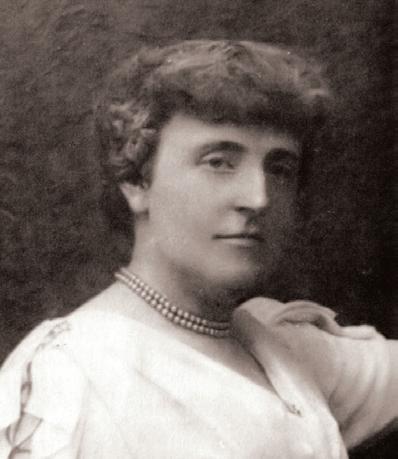
Frances Eliza Hodgson was born on 24th November 1849 in Manchester, England. Her father died when she was young. After that, her mother couldn’t manage the family business and they started to have financial problems. In 1865, when Frances was 15, the family moved to Tennessee in the USA. Life was difficult and Frances didn’t have much formal education at school, but she liked reading and nature. She started writing stories for magazines so she was able to earn some money to help the family.
Family Life
In 1873 Frances married Swann Burnett, a doctor, and together they travelled around Europe and lived in Paris, before returning to the USA. They had two sons, Lionel and Vivian, but Lionel sadly died at the age of 15. After the death of her son, Frances was often depressed. In 1898, the couple divorced and Frances returned to England. In 1900, she
married Stephen Townesend, an actor and theatre producer, but the marriage only lasted a couple of years.
Writing
Frances’ first stories were published in parts every week or month in ladies’ magazines. The stories were about the lives of poor, working-class women with romance and love interests. In 1876, she published her first novel, That Lass O’Lowries, about a young girl who worked in a coal mine in the north of England.
In her lifetime, Frances Hodgson Burnett wrote over 40 plays, novels and short stories for both adults and children, but she is most famous for her novels for children, including Little Lord Fauntleroy (1886), which was based on her son Vivian, A Little Princess (1905), and The Secret Garden (1911) where one of the characters, a sick child called Colin, was based on her son Lionel who died of tuberculosis. These novels are about children, families and their problems, as well as friendship, kindness and nature.
Later Life
After her second marriage ended, Frances lived in Kent, England, where she continued writing. She then spent several years travelling between the USA and England, before permanently moving to Long Island, New York. She died on 29th October 1924.
Today her books are still popular with children and adults. Many of her novels became successful plays at the theatre and were also made into films. They teach us about the importance of being kind and always continuing to believe, even when life is difficult.
OOKMARKS
Bookmarks is an innovative series of graded readers for curious students who want to enjoy reading in English. It is divided into six levels from beginner to advanced.
Don’t miss Bookmarks Readers, the series where every reader finds their place.
A Little Princess by Frances Hodgson Burnett
Adaptation and activities by Alison Smith
Illustrated by Nico189
Bookmarks
Founder and Series Editors
Grazia Ancillani, Daniele Garbuglia (Art Director)
Graphic Design and Layout: Emilia Coari
Production Manager: Francesco Capitano
Photo credits: Shutterstock
© 2026 ELI s.r.l. P.O. Box 6 62019 Recanati MC Italy
support@elionline.com www.elionline.com
Typeset in 12 / 15 pt Monotype Dante
Printed in Italy by Tecnostampa Recanati – EBM201.01
ISBN 978-88-536-4858-7 First edition: February 2026
www.elipublishing.com
Frances Hodgson Burnett A Little Princess
Retold by Alison Smith
Illustrated by Nico189
About the Story
In 1887, Frances Hodgson Burnett wrote a short story called Sara Crewe. It was about a young English girl, Sara, who was born in India and lived there with her father. In that period of time, India was part of the British Empire, so many English people lived and worked in the country. It was common for children to leave their parents and return to England for their education, so when Sara was seven, she left India to go to school in England.
Sara Crewe was published in three parts in a magazine. It was very popular, so Frances decided to write a novel. She used the same basic storyline, but she added more details, characters and events to the story. It was called A Little Princess and it was published in 1905.
After a long journey by boat, Sara and her father arrive in London. They spend a few days together, then Sara is left alone at her new school, Miss Minchin’s School for Girls. Sara’s very lucky and has lots of nice clothes, toys and books. She’s kind and imaginative and soon she makes friends with different people at the school. The years pass, but then, on her eleventh birthday, Sara gets some news, and her life suddenly changes.
A Little Princess is a classic of English-language children’s literature and it explores the ideas of friendship, imagination and the different classes that existed at the beginning of the 20th century.
Main Characters
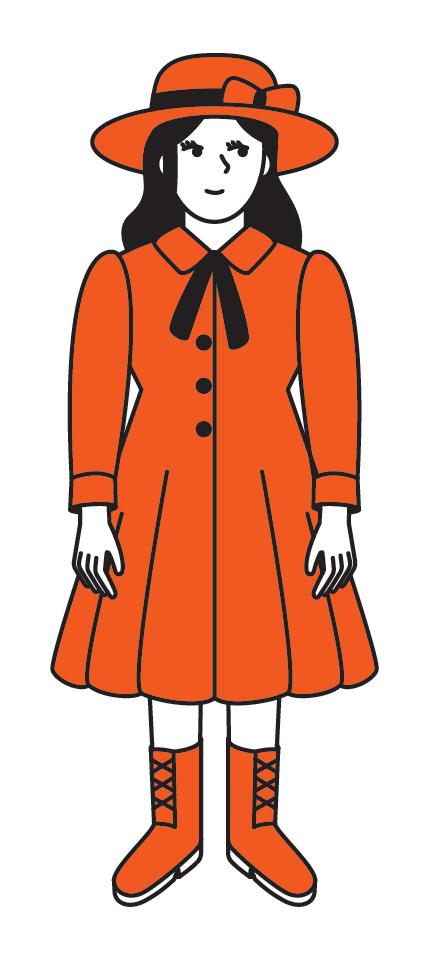
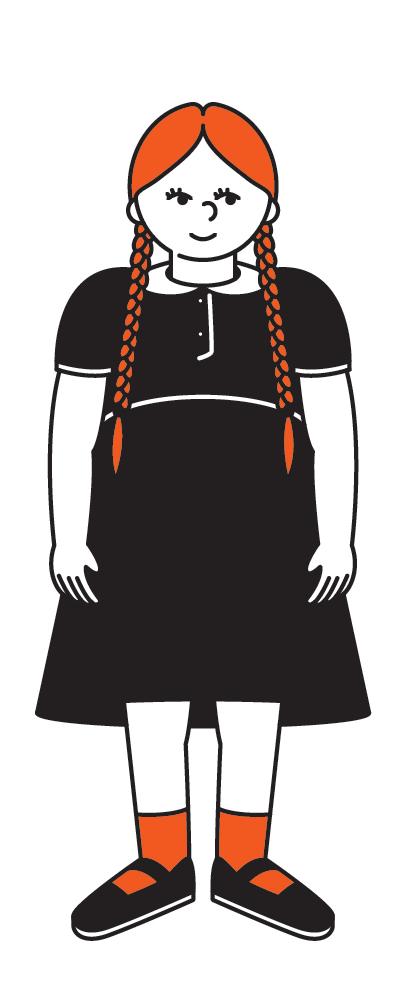
Sara
The protagonist and ‘princess’ of the story. She’s a new student at Miss Minchin’s school.
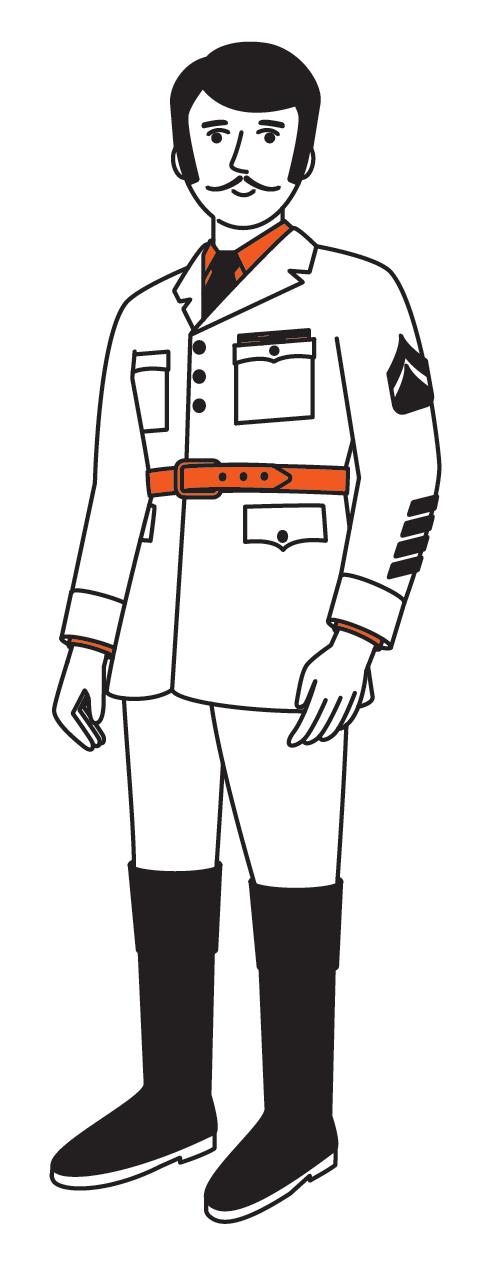
Captain Crewe
Sara’s father. He lives and works in India.
Ermengarde
A student at the school. She becomes Sara’s friend.
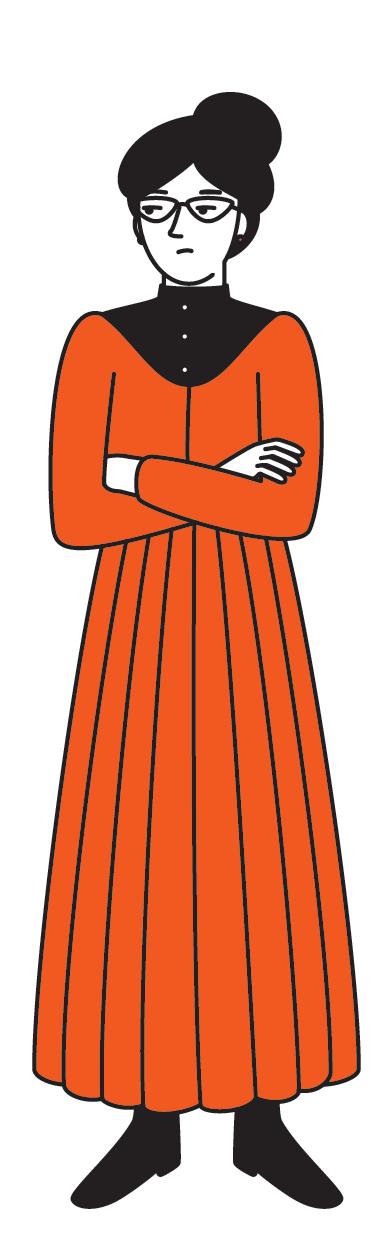
Miss Minchin
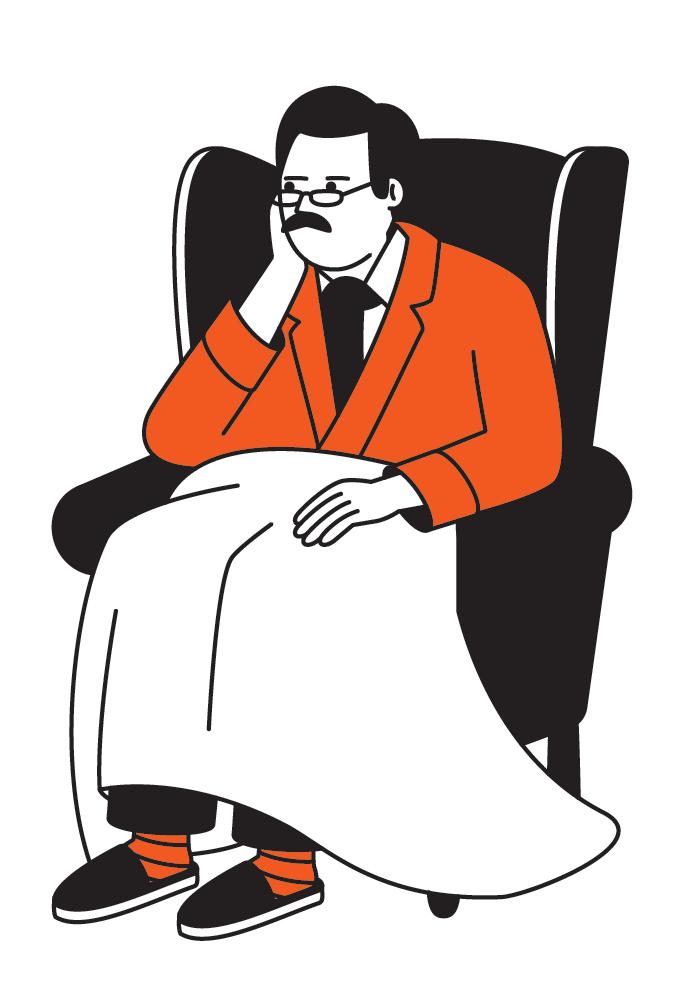
Mr Carrisford
A rich man who lives next door to the school.
She’s got a school for rich girls in London.
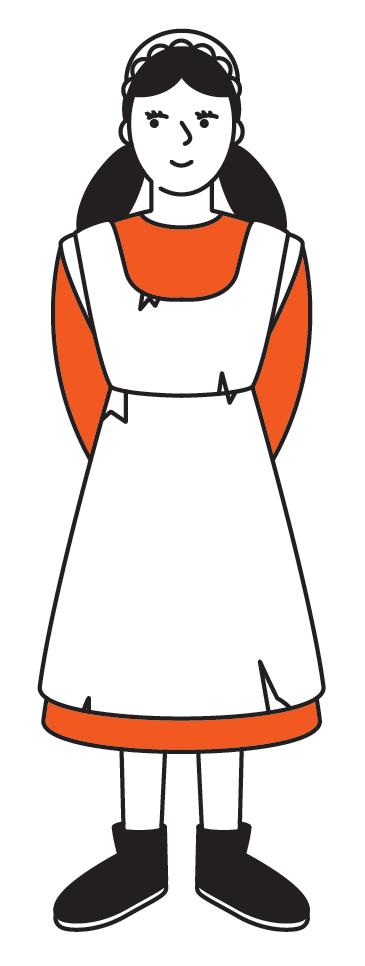
Becky
She’s a servant* at the school and she has to work very hard.
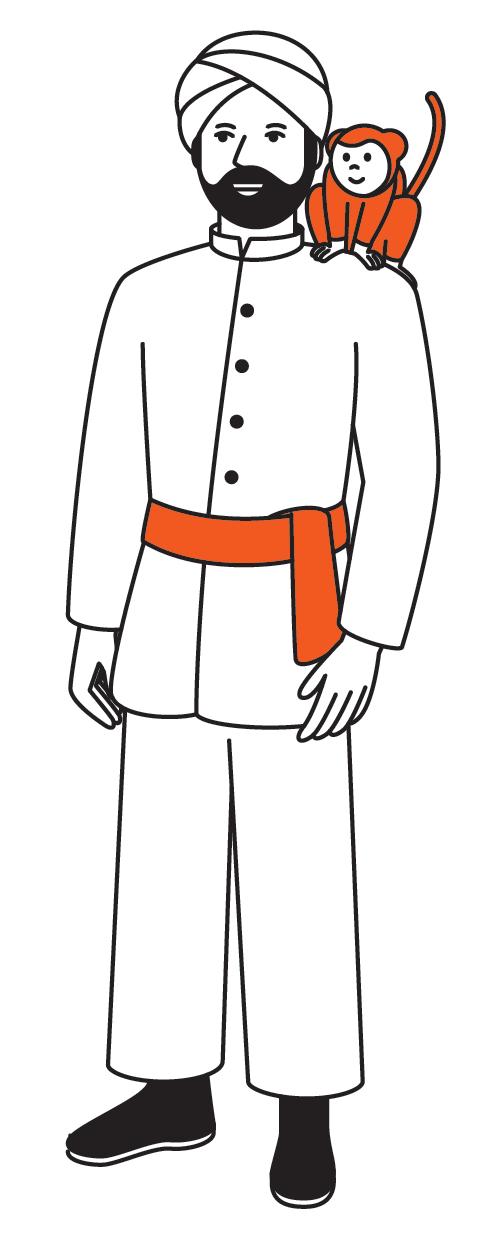
Ram Dass
A kind, Indian servant who looks after Mr Carrisford.
A Little Princess
Chapter 1 A New School

Sara looked out of the carriage* window. It was a winter’s day and they were driving through the foggy streets of London. For Sara, everything looked very strange.
‘Is this the place, Papa?’ she asked when she saw a tall, dark building.
‘Yes, darling,’ answered her father, Captain Crewe. ‘This is your new school.’
Sara sighed*. She thought about their life in India and the long journey by boat to England. ‘It’s all so different here. London’s dark and cold. In India, it’s sunny and beautiful,’ she said.
‘You can't stay in India with me, dearest Sara. You’re seven years old now and you have to go to school here in England.’
‘I know,’ she said, ‘but I don’t want to leave you.’
‘Your school years will go quickly. Then you’ll be old enough to look after me in India.’
Captain Crewe held his daughter’s hand. He felt very sad too. He didn’t want to leave Sara and return to India and his job without her. He loved his daughter very much. His wife, Sara’s mother, died when Sara
A New School
was born. They only had each other, and he had to be strong for her.
‘Don't worry. I can stay with you here for a few days. We’re going to go shopping and buy a new doll.’
‘Thank you. I’d like a new, special doll,’ said Sara, trying very hard to smile*.
The carriage stopped, and Sara and Captain Crewe got out. The sign on the wall said, “Miss Minchin’s School for Girls”.
‘It’s a really good school,’ said Captain Crewe, ‘and they say that Miss Minchin is very nice.’
The door opened, and a woman came out. Sara looked at her. She doesn’t look very nice, she thought. Miss Minchin was tall and ugly*, with dark, cold eyes. She certainly didn’t look friendly.
‘Good afternoon, Miss Minchin. I’m Captain Crewe and this is my daughter, Sara.’
‘Welcome to your new school, Sara.’ Miss Minchin smiled, but it was a cold smile.
‘I want Sara to have the best things at your school,’ said Captain Crewe. ‘She likes reading and is very clever.’
This was true. Sara loved books more than anything else. She read books about adventures, history, famous people and lots of other things. She also loved making up beautiful stories, which she told to her father.
‘Money isn’t a problem,’ continued Captain Crewe. ‘She must have the biggest bedroom and the nicest food. You must buy everything she wants: clothes, toys, books, even a pony*.’
A Little Princess
Excellent, thought Miss Minchin. Money was very important for her, so she loved rich people. She tried to give a warm smile and said ‘I can see that you’re very clever, Sara, and also very pretty.’
Sara didn’t say a word. Why is she telling a lie*? she thought. I’m not pretty. I’m the ugliest child I’ve ever seen. This wasn’t true. Perhaps Sara wasn’t the prettiest girl in the world, but she was tall, with long black hair, a sweet face and big, green and grey eyes.
Sara and her father spent the next few days together in an expensive hotel. They went shopping, and Captain Crewe bought Sara lots of new clothes. He bought beautiful dresses and coats, warm hats and gloves, new shoes and boots. They went to lots of toy shops too, but Sara couldn’t find a doll that she liked. On their last day together, they were walking past a small shop when she saw it. The perfect doll. It was quite big, with black eyes and long hair, and it was wearing a beautiful dress. ‘Her name’s Emily,’ said Sara. She can be my friend, she thought. I’ll need a friend in this new place.
That afternoon, Captain Crewe had to leave for India. When he and Sara arrived at the school, Miss Minchin, with her usual cold smile, was waiting for them. Sara was very sad: she held Emily tightly* in one hand and her father’s jacket with the other. Captain Crewe hugged* and kissed his daughter for the last time.
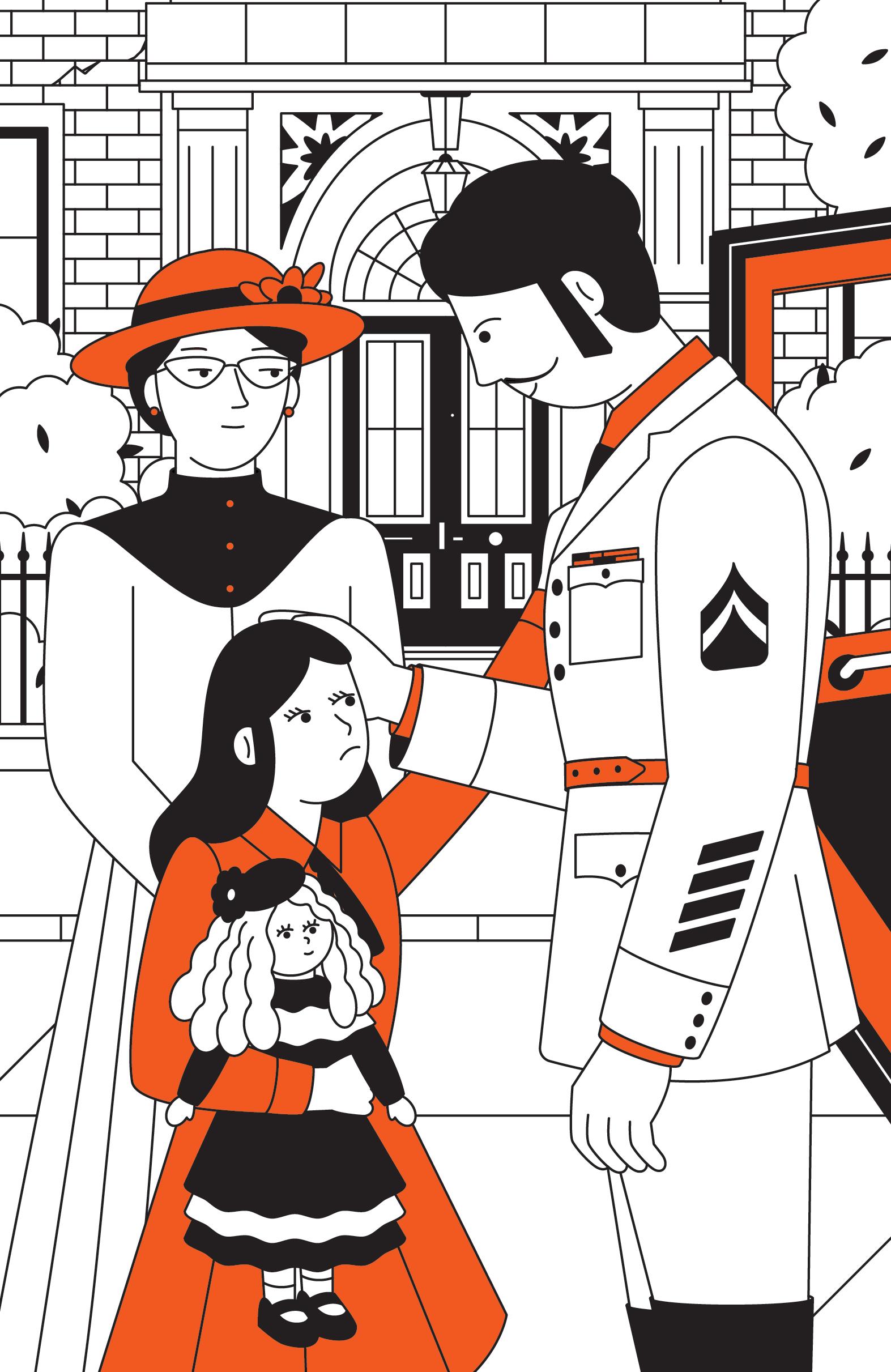
Sara says goodbye to her father.
A Little Princess
‘Remember to buy Sara everything that she wants!’ he said to Miss Minchin as he got into his carriage.
Miss Minchin looked at Sara and thought, More things? She has so many clothes already! Does she think she’s a princess? Well, she’ll always look nice when other parents visit, which will be good for me and my school.
That night was Sara’s first time alone, away from her father, and her first night in her new bedroom. It was a very beautiful room, with a soft bed, a comfortable armchair and a rug* on the floor. There was a lovely desk with lots of books and things from India, and a big fireplace*. Sara felt very sad but she didn’t want to cry: I must be strong. I have Emily, my doll. Things will be okay. But I miss Papa!
The next morning, Sara’s first lesson at Miss Minchin’s School for Girls was French.
‘Did you study French in India?’ Miss Minchin asked.
‘No, I didn’t have French lessons, but…’
‘Well, you’ll have to learn French here. Sit down and look at this book before the French teacher arrives.’
‘But...’ Sara tried to speak.
‘You mustn’t say but when I tell you to do things!’ shouted Miss Minchin.
‘Maybe this new girl isn’t perfect after all,’ said one of the pupils. Her name was Lavinia and, actually, she was jealous*. She knew that Sara had lots of pretty clothes, and that her room was the nicest in the school,