Trust and Continuity





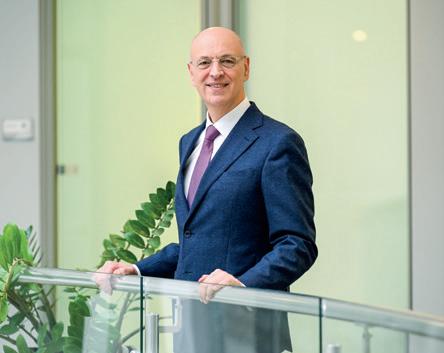
Japan and Serbia are moving beyond symbolic cooperation towards a structured partnership built on long-term investment, technological exchange and institutional trust

t a moment when global business and politics are increasingly shaped by short-term pressures, strategic uncertainty and rapid technological disruption, Japan continues to stand apart for its emphasis on continuity, reliability and long-term vision. It is precisely these values that frame the current phase of Japan–Serbia relations, which have moved beyond symbolic partnership into a more mature, structured and future-oriented dialogue.
AOver the past year, cooperation between the two countries has gained new depth, driven by a combination of political engagement, sustained corporate presence and intensified economic dialogue. Japanese companies operating in Serbia increasingly see the country not merely as a point of entry into Europe, but as a platform for longterm production, innovation and regional integration. This shift reflects a broader reassessment of global supply chains and investment strategies, in which stability, predictability and institutional credibility matter as much as cost efficiency.
World Expos have played a distinctive role in this process. EXPO Osaka 2025 offered Serbia valuable visibility in one of the world’s most demanding business environments, while simultaneously reinforcing Japan’s preference for partnerships built on trust, consistency and mutual understanding. Rather than transactional encounters, the Expo created a space for dialogue that linked culture, technology and investment potential—an approach deeply aligned with Japanese business philosophy.
This special section brings together different perspectives on that evolving relationship. From
Japan–Serbia relations are increasingly defined by predictability, institutional dialogue and long-term economic planning, reflecting a shared commitment to sustainable cooperation
official diplomatic views and institutional frameworks to the experiences of Japanese companies operating in Serbia, the common thread is a shared focus on long-term commitment. Automotive manufacturing, pharmaceuticals, advanced technologies, sustainability and digital transformation emerge not as isolated sectors, but as interconnected fields where Japanese expertise and Serbian ambitions increasingly converge.
Equally important is the role of people-to-people ties, education and cultural exchange. Japan’s approach to international cooperation places strong emphasis on sincerity and personal trust, values that resonate strongly in Serbia and continue to shape bilateral relations beyond formal agreements. In an era marked by volatility, such foundations offer rare stability.
Looking ahead to EXPO Belgrade 2027, the challenge will be to translate visibility into durable outcomes—projects, investments and partnerships that extend beyond exhibition halls and promotional narratives. The experience gained in Osaka suggests that success will depend less on spectacle and more on substance: on creating platforms for meaningful engagement, transparent dialogue and realistic long-term planning.
In that sense, Japan–Serbia cooperation today is less about momentum and more about direction. It reflects a shared understanding that sustainable growth, technological progress and economic resilience are built gradually, through patience, trust and continuity—principles that define not only Japan’s global outlook, but increasingly, its partnership with Serbia.
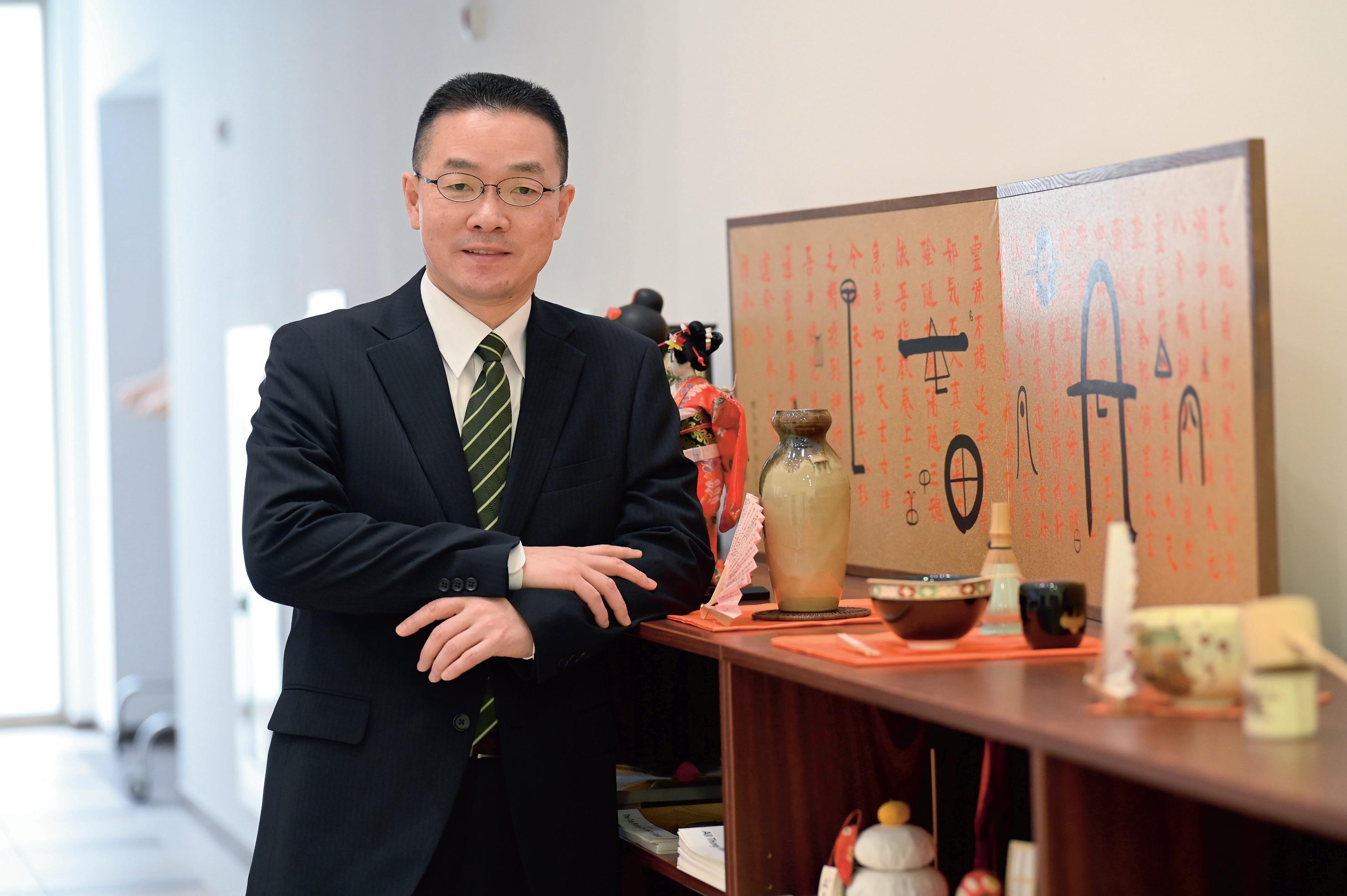
Japan and Serbia have steadily strengthened political dialogue and economic cooperation, guided by mutual respect and long-term commitment. From strategic investments to EXPO cooperation, bilateral relations are entering a new phase of depth and continuity
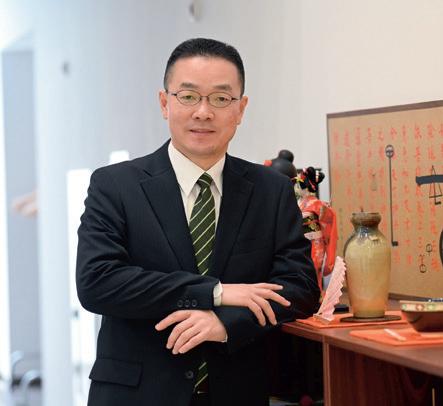
In an interview for CorD, Atsushi Saito, Chargé d’Affaires of Japan in Serbia, speaks about the current state of bilateral relations, economic cooperation and Japanese investments, Serbia’s green transition, the legacy of EXPO Osaka 2025 and expectations from EXPO Belgrade 2027, as well as
Serbia achieved great success at EXPO 2025 Osaka. Although I was not able to attend personally, I understand that the Serbian Pavilion attracted more than one million visitors
the role of education, culture and people-to-people ties in strengthening mutual understanding.
A career diplomat of Japan’s Ministry of Foreign Affairs and a specialist in Serbian, Croatian and Bosnian languages, Mr Saito has spent nearly two decades in the Western Balkans, including long postings in Croatia and Bosnia and Herzegovina. He took up his current post in Belgrade in February 2025, following his assignment in the United States.
How would you assess the current state of bilateral relations between Japan and Serbia, particularly in light of intensified political dialogue over the past year and the recent farewell visit of Ambassador Imamura?
— I can say that the current state of our bilateral relations is excellent, and I believe this positive trend will continue in the coming years. President Vučić’s visit to Japan last September represented our most substantial high-level political dialogue since 2018. During the summit, then Prime Minister Ishiba reaffirmed Japan’s strong support for Serbia’s role in regional stability and its EU accession, while President Vučić highlighted Japan’s sincere and responsible approach to global challenges.
Following the summit, our two governments signed a joint declaration confirming the completion of negotiations on the bilateral investment agreement. Former Ambassador Imamura, who has recently returned to Japan, made a significant contribution both to the success of President Vučić’s visit and to the overall strengthening of bilateral relations.
When it comes to the foundations of trust and stability between our countries, I would single out heartiness, sincerity and seriousness. Former Prime Minister Abe, who visited Serbia in 2018, often recalled that Serbia was the only country where the head of state personally came to the airport to see him off. This gesture left a lasting impression and illustrates how important genuine warmth is in Japan–Serbia relations.
Economic cooperation has been gaining momentum. Where do you see the greatest potential for further strengthening trade and industrial ties?
— The greatest potential lies in the automotive industry, which is one of Japan’s flagship sectors. Japanese companies in this field have been among the main investors in Serbia in recent years, and I expect this trend to continue. At the same time, we are closely following developments such as the EU’s recent easing of the 2035 petrol ban, given that some Japanese companies came to Serbia as part of the EU electric vehicle supply chain.
We are also monitoring Serbia’s tariff negotiations with the United States, particularly as Toyo Tire’s plant in Serbia exports primarily to the US market. Following the conclusion of the bilateral investment agreement last December, I am confident that Japanese companies will show increased interest in innovation, digitalisation and the green economy.
During President Vučić’s visit to Japan, a memorandum of understanding was signed between NTT Data and Serbia’s eGovernment, focusing
on advanced networks, data security and AI infrastructure. In addition, a broad memorandum of cooperation was concluded between Japan’s Ministry of Education, Culture, Sports, Science and Technology and Serbia’s Ministry of Science, Technological Development and Innovation. These agreements send a strong and positive signal to Japanese companies considering investment in Serbia.
The greatest potential lies in the automotive industry, one of Japan’s flagship sectors
I see 2026 as a year of follow-up to the intensive political dialogue of 2025
Through projects aligned with EU environmental standards, Japan will continue to support Serbia on its EU path
The Vinča project has been described as a milestone in Serbia’s green transition. What lessons can be drawn from this partnership?
— The Vinča project is a public-private partnership between the City of Belgrade and the company Beo Čista Energija, co-founded by the Japanese company Itochu, France’s Veolia and the Marguerite Fund. It addresses several challenges simultaneously: preventing environmental pollution, generating electricity and heat from waste as an alternative to fossil fuels, reducing greenhouse gas emissions and facilitating the exchange of expertise between the public and private sectors. There is clear potential to expand similar energy-from-waste projects in Serbia, provided that strong government support ensures their smooth implementation. In addition, Japan is involved in other environmental initiatives, including JICA’s feasibility study and potential financing for the reversible hydropower plant “Bistrica”. Through projects aligned with EU environmental standards, Japan will continue to support Serbia on its EU path.
How do you view Serbia’s participation at EXPO 2025 Osaka?
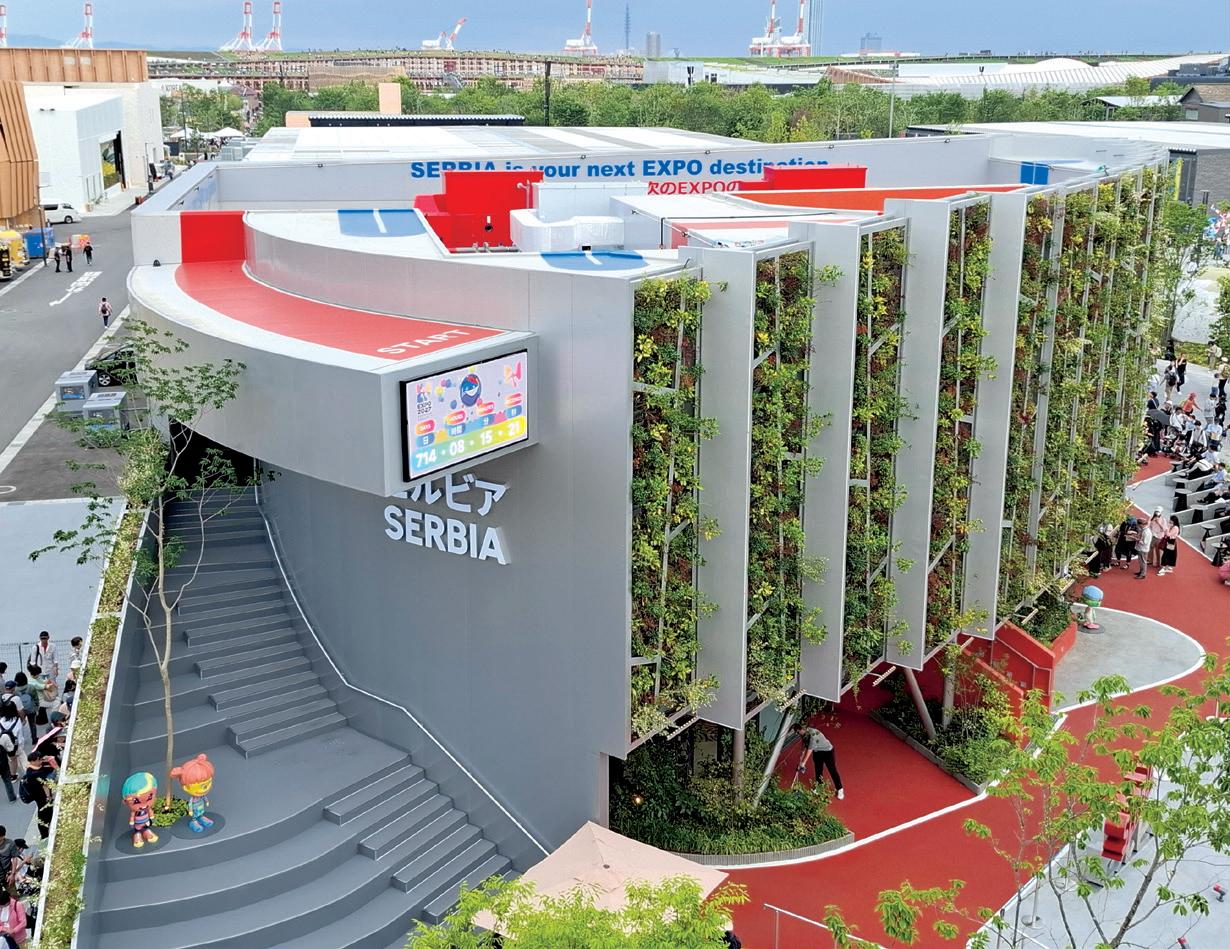
— Serbia achieved great success at EXPO 2025 Osaka. Although I was not able to attend personally, I understand that the Serbian Pavilion attracted more than one million visitors. Its concept, “Floating Forest”, inspired by Belgrade’s Lido Island, together with Serbian cuisine, played a major role in this success.
Japanese visitors were particularly impressed by Serbian meat pie, pita sa mesom, which received significant media attention in Japan. This kind of cultural connection is extremely valuable.
What expectations does Japan have regarding EXPO 2027 Belgrade?
— The Government of Japan officially confirmed its participation in EXPO 2027 Belgrade last August, and an expert exhibition committee has already finalised the basic concept of the Japanese
Pavilion under the theme “Play and Connect, Together – Playful Spirit of Japan”. This theme aligns well with the overall concept of EXPO 2027 Belgrade, “Play for Humanity: Sport and Music for All”.
We hope to showcase elements such as anime, e-sports, music and martial arts. Japan will also host GREENxEXPO 2027 in Yokohama, and I am confident there will be meaningful interaction between the two events, particularly in environmental protection and innovation. Some Japanese companies operating in Serbia have been invited to participate, and I sincerely hope they will consider this opportunity positively.
Can we expect continued high-level political dialogue in the period ahead?
— I see 2026 as a year of follow-up to the intensive political dialogue of 2025, as well as preparation for renewed momentum during EXPO 2027 in Belgrade. We can expect further substantial meetings, including political consultations between our Ministries of Foreign Affairs.
As 2026 falls between EXPO Osaka and EXPO Belgrade, business-related events linked to these processes are also likely to be particularly active.
Strengthening ties in higher education and science will be essential for maintaining and deepening long-term cooperation between our two countries
How do you assess the role of education, culture and youth exchange in bilateral relations?
— In these areas, I believe grassroots initiatives are often more important than government-led programmes. The role of government should be to support and encourage successful local initiatives. In 2025, two Serbian–Japanese friendship associations received the Japanese Foreign Minister’s Commendation, and Serbia hosted the Nippon Martial Art Festival for the first time.
Looking ahead, my realistic assessment is that higher education and scientific exchange should be prioritised. Japan’s shrinking population has led to the closure of some universities, making international academic cooperation increasingly important. Strengthening ties in higher education and science will be essential for maintaining and deepening long-term cooperation between our two countries.

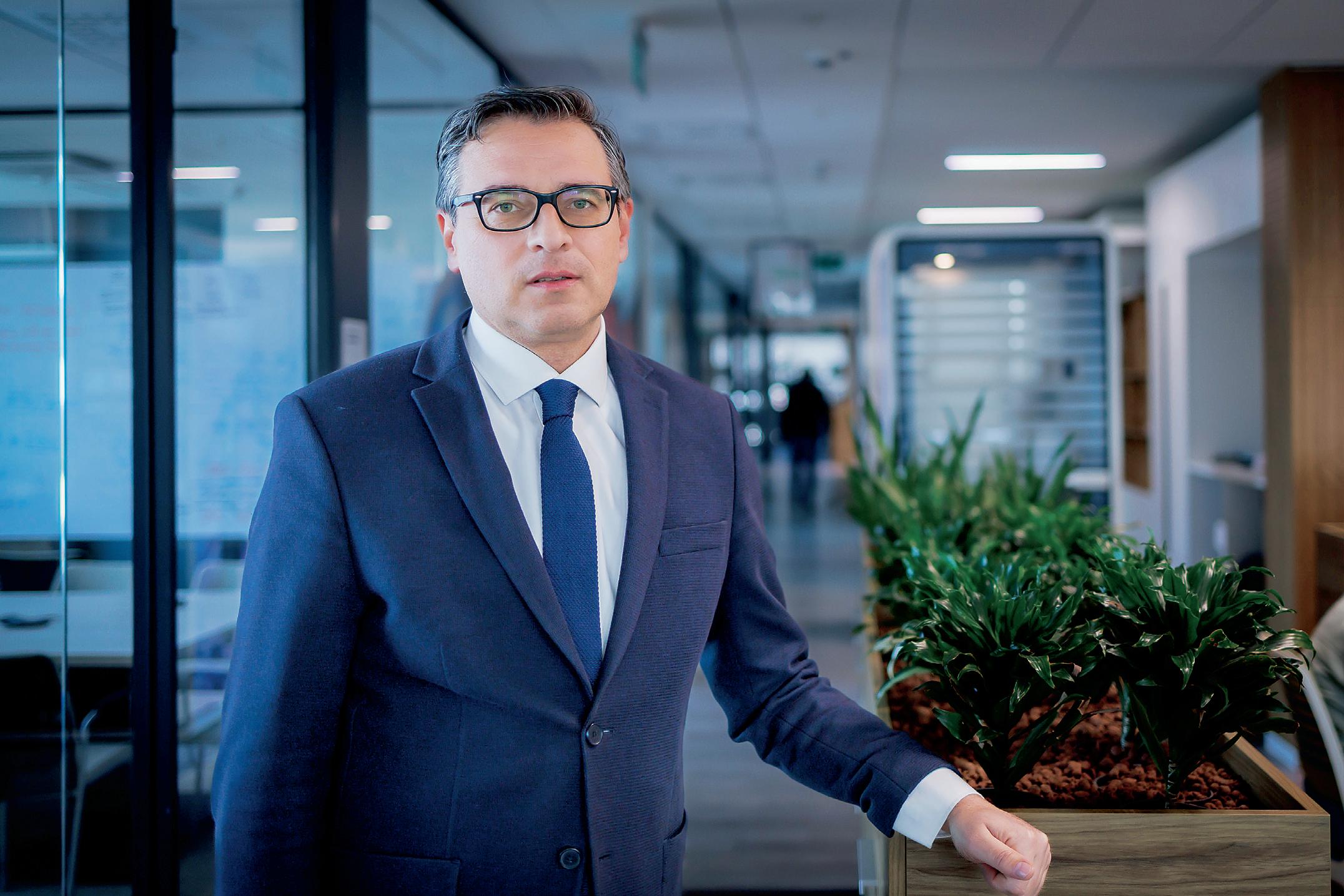
Experiences from EXPO Osaka 2025 have accelerated the shift of Japanese companies from initial talks towards concrete investment planning and long-term partnerships with Serbia
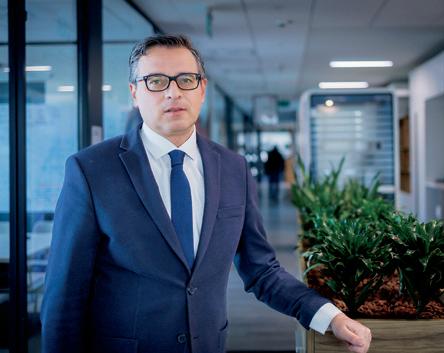
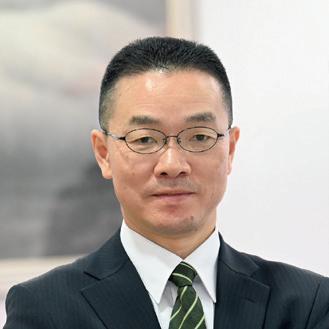
As interest from Japanese companies in Serbia moves beyond the exploratory phase towards serious investment consideration, the experience gained during EXPO Osaka 2025 has further strengthened trust and opened space for more concrete cooperation. Goran Pekez, President of the Managing Board of the Japan–Serbia Business Association (JBAS), speaks about the maturing perception of Serbia among Japanese inves-
tors, sectors with the greatest potential, and the role of business associations in the phase of implementation.
How would you assess the development of interest among Japanese companies in Serbia over the past year? Do you see a shift from initial discussions towards concrete projects and investment decisions?
— Thanks in part to EXPO Osaka, Serbia has recorded a visible increase in interest
from Japanese companies over the past year. There is a growing understanding that a strong and sustainable presence on the European market requires production within Europe, and Serbia stands out through a combination of geographic position, a network of free trade agreements and a competitive business environment. Additional credibility comes from positive examples of investors successfully exporting from Serbia to European and other markets. In that sense,
interest has become more mature and tangible, even though the full effects of current initiatives will become clearer in the period ahead.
Based on communication with JBAS members and partners, are there specific sectors or types of projects where you expect new Japanese investments in Serbia in the near future?
— The strongest interest is directed towards energy, infrastructure and advanced technologies, as well as the further expansion of production capacities of Japanese companies already operating in Serbia. Continuous, multi-year investment cycles by existing investors are a particularly important signal, confirming that Serbia is not merely an entry point, but a market where long-term expansion, modernisation and deeper integration into regional and global supply chains are being planned.
Compared to last year, how do Japanese companies today perceive the business environment in Serbia?
Have reforms, agreements or institutional developments contributed to greater predictability and investor confidence?
— Serbia is now perceived as a market with greater visibility and a clearer framework for cooperation, although investment decisions remain influenced by global uncertainties. Positive developments stem from increased international exposure during EXPO Osaka, more intensive business contacts with Japanese companies, and the signing of three bilateral documents, including a joint statement on a framework agreement for the promotion and protection of investments. Such institutional steps contribute to predictability and strengthen investor confidence by signalling stable conditions and a serious approach to longterm partnership.
With some distance, how do you assess the concrete business effects of Serbia’s participation at EXPO Osaka 2025? Have contacts from that period evolved into new forms of cooperation or investment discussions?
— EXPO Osaka 2025 was among the most significant global events of the previous year and provided Serbia with what matters most in such formats: visibility and credibility before Japanese and international audiences. With the direct support of our members, Toyotires and JTI, the Serbian pavilion became a space where culture, technology and investment potential were presented in parallel.
Contacts established in Osaka did not remain at the level of protocol exchanges. For some companies, discussions have entered a more advanced phase, including due diligence, planned site visits and feasibility studies. While global geopolitical and trade conditions continue to influence the pace, EXPO provided a strong initial impulse and opened the door for continued investment dialogue.
Visibility and continuity of dialogue have proven decisive in turning interest into sustainable investment and longterm partnerships
How can experiences from EXPO Osaka 2025 be applied in preparations for EXPO Belgrade 2027, particularly in attracting Japanese companies and building long-term partnerships?
— EXPO Osaka served as a reminder that trust in business is built through experience. For many visitors and companies, the Serbian pavilion was their first direct point of contact with Serbia through culture and innovation, as well as through discussions on its potential as a production and investment destination in the Western Balkans. This combination of visibility and direct dialogue is the key lesson to be transferred to EXPO 2027: designing participation and programming as a platform for networking and concrete business meetings, shortening the path from initial interest to serious investment consideration. Experiences from Osaka will also be applied to Belgrade EXPO 2027, includ -
ing preparations for the arrival of several large Japanese delegations and positioning the Japanese pavilion as a hub for new business opportunities during the exhibition.
How do you define the role of JBAS today in the further development of economic cooperation between Serbia and Japan? Which activities are crucial in a phase increasingly focused on implementation rather than promotion?
— Since its establishment, JBAS has served as a platform connecting Japanese companies, local partners and institutions, bringing together on-theground investor experience and building trust through continuity. Today, alongside promotion, JBAS increasingly plays a practical role in translating interest into operational outcomes. A key element is the systematic sharing of experience by companies that have already invested—particularly in modernisation and process improvement—with those still considering entry, supported by thematic discussions and meetings with relevant institutions to accelerate understanding of frameworks, opportunities and next steps.
When looking at long-term relations between Serbia and Japan, where do you see the greatest untapped potential for cooperation in the coming years, and what role can business associations such as JBAS play?
— The greatest potential lies in areas where Japan’s tradition of quality and discipline naturally aligns with Serbia’s development priorities: advanced manufacturing, energy and efficiency, as well as technologies and innovations that enhance productivity and competitiveness. These areas offer mutual benefits, including long-term partnerships, new jobs and a stronger industrial base, supported by Serbia’s skilled and adaptable workforce. In this phase, business associations such as JBAS can act as drivers of implementation—directing interest towards priority topics, bringing companies and institutions together around concrete discussions, and ensuring continuity through follow-up and dialogue that makes the process more predictable.
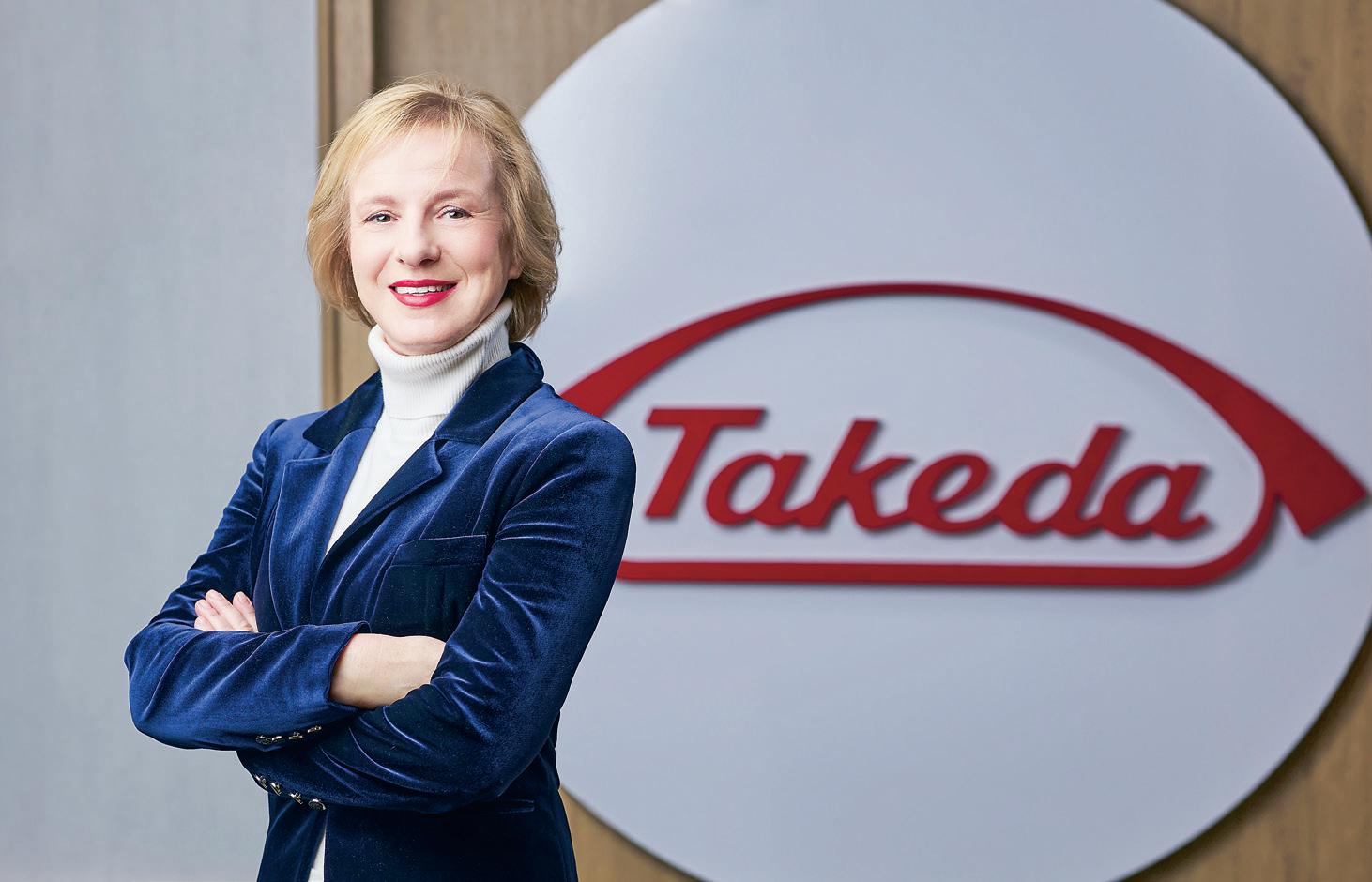
In a time when our region is accelerating its transformation—economically, socially, and in its alignment with broader European standards—the strength of international partnerships matters more than ever. Japan’s collaboration with the region has been steadily deepening, particularly through long-term investments and knowledge transfer. In healthcare, this collaboration is not only about medicines, but also about systems, predictability, transparency, and innovation that measurably improve patient outcomes.
This issue focuses on Serbia–Japan collaboration and how Japanese companies contribute to Serbia’s development. How does Takeda fit into that broader narrative?
— Takeda fits naturally into this story because we represent a combination that is increasingly important for Serbia: long-term commitment and high-value contribution. Japan is globally recognised for reliability, quality, and advanced technology.
In healthcare, our collaboration with local partners becomes especially meaningful. Takeda is already recognised for bringing high-tech innovation, including life-transforming medicines and digital solutions. Now is the time to go further and contribute more broadly to building a stronger healthcare ecosystem: more predictable pathways, transparent processes, sustainable investment in innovation, and tech-forward solutions that improve patient journeys.
For readers who may not know Takeda well, can you briefly introduce the company globally?
Takeda, founded in Japan more than two centuries ago and today one of the world’s leading value-based biopharmaceutical companies, offers a compelling example of how Japanese companies contribute to local ecosystems while preserving a consistent, values-driven global identity.
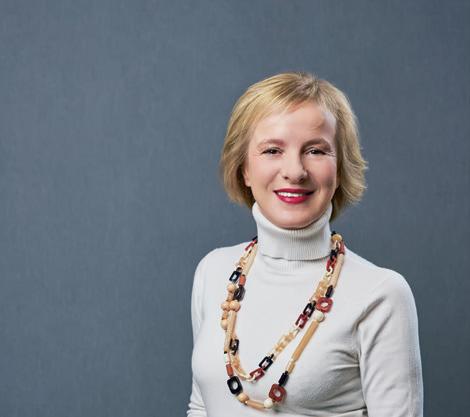
In this interview, Milena Argirovic, Takeda Country Head, reflects on Takeda’s mission, local commitments, the evolving diplomatic and economic relationship, and personal leadership lessons—particularly the role of female leadership in shaping culture and performance.
— Takeda is one of the leading global value-based biopharmaceutical companies, committed to discovering and delivering life-transforming treatments. We have a 245-year history, and what is remarkable is not only our longevity, but also the continuity of our values—integrity, fairness, honesty, and perseverance.
Over the years, the world has changed dramatically—science, society, geopolitics, and patient expectations. Takeda is also continuously evolving and transforming. Yet our values have remained constant: we innovate, adapt, and disrupt where necessary, but we do so with a stable ethical compass.
We are also committed to unlocking the power of data, digital solutions, and technology to create greater value for patients, our people, and society as a whole. The future of healthcare is not only about molecules; it is about smarter sys-
tems and better decisions enabled by technology.
You cover five Balkan markets. What are your priorities across them?
— My priorities are consistent across the cluster, even though each market has its own specific context.
First, we are committed to providing timely, broad, and sustainable access to life-transforming medicines for patients across all five markets. Access is not merely a technical term; it is a moral commitment. Patients should not have to wait years for what science already makes possible.
Second, we nurture innovation and leverage technology to deliver effectively. This includes digital approaches that improve education, patient support, and stakeholder cooperation, with the aim of achieving better patient outcomes.
Third, we build an organisation that embraces change and continuously generates ideas on how to “win for our patients”. This is cultural work: encouraging constructive debate, promoting curiosity, and fostering collaboration across functions and markets to deliver greater value for patients.
The Serbia–Japan relationship has been strengthening. How does Takeda contribute?
— The strengthening of Serbia–Japan relations is visible in increasingly confident and structured cooperation, including investment frameworks and broader economic collaboration. This matters because healthcare innovation depends heavily on a country’s overall investment and governance climate.
There are several recent activities in which Takeda has taken an active role:
1. EXPO Osaka 2025: At the EXPO Osaka Investment Conference, I
had the opportunity to present Takeda's local experience about the potential of Serbian healthcare system, as well as opportunities for collaboration, to Japanese investors. This was a global stage on which Serbia was able to showcase its ambitions, while Japanese stakeholders could gain a clearer view of Serbia’s potential.
2. Agreement on the Mutual Promotion and Protection of Investments: This agreement was signed in December 2025 between Serbia and Japan, creating a strong legal framework to strengthen economic ties. When Serbia and Japan enhance legal and policy frameworks that protect investment, the entire ecosystem benefits— confidence increases, partnerships become easier, and longterm planning becomes possible. In healthcare, long-term planning is essential: innovation adoption and digital modernisation cannot be effectively achieved in an environment of short-term uncertainty. Takeda consistently invests in the region—not only financially, but also intellectually: through partnerships, innovation, and capability building. When governments recognise this contribution, collaboration on future projects will become more effective, particularly in terms of recognising the value of innovation in a transparent and predictable manner.
Your organisation is known for strong female leadership. How does that shape culture and effectiveness? It shapes our culture profoundly. In our organisation, women hold 80% of leadership roles. Our performance speaks for itself: we are among the highest-performing clusters in Europe.
Now is the time to go further and contribute more broadly to building a stronger healthcare ecosystem: more predictable pathways, transparent processes, sustainable investment in innovation, and tech-forward solutions that improve patient journeys
This is not about gender stereotypes. We are building a culture in which excellence is expected and development is continuous. Our results are therefore not accidental.
Why does it work? Female leadership often brings a strong collaborative approach and the ability to manage multiple priorities without losing strategic focus. It creates an environment in which people feel both accountable and supported.
There is also another important dimension: as a female leader, visible self-care gives others permission to lead without burning out silently. That, too, is cultural change.

How textile waste has become a global challenge — and why innovation can help reshape the industry’s future
hildren’s clothing is, by nature, temporary. Children grow quickly, garments are often worn for a short time, and frequent consumption is widely accepted. Yet the environmental footprint of children’s fashion is anything but fleeting. New research by Epson reveals the scale of a problem that too often remains outside the public spotlight: Europeans discard as many as 812.6 million items of children’s clothing every year — a volume that, if stacked into a single pile, would reach 918 times the height of Mount Everest.
CThe data further highlights prevailing consumption patterns. While 52% of parents actively consider more sustainable choices when purchasing clothing for themselves, more than a third (35%) admit to disposing of children’s clothing in the quickest and easiest way possible. On average, European children are bought 64 items of clothing per year up to the age of sixteen, representing a market worth €4.3 billion. At the same time, 42% of parents report that their children own unworn items still bearing their original labels, while 54% say they have discarded or repurposed clothing that was never worn at all.
The scale of the problem extends well beyond Europe. The consequences of overproduction and overconsumption are particularly visible in countries of the Global South, where a significant share of textile waste from Western markets ultimately ends up. This global dimension was a key motivation behind Epson’s collaboration with fashion de-

signer and sustainability pioneer Priya Ahluwalia.
To demonstrate how innovation can form part of the solution, Epson and Ahluwalia introduced Fashion Play — a dollsized fashion collection created from textile waste. The collection was produced using Epson’s Dry Fibre Technology, which transforms used textiles into new fibres without the use of water or harsh chemicals, alongside Epson’s Mona Lisa digital textile printing technology.
Ana Bajagić, Marketing Manager at Epson, emphasises that fashion represents both creative expression and responsibility from an early age:
“While there are simple steps consumers can take — from reducing the
amount of clothing they buy to prioritising pieces they already own — we wanted to show how technological innovations, such as Dry Fibre Technology, can play a vital role in reducing the volume of textile waste that ends up in landfill.”
Fashion Play symbolically builds on Ahluwalia’s Autumn/Winter 2025 collection, yet its message goes far beyond fashion. In addition to Dry Fibre Technology, the production process also employed Epson’s latest Mona Lisa digital textile printer, which can reduce water consumption during the colour-printing stage by up to 97% compared to conventional methods.
Reflecting on the collaboration, Priya Ahluwalia points to the personal experience that has shaped her work:
“Travelling in India and Nigeria allowed me to witness first-hand the scale of textile waste generated by the Western second-hand clothing industry. That experience stayed with me and continues to drive my commitment to creating in ways that are more responsible towards people and the planet, particularly in the context of the Global South. This collaboration with Epson goes beyond fashion — it opens a broader conversation about sustainability, from the way we dress to the choices we make for those we love.”
Through this miniature collection, Epson and Ahluwalia deliver a clear message: innovation and imagination can work together to redefine the future of the fashion industry — positioning sustainability not as an exception, but as an integral part of how fashion is conceived and produced.
Toyota is strengthening its market position in Serbia by relying on a multipath approach to mobility, long-term reliability and a clear vision of sustainable development
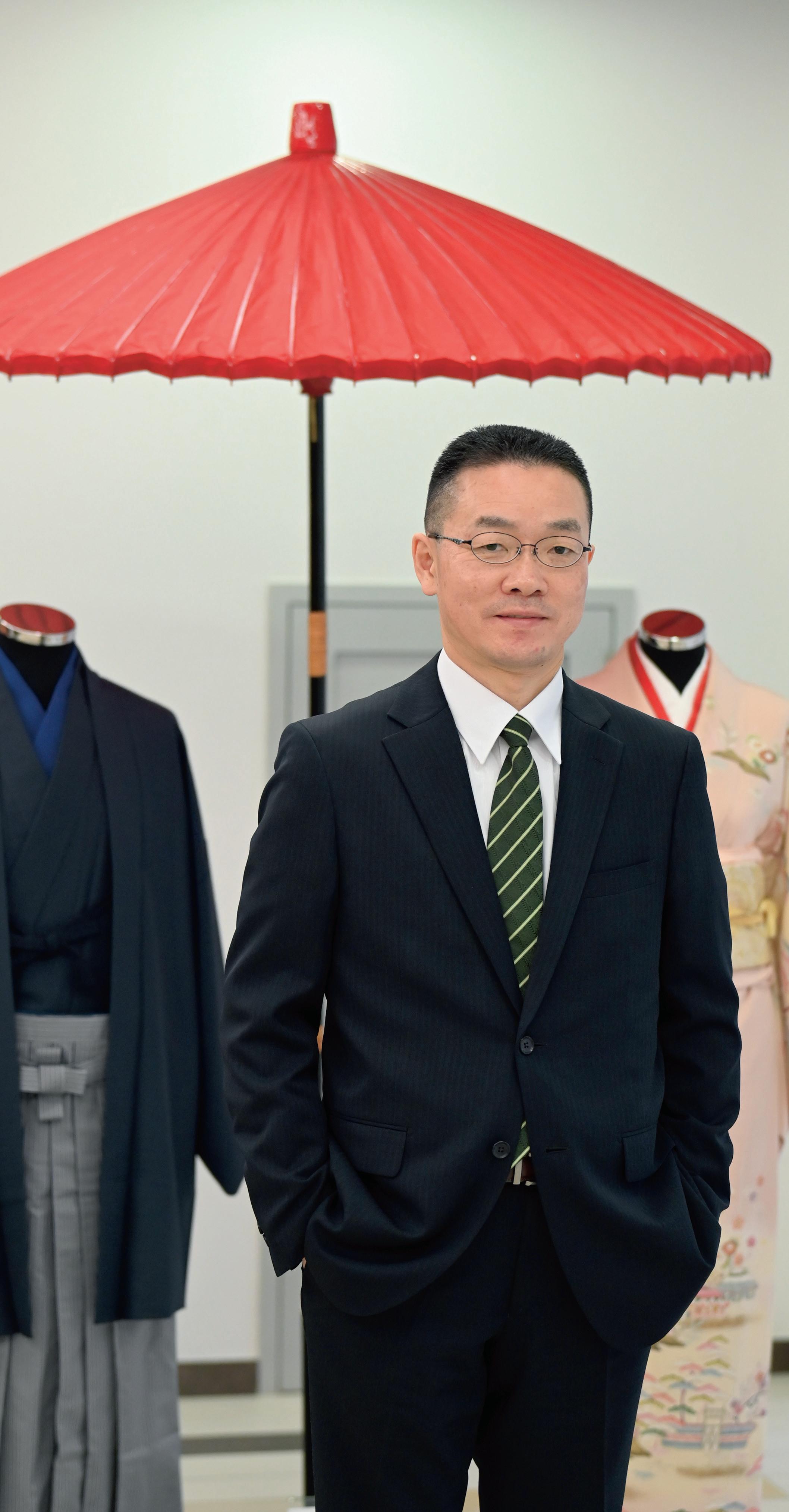
As one of the leading automotive brands in Serbia, Toyota has recorded steady growth through the consistent application of its global philosophy of quality, reliability and technological diversity. Robert Lukić, Managing Director of Toyota Serbia and Toyota Adria, speaks about the multipath electrification strategy, customer value, and the potential for Japanese companies to further deepen industrial and development cooperation with Serbia.
How would you describe Toyota’s current position in Serbia? What are the key drivers of growth, and how do you seek to differentiate yourselves most clearly from the competition?
— For the third consecutive year, Toyota ranks second in sales in Serbia, both across the total market and in the passenger vehicle segment. In simple terms, our position can be described as building stability through the continuous improvement of our offer. Toyota is recognised for its QDR (Quality, Durability and Reliability) philosophy, and we strive to transfer that kaizen mindset and uncompromising commitment to quality across all segments of our operations in Serbia and the region.
Toyota globally promotes a “multi-path” approach to electrification. How is this reflected in the real needs of customers in Serbia, and what could mark the next turning point in the market?
— The multipath approach offers appropriate solutions for different types of use
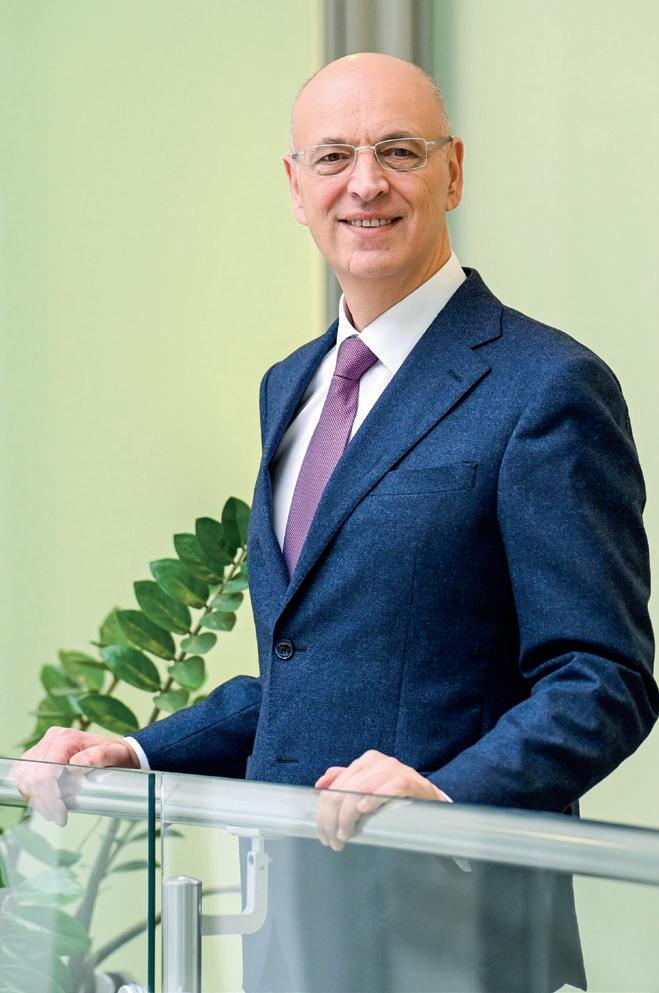
A potential turning point lies in the next generation of batteries on which Toyota is already working, addressing range, charging speed and safety
and goes beyond electrification alone. The automotive industry has always relied on multiple technological paths, although today there is a tendency to impose a single direction. Through its multipath approach and the Mobility for All strategy, Toyota demonstrates that modern mobility requires efficient, tailored
solutions, alongside a strong commitment to environmental protection. Hybrids already meet a large share of current needs, but not all of them, which is why a variety of powertrains remains necessary. A major turning point could come with the next generation of batteries on which Toyota is already working, addressing key challenges such as range, charging speed and safety.
In terms of your model range, what best reflects Toyota’s value proposition for customers in Serbia?
— Regardless of the product, value for money is always decisive. When combined with the multipath strategy, a broad model range and an uncompromising approach to safety and environmental responsibility, this creates a clear formula for success. Toyota’s global leadership reflects its focus on continuous improvement. Awards confirm professional recognition of our quality, but we see them primarily as validation that we are offering optimal mobility solutions tailored to individual customer needs.
As a member of the JBAS Board, how do you see the role of Japanese companies in Serbia in the coming years?
— The presence of Japanese companies in Serbia continues to grow, along with investments. Future development will depend on several factors, particularly in the automotive sector, including market dynamics and the ability of local suppliers to deliver consistent quality. Toyota closely follows global developments, with a focus on industrial cooperation and sustainable mobility, where I see clear potential for Serbia and the wider region.
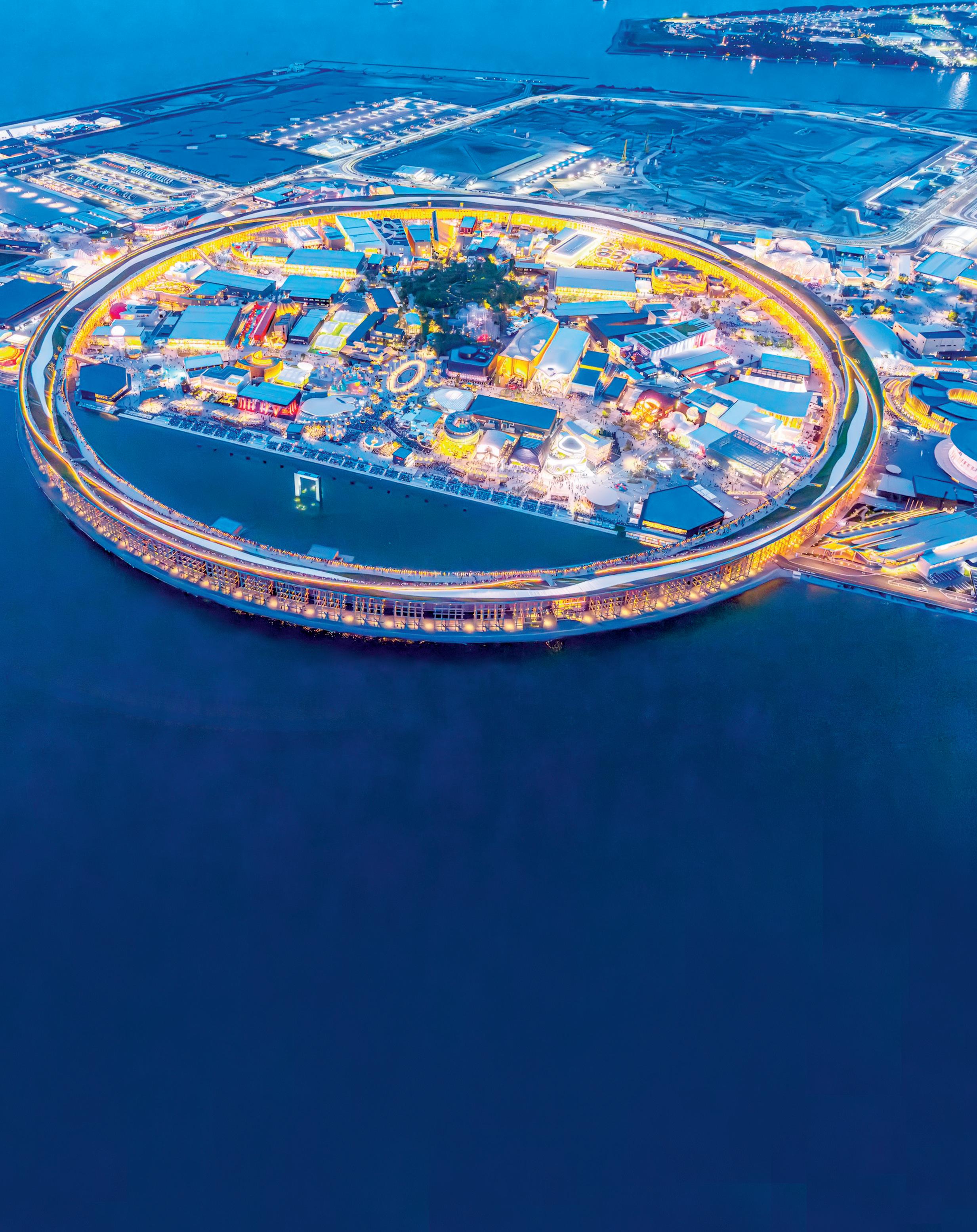
EXPO OSAKA 2025 OVERVIEW
A global platform for rethinking sustainability, technology and human well-being, Expo Osaka 2025 brings nations together to explore shared solutions for the future—through dialogue, innovation and long-term vision
World Expos have always been more than grand showcases of architecture, technology and national branding. At their best, they are mirrors of global ambition and laboratories for ideas that attempt to answer the defining questions of their time.
Expo 2025 Osaka, Kansai, held under the overarching theme Designing Future Society for Our Lives, stands firmly in that tradition, offering a carefully structured vision of how humanity might navigate the intertwined challenges of sustainability, technological acceleration and social cohesion.
Set on the artificial island of Yumeshima in Osaka Bay, Expo Osaka 2025 is both symbol and experiment. Japan, a country long associated with precision, long-term thinking and technological refinement, has deliberately framed this Expo not as a spectacle of national power, but as a platform for collective problem-solving. The emphasis is less on competition and more on cooperation — less on displaying finished answers, more on exploring shared pathways.
At the heart of the Expo lies the concept of People’s Living Lab. Rather than presenting innovation as something distant or abstract, Osaka 2025 places the individual at the centre of its narrative. Health, longevity, mobility, digital transformation and environmental responsibility are approached not as isolated sectors, but as interdependent systems shaping everyday life. In doing so, the Expo reflects a broader shift in global thinking: progress is no longer measured solely by economic growth or technological breakthroughs, but by the quality, inclusiveness and resilience of human experience.
Architecturally and spatially, the Expo reinforces this philosophy. Pavilions are organised around thematic zones dedicated to Saving Lives, Empowering Lives and Connecting Lives. This tripartite structure allows participating countries and organisations to address glob-
By bringing nations, cities, companies and individuals into a shared space of experimentation and exchange, the Expo reaffirms a simple yet powerful idea: that progress, to be meaningful, must be collective
al challenges from different perspectives, while remaining anchored in a common conceptual framework. The result is a coherent narrative that encourages dialogue between science, policy, business and culture.
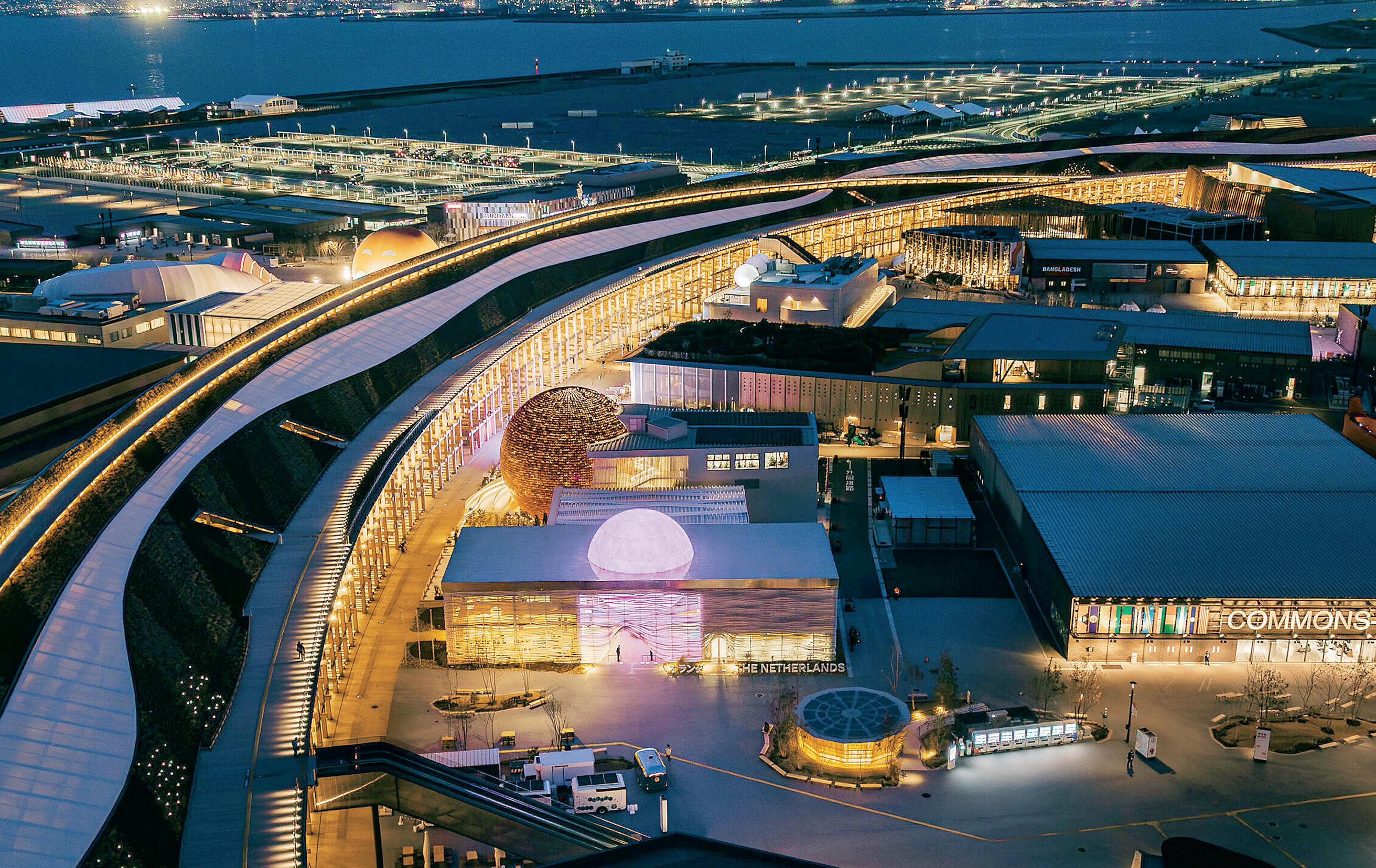
Technology, unsurprisingly, plays a prominent role — but not as an end in itself. Artificial intelligence, robotics, digital health solutions and smart infrastructure are presented as tools in service of human well-being. Japan’s own contributions, drawing on its leadership in robotics, healthcare innovation and sustainable urban planning, underscore a distinctly Japanese approach: innovation guided by responsibility, continuity and social trust.
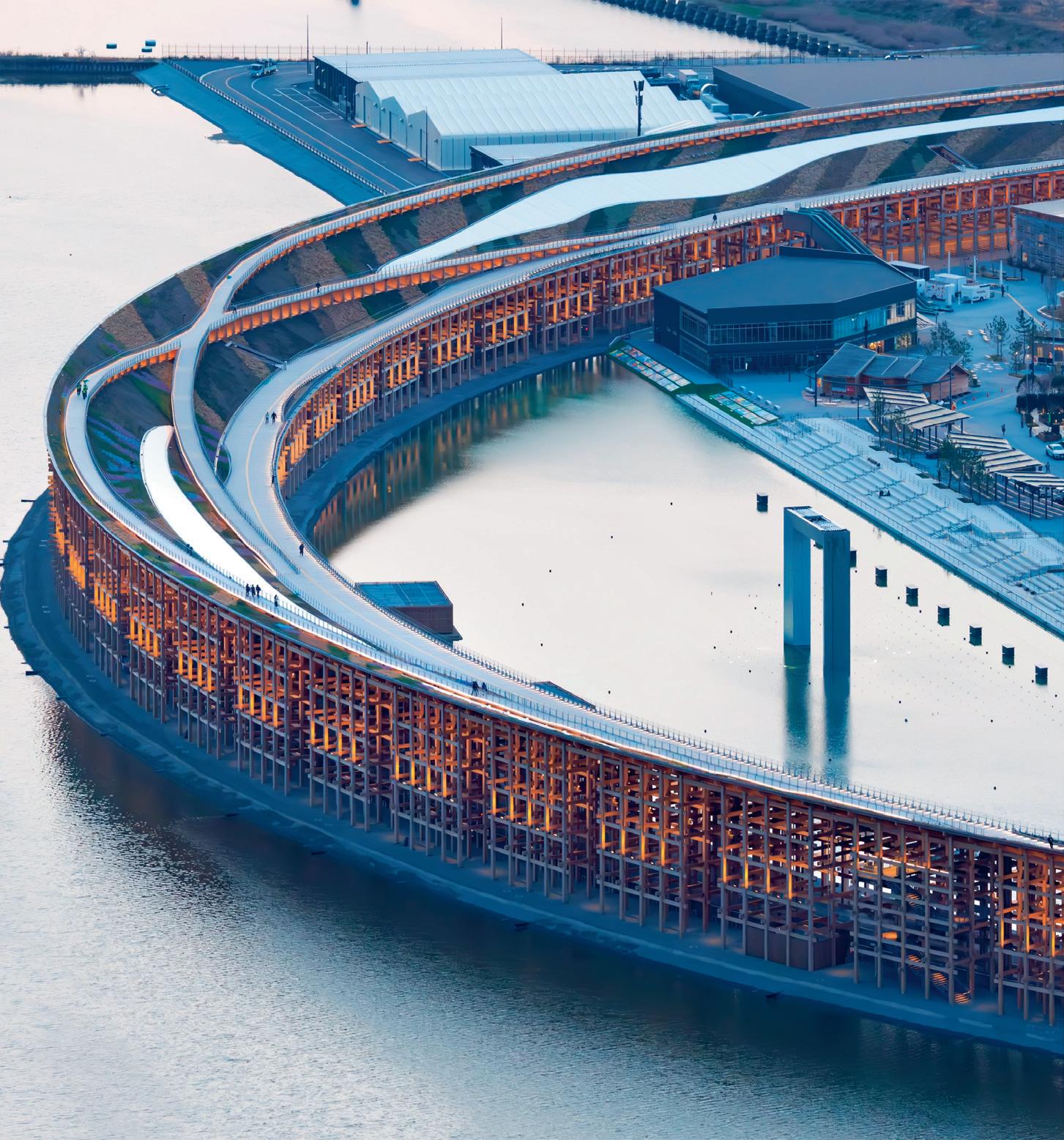
Equally important is the Expo’s emphasis on sustainability. From construction methods and energy systems to mobility solutions and waste management, Osaka 2025 has been designed as a testbed for circular economy principles. The goal is not merely to host a sustainable event, but to generate models that can be adapted and replicated long after the Expo closes its gates. In that sense, Osaka is positioning itself not only as a host city, but as a contributor to global policy and practice.
Within this global context, the participation of smaller and emerging economies carries particular significance. Serbia’s presence at Expo Osaka 2025, while modest in scale, is symbolically and strategically important. Positioned within the broader European and regional narrative, Serbia presents itself as a country open to innovation, partnerships and long-term investment, particularly in areas such as healthcare, digitalisation, creative industries and sustainable development.
Serbia’s participation also reflects the steady strengthening of relations with Japan, marked by growing economic cooperation, investment dialogue and mutual interest in innovation-driven growth. For Serbia, Expo Osaka represents not only an opportunity for visibility, but a platform
drop, the Expo’s insistence on dialogue, inclusiveness and shared responsibility feels both timely and necessary. It does not promise easy solutions, but it does offer a framework for thinking — and acting — together.
For Serbia, Expo Osaka represents not only an opportunity for visibility, but a platform to engage with Japanese and global stakeholders on equal footing — to listen, to learn and to position itself within future-oriented value chains
to engage with Japanese and global stakeholders on equal footing — to listen, to learn and to position itself within future-oriented value chains.
More broadly, Expo Osaka 2025 arrives at a moment of global uncertainty. Geopolitical tensions, climate pressures and rapid technological change have eroded traditional certainties and exposed systemic vulnerabilities. Against this back-
In that sense, Osaka 2025 is less about predicting the future than about shaping the conditions in which better futures become possible. By bringing nations, cities, companies and individuals into a shared space of experimentation and exchange, the Expo reaffirms a simple yet powerful idea: that progress, to be meaningful, must be collective.
For Japan, hosting Expo 2025 is an expression of quiet leadership — a reaffirmation of its belief in long-term vision, social balance and innovation with purpose. For participants such as Serbia, it is an invitation to be part of a global conversation that extends well beyond six months on an island in Osaka Bay. And for visitors, it is a reminder that the future is not something that happens to us, but something we design — together.