

DIGITAL MOMENTUM
Saša

Dubravka
Dejan
DIGITAL SERBIA 2025

20 Continuous Protection in the Digital Age
Jovana Đinović Marketing Director, Oktacron
22 Digital Horizons 2026 Five Transformations That Will Shape the Next Digital Decade
DIGITAL TRANSFORMATION AS A NEW PUBLIC INFRASTRUCTURE

As Europe reshapes its digital architecture – defining rules for data, artificial intelligence and the industries of the future – Serbia is entering a moment that will determine whether digitalisation becomes a technical upgrade or a genuine development strategy.
Over the past decade, digitalisation in Serbia has evolved from a forward-looking ambition into a new layer of national infrastructure. With the EU’s Data Act now in force, fair access to data and digital sovereignty have become central to Europe’s competitiveness, and the value
of the continent’s data economy is projected to approach €900 billion by 2030. For Serbia and the Western Balkans, this shifts the debate towards where data are generated, stored and governed – and how alignment with EU rules can accelerate growth and innovation.
Artificial intelligence is becoming the defining element of this transformation. Serbia has established a national AI strategy and platform, developed research capacity through its Institute for Artificial Intelligence, and even chaired the Global Partnership on Artificial Intelligence in 2024. Yet the real chal-
lenge lies ahead: moving from pilots and showcases to genuine change in manufacturing, logistics, finance, healthcare and public services.
Industry 5.0, promoted by the European Commission as the next stage of industrial policy, reinforces this shift. It calls for production that is smart, resilient, sustainable and human-centric – a model that aligns closely with Serbia’s ambitions for reindustrialisation and participation in reshaped global supply chains.
The momentum is strengthened by new financial support: in April 2025,
the European Bank for Reconstruction and Development, backed by the EU, launched a €377 million programme to accelerate digital, automated and green technologies in Western Balkan SMEs. This signals an expectation that businesses embrace digitalisation as an opportunity, not merely a regulatory requirement.
Yet a profound skills gap threatens to slow progress. Serbia performs strongly in the human-capital dimension of the Western Balkans DESI, but only a third of the region’s citizens possess basic digital skills – far below the EU average. Un-
less education, reskilling and corporate training expand rapidly, societies risk a divide between those fluent in the language of data and those excluded from its opportunities.
Meanwhile, the European Commission is seeking a more effective balance between innovation and protection by simplifying parts of its digital regulatory framework and delaying certain AI Act provisions. For Serbia, steadily aligning with EU standards, this underscores the need for a predictable and intelligent regulatory environment to accompany technologi -

cal investment. The central questions are therefore clear: will digital sovereignty become a strategic asset or remain a narrow technical matter? Will AI and Industry 5.0 drive real transformation or stay confined to promotional rhetoric? And will digital skills be treated as an essential social infrastructure – as vital as transport, education and healthcare – or as a luxury of the tech sector?
The answers will shape whether digitalisation becomes a missed opportunity or the foundation of Serbia’s next development chapter.
DR VLADIMIR UDOVIČIĆ
Director of the The Institute for Artificial Intelligence Research and Development of Serbia (IVI) INTERVIEW
AI MUST SERVE PEOPLE
The Institute for Artificial Intelligence of Serbia today stands as a key driver of the national AI ecosystem and a vital partner to industry, government and international institutions. Its priorities, challenges and strategic direction will shape its role in the years ahead
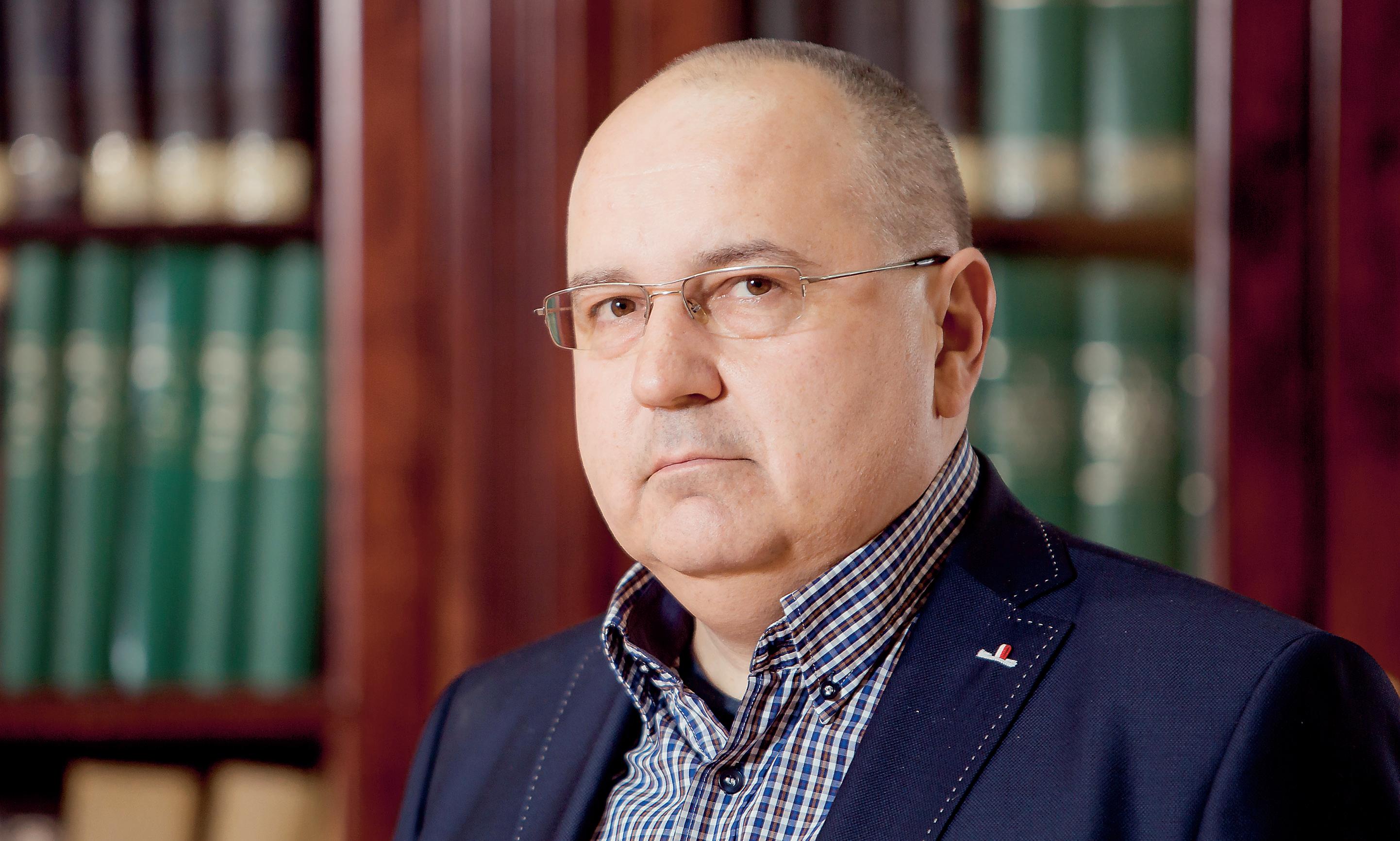
The Institute for Artificial Intelligence of Serbia (IVI) has, in a remarkably short period of time, positioned itself as a central research institution supporting the country’s accelerated technological development—from applying advanced AI solutions in healthcare, energy and agriculture to engaging with international partners and major European research projects. Our interlocutor, Dr Vladimir Udovičić, the Institute’s Director,
speaks about IVI’s strategic direction, strengthening the links between science and industry, supporting talent development and building an ethical framework to ensure the responsible and competitive use of artificial intelligence in Serbia.
The Institute for Artificial Intelligence of Serbia has played a pivotal role in the development of the national innovation ecosystem since its establishment.
Which areas will you prioritise in the period ahead—from research and development to cooperation with industry and international partners?
— The Institute for Artificial Intelligence of Serbia has, within a relatively short period, positioned itself as a leading scientific research organisation in the application of artificial intelligence, primarily within technical and technological sciences. This has enabled the rapid transfer of knowledge towards innova-
tion and smart solutions aimed at improving people’s lives and advancing the sustainable development of our society. In the coming period, we will continue to work with other state institutions within the AI ecosystem—such as the Office for IT and eGovernment—to further enhance access to applications and innovations that contribute to more efficient public administration and better quality of life for our citizens. It is also essential to strengthen cooperation with industry through joint projects.
Artificial intelligence is transforming almost every sector of the economy. How does the Institute contribute to its application in areas of strategic importance for Serbia, such as healthcare, energy, agriculture and education?
— As I have already mentioned, in all of these fields the Institute has developed a range of smart solutions that are already being applied in practice. It is important to emphasise the need to further strengthen the commercialisation of scientific research results through the establishment and development of spin-off companies, which can reinforce and complete the process of transferring technologies—from research, through patenting, to market application.
Cooperation between science, industry and the public sector is increasingly cited as a prerequisite for accelerated digital transformation. How does the Institute contribute to strengthening this cooperation, and which specific models do you intend to develop further in the coming years?
– This is perhaps one of the greatest challenges facing the Institute in the near future: the strengthening of cooperation with the private sector. Significant work lies ahead to deepen existing partnerships and connect with companies across various industrial branches. I believe
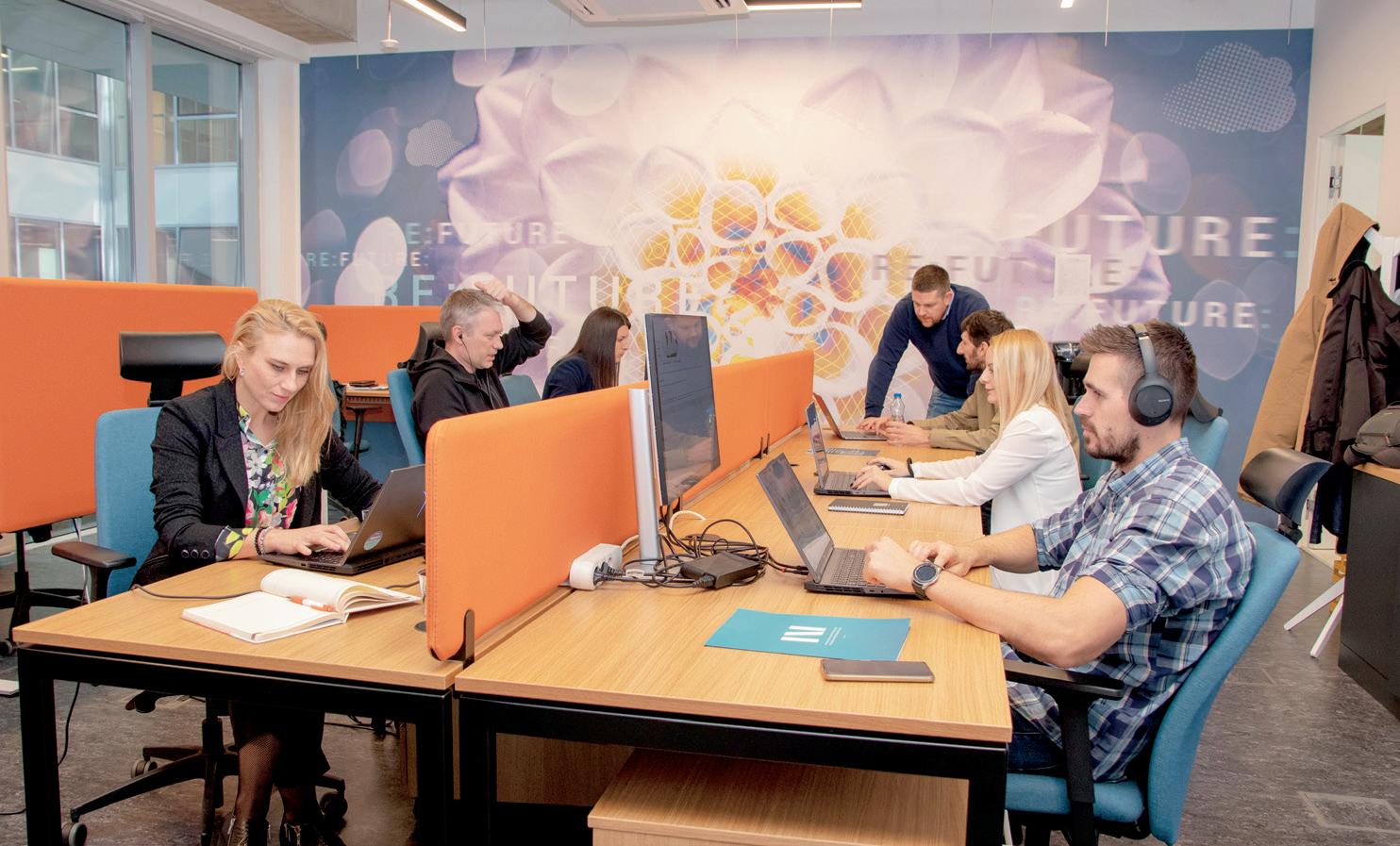
this represents a major opportunity for the Institute to offer smart solutions in technological processes, in service markets and in improving the interaction between public administration and Serbian citizens.
Developing specialised talent and retaining experts are among the greatest challenges of the modern digital economy. How does the Institute connect young researchers and engineers with international knowledge centres and domestic companies developing innovative technologies?
— Our Institute has well-developed cooperation with leading technical faculties at the universities of Novi Sad, Belgrade and Niš, which form our core talent base. Fortunately, artificial intelligence as a field is highly attractive to young researchers and engineers, and with the support of the Ministry of Science, Technological Development and Innovation, students are able to begin their professional careers at the Institute with relative ease. At the same time, more experienced researchers and engineers are increasingly choosing IVI as the place to continue their careers, as reflected in the growing number of returnees from abroad and experts joining us from major domestic and international compa-
KNOWLEDGE TRANSFER HAS VALUE ONLY WHEN IT LEADS TO SMART SOLUTIONS THAT GENUINELY IMPROVE PEOPLE’S LIVES
nies. The Institute also participates in numerous EU research projects under the Horizon programme, including the most prominent current European AI initiative—the Artificial Intelligence Factory—which further attracts young researchers to join our team.
Trust in the development and use of artificial intelligence increasingly depends on ethical standards and the responsible application of technology. How does the Institute help build that trust and strengthen Serbia’s reputation as a reliable partner in international AI projects?
— The Institute bases its work on European regulation and national legislation, with strict adherence to the ethical framework we promote through the seven pillars of ethical AI in the public sector: transparency, inclusiveness, fairness, privacy, accountability, security and sustainability.

he Government Data Center in Kragujevac has become a cornerstone of Serbia’s digital sovereignty — a Tier 4 facility that simultaneously supports national systems, a large portfolio of commercial clients and the National AI Platform. With the expansion of its capacity, the development of the Innovation District and the implementation of ESG standards, Data Cloud Technology, alongside the Office for IT and eGovernment, plays a pivotal role in strengthen-
TNEW STRENGTH IN DIGITAL SOVEREIGNTY
The Government Data Center and the national AI platform are becoming key pillars of Serbia’s technological autonomy and innovation-driven development. The focus lies on the projects, capacities and strategic vision shaping the country’s emerging digital landscape

try’s position on Europe’s technological map.
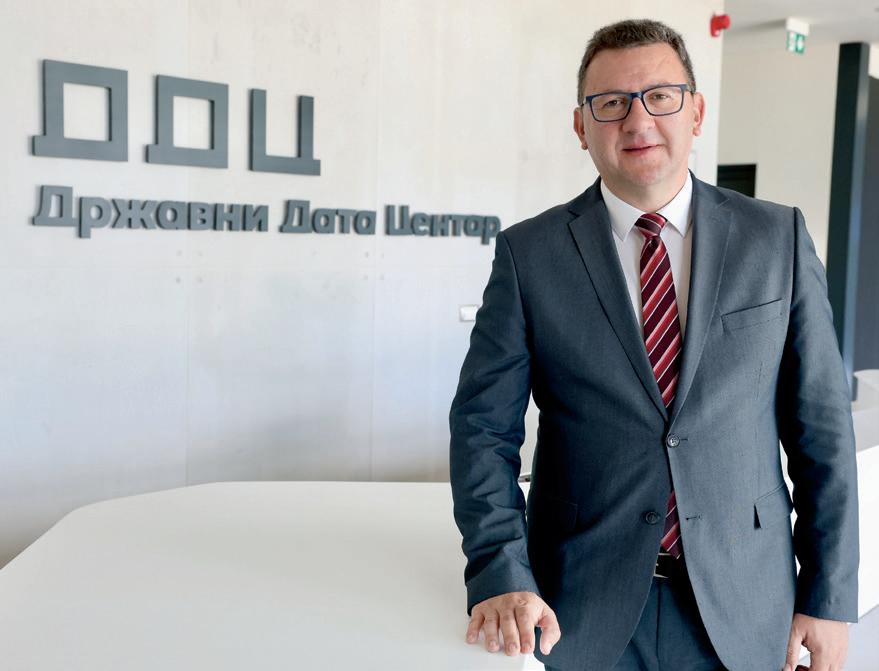
The State Data Centre in Kragujevac is a key infrastructural resource for digital sovereignty, together with the national AI platform. What are the main potentials and development plans? — The State Data Centre in Kragujevac is a geopolitically significant project and the most advanced piece of national digital sovereignty infrastructure. With a capacity of 14 MW and 1,080 rack cabinets, certi-
LEADING GLOBAL IT GIANTS CHOOSE SERBIA AND THE STATE DATA CENTRE BECAUSE STRATEGIC INVESTMENT HAS CREATED AN ENVIRONMENT THAT ATTRACTS THE MOST DEMANDING PARTNERS
ing digital infrastructure, developing talent and enhancing national cyber security, while providing the highest level of service to its commercial users. In this interview for CorD, Danilo Savić, CEO of Data Cloud Technology, discusses development plans, Serbia’s AI ecosystem, human capital and the coun-
fied to the highest EN 50600 Class 4 (Tier 4) standard, it is the first such facility in Eastern and Southeastern Europe.
In addition to government institutions, the State Data Centre also serves a large number of commercial clients, supported by Data Cloud Technology — a state-owned
company operating freely on the market. The quality of our services and infrastructure is reflected in clients such as Oracle, Huawei, Cetin, Telekom Srbija and others.
The National Artificial Intelligence Platform, located within the SDC, is already producing tangible results. The supercomputer is used for various research, analyses and experiments by the academic community. The Office for IT and eGovernment has signed 40 agreements on the free use of the supercomputer with faculties, institutes and universities, while 40 domestic startups are using it primarily for training AI models.
Development plans for the infrastructure of both the data centre and the AI platform are ambitious: expansion of the State Data Centre is under way through the construction and equipping of Modules 3 and 4, with an increase in power capacity to 40 MW. At the same time, the National AI Platform is being upgraded; in its second phase it will be seven times more powerful than it is today, while the third phase will introduce a new supercomputer with twenty times more superchips and almost thirty times more data storage capacity.
DANILO SAVIĆ
CEO, Data Cloud Technology
The Innovation District in Kragujevac is currently under construction. What is the significance of this project for Serbia’s digital development?
— The Innovation District is the first complex of its kind in Southeastern Europe and part of the “Leap into the Future – Serbia 2027” programme. Spread across 4.5 hectares, it will include 85,000 square metres of business and innovation infrastructure. The first building is expected to be operational in the first half of 2026. The District will become a unique digital and innovation ecosystem in the Western Balkans. This entirely new concept in Serbia will create an open and inclusive environment connecting the country’s growing digital infrastructure with innovation, education and business. Situated next to the State Data Centre as its third phase, it will host the National Cyber Security Centre and Serbia’s fifth science and technology park. Alongside major IT companies and their R&D centres, it will feature laboratories for bioengineering, a smart city centre for developing intelligent energy systems and networked infrastructure, as well as a robotics and AI development centre.
DCT is the first company in Serbia to publish an ESG report for 2024, despite not being required to do so. How do you apply ESG principles?
— We are proud that DCT is the first state-owned company to publish an ESG report for 2024 without any legal obligation to do so. Our agility was recognised by PwC, and we received the “ESG Leader 2025” award in the category of Responsible Governance and Internal Training for SMEs. We continue to advance our practices and business operations in line with ESG principles — we have just adopted a strategy that defines our approach to integrating ESG across all business segments.
In a time of digital revolution and AI development, how do you as-
sess the strength of human capital and the need for new talent?
— Human capital lies at the heart of every technological shift. People are the ones who design, develop and direct technology towards solutions that deliver real value. That is why DCT responsibly identifies key competencies and provides employees with access to the highest-quality training and education. We participate in and support leading professional conferences to continually deepen knowledge, follow trends and promote our values. Recognising that education is the foundation of development, we proudly reward top students and, through partnerships with universities, provide opportunities for internships.
Beyond operating on the market, DCT is also involved in projects that enhance Serbia’s innovation capacity, such as CIPS.
As an official entity within Serbia’s innovation system, DCT is one of the key partners in the CIPS (Capital Innovation Point Serbia) project — a European digital innovation hub and part of the pan-European EDIH network. The project is co-financed by the European Union through the Digital Europe Programme and led by the Belgrade Science and Technology Park, together with NALED, NTP Novi Sad, DCT and the Faculty of Technical Sciences in Novi Sad.
Cyber security is a central focus following the adoption of the new Law on Information Security.
The new Law on Information Security represents one of the most significant steps in strengthening national digital resilience. In the context of this law and the NIS2 Directive, we are further enhancing our own capacities. We have formed an agile SOC team of young experts capable of responding effectively to threats faced by our clients. In this area, we also use advanced AI tools to improve anomaly detection, accelerate incident response and provide a higher level of protection. The estimate that global cybercrime damage will
reach 10.5 trillion dollars in 2025 shows clearly that prevention pays off many times over.
The arrival of global IT companies is changing Serbia’s position on Europe’s technological map. Together with Expo 2027, how does this influence investment and partnerships?
— Leading global IT companies, as well as clients from the banking and telecom sectors, are choosing Serbia and the State Data Centre as a technological destination — this is not a coincidence but a result of strategic investment and the creation of an environment that attracts the most demanding players.
Expo 2027 will be a catalyst accelerating the development of smart infrastructure and attracting inves-
tors. Serbia’s competitive advantages are clear: a highly educated IT workforce, a strategic location, alignment with EU standards, modern digital infrastructure and major investments in the Innovation District and the AI Platform.
DCT is not merely an infrastructure provider — we are ambassadors of the technological and innovation excellence that Serbia offers. Expo 2027 will further demonstrate to the world that Serbia has become a regional technology hub — a place where innovation meets a vision of the future. DCT is proud to be part of this story and at the forefront of a transformation shaping our digital future.
DIGITAL ENERGY AS A PILLAR OF A SUSTAINABLE FUTURE
Digital transformation is accelerating the green transition and reshaping Serbia’s energy infrastructure, with domestic companies increasingly driving innovation. ENEL PS shows how technology, expertise and strong partnerships can enhance energy stability and support sustainable growth
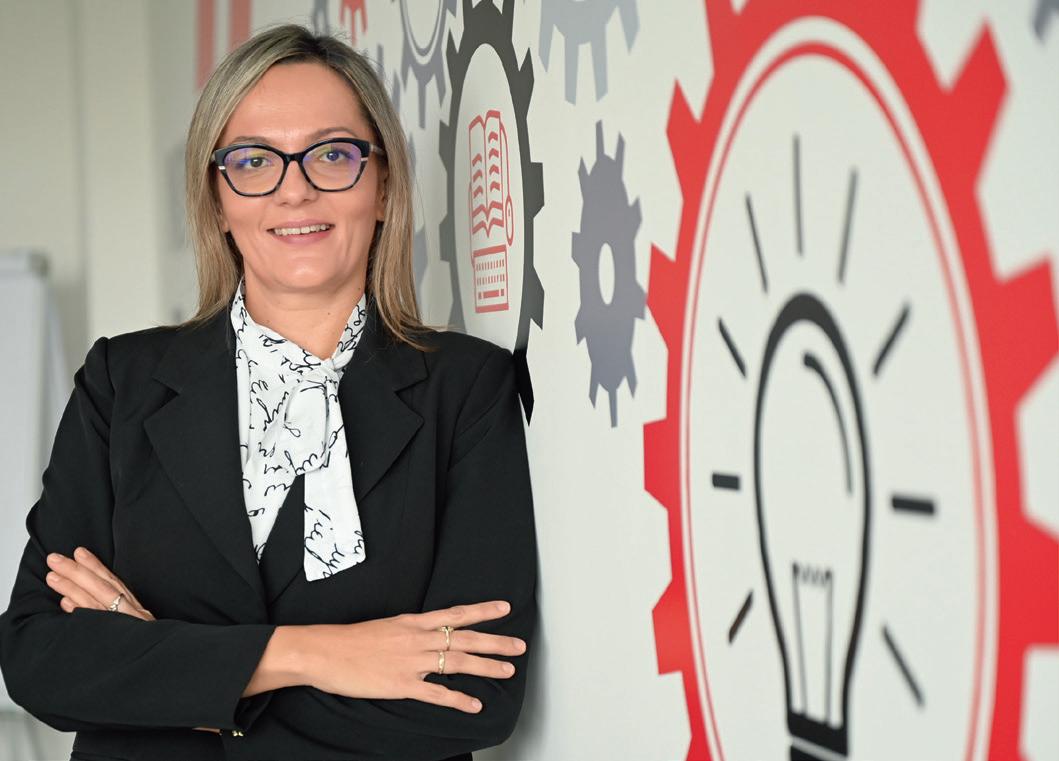
MILJANA STOJANOVIĆ
Director of the Digital Transformation Division, ENEL PS
Miljana Stojanović outlines how digital tools are transforming Serbia’s energy sector — from battery storage and nextgeneration UPS systems to data centre optimisation and the integration of renewable sources.
How does digital transformation affect the efficiency and resilience of energy infrastructure, particularly in relation to sustainability and the reduction of carbon emissions?
— Digital technologies bring new efficiency and resilience by enabling real-time monitoring and optimisation. With IoT devices, sensors and advanced analytics, faults can be predicted and both consumption and emissions reduced. In data centres, digital con-
trol of power and cooling delivers substantial energy savings. When design, installation, servicing and monitoring are integrated into a single data flow, digital transformation becomes a genuine driver of sustainability and a foundation of the green transition.
Which technologies and innovations is ENEL PS developing or applying to advance the green transition and strengthen digital connectivity in Serbia’s energy sector?
— ENEL PS focuses on battery energy storage systems that support renewable integration and grid stability. Next-generation UPS systems, precision cooling for data centres and chillers with adiabatic pre-cooling raise energy efficiency and cut CO₂ emissions. Digital connectivity is enhanced by integrating ERP, DMS and monitoring platforms. In partnership with Schneider Electric, ENEL PS is helping to modernise Serbia’s data centre infrastructure and make it more reliable and environmentally responsible.
How essential is cooperation with state institutions and private partners for faster implementation of digital solutions, and where are the main obstacles and opportunities?
— State–private cooperation is key to accelerating digital trans-
formation in the energy sector. The state provides the regulatory framework, while companies such as ENEL PS deliver innovations that make digitalisation tangible. Greater progress depends on regulation that encourages investment in renewables and battery storage for grid balancing. Serbia has a solid strategic base, but faster implementation and better coordination are still needed. ENEL PS sees opportunities in linking its technical expertise with market needs through partnerships with global equipment manufacturers.
How do you see Serbia’s role in regional digital infrastructure and energy projects, and can domestic companies become leaders in smart and sustainable solutions?
— Serbia can become a regional centre for digital infrastructure and sustainable energy. With a strong IT sector, skilled professionals and a favourable location, it can connect the region’s energy and digital flows. As an active member of the Data Centre Association of Serbia, ENEL PS contributes to industry standards and the development of digital energy solutions. The application of advanced technologies in storage, data centres and digital optimisation shows that domestic companies can indeed lead in smart and sustainable solutions.
CORPORATE
ICT AS THE NEW FOUNDATION OF MODERN BUSINESS
Companies increasingly expect simple, reliable and secure digital solutions that support their growth while reducing operational risk. Through its integrated ICT services, Yettel positions itself as a true technology partner, ensuring stability, efficiency and the seamless management of business systems

Today, companies expect more than mere connectivity — they want complete, straightforward and dependable digital solutions. Small and medium-sized businesses often lack in-house IT teams, while large enterprises require stability, security and support in managing complex technical environments. This is precisely why the importance of ICT services continues to grow: these are services that encompass the entire IT infrastructure of a company — from networks, equipment and servers to cloud environments, security, applications and IT system management.
We spoke with Saša Miljatović, B2B ICT Services Director at Yettel, about how the needs of business customers are evolving and what role a telecommunications company plays in this process.
What benefits do business customers gain from introducing ICT services?
— With the right partner, the advantages are considerable. It is important for businesses to understand that ICT solutions are not complicated, nor do they represent a risk. On the contrary — when implemented properly, they create a more stable, secure and flexible working environment. At Yettel, we provide not only technology, but also expert support, per-

B2B ICT Services Director, Yettel
sonalised services and solutions that adapt to a company’s growth. Our aim is to act as a technology partner that accompanies the development of their business, not merely as a service provider.
How do you plan to fulfil this role of technology partner, and what does it mean for new and existing business customers?
— The integration of Yettel and SBB has opened new opportunities for us. We have combined our knowledge, resources and expertise to create a unified ICT services portfolio for business customers. This includes everything from cloud solutions
OUR GOAL IS TO ACT AS A TECHNOLOGY PARTNER THAT SUPPORTS BUSINESS GROWTH, NOT MERELY AS A SERVICE PROVIDER
and business applications to advanced security services. The entire process is now simpler and more secure, as companies no longer need to engage multiple providers. Take a small business as an example: it can now rely on managed IT services and receive devices with full protection and support, without investing in its own network or IT staff. Everything it needs is de-
livered within a single service — and from a single partner.
How do managed ICT services support companies in their day-to-day work?
— When we take over the management of an IT environment, we assume responsibility for every device, workstation and application. This includes continuous monitoring, secure back-ups and protection against cyber threats. Our team consists of highly experienced engineers who provide personalised support and are available to customers at any time. This allows companies to focus solely on their core business, while we handle their IT challenges. It reduces costs, increases efficiency and enables faster business growth.
Which technologies are shaping the future of ICT services in Serbia?
— Cloud technology is the leading force. It offers flexibility and cost optimisation, but it also introduces new security risks — which is why robust and continually evolving security systems are essential. In parallel, we expect significant growth in artificial intelligence, enabling process automation, more advanced analytics and faster, better-informed business decision-making. I believe that the combination of cloud services, security technologies and AI-driven solutions will define the ICT market in the years ahead.

MIROSLAV ANIČIĆ
General Manager Serbia and North Macedonia, Crayon
CORPORATE
NEW STRENGTH FOR DIGITAL TRANSFORMATION
The merger of SoftwareOne and Crayon creates a global leader in cloud, AI and security solutions, bringing companies in Serbia stronger support, greater innovation and a more stable environment for growth
— SoftwareOne and Crayon, once competitors and leaders in software asset management, now operate as a single company that unifies knowledge, experience and innovation. Together, we bring together more than 13,000 experts in over 70 countries, with long-standing partnerships with Microsoft, AWS and Google, and a turnover exceeding 17 billion dollars.
For clients in Serbia, this means stronger cloud competencies, access to advanced AI solutions, enhanced FinOps models for cost optimisation, and sophisticated technologies for cyber security, data and digital workplace solutions. Importantly, existing contracts and teams remain unchanged, while the service portfolio expands — including proactive optimisation, advanced consulting and data and AI governance models.
We continue to improve our support platforms and introduce new services while maintaining a strong focus on green technologies and sustainable business development. In practice, clients gain more options, greater stability and faster innovation — through a single organisation that combines global capacity with local market understanding.
In a world where AI is becoming an integral part of every process, how does Crayon view the role of artificial intelligence in improving clients’ security and business operations?
We speak with Miroslav
Aničić, General Manager of Crayon Serbia, about how the integration of SoftwareOne and Crayon is forming a unified global organisation, what this means for clients in Serbia and the region, how artificial
intelligence is reshaping the approach to IT security, and why mindset remains the biggest barrier to digital transformation in domestic companies.
The merger of SoftwareOne and Crayon has been described as a new era for the IT industry. What does this integration bring to clients in Serbia and the region?
— Artificial intelligence is no longer merely a tool for automation — it is transforming how companies operate as a whole. AI is becoming integrated into productivity platforms, infrastructure and security services provided by leading hyperscalers. Today, it enables large-scale data analysis, faster decision-making, predictive insights, anomaly detection and personalised user experiences.
Crayon has long been one of the leading global Data & AI consultancies, while SoftwareOne has developed its own Security Operations
Centre. With the merger, this service is being further strengthened through the implementation of advanced AI models for IT security, identity and access management.
Our company holds the highest partnership levels with key AI organisations and certifications in machine learning and security technologies, ensuring the application of globally recognised methodologies and best practices. This directly reduces cyber risk and helps build more resilient infrastructures.
an end-to-end protection model: improved configurations, proactive vulnerability detection, rapid remediation, advanced threat detection and 24/7 monitoring. This ensures a cost-optimised yet highly effective solution.
Education is equally important. We organise workshops, training programmes and certifications tailored to different knowledge levels — from basic cyber hygiene to advanced expert programmes. This helps organisations build
Many domestic clients still perceive IT security as a cost. How do you educate the market and help organisations understand the real value of security solutions?
— The cost of remediating cyber incidents — even for mid-sized companies — far exceeds any preventive investment, clearly demonstrating that security is an investment in business continuity. Today’s users expect uninterrupted access to digital tools, pushing IT teams to maintain consistently high levels of protection.
Many security tools are already integrated into business systems, but are often underutilised. That is why we analyse the client’s environment, existing licences and implemented systems, and then build
source optimisation and continuous upgrades. The use of hyperscaler marketplaces further simplifies procurement, consolidates costs and accelerates the implementation of new solutions.
This allows clients clearer budget control, faster digital initiatives and a stable foundation for long-term development.
What, in your experience, most hinders domestic companies on their digital transformation journey — technology, budget or mindset?
— The biggest obstacle is not technology — it is more accessible than
TOGETHER, WE BRING TOGETHER MORE THAN 13,000 EXPERTS IN OVER 70 COUNTRIES, WITH LONG-STANDING PARTNERSHIPS WITH MICROSOFT, AWS AND GOOGLE, AND A TURNOVER EXCEEDING 17 BILLION DOLLARS
a sustainable and secure digital ecosystem.
How important are hyperscaler partnerships today, and how does Crayon use them to ensure flexibility and security for clients?
— Partnerships with Microsoft, AWS and Google are crucial for accessing global cloud platforms that provide scalability, availability and security. Increasingly, clients are adopting a multi-cloud approach, which requires a clear strategy to avoid cost accumulation and the complexity of managing diverse environments. Through our cloud framework, we provide a detailed analysis of the existing environment, a migration plan, governance models, re-
ever. The key challenges are mindset, lack of strategy and resistance to change. Many companies still see digitalisation as a risk or something that can be postponed, rather than a necessary process that determines their competitiveness.
The shortage of experts, fragmented initiatives and insufficient coordination further slow progress. Digital transformation is far more than the introduction of tools — it requires a cultural shift, redefined processes and continuous employee education.
The unified SoftwareOne–Crayon organisation approaches transformation holistically: by analysing the current state, defining a clear migration path, gradually transitioning from outdated systems, continuously improving teams and ensuring full alignment with regulations and global best practices.

rtificial intelligence is no longer perceived as a distant possibility, but as an everyday reality reshaping work, technology and the role of the individual in the digital environment. This conversation opens key questions about what we lose, what we gain and how we prepare for the next phase of technological transformation.
AHow do you see artificial intelligence –as a threat, an opportunity, or a combination of both?
— In both expert and general circles, artificial intelligence has become a subject about which everyone holds an opinion. The less people understand it, the more they perceive it as something mystical, metaphysical and invisible, almost religious and hence apocalyptical, as uncontrollable force that threatens humanity. Given that imagined apocalypses have so far failed to materialise, I would not see AI as the beginning of the end of civilisation, but rather interpret it as one of the tools and components of the industrial revolution that inevitably awaits us. Like every industrial revolution, it will have its casualties, but I believe the vast majority will survive it and emerge as winners.
What changes do you expect to see in teams and in the key skills employees will need in the AI era?
— We mentioned casualties, and among them will be those companies and individuals unwilling to change, who rely on skills acquired long ago. Now that even robots learn and advance, what can peo-
WHAT DOES AI ACTUALLY BRING US?
Artificial intelligence is the defining topic of our era. Milan Jevtić, Executive Director for Technology at AIGO, shares his insights into its impact on people, work and technology
MILAN JEVTIĆ Executive Director for Technology, AIGO
ple expect? I believe software engineers will be freed from the tasks they have always disliked: repetition, slowness and determinism. They will be able to elevate their abstract thinking, focus on design and architecture, rather than be constrained by pure coding. Software engineering will deal more with concepts and behaviours, and less with simple outcomes.
How do we measure success in the age of AI, and in what ways can AI enhance projects and business results?
— I believe we will not need to measure success at all – AI will do that for us. I hope our measure of success will be the ease with which we devote ourselves to creating and solving life-related rather than purely technical problems. We will delegate the technical ones, merely supervise and relearn them as needed, enabling us to focus on essence
IT IS AN URGENT TASK TO MASTER NEW TOOLS AND PRINCIPLES. THE SOONER WE BECOME COMFORTABLE WITH THEM, THE SOONER WE WILL FREE OUR TIME AND MIND TO FOCUS ON ABSTRACTION, IMAGINATION AND CONCEPTUAL MODELLING
rather than on work that keeps our heads down and our gaze fixed too low.
Which strategies do we apply to remain relevant and competitive, and can you mention an example where we have already overcome the challenge of a new technology?
— For fifty years we have been hearing that fossil fuels will last only another fifty years. That would indeed have been true had we remained at the same level of development as before. Fortunately, in many fields something similar happened: through knowledge, continuous study, dedication and research, most areas of human work have been significantly improved. If we wish to remain relevant and competitive, it is enough to follow our human nature. Without our fundamental drive for survival, progress and an easier life, we cannot be what we ought to be – and therefore neither relevant nor competitive.
What would you say to colleagues in the IT industry who feel concerned about AI?
— It is an urgent task to master new tools and principles. The sooner we become comfortable with them, the sooner we will free our time and mind to focus on abstraction, imagination and conceptual modelling. We will have more time to focus on what the client is willing to pay for: seamless software use, integrated processes, unified information and unobtrusive management with minimal oversight. Our products will then command higher value and higher prices. And so it will continue – until the next industrial revolution and the next subject of concern.
CORPORATE
LOGISTICS SHAPING THE FUTURE OF E-COMMERCE
Technological innovation, rising customer expectations and new delivery models are redefining standards across Serbia’s courier industry
VLADIMIR VIDAKOVIĆ CEO, D Express, Serbia
Our interlocutor, Vladimir Vidaković, is the newly appointed Chief Operating Officer (CEO) of the courier company Daily Express. He assumes this position after serving as Regional Director of Operations at the e-commerce company Shoppster, bringing with him more than two decades of experience in the e-commerce and retail industries, as well as expertise in developing complex logistics systems. His professional path, driven by technological innovation and a deep understanding of the modern consumer, positions him as an important contributor to the ongoing transformation of courier services in Serbia.
Based on your professional experience, how do you assess the importance and impact of logistics and courier services on the development of modern e-commerce?
— Logistics and courier companies today play a pivotal role in e-commerce, as they directly influence delivery speed, reliability and the overall customer experience. In the case of D Express, two advantages stand out in particular: a network of more than 300 pick-up/drop-off locations offering customers flexible parcel collection, often available 24/7, and the robotisation of parcel-sorting processes, ensuring faster, more precise and more efficient handling of large shipment volumes. Together, these innovations raise market standards and ena -
ble scalable, sustainable growth of online retail in Serbia.
If you had to highlight only one development that has most transformed your operations in recent years, what would it be — and why?
— If I had to single out just one development, it would be the complete technological transformation of our logistics processes, as it has had the greatest impact on how we operate and how customers perceive us. Global e-commerce
TECHNOLOGY MAY ACCELERATE PROCESSES, BUT HUMAN EXPERTISE REMAINS ESSENTIAL TO THE QUALITY OF EVERY DELIVERY
players such as Temu have raised expectations significantly, prompting us to accelerate and enhance every step of the delivery journey. Implementing robotics, intelligent route planning and automated customer communication has enabled us to achieve faster, more accurate and more transparent operations. Technology has become the foundation of our model — the key to meeting the increasingly demanding habits of today’s online shopper.

How does technology affect the work of couriers and employees in distribution centres?
— These technological innovations significantly ease the work of couriers and distribution-centre staff by reducing manual labour and minimising the risk of error. Still, their role remains essential: human expertise, adaptability and interaction with customers ensure service quality and swift resolution of unexpected situations. Technology is not a replacement, but a tool that enables employees to be more efficient and to focus on critical tasks.
What are your expectations and plans for the further development of courier services in 2026?
— In 2026 our focus will be on further automation and digitalisation to accelerate and strengthen delivery reliability. We will place particular emphasis on developing solutions for our business clients — e-commerce platforms, large sports retailers, brick-and-mortar chains and hundreds of small businesses that rely on our network daily, handling more than 60,000 parcels per day. We will continue expanding our parcel-locker infrastructure and improving the customer experience through more transparent tracking and more flexible delivery options. Our goal is to build a logistics system capable of supporting the growth of the entire market and providing stable, long-term support to all segments we serve.
FINANCE DRIVING DIGITAL TRANSFORMATION
NITES Group is building a financial strategy that accelerates the adoption of digital solutions and supports stable growth across regional markets. Today, the role of finance goes far beyond cost control — it has become a key driver of modernisation, resilience and long-term competitiveness in large systems

MGeneral
Manager
of NITES d.o.o.
Belgrade / CFO, NITES Group
iloš Mavrić, CFO of NITES Group and General Manager of NITES d.o.o. Belgrade, leads the financial strategy of one of the region’s most advanced technology groups. With more than two decades of experience in finance and corporate structures, he oversees digital transformation, investment decisions and risk planning across the energy, public and high-tech sectors. In this interview for CorD, he explains why finance has become a central engine of innovation and sustainable growth.
How do you view the role of financial strategy in accelerating NITES Group’s digital transformation, especially in the context of regional expansion and a growing service portfolio?
— Digital transformation requires a clearly structured management approach that ensures long-term bal-
ance, allocates sufficient resources and creates an environment capable of fully leveraging the benefits of technology-driven change. When entering new markets or expanding the service portfolio, Nites Group relies on financing models that support rapid implementation of digital solutions and provide operational stability in energy, public and technology systems. Regional expansion also demands a platform-based financing strategy — investing in solutions with strong multi-market applicability. This approach enables the Group to modernise internal processes while simultaneously delivering capital-intensive projects.
What changes do advanced analytics and artificial intelligence bring to financial management, and where do you see the greatest benefits of AI tools for decision-making in large systems?
— Advanced analytics and AI introduce clear advantages by revealing patterns previously hidden within complex datasets. These tools automate data collection and processing, improv-
A COMPANY’S TRUE STRENGTH IS REVEALED IN UNPREDICTABLE MARKETS, WHERE ONLY THOSE WITH A CLEAR STRATEGY STAND OUT
ing the quality and speed of information and leaving more space for core strategic analyses. AI also enables more dynamic cash-flow management and sophisticated risk simulations. By modelling different market scenarios, companies can identify potential impacts before they affect profitability, increasing the reliability of major investment decisions. However, these technologies do not replace human judgement. At NITES Group, significant importance is placed on the human factor, which remains essential for timely and accurate assessments.
How does global uncertainty in the energy and technology markets influence your approach to risk planning and investment decisions within the Group? — Energy and technology are among the sectors most exposed to global disruption. With this in mind, NITES Group builds stability on three pillars: diversification across markets and industries to reduce exposure; modular technological solutions that adapt quickly to regulatory change; and scenario-based financial modelling to support optimal investment outcomes. Every investment is evaluated through multiple macroeconomic scenarios. A company’s strength is most visible in volatile conditions, when clear strategy becomes decisive. Nites Group continues to invest, expand and take on complex projects because it recognises potential shifts early and manages risk in a disciplined way.
CORPORATE
BUILDING SYSTEMS THAT CANNOT FAIL
NITES develops and integrates digital solutions for energy, healthcare and smart-city environments, where reliability and precision are non-negotiable. In such systems, operational leadership determines the speed, sustainability and long-term stability of every technological platform
As COO of NITES Group, Miloš Živanović oversees complex digital projects across sectors that depend on uninterrupted operation — from national energy infrastruc ture to healthcare platforms and urban services. With extensive experience in system design and technology integration, he leads teams through the challenges of planning, scaling and adjusting solutions to real operational needs. In this interview for CorD, he discusses the pressures of modern operational management, the impact of predictive analytics and IoT, and the future of resilient digital systems.
What are the biggest operational challenges in managing complex digital projects in energy, healthcare and smart city systems — and how does NITES optimise processes to shorten implementation time?
— Large-scale digital projects inevitably face numerous adjustments along the way, especially in sectors like energy and healthcare where requirements evolve continuously. One of the most persistent challenges is keeping the scope within planned scope of project so that delivery stays aligned with contractual deadlines. In practice, users often identify ad-
OPERATIONAL EXCELLENCE IS BECOMING THE DEFINING DIFFERENCE
BETWEEN
TECHNOLOGY THAT MERELY WORKS – AND SYSTEMS THAT CAN WITHSTAND REAL PRESSURE
ditional possibilities during business analysis and conceptual design — capabilities our solutions can offer, even when not initially planned. The real challenge for us is to strike the right balance: to support clients in making the most of digital transformation, while ensuring that expanded expectations do not compromise deadlines or the quality of the final product.
How do new technologies such as predictive analytics and IoT solutions change the standards of quality and efficiency in the projects you deliver in Serbia and the region?
— Since its founding more than 18 years ago, NITES has recognised
that long-term sustainability in system development is only possible through continuous integration — both of new technologies and with solutions provided by other actors in automation and digitalisation. Technologies that became available in recent years, including AI and machine learning, have enabled faster development of advanced functionalities. At the same time, they reinforced the need to strengthen our quality standards, ensuring that our solutions retain their reputation for reliability and durability despite the faster pace of technological change.
How do you balance clients’ need for rapid results with the requirement for scalable, long-term solutions that support entire systems rather than individual services?
— To put it lightly, clients often want everything immediately — but our expertise allows us to identify what truly needs to be prioritised. The experience of our engineers and solution architects is a major advantage: they know how to recognise the optimal development path while meeting urgent client requirements within a project.
Simply put, the key is to maintain a stable and sustainable product roadmap that can still support fast-tracked or high-priority client needs when necessary.
General Manager, NITES d.o.o. Belgrade / COO, NITES Group
CORPORATE
THE STRENGTH OF FINTECH GROWTH
Awards and international recognition have strengthened PaySpot’s position as one of the region’s most innovative fintech actors. The development of digital services, expansion into new markets and the enhancement of security remain the company’s key directions for future growth
digitalisation changing the way trust is built between users and providers of financial services?
In this interview for CorD, Dubravka Bjekić Vasović discusses the accelerated digitalisation of financial services and the technological solutions that are transforming the way users conduct their transactions. She also explains how innovation and operational flexibility are being transferred to new regional markets, while maintaining security, reliability and stable growth.
How has the “EY Fast-Growing Entrepreneur of the Year” award influenced PaySpot’s visibility and opened new avenues for the development of digital solutions?
— Recognition from a globally respected institution such as Ernst & Young was an important moment for the entire PaySpot team. It strengthened our credibility within the domestic and regional fintech community and increased visibility among partners, investors and clients, who began to see us not only as a financial institution, but also as a technological innovator. Soon afterwards, we also received the award for Online Payment Integrator of the Year, further confirming our positioning in the field of e-commerce solutions.
PaySpot operates in a highly regulated and sensitive environment. How is
— Trust is the foundation of our business, particularly because we provide payment services, money transfers and work with electronic money. Digitalisation brings greater transparency, speed and security. Users can now monitor their transactions in real time, and we ensure they have accurate and accessible information at every step.
Digital tools have enabled many services, once available only at physical counters, to be used online, increasing accessibility and reducing barriers to trust. At the same time, we continue to invest significantly in security mechanisms and strictly adhere to all data protection and information security standards. Through a combination of transparency, speed and reliability, digitalisation strengthens users’ trust in financial services.
PaySpot has developed its own IT solutions — from applications to systems for detecting risky transactions. What new functionalities are you planning to introduce?
— Our technological development is continuous. We are focused on further personalising the user experience and enhancing security protocols. Planned functionalities include remote digital signing, video identification, a digital wallet and other features that will make financial services even more accessible to users.
Our e-commerce payment solutions, as well as support for Google & Apple Pay and IPS payments, already position us among

CEO and Founder of PaySpot
the key innovative actors that simplify and accelerate payment processes.
Following expansion into Montenegro and preparations for entering the North Macedonian market, what are the main digital challenges when scaling a fintech model across different markets?
— Entering new markets brings regulatory, technical and operational challenges. Payment systems and standards often differ, making it essential for our platform to integrate flexibly with local solutions and to offer functionalities tailored to the specific needs of each market.
Thanks to digitalisation and technological adaptability, the PaySpot model is highly scalable. By combining experience, expertise and the development of an operational network, we are confident that we can build a sustainable fintech system and improve local markets, while safeguarding user trust and the credibility of the PaySpot brand.

DUBRAVKA BJEKIĆ VASOVIĆ
CORPORATE
ADVANCING THE NEXT STAGE OF DIGITAL GROWTH
Atos Serbia is entering a new stage of development by strengthening expertise, modernising large systems and meeting the growing demand for S/4HANA — positioning itself as a key partner for companies advancing their digital transformation
iness for advanced AI. Companies across the region now view secure digital infrastructure as essential for competitiveness.
Since becoming General Manager, Dejan Djurović has focused on firmer project delivery, higher technical standards and clearer priorities when working with major organisations. In this interview, he outlines how the company responds to rising digitalisation demands, approaches complex SAP projects and ensures that modernisation delivers measurable, long-term value.
Since your appointment as head of Atos Serbia, what strategic priorities have you set, and where do you see the main opportunities for growth in the regional digitalisation market?
— My first goal was to define a clear direction and immediately raise the standards by which clients recognise us.
We strengthened delivery discipline, as trust is built through consistent execution, realistic deadlines and teams able to deliver even in difficult conditions.
We refined our portfolio focus to match real client investment areas, and prioritised expertise and talent, which remain our strongest competitive advantage.
Growth comes from the digitalisation of large systems, the need to modernise applications and increasing interest in S/4HANA, which in cloud environments brings efficiency, cyber security and read-
Our ambition is to be the reliable partner for organisations moving into a higher stage of digital maturity and to position Atos Serbia as a leading contributor to the region’s digital development. This reflects our core approach: shaping the
OUR AIM IS TO BE THE ESSENTIAL PARTNER FOR ORGANISATIONS ADVANCING THEIR DIGITAL MATURITY AND TO STRENGTHEN ATOS SERBIA’S ROLE IN THE REGION’S DIGITAL ECOSYSTEM
future together through tangible results and long-term partnerships.
SAP transformation has become one of the most critical processes for large organisations. How does Atos approach migration and modernisation projects, especially with growing demand for S/4HANA in Serbia?
— SAP transformation is a crucial step for organisations preparing to move to S/4HANA. Atos combines strong technical

General Manager, Atos Serbia
expertise, proven methodology and clear alignment with clients’ business goals.
Migration should be a strategic modernisation, not only a technical task, a chance to streamline processes, retire legacy systems and introduce digital capabilities that enhance agility and efficiency.
The Atos SAP team has contributed to almost all major SAP implementations in Serbia, including Dunav Osiguranje, NIS, where we developed SAP payroll localisation recognised by SAP, as well as EPS, Telekom Srbija and many more.
As demand for S/4HANA increases, our focus is to accelerate outcomes and ensure modernisation brings faster workflows, better control, improved reporting and a solid basis for further digitalisation.
How will changes in digital sovereignty, cyber security and EU regulation affect companies in Serbia — and what role will Atos play in helping the market adapt?
—These shifts will influence companies in Serbia sooner than many expect. They introduce clearer rules for data handling, stricter access governance, quicker incident response and the need to demonstrate real operational compliance. Atos helps organisations adapt confidently. Alongside SAP, we support clients in implementing infrastructure solutions that combine cloud and local systems to meet all digital-sovereignty requirements.
DEJAN ĐUROVIĆ
CONTINUOUS PROTECTION IN THE DIGITAL AGE
Cyber security is an ongoing process that requires constant adaptation to real risks and the shifting dynamics of the digital environment
In this interview for our annual Digitalisation edition, Jovana Đinović, Marketing Director at Oktacron, discusses the central challenges of modern cyber security — from responding to rapidly evolving threats to applying artificial intelligence in the protection of business systems. She explains how Oktacron shapes security standards in Serbia and
TOGETHER WITH PARTNERS, WE DEVELOP NEW AI TOOLS THAT IMPROVE INCIDENT DETECTION, ENABLE FASTER DECISION-MAKING AND EASE THE BURDEN ON OPERATIONAL SECURITY TEAMS
the region, how it helps companies build effective and sustainable protection models, and why cyber security must be understood not as a tool, but as a strategic, continuous process aligned with real-world risks.

JOVANA ĐINOVIĆ
Marketing Director, Oktacron
Oktacron is now in a position to influence information-security standards in Serbia and the region. Through technology and market education, how do you help companies establish proper cyber protection?
— When it comes to technology, we closely follow the market — the evolution of threats, current security challenges and the needs of companies. One example is SmartFish, our response to one of today’s most widespread risks: phishing.
This platform blocks the entry of credentials and the download of files from unverified domains.
Although we actively develop new solutions with partners, our focus is not on individual tools. Modern cyber security requires a real risk matrix, a clear protection strategy and principles that guide its implementation. Technology is only a means to achieve security goals. That’s why we prioritise educating customers about risks, common vulnerabilities and the foundations of a strong security model.
Companies face a paradox: AI strengthens business, yet also allows attackers to use more aggressive techniques. How do you see AI’s impact on traditional cyber security?
— Management understands that AI transforms business processes while simultaneously accelerating the evolution of cyber-attack methods. When a technology advances as quickly as AI, traditional, static security approaches can no longer keep pace or open new opportunities for development.
AI-driven threats evolve rapidly. This means companies — and their cyber-security partners — must think ahead, innovate and introduce new protection techniques. AI has enormous potential to improve security: faster anomaly detection, shorter response times and more efficient allocation of security resources. To harness that potential, security must be treated as a continual process.
If AI is changing the rules of cyber security, how is Oktacron contributing to that shift?
The New Law on Information Security brings stricter obligations and expands compliance requirements to a wider range of companies. What are its key changes and how does Oktacron support organisations on their compliance journey?
The new Law introduces clearer obligations, stricter standards and higher accountability for all ICT systems that support critical or digital services. It emphasises risk management, continuous system monitoring, faster incident reporting and the mandatory application of defined technical and organisational measures.
It significantly raises expectations for proactivity. Organisations must have a realistic picture of their risk exposure, the ability to detect internal and external threats early and the operational readiness to respond to incidents.
As an MSSP with its own SOC, advanced technologies and extensive insight into different types of incidents — gained through long-term work with numerous clients — we help companies meet all legal obligations through continuous monitoring, risk assessment, threat detection and response, and by strengthening their overall security architecture.
— Our long-standing work through the Security Operations Centre (SOC) has given us deep insight into the scope and complexity of AI-powered threats. This experience has made it clear that existing technologies are not enough. That’s why we are developing new AI tools with partners — to enhance incident detection, support faster decision-making and reduce the workload on operational teams.
This combination of practical experience and active technology development is, in my view, exactly what the market needs — and what will make the greatest difference in the years ahead.
Cyber threats are evolving quickly. How does Oktacron help clients maintain the highest level of protection in such unpredictable conditions?
— As I mentioned at the start — security and technology are not synonyms. For us, cyber security is the synergy of knowledge, experience and technology. Oktacron has spent years building this synergy under one roof, with the goal of being a comprehensive cyber-security partner.
Our team consists of experts with a broad range of competencies, certifications and understanding of specific security processes and challenges. The Oktacron SOC, operating 24/7, gives us detailed insight into real incidents and emerging attack techniques. By combining this expertise with continuously improved technology, we deliver holistic protection — tailored, proven and aligned with the pace of modern threats.

SmartFish Platform
Proactive Protection Against Phishing Attacks and Malicious Files

DIGITAL HORIZONS 2026
Five Transformations That Will Shape the Next Digital Decade
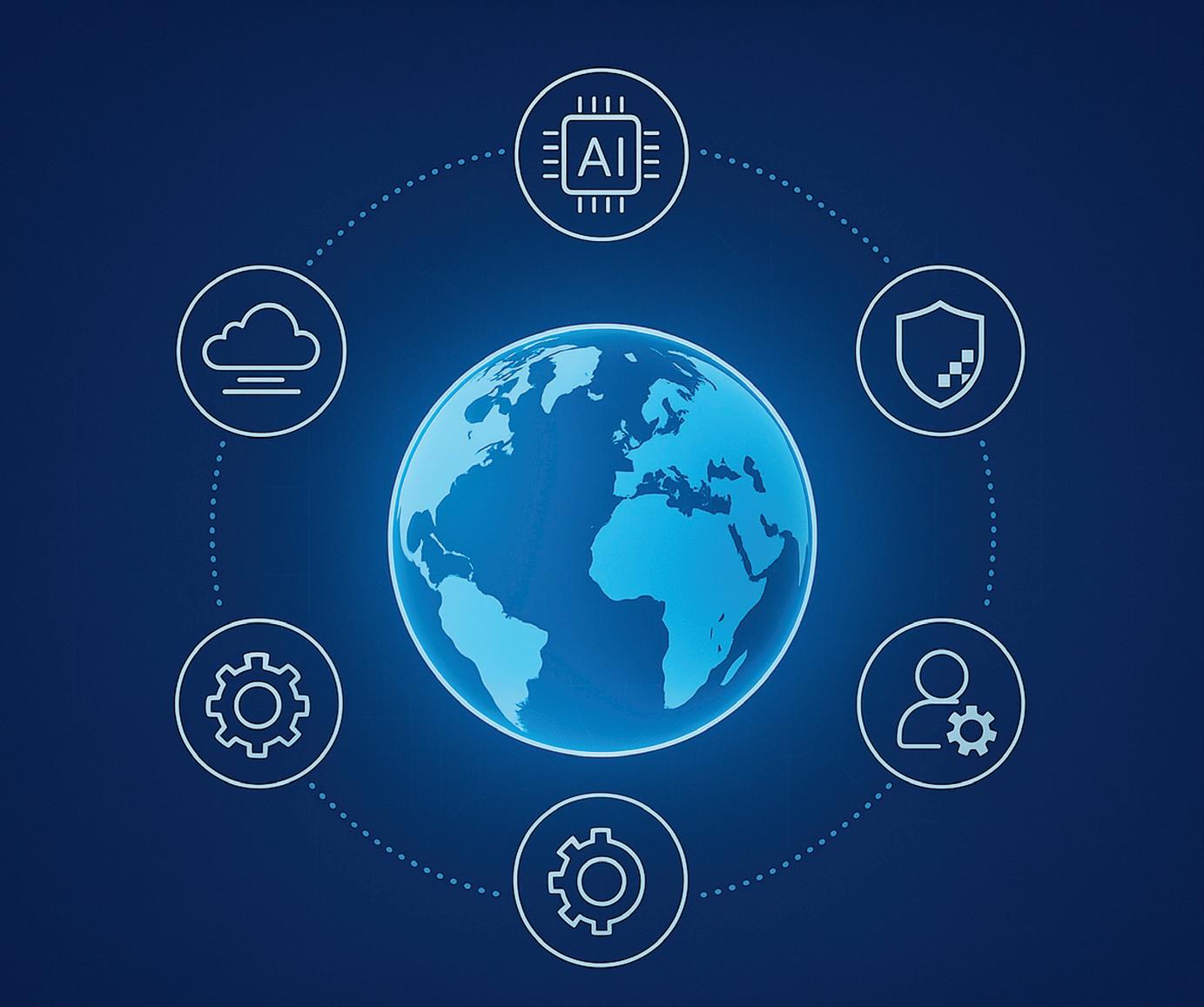
As Serbia accelerates its digital transformation, the wider global context is shifting just as rapidly. Artificial intelligence, data governance, cyber security, industrial automation and digital talent development are no longer isolated themes, but interconnected forces shaping the competitiveness of nations. In 2026, this convergence will define the next phase of Europe’s digital evolution — and determine how countries, including Serbia, position themselves in the emerging technological landscape.
The past decade has already brought structural change: the rise of national AI ecosystems, the creation of sovereign data centres, the emergence of pan-European digital regulations and a long-overdue recognition that digital skills are a

DIGITAL PROGRESS IN 2026 WILL BE MEASURED NOT BY THE TECHNOLOGY A COUNTRY ADOPTS, BUT BY THE STRATEGIES IT BUILDS AROUND IT
form of modern public infrastructure. But the next decade will demand something more ambitious — a deeper integration of technology, industry, governance and human capital. The following five transformations outline what 2026 will bring and why they matter.
1. AI-Enabled Industries
Become the New Standard AI is entering a phase in which its impact is no longer limited to isolated
use-cases or pilot projects. In 2026, industrial automation, logistics, financial services, energy systems and healthcare will increasingly rely on AI-driven solutions that operate continuously, autonomously and at scale. Generative AI will mature into an operational tool: writing code, optimising production lines, adjusting supply chains in real time and supporting clinical diagnostics.
For Serbia, which is strengthening its AI institutions and launching ambitious national platforms, the transition from experimentation to adoption will be essential. The challenge will be to ensure that AI systems serve society — improving public services, fostering innovation and supporting sustainable industry — while building public trust through ethical, transparent and human-centred deployment.
2. Data Sovereignty Becomes a Strategic Priority
With the EU Data Act entering full implementation and global debates on digital sovereignty gaining momentum, 2026 will mark a turning point in how countries handle data — where it is stored, how it is governed and who controls its value. Europe’s data economy is projected to grow rapidly, and alignment with its rules will become a prerequisite for competitiveness.
This shift will redefine national infrastructure. Sovereign data centres, secure cloud environments and AI computing platforms will no longer be technical assets but strategic tools that enable states to safeguard economic continuity, attract investment and ensure citizens’ trust. For Serbia, continued development of its na-
4. The Global Competition for Digital Talent Escalates
The skills gap is already one of the greatest constraints on digital progress. Despite strong results in certain indicators, the Western Balkans remains below the EU average in basic and advanced digital competencies. By 2026, global competition for talent is expected to intensify as industries embrace automation, AI and new digital business models.
Countries that invest in education reform, reskilling, STEM pathways, inter-
SUSTAINABLE DIGITAL TRANSFORMATION REQUIRES THE INTEGRATION OF INFRASTRUCTURE, INNOVATION, SKILLS AND SMART GOVERNANCE –NOT MERELY FASTER SYSTEMS OR MORE DATA
tional AI platform, data centre capacity and cyber-resilience will determine its place on Europe’s technological map.
3. The Cyber Security Imperative Intensifies
Global cybercrime damage is forecast to reach unprecedented levels, turning cyber security into one of the most urgent policy and business priorities of 2026. With critical infrastructure increasingly digitalised, AI-enabled attacks growing in sophistication and geopolitical tensions affecting cyber stability, resilience will become a central measure of national readiness.
Companies and public institutions will need to shift from reactive protection to proactive resilience — embedding security by design, investing in modern SOC capabilities, deploying AI-driven anomaly detection and integrating cyber preparedness into all digital operations. For countries undergoing rapid technological expansion, the challenge will be to match infrastructure growth with equally ambitious investments in protection and governance.
advanced technologies will be designed to augment human capabilities, improve well-being, support safer and more efficient workplaces and enable sustainable growth.
In practice, this means integrating robotics, AI and data into production while maintaining a strong focus on human oversight, ethical principles and environmental responsibility. For Serbia, the shift towards Industry 5.0 aligns closely with its aims of reindustrialisation, modern infrastructure and participation in reshaped European supply chains.
national collaboration and talent retention will shape the future of their digital economies. The creation of innovation districts, strong university partnerships, incubators and national AI research institutions will play a decisive role. Serbia’s ongoing development of talent ecosystems is a critical foundation — but scaling them will determine whether its digital momentum can be sustained.
5. Human-Centric Digitalisation and Industry 5.0 Take Shape
The European Commission’s Industry 5.0 model — smart, resilient, sustainable and human-centric — is set to become a guiding framework for the next digital decade. Rather than replacing workers,
Looking Ahead
Digital transformation in 2026 will no longer be defined by technology alone, but by the ability of states and companies to combine infrastructure, innovation, regulation and human capital into a coherent strategy. The countries that succeed will be those that treat digitalisation not as a technical upgrade, but as a national development mission. Serbia’s progress in AI research, data governance, infrastructure modernisation and talent development shows that the foundations are already in place. The task ahead is to scale, connect and sustain these advances — ensuring that digital transformation becomes a catalyst of long-term competitiveness and a pillar of national economic resilience.