
COMMUNICATIONS
SPECIAL EDITION 2026


COMMUNICATIONS AT A POINT OF RESET
Why trust, talent and responsibility are becoming the true currencies of an industry under pressure and a measure of its long-term credibility
The communications industry is entering a phase that can no longer be described as simple transformation. What we are witnessing today is a structural reset — a moment in which long-standing assumptions about value, creativity, technology and responsibility are being fundamentally questioned. Artificial intelligence has not initiated this shift, but it has accelerated it to the point where unresolved contradictions have become impossible to ignore.
This year’s Communications edition of CorD brings together voices that approach this moment from different angles, yet converge on the same conclusion: the future of communications will be defined less by tools and platforms, and far more by standards, judgement and the way the industry chooses to value its people and its work.
We open the issue with an in-depth conversation with Charley Stoney, CEO of the European Association of Communications Agencies, who reflects on a European industry under unprecedented pressure. Her perspective places talent and intellectual property at the centre of the debate, not as abstract concepts, but as the industry’s most exposed and undervalued assets. At a time when technology is reshaping business models at speed, Stoney reminds us that agility alone is not enough — without trust, shared standards and responsibility, innovation quickly loses its meaning.
That European and regional context is further grounded through corporate perspectives that demonstrate how these challenges are being addressed in practice. In her interview, Maja Antić, CEO of AMA Group, speaks about integration as a strategic choice rather than a structural convenience. Her emphasis on people, collaboration and ethics highlights a model in which technology enhances, rather than replaces, human judgement — and where creativity remains inseparable from responsibility.
A complementary view comes from Marina Grihović, Founder and Director of the Headline and DKIT agencies, who reflects on the maturation of Serbia’s communications and PR market. Drawing on expe-
rience across journalism and strategic communications, she addresses the increasingly fragile boundary between speed and professionalism, reminding us that responsibility for the written word — and for public meaning — has never been greater.
The editorial sections that follow, Local Market Realities and Communications in Transition, step back to examine the broader implications of these shifts. Smaller markets such as Serbia are often praised for their agility, yet agility without governance risks sliding into short-termism and vulnerability. At the same time, AI has exposed the fragility of business models built on volume and time-based re-
AS THE COMMUNICATIONS INDUSTRY RESETS, TECHNOLOGY MAY ACCELERATE CHANGE — BUT TRUST, STANDARDS AND HUMAN JUDGEMENT WILL ULTIMATELY DETERMINE ITS DIRECTION
muneration, forcing a long-overdue reassessment of value, intellectual property and professional standards across Europe.
Taken together, the contributions in this issue point to a shared understanding: communications can no longer be measured solely by reach, speed or efficiency. In an era of sceptical audiences, regulatory expansion and technological acceleration, credibility is built through consistency, ethical clarity and longterm commitment — not through shortcuts.
This edition of Communications does not offer simple answers. Instead, it maps the contours of an industry at a crossroads, where the choices made today — about talent, technology and responsibility — will determine not only commercial success, but the legitimacy of communication itself in the years ahead.
PROTECT TALENT, PROTECT VALUE
Artificial intelligence is accelerating change across the communications industry, exposing outdated business models and forcing a revaluation of talent and intellectual property. Smaller markets are proving more adaptable, but trust, standards and responsibility remain the decisive battlegrounds for Europe’s future

CHARLEY STONEY
EACA CEO
In an exclusive interview for CorD Communications, Charley Stoney, CEO of the European Association of Communications Agencies, reflects on her first year at the helm of a sector under unprecedented pressure. We discuss how artificial intelligence is reshaping creativity, business models and professional standards,
why talent and intellectual property have become the industry’s most vulnerable assets, and how smaller markets such as Serbia can turn agility into strategic advantage. The conversation also addresses the crisis of trust in public communication, the limits of regulation and self-regulation, generational shifts in values, and the importance of shared European standards at a
time of growing political, economic and cultural fragmentation.
You have now completed your first year as CEO of European Association of Communications Agencies. Looking back, what have been the most important insights you have gained about the state of the European communications industry today?
— Reflecting on my first year as CEO of the European Association of Communications Agencies, I see an industry facing profound disruption, but also unprecedented opportunity. Agencies are actively adopting new models in response to the AI challenge, demonstrating resilience, creativity and a willingness to rethink established practices. At the same time, it is clear that traditional advertising agency models risk becoming obsolete if they fail to adapt quickly enough.
Two assets stand out as decisive for the industry’s future: talent and intellectual property. Talent fuels strategic innovation and long-term economic growth, while IP underpins brand value and competitive advantage. Yet both are still widely undervalued, particularly intellectual property, which agencies too often give away. This must change.
The sector needs to remain open to new business models and show real readiness to adapt. Protecting and properly valuing talent and IP will be essential if the industry is to remain dynamic, competitive and innovative in the years ahead.
From a European perspective, how do you assess the position of smaller markets such as Serbia within the wider communications industry? Are they more vulnerable to disruption — or potentially more adaptable — than larger, more mature markets?
— Smaller European markets such as Serbia play a far more significant role in the communications landscape than is often assumed. Their greatest strength lies in agility: they can respond quickly to emerging trends and experiment with new ideas more easily than larger, more established markets. Close connections with local consumers often make these markets effective testing grounds for new products, campaigns and approaches.
Talent migration to larger markets such as the UK or Germany remains a challenge, but it also highlights the value of strong local expertise and regional insight. Smaller markets have the capacity to challenge conventional ways of working and inject fresh energy into the industry. Their speed, adaptability and sensitivity to local context make them increasingly influential in shaping wider European industry trends.
Public trust in institutions, media and corporate actors remains fragile across Europe. What responsibility does the communications industry carry in rebuilding trust, and where are the limits of what commu-
Although they are taking steps to address this, the sheer volume of content makes it impossible to remove harmful material quickly enough to prevent consumer impact.
Looking ahead, artificial intelligence has the potential to significantly improve content moderation and remove non-genuine advertising more effectively — provided platform algorithms are transparent and designed responsibly. Still, communication has its limits. Trust cannot be manufactured or restored overnight. While the industry can influence perceptions, it cannot act alone. Rebuilding confidence requires coordinated action from agencies, platforms and regulators alike.
TALENT AND INTELLECTUAL PROPERTY ARE THE INDUSTRY’S MOST VALUABLE ASSETS, YET THEY REMAIN PERSISTENTLY UNDERVALUED – PARTICULARLY IP, WHICH AGENCIES TOO OFTEN GIVE AWAY. THIS NEEDS TO CHANGE
nication alone can realistically achieve?
— The communications industry plays a significant role in building trust between brands, corporations and the public. At the same time, it carries a responsibility to ensure that self-regulation remains central, particularly as online practices become increasingly opaque and, in some cases, unethical.
Rebuilding trust is especially difficult in an environment where many consumers struggle to distinguish between responsible and irresponsible advertising online. While agencies operating in regulated markets adhere to clear codes and standards, unethical digital practices are often perceived as a failure of the advertising industry as a whole. In reality, platforms bear a major responsibility, particularly when it comes to fraudulent advertising.
Over the past few years, the regulatory framework governing advertising and digital communications has expanded significantly across Europe. How do you assess the balance between regulation and self-regulation today, particularly from the perspective of protecting the public interest?
— Europe has seen a substantial expansion of regulation in advertising and digital communications, driven by the legitimate goal of protecting the public. However, the balance is delicate: excessive or poorly designed regulation risks stifling innovation and restricting free expression.
Self-regulation remains a critical counterweight. Industry-led frameworks have proven effective in maintaining standards and public trust without unnecessary overreach. That said, there is often a gap between policymak-
ers’ intentions and what works in practice. Recent political advertising rules, for example, are highly restrictive and difficult to implement consistently across markets. As a result, some major platforms have withdrawn from political advertising altogether, limiting democratic engagement and disproportionately affecting younger audiences.
As Europe approaches major electoral cycles, this raises serious concerns. Engaging younger generations in democratic processes is essential, yet overly complex regulation may unintentionally silence important voices. Continued dialogue between policymakers, regulators and industry practitioners is therefore crucial to finding workable solutions that protect the public interest while preserving open and accessible communication.
SMALLER MARKETS THRIVE ON AGILITY. THEIR ABILITY TO ADAPT QUICKLY, EXPERIMENT FREELY AND STAY CLOSE TO LOCAL AUDIENCES
IS INCREASINGLY SHAPING TRENDS ACROSS THE EUROPEAN COMMUNICATIONS INDUSTRY
Artificial intelligence is no longer a future promise but an everyday reality in communications. Beyond efficiency gains, how do you see AI affecting creativity, professional standards and the production of meaning in public communication?
— Artificial intelligence will affect every industry, and communications is no exception. I see AI primarily as an opportunity for a long-overdue reset, particularly when it comes to how agencies value and monetise both talent and intellectual property.
For years, the industry has relied on time-and-materials busi-
ness models that no longer reflect the value agencies deliver. These models are increasingly unsustainable and often unprofitable, failing to account for the role communications plays in driving brand growth and wider economic impact. AI gives us a chance to rethink this approach — to move towards remuneration models based on outputs and outcomes, rather than hours worked.
Beyond business models, AI is also reshaping creativity and professional standards. While it enables rapid content generation, the real challenge lies in preserving originality, authenticity and meaning. Human judgement, context and ethical responsibility remain essential. The most successful professionals will be those who can combine AI tools with human insight to create work that is both responsible and genuinely resonant.
Younger professionals entering the communications industry often bring different expectations regarding purpose, ethics and work culture. What do these generational shifts reveal about deeper changes in how communication, work and social responsibility are understood today?
— Younger professionals are entering the industry with a strong sense of purpose. They expect their work to have meaning beyond commercial success and see ethics and social responsibility as integral, not optional. This reflects a broader shift in how communication itself is understood — from persuasion and visibility towards trust-building and longterm impact.
Working closely with the EACA’s Young Board has reinforced this perspective for me. These professionals value transparency, honesty and alignment between stated values and real practice. They are also pragmatic: they understand that businesses must


operate efficiently and sustainably. What they are challenging is complacency.
This generational mindset signals a deeper transformation of work culture, where social impact and responsibility are increasingly seen as measures of professional success alongside financial performance.
Europe is becoming increasingly fragmented — politically, economically and culturally. In such a context, how important are shared professional standards and values in communications, and what risks arise when those common reference points begin to erode?
— Although Europe often appears fragmented, the communications industry shows a surprising degree of cohesion. In many ways, current political and economic pressures have encouraged closer collaboration across markets rather than division.
Shared professional standards and values are more important than ever in such an environment. They provide a common language for trust, credibility and quality, particularly in an industry that operates across borders and cultures. When those reference points weaken, inconsistencies emerge, misunderstandings grow and public confidence is undermined.
Europe has a unique opportunity to shape its own model — distinct from larger markets such as the United States — by building brands and communication practices that resonate locally while remaining globally relevant. This requires collaboration, mutual understanding and a strong commitment to shared standards. Without them, the risk is fragmentation that diminishes both the credibility and the impact of our work. With them, Europe can remain a powerful and distinctive voice in the global communications landscape.
INTERVIEW
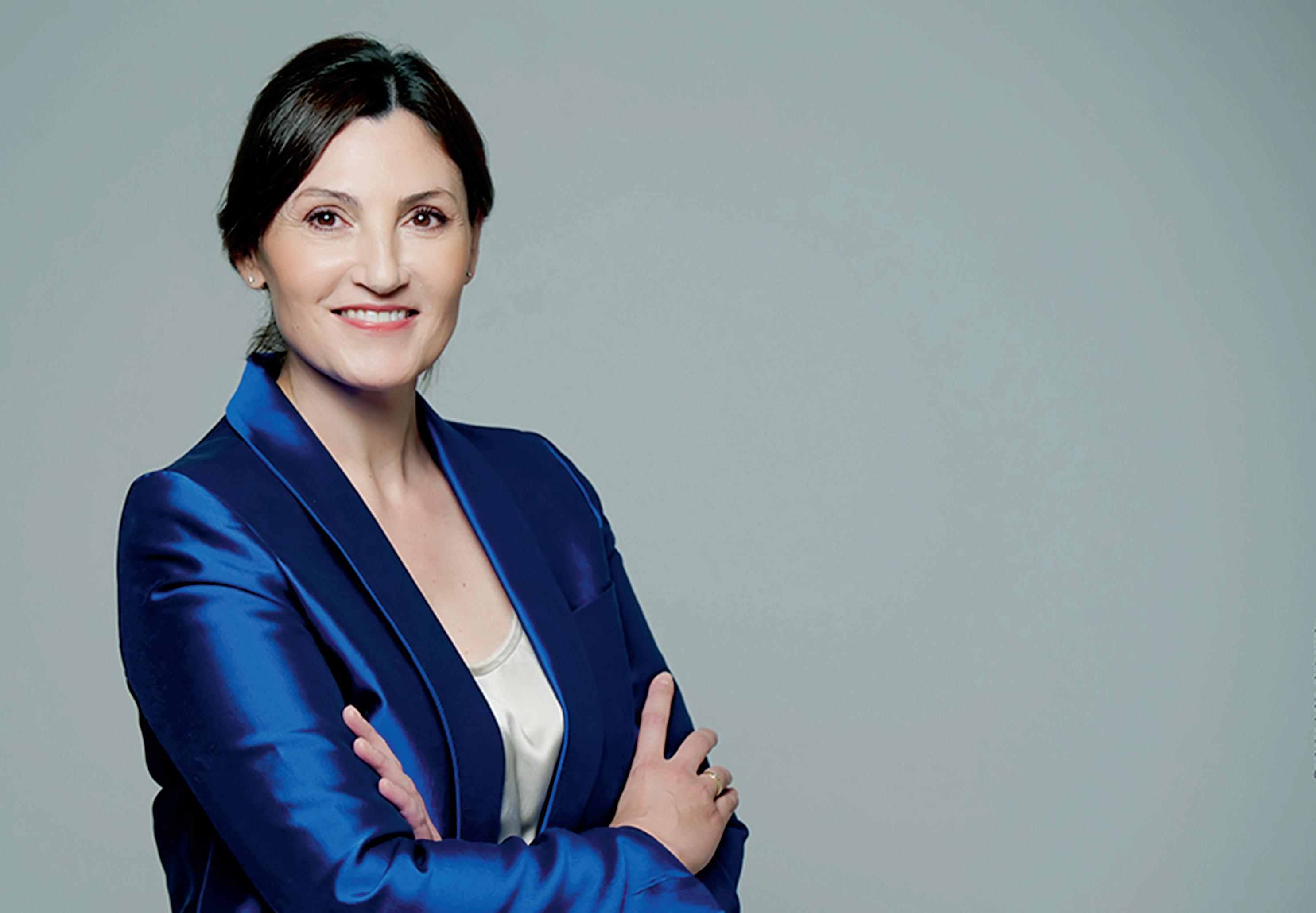
ICEO, AMA Group
n conversation with Maja Antić, CEO of AMA Group, we discuss the strategic advantages of an integrated agency model, the role of technology and artificial intelligence in contemporary communications, and why people, collaboration and ethics remain decisive factors of competitiveness in an industry undergoing rapid change.
AMA Group today brings together creative, media and production agencies under one roof, while preserving their individual identities. From your perspective, what is the greatest strategic advantage of such a model?
— The greatest advantage of bringing together all our agencies — McCann, UM, Initiative, Adventure,
SYNERGY AS A COMPETITIVE ADVANTAGE
AMA Group’s operating model demonstrates how the synergy of people, technology and ethical principles becomes a key driver of sustainable communication and longterm brand success

DRV, Media Jobs and Media POOL — and the expertise these teams carry lies in our ability to respond simultaneously to the need for deep specialist knowledge and for fully integrated solutions.
In today’s environment, where speed is just as important as quality, real advantage comes from a model in which experts of different profiles work side by side. Creatives think broadly and boldly, media teams operate with precision and analytical rigour, while production delivers excellence in execution. This approach avoids unnecessary fragmentation and provides clients with solutions that are both specialised and consistent.
At the same time, the true strength of this model lies in the way our teams function as a living ecosystem, in which knowledge,
insights and experience naturally flow from one discipline to another.
In its communication, AMA Group places the emphasis on people, emotions and team synergy, rather than on individual results. Why was this message a priority?
— In a world where tools and data are very similar, the real differentiators are emotion, intuition and the way teams collaborate. This is a reality, not a marketing narrative. We focus on consistency — project by project, year by year — delivering solutions that are creative and effective, rather than relying on isolated successes.
More than 400 people across eight markets are united by shared standards, while bringing different experiences and cultural contexts.
MAJA ANTIĆ
That orchestrated diversity is our strength. At the same time, a system built on methodologies, processes and technology provides a framework in which knowledge is shared and emotion becomes effective. In other words, we build a strong system that supports the individual, rather than suppressing them.
Which change do you believe will most strongly shape the communications industry in the region over the next three to five years?
— The greatest impact will come from the way companies integrate artificial intelligence and advanced technologies into their operational mindset — from strategy to the everyday work of teams. We do not use technology occasionally or tactically; we integrate it into processes, methodologies and decision-making.
In practice, this means that AI takes over repetitive and operational tasks, while people remain focused on what truly adds value: vision, meaning, context and ethical judgement. These elements are systematically connected through shared standards and interdisciplinary teamwork.
Agencies that recognise artificial intelligence as a means of empowering human potential, and that invest equally in technology and in people — their skills and understanding — will be at an advantage. This is the path we are already following. The future is not “either/or”, but the synergy of technology and creativity, global and local perspectives, expertise and collaboration — the very principles on which AMA Group has been built.
How do you ensure that the integration of data and technology does not undermine creative integrity and ethical principles?
— The speed and complexity of today’s business environment often encourage reliance on fast, automated solutions. The drive towards automation based on technology
and great amount of data is a transformation underway across the industry and one that brings significant value. However, it is essential to establish a decision-making support architecture that clearly defines where the human role is indispensable — human experience and expertise, a unique understanding of the situation or the brand, as well as social context and personal values. These are aspects that artificial intelligence cannot adequately analyse or apply.
The creative and extensive use of data is an integral part of our processes, helping us understand audience behaviour, identify market opportunities, optimise performance and measure effectiveness. Data shows us what is happening and when, while our expertise explains why — and which actions genuinely resolve the challenge. This is why our approach is data-informed, not data-driven. The difference is substantial. Human expertise, the ability to understand broader context, creative vision and emotional intelligence remain essential.
Beyond being measurable, communication effectiveness must also be responsible. We are very active in professional and business associations, with ethics in communication as one of the key topics we address. We are members — and among the founders — of the national association for ethical standards in advertising. Ethical principles therefore form an integral part of every step in our processes.
How do you build a culture of collaboration within such a complex system and retain talent?
— This may be the most important question of all, because without culture, everything else is just structure.
The key lies in continuous development. Talented professionals rarely leave because of conditions; they leave when they stop growing. Here, they have access to expertise across disciplines, work on region-
al projects and learn from the best. It is a development ecosystem that few can offer.
For collaboration to be truly effective, shared values are essential: the client’s success is our success, integration is imperative, and quality is non-negotiable. Structures and processes then enable teams to work together in practice.
In which areas do you feel AMA Group is increasingly able to contribute to stronger client performance, while successfully addressing their needs and expectations?
Today, clients genuinely need agencies as strategic partners — partners who fully understand their business context.
THE FUTURE OF COMMUNICATION DOES NOT LIE IN CHOOSING BETWEEN TECHNOLOGY AND CREATIVITY, BUT IN THEIR THOUGHTFUL INTEGRATION, WITH A CLEARLY DEFINED HUMAN ROLE AND RESPONSIBILITY TOWARDS SOCIETY
This goes beyond products and services to include business challenges, competitive environments, regulatory pressures and the social trends shaping their industries. Proactively identifying opportunities is just as important, at a time when social impact spreads rapidly and directly affects brands, and when trends have become near-daily phenomena that must be recognised and leveraged.
In such partnerships, it is essential to take responsibility, develop awareness of complex ethical and social issues, and manage activities and situations with skill. Measurability and creativity that delivers business results — and their thoughtful integration — are becoming indispensable elements of successful collaboration.

MARINA GRIHOVIĆ
Founder and Director of PR and Media Consulting Agency Headline and Digital Communications Agency DKIT
COMMUNICATION BETWEEN PROFESSION AND RESPONSIBILITY
The development of Serbia’s PR market over the past two decades illustrates how communications have evolved under the influence of media change, technology and shifting public expectations
ith a professional background spanning journalism, strategic communications and agency leadership, Marina Grihović, Founder and Director of the Headline PR and Media Consulting Agency and Digital Communications Agency DKIT, reflects on the maturation of Serbia’s communications market, the changing relationship between media and PR, and the role of agencies in a digital ecosystem where speed increasingly tests professional and ethical boundaries.
WHeadline Agency is marking its 18th anniversary this year. Looking back on that period, what would you identify as the key turning points in the development of communications in Serbia – and how have they shaped the transformation of PR as a profession?
— Much like our agency Headline & DKIT has come of age, it is fair to say that the communications market in Serbia has matured as well. On the one hand, the quality of marketing and communications services has become more consistent, driven by
experience and increasingly close cooperation with the region and international markets, which has resulted in a larger pool of seasoned professionals. On the other hand, we are no longer significantly lagging behind when it comes to adopting global trends and technological innovations, while a new generation of professionals has brought fresh energy to the field.
As a result, PR – like other segments of marketing – has advanced considerably and, in a positive sense, has become part of a broader process of globalisation.
To put this into more concrete terms, a decade or fifteen years ago we largely relied on marketing festivals or individual lectures by international experts to inspire change, innovation or what was then commonly referred to as “out-of-thebox” thinking. Today, this mindset has become part of everyday practice. With every new event or pitch, we challenge established boundaries and continuously rethink how communication is approached. What I would add at the end of this answer is the importance of not becoming complacent and of not surrendering everything to artificial intelligence. It is equally important to remind clients that the market remains eager for innovation and genuinely different ideas.
Having spent a significant part of your career in journalism before moving into strategic communications, how do you view the relationship between media and PR today? What has fundamentally changed over the past twenty years, and what has remained the same?
— Change is visible everywhere, but perhaps most clearly within the media sector itself. I do not want to sound like someone criticising a profession or colleagues I grew alongside, nor someone who fails to recognise that change is inevitable. It is entirely understandable that the media landscape has evolved, that daily print is declin-
ing, and that clicks play an important role in financial sustainability – I am a business owner myself. What I do find problematic, however, is a growing lack of awareness of responsibility. Responsibility for the written word, and for understanding how crucial it is not to publish false information – often deliberately and in someone’s interest. I believe many media outlets justify unethical approaches to social issues and public events by invoking market pressures and commercialisation.
A positive development, however, is that I am far from alone in recognising this problem. Those who work in communications in a professional and responsible manner are increasingly distancing themselves from such practices of propaganda and manipulative information placement.
The line between traditional and digital communications is now almost invisible. How do you see the role of PR agencies in this new ecosystem – are they primarily strategic advisers, con-

tent creators, or real-time reputation managers?
— There are no longer any clear boundaries, because everything that is communicated in a traditional way will soon become viral. This is one of the rules no one working in communications can afford to forget. While we continue to distribute
out the process, well-conceived and well-executed content, and constant monitoring of both sector-specific and broader societal developments, effective communication is simply not possible. I am not attempting to embellish our role or overstate its importance, but the responsibility carried by
Headline Agency was founded 18 years ago in Belgrade as a PR and strategic communications agency. Over the years, it has grown, evolved and adapted its services to market trends, while remaining firmly committed to quality and strong professional relationships with colleagues and partners. In partnership with DKIT Agency, it now provides services in traditional and digital communications, strategic planning and event organisation, operating both in Serbia and across the region.
information, the rise of digital media requires us to be more thoughtful and more responsible advisers than ever before – mistakes are harder to correct, and news travels faster. If asked what PR agencies are today, my short answer would be: all of the above.
Without sound strategic positioning, an advisory role through-
communication professionals today is greater than ever.
Linking back to the previous question about media, I would emphasise that our most important task is to convey truthful information, in the right way and to the right audiences. And that, as experience shows, is not always easy to achieve.

SMALL MARKET, REAL STAKES
Agility is often cited as the key advantage of smaller markets like Serbia, but without clear standards and long-term strategy, flexibility alone is not enough to secure sustainable growth

Smaller markets are frequently described as agile, adaptable and close to their audiences. In theory, this should position them well in an era of rapid technological and structural change. In practice, agility is a double-edged concept. Without a clear framework for valuing talent, intellectual property and professional responsibility, flexibility can easily slide into informality, short-termism and vulnerability.
Serbia’s communications market reflects this tension. On one hand, agencies and professionals often adapt quickly to new tools, platforms and client demands. Artificial intelligence has been adopted with speed and curiosity, frequently without the layers of bureaucracy seen in larger markets. On the other hand, this very speed exposes structural weaknesses: unclear remuneration models, limited protection of intellectu-
al property and a persistent undervaluation of strategic work.
Talent remains the market’s most valuable and most fragile asset. Skilled professionals are internationally mobile, and global demand continues to pull them towards larger hubs. This is often framed as a loss. Yet it also forces a necessary question: what conditions does the local market offer for talent to stay, develop and be recognised as a long-term investment rather than a replaceable cost?
The answer lies not in slogans about creativity or resilience, but in governance. Smaller markets cannot compete on scale, but they can compete on clarity. Clear standards, transparent contracts and serious treatment of intellectual property are not obstacles to growth; they are prerequisites for credibility. Without them, agility becomes a liability, leaving agencies exposed to reputational and financial risk.
AI sharpens this dilemma. Used responsibly, it can enhance productivity, free up time for strategic thinking and level the playing field with larger competitors. Used carelessly, it accelerates commodification, reinforcing the perception that communication is cheap, fast and interchangeable. The difference lies in leadership choices — and in the willingness of the industry to draw boundaries.
There is also a broader reputational dimension. As Serbia positions itself more visibly on international stages, including through major events and investment initiatives, the quality of its communication ecosystem matters. Credibility is not built through visibility alone, but through consistency, standards and trust.

CREDIBILITY IS NOT BUILT THROUGH VISIBILITY ALONE, BUT THROUGH CONSISTENCY, STANDARDS AND TRUST
Small markets do have an advantage: proximity. Close relationships between agencies, clients and institutions make dialogue easier and reform more achievable. The challenge is to use that proximity to build a more mature professional culture, rather than to normalise compromises.
Agility remains a strength — but only when anchored in responsibility. Without that anchor, small markets risk moving fast in the wrong direction.

INDUSTRY ON RESET
Artificial intelligence has exposed the fragility of existing business models in communications, forcing a long-overdue reassessment of value, responsibility and professional standards across Europe
The European communications industry is undergoing a structural reset. Artificial intelligence did not initiate this transformation, but it has accelerated it to a point where long-standing contradictions can no longer be ignored. Business models built on volume, speed and time-based remuneration are colliding with technologies that deliver efficiency at unprecedented scale, raising a fundamental question: what, exactly, is the real value that communications creates?
For decades, agencies have struggled to articulate and defend the worth of their work beyond hours billed and outputs delivered. Intellectual property — ideas, strategies, creative concepts — has too often been treated as a disposable by-product rather than a core asset. AI has made this imbalance impossible to sustain. When machines can generate content instantly, the value shifts decisively towards judgement, originality, ethics and responsibility — areas that cannot be automated without consequence.
SELF-REGULATION ONLY WORKS WHEN THE INDUSTRY IS WILLING TO DEFEND IT SERIOUSLY – NOT AS A SHIELD AGAINST OVERSIGHT, BUT AS A COMMITMENT TO CREDIBILITY

This shift comes at a time when public trust in institutions, media and corporate actors remains fragile. The communications industry occupies an increasingly uncomfortable position between platforms driven by scale and algorithms, regulators struggling to keep pace, and audiences sceptical of intent.
While regulation across Europe has expanded rapidly, it has also revealed its limits. Rules alone cannot rebuild trust, nor can they substitute for professional standards rooted in accountability and self-restraint.
Self-regulation, long dismissed by critics as insufficient, is regaining relevance precisely because of this complexity. In a fragmented digital environment, shared standards offer something regulation often cannot: flexibility, contextual understanding and ethical nuance. Yet self-regulation only works when the industry is willing to defend it seriously — not as a shield against oversight, but as a commitment to credibility.

Europe faces a distinctive challenge. Unlike larger global markets, it must reconcile diversity of languages, cultures and political systems with the need for common professional reference points. The risk is not only fragmentation, but the erosion of meaning itself, as communication becomes faster, louder and less accountable. The opportunity lies in defining a European model that prioritises trust, long-term value and societal impact over short-term reach.
AI, in this sense, is not the enemy of creativity or integrity. It is a stress test. It reveals where the industry has underinvested in talent, underprotected intellectual property and over-relied on outdated commercial logic. Those who treat AI as a shortcut risk accelerating their own irrelevance. Those who treat it as a catalyst for reform may yet help redefine the role of communications in a complex, contested public sphere.