













Ever see a commercial harbor full of Furuno Marine Electronics and wonder why the pros rely on us?




See why here








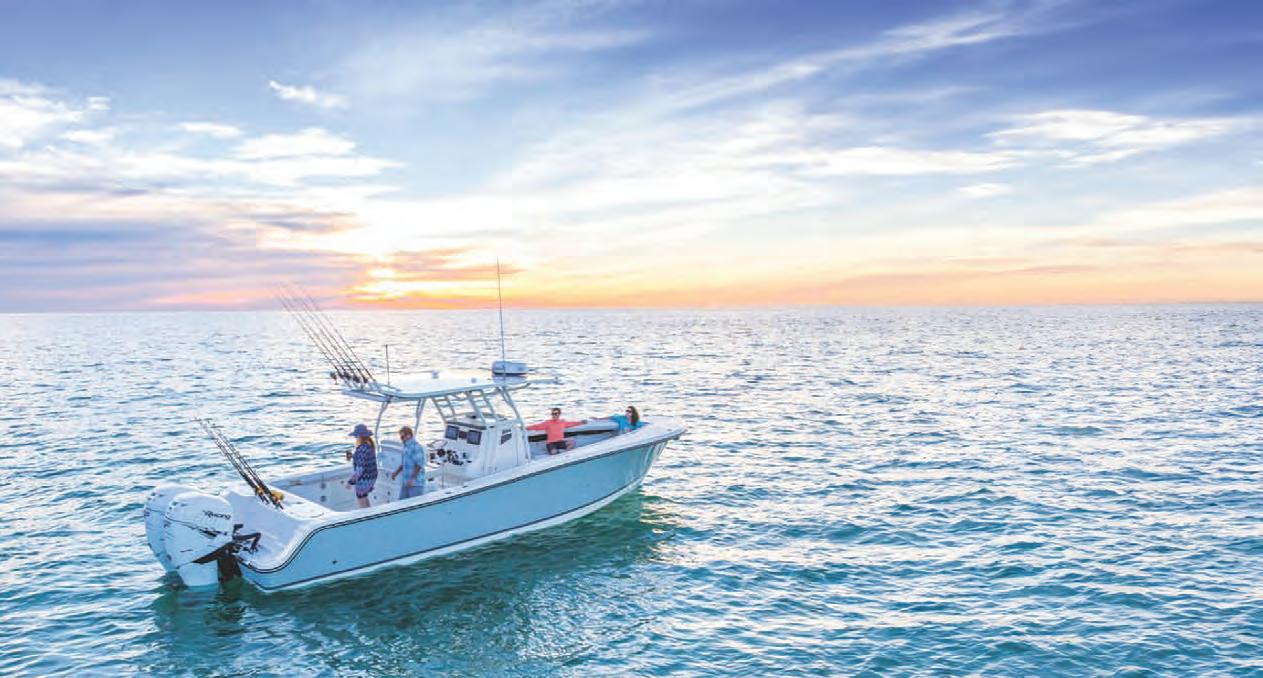






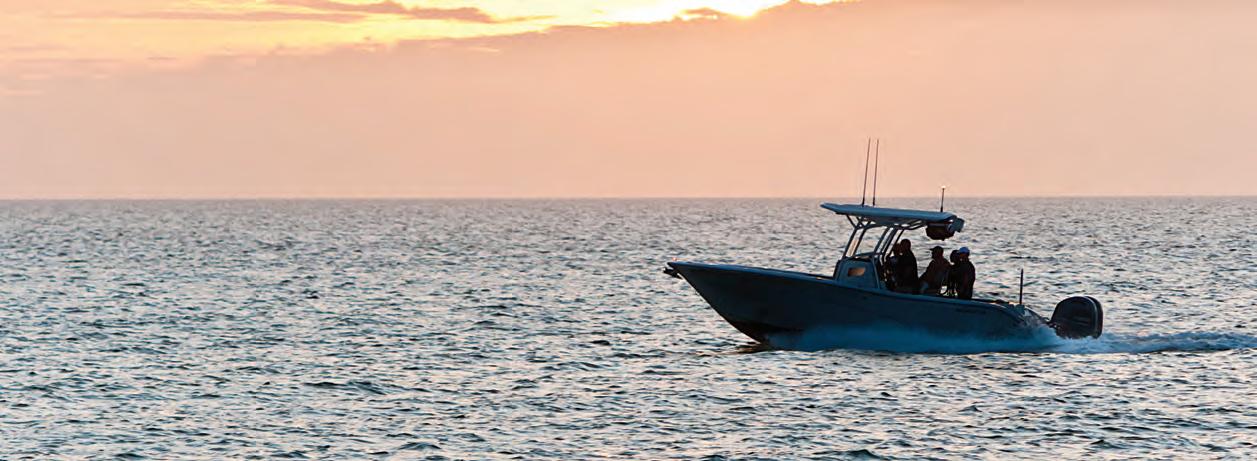
Are you ready to embark on your next on-water adventure? Before you set sail, here are fve things to know about boat insurance.
1. Boat insurance isn’t just for accidents
With comprehensive coverage, you’ll also be protected fnancially for theft, vandalism, and unexpected events like storms if you need repairs or replacements due to damage. 2. Accidents can happen to anyone
When accidents happen, boat insurance offers liability coverage for damages or injuries you cause while boating, up to specifed limits. It can also cover lawsuit costs if you’re sued.
3. Boat insurance can cover medical payments
Boat insurance offers a range of optional medical payments coverage limits, helping to cover medical expenses if you’re in an accident or someone is hurt on your boat, regardless of fault.
4. Most lenders require boat insurance
If you fnanced your boat, you’ll likely need boat insurance since most lenders require boat insurance to protect their investment. Additionally, some marinas or municipalities require proof of insurance for docking.
5. Progressive offers specialized boat coverages
Ever worry about getting stuck on the water?
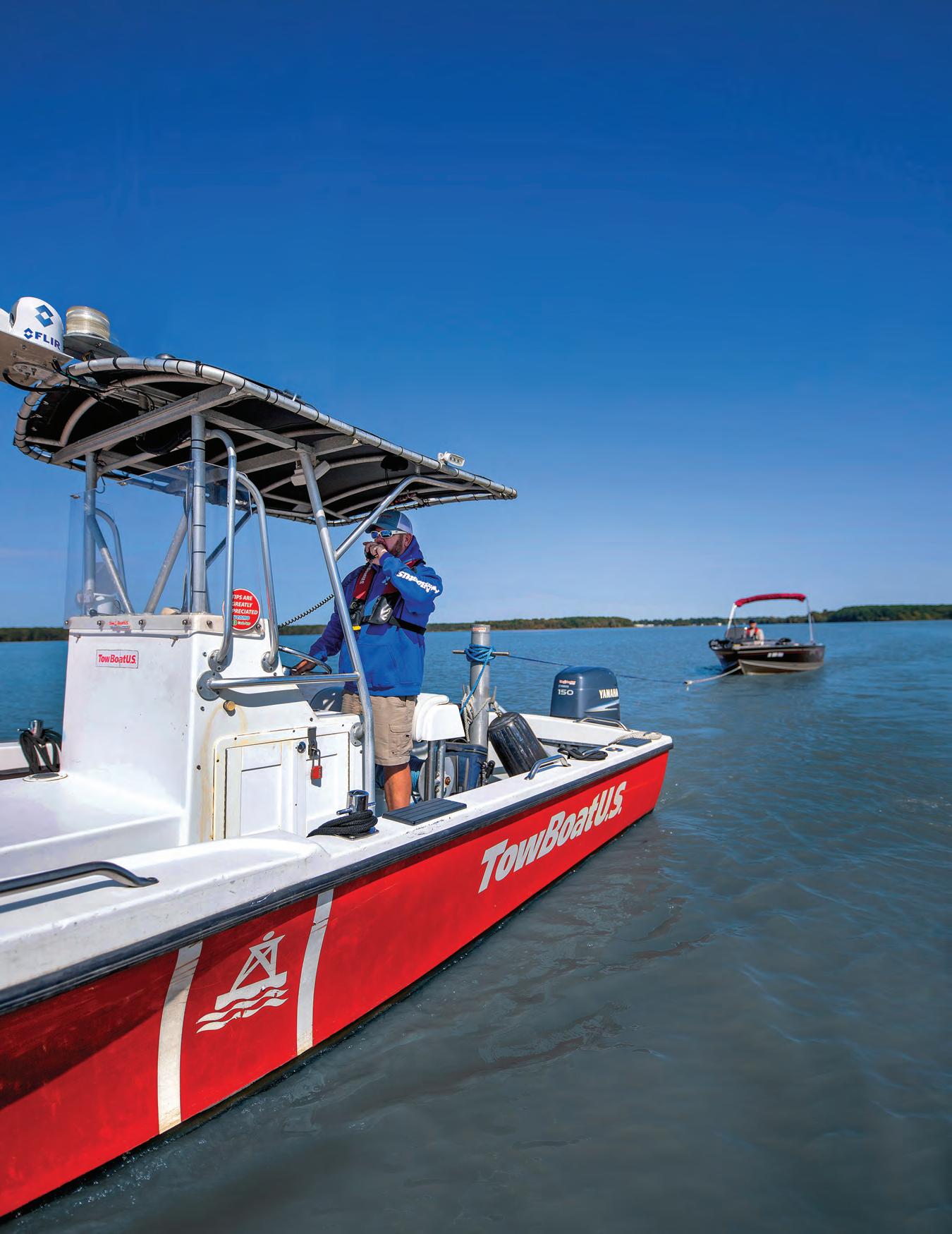
Progressive’s Sign & Glide® On-Water Towing coverage** can help. It’s an additional coverage that steps in if your boat is disabled or breaks down on the water, paying for on-water towing, jump starts, soft ungroundings, and fuel delivery. Fuel cost isn’t included.
Don’t let unforeseen circumstances disrupt your voyage. Cruise with confdence thanks to Progressive Boat insurance. Because when it comes to your boat, peace of mind is the ultimate luxury.
Scan to get a quote in as little as 4 minutes.
to learn more.














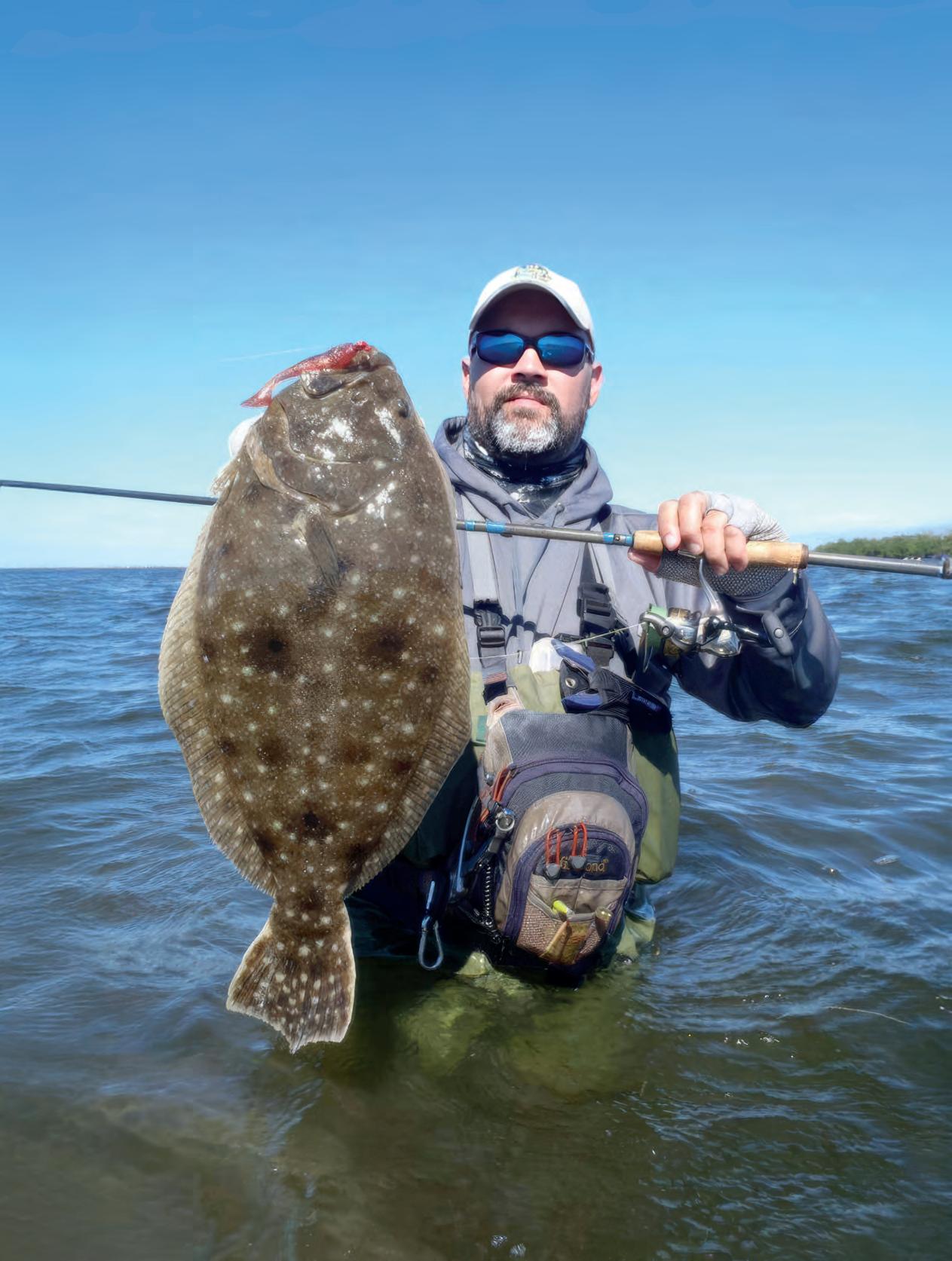
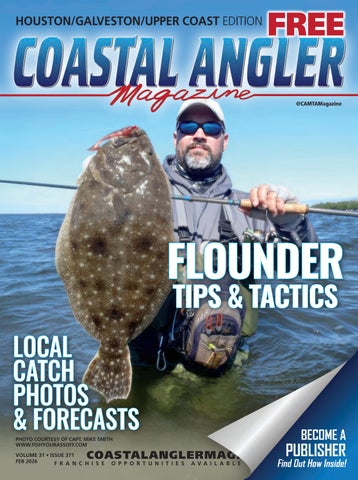
Do you want to catch more !ounder? You will need to nd an area with current, bait and structure for the !ounder to ambush its prey.
Where are they?
Flounder are very prevalent in creek mouths, jetties, sandy points, oyster bars, docks and any other underwater structures. e !ounder will take advantage of the structures to block the current, saving them energy and bringing bait right to their gluttonous mouths.
Flounder are the perfect ambush predator. ey like to bury in the sand adjacent to structures of some kind facing directly into the current. Your lure presentations always need to come from up current or you will spook them.
What do they eat?
CAPT. MIKE SMITH
and bait sh imitations.
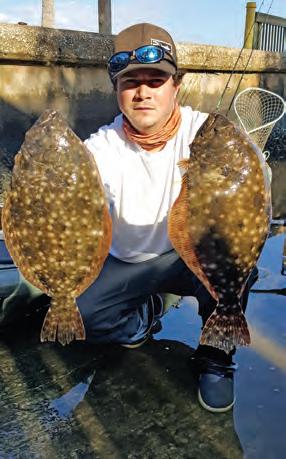
Flounder love to eat unsuspecting shrimp and sh brought to them by the current. e best lures to catch !ounder are scented shrimp

e best colors of lures to use for !ounder are any color as long as it is white. White is by far the best color of lure to catch !ounder. Do other colors work? Yes, if you want to catch fewer !ounders, then use something other than white.
e best lures that I have found for !ounder are Gulp! Shrimp and swimming mullets on a jig head. Start small and go bigger if you notice the bait in the area is large. Having an assortment from 3 to 5 inches will usually be perfect.
A great second choice for a !ounder lure is a white bucktail jig. Add a small piece of shrimp to add odor for best results.
How do you catch a flounder?
Flounder have a very small cone of awareness. ey are very unlikely to notice and
chase a lure that is more than 3 or 4 feet away from them.
ey also have a very small strike zone. ey are very hesitant to rise more than 18 inches o$ of the bottom to eat your lures.
Let’s say you found a beautiful oyster point at the mouth of a creek with plenty of current and bait !owing around it. is scenario is perfect for catching a !ounder.
Cast up current and work the lure on the bottom very slowly in 1 to 3 feet of water. When you think you hooked an oyster, set the hook. Flounder strikes are subtle and o en feel like a hang up.
It is very hard to work your lure too slowly for a !ounder. Old timers will tell you to just drag it on the bottom. I personally like to bounce my lures o$ the bottom being careful to not li it more than 18 inches into the water column.
Pro Tip: Use braided line and !uorocarbon leaders when shing for !ounder. Flouro sinks and helps you present your lures more e$ectively on the bottom. Braid doesn’t stretch and will help you feel a !ounder’s very subtle bites.
If you want to become an o cial !ounder pounder, then follow the tips above and catch more !atties. Go get ‘em!
Capt. Mike Smith, owner of Fish Your Ass O Charters, is an inshore "shing guide who has been "shing the inshore waters, oyster bars and grass ats of Florida for more than 40 years. Reach him at (561) 339-2317, email: contact@ "shyourasso .com or visit "shyourasso .com.

CAPT. DAVID C DILLMAN
Fishing out of Eagle Point Marina 409-632-0924
galvestonbaycharterfishing.com
In all my years of fishing, someone will always ask, "What's the slowest month of the year for fishing?" Usually, I respond by saying, "September and February." Sometimes, this statement comes to 'bite me in the butt' but typically these two months for fishing in Galveston bay can be tough.
Now, you maybe may wonder why? Well, September is usually our most active month for tropical systems, and the fish are in a transition phase. In February, we can experience some of the coldest days of Winter and worse, wintery precipitation in the form of snow but mostly sleet and ice. This takes the 'fun' out of fishing for most anglers.
So, what's there to do? Well, let's start off with general maintenance for your boat and motor. If you've been putting it off, don't wait any longer. This month will fly by, and spring will come sooner than you think. You want your boat and motor in tip top shape. If you're a DYI type person great but if not, get that boat to marine shop as soon as possible. They get very backed up the longer you wait.
Also check your equipment, rods, reels, tackle, personal flotation devices, this list could be long. Throw away what's not useable, especially old PFD's.
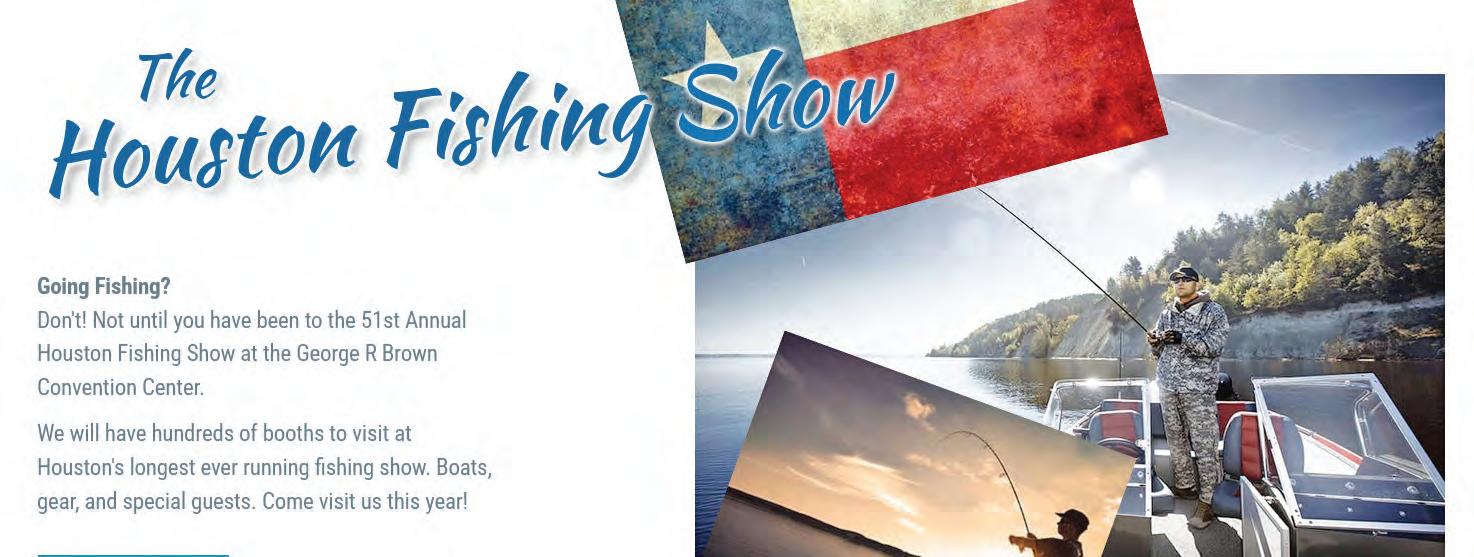
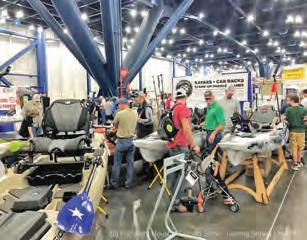
Here's something I always look forward to and that's the Houston Fishing Show. The show takes place in Houston, Texas, at the George R. Brown Convention Center, February 18 - 22, 2026. I'll be at the show every day in the Eagle Point Fishing Camp booth. This will be my 36th year of being an exhibitor.
As far as fishing, not much has changed. I'll still be fishing the northern reaches of Galveston bay chasing speckled trout, redfish, black drum, and
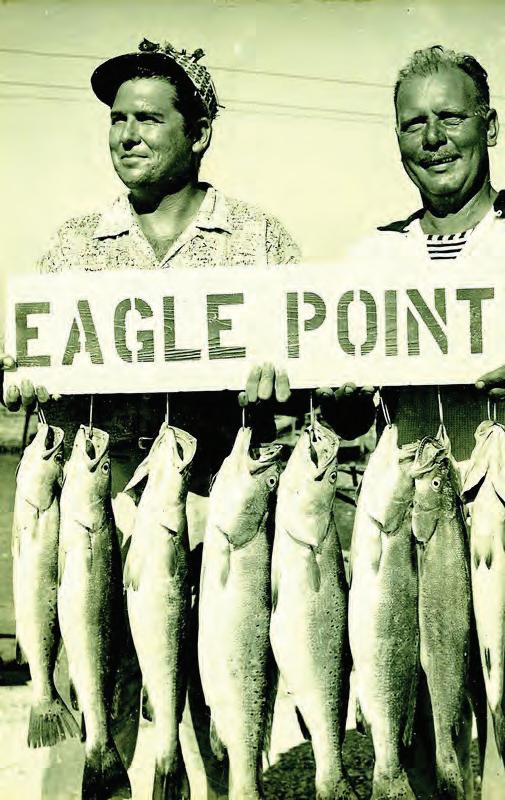
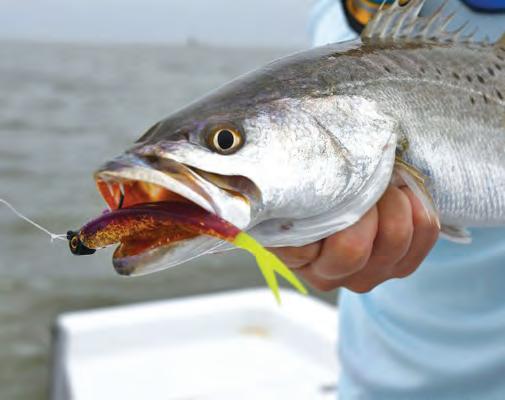
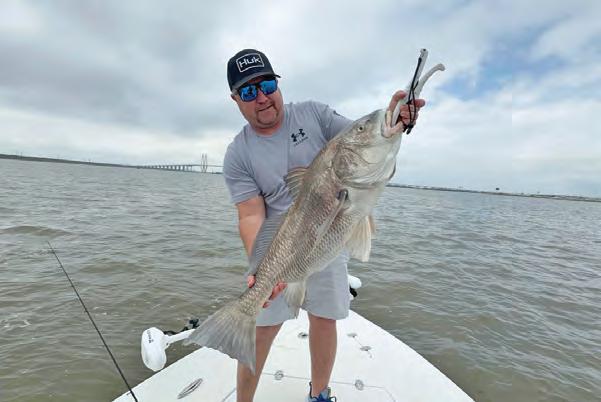
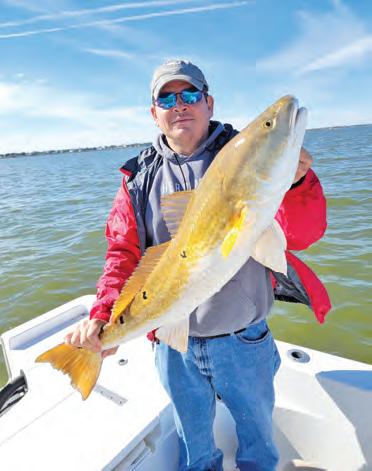
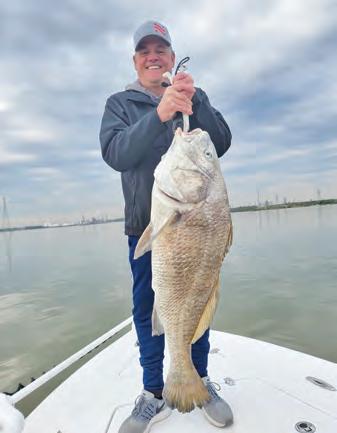
sheepshead. Usually, we'll catch more oversized reds and black drum in shallow water, around 3 - 4 feet deep. We'll look for 'mud boils',' caused by these giants rooting around on the bottom for food.
Remember, February is a short month. March will be here in a blink of an eye. Don't be the one left on the dock because of lack of preparation. Create a to - do - list and stick with it. Hopefully, I'll see some of you at the Houston Fishing Show. Oh, and I have seminars scheduled for Thursday and Sunday at the show.
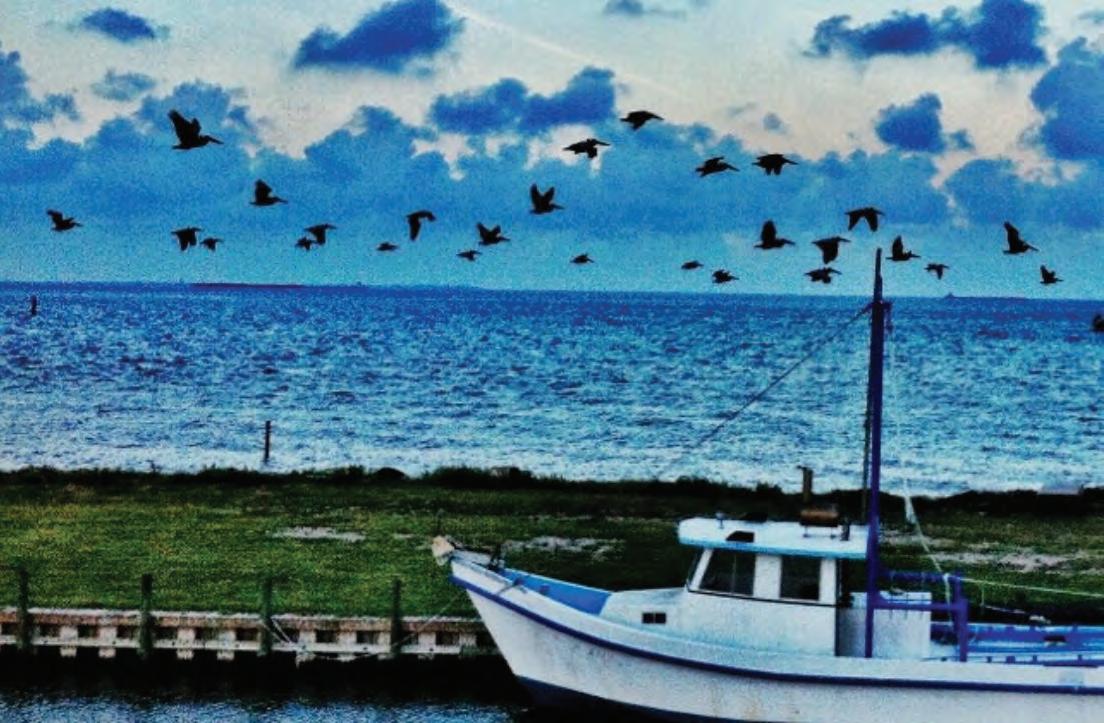
What’s made Eagle Point Fishing Camp unique since 1929 is its location and business model. Because it’s in the center of the Galveston Bay, EPFC allows anglers to conveniently fish a vast stretch of water spanning from Houston to Galveston. Using the same full-service concept as its date of establishment, EPFC has proven for nearly a century that easy access to the water combined with a skilled staff creates the perfect fishing experience. Along with the boat ramp, boat storage, live bait for purchase, tackle shop, and RV park, EPFC has always had a fleet of shrimp boats to supply the bait that so many of their regular customers desire. Their successful commercial shrimping business has been an intricate part of what makes EPFC unique.



SOUTH SHORE HARBOUR MARINA
2400 South Shore Harbour Blvd, League City, TX 77573
LAKE LEWISVILLE
1481 E Hill Park Rd, Lewisville, TX 75056
GRANDPAPPY POINT
1789 Harbor Dr, Denison, TX 75020
NORTH POINT MARINA
3681 Cedar Ridge Park Rd, Temple, TX 76502
WALDEN MARINA
12050 Melville Dr Suite 6, Montgomery, TX 77356
WATERPOINT MARINA
15320 TX-105 Suite 500, Montgomery, TX 77356
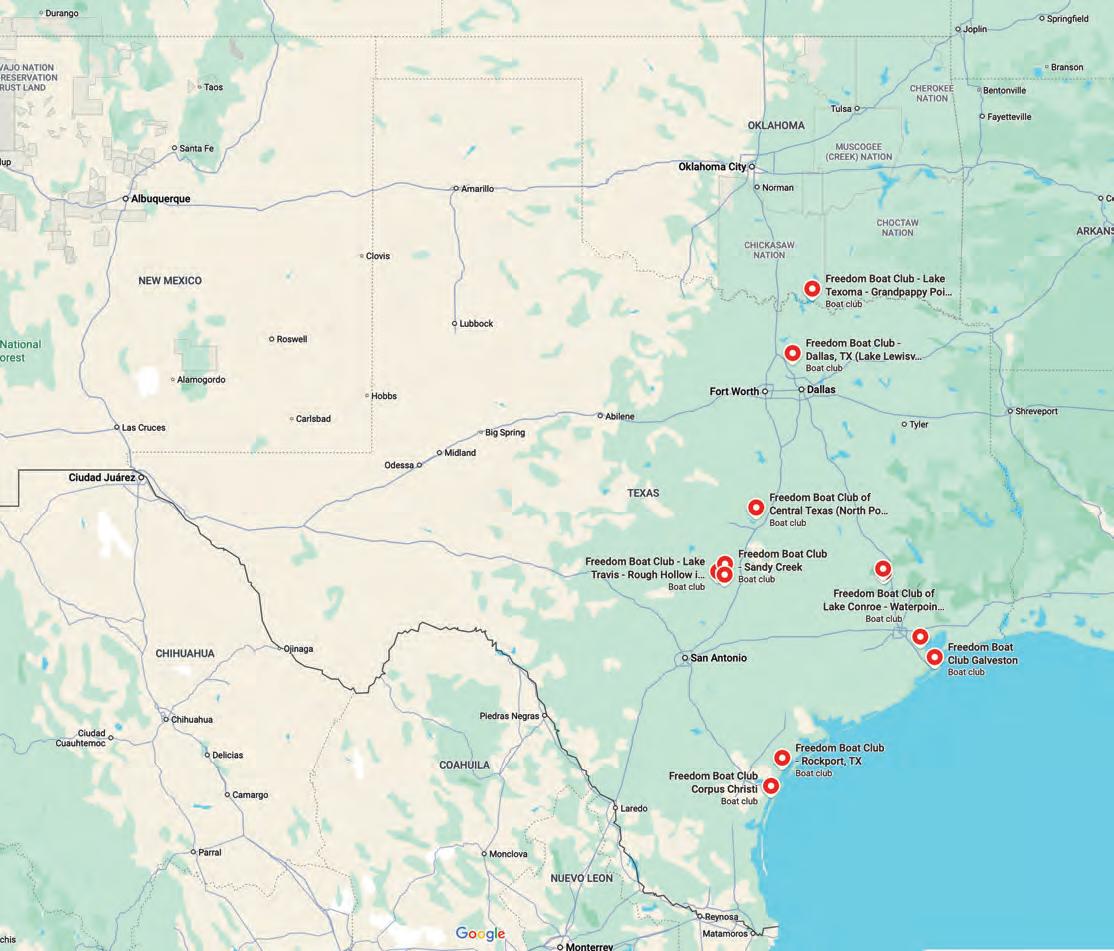
ROUGH HOLLOW IN LAKEWAY
105 Yacht Club Cove, Lakeway, TX 78734
SANDY CREEK MARINA
8714 Lime Creek Rd, Leander, TX 78641
1705 S Quinlan Park Rd, Austin, TX 78732
MARKER 37 MARINA
13317 S Padre Island Dr, Corpus Christi, TX 78418
PELICAN REST MARINA
7819 Broadway St, Galveston, TX 77554
COVE HARBOR YACHT CLUB
121 Cove Harbor Rockport, TX 78382







2 Mon 11:59 0.6 2:52 -0.9 7:08 5:58
3 Tue 6:26 0.5 11:33 0.5 4:10 0.5 3:37 -0.7 7:08 5:59
4 Wed 8:38 0.4 11:22 0.4 4:33 0.2 4:18 -0.5 7:07 6:00
5 Thu
6 Fri 12:36 0.3 5:47 -0.3 5:44 0.1 7:06 6:01
7
8
9 Mon 6:28 0.7 7:51 -0.7 7:03 6:04
10 Tue 7:17 0.8 8:36 -0.7 7:03 6:05
11 Wed 8:15 0.8 9:27 -0.7 7:02 6:05
12 Thu 9:20 0.8 10:30 -0.7 7:01 6:06
13 Fri 10:08 0.9 11:34 -0.8 7:00 6:07
14 Sat 10:40 0.9 12:23 -0.8 6:59 6:08
15 Sun 10:56 0.8 1:04 -0.8 6:58 6:09
18 Wed 6:48 0.4 10:29 0.6 3:45
19
20
25
26 Thu 8:25 1.1 9:47 -0.8 6:48 6:17
27 Fri 9:29 1.0 11:05 -0.8 6:47 6:17
28 Sat 10:09 1.0 12:12



www.USHarbors.com


AM ft PM ft Rise Set Moon
1 Sun 12:38 1.3 4:30 1.7 8:33 -1.2 10:15 1.1 7:07 5:57
2 Mon 1:57 1.3 5:01 1.6 9:24 -0.9 10:41 0.9 7:07 5:58
3 Tue 3:07 1.2 5:27 1.4 10:12 -0.6 11:15 0.6 7:06 5:59
4 Wed 4:17 1.2 5:50 1.2 11:01 -0.3 11:53 0.4 7:06 6:00
5 Thu 5:29 1.1 6:09 1.1 11:52 0.1 7:05 6:00
6 Fri 6:51 1.1 6:25 1.0 12:36 0.2 12:54 0.5 7:04 6:01
7 Sat 8:29 1.1 6:33 1.0 1:21 0.0 2:26 0.8 7:04 6:02
8 Sun 10:28 1.2 2:09 -0.2 7:03 6:03
9 Mon 12:00 1.4 3:01 -0.3 7:02 6:04
10 Tue 12:59 1.5 3:54 -0.4 7:01 6:04
11 Wed 1:44 1.6 4:47 -0.5 7:01 6:05
12 Thu 2:21 1.7 5:36 -0.6 7:00 6:06
13 Fri 2:53 1.7 6:22 -0.6 6:59 6:07
14 Sat 3:22 1.7 7:04 -0.7 6:58 6:07
15 Sun 3:46 1.6 7:43 -0.7 9:43 1.1 6:57 6:08
16 Mon 12:53 1.2 4:09 1.6 8:21 -0.6 9:33 1.0 6:56 6:09
17 Tue 1:57 1.2 4:29 1.5 8:59 -0.5 9:45 0.8 6:55 6:10
18 Wed 3:00 1.3 4:48 1.4 9:40 -0.3 10:10 0.6 6:55 6:10
19 Thu 4:06 1.3 5:05 1.3
22
24 Tue 11:17 1.8 2:16 -0.6 6:49 6:15
25 Wed 12:30 2.0 3:25 -0.8 6:48 6:15
26 Thu 1:26 2.0 4:35 -0.8 6:47 6:16
27 Fri 2:11 2.0 5:41 -0.8 6:46 6:17
28 Sat 2:47 1.9 6:42 -0.8 8:39 1.2 6:45 6:18 www.USHarbors.com







BY CAPT. MICHAEL OKRUHLIK MyCoastOutdoors@yahoo.com www.MyCoastOutdoors.com
February might not get the hype of spring break or summer tides, but proficient coastal anglers know a secret: some of the best fishing of the year happens when the crowds are gone, the water is cold, and the fish are predictable.
Winter has settled in by February. Water temperatures hover in the upper 40s to low 50s, especially after a strong north wind. That cold pushes bait and gamefish into tighter zones, turning miles of water into a handful of highpercentage spots. If you can find warmth, you can find fish.
Speckled trout are the headline act this time of year. Big trout in particular prefer slow, easy meals in cold water, which is why February is prime time for trophy hunters. Deep guts, channels, and drop-offs near shallow flats are key. Trout slide shallow during the afternoon when the sun warms mud or dark grass, then fall back into deeper water when temperatures drop.
Slow presentations rule. Soft plastics on light jig heads, suspending twitch baits, and soft jerk shads worked slowly can trigger reaction strikes. Make sure you know the gear ratio of your reel. You may think you are moving slowly, but if the reel is taking up a lot of line, you may be off target. Cold-water trout won’t chase far, but they
will inhale an easy meal.
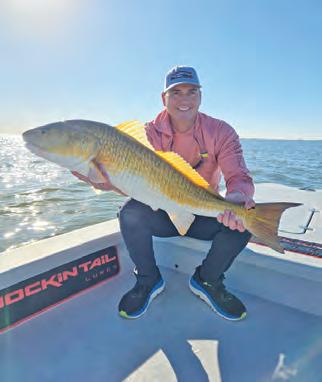
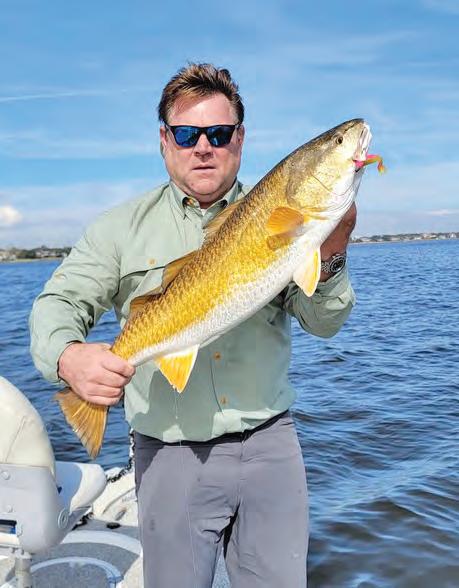
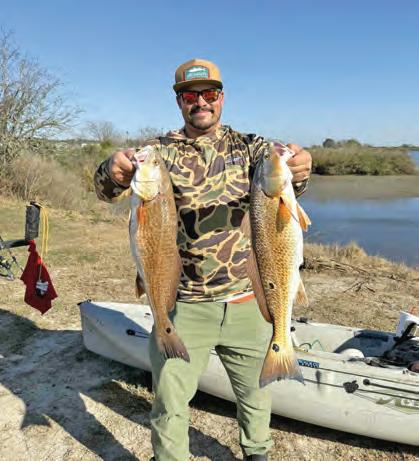
Redfish remain a dependable target throughout February. While they may not school as aggressively as in the fall, reds still prowl shorelines, back lakes, and marsh drains— especially on sunny days. Look for black mud bottoms that warm faster and concentrate bait.
Sight-casting opportunities can be outstanding on calm, clear days. Reds cruising skinny water are often willing biters, even in cold conditions. Gold spoons, paddle tails, and weedless soft plastics shine here, particularly when worked steadily along shorelines.
February fishing success is less about the tide chart and more about the thermometer.
Midday is prime time. Early mornings can be brutally slow after a cold night, but a few hours of sunshine can flip the switch fast. Pay attention to warming trends—two or three stable days can dramatically improve the bite.
Wind plays a major role this month as well. Strong north winds drain water out of bays and expose structure, which can help you locate fish holding in remaining deeper pockets. On calmer days, expect clearer water and more finicky fish.
February on the Texas coast rewards patience, observation, and confidence. It’s not about covering water—it’s about fishing smart, fishing slow, and being ready when that unmistakable thump signals a wintertime strike worth remembering.
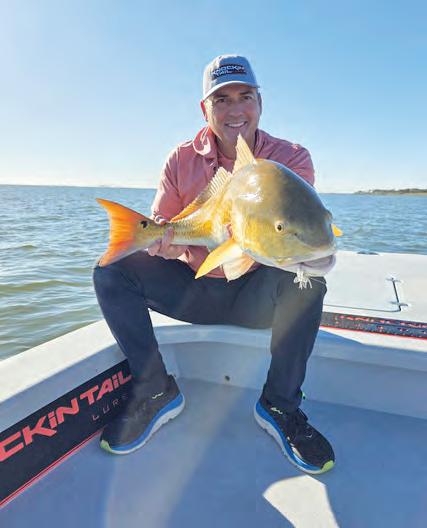
As I write this article in January, it is near 80 degrees. With that said, if February feels like an early spring, follow your spring fishing guidelines. The fish don’t have a calendar.
Capt. Michael Okruhlik is the inventor and owner of Knockin Tail Lures®
Photo courtesy of Knockin Tail Lures®






PALOMAR KNOT – This knot, over 95 percent in strength, takes more line to tie because it is doubled first. It is good for lines up to and over 20 pound test. Because it is run doubled through the lure or hook eye, knotted and then looped over the hook or lure, it may tangle easier. It is a favorite knot of many anglers.
Fishing knots allow you to properly tie your line to your hook, lure and other tackle. These knots have been developed and tested thoroughly to assure tying ease and strength. Each knot has a specific purpose. Before you learn any new knot, consider the following:
• The right knot is important. You want the strongest knot possible so that you don’t lose the fish. A simple overhand knot weakens line by about 50 percent.
• Practice tying knots. Take a length of fishing line, a hook with the point cut off or buried into a cork, and practice. Practice until you can tie each knot correctly
• Wet knots with saliva as you pull them tight. This prevents damage to the line and allows the knot to pull tight.
• Pull knots tight to prevent slippage.
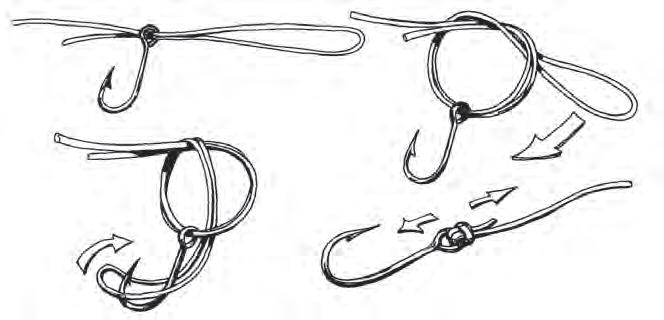
NON-SLIP LOOP KNOT – This knot creates a fixed loop so that a hook can freely move. It is best with larger lines where a tight knot such as the Improved Clinch can impede the hook/bait or lure movement. It is similar to tying the Improved Clinch Knot.
• Trim knots closely with a nail clipper. A good knot, pulled tight, will not come loose. Close trimming prevents the knot from catching snags or weeds. Do not burn the tag end –heat damages the line and knot.
CAPT PAUL MARCACCIO
• Knots have their own terminology. The "tag end" (sometimes called the "working end") is the end of the line used to tie the knot. The "standing end" is that part of the line coming from your fishing reel.
T.P. & W. & USCG License Marcaccio Fishing Academy captpaul@gofishgalveston.com www.gofishgalveston.com
The fish are more sluggish from the cold, but the larger ones are more active feeders.
In the winter, the larger fish are more tightly schooled. You may find larger trout running with their smaller friends.
• Leave a foot or more of the "tag end" of line for tying knots so that you can tie them properly.
This is that time of year when you better plan your fishing trip for trophy trout or redfish. Luck has a lot to do with it, but don’t leave anything to chance. If you are prepared, the odds will be in your favor.
I remember my grandfather using small trout (six-to-eight inches long) as bait for larger trout. Of course, that was before the minimum size limits were in place. Our first ever size limit was established in 1978 @ 12 inches.
• Pull up all ends when tightening the knot. With some knots this will be only the standing end and tag end; with other knots it might be three or four ends.
Come spring and summer, the bigger specs tend to shy away from schools. They travel in small pods, maybe six or less. Often, the larger fish are loners.
• Knots are rarely as strong as the line. Knot strength is often expressed in percent, such as the percentage of the strength of the line at which the knot (weaker than the line) will break. As an example, a knot testing 90 percent will break at nine pounds of tension in a line testing ten-pounds.
For obvious reasons, the best way to catch the above mentioned is with a licensed, professional guide. It is their business to follow the movement of the fish. They often have a few special techniques to entice the larger ones.
Knots to join line are good for retying broken lines and to join a leader to the end of the line.
Clothing is essential. Dress in layers, so as you can peel them off as the day’s activity and sun heats up. Neoprene or wade-lites waders are needed to block the frigid water temperature. Usually, you can wear soft cotton sweats and thermal underwear to block out additional chill from the water. Wearing the Reef Predator boots are a great addition and provides safety as well. Made by For Ever Last. Simms Outdoors has numerous others as well.
Try fishing at night under the lights. People with bayfront property and pier owners can catch a good many big trout and reds by rigging overhead lights to beam down on the water. The lights attract a lot of bait and with the bait come the game fish. Usually, the bigger trout will be more active around the fringe of the lights.
BLOOD KNOT – This knot requires five turns of line, with each tag end around the overlapped standing end of line. This is easy to do by making one series of turns and tucking the tag end between the two lines and then repeating with the second line. It is a good knot if the lines are not too dissimilar in diameters. It’s good for tying 15 pound test line to 20 pound test line; not good for tying 15 pound test line to 50 pound test line.
There are several types of knots. These knots are especially good for nylon monofilament, the most commonly used line for all fishing.
Lure selection should be that of larger deep running plugs. Examples are the “Corky”, MirroLURE Soft Dine by Mirrolure, Skittle Walkers by Rapalo and the Baby Spooks. Top water lures can sometimes jump-start your heart with their erratic actions, causing “blow-ups” as you retrieve it. Water temperature is currently around 60 degrees. Switch to a deeper plug as mentioned earlier. Slow sinkers like the series from Mirro -lure, 38, 51 and 52.
To use live bait, selections can include small piggy perch, croakers or mullet. Using live shrimp, place this bait under a popping cork about three or four feet deep.
A point to keep in mind about the big ones. They are extremely easy to spook. The reason for their size is their awareness and caution. If you fail to keep this in mind, you will obviously never find one on the end of your rod. Most fishermen in search of large trout will wade fish, using boats simply as a means to reach the fishing grounds. This method allows them to approach these areas with a minimum of noise. Make your cast so the bait strikes the water with as little fanfare as possible.
Knots to tie a fishing line to a hook or lure are the basic and used in all fishing.
Remember, almost every large trout is going to be a female. The males don’t grow as big, nor do they live as long as the female. Survival of the fittest.
In the winter, areas that may produce larger trout and red catches are around deep holes, where there is a minimum of current. Large ship basins and areas adjacent to the ship channel where there are dead ends are good places to catch fish. Offatts Bayou, Moses Lake and Clear Lake, to name just a few.
Pay close attention to what’s happening in the water. Be aware of baitfish activity. Any activity will aid you to catch that trophy speckled trout.
Remember: Structure, bait, and water movement will result in good catches of large speckled trout and redfish.
IMPROVED CLINCH KNOT- This is a variation of an older clinch knot. The variation (a final tuck of the line back through a loop) makes this knot test 95 percent of the line strength. The secret of this knot is to make five turns of the tag end of the line around the standing end part before running the tag end back through the formed loop. Use for lines up to 20 pound test.
Interesting enough, the odds of catching large trout or reds in the winter are reasonably good.
During the spring and early fall, work the fringes of salt grass marshes early in the morning or late in the evening on a spring flood tide. By the way, these times coincide with the trout spawn periods. The trout’s roe is dropped in the vicinity of tall grass. As soon as the eggs hatch, the young fish use the grass for food and cover.
What a lot of anglers may not know is that trout are cannibalistic. After the spawn, they return to feed on the young trout.
Presentation and Patience. Sounds easy. Just try all winter and you will be rewarded. Best bet this time of year has been the soft plastic Assassins, or the Down South Lures. Use em’ right on the bottom in that mud area or near shell reefs.
As always, the best time to go fishing is any time you can. See ya’ll on Galveston Bay.
By Capt. Lukas Brickweg
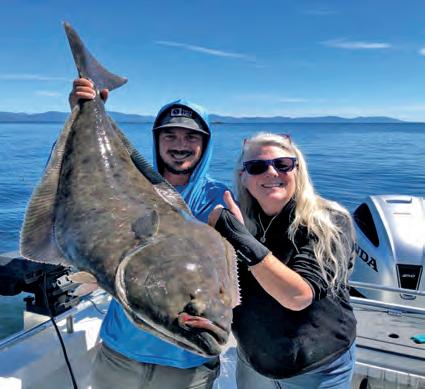
If you’ve ever dreamed about catching halibut and cod in the wilderness of Alaska - rod bent, line screaming, and majestic wildlife abound – now is the time to turn that dream into reality. Every season in Ketchikan, Alaska, May marks the kicko! to world-class halibut and Paci c cod shing, and we are ready to put you on the sh of a lifetime.
May is a special month in Southeast Alaska. e long daylight hours return, the ocean comes alive, and the early-season halibut move onto nearshore waters to feed. Halibut gather on the underwater ledges, humps, and sandy $ats, areas that we know like the backs of our hands, ranging from 200-400 feet.
At the same time, hungry Paci c cod patrol the same bottom structure, adding an action-packed bonus to every trip. “Alaska cod shing chaos” is the best way to describe
this seasonal bite. ere are no limits on retaining Paci c cod, allowing anglers to bring home huge hauls of cod and halibut. is means you can o en pull up a mixed bag of halibut, cod, and rock sh - making for one of the most productive and delicious shing experiences anywhere in the world.
Reeling up cod and halibut until your arms give out is a good way to summarize Alaska bottom shing in May.
May trips tend to ll quickly because the reputation for aggressive sh and minimum shing pressure. is combination equates to an anglers dream scenario. Whether you’re $ying in for our three to four day allinclusive lodging/ shing packages or on a cruise, it’s best to start planning and booking early. Ketchikan provides convenient $ights, accommodating guests from all over the US. Our all-inclusive packages provide airport transfer, lodging, meals, shing and sh processing.
The Bottom Line ere’s shing, and then there’s Alaska shing. And when it comes to halibut and
cod, May in Ketchikan is as good as it gets. So give us a call to book your spot, and come experience the thrill of hooking giants where every trip is a story worth telling.
Book your "Bucket List" trip to Alaska with Capt. Lukas Brickweg, of Ketchikan’s Finest Fishing Charters, at ketchikan shingtrips.com, call (907) 617-4717 or email ketchikan shingtrips@gmail.com.

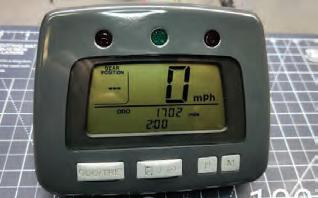
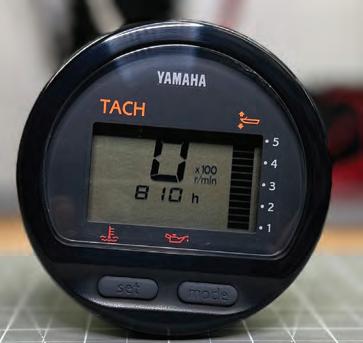




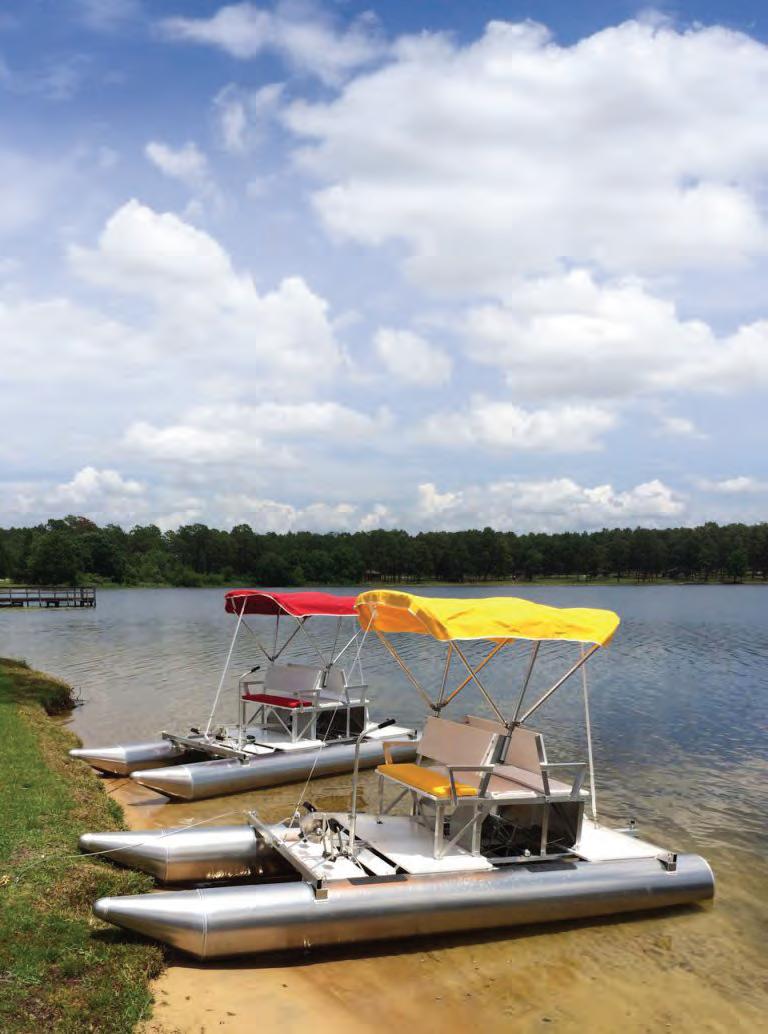
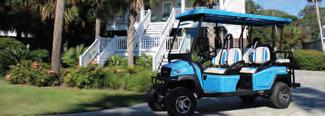
CAPACITY: Four Adults or 800 pounds (reduce by accessories and gear) Rear sun deck with retractable ladder for boarding in deep water. Two passengers face forward and two face backward. The front passengers pedal.
By CAM Sta
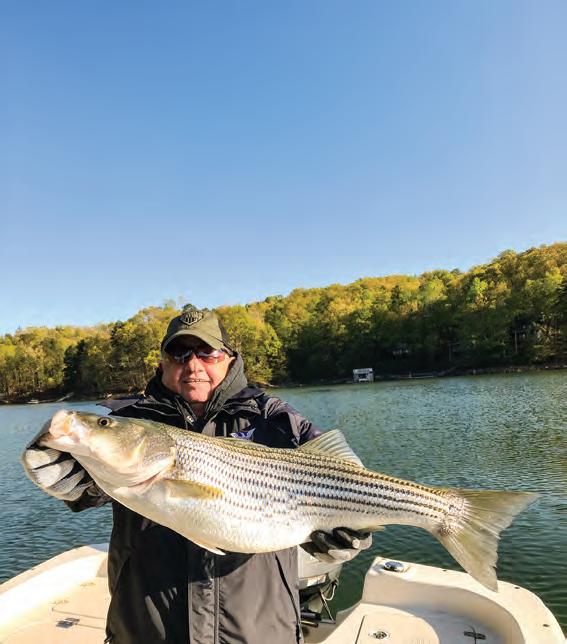
Whether in saltwater or freshwater, excellent striper shing awaits anglers hearty enough to brave winter conditions. So layer up, zip into that parka, and go—some of the biggest sh of the year are feeding right now.
At the southern end of their fall migration, striped bass spend the winter o! the coast of North Carolina. ey follow schools of bait up and down the shoreline from Wilmington to the Outer Banks, feeding heavily along the way. In many years, Oregon Inlet becomes the epicenter of the action, though stripers can be found in most inlets throughout the region.
e key is to follow the birds, which o en reveal bass blowing up on menhaden, glass minnows, or eels. At times the action pushes close enough to shore that surfcasters can hook stripers right from the beaches of the Outer Banks. More o en, however, the best approach is hiring a local captain armed with recent intel and a fast boat.
Farther south, Wilmington provides another winter opportunity as striped bass stack up in the Cape Fear River. ese sh hold near structure, dropo!s, and creek mouths, and can be caught on arti cials—or even on $ies. is resident population is separate from the highly migratory sh wintering o! the Outer Banks. Cape Fear stripers are strictly catch-and-release and must be returned to the water immediately, so keep an eye out for tagged sh.
Meanwhile, freshwater reservoirs across the Southern states and into the Mid-Atlantic also produce solid winter striper shing. While smaller, schoolie-sized sh can become sluggish during the coldest periods, larger stripers continue to feed. e pace may not match summertime downline action over massive schools, but the sh that do bite are o en bigger.

Tactics vary by shery, but when water temperatures stabilize—or during a multi-day warming trend—the largest sh in the lake o en push shallow, sometimes surprisingly so, as they shadow schools of small shad. Find the $ickering bait, and you’ll nd the stripers. You may even see them picking o! prey near the surface. Stealth is critical in these situations, and so plastics like Flukes frequently outproduce live bait. ey’re easier to cast and allow for a slow, controlled retrieve.
Another e!ective approach is covering water by trolling wide spreads of small live baits, pulling umbrella rigs loaded with swimbaits, or combining both methods. When shing this way, good local information is invaluable. On some lakes, stripers spend the winter near the dam; on others, they push far up into the creeks.
Winter may test an angler’s resolve, but for those willing to endure the cold, striper shing can be at its best. From coastal inlets and rivers to inland reservoirs, striped bass remain active and accessible, o en with less pressure and a better chance at trophy-sized sh. Success comes down to preparation, paying attention to bait and bird activity, and adapting tactics to changing conditions. Bundle up, do your homework, and embrace the season—the reward could be the biggest striper of your year.


Coming o! the heels of a record-breaking 2025 season that awarded 11 century belts, saw four- rst time champions (two of which were members of the 2025 rookie class) and garnered over 183 million social media impressions, B.A.S.S. has announced the 101-angler eld for an exciting 2026 Elite Series season.
is year, anglers will be put to the test with the use of forward-facing sonar only being allowed at ve of the nine regular-season Elite events. Anglers will be competing for a $100,000 rst-place prize at each stop of the season, while also accumulating valuable Progressive Bassmaster Angler of the Year points in hopes of making it to the 2027 Bass Pro Shops Bassmaster Classic presented by Under Armour.

“Each season, the Bassmaster Elite Series showcases the very best in professional bass shing, and 2026 will be no exception,” said B.A.S.S. Elite Series Tournament Director Lisa Talmadge. “We’re excited to welcome 101 incredibly talented anglers who represent the heart of this sport—a mix of proven champions, rising stars and hungry newcomers all ready to compete on some of the most iconic sheries in the country. It’s going to be an unforgettable season for our anglers and fans alike.”
With the exception of one angler, every 2025 Elite Series angler who quali ed is returning next year. e list of anglers includes 2025 Bass Pro Shops Bassmaster Classic champion Easton Fothergill of Grand Rapids, Minn., who won the most coveted trophy in bass shing during his freshman season on the Elites. Two-time Progressive Bassmaster Angler of the Year Chris Johnston will also join the ranks of returning anglers alongside Dakota Lithium Bassmaster Rookie of the Year Tucker Smith, who took home his rst blue trophy at the 2025 Bassmaster Elite at Lake Fork with a 127-pound, 8-ounce winning weight that also earned him a century belt.
Ten anglers from the Nitro Boats Bassmaster Elite Quali ers will also be joining the 2026 Elite roster, including 20-year-old Alabama phenom Fisher Anaya who claimed the 2025 Nitro Boats Bassmaster Elite Quali ers Angler of the Year title. Wisconsin’s Nick Trim clinched an Elite Series spot for himself alongside his big win at the 2025 Mercury B.A.S.S. Nation Championship at Upper Mississippi River presented by Lowrance. e 2026 Progressive Bassmaster Elite Series kicks o! on Alabama’s Lake Guntersville February 5. From there the tournament trail will wind through six states as anglers battle for cash prizes and attempt to qualify for the 2027 Bass Pro Shops Bassmaster Classic presented by Under Armour.
Each tournament will begin with the full eld of anglers on Days 1 and 2 before the eld is cut to the Top 50 on Semi nal Saturday. Only the Top 10 anglers will sh the nal day of the event, with a $100,000 rstplace prize and a blue trophy on the line. For the complete roster, and to keep up with all the action from the 2026 Elite Series season visit Bassmaster.com.

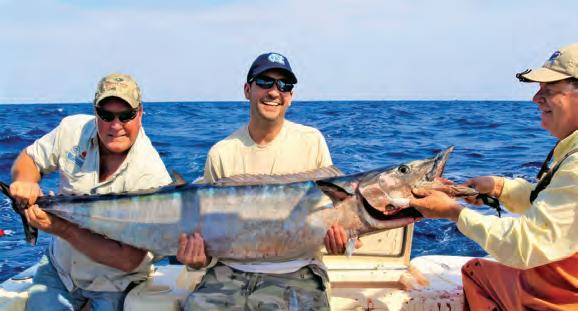
This is the time of year to nd the wall of warmer water and get the wahoo bite going. All of the water nearshore is cold and where the 68- plusdegree water meets that cold water can be an excellent spot for targeting wahoo. is is a great time of year to target wahoo during the rst hour or two of your trip using high speed trolling. You can cover a lot of ground high speed trolling, which speci cally targets wahoo. Once the sun has been up for a few hours your chances at a wahoo bite diminish unless it’s an overcast or rainy day. Wahoo regulate the amount of sun they take in by going deeper as the sun rises, so midmorning is a good time to change tactics.
Slow dri s, kite shing and jigging the column with live baits is a great mid-morning tactic and the bigger the bait the better. ere’s no telling what you’ll raise during these colder days shing the temperature change. Never count out deep dropping near these temperature change areas either. Fishing the entire water column from the surface to the bottom turns a cold day into a cooler full of sh and some awesome dinners.



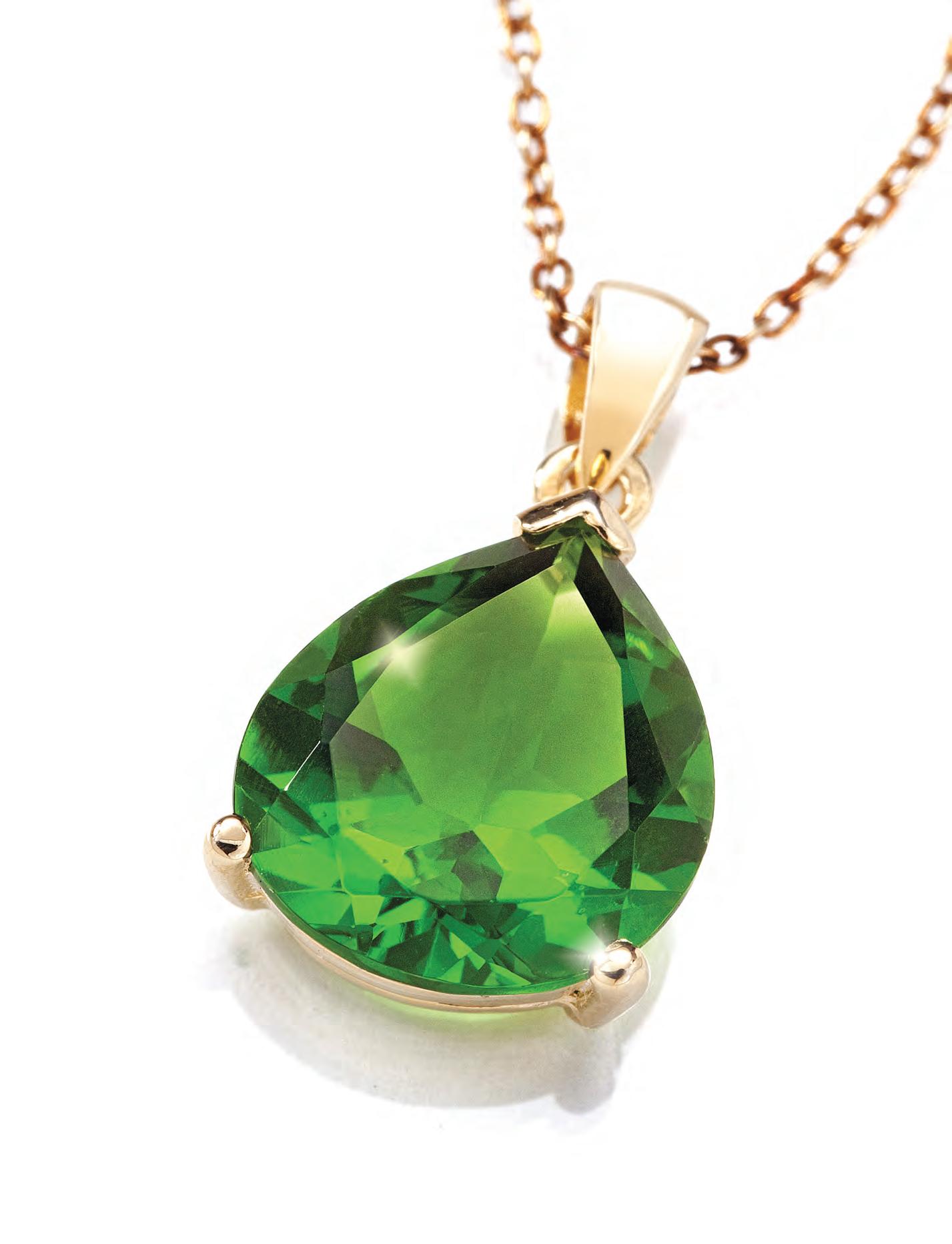
Discover this spectacular 6½-carat green treasure from Mount St. Helens!
For almost a hundred years it lay dormant. Silently building strength. At 10,000 feet high, it was truly a sleeping giant. Until May 18, 1980, when the beast awoke with violent force and revealed its greatest secret. Mount St. Helens erupted, sending up a 80,000-foot column of ash and smoke. From that chaos, something beautiful emerged… our spectacular Helenite Necklace
Helenite is produced from the heated volcanic rock of Mount St. Helens and the brilliant green creation has captured the eye of jewelry designers worldwide. Today you can wear this massive 6!-carat stunner for only $99!
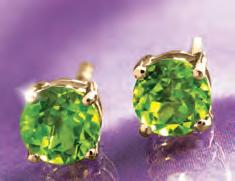
Helenite Earrings -a $99 valuewith purchase of Helenite Necklace
Make your emeralds jealous. Our Helenite Necklace puts the green stone center stage, with a faceted pearcut set in .925 sterling silver finished in luxurious gold. The explosive origins of the stone are echoed in the flashes of light that radiate as the piece swings gracefully from its 18" luxurious gold-finished sterling silver chain. Today the volcano sits quiet, but this unique piece of American natural history continues to erupt with gorgeous green fire. Your satisfaction is guaranteed. Bring home the Helenite Necklace and see for yourself. If you are not completely blown away by the rare beauty of this exceptional stone, simply return the necklace within 30 days for a full refund of your purchase price.
JEWELRY SPECS:
- 6 ½ ctw Helenite in gold-finished sterling silver setting - 18" gold-finished sterling silver chain
Limited to the first 600 orders from this ad only
Helenite Necklace (6 ½ ctw) ............. Only $99 +S&P
Helenite Stud Earrings (1 ctw) ................ $99 +S&P
Helenite Set $198 ........... Call-in price only $99 +S&P (Set includes necklace and earrings)
Call now to take advantage of this extremely limited offer.
1-800-333-2045
Promotional Code HNN213-05
Please mention this code when you call.
color.

“My wife received more compliments on this stone on the first day she wore it than any other piece of jewelry I’ve ever given her.” - J. from Orlando, FL Stauer Client