











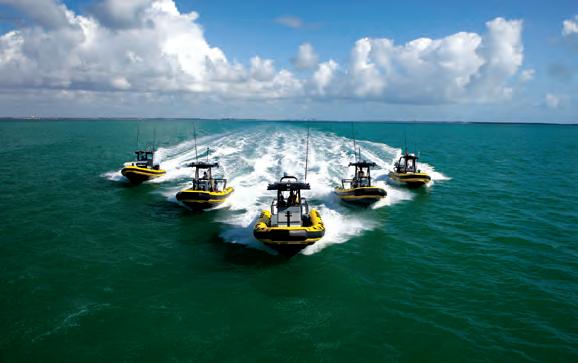
Ever see a commercial harbor full of Furuno Marine Electronics and wonder why the pros rely on us?



See why here








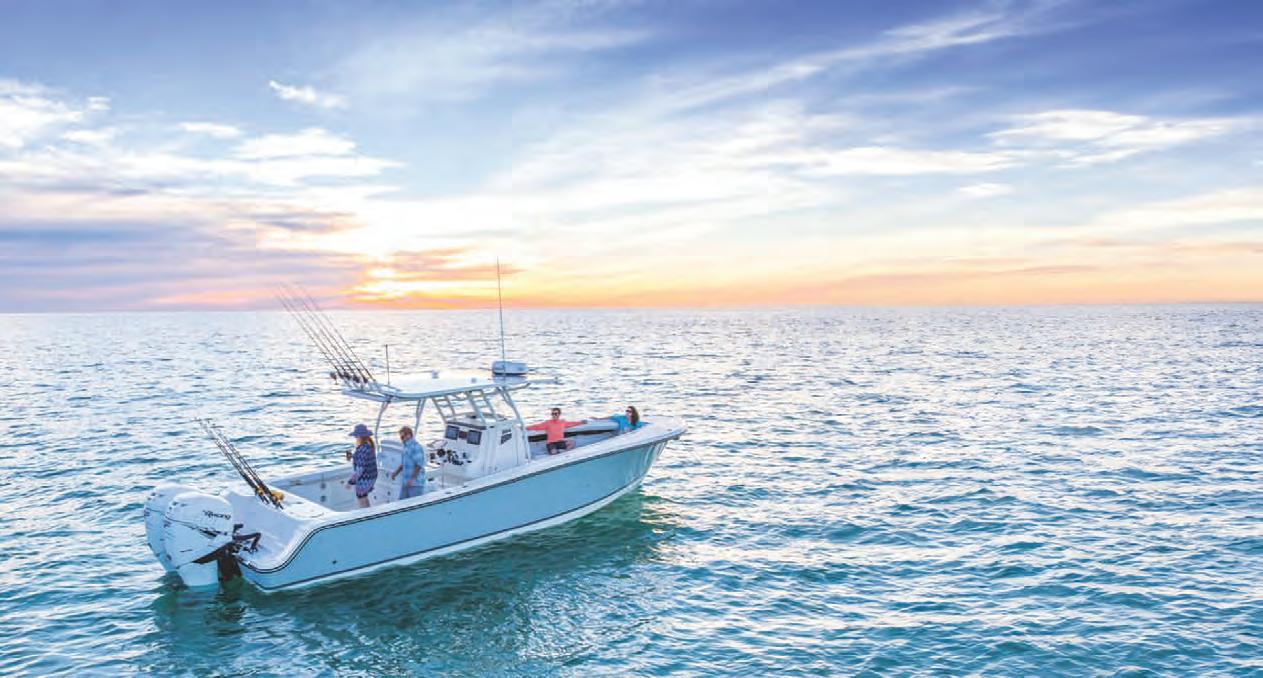





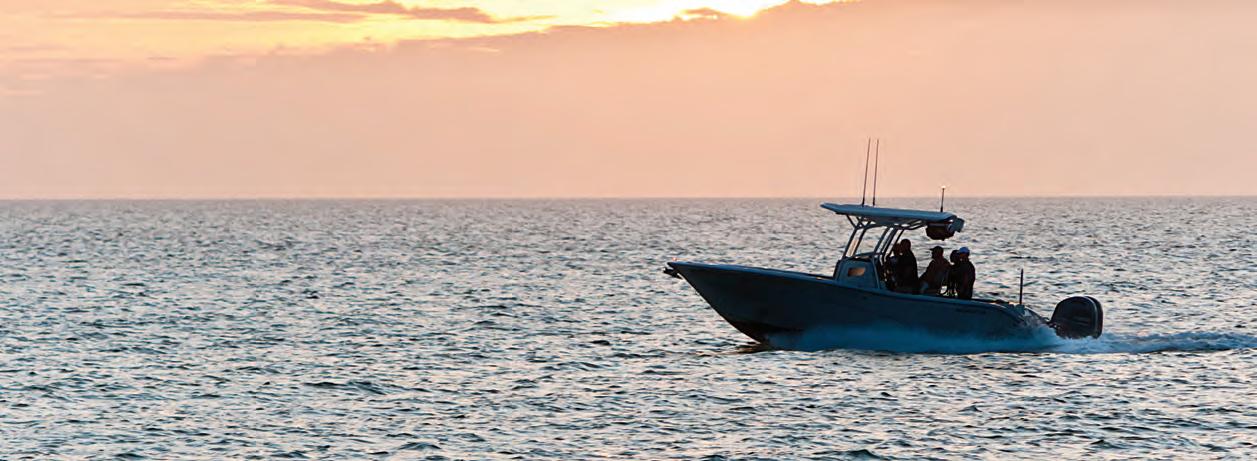
Are you ready to embark on your next on-water adventure? Before you set sail, here are fve things to know about boat insurance.
1. Boat insurance isn’t just for accidents
With comprehensive coverage, you’ll also be protected fnancially for theft, vandalism, and unexpected events like storms if you need repairs or replacements due to damage. 2. Accidents can happen to anyone
When accidents happen, boat insurance offers liability coverage for damages or injuries you cause while boating, up to specifed limits. It can also cover lawsuit costs if you’re sued.
3. Boat insurance can cover medical payments
Boat insurance offers a range of optional medical payments coverage limits, helping to cover medical expenses if you’re in an accident or someone is hurt on your boat, regardless of fault.
4. Most lenders require boat insurance
If you fnanced your boat, you’ll likely need boat insurance since most lenders require boat insurance to protect their investment. Additionally, some marinas or municipalities require proof of insurance for docking.
5. Progressive offers specialized boat coverages
Ever worry about getting stuck on the water?
Progressive’s Sign & Glide® On-Water Towing coverage** can help. It’s an additional coverage that steps in if your boat is disabled or breaks down on the water, paying for on-water towing, jump starts, soft ungroundings, and fuel delivery. Fuel cost isn’t included.
Don’t let unforeseen circumstances disrupt your voyage. Cruise with confdence thanks to Progressive Boat insurance. Because when it comes to your boat, peace of mind is the ultimate luxury.
Scan to get a quote in as little as 4 minutes.
to learn more.












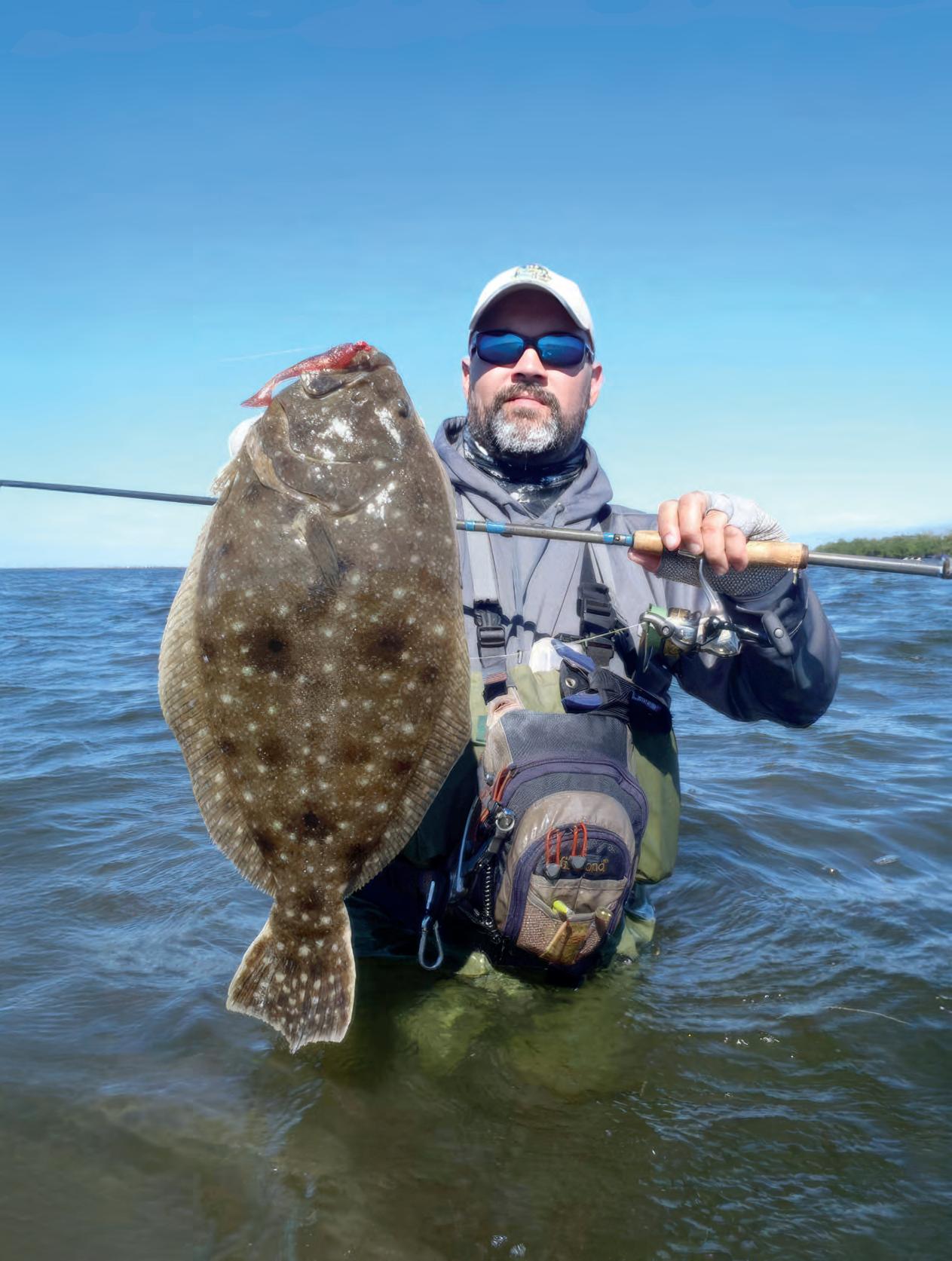
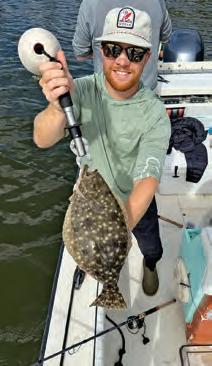
Do you want to catch more !ounder? You will need to nd an area with current, bait and structure for the !ounder to ambush its prey.
Where are they?
Flounder are very prevalent in creek mouths, jetties, sandy points, oyster bars, docks and any other underwater structures. e !ounder will take advantage of the structures to block the current, saving them energy and bringing bait right to their gluttonous mouths.
Flounder are the perfect ambush predator. ey like to bury in the sand adjacent to structures of some kind facing directly into the current. Your lure presentations always need to come from up current or you will spook them.
What do they eat?
CAPT. MIKE SMITH
and bait sh imitations.
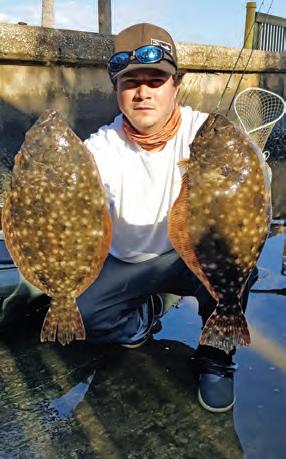
Flounder love to eat unsuspecting shrimp and sh brought to them by the current. e best lures to catch !ounder are scented shrimp

e best colors of lures to use for !ounder are any color as long as it is white. White is by far the best color of lure to catch !ounder. Do other colors work? Yes, if you want to catch fewer !ounders, then use something other than white.
e best lures that I have found for !ounder are Gulp! Shrimp and swimming mullets on a jig head. Start small and go bigger if you notice the bait in the area is large. Having an assortment from 3 to 5 inches will usually be perfect.
A great second choice for a !ounder lure is a white bucktail jig. Add a small piece of shrimp to add odor for best results.
How do you catch a flounder?
Flounder have a very small cone of awareness. ey are very unlikely to notice and
chase a lure that is more than 3 or 4 feet away from them.
ey also have a very small strike zone. ey are very hesitant to rise more than 18 inches o$ of the bottom to eat your lures.
Let’s say you found a beautiful oyster point at the mouth of a creek with plenty of current and bait !owing around it. is scenario is perfect for catching a !ounder.
Cast up current and work the lure on the bottom very slowly in 1 to 3 feet of water. When you think you hooked an oyster, set the hook. Flounder strikes are subtle and o en feel like a hang up.
It is very hard to work your lure too slowly for a !ounder. Old timers will tell you to just drag it on the bottom. I personally like to bounce my lures o$ the bottom being careful to not li it more than 18 inches into the water column.
Pro Tip: Use braided line and !uorocarbon leaders when shing for !ounder. Flouro sinks and helps you present your lures more e$ectively on the bottom. Braid doesn’t stretch and will help you feel a !ounder’s very subtle bites.
If you want to become an o cial !ounder pounder, then follow the tips above and catch more !atties. Go get ‘em!
Capt. Mike Smith, owner of Fish Your Ass O Charters, is an inshore "shing guide who has been "shing the inshore waters, oyster bars and grass ats of Florida for more than 40 years. Reach him at (561) 339-2317, email: contact@ "shyourasso .com or visit "shyourasso .com.
By Astrid deGruchy
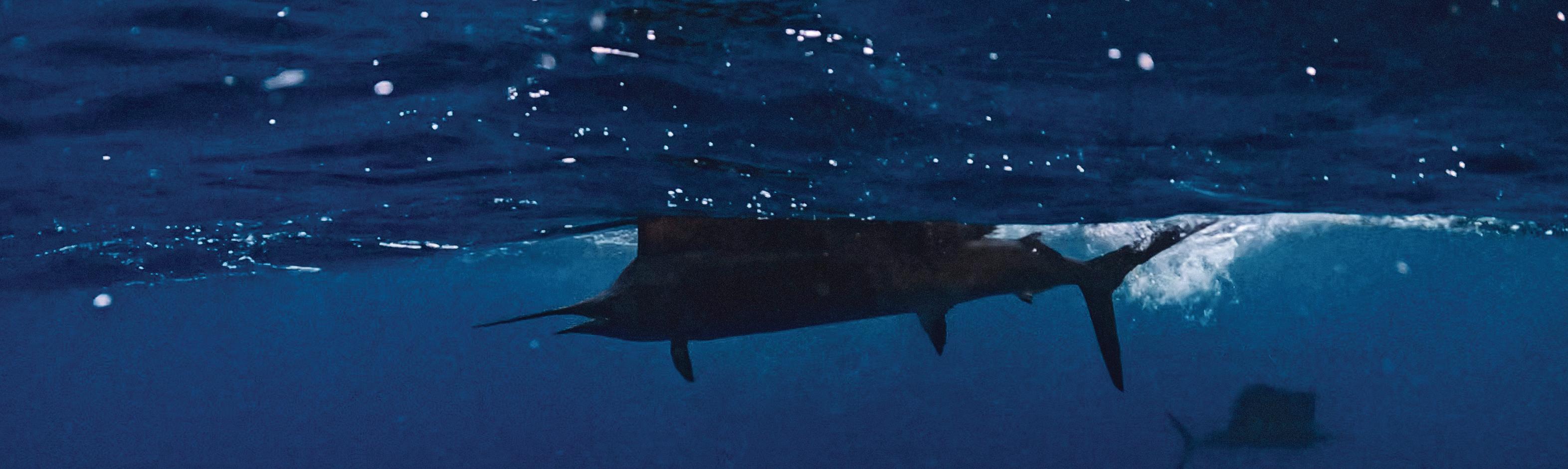
Sailfish are the true showoffs of the Florida Keys. They’re fast, flashy, and love putting on a performance the second you put a bait in the water. One moment everything’s calm and quiet, and the next your reel is screaming while a sailfish is launching itself out of the ocean like it’s trying to win an Olympic medal. It’s the kind of chaos anglers live for.
The Keys are famous for having one of the best sailfish bites anywhere, especially from November through April. Cold fronts push schools of ballyhoo and other bait along the reef, and the sailfish stay right on their heels. Spots like Islamorada, Marathon, Key Largo, and Key West all fire off during the season, with most of the action happening along
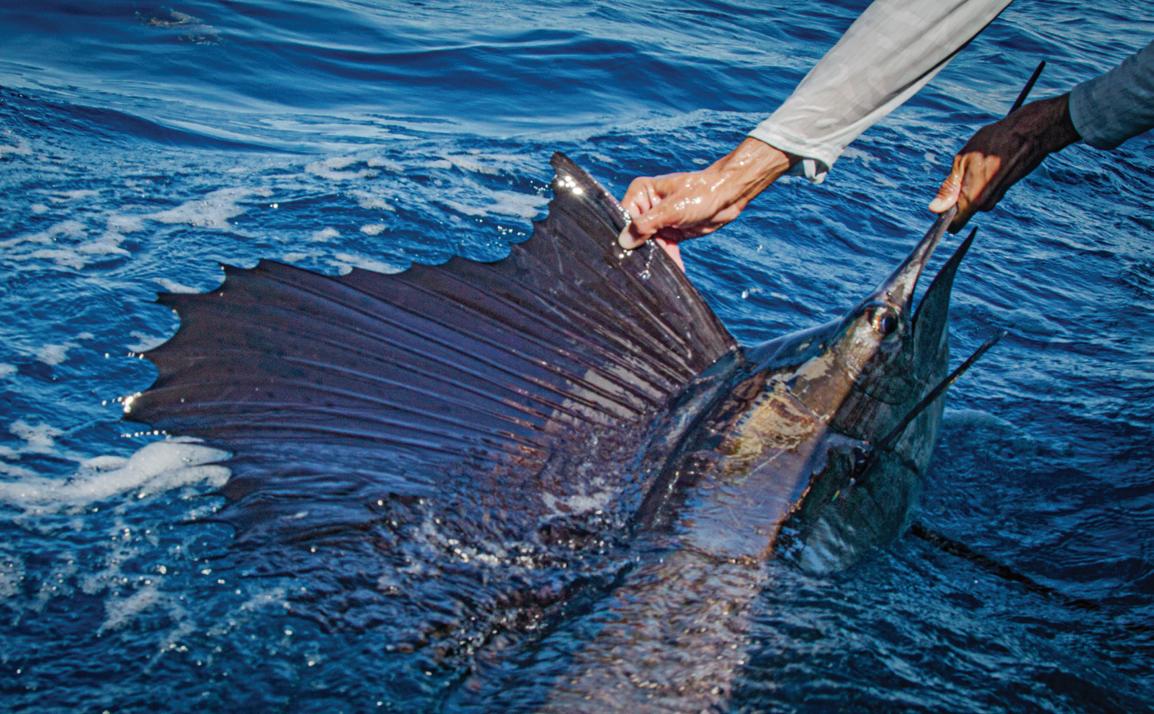
that 80 to 200 foot reef edge. Most captains here rely on live-baiting and kite fishing, two methods that make sailfish practically impossible to resist. There’s nothing like watching a kite bait get
smashed on the surface. And on those calm, clear days after a front, you might even get to sight-cast to tailing sailfish cruising right along the top. It doesn’t get much better than that.
Strong conservation efforts keep sailfish thriving in the Keys, so anglers get to keep making these memories year after year. Whether you’ve done it before or if your someone trying it for the first time, hooking a sailfish here is unforgettable. It’s fast, wild, beautiful and classic Florida Keys fishing.
Follow deGruchy’s adventures at @bean_sportfishing on Instagram and on YouTube @BeanSportfishing.


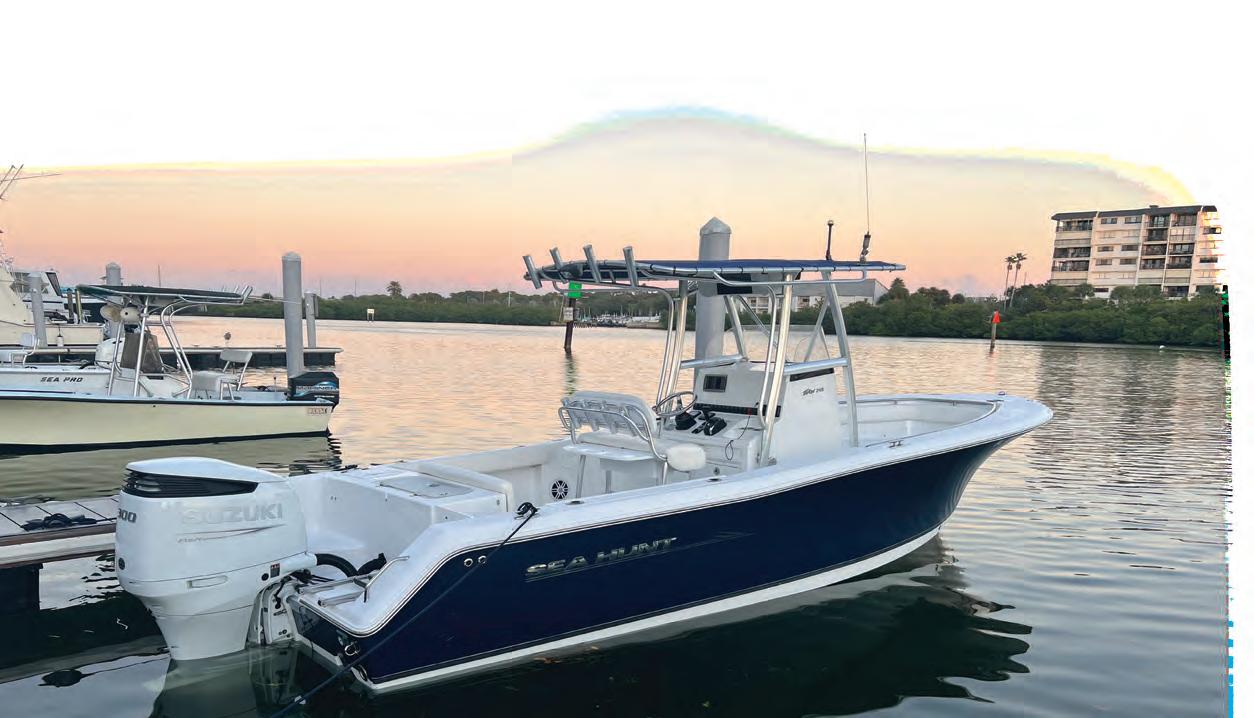
Mastry Engine Center has received the Suzuki Marine Super Service Award and has been ranked #1 in Suzuki Marine US Sales! 60 YEARS OF REPOWER EXPERIENCE!

RePower Packages designed to best ft your needs and not stretch your budget.
Financing available.

Rest assured, all Mastry Suzuki RePowers are backed by Suzuki’s industry leading 5-year factory warranty.

Stationed strategically around the East Coast, all Suzuki RePower Centers have achieved the highest level of Suzuki certifcations to meet and exceed your repower needs.
Stationed strategically around the East Coast, all Suzuki RePower Centers have achieved the highest level of Suzuki certifcations to meet and exceed your repower needs.
When Considering A Repower, Consider These Factors:
•Every Authorized Mastry Suzuki RePower Center has decades of repower experience providing proper rigging, controls, propeller matching and in water testing
•With a Mastry Suzuki RePower, owners gain improved performance, less noise and greater reliability
•Mastry Suzuki RePower’s exclusive Owner’s Edge Program*
•Mastry Suzuki RePower Centers use authentic Suzuki OEM parts and have factory certifed technicians

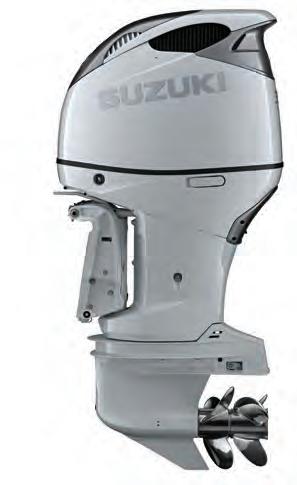
Since 2014, Mastry Engine Center, has been building the premiere Suzuki Outboard repower network in Florida. Today, Authorized Mastry Suzuki Outboard Centers have been exceeding expectaions in the Southeast for over two decades. Recently Suzuki Marine requested Mastry Engine Center to expand the network throughout the Northeast. Now boat owners from Maine to Florida can be assured of the best support for their Suzuki outboard repower project. All Authorized Mastry Suzuki RePower Centers provide the best options, information and package pricing for excellent performance in repower.

*Get with the Program!
When you purchase a new Suzuki outboard from an authorized Mastry RePower Center you qualify to become a member of the Mastry Suzuki Owner’s Edge. Owners receive an identifcation card that provides them with important information about their Suzuki outboard motor as well as a passport to additional benefts during ownership. Members enjoy a detailed engine maintenance schedule, Mastry Suzuki RePower Trade Program and special pricing from Mastry Suzuki Partners.

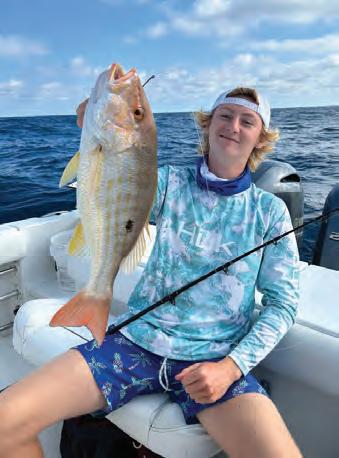
At its November meeting, the Florida Fish and Wildlife Conservation Commission (FWC) approved rule changes for lane snapper in Florida’s Gulf state waters to be more consistent with current and pending federal regulations.
Approved modi!cations of lane snapper in Gulf state waters include increasing the commercial and recreational minimum size limit from 8 inches to 10 inches total length, and establishing a 20-!shper-person recreational bag limit. ese changes are intended to reduce the risk of over!shing, mitigate the likelihood of early closures, and increase consistency between Gulf state and federal waters. e new Gulf lane snapper recreational regulations will go into e ect on April 1, 2026.
For the full Commission Meeting Nov 5-6 agenda including links to background reports, go to MyFWC.com/About and click on “ e Commission” and “Commission Meetings.”
By
For years when I struggled with new computer skills that young people seemed to effortlessly adopt and utilize, I would declare that I was simply a “Luddite.” What I meant was that I was untrained and mildly averse to adopting a new technology, or a different way of thinking and doing. I was reacting to an internal conservative resistance to change, and a little fear of the unknown future.
The Luddites of the early 19th century attacked milling machines and industrial complexes not simply out of an anti-technological ideology, but because their traditional livelihood, land and prosperity were being taken by industrial corporatizations. Throwing a wrench into the gears of progress became a somewhat anti-establishment symbol. In the 21st century, our high-speed rush to transactional commerce and profiteering often imperils people and ecology. It may not be scientifically or ethically advisable to rush to a new paradigm.
As a young Floridian, I was mesmerized by the space race and
putting a man on the moon. I was enthralled by the spirit of expanding the boundaries of human exploration, and the tangent technological advances. It was also cool that rockets were taking off through the stratosphere from launch pads in my state. I enjoyed a sense of nationalistic pride and awe in NASA’s achievement and “can do” attitude. Titusville and Cocoa Beach and other Space Coast communities grew to match the novel industry.
There are new industries that are likely to dramatically affect the way we think, work and respond to our world. These industries are absolutely going to affect the environment and its ecological resilience. Private Industry unleashed by transgressive executive orders has been granted nearly limitless free range to expand and profit with very few regulations. Executive orders have subverted settled science on climate change and industrial pollution and guaranteed expansion of the Petroleum Industrial Complex around the world. Rushing to AI is going to consume huge

amounts of electrical energy and water to run and cool server farms. Indeed, our way of life will be affected for generations.
The southern end of the Indian River Lagoon has for 100 years suffered the negative effects of connecting the agriculturally polluted Lake Okeechobee to the St. Lucie River estuary. But a threat as insidious as Lake O discharges may loom for the northern IRL and Mosquito Lagoon. The commercial space industry and related infrastructure no longer must follow National Environmental Policy Act (NEPA) standards. The commercial space industry—private enterprises—has been given strategic parity to our federal or military priorities. Public property, wild lands, will soon be acquired for industrialization. We may see billions of gallons of polluted

water dumped into the Lagoon and thousands of pounds of nitrates emitted into the environment. The EPA has been neutered, and the Department of Commerce seems to no longer care about wildlife or public welfare. There may be no Federal restrictions to dredging or enlarging Port Canaveral.
I don’t really consider myself a Luddite, nor do I advocate for violence against the establishment, but I am very worried about the nature of the trade we make for “new technology” vs. the land and sea that we love and need. We are crew on spaceship earth. This planet is our life support, and we must care for it first before we escape to another.
To learn more about the benefits of supporting Indian Riverkeeper, visit www.theindianriverkeeper.org.

1SU 1:20 AM -0.66 L
8:07 AM 2.54 H
1:49 PM -0.3 L
8:19 PM 2.45 H
2M 2:10 AM -0.65 L
8:52 AM 2.57 H
2:37 PM -0.4 L
9:08 PM 2.48 H
3TU 2:57 AM -0.59 L
9:35 AM 2.55 H
3:23 PM -0.44 L
9:54 PM 2.45 H
4W 3:42 AM -0.46 L
10:15 AM 2.46 H
4:07 PM -0.43 L
10:38 PM 2.37 H
5TH 4:27 AM -0.3 L
10:54 AM 2.33 H
4:51 PM -0.36 L
11:21 PM 2.25 H
6F 5:11 AM -0.11 L
11:32 AM 2.17 H
5:34 PM -0.26 L
7SA 12:05 AM 2.1 H
5:56 AM 0.08 L
12:11 PM 2.01 H
6:20 PM -0.14 L
8SU 12:50 AM 1.96 H
6:44 AM 0.26 L
12:52 PM 1.86 H
7:08 PM -0.02 L
9M 1:39 AM 1.82 H
7:36 AM 0.4 L
1:38 PM 1.74 H
8:02 PM 0.08 L
10TU 2:35 AM 1.72 H
8:34 AM 0.5 L
2:32 PM 1.65 H
9:01 PM 0.12 L
11W 3:37 AM 1.68 H
9:35 AM 0.53 L
3:34 PM 1.62 H
10:00 PM 0.11 L
12TH 4:41 AM 1.72 H
10:34 AM 0.49 L
4:39 PM 1.66 H
10:54 PM 0.04 L
13F 5:39 AM 1.82 H
11:27 AM 0.4 L
5:38 PM 1.76 H
11:43 PM -0.05 L
14SA 6:28 AM 1.96 H
12:14 PM 0.27 L
6:31 PM 1.89 H
15SU 12:28 AM -0.16 L
7:12 AM 2.1 H
12:56 PM 0.12 L
7:18 PM 2.03 H
16M 1:09 AM -0.26 L
7:52 AM 2.23 H
1:35 PM -0.04 L
8:02 PM 2.16 H
17TU 1:49 AM -0.33 L
8:31 AM 2.32 H
2:12 PM -0.19 L
8:45 PM 2.28 H
18W 2:29 AM -0.36 L
9:09 AM 2.37 H
2:50 PM -0.33 L
9:28 PM 2.37 H
19TH 3:09 AM -0.35 L
9:47 AM 2.37 H
3:30 PM -0.43 L
10:12 PM 2.41 H
20F 3:51 AM -0.29 L
10:25 AM 2.33 H
4:12 PM -0.48 L
10:57 PM 2.4 H
21SA 4:36 AM -0.18 L
11:06 AM 2.27 H
4:57 PM -0.48 L
11:46 PM 2.33 H
22SU 5:25 AM -0.05 L
11:51 AM 2.18 H
5:49 PM -0.42 L
23M 12:40 AM 2.23 H
6:20 AM 0.1 L
12:43 PM 2.08 H
6:48 PM -0.34 L
24TU 1:41 AM 2.13 H
7:23 AM 0.23 L
1:44 PM 1.99 H
7:56 PM -0.27 L
25W 2:50 AM 2.06 H
8:35 AM 0.29 L
2:56 PM 1.95 H
9:08 PM -0.24 L
26TH 4:03 AM 2.07 H
9:47 AM 0.26 L
4:11 PM 2 H
10:17 PM -0.27 L
27F 5:11 AM 2.16 H
10:53 AM 0.15 L
5:22 PM 2.11 H
11:20 PM -0.34 L
28SA 6:10 AM 2.29 H
11:52 AM -0.01 L
6:23 PM 2.26 H
Capt. Terry Wildey
Big Easy Fishing Charters (772) 538 - 1072 www.bigeasyfishingcharters.com captwildey@bellsouth.net
If January’s cold water has done its job, it’s moved fish in close and we should see some good bottom fishing.
I always look for the mutton snapper to show up in the 85’ and 90’ reefs, along with lots of lane snapper and triggerfish. If the water is cold and clear, in the low 70s, and you can see 30’ down your anchor rope, live bait and fluorocarbon leader is well worth the time and money. We start the morning throwing the cast net for silver bait, threadfins and pilchards— my favorite. They’ll entice a bite on the bottom sometimes when nothing else works.
If the waters are stirred up a dirty green, any cut bait works well. As the shark and goliath population grows, you’re going to learn to crank fast or you’re not gonna get your fish. There’s places we don’t even try to fish
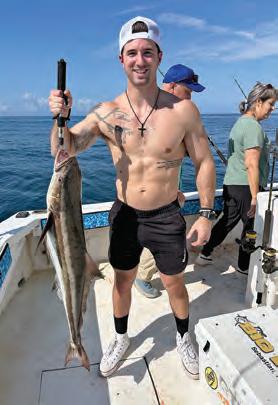
Respectable cobia caught aboard the Big Easy
anymore because the goliath grouper will get under the boat and eat every good fish you hook. The sharks are just as bad. But don’t get discouraged! Sometimes it’s better to up the size of your leader an extra 20# and put the heat to them; we call it, “Stop Them or Pop Them.” Hopefully they’ll open up a harvest on them and get ’em under control so our sea bass population can make a comeback. Think about it. Ever wonder where the sea bass went? Look for a few cobia to show up. I usually check the artificial reefs in the 65’ to 70’ area. Keep your eyes peeled for floating debris.
February is also a good time to find tripletail hiding sometimes under something no bigger than a coconut. Even if your headed offshore it’s good to have a light spinner 15# mono line rigged and ready to pitch for that tripletail.
If the water clears in close enough, look for some big kings around 40’ to 60’. I like the large threadfins or, even better, a 7” or 9” blue runner. Remember, big fish—big bait, and a bigger hook too. On a 7” bait, I’ll use a #4 or #5 to wire up my hook from a #3 treble to a #4 and use two—one in the front and a trailer hook 3/4 of the way to the tail; this can be slow trolled 2 to 3 knots on cover ground or drifted if you’re in a good area.
For those going deep there should still be a few mahi, wahoo, blackfin tuna and sailfish to be a caught. Look for color and temp changes 120’ to 240’.
I try to include as many details as I can in my monthly reports, but if there’s something you feel would be helpful to you, drop me an email (captwildey@bellsouth.net) and I’ll try to include it in a future one. And please, if you’re on the water, be safe, be courteous and remember, some of us are just trying to make a living out there...but we’re all out there to have fun!
Fish On...Gotta Go!

Capt. Gus Brugger
Capt. Rocky Carbia
Capt. Jonathan Earhart
Capt. Scott Fawcett
Capt. Scotty Gold
Jim Moir
Capt. Bo Samuel
Capt. Adam White
Capt. Terry Wildey

MARTIN COUNTY DEEP SEA
Capt. Rocky Carbia
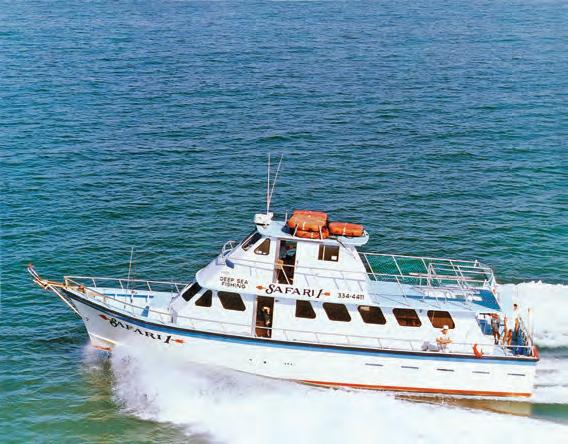
Safari I Deep Sea Fishing
Pirates Cove Resort and Marina 4307 SE Bayview St. Port Salerno Reservations: (772) 334-4411 www.safari1deepseafishing.com
February will be an offshore portrait of the Florida winter painted in the colors of the many species of snapper caught east of Martin County.
Anglers plying the offshore waters of the Treasure Coast this February will still need to watch and pay close attention the cold fronts of the Florida winter. These fronts are offshore weather makers and directly influence the daily sea conditions anglers will contend with in February. East of Stuart, these winter conditions will be firmly in place and as always, will necessitate that captains and their anglers find a suitable userfriendly weather window in which to venture out offshore to fish. And with the advent of the Internet, there are a multitude of virtual near-coastal reference points fishing crews can
check on as they try to schedule an offshore trip.
Besides tuning in to local television weather reports, there are several go-to online forecasts and real-time reports that can be checked before ever launching or untying the boat, which will ultimately aid in the decision making. These include, but are not limited to:
• NOAA Offshore Sea Conditions forecast for the near shore waters, East of the St. Lucie Inlet at http://1. usa.gov/1AjSteo;
• NOAA Wave Height Buoy, which is positioned just east of Ft. Pierce, at http://1.usa.gov/1ymGv7i;
• Jensen Beach webcam, which has multiple real-time cameras on area beaches and an anemometer, for wind speed and direction, at www. evsmartin.com;
• WindFinder.com for the St. Lucie Inlet, https://www.windfinder. com/forecast/saint-lucie-inlet, is an excellent app/reference page for offshore weather based on the GFS Weather Model and can give anglers a 10-day look into a forecast future, thus enabling users to get a feel for when a potential fishing-friendly weather window might open up.
These reference points can prove to be quite valuable during decision making of whether or not a particular day looks “fishable” or not, for your
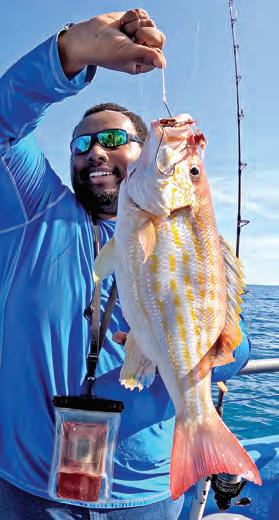
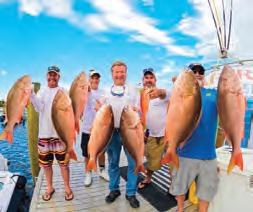
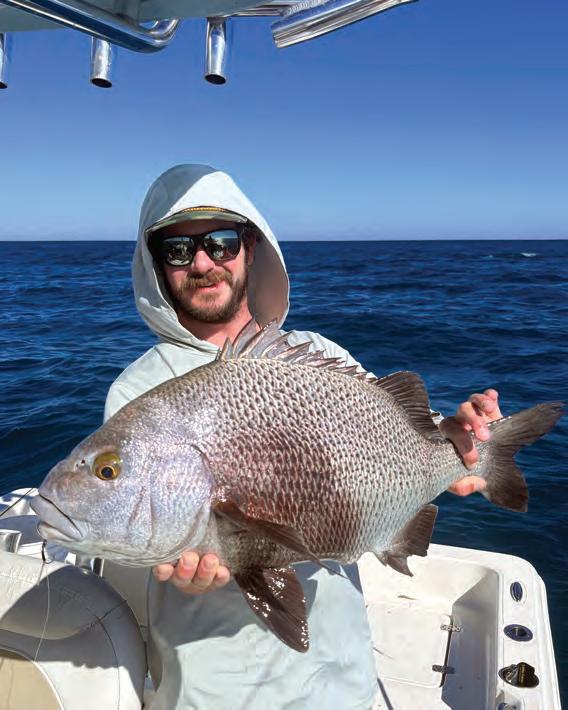
Live baits, such as grunts, greenies and sardines, are some of a cobia`s favorite snacks, however a hungry “cobe” will eat just about anything it can fit in its expansive mouth. A 30to 50-pound main line, with terminal tackle that consists of 50- to 80-pound leader, tied to a 5/0-7/0 hook, will get that cobia to the boat. Furthermore, members of the snapper family, which include lane, mangrove (grey), yellowtail, vermilion, cubera, and mutton, will be on the “most wanted list” for all bottom fishermen this month, especially since the closed season on all groupers will be in full effect.
boat and crew.
Once a fishing window opens, cobia and snapper will become the preferred target species of near coastal reef fishermen. Schools of cobia will continue to stream through our reef zones in depths of 50 to 100 feet and will fall to dead and live baits deployed atop reefs, at all depths throughout the water column.
Reef structures in depths from 50 to 90 feet will hold most of these representatives of the snapper category and allow anglers to dial in their snapper catching strategies from offshore of the Loran Tower to the power plant, most notably large mutton snapper and jumbo cubera snapper will continue to post up, East and south of the inlet, on natural and artificial reefs this month, look for the big snappers in 50 to 80 feet of water, and deploy the baits for these bruisers on 40- to 60-foot leaders comprised of 80- to 125-pound test monofilament. Baits that are deployed on edges of the reef contour will yield the best results for success in whacking a jumbo snapper.




MARTIN COUNTY INSHORE NEARSHORE
Capt. Jonathan Earhart
Chaos Fishing Charters (772) 341 – 2274 www.chaosfishingcharters.com jon@chaosfishingcharters.com
Fishing in February is always a good time to target pompano, with very good success both inshore and nearshore. Inshore drifting shallow sand flats using goofy jigs will provide plenty of pompano action. Expect some stray ladyfish, jacks, bonefish, flounder, and the occasional sheepshead. Beach fishing for pompano will be a great idea this month using surf casting tackle and pompano rigs with sandfleas for bait.
Back inshore the snook fishing has been okay using live bait like pilchards and pinfish. Prepare yourself to soak baits
in between bites due to colder water temps. Fishing around the bridges will yield pompano, redfish, snook, snapper and sheepshead. Using fish finder rigs on the bottom; live or dead shrimp will be your bait of choice.
Nearshore fishing has been great for Spanish mackerel, bluefish, pompano, and the occasional cobia. Peck Lake has been a great spot to find hungry Spanish mackerel as of lately. Tsunami glass minnow jigs with wire leaders and a 3000-4000 size quantum spinning reel will make this fishing a blast. Cast, catch, keep, and repeat! I always like to have a larger spinner on board with a cobia jig tied on and ready to cast just in case a large cobia swims boat side while nearshore fishing. Cobia tend to swim nearshore this month following rays anywhere from 8-40 feet of water off our Treasure Coast beaches. Sometimes running and gunning sight fishing for these large brown fish can be an absolute blast. Tight lines!



LUCIE COUNTY OFFSHORE
Capt. Bo Samuel
Pullin Drag Charters (772) 971-6661
facebook.com/Pullin-Drag-Charters catainbofishing@gmail.com
Florida winter is officially here and we can expect frequent cold fronts with windy days and cooler temperatures across the Treasure Coast. Weather plays a big role in accessibility, so stay tuned to weather reports and be ready to “seas” any good weather windows. As cool and cold fronts help to drop the water temperature, the offshore bite is heating up to provide lots of winter fishing options. It’s also a terrific time to see migrating manta rays with an eye out for big cobia who are known to travel with them. It’s key to have a pitch rod prepared to sight-cast cobia.
Bottom fishing has remained consistent and I expect it to continue on the 50- to 80-foot reefs straight
out the Fort Pierce Inlet. Snapper fishing has been spectacular from nearshore reefs to the offshore
reefs with mangroves, lanes, and muttons being reported regularly. The sheepshead starting showing


up in January and are biting very well on live shrimp. Sheepshead are delicious with a sweet mild flavor and hints of shellfish as they enjoy eating crustaceans. Bottom fishing can provide fun opportunities to fight grouper and red snapper, but they have to be returned to the water as they’re out of season.
February 1st is also the opening of snook season. Local anglers will all be working hard to land “keepers,” those in the FWC regulation slot of not less than 28 inches and not more than 32 inches total length. The Fort Pierce Inlet has been very productive drifting for snook and the night bite should be steady. Snook on the dinner menu is one of my top five, and if you’ve had a long day of fishing, Cobb’s Landing in downtown Fort Pierce will cook your catch to perfection and serve it with a smile.
You can catch me at my home base, the historic Little Jim Bait & Tackle, for a fun run out to our bountiful reefs. Pullin Drag Charters is the fishiest boat in the Fort and will easily take care of your caught-not-bought grocery list. I also recommend DeBrooks Fishing Corner for all your tackle needs; just tell them Captain Bo sent you.
Dinner’s in the bag when you fish with Pullin Drag!











Capt. Adam White
St. Lucie Flats Fishing Charters (609) 820-6257 www.stlucieflatsfishing.com
February on the Indian River Lagoon near Fort Pierce is one of the most productive months of the winter fishing season, offering a mix of cool-water and warming seasonal patterns that bring fish into predictable areas. As winter transitions toward spring, water temperatures begin to rise gradually, stimulating feeding activity across several key inshore species such as snook, spotted seatrout and sheepshead. In addition to the classic inshore species, smaller gamefish like Spanish mackerel, bluefish, ladyfish and jacks often show up around tides, bait schools and structures, providing fast-action bites on small shiny lures. Pompano and whiting can be found along beaches and shallow sand flats, particularly on outgoing tides.
February is the start of snook season, and most of the anglers on the Treasure Coast will be in pursuit of these hard fighting inshore gamefish.


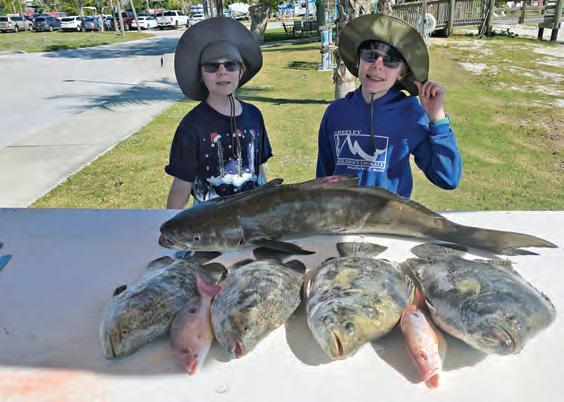
There are many ways to catch a snook whether you’re a die-hard artificial angler or live bait fisherman. Small profile and slower presentations are great for targeting snook laid up in the shallows during the winter months. Around the bridges and inlet, you can find success with larger profile lures and bigger live baits like pinfish, mullet or croakers. Getting out on the first reef on the calmer days throughout the month of February can provide quite a bit of action. Grab 15-20 ounces of live shrimp and get out to bend some rods! It is easy to have a 20+ species
day when dropping shrimp on the reef. Assorted snappers, sheepshead, pompano, permit, the occasional cobia and several dozen, as I call them, “finding nemos.” Water quality is key for a successful trip out on the reef. Clean, clear water with about 10+ feet of visibility will keep you out of the puppy sharks.
Overall, February offers a diverse winter bite with opportunities for both inshore, nearshore and structure fishing, and local anglers often find consistent action if they adapt to weather, tides and changing water temperatures throughout the month.








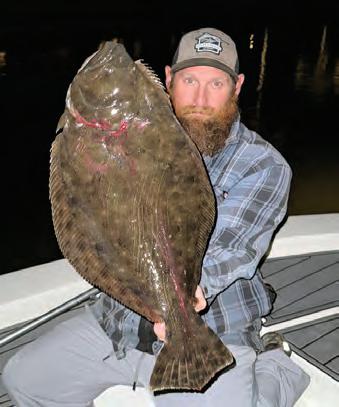
JJ Klarmann nabbed this 8 lb. doormat while doing a little night fishing in Stuart.

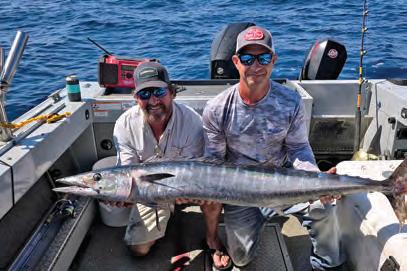
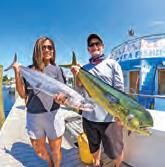
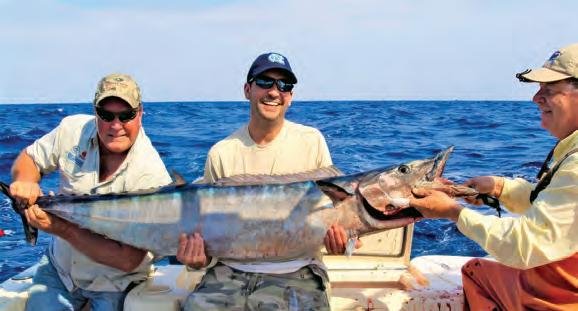
Capt. Brenda put South Carolinian Jeremy Ward (right) onto this 55- inch wahoo offshore of St. Lucie.
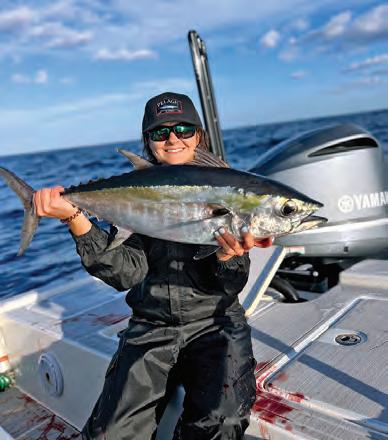
As Amber Caraballo was heading out off Stuart, she saw this tuna blow up on the surface in about 90 feet. She pitched out a live threadfin on the free line and hooked up in seconds.

Rods & Reels:
• Sunglasses: Costa Del Mar-Maui Jim-Smith-Ocean Eyes-Bajio
• Services: Rod and Reel Repair-Custom Rigging
• Huge Variety of Frozen Bait
• Knowledgeable & Experienced Staff to Serve You


• Follow Us on Social Media for Upcoming Events & More…
• Sign Up for Our Weekly Fishing Reports Scan the code or visit
• Apparel & Soft Goods: Simms-Patagonia-Olukai-White’s Tackle Gear & More...

Whether your passion is offshore, inshore,
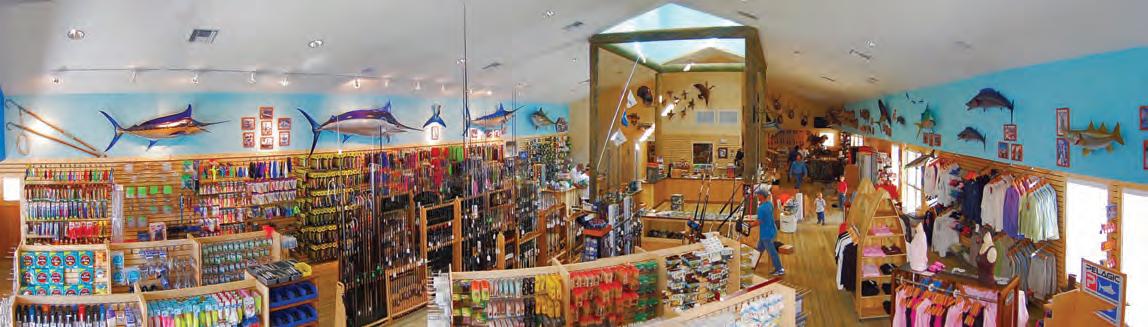
or fly fishing, we have everything to make your next fishing adventure the…
By Don Norton

For years, underwater vegetation in Lake Okeechobee has been disappearing, but now it’s making a comeback!
Last December, the U.S. Army Corps of Engineers started a “recovery” schedule for Lake Okeechobee, with the goal of getting the lake below 12 feet
for 90 days or below 11.5 feet for 60 days. !e lower lake level is needed for sunlight to reach the lake bottom and new submerged aquatic vegetation (SAV) to sprout.
Lake Okeechobee level was 12.08 on April 13, 2025, which was 2.82 feet lower than a year ago. By April 15th, the lake fell below 12 feet above sea level.
At the June 5 meeting of the South Florida Water Management District (SFWMD) Governing Board, scientists were hopeful the lake low would stay below 12 feet for the full 90-day target. If the water rises faster than the plants can grow, new plants could be damaged or lost.
!en, by June 22, 2025, the o cial Lake Okeechobee elevation was 10.99 feet.
Last year, on the same day, the lake was at 13.37 feet. And the year before that? A whopping 14.33! Even the historical average for that time of year (1965-2007) was 13.24 feet. !at meant we were sitting about 2.25 feet below average.
What did that mean for you, the angler? Well, lower water levels can concentrate the sh, making them easier to nd…sometimes. But even more importantly, you have to be extra careful navigating those shallower areas.
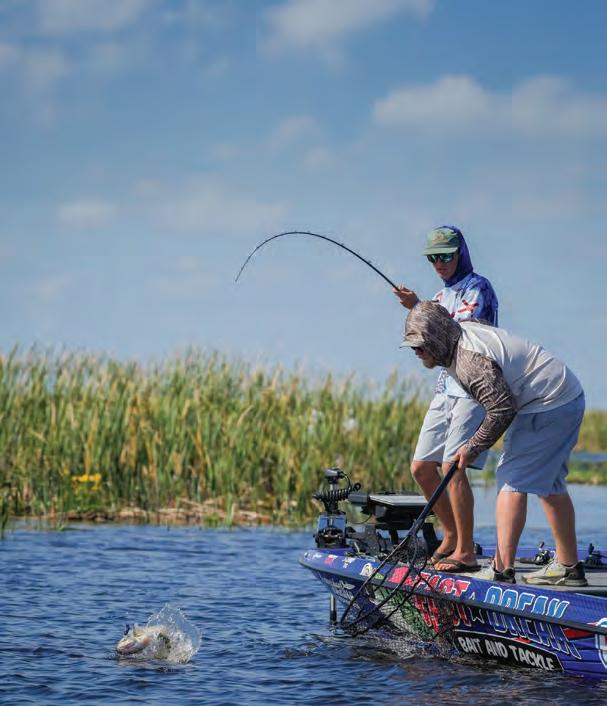
I don’t normally sh Lake Okeechobee, but thanks to Capt. Robin Clegg and his late summer YouTube videos, I ventured down to the “Big O” a couple of times and had a great time catching bass.
Launching at C. Scott Driver Park, I took Capt. Clegg’s advice and made the short trip to King’s Bar, and for the next couple of hours, caught bass a er bass on a wide variety of lures. !e key was to be there at rst light!
!e water was still pretty low, but as long as you shed the outside reeds, there was plenty of water (and bass).
Capt. Clegg, by the way, works out of Garrard’s Bait and Tackle, located at 4375 US Highway 441 in Okeechobee, just a couple of miles from the boat ramps.
As I write this article in mid-January, the water level is back up to 13.3’ thanks to all the rain we’ve received, the new plants are doing well—and the shing is still excellent!
Don Norton is Co-Publisher of Coastal Angler Magazine’s Okeechobee edition. Contact him at (863) 273-4998 or don@theanglermagazine.com.





Valued at over $90,000 MSRP, only 2500 tickets left.





By Capt. Michael Okruhlik

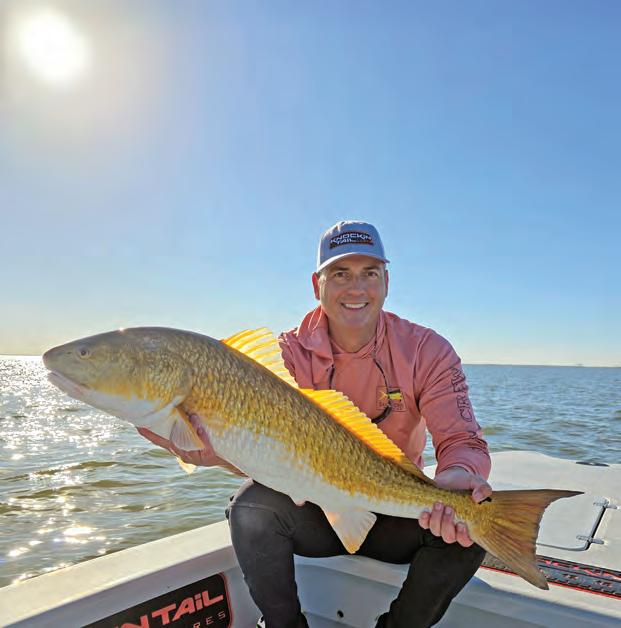
February might not get the hype of spring break or summer tides, but pro cient coastal anglers know a secret: some of the best shing of the year happens when the crowds are gone, the water is cold, and the sh are predictable.
Winter has settled in by February. Water temperatures hover in the upper 40s to low 50s, especially a er a strong north wind. !at cold pushes bait and game sh into tighter zones, turning miles of water into a handful of high-percentage spots. If you can nd warmth, you can nd sh.
Speckled trout are the headline act this time of year. Big trout in particular prefer slow, easy meals in cold water, which is why February is prime time for trophy hunters. Deep guts, channels and drop-o s near shallow ats are key. Trout slide shallow during the a ernoon when the sun warms mud or dark grass, then fall back into deeper water when temperatures drop.
Slow presentations rule. So plastics on light jig heads, suspending twitch baits, and so jerk shads worked slowly can trigger reaction strikes. Make sure you know the gear ratio of your reel. You may think you are moving slowly, but if the reel is taking up a lot of line, you may be o target. Cold-water trout won’t chase far, but they will inhale an easy meal.
Red sh remain a dependable target throughout February. While they may not school as aggressively as in the fall, reds still prowl shorelines, back lakes, and marsh drains—especially on sunny days. Look for black mud bottoms that warm faster and concentrate bait.
Sight-casting opportunities can be outstanding on calm, clear days. Reds cruising skinny water are o en willing biters, even in cold conditions. Gold spoons, paddletails, and weedless so plastics shine here, particularly when worked steadily along shorelines.
February shing success is less about the tide chart and more about the thermometer. Midday is prime time. Early mornings can be brutally slow a er a cold night, but a few hours of sunshine can ip the switch fast. Pay attention to warming trends—two or three stable days can dramatically improve the bite.
Wind plays a major role this month as well. Strong north winds drain water out of bays and expose structure, which can help you locate sh holding in remaining deeper pockets. On calmer days, expect clearer water and more nicky sh.
February rewards patience, observation and con dence. It’s not about covering water—it’s about shing smart, shing slow, and being ready when that unmistakable thump signals a wintertime strike worth remembering.
As I write this article in January, it is near 80 degrees. With that said, if February feels like an early spring, follow your spring shing guidelines. !e sh don’t have a calendar.
Capt. Michael Okruhlik is the inventor of Knockin Tail Lures,® and the owner of www.MyCoastOutdoors.com.
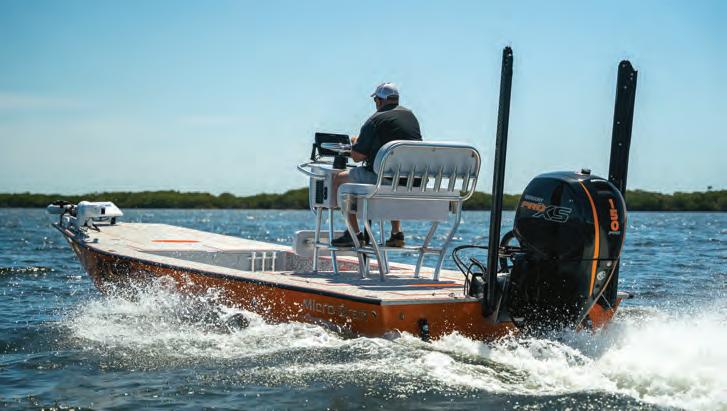
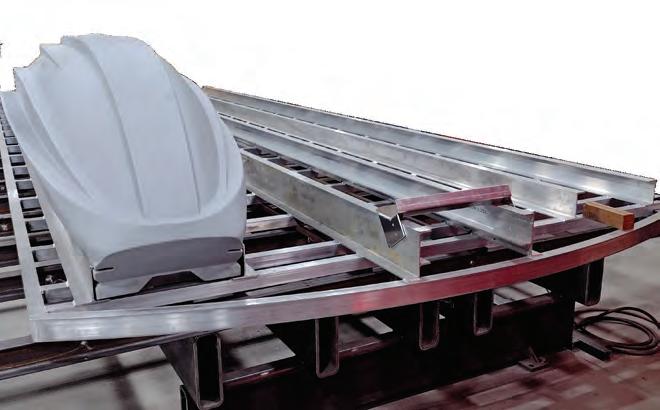
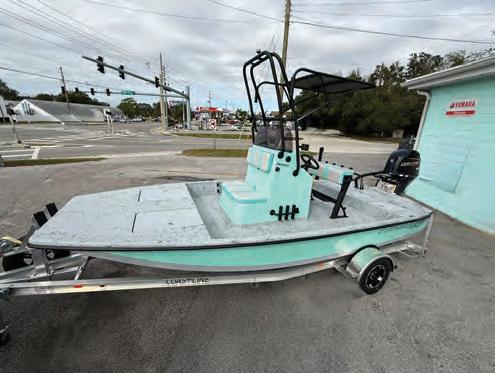
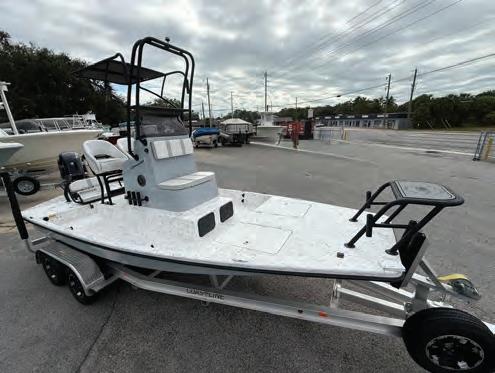
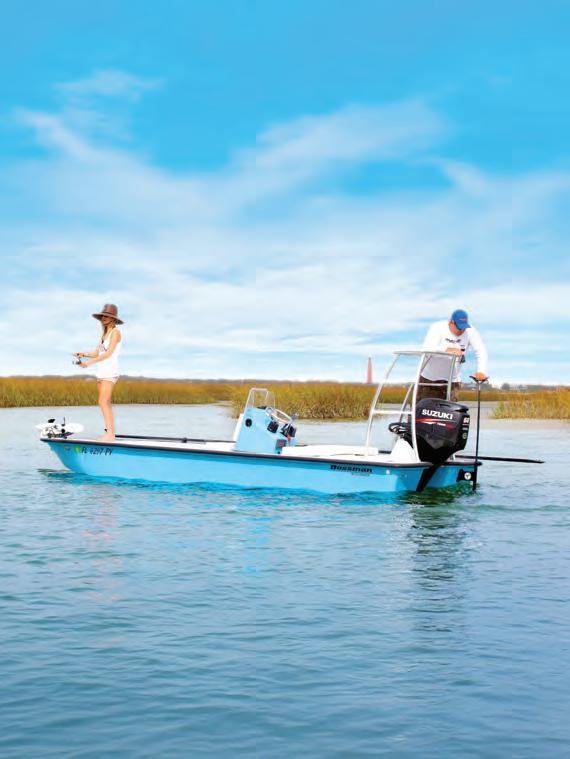
Setting the New Standards in the Pontoon Boat and Offshore Fishing Boat Segments for Exceptional ROOM, RIDE, HANDLING, STABILITY, PERFORMANCE & DURABILITY In Saltwater Conditions. Sold Fully Assembled on its Matching Custom Trailer!
• 88 Gal. In-Tube Fuel Tank
• In-Floor Storage Locker
• One Panel Composite Deck
• Composite Bottom Skin & Side Bumper Guard
• 7.5’ Pull-Out Front Boarding Ramp
• Front and Rear Bow Eyes for Trailer Tie Down
Center Tube is a 32” Dropped 2” Tube with a 30”- 35” High Hp Transom Motor Mount. Outer Tubes Are 30”. Comes with an 18” Side Step Planning Surface for High Hp. Nose Cones generate super high buoyancy for extreme water conditions. Deck as it sits has a 10,000 lbs. Buoyancy Rating.




It’s no fsh tale when you run with a John Deere. You can get everything done faster and easier, so you get more time on the water. Plus, our special offers make them the catch of the day.






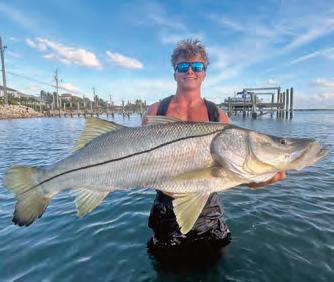
The recreational harvest of snook in the Florida Fish and Wildlife Conservation Commission’s (FWC) Northeast, Indian River Lagoon and Southeast management regions will open February 1 and remains open through May 31. During snook season, anglers may keep one snook per person per day that is not less than 28 or more than 32 inches in total length, which is measured from the most forward point of the head with the mouth closed to the farthest tip of the tail with the tail compressed or squeezed while the sh is lying on its side. Other regulations include:
• No commercial harvest or sale of snook is permitted
• Must remain in whole condition until landed ashore
• When on a for-hire trip, captain and crew may not retain a bag limit
• Allowable Gear: Hook and line only
• License Requirements: Snook permit and recreational shing license !e harvest of snook in all of Florida’s Gulf of Mexico state waters, including Everglades National Park and all of Monroe County, remains closed until March 1. Anglers may catch and release snook during the closed season, but the FWC encourages anglers to handle and release these sh carefully to help ensure their survival upon release. Proper handling methods can help ensure the species’ abundance for anglers today and generations to come. To learn more about sh handling, visit https://myfwc.com/ shing/saltwater/ outreach/ sh-handling/.
For more information, visit myfwc.com/ shing/saltwater/recreational/snook/.


By Capt. Lukas Brickweg
If you’ve ever dreamed about catching halibut and cod in the wilderness of Alaska - rod bent, line screaming, and majestic wildlife abound – now is the time to turn that dream into reality. Every season in Ketchikan, Alaska, May marks the kicko! to world-class halibut and Paci c cod shing, and we are ready to put you on the sh of a lifetime.
May is a special month in Southeast Alaska. e long daylight hours return, the ocean comes alive, and the early-season halibut move onto nearshore waters to feed. Halibut gather on the underwater ledges, humps, and sandy $ats, areas that we know like the backs of our hands, ranging from 200-400 feet.
At the same time, hungry Paci c cod patrol the same bottom structure, adding an action-packed bonus to every trip. “Alaska cod shing chaos” is the best way to describe
this seasonal bite. ere are no limits on retaining Paci c cod, allowing anglers to bring home huge hauls of cod and halibut. is means you can o en pull up a mixed bag of halibut, cod, and rock sh - making for one of the most productive and delicious shing experiences anywhere in the world.
Reeling up cod and halibut until your arms give out is a good way to summarize Alaska bottom shing in May.
May trips tend to ll quickly because the reputation for aggressive sh and minimum shing pressure. is combination equates to an anglers dream scenario. Whether you’re $ying in for our three to four day allinclusive lodging/ shing packages or on a cruise, it’s best to start planning and booking early. Ketchikan provides convenient $ights, accommodating guests from all over the US. Our all-inclusive packages provide airport transfer, lodging, meals, shing and sh processing.
The Bottom Line ere’s shing, and then there’s Alaska shing. And when it comes to halibut and
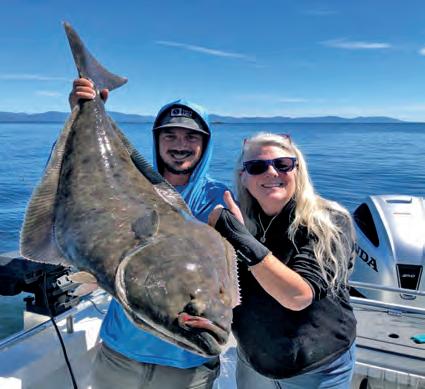
cod, May in Ketchikan is as good as it gets. So give us a call to book your spot, and come experience the thrill of hooking giants where every trip is a story worth telling.
Book your "Bucket List" trip to Alaska with Capt. Lukas Brickweg, of Ketchikan’s Finest Fishing Charters, at ketchikan shingtrips.com, call (907) 617-4717 or email ketchikan shingtrips@gmail.com.



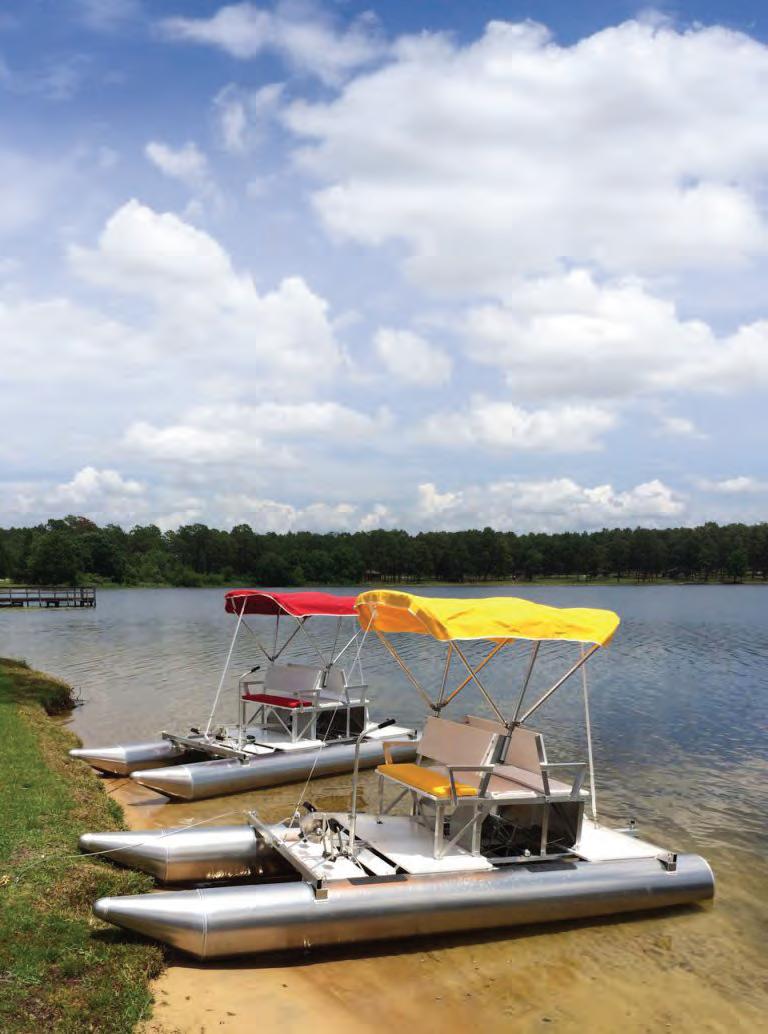
CAPACITY: Four Adults or 800 pounds (reduce by accessories and gear) Rear sun deck with retractable ladder for boarding in deep water. Two passengers face forward and two face backward. The front passengers pedal.
By CAM Sta
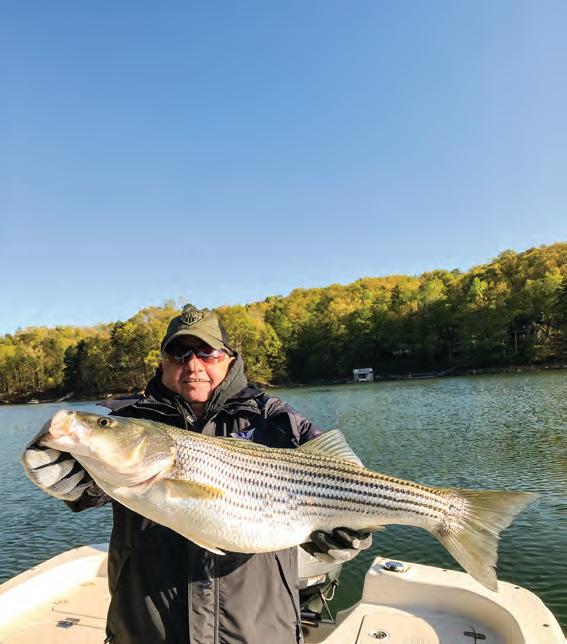
Whether in saltwater or freshwater, excellent striper shing awaits anglers hearty enough to brave winter conditions. So layer up, zip into that parka, and go—some of the biggest sh of the year are feeding right now.
At the southern end of their fall migration, striped bass spend the winter o! the coast of North Carolina. ey follow schools of bait up and down the shoreline from Wilmington to the Outer Banks, feeding heavily along the way. In many years, Oregon Inlet becomes the epicenter of the action, though stripers can be found in most inlets throughout the region.
e key is to follow the birds, which o en reveal bass blowing up on menhaden, glass minnows, or eels. At times the action pushes close enough to shore that surfcasters can hook stripers right from the beaches of the Outer Banks. More o en, however, the best approach is hiring a local captain armed with recent intel and a fast boat.
Farther south, Wilmington provides another winter opportunity as striped bass stack up in the Cape Fear River. ese sh hold near structure, dropo!s, and creek mouths, and can be caught on arti cials—or even on $ies. is resident population is separate from the highly migratory sh wintering o! the Outer Banks. Cape Fear stripers are strictly catch-and-release and must be returned to the water immediately, so keep an eye out for tagged sh.
Meanwhile, freshwater reservoirs across the Southern states and into the Mid-Atlantic also produce solid winter striper shing. While smaller, schoolie-sized sh can become sluggish during the coldest periods, larger stripers continue to feed. e pace may not match summertime downline action over massive schools, but the sh that do bite are o en bigger.

Tactics vary by shery, but when water temperatures stabilize—or during a multi-day warming trend—the largest sh in the lake o en push shallow, sometimes surprisingly so, as they shadow schools of small shad. Find the $ickering bait, and you’ll nd the stripers. You may even see them picking o! prey near the surface. Stealth is critical in these situations, and so plastics like Flukes frequently outproduce live bait. ey’re easier to cast and allow for a slow, controlled retrieve.
Another e!ective approach is covering water by trolling wide spreads of small live baits, pulling umbrella rigs loaded with swimbaits, or combining both methods. When shing this way, good local information is invaluable. On some lakes, stripers spend the winter near the dam; on others, they push far up into the creeks.
Winter may test an angler’s resolve, but for those willing to endure the cold, striper shing can be at its best. From coastal inlets and rivers to inland reservoirs, striped bass remain active and accessible, o en with less pressure and a better chance at trophy-sized sh. Success comes down to preparation, paying attention to bait and bird activity, and adapting tactics to changing conditions. Bundle up, do your homework, and embrace the season—the reward could be the biggest striper of your year.


Coming o! the heels of a record-breaking 2025 season that awarded 11 century belts, saw four- rst time champions (two of which were members of the 2025 rookie class) and garnered over 183 million social media impressions, B.A.S.S. has announced the 101-angler eld for an exciting 2026 Elite Series season.
is year, anglers will be put to the test with the use of forward-facing sonar only being allowed at ve of the nine regular-season Elite events. Anglers will be competing for a $100,000 rst-place prize at each stop of the season, while also accumulating valuable Progressive Bassmaster Angler of the Year points in hopes of making it to the 2027 Bass Pro Shops Bassmaster Classic presented by Under Armour.
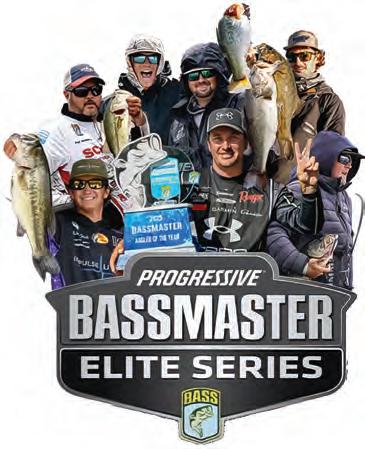
“Each season, the Bassmaster Elite Series showcases the very best in professional bass shing, and 2026 will be no exception,” said B.A.S.S. Elite Series Tournament Director Lisa Talmadge. “We’re excited to welcome 101 incredibly talented anglers who represent the heart of this sport—a mix of proven champions, rising stars and hungry newcomers all ready to compete on some of the most iconic sheries in the country. It’s going to be an unforgettable season for our anglers and fans alike.”
With the exception of one angler, every 2025 Elite Series angler who quali ed is returning next year. e list of anglers includes 2025 Bass Pro Shops Bassmaster Classic champion Easton Fothergill of Grand Rapids, Minn., who won the most coveted trophy in bass shing during his freshman season on the Elites. Two-time Progressive Bassmaster Angler of the Year Chris Johnston will also join the ranks of returning anglers alongside Dakota Lithium Bassmaster Rookie of the Year Tucker Smith, who took home his rst blue trophy at the 2025 Bassmaster Elite at Lake Fork with a 127-pound, 8-ounce winning weight that also earned him a century belt.
Ten anglers from the Nitro Boats Bassmaster Elite Quali ers will also be joining the 2026 Elite roster, including 20-year-old Alabama phenom Fisher Anaya who claimed the 2025 Nitro Boats Bassmaster Elite Quali ers Angler of the Year title. Wisconsin’s Nick Trim clinched an Elite Series spot for himself alongside his big win at the 2025 Mercury B.A.S.S. Nation Championship at Upper Mississippi River presented by Lowrance. e 2026 Progressive Bassmaster Elite Series kicks o! on Alabama’s Lake Guntersville February 5. From there the tournament trail will wind through six states as anglers battle for cash prizes and attempt to qualify for the 2027 Bass Pro Shops Bassmaster Classic presented by Under Armour.
Each tournament will begin with the full eld of anglers on Days 1 and 2 before the eld is cut to the Top 50 on Semi nal Saturday. Only the Top 10 anglers will sh the nal day of the event, with a $100,000 rstplace prize and a blue trophy on the line. For the complete roster, and to keep up with all the action from the 2026 Elite Series season visit Bassmaster.com.

This is the time of year to nd the wall of warmer water and get the wahoo bite going. All of the water nearshore is cold and where the 68- plusdegree water meets that cold water can be an excellent spot for targeting wahoo. is is a great time of year to target wahoo during the rst hour or two of your trip using high speed trolling. You can cover a lot of ground high speed trolling, which speci cally targets wahoo. Once the sun has been up for a few hours your chances at a wahoo bite diminish unless it’s an overcast or rainy day. Wahoo regulate the amount of sun they take in by going deeper as the sun rises, so midmorning is a good time to change tactics.
Slow dri s, kite shing and jigging the column with live baits is a great mid-morning tactic and the bigger the bait the better. ere’s no telling what you’ll raise during these colder days shing the temperature change. Never count out deep dropping near these temperature change areas either. Fishing the entire water column from the surface to the bottom turns a cold day into a cooler full of sh and some awesome dinners.


Discover this spectacular 6½-carat green treasure from Mount St. Helens!
For almost a hundred years it lay dormant. Silently building strength. At 10,000 feet high, it was truly a sleeping giant. Until May 18, 1980, when the beast awoke with violent force and revealed its greatest secret. Mount St. Helens erupted, sending up a 80,000-foot column of ash and smoke. From that chaos, something beautiful emerged… our spectacular Helenite Necklace
Helenite is produced from the heated volcanic rock of Mount St. Helens and the brilliant green creation has captured the eye of jewelry designers worldwide. Today you can wear this massive 6!-carat stunner for only $99!
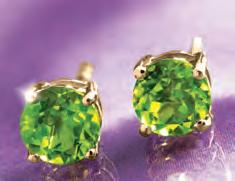
Helenite Earrings -a $99 valuewith purchase of Helenite Necklace
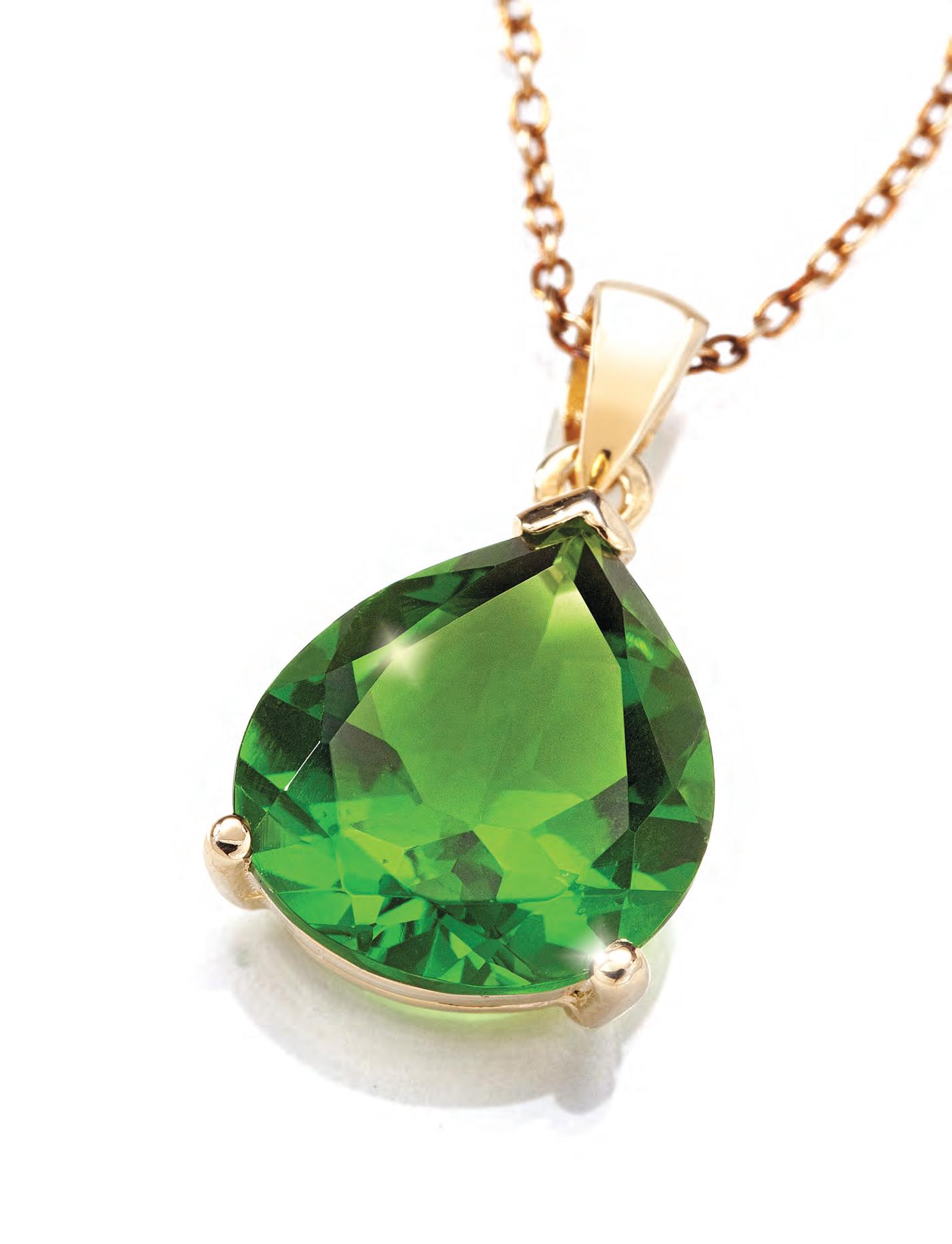
Make your emeralds jealous. Our Helenite Necklace puts the green stone center stage, with a faceted pearcut set in .925 sterling silver finished in luxurious gold. The explosive origins of the stone are echoed in the flashes of light that radiate as the piece swings gracefully from its 18" luxurious gold-finished sterling silver chain. Today the volcano sits quiet, but this unique piece of American natural history continues to erupt with gorgeous green fire. Your satisfaction is guaranteed. Bring home the Helenite Necklace and see for yourself. If you are not completely blown away by the rare beauty of this exceptional stone, simply return the necklace within 30 days for a full refund of your purchase price.
JEWELRY SPECS:
- 6 ½ ctw Helenite in gold-finished sterling silver setting - 18" gold-finished sterling silver chain
Limited to the first 600 orders from this ad only
Helenite Necklace (6 ½ ctw) ............. Only $99 +S&P
Helenite Stud Earrings (1 ctw) ................ $99 +S&P
Helenite Set $198 ........... Call-in price only $99 +S&P (Set includes necklace and earrings)
Call now to take advantage of this extremely limited offer.
1-800-333-2045
Promotional Code HNN213-05
Please mention this code when you call.
color.

“My wife received more compliments on this stone on the first day she wore it than any other piece of jewelry I’ve ever given her.” - J. from Orlando, FL Stauer Client