













Ever see a commercial harbor full of Furuno Marine Electronics and wonder why the pros rely on us?



See why here








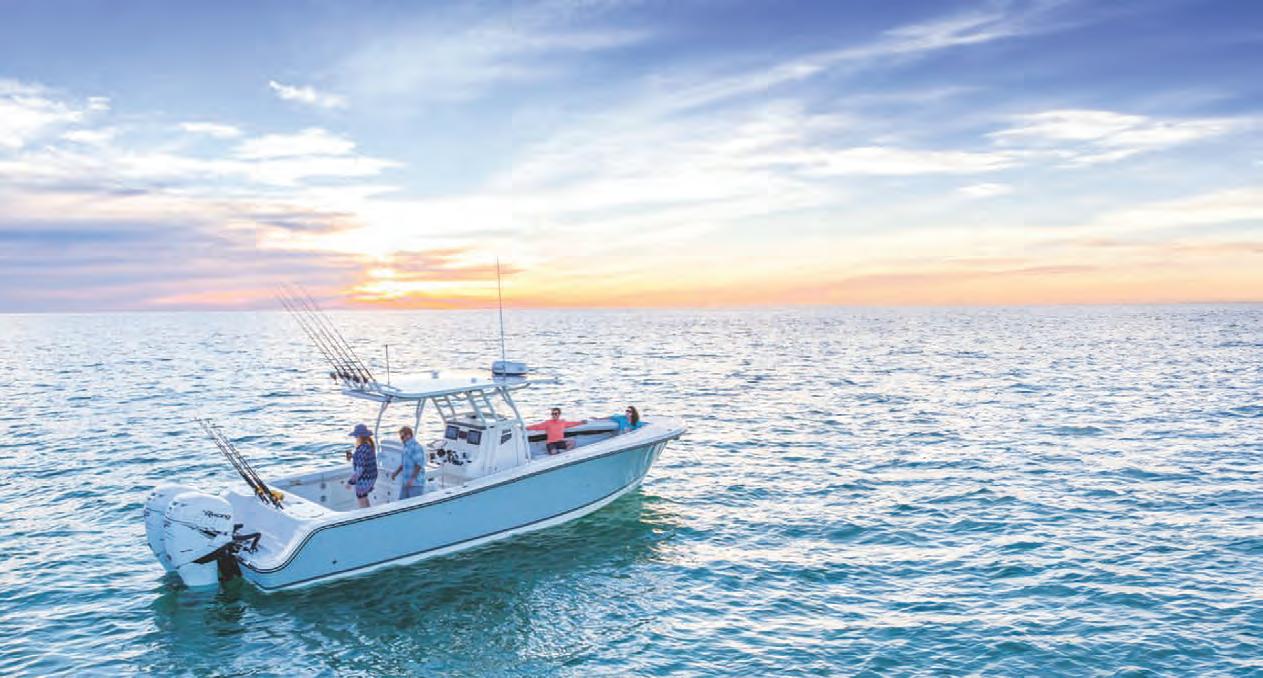






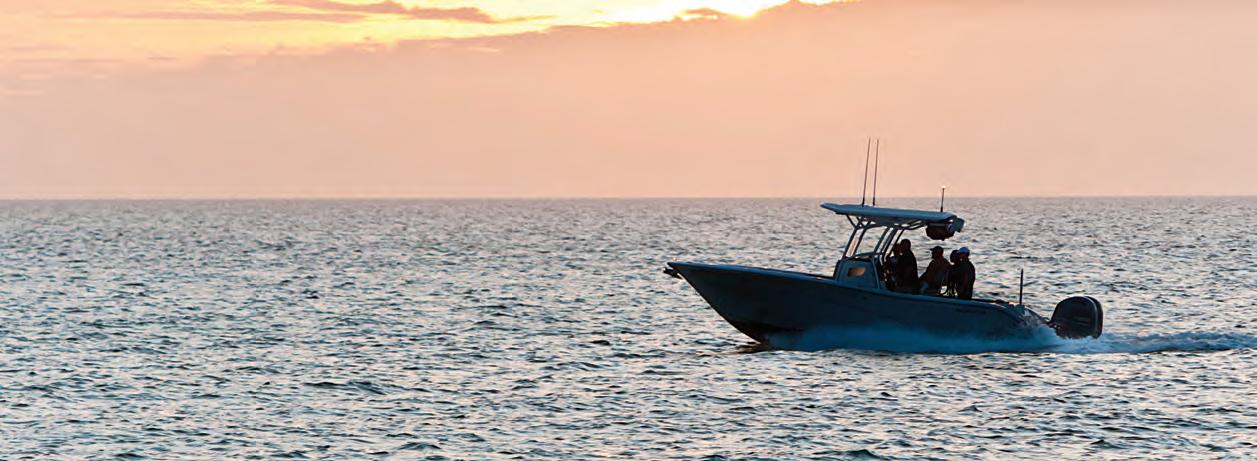
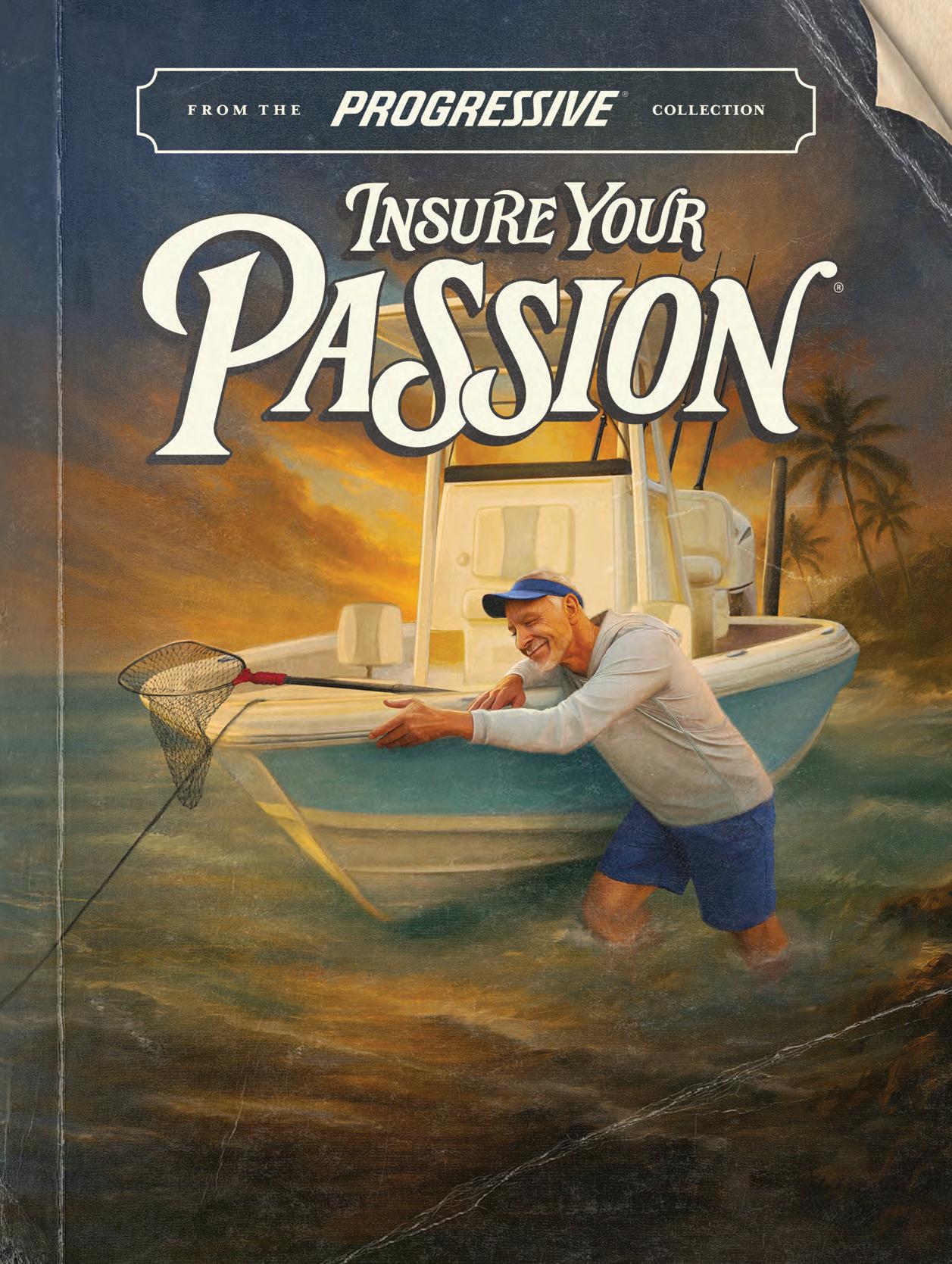
Are you ready to embark on your next on-water adventure? Before you set sail, here are fve things to know about boat insurance.
1. Boat insurance isn’t just for accidents
With comprehensive coverage, you’ll also be protected fnancially for theft, vandalism, and unexpected events like storms if you need repairs or replacements due to damage. 2. Accidents can happen to anyone
When accidents happen, boat insurance offers liability coverage for damages or injuries you cause while boating, up to specifed limits. It can also cover lawsuit costs if you’re sued.
3. Boat insurance can cover medical payments
Boat insurance offers a range of optional medical payments coverage limits, helping to cover medical expenses if you’re in an accident or someone is hurt on your boat, regardless of fault.
4. Most lenders require boat insurance
If you fnanced your boat, you’ll likely need boat insurance since most lenders require boat insurance to protect their investment. Additionally, some marinas or municipalities require proof of insurance for docking.
5. Progressive offers specialized boat coverages
Ever worry about getting stuck on the water?
Progressive’s Sign & Glide® On-Water Towing coverage** can help. It’s an additional coverage that steps in if your boat is disabled or breaks down on the water, paying for on-water towing, jump starts, soft ungroundings, and fuel delivery. Fuel cost isn’t included.
Don’t let unforeseen circumstances disrupt your voyage. Cruise with confdence thanks to Progressive Boat insurance. Because when it comes to your boat, peace of mind is the ultimate luxury.
Scan to get a quote in as little as 4 minutes.
to learn more.













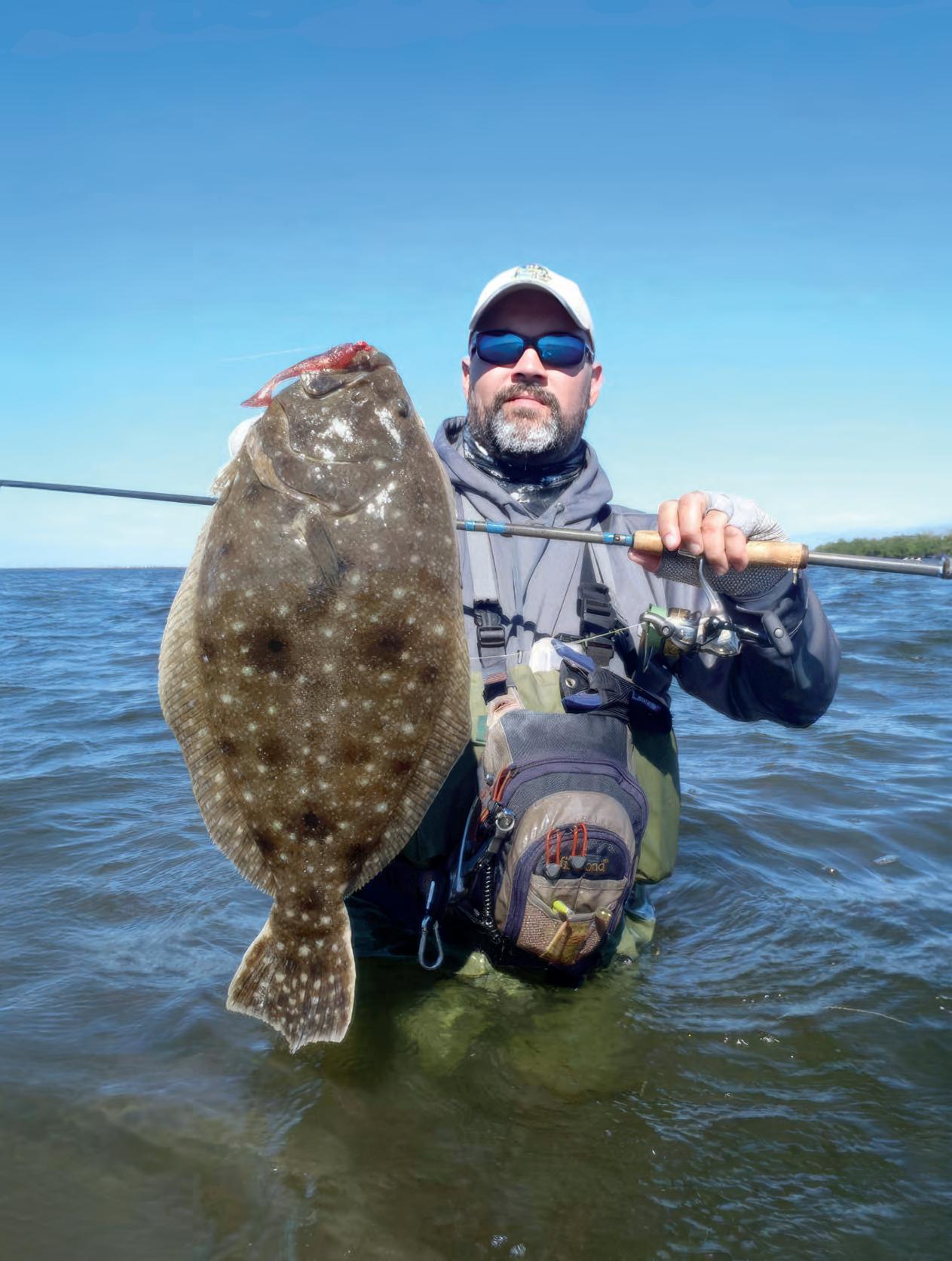
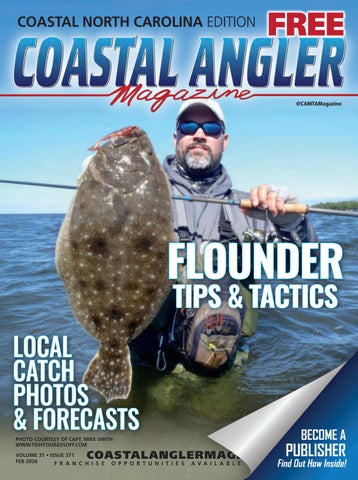
Do you want to catch more !ounder? You will need to nd an area with current, bait and structure for the !ounder to ambush its prey.
Where are they?
Flounder are very prevalent in creek mouths, jetties, sandy points, oyster bars, docks and any other underwater structures. e !ounder will take advantage of the structures to block the current, saving them energy and bringing bait right to their gluttonous mouths.
Flounder are the perfect ambush predator. ey like to bury in the sand adjacent to structures of some kind facing directly into the current. Your lure presentations always need to come from up current or you will spook them.
What do they eat?
CAPT. MIKE SMITH
and bait sh imitations.
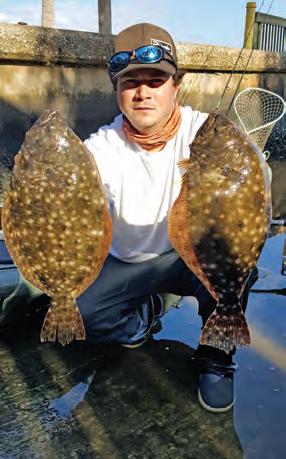
Flounder love to eat unsuspecting shrimp and sh brought to them by the current. e best lures to catch !ounder are scented shrimp

e best colors of lures to use for !ounder are any color as long as it is white. White is by far the best color of lure to catch !ounder. Do other colors work? Yes, if you want to catch fewer !ounders, then use something other than white.
e best lures that I have found for !ounder are Gulp! Shrimp and swimming mullets on a jig head. Start small and go bigger if you notice the bait in the area is large. Having an assortment from 3 to 5 inches will usually be perfect.
A great second choice for a !ounder lure is a white bucktail jig. Add a small piece of shrimp to add odor for best results.
How do you catch a flounder?
Flounder have a very small cone of awareness. ey are very unlikely to notice and
chase a lure that is more than 3 or 4 feet away from them.
ey also have a very small strike zone. ey are very hesitant to rise more than 18 inches o$ of the bottom to eat your lures.
Let’s say you found a beautiful oyster point at the mouth of a creek with plenty of current and bait !owing around it. is scenario is perfect for catching a !ounder.
Cast up current and work the lure on the bottom very slowly in 1 to 3 feet of water. When you think you hooked an oyster, set the hook. Flounder strikes are subtle and o en feel like a hang up.
It is very hard to work your lure too slowly for a !ounder. Old timers will tell you to just drag it on the bottom. I personally like to bounce my lures o$ the bottom being careful to not li it more than 18 inches into the water column.
Pro Tip: Use braided line and !uorocarbon leaders when shing for !ounder. Flouro sinks and helps you present your lures more e$ectively on the bottom. Braid doesn’t stretch and will help you feel a !ounder’s very subtle bites.
If you want to become an o cial !ounder pounder, then follow the tips above and catch more !atties. Go get ‘em!
Capt. Mike Smith, owner of Fish Your Ass O Charters, is an inshore "shing guide who has been "shing the inshore waters, oyster bars and grass ats of Florida for more than 40 years. Reach him at (561) 339-2317, email: contact@ "shyourasso .com or visit "shyourasso .com.


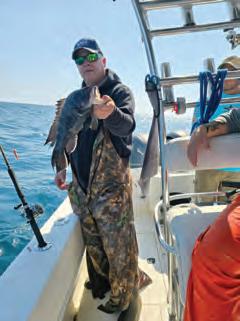
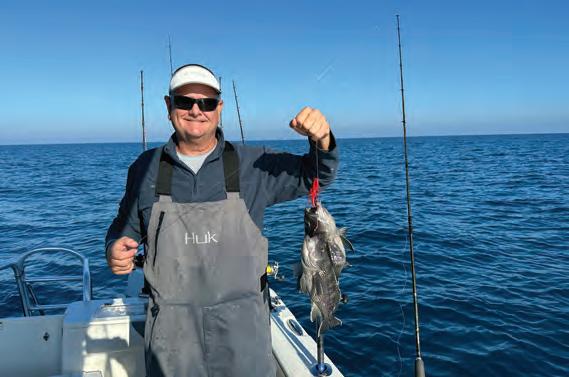
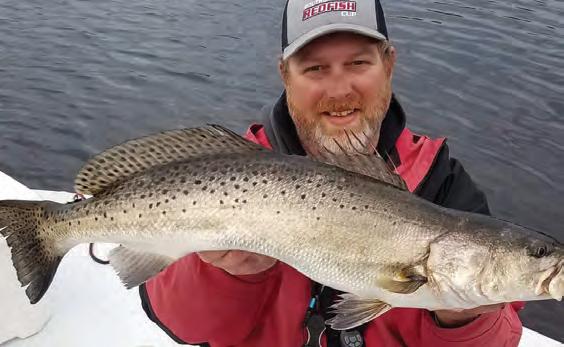
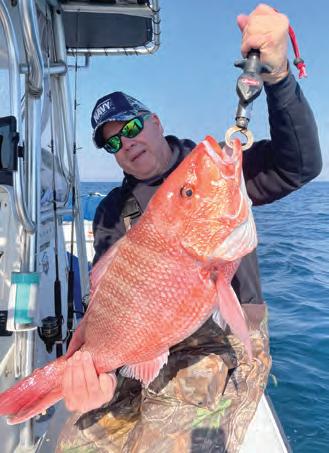
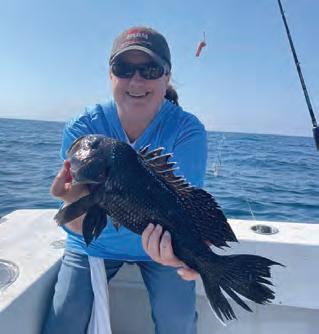
With ole man winter set in here in Long bay, the water temps have plummeted to the low 50s making tough conditions. With that being said, it’s one of the best times of the year for the inshore Speckled trout and Sheepshead bite. A few Reds can still be found in the rivers and creeks as well. Live shrimp on a slip cork working deep drop shell banks with eddys will hold fish during the tidal pulls. Offshore the big knot head Black Sea bass are chewing, and this time of year produces some giants, upwards of 3-5 lbs. Double hook rigs with 8-10oz weights on the 50-60’ ledges and rocks will usually hold this tasty delicacy. There will also be a few Grunts and ARs mixed in as well. This time of year also offers a pretty good Blackfin and Wahoo bite, study your water charts and target hotter pockets of Gulf water pushed in by the currents. Trolling jags,chugger heads, cedar plugs and rigged ballyhoo will usually find a few of these hard chargers. With March on the way don’t put off your boat maintenance because once the weather changes by mid-March our beach will come alive once again. Stay safe & prepared. Check your forecast and make a float plan. There are some fun days to be had while ole man winter has his grip on us. Tight lines.

There will be days in the month that are fishable in the deeper water. This is the time to go get on the trigger fish and B liners. Traditionally the wind blows hard the entire month of February and March but when you find an opportunity, take it because this time of year can be magical. All the warm water will be pushed out to a solid edge of cold water. Try to find at least 140’ to 180’ depths with structure and good marks of fish. Chances are these marks are going to be trigger fish and be liners up in the water column. The larger triggers and B liners will not necessarily be at the bottom but exactly the opposite, the larger ones a lot of times are on the top of the marks. This is a good place to break out the Hilow rig with small circle hooks and cut Squid. Depending on the current, you can get away with 4 to 8 ounces of weight. I prefer level wind (conventional) reel for this style fishing, and I mark my line at the 100 foot depth. When you get barely past this mark, use your thumb to start letting the baits down slowly until you find the fish. Trust me, they will let you know when you get there. Using circle hooks, when you get the first fish on, don’t wind it up, leave it there for a few more seconds and let the second fish get onboard the ride upwards to “da box”. This is true with circle hooks… Don’t set the hook. Just let the rod bend over and you got him. Like I say, the larger fish are typically at the very top of the mark. If you get all the way to the bottom chances are, it will be a grunt, pinky or Seabass, which is OK too by the way.
Be sure to verify regulations for what you can and cannot keep, for example, pink snapper.
If you have the weather, go far enough that you get to at least 68° water to start fishing. This is a great place to fish the light line and there’s no telling what you’ll catch out there this time of year. Certainly Kings, Bonita, dolphin, etc., but there are Wahoo to be caught out there as well. If you can jig up a small snapper of any kind don’t hesitate to put it out on the light line, those big Wahoo love a small B liner, or one long as your boot, and if you’re going to go to this measure, put that bait out on a rod that has the line capacity and backbone to catch a big Wahoo. If you catch a Bonita, fresh chunks on the circle hook are irresistible to the triggers and B liners.
Cut these in no larger than 1-inch cubes. Chances are if you make it far enough to get into the warm water, you’re going to need a minimum of 8 ounces of lead to get to the bottom. The current is usually running pretty hard out there. There’s only so many windows of opportunity weatherwise to get out there in February and March, but if you have that opportunity, take it. Take your kids dressed properly in layers and make sure they have good fitting foul weather gear on top of several layers of warm clothes. You can always take clothes off because it will warm up out there, but you can’t put on clothes you don’t have in the locker. Here’s another word of advice; take plenty of pictures and videos of your kids harvesting some really healthy dinners. They will remember these trips the rest of their lives.



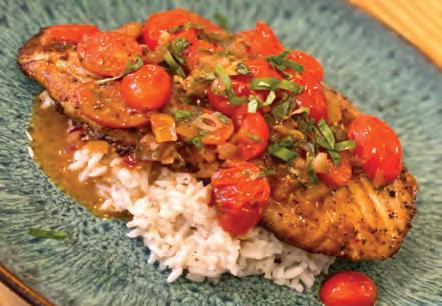
Preheat your oven to 375 degrees. Remove the fish from the refrigerator and place on a plate lined with paper towel. Pat the fish filets completely dry and allow to rest on the counter. Prepare your onion, garlic and tomato for the Bruschetta and set aside, keeping the tomato separate. Prepare your rice: In a small saucepot, bring 2 cups of water, coriander, salt, pepper, and butter to a simmer, then stir in rice. Bring the rice to a gentle simmer, reduce heat to a low flame, just enough to hold the simmer, cover, and allow to simmer for about 18–20 minutes until tender (it may be a little less time.) When it is ready, set aside covered. Fluff with a fork when you are ready to serve. In a large oven-safe skillet pan, heat 1 tablespoon of oil and swirl it around the pan. Allow the oil to get very hot but not smoking. Carefully wipe the pan with a few dry paper towels, making sure to completely grease up the pan.
Ingredients: FILET OF FISH
Triggerfish Filet, 7-9 ounce, 2 each
Kosher salt, as needed
Black Pepper, as needed
Olive oil, 2 tablespoons
Butter, unsalted, 2 tablespoons
WHITE RICE
Water, 2 cups
Carolina Plantation White Rice, 3/4 cup
Coriander, ground, pinch
Kosher salt, 1/2 teaspoon
This will season your pan and help the fish not to stick. With the pan still hot over a high medium heat, heat the remainder of the oil and all the butter until the butter starts to simmer. The oil butter mixture should not be turning brown or smoking, but it must be hot. Quickly, generously season the top side of your fish filets with salt and pepper and place seasoned side down. Then season the top side of the fish with salt and pepper. After about 10-15 seconds, with a turning spatula, gently slide under both fish filets and move a touch to make sure it is not sticking. If your pan was hot enough, a nice sear should already be started and you should not have any trouble. Once the butter starts to brown slightly, tilt your pan and start spooning the butter over top of the fish, about 5-7 times each. Let your fish cook for 3 minutes and then carefully flip. Spoon more butter over the cooked side. Allow to cook for 1 minute and slide into the oven to finish cooking the very center. Next, work on your Bruschetta topping. (While you are on step 5, check the fish
Black pepper, pinch
Butter, unsalted, 2 teaspoons
BLISTERED TOMATO BRUSCHETTA
Olive oil, 2 teaspoons
Red onion, chopped, 1/4 cup
Garlic, finely chopped, 3 cloves
Cherry Tomatoes, halved, 1 1/2 cups
Red vinegar, 2 tablespoons
Juice of a lemon, 1 each
Fresh mint, chopped, 3-4 leaves
Fresh basil, chopped, 5-6 leaves
for doneness, it may or may not be ready before the bruschetta is ready) **See Chef’s Note for tips about doneness. In a small, preferably nonstick pan, heat 2 teaspoons of oil, over a high medium heat and add the onions and garlic and cook for 45-60 seconds, until the garlic starts to brown. Add the halved tomatoes and season with a little salt and pepper and toss. Once the tomatoes start to blister (about 30-45 seconds) add the vinegar and lemon, tossing to incorporate, allow to simmer for about 3045 seconds. Add the basil and mint, toss then remove from heat. Once your fish is ready, separate the rice on 2 plates. Top the rice with 1 filet of fish each and then divide the blistered Bruschetta over top both filets. If you would like, chop up a little fresh basil and mint and garnish the top of the dish and add a little fresh cracked black pepper.
**Chef’s Note: You will know when your dish is done when the center of the fish easily flakes apart.
1
2
4
6
5
6
8
8
9
9
10
13
13
14
15
16
17
18
19
18
19
20
21
20 Sun 12:45 3.9 1:08 3.0 7:12 1.0 7:06 0.9 6:26 7:43
21 Mon 1:39 3.8 2:08 3.2 8:17 0.9 8:23 0.8 6:25 7:44
22
23 Wed 3:44 3.8 4:16 3.9 10:06 0.4 10:33 0.3 6:22 7:45
24
25
26
27 Sun 7:16 4.1 7:43 5.5 1:20 -0.3 1:17 -0.4 6:18
28
29


February has arrived and we have seen some cold spells. Water temps some days have been in the low to mid 40s starting out and hitting 50 by the afternoon. The red drum fishing has remained fantastic in the areas holding winter schools as well as the black drum, but some spectacular days can be had this time of year targeting speckled trout. I personally like to fish shallow water for speckled trout when I can. When I say shallow, I’m talking 3’-8’ deep. BUT in the middle of winter with the cold snaps I’m forced to look deeper, especially early mornings before the sun has had the chance to warm the shallow areas. I find deep water 12-20’ sometimes deeper. If there is shallow water close by that is a huge bonus. The fish will move up to those shallow drops as it warms in the afternoon on those cold days.
For tackle in these deeper areas I will use soft plastics on 1/8oz or 1/4oz 4/0 jig heads. This is one of the only times I will choose a jig head over a weedless swimbait hook, there’s a reason for that. Sometimes in the dead of winter these fish will have a smaller bite window and will be a faint strike at times. Faint enough that it is tough to set the strike with a weedless hook. The trout will inhale it and immediately spit it back out. Saltwater Assassin and VMC both make quality saltwater jig heads.
For the plastics in these type of deep water situations I prefer the following:
Assassin (Made in the USA)
Salty Snack in Plum Chartreuse | Snow Storm
Sea Shad Opening night | Mama’s Chicken | Purple Chicken | Snow Storm 4” Saltwater Assassin curly tail Opening night | Chartreuse 4.5” Saltwater Assassin Lil’ Tapper Black Blue tail | Copper juice | Morning dawn
I try to use as light of a weight as I can get away with. If I am fishing a deep 20’ plus bend in the creek or river I will cast and count as the bait sinks. If the fish are active and you get hit on a 10 count you know they are fired up, they are rising up and hungry. Other days you have to hop it off the bottom, this is especially the case in high boat pressured areas. Let that plastic sit, pop the rod tip up a couple times and let it sit again for 4 or 5 seconds. Those tough cold February days that will get the job done when they are not as active.
Morehead City Harbor (Harbor Channel), NC -
www.USHarbors.com Cape Lookout Bight, NC - Apr 2025

2
3
1
1
2
3
4 Wed 2:05 2.9 2:25
5
4
5
6
7
8
8
6
7


3.8 5:25 3.6 11:15 0.5 11:31 0.5 6:41 7:34
9 Wed 5:47 3.8 6:09 3.8 11:54 0.5 6:40 7:34
9 Mon 6:04 2.8 6:09 2.1 12:28 0.4 6:57 5:44
10
10
11
3.7
12 Sat 7:37 3.7 7:52 4.3 1:44 0.3 1:40 0.4 6:36 7:37
13 Sun 8:08 3.6 8:23 4.4 2:20 0.3 2:12 0.4 6:35 7:38
12 Thu 8:59 2.8 9:05 2.0 2:13 0.1 3:22 0.5 6:55 5:46
14 Mon 8:39 3.5 8:56 4.4 2:54 0.3 2:43 0.4 6:33 7:38
13 Fri 9:53 2.9 9:59 2.1 3:08 0.0 4:14 0.4 6:54 5:47
15 Tue 9:13 3.4 9:32 4.3 3:28 0.4 3:15 0.4 6:32 7:39
14
15
16 Wed 9:50 3.2 10:14 4.2 4:04 0.5 3:49 0.5 6:31 7:40
17 Thu 10:33 3.1 11:03 4.0 4:44 0.7 4:27 0.6 6:30 7:41
16 Mon 11:57 3.1 5:31 -0.2 6:18 0.0 6:50 5:50
18 Fri 11:24 3.0 11:54 4.0 5:28 0.8 5:11 0.7 6:28 7:41
17 Tue 12:06 2.5 12:33 3.1 6:15 -0.2 6:54 -0.1 6:49 5:51
19 Sat 12:15 3.0 6:16 1.0 6:03 0.8 6:27 7:42
18 Wed 12:47 2.7 1:10 3.1 6:59 -0.3 7:29 -0.2 6:48 5:52
20 Sun 12:45 3.9 1:08 3.0 7:12 1.0 7:06 0.9 6:26 7:43
19 Thu 1:29 3.0 1:47 3.1 7:44 -0.3 8:05 -0.4 6:47 5:53
20
21 Mon 1:39 3.8 2:08 3.2 8:17 0.9 8:23 0.8 6:25 7:44
22 Tue 2:40 3.8 3:14 3.5 9:17 0.7 9:35 0.6 6:23 7:45
23 Wed 3:44 3.8 4:16 3.9 10:06 0.4 10:33 0.3 6:22 7:45
21 Sat 2:59 3.3 3:10 2.8 9:19 -0.2
24 Thu 4:41 3.9 5:11 4.4 10:51 0.1 11:27 0.1 6:21 7:46
25 Fri 5:35 4.0 6:04 4.9 11:36 -0.1 6:20 7:47
26 Sat 6:27 4.1 6:54 5.3 12:24 -0.2 12:25 -0.3 6:19 7:48
27 Sun 7:16 4.1 7:43 5.5 1:20 -0.3 1:17 -0.4 6:18 7:49
28
29 Tue 8:51 4.0 9:20 5.3 3:04 -0.3 2:57 -0.4 6:16 7:50
Chapter banquets are our primary fundraiser for the year. Each one features a catered meal, open bar, raffles, and both live and silent auctions where guests can win TONS of awesome prizes!! Some examples include, but are not limited to: rod and reel combos, boat care buckets, bourbon, turtleboxes, knives, solo stoves, and chances to bid on and win trips at premium vacation destinations! Each chapter offers something unique for a touch of local flavor. Check out our calendar and come be a part of the banquet closest to you. Tickets are available for individuals, and we have corporate sponsorship opportunities available as well.
January 22 – New Bern Chapter – Riverfront Convention Center
February 26 – East Carolina Chapter – Rock Springs Center
April 25 – Onslow Bay Chapter – Swansboro Rotary Civic Center
COMING SOON – Brunswick County Chapter – TBD Use this link to find your area banquet and get tickets: Chapter Banquets
After all the excitement of the Holidays have worn off and Anglers of The Crystal Coast settle into mid-Winter conditions, most can just expect blistery cold days and water temps that can make fishing very challenging with species being slow and lethargic.
For those that yearn to find that exciting bite there are still some great options!
Let’s talk about the How, When & Where to find and catch mid-Winter fish.
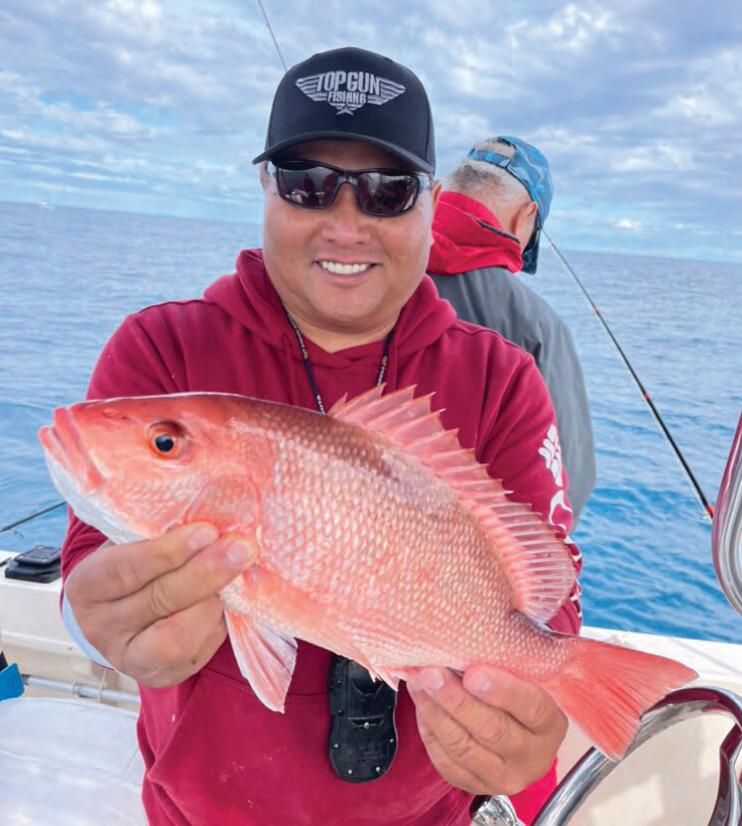
As the inshore water temps drop below the 58 degree mark the usual suspects of Drum, Trout and others will be a bit harder to find and catch. Anglers can venture offshore during this time of year to get into great action and delicious eats of Black Seabass, Vermilion Snapper, Trigger fish and other various bottom fish! Warmer columns of water can be found over offshore reefs as close as 25 miles out. Bottom fishing on a nice day can produce a bounty of these great fish.
Search for reefs that hold rocky structures or a live bottom. Learning to read your fish finder and sonar is a huge advantage in the bottom fishing game! Most of these species will be very dominant once you find water depths from 70ft to 130ft.
Gear and tackle for bottom fishing can be pretty simple so try not to go overboard with your preparation. A medium to heavy stout rod paired with a 5k to 6k reel will do the trick! Use 30-40lb braided line with 30lb leader for your bottom rigs. A traditional “Chicken Rig” is a dual hook rig that is perfect for bottom fishing, just make sure you follow all NOAA fishing rules and regulations and use the proper hooks as well as specific species size regulations.
Offshore bottom fishing during mid-Winter can be a very rewarding and exciting experience, especially for the palate! Always make sure you pay close attention to your safety gear on board as well as your current weather conditions. This will make for a successful trip every time and, as always, feel free to contact us with any questions!
Best of luck and Happy Fishing.

Our coast faces ever increasing challenges every day. Sea level rise is accelerating shoreline erosion, excessive development is putting habitat at risk, water quality is suffering from pollution, sedimentation, and hypoxic events. On top of all that, managers and politicians in North Carolina are allowing, even encouraging, wasteful and destructive fishing practices that put our dwindling marine resources in further danger. So, what can I do, you ask? If you want to help, there are several things you can do every day that will make a big difference.
You have heard some of this a million times before, but it still should resonate. Don’t litter, recycle as many products as possible in your community, and start a compost pile for your garden. Reconsider the practice of releasing balloons. They are especially dangerous to sea turtles that confuse them for jellyfish, one of their favorite foods, and ingest them. You can donate clean, used Christmas trees to local organizations that are working on shoreline or dune stabilization projects. You can also do a neighborhood clean up (or participate in a clean up sponsored by a local organization, like NC Wildlife).
IN YOUR YARD:
Use pesticides, herbicides, and other chemicals SPARINGLY and only when absolutely necessary. Be responsible when applying fertilizer, taking care to never overfertilize. When these chemicals leech into our creeks, rivers, and sounds, they are acutely toxic to invertebrates like oysters, crabs, and shrimp.
Wherever possible, landscape with native trees, shrubs, and turfgrass. They use less water, are adapted to the local climate, and are beneficial to our native critters. These plants will also require less frequent applications of fertilizer and other chemicals.
If you happen to have waterfront property, consider installing a living shoreline of native marsh grasses. Even a small area planted in front of a sea wall will have beneficial effects. Living shorelines restore natural habitat, attenuate wave action which reduces erosion, serve as protected areas for juvenile organisms, and help concentrate gamefish. If you have a dock, consider placing hard materials, like used oyster shells, underneath that will serve as area for baby oysters (spat) to colonize.
ON THE WATER:
Be sure to correctly stow all gear and trash that you generate. Keep your boat properly maintained. Not only will it be more economical for you, but it will lessen the chances of fuel and oil leaking into our waterways. If you see trash floating in the water (especially plastic bags or balloons), take a moment and pick it up.
When you are out fishing, use the most ethical angling practices that you can. Netting a fish with a rubberized net minimizes loss of the protective slime that keeps them healthy. Use circle hooks whenever possible if you are using natural bait. Doing so greatly reduces the chance of deep hooking and killing a fish that you end up releasing. Consider replacing treble hooks with safer in-line hooks, or pinch down the barbs on any trebles that you use. This greatly reduces the damage to a caught fish and increases its chance of survival. Practice catch-photo-release as often as you can. Don’t continuously upcull fish that you intend to keep. Riding around with a fish in the live well for hours greatly reduces its chances of survival when released. Perhaps most importantly, don’t keep any more fish than those you know you will use. Filling up a cooler with fish simply because you are allowed to is

not practicing good conservation. By all means, keep what you need, but let the rest swim away to grow and spawn. That is the only way we can ensure that our populations will remain healthy in the years to come.
As mentioned throughout this article, you can do quite a few things around your house and in the water to minimize many of the challenges that we are facing on the coast of North Carolina. You can also get involved in the process by researching the issues of most importance to you, attending those meetings, and commenting to our managers and politicians about the solutions that make the most sense. If politicking like that is not your cup of tea, you can always contribute to the organizations that most closely match your views on a given policy. CCA NC has been fighting hard for decades to preserve and protect our coast and its fisheries. We would certainly appreciate your support as we continue that work.



By Capt. Lukas Brickweg
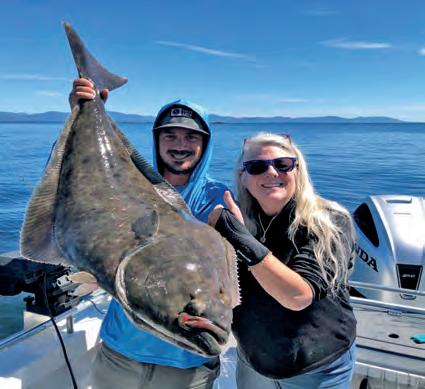
If you’ve ever dreamed about catching halibut and cod in the wilderness of Alaska - rod bent, line screaming, and majestic wildlife abound – now is the time to turn that dream into reality. Every season in Ketchikan, Alaska, May marks the kicko! to world-class halibut and Paci c cod shing, and we are ready to put you on the sh of a lifetime.
May is a special month in Southeast Alaska. e long daylight hours return, the ocean comes alive, and the early-season halibut move onto nearshore waters to feed. Halibut gather on the underwater ledges, humps, and sandy $ats, areas that we know like the backs of our hands, ranging from 200-400 feet.
At the same time, hungry Paci c cod patrol the same bottom structure, adding an action-packed bonus to every trip. “Alaska cod shing chaos” is the best way to describe
this seasonal bite. ere are no limits on retaining Paci c cod, allowing anglers to bring home huge hauls of cod and halibut. is means you can o en pull up a mixed bag of halibut, cod, and rock sh - making for one of the most productive and delicious shing experiences anywhere in the world.
Reeling up cod and halibut until your arms give out is a good way to summarize Alaska bottom shing in May.
May trips tend to ll quickly because the reputation for aggressive sh and minimum shing pressure. is combination equates to an anglers dream scenario. Whether you’re $ying in for our three to four day allinclusive lodging/ shing packages or on a cruise, it’s best to start planning and booking early. Ketchikan provides convenient $ights, accommodating guests from all over the US. Our all-inclusive packages provide airport transfer, lodging, meals, shing and sh processing.
The Bottom Line ere’s shing, and then there’s Alaska shing. And when it comes to halibut and
cod, May in Ketchikan is as good as it gets. So give us a call to book your spot, and come experience the thrill of hooking giants where every trip is a story worth telling.
Book your "Bucket List" trip to Alaska with Capt. Lukas Brickweg, of Ketchikan’s Finest Fishing Charters, at ketchikan shingtrips.com, call (907) 617-4717 or email ketchikan shingtrips@gmail.com.




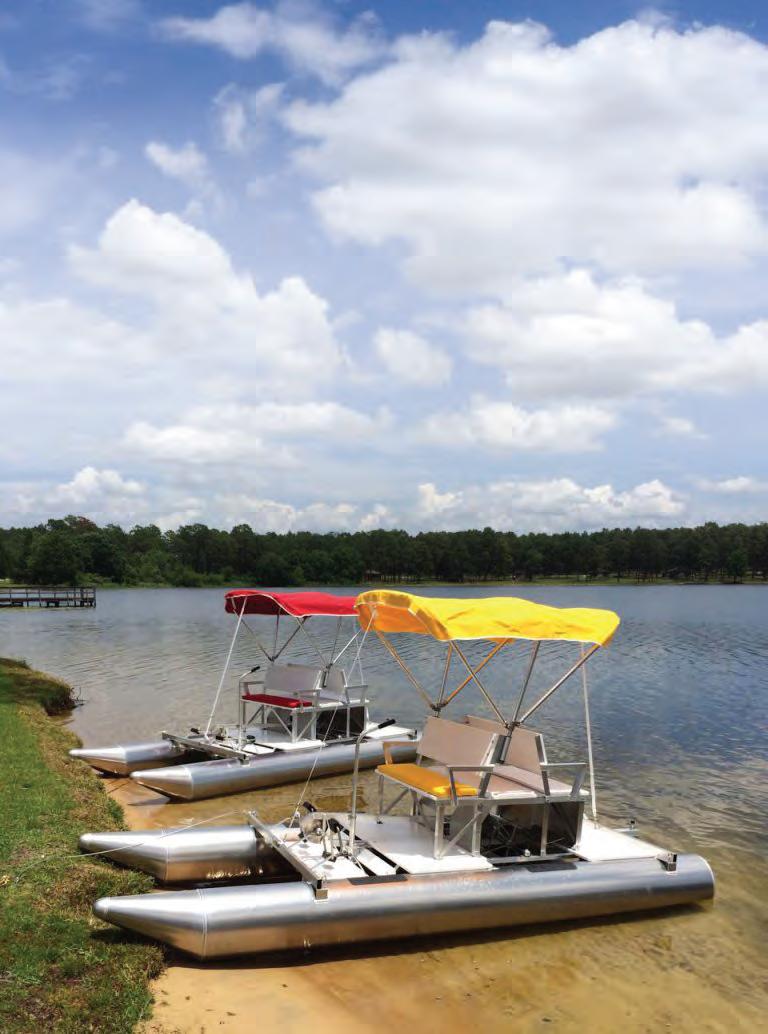
CAPACITY: Four Adults or 800 pounds (reduce by accessories and gear) Rear sun deck with retractable ladder for boarding in deep water. Two passengers face forward and two face backward. The front passengers pedal.
By CAM Sta
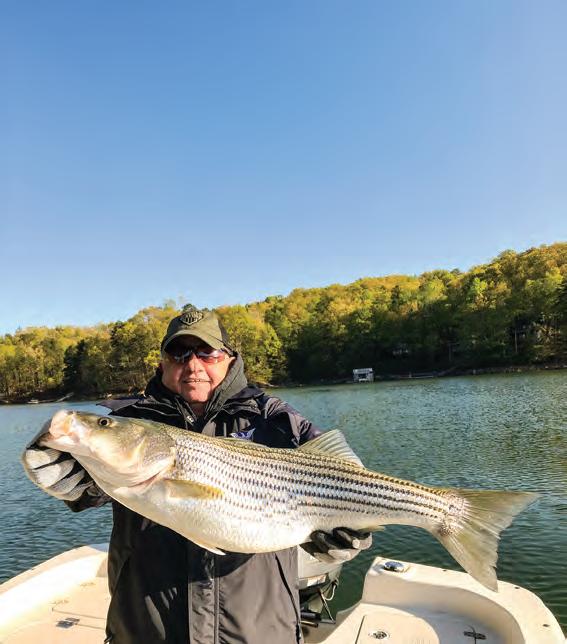
Whether in saltwater or freshwater, excellent striper shing awaits anglers hearty enough to brave winter conditions. So layer up, zip into that parka, and go—some of the biggest sh of the year are feeding right now.
At the southern end of their fall migration, striped bass spend the winter o! the coast of North Carolina. ey follow schools of bait up and down the shoreline from Wilmington to the Outer Banks, feeding heavily along the way. In many years, Oregon Inlet becomes the epicenter of the action, though stripers can be found in most inlets throughout the region.
e key is to follow the birds, which o en reveal bass blowing up on menhaden, glass minnows, or eels. At times the action pushes close enough to shore that surfcasters can hook stripers right from the beaches of the Outer Banks. More o en, however, the best approach is hiring a local captain armed with recent intel and a fast boat.
Farther south, Wilmington provides another winter opportunity as striped bass stack up in the Cape Fear River. ese sh hold near structure, dropo!s, and creek mouths, and can be caught on arti cials—or even on $ies. is resident population is separate from the highly migratory sh wintering o! the Outer Banks. Cape Fear stripers are strictly catch-and-release and must be returned to the water immediately, so keep an eye out for tagged sh.
Meanwhile, freshwater reservoirs across the Southern states and into the Mid-Atlantic also produce solid winter striper shing. While smaller, schoolie-sized sh can become sluggish during the coldest periods, larger stripers continue to feed. e pace may not match summertime downline action over massive schools, but the sh that do bite are o en bigger.

Tactics vary by shery, but when water temperatures stabilize—or during a multi-day warming trend—the largest sh in the lake o en push shallow, sometimes surprisingly so, as they shadow schools of small shad. Find the $ickering bait, and you’ll nd the stripers. You may even see them picking o! prey near the surface. Stealth is critical in these situations, and so plastics like Flukes frequently outproduce live bait. ey’re easier to cast and allow for a slow, controlled retrieve.
Another e!ective approach is covering water by trolling wide spreads of small live baits, pulling umbrella rigs loaded with swimbaits, or combining both methods. When shing this way, good local information is invaluable. On some lakes, stripers spend the winter near the dam; on others, they push far up into the creeks.
Winter may test an angler’s resolve, but for those willing to endure the cold, striper shing can be at its best. From coastal inlets and rivers to inland reservoirs, striped bass remain active and accessible, o en with less pressure and a better chance at trophy-sized sh. Success comes down to preparation, paying attention to bait and bird activity, and adapting tactics to changing conditions. Bundle up, do your homework, and embrace the season—the reward could be the biggest striper of your year.


Coming o! the heels of a record-breaking 2025 season that awarded 11 century belts, saw four- rst time champions (two of which were members of the 2025 rookie class) and garnered over 183 million social media impressions, B.A.S.S. has announced the 101-angler eld for an exciting 2026 Elite Series season.
is year, anglers will be put to the test with the use of forward-facing sonar only being allowed at ve of the nine regular-season Elite events. Anglers will be competing for a $100,000 rst-place prize at each stop of the season, while also accumulating valuable Progressive Bassmaster Angler of the Year points in hopes of making it to the 2027 Bass Pro Shops Bassmaster Classic presented by Under Armour.

“Each season, the Bassmaster Elite Series showcases the very best in professional bass shing, and 2026 will be no exception,” said B.A.S.S. Elite Series Tournament Director Lisa Talmadge. “We’re excited to welcome 101 incredibly talented anglers who represent the heart of this sport—a mix of proven champions, rising stars and hungry newcomers all ready to compete on some of the most iconic sheries in the country. It’s going to be an unforgettable season for our anglers and fans alike.”
With the exception of one angler, every 2025 Elite Series angler who quali ed is returning next year. e list of anglers includes 2025 Bass Pro Shops Bassmaster Classic champion Easton Fothergill of Grand Rapids, Minn., who won the most coveted trophy in bass shing during his freshman season on the Elites. Two-time Progressive Bassmaster Angler of the Year Chris Johnston will also join the ranks of returning anglers alongside Dakota Lithium Bassmaster Rookie of the Year Tucker Smith, who took home his rst blue trophy at the 2025 Bassmaster Elite at Lake Fork with a 127-pound, 8-ounce winning weight that also earned him a century belt.
Ten anglers from the Nitro Boats Bassmaster Elite Quali ers will also be joining the 2026 Elite roster, including 20-year-old Alabama phenom Fisher Anaya who claimed the 2025 Nitro Boats Bassmaster Elite Quali ers Angler of the Year title. Wisconsin’s Nick Trim clinched an Elite Series spot for himself alongside his big win at the 2025 Mercury B.A.S.S. Nation Championship at Upper Mississippi River presented by Lowrance. e 2026 Progressive Bassmaster Elite Series kicks o! on Alabama’s Lake Guntersville February 5. From there the tournament trail will wind through six states as anglers battle for cash prizes and attempt to qualify for the 2027 Bass Pro Shops Bassmaster Classic presented by Under Armour.
Each tournament will begin with the full eld of anglers on Days 1 and 2 before the eld is cut to the Top 50 on Semi nal Saturday. Only the Top 10 anglers will sh the nal day of the event, with a $100,000 rstplace prize and a blue trophy on the line. For the complete roster, and to keep up with all the action from the 2026 Elite Series season visit Bassmaster.com.

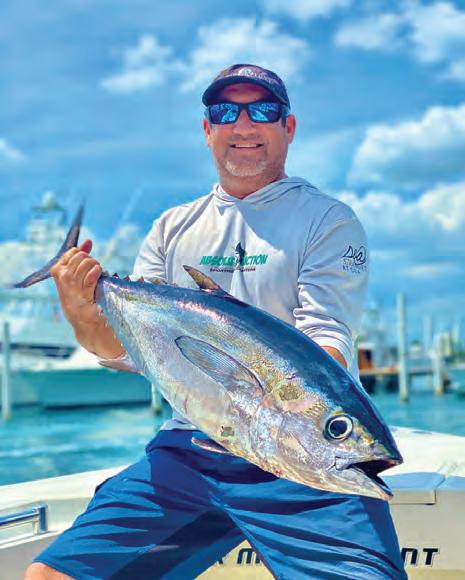
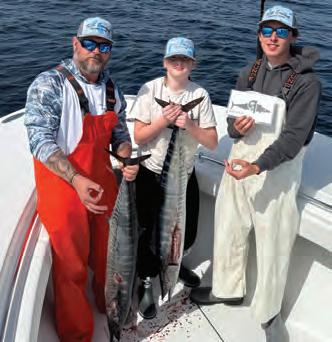
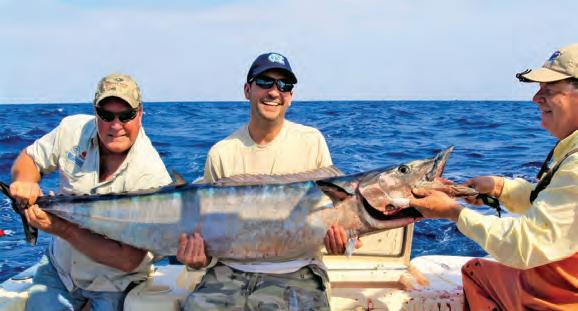
This is the time of year to nd the wall of warmer water and get the wahoo bite going. All of the water nearshore is cold and where the 68- plusdegree water meets that cold water can be an excellent spot for targeting wahoo. is is a great time of year to target wahoo during the rst hour or two of your trip using high speed trolling. You can cover a lot of ground high speed trolling, which speci cally targets wahoo. Once the sun has been up for a few hours your chances at a wahoo bite diminish unless it’s an overcast or rainy day. Wahoo regulate the amount of sun they take in by going deeper as the sun rises, so midmorning is a good time to change tactics.
Slow dri s, kite shing and jigging the column with live baits is a great mid-morning tactic and the bigger the bait the better. ere’s no telling what you’ll raise during these colder days shing the temperature change. Never count out deep dropping near these temperature change areas either. Fishing the entire water column from the surface to the bottom turns a cold day into a cooler full of sh and some awesome dinners.



Discover this spectacular 6½-carat green treasure from Mount St. Helens!
For almost a hundred years it lay dormant. Silently building strength. At 10,000 feet high, it was truly a sleeping giant. Until May 18, 1980, when the beast awoke with violent force and revealed its greatest secret. Mount St. Helens erupted, sending up a 80,000-foot column of ash and smoke. From that chaos, something beautiful emerged… our spectacular Helenite Necklace
Helenite is produced from the heated volcanic rock of Mount St. Helens and the brilliant green creation has captured the eye of jewelry designers worldwide. Today you can wear this massive 6!-carat stunner for only $99!
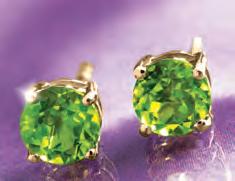
Helenite Earrings -a $99 valuewith purchase of Helenite Necklace
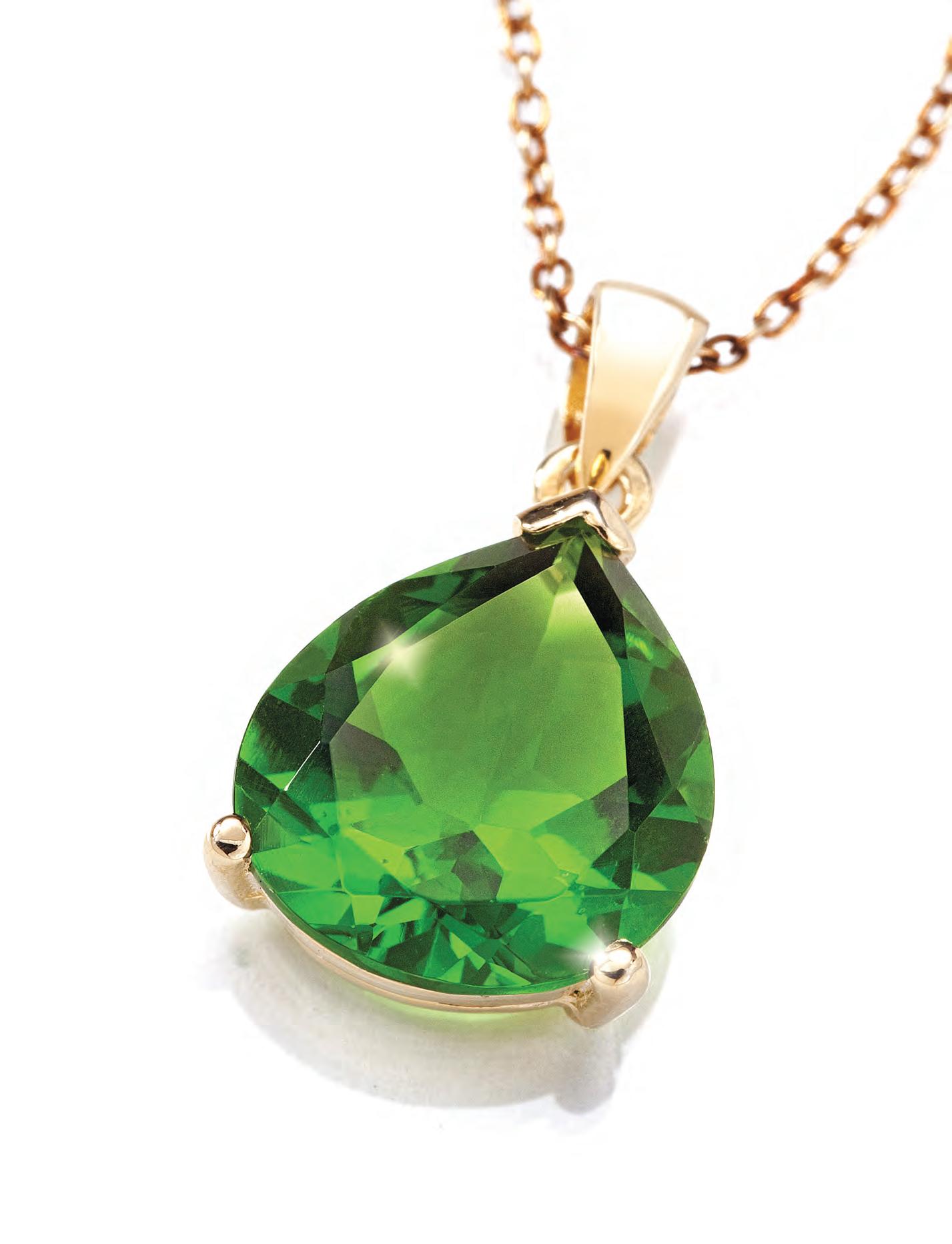
Make your emeralds jealous. Our Helenite Necklace puts the green stone center stage, with a faceted pearcut set in .925 sterling silver finished in luxurious gold. The explosive origins of the stone are echoed in the flashes of light that radiate as the piece swings gracefully from its 18" luxurious gold-finished sterling silver chain. Today the volcano sits quiet, but this unique piece of American natural history continues to erupt with gorgeous green fire. Your satisfaction is guaranteed. Bring home the Helenite Necklace and see for yourself. If you are not completely blown away by the rare beauty of this exceptional stone, simply return the necklace within 30 days for a full refund of your purchase price.
JEWELRY SPECS:
- 6 ½ ctw Helenite in gold-finished sterling silver setting - 18" gold-finished sterling silver chain
Limited to the first 600 orders from this ad only
Helenite Necklace (6 ½ ctw) ............. Only $99 +S&P
Helenite Stud Earrings (1 ctw) ................ $99 +S&P
Helenite Set $198 ........... Call-in price only $99 +S&P (Set includes necklace and earrings)
Call now to take advantage of this extremely limited offer.
1-800-333-2045
Promotional Code HNN213-05
Please mention this code when you call.
color.

“My wife received more compliments on this stone on the first day she wore it than any other piece of jewelry I’ve ever given her.” - J. from Orlando, FL Stauer Client