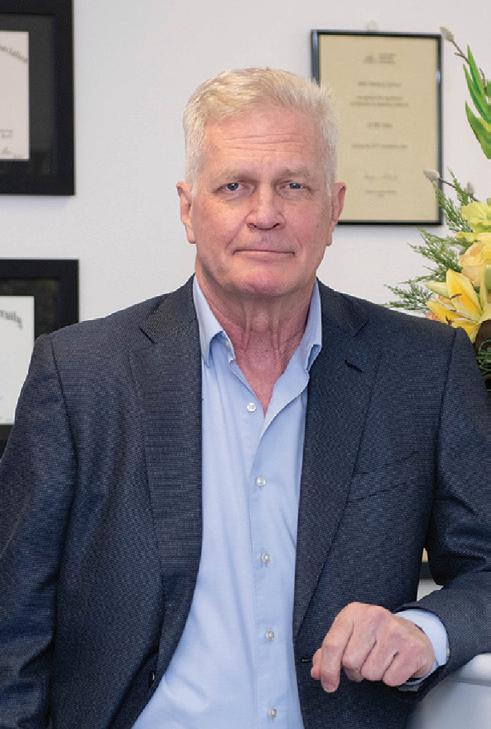
The Liberals and The Greens should find common ground and work together in the interest of Canberra, says MICHAEL MOORE
How to shelter during bushfires CLIVE WILLIAMS
Old age isn’t knocking, it’s standing at the door PAUL DORIN
Macklin was unafraid to challenge the status quo HUGH SELBY
Rhonda runs hot... and cold
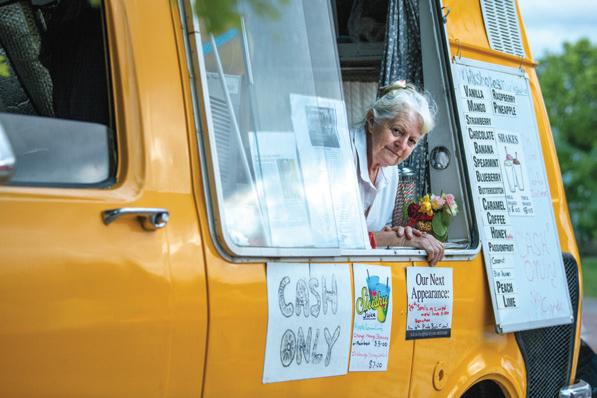
Rhonda Arnall, aka ‘The Ice Cream Lady’ is a dynamo, a real ‘doer’, writes DAVID TURNBULL
Come along and see the friendly free-flying birds that can be photographed and fed. Walk amongst over 500 birds from 60 species from Australia and around the world!
Open 7 days a week from 10am to 5pm with the last admission 4.30pm
There’s no stopping Rhonda, the ‘Ice Cream Lady’
From an apprentice chef at the old Royal Canberra Hospital, Rhonda Arnall has run successful restaurants in Aranda and Cook before branching into ice cream. And that’s not even half of it. DAVID TURNBULL continues his series of stories of remarkable Canberrans.
For want of a better description Rhonda Arnall is often called “The Ice Cream Lady”.
But if you think that means she’s soft and fluffy like the products she makes you would be mistaken.
She is a dynamo. A real “doer”. Without a single day of business training, Rhonda has been earning her keep off her own wits since she left school.
From a humble beginning as an apprentice chef at the old Royal Canberra Hospital, she ran successful restaurants in Aranda and Cook before branching out with the Chameleon Creamery.
And that’s not even half of it.
On Friday, Saturday or Sunday of most weekends you’ll find her distinctive yellow Bedford set up at a community market, fete or festival somewhere in Canberra.
On top of that, there’s one-off events. It might be Melbourne Cup day, Floriade, Halloween, a Valentine’s Day lunch or Canberra Day.
You name it; she’ll be there.
And she does the same for towns throughout the region.
To ensure she has enough ice cream for her customers, Rhonda gets up at 4am most Thursdays and goes to work in a professionalquality kitchen in her garage.
Midweek she works for three days as a chef at the Austrian embassy, then backs up five nights a week stacking shelves at Woolies in Belconnen.
And she’s been doing that for more than 30 years.
Rhonda was born In Crookwell, and grew up on a sheep, cattle and potatoes farm at a little town called Laggan, west of Goulburn.
She was the eldest of nine children, and her parents also raised two children orphaned when their parents were killed in a car accident.
“The Arnall family always lived around that area,” Rhonda says.
“All the aunties and uncles and cousins. It was a large family.
If you ask her ethnic background she says: “I’m Australian. English somewhere way back, I guess, but I’m Australian and proud of it.”
When she finished school, she was eager to “get out”.
“A lot of other girls were getting pregnant
and just staying there.
“And I thought: ‘This is not my bloody life. No way I am stopping here’.”
She got a job as a cook on a cattle station and was then lucky enough to get an apprenticeship as a chef at the Royal Canberra Hospital.
While she didn’t do well at school, she excelled in the kitchen, complet ing the four-year apprenticeship in three years, and winning the ACT Apprentice of the Year ahead of 600 apprentices from all the trades.
With decades of experience, Linda will help you create a Will and Estate plan stipulating all your wishes and concerns.
Linda assists with:
• Wills and Testamentary Wills
• Power of Attorney
• Self-managed super funds
• Advice on potential claims against estates
• Advice for blended families
only the start.
The more ice cream she sold, the more special requests she got from parents.
“They wanted very particular things because their children had allergies – either to a particular fruit, or to dairy, whatever.”
During her apprenticeship at Royal Canberra Hospital, Rhonda had worked with nutritionists. She understood allergies could cause serious problems and wanted to help.
“At first, I changed flavours around to avoid fruit allergies, then I started to experiment making with soya milk or rice milk.
“It was such a joy to see the kids with allergies with a mess of ice cream on their T-shirt and a big smile on their face.”
Arnall, the Ice Cream Lady… “It was such a joy to see the kids with allergies with a mess of ice cream on their T-shirt and a big smile on their face.”
Her apprenticeship completed, Rhonda then got a job in the kitchen at Old Parliament House.
“There were women working as waitresses and behind the counter, but they didn’t have any female chefs,” she says.
“I was brought in to do the pastry.”
Still in her early twenties, Rhonda headed off to England and quickly found work as a chef in a Swiss restaurant in London’s Leicester Square.
“It was an unusual restaurant, three in one, catering for takeaway, then middle-class and higher-end cuisine.
“We had to cater for all tastes.”
During her stay, she studied at the Cordon Bleu school during the day and worked at night.
Always hungry to learn, she eventually left London to work in a kibbutz in Israel, before returning to Australia for a sister’s wedding.
“I wasn’t back long before friends talked me into buying the Chameleon Restaurant in Aranda.
“Every table had a distinct old-English setting like a chameleon,” she laughs.
After about five years Rhonda moved the restaurant to Cook.
She ran the restaurant for about 10 years and in 2000 morphed her business into ice cream.
“It was an accident, really,” she says.
“The guy who was making ice cream for me was closing down and suggested I take over, so I did.”
But Rhonda changed things dramatically.
Instead of flavours from a bottle she made everything with real ingredients.
Again, she fell on her feet.
“While I was running the restaurant, I used to go to the Hall Market with a friend doing jams and chutneys,” she says.
“My friend wanted to stop, so early in the 1990s I changed to ice cream, and it just took off.”
Rhonda did the markets at Hall and kept getting requests to come to this market or that market, school fairs, rodeos and special events not just in Canberra but Yass, Goulburn and Cooma – even as far as Parkes.
By then, of course, the little freezer on wheels Rhonda had been using was too small so she had a Bedford van fitted out professionally.
“I called the business the Chameleon Icecreamery because the flavours changed,” she says.
“I always had the basics, of course, but I made others depending on what was in season – strawberries, passionfruit, raspberries, mulberries, even pomegranates.”
And her inventiveness with flavours was
Rhonda Arnall has been hard at it now for 35 years.
Never married.
“How would I have time for that,” she says.
And when you ask what has motivated her, the answer comes quickly.
“Old Nan,” she says.
“My father’s mother’s name was May, but everyone called her “old Nan”.
“I can still hear her in the back of my head.
“Stop whinging about things. Just get on with it. People who are always whinging about the government or this or that… they don’t get anything done.
“If you see a problem. Fix It.”
Journalist David Turnbull is writing a series of profiles about interesting Canberrans. Do you know someone who deserves a story? Share the name and a number in an email to David via editor@citynews.com.au
Rhonda
Photo: Andrew Campbell
OPINION / bushfire shelters
How to save property and shelter during bushfires
“The least dangerous place to be during a bushfire is below ground in an open area,” writes CLIVE WILLIAMS, who is reprising some practical advice about surviving a bushfire.
Every year Australians are surprised by the ferocity of bushfires and shattered when their properties are destroyed.
We need to plan appropriately for living in bushfire-prone areas because, as the current crisis demonstrates, they are only becoming more devastating.
Property protection measures should include mandatory installation of rooftop sprinkler systems, use of fire-resistant housing materials, appropriate housing design and more rigorous management of the local combustible environment.
But as I have long advocated, it should also include a properly prepared, sensible refuge of last resort.
The NSW Rural Fire Service’s bushfire advice is “leave early, your safest choice” or “decide to stay, only if you’re well prepared”.
However, RFS data shows most houses destroyed by bushfires could have been saved if someone had stayed behind to extinguish
burning embers and spot fires.
The main dangers in a bushfire are radiant heat and convective heat. Radiant heat travels in a straight line without heating the space itself. It turns into heat when it contacts a cooler surface. This is what you experience when you stand around a campfire.
fallback option.)
Convective heat requires air movement, such as you experience with a blast of hot air. When flames or hot gases move past a surface, the hot molecules transfer their heat to available surfaces. Both types can kill quickly during a bushfire.
Other dangers for humans and animals are burning embers, falling debris, superheated air and smoke inhalation.
Bushfire smoke contains invisible small particles, gases (carbon monoxide, nitrogen oxides and volatile organic compounds) and water vapour. (A P2 rated mask will protect from smoke particles; breathing through a dry cloth is a
What are the stay-and-survive options? Constructing a safe area within a house is not a sensible choice.
During World War II, the inadequacies of cellars and basements for fire protection became apparent during the allied incendiary attacks on Hamburg and Dresden. Cyclonic firestorm winds – that could reach well over 800 degrees Centigrade – caused buildings to explode and collapse, trapping occupants under the rubble. (Up to 25,000 died in Dresden alone.)
Other bad survival choices for unprepared rural residents are taking refuge in above-ground water tanks (due to water-boiling and asphyxiation risks), baths covered
by blankets inside houses (due to the risk of the house burning), and any location where part of the body may be exposed to radiant heat.
The least dangerous place to be during a bushfire is below ground in an open area.
During Australia’s early colonial history, crude “bushfire bunkers” were used in clearings around remote towns and logging operations.
They typically comprised a zigzag ditch dug a couple of metres into the ground, covered with logs with a metre of earth spread on top of them, leaving a small below-ground entrance and exit.
The bunker protected the occupants from radiant and convective heat, and still gave them access to the thin layer of breathable air that runs along the ground below the smoke.
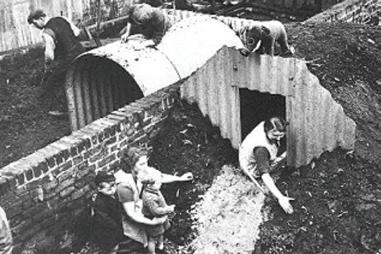
In the UK, from early 1939, home defence authorities supplied materials to households so that residents could construct Anderson shelters to be dug into the back garden to provide protection against incendiary bombs and firestorm effects.
Anderson shelters were intended to accommodate up to six people.
They consisted of galvanised iron panels bolted together, with one containing a door.
Internally, the shelters were 1.8 metres high, 1.4 metres wide and
two metres long. They were sunk into the back garden and covered with a minimum half metre of soil.
Because they were also designed to withstand nearby bomb explosions, Anderson shelters were structurally stronger than would be required for bushfire protection. It should therefore be possible to design and install a mass-produced Anderson-like structure to withstand bushfires for well under $1000.
A bushfire bunker would require a prefabricated nonflammable framework, a hole in the ground to put it in, a fireproof access point, and to be low maintenance.
Such a framework should be built to a government-approved standard and the cost to consumers subsidised by government to encourage its adoption.
For those who are determined to stay to protect their property, or leave it too late to flee, such a well-prepared bushfire bunker would provide their best chance of survival.
I should add that this article was first written and published in January 2020. It seems that state governments are slow learners.
Professor Clive Williams MG is director of the Terrorism Research Centre in Canberra (clive.williams@ terrint.org)
Families work on installing Anderson bomb shelters in the UK during World War II. Photo: YouTube
Planning
Workplace
Car
Behind the rumours is a duty to serve Canberra
Rumours abound about the Liberals and Greens moving to a closer relationship.
Under Mark Parton’s leadership, the days of Liberals thinking “Greens = lefty socialist” needs to be put in the bin. Similarly, under the pragmatic leadership of Shane Rattenbury, the notion of Canberra Liberals as “right-wing fascists” also ought to be discarded.
The challenge for both parties is to find something in common. The most obvious commonality is thinking about the best interests of the people of Canberra.
There will be ideological differences between the Liberals, the Greens and the independents. What should be the focus of these MLAs is to find the common ground and to work together in the interest of Canberrans.
Services portfolio.
At the same time, the elected MLAs do have a responsibility to deliver on the platforms that were prepared by them and their parties before the last election. However, election platforms are based on conveying differences – a key element to winning votes. It is now time to compare philosophy, consider the principles and investigate where compromise can be reached.
Within weeks of Parton being elected as Leader of the Canberra Liberals in the Assembly, a joint motion had been passed when they put aside ideological differences with the Greens and combined to establish a Financial Review Committee. The state of the ACT finances, having been twice downgraded by Standard and Poors, is a concern for all MLAs.
Greens leader Rattenbury has been a government minister. He under stands the importance of appropriate budgeting. Fiscal discipline is critical if a government is to deliver on what is needed for a better Canberra. The Liberals pride themselves on fiscal responsibility.
On financial management there are no ideological differences. Determining the best way to spend money in the best interests of the people of Canberra will require thoughtful, respectful discussion followed by vigorous action in the Assembly. Action that ought to be co-ordinated between the Greens, the Liberals and the independents.
Managing the budget is the highest priority in challenging the government. Chris Steel has been a minister since 2018 when he was given the City
In November 2024 he was appointed as ACT Treasurer. With his background as a minister covering many portfolios, he ought to have been able to deliver a
The first budget in an electoral period is the time to take strident action and rein in spending. This was not done. To do this required a tough, but necessary call, made all the tougher as his predecessor as Treasurer was the Chief Minister, Andrew Barr. The tribulations of the ACT finances have come about following the management of Treasury by Andrew Barr since July 2011.
Although the budget ought to be the first cab off the rank, effective management of Canberra’s service delivery areas is a responsibility of every MLA.
The deterioration of our public education system, compared to the other states and territories, should be a matter of serious concern for all
our elected members. Considering the socio-economic advantage of Canberrans – the ACT should be a national leader rather than wallowing amongst the poorest performers.
Health presents a similar challenge. On so many measures, the ACT has fallen behind equivalent hospital systems across Australia. Trouble in one area of the hospital system is of concern. However, considering the recent troubles in areas like cardiology, orthopedics, obstetrics and anaesthesia, there is no doubt that there are systemic issues.
The reality is that the Labor government has dropped the bundle when it comes to management of the two areas of greatest expenditure in the ACT. Appropriate financing is important. However, management is a key issue, as has been raised by those specialists who have publicly expressed their dissatisfaction as they
tendered their resignations.
Canberrans expect to have a fivestar hospital system. Instead, we hear of patients’ health being put at risk through poor management. The report on obstetrics that puts training of new specialists at risk, and that found registrars are being forced to operate beyond their area of expertise. These are of considerable concern.
Whatever action can be taken by the non-government MLAs to improve the lot of Canberrans should be welcomed by the community. At the very least we ought to be seeing motions that hold the government to account.
Of course there will be ideological differences between the Liberals, the Greens and the independents. What should be the focus of these MLAs is to find the common ground and to work together in the interest of Canberrans.
Michael Moore is a former member of the ACT Legislative Assembly and an in dependent minister for health. He has been a political columnist with “CityNews” since 2006.
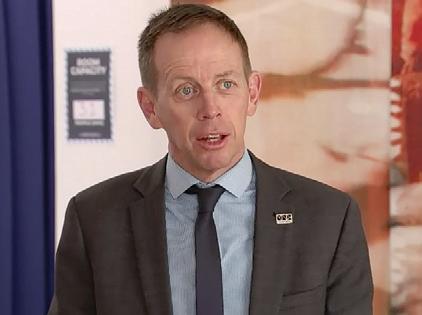
Mark Parton, left, and Shane Rattenbury… should be thinking about the best interests of the people of Canberra.
CWR has the latest wheel and rim straightening lathe, enabling us to successfully realign most damaged alloy wheels.
Email: bruce@rallimaxsport.com.au
Mobile: 0418 276 879
Phone: 02 6280 5967
Gadfly Macklin unafraid to challenge status quo
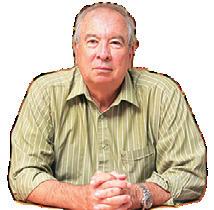
CityNews columnist of 20 years (and author of 32 books) Robert Macklin died on January 16. Here fellow columnist HUGH SELBY reflects on this remarkable journalist’s written contribution to public debate in Canberra.
Our recently departed columnist Robert Macklin wrote the Gadfly column. What’s in a name?
A gadfly challenges any and all powerful people, the status quo or a popular position.
A gadfly is also a fly that bites large animals and annoys them, not only because of the localised pain but the persistence.
I thought I’d rummage through his columns (It’s easy. Simply type Robert Macklin into the search line with the eyeglass) and see what I could find that epitomised being a pointed, astute critic.
Back in April 2014 Robert wrote a column, “Go home, stop giving us a bad name!” His target was then attorney-general George Brandis, who was proposing changes to the racial vilification laws.
These changes so irked Robert that he quipped that George wanted to be Minister for Bigotry.
Who would have thought that George would compare more than a bit favourably with the shenanigans
EXPERIENCED FEMALE GP IN CANBERRA
ACCEPTING NEW PATIENTS
Located in the heart of Canberra’s medical precinct in Deakin
At Canberra Family Health Centre, we are dedicated to providing comprehensive, patient-focused healthcare for individuals and families. Located centrally in Deakin, our centre offers a wide range of medical services designed to meet your health needs at every stage of life.
wrought by Albo and his band to pass poorly considered, probably uncon stitutional laws about “hate” through our Parliament this week?
Memo to the government: good listeners, considering and using a range of views, works better than pretending to care. Knee jerk only fools some of the people some of the time. Did you learn nothing from the failed Voice campaign?
In February 2019 Robert asked, “Is (Scomo) fighting the wrong war?” He was referring to Scomo’s repeated electoral success in playing the “turn back the boats” card, while ignoring the need to combat climate change. His friends, the climate change deniers, are all welcome to picnic outside somewhere when it’s mid-40s in the shade.
Party? Are they up for the fight?”
Seven years on, we know the answer to that question. No.
implementation. Put another way, don’t give Albo and his team any wiggle room.
Robert got it right. As was his comment, “spare me the orotund ‘apology’ from the miscreant (minister) who says: ‘I take full responsibility’ and carries on as usual”. “Orotund” means a resonant, imposing voice, or a pompous, pretentious writing style. This was probably known to all readers of CityNews in 2019 but, alas, I needed to look it up.
Robert continued: “When we say ours is a system of ‘responsible democracy’, we used to be fair dinkum. Ministers actually resigned when their departments – or even their offices – stuffed up”.
a 14-year-old, so around 1958/59, he played on the Adelaide Oval, wearing a maroon jersey. He kicked a goal and his team won.
It was in 1866 that the first footy club was formed in Queensland. By the 1880s it was the leading football code in the state. But, by the time he played in Adelaide the game hadn’t been played at the Gabba for a long time. There have been many changes to the fortunes of AFL since then, more than enough to keep the expat Robert glued to the TV during the long Canberra winters.
Robert sweetly commented that: “We know that Scomo… will be cuddling coal as the waters of Lake Burley Griffin lap the Parliament (and, as we now know, drown the red trams on Commonwealth Avenue Bridge) and the bushfires roar down from the Brindabella. But what of the Labor
Also in February 2019, Robert asked: “Is no politician truly responsible anymore?” He pointed out that while governments always promise “action” on the recommendations made by Royal Commissions, that once the spotlight moves on to the next scandal, somehow it’s “back to business as usual”.
Memo Commissioner Virginia Bell: please ensure that any recommendations that you make are short, free of any ambiguity and include dates for
Associate Professor Maryse Badawy
MB/ BS Degree, FRACGP, FHKAM (Family Medicine), Grad Dip Fam Med, Master Family Medicine, Member Australasian Menopause Society
National and International Family Medicine and Academic experience.
What a lovely term is “fair dinkum”. Once it carried the idea of genuineness and commitment. Not any more. These days it means: “This is what I am claiming until I am caught red handed and have no escape. Catch me if you can, suckers.”
The “catching” is a segue to Robert’s lifelong affliction, which can be simply understood: you can take the boy out of Queensland, but you can’t take Queensland out of the boy. Which is why, even two years ago, he could write in our CityNews, decades after he left Brisbane, that: “As a Queenslander, I don’t like footy. I love it”.
A long, long time ago, when just
There are pages and pages of Robert’s insights, questions and quips to be found in a search of CityNews. You’re bound, even if accidentally, to find something that grabs your attention. Which leads nicely to his Gadfly piece two years ago, “Cometh the moment, cometh the… coincidence”. Robert had been thinking about, “the sudden unexpected arrival of the perfect persons to change the course of history just when it was most needed”.
I’d love to see an Aussie as part of the team that upends Donnie’s reign of contempt.
The last words belong to Robert: “Come on coincidence – it’s time once more to do your stuff”.
Former barrister Hugh Selby is the CityNews legal matters columnist.
NOW OPEN IN QUEANBEYAN
Precision haircuts by master stylist Luke Whittle, with over 20 years’ industry experience and elite international training. A short hair expert, specialising in tailored, exceptional cutting for men and women.
Find Luke and discover craftsmanship, confidence and style at Blondish. Book now at lukewhittlehair.com.au
Governor-General Sam Mostyn has unveiled the Australia Day 2026 Honours List, recognising 949 Australians – a jump of more than 200 awards on last year.
The expanded list honours Australians from all walks of life for service to the community, the nation and the Australian Defence Force, following a surge in nomina tions during the 50th anniversary of the honours system.
Prof Peter Cook was the ACT’s highest recipient, being awarded the Companion of the Order of Australia for his eminent service to science.
Ms Mostyn said the recipients reflected the values Australians pride themselves on, including service, kindness and care.
“The qualities and accomplishments of this year’s honourees reflect Australia’s values for service, community, kindness, curiosity, tenacity, and care,” she said.
A total of 680 awards were made nationally in the General Division of the Order of Australia, including 10 Companions (AC), 38 Officers (AO), 160 Members (AM) and 472 Medals (OAM).
Here are the ACT recipients: Companion of the Order of Australia (AC)
Professor Peter John Cook CBE , Forrest, for his eminent service to science as an innovator, pioneer, and international expert in the development of carbon capture and
storage, policy development, and climate change mitigation.
Officer of the Order of Australia (AO)
Dr Bruce Moore, Isabella Plains, for distinguished service to linguistics, to the scholarship of Australian English, to lexicography, to the history of language, and to tertiary education.
Member of the Order of Australia (AM)
Ms Noor Blumer, for significant service to the law, to the legal profession, and to the community.
Mr Bruce Charles Gosper, Curtin, for significant service to public administration, particularly international policy and trade.
Air Vice-Marshal Margaret Mary Staib AM (Mil) CSC (Retd), Parkes, for significant service to business, to the aviation sector, and to the freight and logistics industry.
Ms Kylie Walker, for significant service to scientific communication and advocacy.
Medal of the Order of Australia (OAM)
Mrs Caroline Lindsey Bartlett, for service to public administration.
Ms Beverley Anne Clarke, for service to the performing arts through administrative roles.
Mr Martin John Clarke, Kaleen, for service to basketball.
Mrs Kerin Jayne Cox , Red Hill, for service to the community through a range of organisations.
Mr Robert Barry Cranston, Calwell, for service to the arts.
Mr Derrick Hammon, for service to the community of Canberra.
Mrs Catherine Anne Hindson, Deakin, for service to community health.
Dr Matilda Ann House-Williams, Queanbeyan, for service to the indigenous communities of the Canberra region.
Mrs Viola Kalokerinos, Curtin, for service to the community of Canberra.
Emeritus Professor Elizabeth Hume Minchin, Forrest, for service to tertiary education.
Mr Tony John Morris, Hall, for service to the community of Canberra.
Mr Brett James Odgers, for service to history preservation, to planning, and to the community of Canberra.
Dr William Joseph O’Malley, Garran, for service to baseball, and to public administration.
Dr Stephanie Owen Reeder, Rivett, for services to children’s literature.
Mr Thomas Roberts, MacGregor, for service to veterans and their families.
Mrs Jennifer Reay Tyrrell, Hughes, for
Set amongst beautiful grounds, Adria Care in Stirling is a warm and welcoming community. Cultural diversity is celebrated providing care for Croatian and all other nationalities. We offer a range of activities to cater for all cultures and interests.
Fostering individuality and independence, we offer care and support for residents to live comfortably and securely.
Adria Care offers:
• 42 residential care single rooms with ensuite
• 2 respite single rooms with special care with ensuite
• 36 independent two bedroom villas including courtyard & garden Email: admin@adria.org.au
Come & enjoy a peaceful and welcoming home-like atmosphere! Enquire about vacancies & tours today!
service to the community through a range of roles.
Public Service Medal (PSM) Federal
Ms Sarah Elizabeth Godden, ACT, for outstanding public service in the development and implementation of regulatory reforms
Mr Gareth William Meyer, Campbell, for outstanding public service in leadership and economic security to Australia and beyond.
Mr Paul David Ryan, Chisholm, for outstanding public service in advancing climate-smart land management in Australia.
Ms Elizabeth Harcourt Ward, Hughes, for outstanding public service to Australia’s trade and foreign policy interests in the Indo-Pacific region.
Mr James White, O’Connor, for outstanding public service in climate change and energy policy.
Australian Capital Territory
Clinical Associate Professor Philip John Crispin, Googong NSW, for outstanding public service in patient blood management and transfusion medicine.
Mr Derek Anthony Kettle, for outstanding public service in legal leadership and constitutional advice.
Ms Anne-Maree Sabellico, for outstanding public service in leading reforms in child protection and youth justice.
Australian Fire Service Medal (AFSM)
Australian Capital Territory
Mr Paul Robert Owens, for distinguished
service as a member of an Australian fire service.
Emergency Services Medal (ESM)
New South Wales
Mr Joel Brendon Wiseman, ACT, for distinguished service as a member of an Australian emergency service.
Australian Corrections Medal (ACM)
Australian Capital Territory
Ms Natalie Marie Veenstra , for distinguished service as a member of an Australian correctional service.
Australian Intelligence Medal (AIM)
Australian Capital Territory
Mr Malak A , for distinguished service to the National Intelligence Community.
Mr Carl Chang, for distinguished service to the National Intelligence Community.
Ms Felicity Galvin, for distinguished service to the National Intelligence Community.
Ms Angela Hardwick , for distinguished service to the National Intelligence Community.
Ms Peita Loughhead, for distinguished service to the National Intelligence Community.
Mr David M , for distinguished service to the National Intelligence Community.
Mr Jeff P, for distinguished service to the National Intelligence Community.
Mr Mark P, for distinguished service to the National Intelligence Community.
Mr Christopher Yee, for distinguished service to the National Intelligence Community.
Prof Peter Cook, AC, CBE.
NEWS / coffee and chocolate
No let-up in coffee prices as bean supplies stabilise
A stabilisation in commodity prices is welcome news to Australian coffee and chocolate producers, but years of inflation have pushed businesses to their limits, reports JACOB SHTEYMAN.
If you think you’re paying too much for a cup of coffee, there’s good news and bad.
The positive is that the extraordinary spike in the cost of beans, which caused cafes and supermarkets to increase prices in the past two years, has stabilised.
Drought in Brazil, the world’s dominant coffee grower, led to an 86 per cent spike in Arabica bean futures – the benchmark price for wholesale importers – since the start of 2024, Rabobank commodities analyst Paul Joules says.
As conditions gradually recover, prices have retreated from the record highs of about $US4.20 a pound in February 2025 to about $US3.70 a pound, and Mr Joules expects further falls by the end of 2026.
The bad news is that this doesn’t mean consumers will be paying any less for a cup of java any time soon.
Ben White, national sales manager at specialty roasters Padre Coffee, warns coffee drinkers should expect cafe prices to rise another $1 to $1.50 this year.
Commodity prices are still much
“ISN’T
electricity, wages and packaging comprising the remainder.
mean a cup of java will become cheaper.
Then there’s the cost of turning the roasted beans into a cup of coffee, which means more variable costs such as milk and disposable cups, and overheads including electricity, rent and capital expenses.
“Profits have been absolutely squeezed for cafe operators,” Mr White says.
The cost of an average flat white
rose about 10 per cent nationwide between 2023 and 2025, according to digital payments data retrieved from cafes across Australia by point-of-sale software provider Square.
In Sydney, a flat white cost about $5.04 on average in 2025, up from $4.61 in 2023.
Cafes have suppressed price rises amid tepid demand and high competition, which has seen profit margins fall from about 3.5 per cent
• Extensive range of shoes for Runners, Joggers, Walkers and Gym enthusiasts of all ages
• Brands include Asics, Brooks, Hoka, Saucony, Altra, New Balance, Nike and On
• Great range of technical running apparel which breathes (wicks moisture) all year round
• Extensive range of nutrition products including Tailwind, Huma, Gu and Pure Sports Nutrition
• Come in and speak to our staff of Runners, Triathletes and Orienteers with a passion and a first-hand knowledge of our entire product range! Visit our
running store’ at
Dundas
to less than 2.5 per cent, Australian Restaurant and Cafe Association chief executive Wes Lambert says.
“This is putting a lot of pressure on the industry and the cafe segment in particular, and that’s leading us to see, according to CreditorWatch, one in nine cafes and restaurants going into liquidation in the past 12 months,” he says.
Similar story for chocolate
It’s a similar story for chocolate makers, although relief for the industry might come sooner.
Cocoa futures shot up at the start of 2024, amid similar weather disruptions in West Africa, where the bulk of beans are produced.
After peaking at about $US12,000 a tonne, wholesale prices are back down to about $6000 a tonne following an aggressive supply response by growers, including ramping up fertilisers and pruning to boost yields, Rabobank’s Mr Joules says.
Because cocoa and coffee trees take a relatively long time to cultivate compared to other agricultural commodities such as wheat, supply chains are particularly susceptible to inclement weather and shortages take a while to resolve.
Mr Joules isn’t expecting the cocoa market to return to surplus until the 2026/27 season.
Currently, prices remain about two
to three times the long-term average.
Independent chocolate makers like Li Peng Monroe and Peter Channells, of Canberra-based chocolatier Jasper and Myrtle, are particularly susceptible to price fluctuations.
The pair are relatively lucky to have missed out on the worst of the price spike.
They ordered their last major shipment of 150 tonnes of cocoa beans from Bougainville in Papua New Guinea in 2023, when prices were about half what they are now.
But if prices remain at current levels when they need to restock at the end of this year, the viability of the business will be at risk.
“Obviously, I’ve got to find the capital to pay for the shipment, and it’s not tens of thousands – they might be hundreds of thousands (of dollars), so not many small businesses will have that kind of money sitting around,” Ms Monroe says.
Given chocolate makers are also facing the same inflation pressures in their overheads as cafes, Mr Channells says he can’t imagine any producers dropping prices
Growth should at least stabilise now the worst of the supply challenge is over.
“But the chocolate system is highly dependent on what happens in West Africa and that can turn on a dime at any minute,” he says. –AAP
Advice for our ‘arrogant, opaque’ government
In 2025 the Phillip Pool fiasco, technology stuff-ups and burgeoning debt further exposed the incompetence of the Barr government.
Despite major unmet needs in health, housing and education, it continued its unjustified expenditure and misinformation on projects including light rail, claiming was superior to bus rapid transport; overstated the contribution missing middle redevelop ment can make to housing affordability and sustainability and paternalistically limited the release of land for detached housing based on exaggerated claims of environ mental benefits thereby contributing to reduced housing choice and increased prices.
Until governance improves, the community will continue to suffer from the misplaced priorities of this arrogant, bumbling, bone-headed and opaque government.
It is unlikely the Assembly can hold it to sufficient account, as the Greens are compromised by their past involvement in government and have little in common with the disunited Liberal Party. The two independents offer some hope but generally do not have numbers to challenge the government on most issues.
other non-main party politicians.
He and our local Labor representatives should not grizzle if this happens in 2028.
An immediate improvement could occur if the government, uncharacteristically, had the perspicacity to realise its best chance of continued electoral success is to base its priorities on evidence and to engage the community.
Unless it does, its hold on the electorate will diminish and increased numbers of independents will be elected in 2028.
Mike Quirk, Garran
Independents treated with contempt
The federal Labor government continues to treat the progressive independents with contempt.
By failing to ensure that key amended draft legislation on gun law and hate speech reform issues was provided in a fair and timely manner last week to federal representatives such as Dr Monique Ryan, Zali Steggall and ACT senator David Pocock, the prime minister seemed to again suggest that he is comfortable with helping to entrench, and even increase, the vote for diligent and
Progressive independents showed they could speak up intelligently and pursue meaningful constituent engagement exercises while the main parties mainly focused on bogging themselves down with shambolic political game playing, selective bulldozing tactics and obfuscation about what all nevertheless agreed are important yet complex issues.
No doubt many ACT voters had, in good faith, been trying to follow and provide feedback on what they could make of the disjointed political and legislative argybargy and then the rushed development of what became two final yet amended bills.
The mood of those feeling peeved and deflated about what was not achieved by the morning of January 21 would not have improved then with the prime minister’s messaging that everything was now “done and dusted” as far as any further reform was concerned.
Or by the Coalition parties’ new headline-grabbing frontbench implosions and a renewed focus on their downward spiral to right-wing consolidation or political oblivion.
Both main leaders and their executive
a metaphoric badge of bravery awarded, particularly if you were a girl! Never mind the wedgie; it was all worth it.
So, it looks like the Jammo pool will most possibly become some kind of concrete jungle – tragic.
And it looks like the Olympic pool will be relocated to Commonwealth Park, minus the diving boards, let alone a deep pool for water polo and underwater rugby players. It certainly won’t meet the criteria of having “Olympic” status.
Shame on the ACT government for making such mean decisions and eliminating yet more recreational facilities for Canberrans and visitors.
Janine Haskins, Cook
Peace requires justice that protects every life
Writing on the National Day of Mourning, I am reminded of the famous couplet “How odd of God /To choose the Jews”.
teams have created more credibility and trust hurdles for themselves in 2026 given the ways they chose to handle issues arising in the lead up to the recall of parliament and in the subsequent rushed legislative operation.
Sue Dyer, Downer
‘Mean’ decisions on swimming pool closures
Disappointment is an understatement about how I feel as I continue to read articles regarding the closure of outdoor swimming pools in Canberra, particularly the plans to demolish Big Splash at Jamison and the Olympic pool in Civic.
The iconic pools have been noteworthy features of Canberra’s history since I can remember, and I’m no spring chicken!
Growing up in Aranda, I learnt to swim at the “Jammo” pool and attended many swimming carnivals there.
The Olympic pool showcased strongly in my adolescence, and I distinctly remember catching the 430 bus to Civic and spending much of the summer holidays there, wearing my green, crocheted bikini in the late 1970s.
Every year, my friends and I would make the obligatory leap off the “top tower”, with
Recorded for 3500 years, responsible for the Bible, remarkable for their knowledge and contributions to science and humanity, repeated survival of intense hostility, the Jews are the longest surviving race of people when preservation of land, language and religion are considered.
The tiny Jewish nation has always harboured belief in the existence of God and a beginning to our universe. While the powerful nations that dominated and exiled them from the earliest days believed that the sun and the moon were gods, the Jews preserved belief in a creative act that relates to recent scientific theories of a beginning.
We are now living in an age prophesied in Isaiah 43:5-7. Jews have returned from all parts of the world to their native land (after 18 centuries of expulsion).
Poor in natural resources, Israel is surrounded by hostile neighbours, paralleled by a breakdown in world order and the antisemitism of the cultural left here. God only knows what’s next, but peace requires justice that protects the dignity of every human life.
John L Smith, Farrer
‘Good news’ in reducing home grants
Good news for struggling potential home buyers, in all markets, would see the
Commonwealth actually reducing some grants and concessions, and essentially taking over the ongoing (compulsory if necessary) acquisition, sensible planning and development of land for new suburbs and satellite towns.
There’d be decent sized (say, 600 square metres minimum) family blocks for simple-to-build single dwellings, always in good supply, for sale direct to homemakers, at publicly ascertainable cost.
Natural soils and vegetation would be preserved. Our reported urban tree decline would be reversed. Part of the land sales revenue should rightly go to First Nations organisations.
Regarding finance for that program, with profiteering banks and corporate lenders unlikely major contributors, the government could operate a nationwide lottery (like the successful Sydney Opera House one).
Government compensations to recent borrowers suffering proven resultant negative equity, could be available for a time. The excesses of negative gearing would be reduced. The profiteering and supplyrestricting activities of speculative and “project” builders, and developers would be checked.
Rates, and land sale taxes, currently feeding off increasing land prices, would be replaced with a modest increase in the GST, with distribution extended to local authorities. And we’d achieve a more balanced economy, with more beneficial investment opportunities, and improved population health.
Jack Kershaw, Kambah
The hoons own the streets
Judging by the excessive amount of burnt-out rubber across the main streets of Canberra, it isn’t far-fetched to believe that hoons own the streets of this place and the police are either blind or impotent to the fact.
The wet-lettuce-leaf approach isn’t working so hardline action needs to be taken against these people. Maybe its time for stronger wake-up fines, immediate suspension of licences, vehicle impounding and, in some cases, vehicle crushing. Either way if you do not get on top of it, expect the worst to occur.
John Lawrence via e-mail
The Canberra Retirement
Village & Resort Expo
Wonderful opportunity to ask questions and gather information
On display will be the latest resort style developments, as well as established villages from many different organisations, offering a wide range of services & facilities, sizes, prices & locations, all under one roof. Don’t miss this special event!
A native plant species has been rediscovered decades after it was presumed extinct, highlighting the power of citizen science data in research and conservation, reports SAMANTHA LOCK .
A small, slender, seldom-flowering Australian shrub thought to be extinct is “clinging on by its fingertips” after a citizen scientist made a fortuitous discovery.
The plant, with the scientific name Ptilotus senarius, hadn’t been seen in Australian soil since 1967, but a chance encounter with a bird enthusiast in northern Queensland has given scientists renewed hope.
Horticulturalist and bird bander Aaron Bean stumbled across the species in June when he “opportunistically” photographed a few plants while working on private property in the Gilbert River region.
He then uploaded the photos to the citizen scientist platform iNaturalist.
“Serendipitously, we had another Bean –Tony Bean – who happened to be browsing that particular group of plants at the time on the iNaturalist website and immediately got excited when he saw the photo,” Thomas Mesaglio from the UNSW School of Biological, Earth and Environmental Sciences said.
“This particular plant is susceptible to cattle grazing pressure and the conclusion was it was probably extinct.
“But it’s actually clinging on by its fingertips.”
The researchers say the rediscovery
highlights the growing power of citizen science data in research and conservation.
“We can massively expand our eyes and ears across the country (and) it facilitates this orders-of-magnitude increase in the sheer volume of data collected,” Mr Mesaglio said.
CWA kick off the year
The Canberra branch of the Country Women’s Association of NSW will begin its year with a Friendship and Craft session at the CWA Rooms, 8 Barry Drive, Civic from 10am on February 6. Members, guests, and those curi ous about joining are warmly invited. Contact cwacanberra@gmail.com or 6230 1347.
Calling for book donations
Woden Seniors is seeking good quality, resaleable books, jigsaws, board games, CDs and DVDs for its forthcoming Book Fair. Donations can be left at Woden Seniors, 12 Corinna Street, Phillip on weekdays between 10 am and 3.30 pm. More information at wodenseniors.org.au
Bandannas are back at it
The restless charity team, the Bold Bandannas, is back fundraising for the ACT Cancer Council with a stall at Bunnings, in Majura, 9.30am-4.30pm on January 31 selling
lemon butter; crocheted hand towels; padded coat hangers; hand-made knee rugs and blankets.
Choir seeks new voices
This year marks the 40th anniversary of the Canberra Men’s Choir and its hosting an open night for anyone interested in joining from 7.15 pm. at the Harmonie German Club, Narrabundah, on Monday, February 2. The choir says its planning a “great year of celebrating song” and new members are welcome to join this “fun group of passion -
Janine’s focus is RSI
Janine Robertson will talk about RSI and OOS symptoms and management at the next lunch meeting of the Weston Creek VIEW Club at the Canberra Southern Cross Club, Woden, from 11.30am on February 3. RSVP to Barbara on 0408 864616.
Wheels up for trivia night
Passports, Planes and Planets is Zonta Club of Canberra Breakfast’s trivia night celebrating women in aviation at the Canberra Bowling
Club, Forrest, from 6.30pm on February 13. Tickets are $60 and include all “inflight” catering. Aviation themed fancy dress is optional. Tickets via Humanitix at bit.ly/452kFuH.
Yerrabi club’s AGM
Yerrabi View Club will hold its annual general meeting at Eastlake Gungahlin Club, from 11.30am on February 19. More via email to chanily3@bigpond.com
Dance around the world
Folk Dance Canberra is recommencing classes from February 4 with Beginner World Dance Classes at its hall at 114 Maitland Street, Hackett, on Wednesday evenings and Thursday mornings. Suitable for all ages, and all levels of experience, beginner classes offer an introduction to dance cultures across the globe. Partners are not necessary. More at folkdancecanberra.org.au
Lantern festival by lake
To mark the Chinese New Year, the Year of the Horse, the Australia China Friendship Society ACT Branch will hold a free lantern festival at the Canberra Beijing Garden, Yarralumla, 6pm-8.30pm on February 28. Bring your own lantern or buy one there. Performances include Chinese classical music, dances, martial arts, dragon and lion dances, and the finale includes a lantern parade along the edge of the lake and through the Canberra Beijing Garden. More at acfs.org.au or call 6247 8231.
away from a regular salary can be scary, and there are so many choices to consider. Where do you start? Add to this unfamiliar and complicated legislation, it really can be difficult to see your opportunities.
• Make the rules work for you, to enjoy retirement on your terms.
• I have 23 years of experience in advising retirees in the Canberra region.
• Extensive experience in government super such as CSS and PSS.
• Centrelink advice and implementation.
• Is a redundancy right for you at this time?
The small, slender Australian shrub Ptilotus senarius had been presumed to be extinct. Image: supplied
/ ageing
Old age isn’t knocking; it’s standing at the door
PAUL DORIN says the secret to staying young is to live honestly… and, of course, lie about your age!
In this day and age, is 60 the new 30 and 90 the new 60? I’m okay with getting older, and I don’t need to look 35 forever.
Still, I wouldn’t mind if youth and the joys that come with it could hang around a little longer. I’m thinking positively about ageing; I just want to age well and stay healthy.
I know old age is no longer knocking; it’s standing at the door, and I’m just taking my time opening it. The secret to staying young is to live honestly… and, of course, lie about your age!
The grey hair showing is just physical evidence that I’ve learned a lot along the way.
It fascinates me that my life began with such a youthful appearance that I had to show ID to get into nightclubs well into my late twenties. Now I’m hanging on to my fifties, quietly acknowledging this new phase of life and grateful I haven’t yet reached the stage where my knees provide weather forecasts or sneezing requires a brief risk assessment.
Really, the late fifties feel a little young for all the jokes about dementia, incontinence and walkers. Speaking of incontinence, I heard a funny line the
other day: a guy with an incontinence issue called the incontinence hotline, and the moment they answered, they asked if he could hold. It’s funny, just don’t wet yourself laughing.
I don’t have a curfew, so I’m often up late working or racing off to fire calls in the middle of the night, which probably doesn’t help. But I’m start ing to accept that a 4pm nap now feels like a small vacation and I wake ready to go with a second wind.
As I age, my friends are ageing too, and these days I hesitate before call ing them at 8pm. When they answer, my first question is: “Did I wake you?”
The other interesting thing is that my friends’ kids I once watched being born and growing up are now young adults – lawyers, mechanics, electri cians – and they’re the ones I turn to for advice and repairs.
I’m also watching them have kids of their own, which is a subtle but effective reminder of time passing.
I can still touch my toes if we allow a slight bend in the knees, though I know the day is coming when touching them will require surgically relocating them closer to my knees.
My flexibility hasn’t disappeared, it’s just become more selective. These days, getting into my trousers
requires a bit of strategy leaning against a wall or sitting on the edge of the bed, especially when socks are involved.
I’ve always been good about regular medical check-ups, but as I get older, the visit brings a little more anxiety
with us means investing in long-term savings and peace of mind.
than it used to. Back in my early texting days, LOL meant Laugh Out Loud. These days, LOL means Living On Lipitor. I’m grateful that my health can still be managed with one regular tablet, not a lolly bag. You won’t see me applying
anti-ageing products or expensive age-defying creams, but I do apply litres of sunscreen.
My skin is naturally pale, but once I’m fully coated in a thick, white, sticky paste, it’s even whiter. I did have that annoying mum who would yell from the back door: “Do you have sunscreen on?” already holding the tube in her hand, knowing l probably didn’t.
“Come here and put some more on,” she’d say, lathering it all over me. It was always about protecting my skin, and I have her to thank for that and for the ritual I still continue today. Thanks, mum.
So, yes, I’m getting older, but I’m still showing up, still laughing, and still living fully. If this is what ageing looks like, I’m fine with it as long as I can keep my sense of humour and remember why I opened the pantry cupboard or walked into the room.
There are a few things I hope for as I get older: that young drivers will have patience while I slowly shuffle across the road; that my fire crew will chauffeur me back to the nursing home in the fire truck after I’ve escaped and check I haven’t set the kitchen on fire and most importantly, that my kids keep in regular contact.
Paul Dorin is a senior fire officer by day and the CityNews cartoonist by night.
Cartoon: Paul Dorin
A second opinion on hearing loss – you need professional advice, not a sales pitch
A woman came into my clinic for a consultation about her hearing aids, telling me her hearing aids were 4 years old and she had never found them to be of much help. She said the salesperson quoted her $14,000 for a pair of hearing aids, however, the monthly special of 20% discount meant they cost her $11,200. So, she ‘only’ paid $11,200 for hearing aids that did not help her. Sadly, I hear this all too often.
Here are some things to do to avoid this type of problem:
1. Visit your GP. If you or someone you know has a problem with their hearing, visiting your GP to check for wax in the ears, and to get advice is a starting point.
2. Qualifications. Always check the qualifications of the person you are dealing with. A person without professional qualifications has no business advising you about your hearing. They need to belong to a professional association with a Code of Conduct, so you know they are acting in your best interests, not their own.
years. If you are not sure about their advice, then seek a second opinion. The wrong hearing aids can be an expensive waste and could lead you to stop wearing them. You should always have a trial of hearing aids to ensure that they are right for you.
6 Pensioners and eligible DVA card holders often have entitlement to free services. If you are covered by a government concession, then let the clinician know (even though your clinician should ask). Eligible clients may obtain free hearing tests, consultations, and free hearing aids (referred to as fully subsidized hearing aids).
“A person without professional qualifications has no business advising you about your hearing. They need to belong to a professional association with a Code of Conduct, so you know they are acting in your best interests, not their own.”
– Dr Vass
These hearing aids are appropriate for many people, however if you have great difficulty hearing in background noise (for example a restaurant), then you may want to consider partially subsidized hearing aids. This is when the government pays a certain amount, and you pay for additional features and benefits. Your decision should be based on the following:
you are dealing with a qualified clinician, then they belong to a professional association. The best contact is an independent complaints body referred to as Ethics Review Committee. You can email ethics@auderc.org.au and view the website www.auderc.org.au. You can make an anonymous complaint and your complaint will be handled in a confidential and professional manner. If you are in the ACT, contact the ACT Human Rights Commission email human rights@act.gov au and the website www.hrc.act.gov.au
3. Independent advice. You should get independent, professional advice.
4. There are a wide range of hearing aids out there. Finding the right hearing aids for your communication needs can be challenging. Hearing aids vary in price and performance. Bluetooth® connectivity and rechargeable hearing aids are available on most hearing aids, along with apps that allow you to control your hearing aids from your mobile device. Be aware that just because a hearing aid is more expensive, that doesn’t mean they are the best hearing aid for you.
5. Just as hearing aids vary in performance, clinicians may also vary in performance due to training, experience, and skills. Make sure that you are comfortable and confident in their advice. You are likely to be with this clinician for the life of your new hearing aids, typically 4 to 5
(a) Can you afford the more expensive hearing aids? Don’t go into financial stress if you can’t afford them. (b) Are you clear on the free vs partially subsidized features & benefits? Never believe someone who tells you the free hearings are not good or of poor performance, this is simply not true. (c) If you try the partially subsidized hearing aids and are not happy, then return them. Do not keep hearing aids because you think the failure is yours or that you will improve over time. If the hearing aids are not working for you in the trial period, then they will not work for you in a year or two.
7. If you have a complaint, then seek help. Your clinician should be able to help you through most of your needs. Sometimes, a problem may be beyond the expertise of even the best clinician. However, if you have a complaint there are things you can do. If
Music and Dance
Embodied, expressive and social –dance is an antidote to the digital world
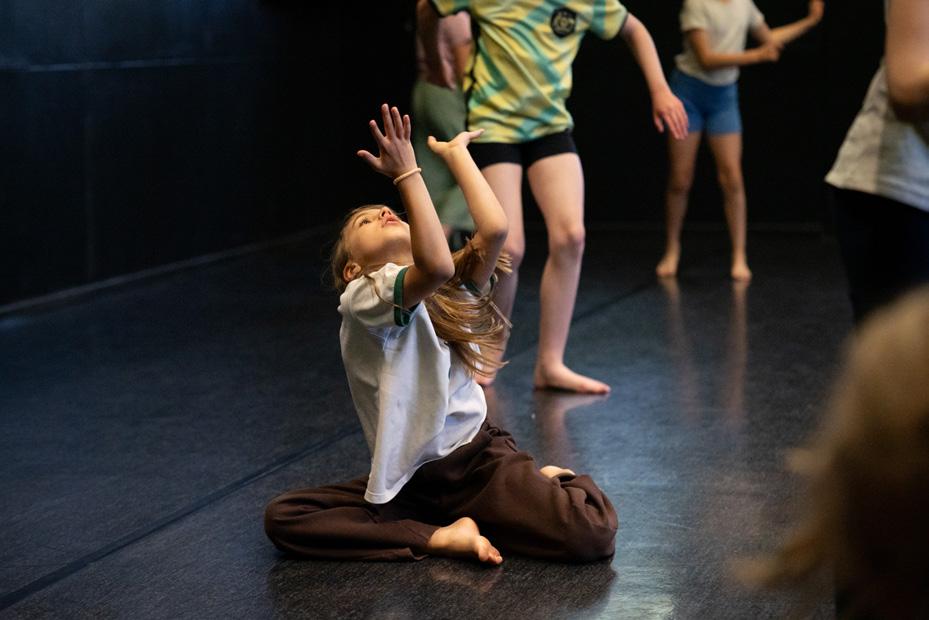
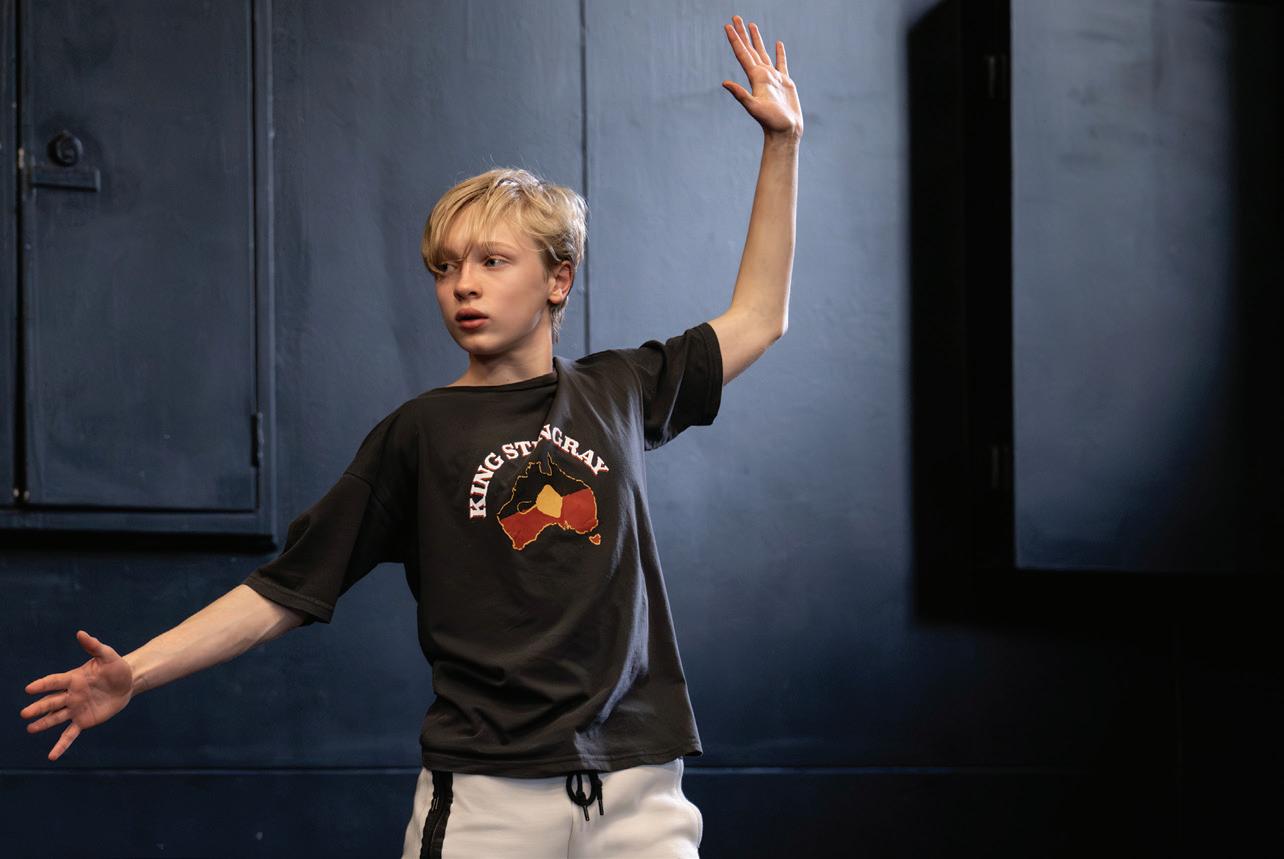
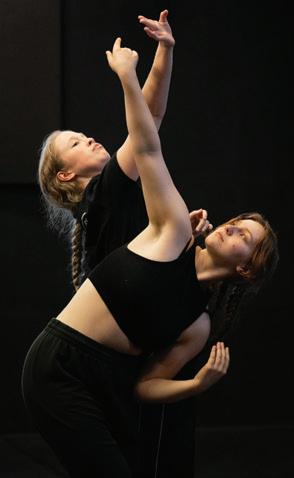
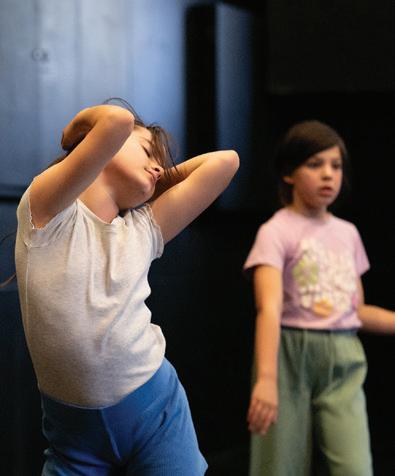
Quantum Leap Australia (formerly QL2 Dance) is a nationally renowned company for young people. What sets us apart is our ongoing commitment to contempo rary dance practice. Across the breadth of our classes and creative programs, we engage with children and young people as artists, bringing them together with professionals, many of whom are Quantum Leap alum now working around the country and the world.
We come together to dance.
As an artform, contemporary dance is born of rebellion and vision. Our focus is on curiosity, rigour and creation in dance, empowering young people in their artistry. We recognise and nurture unique quali ties, offering choice and autonomy for all individuals. We encourage those new to dance or new to Quantum Leap to begin with contemporary dance class paired with creative lab. These core classes offer the opportunity to develop your dancing and explore your creativity with a focus on connection and wellbeing. There are no limits to creative expression.
We know that it is important to find the right place for you, your dancing and your family. QL2 offers a free trial class so you can check it out for yourself.
More information can be found on our website: www.ql2.org.au/timetable-class-information
Quantum Leap Australia is a not-for-profit arts organisation located at Gorman Arts Centre, Braddon. We are supported by the ACT Government through artsACT.
Quantum Leap Australia (formerly QL2 Dance) Gorman Arts Centre, Braddon. Email classes@ql2.org.au Call 02 6247 3103 or visit ql2.org.au
Join the harmony: Australian Rugby Choir seeks new voices
The Australian Rugby Choir is calling on local men to discover the joy of four-part harmony singing while supporting their community and the game they love.
With around 40 active members, this unique Canberra-based choir combines a passion for rugby with the pleasure of performing everything from Welsh hymns and opera to contemporary hits and rugby anthems. No audition required – just enthusiasm for singing and a willingness to be part of something special.
“We’re looking for men from all backgrounds and musical experience levels. Whether you’re a seasoned singer or someone who thinks they ‘can’t carry a tune’ – there’s a place for you here. Many of our best performers started with little confidence in their singing ability.”
The truth is, almost everyone can learn to sing well in a supportive group environment. The choir’s experienced Musical Director and welcoming members help newcomers develop their voice and confidence, proving that singing ability is more about practice and encouragement than natural talent.
Beyond the musical rewards, singing in a choir offers proven health and wellbeing benefits. Regular singing helps reduce stress, improves breathing and posture, boosts immune function, and releases endorphins – nature’s feel-good chemicals. The social connections and sense of
belonging that come with group singing provide additional mental health benefits, creating friendships that extend well beyond rehearsal nights.
The choir’s impressive performance history speaks for itself. From their debut at the Brumbies’ inaugural Super Rugby game in 1996, they’ve graced stages from Carnegie Hall in New York to the Sydney Opera House, and regularly perform at Brumbies matches, charity events, and community gatherings across the ACT and region.
The choir will next be appearing at the National Multicultural Festival in Glebe Park at 11am on Sunday 8 February. You can also see them in the Members’ Lounge at the Brumbies home games on 28 February and 9 May.
If you think you may be interested, the choir is having a Come & Try event on Thursday 19 February from 7:00-9:20pm. The event is at the Baptist Church Hall, 34 Groom Street, Hughes, where weekly practice sessions are held. Practice combines skill-building with socialising, making it as much about friendship as music.
For more information, visit rugbychoir. org.au or check out our Facebook page at facebook.com/australianrugbychoir.
Australian Rugby Choir Visit rugbychoir.org.au Facebook.com/australianrugbychoir
Quantum Leap Australia (formerly QL2 Dance) is a nationally renowned company for young people. Our focus is on curiosity, rigour and creation in dance, empowering young people in their artistry. We recognise and nurture unique qualities, offering choice and autonomy for all individuals. Across the breadth of our classes, creative programs and award-winning performance works, we engage with children and young people as artists, connecting them with professionals from around the country and world. We come together to dance. Lock in as you choose.
Find out more: www.ql2.org.au
Image credits: Olivia Wikner, OJ Photography
Image: O&J Wikner Photography
Dale’s dance classes are good for all ages
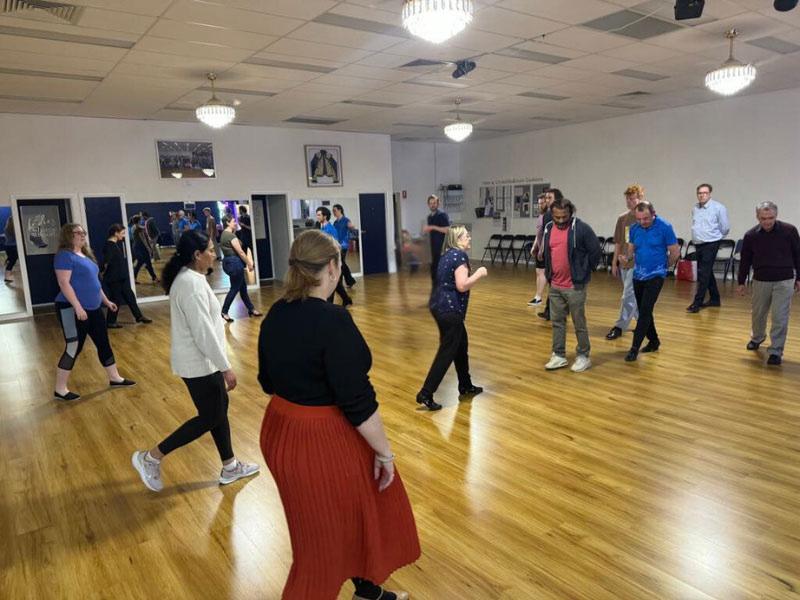
From a waltz to a samba, Dale’s Ballroom Dancing has been offering dance classes for more than 25 years.
With more than 30 years of experience, Dale Harris says dancing is for everyone.
“Our adult classes are open to anyone and we are happy to adapt to suit the needs of our audience,” she says.
Currently, Dale offers two levels of expertise in her adult classes on Wednesday nights.
Her beginner classes go from 7pm-8pm and cover the basics of a variety of dances, her intermediate/ advanced class level, from 8pm-9pm, tackle the harder dance skills to learn.
Dale says dancing is a great exercise for any age.
“Dancing is 10 times better than doing a crossword puzzle at the table or taking the dog for a walk,” she says.
“It keeps your brain and body active while you think about the steps and move.
Moving to the Weston Neighbourhood Hall to host her adult beginner classes, Dale offers seven-week courses, although she says it’s also okay to “just turn up”.
Dale’s next seven-week course starts on February 4 for anyone wishing to start from the beginning.
A new selection of kids’ medal classes for students up to 19 years old are also available to book.
Recommencing 5th February from 5pm at the Pearce Community Centre, Building 2, Collett Place, Pearce.
• ADULT BEGINNER CLASSES
Recommencing 4th February Wednesday 7pm-8pm
• ADULT INTERMEDIATE & ADVANCED
Recommencing 4th February Wednesday 8pm-9pm
ADULT CLASSES NOW AT: WESTON NEIGHBOURHOOD HALL, HILDER STREET, WESTON
Phone: 0407 066 110
Email: dale_harris@bigpond.com
Web: dalesballroomdancing.com
Principal: Dale Harris
We’re looking for men from all backgrounds and musical experience levels. Whether you’re a seasoned singer or someone who thinks they ‘can’t carry a tune’ – there’s a place for you here. Many of our best performers started with little confidence in their singing ability.
The event is at the Baptist Church Hall, 34 Groom Street, Hughes, where weekly practice sessions are held. Practice combines skill-building with socialising, making it as much about friendship as music.
An eye-catching ancient spinach
By Jackie WARBURTON
the usual spinach, orach “Red Plume” is worth trying.
This eye-catching annual grows happily in our climate and can reach up to 1.5 metres tall. Its deep purple leaves look just as good in the garden as they do in a vase. Better still, they’re edible. Use them fresh or cooked, much like silverbeet or spinach, to add colour to salads and meals.
Orach is an ancient vegetable, botanically known as Atriplex hortensis or mountain spinach. It is monoecious, meaning male and female flowers occur on the same plant. Pollination is done by the wind rather than insects, so it makes sense
to plant orach in groups or blocks instead of neat rows. It mixes easily with other vegetables and won’t cause any problems in a busy patch.
Once plants reach about 15 centimetres high, you can start picking leaves. Orach is a classic cutand-come-again crop and responds well to regular harvesting. Pick often and it will keep producing.
If you leave one or two plants to go to seed in autumn, you’ll have plenty to save and sow again next spring. The seed is ready when it turns from pink to brown and can be stored in a paper bag over winter. The seeds are edible too and can be ground into flour for soups and stews – and, in my opinion, they taste better than kale.
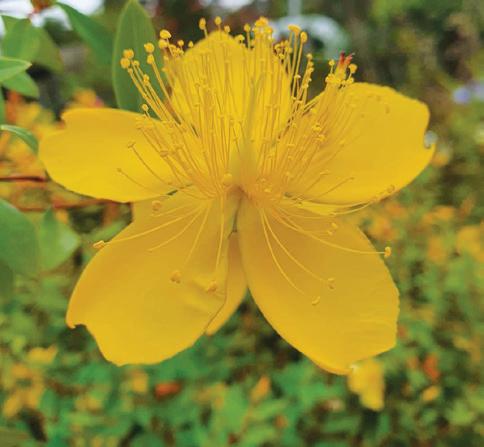
ANOTHER reliable, if slightly old-fashioned, plant is Hypericum calycinum, the broad-leaf variety. This evergreen groundcover copes with summer heat, winter frost, and just about everything in between.
Although it produces sterile seed, it slowly forms a dense mat over time. It is particularly useful under trees, where little else will grow, and its low habit allows fallen leaves to filter through and break down naturally.
Its close relative, Hypericum perforatum, is a very different story. Often sold online as a medicinal herb under the name St John’s wort, this slender-leaf variety is highly invasive.
It can be recognised by tiny black dots along the edges of its leaves and petals. I strongly recommend avoiding it altogether. It has already spread through bushland around Canberra and can be seen flowering across the landscape in spring, especially after good rain.
St John’s wort is classified as a noxious and environmental weed in our region. While there are currently no formal government control programs, local Landcare groups, including Friends of Grasslands, are working hard to monitor and remove it where they can.
One success story has been the introduction of the St John’s wort beetle (Chrysolina quadrigemina) This beetle feeds on the plant’s leaves, gradually weakening it until it dies. The beetle is now widespread locally, with sightings recorded on NatureMap Canberra.
LATE summer can be a difficult
time for planting. Seedlings and young plants need extra care, particularly with watering, to get through the heat.
If you’re planting during this period, adding water crystals to soil or potting mix before planting can help. Once hydrated, the crystals swell and store moisture, releasing it slowly as the soil dries. This reduces heat stress and cuts down on how often you need to water.
If your soil repels water, a wetting agent may be a better option. These products break down water-repellent coatings in the soil and help moisture soak in more effectively.
Water crystals and wetting agents do different jobs, so it’s worth understanding your soil before choosing one. A little preparation now can make gardening easier, more waterwise, and far less stressful during the hottest months.
jackwar@home.netspeed.com.au
Jottings…
• Sow broccoli, brussel sprouts and cabbages.
• Summer fruit tree pruning can be done now.
• Keep watering pumpkins.
Red
Hypericum calycinum… evergreen groundcover that copes with summer heat, winter frost. Photos: Jackie Warburton
ARTS & ENTERTAINMENT
Try keeping a straight face with these two comics!
By Helen MUSA
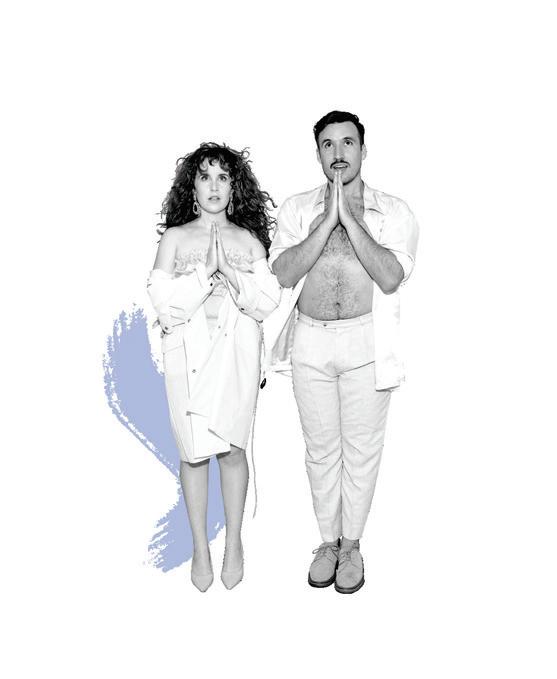
It’s hard to keep a straight face when talking to comedians Honor Wolff and Patrick Durnan Silva of the queer alternative sketch comedy duo Hot Department, coming to The Q next month –they’re just too funny.
These days they may be known for their high-camp comedy and weird sketches, but when they first met in a drama class at the University of Ballarat in 2012, they nearly caused havoc.
“Actually, the acting teacher had to separate us in class because we were too busy being funny. Both Patrick and I were told we weren’t allowed to do comedy and had to focus on serious drama,” Wolff says. That meant she had to tackle sombre roles such as Strindberg’s Miss Julie while he played what he calls a “very queer Hamlet”.
Initially drawn to each other through their mutual love of the American surrealist sitcom 30 Rock, Durnan Silva became known in class for his impressions of characters from that show.
But neither regrets that time in Ballarat – it gave them solid training in comedy and drama.
When they graduated, they boldly admit, they weren’t picked up by any agents – partly because of some “very peculiar choices” in their final audition pieces.
They now see that as good fortune, because it pushed them to form a comedy ensemble called The Very Good Looking Initiative with their friend Elliott Gee, which ran for four years.
“We were all deeply immersed in theatre but were getting tired of mainstream Australian drama,” Durnan Silva says. “We wanted to do things that were a bit David Lynch-type weird.”
“We like to shock and were pushing back against naturalism,” Wolff adds.
“Also, the repertoire in Australia was repetitive. Everyone seemed to be redoing Shakespeare, Cosi [by Louis Nowra], or Blackrock [by Nick Enright] – there’s so much other great work.”
“Then,” Durnan Silva says, “I said, let’s do a show at the Melbourne International Comedy Festival. So we went in all guns blazing and thought, ‘This is fun’.
“That was 2016, so we’ve been doing mainstage comedy acts for 10 years now.”
They’ve since opened for comedy legends Patti Harrison and Aunty Donna and performed at Just for Laughs, Soho Theatre London, Splendour in the Grass, Party in the Paddock and Darwin Festival.
Their TV credits include Fisk (Netflix), Aunty Donna’s Coffee Café (Netflix), Just for Laughs (Channel 10), Why Are You Like This (Netflix), and At Home Alone Together (ABC). They were also crowned champions of the MICF Lip Sync Battle 2021.
It’s really just the two of them and their producer, Laura Milke Garner. They make their own costumes, which are at times “a little bit disturbing”, including one, Wolff says, where she wore a weird alien outfit with space cut-outs for her own breasts –and six extra spots for six more nipples. That was for a special sketch, she insists, not a regular feature.
There is some nudity, but unlike Garry Starr, with whom they share their producer, not enough to make a thing of it.
“What we’d rather say is that we do highcamp comedy that’s fast-paced,” Wolff says.
“We certainly do sketches, but sometimes we go into over-the-top drama. We love it, and with our theatrical background, audiences love to play along.”
There are also a lot of wigs, of which Durnan Silva says: “I need to treat them like my child.”
As for their weirder material, he mentions one sketch that ran for eight minutes about two young women involved in unrequited lesbian love at a boarding school – “a mixture of Who’s Afraid of Virginia Woolf and Call the Midwife” – and another about a scientist and his wife caught in a love triangle with a dolphin.
“Although we’re not musical theatre performers at all, we do love musical dramas, especially Chicago,” Wolff says.
“So we’ve been known to do big musical numbers, a bit of dancing… theatrical and a lot of fun.”
As for their relationship, while they are a duo, they’re not a couple. “We’ve lived our lives together but our marriage is in the theatre,” Durnan Silva says.
Sometimes they have to make out on stage, but that’s all choreographed. “We don’t feel anything,” he says. “We just say, ‘Oh, it’s that kissing scene’.”
Hot Department, The Q, Queanbeyan Performing Arts Centre, February 5.
Hot Department duo Honor Wolff and Patrick Durnan Silva… “The acting teacher had to separate us in class because we were too busy being funny.”
Family salutes artist’s work with building mural
By Helen Musa
The side of a historic building in Yass has become the canvas for a large mural dedicated to the memory of local region artist Kim Nelson.
Nelson, a painter and former manager and curator of historic house museums such as Cooma Cottage, became the driving force behind YASSarts and Sculpture in the Paddock.
He was named Yass Valley Shire Citizen of the Year in 2013 but died unexpectedly in 2015 at the height of his career as an artist. He has since been honoured through public memorials, music and a significant retrospective at the Tyger Gallery in Yass. The mural project was spearheaded by the artist’s daughter, Caitlin Nelson, but the work itself has been painted by his niece Katherine Nelson, who has drawn on motifs from his artwork, specifically Burnt Sienna, The Red Shawl and the self-portrait, Tendine.
According to Caitlin, the idea of a mural in honour of her father had been conceived early on, with the possibility of using the side of the Oddfellows Building in Comur Street made even more appealing because Nelson had long located his art studio on the second floor of the hall.
Nelson’s long-time friend Rosemary Hodgkinson owned the building and gave her blessing to the project before she herself died in November.
“I reached out to Yass Valley Council for permission, showed them a plan and told them all about dad’s work,” Caitlin told me.
Further help came in the form of $1000 from Southern Tablelands Arts, additional funds from YASSarts, the donation of coloured paint by Dulux Australia, and the use of a scissor lift from local business Agnew Hire Yass, essential for Katherine, who completed the painting alone.
Ross’s Relics, the antique business adjacent to the hall, also helped by allowing their yard to be cleared to make way for the scissor lift, once in November and again after Christmas.
“It was mostly done in kind, with a little financial support,” Caitlin reports, and there was no uphill battle at all. The local RSL was supportive when asked if banners could be hung from the Memorial Hall to advertise the September exhibition and, when the mural was finished, Facebook recorded 500 likes and no dislikes.
Christmas, when temperatures soared.
First, she told me, she mapped out the basis of the painting using a technique favoured by street artists called squiggling, or doodling. This involved drawing nonsensical squiggles over the area where she intended the mural to be, then putting that “plan” into a computer and overlaying the intended artwork to show where different sections would be painted.
Although she had previously been involved in a public mural in Parramatta, this was the first time she had undertaken an outdoor mural of this scale and entirely on her own.
“I was the only one painting and I wondered if I’d ever get it finished,” she said.
She had every colour she needed, using the Weathershield range she had worked with before in Parramatta. While the paint was water-soluble and easy to use, the height of the mural meant she was often running out of surfaces on which to mix colours.
Katherine knew her uncle Kim well and recalls a valuable piece of advice he once gave her when she showed him a painting of her young sister. The image was based on a photograph, but a hand in the picture looked awkward.
It may sound like plain sailing, but
there were still trials and tribulations in the creation of the mural, not least the occasional strong winds and the need for cousin Katherine to move up and down on the scissor lift, as painting on brick with deep mortar joints required constant checking
from a distance.
Katherine, who was in the process of moving back from Alice Springs with her husband, found a window of opportunity to begin the work in September but could not complete it until she returned after
“Uncle Kim gave me a good lesson,” she said. “He told me the painting was good, but that you can use your imagination. You don’t have to put everything in it. He taught me that art is not just a camera.”
The Kim Nelson mural is now visible on the side of the Oddfellows Building, 67 Comur Street, Yass.
The completed Yass mural by niece Katherine dedicated to local artist Kim Nelson, who appears at the bottom left.
/ Waiheke Island
The taste of a magical island
I spent the Christmas/New Year break in New Zealand with family. They live in Auckland, the most populous city, albeit not the capital which is windy Wellington.
Auckland is well-known for its high humidity, which makes the air feel warmer and heavier, and that was certainly the case during our break, with frequent afternoon thunderstorms a feature.
Luckily, on the day we took the ferry to Waiheke Island the seemingly daily storm activity had done its dash by late morning but in the early evening clouds gathered again.
Waiheke, the island of cascading waters, is renowned for its vineyards. They compete with lovely beaches for the tourist’s attention and we combined a beach walk (with some of our party swimming) with a visit to two wineries and a distillery, which also had a connected restaurant serving food that comprised the best meal of our holiday.
Waiheke is magic, a mere 20 kilometres from Auckland by ferry across the Hauraki Gulf, but a world away in terms of atmosphere and charm.
That charm was also evident in the tastings we undertook at the two wineries we visited, Te Motu vineyard and Mudbrick Vineyard. Both vineyards have superlative views, Te Motu across the Onetangi Valley and Mudbrick the ocean framed by the sweep of landscaped gardens.
Te Motu has a range of tastings available at a cost and we took the top option, the vintage tasting, at $NZ55 ($A47.50) a head. We were served by one of the owners, Paul Dunleavy, whose family established the vineyard in the late 1980s.
My sister dropped that I was a wine writer and Paul kindly expanded the tasting to include more wines than promised on the list.
He was proud of his Bordeaux-style wines and generous with the pours. Despite letting us taste wines from the early 2000s, my favourite wine was the 2021 Te Motu.
This is a cabernet sauvignon dominant blend with merlot, malbec, cabernet franc, syrah, and, Paul disclosed, a hint of carmenere. The latter part of the blend gave a slight pepper flavour in the finish.
This wine is very well balanced with the tannins discernible but not overwhelming, adding to a textural mouth feel that was pleasant across the palate.
At $NZ170 ($A147) a bottle, this wine is not
cheap and all of the wines we tasted were from $110 to $285 a bottle. Boutique prices.
The prices were also quite elevated at Mudbrick which, we were told by the engaging presenter Stella, hosts around four weddings a week.
The standout wine for me was also around the $NZ100 mark, the Reserve Syrah 2020.
Stella said: “2020 was a bad year for humanity, covid and all, but a great year for Waiheke wine.” This is true of this complex shiraz with a front palate of blackberry and a touch of maraschino cherry with a silky finish that also left a chocolatey flavour at the back of the mouth. Outstanding.
On my next visit to NZ I’m definitely going back to Waiheke, not just for the boutique wines but to immerse in the splendid natural beauty.
Oh and now I’m back, NZ accent thick and heavy, I thought of this joke told to me a long time ago:
A Kiwi local hadn’t been seen in a while, especially missing his garbage collections. Spotted by his neighbour on the most recent bin night he was asked: “Hey, neighbour, where’s your bin?”
The missing man says: “I bin in Australia, bro”. The neighbour says: “No, no, where’s your wheelie bin?”
The man, now embarrassed, says “Aww, I wheelie bin in jail, bro.”
Return of Ukulele Death Squad
Australia’s most outrageous ukulele collective, Ukulele Death Squad, returns with The Curse of the Nipple Tape, filled with sea shanties, pirate ballads and scandalous surprises. Expect ukuleles, brass, raucous singalongs and full audience participation from this self-styled unhinged band of musical buccaneers. The Q, Queanbeyan, February 8.
Mikelangelo, Canberra CityNews 2025 Artist of the Year, is often known as “The Balkan Elvis” and will perform Elvis numbers in the National Film and Sound Archive courtyard before a screening of Blue Hawaii. Arc Cinema, NFSA, February 7.
Canberra and Queanbeyan performing arts groups will come together for the fourth industry-based Ovations Awards. The evening will feature a short awards presentation and a lively night of recognition for the region’s performing arts excellence. Hellenic Club, Woden, February 6.
melodies to life, blending jazz and classical sensibilities while reimagining traditional music with bold originality. The Street Theatre, February 5.
The legendary Australian rock band The Church, headed by Canberra-raised star Steve Kilbey, returns with an encore performance celebrating more than 40 years of hits. Canberra Theatre, February 5.
Finnish folk trio T3HO will provide a week-long creative residency at the ANU School of Music, March 30-April 1. Students across classical, jazz, composition and music technology will work together in interdiscipli nary sessions, culminating in performances at ANU and on stage at the National Folk Festival.
A view of the vineyard at Te Motu winery on Waiheke Island, near Auckland.
Krama Brass Band brings Cypriot
The Ukulele Death Squad… The Q, Queanbeyan, February 8.
RECORDED MUSIC / cassette tapes
Cassettes are making a comeback. Yes, really
For a supposedly obsolete music format, audio cassette sales seem to be set on fast forward at the moment, says PETER HOAR .
Cassettes are fragile, inconvenient and relatively low-quality in the sound they produce – yet we’re increasingly seeing them issued by major artists.
The cassette format had its heyday during the mid-1980s, when tens of millions were sold each year.
However, the arrival of the compact disc (CDs) in the 1990s, and digital formats and streaming in the 2000s, consigned cassettes to museums, second-hand shops and landfill. The format was well and truly dead until the past decade, when it started to re-enter the mainstream.
According to the British Phonographic Industry, in 2022 cassette sales in the United Kingdom reached their highest level since 2003. We’re seeing a similar trend in the United States, where cassette sales were up 204.7 per cent in the first quarter of this year (a total of 63,288 units).
A number of major artists, including Taylor Swift, Billie Eilish, Lady Gaga, Charli XCX, the Weeknd and Royel Otis have all released material on cassette. Taylor Swift’s latest album, The Life of a Showgirl, is available in 18 versions across CDs, vinyl and cassettes.
Many news articles will tell you a “cassette revival” is well underway. But is it?
I would argue what we’re seeing now is not a full-blown revival. After all, the unit sales still pale in comparison to the peak in the late 1990s, when some 83 million were reportedly sold in one year in the UK alone.
Instead, I see this as a form of rediscovery – or for young listeners, discovery.
Recorded music today is mostly heard through digital channels such as Spotify and social media.
Meanwhile, cassettes break and jam quite easily. Choosing a particular song might involve several minutes of fast forwarding, or rewinding, which clogs the playback head and weakens the tape over time. The audio quality is low, and comes with a background hiss. Why resurrect this clunky old technology when everything you could want is a languid tap away on your phone?
Analogue formats such as cassettes and vinyl are not prized for their sound, but for the tactility and sense of connection they provide. For some listeners, cassettes and LPs allow for a tangible connection with their favourite artist.
The joy of the cassette is its “thingness”, its “hereness” – as opposed to an intangible string of electrical impulses on a far-flung corporate-owned server.
The inconvenience and effort of using cassettes may even make for more focused listening – something the invisible, ethereal
streaming it), and to make cheap and quick recordings.
Cassettes did (and still do) have the whiff of the rebel about them. As researcher Mike Glennon explains, they give consumers the power to customise and “reconfigure recorded sound, thus inserting themselves into the production process”.
From the 1970s, blank cassettes were a cheap way for anyone to record anything. They offered limitless combinations and juxtapositions of music and sounds.
The mix tape became an art form, with carefully selected track sequences and handmade covers. Albums could even be
Unsurprisingly, the recording industry saw cassettes and home taping as a threat to its copyright-based income and struck back.
In 1981, the British Phonographic Industry launched its infamous “home taping is killing music” campaign. But the campaign’s somewhat pompous tone led to it being mercilessly mocked and largely ignored by the public.
The idea of the blank cassette as both a symbol of self-expression and freedom from corporate control continues to persist. And today, it’s not only corporate control consumers have to dodge, but also the dominance of digital streaming platforms.
them as merchandise to sell or give away at gigs and fan events. For hardcore fans, they are solid tokens of their dedication – and many fans will buy multiple formats as a form of collecting.
Cassettes won’t replace streaming services anytime soon, but that’s not the point. What they offer is a way of listening that goes against the grain of the digital hegemony we find ourselves in. That is, until the tape snaps.
Peter Hoar, senior lecturer, School of Communications Studies, Auckland University of Technology. Republished from The Conversation.
HOROSCOPE PUZZLES
By Joanne Madeline Moore
ARIES (Mar 21 – Apr 20)
The Full Moon fires up your romantic, imaginative side, so you’re in the mood for fun, creativity and lashings of love. As Aries writer Emile Zola declared: “If you ask me what I came into this life to do, I will tell you: I came to live out loud.” But the Uranus squares boost your tendency to make hasty remarks and unintentional blunders, especially involving friends and finances. Remember – it takes a short time to burn bridges and a lot longer to mend them!
TAURUS (Apr 21 – May 21)
The week starts with a dramatic Leo Full Moon that lights up your home zone, so expect some fiery domestic shenanigans and rumbles with housemates or relatives. Things settle down for a few days, then rev up again on Sunday when disruptive Uranus squares Venus (your ruling planet). A personal problem could be reignited, or a work colleague could shock you by making an unexpected move. When it comes to your hopes and dreams for 2026, write a wish list.
GEMINI (May 22 – June 21)
Five planets and the Full Moon stimulate your travel, communication and education zones. So, it’s a wonderful week to read, write, study, learn, give a speech, write an article, post a podcast or explore exciting new territory as you go on a grand adventure (locally, interstate or overseas). Sate your galloping Gemini curiosity! Your motto for the moment is from birthday great, writer James Joyce: “To learn one must be humble. But life is the great teacher.”
CANCER (June 22 – July 23)
Secrets and mysteries abound as six planets stimulate your trust zone, so avoid fake news and be very careful about who you place your trust in. You’re also keen to show loved ones how much you really care. Avoid being too overprotective, though. Give people space. All relationships need room to breathe and there’s a big difference between loving and smothering. Be inspired by birthday great, writer Charles Dickens: “A loving heart is the truest wisdom.”
LEO (July 24 – Aug 23)
Lions love to hog the limelight and be the centre of attention, especially when the Full Moon’s in Leo. And it is a fabulous week to put ideas into action and finish a long-term creative project. However – with the Uranus squares activating your relationship and career zones – try to get the balance right between your pending needs and those of the significant people in your life. Perhaps it’s time for your lover, best friend or business partner to sparkle and shine?
VIRGO (Aug 24 – Sept 23)
Your days are usually organised with military precision. But, this week, there’s a fiery Full Moon, plus Uranus squares Venus and Mercury (your ruling planet). So, strive to be much more spontaneous as you toss your usual timetable out the window and stretch your adaptability muscles in unfamiliar directions. Whatever happens, expect the unexpected and prepare to pivot! Unhappily single? You could meet your soulmate via an introduction through work.
LIBRA (Sept 24 – Oct 23)
Monday morning’s fiery Full Moon lights up your hopes-and-wishes zone. So, it’s a suitable time to expand (or revisit) your goals for 2026. Don’t be half-hearted, though. Aim high, go for gold, and make your dreams as big and beautiful as possible! Sunday looks unpredictable, as Uranus squares Venus and a close relationship goes through a bumpy patch. Music legend (and birthday great) Bob Marley reminds us: “Overcome the devils with a thing called love.”
SCORPIO (Oct 24 – Nov 22)
Many Scorpios are set to shine on the professional stage, as Monday’s fiery Full Moon illuminates your career zone. Then Mercury joins Saturn in your love and friendship zones, so spend quality time on the weekend with long-term friends who lift your spirits and make your heart sing. Be inspired by birthday great and music icon Bob Marley (who was born on February 6, 1945): “Love, friendship, laughter… some of the best things in life really are free.”
SAGITTARIUS (Nov 23 – Dec 21)
With the fiery Full Moon activating your adventure zone, it’s a terrific week to travel or plan an exotic escape for sometime soon. But Mercury and Venus also square Uranus so, if you blurt out something when you’re in a rush or feeling stressed, you may regret it later on! Think things through before you speak (especially with loved ones and work colleagues). Remember Sagittarius – the first thought that jumps into your head isn’t necessarily the best one.
CAPRICORN (Dec 22 – Jan 20)
Money matters are on your mind this week, Capricorn, as the Full Moon fires up your cash zones. Look for creative ways you can make more income, budget better, save more dollars and feather your financial nest for the future. Secrets and intrigue are also around, so take the time to peel back the layers and discover the real story that’s hidden behind the exterior gloss. The weekend is wonderful for connecting with like-minded people in your local community.
AQUARIUS (Jan 21 – Feb 19)
Courtesy of the Full Moon, creative partnerships and joint ventures are favoured, as you spark ideas off each other and pool talents to create something unique. When it comes to relationships, stop talking long enough to let others have their say. Venus could send a special friend along to help you out of a sticky situation. As music icon (and birthday great) Bob Marley observed: “True friends are like stars; you can only recognise them when it’s dark around you.”
PISCES (Feb 20 – Mar 20)
The fiery Full Moon and Mercury (moving into your sign) encourage tweaking your timetable, devising a new daily schedule or rebooting a work relationship. This week’s stars also suit projects that require a curious mind, self-motivation and creative, flexible thinking. So don’t waste the opportunity to communicate with colleagues, power through paperwork and create something new. Plus put aside some special time to meditate, contemplate and rejuvenate.
Copyright Joanne Madeline Moore 2026
1 Name an addictive drug. (7)
2 What is the workshop of an artist? (7)
3 Name one who foretells the future. (7)
4 Which term describes 1000 tons? (7)
5 What a punter does at the TAB? (3,1,3)
6 What are soft, subdued shades? (7)
11 Name an alternative term for an umpire. (7)
12 What is another name for farms? (7)
13 Which term describes a level of command? (7)
14 To disrobe, is to do what? (7)
15 The term incipient means what? (7)
16 What are horses also known as? (7)
CHARTERED ACCOUNTANT
Unit sale brings tax questions into focus
James and Gabi tied the knot in January 2024, celebrating with a rustic, country-style wedding in Canberra with great pomp and flair.
Gabi, a homeowner since March 2021, decided to move out of her Kingston apartment (purchased for $800,000) and into James’ Googong property, which he bought for $1.2 million in January 2021.
The couple has now decided to sell Gabi’s Kingston apartment to help finance a new coastal holiday unit together – an important milestone that brings financial opportunity and the need for careful capital gains tax (CGT) planning.
“The Australian Taxation Office (ATO) only allows a one-home rule from the date you become spouses," I told them.
"For CGT purposes, you must each decide which is your main residence – and it does not have to be the same one.
“Your options in this scenario are: both of you treating the Googong dwelling as your main residence; both of you treating the Kingston apartment as your main residence; or each of you nominating a different dwelling.”
I clarified that if they chose the latter, the CGT exemption must be shared. To make it clear, I explained: “For the period in which both properties are nominated, each person can claim only a 50 per cent main residence exemption on their respective property.”
The best strategy for spouses with different main residences is to nominate the property with the greater potential for an unrealised capital gain.
The Googong property was the stronger choice – as a property expected to be held for longer, it will likely accrue a larger gain over time, making the exemption more valuable when it is eventually sold.
I advised Gabi that she would be better off accepting a partial capital gains tax liability on the Kingston apartment from the date she moved in with James to their Googong home.
In her case, the tax payable will be reduced because she is entitled to a partial main residence exemption for the period she lived in the Kingston property, and she can also apply the 50 per cent CGT discount to the remaining taxable gain.
I also recommended that Gabi obtain a professional valuation of her Kingston apartment at the date she moved out. This valuation would establish the property’s market value from that point onward – an important step under the main residence exemption rules. By doing so, Gabi can disregard any capital gain made while the property was her home, covering the period from March 2021 to January 2024.
Capturing that value effectively locks in the strong price growth Canberra’s housing market has enjoyed in recent years and ensures that only gains made after she left the property are subject to tax.
Claiming the main residence exemption incorrectly can prove costly. The ATO can amend your assessment, require you to pay the correct CGT, charge interest on the shortfall, and impose penalties where the mistake is considered careless, reckless or deliberate. To make it worse, these penalties and interest are no longer deductible.
Written by Chetan Chopra
If you need help with CGT, the main residence exemption, or any other tax-related matters, contact the experts at Gail Freeman & Co Pty Ltd on 6295 2844, email info@gailfreeman.com.au or visit gailfreeman.com.au