THE WAY AND HOW TO UNLOCK LABOR’S DAMAGING GRIP
‘It is not an election year – but change is not beyond imagination,’ writes MICHAEL MOORE


Well written, well read
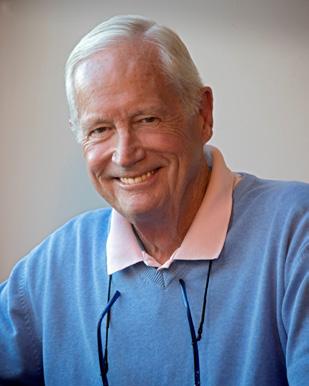
Farewell to a truly remarkable writer
ROBERT MACKLIN has died at 84
JANUARY 22, 2026

‘It is not an election year – but change is not beyond imagination,’ writes MICHAEL MOORE
Well written, well read
Farewell to a truly remarkable writer
ROBERT MACKLIN has died at 84
JANUARY 22, 2026
CHARLOTTE HUNT’s Cinderella is helping keep the passion for pantomime alive















‘It is not an election year – but change is not beyond imagination.’

“Our one-party government has built an empire protecting the interests of Labor as a higher priority than the good of Canberra.”
MICHAEL MOORE assumes the frustrated persona of our city, looking at what’s needed to end its downward spiral.
I am the City of Canberra. As a city-state I have serious concerns about the future of my citizens.
For 2026, therefore, I am making some New Year’s resolutions in order to see some bold new actions to improve the lives of my people.
My first resolution sees an end to what has effectively been a one-party government for a quarter of a century. Labor has been in power since late 2001. It is too long for any political party, of whatever colour, to be governing. It is not an election year – but change is not beyond imagination.
This is not the first time I have faced this sort of political dilemma. A similar situation was resolved in 1998 when the principle of cabinet solidarity was modified and, for the first time in Australia, an independent was appointed as a minister. The experiment proved successful and has been copied in other jurisdictions.
Often attributed to Albert Einstein is the comment: “insanity is repeating the same mistakes and expecting different results”. My resolve is to have a new government that finds creative ways to deploy the talents of a majority of MLAs in my Legislative Assembly.
previous government where they were largely contained by a Labor chief minister and his colleagues. After a tough campaign, and a year on the crossbenches, they ought to have realised that Labor considers them a more significant political threat than the Liberals.
The truism from ancient Rome, “amicus meus, inimicus inimici mei” applies today. In loose translation, “the enemy of my enemy is my friend’.

As the City of Canberra, my next New Year’s resolution is to call for the Greens, the Liberals and the independents in my Legislative Assembly to consider this concept more closely and to look for imaginative and productive ways to govern.
Not one of the Labor MLAs has ever been in opposition. They have not experienced the discipline of going page by page through Estimates Committees, the annual reports or the budget papers looking to question the bureaucracy on the how and why of decision making.
Our one-party government has effectively built an empire on protecting the interests of the Labor Party as a higher priority than their commitment to the good of my people.
Although there have been a range of different styles of governments, the Legislative Assembly has rarely been used to its full capacity.
The Canberra Liberals have been so involved in their own self-interest and infighting, they have not been able to find a way to share power.
It is now a little over a year since the last election. It has become clear that the two independents are exercising significant power in holding the government to account.
The Greens have stepped away from the
The committee system in the Legislative Assembly has, over time, largely illustrated how a non-partisan approach to decision making is possible. Recommendations based on evidence, rather than party-political interests have regularly marked the outcomes of the Legislative Assembly committees. The recommendations are invariably made in the interest of my citizens.
Keep in mind that not one of the Labor MLAs has ever been in opposition. They have not experienced the discipline of going page by page through Estimates Committees, the annual reports or the budget papers looking to question the bureaucracy on the how and why of decision making.
Consultation has been a joke. As just one example, community demands for a swimming pool with a diving tower to replace my Civic Pool have been dismissed. Not only does the loss of a diving tower destroy Olympic hopefuls, it is the only pool currently operating where teenagers can just have fun. In the new leisure centres, they are not able to play in the kiddies part of the pools and need a place other than swimming lanes – just to have fun in the water.
As a city, I want all the people to be able to have fun.
My next resolution is to find creative ways to
form a government that is in the interest of all of the community. The Greens and Liberals were able to put aside ideological differences and unite to establish a Financial Review Committee towards the end of last year. However, they also had many more ideological differences expressed on the floor of the Assembly.
It is time to distinguish between those ideological differences and look for commonality on administrative matters. It is surely possible for an executive focused on ensuring appropriate administration of the territory to manage ideological differences on the floor of the Assembly. This is how the second Carnell government managed from 1998 to 2001.
The Legislative Assembly has not been able to rein in the spending of the Labor government. It is financially embarrassing that the government has twice been downgraded by Standard and Poor’s. The only possible outcome is an increase in different forms of taxation for the people of my city.
A complacent government has facilitated a
bloated public service. One of the greatest increases is expenditure has been on an oversized public service. It suits the unions. It suits Labor to have more public servants not wanting to put their jobs at risk when they go to the ballot box. But it is at a cost to the community!
Change is needed. It is frustrating to see reports on finance, health and education, as just three examples, that find the ACT on a consistent downward spiral. Instead of being an Australian leader as was the case prior to Labor coming to power, the territory is regularly found to be performing amongst the lowest levels compared to other jurisdictions.
The focus of all MLAs should be based around the best possible government for the people of the ACT. This should mean a healthier, better educated, more active society where people feel safe, have access to the best possible education, adequate food and shelter and live in a socially just community.
As a city state, my people deserve a government that facilitates personal freedom, independence and dignity.
My final resolution is to call for a coalition of the willing. It is needed to form an effective power sharing government that will act in the best interest of the people. Surely, it cannot be beyond the intellectual power of the majority of our MLAs.
Michael Moore is a former member of the ACT Legislative Assembly and an independent minister for health. He has been a political columnist with CityNews since 2006.
With decades of experience, Linda will help you create a Will and Estate plan stipulating all your wishes and concerns.
Linda assists with:
• Wills and Testamentary Wills
• Power of Attorney
• Self-managed super funds
• Advice on potential claims against estates
• Advice for blended families



Evans Estate Planning Senior Associate


By TIA PRIEST-WILLIMOTT
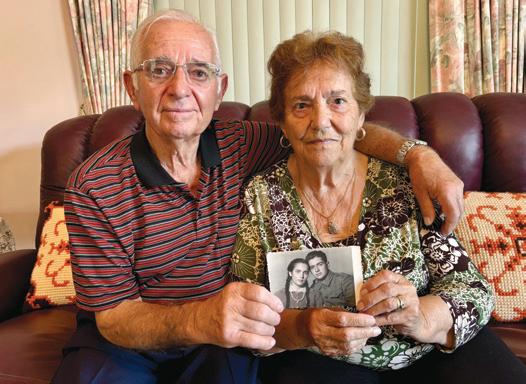
When 17-year-old Milutin Paunovic met 17-year-old Ruža on the street in their village in Serbia in 1956, he knew he wanted to marry her.
The couple are still happily together and preparing to celebrate their 70th wedding anniversary in Canberra in February.
As I sat in their Bruce living room and heard their story, a part of me was inspired to believe in the fantastical notion of true love.
“We met on the road in our village, when I was 17. He just asked me a few questions – not much,” Ruža says.

After their brief encounter, Milutin told his sister-in-law he’d seen Ruža and wanted to marry her.
“This was on Monday and by the Thursday it was organised and we were married straight away. Married at first sight!” Ruža says.
Their union in February was simple, with no guests beyond family, no celebrations and no special clothes.
Ruža and Milutin were just happy to be together.
“It had been a very big snow and there was only family, no [big] wedding,” Ruža says.
However, Milutin and Ruža had to wait until they both turned 18 to get their marriage certificate.
“We married February 2, 1956, and signed the certificate in January 1957,” Milutin says.
The young pair welcomed their first and only child, Slobodan, later in 1957.
Seventy years on from that first meeting, Milutin and Ruža both agree that it feels “easy” to be married for this long.
In fact, their secret to a long and joyful marriage is a lot less complicated than you may think.
“Number one, love each other. Number two, trust each other and always be together. If you need to do some -
thing, never do it by yourself, always ask each other,” Milutin says.
“Don’t make each other cranky or upset.”
Their seven decades together hasn’t been all smooth sailing, with Ruža sharing that, like all couples, they have arguments, too.
But Milutin has an answer to help keep arguments few and far between.
“Always be nice and smooth things out,” he says.
When they were both 34 years old, Milutin and Ruža made the decision
to move to Canberra to try a new way of life.
Their strong sense of loyalty made it difficult for them to say goodbye to 17-year-old Slobodan, who was training to be a police officer and wanted to stay in Serbia.
So, they packed up their bags and made the journey together, equipped with very little English.
Ruža became a cook at the then new Lakeside Hotel, while Milutin managed to pick up enough English over two years while washing dishes at the

restaurant to then land a job welding at S&M Engineering in Fyshwick.
The pair have been back to Serbia for a holiday twice, but agreed they wanted to stay in Australia, specifically Canberra.
Ten years after they’d moved to Australia, Slobodan and his wife made the move, too – bringing Milutin and Ruža’s first grandchild.
Milutin and Ruža agree that the time they’ve had with their two grandchildren and seven great grandchildren has been some of the best experiences they’ve had over their 70 years of marriage.
While plans for their wedding anniversary are still being confirmed, it looks like it’ll be a small celebration with family and friends.
“I’m really happy like that, no need for a big celebration,” Ruža says.
In just one afternoon chatting with Milutin and Ruža, I was enveloped in the love and support they have given each other over the years.
But beyond support, their relationship is full of admiration and respect.
Whether it’s the meals Ruža cooks for them, or the items around the house Milutin has welded, or even the thriving fruit-and-vegetable garden they tend together, their love is present every day.
They have cultivated an everlasting love from such small gestures, that all began with a few simple questions on a street in their home village.


The Russian invasion of Ukraine has led several European governments to consider or actually reinstate military conscription. Should Australia be among them, asks ROSS FITZGERALD and DICK WHITAKER .
Conscription has always been a highly contentious matter in Australia.
An early example is the introduction in 1911 by the federal ALP government of compulsory military training for all males between 12 and 26 years of age.
This occurred under prime minister Andrew Fisher. This was a direct result of an Australian visit by British Field Marshal Horatio Herbert Kitchener (1850-1916) who recommended that Australia should adopt a higher state of military readiness.
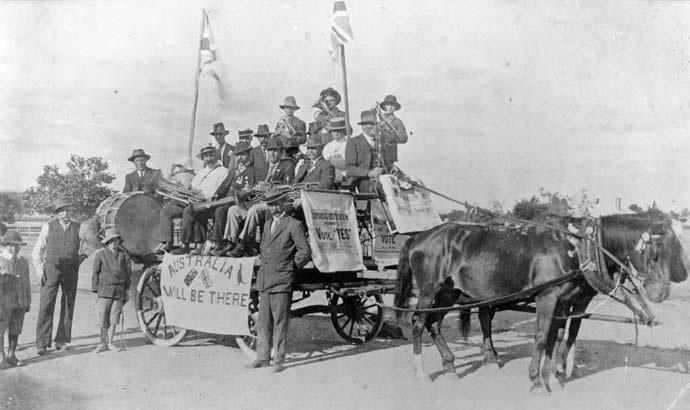
However, it was World War I that brought conscription on to the front page when ALP Prime Minister WH (Billy) Hughes launched two national referenda, one in 1916 and the other in 1917 in an effort to introduce compulsory military service for Australian men.
This included combat duty on the front line, notably the Western Front in France and Belgium where trench warfare was the norm.
This situation occurred because of falling enlistment rates, with the demand for soldiers during World War I increasingly outstripping supply.
Both referenda were rejected by the Australian people. The 1916 vote was a narrow win for the “NO” campaigners, (49 per cent to 51 per cent) but in 1917 the result was a larger wind for the NOs, (46 per cent to 54 per cent) as casualties rose and the war became more unpopular.
The defeat of the referenda led to Billy Hughes’s expulsion from the Labor party and the political scene in Australia became bitterly divided.
As a result of this situation all Australian soldiers who fought overseas during World War I were volunteers.
During World War II, unmarried men were required to undertake three months military service. Initially restricted to Australia and its territories such as Papua New Guinea, this was known as the CMF – the Citizens Military Forces. In 1943 their role was expanded and they eventually served alongside the
ian Imperial Force (or AIF).
It was conclusively demonstrated that the CMF performed well against the Japanese in the Pacific theatre.
The birth of the so called ‘nashos’
Often known as “chockos”, a deroga tory term meaning chocolate soldiers, this belied the strong and honourable combat history of the CMF.
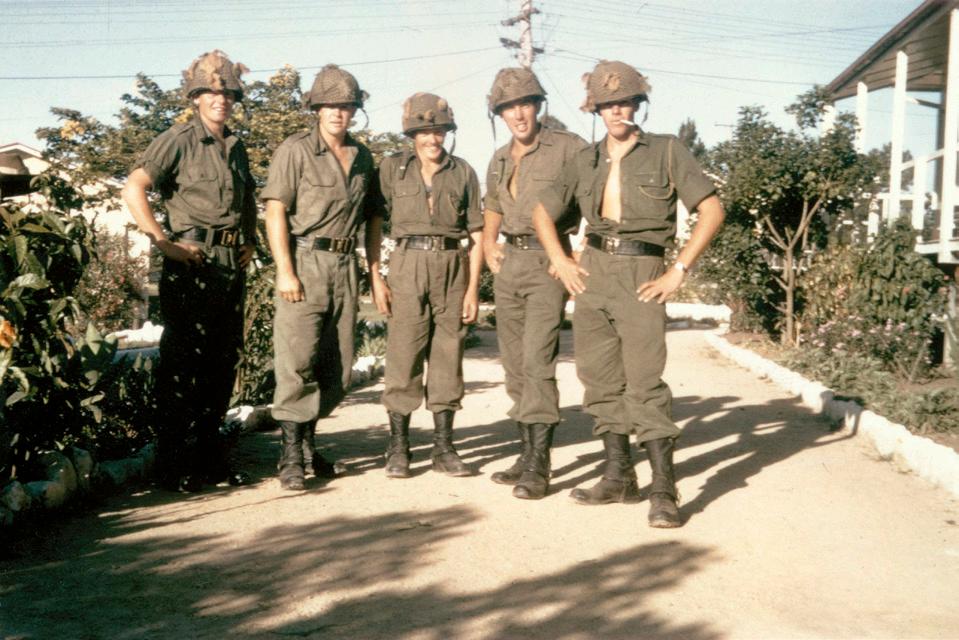
World War II, war the term “con scription” was replaced by “national service”, a cosmetic change that led to the birth of the so called “nashos”, a term used during the Vietnam War era when 20-year old conscripts were required to become combat soldiers in a real “shooting war”. National service meant a two-year stint in the army including the possibility of a combat role in Vietnam.
This situation arose as a result of a general public disinterest in the Vietnam war (1962-1975 ) where it was impossible for the Australian govern ment to raise the required number of soldiers to support the US effort in combating the rise of Communism in southeast Asia.
Ultimately some 63,000 young men were called up between 1965 and 1972 and 15,380 served in Vietnam. One hundred and eighty four national servicemen were killed in action and 880 were wounded.
It’s bad enough when an Australian soldier is killed in an overseas war, but when a national serviceman is killed in action there is often a major backlash.
Towards the end of the war the opposition to sending conscripts to Vietnam had become very strong, with several large public demonstrations taking place in capital cities and organisations such as Save our Sons gaining considerable support.
The war had grown generally unpopular by 1972, to such an extent that the then Labor Opposition Leader Gough Whitlam made the ending of conscription one of his key election issues.
It certainly did play a significant part in producing a change of government. Since then successive political
service, as such, that was the basic problem, but more the way it was implemented.
The selection system, involving the drawing of numbered marbles from a lottery barrel, provided random dates and all 20-year-old men whose birthday fell on those dates were called up.
Then there was the fact that conscripts were sent to serve in Vietnam. It’s bad enough when an Australian soldier is killed in an overseas war, but when a national serviceman is killed in action there is often a major backlash that can swing votes against the government.
At the moment, despite Communist Chinese expansionism, Australia does not appear to be under any direct or imminent external military threat, although the general international environment has unquestionably become more hostile over the last decade.
The Russian invasion of Ukraine, which began in February 2022, has led several European governments to consider or actually reinstate military conscription, and the constant jostling for the position of “Top Gun” between the superpowers of the US, Russia and China has spilled over into our region in the form of several awkward confrontations with China.
In one incident, in early 2025, a Chinese naval task force sailed around Australia and conducted live fire exercises off Sydney, allegedly without the customary warning.
In another, in October, a Chinese military jet released flares close to a patrolling Australian jet over the South China Sea.
Several countries have reacted
Amid all these rising global tensions, particularly those generated by the Ukraine and Gaza situations, several countries have reacted.
Germany recently considered a

bers do not build to the desired level a nationwide conscription program may be implemented.
Ukraine introduced conscription in 2014, and Latvia in 2024. Serbia brought back compulsory military service in 2025 and Croatia will institute their conscription process this year.
Scandinavian countries already have various forms of compulsory military service in place, including participation by women.
Battling the war within
But at the same time many Australians believe that we are also facing an internal threat – the war within – that is being waged upon us by a section of our young.
There is a strong public perception of rising crime being committed by disaffected youth, and many believe that some type of national service, with its attendant discipline and highly structured environment may assist here.
Could a national service scheme be devised that would assist us with both the external and internal situations without dynamiting our political stability?
Various schemes have been suggested over the years and this is one possibility – a hybrid that would likely avoid some of the more problematic issues.
A call up for all young adults, say 20-year-olds, could be instituted – men and women – with the requirement for three month’s military service. The inductee would have a choice of various electives and these could be chosen from the following areas:
• The Army – a basic training course
• Community work – Meals on Wheels, shopping and gardening for the elderly, work in nursing homes, Salvation Army, Vincent de Paul.
• Council work – bushland regeneration
• State Emergency Services (SES)
• Rural Fire Services (RFS)
If Australia is ever involved in armed conflict there would be no requirement for a conscript to become involved unless he or she volunteered and this would require leaving the national service scheme and joining the regular Army.
“Points” could be attached to these activities depending on government priorities, and after a certain number was amassed, the conscript would be entitled to a subsidised home loan. Such a scheme would be of considerable benefit to the nation. We would develop a large number of young people with basic military training that could be of great assistance in the event of mobilisation. Work in the SES and Rural Fire Services for example could improve our responses to civil emergencies.
A considerable amount of useful community work would be undertaken – work which is presently “on hold” because of the lack of people power.
Finally, such work would be of great benefit to the individual. Apart from the character building and discipline that comes from involvement in work of this type, unique networking opportunities arise from the mix of people that comes with national service.
Would it work? Cost could be a major issue and the analysis required would have to be properly and professionally undertaken by Treasury. But it would be important for this to be a cost/benefit analysis, rather than cost alone.
A final thought from American President John F Kennedy, on January 20 1961: “Ask not what your country can do for you – ask what you can do for your country.”
Ross Fitzgerald AM is emeritus professor of history and politics at Griffith University. His most recent book is Chalk and Cheese: A Fabrication, coauthored with Ian McFadyen. Dick Whitaker is a widely published author and lecturer in meteorology and Australian history. He was a national serviceman who served two years in the Australian Army 1969-1970.

“Child-protection systems too often misinterpret or underestimate the strength of Aboriginal and Torres Strait Islander ways of raising children and kinship networks,” writes JULIE TONGS.
SNAICC, the national voice for Aboriginal children, has released its Family Matters Report for 2025.
Sadly, but not unexpectedly, the report details a litany of failures by the ACT government to meet the needs of Aboriginal and Torres Strait Islander children living in Canberra.
The 2025 report is about 150 pages and does not make for easy or comfortable reading.
Below are a range of extracts from the report that give some indication of the troubling nature and range of findings detailed in the report. Notably, this is reflected in its opening sentence, in which the authors assert: “There is a growing and unacceptable gap between the rhetoric of reform and the reality on the ground for Aboriginal and Torres Strait Islander children.”
The following sample of findings from the report provide an insight into the myriad failings which have been identified within the ACT.
“The Family Matters Report 2025 presents and interprets data related to Aboriginal and Torres Strait islander children and families from
our perspective, challenging government interpretations and systemic biases. It calls out the over-reliance on punitive responses, the chronic underfunding of prevention and early intervention and the failure to uphold the rights of children.”

For example, Building Block 1 is universal and targeted services, and the ACT is reported as having the “highest rate of Aboriginal children in Australia continuously in out-of-home care (OOHC) for five or more years (58.4 per cent).” The ACT also has the second highest rate ratio of Aboriginal and Torres Strait Isalnder children in OOHC (17.7 per 1000).
A further illustration of the blasé approach of the ACT government is that the ACT has the third highest rate in Australia of Aboriginal children in out-of-home care.
Concerningly, the latest data reveals that while nationally 7.3 per cent of Aboriginal children were reunified compared to 10.1 per cent of non-indigenous children, the reunification rate in the ACT for Aboriginal children was a mere 3.3
per cent which is the second lowest rate in Australia.
The ACT, in 2022-23 also had the second highest rate of Aboriginal children in Australia receiving childprotection services. The ACT did not provide the relevant data for 2023-24, which raises the obvious question:
“What are they trying to hide?”
“In 2024, the over representation of Aboriginal children slightly increased across substantiations, care and protection orders and in OOHC,” the report says.
A substantiation refers to a case where a departmental investigation concludes that a child has been or is at risk of maltreatment and necessitates further action by the government.
The most deeply concerning finding detailed in the report is that rates
of substantiation have fallen across Aboriginal and non-indigenous population groups with sharp decreases in the NT, NSW, Vic, WA and Tasmania.
However, in the ACT, there was a sharp decrease in substantiations for non-indigenous children (40 per cent) but a massive 59 per cent increase in substantiations for Aboriginal and Torres Strait Islander children. How is one to interpret this disparity?
“Over-representation in substantiations was particularly high in the ACT where Aboriginal children were 19.8 times more likely to be subject to a substantiation than non-indigenous children,” Family Matters says.
“The continuing over-representation reflects deeply embedded patterns of systemic bias that are built into the structures, policies and practices of child protection systems.”
It also found that: “The rate of notification per 1000, in 2023-24 of Aboriginal children in the ACT was 343.6, an increase of 8 per cent on 2022-23 while the rate of notification of non-Aboriginal children per 1000 was 48, a decrease of 5 per cent.
“Alongside genuine concerns over surveillance and misunderstanding and undervaluing of Aboriginal parenting practices are key drivers of higher rates of notification.”
In the ACT, school personnel were the highest source of child protection notifications highlighting the role




schools play in reporting concerns for Aboriginal children.
Family Matters expresses concern that the high notification rates through ACT schools may indicate that these services are relying on child-protection notifications as an early and primary response for families experiencing challenges rather than providing wraparound supports to address family issues that, if supported, could prevent the need for child protection escalations.
The report notes that disproportionate rates of investigations can be linked to greater levels of harm experienced in communities facing entrenched socioeconomic disadvantage because of historical and ongoing impacts of colonisation, intergenerational trauma, poverty and limited access to culturally safe services.
The report concludes, unsurprisingly, that the over-representation of Aboriginal and Torres Strait islander children is also attributable to entrenched systemic biases against Aboriginal and Torres Strait Islander families and that child-protection systems too often misinterpret or underestimate the strength of Aboriginal and Torres Strait Islander ways of raising children and kinship networks.
Julie Tongs is CEO of the Winnunga Nimmityjah Aboriginal Health and Community Services.


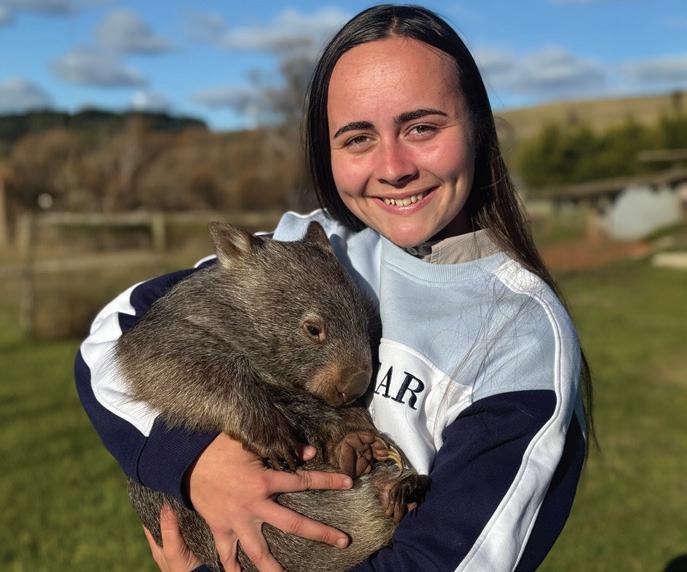
“We’re all rightfully worried about climate change and rising sea levels, but no one is talking about a far more immediate crisis: the disturbing trend of shrinking weekends,” worries. PAUL DORIN
Like me, are you left scratching those increasingly grey hairs, wondering how the last decade managed to slip away?
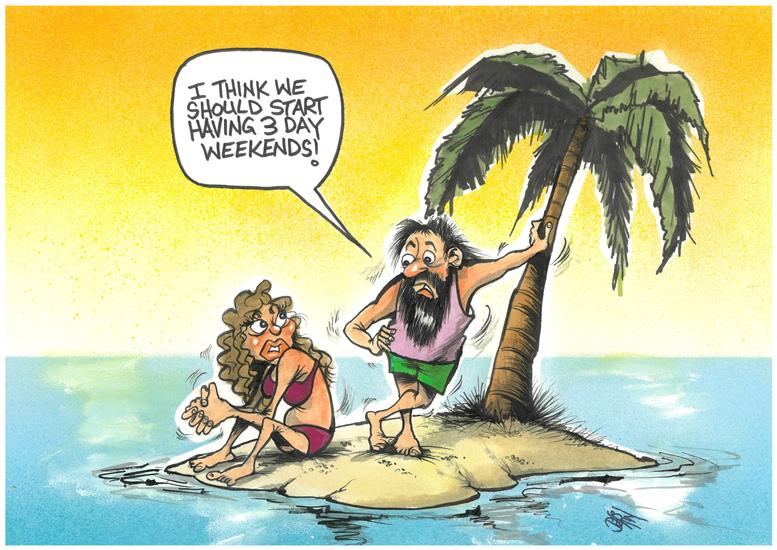
I swear it was 2016 about five minutes ago. Honestly, I think time has a personal grudge against me. We’re all rightfully worried about climate change and rising sea levels, but no one is talking about a far more immediate crisis: the disturbing trend of “shrinking weekends”. Saturday morning mysteriously vanishes, and Sunday afternoon accelerates to near-light speed as if the weekend hit fast-forward while you were still deciding what to do.
“Time flies when you’re having fun,” the old adage goes. The truth is, we all get 24 hours each day but weekends somehow feel shorter than weekdays. And the strangest part even when you’re not having fun, time still seems to slip away faster than you can blink!
That’s why I’m launching a public awareness campaign. Its mission is simple and long overdue: “Save the Weekends”.
It’s that frustrating tale of an ambi-
tious to-do list versus reality. Most of us start the weekend with unrealistic expectations of rest, family time, sports, and a never-ending list of chores. The weekend becomes a blur of activity, and by Sunday evening, we’re exhausted barely having time to savour any rest.
Everyone knows the sacred thrill of a public holiday – that rare, blessed day when the universe pauses just for you. Suddenly, your normal two-day weekend stretches like elastic: Friday night flows into Saturday, Saturday drifts lazily into Sunday, and then… surprise! Monday isn’t coming. It’s gone. Vanished. Swallowed by the cosmos.
After years of pretending two days was enough to recover from five days of chaos, we should all agree it is time for a buffer day, a gentle 24-hour cushion between Sunday and Monday. Thus, “Softday” will be born: a no-expectations, guilt-free zone dedicated to napping, snacking, and remembering who you are before facing reality again.
down the weekend:
Start your weekend Friday evening. Go for a picnic, take a walk, catch up with a friend, or have a movie night. Treat Friday night as the beginning of your weekend, not just a prelude to Saturday.
Don’t oversleep. Get up early on Saturday and start the day with a morning walk or some light activity. It sets a productive and relaxed rhythm for the whole day.
Tackle chores early. Doing household tasks first thing Saturday morning means the rest of your weekend feels uninterrupted and guilt-free.
Reduce scrolling. Try to be mindful about screen time, l have lost whole evenings and mornings to the scroll. Volunteer or join a local service. Organisations such as the Rural Fire Service not only let you give back, they improve mental and physical health, help you develop new skills, and make a really positive impact on your community.
Ironically, paying attention to time can actually make it feel slower. When you’re doing tasks you don’t
particularly enjoy, working, waiting, or watching the clock tick you notice every minute and hour, and the days can drag. But when you’re having fun, your mind is fully absorbed in the activity, so your sense of time fades away therefore you lose your sense of time.
Most people think stretching the weekend is about doing more, But the truth is, weekends feel longer when they surprise you, when they feel a little different from the weekday rhythm.
Here are my five simple tips to slow

So, fellow weekend warriors, let’s stop letting our Saturdays evaporate and our Sundays sprint away. Let’s reclaim the lost hours, because time may have a grudge, but we don’t have to play along.
Slow down, savour, and remember: the weekend is yours, not the clock’s.
Paul Dorin is the CityNews cartoonist.


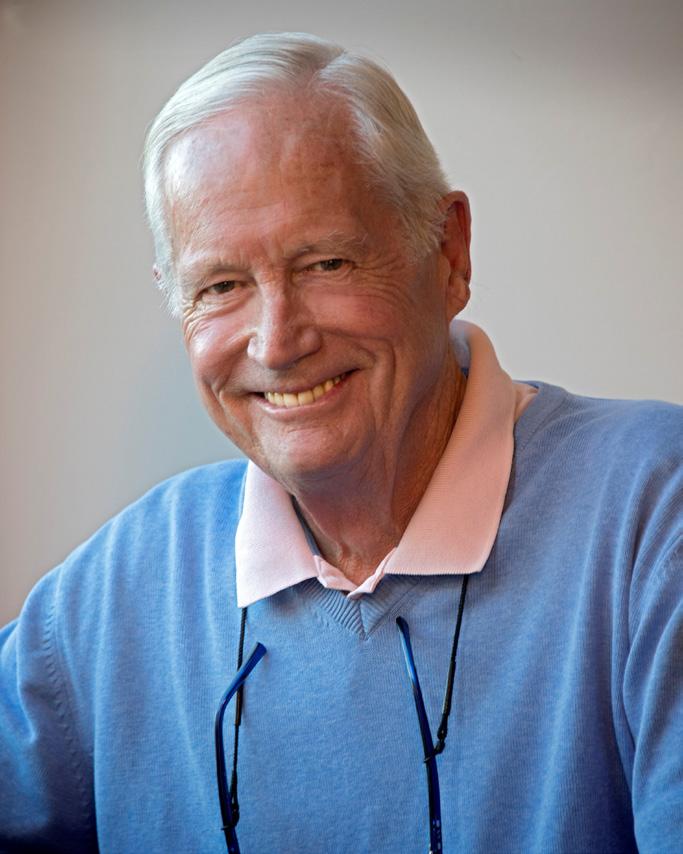
Robert Macklin, accomplished author and CityNews columnist for almost 20 years, has died. Here his son BEN MACKLIN and friend MAX BOURKE AM pay a fond tribute to this remarkable writer and journalist.
One of Australia’s most prolific and respected authors and journalists, Robert Macklin, has died at 84 after a long battle with chronic obstructive pulmonary disease (COPD).
Canberra-based and seemingly born to write, his byline enhanced some 32 books, stage and screenplays as well as hundreds of articles totalling more than five million words.
His most notable works range from the critically acclaimed Castaway, a biography of the cabin boy Narcisse Pelletier adopted by a North Queensland Aboriginal clan for 17 years, to the international bestseller, SAS Sniper.
The Macklin oeuvre started in 1956 with an essay as a 14-year-old Brisbane Grammar schoolboy on boots, which began: “I am a pair of boots and I feel as though I am on my last legs”. It ended with his final yetto-be-published novel, The Passions of Milford Haven, set in Canberra
Who Planted Canberra – Charles Weston and his 3 Million Trees was published by the National Library in late September 2025 and is now in its second printing.
Of his published works, some 26 were non-fiction works of genuine Australian history, as opposed to the British version of colonial settlement.
Born in Brisbane in 1941, he was educated at Ironside State School and Brisbane Grammar School. He worked as a jackaroo in Outback Queensland before joining The Courier-Mail as a cadet journalist and part-time arts student at the University of Queensland.
He progressed to the Melbourne Age, which sent him to their Canberra bureau in 1964. There he met and married Wendy Webster, a Canberra teacher and music specialist. They celebrated their 60th wedding anniversary on December 18, 2025.
Robert’s jackarooing experience and his Age connections scored him an appointment as press secretary to Country Party leader (Sir) John McEwen in late 1967.
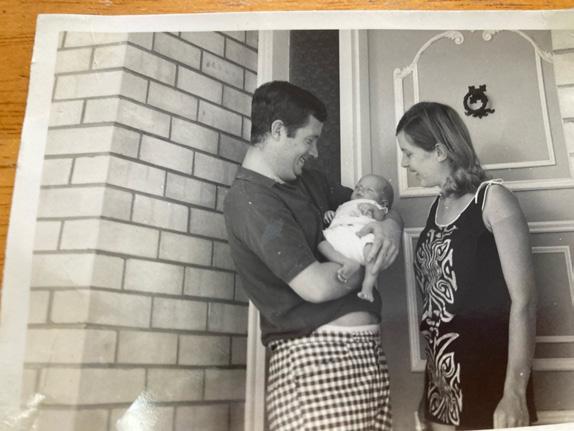
McEwen was widely expected to re tire after a final year in government. However, three weeks later Harold Holt took his fateful swim and his successor, John Gorton, persuaded “Black Jack” McEwen to stay until the next election.
When McEwen eventually left office in January 1971, Robert and Wendy, with their two young sons moved to the Philippines where he produced and directed documentary films for the Asian Development Bank in 33 countries of Asia and the South Pacific.
Joanne Whalley.
He also wrote his first novel, The Queenslander, which is now undergoing pre-production for a TV series by a Queensland production house.
Other novels took him to Hollywood where his Juryman (with Frank Galbally) was adapted to the MGM movie, Storyville starring James Spader, Jason Robards and
Robert joined The Canberra Times in 1990 as a seasoned writer and subsequently became a founding arts editor, restaurant critic, and feature writer. His unique Page 3 column, A Capital Life, created an enviable relationship with his readers. Indeed, in 2000 he initiated Canberra’s version of the Walk for Reconciliation across Commonwealth Avenue Bridge to The Lodge.
He travelled to Serbia during the war over Yugoslavia’s collapse, and to East Timor on a European “ferry”
during that country’s quest for independence. By then he had added leader writing to his duties, having been appointed associate editor in May 1999.
In 2003, he and then editor Crispin Hull were the first of a series of staffers to be “retrenched” in a cost-saving exercise by a new owner of the paper.
In 2007 he wrote the authorised biography of fellow Queenslander, Kevin Rudd which became a bestseller in Beijing; and later he did a lecture tour of Chinese universities
in Shanghai and Si’an on “Courage in Australian Literature”.
Robert’s epic novel, Fire in the Blood – Frank Gardiner and his Bushrangers followed, together with a series of Australia’s war history, culminating in the wide-ranging Warrior Elite before turning to the cause of Aboriginal reconciliation.
The Big Fella, a history of BHP Billiton with co-author Peter Thompson, won the prestigious $30,000 Blake Dawson prize for business literature in 2009.
His other works garnered four Canberra Critics Circle awards, most notably for books supporting Aboriginal reconciliation – Dark Paradise, Hamilton Hume, Castaway, and the Donald Thomson biography, Fighting for Justice.
Robert’s weekly CityNews column expanded to the Braidwood Bugle and the Moruya Mail. In this role, among other scoops he broke the story of the secretly imprisoned intelligence officer whom he dubbed “Witness J”.
Based on his extensive detailed writing in the field of military hardware and its strategic use, he was also invited to write for John Menadue’s prestigious Pearls and Irritations public policy journal. His life-long friend and collaborator Peter Thompson, says: “His brilliance as a writer-reporter-novelist never ceased to amaze me – he could write about anything with style, insight and humour. Quite simply, he was one of Australia’s most versatile authors, and one of its most readable historians and columnists.”
From his great friend of 62 years, Australian writer, Rob Drewe: “I can’t think of anyone in our game, in the worlds of literature and journalism, so admired and respected.”
He is survived by his wife, Wendy Macklin, two sons, Rob and Ben and four grandchildren Nick, Samara, Aria and Allegra.
Editor’s note: The staff of CityNews offer their deepest condolences to Wendy and family, and salute the wonderful contribution Robert has made to our magazine over so many years. I shall miss his challenging Gadfly columns and his warm, friendship. Ian Meikle, editor

On display will be the latest resort style developments, as well as established villages from many different organisations, offering a wide range of services & facilities, sizes, prices & locations, all under one roof. Don’t miss this special event!
It feels like the end of an era, or perhaps the start of something new… and terrifying.
Alas, I am far from alone in the fear that planet Earth is whirling into its last days as its protective atmosphere heats beyond its power to sustain mammalian life-forms; or that some inherent quality in our lizard brain commands us to destroy our own species in a lunatic quest for dominion. Or perhaps you’d prefer the welcome mat of a Christian fervour for Armageddon disguised as some spiritual “rapture”. It is the second occasion in my lifetime that the possibility of human extinction has been widely and seriously contemplated. The first was during my journalistic cadetship in the 1960s with the Kennedy/Khrushchev crisis. But it was over in a flash; so easy to forget.
Today, by contrast, the prognosis throughout the sweep of mass media is fearful at best from the New York Times to the academic calculus, or the bright sparks of Hollywood projecting their crystal-clear messages of a dystopian future. They too have access to AI.
Trust in the great institutions of the past, from government to industry to communal honesty and pride, where once they powered our hubris, is falling by the wayside. Even the venerable
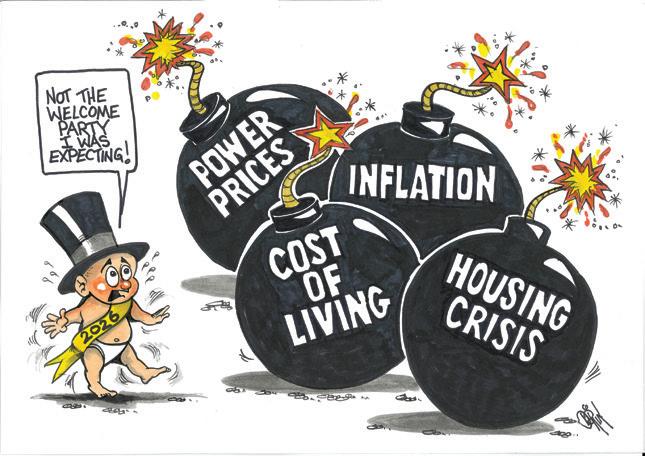
Liberal Party no longer warms the cockles of a windswept generation; Labor is frozen by fear.
The optimists will point to the past when time and again the good guys “muddled through” and the crises tripped and fell on the banana peels of history. But that was before the entire globe approached boiling point – and only two atomic bombs could end conflict in the Pacific.
Today is different. If we do nothing at all, we’re destined for disaster. Even
if we double our efforts to cut the hot carbon gases from yesterday’s buried forests, we will not escape the consequences. The great climate-change migration will itself trigger the wars and the genocide of a craven species: Gaza for one and all (Netanyahu is a human being, too.)
It’s no one’s fault but our own. Eighty years from the end of World War II we’re the victims of what Prime Minister Kevin Rudd called his beloved mother’s “forgettery” (only Kevin could
Trust in the great institutions of the past, from government to industry to communal honesty and pride, is falling by the wayside. Even the venerable Liberal Party no longer warms the cockles of a windswept generation; Labor is frozen by fear.
have made up such a word).
In his mind, it was a tribute to her wonderful capacity to forget and forgive. Alas, it does equal service to our own inability to heed the lessons of our past.
The ambitious ideals that created the United Nations soon faded into the shadows of adolescent nationalism where they withered and died.
Reason gave ground to religion, debate to military power, investment to exploitation.
As a war-baby generation melded into a massive Boomer bell curve, we were spoiled by our members of parliament. Vietnam called our
younger siblings to a foolish war. In its wake, migration made our modest homes treasure houses; our ageing health and racist fears met by taxing the future… until the system revealed the wasteland of our preparations. Now we know that our children will pay, in a world where each day there will be news of disaster rising – 1000 lost at sea, 2000 in a city blaze, 100,000 down with heat stroke, 1 million starved to death.
How do we apologise for our forgettary? Kindly Mrs Rudd’s was born of generosity. Ours had a lesser parentage, more Nero than hero, we indulged ourselves in good fortune as all around us, the signs cried out their warnings: Corruption rules! (Putin is a human being, too).
Loud, but not loud enough to divert our attention (“no worries”) from the glimpse of what’s to come. Little wonder half the world is choosing to sniff and snort its way through its last 10-dollar bill (Trump is a hu man being, too).




Thanks to the Barr government, central Canberra has followed a heady pattern of development so that now it is a jungle of medium-density blocks, while people’s public recreation spaces are whittled away.
But the territory tentacles that recently acquired seven acres of Lake Burley Griffin lakebed at West Basin, are now extending into the national land of Commonwealth Park.
The NCA appears to not have the guts to do what it is supposed to as set out in the National Capital Plan, that is to safeguard the national interest in the Commonwealth and its associated heritage.
Commonwealth Park is a significant open space for national purposes, including viewing the lake and our parliament, while community events held there are numerous.
Chief Minister Barr is planning to turn the Canberra Olympic Pool (COP) site into a convention centre (funded by the federal government) and is inveigling the NCA to develop an Aquatic Centre in Commonwealth Park.
The ACT has access to park spaces that could more easily be developed for a new pool complex such as Haig Park, Braddon Oval or West Basin where the ACT recently acquired seven acres of lake land and a public parkland.
The proposed aquatic centre in Commonwealth Park is clearly for an ACT recreation facility but is it to be funded from the national purse? Is the ACT leasing the land? Is the NCA gifting the land to the ACT or is a land swap in the bag?
Aquatic centres are expensive, the one recently built in Batemans Bay with only a 25m pool, is costing the shire $5 million annually. As the NCA cannot afford to repair the Federation Fountains and is turning the fountain basins into shrub beds, surely it cannot afford to replace and run an ACT aquatic centre in Commonwealth Park.
What about the parking area that will be subsumed by the aquatic centre in Commonwealth Park?
The Regatta Point Visitors Centre has obligations, established when Barr grabbed the former visitor’s information centre site for apartments? What sort of welcome reception will there be for visitors to the national capital with their packed-up cars, buses and even caravans, having to park underground beneath the aquatic centre.
Although Canberra needs a convention centre, the Federal government should hold off on funding it until this horrible planning debacle is sorted out.
It is apparent that the Barr Government follows no decent planning models, even the (Canberra) City Plan appears to be ignored in his pursuits that continue to uglify Canberra and reduce residents’ parklands and recreation areas?
The NCA board, supposed to manage central Canberra, should be chucked out
and replaced with a team that cares about managing the national assets of buildings and importantly – parklands and spaces. Commonwealth Park should remain sacrosanct for future generation of Australians Juliet Ramsay, via email
I read in the CityNews January 1, 2026 the articles by Michael Moore (“Labor’s smokeand-mirrors rorting of our rates”) as well as (“You were warned but didn’t listen, Mr Barr”) by Jon Stanhope and Khalid Ahmed.
Both articles directly or implicitly highlighted the economic mismanagement/incompetence of the ACT Labor government and hence the rates dilemma now afflicting Canberra.
Over the past 12 months my rates have increased 8.24 per cent, currently my rates are $748 per quarter and the unimproved capital value has gone down!
A few years after we purchased our house, the ACT Labor government brought in the idea that land tax was not to be paid when you bought a house, but the money lost in revenue would be made up in the rates paid by all, and that method would be more equitable and make rates reasonable. Sadly, that is not the case.
The continual economic vandalism that is taking place because of poor economic decisions by this government – A tram to nowhere, that I didn’t want or vote for, have

not and probably never will use (I live in Holt) being one example, there are many others, eg swimming pools.
And this brings me to my suggestion.
I am proposing a rates revolt – that all household ratepayers withhold paying until there is a review and recommendations by a qualified outside body to produce a reasonable and equitable rate system for Canberra.
A petition may be the way to go about this, so to this end I will be contacting Senator Pocock, independent MLAs Fiona Carrick and Thomas Emerson.
Glenn Frew, Holt
I am not impressed with the cuts to our hospital system.
Andrew Barr, will you please go now. I don’t care where and I don’t care how, but Andrew Barr, will you please go NOW! (with apologies to Dr Seuss). And take the light rail with you.
My granddaughter’s recent experience shows how budget cuts have affected the services offered by the Canberra Hospital. She waited from Friday evening until the following Wednesday (Christmas Eve) to have a proper pin and cast put on her broken elbow.
Trying to get her released on Christmas morning also proved a problem. Staff were scarce, no patients in the day surgery ward
and only one doctor on duty – somewhere. We finally sat down to Christmas lunch (?) at 3.15 pm after a very stressful few days.
Jan Kicenko, via email
How can a local government plan on increasing the budget deficit with no intention to reduce it?
To continue to spend money on unaffordable, expensive and unnecessary infrastructure projects is morally indefensible.
To operate within budget constraints takes courage and a hard-nosed approach to controlling costs. The current ACT government is failing the Canberra community on all counts.
Peter Claughton, Farrer
It would be interesting to know what measures have been taken to minimise the closure period for the refurbishment of the Commonwealth Avenue bridges? Will the work be conducted 24/7 using lights?
The current two years of closure is probably long enough to build a new bridge.
Chris Emery, via email
As a Woden resident I would welcome redevelopment of the town centre.
For too long it has appeared as the tired sister of all the other town centres in Canberra which all have had at least one redevelopment to bring them more up to date.
It isn’t surprising that 2052 is being touted as the completion year and with the amount of rules and regulations in Canberra it is probably even optimistic.
This is the reason everything takes so long and always goes so far over budget in this city, too much procrastination and red tape. I’m not saying that there shouldn’t be considered planning, but not taken to the extreme that it currently is.
The light rail project is a perfect example of this.
Stage 2 was broken up into two stages due to the costs and planning. It is somewhat ironic that the stage to Woden has been named 2b as, like Shakespeare said, we are all wondering if 2b or not 2b?, that is the question.
Canberra has many great qualities, but I don’t believe it is of any benefit to cling to this backwater bush capital mentally.
We aren’t some little town, we are the capital of Australia and we should be a showcase of what makes Australia great, not some fearful little bush capital that is too over regulated and fearful to make any changes.
We need to embrace our future together and make Canberra a liveable city that we can all be proud of.
Vivienne
Jacyshyn, via citynews.com.au
I watched ABC’s Songs Inside program recently. It is a documentary filmed at Adelaide’s women’s prison, where 10 women were chosen to participate in a music program to learn how to play the ukulele, write and sing songs.
The group of women were either on remand or sentenced, and they were taught and mentored by an amazing Aboriginal woman, Nancy Bates.
Throughout the doco, my emotions fluctuated from smiling, laughing and crying as I watched the journey of these stoic women who challenged themselves to
work towards playing with the Adelaide Symphony Orchestra (ASO).
While not all the 10 women were present for the ASO performance for various reasons, the ones who did perform, were amazing.
I highly doubt the music program was an expensive program to fund; and if it could reduce women from returning to prison, not to mention increasing their participation in the community, increasing public safety, and for the politicians, significant savings in reducing the cost of keeping women in prison. I implore our Attorney-General Tara Cheyne and Corrections Minister Dr Marisa Paterson to watch the program (it’s on ABC iview) and consider the benefits of both programs for women who are currently languishing at the Alexander Maconochie Centre.
Janine Haskins, prison reform advocate, Cook
Susan Ley is following the path of Peter Dutton –dividing the people not bringing everyone together. Since she has been in the position of leader, she has been negative in most of her pronouncements. She is sounding like a whinger, not a leader. People hate whingers. She is not going to bring defecting Liberal voters back to the fold on a diet of vinegar.
John Quinn, Spence
To my mind the most important observation to make about the Bondi atrocity is its repercussions. Political, social and economic power has been used to turn our prime minister!
Israel’s many wealthy, influential organisations have scared our government into submission.
The learning for us is in understanding the sheer power of the Jewish diaspora. They already manage America. Now they manage us.
Bob Howden, via email
The Islamist chant “Death to Jews” echoes the Nazi chant, and it took a quantum leap at the Opera House on October 9, 2023.
One section of Australian society, however small, openly called for the death of another. The antisemitic tone set at the Opera House spread like wildfire beyond its murderous sub-culture and morphed into public fashion.
Part of the oxygen feeding this fire is the tenacity of the “Israel is committing genocide” shibboleth.
Despite the claim’s amplification and repetition, evidence remains weak. The death rate in Gaza, according to Hamas at about 3-4 per cent, is in the same range as the recent Syrian and South Sudanese civil wars. Vietnam’s death rate was 5-7 per cent. The Second Congo War (1998-2003), killing 10 per cent of 53 million, remains the worst since World War II.
Israel is the only party in any of these wars to trigger relentless genocide accusations accompanied by threats and attacks against non-combatants living beyond its borders. There is a simple reason – Israel is the world’s only Jewish state, and we are faced with a hideous manifestation of antisemitism.
Genocide requires numbers and intent. The Hutus in 1994, mostly armed with machetes and clubs, killed 70 per cent of 1.1 million Tutsis in 100 days.
The Israelis can orchestrate then bomb a senior Iranian meeting 1600km away in Tehran; yet, despite this fearsome capability, they have proved uncharacteristically incompetent at genocide – after more than two years most Gazans, exposed in tents on Israel’s doorstep, remain alive. Despite the ceasefire, the status quo retains glimmers of the war’s mode: a deadly game of whack-a-mole. The future doesn’t look encouraging; but Israel is not engaged in genocide.
Ironically, Hamas, with clear genocidal intent, lacks the means, whereas Israel, with the means, lacks intent for understandable reasons. Israel is a phoenix born from the flames of Nazi death camps. Israelis are 0.02 per cent of the population from Egypt to Iran. Israeli wellbeing requires peace and trade with Muslim countries.
Now, post-Bondi, the anti-Israel coalition hasn’t flinched: Josh Frydenberg’s powerful response was rejected as inappropriate and ill-timed; those who know better believe his sympathy and rage broke post-massacre etiquette (whatever that is) and, furthermore, Bondi had nothing to do with religion. Instead, we should all unite in peace – even with Islamists. Australian society is in a blinkered crisis.
Even before Bondi, but more so now, how can anyone swallow the spin or have any association with those who chant or practice “Death to Jews”?
Peter Robinson, Ainslie
I left my hometown Canberra for the UK in my twenties, never thinking I would miss it. I said goodbye to friends and family, confident I was moving on.
Eight years later, I have only recently truly learned to appreciate what Canberra represents – the freedom, the calm, the endless blue skies, clean air, and the opportunities it offers. Above all, I value the wonderful neighbourhood my family lives in, especially our neighbours, the kind you simply couldn’t replace.
Who was responsible for the changed composition of motor vehicle products and how was it achieved?
Former US President Barack Obama was the major agent of change as he introduced fuel efficiency standards for motor vehicles in the US. The new standards only applied to the common sedan and station wagon types of vehicles. Vehicles used by workers such as utilities and vans were pretty much exempt from the new standards.
European and Japanese automakers were also caught by the new standards. The higher costs, both capital and running, for the traditional sedan products very quickly destroyed the market for these international products in the US.
The effects of the standards was to boost the demand for the traditional utility vehicles compared to other alternative non-utility vehicles.
There was another major change in the US market that flowed on to other countries and I do not know who organised it.
The change was to have many new types of vehicles, both US and foreign, classified as sports utility vehicles (SUV). Classifying these sports vehicles with the addition of the word utility into their titles made them exempt along with the genuine workers utility vehicles.
The change in fuel efficiency standards in the US has led to a major change in the composition of the types of vehicles being built or imported into the US and elsewhere for that matter.
The scale of the exemptions from the standards and their impact on the production types of vehicles at international levels illustrate how governments can get it so badly wrong.
Terry Ryan, via email Cull letter misses the point entirely
The letter “Call for more professional kangaroo culling” (CN December 18) misses the point entirely.
Firstly, there is not a skerrick of evidence produced by the ACT government to justify shooting kangaroos.
No baseline data has ever been produced on the num -
ber of kangaroos living in Canberra’s Nature Reserves and the actual numbers are still unknown in 2025.
The ACT government has done absolutely nothing to address wildlife-vehicle crashes even though it was recommended in 2024’s review of the Kangaroo Management Plan to install cost-effective mitigation strategies such as reduced speed limits at collision hotspots, speed bumps, better lighting and speed cameras, all of which can be put in immediately
Secondly, the contracted shooters hide behind a code that explicitly mandates cruelty, such as the bashing of pouch joeys of “culled” macropods to death.
The Conservator for Flora and Fauna has unequivocally admitted in an email to the Animal Protectors Alliance that “undertaking the “conservation cull” during all weathers and conditions is normal even though this is in direct defiance of one of the few “must not” clauses in the code.
Calling for “professional shooters” will do nothing to address any of these points.
Robyn Soxsmith, Animal Protectors Alliance
A report by former public service commissioner Lynette Briggs on the politicisation of appointments to government boards has been shamefully downgraded by disregarding a recommendation that politicians and staffers should not be appointed to boards within six months of leaving government positions, 18 months for ministerial positions.
It appears as though this would invariably lead to nepotism and will most certainly not pass the “pub test “.
Minister for the Public Service, Katy Gallagher, said the decision was made on the basis that the government does not believe some people should be excluded if they had the necessary skills.
For the Albanese government to be believable instead of obfuscating, it should have accepted the Briggs review in its entirety, and not cherry picked to suit its own agenda.
Mario Stivala, Belconnen
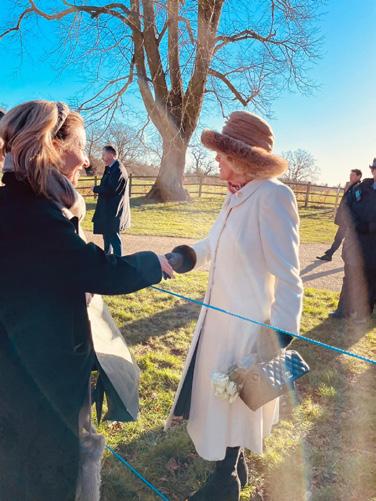
On January 4 I was on the Sandringham Estate in Norfolk with my family from the UK, where I unexpectedly met the King and Queen. While walking through the breathtaking royal estate, I had the opportunity to wish them both a good morning and a happy new year on behalf of Aussies.
The King and Queen were warm and engaging, asking where in Australia I was from. I replied proudly: “Canberra, Sir.”
He responded by saying how important it is to return home and visit.
As I watched them walk away, I found myself thinking about my own home and family, and the importance of appreciating what you have, being proud of where you’re from and returning when you can.
I thought of walking from bridge to bridge, taking in the views from Red Hill or Mount Ainslie, visiting the Canberra Farmers Market on a Saturday, and the rose gardens at Old Parliament House. I thought of meandering through Kingston, grabbing a coffee by the foreshore, or sharing fish and chips with mum and dad at the yacht club.
These are some of the many reasons I love where I was born, and why I hope the King and Queen might one day visit again.
You may not be a royalist, and that’s okay. You may feel he isn’t your king, and that’s okay, too. But he continues to do a great deal for the environment and the community. As one human to another, I appreciate someone who continues to serve others on such a large scale.
Julia Kovacevic, via email
The father of modern medical education, Sir William Osler (1849 -1919) is today more famous for the general wisdom in his writings than their medical content.
He wrote: “The greater the ignorance, the greater the dogmatism.”
While respecting the contribution made by letter writer Ian Pilsner to the debate on Australia’s energy future, his views may be based on his conservative politics rather than our national interests.
The biggest barrier to the adoption of nuclear energy is its cost. The electricity reactors generate is just too expensive.
Donald Trump concedes this in signing Executive Order 14,300. In this, he directs the Nuclear Regulatory Commission to review safety regulations. He specifically asks the NRC to review and lower exposure to radiation limits, which have stood for over 25 years.
Surely no Australian wants nuclear power at a price that can compete with wind, solar and batteries only because it has been made less safe for those who work in the industry or live next door to a reactor.
Australia must keep up-to-date with all emerging technologies but cannot seriously consider building a reactor here until the electricity generated can be done so safely.
Noel Baxendell,
Holt


more accessible and more comfortable.
With over 20 locations nationwide and a team of experienced clinicians, CPAP Direct offers care that is truly unique. Unlike other providers, CPAP Direct offers free consultations, free mask fittings, free CPAP machine health checks and free troubleshooting, all without the need for an appointment. You can get help whenever you need it without extra costs or long wait times.
They have a large and comprehensive range in stock at each store and have machines, masks
With ongoing education, personalised support and

of thousands of Aussies living with sleep apnea. If improving sleep quality is a priority for you this year, CPAP Direct is ready to help you succeed. Visit cpap.com.au or drop into your nearest store and take the first step toward sleeping better and waking up refreshed.
CPAP Direct Sleep Apnea Specialists
42 Townshend Street, Phillip.
Call 02 6189 1256. cpap.com.au
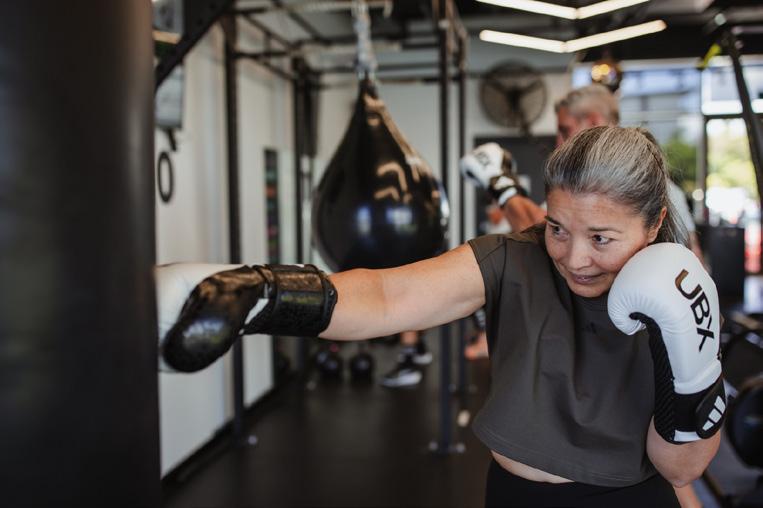
As a working mum of two, I spent years struggling to find the time and motivation to exercise.
On one hand, I wanted to lose weight and feel fit again. On the other – I hated exercise. I paid thousands in ‘donations’ to gyms I never used. I tried personal training, but that quickly became too expensive to maintain.
Then one day, I decided to give boxing a try – and that’s how I discovered UBX (pronounced you-box) Belconnen.
Little did I know that the first day I stepped into the gym would be the moment that changed my life. Not only did UBX transform my relationship with exercise from one of dread to one of enjoyment… I went from being someone who hated the gym to someone who now owns one.
That is the power of UBX.
One of the key reasons UBX worked so well for me is the flexibility. With no class times I could come when it suited me and pace myself, while still benefiting from the guidance of a coach. I never once felt judged for my ability or fitness level.
If you’ve been feeling stuck or intimidated by gyms, UBX could be the fresh start you need.
Come try a free session at UBX Belcon nen and see how good it can feel.
UBX Belconnen 2/102 Emu Bank Belconnen Call 0404 899 174 ubxtraining.com/gym/belconnen


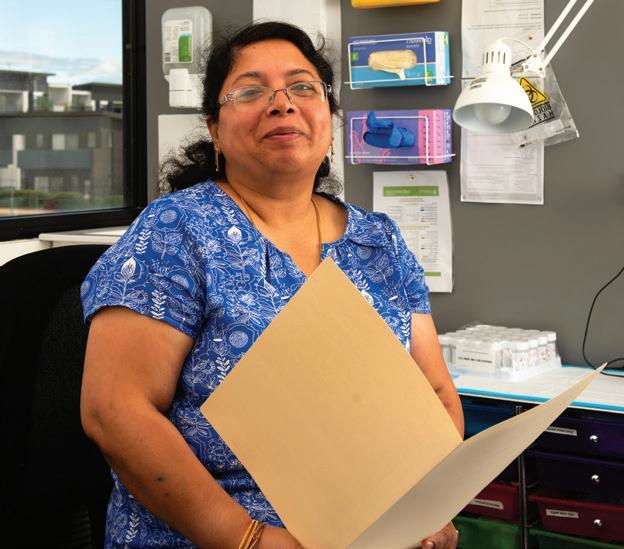
Dr Suntharalingam has more than 20 years’ experience in general practice.

welcoming and inclusive environment.
Dr Suntharalingam has more than 20 years’ experience in general practice and is widely recognised for her calm, compassionate approach, particularly in the area of women’s health and family planning. Services include contraception advice, Implanon and IUD insertion and removal, sexual health screening, pregnancy care and menopause support.
The practice also provides a broad range of general medical services, including chronic disease management, mental health care plans, eating disorder support and personalised obesity management programs. Travel health consultations and immunisations are also available, supporting
Operating from Molonglo Valley Medical Centre, the clinic is well positioned to meet the growing healthcare needs of the region, with a focus on dignity, privacy and continuity of care.
Canberra Family Planning continues to play an important role in supporting community health, offering professional medical care delivered with understanding, respect and experience.
Canberra Family Planning Molonglo Valley Medical Centre, 110 Woodberry Avenue, Coombs. Call 02 5110 3155 or book online at canberrafamilyplanning.com.au

Dr Shiamala Suntharalingam General Practitioner
• Womens Health – from Menarche to Menopause and beyond
• Fertility Investigations and referrals
• Antenatal and PostNatal Care
• Child Health Checks/Immunisations and acute and chronic presentations
• Mental Health and Eating Disorders Management
• Men’s Health
Chronic disease management
Eating Disorder Plans -for Obesity Management
Travel Health
Immunisations – child and adult
Sexual Health
Contraception – Implant and hormone/copper
IUD insertions and removals
• Unplanned Pregnancy Management
• Medical Termination of Pregnancy

• Referrals for Surgical Termination of Pregnancy
• Travel Medicine
• Preventative Care
• 30+ year Heart Health Checks
• 45-49 year Health Checks
• 75+ year Health Checks
Diabetes Screening
Osteoporosis Screening
Overweight and Obesity Management
Iron Infusions
Workers Compensation Claims
Biopsy and Excision of Skin Lesions/Cryotherapy – not head and neck
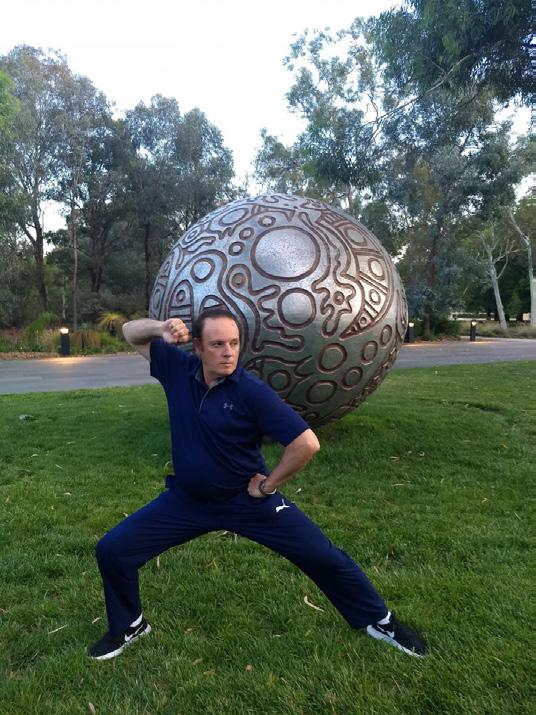
Wu Dao Gong is an internal Chinese martial arts system designed to develop mind, body, and spirit. With centuries of refinement and guidance from philosophies of balance and harmony, it combines the insights of Chinese medicine with the skills of internal martial arts.
The training builds power, confidence, and artistry, offering a holistic path for personal growth – a way to live healthier, feel more centred, and carry optimism into everyday life.
The training cultivates integrative strength, enabling us to move with the whole body – tendons, joints, muscles, and mind – working seamlessly together, with the ability to generate explosive power.
When Mark first tried Wu Dao Gong, he had no idea what it was about. He expected stiff movements and hard drills – but the practice surprised him. Within weeks, he noticed his energy was steadier, his focus sharper, and everyday challenges felt easier to manage.
What started as curiosity soon showed him its benefits, giving him strength, balance, and a new sense of centredness.
Wu Dao Gong goes beyond mechanical movements of punching and kicking – training here makes the body strong, supple, and alive. Even our long-term practitioners, now in their 60s, still move with impres sive power, agility, and energy.
Take the first step now, and your body and mind will thank you for years to come.
Check out the Canberra Kung Fu Academy YouTube videos to see for yourself! www.youtube.com/ @canberrakungfuacademy/videos
Wu Dao Gong
Canberra Kung Fu Academy Call 02 6296 1357 taichiacademy.com.au
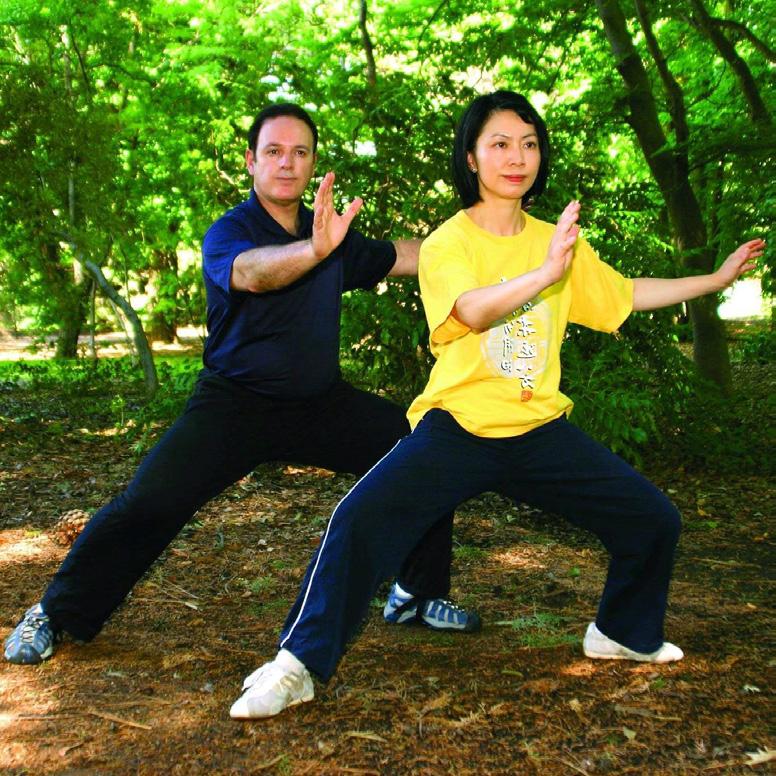
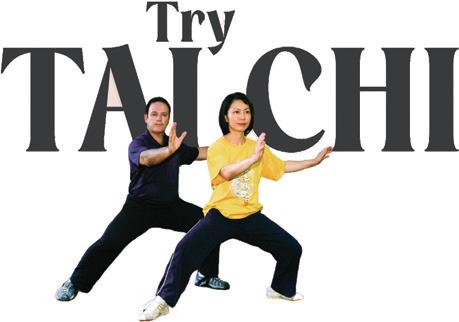
When Sarah first tried Tai Chi, she was surprised at how different it felt from other forms of exercise. Instead of forcing her body into rigid positions, she flowed through the movements. She noticed her shoulders loosen, her back lengthen, and her steps feel lighter.
Tai Chi isn’t about pushing harder – it’s about cultivating suppleness and fluidity of movement,
tested method of teaching Tai Chi that achieves fast, tangible results. Come and try a lesson obligation-free – experience the difference for yourself!
Tai Chi Academy Call 02 6296 1357. Visit taichiacademy.com.au





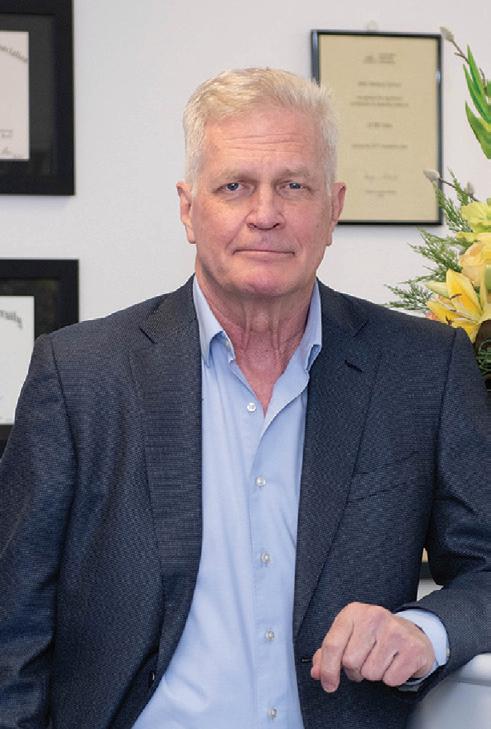
A woman came into my clinic for a consultation about her hearing aids, telling me her hearing aids were 4 years old and she had never found them to be of much help. She said the salesperson quoted her $14,000 for a pair of hearing aids, however, the monthly special of 20% discount meant they cost her $11,200. So, she ‘only’ paid $11,200 for hearing aids that did not help her. Sadly, I hear this all too often.
Here are some things to do to avoid this type of problem:
1. Visit your GP. If you or someone you know has a problem with their hearing, visiting your GP to check for wax in the ears, and to get advice is a starting point.
2. Qualifications. Always check the qualifications of the person you are dealing with. A person without professional qualifications has no business advising you about your hearing. They need to belong to a professional association with a Code of Conduct, so you know they are acting in your best interests, not their own.
years. If you are not sure about their advice, then seek a second opinion. The wrong hearing aids can be an expensive waste and could lead you to stop wearing them. You should always have a trial of hearing aids to ensure that they are right for you.
6 Pensioners and eligible DVA card holders often have entitlement to free services. If you are covered by a government concession, then let the clinician know (even though your clinician should ask). Eligible clients may obtain free hearing tests, consultations, and free hearing aids (referred to as fully subsidized hearing aids).
“A person without professional qualifications has no business advising you about your hearing. They need to belong to a professional association with a Code of Conduct, so you know they are acting in your best interests, not their own.”
– Dr Vass
These hearing aids are appropriate for many people, however if you have great difficulty hearing in background noise (for example a restaurant), then you may want to consider partially subsidized hearing aids. This is when the government pays a certain amount, and you pay for additional features and benefits. Your decision should be based on the following:
you are dealing with a qualified clinician, then they belong to a professional association. The best contact is an independent complaints body referred to as Ethics Review Committee. You can email ethics@auderc.org.au and view the website www.auderc.org.au. You can make an anonymous complaint and your complaint will be handled in a confidential and professional manner. If you are in the ACT, contact the ACT Human Rights Commission email human rights@act.gov au and the website www.hrc.act.gov.au
3. Independent advice. You should get independent, professional advice.
4. There are a wide range of hearing aids out there. Finding the right hearing aids for your communication needs can be challenging. Hearing aids vary in price and performance. Bluetooth® connectivity and rechargeable hearing aids are available on most hearing aids, along with apps that allow you to control your hearing aids from your mobile device. Be aware that just because a hearing aid is more expensive, that doesn’t mean they are the best hearing aid for you.
5. Just as hearing aids vary in performance, clinicians may also vary in performance due to training, experience, and skills. Make sure that you are comfortable and confident in their advice. You are likely to be with this clinician for the life of your new hearing aids, typically 4 to 5
(a) Can you afford the more expensive hearing aids? Don’t go into financial stress if you can’t afford them. (b) Are you clear on the free vs partially subsidized features & benefits? Never believe someone who tells you the free hearings are not good or of poor performance, this is simply not true. (c) If you try the partially subsidized hearing aids and are not happy, then return them. Do not keep hearing aids because you think the failure is yours or that you will improve over time. If the hearing aids are not working for you in the trial period, then they will not work for you in a year or two.
7. If you have a complaint, then seek help. Your clinician should be able to help you through most of your needs. Sometimes, a problem may be beyond the expertise of even the best clinician. However, if you have a complaint there are things you can do. If

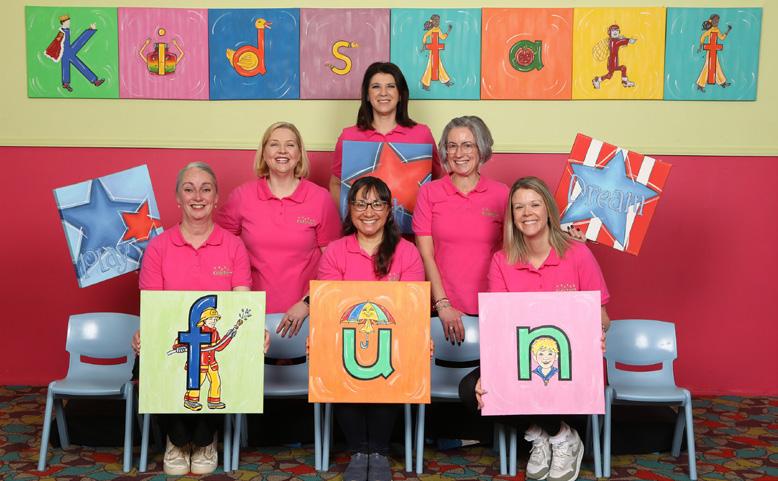
five months to five years of age. From babies learn ing to crawl, toddlers jumping, two-year-olds doing craft and learning how to socialise, to three- and four-year-olds starting their formal literacy journey, and finishing with preschoolers heading full steam ahead in their school readiness program, it’s a privilege to see the children thrive each day.
“We’re fortunate to have long-serving staff members dedicated to providing the optimum learning environment for all our children at
“There’s a special bond in teaching children, from when they are babies and seeing them grow and develop before heading off to school.”
Kidstart is now accepting enrolments for Term 1, commencing in February. “If you want to assist your child to develop a lifelong love of learning, give them the head start they deserve at Kidstart!”
Kidstart Southside Education and Activity Centre 65 Sternberg Crescent, Wanniassa Visit kidstart.com.au
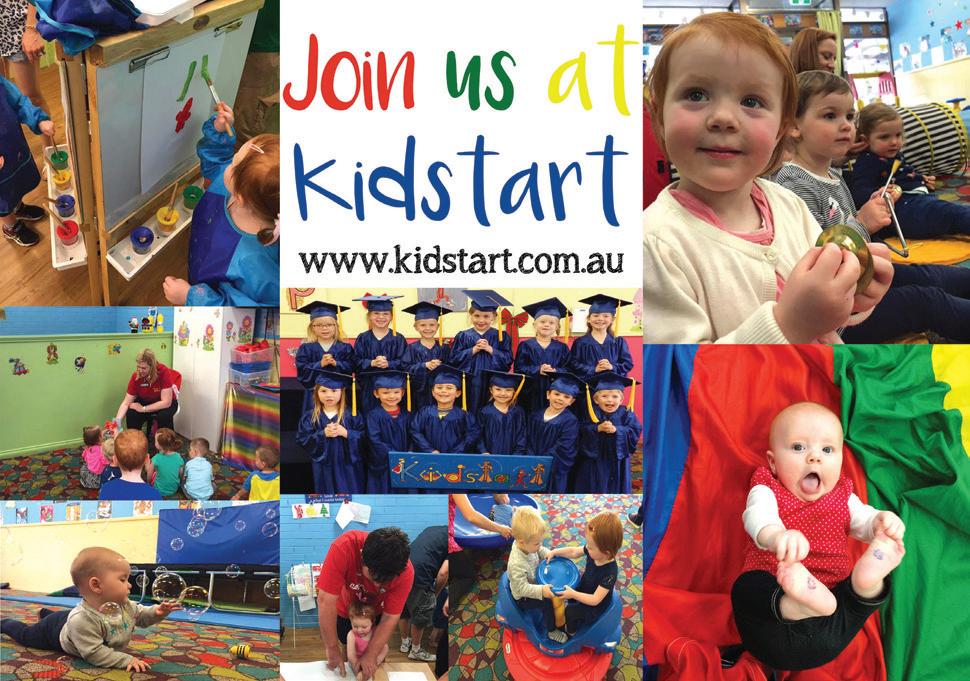

★ Classes for children 5 months to 5 years
★ Independent pre-preschool program for 3 and 4 year olds
★ Preschool PLUS for 4 and over
★ Emphasis on development of motor skills, academic and social skills
★ Preparing children for formal schooling by introducing structure and routines in a play based fun and creative atmosphere
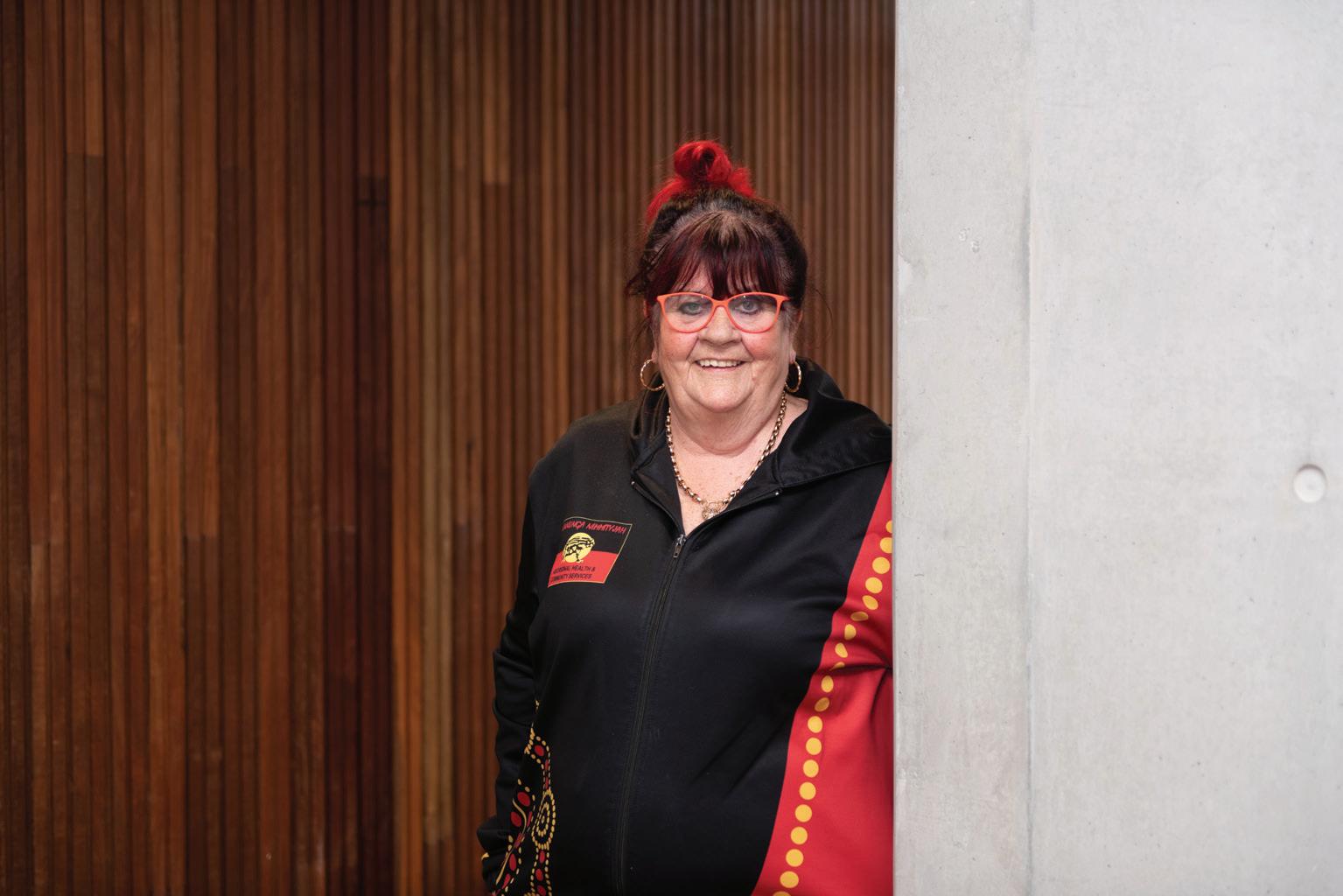
Winnunga Nimmityjah Aboriginal Health and Community Services is proud to walk beside Aboriginal and Torres Strait Islander women during pregnancy and early parenting, offering wraparound support through programs designed to empower, educate and connect.
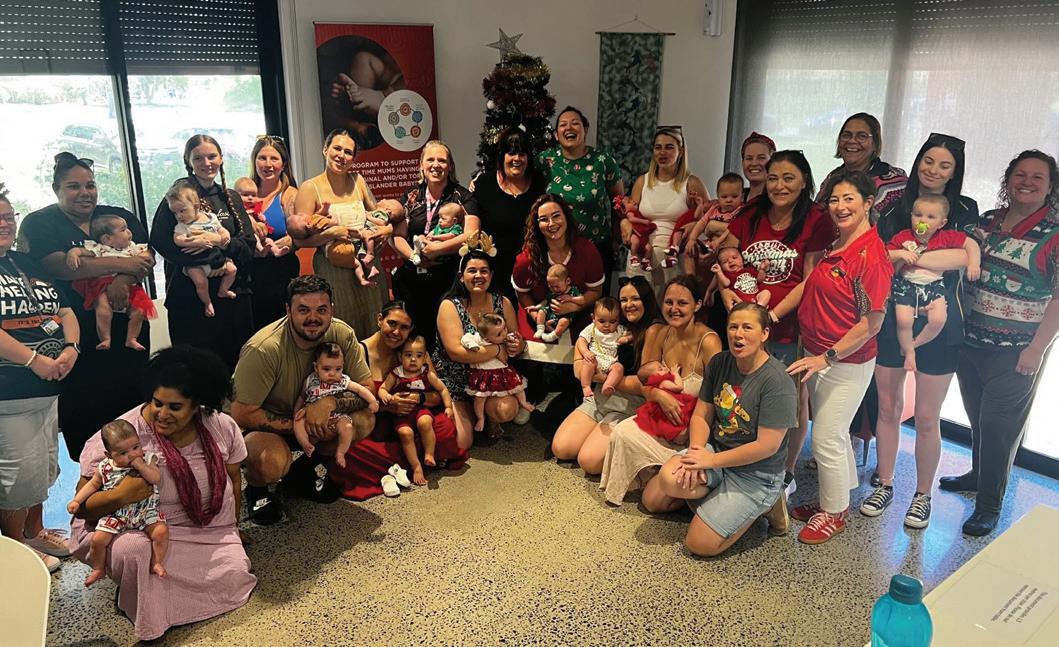
The AFPP is a free, voluntary program for young Aboriginal and Torres Strait Islander women (under 25) who are pregnant with their first baby. Through ongoing home visits from specially trained nurses and Aboriginal Family Partnership Workers, the program offers support from early pregnancy through to the child’s second birthday.
AFPP helps with:
• Understanding pregnancy and preparing for birth
• Building strong bonds with bub
• Setting goals for the future
• Navigating health, parenting, housing and relationships
It’s all about empowering young mums to give their babies the best start in life — culturally safe, non-judgemental, and all about you.
Winnunga’s Healthy Pregnancy Group is a welcoming, women-only space for expecting mums to come together, learn and yarn. Facilitated by our caring health team, it’s a place to ask questions, connect with other women, and feel strong in your journey.
Topics include:
• Healthy eating for you and bub
• What to expect during labour and birth
• Pain relief and birthing options
• Breastfeeding and baby care
• Emotional wellbeing during pregnancy
Classes are free, culturally safe, and designed to make sure you feel supported, informed and confident.


By Helen MUSA

If the art of pantomime is dead, that’s more than jazz singer and music director Leisa Keen knows, and she’s the mover and shaker behind a new Cinderella panto at The Q.
Keen agrees that the popular theatre form, still beloved of the Brits, has seen fewer and fewer musical outings in Australia in recent years, but she, like me, well remembers the naughty pantos staged in Canberra by Kate Peters and the late Peter Williams, full of double entendres, popular songs and jokes aimed at both the littlies and their parents.


In fact, both Keen and David Pearson, who plays Buttons in the show, cut their theatrical teeth in those Canberra pantomimes of yesteryear, and they love them.
Central to the art form, she asserts (and in that respect it’s like cabaret), is interaction with the audience.
In panto that’s seen in the call-andresponse routines like “Oh, yes you do” – “Oh, no we don’t”, or “Look behind you!”, and booing. But in revamping the story for modern-day audiences she had to bear in
mind changing taste and changing values. In this Cinderella’s world, people will have mobile phones.
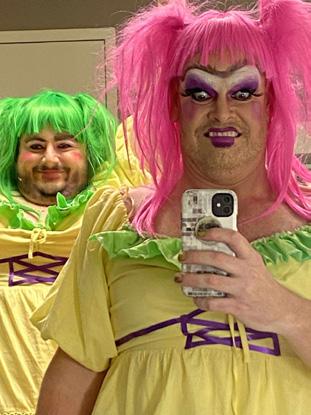
Gone are the smutty jokes. “If there’s any bad language we’ll get emails from parents,” she says, and even men in drag are out of favour, it seems – though happily she’s not compromising on that. Just wait for the Ugly Sisters.
Humour for the mums and dads will now come in the form of political and topical
references, and a certain mushroom case might get a mention. The aim is entertainment for all ages and, to that end, as well as daytime shows, they’ve added an evening performance on the Thursday.
A working musician around town who knows what goes down, Keen has selected a range of pop songs, some of them with a nice old-fashioned twist, including Ella Fitzgerald and Irving Berlin’s It’s a Lovely Day, It’s My Party (and I’ll Cry If I Want To),
The Shoop Shoop Song, along with the more recent We Are Family and The Time Warp, for when the clock strikes.
Keen suspects audiences may need a little training in call-and-response because they could be out of practice, but reminds me that if you’re performing Minnie the Moocher, everybody knows how to sing “Ho-dee-ho-dee-ho”. Buttons will help whip up responses, and there may even be some LED prompts.
She and choreographer Michelle Heine have assembled a star cast headed by Charlotte Hunt as Cinderella, fresh from productions with Canberra Philharmonic and Free-Rain Theatre; local musical stars Joe Dinn and Dave Collins as the over-the-top Ugly Sisters; Pearson as the aforementioned Buttons, servant to Lachlan Elderton playing Prince Charming; Lainie Hart as the Wicked Stepmother; and Keen herself as the Fairy Godmother.
There’ll be 16 children on stage – Keen and Heine are putting them through their paces as we speak – appearing as assorted ballroom guests, mice, other animals and footmen, and also playing a part in getting the Prince together with Cinderella towards the end of the show.
The whole enterprise is the work of the family business MEB Productions, which improbably stands for Midget Elephant Butterfly, after a dream Keen’s partner, Steve Rory, once had. He’s now busy creating a coach intended to look like a “pseudo time machine”.
As for the star role of Cinderella, Hunt tells me she’s not a cardboard cut-out and that she has been putting “a little bit of sass” into the character, although she remains the sweet and innocent Cinderella we all know.
“In a pantomime, you can’t have a limp main character,” she asserts.
Cinderella, The Q, two shows daily, January 21-24.

By Helen Musa
Dedicated music lovers will have noticed over the last several years that CityNews has been enlivening its music reviews with timely pictures of musicians in the heat of performance.
Most of these pictures are by well-known specialist music photographer Peter Hislop, who gives his time to documenting the musical life of the nation’s capital. Along with his associate photographer, Dalice Trost, he has long collaborated with CityNews while also guarding a priceless archive of music images.
“We are documentary observers,” he says, with characteristic understatement.
Now Hislop is keen to share his knowledge with the public and will present what he calls an “illustrated lecture”, hosted by the Wesley Music Centre.
He’s keeping the audience small –around 20 – to allow time for questions, but is open to repeating it later in the year if there’s demand.
“It’s mostly about educating musicians,” he tells me. “I’m often asked to snap concerts, but people don’t always understand what’s involved.”
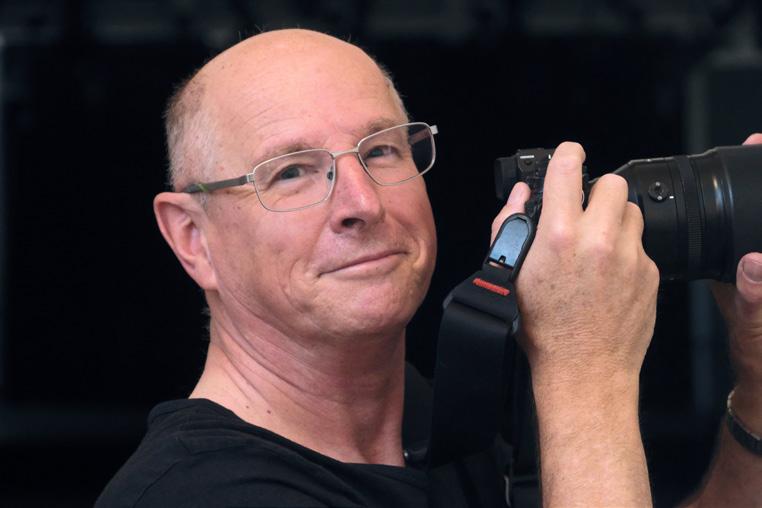
The idea came when he was talking to the Australian Youth Orchestra and suggested a workshop as an educational initiative. In the end, they decided instrumentalists had production assistants to handle that work anyway.
Undeterred, Hislop realised that since most instrumentalists aspire to become soloists, they need to understand the impact a good photograph can have – and how to achieve it.
“A lot of musicians don’t rate the
importance of a photograph, which can make a big difference to the documentation and promotion of a concert,” he says. Canberra is a special case because, through his efforts, Hislop has been documenting the city’s musical life for decades. Now retired from full-time work,
By Helen Musa
The one-woman play A Hundred Words for Snow by English playwright Tatty Hennessy is the first Mockingbird Theatrics production for 2026. Actor Zoë Ross plays Rory, a 15-year-old girl whose father dies very suddenly. She decides to run away from home with his ashes to the North Pole, without telling her mum. The production will be at Belco Arts January 28-31.
Jennifer Croom’s winning portrait of chef and restaurateur Kylie Kwong is on view at the National Portrait Gallery. The painting was the winner’s commission from the inaugural ABC series Portrait Artist of the Year and was unveiled at its permanent home in Canberra last month.
The 31st CAT Awards Presentation Gala will be celebrated at The Q, Queanbeyan Performing Arts Centre, on January 31. For the first time, there will be two sessions, with the school and youth awards at 2pm and the open categories presentation at 5pm. Overall, 49 companies and 80 separate productions have been nominated and, in addition, there are 15 CAT commendations.
The managing director of Dramatic Productions in Gungahlin, Richard Block, has announced that the company will stage no
show in 2026 as he prepares for a much grander production – his marriage to singer and voice teacher Teresa Wojcik. Salut! Baroque has chosen the same theme as the Canberra Writers Festival, “Power, Passion & Politics”, as its motif for 2026. The ensemble will start the year with a related theme, taken from Shakespeare’s The Merchant of Venice, “Concord of Sweet Sounds”, as its performs everything from courtly dances to operatic laments. Wesley Church, Forrest, January 31.
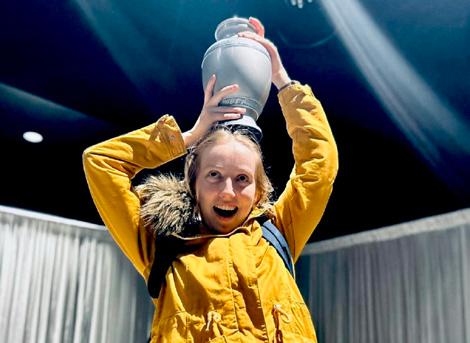



he’s eager to train a new generation of photographers.
But he’s adamant that his illustrated discussion at Wesley is not for photographers – he’ll run another workshop for them later. This one will be aimed at musicians, reviewers, arts organisations, and those who manage archives.
The skills of a music photographer, Hislop explains, range from formal shots – where the subject must look directly at the camera, as in the front covers he’s done for CityNews – to capturing dramatic or quirky moments that show music-making in action. Some images show a concert as a public event, while others respond to its creative spirit.
In the ACT, most concerts are held not in formal venues but in churches or community halls, where the background isn’t designed for photography – flat sightlines and vertical lighting are standard, often aimed at the altar rather than the performer.
Some venues, such as All Saints Anglican Church in Ainslie, offer ornate architecture; others, such as the Larry Sitsky Room at ANU or the Australian Centre for Christianity and Culture, feature expansive windows that draw focus.
Out of respect for performers, Hislop can’t move around too much. Usually clad in black, he’s almost invisible, working from the sides or a mezzanine. From the front row, he gets a low viewpoint and is limited to “letterbox compositions”; from higher up, he often contends with clutter.
So, what does he find most challenging? Choirs are fine – though not very dynamic – but he says the hardest to photograph are artists with hair covering their faces or those showing no expression. A favourite image of pianists Stephanie and Edward Neeman, he notes, shows quite the opposite: pure animation.
Hislop says preparation is key – having a concert checklist and knowing the repertoire help achieve his aims: documentation, capturing performance in action, and highlighting emotion.
Snapping is only part of the job. Once the photographs are taken and a few are selected for outlets like CityNews – which often need them by 10am the next day – the daunting task of cataloguing begins. He’s developed his own system for managing that.
In his illustrated conversation, Hislop will also discuss issues such as permission to shoot minors, copyright, usage fees, how long photographs can be stored, and the reality that roughly 80 per cent of digital images — sometimes 500 from a single concert — are ultimately deleted.
Hislop began photographing concerts in 1975 and now documents an average of 150-200 events a year.
“Musicians have learnt to trust me to select for them,” he says.
Peter Hislop photography workshop, Wesley Music Centre, Forrest, January 28. Free, but registration is essential at wesleymusiccanberra.org










By Jackie WARBURTON

Asparagus beds can be topped up with compost now to cover the crowns, and any stems carrying fruiting berries should be removed.
These berries are poisonous, attractive to wildlife, and can spread into bushland. While they can be collected and sown if you wish to multiply your patch, asparagus grown from crowns are several years ahead of seed-grown plants.
Asparagus plants are either male or female, though they look identical until fruit appears on the female plants. Female plants are best removed, as the shorter, thicker spears produced by male plants are
preferred in the kitchen.
Asparagus dislike root disturbance, so choose a permanent position where they can grow year after year. They are heavy feeders and benefit from generous applications of compost every few months, along with a little dolomite lime to keep the soil pH on the alkaline side.
It takes several years to establish a good crop. During the first few years, allow the stems to grow freely so the underground root system can strengthen. After about three years, spears will be ready for harvesting in early spring.
Asparagus crowns are available from June and should be planted into well-prepared soil rich in compost and organic matter.
Purple varieties such as Sweet Purple grow well in Canberra, and white asparagus can be grown by mounding soil around the base of the stems to exclude light. Any frond growth from young plants or thin


female plants should be supported with stakes. Enjoy the autumn colour and prune back once frosts arrive.
A NATIVE plant appearing more often and coping well with our harsh summers and cold winters is the Flame Pea (Chorizema varium) Its name reflects the intense and distinctive colour of its flowers. Most species are endemic to WA and can be sensitive to frost, but when grown in a protected spot or in a pot, they perform well through winter.
They are not climbers but lowgrowing groundcovers, and benefit from a light prune after flowering to keep growth compact and encourage blooms the following season.
Good drainage is essential, and plants should be kept moist.
As nitrogen-fixers, they grow well without additional feeding, though a light application of native fertiliser after flowering can help promote new growth.
APRICOTS should be ripe now and ready for picking before birds discover them.
Moorpark is the most common variety grown in our region. It is self-fertile, has soft, smooth skin without fuzz, and grows to around two metres tall, making it a useful small shade tree.
After harvesting, apricots should
be placed into cold storage in the crisper as soon as possible. When using fruit for jam, avoid overripe apricots, as they lose pectin. Pick fruit while firm, with a light blush on the skin.
Summer pruning can be carried out after harvest. Apricot trees tend to sulk if over-pruned and may respond with excessive foliage rather than fruit. Remove dead, diseased, and damaged wood, and prune only as much as needed to maintain good airflow through the centre, aiming for an overall vase shape. Apricots are not well suited to espalier, though dwarf varieties can be tried with regular maintenance and pruning. They prefer soil rich in organic matter, and companion planting with borage, chives, strawberries, and calendula works well around apricot trees.
jackwar@home.netspeed.com.au
• Fertiliser roses for autumn growth.
• Sow parsnips, swedes and leeks in punnets.
• Harvest and nectarines when they change colour and ripen indoors.
• Continue to pick cucumbers to promote more flowering.




By Joanne Madeline Moore
January 26-February 1, 2026
ARIES (Mar 21 – Apr 20)
This week Neptune transits back into Aries, plus five planets light up your peer group and networking zones. So, you could meet a fabulous new friend, or a work colleague from the past could boomerang back into your world! Whatever happens, aim to surround yourself with positive people who encourage your talents and support your dreams. As birthday great Oprah Winfrey observes: “Surround yourself with people who are going to lift you higher.”
TAURUS (Apr 21 – May 21)
You’ll be in the public eye as the Sun, Mercury, Venus, Mars and Pluto all stimulate your reputation/career zone. So, you could shine at work, at school or in a volunteer position. When it comes to your job, do you need to up-skill? Are you looking for employment or is it time to change vocation? The winds of change are blowing so prepare to pivot, Bulls! And with Neptune moving back into your solitude and spirituality zones, it’s also time to dream.
GEMINI (May 22 – June 21)
Travel, communication and education are all highlighted this week as you embark on a trip, connect with friends (especially from foreign shores) or start a new course of study. With Neptune back in your hopes-and-wishes zone, it’s also time to dream big dreams and visualise magical things coming true in the future. Your motto is from Oprah Winfrey (who turns 72 on Thursday): “The biggest adventure you can ever take is to live the life of your dreams.”
CANCER (June 22 – July 23)
Crabs are sentimental creatures and can spend too much time in the past. Resist the urge to brood over a relationship gone wrong. This week’s stars help heal your hurt feelings so you can finally let go and move on. The planets also signal a major shift in the areas of intimacy or money. Perhaps a passionate new affair or the start of a promising financial partnership? With Neptune moving back into your career zone, be more creative and intuitive at work.
LEO (July 24 – Aug 23)
This week the planetary focus is on love, marriage, platonic relationships, a joint venture or a business partnership as you communicate and cooperate with family, friends and/or work colleagues. When making future plans, put others first (for a change). With Neptune transiting back into your adventure and aspirations zones (until 2038), start visualising (and planning) a heavenly holiday, a spiritual odyssey or a glamorous adventure sometime in the next few years.
VIRGO (Aug 24 – Sept 23)
Get your body moving in 2026! The Sun, Mercury, Venus, Mars and Pluto highlight your health-and-wellbeing zone, so strive to be the fittest and most vibrant Virgo you can be. Reinvention is the name of the game, as the planets encourage you to reboot your daily routine with innovation and determination. The best way to manage stress is with relaxing indoor pursuits (like meditation or yoga) and vigorous outdoor activities (like running, cycling or hiking).
LIBRA (Sept 24 – Oct 23)
This week the Sun, Mercury, Pluto and Venus (your power planet) all activate your creativity and good fortune zones. So, it’s time to connect with your inner child, express yourself, and make the most of any fortuitous opportunities that come along. Plus – with diligent Saturn visiting your daily routine zone – work hard. Your motto for the moment is from Oprah Winfrey (who turns 72 on Thursday): “Luck is a matter of preparation meeting opportunity.”
SCORPIO (Oct 24 – Nov 22)
Five planets shine a bright spotlight on your domestic zone. The Sun and Mercury boost communication and lively conversation, especially with family members and/or housemates. Peacemaker Venus encourages you to patch up a troubled relationship with a relative, as you demonstrate endless patience and hold out the olive branch of peace. Plus, Mars and Pluto demand that your voice is heard amongst the competing voices, in a firm but fair way.
SAGITTARIUS (Nov 23 – Dec 21)
The planets inspire you to contribute your versatile talents to a worthy cause within your local community. Plus, Jupiter is jumping through your intimacy and manifestation zones, which is terrific for romantic and platonic relationships as your humour and generosity charm the birds out of the trees. Be brave, dream big dreams, ask for what you want, and you shall receive! Be inspired by birthday great Oprah Winfrey: “You get in life what you have the courage to ask for.”
CAPRICORN (Dec 22 – Jan 20)
With five planets stimulating your cash zone, take stock of your financial situation and initiate some smart strategies. And don’t forget to do an inventory of your inner wealth, which includes your self-esteem and core values. Remember – you are more than your job, what you earn and what you own. Positivity planet Jupiter is jumping though your partnership zone until June 30. So – the more generous and optimistic you are – the better your relationships will be.
AQUARIUS (Jan 21 – Feb 19)
There are five planets transiting through your sign. The Sun increases creativity, Mercury boosts communication, Venus invites consultation, Mars encourages being proactive and Pluto improves focus. So, use these planetary powers to supercharge a personal project that’s been languishing in the wings. Your motto is from Oprah Winfrey, who turns 72 on Thursday: “You are different, your gift is special – own it and unapologetically share it with the world.”
PISCES (Feb 20 – Mar 20)
This week Neptune (your patron planet) transits back into dynamic Aries – where it stays until 2038! So, it’s time to become a more daring, dynamic, fiery Fish as you display confidence, initiate projects and spend more time living in the present. It’s also important to take off your rose-coloured glasses and be more realistic about money matters. If your finances need fixing, then be proactive and do something about it. Plan to have fun with a friend on the weekend.
Copyright Joanne Madeline Moore 2025
Name the mythological messenger of the
7 Which massive structures were built by the ancient Egyptians? (8)
8 What is another term for a pantry? (6)
9 Which communication system is called the Net? (8)
10 What is a large body of armed soldiers? (6)
11 Which tiny creatures sting domestic animals? (8)
14 What might we call one who maintains the equality of all people? (8)
18 What are systems of belief? (6)
19 To caution, is to do what? (8)
21 Which variety of sheep is valued for its fine wool? (6)
To sweat, is to do what? (8)
1 What is Palestine known as? (4,4)
2 To be in an elevated position above the ground, is to be where? (6)
3 What might we call one who bounds? (8)
4 Name an order issued in connection with a judicial proceeding. (4)
5 To be without moral quality is to be what? (6)
6 To stick fast, is to do what? (6)
12 Name those who are native to the Netherlands. (8)
13 Name the land along the ocean (8)
15 What are currents at variance to the main current? (6)
16 What might we call a player of a particular woodwind instrument? (6)
17 What is an edict, promulgated by a civil authority? (6)
20 Name another term for the fleur-de-lis. (4)
How do airlines set bag and weight limits? Ex-pilot NATASHA HEAP explains new changes that are on the way.
You arrive at the airport in plenty of time to check in.
You reach the departure gate early. You board, walking down to your seat – and that’s when you discover the overhead lockers are already full.
Too much carry-on baggage can significantly delay departures, as cabin crew try to squeeze everything in – or send bags down to the hold.
As a former pilot turned aviation safety researcher, clearer rules for carry-on baggage are welcome, not least because too much cabin baggage is a real safety concern.
But as more airlines set carry-on limits, why are there different baggage rules for different airlines?
From Monday, February 2, Virgin Australia will change their carry-on baggage policy for domestic flights.
Economy passengers will be limited to one standard-sized cabin bag for the overhead locker, weighing up to 8kg. A small, personal item that can fit under a seat will also be allowed.
International airlines are also adjusting their carry-on baggage rules. About a year ago, Air Canada restricted basic fare passengers to just one personal article for flights across North and Central America.
But the rules are confusing.
You could fly on the same type of plane from Sydney to Melbourne – such as a widely-used Boeing 737 – but depending on the airline and what you paid for your ticket, you’ll have completely different bag and weight restrictions.
If you fly with Qantas within Australia, your carry-on needs to be:
• one small personal item plus one standard piece of 10kg, or
• two smaller pieces, where each piece must not exceed 10kg, and the total weight of both pieces is 14kg, or
• one small piece and a garment bag, where each piece must not exceed 10kg and the total weight of both pieces is 14kg.
Budget carrier Jetstar is different again, allowing up to 7kg of carry-on luggage allowance, shared across two items.
Each aircraft has a maximum
take-off weight, which can’t be exceeded to ensure it’s a safe flight. That total includes the weight of the plane, plus fuel, food and drink supplies in the galley, any cargo, the weight of the pilots and cabin crew, and the weight of the passengers and baggage.
Checked baggage is weighed at the check-in desk or bag drop. But what about carry-on bags?
Australian regulations allow an average passenger weight to calculate total passenger weight.
For planes with a maximum seating capacity of 150-299 seats, like a Boeing 737, the current standard weight of an adult male passenger is assumed to be 81.8kg, while it’s 66.7kg for adult women.
Then the standard weight for carryon baggage is 7kg per passenger.
However, the law also allows individual airlines to seek approval for their own passenger and cabin baggage weights. That has to be approved by the regulator, the Civil Aviation Safety Authority.
That allows different airlines to have different rules around cabin baggage.
Carry-on baggage rules used to be much more standard, but the rise of low-cost airlines changed all that, charging for extra luggage, in-flight wifi and food and drink as ancillary revenue: basically anything beyond the basic ticket.
Carry-on baggage is literal pain for cabin crew, who frequently suffer back and lifting injuries while helping passengers stow heavy bags in overhead compartments.
Beyond physical risk, crew members have to deal with the timeconsuming congestion of passengers struggling with large items during boarding.
In an emergency, passengers stopping to grab bags rather than leaving them behind has been proven to slow down evacuations. So the next time you’re getting ready to travel, remember: if you want to take off on time and be safer in an emergency, pack lighter.
Your cabin crew will thank you for it.
Natasha Heap, program director for the Bachelor of Aviation, University of Southern Queensland. Republished from The Conversation.