CHACRDIGEST
AUTHOR: Professor Andrew Stewart, Head of Conflict Research
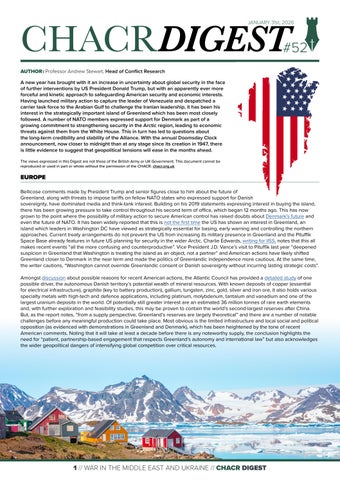
A new year has brought with it an increase in uncertainty about global security in the face of further interventions by US President Donald Trump, but with an apparently ever more forceful and kinetic approach to safeguarding American security and economic interests. Having launched military action to capture the leader of Venezuela and despatched a carrier task force to the Arabian Gulf to challenge the Iranian leadership, it has been his interest in the strategically important island of Greenland which has been most closely followed. A number of NATO members expressed support for Denmark as part of a growing commitment to strengthening security in the Arctic region, leading to economic threats against them from the White House. This in turn has led to questions about the long-term credibility and stability of the Alliance. With the annual Doomsday Clock announcement, now closer to midnight than at any stage since its creation in 1947, there is little evidence to suggest that geopolitical tensions will ease in the months ahead.
The views expressed in this Digest are not those of the British Army or UK Government. This document cannot be reproduced or used in part or whole without the permission of the CHACR. chacr.org.uk
EUROPE


Bellicose comments made by President Trump and senior figures close to him about the future of Greenland, along with threats to impose tariffs on fellow NATO states who expressed support for Danish sovereignty, have dominated media and think-tank interest. Building on his 2019 statements expressing interest in buying the island, there has been growing pressure to take control throughout his second term of office, which began 12 months ago. This has now grown to the point where the possibility of military action to secure American control has raised doubts about Denmark’s future and even the future of NATO. It has been widely reported that this is not the first time the US has shown an interest in Greenland, an island which leaders in Washington DC have viewed as strategically essential for basing, early warning and controlling the northern approaches. Current treaty arrangements do not prevent the US from increasing its military presence in Greenland and the Pituffik Space Base already features in future US planning for security in the wider Arctic. Charlie Edwards, writing for IISS, notes that this all makes recent events “all the more confusing and counterproductive”. Vice President J.D. Vance’s visit to Pituffik last year “deepened suspicion in Greenland that Washington is treating the island as an object, not a partner” and American actions have likely shifted Greenland closer to Denmark in the near term and made the politics of Greenlandic independence more cautious. At the same time, the writer cautions, “Washington cannot override Greenlandic consent or Danish sovereignty without incurring lasting strategic costs”.

Amongst discussion about possible reasons for recent American actions, the Atlantic Council has provided a detailed study of one possible driver, the autonomous Danish territory’s potential wealth of mineral resources. With known deposits of copper (essential for electrical infrastructure), graphite (key to battery production), gallium, tungsten, zinc, gold, silver and iron ore, it also holds various specialty metals with high-tech and defence applications, including platinum, molybdenum, tantalum and vanadium and one of the largest uranium deposits in the world. Of potentially still greater interest are an estimated 36 million tonnes of rare earth elements and, with further exploration and feasibility studies, this may be proven to contain the world’s second-largest reserves after China. But, as the report notes, “from a supply perspective, Greenland’s reserves are largely theoretical” and there are a number of notable challenges before any meaningful production could take place. Most obvious is the limited infrastructure and local social and political opposition (as evidenced with demonstrations in Greenland and Denmark), which has been heightened by the tone of recent American comments. Noting that it will take at least a decade before there is any noteworthy supply, the conclusion highlights the need for “patient, partnership-based engagement that respects Greenland’s autonomy and international law” but also acknowledges the wider geopolitical dangers of intensifying global competition over critical resources.


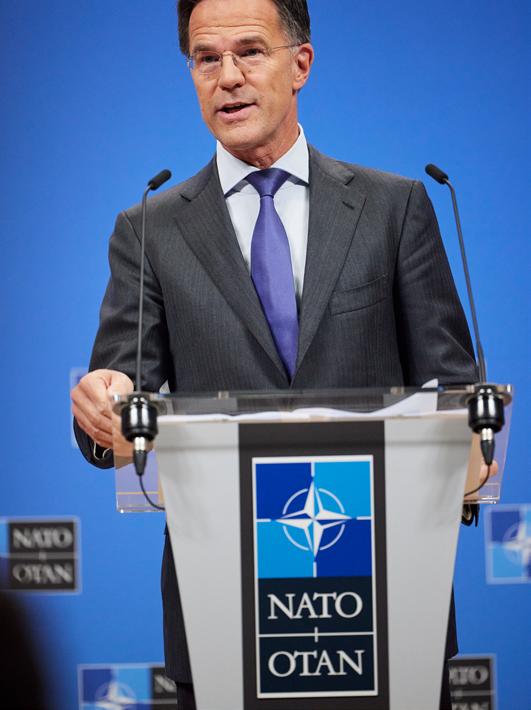
As political and business leaders from around the globe gathered in Davos, Switzerland, for the World Economic Forum annual meeting, a leading question discussed outside the main sessions was what this all means for NATO’s future. Mark Rutte, the NATO Secretary General, was central to this having warned members of the European Parliament’s defence and foreign affairs committees, “if anyone thinks here ... that the European Union or Europe as a whole can defend itself without the US, keep on dreaming”. Although the comments were seen as forming part of a broader pattern in which Rutte has insisted that Europe has to keep channels open to the US, and that President Trump remains loyal to the Alliance, they also attracted some criticism in Brussels and across the region. As Politico reported, drawing on a range of anonymous comments from officials, Rutte is viewed increasingly as “a leader admired as a skilled crisis manager who recently pulled off a win on Greenland, but at the cost of deepening European unease about NATO’s longterm future”. While his defenders praise him for “keeping the alliance together”, his most recent intervention has alienated some and led others to question where his “sucking up” to the American leader will end. And as Time magazine explained, in a wide-ranging examination of President Trump’s ability to withdraw his country from NATO, the worst case is by no means impossible. Despite the National Defense Authorization Act of 2024 prohibiting a President from withdrawing without either a two-thirds Senate super-majority or an act of Congress, legal professors have noted there are various ways he could attempt to work around this restriction. The most obvious would be to use the Supreme Court which often rules in favour of the Trump Administration and would make it difficult for Congress to win against him in the courts. Another professor highlighted the potential for a legal response from any defence contractors who could sue the President directly for any financial losses they might incur. A broad consensus has emerged that the repeated questioning of NATO “weakens deterrence, shakes European security planning, and emboldens adversaries”. A conclusion offered here was that, whilst tensions will continue, a formal withdrawal is unlikely, albeit with the caveat that the President has surprised commentators on numerous occasions.
With this uncertainty about European security, comments made by two leading defence figures provided some insights to current thinking in Britain and Europe about the region’s security. In London, Chief of the Defence Staff Air Chief Marshal Sir Richard Knighton answered questions from the House of Commons Defence Select Committee. There was some media interest on comments that were interpreted as an admission the armed forces are unprepared for a full-scale war. Also, the references made to a lack of funding limiting the ability to rapidly modernise the military and repel the growing threat from Russia may mean that “difficult trade-offs” will be required. He spoke also of the need for more work needing to be done to improve national resilience during a potential war and the current lack of a complete national defence plan. The day before, in Stockholm, Andrius Kubilius, the Lithuanian politician currently serving as the European Commissioner for Defence and Space, spoke on a conference panel titled Europe Under Pressure. Against a backdrop of uncertainty about its actions, much of the focus was on the United States and the future of the transatlantic partnership. The commissioner also spoke more generally about European defence planning, expanding on the 2022 warning by the former High Representative of the European Union for Foreign Affairs and Security Policy Joseph Borrell that European militaries had “shrunk into miniature versions” of themselves and become “bonsai armies”. Kubilius urged EU member states to consider establishing a standing military force of 100,000 troops and also advocated the creation of a European Security Council, potentially comprising 10 to 12 members and possibly the UK, to enable faster decision-making on defence matters. Referring to the need for an “intellectual big bang”, his comments have has been seen as a revival of discussions about a unified European military.
THE AMERICAS
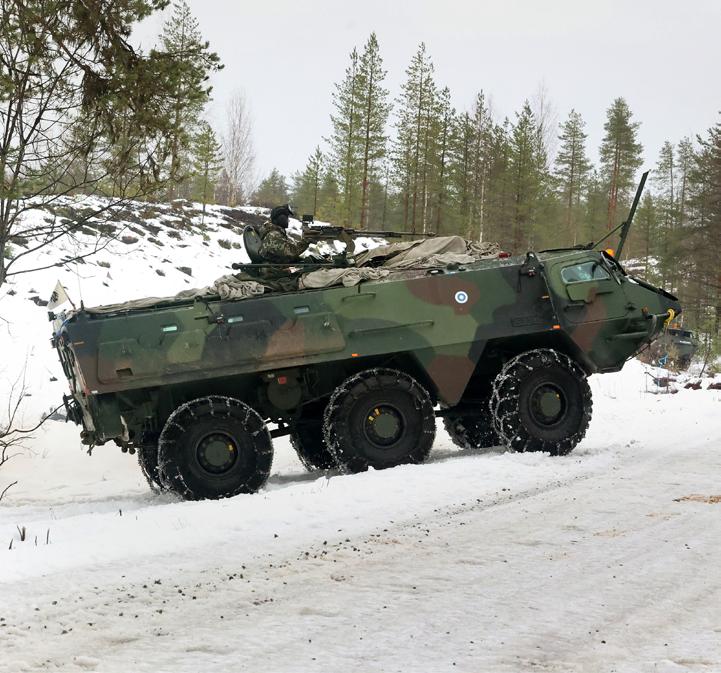
In addition to these comments, the annual Finnish Military Intelligence Review was published and contained what it described as a clear message that the “global security situation is characterised by a return to power politics and increasing tensions worldwide”. The report describes the operation environment as “tense” with the Baltic Sea becoming “a central point in international politics”. In terms of Russia, it continues with its efforts to restore its pre-Cold War status through defence reform and the war in Ukraine “but the changes have so far not significantly increased Russia’s military capacity in the vicinity of Finland” and the conclusion offered in the report is that it is “unlikely” that Finland would face an immediate military threat in the year ahead. As has been described elsewhere, the country has made significant efforts to strengthen its defence posture since joining NATO and “has terrific momentum but needs to accelerate and consider expanding its military modernization efforts”. Warning of the dangers of delays in the production and delivery pipeline from the US, the writer concludes with the assertion that “one operational F-35 or infantry fighting vehicle in Finland is worth 10 in North America”.
Much of the discussion about the American special operations forces capture of Venezuelan President Nicolas Maduro has considered the implications for regional and global geopolitics along with the legality of what took place. A long essay published by Engelsberg Ideas has used this as an example of how technology is increasingly being used by the US military. It reports that prior to and during the military operation, the US Air Force deployed at least one of its highly secretive RQ-170 stealth drones over Caracas, and an unknown number of other intelligence gathering drones that provided real-time surveillance for the ground-based operation. With the roughly 150 aircraft, more than a dozen ships and thousands of American military personnel who were involved in Operation Absolute Resolve linked together by military and intelligence gathering satellites in geosynchronous orbit, cyberwarfare capabilities appear to have been used to distract and disable the Venezuelan military. The writer expands upon how “technology’s ability to open new avenues of opportunity and advantage” has become “highly seductive” and Maduro’s capture was “inherently a display of technical prowess” that would not have been possible without the massive technological advances of recent decades. This technology also allows for what are described as “ever-more ‘short’ scale options” where superiority in this area also means
Picture: NATO
that actions previously considered too costly or unviable are now no longer dismissed. The author also references a rise of “imperial advocates” in the US government and sees the “advent of a new, tech-fuelled” outlook during which “resources will be claimed, threats dispersed, and land possibly seized” and concludes that “the seductive lure of hypermodern technology” is going to become an increasingly prominent factor in international relations.
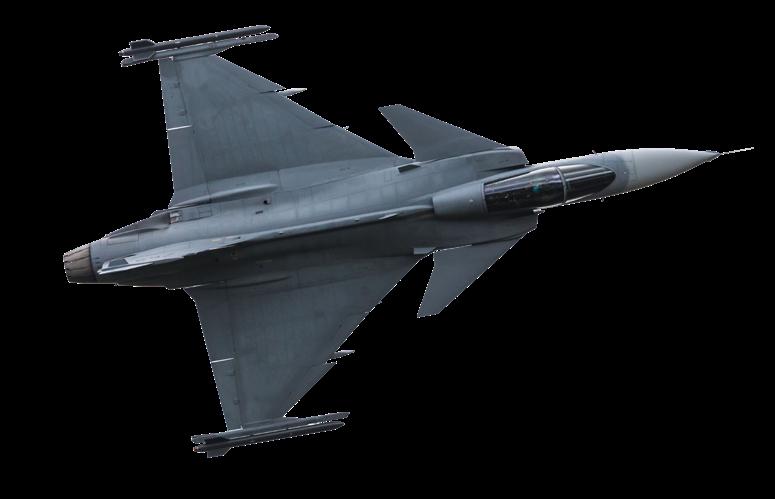
With much of the focus on Venezuela, uncertainty about the future course of relations between the US and Canada had dampened slightly in recent months. Comments by the US ambassador in Ottawa, reported on by the leading Canadian news broadcaster, have highlighted once again the underlying tensions which appear to exist between the two neighbours. The source of the latest disagreement is the proposed Canadian purchase of 88 American-built F-35 fighter jets. Following on from the deterioration in relations which has accompanied President Trump’s second term in office, the Canadian authorities have been conducting a review of the proposed deal which has identified the Swedish-built Gripen [pictured] as a possible alternative. In response, US Ambassador to Canada Pete Hoekstra has warned that a decision to buy the Swedish aircraft will result in changes to the North American Air Defence Command (NORAD), the long-standing partnership between the two countries which tracks inbound threats and scrambles armed jets in response. Specifically, the US would need to fill any resulting gaps with more potential interventions being carried out by American jets over Canadian airspace. The report refers to Canadian commentators who have interpreted the comments as further pressure from the US to comply with President Trump’s demands. It also highlights a December 2025 Ekos Politics poll which found 72 per cent support incorporating the Gripen into Canada’s fighter fleet, either by switching to the aircraft for all future purchases or by maintaining a mixed fleet of both Gripens and F-35s.
INDO-PACIFIC
The 25th edition of the Department of Defense’s China Military Power Report released at the end of last year provides the basis of a long War on the Rocks essay written by the distinguished American military academic Andrew Erickson. As the author notes, the report shows China’s military undergoing simultaneous disruption and advancement, but continuing to make sustained progress toward General Secretary Xi Jinping’s 2027 ‘Centennial Military Building Goal’ and associated warfighting capabilities against Taiwan. The 2027 goal is a focus of the discussion which confirms “continued Chinese military modernization momentum toward 2027 and beyond”. Within an extended critique, there is a detailed description of how China intends to complete its procurement programme to deliver three fully integrated strategic capabilities: the ability to credibly prevail at acceptable cost in Beijing’s most stressing contingency (a Taiwan conflict involving the US); deterring or constraining American intervention, in part with nuclear capabilities; and deterring the opening of additional fronts and the involvement of US allies and partners. Four major Taiwan scenarios are highlighted, which Beijing might well attempt in some combination and across all of them. The report judges there are potential military constraints in employing cyber and other non-kinetic capabilities due to limited combat experience and ongoing organisational and integration challenges resulting from recent restructuring of its information and cyber forces. There is also examination of China’s policy in regard to nuclear weapons and a rapid build-up from the current 600+ to potentially over a thousand within this decade, alongside a simultaneous diversification and improvements of its delivery triad of land-based, sea-based and air-launched systems, including silobased intercontinental ballistic missiles, submarine-launched ballistic missiles and nuclear-capable aircraft. The author notes that the projection that by 2035 China seeks to build six aircraft carriers beyond the three it already has for a total of nine has not previously been made public and is particularly significant as it would provide blue water force structure parity with Washington in the Indo-Pacific.
The question of Taiwan’s security continues to be discussed by regional analysts, most obviously those in the Australian ASPI thinktank. With rumours about the future of the AUKUS agreement, signed by the US, Britain and Australia in September 2021, these only heighten a long-standing interest in Chinese military intentions and what this means for the country. For example, Thomas Brough has argued that Australia cannot view itself as a serious middle power suggesting that, following last year’s year circumnavigation of the island by Chinese military vessels, the country has effectively chosen to accommodate the authorities in Beijing. Hence the interest in the threat facing Taiwan and regular coverage within State of the Strait, where a recent report provided detailed analysis of the two major 2025 Chinese military exercises Operation Strait Thunder and Justice Mission. Another recent contribution to The Strategist by David Axe examines how Taiwan is making defensive preparations for a potential Chinese blockade by stockpiling supplies and preparing psychologically. Comparing its position to Ukraine and the conditions it faces, he highlights the differences in size, geography and critical resources: Ukraine has borders with seven other countries, an area of 600,000 square kilometres which has allowed it to trade space for time and is able to grow more food than it needs; the island of Taiwan is just 36,000 square kilometres and, even in peacetime, needs imports, not just of food but also fuel. Reference is made to a series of wargames run in 2025 by the Center for Strategic and International Studies in Washington in some of which Chinese forces interdicted ships sailing towards the blockaded island. More than 400 Taiwan-bound merchant ships were seized and food supplies began to run out in two weeks and natural gas in ten weeks. With some questions about the degree to which it can rely on the US for future support, the conclusion is that Taiwan should be prepared to fight alone or with only limited help from regional allies such as Japan and Australia. The longer it can resist, the greater its chances of encouraging a US renewal of interest. To achieve this, the author offers a series of recommendations including making greater efforts to stock ammunition, food, fuel, spare parts for the power grid and supplies for other essential services, all while building up domestic production capacity to reduce dependence on imports, expanding nuclear power and adding more sources of renewable generation. Recent polling indicates that two-thirds of Taiwanese would be willing to fight to defend their country and the final proposal is starting a publicity campaign to prepare the population for the hardships a Chinese blockade would bring; within the annual national defence report last October, the Washington think-tank Irregular Warfare Initiative described clear evidence of “preparing Taiwan as a nation and the Taiwanese as a people to resist”.
MIDDLE EAST AND MAGHREB
A commentary piece published by the Center for Strategic and International Studies has highlighted a renewal of tensions in the Gulf region between the Kingdom of Saudi Arabia and the United Arab Emirates (UAE). As the author and former US ambassador to Riyadh Michael Ratney explains, the two countries have much in common and there should be great opportunities for cooperation but there is evidence of growing antagonism. Some of this relates to Yemen and its long-running civil conflict, which has led to military interventions from both. It is more deeply rooted in long-standing economic competition with both countries seeking to attract investment and global commercial presence, but the UAE “is still 20 years ahead of Saudi Arabia in economic development”, although the latter is catching up. There is also some personal tension between the Emirati president Mohammad bin Zayed and the younger Saudi Crown Prince Mohammad bin Salman. The author argues that the Saudis believe “the UAE does not accept the dominant role [they have] historically played – indeed, always will play – in anchoring a stable system of Arabian monarchies”. And whilst it has been growing since 2017, there are concerns that it may have reached a crisis point over Yemen and that the situation is now much worse than a temporary disagreement and has become a significant rupture. This comes at the same time as renewed discussion about tensions between Iran, Israel and the US and the despatch of a carrier group towards the Arabian Gulf. The decision taken by President Trump was a response to violent protests in Iran which may have resulted in as many as 6,000 civilian deaths but, as the Associated Press reports, this has led to Yemen’s Iranian-backed Houthi rebels threatening new attacks not just on the USS Abraham Lincoln and its accompanying vessels but any ships traveling through the Red Sea. At the same time, although it is still recovering from last year’s 12-day war, the Iranian Defense Ministry has warned “if you sow the wind, you will reap the whirlwind”.
GLOBAL SECURITY
The Bulletin of the Atomic Scientists’ Science and Security Board (SASB) has set the Doomsday Clock at 85 seconds to midnight, the closest it has ever been to midnight in its history. Founded in 1945 by Albert Einstein, J. Robert Oppenheimer and University of Chicago scientists who helped develop the first atomic weapons in the Manhattan Project, a statement to the media explained that the Bulletin was created in 1945 and the Doomsday Clock followed two years later to convey man-made threats to human existence and the planet. The SASB changes the clock annually, most recently in January 2025, when it was set at 89 seconds to midnight. As media reports highlighted, major factors which influenced this recent change included growing nuclear weapons threats, disruptive technologies like artificial intelligence, multiple biological security concerns, and the continuing climate crisis and links are provided to each expanding on the thinking behind the decision to advance the clock. According to the president and CEO of the Bulletin of the Atomic Scientists: “Catastrophic risks are on the rise, cooperation is on the decline, and we are running out of time. Change is both necessary and possible, but the global community must demand swift action from their leaders.”
OUT NOW...
“Those Western militaries currently sitting on the sidelines face the unenviable challenge of recalibrating to remain competitive and lethal in the era of drones. And they need to do so rapidly given their readiness to fight increasingly looks like being tested.” – Illya Sekirin, author of CHACR’s latest book, Rise of the Machines – Drone Warfare in the Russia-Ukraine War: Tactics, Operations, Strategy
The Russia-Ukraine War has produced many surprises, but none more profound — or more consequential for the future of armed conflict — than the explosive ascent of the drone. In Rise of the Machines, Illya Sekirin offers the first comprehensive, insider-informed study of how unmanned systems have come to dominate the modern battlefield. Drawing on his own experience as a volunteer drone pilot, front-line soldier, interpreter for Western units, researcher for the Ukrainian General Staff, and later adviser to Ukraine’s High Command, Sekirin delivers an unparalleled account of how drones reshaped every level of war: tactics, operations and strategy.
From the chaotic early months of 2022 to the immense set-piece battles of Bakhmut, Avdiivka, the Kursk offensive and the defence of Southern Donbas, drones have become the decisive actors in spotting, striking, supplying, overwhelming and outmanoeuvring conventional forces. Sekirin explains how FPV attack drones, reconnaissance platforms, electronic warfare systems, naval USVs and autonomous technologies have overturned long-standing assumptions about firepower, manoeuvre, armour and air control. Tanks, artillery and manned aircraft — once the arbiters of victory — now struggle for survival under constant observation and precise, expendable robotic attack. Yet this is not merely a battlefield chronicle. Sekirin sets the drone revolution within a wider geopolitical awakening. As China, Iran, North Korea and Russia form a new “axis of upheaval”, and Western democracies wrestle with the institutional inertia of legacy doctrines, the book argues that the West must urgently adapt or risk strategic obsolescence. The lessons Ukraine has learnt — at enormous cost — offer a blueprint for how modern militaries must reorganise, procure, train and fight.
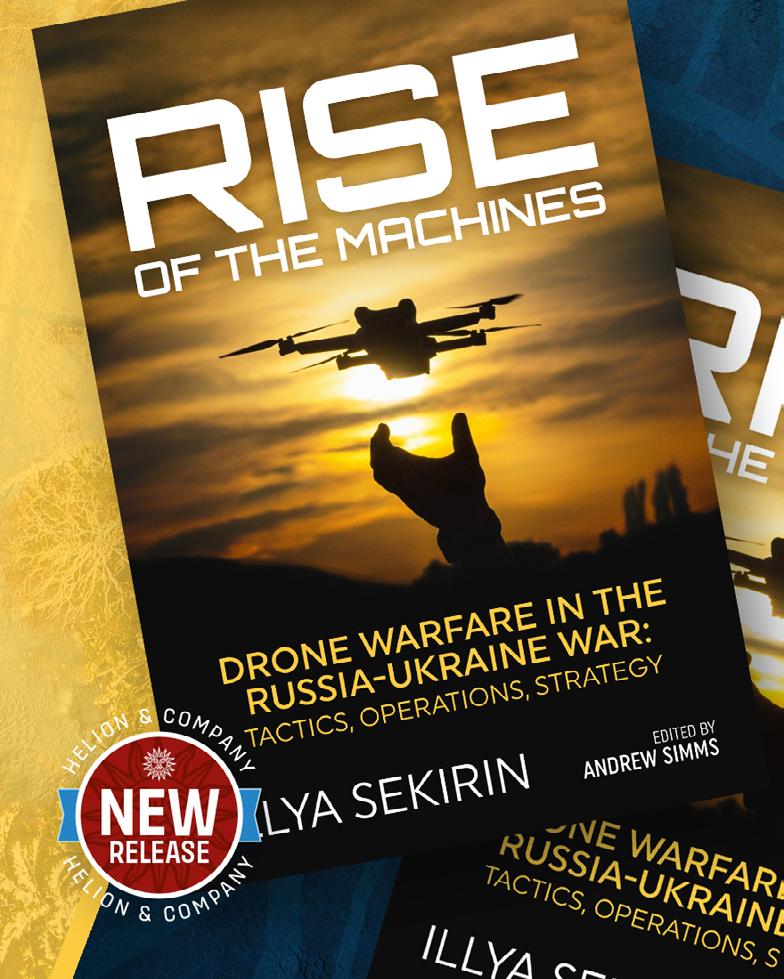
Rich in operational detail, strategic insight and first-hand testimony, Rise of the Machines – edited by The British Army Review’s Andrew Simms – is an essential guide to the conflict that is redefining twenty-first-century combat. It shows not only how drones changed this war, but how they will shape wars to come.