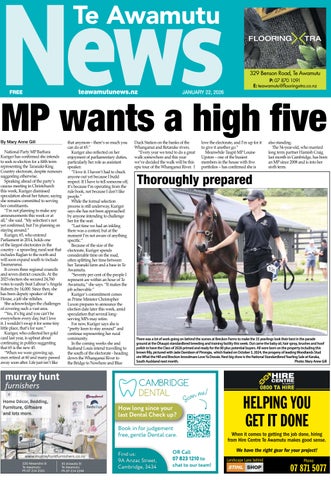
MP wants a high five
By Mary Anne Gill
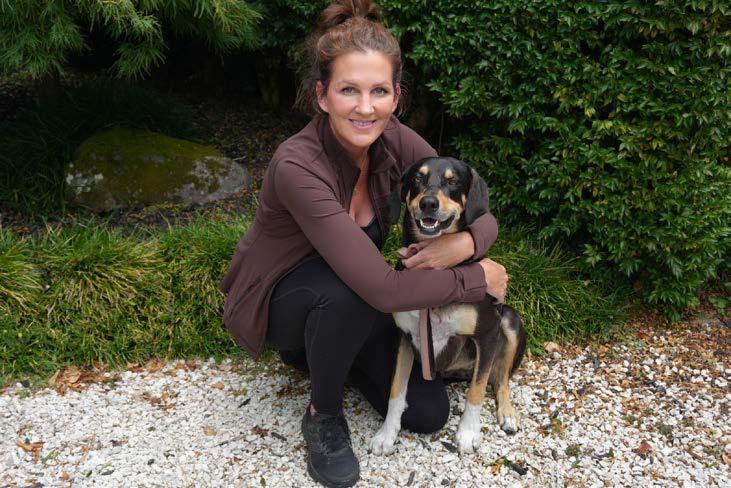
National Party MP Barbara Kuriger has confirmed she intends to seek re-election for a fifth term representing the Taranaki-King Country electorate, despite rumours suggesting otherwise.
Speaking ahead of the party’s caucus meeting in Christchurch this week, Kuriger dismissed speculation about her future, saying she remains committed to serving her constituents.
“I’m not planning to make any announcements this week or at all,” she said. “My selection’s not yet confirmed, but I’m planning on staying around.”
Kuriger, 65, who entered Parliament in 2014, holds one of the largest electorates in the country - a sprawling rural seat that includes Raglan to the north and will soon expand south to include Taumarunui.
It covers three regional councils and seven district councils. At the 2023 election she secured 24,760 votes to easily beat Labour’s Angela Roberts by 14,000. Since then, she has been deputy speaker of the House, a job she relishes.
She acknowledges the challenges of covering such a vast area.
“Yes, it’s big and you can’t be everywhere every day, but I love it. I wouldn’t swap it for some tiny little place, that’s for sure.”
Kuriger, who collected her gold card last year, is upbeat about continuing in politics suggesting that 65 is the new 45.
“When we were growing up, men retired at 60 and many passed away soon after. Life just isn’t like
that anymore - there’s so much you can do at 65.”
Kuriger also reflected on her enjoyment of parliamentary duties, particularly her role as assistant speaker.
“I love it. I haven’t had to chuck anyone out yet because I build respect. If I have to tell someone off, it’s because I’m operating from the rule book, not because I don’t like people.”
While the formal selection process is still underway, Kuriger says she has not been approached by anyone intending to challenge her for the seat.
“Last time we had an inkling there was a contest, but at the moment I’m not aware of anything specific.”
Because of the size of the electorate, Kuriger spends considerable time on the road, often splitting her time between her Taranaki farm and a base in Te Awamutu.
“Seventy per cent of the people I represent are within an hour of Te Awamutu,” she says. “It makes the job achievable.”
Kuriger’s commitment comes as Prime Minister Christopher Luxon prepares to announce the election date later this week, amid speculation that several longserving MPs may retire.
For now, Kuriger says she is “pretty keen to stay around” and continue representing her rural community.
In the coming weeks she and husband Louis intend travelling to the south of the electorate - heading down the Whanganui River to the Bridge to Nowhere and Blue
Duck Station on the banks of the Whanganui and Retaruke rivers.
“Every year we tend to do a great walk somewhere and this year we’ve decided the walk will be this epic tour of the Whanganui River. I
love the electorate, and I’m up for it to give it another go.”
Meanwhile Taupō MP Louise Upston – one of the busiest members in the house with five portfolios – has confirmed she is also standing.
The 54-year-old, who married long term partner Hamish Craig last month in Cambridge, has been an MP since 2008 and is into her sixth term.
Thoroughly prepared
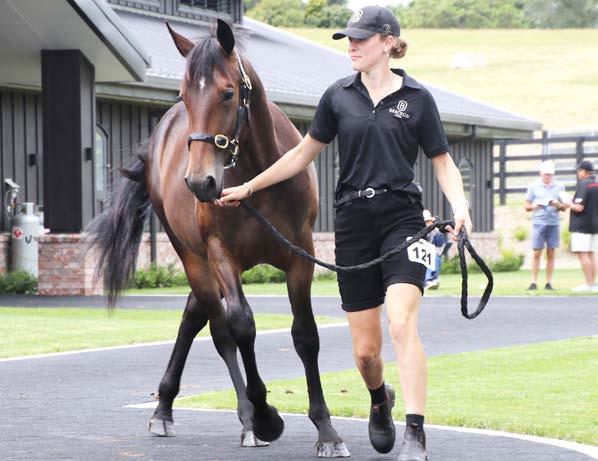










There was a lot of work going on behind the scenes at Breckon Farms to make the 35 yearlings look their best in the parade ground at the Ōhaupō standardbred breeding and training facility this week. Out came the baby oil, hair spray, brushes and hoof polish to have the Class of 2026 primed and ready for the 80 plus potential buyers. All were born on the property including this brown filly, pictured with Jade Davidson of Pirongia, which foaled on October 3, 2024, the progeny of leading Woodlands Stud sire What the Hill and Breckon broodmare Love Ya Doosie. Next big show is the National Standardbred Yearling Sale at Karaka, South Auckland next month.
Photo: Mary Anne Gill

•
•
• Planting, edging, mulching, and more

• Custom features and outdoor enhancements


Meghan
Hawkes recounts the controversy over the renaming of Alexandra in 1894.
Runaway horses and larrikins
Letters…
From Tom Roa...
Visit: www.yardmatters.co.nz or call 0800 46 9273 for more!
admin@yardmatters.co.nz



are members of the
Independent Community
Association



CONTACTS
News/Editorial
Roy Pilott editor@goodlocal.nz
027 450 0115
Mary Anne Gill maryanne@goodlocal.nz
021 705 213
Viv Posselt viv@goodlocal.nz
027 233 7686
Chris Gardner chris@goodlocal.nz
027 231 7007
Advertising Director
Janine Davy janine@goodlocal.nz
027 287 0005
Owner/Publisher
David Mackenzie david@goodlocal.nz
Office/Missed Deliveries
07 827 0005 admin@goodlocal.nz
A proposal to rename Alexandra (now Pirongia) provoked a protest, one objector saying he had lived at the other Alexandra in Otago for nearly a year and it was a horrible place.
In summer there was black dust up to the knees, with nothing but bare rocks for shelter from the intense heat. In winter rain flooded the stores up to the counters and made the dust of summer a sea of mud. Surely, he said, our pretty and picturesque township more fittingly bears the name of our future queen, than that dirty mining town in Otago.
Some excitement was caused in Te Awamutu by a runaway wagon belonging to Mr Cunningham. The loaded wagon was standing at the door of Aubin and Co’s store when the horses were startled by a cow being driven past them. The horses started off down the Kihikihi Road, past Lewis’ hotel. Mr Mackeller made a brave attempt to stop them but failed. The spooked pair then galloped up the hill and round the corner by the Rev MacDonald’s and along Brady Street to the hollow below the school. Here they swerved round and the bar came apart from the pole which ran about three feet into the ground stopping the journey. The swingletrees had also come away but the horses were found standing quietly beside the wagon when the crowd of rescuers came running up headed by Mr McKinnon, a well-known sprinter. Willing hands soon had everything put right and Mr Cunningham drove the wagon full of rescuers triumphantly back into town.
At Ōhaupō marriages were the order of
the day. Several had taken place and several more were in contemplation. Sometimes, noted a correspondent, business was dull in the matrimonial market, and sometimes there was a spurt. What with marriages, christenings and deaths, the parsons seemed to have plenty to do. One parson married one man, buried another, and christened a baby all in one day.
The Mangapiko School, having lately fenced in their school reserve of five acres, spent Arbor Day planting trees and shrubs. Although the morning loomed foggy by midday old Sol shone out in all his strength, making the rest of the day most enjoyable. Trees and shrubs in considerable numbers were planted by the children, assisted by the committee, parents and visitors. The youngsters enjoyed themselves thoroughly with the good things of life which had been provided in overflowing abundance. Before breaking up lollies were scrambled for, the kind gift of Mr Price, Te Awamutu storekeeper.
The children then began to wend their way homeward, well pleased with their day’s holiday and hoping that there would be another Arbor Day next year.
Kihikihi was generally not much cursed with the larrikin element, but it had been noticed of late that a most objectionable form of them was becoming somewhat prominent. The use of obscene language was heard at times on the main street at night, also issuing from beneath store and hotel verandahs in anything but subdued tones of voice.
Maru’s winter worries
Ōtorohanga families have been slow to take up the offer of free insulation for their homes.
Last October Maru Energy Trust estimated more than 1100 homes in and around the town may qualify for free home insulation worth between $3500 and $4000.
But Maru team lead Renee Parkes believes more people should be coming forward to determine if they quality.
“We know some of our families will head into a King Country winter with no insulation and possibly no heating..”
“No-one wants bigger energy bills, and no-one wants tamariki getting cold and sick because of a cold, damp home.”
Since October Maru has bought on four new insulation providers to work with the

Ōtorohanga community.
“We have people lined up to do the work –that’s not the issue,” Parkes said. “We just need people to reach out and see if they qualify. If so, they could have their home insulated within six weeks, at absolutely no cost.”
From February 16, Renee be based at the Ōtorohanga Support House – Whare Awhina, for a week where she will talk to anyone faceto-face about the free insulation offer.
That mahi is supported by Kim Ingham from Ōtorohanga, an official Maru community champion appointed late last year.
He said the Support House could also put landlords in touch with insulation installers to ensure they comply with heating standards required by law.
E te hoa e Roy. I send you this more than just as a letter to the editor but as a thank you for the article ‘Treasuring Tom Roa’ mostly in its tone. You caught in our interview what my wife Robyn describes as the real me! It was clear to her and our children with whom she shared the article that our interview was more than an interview for a newspaper but an intimate chat between friends. You caught a depth that was only glimpsed in national television and radio, and newspapers which serve a larger population base. Profoundly exemplifying the intimacy of your/our newspaper in the smaller rural audience where neighbours are so much more than people who just share a space. Thank you, my friend.
I also want to thank, through this publication, those who dropped in to see us at home, who phoned me or someone in the family, dropped a text or an email, stopped me or my wife in the street, with real joy such that I enjoyed more their joy than anything else to do with this honour!
Tūturu tēnei hõnore hakē I te mea he whakanui noa I ahau … ehara taku toa I te toa takitahi, he toa takimano - this honour is not solely a celebration of me. My strength is not of me as an individual, but that of the collective.
May I wish for all our readership the very best for 2026.
Tom Roa Horotiu





Briefs…
Health hack update
A clearer picture of the damage from the Manage My Health cyberattack has emerged. Fewer than 80 patients from Pinnacle Midlands Health Network’s Waipā practices and fewer than 30 at its northern King Country practices have been affected. However, these numbers are still indicative only, a spokesperson from the Primary Health Organisation said.
Tourism funding
Tourism and Hospitality
Minister Louise Upston – the MP for Taupo - has announced more than $450,000 in funding for an international tourism campaign. The funding will support seasonal travel deals and itineraries designed to attract international visitors, particularly from Australia, to experience the heart of the North Island via direct flights to Hamilton Airport.
Polo clash
Mystery Creek club players
John Paul Clarkin and Dean Fullerton have been selected for the New Zealand team to take on a rest of the world combination at the club’s Kaipaki Road home on January 30. The day is billed as a premier day of top-level polo, and also feature the New Zealand women’s team taking on an invitational South African side.
Wetlands day
A free event at Lake Rotopiko just south of Ōhaupō on February 1 will mark World Wetlands Day and celebrate work done over the past few years at Rotopiko’s wetland forest and lake. World Wetlands Day is held annually to raise awareness about the importance of wetlands. This year’s theme is ‘Wetlands and traditional knowledge: Celebrating cultural heritage’, and visitors will hear Ōtorohanga’s Ringi MorganFifield talk about the medicinal plants – Rongoā - found within wetlands. This will be the seventh such collaborative event organised by groups including the National Wetlands Trust, district and regional councils, Landcare Trust, the Department of Conservation and Te Awamutu Rotary.
Generosity 'hard to measure'
Te Kūiti and the wider King Country community will benefit from a newlydonated emergency ambulance gifted by Te Awamutu couple Dorothy and Graham Harker.
The vehicle was officially dedicated last week at Te Awamutu’s Highfield Country Estate, where guests included the Harker family, Hato Hone St John dignitaries and emergency ambulance staff.
Once in service, it will become the new Te Kūiti ambulance, but it will continue to be housed at Te Awamutu’s Hato Hone St John station as it is from
there that crews begin and end their shifts.
The Harkers elected to donate an ambulance as a meaningful way to give back to frontline ambulance staff who have supported them over the years.
“Their service when called upon has been exceptional for us,” they explained. “We have had a few more needs recently due to our ageing stage in life and appreciate the emergency ambulance crews immensely. We hope this new vehicle will assist Hato Hone St John in continuing to support our community with their wonderful service.”
Last week’s event was opened and emcee’d by Gunner Lovich, Hato Hone St John donor relationship specialist. The Harkers handed the ambulance keys to Gary Salmon, Hato Hone St John central region trust board chairperson, who received the gift on behalf of the organisation.
The new Generation 4 emergency ambulance is the newest model of ambulance with improved safety and driving capabilities. They are fitted with equipment that includes a power-load electric stretcher and stair carry chair to help facilitate the easier movement of patients in and
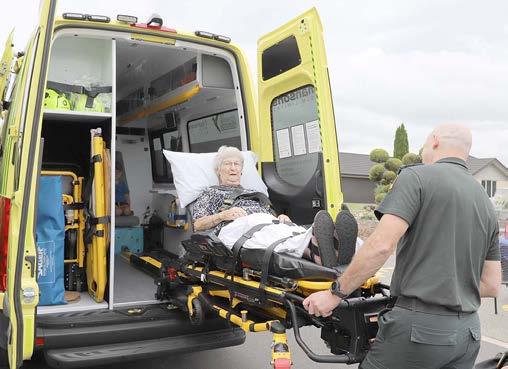
out of the vehicle.
Debbie Hayward, Hato Hone St John group operations manager, said emergency ambulance vehicle donations are appreciated more than donors realise.
“It will become the new Te Kūiti ambulance, replacing an older model,” she said.
“It will travel thousands of kilometres within our region.
The Harkers’ donation also benefits our ambulance officers, who will continue to have access to up-to-date equipment to support the
people of Waitomo and the surrounding areas.
“Great generosity such as this is hard to measure as its impact on our communities and our people extends so far. We are incredibly grateful.”
The transporting ambulance is supported by the volunteer-led Te Kūiti First Response Unit, which has grown from two volunteers to a team of four over the past year. That number is expected to rise following a 2026 recruitment drive.
One for food worshippers
By Chris Gardner
Rebecca Jones bought a converted church, added a church-like side building which became a take-away outlet – and now wants to enjoy life at the beach.
Jones bought the converted rimu Pirongia church – built in 1912 – eight years ago and gave up smoking to help fund a $10,000 resource consent to establish Pirongia Takeaways.
She and husband Clinton opened the Beechey Street business just seven months ago – but have now put it on the market.
“We want to move to the beach,” Rebecca said.
The couple decided during a fishing trip in Kāwhia in 2023 to open Pirongia Takeaways. Rebecca gave up her job as a logging truck driver and Clinton left his job as a builder to make it happen.
“We built it with our own four hands,” Rebecca said.
The couple work in the business and employ three staff.
The home and business on a 2023 square metre site is on the market for just under $1.3million.
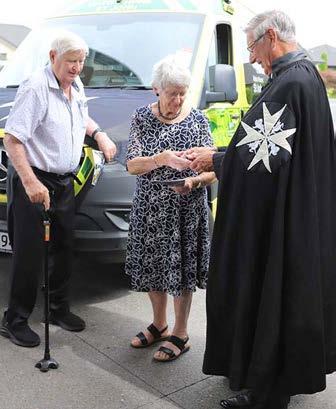
Dorothy and Graham Harker hand over the ambulance keys to Hato Hone central region trust board chairman Gary Salmon.
Dorothy Harker samples the ambulance’s power-load electric stretcher.
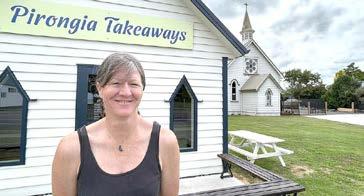
Rebecca Jones wants to trade takeaways for the coastline.
Photo: Chris Gardner
How RMA Reforms can build a greener, More liveable New Zealand
By Barbara Kuriger, MP for Taranaki-King Country.
The idea of changing the Resource Management Act (RMA) has been around for years, and many people saw it as only a matter of time. While the news, however inevitable, may not surprise anyone, it is still a relief to see the Government act in its first term to make major changes. These changes will bring real benefits to communities, the environment, and the economy. F or years, people have said the RMA is slow, expensive, and complicated. Reform gives us a chance to keep the Act’s main goal of managing resources sustainably, while making the system more efficient, predictable, and focused on results.
A major benefit is that getting consent for projects could become faster and clearer. With simpler processes, fewer repeated plans, and clearer national guidance, we can avoid the delays that often hold up housing, infrastructure, and renewable energy projects. This should lower costs for councils, developers, and communities, making it easier to tackle the housing shortage and improve important infrastructure.
Reform is also a chance to improve environmental protections. With stronger national standards and clearer rules, the new system can do a better job of protecting our freshwater, biodiversity, and coastal areas. Rather than debating the basics in every local plan or consent, communities can spend more time working on real improvements and restoring damaged environments. A simpler and more strategic planning system can help us prepare for the long term. By including climate change adaptation, natural hazard risks, and infrastructure planning in early decisions, New Zealand can build safer, more liveable communities that are ready for future challenges. If done right, RMA reform can give us a planning system that works faster and is more reliable, while also offering better environmental protections and more liveable communities for everyone in New Zealand. It’s the textbook balance.

Rural and Provincial New Zealand

Shaped by shaking
By Phil Strong, Proprietor Chair, Waipa Christian School
Are you ready for 2026? I’m not sure I am. But I am eager for new frontiers.
Janine Krippner’s “On Shaky Ground” column hit a nerve with me. A tsunami through Waipā? Unlikely. But her wisdom stands—life shakes us, and the ripples matter.
In 2004, the Indian Ocean shook with a magnitude over nine. Then came the deadliest tsunami in our history. More than 250,000 people gone. Fourteen nations scarred. Thirty-metre waves tore families apart and reshaped everything—economies, communities, hearts.
On holiday years ago, Kathy and I wandered onto a beach in southern Thailand. Once a coveted resort, now silent testimony to a day the sea rose up and did not ask permission. Years later, on Nias Island off Sumatra, I sat with families who had lost loved ones in the devastation of Boxing Day 2004. We cried together. That shaking? It shaped me.
Since then, I’ve supported work that gives orphans safety, love, and hope. Children arrive with despair in their eyes. Then, slowly - through steady love - they step from darkness into a bright, hope-filled future.
Here’s the truth: shaking, friends, can lead to shaping.
The need around us is not abstract—it has names and faces: orphans, trafficked, abused, hungry, homeless, hopeless. They are out there… if you look. And if you look, you will see more than you planned. And if you act, you will become more than you imagined.
The Christian message here is simple and sharp. Jesus said, “By this will all people know you are my followers - by your love for others.” Love will shake us, if we let
Him. Compassion is the ripple. Action is our evidence.

Janine reminded us of Tilly Smith, the schoolgirl who shared what she knew in 2004 and saved lives. Scripture tells of a boy who shared his lunch—and a multitude were fed. But look higher: Jesus, though He was God, emptied Himself, humbled Himself, became obedient to death. His shaking causing ripples so you and I could walk in friendship with God.
Don’t shrink from what shakes you. Loss. Diagnosis. Debt. Betrayal. Fatigue that won’t leave. The quiet ache when the house feels empty. Name it, don’t numb it. Shaking is not the enemy—avoidance is.
Open your heart and your eyes and consider what you might see if you looked. The neighbour with a brave face and an empty fridge. The teen rolling their eyes to hide fear. The cafe worker counting wages that won’t stretch. A lonely retired person who hasn’t had a real conversation in weeks. If you look, you will see divine appointments disguised as interruptions.
And finally, dear reader, how might your shaking turn you to Jesus?
Bring your tremor to Him. Pray honestly. Ask for His peace and His eyes. Open the Gospels and watch Him with the broken— He always moves toward need. Then move with Him. Start where your hands can reach. His life has sent ripples across millennia and into eternity. The Gospel shakes us awake and then it shapes us into people who love deeply and act boldly.
Ready for 2026? Maybe not. Willing to love? Yes. Let’s go.
ON SHAKY GROUND
Ingredients of disaster
By Janine Krippner
We hopefully all know by now that we live on a very active planet. According to the United States Geological Survey, records suggest that we can expect around 16 major earthquakes in any given year - roughly 15 earthquakes within the magnitude 7 range and one magnitude 8.0 or greater. In 2010 there were 23 earthquakes of M7.0 or greater. One of those devastated Haiti on January 12.
Just reporting a magnitude is only part of the story; depth of the rupture is important as that strongly influences intensity felt at the surface. Is it just 13 km below the surface like the Haiti earthquake? Or 107 km depth like the one I felt in Wellington a couple of weeks ago.
Then there is location: how close is it to population centres and critical infrastructure? The fault that ruptured in 2010 was close to Port-au-Prince, Haiti’s capital.
(compared to the USA for example), that does not flex during earthquake shaking.

Work done to prepare for an event itself, and for the aftermath, is critical, but they do not create immediate or flashy results. This may make it seem less of a pressing issue. Haiti is a heartbreaking example of how disaster risk is shaped not only by geology, but also by vulnerability and capacity, and why preparedness cannot be allowed to fade into the background. When it does, the result can be utterly devastating.
Geologically, Haiti sits on the boundary region between the Caribbean plate and the North American plate, and the 2010 earthquake was caused by shallow strikeslip faulting where two sides of a fault move sideways past each other.
Inglewood Office 80 Rata St, PO Box 124, Inglewood 06 756 6032 • Kuriger.Inglewood@parliament.govt.nz
Te Awamutu Office 196 Alexandra Street, Te Awamutu 07 870 1005 • Kuriger.Teawamutu@parliament.govt.nz

King Country Virtual Office 021 815 017 Kuriger.Kingcountry@parliament.govt.nz




Next, are those population centres prepared with funding and efforts put into earthquake safe housing and infrastructure? Or are they already in a vulnerable situation? Unfortunately, Haiti was, and still is, the latter category and the consequences were catastrophic. The numbers vary but all are staggering, with estimates of around 316,000 dead or missing, 300,0001 injured, and over 1.3 million homeless. One of the most destructive modern earthquakes, globally.
Housing loss was immense, with an estimated 300,000-plus homes collapsed or critically damaged. Roads and other lifelines were impacted, making response more difficult.
The buildings themselves can put a population at greater risk. Prior to the event there was a lack of seismic building codes and building materials, consisting largely of poorquality, reinforced but lower strength concrete
Their vulnerability is also shaped by a traumatic history of slavery and harmful financial reparations for their freedom, which still very much ripple into their current struggles. Our histories and current social makeup influence how we can respond, and therefore, how we come out the other end.
When I hear of a large magnitude earthquake hitting the news, these are all the thoughts that go through my head. How deep? How close to people and infrastructure? And how prepared are those communities? The faulting style (e.g., strike-slip or subduction zone earthquake) whether it occurs on land vs under the ocean (tsunami risk) are some of the other aspects that influence impacts.
A simple earthquake magnitude is a great headline grabber, but it only tells a fraction of a story.
FENZ seeks river solution
By Chris Gardner
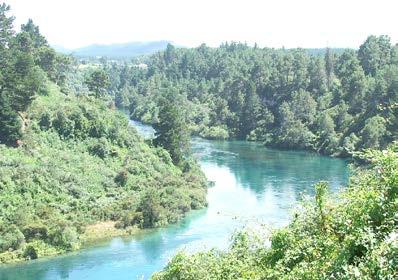
Fire and Emergency New Zealand wants to find a solution as to who could own the capability for Waikato River rescues after volunteer firefighters were banned from operating rescue boats and jet skis.
The ban was implemented in May after Maritime New Zealand said the Huntly and Ngāruawāhia fire stations were operating maritime rescue craft outside of maritime rules.
In Cambridge Fire Station officer Richie Gerrand had been working for some time on purchasing a couple of rescue jet skis for Cambridge because the brigade had no equipment to use in a river rescue”.
Waipā mayor Mike Pettit and his Hamilton and Waikato colleagues Tim Macindoe and Aksel Bech asked the service for a rethink.
“By Fenz standing down these two well equipped, trained and certified brigades with proven incident-free track records, Fenz is in our view putting lives at risk,” they said in a letter sent in December.
Fenz chief executive Kerry Gregory has suggested Waikato councils apply for a maritime transport operator certificate.
Fenz deputy chief executive Megan Stiffler said three volunteer brigades, included Okere Falls in the Bay of Plenty, had independently acquired motorised

watercraft.
“I understand and acknowledge their wish to deploy their own watercraft to serve their communities in an emergency,” Stiffler said.
“Fire and Emergency New Zealand wants everyone to be safe on the Waikato River’s waterways, but we cannot support our brigades operating their motorised watercraft because we don’t as an organisation have the capacity or capability to support motorised watercraft being deployed safely,” she said.
“Such incidents need to be responded to by the most appropriate agency.
“Police, Surf Lifesaving NZ, and Maritime NZ are the lead agencies and organisations for operation and oversight of this activity.
“We are continuing to work with the relevant organisations including local councils to find a solution as to who could own the capability for Waikato River rescues and ensure it is delivered safely, legally and effectively in an emergency,” Stiffler said.
The News sought comment from Waikato police, asking whether police had been involved in discussions about councils potentially taking on maritime rescue responsibilities and whether they supported councils obtaining Maritime Transport Operator Certificates.
The News sought comment from
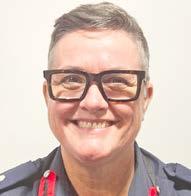
police – asking how many rescue boats police they in the Waikato region and whether they could meet demand during the peak summer period.
We also wanted to know how many water related incidents police had responded to since Fenz implemented its ban.
Waikato operations and support district manager Neil Faulkner responded that if police are the lead in a rescue situation, “we will make use of any and all resources available to us, depending on the location of the incident and what it involves – and deploy whatever assets are required”.
“This can include Coastguard, the Police Maritime Unit, Fire and Emergency NZ, WRC, SLSNZ, rescue helicopters, or other craft or resources from a range of agencies or individuals.
He said the Waikato Regional Council’s Harbour Master already


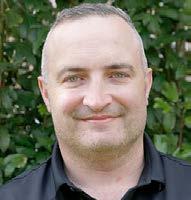
has capability to assist in incidents where required.”
Surf Lifesaving NZ search and rescue manager Matt Cairns said his organisation worked closely with police, the Rescue Coordination Centre New Zealand, and other partners as part of the national search and rescue system.
“We’re open to constructive conversations with our partners about how we might support community needs, but any involvement must be carefully considered to ensure it can be delivered safely and sustainably,” he said.
“We wouldn’t want to comment on specific locations until we’ve had the right conversations with our partners and properly worked through the facts, and our priority remains maintaining the services we currently provide to communities both between and beyond the flags.”






Megan Stifler Matt Cairns
Waikato fire brigades have been taking on responsibility for river rescues – but have now been told not to.
Master the art of clothes layering
Chris Gardner, a New Zealand Outdoor Instructors’ Association Bush Leader, continues his series on how to get it right.
Wearing the right clothes on a hike or tramp could save your life, wearing the wrong clothes could end it.
Layering your clothing is essential in New Zealand where you can experience subtropical to subantarctic conditions in one day on the trail.
The hiker or tramper’s challenge is to maintain their core temperature at around 37 degrees Celsius.
Dropping below 35 degrees can cause hypothermia, rising above 38.5 can cause hyperthermia. Left untreated both can cause death.
Hiking and tramping clothes should be selected based on the principles of layering. Air is trapped in both the clothes and in the layers between them. Many thin layers give the hiker and tramper better control than a few thick layers.
The base layer, mid layer and outer layer all work together to keep the hiker and tramper just right.
Look for a base layer made from a moisture wicking material designed to move moisture, whether its sweat, rain, or river water, away from your skin. A polypropylene thermal top and leggings will keep you dryer, warmer,
and less prone to hypothermia in the winter and at altitude. Sea scouts wear polypropylene underneath quick dry shirts, shorts, and personal floatation devices, because they retain the heat even when they are wet.
Merino wool tops and leggings also makes an excellent base layer, as they absorb moisture. They take longer to dry than polypropylene.
Mid-layer clothes trap warm air close to the body as they work with the base layer to regulate heat. Examples of midlayer clothes include a polyester fleece jacket, a synthetic insulated jacket, and a down jacket. A down jacket is particularly good on the trail as it packs down but it will lose its insulation properties if it gets soaked.
Quick dry walking shorts or pants are also essential mid-layer clothes.
Good outer layer clothing, such as a waterproof and windproof jacket and pants, will protect the hiker and tramper from a soaking. But if the rain is heavy enough, seeking shelter is a wise precaution. Some native trees in the bush make for an excellent umbrella.
I’m with Scottish comedian Billy

Connolly who said: “There’s no such thing as bad weather, just the wrong clothing, so get yourself a sexy raincoat and live a little.”
Cotton should be avoided at all costs.
Chief Ambassador of World Scouting Bear Grylls popularised the saying: “Cotton kills in the hills.” It absorbs water, holds it against your skin, loses all insulation properties and chilling you rapidly. Another saying is: “Cotton is rotten and should be forgotten.”
Next Week: Essential gear to keep you safe on every adventure
REGIONAL COUNCILLOR’S VIEW
Sharing and caring for the river
Over the summer holidays, the health and wellbeing of the Waikato River have been a hot topic. Writing this as we are in the middle of the National Waka Ama championships, with close to 5000 children and adults on the water, the question feels immediate and unavoidable: how do we balance the needs of recreational users with the long-term health of the river that sustains us all?
The Waikato River is far more than a body of water. It is a living taonga, central to identity, culture, recreation and regional wellbeing.
On any warm summer’s day, it carries rowing crews, swimmers, anglers, jet skis and families enjoying the riverbanks. Major events bring people that provide a huge economic benefit to our region as well as fostering a deep connection with the river. That connection matters - because people are more likely to protect what they value.
But the river is under increasing pressure. This summer, the fast-growing hornwort weed has been particularly exasperating. On New Year’s Day, I watched a continuous trail of weed. For recreational users, hornwort clogs propellers, fouls paddles, restricts swimming areas and disrupts events. For the river, it is a visible sign of wider ecological imbalance.
Each year an annual hornwort spray programme is completed by mid-December. While necessary, it captures only a small portion of the problem. The programme costs over $100,000 annually and is not without controversy, particularly due to the use of the herbicide ‘diquat’. Community concerns about effectiveness and environmental impact deserve to be heard and addressed openly.
Complicating matters further is the spread of the invasive gold clam, which has now taken hold in parts of the Waikato River.
COMFY CARE
Enjoy welcoming, comfy surroundings and a warm sense of belonging at our Resthaven on Burns Care Centre.
• We are a community charitable trust providing quality, affordable care for seniors.
• Our caring team are here to help you enjoy the things you love, whether it is gardening, baking, trips to town, hobbies, or simply a quiet afternoon relaxing.
• Our commitment to affordability means there is no premium daily room charge at Resthaven on Burns.
Tree disease on four fronts
Vaccinated trees are on Waipā’s healthy list - but more cases of Dutch Elm Disease have been revealed by the district council.
Suspected cases of the fungal disease, initially detected in the district two years ago, have been found in Cambridge, Te Awamutu, Kihikihi and Ōhaupō.
The council started using a vaccine on about 250 specimen street and park elms on council land in late 2024 and it was repeated this year. The disease has not been found this season in any of those trees.
“The increase in cases is not unexpected,” council arborist planner James Richardson said. “Dutch Elm Disease spreads fast and there is no cure or treatment. We’re keeping a close watch on all our elm trees.”
Two of the suspected cases involve trees on Waipā District Council land. One is a stand of around 20 mostly saplings near the Gaslight Theatre in Cambridge, the
By Liz Stolwyk, Waipā/King Country Regional Councillor
These clams are extremely efficient water filterers.
While that might sound positive, clearer water allows more light to penetrate the river, creating ideal growing conditions for hornwort. Many recreational users are now observing what science is confirming: the gold clam invasion is likely accelerating weed growth and changing the river system in ways we are only beginning to understand.
Hornwort and gold clams are symptoms of a stressed system rather than isolated problems. Nutrient runoff, sediment, invasive species and warming conditions all interact, creating cumulative impacts that cannot be solved with a single tool or programme.
Balance does not mean choosing recreation over river health, or vice versa. A healthy river is the foundation for recreation. Without clean water and

other is a single tree on the edge of the SH3 road reserve just north of Ōhaupō.
Wood samples are being tested to confirm infections, and the trees will be removed. There is no cure for the disease.
One victim of the disease last year was a 100-year-old elm in Cambridge’s Victoria Square.
Councils use a product called Dutch Trig, a harmless fungus strain which is injected annually into trees and boosts their natural defence against Dutch Elm Disease. The cost works out to $92 a tree.
Signs of an infection in elms, include wilting, curling or yellowing leaves, and dead or dying branches.
“Our vaccination programme is helping protect trees in public spaces, but we need residents to be aware and act quickly if they see symptoms on private trees,” Richardson said.

resilient ecosystems, there is no future for summer swimming or the simple enjoyment of being on the water. So, what does balance look like? It starts with shared responsibility. Councils, Central Government, Iwi, Farmers, Industry, Event organisers and everyday river users all have a role. It means investing in long-term, catchment-wide solutions, supporting science-based management, and respecting our obligation to care for the river for future generations.
Seeing thousands of paddlers moving together on the Waikato River is powerful. If we can bring that same collective spirit to caring for the river, we can protect both its health and our ability to enjoy it - now and into the future.
• Liz Stolwyk is site manager at Lake Karāpiro Domain.
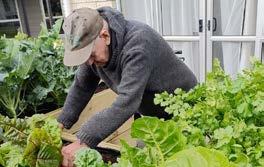

Chris Gardner

Festival to return
By Jon Rawlinson
After five years off the menu, the Kāwhia Kai Festival is about to make a welcome return.
Known as the home of the Tainui Waka, Kāwhia will host this year’s event at Omimiti Reserve on February 7, the day after Waitangi Day. It will dish out a feast of food and entertainment while commemorating and celebrating Te Tiriti.
“There will be hāngī, seafood and other kai, schools will showcase weaving and other crafts,” festival chair Bruce Brendon said.
“For a stage, we’ll be using a curtain truck – we’ll have entertainment including kapa haka as well as bands and we’re hoping to have a waka out on the water too.”
Past festivals have also featured other crafts including carving and tā-moko tattooing.
The event’s full name is the Kāwhia Moana, Kāwhia Kai, Kāwhia Tangata Festival.
After running annually from 2005, the festival received international recognition fromy Lonely Planet, Brendon said. However, in 2021 it was put on the backburner due to
the Covid-19 pandemic and its fallout.
“Covid had the biggest influence and then because of that, some of our contractors weren’t available and costs went up.”
Substantial increases in costs associated with toilet facilities, refuse collection, fuel and more detailed traffic management plans all contributed to make the event untenable.
Funding issues now appear to be in hand thanks to hard mahi by organisers and strong support from businesses as well as community and council grants.
The festival’s revival will be widely enjoyed, Ōtorohanga District Council’s Kāwhia-Tihiroa Ward rep Kit Jeffries said.
“The new committee has endorsed a previous decision to just have a koha as an entry fee to make it as affordable as possible for families, leaving more in their pockets to spend at the stalls and enjoy the day,” he said.





“We’ve had crowds of 4000–5000 people here in the past, so the benefits to the community were huge. I’m absolutely delighted that it’s going ahead again and I’m really looking forward to it.”
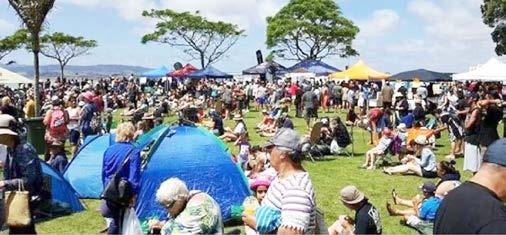












































































































The Kāwhia Kai Festival in its heyday
An Ayrshire legacy…
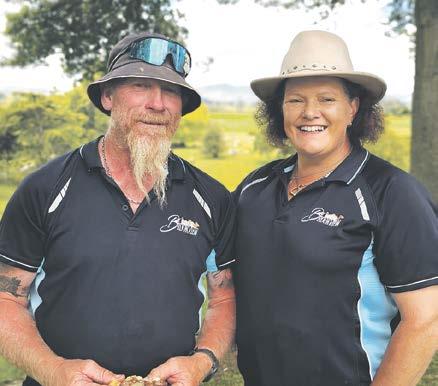
Vince Steiner’s devotion to Ayrshire cows has taken him from a childhood dream to global leadership. Senior writer Mary Anne Gill met him and his partner Trudy Garland.
At Brookview Genetics, Vince Steiner moves among his 300 Ayrshire cows with quiet familiarity, calling each by name.
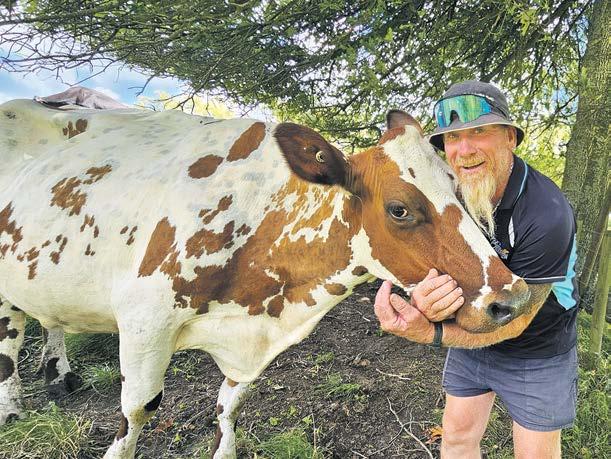
As he hugs Blueprint, Vince’s passion for these red-and-white beauties is unmistakable.
For Vince, Ayrshires are more than a breed – they’re a lifelong calling, rooted in family history and rural tradition.
“Mum and Dad bought my first Ayrshire for me when I was nine years old,” he recalls, eyes bright with the memory.
That first cow, bought at Kaipawa, was the beginning of a lifelong journey - a journey that’s shaped not just Vince’s career, but his sense of community, family, and purpose.
“One of those cows had a bull calf, and Dad ran that bull with his yearling heifers the following year. All the heifer calves born that year were mine. I can actually trace some cows here right back to one of those heifers.”
That early passion grew into Brookview Genetics in Rotoo-Rangi – midway between Cambridge and Te Awamutuwhere Vince and his partner Trudy Garland share milk 600 cows on 200 hectares.
The farm hums with visitors, laughter, and the gentle lowing of cattle during the Ayrshire On Farm Challenge – a showcase of top-quality cows, a BBQ, and an international judge.
Vince is Hamilton-based Ayrshire New Zealand president leading a board of directors responsible for governing the breed and its 16 clubs nationwide. He is also the world organisation’s vice president.
Brookview has produced more excellent classified Ayrshire cows than any other breeder in New Zealand over the past five years.
For Vince, Ayrshires are more
than just cows - they’re a way of life.
“Ayrshires are the best cow out,” he says.
It’s a breed with deep roots –Ayrshires originated in Scotland’s rugged County of Ayr in the 18th century, arriving in New Zealand in 1849. Vince champions their adaptability and temperament.
They are a great forager and can deal with poorer quality feed.
“People grumble about their temperament at times. I’ll challenge anybody to come here and see mine,” says Vince.
“They’ve had a bad rap – kicky, bad-tempered. But breeders have stamped that out. Today, Ayrshires rank best for milking adaptability and temperament.”
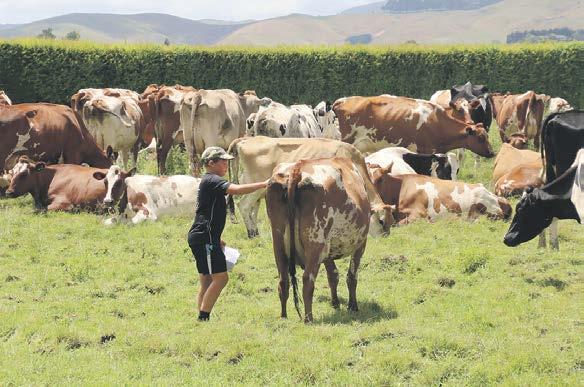
The Open Day is more than a showcase - it’s a gathering of friends, neighbours, and fellow enthusiasts. Among them is Angus Thomson, just 11 years old but already steeped in Ayrshire lore.
Angus comes from Carmel Glen Ayshires, the oldest Ayrshire stud in New Zealand, and speaks with the authority of someone twice his age about Vince’s Ayshires.
“They’re overall very well put together and they’re better than others.
“They have very good udder support and then they’ve just got an overall very good memory system.”
Asked where he learned all this, Angus says: “Basically, yeah, when I was born.” Just like Vince.
Sue Gibberd and Jeanette Keen reminisce about growing up together in Te Kowhai, while Sue reflects on her experience with the breed.
“Ayrshires suited our country. They are lovely to handle. They are very intelligent actually. That’s why some people don’t get on with them, I think. But we never had any trouble.”
For Peter Berresford, who’s travelled from Derbyshire to judge New Zealand Ayrshires in the paddocks, they are a breed with global reach.
“We’re registering pedigrees between four and six thousand a year in the UK, and then there’s commercial herds as well.”
Peter’s judging criteria is practical.
“I like a bigger cow than the average, but I’m looking for big, open, deep-ribbed cow with a great udder that can move. I need good legs and feet. Cows need to walk a lot in New Zealand.”
Bill Moore, Waikato livestock agent from PGG Wrightson, brings a pragmatic eye to the herd.
“A good cow is a good cow, and there’s tons of good cows in here. If you’ve got a cow that’s a little bit weak, you can put a bit of Ayrshire across, it’ll be a bit of strength.”
Bill’s admiration for Vince’s herd is clear. While the herd is not for sale – yet – Bill has his eyes on
them all.
“There is such a depth of breeding and it’s a testament to Vince and his team and what they’ve done here. This is an exceptional herd that all these animals will continue to breed on. There’s style and milk in abundance here.”
But for all their strengths, Ayrshires are still a minority breed in New Zealand - less than one per cent of the national herd.
But around the world, Ayrshire milk is prized for its taste and digestibility.
“The healthiest milk for you,” Vince says.
“The actual fat globule in the milk is smaller and easier to digest.”
Studies in the 1990s suggested Ayrshire milk was the best tasting and most easily digestible, with higher butterfat and protein making it richer, creamier, and some say sweeter than standard milk.
The day’s conversations drift from genetics to market trends, from the challenges of milking to the realities of farm life and the health of the herd in the heat. Vince is candid about the future.
“We’re not going to be on this farm next season. We’re just working through what our future looks like and one of those things that we’re looking at is the possibility of buying a little farm. And in doing that we’re going to have to sell a lot of cows.”
But Ayrshires will remain at the heart of whatever comes next. Each cow has a name, a story, a place in the Brookview family.
As the barbecues sizzle with Ayrshire beef steaks, it’s clear Ayrshires are more than just a breed – they’re a tradition, a community, a way of life.
Whatever the next chapter brings for Vince and Trudy, Ayrshires will remain at the heart of their life –each cow a name, a story, a legacy.
Vince Steiner hugs one of his prized Ayrshires - the award-winning Blueprint.
Vince Steiner and partner Trudy Garland have some big decisions to make in the next few weeks but whatever they are, they will involve Ayrshires.
What 11-year-old Angus Thomson doesn’t know about Ayrshires, is not worth knowing. He eyes up one of Vince Steiner’s cows in the paddock.



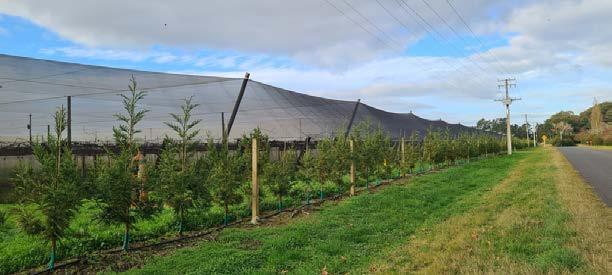
Waipā District Council is proposing new rules for shelterbelts and crop protection structures in rural areas
Proposed Plan Change 25 is now open for submissions
The proposed changes cover where structures can be located, how shelterbelts should be planted and maintained, setbacks from boundaries and utilities, and limits on the size, height, and colour of crop structures
If you live in, or next to, a rural area, these changes could affect you!
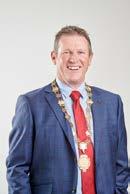
Familiar face, new role: Jo Davies-Colley’s new chapter
From community board chair to Deputy Mayorit ’s been a big few months for Cambridge local Jo Davies-Colley, and she’s loving it
Since being elected to Waipā District Council and then appointed Deputy Mayor in October, Jo says the role has been busy but incredibly rewarding “I’ve really enjoyed meeting more of the amazing organisations and community groups across the district, as well as getting to know my fellow councillors during our induction ”
Jo spent six years on the Cambridge Community Board between 2019 and 2025, with the last three years as chair She says that experience, along with strong local and council connections, has been very valuable and has reinforced her belief that strong working relationships and respectful partnerships are the foundation of good decisionmaking and effective teamwork
Before entering local government, Jo was a stayat-home mum to her three children, and previously worked as a hospital midwife, primarily in high-risk antenatal wards


Jo says her motivation for entering local body politics came from a strong desire to give back to the town she loves “Cambridge is such a special place, and I wanted to play a part in shaping its future To now have the opportunity to serve the wider Waipā community is a real privilegewe’re incredibly fortunate to live here ”
Looking ahead, Jo is excited to see longer-term projects start to take shape, including Cambridge Connections and the district ’s Long-Term Plan budget “Continuing to support Mayor Mike is my main priority, while also spending time getting to know the many community groups that make Waipā such a great place to live ”

Outside of Council, Jo enjoys early morning walks around town with the family dog Nimmy, watching her children play sport, picking up treats from the Saturday Farmers’ Market, and cycling into town to catch up with friends at the Tivoli or one of Cambridge’s great restaurants
“I feel very lucky to call Waipā home It ’s a wonderful place to live, and I’m honoured to be part of the team helping shape its future ”




Auckland Anniversary (Monday, January 26) and Waitangi Day (Friday, February 6) public holidays are right around the corner The good news is that your recycling will still be picked up as usual!
Just make sure to have your bins out by 7am on your recycling day
Remember, we don't collect rubbish so please check with your service provider to confirm their collections on public holidays
Big thanks to our awesome staff who will be working through the long weekends to keep things running smoothly!





Mike Pettit Mayor Jo Davies-Colley Deputy Mayor Roger Gordon Aidhean Camson Pip Kempthorne Clare St Pierre Les Bennett Shane Walsh Dean Taylor Marcus Gower Mike Montgomerie Dale-Maree Morgan Your Elected Members
Care is finding the perfect shade of pink.
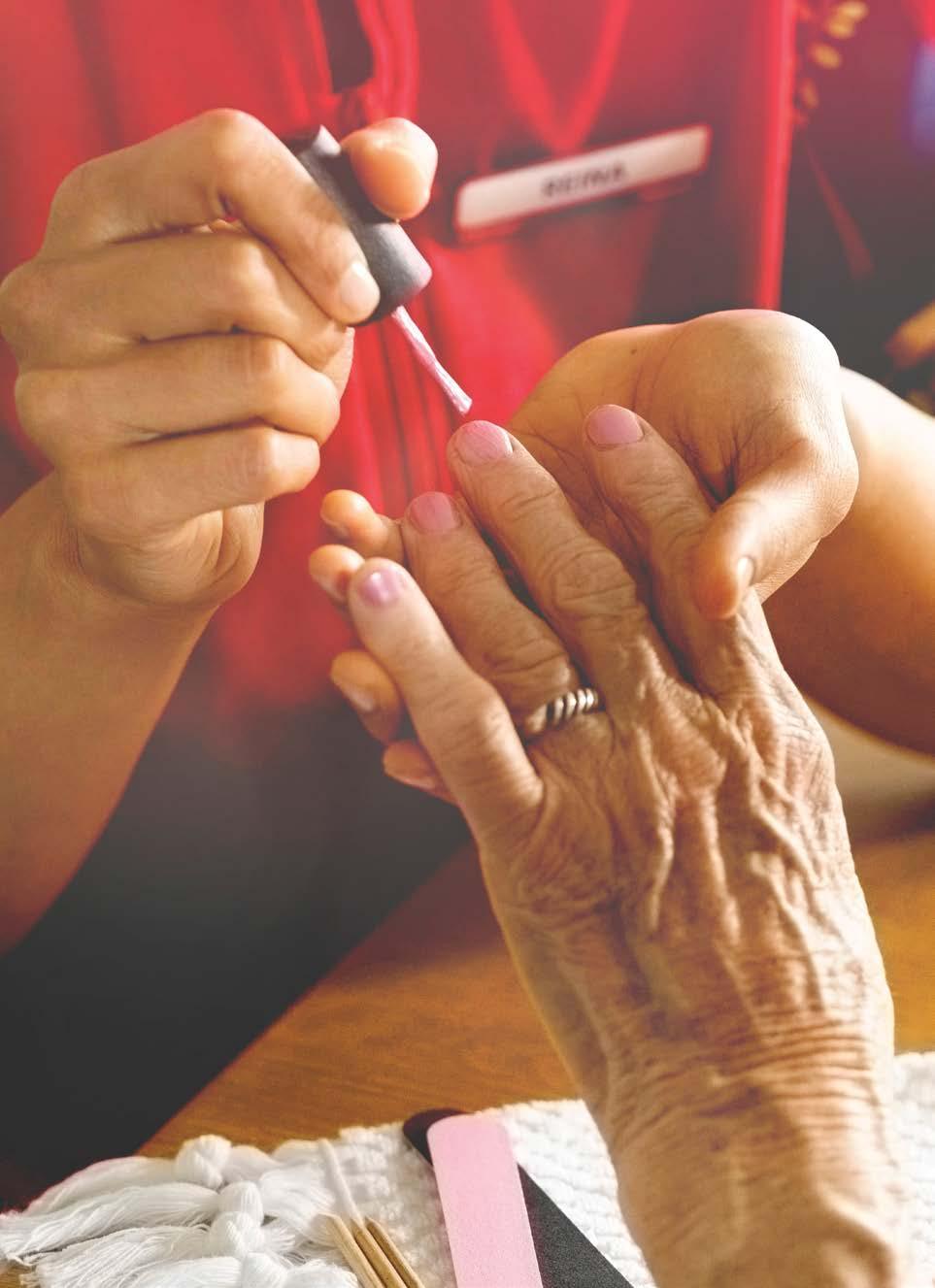
When your loved one can no longer manage at home, you need a place with care you can trust.
At Summerset Cambridge, we know the little things can make a big difference. Care isn’t just about scheduled doses, it’s knowing sometimes laughter is the best medicine. Care is having a dance to their favourite song and talking about the town where they grew up.
Join our upcoming Care Morning Tea Tour to learn more about Waikato’s newest premium care centre, including specialist dementia care.
Summerset Cambridge summerset.co.nz/cambridge 07 839 9482

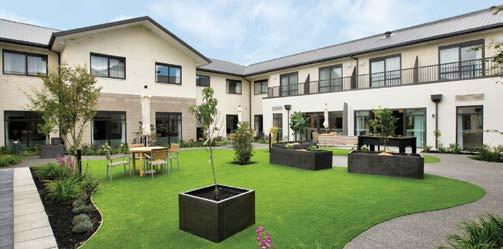
Summerset Cambridge Care Morning Tea Tour

Summerset Cambridge’s brand new care centre is now open, offering a range of accommodation to suit your needs, from care apartments to premium care rooms with rest home and hospital level care. The village is also home to our industry-leading memory care centre, offering apartment-style living for people living with dementia, in a safe, secure and homely environment.
We know that moving to a retirement village is a big decision, so why don’t you and the family come along to our Care Morning Tea Tour on Saturday 31 January. This will be your only chance to walk through our state-of-the-art memory care centre before our first residents move in. Plus our specialist care team will give a short presentation on our continuum of care, with a chance for you to ask any questions regarding you or a loved one, so you can feel peace of mind for the future.
Care Morning Tea Tour
Saturday 31 January, 10.30am
Summerset Cambridge 1 Mary Ann Drive, Cambridge 07 839 9482 | cambridge.sales@summerset.co.nz



At Te Awamutu Funeral Services our dedicated team is passionate about providing valuable guidance and a personalised service at a time when you need it most. - Offering Generations of ExperienceCHAPEL & CATERING FACILITIES • PREPLANNED FUNERALS

Across 1. Slogan (6)
5. Portable computer (6)
8. Charge (3) 9. Exploit by overcharging (3,3) 10. Changes (6) 11. Saucer-shaped object (4)
13. Merchant (8)
14. Torment (5)
15. Strained (5)
Last week
19. Congregate (8)
21. Defrost (4)
22. Fume (6) 23. Go up (6)
25. A reduction (3)
Vastly overweight (5)
Wrench (7)
Complain (6)
Mock (5)
Across: 1. Idiom, 4. Fabled, 7. All, 8. Slip-on, 9. Unique, 10. Poignant, 12. Leap, 13. Escape, 15. Reader, 16. Idea, 17. Prestige, 19. Grotto, 20. Eyelet, 22. Dam, 23. Adhere, 24. Yours. Down: 1. Ill-considered, 2. Imp, 3. Mania, 4. Fluster, 5. Brilliant, 6. Educated guess, 11. Guarantee, 14. Explode, 18. Enemy, 21. Emu.
CLASSIFIED COLUMN CRIME CRITIC CROSSWORD
TRAVEL VIEWS WEATHER WORDS


CountryLife
Beyond steep boundaries
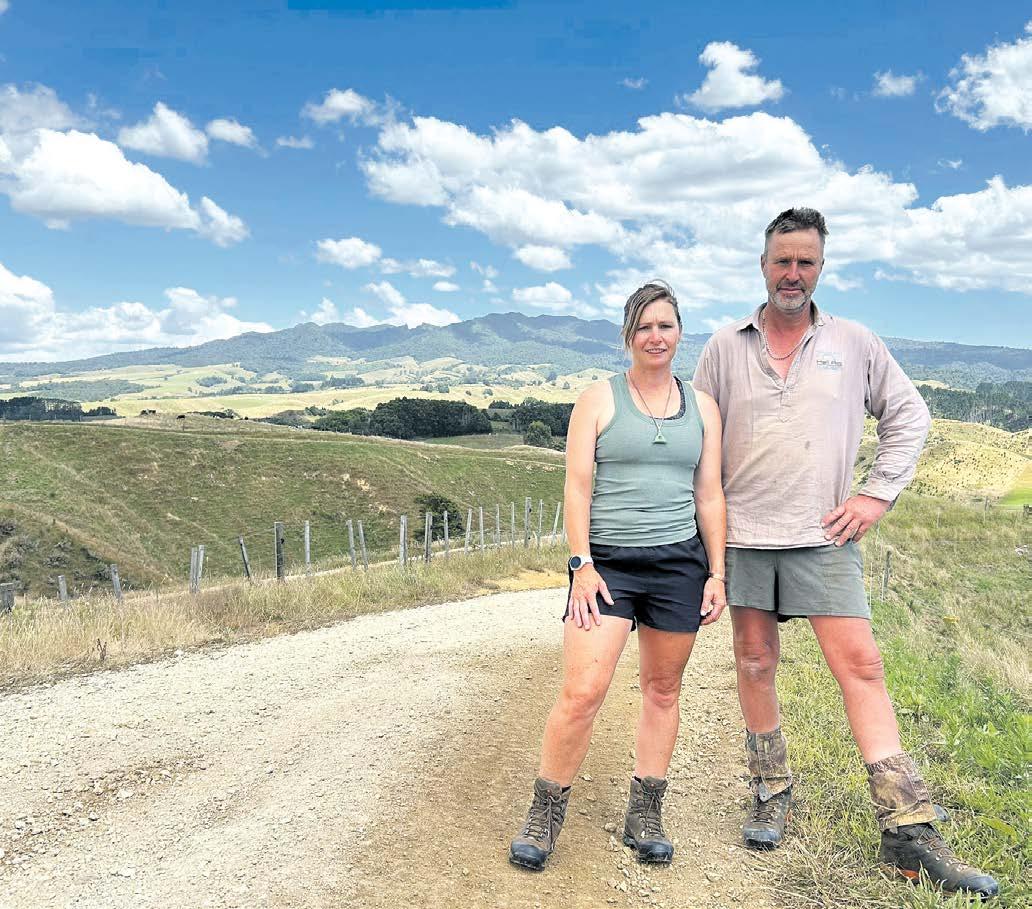
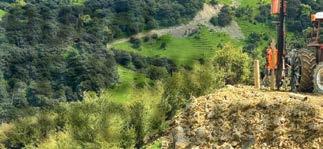
Innovation meets elevation as Blueridge Farms turns rugged terrain into a showcase for the future of farming. Senior writer Chris Gardner talks to Heather Gilbert and Elliot Kent on their monitor farm in the shadow of Mount Pirongia about the revolution taking place on the property. See page 14.



Photo: Chris Gardner

The importance of recording construction and building agreements in writing
In the construction industry, it can be tempting to rely on handshakes, verbal promises, or informal agreements, especially when strong business relationships exist. However, this approach can expose parties to significant risk if disputes arise or a project does not proceed as planned. To protect all parties involved, construction and building agreements should always be clearly recorded in writing.
Written contracts provide certainty by setting out the rights and obligations of each party. They ensure that both sides have a shared understanding of essential terms, including the scope of work, project timelines, contract price, processes for handling variations, and dispute resolution.
Changes to construction projects are common, making clear procedures for variations essential. Where a contract includes a variation process, that process should be followed carefully. If no procedure exists, the parties should discuss the proposed change, agree on its scope and cost, and record the agreement in writing. Documenting variations helps avoid misunderstandings and disputes during or after the project.
The Construction Contracts Act 2002 also plays a critical role in construction agreements. This legislation governs payment processes, dispute resolution, and remedies for recovering unpaid amounts. It is especially relevant when parties do not have a written contract or when their agreement lacks key terms typically found in construction contracts.
One of the central principles of the Act is “pay now, argue later.” Contractors must ensure that payment claims are issued correctly, either in accordance with the written contract or, if none exists, in line with the Act’s requirements.
Similarly, payers must respond promptly if they dispute a payment claim. This is done by issuing a payment schedule within the timeframe specified in the contract, or within 20 working days if no timeframe is stated.
Failure to provide a payment schedule can have serious consequences. If no schedule is issued, the payer may become liable for the full claimed amount, which the payee can then seek to recover through the courts.
Although contracts, documentation, and compliance with statutory requirements may seem timeconsuming, they provide crucial protection.

Clear written agreements help prevent disputes, support smoother project delivery, and ultimately safeguard the longterm interests of construction businesses.
Kristin O’Toole

Bold gains on rugged slopes
Blueridge Farms is proving that ambition and innovation can transform rugged terrain - doubling productivity and redefining what’s possible in modern farming, reports Chris Gardner.
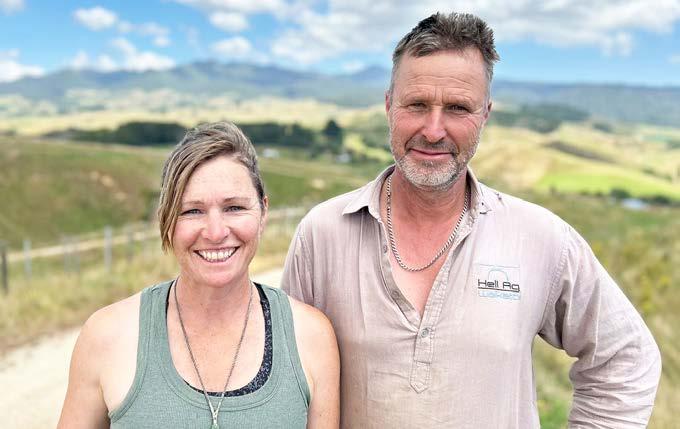
On the steep hills of Te Pahu, in the shadow of Mount Pirongia, Elliot Kent and Heather Gilbert are rewriting the rules of modern farming.
Where tradition once dictated caution, their bold approach has turned steep country into a showcase for innovation - and doubled productivity in the process.
What began as a bold experiment on unforgiving slopes is now a blueprint for high-performance grazing.
Five years ago, the couple faced a question: could they make steep land work harder without compromising pasture health?
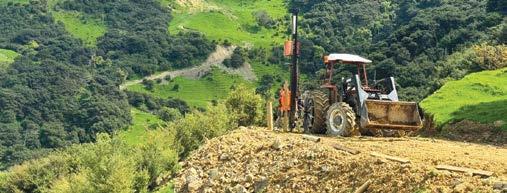
The answer came in the form of techno-grazing - a system that divides the farm into small, intensively managed cells and rotates stock with precision. Today, Blueridge Farms runs 1000 Holstein Friesian bulls across 325 hectares, double the number they started with.
The farm is divided into six-hectare systems, each containing 10 paddocks which are grazed by combined weight rather than a specified number of bulls. Each mob of rising one-year old or rising two-year old bulls spends two and half days in a designated area before they are rotated into another area.
The system enables the grass to recover for 100 days.
“Techno-grazing has been around for a while, but usually it’s done on really flat land,” Gilbert says.
“We are doing it on really steep land, and that’s why we became a Beef and Lamb monitor farm.”
The couple have been sharing their journey with other farmers for about three years.
“The first year we had 100 people shaking their heads and saying we were not going to do it. They did not think that we would be able to run that number of animals on this steep country,” Kent says.
Mobs are rotated on a Monday morning, Wednesday lunchtime, and a Friday afternoon.
“It takes about three hours,” he says.
So, there is plenty of time for other jobs such as on farm maintenance.
They have the help of farm manager Mark Pollard.
Setting Blueridge up as a Beef and Lamb monitor farm has kept the couple focussed on results.
“It’s been the best thing we did, really good,” Kent says.
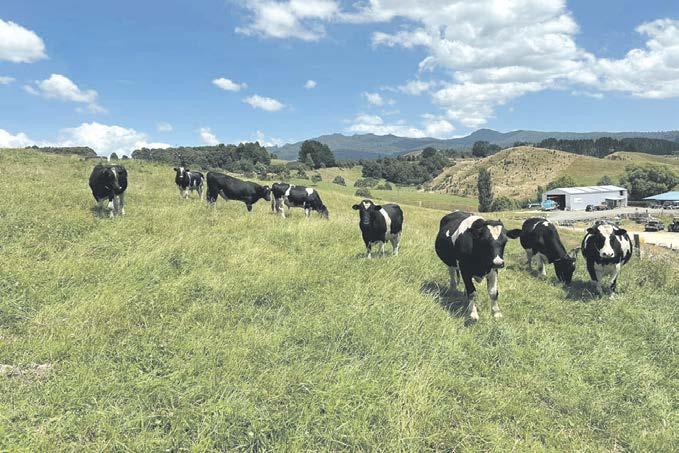




Techno-grazing has seen Holstein-Friesian bull numbers double on Blueridge Farm over five years. Kent’s helicopter hanger is in the background.
Continued next page
Continued from previous page
“We have got a steering committee that meets every two or three months, and we have got some really good farmers in our steering group,” Gilbert says.
Kent grew up on the “summer safe” farm which rises from just under 100 metres elevation to around 365 metres. But Blueridge was impacted by the recent droughts.
“In our first year of cell grazing we ran between 17 and 19 rising two-year-old bulls in each of our six-hectare systems, and last year we upped that to 22 or 23,” Gilbert says.
Bluebridge was able to support more bulls per hectare thanks to the impact of last year’s drought on their weight.
“But also lift in soil fertility, better pasture utilisation, which also improves pasture species, and also having the confidence to push it a bit further,” he says.
“We have 32 systems wintering a mix of rising one year and two-year-old bulls. We still have seven systems left to develop and some smaller areas that we won’t develop.”
They typically pick up calves from local dairy farmer and raise them until they are ready to go to the works via Greenlea Premier Meats in Hamilton.
Techno-grazing is going so well that Kent and Gilbert are about to replicate the system on another farm daughter Ella-
May Kent will lease with partner Matt Smith. Five-hectare blocks will be at the heart of the new farm containing 15 paddocks each rather than 10.
“We are giving them a head start,” Kent says.
“We have already made all the mistakes and figured out all the short cuts for them,” Gilbert says.
“I am hoping that it will work really well for them.”
Kent and Gilbert have other strings to their bows too.
Kent runs Heli Ag Waikato from the farm, clocking around 300 hours in the air in his Bell Long Ranger helicopter serving farms across the Waikato every year, although he is quick to point out, he spends another 700 hours a year working in the business.
Gilbert, who grew up on the family farm near Waitomo, also works as a consultant for Total Ag, joining the team in 2015.
•
•
•
•
•
•
•
• NZ designed systems tailored to suit your water needs
•
•
•
• Latest in electronic technology , wireless & alert systems
•
•

•
•
• Servicing the Waikato, Bay of Plenty, Taranaki & Gisborne
•
•
•
•
•
•

Blueridge Farms partners Heather Gilbert, left, and Elliot Kent on their Te Pahu farm in the shadow of Mount Pirongia.
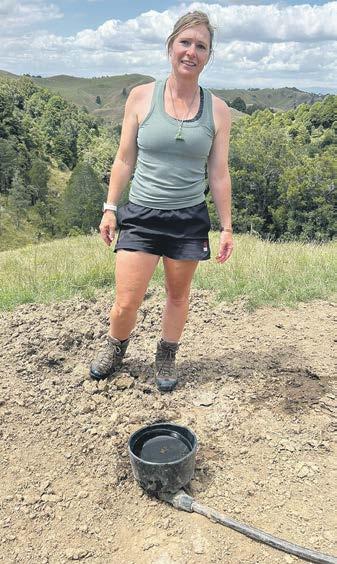
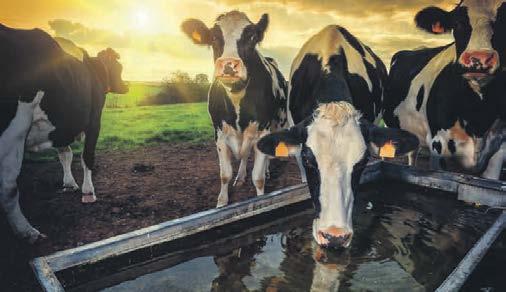
Heather Gilbert with an on demand drinking trough on Blueridge Farms. Photos: Chris Gardner
Succession planning drives growth
Te Awamutu farmers Steve and Amy Gillies are proof of what ambition and opportunity can achieve.
The couple won the ASB Alumni of the Year title at the New Zealand Dairy Industry awards last year and say access to 1% interest funding from ASB has propelled their farming business forward.
Steve and Amy’s journey began when they won the Waikato Share Farmers of the Year in 2018 and placed third nationally. In 2022, they purchased a 97ha farm near Te Awamutu - a major milestone in their career.
Amy says the alumni award gave them a chance to reassess their goals.
“Working with ASB has helped our budget immensely. We’ve had access to great rural managers who looked at our business with fresh eyes.
“It’s also given us the window to think about our next step - we want to buy a second farm and be in a position to employ a 50/50 sharemilker.
“We want to pay it forward and give the next generation an opportunity,” she says.
Entries have officially opened for two major awards designed to help ambitious farmers take the next step towards farm ownership.
The Alumni of the Year and the Fonterra and ASB First Farm awards provide winners with a financial boost



and expert support to accelerate their farm ownership journey. These awards go beyond supporting dairy trainees and right through to those purchasing farms – the succession story for the sector, says awards general manager Robin
Congdon.
“Our mission is to support and celebrate excellence in the New Zealand dairy industry, and these awards strengthen our ability to recognise excellence at all stages of a dairy career.”
New chief is loud and proud
Mike Siermans isn’t just stepping into a role – he’s stepping into a legacy. After months as interim chief executive at Federated Farmers, he’s now officially at the helm. His vision is bold: modernise, grow, and make the voice of farming louder than ever.
“Federated Farmers has always been the true voice of farming in New Zealand – I want to make that voice even stronger,” says Siermans.
Federated Farmers president Wayne Langford calls the appointment a game-changer.
“We ran a thorough search with many strong candidates, but Mike stood out,” Langford says.
“He brings a rare mix of leadership and commercial acumen that will help us deliver on our ambitious growth strategy.”
That strategy is already paying off: membership numbers are climbing for the first time in a generation, and the organisation has chalked up a string of policy wins.
Now Siermans is tasked with building on that momentum.
“Strong advocacy needs to be backed by sharp commercial nous – and Mike gets that,” says Langford.
Before joining Federated Farmers, Siermans carved out a career across fast-moving consumer goods, pharmaceuticals and technology, holding senior roles at Douglas Pharmaceuticals, Pfizer Animal Health and Taura Natural Ingredients.
He says that experience will shape his approach to leading one of New Zealand’s most influential rural organisations.
“My job is to make sure we’ve got the right strategy, team and culture to succeed for the next 125 years,” Siermans says.
“That means modernising operations, creating sustainable revenue streams and expanding products and services.
“We’ll keep employing the best advocates, communicators and policy experts – because farmers deserve results.”
Siermans lives in Tauranga with his wife and has three adult children.
As he steps into the role permanently, his focus is clear: building a future-ready organisation that continues to deliver real results for Kiwi farmers.












Steve and Amy Gillies with ASB senior manager rural corporate, Craig Young, at the 2025 National New Zealand Dairy Industry Awards Dinner.





























GROUNDSMAN/ HANDYMAN
Part Time - Flexible days and hours
We are looking for a “jack of all trades” who enjoys doing a bit of everything.
The role is simple: do what needs to be done to keep the grounds nice and tidy and building operationally fit.
If you are honest and enjoy a variety of work Call Andrew on 027 553 2614 for an initial chat



CARE GIVER
AM and PM shifts
If you are an empathetic person with the “X” factor that all good care givers have and would like to join a committed caregiving team in a supportive work environment.

Learn the Skill of Social Dancing
Te Rahu Hall (corner SH3 & Te Rahu Road)
Wed 18th February 2026 7.30-9.30pm for 10 weeks
Everyone welcome Cost only $5/person/night Learn Waltz, Foxtrot, Tango, Rumba, Swing etc.
Please book you place with Colin 027 656 3364

027 553 2614
CLEANER
As a member of our Community team, you will play an important role assisting our Elderly Community clients to keep their homes clean, tidy and safe.
For this position you will need to have: • your own vehicle • a clean drivers license
This is a full time Monday to Friday position (with flexible hours if required).
If you are honest, hard working and like to clean
Call Andrew on 027 553 2614 for an initial chat
the Editor
•
•

Company Description
Lewis Lawyers is a reputable, longstanding Waikato firm.
Our legal services cover an extensive range of practice areas, and we pride ourselves on building lasting relationships with clients.
Role Description
This is a full-time on-site Administration role located in our Cambridge office. The Administration personnel will be expected to carry out daily office tasks such as data entry, managing phone calls and correspondence, greeting clients, back up to our Trust Account Administrator and assisting with client services among other administrative duties.
The ideal candidate will have excellent organisational skills, the ability to multitask, strong attention to detail, confidence with numbers and thrive in a fast-paced environment.
Please send your CV and cover letter to: Tui-Emma Tyler at tui.tyler@lewislawyers.co.nz by Friday 6th February.







Te Awamutu Concerts Alive! are looking for volunteer committee members



Do you love live music? Do you have marketing/ social media skills? Help spread the word about our reasonably-priced live concerts by professional musicians. Can you commit to a couple of hours a month or more to create and admin a simple website and Facebook page and grow our existing mailing list? In exchange, you get exclusive behind-the-scenes experience of live concert performances. We are a friendly team and welcome new ideas to promote our project which has a successful 50+ year history. Contact Ursula 027 2905710



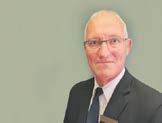
TITCHENER, Ken William – 14.06.1948 - 08-01-26. Loved husband of Lois (nee Bryant). Deeply loved father of Hayden and Jules, Megan and Logan, Kane and Nikki and just the best grandad of Gabe, Finn, Elza, Callan and Freya. Dearly missed and remembered with love. A private cremation has taken place. Now at peace.
TITCHENER, Ken William –Passed away 08-01-26 aged 77. Beloved father & fatherin-law of Megan & Logan. Precious grandad of Gabe, Finn & Elza. Thank you Mum for all the years you cared for Dad. And our thanks to the Tamahere Country Club Care Centre for the love you gave Dad the past 5 months. Dad's strength and courage will forever by in our hearts.




Kihikihi



Pursuant to Section 46 of the Local Government Official Information and Meetings Act 1987 notice is hereby given that:
The following meetings will be held in February 2026:
Wednesday, February 2, 2026 Regulatory Committee
10.00am
Council Chambers
Church
CHURCH SERVICES 10am 25th January
Rev Ken Walls All Welcome




Wednesday, February 4, 2026
101 Bank Street
TE AWAMUTU
Strategic Planning and Policy Committee
9.15am
Council Chambers
101 Bank Street
TE AWAMUTU
Wednesday, February 11, 2026 Workshop and Briefings Day 9.30am
Council Chambers
101 Bank Street
TE AWAMUTU
Tuesday, February 17, 2026

Cambridge Community Board 6.00pm
Cambridge Service Centre 23 Wilson Street
CAMBRIDGE
Wednesday, February 18, 2026 Strategic Planning and Policy Committee 9.15am
Council Chambers
101 Bank Street
TE AWAMUTU
Wednesday, February 18, 2026 Service Delivery Committee 10.30am
Council Chambers 101 Bank Street TE AWAMUTU
Thursday, February 19, 2026 Pirongia Ward Committee 4.00pm
Council Chambers 101 Bank Street TE AWAMUTU
Te Awamutu and Kihikihi

Tuesday, February 24, 2026
Wednesday, February 25, 2026
Community Board
6.00pm
Council Chambers
101 Bank Street
TE AWAMUTU
Council 9.15am
Council Chambers
101 Bank Street
TE AWAMUTU All meeting information and electronic copies of Council agendas are available at waipadc.govt.nz/agendasandminutes