WAIKATO’S CENTRE STAGE
The Waikato Regional Theatre is finally open – a landmark for creativity.
Page 3
TRANSFORMING LIVES
A not for profit faces up to the challenge of growth versus funding.
Page 5
The Waikato Regional Theatre is finally open – a landmark for creativity.
Page 3
A not for profit faces up to the challenge of growth versus funding.
Page 5
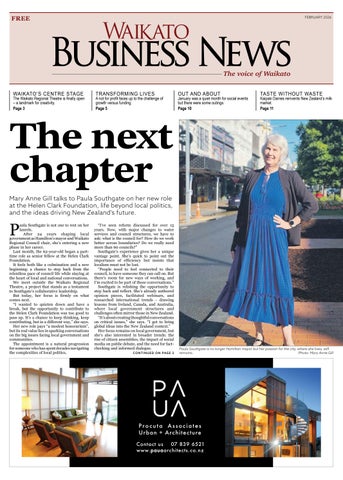
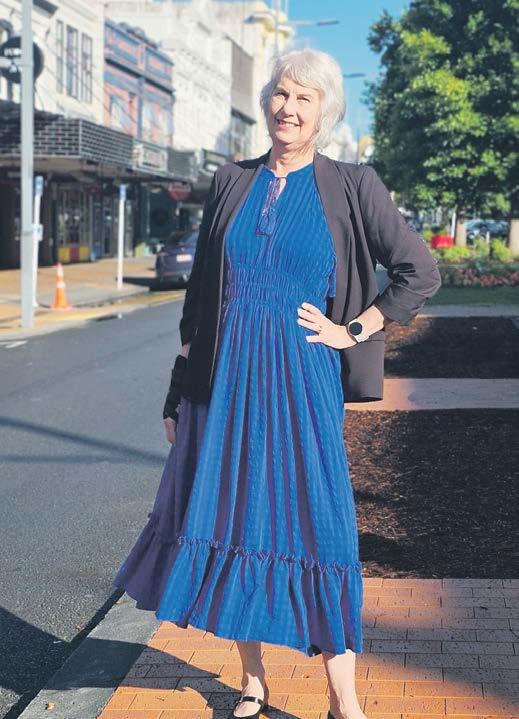
Mary Anne Gill talks to Paula Southgate on her new role at the Helen Clark Foundation, life beyond local politics, and the ideas driving New Zealand’s future.
Paula Southgate is not one to rest on her laurels.
After 24 years shaping local government as Hamilton’s mayor and Waikato Regional Council chair, she’s entering a new phase in her career.
Last month, the 62-year-old began a parttime role as senior fellow at the Helen Clark Foundation.
It feels both like a culmination and a new beginning: a chance to step back from the relentless pace of council life while staying at the heart of local and national conversations.
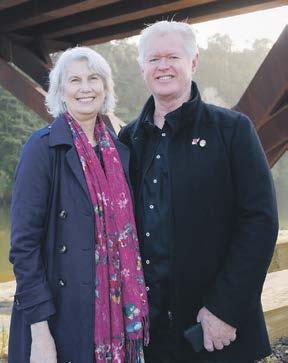
We meet outside the Waikato Regional Theatre, a project that stands as a testament to Southgate’s collaborative leadership.
But today, her focus is firmly on what comes next.
“I wanted to quieten down and have a break, but the opportunity to contribute to the Helen Clark Foundation was too good to pass up. It’s a chance to keep thinking, keep contributing, but in a different way,” she says. Her new role pays “a modest honorarium”, but its real value lies in sparking conversations on the big issues facing local government and communities.
The appointment is a natural progression for someone who has spent decades navigating the complexities of local politics.
“I’ve seen reform discussed for over 15 years. Now, with major changes to water services and council structures, we have to ask: what is the council for? How do we work better across boundaries? Do we really need more than 60 councils?”
Southgate’s experience gives her a unique vantage point. She’s quick to point out the importance of efficiency but insists that localism must not be lost.
“People need to feel connected to their council, to have someone they can call on. But there’s room for new ways of working, and I’m excited to be part of those conversations.”
Southgate is relishing the opportunity to step back and reflect. She’s already authored opinion pieces, facilitated webinars, and researched international trends - drawing lessons from Ireland, Canada, and Australia, where local government structures and challenges often mirror those in New Zealand.
“It’s about creating thoughtful conversations on critical issues,” she says. “I get to bring global ideas into the New Zealand context.”
Her focus remains on local government, but she’s also interested in broader trends: the rise of citizen assemblies, the impact of social media on public debate, and the need for factchecking and informed dialogue.
OUT AND ABOUT January was a quiet month for social events but there were some outings.
Page 10
TASTE WITHOUT WASTE Kaipaki Dairies reinvents New Zealand’s milk market.
Page 11




News/Editorial
Roy Pilott editor@goodlocal.nz 027 450 0115
Mary Anne Gill maryanne@goodlocal.nz 021 705 213
Viv Posselt viv@goodlocal.nz 027 233 7686
Chris Gardner chris@goodlocal.nz 027 231 7007
Advertising Director
Janine Davy janine@goodlocal.nz 027 287 0005
Owner/Publisher
David Mackenzie david@goodlocal.nz
Office/Accounts admin@goodlocal.nz 07 827 0005
Readers’ contributions of articles and letters are welcome. Publication of contributions are entirely at the discretion of editorial staff and may be edited. Contributions will only be considered for publication when accompanied by the author’s full name, residential address, and telephone number. Opinions expressed are not necessarily those of the publishers. Waikato Business News is published by Good Local Media Limited.
Nationwide, home values rose towards the end of the year, but how has commercial real estate fared? Jon Rawlinson spoke with an expert on the costs and opportunities in buying, selling, or leasing commercial property.
The commercial property market appears to be on a strong footing in the regions.
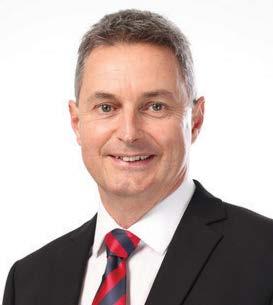
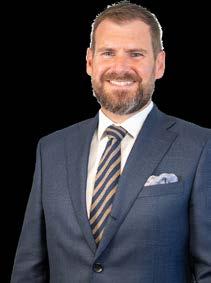
From his base in Hamilton, Mike Neale is well positioned to assist vendors and purchasers across the Waikato and Bay of Plenty.
Demand is pushing up prices, rents and leases, but supply is growing too. Coupled with growth in transport networks, this is highly promising for the Waikato and Bay of Plenty, Neale says.
“Hamilton was once the poor cousin in the Golden Triangle, but it’s firmly on the radar now.
“We’re seeing an increasing amount of investors from outside come in, from Auckland and Wellington particularly,” he says.
“Tauranga has been the golden child in many ways, with a more affluent population, but I think it’s evened out a lot more now.”
Neale is managing director





of NAI Harcourts in Hamilton and has more than 20 years’ experience specialising in commercial real estate.
Overall, the commercial real estate market has been showing a return to good form, he says.
“There’s certainly a lot more interest in commercial property. It’s been driven by the lowering of the Official Cash Rate and particularly bank deposit rates.
“People are looking at other forms of investment so there have been significantly more inquiries and we’re certainly starting to see a rise in values.”
In general, the residential and commercial markets both seem to be showing similar positive signs.
“During the last few months, properties that had been sitting on the market are now sold.
“As demand increases, invariably values go up and that’s absolutely what we’re seeing now. It’s cyclical, which isn’t a bad thing really, and not
too much different to houses in that way.”
However, there are marked differences.
“Generally, people buy residential real estate for capital gain but they tend to buy commercial real estate for cash flow,” Neale explains.
“You may not get the gains that you can from residential property, but you will get a much better return in cash flow from commercial property.”
Unlike some urban centres, there’s room to grow in the Waikato/Bay of Plenty region.
“Wellington’s very constrained, Auckland’s moving further and further out, but we have a lot of land for development, particularly for the industrial sector.”
Looking ahead, Neale is optimistic.
“We’re seeing a lot of businesses come to Hamilton, which really has increased in the last six to nine months.
“There are challenges, but there are also opportunities to learn from others and to do things better.”
Even as her gaze turns national and global, Southgate is proud of the tangible changes she helped deliver in Hamilton.
Her six years as mayor left a lasting legacy, from cultural landmarks like the Waikato Regional Theatre to infrastructure projects such as the new river bridge and Rototuna Library.
She is quick to share credit, noting these achievements span multiple political terms including previous mayors Andrew King and Julie Hardaker.
Her approach has always been grounded in collaboration - recognising the contributions of predecessors and successors alike.
“It’s never just one person. It’s a team, it’s the community, it’s the people who quietly give and support behind the scenes.”
Southgate returns to the theme of positive leadership regularly.
“People want to see leaders who promote and empower others. That’s what makes a difference.”
She is candid about the challenges of
public life - especially the negativity that can come with social media.
“I’ve had my share of criticism.
“But I focus on the positive. I want to influence the right conversations, to celebrate what’s good about our community, and to encourage others to do the same.”
Now, with more time for familyespecially her grandchildren, with another one on the way - and personal pursuits, Southgate continues to mentor new councillors, contribute to sector training, and champion the causes she believes in.
“I love local government. I want to make a positive difference to the community,” she says.
As Southgate steps into this new chapter, her focus shifts from the council chamber to the wider conversations shaping New Zealand’s future.
Leadership, for her, has never been about titles – it’s about influence, ideas, and empowering others.
The setting may have changed, but her commitment to making a positive difference is as strong as ever.
• See: Shaping local futures, page 8.
“We don’t have really big highs and lows that the likes of Auckland might, but we’re very steady.
“In Tauranga, it’ll be more or less the same, although it has a few more limitations,” he says.
“I think we’re going to see a steady improvement across the board, which is really positive. Overall, I’m expecting it’s going to be a really positive year.”















Teacher Amelia Meertens, who recently started at Southwell School in Hamilton, has received the prestigious National Excellence in Teaching award for her creativity, leadership and commitment to student success at Mātangi School. The Apple award included a $5000 professional development grant which Meertens plans to use to start a Master of Educational Leadership at Waikato University.
Honour lauded
Tom Roa’s work speaks to the importance of connection between language, culture and people with his influence extending far beyond the classroom, Waikato University vice chancellor Neil Quigley says. He was acknowledging the Te Pua Wananga ki te Ao - Faculty of Māori and Indigenous Studies professor’s New Year honour of becoming a companion of the New Zealand Order of Merit.
Rural insurer FMG has taken on the naming rights of the former CRV Building at Waikato Innovation Park. The name change comes as CRV moves its operations back to its Bellevue facility in Cambridge. FMG has said its decision to take on the naming rights reflects the company’s ongoing commitment to supporting the Waikato region, innovation, and the rural sector. Further changes come to Waikato Innovation Park with Gallagher moving its security team to Ruakura.
Water appointment
Neil Brennan has been appointed interim chief executive at Waikato Waters the council-controlled organisation formed by Hauraki, Matamata-Piako, Ōtorohanga, South Waikato, Waipā, Waitomo, and Taupō district councils to collectively manage and deliver drinking water and wastewater services. Waikato Waters will be one of the region’s largest entities, with assets of approximately $1.6 billion. Brennan comes from Australia where he worked in several water authorities. Programme director Vaughan Payne finished with the company last month.
The Waikato Regional Theatre opens as a landmark for creativity - a space where heritage meets world-class performance and community spirit, reports senior writer Mary Anne Gill.
As the doors of the Waikato Regional Theatre swung open for the first time last month, a sense of anticipation swept through the crowd.
Guests stepped into a space where timber and stone curves mirrored the Waikato River, and the foyer buzzed with excitement.
The three-day showcase - To The Stars / Ki Ngā Whetū - marked not just the unveiling of a striking new theatre, but the beginning of a new chapter for the region’s arts community.
The theatre’s location is steeped in history. It rose from the site of the former Hamilton Hotel, where Queen Elizabeth II stayed in December 1953.
The land itself was a gift to the philanthropic Momentum Waikato trust - donated in 2017 by Mitch Plaw and his family - the Waipā-based founders of Vantage Aluminium and Takapoto Estate.
“Without their generosity, the theatre with its historic hotel façade in place would not have happened,” says Live Nation venue manager Michael Gilling.
The Plaw family’s contribution is commemorated not just in bricks and mortar, but in the opportunities the $80 million, BNZ sponsored theatre now offers to the region.
From the outset, the theatre’s design brief was ambitious: create
a world-class venue that could serve everything from grand opera to school prizegivings.
“This is the newest venue in the southern hemisphere and we’re really proud to have that,” says Gilling.
“You’ll see the awesome woodwork around here that Jasmax (architects) and Charcoal Blue (theatre consultancy) have done. It represents the curvature of the Waikato River… all the little details have really represented Waikato.”
“We wanted to create and be a part of a community hub that can service all kinds of content, all kinds of artists, all kinds of music and performance,” says Mark Kneebone, managing director of Live Nation.
Its flat floor adds flexibility –from opera to metal gigs to school prizegivings.
“It’s not just about bringing the shows, it’s also building the local community - from high school kids to amateur theatre,” says Gilling.
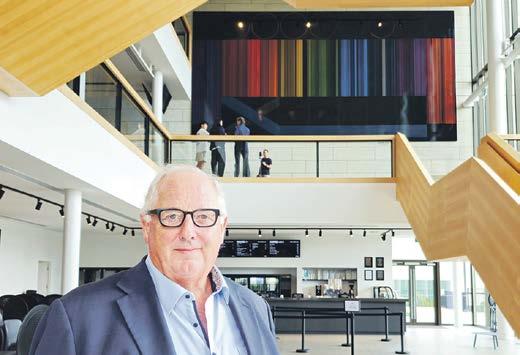
Step inside, and the theatre’s architectural ambition is immediately apparent. The auditorium is split into three levels - stalls, circle, and balcony - each offering a different perspective on the stage. The woodwork, inspired by the Waikato River, flows through the space, while Hinuera stone from the region anchors the building to its landscape.
One of the theatre’s showpieces is the “halo” - a wooden sound shell designed to transform the space acoustically for orchestral and choral performances.
“It is one of its kind in the country,” says Gilling.
Above the foyer, the Ralph Hotere mural - commissioned for the old Founders Theatre in 1973 and now insured for nearly $5 million - has found a new home.
For former mayor Paula Southgate, the theatre’s opening is the culmination of years of advocacy and vision by Hamilton City Council.
“We’ve been through all the ups and downs, those that love it from the get-go and those who were resistant,” she says.
“Two things I’m particularly proud of: we put our foot down and said the heritage must be retained, and we included the century-old staircase made of American oak.”
They are the very steps which Queen Elizabeth II would have climbed to go to her room on 30 December 1953.
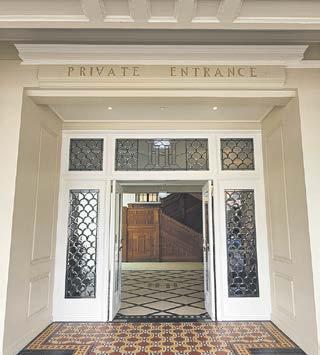
The theatre’s façade and the Queen’s balcony are the only original pieces of the Hamilton Hotel that remain.
Live Nation sees the theatre as a rare, full-scale cultural investment.
The packed opening programme sets the tone for more shows, bigger audiences, and new opportunities


for Waikato’s creative community.
As the applause echoed through the auditorium and the curtain rose, Gilling allowed himself a moment of reflection and shed a tear as the occasion overwhelmed him.
After years of planning, construction and countless walkthroughs the theatre was finally alive: performers ready, lights blazing, an audience waiting to celebrate the region’s creativity.
The Waikato Regional Theatre is more than a building. It is a gift, a gathering place, and a promise that the arts will always have a home by the river - open to all, for generations to come.




Three years after its launch, Te Awamutu’s Ko Wai Au Trust is facing a common challenge - the growth versus funding conundrum. Viv Posselt explains.
Ko Wai Au is a not-for-profit dedicated to supporting rangatahi aged 15-24 who are disengaged from education, employment, or training, helping them avoid falling through society’s cracks.
budgeting, cooking, first aid and do work experience.
Rodney Stirling
organisation starts another busy year.
It was founded in early 2023 by Andrew and Georgina Christie who both have extensive experience working in the social services field here and in Australia and share a vision around a service for youth that is based on a model of one-toone mentorship.
It was during Covid that they fine-tuned their thoughts into the nuts and bolts of policies and procedures.
The strategic plan they devised for the trust was aimed at empowering rangatahi to thrive independently. To do that they would provide services that would help them achieve independence while giving them a sense of belonging in their communities.
It’s both aspirational and practical.
One of the biggest differences from many similar organisations is that the one-to-one mentorship continues well beyond the initial intervention stage and is there for as long as it is needed. It means once a young person gets to the point of employment, Ko Wai Au continues to mentor them for as long as needed to ensure the placement is sustainable.
Georgina Christie avoids using the term ‘high risk’ when applied to youth.
“I believe all young people are at risk and that if you put them in the right place, with the right support to meet their needs, they are more likely to be OK,” she says.
Adding to that are thoughts of finding a permanent space in Cambridge, where they already deliver some school-based programmes. In her last report for 2025, Christie says the increasing demand from Cambridge means that without a dedicated hub in the town, they will be limited in what they can achieve.
EXPERT CONCRETE GRINDING, POLISHING & SEALANTS / COATINGS FOR FLOORS & WALLS
The combination of teamwork and one-to-one mentorship provides practical solutions to the problems holding them back. Working with teams and mentors, they help the young people gain training, employment or education, help them get their driver’s licence, ID and other documentation, open bank accounts, learn about
Running alongside Ko Wai Au is a health-centred initiative, Hauora, which she says provides health access and support for young people, including mental health. Another arm, one called Kāinga, focuses on housing issues related to youth and their whānau.
Since launching, the number of rangatahi going through the programme has increased yearon-year.
Our team is Consistent, Reliable, Professional & Considerate

With it has come a growing need to address burgeoning caseloads, address capacity and secure longterm sustainable resourcing. They are issues that remain at the forefront of planning as the
“As we move into 2026, my aspiration is that we can expand our reach into smaller townships and communities that currently lack accessible services for rangatahi. There is clear need across our region, and Ko Wai Au is well-positioned to fill those gaps if the right resourcing becomes available,” she says.
Over the past year, Christie has seen more rangatahi self-refer, and a growing number of those in school-based programmes going on to seek further services.
She sees that as significant, a strong first step in improving their lives.


“Ours is a very unusual model,” she says. “We take a robustly holistic approach. Someone might come in with what they see as one problem, but there will be other factors that have led to that. I believe it takes a team to address those needs … it is never just one person.”
Our team is Consistent, Reliable, Professional & Considerate
Our team is Consistent, Reliable,
Our team is Consistent, Reliable, Professional &





Rodney Stirling
Rodney Stirling
EXPERT
EXPERT


EXPERT CONCRETE GRINDING, POLISHING & SEALANTS / COATINGS FOR
EXPERT CONCRETE GRINDING, POLISHING & SEALANTS / COATINGS FOR
Rodney Stirling
Rodney Stirling
Rodney Stirling






B y DAVID CHRISTIANSEN
The opening of the new BNZ Theatre was a momentous moment for Momentum Waikato and the region, we are proud to have convened and led such a significant community project.
The essential ethos of Momentum and all other community foundations is in the name –to build and sustain community.
Behind the various ways we enable and grow generosity in the Waikato is our underlying belief in the value of active communities, as the bedrock of sustainable local wellbeing in all its forms.
This is why the theatre project fitted into Momentum’s agenda – because community is created and nurtured when people gather together. Our ‘Share the Stage’ slogan for the Theatre campaign spoke to both performers and audiences, because it is Kapunipuni, a place where we gather as a community.
Creative Waikato has done ground-breaking research on the links between creativity, wellbeing and community across the region. Their 2022 project ‘Wellbeing and Arts, Culture and Creativity in the Waikato’, produced with Huber Social, surveyed the experiences and perceptions of a range of local people.
It found nearly everyone values creativity, most are regularly exposed to some form of art and culture, sometimes without realising it, and they recognise that those experiences have mental health and wellbeing benefits for themselves and others, which ultimately benefits the whole of society.
We asked ourselves - how to boost the cultural momentum created by the Theatre coming online? How to dovetail that ‘creativity = wellbeing = community’ agenda into our primary activity of philanthropic endowments?
What would propagate participation in everyday creativity, or springboard artistic talent into professional careers, right across the region?
At the moment, practitioners and groups have limited support options. There is some small art-specific funding available locally and nationally from government entities and community funders, and those sources also offer larger sums but with creative activities competing with other community needs. Or sponsorship from businesses or ‘angel investors’ or crowd funding can be pursued.
What there hasn’t been to date is a public-facing Waikato-based philanthropic investment fund covering all art, culture and creativity, wherein anyone can donate or bequest to support local creativity, knowing their contribution will provide ongoing funding that will be perpetually and expertly allocated to creative activity.
Happily, an anonymous donor shared our vision to more creatively fund creativity, who also wanted to celebrate the Theatre’s opening by bolstering the local cultural ecosystem.
With their serious opening donation, we have together established the ‘Momentum Waikato Arts, Culture and Creativity Fund’.
Further donations to this new fund will more quickly grow what it can offer, and its distributions to region-wide artistic and cultural endeavours will start in a couple of years.
This exciting initiative will ensure the new BNZ Theatre is only the beginning of the Waikato becoming a major cultural hub, with a rejuvenated sense of community.
• David Christiansen is Executive Officer of Momentum Waikato.

By SARAH LIM
When an employee’s performance starts slipping, putting in a performance improvement plan after consultation may seem like an obvious solution. However, if declining performance is related to the employee’s health, the solution may not be as straightforward.
Before proposing and commencing a performance improvement plan, the employer should consider whether the issue is a ‘won’t do’ rather than a ‘can’t do’ situation.
They should check whether the employee is physically and mentally well, has received all relevant training for their role, is aware of expectations and KPIs, and is supported appropriately.
If the employee is in an environment where they should reasonably be performing their job well but are not, then a performance management plan may be the most suitable formal step.
After consultation, the employer and employee would agree on a performance improvement plan, with regular meetings to raise issues and provide feedback. If performance does not improve by the end of the review period, the employer may terminate employment. This process typically takes four to eight weeks.
Even if an employee has everything they need in order to be able to perform their role, their performance could still decline due to external factors.
If issues outside of work are affecting their performance temporarily, then the employer could consider accommodating the employee until those issues are resolved (for
example, by providing discretionary time off or temporarily reducing their workload) and then monitoring whether their performance returns to normal after that.
However, if the employee’s performance has been declining gradually and consistently as a result of physical and/ or mental health concerns (including anxiety and depression), and if this has been accompanied by absenteeism, then the problem becomes more complex. If the employer is aware that the employee cannot and has not been able to perform their job well due to their health for several weeks or months, then the best way to address those concerns might be a medical incapacity process, not a performance management plan.
This process would involve asking the employee to undergo a medical examination and to provide relevant medical information about the employee’s diagnosis, prognosis, and when they would be able to resume their duties in line with their employment agreement.
If the employer’s chosen process does not reflect the complexity of the situation, the outcome may be a personal grievance claim.
At the EMA, our AdviceLine fields many calls each week from employers on this very issue, while the EMA Legal team provides expert counsel to members. Seeking legal advice early and putting in place an informed strategy can help ensure the process is fair and legally sound.
• Sarah Lim is senior associate at the Employers and Manufacturers Association (EMA).








The narrative of “generation rent” giving up on the Kiwi dream of home ownership doesn’t stack up, according to Realestate.co.nz.
“The percentage of New Zealanders who own their own home has been pretty consistent – the data doesn’t suggest fewer people buying homes nationally,” says Vanessa Williams, spokesperson for the property platform.
“Most people still purchase in their midthirties when they’re ready to settle down. The culture of home ownership hasn’t changed.”
While lifelong renting could become more common in the future, it’s not happening yet. What is changing, however, is the rental market.
Realestate.co.nz data shows rental stock nationwide rose 17.4% in November compared to the same time in 2024, with newly listed rentals up 12.4%. Waikato recorded a 12.3% increase.
A net population loss is also influencing demand, as more 20–39-year-olds move offshore.
“With living costs high and house prices flat or falling since early 2022, fewer people are leaving home,” says Williams.
“Investors who haven’t seen expected capital gains are renting rather than selling, creating higher supply alongside lower demand.”
This shift has nudged rents down. The national average weekly rental price fell 1.8% year-on-year – the first drop in a decade. Waikato rents dipped 0.1%, mirroring the national trend.
“To see a fall after 10 years of consistent growth signals a market reset,” says Williams.
Isaid to someone the other day about Casabella Lane — an enchanting Mediterranean-styled laneway between Barton and Anglesea Streets — it’s looking better than ever, and it reminded me of the start of my real estate career.
Originally from Wales, Auckland solicitor Andrew Thomas and his wife began a bold journey when they purchased the former Warehouse Stationery building on Barton Street, with the vision to eventually create a boutique Mediterranean styled lane. In 2003, when I began in real estate, the lane was starting to take shape, though it reached only about two-thirds of the way down, stopping just before where today’s courtyard begins. It ended at a charming Greek restaurant, who served the most wonderful lamb shanks – coincidentally, the place where I had to take the office team after completing my first $1 million deal (former BNZ building on the corner of Victoria & London Streets, which had been vacant for nearly 10 years).
Andrew sometimes needed convincing about the tenants we brought forward, but almost without exception, they proved to be strong additions to the lane, providing a niche retail experience.
Unfortunately, the GFC took hold in late 2007 and the second-tier finance bit, which led the owner to unit titling the tenancies and being forced to sell them off separately. It’s been through a bit of a roller coaster, but as I wander through it most weeks, it’s really looking very good.
Casabella Lane now features: 18 shops
• 9 apartments
• 35 car parks, plus a loading zone
• Zebrano wanted to own their premises, so we arranged an offmarket deal allowing them to purchase two adjoining units, which they continue to own and operate today.
Realestate.co.nz chief executive Sarah Wood says with more rental properties on the market than ever before, the dynamic between landlords and tenants is changing.
“Everyone in the sector will need to adapt.” – Jon Rawlinson
A new crop of rural vets – including Hamilton’s Jason Moore (pictured) – is set to ensure farmers have access to quality care for their animals.
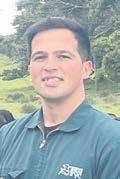
Thirty-two new vets have been assigned throughout the regions under the Voluntary Bonding Scheme for Veterinarians including 10 in the Waikato or nearby.
Moore was first drawn to becoming a rural vet while studying.
“My studies exposed me to a lot of different settings, the setting which I enjoyed most was being on-farm,” he says.
Now based at Animal Health Centre Waikato, in Morrinsville, Moore is pleased to be playing his part in addressing a shortage of country vets.
“The scheme encourages young Kiwi vets like me to become embedded in rural communities. It gives greater incentives for vets to work in places where they are needed most,” he says.
“I just completed my first calving season. It feels great being able to correctly identify a suspected disease process through the right diagnostics. I also thoroughly enjoy the satisfaction of follow-up calls with clients where patients have fully recovered following their prescribed treatments.”
Bonded vets receive $55,000 over five years in return for working in rural areas with a focus on production animals and working dogs.
Becoming part of a new community while also remaining close to friends and family in Hamilton has been another benefit of the scheme for Moore.
“It has allowed me to build relationships with kind, hardworking farmers, seeing them across different seasons, becoming part of their story and helping them achieve their goals,” he says. – Jon Rawlinson
No other agent in Hamilton seemed to take much interest in the lane, but as a newcomer I only saw an intriguing project. Rents were somewhat high at the time, particularly for a laneway that didn’t yet lead anywhere.
Kara Gerrand and I developed a strong working relationship with Andrew, who was very deliberate about curating the right mix of tenants. He envisioned a courtyard and full access through to Anglesea Street. It was, without question, a passion project — not without its financial risks, as he later discovered. Having completed more than 30 lease and sale transactions in the laneway, Kara and I have been privileged to be part of its journey.

Over time, we helped Andrew acquire adjoining properties, until only one more was needed to complete the development and allow construction of the courtyard and apartments. By this point, his wife’s patience was wearing thin. She joked, “If you buy another building, I’m leaving you.” It felt too late to stop, so he purchased the final property — and true to her word, she left him.
• Sills, who took over the Annah Stretton tenancy, and we facilitated a sale there too.
Nature’s Spa NZ purchased their unit in due course.
• And now Midas Diamond Jewellers. Standing the Test of Time:
• Poppies Books, originally located down by the courtyard, is still part of the lane nearly 20 years later — now in a larger shop closer to Barton Street.
• Gordon Harris art supplies wanted to be in Hamilton and located near Wintec.
• Kino Sushi who started in the courtyard when it was originally developed and have never left.
Recent Arrivals:
Scran, a retro coffee bar and eatery, with a modern twist.
• Parlour Boutique, who are undertaking their fitout in the former Midas Jewellers site.
The lane’s distinctive charm continues and there is truly something special for everyone. Next time you’re out shopping, take a stroll down the ultracharming Casabella Lane and show your support for a unique mix of local – you won’t be disappointed.
To Andrew Thomas, you really have left the Hamilton CBD with a legacy that you can be proud of – and we would like to thank you for your vision and commitment, albeit that wasn’t the outcome you deserved.

New Zealand’s Active Investor Plus (AIP) Visa, the country’s revamped “Golden Visa” programme, has continued its momentum into 2026, reinforcing its position as one of the world’s most attractive migrant investor pathways.
As of 19 January 2026, Immigration New Zealand has received 532 AIP applications with 100 applications under the Balanced Category (requiring $10 million to be invested over five years), and the remaining 432 applications under the Growth Category (requiring $5 million investment over three years). Interestingly, the split of around 80% Growth, and 20% Balanced, has been very consistent since the updated policy settings took effect on 1 April 2025. In total, these applications represent $3.16 billion in potential new investment into New Zealand, of which $926 million has already been invested. While investors under the Balanced Category do have the option to invest in bonds and listed equities, Growth Category applicants can only invest in managed funds and direct investments which are approved by InvestNZ. To become approved, investments must be New Zealand domiciled and must have the potential to tangibly benefit the New Zealand economy. Direct investments must also provide actual evidence of genuine investor interest. Importantly, approval by InvestNZ does not mean the investment is in any way Government-guaranteed and AIP investors must undertake their own due diligence before deciding on any investment.
AIP investors now come from 33 countries, led by: USA (38%), China (16%), Hong Kong (13%), Germany (7%), Singapore and Taiwan (both 5%). It is encouraging to see such widespread, and growing, interest from all over the world. Contributing to the attractiveness of the AIP are the reduced time-in-NZ requirements, the permanent residence outcome, the lack of other competing migrant investor policies, and the fast processing times. The average time to approval in principle is 33 working days and once approved in principle, applicants have
six months to transfer and invest the required funds.
Applicants have different reasons for choosing the AIP, but mainly it is about having a Plan B. The world is experiencing significant change and uncertainty and applicants are seeking options to provide additional long-term family and financial security, and to open doors to new opportunities. For many, simply moving some of their capital to another country is a sensible financial decision and the resident visa outcome provides an additional incentive to choose the AIP.
The AIP is certainly achieving its core purpose, and much more, but this success has created a new challenge - the availability of attractive, investment-ready opportunities that have acceptable investment risk and returns. With over $3 billion of potential capital already in the pipeline, and the potential for another $3+ billion during 2026, capital is arriving faster than opportunities are being created. AIP investors are very astute people and expect to be presented with high quality and well-managed investments. To date the private sector has stepped up, and is continuing to step up, with a wide variety of investment options, but it remains to be seen if they can continue to provide the quantum and quality of investments demanded by AIP investors in the future. The AIP also represents an opportunity for the Government to direct some of this capital into, say, much needed infrastructure projects but, somewhat surprisingly, we have not yet seen any appetite for this.
The success of the AIP ultimately rests on proactively building on the progress achieved so far, ensuring that approved applications translate into real investment, and that this capital delivers meaningful, beneficial and long-term outcomes for New Zealand. While the numbers to date are very encouraging, the real challenge will be whether New Zealand can provide sufficient, high-quality and sustainable investment opportunities to meet AIP investors’ requirements and expectations – this is something both the private sector and the Government need to deliver upon.

By KATIE MAYES
The government’s recently proposed council shake-ups aim to deliver significant changes to local government. Along with the current creation of arms-length organisations to manage water services, the reforms would result in the biggest change since 1989 when around 850 individual local bodies were consolidated into 86 councils.
Changes include introducing a rates cap of between 2-4 percent per year, simplifying planning legislation, disestablishing regional councils and requiring councils in each region to develop a plan to work together more effectively and efficiently (preferably at a larger geographic scale).
The stated intent is to keep rates affordable, and support councils lift efficiency and find smarter ways of operating. However, the reforms would go further - significantly changing how communities are represented and what your council may deliver.
All businesses and ratepayers would be impacted. Councils provide essential services and infrastructure that shape our daily life and the places we live, work and play –from managing public transport and waste to maintaining flood protection schemes, roads, parks and libraries, ensuring a sustainable environment and responding to civil defence emergencies.
Under the reforms, council rates would be capped at 2-4 percent annual increases. As rates are councils’ primary source of revenue, this would limit how they balance affordability with meeting community needs and wants. Exceeding the cap would require permission from a regulator appointed by central government, granted only in extreme circumstances such as natural disasters.
The reality for councils (and central government agencies such as NZTA) is that

the cost of managing, renewing, and building infrastructure has been rising well beyond two to four per cent in recent years. These cost pressures have been a major driver of rates increases. If councils cannot find smarter ways to provide infrastructure, they may need to cut services or reduce service quality.
Resource management reform is aimed at creating a more permissive and simplified planning system. Developers and communities would see a combined plan for each region with a 30-year blueprint for development and infrastructure investment, and land use and environmental protection rules. There would be more national consistency and direction, improved natural hazard management, and faster and fewer consents with reduced opportunities for community submissions.
Local government would be simplified in two steps to streamline decision making. Step 1 would see mayors form a Combined Territories Board (CTB) to lead regional issues and govern the regional council. Step 2 would require the CTB to develop a Regional Reorganisation Plan, consulted on with the community, examined independently, and approved by the Minister of Local Government. Options could include more shared services, more councilowned companies, reallocating functions, and/or merging territorial authorities into new unitary councils.
Consultation on the reform proposals closes soon. I encourage you to find out more and consider making submissions.
After all, the best way to predict your future is to create it.
• Katie Mayes is an executive director at Waipā District Council. The views expressed reflect her personal opinions and do not necessarily reflect the views of her employer.
By PAULA SOUTHGATE
I am unashamedly passionate about local government – the work it does, the issues it grapples with, and the opportunities it creates.
My entry into local government politics may have been incidental to my desire to improve my local community and environment, but 24 years later that commitment remains. I stood down from council to find other ways to add value and end 50+ hour weeks, but it will surprise no one that I still have strong views and plenty to say.
and changing expectations of councils directly affect local communities.



I have always believed in talking openly with communities about big, complex issues. In fact, I believe we fail communities when we avoid them. We need bold, open and diverse conversations about what matters, and we need people to participate.
The Helen Clark Foundation, alongside other think tanks, writers, podcasters and columnists, shares this belief. What we need more than ever – locally, nationally and beyond – is credible information that sparks thinking and debate. Debate matters. Politics is full of competing views, and that is not a weakness of democracy; it is its strength.
So, I am proud to be part of the foundation alongside some outstanding thought leaders, I said yes. The Foundation’s Honorary Fellows Programme brings together highly respected policy thinkers across a range of disciplines to contribute to the national conversation on long-term issues that matter to New Zealand. My role is to write opinion pieces, organise webinars and work with other fellows to provoke interest and discussion on important issues.
Local government is at a crossroads. Structural reform, infrastructure pressures
People often try to pin me to a political party. They always have. The truth is I have never belonged to one. I have worked with blue, red and green governments as required, and I am pleased now to have this role with an independent, non-partisan think tank. Councils operate within legislation, policy and funding frameworks set by central government, regardless of who is in power. Mayors and elected members must engage with government constructively and, at times, challengingly. I did both.
I don’t want to talk at people. I want to challenge assumptions, provoke reaction and get people talking with each other, with the foundation or with councils themselves, I don’t mind.
Ratepayers should vote, but this is not enough. Participation in council decisionmaking is disappointingly low. Submissions are few, engagement tools are underused, despite genuine effort from communications teams, and brave attempts by elected members.
I have worked across many issues with committed people from councils, organisations and across political lines. I intend to use my experience to help drive turgently needed community conversations. I love local government. Most elected members want better communities. Progress is possible – but only if we keep talking.
• Paula Southgate is a former mayor of Hamilton and chair of Waikato Regional Council.

By PETER WINDER
This year will be decisive for Iawai, the publicly-owned water company set to become one of the Waikato’s largest and most influential entities.
From July 1, Iawai will own the water and wastewater systems previously managed by Hamilton city and Waikato district councils. Water-related debt will transfer with those assets. We are charged with delivering services faster, more efficiently, and at the lowest cost to residents and businesses that we can.
From day one, performance will be scrutinised by our councils, Waikato Tainui, and of course the wider community. We will also be regulated by the Commerce Commission, the Water Services Authority –Taumata Arawai, and the Waikato Regional Council.
The stakes are significant. Clean, safe drinking water is essential, as is the health of the Waikato River.
Decades of under-investment in water infrastructure across New Zealand has left systems under strain. While the Waikato is better positioned than some regions, we still face a substantial backlog of infrastructure projects alongside rapid population growth. Without a more commercial approach, these pressures will only intensify.
Our immediate priority is a seamless transition of services from councils to Iawai with no disruption to water services. We are also changing the way we operate, starting with how we procure and deliver work, and particularly, renewals.
Historically renewals work - the maintenance that keeps existing assets performing - was contracted separately by
each council, typically for periods of one to three years. Councils were constrained by their ability to borrow and a lack of scale.
Iawai intends to go to market next month with a Request for Proposal (RFP) covering renewals across the entire network. By July, we aim to enter into a single 10-year relationship-based partnership potentially worth around half a billion dollars.
This is a material shift. It allows Iawai to leverage scale, build durable partnerships and secure better value. It also provides certainty and a longer pipeline of guaranteed work to our partners. A predictable pipeline of work helps drive investment, productivity, and capability.
This approach will attract suppliers who may not previously have engaged with councils, whether due to scale, a lack of skilled capacity, or short contract horizons. At the same time, local firms should not assume they will be sidelined. We have already engaged with Civil Contractors NZ to explore frameworks that ensure Waikato and Hamilton businesses can participate. A strong local civil construction sector benefits everyone, and Iawai has a role in sustaining it.
Existing renewals contracts will continue until completion. Over time however, we expect most renewals to move under the partnership model. This may be new to publicly-funded water infrastructure, but is standard practice in other infrastructure sectors.
We are also engaging with developers now to get the outcomes we all want. In highgrowth areas such as Pookeno, Te Kowhai and parts of Hamilton, development is
already constrained by limited wastewater and/or water supply capacity. Growth and development – including the development of new housing – has been stymied.
There is no silver bullet to challenges which have developed over decades and been exacerbated by the intense growth across Hamilton and the wider Waikato. We are already developing an ambitious capital works programme to respond to high growth pressures. We are also exploring new revenue streams, including charges associated with new housing and new commercial development, to ensure that growth – and not existing water and wastewater users – pays for growth.
We must make prudent use of longterm debt to fund essential infrastructure, ensuring costs are shared fairly between today’s users and future beneficiaries. We must seek innovation and partnerships that unlock constraints to growth. And we must drive savings to ensure our water charges can be as low as possible.
Iawai’s direction will be set out in a Water Services Strategy.
It will outline how we plan for growth, manage assets, meet regulatory requirements and prioritise investment and what those priorities mean for communities. The feedback on that strategy matters. So does the shift already underway: treating the development of water infrastructure as the complex, long-term, business it truly is.
• Peter Winder is the chief executive of Iawai – Flowing Waters, the publicly-owned water company set up by Waikato District Council and Hamilton City Council.
Māori and Pasifika culture will feature at the Waikato Regional Theatre this month when the show UPU returns from a sold out Sydney Opera House season to become the first Tagata Moana trust work in the newly-opened Hamilton venue. Celebrating pacific voices on stage, the performance will feature Upu (words) in English from celebrated Māori and Pasifika poetry.
New Zealand Blood Service has 4000 Waikato appointments to fill before the end of the month to meet the demand for blood and blood products. There is a fixed donor centre in Hamilton where both blood and plasma can be donated, and the service will host more than 25 mobile blood donation drives across the Waikato.
The Labour Party has selected former teacher, business owner and union leader Georgie Dansey (Ngāti Tūwharetoa) for Hamilton East and law lecturer Dr Myra Williamson for Hamilton West. Dansey heads to Parliament this month as a List MP replacing former speaker Adrian Rurawhe who resigned last month. Meanwhile prime minister Christopher Luxon has announced the general election will be held on November 7.
Waikato recorded a record low for December new real estate listings – 355 compared to more than 1000 in November – a recent report from Realestate.co.nz reveals. In contrast, the highest stock levels in any December during the past decade were recorded nationwide. With regard to rental listings, Waikato saw another solid increase.
With more than two decades of specialist expertise across its team, Better HR Co. has shaped its reputation as a trusted partner for organisations navigating today’s complex employment landscape. The company’s evolution from Stapleton Consulting reflected this growing depth. As Managing Director, Catherine Stapleton explains, “I’ve been in business for ten years, and now have a great team with unique expertise that we can bring to the table for business leaders to leverage.”
That team strength, combined with the company’s broad exposure to shifts in HR and employment relations, made the rebrand a natural milestone. Catherine says, “I’ve seen the changes across employment practices and HR through being a business owner myself, and time and time again hear business leader’s desire to do better and be better. So, it was a natural progression to change our name last year to reflect this desire.”
Better HR Co. is known for forming trusted relationships with organisations of all shapes and sizes. A reflection of the company’s own lived experience. “Being in business has been instrumental in shaping our approach,” Catherine says. “We can relate to the pressures and
challenges leaders face as employers.”
As Catherine puts it, “We’ve certainly been able to help provide everything from good advice to strategic planning, and our expertise has enabled those who are at a crossroads, or a sticky position in employment relations – or wanting to avoid them.”
What sets Better HR Co. apart is its blend of clarity and courage. Their philosophy is grounded in being “balanced, objective and transparent in facilitating what’s actually needed,” a foundation that has helped with strategy and retention alike. Catherine adds that their ability to be “brave and call it like it is when required” consistently earns positive feedback.
The team is also adept at navigating the grey areas so common in people related challenges. “Our approach may have evolved, [but] we are still very good at navigating the nuances and grey areas of employment relations and giving good advice, for business owners and leaders through to senior governance areas,” Catherine says.
This holistic lens supports Better HR Co.’s strategic focus on the employee lifecycle, always considering downstream effects. And with legislation constantly shifting, keeping pace is essential. “The wind vane of change is always there,” Catherine notes, citing

everything from smaller updates to “wholesale, wide ranging changes – like the proposed Holidays Act reforms.”
Underlying this capability is what Catherine calls “our own village of specialists,” always discussing trends and legislative developments.
Better HR Co’s detail oriented approach also complements preferred partner MyHR. Based in Auckland, MyHR’s AI enabled platform pairs with Better HR Co.’s bespoke advisory services, offering high value support to clients with specialised needs.
Together, these strengths help leaders achieve what they’re striving for: better
clarity, better outcomes, and ultimately, better HR practices.
Website: www.betterhrco.nz
Phone: 07 2420 447
Email: hello@betterhrco.nz
Address: Panama Square, 14 Garden Place, Hamilton
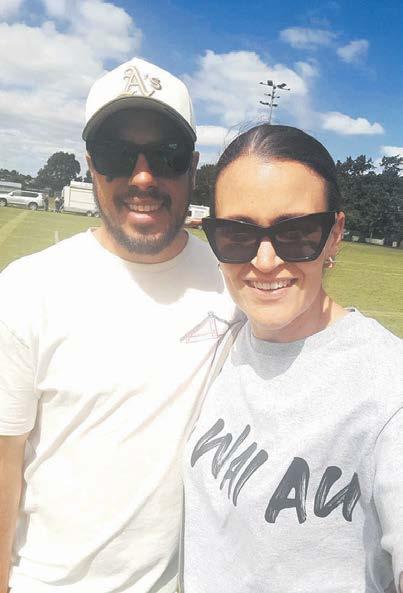
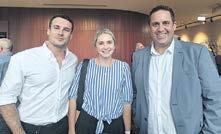
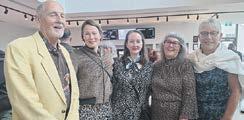
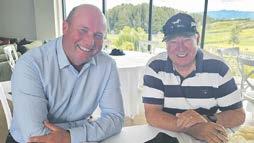
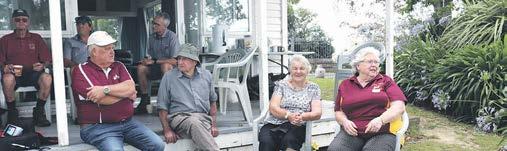
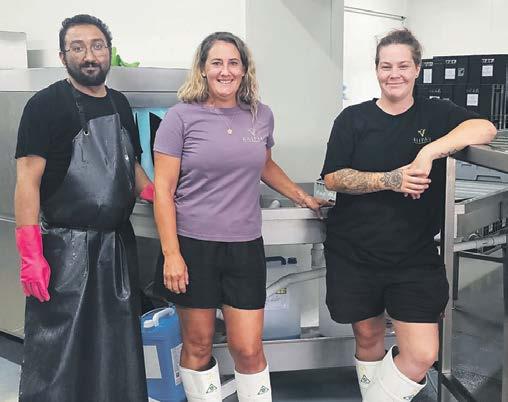
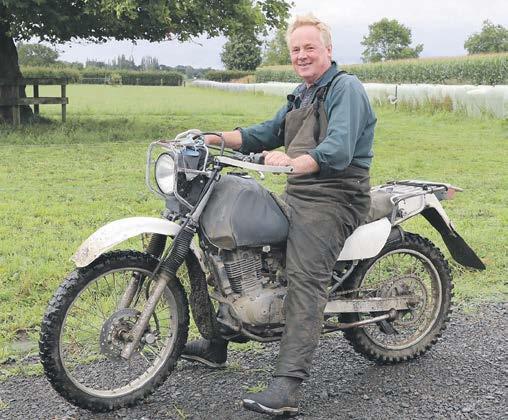
January is one of the busiest months for our rural readers and with the opening of the Waikato Regional Theatre in Hamilton, we were able to get some Out and About shots. More goodlocal.nz


By NICOLA GREENWELL
Encouraging visitors to travel to New Zealand’s regions outside the traditional summer peak is not just good tourism strategy - it is good regional economic policy.
Recent investment through the Government’s Regional Tourism Boost fund, including funding supporting the Hamilton & Waikato Tourism led One Flight campaign, recognises the important role regional gateways and shoulder-season travel play in building a more resilient visitor economy. The focus is not simply on attracting visitors, but on where they go, how long they stay, and the value they generate for regional communities.
April through to June is a particularly important period for regions like Waikato and the wider central and western North Island. While visitor numbers are traditionally lower than during summer, the opportunities are significant. Travellers during this period often stay longer, travel more widely, and engage more deeply with local experiences - from accommodation and attractions to hospitality, retail and transport.
Direct air connectivity into Hamilton from Australia provides a strong platform to support this type of travel. Flying straight into a regional gateway places visitors closer to their holiday from the outset, reduces pressure on major hubs, and encourages immediate dispersal through surrounding regions.
From Hamilton, travellers can explore the mighty Waikato, including destinations such as Raglan, and continue on to neighbouring regions like Taranaki, Ruapehu and Taupō.




This type of regional movement matters. When visitors spend time in our towns and regions, they spend money across a wide range of local businesses. That activity supports cashflow during traditionally quieter months, strengthens business confidence, and helps operators maintain continuity rather than relying solely on short peak-season surges.
At its core, this is about jobs. A more stable and predictable flow of visitors support employment across hospitality, accommodation, attractions, transport and retail. It enables businesses to retain skilled staff, invest in training, and plan ahead with greater certainty. Over time, this contributes to more vibrant towns and communities, and stronger regional economies.
Seasonality has long been one of tourism’s biggest challenges. The solution is not simply to chase volume, but to attract the right visitors at the right time, with experiences to match the season. Shoulder-season travel offers a different proposition - fewer crowds, authentic regional experiences, and a pace that suits many international visitors, particularly from Australia.
The Regional Tourism Boost fund reflects a growing understanding that regional tourism success depends on collaboration, connectivity and timing. By encouraging visitors to explore New Zealand’s regions between April and June, we are supporting businesses when they need it most - and ensuring tourism continues to deliver real, lasting benefits for our communities. • Nicola Greenwell is general manager of Hamilton and Waikato Tourism.



Mary Anne Gill reveals how Kaipaki Dairies is reinventing New Zealand’s milk market with a farm-to-bottle approach that champions purity, freshness, and sustainability by delivering whole milk the way nature intended.
On a lush 200-hectare block near Hamilton, a quiet revolution in New Zealand’s dairy industry is underway.
At the heart of this movement is Kaipaki Dairies, a company blending tradition, technology, and sustainability to deliver milk as nature intended - pure, fresh, and local. Whole milk, just as it comes from the cow.
Paul and Sue Bardoul have farmed on Kaipaki Road, Ōhaupō since the mid-1980s.
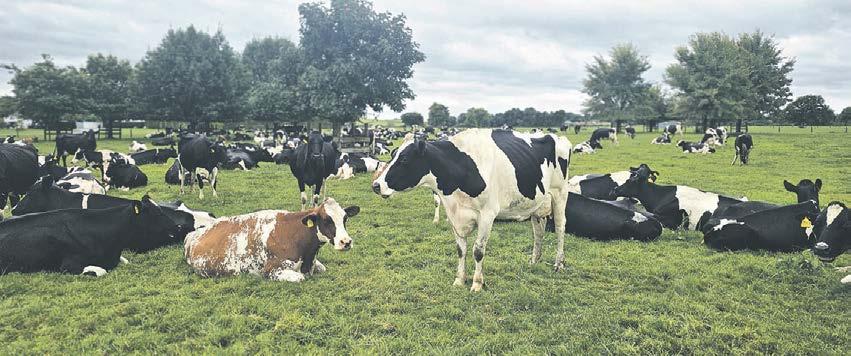
Three years ago, they built a factory on the farm to process milk from their 600 Friesians intent on introducing a zerowaste packaging system by offering swap-a-bottle for retailers and 10- or 20-litre pails for cafés, businesses, and workplaces.
They secured a government grant to help cut the environmental impact of plastic waste.
“I think we’ve got a really good product and I think we’ve got a really good model around sustainability,” says Paul Bardoul.
In the past year, Kaipaki’s closed-loop system has prevented more than two million plastic bottles from being produced, while supplying thousands of litres of milk in reusable containers.
Glass milk bottles largely disappeared in the 1980s and were replaced by cartons first and then plastic bottles. Deregulation meant supermarkets could sell milk and by the 1990s, home deliveries had ceased.
The Bardoul farm produces around five million litres of milk annually, but the 390 square metre factory processes less than half – the rest goes to Open Country.
The idea was simple: give New Zealanders access to premium, unadulterated milk, delivered in a way that respects both the environment and the consumer. Nothing is added, and nothing is taken away.
Every morning, milk flows directly from the cows in the shed to the factory through a 100-metre underground stainless steel pipeline. Within hours, it is pasteurised using cuttingedge technology, bottled, chilled, and ready for delivery – often within six hours of leaving the cow shed.
This process preserves the milk’s natural flavour and nutritional integrity, setting Kaipaki apart from standardised supermarket milk.
Unlike homogenised milk, Kaipaki’s cream rises naturally to the top –just as it should. It is true whole milk, untouched and unstandardised.
Only barista blends receive light homogenisation to prevent café equipment
blockages from the cream.
“Technically speaking, we’ve got a way better product. Our cows are fed a complete balanced diet, and their mineral requirements are met daily. So, nutritionally, it’s superior,” says Bardoul.
“People taste the difference.”
Sustainability is not a buzzword at Kaipaki Dairies - it’s a guiding principle.
From the outset, the Bardouls – named north west Waikato farmers of the year in 2002 - set out to create a model that was as good for the planet as it was for the palate.
Their two herds are managed through a split calving system to sustain all year round milking.
And the cows enjoy a carefully balanced diet of pasture, maize, barley straw, soy, and grass silage.
“Most cows in New Zealand are underfed,” says Bardoul.
“We make sure ours have the right balance of starch, protein, and fibre every day.”
But Kaipaki’s sustainability credentials shine brightest in its packaging. The company has pioneered a closed-loop system using reusable glass bottles and pails.
Customers – cafés, hotels, businesses, and households – return their empties, which are collected, washed, sanitised, and reused.
Operations manager Kirsty Parkes says one of the biggest challenges is ensuring they have enough bottles and pails.
“We’ve collectively reduced the production of hundreds of thousands of plastic bottles, with local cafés and businesses playing a key role in that impact,” she says.
They rely on retail customers returning the empties. There is a cash incentive, $1 off the price of the full bottle.
What sets Kaipaki Dairies’ milk apart is its taste - a
quality that comes from its purity and freshness.
The company’s journey began at places like farmers’ markets, where the milk’s taste quickly won over customers.
Word spread, and soon the company was supplying households, cafés, hotels, and businesses across Hamilton, Waikato, Bay of Plenty, Wellington, and Auckland.
Today, three delivery trucks make regular runs to these regions. In places like Hobbiton, tourists from around the world are introduced to the taste of real New Zealand milk – fresh, creamy, and unstandardised.
While the process is rooted in tradition – milk straight from the cow, minimal processing – the factory combines hands-on care with modern technology.
Bottling is still largely manual, with a small team filling, dating, and stacking bottles.
Kaipaki has invested in new equipment to improve efficiency and maintain the highest standards of hygiene and shelf life.
Every step, from pasteurisation to bottling, is designed to preserve the milk’s natural qualities and ensure it reaches customers at its freshest.
Kaipaki Dairies is more than a business – it’s a community effort. Its success is built on customers who embrace the old-fashioned return-and-reuse model and spread the word about the milk’s quality.
With plenty of capacity and milk available, the company is poised for growth.
“I’d just like to think that we could get more local people using our local product,” says Bardoul.
Kaipaki Dairies proves what’s possible when tradition, technology, and sustainability unite - delivering milk as nature intended.


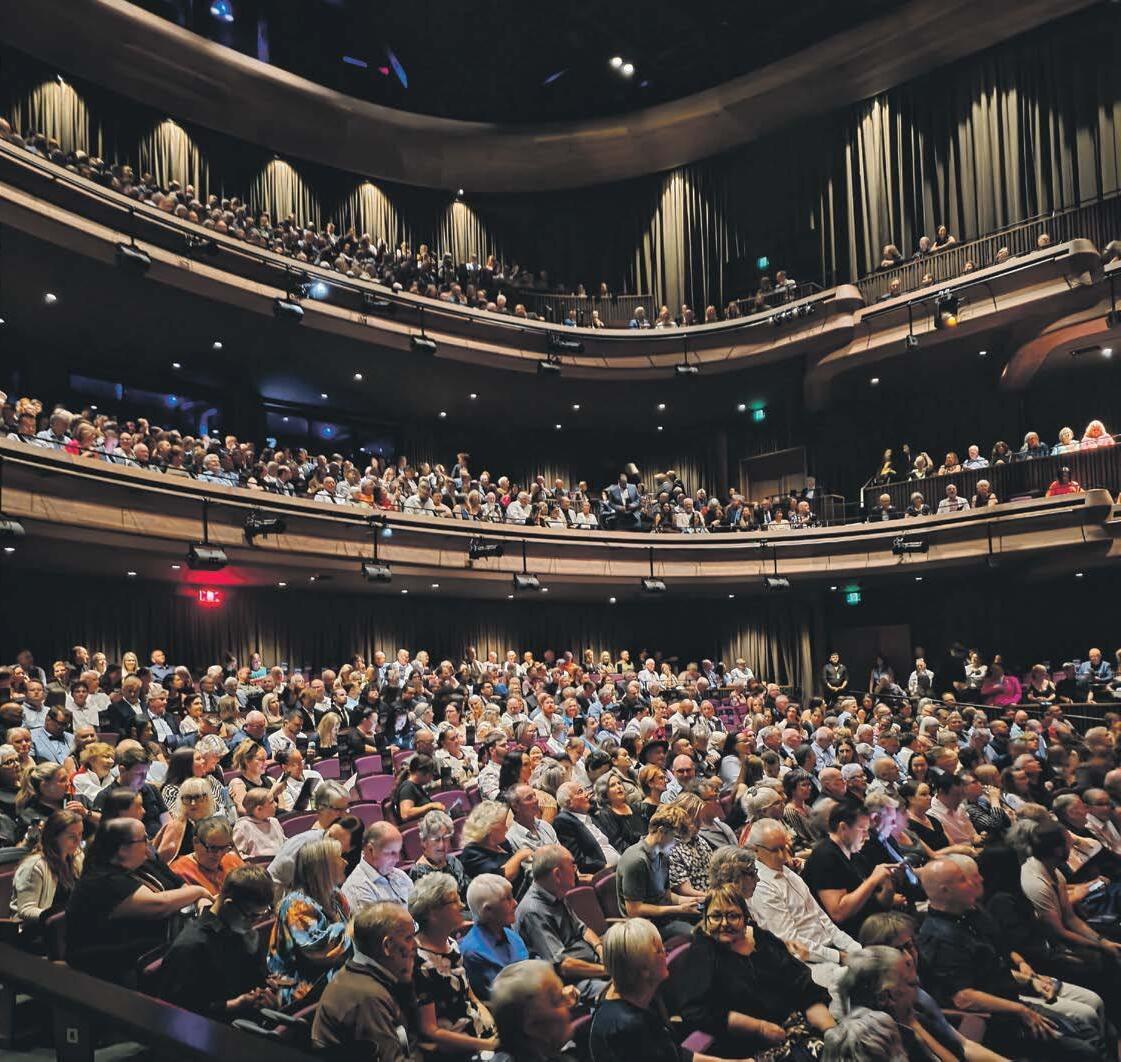
Welcome to the BNZ Theatre, from the Fosters team and everyone who helped shape this remarkable new community space.
As Fosters Director Leonard Gardner reflected on opening night, “A theatre is, at its heart, a house of stories.” Long before that moment, this building carried stories of faith, generosity, grit and resilience, and much drama. These stories will endure because they matter.
A few weeks in, arts and community are starting to thrive. It’s been filled with people, a range of talent on stage, and lots more to come. Noting the anticipation, enjoyment, and energy in the room – these are all reminders of why spaces like this matter.
To the Waikato community, this theatre is yours. Enjoy it!
This is a place where community is going to come together, enjoy each other’s company, express creativity, and grow, and thrive.