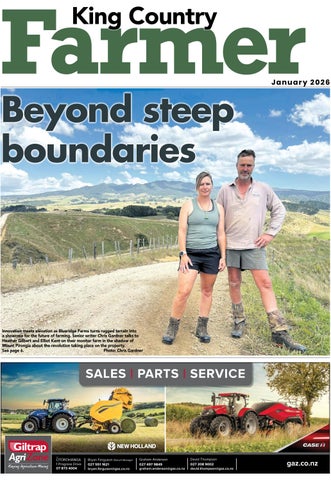
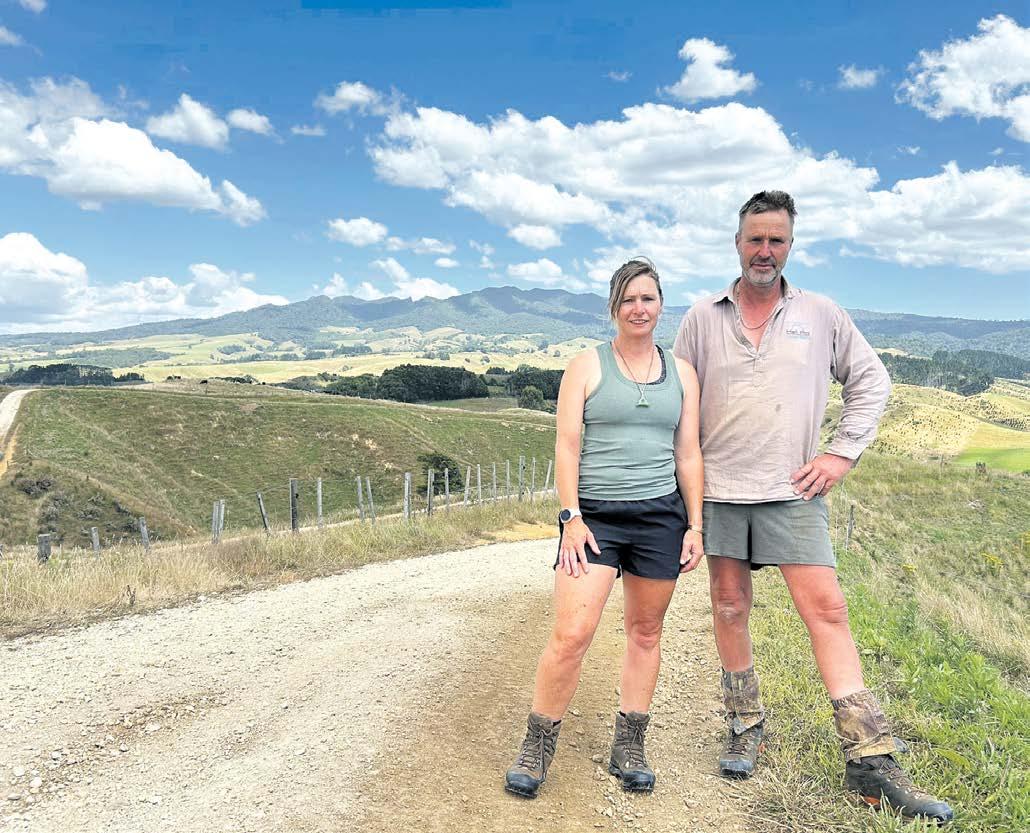
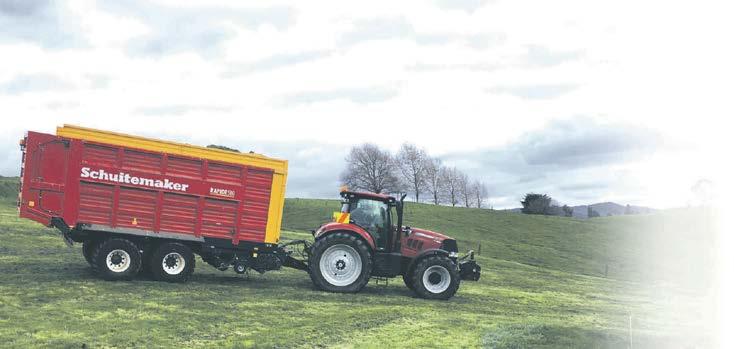
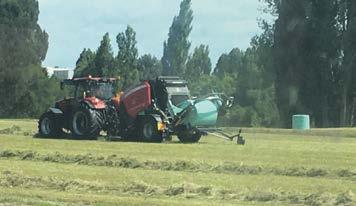
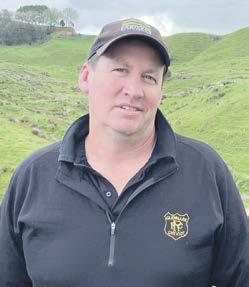
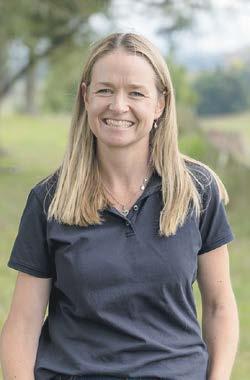
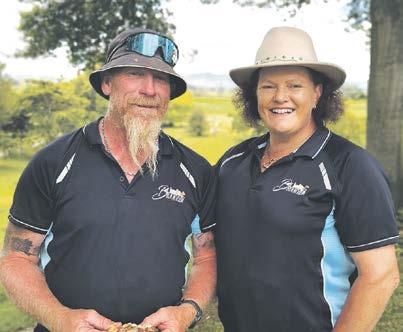
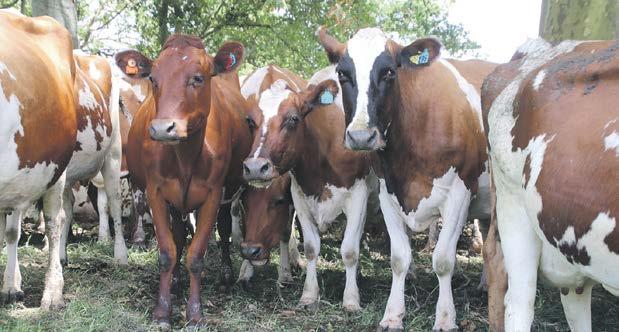
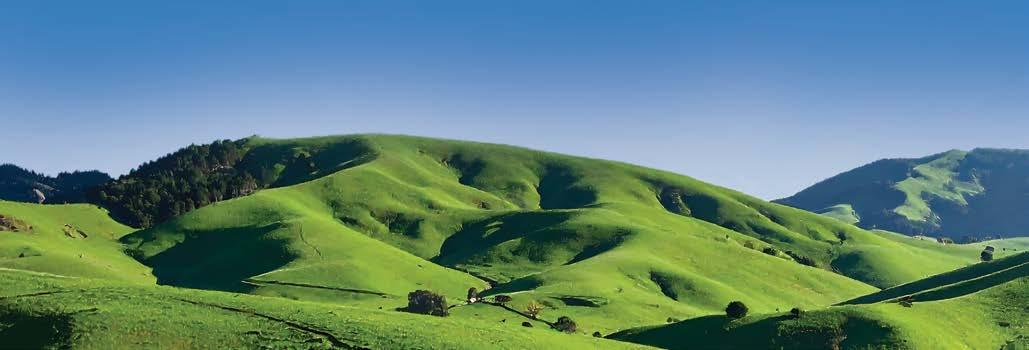
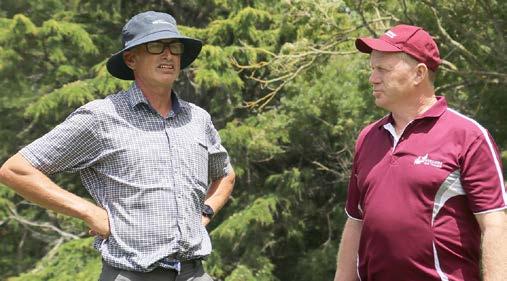
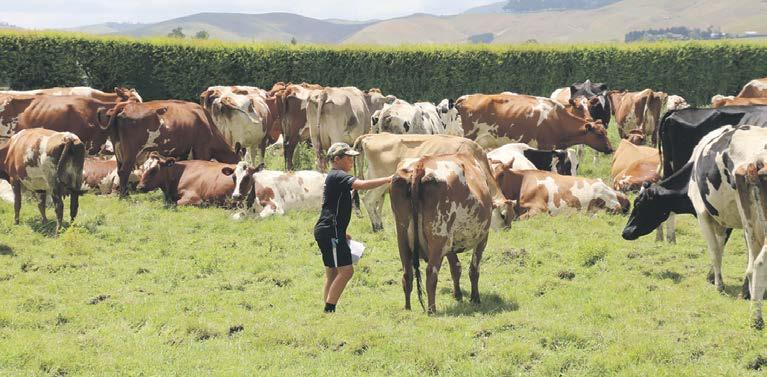
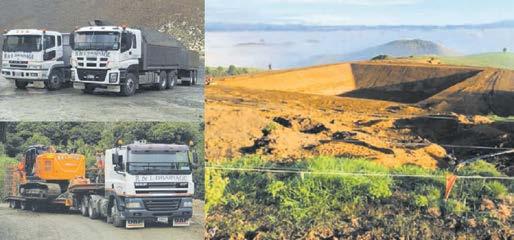
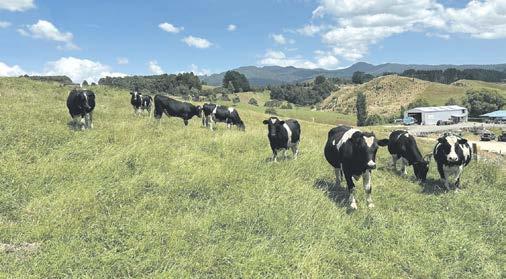
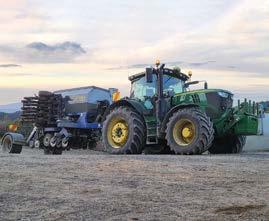
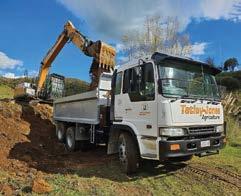
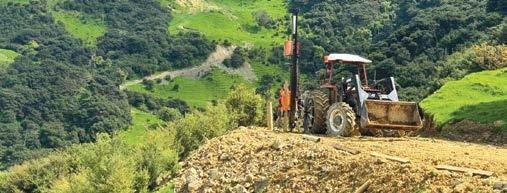
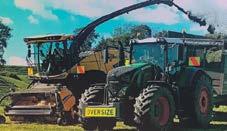
Innovation meets elevation as Blueridge Farms turns rugged terrain into a showcase for the future of farming. Senior writer Chris Gardner talks to Heather Gilbert and Elliot Kent on their monitor farm in the shadow of Mount Pirongia about the revolution taking place on the property. See page 6.
Photo: Chris Gardner
• Quality, professional advice to farmers and businesses
• Expert taxation and business structure planning
• Family trust management
• Friendly, personalised service Contact us for a FREE NO OBLIGATION INTERVIEW to discuss your financial requirements
• Commercial law including sale & purchase of businesses
• Commercial leases
• Company law
• Conveyancing Rural, residential & subdivisions
• Estate planning
• Rural law
• Trust law
• Wills & estate administration
• Wind farming
127 Rora Street, PO Box 412, Te Kūiti, 3941 P 07 878 1011 W www.lbllaw.co.nz
E sam@lbllaw.co.nz • katie@lbllaw.co.nz
CONTACTS
News/Editorial
Roy Pilott editor@goodlocal.nz
027
maryanne@goodlocal.nz
viv@goodlocal.nz
chris@goodlocal.nz
janine@goodlocal.nz
027 287 0005
Owner/Publisher
David Mackenzie david@goodlocal.nz
Office/Missed Deliveries
07 827 0005 admin@goodlocal.nz
Bond aid
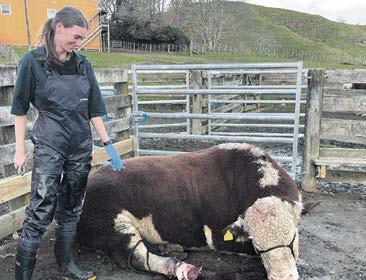
New vets are making their mark in the regions, Jon Rawlinson reports on two of them with King Country connections.
A new crop of rural vets is set to ensure farmers have access to quality care for their animals, the government expects.
Thirty-two new vets have been assigned throughout the regions under the Voluntary Bonding Scheme for Veterinarians.
Originally from Wellington, Kate Pickard is now based at Vetora, Ōtorohanga. She says the scheme provides invaluable experience as a country vet while also knocking her student loan down to size.
“The scheme is a great incentive for new graduate vets to work in rural areas where they’re most needed, and to stick around longer term,” she says.
“I applied because I love working in a
rural practice and wanted to commit to working in an area where my skills can make a difference. The vet degree is a long and expensive one, so any support to make a dent in my student loan is a big help!”
Vets on the scheme receive $55,000 over five years, in return for working in rural areas with a focus on production animals and working dogs.
Pickard enjoys the variety and community spirit.
“I can go from calving a cow on a dairy farm, to surgery in the clinic, seeing a pig on a lifestyle block, or treating wildlife – the unpredictability keeps things interesting,” she says.
“Rural communities are close-knit. There’s a real sense of community that allows you to build strong relationships with your clients and the weather here beats Wellington any day!”
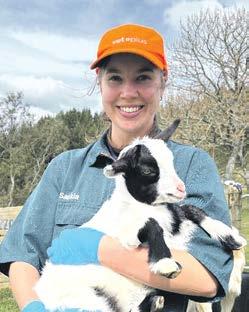
Although Pickard isn’t from a farming background, Piopio’s Saskia Johns sure is.
“Born and raised on a dairy farm, I already had a lot of base knowledge and understanding, which is certainly an advantage going through vet school,”
the VetPlus Taupō vet says.
The scheme helped ensure she could work in a rural area.
“It certainly makes a lot of people consider taking a rural job even if they weren’t otherwise considering it. I love cows – they can go through a lot and still be good as gold. Contributing to the primary sector is always something I have been passionate about.”
Johns has settled well into Taupō life.
“In a small town many clients and colleagues will end up being your friends as well,” she says.
“The commute to work is only five minutes, and Taupō has everything you need without all the traffic and hustle and bustle of a big city. It also has a lot to offer in terms of outdoor activities.”
Launched in 2009, the bonding scheme is helping to address shortages of rural vets. To date, 516 recipients have been placed throughout New Zealand.
Driving rural change
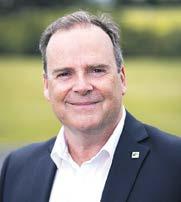
Mike Siermans isn’t just stepping into a role – he’s stepping into a legacy.
After months as interim chief executive at Federated Farmers, he’s now officially at the helm.
His vision is bold: modernise, grow, and make the voice of farming louder than ever.
“Federated Farmers has always been the true voice of farming in New Zealand – I want to make that voice even stronger,” says Siermans.
Federated Farmers president Wayne Langford calls the appointment a game-changer.
“We ran a thorough search with many strong candidates, but
Mike stood out,” Langford says.
“He brings a rare mix of leadership and commercial acumen that will help us deliver on our ambitious growth strategy.”
That strategy is already paying off: membership numbers are climbing for the first time in a generation, and the organisation has chalked up a string of policy wins.
Now Siermans is tasked with building on that momentum.
“Strong advocacy needs to be backed by sharp commercial nous – and Mike gets that,” says Langford.
Before joining Federated
Farmers, Siermans carved out a career across fastmoving consumer goods, pharmaceuticals and technology, holding senior roles at Douglas Pharmaceuticals, Pfizer Animal Health and Taura Natural Ingredients.
He says that experience will shape his approach to leading one of New Zealand’s most influential rural organisations.
“My job is to make sure we’ve got the right strategy, team and culture to succeed for the next 125 years,” Siermans says.
“That means modernising operations, creating sustainable revenue streams and expanding
products and services.
“We’ll keep employing the best advocates, communicators and policy experts – because farmers deserve results.”
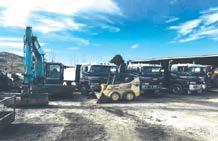
DISHER CONTRACTING
Kate Pickard of Vetora in Ōtorohanga
Saskia Johns, VetPlus, Taupō
Mike Siermans
Beef prices boost confidence
King Country farmers are riding high on strong beef prices, with market optimism set to continue into 2026, as Jon Rawlinson reports.
King Country farmers had plenty to smile about in 2025 as cattle prices soared to record highs – and the good news is they’re not expected to tumble any time soon.
Rabobank’s latest Beef Quarterly report predicts strong prices will hold into 2026,
giving Waikato Federated Farmers meat and wool chair Reon Verry reason for optimism.
“That’d be fantastic if they stay at record levels – a positive for everyone,” Verry says.
AgriHQ’s outlook through until April has cattle prices sitting comfortably above the $9 mark. But Verry is quick to remind farmers that high returns only tell part of the story.
“It’s about being profitable. We can’t go back to average prices since inputs have been climbing for years.”
Beef has been the backbone of many farming businesses, though lamb isn’t far behind.
“Beef has held our business together for the last five or six years - prices have fluctuated within a smaller range than sheep meat,” Verry says.
“We’ve had some okay years and some not okay years, but I’m feeling reasonably optimistic about lamb prices too.”
So, what’s driving the beef boom?
A shrinking supply from the American market is a big factor, says RaboResearch analyst Jen Corkran.
“Production is predicted to decline in 2026 in Brazil, the US and Canada. As a
result, we expect beef prices to hold high in the short to medium term.”
Rabobank’s report shows beef prices were $2.00/kg higher than a year ago - up 29–40 per cent year-on-year and as much as 50 per cent above the five-year average.
Kiwi farmers couldn’t fully cash in due to a slight dip in local production, but that could soon change.
“Around 160,000 additional bobby calves were reared in 2025, signalling optimism for future supply and a shift in market dynamics for 2026 and 2027 as these calves enter the supply pipeline,” Corkran says.
Demand for Kiwi beef abroad remains strong. Forty-one per cent of exports to September last year went to the US, pushing export values to the second-highest level on record at $3.8 billion. China’s share dropped to 26 per cent, while Canada and the UK made modest gains.
Still, challenges loom. Rabobank’s Rural Confidence Survey shows farmer confidence dipped slightly with dairy farmers leading the slide. Global politics and summer drought risk remain top concerns.
Dry conditions can change everything.
Farm values a mixed bag
Neighbouring property values have fallen - does this mean King Country farmers can expect the value of their land to follow suit? Jon Rawlinson reports.
As King Country farmers await their next round of rates revaluations, recent figures from neighbouring districts may offer clues.
Waitomo was revalued in 2024, Ōtorohanga last year, and Waipā most recently.
Waipā’s three-yearly revaluation, conducted by Quotable Value (QV) for the district council and released in December, showed an overall drop in residential property values - but rural land was more complex.
“There have been varying movements for rural land in line with property trends nationwide,” says Joe Holmes, QV’s regional manager (upper North Island).
“Some rural properties experienced increases and others decreased, largely driven by property characteristics.”
Pastoral properties, including sheep and beef farms, rose by an average of 2.9 per cent, driven by demand for run-off blocks and strong farm-gate prices.
Dairy farms fell by 3.7 per cent on average, although economic units with good soils and infrastructure held value or increased, while marginal land declined.
Lifestyle blocks saw the sharpest drop, down 13 per cent overall.
Smaller, low-maintenance blocks near towns fared
better, while larger or remote properties fell further.
Ōtorohanga’s recent figures showed similar trends: while pastoral farms were down, dairy was mixed and lifestyle properties dropped 11.5 per cent.
However, direct comparisons should be made with caution.
“Rating valuations are a snapshot in time, reflective of sales evidence as at the effective date of valuation.
Valuations don’t set market prices, Buyers and sellers do. We interpret data for councils to create a fair system for collecting rates,” Holmes says.
Importantly, valuations don’t set market prices.
“Buyers and sellers do. We interpret data for councils to create a fair system for collecting rates,” Holmes says.
QV’s acting chief financial officer James Graham says that revaluation redistributes rates based on relative value changes.
“While many property values have decreased, this doesn’t mean rates will go down. Councils don’t collect more or less money overall when property values change.”
For King Country farmers, the message is clear: watch the trends, but remember valuations are only part of the picture.
Joe Holmes from Quotable Value
RaboResearch analyst Jen Corkran.
Photo Rabobank
Reon Verry, Waikato Federated Farmers.
Photo Federated Farmers
An Ayrshire legacy…
Vince Steiner’s devotion to Ayrshire cows has taken him from a childhood dream to global leadership. Senior writer Mary Anne Gill met him and his partner Trudy Garland.
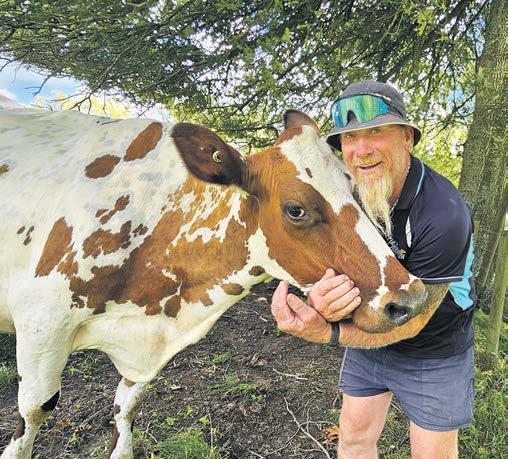
At Brookview Genetics, Vince Steiner moves among his 300 Ayrshire cows with quiet familiarity, calling each by name.
As he hugs Blueprint, Vince’s passion for these red-and-white beauties is unmistakable.
For Vince, Ayrshires are more than a breed – they’re a lifelong calling, rooted in family history and rural tradition.
“Mum and Dad bought my first Ayrshire for me when I was nine years old,” he recalls, eyes bright with the memory.
That first cow, bought at Kaipawa, was the beginning of a lifelong journey - a journey that’s shaped not just Vince’s career, but his sense of community, family, and purpose.
“One of those cows had a bull calf, and Dad ran that bull with his yearling heifers the following year. All the heifer calves born that year were mine. I can actually trace some cows here right back to one of those heifers.”
That early passion grew into Brookview Genetics in Roto-o-Rangi – midway between Cambridge and Te Awamutu - where Vince and his partner Trudy Garland share milk 600 cows on 200 hectares.
The farm hums with visitors, laughter, and the gentle lowing of cattle during the Ayrshire On Farm Challenge – a showcase of top-quality cows, a BBQ, and an international judge.
Vince is Hamilton-based Ayrshire New Zealand president leading a board of
directors responsible for governing the breed and its 16 clubs nationwide. He is also the world organisation’s vice president.
Brookview has produced more excellent classified Ayrshire cows than any other breeder in New Zealand over the past five years.
For Vince, Ayrshires are more than just cows - they’re a way of life.
“Ayrshires are the best cow out,” he says.
It’s a breed with deep roots – Ayrshires originated in Scotland’s rugged County of Ayr in the 18th century, arriving in New Zealand in 1849. Vince champions their adaptability and temperament.
They are a great forager and can deal with poorer quality feed.
“People grumble about their temperament at times. I’ll challenge anybody to come here and see mine,” says Vince.
“They’ve had a bad rap – kicky, badtempered. But breeders have stamped that out. Today, Ayrshires rank best for milking adaptability and temperament.”
The Open Day is more than a showcaseit’s a gathering of friends, neighbours, and fellow enthusiasts. Among them is Angus Thomson, just 11 years old but already steeped in Ayrshire lore.
Angus comes from Carmel Glen Ayshires, the oldest Ayrshire stud in New Zealand, and speaks with the authority of someone twice his age about Vince’s Ayshires.
“They’re overall very well put together and they’re better than others.
“They have very good udder support and then they’ve just got an overall very good memory system.”
Asked where he learned all this, Angus says: “Basically, yeah, when I was born.” Just like Vince.
and
“Ayrshires suited our country. They are lovely to handle. They are very intelligent actually. That’s why some people don’t get
Vince Steiner hugs one of his prized Ayrshires - the award-winning Blueprint.
Sue Gibberd
Jeanette Keen reminisce about growing up together in Te Kowhai, while Sue reflects on her experience with the breed.
Vince Steiner and partner Trudy Garland have some big decisions to make in the next few weeks but whatever they are, they will involve Ayrshires.
The curious Ayrshires up close and personal.
Photos: Mary Anne Gill
Continued next page
on with them, I think. But we never had any trouble.”
For Peter Berresford, who’s travelled from Derbyshire to judge New Zealand Ayrshires in the paddocks, they are a breed with global reach.
“We’re registering pedigrees between four and six thousand a year in the UK, and then there’s commercial herds as well.”
Peter’s judging criteria is practical.
“I like a bigger cow than the average, but I’m looking for big, open, deep-ribbed cow with a great udder that can move. I need good legs and feet. Cows need to walk a lot in New Zealand.”
Bill Moore, Waikato livestock agent from PGG Wrightson, brings a pragmatic eye to the herd.
“A good cow is a good cow, and there’s tons of good cows in here. If you’ve got a cow that’s a little bit weak, you can put a bit of Ayrshire across, it’ll be a bit of strength.”
Bill’s admiration for Vince’s herd is clear. While the herd is not for sale – yet – Bill has his eyes on them all.
“There is such a depth of breeding and it’s a testament to Vince and his team and what they’ve done here. This is an exceptional herd that all these animals will continue to breed on. There’s style and milk in abundance here.”
But for all their strengths, Ayrshires are still a minority breed in New Zealand - less than one per cent of the national herd.
But around the world, Ayrshire milk is prized for its taste and digestibility.
“The healthiest milk for you,” Vince says.
“The actual fat globule in the milk is smaller and easier to digest.”
Studies in the 1990s suggested Ayrshire milk was the best tasting and most easily digestible, with higher butterfat and protein making it richer, creamier, and some say sweeter than standard milk.
The day’s conversations drift from genetics to market trends, from the challenges of
milking to the realities of farm life and the health of the herd in the heat.
Vince is candid about the future.
“We’re not going to be on this farm next season. We’re just working through what our future looks like and one of those things that we’re looking at is the possibility of buying a little farm. And in doing that we’re going to have to sell a lot of cows.”
But Ayrshires will remain at the heart of whatever comes next. Each cow has a name, a story, a place in the Brookview family.
As the barbecues sizzle with Ayrshire beef steaks, it’s clear Ayrshires are more than just a breed – they’re a tradition, a community, a way of life.
Whatever the next chapter brings for Vince and Trudy, Ayrshires will remain at the heart of their life – each cow a name, a story, a legacy.
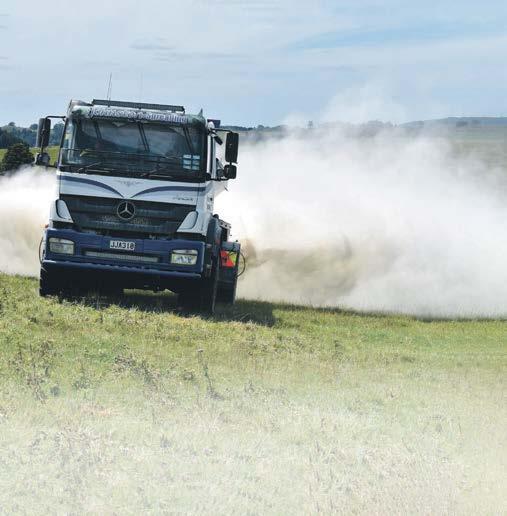
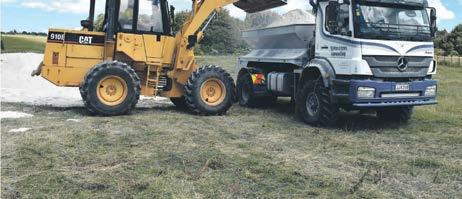
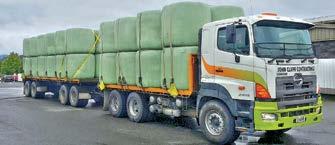
• Latest GPS and computer control technology
• Tracmap equipped (no extra charge incurred)
• Locally owned operator units
PGG Wrightson livestock agent Bill Moore, left, with international judge Peter Berresford, discuss the herd’s merit
What 11-year-old Angus Thomson doesn’t know about Ayrshires, is not worth knowing. He eyes up one of Vince Steiner’s cows in the paddock.
Bold gains on rugged slopes
Blueridge Farms is proving that ambition and innovation can transform rugged terrain - doubling productivity and redefining what’s possible in modern farming, reports Chris Gardner.
On the steep hills of Te Pahu, in the shadow of Mount Pirongia, Elliot Kent and Heather Gilbert are rewriting the rules of
modern farming. Where tradition once dictated caution, their bold approach has turned steep country into a showcase for innovation - and doubled productivity in the process.
What began as a bold experiment on unforgiving slopes is now a blueprint for high-performance grazing.
Five years ago, the couple faced a question: could they make steep land work harder without compromising pasture health?
The answer came in the form of technograzing - a system that divides the farm into small, intensively managed cells and rotates stock with precision. Today, Blueridge Farms runs 1000 Holstein Friesian bulls across 325 hectares, double the number they started with.
The farm is divided into six-hectare systems, each containing 10 paddocks which are grazed by combined weight rather than a specified number of bulls. Each mob of rising one-year old or rising two-year old bulls spends two and half days in a designated area before they are rotated into another area.
The system enables the grass to recover for 100 days.
“Techno-grazing has been around for a while, but usually it’s done on really flat land,” Gilbert says.
“We are doing it on really steep land, and that’s why we became a Beef and Lamb
monitor farm.”
The couple have been sharing their journey with other farmers for about three years.
“The first year we had 100 people shaking their heads and saying we were not going to do it. They did not think that we would be able to run that number of animals on this steep country,” Kent says.
Mobs are rotated on a Monday morning, Wednesday lunchtime, and a Friday afternoon.
“It takes about three hours,” he says. So, there is plenty of time for other jobs such as on farm maintenance. They have the help of farm manager Mark Pollard.
Setting Blueridge up as a Beef and Lamb monitor farm has kept the couple focussed on results.
“It’s been the best thing we did, really good,” Kent says.
“We have got a steering committee that meets every two or three months, and we have got some really good farmers in our steering group,” Gilbert says.
Kent grew up on the “summer safe” farm which rises from just under 100 metres elevation to around 365 metres. But Blueridge was impacted by the recent droughts.
“In our first year of cell grazing we ran between 17 and 19 rising two-year-old bulls in each of our six-hectare systems, and last year we upped that to 22 or 23,” Gilbert says.
Bluebridge was able to support more bulls per hectare thanks to the impact of last year’s drought on their weight.
Continued next page
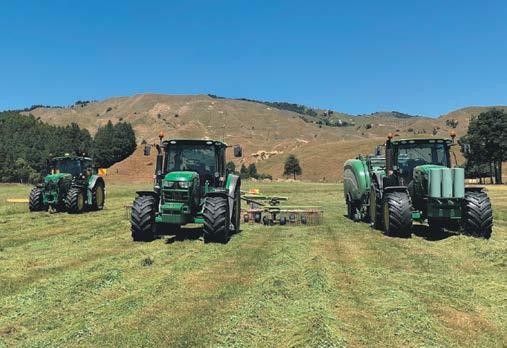
Techno-grazing has seen Holstein-Friesian bull numbers double on Blueridge Farm over five years. Kent’s helicopter hanger is in the background.
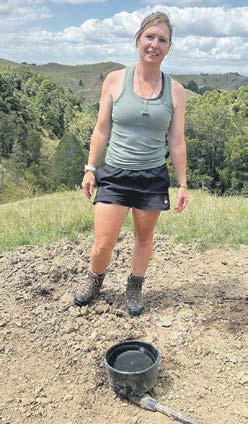
Heather Gilbert with an on demand drinking trough on Blueridge Farms. Photos: Chris Gardner
“But also lift in soil fertility, better pasture utilisation, which also improves pasture species, and also having the confidence to push it a bit further,” he says.
“We have 32 systems wintering a mix of rising one year and two-year-old bulls. We still have seven systems left to develop and some smaller areas that we won’t develop.”
They typically pick up calves from local dairy farmer and raise them until they are ready to go to the works via Greenlea Premier Meats in Hamilton.
Techno-grazing is going so well that Kent and Gilbert are about to replicate the system on another farm daughter EllaMay Kent will lease with partner Matt Smith.
Five-hectare blocks will be at the heart of the new farm
containing 15 paddocks each rather than 10.
“We are giving them a head start,” Kent says.
“We have already made all the mistakes and figured out all the short cuts for them,” Gilbert says.
“I am hoping that it will work really well for them.”
Kent and Gilbert have other strings to their bows too.
Kent runs Heli Ag Waikato from the farm, clocking around 300 hours in the air in his Bell Long Ranger helicopter serving farms across the Waikato every year, although he is quick to point out, he spends another 700 hours a year working in the business.
Gilbert, who grew up on the family farm near Waitomo, also works as a consultant for Total Ag, joining the team in 2015.
REGIONAL COUNCILLOR’S VIEW
Sharing and caring for the river
By Liz Stolwyk, Waipā/King Country Regional Councillor
Over the summer holidays, the health and wellbeing of the Waikato River have been a hot topic. Writing this as we are in the middle of the National Waka Ama championships, with close to 5000 children and adults on the water, the question feels immediate and unavoidable: how do we balance the needs of recreational users with the long-term health of the river that sustains us all?
The Waikato River is far more than a body of water. It is a living taonga, central to identity, culture, recreation and regional wellbeing. On any warm summer’s day, it carries rowing crews, swimmers, anglers, jet skis and families enjoying the riverbanks. Major events bring people that provide a huge economic benefit to our region as well as fostering a deep connection with the river. That connection matters - because people are more likely to protect what they value.
But the river is under increasing pressure.
This summer, the fast-growing hornwort weed has been particularly exasperating. On New Year’s Day, I watched a continuous trail of weed. For recreational users, hornwort clogs propellers, fouls paddles, restricts
swimming areas and disrupts events.
For the river, it is a visible sign of wider ecological imbalance.
Each year an annual hornwort spray programme is completed by mid-December. While necessary, it captures only a small portion of the problem. The programme costs over $100,000 annually and is not without controversy, particularly due to the use of the herbicide ‘diquat’. Community concerns about effectiveness and environmental impact deserve to be heard and addressed openly. Complicating matters further is the spread of the invasive gold clam, which has now taken hold in parts of the Waikato River. These clams are extremely efficient water filterers. While that might sound positive, clearer water allows more light to penetrate the river, creating ideal growing conditions for hornwort. Many recreational users are now observing what science is confirming: the gold clam invasion is likely accelerating weed growth and changing the river system in ways we are only beginning to understand.
Hornwort and gold clams are symptoms of a stressed system rather than isolated problems. Nutrient runoff, sediment, invasive species and
warming conditions all interact, creating cumulative impacts that cannot be solved with a single tool or programme.
Balance does not mean choosing recreation over river health, or vice versa. A healthy river is the foundation for recreation. Without clean water and resilient ecosystems, there is no future for summer swimming or the simple enjoyment of being on the water.
So, what does balance look like? It starts with shared responsibility. Councils, Central Government, Iwi, Farmers, Industry, Event organisers and everyday river users all have a role. It means investing in long-term, catchment-wide solutions, supporting science-based management, and respecting our obligation to care for the river for future generations.
Seeing thousands of paddlers moving together on the Waikato River is powerful. If we can bring that same collective spirit to caring for the river, we can protect both its health and our ability to enjoy it - now and into the future.
• Liz Stolwyk is site manager at Lake Karāpiro Domain.
FARM SERVICES
Why understanding a LIM Report matters:
A Land Information Memorandum Report (“LIM”) is a report prepared by the local council. It provides a summary of the property information held by the council on the day the LIM was produced. The benefits of obtaining a written LIM are that the Council is responsible for the accuracy of the information provided.
A LIM contains crucial information for a purchaser that can impact a property such as consented (or flags that there is unconsented) works, natural hazards (flooding, land stability), zoning, drainage, and past compliance problems. It is very important to carefully review and understand the LIM report for a property that you are purchasing. The contents of a LIM can impact whether a bank will finance that property and your ability to insure that property.
Influencing factors that can impact finance or insurance are unconsented works and/or natural hazards. It is also important to be aware that a LIM may not provide all information on the property e.g. if the council hasn’t been notified of a weathertightness issue with the property, it won’t show on the LIM. When looking to purchase a property and assistance with the LIM is needed, please contact your solicitor.
Lucy Sim
Farmers send your cattle to UBP and win!
Every month we have 3 prize draws. Every 3 head qualifies for 1 entry into the draw. Winners receive $300 worth of BP fuel vouchers (conditions apply)
CONGRATULATIONS NOVEMBER 2025 WINNERS
• Taha Aruhe Operating Ltd - Featherston
• JL & TR Read - Ōtorohanga
• Tunanui Farming Company - Hastings
CONGRATULATIONS DECEMBER 2025 WINNERS
• CS Fredericks - Piopio
• OJ Butler & Co - Waipawa
• Gilbertson Agriculture Ltd - Te Karaka
Introducing new Buyer Warren Charleston
Universal Beef Packers Ltd buyers are
● Peter Knowles, Stock Co-ordinator, Te Kūiti - 07 878 5160 or 021 798 097