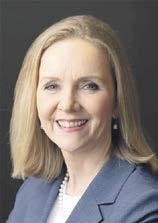
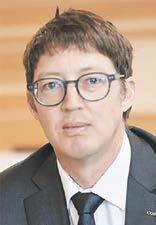
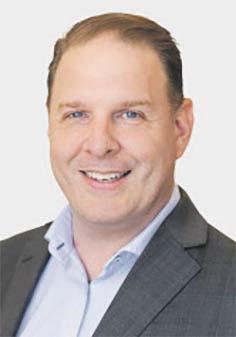
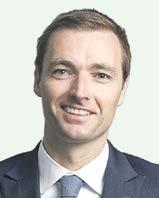
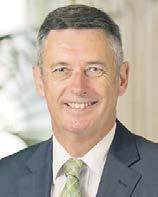
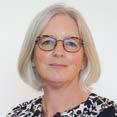
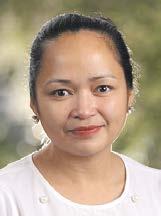
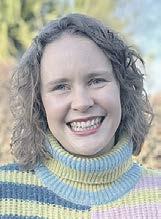
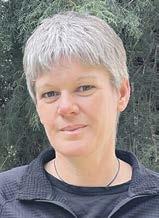
Massey professor Jens Mueller champions global education from Tauranga.
Page 3
WHEN THE GROUND FAILS
Science communicator Janine Krippner writes about “gut-wrenching” landslides. Page 10
The voice of Bay of Plenty
AERIAL REVOLUTION
The technology took off after Scion launched its first drone in the forest a decade ago. Page 12
PADDOCK TO POUR Bay of Plenty coffee lovers swear by Kaipaki milk – taste without the waste. Page 15
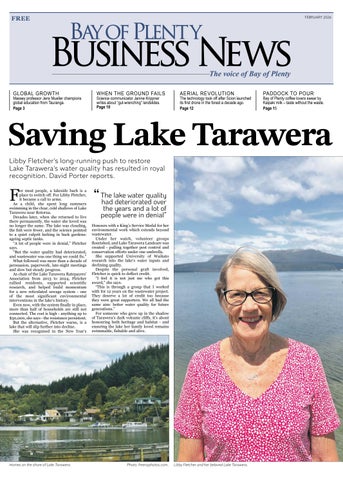
Saving Lake Tarawera
Libby Fletcher’s long-running push to restore Lake Tarawera’s water quality has resulted in royal recognition. David Porter reports.
For most people, a lakeside bach is a place to switch off. For Libby Fletcher, it became a call to arms.
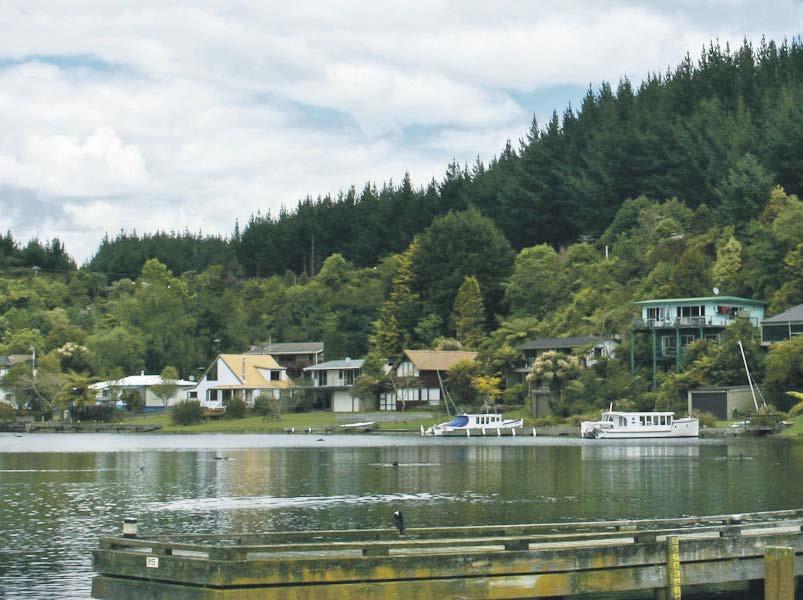
As a child, she spent long summers swimming in the clear, cold shallows of Lake Tarawera near Rotorua.
Decades later, when she returned to live there permanently, the water she loved was no longer the same. The lake was clouding, the fish were fewer, and the science pointed to a quiet culprit lurking in back gardens: ageing septic tanks.
“A lot of people were in denial,” Fletcher says.
“But the water quality had deteriorated, and wastewater was one thing we could fix.”
What followed was more than a decade of persuasion, paperwork, late-night meetings and slow but steady progress.
As chair of the Lake Tarawera Ratepayers’ Association from 2013 to 2024, Fletcher rallied residents, supported scientific research, and helped build momentum for a new reticulated sewage system - one of the most significant environmental interventions in the lake’s history.
Even now, with the system finally in place, more than half of households are still not connected. The cost is high - anything up to $30,000, she says - the resistance persistent. But the alternative, Fletcher warns, is a lake that will slip further into decline. She was recognised in the New Year’s
The lake water quality had deteriorated over the years and a lot of people were in denial”
Honours with a King’s Service Medal for her environmental work which extends beyond wastewater.
Under her watch, volunteer groups flourished, and Lake Tarawera Landcare was created - pulling together pest control and conservation efforts under one umbrella.
She supported University of Waikato research into the lake’s water inputs and declining quality.
Despite the personal graft involved, Fletcher is quick to deflect credit.
“I feel it is not just me who got this award,” she says.
“This is through a group that I worked with for 12 years on the wastewater project. They deserve a lot of credit too because they were great supporters. We all had the same aim: better water quality for future generations.”
For someone who grew up in the shadow of Tarawera’s dark volcanic cliffs, it’s about honouring both heritage and habitat - and ensuring the lake her family loved remains swimmable, fishable and alive.
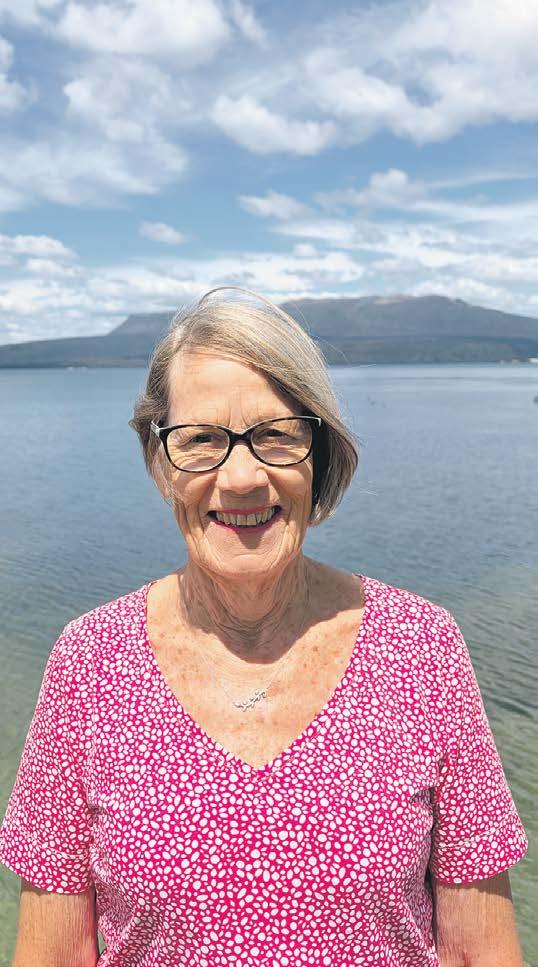
Libby Fletcher and her beloved Lake Tarawera.
Editor
David Porter editor@goodlocal.nz 021 884 858
Senior Writer
Mary Anne Gill maryanne@goodlocal.nz 021 705 213
Advertising Director
Janine Davy janine@goodlocal.nz 027 287 0005
Owner/Publisher
David Mackenzie david@goodlocal.nz 021 684 304
To Advertise sales@goodlocal.nz
News Tips editor@goodlocal.nz
Office/Accounts admin@goodlocal.nz
Website goodlocal.nz
To Subscribe admin@goodlocal.nz
Readers’ contributions of articles and letters are welcome. Publication of contributions are entirely at the discretion of editorial staff and may be edited. Contributions will only be considered for publication when accompanied by the author’s full name, residential address, and telephone number. Opinions expressed are not necessarily those of the publishers. Bay of Plenty Business News is published by Good Local Media Limited.
Also publishers of
The naked presidency
By DAVID PORTER
I have mostly avoided writing about the chaos that US President Donald Trump has been inflicting around the globe since his re-election. Unfortunately, the political situation created by the president is getting too alarming to ignore.
It is my personal opinion that the US – and its long-proclaimed image as a key defender of Western-style freedoms – will be lucky to emerge with its polity and reputation intact when Trump has finally ceased to exercise power.
It is now clear that much of the US public who voted for Trump are beginning to have second thoughts about their choice. The preponderance of recent polls taken in the US suggests a clear downward slide in Trump’s polling favourability.
In January, the Economist – hardly an alarmist publication – reported that polling 356 days into Trump’s term showed that although 39 percent of those polled approved, 56 percent disapproved, and the balance were not sure about his presidency. Other polls have also indicated a continuing decline in Trump’s approval ratings.
For the Republicans, alarm bells are ringing
Sam Uffindell |
as they get ready to face mid-term elections against the Democrats, which could end Trump’s reliance on a compliant Republican majority Congress.
Ironically, Trump, who has emerged as an assertive believer in putting military “boots on the ground” and interfering as he sees fit in the political affairs of his neighbours, has reportedly always been reluctant to put his own boots in danger.
There was an interesting newspaper reveal recently from the daughters of the doctor who provided Trump with a letter certifying he had bone spurs in his heels. The supposed bone spurs rendered him physically unfit to be drafted for service in Vietnam at the time. The doctor is now dead, but the daughters reported that the “fake” letter was common family lore.
The US has now entered a phase in which Trump’s administration is making clear that it regards itself as unstoppable. In the words of one report, the Trump administration’s “often overblown rhetoric” has now taken a chilling turn.
Internationally this has mostly concerned perpetually unresolved battles over tariffs, the
REGIONAL VIEW
still unresolved Ukraine crisis, and Trump’s continuing alienation from Europe.
But that is leaving toe one side Trump’s threats to (illegally) annex Greenland and his recent action in overthrowing and jailing in the US the president of Venezuela for alleged drug smuggling.
As well as his attempts to strong-arm international oil companies to buy Venezuelan heavy oil, which several commentators have predicted will not receive the support he is demanding from the companies.
As Miller has been quoted as saying: “We live in a world in which you can talk all you want about international niceties and everything else. But we live in a world, in the real world … that is governed by strength, that is governed by force, that is governed by power. We’re a superpower. And under President Trump, we are going to conduct ourselves as a superpower.”
When Trump was pressed by the New York Times about whether his administration needed to abide by international law, Trump said, “I do.”
But alarmingly, he added: “It depends what your definition of international law is.”
Leading in digital disruption
By TODD MULLER
Happy New Year and I hope that this important year has started well for you all.
Whilst we all hope for a new and positive year it’s really never a surprise that we start off January where we left off in December with some of our local and more international challenges.
In my column last month, I reflected on the Government’s plan to cap local government rates and contrasted that with the reality of building a liveable city that is attractive to capital and talent. Essentially my argument was we can’t have both, so we need to prioritise a liveable city.
Well, my calling for frank conversations around how we fund this growth kicked off our local keyboard warriors big time who typically went very personal in their attacks around how out of touch I am and I’d be better off living somewhere else.
To be fair there were a few emails from CBD business owners who supported my view, but it reinforced to me how difficult it is nowadays to have a balanced conversation. These big issues that confront our region, also confront the country, and we can’t progress, if whenever we try to have a debate, it quickly descends into school yard farce.
As an ex MP I am used to this online
Drop in clinic for Lakes, Pyes Pa and Tauriko businesses and constituents. No appointments needed.
Thursday 26 February 2026
Between 3 and 4.30 pm BloomCo, 262 Lakes Blvd, Pyes Pa
name calling but the fierce reaction made me wonder how we navigate a world that is increasingly online be it the various social media platforms we have become used to or the new fast moving AI platforms. This new technology is coming at us fast and I am excited about its application to our businesses, but how do we manage the deep fakes and the ease of the new platforms to amplify toxicity and abuse.
It’s a world of difference from just 20 years ago when Facebook was established. At that time, if we had a problem with a friend at school or a work colleague, or a difficult supplier or customer, we would have to deal with it face to face, just the two of us, no hiding behind anonymity with attacks that then get circulated online so everyone can see.
I was chatting to a restauranteur over summer about his delivery service and how often he gets feedback from his customers that the meal isn’t complete, up to standard, or that dishes have gone missing. He knows the meals were correct when they left his restaurant, they are the same meals that he serves to his dine in customers who rave about it, but he has no recourse other than to make it up to the customers. Is it the uber driver who snuck a dish on the way or the receiving customer
making it up, either way, if he pushes back, he gets slammed on the google reviews. Those reviews matter, we all assume they have integrity, they drive our choices.
The deep fakes increasingly trip me up. My family share reels that we find funny to with other and over the last few months I have been caught many times with what I thought was a hilarious vignette of life being exposed as an AI fake. My kids think this reflects my descent in boomerism, but how do we navigate this when critical issues are at stake as opposed to funny reels.
2026 will be an important year, we have an election to be run at a time of heightened dissatisfaction with institutions including parliament, we have new technologies arriving faster than our ability to synthesise them personally or professionally, and geopolitical stakes higher than they have been in a generation.
It’s time for business leadership to shine with its capacity to see through the noise and give the wider community confidence that it has the capacity to navigate these times for the benefit of us all – more on that next month.
• Todd Muller is a long term Tauranga resident, former MP and current chair of Priority One. All views expressed are his own.
Authorised by Sam Uffindell, Parliament Buildings, Wellington
Toll road changes
Tauranga could have more toll roads if the Land Transport (Revenue) Amendment Bill becomes law. Of the three toll roads in New Zealand, two are in Bay of Plenty - the Tauranga Eastern Link Toll Road (SH2) and the Takitimu Drive Toll Road (SH29) – but the bill as it stands could approve tolls on existing roads. The Taxpayers’ Union has started a petition asking Parliament to amend the bill.
Forest giants merge
PF Olsen and Forestry360 have merged to create what is understood to be the biggest independent forest management company in Australasia. It will manage about 480,000 hectares of forest and support more than 1000 clients, from major institutional investors to family-run businesses and private landowners.
Out and About
Our popular social feature Out and About takes a break this month and will return in our March edition.
Project cash
A joint Waikato-Bay of Plenty initiative to better plan how waste is prevented, resources are recovered and residual waste is managed has received significant support from a Ministry for the Environment (MfE) fund. Te Pūtea Whakamauru Para – Waste Minimisation Fund (WMF) is providing $303,274 in support of the ‘Cross-Regional Waste Strategy and Waste Infrastructure Plan Project’. The project aims to address gaps in existing waste systems and infrastructure in the Waikato and Bay of Plenty regions through coordinated planning and investment
Landscape walks
The Echo Walking Festival next month will include walks from sweeping coastlines to native bush on landscape stretching from the Coromandel to Te Puke. The festival provides an opportunity for locals to deepen their understanding of the landscapes they call home, organisers say.
Global growth starts here
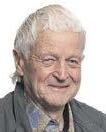
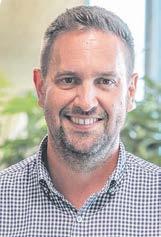
Jens Mueller honoured in the New Year list, champions global education from his Tauranga base, reports David Porter.
Jens Mueller sums up his complex role quite simply: “Do what you can do well.”
For him, that means recruiting foreign students who return home post-study and later come back to New Zealand to help the country grow.
For these efforts, Taurangabased Mueller was appointed an officer of the New Zealand Order of Merit (ONZM) in the New Year Honours, for services to education. It was a further elevation for Mueller, who was made a member of the New Zealand Order of Merit (MNZM) in 2015 for services to business and education.
“Recruiting and also teaching are things that I have a passion for, but you have to be prepared to work across time zones. There are no Christmas holidays in India, no morning days in the southern hemisphere, so you have to work at night. So long as you manage it with your personal life it works well.”
Born in Germany, Mueller came to New Zealand some 30 years ago and was originally an associate
professor at Waikato University for 20 years. He then moved to Massey as a professor.
“I teach mainly globalrelated courses to master students,” he says.
And he is actively involved in immigration recruitment.
His decision to settle in Tauranga was, as he puts it, “accidental” - sparked by a chance meeting with someone who loved the city.
“I started out with a tiny little house on the beach in Papamoa,” he says.
“As someone who had lived in Los Angeles at a time when living by the beach was quite unaffordable, this was quite amazing – that you could have the sand under your feet and still be able to afford living here.”
Mueller describes New Zealand as a “fabulous” place to do business provided that you are willing to do business internationally.
“There is no question that we punch well above our weight in terms of trade relations with other countries.”
He says New Zealand has the largest number of free trade agreements of
anywhere in the world.
“We’ve done incredibly well, but it requires you to be present and to connect and you can’t do that all by Zoom, it needs a strong handshake.”
Mueller suggests that it’s a disadvantage for companies that want to start off in New Zealand, because the country doesn’t have a large home population base. In Europe, the US or Canada you could use the home population to start your product or service, he says.
“We pretty much go overseas for anything we
want to develop at scale.”
He suggests that New Zealand is a great starting point for ideas, but it requires much larger populations, capital investment and larger market, to bring things to a global scale.
Mueller notes that Tauranga has changed a lot over the 30 years he has lived there.
“It’s become much more city-like than just a resort and a town that is surrounded by beaches and happiness,” he says.
“It has become much more substantial.”
As New Zealand continues to navigate its place in the global economy, leaders like Jens Mueller remind us that success lies in connection - between education and enterprise, between local roots and international reach.
His journey from Germany to Tauranga, and from academia to global engagement, underscores a simple truth: growth comes not from isolation, but from embracing the world with both hands - and a firm handshake.
Keeping communities connected
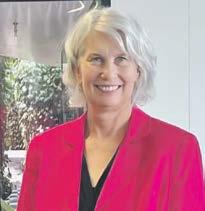
Paula Southgate (pictured) has begun a new chapter after more than two decades shaping local government.
The former Hamilton mayor and Waikato Regional Council chair has taken up a part-time role as a senior fellow at the Helen Clark Foundation.
Southgate, 62, said the position offered a chance to remain engaged in public issues while stepping back from the demands of elected office.
“It’s a chance to keep thinking and contributing, but in a different way,” she said.
The role, which pays a modest honorarium, will see her lead discussions on the future of local government as major reforms continue to reshape the sector.
Southgate said longstanding
questions about council structures, collaboration across boundaries and the purpose of local authorities were becoming increasingly urgent.
“We have to ask: what is the council for? Do we really need more than 60 councils?”
She emphasised the need to balance efficiency with strong local representation, warning that community connection must not be lost in any restructuring.
Since starting the fellowship, Southgate has written opinion pieces, led webinars and examined international models in Ireland, Canada and Australia. She said the aim was to bring global thinking into New Zealand debates on governance, citizen participation
and the impact of social media on public discourse.
Southgate mentors local authority councillors around the country and supports sector training. She was a member of Local Government New Zealand’s governance leadership group on Three Waters, chaired the Upper North Island Strategic Alliance and the Metro Sector.
She was also appointed to several government and LGNZ advisory groups, contributing to policy development on transport, the Resource Management Act, visitor levies, and local government reform.
She is one of four honorary senior fellows – the others are Jonathan Boston, Lucy Cassels and Stephen Jacobi.
PICK UP POINTS
“Leadership isn’t about titles,” she said. “It’s about ideas, influence and empowering others.” – Mary Anne Gill
• See: Shaping local futures, page 10.
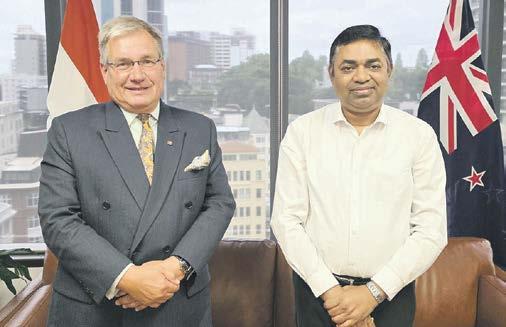
Jens Mueller, left, with the new Indian consul general Madan Mohan Sethi in Auckland talking about strengthening India-New Zealand trade and economic engagement.
Confidence up as recovery looms
Surveys point to renewed optimism as businesses plan for growth and sectors show signs of stabilisation, reports David Porter
New Zealand’s economy is showing early signs of recovery after nearly three years of recession, according to leading analysts.
Business confidence has climbed to its highest level in three decades, supported by improving housing market activity and stronger hiring intentions.
Mark Lister, investment director at Craigs Investment Partners in Tauranga, says the outlook has shifted.
“We’ve turned a corner. Indicators point to better times ahead, and while inflation remains a concern, the overall backdrop is strengthening.”
The latest New Zealand Institute of Economic
Research Quarterly Survey of Business Opinion reports a marked improvement in sentiment, with firms planning increased hiring and investment.
Westpac senior economist Michael Gordon notes the survey reflects a more upbeat attitude among businesses than seen in recent years.
Cost pressures are easing, too. A net 37 per cent of firms reported higher costs in the final quarter of 2025, down from previous highs, suggesting inflationary pressures are beginning to moderate.
The services sector is also showing signs of life.
The BNZ-BusinessNZ Performance of Services Index has ended its longest
period of contraction since the survey began nearly two years ago.
BusinessNZ chief executive Katherine Rich says this signals a turning point for a sector that has struggled through prolonged weakness.
While optimism is growing, inflation remains higher than expected. Lister warns that the Official Cash Rate (OCR) could rise sooner than some anticipate.
The chance of an increase before year-end isn’t dead and buried, says Lister.
“Is it a bad thing? It depends on your perspective. But if [the OCR] does start rising again those rises will be modest.”
Three out of four major
banks expect no rate hikes before 2027, though one forecasts an increase later this year.
Lister says that any
adjustments will reflect positive fundamentals such as falling unemployment and rising property values.
After years of strain,
confidence is returning. Businesses are planning for growth, but inflation and interest rates remain key watchpoints.
Investors eye golden triangle
The commercial property market appears to be on a strong footing in the regions.
From his base in Hamilton, Mike Neale is well positioned to assist vendors and purchasers across the Waikato and Bay of Plenty.
Demand is pushing up prices, rents and leases, but supply is growing too. Coupled with growth in transport networks, this is highly promising for Waikato and Bay of Plenty, Neale says.
“We’re seeing an increasing amount of investors from outside come in, from Auckland and Wellington particularly.
“Tauranga has been the golden child in many ways, with a more affluent population, but I think it’s evened out a lot more now.”
Neale is managing director of NAI Harcourts in Hamilton and has more than 20 years’ experience specialising in commercial real estate.
Overall, the market has been showing a return to good form, he says.
“There’s certainly a lot more interest in commercial property. It’s been driven by the lowering of the Official Cash Rate and particularly bank deposit rates.
“People are looking at other forms of investment so there have been significantly more inquiries and we’re certainly starting to see a rise in values.”
In general, the residential and commercial
markets both seem to be showing similar positive signs.
“During the last few months, properties that had been sitting on the market are now sold.
“As demand increases, invariably values go up and that’s absolutely what we’re seeing now. It’s cyclical, which isn’t a bad thing really, and not too much different to houses in that way.”
However, there are marked differences.
“Generally, people buy residential real estate for capital gain but they tend to buy commercial real estate for cash flow,” Neale says.
“You may not get the gains that you can from residential property, but you will get a much better return in cash flow from commercial property.”
There’s room to grow in Waikato/Bay of Plenty.
“Wellington’s very constrained, Auckland’s moving further and further out, but we have a lot of land for development, particularly for the industrial sector.”
Neale is optimistic about Tauranga.
“It’ll be more or less the same, although it has a few more limitations,” he says.
“I think we’re going to see a steady improvement across the board, which is really positive. Overall, I’m expecting it’s going to be a really positive year.” – Jon Rawlinson
Katherine Rich
Mark Lister
Michael Gordon
A salient message
By KEITH HOLMES
Let’s not be fools and repeat the mistakes of our cousins in our haste to reform and revitalise local government
The extraordinarily successful Irrigations Schemes in Victoria and New South Wales were left decimated by a stroke of the “Adam Smith Free Market Pen” when the then politicians decided to allow the free market to decide the price and availability of fresh water
The farmers were never going to be able to compete with the might of the urban and industrial wants of the City of Melbourne, and so began the “Domino Effect” of “stranded assets” and the withering of a once prosperous farm based agricultural economy.
Forgotten too was the realisation that cities need the prosperity of business and enterprise to feed their internal economy.
In this case, which parallels much of New Zealand, it is not just the food and veges that come from the land, it is the multiplication effect of a thriving agricultural economy that build roads, hospitals, schools and keeps the buses and trains running
The simplistic naivety of the Australian free market for water mistake has significant parallels for New Zealand and the reform of the Resource Management Act and also the restructuring of local government.
Auckland could easily outbid Waikato and Bay of Plenty for our water and simply not fix up their ageing and inefficient water structures.
In so doing they would bleed our farming
prosperity and subsequent wealth.
There are also other significant other parallels which will need government intervention because “Targeted Rating” decided by popular vote won’t necessarily apportion the benefit either directly or indirectly where it should.
Flood protection and drainage are a societal cost and benefit and should not be leveraged only against the in-situ land owners.
So too with public transport, the gridlocking of Auckland and now growth councils like Hamilton and Tauranga need a government solution and not a ratepayer levy.
And while we have “Te Mana o te Wai” as singular water focus, the real issue is to make sure we don’t stuff up our regional engine-house and economy by making the same mistake as Australia and assuming that all water should be “priced” the same.
We have 200 years of accumulated localised infrastructure based on where water is and not where water can be diverted to.
Those types of stranded assets are identical to the decimation of the ancient Peruvian civilisation whence they took the water from the farmers to feed the city’s civic needs.
• Keith Holmes farms at Waihou, is a former Federated Farmers president, a veteran dairy farmer and now a Waikato Regional councillor.
Providing more clarity
By ALAN M c DONALD
The government’s announcement before Xmas to replace the RMA with the Planning Bill and the Natural Environment Bill is an important step forward for the Bay of Plenty and the whole country.
The EMA began its call for reform of the RMA nearly a decade ago after identifying the need for a faster, more efficient system that provided certainty for those using it while also protecting the environment.
Large-scale transport projects, housing developments, schools and hospitals have all faced delays at the planning stage as consents grind on. One of the starkest examples is NZ’s largest export port at Tauranga, where efforts to expand container operations have now dragged into a seventh year.
Under the new system, the Planning Bill will define clearly what can and cannot be done in any given city or region for 30 years ahead.
The legislation provides upfront clarity on land use and infrastructure corridors, which is a vast improvement on the old model where regional and district plans varied widely and often conflicted.
The Planning Bill will take a regional approach but apply national rules so that you won’t be subjected to multiple interpretations and variations of the same legislation, as so many currently suffer under the RMA.
Importantly, much of the complex work about deciding what can go where, what’s protected for environmental, cultural or aesthetic reasons and what’s allowed for commercial, residential, business and development reasons will all be decided well
in advance.
Then, if your project is in the right designated area and conforms to the environmental standards you’ll get your consent if you need one.
Only those directly affected by changes will need to be consulted, with the emphasis on giving the go-ahead rather than finding reasons to say no. That shift may be difficult for those inculcated in the current system, but if the Minister’s prediction of a more than 40% reduction in consents is the outcome - that will be a boon for development.
Some groups seemed to think consultation was a default power of veto instead of a way of improving outcomes, and they would go to great and expensive lengths to stop projects they didn’t like.
A new Planning Tribunal offers a streamlined path for resolving disputes without prolonged delays or excessive legal costs.
And importantly, the environment will also be clearly protected within those regional plans, especially with a national body charged with enforcing those national standards consistently and rigorously. However, that body must be funded and resourced to carry out that critical role.
With an election later this year, we’d like the proposed changes to secure broad political support, subject to the submission and select committee stage - so that they have a chance to succeed and endure.
• Alan McDonald is Head of Advocacy for the Employers and Manufacturers Association (EMA).
Opportunity or overload
In the biggest overhaul of local government in nearly four decades, ministers want to merge councils and simplify a system they say is “tangled in duplication”. David Porter reports.
The government has unveiled bold plans to merge city and regional councils – a move touted as the biggest shakeup of local governance since 1989.
Supporters say it’s a long-overdue step towards efficiency, while critics warn it could create more confusion than clarity.
With 78 councils nationwide – seven in the Bay of Plenty alone –duplication of resources and processes has long been a sore point.
Tauranga mayor Mahé Drysdale believes the time is right for change.
“I’ve previously advocated for a review of local government because I believe the system designed 36 years ago can be improved,” Drysdale says.
“There’s unnecessary complication in delivery.”
Former Tauranga mayor and current Bay of Plenty Regional councillor Stuart Crosby agrees, noting that pressure on funding and capability has been building for years.
“I’ve been advocating for a review for about 15 years. You could see the problems developing – functionality, funding, and capacity to deliver effectively.”
The proposal, announced by ministers Chris Bishop and Simon Watt would create a new decisionmaking body to absorb regional council functions and streamline governance.
Bishop calls it a reset.
“Local government is meant to serve communities, not confuse them. Right now, the system is tangled in duplication and decisions that defy common sense. The time has come for reform.”
The government promises consultation before finalising its plan, with feedback closing this month and legislation targeted for 2027.
While many welcome the chance to rethink local governance, uncertainty looms. Commercial law firm Simpson Grierson warns that overlapping reforms - from water and resource management to emergency
planning - make it hard to see the end game.
“A vast number of existing council services are already being impacted, leaving questions about what effective, efficient delivery really looks like,” says one of the firm’s environmental and local government law specialists, partner Mike Wakefield.
The expansion of the role, power and responsibilities of mayors is also a concern.
“That could mean a significantly greater workload for mayors, who will have dual (and potentially competing) governance responsibilities, as well as being involved in developing regional reorganisations plans,” he says.
Glenn Dougal, a newly elected regional councillor, says the challenge is finding the right balance.
“There could be some things that are better centralised and others that should stay local. It’s about working out how the region wants to relate to central government.”
With a general election in November, the timing is no accident.
Governments like to go to the polls with big wins, and this reform could be framed
Briefs…
Mines open
as just that. But speed must not come at the cost of substance.
Local politicians say this is a rare chance to modernise a system that hasn’t had a major overhaul in decades. Done well, it could deliver clarity and efficiency. Done poorly, it risks creating the very confusion it seeks to eliminate.
The Thames School of Mines, which is cared for by Heritage New Zealand Pouhere Taonga, will be open to the public for free on Waitangi Day.
Overseas targets
The government eased the requirements earlier this year for the Active Investor Plus visa, which is aimed at turbocharging economic growth. As a result, fund management firm Greener Pastures – which manages $225 million worth of kiwifruit assets, including about 150 canopy hectares in orchards around the Bay of Plenty on behalf of its 250 most local investors - launched a new fund targeting foreign investors with at least $4.48 million to invest in kiwifruit.
Christmas listings
It was a case of homes for Christmas as Realestate.co.nz recorded a 22 per cent increase in new the Bay of Plenty listings in December compared with December 2024. Contrary to the usual seasonal slowdown, the increase shows sellers are confident of good returns while buyers are benefiting from more choice.
New jersey
The Chiefs rugby club have unveiled Tu Hono, a heritage jersey created to mark the team’s 30th season. Meaning “to connect” Tu Hono acknowledges the past while looking to the future and is inspired by the 1997 Chiefs jersey. Over 30 years, more than 50 different Chiefs jerseys have been worn across home, away, training, heritage and special editions.
Mike Wakefield Stuart Crosby Mahe Drysdale
A place to explore, connect and discover
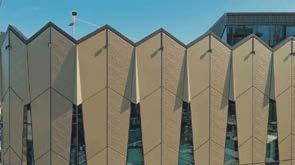
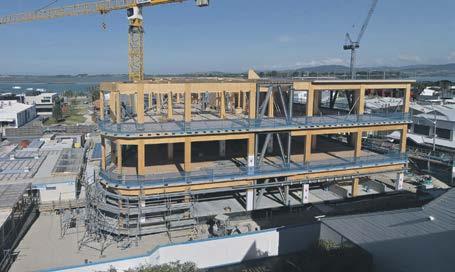
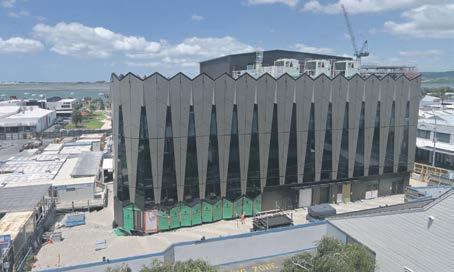
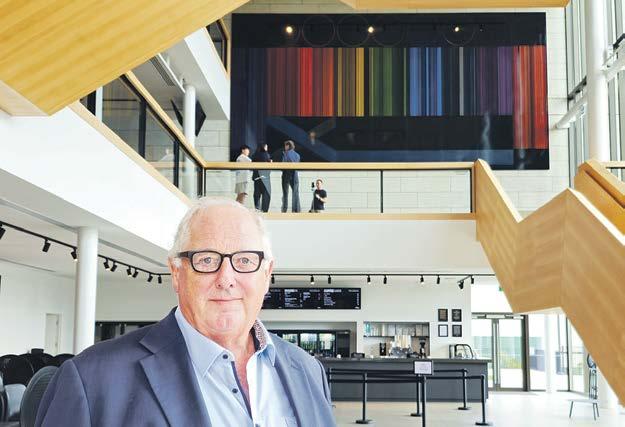
Progress on the new library and community hub is clearly visible with the striking façade now part of the Tauranga skyline.
Stepping inside, visitors will find a welcoming place designed for people to come together to learn, create and enjoy shared experiences.
Offering more than a traditional library, it brings together council customer services, bookable meeting rooms, creative and sensory spaces, a small café, and an outdoor terrace. It will be a place where stories are shared, culture is celebrated, and the community can come together to connect.
Bookable spaces for the community
From community groups and businesses to individuals, a range of bookable venues will be available for meetings, workshops, presentations and celebrations. Catering for small groups of four to twelve people, the six meeting rooms will be equipped with digital screens and wireless video conferencing.
On the ground floor, the community hub will be a flexible event space suitable for seated presentations or larger gatherings. With audiovisual technology, a kitchenette and accessible facilities, it will be well suited to community events, classes, performances, celebrations and more.
Creation Station
Creativity, collaboration and curiosity come together in the Creation Station - a bright, hands-on setting where everyone can explore technology, learn new skills and bring ideas to life. Equipped with 3D printers, laser cutters, digital design equipment and robotics, the space is designed for innovation and experimentation. The Creation Station will offer a supportive environment with expert guidance on hand.
Sensory Space
Offering a calm, welcoming space designed to support relaxation, exploration and sensory play.
Designed with input from child and adult disability support groups, it will be equipped with specialist sensory equipment, furnishings and materials that encourage safe interaction and engagement. The Sensory Space will provide a supportive environment for people and families with diverse needs to explore at their own pace.
Play and explore spaces
Level one will be dedicated to families, children and teens, with areas designed for play, learning and spending time together. The children’s library section invites exploration through interactive play elements inspired by forest and sea themes, alongside a convenient and accessible whānau bathroom and change room.
Close by, the Imagination Station is a vibrant, purpose-built education area for school groups and young people, offering a creative setting that feels fresh and fun.
Alongside the outdoor terrace, teens can enjoy their own event room. With plenty of casual seating, study areas and dedicated library collections, teens will find a relaxed place to learn, connect and spend time.
Archives and Research Centre
Keen history enthusiasts will be able to explore the stories of our past in person. With support from experienced archivists, the community will be able to study historic photographs, maps, artworks, manuscripts and documents.
Enabling research across history, science and business, with expert assistance on hand, researchers can delve into databases and microfilm records. Behind the scenes, the archives are carefully protected in a purpose-built, climate-controlled facility designed to help preserve the rare and fragile items for future generations.
Te Manawataki o Te Papa
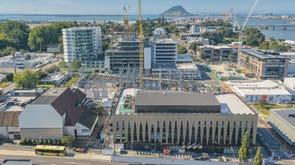
The Te Manawataki o Te Papa project is firmly in the delivery phase, with strong momentum across the wider civic precinct. The upgraded Toi Tauranga Art Gallery reopened in November 2025, the first completed building in the precinct. The library and community hub is set to open in late 2026, with the museum, civic whare and remaining civic precinct space to follow. Full completion is expected by mid-2028.
University students welcome
The Research Centre, on level two of the new library and community hub, will also cater for university students with access to extensive historical and research collections. Students will be able to browse over 30,000 reference titles and more than 100,000 books in total, alongside research computers and other tools, with help on hand when needed.
Students and staff from participating institutions will be able to connect through Eduroam, a secure, worldwide Wi-Fi service. With Eduroam, university students will be able to access the internet as if they were on their home campus, making the Research Centre a convenient and connected place to study, research and learn.
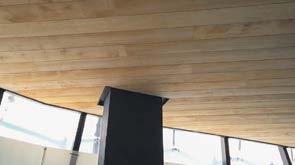
Major construction milestones have been achieved across the library and community hub site. The open-air terrace ceiling is complete, featuring bandsawn cypress timber grown locally in the Papamoa Hills, and the building is now watertight. Full-height rimu veneer panels featuring intricate cultural patterns are being installed inside the building. Across the precinct site, the museum’s steel framework is
rapidly stretching skywards and the final floor slab for the civic whare has been poured.
When complete, Te Manawataki o Te Papa will be a place to engage with our history, share stories and celebrate the rich and diverse cultural heritage of Tauranga Moana. It will be a welcoming destination where people can come together to connect, learn and have fun.
For more information about Te Manawataki o Te Papa, visit: tauranga.govt.nz/civicprecinct
Library and community hub - December 2025
Library and community hub - January 2025
By JANINE KRIPPNER
My heart goes out to everyone impacted by weather events and landslides last month. The incoming news that a landslide has gone through the Mount Maunganui Beachside Holiday Park was gut-wrenching.
Landslides, a type of mass-wasting, can range from a nuisance to an overwhelming disaster. They can be small and barely noticed, or large enough to bury a town. Importantly, there are sometimes warning signs that the land is beginning to give way.
If we notice and understand these warning signs, it could give precious time to get out of the way. This is not at all to say that there were any warning signs before the current event that should have been noticed. I have no information beyond the initial news, and I will not be speculating. What we can do is remind ourselves about what those signs are, just in case.
Landslides are not always a single mass of land sliding downhill. They can occur in multiple steps over time. Land can move under the constant force of gravity, with or without a clear trigger like a severe weather event or an earthquake.
When there is warning, what might we see?
Websites from organisations like the USGS and our own Civil Defence agencies have more extensive information pages with helpful photos. What follows is a summary.
When rock and soil start to creep downhill, the ground deforms or changes. Outside, this can look like cracks forming in the soil or anything on or within it, like roads, paths, retaining walls, fences, or other structures. Bricks in a building might begin to pull apart.
There may also be bulging in the ground, or water ponding in places where it had not before. Trees, power poles, or streetlamps might tilt, and
WShaping local futures When the ground fails
power lines might sag or become taught. Buried utility lines, such as water or sewage, might break or begin leaking.
If you are near a stream or river there may be a rapid change in water level.
Inside, warning signs can include new gaps appearing, or doors and windows sticking or not fitting as they once did. Decks, verandahs, or steps might start to tilt away from the building.
As people near the Mount Maunganui event have described, once a landslide gets moving it can be loud, and shaking may be felt.
This can include boulders crashing together, a deep rumble or ground vibrations (often described as sounding like a freight train), or the sound of snapping wood or other materials being impacted.
It is important to remember that landslides can occur in several stages. When the first movement stops, it does not necessarily mean the area is safe.
Landslide scars can continue to collapse over time, retreating further into a hillside or cliff.
Landslides can move incredibly fast, so immediate action like evacuation is critical.
There may be no perceivable warning signs at all. But when there are, noticing them can make a real difference.
Once safe, contact your local council or emergency services and let the right people know.
• Janine Krippner is a New Zealand volcanologist who uses remote sensing to study pyroclastic flows. She is a regular Good Local Media columnist and a popular science communicator, which includes science communication to broad audiences. She is currently working on several projects as a Waikato University honorary research associate.
By PAULA SOUTHGATE
I am unashamedly passionate about local government – the work it does, the issues it grapples with, and the opportunities it creates.
My entry into local government politics may have been incidental to my desire to improve my local community and environment, but 24 years later that commitment remains. I stood down from council to find other ways to add value and end 50+ hour weeks, but it will surprise no one that I still have strong views and plenty to say.
I have always believed in talking openly with communities about big, complex issues. In fact, I believe we fail communities when we avoid them. We need bold, open and diverse conversations about what matters, and we need people to participate.
The Helen Clark Foundation, alongside other think tanks, writers, podcasters and columnists, shares this belief. What we need more than ever – locally, nationally and beyond – is credible information that sparks thinking and debate. Debate matters. Politics is full of competing views, and that is not a weakness of democracy; it is its strength.
So, I am proud to be part of the foundation alongside some outstanding thought leaders, I said yes. The Foundation’s Honorary Fellows Programme brings together highly respected policy thinkers across a range of disciplines to contribute to the national conversation on long-term issues that matter to New Zealand. My role is to write opinion pieces, organise webinars and work with other fellows to provoke interest and discussion on important issues.
Local government is at a crossroads.
Structural reform, infrastructure pressures and changing expectations of councils directly affect local communities.
People often try to pin me to a political party. They always have. The truth is I have never belonged to one. I have worked with blue, red and green governments as required, and I am pleased now to have this role with an independent, non-partisan think tank. Councils operate within legislation, policy and funding frameworks set by central government, regardless of who is in power. Mayors and elected members must engage with government constructively and, at times, challengingly. I did both.
I don’t want to talk at people. I want to challenge assumptions, provoke reaction and get people talking with each other, with the foundation or with councils themselves, I don’t mind.
Ratepayers should vote, but this is not enough. Participation in council decision-making is disappointingly low. Submissions are few, engagement tools are underused, despite genuine effort from communications teams, and brave attempts by elected members.
I have worked across many issues with committed people from councils, organisations and across political lines. I intend to use my experience to help drive turgently needed community conversations. I love local government. Most elected members want better communities. Progress is possible – but only if we keep talking.
• Paula Southgate is a former mayor of Hamilton and chair of Waikato Regional Council.
Better HR Co.: Helping Businesses Do Better and Be Better
ith more than two decades of specialist expertise across its team, Better HR Co. has shaped its reputation as a trusted partner for organisations navigating today’s complex employment landscape. The company’s evolution from Stapleton Consulting reflected this growing depth. As Managing Director, Catherine Stapleton explains, “I’ve been in business for ten years, and now have a great team with unique expertise that we can bring to the table for business leaders to leverage.”
That team strength, combined with the company’s broad exposure to shifts in HR and employment relations, made the rebrand a natural milestone. Catherine says, “I’ve seen the changes across employment practices and HR through being a business owner myself, and time and time again hear business leader’s desire to do better and be better. So, it was a natural progression to change our name last year to reflect this desire.”
Better HR Co. is known for forming trusted relationships with organisations of all shapes and sizes. A reflection of the company’s own lived experience. “Being in business has been instrumental in shaping our approach,” Catherine says. “We can relate to the pressures and
challenges leaders face as employers.”
As Catherine puts it, “We’ve certainly been able to help provide everything from good advice to strategic planning, and our expertise has enabled those who are at a crossroads, or a sticky position in employment relations – or wanting to avoid them.”
What sets Better HR Co. apart is its blend of clarity and courage. Their philosophy is grounded in being “balanced, objective and transparent in facilitating what’s actually needed,” a foundation that has helped with strategy and retention alike. Catherine adds that their ability to be “brave and call it like it is when required” consistently earns positive feedback.
The team is also adept at navigating the grey areas so common in people related challenges. “Our approach may have evolved, [but] we are still very good at navigating the nuances and grey areas of employment relations and giving good advice, for business owners and leaders through to senior governance areas,” Catherine says.
This holistic lens supports Better HR Co.’s strategic focus on the employee lifecycle, always considering downstream effects. And with legislation constantly shifting, keeping pace is essential. “The wind vane of change is always there,” Catherine notes, citing
everything from smaller updates to “wholesale, wide ranging changes – like the proposed Holidays Act reforms.”
Underlying this capability is what Catherine calls “our own village of specialists,” always discussing trends and legislative developments.
Better HR Co’s detail oriented approach also complements preferred partner MyHR. Based in Auckland, MyHR’s AI enabled platform pairs with Better HR Co.’s bespoke advisory services, offering high value support to clients with specialised needs.
Together, these strengths help leaders achieve what they’re striving for: better
clarity, better outcomes, and ultimately, better HR practices.
Website: www.betterhrco.nz
Phone: 07 2420 447
Email: hello@betterhrco.nz
Address: Panama Square, 14 Garden Place, Hamilton
Left to right, Client, Delia Clifford-Marsh - HR Consultant, Catherine Stapleton - Managing Director
Growing up, not out…
It may not be dominated by skyscrapers, but housing density is on the rise in one of the country’s fastest growing cities, Tauranga. Jon Rawlinson reports.
While house sales traditionally slow down over Christmas/New Year, this festive season saw stock levels rise on average especially in the Bay.
The construction of homes in the region is continuing at a steady pace, ensuring stock levels include new builds.
Although apartment buildings fall into a different category, Tauranga City
Council’s Steve Pearce confirms that other multidwelling buildings are gaining favour.
“I haven’t seen a huge number of apartments being built in Tauranga, but we’re definitely seeing a reasonable chunk of duplex and townhouse developments being built,” the council’s head of building services says.
“There’s a lot more townhouse developments than even just two or three years ago.”
Higher density dwellings are popping up at both greenfield and brownfield sites.
“Through the Te Papa area the council rezoned the land to suit higher density - it’s an urban peninsula through to the city,” he says.
“Papamoa has been a big greenfield area and it stands out in the data. There’s still a fair bit of building there, out towards Papamoa East where there’s a lot of greenfield subdivisions.”
As the iconic standalone home on a quarter acre section may not be the dream for as many these days, more people are looking to subdivide existing sections.
“We’re seeing a lot of brownfield development,” Pearce says.
“The size of the standard section is shrinking, so that is helping to drive more vertical builds than in previous years.”
Pearce says Tauranga is a little behind larger cities with regard to higher density homes, but not too far.
“Other urban areas have seen more townhouseintensive development in the past 5–10 years and we’re getting to that now, which is nice to see because it means we have more affordable houses.”
First home buyers can still, for the most part, get a foot in the door (or on the ladder) thanks to multi-dwelling developments. In Tauranga, 2025 saw a solid stream of such buildings entering the market.
“I guess it could probably be described as a steady year, on par with previous years,” Pearce says.
“There obviously is demand that we haven’t been meeting for the past couple of years. It’s not where we want to be, but it’s cool to see that we’re still building a decent amount of new houses.”
R&D tax incentives –time to rethink about applying?
For those who haven’t yet discovered it (we know you’re out there!), the Research and Development Tax Incentive (“RDTI”) was introduced in April 2019 and provides a 15% tax credit on eligible R&D expenditure. The purpose of the RDTI is to broaden access to R&D support and stimulate innovation.
The first five-year report evaluating the performance the R&D tax incentive regime, prepared by Motu Economic and Public Policy Research & the University of Otago, considers whether the 15% tax credit is incentivising further R&D to be undertaken and its effect on growth on New Zealand’s economy. In summary:
• Projected economywide benefit of the RDTI: 4.2 times government investment, equating to a boost to New Zealand’s
GDP of $6.8 billion over the five-year period.
• Total additional R&D expenditure: $1.833 billion (present value) – with supported firms on average spending $274,000 more on R&D annually.
• “Bang for the buck” ratio (additional expenditure per dollar of support) is 1.4, consistent with OECD benchmarks. This compares to a BFTB ratio of 0.83 under the Growth Grant regime.
• Net impact after government costs: $221 million.
• Innovation gains appear two years post-support, with a 6.1 percentage point increase in innovation rates. Supported firms show higher growth in output, capital, and employment.
• Uptake has been
strong with 1,752 firms supported, with $1.074 billion in tax credits provided since 2020.
The report also makes it clear that the regime has its challenges. Many businesses, particularly those with smaller R&D budgets, find the compliance process costly and demanding, this tied with slow processing of Supplementary Returns has been a repeated frustration. Strict rules and limited flexibility at Inland Revenue have occasionally seen claimants penalised for small administrative errors. Software R&D can be hard to navigate, with rules that don’t always suit real world development.
The report identifies several ways to make the scheme run more smoothly. These include reducing compliance demands for
smaller firms, clarifying software related rules, and giving Inland Revenue more flexibility to resolve minor issues. Although the Government hasn’t yet indicated whether it will act on these suggestions, the findings reinforce that the RDTI is now a well established part of New Zealand’s innovation landscape.
While some companies might have had little success in previous years with their applications or have thought that the process was not worth engaging with, the RDTI regime has matured significantly since its introduction in the 2020 income year and now is a great time to revisit making a claim. Deloitte’s experience has been that the regulators are now well settled into their roles and are comfortable
Looking ahead, new legislation will have an impact on the number and types of new builds. In place this year, a new exemption now permits the construction of small, standalone dwellings (effectively granny flats) without a formal building consent.
This is just one change from Wellington intended to ‘raise the roof’ when it comes to new builds.
“There will be a whole bunch of changes in 2026, which will affect how much certainty people can have with their finances and also because of the legislation,” Pearce says.
“So, it’s going to be an interesting year.”
Sponsored Content
TAXATION
BY ANDREA SCATCHARD
approving all types of R&D projects. Applications are due 3 months after your balance date, so if your business has a 31 December or 31 March balance date, we recommend starting to prepare your General Approval applications now as they are due 31 March and 30 June respectively.
> “The RDTI is now a well established part of New Zealand’s innovation landscape, don’t miss your chance to benefit from it”
Andrea Scatchard is a Tax Partner at Deloitte, based in the Bay of Plenty. She can be contacted on ascatchard@deloitte.co.nz
Steve Pearce, Tauranga City Council.Supplied TCC
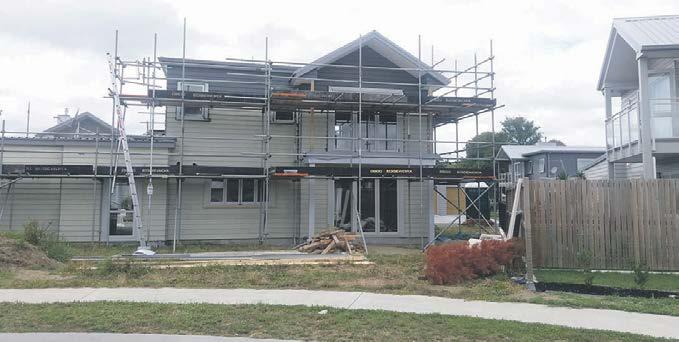
Town house developments like these have become popular around the Bay of Plenty.
Forestry’s aerial revolution
A decade after Scion embraced unmanned aerial vehicles as a research tool, Mary Anne Gill discovers four researchers – Grace Villamoor, Ilze Pretorius, Richard Parker and Rosie Sargent – reshaping science on the ground.
Ten years ago, a small team at Scion – now part of the Bioeconomy Science Institute – stood on the edge of a forest block with a drone the size of a coffee table and a hunch that airborne technology was about to change forestry forever.
At the time, drones were still novelties, more associated with hobbyists and film crews than scientists. But Scion’s researchers saw potential: a way to capture forests from above with unprecedented clarity, speed and safety.
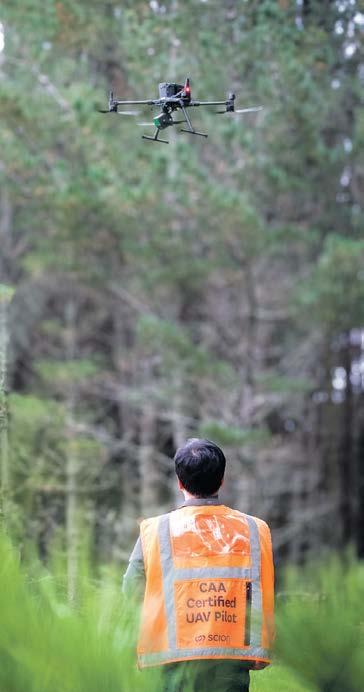
Unmanned aerial vehicles (UAVs) now map forests in ultra-high resolution, scan canopies with light detection and ranging technology, collect samples from treetops once reachable only by climbers, and even fly beneath the canopy to reveal the hidden architecture of stems and branches.
They have transformed how forests are measured and monitored, and enabled new science across climate adaptation, biosecurity, human factors and wood processing.
Behind that
transformation are people whose work, passions and lived experiences reflect the same spirit of curiosity and innovation that launched Scion’s first drone into the sky.
Scion’s UAV journey began in 2012, when scientist David Pont started tracking advances in miniaturised laser scanning. Three years later, Scion paired a three-kilogram LidarPod with a heavy-lift drone from Aeronavics, a New Zealand company better known for supplying Hollywood. It was a bold move - the technology was new, expensive and untested in forestry.
The geomatics team quickly realised they could capture forest structure in ways previously impossible. As capability grew, so did industry interest. By 2020, 83 percent of New Zealand forestry companies were using drones for aerial imagery, a shift accelerated by Scion’s research, training and leadership through the Tools for Foresters initiative.
Today, Scion holds Civil Aviation Authority Part 102 certification, enabling
advanced operations beyond standard licences. The autonomous systems team continues to push boundaries - from thermal imaging to sub-canopy flight to aerial spraying systems tailored for forestry.
Scientist Robin Hartley says the value is only increasing.
“We’re capturing spectral and thermal data to understand tree physiology remotely, and we’re working with companies to develop UAV spray systems specific to forestry needs. There’s huge potential still ahead.”
That sense of possibility is shared across the institute - including by four researchers whose work intersects with UAVs in surprising and meaningful ways.
For human geographer and climate adaptation specialist Dr Grace Villamoor, UAVs are more than tools - they’re windows into the future. Her work focuses on understanding risk, behaviour and decision - making in a changing climate, and aerial data is increasingly central to that mission.
Grace’s journey to Scion spans continents. Originally from the Philippines, she studied forestry before completing a master’s in Germany and a PhD in human geography focused on biodiversity and rural livelihoods in Indonesia.
She arrived in Rotorua in 2019 and quickly found her place. She now leads three major projectsResilient Forests, Bioenergy (socioeconomics) and Forest Flows decision - support tools - all of which rely on understanding how people and landscapes respond to uncertainty.
Her recent appointment as a lead author for the Intergovernmental Panel on Climate Change’s Seventh Assessment Report is, she says, “a career-defining moment.”
Outside work, Grace tends to her 70 orchids and cooks her way through cuisines, currently Vietnamese.
Rotorua, she laughs, “mimics” her hometown of Los Baños, right down to the geothermal smell.
While UAVs help Scion look down on forests, atmospheric scientist Ilze Pretorius spends her days looking up.
As science lead for the five-year Endeavour-funded programme Protecting Aotearoa from wind-dispersed pests, Ilze is developing an early-warning system that predicts when and where airborne pests might arrive. It’s a complex challenge involving extreme atmospheric conditions, biological survival rates and real-time modelling.
Ilze grew up in
Johannesburg and completed degrees in geophysics, meteorology and atmospheric sciences before moving to New Zealand in 2015. The freedom to explore the outdoors safely was a major drawcard. Her interest in environmental science began early. During a drought in primary school, she insisted her family reuse bathwater to save plants. UAVs are becoming increasingly important to her research. They can collect airborne samples, validate atmospheric models and help track how spores, seeds or insects move through forest systems. When she’s not modelling atmospheric flows, Ilze paints, tramps and chases after her two-year-old son,
Our growth opportunity
> By MAHÉ DRYSDALE, Mayor of Tauranga
As one of the country’s fastest growing cities, a big opportunity, and challenge, for Tauranga City Council is managing the effects of growth while ensuring our city remains vibrant, affordable, liveable and productive. In simple terms, that means addressing our city’s chronic housing shortage and continuing to invest in the infrastructure and community facilities needed to maintain the lifestyle, natural environment and economic opportunities that make our city attractive.
Our Council’s aspiration is for Tauranga to be the best city in New Zealand, and effectively managing growth will help us achieve that goal. Central to being the best is proactive, longterm planning, supported by the investment required to support sustainable growth. We need to stay ahead of
growth and have more influence over how, what and where it occurs.
Affordable housing and an effective transport network are always at the top of people’s lists when it comes to challenges facing the city, but we also have to keep our water, wastewater and stormwater services up to the necessary standard and ensure that our facilities keep pace with the needs and expectations of our fastgrowing community.
Our plans to accommodate future residents are shaped by the Western Bay’s SmartGrowth strategy. This emphasises coordinated land use and transport planning to foster connected, vibrant communities and seeks policy alignment across local and central government to streamline implementation and delivery. A key focus of the strategy is on living, learning, working and playing in local areas, through well-connected local centres.
At present, there is limited land ‘greenfield’ development land available in the subregion, which makes future intensification and highdensity living around main centres a key pathway to coping with the expected increase in population, while continuing to balance the lifestyle and character of our city.
With the house price to income ratio in Tauranga one of the country’s highest, enabling more affordable housing also requires building processes to be simplified and targeted infrastructure delivered more cost-effectively – which we are working to solve.
Successfully managing long-term population growth needs continued collaboration with our partners, including our neighbouring councils and central government, to align growth strategies and implement integrated solutions.
Underpinning this is the
City and Regional Deal currently being negotiated between the Western Bay of Plenty sub-region and central government. The proposed deal represents a major opportunity, with a significant focus on enabling housing and business land development, along with key State Highway transport improvements needed to support growth, offering a pathway to address some of our most pressing challenges.
We believe a Regional Deal will provide certainty and confidence, encourage longterm investment decisions and enable sustainable growth, productivity and prosperity. Our Council is also exploring funding partnerships and innovative investment mechanisms to accelerate future infrastructure delivery. Again, this will be crucial to future rates affordability and our ability to work within
any rates cost increase cap introduced by the Government.
We look forward to advancing our plans for the city of tomorrow through the current calendar year and I’ll keep Bay of Plenty Business News readers upto-date with our progress, as key milestones are achieved.
Sponsored Content
Rosie Sargent
Grace Villamoor Ilze Pretorius
Forestry’s aerial revolution
Jansen. Her artwork even hangs in Scion’s Rotorua building - a reminder that science and creativity often share the same spark.
If UAVs have changed how Scion sees forests, human factors scientist Richard Parker has changed how people work within them.
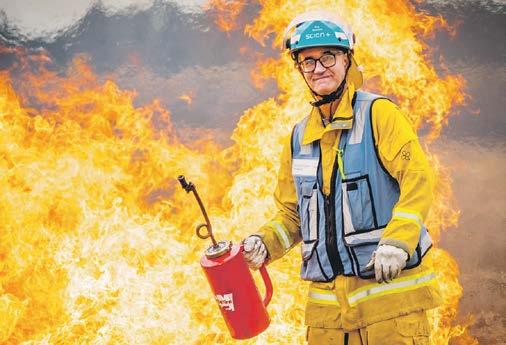
Richard’s work is grounded in the realities of forestry and fire operations. He spends much of his time on the front lines, observing how people work, identifying risks and designing solutions that make jobs safer and more productive.
“Sometimes a company
calls and says, ‘People are being injured in this situation - can you investigate?’” he says. His background is as hands-on as his research.
He worked in a logging crew between university study, volunteered as a firefighter and has designed everything from high-vis shirts now used across the industry to award-winning robots and remote - controlled vehicles for post-earthquake inspections.
Being embedded in the wildfire research team means UAVs are increasingly part of his world too. Drones can map fire behaviour,
assess hazards and reduce the need for people to enter dangerous areas. His goal for the year ahead is simple but ambitious: integrate human factors thinking across the entire Bioeconomy Science Institute.
Senior technologist Rosie Sargent has been with Scion for 25 years, long enough to see UAVs evolve from experimental gadgets to essential tools.
Her work centres on wood processing - drying, modification and scaling up new technologies for industry - but UAV-derived data increasingly informs
how wood quality is assessed and how forests are managed before logs even reach the mill.
“Understanding what’s happening in the forest helps us make better decisions about processing,” she says. “It’s all connected.”
Rosie’s days are wonderfully varied: analysing data, planning processing trials, driving forklifts, stacking timber or helping sawmills optimise their drying systems. She’s currently commissioning a new kiln control system that mirrors those used across New Zealand and Australia.
She’s excited about a new project on processing redwood timber - a species poised to become increasingly important in New Zealand.
Scion’s UAV journey began with a single drone and a bold idea. Now they’re catalysts for new science, new collaborations and new ways of seeing forests.
For Grace, Ilze, Richard and Rosie, UAVs intersect with their work in different ways, but the common thread is clear: innovation thrives when people are curious, courageous and willing to explore new perspectives - whether from the forest floor or 120 metres above it.
And as the Bioeconomy Science Institute looks to the next decade, the view from above has never been more important.
Human factors scientist Richard Parker works on the front lines of forestry research
Unmanned aerial vehicles are a key tool in forestry research.
Theatre on centre stage
Bay of Plenty and Waikato's creative community now has a landmark space where heritage meets world-class performance and community spirit, reports senior writer Mary Anne Gill.
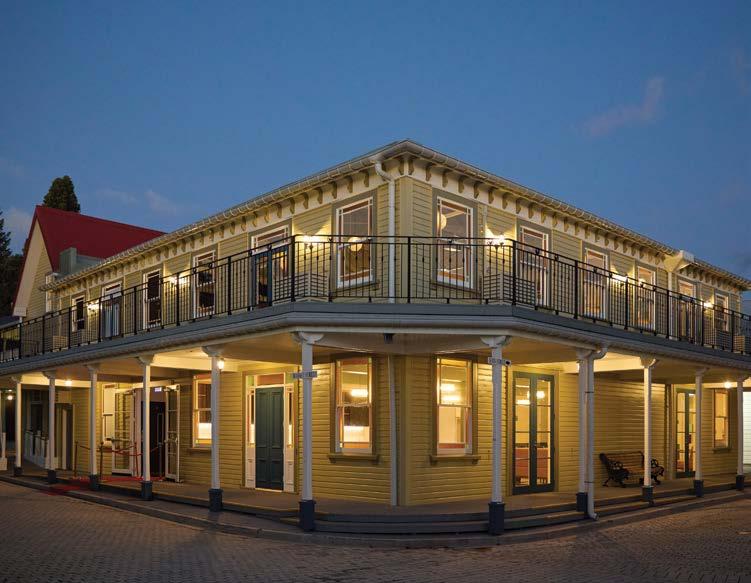
As the doors of the Waikato Regional Theatre swung open for the first time last month, a sense of anticipation swept through the crowd.
Guests stepped into a space where timber and stone curves mirrored the Waikato River, and the foyer buzzed with excitement.
The three-day showcase - To The Stars / Ki Ngā Whetū - marked not just the unveiling of a striking new theatre, but the beginning of a new chapter for the region’s arts community.
The theatre’s location is steeped in history. It rose from the site of the former Hamilton Hotel, where Queen Elizabeth II stayed in December 1953.
The land itself was a gift to the philanthropic Momentum Waikato trust - donated in 2017 by Mitch Plaw and his family - the Waipā-based founders of Vantage Aluminium and Takapoto Estate.
“Without their generosity, the theatre with its historic hotel façade in place would not have happened,” says Live Nation venue manager Michael Gilling.
The Plaw family’s contribution
is commemorated not just in bricks and mortar, but in the opportunities the $80 million, BNZ sponsored theatre now offers to the region.
From the outset, the theatre’s design brief was ambitious: create a world-class venue that could serve everything from grand opera to school prizegivings.
“This is the newest venue in the southern hemisphere and we’re really proud to have that,” says Gilling.
“You’ll see the awesome woodwork around here that Jasmax (architects) and Charcoal Blue (theatre consultancy) have done. It represents the curvature of the Waikato River… all the little details have really represented Waikato.”
“We wanted to create and be a part of a community hub that can service all kinds of content, all kinds of artists, all kinds of music and performance,” says Mark Kneebone, managing director of Live Nation.
Its flat floor adds flexibility –from opera to metal gigs to school prizegivings.
“It’s not just about bringing the shows, it’s also building the local community - from high school kids to amateur theatre,” says Gilling.
Step inside, and the theatre’s architectural ambition is immediately apparent. The auditorium is split into three levels - stalls, circle, and balcony - each offering a different perspective on the stage. The woodwork, inspired by the Waikato River, flows through the space, while Hinuera stone from the region anchors the building to its landscape.
One of the theatre’s showpieces is the “halo” - a wooden sound shell designed to transform the space acoustically for orchestral and choral performances.
“It is one of its kind in the country,” says Gilling.
Above the foyer, the Ralph Hotere mural - commissioned for the old Founders Theatre in 1973 and now insured for nearly $5 million - has found a new home.
For former mayor Paula Southgate, the theatre’s opening is the culmination of years of advocacy and vision by Hamilton City Council.
“We’ve been through all the ups and downs, those that love it from the get-go and those who were resistant,” she says.
“Two things I’m particularly proud of: we put our foot down and said the heritage must be retained, and we included the century-old staircase made of American oak.”
They are the very steps which Queen Elizabeth II would have climbed to go to her room on 30 December 1953.
The theatre’s façade and the Queen’s balcony are the only original pieces of the Hamilton Hotel that remain.
Live Nation sees the theatre as a rare, full-scale cultural investment.
The packed opening programme sets the tone for more shows, bigger audiences, and new opportunities for Waikato’s creative community.
As the applause echoed through the auditorium and the curtain rose, Gilling allowed himself a moment of reflection and shed a tear as the occasion overwhelmed him.
After years of planning, construction and countless walkthroughs the theatre was finally alive: performers ready, lights blazing, an audience waiting to celebrate the region’s creativity. The Waikato Regional Theatre is more than a building. It is a gift, a gathering place, and a promise that the arts will always have a home by the river - open to all, for generations to come.
TERMS OF TRADE
By confirming and placing advertising in Good Local Media Ltd publications, products and platforms you are agreeing to our terms and conditions of trade.
CANCELLATION DEADLINE: Cancellation deadline is two weeks prior to publication. If cancellations are received after the booking deadline, then full charge applies. Advertising setting is free for use in Good Local Media Ltd publications only. If used elsewhere charges will apply, pricing available on request. Advertising space only is purchased, and all copy made up by Good Local Media Ltd remains the property of Good Local Media Ltd. If supplied ready to print, copy is owned by the advertiser. Publication day is first week of the month.
RATE CARD: Rates are based over a 12-month period starting from the date the first ad publishes. The rate bracket e.g. six insertions, 12 insertions etc. chosen allows ad sizes to vary within the rate bracket. If the number of insertions chosen is not met, then a bulk charge will be applied at the end/cancellation of your schedule based on correct rate reflective of the number of ads actually published e.g. if you have chosen the 12 insertion rate and only publish six insertions
etc., the bulk charge will be the difference in price between the six insertion rate and the 12 insertion rate multiplied by the number of ads published. You pay the rate reflective of the number of ads you actually published.
PRICING: All prices quoted are ex GST, per insertion, including full colour and are non-commission bearing. Commission rates are to be added on top. Rates are based over a 12-month period. The 12-month period starts from the date of your first insertion. Annual rates are based on 12 insertions.
INVOICING AND PAYMENTS: For advertisers on a regular schedule and have completed a client information form, invoices will be sent at the end of the month and payment is due by the 20th of the following month, otherwise payment is required prior to advert publishing. Accounts in arrears (+60 days) may be subject to a $95 + GST late payment fee per advert per month. Advertiser is responsible for any and all debt collection fees. Payment options are via internet banking (account number 02-0316-0510007-000), credit card, debit card, or EFTPOS at the office.
Live Nation venue manager Michael Gilling shed a tear on opening night.
Photo: Michael Jeans
Hamilton City Council Destinations Group general manager Sean Murray is thrilled to see the $5 million Ralph Hotere artwork has found a new home.
Photo: Michael Jeans
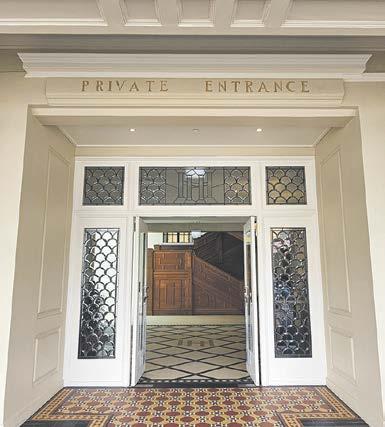
Behind the front doors the historic American oak staircase has been restored to its original glory.
Photo: Mary Anne Gill
Milk taste without the waste
Mary Anne Gill reveals how Kaipaki Dairies is reinventing New Zealand’s milk market with a farm-to-bottle approach that champions purity, freshness, and sustainability by delivering whole milk the way nature intended.
On a lush 200-hectare block near Hamilton, a quiet revolution in New Zealand’s dairy industry is underway.
At the heart of this movement is Kaipaki Dairies, a company blending tradition, technology, and sustainability to deliver milk as nature intended - pure, fresh, and local. Whole milk, just as it comes from the cow.
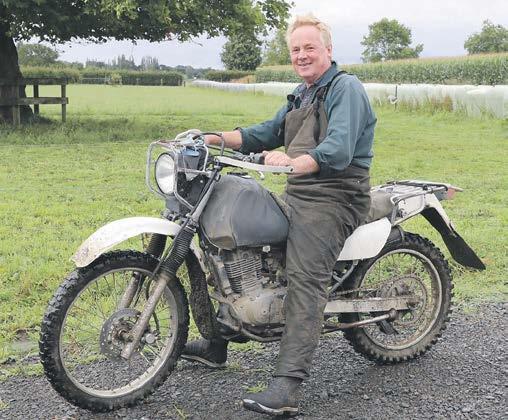
Paul and Sue Bardoul have farmed on Kaipaki Road, Ōhaupō since the mid-1980s.
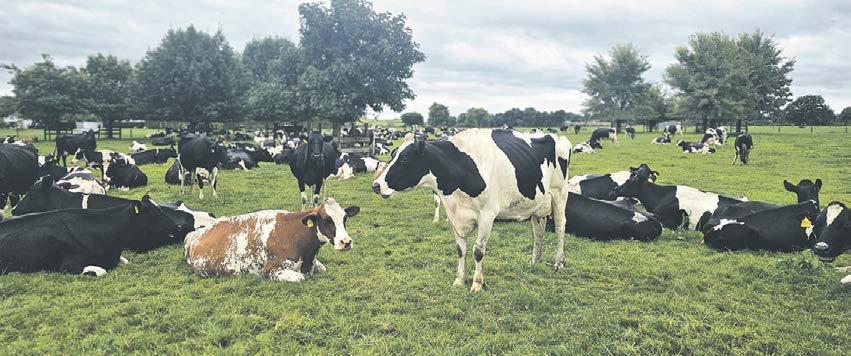
Three years ago, they built a factory on the farm to process milk from their 600 Friesians intent on introducing a zerowaste packaging system by offering swap-a-bottle for retailers and 10- or 20-litre pails for cafés, businesses, and workplaces.
They secured a government grant to help cut the environmental impact of plastic waste.
“I think we’ve got a really good product and I think we’ve got a really good model around sustainability,” says Paul Bardoul.
In the past year, Kaipaki’s closed-loop system has prevented more than two million plastic bottles from being produced, while supplying thousands of litres of milk in reusable containers.
Glass milk bottles largely disappeared in the 1980s and were replaced by cartons first and then plastic bottles. Deregulation meant supermarkets could sell milk and by the 1990s, home deliveries had ceased.
The Bardoul farm produces around five million litres of milk annually, but the 390 square metre factory processes less than half – the rest goes to Open Country.
The idea was simple: give New Zealanders access to premium, unadulterated milk, delivered in a way that respects both the environment and the consumer. Nothing is added, and nothing is taken away.
Every morning, milk flows directly from the cows in the shed to the factory through a 100-metre underground stainless steel pipeline.
Within hours, it is pasteurised using cuttingedge technology, bottled, chilled, and ready for delivery – often within six hours of leaving the cow shed.
This process preserves the milk’s natural flavour and nutritional integrity, setting Kaipaki apart from standardised supermarket milk.
Unlike homogenised milk, Kaipaki’s cream rises naturally to the top –just as it should. It is true whole milk, untouched and unstandardised.
Only barista blends receive light homogenisation to prevent café equipment
blockages from the cream.
“Technically speaking, we’ve got a way better product. Our cows are fed a complete balanced diet, and their mineral requirements are met daily. So, nutritionally, it’s superior,” says Bardoul.
“People taste the difference.”
Sustainability is not a buzzword at Kaipaki Dairies - it’s a guiding principle.
From the outset, the Bardouls – named north west Waikato farmers of the year in 2002 - set out to create a model that was as good for the planet as it was for the palate.
Their two herds are managed through a split calving system to sustain all year round milking.
And the cows enjoy a carefully balanced diet of pasture, maize, barley straw, soy, and grass silage.
“Most cows in New Zealand are underfed,” says Bardoul.
“We make sure ours have the right balance of starch, protein, and fibre every day.”
But Kaipaki’s sustainability credentials shine brightest in its packaging. The company has pioneered a closed-loop system using reusable glass bottles and pails.
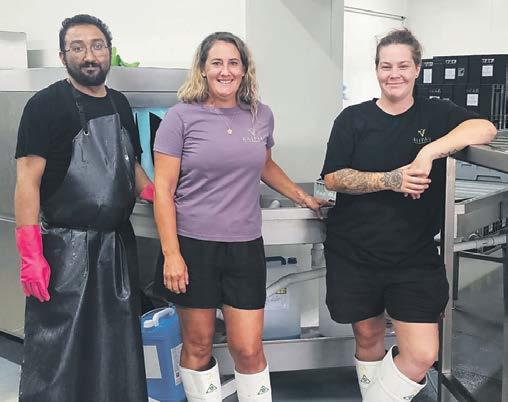
Customers – cafés, hotels, businesses, and households – return their empties, which are collected, washed, sanitised, and reused.
Operations manager Kirsty Parkes says one of the biggest challenges is ensuring they have enough bottles and pails.
“We’ve collectively reduced the production of hundreds of thousands of plastic bottles, with local cafés and businesses playing a key role in that impact,” she says.
They rely on retail customers returning the empties. There is a cash incentive, $1 off the price of the full bottle.
What sets Kaipaki Dairies’ milk apart is its taste - a
quality that comes from its purity and freshness.
The company’s journey began at places like farmers’ markets, where the milk’s taste quickly won over customers.
Word spread, and soon the company was supplying households, cafés, hotels, and businesses across Hamilton, Waikato, Bay of Plenty, Wellington, and Auckland.
Today, three delivery trucks make regular runs to these regions. In places like Hobbiton, tourists from around the world are introduced to the taste of real New Zealand milk – fresh, creamy, and unstandardised.
While the process is rooted in tradition – milk straight from the cow, minimal processing – the factory combines hands-on care with modern technology.
Bottling is still largely manual, with a small team filling, dating, and stacking bottles.
Kaipaki has invested in new equipment to improve efficiency and maintain the highest standards of hygiene and shelf life.
Every step, from pasteurisation to bottling, is designed to preserve the milk’s natural qualities and ensure it reaches customers at its freshest.
Kaipaki Dairies is more than a business – it’s a community effort. Its success is built on customers who embrace the old-fashioned return-and-reuse model and spread the word about the milk’s quality.
With plenty of capacity and milk available, the company is poised for growth.
“I’d just like to think that we could get more local people using our local product,” says Bardoul.
Kaipaki Dairies proves what’s possible when tradition, technology, and sustainability unite - delivering milk as nature intended.
Ramesh Parajuli, Kirsty Parkes and Courtney Lock inside the factory waiting for the bottles to come through the cleaner.
Photos: Mary Anne Gill
Paul Bardoul, the dairy farmer behind it all.
One of the two Friesian herds on the Bardoul farm which supplies Kaipaki Milk.
PURPOSE-RENEWED. FOR THE HISTORIC VILLAGE
Situated on five and a half hectares, The Historic Village is home to more than 60 heritage buildings. Some are very old buildings; others were relocated from around the district during the 1970s and 80s using construction methods well below today’s standards.
So, building renewal and maintenance is not a one-off project, but an ongoing programme to maintain The Village’s heritage character, while ensuring it remains safe, and functional for the community.
Fosters are proud to be the lead contractor on this renewals programme – working on the external refurbishment of six buildings during 2025 – carrying out roofing, window restoration, painting, gutter replacement, and some seismic strengthening.
Village Manager Blair Graham emphasises the importance of keeping The Village active throughout the works, with minimal disruption to tenants, visitors, and events.
“Fosters have been more than accommodating, scheduling projects around what’s happening in The Village and the people who come here” he said. “It’s great to work with a ‘can do’ organisation with ready workarounds for different situations.”
Quality and value are other key considerations.
“The Fosters team are absolutely conscious of value. They are very good at working with the architect to ensure the work is cost-effective. It’s been so enjoyable seeing them genuinely engaged with nutting out the best solutions to add value to our existing assets.”
The Fosters team are absolutely conscious of value... It’s been so enjoyable seeing them genuinely engaged with nutting out the best solutions to add value to our existing assets.
Blair Graham Manager, The Historic Village
Blair noted that Fosters have stood out for health and safety.
“Tidy and well-organised sites, calm site managers who are very methodical and efficient in what they do, that’s Fosters” he said.
“I’ve worked with a lot of construction companies over the last decade, and Fosters are up there with the best of them. They’re a good bunch of guys, always accommodating, nothing is a problem. Their interaction with our tenants and the public has made working within a construction site easy for us.”
Looking to do a refurb project? Let’s work together.