ASLO FEATURING
BLACK SHEEP
COFFEE
CAPITAL LIMITED
TOTALTEK
SAP
CODELCO
TIBCO

ASLO FEATURING
BLACK SHEEP
COFFEE
CAPITAL LIMITED
TOTALTEK
SAP
CODELCO
TIBCO
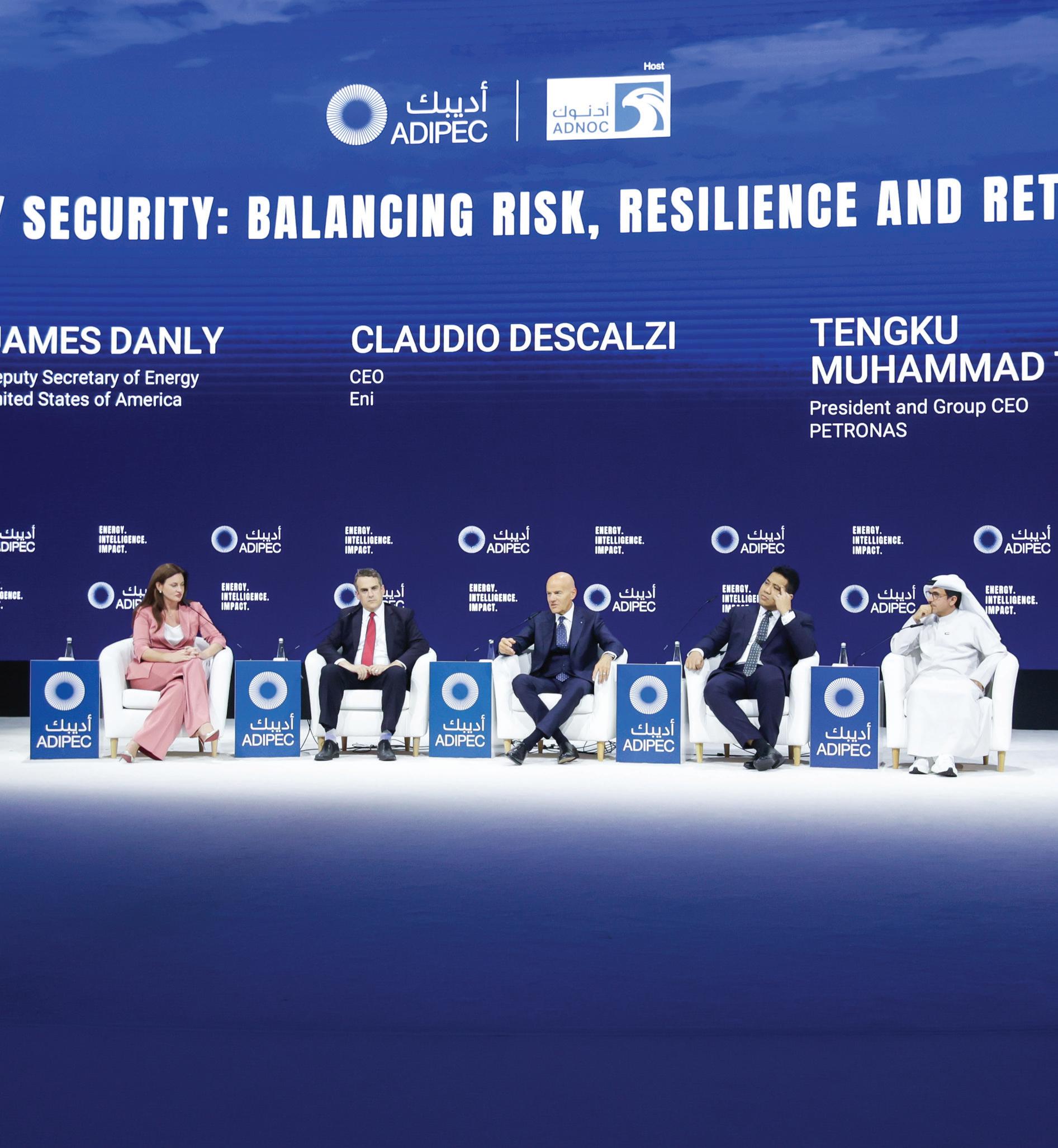
ADIPEC will convene leaders from across energy, technology, finance and policy to explore practical pathways for building shock-resistant, future-ready energy systems – systems capable of meeting rising demand, enabling digital and industrial growth, and supporting global development while advancing emissions management.
JOIN THE GLOBAL ENERGY COMMUNITY
ADIPEC in numbers:
239,000+ Exhibition attendees
16,500+ Conference delegates
2,250+ Exhibiting companies
1,800+ Conference speakers

Jamie Waite CEO, EMG | Enquirer Media Group jamie.waite@busenq.com
Roisin Brennand
Chief Operations Officer roisin.brennand@busenq.com
MEDIA
Gary Smith
Senior Project Director gary.smith@busenq.com
Rupert Kay Commercial Director UK rupert.director@busenq.com
Adel Mhiri
Project Director adel.m@busenq.com
Paris Cressy
Branding & Marketing Executive paris.cressy@busenq.com
Verity Kay Project Director verity.kay@busenq.com
Bernie Brennand
Senior Project Director bernie.brennand@busenq.com
Thomas Corcoran
Project Director thomas.cocoran@busenq.com
Jennifer Davies
Senior Project Director jennifer.davies@busenq.com
Thomas Hardy Project Director thomas.hardy@busenq.com
Claire Dunn Global Credit Controller claire.dunn@busenq.com
Bethany Waite Credit Controller bethany.waite@busenq.com
Tanya Rudd Head of Finance tanya.rudd@busenq.com
Natoya Rimmer Global Head of Accounts natoya.rimmer@busenq.com
Dan Reeves Head of Data dan.reeves@busenq.com
Kumar Nil-Khan Senior Data Strategy kumar.nilkhan@busenq.com
Simon Ferrening Production Manager Commercial Performance Analysis
Anita Terrell Social Media Manager anita.terrell@busenq.com
Lee Dixon Social Media Manager lee.dixon@busenq.com
HR
Susan Tumelty HR Partnered Company info@hrdept.co.uk

Laura Green Editor in Chief laura.green@busenq.com
Catherine Lafferty Business Editor catherine.lafferty@busenq.com
PRODUCTION
Remo Savino Production Assistant remo.savino@busenq.com
Jamie Bolton Head of Design jamie.bolton@busenq.com
Didie Nturo Head of Video & Content Creation didie.nturo@busenq.com
Matt Hardwick Online Website Manager matt.hardwick@busenq.com
DESIGN WEBSITE PHOTOGRAPHY
Didie Nturo Lead Photographer didie.nturo@busenq.com
LEGAL
Chloe Bird Birketts LLP Norwich


Welcome to the February Edition of Business Enquirer Magazine –Issue 145
As 2026 gathers pace, global industries are being reshaped by shifting consumer expectations, intensified competition and a growing emphasis on execution. This edition of Business Enquirer brings together the leaders, platforms and ideas turning ambition into measurable impact across business, technology and global markets.
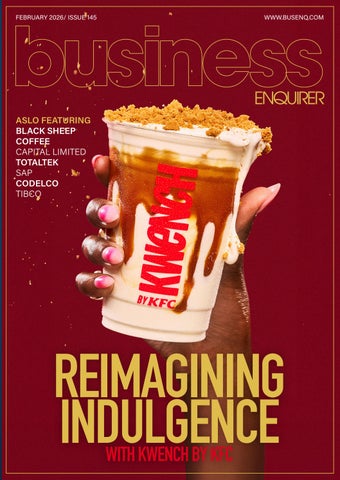
Our front cover feature, Reimagining Indulgence with Kwench by KFC, explores how one of the world’s most recognisable brands is redefining relevance in an increasingly crowded quick service landscape. KFC has always sold more than food. It has sold feeling. Yet in a category shaped by constant innovation and rising expectations, legacy alone is no longer enough. Under the leadership of Dhiren Karnani, Global Director of New Concepts, KFC is pushing beyond traditional product development to reframe how modern consumers engage with the brand. Kwench by KFC represents a strategic expansion into culture, identity and occasion, transforming beverages into a new gateway for discovery and loyalty.
This issue also introduces our Top 10 Food and Beverage Leaders 2026, recognising the executives shaping one of the world’s most influential and fast moving industries. From sustainability and supply chain resilience to brand trust and global scale, these leaders are navigating complexity while defining how the future of food and beverage will be produced, distributed and experienced.
Elsewhere in the magazine, we turn our attention to Saudi Arabia, where the era of digital ambition has firmly given way to large scale execution. Across government and enterprise, transformation is now defined by platforms capable of operating at national scale. Nowhere is this more evident than in procurement, where transparency, resilience and compliance align directly with the objectives of Vision 2030. SAP’s decision to host key elements of its Business Network and next generation spend and supplier collaboration platforms locally in the Kingdom signals a strategic repositioning of procurement technology around sovereignty, connectivity and intelligence. Insights from SAP leaders Hassan Saleh and Mo Ahmad reveal how this shift connects data, applications and AI to support mission critical decision making within national priorities.
This edition also features a thought provoking Q&A with Jack Reid, Partner and CTO at Visum Labs, examining why the gap between AI ambition and commercial impact remains so wide. As organisations accelerate adoption, Reid offers a clear and practical perspective on why many initiatives fail to deliver value and what separates successful deployments from projects that stall at pilot stage. Drawing on hands on experience delivering AI systems in production, he outlines an outcome driven approach focused on ownership, execution and measurable economic return.
Alongside these highlights, Issue 145 includes many more features, interviews and sector insights spanning technology, sustainability, leadership and global transformation, offering a comprehensive view of the forces shaping business in 2026.
Together, the stories in this edition reflect the defining themes of the moment. Execution over aspiration, reinvention over familiarity and leadership grounded in long term impact.
We hope you enjoy the February edition of Business Enquirer Magazine.
If you have a business story you wish to share in 2026, please contact our Head of Production via production@busenq.com




The editor and publishers do not guarantee the accuracy of statements made by contributers or advertisers, or accept responsibilty for any statement they express in this publication. The opinion of the contributors may not necessarily be the opinion of the editor or publishers. All content including the presentation therof in this magazine is the property of BE Media and protected by internation al copyright laws. You may not copy, reproduce, distribute, transmit, modify, create derivitave works, or in any other way exploit any part of copyrighted material without prior written permission from BE Media ©BE Media




At Nagarro, we harness AI and cutting-edge digital engineering to drive transformation, resilience, and growth.
With a forward-thinking and client-first mindset, we help businesses become digital-first, ensuring they stay ahead in an ever-evolving world.
With 18,000+ experts across 38 countries, we are trusted by 1,000+ global clients to deliver innovation at scale. Our deep expertise in AI, cloud, and modern engineering accelerates success—today and for the future.
Let’s build your future together.

Fluidic Enterprise nagarro.com
ONES TO WATCH IN 2026 018
FINTECH DISTRIBUTION AND DIGITAL BANKING TO WATCH IN 2026
ONES TO WATCH IN 2026 022
INNOVATION LABS DRIVING CORPORATE CHANGE TO WATCH IN 2026
ONES TO WATCH IN 2026 026
LEADING AI DRIVEN ORGANISATIONS TO WATCH IN 2026
030
ONES TO WATCH IN 2026
CYBER SECURITY MARKET TRENDS TO WATCH IN 2026
034 THIS MONTH’S FOOD AND BEVERAGE LEADERS 2026
INTERNATIONAL HOTEL GROUP BUSINESS PARTNER UPDATES 010
KIMPTON MIRADOR PACIFIC GROVE BRINGS COASTAL CHARM AND CALIFORNIA COOL TO THE MONTEREY PENINSULA
IYC
IYC AT THE 2025 ANTIGUA CHARTER YACHT SHOW SETTING THE STANDARD FOR THE CARIBBEAN SEASON AHEAD
Q&A 038
WITH JACK REID PARTNER & CTO AT VISUM LABS
058
BETTER OR NOTHING: HOW BLACK SHEEP COFFEE CHALLENGED THE STATUS QUO BLACK SHEEP COFFEE
CODELCO 068
COPPER, CONTINUITY AND THE LONG VIEW
FORGING COPPER’S FUTURE AT SCALE: THE KAMOA COPPER STORY KAMOA COPPER 088
SOVEREIGN BY DESIGN: HOW SAP IS RE-ENGINEERING PROCUREMENT FOR VISION 2030 SAP 078
TIBCO 098
THE ENTERPRISE DOES NOT NEED REBUILDING. IT NEEDS REWIRING.
POWERING PROGRESS: THE GLOBAL RISE OF CAPITAL LIMITED CAPITAL LTD 108
YOUR SAP TICKETS TELL THE TRUTH THAT SLAS DON’T TOTALTEK 122

The Rise of the HyperPersonalised Tech Home
Taste, Tailored: Inside the World of Curated Culinary Experiences
Beyond the Frame: The Allure of Immersive Art Experiences

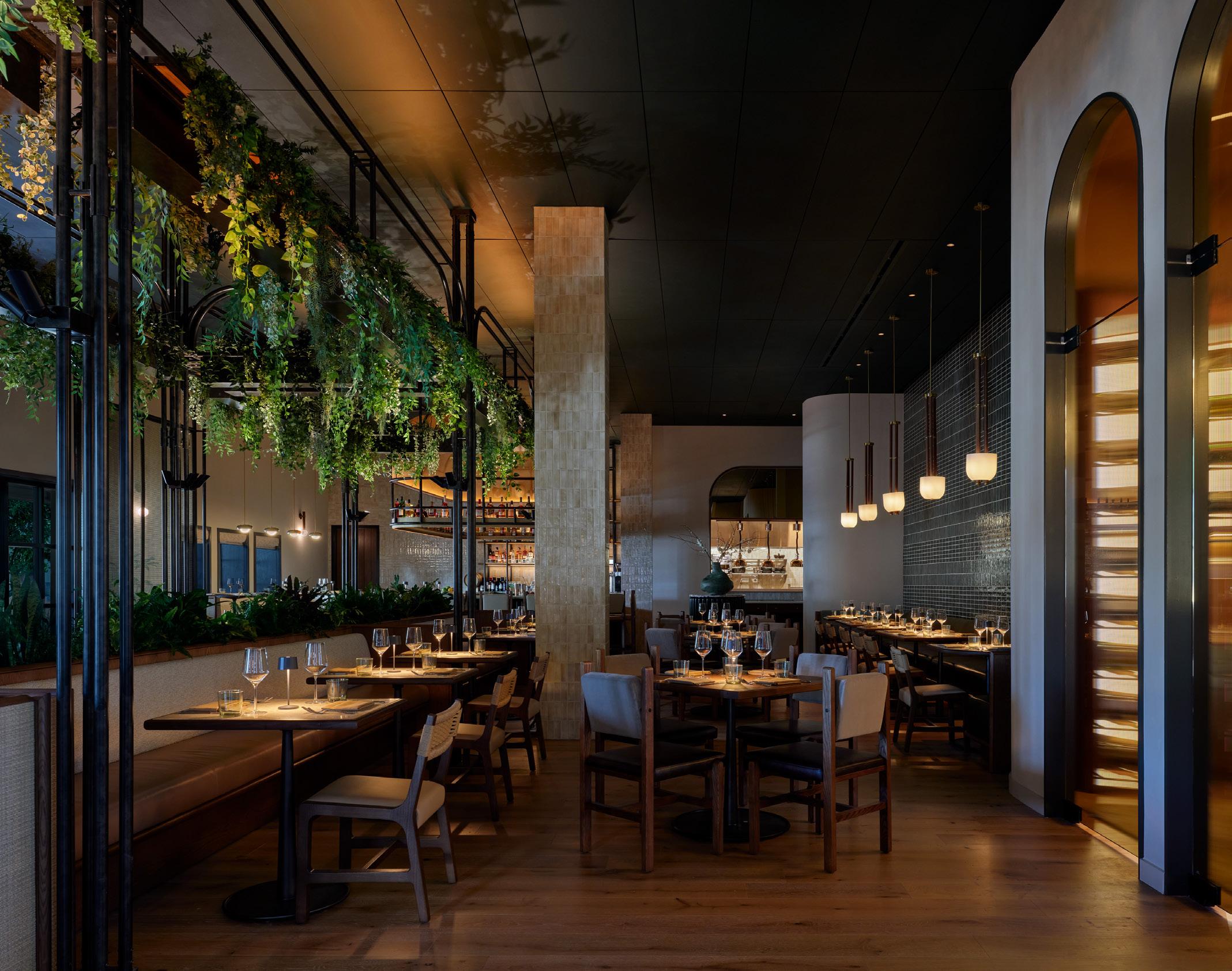
On January 28, 2026 , Kimpton, part of IHG Hotels & Resorts’ luxury and lifestyle portfolio, opens Kimpton Mirador Pacific Grove, a boutique hotel on California’s Monterey Peninsula. Inspired by the region’s Spanish Revival heritage and coastal beauty, Kimpton Mirador offers a deeply personal, design-forward retreat where laid-back luxury meets meaningful connection. With thoughtfully curated interiors, lush courtyards, and a locally inspired restaurant, The Caledonian, the hotel invites guests to slow down, reflect, and experience the authentic spirit of Pacific Grove.
Located just half a mile from the Pacific Ocean, Kimpton Mirador Pacific Grove is nestled among historic homes, walkable streets, and iconic landmarks such as Monarch Grove Sanctuary and Point Pinos Lighthouse. The hotel’s Spanish Revival-inspired architecture features terracotta rooflines, arched openings, and hand-plastered walls, with interiors by San Francisco-based design studio Narrative. Kimpton Mirador Pacific Grove features 99 thoughtfully designed rooms and suites across four stories, many with private balconies, and select suites with cozy fireplaces. Interiors are inspired by the local landscape and showcase curated artwork from regional artists, creating a refined yet approachable coastal retreat that captures the charm of Pacific Grove.
A boutique retreat where laid-back California style meets Kimpton’s signature heartfelt hospitality
Kimpton Mirador Pacific Grove invites guests and locals to dive into a lifestyledriven experience with a range of unique amenities. The hotel features an inviting firelit courtyard ideal for relaxing evenings or social gatherings, a stateof-the-art fitness studio, and versatile meetings and events spaces designed to accommodate both intimate gatherings and larger celebrations. Additional amenities include in-room yoga mats and wellness kits, pet-friendly accommodations, and complimentary bikes for exploring the stunning coastline. Daily wellness programming in partnership with Monterey Bay Moves, including yoga, sound baths, and fitness sessions, further enhances the guest experience.
“The doors are open, and it’s incredibly exciting to see guests and locals experiencing the hotel for the first time,” said Julia Chaland, General Manager of Kimpton Mirador Pacific Grove. “We’ve created a place where Pacific Grove’s history and spirit meet modern luxury.


Watching the hotel come to life has been a dream, and we’re thrilled to officially welcome the community inside.”
Complementing these property-specific offerings are Kimpton’s signature rituals available at all hotels worldwide. Each morning begins with Kimpton Kickstart, a vibrant coffee ritual designed to energize the day with expertly brewed coffee and a welcoming atmosphere. As the day winds down, guests can gather for Kimpton Social, the hotel’s signature evening hour featuring curated cocktails, light bites, and a chance to connect in a relaxed, convivial setting.
Opening alongside the hotel is Monterey Bay’s newest culinary destination, The Caledonian. Led by California-native Chef Aaron Rayor, the signature restaurant delivers a modern American menu rooted in seasonal, locally sourced ingredients, showcasing dishes like Roasted Chicken with cranberry beans and vibrant salsa verde, Whole Branzino served with a delicate saffron velouté, and sustainably sourced Scottish Salmon.
The beverage program features inventive cocktails, a thoughtful zero-proof selection, and a curated wine list from celebrated California vineyards. The Caledonian’s design reflects the hotel’s Spanish Revival style with warm woods, plastered walls, and a seaside palette, creating an inviting atmosphere with a cozy fireplace lounge, semi-open kitchen, and outdoor patios.
The Caledonian welcomes guests daily with breakfast served from 7 a.m. to 11 a.m., and dinner available from 4 p.m. to 9 p.m. The bar offers a lively atmosphere Sunday through Thursday from 4 p.m. to 10 p.m., extending to 11 p.m. on Fridays and Saturdays. Guests can also enjoy daily happy hours from 4 p.m. to 6 p.m., featuring rotating small plates and select drinks.


From the moment guests check in with a warm slice of house made olive oil cake wrapped in linen and a handwritten note, to evenings softened by a custom aromatherapy mist inspired by coastal botanicals, Kimpton Mirador offers a sanctuary where luxury glows quietly. It’s a place where a staff member remembers your name, where every detail invites presence, reflection, and ease. Here, hospitality is human, not rehearsed, and every guest is welcomed to arrive as they are and leave feeling more like themselves.
“We are thrilled to introduce Kimpton Mirador Pacific Grove to our luxury and lifestyle portfolio,” said Vicki Poulos, Vice President of Luxury & Lifestyle Brands.
“Set on California’s Monterey Peninsula, Mirador Pacific Grove captures the region’s unique blend of coastal charm, artistic spirit, and laid-back sophistication. This property is a true reflection of Kimpton’s commitment to thoughtful design, genuine local connections, and heartfelt hospitality, offering guests an immersive experience that celebrates both the vibrant community and the breathtaking surroundings.”
Kimpton Mirador Pacific Grove is the latest hotel to open in Kimpton’s growing portfolio of properties and destinations, alongside Kimpton Tsim Sha Tsui Hong Kong in China, Kimpton Naluria Kuala Lumpur in Malaysia, and Kimpton KAFD Riyadh in Saudi Arabia. To book a stay at a Kimpton hotel or to learn more information, visit www.kimptonhotels.com or the IHG One Rewards app.
www.ihgplc.com
Now in its sixth decade, the Antigua Charter Yacht Show remains one of the most influential events on the global charter calendar. Each December, the world’s finest charter yachts and leading industry professionals converge in Antigua, marking the official start of the Caribbean winter season. For IYC’s Charter Management and brokerage teams, the show is a pivotal moment to assess yachts ahead of peak charter months, connect directly with Captains and crew, and immerse themselves in the details that define an exceptional charter experience.
From in-depth yacht inspections, reviewing layouts, features, and onboard amenities, to discussions around seasonal itineraries, crew dynamics, and culinary concepts, the Antigua show offers invaluable insight that simply cannot be replicated remotely. Alongside the impressive yacht lineup, the week is punctuated by the return of the iconic Chefs Competition, creative crew challenges, targeted networking events, and lively evening socials that bring the industry together.
This year, IYC delivered a standout presence, showcasing five exceptional yachts from its global charter fleet:

Each yacht presented its own distinct personality, design aesthetic, and onboard experience, collectively reflecting the diversity and quality IYC represents worldwide.
Throughout the week, brokers and industry partners were welcomed aboard to experience these yachts firsthand, gaining a true understanding of how each vessel operates, how the crew engages with guests, and what makes each charter experience unique. From flow and functionality to ambiance and service style, these details are critical in ensuring accurate, confident recommendations to clients.


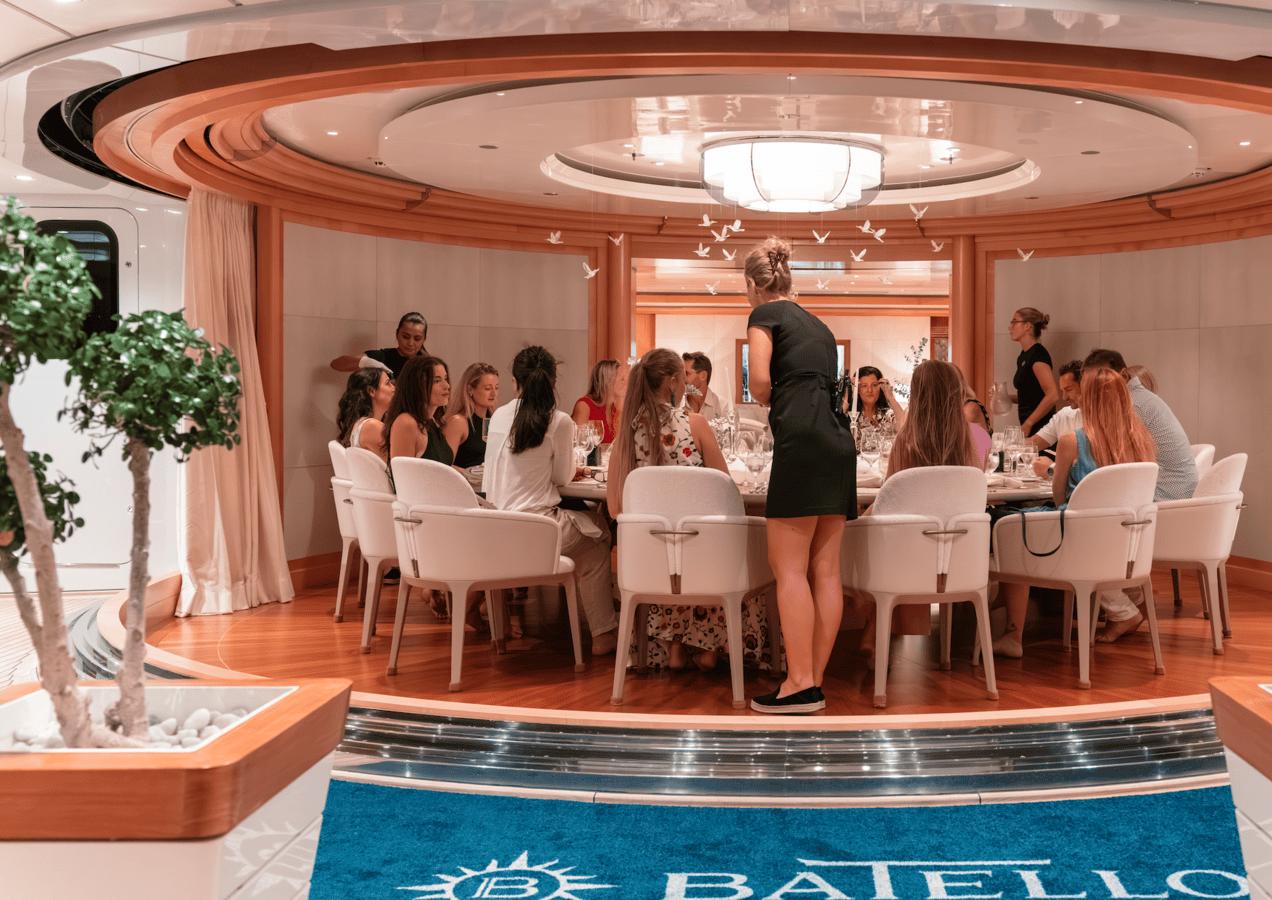


While Antigua is a B2B event at its core, its impact is ultimately felt by clients. Charter shows play a vital role in equipping brokers with firsthand knowledge that directly enhances the charter planning process. Experiencing the yachts in person allows brokers to speak authentically about everything from cabin comfort and deck flow to crew chemistry, culinary standards, and onboard atmosphere.
Meeting Captains, chefs, and crew faceto-face also adds a human dimension that is essential in charter matching. Understanding a chef’s culinary philosophy, witnessing presentation standards, or sampling menus enables brokers to confidently align yachts with client preferences, whether that’s a wellness-focused escape, a family-friendly charter, or a high-energy celebration. These insights ensure clients receive recommendations rooted in experience, not assumption.
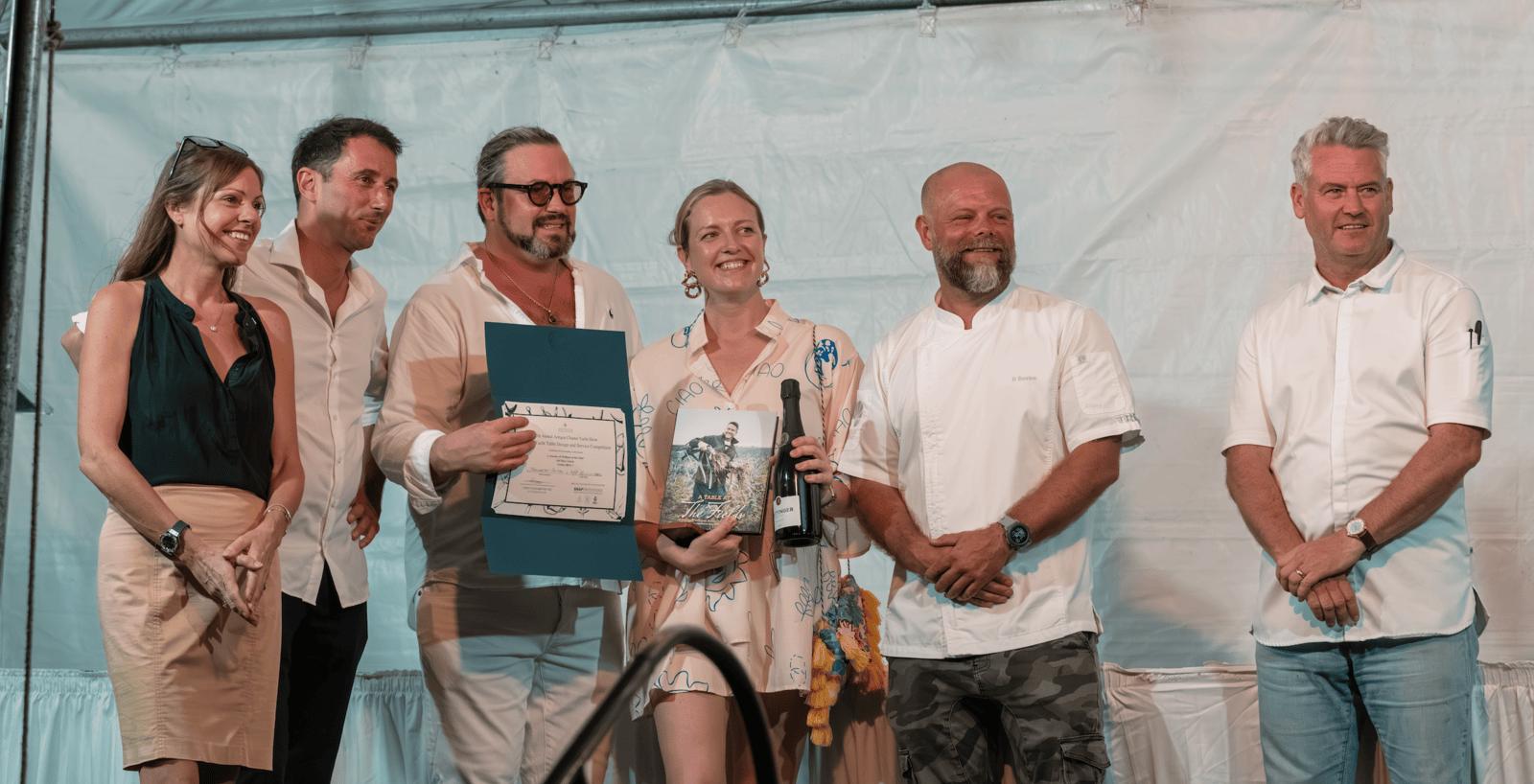
Crew competitions remain a highlight of the Antigua Charter Yacht Show, showcasing the talent, creativity, and professionalism that elevate the charter industry. IYC was proud to see its fleet recognized in the prestigious Tablescape Competition, with two standout results:
ALLORA secured 1st place in the 125’ & under category, thanks to an extraordinary presentation by Chief Stewardess Alyona Konysheva, whose attention to detail and artistic vision impressed judges and attendees alike.
ELIS ET MAR earned 3rd place in the 180’+ category, with an inspired tablescape created by Chief Stewardess Laura Berril, reflecting refined elegance and impeccable styling.
These accolades underscore the commitment of IYC crews to delivering excellence not only in service, but in every visual and experiential detail onboard.
Beyond inspections and meetings, IYC curated a dynamic schedule of onboard events designed to showcase the character and versatility of each yacht. Throughout the week, brokers were invited to private lunches and dinners, offering an authentic taste of the elevated guest experience IYC yachts deliver on charter.
Highlights included energetic pickleball tournaments and a relaxed outdoor movie night aboard BATELLO, reinforcing the yacht’s flexible, guestcentric layout. Other moments ranged from wellness mornings with spa treatments to disco-themed celebrations with live music, creating a vibrant and memorable atmosphere onboard. A playful Baywatch-inspired re-enactment added a lighthearted touch, quickly becoming one of the week’s most talkedabout moments.
These experiences allowed brokers to envision how guests might truly live onboard, how spaces transform from day to night, how service flows during social occasions, and how crews create moments that guests remember long after the charter ends.
The show’s vibrant welcome event set the tone early, immersing attendees in Antiguian culture with fire dancers, local cuisine, and handcrafted cocktails. Across the week, Captains, crew, charter managers, and industry professionals connected during yacht hops, receptions, award ceremonies, and closing events, reinforcing the collaborative spirit that defines the charter industry.
IYC departs Antigua with strengthened relationships, two award-winning recognitions, and renewed momentum heading into the Caribbean season and beyond.
www.iyc.com
The business landscape continues to shift at pace, driven by technology, changing consumer expectations and evolving regulatory frameworks. Among the sectors attracting attention for the year ahead are fintech, distribution and digital banking. Each is experiencing a transformation that combines innovation with strategic recalibration, creating opportunities for growth and disruption.
Fintech remains a sector defined by agility and creativity. The focus has moved beyond simple payment solutions and peer-to-peer platforms towards integrated financial ecosystems that combine technology, data and service in ways that challenge traditional banking. Start-ups and established players alike are exploring how artificial intelligence, automation and advanced analytics can improve decision making, enhance risk management and personalise customer experiences. The
organisations that succeed are those that combine technical sophistication with regulatory compliance, ensuring that innovation does not come at the expense of trust.
Data is central to fintech’s evolution. Access to real-time insights allows firms to anticipate customer needs, optimise operations and introduce new products with speed. Advanced algorithms are being used not only to detect fraud and manage risk, but also to deliver tailored financial advice, dynamic lending solutions and seamless payment experiences. Those that integrate data effectively across platforms and channels are able to offer services that feel intuitive, responsive and embedded in everyday life. Distribution, meanwhile, is undergoing a quiet revolution. The movement of goods and services is being reshaped by digital infrastructure, automation and evolving





supply chain models. Companies that previously relied on traditional logistics are now leveraging predictive analytics, inventory optimisation and intelligent warehousing to improve efficiency, reduce cost and respond to fluctuating demand. The adoption of connected technologies enables visibility across the supply chain, allowing organisations to anticipate disruptions, adjust delivery models and maintain high levels of service in a volatile environment.
Sustainability and resilience are becoming defining features of the modern distribution sector. Organisations that embed responsible sourcing, energy efficiency and flexible logistics into their operations are not only meeting regulatory
expectations, but also aligning with the priorities of customers and investors. The ability to balance speed, reliability and sustainability is becoming a competitive differentiator.
Digital banking has emerged as a sector that is both competitive and collaborative. Traditional institutions are investing heavily in digital platforms, seeking to combine the trust of established brands with the convenience, accessibility and agility of newer entrants. Mobile-first solutions, instant payments, embedded banking services and customer experience design are central to this transformation. The most effective banks are those that treat technology as a tool to enhance service and efficiency rather than an end in itself.


Corporate innovation has moved from experimentation into the heart of business strategy. Organisations that want to remain competitive, resilient and relevant are increasingly turning to dedicated innovation labs as engines of transformation. These labs are not simply spaces for creativity. They are environments where ideas are tested, refined and scaled with intention, combining curiosity with discipline and experimentation with measurable impact.
Across industries, from finance and healthcare to manufacturing, defence and retail, innovation labs are reshaping how companies solve problems and capture opportunity. They allow teams to explore new technologies, prototype solutions and experiment with processes without the constraints of day-to-day operations. This separation creates space for risk taking and discovery while ensuring that insights can be translated back into the wider organisation.
The most effective labs are closely aligned with corporate strategy. They are designed to deliver tangible outcomes rather than abstract experiments. By bringing together multidisciplinary teams, organisations encourage collaboration between technical experts, business leaders and customer-facing staff. External partnerships with start-ups, universities and research institutions further extend the reach of these labs, providing access to emerging technologies and insights that would be difficult to develop in-house.
Emerging technologies lie at the heart of many innovation labs. Artificial intelligence, automation and advanced analytics are used to optimise operations, improve decision making and create new value. Immersive technologies such as augmented and virtual reality are helping teams simulate scenarios, visualise complex systems and design experiences that are more human centric. These labs provide a safe environment to explore these technologies, balancing ambition with governance and ethical oversight.
Innovation labs are also driving cultural

change. They promote curiosity, learning and the acceptance that failure is part of the process. This mindset encourages employees to experiment, collaborate and challenge established ways of working. Leadership teams benefit as well, gaining first-hand experience of iterative processes and agile thinking, which informs broader organisational strategy and decision making.
The impact of innovation labs extends beyond new products or patents. Leading organisations measure success through improved processes, efficiency gains, enhanced customer experience and cultural adoption. By establishing clear pathways for scaling prototypes, successful innovations are integrated into the wider business in a controlled manner, ensuring that the lessons learned have lasting effect.
Innovation labs are no longer confined to technology firms. Across healthcare, finance, energy, retail, manufacturing and defence, they are tailored to sector-specific challenges. In healthcare, labs focus on patient experience, digital health
solutions and operational efficiency. In financial services, they explore fraud detection, customer analytics and process optimisation. In industrial sectors, labs experiment with smart manufacturing, supply chain innovation and sustainable production methods. While the focus differs, the underlying principle remains the same: dedicated spaces that allow organisations to think differently, test new ideas and embed innovation into core operations.
In 2026, innovation labs will continue to define corporate transformation. They provide organisations with the agility to respond to change, the tools to create new opportunities and the frameworks to embed innovation into daily practice. The organisations that leverage these labs effectively will demonstrate that innovation is not a series of one-off initiatives but a sustained capability that drives long-term growth, adaptability and competitive advantage. For Business Enquirer readers, these are the organisations to watch, as their labs are producing the ideas, processes and cultural shifts that will shape the future of enterprise.



Artificial intelligence has moved decisively from promise to practice. What was once experimental is now embedded, operational and increasingly essential. As organisations look ahead, the conversation is no longer about whether to adopt AI, but how to do so responsibly, strategically and at scale. The organisations worth watching are those treating intelligence as a long-term capability rather than a short-term solution.
Across sectors, AI is reshaping how work is done. Decision making is becoming faster and more informed. Operations are more resilient. Customer experiences are more intuitive. Yet the most impactful changes are often the least visible. Intelligence is being woven quietly into systems, processes and cultures, transforming organisations from the inside out.
At the centre of this shift are technology companies building the foundations of intelligent enterprise. Platforms such as Microsoft, Google Cloud and Amazon Web Services are enabling organisations to deploy AI securely within existing infrastructures, while software leaders like Salesforce, SAP and ServiceNow are embedding intelligence directly into enterprise workflows. Meanwhile, hardware innovators such as NVIDIA and Intel continue to power the computational backbone behind advanced AI systems. The focus has moved towards enterprise-

grade intelligence that integrates seamlessly, supports governance and delivers measurable productivity gains. AI is no longer a bolt-on. It is becoming an invisible layer that underpins everyday business activity.
Beyond technology providers, some of the most significant advances are happening in sectors where reliability and accountability matter most. Defence and national security organisations are increasingly working with companies such as Palantir, Anduril and BAE Systems to embed AI into operational awareness, logistics and decision support systems. In these environments, intelligence enhances human judgement rather than replacing it, improving clarity and speed in high-pressure situations. Investment in domestic capability, skills and secure supply chains is reinforcing national resilience while accelerating innovation.
Financial services organisations are also at the forefront of AI adoption. Global institutions including JPMorgan Chase, HSBC and Barclays are using advanced analytics to transform risk management, fraud detection and regulatory compliance. Fintech leaders such as Stripe, Visa and Mastercard are applying machine learning to improve transaction security and personalise customer experiences. The organisations setting the pace are those placing transparency and
ethical governance at the heart of their AI strategy, recognising that trust is as critical as performance.
In healthcare, AI-driven organisations are delivering meaningful impact at both clinical and operational levels. Companies such as DeepMind, IBM Watson Health and Tempus are accelerating research and discovery through advanced machine learning models. Meanwhile, providers

like Siemens Healthineers, Philips and GE HealthCare are integrating AI into diagnostics, imaging and hospital operations. The organisations gaining confidence from professionals and the public alike are those that balance innovation with care, ensuring that technology supports rather than overshadows human expertise.
Manufacturing and industrial


organisations continue to demonstrate how AI can drive real productivity. Industry leaders such as Siemens, Bosch and ABB are using predictive maintenance, quality control and supply chain optimisation to enable smarter, more resilient operations. Automotive groups including BMW and Tesla are applying AI across production and engineering processes to improve efficiency and adaptability. The most advanced organisations are integrating intelligence across the entire value chain, creating sustainable advantages through insight and precision.
In retail and consumer sectors, AI is shaping everything from forecasting to personalisation. Global brands such as Amazon, Walmart and Zalando are using AI to optimise inventory, predict demand and tailor customer experiences. Fashion and lifestyle companies including Nike and H&M are applying intelligence to accelerate design cycles and improve marketing performance. Increasingly, AI is also supporting creativity, enabling brands to move faster while reinforcing identity and purpose.
Creative and media organisations are exploring new territory as well. Companies such as Adobe, OpenAI and Runway
are enabling AI-powered content creation, from image generation to video production and storytelling tools. Media groups including BBC Studios, Netflix and The New York Times are experimenting with intelligent systems to enhance production workflows and audience engagement. The organisations to watch are those establishing clear ethical boundaries while investing in the skills needed for creativity and technology to evolve together.
What unites all leading AI-driven organisations is not the sophistication of their tools, but the clarity of their intent. They recognise that successful adoption depends on people, culture and leadership as much as on algorithms. Investment in skills, collaboration and accountability ensures that intelligence is used effectively and responsibly.
As the year ahead unfolds, AI will become less of a headline and more of an expectation. Organisations that lead will be those that align intelligence with purpose, embedding it deeply and thoughtfully into how they operate. For Business Enquirer readers, these are the organisations shaping the future of enterprise, not by talking about AI, but by making it work.
As businesses navigate an increasingly digital world, the cyber security landscape has become both more complex and more critical. Organisations face evolving threats, growing regulatory pressure and heightened expectations from customers and partners. Cyber security is no longer a purely technical function. It has become a strategic priority, essential for protecting reputation, maintaining operational resilience and enabling sustainable growth.
The threat environment continues to evolve. Organisations are encountering attacks that extend beyond traditional malware and phishing. Ransomware remains a concern, often combined with data exfiltration and supply chain disruption. Threat actors are also using

artificial intelligence to automate campaigns, making attacks faster and harder to detect. This intensifying environment has shifted the focus from reactive defence to proactive risk management. Continuous monitoring, threat intelligence and predictive analytics are becoming standard practice as businesses seek to anticipate threats rather than respond after the fact.
The acceleration of hybrid and remote working has further expanded the attack surface. Employees access networks from multiple locations and devices, and perimeter security alone is no longer sufficient. Identity management, multifactor authentication and zero trust approaches are increasingly central to corporate defence strategies.


Technology adoption is also reshaping cyber security practice. Cloud platforms are providing flexible, scalable and integrated security models, allowing organisations to protect hybrid infrastructures and respond quickly to emerging threats. Artificial intelligence and machine learning support anomaly detection, prioritisation of responses and predictive threat management. Automation helps security teams manage complex environments efficiently, freeing specialists to focus on high-value tasks and strategic planning. These capabilities are most effective when paired with transparent and explainable models that are regularly evaluated and refined.
Emerging technologies continue to influence the landscape. Quantum computing poses both risk and opportunity, prompting the development of quantumresistant encryption. The Internet of Things is expanding the number of connected devices, requiring new strategies for monitoring and endpoint protection. Meanwhile, blockchain and decentralised technologies are being explored for secure transactions and supply chain verification.
Yet technology alone is insufficient. Organisations that succeed invest equally in people and culture. Skilled professionals are in high demand, and enterprises that prioritise training, crossfunctional collaboration and career development are best placed to navigate the cyber security landscape. A strong security culture ensures that employees at all levels understand their role, take responsibility for safeguarding data and
contribute to organisational resilience. Leadership engagement is crucial, as executives shape strategy, allocate resources and reinforce the importance of security as a core business priority.
Measurement and integration are also key. Leading organisations evaluate the impact of cyber security not only in terms of threats prevented or breaches averted, but also in operational continuity, compliance, customer confidence and business outcomes. Security functions are increasingly integrated with wider business strategy, ensuring that technology investments support both protection and growth. This holistic approach positions security as a value driver rather than a cost centre, enabling innovation and transformation with confidence.
The market for cyber security in 2025 will be defined by adaptation. Threats will continue to evolve, technologies will continue to advance, and the organisations that thrive will be those that combine foresight, intelligence and culture. Cyber security will remain a fundamental part of corporate resilience and competitiveness, providing both protection and opportunity.
For Business Enquirer readers, the organisations to watch are those that demonstrate the ability to anticipate risks, embed intelligence into decision making and align security with strategic objectives. These companies are setting the standard for what it means to operate safely and effectively in a digitalfirst world, showing that cyber security is not only a defensive measure but also a source of competitive advantage.

As the food and beverage industry continues to evolve, certain leaders stand out for their ability to navigate changing consumer habits, global market dynamics, and sustainability pressures. From multinational corporations to influential trade bodies
and challenger brands, these executives are shaping the direction of the sector and setting the stage for innovation and growth in 2026. Their decisions will influence how we eat, drink, and engage with the industry for years to come.

Chief Executive, Sainsbury’s Simon Roberts leads one of the United Kingdom’s largest supermarket groups through a period of changing consumer behaviour and digital transformation. He focuses on balancing quality with affordability while strengthening online operations and supply chain resilience. Roberts’ leadership is central to how British retail adapts to evolving shopper needs and economic pressures.

Chief Executive Officer‑Designate, Coca‑Cola Henrique Braun is set to take over as chief executive of Coca-Cola in early 2026. With extensive experience as chief operating officer across multiple global regions, Braun will guide the beverage giant through shifting consumer trends, product innovation and sustainability initiatives.

Chief Executive Officer, Mondelez International
Dirk Van de Put continues to lead Mondelez International, a global snacks and confectionery company. He drives innovation across categories, expands the company’s footprint in emerging markets, and ensures products meet changing consumer preferences for taste, convenience and health.
Chief Executive Officer, Diageo

Debra Crew heads Diageo, one of the world’s largest spirits and beverage companies. Her leadership prioritises global brand management, market expansion, and strategic growth in premium and emerging categories while maintaining operational excellence.
Chief Executive Officer, Nestlé S.A.
Philipp Navratil became CEO of Nestlé in 2025. He oversees a vast portfolio spanning nutrition, coffee, pet care and health products, guiding the company through a balance of operational efficiency, innovation and sustainability.


Chief Executive Officer, PepsiCo
Ramon Laguarta continues as chief executive of PepsiCo, focusing on global expansion, product diversification and healthier food and beverage options. His leadership combines brand heritage with forward-looking growth across beverages and snacks.

Chief Executive Officer, pladis
Salman Amin leads pladis, the global biscuit and confectionery business behind McVitie’s and Ulker. He drives global strategy, operational efficiency, and category innovation, keeping legacy brands competitive while exploring new market opportunities.

Chief Executive, Food and Drink Federation (UK)
Karen Betts heads the Food and Drink Federation, the UK’s main trade body for food and beverage manufacturers. She engages with government and regulators, advocates for exports, and helps companies navigate policy and competitiveness in a fastchanging market.
MIKE HANCOX
Chief Executive Officer, Tayto Group

Mike Hancox leads Tayto Group, a major UK savoury snack producer. He brings fresh perspective from broader consumer goods experience, focusing on brand development, innovation, and expanding market presence while maintaining the company’s authentic appeal.
Chief Executive Officer, Monster Beverage
Hilton Schlosberg is the chief executive of Monster Beverage, overseeing energy and functional drinks globally. His leadership ensures the company adapts to changing consumption patterns, competitive pressures, and innovation in beverage formats.


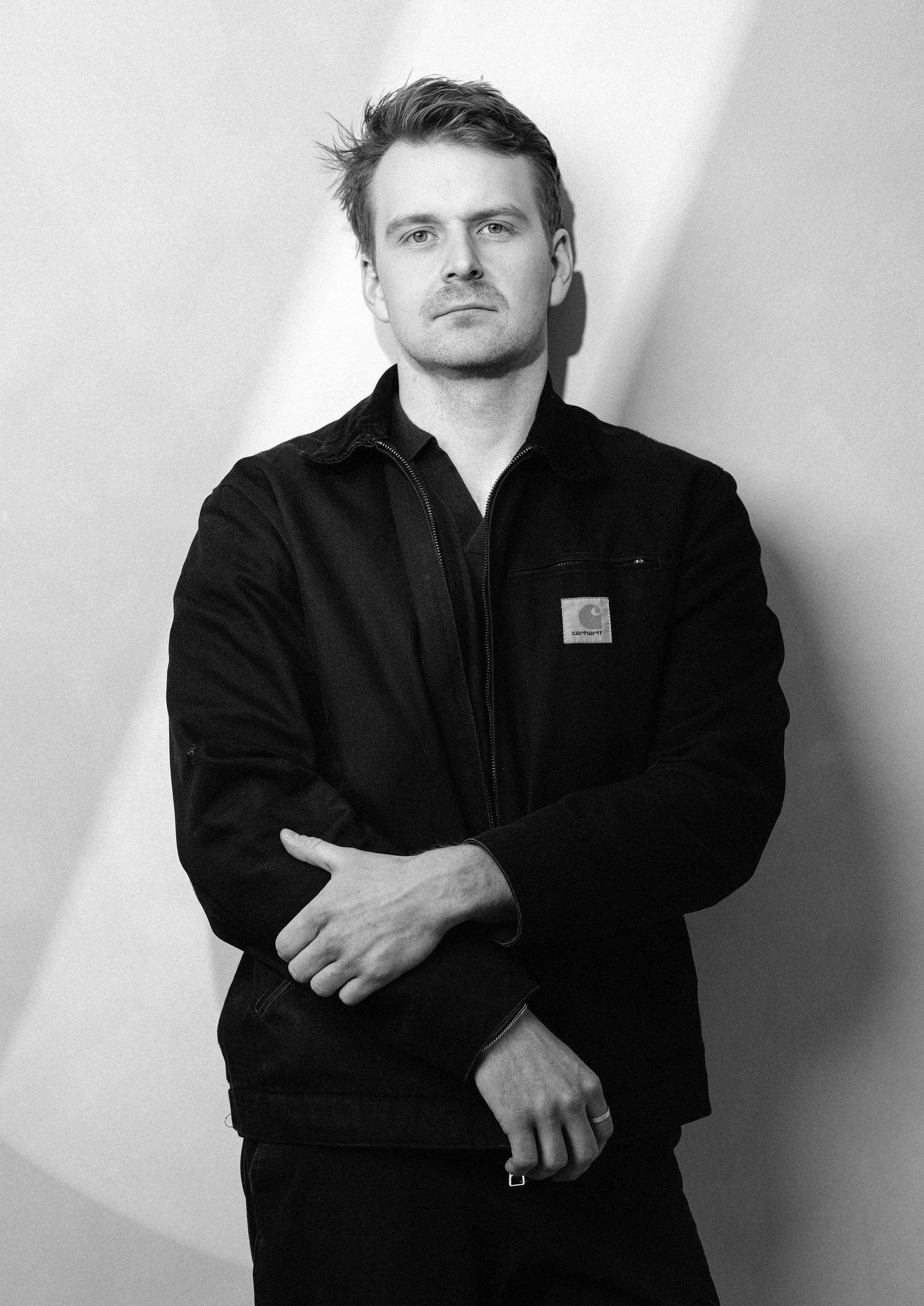
As organisations rush to adopt AI, the gap between ambition and real commercial impact has never been more visible. In this Q&A, Jack Reid, Partner & CTO at Visum Labs, cuts through the hype to explain why so many AI initiatives stall before delivering value - and what separates those that genuinely move the P&L from those that remain stuck in pilots. Drawing on hands-on experience deploying AI systems in production, Reid outlines a disciplined, outcome-driven approach to AI adoption, focused squarely on ownership, execution, and measurable economic return.
QMany organisations are investing heavily in AI, yet few see a direct impact on the bottom line. In your experience, why do so many AI initiatives struggle to translate into measurable commercial value?
AToo often, AI initiatives aren’t anchored to a real economic driver. There’s intense top-down pressure to “do something with AI,” so teams experiment without a clear link to P&L impact. The result is a proliferation of proofs of concept that look impressive but fail to progress into production systems that materially impact the business.
At a deeper level, AI is treated as a technology upgrade rather than a business redesign. Models get built, but no one owns a specific outcome. No decision is clearly automated, no workflow is meaningfully replaced, and no baseline exists for what success means on the P&L. Without ownership and economic framing, AI remains interesting - but commercially irrelevant.
QWhen you talk about “P&L impact” from AI, what does that actually look like in practice? How should leaders be defining and tracking tangible value early in an AI programme?
APut simply, P&L impact means one of two things: increasing revenue or reducing costs.
The challenge is that AI initiatives are often multi-layered, cutting across workflows, which makes value feel diffuse and hard to attribute. Leaders struggle to answer a simple question early on: what is this actually worth if it works?
One way we ground that conversation at Visum Labs is through the framework of ‘Human Equivalent Value’. We ask: if a human were performing the same set of actions as the system does, endto-end, what would it cost? That creates a conservative, defensible value floor that’s easy to measure and easy to communicate. From there, you can quantify upside from speed, scale, and quality improvements - benefits that only appear once the system is running in production.
QFor companies at the early or middle stages of AI adoption, where should they realistically start if the goal is high ROI rather than experimentation for experimentation’s sake?
AThey should start with highvolume, well-defined processes that are already clearly scoped. What these processes have in common is that they’re highly repeatable and operate within tight constraints: the context is known, inputs are structured, and the range of outcomes is limited.
These are ideal candidates for AI-driven automation because you can define clear guardrails and success criteria, embed the AI directly into execution, and measure outcomes unambiguously. They also tend to be the biggest drivers of early ROI, as you’re replacing large amounts of repeat human effort at scale - creating immediate, defensible impact on the P&L.
QWhat separates organisations that consistently deliver value from AI from those that remain stuck in pilots and proofs of concept? Is it technology, culture, data, leadership, or something else entirely?
AIt’s less about technology and more about clarity and discipline. Organisations that deliver value define scope tightly, set explicit stop-losses, and accept that AI systems are probabilistic rather than deterministic.
That discipline forces iteration in the real world rather than refinement in isolation. As a result, these teams develop a strong opportunity-cost mindset. Every month spent polishing a pilot that hasn’t shipped is value lost elsewhere, so they move forward with “good enough,” learn from real usage, and adjust quickly based on evidence rather than assumptions.
QExperimentation is often positioned as essential for AI success, yet it can easily become costly and unfocused. How can organisations test and validate AI use cases quickly without burning time and budget?
AExperimentation only works when it’s constrained. Scope, timeline, and economic impact must be defined before anything is built.
We favour short, focused sprints: narrowly scoped workflows tied to explicit business outcomes, measured by a small set of metrics that map directly to the P&L. If an experiment doesn’t move a real business metric within weeks, it stops. Fast failure only matters when it’s cheap, time-boxed, and decisive.
The goal isn’t to “learn AI”; it’s to quickly determine whether a specific use case is worth shipping. Teams that do this well treat experimentation as a controlled investment with clear downside limitsnot an open-ended exploration.
QCan you share examples of AI delivering clear, measurable impact, whether through revenue growth, cost reduction, or productivity gains, and what these examples have in common?
AWe see clear, measurable impact across very different verticals, but the pattern is consistent: the biggest uplift comes from AI systems that augment or replace entire vertical workflows, rather than horizontal tools that add incremental efficiency at the edges.
In practice, that has meant AI agents cutting localisation costs by more than 50% by automating content adaptation across markets and reducing reliance on external agencies. In revenue teams, AI-driven workflow automation has shortened sales cycles by weeks by handling qualification, follow-ups, and internal handoffs - directly improving revenue velocity. In operations, teams have scaled output materially without proportional headcount growth by embedding AI directly into day-to-day execution.
What ultimately links these outcomes is application. In each case, AI is deployed against a clearly defined operational workflow that already sits on the P&L, with success measured in cost, throughput, or revenue. That’s what makes impact visible early and repeatable at scale.
QLooking ahead to the next 12 to 18 months, what should executive teams be doing today to ensure AI becomes a genuine commercial capability rather than a strategic talking point?
AThree things. First, assign ownership. AI initiatives without a named owner accountable for business outcomes will drift. Someone needs to own the P&L impact, not just the technology.
Second, kill the pilots that aren’t shipping. If a proof of concept has been running for six months without a path to production, it’s not an experiment - it’s a sunk cost. Reallocate that investment to use cases with clear deployment timelines.
Third, build the operational muscle for production AI. This means monitoring, feedback loops, and continuous improvement after launch. The organisations that win won’t be those with the most sophisticated models - they’ll be those that treat AI as a living system that compounds in value over time.
The next 18 months will separate organisations that talk about AI from those that actually run on it. The difference will be execution.
www.visumlabs.com






KWENCH BY KFC
PROJECT
DIRECTED
BY:
STEPHEN VIVIAN
There are brands that sell food, and there are brands that sell feeling. KFC, for all its scale and global familiarity, has always belonged to the latter category. Its red and white stripes, its unmistakable flavour, and its promise of simple joy form a universal shorthand. But legacy is not a licence to stand still. In an industry where new challengers emerge every week, even the most iconic brands must continually reimagine what relevance tastes like.

That question sits at the heart of Dhiren Karnani’s role as Global Director of New Concepts at KFC. His remit is not simply to develop new products, but to define what modernity means for a brand that has already conquered the world. As he puts it, everyone is doing chicken now. The category is booming, and consumers, particularly younger ones, increasingly shape which brands will remain meaningful. Understanding what they want from the quick-service experience has become central to defining KFC’s next chapter.
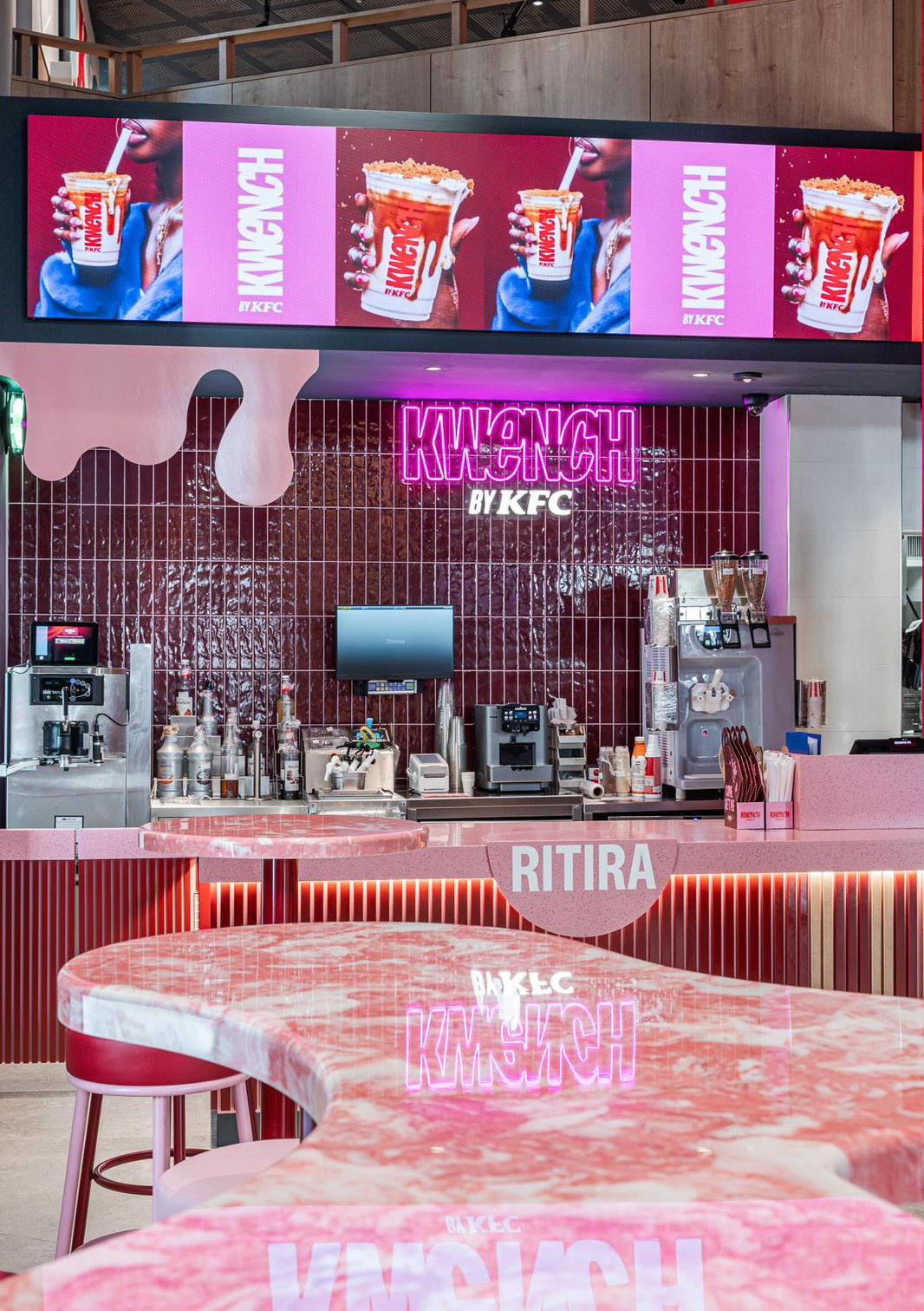
His team’s answer is Kwench by KFC, a beverage sub-brand that is reshaping how KFC engages with modern consumers, especially younger audiences for whom drinks have become cultural objects. It is a bold move that stretches far beyond product development into identity, occasion, and expression, turning beverages into a new entry point for brand discovery.
Karnani and his team observed a simple but powerful shift: drinks have become a form of self-expression. The image of a drink now lives online as much as it does in someone’s hand. “The next generation uses beverages as social currency,” he explains. “It is the perfect embodiment of treat culture, affordable little splurges bringing joy in an uncertain world.”
Rather than treating this as a trend, KFC built a long-term framework around it. Kwench was designed not as a campaign, but as a platform, with its own voice, energy, and flexibility, reinforcing the essence of the master brand while creating new room to play. Every drink in the range is flavour-led, crafted with quality ingredients, and built to deliver the same satisfaction that made KFC’s chicken famous.
The offer balances refreshment and indulgence. Sparkling lemonades and boba-style refreshers sit alongside milkshakes and iced coffees, each developed to pair intuitively with KFC’s savoury menu. The star performer, the Krunch Shake, takes inspiration from

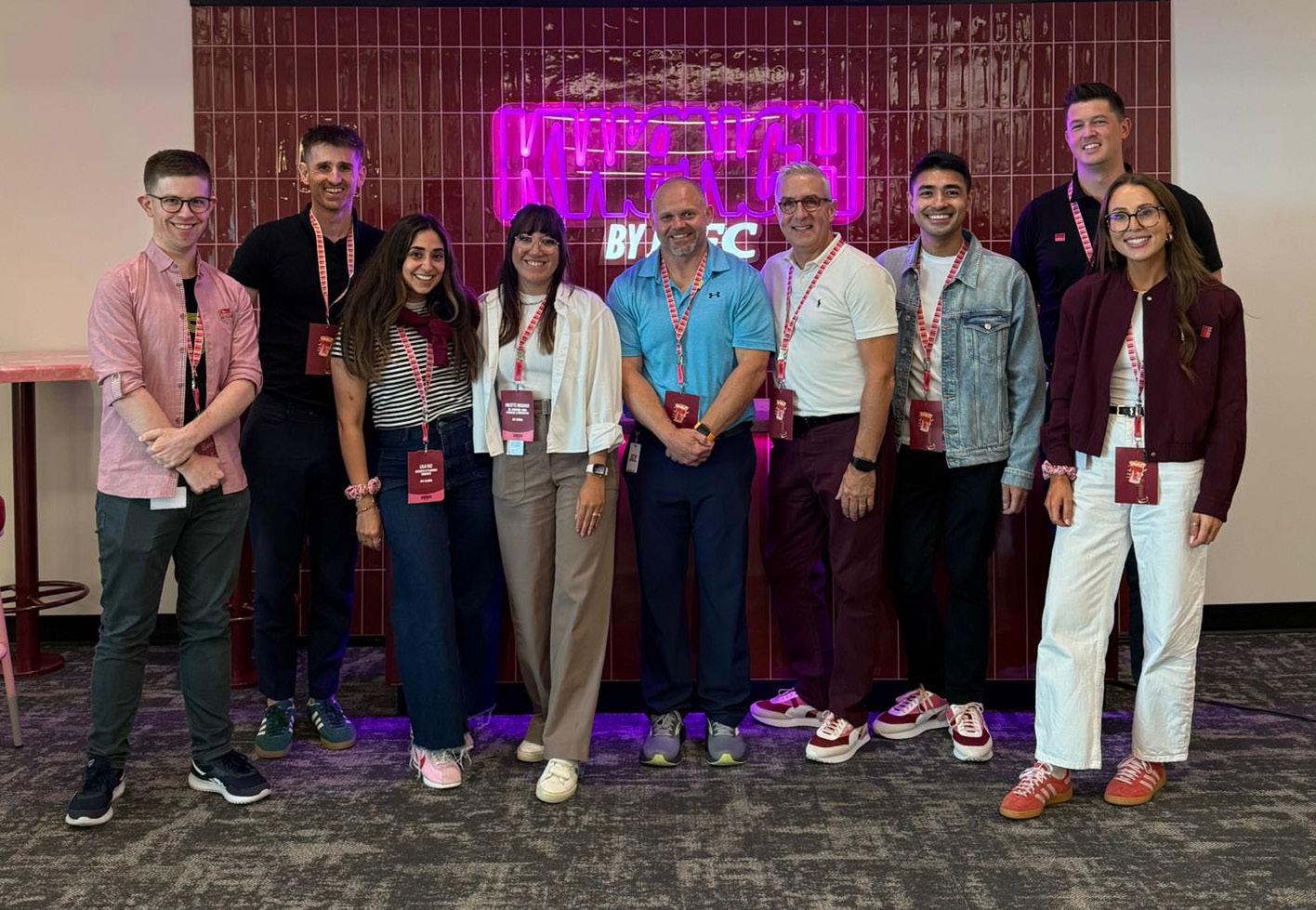

Dhiren Karnani’s role as Global Director of New Concepts at KFC


KFC inspires us to raise the bar. As their flavour partner, MONIN brings future-ready innovation - data-led insights, rapid prototyping and supply built for scale and compliance. Together we deliver drinks that delight guests and simplify operations, proving that smart partnership can move fast, stay rigorous and create lasting value across markets.
Tihomir Gergov, Managing Director - MONIN UK & Ireland
KFC’s signature crispy texture and translates it into a drink that is rich, playful, and instantly craveable. There is nothing throwaway or synthetic about the range; instead, every drink feels purposeful, real, and surprisingly refined for a quick-service environment.
The opportunity with Kwench goes further than attracting younger consumers. It creates new ways for people to experience KFC. Kwench introduces fresh moments into the day when people might choose the brand, beyond familiar mealtimes. It becomes part of the everyday: the afterschool stop, the mid-afternoon lift, the small treat between commitments. And critically, beverages have proven to be a powerful hook that draws new consumers into KFC restaurants, who then discover the food. As Karnani puts it, “We want them to come in for the drink, then stay for the chicken”.
Behind the creative shine sits a meticulous operational logic. Launching a global sub-brand across more than 30,000 restaurants requires extraordinary coordination. To start on this journey, Karnani’s team partnered with Yum’s inhouse strategy agency, Collider, to codify the opportunity; beverage experts Monin and Britvic to shape flavour and craft; equipment partner Middleby to ensure delivery at scale; and creative agency Mother to define the brand world. Each partner contributed not just capability but perspective. Monin’s flavour specialists and barista experts helped refine complexity and balance. Creative partners built a visual language that feels energetic, expressive, and unmistakably part of the KFC family.
“We were late to the beverage game, so we surrounded ourselves with people who live and breathe flavour and craft,” Karnani says. “Together we found a way to deliver café-level quality in a quick-service environment.”
Sustainability was built in from the start. Partner selection was filtered through responsible sourcing and waste reduction standards. Equipment deployed in

deployed in restaurants is energy efficient. Recipes avoid artificial colouring and unnecessary additives. None of this is used as marketing rhetoric; it is simply the foundation for the vision of Kwench. As Karnani puts it, fast food does not have to mean junk food. The ambition is to put the good in finger-lickin’ good.
The design world of Kwench reflects the same intention. The brand universe is bold, sensorial, and confidently modern without discarding heritage. The drinks are the hero: big, unapologetic, and
viscerally delicious. Styling is expressive, full of character and movement. The tone of voice is confident, self-aware, and full of charm, the sassy, sippy sibling of KFC’s famous forefather. Every touchpoint, from the straw to the carrier, has been designed with social moments in mind. “Everything about Kwench is designed to make KFC feel alive,” Karnani explains. “The best reaction we have had is people saying it looks fresh but still feels like us.”
The early proof comes from the launch in Manchester, where eight out of ten

customers described KFC as more modern and innovative after experiencing Kwench. That perceptual shift is as valuable as any sales metric. It shows that brand transformation does not always require reinvention. Sometimes it just requires the right spark.
The next challenge is taking this brand opportunity global. To build momentum, KFC has created immersive Kwench Colleges, hands-on sessions where marketing, design, supply chain, and operations teams experience the
products, equipment, and customer flow themselves. “Innovation only sticks when the whole system moves together,” Karnani says. “When people feel ownership, they become the best ambassadors you could ask for.”
For him, momentum is the most powerful accelerant within a system as large as KFC. One of his biggest lessons has been the value of creating something tangible. The moment a prototype exists, the question shifts from “Is this the right opportunity?” to “How do we make this work and make

it even better?”. People respond far more creatively to a stimulus than to a blank page. The role of innovators, he believes, is to create that stimulus, something real enough for the organisation to gather around.
Clarity of purpose anchors everything. The process will always be messy. Timelines shift, details evolve, unexpected challenges appear. But if the why still holds, if it makes sense for consumers, for the brand, and for the business, then the team pushes forward. That clarity becomes the constant. Everything else can flex.
Scepticism is inevitable, but Karnani has learned that it usually stems from one of two places: fear of the unknown, or competing priorities. Fear is eased through clarity and demonstration, showing rather than telling. Bandwidth challenges require identifying natural believers, those energised by building something new. They are the ones who create momentum. “In a big system, energy is contagious,” he says. “Find the people who light up. They pull others with them.”
What helps within Yum is that teams are deeply grounded in restaurant reality, regardless of the function they represent.
Kwench arrives at a fascinating moment for the global quick-service sector. Consumer expectations are evolving faster than ever. Traditional mealtimes have dissolved into spontaneous snacking and sipping. Texture, flavour exploration, portability, and visual appeal now shape choice. The brands that win will be those that deliver indulgence on demand while remaining unmistakably themselves.
For KFC, this is not a departure. It is a continuation. The same confidence that made fried chicken a cultural icon is now being applied to drinks and desserts. Kwench is a bridge to younger audiences and a reminder to long-time fans that KFC knows how to surprise. It speaks the language of the present without losing its accent.
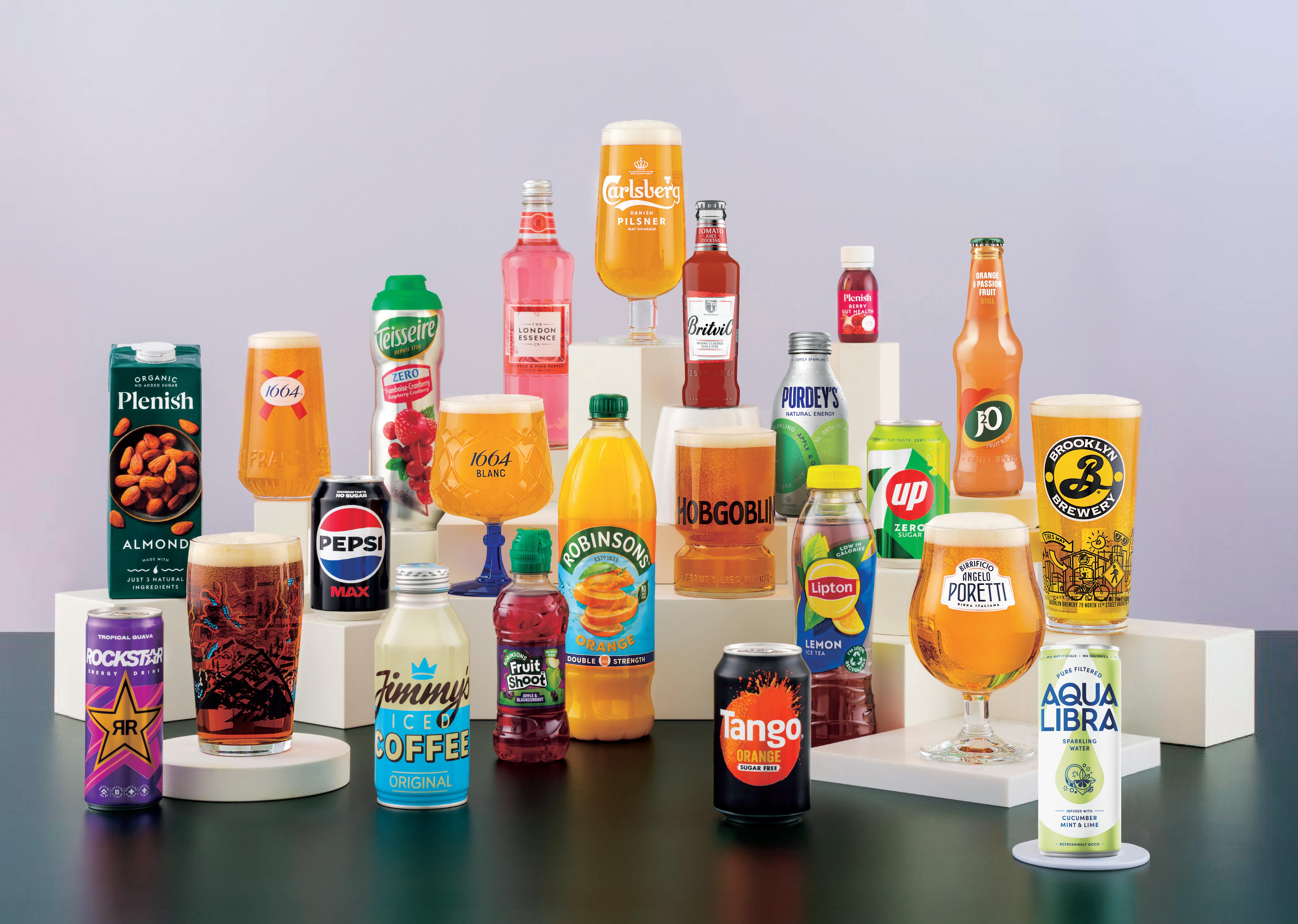
Carlsberg Britvic partnered with KFC to launch Kwench into the UK market this year. We collaborated with KFC to combine craft-level beverage quality with scalability across their UK business. KFC signature lemonade was produced by Carlsberg Britvic in December 2024 for launch into market in 2025. We used our expertise to cocreate to make the brand globally consistent and locally adaptable.
Carlsberg Britvic is a beverage powerhouse and home to some of the UK’s most iconic and popular beers and soft drinks.
Formed in January 2025, its varied and unparalleled portfolio offers brilliant drinks to excite consumers everywhere, whatever their taste. The business is the largest multi-beverage supplier in the UK and Carlsberg Group’s largest market by revenue. From legendary names like Carlsberg Danish Pilsner and 1664, rising stars Birrificio Angelo Poretti and Brooklyn Brewery beers,
and leading British ales Hobgoblin, Pedigree and Wainwright, Carlsberg Britvic provides an enviable selection of the best brands in beer. With low- and no-alcohol options such as Carlsberg 0.0, Brooklyn Special Effects and Erdinger Alkoholfrei, there’s always a choice for everyone.
Carlsberg Britvic’s compelling soft drinks range offers well-known brands including Fruit Shoot, Robinsons, Tango, J2O, London Essence, Teisseire, Plenish and Jimmy’s Iced Coffee.
Under exclusive PepsiCo agreements, the company is also licensed to make, market and sell popular drinks including Pepsi MAX, 7UP, Lipton Ice Tea and Rockstar Energy.
Its strong national footprint includes five production facilities and a logistics operation with 16 depots servicing customers across the UK. With strong values, proud heritage and great ambitions, the business is committed to delivering outstanding service, investing in its people, and innovating to benefit communities and the planet.


The business logic is clear. New dayparts create new revenue streams. Strong drink offerings attract new audiences. Habitual products like iced coffee increase frequency. But the emotional logic is stronger. Kwench is a signal of renewal, modern, expressive, and alive.
Reflecting on the journey, Karnani recalls a line that has stayed with him for years: aim for the absurd and accomplish the impossible. “The power of momentum, clarity, and belief, that is what turns absurd into possible,” he says.
And that is what Kwench represents. Not a reinvention of KFC, but a vivid reminder that innovation is not about being loud, but about being alive. It is the taste of a brand that still understands the thrill of discovery, the comfort of familiarity, and the value of joy in its simplest, most shareable form.
In a world filled with newcomers trying to look fresh, KFC has managed to feel fresh. Kwench is proof that the world’s most recognisable chicken brand still has plenty left to say, one sip at a time.
www.kfc.com
BBLACK SHEEP COFFEE PROJECT DIRECTED BY:
STEPHEN VIVIAN
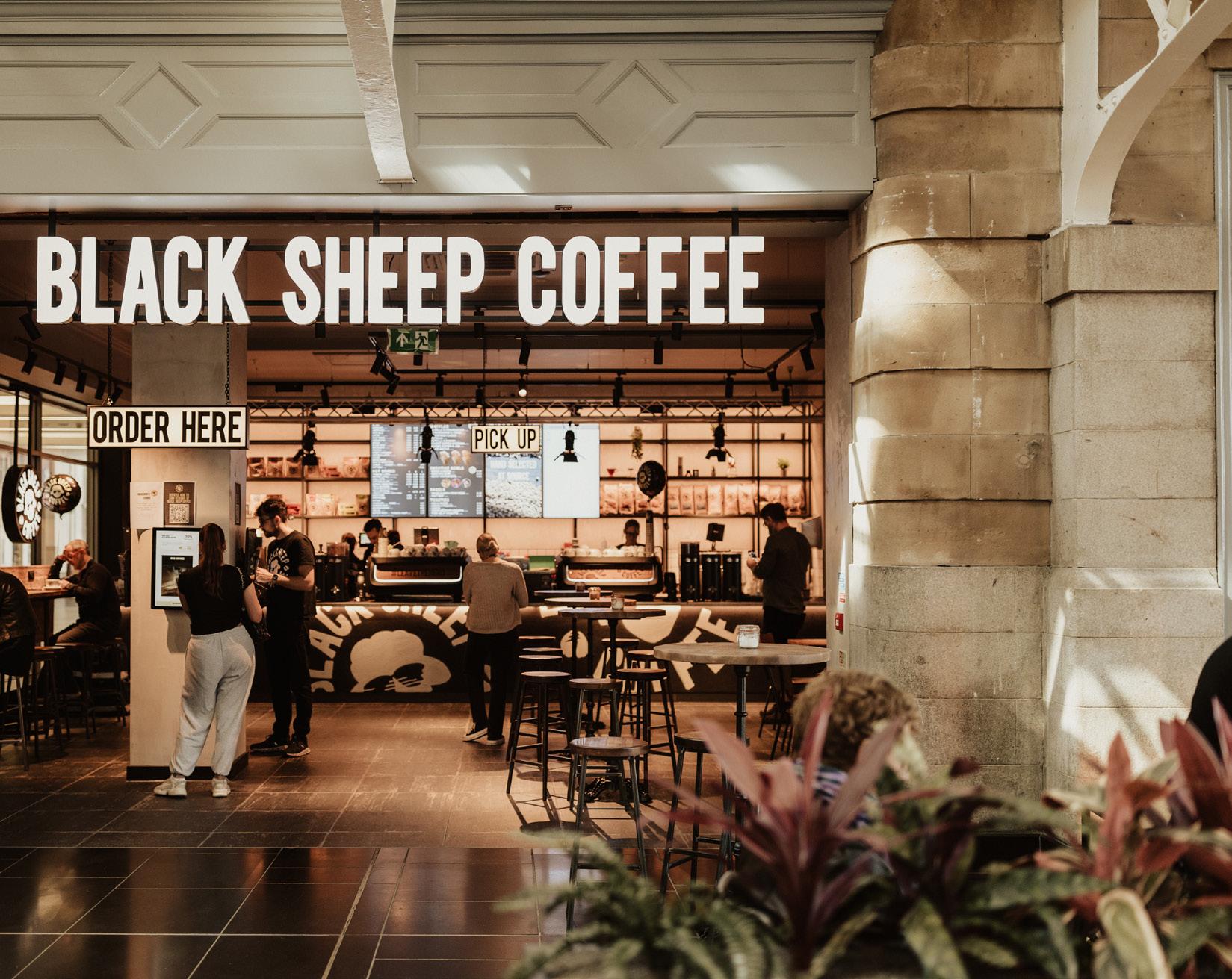
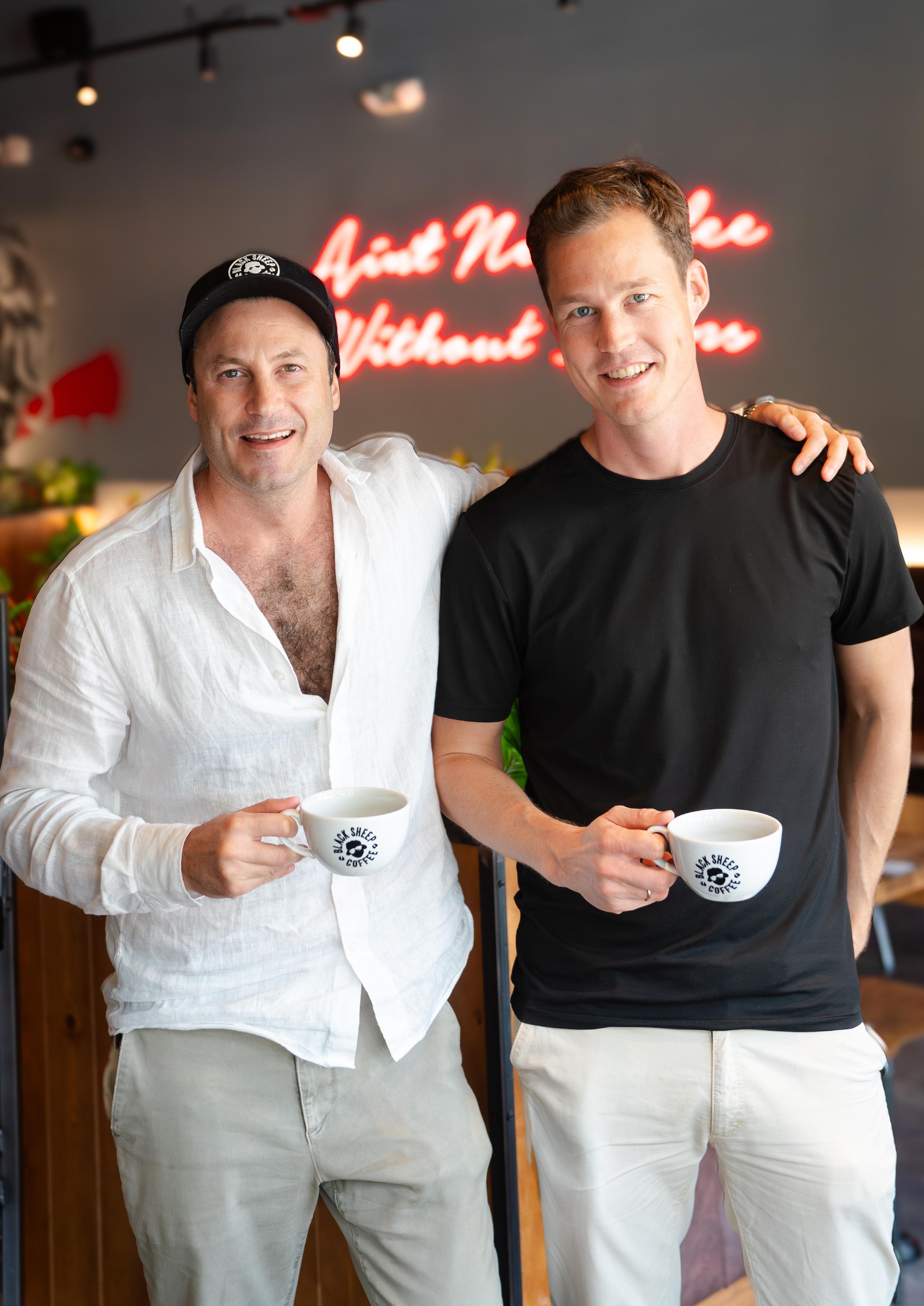
lack Sheep Coffee did not emerge because the market was waiting for a new name. It arrived because two founders were prepared to build something anyway, even if that meant starting with little more than a trestle table, a rented espresso machine and an untested belief that coffee could be done better.
Gabriel Shohet, Co-founder and Coowner of Black Sheep Coffee, traces the beginnings of the business back to a friendship formed at university. He and Eirik Holth, his Co-founder and Co-owner, were roommates before their careers took them in different directions. Years later,
they made a decisive move in parallel, quitting their jobs on the same day, relocating to London and committing their personal savings to a venture that had more conviction than clarity. With roughly £20,000 between them and no background in hospitality, they began serving coffee wherever they could, learning publicly and often painfully.
Those early years were defined by effort rather than polish. Shohet recalls hauling equipment to markets across London, setting up pop-ups at Brick Lane and elsewhere, and discovering quickly that selling coffee was no simpler than any other business. The learning curve was

steep, but it was direct. When the opportunity finally arose to open a permanent site, the lack of capital shaped the business in ways that would later prove foundational. Without the budget for contractors, Shohet and Holth taught themselves basic plumbing and electrics, building much of the shop by hand. Timber salvaged from discarded pallets became counters and signage, not as a design statement, but because it was available.
That aesthetic, born entirely out of necessity, stayed. What began as a constraint evolved into a recognisable visual language that still defines Black Sheep Coffee today. The uneven textures and exposed materials tell a story that was never manufactured. They simply remained because they felt honest.
More than a decade later, Black Sheep Coffee has grown into the fourth largest coffee company in the UK and is expanding faster than any of its peers. The business is currently opening around 1.2 shops per week, a pace that


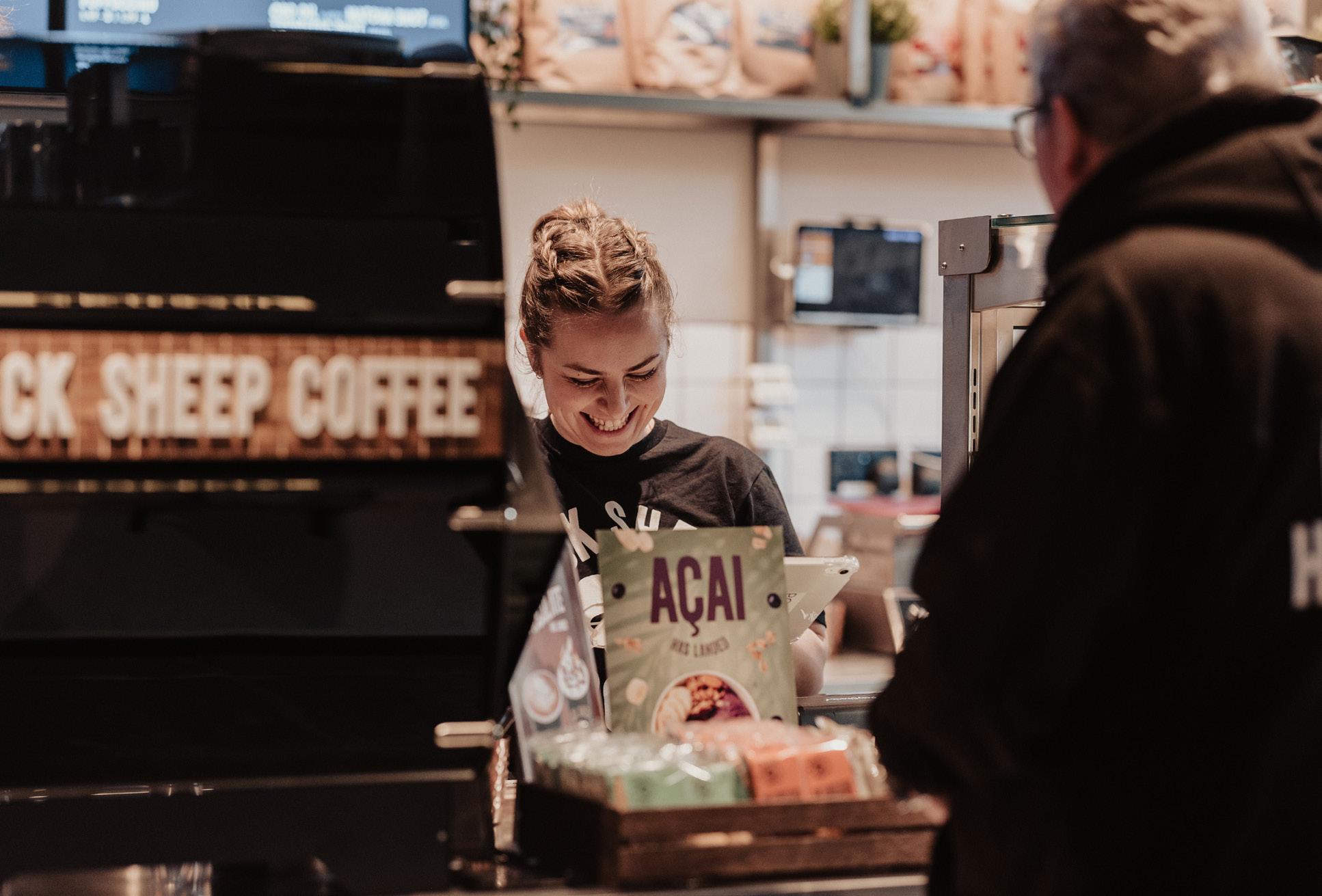
reflects both operational discipline and a deep belief in the brand’s proposition. Yet Shohet is careful to avoid romanticising growth. In his view, coffee is not a market that leaves room open for newcomers. It is mature, saturated and unforgiving.
“There is no space,” he says. “You have to make your own space.”
That philosophy has shaped Black Sheep from the outset. Rather than avoiding competition, the brand has consistently placed itself alongside it. Stores have been opened directly next door to major incumbents, not as provocation, but as proof of confidence. The strategy is blunt. If the coffee is better, the service faster and the experience stronger, customers will choose accordingly. Shohet speaks about competition without euphemism, describing market share as something to be taken, not gifted. This clarity extends to how Black Sheep defines quality. For Shohet, everything begins with the bean. He travels regularly to coffee-producing regions, sourcing beans from across Ethiopia,

Brazil, Colombia and Papua New Guinea, selecting what he believes to be the best available each year. It is not a marketing flourish, but a fixed principle. “Everything starts with the beans,” he says. “If it is not the best coffee in the world, you have already lost before you start opening shops.”
That uncompromising approach has also shaped the company’s stance on ethical sourcing. Rather than treating sustainability as a separate pillar, Black Sheep views it as inseparable from quality. Shohet argues that specialty-grade coffee inherently demands higher standards, from fair wages to better working conditions, and that many ethical failures occur further down the quality spectrum, where pressure to reduce costs outweighs responsibility. By focusing exclusively on top-tier beans, the business believes it avoids many of the compromises embedded elsewhere in the supply chain.
The brand’s challenger identity became most visible when Black Sheep questioned one of the industry’s most established assumptions: that 100
percent Arabica automatically signals quality. Against decades of conventional marketing, the company launched Robusta Revival, built entirely around specialty-grade Robusta beans. The move was widely seen as contrarian, but Shohet insists it was driven by conviction rather than rebellion. “If you see everybody doing something and it does not make sense to you, do something different,” he says.
This refusal to follow convention has never been about novelty for its own sake. Shohet is equally clear about the limits of innovation, particularly when it comes to technology. Black Sheep has earned a reputation for being digitally savvy, from early adoption of self-ordering screens to seamless app integration, but Shohet is wary of businesses that allow technology to become the product. “The second you think you are a tech company, you have lost the plot,” he says. “We want to be the best at coffee. Technology is a means to an end, not the goal itself.”
That balance has become increasingly important as coffee culture has shifted. Shohet believes the pandemic accelerated a change that was already underway,
For fast-growing restaurant brands, the biggest threat isn’t competition. It’s the invisible drag of disconnected systems slowing down growth.
As Black Sheep Coffee scaled from 35 sites to 80, with over 100 in sight, operational friction became impossible to ignore. Different suppliers powered menus, ordering, loyalty and reporting across separate platforms. Teams spent time keeping systems aligned instead of focusing on growth.
This fragmentation created risk. Every new site added complexity. Loyalty redemptions required manual work. Launching new ideas slowed because systems and developers couldn’t work together. For a brand built on doing things differently, the technology stack was holding it back.
Black Sheep Coffee made the strategic decision to consolidate its digital operations. Prioritising a scalable foundation that could support every channel, roll out quickly across markets and remove the need for custom development.

• Open new sites
• Maintain control
• Optimise performance
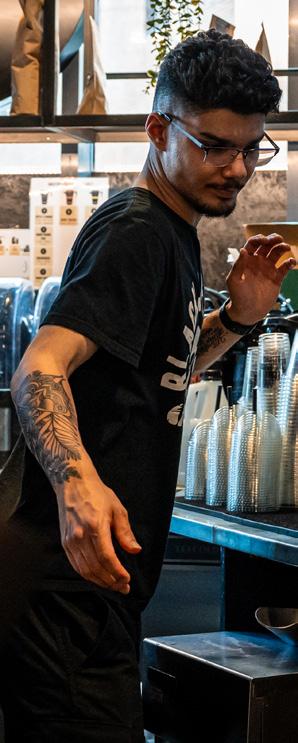
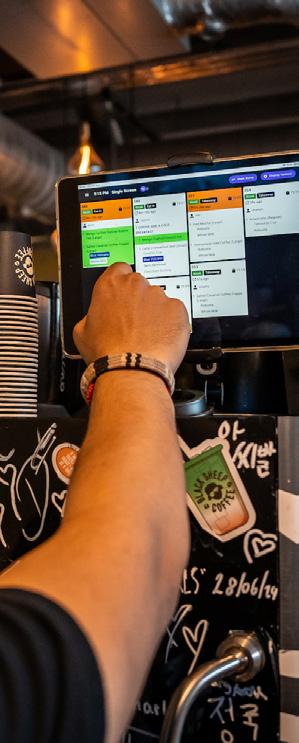

By replacing five disconnected suppliers with Vita Mojo’s unified operations platform, Black Sheep Coffee brought ordering, menus, loyalty, data and reporting into a single system. This removed fragmentation and enabled faster, repeatable execution across sites.
As a result:
• 85% of all sales are now digital, with Kiosks handling the majority.
• Year-to-date like-for-like growth reached 26.5% in transactions and 22.9% in net sales.
• Digital channels increased share of sales by over 2% year-on-year, through smart upsells and basket recommendations.
• Hundreds of hours saved each year through centralised menu management and integrated delivery partner menus.
Daily performance data now informs launches, seasonal planning and site-level optimisation.
With one connected platform, Black Sheep Coffee has made growth simpler, more consistent and repeatable, creating conditions to move fast into its next phase.

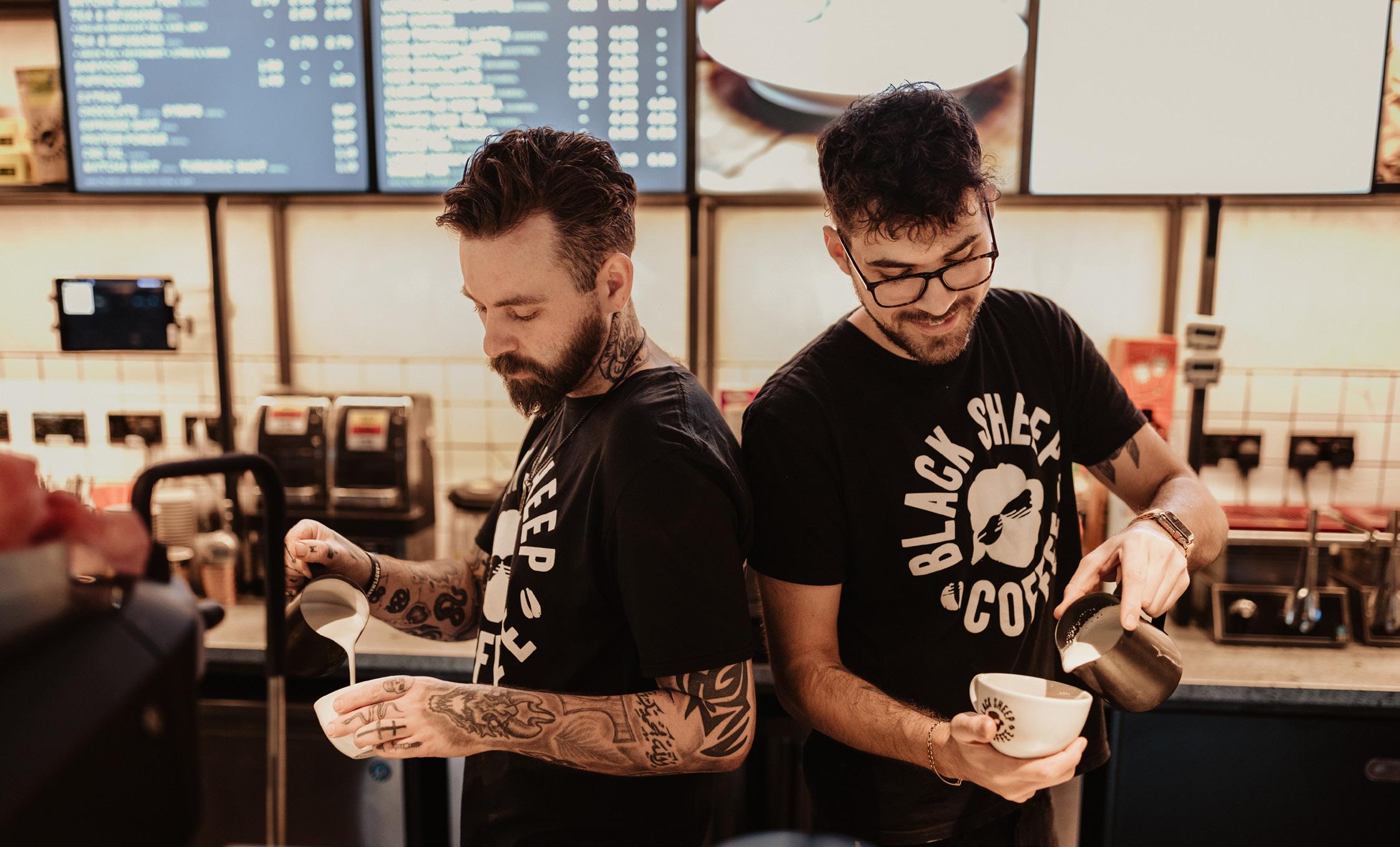
transforming coffee from a functional purchase into an experiential ritual. Time spent in coffee shops gained new significance, and customer expectations rose accordingly. Presentation, atmosphere and consistency now carry as much weight as speed of service.
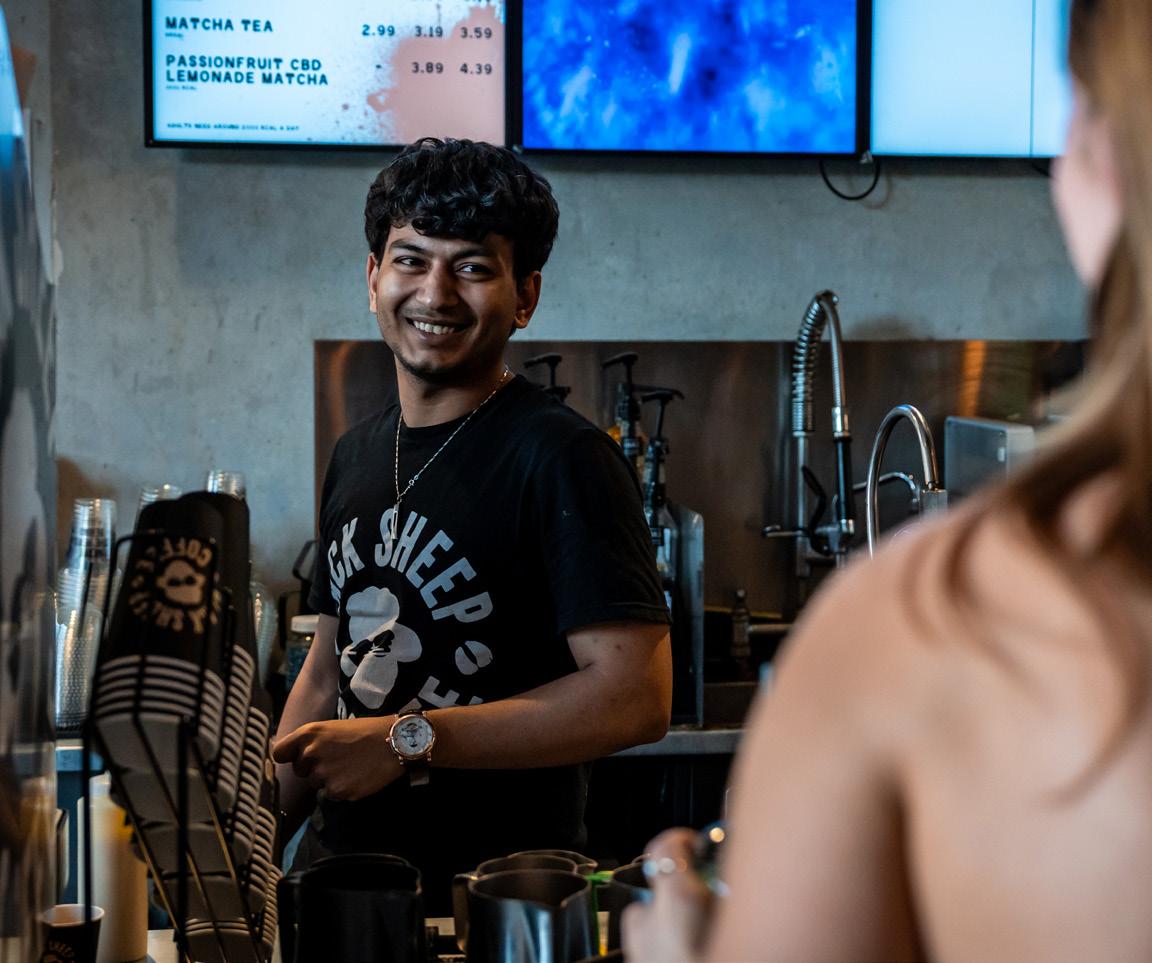
Black Sheep’s approach to trends reflects this perspective. Rather than chasing every new idea, the business focuses on identifying shifts early and executing them properly. Matcha is a case in point. While competitors treated it as a limited addon, Black Sheep invested in ceremonialgrade matcha from Japan and developed a full range of drinks, turning it into a meaningful category rather than a novelty. The result was not only cultural relevance but commercial impact.
As the business has scaled, maintaining its original energy has relied less on process and more on people. Shohet credits the longevity of the core team for preserving authenticity. Many employees who joined during the early years remain with the company, carrying institutional memory and reinforcing standards organically.
Brand identity, in this sense, is lived rather than documented.
Growth has also required decisiveness. During the pandemic, while much of the sector paused expansion plans, Black Sheep moved quickly. Prime locations that rarely became available entered the market as competitors closed and landlords sought stability. The company signed aggressively, securing leases even when it lacked the immediate capital to develop them all. The calculation was simple. Location would matter more in the long term than short-term comfort.
Customer feedback has become the primary checkpoint for expansion. Shohet describes a disciplined focus on review data across platforms, using sentiment as a real-time indicator of brand health. As long as customer experience continues to improve, growth remains justified. If it were to falter, the business would reassess. Underlying all of this is a structural decision that sets Black Sheep apart from most brands of comparable scale. The company has never taken private equity or venture capital investment. Shohet and Holth

remain in full control, funding growth through customers rather than institutions. “We do not have anyone to answer to but our customers,” Shohet says. Without external timelines or exit pressure, the business can prioritise long-term brand integrity over short-term optimisation.
That independence also shapes Black Sheep’s approach to sustainability, an area Shohet believes is saturated with exaggerated claims. The company avoids language it cannot verify and initiatives it cannot personally stand behind. “People
know when you are full of it,” he says. “We only focus on claims that are real, and that we can back up.”
One example is the company’s suspended coffee scheme for people experiencing homelessness. Customers can purchase an extra drink at a reduced price, which can be redeemed directly by someone in need. There are no intermediaries or opaque structures. Shohet emphasises dignity over publicity, describing the importance of recognition and choice. “I can look people in the eye and explain exactly how it works,” he says. “There is no fluff.”

When asked about the future of coffee culture, Shohet avoids prediction. He expresses optimism, but resists the temptation to position Black Sheep as a company with all the answers. Advice, he suggests, is premature while the business is still being built. What he does offer is perspective. Focus on product. Believe in what you are selling. Use it yourself. “I drink Black Sheep every day,” he says. It is not framed as loyalty, but as alignment.
Black Sheep Coffee’s story is not one of finding opportunities where none
existed. It is a story of conviction, persistence and refusal to compromise on fundamentals. Built by Gabriel Shohet and Eirik Holth from salvaged timber and borrowed equipment, it has grown into a brand that competes openly with global giants while retaining a clear sense of self. In a market crowded with claims, Black Sheep’s success suggests that honesty, when consistently applied, still has power.
www.blacksheepcoffee.co.uk
In an industry defined by cycles, geology and national significance, few companies carry the weight, scale and legacy of Codelco. As the world’s largest copper producer, the Chilean state owned miner operates at a scale that shapes global supply, influences downstream industries and underpins one of Latin America’s most important economies. Yet scale alone does not explain Codelco’s enduring relevance. What defines the company today is how it balances history with transformation, operational continuity with technological change, and copper leadership with a rapidly expanding role in the energy transition.
Founded in 1976 following the nationalisation of Chile’s major copper assets, Codelco has evolved into a complex industrial organisation with seven mining divisions and a fully integrated smelter and refinery. From its headquarters at Huerfanos 1270 in Santiago, the company oversees operations that include some of the most iconic copper assets in the world, from Chuquicamata to El Teniente. These are not simply mines but long life industrial ecosystems, many of which have
been in continuous operation for decades and are now undergoing profound structural transformation to extend their productive futures.
Codelco’s role in the global copper market is inseparable from Chile’s economic identity. Copper revenues have long been a cornerstone of national development, funding public services and infrastructure while positioning Chile as a strategic supplier to the world. Today, as copper demand accelerates due to electrification, renewable energy, electric vehicles and digital infrastructure, that strategic role has only intensified. The challenge for Codelco is not whether demand will exist, but how to meet it responsibly, efficiently and competitively while managing ageing assets and rising technical complexity.
At the centre of this balancing act is leadership that understands both the political weight and the operational reality of the business. Since his appointment as Chairman in March 2022, Máximo Pacheco has been vocal about the need for long term thinking in resource development. Speaking at international forums

CODELCO PROJECT DIRECTED BY: GARY SMITH


including Resourcing Tomorrow, Pacheco has consistently framed mining as a generational endeavour, one that requires stability, social legitimacy and continuous reinvestment. His message is not one of short term optimisation, but of continuity and renewal, recognising that Codelco’s future depends on decisions made today about technology, partnerships and environmental stewardship.
Those decisions are playing out most visibly in Codelco’s approach to asset renewal. Many of its flagship operations are transitioning from open pit to underground mining, a shift that requires vast capital investment, advanced engineering and precision execution. At Chuquicamata, one of the largest open pit copper mines ever developed, the move underground represents a complete reimagining of how ore is accessed and processed. This transition is not only about extending mine life, but about embedding safer, more efficient and more automated mining methods that align
with modern expectations of productivity and worker wellbeing.
Technology is increasingly central to this transformation. In 2024, Codelco signed an agreement with Hexagon to develop and implement advanced technological solutions across its operations. The partnership focuses on digitalisation, data integration and operational intelligence, reflecting a broader industry shift towards smart mining. For Codelco, this is less about experimentation and more about industrial scale deployment, integrating digital tools into existing operations that span vast geographies and decades of legacy infrastructure.
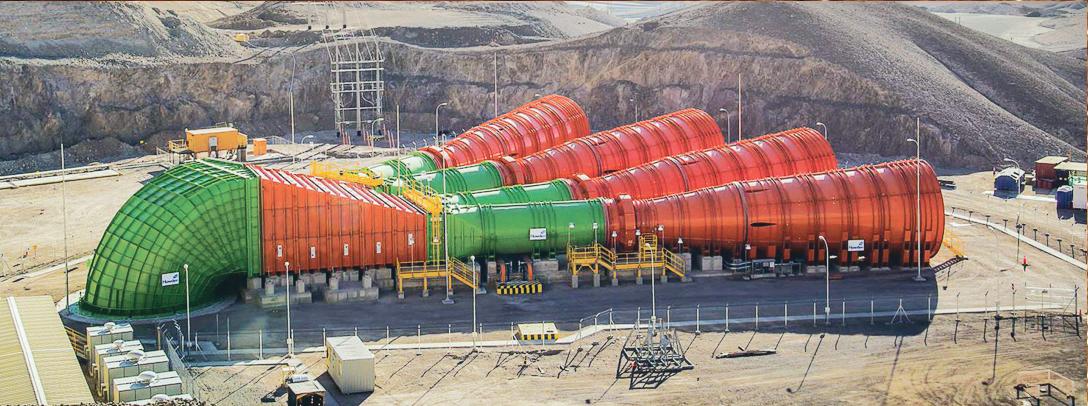
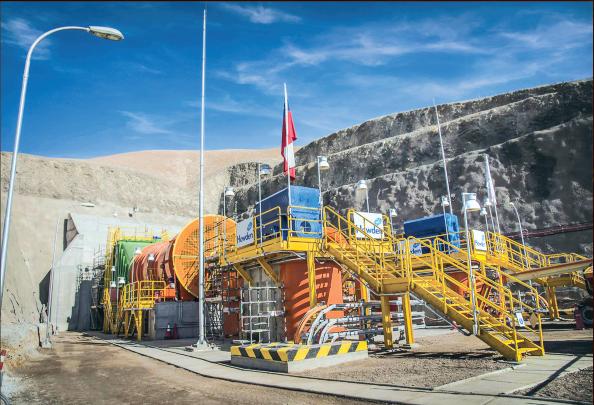
The emphasis on technology extends beyond software and analytics to heavy equipment and on site innovation. Codelco’s long standing relationships with global engineering and equipment partners form a critical part of its operational resilience. Companies such as Howden, Züblin, Epiroc and XCMG have

At Chuquicamata, one of the largest open pit copper mines ever developed, the move underground represents a complete reimagining of how ore is accessed and processed
supported the company across ventilation, tunnelling, drilling and material handling, contributing expertise that complements Codelco’s in house capabilities.
The presence of XCMG equipment at Chuquicamata is emblematic of this
collaborative approach. The deployment of large scale cranes and machinery at one of the world’s most technically demanding mining environments highlights how Codelco integrates global manufacturing capability into local operational needs. These partnerships are not transactional. Many have evolved over decades, built on shared safety standards, technical trust and a mutual understanding of what it takes to operate at extreme scale and altitude.
While copper remains the core of Codelco’s identity, the company’s strategic horizon has expanded decisively into lithium. In 2024, Chile took a historic step with the formation of NovaAndino Litio, a joint venture between Codelco and SQM for lithium development in the Salar de Atacama. The agreement marked a significant milestone in Chile’s national lithium strategy, positioning Codelco as a central actor not only in copper, but in the materials critical to battery technology and energy storage.
The NovaAndino Litio venture reflects a pragmatic approach to resource development. Rather than building lithium expertise from scratch, Codelco has partnered with an established producer, combining operational knowledge with state stewardship. For Codelco, lithium is not a departure from its mission but a natural extension of it. Both copper and lithium are essential to the energy transition, and Chile’s geological endowment places the country at the heart of that transformation.
What distinguishes Codelco’s entry into lithium is its emphasis on governance, sustainability and long term value creation. The Salar de Atacama is a sensitive environmental and cultural landscape, and lithium extraction carries complex water management and social considerations. Codelco’s involvement brings a level of public accountability and institutional oversight that aligns with national priorities. It also reinforces the company’s role as a steward of strategic resources rather than simply an extractor of commodities.
This dual focus on copper and lithium underscores a broader theme in Codelco’s evolution. The company is no longer defined solely by volume and output, but by how it positions itself within global supply chains that are increasingly scrutinised for environmental and social impact. Investors, governments and downstream customers are demanding transparency, traceability and responsible sourcing. For a state owned enterprise of Codelco’s size, meeting these expectations is both a challenge and an opportunity to set benchmarks for the industry.
Internally, this has translated into renewed attention on sustainability, workforce development and safety. Modernising operations while maintaining production requires a highly skilled workforce capable of operating advanced equipment and digital systems. Codelco’s transition projects are as much about people as they are about technology, involving retraining, new roles and a cultural shift towards data driven decision making. In this context,




long standing contractor relationships provide continuity, enabling knowledge transfer and operational stability during periods of change.
The scale of Codelco’s investment programme is substantial, reflecting the reality that extending the life of world class assets is capital intensive. Yet the alternative, declining production from ageing mines, would carry far greater economic and strategic costs. Codelco’s leadership has been clear that sustained investment is essential to maintaining Chile’s position in global copper markets, particularly as new projects elsewhere face permitting challenges and rising development costs.
On the international stage, Codelco’s actions are closely watched. As the largest copper producer, its output decisions influence market dynamics, while its approach to lithium sets precedents for state participation in critical minerals. The company’s partnerships with technology providers and equipment manufacturers also signal where industrial innovation is heading, especially in underground mining, automation and digital integration.
Despite its size and history, Codelco is not insulated from the pressures facing the mining sector. Cost inflation, energy prices, water scarcity and community expectations all shape operational realities.
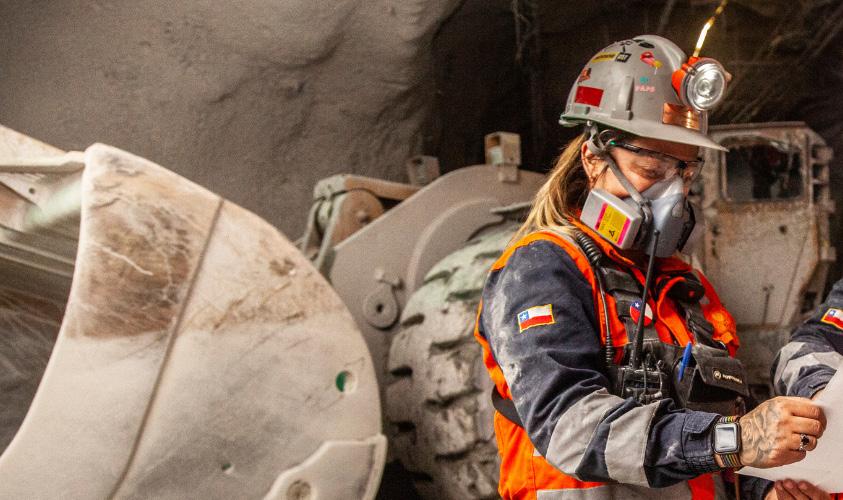
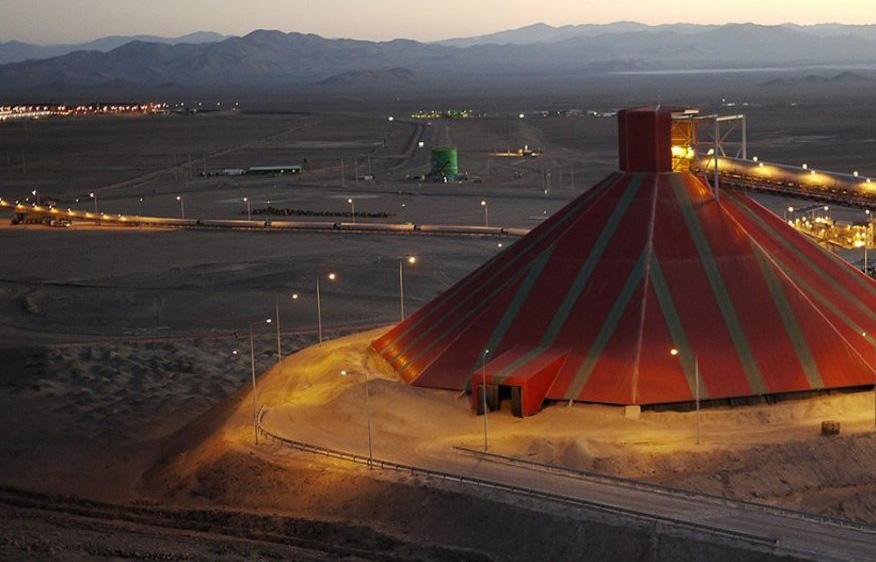

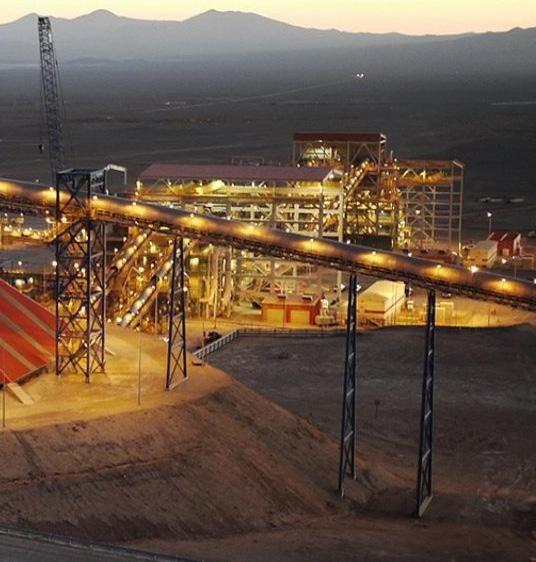
What differentiates Codelco is its ability to absorb these pressures within a long term framework that prioritises continuity over short term optimisation. This perspective is particularly evident in how the company approaches stakeholder engagement, recognising that social licence is earned through consistency, transparency and tangible local benefits.
Looking ahead, Codelco’s trajectory will be defined by execution. Transitioning major mines, integrating new technologies, scaling lithium operations and maintaining copper leadership simultaneously is a complex undertaking. Success will depend on disciplined project management, robust partnerships and leadership that can align political, economic and operational objectives. The foundations for this are already visible in the company’s strategic choices and collaborative approach.
In many ways, Codelco represents a distinctive model of modern mining. It is state owned yet globally competitive, rooted in legacy assets yet oriented towards future materials, and deeply national in its mandate yet international in its partnerships. As the energy transition accelerates and demand for critical minerals intensifies, this combination of scale, stewardship and adaptability positions Codelco as more than a producer. It positions it as a long term industrial anchor in a rapidly changing world.
For Business Enquirer readers, Codelco’s story offers insight into how large scale resource companies can evolve without losing their core identity. It illustrates the importance of patient capital, strategic partnerships and leadership that understands mining as a multigenerational endeavour. In copper, lithium and beyond, Codelco is not chasing trends. It is shaping the material foundations of the next industrial era, grounded in continuity, collaboration and a clear sense of national purpose.
www.codelco.com

SAP PROJECT DIRECTED BY:
JENNIFER DAVIES
Saudi Arabia has moved decisively beyond the era of digital ambition. Across government and enterprise, the conversation has shifted from aspiration to execution, from pilot programmes to platforms capable of operating at national scale. Nowhere is this more visible than in procurement, where the demands of transparency, performance, resilience and compliance are converging with the ambitions of Vision 2030.
SAP’s decision to host key elements of its Business Network and Next Gen spend and supplier collaboration

platforms locally in the Kingdom marks a significant moment in that journey. It is not a symbolic infrastructure investment, nor a regional variation of a global product. It is a strategic repositioning of procurement technology around sovereignty, connectivity and intelligence, designed specifically for the pace and complexity of Saudi Arabia’s transformation agenda.
As Hassan Saleh, Regional Head of Finance & Spend Management at SAP, explains, the shift underway in the Kingdom is fundamental rather than incremental. “Saudi Arabia in this region


has moved from just talking about digital transformation to actually executing it at a big scale,” he says. The implication is clear. Execution at scale requires more than modern software. It demands infrastructure, governance and platforms that are built to operate within national priorities rather than around them.
Data sovereignty is the starting point, but not the destination. For public sector bodies and regulated industries in Saudi Arabia, where data is hosted is inseparable from how systems perform, how suppliers are engaged and how decisions are made. Local hosting addresses regulatory requirements, but it also delivers something more practical. Lower latency, improved reliability and the confidence to run mission critical processes without compromise. In procurement, where delays ripple quickly into budgets, service delivery and supplier relationships, those gains are structural.
Yet SAP’s investment goes well beyond physical infrastructure. It is tightly coupled with a broader architectural shift that brings applications, data and AI onto a unified platform. Mo Ahmad, Head of Market Strategy & Development
– Procurement, EMEA at SAP, frames this as a move away from fragmented transformation. “Data, Apps and then AI are the way that we as a business are saying to our customers this is about connected transformation,” he says. In practice, this means procurement no longer operates as a collection of disconnected tools and disparate data, but as part of an integrated enterprise fabric that links finance, supply chain, risk, sustainability and compliance.
That distinction matters acutely in Saudi Arabia. Vision 2030 provides a clear north star, but reaching it requires organisations at very different stages of digital maturity to progress simultaneously. Some entities have already invested heavily in advanced platforms and analytics. Others are still consolidating core processes. A connected architecture allows both to move forward without creating new silos or technical debt, enabling incremental adoption while preserving a coherent long term model.
For the public sector, the implications are profound. Saudi Arabia’s procurement transformation is not simply about efficiency. It is about accountability, local

"With
SAP’s commitment to local hosting and unified procurement platforms, this initiative is a value addition which contributes to Saudi Arabia’s Vision 2030. By embedding data sovereignty, AI-driven intelligence, and seamless integration across business functions, SAP empowers organizations to transition from digital ambition to real-world execution. This approach not only accelerates transformation but ensures local talent and partners are central to sustainable progress."
Turki Al Johani - Chief Procurement Officer TASNEE


content, supplier inclusion and the ability to engage global markets while retaining full control over data and compliance. Hassan highlights the significance of the Kingdom’s position in this landscape. “Saudi Arabia is the first country globally apart from the US to have a business network fully hosted in Saudi Arabia,” he notes. This creates a unique environment where ministries and government owned entities can run end to end procurement and supplier collaboration within a sovereign cloud, while remaining connected to international suppliers and partners.
That balance between local control and global reach is central to SAP’s strategy. Locally hosted platforms allow organisations to meet national data residency and confidentiality requirements, but the networked model ensures they are not isolated. Suppliers can transact securely, collaborate efficiently and innovate alongside buyers

without being excluded by compliance complexity. This is particularly important for smaller and emerging suppliers, many of whom have historically struggled to engage with public sector procurement due to infrastructure and governance barriers.
Running Next Gen Ariba and the Business Network on SAP Business Technology Platform also reshapes what organisations can expect from procurement technology day to day. Rather than stitching together multiple point solutions, users operate within a single modern platform that supports extensibility, automation and intelligence by design. Mo describes this as a long awaited shift away from partial solutions towards enterprise level capability delivered natively in the region.
The role of AI is central to this change, but SAP is careful to frame it as business AI rather than experimentation for its own sake. The company’s approach is
anchored in what it describes as the triple R principle, ensuring AI is relevant, reliable and responsible. This matters in procurement, where automated decisions influence spending, supplier selection and risk exposure. AI must be explainable, governed and aligned with organisational objectives, not treated as a black box.
The real power of AI emerges when it is embedded across connected processes rather than layered on top of isolated systems. Historically, procurement teams have worked across sourcing, contracts, spend analysis and supplier management in separate modules and environments. The result has been fragmented insight and reactive decision making. With a unified data model, AI can surface risks, recommend actions and automate responses across the full lifecycle. Mo illustrates this with examples ranging from geopolitical disruption to supplier ESG performance, where the system can identify exposure, propose mitigation
Procurement and HSE teams often share suppliers, contracts, and performance goals — but too often, they operate in isolation. The result? Missed safety requirements, duplicated work, and reactive risk management that costs time, money, and trust.
• Avetta’s latest white paper, “Breaking Down Silos: A Cross-Functional Playbook for Procurement and HSE,” reveals:
• Why silos form — and why communication tools alone won’t fix them.
• The hidden costs of siloed operations: inefficiency, poor decisions, and fragmented risk visibility.
• How leadership, culture, and shared KPIs can drive real alignment.
• Tactical steps to redesign workflows, unify supplier data, and foster collaboration.
• How Avetta’s platform bridges the gap — supporting both departments with shared visibility and integrated tools.
Whether you’re in procurement, safety, or operations, this guide offers a roadmap to transform cross-functional friction into strategic advantage.
Download the white paper now and start building a safer, smarter, and more connected organization.
www.avetta.com/blog/breaking-downsilos-a-cross-functional-playbook-forprocurement-and-hse
Eliminate silos. Reduce risk. Move faster.
Avetta brings procurement and HSE together with a single, connected supplier platform.

One place for onboarding, compliance, safety data, and performance insights—so both teams work from the same information and make smarter decisions, faster.



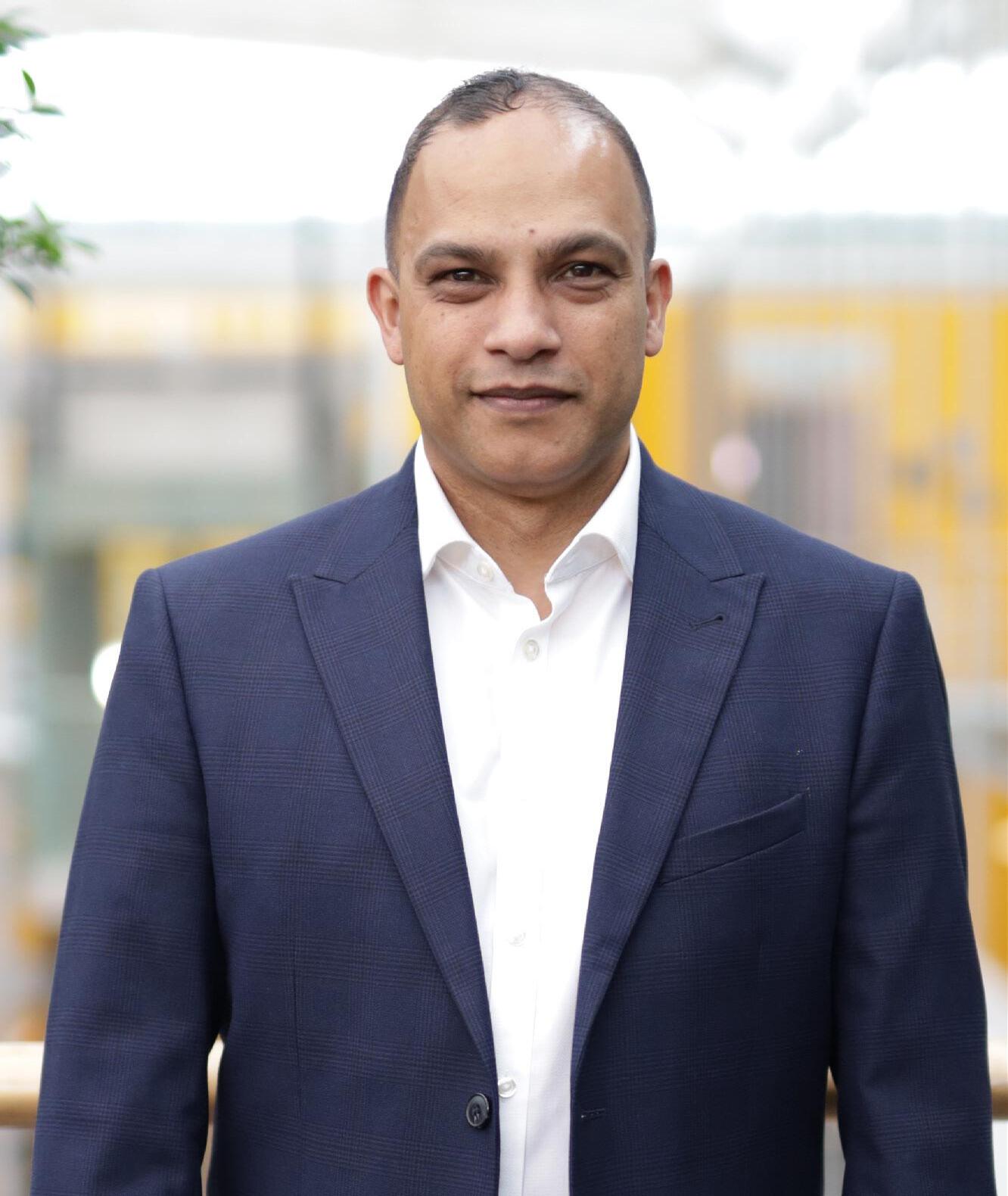
strategies and initiate sourcing actions with manual intervention only where key decisions require oversight.
This capability directly addresses one of the defining pressures on procurement leaders today. The 2026 Hackett Group report cites that “Procurement’s workload is predicted to increase by 8% in 2026, but with a small decrease in both headcount and operating budget. This creates both productivity and efficiency gaps, implying high hopes for procurement technology investments. Technology spend is anticipated to grow by an estimated 6.1% in 2026.”Teams are expected to deliver greater value, manage more risk and support broader organisational goals i.e. doing more with less.. But automation and intelligence are not about replacing people, but about enabling teams to operate at a different level.
For end users, the shift is immediately tangible. The experience moves away
from navigating menus, buttons and forms towards intent driven interaction. Users can express needs in natural language through intelligent co-pilots like SAP Joule, with the system orchestrating processes and building purchasing options based on contracts, suppliers and associated services as needed by the user. Compliance is embedded into the experience rather than enforced through friction and makes for superfluous experience. For finance teams and suppliers, downstream processes such as invoicing and payment become faster and more reliable, supported by intelligent matching and confidence scoring. This is a concept Mo coins as In-suite orchestration and is the foundation of procurement within Next Gen SAP Ariba.
However, both Hassan and Mo are clear that technology alone is insufficient. Human capability is a cornerstone of Vision 2030, and SAP’s regional investment reflects that reality. From training programmes and university partnerships to partner enablement and ecosystem development, the focus is on ensuring that local talent can design, implement and extend these platforms effectively. Technology without adoption, Hassan notes, remains inert, whilst also providing a platform for new talent to develop and implement their skills, like building agentic AI scenarios as needed by the business is going to be critical.
In addition, both technology partners and system integrators play a critical role in this ecosystem. A platform strategy succeeds only if it is matched by a vibrant partner landscape capable of building AI extensions, industry solutions and local innovations. For Saudi technology companies, the opportunity extends beyond implementation into co-creation, supporting national priorities while leveraging global connectivity.
Data sovereignty remains a constant thread throughout this transformation. Saudi Arabia’s regulatory framework demands the highest standards of security and control, and SAP’s local data
“From a customer perspective, SAP’s commitment to local hosting and sovereign platforms has been critical for us. At Tahakom, procurement sits at the intersection of public safety, smart mobility, and national infrastructure, so data sovereignty is not just a compliance requirement — it is a prerequisite for scale, trust, and uninterrupted execution.”
“What has mattered most is not individual tools, but the ability to run procurement, finance, and supplier collaboration on a connected ERP foundation.
Using SAP ERP as our core platform has allowed us to embed governance, local content, and risk controls directly into operational processes rather than managing them as after-the-fact checks.”
Hani Alsaigh – VP of Shared Services, Tahakom (Customer Perspective)



centres operate within that context. At the same time, continuous innovation requires platforms that can evolve rapidly without compromising governance. The combination of sovereign infrastructure, unified data architecture and responsible AI governance is designed to reconcile these demands rather than force a trade off.
As the interview draws to a close, the focus shifts to leadership and readiness. Mo emphasises that AI driven transformation is as much about mindset as technology. Organisations must bring people into the journey, address concerns openly and build curiosity alongside capability. Transformation is not a single event, but an iterative process that demands flexibility in funding models, deployment strategies and expanded operating models.
Hassan distils the moment succinctly. “The next wave of digital transformation
in Saudi Arabia will be all AI-powered and sovereign,” he says, adding that SAP is positioning itself to be the backbone of that shift. It is a confident statement, but one that aligns closely with the Kingdom’s trajectory. Vision 2030 is no longer an abstract framework. It is being operationalised through platforms, partnerships and people.
For procurement leaders across Saudi Arabia, the message is clear. The next phase of transformation will be defined by connectivity, intelligence and trust. Platforms that are sovereign by design, unified by architecture and human centred in execution will determine how effectively organisations deliver on national ambitions. In that context, procurement is no longer a back office function. It is becoming a strategic engine of Vision 2030 itself.
www.sap.com
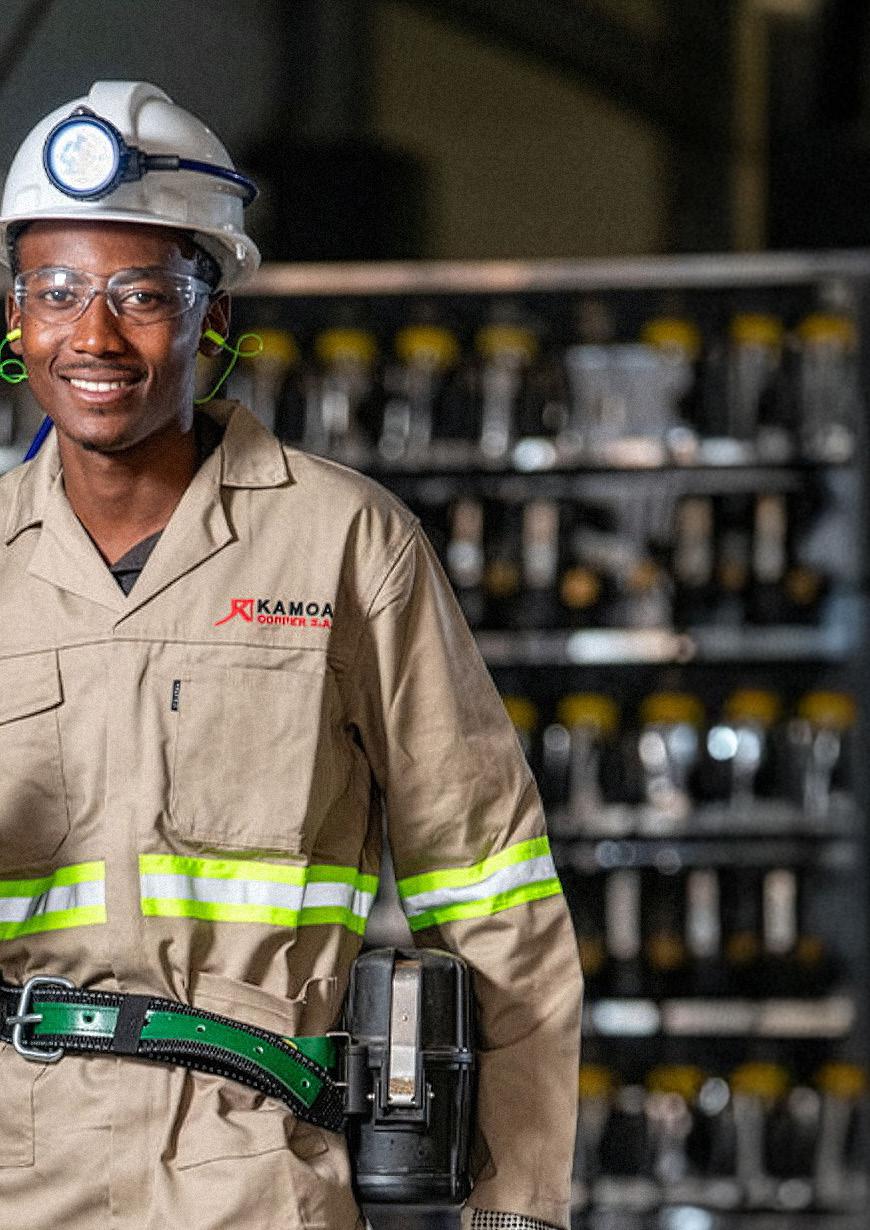
In the heart of the Democratic Republic of Congo, one of the most strategically important mining operations in the world is entering a defining phase. Kamoa Copper is no longer viewed simply as a high grade copper mine or a flagship African project. It has become a critical pillar in the global copper supply chain at a time when electrification, energy transition and infrastructure investment are driving unprecedented demand for the metal.
As governments and industries race to decarbonise, copper has moved from being a cyclical industrial commodity to a structural necessity. Electric vehicles, renewable energy systems, data centres and power grids all depend on secure, long term copper supply. Against this backdrop, the scale, quality and integration of the Kamoa Kakula Mining Complex position it among the most important copper assets developed in recent decades.
Operated by Kamoa Copper SA and majority owned by Ivanhoe Mines, the Kamoa Kakula complex has been built with a clear long term vision. From the outset, the project has prioritised scale, grade, operational resilience and value retention within the host country. This strategy is now most clearly reflected in the commissioning of the direct to blister copper smelter, a major milestone that elevates the operation beyond concentrated production and into integrated copper processing.
The smelter, designed with a capacity of approximately 500,000 tonnes per annum, fundamentally reshapes how copper from Kamoa Kakula reaches the global market. By producing blister copper on site, Kamoa Copper reduces dependence on third party smelting facilities and long distance concentrate transport. This not only strengthens supply chain security but also captures greater economic value locally, reinforcing the project’s industrial significance within the Democratic Republic of Congo.
The heat up of the smelter represents the culmination of years of planning, construction and coordination across engineering, operations and logistics teams. It also signals a shift in how large scale mining projects in Africa are increasingly designed. Rather than exporting raw or semi processed materials, integrated operations are emerging as a model for long term competitiveness, particularly for critical minerals such as copper.
Underlying this progress is the exceptional quality of the Kamoa Kakula orebody. The deposits rank among the highest grade copper discoveries globally, providing a strong foundation for long life production and robust margins. This geological advantage allows the operation to withstand market volatility while continuing to invest in expansion, infrastructure and workforce development.
Ivanhoe Mines’ recent production guidance for 2026 and 2027 reflects growing confidence in the recovery plan and operational trajectory of the complex. The guidance underscores not only anticipated output growth but also the maturity of systems and processes now embedded across mining, processing and smelting activities. For Ivanhoe, Kamoa Kakula is a cornerstone asset within a broader portfolio focused on tier one deposits and responsible development.
The emphasis on long term value creation has shaped every aspect of the project. Significant capital investment has been


TAKY CORP is a Congolese mining services and logistics company specializing in ore transport, civil works, and operational support for large-scale mining projects in the Democratic Republic of Congo. Built on strong operational discipline and a deep understanding of the mining environment, TAKY CORP has established itself as a trusted local partner for international mining operators.
The year 2025 marked a major milestone for TAKY CORP through a highly successful collaboration with Kamoa Copper. Over the course of the year, the company safely transported approximately 360,000 tonnes of ore per month, representing more than 4.3 million tonnes moved in total, while maintaining full operational continuity. This performance was delivered with a 100% safety record, with no lost-time injuries or major incidents recorded

throughout the year—an achievement that reflects TAKY CORP’s strong safety culture, rigorous training, and strict compliance with site procedures.
Beyond operational excellence, TAKY CORP is strongly committed to local value creation. In 2025 alone, the company created over 120 direct jobs, contributing meaningfully to local employment in mining regions. Notably, TAKY CORP actively promotes inclusion, with women successfully operating heavy mining equipment within its fleet—demonstrating that performance and diversity can go hand in hand in the mining sector.
Driven by reliability, safety, and sustainable growth, TAKY CORP continues to expand its capabilities and partnerships, positioning itself as a key Congolese player in mining logistics and infrastructure development across the region.
Taky Corp is a transportation and excavation services company in the mining industry based in the Democratic Republic of Congo, since 2023.
Our goal is to contribute to the socio-economic development of the Congolese populations, while providing our professionalism to support you in achieving your goals.
EXCAVATION
Open Pit, underground, and Mechanical
Excavation and drilling
Design, construction, and Maintenance of mining infrastructures.
Moving minerals and aggregates within the mines and from the mines to various processing points, storage facilities, etc.
Processing, packaging, and distribution of agricultural products.


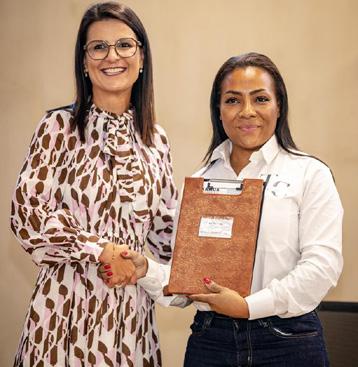

Genesis Engineering & Construction, a leading engineering firm registered in the Democratic Republic of the Congo (DRC), is built on the expertise of highly qualified professionals from across Africa. Formerly operating under FMI Projects, our team played a pivotal role in major projects such as the Second Acid Plant and the Electrowinning (EW) facility at Tenke Fungurume Mining (TFM). With a commitment to flexibility, efficiency, and safety, we ensure timely, costeffective project delivery without compromising quality.
At Genesis, we strive for global recognition in the Construction and Engineering industry by maintaining the highest standards of quality and precision. Our mission is to work in close collaboration with clients, ensuring seamless communication and adherence to budgets and timelines. We uphold strong values, appreciating every opportunity to showcase our capabilities and establish our reputation as a trusted industry leader.
Our competitive edge lies in our vast experience and proactive approach to problem-solving. We understand the importance of efficiency in resource management and are adept at handling unforeseen challenges with swift site amendments. Safety and economic viability remain at the core of our operations, ensuring a sustainable and results-driven approach.
Our Core Services:
• Boilermaking & Fabrication
• Warehouse Erection & Sheeting
• Maintenance & Shutdown Services
• Geo-Membrane & HDPE Piping
Genesis Engineering & Construction – Building the Future with Expertise, Precision, and Integrity. Contact us today to discuss your project needs!
www.genesisengineeringrdc.com
At Genesis, quality is our culture and our focus. Without excellence in our work, we waste time and resources while compromising our hard-earned reputation.
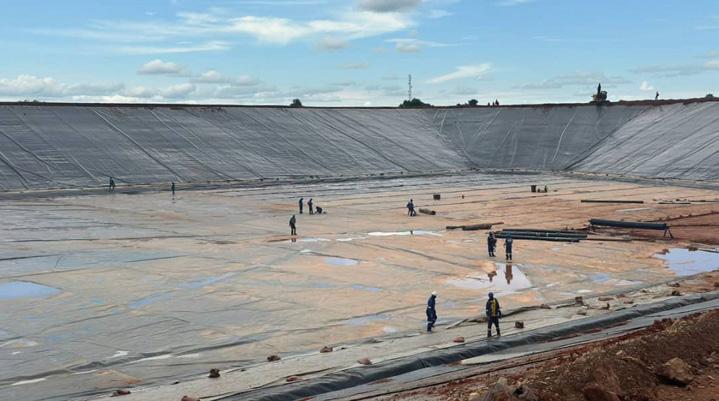
To be the global benchmark for excellence in engineering and construction, defining the future of the industry through precision, quality, and client-focused innovation.
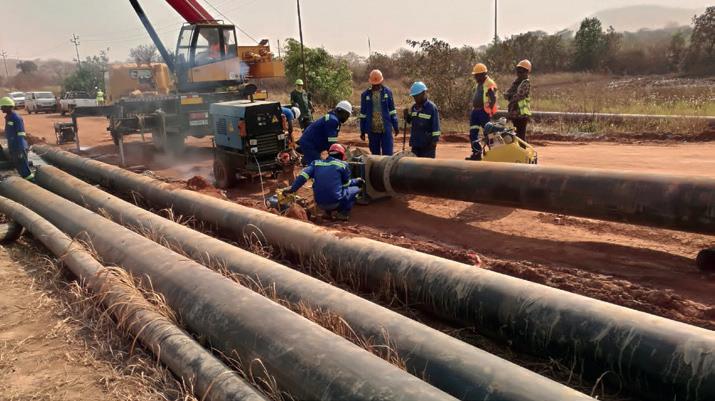
MISSION STATEMENT
We deliver preeminent engineering and construction services by integrating innovation, integrity, and continuous quality improvement. Our expertise spans Mechanical, Electrical, Civil, and specialized HDPE piping and membrane solutions.
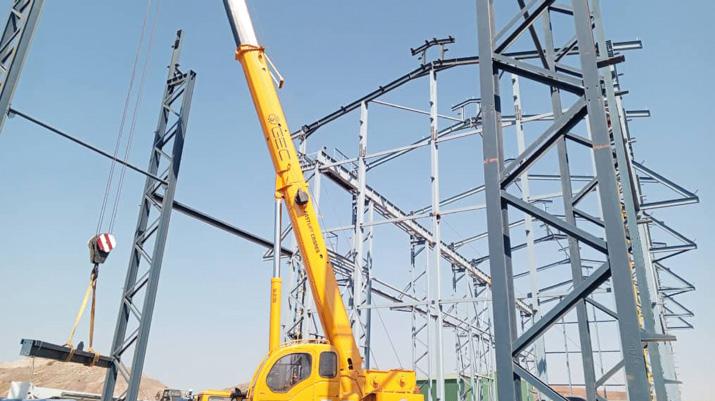

directed towards power infrastructure, logistics corridors and processing capacity, reducing operational risk and enhancing flexibility. In a global copper market increasingly exposed to geopolitical disruption and logistical constraints, such resilience is a strategic advantage.
Leadership has also played a central role in shaping the direction of Kamoa Copper. The appointment of Annebel Oosthuizen as Managing Director has brought renewed focus on organisational culture, inclusive leadership and operational accountability. Her tenure, though still relatively recent, has coincided with a
period of rapid progress and heightened visibility for the operation.
Kamoa Copper’s approach to leadership reflects a broader evolution within the mining sector. Expectations now extend beyond production metrics to include workforce development, governance standards and meaningful engagement with host communities. At Kamoa Kakula, these priorities are treated as integral to operational performance rather than peripheral considerations.
The scale of the workforce and the complexity of the operation demand a
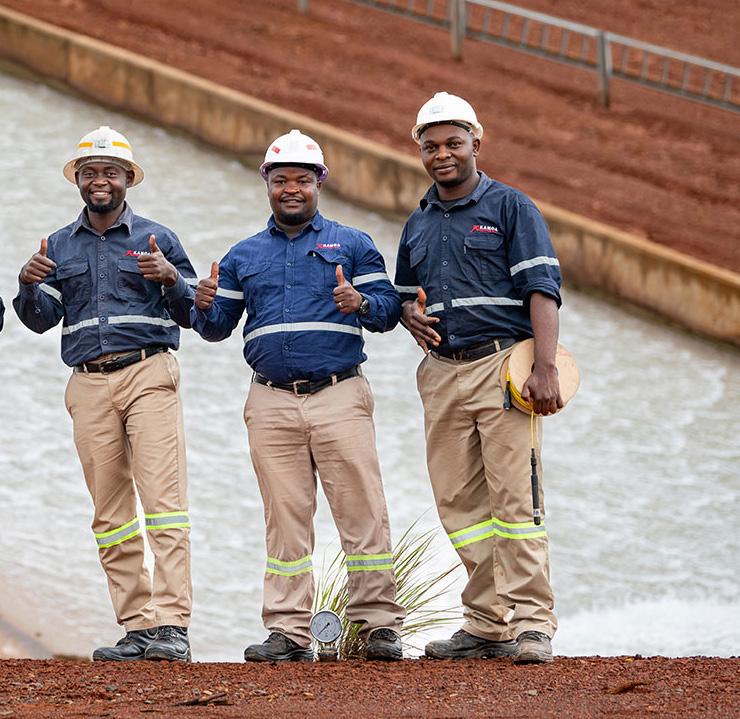
strong pipeline of local talent. Training programmes, skills development initiatives and leadership pathways for Congolese professionals are central to the project’s sustainability. By investing in people alongside infrastructure, Kamoa Copper is building institutional capacity that will endure beyond individual project phases.
Recent activity at the Kamoa Kakula site highlights this momentum. Operational milestones, site visits and community engagements demonstrate a business that is firmly in execution mode while remaining transparent about progress
and priorities. These moments reflect a project moving decisively through its growth phase, supported by systems capable of managing increasing scale.
The commissioning of the smelter also carries wider implications for the Democratic Republic of Congo’s industrial landscape. Domestic processing capacity creates opportunities for skills transfer, employment and downstream development. While mining alone cannot transform an economy, integrated projects of this scale can act as anchors for broader industrial ecosystems when aligned with national priorities.
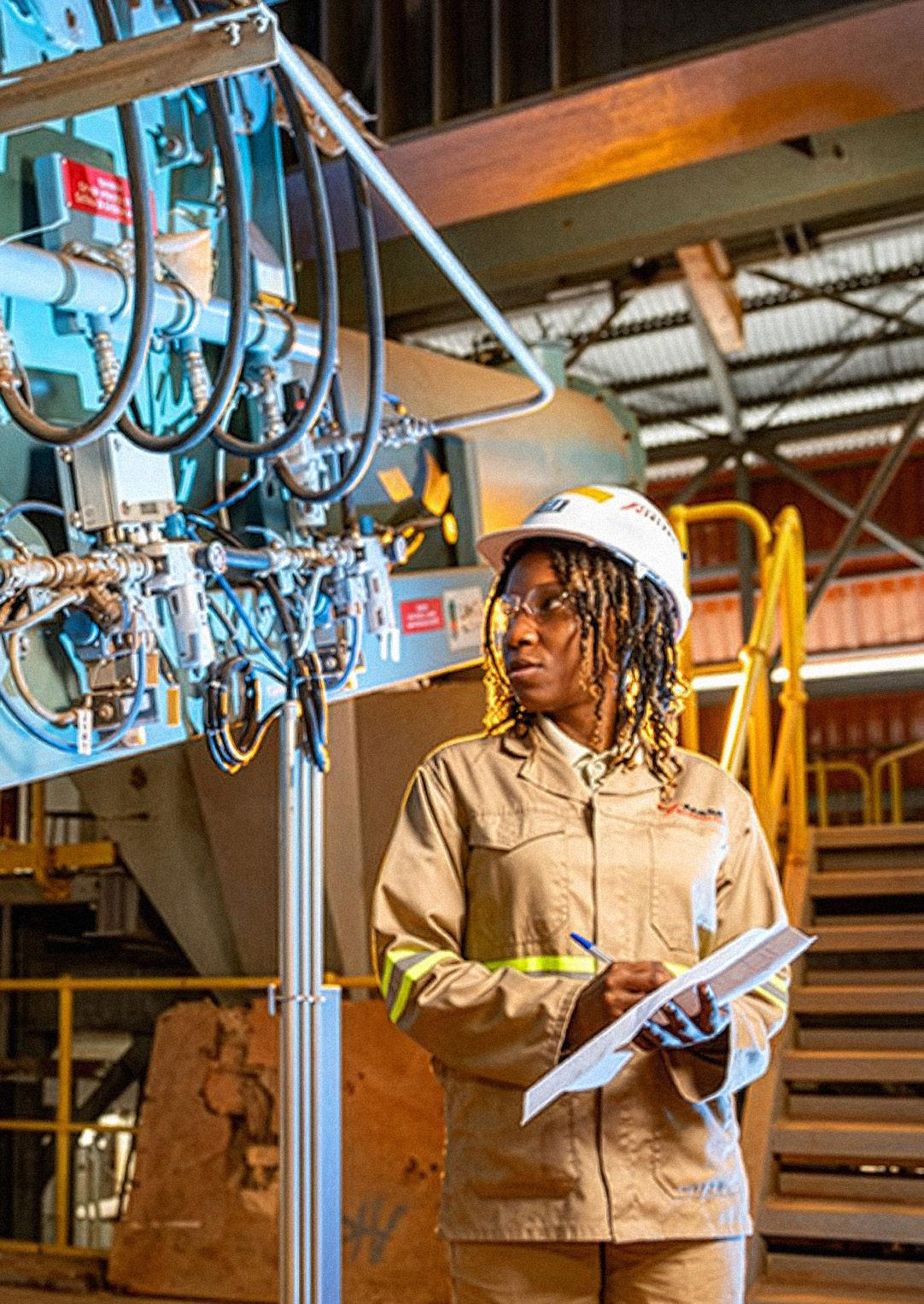
Environmental performance is another critical dimension of Kamoa Copper’s strategy. The smelter has been designed to incorporate modern emissions controls and efficiency measures consistent with international best practice. As global scrutiny of mining and metals production intensifies, operations that can demonstrate responsible processing standards will increasingly differentiate themselves.
The integration of mining, processing and smelting within a single complex also improves overall efficiency. Reduced transport distances lower emissions and costs while enhancing operational control. For a metal as central to the energy transition as copper, such efficiencies carry both economic and environmental significance.
Ivanhoe Mines’ long term vision for the Kamoa Kakula Mining Complex is evident in the scale of ambition and the pace of delivery. The project has progressed from discovery to world class operation in a relatively short timeframe, without compromising on infrastructure or standards. This reflects a deliberate strategy to build assets capable of operating reliably for decades.
The global copper market context further amplifies the importance of Kamoa Copper. Forecasts consistently point to a widening gap between copper supply and demand as electrification accelerates. New discoveries are becoming rarer, permitting timelines longer and capital requirements higher. In this environment, existing tier one assets with expansion potential command increasing strategic value.
Kamoa Kakula stands out not only for its resource base but for its ability to scale production while integrating processing capacity. This combination positions the operation as a stabilising force in an increasingly constrained market. For manufacturers, utilities and governments dependent on secure copper supply, such assets are critical.
Beyond mining and metals, the Kamoa
Copper story offers broader lessons for large scale industrial development in emerging markets. It demonstrates what can be achieved when long term capital, technical expertise and local engagement are aligned behind a shared vision. It also highlights the importance of leadership that recognises the interconnected nature of operational performance, social licence and strategic relevance.
For Business Enquirer readers, Kamoa Copper represents more than a successful mining project. It is a case study in how critical infrastructure, resource development and leadership intersect at a time of global transformation. The decisions made at Kamoa Kakula today will influence copper markets, industrial strategies and development narratives for years to come.
As the operation moves into its next phase, the focus will increasingly turn to execution at scale. Expanding output, optimising smelting performance and maintaining safety and environmental standards will test systems and leadership alike. Yet the foundations laid over recent years suggest a project well equipped to meet these challenges.
In an industry often defined by compromise and short term cycles, Kamoa Copper has been built with a clear sense of direction. It reflects a belief that world class assets require world class thinking across geology, engineering, governance and people. As copper cements its role as a foundation metal of the modern economy, the story unfolding at Kamoa Kakula is one that will shape the future of the sector.
From underground development to blister copper production, Kamoa Copper is forging a new model for large scale mining in Africa. It is a model grounded in integration, resilience and long term value creation, and one that positions the operation at the centre of the global copper conversation as the world enters a new era of demand.

TIBCO PROJECT DIRECTED BY: JENNIFER DAVIES

There is a quiet but decisive shift taking place inside large enterprises. It is not defined by wholesale reinvention, nor by the fashionable rhetoric of tearing everything down to start again. Instead, it is characterised by something far more pragmatic and, ultimately, more difficult to execute: modernisation without destruction. In an era dominated by AI headlines and cloud-first mandates, the real challenge for enterprise leaders is not whether to transform, but how to do so without undermining the decades of systems, processes and intellectual property that continue to run the global economy.
This is the context in which TIBCO now finds itself. Long recognised for its role in integration, messaging and real time data, the business is deliberately reframing its place in the enterprise stack. Not as a disruptive force that demands replacement, but as an enabling layer that allows innovation to happen where it matters most, on top of what already works.
At the centre of this evolution is Ali Ahmed, President of TIBCO, whose perspective has been shaped by a 25 year tenure that spans multiple technology cycles. His message is clear and notably unsentimental. Enterprises do not need to abandon their past to claim their future. They need platforms that respect both.
“Too many organisations are paralysed by the belief that they must reimagine their core systems to adopt AI,” Ahmed says. “The reality is that those mission critical systems are the very assets that need to be protected, not replaced.”
This philosophy underpins TIBCO’s approach to what it calls modernisation in place. Rather than asking customers to rewrite transactional systems or migrate everything into the cloud, the business
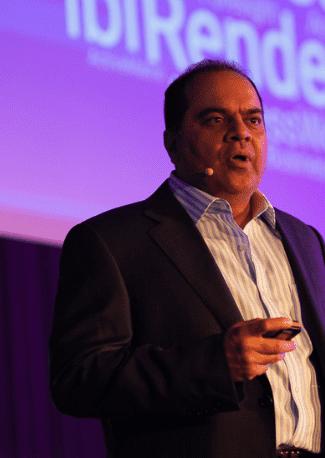

has built a platform designed to sit across environments, spanning on-premise infrastructure, public cloud services and edge deployments, all managed through a unified control plane. The ambition is not abstraction for its own sake, but operational coherence. A single way to see, manage and extend an estate that is already complex and often fragmented.
That fragmentation has long been one of enterprise IT’s most persistent burdens. Over time, powerful tools accumulate in silos, each with its own licences, interfaces and monitoring frameworks. The result is capability without cohesion. TIBCO’s response was the launch of the unified TIBCO® Platform in June 2024, consolidating products, subscriptions and management into a single operational and commercial model.
“Before the platform, customers were managing different products with different logins, licences and monitoring tools,” Ahmed explains. “It was powerful, but operationally very heavy. The unified platform gives them one control plane and one subscription that removes both technical and commercial friction.”
The implications of that simplification are significant. From an operational standpoint, teams can deploy cloud native services, monitor legacy engines and track event flows from a single pane of glass. Commercially, access to the full platform removes the gating effect of procurement cycles, allowing teams to experiment, adopt new capabilities and scale successful initiatives without renegotiating contracts at every step. In effect, the platform turns TIBCO from a collection of tools into a flexible innovation partner.
That flexibility is increasingly defined by composability, a term often used loosely but treated with precision here. In practical terms, composability means replacing rigid, monolithic applications with modular capabilities that can be assembled and reassembled as needs change. For enterprise technology teams, this represents a shift from building everything from scratch to orchestrating outcomes from reusable components.
“Composability is about moving away from monolithic applications towards a library of reusable business capabilities,” Ahmed says. “Teams stop rebuilding the wheel and start assembling solutions that are focused on outcomes rather than plumbing.”
TIBCO’s vision pushes this further by introducing AI driven composability. Instead of developers manually wiring integrations, the platform increasingly allows intent to drive execution. A user describes what they want to achieve, such as creating a real time pipeline between ERP and CRM systems, and the platform selects and composes the necessary components automatically. The aim is not simply speed, but accessibility. Lowering the barrier to innovation so that more of the organisation can participate in building value, without compromising governance or reliability.
This balance between speed and control becomes especially critical in the context of generative AI. While enthusiasm for large language models is widespread, enterprise adoption has been constrained by a fundamental concern: data. Models are only as useful as the information they can access, and for most organisations, that information is private, regulated and deeply sensitive.
“The biggest barrier to enterprise AI is not the model,” Ahmed notes. “It is the risk of exposing your private data.”
TIBCO’s response has been to evolve its ActiveSpaces® technology into a secure vector database designed for enterprise use. Proprietary data, from customer records to transaction histories, can be transformed into vector embeddings that remain within the organisation’s own environment. These embeddings can then be used in retrieval augmented generation workflows, allowing AI systems to access relevant context without that data ever leaving the firewall or training public models.
“It becomes a safe bridge between your private intellectual property and public large language models,” Ahmed says. “You get the power of semantic search and AI reasoning, but wrapped in the governance,

>Behaim became a TIBCO Services Partner in 2005 and operates in North America and Central Europe. Over the past 2+ decades Behaim has grown with TIBCO’s core Integration, EDI and File Transfer offering, covering Containers, Cloud, CI/CD, and now AI through various homegrown solutions proven across enterprise customers. Behaim ITS has won the TIBCO Partner Excellence award 4x times.
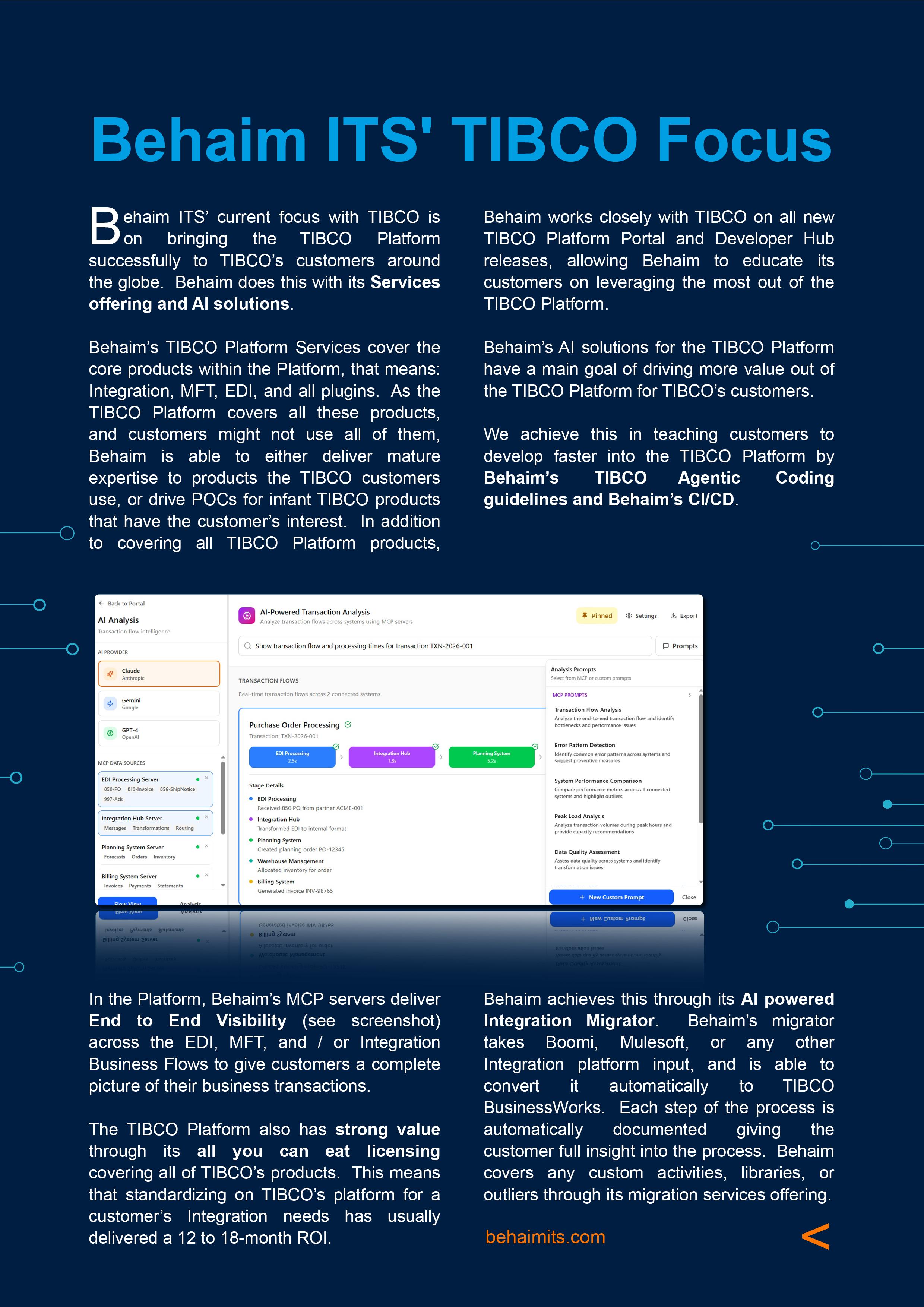


security and compliance enterprises already trust.”
That same philosophy extends to TIBCO’s work around Model Context Protocol and the newly introduced Flogo® Connector for MCP. In simple terms, the connector acts as a translator between enterprise systems and AI tools such as ChatGPT or Copilot, exposing existing integrations as standardised interfaces that AI models can call directly.
“It turns your enterprise systems into tools that AI can understand,” Ahmed explains. “Instead of an AI hallucinating an answer, it can securely reach into live systems to fetch real time facts or trigger actual workflows.”
The distinction is subtle but profound. AI shifts from being a passive generator of content to an active participant in business processes, capable of executing tasks within defined boundaries. This is where real-world adoption begins, not in novelty demonstrations, but in compliant, auditable actions that deliver measurable value.
Underpinning all of this is an architectural commitment to hybrid and multi cloud deployment. For most large organisations,
standardising on a single cloud provider is neither realistic nor desirable. Regulatory constraints, cost optimisation and performance considerations all demand flexibility. TIBCO’s Kubernetes native architecture decouples software from infrastructure, allowing deployments to move across environments without rewriting applications or renegotiating licences.
“You are not buying an AWS version or an Azure version,” Ahmed says. “You are buying capabilities that you can shift between clouds or on-premise environments instantly.”
Kubernetes becomes the common denominator, presenting a uniform fabric to the control plane whether workloads run on managed cloud services or private infrastructure. For operations teams, this consistency simplifies management and security. For business leaders, it preserves optionality in a market where conditions change quickly.
Observability is another area where consolidation delivers tangible returns. Managing separate monitoring tools for legacy systems and cloud native services


is expensive and inefficient. The TIBCO® Control Plane addresses this by providing deep, context-aware visibility that traces business processes end to end, even when they span decades old applications and modern microservices.
“It understands business context, not just infrastructure metrics,” Ahmed says. “You can trace a specific order or process instance across your entire estate in a single view.”
Crucially, this visibility is delivered without locking customers into proprietary dashboards. By embracing open telemetry standards, logs, metrics and traces can flow into existing enterprise observability platforms, preserving investments while enhancing insight. It is a pattern repeated throughout the platform: integration without entrapment.

We make it happen together!
Axis Technologies has been a long standing TIBCO Platform Partner for over 15 Years helping Clients reach their DT Goals on time and on budget.
We serve multiple industries:
• Aerospace & Defense
• Manufacturing
• Energy,
• Supply Chain
• Financial Services
None of this operates in isolation from TIBCO’s partner ecosystem, which has long been central to its market presence. In the platform era, partnerships are evolving from reselling relationships into co-creation models, where industry expertise and technical capability converge to deliver repeatable solutions.
“Our partners bring the industry use cases,” Ahmed says. “We provide the platform and the technology teams to help turn those into real solutions.”
The refreshed partner programme reflects this shift, enabling systems integrators and resellers to build, license and sell industry-specific offerings on top of the TIBCO Platform. Success is measured not by volume alone, but by the ability to create solutions that can be deployed repeatedly, scaled efficiently and adapted as needs evolve.
As enterprises look ahead to the next decade, the message from TIBCO is notably restrained. There is no call to abandon stability in pursuit of innovation, nor any suggestion that AI demands a clean slate. Instead, the argument is that resilience and progress are not opposing forces.
“Stability does not have to be the enemy of innovation,” Ahmed says. “You can protect your core systems, unify your operations and accelerate AI adoption at the same time.”

Axis Technologies is providing a New Client Incentive Pricing for new Services Engagements, limited time.


It is a message that resonates precisely because it acknowledges the realities enterprise leaders face. Digital transformation is not a single project with a defined endpoint. It is an ongoing negotiation between what must be preserved and what must be enabled. In positioning itself as the composable backbone of that negotiation, TIBCO is betting that the future of enterprise technology will be built not by burning down what exists, but by rewiring it intelligently for what comes next.
In a market often dominated by extremes, that may prove to be its most radical stance of all.
www.tibco.com


DIRECTED BY: ADEL MHIRI
In the world of mining services, few companies have demonstrated the resilience, innovation, and integrity that define Capital Limited. From modest beginnings commencing with just two drilling rigs at Tanzania’s Kabanga Nickel Project in 2005, the company has expanded into a global powerhouse with more than 140 rigs and Group operations across more than 20 countries. This growth is the result of visionary leadership, a steadfast commitment to quality, and a culture built on long-term relationships and trust.
For Damien Valente, recently appointed as Business Development Manager, Capital Limited’s appeal was clear. Having followed the company’s journey since its inception, he recognised something exceptional in the way it operates. “I’ve known Capital Limited since it began,” he said, “and have always been impressed by their ability to continually grow through their commitment to providing a quality service to their clients.”
The company’s leadership has long been regarded as one of its greatest strengths,
a consistent source of inspiration and guidance that has shaped its trajectory. Damien’s decision to join Capital stemmed from that leadership ethos and the values embedded across the organisation. His role focuses on building upon the solid foundations already in place, expanding the company’s footprint both within established regions and emerging markets. As he explains, Capital’s strategy is as much about deepening existing partnerships as it is about exploring new frontiers.
“My primary remit is to build on the foundations laid by the leadership team and contribute to continued global growth,” he said. “We’re looking not only at existing markets, but also at emerging ones where there’s strong interest in the capabilities we can bring.” This balance between extension with current clients and selected expansion lies at the heart of Capital’s success.
Capital’s global growth over the past two years has been marked by a series of landmark projects, notably its contracts with Barrick Mining in Pakistan and the United States. This relationship


When it comes to protecting your most critical assets and operations, you need more than a fire alarm sticker; you need real expertise. At Fire Equipment Systems, we specialise in bespoke fire protection solutions for heavy duty industries. Founded by Australian fire protection professionals and operating a leading test facility in Australasia, the team brings unmatched experience and technical rigour.
Our services cover everything from mobile plant foam suppression and gaseous fire systems to dry gas, optical detection, deluge and kitchen hazards. Risk assessment, system
design and installation, through to certification and lifetime maintenance, Fire Equipment Systems handles it all.
Led by seasoned engineers with decades of experience, you are safeguarded by professionals who understand the consequences of downtime, damage and injury. When you are investing significant capital in heavy machinery or plant, do not leave fire risk to chance.
Choose the team that lives and breathes fire risk mitigation. Fire Equipment Systems, where expertise protects your business. www.fire-equipmentsystems.com
At Newland Engineering, we understand that downtime costs money, that’s why our Erebus- series drill rigs and premium replacement parts are engineered to perform, endure, and keep your operations moving.
Designed and manufactured in Australia, our rigs deliver exceptional reliability, safety, and productivity for underground drilling. Whether you’re upgrading your fleet or custom-specifying a new build, Newland rigs are built for precision, power, and performance in the harshest mining conditions.
We also supply a comprehensive range of OEM-grade replacement parts - from wear parts, hydraulic and electrical components, and sub-assemblies to consumables, ensuring fast turnaround and minimal disruption to your workflow.
With over 25 years of industry experience, Newland is your trusted partner for innovation, quality, and long-term support.
Newland Engineering — Built to Drill. Built to Last.
www.newland-pe.com.au
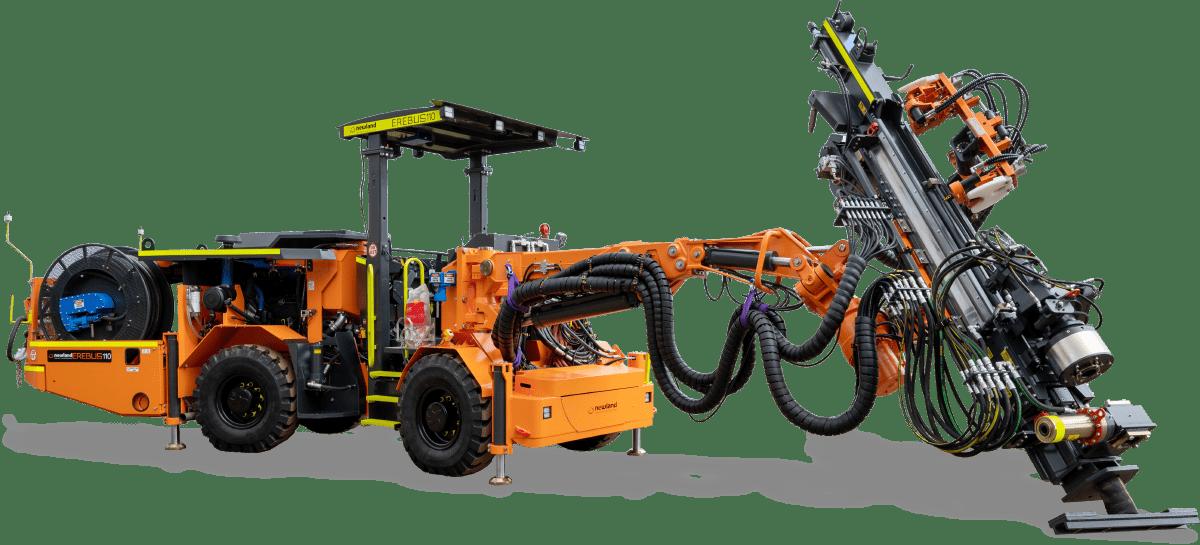
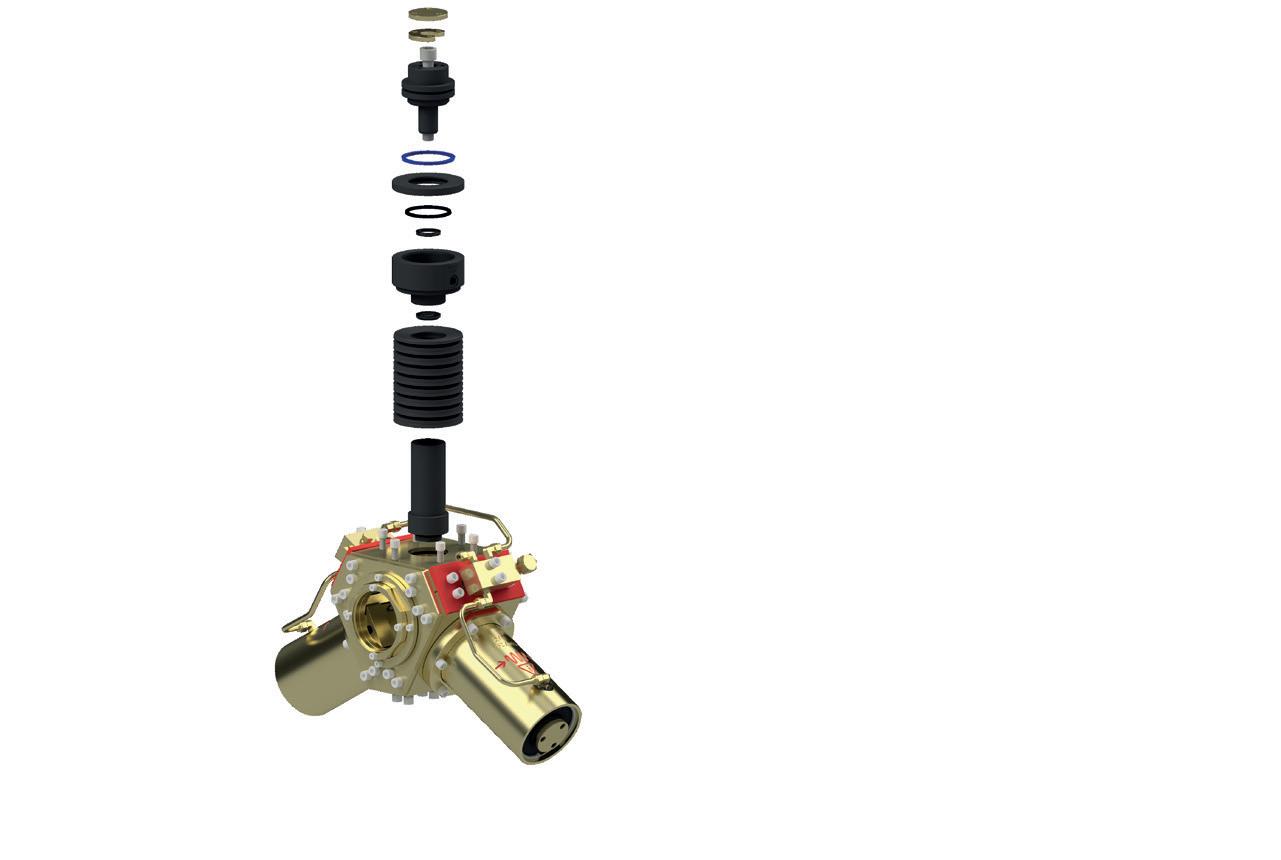
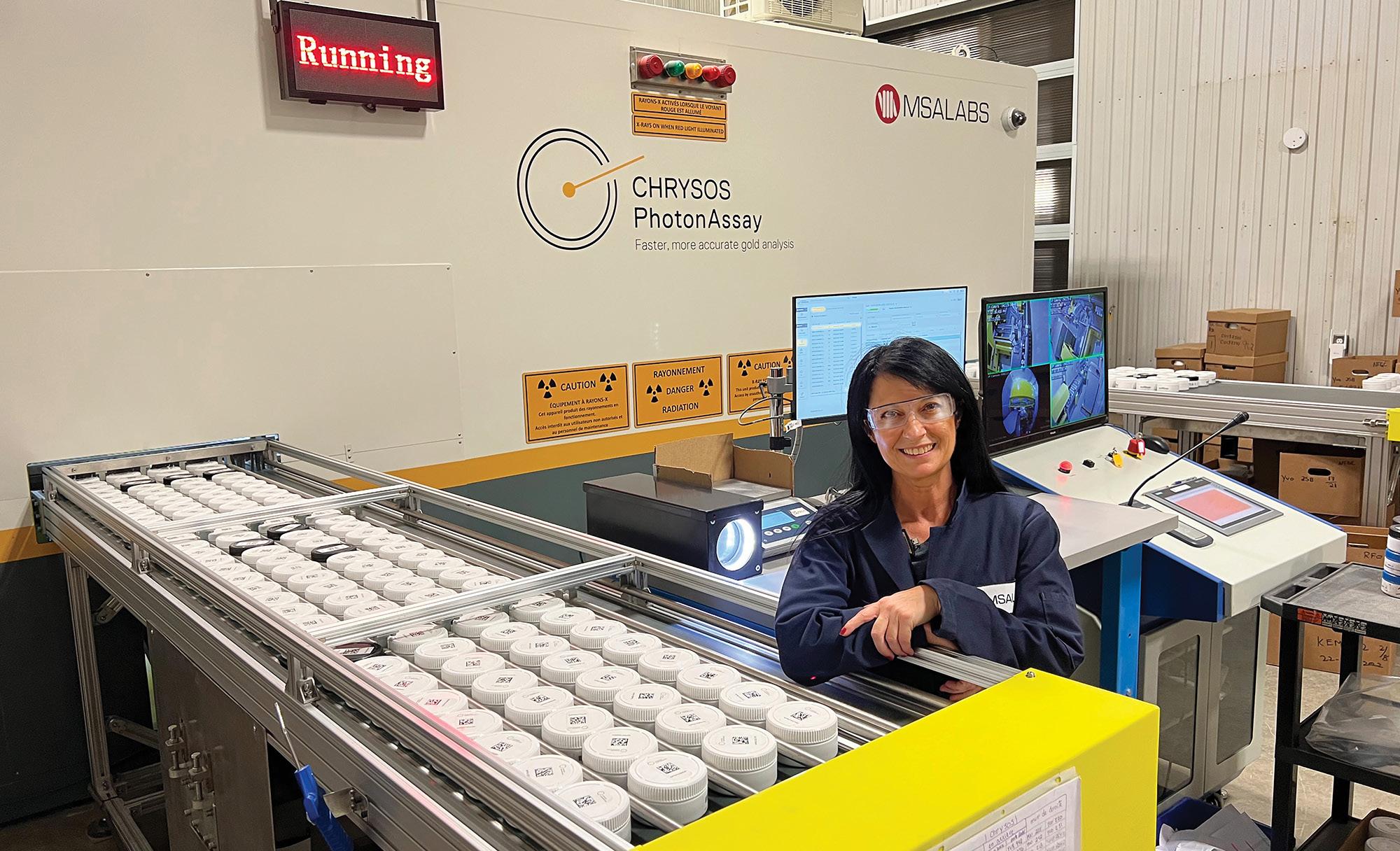
with Barrick spans more than 15 years, beginning with the North Mara Gold Mine in Tanzania in 2008. Since then, the partnership has expanded to include operations in Saudi Arabia at the Jabal Sayid copper project and in Tanzania at the Bulyanhulu Gold Mine. Such continuity speaks volumes about the trust and collaboration between the two organisations. For Damien, this enduring relationship illustrates how mutual confidence and consistent service delivery form the foundation for long-term business growth.
Capital’s entry into the US market through Nevada Gold Mines marked a defining step in its international evolution. Entering a new jurisdiction always presents challenges, particularly in a competitive and highly regulated environment like the United States. Yet through a combination of experience, technical knowledge, and adaptability, Capital not only established itself but is now preparing for an expansion of its operational scope in 2026. The company’s capacity to overcome challenges through competence and collaboration continues to strengthen its reputation among clients and partners.
As its geographic presence grows, Capital’s strategy remains anchored in integrating its diverse range of services. In existing markets, the company seeks to provide comprehensive support for clients, combining drilling and mining services as well as analytical services through its MSALABS business. In emerging opportunities, Capital targets tier-one, low-cost projects operated by leading international mining houses. This selective approach ensures that each expansion effort aligns with the company’s values of quality, safety, and sustainability.
Sustainability is not a slogan for Capital; it is an intrinsic part of its identity. The company’s leadership is deeply committed to reducing environmental impact while enhancing efficiency through technology. With a dedicated research and development department and a technology steering committee, innovation is embedded into every level of the organisation. Among the company’s most exciting initiatives is the development of a battery-electric surface drilling rig, created in partnership with equipment manufacturer Epiroc. The prototype, the first of its kind globally, will


Delivering Mine Spec Vehicles, Buses, and HTVs Worldwide.
Rhino Corp FZC stands as a leading force in the international fleet solutions market, specializing in the provision of mine specification vehicles, buses, and heavy transport vehicles (HTVs) for a diverse global clientele. Their commitment to quality is evident in their meticulous procurement strategy, sourcing fleets exclusively from trusted vendors around the world. This approach ensures that every vehicle meets stringent safety and operational standards, which is especially critical in demanding environments like mining and industrial operations.
The company’s adaptability enables it to cater to the unique requirements of clients across multiple sectors and regions. Rhino Corp FZC’s global outlook, combined with a reputation for reliability and service excellence, positions it as a preferred partner for businesses seeking robust and compliant transportation solutions. As industries evolve and operational standards rise, Rhino Corp FZC remains at the forefront, delivering vehicles that drive productivity and safety worldwide.









HORIZON PLANT CE OPERATES ACROSS TWO CRITICAL FRONTS — HEAVY MINING EQUIPMENT AND EMERGING ELECTRIFICATION — HELPING CLIENTS MAKE SMARTER, PERFORMANCE-DRIVEN DECISIONS.
WITH MORE THAN 25 YEARS’ GLOBAL EXPERIENCE, WE WORK AS PART OF YOUR TEAM: SOLVING PROBLEMS, MATCHING THE RIGHT MACHINE TO THE RIGHT APPLICATION, AND JUSTIFYING COST–BENEFIT AS IF WE WERE SPENDING OUR OWN MONEY.
FROM SOURCING MAJOR MINING ASSETS TO FUTURE-PROOFING OPERATIONS WITH HYBRID AND BATTERY-BASED SYSTEMS, OUR FOCUS IS SIMPLE: BETTER OUTCOMES, NOT JUST EQUIPMENT.
Horizon Plant CE works across both sides of the modern mining landscape — heavy-equipment procurement and the emerging shift toward hybrid and electrified power systems. With more than 25 years of hands-on experience, the company brings a practical, solution-focused approach to some of the industry’s most demanding projects.
Horizon acts as an embedded partner rather than a supplier, helping clients analyse requirements, match the right equipment to the right application, and justify investment decisions through rigorous, real-world cost–benefit thinking. This mindset mirrors the industry’s wider focus on performance, safety and long-term value creation.
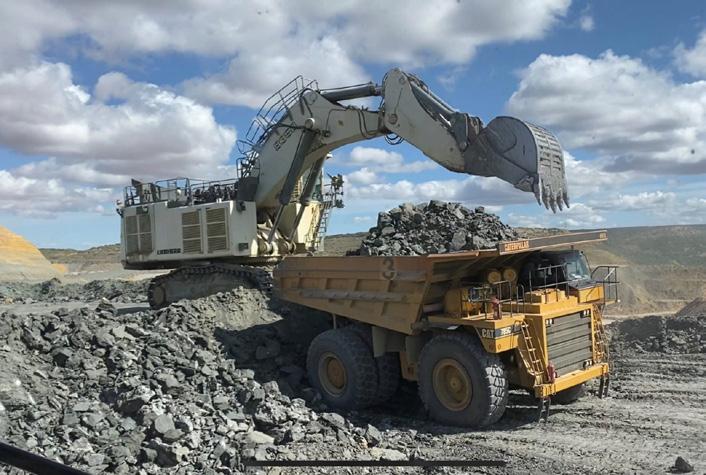
From supporting fleet expansion programmes to advising on future-power opportunities, Horizon Plant CE delivers clarity, operational insight and global reach. The goal is simple: to enable mining companies to make better decisions, reduce operational risk and improve outcomes in environments where precision and reliability matter most.
Founded in Beirut in 2009, TMS has grown from a regional supplier into a global partner for heavy equipment spare parts—trusted by companies across construction, quarrying, mining, and transportation. With operations in Lebanon, the UAE, and the United Kingdom, and clients in more than 36 countries, we support businesses with an extensive inventory covering nearly 80% of the world’s leading equipment brands. The result: faster deliveries, fewer interruptions, and equipment that stays working when it matters most.
From day one, our philosophy has been simple—work directly with reliable manufacturers and suppliers worldwide. This approach ensures competitive pricing, consistent quality, and long-lasting value for every client who chooses TMS.
In 2018, we expanded into the mining sector across Eurasia and Africa, and in 2023 we strengthened our presence across the African continent. To elevate our service even further, we launched G&T Logistics in 2021, offering seamless, end-to-end logistics and shipment consolidation—making your supply chain smoother, faster, and more efficient.


TMS is your partner for heavy equipment spare parts—today, tomorrow, and for every challenge ahead.

TMS is the internationally recognized
for quality branded spare parts currently
and distributing to over 36
sales@tmsmining.uk
Cobra Projects is a leading South African manufacturer of specialised mining support equipment, recognised in Africa, Australia, and parts of Asia for its safety and reliability backed by Capital Limited’s operational efficiencies of the equipment. With over 40 years of experience, they provide engineered solutions to minimise downtime and boost productivity in tough environments.
Their product range includes the “SUPA LUBA” rigid, articulated, wide-body fuel and lube service trucks. The “SUPA TANKA” rigid, articulated, widebody water and fuel trucks. The “SUPA WASHA” water wash trucks, “SUPA LIFTA” crane trucks, and the “SUPA DRILLA” drill support trucks. Additionally, they offer rigid recovery systems, mining lowboy trailers ranging from 130t to 450t, stemming trucks, stemming buckets, MEWP, UWP, ROPS, and FOPS. They also hold licensed manufacturing rights in Africa for Loadquip and QMW
Their objective remains unchanged. The company continues to deliver reliable solutions that support safe and efficient mining operations worldwide.
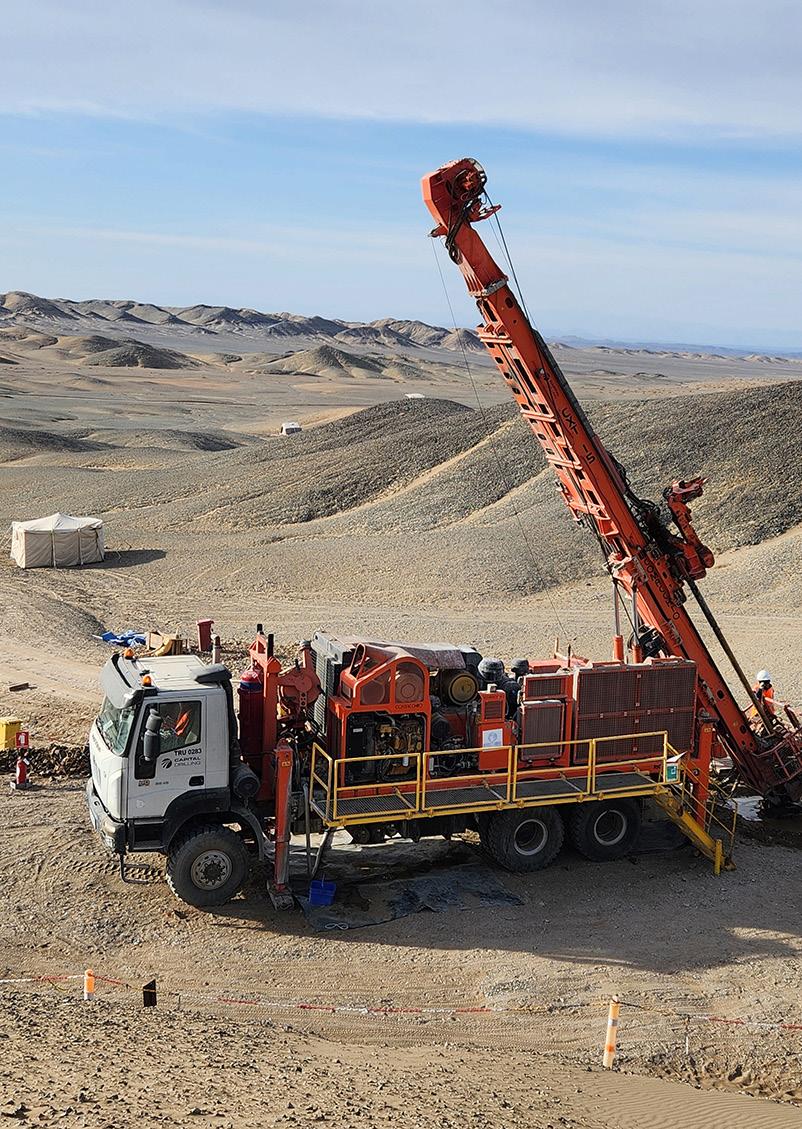
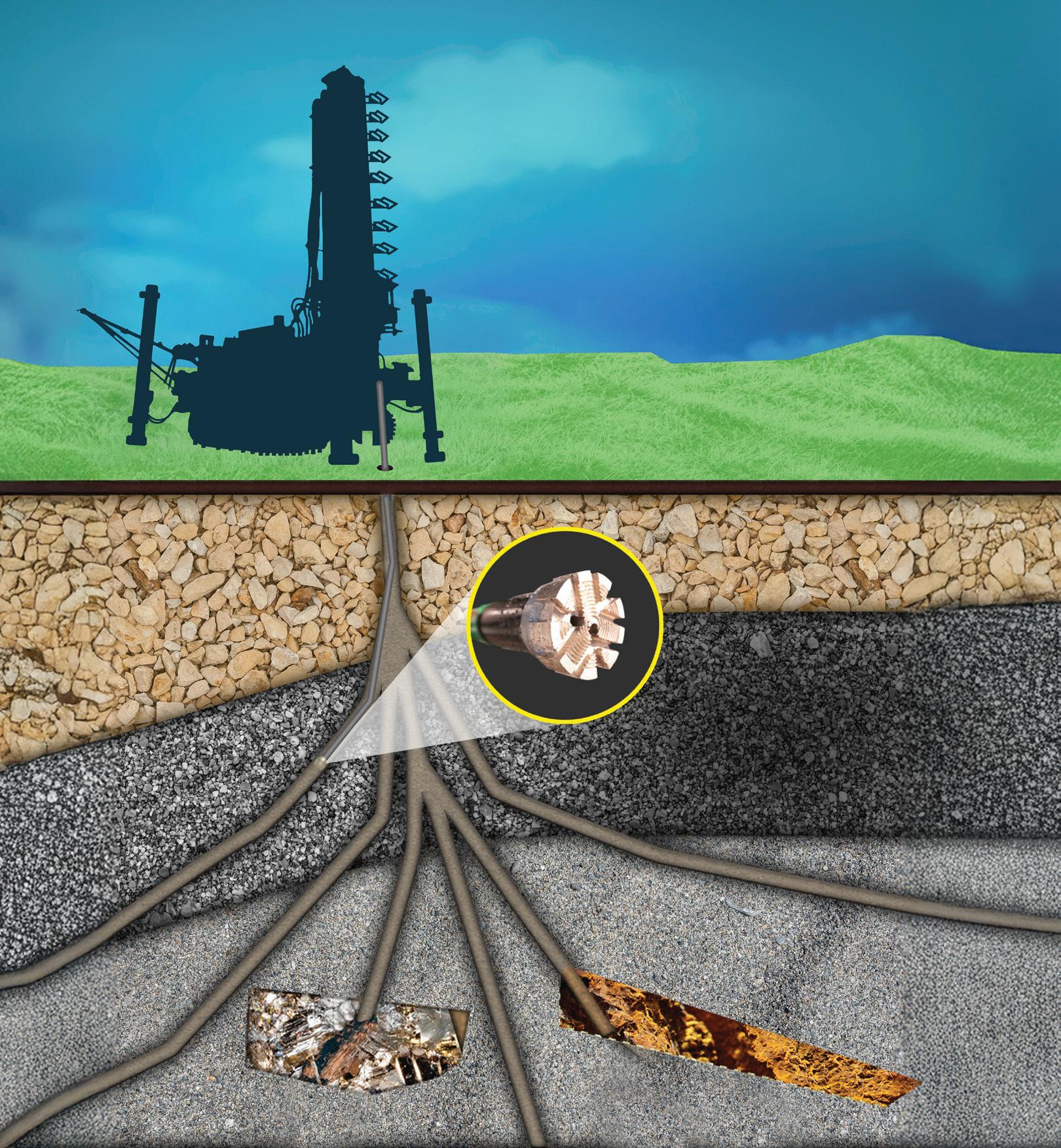
soon begin field testing at the Sukari Gold Mine in Egypt. The project represents not only a leap forward in clean technology but also a milestone for the future of sustainable mining operations.
It has also recently made a commitment to phase out plastic containers for drilling fluids across all its sites by 2027. In their place, the company will adopt the Enviro Pack Eco Drum™ and Eco Bucket™, innovative and environmentally friendly packaging solutions developed by drilling fluids supplier, Mudex. The Eco Drum™ and Eco Bucket™ represent the mining industry's first viable alternative to traditional plastic containers. These products reduce plastic usage by 95% and are made from FSC-certified and recycled cardboard.
The company’s MSALABS business continues to demonstrate leadership in laboratory innovation. Capital was one of the first mining service providers to bring
PhotonAssay™ technology to market, a groundbreaking technology that allows for faster, safer, and more environmentally friendly analysis of gold, silver and copper. With 14 operational units worldwide, MSALABS is the largest user of this technology globally. Beyond efficiency, PhotonAssay™ technology reduces the need for toxic chemicals traditionally used in fire assay analysis, drastically lowering laboratory waste and environmental risk.
In 2024, Capital took another decisive step toward sustainable innovation with its investment in Eco Detection, an Australian company specialising in real-time water monitoring. The system remotely analyses chemical components in water, allowing for real-time detection of contaminants and facilitating immediate action. After over 50 successful monitoring installations across Australia, New Zealand and the UK in many applications, Eco Detection together with Capital and MSALABS is now bringing its proven technology to mining operations




Western Australia’s water industry has long demanded solutions that balance durability, efficiency, and sustainability. APT Water has emerged as a leader in groundwater management, supplying engineered solutions across Australia and internationally. Since its founding in 2006, APT Water has combined technical expertise with strategic partnerships, including the recent merger with the AxFlow Group further enhancing its capacity to deliver large-scale and complex projects.
Based in Western Australia, APT Water serves sectors that rely on dependable water infrastructure. Its team provides an integrated approach with solutions from system design, manufacture and commissioning, offering clients a single point of contact from concept to installation. This approach is especially valued where corrosive water conditions and deep wells can challenge long-term performance.
At the heart of its offering is Permaglass, a range of fibre reinforced plastic bore casing and pump column. Permaglass delivers high collapse resistance and stability at depth, making it ideal
for mining, agriculture and municipal supply. Its corrosion resistance extends service life compared with steel or galvanised alternatives, while the lightweight material simplifies handling and transport.
APT Water’s integration of Permaglass into its portfolio underscores a commitment to innovation and operational excellence. By coupling advanced pumping technologies with robust FRP infrastructure, the company delivers turnkey solutions that optimize performance while minimizing lifecycle costs.
Permaglass is increasingly specified in international projects, reflecting its durability and cost-effectiveness. For operators balancing performance, longevity and maintenance, it provides a reliable solution supported by proven field results for over 40 years.
Through technical expertise and robust product design, APT Water continues to strengthen groundwater systems for clients in Australia and abroad.
www.aptwater.com.au


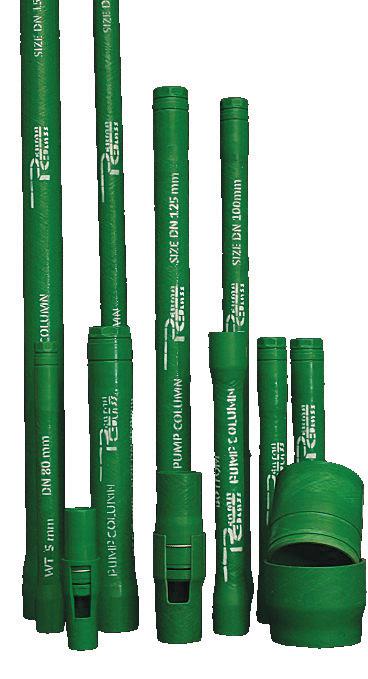
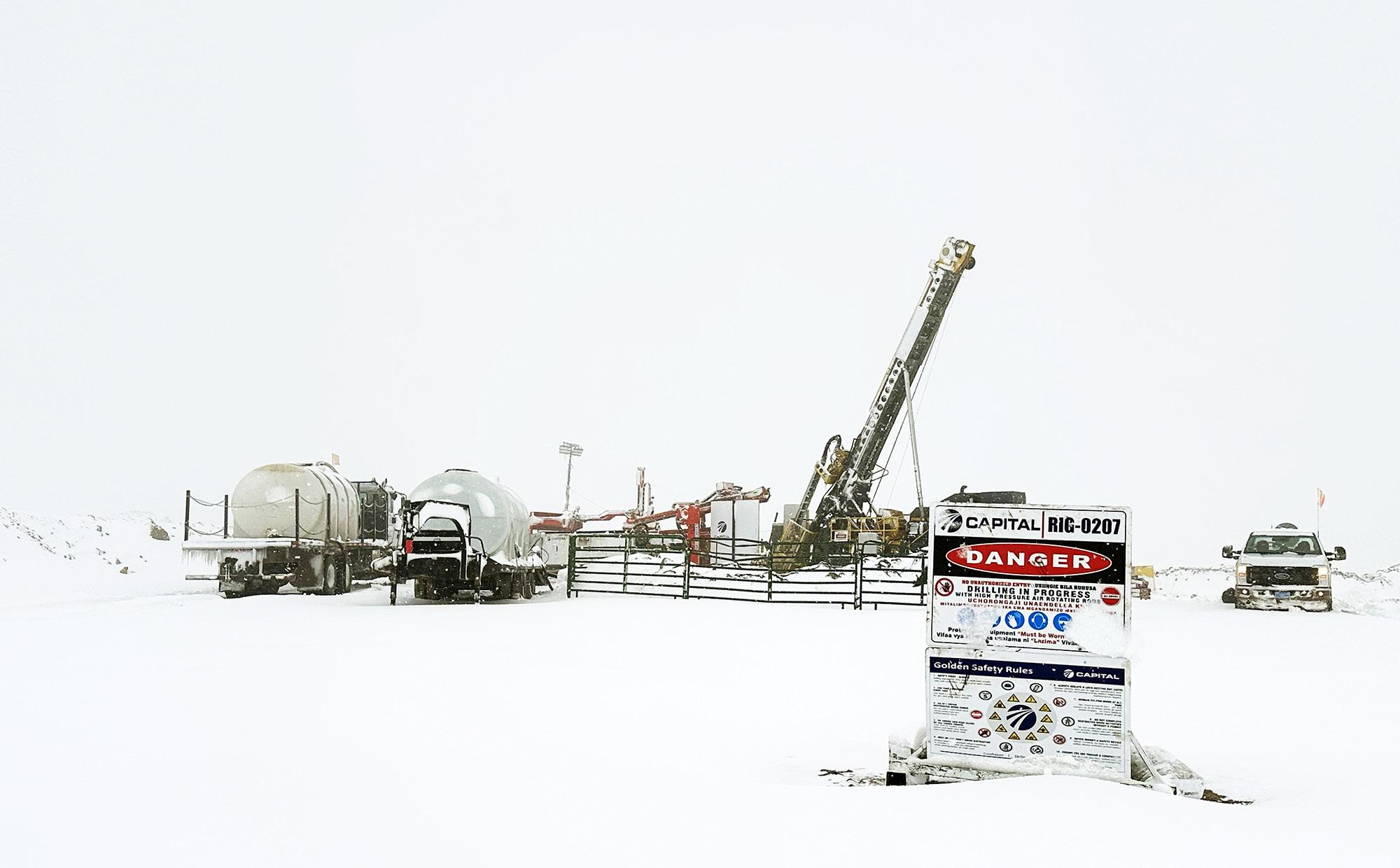
in Africa, North America and beyond.. Complementing these initiatives, the company’s workshops operate with solar installations that supply over a third of their energy needs, including power for electric forklifts.
This year it has made a further strategic investment into Portable PPB, who have recently released a modular, field laboratory solution. The containerised lab integrates sample preparation and analysis into a compact, mobile format that can support drill programmes, providing near real-time gold and pXRF multi-element results, and gold leachability insights on site.
While sustainability is a key component of Capital’s strategy, digitisation and automation are another. The company is testing more than thirty different technologies across its operations, reflecting a deep commitment to datadriven performance and safety. “We’re really dedicated and focused on this part of our business,” Damien explained. “One of the most interesting projects we’ve implemented recently is the
digitalisation of our blast hole drilling rigs at AngloGold Ashanti’s Geita Gold Mine in Tanzania. The digitised blast hole drilling fleet incorporates a hole navigation system that precisely locates and measures drilling depth. This system not only increases accuracy and speed but also reduces rework, leading to lower diesel consumption and a smaller carbon footprint. The environmental benefit goes hand in hand with improved operational efficiency and transparency for clients, who gain real-time insights into rig performance.
Capital’s investment in training is equally forward-thinking. The company recently introduced the first Epiroc D65 drilling simulator in Africa, providing operators with advanced, risk-free training in both everyday and hazardous scenarios. This innovative approach to workforce development reinforces the company’s reputation for operational excellence and safety leadership.
The Middle East has become a key focus area for Capital’s long-term growth. The company has been present in Saudi
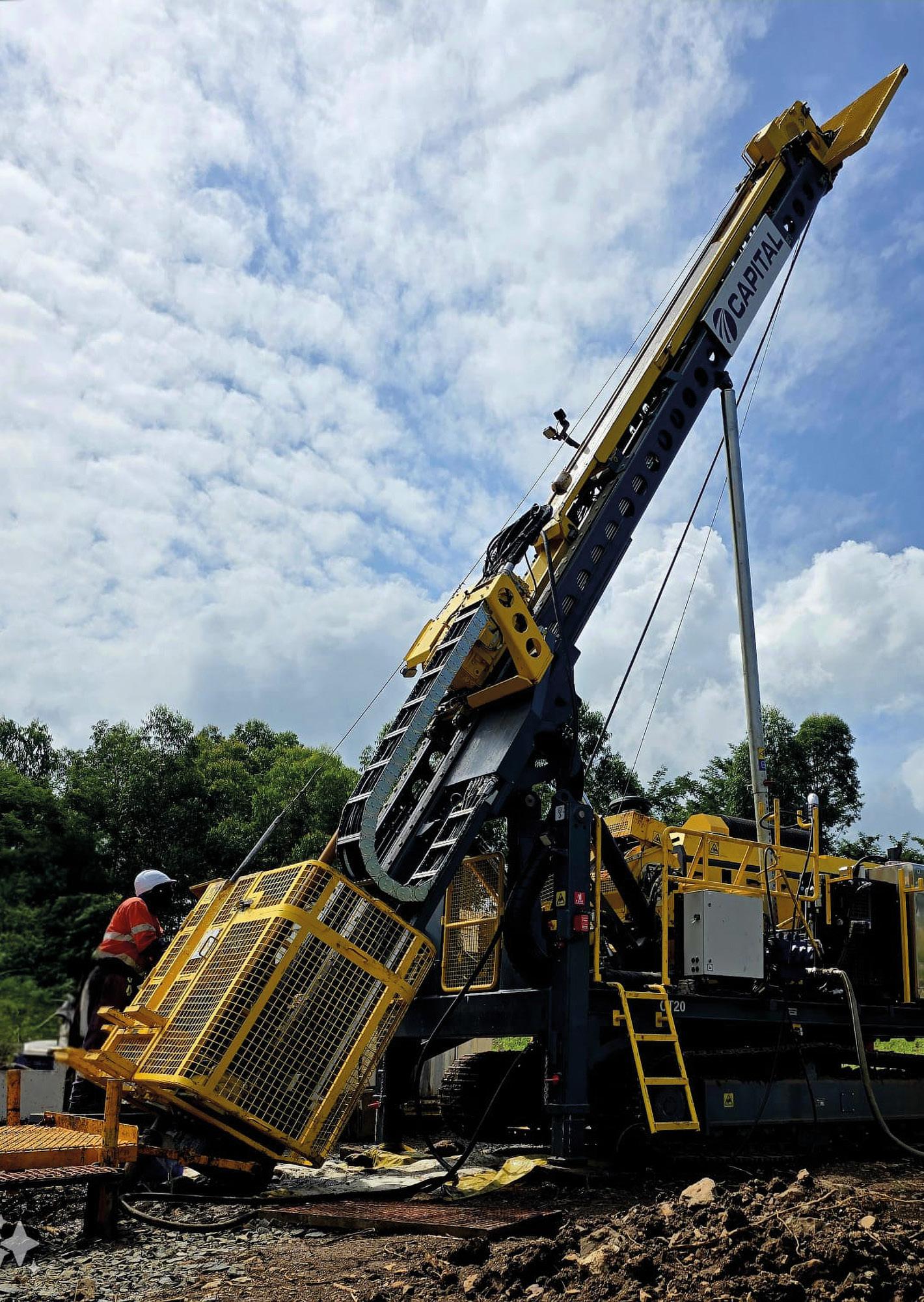

Arabia since 2020 and was quick to recognise the opportunities emerging from Vision 2030, the Kingdom’s national strategy for economic diversification. With mining identified as a central pillar of this vision, Saudi Arabia’s vast reserves, estimated at 2.5 trillion dollars and encompassing more than 45 minerals, offer significant potential. Capital’s first project in the Kingdom, the Jabal Sayid copper mine, operated through a joint venture between Barrick Mining and Ma’aden, marked the company’s entry into this dynamic region. The establishment of a new on-site MSALABS laboratory at Jabal Sayid represents a deeper commitment to supporting the Kingdom’s mining ambitions.
Such growth is guided by a disciplined approach to quality and safety. Capital’s safety performance consistently exceeds industry standards, a reflection of its rigorous training programmes and emphasis on employee competence. Its commitment to excellence has yielded an impressive record of contract renewals, including two decades of continuous operations at both the Geita Gold Mine and Egypt’s Sukari Gold Mine. These enduring relationships are testaments to the trust Capital builds with its clients and the consistency with which it delivers results.
Operating within a cyclical industry demands resilience, and Capital has proven itself adept at navigating market fluctuations. Since its founding, the company has successfully managed multiple commodity cycles, maintaining growth and profitability throughout. One reason for this stability is its focus on production-based contracts, which provide long-term visibility and security. Currently, only around 10 percent of Capital’s exposure lies in exploration contracts, ensuring that the company remains well positioned during market downturns. This same strategic structure applies to MSALABS, where many operations are located directly on mine sites and secured through long-term agreements. The result is a business model built for endurance, capable of
sustaining performance through both boom and lean periods.
Looking ahead, the outlook for Capital Limited is exceptionally strong. With gold prices remaining high and clients enjoying healthy operating margins, the demand for drilling and laboratory services is expected to increase through 2026 and beyond. The company is already preparing to meet that demand, with fifteen additional rigs on order and a network of twenty-five laboratories globally, sixteen of which have been built in the past four years. The focus remains clear: to expand capacity without compromising on the quality and reliability that define Capital’s reputation.
For Damien Valente, the future is one of opportunity and excitement. “The demand for our services is as strong as we’ve ever seen it,” he said. “We’re ready and well established to ramp up and meet that demand, while always maintaining the quality of our delivery.” Having worked across Africa for more than two decades, he brings both experience and passion to his role. Now part of a team with global reach, he sees promising horizons in Central Asia, the Americas, and beyond. His enthusiasm mirrors that of the wider company, a group of professionals who share a collective belief in responsible growth, innovation, and partnership.
Capital Limited stands today as an organisation that has mastered the balance between ambition and discipline. It is driven by people who understand that the key to sustainable progress lies not in rapid expansion alone but in the quality of relationships built along the way. As the company continues to evolve, its legacy will remain rooted in the values that have defined it from the beginning: integrity, innovation, and an unwavering commitment to excellence.
www.capdrill.com

TOTALTEK PROJECT
DIRECTED BY:
JENNIFER DAVIES
Green SLA dashboards can hide a red user experience. Two anonymized SAP environments show why five signals in your ticket history—incident-to-service request ratio, time-in-status, aging, severity mix, and mean time between incidents—diagnose system health faster and make next month easier than this one.
By Brad Nicolaisen, SVP of Strategic Growth - SAP, PMO & AI Innovation
Green SLAs with a red experience is one of the most common paradoxes in enterprise software. The fix isn’t more stopwatch discipline; rather, it’s reading the evidence you already own.
Your SAP ticket history is that evidence. Read properly, it’s an EKG of your ERP: monthly spikes are arrhythmias, incident-to-service request ratio is blood pressure, reopen and duplicate rates are relapse metrics, backlog composition is


cholesterol, and time-in-status tells you where the flow constricts. It’s blunt, it’s honest, and it’s faster to act on than any dashboard of averages.
Picture the monthly operations review. The SLA page is green across response and resolution time, yet your inbox is full of déjà-vu: period-close scrambles, familiar hotfixes, and user complaints that sound oddly similar to last quarter. SLAs confirm speed, not learning. They tell you someone picked up the phone and clicked “resolve” on time; they do not tell you whether the fix prevented tomorrow’s ticket, whether this month’s “new” incident is a sequel, or where work is actually waiting in your process. The only way to answer those questions quickly is to read the ticket history itself, like a radiologist reads an x-ray, not a stopwatch.
Five signals make that X-ray fast and honest. First, the incident-to-service request (INC:SR) ratio tells you posture, reactive firefighting versus proactive improvements. Second, a simple volume timeline laid over your business calendar exposes recurring peaks tied to month-end, promotions, or seasonal cutovers. Third, time-in-status shows where work waits, “In Progress,” “On Hold,” or “Pending Validation.” Fourth, backlog composition tells you whether the long tail of P3/P4 incidents and stalled software requests is quietly taxing your users. Fifth, severity mix and mean time between incidents (MTBI) for your most important business events translate risk into something leaders can govern. When these lines move, the experience improves even before the SLA bars do.

“Client 1’s median posture remains incident‑heavy
at 2.55:1;
July’s 3.81:1 spike is the inflection point into retirement.”
— Based on order-to-cash ticket history, Jan 2024–May 2025
In one anonymized environment (“Client 1”), incidents kept outnumbering service requests by roughly two-and-a-half to one for consecutive years[1]. Regions behaved differently: EMEA operated near a healthy balance while North America and Latin America ran far more reactive[2]. The backlog felt small until we inspected its mix: recurring P3/P4 issues and “Software” requests that needed design decisions more than heroics. In another environment (“Client 2”), throughput looked tidy, about the same number of tickets opened and closed each month, yet stability never improved. A heavy share of incidents stayed High or Medium, and a large fraction of open work lived in statuses like “In Progress,” “On Hold,” and “Pending User Validation[3][4].” In both cases, nothing on the SLA page was technically wrong; it was simply incomplete. The ticket history told the truth that the stopwatch couldn’t.

Figure 1 - Client 1: INC:SR Trend by Month
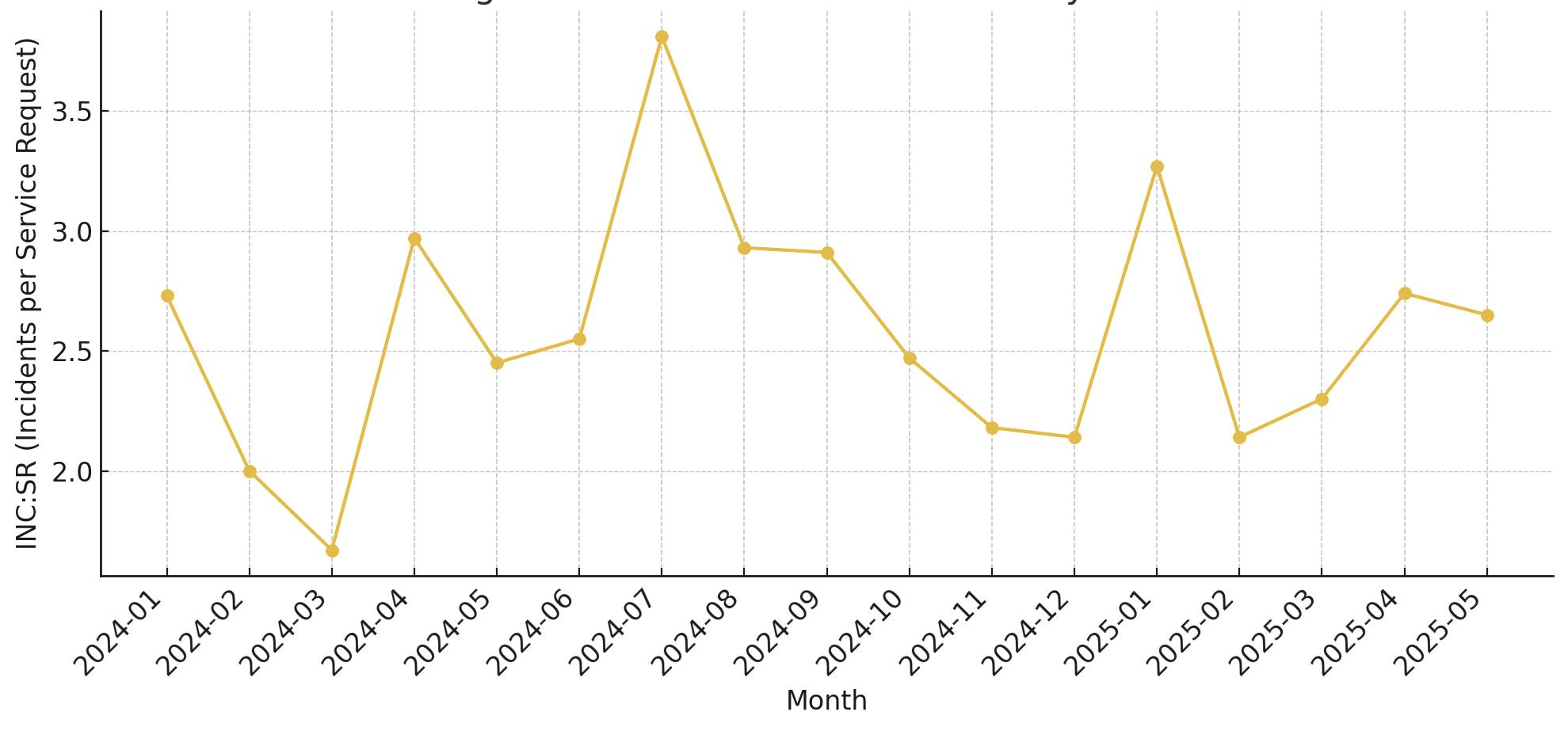
Figure 1A - Client 1: Regional INC:SR (Jan 24-May 25)
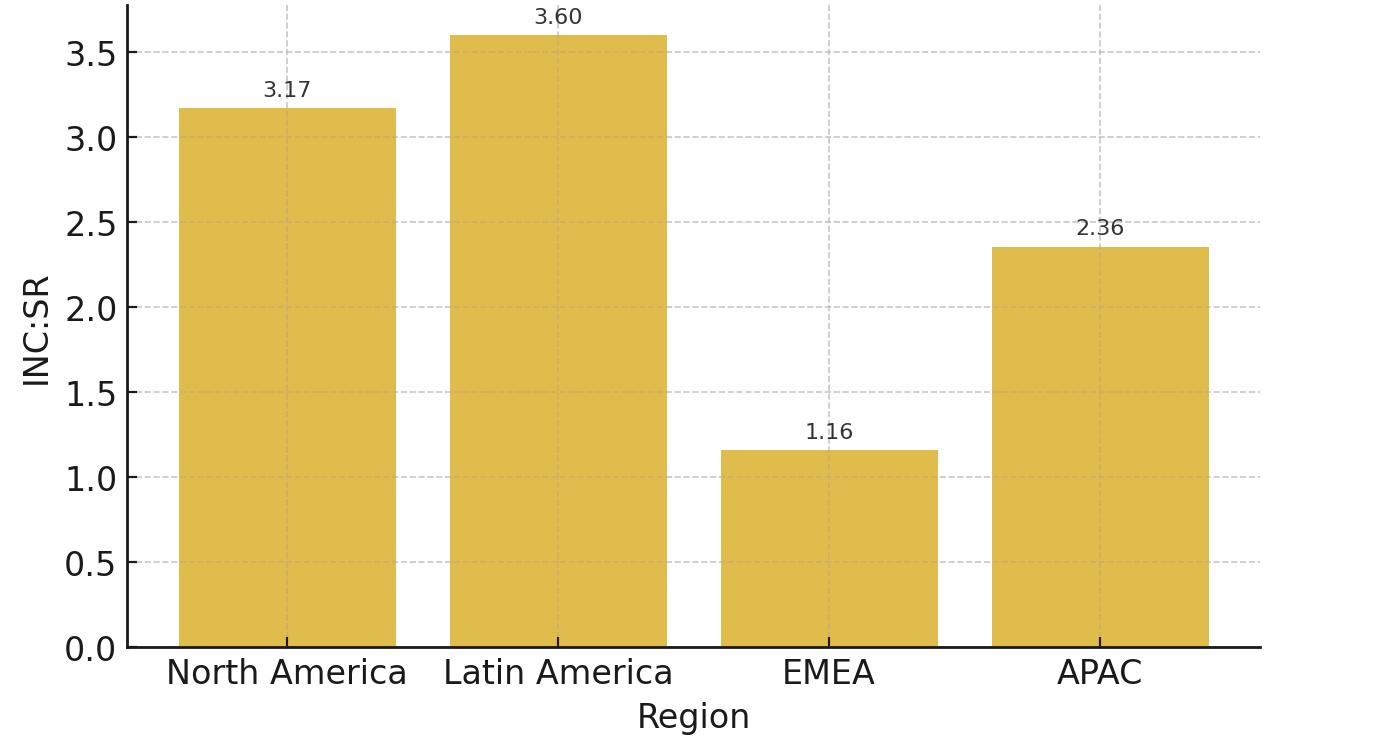
Figure 1 — Client 1: INC:SR Trend by Month (posture over time; July 2024 spike 3.81).
Figure 1A — Client 1: Regional INC:SR (NA 3.17:1; LATAM 3.60:1; EMEA 1.16:1; APAC 2.36:1).
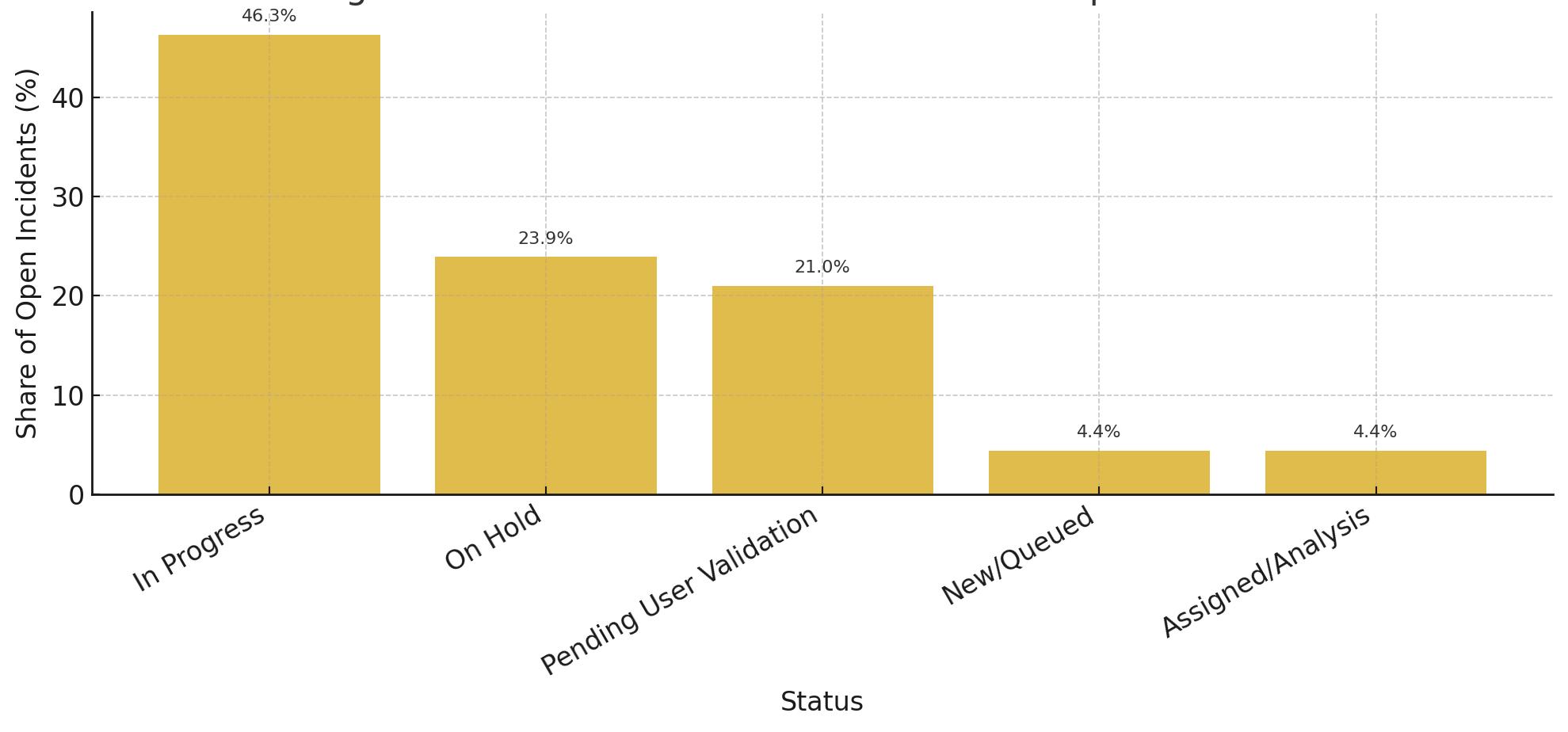
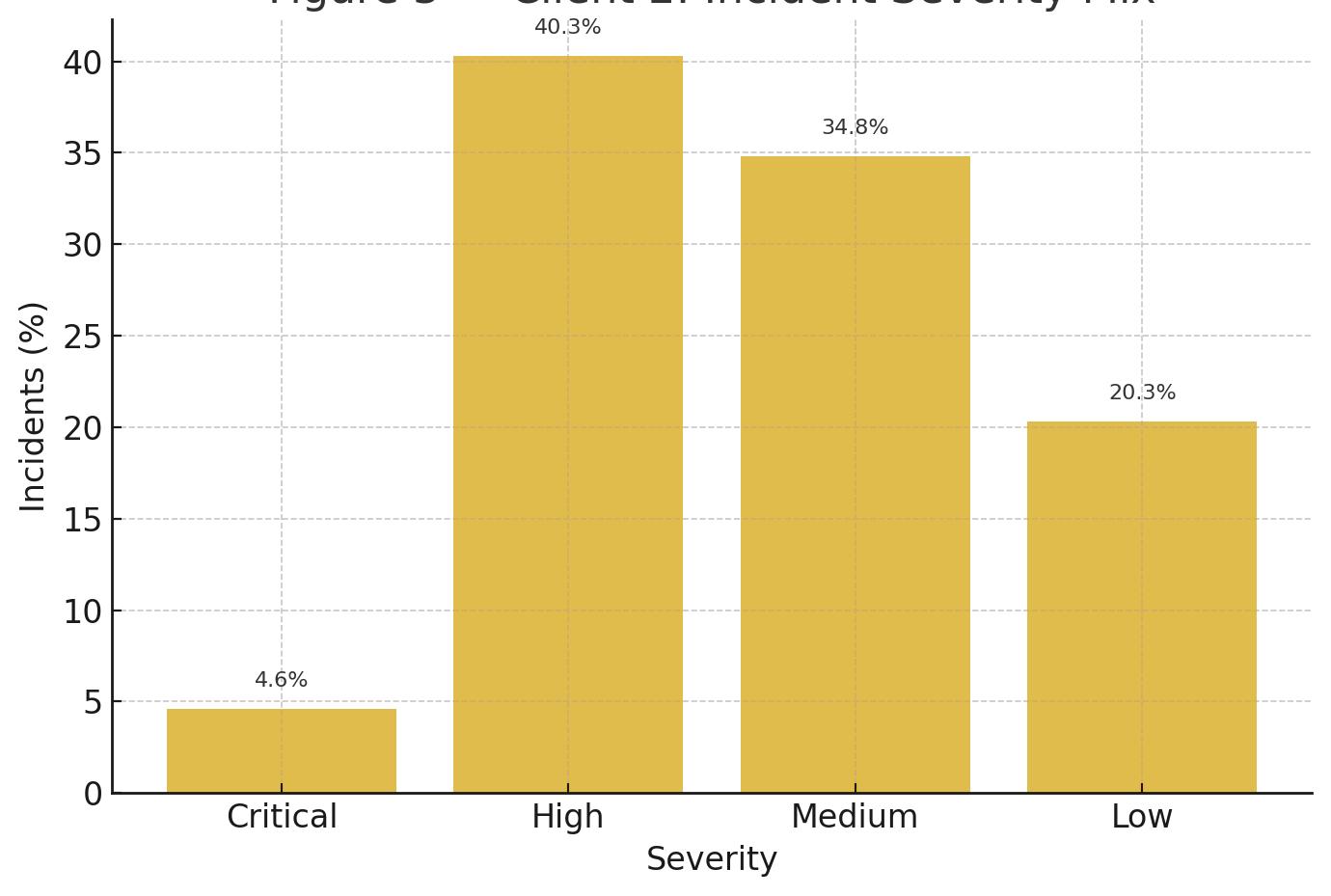
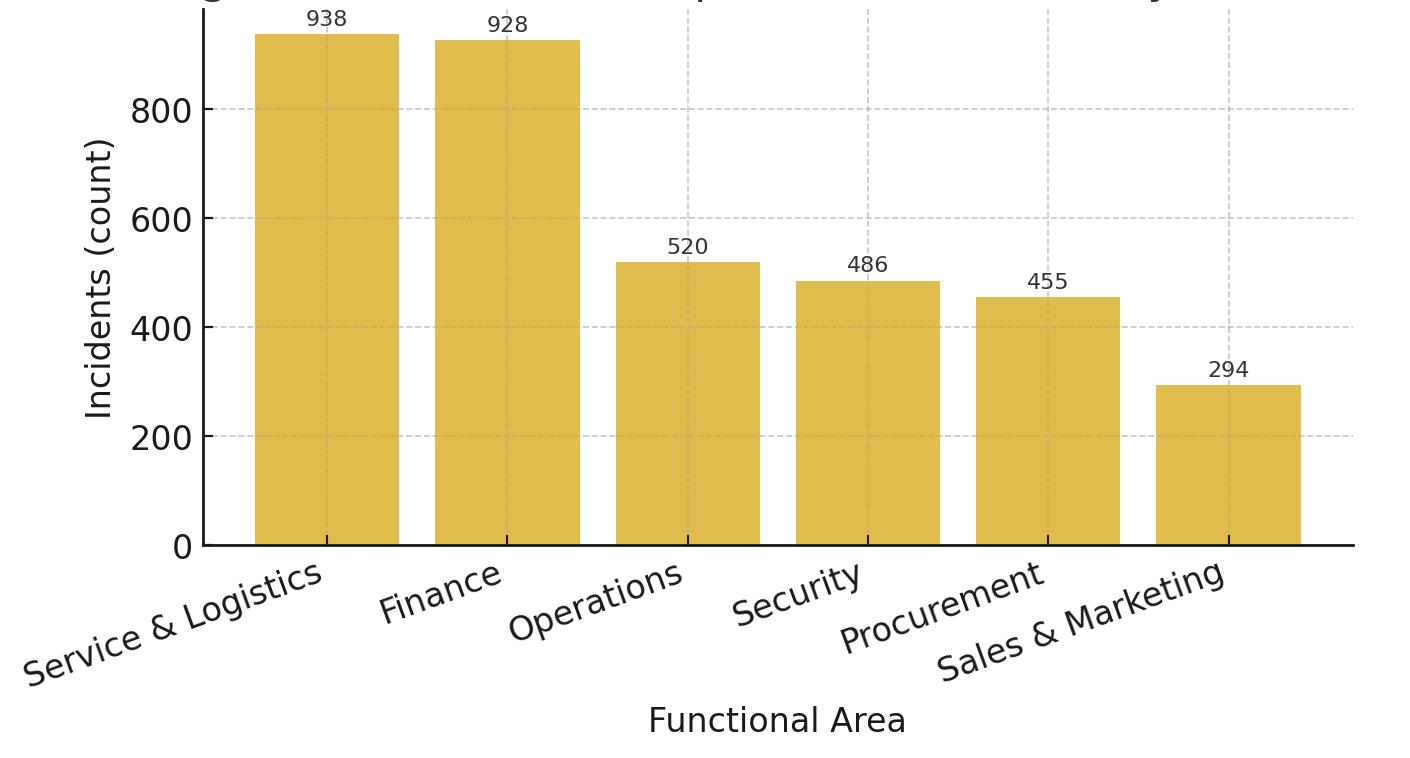
1) Instrument what matters. Trend INC:SR by month and region; overlay volume on the business calendar; measure reopen/ duplicate rates, time-in-status, and backlog composition.
2) Close the loop on root cause analysis (RCA): the third appearance of any pattern becomes a problem record with an owner, a prevention plan, and a due date. “Done” means volume goes to ~zero for 60–90 days.
3) Convert repeat incidents into enhancements (I2E): small configuration tweaks, automation, validation rules, or monitoring that remove the trigger.
4) Tighten triage and flow: redefine severity around business impact and cap work-in-progress so “In Progress” stops being a parking lot; schedule short validation windows so “Pending Validation” doesn’t become a graveyard.
5) Govern by outcomes: pair stability indicators (incidents per 100 users, High/ Critical share, aged items, reopen rate) with improvement indicators (INC:SR trend, I2E throughput, family eliminations, automation wins, MTBI for the top five business events). Tie incentives to these outcomes so the right behavior is the easiest behavior.
2 — Client 2: Status Distribution of Open Incidents (In Progress 46.3%; On Hold 23.9%; Pending Validation 21.0%).
Figure 3 — Client 2: Incident Severity Mix (High 40.3%; Medium 34.8%; Low 20.3%; Critical 4.6%).
Figure 3A — Client 2: Top Functional Areas by Incidents (S&L 938; Finance 928; Ops 520; Security 486; Procurement 455; Sales & Marketing 294).

“Good” is not a greener SLA chart; it’s a quieter month. Practically, posture bends toward balance: an INC:SR ratio that moves from ~2.5:1 toward 1:1 over the year, with the worst-performing regions catching up to the best. Peaks around business events flatten as design debt is retired. Flow stops bloating: the share of open work sitting “In Progress” drops toward a quarter, and “Pending Validation” becomes a brief stop, not a holding pattern. Prevention becomes normal: the top incident families are cut in half within two quarters, reopen/duplicate rates drift toward low single digits, and small enhancements ship every week. Risk recedes as a consequence with fewer High/Critical surprises and longer stretches between incidents for the moments that matter most. Users notice the absence of friction first; the charts catch up later.
First 30 days: publish the first outcome scorecard, cap WIP per team, and ship a handful of ≤20-hour fixes that remove obvious repeaters. Days 31–60: standardize severity, run a focused RCA sprint on the loudest incident family, and stand up a simple Incident-to-Enhancement (I2E) cadence. Days 61–90: replicate what works in the strongest region to the weakest and lock targets for posture, flow, prevention, and risk/experience so budget and attention follow evidence, not anecdotes. The test of success is simple. Next month is easier than this one, and you can prove why with pictures anyone can read.
Most organizations already collect more metrics than they can use, which is why the page that matters gets ignored. A simpler scorecard beats a bigger one. Pair four lenses: posture (INC:SR and volatility), flow (time-in-status and WIP), prevention (repeaters and incident-to-enhancement conversions), and risk/experience (aging by severity, severity mix, and MTBI on your five critical business events). Each lens needs one number that can go up, down, or stay the same so leaders can decide, not admire. Budget follows evidence when the picture is simple enough to point at. Two practical rules make it stick. First, attach owners and dates to the top incident families the way you would to revenue initiatives; publish an extinction date for each. Second, create a tiny change-fund for ≤20-hour fixes so prevention never waits on paperwork. When you revisit the scorecard in 30 days, celebrate shipped design changes, not decks. Within a couple of quarters, you’ll feel the difference: fewer surprises at close, fewer tickets sitting in motion, and a backlog that looks like a to-do list instead of a museum.
SLAs measure speed; ticket history measures learning. When you govern to the latter, two things happen. First, the work gets lighter because repeaters go extinct and design changes replace patches. Second, the SLA page finally means what you hope it means: not just fast response, but fewer reasons to need it. Read the history, not just the stopwatch; your ERP will start to feel, and behave, like a system that learns.
www.totaltek.com
Disclosure: client examples are anonymized; figures reflect real SAP ticket histories summarized for confidentiality. The author leads AMS services in this domain; the article remains non-promotional.


The Rise of the Hyper-Personalised Tech Home Interiors
Taste, Tailored: Inside the World of Curated
Experiences

Beyond the Frame: The Allure of Immersive Art Experiences

Beyond the Frame: Page 118
Luxury has always been about distinction. From bespoke tailoring on Savile Row to one-off motorcars coachbuilt to a client’s exacting tastes, true refinement lies in the personal. Today, that philosophy has found its most intimate expression within the home. The hyperpersonalised tech home is no longer a futuristic fantasy but a fast-emerging reality for Britain’s most discerning homeowners, redefining what it means to live well in the digital age.
At its core, the hyper-personalised tech home is not about gadgets for their own sake. It is about designing a living environment that understands its occupants, anticipates their needs and quietly adapts to their preferences. Unlike the smart homes of a decade ago, which
often prioritised novelty over nuance, this new generation of residences places human experience firmly at the centre.
In the UK luxury market, particularly in London, the Cotswolds and prime coastal enclaves, homeowners are commissioning properties that respond uniquely to how they live. Morning routines are choreographed with subtle precision. Lighting shifts gradually to mirror natural daylight patterns, easing the body awake rather than jolting it. Heating zones learn individual comfort levels, adjusting room by room, person by person. Even scent is curated, with gentle fragrances released at specific times to evoke calm, focus or relaxation.
What distinguishes hyper-personalisation from standard smart home automation is intelligence layered with emotional awareness. Artificial intelligence systems analyse long-term behavioural patterns, not to intrude but to refine. If a


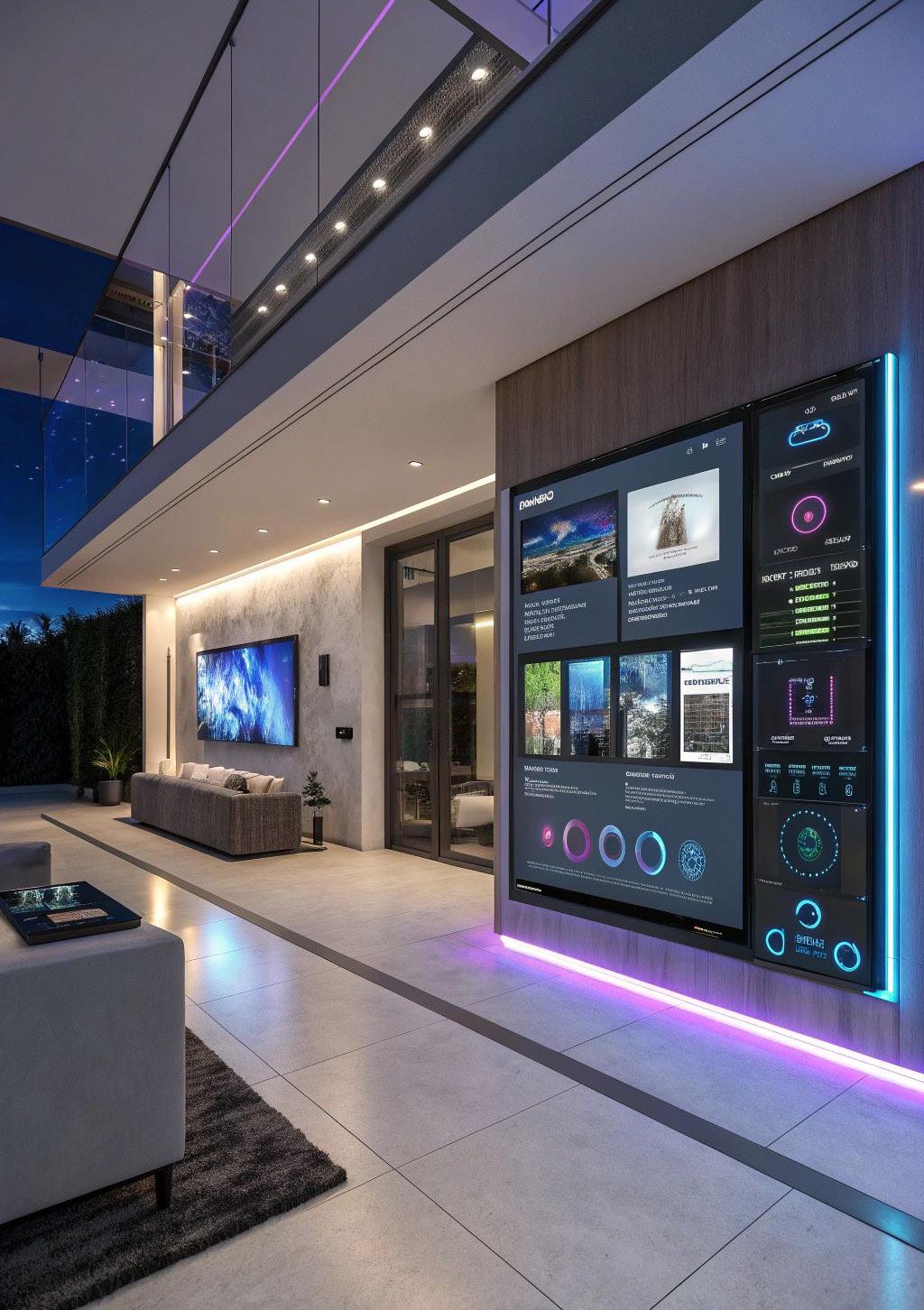

homeowner consistently lowers the blinds in the late afternoon, the home learns this preference and offers it automatically. If weekends demand a different ambience from weekdays, the house adapts without instruction. Over time, the technology becomes almost invisible, working in harmony with daily life.
British homeowners, known for their appreciation of understatement, are particularly drawn to this discreet approach. The most successful tech homes are those where technology is felt rather than seen. Touchscreens are replaced by voice, gesture or predictive systems. Speakers are concealed within architectural features. Servers and control hubs are hidden away, leaving interiors calm, elegant and timeless.
Privacy and security are paramount, especially in a world increasingly conscious of data. In response, luxury tech homes in Britain are shifting away from cloud-reliant systems towards locally hosted solutions. Personal data remains within the property, encrypted and controlled by the homeowner. Biometric access systems, using facial recognition or fingerprint scanning, replace traditional keys, offering both convenience and peace of mind without compromising discretion.
Entertainment has also evolved into something far more tailored. Home cinemas no longer simply replicate the commercial experience. They are calibrated to the owner’s exact visual and acoustic preferences, from colour grading to sound profiles. Music follows occupants seamlessly from room to room, adjusting volume and tone based on activity and mood. For collectors, digital art walls display rotating selections curated to personal taste, transforming living spaces into private galleries.
Wellness has become a defining pillar of hyper-personalised living. British luxury homes are increasingly designed as sanctuaries that actively support physical and mental health. Sleep optimisation systems track rest patterns and adjust bedroom conditions accordingly. Air and water quality are continuously monitored and refined. Bathrooms resemble private spas, with steam, lighting and temperature presets tailored to individual users.
Even kitchens are becoming responsive environments. Appliances suggest recipes based on dietary preferences, nutritional goals and what is available locally and seasonally. For those with household staff, systems can differentiate between users, ensuring that a chef’s workflow differs from a homeowner’s casual breakfast routine. The result is a space that feels intuitive rather than instructional.
The role of the architect and interior designer has expanded significantly in this landscape. Technology is no longer an afterthought but an integral element of the design process from the earliest stages. Collaboration between designers, technologists and clients is essential to ensure that systems enhance rather than disrupt aesthetic vision. In Britain, where heritage properties often meet contemporary lifestyles, this integration requires particular sensitivity. Period townhouses and listed country homes are being quietly transformed with state of the art systems that respect their architectural integrity.
Sustainability, too, is woven into the fabric of hyper-personalised tech homes. Intelligent energy management systems optimise consumption based on occupancy and usage patterns. Solar panels, battery storage and heat pumps are coordinated seamlessly, reducing environmental impact without compromising comfort. For many luxury homeowners, this alignment of responsibility and indulgence is no longer optional but expected.
Perhaps the most compelling aspect of hyper-personalised tech homes is their capacity to evolve. Unlike static luxury features, these systems grow more refined over time. Software updates introduce new capabilities. Learning algorithms deepen their understanding of the household. The home becomes a living entity, shaped continuously by those who inhabit it.
Yet for all its sophistication, the ultimate success of the hyper-personalised tech home lies in restraint. True luxury is never loud. The finest examples are those where technology recedes into the background, allowing life to unfold effortlessly. Guests may sense an atmosphere of ease and refinement without ever noticing the mechanisms behind it.
As Britain’s luxury market continues to mature, hyper-personalised tech homes represent a natural progression. They reflect a desire for homes that do more than impress. They comfort, protect and adapt. They recognise that luxury today is not defined by excess but by relevance.
In an era where time is the most precious commodity, the greatest indulgence may be a home that understands you completely. Quietly, elegantly and without asking.


Curated culinary adventures have become one of the most compelling expressions of contemporary luxury. In a world saturated with choice, true indulgence is no longer defined by abundance but by precision. Dining at the highest level is shifting away from spectacle and status towards experiences shaped around the individual. Food has become a deeply personal journey, designed with the same care and intention as bespoke fashion, private travel or commissioned art.
At the heart of this movement is a rejection of uniformity. The classic fine dining template, with its fixed tasting menus and rehearsed narratives, is increasingly seen as impersonal.
Discerning diners want something more fluid and more reflective of who they are. They want meals that acknowledge their memories, preferences and curiosity. A curated culinary experience does not begin with a menu but with a conversation.
Across the globe, chefs, hosts and gastronomic curators are responding to this desire for intimacy. Whether in a private villa overlooking the Amalfi Coast, a desert lodge in Morocco or a penthouse in New York, dining experiences are designed around the guest rather than the establishment. Menus evolve based on personal taste, cultural background and emotional context. The result is dining that feels considered rather than prescribed.
Technology plays a quiet yet influential role in enabling this level of personalisation. Guest profiles extend far

beyond allergies and dietary restrictions. Preferences for spice, texture, pacing and atmosphere are carefully noted and refined over time. Lighting, music and even tableware are selected to complement the mood of the occasion. Yet the technology remains invisible. The guest experiences seamlessness, not systems.
The growing prominence of private chefs has accelerated this shift. No longer confined to yachts or ultra exclusive residences, private culinary talent is now central to the luxury experience. These chefs operate as collaborators, not performers. They listen before they cook. Menus are shaped through dialogue, allowing meals to feel expressive and alive. The chef becomes a guide, interpreting personal stories through flavour and technique.
Travel has been profoundly influenced by curated culinary thinking. Luxury journeys are increasingly designed around food, but not in the conventional sense of reservations at famous restaurants. Instead, travellers seek immersive encounters that offer access and authenticity. This might involve cooking alongside a local family, sourcing ingredients with artisans or dining in places never intended as restaurants. The experience lies in participation and perspective.
Regions once overlooked are now celebrated for their culinary identity. Curated adventures shine a light on local ecosystems, micro seasons and specialist producers. Guests are invited to slow down and engage with place through taste. In this context, luxury is not about rarity alone but about connection. To understand where food comes from is to understand where one is.
Wine and spirits have undergone a similar evolution. Curated tastings move beyond labels and accolades, focusing instead on personal discovery. Sommeliers design
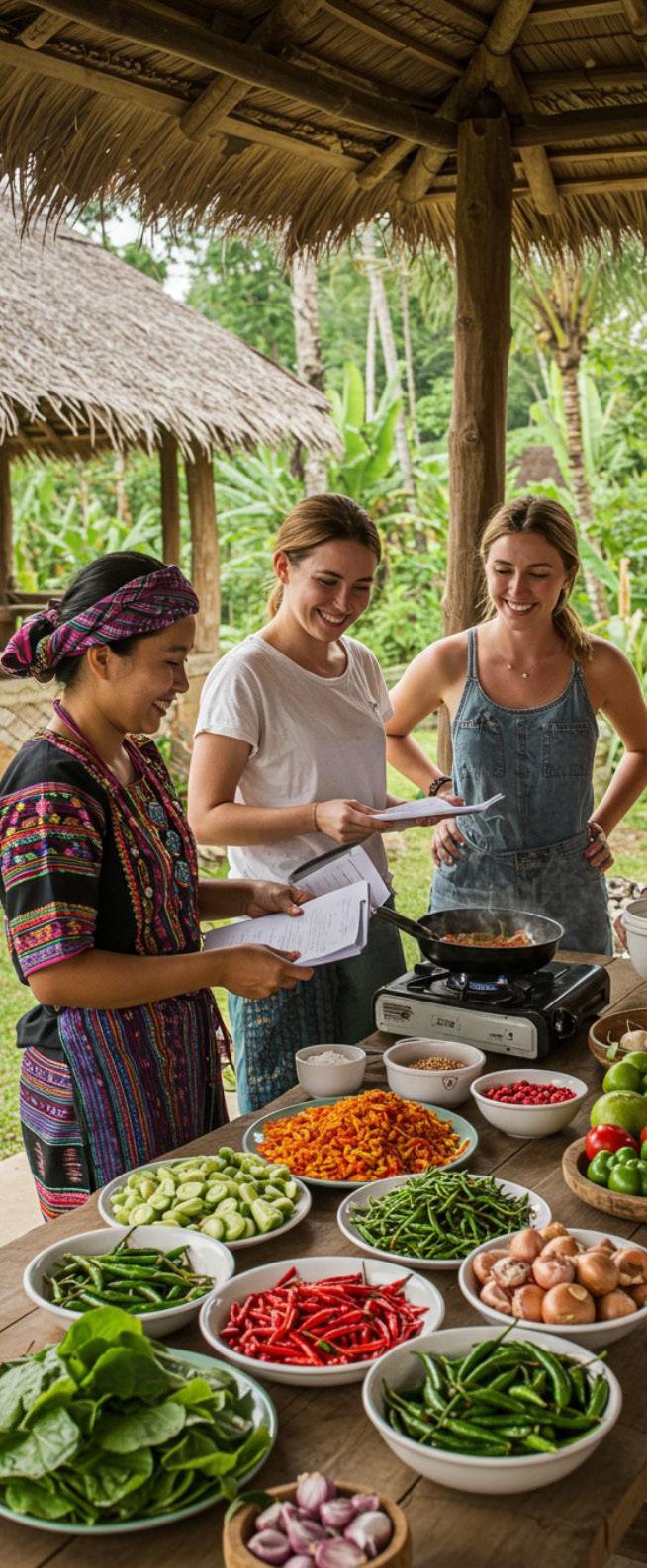

journeys based on emotional response as much as technical appreciation. A guest might explore wines linked to formative travels or spirits that mirror their character. Education becomes conversational, layered with storytelling rather than instruction.
Wellbeing has also become integral to the curated culinary landscape. Bespoke nutrition is no longer presented as restrictive or clinical. Instead, it is woven into experiences that celebrate pleasure and vitality. Menus consider energy levels, health goals and lifestyle rhythms without sacrificing indulgence. Ingredients are chosen not only for flavour but for how they make guests feel. Balance becomes a form of luxury.
For hosts, curated culinary experiences offer a powerful way to create meaningful moments. Entertaining is no longer about scale or extravagance but about insight. Guests feel seen and understood. A meal becomes a shared experience crafted with intention, leaving a lasting impression that extends beyond the table. The memory of being considered often lingers longer than the taste itself.
Sustainability is another defining element of this movement. Curated dining naturally favours mindful sourcing and reduced waste. When menus are designed for specific people at specific moments, excess falls away. This approach reflects a broader shift in luxury towards responsibility without compromise. Care for the environment becomes an extension of care for the guest.
The future of curated culinary adventures lies in their ability to adapt. Experiences are becoming increasingly responsive, evolving in real time based on conversation, mood or even weather. Courses may change mid meal. Settings may shift as daylight fades. Chefs act less as auteurs and more as interpreters, guiding rather than dictating. Dining becomes a living exchange.
Globally, luxury is moving towards experiences that feel human, nuanced and emotionally resonant. Curated culinary experiences embody this evolution. They move away from performance and towards presence. They celebrate craftsmanship while prioritising connection. In doing so, they redefine what it means to dine well.
Ultimately, curated culinary adventures are not about redefining food but about redefining attention. They remind us that the most memorable meals are those that make us feel recognised. In thoughtful pacing, meaningful conversation and carefully chosen ingredients, diners find something far richer than indulgence. They find intimacy, curiosity and pleasure shaped precisely to them.
As this movement continues to gather momentum, one truth becomes clear. The future of luxury dining is not louder or more elaborate. It is quieter, more attentive and deeply personal. At a table set with intention, the greatest luxury is not what is served, but how it is made to matter.
Immersive art experiences have emerged as one of the most captivating expressions of contemporary luxury. In a world saturated with visual stimuli, true cultural indulgence is no longer defined by the act of observation alone but by full sensory engagement. Experiencing art has shifted from passive admiration to active participation, where viewers become part of the narrative. Art has become a deeply personal journey, designed with the same care and intention as bespoke travel, private collections or curated culinary adventures.
At the heart of this movement is a rejection of traditional boundaries. The classic gallery or museum, with its quiet
rooms and fixed displays, is increasingly seen as limiting. Discerning audiences want something more dynamic and reflective of individual perception. They want experiences that acknowledge their emotions, memories and imagination. Immersive art experiences do not begin with a frame on a wall but with an environment that responds to the visitor.
Across the globe, artists, curators and experience designers are responding to this desire for intimacy. Whether in a converted warehouse in Berlin, a historic palace in Venice or a modern pavilion in Tokyo, exhibitions are being designed around the participant rather than the artwork alone. Installations evolve based on light, movement and sound, allowing each visitor to encounter the art in a unique and personal way. The result is engagement that feels considered rather than prescribed.
Technology plays a subtle yet pivotal role in enabling this level of immersion. Motion sensors, projection mapping, spatial audio and interactive elements respond to the presence, gestures and choices of visitors. Yet the technology remains invisible. The audience experiences wonder, not engineering. Every element is orchestrated to feel effortless, as if the space itself is alive.
The rise of site-specific commissions has accelerated this trend. Artists no longer create for static walls but for dynamic environments that interact with their viewers. They operate as collaborators with space, sound and technology, designing experiences that unfold differently depending on who enters. The audience is no longer a spectator but an integral component of the work.
Travel and location have been transformed by immersive art thinking. Luxury cultural journeys are increasingly designed around participatory experiences rather than traditional museum visits. This might involve exploring an abandoned theatre repurposed for projection installations, walking through a forest illuminated by interactive light sculptures, or entering a historic hall transformed by sound and scent. The focus is on total engagement and emotional resonance.
Regions once overlooked are now celebrated for their creative potential. Immersive exhibitions shine a light on local artists, traditions and landscapes. Visitors are invited to slow down, to feel and interpret the environment through art. In this context, luxury is not about rarity alone but about emotional connection. To engage fully is to understand a place, its history and its spirit.


Art collections and private commissions have also adapted to immersive principles. Patrons increasingly seek works that are responsive and multi-sensory, designed to integrate into private spaces, galleries or estates. Installations may react to light, temperature or motion, creating a personalised dialogue between viewer and creation. Collecting art is no longer only about possession but about interaction and experience.
Wellbeing has found its place in immersive art as well. Experiences are designed to evoke calm, reflection or exhilaration, depending on the intention. Lighting, sound and texture are carefully curated to influence mood, energy and perception. In a world that increasingly values mindfulness, these experiences offer a rare combination of sensory delight and restorative effect.
For hosts, immersive art offers a new way to entertain and engage. Traditional soirées are being replaced by private exhibitions or interactive installations. Guests do not simply witness creativity but participate in it, creating a lasting impression through shared experience. Luxury is measured in thoughtfulness, curation and emotional impact rather than spectacle.
Sustainability is an emerging consideration in immersive art. Designers are mindful of materials, energy use and environmental impact, ensuring that experiences do not come at the cost of the planet. Just as with curated culinary adventures, careful planning reduces waste and reinforces a sense of responsibility without compromising creativity.
The future of immersive art lies in its adaptability. Experiences are increasingly responsive, evolving in real time based on visitor interaction, weather or even sound within the space. Exhibitions become living ecosystems, shifting and reacting to the audience. Artists act as facilitators rather than dictators, guiding experiences while leaving room for personal interpretation. Art becomes participatory dialogue rather than fixed display.
Globally, luxury is moving towards experiences that feel human, nuanced and emotionally resonant. Immersive art embodies this evolution. It moves away from passive observation and towards presence. It celebrates creativity while prioritising connection and individuality. In doing so, it redefines what it means to encounter art.
Ultimately, immersive art experiences are not about redefining creation but about redefining attention. They remind us that the most memorable encounters are those that make us feel recognised and engaged. Through interactive design, sensory layering and narrative depth, audiences discover something far richer than aesthetics alone. They find wonder, reflection and a sense of belonging shaped precisely to them.
As this movement continues to grow, one truth becomes clear. The future of luxury cultural engagement is not louder or more extravagant. It is quieter, more attentive and deeply personal. In spaces designed with intention, the greatest indulgence is not what is displayed but how it makes one feel within it.