BETTER OR NOTHING: HOW BLACK SHEEP COFFEE CHALLENGED THE STATUS QUO
BETTER OR NOTHING: HOW BLACK SHEEP COFFEE CHALLENGED THE STATUS QUO
BBLACK SHEEP COFFEE PROJECT DIRECTED BY:
STEPHEN VIVIAN

lack Sheep Coffee did not emerge because the market was waiting for a new name. It arrived because two founders were prepared to build something anyway, even if that meant starting with little more than a trestle table, a rented espresso machine and an untested belief that coffee could be done better.
Gabriel Shohet, Co-founder and Coowner of Black Sheep Coffee, traces the beginnings of the business back to a friendship formed at university. He and Eirik Holth, his Co-founder and Co-owner, were roommates before their careers took them in different directions. Years later,
they made a decisive move in parallel, quitting their jobs on the same day, relocating to London and committing their personal savings to a venture that had more conviction than clarity. With roughly £20,000 between them and no background in hospitality, they began serving coffee wherever they could, learning publicly and often painfully.
Those early years were defined by effort rather than polish. Shohet recalls hauling equipment to markets across London, setting up pop-ups at Brick Lane and elsewhere, and discovering quickly that selling coffee was no simpler than any other business. The learning curve was
BLACK SHEEP COFFEE
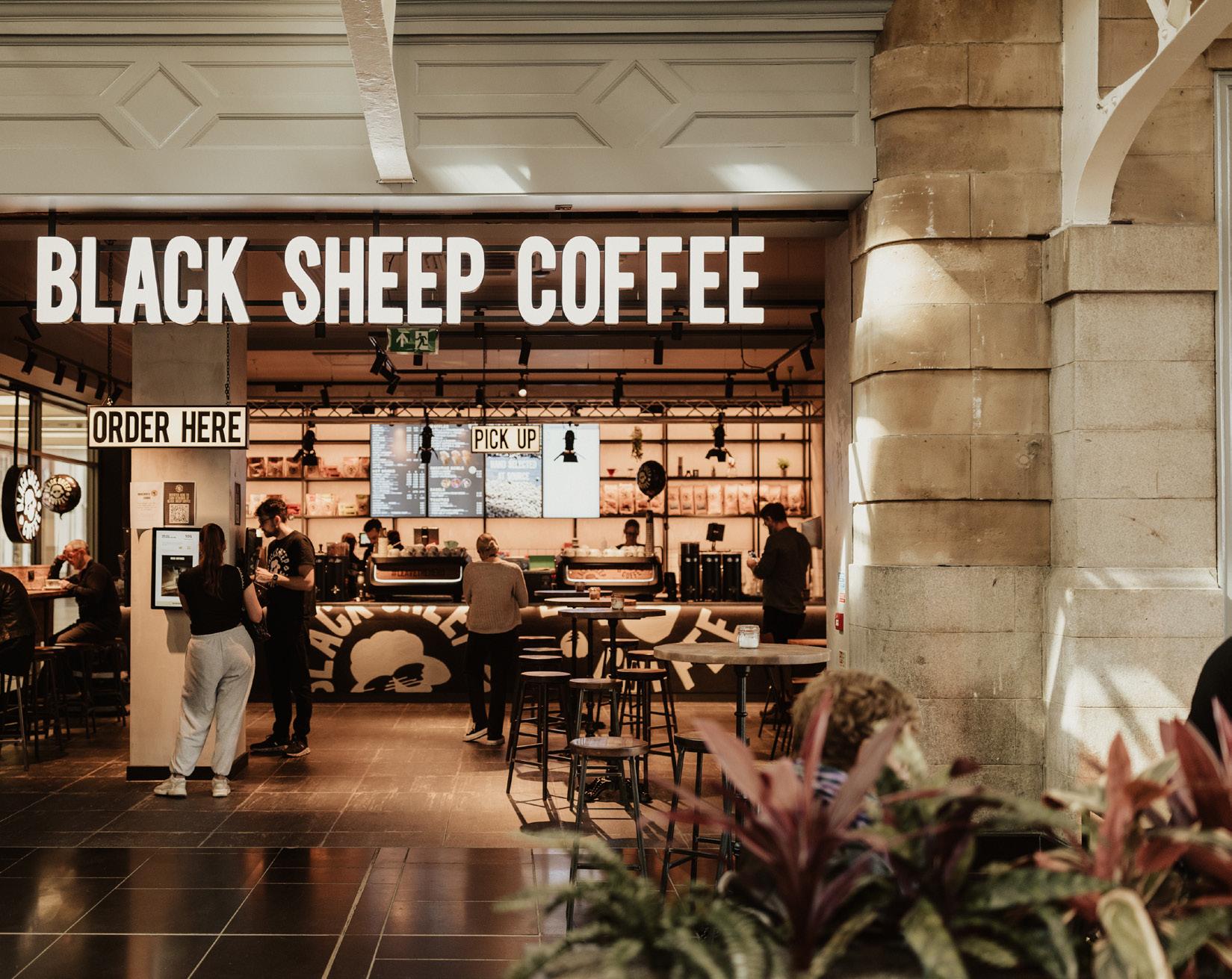
steep, but it was direct. When the opportunity finally arose to open a permanent site, the lack of capital shaped the business in ways that would later prove foundational. Without the budget for contractors, Shohet and Holth taught themselves basic plumbing and electrics, building much of the shop by hand. Timber salvaged from discarded pallets became counters and signage, not as a design statement, but because it was available.
That aesthetic, born entirely out of necessity, stayed. What began as a constraint evolved into a recognisable visual language that still defines Black Sheep Coffee today. The uneven textures and exposed materials tell a story that was never manufactured. They simply remained because they felt honest.
More than a decade later, Black Sheep Coffee has grown into the fourth largest coffee company in the UK and is expanding faster than any of its peers. The business is currently opening around 1.2 shops per week, a pace that
BLACK SHEEP COFFEE
&
reflects both operational discipline and a deep belief in the brand’s proposition. Yet Shohet is careful to avoid romanticising growth. In his view, coffee is not a market that leaves room open for newcomers. It is mature, saturated and unforgiving.
“There is no space,” he says. “You have to make your own space.”
That philosophy has shaped Black Sheep from the outset. Rather than avoiding competition, the brand has consistently placed itself alongside it. Stores have been opened directly next door to major incumbents, not as provocation, but as proof of confidence. The strategy is blunt. If the coffee is better, the service faster and the experience stronger, customers will choose accordingly. Shohet speaks about competition without euphemism, describing market share as something to be taken, not gifted. This clarity extends to how Black Sheep defines quality. For Shohet, everything begins with the bean. He travels regularly to coffee-producing regions, sourcing beans from across Ethiopia,
Brazil, Colombia and Papua New Guinea, selecting what he believes to be the best available each year. It is not a marketing flourish, but a fixed principle. “Everything starts with the beans,” he says. “If it is not the best coffee in the world, you have already lost before you start opening shops.”
That uncompromising approach has also shaped the company’s stance on ethical sourcing. Rather than treating sustainability as a separate pillar, Black Sheep views it as inseparable from quality. Shohet argues that specialty-grade coffee inherently demands higher standards, from fair wages to better working conditions, and that many ethical failures occur further down the quality spectrum, where pressure to reduce costs outweighs responsibility. By focusing exclusively on top-tier beans, the business believes it avoids many of the compromises embedded elsewhere in the supply chain.
The brand’s challenger identity became most visible when Black Sheep questioned one of the industry’s most established assumptions: that 100
percent Arabica automatically signals quality. Against decades of conventional marketing, the company launched Robusta Revival, built entirely around specialty-grade Robusta beans. The move was widely seen as contrarian, but Shohet insists it was driven by conviction rather than rebellion. “If you see everybody doing something and it does not make sense to you, do something different,” he says.
This refusal to follow convention has never been about novelty for its own sake. Shohet is equally clear about the limits of innovation, particularly when it comes to technology. Black Sheep has earned a reputation for being digitally savvy, from early adoption of self-ordering screens to seamless app integration, but Shohet is wary of businesses that allow technology to become the product. “The second you think you are a tech company, you have lost the plot,” he says. “We want to be the best at coffee. Technology is a means to an end, not the goal itself.”
That balance has become increasingly important as coffee culture has shifted. Shohet believes the pandemic accelerated a change that was already underway,
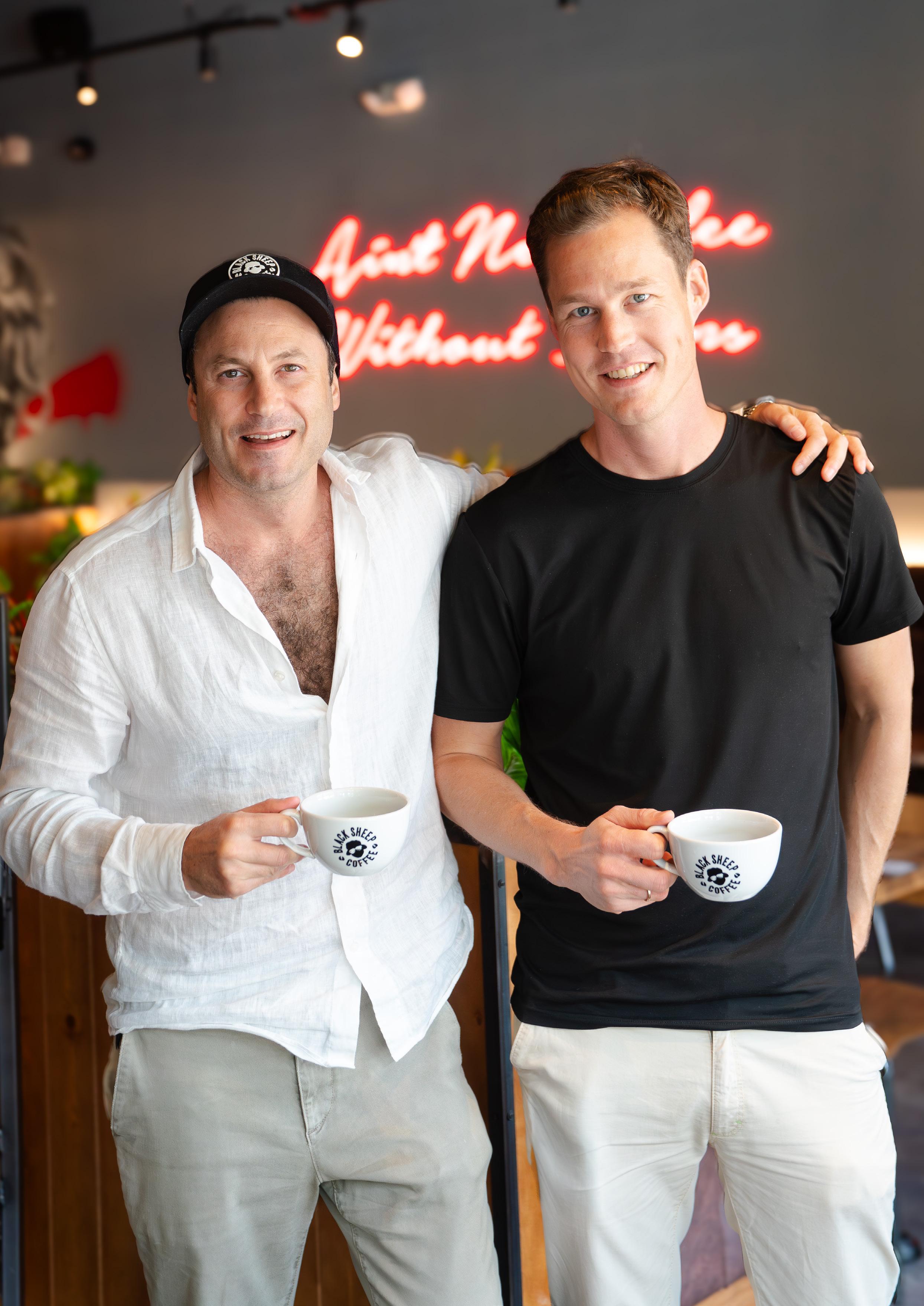
Co-founders and Co-owners of Black Sheep Coffee, Gabriel Shohet, left, and Eirik Holth.
BLACK SHEEP COFFEE
How a single restaurant operations platform helped Black Sheep Coffee scale without complexity
For fast-growing restaurant brands, the biggest threat isn’t competition. It’s the invisible drag of disconnected systems slowing down growth.
As Black Sheep Coffee scaled from 35 sites to 80, with over 100 in sight, operational friction became impossible to ignore. Different suppliers powered menus, ordering, loyalty and reporting across separate platforms. Teams spent time keeping systems aligned instead of focusing on growth.
This fragmentation created risk. Every new site added complexity. Loyalty redemptions required manual work. Launching new ideas slowed because systems and developers couldn’t work together. For a brand built on doing things differently, the technology stack was holding it back.
Black Sheep Coffee made the strategic decision to consolidate its digital operations. Prioritising a scalable foundation that could support every channel, roll out quickly across markets and remove the need for custom development.

One unified restaurant operations platform to help growing brands
• Open new sites
• Maintain control
• Optimise performance
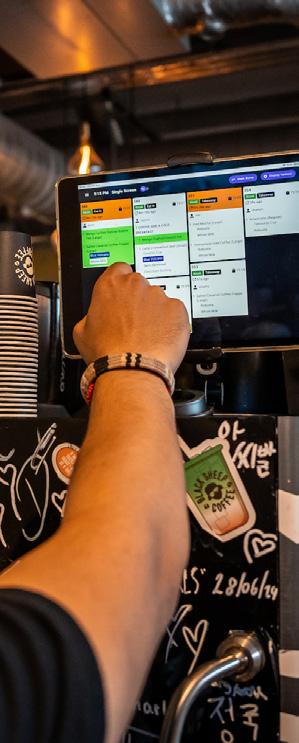

By replacing five disconnected suppliers with Vita Mojo’s unified operations platform, Black Sheep Coffee brought ordering, menus, loyalty, data and reporting into a single system. This removed fragmentation and enabled faster, repeatable execution across sites.
As a result:
• 85% of all sales are now digital, with Kiosks handling the majority.
• Year-to-date like-for-like growth reached 26.5% in transactions and 22.9% in net sales.
• Digital channels increased share of sales by over 2% year-on-year, through smart upsells and basket recommendations.
• Hundreds of hours saved each year through centralised menu management and integrated delivery partner menus.
Daily performance data now informs launches, seasonal planning and site-level optimisation.
With one connected platform, Black Sheep Coffee has made growth simpler, more consistent and repeatable, creating conditions to move fast into its next phase.
BLACK SHEEP COFFEE
transforming coffee from a functional purchase into an experiential ritual. Time spent in coffee shops gained new significance, and customer expectations rose accordingly. Presentation, atmosphere and consistency now carry as much weight as speed of service.
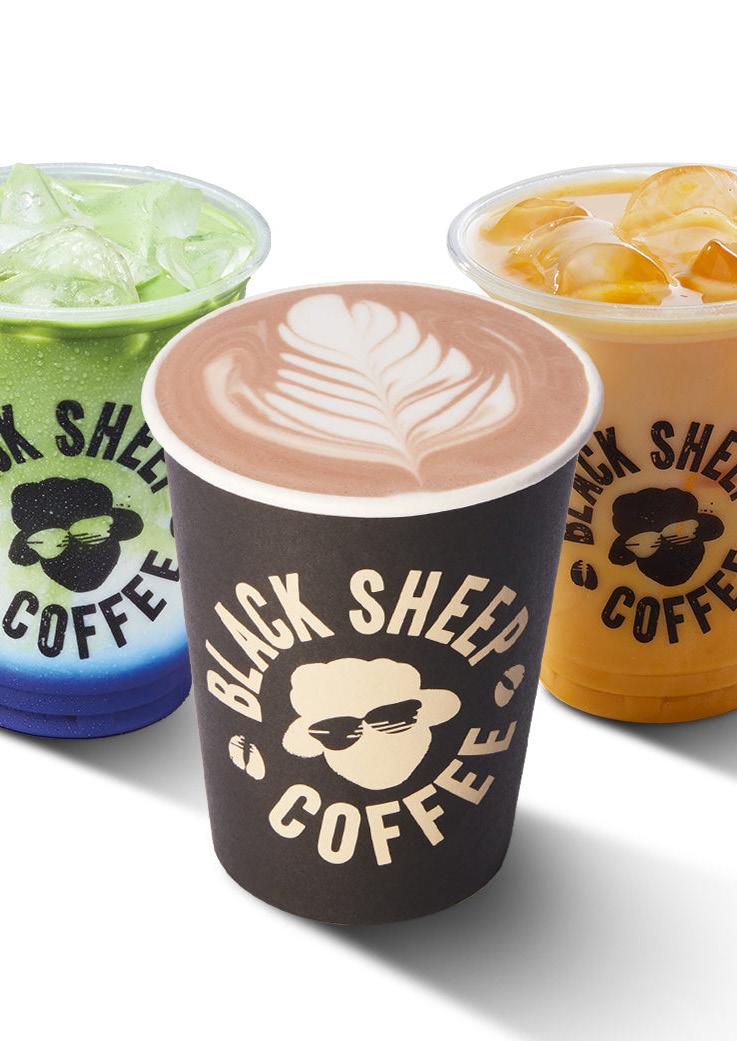
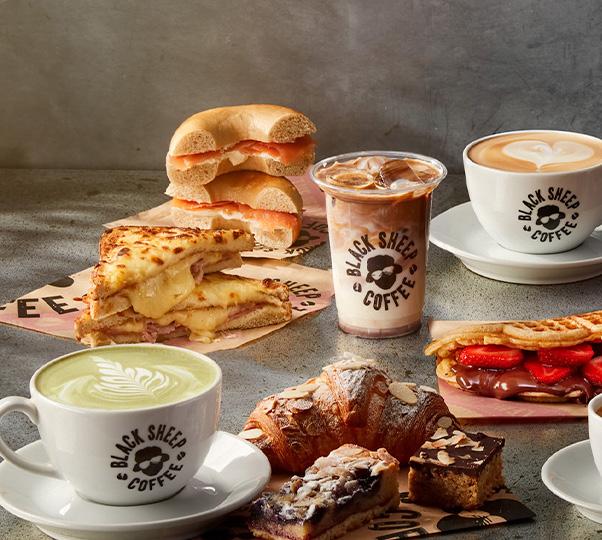
Black Sheep’s approach to trends reflects this perspective. Rather than chasing every new idea, the business focuses on identifying shifts early and executing them properly. Matcha is a case in point. While competitors treated it as a limited addon, Black Sheep invested in ceremonialgrade matcha from Japan and developed a full range of drinks, turning it into a meaningful category rather than a novelty. The result was not only cultural relevance but commercial impact.
As the business has scaled, maintaining its original energy has relied less on process and more on people. Shohet credits the longevity of the core team for preserving authenticity. Many employees who joined during the early years remain with the company, carrying institutional memory and reinforcing standards organically.
Brand identity, in this sense, is lived rather than documented.
Growth has also required decisiveness. During the pandemic, while much of the sector paused expansion plans, Black Sheep moved quickly. Prime locations that rarely became available entered the market as competitors closed and landlords sought stability. The company signed aggressively, securing leases even when it lacked the immediate capital to develop them all. The calculation was simple. Location would matter more in the long term than short-term comfort.
Customer feedback has become the primary checkpoint for expansion. Shohet describes a disciplined focus on review data across platforms, using sentiment as a real-time indicator of brand health. As long as customer experience continues to improve, growth remains justified. If it were to falter, the business would reassess. Underlying all of this is a structural decision that sets Black Sheep apart from most brands of comparable scale. The company has never taken private equity or venture capital investment. Shohet and Holth
remain in full control, funding growth through customers rather than institutions. “We do not have anyone to answer to but our customers,” Shohet says. Without external timelines or exit pressure, the business can prioritise long-term brand integrity over short-term optimisation.
That independence also shapes Black Sheep’s approach to sustainability, an area Shohet believes is saturated with exaggerated claims. The company avoids language it cannot verify and initiatives it cannot personally stand behind. “People
know when you are full of it,” he says. “We only focus on claims that are real, and that we can back up.”
One example is the company’s suspended coffee scheme for people experiencing homelessness. Customers can purchase an extra drink at a reduced price, which can be redeemed directly by someone in need. There are no intermediaries or opaque structures. Shohet emphasises dignity over publicity, describing the importance of recognition and choice. “I can look people in the eye and explain exactly how it works,” he says. “There is no fluff.”
BLACK SHEEP COFFEE
When asked about the future of coffee culture, Shohet avoids prediction. He expresses optimism, but resists the temptation to position Black Sheep as a company with all the answers. Advice, he suggests, is premature while the business is still being built. What he does offer is perspective. Focus on product. Believe in what you are selling. Use it yourself. “I drink Black Sheep every day,” he says. It is not framed as loyalty, but as alignment.
Black Sheep Coffee’s story is not one of finding opportunities where none
existed. It is a story of conviction, persistence and refusal to compromise on fundamentals. Built by Gabriel Shohet and Eirik Holth from salvaged timber and borrowed equipment, it has grown into a brand that competes openly with global giants while retaining a clear sense of self. In a market crowded with claims, Black Sheep’s success suggests that honesty, when consistently applied, still has power.
www.blacksheepcoffee.co.uk