INSIDE THE BLUMBERG INSTITUTE: DETERMINED TO
CURE THE INCURABLE


S. BLUMBERG INSTITUTE
PROJECT
DIRECTED BY: VERITY KAY

Some scientific missions arrive quietly and then never let go. They take root in the daily rhythm of a laboratory, in the conversations between researchers, in the decisions made behind closed doors. Over time they become part of the identity of a place. At the Baruch S. Blumberg Institute, the ambition to cure Hepatitis B is one of those missions. It is patient, determined and deeply human, carried by people who believe that even the most difficult diseases can be overcome when the right science, leadership and community come together.
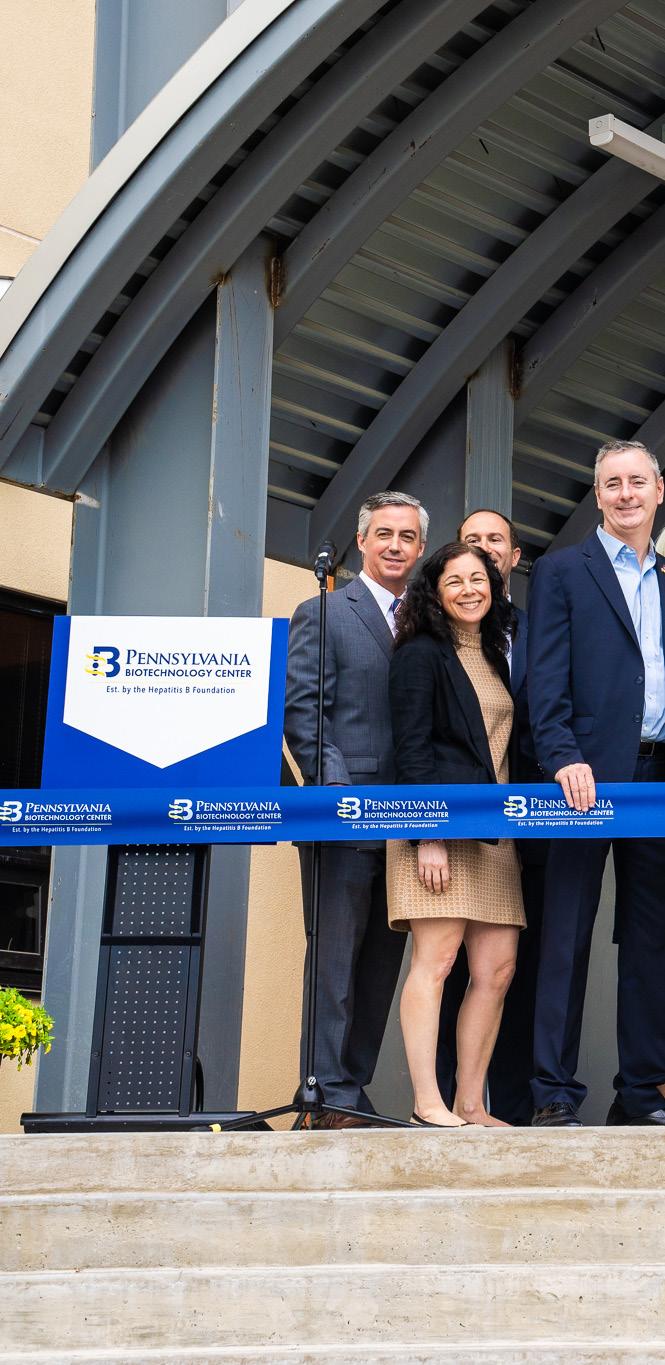
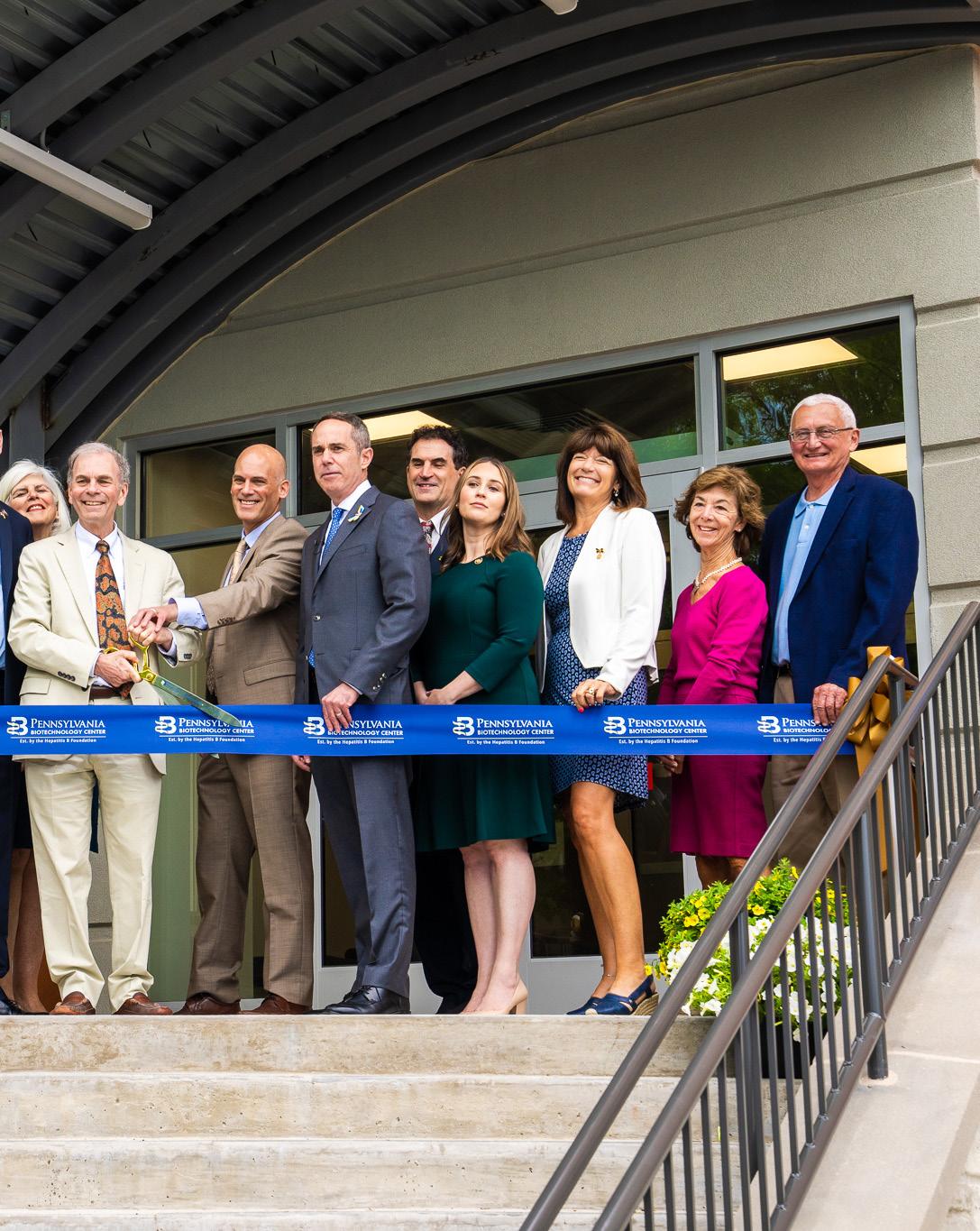
Robert Christmas, Chief Operating Officer of the Hepatitis B Foundation, the Blumberg Institute and the Pennsylvania Biotechnology Center (PABC), speaks about this mission with a grounded sense of purpose. His world spans advocacy, research and a thriving incubator of early stage biotech companies. It is a complex ecosystem, but one shaped by a shared intention to push science forward in ways that genuinely matter.
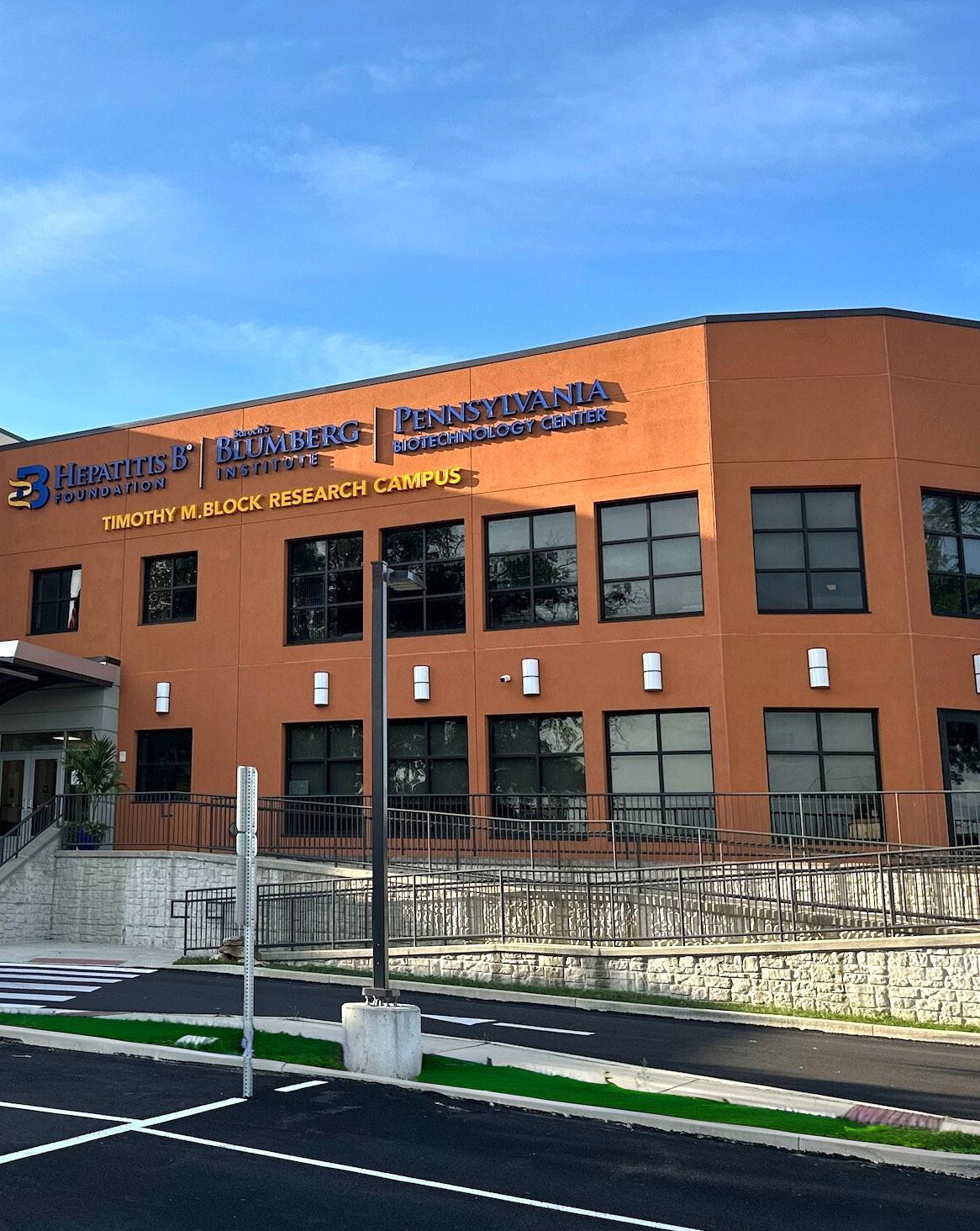
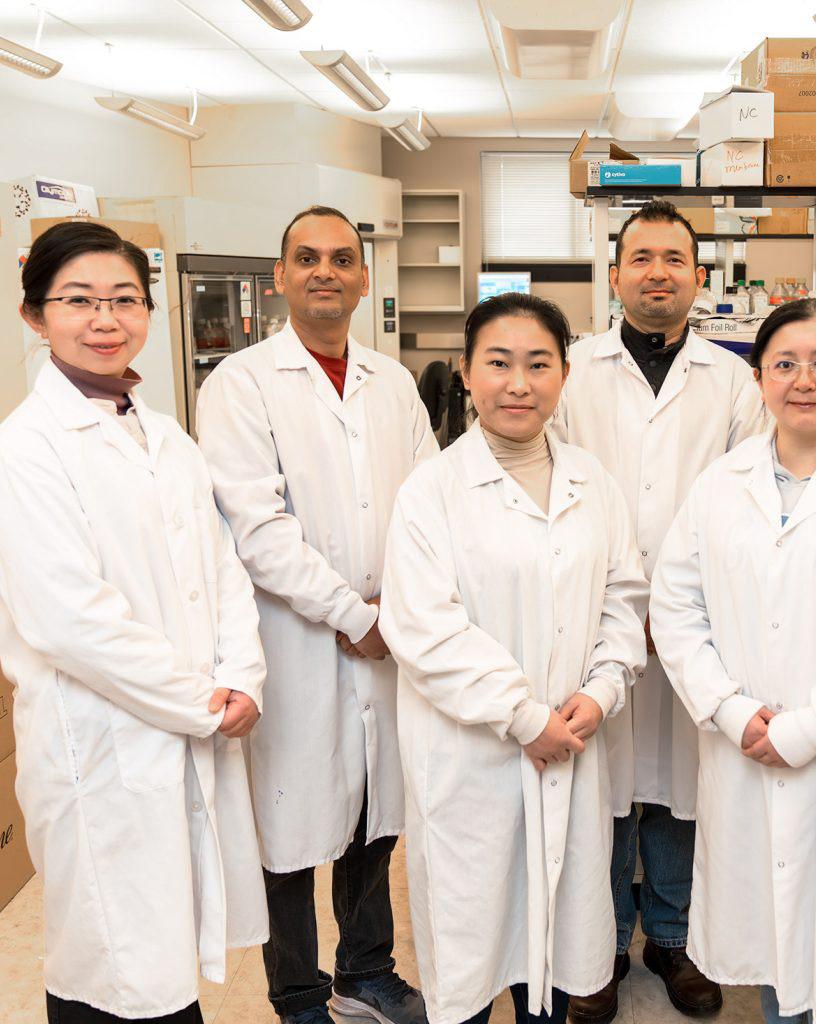
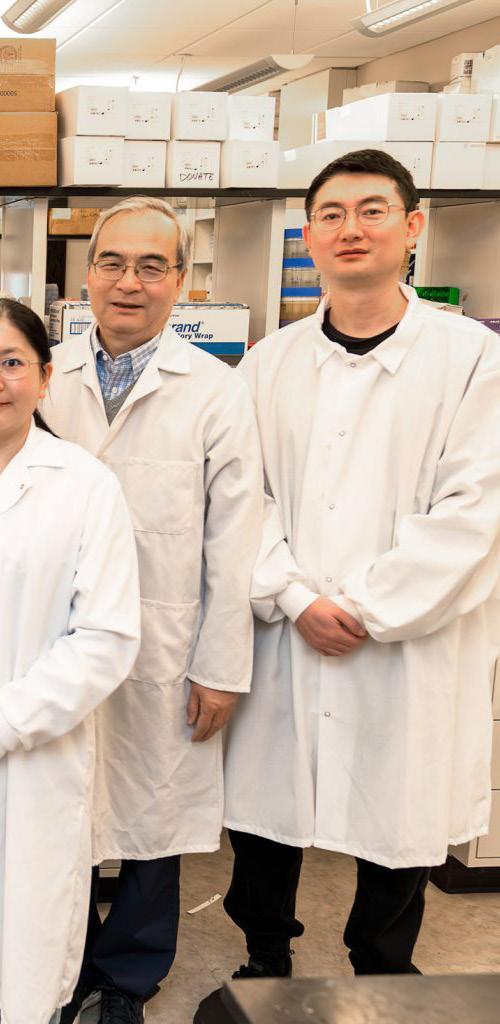
For Robert, the journey begins with clarity about who does what. The Hepatitis B Foundation raises global awareness and supports people living with the disease. The Blumberg Institute leads the scientific work, including antiviral research, immune based approaches, and studies in areas such as yellow fever and liver cancer. Alongside them, the PABC houses nearly 60 independent companies pursuing their own breakthroughs. These organisations are interconnected and their collective strength gives the mission its momentum.
Curing Hepatitis B is one of the most challenging goals in modern virology. The virus has an extraordinary ability to hide in the body, resisting attempts to eliminate it entirely. Yet despite the difficulty, Robert carries a steady confidence that progress is possible. It comes not from wishful thinking, but from the calibre of the science taking place inside the organisation. “We have world class scientists with incredible momentum,” he says. It is a simple statement, but it captures the belief that guides everything that follows.

Success in life sciences requires more than technical expertise. It demands a trusted partner who understands your world. At Withum, we work alongside you to navigate the complexities of this fast-paced industry, allowing you to focus on the science, while we take care of everything else.
Our team brings deep industry insight and a collaborative approach to every engagement. We help you anticipate challenges, strengthen investor confidence and build a foundation for sustainable success. Whether you’re navigating milestone-based revenue, managing grants or preparing for funding rounds, we’re here to guide you every step of the way.
Withum is not just a service provider. We are an extension of your team, delivering advisory, tax and accounting expertise that supports your long-term goals.
Explore our comprehensive solutions designed for life sciences companies:
• Accounting & Audit
• Tax Compliance & Strategy
• Outsourced Accounting
• Cybersecurity
• M&A
• Valuation Advisory
• and more!
Add Withum to your equation.

Your mission is breakthroughs that change lives. Ours is assisting you in building investor confidence through strategic guidance, robust financial reporting, tax compliance and collaborative solutions that support life sciences companies from startup to IPO and beyond. Add Withum to your equation.


Robert Christmas, Chief Operating Officer of the Hepatitis B Foundation, the Blumberg Institute and the Pennsylvania Biotechnology Center (PABC)
Supporting those scientists requires more than curiosity and ambition. It requires a foundation of operational excellence that allows research to move without friction. Robert speaks often about what it means to remove obstacles rather than create them. His job is to ensure that the laboratories have the equipment they need, that facilities run smoothly, that the right people are hired at the right time,
and that the scientists who are driving discovery never lack the tools to do their best work.
Much of this comes down to systems that keep a complex organisation aligned. With dozens of projects unfolding at once, structure becomes essential. Robert has brought in digital platforms, such as Monday, to manage everything from equipment issues to multi team coordination. He describes these tools with genuine enthusiasm, not because they are remarkable pieces of technology but because they protect the time and focus of the people doing the scientific work. “Staying organised is a massive challenge and Monday has been game changing for us,” he explains. That sentence, spoken plainly, reflects how carefully operations must be built so that progress happens.
The Institute’s work does not happen in isolation. Collaboration sits at the heart of its model. Funding for early stage research is unpredictable and often undervalued, especially when the science does not yet promise immediate commercial returns. To address this, the Institute partners with research and academic institutions including the Wistar Institute and major research universities across Pennsylvania. These relationships allow teams to share knowledge, resources and early findings, creating an environment where foundational research can move forward even before it becomes attractive to industry. The goal is not only to explore new ideas but to ensure that promising discoveries are nurtured long enough to demonstrate their potential.
The transition from laboratory discovery to real-world impact is one of the most difficult phases in biomedical research. Many breakthroughs fail long before reaching patients because the commercial pathway is unclear. Robert approaches this challenge with a blend of realism and resolve. He recently hired an entrepreneur in residence to help teams evaluate whether a scientific concept can ultimately make it into the hands of people who need it. “You have to
understand the target product profile and who would eventually buy it,” he says. It is not a sentiment often heard in research environments, but it is essential to ensuring that science does not stall once it leaves the laboratory.
Throughout our conversation, Robert speaks with a quiet conviction about the human impact of the Institute’s work. Scientists rarely meet the people whose lives may one day depend on their efforts, yet the mission remains grounded in empathy. He reflects on this openly. “You have to remind yourself who we are doing this for,” he says. It is a guiding principle rather than a slogan. Decisions are weighed not only on scientific merit but on the difference they could eventually make to those living with the disease.
Leadership in this environment requires patience and humility. Robert describes his own approach as one built around clarity, consistency and respect. He listens closely to the scientists and encourages them to explain their work in simple terms so that operational decisions can be made with understanding rather than assumption. “Tell me what you need,” he often says to teams. It is an expression of service as much as leadership, reflecting his belief that his role exists to support their expertise, not to direct it.
Innovation brings uncertainty, and uncertainty requires resilience. The Institute navigates this by maintaining strong oversight while still giving researchers freedom to explore new ideas. One example of this balance is a new platform called BioLaunch 360. It is designed to support early stage companies that often lose valuable time figuring out where to find resources or how to structure their operational processes. By giving them a single, reliable place to access guidance and tools, the Institute is helping to accelerate their progress and reduce the friction that so often holds young scientific ventures back.
Perhaps the most distinctive part of the PABC is the sense of community that runs through it. Many research campuses
operate like traditional real estate, providing space but little else. Here the dynamic is different. Teams help each other, share insights and offer support when experiments fail. Robert describes it vividly when he says, “The scientists want to help each other. It is never a selfish endeavour.” That environment is powerful. It fuels resilience, encourages creativity and reduces the sense of isolation that often accompanies scientific setbacks.
Looking to the future, Robert’s vision of success is both ambitious and grounded. He wants to see more breakthroughs, more partnerships and more impact for patients. He wants the organisation to become a recognised force nationally, not for prestige but to attract the resources and talent needed to advance its mission. He speaks about expanding into new states, strengthening the organisation’s presence within Pennsylvania and raising the profile of a region that is often overlooked in discussions about major research hubs. The goal is to ensure that the scientists who work there receive the recognition they deserve and that their discoveries are fully realised.
The work of the Baruch S. Blumberg Institute is not defined by dramatic moments. It is defined by persistence, collaboration and the belief that cures are not miracles but outcomes of disciplined effort sustained over time. It is defined by people who care about strangers they may never meet, by leaders who understand that progress requires both structure and compassion, and by a community that sees science not as competition but as collective purpose.
Science here is not loud. It is steady. It is focused. It is hopeful. And in that hope lies the possibility of changing countless lives.
www.blumberginstitute.org