ವೀಜ್ ಕೊಂಕಣಿ 438, ವೀಜ್ ಕನ್ನಡ & Veez English Weeklies
Council of Western India
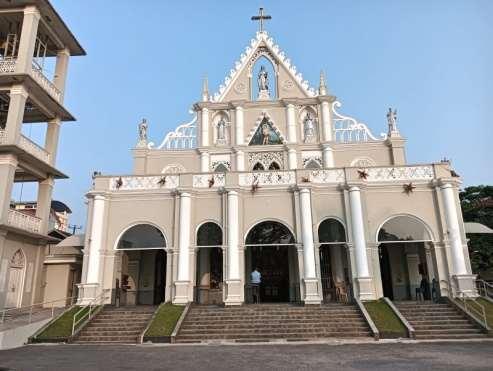
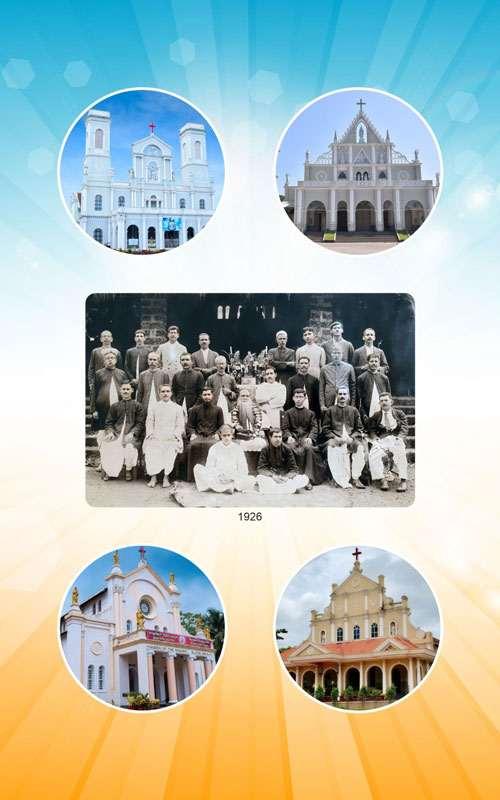
BendurParish
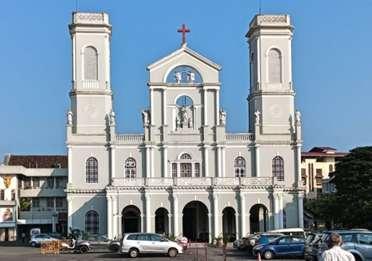
MilagresParish
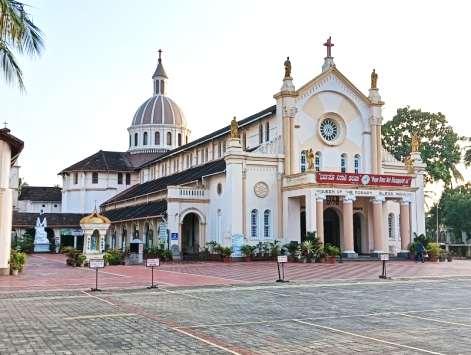
RosarioParish
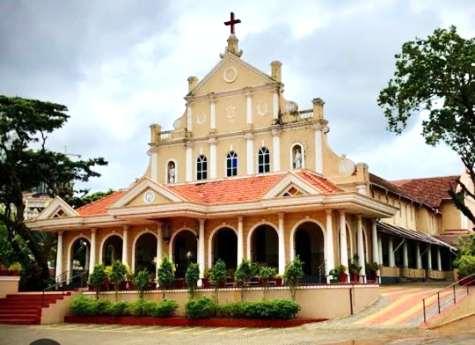
BejaiParish
Name: Society of St Vincent De Paul Centennial Account
Bank : Union Bank of India
Branch: Kankanady,Mangalore
Account No: 007822010005694
IFSC Code: UBIN0900788
PÀgÀÄAPï: 8050309425
1) Society of St Vincent De Paul Diamond Jubilee Account.
Bank: The MCC Bank Ltd., Hampankatta,Mangalore
IFSC Code: IBKL0078MCC
Account No: 002010100029662
2) Society of St Vincent De Paul Kidney Care Account
Bank: The MCC Bank Ltd., Hampankatta,Mangalore.
Account No.: 002010100029860
IFSC Code:IBKL0078MCC
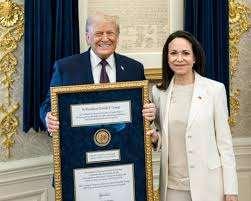
Trump Has Machado's Nobel Prize, but Neither Got What They Really WantedThe New York Times
2.ಗಿೇತ್(3)
"Religion is like the peel of a banana, butspiritualityis like the banana"
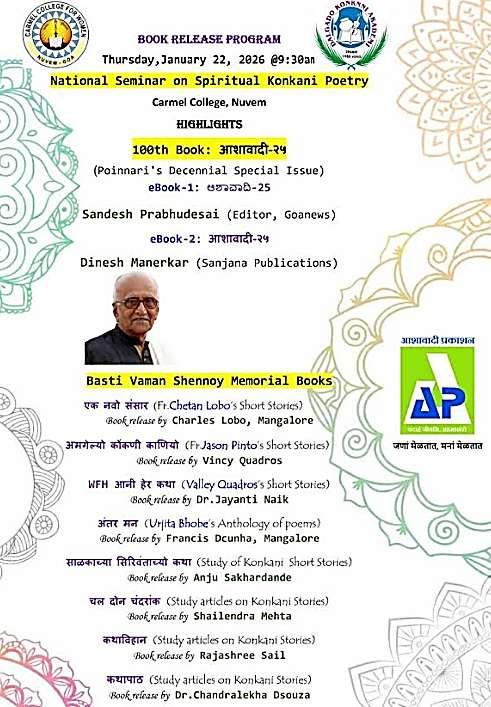
National Seminar on Spiritual Poetry in Konkani
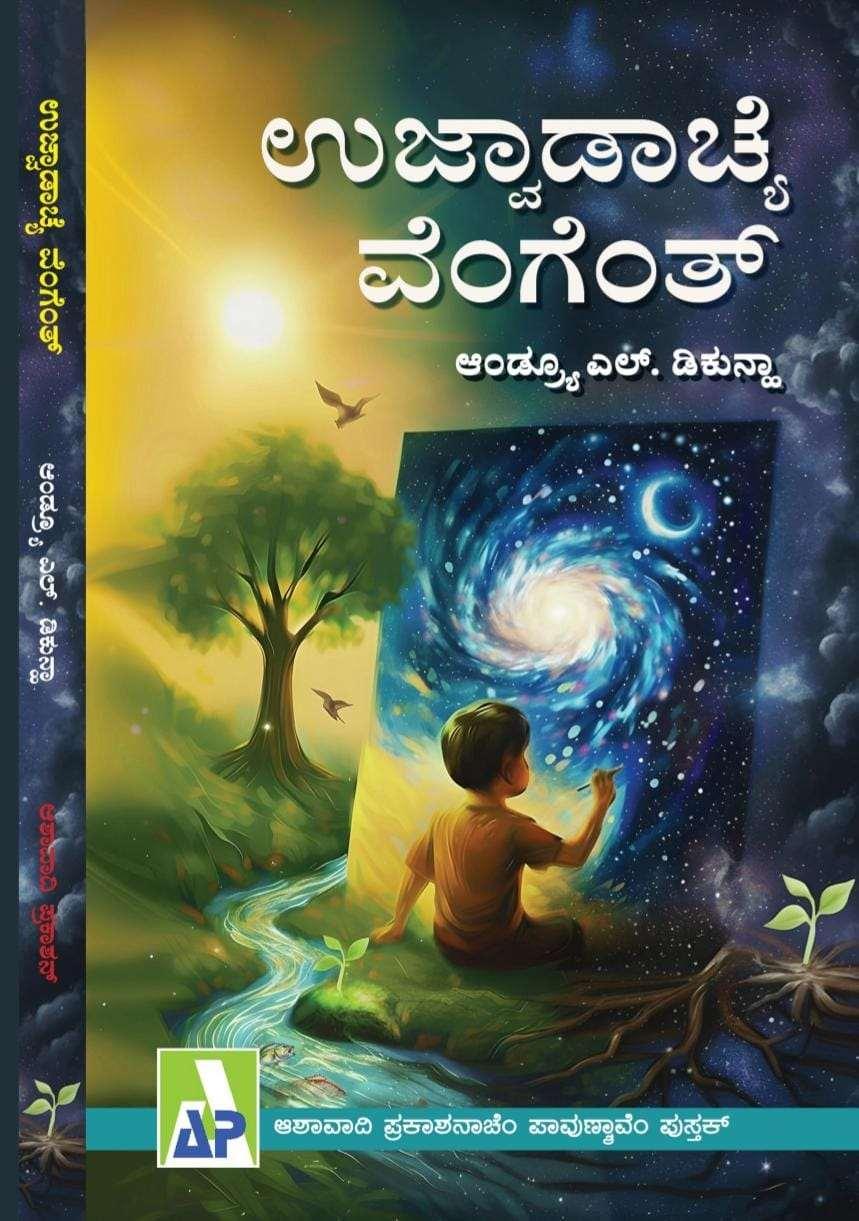
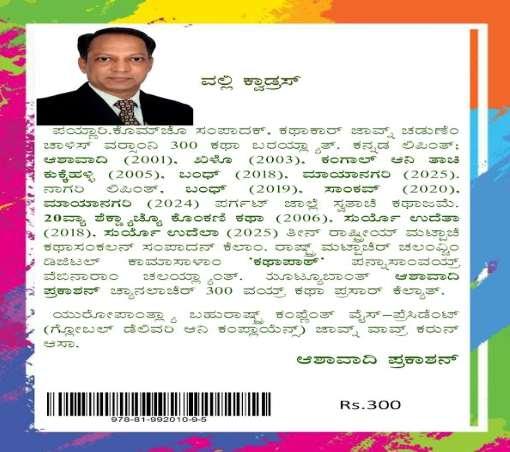
“Religion is like the peel of a banana; spirituality is the banana itself.” Religion is not limited to symbols such as the Church and Cross, or the Mandir and Masjid. It goes far beyond external forms and rituals. This profound understanding raises an important question: How many Konkani poets have reached this spiritual height through their poetry? An extensive study of Konkani spiritual poetry across Romi, Kannada, and Nagari scripts— poems written by Bab Prakash Padgaonkar, Fr. Pratap Naik, Bab Jess Fernandes, and Bab Andrew L. D’Cunha will be studied at the National Seminar on Spiritual Poetry in Konkani. The seminar will be held at Carmel College, Nuvem, Goa,on 22 January 2026 jointly organised by the Dalgado Konknni Akademi and Ashawadi Prakashan. On this occasion, Basti Vaman Shennoy Memorial Konkani books will be released. The Konkani poetry session will be chaired by Bab Prakash D. Naik.
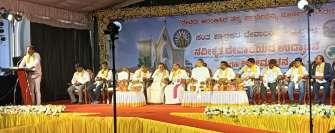
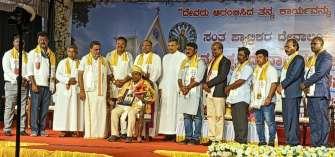
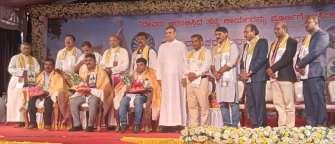
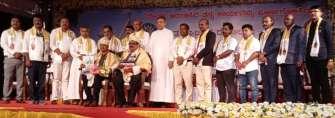
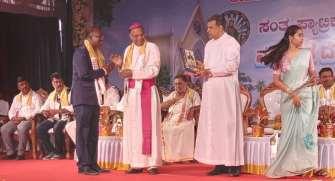
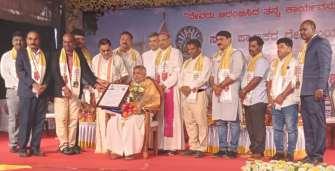
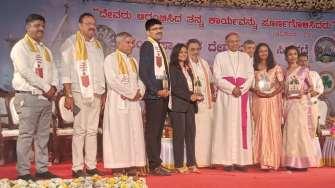
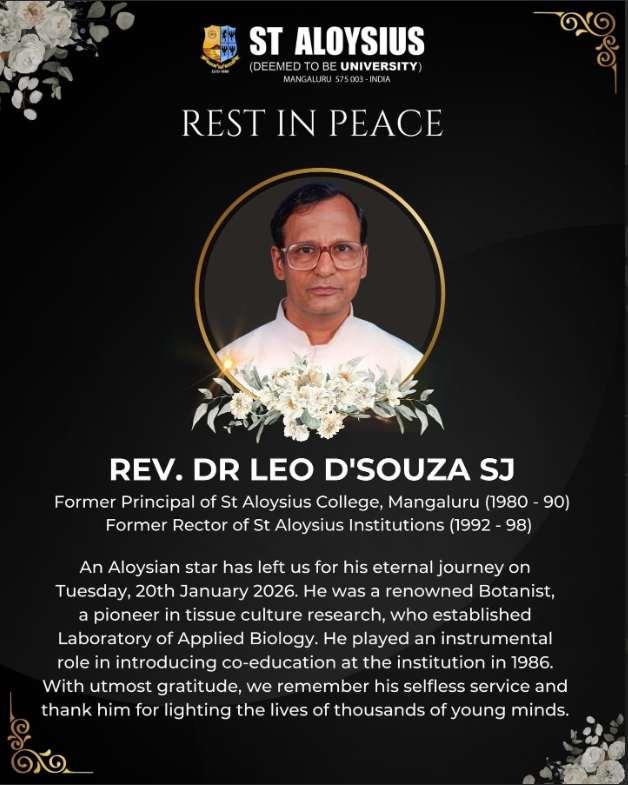
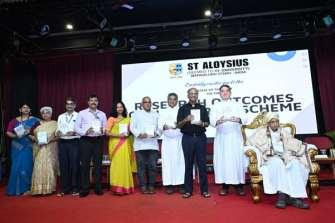
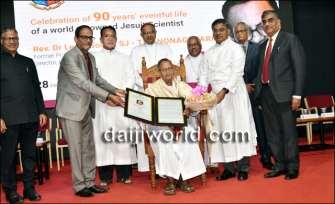
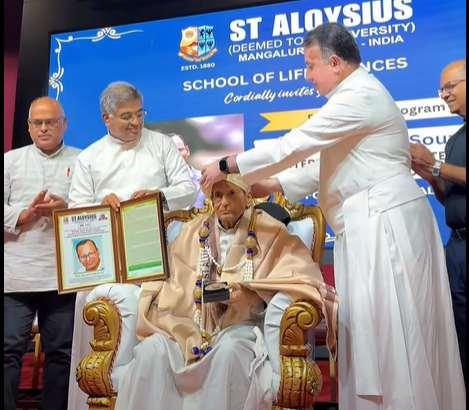
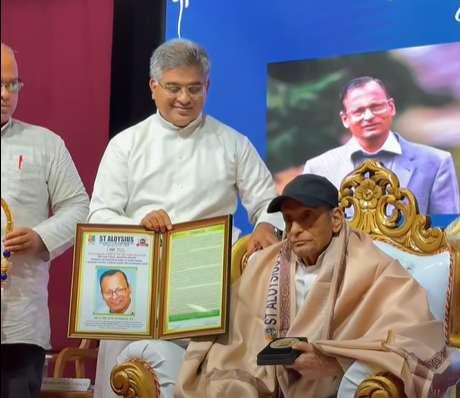
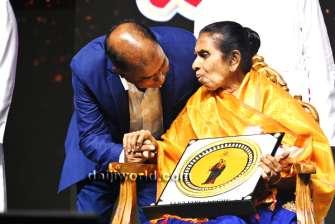
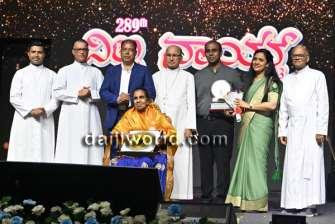
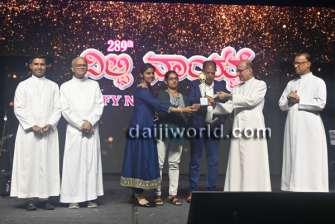
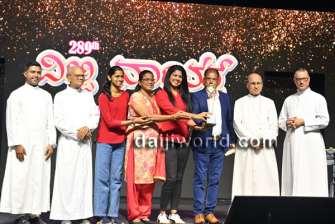
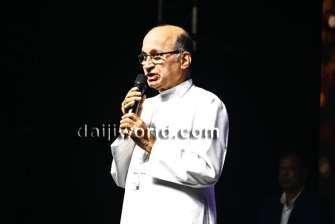
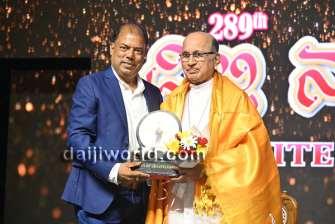
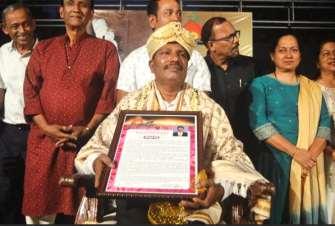
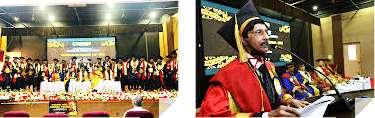
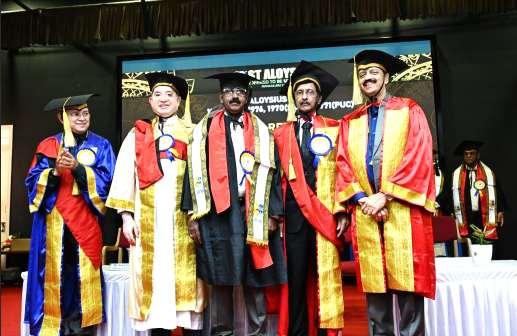
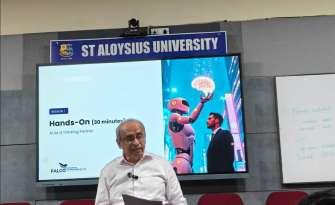
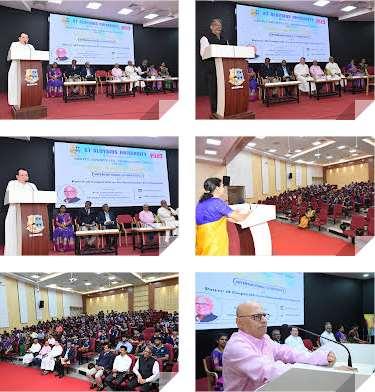
Rev.DrLeoD’SouzaSJ,93yearold, Former Principal and Rector of St Aloysiusinstitutions,washonoured for receiving the prestigious International St Peter Canisius Awardforhislifetimecontributions toeducation andresearch.Beyond honoringRev.DrLeo,theprogram
celebrated Jesuit values ofservice, scholarship, and research excellence, while reinforcing the institution’s role as a hub of innovationandknowledgecreation.
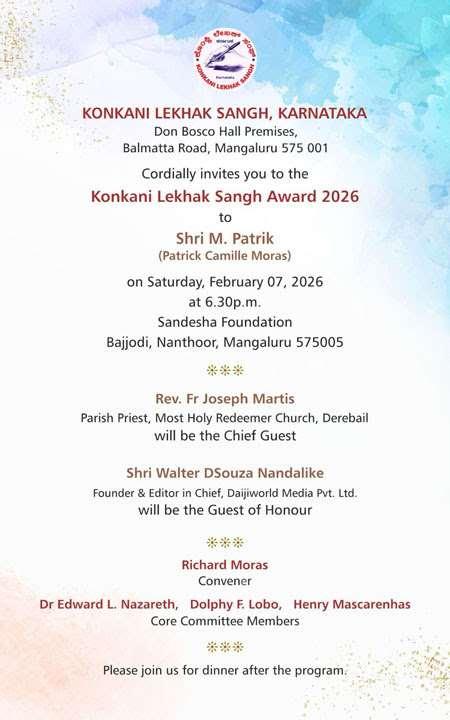
Konkani Lekhak Sangh Karnataka announces
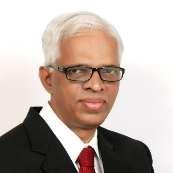
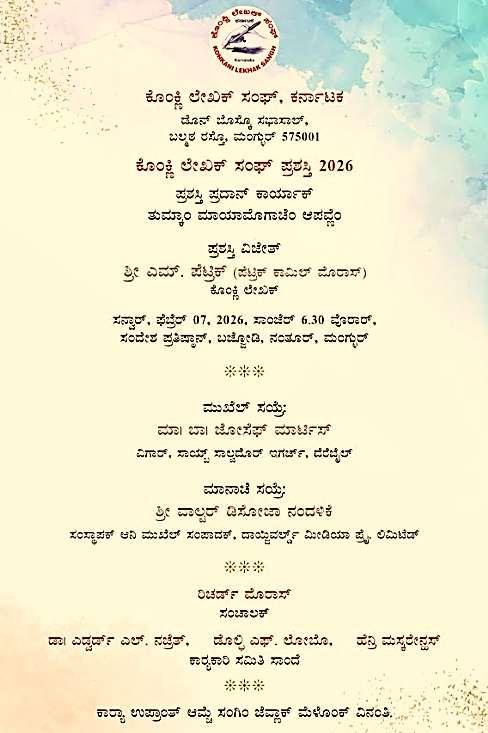
Konkani Lekhak Sangh Karnataka announces 2026 literary award for M Patrik
MediaRelease
Mangaluru, Jan 20: Konkani Lekhak Sangh Karnataka, a voluntary association exclusively formed with the sole intention of promoting Konkani language and literature inthe year2018. From the year 2022, Konkani Lekhak Sangh decided to select and honour a Konkani writer who has immensely contributed toKonkani literature.
For the year 2026, Konkani Lekhak Sangh award committee has
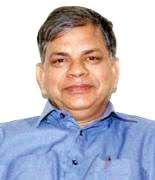
selected a well-known Konkani writer Patrick Camille Moras (M Patrik).
Theawardconsistsofacashprize of Rs 25,000, a citation and a memento.
Camille Moras, known as M Patrik, rose from a childhood of hardship to become a pillar of Konkani literature. After discontinuing school in fifth grade to support his family, he found a mentor in JB Rasquinha, who provided him with books and encouraged him to sell literature books door-to-door.
Starting as a book seller and Associate Editor of Kannik Konkani Magazine ateighteen, hebecame a prolific author of over 800 short stories, 400 articles, andten novels.
Born onNovember 17,1945, Patrick
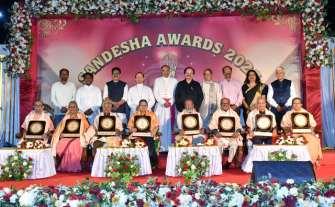
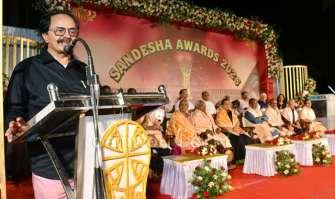
Through his Nityadar Prakashan, he published numerous works, including plays and detective dramas, cementing his legacy as a dedicated servant of the Konkani language. In recognition of his immense contribution to literature, he has been honored with the Honorary AwardfromtheKarnataka Konkani Sahitya Academy and the 'SandeshaKonkani Literature Award –2026' conferred upon MPatrick. Theaward will beheldat afunction on February 07, at 6.30 pm, at Sandesha Premises, Sandesha Foundation, Bajjodi, Mangaluru. RichardMoras -convener,Dolphy F Lobo-committee member, DrJerry Niddodi - advisory committee member, andJFD'Souza -advisory committee member, were present atthepress meet.
Finally, POTUS Trump gets his Nobel!
Gabriel Vaz
Donald Trump got elected andwassworn inasthe47th President of the United States of America (USA) on January20, 2025, with Make America Great Again (MAGA) as his Republican Partyʼs mainelection campaign plank.
IntheoneyearthatTrumphasbeen thePresident oftheUnited Statesof America or POTUS as he is referred to by intelligence agencies, he is known mostly forhisTariffsranging
from 0,10, 25, 50 toevenashighas 500 per cent on several countries, including India.
In fact, apart from Trump administrationʼs crackdown on immigrants from different countries and denial of visa from the beginning of the presidency, the President shamelessly launched a relentless campaign to win the worldʼs biggest honour even before entering White House in January lastyear.
The Nobel Prizes are considered the most respected and prestigious International Awards for Peace and other categories like the Booker for Literature, Oscars for cinema or Grammy for music worldwide.
Unlike the other awards in the different countries, there is generally no overt lobbying for the selection of Nobel prizes, even though nominations, including those sent online, from countries andorganisations areaccepted and
are evaluated independently without anyexternalpressures.
The nominations, if there are any, close by the end of January. They are then vetted, reviewed and shortlisted forfinalselection – allof which behind closed doors in strict secrecy –andthenamesoftheprize winners are announced inOctober.
Hoary history of Nobel Foundation
The Swedish Nobel Foundation is a privately established institution in the year 1900 based onthelastwill ofAlfred Nobel, the inventor of dynamite. The will was signed at the Swedish Norwegian Club in Paris on November 27, 1895, before his death due a stroke in 1896 in his villa in San Remo, Italy, where he lived hisfinalyears.
Alfred Nobel had bequeathed his enormous fortunes to a foundation thatwould beformedto manage and invest the money with the express mandate that the funds should be used for awarding prizes in Physics, Chemistry, Physiology or Medicine, Literature and Peace.
In 1900, the newly created Nobel Foundationʼs statutes were formally promulgated by then King Oscar II. However, the Union between Sweden and Norway was dissolved resulting insplitting ofthe responsibilities of awarding prizes between the two countries. Thus, NorwayʼsNobelCommittee became theawarder ofthePeacePrizewhile Sweden became the awarder of the other prizes.
The Foundation is responsible for ensuring that the assets made available for awarding the Nobel Prizesaremanaged insuchawayas to safeguard the economic base of thePrize ina long-term perspective andguarantee theindependence of the prize-awarding institutions in their work of selecting Laureates.
The Nobel Foundation is also entrusted with managing and carefullydeveloping thetrademarks and intangible assets that have been built up during the more than a century-long history of the Nobel Prize.
As per the criteria for the selection of the Nobel prizes on the basisof the willof Alfred Nobel, the Peace Prize is to be awarded to whoever has done the most for
fraternity between nations, the abolition or reduction of standing armies, or forholding or promoting peace congresses and also for significant contributions in other categories for the benefit and enlightenment of human beings.
The market value of the Nobel Foundationʼs total invested capital amounted toSEK6,797 m(6,233) at theendof2024. Excludingthevalue of the Foundationʼs directly owned properties, investment capital amounted to SEK 6,600 m (6,041). This generated a return of +11.6 (+10.7) per cent during 2024.
During the past five years, investment capital rose by 9.2 per cent annually. During the past ten years, investment capitalroseby 8.3 per centannually.
Abduction-KidnapofVenezuelan
President & Wife
Trumpʼs one obsession was winning last yearʼs Nobel Peace Prize like a petulant child insisting ongetting candyfromitsparentsor elders. His justification for his demand and argument in support ofhisclaimshasbeensavingseveral countries from the brink of war,
including between India and Pakistan, and the oil-rich Middle East.
Not just punitive tariffs on several countries, including India and its closest ally Canada, and the failed drive to get the Nobel prize, Trump even resorted to “blatant aggression” by sending US military “capturing and abducting” a sitting Venezuelan President Nicolas Maduro andhiswife, First Lady Cilia Flores, both of whom were sleeping in their bed at night in the Presidential Mansion in Caracas on January3aspart ofthe“Operation Absolute Resolve.”
The Maduro couple was flown to NewYork tobe produced before court asordinary criminals inchains and handcuffs to face charges including narco-terrorism and cocaine importation conspiracy besides bombing sensitive targets in Venezuela killing at least 40 people.
In the Gaza conflict between Israeli forces and Hamas militants, Trump openly sided with Israeli President Benjamin Netanyahu to forcethe Hamasto surrender. Trump had grandiose plans of restoring peace in Palestine. In the
firstmonthofhispresidency, Trump threatened neighbouring Mexico over illegal immigrants and to enforce a crackdown on drug trade by cartels.
Though Mexican President Claudia Sheinbaum initially showed defiance and sought to defend her countryʼs sovereignty, after the recent US military aggression and bombing in Venezuela, an uneasy calm seems to have arisen, not knowing when itwill beshattered.
Will get Greenland, “One Way or Other!”
Trump was even more combative and aggressive in threatening to take over Greenland “one way or other!” He bluntly warned: “If we donʼt, RussiaorChina willcontrol it. Iʼmnotgoing toletthathappen.”
Trump claimed that the mineral-rich Danish territory between North America and Arctic was “essential for US security,” unmindfulofhurtingthesentiments and opposition from NATO countries and has threatened to impose 10% tariff on Denmark, Norway, Sweden, FranceandUnited Kingdom – allUS allies – andhinted thatthe tariff might evenbe raised
to 25%!
Nowthathisdreamsofowning the coveted world peace medal has been denied to him, Trump sent a terse “extra-ordinary” written message to Norwegian Prime Minister Jonas Gahr Stoere linking his Greenland threat to the Nobel PeacePrizesnub:“Considering your country decided not to give me the Nobel Peace Prize for having stopped 8 Wars PLUS. I no longer feel anobligation to think purely of Peace, although it will always be predominant.”
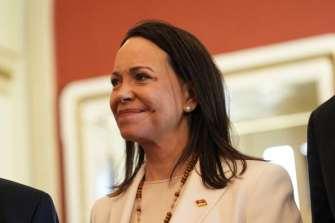
The repeated public claims from POTUS might seem petty and even childish to ordinary citizens, but notto Trump who believed that he was eminently entitled to be chosen. The Swedish Nobel Foundation had its own norms and procedures. Despite Trumpʼs annoyance, the 2025 Nobel Peace Prize to Venezuelan opposition leader Maria Corina Machado for her valiant fights for democracy in thecountry.
However, Trump made his intention to snatch Greenland by hook or crook using the US superpower status,andrepeated his accusation that “Denmark cannot
protect Greenland from Russia or China andwhy do they have a right ofownership anyway?”
An unfazed Denmark Premier responded to Trumpʼs grievance reiterating that the “Nobel Peace Prizeis awarded byanindependent committee appointed by Norwayʼs parliament,notbythegovernment.” Hewentontoclarify:“Ihaveseveral times clearly explained this to President Trump. He must understand that.”
Most obviously, the US President believed thathedeserved the coveted Nobel Peace Prize for his achievements of ushering in peace in several trouble-torn and conflict-prone countries to possible claim that posterity should and must remember him not just for MAGA but also as the best President.
Unfortunately for Trump and his obsessive ambitions of securing the worldʼs most coveted medal, with repeated claims that he of all people is eminently entitled to be chosen, the Swedish Nobel Foundation has its own norms and procedures for selecting the nominees. Either Trump or his
advisers were evidently unaware of thesame.
Unfortunately for Trump and his obsessive ambitions of securing the worldʼs most coveted medal, with repeated claims that he of all people is eminently entitled to be chosen, the Swedish Nobel Foundation has its own norms and procedures for selecting the nominees. Either Trump or his advisers were evidently unaware of the same or were under the illusion thatUSisblessed withthePresident andagreat leader of modern times, whose contributions were recognized world-wide!
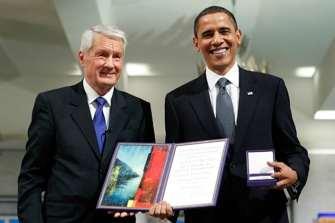
“Obama got for nothing, I’m not considered”
Barack Obama, who got the Nobel PeacePrize(in2019), the44th President and Jimmy Carter (2002), the 39th President even though he himself must have known in his
heart of hearts that he is no match to Theodore Roosevelt (1906), the 26th and the first US President to receive the award, or Woodrow Wilson (1919), the 28th President, whoiscreditedasbeingresponsible for ending World War I and also as the architect of the League of Nations that eventually led to the birth of United Nations Organisation, to be conferred with thehonour.
The Democratic Party leader Obama, whoserved asPresident for two terms, won the prize for his advocacy in favour nuclear disarmament and the efforts to strengthen international diplomacy.
However, Trump ischeesedoff that he was not even considered.
For him, it was galling to note that Obama was awarded the prize within months intohisfirstterm. He obviously was so contemptuous of Obama that he saw nothing wrong inspeaking illof him.
“He (Obama) got it for doing nothing. Obama got a prize he didn't even know what he got elected, and they gave it to Obama for doing absolutely nothing but destroying ourcountry," Trump had complained, andwent on tosay: “If
I were named Obama, I would have had the Nobel Prize given to me in tenseconds.”
Blowing his own trumpet, Trump had told reporters in the OvalOfficeof theWhite House that he has accomplished what no one else(his predecessor) has.
He bragged that his Oval Office was the centre of all peace agreements across the world for months and claimed that he had started pushing for negotiations to end the Russia-Ukraine war and the Israeli-Hamas conflict, conveniently forgetting to mention that a lasting solution to the conflicts is still elusive.
Ironically, the Israeli Prime Minister Benjamin Netanyahu, who himself was the key figure in the flaring of tensions and conflicts in Palestine engaged in wars with Kurds and Hamas was one of the first prominent world leaders to nominate Trump for the honour in July.
“They will never give me a Nobel Peace Prize. Itʼs too bad. I deserve it, butthey willnever give it to me,” he bemoaned during his meeting with Netanyahu in August last year. The US President had
claimed that he deserves the most sought-after world peacetrophy for his work of “stopping wars across the globe, including between India and Pakistan, Serbia and Kosovo and Egypt and Ethiopia. In fact, Pakistani Army chief, Field Marshal Asim Munir had also endorsed Trump for thehonour.
ThePresident hadclaimedthat he spent “much of his first year (of the second term) in office” attempting to broker peace deals between various countries that also included Ukraine and Russia, in whataccording to himwasnot only to usher in peace but be crowned with Nobel Prize.
Unfortunately for Trump and his obsessive ambitions of securing the worldʼs most coveted medal, with repeated claims that he of all people is eminently entitled to be chosen, the Swedish Nobel Foundation has its own norms and procedures for selecting the nominees. Either Trump or his advisers were evidently unaware of thesame.
Machado had first offered her award to Trump following the dramatic abduction andkidnapping of the then Venezuelan President Maduro and his wife, after he declined to install her as the Venezuelan leader in place of the ousted President.
Trump Has Machado's Nobel Prize, but Neither Got What They Really WantedThe New York Times
Leading US daily, Washington Posthadreported thatPOTUS ruled out the possibility of Machado replacingMaduro because“shehad committed the ultimate sin of accepting the Prize when it was offered to her instead of turning it down and recommending that itbe given toTrumpinstead.”
Finally,Trump GetsNobelfrom Machado!
Media reports suggest that
However, Machado had clarified to Fox News that she had not spoken to Trump since the day the Prize was announced or had a chanceto givehim theprizethathe
publicly craved. “I would love to be able to personally tell him that Venezuelan people want to give it to him. What he has done in his work is a huge step towards a democratic country.”
Andfinally,both Machado and Trump got their chance. Trump was finally able to lay his hands on the coveted golden medal, thanks to Venezuelanopposition leaderMaria Corina Machado, who was conferred the prestigious award for her valiant fight for democracy in thecountry.
Machado met Trump in White House on December 15, 2025, and presented the US President her Nobel Peace Prize Medal, which he coveted somuch.She described the gesture as recognition for his support for Venezuelan freedom anddemocratic efforts.
Quizzed why she presented herNobelPrizemedaltoTrump, she said: “Because he deserves it. It was averyemotional moment. Idecided to present the Nobel Peace Prize medal on behalf of the people of Venezuela.”
The Venezuelan opposition leader presented the medal set ina gold frame during their meeting at
the White House. The text accompanying the medal read, “To the President Donald J. Trump. In gratitude for your extraordinary leadership in promoting peace through strength, advancing diplomacy, defending liberty and prosperity.”
Machadocompared giving her prize to Trump to the Marquis de Lafayette sending a gold medal bearing George Washingtonʼs likenesstoSouthAmericanliberator Simón Bolívar in 1825. Machado described the gift as “a sign of the brotherhood between thepeople of the U.S. and the people of Venezuela intheir fight forfreedom against tyranny.”
Agrateful Tump, inhispost on the social media platform, “Truth Social,”profusely thankedMachado after their meeting said: “It was my Great Honour to meet María Corina Machado, of Venezuela. She is a wonderful woman who has been through so much. María presented me with her Nobel Peace Prize for the work I have done. Such a wonderful gesture of mutual respect. ThankyouMaría!”
Machado now joins a handful of Nobel PeacePrizerecipients who
parted with their medals, including Norwegian author Knut Hamsun, who gifted his medal to Nazi propaganda chief Joseph Goebbels “as a gesture of thanks” for a meeting theyhadduringWorld War II.
“Nobel Prize cannot be given to others!”
Soon after the Venezuelan leaderMachadopresented her2025 Nobel Peace Prize to US President Trump, the Nobel Foundation came out with an official statement clarifying: “A prize cannot, even symbolically, be passed on or further distributed. One of the core missions oftheNobel Foundation is to safeguard the dignity of the Nobel Prizes and their administration.”
“Once a Nobel Prize is announced, it cannot be revoked, shared, or transferred toothers. The decision is final and stands for all time,”the statement read.
The Nobel Foundationʼs officialwebsite alsosaid: “Alaureate cannot share the prize with others, nor transfer it once it has been announced.ANobelPeacePrizecan
also never be revoked. The decision is final and applies for all time. The Norwegian Nobel Committee does not see it astheir role to engage in day-to-day commentary on Peace Prize laureates or the political processes that they are engaged in. The prize is awarded since the laureateʼs contributions by the time that the committeeʼs decision is taken.”
Incidentally, both the Nobel Foundation and the Norwegian Nobel Committee had clarified that “Whileitʼspossible foramedaltobe physically passedonfromperson to person, itʼs impossible for a Nobel PeacePrizeto besharedor givento a second person (by the recipient)” in a bid to make it clear that Trump hadbecome a co-recipient.
“Nobel Peace Prize is given each year to a certain individual or group for the benefit they have brought to mankind. This decision becomes irrevocable once made, with no process for transfer. Award winners have been known to transfertheirNobelPrizemedals for certain purposes, but this in no way altersthefactthattheyreceived this prestigious award,” the clarification said.
Trump is so and gullible to flattery besides being keen on getting such big medals that even before Machado gave him her Nobel Peace Prize medal, he was awarded the FIFA (Federation of International Football Association) Peace Prize by the organisationʼs President Gianni Infantino, a Swiss Italian football administrator in December 2025. The US President wasFIFAʼsinaugural recipient ofthe award it had instituted in a bid to woo him ahead of the 2026 World Cup scheduled to be held in North America this summer.
'It's a beautiful medal for you that you can wear everywhere you want to go,' Infantino told Trump during the ceremony as the certificate accompanying the award recognized him for actions taken to 'promote peace and unity around the world,' and Infantino told him directly: 'You definitely deserve the firstFIFAPeacePrizeforyouraction, for what you have obtained in your way.'
The US President placed the medal around his neck and called the honour “one of the great honours of my life,” asserting, “The world isasaferplacenow.”
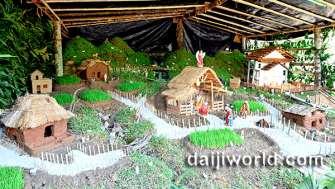
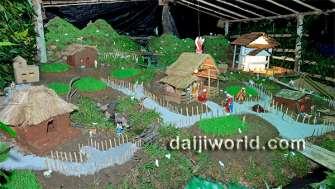
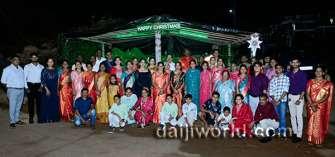
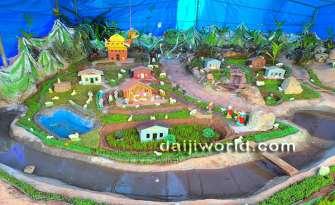
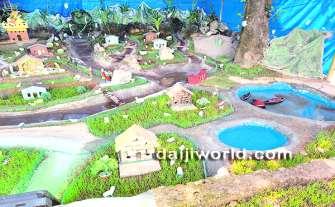
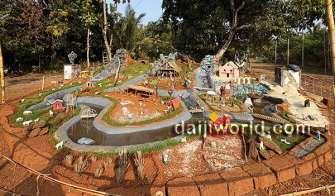
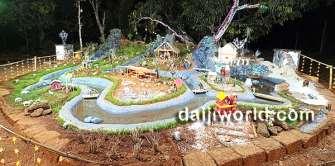
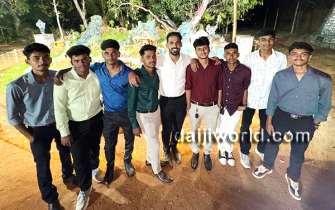
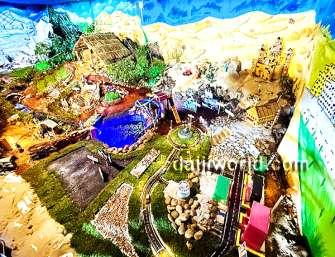
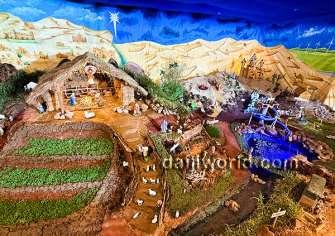
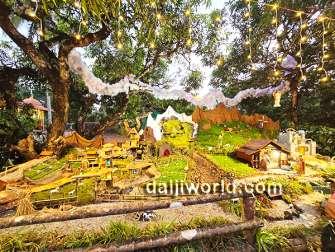
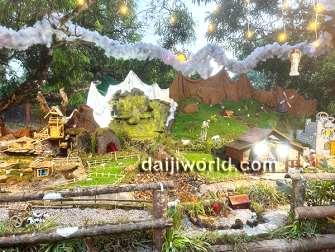
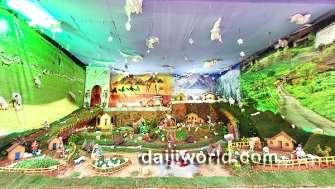
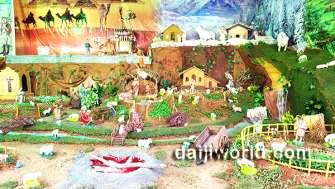
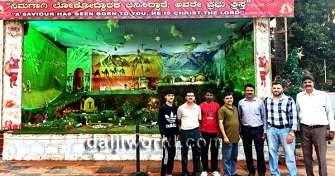
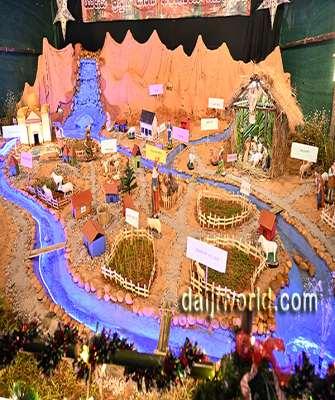
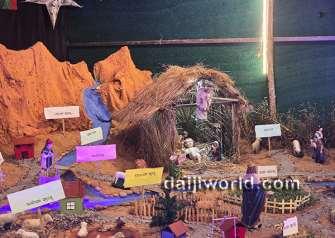
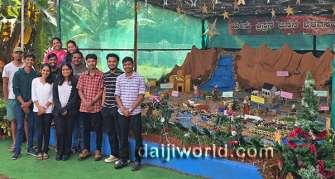
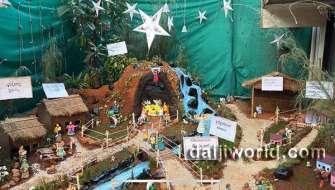
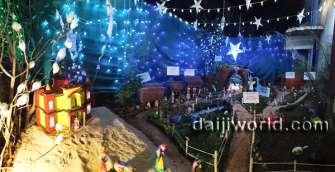
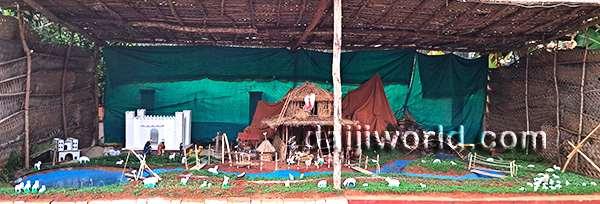
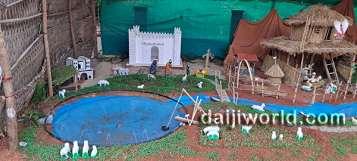
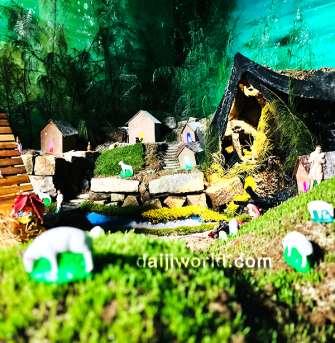
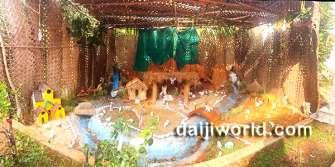
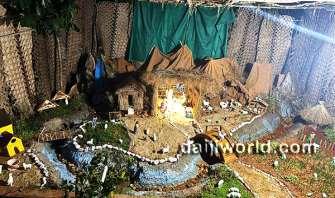
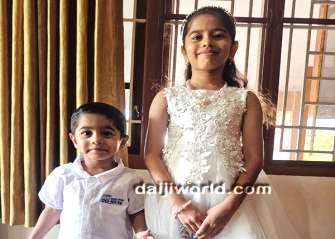
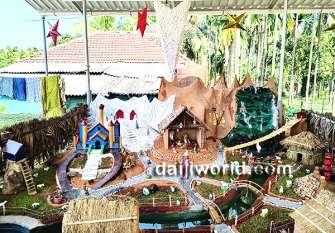
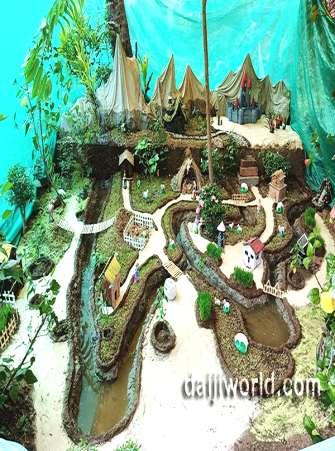
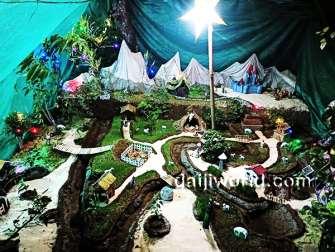
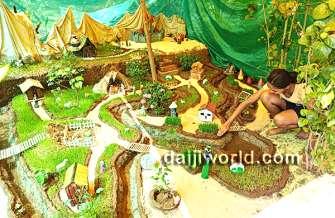
Our Lady of Rosary Ward, Mogarnad, and Fr Francis Cornelio win Abharan Jewellery ‘Godali Sadagara 2025’ Crib Photo Contest
DaijiworldMediaNetwork–Udupi (TP)
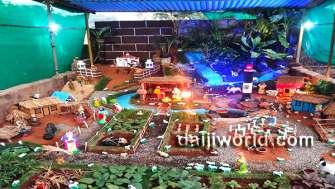
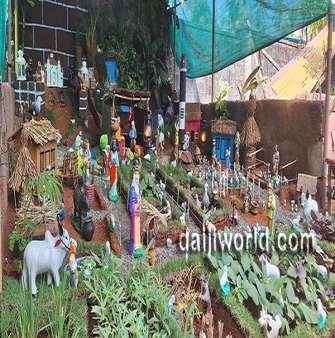
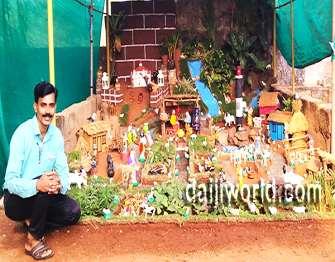
Udupi, Jan 21:Our Lady of Rosary Ward, Mogarnad, in the group category, and Fr Francis Cornelio, Padukone, in the individual category, emerged as the winners of the Abharan Jewellery ‘Godali Sadagara 2025ʼ Christmas Crib Photo Contest, organised by Daijiworld Udupi. The
contest, now in its eighth edition, received an overwhelming response, reflecting the communityʼs deeprooted Christmas traditions and creativespirit.
The competition was held in two categories – Individual and Group –attracting many entries showcasing beautifully crafted Christmas cribs. Cribmakinghas beenanintegralpart ofChristmascelebrations,symbolising the birth of Lord Jesus. During the festive season, households traditionallysetupcribs,whileyouths come together to create large and elaboratedisplaysinchurchpremises, fosteringunityanddevotion.
Group - First - Our Lady of Rosary Ward,Mother of God Church Mogarnad
Group - Second - Our Lady of Mercy Church Manjeshwar
Group - Third - ICYM Kolalgiri, Sacred Heart Church Kolalgiri
Group - Consolation - Holy Cross Ward,St Dominic Church Ashoknagar
Group - Consolation - ICYM
Alangar unit,Holy Rosary church
Alangar
Group - Consolation - CKYM,Christ King Church Kayyar Kasargod
Group - Consolation - Udenti Kalakaar, Rosario Cathedral Bolar
Group - Consolation - ICYM
Kanajar, Our Lady of Lourdes Church,Kanajar
Individual - First - Fr Francis
Cornelio,St Antony Church Padukone
Second - William Fernandes,Holy Rosary Church Hulidewarwada,Ankola
Individual - Third - Joyson Veron Banz,Holy Family Church
Brahmavar
Individual - Consolation - Naveen Prakash Quadras,Holy Cross Church Pamboor
Individual - Consolation - Sharel
Prenita Pereira,St Joseph the worker Church Neermarga
Individual - Consolation - Carol Saritha D'Souza,St Peter Church Barkur
Individual - Consolation - Rojes D'Souza,Mother of God Church Mogarnad
Individual - Consolation - Soumya
Robert,St Thomas Syrian Church
Sasthan
Withtheobjectiveofencouragingthis age-old tradition and adding to the festive cheer, DaijiworldUdupiStudio instituted the Abharan Jewellery ‘Godali Sadagaraʼ competition, providing a platform for participants to express their creativity and faith throughphotography.
AdvocateRonaldFurtado,judgeofthe competition, said, “Christmas celebrations are not confined to Christians alone; they convey a universal message of peace to all religions. As a judge of Godali Sadagara, I sincerely thank Daijiworld
Udupi for providing an inclusive platform that allows everyone to participatewithoutany formofsocial discrimination. While many participants displayed commendable creativity, some lacked innovation in their approach. I encourage more peopletotakepartinthenextGodali Sadagaracompetitionandhelpmake it more competitive and successful. I alsoobservedthatseveralparticipants reliedonartificialmaterials insteadof usingnatural itemswhilecreating the cribs.”
Ace actor, anchor and entrepreneur SteevanLewis,anotherjudge,afterthe judgement, expressed, “This is the eighth edition of Godali Sadagara hosted by Daijiworld Udupi. While reviewing the photos, we were taken backto ourchildhooddays. Weused to collect materials from faraway places. There was even a scarcity of statues and other items required to complete the crib. Yet, there was immensejoyandenjoymentinmaking the crib. Friends from other religions wouldalsojoinusincreatingthecrib. Today,DaijiworldUdupihas provided a wonderful opportunity for children who are addicted to mobile phones. Now everyone has the required materials to make a crib. All the participants have put in effort to showcase creativity,butthereisscope
formoreinnovation.Icongratulateall the participants and thank Daijiworld Udupiforcreatingthisopportunity.”
For the first time, registrations were done through an online registration process. All participants in both categories will receive a digitale-gift voucher presented by Abharan Jewellery,Udupi.
Additionally, for the first time, all participants will receive a digital ecertificate of participationas a token ofappreciation.
Sharel Prenita Pereira, St Joseph the worker Church, Neermarga CarolSarithaD'Souza,StPeterchurch, Barkur
RojesDʼSouza,MotherofGodChurch, Mogarnad
Soumya Robert, St Thomas Syrian Church,Sasthan.
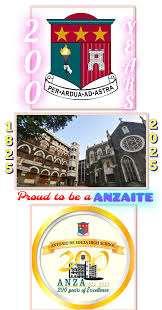
ANZA: Reaching for the Stars!
-*Fr. Cedric Prakash SJ
It is not an everyday phenomenon, thataninstitution stands thetest of time and lives on to reach the enviable age of two hundred years. It is certainly much rarer if the said institution happens to be an educational institution! So, Antonio DeSouza (ANZA-from thefirst two and last two letters of the name) High School, in South Mumbai (Bombay of old), reaching the glorious age of two hundred is certainly nomean feat. This historic milestone has not only to be applauded,butthemenandwomen who have shaped the destinies of this great institution, need to congratulate too. For ANZA (the management, staff and students –both past and present) it has been an amazing journey; epochal in
nature, like an unfettered Colossus striding across two centuries.
The roots of ANZA can be traced backtothelittleislandofMazagaon in Bombay. In 1548, one Captain Antonio Peso, built within the precincts of his mansion a small private chapel dedicated to Nossa Senhora da Glória (Our Lady of Glories). Later, in 1632, ‘Gloria Churchʼ was built at the foot of the Mazagaon hill. Apparently, in 1795, a Goan merchant named Antonio De Souza gifted the trustees of the Churchwiththenprincely sumofRs. 40,000tostartafreeprimary school forCatholicchildren ofthearea.The medium of instruction at that time was Portuguese and Latin. It was named Antonio De Souza High School after one of its original founders and its main donor. In 1911, both ANZA School and the
Gloria Churchwere demolished and shifted to its present premises in Byculla, with the reconstruction work having been completed in 1913. ANZA School and the modern Gloria Church were both built in English Gothic Revival style andaretoday heritagelandmarks of thecity.
‘Bycullaʼ in South Bombay, is centrally located; itisapotpourri of cultures, traditions, religions and ethnicities. Amid the labour area of the Mumbai metropolis, the surroundings and neighbourhood areas were dotted with the chimneys of the textile mills. Besides, the famed‘Jijamata Udyanʼ
(‘VictoriaGardensʼofold)ishometo a botanical garden (1861) and one of Indiaʼs oldest zoos (1890) and a museum. The ‘Victoria Gardensʼ of yester-years, was apopular spot for
nature – lovers, history enthusiasts andANZAboys whenthey‘bunkedʼ school. Byculla also has the major wholesale vegetable market of the city. Interestingly, exactly opposite Gloria Church stands a temple and adjacenttothatisamosque; notfar is a Parsi fire temple and a Jewish Synagogue. ANZAisashortwalking
distance from the Byculla railway station, and one can easily reach most areas of the vast city by the numerous BEST bus routes which begin or pass through Byculla! The area is also dotted with several eateries, cateringtoevery palate.
ANZA, in fact represented (and continues to do so) the best of Byculla! Asin the past, the students comprise andepitomise the wealth and beauty of Indiaʼs diversity and pluralistic fabric: middle class and lower middle class, children of ordinary people; besides the Christians, there were Hindus and Muslims, Parsis, Jews, some of
Chinese origin andfrom other faith traditions. Many were children of migrants whohadcome,fromother parts of India to Bombay in search ofworkandmadethecosmopolitan citytheirhome.Theparentsworked hard,someevenstruggled: butthey wanted their children to go to a good English- medium school! It had to be ANZA! No one wore religion uptheirsleeve;thestudents went to school together, studied together, pranked together, fought witheachotheroverseeminglytrifle issues; yet there was the camaraderie, the deep bonding, whichbeganduringschooldays and which for many of the alumni lasts till today! The spirit of ANZA, lives on,itwill neverdie!
ANZA school belongs to the Archdiocese of Bombay; and over the years there have been exemplary priests, outstanding educationists who have been at the helm of affairs and guided the destinies of this great school, as Principals, Managers and teachers. Besides,theschoolhasalwayshada very committed staff: teaching, administrative and support. Thousands ofstudents have passed
through its portals, these last two hundred years- most contributing significantly to the life of the city and even the nation. Today the school has three thousand students on the rolls with Fr Sachin Lopes as Principal and Fr. Cajetan Pinto as Manager
ANZAschool has asignificant logo. It has emblazoned on it the Latin
phrase ‘Perardua adastraʼ which effectively means ‘to reach for the stars, despite adversities/ difficulties. A great slogan for yesterday and so relevant today. Over the years, despite many limitations, ANZA has been providing itsstudentswith aholistic education,mentoringthem,training them, motivating them toreach for the stars, whatever the consequences. Some of the ANZAites who have made a profoundmarkinthepublic domain include Raj Kapoor (the legendary film actor, director and producer), Trilok Gurtu (world-renowned percussionist and table virtuoso), Nissim Ezekiel (father of modern Indian English poetry), Libia Lobo Sardesai (Freedom Fighter) and R. M.Sawant(well-known jurist).
Despite not having decent playgrounds of its own ANZA has produced some of the finest sportspersons of the city and country; they include Leo Pinto (gold medallist in Hockey at the 1948 London Olympics), Gulam Abbas Moontasir (captain of the National Basketball team), Nasir Khan(starhockeyplayerandcoach), BanooGazdar(topathleteandsilver
medallist at the 1951 Asian games) and Pat Mendonca (champion sprinter and silver medallist at the 1951 Asiangames)
The extraordinary thing about ANZA is its sheer ‘ordinarinessʼ. It neverboastedoforclaimedtohave the ‘elite schoolʼ tag of Bombay. In fact,itwas farfrom that.Itwas(and will always be) a school for the ‘hoi polloiʼ andnotfortheelite.Aschool withanold-world charmbuteverso new, vintage yet abreast with the times. A school which has lived through tough times yet educated men (and women too) to face the challenges andvicissitudes oflife! TheANZAbicentenary celebrations, which bring together past and present students and staff, wellwishers and benefactors, will be held on the school grounds on January 23 (Thanksgiving Mass, Multi-Faith Service & Musical Performance), January 24 (ANZA family Day) and January 25 (Gala Alumni Dinner). Further details of theseprogrammes canbefoundon www.anzaites.org
Asonecelebrates200glorious years of a great institution, one which
believes in excellence in education, one cannot help but look backwith deep gratitude and sing (with adaptations) the theme song from that immortal 1967 movie, ‘To Sir, WithLoveʼ “ANZAwhotaughtmerightfrom wrong Andweakfromstrong That'salottolearn What,whatcanIgiveyouinreturn? Ifyouwantedthemoon Iwouldtrytomakeastart ButIwouldratheryouletmegive myheart
ToANZA,withlove"
ANZA today at 200 years, continues toreach forthestars! 21January 2026
*(Fr. Cedric Prakash is a Jesuit Priest of the Gujarat Province. He wasastudentofANZAfrom1957to 1968. He is an internationally renowned human rights, reconciliation andpeace activist.He is also a prolific writer. Contact: cedricprakash@gmail.com )
How to tell Hinduism to your child
by Arvind Rao
(From Dr. Michael Loboʼs group of intellectualsʼ emails. With permission from the writer.)
Excerpts:
Historically, the whole of Indian continent wasone cultural unit. The Vedas talked of two levels of truth, one called parā, the supreme levelandtheotherwascalledaparā, the lower level. The higher level corresponds to philosophy and the lower leveltoreligion.
Noone can say‘this is what is God, this is the way heaven is.Hence the sages permitted different modes of worship which are all accepted as tentative or interim level of truth. This is the reason we find several gods beingworshiped.
The initial portions of the Vedas contain lyrical eulogies fordifferent deities. Along with these are described certain rituals called ‘yajñaʼtopropitiate these deities. In addition, there are forms of meditation on various deities. It is the end portions of Vedas which
were the cause of serious interest among philosophers all over the world. Theseendportions arecalled Upanishads, and their teaching is called‘Vedantaʼ‘theendʼorthefinal word of the Vedas. This is what is referred to as the higher level of reality orabsolute reality.
‘ThemessageoftheVedashastobe popularized through theitihāsa and purāna texts.ʼ
The epics like Ramayana, Mahabharata were called as itihāsa (closer to historical narrations) and the mythological tales were called purāna-s. Though secondary in nature, these are very important from the point of view of value buildinginsociety.Thefamilyvalues and social values are still intact in the Indian society because of the hundreds ofstories fromRamayana, Mahabharata and the purāna-s, which have gone intothe collective memory ofeven illiterate villagers. Theultimate reality isneitheraman norawoman norisitinahumanor anylivingform. Itisofthenature of
existence, consciousness and infinitude.
The all-pervading space emerged from the eternal Consciousness. From space, air emerges. From air, emerged fire, And from fire, emergedwater.Earth,aswesee,has emerged from these waters. The plant kingdom originated thereafter. Plants became the food for the living beings, and thus, all theliving beings emerged.
Vedanta isnotsayingthatthere isa creator who is sitting high above in skies andcreatingthe cosmos from out of some material. Vedanta says that this creation is a temporary appearance in māyā. It appears and disappears. It is not a one-time activity ofGod. In fact,what we call creator is only a function in māyā. Western Religions talk of only one creation.TheVedastalkofrecurring cycles of creation. There is a creation, sustained for some time and then resolves into the above saidmāyā.
The actual process of evolution of body is like this:The creative power māyā is said to have three characteristics or tendencies in it.
They are called guna-s which are called sattva (quiet), rajas (aggressive) and tamas (lazy). The sages observed the three dispositions or tendencies in everything in the universe. The above three guna-s intermix in infinite number of combinations and produce the diversity in the universe. The sattva component of the elements evolves into the mind and senses of all animals, including man. The rajaʼs component of the elements evolves intotheorgans of action (hands, feet andotherlimbs) of all animals. The tamas component oftheelements evolves intothegross elements aroundus. Spaceisassociatedwith hearing; air with touch; fire with sight; water with taste; earth with smell; all 5 elements with mind.
Mind has 4components: cognition: mind (manas); reasoning: buddhi; ego: ahamkara;memory: chittha. The life force (air system in the body) isprana-sakti.
Vedanta saysthat what iscalledthe individual self, ‘jīvaʼ, is nothing but consciousness which is reflected in
the mind. The mind, according to Vedanta, is only a reflecting medium. An individual considers himself a jīva, a limited entity, so longasheidentifieshimselfwiththe body-mind complex. Once he overcomes this identification, he realizes that he is the same as the Supreme Self.Vedantasaysthatjīva is not only a human being but all living beings. All living beings are thesame asBrahman.
Hinduism does not say that ajīva is born with sin. But he has the baggage of his past karma, both goodandbad.Ifthereismoregood karma to his credit, he would enjoy good things inthislifeandifhehas badkarma pending, hewill sufferin thislife.
Vedanta makes an emphatic statement that the knower of Brahman becomes Brahman. This knowledge of Brahman is not an intellectualappreciation ofBrahman but undergoing an internal transformation andshedding of his total identity belonging to caste, class, sex and so on and lose his identity intheidentity ofBrahman. The Vedas advocate a religious life to start with. After a person is disciplined in religion and after
attaining spiritual discipline like restraint of senses, truthfulness, equanimity etc. he is asked to discover his Self through a process ofenquiry.
There are three stages in what we call spiritual learning. The first level is to understand what the primary texts (Upanishads) talk about the nature of jīva, Iswara and Brahman. In Vedanta this is called ‘śravanamʼ. Thenextstepistologically evaluate this with the help of a teacher. This level is called ‘mananamʼ. The third and final level is the internalization and assimilation of what is learnt. For instance, the Upanishad says –‘that you areʼ and ‘I am Brahmanʼ. Assimilation means experiencing thesestatements.Onemustachieve self-purification of highest level to experience this. The seeker must come out of his identification with the body-mind complex and identify with the Supreme Consciousness which is the main illumining factor in the whole universe. Gita says that people visualize deities according to their own nature and their own desires. Different God forms are tools for
meditation and concentration of mind. Meditation on such God forms is prescribed for purification of the mind of the seeker. Similarly, the idol is only a tool which facilitates concentration of mind. It is idea behind the idol, which is being contemplated upon, and not the idol as such. The Indian sages did a peaceful and harmonious integration ofdifferent systems and permitted all systems to coexist. This is in sharp contrast with what happened inrest oftheworld. There is noorganizational structure for Hinduism, unlike the western religions. The battle between gods and demons isasymbolic description of thebattlebetween good andbadin our own mindsʼ. Gods are merely our own behavioral patterns purified by the study of scriptures and pursuit of righteousness. Demonsareourbehavioral patterns driven bysensualdesires.Thesetwo are engaged in constant battles in thehuman mind. Wedonothavetheconceptofdevil in Hinduism. If we accept devil as distinguished from God, Godwould be a delimited entity howsoever powerful he may be. Good andevil
cannotbedifferent fromthecosmic being, asthey are manifestations in the same consciousness. Supreme Consciousness is untouched by all this.
Every temple has the sanctum sanctorum, called the garbha gṛha (the womb-house) where thelord is located. Around this there may be three ormore perimeter walls onall four sides. The number of walls is alsosymbolic. Temples have served the great purpose of being the religious, cultural and educational centers. They were the centers for dance,musicandsculpture, besides beingplacesofreligious discourses. Appreciation ofthe whole temple is a rewarding spiritual experience. We are not expected to be ostentatious devotees.
Caste System:
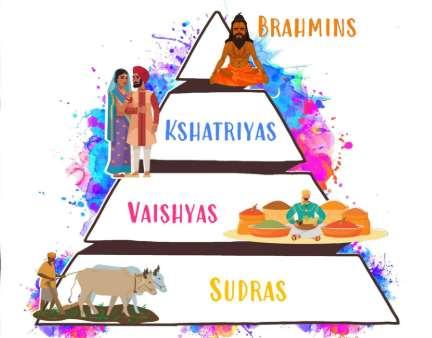
The Brihadaranyaka Upanishad (of Shukla Yajurveda) gives this account. “In the beginning there wasonlyonevarna,thatis,Brahmin. It could not fulfill the needs of society and so it created kṣatriya, thewarriorwing”.“Eventhiswasnot adequate and so it created the tradingwingcalledvysya.Whenthis toowasnotcomplete, itcreatedthe wingoftheworking classwhichwas called śūdra and Pushan, which meansonewhofeedsandnourishes thesociety.
The Rig Veda visualizes the whole cosmos as a living being (virāṭ) and says this: “Brahmin became the mouth (spokesperson for the society), kṣatriya, the warrior became the shoulders, the vysya became the thighs (the support structure)and śūdra formedthefeet (fordifferent services)”. Thisisthenormal divisionofworkin anypresent-day society.Itisthesocalled intelligent minority who become the spokespersons and policy makers. These positions are attained by individual aptitude and calibre.
Krishna says clearly that the categorization into varna and allocation of duties is according to
guna-s, the built-in aptitudes and qualities. The commentators, particularly, Nilakantha is very emphatic about theguna-s.Hesays that if a Brahmin does not possess the qualities as defined for him, he should be deemed a non-Brahmin andputintheappropriate category. Ifa śūdrahasthemerit andqualities expectedofaBrahmin,heshouldbe categorized asBrahmin.
Theconceptof‘dharmaʼiscentralto Hinduism. The four human goals (Dharma, artha, kama, moksha) are so designed that the human being is allowed to pursue his needs in accordance with dharma, while beingon thepath ofmokṣha.
An important lesson in the Upanishad is that you haveto obey thelawofthelandwhereveryougo. ‘Wheneverindoubt,followwhatthe righteous, self-less andenlightened men do in a societyʼ, says the Taittiriya Upanishad.
Several things in the world cannot be scientifically validated. However, theirusefulnessisseen.
Hindus have sixteen samskāra-s –purifying rituals – starting from the time a person enters the motherʼs wombtilldeath.Thefirstritualstarts even when a child is in the womb.
There are rituals after childbirth, ritual when the child undergoes initiation into studies, ritual relating to marriage and so on till the last ritual relating to death of a person. Sociologists call these rituals the rites ofpassage.
Inanutshell:
• Hinduism is the most ancient surviving religion in the world, datingbacktoatleastfivethousand years.
• It was not started by a single prophet. The ancient seers, whose practice was to renounce the world and spend their time in contemplation, hadrevealedcertain eternal truths.
• It did not originate in a strife situation. It evolved in a peaceful situation, in a well-developed civilization when philosopher-kings ruled.
•Assomeone putit,Hinduismisnot comparable to a building built by one person, but it is like a banyan tree which grew over a period with several branches andaerial roots.
• It is a unique religion (apart from Buddhism and Jainism) where religion has evolved from philosophical reasoning.
•Unlike anyotherreligion ittalks of
theevolution ofuniverse,formation of living beings and the formation ofmindandsenses.
• Wedo not agree with the view of Biblical scholars that the universe wascreatedin4004BC.Instead,our textstalkintermsofbillionsofyears andseveral cycles ofcreation.
• It is probably the only religion which urges a person togobeyond religious textsanddiscover oneself.
• Hindu child can be proud that as per Hinduism all religions are equally valid and there is no blasphemy if someone visualizes oneʼs owndeity inanymanner.
• God can be worshipped in any form i.e. in the shape of a yantra (a diagrammatic representation on a metallic sheet), mantra (spoken words), idol or symbol of any type. These are only a medium for achieving concentration and purification of mind, and for contemplation.
•Wedonot worship different Gods but contemplate on the same truth indifferent forms.
•Godisnotvindictive orjealousand does not have any favorite race or tribe.
•Hinduism does not stopatamere intellectual level of understanding
of reality, but it involves internal transformation, total negation of the ego and becoming Brahman oneself. Atthe philosophical level it says that the individual is nothing elsethanthe Supreme Brahman.
•Religion andritual areacceptedas a lower degree of reality whereas philosophical doctrine and knowledge of the Self are the highest degree ofreality.
• Dharma, though called eternal ethics, is not inflexible. There are certain unchanging aspects of dharmaliketruth,compassion, nonviolence, etc., but there are changing aspects in human behavior indifferent situations.
• We are not a converting religion, because the Vedas admit of different forms of worship. Hence, we never invaded any land nor forcedourreligion onthem.
• It is a religion (along with other Indian religions Buddhism and Jainism) which does not have confrontation with any other religion.
writers) vulgarizing Hinduism. Hence it is needed for parents to have some idea of the secondary textstoo.
• Let religion not be a burden on your child. It can be fun. Visiting a temple, listening to some stories etc., can be done in a casual and natural way. The idea is to build up the right samskāra-s. The word samskāra, besides meaning a purifying ritual, also means a disposition ortendency. Thisisbuilt overaperiod.
• Children imitate the parents. We shouldhavesomereligious regimen athome. Hindu housesnormally do have a prayer corner. At least a few minutes adaycanbe earmarked for prayer.
Aword toparents:
We must be aware that a lot of adverse literature isbeingproduced by writers (particularly western
• We may keep the booklets which we normally get from the Ramakrishna Mission, Chinmaya Mission or T.T.D., and try to know them.
•Every householdcanhave(atleast
in prose texts) Ramayana, Bhagavatam andMahabharata.
• We may watch devotional programs at least for some time on TV so that the children too may watch by default.Likewise, acouple of devotional journals can be on yourtable.
• It is also good for parents to practice someyoga andprānāyāma.
• It will also help if you can teach some verses (from the śataka literature) tochildren.
•Thestories from Panchatantracan be told to introduce the idea of symbolism.
• Children will grow with selfconfidence when they know the basic philosophical ideas of our religion.
• Too much of orthodoxy on our partmaycreatenegative tendencies in the child. We need not be too strict about religion.
•Know yourchild. Theimpact of fellowstudentsandtheteacherswill be high. The child will trust us and share with us only when we are friendly. This friendly relation will helpustogive proper advice.
• Knowledge of Sanskrit will enable the child to understand our egalitarian tradition.
Best Regards kvchellappa 77116th MainBTMIIStage MicoLayoutBengaluru 560076
080 42069856/ 74114 60658
Referring to the idea of Donald Trump and Greenland, there is a famous history there. Back in 2019, during his first term, President Trump expressed a serious interest in the United States purchasing Greenland from Denmark, comparing it to a "large real estate deal."
While the Danish government and Greenlandic officials clarified that the island was not for sale, the proposal highlighted a few key strategic interests:
• Geopolitical Strategy: Itslocation
• in the Arctic is vital for national security and monitoring polar activity.
• Natural Resources: Greenland is richinminerals, includingrareearth elements.
• Military Presence: TheU.S. already maintains the Pituffik Space Base (formerly Thule AirBase)there. Sincereturning toofficein2025, the administration's focus on Arctic sovereignty and competition with other global powers has kept Greenland a point of strategic interest, even if talk of a literal
"purchase" has cooled in favor of diplomatic and economic partnerships.
As of January 2026, the situation regarding Greenland has escalated into a major international diplomatic standoff, often referred toas the "Greenland Crisis." Since returning tooffice,President Trump has moved beyond his 2019 "real estate" rhetoric, framing the acquisition of Greenland as a nonnegotiable national security necessity. Here is the current situation asoflateJanuary 2026: 1. The "Greenland or Tariffs" Threat
On January 17, 2026, President Trump announced a significant escalation: he intends to impose punitive tariffs of 10% to 25% on several European allies—including Denmark, Germany, France,andthe UK unless they facilitate the "complete and total purchase" of Greenland.
• The Deadline: The administration hasstatedthatifadealisn'treached by June 1, 2026, tariffs will rise to 25%.
• The Justification: Trump argues that Denmark is unable to protect GreenlandfrompotentialRussianor
ChineseencroachmentandthatU.S. control is essential for the "Golden Dome"missile defense system.
2. European and Danish Resistance
The Kingdom of Denmark and the semi-autonomous government of Greenland have remained firm that theislandis notforsale.
• Military Buildup: In response to U.S. rhetoric, Denmark and several NATO allies have launched "Operation Arctic Endurance," increasing their military presence in the region to signal that they will defend Greenlandʼs territorial integrity.
• Diplomatic Rupture: European leaders havedescribed thesituation asthe greatest transatlantic crisis in generations, with some calling the U.S. approach "19th-century imperialism."
3.Domestic Pushback intheU.S. Despite the administration's aggressive stance, there is significant internal opposition:
• Public Opinion: Recent polls (January 2026) show that while some support the idea of a purchase,only about 8% to17% of Americans support using military
force or coercive measures to acquire theterritory.
• Congressional Action: Abipartisan delegation of U.S. lawmakers recently traveled to Copenhagen to reassure Danish officials of continued support for their sovereignty, explicitly distancing Congress from the President's threats.
4. Strategic Interests: Rare Earths and theArctic
The core of the interest remains Greenland's massive deposits of rare earth elements and its position along emerging Arctic shipping lanes. The U.S. ExportImport Bank recently signaled interest in a $120 million loan for the Tanbreez rare earth mine in Greenland, marking a more traditional economic attempt to secure resources amidst the diplomatic storm.
TheGreenlandic government, ledby Prime Minister Múte Bourup Egede, is playing an incredibly sophisticated "resource diplomacy" game. Ratherthan just saying "no," they are using their vast mineral wealth to create a shield against a forcedsale.
Here is how Greenland is currently usingitsRareEarth Elements (REE) as leverage in the 2026 negotiations:
1.The"Diversification" Strategy Greenland is actively courting nonU.S. partners to ensure they aren't dependent on American investment.
• The EU Partnership: In Davos, Greenlandic officials signaled a preference fortheEU's"Critical Raw Materials Act," framing their minerals to help Europe achieve green energy independence rather thanaU.S.strategic asset.
• Neutrality: Bykeeping theirmining contracts competitive and open to various international stakeholders (excluding certain high-risk entities to appease security concerns), they prevent anyonenation fromhaving "ownership" through debt or infrastructure.
2.Legal Sovereignty as aBarrier
The Greenlandic government is emphasizing that under the 2009 Act on Greenland SelfGovernment, they have total control over their own mineral resources.
• They are usingthis legal framework toarguethateveniftheU.S.wereto
"buy" the territory from Denmark, themineral rightswouldstay with the Greenlandic people, not the new sovereign. This effectively devalues the "deal" for the Trump administration.
3.The"Environmental Brake"
Greenland has a history of being cautious with mining (such as the 2021 banon uranium mining).
• Strategic Delays: The government is usingstrict environmental impact assessments to slow down U.S.backed projects while they negotiate better terms. Theyʼve signaled that any "forced" acquisition would lead to a total freezeonminingpermits,effectively lockingtheU.S.outoftheresources they wanttosecure.
4. Direct Negotiation vs. "The Purchase"
The Greenlandic government is offeringa"middle path": Access
withoutAcquisition.
• They are proposing a series of Long-term Supply Agreements where the U.S. gets "preferred buyer" status for minerals like neodymium and praseodymium (essential for EVs and defense) in exchange for the U.S. dropping the "purchase" rhetoric and the tariff threats.
Current Sentiment in Nuuk (Greenland's Capital)
The mood in Nuuk is one of defiance but also economic opportunism. They know they have what the world needs for the 21stcentury economy. Prime Minister Egederecentlystated:"Weareopen forbusiness,butwearenotforsale. Youcanbuyourminerals,butyou cannotbuyourfuture."
Advaita is the theology enunciatedby the8th century South Indian sage named Shankara andis rooted in the ancient Vedic “Tat Twam Asi”(Thou ArtThat)maxim.
The eminent American historian WillDurant,inVolume Iofhis‘Story of Civilizationʼ describes Shankara as the “greatest of Indian philosophers and at once the Aquinas and Kant of India” and states “Like Aquinas, Shankara accepts the full authority of his countryʼs scriptures as divine revelation and then sallies forth to find proofs in experience and reason for them. Unlike Aquinas, however he does not believe that reason alone can suffice for this task. It is not logic that we need, says Shankara, it is Insight, the faculty of grasping at once the
essential out of the irrelevant, the eternal out of the temporary. Shankara establishes the source of his philosophy at a remote and subtle point, never quite clearly visioned again until a thousand years later when Kant wrote his “Critique of Pure Reason. For Shankara,Brahman isthecauseand effect, the timeless and secret essenceofthe world”
In his Brahmasutra Bhasya, Shankara sources and affirms his thesisthus:“Itisfromtherealization that the selfis theBrahman, that all miseries are ended and the aspiration ofmanisachieved”.
In his Dakshinamurti Stotram, Shankara declares “Just as the rays of the light hidden in a pot with many holes, emanates from those holes, so the self-manifests itself through the eyes and other sense organs giving rise to the notion I know. Every object shine (i.e.isown afterthe self-manifests itself.)
What all the above philosophical aphorisms mean in simple terms is that ‘Godʼ, the ‘Creatorʼ is not all the many images and idols made of him and worshipped. He is the ‘Vital Principleʼ/Elan Vital” (Atman), the ‘Supreme/Cosmic Energyʼ(“Maha Shakti”) that pervades and sustains the whole universe, in which every aspect is a manifestation of Energy. Esoteric and incredible as this may seem, its validity can be simply illustrated by analyzing through spectroscopy a ray of sunlight and the light from a small little candle. Both will break into the same rainbow spectrum even though the sources of their respective lights differ in intensity by trillions of times, thereby establishing they are ofthesamenature. Whattomost is only sunlight and shadow, white or black, hasin factmuchelse ofgreat beauty/worth ensconced within it. Until and unless we comprehend this, detach ourselves from ephemeral things and focus on the Divine Spark within us, we will be chasing shadows, missing the substance, and be mired in an endless cycle of birth and rebirth, with allitsattendant travails.
This Truth is clearly revealed to Arjuna by Lord Krishna in the Bhagwat Gita, which embodies the essence of Hinduism, in these words: “O Arjuna, I am the selfresiding in theheart of every being. I am their beginning, their life span andtheirend.Ofallbeings Iamthe seed. Whatever exists in this world, living or non-living, none of them can be, if I were not. Of the eight VasusIamAgni” Thatthe“essence”withinusis energy rather thanmatter hasbeen well established by the energy mapping of the human body by Indiaʼs “Chakra” sages, These Chakras (wheel in Sanskrit), which are psychic-energy centres, are the focal points where psychic forces and bodily functions interact with each other. Among the estimated 88,000 chakras in the human body, six major ones located roughly along the spinal cord and another onelocatedjustabove thecrown of the skull are of prime importance. Themostimportant ofthesearethe lowest chakra (muladhara), located at the base of the spine, and the highest(sahasrara),atthetopofthe head. The muladhara encircles a mysterious divine potency
(kundalini) that the individual attempts, by Yogic techniques, to rise from chakra to chakra until it reaches the sahasrara and selfillumination i.e. enlightenment results.
Inhis‘MysticismandtheNew Physicsʼ, Michael Talbot writes “Since the time of the ancient Greeks,WesternSciencehastriedto understand matter by dividing and re-dividing it in efforts to discover its fundamental building blocks. Einstein brought us closer to figuring out the fundamental building blocks of matter when he discovered that the primordial substance of the universe is not ‘matterʼ but waves, particles and quanta, in other words energy in various minute forms. …The Hindu concepts of ‘Nadaʼ and ‘Binduʼ are identical to the concept of matter being both a wave and a particle. Translated roughly ‘Nadaʼ means movement or vibration; ‘Binduʼ literally means a point, and according toHindu belief when the universe finally collapses, it collapses into what is known as the ‘Shiva Binduʼ. This bears a striking similarity to modern physics. The macrophysical blackhole and the
‘ShivaBinduʼ are identical.
In a concurrent parallel development to the revolution in physics brought about by Einstein, Max Planck and others, Neils Bohr and Erwin Schroedinger opened new avenues in biochemistry. The former had speculated about the complementarity of physics to biology. The latter wrote a book in the late1930s titled‘What islifeʼ,in which he postulated that the gene wasnotamere physicalorchemical substance but also an information carrier. This book stirred much new interest in the biological sciences and several scientists moved from physics to genetics as the new scientific frontier and described themselves as molecular biologists. The first breakthrough in this new field came in the early 1950s, when Linus Pauling discovered the structure of the protein molecule. Subsequently James Watson and Francis Crick discovered the precise architecture of DNA, and a decade laterdiscovered, with the aidof the new scientific device of X-ray crystallography, the internal structure of molecules and how exactly genetic information is encoded in chromosomes, which
are DNA molecules. Further advances in this ever more minute field have led to the discovery that the basic characteristics of all living creatures, from bacteria to humans, are encoded in their chromosomes, using the same code script. Molecular Biologists have thus discovered the basic alphabet of a truly universal language oflife.
The eminent astronomer Sir James Jeans had broadly indicated intheearly fortiesthat“Today there isawidemeasureofagreement that thestream ofknowledge isheading towards a non-mechanical reality, and the universe begins to look more like a great thought than like agreat machine"
Paul Davies, well known physicist andauthorof ‘TheCosmic Blueprintʼ and ‘The Mind of Godʼ puts the same idea this way “The very fact that the universe is creative, and that its laws have permitted complex structures to emerge anddevelop tothe point of consciousness –inotherwords, that the universe has organized its own self-awareness –is for me powerful evidence that there is something going onbehind itall. The impression of design is
overwhelming.” Nobel prize winningphysicistLeonLederman,in hisbook ‘TheGod Particleʼwrites in thesame strain.
In the 1990s, Dr Andrew Newberg of the University of Pennsylvania conducted several scientific experiments on those in ‘transcendental statesʼ and even made SPECT (single photon emission computed tomography) imagesofthebrainofthoseinthese states. In his book, ‘Why God wonʼt goawayʼ hewrites “There is noway to determine whether the neurological changes associated with spiritual experience mean that the brain is causing those experiences…or instead, is perceiving a spiritual reality. However, itisafactthatifyoublock sensory input to the ‘orientation association region ofthebrain,asis done during the intense concentration of meditation, you prevent the brain from forming the distinction betweentheselfandnon self, and thus perceive the self as intimately interwoven with everyone andeverything”
All the abovementioned scientific discoveries are very much the “other side of the coin” of
Shankaraʼs Advaita, which is based ontheancientVedic “Thatthou art” affirmation. All of creation, whether animate or inanimate, solid or liquid, water orvapour, airorcloud, sunshine or shadow, are all manifestations of the creator, of his infinite wisdom and energy, his protean variety, his supreme allpervading consciousness and cosmic master plan, in which every created being and substance is intimately interconnected, and that all perception to the contrary is ‘Mayaʼ, which is both illusion and ignorance.
Interestingly Gandhi,whowas as much an Advait in as a Sanatani Hindu defined his Satyagraha in spiritual energy terms. “There is an indefinable mysterious power that pervades everything…a livingpower that is changeless, that holds all together, thatcreates,dissolves and recreates. That Power is God…This God is a Living Force. Our life is of thatForce. ThatForce resides inbut is not of the body. He who denies the existence of that great Force denies to himself the use of that inexhaustible Power and thus remainsimpotent. ……Satyagraha is soul force pure and simple and
whenever and to whatever extent there isroom for theuseof armsor physical force, there and to that extent there is so much less possibility for soul force. These are purely antagonisticforces,andIhad full realization of this antagonism even at the advent of Satyagraha……. Satyagraha connotes the living Law of Life. The law will work, just as the law of gravitation will work, whether we accept it or not. And just as a scientist will work wonders out of various applications of the laws of nature, even so a man who applies the law of love with scientific precision can work greater wonders”
Based on the above, Gandhian scholar Michael Sonnleitner concludes “A sufficiently developed satyagrahi could render venomous reptiles harmless or set a hungry tiger to peace. Gandhiʼs citing of numerous satyagrahi images thusincludes the exemplary figure of Daniel, who on entering the den of lions, was left unharmed by them…. No force could withstand the light of the world,theforceofGodembodied in humankind…. Whether or not
Gandhi is correct in his formulations, however, mustremain an issue of incredible importance, on which our more personal reflections may, in time, shed greater light.”
Gandhi had also stated: “Scientists tell us that, without the presence of the cohesive force amongst the atoms that comprise this globe ofours, it would crumble to pieces, and we would cease to exist. Even as there is a cohesive force in blind matter, somust there be in all things animate and the name of that cohesive force is love….Butwemustlearntousethat force among all that lives…. Where there is love there is life; hatred leads todestruction. The rishis who discovered the law of non-violence amid violence, were greater geniuses than Newton…”. It is notable that Gandhiʼs “LivingForce” which can provide “inexhaustible power” to every human soul, is remarkably akin to Einsteinʼs E = MC2 formula which reveals that even the tiniest particle ofmatter is
compacted energy which when released could provide enormous quantities of power. (According to Einsteinʼs equation, mass and energy are interchangeable. The energy (E) in any substance can be foundbymultiplying itsmass(M)by the speed of light (C) squared) Interestingly, thetwoconceptswere enunciated within a year of each other - 1905 and 1906! It is also notable that Gandhi described his “theory” as “science in the making” adding“Mytechnique ofnonviolent struggle is in the same stage as electricity in Edisonʼs time. It needs toberefinedanddeveloped”
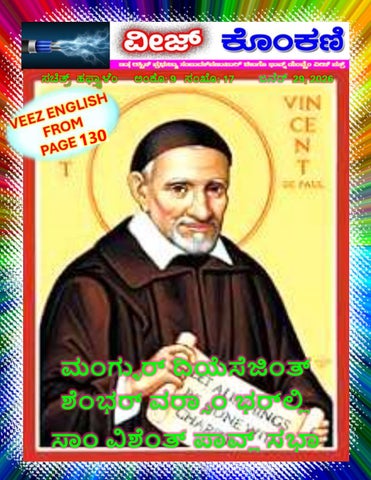
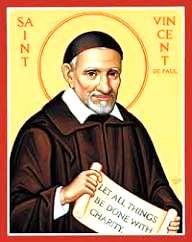
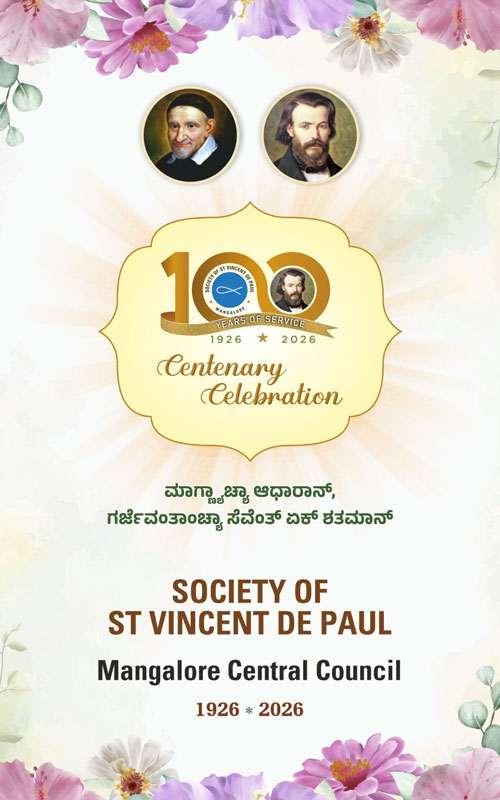
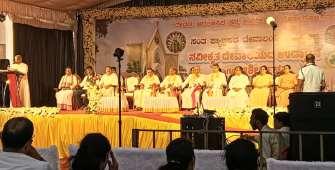
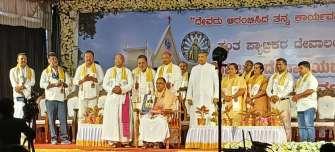
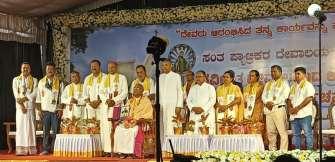
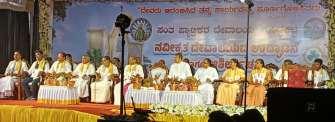
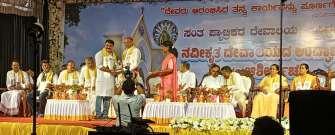
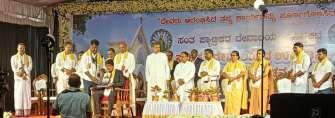
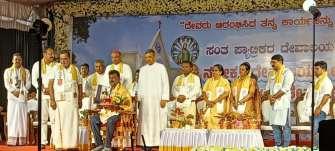
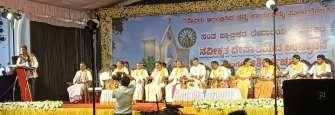
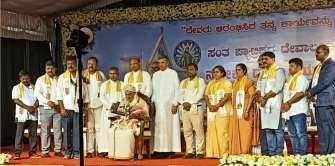
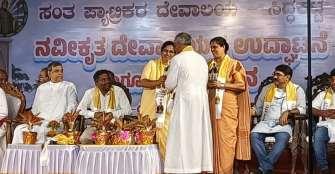
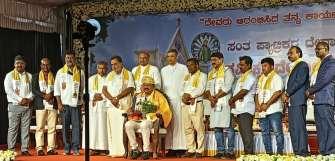
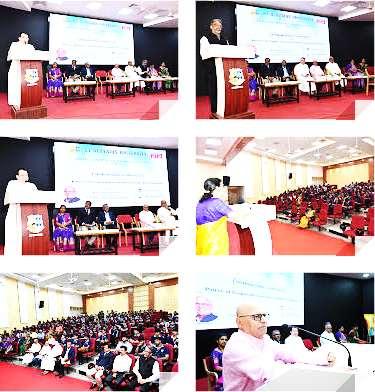
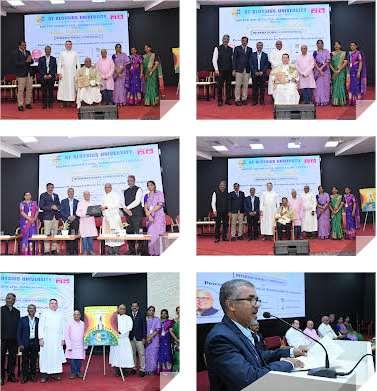
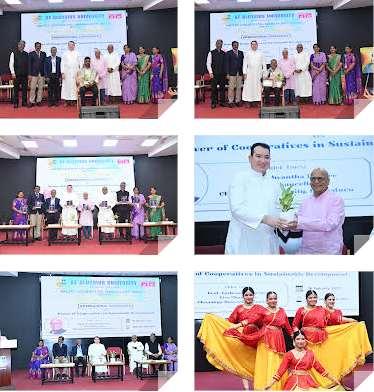
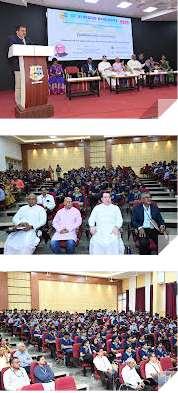
St Vincent De Paul Society to Mark
100 years in Mangalore Diocese on Jan 25
Daijiworld Media Network –Mangaluru
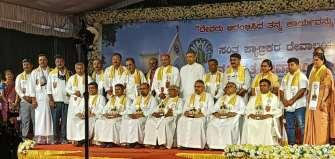
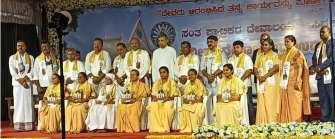
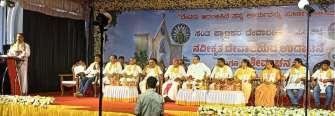
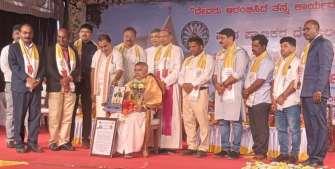
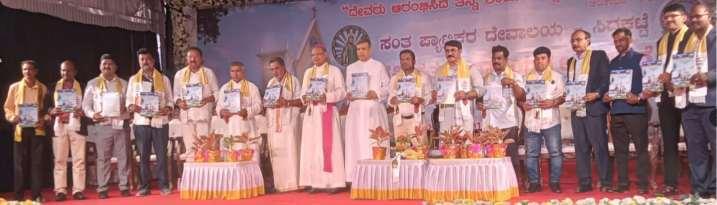
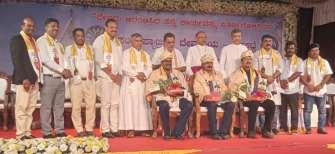
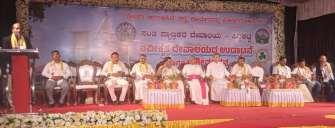
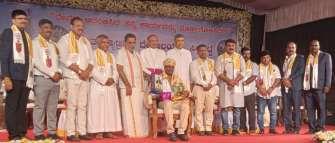
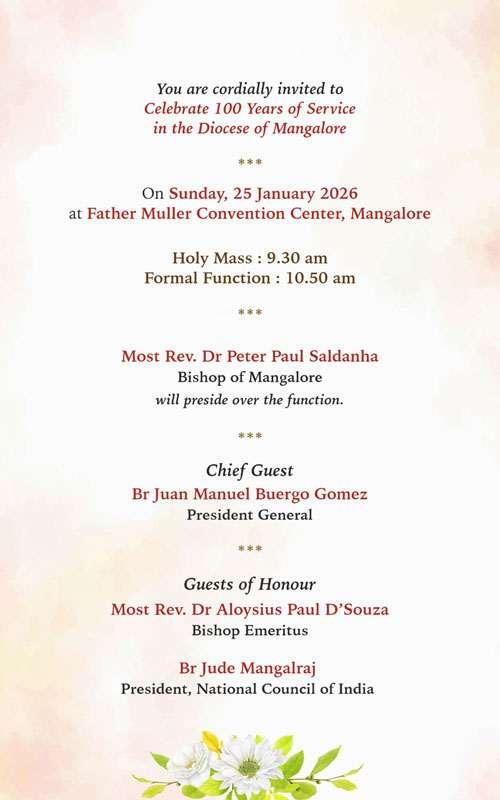
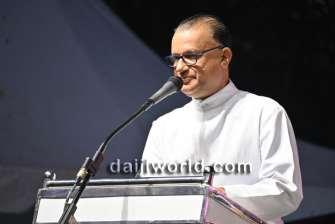
Mangaluru, Jan 22: The St Vincent De Paul Society (SVP), an international service organisation popularly known as SSVP, is celebrating100yearsofitspresence in the Mangalore diocese. The centenary valedictory ceremony will be held on Sunday, January 25, at the Father Muller Convention Centre.
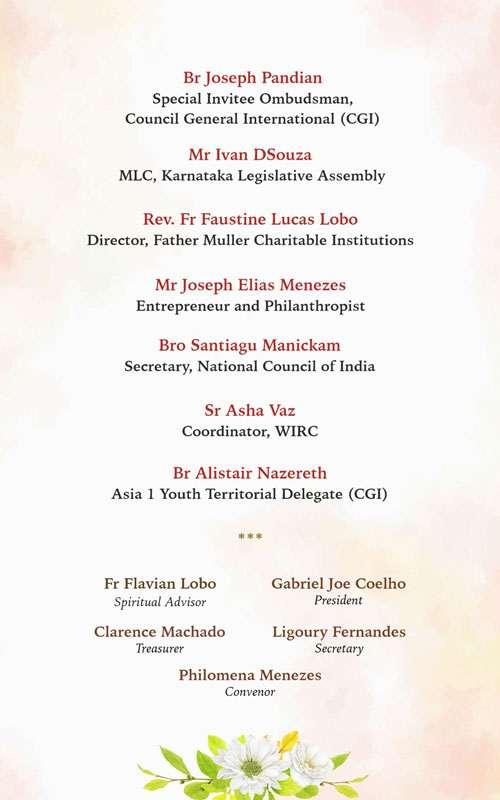
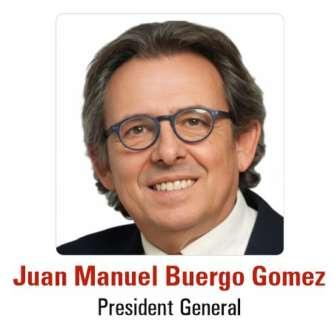
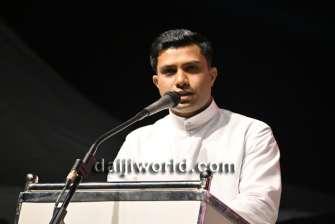
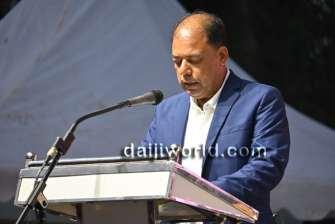
The programme will be presided over by the DrPeterPaul Saldanha, bishop of Mangalore. The international president of SSVP, Juan Manuel Buergo Gomez, will
arrive from Spain andparticipate as thechiefguest.TheDrAloysiusPaul DʼSouza, bishop emeritus of the Mangalore diocese, JudeMangalraj, president of the SSVP National Council, and Joseph Pandian, international ombudsman, will be present asguestsof honour.
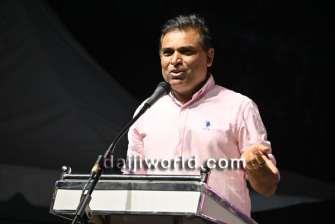
Members of the Karnataka Legislative Council Ivan DʼSouza,
director of Father Muller Charitable Institutions Fr Faustine Lucas Lobo, and renowned entrepreneur and philanthropist Joseph EliasMenezes will also grace the occasion as guests of honour. In addition,
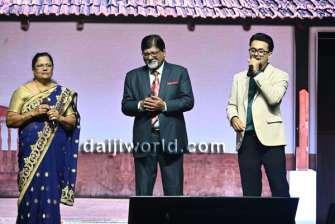
Santiago Manickam, national secretary of SSVP, Asha Vaz, and youth representative Alister Nazarethwillbepresentonthedais.
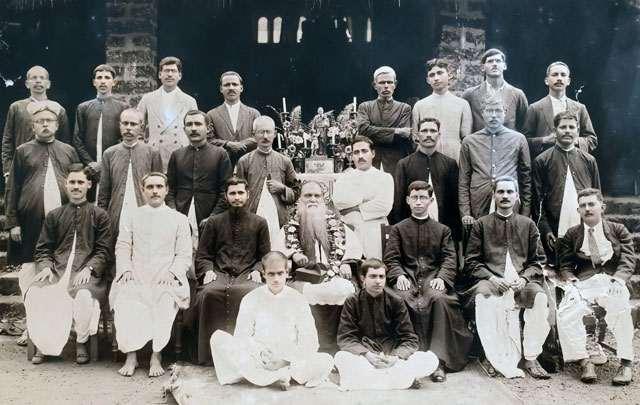
The St Vincent De Paul Society, the worldʼs largest Catholic lay service organisation, was established in Mangaluru at Bendur Church on
January 10, 1926. In the same month, the Milagres unit was formed, followed by twomore units in May 1926 at Rosario Cathedral andBejai church.
Thecore mission ofthe StVincent
De Paul Society is to visit the poor and the needy and provide them with necessary assistance while strictly maintaining confidentiality and dignity. At present, under the Mangaluru Central Council, there are111units,eachadoptingatleast five families in their respective
neighbourhood andcaringforthem as members of their own family. Currently, 623 adopted families
comprising 1,765 family members are being supported. With a total strength of 1,618 members across 111 units and two youth units, the SSVP continues its service to the poor quietly andwithout publicity. In collaboration with Father Muller Medical College Hospital, Mangaluru, andThumbay, amajor
project providing free medical treatment and dialysis care to members of adopted families is beingsuccessfully implemented.
To commemorate the centenary, the St Vincent De Paul Society has launched two major initiatives. ‘Shikopʼaimstoprovide educational support for higher studies to about 405 students from SSVP-adopted families, while ‘Aasroʼ offers financial assistance to 100 families for the construction or repair of theirhouses. During the valedictory function, the SSVP–Trinity Kidney Care Project will also be inaugurated with the support of
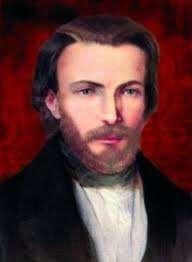
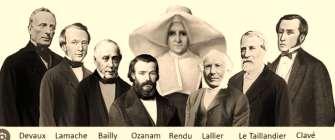
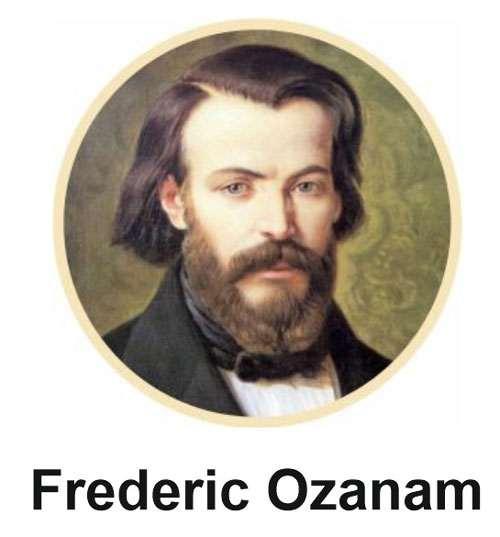
Joseph E Menezesʼs Trinity Medicare Services Trust, Udupi, to assist kidney patients with medicines anddialysis. The Society was founded in1833 in Paris, France, by Blessed Frederic Ozanam, then aged 22, along with six companions. Today, it is present in 158 countries worldwide, with over 800,000 members and more than one million volunteers dedicated to serving the poor and marginalised. In India, the Society was established in Mumbai in 1863 and currently has 7,225 units with 65,546 members.
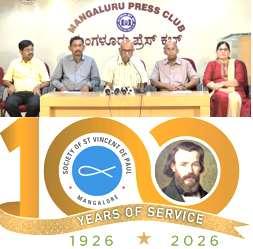
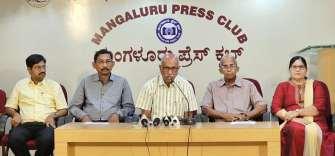
Addressing apress meetingheldon
Thursday January 22, at the Press Club, Mangaluru, the details of the centenary celebrations were shared by Joe Coelho, president, Central Council; Ligoury Fernandes, secretary, Central Council; Clarence
Machado,treasurer,CentralCouncil; Philomena Menezes, convener, Centenary Celebration Committee; and Loyd Rego, convener, Media Committee.
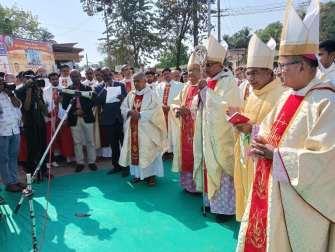
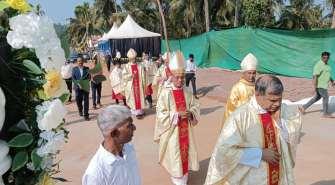
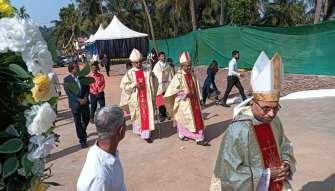
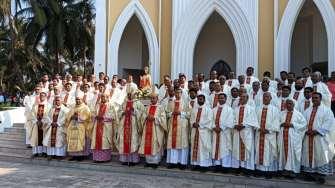
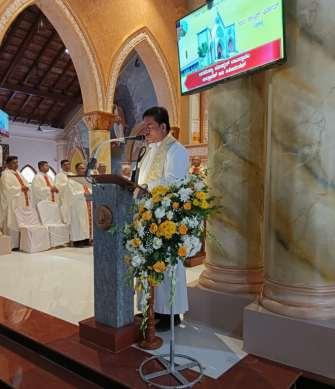
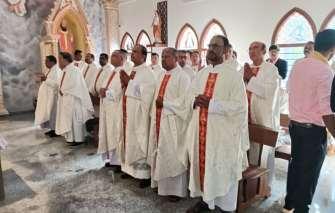
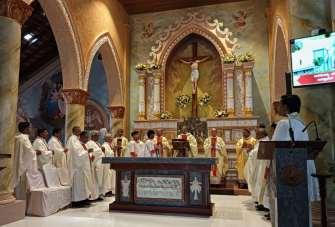
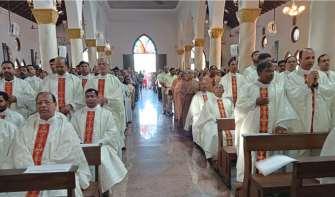
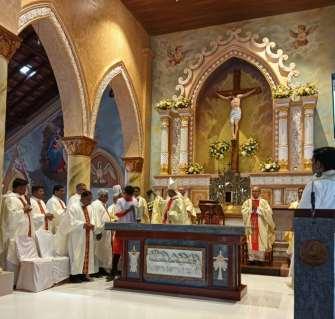
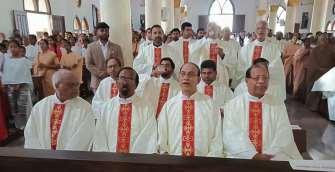
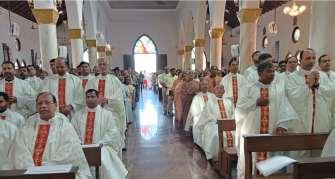
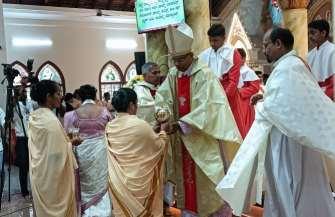
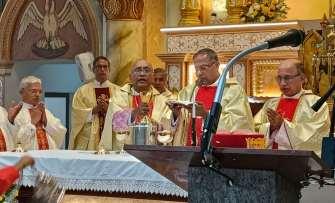
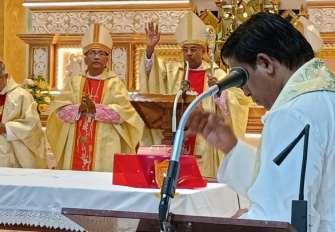
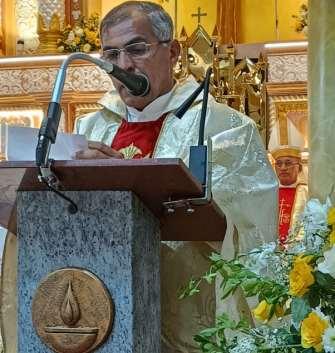
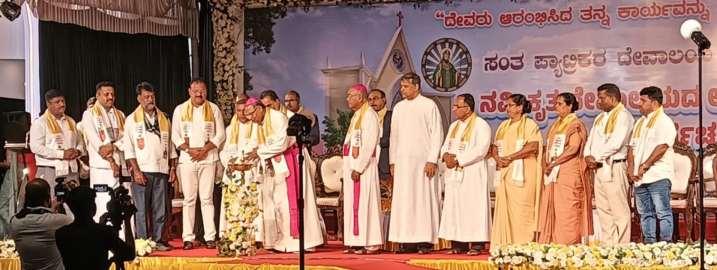
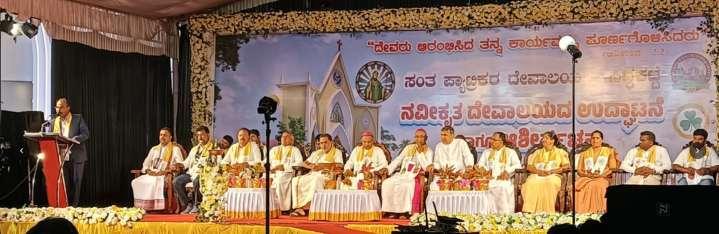
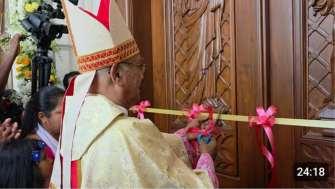
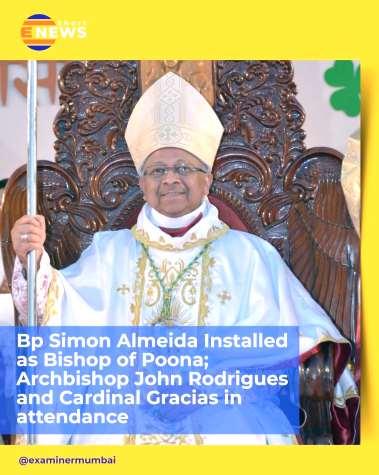
The solemn episcopal ordination and installation of the new bishop took place on Saturday, January 17, 2026, at 4:30 p.m. at St. Patrickʼs Cathedral, Pune.The ceremony was presided over by His Eminence Filipe Neri Cardinal Ferrão, ArchbishopofGoaandDaman,who served as the principal consecrator. Archbishop John Rodrigues of Bombay and Archbishop Elias Gonsalves of Nagpur were the coconsecrators.
The celebration was also attended by His Eminence Oswald Cardinal Gracias, Emeritus Archbishop of Bombay; bishops from neighbouring dioceses; priests, religious, andmanythefaithful.The Apostolic Nuncio to India Archbishop Leopoldo Girelli was also present.
This episcopal ordination was of special significance for the Diocese ofPoona,asittookplaceafteragap of 49 years. The previous episcopal ordination in the diocese was held in 1978, when Bishop Valerian DʼSouza was ordained. The bishops who later served the Diocese of Poona Bishop Thomas Dabre and Bishop John Rodrigues were transferred from the Diocese of Vasai and the Archdiocese of Bombay, respectively.
Bishop Simon Almeida was born in Gass, Bhatori, Vasai. He completed his schooling at St. Gonsalo Garcia Primary School andHoly CrossHigh School, Nirmal. He began his seminary formation at Prakash Bhavan (Minor Seminary), Pune, in
1978, and completed his philosophical and theological studies at St. Pius X College, Mumbai. He was ordained a priest on April 1, 1990, for the Diocese of Poona.
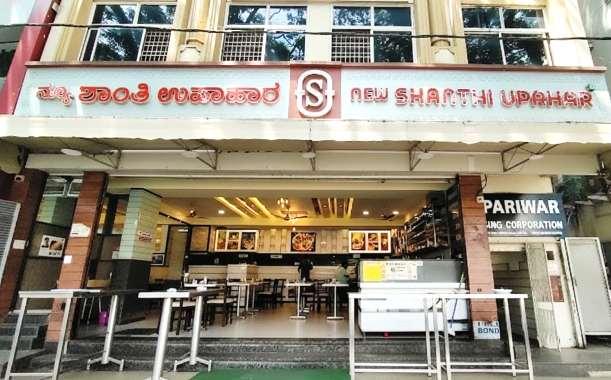
Saturdays at Shanthi Upahar
Itwasanordinary daywhenIvisited one of my relativesʼ homes. After the initial conversations, we moved on to dinner. That was when the mother calledheryoung sontojoin us,buthepolitely declined. Theboy washardly tenyears old. With an irritated expression, the
motheraskedwhyhedidnʼt wantto eat,especially when the spread was quite vast home-cooked delicacies along with a few items brought from outside, including some of his favourites. He refused plainly, saying he no longer liked anyofitandwantedtoorderaroll
instead.
Not wantingtocreate ascene,his parents allowed him to do so. He quickly placed anorder on Zomato. As we sat at the dining table and began eating, his order arrived. He joined us with the roll and started eating. When his father casually asked how it was, the boy simply nodded and said it was “okay.” He finishedquickly, got up, andrushed tohis room.
I was a little shaken by what I had witnessed. As I savoured the food onthetable an arrayofvegetarian and non-vegetarian dishes—the boy hadshown nointerestinanyof it. Even after choosing something entirelyofhisownliking, heseemed dissatisfied.
Lostinthesethoughts,Ifinishedmy meal. After exchanging final greetings, we left. Sitting in the car, with a heavy stomach and drowsy eyes,thescenelingeredinmymind.
AsIfidgeted, struggling tokeepmy eyes open, Istared out the window when a glimpse of the Udupi restaurant caughtmy attention. The sight brought a quiet, unexpected smile tomyface.Igently closedmy eyes and drifted down memory lane.
When I was little, I wasnʼt very familiar with restaurants. The only outside foodIeverhadwas puffs my favourite though only occasionally.Sometimes Iwouldget a few pieces of kebab or a plate of biryani. Since my mother worked as anurse,thereweredayswhenlunch was arranged for the staff, and she would quietly bring home a few delicacies for me. Those moments remain some of my fondest memories, asIwouldeagerlywaitto taste something exotic or different from whatweateathome.
Words like pizza and burgerwere completely alien to me; I had no idea what they were. To me, cakes meantthesimple sponge cakefrom IyengarBakery.
Once, when my fatherʼs brother came home from abroad, he persuaded myfathertotakemeout occasionally. He reminded him that Iwasgrowingupandmight wantto explore and eat outside food.
Personally, I didnʼt feel that way my mother was an excellent cook, andIloved herfood. Still, my father took his brotherʼs advice to heart and promised that he would take meout.
In the same year, a new Shanthi Upahar opened in our area. I was born and brought up in South Bangalore. It was a regular practice formy dad,mom, andme toattend Saturday evening Mass every week and then return home together. In the beginning, since my dad only had a bicycle, it was difficult for all of us to ride, so we usually walked. Later, when my dad bought a TVS, westartedgoing onit.
One Saturday, while returning from Mass, we noticed the restaurant. Thatwas whenmy dadstopped the vehicle and took us inside. My joy knew no bounds I jumped with excitement and immediately ordered a masala dosa. From that day on, it became a ritual for the three of us: finish Mass and then headtotherestaurant forabite. There were still restrictions no full meals or heavy food so my choices were limited to chaat or traditional South Indian delicacies likedosa,idli,orvada.Evenso,itwas more than enough for me. Every week, Ieagerly waited forSaturday: I would attend Mass, come back, visit the restaurant, and enjoy my regularmasaladosa orbhel puri. Asachild,thisfeltlike thegreatest
gift.Thesamedosaneverboredme; thesheerexcitement ofsittinginthe restaurant and savouring the dish always brought asmile tomyface.I loved those little moments we shared.Ilovedthatdosaandbhel itfeltlikeacelebration.NewShanthi Upahar wasmy childhood hangout, the place I longed to visit and cherisheddeeply.
This continued for many years as I grew and entered my teens. Although we progressed slightly occasionally dining at a bigger restaurant or buying something new—visiting Shanthi Upahar remained a constant. Through it all, I cherished the simple food I enjoyed therethe most. Thinking about Shanthi Upahar brought a quiet smile to my face and carried me back to simpler times. It made me reflect on how todayʼs children are surrounded by endless choices. They have everything in abundance easy access to outside food, frequent restaurant outings, and countless options yet true happiness often seems elusive.
When we were young, happiness was much simpler. A single chocolate,asmallpieceofcake,ora
masala dosa at a humble upahar was enough to fill our hearts with joy. Those moments were priceless. In many ways, we truly had more with somuchless.
SonalLobo,Bangalore
Tulunadu-The Land of the Divine Axe
TuluisaDravidianlanguageofIndia spoken by an estimated 3 to 5 million native speakers worldwide. Most Tuluvas are natives on India's Southwestern coast, encompassing Karnataka's Dakshina Kannada & Udupi districts, and northern Kasaragod in Kerala. Historically Tulu language was existing even 2000-2500 BC. Other languages are also spoken in Tulunadu such as Kannada, Beary language, Konkani, Gowdas and some people speakMalayalamalso. Tulu language was one of the 5 Dravida languages- Tamil, Telugu, Kannada,Malayalam andTulu.Even though Tulu didnʼt come up much comparing to other languages, still
ithasitsown culture.Sincethe Tulu speakerʼs ratio was more, Tulunadu was called even before 2200 years. Earlier Tulunadu was spread from Rameshwaram to Ankola ending in western ghats ruled by Tuluva Dynasty. Currently its limited to the Coastal Karnataka encompassing theDakshina Kannada andUdupi districts of Karnataka and the northern part of theKasaragod district inKerala.
Asper themythology, it is saidthat Tulunadu is built by Parashurama, the 6th avatarof Lord Vishnu. When Parashuramacametodotapasnear Sahyadrihills,LordShivatoldhimto do tapas in Kudroli but there were full of water and ocean when
Parashurama asked ocean God to take back the water ocean refused, angerParashuramatookhisaxeand threw it, the ocean God got scared andtook backthe water till the axe layed down. This was how Parashurama created or built Tulunadu.
The ruling dynasties were the Alupa Dynasty is the longest-reigning native power (5th–14th century). Other major rulers include the Vijayanagara Empire (which had a Tuluva dynasty), the Keladi Nayakas andthe Chowtas (ledby thewarrior queen Rani Abbakka). A direct descendant ofProto-Dravidian, Tulu is one of the oldest Dravidian languages. While it uses the Kannada script today, its original script isTigalari (related to Malayalam) which is popularizing these days.
Tulunadu isrich withitsculture.
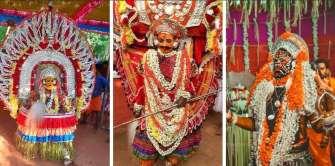
1) Daivaradhane (Bhoota Kolaspirit worship): is an amazing culture.Daivameansonestepdown from God. Daiva can become anybody like human, even animals, trees, serpents fishetc…..
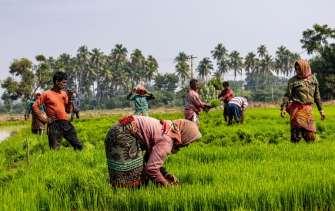
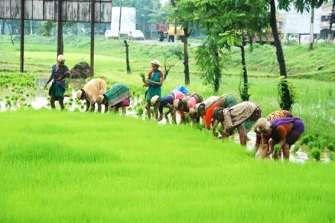
2) Nagaradhane: Snake worship is one of the unique traditions in coastal district. In Tulunadu snakes are not just seen as deities but an animal species which should be respected and protected for multi social reasons, snakes are with power, there a scared place called nagabana, which is the place for worshipping of lord snake. In Tulunadu, agriculture is dominant that too paddy is the main crop, in these fields snakes help in saving thecropfromrodents, thismayalso be thereason forworship ofsnake.
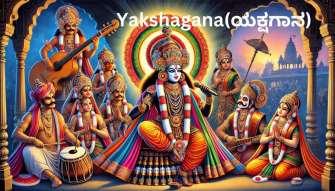
music, dialogue, and mythology with distinct regional styles which gives usentertainment.
5) Karadi Vesh andPiliVesha: This is another popular folk dance performed during Dasara and Janmastami in Tulu Nadu is Tiger Dance, Simha Dance and Bear Dance.Duringthetimeof Dasarato honour Goddess Durga, whose favoured animal is tiger, this dance isdone.
6) Kambala: A high-octane buffalo race held in slushy paddy fields, reflecting the region's deep agricultural roots and love towards the animals. It is believed that it must be celebrated to please the God for the good harvest. Also encourages topet theBuffaloes.
7) Santmari: Anannualfestivalof the parish region by Christian communities symbolizes the unity amongallthe religions.
The foodrecipes are amazing hereKori Rotti, Kori sukka with coconut, Neerdosa, Mangalore Buns, Golibaje, Pajemadupu, Kappa Rotti, Moode, Sajjige Bajil, Pulimunchi, Kadle Manoli, Pundi, Pathrode etc... At every home the day starts with anyofthese dishes.
Tulunadu isalsoacradle oftemples and bound to be a tourist pace. Lakhs of visitors come across Tulu Naduandenjoythebeauty. Famous temples are Kateelu Durgaparameshwari, Kukke Subramanya, Darmasthala, Bappanadu, Mangaladevi etc. Also, Tulu Nadu is surrounded by many beaches and multiplies the beauty.
Economically Tulunadu is grown high. It also has one of the highest literacy rates inIndia.
Itʼsourduty andresponsibility to
protect our culture, tradition, languages andthenature andtobe taught to our children. It should be carriedforournextgeneration. Letʼs also speak much our native languageandenrichourculture.We are blessed to be a part of this region.
-Roshan Dsouza, Kinnigoli
-Charles Lobo
Intergalactic Traveller's
By: Molly Pinto.
We are not victims of circumstances, but research students
Acknowledging this, is like a beacon in the dark
We are the answer to all your questions, even if you can't see it
Leading to dissatisfaction and endless soul searching
Comfortability will not expand us in any productive way
Comfort will not teach us humility and compassion
The higher one's horse, the harder is one's fall
Be kind before being judgmental, nobody is here to stay
We've heard or read this line, sometime or another
Learn from nature, watch the leaves, the storms, the sea
Unfortunately, poetry is not not everyone's cup of tea
And philosophy is even less attractive, yet holds the most clues
Comfort is only truly relished after it's earned by hard work
Comfort is only understood when one’s body is stretched
Suffering has a perfect plan, trust it and we won't go wrong
We're here on a mission, one of many, to master ourselves
By: Molly Pinto.
ST
The NCC Army, Navy andAirWings of St Aloysius (Deemed to be University), Mangaluru organized NCCAlumniMeet2025onSaturday, 27 December 2025 at 5 p.m. in Sahodaya Auditorum.
Dr Alwyn Dʼsa, former registrar, St
Aloysius College (Autonomous), Mangaluru was the chief guest of the programme. Sqn Ldr (Retd.)
Neville Tania DʼCosta, Indian Air Force was the guest of honour. Dr Charles V. Furtado, Director of Administrative block ofStAloysius
(Deemed to be University), Mangaluru was the president ofthe programme.
60formercadetsparticipated inthe AlumniMeet2025. Several activities wereconductedfortheparticipants. The Associate NCC Officers, Cpt Shakin Raj, Fg Offr Dr Alwyn Misquith and CTO Olvin DʼSouza coordinated the entireprogramme.
Inauguration of State-Level Certificate CourseonWebsiteDevelopment for Scheduled Tribe Community at St.Agnes College
Mangalore, January 5 St. Agnes
College (Autonomous), Mangalore, proudly inaugurated a pioneering State-Level Certificate Course on Website Development without coding, exclusively designed forthe Scheduled Tribe community. Organized jointly by the
Department of Library and Information Centre and IQAC, and sponsored by iHub – Data, IIIT Hyderabad, the program aims to empower marginalized communities throughdigitalliteracy andskill development.
The Inauguration ceremony was gracedby distinguished guests and the Guest of Honor Prof. Khaiser M Khan(Retd), Department ofLibrary
andInformationScience,Mangalore University, emphasized the
importance of educational initiatives in fostering digital India, highlighting the significance of social media, information portals, and startups in advancing IT knowledge. He commended St. Agnes College for taking this commendable step and advised students to ensure that their learning translates into practical, future-ready skills.
Development Board and the Vice President of the Karnataka Pradesh Congress Committee stressed the need for quality education for exploited communities and emphasized that suchinitiatives are vital forempowering theScheduled Tribe community to compete effectively in the technological landscape ofIndia.
The program was presided over by Dr. Sr M Venissa A.C., Principal St. Agnes College and highlighted the growing role of technology in all spheres of life and stressed that technology should be harnessed to create opportunities for success. She reiterated the collegeʼs commitment to engaging with creativity, adaptability, and digital competency alongside academic excellence.
The Chief Guest Shri M.A Gafoor, Chairman of the Karavali
Resource person Dr. Gopakumar V from Digital University Kerala extended his best wishes for the successofthecertificatecourse. Theeventwaswarmly welcomedby Dr. Vishala BK, Coordinator, and concluded with heartfelt thanks from Mrs. Vidya Patali, IQAC Secretary. The program was
effectivelycomperedbyDr.Sabeena
Dsouza, IQACCoordinator.
This initiative marks a significant step towards inclusive digital education, aligningwith national
efforts to promote digital literacy among marginalized communities. Itreflects St.AgnesCollegeʼs commitment tosocial responsibility andtechnological advancement.
Udupi: 289th Wilfy Nite presented by Fernandes
Groups in Kallianpur draws huge response
Pics:NithinPereira
Daijiworld Media Network –
Udupi (NP)
Udupi, Jan 22: The 289th Wilfy Nite, presented by Fernandes Groups aspartoftheannualfeastof
Milagres Cathedral,Kallianpur, drew a tremendous response. Held on Wednesday, Jan 21, at the Milagres Church grounds, the event witnessedanoverwhelming turnout of thousands of fans of late Wilfy Rebimbus. Wilson Fernandes and Leena Fernandes,
natives of Kallianpur
parish, along with their family, undertook the responsibility of phirjenth (main sponsor) of this
yearʼs annual feast of Milagres Cathedral. •
Theprogramme commencedwith a formal inaugural ceremony, followed by felicitation of achievers from various fields. Awards and prizes were presented towinners of the volleyball and throwball tournaments organised by Wilson Fernandes.
Speaking on the occasion, Fr Denis DʼSa, PRO of the Diocese of Udupi, said, “I was born in this environment; I studied here and played on this very ground. In our youngerdays,weeagerly waitedfor Wilfy Nite, saved money to buy tickets and attend the programme. Today, watching Wilfy Nite freely and speaking on this stage makes me truly happy. I was always close toWilfy,andathisfuneralIsaidone linewhichIrepeattoday –Wilfywas aprophet. EducareMichaelDʼSouza used to say that three things are most important: mother, mother tongue and motherland. Wilfy upheld all these values throughout hislife.”
Walter Nandalike, founder of Daijiworld Media Network, said, “Today, this event has three great ‘Wʼs.ThefirstisWilfy,whohasbeen a great inspiration to me. The second is Wilson, a special person who dared to organise Wilfy Nite even in Israel. The third is me, who got the opportunity to be here. As Fr Denis mentioned, the message thisyeartooistoextendhelptothe poor and needy. We hope Wilson will continue this service, making the programme even more
meaningful.”
Anil Lobo, chairman of MCC Bank, said, “This is the first time I am witnessingsuchagrandutsava,and I am deeply impressed to see the entire ground filled with people whosupport andencourage Wilson. Organising Wilfy Nite is not easy, and Wilson and Leena Fernandes havedone remarkable work. Wilson also deserves credit for providing employment tomany people. Iwish him all success in his future endeavours.”
MsgrFerdinandGonsalves, rectorof Milagres Cathedral,saidthatWilson and Leena Fernandes were unique individuals who had undertaken many goodwill initiatives. “They could have organised such programmes anywhere intheworld, but their love for their native place brought them to Kallianpur. Wilfy Rebimbus was a social reformer who brought change through his songs. He was apioneer of modern Konkani music and a prolific creator,” he said, thanking the Fernandes family fororganising the programme.
DrGerald IsaacLobo, bishop of the diocese of Udupi, who also attended the event, said, “Mother
Mary is the patron of our diocese andcathedral. Mother Milagres is a miraculous mother. I thank Wilson and Leena Fernandes for being the main sponsors of the annual feast and for organising various programmes, including todayʼs Wilfy Nite. I am closely associated with Wilfyʼs family and his troupe, andIthankthemforperforminglive here.”
On the occasion, Shilpa Velhe, Shiv Sena leader from Mumbai, along with Meena Rebimbus, Vishwas Rebimbus and Charleen, were felicitated. Remona Pereira, Velona DʼCunha, Roshmitha DʼSa, Adrian DʼSouza, Merleen DʼMello, Prajoth DʼSa, Joshal DʼSouza, Roshan Roy, JeniferMendonca,MelwynSequeira and Anil Mendonca were also honoured fortheir achievements in various fields.
Addressing the gathering, Vishwas Rebimbus said, “After my fatherʼs demise, this is the third time that Wilson and Leena Fernandes have organised thisshow –earlierinMira Road,Mumbai, andinIsrael.Ithank themfortheirconstant support and forgiving usthisopportunity.”
The 289th Wilfy Nite featured singers Veena Rebimbus Pais,
Vishwas Rebimbus, Arvin Pais, Ivan Sequeira, Babita DʼSa,Dolla, Munita Veigas Rao, Ashwin DʼCosta, Velita Lobo, Gavin Menezes, Jaison Lobo and Bindu Cutinha. Music direction was by Papan Joswin, while the programme wascompered byDony Correa. Fr Denis DʼSa also entertained the audience with a special singingperformance.
Technical support was provided by Christopher Mascarenhas, Charleen Rebimbus, NevisDʼSouza andDavin DʼSouza. A special dance performance by Urban Groove added colour to the event. Popular singer Remona Pereira, along with Team Horizon, also performed during theprogramme.
Dr Gerald Isaac Lobo, bishop of Udupi; Msgr Ferdinand Gonsalves, vicargeneral; Fr Denis DʼSa,PRO of the diocese of Udupi; Fr Pradeep Cardoza, assistant parish priest of Milagres Cathedral; Walter Nandalike; Anil Lobo; Wilson and Leena Fernandes, along with clergy, dignitaries and parishioners, were present.
Wilson Fernandes welcomed the gathering, and the formal programme was compered by Jenisha Jernis. *******************
Parichaya Pamboor Celebrates Foundation Day with Kannada Play “Kodalla andra Kodalla”
By Dr. EugeneDSouza
byAlphonse Mendonsa
Parichaya Pamboor celebrated its fifteenth Foundation Day on 22 January 2026 with paying homage to the artists, dramatists, actors, litterateurs, environmentalists and socialactivists whohadpassed
Pics
away during the last year, honouring folk artist and staging Kannada play “Kodalla andra Kodalla”. Anil Pernal an eminent Konkanipoet andlitterateurwasthe chiefguest.
The stage programme commenced at 6.15pm with the ‘Parichayaʼ theme song as the Trustees of Parichayastood onthe stage. Prakash Noronha-Secretary of Parichaya after a brief introductory note recalledthe namesofallthose
andsocial activists who hadpassed away during the last year. Homage
waspaidtothesedeparted soulsby observing one minute silence during which the entire audience stood insilence.
The chief guest of the programme, Anil Pernal was honoured by Dr. Vincent Alva-Honorary President of Parichaya and Anil DʼSa-Present President by offeringhim shawland bundle ofJasmine flowers. Onthisoccasion,eminent folkartist Kodi-Bengre Sadananda Kunder was felicitated by the Trustees of Parichaya. Richard Saldanha read the citation honouring Sadananda Kunder.
Whileintroducing thechiefguest of the day,AnilDʼSouza, betterknown as Anil Pernal, Prakash Noronha outlined his achievements as a Konkani writer. AnilPernal isapoet, lyricist, composer and writer is well known totheKonkani literaryworld. His literary works have been published in the various weeklies, monthlies, magazines, periodicals and on the numerous websites. Startingfromtheageofsixteen,Anil Pernal has never looked back in pursuing histalents. `Pisollimʼ and `Mukham Patlim Rupamʼarehistwopublishedbooks of poems. He has also contributed
his selected poems to the books `Sagoracha Vatechyo Zoriʼ `Kupam Pondlim Mukhamʼ `Shimpodlelim Motiyamʼ and `Thinteraant Pinthuramʼ.Asalyricist sofarhehas worked for two audio CDs called `Bhognamʼ and `Tunch Mogaʼ. And as a composer,songs and hymn writer so far, he has two devotional Cdstohiscredit called`ZezuMogaʼ and`Tuje Charanniʼ.
Inhismessage, AnilPernalsaidthat he was proud to be the chief guest on the celebration of the fifteenth anniversary of the Foundation Day of Parichaya. He has been closely tracking the progress of the organization that was founded by few culturally awakened individuals which has grown during the past fourteen years with 21 active trustees andmany well-wishers and supporters. He said that Parichaya Pamboor had started a kind of Renaissance inculture in the sleepy village of Pamboor as the Italian Renaissance had started in the city ofFlorence.
Florence is a historic city in Tuscany, Italy, widely regarded as thebirthplaceoftheRenaissance,a majorperiod ofcultural,artistic,and intellectual rebirth in Europe that
began in the 14th century and flourished in the 15th and 16th centuries. During the Renaissance, Florence became a centre of art, learning, architecture, and humanist thought. Wealthy families like the Medici supported artists, architects, and scholars, helping create masterpieces and new artistic techniques. Important artists such as Leonardo da Vinci, Michelangelo, Botticelli, and Brunelleschi worked in the city, shaping art and architecture that still influencetheworld today.
Anil Pernal hoped that Parichaya wouldcomplete itsdreamproject of having a well-equipped structure with permanent stage and theatre forits futureendeavours.
On this occasion, the chief sponsor of the event Raj Kunder was honoured by the chief guest Anil Pernal.
Dr.Vincent Alva briefly outlined the future project of Parichaya and made an appeal to support the project of having a permanent structure for various cultural activities ofParichaya. Ani DʼSa proposed the vote of thanks.
Aspart ofthefifteenthFoundation
Day anniversary the Kannada play “Kodall andra Kodalla” adapted by Shakeel Ahmed from Italian writer Dario Foʼs original play was staged. It is a political satire. The theme of the play includes Economic hardship, class struggle, civil disobedience, consumer revolt, satire of authority and capitalism. The play is a comedy a deeply rooted in social commentary. Fo wrote it during aperiod of inflation and economic crisis in Italy, when people struggled with rising prices and deepening class inequalities. The title itself became a slogan associated with protest movements against highcosts ofliving.
About ParichayaPamboor Parichaya the cultural organization based in in Pamboor, that focuses on promoting arts, culture, theatre, literature, and performing arts in the region was founded on 22 January 2012. Since the past 14 years it has been active in organising cultural festivals, theatre performances, musical nights, and arts events for the community. One of its notable programmes is RangaSapthaka , a week-long festival of stage plays inlanguageslikeKannada,Tulu,and
Konkani. This event brings together theatre artists and audiences to celebrate regional dramatic arts. Parichaya also organises cultural programmes such as music nights andotherartistic events thatreflect local traditions and community participation. The group promotes theatre and performing arts, particularly in local languages, by hosting plays and cultural festivals.
It brings together artists, performers, andaudiences from the wider region to enjoy and preserve cultural traditions in performance art. Its leaders and members often introduce programmes with opening addresses and aim to nurture interest in arts and literature, especially among young people.
Mangaluru: Sandesha Awards 2026 honour
contributions in literature, art and culture
Pics:SpoorthiUllal
Daijiworld Media Network –
Mangaluru
Mangaluru, Jan 22: The Sandesha FoundationforCulture&Education hostedtheSandesha Awards 2026 on Wednesday January 21 at the Sandesha Institute Grounds, Mangaluru,honouringdistinguished personalities whose contributions reflect creativity, social commitment, and cultural leadership.
Presiding over the ceremony, BishopDrHenryD’Souza,bishopof Ballari and president of the foundation, highlighted the importance of value-based contributions in art, literature, education, and social service. He commended the Sandesha Foundation for its 35-year commitment to nurturing social harmony through culture and literature. Emphasising human values in an increasingly competitive world, he noted that achievements are meaningful only when rooted in love, respect, and coexistence. He reminded writers andartistsoftheirresponsibilityto
serve as theconscience of society and urged awardees to see recognition as the beginning of greaterresponsibility.Heconcluded bystressingpeaceandunity,calling unity in diversity the essence of Indian identity.
Chief guest Dr Nagathihalli Chandrashekar, notedfilmdirector, writer,andlyricist,reflectedonthe deep relationship between art, literature,andsociety.Hedescribed the Sandesha Foundation as more than an award-giving institution, calling it a bridge that connects religions, languages, and cultures. Art, he said, should humanise society and serve as a remedy for intolerance. Praising the cultural richness and literary awareness of the coastal region, he called it a
model for the state. He also underlined the credibility of the Sandesha Awards, attributing it to transparent and merit-based selection, and urged young people to remain rooted in reading and literatureeven inthetechnological age. Stressing the need for global peace, he said the world today needsthepathofpeacemorethan conflict.
Several dignitaries from religious, cultural, and public life were present, including Bishop Dr Peter Paul Saldanha of Mangalore diocese,ShalettePinto,chairperson of the Karnataka Eco Tourism Board, Stany Alvares, president of theKonkani Sahitya Academy, and Umar U H, president of the Karnataka Beary Sahitya Academy. Their presence reflected broad supportforthefoundation’smission of promoting value-based excellencethroughculture. Priortotheprogramme, BishopDr GeraldIsaacLoboofUdupidiocese, MLADVedavyasKamath,andMLC Ivan D’Souza visited the venue to convey their greetings to the awardeesbutwereunabletoattend the programme due to official commitments.
Thehighlightoftheeveningwasthe presentation of the Sandesha Awards2026toachieversinvarious fields namely Dr Na. Mogasale
(Sandesha Sahitya Award –Kannada), Patrick K Moras (Sandesha Sahitya Award –Konkani), Indira Hegde (Sandesha Sahitya Award – Tulu), S G Tunga Renuka (Sandesha Media Award), Simon Pais (Sandesha Konkani MusicAward),SrinivasGKappanna (Sandesha Art Award), Dr Dattatreya Aralikatte (Sandesha Education Award), and the Navajeevana Rehabilitation Centre for the Differently Abled, Ballari (SandeshaSpecialHonour).
Theawardees were recognised not onlyforprofessionalexcellence but also for theirlong-standing service and commitment to social values. The efforts of the jury were also acknowledgedforensuringbalance, social relevance, and impact inthe selectionprocess.
Fr Sudeep Paul MSFS, director of the Sandesha Foundation, welcomed the gathering and reaffirmed the foundation’s commitment to promoting ethical leadershipandcommunity-oriented cultural expression. Dr Na Damodara Shetty, chairman of the Awards Selection Committee, introduced the awards, while trusteeRoyCastelinoproposedthe voteofthanks.Theprogrammewas comperedbyIreneRebello.
Founded in 1989, the Sandesha FoundationforCulture&Education continues to promote cultural education and artistic engagement through training programmes, festivals, seminars, and community initiatives, with the Sandesha Awards recognising excellence groundedinsocialresponsibilityand enduringvalues.
PhD awarded to Royal Praveen D’Souza of St
Aloysius (Deemed to be University)
Royal Praveen DʼSouza, Assistant Dean of School of Information
Science and Technology and Chairperson ofAIandManagement Systems, St Aloysius (Deemed tobe University), Mangaluru, has been awarded the degree of Doctor of
Philosophy (PhD) in Computer Science by the University of Mysore for his thesis titled “A Novel Approach for Agricultural Crop Yield Prediction using Soft Computing Techniques.”
He carried out his research under
the successfulguidance of Dr G. N. K. Suresh Babu, Research Guide, Department of Computer Science, Srishti College of Commerce and Management, Bengaluru.
He also serves as a resource team memberoftheMangalore Diocesan Social Communication Commission.
Royal Praveen DʼSouza isthe proud son of Mr Pius D’Souza and Mrs Lidwin D’Souza, husband of Mrs AnnettePreethi Monteiro.
Meghalaya Chief Minister Seeks
Probe into Assault on Odisha Pastor
Shillong / Bhubaneswar, Jan 22, 2026: Meghalaya Chief Minister Conrad K. Sangma has strongly condemned the alleged assaultofa Christian pastor in Odisha and urged the state government to
conduct a thorough and impartial investigation into both the attack and the related claims of religious conversion.
The incident, which occurred earlier this month in Dhenkanal district of Odisha, has triggered widespread concern among Christian communities across the country. According to reports, Pastor Bipin Bihari Naikwasattackedby agroup of residents while attending a prayer gathering at a private residence.
The pastor was allegedly subjected to physical assault and public humiliation. His family members have stated that he was falsely accused of carrying out religious conversions and denied any wrongdoing. The allegations of forced conversion, they maintain, are baseless andhavebeen usedto justify violence againsthim.
Reacting to the incident, Chief Minister Sangma described the attack as a serious violation of constitutional rights guaranteed under the Indian Constitution. In a public statement, he appealed to Odisha authorities to ensure that justice is delivered without
prejudice and that those responsible areheldaccountable.
“Such incidents threaten the very spirit of Indiaʼs pluralistic and democratic values,” the Meghalaya Chief Minister stated, stressing the needtoprotect freedom of religion and human dignity. Odisha Police haveregistered acaseinconnection with the incident and detained several individuals for questioning. Officials have said that investigations areongoing andthat allaspectsofthecase,including the conversion allegations, will be examinedaccording tothe law.
The assault has drawn condemnation fromChurchleaders, Christian organisations, and civil society groups, whohaveexpressed deep concern over the increasing incidents of violence and intimidation faced by religious minorities in different parts of the country.
Church leaders have reiterated that prayer meetings and faith practices are constitutionally protected and called on authorities to act decisively against mobviolence and misinformation that target vulnerable communities. The
incident has once again brought national attention to the need for safeguarding religious harmony, protecting minority rights, and upholding the fundamental freedoms enshrined in the Constitution ofIndia. Whereinthehellarethereligious
leaders hiding who invited Prime Minister Narendra Modi to a Cathedral to celebrate Christmas 2025? Are they voicing out against these crimes against Christians??
Are they real Christians or PM’s chelas to seek publicity? -Ed.
Open your eyes PM Modi and HM
Amith! Protect Christian Citizens of India NOW!!
"If
there are commitments, financial integrity and accountability in the work done, society will stand as our backbone" - Shriman Michael D'Souza at the inauguration ceremony of Abhaya Friends Trust
Forthepastsixyears,15friendswho are like-minded and involved in various people have been dedicating someoftheirincome for social service under the name of 'Abhaya Friends' and are currently undertaking many social work projects. The inauguration ceremony of Abhaya Friends Trust was organized on Sunday, 11-012026, at Bharavarinuva Nittinalli, Dishanta.Thechiefguest atthis inauguration ceremony, great philanthropist andsocialworker Mr.
Michael D'Souza, inaugurated the AbhayaFriends Trust andspoke the above words. We should spend even a small part of the talent and income that God has given us for social service. He said on this occasion that if we pray with good intentions and according to our ability,Godwillblessusandassured the members of Abhaya Friends Trust of his full cooperation in this regard. Another guest, Mr. Walter Nandalike,whoisalsothePresident and Managing Director of 'Nai World', released the posters of 'Elli Nayaka' to be held under the auspices of Abhaya Friends Trust in
themonth ofMayandspoke. Social service is not only about financial assistance, but also other forms of servicesuchasproviding comfortto the suffering and the needy and using our talents for the good of others. He congratulated the members of Abhaya Friends Trust fordoing agood jobofgiving what they cantothissociety in theform
ofservice.
Famous Konkani singer 'Konkan Maina' Smt. Meena Rebimbas, Jeppu Church religious teacher Venerable Maxim D'Souza and Abhaya Friends Trust President Shri NirmalD'Souza werepresent onthe stage. Shri Alvin Miranda, Vice President of Abhaya Friends Trust, compered the program.
Lamp Lighting & Oath Taking Ceremony of Athena
Institute of Health Science, Mangalore- 2026
“Lamp Lighting & Oath Taking Ceremony” held as a tribute to Florence Nightingale, is an auspicious occasion inevery nurseʼs life.Thebudding nurses,adorned in theiruniforms forthefirsttime,
“Lamp Lighting & Oath Taking Ceremony” for 23rd batch of GNM and 22nd batch of B.Sc nursing students atAthenaInstitute of
Health Science was held on 10th January 2026 in Athena College Auditorium.
The programme began with a graceful procession, setting a dignified tone for the event. This followed by prayer song led by 2nd semester students, invoking divine blessings for the students as they
embark on their professional journey.
The ceremony was graced by the esteemed presence of Chief Guest Sr Nancy Priya Mathias, Chief Nursing Officer, Father Muller Medical College Hospital, Dr Ashith Shettian, Managing Trustee, Dr, Nishitha Shettian Secretary, Prof Sr. Deepa Peter
Principal, Athena College of Nursing, Dr.Nandini M,Principal of Athena Institute of Allied Health Sciences, Prof Sunitha Lobo Vice Principal, Mrs. Genevive Serrao, HOD of Nursing Foundation
department andthecoordinators of respective batchsharedthe dais. Mrs. Lora Pais delivered the welcome address, followed by the dignitaries lit the traditional lamp and inaugurated the programme.
Asasignofhonor andrespect to
the pioneer of nursing profession, the dignitaries paid a floral tribute toMs.Florence Nightingale andthe founder of the institution late Mr.RSShettian.
Prof Sunitha Lobo, Vice Principal, elaborated on the significance of the day, emphasizing the ideals of service, discipline, compassion, and
professional integrity that define thenursing vocation.
A poignant moment of the ceremony was the lighting of the lamps by the students, led by the dignitaries andfaculty lit the lamps of 140 novice nursing students which symbolize wisdom, knowledge and compassion
towards mankind, followed by recitation of oath, where students pledge themselves to uphold the duties of a professional nurse administered by Prof Sr. Deepa Peter Principal, marked a defining moment to uphold ethical standards, human dignity, and commitment to patient care. The atmosphere wasfurtherenrichedby a song of dedication, reflecting the studentsʼ readiness to serve humanity with devotion. Addressing thegathering, Sr.Nancy Priya Mathias inspired the students by highlighting the vital role of nursesinthehealthcaresystemand encouraged them to uphold professionalism, empathy, and lifelong learning. She also encouraged the students by explaining that the lamp lit during ceremony isnotanordinary fire,but a symbol of an inner glow that illuminates and guides nurses in their duty. She adds that this light comforts the suffering, strengthens helping handsduring deep distress,
andinspires students touphold the noble values of the nursing profession.
The Presidential Address was deliveredbyDr.AshithShettian,the Managing Trustee, highlighted reiterating the institutionʼs vision of excellence in nursing education. He also adds on by encouraging the students to serve humanity with commitment, integrity andempathy and the lighting the lamp symbolizing the victory of knowledge over ignorance, service over self and compassion over interface.
The Programme also featured a short film,showcasingthetalentsof the students and commitment to the nursing profession. The event concluded with aVote of Thanksby MrsPriyaCarnelioTheprogram was compered by faculty members Ms. Jeniva andMs.AleenaBinu.
Theprogramme concludedwith the college anthem followed by refreshments andPTAmeeting.
St Aloysius University holds International Language Conference to commemorate World Hindi Day
“Raise thenation’s pride, let usworkinHindi” –Vikas Singh
The Department of Hindi, Hindi Association, School of Language andCultural Studies, School ofLaw, in association with the Regional Officeof Bankof Baroda andVRDF, Mangaluru, organized a one-day International Language Conference on World Hindi Day on January 10, 2026,ontheme“TheFutureofHindi in the Global Scenario”. The chief guest, Mr. Vikas Singh,
Chief Manager of Baroda Academy, Mangaluru, traced the journey of Hindiʼs international recognition and emphasized the need to prioritize Hindi within Indiaitself.
In the inaugural speech, Dr. Mukunda Prabhu,HeadoftheHindi Department, described the use of Hindi before and after independence. Winners of
competitions held on World Hindi Daywere honoured.
Inthe technical session, Fr Prashant Siqueira SJ, Associate Dean of the School of Law, St Aloysius Deemed University, Mangaluru, spoke about the importance ofIndian languages in the Indian Constitution. In the
second session, Dr. Vivek Mani Tripathi, Associate Professor (Hindi) atGuangdong University ofForeign Studies, China,explained thatalong with Hindi, skills are essential for working abroad. He stressed that Hindi must be developed as a language ofknowledge.
The chairperson of the technical session, Prof. Sridhar Hegde, Head of the Hindi Department at Field Marshal K.M. Cariappa College, Madikeri, discussed practical challenges and solutions in promoting Hindi in non-Hindispeaking regions.
Dr Mahabubali A. Nadaf welcomed the participants. Adit Kumar, Jalpa, andKhushbuintroducedthesubject experts. Manish proposed the vote ofthanks.
Around 350 participants attended the webinar, making the programme asuccess.
Empowering Youth at St. Agnes College (Autonomous), Mangaluru’s
Special Session on National Youth Day
Mangalore, January 12, 2026 — In celebration of National Youth Day, St. Agnes College (Autonomous), Mangalore, organized an inspiring and motivational session titled "Empower, Enlighten, Excel" under the auspices of the Department of Political Science and the NSS (National Service Scheme).
The session featured an insightful address by the distinguished resource person, Akhila S. S., Girl Cadet Instructor,18 Karnataka Battalion, NCC Mangalore. She emphasized the importance of youth participation in nationbuilding, encouraging young minds to harness their potential and contribute positively tosociety. She also emphasized the importance of
Gen Z adopting systematic living. Ms Akhila urged them to focus on goal setting, discipline, and time management toachieve success.
The event was organized under the guidance ofsession convenors Mrs. Gayathri BK, Head of the Department of Political Science, Dr. Udaya Kumar B., and Mrs. Preetha Tauro, NSSProgramme Officers.
This motivational session aimed to ignite the spirit of service, leadership, and excellence among the youth, aligning with the collegeʼs mission to nurture responsible citizens. Around 208 students participated intheevent.*
Blood Donation Camp in St.Agnes
The NSS, Youth RedCross andNCC Wings of St Agnes College (Autonomous), Mangaluru, in association with Kasturba Medical College Blood Centre, Attavar, Mangaluru, and the Rotary Club Baikampady organized a Blood Donation Campon13January2026 at A4, Avila Block, St Agnes College(Autonomous), Mangaluru
TheChiefGuest, Dr.DeepaR.Adiga, Associate Professor of Pathology and Director, Blood Bank, Kasturba Medical College, Attavar, addressed
the gathering and emphasized the importance of voluntary blood donation, itsrole insavinglives,and clarified common misconceptions related to blood donation. Her insightful and motivating words encouraged students and staff to actively participate in this noble cause.
ThePrincipal, Sr.Dr.M.VenissaA.C., addressed the gathering and appreciated the efforts of the NSS, YRC, and NCC units in organizing thecampandhighlighted the
importance of social responsibility and community engagement amongstudents.
The camp witnessed enthusiastic participation from students,
teaching and non-teaching staff. With the support of the medical team from Kasturba Medical College Blood Centre, all medical and safety protocols were strictly followed. A total of 120 blood units were collectedduring thecamp.
The programme wasfurther graced by the presence of Mr. Dinesh Bangera, President, Rotary Club Baikampady, and Mr. Gangadhar Kulai, Zonal Lieutenant, Rotary Club Baikampady. Theprogramme wassuccessfully
coordinated under the guidance of the NSS Programme Officers Dr. Udaya Kumar B and Mrs. Preetha Tauro, YRC Programme OfficerMrs. Nimitha K, and the Associate NCC Officers Lt. Gayathri B K and Dr. Hithakshi.Theactiveinvolvement of faculty members and dedicated student volunteers contributed significantly to the success of the programme.
Theeventwasefficientlyemceedby Ms. Preksha, Assistant NSS Secretary, who ensured the smooth flow oftheprogramme.
St Aloysius University holds Golden
Reunion of 1974, 75, 76 Batches
The Management of St Aloysius (Deemed to be University), in collaboration with St Aloysius Alumni Association, hosted a solemn Golden Reunion and
Convocation Ceremony of1974, 75, & 76 batches on January 11, 2026, intheRobert Sequeira Hall. The event celebrated the enduring bondbetween theinstitution andits
former students, specifically honouring the milestone "Golden" batches.
The day commenced at 8:30 a.m. with a symbolic Flag Hoisting ceremony held near the Admin Block, followed by a communal breakfast at Sahodaya Hall. This provided a nostalgic setting for alumni to reconnect before the formal proceedings began. The formal program was expertly navigated by the Masters of Ceremony, Dr. Severine Pinto and Mr.AbhishekShetty.
Mr.SunilKunderK.,Chairmanofthe Golden Reunion 2026, officially welcomedthegathering,expressing
pride in the alumni's lifelong achievements and their return to theiralmamater.
Mr. Ivan D. Frank (1976 Commerce Batch) delivered the keynote, sharing reflections on the values instilled by the institution and the evolution of the college over the decades.
The event was graced by the Guest of Honour, Dr. B. Satheesh Kumar Bhandary (Vice President, ISR,Nitte University), and presided over by Rev. Dr. Praveen Martis SJ, Vice ChancellorofSt Aloysius University. The highlight of the ceremony was the felicitation of the alumni. 45 distinguished alumni from the following batches were formally honoured by theVice Chancellor: Batches of 1974, 1975, 1976 and 1970 (SSC) & 1971 (PUC); 3 retired teachers and 1yesteryear, Librarian of 1975 & 1976 era were also honoured.
Each member was recognized for their 50-year journey since their time at the institution, marking a significant milestone in the university's history.
The program concluded with a formal Vote of Thanks delivered by the Convener, Dr. Dinesh Nayak, who expressed gratitude to the
management, the organizing committee, and the alumni for making the reunion a resounding success. The presence of DrRonald Nazareth (Registrar of the University) and other dignitaries further solidified the importance of theoccasion.
St Aloysius University holds Annual NSS
Special Camp at Cheloor
The annual NSS special camp of St Aloysius (Deemed to be University) washeldatStThomasAidedHigher
Primary School, Cheloor, from December 28, 2025, to January 3, 2026, where 70 volunteers actively widened the school ground and established a vegetable garden under the able leadership the Programme Coordinators of Ms CarrolSharelPereira,MsBinniChan, MsSharel Cutinha andMrVinay K.,
Beyond physical labor, the students gained specialized knowledge through a workshop on apiculture (beekeeping) conducted by Rev. Fr Michael Dsilva and an insightful session on cybercrime awareness led by Mr Maruthi, PSI of the Bantwal PoliceStation.
The educational experience was further enriched by a field visit to the Varaha Roopa Farms, where volunteers gained hands-on experience in traditional and modern agricultural techniques.
On New Yearʼs Eve, the volunteers shared festive joy with the school children before moving to the St Thomas Church, Amembal outdoor stage for a grand cultural evening. This public performance featured therenownedtalentofGoldenBook of World Records holder Remona Evette Pereira, alongside a series of impactful street plays, dances, and mono-acts by thestudents. The campʼs significance was highlighted by the visit of the Vice Chancellor and the Registrar of St Aloysius (Deemed tobe University), whocommended thevolunteers for their selfless contribution to rural infrastructure. Throughout the
week, the students were further inspired by visits from former NSS Program Officers and alumni who returned to share their expertise and encourage the current batch. These interactions with university leadership and seasoned mentors created a strong sense of community andpurpose amongthe participants.
By combining community service, professional workshops, and cultural exchange, the camp successfully addressed the holistic development of the volunteers while benefiting the Cheloor community.
St Aloysius University Organizes FDP on Generative
AI for Research Scholars
St. Aloysius (Deemed to be University), in collaboration with Falco Peregrinus, conducted a fullday FacultyDevelopment
Programme (FDP) on Generative AI forResearchScholars on09January 2026 at Sanidhya Hall. The programme aimed to equip scholars withhands-on skills andan ethically grounded approach to integrating AI into research. Held from 9:00AM to4:30 PM,it guided participants on leveraging AI from literature discovery to publication,
complemented by six months of continued support through a dedicated AI research community, mentoring, andresources toenable confident adoption and mastery of AI-enabledresearch practices. The event was inaugurated by Dr. KRV Raja Subramanian, Senior VP (Learning) at USDC Global and author of the GenerativeAITrilogy,
who has served in numerous academic and administrative roles across different institutions, along with Mr. AshokTamhankar, andthe presenceofVice-Chancellor Rev.Dr. Parveen Martis, Registrar Dr. Ronand Nazreth, and Director of R&D Dr. Chandrashekar Shetty. Dr. Raja Subramanian emphasized the importance of responsible AI use, stating, “With power comes great responsibility. ItisessentialtouseAI responsibly and harness this superpower effectively for research.” The Vice-Chancellor highlighted the universityʼs progressiveapproach,noting,“The world is moving faster than ever. It is crucial for research scholars to adapt quickly to AI and make a difference with quality studies. Innovation andprogress gohandin hand.”
The sessions were designed to provide a comprehensive roadmap for AI-enabled research, covering Reframing the PhD Journey with Generative AI, Narrowing Research Focus and Literature Mastery, Writing Proposals and Ethical Drafting, and Responsible AI Use, Viva Preparation, Long-Term Impact,andEthicsRevisited.
Ms. Vanaja, the event convenor, delivered the vote of thanks, expressinggratitude totheresource persons, dignitaries, and participants for making the programme asuccess. The workshop successfully showcased the transformative potential of generative AI in research while underlining the importance of ethical considerations, preparing scholars for future-ready, AI-integrated research careers.
Bapache Putache Navim begins grand global premiere tour across continents
Daijiworld Media Network –Mangaluru(SB)
Mangaluru, Jan 22: Bapache
PutacheNavim(BPN),theacclaimed Konkani film,isset toembark onan ambitious global premiere tour, marking a significant milestone for Konkanicinemaontheinternational stage. Following its cinematic release, BPN will be showcased across multiple countries, connecting global audiences with a
powerful and emotionally resonant story.
The global premiere tour will commence on January 30 in Doha, Qatar, followed by special screenings in Dubai on February 14 and15.OnFebruary 15,thefilmwill witness multiple premieres across Sydney and Brisbane, reflecting the strong enthusiasm of the Konkani diaspora inAustralia.TheAustralian leg will continue with screenings in Melbourne onFebruary 22,Perthon March1,andAdelaideonMarch15.
The film is also scheduled to premiere in Kuwait, Canada, Mumbai, Delhi, Bengaluru, Kochi and Goa, with dates to be announced. These upcoming screenings underline the growing global recognition of Konkani cinema and its expanding footprint oninternational cultural platforms. Directed by Stany Bela, Bapache Putache Navim has received appreciation for its compelling narrative, cinematic depth and culturalauthenticity.Theglobal tour
notonly celebrates thefilmʼsartistic success but also marks a proud moment for the Konkani film industry as it continues to reach wider audiencesworldwide.
Further details regarding venues, ticket bookings and upcoming premiere dates will be announced shortly.
International Conference on Cooperatives held at St Aloysius University
The St Aloysius College Teachersʼ Cooperative Credit (SACTCC) Society, Mangaluru,incollaboration with the School of Commerce, Finance and Accountancy, St Aloysius University, successfully
organized an International Conference on “Power of Cooperatives in Sustainable Development” on 16 January 2026 at the University campus. The conference was held as a part of golden jubilee celebrations ofthe
SACTCC Society. The conference sought to explore the pivotal role of cooperatives in addressing global challenges and fostering sustainable development. Academicians, industry experts, and researchers activelyparticipated
through keynote addresses and paperpresentations.
The inaugural session was held at Eric MathiasHall.Dr. ManuelTauro, Dean of the School of Commerce, Finance and Accountancy and Secretary of the SACTCC Society,
welcomed the gathering and outlined the origin and growth of the SACTCC Society, which evolved from a small chit fund into a wellestablished cooperative institution. Prof.YashavanthaDongre,theChief Guest, emphasized cooperatives as
both away of life andasustainable business model. He highlighted the importance of responsible resource utilization through the 3R principle Reduce, Reuse, and Recycle, a mantra for sustainability. He also underlined the strength of
cooperatives during economic crises and encouraged scholarly research and publications in the cooperative sector Dr. Chandrashekhar Shetty introduced the Golden Jubilee Souvenir of the SACTCC Society, which was formally released on the occasion. Rev. Dr. Praveen Martis S.J., Vice Chancellor of St Aloysius University and President of the SACTCC Society, reflected on the Societyʼs values, legacy, and contributions over the past five decades. Past and present Presidents and Secretaries of the Society were felicitated in recognition of their invaluable services.
Rev. Dr. Melwin DʼCunha S.J., Pro Vice Chancellor, representing the management MJES, highlighted the Societyʼs commitment to unity, service, andsocialresponsibility.
The keynote address was delivered by Dr.Sudha K.,ResearchProfessor, Srinivas University, Mangaluru. She spoke on the central role of cooperatives in sustainable development, their contribution to empowering marginalized communities, and their alignment with Gandhian principles. She also
discussed global and Indian cooperative movements and the three pillars of sustainable development People, Prosperity, andPlace.
The conference was conducted in hybrid mode and featured 136 paper presentations across 12 thematic tracks, with a total of 714 participants, including 350 online participants. The valedictory session featuredDr. Mukunda Prabhu, Head, Department of Hindi, St Aloysius University, as the Chief Guest.
Drawing from his over 30 years of association with the SACTCC Society, he shared how its welfare schemes benefited members. Rev. Fr. Vishwas Joy Misquith S.J., presiding over the session, commended the Societyʼs 50 years of service and its Golden Jubilee celebrations through the international conference.
The conference was efficiently organized by the team led by Mr. Naveen Mascarenhas, Convener, with Dr. Bharathi and Ms.Helma as Co-Conveners.
Aloysian Run 2026 witnesses Massive Participation,
Promotes Fitness and Community Spirit
St Aloysius (Deemed to be University) successfully hosted the Aloysian Run 2026 on Sunday, January 18, 2026, witnessing an overwhelming response from the community with participation across all age groups. The mega fitness event was professionally managed by Sports Reconnect in collaboration with Zemo, andstood out as a vibrant celebration of health,fitness,andunity.
The event began early at 5:15 a.m. with an energetic Zumba warm-up session, engaging nearly 6,700 participants and setting an enthusiastic tone for the morning. The 10 km run was flagged off at 5:45a.m.,witharound1,200runners participating. This was followed by the5kmrunat6:00a.m.,whichsaw about 1,500 participants, and the 3 km run at 6:30 a.m., attracting the highest turnout of approximately 4,000runners.
The flag-off ceremonies were graciously conducted by Rev. Fr. Melwin Pinto, SJ, Rector; Rev. Dr. Praveen Martis, SJ, Vice Chancellor; and Dr. Ronald Nazareth, Registrar, along with other distinguished dignitaries. Their presence added
significance and encouragement to theparticipants.
All categories concluded smoothly by 7:30 a.m., followed by a Zumba cool-down session. Breakfast and refreshments were provided to all runners.Theeventconcludedwitha medal ceremony forall participants and prize distribution for the top three winners in the 10 km timed
and 5 km timed categories across various age groups.
The organizers expressed sincere gratitude toSt.Aloysius(Deemedto be University) for hosting the event and providing unwavering institutional support. Special appreciation was extended to the Rector, Vice Chancellor, and Registrar for their constant encouragement andguidance.
TheeffortsofSports Reconnect and Zemo were highly appreciated for their professional planning and flawless execution of the event. The organizers also acknowledged the invaluable support of the Mangaluru City Police, traffic authorities, and security personnel for ensuring safety and smooth
regulation of the route. Appreciation was extended to the medical teams, ambulance services, and physiotherapists for their prompt assistance.
Specialthankswereconveyedtothe NCC, NSS, Sports Core Team members, volunteers, and student coordinators, whose dedication and teamwork ensured the seamless conduct oftheevent.
In conclusion, Aloysian Run 2026 emerged as a remarkable success, reinforcing the universityʼs commitment to promoting fitness, community participation, and a culture of healthy living. The collective efforts of all stakeholders made the event memorable and impactful forthe cityofMangaluru.
St Aloysius holds Aloysian Alumni Reunion 2026
The annual Aloysian Alumni Reunion at the St Aloysius High School Grounds on12January 2026 turned out to be a grand extravaganza with fun music, singing, dancing and games and culminated with a sumptuous dinner. Much more than that it turned out to be an evening of renewingmemories andrelivingthe grand old student days. It was a specialeventcomingatatimewhen St Aloysius College with its glorious and inspiring history of 147 years washeadingforthegrand150years jubilee in2030. Onecouldsee
Aloysians long passed out from the corridors of the college reconnecting with old classmates, sharing hostel stories and laughing overpranks oftheirschool daysand resuming conversations as if no time haspassedawayat all.Indeed,
meeting at ones Alma mater that taught more than lessons from textbooks was unique and memorable. The Edmund Frank convener welcomed the gathering that consisted offormerstudents and
their families, retired and present staff members, Jesuit Fathers, friends, well-wishers, benefactors and sponsors numbering over 500. Anil Kumar, SACAA President addressed the gathering.
Rev. Fr Melwin Pinto, Rector in his Presidential address spoke about theexpansion plans oftheCollege. DrRejiJohnanchoredtheshowvery well to everyoneʼs applause. The Music band Alpha Rhythms was in attendance andkept theaudience
VHP Demands Saraswati Puja at Catholic school in Tripura
Dharmanagar (North Tripura), Jan
23: By Catholic Connect Reporter
TensionprevailedatSakhaibari Holy Cross Convent School in Dharmanagar on Thursday after activists of the Vishwa Hindu Parishad (VHP) staged a demonstration demanding permission to organise Saraswati Pujaonthe school premises.
According to VHP leaders, more than 70 per cent of the students enrolled atthe institution belong to the Hindu community and wish to observe the festival, which holds religious and cultural significance. The organisation maintained that the demand was raised in the interest ofrespecting studentsʼfaith andtraditions andwasnotintended tocreatereligious division.
However, the school authorities denied the request, citing the institutional regulations of the Holy Cross educational network, which do not permit the conduct of religious rituals of any denomination within school campuses. The management stated thatthe rulehasbeen inforce since the establishment of the institution andisapplied uniformly.
As protests intensified outside the school gate, police personnel were deployed to prevent any untoward incident and to maintain law and order inthearea.
Inviewoftheevolvingsituation, the school administration suspended classes for the day as a precautionary measure to ensure the safety of students and staff. A meetingofguardianswasconvened on the campus to explain the schoolʼs position and to seek a peacefulresolution.
During the meeting, emotions ran high as a section of guardians supported the demand for conducting Saraswati Puja within the premises. The situation escalated when some guardians allegedly gheraoed the principal, following which VHP activists also joined the protest inside the campus.
Police intervened promptly and brought thesituation undercontrol. No injuries were reported, and the situation was later stabilised through discussions involving the administration andlocal authorities.
The VHP reiterated its demand that SaraswatiPujabeallowedonBasant Panchami,statingthatthedayholds special religious significance. The
organisation insisted that the observance would be peaceful and student led.
School authorities, however, maintained that while they respect all faiths, they are bound by institutional policies that prohibit religious functionsoncampus.They appealed for understanding and dialogue, emphasising that the decision was administrative rather thanreligious innature.
The incident has triggered widespread discussion across Dharmanagar, highlighting the sensitive balance between institutional autonomy, religious sentiments and administrative responsibility in educational institutions.
Authorities continue tomonitor the situation closely, while further discussions between stakeholders are expected in the coming days to prevent escalation and ensure harmony within the school community.
By Catholic Connect Reporter
10,000 flights canceled in US this weekend as massive winter storm begins
Story byMike Stunson, Forbes Staff
More than 3,000 flights into or out of the United States have been canceledSaturday and even more Sunday as Americans brace for a major winter storm that could impact nearly 150million people.
Around 150 million Americans are expected to be impacted by the winter storm. Copyright 2025 The AssociatedPress.Allrightsreserved.
Key Facts
There have been 3,684 flights canceled as of 9:30 a.m. EST on Saturday, according toFlightAware.com, including 660 out of Dallas-Fort Worth International and 218 out of Charlotte Douglass International.
Other airports with triple-digit cancellations Saturday include Nashville, Atlanta and Chicago OʼHare.
Sunday could present evenmore of anissuefortravelers,as6,271flights are already canceled, which could mark themost flight cancellations in a day since the COVID-19 pandemic, CBS News reporter Kris VanCleave said.
American Airlines has been hit the hardest, already with 836 cancellations Saturday and 743 Sunday.
The National Weather Service said more than144 million people are under winter storm warnings as of Friday night, with the potential for significant snow or ice impacts across much of the South and Northeast, along with portions of theMidwest andGreat Plains.
In a post on X, President DonaldTrumpsaid Friday night his administration is coordinating with local officialsandFEMA isprepared torespond.
Lok Bhavan offers tribute to Netaji Subhas
Chandra Bose and Balasaheb Thackeray
Mumbai, Jan.23: Maharashtra Lok Bhavanofferedfloral tributes tothe Founder of the Azad Hind Sena
Netaji Subhas Chandra Bose and Balasaheb Thackeray on their birth anniversary today onFriday.
Secretary to the Governor Dr. Prashant Narnaware offered floral tributes to the portraits of Netaji Subhas Chandra Bose and Balasaheb Thackeray on the occasion.
Joint Secretary to Governor S. Ramamoorthy, Comptroller of the Governorʼs Households Dr Nishikant Deshpande and officers and staff of Lok Bhavan also paid their tributes to Netaji Subhas Chandra Bose and Balasaheb Thackeray.
-Rons Bantwal
Annual Sports Meet of P.A Polytechnic-
Silviora Sprints-202
Mumbai, Jan.22: The Annual Sports Meet of P. A. Polytechnic, Silviora Sprints, Was Held On 22nd January 2026 at the PACE Grounds with
Great Enthusiasm and Commendable Participation.
Mr. Francis Maxim Moras, Deputy Chief Warden, Graced theOccasion
astheDistinguished ChiefGuest. He Inspired Both Students and Faculty Through His Enlightening Address, Emphasizing the Importance of Leading a Life of Discipline and Strong Character.
On This Occasion, Mr. Francis Maxim Moras Was Felicitated in Recognition of His 25 Years of Remarkable, Selfless Service to Society asDeputy Chief Warden.
Prof. Ajith Kumar Vasu, Vice Principal of P. A. Polytechnic, Extended A Warm Welcome to the Gathering. Prof. Ismail Khan, Esteemed Principal of P. A. Polytechnic, Delivered the Presidential Address. Mrs. Tejashwi Martha Proposed the Vote of Thanks, And Ms. Aysath Shameema Efficiently Anchored the Programme.
The Highlight of the Event was the BrilliantDisplayoftheMarchPastby the Students and The Ceremonial Guard of Honour offered To the Distinguished Chief Guest Maxim Moras. Students Participated Actively in Large Numbers,
Reflecting Their Vibrant Sporting Spirit.
The Event Was Meticulously Organized by the Physical Director Of PAET, Dr. Iqbal, With the Dedicated Support of the Physical Director Of PAPT, Mr. Sunder; The Physical Director Of PACP, Ms. Moksha; And the Physical Director Of PAFGC, Mr. Ibrahim.
All The Faculty Members of P.A Polytechnic Actively Supported the Conduct ofVarious Sporting Events, Contributing Significantly to the Success of the Annual Sports Meet, Silviora Sprints. Their Dedication andTeamwork PlayedaVitalRoleIn Ensuring the Smooth and Effective Execution of theEvent.
Prabha N.Suvarna @ Pari
Paris,10thJanuary —TheMilestone Global FashionTour Pariswitnessed a spectacular moment as Prabha Suvarna gracefully ramp-walked for renowned London-based fashion designer Dr. Baro Sanchez. Her confident presence and elegance perfectly complemented Dr.
Sanchezʼs signature collection, blending global fashion aesthetics with contemporary design. The showcase highlighted creativity, diversity, and international collaboration, reinforcing Milestoneʼs vision of providing a powerful global platform for talent. TheParisedition once againproved Milestone Global Fashion Tour as a benchmark for excellence, bringing together celebrated designers, models, andfashion leaders onone iconicinternational stage.