
















































































"Religion is like the peel of a banana, butspiritualityis like the banana"(ಧಮ್ಾ

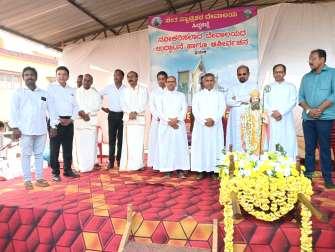
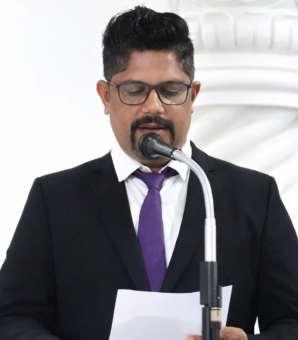
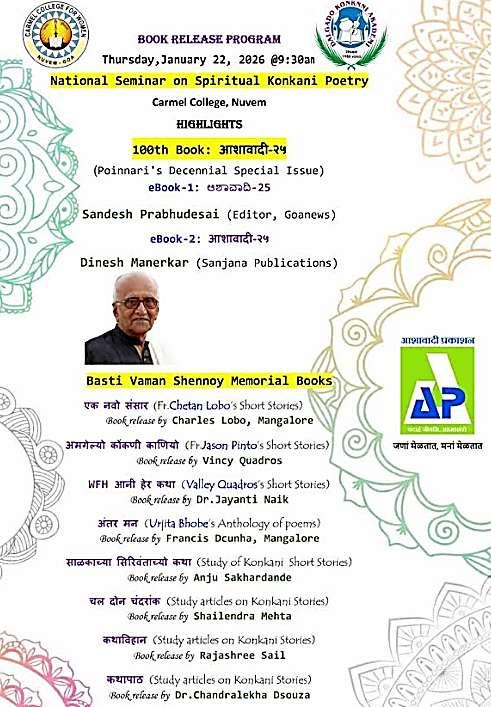
“Religion is like the peel of a banana; spirituality is the banana itself.” Religion is not limited to symbols such as the Church and Cross, or the Mandir and Masjid. It goes far beyond external forms and rituals. This profound understanding raises an important question: How many Konkani poets have reached this spiritual height through their poetry? An extensive study of Konkani spiritual poetry across Romi, Kannada, and Nagari scripts— poems written by Bab Prakash Padgaonkar, Fr. Pratap Naik, Bab Jess Fernandes, and Bab Andrew L. D’Cunha will be studied at the National Seminar on Spiritual Poetry in Konkani. The seminar will be held at Carmel College, Nuvem, Goa,on 22 January 2026 jointly organised by the Dalgado Konknni Akademi and Ashawadi Prakashan. On this occasion, Basti Vaman Shennoy Memorial Konkani books will be released. The Konkani poetry session will be chaired by Bab Prakash D. Naik.





https://play.google.com/store/books/details?id=7KSaEQAAQBAJ




https://play.google.com/store/books/series?id=sqM0HAAAABCHvM











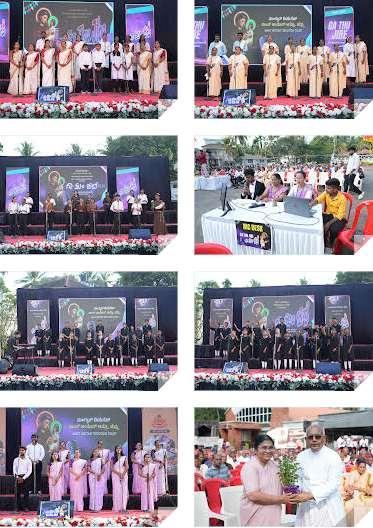

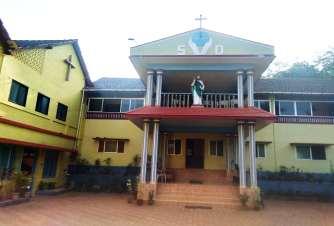
(JeppuParish).
(Cantate Domino)
(StAntonyChurch, Fermai)
ChiliPiliChoir)
CorpusChristiChoir)
(Bethany Sisters)
(Rang Tarang)
StCecilia’s Choir)
WalterAlbuquerqueMemorialChoir)
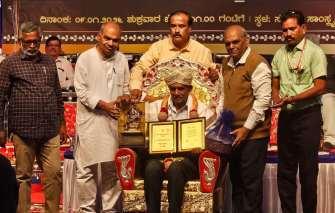






05),
(02), ಬಳ್ಚೀರಜ್ ಸ್ಚೀನಾ (02), ಜನತಾ ದಳ (ಜಾತಾಯತಿೀತ) 04),
04),ವ್ಚಲ್ಲಾೀರ್ಪಾಟಿಾ
ಇಂಡಿರ್ಯ (02),
ಪಾಟಿಾ (04), ರರ್ಷಾ್ೀಯ್









Bhaskar Amin


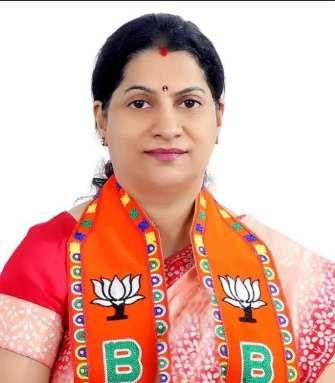
Rajesh Shetty
Santosh Shetty

Ganesh Shetty









Veez English Weekly Vol: January22, 2026
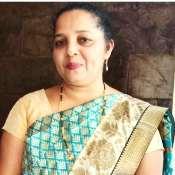
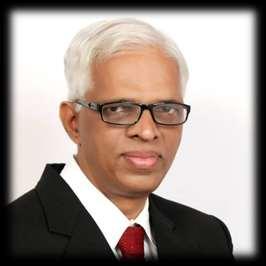
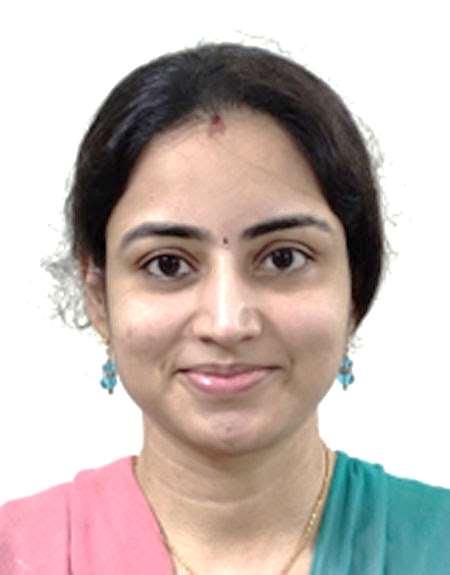
Dr U Sandhya Shenoy, principal research scientist from Srinivas University conferred with CRS Medal


Media Release
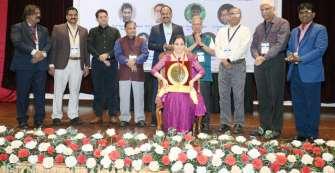
Mangaluru, Aug 29: DrUSandhya Shenoy, professor and principal research scientist from department of materials science and engineering, Institute of Engineering and Technology, Srinivas University, Mukka hasbeen awarded the prestigious CRS Silver Medal-2025 for her excellent achievements in research and innovation inmaterialschemistry. The medal was conferred on Dr Shenoy byPadmavibhushan ProfJB Joshi, Dr N Suryaprakash, former professor at IISc Bangalore, Prof A Ajayaghosh, former director, CSIRNIIST, Prof Sandeep Verma, former secretary, SERB,NewDelhi.
Dr G Mugesh, professor at IISc Bengaluru, Dr TP Radhakrishnan, professor at University of Hyderabad, Prof CV Yelamaggad,
secretary CRS and Prof Braja Gopal Bag, President CRS were present during the award ceremony in Manipal.
Her research mainly involves materials for energy and environmental applications focusing on thermoelectric and photocatalytic properties. She is also the recipient of NASI young scientist award from National AcademyofSciencesIndia,coveted associateship from Indian Academy of Sciences, Bengaluru and Society ofMaterialsChemistry Medal. The achievements were highly appreciated by the esteemed chancellor, Dr CA A Raghavendra Rao, and pro-chancellor, Dr A SrinivasRao,ofSrinivasUniversity.
From the quiet labs of Mukka to global recognition at Stanford a
story of science that truly matters. Dr.Sandhya Shenoy, aresearcher in Materials Science & Engineering at SrinivasUniversity, hasbeennamed among theworld’s top 2%scientists by Stanford University — for the third consecutive year. This distinction, based on Scopus citation data,goesbeyond prestige. It highlights research with realworld impact. Dr.Shenoyistackling one of today’s overlooked challenges: wasted energy. Her work focuses on converting waste heat into electricity by developing advanced thermoelectric materials where physics meets sustainability. Colleagues call her research "innovative, but relentlessly practical." "This isn’t theory that sits in journals it’s science that could power homes, industries, and a cleaner future.”
Despite global recognition, Dr. Shenoy remains deeply committed to her work and her consistency israre.Forthreeyearsrunning,she’s featured inStanford’s Science-Wide
Author Database of Standardized Citation Indicators a signal of both quality and sustained relevance. Chancellor Dr. C.A. Raghavendra Rao and Pro-
Chancellor Dr. A. Srinivas Rao have commended her achievements, calling them a source of immense pride for Srinivas University and a reflection of India’s rising contribution to global science. In a world often driven by noise and headlines, Dr. Shenoy’s journey isa powerful reminder: great science is often quiet — but deeply transformative. #MaterialsScience
#ThermoelectricResearch
#SandhyaShenoy
#Top2PercentScientists
#StanfordRecognition
#SrinivasUniversity
#WomenInSTEM
#ScientificImpact
#AppliedResearch
#Sustainability
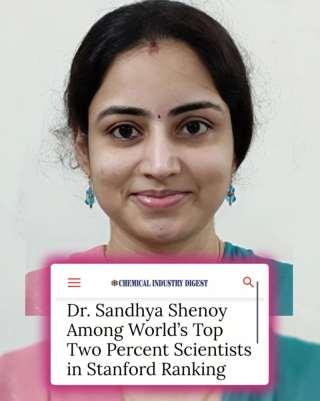
For the Third Year in a Row, Srinivas University Professor Features

BySharad
NataniSeptember 26,2025
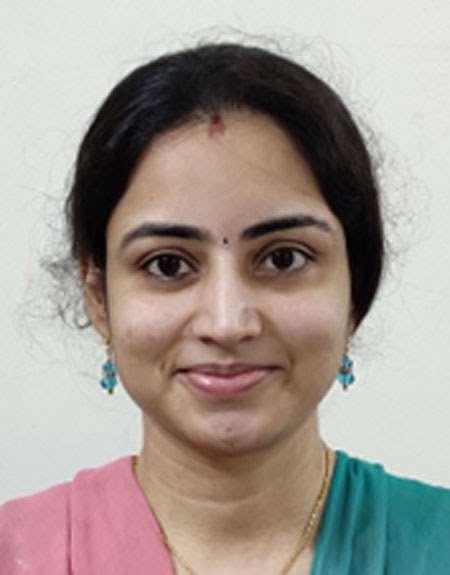
In a proud moment for Indian academia, Dr. U. Sandhya Shenoy, Professor and Principal Research Scientist at the Department of Materials Science and Engineering, Srinivas University, Mukka, Mangaluru,hasbeennamedamong the world’s top 2% scientists by
Stanford University for the third consecutiveyear.
Stanford University’s updated science-wide author databases of standardised citation indicators released on September 19, 2025, highlights the world’s most impactful researchers across disciplines. Dr. Shenoy’s consistent presence on this elite list underscores her groundbreaking contributions to materials science.
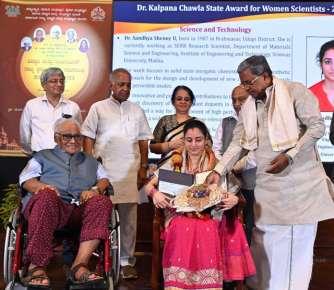
Dr. Shenoy’s pioneering research focuses on converting waste heat into electricity by developing highefficiency thermoelectric materials —anareaseenaskeytosustainable energy solutions worldwide. Her work bridges the gap between cutting-edge materialsresearchand real-world applications, potentially reducing industrial energy losses
and promoting clean power generation.
Being ranked among the world’s most cited scientists’ places Dr. Shenoy alongside leading international researchers. This recognition not only celebrates her individualexcellencebutalsobrings globalvisibilitytoSrinivasUniversity and India’s growing footprint in advanced scientific innovation.
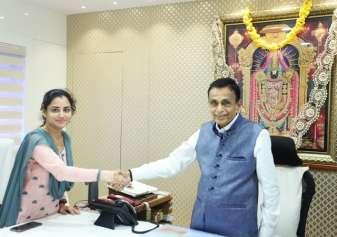
As a mentor and educator, Dr. Shenoy has also been instrumental in nurturing young scientists at the Institute of Engineering and Technology, Srinivas University. Her achievements are a beacon of inspiration for students and researchers aspiring to make a global impact.
With three consecutive years on Stanford’s prestigious list, Dr. Shenoy cements her reputation as one of India’s leading voices in materials science and sustainable technology. Her work exemplifies how Indian scientists are contributing tosolving some of the planet’s most pressing challenges.




• DaijiworldMediaNetwork–Mangaluru(SB)
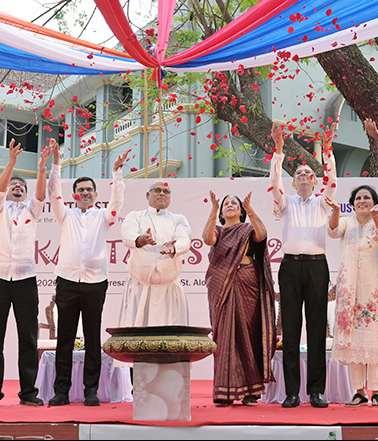
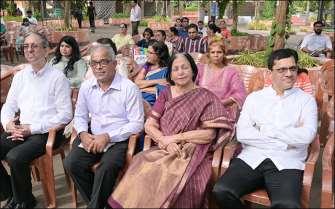
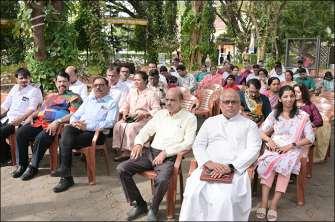
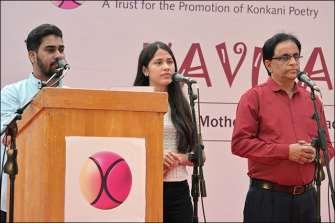
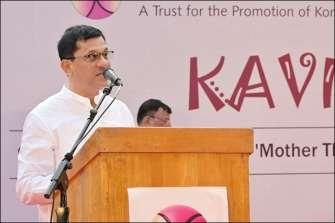
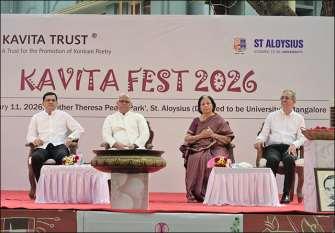
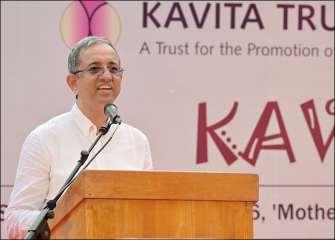
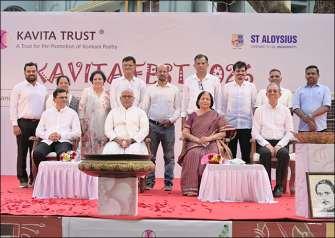
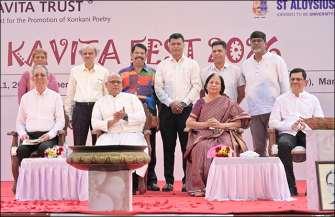
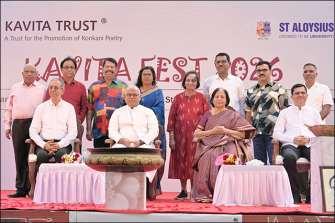
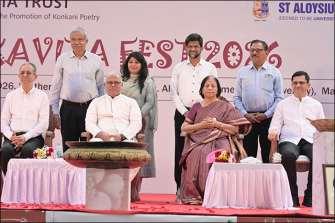
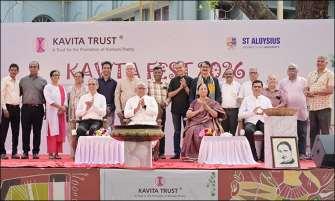
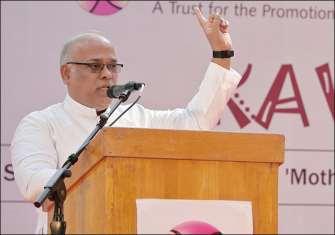
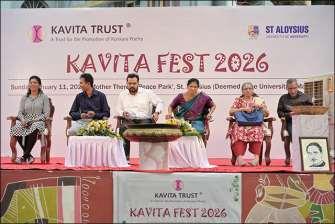
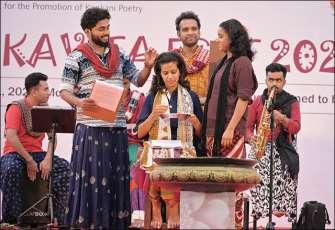
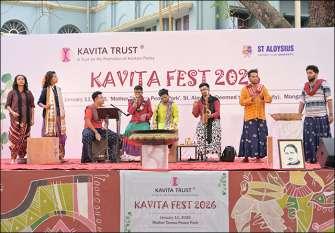
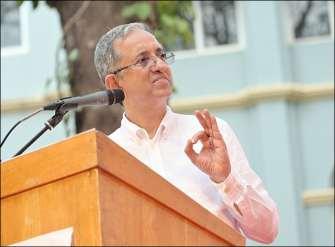
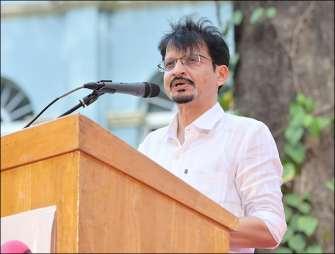
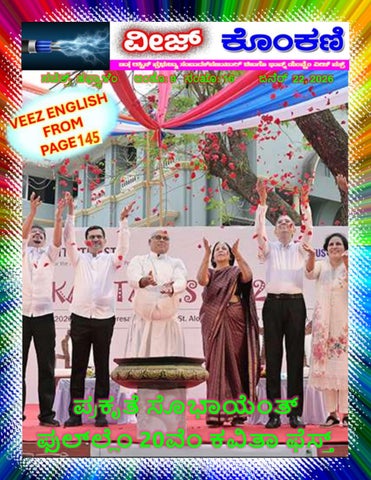
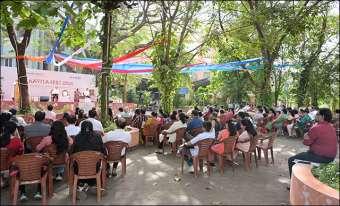
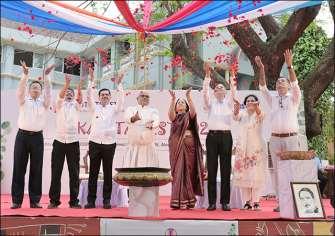
Mangaluru, Jan 12: The 20th editionofKavitaFestwascelebrated in a vibrant poetic atmosphere marked by literary debates, discussions and appreciation at Mother Teresa Peace Park, St Aloysius (Deemed tobe University), onSunday, January11.
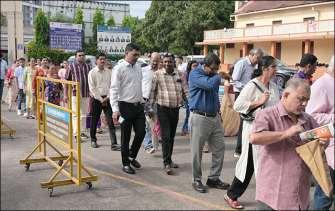
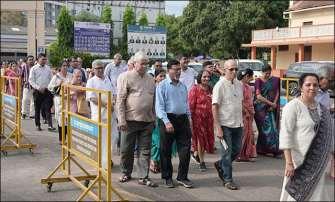
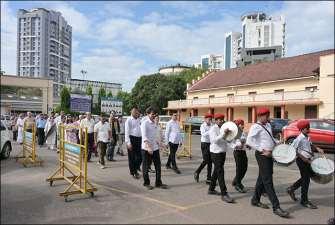
The much-acclaimed festival commenced with a colourful procession from Gate 2 to Mother Teresa Peace Park. The inaugural session wasgracedbyFrMelwyn
dignitaries formally inaugurated

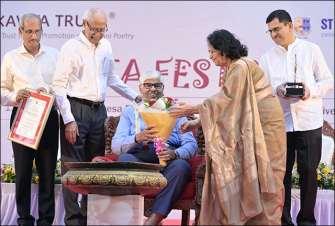
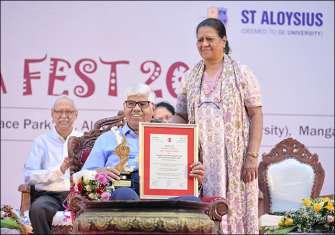
the air, accompanied by trustees of Kavita Trustanditssupporters.
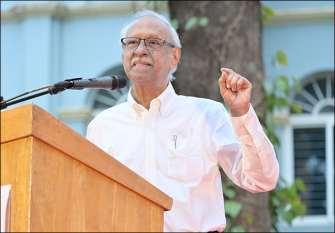
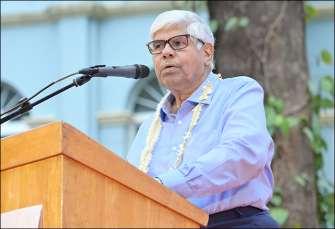
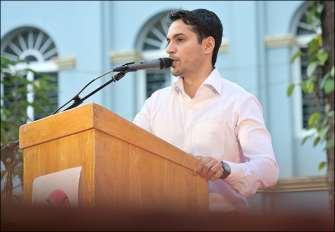
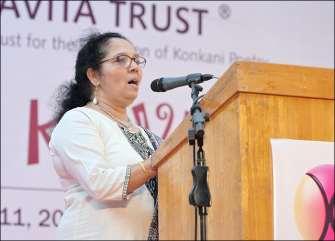
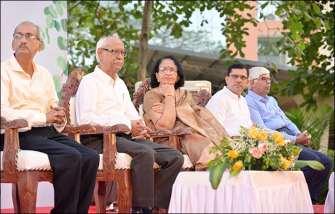
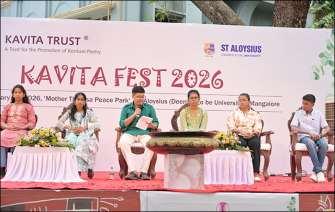

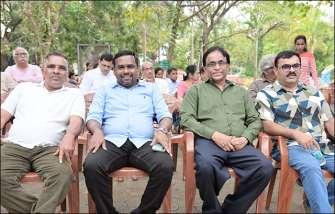
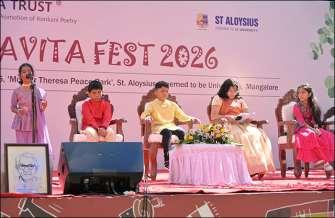
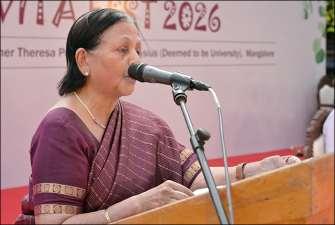
DeCosta reflected on the transformative power of poetry.
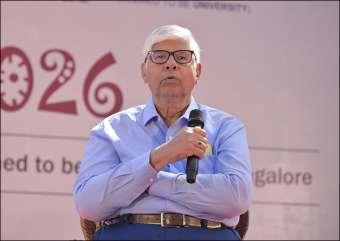
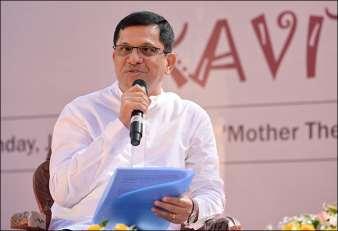
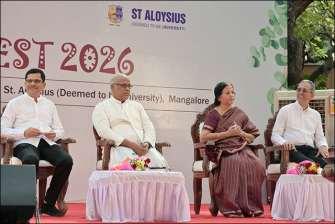
deeply. Reading or writing poetry itself is a celebration; hence, Kavita Fest becomes even more meaningful as it brings together poets and poetry enthusiasts,” she said. She also lauded the tireless efforts of Kavita Trust in promoting poetry through digital platforms such as television, YouTube and othermedia.
Appreciating the organisers, Fr Melwyn DCunha said the management of St Aloysius was happy to host Kavita Fest at the Peace Park, which aligned with the spirit of the institution. “Poets are vigilant, sensitive and close to nature. Though their thoughts may differ, if those differences work towards peace and environmental protection, they become invaluable intoday’s world,” heremarked.
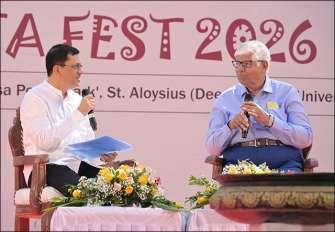
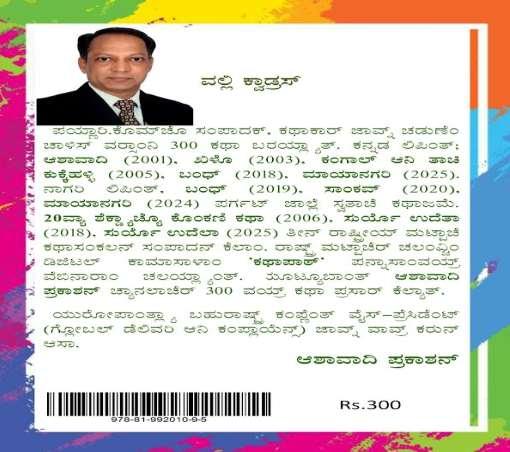
Following the inaugural session, an interactionsessiontitledMyLife,My Poetry'washeldwithnotedKonkani writer and Mathias Family Poetry Award winner Valli Vagga. Poet Andrew L D Cunha moderated the session. Vagga shared insights into hisjourney in Konkaniliterature, his early life as a writer and personal experiences, narrating memories of his childhood, native place and
migration toMysuru.
The Kavisandhi programme, organised in collaboration with the Kendra Sahitya Akademi, featured poet Paresh N Kamat, who captivated the audience by sharing his poetic journey and engaging in discussions on poetry and its variousforms.
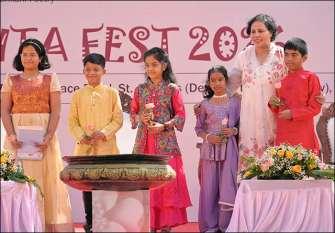
Anotherhighlightofthefestivalwas the poetry sessions featuring finalists from the children’s and youth categoriesoftheBiriBiriPavs television realityshow.
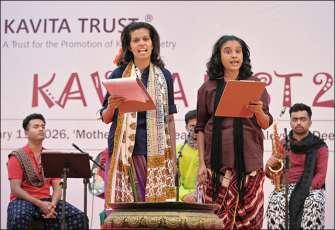
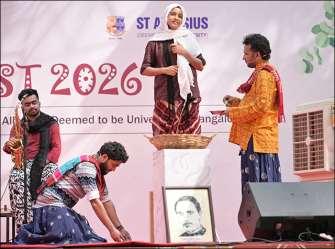
In the afternoon, members of Astitva and Ranga Adhyayana Kendra, St Aloysius (Deemed to be University), presented Kavyarang, a unique poetic play that left the audience deeply moved. The play was directed by Christopher Ninasam.
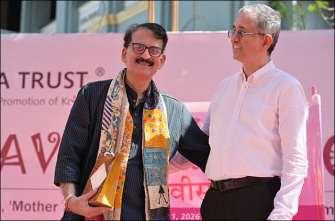
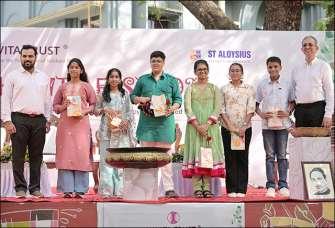
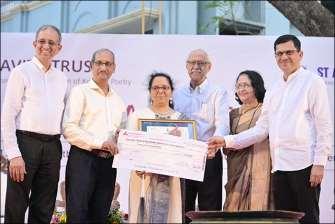
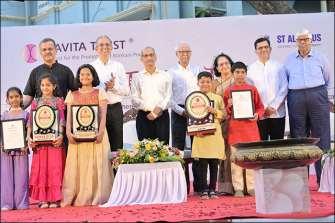
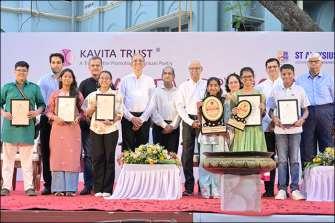
The closing ceremony was graced by Jnanpith Award laureate Damodar Mauzo, his wife and translator Shaila Mauzo, and Konkaniwriter andeducatorFrancis D’Cunha. On the occasion, the DennisandMaryD’CunhaMemorial Best Poetry Book Award 2024 was presented to Felcy Lobo, the Mathias Family Poetry Award 2025 to Valli Vagga, and prizes to the
winners of the Biri Biri Pavs poetry competition.
Expressing her happiness, Shaila Mauzo appreciated the children who recited hundreds of poems by variouspoets intheBiriBiriPavsTV reality show. “The children achieved something meaningful by learning poetry and understanding poets. Kavita Trust has achieved something even greater by transforming literary tastes among the younger generation, breaking dialect barriers and building new connections,” shesaid.
Addressing the gathering, Francis D’Cunha said that although he could notattend Kavita Festearlier, hehadclosely followed KavitaTrust for many years. “Together with my family members and my brother AndrewLDCunha,weinstituted an award in the name of our parents for a poetry book. I am really delighted thatFelcyLoboisthefirst recipient of this award. We hope it will inspire many more poets in the years tocome,” hesaid.
Commending the mission of Kavita Trust, Damodar Mauzo said the trust had built bridges between Konkani-speaking communities across states, generations, and
between poets and readers. “Literary bonds between Mangaluru and Goa are long-standing, and organisations like Kavita Trust continue to provide a platform for unity under the banner of Konkani, our mother tongue,” he said, while speciallymentioningFelcyLoboand thewinners ofBiriBiriPavs.
Upon receiving the Mathias Family Poetry Award, Valli Vagga expressed gratitude to Kavita Trust and the Konkani community, acknowledging readers for shaping himasawriter.
Melvyn Rodrigues, president of Kavita Trust, welcomed the dignitaries and the gathering, highlighting the mission, activities and competitions of the trust. Andrew L D Cunha, secretary of Kavita Trust, proposed a vote of thanks.
Earlier, the procession was led by thebandteamofStAloysiustrained by Prem Moras. Ronald Nazareth and team rendered the invocation prayer duringtheinauguralsession. WilliamPaisintroduced ValliVagga, while Vincent Pinto read the citation. Manoj Fernandes compered the Biri Biri Pavs prize
distribution ceremony, and Vitori
Karkalcompered theinauguraland
concluding sessions.


In the 15th century, with the discovery of coffee as a delectable beverage, Yemen becameanobject of rivalry between Egypt and the Ottoman Empire for control “of the long-standing tradeinIndianspices and the emerging market for coffee”. In 1507, the Portuguese captured thestrategically located
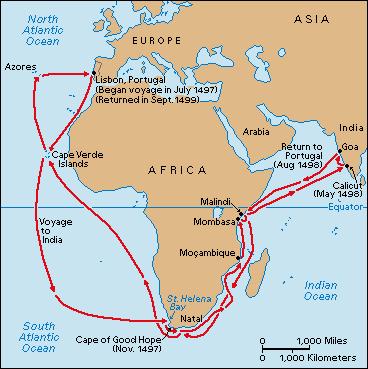
island ofSocotra attheentranceto theRedSea.In1513theyattempted to capture Aden. This so alarmed Egypt thatitinvaded andtook over Yemen in 1515. However, in 1517, the Ottomans invaded and took over Egypt and in 1547 Yemen as well. The “Coffee” rivalry thereafter was between the Ottomans, Portuguese, Dutch and British. Of these, the Portuguese fared the best,astheymanagedtosmugglea coffeeplantoutofYemenintoBrazil and began its widespread cultivation there.
Portuguese presence at the Gulfentrancecausedconcerntothe Ottomans, who had taken Iraq along with Egypt in 1517. A Turkish fleettwicedrovethePortugueseout of Muscat in the 1580s, but they managedtogetbackandthereafter strengthened their position in Oman by building forts Jalali and Mirani in Muscat (1588) and the Mattrah Fort(1589).
Havinglootedalltheportable wealth, they could find in the port citiestheysacked in EastAfrica and Oman, and having established fortified settlements in manyIndian oceanports, thePortuguese setout toembargo alltradenotconducted under their flag. In this they failed miserably. They did not realize the substantial Indian ocean trade, carried mainly in Arab and Indian vessels,requiredfarmoreshipsthan what Portugal possessed or could afford to acquire. The maximum theycoulddeploy forthistradewas only ten ships. Their policy of indiscriminate attacks and looting of port cities also proved counterproductive in the long run as it stirred the Omanis into a devastating “Jihad” against them somedecadeslater.
Itwasinthisscenariothatthe commercially thriving Dutch made their appearance. They were far ahead of the Portuguese in ownership of capital and commercial acumen. They also had the foresight to set up a base (in 1652) at Cape of Good Hope as a servicingstationfortheirvoyagesto IndiaandtheSpiceIslands.Few,the initial settlers were merely Dutch East India Company employees, who found their assigned task extremely difficult. However, once they succeeded in enslaving some Khoisan (Hottentot) people, and forcing them to do the hard work, the project began to succeed. Agricultural enterprise based on slavelabourthuscommencedinthe IndianOceanregion.
After the Dutch, the British and French also arrived in this region, and gradually established themselves in different parts of it. The latter established sugar plantations in Mauritius and Bourbon (later named Reunion), and secured slaves from Kilwa in EastAfricatoworkthem.Meanwhile the British, having established trading footholds in India at Surat, MadrasandHooghly 1602onwards,
and having acquired Bombay in 1648 as part of the dowry of the Portuguese princess married to Charles II, began to establish trade anddiplomatic contacts with Persia andsome ArabSheikdoms. In1620 and1622, thePersiansassistedbya British naval squadron drove the Portuguese out of Bandar Abbas and Hormuz respectively. Thereafter, the only Portuguese presenceinthisareawasatMuscat, and they clung on to it tenaciously until they were finally ousted from therein1649,bytheirnewlyelected Imam, Nasr bin Murshid bin Sultan al–Yaribi, who also succeeded in unifyingtheOmanitribesandlaying thefoundations ofastrongnation.
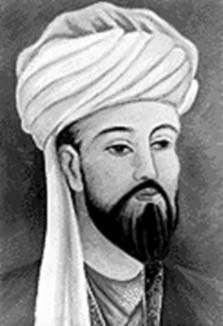
Imam Nasir’s son Sultan, a ruler of even greater determination than his father, built up a strong navy and in 1652 sent an Omani fleet to East Africa to settle old scores with the Portuguese. Their forts and settlements in Pate and Zanzibar were sacked. In 1655 Mombasa wasbesieged and, on its capitulation, an Omani Governor wasinstalled there. In 1670 & 1673 the Portuguese forts at Diu and Bassein were attacked and destroyed. His successor, Saif bin Sultan further expanded Omani Naval strength. Of his 24 ships the largest had 80 cannons. Some of these ships were built in shipyards oftheIndianMahrattaEmpire. With these new ships the Portuguese forts at Daman and Salsette were attacked in 1693 and that at Mangalore in 1694. Bahrain and Gombroon (now Bandar Abbas) wereattackedin 1695, even though there were only Persian, British and Dutch factories there. In 1698, they returned to East Africa destroyed the Portuguese forts atPemba and Kilwa. Thereafter, the only Portuguese presence in East Africa was south of Cape Delgado. The disruption which all this Omani
naval activity caused to European trade in general, and Portuguese trade in particular, caused real alarm. This period is sometimes referred to as the “Oman’s naval struggle for IndianOceancontrol”,
However, this impressive navalascendancyofOman cameto an end in 1736, on the death of Sultan bin Saif, since civil war ensued. In 1737 the new Persian King Nadir Shah intervened in the civil war, and ravaged Muscat and Mattrah. Only the fort at Sohar steadfastly held out against the Persians, who finally withdrew in 1744. The Omani commander at Sohar, Ahmed bin Said Al Bu Said became a national hero and was elected Imam in 1749. His descendants haveruled Oman ever since.
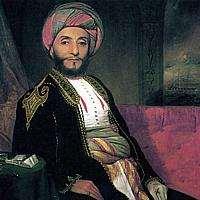
Thelong reign (1807 –1856) of Imam Ahmad’s son Sayyid Said, marked the next determined effort to recreate Oman’s naval and maritime primacy in the Indian Ocean. He established friendly relations with the British in India, andbetween1814-1835hadseven ships, including the 74 gun ‘Liverpool’, built for him in the East IndiaCompany’s Bombay dockyard.
Besides, he commenced ship building at Mattrah where the 28 gun naval ship Mustapha, was constructed andlaunchedin1825. With these new naval assets, Sayyid Said embarked on his strategy to reestablish control in Oman’s offshore islands and its former East African possessions. In 1840, he took the bold step of transferring his court from Muscat to Zanzibar. The motivation for this was to set up a prime presence for Oman on the Indian Ocean Cape Routeandtoexploitthesubstantial agricultural potential of Zanzibar and the East African Coast (copra, sesame seed, ambergris, rare woods, tortoise shelletc.).
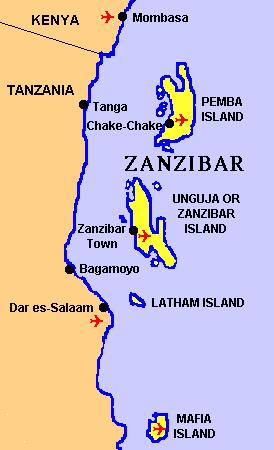
Cloves, which had been introduced to Zanzibar in 1818 from Mauritius andBourbon (where theyhadbeen brought from Moluccas), had created a new and valuable export commodity. With Sayyid Said’s energetic drive, Zanzibar soon became the world’s greatest clove producer. Since clove cultivation was labour intensive and therefore needed slaves, Said got into the slavetrade,inpartnership withslave traders in Tanganyika. By 1850, Zanzibar became a great slaveport annually handling about 50,000 slaves. This had devastating social and economic consequences for EastAfricaninlandcommunities,

To promote Zanzibar’s commercial interests Sayyid Said sentEmbassiestoUSandBritain (in 1840 & 1842), thus becoming the first Arab ruler to do so. He also pioneered the construction (in
Bombay and Cochin) of armed trading vessels. These were sent annually with Zanzibar’s precious cargoes of cloves, pepper, nutmeg, ivory etc. to European and far eastern countries asfloating export emporia.
At the height of Sayyid Said’s rule, his Empire stretched in Oman from Dhofar to Ras Musandam; in Iran it included Bandar Abbas, Gwadar, Jask, Shamil, Minab and Lingeh,andtheislands(onlease) of Hormuz, Qishim and Larak ; in East Africatheentirecoastofabout2000 miles all the way from Cape Guardafui in Somalia to Cape Delgado in Mozambique. Omani control at many ports in these
countries involved stationing of small garrisons. The substantial growth in trade during this period, particularly of the new agricultural products grown there, enabled Zanzibar to withstand the adverse consequences of the 1869 Suez Canal opening, which diverted a good part of Indian Ocean trade onceagain totheRedSearoute.
(To be continued nextweek)
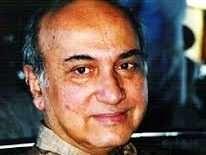


by Walter Nandalike Founder,MDandEditor-in-chief
Twenty-five years ago, on this very day (Jan 14, 2001), a small, unexpected, and almost unbelievable idea wasborn. The internet was slow. Dial-up connections ruled the world. Very few people even knew what a website was. It was the second anniversary of the Konkani Writers’ Forum, DaijiDubai. During that programme, the chief guest, NRI entrepreneur DrRonaldColaco,was requested to open an envelope placed before him and announce thenamewritten inside.
On a simple piece of paper were written these words: [www.daiji.bigstep.com] Some smiled. Some clapped. Some were curious. Veryfewunderstood.
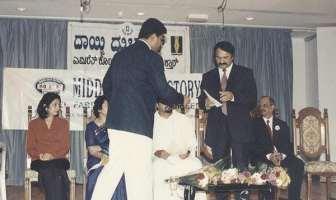
DrRonald Colaco launching the website
Atthattime,Ididnotevenknowthe
basics of computers. I was learning how to build a webpage through free tools available on the internet. But what started that day was not merely a website it was the beginning ofamovement.
From that small beginning, Daijiworld was born. Gradually, people became aware. News from Tulunadu began reaching homes across the globe within minutes. A community found its digital home. And Daijiworld began to grow— slowly, steadily, andsincerely.
A detailed account of this journey willsoon berecorded inabook. But even today, when I look back, it honestly does not feel like twentyfiveyearshavepassed.
With folded hands and a grateful heart, I take this opportunity to thank each person who stood with us without counting, without comparison, and without leaving anyone behind. Your trust, encouragement, and goodwill are therealfoundation ofDaijiworld. Every year I write an editorial with gratitude. This year, that gratitude carries deeper emotion.
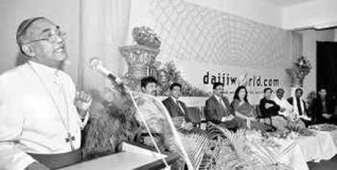

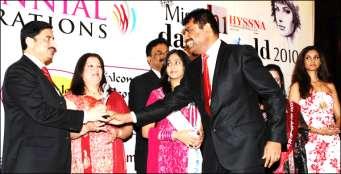
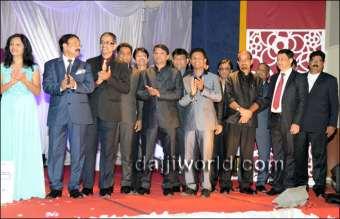
Three that redefined digital journalism.
Over the last 25 years, Daijiworld readers have contributed an
estimated Rs 35 Crore directly to the needy for health, education, shelter, research, and sports.
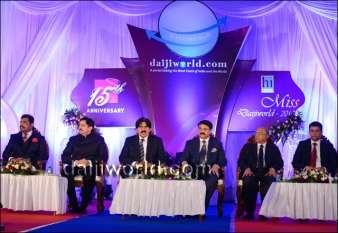
During 15th anniversary in Mangaluru
Every appeal is carefully verified through trusted references and institutions. Once genuine need is confirmed, we publish the appeal. Afterafewweeks, wereconfirm the received amount directly with beneficiaries and arrive at this estimate. This transparent, direct, and humane model of charity remainsourgreatestsatisfaction.
During the pandemic, with the support of Daijiworld TV and our well-wishers worldwide, food kits, medicine, and financial aid were provided toover 6,000 families. We take pride in being among the first media platforms to introduce direct-relief delivery, reaching familieswithoutintermediaries, with dignity andspeed.
As part of our Silver Jubilee initiatives, Daijiworld, in collaboration with Mangalore Institute of Oncology, launched a year-long cancerawarenessmission - Cancer Gellona. Within just three months, many people were diagnosed at an early, fully curable stage, proving that awareness truly saveslives.
Ourreach—more than ever Today, Daijiworld’s reach stands stronger than ever before. The combined readership of Daijiworld.com English and Kannada editions has crossed 1.9 million uniquevisitors permonth, arecordin ourjourney.
Our digital presence across social media platforms is also growing exponentially. The Daijiworld YouTube channel has reached nearly 7 lakh subscribers. Our Facebook pages together have crossed one million followers, while ourInstagramfamilyisapproaching 200,000 marks.
This ever-growing digital footprint reaffirms the trust placed in us by our readers and viewers. It also reassuresour advertisers andbrand partners that Daijiworld continues to be one of the most effective
platforms for meaningful and impactfulproduct promotions.
Oneumbrella, oneteam
What began as a hobby in 2001 grew into the first office in 2003, a Private Limited Company in 2007, internet TV in 2006 which became full-fledged TV in 2014, a weekly print edition in 2009 which was closed during COVID, Daijiworld AudioVisualin 2015 andDaijiworld Radio in Dubai in 2017. Today, all our verticals function under Daijiworld Media PvtLtd. Silver Jubilee celebrations The Silver Jubilee celebrations will be held on February 14, 2026, at MilagresHall,Mangalore. DrRonald Colaco, whoinaugurated Daijiworld 25yearsago,willbetheChiefGuest.
Dr Prakash Shetty of Goldfinch Group and Dr Abdullah Kunhi Yenepoya, Vice Chancellor of Yenepoya University, will be Guests of Honour. Shri Ronald Pinto of HyssnaInternationalAbuDhabiand Rohan Monteiro of Rohan Corporation will be the Special Guests.
Ourpillars who builtDaijiworld
Our directors, Shareholders, our proud editorial team, support staff, photojournalists, and our
representatives who contribute news, photographs and content from across the globe. We also thank our Chartered Accountants, Company Secretary, IT and legal teams,ourfranchiseoffices,andour dedicated Udupi, Mumbai and Dubai teams, along with our stringers, whose collective efforts continue to strengthen Daijiworld everyday.
Our advertisers — whether shortterm or long-term, small or big, retain our lifeline. We are deeply indebted tothem,astheirtrust and support have been the very breath of Daijiworld’s growth. Our advertising agencies have also played a significant role in our journey. Without their commitment andfaithinourvision,wewouldnot havereachedwherewestandtoday. Ourjourneywastough,challenging, yet beautiful. And today, we stand proud not because webecame big, but because we remained meaningful. The complete story with many unseen, emotional and surprising moments will soon be published in my upcoming book in English, Kannada andKonkani.
With gratitude, With humility, With hope, We will step into the next 25 years.
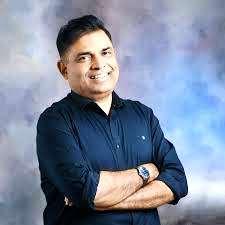
- Walter Nandalike

Whenwe hear theword ‘Holocaust’ we remember Hitler, his extermination of Jews and the concentration camps. This happened during theSecond World War. Hitler wanted an enemy to create support and strength. He found an enemy in the Jewish community who could be pitted against the Germans- the Asian Race born to rule the world. This theory of chosen race and born to rule the world is the most dangerous theory in the history of mankind. We are a part of that CHOSEN RACE theory through the Bible. Before the Second Vatican Council, there were special prayers for the conversion of the Jews during theGood Friday prayers. The

prayers saidthattheJews belonged to the race of Jesus, but they have killed Jesus. Let them realize this and accept the SAVIOUR OF THE WORLD or Messiah-that is how the prayer went.WeallsaidAmen.Now these prayers have undergone a change.
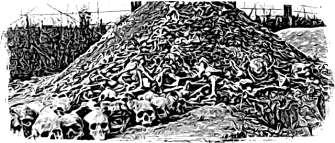
TheHolocaustMemorialMuseumin its annual study report has issued a warning that in the next two years (before the end of 2026) there will be serious racial pogroms in India. (Vartha Bharati, 12 January 2026) Large number of people are going
tobecome victims ofmassviolence. The Museum had earlier given a warning about the mass killing of Rohingyas in Myanmar and South SudanandEthiopia. Thesewarnings became areality andtherefore their warning about India should be takenseriously. Myanmar (Burma) is on the top of the list followed by Chad and Sudan. India is in the fourthplace.Therefore,thismustbe taken seriously inview ofthe Hindu Rashtra movement becoming stronger andviolencecommitted by its Parivar. We Mangalorean Christians cannot afford to remain quiet, docile, andindifferent. Thereisaveryfamoussaying about the time of the Second World War. “Thepoeticformofa1946 post-war confessional prose piece by the German Lutheran pastor Martin Niemoller (1892–1984). It indirectly condemns complicity of German intellectuals and clergy following the Nazis 'rise to power and subsequent incremental purging of their chosen targets. Many variations and adaptations in the spirit of the original have been published in the English language.” (Source: Wikipedia)
First, theycameforthe Communists
AndIdidnotspeakout
BecauseIwasnotaCommunist
ThentheycamefortheSocialists
AndIdidnotspeakout
BecauseIwasnotaSocialist
Thentheycameforthetrade unionists
AndIdidnotspeakout
BecauseIwasnotatradeunionist
ThentheycamefortheJews AndIdidnotspeakout
BecauseIwasnotaJew
Thentheycameforme
Andtherewasnooneleft Tospeakoutforme
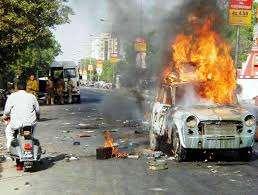
First, they came for the Mohammedans ofAhmedabad, and we did not speak out. Then they came for the agitators of Shaheen Bagh, and we did not speak out. Then they came for the Kuki
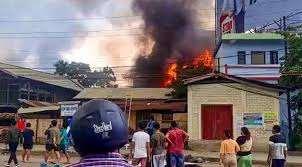
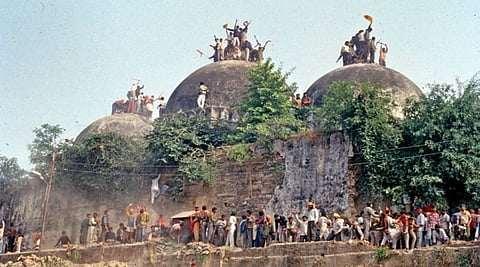
Christians of Manipur, and we did not speak out. Then they came for the Muslims of Mangalore, and we did not speak out. Then they came for the Communists of Kerala, and we did not speak out. Finally, they camefor us.Andthen? In 2002 there was major violence against theMuslims in Ahmedabad astheaftermathofwhatisknownas Godhra incident. In the Gulmohar housing society, the residents were burnt alive including one sitting Member of Parliament. His widow has been fighting the court case in the Supreme Court to punish the culprits. But have not succeeded. TheGodhra train burningoccurred on the morning of 27 February 2002, when 59Hindupilgrims and Kar Sevaks returning from Ayodhya (Babri masjid was demolished on 6 December 1992) were killed in a fire inside theSabarmati Express near theGodhra railway station
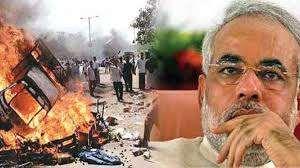
inGujarat, India.TheGujarat Riots of February 2002 during which the Muslims were the targets of widespread and severe violence, took place shortly afterward. (Source: Wikipedia) By the afternoonofFebruary27,retaliatory attackshadalreadybegun.Donning the Rashtriya Swayamsevak Sangh (RSS) uniform of khaki shorts anda saffronheadband, themobs carried out attacks in a highly coordinated manner.ArmedwithalistofMuslim homes andbusinesses, theyarrived in Muslim neighbourhoods by truckloads carrying swords, metal pipes, andLiquefied Petroleum Gas (LPG)cylinders.Therampagingmob stormed into the housing complex of Ehsan Jafri, a former highly
regarded Muslim member of the Indian Parliament. The mob murdered EhasanJafriand68other Muslims who had sought refuge in his house. (https://www.genocidewatch.com/s ingle-post/the-2002-gujaratgenocidal-massacres) When the convicts were released on Parole, they were garlanded and given a great reception. When the accused in the case of murder of Gowri Lankesh,werereleasedonbail,they were also garlanded and taken in a procession. Their acts are glorified atthecostofthevictims.
In2023, therewasamajor upheaval inManipur.Itwasseen tobe afight between the Kuki who are tribals and the Meitei who are non-tribals. The Constitution of India gives special rights to the tribals for the landinhabitedbythem.Itcannotbe alienated and given to non-tribals. These tribals areas like those in Jharkhand and Chhattisgarh are full of minerals and potential areas for mining. Butthetribalrights come in the way. By suggesting tribal status to the Meitei (Plains people) Kukis were made to become their enemies. This led to violence and in
the process, the Kuki had to abandontheirlandsandtakeshelter in refugee camps. Thus, Kuki lands becamefreewithoutamendment to the Constitution. More than 200 churches and prayer houses were reportedly destroyed. Recently during an interaction with Manipuri boys, Iasked them about the cause of the fight. Their immediate response was that Meitei wanted the tribals status. The locals at the grassroot level know the reason behind the fight and violence. 260 tribals have been killed (died) and nearly 60,000 tribals have been displaced (got uprooted) from the nativelands. WeMangalorean’s talk so much about the Seringapatnam captivity (where about 50000 Mangalorean’s were taken from Mangalore to Seringapatanm under the orders of Tipu Sultan, Ruler of Mysore) but do not give a damn to the captivity of the Manipuri Christians. In terms ofnumber, it is notsmallcompared totheprisoners of the captivity of Seringapatnam. Our ancestors suffered under the autocratic ruler. But the Manipuri’s are suffering under a democratic government.
The 5th Schedule of the Indian
Constitution under Article224 (1)of makes provision for the administration and control of Scheduled areas and Scheduled Tribes. Para 2 under Clause 5 of the 5th Schedule (reproduced from the Indian Constitution) states as follows:
2.TheGovernor1***maymake regulationsforthepeaceandgood governmentofanyareainaState which is for the time being a Scheduled Area. And without prejudicetothegenerality ofthe foregoing power,suchregulations may—
(a)prohibitorrestrictthetransferof landbyoramongmembersofthe ScheduledTribesinsucharea.
(b)regulatetheallotmentoflandto membersoftheScheduledTribesin sucharea.
(c) regulate the carrying on of business as moneylender by persons who lend money to membersoftheScheduledTribesin sucharea.
(3)Inmakinganysuchregulationas isreferredtoinsub-paragraph(2)of thisparagraph,theGovernor1*** mayrepealoramendanyActof ParliamentoroftheLegislatureof theStateoranyexistinglawwhich
isforthetimebeingapplicableto theareainquestion.
(4)Allregulationsmadeunderthis paragraph shall be submitted forthwithtothePresidentand,until assentedtobyhim,shallhaveno effect.
(5) No regulation shall be made under this paragraph unless the Governor 2 *** making the regulation has,inthecasewhere thereisaTribesAdvisoryCouncilfor theState,consultedsuchCouncil.
While Clause 5 lays down rules regarding Land rights of Scheduled Tribes, Clause 6 defines the Scheduled Areas and provisions relating to it. In spite Constitutional guarantees, there were ways and means to take away those benefits. We, the Mangalorean Catholics (Except Converted Korgars) who are not tribals do not have any such constitutional protection and are muchmore vulnerable.
Displacement of communities is a serious problem. At the same time, denying citizenship for want of documents is another serious problem. The Election commission has prescribed 11 documents and
Aadhar card as the proof of citizenship during SIR. The Special Intensive Revision (SIR) of electoral roll is an important exercise going on in the country. Most of us think that it is to eliminate infiltrators from Bangladesh. Sixty lakh (60 lakh) people have been removed from electoral roll from Bihar State after SIR. In West Bengal due to
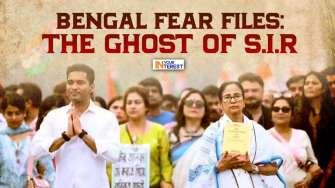
panic 77 have lost their lives. Mausami Sarkar, Block Development OfficerofwestBengal who was involved in SIR resigned under protest after seeing the injustice. Election Commission of India sated before the Supreme Court Bench on 13.1.2026 which is hearing the petitions against SIR that it is empowered “to examine citizenship forpollpurposes andSIR won’t lead to deportation but exclusion fromrolls. (DH14.1.2026) If it is only exclusion from poll rolls no one would panic. There are thousands who do not go to vote,
andmanycasttheirvotes forNOTA. It is the fear of deportation and refugee camps which is creating panic. Matthew 24:40-45 says as follows: “Then there will be two men inthefield; onewill take and one will be left. Two women will begrindingatthemill;onewillbe taken and one will be left. Therefore, beonthealert, foryou do notknow whichday your Lord iscoming.”
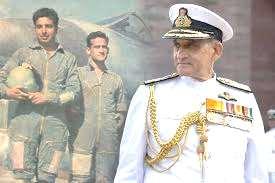
Toputitinasimpleway,theBishop willbetakenandtheVicarGeralwill beleft;theSr.Superiorwillbetaken, andtheKitchenSisterwillbeleft. TheAsst.ParishPriestwillbetaken, andtheVicarParishPriestwillbe left.IfwereplacethewordLordwith SIRitwillreadasfollows:Therefore, beonthealert,foryoudonotknow whichdayyourSIRresultiscoming. I am not joking. Nobel Laureate Amartya Senis not aninfiltrator. He has received a notice from Election Commission to prove his citizenship. He is 92 years old, born and brought up in India andknown asanIndianallover theworld. India celebrated when he got the Nobel Prize for Economics. Admiral Prakash(82 years) whoisarecipient
and they cannot help when it is most required. Itishightime to reducewastefulexpenditureonice creamsanddoughnutsisreduced and that money is spent on digitizing our old records and registersofBaptismandBurials. In this context the work done by

of Veera Chakra and who was the headofIndianNavyandhiswife(78 years) havealso received the notice from Goa election commission to prove their citizenship. Captain Viriato, Member of Parliament from Goa South Constituency has also received a notice. He is a native of Goa and an ex-serviceman who has participated inthe Kargil War. How many ofus will receive notices during SIR in Karnataka and Mangalore? We must wait and see. What will happen to those who cannot prove their citizenship? Will they go to Refugee Camps or Concentration Camps? Many ofour Parishes do not have the old Baptismalrecordsingood condition
Genealogist Dr. Michael Lobo of Bejai who has collected the data by visiting houses and Parishes becomes very important. This data helps us to know which village our ancestors belonged to andwho our ancestorswere. LuckilySIRdoesnot requireustogotoournativevillage andproveourorigin likeJoseph and Mary who had to go to Bethlehem, the town of David, to prove their ancestry. However, we must have
ourrecords ready.Wecannottakeit lightly.
The threats are many. Already statements are being made about our religion, that ours is a foreign religion. We accept it meekly. (BlessedaretheMeekfortheirsis the kingdom of Heaven). The Malankara Church of Kerala has replied to this allegation saying Christianity is in India since 52 AD and it is not foreign as its followers are native Indians. To make such a bold statement and rebuttal one needs courage. The Congress Party has sounded caution to its party members aboutSIR,andtheBJPhas issuedfiattoitsCadre.Thelatterwill do the groundwork meticulously andthe former will content itselfby making statements.
Will theholocaust aspredicted take place? Itdepends oneachone ofus and especially the clergy. There is no need of a Holocaust. One SIR which disenfranchises is sufficient if
we do not understand its seriousness.Ourchildrenareabroad and we see how they are suffering due to tightening of immigration laws.
As observed by Wikipedia citation above,theNazisbecamestrongdue to complicity of German intellectuals and clergy . Our intellectuals must be active.Itisnot enough to earndegrees andPh.Ds. They must be active in the media. Awareness and preparedness are theneed ofthehour.
-Charles Lobo

(Composed by Pascal Alan Nazareth)


Eternal and Almighty Divine Spirit
I firmly believe thatitis thou, who has created the whole Universe
Withits millions of stars and hundreds of galaxies And the exactlaws and balance of forces Thatkeep them all in their proper orbits,
Thatitis thou who keeps the oceans in perpetual motion Makes the seasons change, The snow falls in winter and melts in the spring, Thus, keeping the earthand its rivers
Always well supplied withlife giving water.
I also firmly believe thatThou artis presentwithin me, as the Divine Sparkof Life and Energy.
Thatitis Thou who makes my heartto beat, My lungs to breathe and the blood to flow Throughevery partof me, every momentof the day.
I beseechthee to fill my soul, my mind and my heart
Withthy Divine Presence,
To cleanse them of all hatred, fears &resentments
To enlighten my mind, strengthen my will &self-confidence And assistme in resisting all temptations
So thatI will always be a good reflection of Thy Divine Presence within me.
Bless me &protectme from Eternal and Almighty Divine Spirit
(Composed by Pascal Alan Nazareth)


By: Molly Pinto.
Why do you weep my love, I never left your side
Why do you weep, is it for me or for yourself
I kept my promise to help you, as was the plan
To love you and leave you, to annoy you and expand you
I kept my pact, and so must you, before the tide runs out Stand strong against all odds, and take care of yourself
The time is rife for your expansion, into the person inside
The rewards are great in finding yourself, waste not the little time
Weep not for me my love, that's more than enough
Weep not for yourself, you’re wasting precious time
I built you for this moment, stop turning back the time This moment is all you've got, before the curtain closes
My departure sets the stage to liberate you in becoming you Your hands are worn, and your body seeks respite
You're wasting this opportunity to celebrate life, your life With every pang of joy you feel, my soul is released to fly
By: Molly Pinto.


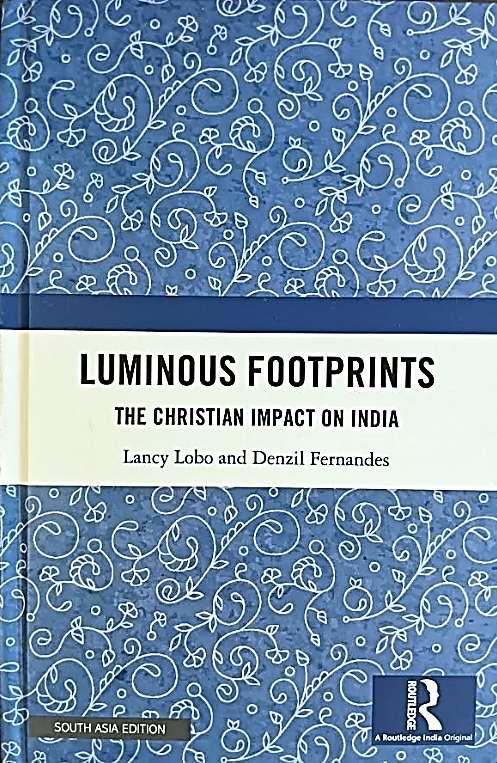
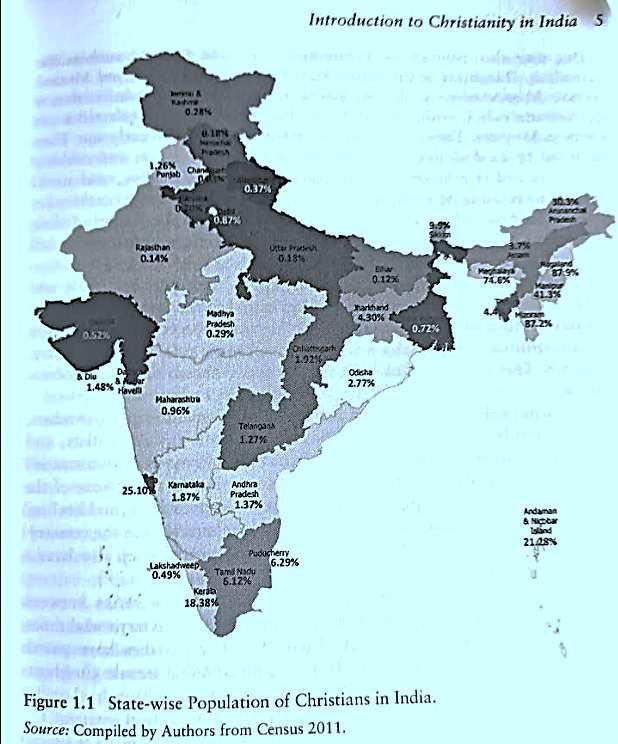
THE BOOK, justoutin 2026, bytwo great scholars and well-known Authors, Lancy Lobo & Denzil Fernandes, isbound tomakewaves of no small proportions. This Book keeps time with debate in India on Christiansandtheircredibilityandis seenasvery optimistic andpositive

as facts cannot be ignored and swept under the proverbial carpet. As people and critics are aware of the truth and reality of Christianity in India which has followed a conservative growth trajectory. It arrived in South India (Kerala) in 53AD through the Syrian Apostle Thomas, just 20 years after the crucifixion of Jesus Christ; even before it reached the West; in a nutshell the book mentions that 'Christianity in INDIA is as old as Christianity itself’. The recognizable spread of Christianity took root say 500 years ago, after the arrival of Europeans in the 1500s. This compact book carefully and documents the contributions and generosity of Christians mainly 'Roman Catholics' and the wellmarked impact on the Indian subcontinent before andafter1947 Independence. Abookpublished by world renowned publishers that must be read by all educated and
enlightened people, interested in thenewscenarioIndiafindsitselfin the21-century world order of 2026 andthefuture. The erudite Authors have Dedicated their 152 closely packed book pages and superb selectedB&Wportraits to“Christian men and women working in different fields for progress and development of India". Let's takea brief look at the salient details regarding this Book, through its own content and soon set to be a "BestSeller “: Christianity in the Indian subcontinentisasoldasChristianity itself, although Christians have remained a balanced traditional small minority within the broader population. This book delvesintotheencountersbetween Christianity andthe Indian people across various historical periods, highlighting the exchangeof knowledge and ideas. The book examines the influence of Christianity on Indian society, focusing on the cultural, economic, and intellectual contributions ofChristians across various domains – including education, healthcare,
socialservices, economic development, the arts, architecture, languages, culture,politics, public administration, and the armed forces. The book examines keyfigures, organisations, and institutions to trace the significant role Christians have played in the country’s freedom struggle, nationbuilding efforts, andsocial development, leaving a lasting impact on the shaping of modern India.Thisbookwillbeofinterestto general readers, students, and researchers of social science, religion, history, anthropology, sociology, andpolitical science.
The FOREWORD By Neera Chandhoke, Distinguished Fellow at the Centre for Equity Studies, New Delhi,doesjustice withapunchand bang! To quote lines for clearer understanding, "Today, at a time when minority religions are disrespected, and an unnecessary focus is placed on upper-caste, Sanskritised, Brahmanical Hinduism as the only culture that defines India, it is important to reflect on how different cultures have contributed to the creation of a pluralsociety. Apluralsocietyis
marked by the juxtaposition of various cultures in the social, cultural, aesthetic, and literary realms. As we walk through the gardens ofmanyreligions andtheir cultures in India – Hinduism,
Buddhism, Jainism, Sikhism, Islam, and Christianity, we become conscious thatour culturalcontexts areshaped bythepoetry of Ghalib, the teachings of Christ and Guru Nanak, the imaginaries of Gautama Buddha, as well as the magnificent prose of Munshi Premchand, our thinking andourlanguage acquires depth and profundity. We attain freedom from the weight of one tradition thatbearsheavilyuponthe present. Themoment we recognise that shared traditions have contributed to our culture, we do not need a fixed identity marker or a hook we desperately cling to for security. We do not look for an unbreakable anchor that connects us to land because we tremble in fearatthestormywatersofthesea. We delight in our freedom to chooseourownanchorornone.We are intellectually free because we can transcend bonds." Going on ......."Thisvolumeletsusunderstand thatChristianityinIndiaisasancient asthe religion itself. This isneeded to understand and appreciate our rich cultural heritage because we are not only speaking of academic debates on conducting historical investigation. When ruling classes
tiehistorytotheirprojectsofpower, the past is interpreted in simplistic and often crude terms. This is particularly true oftherightwing in India,whichreadstheentiretyof Christianity in India as one of conversion, overlooking the contributions ofthe faith to the buildingofnationalculture. Onthe 650th anniversary of thegreat poet and statesman Amir Khusro, Nehru delivered a speech titled “Amir Khusrau-Symbol of India’s Composite Culture.” India has a dream, hesaid. Ithasbeen realised at times and slipped away at other times. What is that dream? [M]any stream and rivers of ideas and language and cultures haveflowed into India from other countries and joined her vast cultural bloodstream For thousands of years, I would say, it has always been India’s consistent effort to synthesize and adopt the thoughts and ideas that flowed in, and to change and be changed by them. The culture andcivilization of India evolved in this way by a gradual process of synthesis and continued to change.Wecan only rework this ugly majoritarianism that has gripped our cultureand us in its
relentlessly closed fist, that has closed and diminished the Indian mind, constricted imaginations, and inventiveness when we recollect ourshared legacies and make a determined effortto remember the many ways that different cultures cametogether. Thisiswhatweowe to history, and this is what we owe our present and our foreseeable future." A deep introspection will resultinneeded insights.
Amit Mitra, Independent Researcher, New Delhi, has recorded: “Christians see themselves as Indians first, their religiousidentitytakingasecondary place. The forces of Hindutva oppose them because, based onhigh levels of social and gender inequality, most of the population ofHindus are excluded and deprived due to the caste system.
Drawing on Jesus’ teachings and practices,Missionariesseektobring about equality but end upbecoming athorninthefleshfor the Hindutva forces who falsely claimtobeHindus. Iwouldstrongly recommend that this book be widely disseminated insociety at large, especially among those
seeking to understand the interrelationship between power, religion, andnation-building.”
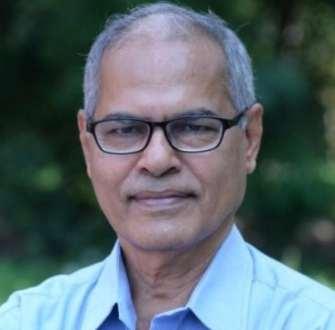
Lancy Lobo, a Jesuit, has served as the Director of the Centre for SocialStudies, Surat, and later was the founder and director of the Centre forCulture and Development, Vadodara. Hewasan International VisitingFellow (Georgetown University, Washington, DC). He has authored, coauthored, and co-edited 30 books and scores of mimeographs and articles. Currently, he is Research Director at the Indian SocialInstitute,Delhi.
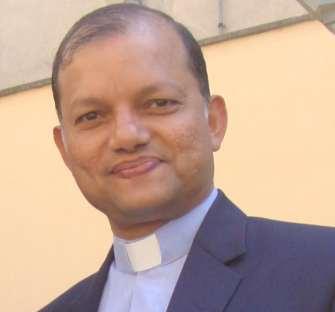
Denzil Fernandes, a Jesuit, has served as the Executive Director of IndianSocial Institute, New Delhi, and Editor of the quarterly social science journal Social Action from 2015 to2023. FromJune2024, heis serving asProfessor atIndianSocial Institute, Bengaluru. He was conferred the Delhi Minorities Commission Human Rights Award 2019 for his work on human, civil andminority rights inIndia.
One sentence of essence "During the last three decades, Hindutva nationalism and authoritarian populist majoritarianism have crept into the socio-political ethos of the country, which stands in complete contrast to the spirit of the official Indian Constitution, which isliberal,
inclusive, pluralistic, and democratic." The very last paragraph ofthisbook,onPage140 in conclusion is insightfully prophetic and GOD spoken perhaps, impressing I take the liberty to Quote " India has a laudable aim of becoming a global superpower by 2047. To achieve this, it must speedily upgrade the country's education and health levelstoglobal standards. However, the prevailing Hindutva ideological compulsions are more interested in romanticising thepastthancrafting a new future. The rise of an unscientific temper, eagerness to replace history with mythology, science with metaphysics, and knowledge with religious piety will putroadblocks toIndiabecoming a superpower. India needs a vision that believes in equality, inclusiveness, and growth with equity for all its citizens. Christians in India are committed to releasing this vision” with this I leave you to digest this super book and realise yourpriorities soonerthan later.
Note to get the Book: Exclusive Distributors: ATLANTIC: Email -orders@atlanticbooks.com. (ISBN
978-1-041-27980-8) Published by: Routledge.
-Compiled : Ivan Saldanha-Shet.

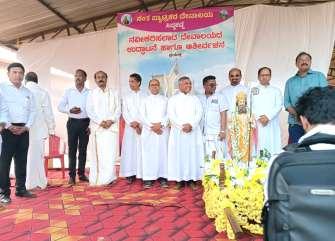
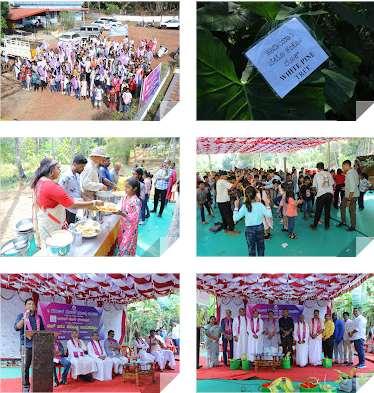
Kinnigoli - Karnataka Konkani Sahitya Academy organised a Konkaniprogram inassociationwith IanCaresFoundation onJanuary15, topromote art,cultureandheritage of Konkani language. Called, ' Aaj
Ami Konknni Ulovyam' it brought together Siddhi Konkanis from Mundgoad/Yellapura, Uttara Kannada,GowdaSaraswatBrahmins and Christians. whose birth language isKonkani, Konkani
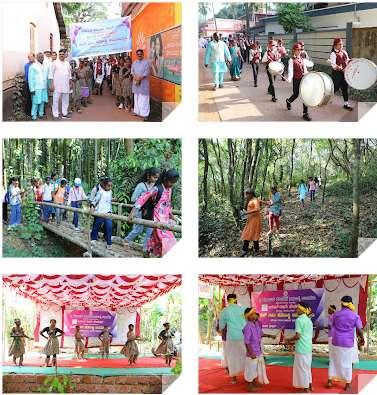
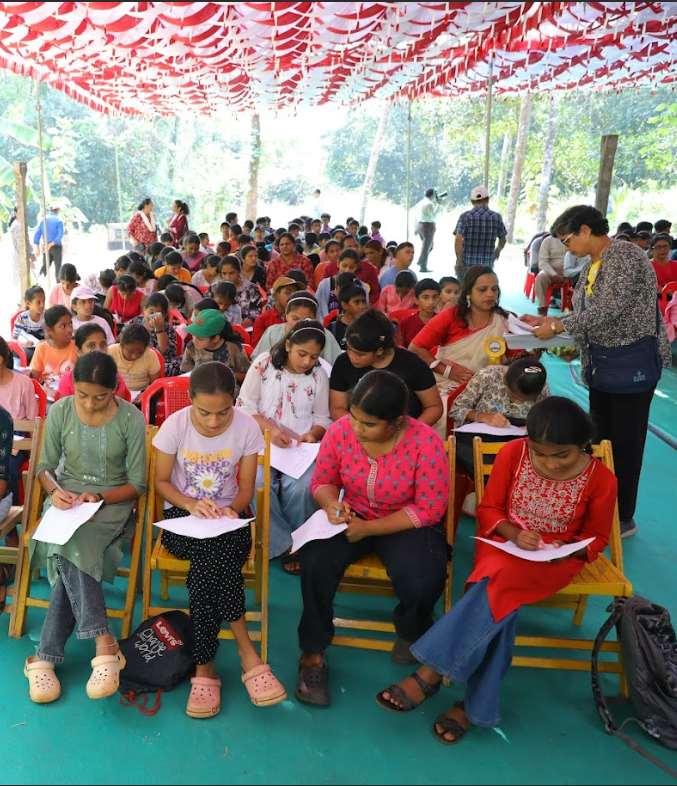
Kudumbis. All of them exhibited their dance and songs. Besides children from 3rd Standard to 9th from local places like Pakshikere, Kinnigoli, Kirem, Balkunje, Kateel. Niddodi and Nirude were marched
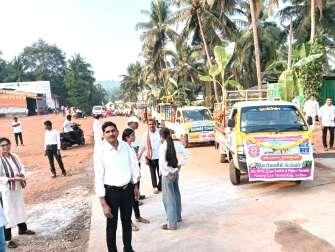
in plantations, fields, water streams, jungles and forest areatointroduce themtoournature,traditional trees, and fauna,and pictures of different animals andbirds habited here. The place was Moorukaveri, Kinnigoli
right from Rodrigues Compound, the house of Pascal Rego, and the Ian Cares Foundation which is in a picturesque setup.
More than 200 children and 60 volunteers participated in the workshop. Upon their return the
children were given answer sheets andtold towritedown thenamesof trees and animals and birds frequented by them. While in each category 3 prizes were given and their selection was made by an enumeration team headed by Ms. Christel D'Mello.
Through the walkathon Miss Alani D'Souza, the wonder Kid sang beautiful patriotic songs from the stage toencourage thechildren.
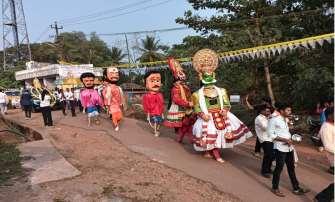
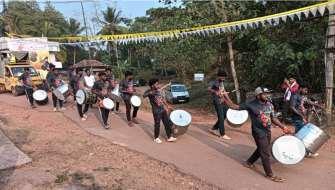
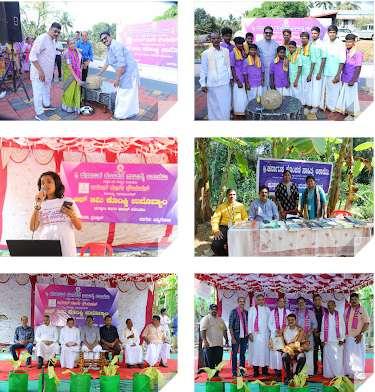
Rising Stars Band affiliatedto Kirem Parish performed both during the procession wherein all those attended the workshop chanted slogans like, 'Konknni amchi Maibhas, Konkani Amcho Uswas' from Moorukaveri junction to Rodrigues Compound where Mrs Carmine Rodrigues inaugurated the workshop by opening a MUDO, a ricestoring techniqueofolden days.
The region's two famous ice cream brands, Hangyo and Ideal distributed the ice cream to more than 300 people including the children.
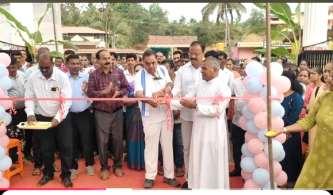
In the concluding ceremony Walter Nandalike opened the newly built
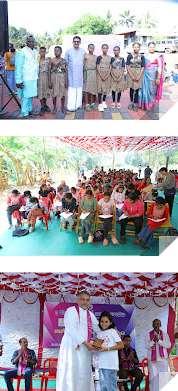
stage, 'Rang Madira' by cutting the ribbon in presence of Shri Jochim Stany Alvares, president of Karnataka Konkani Sahitya Academy, Rev Fr Oswald Monteiro. the Vicar Var of Kirem Varado and parish priest of Remedia Parish, Rev FrJochim Fernandes,parishpriestof Kinnigoli parish, Shri Rajesh Nayak, the president of Kinnigoli Rama Mandira Management committee. Shri Sekhar Gowda, general secretary of Kudumbi Community and Shri Hemacharya, the managing trustee of Ian Cares Foundation and others. All of them spoke about how the parents and their children could encourage and develop their birth language
During the program Shri Jossie Pinto (pen name, Shantipriya),
senior well-known poet and writer was felicitated for his immense contribution to Konkani literature alongside Alani D'Souza, who sang Konkanipatrioticsongsallalongthe day. The winners in various competitions wererecognised. Also, thefourcampers-HericPais,Manoj Fernandes, RonyCrasta andMelrida Rodrigues who compered the concluding ceremony were felicitated andgiven mementos.
All in all, it was a fantastic day out for the Konkani children in the region, both refreshing and memorable.
Photos by - SJ Photography and Lionel Pinto, Suraksha Travel agency, Kinnigoly



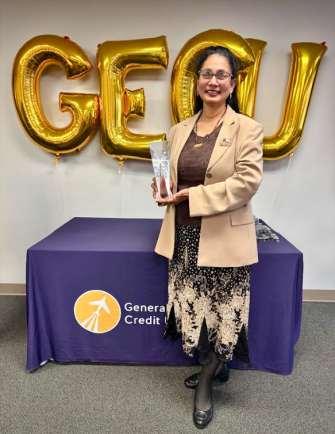
“The hunger for love is much more difficult toremove than the hunger forbread.” – MotherTeresa CINCINNATI, OHIO | January 15, 2026. In an atmosphere filled with gratitude, celebration, andpurpose, Dancy D’Souza was honored with the 2025 GECU Honors Celebration Award during an auspicious ceremony held on Thursday, January 15, 2026, at the General Electric Credit Union (GECU)

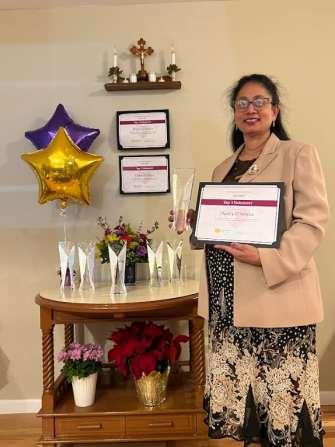
Headquarters in Cincinnati, Ohio. This prestigious recognition marks Dancy D’Souza’s sixth GECU Cares Top Volunteer Award in the United States of America, a testament to her unwavering commitment to community service and compassionate leadership. Theawardwaspresented underthe GECU “Do-Good Program,” recognizing individuals who demonstrate an extraordinary
commitment to volunteering and giving back to the community. For Dancy, service is not an obligation, itisawayof life.
Receivingtheawardwith graceand emotion, Dancy shared heartfelt words that resonated deeply with everyone present: “It was a great privilege to receive my 6th GECU Cares Top Volunteer Award. Volunteering is second nature to our family. It is a happy, healthy habit that brings us joy and togetherness beyond anything else evercould. Itisagreat honor tobe recognized and reminded that bringing joy to others can be fulfilling too.”
Dancy D’Souza is widely known as the Co-Founder of Eyes Open International, a Survivor Advocate, and an inspirational public speaker whose life story and service continue to empower vulnerable communities across the globe. Dancy’s work is driven not by accolades, but by empathy, humility, and an unshakable belief inhumandignity.
Inaworld where loneliness andthe feeling of being unwanted remain among the most terrible forms of poverty, Dancy stands as a living example of Mother Teresa’s words. Her compassion feeds hearts, her presence restores hope, and her actions remind society that love expressed through service has the power tohealdeeply.
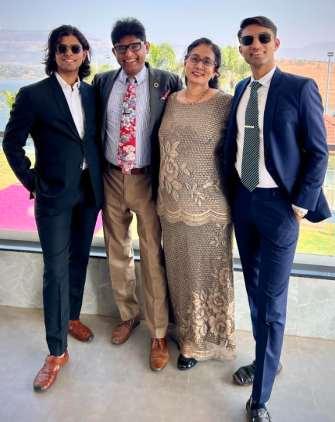
Harold D’Souza, her friend, life partner, and husband, shared an emotional tribute thatcaptured the essence of Dancy’s influence on their family and beyond: “Dancy is the Pillar, Power, Passion, and Prayers oftheD’Souza Family.”
He further described her as the shining embodiment of the “7 C’s”: values that guide her life and illuminate her journey like a
RAINBOW: Consistency, Continuity, Change, Creativity, Courage, Compassion, andCommitment. These principles are not merely spoken; theyareliveddailythrough her service, leadership, and kindness.
Dancy’sglobal impactismatchedby her quiet strength at home. Together, Dancy and Harold D’Souza are a powerful example of how an arranged marriage can transform into a deeply happy, purpose-driven marriage. Harold oftenreflects, “Wedding isanevent, butmarriage isanongoing journey ofhappiness andnotadestination.”
Their partnership is rooted in shared faith, service, mutualrespect, anda collectivemission toupliftothers.
Beyond awards and recognition, Dancy’sgreatest achievementliesin her smile, a smile that comforts, connects, andconquers challenges. Asshebeautifullydemonstrates: Speaking lips can reduce many problems.
Closed lips can avoid some problems.
Smiling lips can solve almost all problems.
Dancy D’Souza is known worldwide for that smile, one that reflects sincerity, resilience, andhope. Itisa reminder that action speaks louder thanwords, andthattrueleadership beginswith loveinaction.
The D’Souza Family foundation is built on timeless values: Faith, Character, Love, Trust, Respect, Care, and Resilience. These principles have shaped not only their family, but also the countless lives touched through their service andadvocacy.
As the ceremony concluded, one message stood clear and strong: service is contagious, kindness is powerful, andonelifecommittedto doing good can inspire an entire world.
Let us choose compassion over convenience, service over silence, andloveoverindifference.Whenwe smile,serve, andstandtogether, we don’t just change lives, we change theworld. Today,letusalldoalittle better,lovealittledeeper, andserve alittlemore.

One of the mornings, I was sad, head was paining, feeling low energy and the heart was heavy. I thought it was due to the busy world we engage ourselves, the world isfullofnegativity, unfairand unloving as I knew that I can’t change the world. When I sat

evening in a lonely place, my consciousness told that its not the imperfection of others causing you thepainrather it’syour own painas you have withdrawn the love from others, focusingontheirlimitations. Whenever anyone blocks the free flowofthisenergy ofthislove, they
arebound tosuffer.
That day I learnt that it’s not what wegetmakesushappy,ratherwhat wegivetoothersmakesushappy.It maynot beonly with money, itcan be giving your time, giving your presence, giving your prayers, giving your words of love. By becoming harsh, with ego, judging to others, unfairwe harmourselves though we do not realize it. Whenever we give unconditional love to the others, its we who get thebenefitsfirst.
Themastercreator hasdesigned us verywisely. Inourbodies, there isa system of ‘chemical reward/punishment’ that acts instantly. Asingle negative thought about someone is enough to generate toxin in our body that manifests itself not only with our emotions but also on our countenance. There are threemain thingsbeing agood person.
1)Be a good person to make yourself happy, nottoothers.
2) Being a good person doesn’t mean that always good things will
happen to you. But one day what you didwillcomebacktoyou.
3) When you be good, you don’t lose people. But people may lose you. Science reveals that any kind of feelings of happiness, friendship, love, success etc are basically born out of these four ‘feel good chemicals hormones’ that are Endorphins, Dopamine, Serotonin and Oxytocin. Hormones are chemicals produced by different glands of our body. Some of the hormones create very big role in regulating your mood and create feeling of happiness. So, what are yourhappyhormones?
Dopamine is a feel-good hormone. Whenever you feel you have accomplished something, your brain releases Dopamine which makes you feel happy. Example winning a game, get appreciation and honour etc. But the problem withDopamineisthatitdoesn’tlast, itliterallya hit.Variousother things thatgives usa hitof Dopamine are alcohol, nicotine, gambling, sex etc…Dopamine isapleasure &pain chemical. The pleasure in the very
beginning might become the tragedy. The solution to the imbalance of Dopamine is Serotonin andOxytocin.
Serotonin or mood stabilizer is a hormone which regulates neurotransmitters in your body as well as your sleep, digestion, learning ability, memory etc. By doing yogasana like Surya Namaskara or sun salutation daily, wecanincrease thesehormones.
Next Oxytocin or love hormone. Oxytocin is essential for childbirth, breastfeeding and strong parent & child bondage. One of the way we get Oxytocin is generosity, acts of kindness, sharing to others without expectation. Examplecookthemeal for your loved ones and sharing with them. Even hugging for 20 seconds alsoreleases Oxytocin. The remarkable thing about this chemical is it removes toxins from our body, heals diseases, remove addictions and the more the healthier. A person who does a small act of generosity receives Oxytocin. The more Oxytocin we
haveinourbody, themorewewant todogood.
And the final happy hormone is Endorphin. These are your body’s natural pain reliever and helps in curing the diseases. It also reduces stress & anxiety. It can increase confidencelevel&leadingtobetter self-esteem. Endorphin release duringexercise.Themorewedothe exercise,themore hormones willbe produced.
So let us boost all these happy hormones within ourselves naturally. Thehuman body istrying desperately togetustocareforone anotherandthereason issimple-by ourselves arejunk, buttogether we are remarkable. That’s what our creator is trying to teach us. No doubt our masterbriefed theentire law into one “Single Law of Love” where ultimately, wetruly resemble ourCreatorwhoistheoceanoflove and Bliss. We are designed to do good and let usput our best effort to do good. Everything will vanish withusandonlythegooddeedswe dowillremain everyone'sheart.
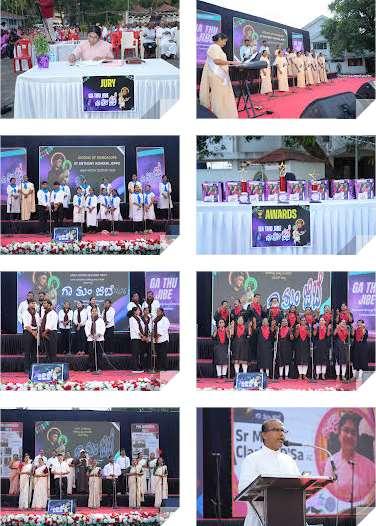
Cantate Domino wins ‘Ga Thu Jibe’ Choral Contest; Bishop Emeritus lauds musical tribute to St Anthony
Mangaluru, Jan18: TheStAnthony Ashram, Jeppu, reverberated with
melodious hymns on Sunday as choirs from across the Diocese
gathered for "GaThu Jibe" (Sing,O Tongue), a historic Diocesan-level Konkani Group Singing Competition. Organized in honour of St Anthony of Padua on the upcoming Feast of the Relic, the event witnessed a display of
immense talent and spiritual fervour.
Out of the 21 registered groups, 17 diverse teams participated in the competition. The participants included a vibrant mix of parish choirs, religious institutions, nuns, youth, children, and lay people, all united by their devotion to the ‘Wonder Worker’ ofPadua.
Winners After a spirited contest, Cantate Domino, Mangalore bagged the FirstPlace. TheSecond Place wasawardedtoJeppu Parish. The Third Place was secured by St AntonyChurch, Anthonykatte. Consolation Prizes were awarded tothe following tenteams:
• Holy Rosary Cathedral
• Athena College ofNursing
• Abode of Peace (UFS), Deralakatte
• St AntonyChurch,Fermai
• Chili PiliChoir,Bondel Shrine
• Corpus Christi Choir,Moodbidri
• BethanySisters,MangaloreProvince
• RangTarang,Moodbidri
• St Cecilia’sChoir,Milagres
• Fr Walter Albuquerque Memorial Choir
Bishop’s Message Most Rev. Dr Aloysius Paul D'Souza, Bishop Emeritus of Mangalore, graced the
occasion and commended the Ashram for this unique initiative. In his address, he emphasized the spiritual significance of sacred music.
"To sing is to glorify God, to proclaim the mighty deeds of the Lord, and to sanctify ourselves," the Bishop said. He further advised the participants that their mission does not end with a competition. "It is important to be an active participant inyour respective parish choirs and liturgy, rather than just competing for prizes," headded. Judging and Feedback The competition was adjudicated by an eminent panel of experts comprising Fr Alwyn Sequeira OCD, MrJoelPereira, andSrMaria Clarice AC (Bangalore).
Speaking on behalf of the jury, Fr Alwyn Sequeira verbalized the evaluation, offering constructive feedback on the singing techniques andgroup performance dynamics
tohelp the choirs improve further.
Fr Maxim Rosario, Diocesan Estate Manager, Dr Sr Lilly Pereira BS Provincial Superior of Mangalore Province, Fr Uday Fernandes, Milagres were present among the dignitaries.
Organisers Theprogramme wasled by Fr J.B. Crasta, Director of St Anthony Ashram. Fr Praveen Amrith Martis, Administrator, served as the Programme Coordinator, while Fr Nishanth Vivian Rodrigues wasthe Assistant Coordinator.
Fr Anil Ivan Fernandes, Director of Canara Communication Centre, managed the digital programme design. Fr Maxim D'Souza, along with the executive committee members andvolunteers,assistedin the smooth execution of the event. Mr Lanvin D'Souza Peruvai compered theprogramme.

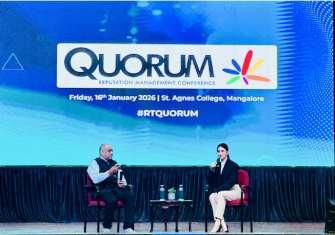

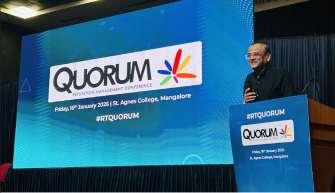

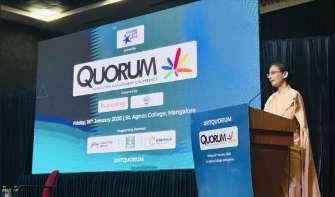
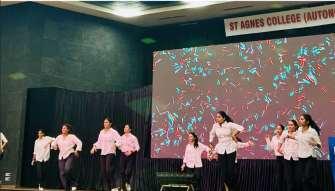
St. Agnes College (Autonomous), Mangaluru, the Department of Business Administration (MBA), and Reputation jointly organised QUORUM – the Reputation Management Conference on Friday, 16 January 2026, bringing together industry experts and professionals. The full-day event, held from 9:00 am to 4:00 pm, brought together students, faculty members and industry professionals to explore emerging trends in reputation
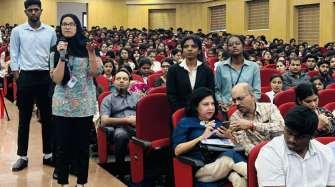
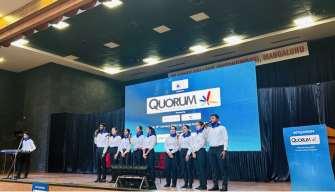
management, corporate communications, brand strategy andcorporate identity. Through keynote addresses, panel discussions andinteractivesessions, participants gained insights into managing organizational trust, navigating reputational risks and aligning communication strategies with business objectives. Theprogramme commenced with a prayer song, after which Sr Dr M. Venissa A. C., Principal, welcomed the gathering. The session then proceeded with an impressive
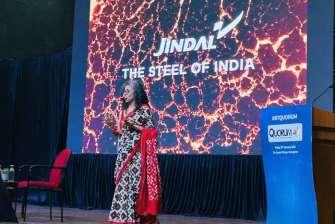
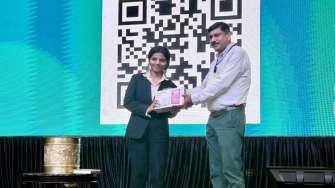

lineupofkeynotespeakers. Amanda Puravankara, the Director of the PuravankaraGroup spoke on“Being aSTAR in YourOwn Right” . She shared that staying in a constant stateoflearningkeepsusgrounded, open to being wrong or lost and reminds us that what brought us herewill not takeuswhere weneed to go.A question-and-answer session with the keynote speaker Amanda Puravankara was
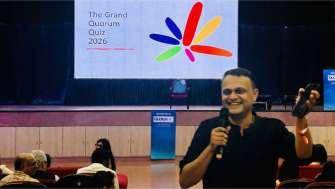
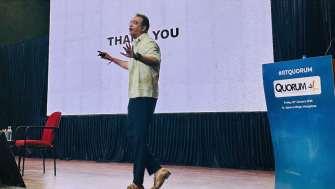
conducted by Amith Prabhu from The Promise Foundation.Rohit Bansal from Reliance Industries addressed theaudience on “HowAI WillImpactJobsintheFuture.”He highlighted that human beings and AIare not in competition with each other butaremeanttocomplement one another. Arpana Kumar Ahuja of Jindal Steel shared insights on “What Goes into Building PR Campaigns,” and Sujit Patil from
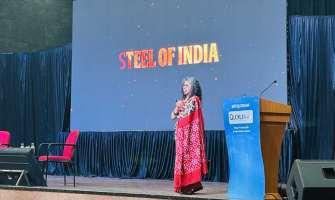
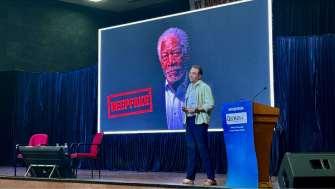
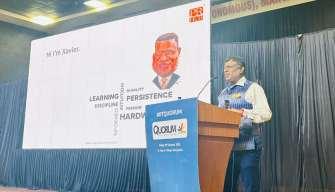
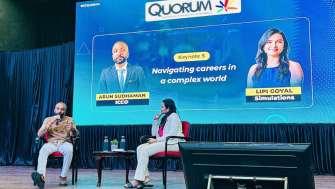
Godrej Industries Group delivered a session titled “Reputation: The Invisible Asset in a Transparent World–HowtoBuildandSustainit inanAlways-On World.”A special message titled “BelieveinYourself” wasdelivered byXavierPrabhufrom PRHUB.The keynote sessions concluded with Arun Sudhaman of ICCO and Lipi Goyal of Simulations PR, who spoke on “Navigating CareersinaComplexWorld.”

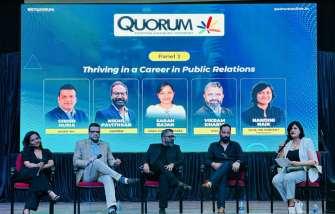
In addition to the keynote sessions, expert panel discussions were held afternoon aspartofQUORUM. The first panel, “Thriving in a Career in Public Relations” featured Girish Huria of Avian We., Nikhil Pavithran of Kaizzen, Sarah Rajan from SPAG FINNPartners,VikramKharvi ofIPRF and Nandini Naik from Blue Ink Content. The second panel, “Working Towards Your Dream Job” brought together Bhavna Imran of Corteva, Hina Issar Huria from The

Promise Foundation, Nivedeeta Moirangthem ofIKEA,Seema Ahuja ofBiocon, YatinPadia ofArvind and Sarika Chavan from Sparkle Gift Cards. The third panel discussion, titled “Building a Personal Brand in Your 20s” featured Amit Arora of Brand VD, Ira Pradhan from Freshworks, NidhiGulati ofSpringer Nature, Richa Seth from Adfactors PR, Rudolph Noronha from MRPL and Diana Fernandes of Bloomingdale PR.
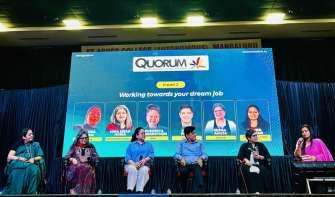
These sessions addressed critical themes, including crisis communication, leadership messaging and corporate narrative development.The success of the conferencewaslargely attributed to theeffortsofRoshanAlexander and Amith Prabhu from The Promise Foundation.The afternoon sessions focused on strategic forums and interactive question-and-answer discussions that encouraged student participation and critical thinking.
A “Quiz” based on Mangaluru was conducted for the participants with attractive goodies and two lucky draws wereheldinthemorning and evening sessions, with the winners
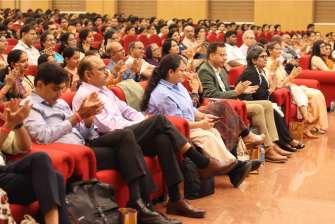
receiving Lenovo tablets. The session concluded with a vote of thanks, following which ecertificates were distributed to all the participants present. The conference witnessed the participation of over 1,000 attendees,markingitasasignificant success.
Overall, QUORUM proved to be a highly impactful academic and professional initiative. Participants
appreciated the relevance, depth and practical orientation of the sessions, particularly the emphasis on actionable insights and realworld applications. The conference reinforced St. Agnes College’s commitment to experiential learning, industry engagement and professional development, while alsostrengthening itsacademicand institutional reputation.
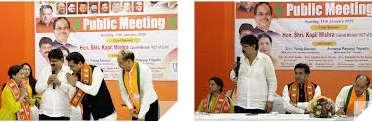
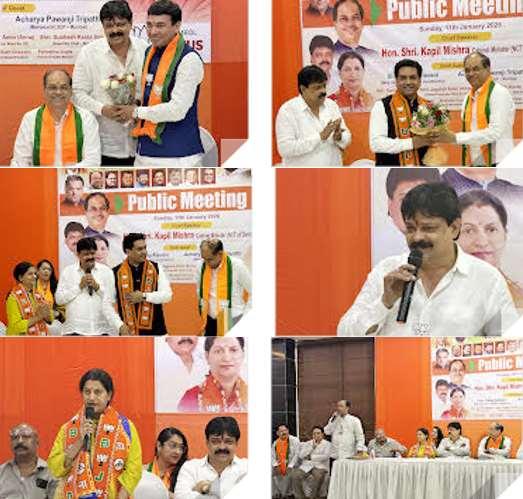
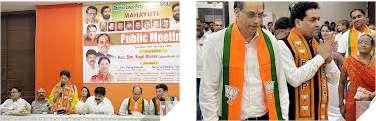
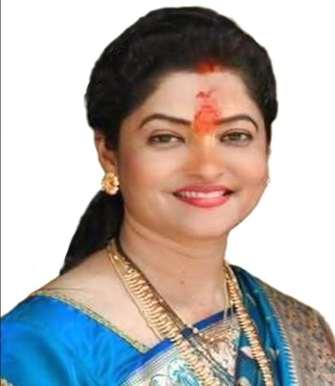
BMC BJP Tulu-Kannadiga Candidate Jagadheeshwari Jagadish Amin
Union Minister Kapil Mishra Participates in Campaign Meeting at J.B. Nagar (Photo / News: Rons Bantwal)
Mumbai, Jan. 11: After a gap of eight years, elections to the Brihanmumbai Municipal Corporation (BMC)arescheduledto beheld on Thursday, January15. In thiscontext,aBharatiyaJanataParty (BJP) campaign meeting was held today, Sunday,atGoenka Bhavanin
J.B.Nagar,AndheriEast.
From Andheri East’s K-East Ward No. 82, BJP has fielded TuluKannadiga candidate Mrs. Jagadheeshwari Jagadish Amin, originally from Karkala. Addressing theBJP–ShivSena (Eknath Shinde)–
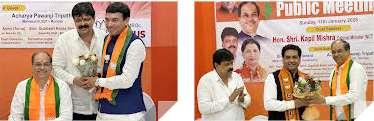
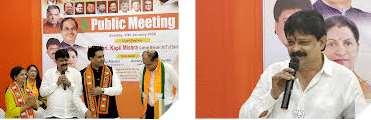
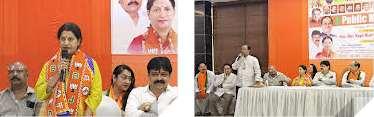
RPI Athawale alliance (Mahayuti) public meeting, Union Minister and Law and Justice, Labour, Employment, Development, Artand Culture, Language, and Tourism
Minister Kapil Mishra attended as the chief guest and extended his best wishes to allthe candidates in thefray.
Chief Speaker Hon. Shri. Kapil Mishra Cabinet Minister (NCT of Delhi), Chief Guest, Shri. Parag Alavani(MLA, Vile Parle Assembly Constituency), Acharya Pawanji Tripathi (Mahamantri, BJPMumbai), BJP Leaders Shri. Santosh Kelkar, Shri. Jagdish Amin (Anna)(Former Corporator, Ward
No. 82), Shri. Subhash Kanta
Sawant(Assembly Chief - Shiv Sena), (BJP Fund Head),Ratan
Asware (Vice-President RPIA),Sanjay Wakode (Observer Sahar
‘
Mandal), Shuklesh Goswami (Sahar Mandal President), Parmatma Gupta (Former President Ward 82), VikasTiwari President Ward82) werepresent.
Father-Daughter Duo Avani Sharma & Venu


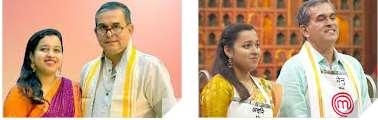
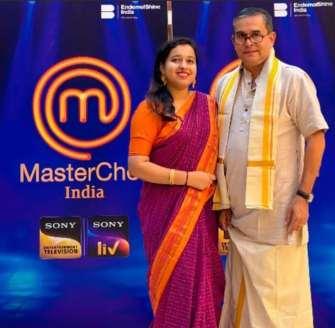
Mumbai, Jan.18: Venu Sharma and AvaniSharma win theimmunity pin in 'MasterChef India' Season 9after delivering an impressive dessert during the high-stakes Friday
challenge, securing safety from elimination.
Sony TVMasterChef India Season 9just delivered its first major twist. The Friday episode had sixMasterChefIndiajodis
competingfortheimmunitypinand the competition was tougher than anyoneexpected. Theimmunitypin challengeformatthreweveryoneoff balanceright fromthestart. The judges revealed a unique switching challenge where one partnerstartscookingandtheother must finish the dish after the bell rings. This meant coordination was justasimportant ascookingskillsin this cooking reality show. Plenty of pairs struggled with the transition, but the father-daughter duo Avani
and Venu Sharma managed to pull itoffperfectly.Thisconfirmsthey've securedsafetyfromtheMasterChef Indiaelimination.
Venu and Avani Sharma Win ImmunityPinChallenge
Venu and Avani Sharma beat five other pairs to claimtheMasterChef India Season 9immunity pin on Friday. Their dish, called 'Deep Aradhana', combined traditional Indian sweets in an innovative way. Theyusedkajukatliandgajarhalwa as the main components. The presentation and taste impressed judges Ranveer Brar, Vikas Khanna and Kunal Kapur enough to hand themthewin.
Sixpairs Competed in ImmunityPin Challenge.
The other five pairs who participated included sisters Anju Pradhan and Manju Ohja, siblings Anshmeet Singh and Prabhdeep Kaur, brothers Ajinkya and Vikram,
Jethani-DevraniduoArchanaManoj Dhotre and Rupali Vikash Jadhav, and brother-sister pair Yasmin AnsariandMehfoozAlamAnsari.All of them faced the same switching challenge, but coordination issues costseveralvaluablepoints.
With the immunity pin secured, Venu and Avani are now safe from
this week's elimination. The other contestants will have to prove themselves in upcoming challenges to avoid going home.MasterChef India Season 9airs Monday to Friday at 9 pm on Sony Entertainment Television and streamsonSonyLIVE.
Dr Sylvia Rego’s book "Gondolu and Two Other Plays of Amrutha Someshwara" released at St Aloysius University
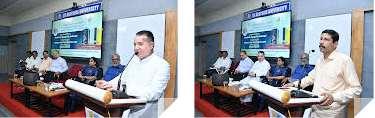
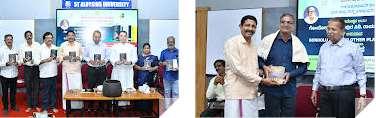
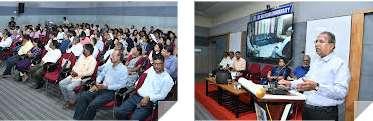
The Book Release of "Gondolu and Two Other Plays of Amrutha Someshwara", translated from Tulu to English by Dr Sylvia Rego, Professor of English, St Aloysius (Deemed to be University), was organisedbyKarnatakaTuluSahitya Academy in collaboration with School of Languages and Culture and the Department of English, St Aloysius (Deemed to be University)
on 14th January 2026, in Sanidhya HalloftheUniversity.
The Tulu Plays translated by Prof Sylvia Rego include 'Gondolu', 'Satyanapura Siri'and'Raayaravute'.
The book was released by Prof B.A Viveka Rai,Former PresidentofTulu Sahitya Academy.
DrSylvia Rego hastranslated many regional works into English. Her majorworksinclude"TheTreeSpirit andOtherKonkani FolkTales",
"Fakir's Daughter and Other Beary FolkTales","TenHousesaroundthe Church" - a translation of Na. Dsouza'snovelintoEnglish.Shehas alsotranslated3playsof ChaFraD' Costa from Konkani to English. She has translated "A Doll's House" by HenrikIbsen intoKonkani.
The President of the Programme, Rev.Dr Praveen Martis, SJ, Vice ChancellorofStAloysiusDeemedto be University, addressed the gatheringonTulucultureandabout the new Department of Tulu in the University.
Prof B.A Vivek Rai stressed on the need to translate more Tulu works
into English which would enable globalisation of the works. He insisted on opening a Centre for Translation Studies at St Aloysius University.
EminentscholarRev.DrWilliamDa' Silva,Taranath Gatti Kapikad, President of Tulu Sahitya Academy, Dr.Mahalinga Bhat, Dean of School of Languages and Cultural Studies, Dr.Melissa Goveas, Head of the Department of English, Muddu Moodabelle, Dr. Chetan Someshwara, DrChinnappa Gowda, andotherswerealsopresentonthe occasion.-