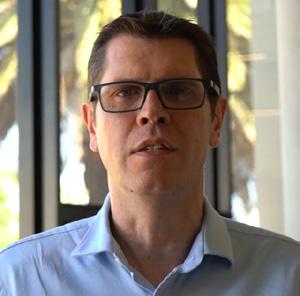
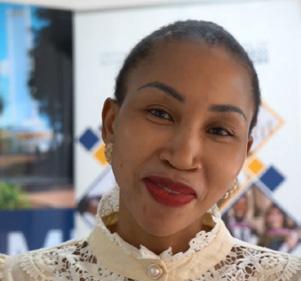
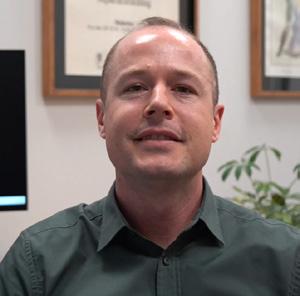
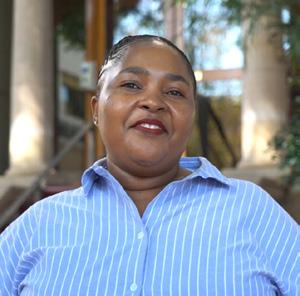
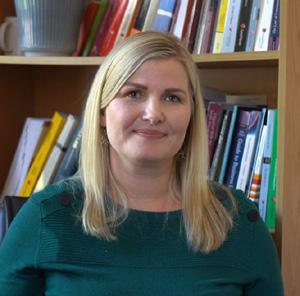
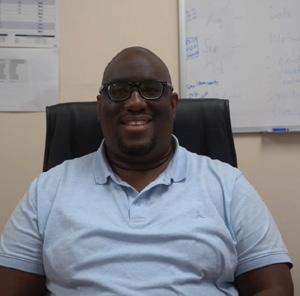
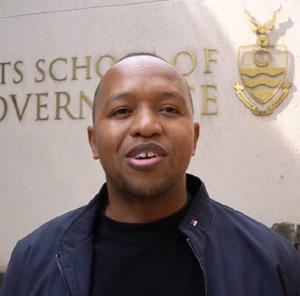
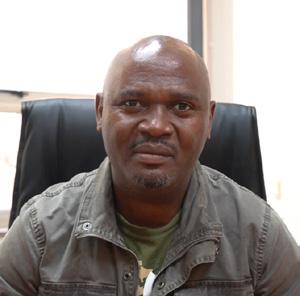
It has been an incredibly busy year for the CLM Comms team, as you will read in our magazine. We have continued to profile work under the four themes of the Wits 2033 strategic framework (Inequality and the Economy, Governance and Democracy, Climate Change and Digital Transformation) – including a video from the Dean on AI in the workplace. We have also managed to do some interesting public work both in the media and through our #CLMInsight videos. This is a new feature of our work where we have asked CLM academics to share their expertise on issues of national interest. You can see the full list here
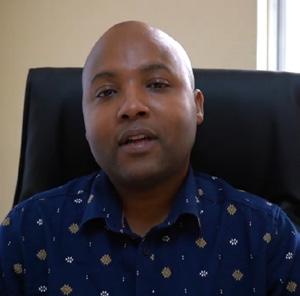
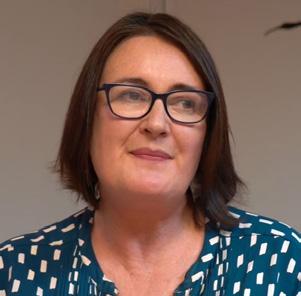
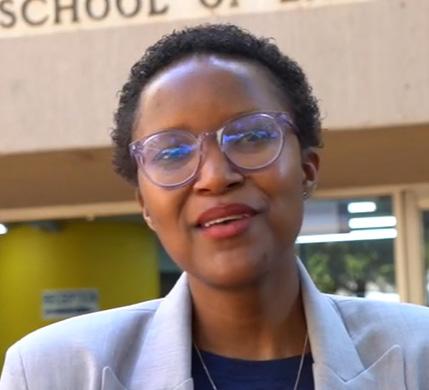
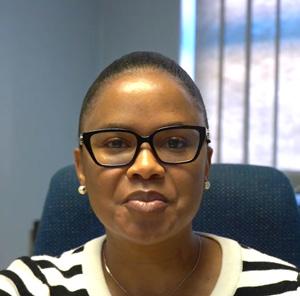
This year we have added to our portfolio a section on academic promotions; we have asked newly promoted academics to speak about their work and research, and you will see the videos in the magazine.
We see our work as an important part of the transformation and impact mission of the university. Our aim is to connect the work in the Faculty with broader societal conversations, and to tell the research and teaching stories in ways that will hopefully make a difference. We are grateful to the academics who have shared their research, who have made time to be filmed, and who have suggested other academics we can approach.
As always we struggle to find female academics who are willing to be filmed, but we are slowly building our cohort and hope that 2026 will be a great year for female academic voices in CLM.
As always we want to acknowledge our Professional and Administrative colleagues. There is so much great work that happens behind the scenes but the university is not generally set up to celebrate this work (in the same way as we have teaching and research and supervision awards for example). But know that we see you. And we will continue to look for ways to profile our PAS colleagues in the future.
We hope you enjoy reading this magazine as much as we enjoyed putting it together for you. We look forward to sharing more of the wonderful work from our Faculty in 2026.
In the meantime, please follow us on:
MESSAGE FROM THE DEAN
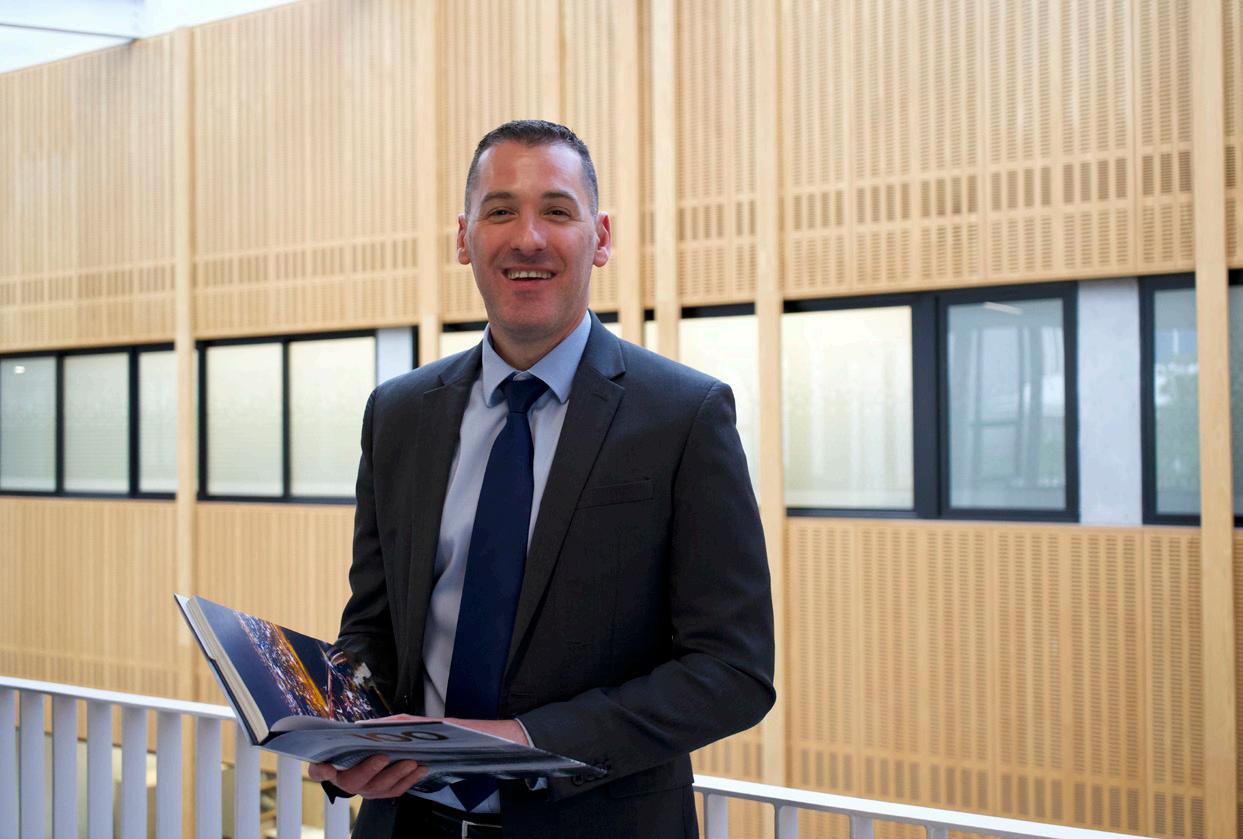
As we near the end of the 2025 academic year, it once again gives me great pleasure to reflect on our collective achievements and progress in the areas of academic excellence, social impact, partnerships, and people development and transformation.
Kim
Jurgensen and Tholoana
Phoshodi CLM Faculty Communications
INTRODUCTION TO THE FACULTY
Chairs, Institutes and Centres
WATCH NOW Full message:
Ithank all our academic and PAS colleagues who ensured the smooth running of our teaching programmes. We close 2025 with 5,116 undergraduate student enrolments and exceeded our postgraduate enrolment target with 6,489 candidates. CLM remains the largest Faculty in the University on student numbers. Thank you all for supporting our students and maintaining excellence in our teaching and learning.
It is also pleasing to note that we have sustained our research outputs. Our annual report highlights our upward trend in our accredited journal article outputs, a 9% increase, and with three CLM schools recording all-time research highs. Congratulations to all our active researchers and postdocs for this outstanding contribution.
In June, we held our Faculty excellence awards ceremony where we recognised achievements in teaching and research, along with research communication and impact. Well done to all Faculty winners for their outstanding work. I am pleased to also note our success in academic staff
development with four promotions to full professor, eight promotions to associate professor, and ten promotions to senior lecturer recorded this year. Congratulations also to Professors Duh and Keulder on their inaugural lecturers delivered this year. We look forward to celebrating the inaugural lectures of our other recently promoted professors in due course. Our #CLMInsights series was also ramped up in 2025 and continues to serve as a highly accessible platform for profiling the excellent work of our academics, especially those recently promoted.
We continue to improve on student throughput. We held seven graduation ceremonies in early April and two in July, with an additional PhD ceremony. Across these ceremonies, we graduated 1,457 postgraduate candidates. We also awarded honorary doctorates to Ernest Aryeetey in Economics, David Dyzenhaus in Law, and Mavuso Msimang and Kaizer Motaung in Commerce. We have additional ceremonies also planned for December, including the award of an honorary doctorate award in law to Bill Frankel. My thanks to the Faculty Registrar team for managing our graduation processes.
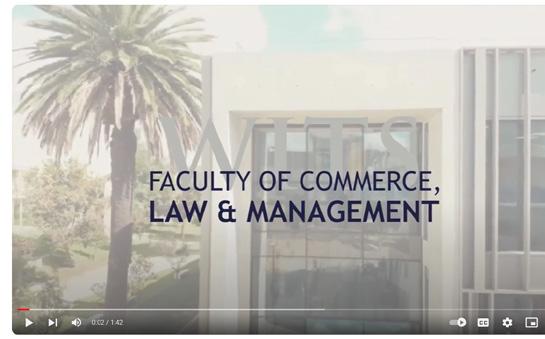
Professor Jason Cohen, Dean of the Faculty of Commerce, Law and Management at Wits, gives an introduction to the Faculty and all its Schools,
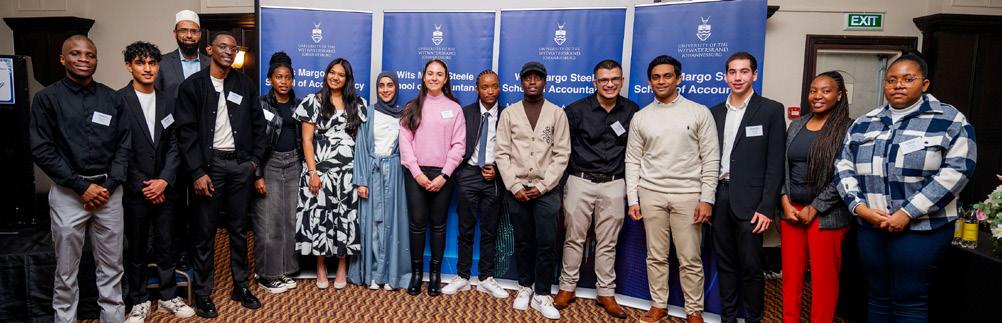
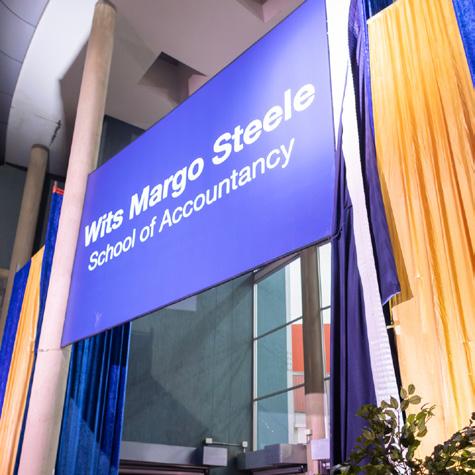
I want to again applaud the outstanding performance of students from the Margo Steele School of Accountancy in this year’s SAICA IAC exam. We secured first place and three spots in the top 10, with an overall outstanding pass rate that cements our reputation and contribution to transforming the profession. Our School of Economics and Finance students continued to dominate the Nedbank & Old Mutual Budget Speech competition with a clean sweep in the postgraduate category and two of top three places in the undergraduate category. A team of insurance and risk students from School of Business Sciences shined on the global stage with a strong placing in the Spencer-Rims Student Risk Management Challenge finals held in Chicago.
Curriculum developments are ensuring the relevance and responsiveness of our qualifications. Several new academic developments received approval or proceeded for CHE and SAQA accreditation. These include an exciting new Bachelor of Business Science programme, a new Bachelor of Commerce in the field of Financial Sciences, a new MCom in the field of Cybersecurity Management. The agreement for our joint Global Executive MBA with Kedge Business School was also concluded this year and launches in 2026. Progress was also made on a new PGDip and Masters in Sustainability Accounting, and a Master of Management in Evaluation Systems. WSG also launched its corporate affairs executive education offering in partnership with Cambridge Institute for Sustainability Leadership, which includes an immersion at Cambridge.
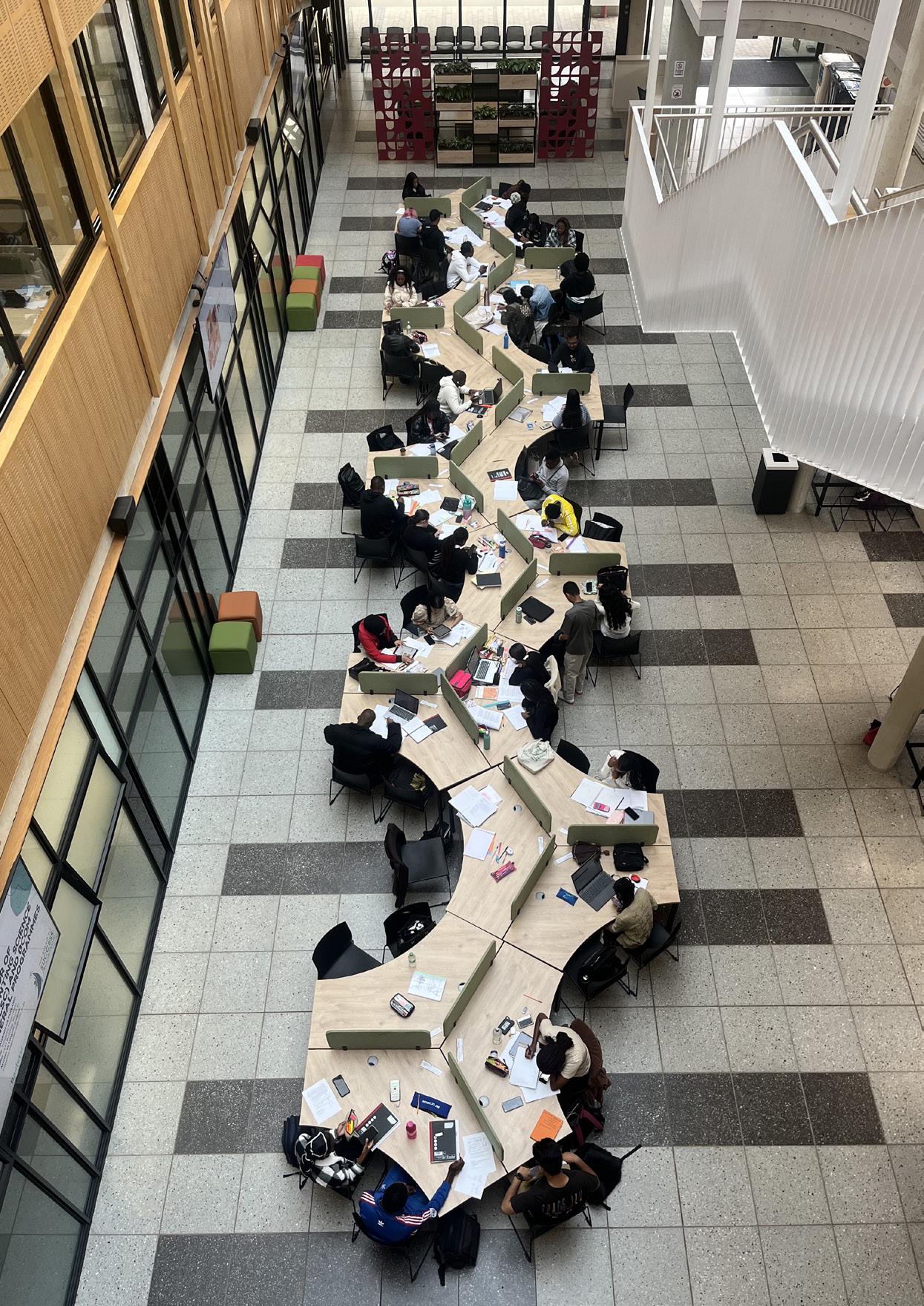
We have also embraced a number of quality assurance processes this year with four of our schools undergoing QQRs. We look forward to finalising the recommendations arising from those reviews in early 2026. WBS also engaged with an EQUIS peer review visit as part of its accreditation process. ACCA visited the School of Accountancy for a site visit. Student success remains a continued focus and I am pleased that in 2025 we successfully relocated our Road to Success unit to the CLM admin building adjacent to our informal study spaces for greater visibility and accessibility.
This year, we launched the Mervyn King Chair in Corporate Governance and Sustainability at WBS. In my closing remarks I emphasised the importance of the chair to bolstering our research, teaching and outreach into good governance and sustainable value creation. I am also pleased to report that the Faculty secured a Chair from Investec Bank on AI and Sustainable Business Transformation. The Chair will be hosted at WBS and will form an integral part of the Wits MIND Institute. We look forward to formally launching the Chair in due course.
CLEAR-AA has been repositioned as a centre within our Wits School of Governance. Dr Takunda Chirau has been appointed as the new Director for CLEAR-AA, and we are excited about the mutual benefit and opportunities that will arise from the relationship.
Congratulations to SBS for hosting the successful AABD conference earlier this year. SEF also hosted two conferences in September in the areas of fintech and climate finance, along with a very successful panel hosted in October on inflation targeting. School of Law hosted African Cyber Law Conference and Women in African Judiciaries Conference. WSG hosted SAIGA Women’s month event. WBS hosted a natural gas symposium highlight the gas-cliff which was widely covered in the media. We also hosted a university-wide entrepreneurship education summit which brought together delegates from across Wits’ broad entrepreneurial ecosystem.
In October, we welcomed our new Faculty Business Manager, Mr Terrence Legalatladi. We also successfully recruited for a new Head of School for the School of Business Sciences. Professor Anita Bosch will join us in January 2026 from Stellenbosch Business School where she held the Research Chair for Women at Work. am sincerely grateful to Professor Michael Samuel for serving as the Acting Head of School since April 2025. am also pleased to report that Professor Maurice Radebe will contribute to a larger University and Facultywide role as Faculty Director Commerce, Law and Management. Earlier this year, Professor Radebe was appointed as Chairperson for the Association of African Business Schools (AABS). We are proud to have Wits representative at the helm of an organisation focused on capacity building, collaboration and quality improvement in business education on the African continent. Professor Logan Rangasamy will serve as Interim Head of Wits Business School. We are currently recruiting for a Head of School of Law and hope to conclude the process in early 2026. Professor Tracy Gutuza will serve as the Acting Head of School from January.
My thanks to Kim Jurgensen and Tholoana Phoshodi for compiling this excellent showcase of our Faculty success. Enjoy reading …
With best wishes for a happy and healthy new year and a well deserved rest with family and friends.
4 THEMATIC AREAS EMAIL NEWSLETTERS
1. ENVIRONMENT AND CLIMATE JUSTICE
In 2007 the then Minister of Environmental Affairs declared parts of Gauteng and Mpumalanga a Highveld Priority Area because of the poor air quality. This area houses 12 coal-fired power stations, a coal-to-liquid fuels refinery, and large-scale coal-mining operations.
GOVERNANCE AND DEMOCRACY
As part of our Digital Transformation thematic area, this newsletter brings together academics from our Faculty to reflect on how AI is reshaping their disciplines, teaching practices and professional fields.
ECONOMIC GROWTH AND INEQUALITY
Jason Cohen Dean | Faculty of Commerce, Law and Management
As part of our Governance and Democracy thematic area, we turn a critical eye toward one of South Africa’s most defining challenges: state capture. Scholars across our Faculty reflect on how this phenomenon continues to shape the country’s institutions, policy frameworks, and democratic practices.
In this, the fourth of our newsletters in 2025, we look at issues related to inequality and to the economy. We have academics discussing the law, wealth inequality, VAT vs fuel levies, student funding, expectations on the G20 and the Medium Term Budget Policy Statement.
EXCELLENCE AWARDS 2025
The Faculty of Commerce, Law, and Management celebrated teaching and research excellence during its annual CLM Excellence Awards ceremony on the morning of 12 June 2025.
The teaching awards serve to recognise and showcase excellence in scholarly university teaching and student learning, with the aim of stimulating and rewarding teaching and teaching-related scholarly and/or creative activities. Scholarly teaching is teaching that is researchinformed and / or research-led, combined with a reflection on practice.
In 2025, the Team-Teaching Award went to a crossdisciplinary team of experts led by Prof. Frikkie Booysen for their work on using reflective writing as a postgraduate pedagogy aimed at enabling deep learning for students. The Individual Teaching Award went to Prof. Carika Keulder, recognising her principled approach to enabling active learning for students across undergraduate and postgraduate levels.
Research
The Faculty of CLM proudly recognises outstanding research achievement through the 2025 CLM Research Excellence Awards. These awards celebrate excellence from multiple perspectives — including our most productive researchers, those publishing in global Top 10 journals, and scholars whose work is among the most highly cited in the field.
This year, two new categories were introduced to highlight the broader reach and influence of CLM’s research. The Social, Environmental and Policy Impact Award acknowledges research that meaningfully shapes policy and practice beyond academia, with Professor Maroun (School of Accountancy), Professor Pooe, and Mr Setlhalogile (Wits School of Governance) recognised for their contributions.
The Research-Driven Media Impact Award celebrates researchers who effectively communicate their work to wider audiences through the media.
Professor van Staden (School of Law) and Professor Naidoo (School of Business Sciences) were honoured for transforming their research into accessible and impactful public scholarship.
Together, these awards highlight CLM’s commitment to advancing impactful, high-quality scholarship that inspires change within and beyond the university.
2023 – ACHIEVEMENT IN RESEARCH
Work from two years previous is considered for this award. This allows sufficient time for the papers to gain visibility and be cited internationally. As a result, next year we will be celebrating academics who were most productive in 2024. This approach aligns with how the DHET releases publication subsidies to universities.
Category A – Most Productive Researcher
• Professor Warren Maroun
• Professor Yudhvir Seetharam
• Professor Tinashe Chuchu
• Professor Neo Ligaraba
• Dr Michael Sony
• Professor Ismail Fasanya
Category B – Research Output in an A+ Journal Publication
• Professor Gelo Dambala
• Professor Uma Kollamparambil
• Dr Michael Sony
• Dr Thanyani Norman Mudau
• Professor Jason Cohen
• Professor Elmarie Papageorgiou
• Professor Minga Negash
• Professor Warren Maroun
• Dr Kingstone Nyakurukwa
• Professor Yudhvir Seetharam
Category C – Most Cited Researcher
• Dr Michael Sony
2024 – ACHIEVEMENT IN RESEARCH
Category D – Social, Environmental, and Policy Impact
• Professor Warren Maroun
• Professor TK Pooe
• Dr Matlala Setlhalogile
Category E – Research‑Driven Media Impact
• Professor Marthinus Van Staden
• Professor Rennie Naidoo
2024 – ACHIEVEMENT IN TEACHING
Team Teaching Award
• Professor Frederik Booysen
• Dr Pia Lamberti
• Mrs Agata MacGregor
• Professor Laura Dison
Individual Teaching Award
• Professor Carika Keulder
OUTSIDE RECOGNITION AWARDED TO:
Dr Sheena Swemmer, feminist lawyer, activist, and head of the Gender Justice Programme at the Centre for Applied Legal Studies, University of the Witwatersrand, was named Social Justice Champion of the Year. She dedicated her award to the people who courageously defend the human rights and dignity of ordinary South Africans in courtrooms and communities.
Professor
advancing sustainability and driving impact across the profession.
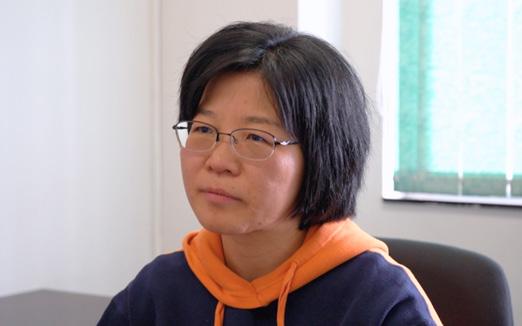
SEF’s Dr Yuxiang Ye was awarded the Francis
Memorial Article Prize for data driven research for her paper “The effect of temperature on household electricity consumption: Evidence from South
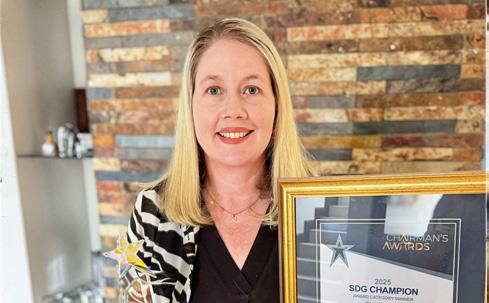
Yvette Lange from SOA has received the SAICA Chairmans award – SDG Champion award. She was recognised for her contribution to
Wilson
Africa”.
BELOW ARE SOME OF OUR AWARD WINNERS TALKING ABOUT THEIR AWARDS.
Professor Frikkie Booysen wins the CLM Team Teaching & Learning Award for pioneering a transformative reflective-writing approach in Health Economics.
Professor Uma Kollamparambil is recognised for her A+ journal research on migration, inequality, and why subjective well-being matters for South Africa’s future.
BELOW IS THE CLM TEAM THAT WON THE VICE CHANCELLOR’S AWARD FOR TEACHING IN 2024.
Professor Carika
earns the Faculty Teaching and Learning Award for her innovative, studentcentred approach to teaching taxation.
The Wits Law Research Essay team unpacks how their course builds writing skills, research confidence, and readiness for postgraduate study and legal practice.
STUDENT PRIZEGIVING AWARDS
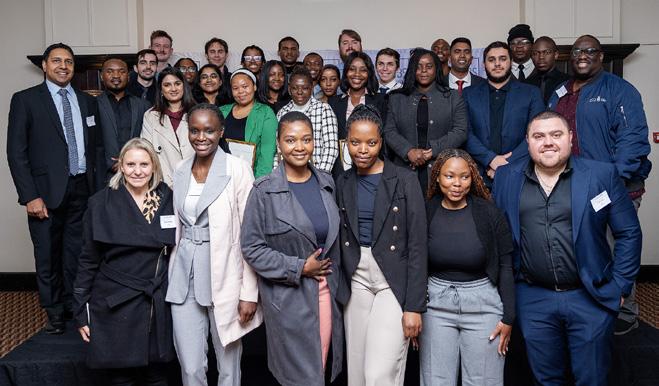
Each of our undergraduate Schools held their annual prize-giving ceremonies, recognising top performers in teaching and research. Well done to all award recipients.
of Economcis and Finance
Keulder
SBS Prizegiving
School of Law Prizegiving
School
Prizegiving
Margo Steele Accountancy Prizegiving
CLM Academic promotions
Please join us in congratulating our academics who were promoted in the 2025 Staffing and Promotions processes.
We have included videos of each of these academics so you can get an idea of who they are and the focus of their academic work. (Click on image to view video)
Academics not featured below:
Prof. Malebakeng Forere, School of Law, promoted to Full Professor
Dr. Cornelius Visser, School of Law, promoted to Associate Professor
Dr. Hlengiwe Ndhlovu, WSG, Promoted to Associate Professor
Dr. Rekgotsofetse Chikane, WSG, Promoted to Senior Lecturer
Prof. Yudhvir Seetharam
Prof. Yudhvir Seetharam Professor, Wits School of Economics and Finance
Prof. Rob Venter Associate Professor, Wits School of Business Sciences
Dr. Khosi Radebe Senior Lecturer, Wits School of Business Sciences
Dr. Danie de Klerk
Associate Professor, Faculty of Commerce, Law and Management
Dr. Ayanda Magida Senior Lecturer, Wits Business School
Prof. Carika Keulder Professor, Wits School of Law
Dr. Samwel Mwapwele Senior Lecturer, Wits School of Business Sciences
Dr. TK Pooe Associate Professor, Wits School School of Governance
Dr. John Mangundu Senior Lecturer, School of Business Sciences
Dr. Aldo Sitoe Senior Lecturer, Wits School of Economics and Finance
Dr. Jean Moore Senior Lecturer, Wits School of Law
Dr Shadi Maganoe Senior Lecturer, Wits School of Law
Dr. Matsietso Matasane Senior Lecturer, Wits School of Law
Delane Naidu Senior Lecturer, Wits School of Economics and Finance
Prof. Christine Hobden Associate Professor, Wits School of Governance
Prof. Bonita Meyersfeld Professor, Wits School of Law
Prof. Jane Ndlovu Associate Professor, Wits Margo Steele School of Accountanc
Prof. Dusan Ecim Associate Professor, Wits Margo Steele School of Accountanc
EVENTS
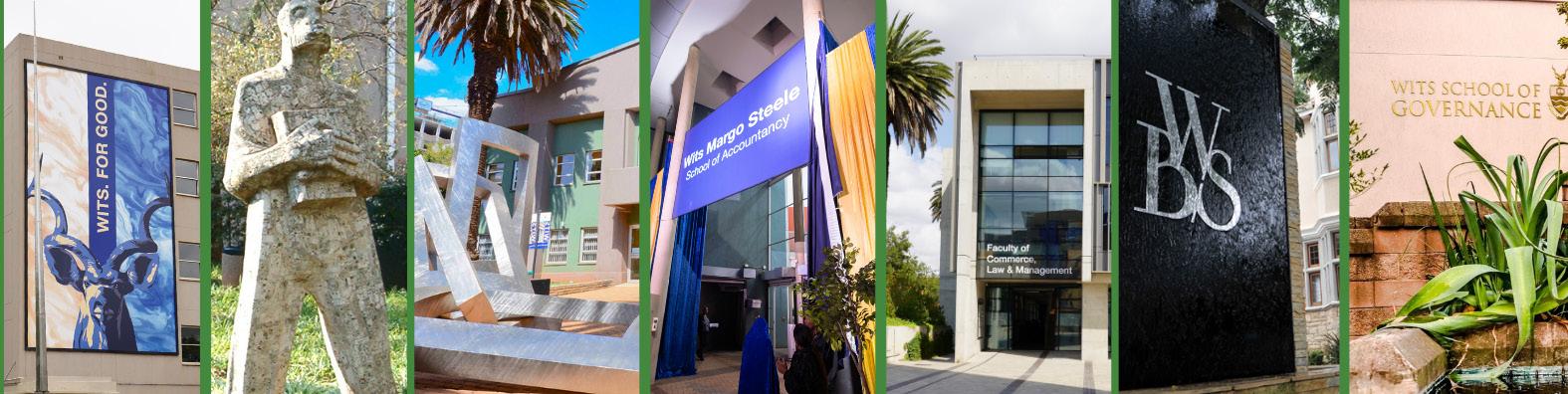
Our Schools host numerous events throughout the year covering academic conferences, social justice issues, national policy dialogues and international work. Below is a snapshot of some of the key events held across the six Schools in 2025.
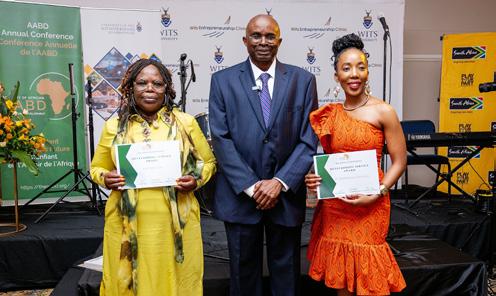
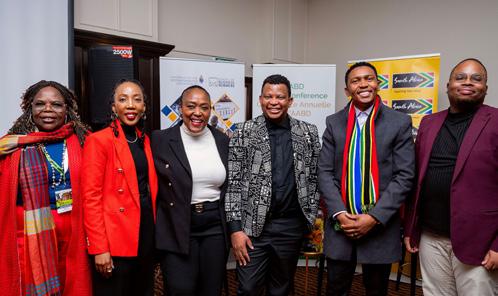
In May 2025, the Wits School of Business Sciences hosted the 25th Academy of African Business and Development (AABD) Annual Conference under the theme “Reshaping Africa’s Sustainable Development through Digital Inclusion.”
The conference brought together over 100 scholars, policymakers and business leaders from across Africa and the diaspora to examine how digital technologies can drive inclusive and sustainable growth on the continent.
Through multiple academic tracks on entrepreneurship, informal markets, sustainability, finance, cybersecurity and education, the event showcased the school’s research
SEF
the
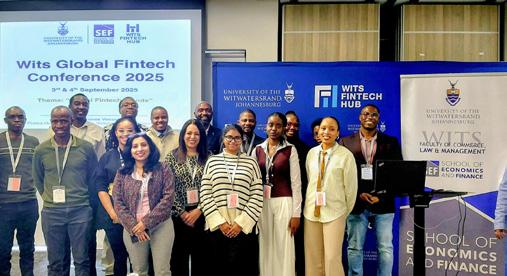
Hub hosted the Wits Annual Global Fintech Conference and the Wits Annual Global Climate Finance Conference in Cape Town, South Africa, attracting presentations from across the world and bringing together practitioners, policymakers, academics, and graduate students. While the Fintech conference focused on key issues in digital finance, AI and machine learning in financial services, financial inclusion, regulation, and Africa’s evolving fintech landscape; the Climate Finance conference addressed critical themes related to climate adaptation, mitigation, and sustainable development, innovative financing models, climate-related investment flows, transition finance, carbon markets, and the role of public–private partnerships in accelerating Africa’s green transformation. These two
leadership in digital inclusion and sustainable development.
High-profile keynotes, including Wits Chancellor Dr Judy Dlamini and Professor Samuel Fosso Wamba, underscored the School’s role as a continental hub for cutting-edge African business scholarship and policy-relevant debate. Brand South Africa amplified conversations about nation branding, investment, entrepreneurship, and youth opportunity, helping to ensure that the conference not only advanced academic debate, but also strengthened South Africa’s reputation across the continent and beyond.
conferences are year-marked to be hosted on an annual basis since their launch in 2024.
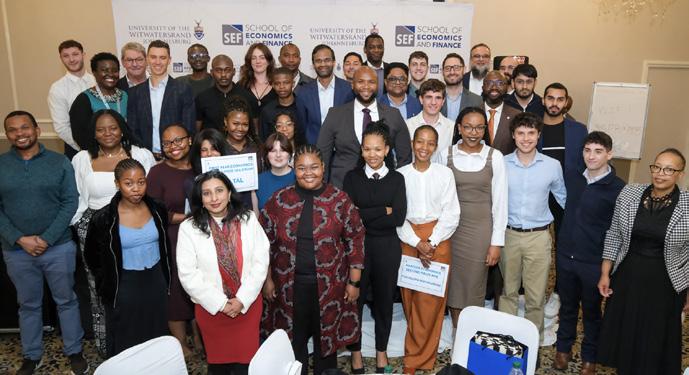
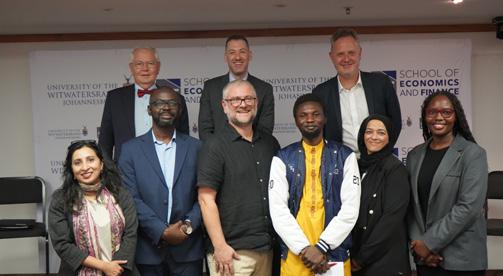
SEF also hosted multiple public events to facilitate intellectual engagement on key South African policy issues. Noteworthy were the panel discussion on South Africa’s 2025 budget and the review and discussion on the South African Reserve Bank’s proposal to revise the inflation target to a single 3% point, from the current 3-6% band. Both events were facilitated by an august array of panelists, ranging from academics, practitioners, and also those with experience at the highest policy-making realm. The success of the event was also contributed to by the active participation from the audience, constituting of academics, civil society think tanks and the student body.
The School of Economics and Finance and
Wits Fintech
SOA
Event‑ Prizegiving
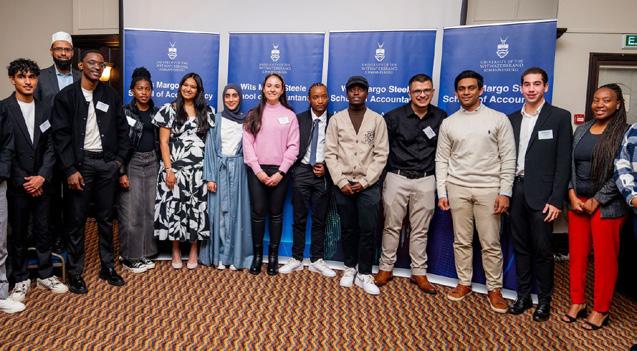
The Margo Steele School of Accountancy (MSSOA) hosted its annual Prize-Giving Breakfast on Friday, 16 May 2025. The keynote speaker, Devon Duffield, Head of Audit for KPMG in Southern Africa, reminded the recipients that a career in accountancy carries with it not only the technical expertise but also a deep responsibility to uphold the profession’s core values. His words served as both a celebration of the students’ accomplishments and a call to embrace the ethical and leadership obligations that come with their future roles.
SOL
The SARChI Chair in Equality Law and Social Justice: Conference on Women in African Judiciaries.
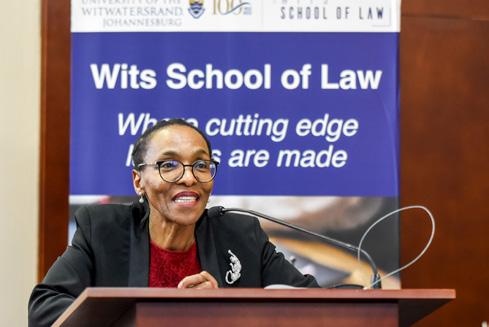
The School of Law’s SARChI Chair in Equality, Law and Social Justice, led by Professor Cathi Albertyn, hosted a two-day conference on Women in African Judiciaries in partnership with the International Commission of Jurists (ICJ) and the African Judiciaries Research Network (AJRN) on 17-18 March 2025. The event highlighted both the progress and persistent challenges for women in African judicial systems, noting that although Africa has many women leading constitutional courts, relatively few women reach top judicial positions and gender-based obstacles remain.
Justice Mandisa Maya, South Africa’s first female Chief Justice, delivered the keynote address, followed by a tribute to the late Justice Yvonne Mokgoro. A panel of judges from across Africa shared their experiences. The second day focused on academic research addressing issues such as judicial appointments, discrimination, sextortion, sexual harassment, extra-judicial roles, and the development of feminist and transformative jurisprudence. The strong presence of emerging scholars underscored growing African scholarship on the judiciary.
The event celebrated the outstanding achievements of the Schools students, including three who ranked in the Top 10 of the professional entrance exam for CA’s(SA)— with one securing first place in the SAICA January 2025 Initial Assessment of Competence (IAC), and another who placed in the Top 5 in the December 2024 Assessment of Professional Competence (APC), the final qualifying examination for CA’s(SA).
The conference strengthened collaboration between the SARChI Chair, ICJ, and AJRN, with hopes for continued joint research and future events.
Celebrating Excellence at the School of Law
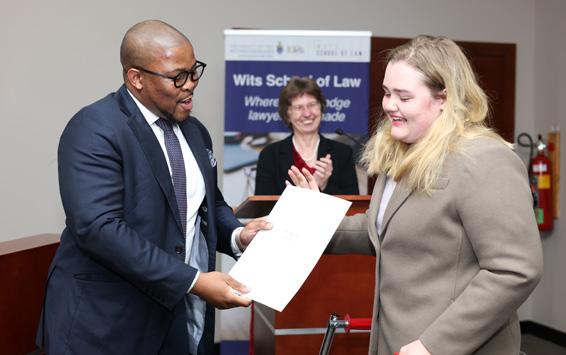
On 28 May 2025, the Chalsty Auditorium came alive as the School of Law hosted its prestigious annual Prize Giving Ceremony. The evening was a vibrant celebration of achievement, attended by proud prize winners, their guests, generous award donors, and esteemed faculty members from the School of Law and the Faculty of CLM.
Adding to the excitement, the keynote address was delivered by Advocate Tshidiso Ramogale, a distinguished legal mind and advocate of the High Court of South
Africa. Renowned for his expertise in constitutional and competition law, as well as high-profile public interest litigation, Advocate Ramogale shared insights drawn from his experience in landmark cases both locally and internationally, inspiring all in attendance.
School of Law Writing Centre celebration day
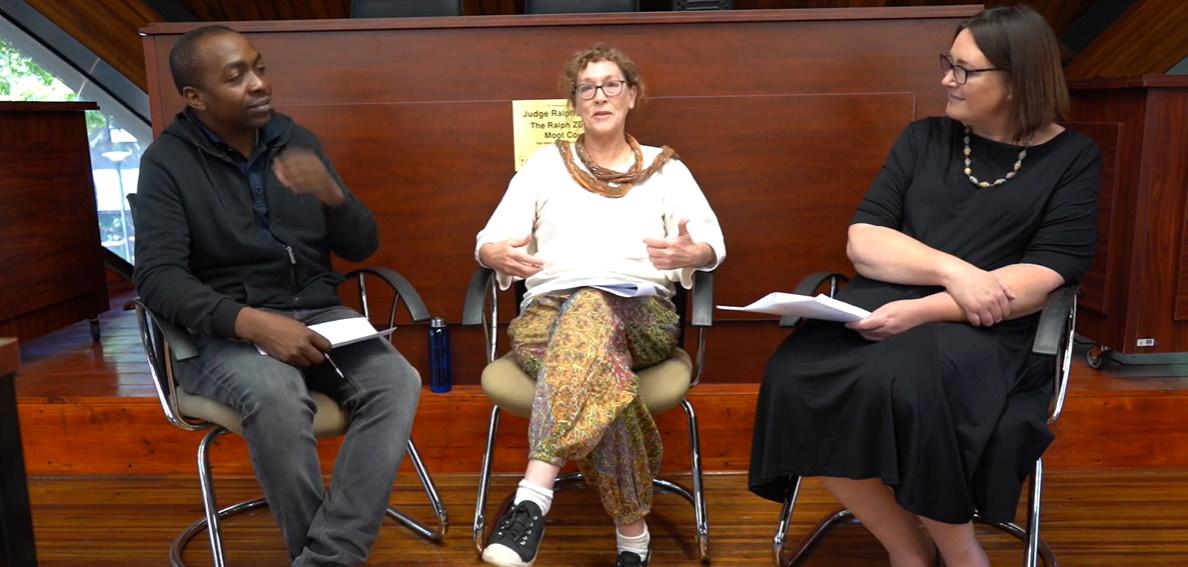
On Saturday 11 October, the School of Law hosted a day of panel discussions, reflections and recollections with over 80 of its writing centre alumni. Staff and current students enjoyed a series of conversations with alumni who are now academics, advocates, directors of firms, attorneys and candidate legal practitioners. They reflected together on the challenging and often non-linear ways of claiming space in a diverse profession, and the role that the writing centre community played in helping them do so. The writing centre has deep roots that go back to 1999, when Bonita Myersfeld, a member of the Law Students’ Council (LSC) (now a full professor at the Wits School of Law) drove the initiative to start a studentrun writing centre. This early iteration of the centre was
WBS
Natural Gas Symposium
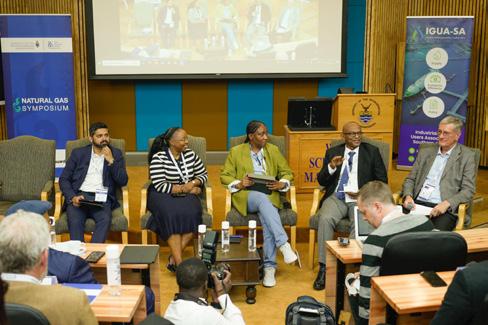
Wits Business School hosted a symposium on the state of natural gas supply in South Africa on 7 May 2025. Convened by the school’s African Energy Leadership Centre (AELC) in collaboration with the Industrial Gas Users Association of Southern Africa (IGUA-SA) the aim of the symposium was to bring together stakeholders from across the energy sector to discuss solutions to the looming ‘gas cliff’ that could lead to a shortage of natural gas that will have severe consequences on the country’s energy security and industrial competitiveness. The Symposium was addressed by the Minister of Electricity and Energy Dr Kgosientsho Ramokgopa, and the panel discussions addressed the challenges, opportunities, and solutions in the upstream, downstream, and midstream sectors, as well as fiscal frameworks, the policy and regulatory environment, investment opportunities, and the role of academia in future research, technology and innovation in the natural gas sector. The overarching aim of the symposium was to create a new compact for a
opened by Albie Sachs and was run by the LSC for 15 years. Since 2015, the centre has been run by 2 fulltime staff members and a steadily increasing number of student writing mentors. The collaboration between a legal specialist and a language education/writing development specialist allows the writing centre to make visible the tacit and complex expectations of critical legal reading, analysis and writing. In partnership with law teachers, in their core courses, writing development is – as it should be – central to learning the law, not a remedial “add-on”. The writing centre’s superpower, though, is the talented, passionate law students who are trained and mentored to work, as writing consultants and writing fellows, with each new cohort of law students. They hold the collegial but rigorous space where students are not judged for what they don’t know or can’t yet do. They help young legal scholars to find their voice, and to become more powerful, critical legal researchers, readers and writers. A tangible sense of community was clear in the animated conversations, both formal and over lunch, and in the reluctance of all participants to bring the day to a close.
well-functioning natural gas sector in South Africa and WBS has committed to taking the lead and ensuring delivery of the envisaged compact. The symposium consolidated WBS’s position as an academic partner of choice and thought leader in energy issues in Africa. Prof Maurice Radebe and members of the AELC held a followup meeting with the Parliamentary Portfolio Committees on Energy and Electricity, and Minerals and Petroleum Resources, to raise awareness among members of parliament about the impending gas cliff and to develop strategies to prevent it.
WSG
Consolidating South Africa’s Democratic Governance: The WSG Post Election Conference took place from 26 until 28 March 2025 at The Catalyst Hotel in Sandton, Johannesburg. Over 40 scholars and practitioners offered an array of views on subjects related to democracy, the government of national unity in South Africa and the 2024 national elections.
OUTSTANDING STUDENTS
WITS SCHOOL OF ECONOMICS AND FINANCE (SEF)
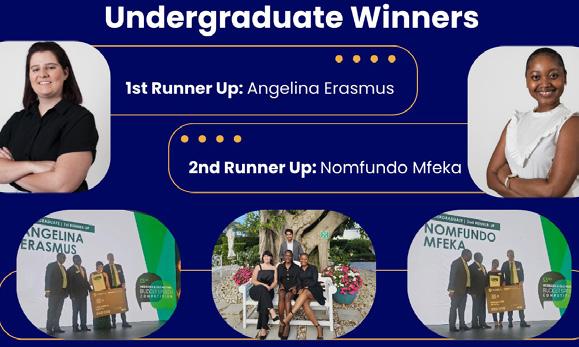
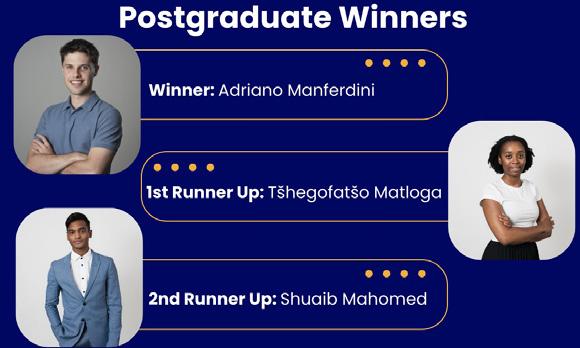
Wits SEF continued its winning streak at the Nedbank and Old Mutual Budget Speech Competition, securing nine of the 20 national finalist spots and sweeping the postgraduate category. Undergraduate students added second and third place finishes. As the only competition worldwide, that allows students to engage directly with the Minister of Finance on Budget Speech day, it challenged entrants to grapple with some of the country’s most pressing economic issues. This consistent performance year after year shows a School whose students are increasingly producing relevant, policy-shaping insights for South Africa’s evolving economic landscape.
WITS SCHOOL OF LAW
Wits Law students delivered an exceptional year in moot advocacy, excelling across global, national and public-interest platforms. Teams advanced to the Global Rounds of the John H. Jackson Moot in Geneva, earned a runner-up finish and Best Speaker at the Jessup South African National Rounds, and placed second in the Baker McKenzie–Leiden Children’s Rights Moot, also taking home Best Oral Argument. Wits Law students also stood out in the fifth Public Interest Law Moot Court Competition hosted by CALS in partnership with the Student Litigation Society and the South African Journal on Human Rights, which drew more than 600 entrants. Ariana Lenghel was named Second Best Oralist as finalists argued in the Constitutional Court chamber. Together, these achievements showcase the school’s growing leadership in legal research, oral advocacy and international engagement.
WITS SCHOOL OF BUSINESS SCIENCES (SBS)
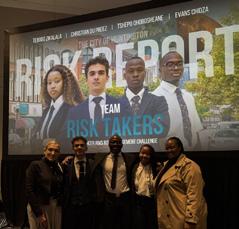
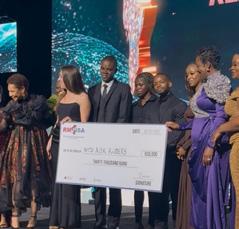
The School of Business Sciences delivered a standout year, led by the exceptional performance of our Insurance and Risk Management students, the #WitsRiskRaiders. The team ranked Top 8 globally in the Spencer–RIMS Risk Management Challenge, presenting live at the RiskWorld Conference in Chicago. The students were also invited to take part at the African Insurance Exchange (AIE) 2025 Conference, one of the continent’s premier industry platforms. The #WitsRiskRaiders also claimed first place in the Institute of Risk Management South Africa (IRMSA) Youth Risk Management Challenge 2025, demonstrating sharp analytical thinking, sector insight and the School’s growing impact in the risk profession.
WITS MARGO STEELE SCHOOL OF ACCOUNTANCY
The School of Accountancy continued its strong annual performance in SAICA’s professional assessments, securing three national Top 10 positions in the Initial Assessment of Competence (IAC) exam; including a first-place Honours finish. Thuthuka students achieved a 100% pass rate, Margo Steele Bursary recipients reached a 97% pass rate, and Wits recorded an overall 94% pass rate against the 70% national average. Together, these results signal a pipeline of students well-prepared for the profession, reinforced by a Top 5 Honours achievement in SAICA’s Assessment of Professional Competence (APC) exam.
INTERNATIONAL WORK
CLM is home to a number of world-class scholars exemplified by our Chairs, NRF rated researchers, and the international footprint of our research outputs. We are also pleased to see our academics building international collaborations into their career development, presenting at international conferences, and visiting overseas institutions.
ACADEMIC COLLABORATION PARTNERSHIPS
Our academics who partnered with overseas institutions on research included:
• Professor Jane Ndlovu from SOA became an Africa Oxford (AfOx) Fellow through the Female Academic Leaders Fellowship (FALF)
• Emile Zitzke from SOL received an Oppenheimer Scholarship
• Professor Caryn Abrahams from WSG received a fellowship from Edinburgh University
• Professor Franziska Zucker from SOL had a visiting fellowship at the EUI Robert Schuman Centre, Florence, and a visiting fellowship at the WTO chair in Lima Peru. She also had a visiting fellowship at Bristol University.
During 2025, we also made continued progress in extending our global reputation through our partnerships and programmes. We have been deliberate and strategic in our internationalisation efforts. CLM strategic partnerships in the global higher education landscape included:
Î Agreement with Kedge Business School, France was concluded for the new MBA in Global Executive Leadership.
Î First candidate completed the joint PhD with ISS Erasmus University, Rotterdam (Dr Thandiwe Matthews).
Î PhD programme in development economics with SOAS, UK enrolled another cohort.
Î MoU with the École des Hautes Études Commerciales du Maroc.
Î Graduate exchange agreement with University of Warwick.
Î New executive education in corporate affairs offered in partnership with Cambridge Institute for Sustainability Leadership.
Î SEF strengthened its international academic partnerships through its SOAS Wits Joint PhD programme, WESAF PhD programme with the University of Edinburgh, Erasmus Mundus EPOG Joint Masters programme, and Master’s exchange programmes with UC Louvain, Belgium. Additionally, the school partnered with international entities such as Afretec, Oxford university, Columbia university, University College London (UCL), and Boston college for research collaborations
QUALITY MATTERS
The reputation of our qualifications and of our graduates are important attractors for high achieving students and important indicators of our quality for most accreditation and ranking systems. Throughout the year we engage with external advisory and professional accreditation bodies and internal quality assurance structures that support our continuous improvement efforts. All our programmes are accredited by the Council on Higher Education (CHE) of South Africa. Every five years, each School also must undertake a quinquennial review (QQR). In the four years between the QQR, Schools are expected to submit annual reports on the progress being made around issues that were raised in the QQR. This ensures that we are constantly reviewing to identify areas for improvement, and giving regular feedback on what developments around these and other areas. It also allows us to celebrate the areas of excellence identified by the QQR panel and share best practices with other Schools. Four of our schools underwent their QQR reviews in 2025. In addition to the QQR at least two of our Schools (SOA and WBS) apply for accreditation and endorsement to independent external bodies. This year, SOA had a review and site visit by the Association of Chartered Certified Accountants (ACCA), while WBS submitted a progress report to the AACSB and hosted an EQUIS (EFMD) peer review accreditation panel.
Below you can read more feedback on all these areas from Schools.
SCHOOL OF ACCOUNTANCY
QQR and accreditations
The Margo Steele School of Accountancy (MSSoA) completed its 2019–2024 Quinquennial Quality Review (QQR) with positive feedback from the review committee. The committee commended the fact that the MSSoA is a leading contributor of black African chartered accountants to the profession and highlighted the School’s strong leadership, dedicated staff, and consistent focus on maintaining high academic and professional standards. It was noted that the School’s internal processes are well organised, its goals clearly aligned with the Faculty and University’s strategic direction, and that it continues to demonstrate a culture of excellence and accountability. The overall outcome of
the review reflected the School’s commitment to quality, collaboration, and continuous improvement across all areas of its work. This follows on the results of a successful endorsement visit by SAICA in 2024 and an ACCA visit in 2025.
ACCA Accreditation for Another Five Years
The Margo Steele School of Accountancy hosted a successful accreditation visit by the Association of Chartered Certified Accountants (ACCA), a globally recognised professional body for chartered accountants.
The visit, which included meetings with faculty, students, and leadership, focused on programme design, employability, learning innovation, and alignment with
ACCA’s rigorous standards. Wits’ commitment to academic excellence, student support, and industry relevance was commended, resulting in the renewal of its ACCA accreditation for another five years.
The Postgraduate Diploma in Specialised Accountancy exceeds international benchmarks, with student pass rates in ACCA Strategic Professional exams significantly above global averages. At the undergraduate level, the programme offers full exemptions for ACCA’s Applied
SCHOOL OF LAW
In compiling this Quinquennial Review, we gained a deeper appreciation of how much the School of Law has achieved between 2020 and 2024, often under challenging circumstances. The process revealed a School that has stabilised, grown, and strengthened its academic, research, and community-facing mission in meaningful ways. We are proud to see how the introduction of Heads of Divisions, an Academic Director, and an Academic Board has transformed governance, creating a more coherent and accountable institutional culture.
We also recognised the exceptional resilience and innovation of our teaching staff. Despite COVID-19 disruptions, the School maintained high-quality undergraduate and postgraduate teaching, introduced blended learning models, formalised year-level planning, and work hard towards achieving accreditation for an Online LLB—an important milestone in widening access.
SCHOOL OF BUSINESS SCIENCES
The QQR Review Panel commended the quality of the report that was compiled by the SBS and noted the high profile of the academic and professional and administrative staff members. The report noted that the SBS’ brand visibility remains limited and recommended that efforts should be made to enhance its visibility through a deliberate marketing and Public Relations strategy that positions the school as a leader in business education brand in Africa. In this regard, the panel recommended that the School could leverage the expertise of the CLM Faculty’s Marketing Department to effectively market its programmes
Skills exams, enabling students to fast-track their journey toward becoming ACCA-qualified professionals.
The School’s continued recognition as an ACCA Gold Learning Partner further reflects its dedication to delivering high-quality education and fostering professional development in accountancy. This achievement enhances Wits’ global reputation and boosts graduate employability in an increasingly competitive international market.
We would not have been able to do this without our professional and administrative staff who provided the support throughout.
The review highlighted our outstanding research achievements: more than 330 accredited outputs, major national and international grants, and research that directly influences courts, policymakers, and global organisations. Our Centres—the Law Clinic, CALS, the Mandela Institute, and our two research chairs— demonstrated deep societal impact, from advancing gender and environmental justice to providing highquality legal services to vulnerable communities.
Financially, we learned that our prudent management produced consistent surpluses, creating stability and enabling future planning. Overall, the QQR affirmed a School that is strong, impactful, and committed to excellence.
and achievements, thereby raising its profile among prospective students and stakeholders. In conclusion, the panel commended the recognition and selfassessment report of the School’s financial challenges. The panel noted with optimism the development of new academic programmes like the Master of Commerce in Cybersecurity Management as well as each of the four specialisation fields of the flagship Bachelor of Business Sciences which is in the final stage of accreditation by the Council on Higher Education. The panel noted the ability of the SBS to attain the level of financial independence and sustainability in the very near future.
WITS SCHOOL OF GOVERNANCE
Between 2016 and 2020, the QQR assessed the WSG in four major areas:
• Leadership and staffing
• Financial sustainability
• Academic programme delivery
• Quality of teaching and learning
From 2021 to 2025, the School has made decisive efforts to address the issues raised during the 2016–2020 Review, implementing substantial reforms and achieving measurable results. While progress continues, we acknowledge that certain areas still require further refinement, and we remain committed to ongoing improvement. As we prepare for the next QQR review in 2026 for the 2021–2025 cycle, we are confident that
WITS BUSINESS SCHOOL
QQR
Wits Business School completed its QQR in the fourth quarter of 2025. The review period (2020–2024) has been characterised by profound change and growth, underpinned by an increased stability in leadership. Just five years ago, WBS was under interim leadership following a turbulent period that affected operations, stakeholder confidence and the school’s brand positioning. Since then, the school has advanced significantly under its new vision, mission, values and strategic plan (2022–2026), with a strong commitment to securing four major international accreditations. Two of these (AMBA and AABS) have been achieved with the maximum five-year outcome, while considerable progress is being made towards the remaining two (AACSB and EQUIS). In alignment with its mission, WBS has strengthened engagement with industry, academic
the committee will note the considerable advancements made since the previous Review. Key developments include:
• Academic Delivery: Improved administrative processes and expanded student support services.
• Teaching and Learning: A well-established hybrid learning model and active curriculum redesign.
• Research: Increased research productivity and a more defined scholarly profile.
partners and key sectors. This has included the establishment of several centres which are sector-driven, designed to address critical local and global challenges.
Accreditation:
In October 2025, Wits Business School hosted members of the EFMD peer-review team following submission of our Self-Assessment Report (SAR) for EQUIS accreditation in August. This is a significant milestone in our bid for quadruple-crown accreditation, and we anticipate receiving news of the outcome of our application in early December 2025. We will reach the next phase in our application for AACSB accreditation at the end of November 2025 when we submit our progress report which follows the initial Self Review report that we submitted at the end of 2024. A peer-review visit by AACSB is expected in late 2026 or early 2027.
SCHOOL OF ECONOMICS AND FINANCE
SEF completed the engagement with the QQR review panel headed by Prof Jannie Rossouw and is in the process of responding to the recommendations received.