BILL AINSLIE AND THE JOHANNESBURG ART FOUNDATION
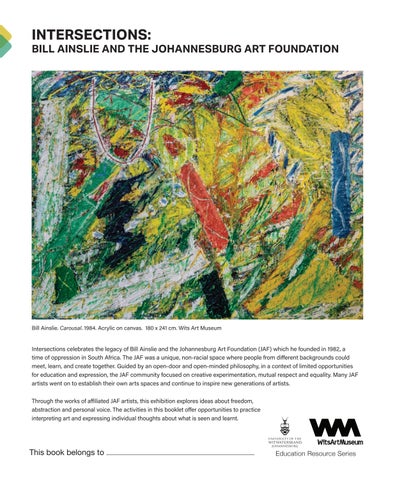
Intersections celebrates the legacy of Bill Ainslie and the Johannesburg Art Foundation (JAF) which he founded in 1982, a time of oppression in South Africa. The JAF was a unique, non-racial space where people from different backgrounds could meet, learn, and create together. Guided by an open-door and open-minded philosophy, in a context of limited opportunities for education and expression, the JAF community focused on creative experimentation, mutual respect and equality. Many JAF artists went on to establish their own arts spaces and continue to inspire new generations of artists.
Through the works of affiliated JAF artists, this exhibition explores ideas about freedom, abstraction and personal voice. The activities in this booklet offer opportunities to practice interpreting art and expressing individual thoughts about what is seen and learnt.
This book belongs to
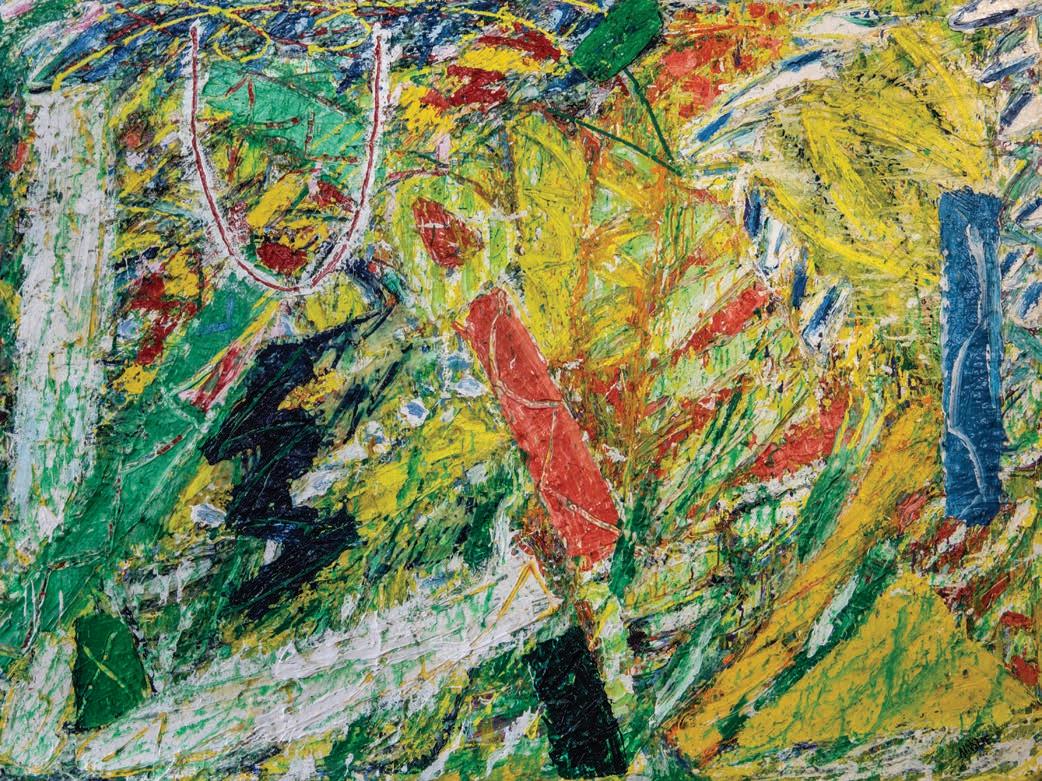
Bill Ainslie. Carousal. 1984. Acrylic on canvas. 180 x 241 cm. Wits Art Museum
The Johannesburg Art Foundation: An oasis for Art Making and Freedom of Thought
The Johannesburg Art Foundation (JAF) was an oasis of creativity in a context of limited opportunities for education and artistic expression. The founder, Bill Ainslie, was an artist, who believed in freedom of expression, and that art making should be open to all people. Ainslie understood art making as a journey of self-discovery, and, in his words:
“a dialogue, made tangible, between the artist and the life around him.”
(quoted in Williams, P. Last Paintings by Bill Ainslie 1934 – 1989. Wolfson College, Oxford 1990. P9)
The JAF encouraged curiosity and personal growth. It pushed the boundaries of how art should be made and taught. In addition to the usual classes, public pottery, poetry, drawing, and spirituality workshops were offered regularly. At the JAF, art education was a way to bring about personal and social transformation.
GLOSSARY GLOSSARY
An oasis is a green and fertile place in the middle of a desert where there is water. Here the word is a metaphor, referring to a safe or peaceful place in the middle of a difficult situation.
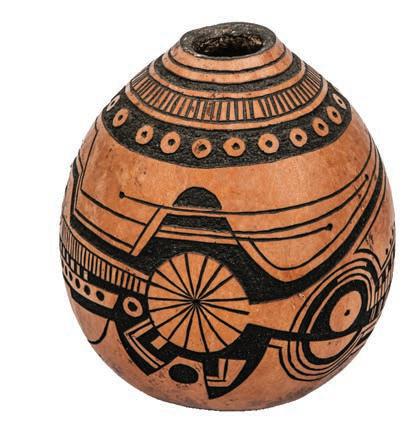
A gourd is a hard-skinned fruit. There are many kinds of gourds. When dried, gourds are used as vessels and for making musical instruments.
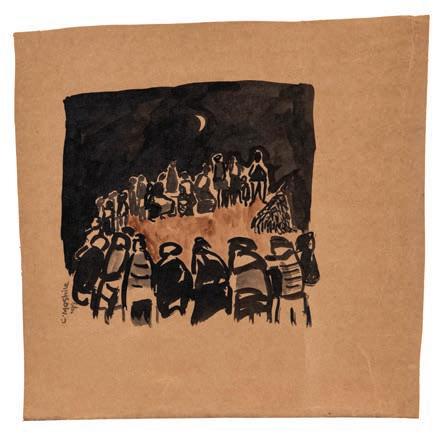
ABOVE: Colbert Mashile. Untitled (from the Initiation Series). 1999. Ink and acrylic paint on brown paper. 39 x 41 cm. Standard Bank African Art Collection (Wits Art Museum)
LEFT: Lucky Sibiya. Decorated gourd. 1980s. Relief carved gourd. 20 x diameter 17.2 cm. Standard Bank African Art Collection (Wits Art Museum)
Let’s think, pair, share
Work in pairs. Look at Lucky Sibiya’s Decorated gourd. Think about what makes this artwork unique. Have you ever seen a gourd like this one? What are gourds used for in your community? How can sharing food or drink from a gourd bring people together? Share your thoughts with your partner.
An Inclusive Approach to Teaching and Learning
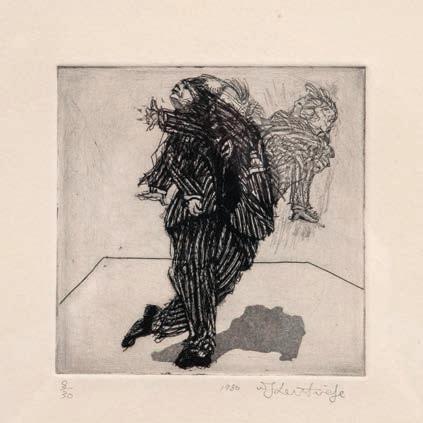
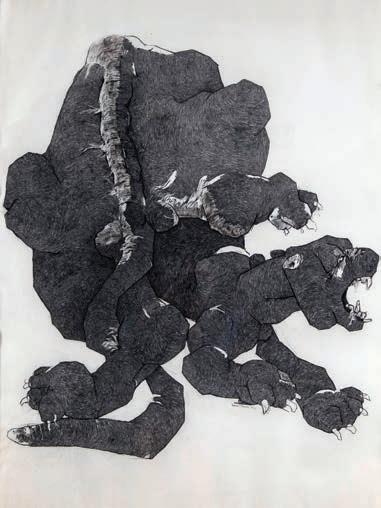
Bill Ainslie’s values of inclusivity, respect, and freedom of expression informed the approach to teaching and learning at the JAF. He rejected the unequal education system of the time. He was adamant that the JAF was not like other art schools. Classes were open to people of all races and were taught as workshops. Teachers acted as facilitators, guiding others to test ideas, and develop their personal voices. All who attended were encouraged to share their knowledge, and to follow their interests. Experimentation with topics, materials, and different ways to create art were foregrounded.
Ainslie’s vision extended beyond the JAF. In 1985, together with David Koloane, he co-founded the Thupelo Workshops. The word “thupelo” comes from Sesotho and means “to teach by example” or “learning through practice.” At JAF and in the Thupelo Workshops, artists worked side by side, sharing techniques, learning from each other, and making art.
LEFT: William Kentridge. Mr Fatman boogie. 1980. Etching in black ink on paper. 46.4 x 45.4 cm (framed) Wits Art Museum
BELOW LEFT: Leonard Matsoso. Cat. 1972. Charcoal, conte, pencil on paper, 138 x 99cm. Wits Art Museum
Let’s talk
In what ways do you show respect for others? How would you like others to show that they respect you?
What do you do when people are not showing respect for each other?
GLOSSARY GLOSSARY
Inclusivity is when everyone is treated equally, and everyone has the same opportunities. When a person is adamant, they are not willing to change their mind or give in.
Commitment to Materials and Personal Expression
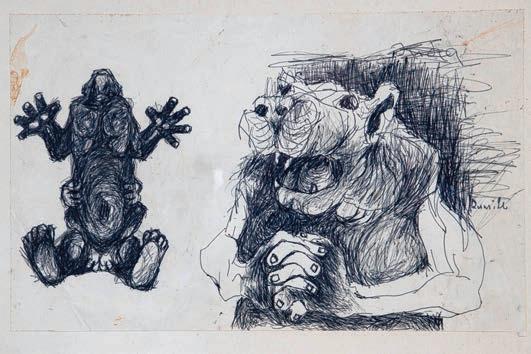
At the JAF, artists were encouraged to use a wide range of materials — even those not customarily linked to art making — like everyday objects, waste, and torn paper scraps. The teaching philosophy embraced the idea of “truth to materials”, which means being sensitive to the way materials look and feel and being aware that materials have meaning for diverse people. This can be seen in the way that Dumile Feni used pens and pencils to create creatures by scribbling and layering lines in his Untitled (Drawing no 23). Artists like Lucas Seage chose materials with special meanings, so that he could use his artworks to make political statements.
By using unexpected materials and combinations, artists can open new possibilities of association, where ordinary objects and materials can carry powerful meanings. Art is not only about technique, but also about expressing ideas, emotions, and personal experiences in new and original ways.
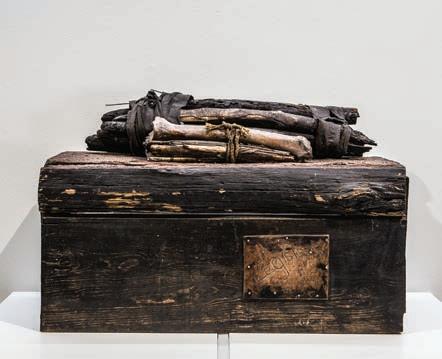
ABOVE LEFT: Lucas Seage. Coffin of the Migrant Worker. 1983. Wood, nails, bones, found materials. 46 x 70.3 x 27.6 cm. Presented in 1995 by Lionel Murcott to Wits Art Museum
ABOVE RIGHT: Dumile Feni, Untitled (Drawing no 23), (no date), Pencil and blue/black pen on paper, 23.5 x 37.5 cm. Wits Art Museum – Acquired in 1991
Let’s draw
Draw an imaginary creature, using layers of scribbles, in the style of Dumile Feni:
GLOSSARY
GLOSSARY
Philosophy refers to the ideas or beliefs about how something should be done and explains why things are done in a certain way.
BONUS ACTIVITY
Give your creature a name:
Life and Learning Under Apartheid
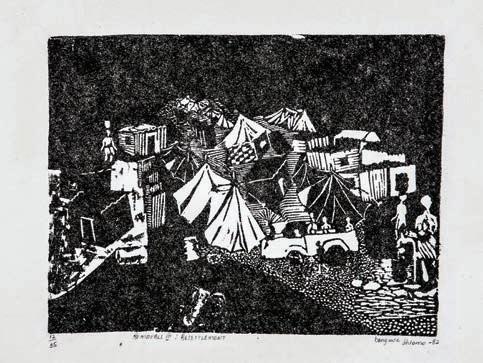
To fully understand the importance of the JAF, it helps to know what restrictions and challenges people faced in South Africa at that time. During the 1980s, when the JAF was established, South Africa was at the height of apartheid. Anyone who was not classified as White had no freedom of movement and very limited opportunity for free speech or freedom of expression. Bongi Dhlomo’s Removals III: Resettlement shows how entire communities were forced to leave their homes and be relocated to designated areas because of apartheid’s racialised urban zoning.
Let’s find
Education was one of the main areas where inequality was enforced. From 1953, when the Bantu Education Act was written into law, Black learners were denied quality education and the opportunity to build a better future. By 1957 Black students were expelled and barred from attending Whites-only institutions of learning. The JAF’s non-racist policy provided a safe place for Black artists to learn art making.
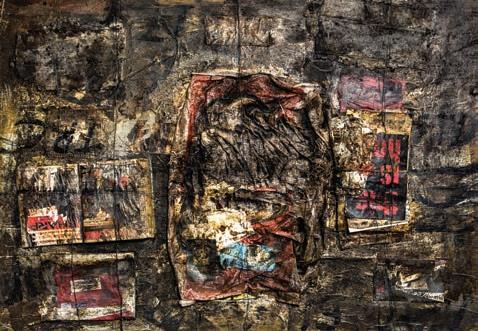
Baggage 2. 2001. Wood, oil paint, found objects, 122 x 171.7 x 10.5cm. Standard Bank African Art Collection (Wits Art Museum)
Find ANOTHER artwork that shows what life was like during apartheid. Copy the details from the label, and then write why you chose this work below:
Artist’s name:
Artwork title:
Materials used:
Dimensions:
What do I like about this work?
Date:
GLOSSARY GLOSSARY
Apartheid means ‘apartness’ in Afrikaans. Its main purpose was to keep racial groups separate, limit the rights of Black South Africans, and ensure that a White minority remained in control politically, socially, and economically.
Restrictions are limitations or restraints imposed on people that they must obey.
To designate is to give an official, specified name or status to someone.
LEFT:
Bongi Dhlomo. Removals III: Resettlement. 1982. Linocut in black ink on tissue paper. 19 x 24.5 cm. Wits Art Museum Collection
Understanding different modes of expression
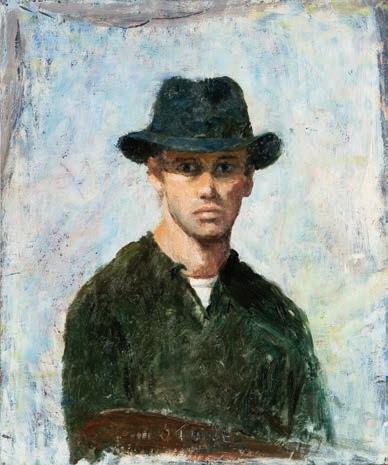
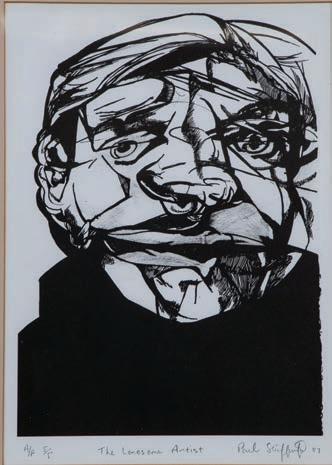
Artists explore different modes of expression in order to find their individual style. The JAF’s emphasis on experimentation is clear when comparing the range of modes of expression used by JAF affiliated artists. Compare the self-portraits by Simon Stone and Paul Stopforth, for example.
Stone’s Self portrait with Hat is an example of naturalism; a style of representation where artists try to create life-like images of the natural world. These works pay close attention to detail — proportions, perspective, light, and texture. Naturalists aim to copy nature and make the subject look as real as possible. Paul Stopforth’s The Lonesome Artist does not look life-like, but is still recognisable as an image of a face and body. Stopforth’s work is an example of expressionism, which is less about perfect detail and more about communicating the feelings and mood of the artist.
Let’s compare and contrast
SIMILARITIES
Compare and contrast the two self-portraits above. List the similarities and differences in the columns below:
DIFFERENCES
Simon Stone. Self portrait with Hat. 1989. Oil on metal. 32.9 x 27.5 cm. Presented in 1989 by Les Sacks to Wits Art Museum
Paul Stopforth. The Lonesome Artist. 1987. Lithograph in black ink. 38.5 x 27.5 cm. Presented in 2011 by Pat Tucker to Wits Art Museum
From Representational Art to Abstraction
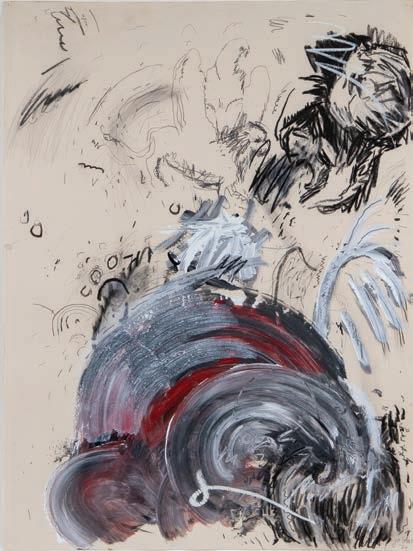
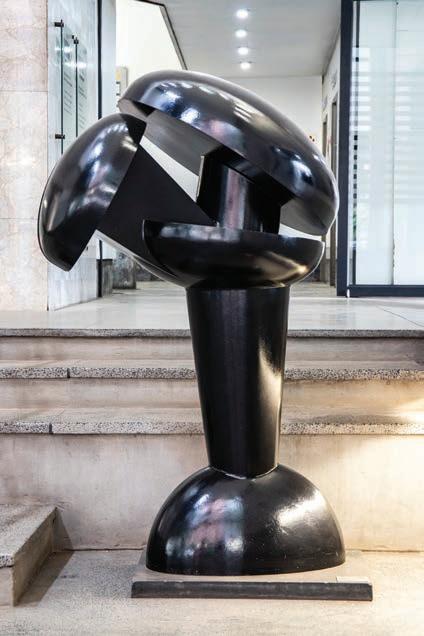
In contrast to naturalism and expressionism, abstract art does not attempt to depict people, objects, or scenes. Instead, abstract artists focus on the relationships between shapes, colours, textures, tones, and lines in the artwork. When we look at abstract art, we may not be able to identify exactly what we’re seeing. The goal is not to copy reality but to create an emotion or mood and encourage people to think and feel beyond their immediate environment. The materials, the way the artist applies them, and the creative process are just as important in abstract art as the finished artwork. Sometimes, the artist is exploring how paint moves, how colours mix, or how texture can suggest an emotion.
ABOVE LEFT: Jo Smail. Stutters and Songs II. 1984. Conte, pencil, acrylic, oil and pastel on paper. 75.5 x 56.6 cm. Wits Art Museum
LEFT: Edouardo Villa. Untitled. (no date). Steel on granite base. 190 x 110 x 110cm Presented in 1990 by Mr and Mrs J. Feinstein to Wits Art Museum
Let’s describe
In pairs, find an artwork on exhibition that you think is an example of an ‘Abstract’ artwork. Take turns in sharing what you are thinking about and feeling when looking at the artwork.
Write some adjectives to describe the work here:
Interpreting Artworks
So far, we have explored ideas about making art inspired by the learning philosophy of the JAF. In galleries and museums, we look closely at artworks and think about what we see. We find out what artworks mean for us by connecting our own thoughts and feelings to the information provided.
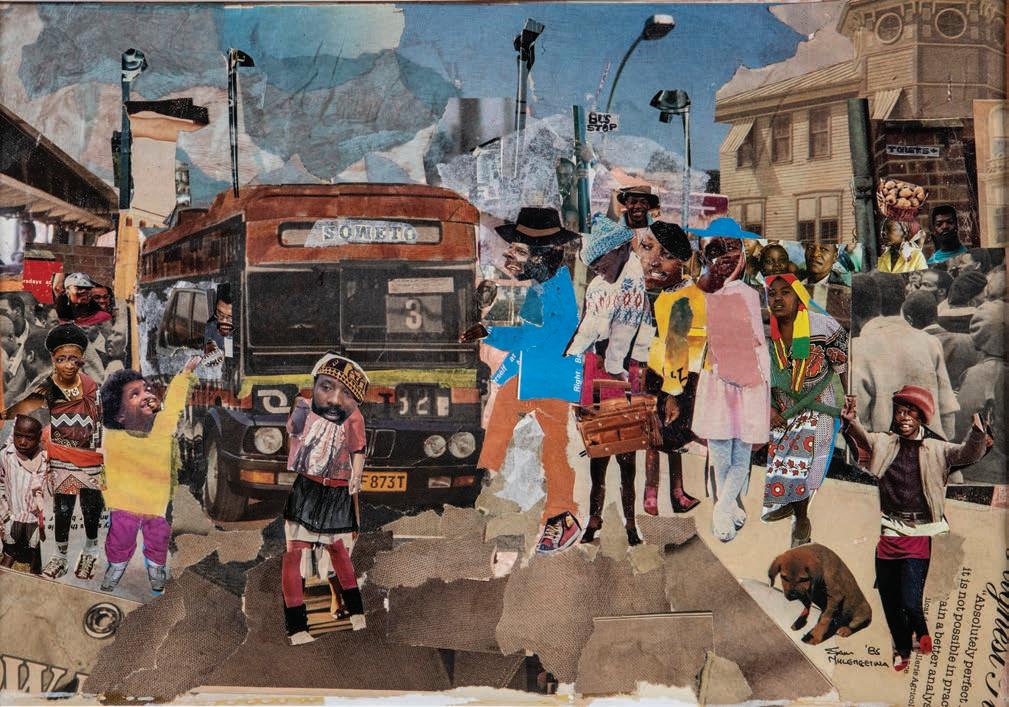
Sam Nhlengethwa, No title (Sowetan bus). 1985. Collage on paper. 38.2 x 49.8 cm. Presented in 2000 by Gertrude Posel to Wits Art Museum
GLOSSARY GLOSSARY
A collage – is an artwork made by sticking different materials or images together to make a new picture.
Let’s practice interpreting together
Look at Sam Nhlengethwa’s No title (Sowetan bus). Write down your answers to the following questions in the space provided. Share your answers with the group when you are finished.
1. Describe what you see in the image. List as many things as possible.
2. How has this artwork been made?
3. What ideas about Soweto does Nhlengethwa communicate?
4. How do you feel when looking at this work?
5. Is this an example of naturalism, expressionism or abstraction? Explain your answer:
Let’s talk
Take turns to tell your partner about the artwork and what it means to you. Was your interpretation the same as your partner’s interpretation? What was similar and what was different about your interpretations?
The Johannesburg Art Foundation’s legacy
The JAF and the Thupelo Workshops were nodes that connected South African and international artists. Bill Ainslie and his collaborators came together to share ideas and learn from one another, and between 1982 and 1992 a strong network of South African and international artists affiliated to the JAF developed. Artists like Bongi Dhlomo, Kagiso Pat Mautloa and David Koloane were inspired to create community art centres and arts organisations across the country. Each centre adapted to the needs of its community, and artists travelled between them, building a network of creativity and activism. They shared facilitators, resources, and workshops, spreading opportunities for learning and expression far and wide. The diagram below shows some of these organisations.
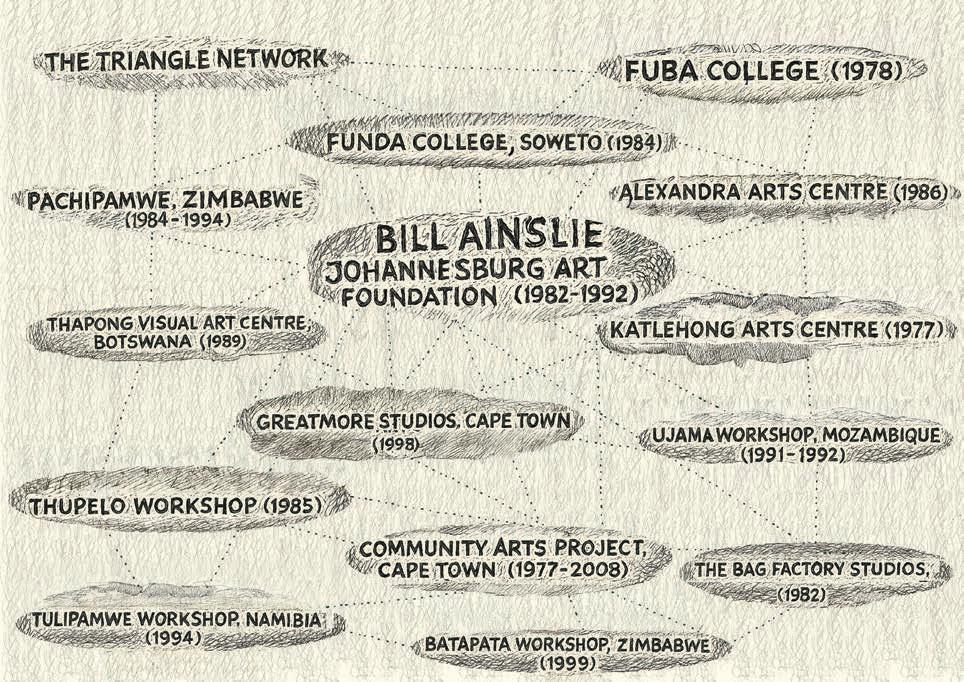
Look at the diagram.
Let’s reflect
Can you see how much individuals can change their world through the connections they create?
Talk about the changes someone in your community is creating by working with others.
Mapping Intersections
The word intersect means the place where different things meet and connect. These can be roads, people, ideas, or even art forms. The exhibition is called Intersections because it shows how Bill Ainslie and the JAF created opportunities for artists to meet, share, and create art. The exhibition invites viewers to reflect on the Foundation’s lasting impact and explore how creativity, and shared ideas, can shape both artists and society.
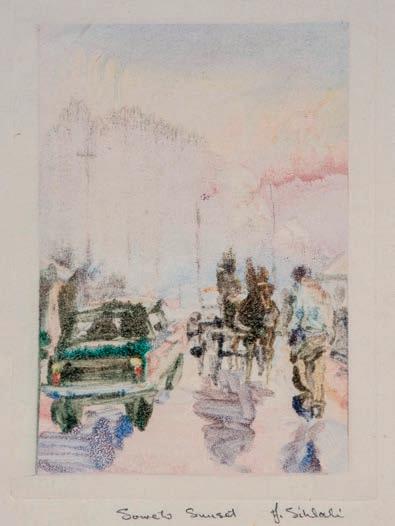
ABOVE: Durant Basi Sihlali. Soweto Sunset. 1982. Monotype on paper. 33 x 25cm. Standard Bank African Art Collection (Wits Art Museum)
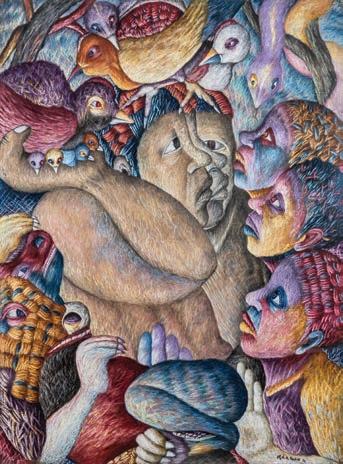
ABOVE RIGHT: Mmakgabo Mmapula Helen Sebidi. Traditionally Mother is Lifesaver. 1993. Pastel on paper. 113.5 x 84 cm. Standard Bank African Art Collection (Wits Art Museum)
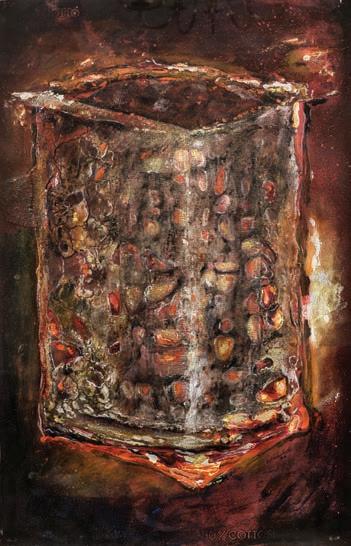
RIGHT: Kagiso Patrick Mautloa. Brazier. 1994. Acrylic on paper with gauze. 69 x 44.5cm. Standard Bank African Art Collection (Wits Art Museum)
Let WAM know what you think
WAM would like to know what you have learned during your visit to this exhibition. Share your reflections on the exhibition, and insights about Bill Ainslie, the Johannesburg Art Foundation and its legacy during your visit, on WAM’s Facebook page: https://www.facebook.com/witsartmuseum or on Instagram: @witsartmuseum_wam
#witsartmuseum #intersectionsatwam #billainslielegacy
This education resource was written by Alison Kearney and edited by Julia Charlton. Sepadi Moruthane and Philippa van Straaten sourced images for the resource, and Shannin Antonopoulo assisted with research. It was produced by Wits Art Museum in 2025 to accompany the exhibition Intersections: Bill Ainslie and the Johannesburg Art Foundation, curated by Kagiso Patrick Mautloa, artist and JAF affiliate, and Wilhelm van Rensburg, Senior Art Specialist and Head Curator at Strauss & Co. Unless otherwise stated, the photographs were taken by Mark Lewis. Design and layout by HotHouse South Africa.