Vol. 22: #6 • Weird Mating Methods • 2-1-2026 • Tidbits of Coachella Valley
TIDBITS PEEKS
by Janet Spencer
●
With the millions of different animal creatures all around us that inhabit this planet, youʼve probably never given any thought about how they manage to propagate themselves and continue to keep their species populated. This week Tidbits slips into curiosity mode and takes a close look at some of these strange mating practices -- ones we may find to be downright weird and even bizarre, but to the critters themselves itʼs all quite natural!
ANGLERFISH
• The animal kingdom is divided into two parts: vertebrates (those with a spine) and invertebrates (those with no spine). The smallest vertebrate on the planet is the tiny male anglerfish, at only a few centimeters in length.
• The female anglerfish sports a delicious-looking glowing blob that dangles tantalizingly in front of her teeth, luring in prey. The male, however, isn’t so fortunate. His only job is to find himself a female and latch onto her, where he becomes
TRIV
(Answers on page 16)
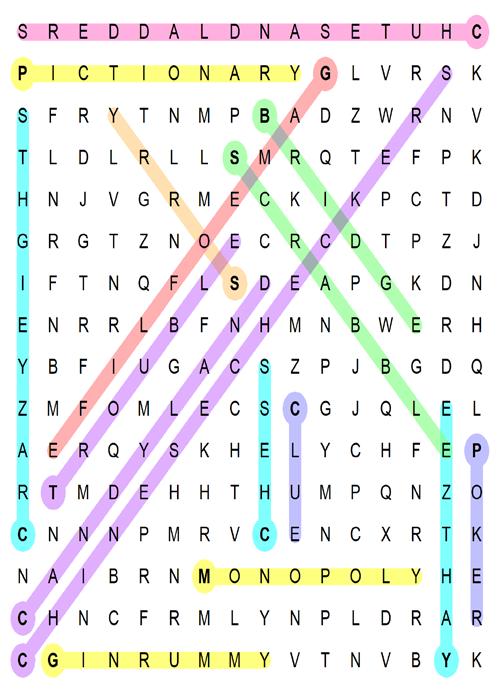
1. HISTORY: When did the Easter Rising insurrection take place in Ireland?
2. GEOGRAPHY: What is the capital of India?
3. MEDICAL TERMS: What is a common name for lateral epicondylitis?
4. MOVIES: The “Back to the Future II” characters travel forward in time to which year?
5. LITERATURE: What color is the badge of courage in Stephen Crane’s novel about the Civil War?
6. GAMES: How many points is the center red bullseye on a dartboard worth?
7. ANIMAL KINGDOM: What is a group of floating otters called?
8. AD SLOGANS: Which car company used the slogan “Drive your dreams”?
9. TELEVISION: What is husband Darrin’s profession in the “Bewitched” sitcom?
10. SCIENCE: What part of the brain controls hunger?
• Three Polish brothers moved to the U.S. from Poland shortly after World War I. Herman, Hillel, and Henry Hassenfeld supported themselves by purchasing leftover scraps of fabric from textile and clothing factories and turning them into other products, such as hat liners. This venture, begun in Providence, Rhode Island in 1923, eventually grew into one of the world’s largest toy conglomerates.
• One of the products they made with the fabric scraps was liners for pencil boxes. Then they began making the pencil boxes themselves, then later expanded into zippered pouches for school supplies. By 1926, they had formed a company called Hassenfeld Brothers Incorporated, with 8 members of the family being the only employees.
• Next, they expanded into making their own pencils, and soon finding that pencil sales were steady and reliable. Pencil sales grew steadily over the next several decades, providing income to experiment with other products. They pioneered color-by-number art sets. They filled their zippered pencil pouches with basic school supplies, sold as a kit. By 1930 the firm had 200 employees and annual sales of $500,000.
• By the late 1930s, the Hassenfeld Brothers expanded into toy sales. They added medical sets for junior doctors and nurses. Next came a play make-up kit for girls, followed by modelling clay and the ever-popular Play-Doh. But their most lucrative product in the childrens' market was the introduction of Mr. Potato Head in 1952. This was also the first toy ever marketed on television. Hassenfeld Brothers subsequently landed the license to distribute Disney merchandise.
• Led by a succession of Hassenfeld children and then grandchildren, the company continued to grow. Their single most popular product, introduced in 1964, was the entire G.I. Joe franchise. With the firm’s popularity soaring,
the Hassenfeld Brothers decided a name change was in order. In 1968, they shortened the firm’s Hassenfeld Brothers name to simply Hasbro.
• By the 1980s, Hasbro was the nation’s 6th bestselling toy maker, with revenues of $225.4 million. In 1984 the firm acquired Milton Bradley, the nation’s 5th best-selling toy maker. Next it acquired Parker Brothers. By now Hasbro surpassed Mattel to become the biggest toy company in the world.
• However, there were flops along the way. Lawn darts garnered negative publicity after several serious injuries and even death. The product was yanked off the shelves. A squirt gun shaped like a hypodermic needle raised the ire of parents.
• One of their biggest mistakes was in trying to out-Barbie Mattel. In 1986, Hasbro introduced Jem, a fashion doll introduced as both a record producer and purple-haired rock musician. While Jem posted strong initial sales, her popularity quickly faded, and she was retired after only one year. In 1988, Hasbro introduced Maxie, a doll scaled to match Barbie’s dimensions, allowing her to wear Barbie clothing. Maxie lasted two years. Hasbro never again tried to clone Barbie. However, they breathed new life into their G.I. Joe series by releasing sets of G.I. Joe figures that were only 3.5 inches (9 cm) tall.
• Today, Hasbro has gobbled up much of the competition. They distribute most of the biggest toys of our day: Tonka, Transformers, Sesame Street characters, Cabbage Patch, and many more. They pull in over $6 billion in revenue each year, unsurpassed by any toy company on the planet -- and a long way from pencil box liners.
Weird Mating (from page one)
permanently affixed to her body. He survives off her juices like a parasite, eventually losing every part of his body except those required to fertilize the eggs she releases. Over time, he shrinks to the point where the female outweighs him by 500,000 times. The male remains glued to her “until death do us part.” The female may sport a collection of suiters in this way, which is necessary because she releases sheets of egg sacks 30 feet long. It’s estimated that only 1% of male anglerfish manage to find a mate.
PISTOL SHRIMP
• It’s well known that many insect species, such as ants, termites, and some species of bees, congregate in communities that revolve around the amazing egg-laying capacity of their queen. Less well known is the fact that communities of pistol shrimp operate in the identical manner. The queen shrimp, the largest member of the community, is completely serviced by the resident King shrimp, while being fed and tended to by the myriad servant shrimps that surround her. All of this occurs inside their chosen undersea kingdom, consisting of a large sponge.
• The pistol shrimp’s method of gathering food for the Queen and the colony lies in its ability to snap its large claw shut at incredible speeds, creating
a cavitation bubble that generates a powerful shockwave, blinding light (sonoluminescence), and heat hotter than the sun's surface. It stuns or kills its prey by snapping shut its large claw producing a sound louder than a gunshot (over 210 dB). This "bubble bullet" travels at over 60 mph, delivering a secondary, powerful blow when it collapses, making it a formidable predator despite its small size. Pistol shrimp also communicate by snapping their claws at different intervals, warning the community of threats.
MARSUPIAL MICE
• A species of Australian insect-eating marsupial mouse called Antechinus has developed rather unusual mating habits. The female mates with as many partners as she can find. Her brood is born in the spring, at the height of the insect hatching season. Every single one of her babies is likely to have a different father. She gives birth to three times as many babies as she can possibly support. Only the strongest survive, hidden in her pouch for an extended period of time while the others simply perish.
SURINAME TOAD
• The female Suriname toad transfers her eggs to the male for fertilization. The male then deposits the fertilized eggs on the female’s back. Her skin grows over and around the eggs, surrounding each one in a protective bubble like baby bees in a honeycomb. Up to 100 eggs will incubate this way until they reach maturity several months later. They depart from their mother as fully formed miniature adult toads, whereupon Mom sheds her pockmarked skin and immediately starts her search for a new mate all over again.
MUSTACHIOED MAYHEM
• The mustache toad of China grows a row of ten or 20 thorny spikes on its top lip every mating season. These lances, made of keratin, are formidable weapons when fighting other males for the right to mate with the fair maiden toad. It’s been estimated that 100% of male mustache toads are injured, though rarely killed, during the fencing matches of mating season. Once mating has been accomplished, the male toad glues the collection of eggs to the underside of a damp, shady nook, where he guards them with his life, while the mother toad ventures out in pursuit of other mates.
COLORFUL CONNECTIONS
• Both male and female jumping spiders have ultraviolet patches on their heads and forelegs that fluoresce green and blue, indicating
willingness to approach each other to mate. When researchers covered over these patches, the mating ceased altogether.
MUSICAL MATING
• Off the coast of California lives a singing fish. The male toadfish builds a nice nest on the sea floor and then contracts its swim bladder, forcing out water to create a “singing” sound that's audible to the females. It's a song announcing that it's time for romance. However, there are two different
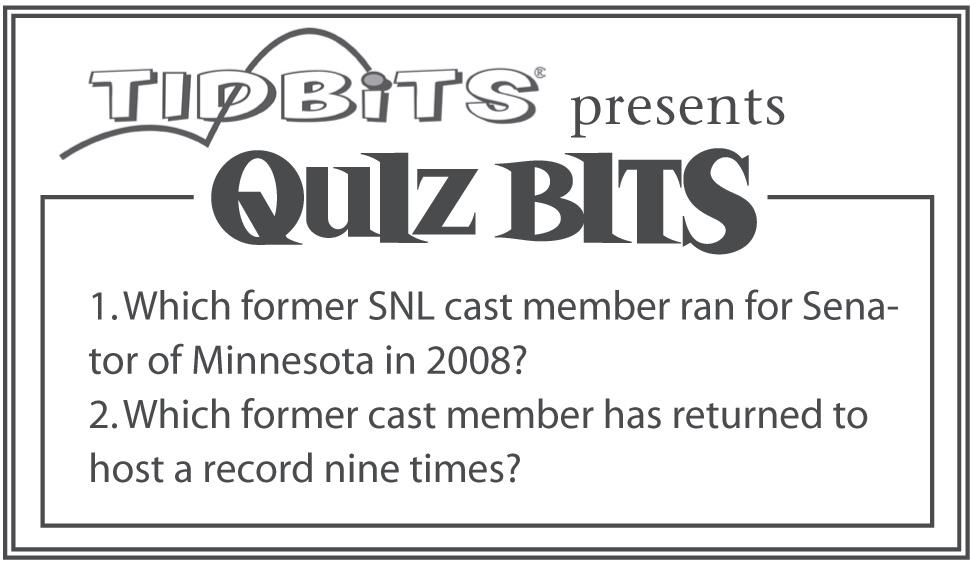
1. What long-necked bird attracts a mate by swinging his head in a figure 8?
2. What tiny rodent is monogamous and affectionate toward their mate?
The male nursery web spider wraps a bug in silk and presents it to a potential partner as a gift for her to eat. Sometimes, though, he will wrap an empty husk if he got hungry and ate the gift, and sometimes he wraps a
By Lucie Winborne
* The living room set of “The Addams Family” TV series was actually pink.
* About 1,350 potentially active volcanoes presently exist on Earth, with the majority of them found along a 25,000-mile-long, horseshoe-shaped ribbon bordering the Pacific Ocean that’s commonly known as the “Ring of Fire.”
* Chopsticks in Asia are about 2,000 years older than forks in Europe.
* Michelangelo only signed one piece of art, the “Madonna della Pieta ,” and that was supposedly because he overheard his work credited to a rival and sneaked back to include his name on the sash across the Virgin Mary’s chest.
* Philadelphia cream cheese doesn’t hail from Philadelphia. It originated in New York.
* No American president has been an only child.
* In 1954, the mayor of the winegrowing town Chateauneuf-du-Pape in France issued a memorable decree that banned the “flying over, landing or taking off of flying saucers.” It’s unclear whether anyone ever considered how such an event should be handled should it defiantly occur.
* Shaquille O’Neal missed 5,317 free throws over the course of his career.
* Only three music companies are responsible for more than 80% of the music we listen to: Sony BMG, Warner Music Group and Universal Music Group.
* Spiders, like humans, can have arachnophobia. Small wonder, since certain species regularly eat each other: for food, after mating and for other reasons scientists don’t yet fully understand. ***
Thought for the Day: “You can make positive deposits in your own economy every day by reading and listening to powerful, positive, life-changing content and by associating with encouraging and hope-building people.” -- Zig Ziglar (c) 2026 King Features Synd., Inc.
by Mary Hunt
What on Earth Can I Do With These Chinese Leftovers?
meat with a dash of soy sauce and garlic powder, layering with cheese in a tortilla, and toasting until crisp. Or make use-what-you-have wraps by filling a tortilla with chopped meat, shredded cabbage, cucumber sticks and a drizzle of leftover sauce.
DON’T FORGET THE SAUCE PACKETS
Those little packets hiding in the bag are flavor powerhouses.
Everyday CHEAPSKATE
by Mary Hunt
We’ve all faced that moment of truth: You open the refrigerator door and there sit the Chinese leftovers from last night’s dinner, looking a little wilted and more than a little judgmental. You didn’t throw them away -- good for you. But what do you do with them now?
Before you resign yourself to eating cold lo mein over the sink, let’s rethink this. Those containers aren’t leftovers. They’re ingredients. And with a few simple tricks, you can turn them into fresh meals that taste like you planned them. Not like they’re Plan B.
Let’s turn that fridge clutter into something delicious.
FRIED RICE, REINVENTED
If you only remember one thing, let it be this: Day-old rice is a gift. Cold rice makes the best fried rice because it crisps instead of turning mushy.
Heat a skillet with a splash of oil, toss in the rice, and add any leftover veggies or bits of meat you have. Crack an egg into the pan, scramble it, toss it all together, and season with soy sauce. Suddenly it’s not leftovers. It’s lunch. You can even give it a breakfast spin with butter, a splash of milk, cinnamon and raisins. Warm it until creamy and you’ve created a rice breakfast bowl that tastes surprisingly cozy.
LO MEIN OR CHOW MEIN RESCUE
Leftover noodles may look sad, but they rebound quickly.
Heat them in a skillet with a little oil and a splash of water or broth to loosen them. Throw in some garlic powder, soy sauce and any leftover vegetables. Add a squeeze of lime or a sprinkle of sesame seeds to freshen things up. It’s simple and satisfying.
For cold lunches, turn the noodles into an Asian-style salad. Toss with a little rice vinegar, sesame oil, sliced cucumber and chopped peanuts. It looks like something you’d make on purpose.
STIR-FRY BECOMES SOUP
This is a great trick when you’re short on time. Take any leftover stir-fried meat or veg etables and drop them into simmering broth. Add spinach, ginger or soy sauce for extra flavor. If you whisk in an egg, you’ll get a comforting eggdrop finish.
LEFTOVER EGG ROLLS, DUMPLINGS OR SPRING ROLLS
Don’t reheat these in the microwave. Just don’t.
Instead, chop egg rolls and add them to fried rice. Slice spring rolls and toss them into a salad with leftover sweet chili sauce as the dress ing. And dumplings? They make an excellent quick soup when simmered in broth.
TINY BITS OF PROTEIN = BIG POSSIBILITIES
Even small scraps of leftover chicken, beef or pork can shine again. Make quesadillas by mixing the chopped
Soy sauce mixed with vinegar becomes a quick salad dressing. Duck sauce brushed on chicken or pork makes a simple glaze. And hot mustard whisked with a bit of honey and soy sauce becomes a surprising marinade.
BUILD YOUR OWN BOWL
This works with almost anything you brought home.
Add reheated rice, top with leftover protein and veggies, drizzle with soy sauce or sesame dressing, and sprinkle with sesame seeds. If you add sliced avocado, it becomes downright impressive.
WHEN ALL ELSE FAILS: THE MIGHTY STIR-FRY
If you can’t decide what to make, toss everything together; rice, veggies, protein, eggs and sauce packets. Stir-fry until hot. This clears your fridge and gives you dinner with almost zero effort.
You don’t need to dread those little containers anymore. With a few easy tricks, Chinese leftovers can go from guilt-inducing clutter to brand-new meals you’ll actually look forward to.
More smart, practical tips like this await you at EverydayCheapskate.com/chinese-leftovers.
* * *
Mary invites you to visit her at EverydayCheapskate.com, where this column is archived complete with links and resources for all recommended products and services. Mary invites questions and comments at https:// www.everydaycheapskate.com/contact/, “Ask Mary.” This column will answer questions of general interest, but letters cannot be answered individually. Mary Hunt is the founder of EverydayCheapskate.com, a frugal living blog, and the author of the book “Debt-Proof Living.”
COPYRIGHT 2026 CREATORS.COM
BLUE LIGHT
• Light-emitting diodes, or LEDs, pervade our entire world. They are in our computers, phones, watches, billboards, TVs, and more. LED lights don’t get their colored glow from plastic coverings, which protect the electronics. LED colors come from the electronics themselves.
• The world’s first LED light was invented by GE in 1962. It glowed red. A few years later, Monsanto created a green LED. With only green and red LEDs available, their use was limited. What was needed was a blue LED in order to produce every color of the rainbow. Every electronic corporation chased blue light in order to complete the full color spectrum.
• A Japanese engineer named Shuji Nakamura worked for a small chemical company in Japan called Nichia. The company produced calcium phosphate used in fluorescent lights. When red and green LEDs were invented, the firm expanded into the manufacture of the semiconductors used in these diodes. By the late 1980s, the company, competing against larger corporations, needed a new product.
• In 1988, Nakamura went to the company’s founder and asked for a laboratory and the funding to pursue blue light. The founder agreed. The boss knew that blue LEDs would transform the world of lighting. At the time, incandescent bulbs gave off more heat than light. LEDs emit light but no heat. But blue LEDs would need to be invented in order to have white LED lightbulbs.
• Nakamura’s first move was to spend a year in Florida, where a friend worked in a lab that created the machines that made the crystals used in semiconductors. Because Nakamura was not allowed to use the company’s state-of-the-art equipment, he learned to repair their damaged machines. When he returned to Japan, he built his own machine from scratch.
• All research focused on using two minerals to produce blue light: zinc or gallium. The problem was that the crystals had to be 100% pure, which was nearly impossible. Nakamura tore down and rebuilt his crystal-building machine often. Then he hit pay dirt. The machines used in Florida
sprayed atomized gallium into a vacuum, where it settled and crystallized. Nakamura’s innovation was adding a stream of air that pushed the mist to the bottom. This resulted in a purity never before achieved, which made a pale blue light.
• Just then, his boss retired, and the reins were handed over to his son-in-law, who felt that pursuing blue LEDs was a waste. He ordered Nakamura to cease. Nakamura refused. In 1992, he was a presenter at a conference in St. Louis. Yet, his blue LED light was not powerful enough. He needed to boost output.
• His next breakthrough came when he experimented with a mineral mix previously overlooked: aluminum gallium nitride. This did the trick. The result was a bright glowing blue LED light—thirty years after the first red LED
was invented. The announcement was made in 1992, and by 1994, Nichia was turning out a million blue LEDs per month. The company released the world’s first white LED in 1996. Today, Nichia is one of the world’s largest manufacturers of LED lights.
• Despite his heroic contribution, Nakamura was rewarded with a paltry salary increase. When he went to work for a U.S. firm, Nichia sued him, but he eventually won.
• Nakamura won the Nobel Prize in Physics in 2014. He now holds 208 patents and works at the University of California, where he invents the next generation of LED lights. In 2010, just 1% of residential lighting sales were LED. By 2022, that had risen to 50%. By the mid-2030s, nearly all lighting sales will be LED.
by Dana Jackson
Q: When is “Outlander” returning with new episodes? Will it be the final season, or will there hopefully be more? -- J.S.
A: The eighth and final season of “Outlander” will premiere on Starz on March 6, with 10 episodes airing in subsequent weeks. It is based on the novels by Diana Galbaldon and is the longest-running series in Starz’s history. Sam Heughan and Caitriona Balfe return as Jamie and Claire, respectively, with their story set a year after last season’s events concluded.
You may already know this, but “Outlander” has a prequel series that airs on Starz as well. Set in Scotland and England during the World War I era, “Outlander: Blood of My Blood” stars Harriet Slater, Jamie Roy, Hermione Corfield and Jeremy Irvine as the parents of “Outlander’s” Jamie and Claire. It has already wrapped production on its second season.
1. Avatar: Fire and Ash (PG-13) Sam Worthington, Zoe Saldana
2. 28 Years Later: The Bone Temple (R) Jack O’Connell, Alfie Williams
3. Zootopia 2 (PG) Ginnifer Goodwin, Jason Bateman
4. The Housemaid (R) Sydney Sweeney, Amanda Seyfried
According to TVLine, Heughan has already landed a new gig. He’ll star alongside Anna Kendrick (“Pitch Perfect”) and J.K. Simmons (“Whiplash”) in a six-episode geopolitical thriller titled “Embassy.” Meanwhile, Balfe’s upcoming film is a remake of Jane Austen’s “Sense and Sensibility” with Daisy Edgar-Jones (“Twisters”), and it is due out in September 2026. ***
Q: So many people, including myself, were disappointed with the finale of “And Just Like That ...” Do you think they’ll do a movie or something to wrap it up better? -- A.T.
A: According to Kristin Davis, who played Charlotte in “Sex and the City” and its sequel series “And Just Like That ...,” she agrees with fans who feel that they were left hanging by the ending.
On her podcast “Are You a Charlotte?” the actress speculated that “we’re going to do something else,” although nothing official has been announced. Mario Cantone, who played Anthony on both shows, followed up Davis’ statement with: “I don’t care what anybody says. That was not a se-
ries finale. It was a season finale, but that wasn’t a series finale.”
Davis didn’t want to give viewers false hope, however. She said that she doesn’t know who “owns [them] right now” and that she has run into showrunner Michael Patrick King, who has not said anything about revisiting the show in the form of a series, a movie, or even a special episode.
***
Q: I keep seeing ads for a movie version of the classic novel “Wuthering Heights,” but when is it coming out? Will it be on streaming or just in theaters at first? -- R.R.
A: ”Wuthering Heights” has been adapted many times for the big screen, but the upcoming version is being directed by arguably the book’s biggest fan. The film’s director Emerald Fennell recently said at a press event that she first read the novel by Emily Bronte when she was just 14 years old, and she likes to revisit it each year.
First published in 1847, “Wuthering Heights” was adapted for the silver screen in 1939 and starred Laurence Olivier and Merle Oberon. The latest version will be released on Feb. 13, with Margot Robbie (“Barbie”) and Jacob Elordi (“Frankenstein”) as star-crossed lovers Cathy and Heathcliff.
Send me your questions at NewCelebrityExtra@gmail.com.
(c) 2026 King Features Synd., Inc.
Caitriona Balfe and Sam Heughan in “Outlander”
Mango-Glazed Ham
The secret to this sweet glazed spiral-cut ham is mango chutney and mango nectar.
1 cup Major Grey’s mango chutney
1/3 cup mango nectar
2 cloves garlic, crushed with press
2 tablespoons honey
1 tablespoon mustard powder
Pepper
1 (7 1/2 to 8 pound) fully cooked, spiralsliced, smoked bone-in reduced-sodium half ham
1/4 cup (or up to 1/2 cup) boiling water
Parsley springs, for garnish
Mango slices, for garnish
Pineapple slices, for garnish
1. Preheat oven to 375 F. In blender, combine chutney, nectar, garlic, honey, mustard powder and 1/4 teaspoon freshly ground black pepper. Blend until very smooth. (Chutney mixture can be made, covered and refrigerated up to 1 day ahead.)
2. Place ham in 13-by-9-inch roasting pan. Rub chutney mixture on skin sides of ham. Bake 1 hour 15 minutes or until golden brown crust forms and meat thermometer inserted horizontally in bottom portion of ham (not touching bone) reaches 140 F.
consistency. Garnish platter with parsley sprigs and mango and pineapple slices. Serve ham with pan juices. Serves 16.
3. Transfer ham to serving platter. Pour juices from pan into small bowl. Whisk in 1/4 to 1/2 cup boiling water, until pan juices are desired cups.
Each serving: About 280 calories, 11g total fat (4g saturated), 74mg cholesterol, 1,485mg sodium, 35g total carbohydrate, 0g dietary fiber, 29g protein.
Tuna Melt With Carrot-Raisin Salad
Tuna Melt
1 large can (12 ounces) solid white tuna in water, drained
1 celery stalk, thinly sliced 1/4 cup reduced-fat mayonnaise
1 tablespoon margarine or butter
8 slices rye bread (about 8 ounces)
4 ounces sliced Cheddar or Swiss cheese
Carrot-Raisin Salad
1 container (8 ounces) plain low-fat yogurt
1 bag (10 ounces) shredded carrots 1/2 cup raisins
1/8 teaspoon ground cumin 1/8 teaspoon salt
1. Prepare Tuna Melt: In small bowl, with fork, combine tuna, celery and mayonnaise.
2. In nonstick 12-inch skillet, melt margarine over medium-high heat. Meanwhile, spread tuna mixture evenly on 4 bread slices. Top each with one-fourth of the Cheddar and a remaining slice of bread. Arrange sandwiches in skillet. Cover skillet; cook 5 minutes or until Cheddar melts and bread is toasted, turning sandwiches over once.
Please review carefully. Double
Kitchen
3. While sandwiches are cooking, prepare Carrot-Raisin Salad: In small bowl, stir all salad ingredients until combined. Makes about 4
Each serving: About 440 calories, 20g total fat (7g saturated), 61mg cholesterol, 1,055mg sodium, 33g total carbohydrates, 4g fiber, 31g protein.
TIPS: For a more traditional carrot salad, replace the cumin with cinnamon. You also can substitute dried cranberries or other dried fruits for the raisins.
By John Allen DIAMOND LIL
by Brett Koth
Donald Duck by Walt
NEXT WEEK in
TIDBITS WITH THE ROCKS
CLASSICS
Holidays & Observances This Week
2/1
2/2
2/3
Dog Talk with Uncle Matty
By Matthew Margolis
Excessive Barking
Barking is as natural as breathing. Triggered by a state of excitement, barking is a dog’s means of communicating anger, loneliness, fear, playfulness or a need for something.
Excessive barking is barking’s obnoxious and intolerable cousin. It’s an exaggeration of natural canine behavior that can only be eliminated by either giving in to the dog’s demand or reconditioning the dog. I’d advise doing the latter -- STAT.
The excessive barking of an overindulged or neglected dog has ruined friendships, destroyed relationships and added to the overwhelm of courts already jammed with frivolous concerns that are largely solvable without the aid of lawyers and judges. Time and money are wasted. Friends and credibility are lost -- and in some cases the dog itself in the dead of night. Furthermore, if you’re a renter, you may come home to find yourself staring at a notice to vacate.
So don’t ignore your neighbor’s complaints about your dog’s excessive barking. Instead, first find out whether you have a dog problem or a neighbor problem. Do a little sleuthing. Leave the dog with a friend or relative, or board him at a local kennel for a few days. During that time, ask your neighbor whether the barking has been a problem. If he complains even when the dog isn’t there, you have a neighbor problem. But if the dog turns out to be the culprit, there are adjustments that can and should be made to your behavior, the dog’s environment and/or the dog’s temperament.
Possible reasons behind excessive barking are vast but rarely mysterious: tethering, improper confinement (i.e., in a room behind a closed door), outside distractions (i.e., construction, stray animals, lawnmowers, a steady stream of strangers), bad weather, separation anxiety, heightened territorialism, lack of exercise, genetics, temperament, hunger…
There’s a hilarious cartoon that features an impatient pup sitting next to an empty food bowl at the feet of his master, an artist consumed with the masterpiece-in-the-making on the easel before him. The caption: “And how about some dinner, huh? One of the great masters, indeed.”
If ever there was a time to turn off the television -- especially the stressful reports that bombard us on the news stations -- this is it. Between the stress, anxiety, troubled sleep and high blood pressure caused by all the insane and shocking current events we see, and which we can do nothing about, we can just as easily just press the OFF button on the remote and enjoy the quiet.
But if we can free ourselves from all this stressful insanity, what shall we do with the free time once we have silenced the noise? I have a suggestion: We can read “Homework for GrownUps: Everything You Learned at School and Promptly Forgot,” by Elizabeth Foley and Beth Coates.
This is a refreshing trip down memory lane of all the facts and tidbits you used to know. The topics are covered in bite-size sections and include English language and literature, math, home economics, history, science and much more. Still wonder if you should use “that” or “which” in a sentence? Or you don’t remember
Finding Common Ground
My job as a designer involves the traditional roles of an interior designer, but another aspect is playing the role of psychologist or therapist. So much of the job involves listening to clients and deciphering the design issues at hand, and that boils down to understanding the clients’ needs and ultimately finding ways to meet them.
This stands true whether the client is a single person, a newly minted couple, a family or a group such as business owners or a condominium association. A “group” is quite a doozie when under the guise of a “design committee.” As they age, many condominiums need a good facelift, and design committees are generally intended to serve as representatives of the homeowners, as well as consensus builders for the design.
the answer when your grandchild asks, “What’s the difference between a parallelogram and a rhombus?” Or if you need a refresher about rock, paper, scissors, the book will remind you.
At the end of each section is a quiz with answers in the back of the book. If you read a few pages every day, you’ll find it addicting! And we can write ...
When is the last time you wrote someone a letter? Not an email, not a text message, not a letter typed on the computer and printed out, but a handwritten letter on nice stationery with a matching envelope. And yes, they still make such things, sold in sets.
While you’re shopping for stationery, consider buying a journal. If you make a habit of writing, without a daily dose of bad news, you’ll likely find yourself much more relaxed -- and happy!
email to columnreply2@gmail.com.
Sometimes these disagreements are genuinely about design and budget, but more often than not, they are about poolside politics.
Designing for hundreds of clients at one time is particularly complex, as it is difficult to please everyone. The design of condominium common areas should have broad appeal; they must be welcoming like a living room and durable like a hotel lobby. The design should address the architecture of the building, as well as the location of the project.
Other items to consider include the amount of use and the peak hours of use for the area. Knowing the socio-economic composition, age range and background of the residents is essential to a successful design. Lobbies are the spaces that make the first and most lasting impression.
Everyone has an opinion about design style, and we should be free to express them. What is curious is how territorial committee members get in the design of the common areas. Some apparently believe they are discussing the design of their own living room, pushing for their stylistic preference and color palette.
Therein lies the problem: some loving the design, others abhorring it. Boy, the things I have seen in these meetings -- everything from namecalling to temper tantrums, threats and even board resignations -- and all in the name of design.
Recently, I completed the redesign of a condominium lobby of mid-1980s vintage. Upon completion, the residents had a champagne reception to celebrate the newly designed space. Later that evening, I was surprised to receive a phone call from one of the committee members. I expected the worst, but the call was to commend my design, and to let me know that 30 or 40 ladies of a certain age who attended the celebration wished to thank me for making them feel younger every time they entered the lobby. This was music to my ears. Besides proving a job well done, it demonstrates the psychological power of design.
* * Joseph Pubillones is the owner of Joseph Pubillones Interiors, an award-winning interior design firm based in Palm Beach, Florida. To find out more about Joseph Pubillones, or to read features by other Creators Syndicate writers and cartoonists, visit the Creators
lems come with simple solutions:
-- Keep the dog in a fenced backyard or dog run, rather than tethered to a tree out front.
-- Ensure he gets sufficient exercise -- two or three vigorous walks every day, with some spirited games of fetch thrown in for good measure. The amount of exercise depends on the breed of dog.
-- When inside, keep him confined to an area of the house with a baby gate so he can see his world, rather than shutting him off from the world in a room behind closed doors.
-- While you’re gone, close window blinds and drapes, and play soothing music or low-level talk-radio to ease the pain of separation and dull unpleasant exterior distractions.
-- Give him a Nylabone toy to while away the hours until you return. Boredom can contribute to mindless barking.
-- Don’t make a big fuss out of every goodbye. This only heightens his anxiety when you leave, which can result in a long tedious barking session on the heels of every departure.
-- Don’t forget dinner and water. A satisfied dog is a quiet dog.
Barking problems that are more a matter of DNA than environment are less likely but more complex, and require a reconditioning of the dog as opposed to a mere adjustment to the dog’s environment. This demands patience and persistence on the part of the dog owner. Considering the problems brought on by excessive barking left unchecked, the effort is worthwhile.
For information on effective reconditioning techniques and tools -- including the Margolis Maneuver and the proper use of the human voice in dog training -- visit unclematty.com or read “When Good Dogs Do Bad Things,” available at your local library or online at unclematty.com. Remember, don’t get rid of the dog; get rid of the problem! Woof!
* * *
Dog trainer Matthew “Uncle Matty” Margolis is the co-author of 18 books about dogs, a behaviorist, a popular radio and television guest, and the host of the PBS series “WOOF! It’s a Dog’s Life!” Read all of Uncle Matty’s columns at www.creators.com, and visit him at www.unclematty.com.
Matilda Charles regrets that she cannot personally answer reader questions, but will incorporate them into her column whenever possible. Send
YOUR SOCIAL SECURITY
by Tom Margenau
Babies of “Notch Babies”
This is going to be a column about the infamous “notch babies.” I thought this issue had died, because frankly, almost everyone affected by this glitch in Social Security law has died. (The few still alive would be over 100 years old.) But amazingly, I am now hearing from the babies of notch babies! In other words, people now in their 70s are writing to me about an issue that affected their parents. Here is a typical example.
“I’ve always been curious about something. My mom, who would have turned 100 today if she were still alive, always complained that she was being cheated out of Social Security benefits because of something called “the notch.” In fact, she called herself a “notch baby.” I know it’s too late to do anything about it, but can you explain what that was all about?”
Yes, I can explain. This cohort of now mostly deceased Social Security beneficiaries are generally people born between 1917 and about 1926. And their false claims about getting financially fleeced by Uncle Sam were fueled by a rather sophisticated, albeit deceitful and shameful lobbying campaign, sponsored by greedy gadflies out to make a quick buck.
The infamous “notch” refers to a time period when corrections were made to the Social Security benefit formula -- corrections that were necessary to ensure that all Social Security recipients were paid properly, but corrections that were misconstrued by many to be a way of cheating them out of benefits they felt they were due. Here’s the story.
In 1972, Congress passed a law mandating automatic annual cost-of-living adjustments -- or
1. The book of Hezekiah is found in the: a) Old Testament b) New testament c) Neither
2. Which of these was not on the Mount of Transfiguration with Jesus? a) James b) Andrew c) John d) Peter
3. From Matthew 13, how many of Jesus' half brothers wrote books of the Bible? a) None b) One c) Two d) Three
4. What warning signs of the last days does Jesus give in Matthew 24? a) Wars and earthquakes b) Lies and deception c) Widespread lawlessness d) All of these
5. What is the biblical interpretation of a concubine? a) Weapon b) Large tent c) Secondary wife d) Indentured slave
6. According to Jesus, what was Satan from the beginning? a) Evil b) Murderer c) Thief d) Deceiver
COLAs -- to Social Security checks. Those COLAs were to be based on increases in the government’s official inflation measuring stick: the consumer price index. (Before 1972, COLAs were not automatic. They were sporadic and happened only if Congress specifically authorized a yearly increase.)
As part of the new process, the Social Security Administration had to come up with a formula for calculating increases to people’s Social Security checks -- which they did. But after COLAs were paid for a couple of years, someone noticed the formula was wrong. Social Security beneficiaries were getting cost-of-living increases that were slightly higher than intended.
Once the mistake was discovered and SSA notified Congress, several decisions had to be made. For one, they had to figure out what to do about all of the Social Security beneficiaries who received the overly generous COLA adjustments. Congress decided to let them keep the money. (It would have been political suicide to send “overpayment” letters to every senior citizen in the country demanding repayment of the incorrectly paid funds.)
The second choice Congress had to make was to decide where to draw the line -- to figure out which people would have their benefits figured using the proper COLA formula. And they drew that line at 1917. In other words, they said everyone born in 1917 and later would have their Social Security benefit figured using the corrected formula.
Sounds simple enough, doesn’t it? But sometimes Congress can’t leave well enough alone. In this case, they bowed to pressure from senior citizen groups who demanded a transition period from the old (incorrect) formula to the new (proper) formula. After lots of haggling, what they eventually decided was that everyone born between 1917 and 1921 would have their benefit figured using a special formula.
So, we ended up with the following scenarios. People born after 1921 had their benefits figured using the lower, but proper, COLA formula. People born before 1917 had their benefits figured using the higher, but incorrect, formula. And people born between 1917 and 1921 had their benefits figured with a special formula that was not quite as generous as the one used for the pre-1917 crowd but more generous than the one used for the post1921 crowd.
You’d think everyone would be happy, right? Well, what happened next was pretty bizarre. Social Security recipients born between 1917 and 1921 started to complain that they weren’t getting quite as generous a COLA as folks born in 1916 and earlier. Someone should have pointed out to them that they were indeed being paid at a special rate that was lower than the incorrect benefits paid to the pre-1917 crowd, but at a higher rate than anyone born from 1922 on.
Instead of listening to reason, mobs of angry senior citizens around the country started to form into groups demanding justice. Even advice columnist Ann Landers got into the fray. She’s the one who came up with the moniker: “notch babies.” And all these folks mistakenly thought they were singled out for lower benefit adjustments than everyone else.
nice office space in Washington, D.C. -- but money that accomplished nothing else. After all, there was no “injustice” to fight.
Sadly, millions of seniors born between 1917 and 1926 or even later went to their graves bitter and disappointed -- including my own mother, by the way! Those very few still alive believe to this day that they are being cheated out of Social Security benefits. If you know one of these people, please tell them to enjoy what time they have left on earth and stop fretting about an alleged injustice that never happened. Or if you are the child of a deceased “notch baby,” please rest assured that your parent wasn’t cheated out of anything.
If you have a Social Security question, Tom Margenau has two books with all the answers. One is called “Social Security -- Simple and Smart: 10 Easyto-Understand Fact Sheets That Will Answer All Your Questions About Social Security.” The other is “Social Security: 100 Myths and 100 Facts.” You can find the books at Amazon.com or other book outlets. Or you can send him an email at thomas.margenau@comcast. net. To find out more about Tom Margenau and to read past columns and see features from other Creators Syndicate writers and cartoonists, visit the Creators Syndicate website at www.creators.com.
COPYRIGHT 2026 CREATORS.COM (Answers on page 16)
Then those greedy lobbying groups I mentioned earlier got into the mix and really muddied things. They sent letters to folks born in the socalled “notch years” telling them they were being cheated out of Social Security benefits and asking for donations to “fight this injustice.” And to help fill their coffers even more, the lobbyists deceitfully expanded the definition of those notch years to include everyone born through 1926. Some inexplicably even pushed the notch cutoff into 1930s dates of birth! So senior citizens of all ages started sending in tens of millions of dollars -- money that paid for many overpriced lobbyists and some pretty
Working Out Which PlantBased Milk Substitute Is
Healthiest
DEAR DR. ROACH: Everyone in my family, except for me, has converted to using almond milk instead of cow’s milk. I just saw something on the internet stating that almond milk is possibly the worst plant-based milk substitute.
I trust your opinion and research. Can you please educate me on what is best? Are plant-based milks really better than cow’s milk, and which plant-based milk is best? -- D.G.
ANSWER: When trying to compare plantbased milk substitutes with each other and with animal milks in their health impact, it’s important to look at what each of them have in terms of macronutrients and micronutrients.
Cow’s milk, like other animal milks, contains macronutrients like protein, sugars and fats, as well as micronutrients like calcium. (Most cow’s milk is fortified with vitamin D.) While most North Americans consume adequate protein, many people try to increase their protein intake through cow’s milk.
Similarly, although the data are mixed, most experts agree that saturated fat, which is found in cow’s milk, increases heart disease risk. (Cow’s milk can be whole, low-fat, reduced fat or skim, varying in their percentages of overall fat.) However, cow’s milk contains beneficial fats like conjugated linoleic acid and methyl-branchedchain fatty acids. Most North Americans consume much more simple sugar than what is optimal with cow’s milk.
Almond milk has much less protein than cow’s milk (1 gram versus 8 grams), and the quality of the protein based on the amount of essential amino acids is less. Soy milk is much higher in protein than almond milk -- almost as much as cow’s milk, about 7 grams. Coconut milk has almost none.
However, almond and soy milk have no saturated fat (or almost none) and more monounsaturated fats. Coconut milk has about the same amount of saturated fat as cow’s milk. Almond, soy and coconut milks are typically fortified with calcium to match what is found in cow’s milk, but the calcium in plant milks is not absorbed as well. Almond milk can be bought unsweetened or sweetened with typically 7-8 grams of sugar per cup, compared to 12 grams per cup in cow’s milk. Cow’s milk has multiple other micronutrients naturally, while plant-based milk is fortified with vitamin A and D.
So, is your family right that almond milk is the worst? No, I don’t think so. In my opinion, the nonexistent protein and high saturated fat content of coconut milk makes it the least acceptable from a health perspective. Soy and almond milk seem like the better alternatives, but neither of them is really comparable to cow’s milk in terms of other micronutrients.
The choice of almond versus soy milk is not clear from a health perspective, so your taste preference should be your guide. In all cases of plant-based milks, I recommend unsweetened and unflavored products.
DEAR DR. ROACH: I get regular pedicures. I never go for gel, but I often use a bright color. When the polish comes off, almost every single one of my nails is quite mottled with brown and white spots. Of course, I thought about not wearing polish and allowing the new nails to slowly grow out, but I can’t stand the look of my toes. I know this is just a cosmetic problem. My pedicurist seems to know nothing about it. The real question is, what causes such gross discoloration in some people but not in other others? -- N.W.
ANSWER: I’ll bet you have keratin granules, which represent damage to the nail. They are often described to be chalky white and happen in many people if nail polish is left on for too long (more than 7-10 days). Experts recommend an acetone-free remover when it’s time to remove them. You can also use a base coat to protect the nail. Let the nails go without polish periodically.
Fortunately, keratin granules are not dangerous and will grow out. They can be mistaken for toenail fungus, so your regular doctor or a dermatologist can help if these tips don’t stop them from developing.
Dr. Roach regrets that he is unable to answer individual questions, but will incorporate them in the column whenever possible. Readers may email questions to ToYourGoodHealth@med.cornell.edu.
VETERANS POST
by Freddie Groves
Incomplete Training for Audiologists
You wouldn’t think you would need to wonder about a risk of suicide related to the audiology department of a clinic or the kind of work they do there, or in having a hearing checkup. But you’d be wrong.
Tinnitus (ringing, buzzing, clicking or other sounds in the ears) is the number one service-connected disability, and those who have it often also have PTSD, behavior disorders, substance abuse, mental health problems and anxiety. It seems that looking for those concerns when there is a diagnosis of tinnitus would be standard care when being seen by an audiologist.
Again, you’d be wrong.
What doesn’t always happen is training of audiology staff in suicide risk identification and intervention.
Clinical staff are trained to do a yearly suicide risk screening on patients. However, audiologists are not always recognized as clinical staff. Therefore, audiologists are only partially trained -they only receive Signs, Ask, Validate, Encourage and Expedite training. Clinical staff, on the other hand, receive the full Skills Training for Evaluation and Management of Suicide and need to complete it within 90 days of starting their job.
What the VA’s Office of Inspector General (OIG) found in 132 facilities was that nonclinical staff got the training, but most clinical staff did not. Are audiologists considered health care providers, or not? That question was batted back and forth, with policymakers seeming unsure. And it left the OIG with a concern: If audiologists are not considered health care providers, are they or are they not getting the correct suicide risk training? And are they actually doing the suicide screenings?
The OIG investigation results from two years indicate that no, they’re not doing all the screenings. For those two years, only 22 and 39% of screenings were done. And at 15 facilities, no screenings were done at all.
For 29,000 VA patients who only get audiology care, that means nobody was doing any suicide risk assessments on them for those two years.
Freddy Groves regrets that he cannot personally answer reader questions, but will incorporate them into his column whenever possible. Send email to columnreply2@gmail.com.
(c) 2026 King Features Synd., Inc.
spine), and other types of alternative or complementary care are not covered by Medicare.
-- by Jim Miller
What Medicare Won’t Pay For in 2026
DEAR SAVVY SENIOR: I would like to avoid any future health care surprises for the new year. Can you tell me what original Medicare won't be covering in 2026? -- New Beneficiary
Dear Beneficiary: That's a great question. While original Medicare (Part A and B) covers a wide array of health care services after you turn 65, it doesn’t cover everything.
If you need or want certain services that aren’t covered, you’ll have to pay for them yourself unless you have other insurance, or you enroll in a Medicare Advantage health plan, which may provide some additional benefits.
Here’s a look at some commonly needed medical services that original Medicare doesn’t pick up the tab for.
Most dental care: Routine dental care including checkups, cleanings, x-rays, fillings, root canals, tooth extractions and dentures are not covered by original Medicare.
Routine vision care: Medicare does not cover routine eye exams, eyeglasses and contact lenses (except following cataract surgery), but tests, treatments and surgeries for medical eye diseases like cataracts, glaucoma and macular degeneration are covered.
Hearing aids: Original Medicare will not pay for hearing exams or hearing aids but may cover a hearing and balance exam if your doctor determines it’s necessary.
Prescription drugs: Medicare (Part A and B) doesn’t provide coverage for outpatient prescription drugs, but you can buy a separate Part D prescription-drug policy that does.
Alternative medicine: Acupuncture (except to treat low back pain), chiropractic services (except to correct a vertebral subluxation of the
Cosmetic surgery: Most cosmetic procedures are not covered, however, if the surgery is due to an injury or deformity, it might pay. For example, Medicare will cover a breast prosthesis for breast cancer survivors.
Foot care: Medicare does not cover most routine foot care, like the cutting or removing of corns, calluses and toenails. But they do cover medically necessary podiatrist services for foot problems like hammertoes, bunion and heel spurs, along with exams, treatments and therapeutic shoes or inserts if you have diabetic foot problems.
Hearing aids: Original Medicare will not pay for hearing exams or hearing aids but may cover a hearing and balance exam if your doctor determines it’s necessary.
Prescription drugs: Medicare (Part A and B) doesn’t provide coverage for outpatient prescription drugs, but you can buy a separate Part D prescription-drug policy that does.
Alternative medicine: Acupuncture (except to treat low back pain), chiropractic services (except to correct a vertebral subluxation of the spine), and other types of alternative or complementary care are not covered by Medicare.
Cosmetic surgery: Most cosmetic procedures are not covered, however, if the surgery is due to an injury or deformity, it might pay. For example, Medicare will cover a breast prosthesis for breast cancer survivors.
Foot care: Medicare does not cover most routine foot care, like the cutting or removing of corns, calluses and toenails. But they do cover medically necessary podiatrist services for foot problems like hammertoes, bunion and heel spurs, along with exams, treatments and therapeutic shoes or inserts if you have diabetic foot problems.
Long-term care: Nursing home care and assisted living facilities are not covered by Medicare. But Medicare will help pay up to 100 days of skilled nursing or rehabilitation care immediately following a hospital stay of three or more days.
Personal home care: If you need to hire help for bathing, dressing or getting out of bed, Medicare typically won’t cover these costs either, unless you are homebound and are also receiving skilled nursing care. Housekeeping services, such as shopping, meal preparation and cleaning are not covered either unless you are receiving hospice care.
Adult diapers: Medicare does not cover the cost of adult diapers or other incontinence supplies. These items are considered to be for personal hygiene rather than medical treatment.
Overseas coverage: In most cases, health care outside of the United States is not covered by Medicare except for very limited circumstances – such as on a cruise ship within six hours of a U.S. port.
The best way to find out what original Medicare covers is to talk to your health care provider, visit Medicare.gov/coverage and type in your test, item or service, or download the Medicare “What’s covered” app on the App Store or Google Play.
Also keep in mind that even if Medicare covers a service or item, they don’t pay 100 per-
cent of the cost. You will have to pay a monthly Part B premium (which is $202.90 for most beneficiaries in 2026) and unless you have supplemental insurance, you’ll have to pay your annual deductibles and copayments too. However, most preventive services are covered 100 percent by Medicare with no copays or deductibles.
Send your senior questions to: Savvy Senior, P.O. Box 5443, Norman, OK 73070, or visit SavvySenior. org. Jim Miller is a contributor to the NBC Today show and author of “The Savvy Senior” book.
and would probably be worth $40 to $65 from a collector.
***
by Anne McCollam Creators News Service
Bottom’s-Up Mug A Collector Item
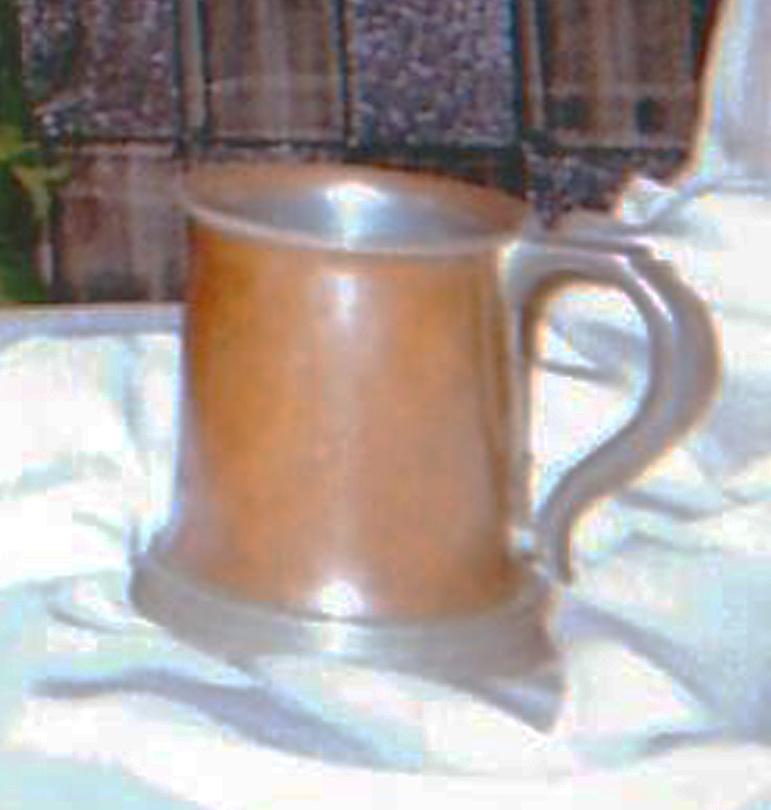
Q: Enclosed is a photo of a heavy mug that has a bronze finish and a clear glass bottom. It stands over 4 inches tall and about 4 inches in diameter. Around the base is the word “Manning,” along with a word I can’t read. There is also the number “1164.”
I hope this is enough information to help you identify the history of my mug. I would also like to know if it has any value.
A: The mystery word is probably “Bowman.” Your mug was made by the Manning Bowman Company. They have been located in Meriden, Connecticut, since 1872.
It was a family-owned business that produced silver-plated and non-plated objects that included teapots, mugs, coffee pots, samovars, chrome ware, and flatware. Their chrome Art Deco teapots and coffee makers are prized among collectors. The number “1164” is a design number. Clear glass bottoms on mugs were first seen in the 1800s. They prevented a drinker from finding any surprises at the bottom of the mug. A person drinking could see if there was any foreign object at the bottom, especially when the mug was tipped up.
Your mug was made aroud the mid-1900s
People should be very prudent when selecting beverage containers. Choose your bottles wisely!
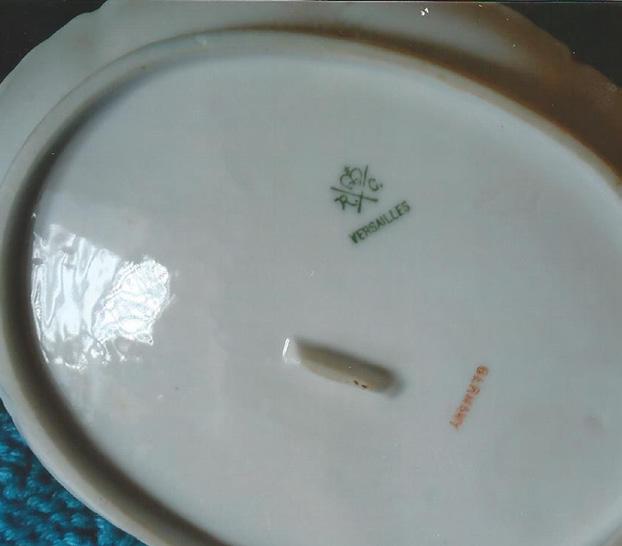
Q: This mark is on the back of a small porcelain platter that belonged to my grandmother. She would be in her hundreds now, so it must be old. The plate is oval and decorated with pink roses, green leaves and brown thorny branches. The edge is scalloped and trimmed with gold.
I am very curious about the origin of my plate and will appreciate any information you might provide.
A: Rosenthal China Company made your platter. They have been located in Selb, Bavaria, Germany, from 1879 to the present. Phillip Rosenthal began by purchasing white porcelain from Hutschenreuther factory. It was then decorated and sold door to door.
In 1879, Rosenthal opened his own factory that produced high-quality porcelain that was soon recognized for the outstanding workmanship and designs. In the mid 1900s, much of their dinnerware was designed by both American and European designers.
“Versailles” is the name of the pattern. Your platter was made around 1900 and would probably be worth $45 to $60.
* * * Antiques expert and columnist Anne McCollam has recently retired and no longer receives inquiries nor answers reader letters. Due to the popularity of her column, this publication will continue to reprint previous columns of interest to our readers.
* On Feb. 2, 1925, musher Gunnar Kaasen and his 13 dogs successfully delivered an antitoxin serum to Nome, Alaska, which was dealing with a widespread diptheria outbreak, in a relay spanning 674 miles in five and a half days and in temperatures as low as 85 degrees below zero.
* On Feb. 3, 1780, Barnett Davenport murdered Caleb Mallory, in whose house he was a boarder, along with Mallory’s wife, daughterin-law and two grandchildren, in their home. One of post-Revolution America’s most famous crimes, it contributed to a change in the way the country viewed lawbreakers.
* On Feb. 4, 1703, 47 samurai were forced to display the ultimate act of loyalty to the regional Japanese lord they had followed by committing seppuku -- ritually disemboweling themselves -- for the crime of killing the official who had ordered the forced suicide of said lord.
* On Feb. 5, 2003, U.S. Secretary of State Colin Powell gave a speech to the United Nations outlining America’s case that Iraq possessed weapons of mass destruction and making an argument for the invasion that would take place the following month. Unfortunately, some of his talking points were either incorrect or misleading, and Powell later described the speech as a blot on his record.
* On Feb. 6, 1998, a judge reinstated schoolteacher Mary Kay Letourneau’s suspended sentence and returned her to prison for seven years after she was caught violating a no-contact order with her former student, Vili Fualaau, when she was found in a parked car with the boy.
* On Feb. 7, 1984, Navy captain Bruce McCandless II became the first human to perform an untethered spacewalk while in orbit 170 miles above the earth, maneuvering freely with a jet pack of his own design after exiting the Challenger space shuttle.
* On Feb. 8, 1994, actor Jack Nicholson approached Robert Blank’s car while they were stopped at a red light in North Hollywood, accused Blank of cutting him off in traffic, and then bashed Blank’s roof and windshield with a golf club. Charges were dropped after Nicholson apologized and the two reached an undisclosed settlement that included a reported $500,000 check from Nicholson.
(c) 2026 King Features Synd., Inc.
"I was texting a client when I tried to answer my girlfriend's call and I spilled my coffee on my laptop then I was startled when another car honked at me, so you see, officer, it wasn't my fault."
Rosenthal China Company has been located in Selb, Germany, since 1879.
Manning Bowman Company has been located in Meriden, Connecticut, since 1872.
Weird Mating: (from page 3) types of male toadfish. The large Alpha toadfish does all the singing and nest-building. The smaller Sneaker toadfish hides nearby. When the Alpha male’s song attracts a female, she lays her eggs in his nest. While the Alpha is distracted, the puny Sneaker fish dashes in, fertilizes the eggs, and makes a speedy getaway. The clueless Alpha then spends weeks guarding the fish eggs that aren’t even his, while the female goes on her way in search of a different singing fish with which to mate.
WORM WATCH
• When whales and other bony fish die, they drift to the sea floor where they are colonized and consumed by bone-eating worms. These worms appear to take root in the bones of the fallen, dismantling them gradually through filaments that penetrate deeply into the bone surface. Scientists were curious when they discovered that every single specimen they examined was female. Where did the male bone-eating worms hang out? Not until they dissected some of the lady worms did they discover that the men are hanging out inside the long, tube-like bodies of the women. In fact, each female hosted up to a hundred different males inside her, each one microscopically small, measuring 100,000 times smaller than their mates. Each male continuously fertilizes whatever eggs the female is producing. Unable to eat, they soon die and are replaced by other males who carry on with the work.
PEARLFISH
• The pearlfish got its name due to a very peculiar mating method. The male pearlfish darts inside a mollusk, where it uses its swim bladder to create a vibrating song. The shells of the mollusk act as a soundboard, amplifying his mating call out into the ocean. When a female pearlfish shows up, she swims away after having her eggs fertilized – but the male remains inside the mollusk, where it dies. The mollusk, finding this irritating, coats the dead pearlfish with the same substance that it uses to coat grains of sand and other irritants. Consequently, some surprised diners cut into their mollusks hoping for pearls, and find instead a tiny and dead pearl-covered fish.
Give your golf-related advertising message targeted visibility in full color in this weekly 2” x 6” fixed location $159 per insertion reaches 70,000+ readers each week at the low cost of only $2.27 per 1,000 reader impressions!
Game Changers
by Jason Jenkins
Divotology
Do divots really tell golfers what happened in the swing to cause the shot to miss its target? Unfortunately many players may read too much into the alignment of a divot, but sometimes in can be fairly accurate.
Most players who see a divot aligned left of where they thought they were aiming attribute it to an “over the top” or “outside to in” downswing path. That can be true, but also keep in mind that the swing works in an arc through impact, not just leading into the ball.
A straight shot in golf can still have a divot that curves or appears to aim slightly left of the target. The clubhead is simply on its “return arc” away from the target line. It’s also possible for the hands to stop through impact in a way that alters the clubhead movement more sharply back to the inside. It’s what I would call “coming over the bottom”. The path may actually be fairly neutral, but the clubhead’s action creates a divot aligning more leftward. Many amateurs mishit shots left of the target with this process more than they realize.