




by Janet Spencer
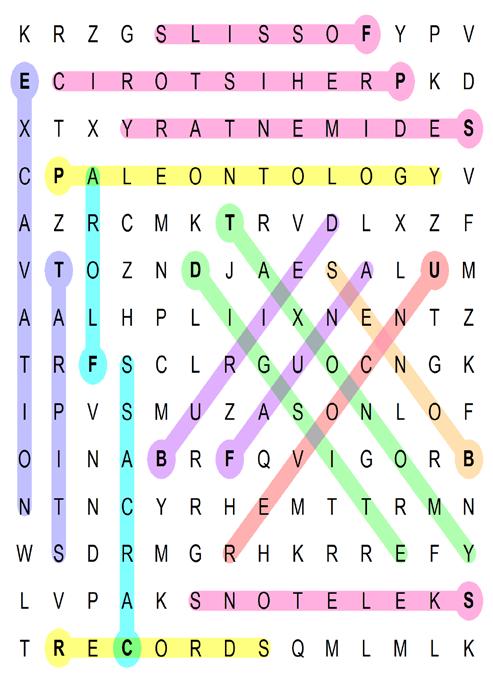
Thousands of years ago, crude oil bubbling to the earth's surface permanently trapped unsuspecting Ice Age animals in a thick, sticky goo. Today, the remains of these now-extinct creatures gives paleontologists a treasure trove of fossils just waiting to be excavated and studied. Come along with Tidbits and learn as we visit California's fascinating La Brea Tar Pits!
TAR PIT HISTORY
• Over the millennia, the remains of marine plankton collected in the bottom of an ocean basin off the coast of what is now California. As this prehistoric deposit biodegraded over time it was transformed into crude oil. As the continent drifted and the California coast began to rise, the trapped oil under pressure seeped through cracks in the bedrock until it pooled on the surface in what is now downtown Los Angeles.
• The lighter compounds evaporated from the oily pools leaving a crusty asphalt layer on top, which later became covered by vegetation and water. The





















(Answers on page 16)




1. HISTORY: What is the Code of Hammurabi?
2. GAMES: Which letters in the English version of Scrabble are worth 10 points each?
3. MOVIES: What is the name of Dr. Evil’s cat in “Austin Powers in Goldmember”?
4. MEDICAL TERMS: What is the common name for somnambulating?
5. TELEVISION: What is the name of the town where “Veronica Mars” is set?
6. THEATER: What is the first play written by an African American woman to be produced on Broadway?
7. LANGUAGE: What is the official language of Austria?
8. MATH: What is the smallest prime number?
9. GEOGRAPHY: What is the only U.S. state with a one-syllable name?
10. MYTHOLOGY: What is the home of the Norse gods?
1. One of the
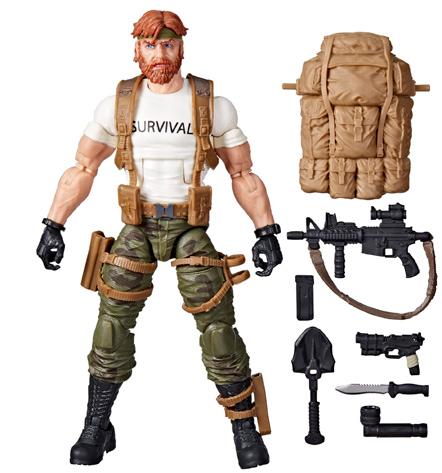
A guy named Stanley Weston understood that boys wanted to play with dolls, too. The only male doll on the market was Barbie’s pal Ken, which had a very limited appeal to boys. So Weston designed a macho doll modeled after a rugged soldier. He took the idea to Hasbro, but the CEO rejected it outright. However, Hasbro’s creative director, Dan Levine, saw potential in the concept. Thus began the legacy of G.I. Joe.
• While the CEO was away on vacation, Levine developed prototypes. Whereas Mattel gave the Barbie franchise only six moveable joints, Levine gave the new doll 19 joints, enabling it to grip machine guns and ride on tanks. Then he coined a new term. These new creations were not dolls; they were “action figures.”
• Levine’s plan was successful. Stanley Weston was paid $100,000 for his idea, equal to about $1 million today. Hasbro came up with the name “G.I. Joe.” The G.I. stands for “Government Issue,” which was stenciled on every crate of supplies shipped out during wartime.
• The first G.I. Joe figures were a set of four, representing the four branches of the military: Army, Navy, Air Force and Marines. Released in 1964, they were an instant hit. In the first year, Hasbro sold over $16.9 million in G.I. Joe merchandise. In the second year, sales topped $36 million, accounting for nearly 66% of Hasbro’s profits.
• A manufacturing defect resulted in the first batch having a mark across the face. Hasbro decided this was a feature, not a flaw, and this “battle

scar” remained, acting as copyright protection along with the trademark stamped into the right buttock of each figure.
• Each action figure came with a helmet, web belt, dog tags, a hand phone set, a backpack radio, an M-1 rifle, and a shirt and pants. But as with Barbie dolls, this was only the beginning.
• There is a concept in the marketing world called “Razor / Razor Blade.” This refers to the idea that if you manufacture a razor, your main product is actually the razor blades that the razor’s owner is now obligated to buy. This concept was applied to G.I. Joe, with a constant array of new accessories. The possibilities were endless, eventually culminating in a 7-foot-long aircraft carrier that retailed for over $100.
• An African-American figure was introduced in 1965. The next year, G.I. Joe went to the Moon in his own space capsule and flight suit. By 1967 there were “G.I. Jane” figures, including not only stereotypical nurses, but also helicopter pilots. Realistic hair and beards were added.
• When sentiment turned against the Vietnam War, Hasbro rebranded its action figures as “G.I. Joe Adventure Team.” Now Joe was a secret agent, deep-sea diver, and martial artist.
• In 1975, the new feature was the “Kung-Fu Grip” allowing objects to be held in the hands, though the fingers and thumb tended to break off easily. By 1976, it was “eagle eye vision” where the eyeballs moved back and forth with a lever in the back of the head. The innovation in 1983 was the Swivel-Arm Battle Grip, which allowed for a more realistic chest-hugging machine gun grip. The Navajo Code Talker was released in 2000, which played historically accurate phrases when an arm was raised, first in Navajo and then in English, as recorded by an authentic original Navajo code talker.
• Next, Joe was given an enemy to fight: Cobra, a terrorist organization. There were comic books, TV shows, and full-length movies.
• G.I. Joe was inducted into the National Toy Hall of Fame in 2004 and was admitted to the Pop Culture Hall of Fame in 2017.











underlying pits appeared to be normal ground surface to grazing animals that ventured in to feed. But as they stepped through the crusty surface, they quickly sank and became hopelessly mired in the deep, sticky muck. Predators intending to prey upon the helpless victims would themselves become hopelessly stuck. Eventually, all of these unfortunate creatures sank to the bottom and their bones became fossilized.
THE TAR PITS OVER TIME
• Early native tribes used the tar to seal baskets and boats. Spanish explorers later made the first written record of the curious tar pits in the late 1700s. They also became the first permanent settlers in the area. The Spanish word for tar is “brea” and the area became known as Rancho La Brea.
• Eventually a man named George Hancock decided to capitalize on the useful resources and opportunity the pits provided. He went into business drilling the oil and mining the asphalt at La Brea, using the thick substance for road paving, preserving railroad ties and sealing water pipes. Animal bones were often dug up in the process, but it was believed they were simply the remains of wild horses or buffalo.
• In 1875 a professor visited the tar pits and wrote an article about finding fossilized bones in the area, but his report went largely unnoticed. It wasn't until 26 years later in 1901 that a geologist working for an oil company was the first to draw attention to the fact that the bones being exhumed were actually those of prehistoric animals, now long extinct.
• In 1913 Hancock granted the Natural History Museum of Los Angeles County the exclusive rights to excavate the area. Within the next two years, the now-organized dig uncovered over 750,000 fossils! Hancock subsequently


donated 24 acres to the county, stipulating that the fossils found there were to be preserved and displayed. The area is now called Hancock Park, named in his honor.
• In the 1940s the first fossilized mammoth bones were extracted, generating much excitement. A museum was constructed in the mid-1970s, named after philanthropist and founder George C. Page.
• The tar pits are not actually tar, but asphalt. Asphalt is what remains when crude oil is exposed to air, and the lighter elements such as kerosene and butane evaporate off, leaving the heavier residues behind. Tar is what’s left when woody materials such as coal or peat are distilled.
• A giant sloth called the Harlan’s ground sloth is the largest of that species found in the asphalt deposits. This animal is estimated to have weighed up to 1,500 pounds.
• Many other species that still exist today have also been found there, ranging from horses and bison to rabbits, coyotes, and skunks.


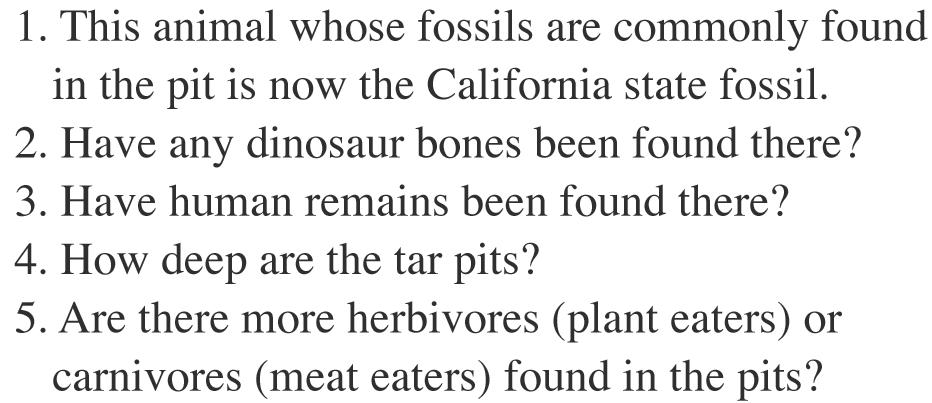
• Over 3.5 million fossils have been uncovered to date, with more than 650 different species identified ranging in size from the large mammoth and mastodon to the tooth of a baby mouse. Paleontologists have found over 231 species of vertebrates, 159 species of plants, and 234 species of invertebrates.
• The dire wolf is the most common of the large mammals found in the La Brea pits, with over 3,000 individuals identified so far. Dire wolves were the size of a large timber wolf. Most were likely trapped hopelessly when they tried to feed on other animals stuck in the muck.
• Bones from over 2,000 saber tooth cats have been uncovered, making them the second most common animal found.
• In third place is the coyote. The oldest bones found in La Brea so far belonged to a coyote that, according to carbon-14 dating, died there approximately 44,000 years ago.
• About 15 mastodons have been found.
• Camels once roamed North America before migrating to Asia, Africa, and South America. The remains of a species called Camelops Hesternus has been found in the La Brea pit. It looked very much like a camel but was actually more closely related to the llama.





By Lucie Winborne
* Giraffes have no vocal cords but can still communicate with low-frequency sounds.
* In 1926, Clyde Barrow, of Bonnie and Clyde fame, was arrested with his older brother Buck for possession of a truckload of stolen turkeys.
* The first recorded cookbook was written in cuneiform on tablets in ancient Babylon around 1700 B.C.
* Gioachino Rossini’s aria “Di tanti palpiti” was known throughout Europe as “the rice aria,” since it was composed while he waited in a Venice restaurant for his risotto to cook.
* Sunsets on Mars are blue.
* In 1820, Missouri imposed a $1 bachelor tax on unmarried men ages 2150. The short-lived law was designed to encourage marriage, population growth and family establishment in the new state.
* Detachable heads were used on Roman statues.
* The first U.S. submarine was a handcranked, pedal-powered wooden craft from the Revolutionary War dubbed “the Turtle.”
* Astronauts sent to space can experience a kind of motion sickness known as space adaptation syndrome, or space sickness, with the most notable case inflicting former senator Jake Garn, whose bout was so disabling that his name became used as an informal measurement for the illness.
* Great Sand Dunes National Park allows visitors to race down all its dunes on custom-made sand boards and sleds.
***
Thought for the Day: “Do not seek to follow in the footsteps of the wise. Seek what they sought.” -- Matsuo Basho (c) 2026 King Features Synd., Inc.



by Mary Hunt


special than the other cheeky items that are part of a boring list on the other side of the menu. If the “All-Star Perfect All-Beef Burger” gets its own box and print color, it’s got to be well worth the $14.95 price. Ha! That’s what they’re working so hard to convince you.
FOOD DECOYS
A restaurant menu is no big deal, right? It’s just a list of the food items that a restaurant offers its customers. Sure it is. Plus a whole lot more.

by Mary Hunt
Before menus ever make it to the printer, restaurant owners hire menu engineers and consultants to bury super sneaky psychological tricks into the pretty pictures and mouth-watering descriptions for one reason only -- to get you to spend more money.
Want to beat restaurants at their own game? Here’s your cheat sheet listing the sneakiest of sneaky tricks.
Sophisticated research tells restaurants to stop including dollars signs on their menus because a dollar sign -- or even the word “dollar” spelled out instead -- triggers negative feelings associated with paying. Both the sign and the word remind customers that they’re spending money. (Well, imagine that!)
Further research has revealed to restauranteurs that beautifully written descriptions of food choices appeal to unsuspecting customers. In one impressive study it showed that descriptive menu labels increased sales by 27%, as compared to food items listed without glowing descriptions.
Here’s an example: Instead of the menu listing simply “Crab Cakes,” naming them “Maryland-style crab cakes made by hand, with sweet jumbo crab meat, a touch of mayonnaise, our secret blend of seasonings and golden cracker crumbs for a rich, tender taste,” a customer cannot help but have a sensory experience just reading the description. That kind of flowery language gives customers satisfaction that prompts them to order, without much thought for what it will cost.
But wait. There’s more. If the menu description includes a brand name or two, such as Jack Daniel’s Sauce or Duke’s Mayonnaise, sales are set to increase like magic.
Oh, this is really sneaky! Research assures menu makers that when they can pull in the thought of a beloved family member -- bam! -- sales soar. Recognize the trick when you see Grandma’s Famous Meatloaf on a menu, or Aunt Millie’s Apple Cobbler.
This is very common in ethnic restaurants. Instead of an Italian restaurant offering lasagna, for example, if the name is expanded to include a region or area of Italy, we assume a better outcome. Hey, it’s “Authentic Lasagna from Northern Italy,” which of course makes it worth at least a few more bucks.
When menu items are bolded, printed in a different color or enhanced with images, fancy fonts, photos, or -- the big one -- isolated in a separate box, they look like they’re a lot more
No kidding, that’s what they’re called by the experts -- decoys to manipulate you into doing their bidding. Here’s how it works: You sit down, open the menu and lock eyeballs with the $11.95 patty melt, sans description. Just a patty melt for $12. You scoff. Ha! Not me. Then your eyes wander over to the boxed item with a photo of the world’s most perfect burger (titled accordingly) that makes you salivate. And it’s $16.95 complete with french fries and Jack Daniel’s dipping sauce.
No way! You know what they’re doing here. You make your decision. It’ll be the patty melt, no fries no sauce. And aren’t you clever? Well, not so fast, buckaroo. You just played into their hands and they’re laughing all the way to the bank! That burger that no one ever orders is a decoy. Priced at $17, it’s so ridiculous, customers laugh silently and then have no problem at all with a $12 patty melt.
They’re called scanpaths, which define the way most people fix their eyes and the path they take while reading a menu. Menu engineering takes full advantage of the way we see things.
Statistically, they know we will order the first item to which our eyes are drawn upon opening the menu. We might read the whole thing, but it’s that Number 1 item that is so important to the restaurant’s bottom line.
This is the reason restaurants put the most profitable items in the upper-right corner. That is where the customer’s eyes go first. Beyond that, they know that we are most likely to remember items at the beginning of a list better. So, if we lay eyes on a list at first, it’s the first thing in that list that we are most likely to order. And guess what they choose to put in that spot? You got it!
There you go -- your restaurant menu cheat sheet with all the tricks you need to know to beat restaurants at their own game.
As you become aware of these tricks, concentrate on them momentarily. Then go rogue by making up your own mind without feeling manipulated into buying a cheaper-but-pricey patty melt or crab cakes, uh ... I mean the delectable Maryland Style Crab Cakes.
* * *
Mary invites you to visit her at EverydayCheapskate.com, where this column is archived complete with links and resources for all recommended products and services. Mary invites questions and comments at https://www.everydaycheapskate. com/contact/, “Ask Mary.” This column will answer questions of general interest, but letters cannot be answered individually. Mary Hunt is the founder of EverydayCheapskate.com, a frugal living blog, and the author of the book “Debt-Proof Living.”
COPYRIGHT 2026 CREATORS.COM







NIKOLA TESLA, 1926
• In an interview published in “Colliers Magazine” predicting the invention of cell phones, in 1926 Tesla said: “We shall be able to communicate with one another instantly, irrespective of distance. Through television and telephony we shall see and hear one another as perfectly as though we were face to face, despite intervening distances of thousands of miles. And the instruments through which we shall be able to do his will be amazingly simple compared with our present telephone. A man will be able to carry one in his vest pocket. We shall be able to witness and hear events--the inauguration of a President, the playing of a world series game, the havoc of an earthquake or the terror of a battle--just as though we were present.”
ROGER EBERT, 1987
• Predicting the inevitability of streaming services, in an interview for “Omni” magazine, 1987: “We will have high-definition, widescreen television sets and a push-button dialing system to order the movie you want at the time you want it. You’ll not go to a video store but instead order a movie on demand and then pay for it. Videocassette tapes as we know them now will be obsolete both for showing prerecorded movies and for recording movies. People will record films on 8mm and will play them back using laser-disk/CD technology…. With this revolution in delivery and distribution, anyone, in any size town or hamlet, will see the movies he or she wants to see.”
FERDINAND FOCH, 1919
• Following the end of WW I, predicting the start of WW II: “This is not a peace. It is an armistice for 20 years.” (World War II started with Germany’s invasion of Poland 20 years, 2 months, and 3 days later.)
WILLIAM TECUMSEH SHERMAN, 1860
• Union General Sherman, trying to explain to

the Confederate South why they didn’t stand a chance if entered the Civil War, December 1860: “You people of the South don’t know what you are doing. This country will be drenched in blood, and God only knows how it will end. It is all folly, madness, a crime against civilization! You people speak so lightly of war; you don’t know what you’re talking about. War is a terrible thing! You mistake, too, the people of the North. They are a peaceable people but an earnest people, and they will fight, too. They are not going to let this country be destroyed without a mighty effort to save it... Besides, where are your men and appliances of war to contend against them? The North can make a steam engine, locomotive, or railway car; hardly a yard of cloth or pair of shoes can you make. You are rushing into war with one of the most powerful, ingeniously mechanical, and determined people on Earth—right at your doors. You are bound to fail. Only in your spirit and determination are you prepared for war. In all else you are totally unprepared, with a bad cause to start with. At first you will make headway, but as your limited resources begin to fail, shut out from the markets of Europe as you will be, your cause will begin to wane.”
BILL GATES, 1999
• Interviewed in “Business” magazine, 1999: “Private websites for your friends and family will be common, allowing you to chat and plan for events.” (Facebook) “People looking for work will be able to find employment opportunities online by declaring their interest, needs and specialized skills.” (LinkedIn) “Devices will have smart advertising. They






by Dana Jackson
Q: What ever became of Mickey Rourke? He appeared to be making a comeback in the movie where he played a wrestler, but I haven’t seen him in anything since. -- D.S.
A: It’s hard to believe, but Mickey Rourke is now 73 years old. However, his career actually isn’t slowing down. It peaked in the ‘80s with starring roles in movies like “9 1/2 Weeks” and “Angel Heart.” He made a comeback in 2008 with “The Wrestler,” which even earned him a Best Actor Oscar nomination. During the decades between these two time periods, he acted in dozens of projects.

Now it’s 2026, and again, if you look at his resume, he’s staying busy. In the early 2000s, he had roles in hit films like “Sin City” and “Iron Man 2.” Most recently, he’s starred in little-known films like “Jade” and “The Roaring Game,” but unfortunately these don’t appear to be paying the rent, as

1. Avatar: Fire and Ash (PG-13) Sam Worthington, Zoe Saldana
2. Zootopia 2 (PG) Ginnifer Goodwin, Jason Bateman
3. The Housemaid (R) Sydney Sweeney, Amanda Seyfried
4. Marty Supreme (R) Timothée Chalamet, Gwyneth Paltrow
5. Anaconda (PG-13) Jack Black, Paul Rudd
6. The SpongeBob Movie: Search for SquarePants (PG) Tom Kenny, Clancy Brown
7. David (PG) Brandon Engman, Phil Wickham
8. Song Sung Blue (PG-13) Hugh Jackman, Kate Hudson
9. Wicked: For Good (PG) Cynthia Erivo, Ariana Grande
10. Five Nights at Freddy’s 2 (PG-13) Josh Hutcherson, Piper Rubio
he was recently served with an eviction notice for $60,000 in unpaid rent.
Rourke has six upcoming projects, however, including the horror film “3 Days Rising” with Peter Greene, who passed away last month.
***
Q: When is the new series about the NFL with William H. Macy coming out? I need something to watch after football season ends. -- B.T.
A: While a premiere date hasn’t been announced yet, we do have more information about the series thanks to one of its stars, William H. Macy, who shared a few details on the red carpet at the Critics Choice Awards.
Currently, we know its title is “The Land” and that Macy plays the owner of the Cleveland Browns, but it’s not a biopic. The Browns are the featured team “nominally” only, as Macy put it, and the scripts are “brilliant.” He expanded on this by saying, “They’re Shakespearean. It’s about football, but oh, my lord, the plots are so profound, and I’m having the time of my life.”
The series is created by Dan Fogelman (“This Is Us” and “Paradise”), who knows a thing or two about family dramas. Christopher Meloni (“Law & Order: SVU”) will play the head coach, with Sam Corlett (“Vikings: Valhalla”) and Tanner Zagarino (“Shrinking”) cast as his sons. Mandy Moore (“This Is Us”) and Chloe Bennet (“Dave”) will play Macy’s daughters. Chace Crawford (“The Boys”) will play the Browns’ general manager.
***
Q: I read that Evangeline Lilly has brain damage from a concussion. Was it some-
thing that happened recently or while she was on “Lost”? -- T.D.
A: The “Lost” star Evangeline Lilly suffered a serious concussion after fainting earlier this year in Hawaii. She was on the beach when she passed out and hit her head on a boulder. She recently shared on Instagram that almost every area of her brain is “functioning at a decreased capacity” since the accident.
According to Entertainment Weekly, the actress has suffered from fainting spells throughout her life, but no medical cause has been found. She’s come to accept them and believes that the “’checking out’ is a result of [her] little soul reaching her limit.”
Send me your questions at NewCelebrityExtra@gmail.com.
(c) 2026 King Features Synd., Inc.




When choosing a pineapple, pick one that is slightly soft with a deep, sweet fragrance. Pineapples are harvested ripe and will not get any sweeter with time.
1/4 cup hoisin sauce
1 tablespoon honey
1 tablespoon grated fresh peeled ginger
1 teaspoon Asian sesame oil
1 whole (1 1/4 pounds) pork tenderloin
1/2 medium pineapple, untrimmed
2 tablespoons brown sugar
1. Prepare outdoor grill for covered direct grilling over medium heat. In small bowl, combine hoisin, honey, ginger and oil.
2. Place pork on hot grill rack. Cover grill and cook pork 18 to 20 minutes, turning occasionally.



3. With serrated knife, cut pineapple half into 4 wedges. Rub cut sides of pineapple with brown sugar.
4. Grill pineapple 10 minutes or until browned on both sides, turning over once. While pineapple is grilling, brush pork with hoisin-honey glaze and turn frequently until temperature on instant-read thermometer reaches 155 F.
5. Transfer pork to cutting board; let stand 10 minutes. Transfer pineapple to platter.
6. Thinly slice pork and serve with pineapple wedge. Serves 4.
Each serving: About 275 calories, 6g total fat (2g saturated), 92mg cholesterol, 245mg sodium, 23g total carbohydrate, 1g dietary fiber, 31g protein.
Our pasta recipe is amazingly creamy, and it sneaks vegetables into the kids’ dinner without a lot of fuss.
1 package (16 ounces) cavatelli pasta
2 tablespoons margarine or butter 3 tablespoons all-purpose flour
1/4 teaspoon ground black pepper Pinch ground nutmeg
3 1/2 cups low-fat (1%) milk
6 ounces (1 1/2 cups) reduced-fat sharp cheddar cheese, shredded 1/3 cup grated Parmesan cheese
margarine over medium heat. With wire whisk, stir in flour, pepper, nutmeg and 1/2 teaspoon salt; cook 1 minute, stirring constantly. Gradually whisk in milk and, stirring constantly, cook over medium-high heat until sauce boils and thickens slightly. Boil 1 minute, stirring.
3. Remove saucepan from heat; stir in cheeses just until melted. Following manufacturer’s directions, use immersion blender to blend mixture in saucepan until smooth. (Or, in blender at low speed, with center part of cover removed to allow steam to escape, blend sauce mixture in small batches until smooth. Pour sauce into bowl after each batch.)
4. Place frozen vegetables in colander; drain pasta over vegetables. Return pasta mixture to saucepot; stir in cheese sauce. Serves 8.
Each serving: About 340 calories, 11g total fat (4g saturated), 32mg cholesterol, 585mg sodium, 43g total carbs, 2g dietary fiber, 18g protein.
For thousands of triple-tested recipes, visit our website at www.goodhousekeeping.com/foodrecipes/
Please review carefully. Double check: Phone Number(s)
1 package (10 ounces) frozen mixed vegetables
12:00
Contact your Tidbits representative immediately with changes or corrections.
Office: 760-320-0997
email: valleybits@msn.com
1. Heat large saucepot of salted water to boiling over high heat; add pasta and cook as label directs.
Kitchen Lady 1/4 pg. 1C 13x November 2, 2025 Vol. 21 -
2. Meanwhile, in 3-quart saucepan, melt


in Palm Springs










1/18 Use Your Thesaurus Day
1/19 Martin Luther King Jr. Day
1/20 Rid the World of Fad Diets Day
1/21 Just Do It Day
1/22 Communicate With Your Cat Day
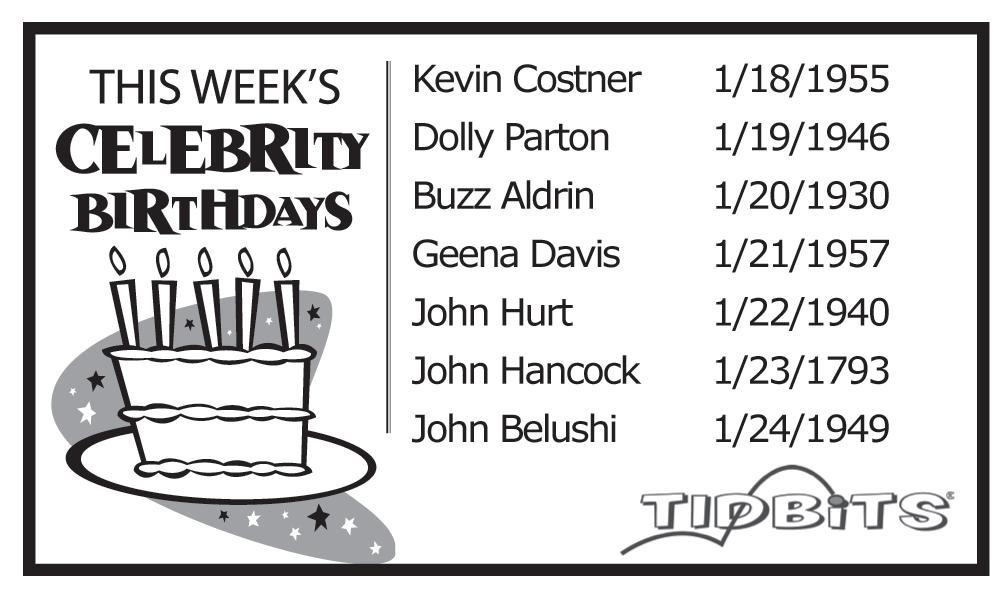
1/23 National Save Cursive Writing Day 1/24 National Compliment Day

“ Failure is simply the opportunity to begin again, this time more intelligently.”
-- Henry Ford


By Matthew Margolis
In comic strips, in country songs, in Disney films, dogs and babies go together like peanut butter and jelly. In real time, where potential dangers and acts of instinct and nature can’t be edited out, dogs and babies require constant supervision and should never be left alone in a room together. In Jacksonville, N.C., a 12-week-old pit bull chewed the toes off the left foot of a 4-month-old infant as the child’s mother slept in the same room. Robie Lynn Jenkins had taken medication that induced a sleep deep enough to drown out her infant’s cries through the night. Jenkins’ boyfriend, Tremayne Spillman, was also asleep in the room. The couple claim they were watching the puppy as a favor to a friend who is in jail on gun charges. They now face charges of their own -- felony child abuse.
Before everyone screams, “Pit bull!” a reminder:
Only a month earlier, in Lexington, Ky., the owners of a Native American Indian Dog spotted the family pup trotting toward the woods behind their back yard with their newborn infant in its jaws. Four-day-old Alexander James Smith suffered two collapsed lungs, a skull fracture and numerous cuts and bruises.
A year before that, in Tulsa, Okla., a 6-weekold black Labrador fatally mauled 2-month-old Zane Alen Earles as he sat unattended in an infant swing in the family’s living room. Several relatives were home at the time. Although everyone reponded to the screams quickly, it was too late to save the child.
Back in January 2008, 8-month-old Andrew Stein was inexplicably and fatally mauled by a 7-year-old chocolate Doberman pinscher, the Stein family pet from puppyhood, with no history of aggression.
And in 2001, a 4-pound Pomeranian killed a 6-week-old girl in Los Angeles as she lay in her crib. Afterward, LA sheriff’s Deputy Cruz Solis commented, “Obviously it doesn’t take much to kill a 6-week-old baby, but it’s not something that happens with that breed.”
Obviously, it is.

by Matilda Charles © King Features Synd., Inc.
There are some good tips out there for avoiding the flu this winter, and given the nature of the beast this time, it’s to our benefit to pay attention.
If you’ve listened on the news, you know that the flu this year is worse than usual, arriving a month early and rapidly spreading across the country like an invasion.
This one is an influenza A virus, but not the one they were predicting. The vaccine was created for H1N1, but surprise, surprise, what quickly emerged was the H3N2 mutation (also called subclade K), which the vaccine isn’t geared up to tackle because it was created for H1N1. Hence the much higher than expected number of cases.
For the first time in years, the CDC is calling this a "high severity for all age groups" flu season. During December, in one week alone 19,000 people were admitted to the hospital.
Our job is to avoid the flu this year. Here is the advice from the CDC that we all should heed:

I am always curious about the relationship between furniture and owner. Your furniture speaks volumes about you. There are pieces of furniture that are as iconic as the Grand Canyon. There are pieces so pure, they remind me of the horizon line over the ocean. No kidding: Some furniture elicits a love affair. My weakness is chairs. Chairs drive me absolutely crazy. To me, they are the building blocks of any great room.
There are a lot of memorable chairs, such as those created by legendary designers Mies van der Rohe, Jean Prouve and Eero Saarinen. But why stop there? Who can’t recognize an Eames, a Bertoia or a Thonet? And still there are other chairs less recognizable by name but equally as sculptural -- e.g., the plethora of furniture of 1960s Danish design. Each era has its design icons that become ingrained in our consciousness, and like the return of the New Beetle or the Fiat 500, some make a comeback and are forever coveted by furniture lovers and collectors alike.
First and foremost, get your flu shot. Even though the vaccine isn’t aimed at the H3N2, it will still offer a bit of protection.
Wash your hands -- all the time. Remember the Covid routine: Scrub for 20+ seconds or use a hand sanitizer that has at least 60% alcohol if there is no soap. Be in the habit of doing this frequently during the day, not just before eating or after using the bathroom
Wear a good face mask if you go out. The flue germs are spread both through the air and left on surfaces.
Don’t touch your face, especially the eye areas. If there are germs on your hands, that’s how it will infect you.
Eat right, drink fluids, get enough sleep.
Get out those sanitizing wipes and disinfect the door knobs, kitchen cabinet handles and surfaces, everything that gets touched in your house. Run your air cleaner, if you have one.
Stay away from sick people. Flu spreads via droplets in the air when sick people cough or sneeze or talk. On a scary note, people can have (and pass around) the flu a whole day before they themselves even have symptoms. Stay healthy!
Matilda Charles regrets that she cannot personally answer reader questions, but will incorporate them into her column whenever possible. Send email to columnreply2@gmail.com.
(c) KingFeaturesSyndicate2025
typically have been the preferred seating, as they are easily moved about a room to catch prevailing breezes or to huddle near a blazing fire. The White House’s most fashion-forward room, the Cabinet Room, is a collection of beautiful chairs and tables -- no sofa in sight.

Some chairs are airy, with frames made of metal, bamboo or wood. These chairs are generally upright, making them perfect for specific tasks and dining. Some have armrests for comfort or simply to denote status at the head of a table. Others are fully upholstered in fabric or leather for relaxing or reading; these are best known as club chairs. In-between chairs are often referred to as occasional chairs. And let us not forget the cumbersome reclining chair, now available in sleek designs. Finally, we can’t take a look at chairs without commenting on sofas. Sofas provide an obvious anchor for a seating area. However, while sofas are built to seat three or four, most are underused, with two guests sitting at either end. Seating patterns indicate that unless there is no other seat, most people will avoid sitting in a middle seat, not only because of comfort, but also due to the lack of both personal space and privacy in conversation. This observation reinforces my stance and preference for the chair.
Cody’s Corner (from page 9)
The point is, no dog, no matter how small, no matter how gentle, no matter how proven his temperament, no matter his perceived love of children, his intelligence, his experience, his playfulness or his affection for you, should ever be left alone in a room with a small child -- for even a brief moment. It’s not about the breed of dog. It’s about the fragility of an infant. Babies are vulnerable. They lack the strength and coordination to defend themselves. And neither baby nor dog possesses the ability to communicate with the other. A little ambiguous roughhousing is all it takes for a small child to be seriously wounded -- even by a small dog.
What does each of these incidents have in common? A parent or close relative was in the home but not in the room during each of these encounters. And most of these tragedies involved family pets that had no history of aggression.
When it comes to babies and dogs, it’s important to know that there are no predictors to what might happen. The only way to ensure the safety of your child is to keep baby and dog securely separated in the absence of close parental supervision. It’s best for the baby. And it’s best for the dog.
Woof!
Dog trainer Matthew “Uncle
is the co-author of 18 books about dogs, a behaviorist, a popular radio and television
and the host of the PBS series “WOOF! It’s a Dog’s Life!” Read all of Uncle Matty’s columns at www.creators.com, and visit him at www.unclematty.com.

Sometimes we are convinced by standard edicts, by our preconceived notions or by the advice of a friend that a living room requires the ubiquitous sofa and coffee table. But why not just chairs? Throughout history and in many parts of the world, the sofa has been a more private type of furniture for reclining. In fact, individual chairs
Chairs are unique and individual. In the right combination, chairs can furnish any room adequately.
Did I tell you I love chairs?
* * *
Joseph Pubillones is the owner of Joseph Pubillones Interiors, an award-winning interior design firm based in Palm Beach, Florida. To find out more about Joseph Pubillones, or to read features by other Creators Syndicate writers and cartoonists, visit the Creators Syndicate website at www. creators.com.
COPYRIGHT 2025 CREATORS.COM

by Tom Margenau

I write a column similar to this one every January. But I don’t mind plagiarizing myself because it contains a very important message for people planning to retire in 2026.
January is a critical month for the hundreds of thousands of potential Social Security beneficiaries who are reaching their full retirement age in 2026. The important message is that all of them should at least consider filing for their benefits this month, even though they may not reach their retirement age until later in the year.
Please note that if you want to delay filing for your Social Security benefits until 70 to get the “delayed retirement credit” of about 24% added to your monthly benefits, then you should forgo the procedure discussed in this column. Also, if you’re one of those people who absolutely insist on waiting until your FRA to file for benefits, then just skip this column’s message altogether.
But if you are open to the possibility of increasing your benefit payout for 2026, you may want to consider filing for benefits in January.
The reason for this early filing timeframe has to do with some quirky and complicated features of Social Security’s earnings penalty provisions. Those provisions generally keep seniors who are still working off of Social Security’s rolls until they reach that magic full retirement age.
The law essentially states that if you are over 62 but under full retirement age and are still

1. The book of Nahum is found in the: a) Old Testament b) New testament c) Neither
2. Man and woman came into being on what day of creation? a) Second b) Third c) Fifth d) Sixth
3. How many windows did Noah install in the Ark? a) None b) One c) Seven d) Twelve
4. From Proverbs 15, what does a soft answer turneth away? a) Lies b) Scorn c) Fear d) Wrath
5. Which apostle was shipwrecked three different times? a) Peter b) Paul c) Timothy d) Steven
6. Who was the father of David? a) Issac b) Abraham c) Jesse d) Jacob
on page 16)
working full-time, you are not eligible for Social Security benefits. Specifically, the rules require that the Social Security Administration deduct $1 from any retirement benefits you might be due for every $2 you earn over $24,480 in 2026.
However, the rules state that once you reach your full retirement age, you are entitled to full Social Security benefits, even if you are still working and regardless of your earnings.
Let’s follow an example. Let’s say Ed was born in October 1959, which means he’ll reach his full retirement age of 66 and 10 months in July 2026. And let’s further say Ed generally makes about $100,000 per year and he plans to continue working indefinitely. Based on the earnings penalty rules I briefly outlined above, Ed figures he must wait until July (his full retirement age) to begin collecting his Social Security benefits. As I said, at that magical point, the earnings penalty rules no longer apply and he can get his Social Security. And before that, he’s making way more than the $24,480 income threshold.
But here is why Ed should check into applying for Social Security in January. Congress set up a more lenient earnings threshold for the year you reach your full retirement age. Specifically, it says you can earn up to $65,160 between January and the month you reach your full retirement age and still get Social Security benefits. And even if you earn more than $65,160, you lose only $1 from your benefits for every $3 you exceed that threshold.
Let’s say Ed is going to make about $50,000 between January and June (i.e., before he reaches the magic age of 66 and 10 months in July). That’s under the $65,160 threshold for 2026, which means Ed is due benefits beginning in January. He does NOT have to wait until July to apply for his Social Security checks.
But there is a bit of a catch. By starting his benefits in January, Ed will be accepting a slightly reduced amount. (Benefits are reduced roughly one-half of one percent for each month they are taken before full retirement age.)
If Ed’s Social Security benefit at full retirement age is $4,000 per month, let’s look at his options.
Ed’s first option is to wait until July to start his Social Security benefits. He’ll get $4,000 per month for six months or $24,000 for the year 2026.

Ed’s second option is to file for Social Security in January. Starting his benefits slightly early, his monthly rate is reduced to about $3,880. That comes out to $46,560 in total benefits for the year 2026. The downside to option two is that his ongoing monthly benefit rate will be $120 less than what he would have been getting in option one. But because he’d be getting about $22,560 less in 2026 benefits if he chose option one, it would take Ed a long time to make up that loss with his extra $120 per month in ongoing benefits.
Even if Ed was going to make more than the $65,160 income threshold between January and June, he would only lose one dollar in Social Security benefits for every three dollars he exceeded that amount. So he still might come out ahead by filing in January.
Please note that this strategy generally only works for those who turn full retirement age in early to mid-2026 and whose earnings before reaching FRA are at least close to the $65,160 limit. In other words, if you will make a lot more than $65,160 before your full retirement age, or if you reach your FRA later in the year, you should probably just wait until your FRA month to file for your Social Security benefits.
And here is one other consideration. If you are waiting until your full retirement age (or even later) to start benefits to give your spouse a higher widow’s or widower’s benefit when you die, then forget this procedure. And that’s because any reduction you take in your retirement rate will carry over to your spouse’s eventual survivor’s benefit.
I know these rules are complicated, and the math in the examples above might be difficult to follow. But my overall message is easy to follow: If you’re reaching your full retirement age in early to mid-2026, you might want to talk to a Social Security representative sometime this month to find out if it’s to your advantage to file for your benefits to start in January.
One word of caution. Many readers in the past told me that when they tried to file in January, Social Security Administration representatives told them they could not do so. Sadly, far too many SSA agents are unfamiliar with how these rules work. If you run into the same problem, ask to speak to a supervisor.
If you have a Social Security question, Tom Margenau has two books with all the answers. One is called “Social Security -- Simple and Smart: 10 Easyto-Understand Fact Sheets That Will Answer All Your Questions About Social Security.” The other is “Social Security: 100 Myths and 100 Facts.” You can find the books at Amazon.com or other book outlets. Or you can send him an email at thomas.margenau@comcast. net. To find out more about Tom Margenau and to read past columns and see features from other Creators Syndicate writers and cartoonists, visit the Creators Syndicate website at www.creators.com.
COPYRIGHT 2026 CREATORS.COM







DEAR DR. ROACH: I had an eye issue last year that led to blood tests resulting in an elevated A1C. I said that it wasn’t my blood; I am plant-based, exercise regularly, and don’t drink sodas or alcoholic beverages. Of course, they wanted to start me on medication for prediabetes, but I opted to see if I could fix it with dietary changes first.
I was told to limit bread, pasta and rice, among other things that vegans eat, and proceeded to lose a lot of weight. (I don’t have much to spare.) During my recent blood test, my A1C was still high at 6.1%. Looking into it a bit further, my physician’s assistant realized that low iron can impact A1C readings, and I have always had low iron. I take a supplement almost daily with an orange.
Please tell your readers about this so as not to scare them into taking medicine that they might not need. There still may be something going on with me, and I will be getting more tests to be sure that this can be corrected. But I am somewhat relieved that it is not prediabetes. -- M.K.
ANSWER: The A1C level measures the amount of sugar that is found on red blood cells. For most people, it’s an excellent indication of how high their blood sugar has been over the past few months. Half of red blood cells die after 60 days in most people, so the normal ranges of A1C are appropriate for people who have red blood cells that live a normal life.
Several conditions lead to red blood cells that live much shorter than this. Sickle cell disease, autoimmune hemolytic anemias, and severe heart valve disease are among the diseases that have markedly shortened the lifespan of red blood cells. This can cause a person’s A1C level to be falsely low. A person with poorly controlled diabetes may have a normal A1C because the red blood cells don’t live long enough to accumulate as many sugar molecules on them.
People with iron deficiency have slower red blood cell turnover or longer-lived red blood cells. This means that there is more time to accumulate sugar and a falsely elevated A1C level. Before we had the A1C test, we had blood sugar levels and glucose tolerance tests to make the diagnosis of prediabetes and diabetes. In people with abnormalities in their red blood cells, these are more reliable than the A1C level. ***
DEAR DR. ROACH: When I lay down,
my toes tingle. This has been going on for several years. I’ve read that this is a sign of diabetes, but my annual physical shows that my sugar level is normal. -- B.Y.
ANSWER: Tingling toes are a common symptom of neuropathy, but there are many types of neuropathies. So, it isn’t a diagnosis as much it is a description of a nerve problem. While diabetes is among the most common types of peripheral neuropathies, it isn’t the only one.
Since both legs are affected, it is less likely due to the direct compression of the peripheral nerve, which normally occurs on one side. The fact that it only occurs when you are laying down does suggest that there may be compression higher up, possibly in your spinal cord.
Other neuropathies that normally affect both sides of the body include vitamin B12 deficiency and thyroid disease. Some medications can do it, but sometimes no cause is ever found.
A neurologist is the ideal specialist to help diagnose this condition, especially one who specializes in neuropathy.
Dr. Roach regrets that he is unable to answer individual questions, but will incorporate them in the column whenever possible. Readers may email questions to ToYourGoodHealth@med.cornell.edu.
(c) 2026 North America Synd., Inc.

by Freddie Groves
The VA awarded $77 million in grants for 20 veteran cemeteries across the country during fiscal year 2025. These grants will allow the establishment of the first state veterans cemetery in Alaska (to serve 12,000 veterans) and the expansion of 19 others.
Besides the establishment of a veterans cemetery in Alaska, the grants will allow expansions of existing veterans cemeteries in Arizona (2), Arkansas, Kansas, Kentucky (2), Massachusetts (2), Montana, New Mexico (2), North Carolina (3), Tennessee, South Carolina, Texas, Virginia and Wisconsin.
In fiscal year 2025, more than 43,000 veterans were buried in grant funded cemeteries, with 124 cemeteries supported since the program began in 1980. Over the years, grants have provided over $1 billion to these state cemeteries. The goal: to provide burial access within 75 miles of home to 94% of all veterans.
As an added benefit, veterans who are buried in VA grant cemeteries are also included on the Veterans Legacy Memorial site (www.vlm. cem.va.gov).
The VLM is an online memorial with the records of over 10 million veterans who are buried at VA National Cemeteries, VA grant funded cemeteries such as the ones receiving grants this year, U.S. Park Service National Cemeteries, and many others. The Legacy page for each veteran is a place for family members, friends and former military comrades to add their own memories of the veteran.
To find a veteran’s page, do a search on the VLM website. You need the veteran’s first and last name, but you can fine-tune your search by adding year of death, the cemetery you want to search, the branch of service and other information.
If you want to add details to your veteran’s legacy page, first look around at other pages to get an idea of the possibilities. You can add awards and decorations, career details, a military timeline, a biography, PDF documents that can include newspaper clippings, photos and much more.
To learn more about the VA’s burial and memorial benefits, go to www.cem.va.gov/burial-memorial-benefits


Freddy Groves regrets that he cannot personally answer reader questions, but will incorporate them into his column whenever possible. Send email to columnreply2@gmail.com.
(c) 2026 King Features Synd., Inc.




DEAR SAVVY SENIOR: I have been thinking about planning my funeral in advance so my kids won’t have to later, but would like to inquire about prepaying. Is it a good idea to prepay for a funeral that you might not need for a while?-- Aging Annie
Dear Annie: Planning your funeral in advance is definitely a smart mov. Not only does it give you time to make a thoughtful decision on the type of service you want, it also allows you to shop around to find a good funeral provider. It will also spare your adult children the burden of making these decisions at an emotional time.
But preplanning a funeral doesn’t mean you have to prepay too. In fact, the Funeral Consumer Alliance, a national nonprofit funeral consumer protection organization, doesn’t recommend it unless you need to spend down your financial resources so you can qualify for Medic-
Most funeral homes today offer what is known as “preneed plans” which allow you to prearrange for the type of funeral services you want and prepay with a lump sum or through installments. The funeral home either puts your money in a trust fund with the payout triggered by your death or buys an insurance policy naming itself as the beneficiary.
If you’re interested in this method, make sure you’re being guaranteed the services you specify at the contracted price. Some contracts call for additional payments for final expense funding, which means that if the funeral home’s charges increase between the time you sign up and the time you sign off, somebody will have to pay the difference. Carefully read the fine print. Here are some additional questions you should ask before committing:
- Can you cancel the contract and get a full refund if you change your mind?
- Will your money earn interest? If so, how much? Who gets it?
- If there is an insurance policy involved, is there a waiting period before it takes effect? How long?
- Are the prices locked in or will an additional payment be required at the time of death?
- Are you still protected if the funeral home goes out of business or if it’s bought out by another company?
Or you could set up a payable-on-death (or POD) account at your bank or credit union, naming the person you want to handle your arrangements as the beneficiary. POD accounts also are called Totten Trusts. With this type of account, you maintain control of your money, so you can tap the funds in an emergency, collect the interest and change the beneficiary. When you die, your beneficiary collects the balance without the delay of probate.










- What happens if you move? Can the plan be transferred to another funeral home in a different state?
- If there’s money left over after your funeral, will your heirs get it, or does the home keep it?
If you decide to prepay, be sure to get all the details of the agreement in writing and give copies to your family so they know what’s expected. If they aren’t aware that you’ve made plans, your wishes may not be carried out. And if they don’t know that you’ve prepaid the funeral costs, they could end up unnecessisarly paying for the same arrangements.
While prepaying your funeral may seem like a convenient way to go, from a financial point of view, there may be better options available.
For example, if you have a life insurance policy, many policies will pay a lump sum when you die to your beneficiaries to be used for your funeral expenses. The payment is made soon after you die and doesn’t have to go through probate.


smart decisions. Make your advertising choice a wise one.
• An ad schedule in Tidbits means you reach a whole new audience that doesn’t see your advertising in the Desert Sun or in other valley publications. Plus, our lower Cost Per Thousand ad
• Extensive valley-wide distribution in over 600 newsstand locations - including Wal-Mart, Walgreens, and Revivals, as



leaves. The overall measurements are 3 inches tall and 2 3/4 inches wide. It is marked “Medallic Art Company, NYC.”

Is it worth anything?
by Anne McCollam Creators News Service
Q: I am enclosing a photo of two “cookie jars’ or urns that have been in my family for over 60 years. I recently read a column you once wrote featuring Satsuma vases, and mine are similar to those. My urns both have the same design, are in excellent condition, and they are marked in blue with the words “Made in Japan.”
Anything you can tell me about them would be very helpful and appreciated.

A: Satsuma ware has been made in Japan since the 1600s. Your cookie jars/urns are a Satsuma Style that was made in the 20th century.
The chocolate background, figures with halos and raised enamels were all inspired by the Taisho Period, which was popular in the 1920s and 1930s. Most examples of Satsuma seen today were made after the mid-1800s. Pieces that were marked “Made in Japan” were usually made after 1921.
Your Satsuma Style cookie jars/urns would probably be worth $85 to $120 each
Q: I have a bronze paperweight from Luchow’s Restaurant that I have had since 1957. I enclosed the name that I have drawn, which is seen at the top of the paperweight. The design is in relief, and the name “Luchow’s” is above a stein that is flanked on each side by an elk. Below the stein is a bunch of grapes and
Luchow’s paperweights were made by the Medallic Art Company.
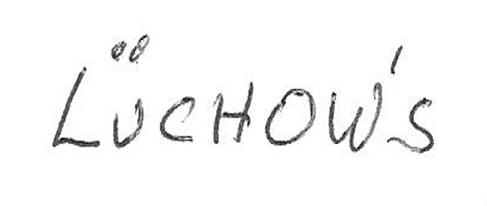
A: Luchow’s Restaurant was located in New York City. It was founded by German immigrant August Luchow in 1882. He began as the bartender, and with a loan from Steinway, of piano fame, he bought the restaurant. It became famous for not only its German food and beer, but for the celebrities and politicians who frequented his restaurant.
It was located in an area that was close to Tammany Hall, Steinway Hall and The Academy of Music. Among the myriad entertainers and VIP’s that frequented Luchow’s included Diamond Jim Brady, Lily Tomlin, Cole Porter, Richard Nixon and David Bowie.
The Medallic Art Company was a wellknown foundry that made bronze sculpture. Luchow’s closed in 1986.
The paperweight was not made in large quantities and would appeal to people in New York City. Given its condition a collector might pay anywhere from $100 to $175.
Q: I have a porcelain tea set that has been in my family for a long time. It is a service for four and is decorated with Asian scenes. Marked on the bottom of each piece are the words “Made in Japan.”
How old is it and what is it worth?
A: Your tea set was made around 1921. Many similar sets are selling in the range of $75 to $100.
* * *
Antiques expert and columnist Anne McCollam has recently retired and no longer receives inquiries nor answers reader letters. Due to the popularity of her column, this publication will continue to reprint previous columns of interest to our readers.


* On Jan. 19, 1977, First Lady and ERA supporter Betty Ford, on a whim and on her final day as a resident of the White House, jumped on the Cabinet Room table and struck a pose. At that time, just three women had ever sat at that table as presidential cabinet members.
* On Jan. 20, 2001, Donald Rumsfeld, who in 1975 was America’s youngest Secretary of Defense at age 43 when he served under Gerald Ford, became the oldest Secretary of Defense when he was appointed to that job 26 years later by George W. Bush.
* On Jan. 21, 2009, after more than 70 years as the world’s largest automaker, General Motors finally lost the title when it announced worldwide sales of 8.36 million cars and trucks in 2008, compared with Toyota’s 8.97 million vehicle sales that same year.
* On Jan. 22, 1779, famed Tory outlaw Claudius Smith met his maker at the end of a rope in Goshen, New York, giving patriot civilians of the American Revolution hope for relief from guerrilla warfare in upstate New York.
* On Jan. 23, 1960, the first two humans to reach the Pacific Ocean’s Mariana Trench descended 36,000 feet in a submersible to the deepest part of the ocean -- more than a mile deeper than the height of Mt. Everest -- fortified with 15 chocolate bars for the trip.
* On Jan. 24, 1922, Christian K. Nelson was inspired by a boy who came into his confectionery shop and couldn’t decide between chocolate and ice cream. He combined the sweet treats and received a patent for the Eskimo bar, originally marketed as the “I-Scream” bar.
* On Jan. 25, 1968, the Israeli submarine Dakar, carrying 69 sailors, disappeared. Built at the peak of World War II in Great Britain and commissioned by the British navy in 1943, it would remain missing until its wreckage was finally located in 1999 between the islands of Cyprus and Crete at a depth of some 9,800 feet. While there was speculation that the submarine was deliberately sunk, the exact cause remains unclear.
(c) 2026 King Features Synd., Inc.
Massive metropolis known for its
Tar Pits: (from page 3)
• Under normal circumstances, it’s difficult to find a really good fossil of birds because their bones are hollow and delicate. But birds that did become trapped in the tar are well preserved, giving researchers a trove of over 100,000 bird fossils of many different species.
• Interestingly, many of the large saber tooth cat skeletons show evidence of healed injuries and diseases that would ordinarily have been fatal. It suggests that the animals were social creatures who depended upon each other for protection when one was injured or otherwise vulnerable to predators. Saber tooth cats were more closely related to bobcats than to tigers.
• Lions that were very closely related to modern African lions have also been found in the pits, but in far fewer numbers than other carnivores. Perhaps they weren’t very common, or possibly were smarter than other animals and avoided being trapped.
• One of the most interesting items discovered is a nearly complete mammoth skeleton. The only pieces missing are a vertebra, a rear leg, and the top of its skull. The mammoth is fondly known as Zed. Because of the size of the teeth and the state of their wear, researchers know that Zed was a male, and he was perhaps 50 years old when he died. The story told by his bones tells of a hard life. Several of his ribs had been broken and then healed, he had arthritis in his joints, and he suffered a curious growth on one of his jaw bones.
• The La Brea excavation project is an ongoing process. Asphalt still bubbles to the surface, continuing to trap bugs, reptiles, birds, small mammals, and the occasional stray pet. The tar pits are most dangerous to animals during warm weather when the asphalt is stickiest.
• The dig site and La Brea museum in Los Angeles is open to the public year round with visitor tours, video presentations and informative lectures conducted daily. To arrange a firsthand visit to see displays of the large fossil collection and the work still in progress, check out their website at https://tarpits.org/la-brea-tar-pits for details.



by Jason Jenkins
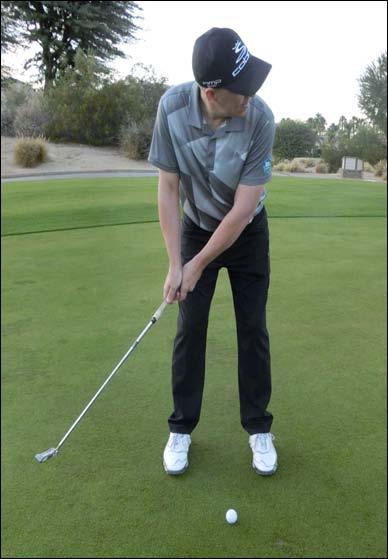
Three putt avoidance is a fairly new PGA Tour statistic that illustrates how often a player three putts over the course of all his putting adventures. The top players are usually under 2% of the time, which is quite amazing when you think of the difficulty of some tournament greens. Most amateurs, on the other hand, would probably love to have their avoidance percentage be lower than 20%.
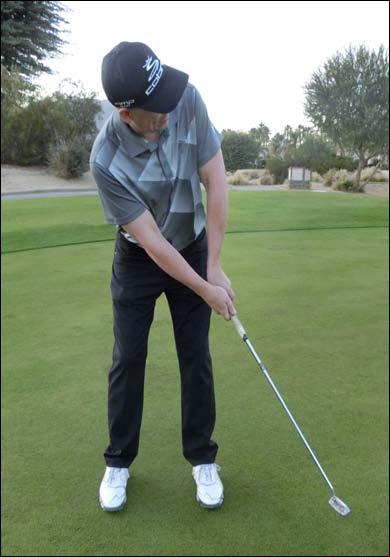
Practicing lag putts is a simple matter of tying the visuals of distance to the feels of stroke speed and length. For many golfers, this may require looking at the target during practice time in order to get a better recognition system built for later on the course.
I’ve always felt that great lag putters could hold a visual image of where the hole was in the mind’s eye those few seconds before taking the stroke. By looking at the hole in practice, you may become more aware of what you’re seeing with how hard you need to hit it.


Thistle
of the nine numbers only once.
DIFFICULTY: