Thomas Etchanchu
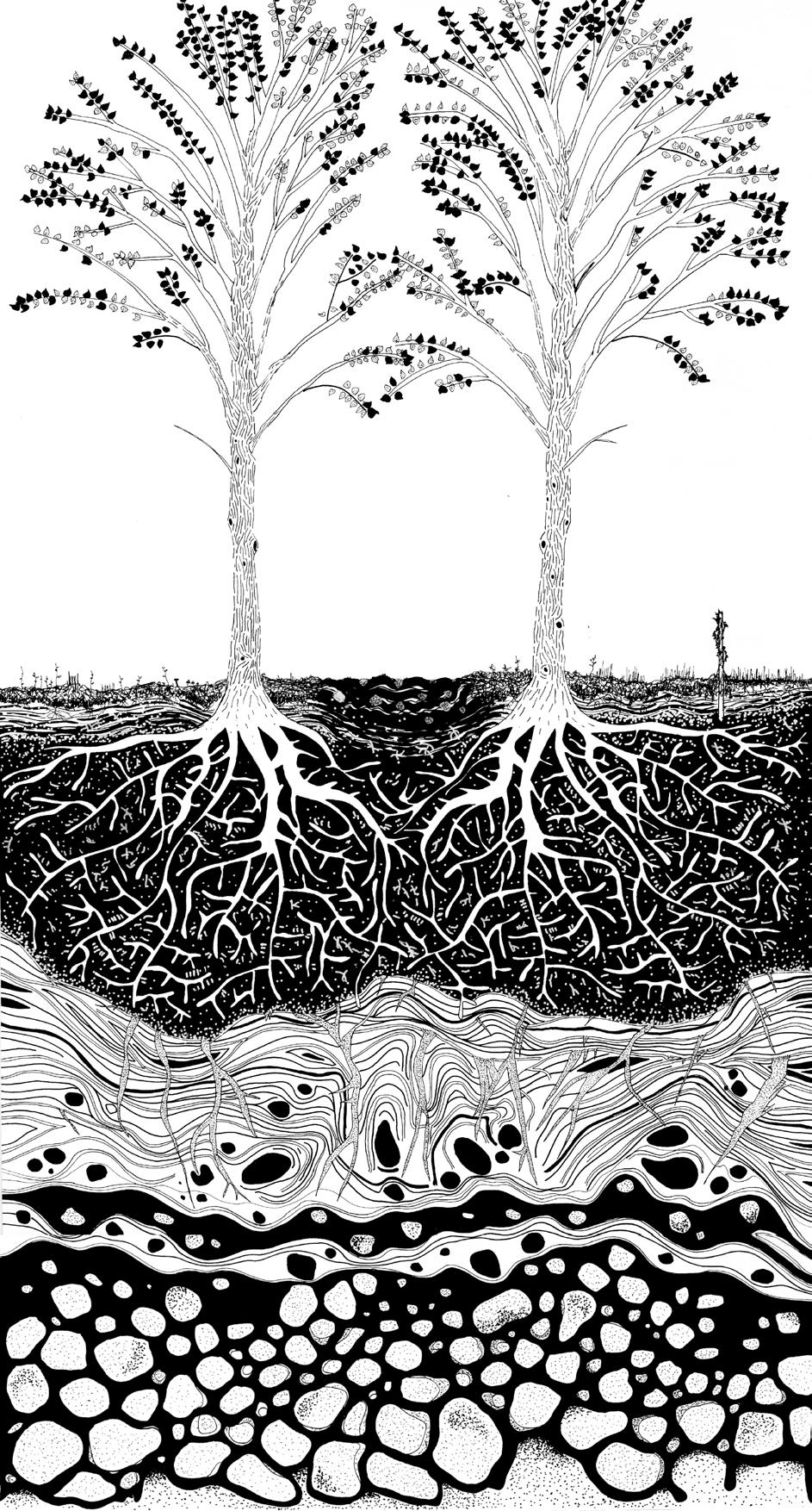
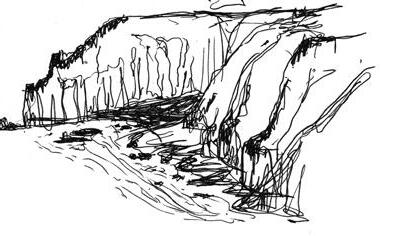
Section and Soil analysis
1st semester, 1st year
Location
Château de Versailles
Date
Year 1, Semester 1
October 2020
Teacher
Cyrille Véran
cyrille.veran@icloud.com
1
RACONTER, FABRIQUER, HABITER SA MAISON CANOPÉE CHEMINS DE FAIRE, WATER'S POTENTIAL URBAN CAVITIES CELLULES, LIVING IN ARID CLIMATES THE IDEAL SCHOOL OF ARCHITECTURE BEYOND WALLS LA FAYOLLE SUMMER 2023 HOW TO DEAL WITH DENSITY ? COVER LETTER p.2 p.7 p.13 p.18 p.22 p.26 p.28 p.31 p.33 p.35 Thomas Etchanchu Hand-drawn
RACONTER, FABRIQUER, HABITER
SA MAISON
6th semester, 3rd year
RACONTER, FABRIQUER, HABITER SA MAISON
6th semester, 3rd year
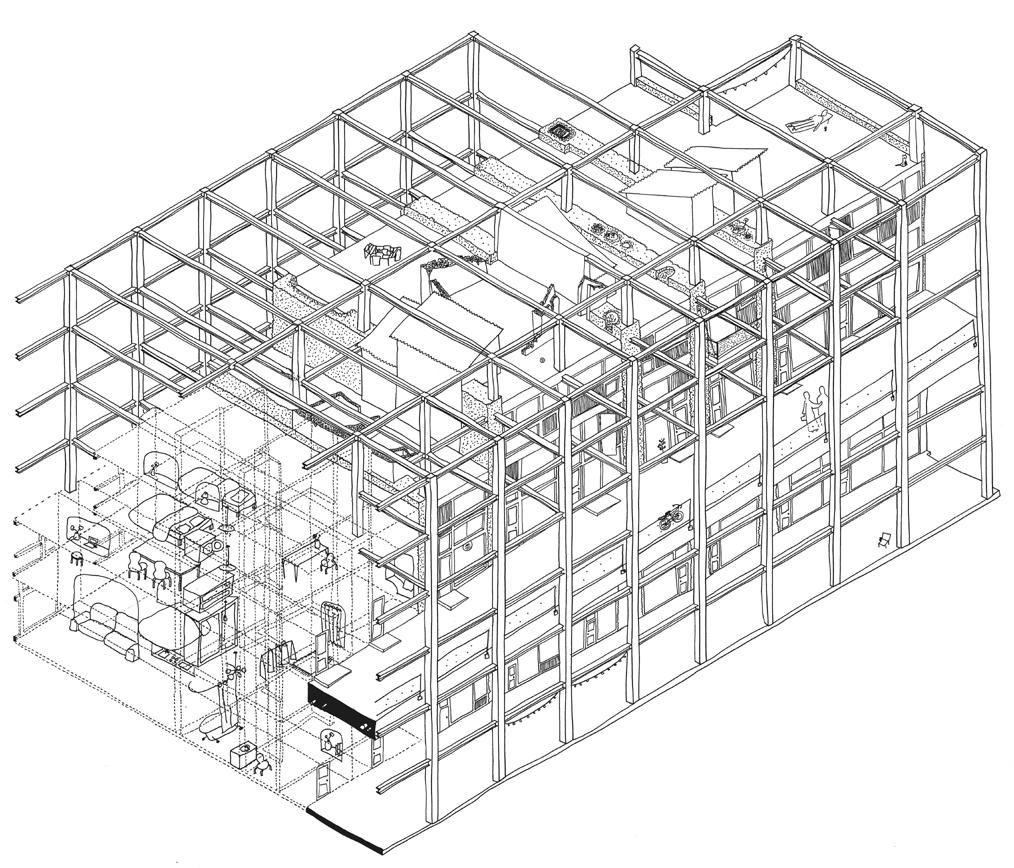
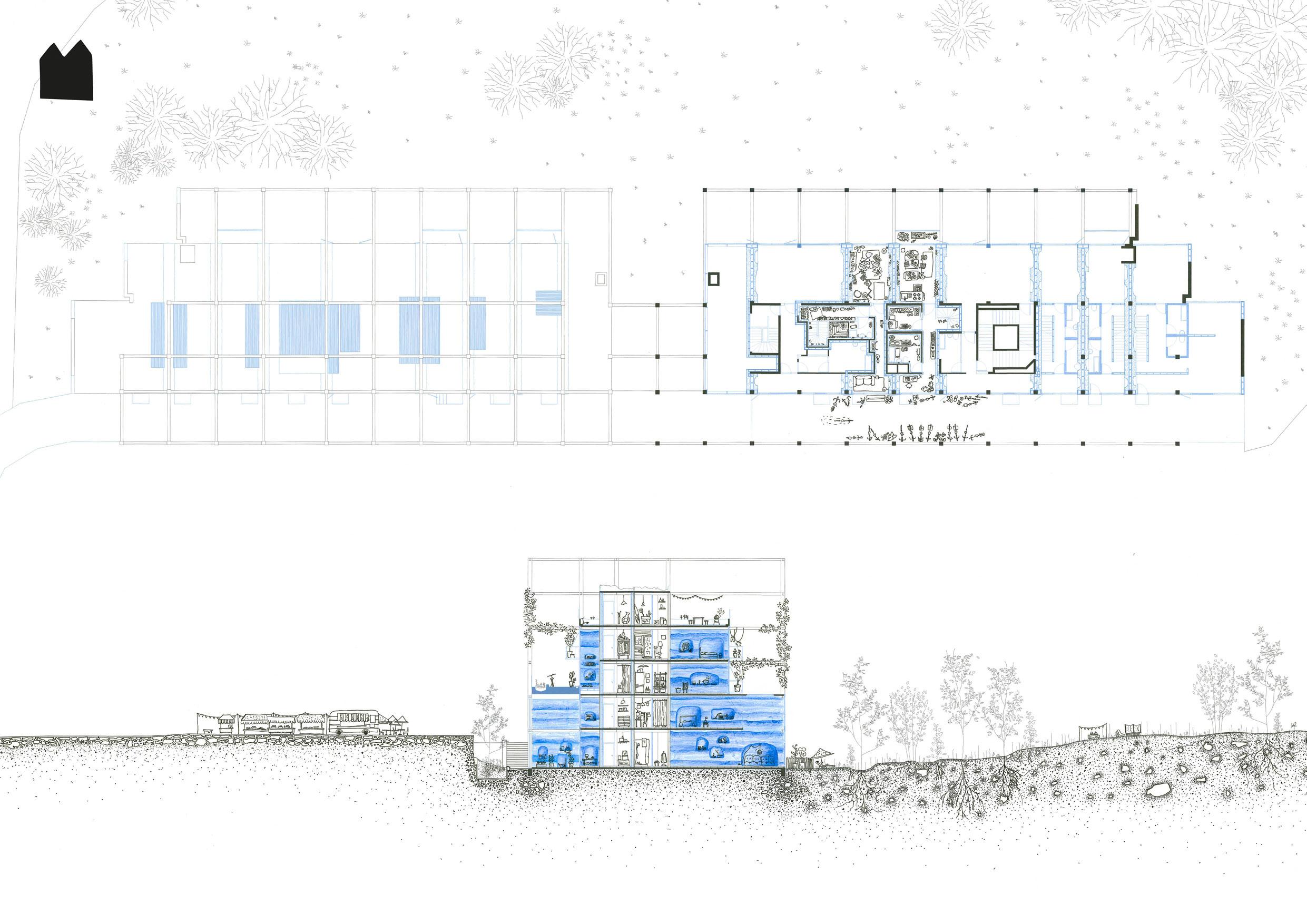
Through stories illuminating the various facets of "home", this notion was explored to understand how architects can shape it. In the rehabilitation of an office block into housing, the aim is to imagine experimental dwellings that explore people's ability to make a place their own. On several floors, the narrow layout provides a doorstep onto the street for everyone, encouraging encounters and community. Earth walls, with hollowed-out niches, provide comfort and anchor memory. Preserved pre-existing structural cores are transformed into residual micro-rooms for free use. Houses become places to explore, where you can lose yourself. Crucial to the health of a city, the house must be made to tell the story of those who live in it.
Studio P32
"Housing: supply and complexity"
Vélizy-Villacoublay, France Date May 2023
Teacher Matthias Armengaud matthias-armengaud@awp.fr
Thomas Etchanchu
3
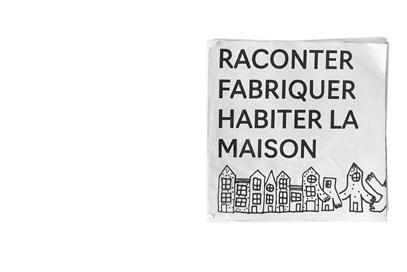
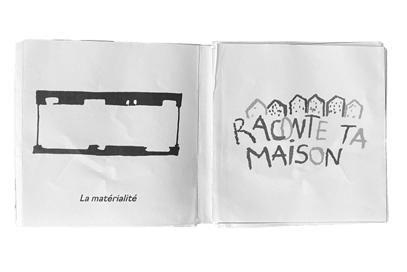
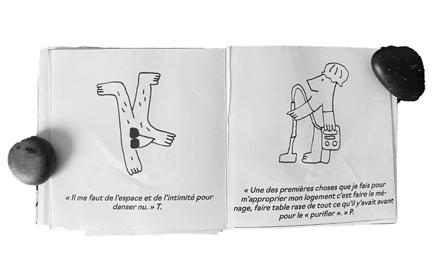
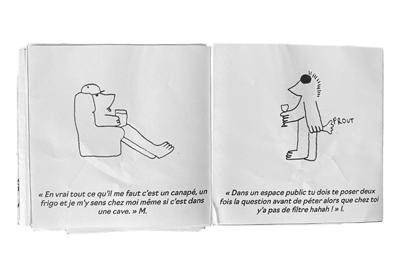
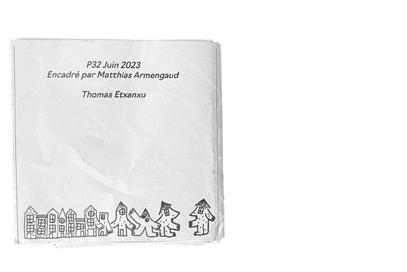
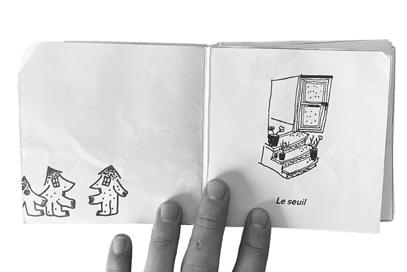
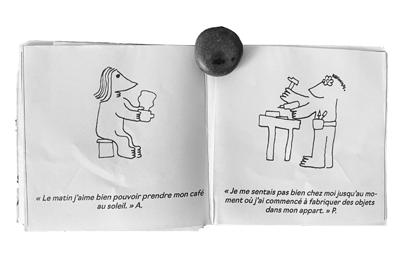
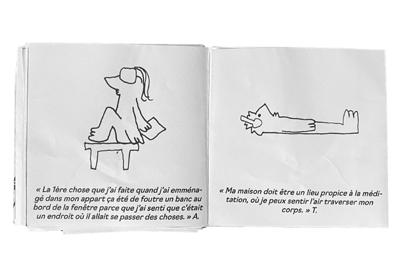
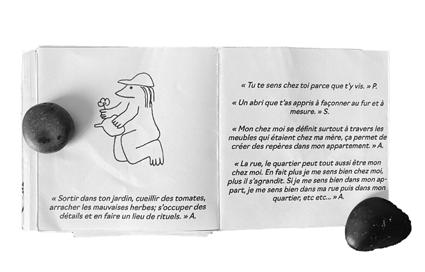
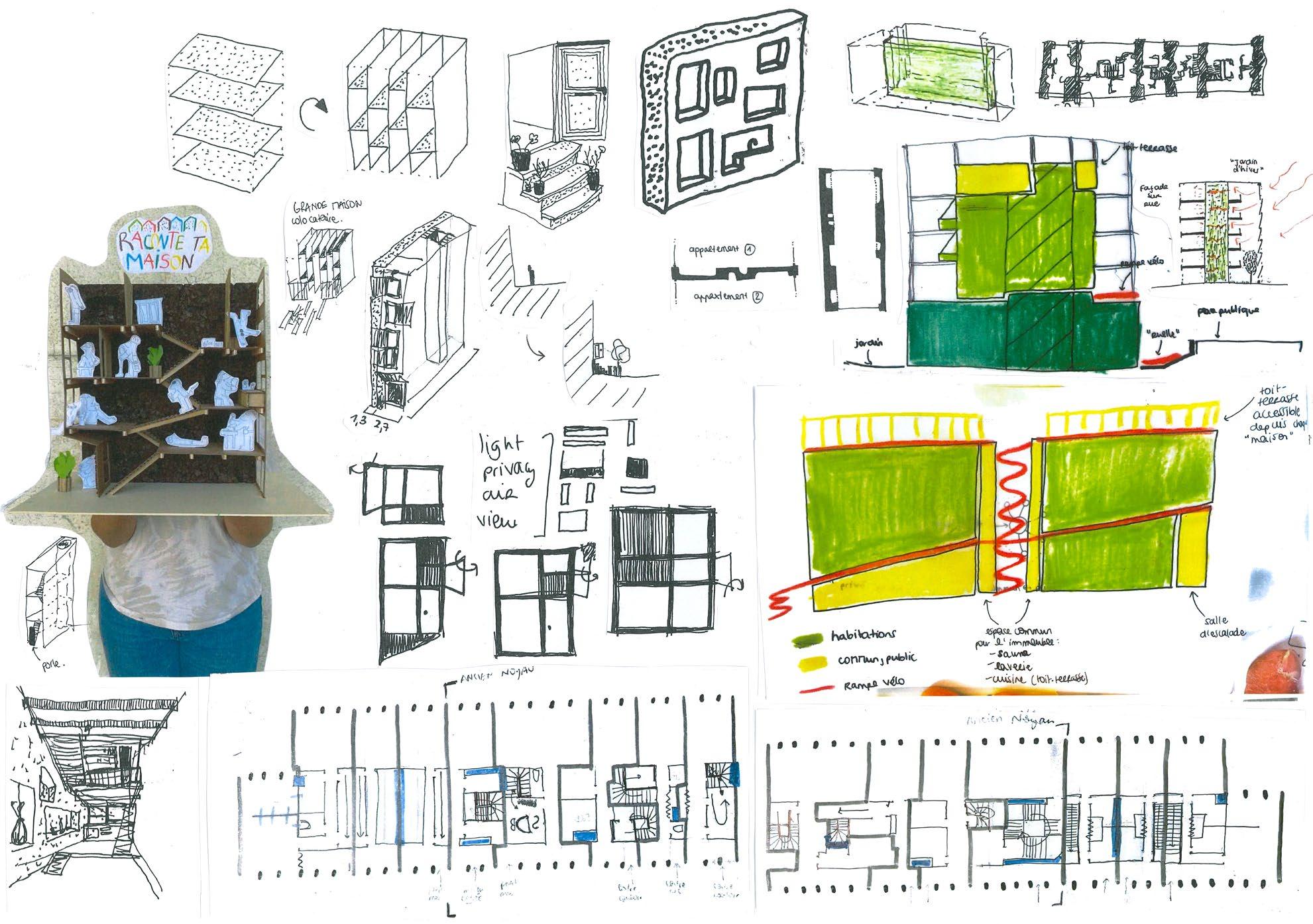
Left: booklet, compilation of interviewees’ answers to the question: «What’s your Home? »
Right: axonometric view, hand-drawn, 85 x 119 cm
Plan and section, existing in black and extension in blue, mix of computer and hand-drawing, 85 x 119 cm
 Thomas Etchanchu
4
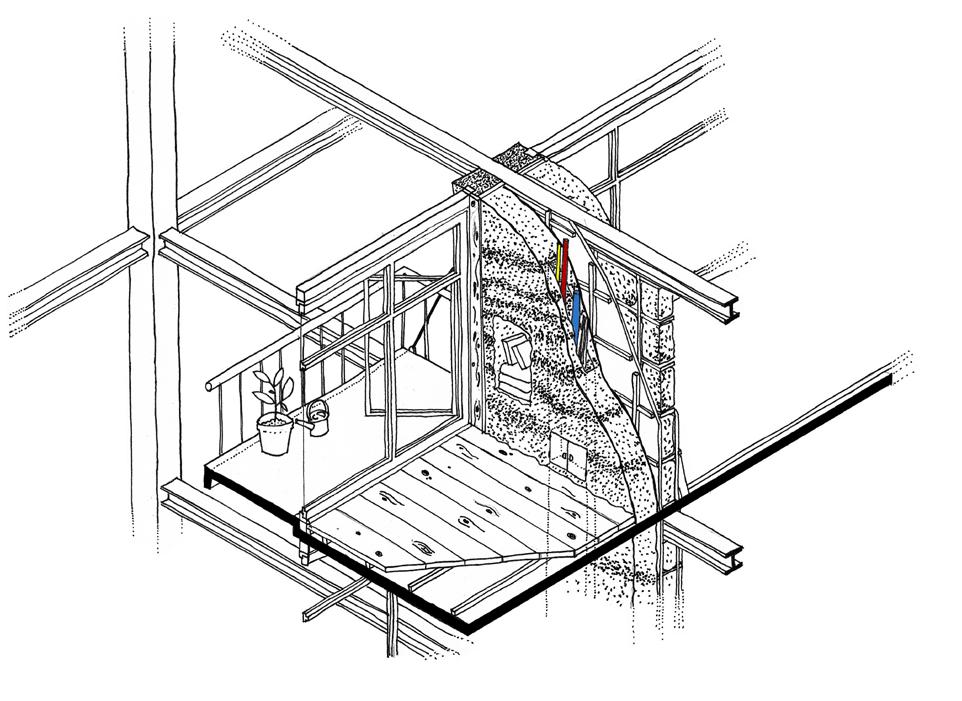
2 Straw bale, thickness 37cm
3 Battens and counter-battens
4 Bracing panel
5 Cob earth
6 Existing steel beam
7 New wooden floor, varies depending on use
8 Existing concrete slab
5
1 Structure of straw coffer
1 2 3 4 5 6 7 8
Left: constructive axonometric section, existing in black and extension in blue, hand-drawn
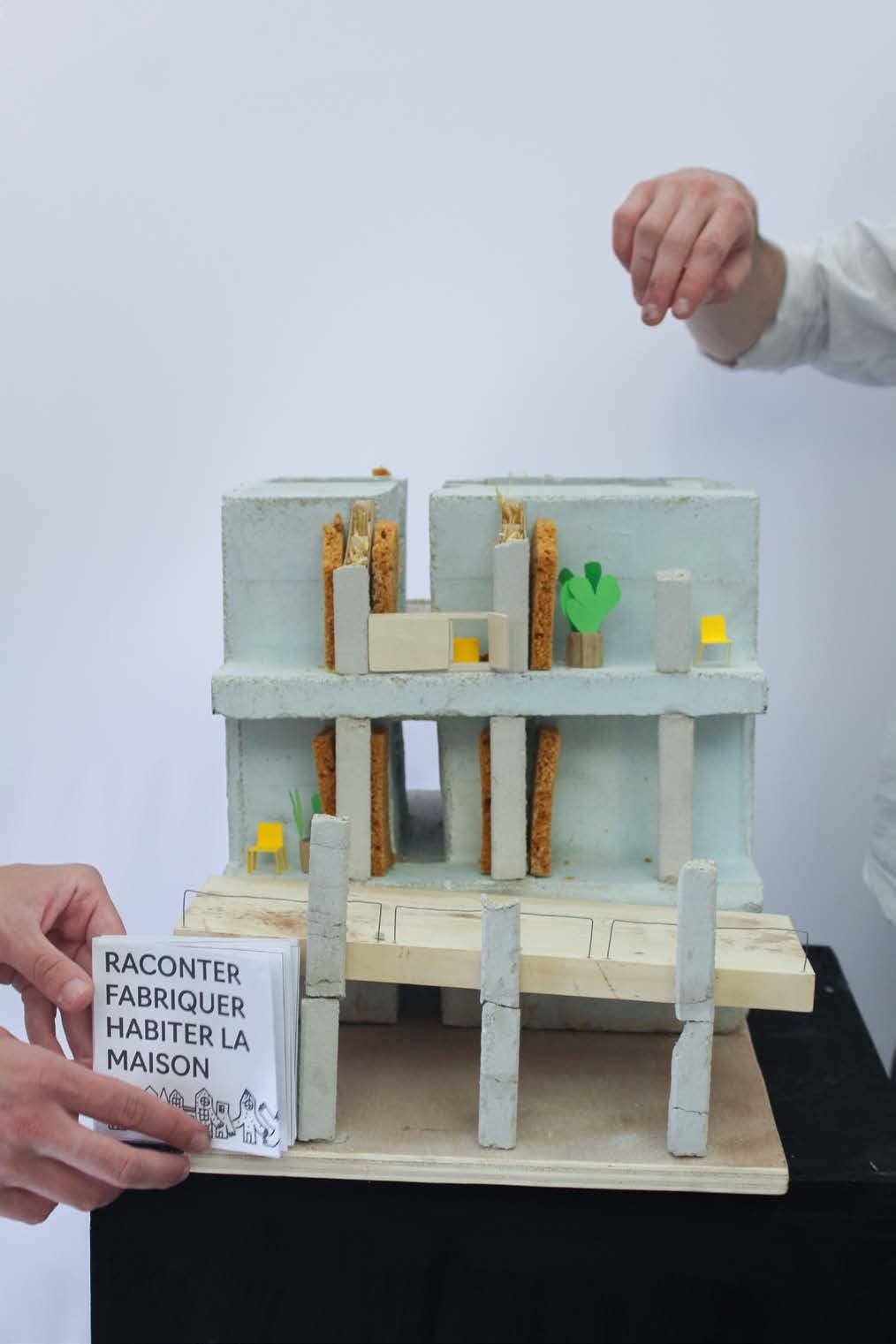
Right: experimental model as an artefact, concrete and gingerbread Thomas
Etchanchu
bicycle ramp
roof terrace street façade garden
winter garden
public square "alley"
roof terrace accessible from every "house
climbing room homes shared, public bicycle ramp
communal space for the building: -sauna -laundry -kitchen (roof terrace)
Living vertically (1) Experimental model that tells the story of the house according to interviews (2) Reversing the classic horizontal plane to the vertical Archetypes of the house (3) The doorstep, life generator (4) The cavity wall, the material that makes the human burrow (5) Study of structural cores to apply the principle of niches and residual hollows (6) The window to see, breathe and light, study of different typologies according to different layouts Seizing the existing (7) Playing with the existing to propose mixed programs around a bicycle ramp-rule (8) Study of the existing, its plan, structure and technical circulations to transform former offices into apartment-houses
6
2 3 4 5 7 6 1 8
door Thomas Etchanchu
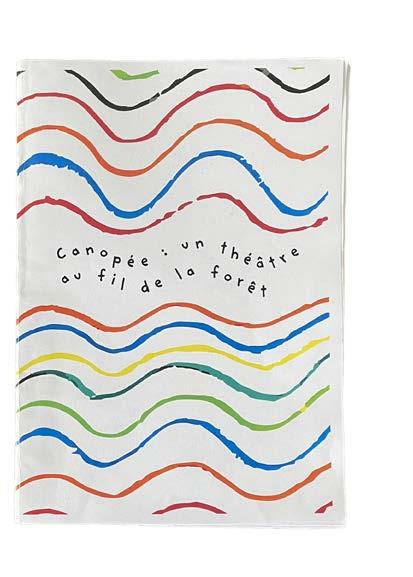
CANOPÉE: A THEATRE ALONG WATER
5th semester, 3rd year
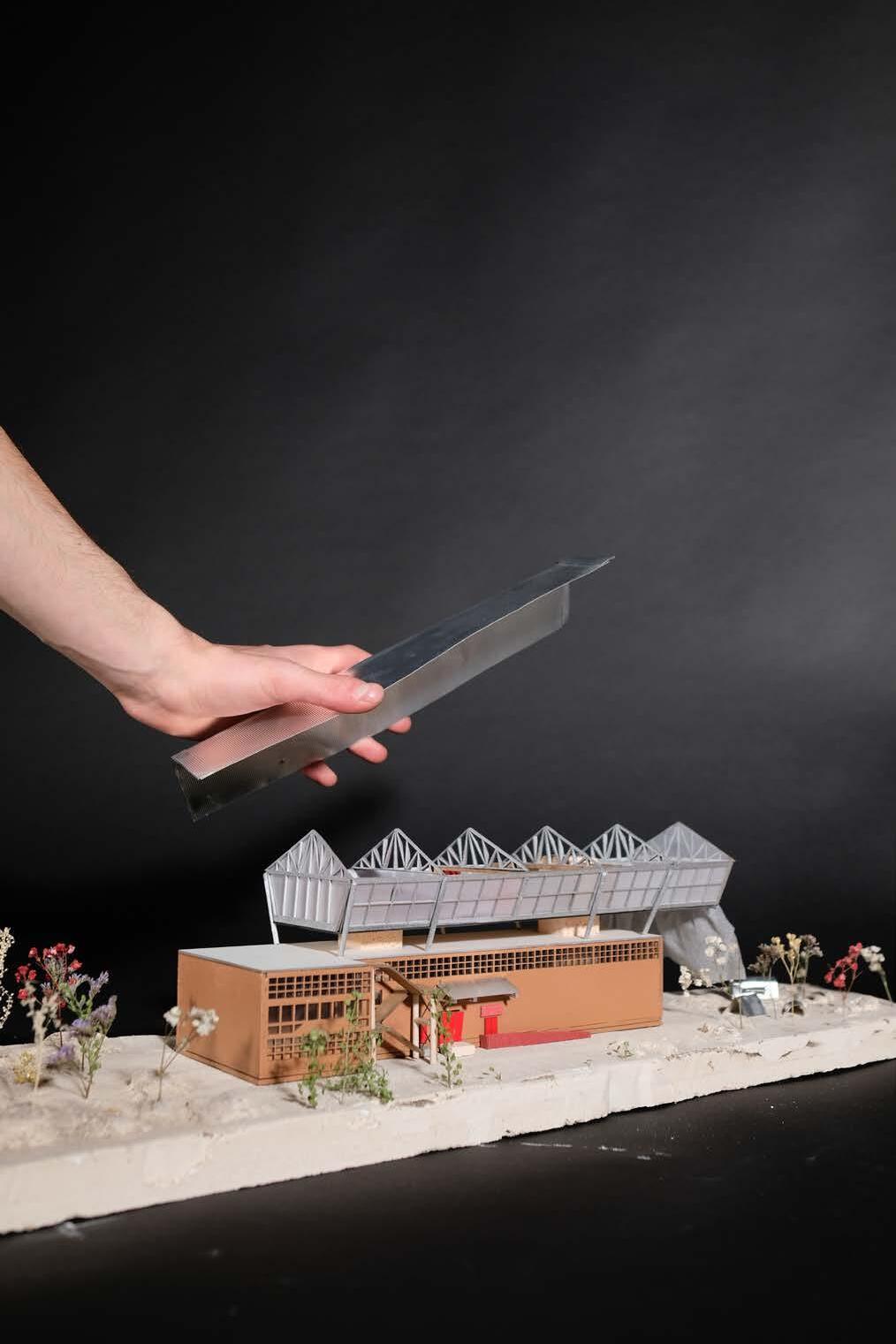
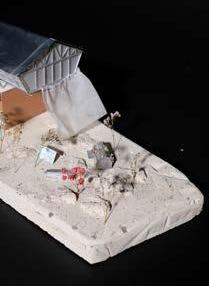
Left: model exploring the visual aspect through materials and plastic, 1/100 (by both of us)
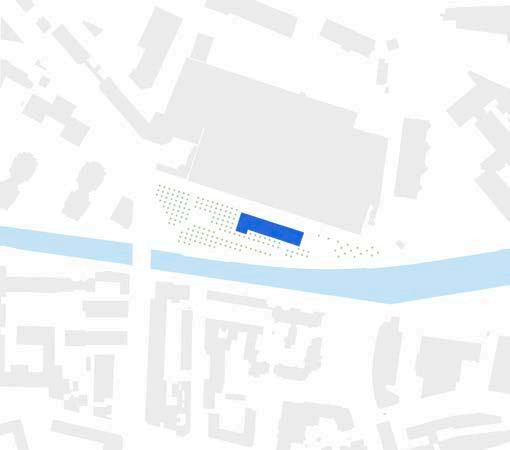
Right: ground plan (by Sabrina)
Studio P31
"Designing a local public facility"
Canal de l’Ourcq, Pantin, France
Date
December 2022
Team with Sabrina Ayer Teacher
Ingrid Taillandier taillandier@itar.fr
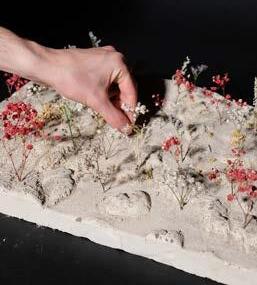
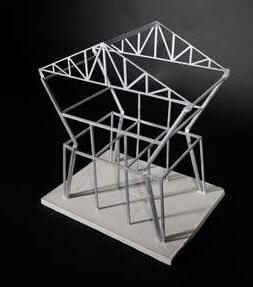
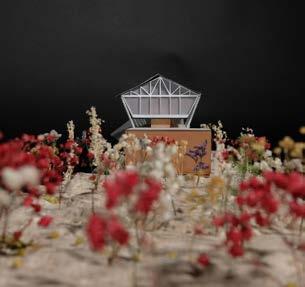
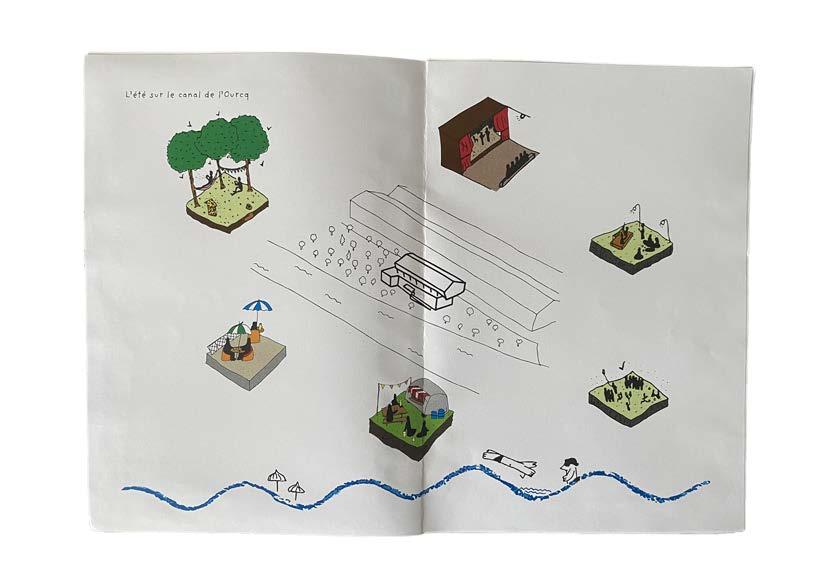
«Give the ground back to the city through the conservation of a historically and socially anchored place». The challenge here is to reuse this pre-existing connection to the urban and to the citizens in order to continue its story and propose a theatre offer, at the service of the community and the territory. A new structure carried by the wind dialogues with the existing between which the theatre comes to life, narrates and thrives. This first large-scale project involved working intensively together to get to grips with it and come up with a project that was jointly thought through, designed and modelled.
CANOPÉE: A THEATRE ALONG WATER
5th semester, 3rd year
8
Thomas Etchanchu
Top: longitudinal section (by me)
Bottom left: plans of 2 floors (by Sabrina)
Bottom right: theatre and structure models, 1/100 and 1/20 (by both of us)
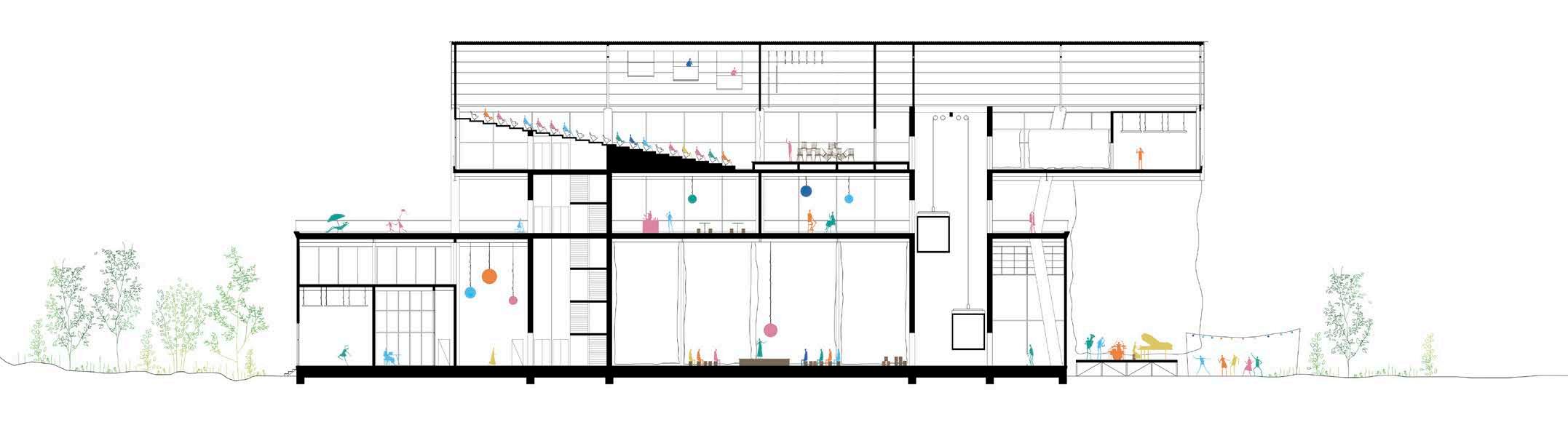
1
9 Thomas Etchanchu
floor, extension
4th
Main Hall
Dressing room
Backstage
Props store
Rehearsal room
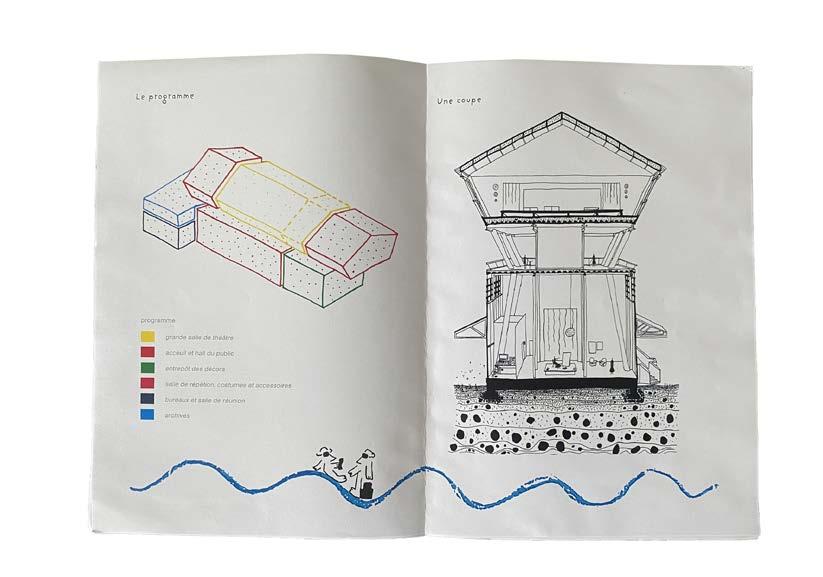
Costume workshops Ground floor, existing 7 Reception 8 Small hall 9 Backstage 10 Scenery store 11 Dressing room 12 Technical hall 13 Offices 14 Dancehall 7 8 9 10 11 13 14 12 1 3 2 2 4 6 5 13 13
2
3
4
5
6
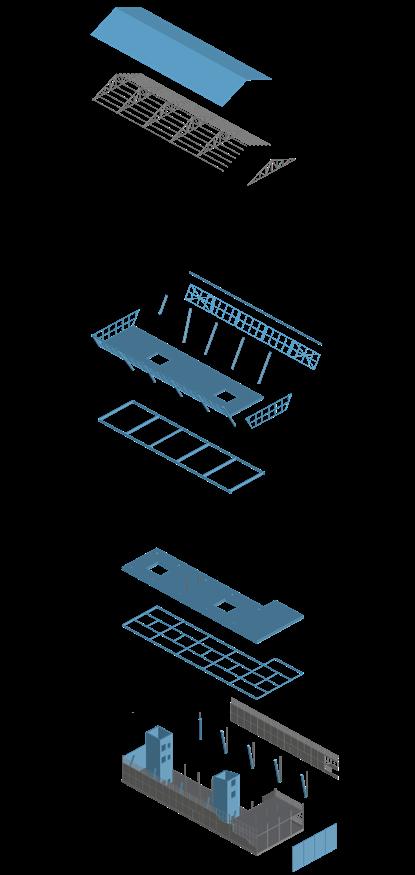
Constructive
2 Profile section, hand-drawn (by me)
3 Conceptual diagrams (by me)
4 Manual collages (by both of us)
Preserving the existing theater Existing and new structures
The connecting cores
Air: a public void
Soil: afforestation post-construction
The Party: theatre and it surrounding as a gathering place
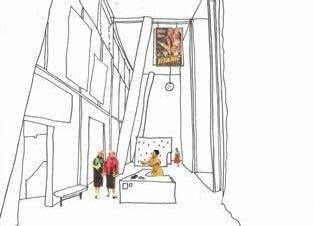
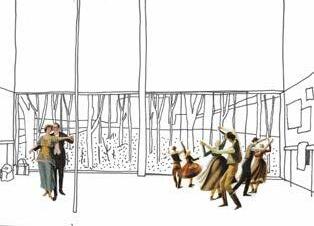
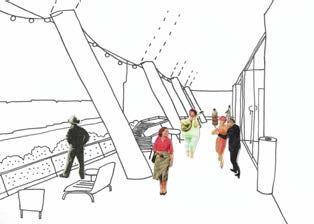
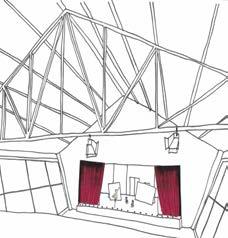
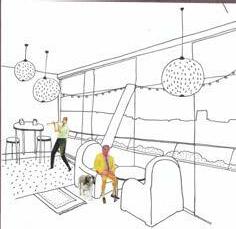
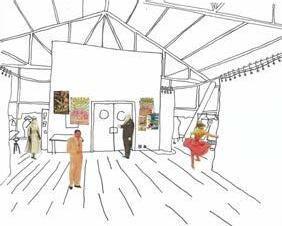
coupe perspective 10m 5 1 0 10
1
axonometric view, existing structure in black, new in blue (by me)
new extension: 1685700 kg 2983 m2 804 kg/m2 1 2 4 3 Thomas Etchanchu
11 Thomas Etchanchu
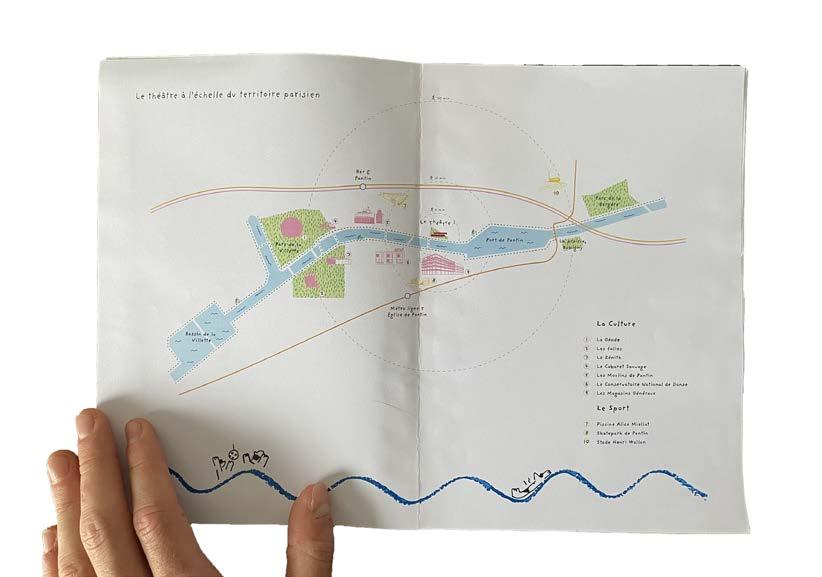
Booklet: How does the theatre fit into the neighborhood, city and Grand Paris' region?
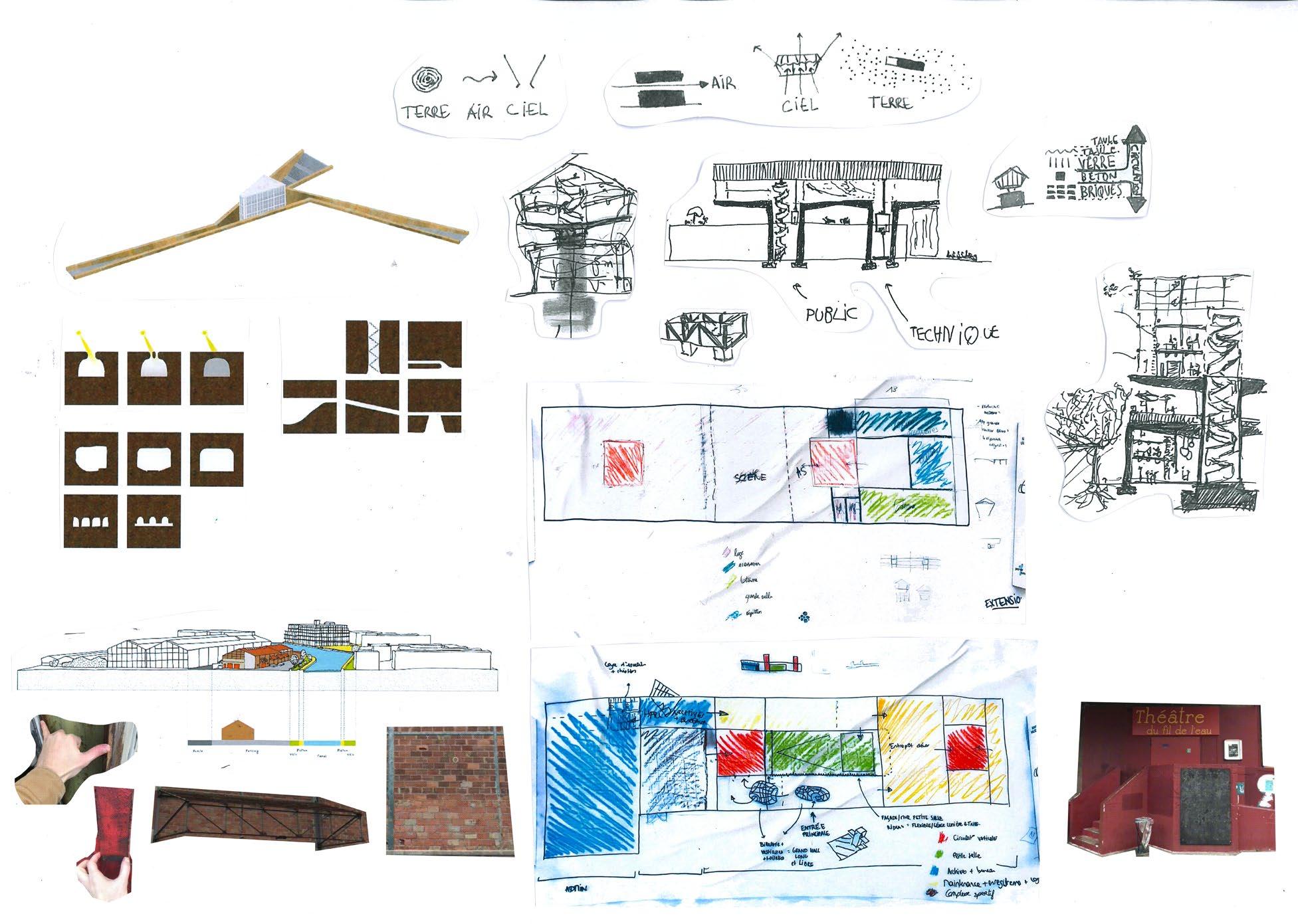
Preliminary studies (1) Project for an underground theater to restore the ground to the city (2) Playing with the hollows in the ground to create varied spatialities
According to the territory (3) Site analysis (4) What to keep of the existing structure? (5) Strong natural elements of the site transposed into the architecture
The structure that dictates the program (6) Study of a structural graft to create a hollow joint between existing and extension (7) Two structural cores that contain the various circulations (8) Different materialities that tell the story of an old and new place (9) Sketch to capture the vitality of the place through its users and its spatiality (10)
Organize the program according to the plans of the existing theater and the rehabilitated and grafted structure
12
2 5 3 6 10 9 1 EARTH 8 7 AIR SKY EARTH AIR SKY Thomas Etchanchu
CHEMINS DE FAIRE, WATER'S POTENTIAL
3rd semester, 2nd year
CHEMINS DE FAIRE, WATER'S POTENTIAL
3rd semester, 2nd year
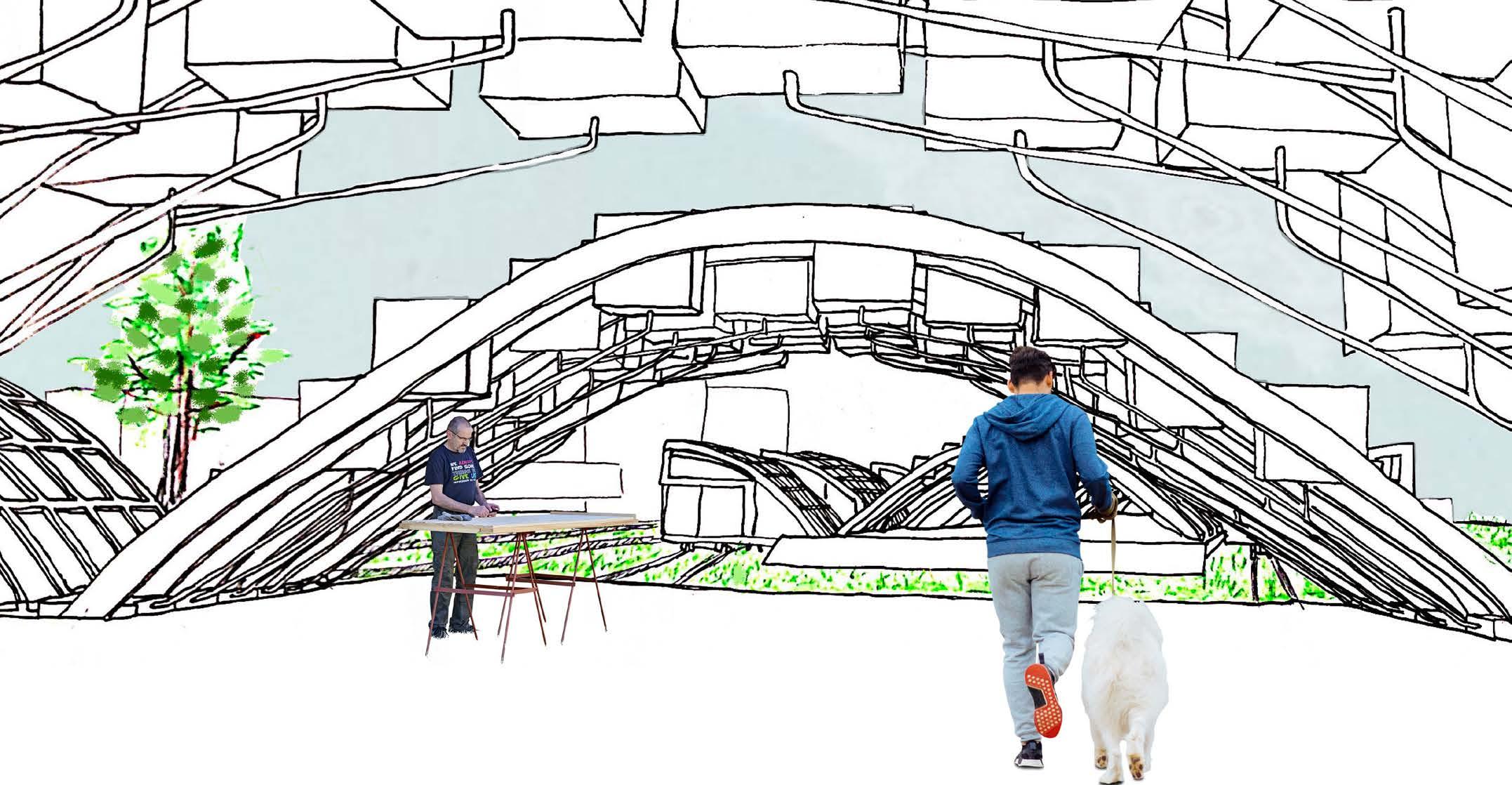
This wooden structure at an isolated crossroads fosters symbiosis with its environment and users. Its modular, rail-based design supports diverse functions of urban agriculture to emergency housing. The porous roof mimics living skin, collecting and filtering the water in clay pots, aiding local biodiversity and urban dynamism. Discussions and presentations guided our choice of site, and we worked together, contributing our respective skills.
2022 Archibois Competition
Wasteland of Bercy-Charenton, Paris, France
Date
March 2022
Team with Julia Somnez & Louise Hermant
14
Interior view of the central space, manual and digital collage (by Julia)
Thomas Etchanchu
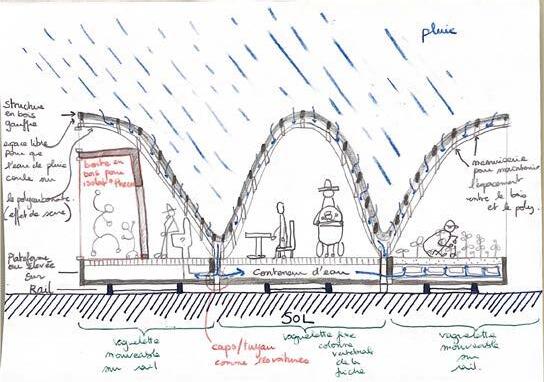
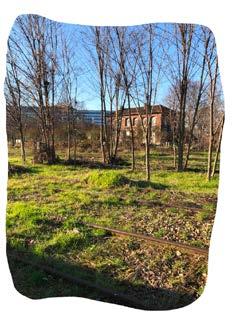
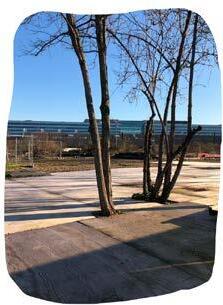
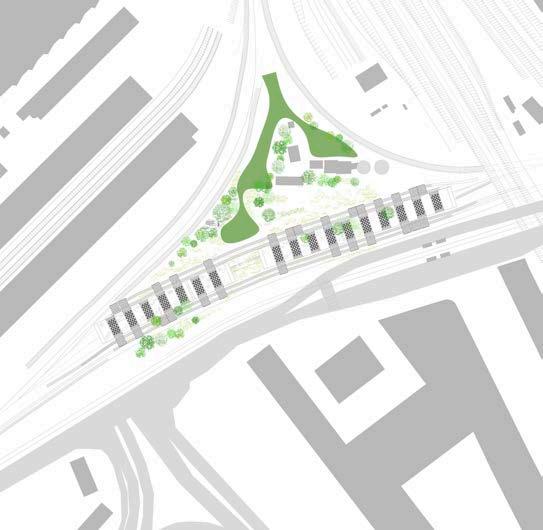
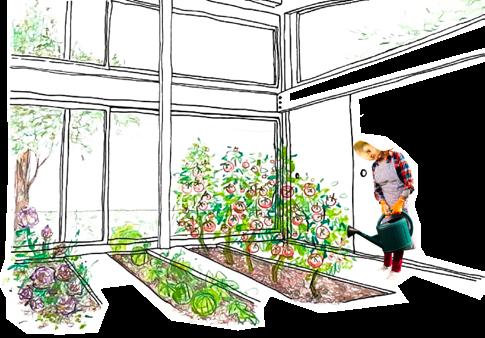
1 Study drawing on rainwater use (by Julia)
2 Water path diagram in the structure (by me)
3 Ground plan (by Louise)
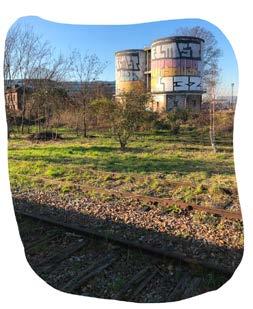
4 Wasteland’s photos (by both of us)
5 Interior view of a greenhouse (by Julia)
6 Floor plan (by me)
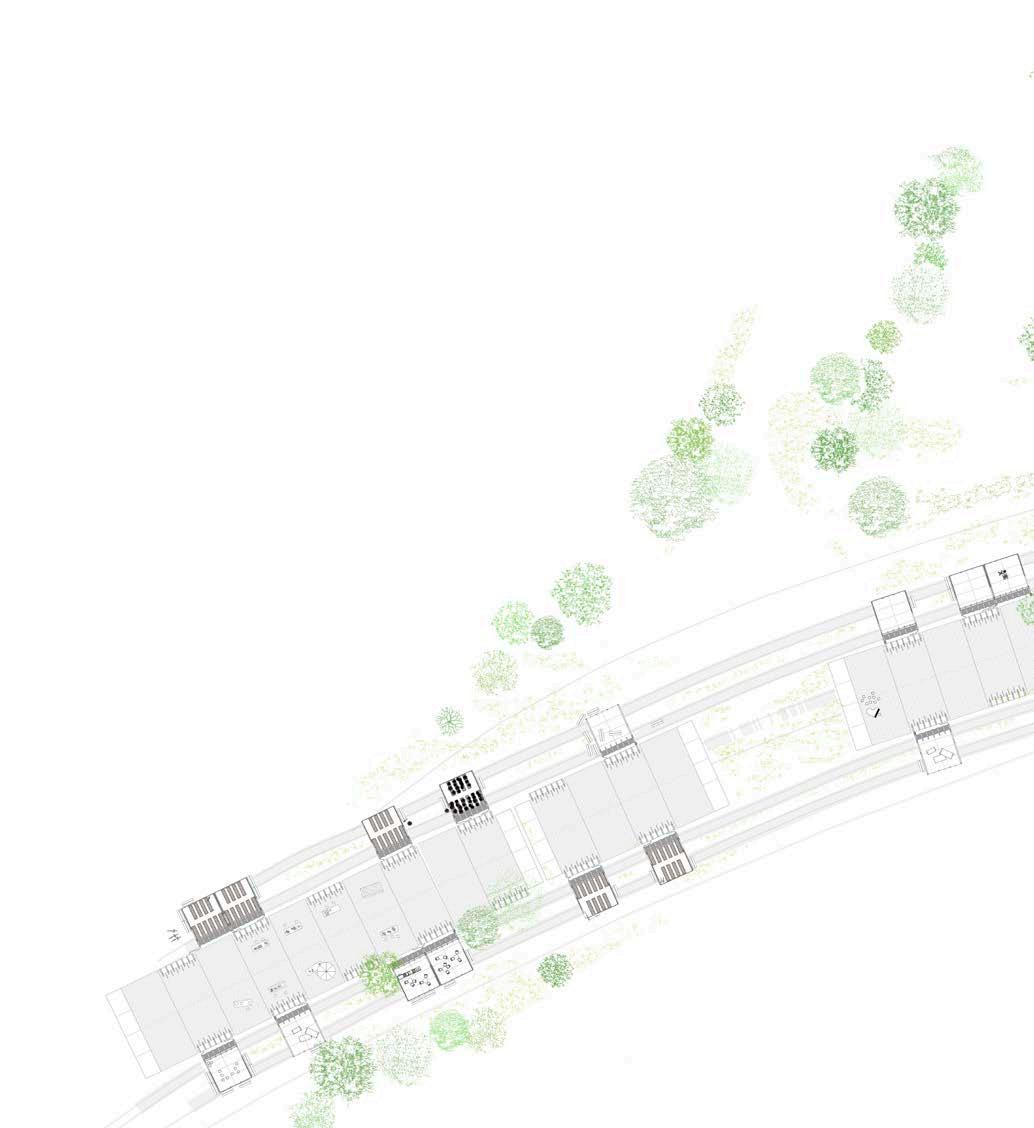
15
2 3 4 6
Etchanchu 5 1
Thomas
Top left: section (by me)
1 Laminated purlin 120x175mm
2 Frame 40x20mm
3 Alveolar polycarbonate 6mm
4 Trombre wall in earthen
5 Clay/straw insulating
6 Douglas wood false ceiling
7 Entered 140x100mm
8 Frame 30x50mm
9 Window rail
10 Secondary beam 140x300mm
11 Frame post
12 Rail hook
13 Douglas wood fluoring 50mm
14 Douglas spacer 140x410mm
15 Already existing and restored train rail
16
Top right: assembly details of a small unit (by me)
Bottom: longitudinal section of the half of the structure (by Julia)
Thomas Etchanchu
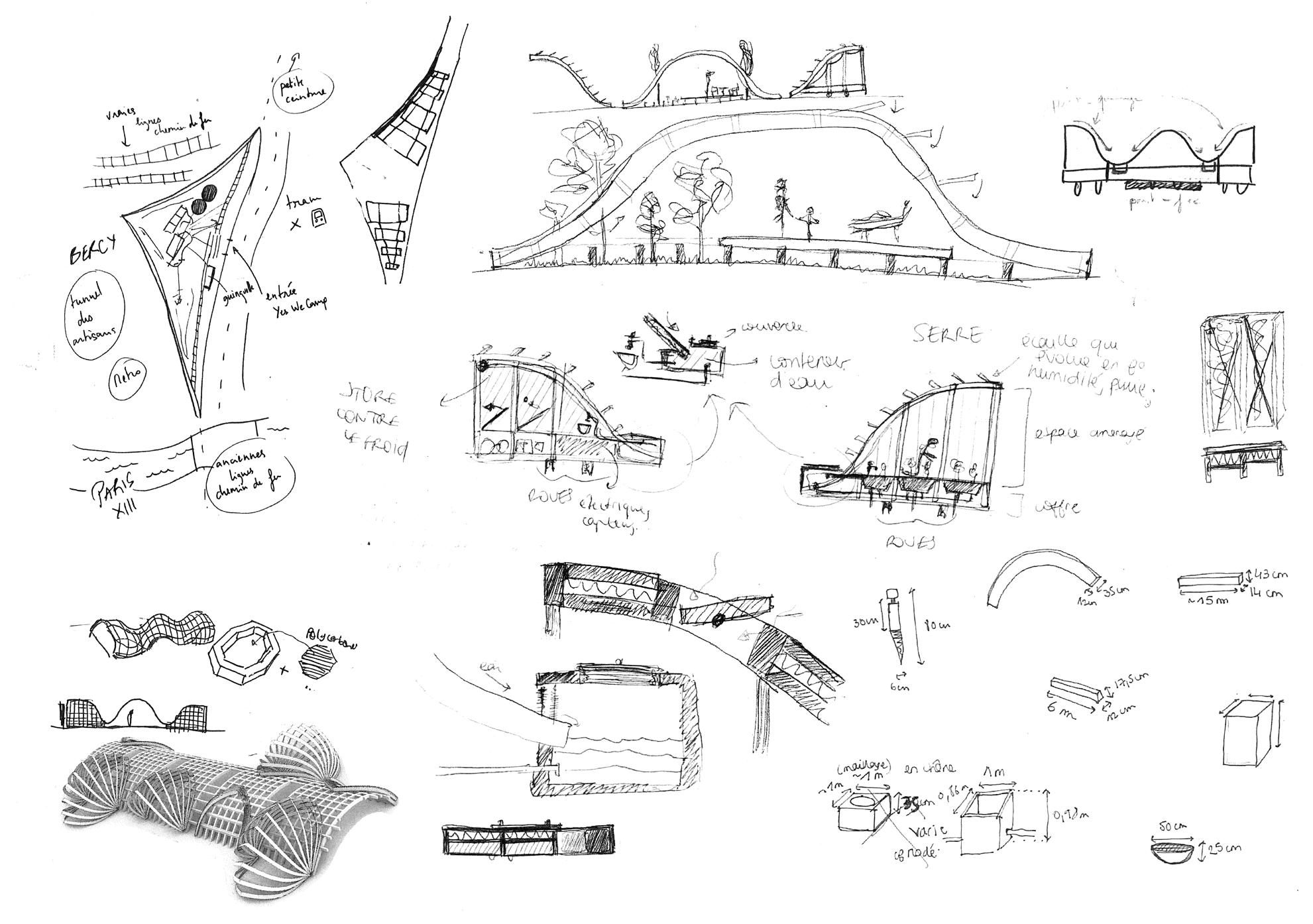
The Bercy Charenton site (1) Study the context and its potential (2) Architecture adapted to the shape of the site?
Easy assembly and flexibility (3) Simple, repeatable geometric forms ? (4) A mobile, parametric structure
A living, servant structure (5) A shelter-structure at the base of the microcosm (6) A defined form for water harvesting (7) Modules grafted onto the central artery that are similar, self-sufficient and adaptable to different uses (8) Recovering and storing water
Reducing the quantity of constructive elements (9) All the elements needed to build the project: from wood to clay pots
17
2 3 4 5 7 6 1 8 GREENHOUSE 9 petite ceinture scales that change with humidity, rain... equipped space trunk WHEELS WHEELS electrical, sensors... cover water tank water in oak
Etchanchu
Thomas
URBAN CAVITIES
4th semester, 2nd year
tations (by me)
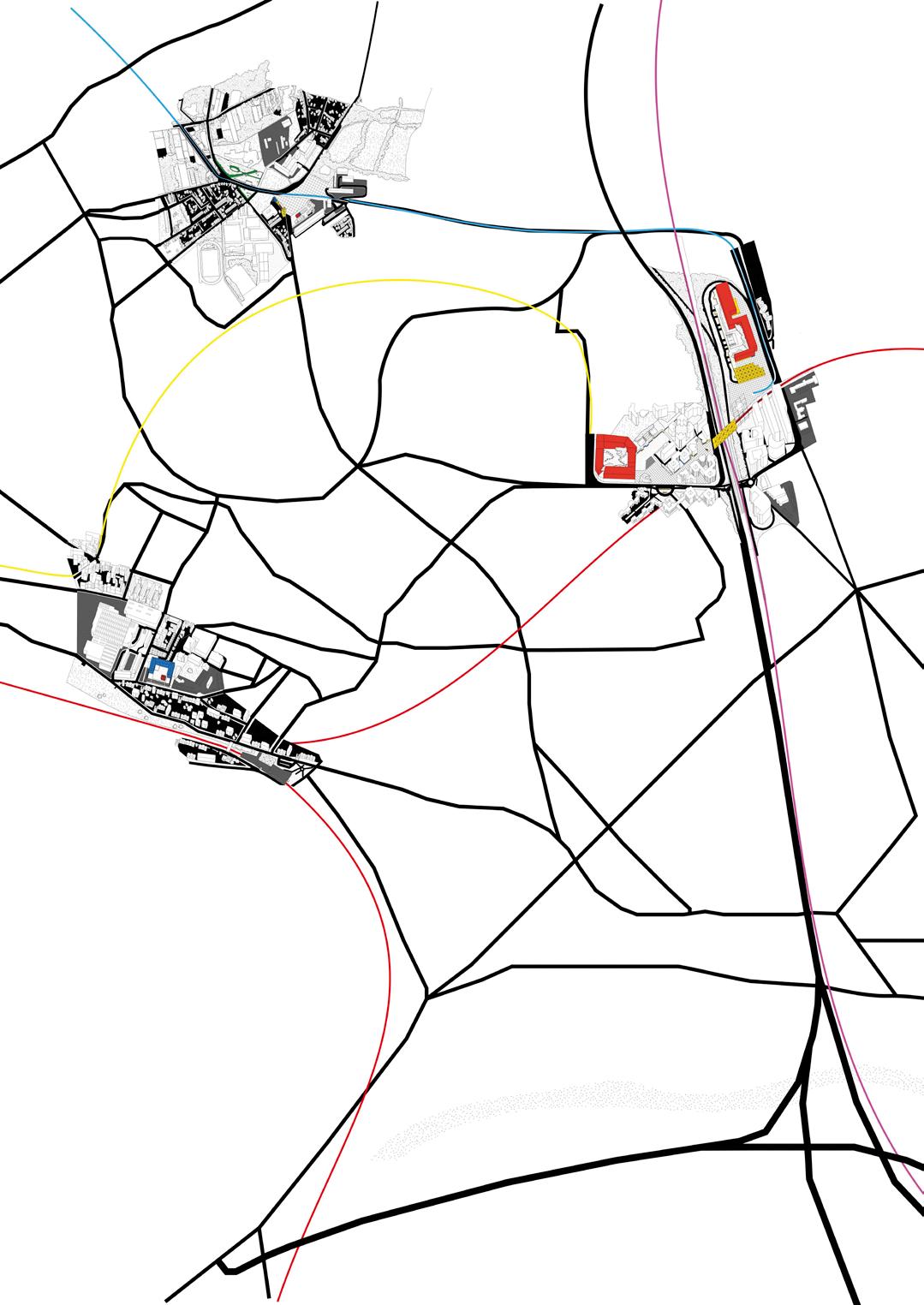
Right: axonometric views of revitalized areas (by both of us)
URBAN CAVITIES
4th semester, 2nd year 2 1
Studio P22 "Reading the City"
Fontenay-sous-Bois, France
Date
May 2022
Team with Julia Sonmez
Teachers
Djamel Klouche
djamel.klouche@versailles.archi.fr
Radim Louda
d.klouche@laucparis.com 2
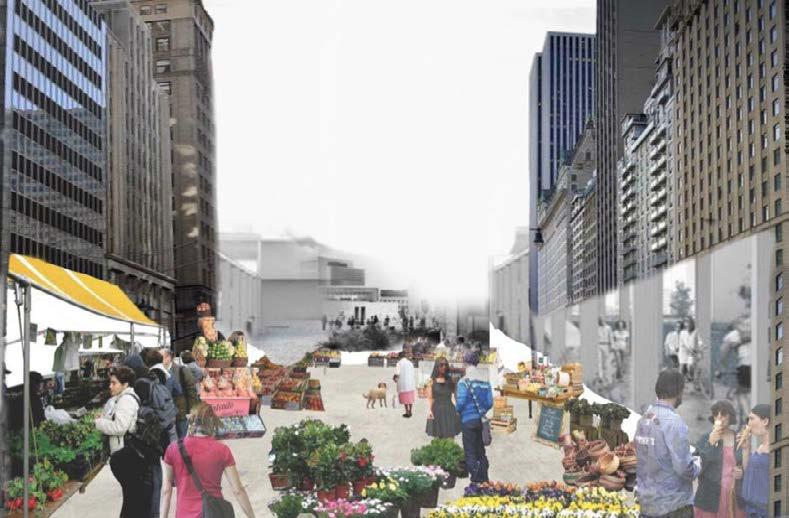
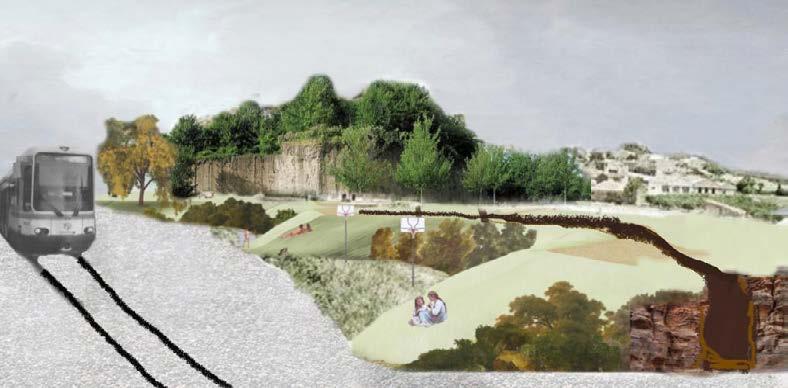
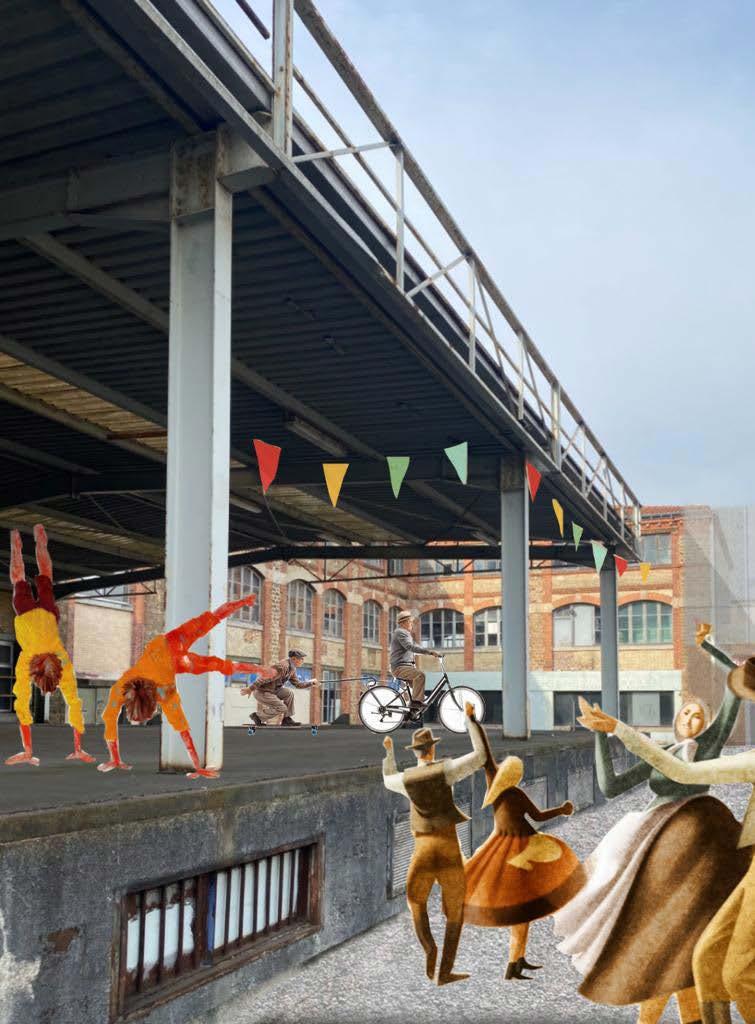
The void only makes sense if it's in coproduction with the full. Its typology and the uses that take place there define it. These voids, which we call vacant spaces, have the objective of making the living cohabit: man and nature. Their analysis therefore makes it possible to grasp the stakes and the impact they have on the community at different scales. The purpose is to purify the voids, push their special qualities to their climax to encourage social and environmental development: as a vector of meeting, utilities, leisure and landscape. The city is an organism, the streets its veins and the voids its lungs. After discussions and site analyses, we worked together on each area, splitting up the drawings, which I then took over so that they fit in with the agreed graphic charter.
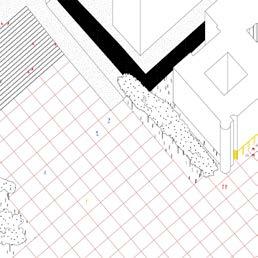
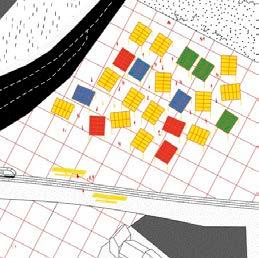
1 3
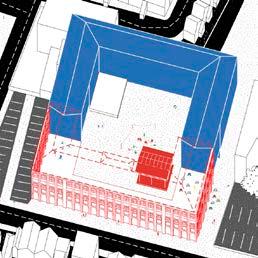
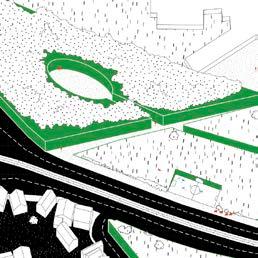
1 Fontenay-sous-Bois train-station
2 The Ruffins intersection and Les Murs à Pêches
3 The old Gaveau piano factory
19
Left: map of revitalized hubs, providing air to the city, connected by diverse transpor-
3
Thomas Etchanchu
20
Reconnecting with music in a new cultural and festive centre in the heart of the former Gaveau piano factory, digital collage (by Julia)
The station’s pedestrianized street could host a bustling town market, digital collage (by Julia)
Thomas Etchanchu
Les Murs à Pêches, reexamined in their connection to the environment, serve as a contemplative sanctuary, digital collage (by Julia)
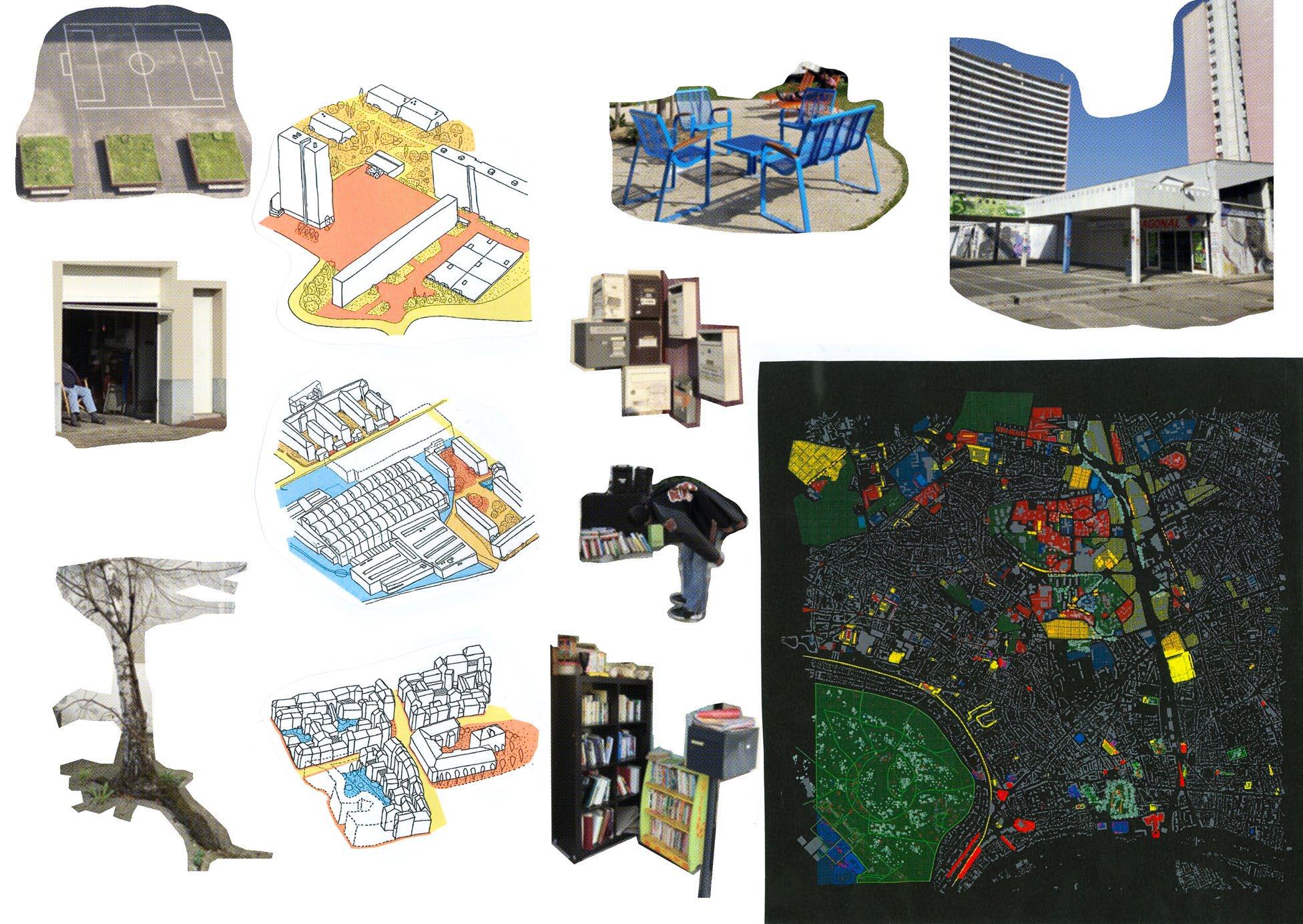
The public street: limited urbanism at the root of citizen impulses (1) The slab urbanism (2) Inside/Outside (3) Freeing ourselves from urban planning (4) The seat (5) Sharing that strengthens community (6) The limits of self-sufficiency in a large-scale neighborhood Public intensity according to urban fabric (7) The slab urbanism: ground living (8) Industrial: a new urban paradigm (9) History: a muscular organ Urban hollows (10) Identifying voids for potential citizen intervention, defined according to their assets: encounter, environment, logistics, pedagogy
9 21
2 6 3 5 1 10 4 8 7 Thomas Etchanchu
CELLULES, LIVING IN ARID CLIMATES
3rd semester, 2nd year
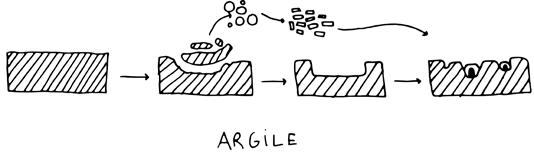
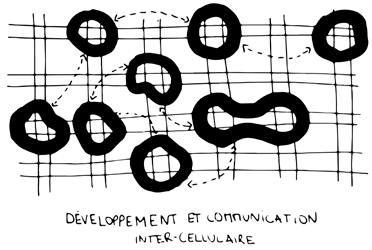
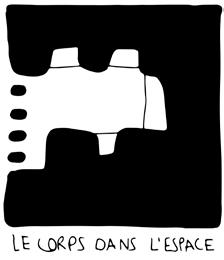
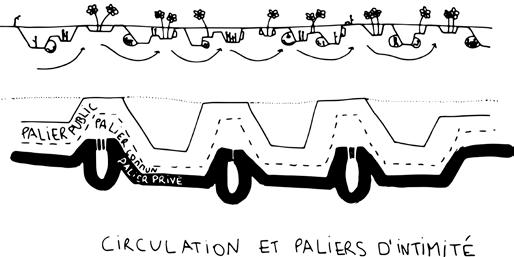
All documents are hand-drawn Left to right: design and organization process; in chronological order: «clay», «intercellular development and communication», «the body in space», and «public level - common level - private level»
CELLULES, LIVING IN ARID CLIMATES
3rd semester, 2nd year
Studio P21
"World-Houses"
Bam, Iran
Date December 2021
Teachers
Raphaëlle Hondelatte rh@raphaellehondelatte.com
Reza Azard reza.azard@versailles.archi.fr
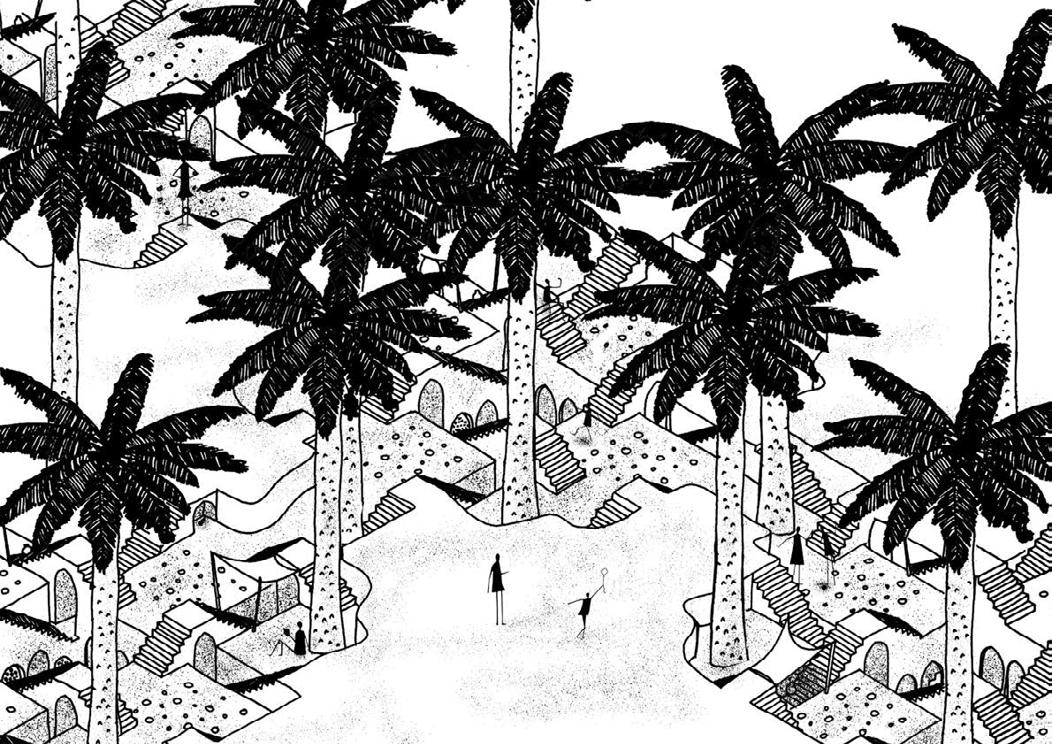
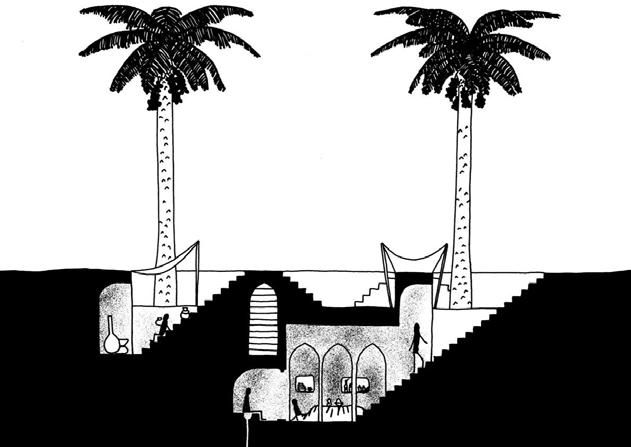
In the shade of date palms, an underground network of habitats follows the pattern of this nourishing palm grove. In the cool of the depths, hollowed-out cells meet the specific needs of the human body, and are ventilated by a common courtyard. Built from excavation waste, their interior temperatures are regulated by the thermal inertia of adobe, typical of the Kerman province where temperatures reach 40°C. Crossed by a staircase, these dwellings are integrated into a cellular ensemble, inspired by medinas. Drawing on the vernacular heritage, this complex organism creates a living fabric, adapted to the historical, natural and climatic context of Bam.
Thomas Etchanchu
23
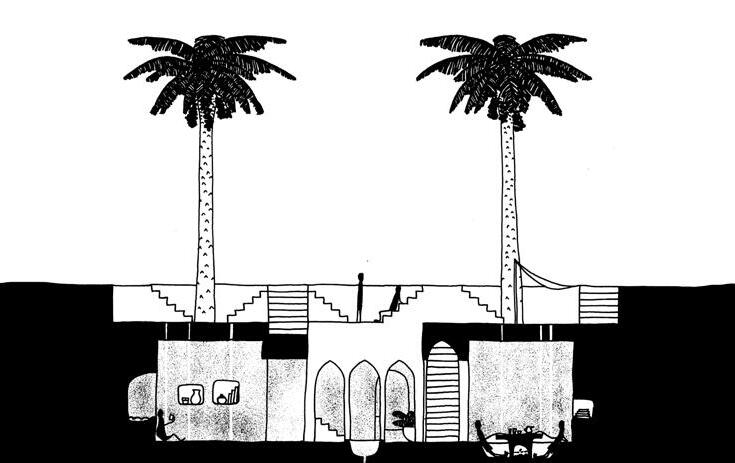
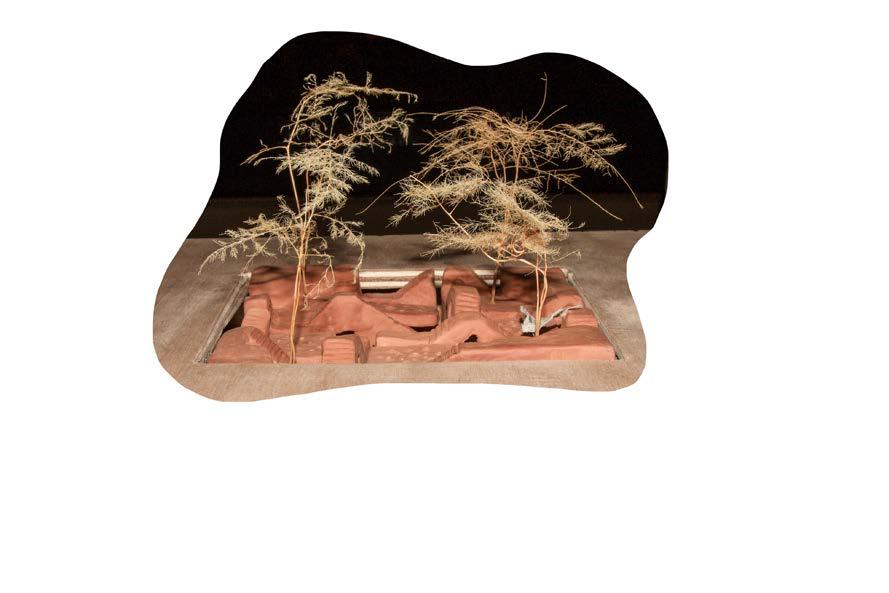
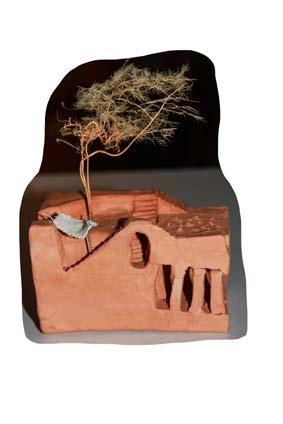
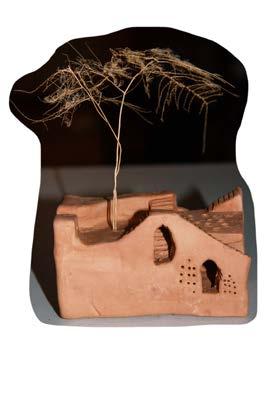
1 Clay model and wooden base
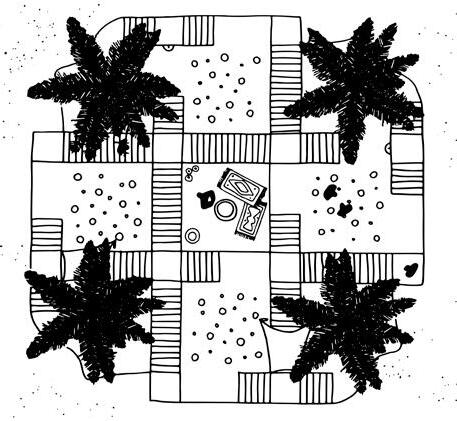
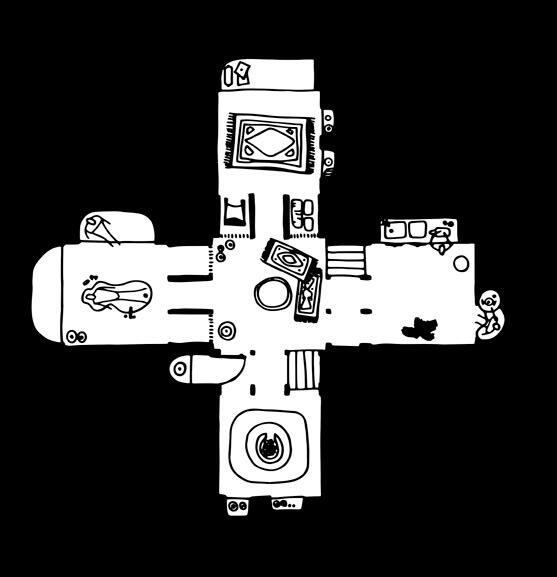
2 The two «sub-modules» that repeat to form a cellular habitat: one allows to go down into the dwelling, the other to offer a public circulation through the habitat
24
2 1
Left: plans and sections of a cellular habitat, hand-drawn
Right: clay model, 1/100
Thomas Etchanchu
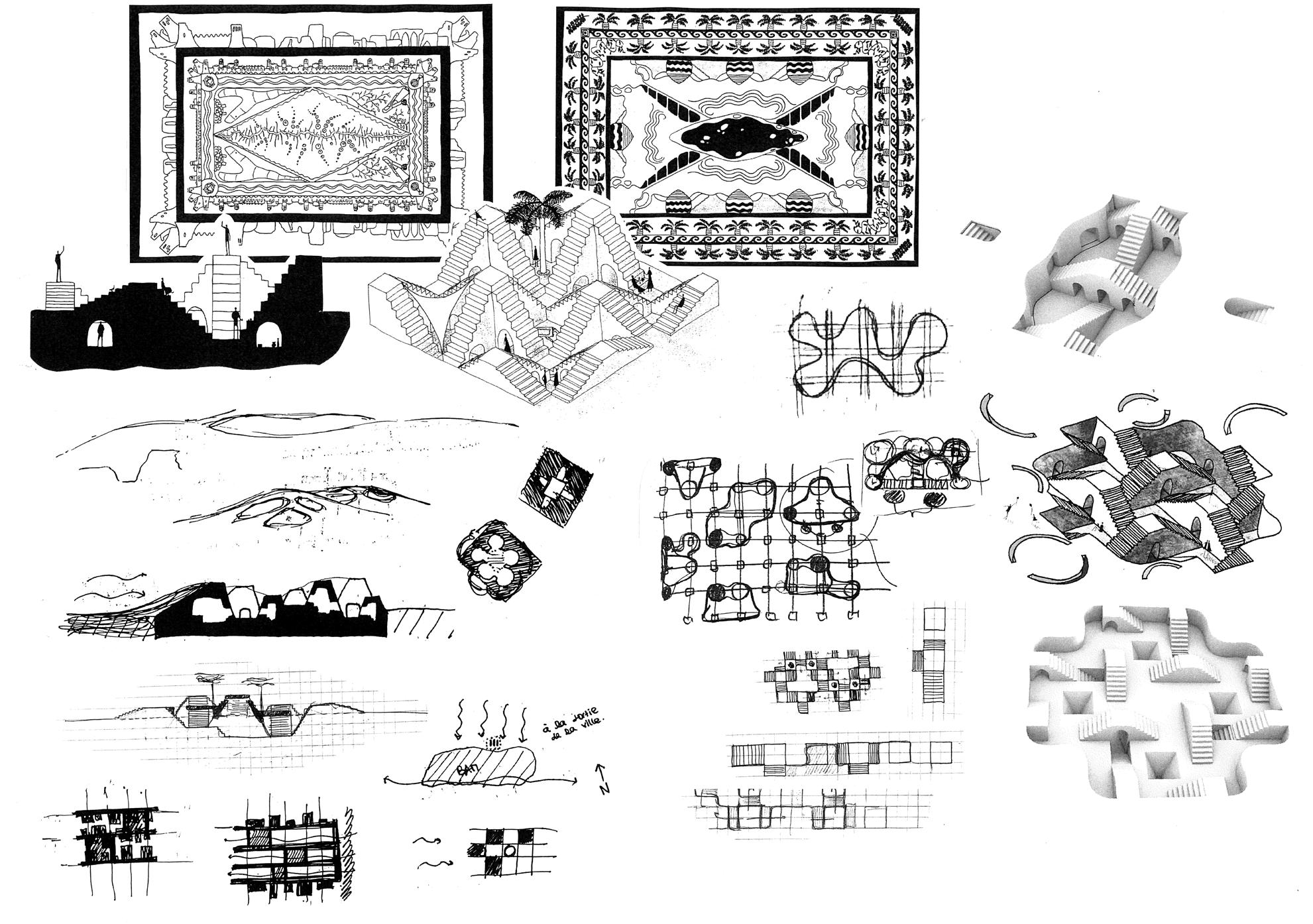
Bam (1) Drawing carpets inspired by Persian ones to express the city's DNA (2) The staircase archetype chosen to imagine a habitat adapted to the territory and its climate Being part of the local landscape (3) Habitat linked to dunes and elements (4) Rooms dug out of clay, inspired by local houses to consider inertia
Living with the wind and sand (5) Initial ideas for an architecture subjected to the climate: how to shelter, take advantage of gradual erosion?
Cellular grid (6) Designing the habitat according to a grid that will enable it to be extended or reduced (7) Navigating this grid via a staircase that walks like a public, communal and private labyrinth (8) Trying to solve, with the help of 3d modeling, the puzzle of the staircase that is both interior/exterior and public/common, yet does not intersect...
25
1 2 3 4 5 6 7 8 on the way out of town
Etchanchu
Thomas
THE IDEAL SCHOOL OF ARCHITECTURE
1st semester, 1st year
1st semester, 1st year
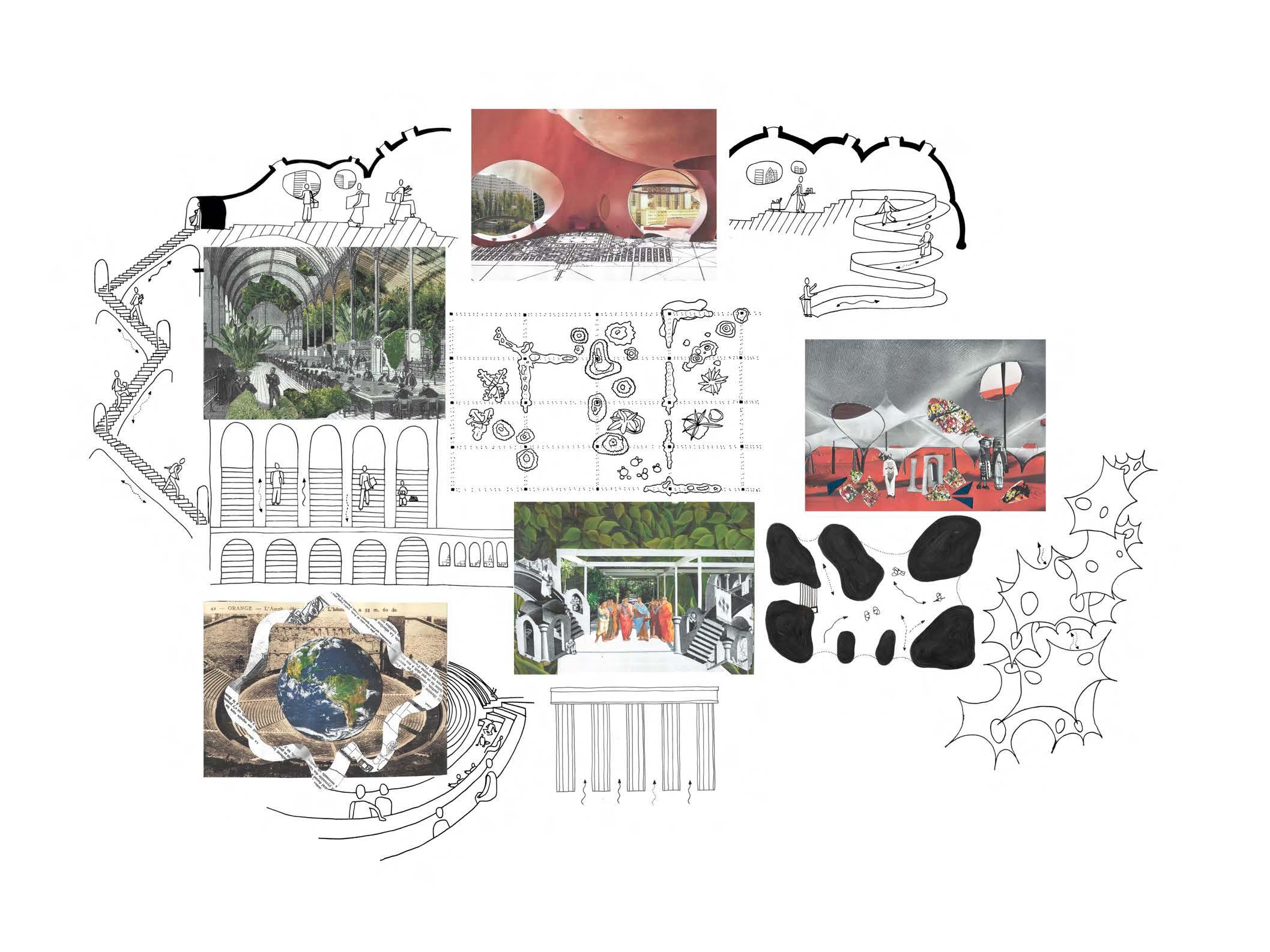
Fragments in color and links between in black & white, manual collages made with pictures and personal drawings
27
THE IDEAL SCHOOL OF ARCHITECTURE
Studio P11 Date December 2020 Teacher Cyrille Véran cyrille.veran@icloud.com
Thomas Etchanchu
1 Patio: lungs of the school, dream
2 Agora: public forum, learn and speak
3 Forest: think and enrich your awareness
4 Urban Observatory: observe
5 Pavilion: create and express yourself
4
5
2
3 1
BEYOND WALLS
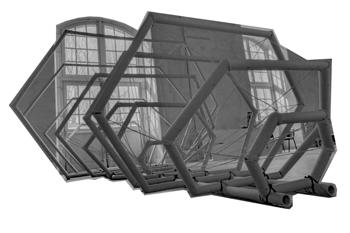
1 Bathroom, Plaster model, March 2021
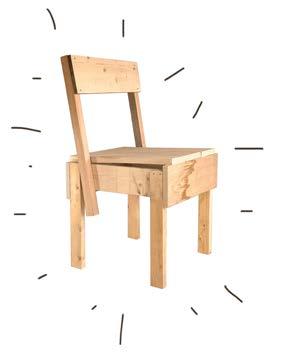
2 Enzo Mari’s chair, team ADN+, waste wood, February 2022
3 OMU, team project with Auguste Crouzet, Lucien Chartier, Elias El Kima, Camille Dumont, Samuel-Kepler Casseus, Norma Lejop, January 2021
4 Le Tabouret, May 2022
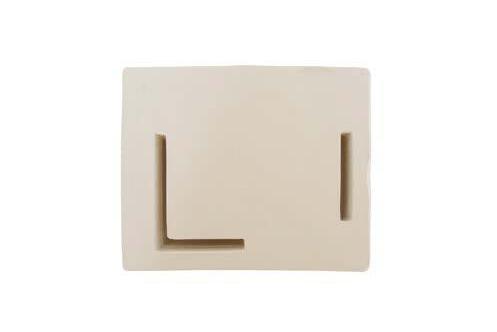
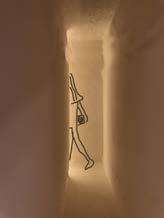
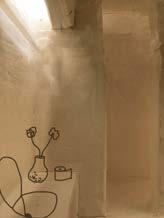
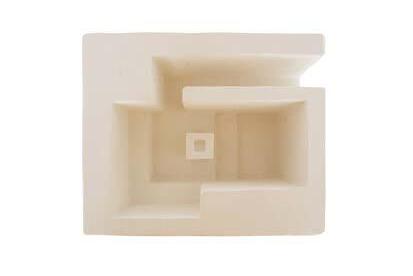
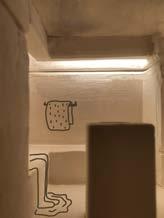
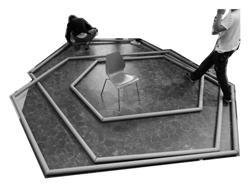
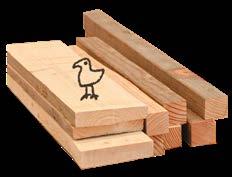
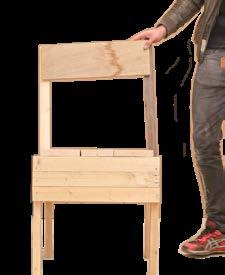
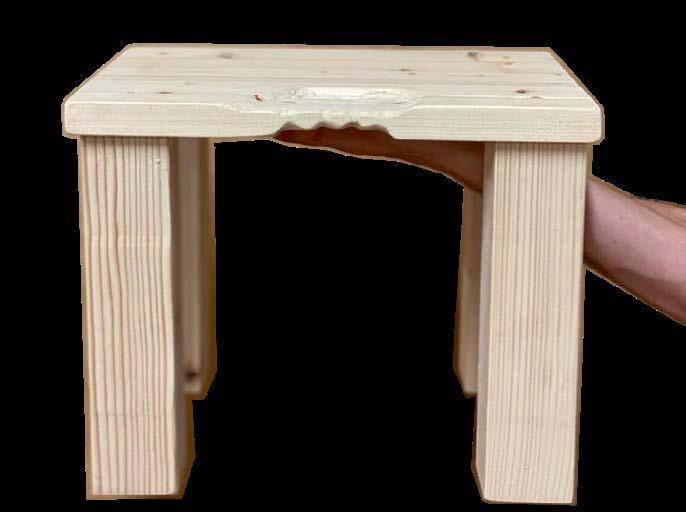
29
1 4 2 3
WALLS:
Thomas Etchanchu
BEYOND
SMALL PROJECTS COLLECTION
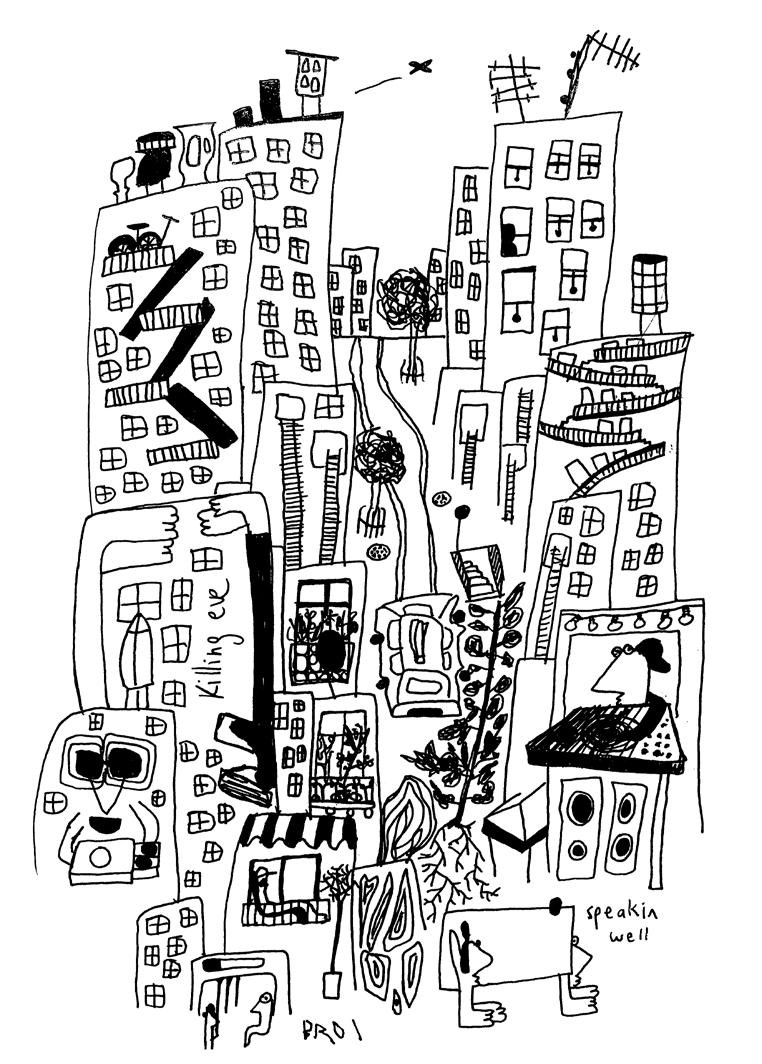
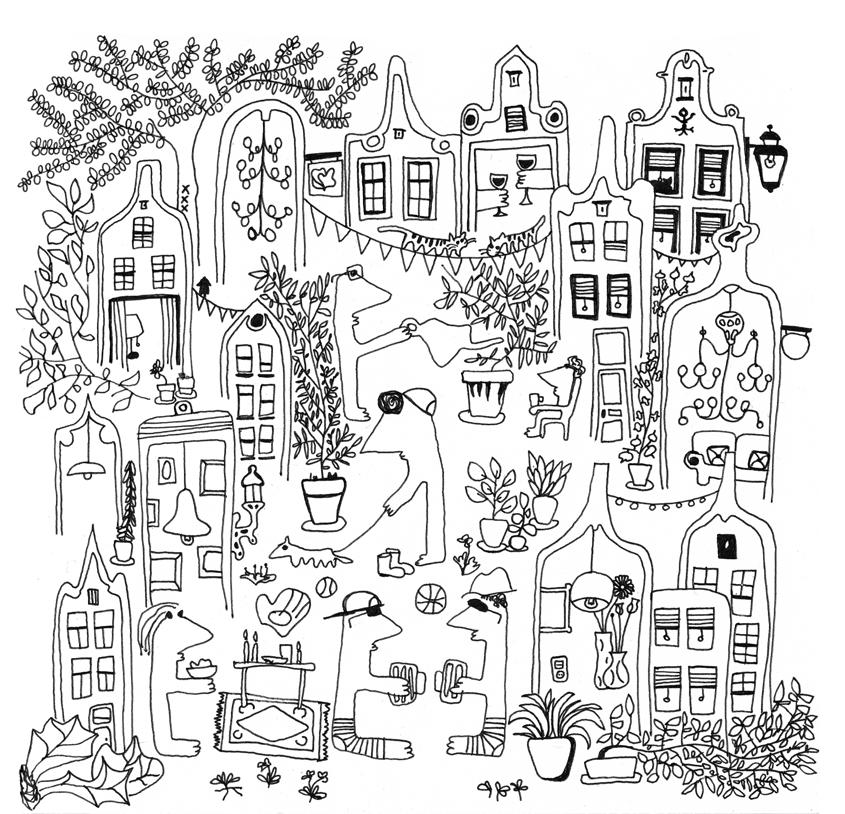
30 BEYOND WALLS: PERSONAL DRAWINGS Thomas Etchanchu All documents are hand-drawn
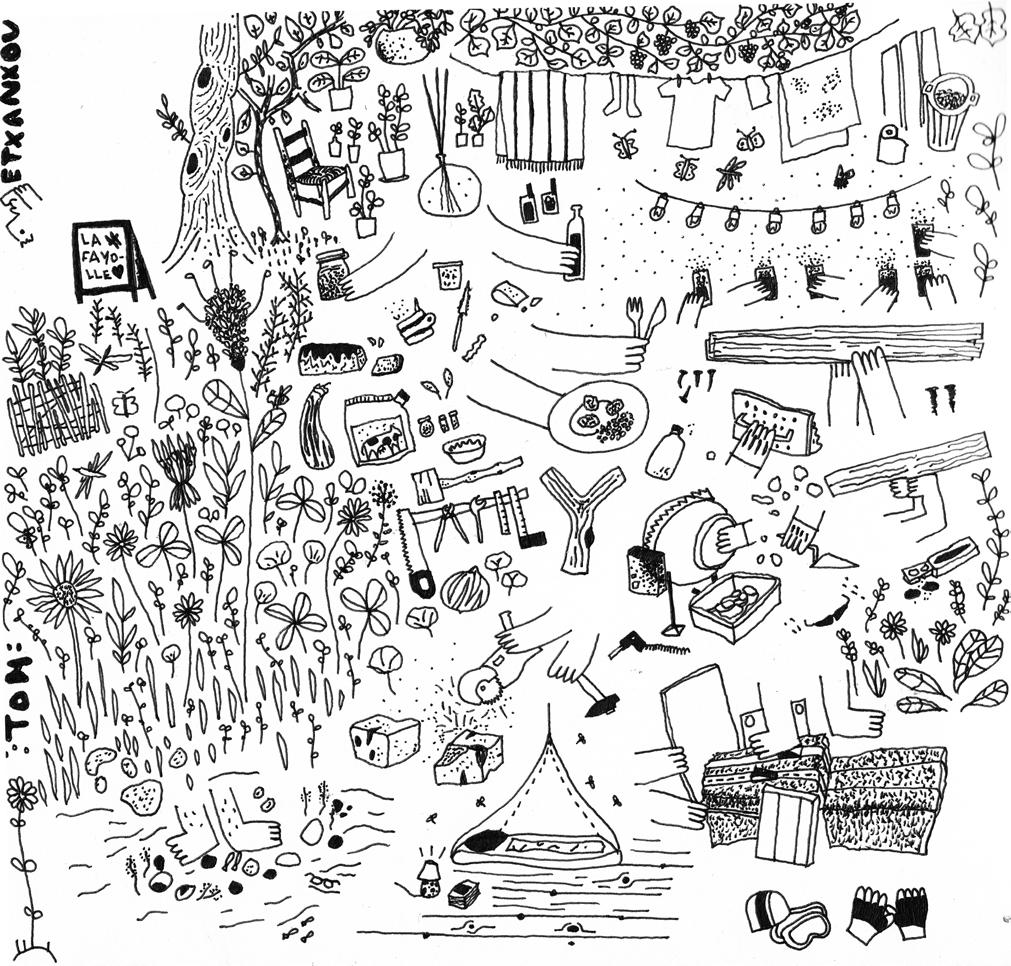
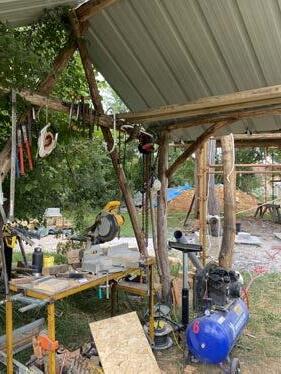
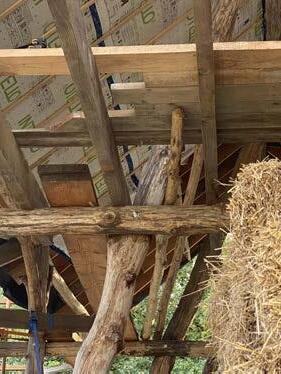
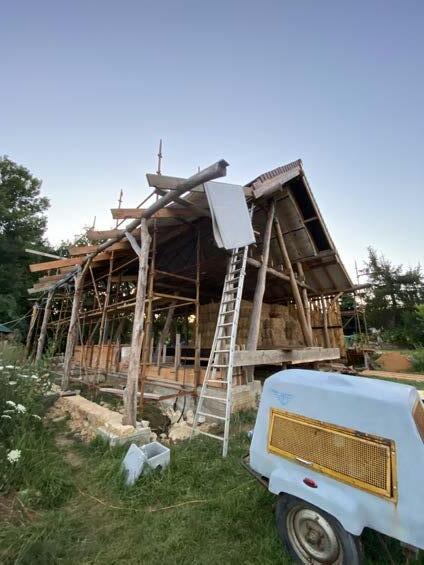
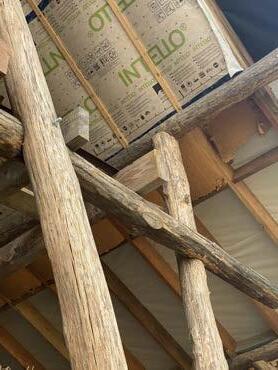
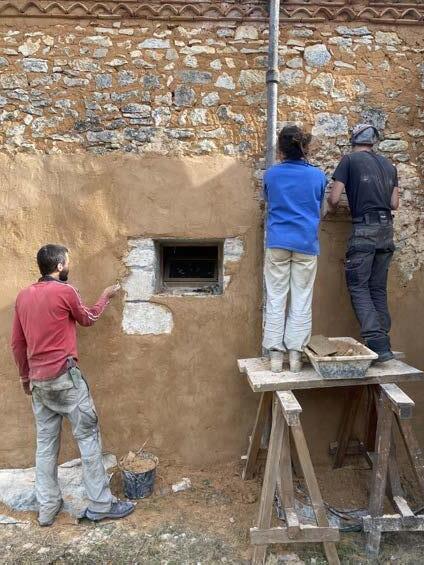
LA FAYOLLE SUMMER 2023 Participative worksite
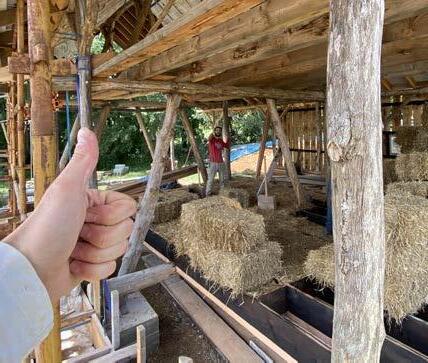
La Fayolle dans nos coeurs, Un doux souvenir d’été Que la rivière a bercé, Avec elle bois, mortier et souper.
32
LA FAYOLLE SUMMER 2023 Participative worksite
Thomas Etchanchu
HOW TO DEAL WITH DENSITY ?
4th semester, 2nd year
SP22
"Density in the metropolis"
Date
February 2022
Team with Sabrina Ayer, Marion Boutan, Lucien Chartier, Anna Craig, Louise Hermant & Julia Sonmez
Teacher
Djamel Klouche djamel.klouche@versailles.archi.fr
HOW TO DEAL WITH DENSITY
4th semester, 2nd year
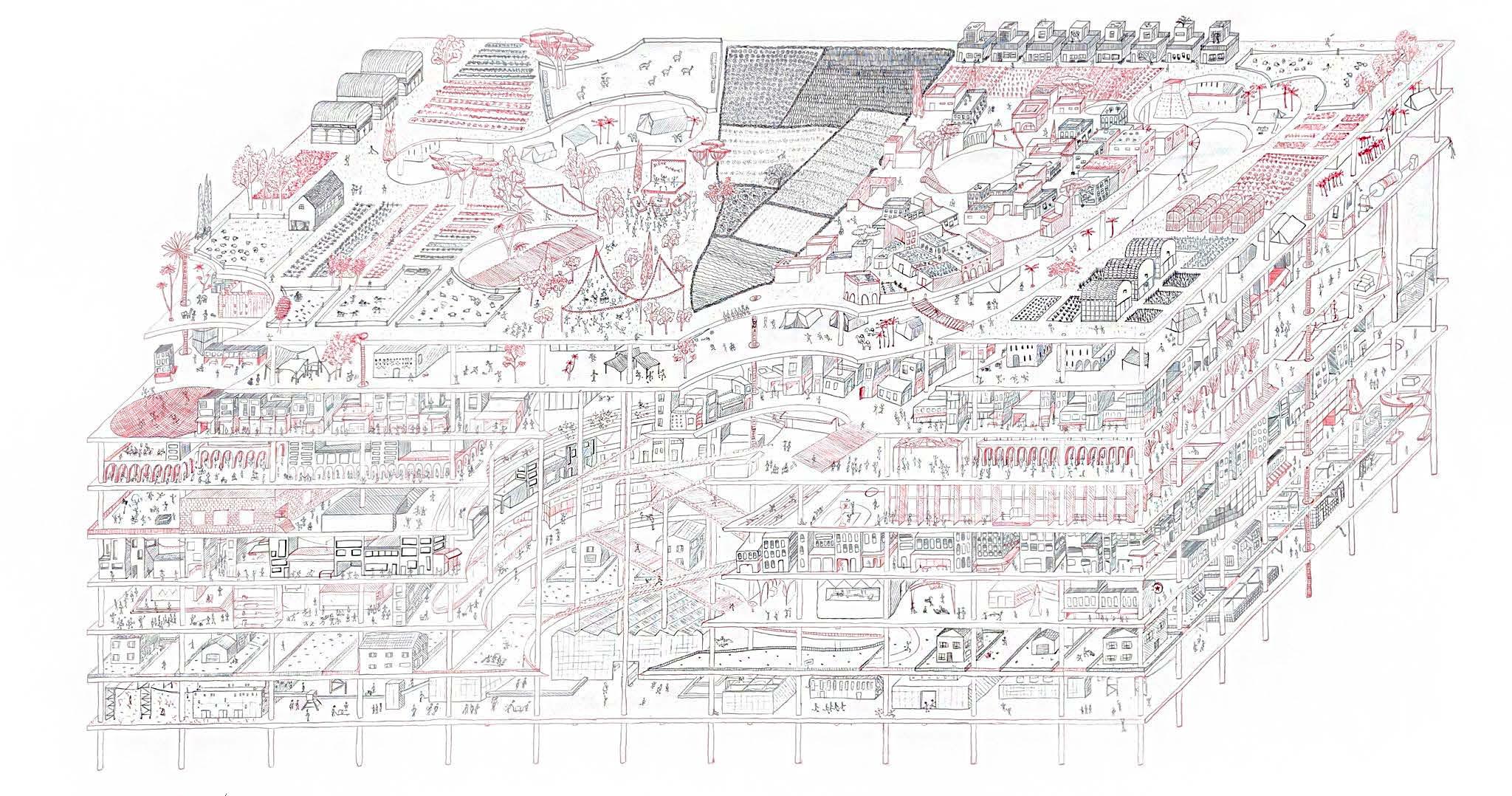
Public space in red and private in black, collective made drawing, ballpoint pen, 85 x 119 cm
34
?
Thomas Etchanchu