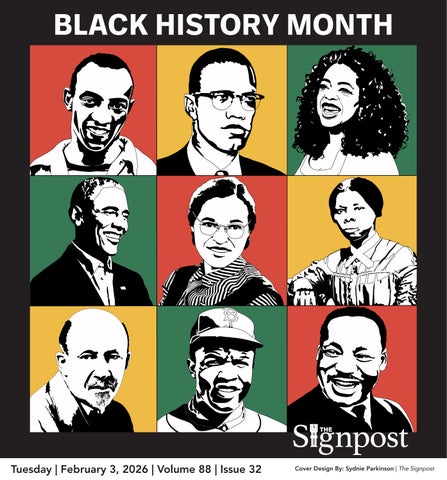

WEBER STATE UNIVERSITY AIMS FOR NEUTRALITY MOVING INTO BLACK HISTORY MONTH
By KAYLI JACOB Reporter
Following recent concerns over censorship, Weber State University intends to make sure voices can be heard moving into Black History Month. “We realized that maybe we had interpreted things a little bit incorrectly as the university,” Dean of Students Ali Threet said. “One of the things that we’re trying to make sure that all students know is that we’re not about censoring, that’s not what we want to do. We want to celebrate different, diverse viewpoints.”
One way the university is doing this is by reviewing the vetting process for guest speakers to be sure it is inline with the law. The section of the contract that directly mentions HB261, the bill cited for much of the school’s censorship, has been removed. Now the contract informs speakers that they must comply with all Utah laws.
Censorship regarding guest speakers has been a concern for some student leaders going into Black History Month. It has made it more difficult for messages to be shared by speakers brought on by the Black Scholars United.
Likewise, it has made recognition and expanding to new members more difficult according to Leon Crutcher, Weber’s National Associate for the Advancement of Colored People President. “I’d say definitely since HB261, it has been kind of harder to plan events for us just to make sure that we can follow all the rules and guidelines,” Crutcher said.
To combat declining membership, NAACP has focused more on using their social media to advocate. “We’ve been seeing kind of hesitation of students wanting to be a part of NAACP,” said Ryan Mills, mentorship development and implementation coordinator. “Because we are bigger on social justice, kind of advocating for and fighting for equality and belonging which makes it a little tricky for me as a staff member on campus, because I have to be a little more mindful of what I say, what I support, things like that.”
Despite this, BSU and NAACP will try to keep events this year similar to the celebrations they held last Black History Month.
Plans for Black History Month have largely been spearheaded by Maryan Shale, student engagement program manager and BSU and African Caribbean Student Union adviser. The overall theme for the month will be “A Century of Black Commemorations,” with additional themes for each week.
The first week’s theme will be “Cultural Contributions” with the second as “Preserv-
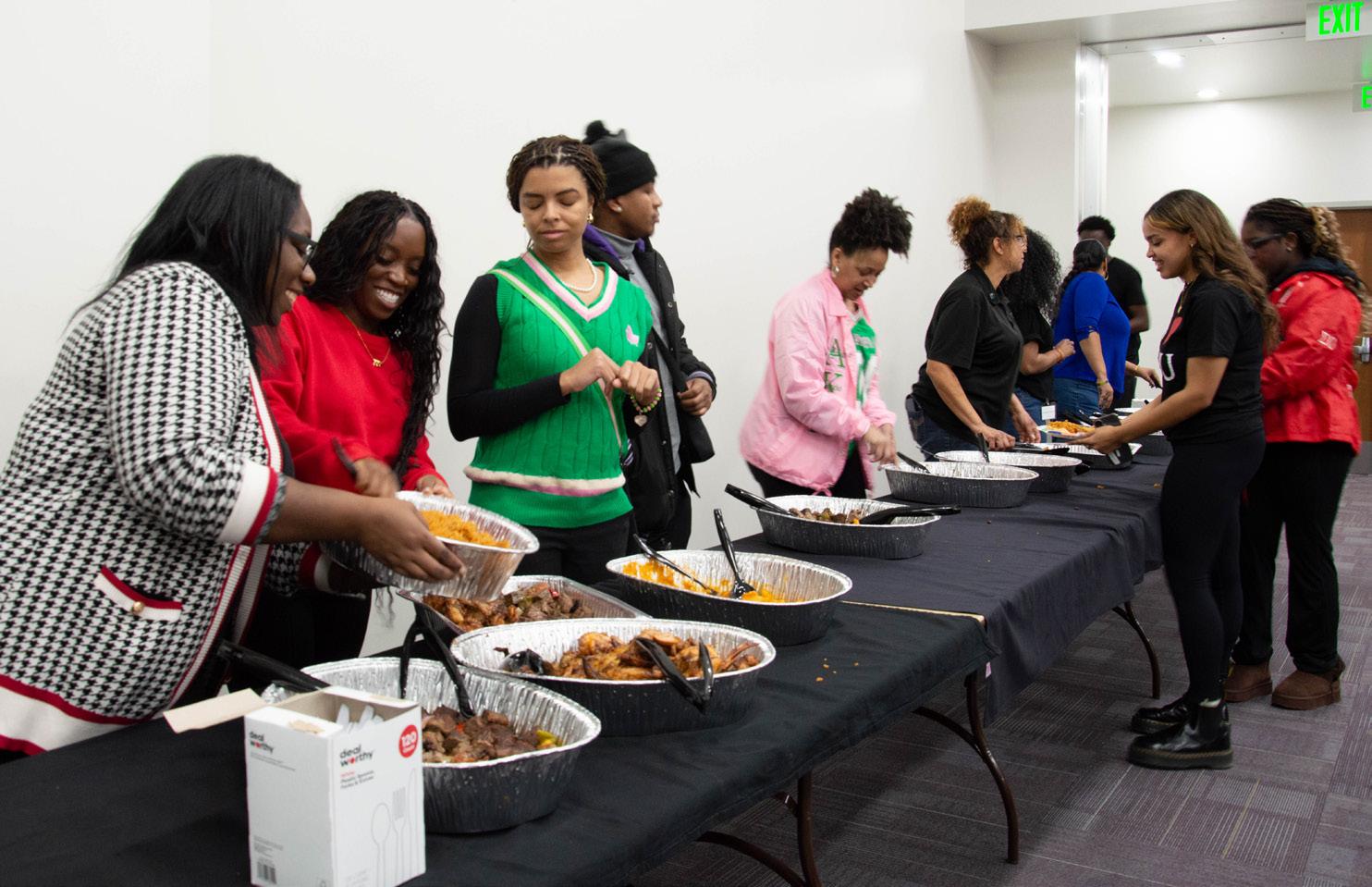
student clubs going into the second week. During the second week, under the theme of “Preserving Black Heritage,” a braiding and haircut event will be held.
This event will bring in barbers and braiders for students to receive their services and learn about the history of black hair. The event will be free and all students are welcome. There has also been discussion of a sports day and other community engagement events for the last two weeks of the month along with keynote speakers. One of
ing Black Heritage,” the third as “Health, Healing and Strength” with the final week as “Black Generational Wealth.” This final theme will be used to highlight black entrepreneurs, leaders and professionals. It will also involve a black tie event where scholarships will be awarded.
NAACP plans to hold an opening event, letting students know that it is Black History Month and they will be partnering with other
these speakers will be Sheerá Watkins, Ph.D., associate vice president for Student Health and Wellness from University of Utah. She will be giving an address in regards to “Health, Healing and Strength.” BSU and ACSU will also be participating in the braiding event. BSU plans on partnering with the Student Success Center for a mental health workshop. Mills said that one goal for the month is to focus more on mental health and
to “provide kind of a safe space, more specifically for black men to kind of open up a bit and understand it’s okay to open up.”
Malcolm Rolling, senator for the College of Arts and Humanities, discussed the Expect the Great event that happened on Jan. 30. “What that is, is a chance for African-American students from across different universities to kind of come together and celebrate all their accomplishments,” Rolling said. Rolling has hope for Black History Month, as other cultural celebrations have gone well recently.
“I would just like to see us be able to grow our own community, get more students involved and just let more people know that we are here and that we’re an organization on campus and that they’re welcome,” Crutcher said. “It’s an organization that’s for every student. It’s not just for one kind of student. It’s welcoming to everybody and it’s just like having extra family at school.” This sentiment was echoed by Mills as she said that NAACP is an organization that can be beneficial for all kinds of people, even if it started aimed towards black individuals.
Going forward, Threet has said the university strives to be inclusive of all view points. “We want the university to be a place where students can explore and grow and hear different viewpoints. And we’re excited to go back to that,” Threet said. While the university must remain neutral, clubs are welcome to host a variety of events and bring on a variety of speakers, so long as funding comes from the club.
“You can’t silence a voice that really, you know, desperately needs to be heard,” Rolling said. “It will be heard in one way, shape or form, whether it’s in support by university or not. Weber State has done the best job that they possibly can with allowing for that kind of stuff.” More information on upcoming events can be found on the Student Success Center website under Black History Month.
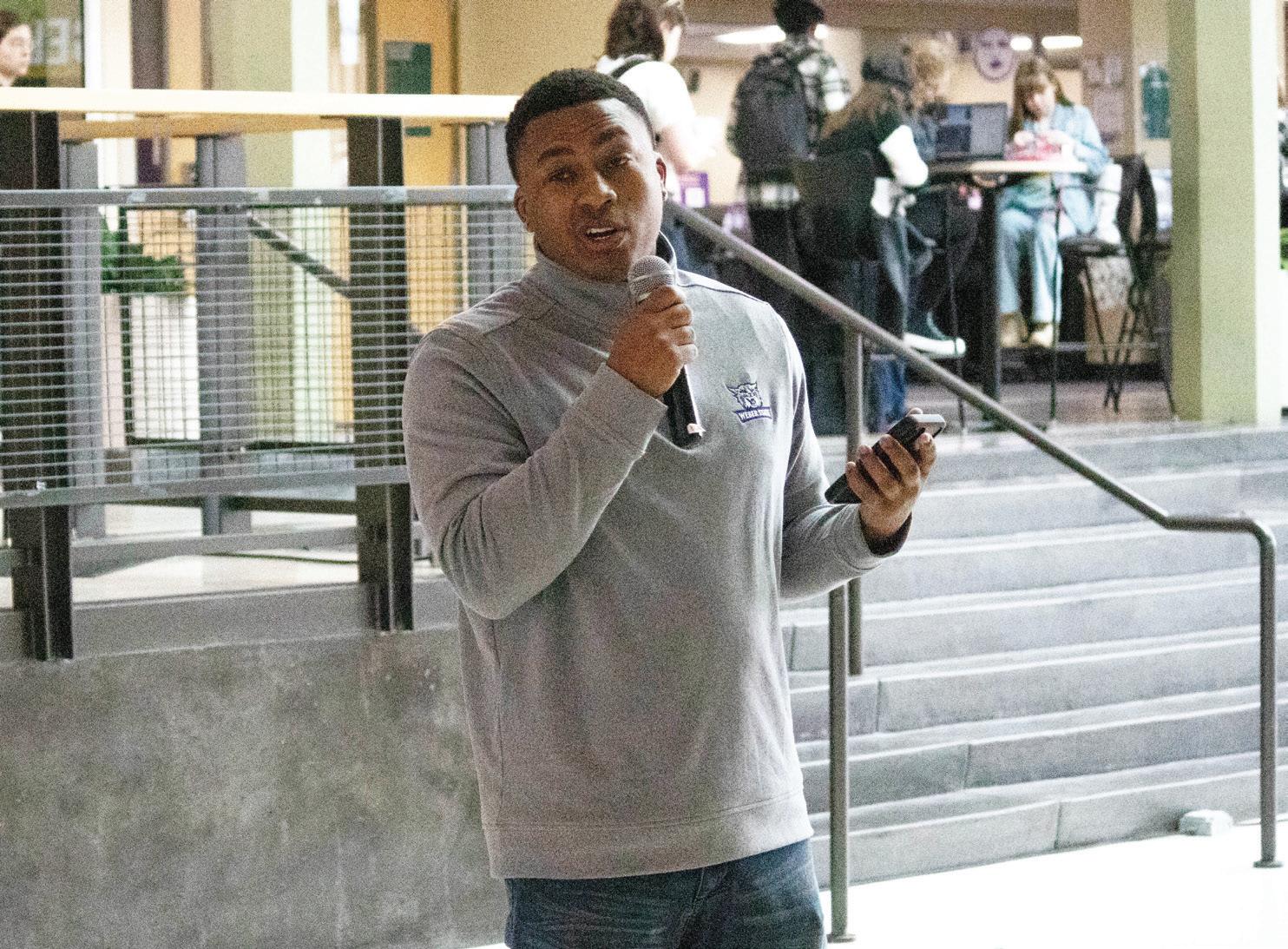
Demetrius Sanders addresses the crowd and informs them of other upcoming events for Black History Month in February 2025.
LA UNIVERSIDAD DE WEBER STATE APUNTA POR LA NEUTRALIDAD ENTRANDO AL MES DE LA HISTORIA NEGRA
Traducido por IVANNA OLACHEA GONZALEZ
Traductora
KAYLI JACOB Reportera
A raíz de las recientes preocupaciones sobre la censura, la Universidad de Weber State tiene la intención de asegurarse que las voces puedan ser escuchadas al entrar al Mes de la Historia Negra. “Nos dimos cuenta de que tal vez habíamos interpretado las cosas de manera un poco incorrectas como universidad”, dijo la Decana de Estudiantes Ali Threet. “Una de las cosas que intentamos que todos los estudiantes sepan es que no se trata de censurar, eso no es lo que queremos hacer. Queremos celebrar los puntos de vista diferentes y diversos”.
Una de las maneras que está tomando la universidad es revisar el proceso de selección de oradores invitados para asegurarse que se ajusta a la ley. La sección del contrato que menciona directamente la ley HB261, la ley citada como responsable de gran parte de la censura en la escuela, ha sido removido. Ahora el contrato informa a los oradores que deben cumplir con todas las leyes de Utah. La censura con respecto a los oradores invitados ha sido motivo de preocupación para algunos líderes estudiantiles al entrar al Mes de la Historia Negra. Se ha dificultado compartir mensajes por los oradores invitados por Black Scholars United.
Del mismo modo, esto ha dificultado el reconocimiento y la incorporación de nuevos miembros según Leon Crutcher, Presidente de la Asociacion Nacional para el Progreso de las Personas de Color de Weber. “Diría que, definitivamente, desde HB261, nos ha resultado más difícil planear eventos para asegurarnos de que cumplimos todas las reglas y directrices”, dijo Crutcher.
Para combatir la disminución del número de membresías, NAACP se ha enfocado más en usar sus redes sociales para defender sus
causas. “Hemos observado cierta validación por parte de los estudiantes que desean formar parte de NAACP”, dijo Ryan Mills, coordinador de desarrollo e implementación de mentorías. “Porque nos preocupamos más por la justicia social, defendemos y luchamos por la igualdad y la inclusión, lo que me complica un poco las cosas como miembro del personal del campus, porque debo tener cuidado con lo que digo, lo que apoyó, cosas como esas”. A pesar de esto, BSU y NAACP intentarán mantener los eventos de este año similares a las celebraciones que se llevaron a cabo el pasado Mes de la Historia Negra. Los planes para el Mes de la Historia Negra han sido impulsados en gran medida por Maryan Shale, directora del programa de participación estudiantil y asesora de BSU y la Unión de Estudiantes Afrocaribeños. El tema general del mes será “Un Siglo de conmemoraciones Negras”, con temas adicionales para cada semana.
El tema de la primera semana será “Contribuciones Culturales”, el de la segunda “Preservación del Patrimonio Afroamericano” , la tercera “Salud, Sanación y Fortaleza” y el de la última semana “Riqueza Generacional Afroamericana”. Este último tema será utilizado para destacar a empresarios, líderes y profesionales afroamericanos. También incluirá un evento de etiqueta en el que se otorgarán becas.
NAACP planea celebrar un evento inaugural para informar a los estudiantes de que es el Mes de la Historia Negra y que colaborarán con otros clubes estudiantiles durante la segunda semana. Durante la segunda semana, bajo el lema “Preservación del Patrimonio Afroamericano”, un evento de trenzado y corte de pelo se celebrará.
Este evento contará con la presencia de peluqueros y trenzadores para que los estudiantes reciban su servicio y aprendan sobre la historia del cabello afro. El evento será gratuito y todos los estudiantes son bienvenidos. También se ha discutido sobre organizar un día deportivo y otros eventos de partici-
pación durante las últimas dos semanas del mes, junto con oradores destacados. Una de estas oradoras será Sheera Watkins, Ph. D., vicepresidenta adjunta de Salud y Bienestar Estudiantil de la Universidad de Utah. Ella dará una charla sobre “Salud, Sanación y Fortaleza”. BSU y ACSU también participarán en el evento de trenzado. BSU planea colaborar con el Centro de Éxito Estudiantil para organizar un taller sobre salud mental. Mills dijo que uno de los objetivos del mes es centrarse mas en la salud mental y “proporcionar una especie de espacio seguro, mas especificamente para que los hombres negros se abran un poco y que entiendan que esta bien abrirse”.
Malcolm Rolling, senador de la Facultad de Artes y Humanidades, habló sobre el evento Expect the Great que pasó el 30 de enero. “Lo que es, es una oportunidad para que los estudiantes afroamericanos de diferentes universidades se reúnan y celebren todos los logros”, dijo Rolling. Rolling tiene esperanza por el Mes de la Historia Negra, ya que otras celebraciones culturales han ido bien recientemente.
“Me gustaría que fuéramos capaces de hacer crecer nuestra propia comunidad, conseguir que más estudiantes participen y dar a conocer a las personas que estamos aquí, que somos una organización en el campus y que son bienvenidos”, dijo Crutcher. “Es una organización para todos los estudiantes. No es solo para un tipo de estudiante. Es dar
la bienvenida a todo el mundo y cómo tener una familia más en la escuela”. Este sentimiento hizo eco por Mills al afirmar que NAACP es una organización que puede beneficiar a cualquier persona, aunque en un principio se creará con el objetivo de ayudar a la población negra.
Threet mencionó que la universidad se esfuerza por ser inclusiva con todos los puntos de vista. “Queremos que la universidad sea un lugar donde los estudiantes puedan explorar, crecer y escuchar diferentes puntos de vista. Y estamos emocionados de volver a eso”, dijo Threet. Mientras la universidad debe mantenerse neutral, los clubes pueden organizar diversos eventos e invitar a diferentes oradores, siempre y cuando la financiación provenga del club.
“No puedes silenciar una voz que realmente, ya sabes, necesita desesperadamente ser escuchada”, dijo Rolling. “Será escuchada de una forma u otra, ya sea con el apoyo de la universidad o no. Weber State ha hecho un buen trabajo en todo lo posible para permitir ese tipo de cosas”. Más información sobre los próximos eventos puede ser encontrada en el sitio web del Centro de Éxito Estudiantil en Mes de la Historia Negra.
Por
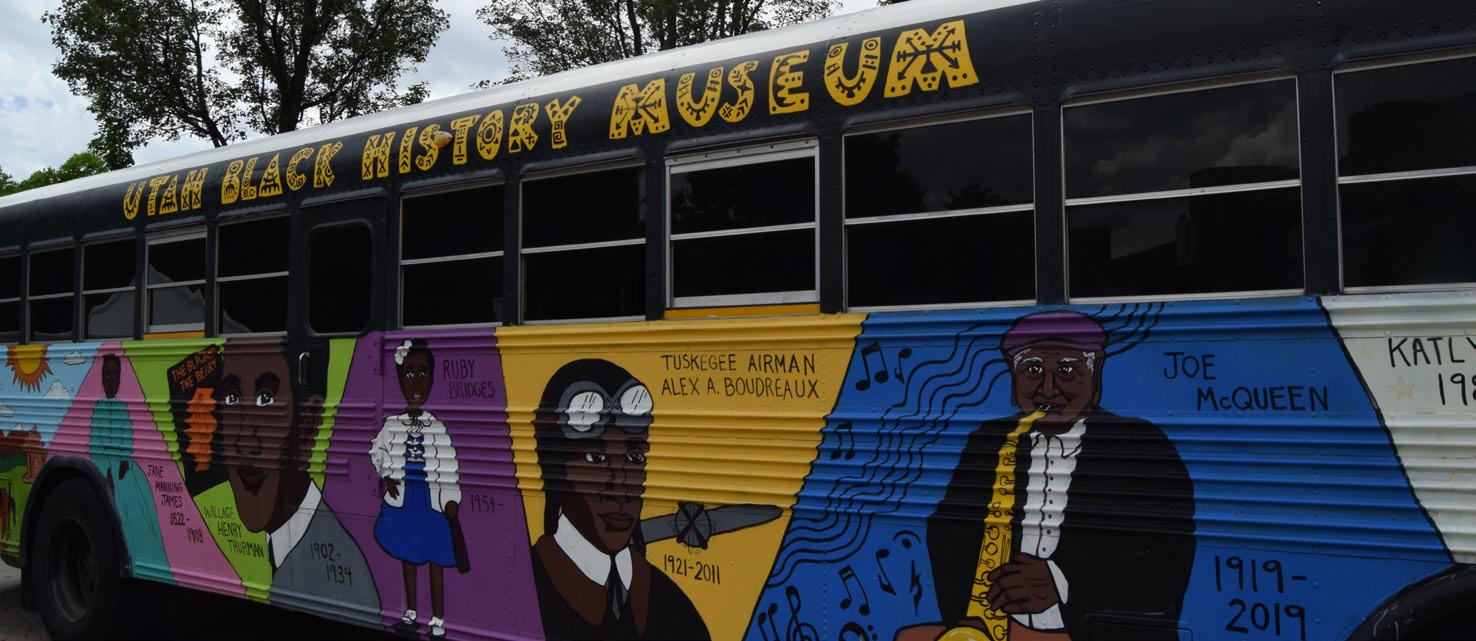
El exterior del Museo de Historia Afroamericana de Utah frente al evento Juneteenth en el anfiteatro de Ogden en febrero de 2025.



By HENRY CRAIG Reporter
Adjustment or offense?
On Jan. 20, Weber State University Police Department officers responded to a suspicious incident at the Shepherd Union on the third floor. A student witnessed an employee on break fondling their privates for what the student felt was a suspicious amount of time. The officers were unable to verify the students claims, and the student only contacted
the officers because they wanted the event documented.
From Dixon to ducky heaven
On Jan. 21 around 5:15 p.m., WSUPD officers were dispatched to a traffic hazard on Dixon Parkway. Upon reading the dispatch, officers learned the incident involved several ducks getting hit by a car. Officers contacted the complainant but received no further information about the car.
Caught riding green thumbed
On Jan. 22 at 9 p.m., WSUPD stopped two individuals riding on an e-bike. Officers informed them they need helmets and insurance to ride on campus property. The individuals were let go, and allowed to push the bike off campus property, before riding home.
Service dog relief
On Jan. 23 at 12 p.m., WSUPD officers were called to the Kimball Visual Arts Center
to investigate feces left on the main lobby floor a day prior. The investigation revealed it was from a service animal. The owner was not aware their animal pooped as they were away from their pet when the defecation occurred. WSUPD officers informed the individual of Weber State’s animal policies, and the individual cleaned the feces.
Share this story at thesignpostwsu.com

By HENRY CRAIG Reportero
Ajuste su ofensa?
El 20 de enero, oficiales del Departamento de Policía de la Universidad de Weber State, respondieron a un incidente sospechoso en el tercer piso de la Shepherd Union. Un estudiante vio a un empleado en su descanso tocando sus partes privadas por lo que el
estudiante consideró un tiempo sospechoso. Los oficiales no pudieron verificar las afirmaciones del estudiante y este solo contactó a los oficiales porque quería el evento documentado.
De Dixon al paraíso de los patitos
El 21 de enero alrededor de las 5:15 p.m., oficiales WSUPD fueron enviados a un incidente de tráfico en Dixon Parkway. Al leer el informe, los oficiales se enteraron que el incidente involucra a varios patos atropellados por un carro. Los oficiales contactaron al denunciante pero no recibieron más infor-

mación sobre el carro.
Atrapado conduciendo con el pulgar verde
El 22 de enero a las 9 p.m., WSUPD detuvieron a dos individuos circulando en una bicicleta eléctrica. Los oficiales les informaron que necesitaban cascos y seguros para circular en propiedad del campus. Los individuos fueron dejados libres y se les permitió sacar la bicicleta de la propiedad del campus antes de irse a casa.
Alivio de perro de servicio
El 23 de enero a las 12 p.m., oficiales de WSUPD fueron llamados al Kimball Visual Arts Center para investigar las heces dejadas en el vestíbulo principal el día anterior. La investigación reveló que provenía de un animal de servicio. El dueño no se dio cuenta de que su animal había defecado, ya que se encontraba lejos de su mascota cuando ocurrió la defecación. Los oficiales WSUPD le informaron al individuo de las políticas sobre animales en Weber State y el individuo limpió las heces.
Interested in the student fee process?
will be holding open deliberations
Jan. 30 and Feb. 6 Noon - 4 p.m. in the Shepherd Union, Room 404A, to decide where your student fees will go beginning in the 2026-2027 school year.
weber.edu/student-access-success/student-fees.html

WEBER STATE HOSTS ANNUAL ‘EXPECT THE GREAT’ CONFERENCE
By HENRY CRAIG Reporter
On January 30-31 the Expect the Great evOn Jan. 30-31, the “Expect the Great” event was held on Weber State University’s Davis campus. The origins of “Expect the Great” stem from 2011 when its founder, Rev. France A. Davis read a study finding a gap in graduation retention rates for African American students. David started the conference as outreach to give African American students access to college and career information. The event has since expanded its focus to include college students.
The high school portion of the conference happened earlier in the day. It had seminars on topics ranging from the basics of college enrollment and admissions to civic engagement and financial literacy. The college portion of the conference started at 3 p.m. and ran until 9 p.m. It featured Rep. Sandra Hollins as its keynote speaker, followed by a step performance. The general vibes were positive.
“I think this year, there’s definitely been a lot more excitement built up from it, just stemming from last year because last year, I feel like it was really the big first turnout after COVID,” said Leon Crutcher, president of the NAACP at Weber State. “I think the highlights of it is really just being able to connect with the other BSUs or other students of color around the state.”
On Jan. 31, the day started off with an opening breakfast before students separated to attend various seminars. The topics covered included mental health, financial literacy and civics engagement. Then there was a mid-day break for a career fair and lunch before the seminars continued.
“It’s a great conference. It really does inspire a next generation of leaders who give back to their community,” said Salt Lake City councilwoman Natalie Pinkney, who was there as one of the civic speakers. While the conference was well received and had a generally positive atmosphere. The planning of the event faced unique challenges.
“Talking more about the Black community, what we say that affects us. We can’t really be outspoken like we used to be before. So we’ve just been limited to just what we say about how we feel, about how it’s affecting us and how to go about it,” said Blessing
Ibeneme, president of the Weber State Black Student Union, speaking on the impact of HB261, the 2024 sweeping anti-DEI bill.
“HB261, I think, was ill-perceived and established legislation, and unfortunately, it did pass. That has brought about challenges at all of our institutions. Not just that, but I think it’s had a disrupting effect on student learning, student success as well,” said Betty Sawyer, a longstanding member of “Expect the Great.” “But since HB261, that has changed as well. Some schools are comfortable. Some schools have told staff, if they participate, they have to do it on their own time.”
Despite the difficulties, “Expect the Great” remains a useful resource for all students who need help navigating college, and professional life, “Some of our committee members, as well as volunteers, are students that came here as high school students, and they have persisted and graduated, and now they’re in a professional role, and they’re now speaking at ‘Expect the Great,’” Sawyer said.
“This conference is for everybody. It’s not just for people that are in BSU or just students of color. We welcome everybody here. It’s just to build community,” Crutcher said. “If you’re interested in coming but you feel uncomfortable, just come. We welcome everybody. It’s going to be a good time regardless of who you are.”
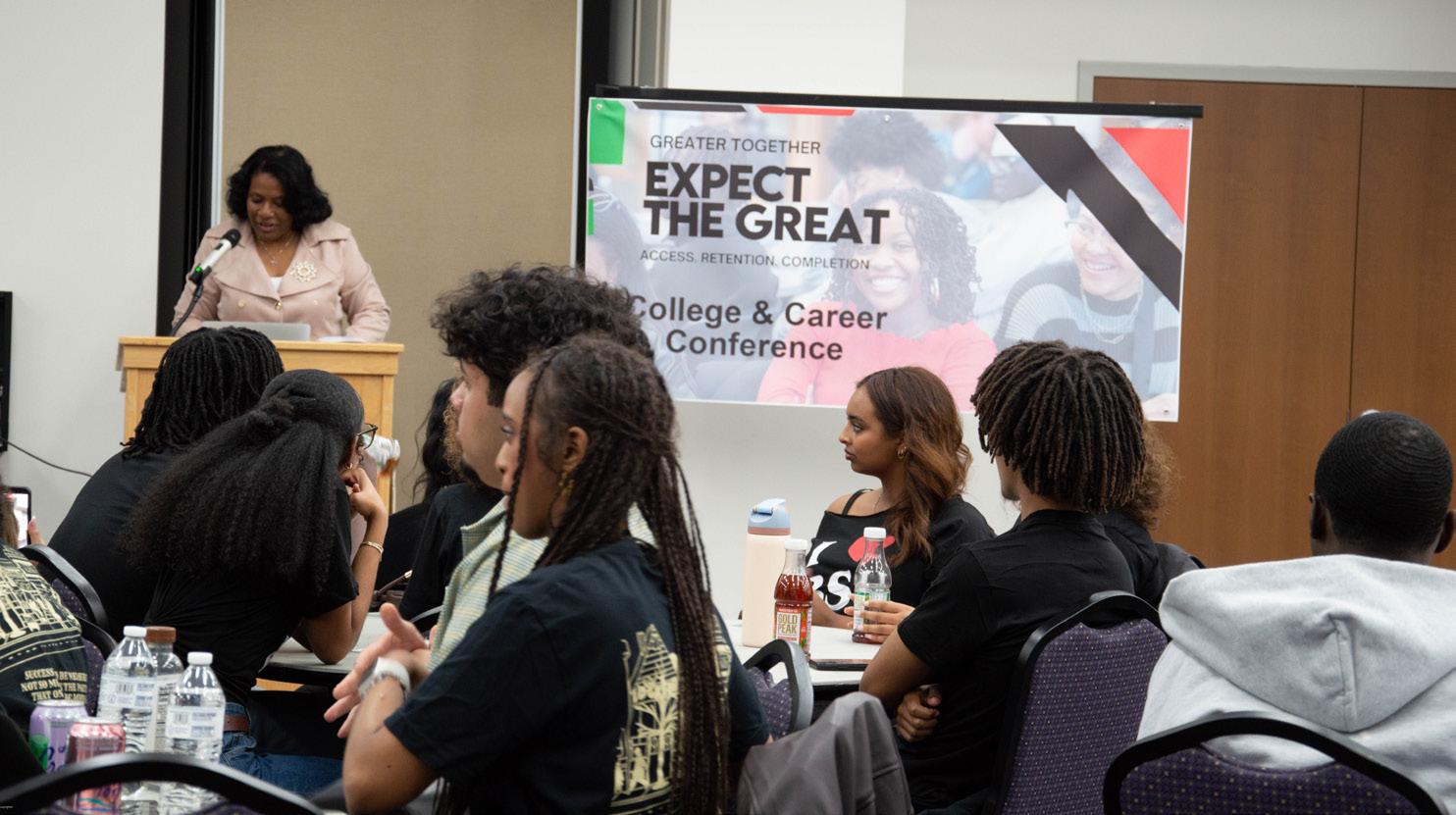
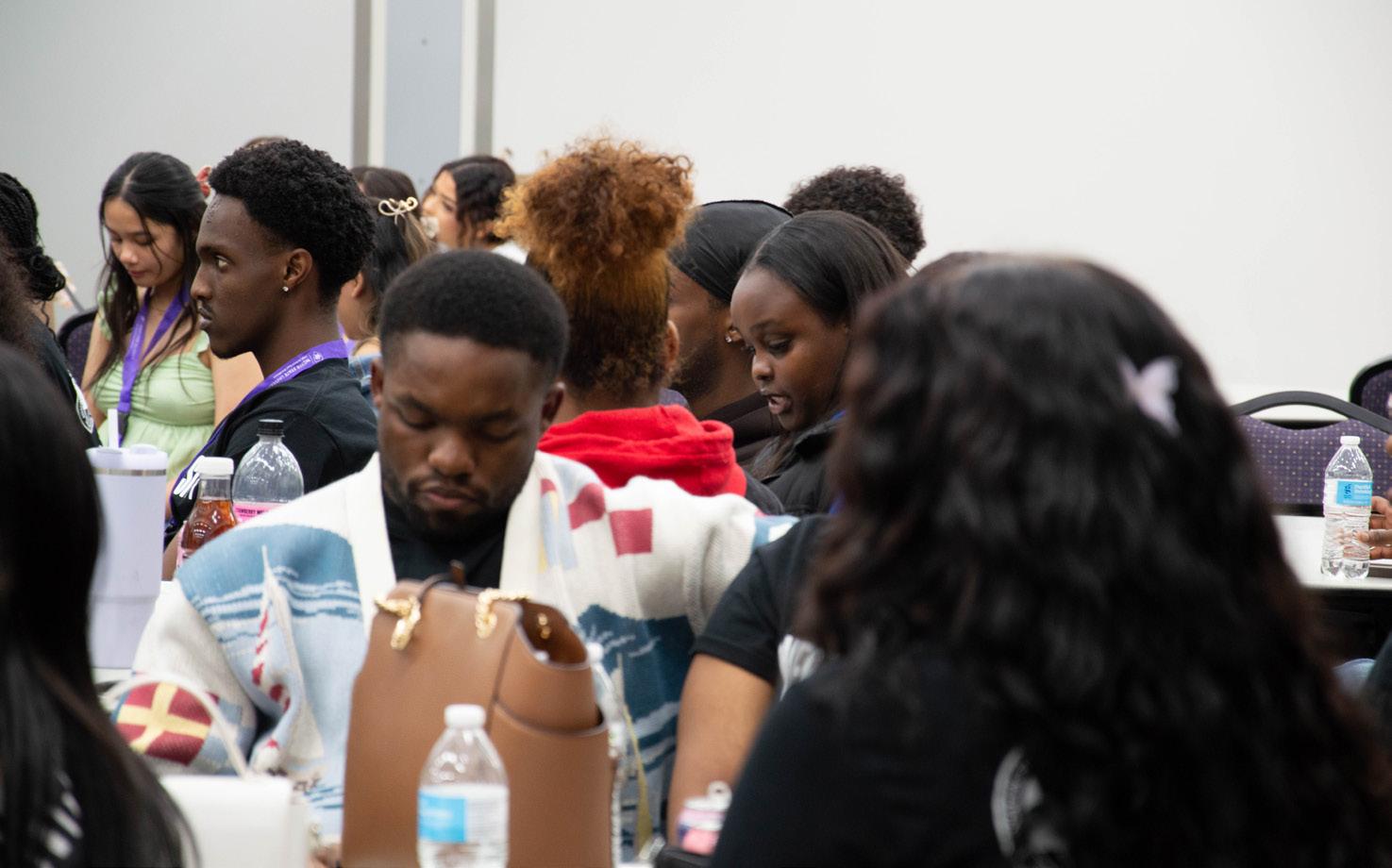
TOP: Keynote speaker, Sandra Hollins, showed her support to the future professionals that attended the Expect the Great conference.
MIDDLE: Utah Representative, Sandra Hollins, spoke at the Expect the Great conference where students absorbed her encouraging words.
BOTTOM: The Ballroom of Weber State University Davis Campus. People from all over Utah showed up to support future professionals at the Expect the Great Conference.
SUNDANCE SAYS GOODBYE TO UTAH LEAVING ATTENDEES WITH MIXED REACTIONS
By JARED MITCHELL Editor
In 2025, Sundance announced that the festival would be permanently moving from Park City, Utah to Boulder, Colorado, leaving many fans of the long-running festival filled with emotions. “I’m very sad it’s leaving because I’ve done it for so many years,” said Carol Haselton, a volunteer at the 2026 festival.
Haselton has volunteered at Sundance for over fifteen years. She said that the film festival has given her something to look forward to after the holiday season. The festival also filled a hole in Haselton’s schedule as she stopped skiing over the years.
Even though Haselton is sad to see the festival go, other residents have had other reactions to the move. “There are some locals that are happy,” Haselton said. “I have two sons that work in Park City and it’s an annoyance to them because of the traffic. It’s hard for
them to get to work.”
Sundance is moving to Boulder due to the lack of available space.
The Sundance Institute stated “Park City, Utah, has been our home. However, in order to produce and continue to grow the Festival, we require more theaters and venues that can support our programming needs.”
Even with the festival moving, some volunteers are considering making the trip to Colorado in order to volunteer at the 2027 festival.
Scott-Jamin Jessop, who goes by the online moniker of Skippy, has attended the festival for 23 years in a row and said he has mixed feelings about the festival’s move. He said he’s loved his time with the festival, but never wanted the festival to feel like an obligation for him to attend.
“I haven’t felt like that but I’ve come close to feeling like that at the end of some Sundances where it’s like, ‘Oh, wow, that was
really taxing. Should I go next year?’” Jessop said. “But this way, I don’t have to make that choice, they made it for me, and there’s nothing I can do about it.”
Jessop said he wonders how he’ll feel next year when the time for Sundance 2027 comes around and it’s no longer near his home. Instead of focusing on it being gone, Jessop said he’s going to use that opportunity to remember the good times.
“Hey, it’s not here. There’s nothing I can do about it. Why don’t I look through old memories and remind myself of how much fun I had?” Jessop said.
Jessop has many memories of meeting celebrities at the festival. Such as the time he met Dave Grohl, the lead singer of the Foo Fighters, that led to him meeting Jack Black later on in California. He said he’s happy for the people of Colorado and their new opportunity to attend the festival in their hometown.
“Somewhere out there is a 24-year-old that might get asked 23 years from now why you went to Sundance, and they’re like, ‘Oh, because it came to my backyard and I started going.’ It was a lot of fun. I’m excited for that person, too,” Jessop said.
Even though Sundance is moving out of Utah, there are still other film festivals available for Utahn’s to attend including the recently started Orem Film Festival, the long-running Utah International Film Festival and the Raindance festival.
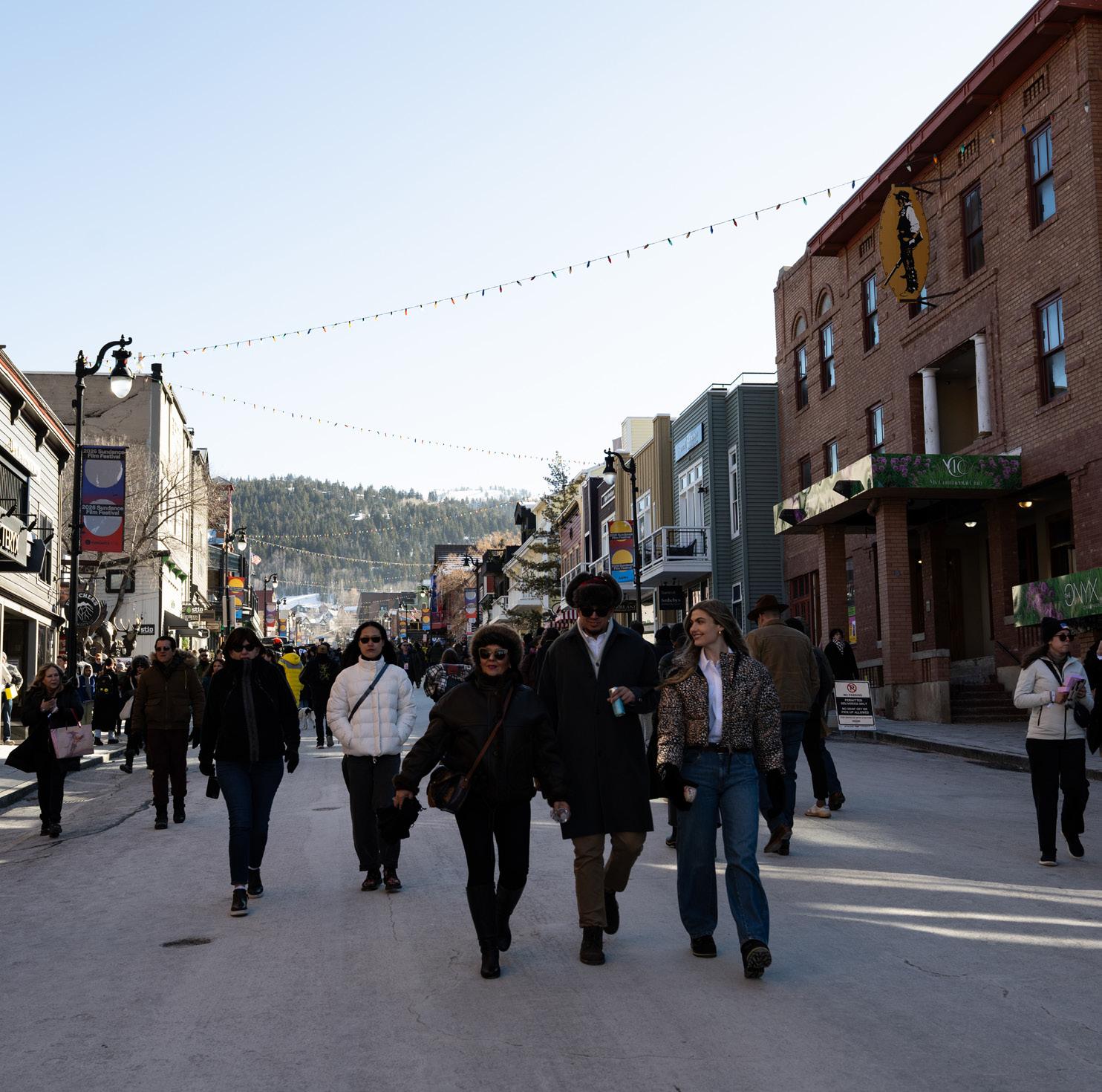
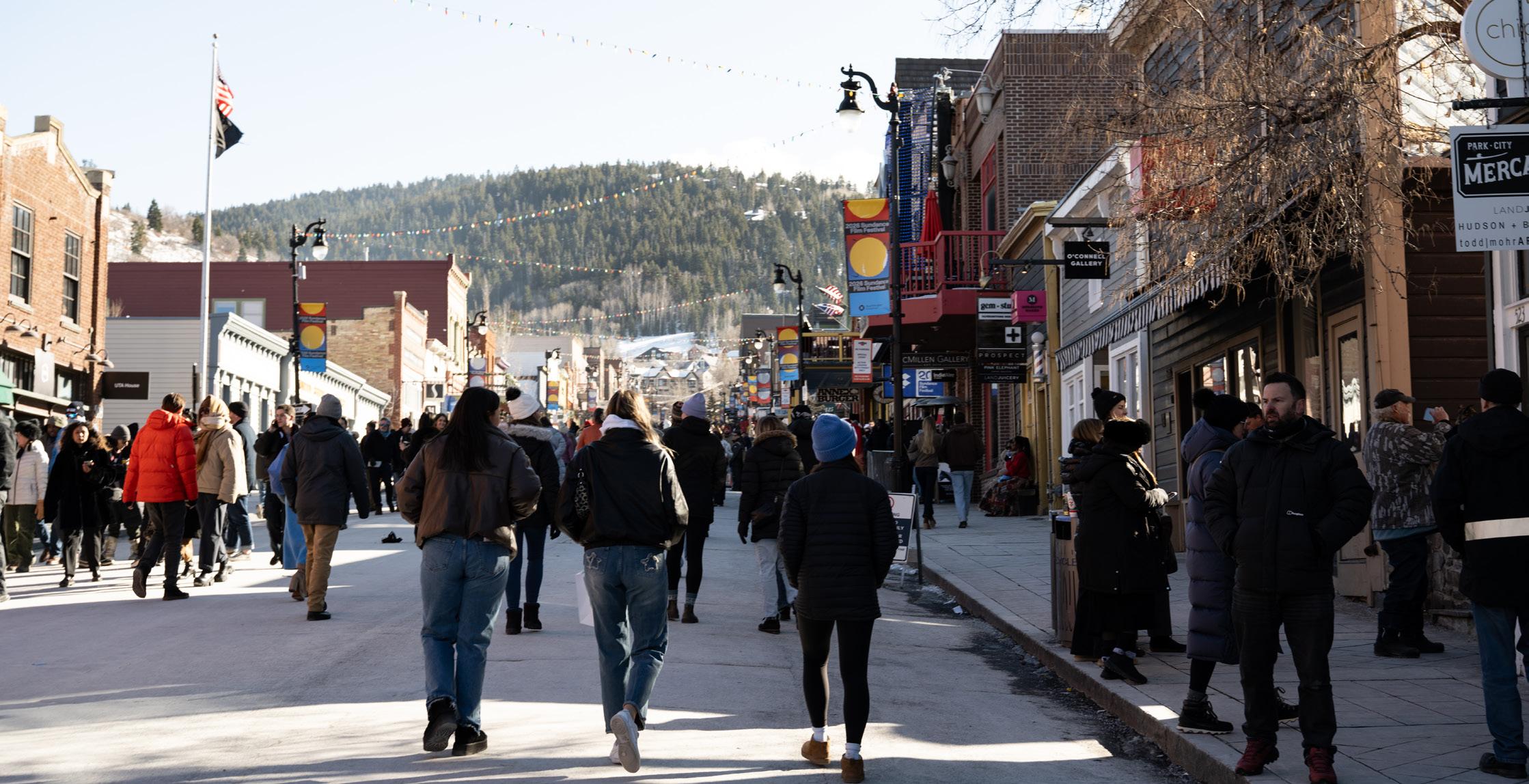
LEFT: People stroll down Main Street of Park City during the opening weekend of the final Sundance Film Festival in Utah.
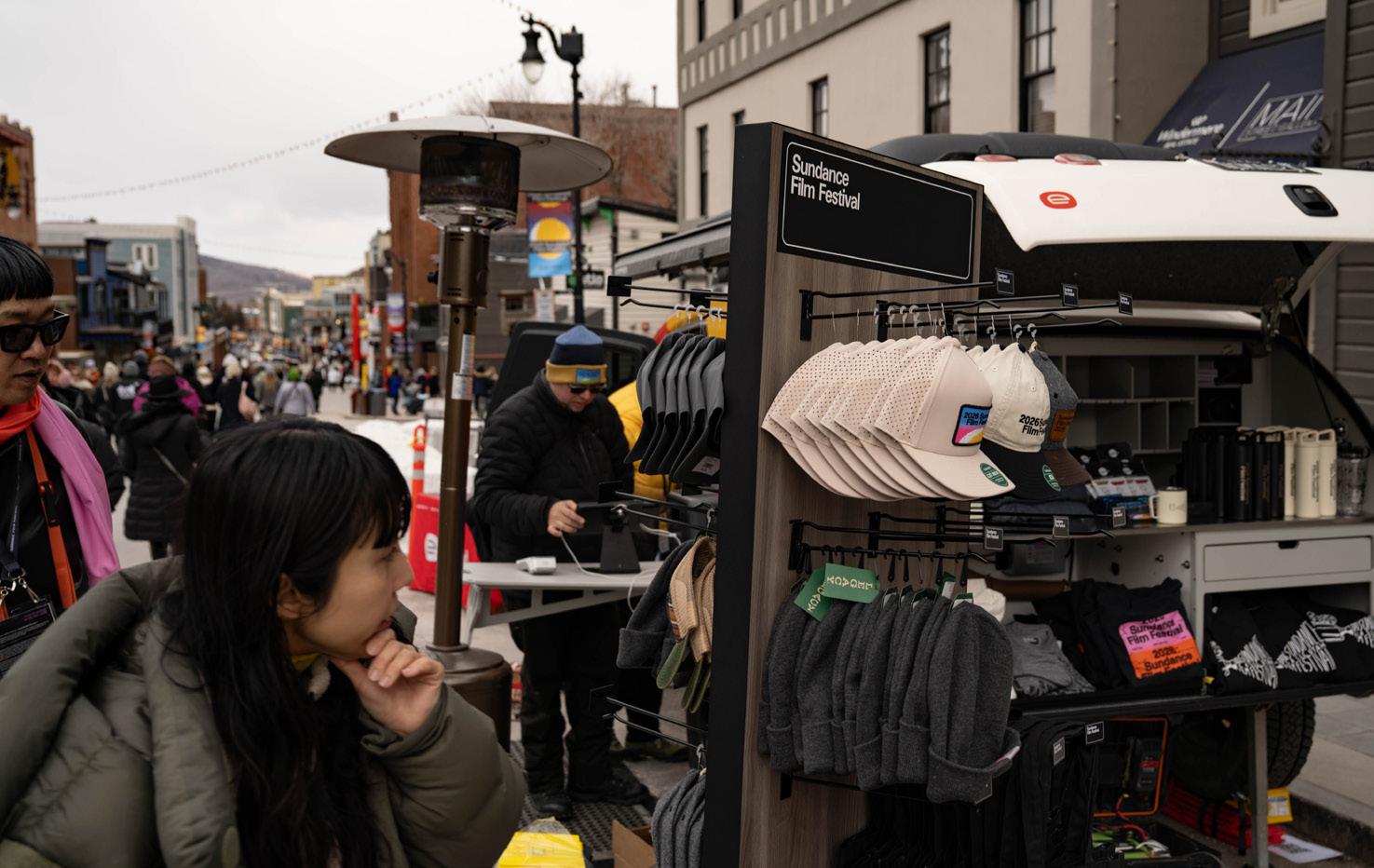
RIGHT: Amy White and Amelia Dimoldenberg at the Creative Communities panel in the Adobe House in Park City on Jan. 25 during Sundance Film Festival.

ANNA KUGLAR The Signpost
SUNDANCE SE DESPIDE DE UTAH DEJANDO A LOS ASISTENTES CON REACCIONES ENCONTRADAS
Traducido por LUNA MALAGON SOLORZANO Traductora
Por JARED MITCHELL Editor
En 2025, Sundance anunció que el festival se mudaría de manera permanente de Park City, Utah, a Boulder, Colorado, dejando a muchos fanáticos del festival, que lleva muchos años realizándose, llenos de emociones encontradas. “Estoy muy triste de que se vaya porque he participado durante tantos años”, dijo Carol Haselton, voluntaria en el festival de 2026.
Haselton ha sido voluntaria en Sundance por más de quince años. Comentó que el festival le ha dado algo que esperar con ilusión después de la temporada de fiestas. El festival también llenó un vacío en su agenda cuando con el paso de los años dejó de esquiar.
Aunque Haselton está triste de ver partir el festival, otros residentes han tenido reacciones distintas ante la mudanza. “Hay algunos locales que están contentos”, dijo Haselton. “Tengo dos hijos que trabajan en Park City y para ellos es una molestia por el tráfico. Les resulta difícil llegar al trabajo”. Sundance se muda a Boulder debido a la falta de espacio disponible.
El Instituto Sundance declaró: “Park City, Utah, ha sido nuestro hogar. Sin embargo, para poder producir y seguir haciendo crecer el festival, necesitamos más teatros y sedes que puedan apoyar nuestras necesidades de programación”.
Aun con la mudanza del festival, algunos voluntarios están considerando viajar a Colorado para participar como voluntarios en el festival de 2027.
Scott-Jamin Jessop, conocido en línea como Skippy, ha asistido al festival durante 23 años consecutivos y dijo que tiene sentimientos encontrados sobre la mudanza del festival. Comentó que ha amado su tiempo en el festival, pero que nunca quiso que asistir se sintiera como una obligación.
“No he llegado a sentirlo así, pero estuve cerca de sentirlo al final de algunos Sundance, cuando pensaba: ‘Wow, eso fue realmente agotador. ¿Debería ir el próximo
año?’”, dijo Jessop. “Pero de esta manera, no tengo que tomar esa decisión; ellos la tomaron por mí, y no hay nada que pueda hacer al respecto”.
Jessop dijo que se pregunta cómo se sentirá el próximo año cuando llegue el momento de Sundance 2027 y ya no esté cerca de su hogar. En lugar de enfocarse en que el festival ya no estará allí, Jessop dijo que va a aprovechar la oportunidad para recordar los buenos momentos.
“Bueno, ya no está aquí. No hay nada que pueda hacer al respecto. ¿Por qué no mirar recuerdos antiguos y recordarme a mí mismo lo bien que la pasé?”, dijo Jessop.
Jessop tiene muchos recuerdos de haber conocido celebridades en el festival, como la vez que conoció a Dave Grohl, el vocalista de Foo Fighters, lo que luego lo llevó a conocer a Jack Black en California. Dijo que está feliz por la gente de Colorado y su nueva oportunidad de atender un festival en su propio hogar.
“En algún lado allí afuera está alguien de 24 años que probablemente le preguntaran en 23 años desde ahora por que atendieron el festival sundance, y ellos dirán,’por qué vinieron a mi patio trasero y empecé a ir’. Fue
muy divertido. Estoy emocionado por esa persona también”, dijo Jessop. Aunque Sundance se va a mover fuera de Utah, todavía hay otros festivales que están disponibles que la gente de Utah puede atender incluyendo el reciente empezando en Orem Film Festival, el veterano Festival Internacional de Cine de Utah y el festival Raindance.
ARRIBA: Las calles de Park City se llenaeon de gente, tanto locales como visitantes, para la última edición del Festival de Cine de Sundance en Utah.
ABAJO: Los asistentes al festival recorren la calle admirando los productos de Sundance el 25 de enero.
WHAT ‘EVERYONE TO KENMURE STREET’ MADE CLEAR TO ME
By JARED MITCHELL Editor
This past weekend I attended the 2026 Sundance Film Festival. One of the films I chose to watch was a documentary titled “Everyone to Kenmure Street.” The documentary covers a protest that took place in Scotland in 2021 when two men were nearly deported by the government. I picked the documentary specifically for the subject matter and its relevance to America today in order to see what I could learn from it.
In a recent press release by the Department of Homeland Security, it’s stated that since the Trump administration took power, more than 675,000 people have been deported from the United States. That’s 675,000 mothers, fathers, students, children and community members who’ve been ripped from their homes and sent back to a country that many of them haven’t called home in decades, if at all. Many politicians will argue that they’re all violent criminals or something of the sort, but the data simply doesn’t support these claims one bit.
A report created by the American Immigration Council in October of 2024 took crime data from the past few decades and examined the trends. The report found that as the foreign-born population grew, property crime, violent crime and the total crime rate fell. The report also found that immigrants are arrested and jailed less when compared to U.S. born citizens with immigrants being 50% less likely to be arrested for violent crimes and 26% less likely to be convicted of homicide. While I don’t have access to every piece of data compiled in this report, it’s not the first to come to this conclusion when examining the numbers.
A different report from the National Institute of Justice, a part of the Department of Justice in the United States government, published in January 2025 found that undocumented immigrants had a lower crime rate compared to U.S. born citizens as well. The report was built on data only from Texas, but it’s another example of the data clearly stating that legal and undocumented immigrants commit significantly less crime when compared to U.S. born citizens.
The data makes one thing very clear, the statements made by President Donald Trump and many other Republican politicians saying that undocumented immigrants are a danger to American citizens are straight-up lies. They might point to a few specific cases of crimes, but they completely ignore the actual data that tells the full story.
I believe that those statements are meant only to stoke fear in Americans and cause a distraction to stop us from focusing on the problems actually facing our society. After all, fear is powerful. If people are afraid and you promise to stop the threat, they’re going to vote for you, data be damned.
“Everyone to Kenmure Street” covers a community wide protest that stopped the immediate deportation of two men who lived in Scotland for years. The Guardian reported that the U.K.’s home office stated that the two men were only being detained for immigration offences shortly after the protest took place. They were going to be deported simply because they were there, not because they committed a dangerous crime.
Neighbors of the two men quickly noticed the immigration raid taking place and they sprung into action. The protest began with only a few people standing in front of and behind the van stopping it from taking the two men away. One protester even dove underneath the van and put himself in danger by grabbing onto the drive shaft of the van to stop it from driving off. He laid there for over eight hours. As the day went on, the protest grew rapidly.
Tons of footage exists of the protest and what started as six people blocking the van from moving ended with over a thousand people covering the entire street from both sides in only a few hours. The crowd chanted “These are our neighbors let them go”, making it clear that the community wanted them to stay.
The two men weren’t living in secret either. They both had active court cases within the immigration system fighting for their right to stay in their home. Their cases weren’t over, their due process wasn’t complete but the Home Office still chose to try to deport them. That day, they failed. The protest was a success and after about eight hours of growing
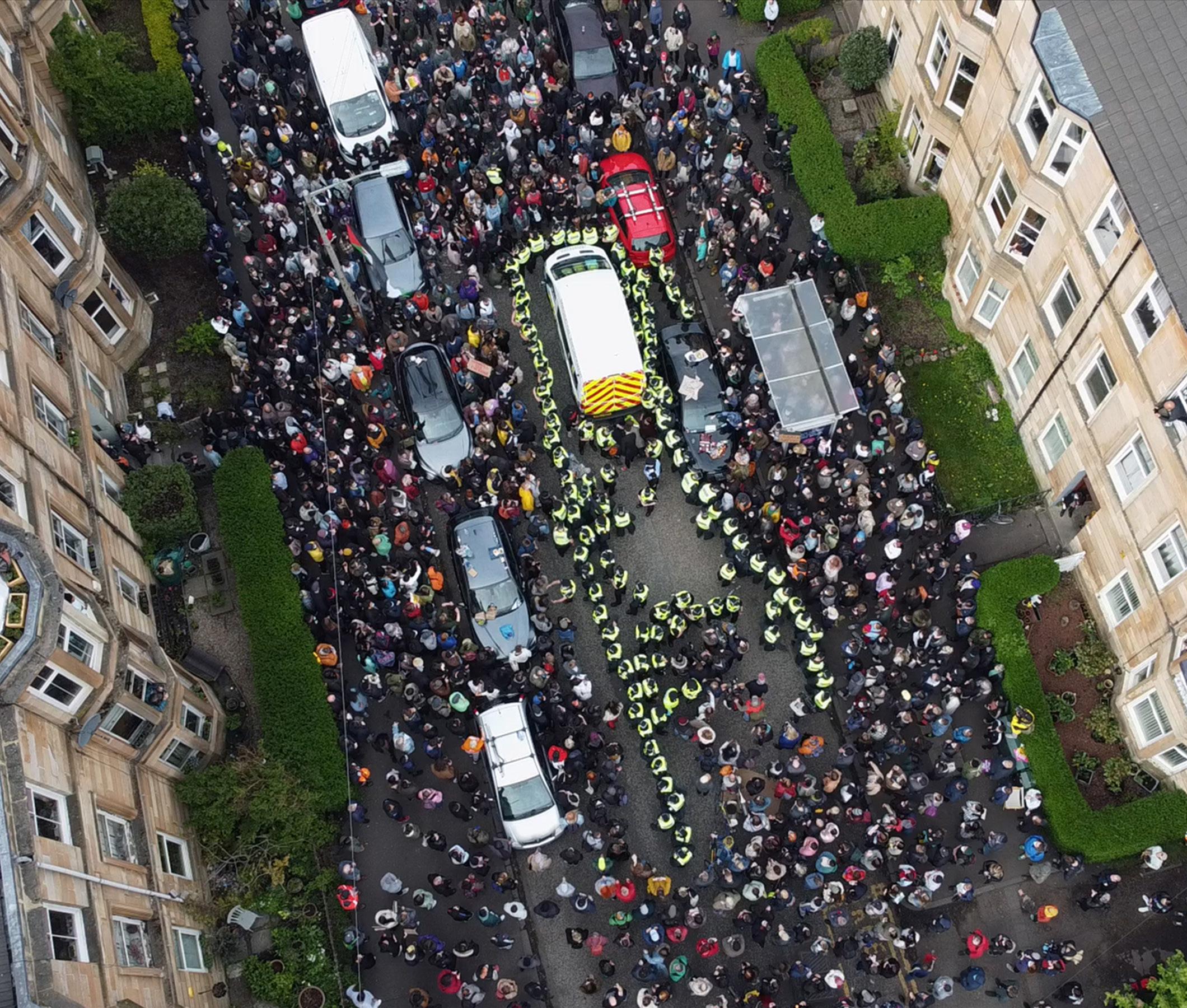
protest the two men were released into the custody of a lawyer.
That day ended in success, and admittedly that’s rare. Even so, the lessons learned from the Kenmure street protests are still true. Community activism matters. If those first few people hadn’t stepped up, those men would have been taken. If those next dozen neighbors hadn’t joined in, those men would have been taken. If the hundreds that followed hadn’t taken action, those men would have been taken.
Even though protest rarely results in immediate change, it has an impact and it’s essential for change. With the increasing severity of Immigration and Customs Enforcement (ICE) raids all across America, it’s our duty as citizens to stand up for those in our communities who do nothing but help. It’s our first amendment right to make our voices heard. The American people are reaching a tipping point. With recent protests taking place against ICE across the nation, Americans are saying, “Enough is enough.”
How much longer must we witness com-
munity members ripped from their homes before the rest of America stands against this state sanctioned violence? If the entire community hadn’t rallied together in Glasgow in 2021 those men would have been deported. Peacefully protesting doesn’t mean being quiet. Being peaceful doesn’t mean accepting the way things are. If our governmental system carries on as it has been, people will be disruptive. If people are quiet and accept the way things are then injustice will never end. That was true for the last hundred years and it will continue to be true for the next hundred years. Change requires action from everyone who wants it.
It took decades for women to win the right to vote, decades for the civil rights act to be passed and decades for gay people to earn the right to get married but change did eventually come. Without protest and people making their voices heard those changes would have never happened. Even if the protests taking place all across the country don’t change the Trump administration’s immigration policies we still need to try.
A still from Everybody To Kenmure Street by Felipe Bustos Sierra, an official selection of the 2026 Sundance Film Festival. Courtesy
Traducido por
LO QUE ‘TODOS EN KENMURE STREET’ ME DEJÓ CLARO
VICTORIA HERNANDEZ Co-Editora
Por JARED MITCHELL Editor
Este fin de semana pasado, fui al Sundance Film Festival 2026. Uno de los documentales que decidí ver fue “Everyone to Kenmure Street”. El documental cubre una protesta que pasó en Escocia en 2021 cuando dos hombres fueron casi deportados por el gobierno. Escogí este documental específicamente por el tema y su relevancia en América hoy en día, con el fin de ver qué podría aprender.
En un comunicado de prensa recientemente publicado por el Departamento de Seguridad Nacional se afirma que, desde el inicio del gobierno de Trump, más de 675.000 personas han sido deportadas de los Estados Unidos. Son 675.000 madres, padres, estudiantes, niños y miembros de la comunidad que han sido arrebatados de sus hogares y devueltos a países a los cuales la mayoría no han llamado hogar en décadas. Muchos políticos han discutido que son criminales violentos o algo parecido, pero los datos simplemente no respaldan estas demandas para nada.
Un reporte creado por el Consejo de Immigración Americana en octubre del 2024 tomó datos de crímenes de las últimas décadas y examinó las tendencias. El reporte reveló que, a medida que crecía la población nacida en el extranjero, disminuían los delitos contra los bienes, los delitos violentos y la tasa total de criminalidad. El reporte también reveló que los inmigrantes son arrestados y encarcelados con menos frecuencia en comparación con los ciudadanos nacidos en Estados Unidos, ya que los inmigrantes tienen un 50% menos de probabilidades de ser arrestados por delitos violentos y un 26% menos de probabilidades de ser condenados por homicidio. Mientras que no tengo acceso a cada pieza de datos reunida en este reporte, no es la primera en llegar a este resultado cuando los números son examinados.
Un reporte diferente del Instituto Nacional de Justicia, parte del Departamento de Justicia en el gobierno de los Estados Unidos,
publicado en enero del 2025 encontró que inmigrantes indocumentados tienen una tasa de criminalidad más baja en comparación con los ciudadanos nacidos en Estados Unidos. El reporte se basó únicamente en datos de Texas, pero es otro ejemplo de que los datos indican claramente que los inmigrantes legales e indocumentados cometen muchos menos delitos en comparación con los ciudadanos nacidos en Estados Unidos. Estos datos dejan una cosa clara, las declaraciones hechas por el Presidente Donald Trump y otros políticos republicanos diciendo que inmigrantes indocumentados son peligrosos para ciudadanos Americanos son mentiras. Puede que señalen algunos casos concretos de delitos, pero ignoran por completo los datos reales que cuentan la historia completa.
Yo creo que esas declaraciones son para incentivar preocupación en los Americanos y causar una distracción que nos impide centrarnos en problemas reales que nuestra sociedad enfrenta. Después de todo, el miedo es poderoso. Si las personas tienen miedo y prometes que vas a terminar la amenaza, ellos van a votar por ti, que se vayan a la mierda los datos.
“Everyone in Kenmure Street” cubre una protesta comunitaria que impidió la deportación inmediata de dos hombres que llevaban años viviendo en Escocia. The Guardian informó de que el Ministerio del Interior del Reino Unido declaró que los hombres solo estaban detenidos por delitos de immigración poco después de que tuviera lugar la protesta. Iban a ser deportados simplemente por estar allí, no por haber cometido un delito peligroso.
Los vecinos de los dos hombres se dieron cuenta rápidamente de la redada de immigración que se estaba llevando a cabo y se pusieron en acción. La protesta comenzó con sólo unas pocas personas delante y detrás de la van, impidiendo que se llevarán a los hombres. Uno de los manifestantes incluso se metió debajo de la van y se puso en peligro agarrándose al eje de la transmisión de la van para impedir que se marchara. Permaneció allí por más de 8 horas. A medida que avanzaba el día, la protesta creció rápidamente.
Existen toneladas de imágenes de la
protesta y lo que comenzó con seis personas bloqueando el paso de la van terminó con más de mil personas cubriendo toda la calle por ambos lados en solo unas horas. La multitud gritaba “Son nuestros vecinos, dejadlos ir”, dejando claro que la comunidad quería que se quedaran.
Los dos hombres tampoco vivían en secreto. Ambos tenían casos judiciales activos dentro del sistema de inmigración luchando por su derecho a permanecer en su hogar. Sus casos no habían terminado, su debido proceso no había concluido, pero el Ministerio del Interior decidió intentar deportarlos. Ese día, fracasaron. La protesta fue un éxito y, tras unas ocho horas de protestas cada vez más intensas, los dos hombres fueron puestos en libertad bajo la custodia de un abogado.
Ese día terminó con éxito, y hay que reconocer que eso es poco habitual. Aun así, las lecciones aprendidas de las protestas callejeras de Kenmure siguen siendo válidas. El activismo comunitario es importante. Si aquellas primeras personas no hubieran dado un paso al frente, aquellos hombres habrían sido detenidos. Si la siguiente docena de vecinos no se hubiera unido, aquellos hombres habrían sido detenidos. Si los cientos que les siguieron no hubieran tomado medidas, aquellos hombres habrían sido detenidos.
Aunque las protestas rara vez dan lugar a cambios inmediatos, tienen un impacto y son esenciales para el cambio. Con la creciente severidad de las redadas del Servicio de Inmigración y Control de Aduanas (ICE) en todo Estados Unidos, es nuestro deber como ciudadanos defender a aquellos miembros
de nuestras comunidades que no hacen más que ayudar. Es nuestro derecho, amparado por la primera enmienda, hacer oír nuestra voz. El pueblo estadounidense está llegando a un punto de inflexión. Con las recientes protestas contra ICE en todo el país, los estadounidenses están diciendo: “Ya basta”.
¿Cuánto tiempo más tendremos que ver cómo arrancan a miembros de la comunidad de sus hogares antes de que el resto de Estados Unidos se levante contra esta violencia sancionada por el Estado? Si toda la comunidad no se hubiera unido en Glasgow en 2021, esos hombres habrían sido deportados.
Las protestas pacíficas no significan estar callado. Ser pacifico no significa aceptar las cosas tal como están. Si nuestro sistema de gobierno sigue como hasta ahora, las personas se revelaran. Si la gente se queda callada y aceptan las cosas como están, la injusticia nunca terminará. Eso fue cierto durante los últimos cien años y seguirá siendo cierto durante los próximos cien años. El cambio requiere la acción de todos los que lo desean. Las mujeres tardaron décadas en conseguir el derecho al voto, décadas en que se aprobara la ley de derechos civiles y décadas en que las personas homosexuales obtuvieran el derecho a casarse, pero finalmente se produjo el cambio. Sin las protestas y sin que la gente hiciera oír sus voces, esos cambios nunca habrían tenido lugar. Aunque las protestas que se están produciendo en todo el país no cambien las políticas de inmigración de la administración Trump, debemos seguir intentándolo.
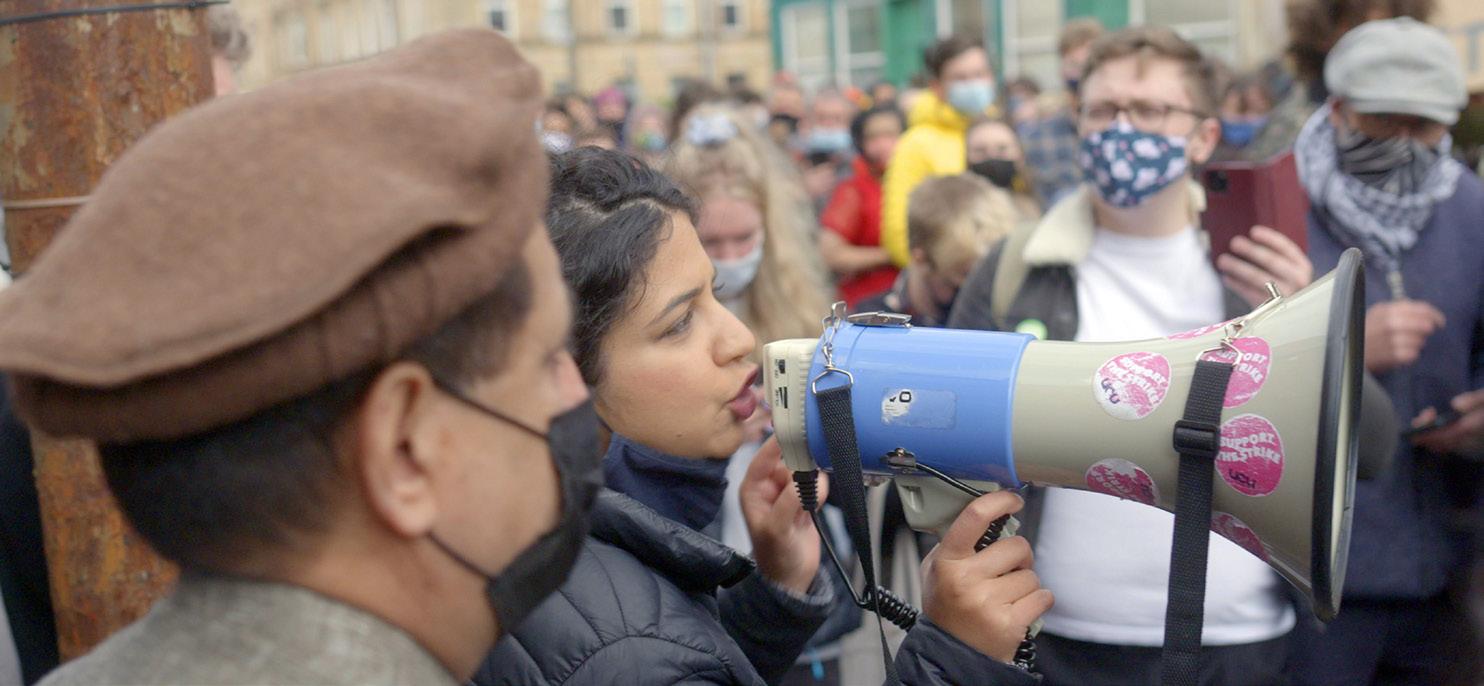
Fotograma de “Everybody To Kenmure Street” por Felipe Bustos Sierra, selección oficial del Festival de Cine de Sundance 2026.
Courtesy


WEBER WINS WASATCH CUP FOR THIRD STRAIGHT YEAR
By BRAYSON BROWN Reporter
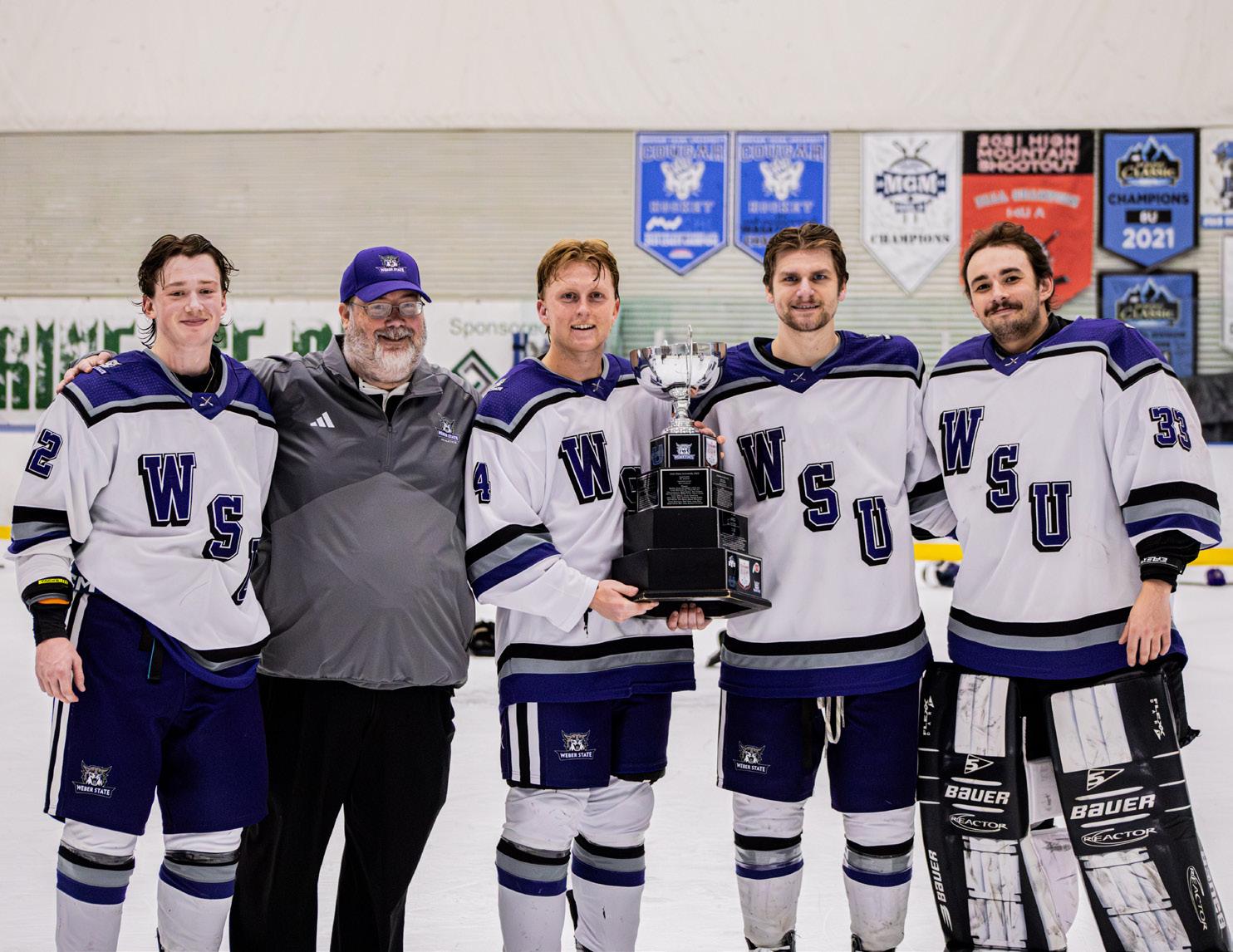
Weber State University men’s hockey team took the trip down to Orem, Utah, to go up against Utah Valley University and then Utah State University with one goal in mind: to win the Wasatch Cup for the third time in a row.
Weber State vs. Utah Valley
In the previous two meetings between these two schools, Weber State won by lopsided margins.
History repeated itself with Weber State putting three goals on the board to take a 3–0 lead after period one.
Deja vu occurred in the second period with Weber scoring three goals yet again. Utah Valley broke the deadlock and took away the opportunity for a shutout by Weber. The score at the end of two periods was 6–1.
The Wildcats went to the third period scoring as many goals as they had in the first two periods in the third period alone. They shut the door on a Wolverine comeback and punched their ticket to the championship game after a 12–1 victory for the Wildcats.
Weber State vs. Utah State
The championship was held at the Weber County Ice Sheet. The matchup between two bitter rivals: the Wildcats and Aggies. Weber had won the matchup each time this season. This game is one that you never know how it will end.
For the first period, both teams were testing each other’s wit. As Weber tends to do, they struck first with defenseman Collin Morrill putting it on himself to answer the call and ended the first period at 1–0 for the Wildcats.
Period two was similar to the first, with both teams challenging each other’s goalies
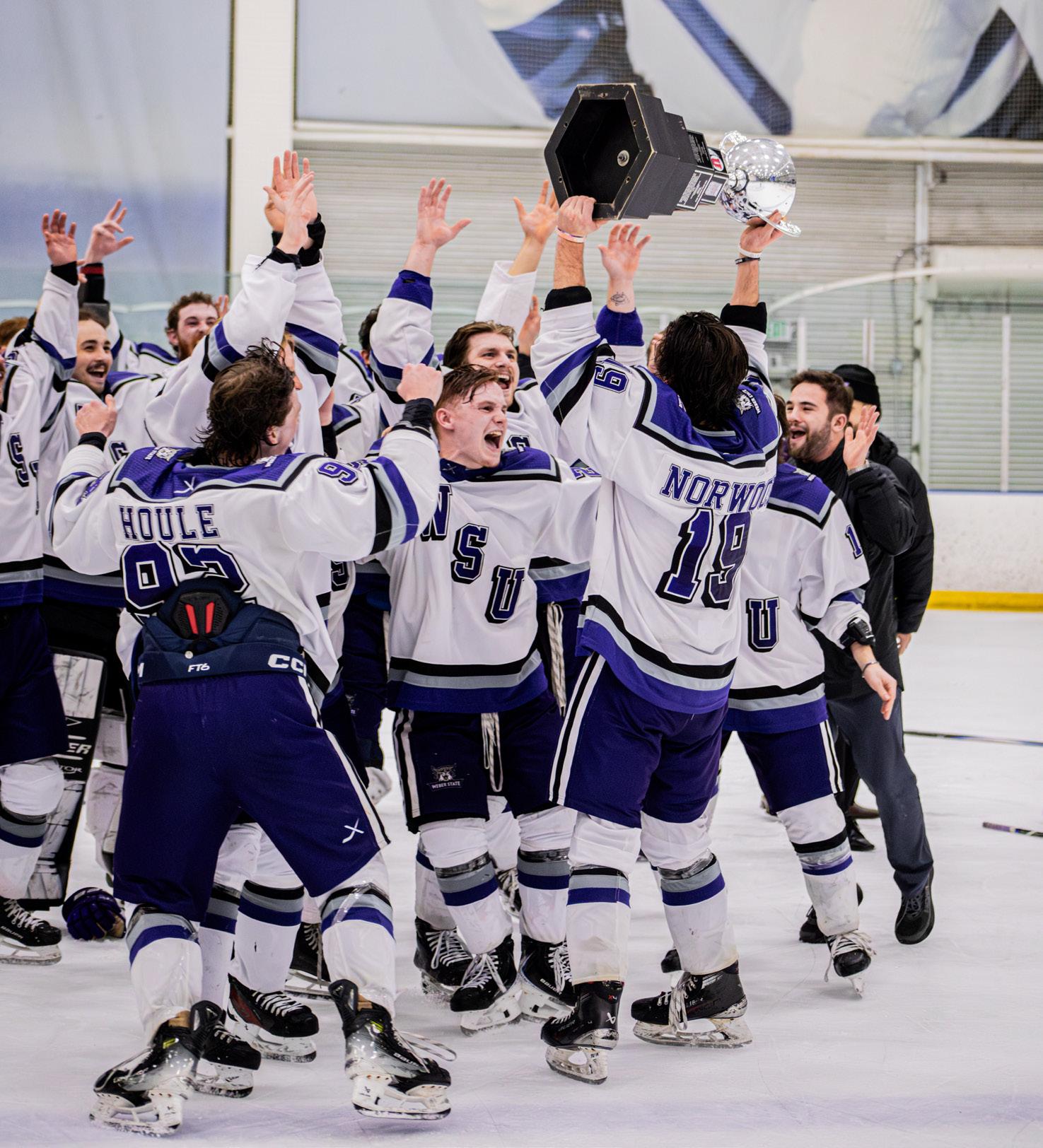
until the Utah State keeper made a mistake, and Caden Hunter capitalized on it for a Weber State goal. Period two would end in a 2–0 win for Weber.
The third period was a frenzy of goals with both teams shooting the puck in the back of each other’s nets. Utah State scored two in the period, but Weber was able to score three times to keep the Wasatch Cup in Weber’s hands for the third straight year as the Wildcats claimed victory over the Aggies with a score of 5–2.
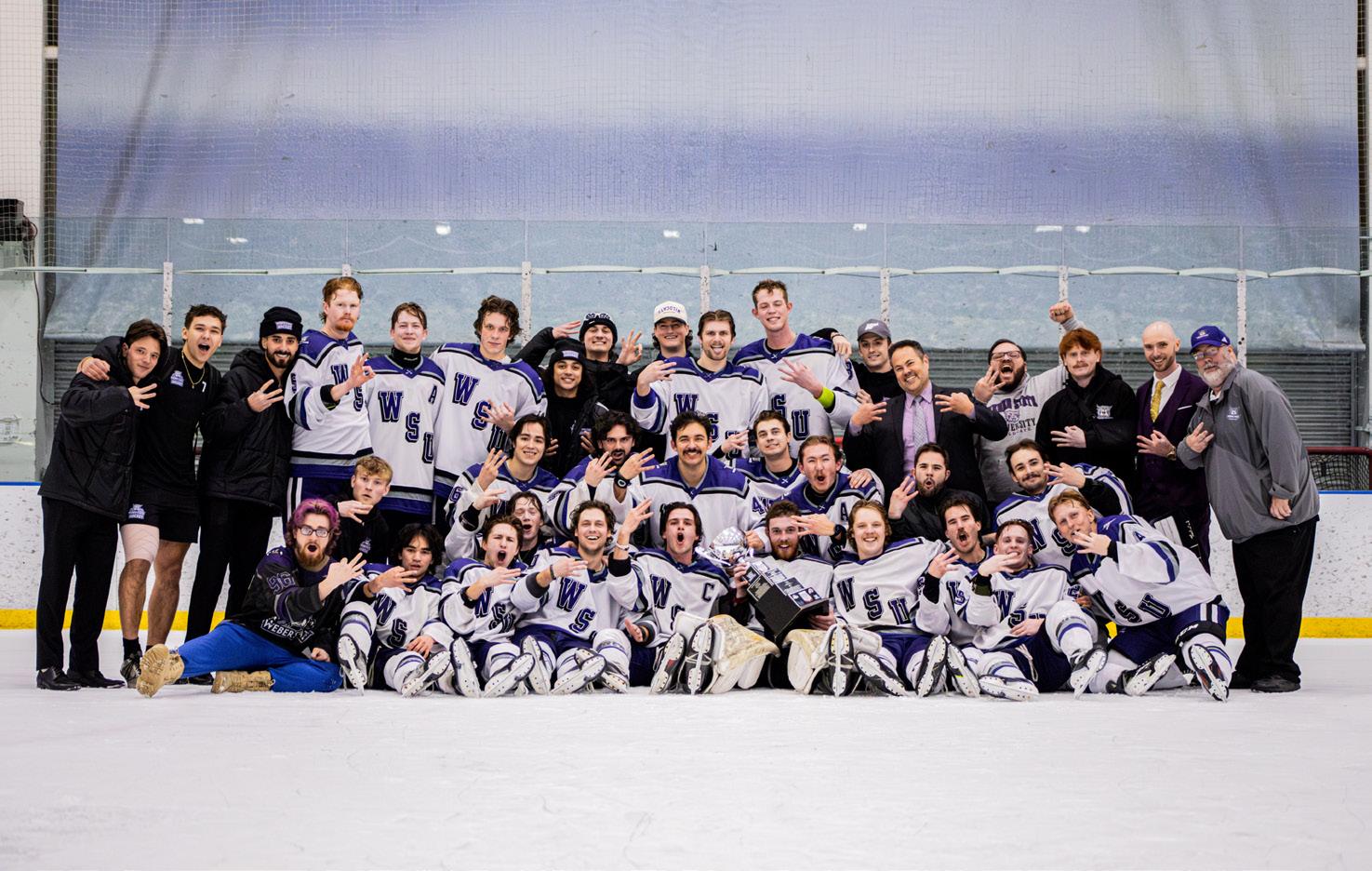
LEFT: Weber State University Hockey celebrating a victory in the Wasatch Cup.
TOP RIGHT: Weber State University Hockey team posing with their coach and the Wasatch Cup.
BOTTOM RIGHT: The 2026 Weber State University Hockey team posing for a team photo together.
By GAVIN NELSON Editor
WILDCATS WIN THRILLER AGAINST RIVAL BENGALS
The Weber State University men’s basketball team welcomed its rivals, Idaho State University, for a Big Sky Conference matchup on Jan. 31.
Coming off a three-game losing streak, the Wildcats looked to get back on track in the 2025-26 season.
The Wildcats had to deal with both Jace Whiting and Trevor Hennig out of the game; Whiting was out with a foot injury, while Hennig was out due to illness.
However, the Wildcats were supported by a larger-than-usual student section, as the Weber State University Student Association hosted a tailgate featuring free Chick-fil-A for the first 100 students and a free t-shirt for the first 50.
The Dee Events Center also welcomed back Weber State legend Damian Lillard, who was in attendance for the rivalry game.
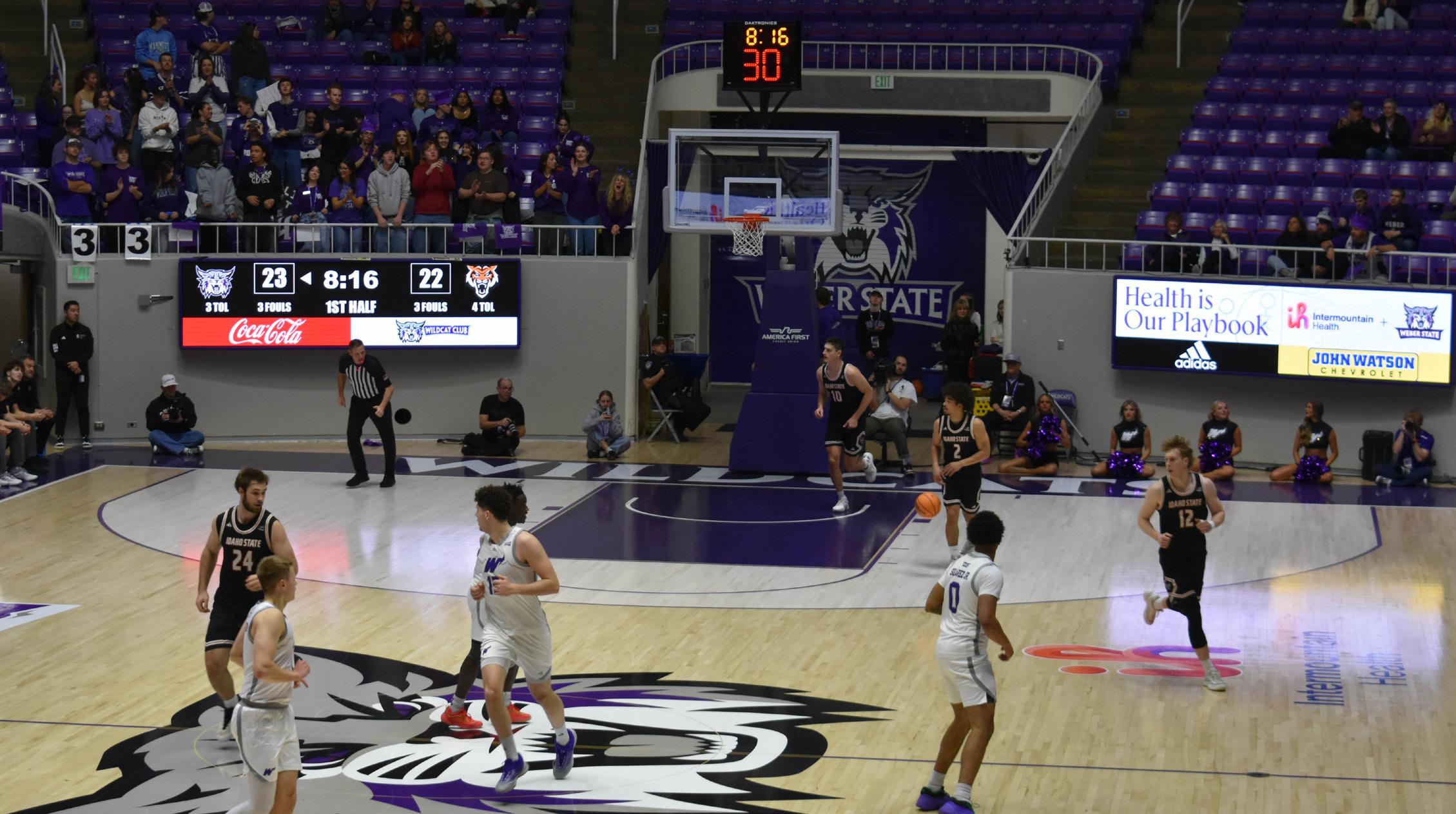
As with many previous games, the Wildcats started slowly, falling behind 15–6 early in the first half. The Wildcats got their first lead of the night, leading 23–22 with 8:17 left in the half.
The game continued to be close, but after hitting a 3-pointer with 2:50 remaining, Weber point guard Tijan Saine Jr. was given a technical foul after staring at the Idaho State bench.
This gave Idaho State a chance for two points, and they ended the half with a 38–33 lead over the Wildcats.
It got even worse for the Wildcats in the second half. After the Wildcats hit an early free throw, the Bengals went on a 14–4 run, bringing their lead to 13 points with 14:51 remaining. However, the Wildcats weren’t phased.
“We were down 13 on Montana State at the same score. Our guys in the huddle, they never panicked. They were like, ‘Hey, we’ve been here, we’re fine,” Head Coach Eric Duft said. Weber got back in the game, going on a 21–11 run to make the score 63–60 in favor of the Bengals, after a Malek Gomma dunk. However, Idaho State guard Martin Kheil hit his fifth 3-pointer of the night to make it 66–60.
After two free throws from Nigel Burris, a 3-pointer from ArDarius Grayson and a layup by Gomma, the Wildcats got the 67–66 lead.
After a missed Bengal layup, Saine hit a 3-pointer that caused the Dee Events Center to erupt in cheers, giving the Wildcats a 4-point cushion at 70–66.
The Bengals fought back, making the game 73–72 in their favor, after a 2-point jumper from reigning Big Sky Freshman of the Year Evan Otten.
The teams traded the lead until Weber’s Saine hit his fourth 3-pointer of the night to make it 77–75. Otten then hit two free throws, followed by Idaho State point guard Jamison Guerra stealing the ball and laying it in to give Idaho the 79–77 lead with 56 seconds remaining.
Grayson was then fouled and hit his first free throw, but missed his second. A steal
by Wildcat true freshman Duce Paschal gave the Wildcats the ball back with 18 seconds remaining.
Saine started with the ball in his hands and passed it to Grayson, who shot a deep 3-pointer from the wing and hit it to give the Wildcats an 81–79 lead with five seconds left.
Grayson hit the shot right in front of Lillard, who came up for a high five.
The true freshman, who played for Damian Lillard’s American Athletic Union (AAU) team growing up, knew that he could hit the final shot.
“The play was drawn up for Tijan, actually,” Grayson said. “I told him before we came out of the timeout to trust me with the ball ... He gave it to me, and the ultimate shot went in.”
The Bengals still had a chance, however. As Guerra ran down the floor and threw up a layup at the buzzer, it bounced off the rim, giving the Wildcats the win.
This win marked the first time in Eric Duft’s head coach tenure that Weber State beat Idaho State at the Dee Events Center.
The Wildcats now travel to Sacramento, California, to take on the California State University, Sacramento Hornets, a team the Wildcats beat 95–82 on Jan. 3.
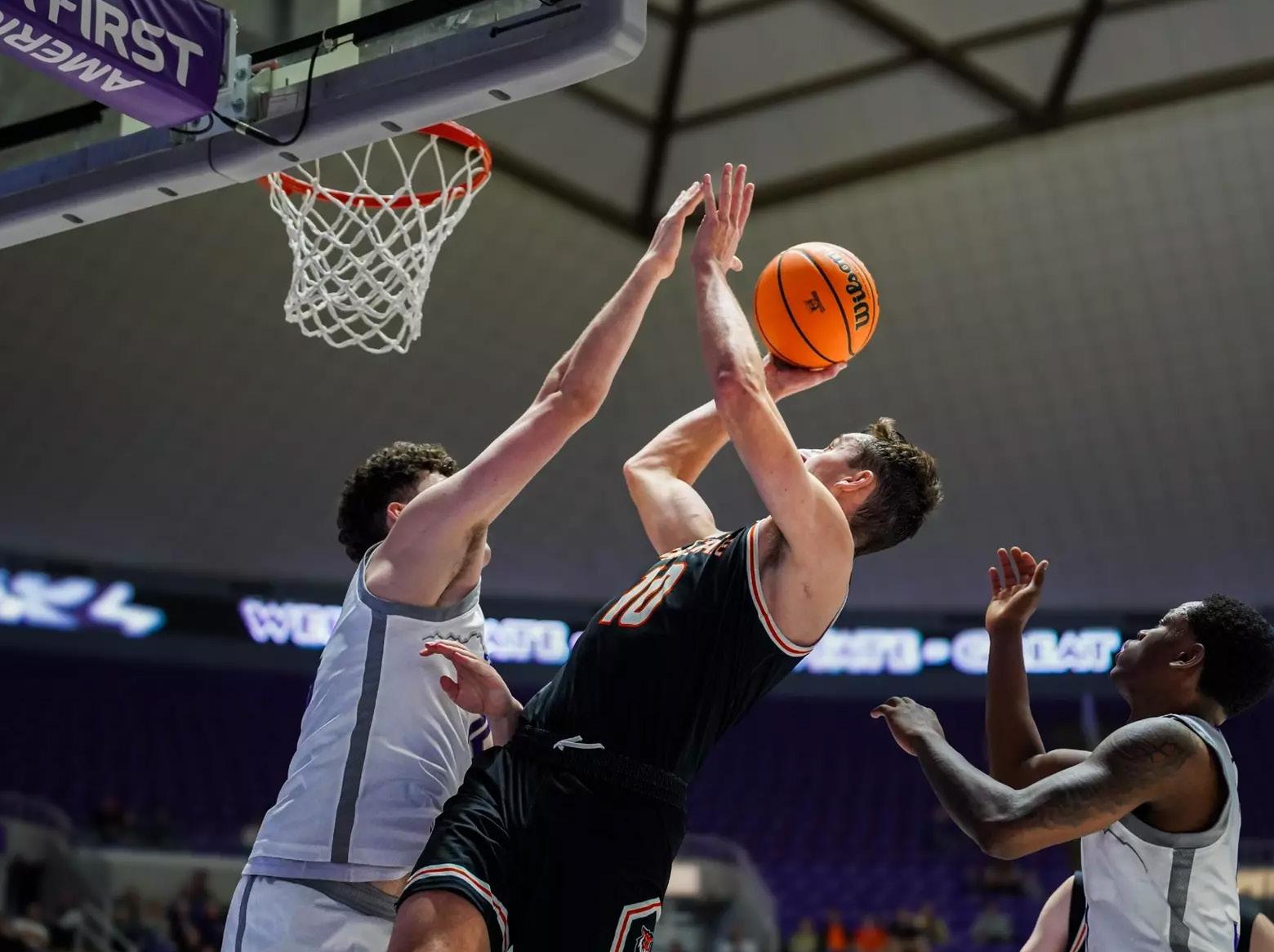
Idaho State University Forward Connor Hollenback (#10), attempts a dunk on Weber State University players.
Idaho State University Athletics
LOS WILDCATS GANAN UN
EMOCIONANTE PARTIDO CONTRA SUS RIVALES LOS BENGALS
Traducido por DAVID ROMAN AROS
Co-Editor
Por GAVIN NELSON Editor
El equipo masculino de baloncesto de la Universidad Estatal de Weber recibió a sus rivales, la Universidad Estatal de Idaho, para un partido de la Conferencia Big Sky el 31 de enero.
Tras una racha de tres derrotas consecutivas, los Wildcats buscaban volver a la senda del triunfo en la temporada 2025-26.
Los Wildcats tuvieron que lidiar con la ausencia de Jace Whiting y Trevor Hennig; Whiting se perdió el partido por una lesión en el pie, mientras que Hennig no pudo jugar por enfermedad.
Sin embargo, los Wildcats contaron con el apoyo de una sección de estudiantes más numerosa de lo habitual, ya que la Asociación de Estudiantes de la Universidad Estatal de Weber organizó una fiesta previa al partido en la que se ofreció Chick-fil-A gratis a los primeros 100 estudiantes y una camiseta gratis a los primeros 50.
El Dee Events Center también dio la bienvenida al legendario Damian Lillard, de Weber State, que asistió al partido entre rivales.
Al igual que en muchos partidos anteriores, los Wildcats comenzaron lentamente, quedando atrás por 15–6 al principio de la primera mitad. Los Wildcats consiguieron su primera ventaja de la noche, liderando por 23–22 a falta de 8:17 para el descanso.
El partido siguió siendo reñido, pero tras anotar un triple a 2:50 del final, el base de Weber, Tijan Saine Jr., recibió una falta técnica por mirar fijamente al banquillo de Idaho State.
Esto le dio a Idaho State la oportunidad de sumar dos puntos, y terminaron la primera parte con una ventaja de 38-33 sobre los Wildcats.
La situación empeoró aún más para los Wildcats en la segunda mitad. Después de que los Wildcats anotaran un tiro libre temprano, los Bengals lograron una racha de 144, lo que les dio una ventaja de 13 puntos con 14:51 por jugar. Sin embargo, los Wild-
cats no se desanimaron.
“Íbamos 13 puntos por debajo de Montana State con el mismo marcador. Nuestros chicos, reunidos en el huddle, no se dejaron llevar por el pánico. Decían: “Oye, ya hemos estado aquí, estamos bien’”, afirmó el entrenador jefe Eric Duft.
Weber volvió al partido con una racha de 21–11 que dejó el marcador en 63–60 a favor de los Bengals, tras un mate de Malek Gomma. Sin embargo, el escolta de Idaho State, Martin Kheil, anotó su quinto triple de la noche para poner el 66–60.
Tras dos tiros libres de Nigel Burris, un triple de ArDarius Grayson y una bandeja de Gomma, los Wildcats se pusieron por delante en el marcador con un 67–66.
Tras un tiro fallido de Bengal, Saine anotó un triple que provocó el estallido de júbilo en el Dee Events Center, dando a los Wildcats
Los equipos se intercambiaron el liderazgo hasta que Saine, de Weber, anotó su cuarto triple de la noche para poner el marcador en 77-75. Otten anotó entonces dos tiros libres, seguidos por una robo de balón del base de Idaho State, Jamison Guerra, que anotó para dar a Idaho una ventaja de 79-77 a falta de 56 segundos para el final.
A continuación, Grayson recibió una falta y anotó su primer tiro libre, pero falló el segundo. Un robo del novato Duce Paschal devolvió el balón a los Wildcats cuando quedaban 18 segundos por jugar.
Saine comenzó con el balón en sus manos y se lo pasó a Grayson, quien lanzó un triple desde el ala y lo encestó para dar a los Wildcats una ventaja de 81-79 a cinco segundos del final.
Grayson anotó el tiro justo delante de Lillard, que se acercó para chocar los cinco.
para Tijan”, dijo Grayson. “Antes de salir del tiempo muerto, le dije que confiara en mí con el balón... Me lo pasó y el tiro definitivo entró”.
Sin embargo, los Bengals aún tenían una oportunidad. Cuando Guerra corrió por la pista y lanzó una bandeja al sonar la bocina, el balón rebotó en el aro, dando la victoria a los Wildcats.
Esta victoria supuso la primera vez en la etapa de Eric Duft como entrenador jefe que Weber State venció a Idaho State en el Dee Events Center.
Los Wildcats viajan ahora a Sacramento, California, para enfrentarse a los Hornets de la Universidad Estatal de California, Sacramento, un equipo al que los Wildcats vencieron por 95-82 el 3 de enero.
una ventaja de 4 puntos (70–66).
Los Bengals remontaron y se pusieron por delante en el marcador con un 73-72, tras un tiro en suspensión de dos puntos del actual Novato del Año de la Big Sky, Evan Otten.
El verdadero novato, que jugó para el equipo de la American Athletic Union (AAU) de Damian Lillard mientras crecía, sabía que podía anotar el tiro final.
“En realidad, la jugada estaba pensada
WEBER STATE WOMEN’S BASKETBALL’S STRUGGLES CONTINUE IN POCATELLO
By GRAYSON FREESTONE Asst. Editor
Weber State University women’s basketball looked to snap its eight-game skid to open conference play against Idaho State University on Jan. 31.
Coming off a winless home stand where they lost to the University of Montana and Montana State University, the Wildcats had to bounce back with a win over a top-five Bengals team.
The first quarter went much like the season has; Weber struggled to keep pace with their opponent. They faced a 20–8 deficit to end the first period, largely due to their eight turnovers.
The Wildcats cleaned things up in the second quarter. After four quick points, Paris Lauro followed up a Nicole Willardson 3-pointer with two of her own and a fastbreak layup to pull within one point. A Sydney White layup gave Weber a 1-point lead.
The lead was short-lived as Idaho State’s Kacey Spink, Alyse Aby and Maeva Gauffrenet each hit a 3-pointer, with a Weber State Antoniette Emma-Nnopu jumper mixed in.
Idaho State’s 10–2 run to end the half gave them a convincing 34–27 lead entering the
locker room.
The Wildcats dug themselves a sizable hole in the third quarter, shooting just 27%, while their foe shot 57%. Emma-Nnopu went 2–2 from the field for five points in the quarter, while the rest of her team went 2–13 for five points.
The Bengals’ 17-point quarter extended their lead to 51–37 with the final 10 minutes looming.
While the Wildcats scored 17 points in the final quarter, their opponent kept pace with 14 points, handing the Wildcats a 65–54 loss.
Weber State held the lead for just 26 seconds. They hit 26% of their 3-pointers, while Idaho State hit 38%. They also struggled on their limited free throws, making 56%.
Emma-Nnopu led her team with 16 points and nine rebounds. Lauro was the only other double-digit scorer with 13 points.
Weber’s loss drops them to 0–9 in conference play, while Idaho State improved to 5–3
The Wildcats have a busy week with three games in six days: California State University, Sacramento at home on Feb. 2, followed by road games against the University of Northern Colorado on Feb. 5 and Northern Arizona University on Feb. 7.
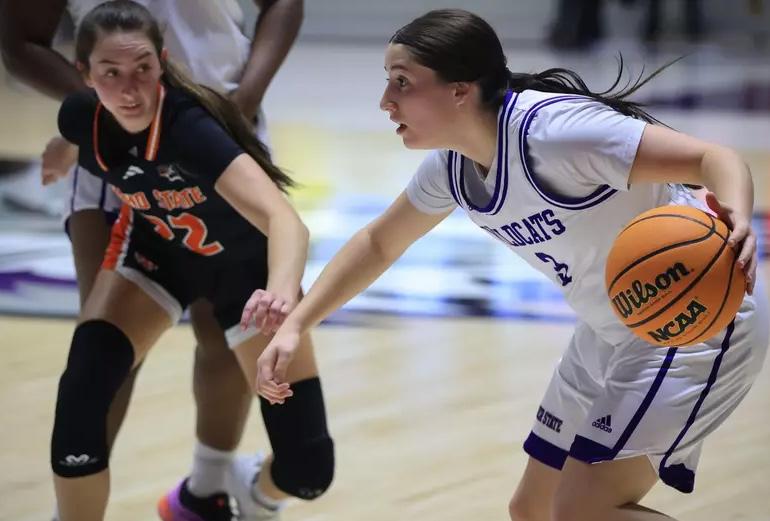
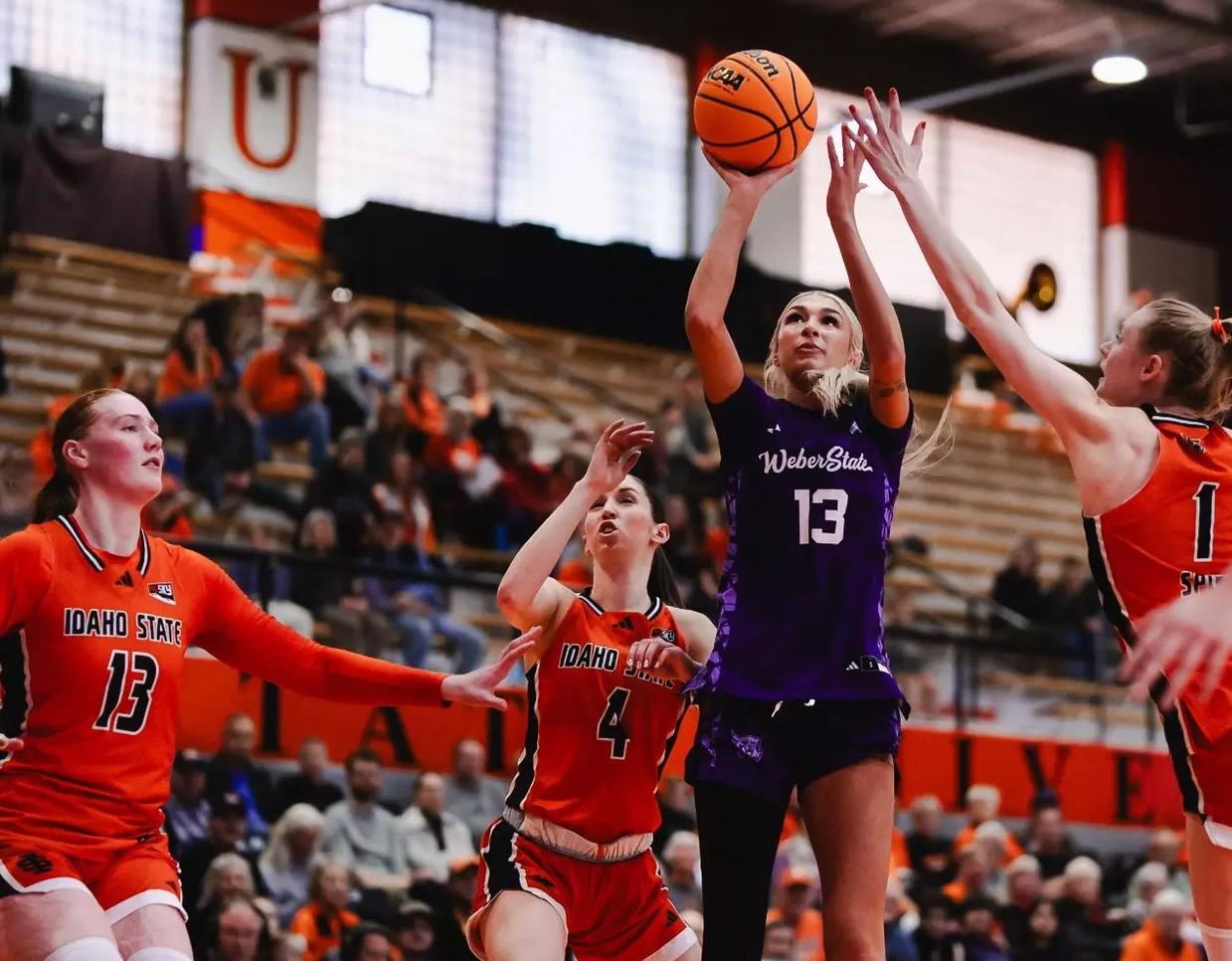

Weber State University women’s basketball guard Makenna Shaffer-Laur (#13) takes a shot at the basket.
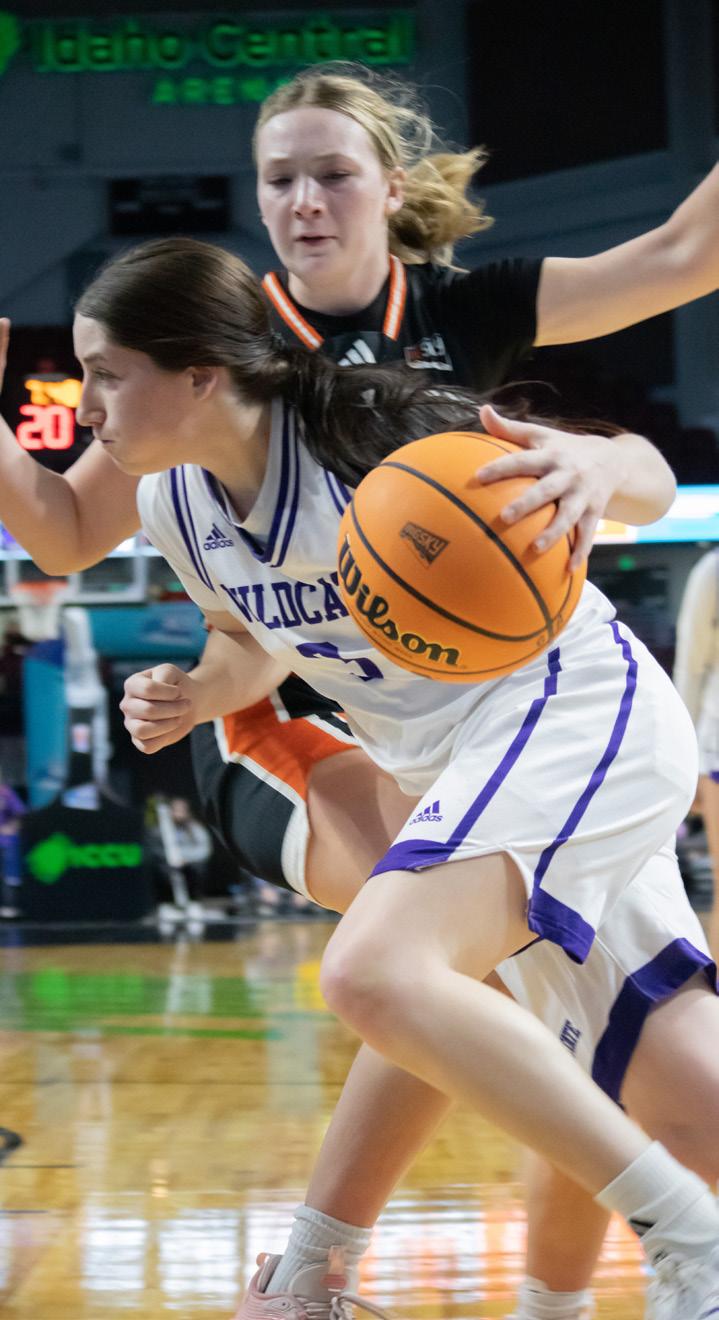
Weber State University guard Kendra Parra (#3), dribbles the ball down the court against the Idaho State Bengals.
Weber State Athletics
LAS DIFICULTADES DEL EQUIPO FEMENINO DE BÁSQUETBOL DE WEBER STATE CONTINÚAN EN POCATELLO
Traducido
por NELLY HERNANDEZ TEJADA
Editora Jefa
By GRAYSON FREESTONE
Editor Assistente
El equipo femenino de baloncesto de la Universidad Estatal de Weber buscaba romper su serie de ocho pérdidas consecutivas al comenzar la conferencia contra la Universidad Estatal de Idaho el 31 de enero.
Tras una serie de partidos en casa sin ganar, en los que perdieron contra la Universidad de Montana y la Universidad Estatal de Montana, las Wildcats tenían que recuperarse con una victoria contra el equipo de las Bengals, uno de los cinco equipos mejor clasificados.
El primer cuarto se desarrolló similar a lo que ha sido esta temporada; Weber tuvo dificultades para mantener el ritmo de su oponente. Al final del primer periodo, se enfrentaban a un marcador 20-8, debido a sus ocho pérdidas de balón.
Las Wildcats resolvieron el partido en el segundo cuarto. Después de cuatro puntos
THE SIGNPOST TEAM
Editor-in-Chief
Nelly Hernandez Tejada nhernandeztejada@mail.weber.edu
Managing Editor
James Gordon jamesgordon@mail.weber.edu
Collaboration Editor
Bryce Odenthal bryceodenthal@mail.weber.edu
Design & Graphics Editor
Izabelle Cordeiro icorderio@mail.weber.edu
Assistant Design & Graphics Editor
Sydnie Parkinson sydniepalmer@mail.weber.edu
rápidos, Paris Lauro respondió al tiro de tres puntos de Nicole Willardson con dos triples propios y una jugada rápida para acercarse a un punto. Una canasta de Sydney White le dio a Weber una ventaja de un punto.
La ventaja duró poco, ya que Kacey Spink, Alyse Aby y Maeva Gauffrenet, de Universidad Estatal de Idaho, anotaron cada una un triple, con un tiro en suspensión de Antoniette Emma-Nnopu, de Universidad Estatal de Weber, entre medias.
Los 10-2 de Idaho State al final de la primera parte les dieron una convincente ventaja de 34-27 al llegar al vestuario.
Las Wildcats sufrieron un importante desequilibrio en el tercer cuarto, con un porcentaje de tiros de solo el 27 %, mientras sus oponentes alcanzaron el 57 %. Emma-Nnopu anotó 2 de 2 tiros de campo para un total de cinco puntos en el cuarto, mientras que el resto de su equipo anotó 2 de 13 para un total de cinco puntos.
Los 17 puntos de las Bengals en este cuarto aumentaron su ventaja a 51-37 a falta de 10 minutos para el final.
Aunque las Wildcats anotaron 17 puntos
Photography Editor Anna Kuglar briannakuglar@mail.weber.edu
Assistant Photography Editor Gavin Olson gavinolson1@mail.weber.edu
News Co-Editor Kyle Greenawalt kylegreenawalt@mail.weber.edu
News Co-Editor
Aisha Rucker aisharucker@mail.weber.edu
Sports Editor Gavin Nelson gavinnelson1@mail.weber.edu
en el último cuarto, sus rivales mantuvieron el ritmo con 14 puntos, lo que supuso una pérdida de 65-54 para las Wildcats.
Weber State mantuvo la ventaja por solo 26 segundos. Anotaron el 26% de sus triples, mientras que Idaho State anotó el 38%. También tuvieron dificultades con sus tiros libres limitados, anotando el 56%.
Emma-Nnopu lideró a su equipo con 16 puntos y nueve rebotes. Lauro fue la única otra jugadora que anotó más de diez puntos, con 13.
La pérdida de Weber las deja con un 0-9 en la conferencia, mientras que Idaho State mejora a 5-3.
Las Wildcats tienen una semana ocupada con tres partidos en seis días: la Universidad Estatal de California, Sacramento, en casa el 2 de febrero, seguido de partidos fuera de casa contra la Universidad del Norte de Colorado el 5 de febrero y la Universidad del Norte de Arizona el 7 de febrero.
La escolta de la Universidad de Weber State Kendra Parra (n.º 3), se abre paso entre las jugadoras de la Universidad de Idaho State.
Assistant Sports Editor Grayson Freestone graysonfreestone@mail.weber.edu
Culture Editor Jared Mitchell jaredmitchell@mail.weber.edu
Assistant Culture Editor
Hannah Richards hannahrichards1@mail.weber.edu
Chief Copy Editor
Mindy Brown mindybrown1@mail.weber.edu
Assistant Chief Copy Editor
Sloane Ostler aostler@mail.weber.edu
Translation Co-Editor
Victoria Hernandez victoriahernandez1@mail.weber.edu
Translation Co-Editor
David Roman Aros davidromanaros@mail.weber.edu
Business Manager Rob Steedley robertsteedley@weber.edu
Adviser
Jean Norman jeannorman@weber.edu