






























































Continued from page 1
It has been reported that Trump will serve as life chairman, including after he leaves ofce.
Trump is reportedly expected to pressure Hamas on a timeline for disarmament.
An Egyptian-trained Palestinian police force, not the International Stabilisation Force, would be responsible for demilitarisation in February or March.
President Isaac Herzog held meetings in
Davos with world leaders including NATO Secretary-General Mark Rutte, President of the United Nations General Assembly, Annalena Baerbock, President of Finland, Alexander Stubb, Foreign Minister of Switzerland, Ignazio Cassis and Blair.
Te meetings addressed diplomatic, security and economic issues, with an emphasis on strengthening Israel’s international ties and deepening economic and technological cooperation.
Netanyahu said earlier this week Phase B of the plan meant Hamas would be
“disarmed” and Gaza will be demilitarised “the easy way or the hard way”. Te return of the last hostage, Ran Gvili, killed in the October 7 attack, was also a pre-requisite.
Trump referred to Gvili in a speech marking a year since his return to ofce, stating: “We got the 28 hostages; they have one left, we think we know where it is. Amazing.”
In Jerusalem, ofcials expressed surprise as Israel is unaware of Gvili’s location. But Rani’s mother, Talik Gvili, has renewed hope. She called on Israel and the US to use “full leverage” to ensure Hamas fulfl its part of the agreement or face sanctions.
Gvili told Israeli media: “Hamas knows exactly where our son is and is deliberately violating President Trump’s framework and the agreement to return all hostages.”
Prior to Netanyahu’s Peace Board announcement Diaspora Afairs Minister Amichai Chikli called on Netanyahu to reject

Trump’s peace plan.
“We should respond politely but negatively,” he said. “Turkey is inheriting Iran’s role. Today, Turkey is the greatest danger to the State of Israel, even more than Iran.”
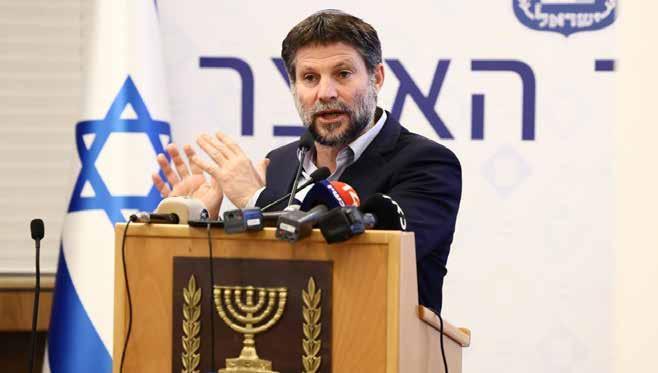
Finance Minister Bezalel Smotrich also rejected the proposal and ofered a stark assessment.
He said: “Gaza is ours, we are taking responsibility for what happens there, imposing military rule over it, and completing the mission… present Hamas with a very brief ultimatum for true disarmament and exile.”
Opposition leader Yair Lapid condemned Netanyahu: “President Trump published right over your head the composition of the ‘governing board’ for Gaza. Te hosts of Hamas in Istanbul and Doha, Hamas’s ideological partners, have been invited to run Gaza.”
Should Turkey and Qatar be involved, Lapid said: “Tat is a complete political failure of the Netanyahu government after the courage and endless sacrifce made by IDF soldiers and commanders.”
Former Prime Minister Bennett added: “Hamas is still alive, in control and growing stronger. Te entry into Gaza by Qatar and Turkey, Hamas’s supporters and fnanciers, gives Hamas a reward for the October 7 massacre, endangers Israeli citizens’ security and sends a grave message to the peoples in the region that for massacring Jews one receives political and military achievements.”
HAS NEVER BEEN A MORE SIGNIFICANT TIME TO SECURE YOUR PIECE OF ISRAEL










BY DAVID SAFFER
Te Romema community of Jerusalem is in mourning following the deaths of two babies at an unlicensed daycare centre on Monday.
Investigations continue into how Leah Goloventchitz, 3 months old, and Aaron Katz, 6 months old, died. Initial fndings indicate dehydration from an overheated air conditioner unit.
Witnesses spoke of very high temperatures in media reports of the tragedy.
Leah was the daughter of Rabbi Mordechai Goloventchitz and Bracha Rolnik who recently moved to the
neighbourhood. Leah was enrolled for just a few days and is survived by a younger sibling.
Aaron had been dropped of for the frst time. He was the son of Rabbi Yaakov Katz and Hani Eisenbach, who owns a jewellery shop on Shamgar Street in Jerusalem.
Police have arrested the daycare centre owner and a babysitter. Both appeared at Jerusalem Magistrates Court on Tuesday. Te court refused a police request to hold them for six days but agreed to further questioning until today. No further details have been released.
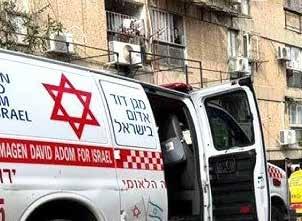
Israel’s Supreme Court ruled that no autopsies are to be performed following a petition by ZAKA on behalf of bereaved families. One of the babies’ fathers fainted with relief at the judgement.
ZAKA lawyer Dror Shosheim, thanked the judges, he reportedly said: “Tis is an important decision that refects human sensitivity for the dead.”
An earlier decision by the
Jerusalem Magistrates Court for autopsies resulted in overnight clashes between police and protestors.
A judge had rejected a ZAKA proposal for the infants to undergo non-invasive toxicological tests as the results could take months.
Zaka lawyer Michael Guttwein, said that an autopsy was unnecessary.
“Tere are shattered parents here to whom they’re stabbing another knife in their hearts,” he said. “We hope the Supreme Court will have mercy on the parents and allow them to live in peace.”
Over 50 infants were taken to local hospitals for overnight tests. Tree with unrelated illnesses are receiving treatment according to reports.
Dr. Gal Pachis, Shaare Tzedek, said: “Te teams worked throughout the day and night to provide treatment and support to the parents. We decided to keep all the children hospitalised as a precaution and to ensure there would be no deterioration in their condition. Once normal results were received, they were released this morning in good condition.”
Major questions remain how this disaster happened.
Te immediate shock dominated Israeli news as emergency services and desperate parents rushed to the unlicensed facility in a complex of private daycares at a building on HaMem Gimmel Street in the Romema neighbourhood.
It was reported that the daycare had
run for years without supervision or safety checks.
According to frst responders, dozens of toddlers were reportedly in a single small apartment, some sleeping on top of each other inside cupboards and hallways, others were laying next to a toilet in the bathroom. Disturbing photographic footage is online.
Jerusalem District Fire Commander Tufser Shmulik Friedman ordered an incident report of the daycare’s operating conditions, number of children at the centre and heating devices.
It has been reported government subsidy cuts forced families into cheaper, unregulated operations.
Degel HaTorah (UTJ) blamed the government policies despite repeated warnings.
“We warned again and again, in real time, about the cancellation of daycare subsidies,” the party said in a statement. “We stated clearly that the harm was not only to working mothers, but frst and foremost to the babies themselves, to their safety and their health.”
A High Court ruling in 2024 resulted in fnancial sanctions on yeshivot, daycare subsidies were cut for Chareidi families.
UTJ have called for the daycare subsidy policy to be re-examined.
“Tis is not a political issue,” a statement noted, adding that it was essential to safeguard children.







BY DAVID SAFFER
Holocaust survivor and renowned educator Harry Olmer passed away last week.
One of the Windermere ‘Boys’ in the Lake District, his extraordinary life was chronicled in My Revenge On Hitler Is My Family, on My Voice, part of the storytelling project of Holocaust Survivors and Refugees from Greater Manchester, the Northwest and London.
Born in 1927 in Sosnowiec, Poland, Olmer and his fve siblings had a happy childhood, staying with their grandmother Rochel Leah every summer in Charsznica, a rural area surrounded by woods.
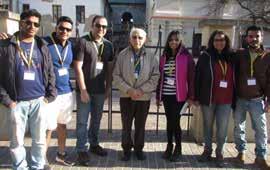
When war broke out, his family left for Charsznica. When they returned a month later the Germans had taken over their town, having destroyed the synagogues and shut Jewish schools.
Olmer started working for the Germans, clearing snow of roads and doing back-breaking work in a brick factory.
In 1942, all Jews were loaded onto trucks. Stopping in an open feld, men were separated from women. Olmer’s mother, two sisters, grandmother and aunts were taken to Belzec and
murdered. Olmer was taken to Płaszów concentration camp, working 12-hour shifts at a railway embankment on a small cup of cofee and lump of bread. His father escaped to Charsznica where he was murdered, though there are no details. At Skar ysko-Kamienna, Olmer worked with picric acid which killed anyone working with it for longer than three months. He attached himself to a transport company, which saved his life. Surviving hard labour at Buchenwald and Schlieben before liberation, in 1945, he came to England as one of the ‘Boys’ at the Calgarth Estate in the Lake District.
Olmer graduated in dentistry at Glasgow University, married Margaret Lunzer, they have four children and eight grandchildren. He retired as a dentist aged 86.
In a heartfelt eulogy, Rabbi Yitzchak Schochet of Mill Hill Synagogue recalled meeting Olmer in March 1993 when he was part of the Board of Management of the shul.
Rabbi Schochet described him as a “living legend”.
Recalling his smile, he told mourners:
“It was a smile that belied the indescribable pain and trauma that he went through in the Holocaust. A smile that refected his incredible faith and determination to rebuild from the ashes, as indeed he did so valiantly over his many years.
“His story as a survivor of treacherous camps and one of the Windemere Boys has been retold many times, both in person and in media. He shared his story throughout to remind others of the past, but equally to inspire the next generation for the future. Harry was the name many knew him by, but as he told me several times, that was the name the Germans gave him. He was otherwise known always as Chaim. What a suitable name, as Chaim means life and no one exemplifed what it means to live life, cherish life and create new life more so than he.”
Rabbi Schochet concluded: “Tank you very much Chaim, for setting such a beautiful example of what it means to be a proud Jew. Tank you for your resilience, your encouragement, your friendship over more than three decades. Your wonderful family bids farewell to an amazing Patriarchal fgure. Anglo-Jewry bids farewell to a true legend. Te Mill Hill community bids farewell to a real Tzadik and I bid farewell to a truly dear friend. Indeed, we all bid farewell to a real mensch. Te void will be gaping but memories of you will linger eternal.”
Ken Pickering, Head of Humanities at Te Lakes School, which stands on the Calgarth Estate, paid tribute to Olmer,
who returned to the school during his years as a Holocaust educator. He said: “Harry was always so generous with his time, and his visits to our school left a lasting impression on both pupils and staf Te stories he shared and the wisdom he ofered were more powerful than a hundred lessons could ever have been. He always spoke with such honesty, kindness and courage. Harry will never be forgotten by our school community, and he will always be remembered with great afection and gratitude.”
Karen Pollock, Holocaust Educational Trust CEO, observed: “Harry was one of the most determined and tenacious men I knew. He believed profoundly in the power of education, sharing his testimony in schools across the country for decades. He never said no to anything and there was nothing he loved more than being with people, he attended every event, arriving frst and leaving last, and was always one of the frst on the dance foor at the annual ‘45 Aid Society reunion. His stamina was truly unmatched. Harry was devoted to his community, guided throughout his life by a deep commitment to Judaism.”
She added: “Harry’s charming but cheeky smile allowed him to instantly connect with young people in ways few others could. I know how it felt when you caught his eye and his face lit up. He always had something very important to share. Harry was one of the kindest people I will ever meet.”


We’re Together, property finance experts with common sense.
Whether you’re buying commercial or residential property or investing in your business, our wide range of mortgages and secured loans can support your ambitions at pace.
Heter Iska funding available.
Why Together?
• Speed and flexibility – fast lending available on a variety of property types from industrial to flats, with flexible criteria.
• Relationship lending – our experienced property funding experts can make quick decisions, with a strong appetite to lend.
• Lending since 1974 – trust our 50-year heritage backed by our funding capability.
to our dedicated team: 0161 568 0403 or email lendingpartner@togethermoney.com
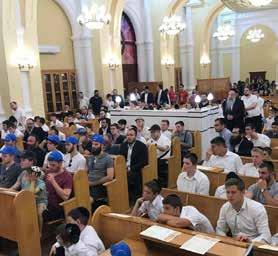
A Russian bomb landed just metres from the Great Choral Synagogue in Odesa on Sunday night, causing damage to the historic building and injuring a security guard.
Te blast blew out windows and doors of the synagogue, which has stood at the heart of Jewish life in the city since 1840. Te injured guard is receiving medical treatment.
Te Great Choral Synagogue is run and fnancially supported by Tikva, a UK charity. Alongside being a place of worship, the synagogue is a centre for Jewish life, education, and communal support. It houses Tikva’s university and serves as a hub for learning and welfare services, including food provision. It is a lifeline for elderly members of the community.
Karen Bodenstein, CEO of Tikva UK, said:
“Tis synagogue is far more than bricks and mortar. It is a place of prayer, learning, and safety, and a powerful symbol of Jewish resilience in Odesa. It is a lifeline for elderly members of the community. Tat it was targeted is deeply shocking. Tikva is committed to repairing the damage and ensuring that Jewish life, education, and essential services can continue, but we urgently need support to do so.”
Built in 1840, the Great Choral Synagogue has survived pogroms, two world wars and decades of Communist repression. Tikva UK has confrmed it will fund the necessary repairs and continue supporting the community during the ongoing confict.
Tikva rescues and cares for vulnerable Jewish children from Odesa and surrounding regions, providing a safe home, essential care, and long term education. Since the outbreak of war, Tikva has supported evacuated children and families to Bucharest and continues its work in Odesa and Israel.
Tikva UK is appealing for donations to help restore the building and maintain vital services at a time of extreme need.
To support the repairs to the synagogue, visit: https://tikva.org.uk/donate/
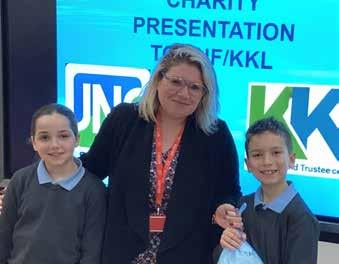
Pupils from Adama House at King David Primary School in Manchester have donated an amazing £450 to JNF UK in support of Dekalim High School in Be’er Sheva.
Dekalim is a specialist school for young people aged 13–21 with special needs from across the Negev. JNF UK has committed to building a new building on the site, including a multi-purpose hall and dedicated treatment rooms, which will allow the school to welcome more students and provide further life-changing services.
Tis meaningful act of tzedakah was collected weekly during Adama House assemblies. Well
To get the best value from your private medical insurance, you should speak to an expert who is qualified to advise you on the right policy for you, and recommend the providers who offer the most competitive premiums. This advice covers individual, family and company policies, and is always FREE.
As an independent health insurance expert, I work with the healthcare insurers to provide you with the appropriate and most affordable level of cover. So whether you have an existing policy or not, let’s have a chat.







Join Project Lily for a free winter wellbeing webinar with Esther Donof, registered nutritional therapist, as she explores how the food you eat can help improve your mood, boost your energy, and support your mental wellbeing.
• Wednesday 11th February 2026
• 8:00pm - Online via Zoom – 50 minutes
• Webinar places are limited - booking is required.

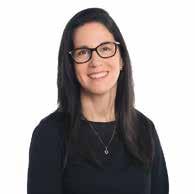
Esther is a registered nutritional therapist and NLP coach. She has helped countless clients improve their health, from managing weight, cholesterol and blood sugar levels, to reducing IBS symptoms and improving mood and energy. She believes in a personalised approach to create nutrition and lifestyle plans that are truly bespoke and complement people’s lifestyles. She is also a lecturer, clinic supervisor and module leader on the MSc in Personalised Nutrition at the Middlesex University accredited Centre for Nutrition Education & Lifestyle Management. ESTHER DONOFF BSC (HONS), MSC, MBANT, CNHC REG










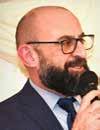
BY STEVE WINSTON
For decades, Israel has been accused of being an “apartheid state”. Alongside it, other grave accusations, “genocide” and “ethnic cleansing”, have been routinely levelled against Israel without basis in fact. Tese are not conclusions reached through careful legal or historical analysis. Tey are political weapons, chosen for their emotional force rather than their accuracy. Te focus of this op-ed is not merely on the falsity of the apartheid charge, but on a deeper irony: those who deploy it are increasingly promoting patterns of exclusion that resemble apartheid themselves, directed not at Israel, but at Jews, Israelis, and supporters of Israel in their own societies.
Tis inversion has been especially stark since the Hamas massacres of 7 October. Tose atrocities were flmed and celebrated by Hamas itself. Civilians were murdered, raped, and abducted. Yet in the immediate aftermath and beyond, weekly marches across Western cities did not centre on condemning terrorism, mourning its victims, or calling for the hostages to be returned. Instead, they were dominated by chants of “From the river to the sea” and “Globalise the intifada”, slogans that explicitly call for Israel’s eradication. Alongside them came repeated claims that Israel is an apartheid state, not as analysis, but as moral cover for demands that would end the world’s only Jewish state.
Language shapes behaviour. Branding Israel as uniquely evil casts those associated with it as morally suspect by extension. From there, exclusion is not an excess or a mistake. It becomes the objective.
Te hypocrisy is striking. Within Israel’s internationally recognised borders, Arab citizens, Muslim and Christian, enjoy full civil and political rights. Tey vote, sit in the Knesset, serve across public life, and increasingly choose to volunteer for service in the Israel Defense Forces, including growing numbers of Muslim Arabs. Arabic retains recognised special status and is widely used. Israel debates
inequality openly, as democracies do. Apartheid states do not.
Yet while the allegation against Israel remains frozen in slogan form, the movement advancing it has moved steadily towards segregation elsewhere.
On university campuses, Jewish and Israeli students are singled out, harassed, and pressured to renounce Zionism as a condition of acceptance. Jewish symbols are hidden. Israeli accents become liabilities. Jews who support Israel are targeted precisely because they support Israel, which is to say because they refect the overwhelming majority of world Jewry.
Jewish and Israeli academics face similar pressures. In October 2025, Israeli economist Michael Ben Gad was targeted during a lecture at City St George’s, University of London, after activists disrupted his class and threatened violence. Academic freedom, so often invoked, appears conditional when Jewish identity intersects with Israel.
Beyond campuses, the pattern becomes explicit. In Boston and Barcelona, activists produced online maps cataloguing Jewish institutions, synagogues, schools, charities, and businesses under the banner of identifying “Zionist infuence”. Tese initiatives were defended as education. In reality, they served intimidation.
Te UK is no exception to these trends. Te same patterns of intimidation and exclusion seen elsewhere are seen here too. A Jewish MP was prevented from visiting a school in his own constituency.
Israeli Maccabi Tel Aviv supporters were banned by a police force from attending a match, a decision that explicitly targeted Israeli fans and, by association, excluded Jewish supporters in the UK as well as non-Jewish fans who simply wished to support the team.
Tis is the central hypocrisy. Activists insist they oppose “Zionism”, not Jews. But as the Chief Rabbi has explained in his essay What is Zionism?, Zionism is an expression of Jewish peoplehood and self-determination. When Zionists are excluded, Jews are excluded.
Tese dynamics do not arise in a vacuum. Much contemporary anti-Israel activism draws on ideological currents linked to Islamist movements such as the
Muslim Brotherhood. While not formally aligned with Iran’s Islamic Revolutionary Guard Corps, they are ideological bedfellows in hostility to Israel and Western democratic norms. Tat is why the National Jewish Assembly (NJA) and We Believe In Israel (WBII) are campaigning for the proscription of both organisations in the UK, given their infuence here. If apartheid is to retain any moral meaning, it cannot be weaponised to excuse discrimination. Israel does
not practice apartheid. Yet many of those who shout the word loudest are constructing one of their own, through intimidation and exclusion. Tat is the apartheid lie, and it is being enforced not in Israel, but in the West, against Jewish communities told to hide, recant, or be pushed out.
Steve Winston, Managing Director of the National Jewish Assembly (NJA), a partner of We Believe In Israel (WBII)







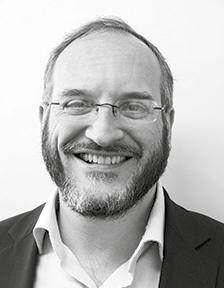
BY RABBI NAFTALI SCHIFF
For more than 35 years I have worked across the full spectrum of Jewish education, constantly searching for ways to present young people with experiences that are relevant, real and resonant. Today that challenge is only intensifying. We live in an age of curated identities, artifcial intelligence, and “fake news”, where the line between reality and fction grows ever more blurred.
And so, if we are to pass on Judaism meaningfully; if we want young Jews to choose to build a vibrant Jewish future, we must reclaim and champion authenticity, not merely as a virtue, but as a sacred Jewish way of being.
In that search, I have found little more powerful, more piercing, or more transformative than sitting with Holocaust survivors, looking them in the eye, listening carefully, and allowing their stories, their values and their presence to do the teaching.
Survivors personify authenticity. Tey are not performing. Tey are not polishing a message. Tey owe nobody anything. In their twilight years, the hundreds of survivors I have interviewed were disarmingly straight-talking, unvarnished, profoundly honest. In an age of distortion, that alone makes them indispensable teachers for the next generation.
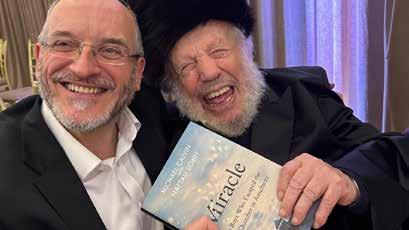
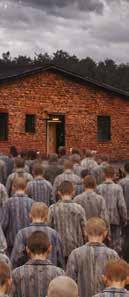
Twenty years ago, in 2006, I met an Auschwitz survivor in Manchester named Yaakov Yosef Weiss. What he shared with me that day enriched my life forever. He told me of Simchat Torah 1944 in Auschwitz-Birkenau; of being stripped naked and led into the gas chambers of Crematorium V. Of the door being closed; of the fnal Shema Yisrael; the last prayer before death. Ten, impossibly, at the very last moment, a commotion erupted. Another selection took place. He and ffty other boys were ordered out, told to get dressed, and sent back to the barracks.
When I asked him what he did on returning to the barracks after this miraculous salvation from certain death, he paused and said simply:
“It was Simchas Torah. We did Hakafos. We danced.”
down others who might have witnessed or experienced that moment. Slowly and painstakingly, the picture emerged. In total, we identifed six men who were physically inside the gas chambers that day and survived, and others who were nearby in Auschwitz at the same time.
Teir testimonies aligned independently, consistently, powerfully. And strikingly, their post-war lives in the main, refected similar traits: relentless optimism, deep faith, love of life, generosity of spirit, resilience, and joy. Yiddishkeit not as survival alone but as a fourishing way of life.
In an era of Holocaust distortion and denial, intellectual integrity matters. Tat is why we brought in Professor Robert Jan van Pelt, one of the world’s leading forensic architectural experts on Auschwitz and expert witness in the Lipstadt–Irving trial. Together we spent days in the Auschwitz archives examining evidence that corroborated the survivors’ accounts in chilling detail.
Te mitzvah of lighting Chanukah candles includes that of pirsumei nissa - publicising the miracle. I felt that I had inadvertently stumbled upon a modern-day miracle of Jewish survival that obligated telling.
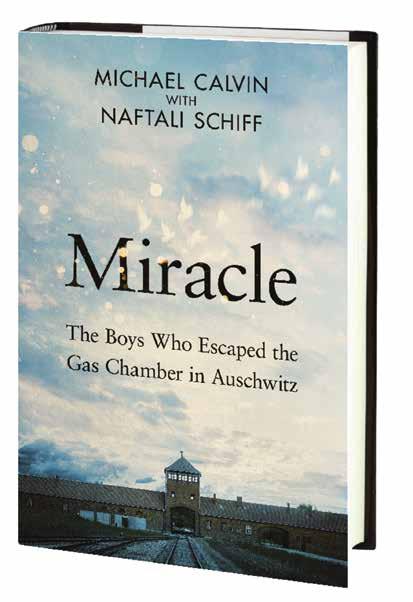
Tis journey culminated in a book, Miracle, co-authored with Mike Calvin and published by Penguin, and in a documentary flm, Undeniable, produced by our JRoots media team. But for me, this was never merely about producing historical content. It was about transmitting soul, values, resilience, and the indomitable spirit of our people.
After October 7th, which fell, heartbreakingly, on Simchat Torah, that urgency sharpened dramatically. For many Jews, that day marked the beginning of a deeply painful and disorienting period that still hangs heavily over world Jewry. For some, Simchat Torah now felt like a
paradoxically become a source of pride, renewed belief, and goodness reclaimed. A story that whispers to us that Jewish survival has never been accidental, and that our future will not be either.
At this time of year, as we read in the Torah about the slavery of the Jewish people in Egypt, something grounding and unexpectedly comforting emerges. Antisemitism is not new. It did not begin with the Holocaust, nor with October 7. From the birth of our people there was a Pharaoh, persecution, segregation and sufering. Tat reality is woven into the tapestry of Jewish history.
But crucially, it is not the whole story.
In the same breath that the Torah foretells oppression, it promises redemption. Te Torah was given at Sinai sharing etymology with sinah, hatred. A people entrusted with teaching ethical monotheism, decency and goodness to the world will inevitably be targeted by evil, until we complete the task.
From Egypt onwards, every enemy that rose against us ultimately fell on the wrong side of history. Te Jewish people endured. Not because we are stronger, but because we are necessary.
Survivors embody that truth. Tey are living proof of Am Yisrael Chai. As modern Hebrew has it:
“Am hanetzach lo mefached miderech arukah” an eternal people is not afraid of a long journey.
We are not naïve about the road. But we are not afraid of it either. We know who we are, and deep down, I believe we also know what we must do to thrive.
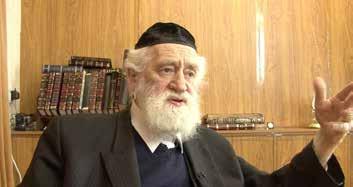
It is one of the most extraordinary stories of the Holocaust I have ever heard. And I sensed immediately that if it could be verifed, if other survivors of the “51” could be found, then this carried a responsibility far beyond curiosity. It had to be preserved and proclaimed!
Over the next two decades, in my spare time, I criss-crossed the world tracking
modern-day Tisha B’Av.
And yet, it was precisely then that I felt compelled to bring this story into the public domain. Not as escapism. Not as denial of sufering. But as something rarer and more necessary: a story of steadfast faith, hope and persistence; a story quite literally pulled from the ashes. A story from the bowels of hell that can
Tere are three distinct days in the modern Jewish calendar connected to Holocaust remembrance. Each refects a diferent aspect of our response: Jewish mourning, Israeli national responsibility, and universal commemoration. Each speaks a diferent language.
Holocaust Memorial Day, largely marked by the gentile world, reminds us too of our role to be a Light unto the Nations just as the Exodus was not only for Jews to know G-d, but for the world to recognise Him. But survivor testimony cuts across them all.
It is not abstract. It is not symbolic. It is human.
And that humanity matters profoundly in an age where reality itself feels negotiable. Survivors are the ultimate antidote to fake news. Tey earned their truth. Tey
had nothing to gain by embellishment and nothing to lose by honesty. Tey remind young people and all of us, that truth is not manufactured. It is lived.
Just last week, we attended the funeral of Harry (Chaim) Olmer from Mill Hill, a gentle, dignifed man, nearly 100 years old, a survivor of Plaszów and Buchenwald. His passing brought home, with painful clarity, the urgency of this moment. Survivor testimony is slipping from the present into history. If we do not preserve it carefully, faithfully and respectfully, something irreplaceable will be lost.
Tis is not about dwelling in darkness. On the contrary. It is about transmitting resilience, hope and optimism. It is about ensuring that future generations encounter not only the horror of what was done to us, but the miracle of who we remained.
In a world saturated with artifcial narratives, survivors have bequeathed us something no technology ever can: truth shaped by lived experience and a future sustained by faith, values and stubborn optimism.
And in so doing, they hand the next generation not only a warning, but a gift: the knowledge that even in the darkest places imaginable, the Jewish spirit endured and danced.
On our days of Simchat Torah, we too must dance again.
For every Simchat Torah is not only an end, but a fresh, new beginning.
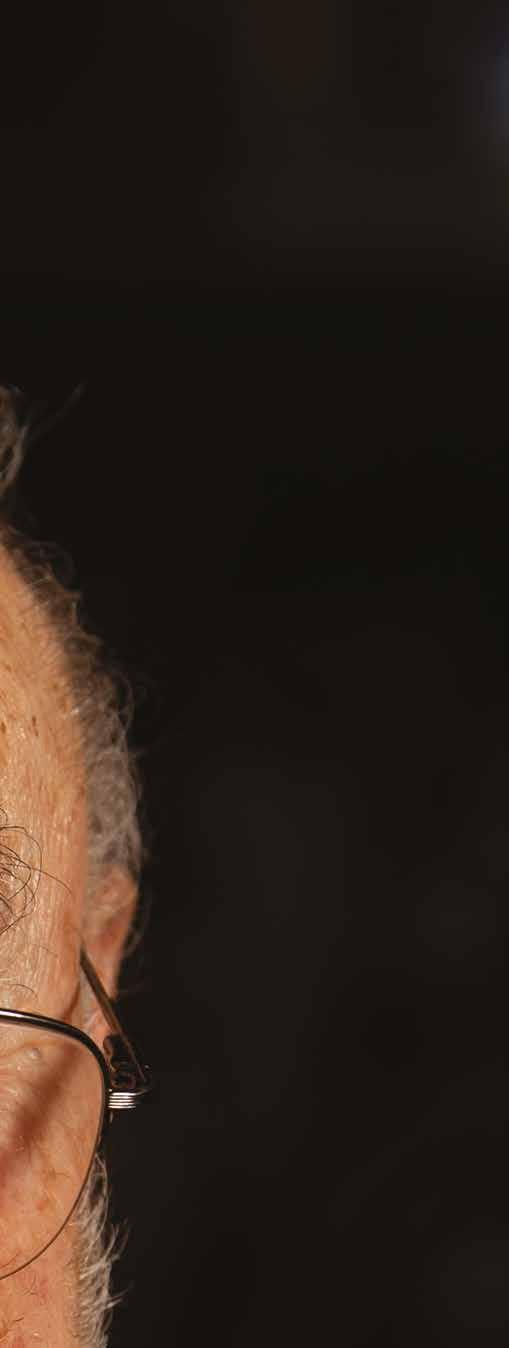
Rabbi Naftali Schif is the Co- Founder and CEO of JRoots part of the Family of Jewish Futures educational organisations. JRoots organises nearly 100 educational journeys to Poland each year involving approximately 5000 young Jews. Miracle is published this week by Penguin-Transworld. Available on Amazon. Undeniable the JRoots produced documentary of the book is holding limited screenings this week.
For further information ‘Miracle’ the book: https://amzn.eu/d/ejoJiHk to book your ticket to an exclusive flm screening of Undeniable near you: https://www.jfutures.org/miracle























A mother whose young son has a severe food allergy has joined forces with Camp Simcha to launch a UK-wide support group for parents facing similar challenges.
Mum-of-three Judy Devorkin, from North London, was inspired to act after navigating a complex and frightening medical journey with her son Ari, now two and a half, who lives with life-threatening allergies.
After months of uncertainty, he was diagnosed at around ten months old with allergies to milk and raw egg. During testing, he sufered a severe reaction, developing wheezing and going into anaphylactic shock. He was treated with adrenaline, but the incident marked a turning point for the family.
“Our lives literally changed that day, when we realised how serious his allergy was,” says Judy.
Te following morning, Ari’s condition had not improved and he was rushed to hospital by ambulance, needing a week of intravenous medication.
He is now under the care of St Tomas’ Hospital Allergy Clinic, but Judy says they battled to access the appropriate medical care and fnd out about potential treatment options, such as immunotherapy.
Determined to ensure other families do not feel as isolated as she did, Judy decided to create a support group in
memory of her late father - Yosef Elimelech Ben Meir Nosson z”l - for parents of children with severe allergies, focused on sharing knowledge, experience and expert information.
“Another mum on the group who was connected with Camp Simcha and their condition-specifc Communities of Support, suggested it might be good for us to work together – Camp Simcha got in touch and agreed to help me take it forward.”
Camp Simcha’s Family Liaison Community Manager Joanne Woolich, who runs the charity’s Communities of Support says: “We are so pleased to be able to work with Judy to establish Allergies@ CampSimcha for parents who have a child or teenager with severe allergies, giving them a safe, confdential space to share experiences and questions.
“We have moderated a WhatsApp group and our frst event takes place in North London and Manchester on Wednesday 4th February – a Q&A evening with Dr Lee Noimark, who leads the paediatric allergy team at Te London Children’s Hospital and who will be joining on Zoom.”
To sign up to the event or fnd out more about the Allergies@CampSimcha group please contact Joanne Woolich, Family Liaison Community Manager by emailing joanne@campsimcha.org.uk
Chana, the leading Jewish fertility organisation celebrates the birth of the 1,000th baby born with the charity’s support.
While the milestone is historic, Chana’s leadership is quick to point out that these 1,000 lives represent a collective achievement. Operating without government grants, Chana has relied solely on the consistent, unwavering generosity of the community since its frst day.
“Tis is a communal celebration. We simply could not have reached this amazing milestone without the generous donors who believe in our mission and support our work,” said Benny Groszman, Chair of Trustees at Chana.
Dr Veronique Berman, In-house Scientifc Advisor at Chana explains: “It is not a ‘one size fts all’ solution. Every couple is treated with a unique, personalised treatment plan according to their individual needs”.
Chana’s team of dedicated professionals provides couples with high-level, evidence-based information from expert sources, helping them navigate complex and often overwhelming journeys, leaving no stone unturned to help them achieve their dream. Tis guidance ensures couples are fully informed, allowing them to choose a path that is both medically sound and personally right for them, within a framework of professional and clinical excellence.
Beyond the emotional and medical guidance, Chana remains frm in the

• As
• No need to worry about posting your
• I sell through many diferent auction
high-end dealers, collectors and private clients
• With over 18 years in business you will always receive my personal discreet one-to-one service
• Free consultations at your convenience
belief that fnancial hardship should never be the reason a child is not brought into the world. In 2026, the fnancial burden of fertility treatment in London is more daunting than ever; while many clinics advertise base packages, the true cost of a single cycle of IVF, including essential medication, blood tests, and scans, frequently reaches between £7,000 and £10,000.
Chana provides signifcant fnancial assistance to ensure that these life-changing treatments are accessible to those who need them. Financial support also goes toward providing professional therapy, ongoing practical support, and a vital helpline, ensuring that no couple must face the pain of infertility alone.
At the heart of Chana is a team of professionals and leaders who are completely dedicated to alleviating the pain of the fertility journey and helping bring Jewish lives into the world. As they celebrate the 1,000th baby, their eyes are already on the 320 couples still struggling, still waiting, and still wondering how they will aford the treatment they need.
“As overjoyed as we are to reach this milestone” Carolyn Cohen, Honorary Executive Director at Chana shared. “We must keep looking forward, keep building resources, and continuing creating lives together. We want to thank the community for their partnership and unwavering support in this miraculous work.”
For more information and eligibility criteria, visit www.chana.org.uk.

We specialise in getting you the very best price possible CALL NOW for a no obilgation, door to door service







AJEX is delighted to announce the election of Jon Tyler as its new National Chair. Jon succeeds Dan Fox, who has guided the charity with dedication and commitment over the past four years.
Jon brings with him a lifetime connection to military service and a longstanding association with AJEX. His father,
own involvement. Jon was honoured to be appointed Parade Commander himself in 2024.
Jon spent 15 years serving with the Reserve SAS, progressing through the ranks to Sergeant and Troop Commander before being commissioned at Sandhurst and later serving as a Captain in the Regiment. He had various roles including being heavily involved in Regimental training. He trained extensively in Special Forces disciplines, including medical skills, weapons, demolitions, NBC, signals, parachuting, and was involved in many overseas activities across Europe and the USA.
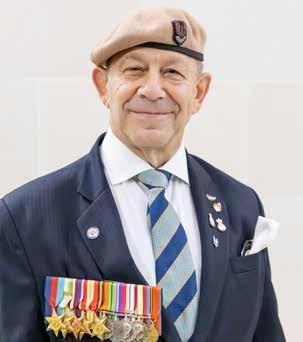
Lieutenant Commander Alan Tyler, was a career Royal Navy ofcer who served from 1941 to 1966 and later acted as Parade Commander for AJEX Remembrance parades. Jon began attending these in 2000 which thanks to his father was an experience that helped shape his
In parallel to his military service, Jon graduated with a degree in Business Studies and went on to build a successful civilian career. He hopes that this commercial and governance experience will add further value to AJEX.
Commenting on his appointment, Jon Tyler said: “I am honoured to be asked to take up the role of National Chair with AJEX. Tese are difcult times for the Jewish community in the UK and it is important we continue to show our loyalty to the Crown and country and how Jews have always stood up to be counted when the country needs them. I look forward to help to continue and build on the work of AJEX, in particular, remembrance of and strengthening the Jewish contribution to the military

and the combating of antisemitism through education.”
Fiona Palmer, AJEX, CEO said: “AJEX looks forward to Jon Tyler’s leadership as National Chair, building on past successes and continuing to go from strength to strength.”
AJEX has an inspiring year ahead with a plethora of initiatives and events including the 20th anniversary of the establishment of the Jewish Memorial at the NMA, a second podcast series, educational programmes and the 2026 Parade. To fnd out more visit: www.ajex.org.uk





A free valuation from our in house gemmologist and gold experts on anything you may wish to sell. If you are thinking of selling, we purchase all Diamonds in any shape, size, clarity or colour. WE PAY MORE than all our competitors. Try us, and









BY RABBI MOSHE TARAGIN
Te night fnally arrived.
After more than two centuries of slavery, the moment of liberation was at hand. For a year, the Egyptians of Mitzrayim had sufered a series of devastating blows. We watched, waited, and prepared. Now it was time to leave.
But there was one fnal task before we left. One last instruction we were commanded to carry out. We were told to “borrow” gold, silver, and clothing from our neighbors in Mitzrayim. We were instructed to ask for them, not to seize them—despite generations of unpaid labor and abuse. Redemption would not arrive through force or vengeance, but through request.
When slavery began, we were cast as a threat to society. Pharaoh could only sell his genocidal policy to the broader public of Mitzrayim by turning us into a symbol of danger. We were portrayed as a ffth column—living apart, culturally insular, clustered in our own enclave, and allegedly poised to align with the enemies of Mitzrayim and displace the native population. We were depicted as a ticking time bomb.
Tis campaign of fear allowed Pharaoh to demonize us. We were turned into the enemy, made to carry the anxieties and insecurities of Egyptian society. Suspicion turned into hostility, and hostility made cruelty acceptable.
By the time of Yetziat Mitzrayim, however, our standing had shifted dramatically. In that climate, it was natural for the Egyptians to ofer gifts as we prepared to depart into the desert. Moshe had become a public fgure who confronted a tyrant no one else dared challenge. Te plagues struck Mitzrayim while passing over our homes. Te devastation of the night of Pesach spared our frstborn entirely. It became unmistakable to the Egyptians that we were a people protected by Hashem. Where we had once been treated as an underclass, we were now regarded with awe and respect.
cause of its troubles.
Troughout Christian history, we were repeatedly targeted on theological grounds. It was deeply unsettling that the original chosen people did not accept the new faith. Tat refusal was portrayed as defance. We were cast as a cursed people, condemned to live in humiliation so that our sufering could serve as supposed proof of Christian truth.
After the Black Plague ravaged Europe in the fourteenth century, the pattern returned with brutal force. We were accused of poisoning wells. In ffteenth-century Spain, the charge shifted but the logic remained unchanged. We were again falsely accused—this time of secretly undermining Christianity while outwardly conforming to it.
Te dynamic that began in Mitzrayim reappeared across generations, in diferent lands and under diferent guises, but always driven by the same fear and need to assign blame.
In the modern world, the tone of antisemitism shifted. For centuries, we lived as an underprivileged class, pushed to the margins of society—often confned to ghettos and burdened by restrictions. We held little power or infuence. When
of public good. Ironically and tragically, some of the voices repeating these accusations in early twentieth-century Russia were themselves Jews involved in communist movements. Tey internalized the lie, turning it outward even as it was used against them.
During World War II, Hitler portrayed the confict as something forced upon him by shadowy Jewish power operating in the West. Nazi aggression was reframed as self-defense. Even the United States, he claimed, had been dragged into the war against its will. President Roosevelt was depicted as a puppet, an instrument of Jewish interests steering America into catastrophe.
According to these baseless claims, we were no longer merely disloyal citizens or economic exploiters. We became the hidden architects of global calamity. World wars themselves were recast as Jewish creations.
Tis fnal version of antisemitism is reemerging today—the claim that global confict itself is driven by Jewish pressure whenever the world confronts evil. As the United States has grown more assertive in confronting Islamist extremism and regimes aligned with it, familiar accusations have resurfaced. Once again, intervention is portrayed not as a response to danger, but as the product of Jewish infuence and lobbying.

societies sought a defenseless target, we were an easy choice.
Tat reversal was essential for our own national self-understanding. After centuries of degradation and ridicule, we could fnally see ourselves as worthy bearers of Hashem’s message in this world. A people once vilifed and feared was now recognized as favored and protected.
Slavery began with our being cast as society’s threat. Tragically, it would not be the last time a hostile culture would project its fears onto us and cast us as the
Tat changed with emancipation. We gradually became equal members of society. Given opportunity, many of us rose to positions of prominence and infuence. Tis transformation unleashed a darker fantasy. No longer despised for weakness, we were now feared for supposed power. We were accused of secretly controlling banks, governments, and later media and culture.
Te most infamous embodiment of this fantasy was Te Protocols of the Elders of Zion—a crude forgery that peddled the myth of a clandestine Jewish cabal manipulating institutions under the guise
Tey are wrong. But in one narrow sense, they stumble onto something true.
We have never drawn foreign nations into war on our behalf. We have never coerced empires into confict for our interests. What is true is that the battles we fght are often battles against forces that threaten humanity itself. Te enemies of our people—and now of the Jewish state—are not merely anti-Jewish. Tey are forces that seek chaos, cruelty, and destruction on a global scale.
At some point, larger nations recognize this danger. Tey understand that such threats will not remain contained. And when they act, they do so not because we compel them, but because liberty, freedom, and human dignity require defense. Te Nazis did not threaten us alone.
Tey threatened civilization itself. Western nations eventually grasped this and mobilized—not out of loyalty to us, but out of moral necessity and self-preservation.
Communism, too, was not merely a danger to Jewish survival. It undermined the foundations of a world desperate for stability after two devastating wars. And though we had no army, Jewish refuseniks were among the frst to challenge Soviet authority. Years later, when Natan Sharansky crossed the Glienicke Bridge to freedom, the Iron Curtain soon followed. For decades, we have confronted the scourge of Islamic fundamentalism and the corrupted notion that Hashem desires death and bloodshed. We warned of an aggressive culture that shows little regard for human life or religious freedom. Tose warnings were often dismissed. Now the world is fnally absorbing the lesson we learned through pain. Te efort to confront this violence is not undertaken in service of the Jewish state. It is undertaken in defense of what is right, what is moral, and what preserves civilization.
Tese values are not uniquely ours. Tey are human values. Tey simply align with Jewish history and with our long struggle against forces that glorify cruelty and sanctify destruction.
Te pattern is not Jewish manipulation. It is moral recognition. When we are targeted, it is often because we stand early, visibly, and stubbornly against dangers that will eventually threaten everyone. And when others fnally join the fght, it is not because they were coerced—but because they have come to see the truth.
Te writer, a rabbi at Yeshivat Har Etzion, was ordained by Yeshiva University and has an MA in English literature. His books include To Be Holy but Human: Refections Upon My Rebbe, HaRav Yehuda Amital. mtaraginbooks.com.












BY RABBANIT SHANI TARAGIN
Parashat Bo begins with Hashem’s message to Moshe concerning Pharaoh and the Egyptians, whereas the rest of the parasha focuses on instructions particular for Am Yisrael. Here we fnd a turning point in history. Until now the history of Am Yisrael has been presented together with that of the world at large. At the eve of their redemption, it is imperative that they see themselves as separate and distinct from the nation around them. Te haftarah selected for this week (Yirmiyahu 46:13–28) is one of the frst prophecies delivered by the prophet to other nations, and like the parasha, contains both universal and particular themes. Te frst part of Yirmiyahu’s prophecy (v. 13–26) is universally addressed to Egypt and the entire world, while the concluding two pesukim contain a special message concerning the destiny of Am Yisrael: “...For I am with you, for I shall make an end of all the nations... but I will not make an end
of you.” Tis echoes the contrast Hashem made during the plagues of darkness and death of the frstborn – “in order that you shall know that G-d separates between Egypt and Israel” (Shemot 11:7).
As opposed to the parasha which focuses on the distinction of Am Yisrael, the haftarah teaches that Hashem, as the G-d of the entire world, continues to deliver messages to all the nations throughout history. Tis time, on the eve of destruction and exile, Yirmiyahu the prophet must come and prepare the nation for their new reality of dispersion amidst the nations. Te haftarah serves as contrasting parshanut for the parasha; yetziat Mitzrayim is being reversed as Am Yisrael return to a state of exile. Am Yisrael must be reminded that they have a role to play among the nations, i.e. the spreading of G-d’s name. Te haftarah therefore, focuses on the universal component as found in the beginning of Parashat Bo.
Although the haftarah contains similar themes, the plagues described by
Yirmiyahu that will befall Egypt come from the nation of the north and not directly from Hashem as described in the parasha. Nonetheless, the prophet warns that the warriors of Egypt will not be able to withstand their invaders “because G-d thrust him down” (15). Here we once again fnd parshanut on the parasha: When Pharaoh declared “I do not know G-d’s name,” Hashem sent direct and overt plagues so that the nations would universally recognize G-d’s “outstretched arm” and His guidance of the world. Yirmiyahu’s prophecy indicates that by his time, G-d’s name is already known and His hand may be detected even through natural phenomena and human actions.
Te concluding pesukim of the haftarah emphasize that even amidst the prophecies concerning the nations and the universalistic trend which they represent, the uniqueness of Am Yisrael will be maintained. Anticipating the fears of the nation on the eve of exile, the
prophet promises: “And you, My servant Ya’akov, do not be afraid, and do not fear, O Israel, for I will save you from afar and your seed from the land of their captivity. And Ya’akov shall return and shall be quiet and at ease, with none to make him afraid. And you, My servant Ya’akov, do not fear, says the L-rd, for I am with you, for I shall make an end of all the nations where I have driven you, but I will not make an end of you…” (v. 27–28)
Rabbanit Shani Taragin is Educational Director of Mizrachi, Mizrachi Lapidot and Matan Eshkolot Programs for Educators, and the Rosh Beit Midrash of Mizrachi-Tzemach David Women’s Learning Hub, Mizrachi Lapidot, and Yeshiva University in Israel Women’s Torah Studies Program. She is a member of the Mizrachi Speakers Bureau (mizrachi.org/ speakers).
• Suits now from £50
• Overcoats from £69.50
• Knitwear from £10
• Casual Jackets from £29.50
• Sports Jackets and Blazers from £39.50
• Trousers £20 each 2 pair for £30 28-48 inch waist
• Shirts from £10
• Shoes from £15
Open weekdays untl 6pm & Sundays tl 5pm





Expert Real Estate & Services Providers

NP-ASHK02
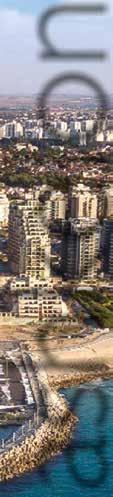
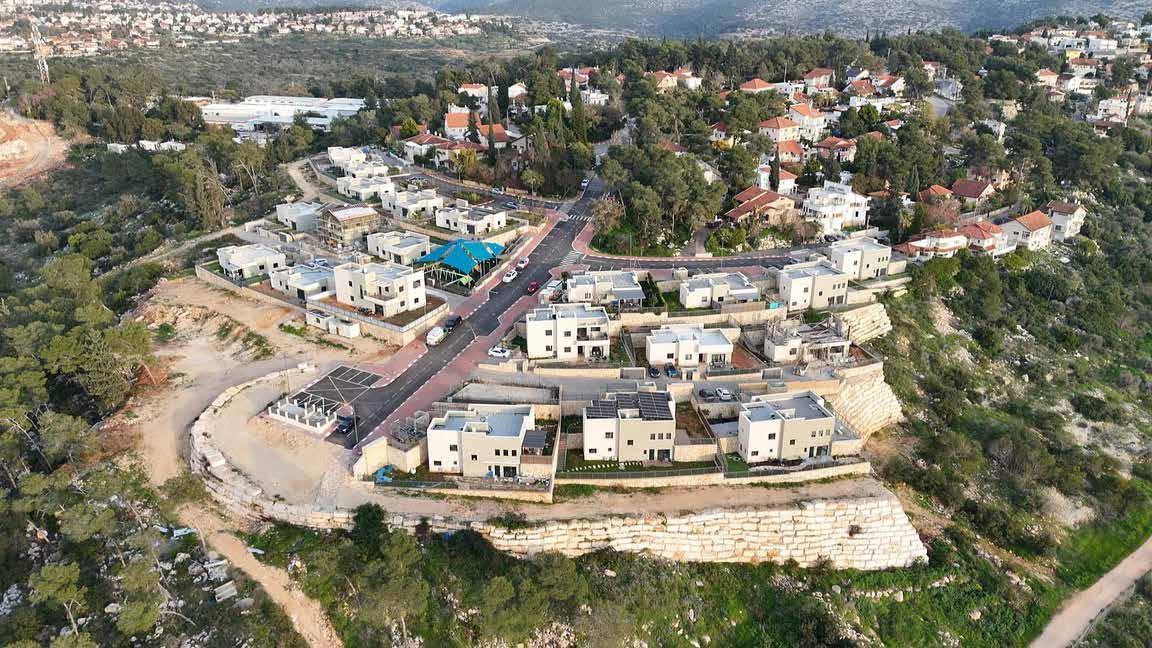
Options Marina & New Ir Hayayin Areas, 10min to beach, ideal for investment. Options from 1,950,000NIS for 3 rooms 2 beds, no linkage 20/80. 3, 4, 5 Rooms

NP-NET09
Luxury projects, Shirat Hayam, sea views, walking distance to the beach, with pools, gym and so much more. 5 Rooms plus,

NP-RBSA04
Limited pre sale options and terms From only 2,500,000 NIS 15% now and 85% at end. No Linkage. 3, 4, 5, 6 Rooms

NP-TIB05
High end investment options, to live or rent out. Sea views and all amenities. 3 rooms option from 1 790.000 NIS. 1 to 3 Rooms
Find your perfect property, home, place where you belong. We help and guide you every step of the way.

NP-CARMG01
Now includes new North Carmei Gat, New projects in new Anglo Central areas, ideal to live & invest 20/80. 2 to 5 Rooms, Garden, Penthouses & Villas
NETANYA SHIRAT HAYAM

NP-NET13
Spacious apartments, open views, premium design, meticulous specifcations and close to the beach - perfect quality of life. 5 Rooms

Last few options. 20% now 80% at end. Excellent location Mishkafayim Ramat Beit Shemesh. 4 rooms option from 2 650.000 NIS. 4 to 5 Rooms NP-RBSA01

Exciting new neighbourhood, close to beautiful coastlines, access to major transportation routes and innovative architectural design. 4 to 5 Rooms

New projects, Limited pre sale options with 15% now 85% at end. No Madad (not linked), Excellent locations. 3, 4, 5 Rooms

New projects, Excellent location from 2.4 Million NIS. No Madad, limited options, 20% secures. 2 to 5 Rooms, Garden & Penthouses NP-RBSH11

Perfectly connected to the city, no reliance on a private car. Vibrant, creative, family-friendly urban centre. Up to 45% below market prices. 2 to 5 Rooms NP-TEL15

Purchase: Full ownership, max control, direct future appreciation. Syndicate: Lower entry cost per investor, shared risk, equal share in returns. Partnership: Co-own with agreed terms.

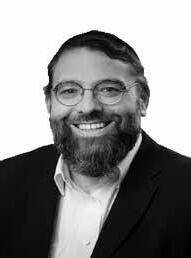
BY RABBI GIDEON GOLDWATER
Over the past few weeks, some of the headlines in the Jewish press seem to sit uneasily alongside one another. On the one hand, we’ve read reports of over 740 antisemitic incidents on UK campuses, including violent assaults, intimidation, and Jewish students being forced to justify their existence, their history, or even the reality of Jewish sufering. Tese aren’t abstract statistics. Tey describe real students, in real corridors, lecture halls, and stairwells, navigating daily hostility simply for being Jewish. At the same time, a very diferent message has also emerged, declaring that “Campus is not a war zone for Jews.” Te intention behind that statement is understandable. No one wants to normalise fear. No one wants Jewish students to feel they must shrink their ambitions, avoid universities, or see themselves as perpetual victims.
But it does raise an unavoidable question: How can both of these things be true at the same time? How can campus not be a war zone, while hundreds of antisemitic incidents are being recorded? Are we talking about diferent campuses? Diferent students? Or are we struggling, collectively, to articulate the reality because the truth feels too uncomfortable whichever way you phrase it?
Layer onto this another story cited in recent headlines: the declining number of schools meaningfully marking Holocaust Memorial Day. Tat, too, feels like part of the same story. Not because remembrance days alone stop hatred, but because forgetting history has consequences. When collective memory weakens, moral clarity usually follows. Again, these messages don’t neatly align with the “Campus is not a war zone for Jews” and “there is a bright future for UK Jewry” narrative, being propelled by some. And perhaps they shouldn’t. Because the truth is that this is a confusing, unsettling moment.
What are the responses being proposed? “It’s not that bad.” Tone it down.
Don’t dramatize it. Don’t frighten students. Don’t call it a war zone. Others say “Jump ship.” If Britain is no longer safe, then leave. Pack up. Start again elsewhere. Or perhaps, lobby government. Increase security. Campaign harder. Demand intervention. Push institutions to act. Each of these responses contains something valid and yet all are insufcient.
Pretending it’s not serious, risks gaslighting those living with daily hostility. Telling everyone to leave ignores the reality that despite the rise in Aliyah numbers, it remains less than 1% of the Jewish population that has taken this choice. Relying solely on protection and policy, treats Jews as a problem to be managed, rather than a people with something vital to ofer.
At Aish UK, we believe there is another response, one that doesn’t deny the danger, doesn’t run from it, and doesn’t outsource Jewish survival to governments.
Teach Jews to be Jewish!
Not as a slogan. As a strategy. Because antisemitism has never been defeated by silence, denial, increased security or political activism alone. It has been confronted and beaten by Jews who understand who they are, what they stand for, and why their presence in the world matters.
Te world’s oldest hatred isn’t random. It is deeply connected to what Judaism represents: moral responsibility, the insistence that right and wrong exist, and the refusal to surrender ethical clarity when society prefers convenience. When Jews forget that, when Jewish identity becomes thin, apologetic, or purely cultural, antisemitism doesn’t disappear. It intensifes.
So, our response is education. Depth. Meaning. Pride.
More informed Jews.
More confdent Jews.
More Jews who can articulate why their identity matters, not just historically, but now.
Tis doesn’t replace advocacy, security, or responsibility from institutions. But without it, none of those things are
enough. Without education, there won’t be a Jewish future to secure, advocate for, or to support on their Aliyah journeys. If the times are difcult then the answer cannot be smaller Jewish lives. It has to be stronger ones. And that is the work we are committed to continuing.
Rabbi Goldwater holds a BSc in Psychology and an MA in Jewish Education
and spent two years living in Birmingham as the Aish Rabbi on Campus. He went on to direct Aish’s national Campus programme before taking on his current roles as Managing Director of both Aish UK and Jewish Futures. He has overseen the expansion of the teams and programming that are currently impacting over 20,000 young Jews across the UK.





Dear Rabbi
I’ve been reading your comments about Israel over many months and as a proud member of Yachad, I honestly fnd them staggering. You keep insisting this confict isn’t about lost land or occupation, as if Palestinians are just clinging to some outdated grievance instead of living under Israeli control right now. How can you be so naïve? Whether you want to acknowledge it or not, the Palestinians have lost land and cannot move on until they are given it back. Tey are trapped and that is what you are refusing to confront.
Beth
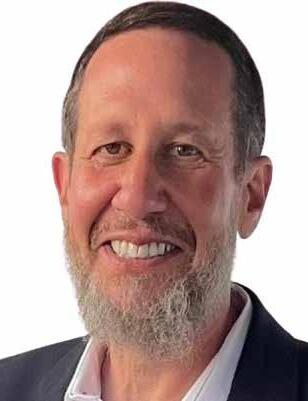
Dear Beth
Te Palestinian-Israeli confict is not about ‘Arabs’ losing land. Since 1948 Arab states lost vast territories in wars and political collapses and no one cared. Sudan lost a third of its territory when South Sudan became independent. Yemen split and collapsed. Morocco lost control over large areas. Tey all took the loss, adjusted to new borders, resettled people, and carried on.
Te confict is not about ‘Muslims’ losing land either. Since 1948 Muslim countries lost territory across Asia and Africa. Pakistan lost East Pakistan which became Bangladesh after a war that killed millions of Muslims. Tere was no endless victimhood or any cult of reversal.
Te confict is not about ‘occupation’. Since 1948 Turkey occupied Northern
Cyprus. Morocco occupied Western Sahara. Syria occupied Lebanon for decades. None of them built their national identity around it or taught their children to fght and to hate – to keep life on hold until they could undo the past (which will never happen).
Te confict is not about ‘refugees.’ Since 1948 tens of millions were displaced everywhere. Tey rebuilt countries and they rebuilt lives. In this case, people are being encouraged not to move on, not to rebuild, and not to let go. Te grievance itself has become their whole identity.
So, it’s nonsense to say anyone is “trapped.” Tis is self-inficted and continues to be so because admitting defeat would require accountability.
Dear Rabbi I was visiting a shul in Golders Green recently. At the kiddush I was amazed at the level of micro-aggression as previously polite adults were jostling in a food queue like it was an El Al last boarding call. Is this normal behaviour, or is there a halachic source for pushing ahead when kugel is running low?
Rosalind
Dear Rosalind Tis is an ancient and unresolved question. Tere is no explicit halachic discussion about cutting the kiddush line, most likely because in the shtetl there was no such thing

long-standing custom that one must act decisively when faced with a fnite supply of rugelach.
Tat said, pushing is forbidden, except in cases of imminent depletion of herring. In such circumstances, one may rely on the principle of pikuach nefesh (endangerment of life) because without herring, the joy of Shabbat is genuinely at risk.
May you merit attending kiddushim with ample supplies, calm queues, and someone else who insists, “No, you go frst,” (while really wishing you leave so they can have that last fsh-ball).






Are you building up surplus cash in your business? Too much cash just sitting there and feeling like you might be leaving money on the table? Fortunately, we can help.
As a long-established and renowned financial advisory practice, we advise on tax -efficient ways to grow your surplus cash or even extract it with less tax using our smarter dividend strategy all through the use of fully regulated investment solutions.
We provide comprehensive financial advice on all aspects and can also work closely with your accountant to ensure everything is coordinated, so that your cash works harder for you, not HMRC.
If you’ve ever asked, “How can I get more from my business while paying less tax?” then you’ll want to watch our pre-recorded webinar. Get access by emailing: webinar@arnoldaaron.co.uk or WhatsApp 07957 440 724.
to our newsletter: newsletter@arnoldaaron.co.uk


We are nearing the end of the plague season in Egypt! The last three were locusts, intense darkness and fnally, the killing of the frstborns.
At that point the Jews were fnally sent out of Egypt but not before they had a special meal, which we in some ways we
copy till today!
Matza and Maror (bitter herbs) in particular! They also had a special Korban – a lamb prepared by roasting and they enjoyed it all with their shoes on and walking stick in hand… Off they go in the morning, straight into a desert, fully
trusting Hashem to lead them and take care of them, which he does for forty years.
Towards the end of the sidra, Hashem gives the Jews two special Mitzvot – Tefllin and Pidyon Haben.
The frst is a Mitzva men and grown up boys do daily,
whereas the second one is not a common Mitzva but a beautiful one to witness if you ever can!
All of these remind us of the miracles Hashem did for us and the love the Jews showed Him and He showed them!
Number of Lines in the Sefer Torah - 207
Number of Verses - 106
Number of Words - 1,655
Number of Letters - 6,149
I T E F I L L I N R P C
A O B P G O D R Z P Z Y
X H O V C K O P L P O F
F L N U J B M A L E O C
X W S R T H G S T F I S
Z T N S W U B S D P D C
S V R H E V R O H J G P
Z I X P A N G V A N N D
F O Z K Z U K E Z H S N
C W W V K R L R T I H V
R R B H F M Z A A V J Z
B Z R K D W T D M D M N
PASSOVER • PLAGUE •
Last week’s answer: In what nonlife-threatening situation is there a positive mitzvah to eat the meat of a neveilah - i.e., something that died without shechita (Kosher slaughter)?
The answer is: Chatat Ha’of.
A bird brought as an offering in the Temple wasn’t slaughtered with a knife. Rather, the bird was killed by a sharp thumbnail inserted in the back of it’s neck. If a non-Kohen ate it, he would be transgressing the prohibition of eating neveilah. Kohanim, however, were commanded to eat from this offering.
This week’s Question: Which Tractate’s name is the antonym of the name of the Order (seder) of which it is part?
1. How many years is 4 centuries?
2. How many metres in a lap of an Olympic running track
3. What is CD in Roman numerals?
4. How tall is The Empire State Building (m)
The goal of a word wheel puzzle is to create as many words possible with the letters in the word wheel. Each word must contain at least three letters. You can only use each letter once and every word must have the letter in the centre of the wheel.
Use the area below to write the words you have found. C E Y T R N A E N
Q: Why couldn’t the leopard play hide and seek?
A: Because he was always spotted
Q: Can February march?
A: No, but April may!
Q: What do computers eat for a snack?
A: Microchips!
Q: I’m orange, I wear a green hat and I sound like a parrot. What am I?
A: A Carrot
1. I make two people out of one. What am I?
2. I can be cracked, I can be made. I can be told, I can be played. What am I?
3. You answer me, although I never ask you questions. What am I?




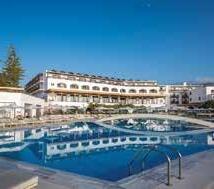
• Luxury resort with private beach
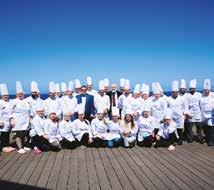
• 17 swimming pools including 2 heated pools, indoor and outdoor
• ALL INCLUSIVE Package: complimentary wine, open bars until late night, concept evenings & endless activities
•
by

• Premium cocktail lounge & elegant dining
• Daily prayers & shiurim
• Exclusive tours to Crete's most spectacular sites
• Spa, ftness center, sports facilities
• Shainfeld managers with you throughout your entire vacation


