It was great to sit down with Mayor Ken Laban some three months after he assumed the role of Mayor of Hutt City. It quickly became clear that Mayor Ken sees progress for Eastbourne and the Bays needing to be community led and that progress would be limited only by our imagination.
Shared Pathway
Mayor Ken was quick to highlight that the Tupua Horo Nuku project will come to fruition in late March or early April - and that the project will have been completed on time and under budget.
From a safety perspective cyclists, walkers and runners will be separated from traffic and some protection from the sea will be provided.
How the pathway is then managed and maintained going forward Mayor Ken sees as being a community led project.
Community Engagement and communication
Eastbourne is incredibly lucky to have its own Eastbourne website https://eastbourne.nz/ ,social media pages and a community paper – all help to get messages out.
I put it to Mayor Ken that he should empower his communication staff to work with
Eastbourne locals to link council information with the Eastbourne webpage allowing information to be much more timely and accessible.
His answer was – let’s do it.
Land Areas
Land at the entry to the regional park from Burdan’s gate and the construction site near Point Howard Wharf both lend themselves to development.
Again Mayor Ken's response was that plans need to be community led.
Budget Cuts and cost savings
When asked about protecting Eastbourne's community facilities such as the neighbourhood hub (library) and the swimming pool, Mayor Ken wouldn't provide comfort that these resources were protected from further cost cutting. He acknowledged how important these facilities were to
locals, but highlighted that the council had a number of smaller, older facilities spread through the communities without the population to justify the costs incurred. When I raised the question of private involvement he embraced it and called on Eastbourne to lead the way on finding models for shared management.
Two summer issues which cause contention in Eastbourne (when we have summer) are the lighting of fires on the beach and the pedestrian crossing at Days Bay and the impact it has on traffic entering and leaving Eastbourne. Again, a human rather than political answer from Mayor Ken. Did the fires on the beach really cause many problems? (when there is no fire ban in place). Was it not almost a coming of age for young Eastbourne residents and others to have a BBQ and watch the sun set ? Likewise, the Days Bay crossing with people moving from beach to car parks and the pavilion: was it that much of a hassle or was this simply the cost of living in a beach settlement?
My impressions - Eastbourne has the opportunity to make its own destiny and this provides opportunities if we are prepared to step up and take them.
Thinking Hats… Planning for the year ahead is often a priority as the New Year begins. Back in 1985 an expert on thinking, Edward De Bono, came up with a metaphor for the different aspects of the thinking process. He called it ‘Thinking Hats’.
His six Thinking Hats are now a time-tested thinking tool, often taught to schoolchildren. They help you think clearly by directing your attention in just one direction at a time - white hat facts, green hat creativity, yellow hat values, black hat cautions, red hat feelings and blue hat process.
It's a simple mental metaphor. Hats are easy to put on and take off. Each hat colour signals a mode of thinking. In a group, each member is encouraged to think using the same thinking hat, at the same time, on the same issue.
When used alongside discussion and debate, Thinking Hats is a productive approach to problem solving, decision making and idea evaluation.
It also works well too when one is working through an issue by oneself. It helps you identify the unacknowledged assumptions, attitudes and values which you bring unconsciously to any issue.
In a day when so many strongly held perspectives clamour for our attention, these hats can help us sort the grain from the chaff. In this context, the values taught and lived by Jesus are well worth a second thought…
St Alban’s+St Ronan’s: 1st Sundays 9:30am monthly Shared Communion Services (alternating venues, leaders and preachers). 1 February at San Antonio church, 1 March at St Ronan’s church.
St Ronan’s: 1st Sundays shared with St Albans (see above). 2nd and 4th Sundays 9:30am informal, 3rd Sundays 9:30am traditional, 5th Sundays 12:00pm fellowship meal. office@stronans.org.nz www.stronans.org.nz
St Alban’s: 1st Sundays shared with St Ronan’s (see above). Other Sunday services at San Antonio church at 9:30am. 1st Thursdays, communion at 10:30am at St Ronan’s church. www.facebook.com/StAlbansNZ office@stalbanschurch.nz www.stalbanschurch.nz
San Antonio: Vigil Mass, Saturdays 5:30pm.
Sacred Heart, Petone: Mass, Sundays 9.30am and 5.30pm. holyspiritparish41@gmail.com www.holyspirit.nz
Column sponsored by St Alban’s Anglican, St Ronan’s Presbyterian & San Antonio Catholic
Planning A Trip Away?
WHAT’S HAPPENING HAIR
JANUARY
After the buzz of summer holidays, January often feels like the time to hit refresh, and your hair is no exception Are you tired of that harsh regrowth line?
Do you feel the stress of scheduling appointments before the stripe appears? Or maybe the battle against brassiness and orange-yellow tones?
Last year I saw a rise in the number of clients wanting to embrace their grey through one of my all time favorite techniques, grey blending.
Grey blending is a modern, specialised colouring technique that softens your natural greys with carefully placed highlights and lowlights Instead of covering them, I blend them beautifully, following your unique grey pattern
The result? Seamless regrowth, no harsh lines, and the freedom to stretch your appointments without worrying about obvious grow-out
Grey blending is not your standard salon colour, it’s tailored artistry. Every placement is designed to enhance you and your natural beauty
My bookings are just about full for January and February so if you ’ re ready to embrace effortless, natural colour now ’ s the perfect time to book. And yes, if you ’ re wondering, I’m fantastic at what I do!
Garden Tour Recap
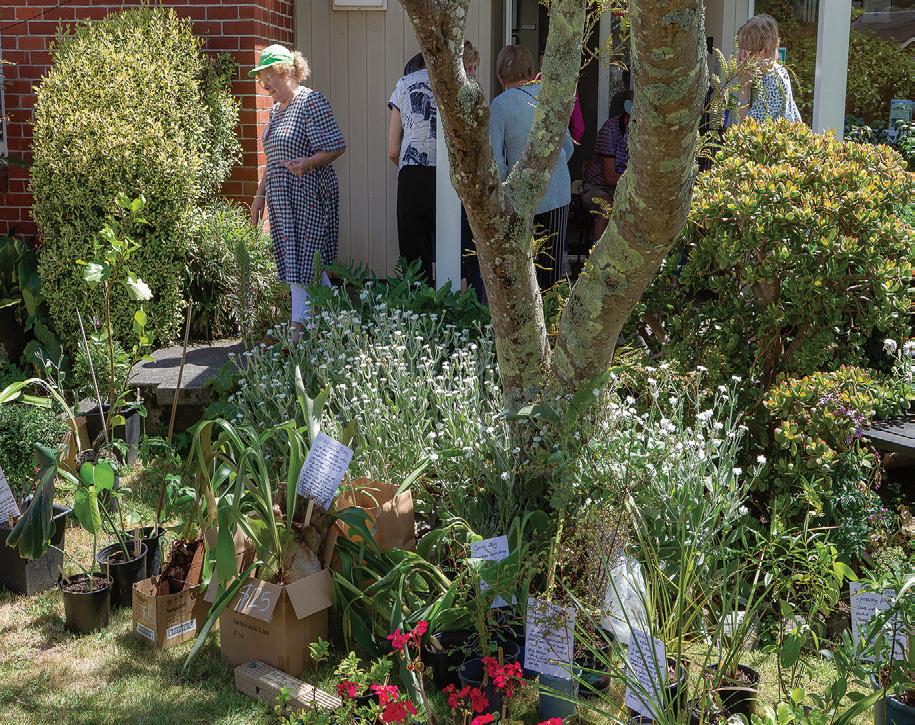
One November day, six glorious gardens, 100+ visitors and more than $17,000 dollars raised! The day of the Eastbourne Garden Tour began with morning tea, barista coffee and plant sales in the St. Alban’s garden and ended with live music, sumptuous hors d’oeuvres and good company in a Days Bay garden - and the sun shone too!
“Huge thanks go to everyone who contributed to the success of the day” says St. Alban’s Church Warden, Stuart Mossman. “There are too many to mention” but he acknowledges "our special thanks go to the garden owners who so generously hosted us, to
Would you like to join the vision of earthquake strengthening this historic church and community hall?
To join the bell ringing auction https://shorturl.at/XQxhI
To make a donation or pledge www.stalbanschurch.nz
To find out more email office@stalbanschurch.nz
Fundraising Progress
$1,300,000 Projected cost
members of the wider community who put up their hands to help and to everyone who bought a ticket.” This money raised, $17,000, along with the same amount earned from the preloved clothes sales, has brought the Church another step closer to achieving its vision of a strengthened Church and Hall teeming with life and with doors thrown wide open to the community.
And there’s still time to help bring the vision to life before fundraising closes in March and construction work begins later in 2026. There’ll
$830,000 From fundraising and parish trust
Fundraising for St Alban’s earthquake strengthening
be a good old-fashioned Church fête on 21st March and look out for exciting auctions for artworks by Richard Ponder and Alan Collins, boutique accommodation and more.
Or perhaps you’d like to bid for the chance to be the first person to ring the Church bell again?
Keep an eye on Facebook, look out for posters around the village, go to the St. Alban’s website [https://stalbanschurch. nz], check out the Give-alittle page [https://givealittle. co.nz/cause/we-are-going-toearthquake-strengthen-ourchurch] or contact Stuart at stuart@mossman.net.nz if you want to know how you can come on board...
Plant sale in Church Garden, Jillian Wiggins
IRRIGATION SHELF
January/February: Mid/late summer. Our summer is forecast to be above averagely warm and wet.
I’ve long struggled to find a spot to root cuttings, with wind shelter and good sunlight. Also, a way to water the young, drought-sensitive pot plants so formed, as they grow through summer, autumn and winter ready for planting out next spring. Here’s how…!
Shelf: Buy two 150mm wide x 25mm thick H3.2 fence palings (~$3 /m). Place these side-by-side to make a 300mm wide shelf. For max sun, mount your shelf on the
N side of an E/W fence on the S side of your property. Mount it ~300mm below the fence topthere’s more sun higher up and the fence top will provide some wind shelter from both N and S. Use a spirit level to ensure your shelf is level, side-to-side, but slightly sloping end-to-end (~1 cm /m).
Capillary mat: Cover your shelf with black polythene (keeps the wood dry). On this lay two strips of 150mm wide ‘capillary mat’ (Google capillary mat 150mm) (~$1 /m). Capillary mat works like a thin sponge. It will distribute water evenly over the whole shelf. Sit your pots on the capillary mat. If you keep the mat wet, the pots will stay watered (from the bottom, so no leaching). At the start, handwater the pots for a few days to get a good capillary link between their potting mix and the mat –then don’t move them...!
Irrigation: To keep the mat wet, arrange a garden hose to drip water on the ‘high’ end of the shelf.
The slope will help water flow towards the ‘low’ end. Adjust the tap (almost off) so it drips several times a minute. A long spanner helps make fine tap adjustments. Drip rate: If the pots dry out - increase drip rate. If the shelf drips water at the ‘low’ end - decrease drip rate. I calculate a 3.3m long, 300mm wide, shelf will be about 1m2 and so will need about 15 drips/min summer and 1 drip/min winter.
Science: How much water plants use depends on temperature, wind, sun and humidity. Like rainfall, plant water-use is measured in mm/day and ranges from 0 mm/day (cold, still, dull, humid) to 6 mm /day (hot, windy, sunny, dry). One drip is ~0.25mL, so 4,000 drips is ~1L. On a hot summer’s day your 1m2 shelf will need about 6L or 24,000 drips. That’s 1,000 drips/h or 17 drips/min. slang@xtra.co.nz www.mulchpile.org
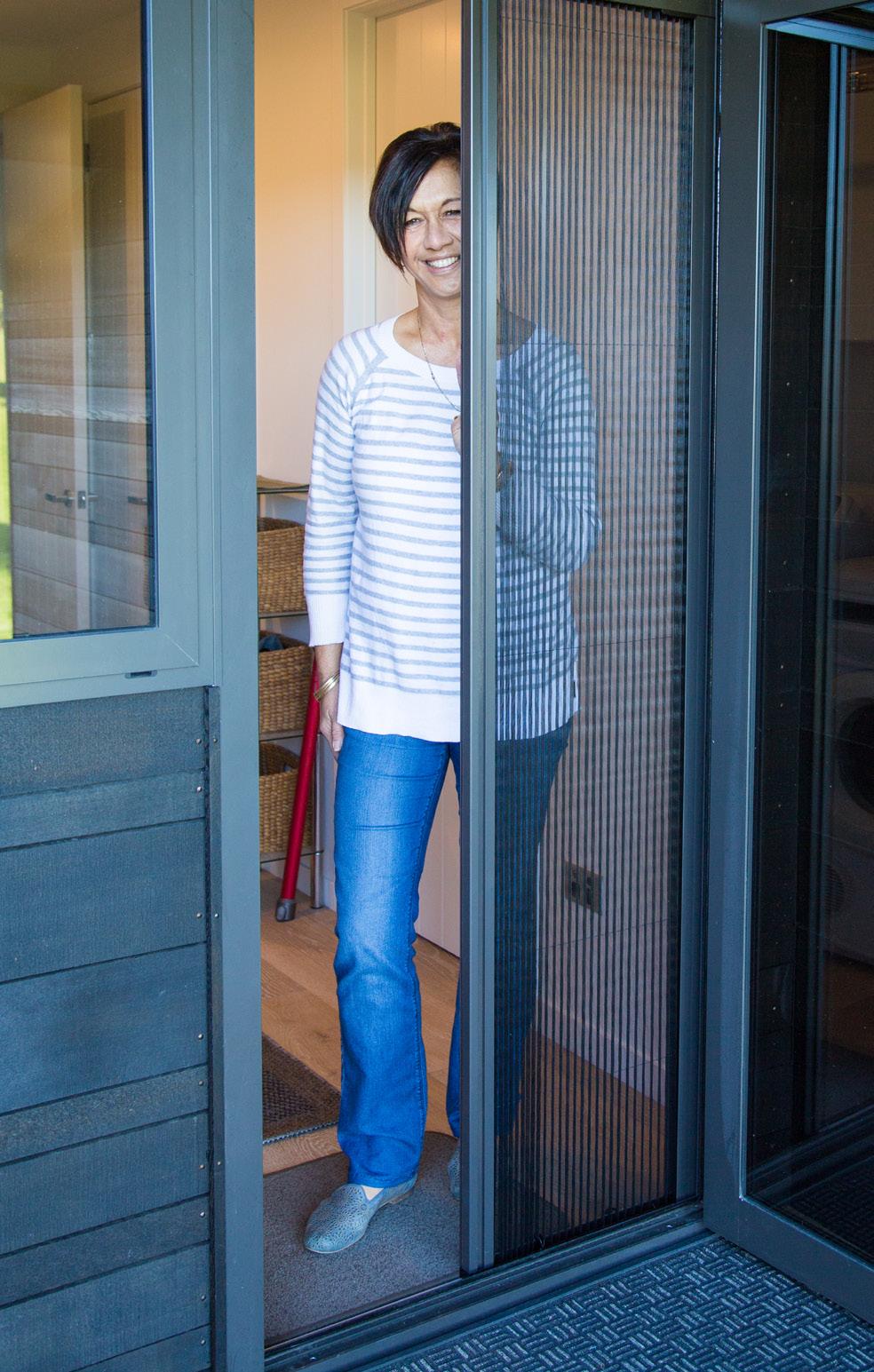
EXCEED RETRACTABLE INSECT SCREENS
FRESH AIR WITHOUT THE HASSLE OF PESKY INTRUDERS!
Fits most window & door setups - hinged, pivot, bi-fold, sliding, french, awning & casement
Semi-transparent polyester mesh won’t spoil your view
Smooth and easy operation
Colour-matched to your joinery for a stylish, modern look
ENJOY THE BREEZE. HELP KEEP THE BUGS OUT.
Garden Stuff with Sandy Lang
Keep an eye on the sky for this new asset
Local trust secures reconnaissance drone for Hutt City Emergency Response Team
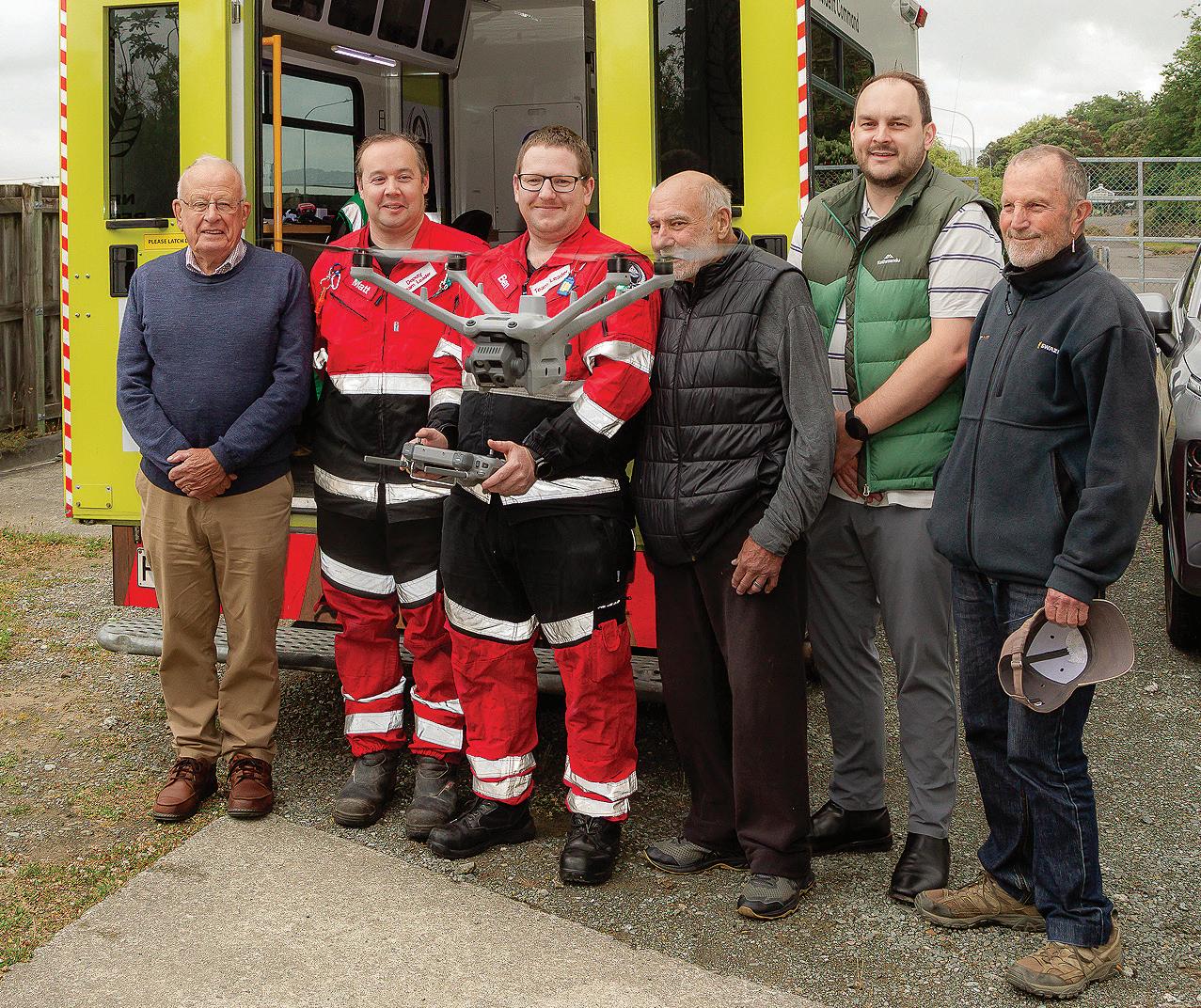
A recent grant from the Eastbourne-Bays Community Trust (EBCT) will mean a significant boost to local emergency services. The $14,000 grant has enabled the Hutt City Emergency Response Team (HCERT) to acquire a stateof-the-art reconnaissance drone.
EBCT chair George Tuffin sees the grant as a forward-thinking investment that highlights the power of community funding. Having access to this technology will enable first responders to assess and respond to emergencies quickly and potentially save lives.
“A reconnaissance drone offers significant long-term benefits to the Eastbourne-Bays community, as well as to the wider Lower Hutt community,” George Tuffin said. “With the help of the drone, the team will be able to quickly assess road conditions affected by floods and storms. The response team can then determine what emergency services are needed and how best to access the area during times when the coastal road might be closed.”
The role of HCERT, in conjunction with wider emergency services, is to provide 24-hour, on-call emergency response services for the Hutt City area. A volunteer-based organisation, it operates every day of the year.
HCERT deputy team leader Matt Page has expressed gratitude for the amazing support shown by the Eastbourne-Bay Community Trust. “Having this drone will have an incredible impact on the effectiveness of our team and the
safely of communities. We will be able to survey the road into and around Eastbourne safely and quickly, as far as the Pencarrow Lighthouse and beyond, even if the road is impassable. We will also be able to survey the hillsides and other roads in
the community, identifying any homes or residents that need help, and targeting our search and rescue operations. We look forward to building closer working relationships with our Eastbourne community in the coming months.”
The team plans to create a database of the Eastbourne-
Bays physical environment, including the coastline. This will be used as a baseline to identify changes following major events. Team members will undergo certification to operate the drone safely and efficiently, ensuring compliance with legal and ethical guidelines. The implementation plan will involve integrating drone operations into existing emergency protocols and collaborating with other agencies like civil defence, fire and emergency and the Wellington Free Ambulance. Eastbourne-Bays community groups will also have the opportunity to work more closely with the emergency response team to enhance their own capabilities.
George Tuffin hopes the success of this initiative may inspire further investments in innovative tools, underscoring the value of community trusts and grants in safeguarding lives and property.
Left to right: George Tuffin (Chair EBCT), Matt Page (Deputy Team Leader – HCERT), Ben Horn (Team Leader- HCERT), Derek Wilshere (Trustee EBCT), Brandon Robins (Chair HCERT) and Bruce Spedding (Chair Eastbourne Community Board)
My property is worth WHAT???
Spencer Logan
Quotable Value have released their latest figures for the Rating Valuations in the Eastern Bays and they are generally out of touch, which will have huge ramifications for property values in the future.
Unfortunately, the real estate market and general public still give credence to an appraisal carried out by valuers where they do not complete an internal inspection of the property and rarely even look at it from the street. In other words, it’s a “blind valuation” largely influenced by computer algorithms. Therefore these QVs should never be regarded as market values.
Quotable Value have not completed a comprehensive review of the wider market and its history and have used limited comparable sales: including one sale in Days Bay which was substantially below market value, while a late confidence boosting sale of $3,500,000 was ignored
owing to timing.
There is now a huge inaccuracy between price brackets in the Eastern Bays and whilst that is reflected in the demand, those properties at the top end of the market are out of balance/kilter and represent very cheap buying. It is very important to object to these valuations for the sake of our properties and their asset value. Some residents will maintain that it MAY affect their rates and it could in the interim. But it is more important to maintain the values in the medium and long term.
Coming south into Eastbourne from Days Bay, there’s that tricky ‘Windy Point’ intersection where Marine Drive ceases, where Muritai Road starts, where Marine Parade diverts off to the right and where cyclists on Tupua Horo Nuku must re-enter the road system.
About three years ago when work on Tupua Horo Nuku started, a ‘temporary’ roundabout was installed here. This immediately made that intersection very much safer for south-going road cyclists wanting to turn right along Marine Parade. Previously, they were forced to move into a right-turn lane only to be pushed aside by overtaking cars - dangerous. My vote is the new ‘temporary’ traffic flow be retained, along with the roundabout (which could be made more attractive but not bigger). It would help too if at this point better entry/ exit arrangements were made for cyclists using Tupua Horo Nuku. The current arrangement is clumsy – better north-going than southgoing.
Very soon, Tupua Horo Nuku will be completed – ‘Yay...’ for cyclists and drivers alike - and we’ll see many more cyclists having to negotiate this intersection – ‘Oh dear...’ Sandy Lang
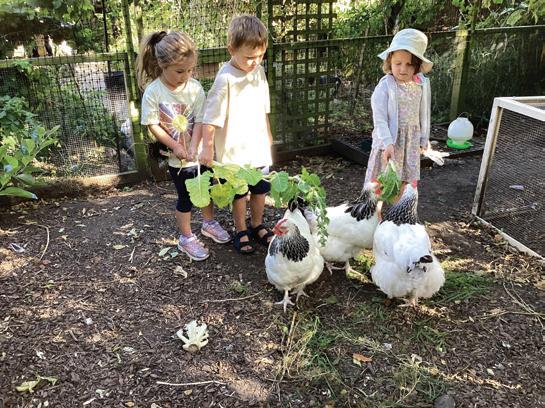
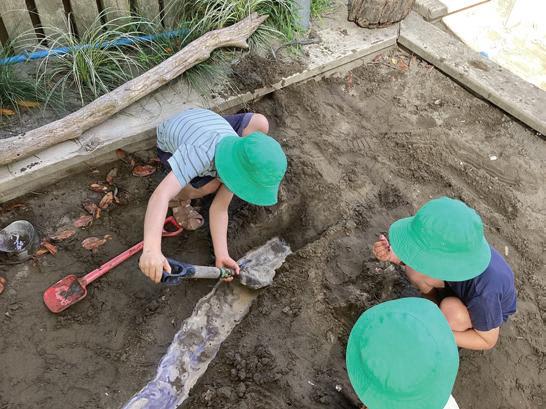
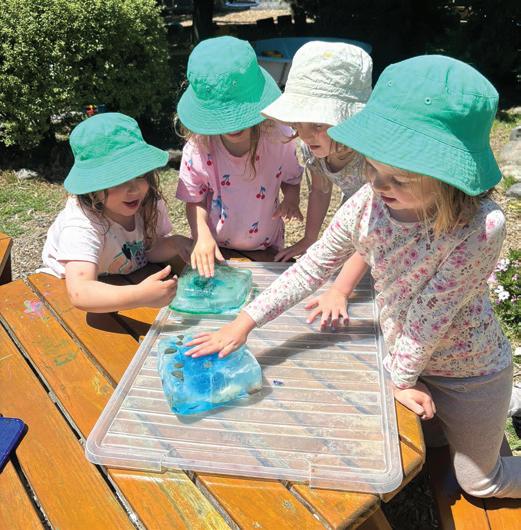
Happy new year! We are enjoying this summer weather back at East Harbour Kindergarten. We have been making the most of it by taking time to play and explore in our beautiful outdoor learning environment. We have been feeding our Heihei, working together in the sandpit, watering the plants, looking for insects and exploring ice. Our next collaborative project is to plant a bigger Butterfly garden, come on down to Kindergarten to see the garden's progress!
99 Muritai Road, Eastbourne 04 562 8929
King Lear marks 30 Years of Shakespeare in Eastbourne
On the 19th of February Butterfly Creek Theatre Troupe will open the doors on its 30th annual Shakespeare production here in Eastbourne. For the first time, the Troupe is staging King Lear, widely regarded as one of Shakespeare’s greatest plays. The epic story shares many qualities with a fable, bringing a narrative to the stage that teaches us valuable lessons about our own lives.
Director Elspeth Cotsilinis has set this production in the modern day to emphasise the timeless quality of its themes and characters. “At first glance this is a story about a king who makes a decision with terrible consequences for his kingdom, but it is also the story of a father who
both sees and doesn’t see the truth about his family. He imagines his retirement will mean putting down the burden of responsibility while keeping the influence he’s always had over what happens around him. His journey to understanding what he really values spans the full length of the play. It is a very human story. The events are dramatic and extreme, but the people who drive those events are interesting and authentic.”
King Lear is famous for exploring honesty, madness, betrayal, and power. It brings together beautiful poetry, questions about our existence, and complex themes of justice and cruelty alongside the value of friendship, humour, and
by WILLIAM SHAKESPEARE
19-28 February 7.30 pm
by Elspeth Cotsilinis
redemption.
Award-winning local actor and director John Marwick takes the title role of the play. He says “for me, there is no greater character to depict as an actor. King Lear doesn’t really know himself at the start of the play, and by the end he has gained self-knowledge at the cost of losing everything else. It is an exhausting journey to travel as an actor, but it is the greatest role.”
Cotsilinis says she is delighted to be working with a strong and varied cast from around the Wellington region. “We have some very experienced, deep-thinking actors, as well as exciting new talent which has made rehearsals rich in discussion. The cast have immersed themselves in understanding why each character is the way they are, their strengths and insecurities, and what drives their behaviours. We have pared back the script to a running time of two hours and we are having a lot of fun exploring the plot through the eyes of each character, making the complexity of the play accessible because it feels authentic.”
As with previous years of Eastbourne’s Bard in the Yard, performances are outdoors in the Muritai School Yard. The magical outdoor setting adds another dimension to this very elemental play. If the weather is dicey performances will be inside the school hall. Performances are on the 19-21st and 26-28th February. Tickets are available online through Humanitix and through door sales if not already sold out. Please note that the play contains graphic violence.
Which of you shall we say doth love us most?
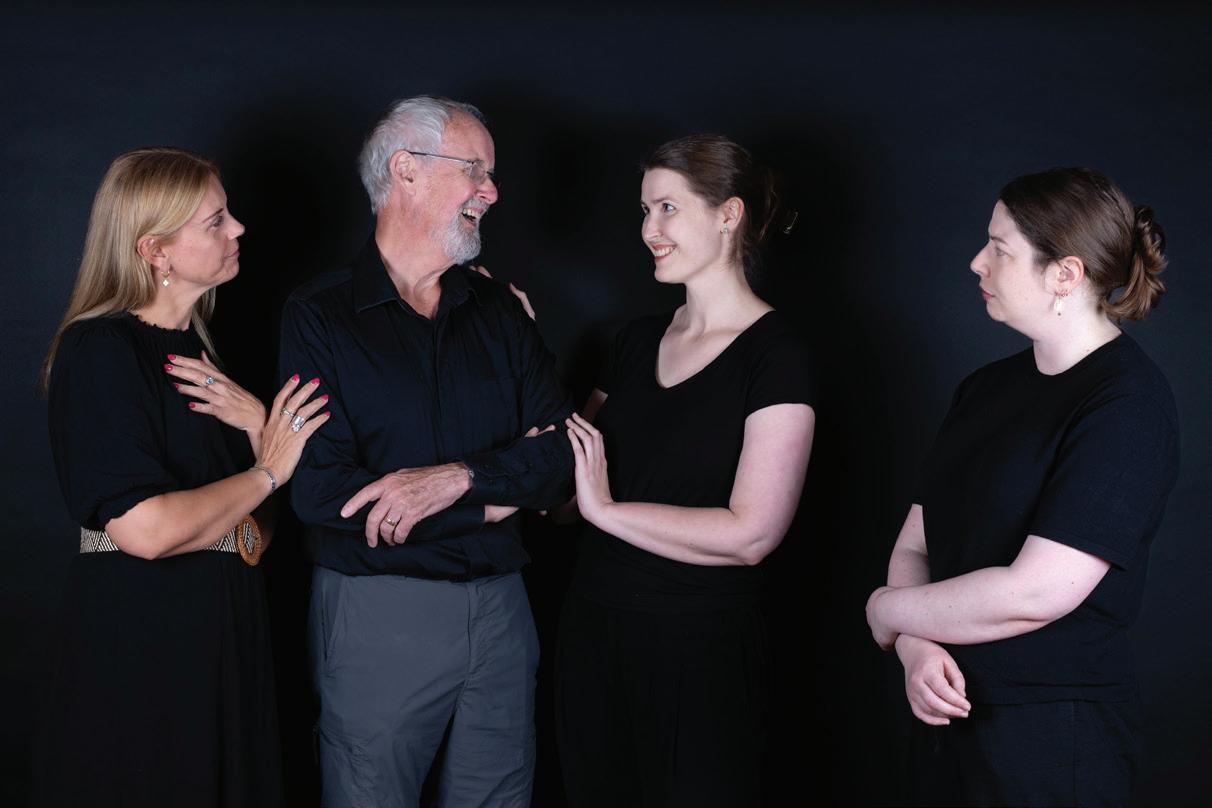
King Lear with his daughters. "Know that we have divided in three our kingdom...which of you shall we say doth love us most?"
The summer fire risk in our parks
One of the most important jobs rangers do as summer approaches is to get deep into the science of grass curing. If you’re a townie like me, you’ve probably never thought about the life and death of grass because…well it’s just grass and, in Wellington, it mostly stays green year-round.
Each week as high summer approaches, we take a close look at how the grass in our parks has changed colour, dropped its seed, or started to die off. ‘Grass curing’ is just one of several key factors that go into understanding the risk and severity of a fire.
What does the summer fire forecast look like for our parks?
The good news is that the Northern Forest is likely to stay a safe place to visit this summer. It takes a severe drought for mature beech forest to reach a dangerously high fire risk.
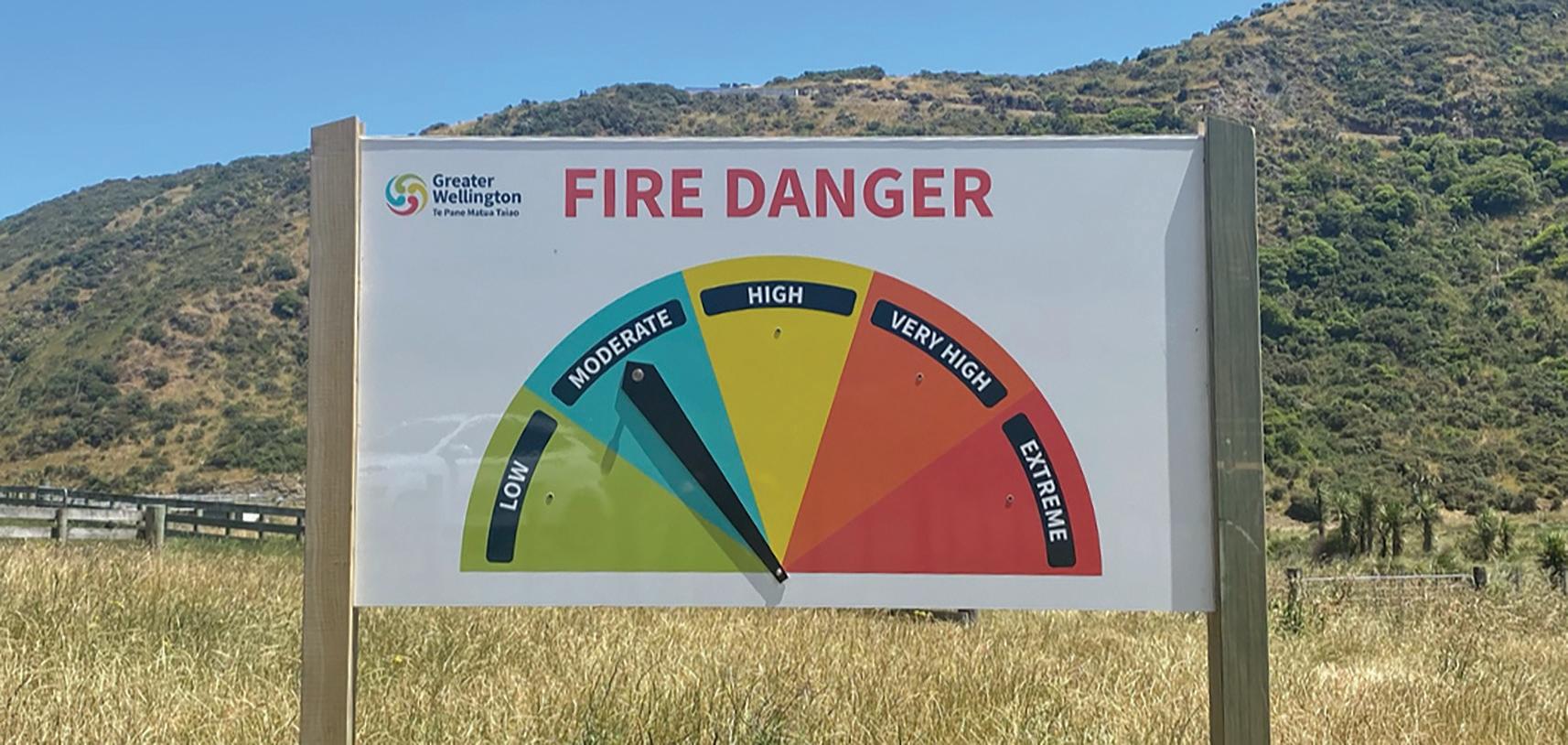
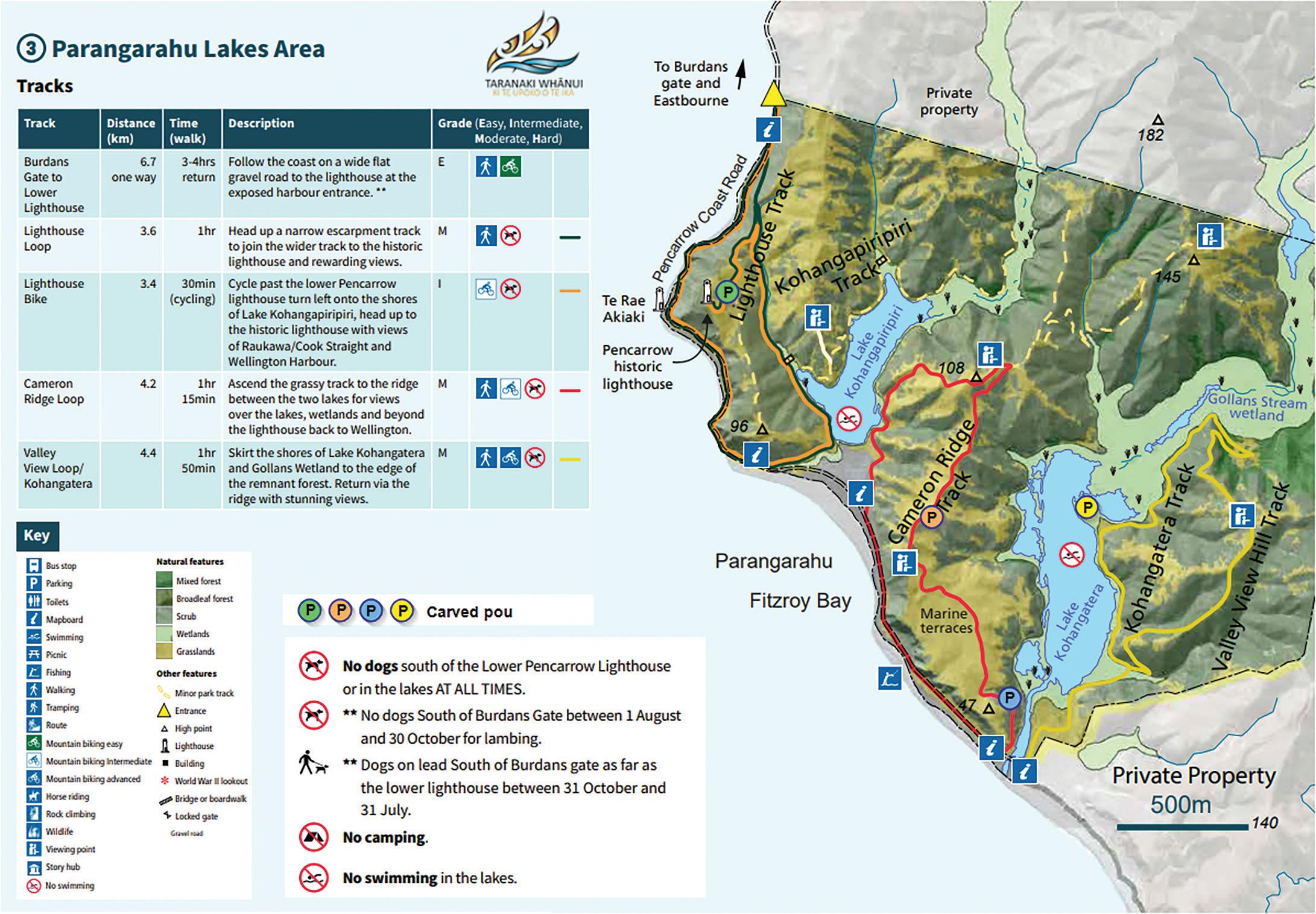
The bad news is that two of our nearby parks have some of the highest fire risks in Wellington. Baring Head/Ōrua Pouanui and the Parangarahu Lakes are areas where stock grazing has been retired to enable native restoration. While these areas are in transition, the long grass and high winds can quickly turn the place into a tinderbox.
Dry grass fires move quickly, especially when driven by wind. You can’t outrun a grass fire if caught in one – they can move up to 25 km/h, even faster if burning uphill.
The likely speed of spread and the resulting smoke are the primary reasons rangers make the tough call to close parks to
the public when the fire risk is extreme.
Greater Wellington has been taking steps to reduce the risk of fires and to speed up the transition from farm to forest. We’ve cut bare earth fire breaks through the grassy areas, planted lower-flammable plant fire breaks, and put up new fire signs to help visitors be more aware of the risks while visiting. We’ve also put controls on ourselves, limiting the potential for our work in the parks to inadvertently start a fire.
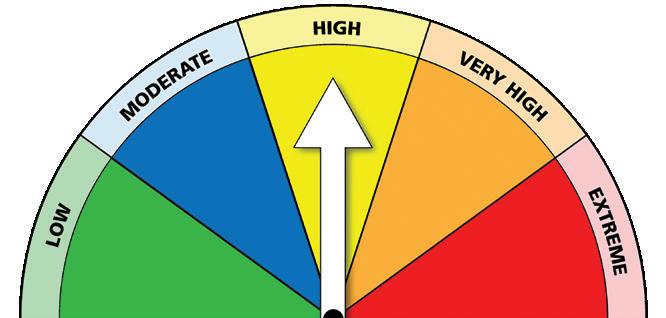
At the time of writing, the fire risk at Baring Head is HIGH. Our wetter than normal winter and spring have helped to keep the
grass green and the ground moist for longer, but the recent warm, strong nor'westerlies have started to rapidly increase the fire risk.
As our summer continues, we expect the fire risk will only increase.
To keep yourself safe, plan your visits to the Lakes or Baring Head in the morning when the weather is cooler and the risk of a fire is lower. You can also check the Greater Wellington website for fire risk in regional parks before you visit.
And if you see smoke or flames this summer, call 111 immediately and ask for ‘Fire’.
Get the whānau involved in Summer Events
November 2025 – March 2026
Discover the magic of your regional parks. For 25 years, Greater Wellington has been hosting fun and free events that help people connect with nature, get active
outdoors, and enjoy time together. Find the full programme of events by scanning the QR code. Some events have limited numbers. Make a booking to reserve your place.
The dry grass of Baring Head after a windy, dry summer.
Wellington Harbour's Little Blue Penguins (Kororā)
Parker Jones and Mike Rumble
Many volunteer hours have been spent studying and protecting the little blue penguin, the kororā, that lives in the Wellington harbour. One of the longest studies is in its fourth phase, and focuses on the colony based on Matiu/Somes Island
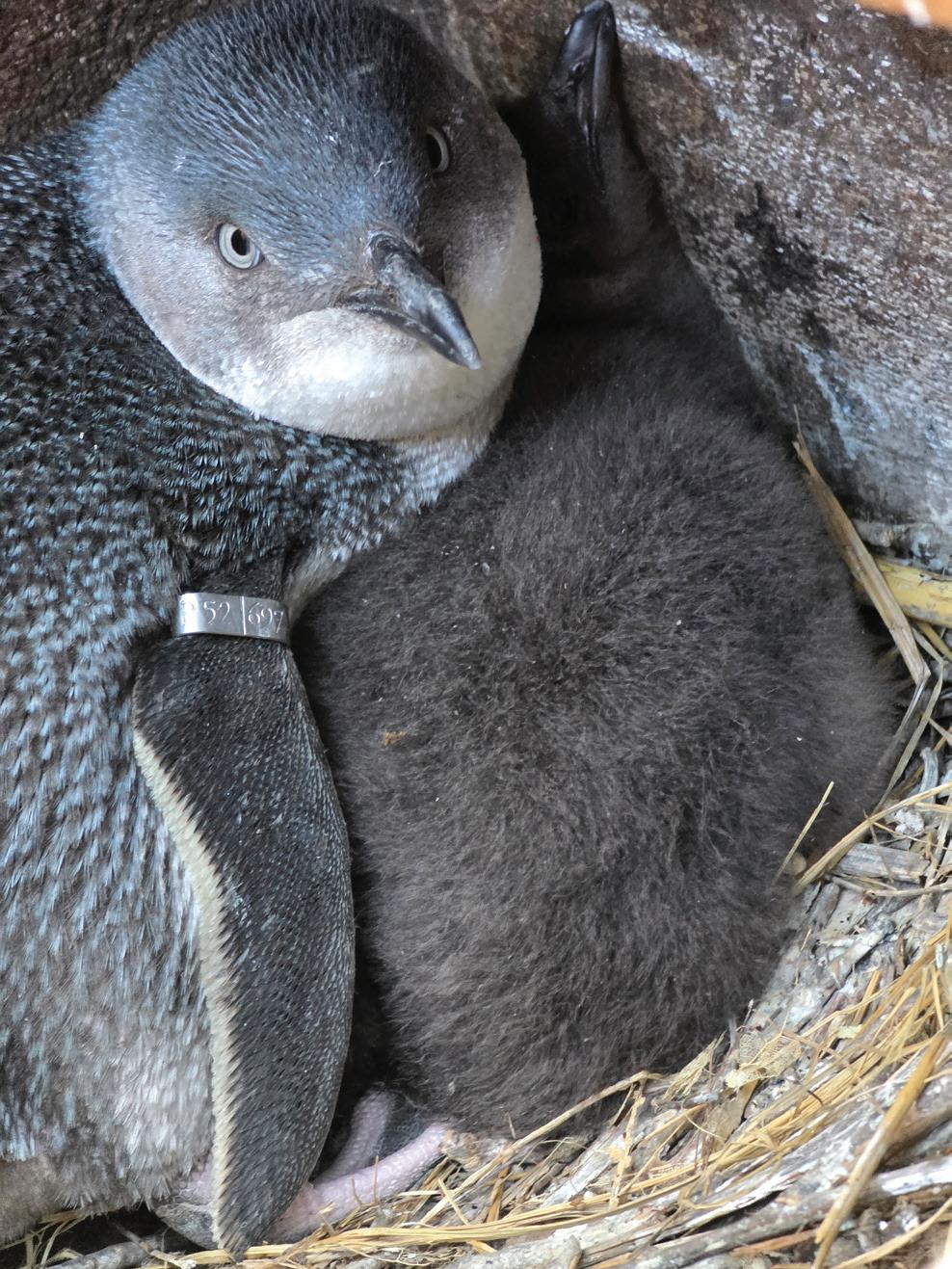
It has its genesis as a DoCsponsored project in 2007 set up by the late Reg Cotter. The national average for breeding success is 0.8 chicks fledged per nest for all of NZ, however the study based on the island has successfully maintained a very high rate of nesting success, in the order of 1.43 birds per nest. This means the numbers of Wellington Harbour based birds are increasing, while nationally they are in decline. This success rate is due to the well-organised and consistent management plan developed by the volunteers. This success can also be attributed to the availability of food inside the harbour and the Cook Strait, nesting boxes designed to protect birds and chicks from dogs, cats and other predators, trapping, signage and increasing public awareness and interest in this iconic bird.
The Matiu/Somes project currently monitors 186 nesting sites on the island, 20 nesting sites on Makaro/ Ward Island and 25 nesting sites at the Days Bay penguin haven. Adults are banded while in their burrows and the bands are installed on their flipper-like wings (refer photo). Banding the adults and chicks allowed volunteers to establish the fact that birds will head out to Cook Strait to feed if the harbour is too muddy and have travelled as far as Turakirae Heads in search of food. Dead adult penguins banded on Matiu/ Somes Island have been found on the East Coast near Hastings, Waitarere Beach, Nelson, Blenheim, Makara, and up to
Credit: Garth Norman
20km south of Kaikoura.
Kororā occupy their burrows (primarily nest boxes) from June through February. Adult penguins return to their nest boxes/burrows to moult (they replace all their feathers) from December to March. From April through May they are out at sea resting up in preparation for chick raising, and sleep while floating. Egg laying starts in July. The birds lay a clutch of two eggs and usually only lay once a season. When the eggs hatch, the chicks remain in the burrows from July through December. During this time the adults share feeding the chicks.
One will head to sea to gather food for both themself and their chicks and return to feed the chicks. Then the other adult will head out. Chicks are voracious feeders, which means both adults must search together for food in the latter stages of nesting - leaving the chicks on their own.
Kororā are fantastic swimmers and can dive to the harbour floor in search of food. Their diet consists mainly of small fingerlingsized fish such as piper. The adults will feed themselves first. If they find plenty of food, they will regurgitate the extra fish to feed the chicks after they return to the nest box/burrow. You may recall in November 2020 the harbour was very dirty. This meant the penguins could not find enough food and 84 chicks died. Thankfully, the adults survived as they stayed out at sea finding food. This was devastating for the volunteers that year.
Kororā can travel large distances on land to their burrows each day. There is one instance of a pair traveling 2km each way every day from the sea to their burrow on the Chatham Islands.
If you would like to help or know more about the Kororā penguin project, email info@ miro.org.nz.
Dawn Ceremony to bless Pou
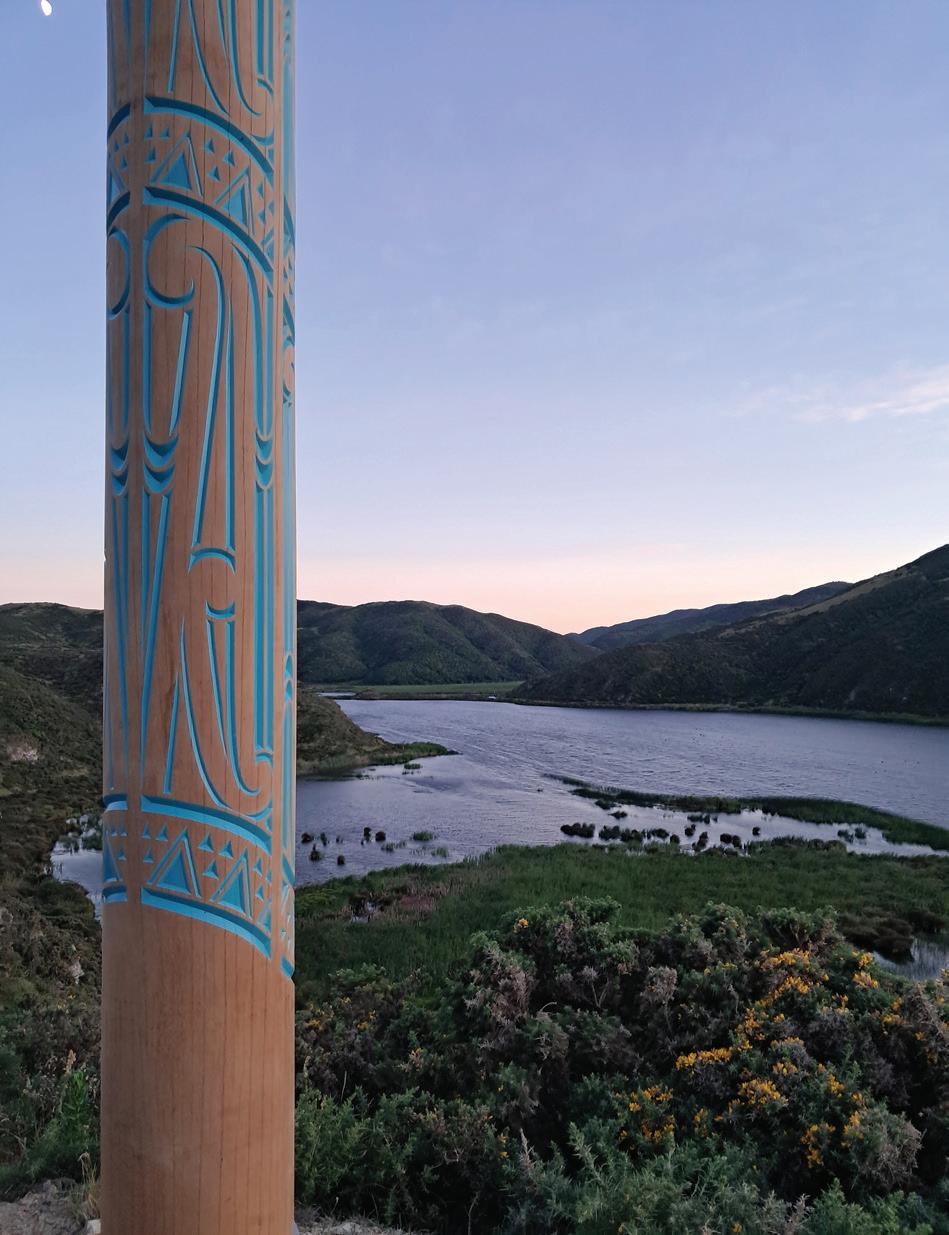
Four intricately carved pou (posts) can now be seen around Parangarahu Lakes, an area of the East Harbour Regional Park overseen by Rōpū Tiaki, a co-governance group of representatives from Greater Wellington and Taranaki Whānui ki te Upoko o Te Ika.
Designed by Te Āti Awa artist Pokau Kato Te Ahuru (Te Āti Awa, Ngāti Tūwharetoa, Ngāruahinerangi), the four pou tell stories of whakapapa, connection, and protecting the environment for future generations.
Te Ahuru says the pou display two patterns, one where repetition is used to symbolise stories and histories passed down through time. In the other, land and water intertwine to form a korowai (cloak) that was gifted to the people of Te Awa Kairangi.
“Toi Māori is a way of illustrating whakapapa and oral histories that
are passed down to us. Here I honour the tipua Ngake who had the strength to break through the walls of the land-locked lake to create Te Whanganui-a-Tara, and wove a korowai to bring the people on either side of Te Awa Kairangi/Hutt River together,” says Te Ahuru.
The pou are one of six storytelling projects underway in Greater Wellington’s regional parks to enrich people’s experience as they explore the area, as set out in the council’s Toitū Te Whenua Parks Network Plan.
Rōpū Tiaki co-chair Lee Hunter says the pou are the latest project to enhance the mana and the mōuri, or lifeforce, of the area.
“Since Rōpū Tiaki was first set up in 2012, we have worked collaboratively with Greater Wellington and volunteer organisation MIRO to restore
Ngā Roto o Parangarahu with extensive tree planting and trapping of pest animals,” says Hunter.
“Parangarahu contains Lake Kōhangapiripiri and Lake Kōhangatera, bodies of water known for their pristine water quality and some of the last natural wetlands remaining in Aotearoa. The lakes are a taonga for us all.”
Eastbourne residents were represented by Bruce Spedding (Community Board Chair) at the December 10th ceremony.
The waters at Parangarahu Lakes contain significant indigenous ecosystems with locally rare native plants, fish, and wetland birds including the pūweto (spotless crake) and the matuku hūrepo (Australasian bittern). It is also the only place on the Wainuiomata Coast where tūturiwhatu (banded dotterel) nest on the open sand.
Dawn Ceremony to bless Pou cont
“Every year, at the arrival of the tūturiwhatu we place a rāhui in the nesting areas to give our taonga species the best opportunity to raise their chicks. We have an established trapping network and catch rats, hedgehogs, feral cats and mustelids.
“Come out and walk around the lakes to see each of the four pou – we want everyone, Māori and non-Māori, to feel the mōuri of this awe-inspiring place and understand why we work so hard to protect it, it is a special place that holds the future of
our taonga species,” adds Hunter.
When asked about forming connection with the future, Te Ahuru refers to the following whakatauki: Whatu ngarongaro te tangata, toitū te whenua, which generally translates to: As man disappears from sight, the land remains, therefore it is for us to ensure that these things remain and are protected for future generations.
Pou design one
This design uses the niho taniwha motif often used for tukutuku panels and tāniko weaving. The triangle shape of the niho taniwha represents strength and stability, while the repetitive pattern symbolises the oral histories passed down through time.
Pou design two
This pou illustrates the idea that the land was created or woven by Ngake to be the cloak gifted to the people of Te Awa Kairangi (the Hutt River and valley). The weft was used to form the land
masses and the taniko used to border our river, bringing together the eastern and western sides of Te Awa Kairangi. The aho (land masses) and whenu (waterways) are intertwined and expertly fashioned, a life force and spirit brings life, energy and mana to the garment.
This project was funded by the Department of Internal Affairs (DIA) as part of the ‘better off’ funding Greater Wellington received under the previous Three Waters Reform Programme.
The Pearl Fishers Opera in a Days Bay garden
Opera doesn’t come much more accessible than this open-air performance.
An old favourite, staged in a local garden, looking out to the harbour as the sun sets. Young New Zealand superstar singers in a beech forest setting, performing in French on the terrace of an award-winning house designed especially for boutique opera.
Bubbles by Seresin, designer picnics on the sloping lawns, charming hosts showing you to your seats. Seasoned designers, directors and chamber musicians, of course. An internationally-renowned conductor who has been here many times before.
And to top it off, one of the bestknown duets in all opera. Sung since its debut in 1863 by some of the world’s most famous tenor/ baritone combos, Bizet’s “In the Depths of the Temple” will be recognized by many who’ve never sat through a theatrical opera performance. Soprano Rhona Fraser, who grew up in rural New Zealand, has performed in some of the opera world’s most famous venues, and when she retired home to raise her family in 2005, she and her husband, law professor Campbell McLachlan, built architect Hugh Tennant’s Canna House in an existing century-old garden at the back of the bay.
The first Days Bay opera was performed in 2010, and over the years locally-connected singers have included Bianca Andrew, Jonathan Abernethy and Benjamin Makisi, among others.
Written by a young Bizet some 10 years before his Carmen, The Pearl Fishers – set on the island of Ceylon (Sri Lanka) in ancient times – sees the return of soprano Madison Nonoa, who first sang in Days Bay in 2017 as Handel’s
Theodora. She sings the only female lead, that of the priestess Léïla, who has been loved by both Zurga and Nadir in a previous life. She will also sing Leila later in the year for Auckland Opera. Last year’s Il Pirata stars Zachary McCulloch (Invercargill-raised, now Toulouse-resident) and Kieran Rayner (from Kapiti Coast, now based in London) sing the roles of Zurga and Nadir, while
Ann Packer
the three acts will follow without a break - “which will be easier for the singers and the picnickers,” Ms Fraser says.
The producer has known Howard Moody since they were at London’s Guildhall School of Music and Drama, and the two have worked together on many productions, including for Days Bay Opera with director, designer and Arts Foundation Laureate Sara Brodie. Rehearsals began on 21 January for this production set – appropriately – in a “tree monastery”. The chorus, the “foundation of opera,” is drawn from the School of Music in Wellington, and many of the small orchestra are NZSO and Orchestra Wellington players. Committed to giving young singers a platform in their own country, Ms Fraser says it’s become quite common in Britain for musicians to do what she’s done – “you can do quite exceptional things without too many logistic hurdles” – though she is sure she’ll never be so bold again as in 2014, when she produced Strauss’s Der Rosenkavalier.
Nourabad the high priest is sung by Wellingtonian Joshua Jamieson. But, Ms Fraser warns, “it’s not a very feminist opera, if you know what I mean”.
Unlike the usual Days Bay format, because the opera is “action packed with virtually no letup”, the audience will picnic first and
Il Trionfo del Tempo e del Disinganno, by Handel
Musical performances in the garden sum up her lifelong aesthetic: “music and nature, beautifully combined, create a higher art".
The Pearl Fishers by Bizet, 12, 14 &15 February, 24 Moana Rd Days Bay. Gates open 4.30 pm; performance begins 6.45 pm.
Bookings through website: https://daysbayopera.co.nz/
Making the most of Pearl Fishers’ conductor Howard Moody’s visit, Rhona Fraser is offering a performance of Handel’s oratorio Il Trionfo del Tempo e del Disinganno at St Mary of the Angels, after the last performance of her Days Bay opera. Madison Nonoa, a celebrated singer of Handel, will sing the role of Beauty, Austin Haynes and Zachary McCulloch sing Disinganno and Tempo, and Ms Fraser takes the role of Piacere (Pleasure).
7 pm, 18 February, St Mary of the Angels, Boulcott St Wellington, bookings through https://daysbayopera.co.nz/
Madison Nonoa
NOVEMBER
JANUARY
Sun ripened tomatoes, new potatoes and home grown salads are the rewards for all your hard work. It can be just too hot to be out in the garden during the day, wait until the evening when it is cooler.
PLANTING MAINTENANCE
Lettuce & Herbs
Mediterranean veges
Corn
Early Potato Crop
Beans
Tomatoes
Stone Fruit
Garlic
Tend to Lawn
Dead-head Roses
Manage Fruit Crop
Support Berry Crop
Protect Vege Crops from White Butterfly and Insects
Water Regularly
KEY POINTS FOR THIS MONTH
` Protect vegetable crops from white butterfly and insects.
` Plant swan plants to attract butterflies into the garden.
` Check watering systems are working or install new ones.
` Roses will need maintaining: dead-head and spray if insects or mildew is present.
` Early crops of garlic can be harvested.
` Harvest crops of tomatoes, beans, salad and herbs as they become ready.
` Mulch citrus and shrubs.
` Refresh garden colour with new season summer plants.
TREES AND GARDEN COLOUR
` Water your pots more in the warmer weather and consider using a water retention product.
` Sow seeds. In most areas seeds can be planted directly in to the garden: cosmos, impatiens, lobelia, calendula, pansies, poppies, salvia. Stay on top of the watering or else they will dry out quickly.
` Plant for bees: alyssum, pineapple sage, bergamot, echinops, eryngium, lemon balm, blue salvia, coreopsis, gaillardia, alyssum, rosemary and lavender.
` Prepare the ground for spring bulbs by digging compost through the soil.
` Dead-head roses. Remove all fallen leaves from around the base of the plant to reduce the spread of disease.
` Water roses well, replace or refresh mulch if necessary.
` Protect your roses from blackspot with the appropriate fungicide.
` Keep all plants well watered.
` Remove weeds as they will harbour pests and diseases.
` Continue to mulch your shrubs and trees. Keep mulch away from the trunk.
` Watch out for insects, spray in the evening when the bees have gone home.
` In humid areas watch for mildew, blackspot and other diseases that thrive in this environment.
Summerset Boulcott Open Days
Nestled in the sought-after Lower Hutt suburb of Boulcott, beside Boulcott’s Farm Heritage Golf Club, Summerset Boulcott offers stunning views of the surrounding valley and lush greens - the perfect place for those seeking premium retirement living.
The village offers beautifully appointed villas, apartments, serviced apartments, and a range of care and specialist dementia care living options.^ The village centre features resort-style facilities and a resident bar with picturesque views over the golf course.
There are a range of brand-new one and two-bedroom independent apartments available, with two-bedroom apartments starting from $751,000.*
Come along to our Open Days, and see why our residents love the Summerset life.
*Flexible pricing arrangements are subject to a bespoke deferred management fee. Price and stock levels correct as at 10 December 2025, only Independent Apartment 1101 left at this price. All Summerset homes are sold under a licence to occupy and are subject to availability. ^Care is subject to availability and eligibility criteria. Summerset does not offer rental accommodation. Images are indicative.
Eastbourne Community Board Reflecting on Resolutions
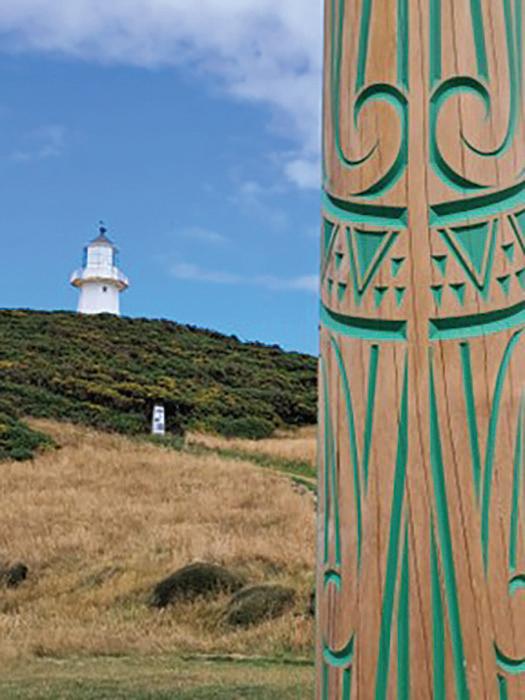
Have you noticed the four newly carved pou installed in the Parangarahu Lakes Area? Pictured above is one looking toward the historic Pencarrow Lighthouse. The pou were formally blessed at a dawn ceremony last month.
Community Survey
The Eastbourne Community Board plans to run a new community survey. The last survey, conducted ten years ago, identified a shared pathway as the community’s top priority. We believe a refreshed and thorough survey is an important way to guide both the Board and Council. Please get in touch with suggestions on what the survey should cover.
Days Bay Crossings
During the summer months, pedestrian activity in Days Bay is at its highest. We encourage drivers to slow down and adjust expectations accordingly.
Next Public Meeting
The next ECB meeting will be held on Tuesday 17 February at 7:15pm at the Eastbourne Hub/Library (new venue). Board members will be available from 6:45pm to discuss the agenda and other matters.
ECB Members
Bruce Spedding Chair 021 029 74741 bruce.spedding@ huttcity.govt.nz
Jeremy Chaston Dep Chair 027 515 5571 jeremy.chaston@ huttcity.govt.nz
Tui Lewis (Ward Councillor) 021 271 6249 tui.lewis@huttcity.govt.nz
Louise Parry, Liberty Counselling
The New Year has a habit of making us pause. As the calendar turns, many of us take stock: what’s going well, what feels stuck, and what we hope might be different by this time next year. It’s a natural time for reflection — one that invites both optimism and a little selfscrutiny.
For me, this New Year feels particularly significant. After 18 years at the helm of The Eastbourne Herald, I handed over the tiller to Nicola Morris and stepped into a new chapter altogether. I am now a qualified, registered counsellor, working with individuals here in our community.
If nothing else, my own experience is living proof that it is never too late to change. When we think about change at this time of year, it’s often framed in bold, external terms: a new job, improved fitness, eating better, drinking less, doing more. And to be clear — these things can absolutely improve our lives. They can boost our energy, our confidence, and give us a sense of achievement.
But change doesn’t always have to be momentous, and focusing only on outward goals can sometimes overlook what’s really going on underneath. Stress, loss, uncertainty, long-held beliefs about ourselves, or the pressure to keep going regardless — these things shape our lives just as much as diet plans or gym memberships.
In my counselling work, I often see how powerful it can be to gently examine the stories we tell ourselves. Many of us carry narratives formed years ago — about who we are, what we’re capable of, or what we “should” be doing by now. Sometimes simply noticing those stories, questioning whether they still fit, or rewriting them with more compassion can create
meaningful change.
This time of year can also be an opportunity to revisit goals rather than abandon or blindly pursue them. Which ones are still serving you? Which might need adjusting? And which can be quietly let go?
Clarifying what truly matters may mean that career, fitness or health aspirations shift. A different approach might reveal that you’re more content with where you are right now than you realised — or that the change you need is smaller, kinder, and more achievable than you first thought. Happiness is often held up as the ultimate goal, but happiness isn’t a permanent state. Contentment, on the other hand, is more realistic and sustainable. It comes from learning to view your life from a new perspective, responding differently to unhelpful thought patterns, and allowing yourself to be human, rather than perfect.
As we step into a new year, perhaps the question isn’t “What should I change?” but “What do I need more of — or less of — to feel steadier, calmer, and more like myself?”
Sometimes, that shift alone is enough to start a new chapter.
phone or text: 022 0800 393
libertycounsellingnz@gmail.com
New Herald Feature
Kia ora neighbour - Kerry Makin-Byrd
Welcome to “Kia ora neighbour!”, a new column dedicated to interviewing local community members. My name is Kerry Makin-Byrd, I’m an author and clinical psychologist living near the village. Before we meet Pip Nicholls, our first guest, it seems only fair that I answer some of the same questions that I’ll be asking others.
Kia ora friends, I’m Kerry. I’m of English and Welsh ancestry. I grew up in the United States and moved to Eastbourne in 2021
Book review:
A 'Coming-of-age" story inspired by Eastbourne childhood
Her years spent growing up in Eastbourne in the late 1960s have inspired former resident Catherine Manchester to publish her first novel.
Sunshine Road, out this month, is semi-autobiographical, with many of the events in the opening chapters drawn from Catherine’s years living in Days Bay and attending Muritai School.
“Growing up in the small village of Eastbourne was just so special,” Catherine said. “My family moved into an historic home, built in 1870, with access to the bush and walking trails. From its balcony, we enjoyed wide sweeping views of the harbour.
“Like so many others before and after me, my friends and I spent much of the summer jumping off the Days Bay wharf, swimming like eels around the pillars or lying for hours on the hot sand, burning ourselves to a sizzle. I was 21
with my husband and daughter. We came initially because my husband got a job in Gracefield but stayed because we fell in love with New Zealand. Two of my favourite things I’ve learned from Kiwis so far: just give it a go and there’s more to life than work.
Please email me at kerry@ drkerrymakinbyrd.com to nominate anyone who you think should be highlighted in this column.
Warmly and arohanui, Kerry
Sunshine Road - Catherine Manchester
when I left Eastbourne and still miss the place.”
The novel centres on the protagonist, Sarah, who must navigate her way through the perils and challenges of adolescence, including the wild parties of the 1970s, first love, friendship and betrayal. The choices Sarah makes or is forced to make ultimately shape her future.
“I see this as a comingof-age story which to some extent reflects my own journey,” Catherine said. “It developed from a handful of short stories written twenty years ago.”
Catherine is a painter and has exhibited throughout New Zealand. She now lives with her husband in Christchurch, and close to their daughter and grandchildren.
Sunshine Road, 376
pages, can be ordered through CopyPress (www.copypress. co.nz/shop/) or through the author (email bosankomanchester@ gmail.com. The cost is $34.
Being launched at the Eastbourne Neighbourhood Hub (the library) on 28 January, 11am.
Kia ora neighbour -
Now I’m pleased to introduce you to our first neighbor, Pip. My name is Pip Nicholls
My loved ones would describe me as She who returned to the Eastern Hutt hills to live, and living 40 metres in front of the sea, almost never swims…but on the 8th January I had my first swim in two years as the day was the best yet, no breeze!
Now I call Muritai home, and I love observing the way Robinson Bay is changing shape.
When and how did you decide to land in Eastbourne? I landed in Eastbourne in December 2005, after attending the funeral of a young friend. I had been living in New Plymouth, which I loved, and it wasn’t ‘home’. The day after the funeral, the friend I was staying with in Sunshine Bay suggested we look to see if there was an attractive proposition available. I put in a tender that day on a Muritai property, as I was leaving the next morning to go back to New Plymouth, and the rest is history as they say.
What’s your favourite local gem? There are so many, can I have a bracelet of gems?? Walking the dogs very early to the Wahine Memorial, and seeing the same folks also taking an early morning walk. I remember the 10th April, 1968 so well. I was at school in Island Bay, and we were standing around heaters, watching and listening to the weather, and listening to the radio as the Wahine was listing in the water… Personally it would have been my worst nightmare to have been on board as I nearly drowned that prior summer off Foxton Beach, hence I don’t think to swim to cool off.
What do you think is one of our region’s best kept secrets? The four hill walks off Muritai Road. Particularly going up the McKenzie track, and down the back to Butterfly Creek, meandering along the creek track and back to the Road via one of the other two tracks. When on that back creek walk you’d never know you were an hour away from the capital
Kerry Makin-Byrd
city…
Have you ever had an experience that changed the direction of your life? When I was seven we had a maiden aunt living with us, Aunty Bride. At 4pm every day Aunty Bride would go into her room (I think because we three kids were home from school) keep her door slightly ajar, and she’d pray her Rosary. I’d frequently peek around the door and see her there in the deepest ‘repose’ (not a word I would have used at the time). I feel I’ve sought that repose ever since. How to rest in that womb of ‘Silent Openness’ while living our day to day lives. I became a Thai Buddhist nun in 1979 and at the end of the year met a Tibetan Lama, who asked me how many houses had I owned (0), how many partners had I had (1), what was I taking responsibility for (almost nothing at the time – not even having to pay to go to the dentist). I knew as soon as he asked the question, I needed to disrobe and live a life, so I did, and have ever since. If you could whisper advice to your younger self, what would you say? I’d rather hear advice from her!!! I think she’d say, “Let me make you a cup of tea, with my new tea set that I got from Father Christmas. I even have soy milk!” and I’d say “Thank you very much, I’d love that, and trim milk is fine”.
If you could whisper something to your older self what would it be? So glad you learnt to play bridge when in New Plymouth, as the Eastbourne Bridge Club is so darn wonderful on a Wednesday evening.
How do you spend your days now? “Let me count the ways…” I have two friends and a whanau member, that I provide support for, one might say they’re my late in life ‘children’! I’m also a Spiritual Companion, and have been offering year long contemplative programmes, for the past 12 years. This past year, a friend and I offered one called “Wisdom within Ageing” that was for 8 months by zoom and currently I’m preparing for the closing retreat, which starts in late January for four days. We’ve had 35 people on it, very predominantly from within Aotearoa, and the feedback has been such that we’re going to offer it again this year. I do have a website if anyone may be interested in it. (Kerry’s note: Registrations open until 1 Feb, learn more here https:// contemplative.org.nz/event/ the-wisdom-within-agingkapanohopuku/ )
If you could make one wish for our community, what would it be?
Can I make three???
- That the cruise liner buses going to Pencarrow Lodge for a cuppa, have to stop in Rimu Street for 30 minutes, but only one at a time!
- That we have large public recycling bins in Days Bay, Eastbourne and at the bus depot.
- That we have a couple of pickleball courts available for everyone, as it’s the fastest growing sport worldwide for those over 55 years.
Thank you to Pip for her generous and open sharing. Wishing you all lots of sun this month.
Obituary: Norman Christopher Dalziel
17 November 1931 – 24 November 2025 Ann Packer
Norm Dalziel was born in Wellington, two years after his parents and sister had immigrated from England. Father Isaac had come to Napier on a cargo ship; he met his wife-tobe after a Scottish mate jumped ship, and gave Isaac the task of notifying and urging his family to immigrate to Wellington. Eleanor Victoria Parkin, known as Nellie, opened the door to him; they later became engaged, married and moved to Wellington – and the shipmate became Uncle Charlie.
The Dalziels built their family home in Wadestown where Norm was joined in 1937 by Colin.
In 1943 Isaac became captain of the harbour ferry Cobar and they moved to a rat-infested cottage in Days Bay before buying in Karamu St.
The boys attended Muritai School and Norm went on to Wellington Technical College for two years, studying engineering.
He sailed a P Class gaffrigged yacht, walked to Mākaro Ward Island on planks atop the anti-submarine boom, built in 1943, and became interested in communications, including shortwave radio. He rigged up an overhead wire to his friend Malcolm Bishop’s so they could chat, and the pair also went line and net fishing from Malcolm’s rowing dinghy.
After leaving school, Norm got a job at Columbus Radio before becoming an apprentice motor mechanic at the local garage,
Frank and Everett. In 1949, aged 18, he was conscripted into the first Army intake for compulsory military training for 14 weeks at Waiouru.
Always a fix-it man – from repairing his father’s watches as a child, to making a model of the scow Echo, that his father had skippered – Norm also loved model aeroplanes, motor bikes and cars: he and a friend used to race theirs along Marine Parade and make them jump on a dip in the road. He once built a scooter bike with an angle-iron frame using a Briggs and Stratton petrol motor – and was nabbed by the local policeman, Gordon Hogg, for having no licence. Notes Colin: “Hogg had a downer on the wild youths of Eastbourne.”
Norm flew and later mentored many in model aircraft during Sunday evening sessions at the Eastbourne Rec and Bishop Park.
A gifted musician, Norm met his wife Joyce Mildon at a Petone rowing club dance where he played double bass and saxophone. His favourite song was, “I’m in the Mood for Love”.
The couple married on 30 November 1957 and lived in Taupō, where he worked for Lake Front Garage, and Chris and Neville were born. The family moved to Eastbourne in 1965 where Norm worked for the Borough Council as a bus mechanic. After Richard’s arrival in 1966, the family moved to Tuatoru Street, and Norm began working
Mahina Bay Loft to rent
for Burdan Motors in Rata Street.
He was part of a group of Eastbourne men who chose 10 April, 1968 for their inaugural Civil Defence meeting – a day that would go down in history as Wahine Day. They were kept very busy assisting with rescues from the Pencarrow coast line.
After Andrew was born in 1970, Norm began working at BP’s Seaview depot maintaining delivery tankers. In 1976 he became State Insurance’s automotive assessor, working at their Lower Hutt garage until his retirement in 1996.
Norm and Joyce moved to Lower Hutt in 1987, and when she developed vascular dementia in 2016 they moved into Bob Scott Retirement Village. She died on 1 April 2020 during the Covid lockdown.
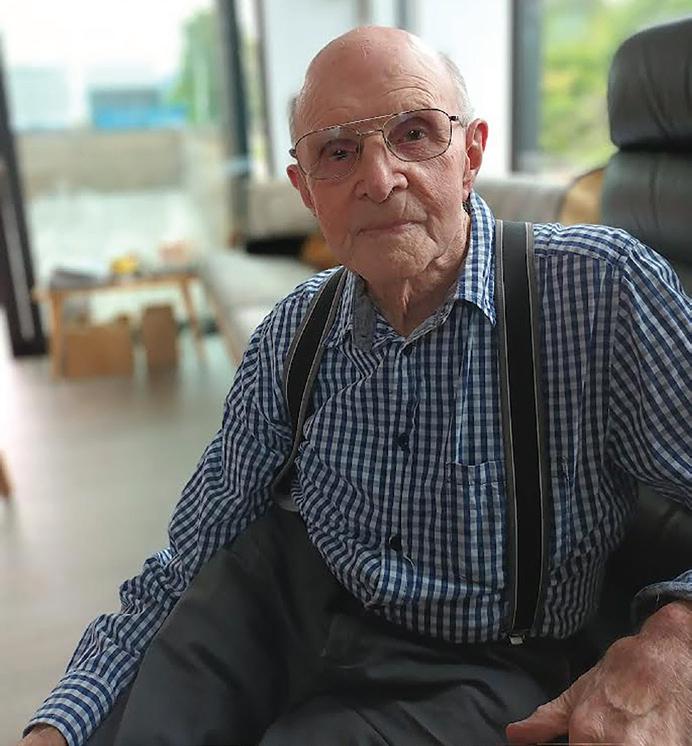
Norm stayed in his apartment making model aeroplanes until August 2025, when aggressive prostate cancer took hold. He died in November 2025, aged 94, and is survived by four sons, eight grandchildren and seven great-grandchildren.
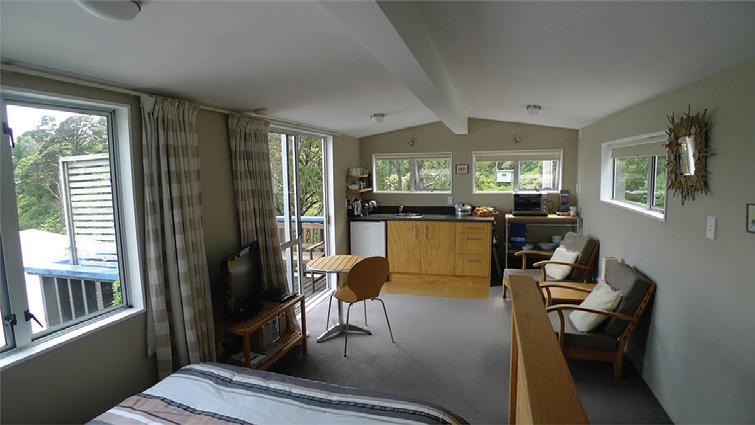
Self contained and fully furnished studio apartment. Totally separate from owners' home.
Mahina Bay Loft is on 2 levelsdownstairs lobby entrance and modern bathroom, with gas water heating.
Upstairs a queen sized bed is tucked into a cozy alcove, whilst the living and kitchenette area open onto a private balcony with
spectacular views of Wellington Harbour. Mahina Bay Loft is available short or long term and is ideal for visiting family members wanting to stay close but to enjoy their own privacy. Rent is negotiable depending on the length of stay. Photographs of Mahina Bay Loft can be seen on Holiday Houses NZ or just contact Chris 0211115297 or Ken 0274436430 to view.
Visit Us
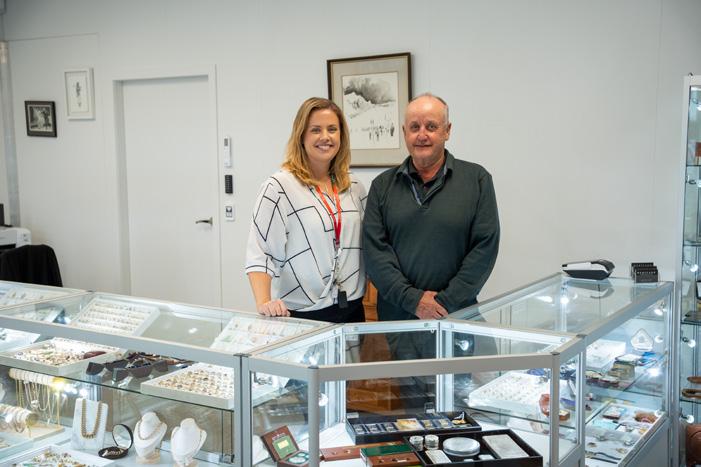
Imperial Park, Unit 81, 41 Bouverie Street, Petone, Lower Hutt.
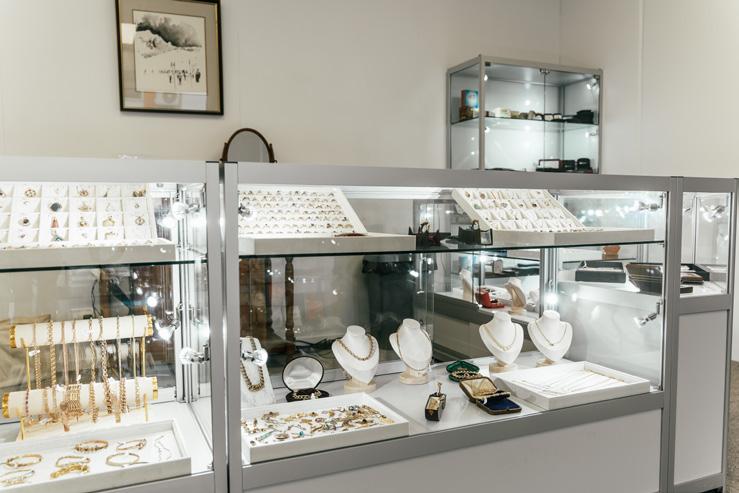
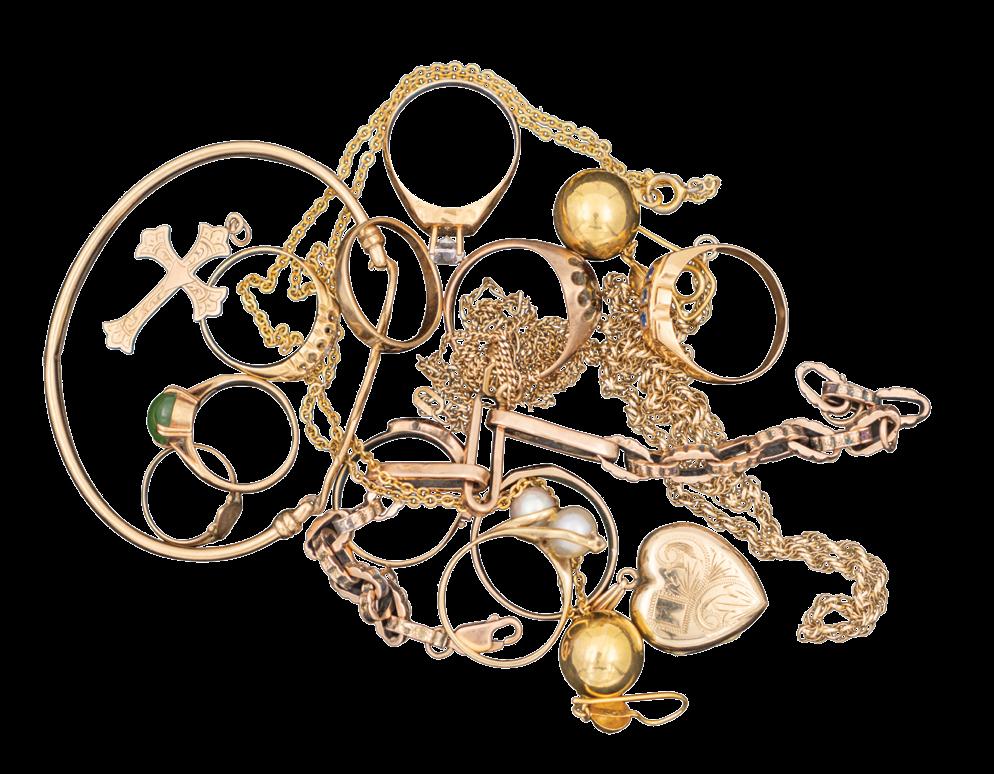
Gold
Always buying and selling instore
Enter Imperial Park, turn right, go to the North end, and you’ll see us.
Please come and see us instore with your items for an on-the-spot appraisal and o er. Please bring your bank details for payment.
Silver and Gold items, and Watches. Fully licenced with over 50 years industry experience. Visit us instore or online at www.heritagegold.nz
WHAT'S ON
Mondays
• Retired Persons’ Assn meet 4th Mon, 10am St Ronan's Church hall for morning tea followed by a speaker - $2 entry. Transport can be arranged for these meetings on request, ph 562 7365 or 562 8387.
• “Baby Bounce & Rhyme” at the library 10.00am.
• Toy Library - 7.30-8.30pm.
EastbourneToyLibrary on Facebook. Kathy 0273551950.
•DB Playcentre Monday, Tuesday, and Wednesday mornings, from 9:30am to 12 noon. Drop in anytime to visit a session or email daysbay@playcentre.org.nz to arrange a visit.
• Pt Howard Playcentre. Mon 9.15 -11.45am. pcpointhoward@gmail.com
• The Historical Society’s Eastbourne History Room above the library is open 2-4 pm every Monday.
• Eastbourne Volunteer Fire Brigade training every Monday 7-9pm. Ph 562 7001 for more info.
• Keas - 5:15pm - 6:15pm. Ed 021 738 699.
•Junior sailing at Muritai Yacht Club, 4:30-7:00 weather dependent. More info: myc.org.nz
Tuesdays
• Mindful Mummas group for Mums and preschool children. Childminder onsite. 1011.30. Text Emily 027 552 6119 to join or go to bemoreyou.co.nz for more info.
•DB Playcentre Monday, Tuesday, and Wednesday mornings, from 9:30am to 12 noon. Drop in anytime to visit a session or email daysbay@playcentre.org.nz to arrange a visit.
• Muritai Tennis Club 9.30–noon. Merryn 562 0236.
• Eastbourne Homebirth Group 1st Tuesday of the month. Phone Kate 562-7096.
• East Harbour Women’s Club Morning Tea & Chat Group 10am. Contact Glendyr 0210303480.
• Indoor Bowls Club 1.30pm, at the croquet club, Oroua Street. Rosemary 562 7365
• Menzshed 9 till 12 , Williams Park, Barrie barrielittlefair@gmail.com 0204 1234511. Women welcome.
• 9.30am Nia Dance Fitness Class (low impactteens to 70+) Music Movement Magic - Muritai Yacht Club - call Amanda 021 316692 www. niainwellington.com
• Toy Library - 9.30am-10.30am. Wednesdays
• Cubs: 5.30pm - 7.00pm, Ed 021 738 699.
• Venturers - 7:15pm - 9pm - Ed 021 738 699.
• Library preschool story time 10.00 am.
• Pt Howard Playcentre Wed 9.15 -11.45am. pcpointhoward@gmail.com
• Scottish Country Dance. Merryn 562 0236.
• Bridge Club 7-10pm. Shona 562 7073.
•DB Playcentre Monday, Tuesday, and Wednesday mornings, from 9:30am to 12 noon. Drop in anytime to visit a session or email daysbay@playcentre.org.nz to arrange a visit.
• “Steady as You Go” Age Concern sponsored Falls Prevention and Exercise Programme. Held 12 noon each Wednesday at Eastbourne Community Hall. Classes are held for 1 hour and costs only $2. Improve your strength and balance to reduce falls and injuries. Falls are preventable. Please join us!
• Tai Chi 9.40am Muritai Yacht Club Lyn 021 1428915
Thursdays
• Menzshed 9 till 12 , Williams Park, Barrie barrielittlefair@gmail.com 0204 1234511. Women welcome.
• St Ronan’s Mainly Music, 9.15am-11.15am, during school terms. Contact Cathy 027 213 9342.
• SPACE at Days Bay Playcentre. Michelle 971 8598.
• East Harbour Women’s Club,- Bolivia 12.45pm, Contact Glendyr ph: 0210303480. Guest Speaker (3rd week of month)6pm, drinks and nibbles provided, Contact Celeste 021 206 5713
•Lions meet 2nd Thursday of the month at the Eastbourne Sports and Services Club, Tuatoru St 6.30 pm. New members and visitors are welcome. Graham 562 8819.
• Scouts 6pm-8pm - Ed 021 738 699
• Eastbourne Bowling Club casual summer bowls 5.30pm for an hour or so. Make up a mixed team of three. Contact Keith Turner ph 04 934 4142.
• Sing Eastbourne: 8pm, San Antonio. Fridays
• Pop in and Play playgroup at St Ronan's Church Hall, 9am-11.30am during school terms. All preschoolers (0-4 years) welcome. Cath 027 213 9342.
• Pt Howard Playcentre Fri 9.15 -11.45am pcpointhoward@gmail.com
• AA Plunket Rooms 7.30pm. Mark 566 6444/ Pauline 562 7833
•Senior Residents: Lighthouse Movies - last Friday of every month. Pick up from 10am. Contact Celeste on 021 206 5713 for more information. Okiwi Services (Eastbourne Community Trust).
• Probus club of Boulcott
Hutt bowling club, Myrtle street, Lower Hutt. Meeting every 2nd Friday @ 10am starting in February 2026.
Fun - fellowship- friendship New members welcome.
More information contact Doreen 0210799063
Saturdays
• Justice of the Peace at the Eastbourne Community Library, first Saturday of each month 12pm-1pm.
• Croquet from 10am Muritai Croquet Club. Lyn 562 8722 or Val 562 8181.
• Lions' Bin - cost effective rubbish and e-waste disposal. Last Saturday of the month (except December) by Bus Barns. Gavin 027 488 5602.
• Club sailing and racing at Muritai Yacht Club, 1:00-5:00 weather dependent. More info: myc.org.nz
Sundays
• AA Plunket Rooms 10am. Karen 021 440 705.
• Days Bay Touch Rugby, by arrangement on Whatsapp group, text Xavier 027 249 3645 to join.
Our Volunteers are at the heart of everything we do at Te Omanga. Volunteers are an integral part of the valuable service we provide to all our patients and families.
We need some more volunteers on our happy lawnmowing team. Once a fortnight commitment, or could be once a month. Need to be able to bring your own lawnmower. Morning tea provided.
Call Rachel on 021 103 8841 for more information or email volunteers@teomanga.org.nz
The Eastbourne Herald is proud to support Te Omanga Hospice.
...a stronger integrated legal team!
Call 04 939 2366 www.jaglegal.co.nz
Local Fibre Arts Project
It’s hard to miss the Wall Hanging/ Quilt that sits in the Eastbourne Neighbourhood Hub aka "library", completed by the “Tuesday embroidery group” in 2006. It’s a beautiful traditional quilt depicting a range of scenes.
The library staff noticed that with the calendar ticking over to 2026 this quilt has been in existence for 20 years. The local FibreCraft Social group is meeting in late January and then twice each month.The group of locals includes many talented individuals, and they have developed the idea of a “community quilt”. They want this to be a real community project
and will be reaching out widely to encourage participation. With a philosophy of “Recycle and Reuse” participants will be encouraged to decorate a fabric square (size at least 22cm to allow for 20cm square finished) using any medium that appeals to the participant(s) so think embroidery or painting or paw prints or ??? The squares will all be sewn together with the final format really being determined by the volume of squares the community produce, forming the “community quilt”.
You can expect to hear a lot more about this project as it takes shape. Please reach out to the local library staff to find out how you can participate, either joining the FibreCraft Social group or contributing to the project.
This URL will take you to the dates for the group. https:// events.huttcity.govt.nz/ search?q=fibrecraft