

In an industry where cost is often the focus, Active IQ stands apart by delivering more - more quality, more support, more value. We know that price matters, but when it comes to qualifications, reliability, and long-term success, quality is non-negotiable.
That’s why we offer:
Industry-leading qualifications – Designed with employers to meet workforce demands
Comprehensive support – A dedicated team invested in your success
Added value – Free CPD, FitPro membership with eLearning purchases, and extra resources at no cost
A trusted partner – Transparent pricing, no hidden fees, and a gold-standard reputation.

Find out more
Why settle for less?
Begin with better. Choose Active IQ.
Active IQ - where you get more… more quality, more support, more value.
Offer
Extensive tutor and learner resources
One annual fee - Transparent pricing with no hidden fees
No charge for EV visits and sampling
Online learning platform with eLearning, marketing support and eClinics
Talent match service
High quality manuals
Dedicated External Verifier
Dedicated Customer Service Representative
Business consultancy to support growth of your business
Other Awarding Organisations


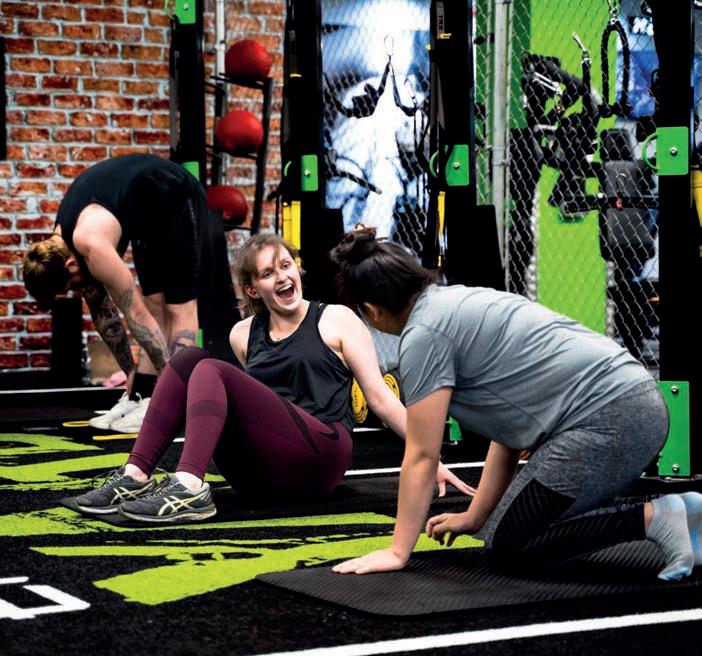
Energie Fitness has unveiled a new brand identity, signalling its expansion “beyond a traditional gym-centric model”.
As part of its new strategy, the franchised gym operator will launch new small group training concepts, focus on digital innovation and expand its health and wellbeing services designed to support members both inside and outside the gym.
Describing the move as “a pivotal moment for the brand”, Energie Fitness will also launch a new app designed to keep members connected, engaged and supported beyond the gym floor. A range of new membership options will also be introduced, combining in-club access with digital tools and wellbeing-focused content, offering flexible fitness solutions and a more holistic approach to health.
The brand refresh follows a significant period of transformation under the leadership of CEO Jon Cottam. Over the past year, Energie has implemented major internal system upgrades and established a heavily refreshed central support team, positioning the business strongly for its next chapter of growth.
“This is about much more than a logo,” said Jon Cottam, CEO of Energie Fitness. “We are evolving as a brand, investing in people, product, digital, and wellbeing, while staying true to what has always mattered most to us: creating compelling, communitycentric environments where everyone feels they belong. Across our network, we will continue to prioritise local engagement and inclusive offerings, delivered by supportive teams who understand the diverse communities they serve, at a price that makes sense.”



The Gym Group opened seven new gyms in December, bringing the number of new openings in 2025 to 16 and the total number of gyms in its portfolio to 260. The 16 new sites in 2025 have all been funded from free cash flow and the company said it will accelerate its expansion plans in 2026.
The openings include four locations in London (White City, Camberwell, Old Kent Road, and Loughborough Junction) and three in Midsomer Norton, Manchester and Bradford. The four new London sites mean that the company now operates more than 80 gyms across the Greater London area.
All seven new sites will feature The Gym Group’s upgraded interior design elements, which were introduced earlier this year – including a focus on more modern aesthetics and zoned gym areas to highlight different fitness equipment. The changes are aimed at increasing the appeal to the Gen Z demographic.
Hamish Latchem, Chief Property Officer for The Gym Group, said:
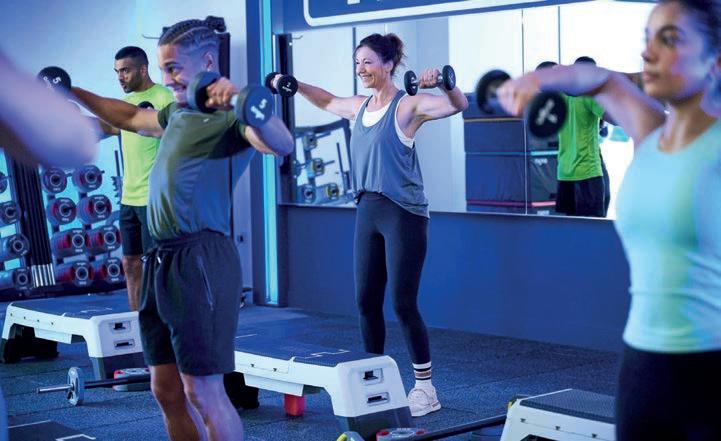
The openings take the total number of gyms in the group’s portfolio to 260
“These latest openings across the UK reflect the strength of our model. “Accessible fitness is now part of the social infrastructure of communities, driving dependable footfall, and supporting the health of our towns and cities. With a strong pipeline of quality sites and a team focused on
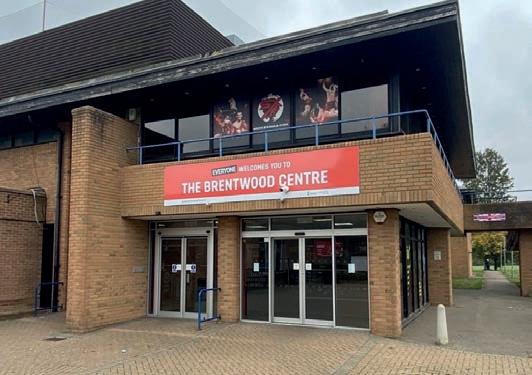
Brentwood Borough Council has announced plans for a £25 million transformation of the Brentwood Centre and its surrounding site – the largest capital investment in the borough’s history.
The ambitious redevelopment will modernise, improve and extend the leisure and events venue, to create new sports facilities, as well as enhancing outdoor spaces for the community.
Subject to planning permission, the broader transformation will deliver a new gym with group exercise studios, a spa and wellness facilities, an improved café and upgraded support spaces for events.
Outside, three new full-size, 3G football pitches will be installed with team changing rooms, officials’ facilities and spectator areas. Outdoor areas will also receive a general upgrade.
disciplined site selection, we remain committed to our Next Chapter plan, accelerating quality new sites and delivering sustainable growth. “As we look to 2026 and beyond, our focus remains on expansion that creates lasting value for both our members and the properties we operate within.”


Playlist and EGYM have announced a definitive agreement to merge the two businesses, creating a global fitness enterprise worth US$7.5 bn.
As a result of the deal, EGYM – a global leader in smart fitness technology, AI-enabled workout programmes and corporate wellness solutions – will become a subsidiary of Playlist, the parent company of Mindbody, Booker and ClassPass.
The transaction will create an integrated wellness technology platform and includes US$785m in new equity investments, led by Affinity Partners and featuring a consortium of existing investors including Vista Equity Partners, Temasek, and L Catterton.
The investment will be used to expand EGYM’s fitness technology and corporate wellness offerings into Playlist’s core geographies, including North America and Asia, where they currently have a limited presence. Funding will also be directed to growing Playlist’s limited
to-date presence in Europe through EGYM’s established footprint.
Playlist CEO and ClassPass Founding Chair, Fritz Lanman, and EGYM CoFounder and CEO, Philipp RoeschSchlanderer, will serve as Co-Founders of the new Playlist organisation.
As part of the transaction, Roesch-Schlanderer will also join Monti Saroya, Co-Head of Vista Equity Partners’ Flagship Fund, as Co-Chairman of Playlist.
Playlist powers in-person wellness experiences through AI-driven software and consumer booking platforms, while EGYM transforms healthcare from repair to prevention through smart equipment, personalised AI training plans and EGYM Wellpass, a corporate fitness platform which partners with more than 20,000 employers and tens of thousands of fitness locations worldwide.
Fritz Lanman, CEO of Playlist, said: “This merger represents a pivotal moment for both our companies.”

Everyone Active has secured a deal to operate leisure centres in Northampton and Daventry –which include a historic, Grade II-listed Art Deco indoor pool. The company will manage Daventry Leisure Centre, Daventry Sports Park, Moulton Leisure Centre, Danes Camp Leisure Centre, Mounts Baths and Lings Forum Leisure Centre from April 2026. The centres are currently operated by Trilogy Active, which chose not to bid for the new contract.
The Mounts Baths venue in Northampton was built in 1936 and is one of just a few Art Deco pools still open in the UK. As part of the deal, the facilities will see a comprehensive programme of modernisation and refurbishment. According to West Northamptonshire Council – which owns the facilities – the investment forms a key part of its long-term commitment to “boost health and wellbeing, increase participation in physical activity and ensure leisure facilities continue to meet local need”.
The council’s other facilities, Towcester Centre for Leisure and Brackley Leisure Centre, will continue to be operated by Legacy Leisure under an existing contract which runs until 2036.
James Petter, Deputy Leader and Cabinet Member for Local Economy, Culture, and Leisure, said: “This new service represents a major investment in the future of leisure provision in West Northants.”
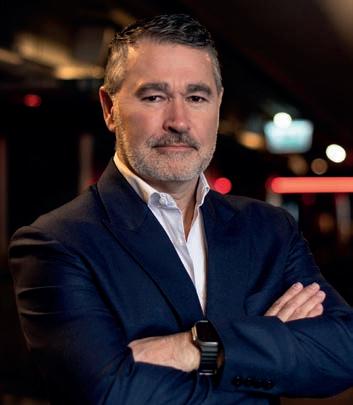
Pure Energy Music has appointed Justin Musgrove as an advisor to the board.
This strategic addition strengthens the company’s leadership team as it accelerates its expansion within the global fitness, wellbeing and technology sectors. Pure Energy Music is one of the UK’s leading providers of music for the fitness industry. In his new role, Musgrove will support the board on strategic development, partnerships and international growth, helping to shape
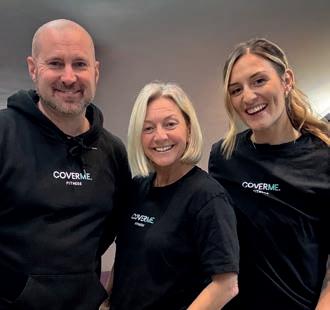
CoverMe has made a series of new appointments to support its continued growth and expansion.
The new additions bring a wealth of industry experience to the team that will help drive the company’s global performance as it helps operators to manage their teams and cut costs.
The on-demand management and cover solution app has appointed Richie Allan as Director of Global Sales, Caroline Ayling as National Business Manager and Jemma Wright as Business Development Consultant.
With more than 20 years’ experience in the sector, Allan has worked for some of the UK’s leading fitness brands, including Total Fitness, David Lloyd, Gym Group and Fitness First, where he completed the company’s Future Leaders Programme. At Xercise4less, Allan oversaw the opening of 20 clubs in two years and was named Regional Business Manager of the Year.
Ayling has also spent more than 20 years in the industry, starting out as a personal trainer before moving through club management,
regional operations and commercial leadership roles across the private, public and boutique sectors.
Wright has a solid background in fitness technology, having spent the past seven and a half years at Myzone. Prior to this, she worked in a wide variety of operational roles from lifeguard, swim teacher and fitness instructor to duty manager.
Rosanna Tucker, CEO and Co-Founder of CoverMe, said: “These three highly experienced individuals share our vision and will play a key role in our expansion.”
the next phase of the company’s mission to “transform how music powers fitness and wellbeing experiences” worldwide. With nearly 40 years in the sector, Musgrove has held several senior roles, including CEO of Fitness First UK, Bannatyne Group and Leejam Sports in the Middle East. As Founder of Musgrove Strategic Advisors, he continues to advise leading fitness and wellness brands on growth, innovation, and operational excellence.

Trafford Leisure has appointed Lori Hoinkes as non-executive director and Chair of its Board. The move follows the departure of Andy Worthington OBE, who stepped down in 2024 after nine years in the role. Hoinkes is the CEO of popular event venue, Manchester Central, where she has created a vision that extends beyond traditional event management to focus on generating economic, social, and environmental impact for Manchester.
Making public leisure sustainable and building healthier communities.
285+ completed projects
81% of clients choose us for further projects

£465m+ investment in local authority leisure
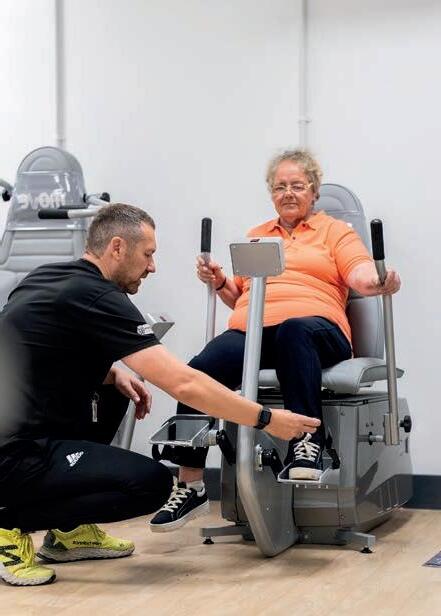
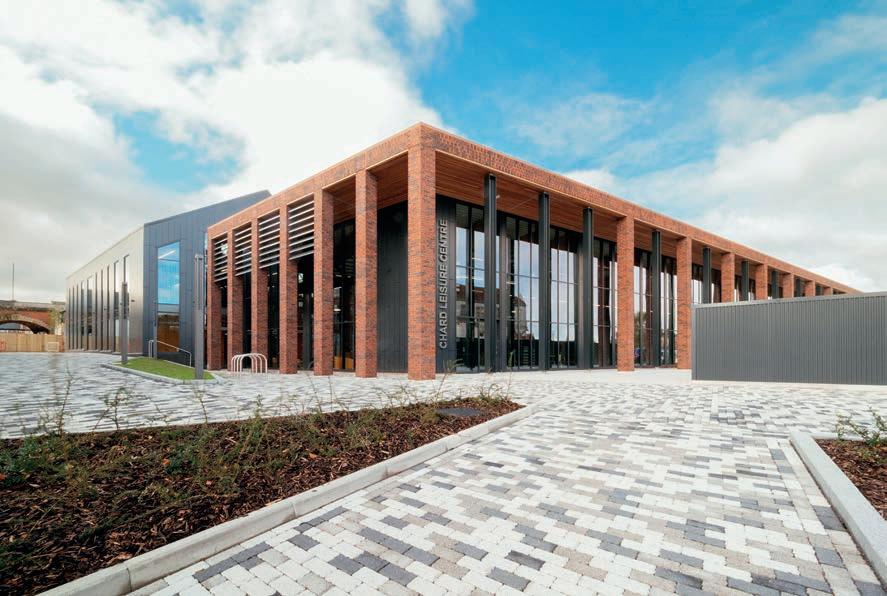
Alliance Leisure are a trusted and experienced leisure development partner, with over 25 years’ experience transforming leisure facilities for local authorities.

Fitness equipment provider, PSLT, has become UK distributor for China’s largest commercial fitness equipment manufacturer, DHZ.
“Bringing DHZ to the UK market is a major step forward for us and for operators looking for reliable, high-performance equipment at exceptional value,” said Stuart Martin, Commercial Director for PSLT.
As part of the move, PSLT is offering a DHZ Y900 Series bundle, a 12-piece plate-loaded collection designed for commercial gyms and training facilities.
The TMD Group (formerly Taylor Made Designs) has acquired Wessex Custom Clothing, a branded apparel specialist. The addition strengthens the TMD Group’s position as a leading provider of custom-branded merchandise and workwear solutions across a number of sectors, including leisure, fitness, attractions and hospitality. The acquisition brings the Group’s portfolio to three specialist brands: TMD, Blu Leisure and Wessex Custom Clothing. It is also a step in the group’s strategy to expand both corporate accounts and grow new customer bases.

Less than half of all children (49.1%) in England meet the Chief Medical Officer’s (CMO) guidelines of taking part in an average of 60 minutes or more of sport and physical activity every day. The figure comes from Sport England’s latest Active Lives Children and Young People Survey Report, published in December.
On a more positive note, the report does show that the number of young people taking part in sport and physical activity is at the highest level since the Active Lives Survey was published in 2017-18. The improvement has been extremely slow, however. In the seven years since Active Lives recording began, there has only been an increase of 5.8% in the number of children and young people achieving the CMO guidelines. Perhaps most worryingly, more than a quarter (28.4%) of children do less than 30 minutes of physical activity each day.
The findings also reinforce that
participation in sport and physical activity varies greatly among different demographic groups. Significant inequalities remain in activity levels, with Black (41%) and Asian (43%) children and young people, and those from the least affluent families (45%), still less likely to play sport or be physically active than the average across all ethnicities and affluence groups. Girls (46%) are also less likely to be active than boys (52%), and the gender gap is widest between boys and girls from Asian (11.2%), Black (10.6%) and other (12.5%) ethnic groups.
Commenting on the figures, Huw Edwards, CEO of ukactive, said: “The latest figures are a reminder of the essential role gyms, pools and leisure centres are playing in driving children’s activity levels, with ukactive’s Next Generation strategy setting an ambition to reach one million more children through our members’ facilities by 2030.







Work has begun on improvements at Halewood Leisure Centre in Knowsley, as part of a wider £30m investment in the town.
The upgrades to both indoor and outdoor facilities at the centre will be delivered in phases during 2026.
Initial work has already commenced to deliver a significant upgrade to the 3G pitch facilities, which includes installing covered spectator facilities, an upgrade to LED floodlighting to reduce light overspill and new acoustic fencing.
Other outdoor investments will include three new multi-use games areas (MUGAs) and the installation of floodlights, CCTV and general lighting.
Indoors, the centre – which is operated by Volair on behalf of Knowsley Council – will benefit from a general modernisation, which will be completed during 2026. This includes a major programme of decarbonisation that will help reduce long-term operating costs and make the centre more energy efficient, supporting the Council’s 2040 net zero agenda.
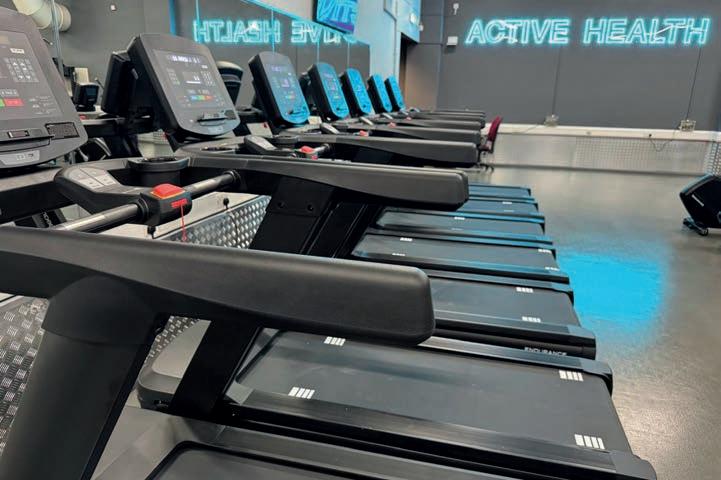
The moveable swimming pool floor will be replaced to ensure access for all ages and abilities, along with the retiling of the poolside area. All poolside changing cubicles will be replaced and the male and female changing rooms, showers and toilets will undergo a major refurbishment.
The works to both the pool and the poolside changing facilities will require a temporary closure of the pool facilities for approximately four months. Other improvements will include the creation of a dedicated indoor cycling studio and a multi-use studio, adding to the centre’s fitness offering.
Leisure operator, Everyone Active, has taken over the management of four of Woking’s leisure and sporting facilities.
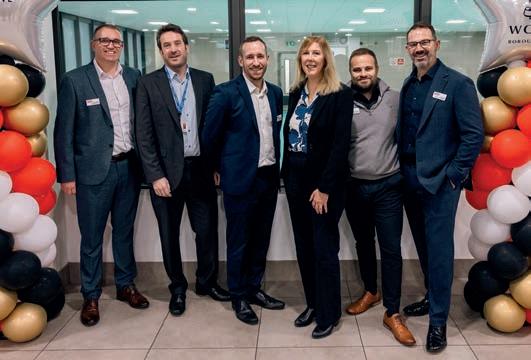
The 10-year contract includes a pledge to invest £1.85m in improving the centres owned by Woking Borough Council. The four sites are Woking Leisure Centre, Pool in the Park, Eastwood Leisure Centre and Woking Sportsbox. Everyone Active will refurbish fitness suites at all four centres, while changes and additions will also be made to group exercise studios – including a reformer Pilates studio at Woking Leisure Centre – as part of a plan to offer more variety and new classes. Other improvements will include advanced safety technology and visual enhancements at Pool in the Park, installation of sensory lighting at Eastwood Leisure Centre and equipment upgrades at Woking Sportsbox.
When motivation is high and memberships surge, your equipment must perform at its best — day after day, year after year.
At Core Health & Fitness, we design and manufacture premium equipment built to withstand commercial environments, evolving fitness trends and the demands of real-world training.
Because while resolutions fade, results only come from consistently great equipment.
THIS JANUARY, INVEST IN PERFORMANCE THAT LASTS.


The University of Nottingham has become a pioneer in campus wellbeing by partnering with Balanced Body® to create a dedicated Reformer Pilates studio
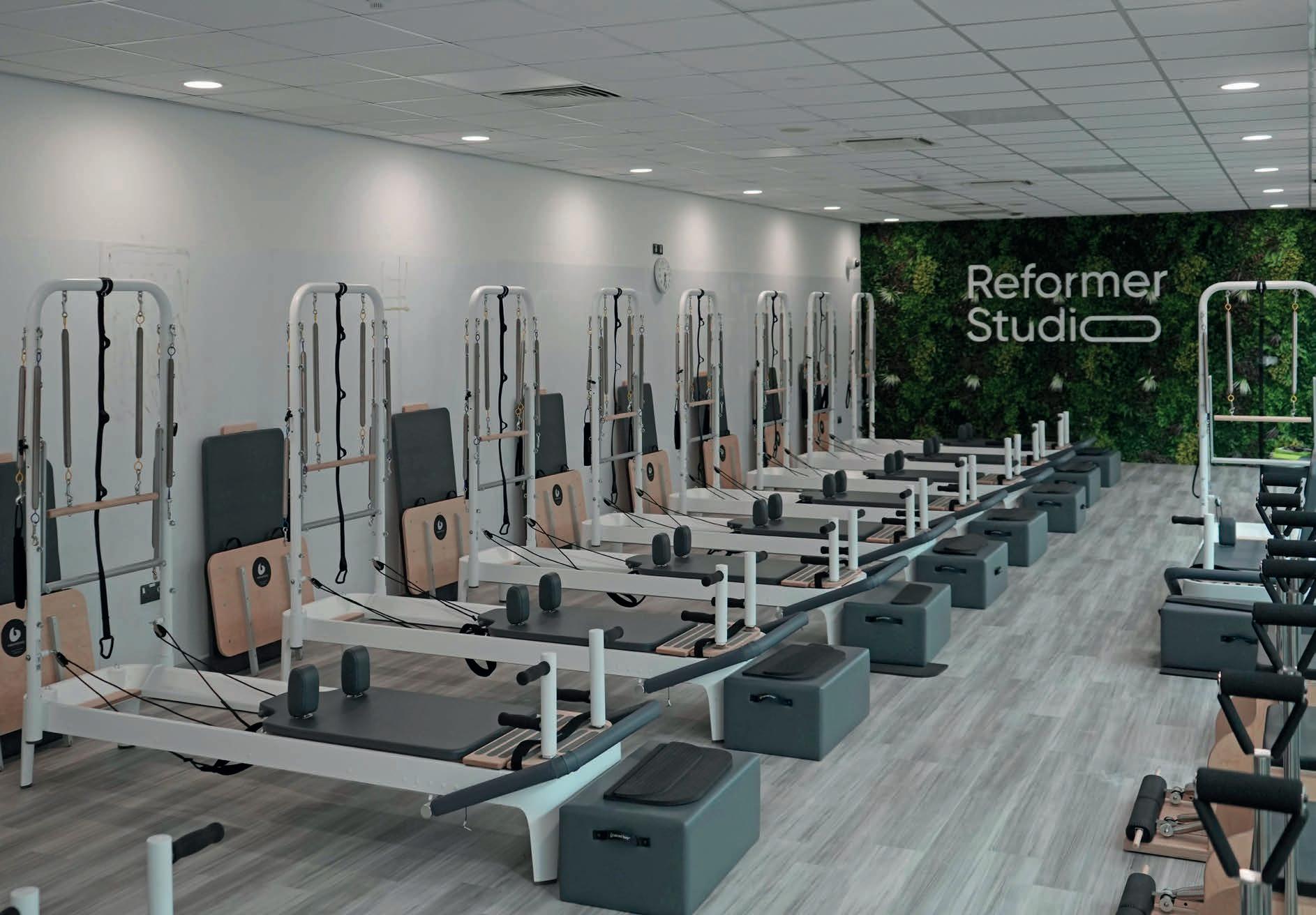
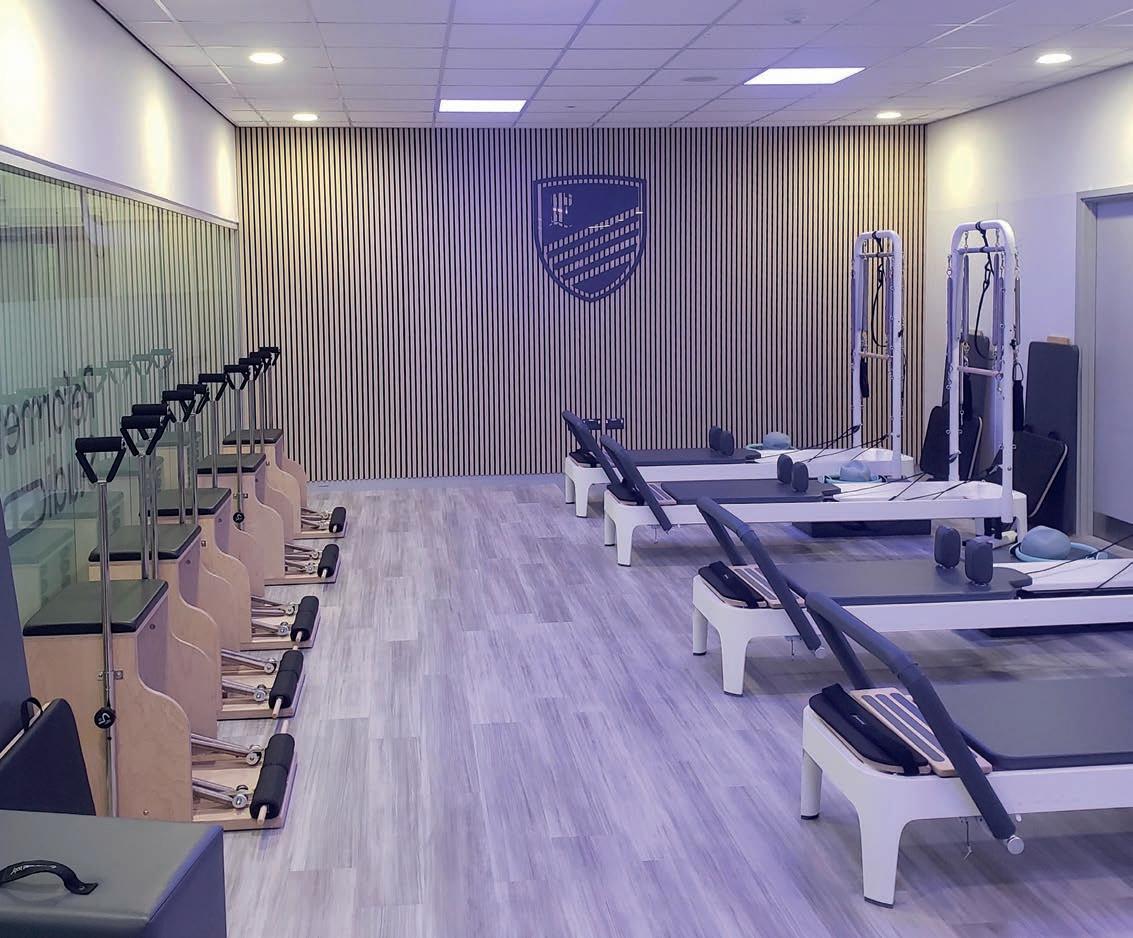
The University of Nottingham has strengthened its reputation as a leader in university sport and wellbeing with the addition of a dedicated Reformer Pilates studio at the David Ross Sports Village. The new space, fully equipped with Balanced Body Allegro 2 Reformers and Combo Chairs, is supported by a team of Balanced Body trained instructors and marks a first for UK higher education, reflecting the University’s ongoing commitment to innovation, inclusion and holistic health.
The decision to introduce a Reformer Pilates studio was driven by a desire to stay ahead of fitness trends and meet growing demand for accessible, high-quality movement experiences. According to the University of Nottingham, the investment was about much more than adding another class to the timetable.
“Our vision was to create a facility that bridges performance, rehabilitation and wellbeing,” says Caroline Martin, Group Exercise Manager at the University of Nottingham. “We identified a gap in our offer and saw an opportunity to deliver
something genuinely sector-leading, a studio that supports students, staff, athletes and the wider community. Reformer Pilates perfectly complements our physiotherapy services, athlete development programmes and sports injury clinic, reinforcing our holistic approach to performance and recovery.
“We were also keen to create a unique space that elevated the holistic training experience, with a look and feel completely different, yet still connected to the rest of the sports facilities. Working with Balanced Body, we put a great deal of thought into the design, that includes bespoke flooring and a visually impressive wood panelling with living wall concept.
We believe the whole studio, in both its purpose
and design, is unique to the education sector and sets a benchmark for other universities to follow.”
Reformer Pilates is also playing a strategic role in the University’s inclusion and disability support offer, providing a space where movement can be adapted to suit a range of abilities. Beyond its health and wellbeing benefits, the studio forms part of the University of Nottingham’s wider sport’s commercialisation and sustainability strategy, creating new opportunities for income generation through classes, external partnerships and corporate wellness programmes.
Balanced Body® was selected as the University’s equipment and education partner following an indepth evaluation process. “Balanced Body stood out
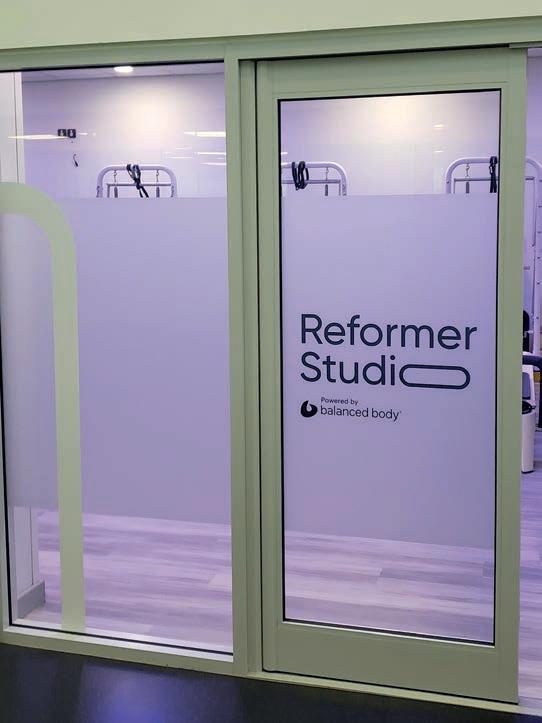
immediately,” explained Tom Sharratt, Health and Fitness Manager at the University of Nottingham. “The equipment is exceptionally well designed, durable, versatile and visually stunning plus their team was fully collaborative from the start. They understood our goals and worked with us to bring our vision to life, from the studio’s layout and bespoke window frosting to the delivery of bespoke, on-site instructor training and future education planning.”
The studio houses 11 Balanced Body Allegro 2 Reformers with Towers and Plank Bars, alongside five Combo Chairs, allowing for a wide range of group classes, specialist sessions and rehabilitation work.
Balanced Body’s role extended far beyond installation,
The enthusiasm across campus has been fantastic. We very much look forward to supporting the University as it works towards becoming an official Balanced Body education centre
Ken Endelman, Founder and CEO, Balanced Body

supporting the University with studio design, instructor training and course development, ensuring the facility would be sustainable and future ready.
As part of the partnership, both the Group Exercise and physiotherapy teams completed bespoke Balanced Body training programmes delivered on site by specialist educators. This included the Group Reformer for Fitness Professionals programme, led by Balanced Body Educator Zoe Watson, and the tailored Pilates Training for Physiotherapists delivered by internationally respected Educator Lindy Royer, PT.
Zoe continues to mentor the Group Exercise team as they refine their practical skills through a limited timetable ahead of a full programme launch in early 2026. The physiotherapy team has already integrated Pilates principles into athlete care and rehabilitation pathways, helping embed equipment-based Pilates across both performance and clinical services.
Caroline adds: “The education support we’ve received from Balanced Body has been exceptional. Zoe’s guidance has given our instructors real confidence, and Lindy’s work with our physiotherapists has inspired new ways of approaching rehabilitation and performance. The training has elevated what we’re capable of delivering, and it’s created real excitement across the team. It’s given us the foundations we need for long-term success, and we’re looking forward to building on it as we work towards becoming an official Balanced Body training centre.”
Speaking about the partnership, Ken Endelman, Founder and CEO, Balanced Body, says: “From the moment we engaged with the University of Nottingham team, it was clear this project was about more than equipment, it was about creating a model of best practice for university wellbeing. It’s been fantastic to work with such a forward-thinking institution and to see Reformer Pilates being embraced as both a performance and therapeutic tool. The enthusiasm across campus has been fantastic. We very much look forward to supporting the University as it works towards becoming an official Balanced Body education centre.”
Since its launch, the studio sessions have been integrated into the University’s Group Exercise programme via a dedicated booking platform and pricing structure. Classes cater to all experience levels, from beginners to advanced participants, and are complemented by 1-to-1 sessions by the sports injury clinic and physiotherapy teams. Early engagement data has been overwhelmingly positive, with particularly strong uptake among
both younger students and older adults.
“Our ambition is to make Reformer Pilates a cornerstone of our health and wellbeing ecosystem,” Caroline adds. “It’s accessible, effective, and offers something for everyone, whether recovering from injury, enhancing athletic performance, or simply looking to move better.”
Looking ahead, the University plans to expand its Pilates provision. Phase Two will explore partnerships with professional sports teams, corporate wellness programmes and local NHS partners, while also developing short courses and workshops to engage a broader audience.
By introducing a purpose-built Reformer Pilates studio and partnering with Balanced Body, the University of Nottingham has not only set a new standard for student and staff wellbeing but also created a model of best practice that other universities might want to emulate.
For more information about Balanced Body studio design, equipment and education, visit: Pilates.com
Community leisure trust, Oldham Active, has launched an exercise referral pathway for people using GLP-1 weight loss medications such as Ozempic and Mounjaro.
The new pathway is available to people who have been prescribed GLP-1 medications by their GP or are purchasing them privately.
Health and social prescribers across Oldham can now refer patients with a BMI of over 30 to Oldham Active’s specially trained fitness team for tailored exercise support alongside their GLP-1 medication.
The pathway is designed to help them preserve and build muscle while taking the medication through targeted exercise and nutrition guidance.
Oldham Active is one of the first leisure providers in the UK to offer this specialist service, in line with the latest WHO guidelines, published last week, which recommend physical activity alongside GLP-1 treatment for long-term success.
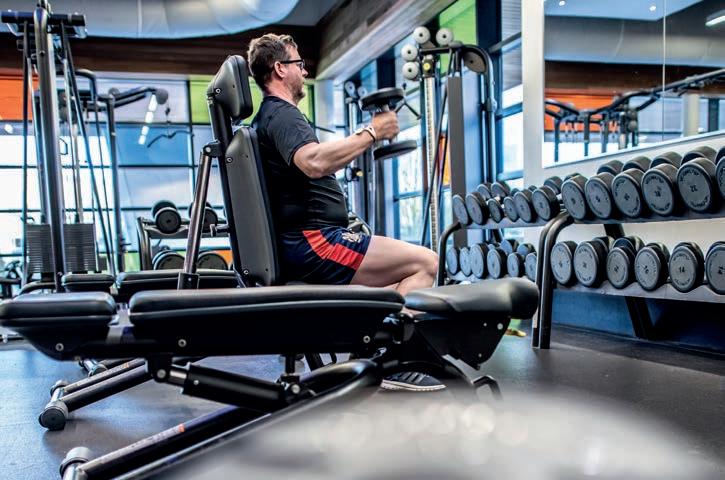
The new pathway is available to people who have been prescribed GLP-1 medications by their GP or are purchasing them privately
Lauren Connis, Head of Health and Wellbeing at Oldham Active, said: “Following our fitness team’s specialist training earlier this year, we’re now putting that knowledge into practice by offering a dedicated referral pathway for people using GLP-1 medications. This service directly supports the
recent WHO guidance that medication alone won’t solve the obesity challenge. Our specially trained team understand that without appropriate exercise, two-thirds of weight lost can be muscle rather than fat, which can lead to significant weight regain when the medication is stopped.”
Franchised health club operator, Snap Fitness, will pilot a personalised heart rate training programme in 2026 as part of a strategy to deliver data-driven member experiences. With a wider goal of strengthening the connection between digital and in-club training, Snap will offer live heart rate monitoring, effortbased benchmarking and integrated rewards to deliver a programme designed to make fitness “more measurable and personally motivating”.
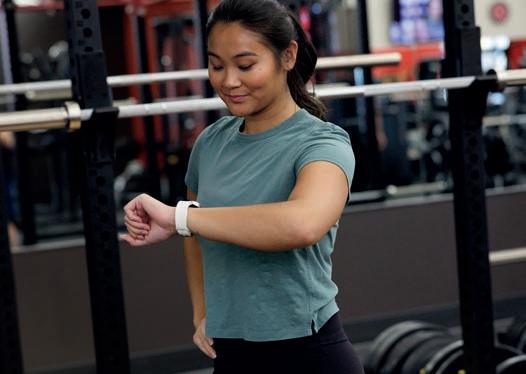
Delivered via the Snap Fitness Watch App, members will be able to track their live heart rate with simple, colour-coded zones. Each of the five zones are aligned to distinct physiological benefits –from recovery and fat burning to conditioning and building anaerobic capacity. The data is tracked in real time using hardware members already own.

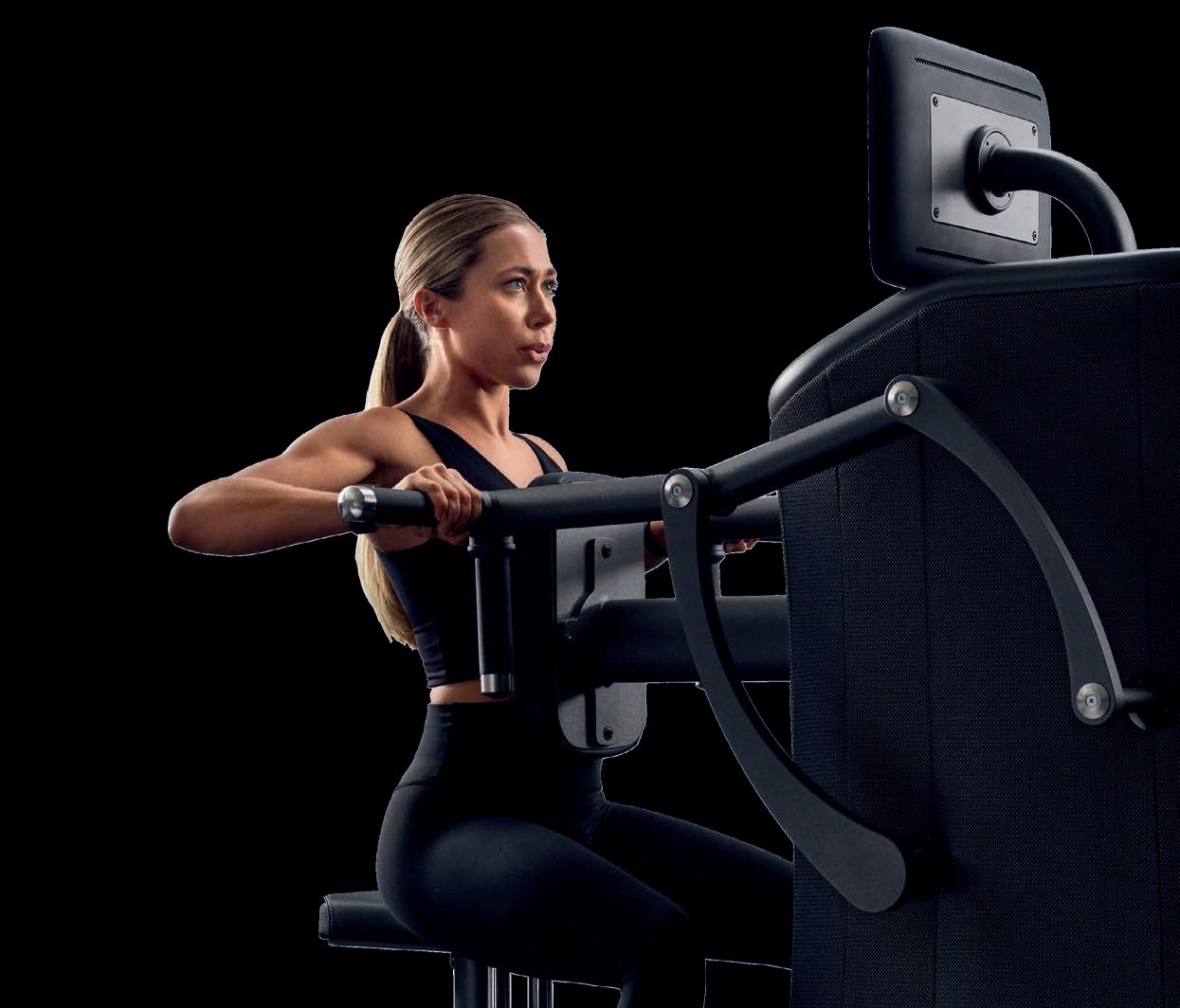
Areport published in December 2025 has warned of the impact that weightloss jabs can have on muscle mass, leading to a call for all GLP-1 users to undertake strength training.
The report, produced in partnership by group exercise specialist, Les Mills and industry body, ukactive, reviewed global academic evidence and explored how weight loss medications work, their side effects and how to avoid the loss of lean body mass through exercise and strength training.
The review is believed to be one of the first of its kind and shows that loss of lean body mass is often an unintended consequence of taking GLP-1, with other side effects including constipation, nausea and vomiting.
The report – titled GLP-1 medications and muscle mass preservation: Implications and recommendations for the health and fitness sector – notes the magnitude of lean body mass loss can be similar to that resulting from bariatric surgery, cancer treatment, or 10 years of ageing.

“The loss of lean body mass (muscle and bone) associated with GLP-1 receptor agonists can have a significant negative impact on long-term health,” the report states.
However, the studies within the review show that combining exercise – particularly strength training – with a healthy diet can help mitigate muscle loss.
Other benefits included maintaining the amount of weight loss and minimising the overall muscle and bone loss found when taking the medications.
Research cited in the report found exercising while using weight loss medications helps maintain weight loss even after medication is discontinued – meaning weight regain could be minimised if supported by sustainable physical activity levels.
Guidelines from the UK Chief Medical Officer (CMO) recommend taking part in two-to-three strength training sessions a week and 150 minutes of moderate to vigorous physical activity a week.

Guidance from the National Institute for Health and Care Excellence (NICE) goes even further and suggests that those who are prescribed medicines for weight management must receive wrap-around care focusing on diet, nutrition and increasing physical activity, including strength training, rather than using them as standalone treatments.
The report makes a series of recommendations to support users of weight loss medications, with the authors calling for the UK government to “urgently convene” the nutrition sector and the health and fitness sector on the required wraparound support offered to GLP-1 patients, with commitment and investment from the pharmaceutical sector.
In October last year, the Health Secretary, Wes Streeting, announced the rollout of GLP-1 as a measure to address the severest forms of obesity across the UK and help get people back into work.
Uptake of the medication has surged, with the UK weight loss market experiencing an average monthly volume growth of almost a quarter (24.6%) between October 2024 and March 2025, but Government efforts have focused on rollout rather than the essential lifestyle changes and post-treatment support that are vital for sustainable and positive outcomes.
Dr Matthew Wade, Interim Director of Research at ukactive, said: “Millions of people are taking weight loss medications across the UK but this evidence shows the risks of ignoring strength training and exercise during treatment.
“The rapid rollout of GLP-1 has shown dramatic results for patients but in order to avoid weakening the body, there are simple and effective strength exercises which are essential for sustainable results.
“The health and fitness sector can support people taking weight loss medications, but we want to see the Government go further by working with the fitness, nutrition and pharmaceutical industries to deliver
the critical wraparound support patients need.”
Bryce Hastings, Head of Research at Les Mills, added: “Regular strength training is vital to our health at all stages of life, but the research suggests this is especially true for people taking weight loss medications.
“In addition to strength training two to three times a week, it’s recommended that people taking weight loss medications accumulate 150 minutes of moderate to vigorous physical activity per week. Studies have shown this helps continue fat mass loss in the weight maintenance phase of treatment and lessen weight regain after treatment has stopped.
“More research is needed to deeper understand the relationship between weight loss medications and strength training, but the evidence and recommendations in our report are the start of the journey and offer practical next steps to better support the growing number of people taking weight loss medication.”
www.ukactive.com/wp-content/uploads/2025/12/GLP-1-medications-and-muscle-mass-preservation.-Implications-and-recommendations.pdf
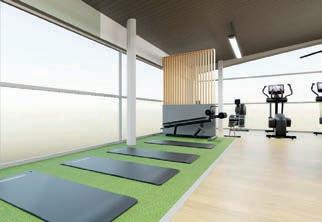
A group exercise studio is among the new additions at Pingles Leisure Centre in Nuneaton, which has reopened its doors following a major £2.2m redevelopment project.
The refurbishment, which was completed in time for January 2026 and the expected influx of new members, also includes a new indoor cycling studio and gym extension that has increased the number of stations – featuring Life Fitness equipment – from 80 to 130.
Elsewhere, both the outdoor pool and main indoor pools have been refurbished and a new water confidence paddling pool with interactive features has been added. In addition, the front of house and the café were remodelled and there have been upgrades made to the changing village.
The centre is owned by Nuneaton and Bedworth Borough Council, which has funded the improvement works jointly with Everyone Active, which operates the centre on behalf of the council.
“It is great news that the group exercise studio at Pingles Leisure Centre is now open and available for the local community to use,” said Lloyd Barraclough, Everyone Active’s Area Contract Manager.
“That is just one part of a hugely exciting transformation and come the new year, people will feel they are walking into a different centre.”
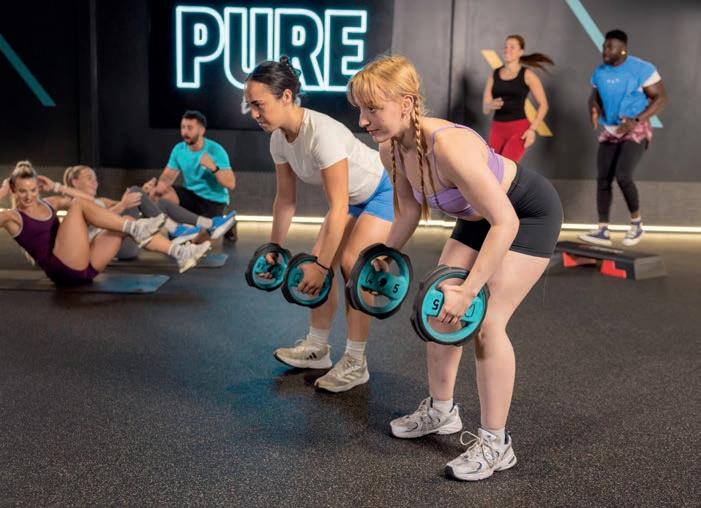
PureGym has 439 corporate-owned gyms in the UK
PureGym reports “excellent Q3” with strong revenues and profits
Low-cost gym giant, PureGym, says it has made “excellent progress” through the first nine months of 2025, reporting revenues of £555.5m – up from £443.9m in the same period in 2024.
The 25% increase in revenues (of £112m) was driven largely by the acquisition of the US-based Blink Fitness sites in November 2024, which contributed £71m to the increase. PureGym said the remaining improvement has been driven by growth in average members and an increase in average revenue per member (ARPM). “The ARPM improvement has been a result of measured price increases in existing gyms and the maturation of new corporate-owned gyms in the last 12 months,” PureGym said.
Reporting its Q3 2025 results, the group said operating profits for the three months to 30 September were £34.8m, up from £20.3m from the same period in 2024. The company opened 13 new corporate-owned, corporate-
operated (COCO) sites in the quarter, which means it now has 439 COCO sites in the UK as at 30 September 2025 – an increase of 47 on the 392 gyms it had on 30 September 2024.
PureGym said it continues to target new site opportunities, with further COCO gyms being rolled out in the UK in a “measured and controlled way”.
In total, the group now has 671 COCO gyms and 23 franchised sites across the UK, US, Denmark, Switzerland and the Middle East.
“The business has made excellent progress through the first 9 months of 2025. PureGym is in rude health, with accelerating momentum, and offers exciting prospects for the future,” PureGym said in a statement.
“The Group has a robust capital and liquidity position with £87m of cash on the balance sheet, which contributes towards £263m of available liquidity (including the Revolving Credit Facility of £175.5m), as well as a further £34m of cash available for use.”


































Technology specialist, fibodo, has launched CORE, a business platform specifically developed for fitness professionals, wellness experts, coaches and tutors. Aimed at making business simple for individuals working in the physical activity sector, CORE brings together scheduling, client management, payments, lead generation and bookings on one platform.
“We believe the experience economy belongs to the people who power it,” said Anthony Franklin, Founder and CEO of fibodo.
“Our mission is to democratise their access to the tools they need through one connected platform. Our vision with CORE is to give independent professionals an optimised diary, with more client bookings and the ability to earn more, on their terms. “Through our partnership with The Everything App, supporting NHS staff and their families, we’re connecting people to trusted professionals in the community, creating more revenue opportunities, and cutting out the need for marketing spend. At fibodo we are fiercely local, and CORE is how we give that power back.”
According to Franklin, the vision for CORE is to “give independent professionals an optimised diary, with more client bookings and the ability to earn more, on their terms.”
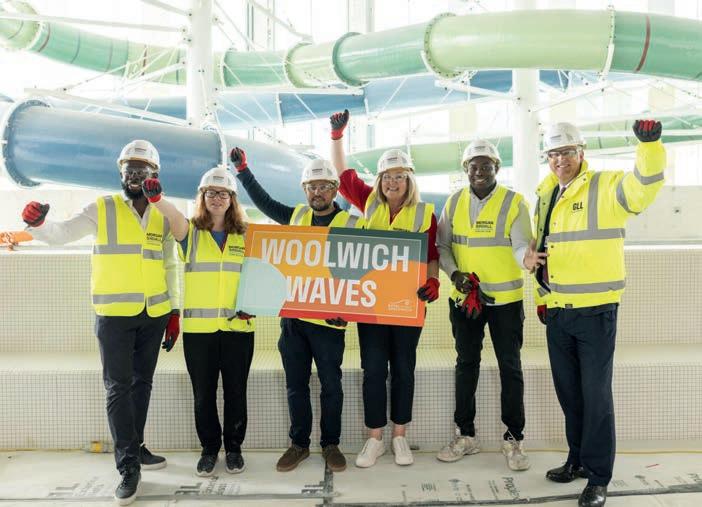
Woolwich Waves leisure centre in east London opened its doors to the public on New Year’s Day 2026.
The centre, designed by FaulknerBrowns Architects, will feature a 25m, eight-lane swimming pool, leisure pool with flumes and slides, a teacher training pool and a large health club with a two-storey gym floor and multi-purpose exercise studios.
There will also be two large sports halls, squash courts, a soft play area and a range of community spaces – as well as a 3G, five-a-side football pitch on the top floor of the building.
Owned by The Royal Borough of Greenwich (RBG) council, the centre is being built by Morgan Sindall with Buro Happold providing engineering support.
RBG has now handed the building over to leisure management company GLL, which will operate the facility under its Better brand.
Peter Bundey, GLL CEO, said: “The new centre is already creating significant community interest.
This iconic facility is much more than a fitting replacement of the popular Waterfront Leisure Centre; it is a proud civic statement.
“As a charitable social enterprise and worker-owned co-op we welcome the chance to also use Woolwich Waves to widen and deepen employment and social opportunity for local people.”
The multi-million-pound Woolwich Waves forms a key part of the Royal Borough of Greenwich’s £115 million regeneration plan for the area, which has included the refurbishment of the Tramshed Theatre. The plans will also result in the demolition of the existing Waterside Leisure Centre, which the Woolwich Waves will replace when open.
Anthony Okereke, Leader of the RBG, said: “The opening is the moment that thousands of residents have been waiting for.
“Woolwich Waves will be at the forefront of improving the quality of life and health of our residents.”














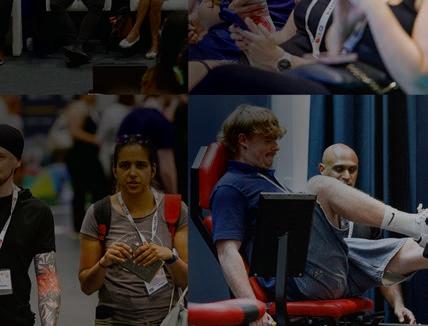
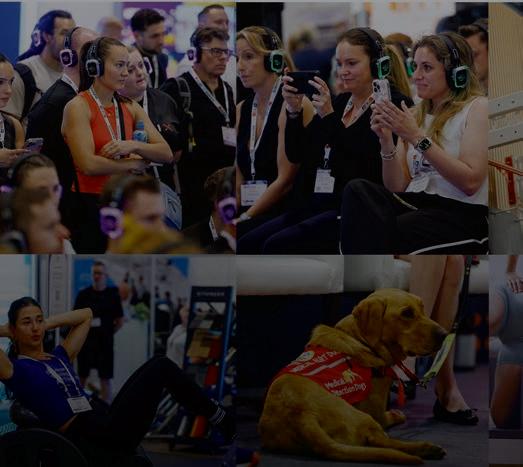


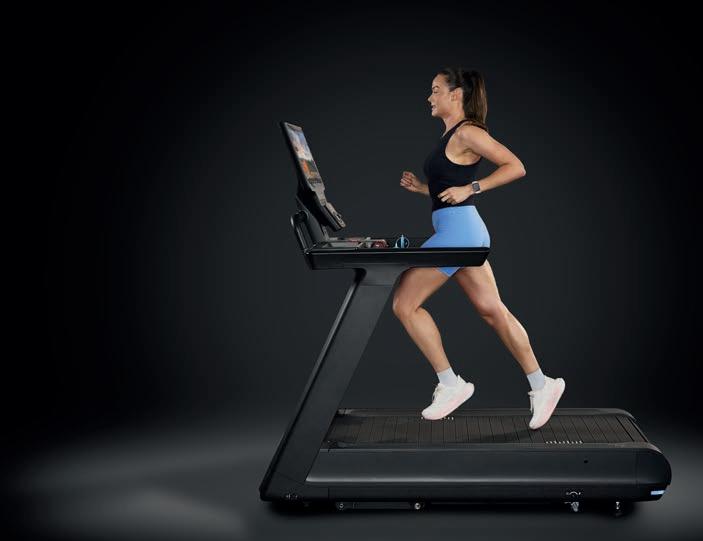
Matrix Fitness has launched its new Onyx range, a five-machine range of luxury cardiovascular equipment.
Designed to “invigorate the senses with premium materials, advanced technology and meticulous attention to detail”, the range consists of a treadmill, ascent trainer, ClimbMill, upright cycle and recumbent cycle.
Set to be launched officially to the UK market in March, Onyx machines feature a large touchscreen console, an intuitive app-based display and Interactive Touchscreen Controls with haptic feedback – aimed at creating an immersive and multisensory exercise experience.
“Every touch point and every element of the Onyx Collection was designed to be exceptional, immersive and unlike anything else in our portfolio,” said Matthew Pengelly, Managing Director, Matrix Fitness UK.
The launch of Onyx comes just weeks after Matrix introduced the Magnum plate-loaded range, a collection of 10 premium strength machines.

With design features informed by both athlete and operator feedback, Matrix says Magnum offers functionality and adaptability and delivers “biomechanical precision and unmatched training variety”.
Commenting on the launch of the Magnum range, Pengelly said:
“Strength training is one of the fastest-growing priorities for gym members today, with over two-thirds strength training regularly and more than a third identifying muscle growth as their primary goal. The new Magnum Plate-Loaded Range is our answer to this demand.”
Sport England’s assessment tool, Quest, is being updated for 2026 with two new and improved products designed to simplify the process.
The new products are “Quest for Facilities”, which will cater for individual sites, and “Quest Active Wellbeing”, which has been designed for contracts and/or places. The changes are the result of feedback from a recent industry consultation, which highlighted opportunities to make Quest more efficient and effective for operators.
Quest was first launched in 1999 as a tool for “continuous improvement”. It was designed to evaluate the management and operations of sports facilities and to define industry standards and good practice, providing a benchmark for quality and improvement. The scheme has been managed by Right Directions since 2010.
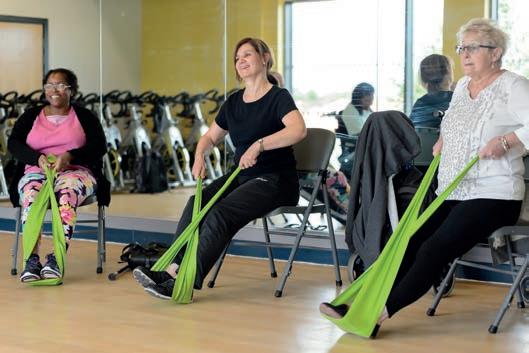
Swim England sets a new standard of excellence in swimming teacher training with the NEW SEQ Level 2 in Teaching Swimming.




This means:


Learners qualify faster
Our new qualification delivers quality without compromise combining a streamlined pathway with flexible entry routes to attract and retain the best talent.
Developed in line with CIMSPA’s updated Swimming Teacher Professional Standard and delivered by licensed educators, our qualification ensures learners and employers can trust the training to meet the highest industry standards.
Learners qualify faster with all the skills they need to teach confidently from day one.
Improved delivery model
Licensed educators benefit from an improved delivery model, supported by modern assessment technology.
Poolside-ready teachers
Providers get poolside-ready teachers equipped with the skills and confidence to deliver exceptional learn to swim lessons.
Flexible pathways to success
Whether learners start directly, begin as a Learn to Swim Helper, or upgrade from Level 1, there’s an option that’s right for every individual.
Join us in shaping the future of swimming teaching.
Courses will be available to book from January 2026. Visit swimenglandqualifications.com to learn more.
Boutique health club operator, Third Space, has begun offering its members science-led assessments to help them identify and reach their health and fitness goals.
The company’s The Performance Lab – which opened in 2025 at its renovated Mayfair club – offers a wide range of analytics, from movement screening, force plate analysis and grip strength to sweat analysis and VO₂ max testing.
“Performance benchmarking used to be something only elite athletes had access to,” said Tim Hart, Head of Performance and Lab Supervisor at Third Space.
“Now, as the awareness of VO₂ max testing has become more mainstream, there’s been a growing appetite for it.”
At the centre of the new offering is the Wattbike AtomX, which not only provides an accurate VO₂ score from the Wattbike Healthspan Check, but once connected to the VO₂ master device at Third Space, is able to provide more in-depth VO₂ max data. Thanks to its ERG mode, the
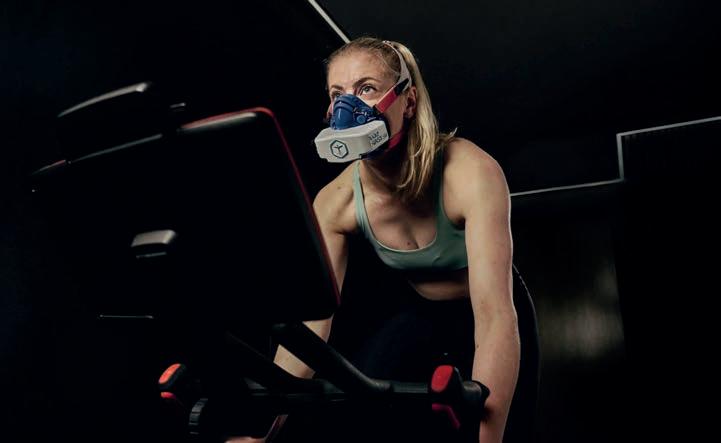
At the centre of the new offering is the Wattbike AtomX
Wattbike automatically adjusts resistance to keep power output consistent, giving members precise, reliable data to shape their training.
“Thanks to the Wattbike and our wider testing protocols, every member can access tangible data to understand where they are today and what they
need to work on to reach their personal best in the form of a varied, very personalised workout,” Hart added. As many members have wearables, Third Space is also focusing on personalisation by offering tailored training zones and specific insights into endurance, strength and recovery.
Sandwell Leisure Trust has rebranded to Kore Sandwell. The non-profit facility operator, which manages eight leisure centres on behalf of Sandwell Council, chose the new name to represent the facilities being “at the core of the community”.
The new identity is seen as more modern and has been designed to have a broader appeal among all age groups. There is also a business case for the rebrand. “The new identity will create opportunities for future growth and impact,”
Kore Sandwell said in a statement, hinting that the move could mean the trust will look to secure management contracts outside Sandwell.
It added: “The needs of our communities are changing. People are looking for more than a gym or swimming pool – they want connection, balance and support for their overall wellbeing.”
opportunities for future growth”
Leisure DB’s Monthly Market Tracker lets you quickly identify and respond to new opportunities in the market and on your doorstep.
Each month, we round up key developments in the UK gym market: openings and closures, planning updates, proposed expansions, rebrands, management changes and more. Keep your finger on the pulse and your business one step ahead.
Find out more and download a free sample report: leisuredb.com/market-tracker

Jetts UK has launched a nationwide programme to encourage more women to get into strength training.
The gym chain’s new Active Woman Lifting Club – which was introduced at all of its 22 sites in late 2025 – has been developed to create a more inclusive and supportive environment for women to learn to lift.
It has been designed to help improve technique and build confidence in the weights area – traditionally one of the biggest barriers to female gym participation.
The launch comes at a time when women’s strength training is seeing rapid growth. Recent studies by YouGov show that one in four UK women who strength train are aged 25 – 34, while 13% of female gym members now cite muscle building as their primary goal.
Reflecting a fundamental shift in consumer behaviour – as female members move beyond traditional cardio and embrace lifting – the UK figures are reflected in women’s strength-based workouts increasing by 25% year-on-year, according to data from an industry report.
Active Woman Lifting Club forms part of Jetts UK’s strategy to evolve its offering for both members and business owners, ensuring clubs remain aligned with market demand and fitness trends.
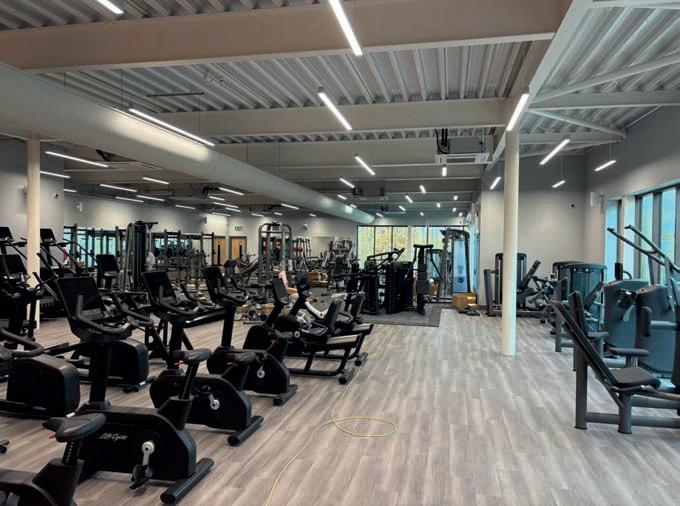
The new Epping Leisure Centre opened its doors to the public for the first time on 12 January. Owned by Epping Forest District Council and operated by Places Leisure, the new facility replaces the Epping Sports Centre and forms an “integral part” of the wider regeneration project for Epping town.
The centre houses a 25m main swimming pool, learner pool, sports hall, squash courts and a health club with a 120-station gym floor with a mix of strength and cardio machines, an indoor cycle studio and two group exercise studios.
Designed to be the most energyefficient leisure centre in the district, the facility is a key milestone in the council’s commitment to achieving carbon neutrality by 2030. Environmentally sustainable solutions at the facility include heat pumps, advanced digital technologies and high levels of insulation to significantly reduce energy consumption and minimise future
carbon emissions and operational costs. The project is being delivered by the council with its construction partner, Pellikaan Construction.
Councillor Chris Whitbread, Leader of Epping Forest District Council, said: “The opening of Epping Leisure Centre is a clear statement of our ambition for the residents of Epping and the whole district. It shows what can be achieved when we invest in our communities and work in genuine partnership.
“This centre is about more than leisure, it reflects our commitment to providing high-quality, accessible facilities that meet the needs of our residents now and into the future. “This centre is a real tribute to the amount of work and passion that has gone into it. I would like to thank Places Leisure for their collaboration, insight, and dedication throughout this project; Pellikaan for delivering this complex scheme to such a high standard and EFDC officers for their hard work and commitment throughout this project.”

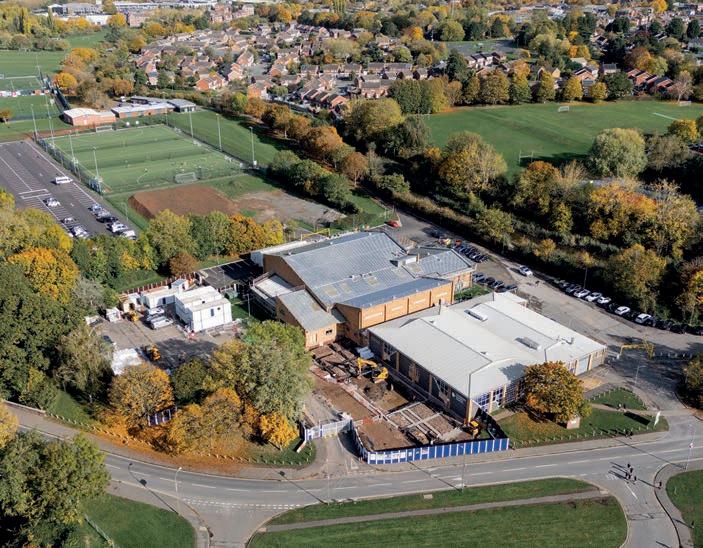
Works are expected to be completed by August 2026
Construction work is now underway on a £12.7m redevelopment of Droitwich Spa Leisure Centre. The redevelopment will include the installation of a new 12m learner pool, housed within an extension that also includes a new reception and café area.
Existing changing areas will also be upgraded and three flexible-use treatment rooms added to the facility mix, which already includes a large multi-room gym, racket and court sports and outdoor sports pitches.
As well as new facilities, the works –which are set to take until August 2026 to complete – will improve the venue’s sustainability. New air source heat pumps and solar panels will be installed, helping to boost energy efficiency.
Wychavon District Council, which owns the centre, has appointed Alliance Leisure to deliver the project in partnership with Watson Batty Architects and Speller Metcalfe. The centre is operated by Rivers Fitness, a not-for-profit social
enterprise which manages four facilities on behalf of the council.
The project is part of the council’s multi-million-pound investment in leisure and wellbeing in Droitwich.
Gillian Dunster, Business Development Manager at Alliance Leisure, said: “This refurbishment is about more than bricks and mortar; it’s about growing confidence in the water, removing barriers to activity and futureproofing a vital community asset. We’re proud to support Wychavon’s net-zero ambitions while enhancing the experience for every visitor.”
Councillor Dan Birch, Wychavon’s Executive Board Member for Wellbeing, Social Mobility and Transformation, said: “This is part of our multi-million-pound investment in leisure and wellbeing in the town. We are committed to progressing these schemes at pace to ensure the full leisure offering in Droitwich is delivered in a timely manner for the benefit of our residents.
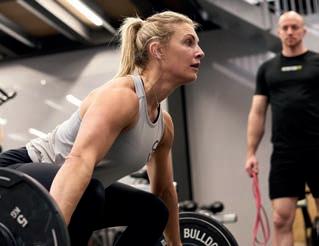
Fitness education provider, Create, has been named the preferred provider of Personal Trainer education for the UK Sports Institute (UKSI), which supports the UK’s Olympic and Paralympic athletes. Under the new agreement, UKSI will recommend and refer to Create, competing and transitioning athletes across all Olympic and Paralympic sports, who are exploring careers in the fitness industry. Through the partnership, Create will break down entry barriers by providing exclusive course discounts to UKSI-referred athletes.
Barnsley Premier Leisure has become the first UK operator to implement TIME, an onboarding experience designed to support individuals new to gym exercise or returning after a break. TIME delivers a supportive, communityfirst approach that helps new exercisers build their confidence and capabilities in a safe environment, creating a sense of belonging that encourages members to return. It blends small-group coaching, personalised goal setting and member engagement strategies into a seamless experience.

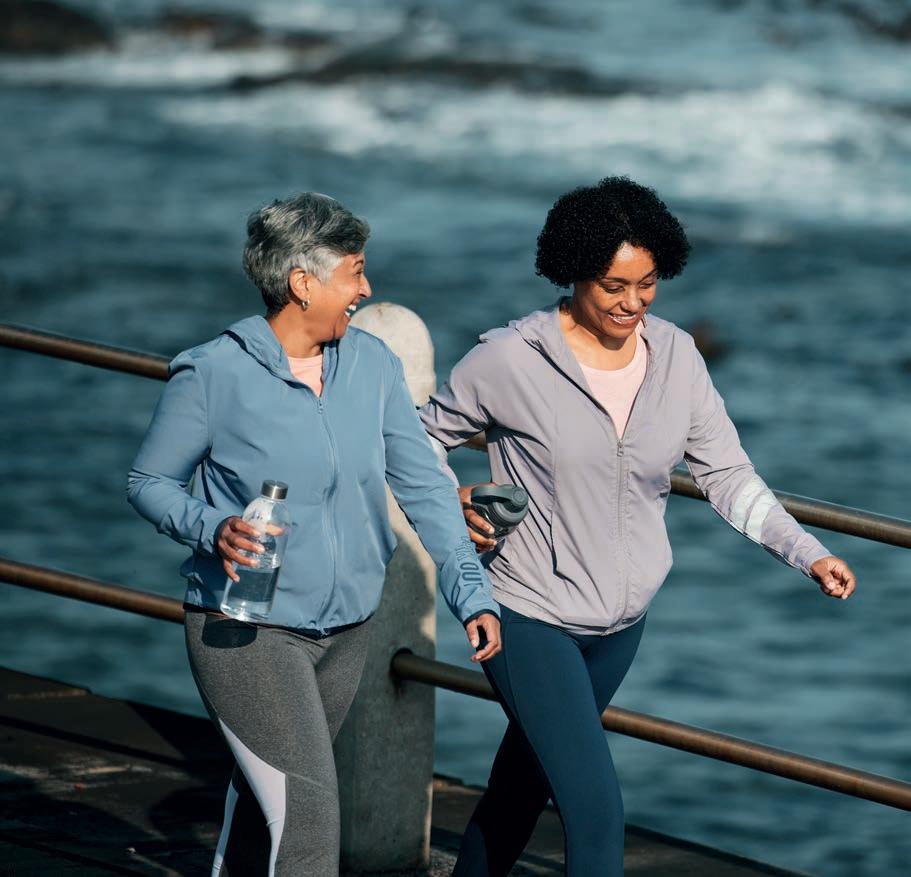
A research project, led by Active Insight, aims to provide a better understanding of why – and how – people engage with physical activity
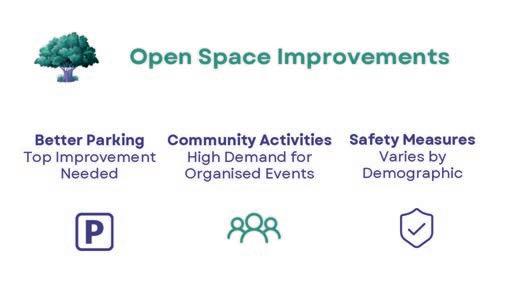
For the past four years, Active Insight has delivered exclusive research and intelligence for Max Associates, one of the UK’s leading specialists in strategic outcomes planning, feasibility studies, alternative management approaches and leisure procurement. The collective aim is to help the sector better understand how people engage with physical activity, and what it will take to encourage communities to move more, more often. With inactivity, health inequalities, and rising service costs continuing to challenge systems nationwide, insight-led decisionmaking has never been more essential. The latest analysis sought to explore the drivers and barriers that shape how communities think about physical activity and their use of leisure facilities. The research examined what people
value most when becoming more physically active, the factors influencing membership or visitation to local leisure centres, and what could persuade them to engage more in walking, open spaces and community based activity. Responses were reviewed across gender, age, motivation type and activity level, allowing a deeper understanding of how different groups think and behave. This evidence enables councils, operators and system partners to align strategy, spending and service design with the needs and realities of the public, which is a critical step in increasing activity levels and reducing physical inactivity.
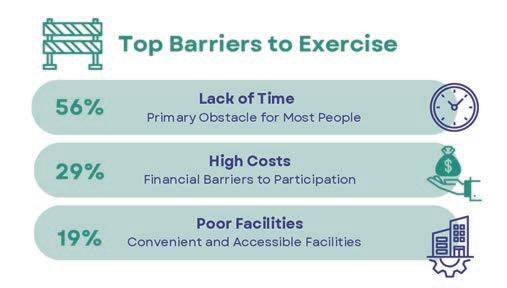
Financial barriers were also significant with 29% citing cost as a key obstacle
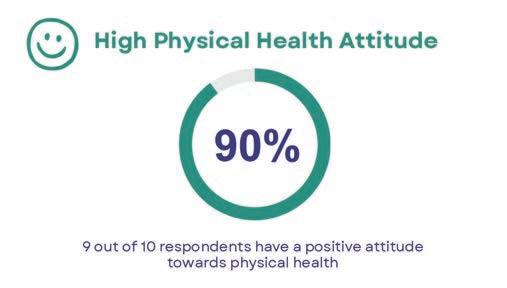
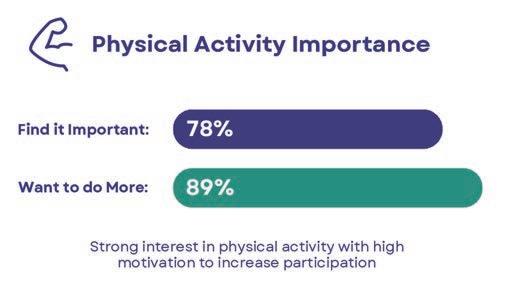
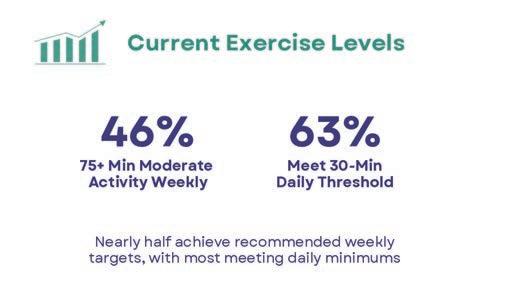
The research reveals a strong national appetite for movement with 90% of respondents reporting a positive attitude to physical health, while 78% believe physical activity is important or very important and 89% saying they are interested in becoming more active. Current participation from the respondents found that 46% achieve at least 75 minutes of moderate activity weekly and 63% class themselves as active for 30 minutes or more per day.
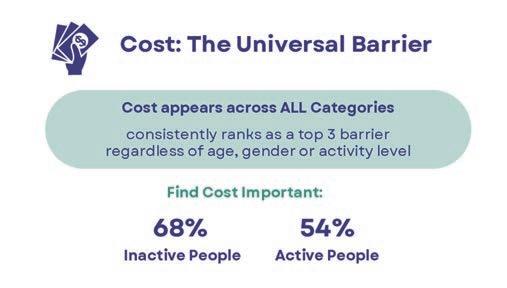
Looking at the most influential drivers of behaviour, facility quality, activity choice and cost were ranked highest. Financial barriers were also significant with 29% citing cost as a key obstacle, rising to 68% among inactive respondents, compared with 54% in active groups. Time was the single greatest participation barrier affecting 56% overall.
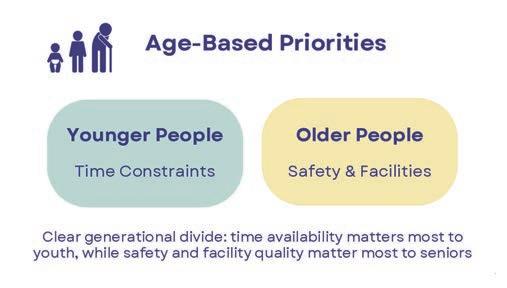
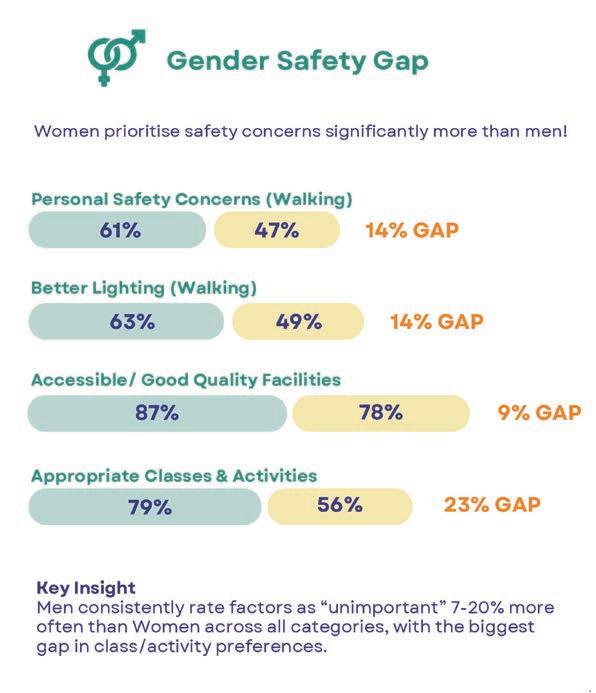
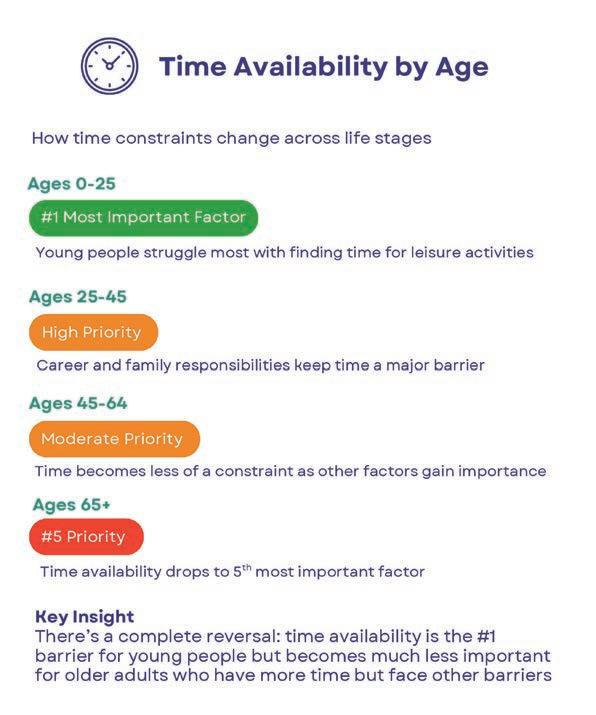
Differences by gender and age were particularly notable. Women prioritised accessible, high-quality facilities more than men (87% vs 78%) and expressed much greater safety concern around walking (61% vs 47%). Safety and infrastructure mattered most for adults aged 25 - 45, whereas the 45 - 64 group placed higher value on organised community activities.
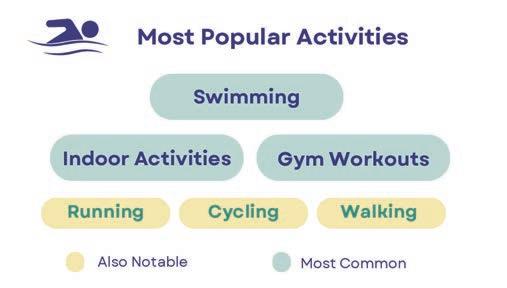
Indoor activities remained particularly dominant across responses, especially swimming, gym exercise and group exercise classes, whilst walking, cycling and running remain widely used but under-leveraged opportunities for low-cost, scalable health improvement.







Huw Edwards CEO, ukactive
As the new year begins, so too does the nation’s enthusiasm for starting or renewing its dedication to health and fitness. Our sector now supports over 11.5 million adult members to stay active with services, facilities and programmes widely available across the UK to meet all age groups, abilities, backgrounds and needs. This year, our sector is well positioned to build on the growth that was seen in 2025 and continue to educate consumers and the Government about the important role being active in our facilities can have on individuals’ physical, social and emotional wellbeing.
What impact is our sector having?
With an ageing population, we know the importance being physically active can have on long-term health outcomes and our industry is continuing to meet the demands and support required from this older age group. Older adults’ participation in gyms, swimming pools and leisure centres is growing significantly and recent data from Sport England reveals participation in public leisure has increased for every age group over 45, with the number of visits by over-65s rising by 19%. Given 60% of over 65s have never had a gym membership before, this uptake in later life does indicate a positive shift in priorities for maintaining health and wellbeing and our sector is providing the solution. Similarly, we know that these increases in older adults’ physical activity levels have benefits which go way beyond their individual wellbeing – it results in the prevention of disease and chronic health conditions which saves the NHS £6.7bn, including 28,000 cases of hip fractures and 65,000 cases of dementia prevented annually. Savings come from a range of activities, such as falls prevention classes and physical activity referral schemes, which can deliver healthcare and encourage lifestyle change.
And it’s not just older adults that are seeing the benefits. Our sector is already welcoming an increasing number of children and young people into its facilities with more than a 12% increase in gym and fitness activities

Our sector is already welcoming an increasing number of children and young people into its facilities with more than a 12% increase
for this age group being seen since 2017, compared to just 2% for traditional sports. This is supported through the provision of co-located services which reduces the barriers to families engaging in physical activity.
So, how can this growth continue in 2026?
Although the physical activity sector has the potential to save the NHS billions and support millions of people in their health and wellbeing, the Government currently lacks a strong enough grasp on the role our industry can play in driving the preventative agenda, as well as helping to support economic growth.
If it is serious about turbocharging the economy and addressing the worsening health of the nation, it needs to listen to our sector as one of the biggest drivers of physical activity in the country. By ensuring that any future Government policies, initiatives, and campaigns around physical activity are co-developed with us, this Government has a chance to ensure its message lands. This would mean using business expertise and experience to create credible and scalable campaigns, which can be supported through the targeted intervention on policy health issues, including mental health and MSK issues, weight loss and falls prevention. This month, gyms, pools and leisure centres are all opening their doors to new and returning customers who already know the value our services can provide. If the Government joins us on this journey, 2026 will be an even greater stepping stone to ensure more people can access the gyms, pools and leisure centres that have a tangible impact on their health and happiness. This Government has a chance to see how investing in health and our sector’s services, will lead to a happier, healthier and more economically active population.



Will Watt, founder and director at State of Life, is a key figure in linking sport and physical activity with measurable wellbeing and economic value. Through his work with State of Life, he has advised organisations, such as Sport England, on using data – including the WELLBY measure – to help evidence the significant societal benefits of being active. He tells WellNation why physical activity must change the way it proves its worth, if it wants to achieve its ambition of becoming a key player in the government’s plans to establish a health care system based on prevention
Will Watt has built his career on making sense of things other people insist are too complicated. As co-founder of State of Life, and one of the leading voices in wellbeing economics, he has helped shift the way the UK understands the value of sport and physical activity. Not just in terms of health outcomes, but in how being active shapes people’s happiness, trust, confidence, community connection and life satisfaction.
It’s a big subject, but when you speak to Watt, he boils it down quickly – then tells you why the sector needs to start being far more honest with itself.
“If you’re a sports or physical activity organisation and claim to make people’s lives better,” he says. “You need to have the decency to ask them whether you actually are.”
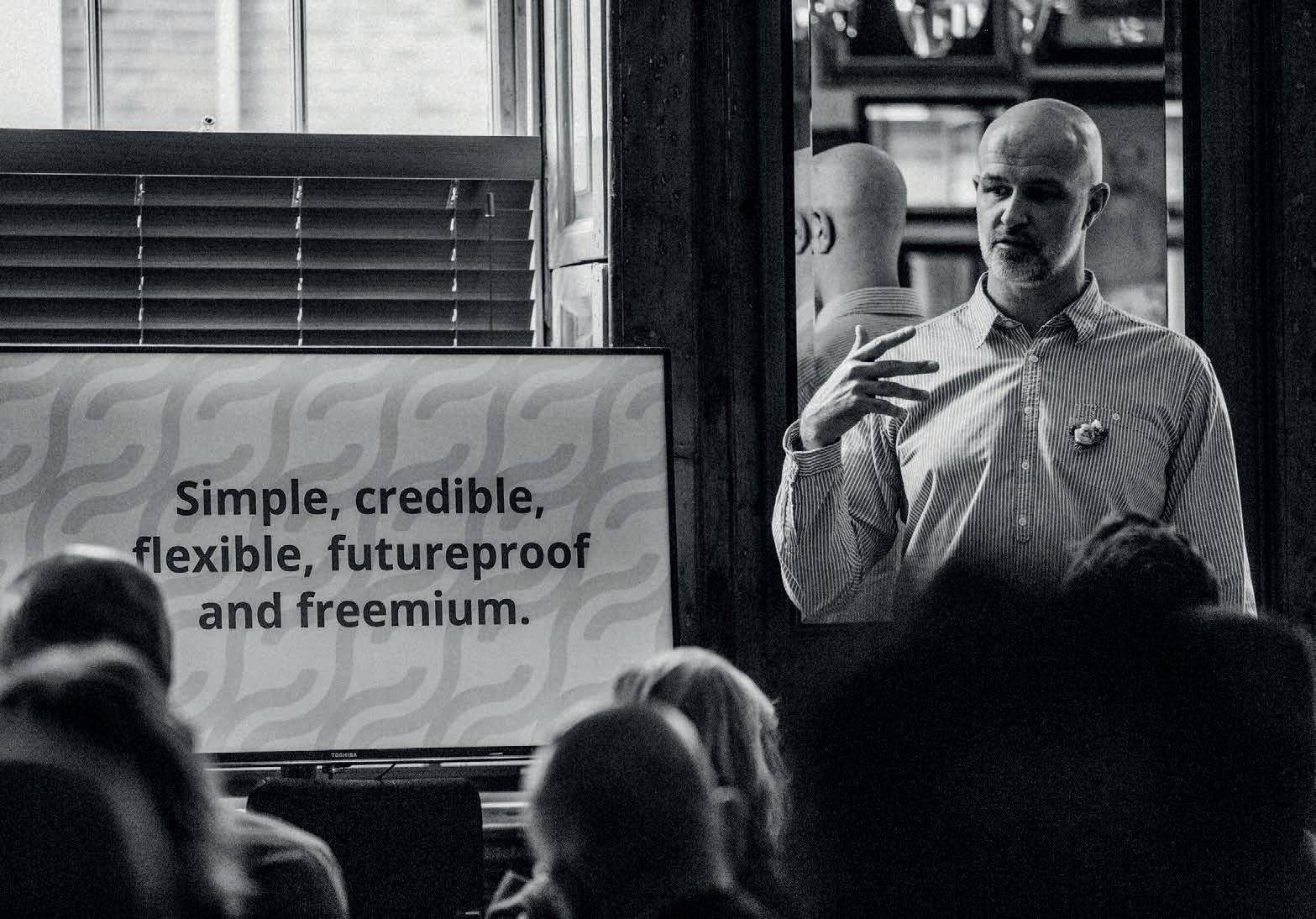
It’s a line typical of Watt’s style: direct, plainspoken, but grounded in years of methodological rigour. And in a sector that has long wrestled with how to quantify impact, his message is simple: the tools exist, the evidence exists – and the excuses no longer stack up.
State of Life is perhaps best known for its work with Sport England but it has also helped the likes of Greater Manchester’s GM Active network, Parkrun, Girlguiding and dozens of other bodies wanting to understand, properly, how their programmes help make people’s lives better. The company’s work on the social value of sport and physical activity, commissioned by Sport England and published in 2024, generated headlines by estimating that sport provides more than £100 billion worth of social value each year. That includes physical and mental health benefits, improved wellbeing, increased social trust and stronger communities.
But for Watt, the number itself is not the story. The story is how the sector gets to that number – and, crucially, how it can use consistent evidence to drive system change.
Watt’s route into wellbeing economics wasn’t obvious. His early career spanned law, insurance and publishing. This included a stint at Viz magazine that he still recalls fondly. “I spent five years at Viz and loved it,” he says. “it’s been downhill ever since”.
Watt adds that there was a common thread to each role, however. “If I’m good at something, it is taking complex problems or issues and boiling them down to the crux of it”, he says, crediting his legal education.
“My first degree was in law, which is a discipline in which you’ve got to take these really complicated
problems and strip them down to their essence, often a single key point of legal contention.”
His first real “job” in sport and physical activity was with the Join In Trust, the Olympic Legacy project set up to recruit and retain volunteers in grass root sport. It was there that he first found himself asking questions few others in the sector were asking.
He had been tasked with calculating the economic value of volunteering. When his analysis suggested that sport volunteering alone was worth £55 billion a year to the UK economy, he was surprised by the large figure – and braced for backlash. Instead, something remarkable happened. After his report was out and Watt was expecting the worst, an unexpected email arrived. Lord Gus O’Donnell, former Cabinet Secretary, wrote to him with just one line: “Have you seen this?”.
It was a reference to a speech, by the then chief economist at the Bank of England, Andy Haldane, on
the economics of volunteering. Haldane had spoken just two weeks before Watt’s report was published.
“I had no idea he had given that speech and my initial thought was of horror,” Watt recalls the moment. “I thought the Bank of England would completely contradict our findings.
“But as I put my headphones on, sunk in my chair and began to read the report, I slowly realised that he (Haldane) had used more or less the same methodology as we did,” Watt says. “Astonishingly, the number he gave as the value of volunteering in total was £200 billion.
“Now, we had already estimated that sports volunteering was responsible for around 20% to 25% of the total value. So the figures worked.”
Watt says it was a turning point. “I sat there thinking: there’s a whole field here – a whole set of data, that no one in sport is using properly,” he says.
It led to developing a model for comparing the wellbeing and health outcomes of participants and volunteers with statistically matched groups in national datasets. The key insight was simple but transformative: “You don’t have to guess what might have happened without an intervention – you can start to compare a comparison / control group,” Watt says, adding that this is where sport keeps falling short to this date.
“We’ve been making huge claims based on assumptions. Meanwhile, the NHS uses comparison groups as standard. If you say you’re improving people’s health, then we need to ask them – and compare them to those who are not active and not getting our ‘treatment’.”
He also believes that the sector has, at times, been held back by what he calls “logos and egos”.
“There are brilliant people out there, but there


There are brilliant people out there, but there are also organisations who feel they need to own the evidence, control the narrative, and protect their position
are also organisations who feel they need to own the evidence, control the narrative, and protect their position,” he says. “That’s why progress has been slow. Because consistent evidence means comparability – and comparability means accountability.” It’s not enough to be right, people have to want you to be right - and I wish I was better at that bit - it’s where having the support of Gus O’Donnell is hugely helpful.
While Watt says that too many organisations aren’t basing their claims on robust data, he is quick to praise the organisations that do. These include Greater Manchester’s GM Active, Life Leisure in Stockport, Sport for Confidence in Essex and other forward-thinking operators who genuinely want to know whether their programmes work and for who.
The example he returns to repeatedly is Stockport, where the council’s facilities are operated by Life Leisure. Led by Michelle Childs, Head of Health Development and John Oxley, CEO, Life Leisure has invested in a rigorous, transparent approach: it uses treatment and control groups, consistent measurement and openly shared data. For Watt, it encapsulates what the whole sector should be doing.
“I would love there to be some consistent evidence and, frankly, for the sector to do
nationally what Michelle and John have done in Stockport and then across eight boroughs of Manchester with GM Active,” he says. “Asking the same questions of people and comparing them with similar people in other areas.”
Watt also refers to the HM Treasury Green Book – the gold standard for public policy evidence. Watt wants more people who work in leadership positions within sport to actually read it. “It’s all in there – what wellbeing is, how to measure it and how to incorporate it into economic decision-making. We need far more people in sport to understand that language.”
The stakes, Watt argues, could not be higher. Government health spending is nearing £200 billion a year. Inequalities are widening. Demand for services is outstripping capacity. If sport wants to be taken seriously as part of the preventative health strategy, it must meet the NHS halfway on evidence.
“Physical activity doesn’t just deserve more funding from DCMS,” he says. “It deserves recognition from the Department of Health and the NHS – but only if we measure consistently. Otherwise, how can we prove what works and in particular who benefits most to get the greatest return on public funding?”
He believes the sector has covered too little ground in shifting resources where they matter most.
Strategies are improving, he says, helped by strong communication from Sport England, but “beneath the strategies”, he says, “delivery hasn’t changed yet”. “The evidence is there. The need is there. Now, the sector must demonstrate, convincingly, who it is reaching, how long people stay engaged and what actually changes in their lives as a result. I want us, as a sector, to ask people things like: How active were you before? How has your wellbeing changed? How long have you been part of this activity? That alone would transform the evidence base.”
For someone so closely associated with complex data, Watt is keen to simplify.
“Wellbeing economics is really just the economics of everyday life,” he says. “When you ask a friend how they are and they say ‘five out of ten’ or ‘eight out of ten’, you’re already doing wellbeing economics. GDP is miles away from our daily lives. But wellbeing? Everyone understands that and we do it every day of our lives - it’s the economics of everyday life.”
He talks about “weekly purposeful endeavour” – the idea that much of human wellbeing is shaped by doing meaningful things with others on a regular rhythm. It might be playing sport, watching a team, volunteering, going to a religious service or community group.
“It’s not the activity itself,” he says. “It’s the combination of purpose, people and regularity. That’s where the value lies.”
This idea underpins a 2019 State of Life paper, Faith, Hoops and Charity, which explores how simple weekly routines drive personal and community wellbeing. The message, he says, is the same today: make it part of everyday life. Make it normal. Make it accessible.

One area where Watt believes wellbeing metrics will soon be central is in the national conversation about GLP-1 drugs, or “fat jabs”, such as Ozempic. His team have analysed clinical guidance and compared it to data from GM Active. Their conclusion is unambiguous: physical activity seems to be far more cost-effective.

year per person,” he says. “Even the trials show that if people stop taking them, they return to where they started. Meanwhile, physical activity programmes deliver enormous long-term wellbeing gains at a fraction of the cost.”
He is not hostile to the drugs themselves; in fact, he thinks they can be complementary. But he does see a danger: “If you don’t measure wellbeing alongside physical health, you miss half the picture,” he explains.
Another theme that pops up in conversation with Watt is that of integrity. His challenge is deliberately blunt: stop making untested claims about social value. Stop relying on assumptions. Instead,
start using methods that meet the standards of the NHS, Treasury and wider public sector.
“There are people in the sector doing brilliant work and they welcome proper evidence,” he says. “But there are others who have avoided it for too long.”
“If you claim to make people’s lives better, ask them. That’s the standard. That’s accountability. And that’s how we earn our place at the table.”
He acknowledges that shifting the culture will take time. But with those controlling the purse strings, such as Sport England, increasingly demanding consistent evidence, he believes the tide is turning.
“The smart people in infrastructure, health and policy know we have to get this right,” he adds. “If we don’t, inequality gets worse and nothing changes.”
Watt’s ambition is, ultimately, democratic. He wants transparent evidence that belongs to the public, not to individual organisations – and
It’s the combination of purpose, people & regularity. That’s where the value lies
for comparable data to be collected in the same way across the country. And he wants a culture in which “honesty beats spin”.
“The power doesn’t sit with the big organisations. It sits with the people who answer the questions,” he says.
According to Watt, the value of sport, ultimately, isn’t about heroic narratives or policy documents. It’s about whether someone’s life feels better – more connected, healthier and happier – because of something a programme did. And if you’re not asking them, you could be making claims you can’t back.
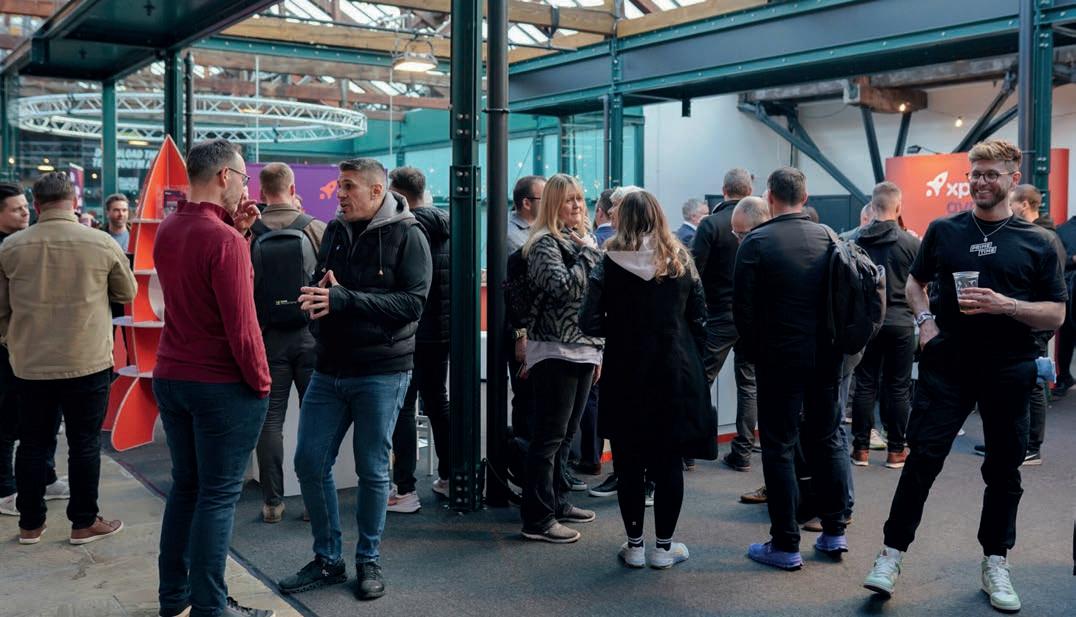
PerformX Live, the Business of Fitness show, returns in 2026 with its most significant move yet: the entire event is now completely free to attend. Now in its fifth year, the show will unite more than 6,000 industry professionals - from gym CEOs and independent owners to coaches and practitioners - to tackle the forces reshaping the fast-moving sector.
The
premium business of tness event will be free to attend this year

Perform X organiser, Giles Denning
This year’s Main Stage, powered by Life Fitness / Hammer Strength, features headline speakers Russ Cook (The Hardest Geezer), Jonny Wilkinson (Founder of One Living), Alex Effer, Adrienne Herbert, Ollie Marchon and Mohammed Iqbal. Across the programme, experts will address the sector’s most urgent shifts, including GLP-1, AI, profitable recovery and longevity models, gyms evolving into health hubs, and how operators can build authentic communities.
According to Perform X organiser, Giles Denning, the event’s key focus is on “cutting through the noise” and highlighting the innovations, knowledge, technologies, products and services that drive the industry forward
“Our mission is to unite and level up the whole industry, and making tickets free removes the final barrier,” Denning says. “We’ve added major new partnerships - including leaders from the spa and hospitality world - making 2026 our biggest show by a considerable margin.”
PerformX Live takes place at the NEC Birmingham on 25–26 February. Delegates can expect four stages of worldclass content, prime networking, an exhibition floor packed with leading brands including gym80, Keiser, Core H&F and Xplor Gym, and complimentary VIP experiences for senior decision-makers. Registration is now open.
PerformX is unmissable if you are an industry leader, gym owner, PT or coach. It offers tailored streams of educational content, endorsed by some of the industry’s greatest minds. As well as the speaker programme, delegates can network with more than 6,000 fitness professionals on a bespoke app and during an After Party event.








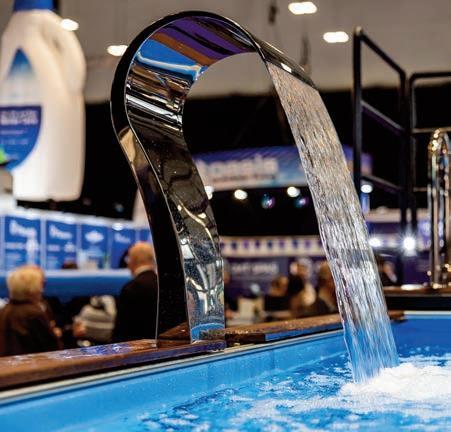
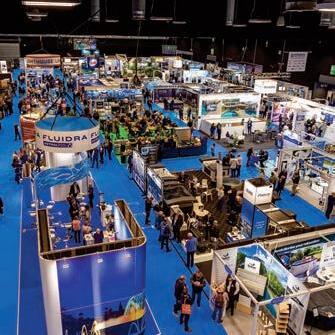
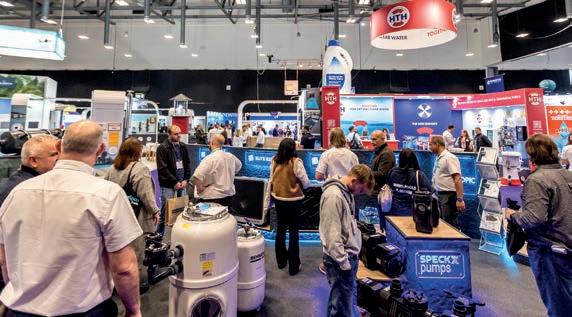
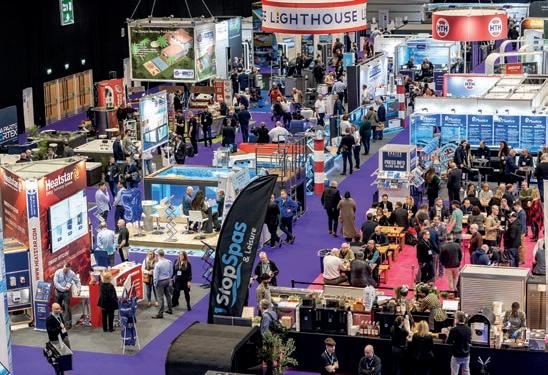
SPATEX 2026 will be the event to remember for everyone involved in water leisure, whatever their role or profession. This year’s bumper edition, celebrating 30 years as the UK’s only dedicated water leisure expo, will boast more exhibiting companies than ever before and a new double seminar programme focusing on the needs of commercial pool operators. Free to attend, and open to all, SPATEX will take place at the Coventry Building Society Arena Tuesday 3rd to Thursday 5th February
Swimming pools, wellness suites, spas, ice baths, saunas, steam rooms, water features, including several water-filled and working models for both the commercial and domestic markets, will all be displayed under one roof. And, not forgetting the ancillary but essential equipment, such as heating, ventilation, tiles, chemicals and lighting. SPATEX 2026 has it all, and more.
SPATEX Organiser, Michele Bridle. “Thirty years ago, SPATEX brought a water leisure expo to the UK, now SPATEX is bringing you its biggest show. As an international shop window, it showcases the latest trends, innovations and services of 125 exhibiting companies from 13 countries, many offering exclusive show discounts. Plus, thanks to support from all the industry’s main associations, it’s a unique theatre of expertise and learning.”

A free double seminar programme is as broad in its diversity as it is as steeped in expertise. Across the two seminar arenas over the three days of the show, there are 42 talks given by esteemed leaders of industry.
Arena 1 features three days of ISPE’s (Institute of Swimming Pool Engineers) CPDaccredited technical workshops, such as:
● The latest on Legionella prevention
● Understanding the management of biofilms in swimming pools
● Results of new research into the health benefits of ice baths and hot tubs
● The removal of phosphates and chlorine protection in outdoor pools
Arena 2 – features a further 21 seminars including:
● For leisure centre managers, a Pool Plant Theatre features the specialist knowledge of ISPE, STA (Swimming Teachers’ Association), IoS (Institute of Swimming), RLSS UK (Royal Life Saving Society UK) and CBA (Chemical Business Association), to offer the latest on pool operator training and water testing.
● The STA gives keynote talks on topics such as hidden dangers in pools, spas and water features.
● 2026 updates from PWTAG (Pool Water Treatment Advisory Group).
For details of the full programme, please visit www.spatex.co.uk
Got questions? We have answers!

New for 2026 is an exciting new initiative called The Industry Hub with five of the leading industry associations all conveniently grouped on one stand (adjacent to seminar Arena 2) - PWTAG, STA, RLSS UK, IOS and the BSPF’s (British Swimming Pool Federation) SPATA (Swimming Pool & Allied Trades Association) and BISHTA (British & Irish Spa & Hot Tub Association). The LCA (Legionella Control Association) and WMSoc (Water Management Society) will also be out in force at the show, with speakers from both associations giving keynote talks in the seminar arenas.
Save energy, save money
Energy saving is at the heart of SPATEX 2026 with seminars and the latest innovations on display, both on the stands and in the New Product Zone, from new variable speed pumps, heat retention covers and LED lighting to air source heat pumps and super insulated one-piece pools.
Post-show networking
With all the water leisure community gathered, we plan to celebrate in style and make it a BIG reunion. The now famous SPATEX Networking Party, taking place at 5pm on the Wednesday Feb 4th, with free drinks, light bites, interactive games and lots of fun and chat, is open to all visitors and exhibitors.
Easy to get to, easy to park
SPATEX provides free car parking for its visitors and is within two-hour drive time of 75 per cent of the population.
We look forward to welcoming you. Register for free here: www.spatex.co.uk

Born from years of dedicated research and development, EVi Pools delivers a premium, “ready-to-install” solution designed to seamlessly complement their clients’ existing portfolio. Providing a high-spec, one-piece trade package that is designed to reduce on-site hours and increase annual turnover.
Featuring our pre-wired, pre-plumbed ‘Pool Pod’ and air source heat pump, the system is designed for instant integration. Alongside our fully fitted shells,
Founded in 2006 in the south of France, Poolstar was born from a simple idea: to make the pool experience accessible to everyone. This spirit of innovation and accessibility, deeply rooted in the company’s DNA, has guided its growth from day one.
In less than twenty years, Poolstar has become a key player in both the French and international markets. Supported by a team of 85 passionate employees, the company now shines worldwide, with more than a third of its revenue coming from exports ; a testament to its dynamism and the trust of its global partners. Initially recognised for its expertise in heat pumps, Poolstar has expanded into the entire pool technical environment, as well as a complete range dedicated to home wellness and aquatic sports. Today, its activities are structured around three complementary worlds, all connected by water - Pool & Garden, Relaxation & Wellness and Sports & Leisure
this plug-and-play format ensures technical accuracy while drastically cutting down project times.
Whether the pool owner prefers the EVi 6 or the EVi X, integrating EVi into our clients’ offering enables them to scale their business and take on more projects per season. Partner with EVi Pools to access a product that combines cutting-edge efficiency with premium aesthetics, allowing you to maximise profitability and minimise hassle.
Revolutionise your approach to installations today. Contact us to discover how EVi Pools can become your competitive advantage.

Through this diversified approach, Poolstar supports all types of projects, from family pools to collective facilities, as well as residential and professional wellness spaces. Committed, creative, and forward-looking, Poolstar continues its mission: to make aquatic leisure accessible to all, without compromising performance or quality.
Heatstar - Energy-efficient pool control
Heatstar have long been established as the market leader in the design and manufacture of modern, highly energy efficient, environmental control systems for swimming pools, with an enviable reputation for quality.
For nearly 50 years Heatstar have been guiding their clients towards responsible energy solutions for swimming pools, setting the benchmark in an environmentally conscious industry.
Heatstar use the highest-grade materials and components to ensure absolute quality and reliability in everything they manufacture, no matter how unique or challenging the swimming pool application. The result, a range of genuine made to last products, with energy efficiency at the forefront of the design which are built to perform, and built to last.
Heatstar is proud of its heritage as a British manufacturer. It is one of the reasons why Heatstar, in addition to its UK success, exports to customers all around the world including Europe, USA, China and a multitude of other prominent territories. Although Heatstar products are designed, developed and manufactured in the UK, they are still very much applied worldwide, and can be found in leading hotels and leisure facilities, internationally renowned spas and luxury developments around the globe.

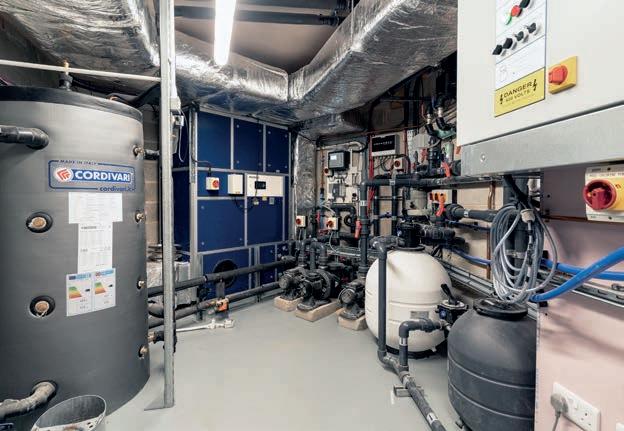
The original one-piece pools from Niveko
For more than three decades, NIVEKO has been one of Europe’s leading manufacturers of premium one-piece swimming pools, combining traditional craftsmanship with modern technology. Each pool is custom-made to reflect the individual lifestyle and aesthetic vision of its owner – from private wellness retreats to architectural statement pieces. Originality for us is not about following trends, but about authenticity and the constant pursuit of perfection. Since 1991, we’ve been pioneers in custom-made pool solutions, and in 2026 we continue our journey – pushing the boundaries
Paragon Pool Services Ltd are market leading pool cover specialists with over 20 years of dedicated industry experience. Since its founding, the company has been the go-to supplier for high-quality, bespoke pool cover systems. Supplying exclusively to the UK trade, Paragon serve pool companies of every size with tailored, technically reliable solutions. For two decades, Paragon has been the official and long-standing partner of T&A, the renowned manufacturer of automatic pool covers, reinforcing its reputation for exceptional product knowledge and consistent service standards. Paragon’s portfolio includes the AquaGuard safety cover, designed to deliver robust protection and peace of mind with every installation, and the AquaTop slatted cover, engineered for energy efficiency, durability, and seamless integration into new or existing pools. Continuing its commitment to innovation within the pool trade, the company has recently introduced the AquaMove moving pool floor, an advanced, space-optimising system that transforms pool areas with versatile, height-adjustable functionality.
With an unwavering focus on trade-only supply, technical support, and precision-built solutions, Paragon Pool Services Ltd remains a trusted partner to the UK pool industry, recognised for quality, expertise, and long-term reliability.
of quality, design, comfort, and innovation even further.
A new year brings new challenges – and new innovations that once again redefine the world of pool design. Among them, the mosaic – a design element that transforms every pool into a piece of art, adding depth, light, and individuality to the pool. Another highlight for 2026 is the ZEN POOL – bringing the full NIVEKO experience even to compact spaces. Its self-standing design and balanced proportions make it perfect for terraces and smaller gardens.
At NIVEKO, every detail matters – from concept to precision manufacturing.
Discover Austrian-crafted Swim Spas – now available in the UK
Waterwave Spas brings Austrian precision engineering, energy-saving performance and timeless design to the UK, creating swim spas that transform any garden into a private training and wellness retreat.
Built to exacting Austrian standards, every Waterwave Swim Spa is designed for year-round use. Expect powerful countercurrent technology for serious swim training, ergonomically sculpted massage seats for full-body relaxation, and advanced insulation that keeps operating costs low in the British climate.
Whether for holiday parks, hotels, leisure centres or private homes, our modular range offers flexible dimensions, multiple installation options and premium finishes to suit any project. Durable construction and carefully selected components ensure long service life and minimal maintenance—vital benefits for UK operators and homeowners alike.
Waterwave Spas is proud to introduce its collection to the UK market at SPATEX. Visit our stand to experience Austrian craftsmanship firsthand, explore bespoke configurations and discover how a Waterwave Swim Spa can add lasting value to your business or home.”
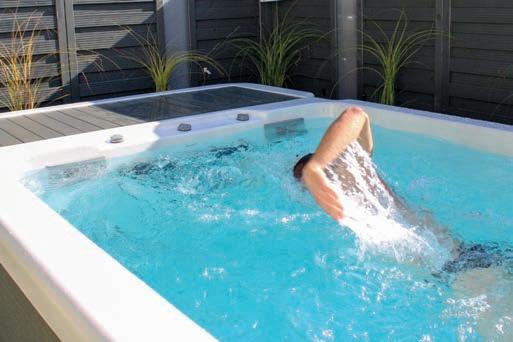
Darlly is proud to introduce its new, expanded range of premium pool filters, now offering more than 60 SKUs designed to meet the diverse needs of the commercial and residential pool market. Engineered for reliability and performance, the collection includes high-quality replacement cartridges compatible with all leading pool filter brands, ensuring distributors and service professionals can access a comprehensive solution from a single trusted supplier. All products in the new range are stocked across Darlly’s UK and European warehouses, providing fast, efficient
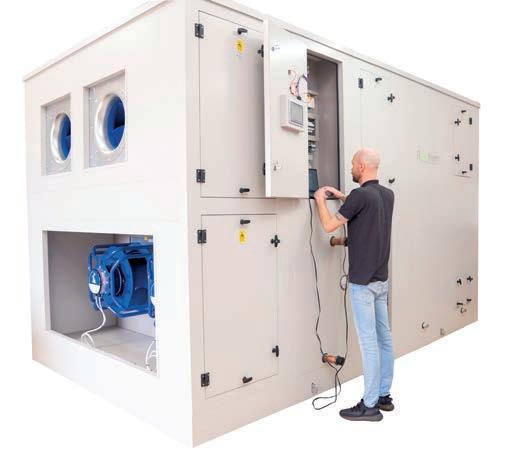
For more than 41 years, Recotherm has been setting the standard for premium swimming pool air handling units (AHUs) that are engineered to perform and built to last. Our units combine precision manufacturing with innovative, energy-efficient design, delivering the highest air quality with proven reductions in operating costs.
Every Recotherm AHU is created with ease of maintenance and long-term reliability at its core.
Intelligent layouts, durable components and user-friendly access ensure minimal disruption throughout its life cycle. This robust construction, paired with our commitment to engineering excellence, results in exceptional longevity, providing maximum return on investment for our customers. Our technology now includes advanced remote monitoring, allowing performance to be tracked in real time and enabling proactive servicing, optimisation, and fault detection—further protecting your investment and ensuring consistent environmental control.
Recotherm’s dedication goes far beyond installation. We provide extended warranties and comprehensive technical support for the entire life of your unit, ensuring customers are supported today, tomorrow, and decades from now.
Trusted by prestigious clients across luxury hotels, elite health clubs, leisure centres and highend residential developments, Recotherm continues to prove that reliability, efficiency and customer care are the cornerstones of our success.
fulfilment and reducing downtime for trade customers. With a strong focus on performance and durability, each Darlly pool filter comes with a one year Guarantee. Darlly continues to prioritise value for partners by offering competitive trade pricing without compromising on quality. Supported by dependable logistics and expert customer service, the expanded portfolio strengthens Darlly’s position as a go-to filtration specialist for retailers, wholesalers, and pool technicians across the UK and mainland Europe. This new range reflects the company’s commitment to innovation, availability, and long-term support for its trade clients.




















STA's new Level 2 Swimming Teacher Qualification is reshaping how courses are delivered to meet the needs of today's workforce, tutors and learners.







• Endorsed Against CIMSPA’s Updated Professional Standard
• Modernised Delivery Model, Including AI Assisted Marking


• Flexible Study Options

• Support Beyond CertificationCPD Bundle and STA Membership






































SPECK has been moving water and other liquids efficiently and climate-consciously since 1909. What sounds simple requires deep expertise, global know-how and reliable technologies - for industry and commerce, public facilities, private households and aquaculture. Under the BADU brand, SPECK provides pool technologies for private and public swimming pools worldwide. Customers value the excellent workmanship, tested safety, long service life and outstanding energy efficiency of BADU products. From backyard pools to hotel complexes and major public facilities, BADU always delivers state-of-the-art solutions. Alongside advanced pump technologies, SPECK produces counter swim units that combine innovative engineering, strong performance and elegant design – ideal for both competitive and recreational swimmers. Beyond the pool sector, SPECK supplies customised pump solutions for domestic and industrial applications. The portfolio covers powerful, efficient systems for water supply, water disposal, rainwater utilisation and heating, as well as robust technologies for large and small industrial plants.
SPECK also serves the aquaculture and aquafarming market with tailored products for fish farming in closed recirculating systems, large aquariums, koi ponds, natural streams and shrimp farms. As an internationally operating, medium-sized family business with over 110 years in pump construction and more than 50 years of expertise in plastics processing, SPECK continues to drive innovation and shape the future of fluid technology.
Origin Aqua’s Mineral+Biome is a living bio-filter and natural alternative to chlorine that uses beneficial microbes and spa-grade minerals to purify pool water, delivering crystal-clear, mineralised “living water” completely without chlorine, salt or other chemical disinfectants. The system recreates nature inside a compact, modular filtration unit, where biological predation out-competes pathogens; so there’s no chlorine smell, no harsh by-products, and water that’s kinder to skin, lungs and the environment. Designed and built in the UK after a decade of scientific research,
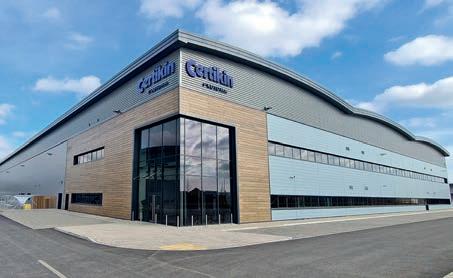
Certikin supplies wet leisure and water treatment equipment in the UK. As well as being a major innovator and manufacturer, it also takes pride in the strategic relationships it builds with other key global suppliers in order to enhance its portfolio. It holds stock of more than 8,000 different product lines to equip both domestic and commercial installations, with products as diverse as spas, water park slides, dosing equipment and mono-pools, as well as all the core essentials and spare parts. The Certikin brand has become synonymous with premium quality and is a technical specialist for a wide range of products such as pool covers, heating and ventilation equipment and pool cleaners. Established in 1963, Certikin currently operates at two locations, with a combined total of four acres of office, warehouse and factory space, including specialist elements for storing pipe and fittings, testing and servicing pool cleaners and CNC machining of HDPE products at its headquarters and main distribution hub in Witney. Certikin North, its state-of-the-art computercontrolled manufacturing plant in Leeds, produces tailor-made pool liners and covers.
Mineral+Biome is automated and retrofit ready for most plant rooms, with smart IoT control of dosing, temperature, flow and backwash. Compared with conventional chlorine systems, Mineral+Biome typically cuts energy and wastewater use by around 50%, reducing running costs while raising comfort and water quality. You get the best in bathingstandard performance without disinfection chemicals, pH-firefighting or heavy maintenance—just naturally balanced, crystal-clear pool water that feels as good as it looks. Why swim in chemicals when you can swim in fresh, mineralised water?







SPATEX represents all sectors of the water leisure industry from pools, spas, saunas to hydrotherapy, steam rooms and play equipment, in both the domestic and commercial arena.