WILL WATT
SPORT MUST CHANGE THE WAY IT PROVES ITS WORTH


What do the latest figures say about England’s physical activity levels? DATA POINTS

SPORT MUST CHANGE THE WAY IT PROVES ITS WORTH
What do the latest figures say about England’s physical activity levels? DATA POINTS
THERE MIGHT BE TROUBLE AT THE TOP, BUT AT GRASSROOT LEVEL, BASKETBALL IS THRIVING







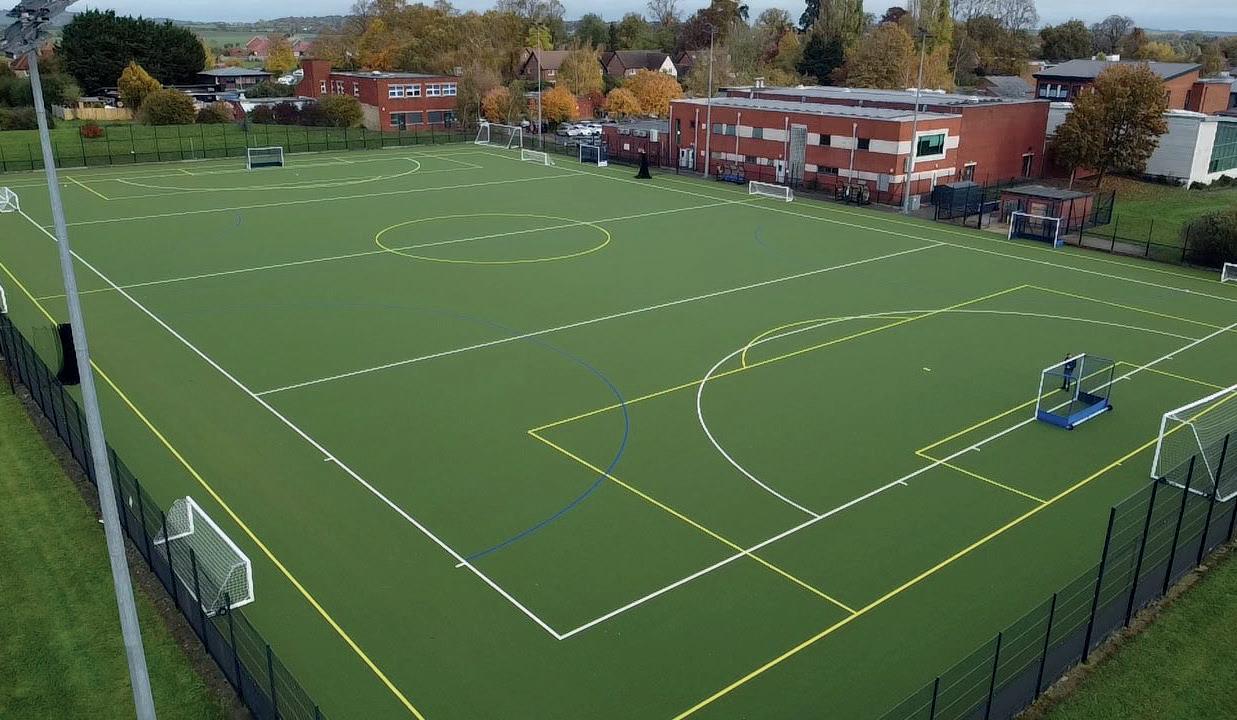

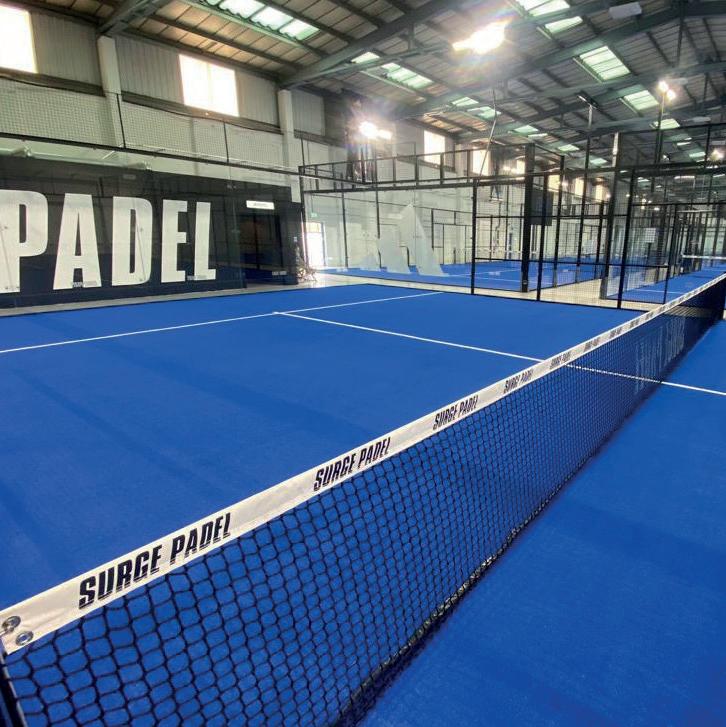




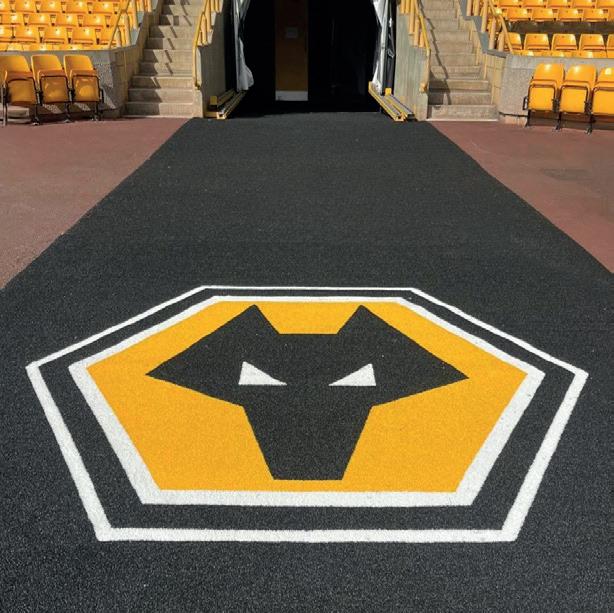








































As far as sporting years go, 2025 gave us plenty to smile about — on and off the field. On the international stage, British sport delivered repeatedly in 2025. The Lionesses added another European title, England’s Red Roses lifted the Rugby World Cup and the men’s team claimed 11 wins from 12 Tests. British golfers played a decisive role in the Ryder Cup – capped off by Rory McIlroy winning the BBC Sports Personality of the Year 2025 award – while Amy Hunt, Nia Wedderburn-Goodison, Bianca Williams and Success Eduan struck gold in the women’s 4x100m at the World Athletics Relays.

The Open Championship at Royal Birkdale to the Six Nations, London Marathon and major international fixtures across the UK and it promises to be a vintage year. None of the success at the elite and high performance level would, however, happen without healthy grassroots. It is therefore heartening to see that participation in sport and physical activity is edging upwards, according to Sport England’s latest Active Lives data. It is not all good news, though. Results from the Active Lives Children and Young People Survey Report is a sobering reminder that too many children remain inactive.
The year 2026 is shaping up to be just as compelling. As ever, “England expects” will be dusted down (with the infernal “it’s coming home” no doubt as backing track) when the men’s football team heads to the FIFA World Cup. Scotland have booked their place there too – their first World Cup appearance since 1998 – while Wales, Northern Ireland and the Republic of Ireland all still have qualification firmly in their sights.
Add to that a packed domestic calendar, from another summer of Wimbledon and
Turning that tide depends heavily on fit-forpurpose facilities that are inclusive, welcoming and sustainable. Without safe and well designed, high-standard venues, children and young people simply have no space to be active.
To witness examples of high quality facilities, look no further than the finalists of the SAPCA Awards. Each year, the awards celebrate the very best in sports and play facility design and construction – and you can read all about the finalists from page 42.
Tom Walker, Editor
The o cial magazine of








































94 Shaping the future
STA launches new Level 2 Qualification
98 Diving deeper
Will swimming benefit from £400m
100 Preview: R L SS UK Technical Conference CPR, First Aid and water safety on the agenda
102 Column: Tara Dillon, CIMSPA CEO
Meeting demand and telling our professional story
104 Preview: One Swim England Summit
Setting the scene for the future of aquatics
108 Celebrating excellence
Full list of Aquatic Excellence Award 2025 winners
110 In conversation: Comfort Academy
An interview with a STA Award winner


116 Interview: Danielle Obe
The outgoing Swimming Alliance Chair
124 Swimming against the tide
A look at the State of the Industry Report 2025
130 Interview: Simmy Akhtar
“We need to focus on the bigger picture”
136 Aquatics’ secret superpower
How can neurodivergency help aquatics?
140 Inclusion in practice
Breaking down barriers for the deaf community
144 Preview: SPATEX 2026
The event’s 30th edition will be “biggest ever”
150 Lifeguards and technology
How tech can help keep pools safe




SportsNation is the single, authoritative voice for the provision, delivery, maintenance and management of sports and physical activity facilities. Published bi-monthly, the magazine focuses on the people, places, policies and products that help to build active communities throughout the UK. Subscribe now and we will email you a complimentary copy of the magazine every two months.
As the official magazine of SAPCA (the Sports and Play Construction Association), every issue of the magazine will also include information about technical guidance, funding, standards and product innovations.
www.linkedin.com/company/sportsnation
SportsNation is published by SportsNation Ltd in association with the Sports And Play Construction Association (SAPCA). www.sapca.org.uk
This publication is protected by copyright and no part may be reproduced, transmitted or stored in any print or electronic format without the written permission of the publisher. Every effort has been made to ensure the accuracy of the contents of this publication and SportsNation accepts no responsibility for any error or misrepresentation. Opinions expressed by the contributors and advertisers are not necessarily those of the publisher and we do not accept responsibility of losses or damages arising from them.
Printed by Bigwave Marketing Ltd. ISSN 2755-0621 (Print) ISSN 2755-063X (Online) www.sportsnation.uk
Community sport and physical activity generate £123 billion in social value in England each year, while also delivering an annual £36.2bn boost to the economy.
The figures come from Sport England’s latest social value of sport research model, which is based on in-depth analysis of its Active Lives data and a review of the wider evidence for the health benefits of being active.
Now in its second year, the report covers the period from 2023 to 2024 and suggests that for every £1 invested in community sport and physical activity, £4.38 is generated for economy and society – showing an increase from the £4.20 calculated in 2022-23.
According to the research, the sector also generates £14bn in tax revenue – a return of approximately six times the public investment in sport and physical activity.


Other estimates from the report include that sport and physical activity:
l prevent 3.3 million cases of chronic health conditions a year l generate £8bn in direct net savings to the healthcare system
l provide nearly £6bn in productivity gains from a healthier workforce taking fewer sick days.
“Health is wealth, and today’s research publication confirms this,” said Sport England CEO, Simon Hayes.
GLP-1 users should be active to counter “muscle loss”
A report has warned of the impact that weight-loss jabs can have on muscle mass, leading to a call for all GLP-1 users to undertake physical activity and sports training.
The report, produced in partnership by group exercise specialist, Les Mills and industry body, ukactive, reviewed global academic evidence
and explored how weight loss medications work, their side effects and how to avoid the loss of lean body mass through exercise and strength training. The review is believed to be one of the first of its kind and shows that loss of lean body mass is often an unintended consequence of taking GLP-1.
The Sport and Recreation Alliance (SRA) has launched a petition to protect Sport England’s statutory role in the planning system.
The petition calls for the Government to ensure strong safeguards for playing fields, pitches and community sports facilities by maintaining Sport England’s status as a statutory consultee for planning applications involving playing fields.
In 2025, the Government formally launched a consultation on reforming the role of statutory consultees.
In line with previous statements, the Government is proposing the removal of Sport England as a statutory consultee for planning applications involving playing fields.
SRA Chief Executive, Lisa Wainwright MBE, said: “While we understand the Government’s ambition to build more houses and stimulate growth, we are deeply concerned that the proposals
The petition calls for the Government to ensure strong safeguards for playing fields, pitches and community sports facilities
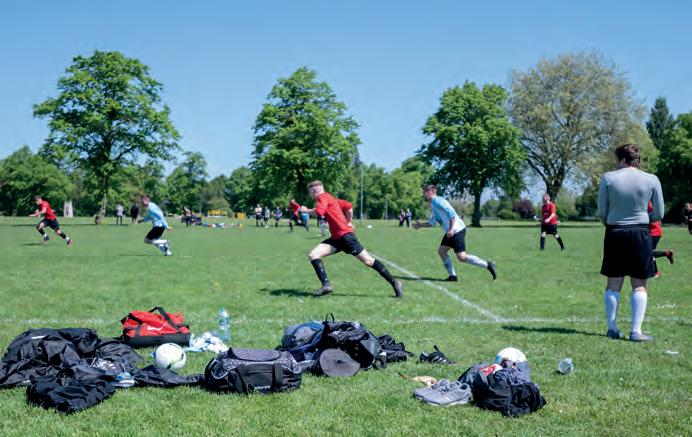
to remove Sport England as a statutory consultee set out in this consultation will remove vital safeguards which protect playing fields and pitches from development.
“We’ve seen this summer the importance of these spaces. Without places to play, who knows where
our next generation of Lionesses or Red Roses will come from.”
•The petition can be signed here: petition.parliament.uk/ petitions/735586. It has nearly 25,000 signatures so far and needs 100,000 for a full debate in parliament.
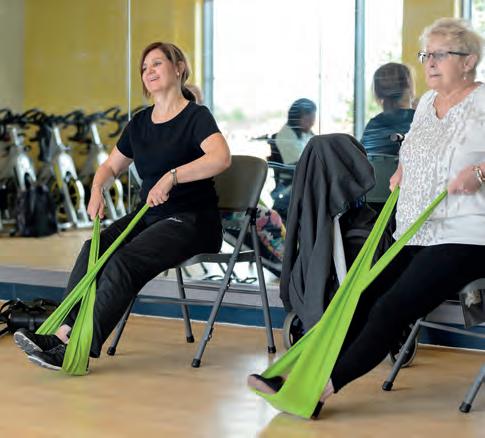
Quest was first launched in 1999 as a “continuous improvement” tool
Sport England’s assessment tool, Quest, is being updated for 2026 with two new and improved products designed to simplify the process. The new products are “Quest for Facilities”, which will cater for individual sites, and “Quest Active Wellbeing”, which has been designed for contracts and/or places.
The changes are the result of feedback from a recent industry consultation, which highlighted opportunities to make Quest more efficient and effective for operators. Quest was first launched in 1999 as a tool for “continuous improvement”. It was designed to evaluate the management and operations of sports facilities and to define industry standards and good practice, providing a benchmark for quality and improvement. The scheme has been managed by Right Directions since 2010.







In an industry where cost is often the focus, Active IQ stands apart by delivering more - more quality, more support, more value. We know that price matters, but when it comes to qualifications, reliability, and long-term success, quality is non-negotiable. That’s why we offer:
Industry-leading qualifications – Designed with employers to meet workforce demands



Comprehensive support – A dedicated team invested in your success
Added value – Free CPD, FitPro membership with eLearning purchases, and extra resources at no cost
A trusted partner – Transparent pricing, no hidden fees, and a gold-standard reputation.


Why settle for less?
Begin with better. Choose Active IQ. Find out more
Sport England has revealed a major expansion of its Place Partnerships, adding 27 new locations in which it will work with local organisations to tackle inequalities in access to sport and physical activity.
The expansion focuses on places, towns, cities and communities where people face the biggest challenges to being active. Each of the 27 new locations ranks in the top 20% nationally for inactivity, social need, deprivation and health inequality.
Sport England says the move is part of its strategy to reduce the “postcode lottery” for physical activity – ensuring that where a person lives does not dictate how long they live, or the opportunities you have to be active.
According to Sport England’s own figures, more than a third of people (34%) are inactive in England’s most deprived places. In the most affluent areas, the

Each of the 27 new locations ranks in the top 20% nationally for inactivity
proportion of inactive people is far less – just one in five (20%).
“The postcode lottery for physical activity can deepen health inequalities across the country,” Sport England said.
“It isn’t just about exercise: it’s about opportunity, quality
of life and life expectancy, which can vary by nine years depending on your postcode.
“People who live in places of high social need often face barriers that make being active hard. The problems are different in every place, so the solutions must be too.”
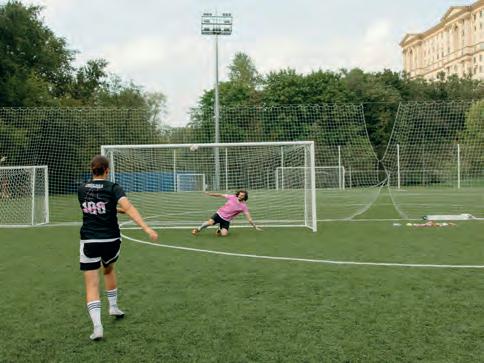
Greenwich councillors have approved plans to transform the former Co-op sports ground in New Eltham, South London, into a new community sports hub – including six padel courts.
The project, led by GB10 Sports, will deliver two 11-a-side artificial football pitches, five grass pitches, a children’s play area, a new clubhouse and six padel courts. The upgraded site will become the new home of recently formed community football club, AFC Greenwich Borough. The redevelopment marks the first significant investment in the sports ground for decades, with Councillors praising the project’s health and wellbeing benefits
GB10 Sports states that its aim is to restore the site as a modern, accessible space that will serve families, young players and local teams for years to come.








Less than half of all children (49.1%) in England meet the Chief Medical Officer’s (CMO) guidelines of taking part in an average of 60 minutes or more of sport and physical activity every day.
The figure comes from Sport England’s latest Active Lives Children and Young People Survey Report, published in December 2025.
On a more positive note, the report does show that the number of young people taking part in sport and physical activity is at the highest level since the Active Lives Survey was published in 2017-18.
The improvement has been extremely slow, however. In the seven years since Active Lives recording began, there has only been an increase of 5.8% in the number of children and young people achieving the CMO guidelines.
Perhaps most worryingly, more than a quarter (28.4%) of
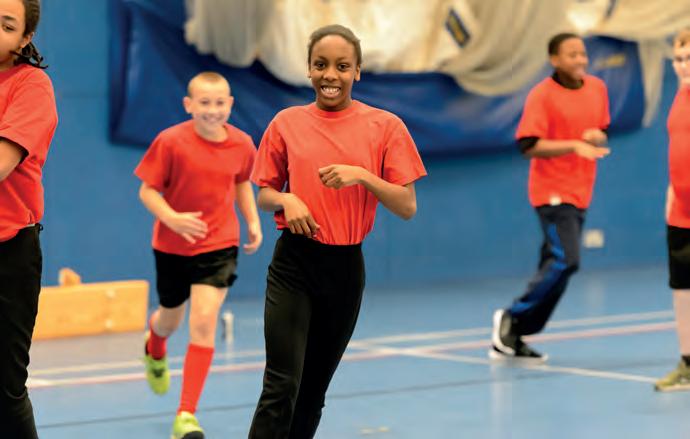
Participation levels in sport and physical activity still vary greatly among different demographic groups
children do less than 30 minutes of physical activity each day.
The findings also reinforce that participation in sport and physical activity varies greatly among different demographic groups. Significant inequalities remain in activity levels, with Black (41%) and
Asian (43%) children and young people, and those from the least affluent families (45%), still less likely to play sport or be physically active than the average across all ethnicities and affluence groups. Girls (46%) are also less likely to be active than boys (52%).
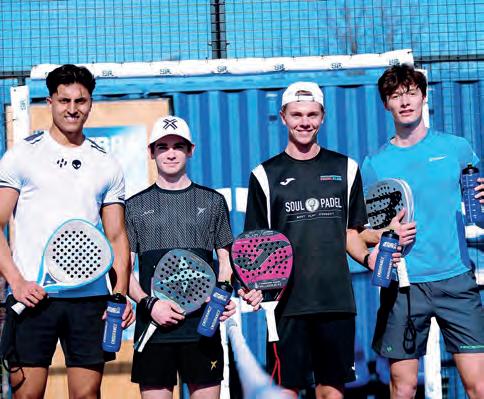
Introducing padel courts can enhance a university’s sports facilities and improve student satisfaction by offering a sport that appeals to all ages and abilities.
One university which has introduced padel on campus through an operator-led approach is Loughborough University, which agreed a partnership with Soul Padel in March this year. Soul Padel invested £150,000 to construct two courts and a clubhouse, as well as recruiting a team of students to run the facility and its programmes. In return, Loughborough gave the operator the campus site rent-free. Once Soul Padel recovers its costs, the partners will enter into a revenue share agreement.
“The higher education sector has seriously woken up to the benefits of padel,” said Soul Padel founder, Mark Hewlett.
your needs we’ve got you covered…
Whether you’re a cricket club wanting to stretch your season, a school looking to enhance your sports offering, or you’re gearing up to enter the padel game with top-of-the-range facilities, our allweather structures turn big ambitions into everyday realities.
Four simple steps to a gamechanging transformation
Get in touch
Drop us a line or pick up the phone – our expert team loves hearing new ideas and helping shape what’s possible.
Book your complimentary site visit
We’ll walk your space with you, explore options, spot opportunities and give you the insight to get the most from every square metre.
Let the transformation unfold From design and engineering to installation, we look after the entire process. No stress. No complications. Just a smooth journey from concept to reality.
Reap the benefits for decades to come
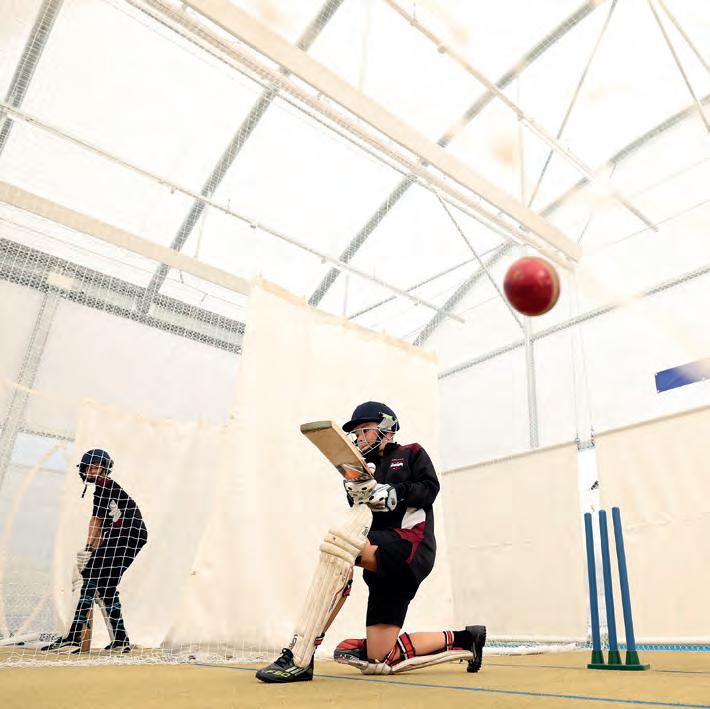
Why cover your facilities? Three standout wins...
✔ Turn seasonal spaces into year-round assets
✔ Watch occupancy rates, revenue opportunities and memberships soar
✔ Create a training and playing experience people love
Every one of our canopies is built to exceptional standards and backed by industry-leading 25-year guarantees. It’s an investment that keeps paying dividends. Contact us to start your transformation today!

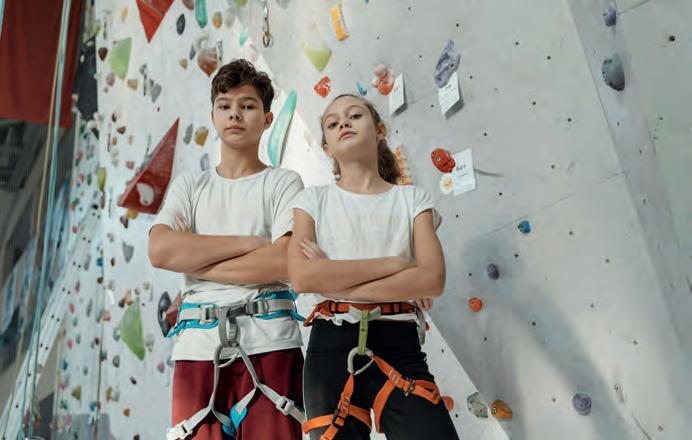
Generation Alpha will further drive demand for sport, fitness and physical activity, with half saying they want to be fit and healthy as they grow into adulthood.
A study on the age group – a survey of more than 1,000 children aged seven to 14 – by physical activity industry body, ukactive, shows that 48% of respondents said they believe it is “important to keep physically active to be healthy.
Consisting of people born between approximately 2010 and 2024, Generation Alpha succeeds Generation Z and the ukactive study is the latest to suggest that Gen A will be even more aware of the importance of physical activity than Gen Z.
Gen Z has been widely recognised as driving significant demand in the fitness industry – with some studies suggesting it is the most active and health-conscious generation yet.
ukactive conducted the survey in partnership with kids and family insight agency Beano Brain.
Separate figures from Sport England’s Active Lives Survey show the number of children and young people getting active in gyms and fitness facilities is
growing, with a 12% rise in those taking part in gym and fitness compared to six years ago.
It means almost a quarter of children and young people (23%) are engaging in gym sessions, which equates to a population total estimate of 1,697,900.

The new Lichfield Leisure Centre has opened its doors to the public at the city’s Stychbrook Park.
Owned by Lichfield District Council, the centre – estimated to have cost around £11m to build –offers a range of amenities and has replaced the ageing Friary Grange leisure centre. Facilities include a 25m, six-lane variable depth swimming pool; poolside seating and changing village. Outside, the centre features a 3G pitch and changing rooms. The centre was designed by ReCreation, a company founded by British Olympians – including swimmers Rebecca Adlington OBE and Steve Parry – which provides swimming pools featuring an above-ground design, described as being more affordable than the traditional construction method as it doesn’t require excavation.






Musco’s sports lighting systems continue to be the solution of choice at major stadiums and arenas around the world, including Principality Stadium in Cardiff, Wales. They partnered with Musco
Learn more about Principality Stadium at www.musco.com/principality















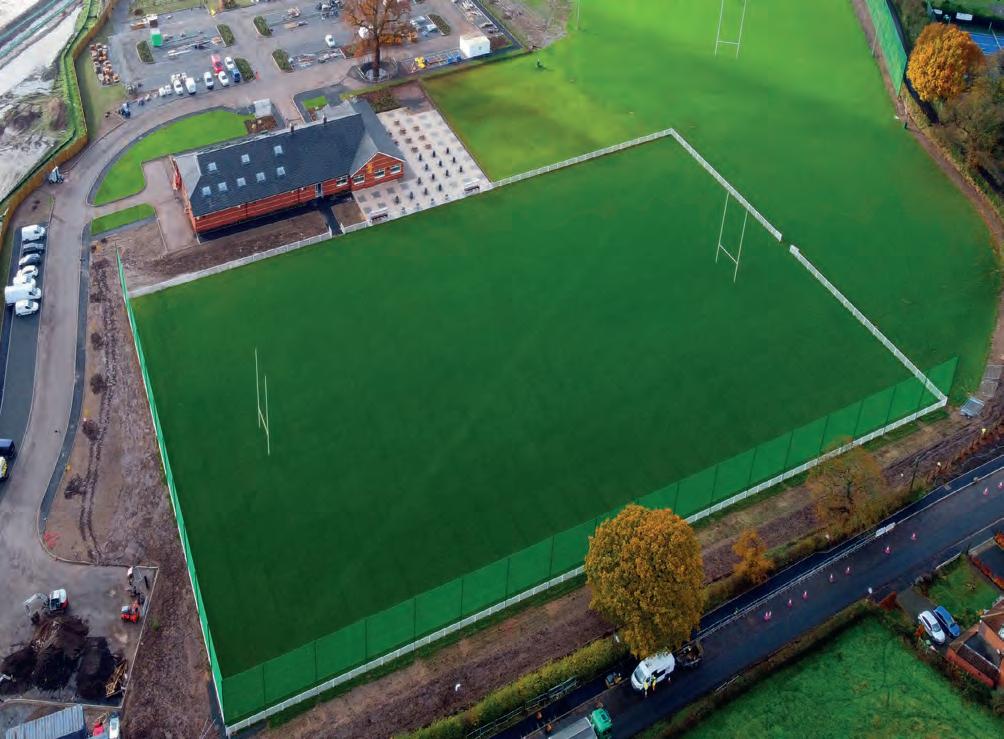


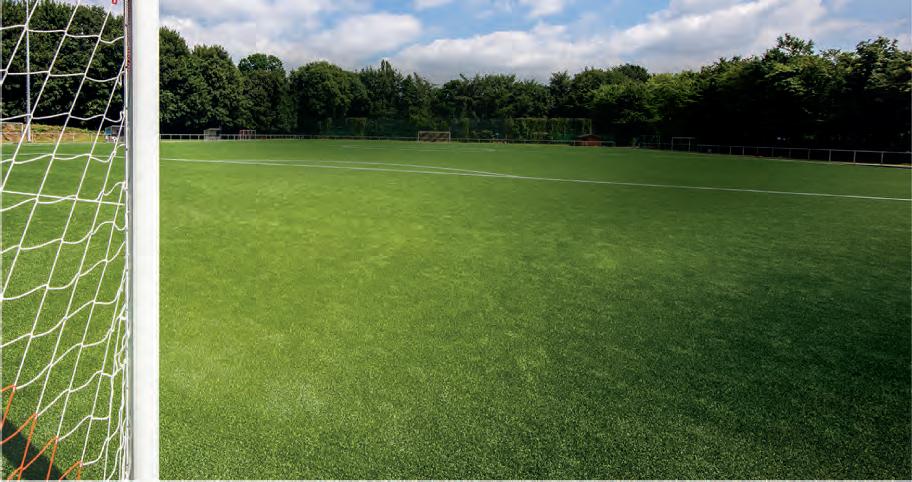






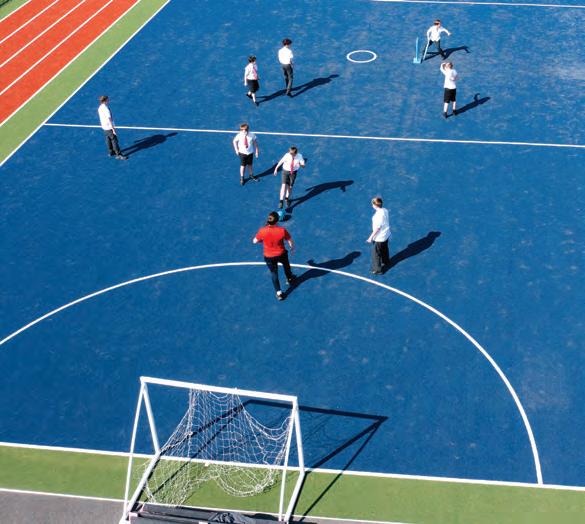









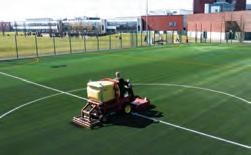


British Cycling Ventures will oversee all commercial activity across the British Cycling Group
British Cycling has launched a new commercial entity which it hopes will drive “sustained revenue growth, unlock external investment and realise the full commercial potential” of cycling in Britain.
British Cycling Ventures (BCV) will oversee all commercial activity across the British Cycling Group, driving commercial growth, with a particular focus on events. Revenues created by BCV will be used to fund the broader British Cycling Group, the national governing body of the sport. The new entity will
also absorb the existing British Cycling Events subsidiary, bringing every commercial strand under one umbrella.
British Cycling’s Chief Commercial Officer, Darren Henry, has been appointed Managing Director of BCV, having led the federation’s commercial transformation since joining in 2021. BCV has also appointed Oakwell Sports Advisory as its exclusive advisor to identify and secure a strategic investment partner.
Henry said; “The launch of BCV is a landmark moment for us.”
Parkwood Leisure has signed a partnership with England Netball, which will see the leisure operator begin offering the national governing body’s range of netball programmes and resources at its sites.
The collaboration between the two will see the rollout of three of England Netball’s flagship programmes.
These are Bee Netball, an introduction to netball for 5–11-year-olds; Back to Netball, designed for those returning to the game or starting for the first time; and Walking Netball, a slower-paced, inclusive version of the game, offering a social and relaxed setting for people of all ages to get active.
Hannah Gilday, Parkwood’s Head of Healthy Communities & Partnerships, said: “It’s brilliant to be working in partnership with England Netball to bring these programmes to life at our centres, alongside resources and guidance to support women and girls to remain active.”
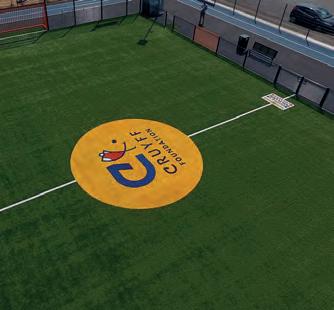
Charnwood Borough Council has announced plans to install a new multi-sport, five-a-side pitch at Southfields Park in Loughborough Expected to open in 2026, the 3G Cruyff Court pitch will be delivered in partnership with Leicester City in the Community and the Johan Cruyff Foundation, with additional funding
from the UK Shared Prosperity Fund (UKSPF) and Section 106 funding. The Cruyff Court is the latest upgrade to Southfields park, building on a previous Loughborough Town Deal project. Leicester City in the Community will help support the project by providing a programme of activities, events and training.
Award-winning fitness education provider, Create, has been officially named the preferred provider of Personal Trainer education by the UK Sports Institute (UKSI), the organisation that supports the UK’s Olympic and Paralympic athletes.
Under the new agreement, UKSI will recommend and refer to Create, competing and transitioning athletes across all Olympic and Paralympic sports, who are exploring careers in the fitness industry.
Through the partnership, Create will break down entry barriers by providing exclusive course discounts to UKSI-referred athletes, helping them gain industry-recognised qualifications and transition smoothly into successful and fulfilling long term careers within the fitness industry.
The collaboration underscores both organisations’ shared commitment to supporting athletes beyond competition, helping
them build sustainable futures and continue to make a positive impact within sport and fitness.
Adam Rhodes, CEO of Create, says: “To succeed at the highest level, professional athletes must show remarkable discipline, drive, and commitment, the very qualities
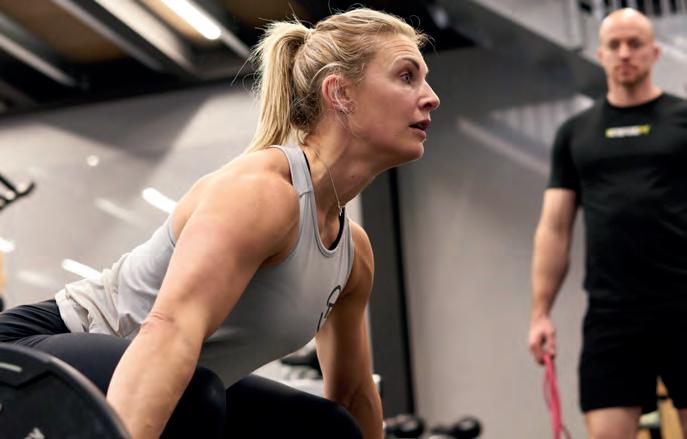
The partnership will support Olympic and Paralympic athletes exploring careers in the physical activity sector
that underpin a successful personal trainer. Through our education and experience, we will help athletes channel these qualities into new, rewarding chapters in their professional lives while also supporting employers by feeding talent into the workforce.”

The pitch is scheduled to be completed in time for the start of the 2026-27 season
Truro City Football Club’s plans to build a full-sized, community 3G pitch adjacent to its stadium can now move forward, after Cornwall Council accepted Football Foundation funding worth £746,057.
It is the latest phase in the Truro Sports Hub project, which forms part of the wider Langarth Garden Village development. Planning consent for the pitch was granted in February 2024, with key grounds work already in place ready for the pitch to be laid. Truro City FC hopes that the pitch will be completed in time for the start of the 2026-27 football season.
“After eight years of lobbying for a football pitch in the local area, I’m delighted at today’s decision which is great news for Threemilestone AFC and other local grassroots clubs,” said Dulcie Tudor, Independent Cornwall Councillor for Threemilestone.


Everydrive,jumpandhardlandingstartsfromthegroundup.


DYNAMIKsportsflooringisengineeredtodeliverthegrip,shock absorptionanddurabilitythegamedemands-helpingathletesmove withconfidenceandperformattheirbest.
Fromschoolsandcommunitycourtstoelitefacilities,DYNAMIK createssurfacesthatsupportmovement,protectplayersandstandup toconstantuse.
Greatsportdoesn’tjusthappenonthecourt-itstartsbeneathit.


















UK BUILT CORE GYM STRENGTH EQUIPMENT, REMANUFACTURED KIT AND CUSTOMISATION OPTIONS.



NATIONWIDE COVERAGE, FULL SERVICE CONTRACTS TO ONE OFF VISITS. FROM ELECTRICAL, UPHOLSTERY, REPAIRS AND GENERAL ASSET MANAGEMENT.
RELOCATION AND REMOVAL OF PART OR FULL FACILITY. TRADE IN ANY FITNESS KIT.

Pure Padel has opened the doors to a seven-court indoor padel centre in Nottingham. The premium venue is the sixth Pure Padel club to open and signals a landmark moment for one of the UK’s fastestgrowing padel club operators.
Housed in a Grade I listed 1920 former bus depot in the heart of Nottingham city centre, the venue features four doubles courts and three singles courts, creating a space for both recreational and competitive players. The centre also features a large social space with a café and bar serving food and drinks, a pro shop, changing rooms and showers.
Sammy Arora, Founder and Managing Director of Pure Padel, said: “With two football clubs and the famous Trent Bridge cricket stadium in the city centre, Nottingham is, in many ways, considered the UK’s most sporting city. “It’s not lost on us just how
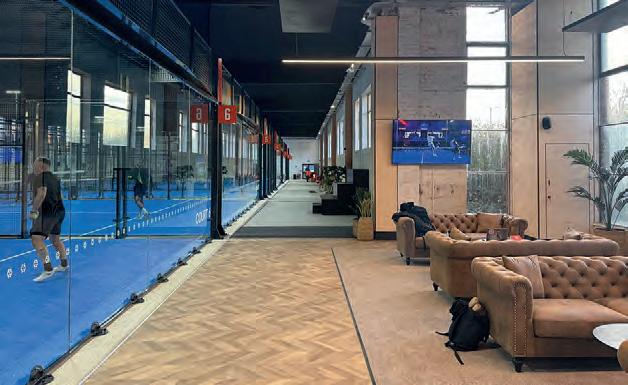
The seven-court indoor padel centre is Pure Padel’s sixth venue in the UK
much Nottingham and the East Midlands region craves its sport, which is why we’ve made the purposeful decision to transform this stunning, historic building into a modern space that befits modern-day Nottingham and the city’s passion for sport.”
With Nottingham now open, Pure Padel’s portfolio has grown to a total of 33 courts across six sites – making it one of the UK’s largest operators. It opened its first club in Alderley Park, with three outdoor courts, in October 2023. It has plans to open five further sites in 2026.
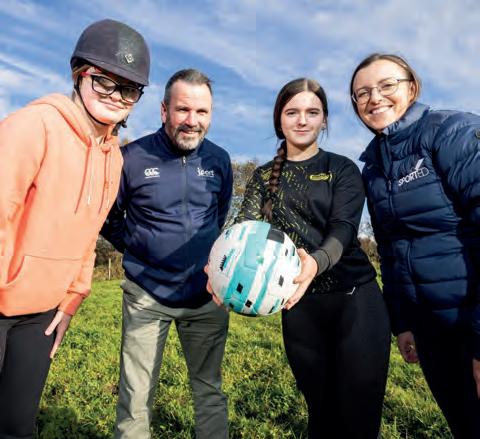
Thirty local sports clubs and organisations in Northern Ireland will be given tools and resources to help them attract more women and girls to take part in activities.
The clubs will benefit from the Engage Her programme, organised by sports charity, Sported, thanks to funding from Sport NI. Through training and resources, clubs will be supported to develop a plan to engage women and girls within their sport, to challenge attitudes and remove barriers to participation and to increase capacity to provide opportunities for women and girls activities.
Each club will receive a £2,000 grant to support their engagement plan. Engage Her is a volunteersupported programme designed to increase grassroots clubs/groups’ understanding and knowledge on how to help engage women and girls.






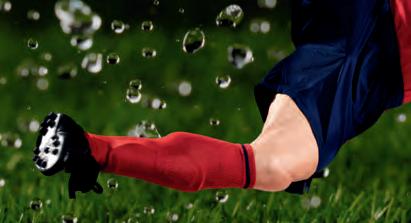



The Trocellen XC Plus Series offers high-performance shock pads made from closed-cell polyethylene foam. With ProGame Shock Pads in 2 m wide rolls, customizable lengths and excellent drainage properties even in heavy rain, every installation becomes quick, easy and reliable.
High water permeability over 12,500 mm/h.
Quick & easy installation thanks to customized roll lengths.
Great dimensional stability with patented X-Cut and PET nonwoven lamination.
















Richard Shaw CEO, SAPCA
When was the last time you saw a news article telling you that some houses were being knocked down to build a sports field? Or that a brown field site was being redeveloped into a pitch? A car park dug up to make space for a sports ground?
What about vice versa? Thought so.
This month marks the end of the government’s consultation on Sport England being stripped of its role as a statutory consultee on any development that would impact a sports playing field. The body currently processes around 1,200 applications a year and, with their guidance and expertise, 94% of concluded applications each year result in improved or no loss in provision.
The government consultation talks about a ‘bureaucratic burden’ placed on developments and outlines plans to streamline the planning processes. This, I fear, sounds to me like a




I’d urge everybody to respond to the consultation and think about the opportunities that we have been a orded by playing fields in our lives
higher percentage of those 1,200 applications will, in future, be successful – and will probably encourage a lot more applications.
Removal is a blunt instrument and the idea that public consultation and local planners will replace the specialist knowledge of the existing Sport England team will be patchy and areadependent. Guess where people will spend time and effort campaigning to protect community assets and guess where housing and immediate resources will be wanted by communities?
I’d urge everybody to respond to the consultation and think about the opportunities that we have been afforded by playing fields in our lives. I urge everyone to ask themselves whether they really want to remove the perceived ‘bureaucratic burden’ that is there to protect them.


































Rachel Williams Policy and Public Affairs Manager, Women in Sport
2025 was an amazing year for women’s sport – so much so that it’s hard to choose where to start picking the highlights. The Lionesses and the Red Roses would top of most of the lists for England. Other home nations might pick Wales qualifying for their first ever international football competition. Sonay Kartal’s breakthrough at Wimbledon and Eilish McColgan’s debut performance at London Marathon should be up there too.
And that’s just in the UK. What about Canada’s amazing run at the Women’s Rugby World Cup? Pauline Ferrand Prevot becoming the first Frenchwoman to win the Tour de France Femmes? India winning an historic home Cricket World Cup?
It’s always tempting to look at lists like this and conclude that women’s sport is somehow ‘fixed’. That this elite success inevitably filters down and inspires the next generation.
I wish it was that simple, but it’s not. It never has been.
The latest edition of Women in Sport’s Dream Deficit shows this, starkly. This research, now in its sixth edition, tracks the rates at which girls dream of reaching the top in sport. Girls’ dream rates have been steadily rising since we began the survey but this year they have fallen significantly.
Part of the explanation for this is the flipside of the coin of elite success that any honest review of women’s sport in 2025 must confront.
The Lionesses won a second consecutive Euros, but their Black players faced horrific racist abuse. The Red Roses won a home World Cup, in front of a sell-out crowd at Twickenham, but the misogynistic scrutiny of players’ bodies throughout the tournament was depressingly inevitable.

It’s important that we don’t let the bad overshadow the good. But we must recognise that the bad exists
Emma Raducanu was physically stalked whilst playing at the Dubai Tennis Championships.
It’s important that we don’t let the bad overshadow the good. But we must recognise that the bad exists.
Of course, sport is not just elite sport, and what happens in our schools, clubs and communities is just as important for women’s sport.
We saw the beginning of some major positive change in this area in 2025, with the Government committing to an overhaul of PE and school sport that has the potential to be a game-changer for girls. With a new curriculum and delivery model coming in 2026, we have a generational opportunity to make sport work for girls at a life stage where our relationship with sport is so often set – for good or ill.
New investment in grassroots facilities is also good news, especially as much of it explicitly targets women and girls. This sort of targeted approach is something Women in Sport has long campaigned for. How this is consistent with the concerning plans to remove Sport England’s voice in the planning system, putting playing fields and pitches at risk, remains to be seen.
As we begin 2026 there is so much to be optimistic about – and look forward to - for women’s sport. But we shouldn’t pretend there aren’t still hurdles to face. Let’s make 2026 the year we step up together, as a sport community and accelerate progress – because the time for action is now.




































































































Huw Edwards CEO, ukactive
Delivering the Autumn Budget in November, the Chancellor, Rachel Reeves, repeated the Government’s ambitions to take pressure off the NHS and grow the economy. To achieve these, however, it must go further in supporting the physical activity sector to play its fullest role.
Ahead of the Budget, ukactive urged the Chancellor not to pile further pressure on our sector and damage its growth by increasing taxes on our members. We therefore welcomed the response to reform business rates with a permanently lower multiplier for leisure, retail and hospitality, as well as the decision not to introduce other major tax rises.
However, the cost increases announced across employment, pensions and smaller taxes will be detrimental for many organisations already enduring high operating costs in an ever increasingly complex tax system. This is particularly concerning given the high number of

The cost increases announced across employment, pensions and smaller taxes will be detrimental for many organisations
young people employed by our sector and the role our services play in reducing health inequalities.
The Autumn Budget fell short of backing our sector and recognising its important role in achieving the Government’s stated ambitions of cutting NHS waiting lists and growing the economy. Given the importance of physical activity for our national health and economic renewal, the Budget represents an overall missed opportunity to provide a clear plan with progrowth measures that leverage the expertise and influence of our members to help deliver results.
The Government must now work with ukactive and our members to co-create the sector plan for investment, growth and renewal that our nation deserves.

Leisure DB’s Monthly Market Tracker lets you quickly identify and respond to new opportunities in the market and on your doorstep.
Each month, we round up key developments in the UK gym market: openings and closures, planning updates, proposed expansions, rebrands, management changes and more. Keep your finger on the pulse and your business one step ahead.
Find out more and download a free sample report: leisuredb.com/market-tracker

How will the autumn budget impact on the sport and physical activity sector? We asked sector leaders for their comments
Chancellor Rachel Reeves revealed her Autumn Budget on Wednesday 26 November. The emphasis was on economic recovery, focusing on raising tax revenue to create “fiscal headroom”. While the headlines were dominated by the budget’s combination of tax freezes and spending commitments – such as removing the two-child limit on Universal Credit – there were some items that will have a direct effect on sports and physical activity.
The main one was the confirmation that the government will commit more than £900m directly in sport, of which half will be spent on grassroots facilities, while the other half will be invested in developing major international events (like the UEFA EURO 2028 and Tour de France Grand Départs in 2027). Elsewhere, there was a commitment to spend £20m on constructing a “sports quarter” in Peterborough and allocating £18 million over two years to improve up to 200 playgrounds across England. There could also be an indirect impact on sports sponsorship, as the sports betting duty will rise from 15 per cent to 25 per cent and online gaming duty from 21 per cent to 40 per cent. Curiously, horse racing, however, has been spared any tax increases. There wasn’t, however, much to go on when it comes to the physical activity sector’s long-term goal of playing a key role in the government’s plans to create a preventative healthcare system. We asked sports industry leaders for their views on the budget and its impact – or lack of – on the sector.
Higher bills threaten clubs’ viability and could reduce access to sport and recreation
We are disappointed that the Chancellor has not heeded our call for sport and recreation premises to be exempt from the new higher-rate multiplier. We are concerned this will add further cost to sport and recreation facilities at a time when margins are already tight. This is something we have consistently raised with the Government in the lead up to today’s announcement.
However, we welcome the Chancellor’s commitment to introduce support to help organisations transition to the new arrangements, something the Sport and Recreation Alliance also called for in advance of the Budget.
We are also concerned about the potential impact of new higher property valuations on bills for smaller grassroot sport and recreation clubs and facilities. Higher bills threaten clubs’ viability and could reduce access to sport and recreation.
At a time when young people are increasingly sedentary and have fewer opportunities for play, we are pleased the Government is providing investment to support 200 playgrounds across England. Giving children places and spaces in their communities where they can play and have fun is vital to help more children achieve the recommended 60 minutes a day of PE, sport and play, enabling them to unlock the benefits associated with an active start in life.
“With a generation of children and young people facing a myriad of challenges, targeted action to improve skills, opportunities and readiness for the workplace is welcome.
Sport and recreation has a huge role to play in helping the Government meets it stated missions. We will continue to work with Government and our members to ensure the tax regime works to support grassroots sport and recreation and the enormous economic and social value it delivers.
We know many will have concerns about the future of the Primary PE and Sport Premium
impact, especially in reaching those young people otherwise at risk of not achieving their full potential, when developing a vision for this generation’s futures.











The Set for Success programme demonstrates how key life skills including confidence, communication and resilience can be developed through sport, and we encourage the Chancellor and her colleagues to take onboard learnings from programmes delivering
“Meanwhile in our sector, whilst there is much positivity about the future PE and School Sport Partnerships Network announced by the Prime Minister earlier in the year, we know many will have concerns about the future of the Primary PE and Sport Premium, and funding for the School Games Organisers Network. Whilst further information was not expected in the announcement, we hope the Government will continue working closely with key organisations to bring clarity and build on momentum from the Government’s response to the Curriculum and Assessment Review to deliver a new era where every child can access the lifechanging benefits of play and sport.
Huw Edwards
In her budget, the Chancellor repeated the Government’s ambitions to take pressure off the NHS and grow the economy, but to achieve these it must go further in supporting the physical activity sector to play its fullest role.

Ahead of the Budget, ukactive urged the Chancellor not to pile further pressure on our sector and damage its growth by increasing taxes on our members. We therefore welcome the response to reform business rates with a permanently lower multiplier for leisure, retail and hospitality, as well as the decision not to introduce other major tax rises.
However, the cost increases announced across employment, pensions and smaller taxes will be detrimental for many organisations already enduring high operating costs in an ever increasingly complex tax system. This is particularly concerning given the high number of young people employed by our sector and the role our services play in reducing health inequalities.
The Budget represents an overall missed opportunity
This Budget falls short of backing our sector and recognising its important role in achieving the Government’s stated ambitions of cutting NHS waiting lists and growing the economy.
Given the importance of physical activity for our national health and economic renewal, the Budget represents an overall missed opportunity to provide a clear plan with pro-growth measures that leverage the expertise and influence of our members to help deliver results.
The Government must now work with ukactive and our members to co-create the sector plan for investment, growth and renewal that our nation deserves.

Rand demonstrates that the

acing’s betting tax rate remaining at 15% is a welcome outcome
Chancellor has listened to our concerns and rightly recognised that racing is a unique national asset –culturally, socially and economically.

Betting on racing is an integral part of the enjoyment of our sport, and maintaining the rate of horserace betting duties is an important step by the Government to help preserve revenue streams





and protect the 85,000 jobs supported by racing across the country.
Racing has been part of the British way of life for hundreds of years. It binds our communities together in shared experience, it brings joy to millions. It puts the country on the world stage.
It is right that the Government has understood this and acted accordingly.

At the same time, we recognise that the increase in general taxation on the betting industry may have trickle-down effects on racing. We will work with our partners in the betting industry to understand the implications of this, and how we can work together to ensure that
British horseracing continues to thrive.





CIMSPA CEO Tara Dillon says that the physical activity sector has finally “come of age”
When Tara Dillon talks about the future of the sport, fitness and physical activity sector, her message is clear – the industry’s recognition isn’t just overdue, it’s essential. As CEO of CIMSPA, she has long championed the drive to showcase the professionalisation of the sector, giving the workforce the same status, credibility and career structure enjoyed by those in health, education, social care and many other industries.
Now, with the introduction of professional status – and thousands already stepping up to claim it – that vision is becoming a reality. The move means that, since September, qualified physical activity professionals in the UK have been able to add letters after their names, as CIMSPA has announced plans to introduce professional status. For those in the industry, post-nominal letters means that they can assure other professionals, employers, relevant sectors and the general public that they are skilled, trustworthy and ethical.
“This is the moment we’ve all been waiting for,” says Tara. “For years, we’ve heard the same message. Everyone agrees that we need proper recognition, something that reflects our expertise and value. Professional status does exactly that because it provides a trusted benchmark that shows the public, employers, allied professions and commissioners that our professionals are competent, accountable and proud of the difference they make.”

Professional status, awarded by CIMSPA, represents more than a title or a badge. It’s the foundation of a professional workforce that is verified, valued and visible. It signifies that an individual meets nationally recognised professional standards, undertakes continuous professional development and commits to ethical practice. For

Everyone agrees that we need proper recognition, something that reflects our expertise and value
the first time, there is a clear, portable and verifiable recognition of professional standing across the physical activity and active wellbeing landscape.
Raising the bar and the confidence
For professionals, this new recognition brings tangible benefits. It gives them a way to demonstrate their skills, experience and qualifications in a way that is transparent and trusted. In an era where employers, clients and partners increasingly expect evidence of quality, that matters.
“It’s not just about what you’ve achieved. It’s about how you continue to grow,” Tara explains. “Professional status isn’t a one-off achievement; it’s an ongoing journey. It celebrates commitment to learning and development, to specialising in working with specific populations, and to being the best version of yourself for the people you serve.”
That ongoing development is underpinned by CIMSPA’s Training Academy, which provides quality-assured learning opportunities aligned to professional standards. The Academy brings together education partners, training providers and employers to ensure that every learning experience supports meaningful professional growth.
“We’ve built an ecosystem that connects professional status with professional development,” says Tara. “Through the Training Academy, professionals and those aspiring to start a career in the sector can access training and qualifications that are recognised, relevant and rigorously quality assured. That means employers know exactly what skills their teams are gaining, and professionals know that every hour they invest in learning contributes to maintaining and growing their professional standing.”
This quality assurance is crucial. It ensures consistency across the sector and protects both professionals and consumers. Tara believes this focus on standards is what will elevate the sector’s reputation in the long term: “When you have a

workforce that’s trained, properly recognised and continually developing, the whole sector becomes more resilient, more respected and more trusted.”
A key part of the new model is digital credentials which are verifiable, shareable badges that provide instant confirmation of a professional’s qualifications and status. Unlike traditional certificates, which can be lost, copied, or out of date, digital credentials are dynamic, secure and globally recognisable. “Digital credentials have transformed how

recognition works in many other sectors,” Tara explains. “They’re not just symbols. They’re living records of achievement that can be viewed, verified and shared with a click. Employers can trust them, clients can understand them, and professionals can use them to showcase their expertise.”
For employers, this brings efficiency and reassurance. They can instantly check that staff and job applicants are qualified and up to date, reducing risk and simplifying compliance. For professionals, it brings visibility with a way to stand out in a competitive market and demonstrate commitment
to quality. Tara puts it simply: “It’s modern, it’s smart, and it’s the way every credible profession is going.”
The move towards professional recognition isn’t happening in isolation. It’s part of a broader shift to position sector professionals as an integral part of the nation’s health and wellbeing system. Tara believes that professional status gives the sector the credibility and language needed to work seamlessly with partners across health, education and social care.
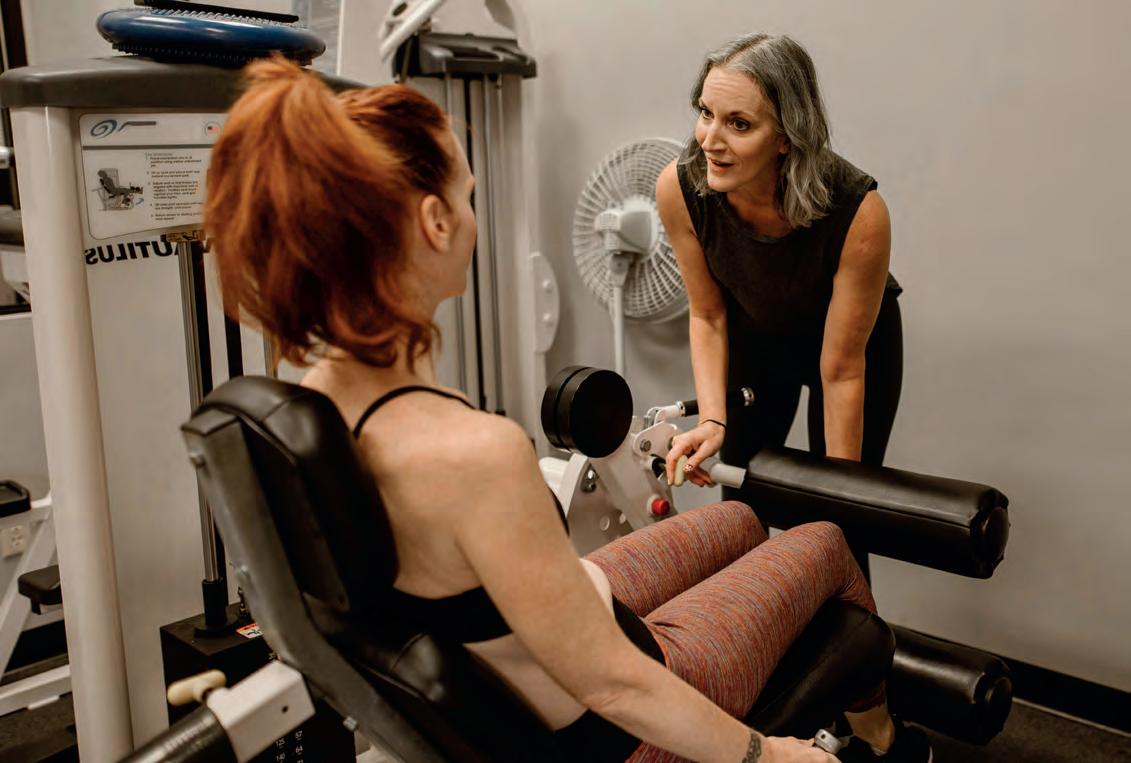
We’re helping people, who might never have seen a place for themselves in this industry, to take their first steps into a career, not just a job
“When a GP refers a patient to a physiotherapist or a mental health practitioner, they have confidence that they’re referring to a qualified, regulated professional. We, and they, want that same confidence to exist when they are referred into physical activity,” she explains. “Professional status gives that assurance. It tells the health system, ‘You can trust us. We meet nationally recognised standards, we are specialists, and we are accountable for the quality of what we deliver.’”
That connection is vital. With rising levels of inactivity and preventable health conditions, the physical activity workforce has a central role to play in helping people lead healthier, happier lives. Professional recognition ensures that contribution is understood, respected and integrated into wider public health efforts.
Alongside this work to recognise existing professionals, CIMSPA is also focused on creating opportunities for new entrants to careers in the sector. Through a pioneering partnership with the Department for Work and Pensions (DWP), CIMSPA is helping people who are economically inactive or facing barriers to employment to build meaningful careers in the sector.
“This is one of the most exciting and rewarding projects we’re involved in,” says Tara. “We’re helping people who might never have seen a place for themselves in this industry to take their first steps into a career, not just a job. With professional status at the heart of that journey, we’re setting them up for sustainable success.”
For many, this pathway is about more than training. It’s about belonging, identity, and purpose. Some of the most inspiring professionals entering the sector are those with lived experience of overcoming their own health, social or economic challenges. Tara believes this is key to expanding the sector’s reach and impact.
“When someone who’s faced barriers to activity becomes a recognised professional, they bring empathy, relatability and authenticity,” she explains. “They can connect with individuals and communities that others might struggle to reach. That’s how we start to change behaviours, not just deliver sessions. That’s how we make being active a possibility for everyone.”
Speaking to Tara, it is clear that her message is one of pride, but also of urgency. “We’ve built the framework based on what professionals, employers and allied professions, particularly the health profession, have been asking for,” she says. “The recognition is there. The systems are in place. Now it’s time for the sector to embrace it.

Professional status is how we show the world that we are a credible, essential part of the health and wellbeing landscape
“Professional status is how we show the world that we are a credible, essential part of the health and wellbeing landscape. It’s how we ensure that every professional, in every role, has the recognition and respect they deserve.
“This is a once-in-a-generation opportunity to showcase who we are as a sector and what we stand for. It’s about raising standards, building trust, and changing lives, both for the people we serve and for the professionals who make it happen. We can’t afford to stand still.”
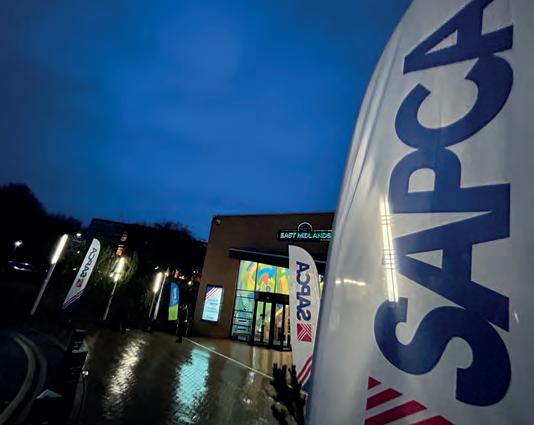
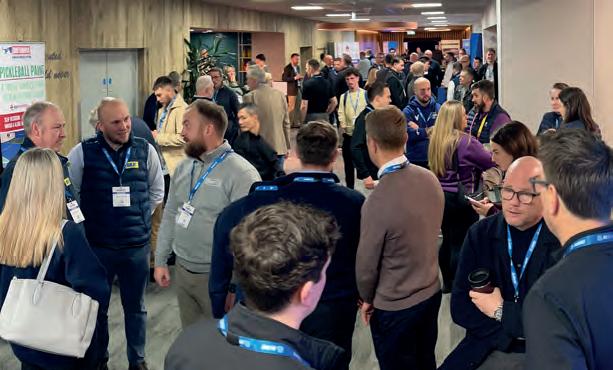
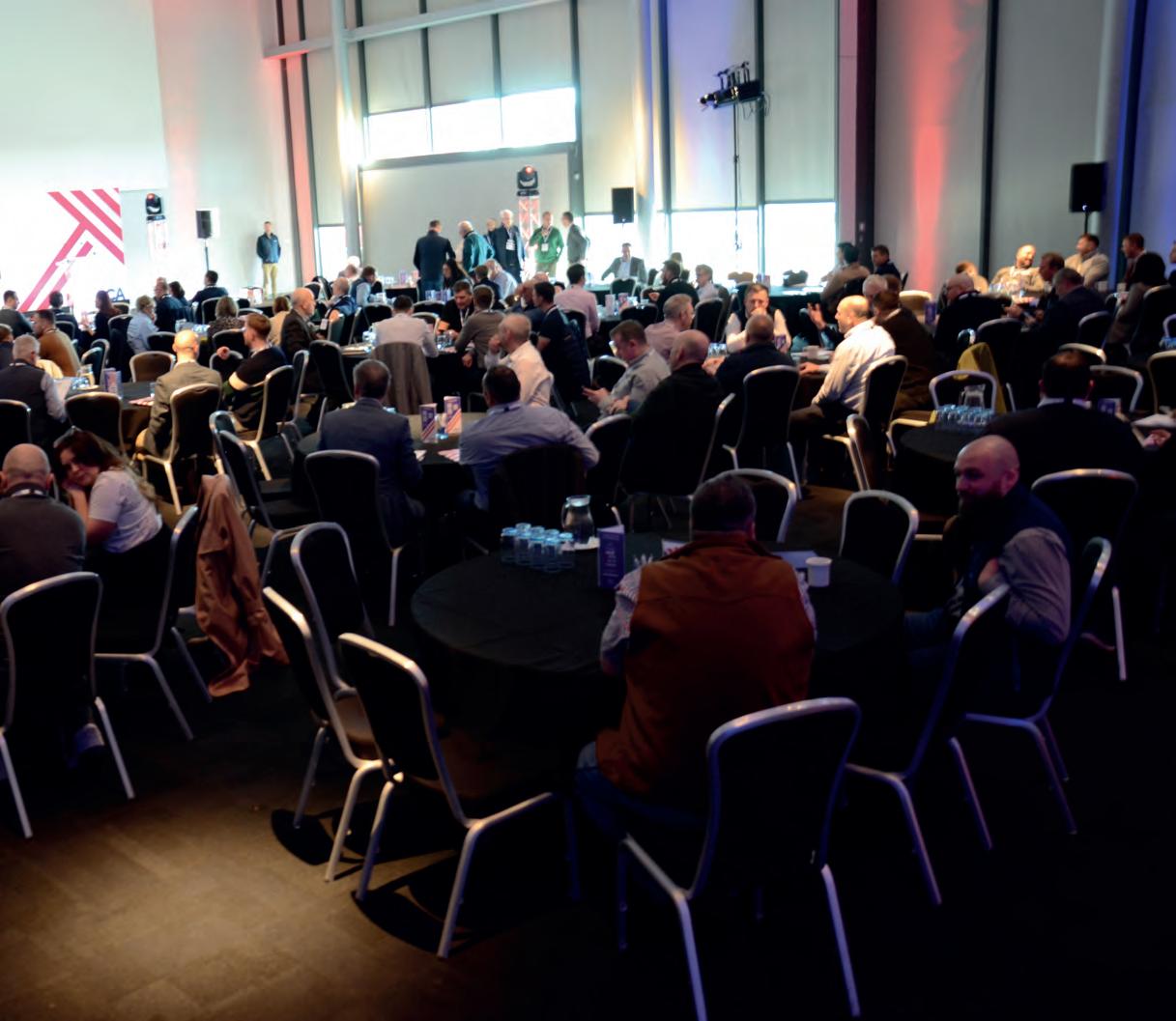
The annual SAPCA Technical Conference returned to Nottingham’s East Midlands Conference Centre for the second year running. Held on 27 November, the programme of seminars and sessions covered several topical issues and was followed by a networking dinner which provided delegates with a relaxed environment for further discussions.
With a record-breaking 230 attendees, the event started with a keynote from former England international footballer, Karen Bardsley. She offered a candid view of her time as the Lionesses’ first-choice keeper and also shared insights into the 2015 FIFA Women’s World Cup in Canada, the first senior FIFA tournament to be played entirely on synthetic pitches. Recalling her journey at the World Cup, Bardsley’s key message was how “no one wins by being afraid to lose”
She also shared with delegates how she has witnessed – through her role as former Chair of the Greater Manchester Women’s Football Board – how artificial surfaces have become crucial in grassroots sport, providing reliable playing hours in all conditions.
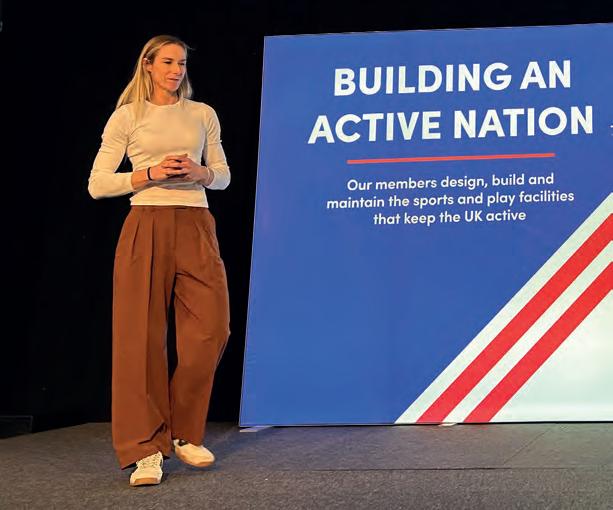
From the latest research in sports surfacing to an exploration how covered cricket facilities are activating disadvantaged communities, this year’s SAPCA Technical Conference provided delegates with a wideranging educational programme
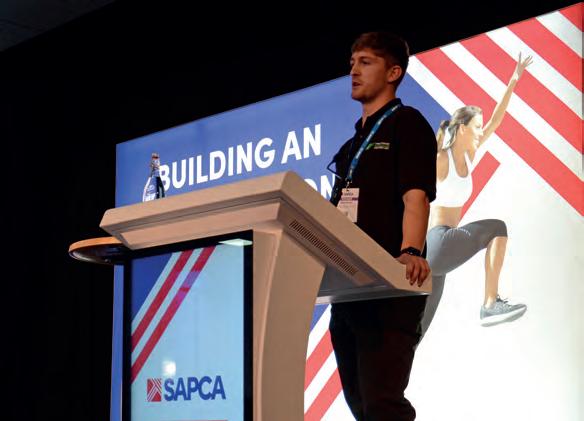
During the pre-lunch session, delegates were then offered an informative update on a research project to test alternative infills in 3G pitches. SAPCA Chair and Labosport UK Managing Director, Dr Kathryn Severn, was joined on stage by Niall MacPhee and John McLuckie from Sports Labs. They provided insights into the Football Foundation’s Sheffield test site, where SportsLabs have been carrying out testing and providing data to advance research into alternative 3G infills to replace traditional rubber crumb.
They outlined how the Sheffied test site features seven different pitch systems and, as well as testing the technical performance of each – from shock absorption to ball roll and traction – data has also been gathered from players to gauge user feedback on the surfaces.
“We devised a questionnaire comprising 15 questions, assessing everything from ball and playersurface interactions to overall ratings,” McPhee said.
“In total, we received 1,657 responses, which were then compared with the technical test data.”
Thanks to the research and analysis, the project has now moved to the next stage, which has seen a full-size pitch system being built, to test its performance in a 11-a-side setting.







Research featured heavily at this year’s event, which attracted a record number of delegates

After lunch, attendees learnt about the England and Wales Cricket Board’s (ECB) indoor cricket dome project. The Government is investing £1.5 million to help the ECB build two further indoor domes in Luton and Farington in Lancashire, following the opening of similar domes in Darwen and Bradford.
The Luton dome, due to open in early 2026, will give under-represented groups, such as state schools, much-needed access to cricket, with the potential to offer other sports – such as hockey, tennis and badminton – so that as many local people as possible have the chance to get active.
During the session, Dr Iain James, ECB’s Head of Facilities Services outlined the NGB’s Covered Outdoor Cricket Facility Design Guide and the requirements it sets for non-turf pitches. “We have the ambition to build 40 domes and we’d like to do that as soon as we can,” James said, outlining the potential scope of the project.
That was then followed by a session, chaired by Paul Fleming, Professor of Sports Surface and Ground Engineering at Loughborough University, which looked at three recent industry research projects in sports surfacing.
First, Professor Steph Forrester, Director at Loughborough University’s Sports Technology Institute, presented findings on traction behaviour of organic infilled 3G pitch systems. Forrester revealed how the shape of football boots studs has a big impact on traction among different types of performance infills used in 3G pitches.
“Traction is strongly influenced by stud engagement, which varies with the test device, stud shape, and performance infill material,” Forrester said.
She was then followed on stage by Zach Morley, a Knowledge Transfer Partner Associate at Loughborough University and Technical Surfaces. Morley said that a study into the maintenance regimes of organic infilled 3G systems had revealed a number of points of consideration – such as the suggestion that more pine infilled systems may require more frequent deep decompaction maintenance.
The research session was rounded off by Kexin Ma, a PhD student at Loughborough University, who presented the findings of a study into climate heat effects on artificial turf pitches. Among the key points suggested by the research was that cork turf is highly temperature-sensitive, showing increased energy return as the temperature rises. This could have implications in the way the turf is utilised in different climates and environments.
Commenting on the event, Colin Corline, SAPCA’s Technical Lead, said: “It was another hugely successful Technical Conference. The feedback from delegates has been excellent and I would like to thank all of the speakers for sharing their insights with the industry. We look forward to seeing everyone next year.”
The SAPCA Annual Conference and Awards Dinner 2026 will be held at the home of rugby, Allianz Stadium, Twickenham in February. It is the first time ever that the one-day conference will be held in London. With a packed educational programme, it promises to be a bumper event and will be followed by the SAPCA Awards Dinner
SAPCA members can now book their place at the SAPCA Annual Conference and Awards Dinner 2026, which will take place on Thursday 26 February 2026 at Allianz Stadium, Twickenham in London. It is a new venue for the event and offers delegates the opportunity to experience the “home of rugby” in an entirely new way.
The one-day Conference, for SAPCA members only, will feature an exciting range of highprofile speakers and a highly topical educational programme, as well as plenty of networking opportunities. The conference keynote speaker will be John Mitchell, the England rugby women’s team coach, who led Red Roses to victory in the Women’s Rugby World Cup earlier this year. Gail Emms MBE, will return as our event host.

The topics covered in the conference programme session cover subject matters that are important to SAPCA members and to the sports facility sector as a whole. For more information on the programme, visit: sapca.org.uk/events/sapcaannual-conference-awards-dinner-2026.
SAPCA Awards Dinner 2026
The Conference will be followed by pre-dinnerdrinks and the SAPCA Awards Dinner later in the evening, both of which will take place at the same venue. The dinner provides a great opportunity for networking and for celebrating the quality and excellence of SAPCA members and their work while enjoying an evening of great food and wine.

Launched in 2015, the awards have grown from a single award to six categories, highlighting the high standards and positive impact of the work of SAPCA members. This year’s 12 finalists include a wide range of projects, products and people showcasing the expertise of the 270+ SAPCA members.
SAPCA CEO, Richard Shaw, said: “As well as technical excellence and overall quality, the awards also highlight the positive impact that SAPCA members, through high-quality sports and play construction projects, products and services, have on those who benefit from it the most – the people and communities who are the end users.”
● Ewan McMullen, Chemique Adhesives
At just 26, Ewan has demonstrated exceptional leadership and impact within the international artificial turf industry at a remarkably early stage in his career. He has spearheaded the conception, development and commercialisation of the Turftak brand, a comprehensive range of artificial turf adhesives engineered for residential, commercial and elite sports pitch applications.

● Patrick Daly, Kingfisher Lighting
Patrick has made an exceptional, sectorwide impact on sports lighting in the past year. As Business Development Manager at Kingfisher, he has not only expanded opportunities for his own organisation but has strengthened the entire SAPCA community through collaboration, education, and leadership. He has actively supported numerous SAPCA members and his ability to build trust, share expertise and guide partners through complex lighting requirements has enabled the companies to enhance the quality and consistency of their installations, directly benefiting facilities and athletes nationwide.
● Liam Wilson, Surftech Surfaces
Liam joined Surftech in 2019 when it opened its first manufacturing unit in Stanton, Bury St Edmunds. Since then, Surftech’s production and warehousing facility has grown from one factory space of 200sq m to six units covering 1,200sq m – with the design and structure having been overseen by Liam. In 2024 Liam’s hardwork and dedication was rewarded when he was made operations director at the age of 27.

● Tony Aitchison – Replay Maintenance
Tony graduated from Nottingham Trent University in 1994 with an HND in Civil Engineering and went straight into a management scheme with the Charles Lawrence Group. He has worked in the industry for more than 30 years and has played a crucial role in the growth of Replay Maintenance and its journey –growing from a small division of Charles Lawrence Surfaces to a market leader with nearly 800 clients.

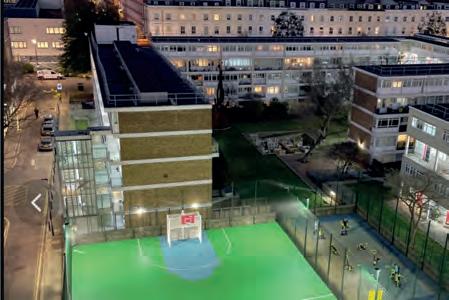
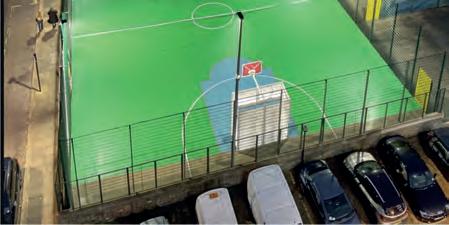

● Play Innovation – Two community MUGAs in Westminster, London Play Innovation has completed the full refurbishment of two MUGAs at Kennet House and Johnsons Place in Westminster. Delivered in one of the area’s most deprived and densely populated neighbourhoods, the projects prove that world-class outcomes do not require large budgets – they require thoughtful engineering, community-centred design and innovative play solutions. The inclusive facilities encourage participation and have created huge social value.
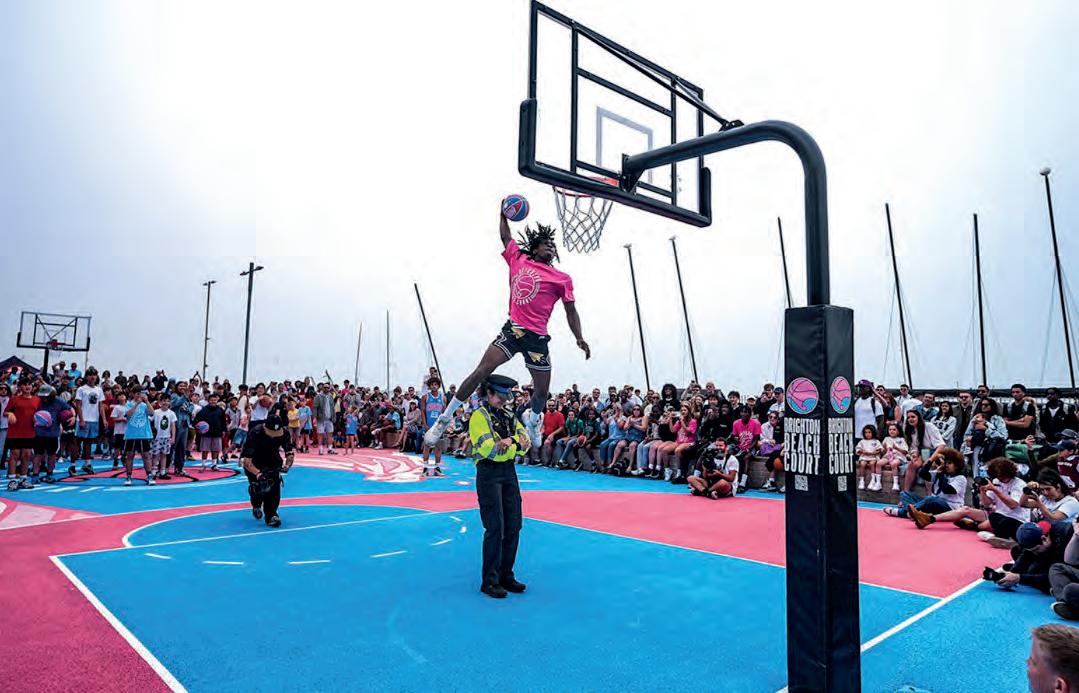
● Blakedown Sport and Play –Brighton Basketball Court Renovation Blakedown Sport & Play was appointed by Brighton & Hove City Council, in partnership with the Hoopsfix Foundation, to refurbish the iconic Brighton Beach Basketball Court — one of the most recognisable outdoor basketball spaces in the UK. The project demonstrates how a relatively small-scale refurbishment can deliver exceptional technical quality, strong partnership working, cultural importance and national impact.
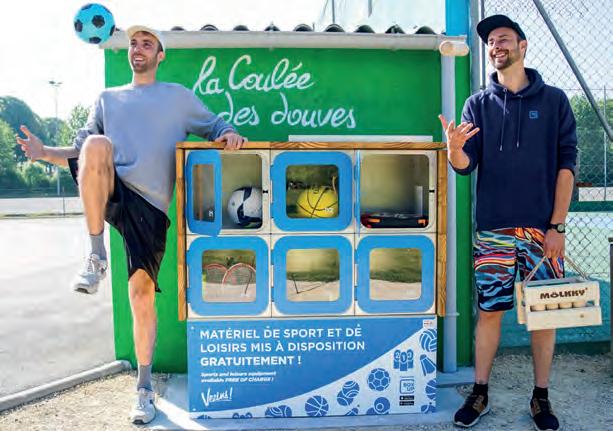
● Jupiter Play & Leisure – BoxUp
BoxUp is a modular, solar-powered equipment locker system that transforms public spaces into active play and sports environments. Designed to remove financial and accessibility barriers, BoxUp enables users to borrow a wide range of equipment such as footballs, rackets, skateboards and cornhole for free via the app, without membership or ownership costs. BoxUp’s integrated platform provides realtime data on usage, wear, and community impact, helping accurately inform return on investment.
● EnviroStik – Eco-Fix
Eco-Fix is an adhesive for synthetic grass sports and landscaping surfaces – and the first product of its type on the market to be produced from end-oflife synthetic grass carpets. Not only does this make it a more environmentally-friendly choice, but one which also gives a massive performance benefit. Its innovative recycled content formula meets or exceeds all governing body standards, such as FIFA.
Mapei UK Ltd – Mapecoat
TNS Race Track Zero
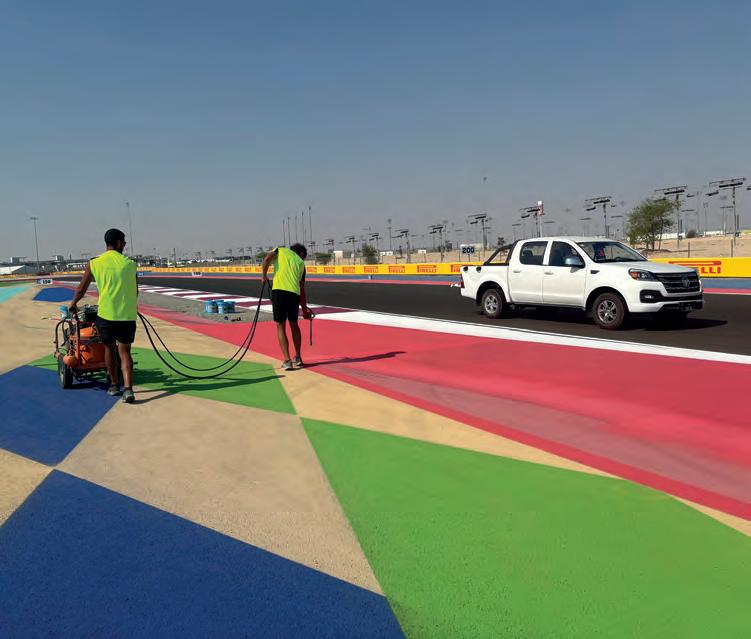
Mapecoat TNS Race Track Zero is a coloured acrylic resin for motorsport circuits, launched in June 2025. It is an easy-to-apply liquid resin, to be sprayed for circuit line marking, including the run-off areas. Mapei’s innovative Zero technology means the residual CO2 emissions of the product are fully offset.
Notts Sport – CocoTurf
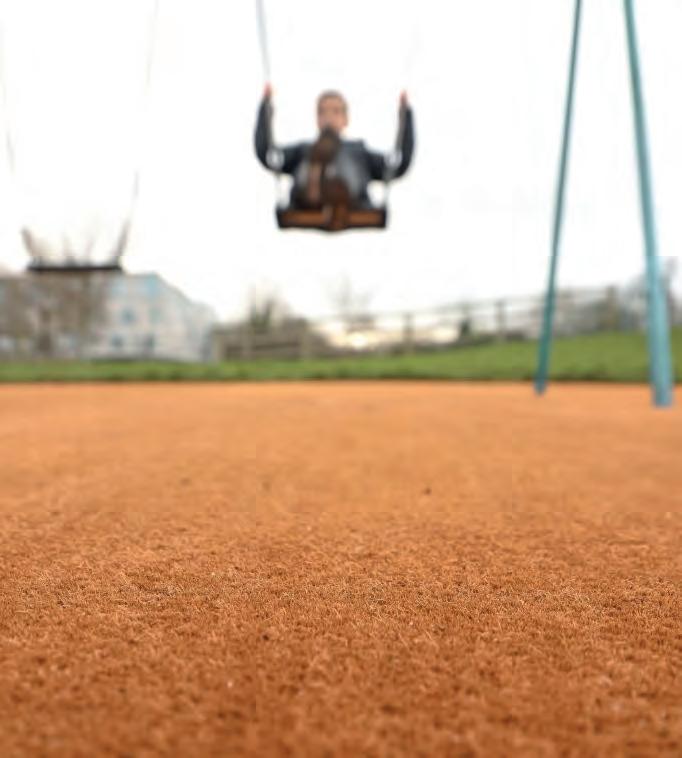
CocoTurf is the world’s first non-plastic artificial grass for play and sport, made entirely from natural, renewable, and recyclable materials. Using fibres derived from coconut husks bonded with natural rubber latex, CocoTurf replaces petrochemical plastics and eliminates microplastic pollution. Every square metre reuses fibres from ten coconuts, transforming agricultural waste into durable play surfacing.
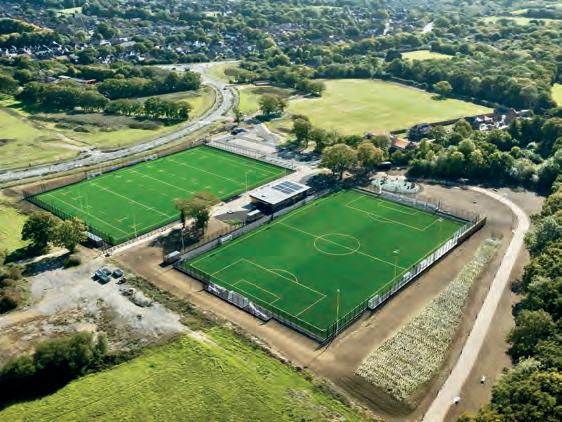
The Arc is a new outdoor sports hub for Burgess Hill, consist of a full-size 3G football pitch, full-size artificial turf rugby pitch, full-size natural turf football pitch, three small-size natural turf football pitches and an artificial cricket wicket with natural turf outfield. The Arc demonstrates technical excellence and is transforming sport within the community, with 22 local clubs - including five women’s teams - actively using the site. The project fulfils a long-held ambition of Mid Sussex District Council to address the area’s need for high-quality, year-round sports provision.
– Bluecoats Sports Expansion at Christ’s Hospital School, Horsham, West Sussex
The Bluecoats project included four panoramic Padel courts, a 400m six-lane athletics track with full field event facilities and the UK’s first “Get Active” outdoor exercise adventure trail. The development is a flagship example of innovation, sustainability, and community impact in modern sports facility design. This transformative development has created a vibrant multi-sport hub that celebrates inclusivity, environmental responsibility, and active living.











































There is no doubt that the state of British basketball is currently best described as “mixed”. At the elite level, a governance crisis has seen the liquidation of the governing body and a brief suspension of the national team. At grassroots level, however, you can find a thriving sport that is steadily growing its numbers – and reaching communities other sports would love to engage with




British basketball is facing one of the most significant moments in its modern history. At the elite and governance end of the sport, the picture is bleak: financial collapse, regulatory suspension and institutional failure have left clubs, players and supporters in a prolonged state of uncertainty. Yet, beyond the boardroom and the courtroom, the game itself is thriving. Participation is strong – particularly in urban areas and among young people – and basketball continues to demonstrate a unique ability to deliver social value at community level. The contrast between these two realities could hardly be more stark.


The most visible manifestation of the crisis came in late 2025, when the British Basketball Federation (BBF) entered liquidation after running out of funds. In a statement confirming it had ceased trading, the BBF acknowledged that it was no longer able to meet its financial obligations and said it would work with FIBA and other stakeholders to manage the consequences for national teams and international representation. For a sport that has long struggled with stability at the top, the collapse of its national governing body represented a new low point. This failure did not occur in isolation. It followed months of escalating tension between the BBF and the men’s professional game, centred on the future of the British Basketball League (BBL). After withdrawing the BBL’s operating licence over financial and governance concerns, the BBF rubber-stamped a new league – Super

League Basketball (SLB) – to operate under an interim licence for the 2024-25 season.
However, BBF then put the long-term licence for a new league out to tender in October 2024, which caused friction between the SLB and the BBF. Matters got worse when the BBF awarded, in April 2025, a long-term licence to a new operator, led by sports executive Marshall Glickman, with the aim of creating a restructured top-tier league.
The SLB and its clubs refused the idea and pursued legal action. What followed was a very public power struggle that exposed deep fractures in British basketball’s governance model.
Then came FIBA’s decisive intervention. Citing serious concerns around governance, competition structures and regulatory oversight, the international federation suspended the BBF’s authority to license men’s professional competitions and temporarily barred Great Britain’s men’s team from international competition. While that suspension was partially lifted to allow the national side to compete in a World Cup qualifying window, the damage had been done. Confidence among clubs, players, sponsors and funders was severely undermined, and the subsequent liquidation of the BBF confirmed that the system had failed.
For many observers within the sport, these events raise fundamental questions about how elite basketball is governed in the UK. The lack of financial stability, questions over direction and the somewhat adversarial relationship between leagues and the governing body – as well as the absence of a unified vision for the professional
game – have left basketball exposed. With public funding and international recognition tied closely to governance standards, the consequences extend well beyond the men’s league, threatening the credibility of the entire performance pathway.
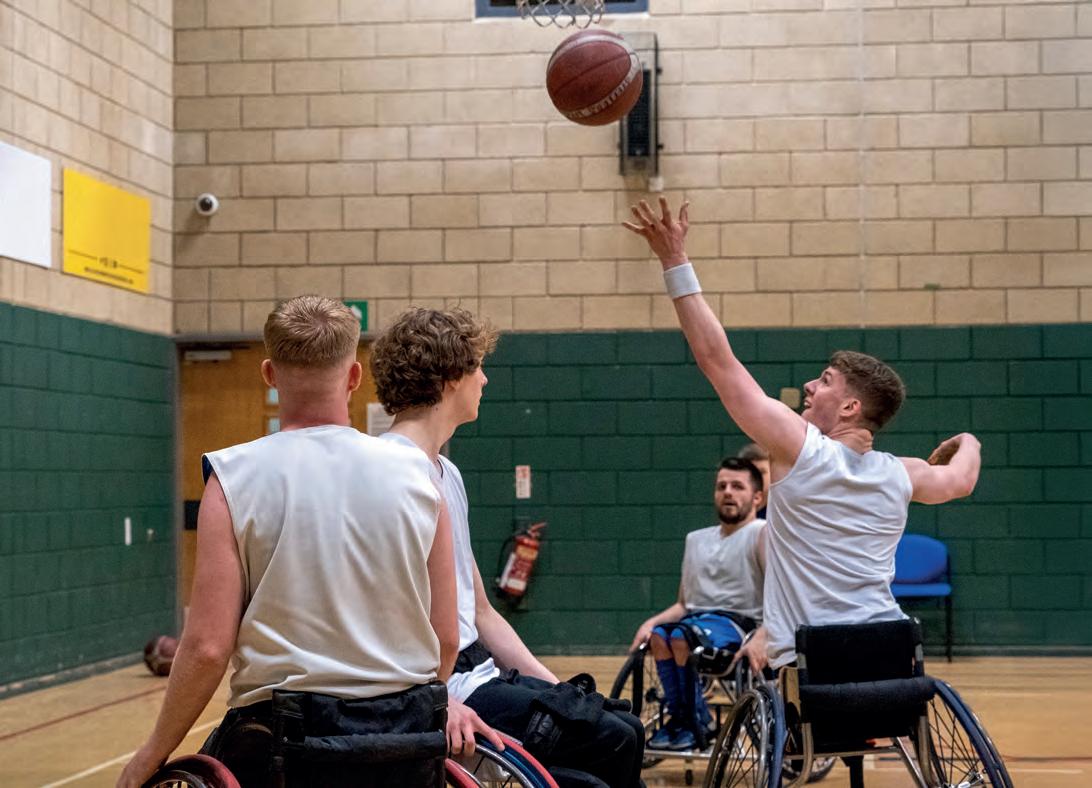
Yet, while governance structures have faltered, participation on the ground tells a very different story. Basketball remains one of the most popular team sports in the UK, particularly among children and young people. It has a strong presence in inner-city and urban communities and resonates with young people and ethnically diverse, deprived and under-served communities. In neighbourhoods facing deprivation, basketball courts continue to act as informal hubs for physical activity, social interaction and youth engagement.
This popularity is increasingly recognised by policymakers and funders. In 2025, the UK Government announced a significant partnership with the NBA aimed at growing grassroots basketball and improving access to facilities. Through a combination of public investment and matched funding from the NBA, a total of £10m is being directed into community courts, school programmes and participation initiatives across England.
Commenting on the initiative, Sport England CEO, Simon Hayes, highlighted what is perhaps basketball’s biggest strength and opportunity – the ability to engage ethnically diverse communities, young people and those less likely
The support of an organisation with the power and prestige of the NBA will have a huge influence and this funding will help more people enjoy the benefits of playing the sport
to take part in organised sport, positioning it as a powerful vehicle for social value.
“Basketball is already one of the country’s most popular team sports, thriving in inner city areas where facilities are often limited,” he said. “We’ve also seen strong growth in young people playing since the last Commonwealth Games in Birmingham.
“The support of an organisation with the power and prestige of the NBA will have a huge influence and this funding will help more people enjoy the benefits of playing the sport.”

DYNAMIK are a UK leading specialist in indoor sports flooring and sports hall environments, trusted by decision-makers to deliver facilities that perform at the highest level while standing the test of time
With over 25 years of experience,
DYNAMIK designs, supplies and installs more than 130 premium sports floors each year across education, community, elite and professional sport. At the core of DYNAMIK’s offering is a commitment to performance-led design.
Every sprung sports floor is engineered to meet the requirements of modern sport, providing the correct balance of shock absorption, vertical deformation and ball response to protect athletes and support multi-sport use. All systems are independently tested to the latest sports standards, ensuring confidence for specifiers and long-term value for operators.
Beyond flooring, DYNAMIK delivers fully integrated sports hall solutions, including acoustic walling, impact protection and line marking. This approach ensures each space is optimised not only for play, but also for acoustics, safety, durability and ease of maintenance - key considerations for facilities operating at high utilisation levels.
DYNAMIK is also recognised for its aftercare and lifecycle support. The company works closely with
clients to maximise asset longevity and protect long-term investment. This proactive approach reduces whole-life costs while maintaining consistent playing standards throughout a facility’s lifespan.
Sustainability and inclusivity are increasingly central to decision-making in sport, and DYNAMIK continues to respond with responsibly sourced materials, efficient installation methods and systems designed to support inclusive participation. The company actively partners with governing bodies, community organisations and accessibility-focused programmes to help create environments where sport is available to all.


From grassroots halls to elite competition venues, DYNAMIK combines technical expertise, proven performance and dependable delivery. For decisionmakers seeking durable, compliant and future-ready sports facilities, DYNAMIK provides assurance that performance is not just installed, it is made possible. ●
The strength of the grassroots ecosystem is reflected in the work being delivered by all the home nation governing bodies, which have largely continued to grow participation despite the turmoil at British level. In England, Basketball England has reported steady increases in licensed membership and team registrations, underpinned by a strategic focus on accessibility, inclusion and digital modernisation. School-based programmes, such as Basketball England’s clubs and schools early-years programme, Slam Jam, as we all as the delivery of the Jr. NBA partnership in secondary schools, have introduced thousands of children to the sport, while investments in coach education, officiating and club development have helped sustain local leagues. The organisation’s emphasis on equality, diversity and inclusion has also been central to its growth strategy, reflecting the communities in which basketball is most played.
In Scotland, Basketball Scotland has pursued a similarly holistic approach. Its youth player pathway has expanded opportunities for younger age groups, ensuring that talent identification and development begin earlier and reach more players. The growth of 3x3 basketball has been a particular success, with academy programmes and competitions aligned to international formats that appeal strongly

Basketball’s value does not lie solely in professional leagues or international results, but in its ability to engage communities, inspire young people and contribute to wider social outcomes
to young athletes. Alongside this, Basketball Scotland has invested heavily in coach and referee education, embedding learning within competition environments to raise standards across the grassroots game. Despite ongoing challenges around public funding for sport, participation in Scottish basketball continues to grow, driven by strong club networks and a clear development structure.
Wales offers another example of how basketball is expanding through strategic planning and strong partnerships. Basketball Wales has placed schools at the heart of its participation model, using national competitions and festivals to connect pupils with local clubs. Its National Academy and regional development programmes provide structured pathways for talented players, while entry-level initiatives such as Smaller Ballers focus on introducing children to the game at a young age.
Basketball Wales’ work has also been designed to align with the broader landscape of sport in the country. Sport Wales has developed The Foundations Framework Wales, a national goodpractice guide designed to help everyone who supports children aged 3–11 to be active.
“For us, the Framework represents an opportunity to strengthen how the sport is introduced to young players and ensure that basketball contributes to children’s physical, social, and emotional development,” Basketball Wales said. “Children need more than structured drills or early competition. They need environments that focus on enjoyment, exploration, confidence, and belonging. This is where basketball can play a powerful role.
The organisation has also invested in its brand

and identity, launching a new logo and strategy to better reflect the modern, inclusive image of Welsh basketball. Commercial partnerships, including long-term kit and equipment agreements, have helped to support sustainable growth.
In Northern Ireland, Basketball NI continues to develop the sport through domestic leagues, junior competitions and performance pathways linked to Team NI representation. Cross-border fixtures and international experiences have played an important role in player development, while the expansion of 3x3 formats has created additional access points for participation. Although operating in a smaller system, Basketball NI has maintained momentum by focusing on schools, clubs and community engagement.
Taken together, these examples underline the central paradox of British basketball in 2025. At the elite level, the sport is grappling with a governance vacuum, unresolved legal disputes and the loss of its national governing body. At the grassroots level, however, basketball is growing, diversifying
and delivering impact in communities across all four home nations. Participation numbers, facility investment and partner confidence suggest a sport with enormous untapped potential.
The good news is that basketball’s value does not lie solely in professional leagues or international results, but in its ability to engage communities, inspire young people and contribute to wider social outcomes. That is a strong message for policymakers, funders and leaders.
In a statement, the home county sports councils said: “Clearly, this is a challenging time for our sport, but we – Basketball England, Basketball Scotland and Basketball Wales – reaffirm our commitment to collaborate under the future GB framework, alongside other stakeholders, to maintain Great Britain’s participation in upcoming FIBA competitions.”
The challenge now is whether British basketball can reconcile these two realities. Without credible, transparent and financially sustainable governance at the top, the risk is that grassroots success becomes disconnected from elite opportunity, limiting progression for players, coaches and officials. Conversely, if reform can be achieved,
Will Watt, founder and director at State of Life, is a key figure in linking sport and physical activity with measurable wellbeing and economic value. Through his work with State of Life, he has advised organisations, such as Sport England, on using data – including the WELLBY measure – to help evidence the significant societal benefits of being active. He tells SportsNation why sport must change the way it proves its worth, if it wants to achieve its ambition of becoming a key player in the government’s plans to establish a health care system based on prevention
Will Watt has built his career on making sense of things other people insist are too complicated. As co-founder of State of Life, and one of the leading voices in wellbeing economics, he has helped shift the way the UK understands the value of sport and physical activity. Not just in terms of health outcomes, but in how being active shapes people’s happiness, trust, confidence, community connection and life satisfaction.
It’s a big subject, but when you speak to Watt, he boils it down quickly – then tells you why the sector needs to start being far more honest with itself.
“If you’re a sports or physical activity organisation and claim to make people’s lives better,” he says. “You need to have the decency to ask them whether you actually are.”

It’s a line typical of Watt’s style: direct, plainspoken, but grounded in years of methodological rigour. And in a sector that has long wrestled with how to quantify impact, his message is simple: the tools exist, the evidence exists – and the excuses no longer stack up.
State of Life is perhaps best known for its work with Sport England but it has also helped the likes of Greater Manchester’s GM Active network, Parkrun, Girlguiding and dozens of other bodies wanting to understand, properly, how their programmes help make people’s lives better. The company’s work on the social value of sport and physical activity, commissioned by Sport England and published in 2024, generated headlines by estimating that sport provides more than £100 billion worth of social value each year. That includes physical and mental health benefits, improved wellbeing, increased social trust and stronger communities.

But for Watt, the number itself is not the story. The story is how the sector gets to that number – and, crucially, how it can use consistent evidence to drive system change.
Watt’s route into wellbeing economics wasn’t obvious. His early career spanned law, insurance and publishing. This included a stint at Viz magazine that he still recalls fondly. “I spent five years at Viz and loved it,” he says. “it’s been downhill ever since”.
Watt adds that there was a common thread to each role, however. “If I’m good at something, it is taking complex problems or issues and boiling them down to the crux of it”, he says, crediting his legal education.
“My first degree was in law, which is a discipline in which you’ve got to take these really complicated
problems and strip them down to their essence, often a single key point of legal contention.”
His first real “job” in sport and physical activity was with the Join In Trust, the Olympic Legacy project set up to recruit and retain volunteers in grass root sport. It was there that he first found himself asking questions few others in the sector were asking.
He had been tasked with calculating the economic value of volunteering. When his analysis suggested that sport volunteering alone was worth £55 billion a year to the UK economy, he was surprised by the large figure – and braced for backlash. Instead, something remarkable happened. After his report was out and Watt was expecting the worst, an unexpected email arrived. Lord Gus O’Donnell, former Cabinet Secretary, wrote to him with just one line: “Have you seen this?”. It was a reference to a speech, by the then
chief economist at the Bank of England, Andy Haldane, on the economics of volunteering. Haldane had spoken just two weeks before Watt’s report was published.
“I had no idea he had given that speech and my initial thought was of horror,” Watt recalls the moment. “I thought the Bank of England would completely contradict our findings.
“But as I put my headphones on, sunk in my chair and began to read the report, I slowly realised that he (Haldane) had used more or less the same methodology as we did,” Watt says. “Astonishingly, the number he gave as the value of volunteering in total was £200 billion.
“Now, we had already estimated that sports volunteering was responsible for around 20% to 25% of the total value. So the figures worked.”
Watt says it was a turning point. “I sat there thinking: there’s a whole field here – a whole set of data, that no one in sport is using properly,” he says.
It led to developing a model for comparing the wellbeing and health outcomes of participants and volunteers with statistically matched groups in national datasets. The key insight was simple but transformative: “You don’t have to guess what might have happened without an intervention – you can start to compare a comparison / control group,” Watt says, adding that this is where sport keeps falling short to this date.
“We’ve been making huge claims based on assumptions. Meanwhile, the NHS uses comparison groups as standard. If you say you’re improving people’s health, then we need to ask them – and compare them to those who are not active and not getting our ‘treatment’.”
He also believes that the sector has, at times, been held back by what he calls “logos and egos”.
“There are brilliant people out there, but there are also organisations who feel they need to own the evidence, control the narrative, and protect


There are brilliant people out there, but there are also organisations who feel they need to own the evidence, control the narrative, and protect their position

their position,” he says. “That’s why progress has been slow. Because consistent evidence means comparability – and comparability means accountability.” It’s not enough to be right, people have to want you to be right - and I wish I was better at that bit - it’s where having the support of Gus O’Donnell is hugely helpful.
While Watt says that too many organisations aren’t basing their claims on robust data, he is quick to praise the organisations that do. These include Greater Manchester’s GM Active, Life Leisure in Stockport, Sport for Confidence in Essex and other forward-thinking operators who genuinely want to know whether their programmes work and for who.
The example he returns to repeatedly is Stockport, where the council’s facilities are operated by Life Leisure. Led by Michelle Childs, Head of Health Development and John Oxley, CEO, Life Leisure has invested in a rigorous, transparent approach: it uses treatment and control groups, consistent measurement and openly shared data. For Watt, it encapsulates what the whole sector should be doing.
“I would love there to be some consistent evidence and, frankly, for the sector to do nationally what Michelle and John have done in
Stockport and then across eight boroughs of Manchester with GM Active,” he says. “Asking the same questions of people and comparing them with similar people in other areas.”
Watt also refers to the HM Treasury Green Book – the gold standard for public policy evidence. Watt wants more people who work in leadership positions within sport to actually read it. “It’s all in there – what wellbeing is, how to measure it and how to incorporate it into economic decision-making. We need far more people in sport to understand that language.”
The stakes, Watt argues, could not be higher. Government health spending is nearing £200 billion a year. Inequalities are widening. Demand for services is outstripping capacity. If sport wants to be taken seriously as part of the preventative health strategy, it must meet the NHS halfway on evidence.
“Physical activity doesn’t just deserve more funding from DCMS,” he says. “It deserves recognition from the Department of Health and the NHS – but only if we measure consistently. Otherwise, how can we prove what works and in particular who benefits most to get the greatest return on public funding?”
He believes the sector has covered too little ground in shifting resources where they matter most. Strategies are improving, he
says, helped by strong communication from Sport England, but “beneath the strategies”, he says, “delivery hasn’t changed yet”.
“The evidence is there. The need is there. Now, the sector must demonstrate, convincingly, who it is reaching, how long people stay engaged and what actually changes in their lives as a result. I want us, as a sector, to ask people things like: How active were you before? How has your wellbeing changed?
How long have you been part of this activity? That alone would transform the evidence base.”
For someone so closely associated with complex data, Watt is keen to simplify.
“Wellbeing economics is really just the economics of everyday life,” he says. “When you ask a friend how they are and they say ‘five out of ten’ or ‘eight out of ten’, you’re already doing wellbeing economics. GDP is miles away from our daily lives. But wellbeing? Everyone understands that and we do it every day of our lives - it’s the economics of everyday life.”
He talks about “weekly purposeful endeavour” – the idea that much of human wellbeing is shaped by doing meaningful things with others on a regular rhythm. It might be playing sport, watching a team, volunteering, going to a religious service or community group.
“It’s not the activity itself,” he says. “It’s the combination of purpose, people and regularity. That’s where the value lies.”
This idea underpins a 2019 State of Life paper, Faith, Hoops and Charity, which explores how simple weekly routines drive personal and community wellbeing. The message, he says, is the same today: make it part of everyday life. Make it normal. Make it accessible.

Fat pills or fit pills? The real comparison
One area where Watt believes wellbeing metrics will soon be central is in the national conversation about GLP-1 drugs, or “fat jabs”, such as Ozempic. His team have analysed clinical guidance and compared it to data from GM Active. Their conclusion is unambiguous: physical activity seems to be far more cost-effective.

“These drugs cost the NHS around £3,000 a year per person,” he says. “Even the trials show that if people stop taking them, they return to where they started. Meanwhile, physical activity programmes deliver enormous longterm wellbeing gains at a fraction of the cost.”
He is not hostile to the drugs themselves; in fact, he thinks they can be complementary. But he does see a danger: “If you don’t measure wellbeing alongside physical health, you miss half the picture,” he explains.
Another theme that pops up in conversation with Watt is that of integrity. His challenge is deliberately blunt: stop making untested claims about social
It’s the combination of purpose, people & regularity. That’s where the value lies

value. Stop relying on assumptions. Instead, start using methods that meet the standards of the NHS, Treasury and wider public sector.
“There are people in the sector doing brilliant work and they welcome proper evidence,” he says. “But there are others who have avoided it for too long.”
“If you claim to make people’s lives better, ask them. That’s the standard. That’s accountability. And that’s how we earn our place at the table.”
He acknowledges that shifting the culture will take time. But with those controlling the purse strings, such as Sport England, increasingly demanding consistent evidence, he believes the tide is turning.
“The smart people in infrastructure, health and policy know we have to get this right,” he adds. “If we don’t, inequality gets worse and nothing changes.”
Watt’s ambition is, ultimately, democratic. He wants transparent evidence that belongs to the public, not to individual organisations – and for comparable data to be collected in the same way across the country. And he wants a culture in which “honesty beats spin”.
“The power doesn’t sit with the big organisations. It sits with the people who answer the questions,” he says.
According to Watt, the value of sport, ultimately, isn’t about heroic narratives or policy documents. It’s about whether someone’s life feels better – more connected, healthier and happier – because of something a programme did. And if you’re not asking them, you could be making claims you can’t back.
Over the past few months, Sport England has released a suite of major research reports that paint a comprehensive picture of sport and physical activity across England. SportsNation looks into the data and insights of each and charts what the reports tell us
Throughout November and December 2025, Sport England published three major pieces of research which offer data-led insights into the current state of sport and physical activity. From estimating the social and economic value of sport and real-time insights on community facility usage to tracking what’s happening with children and young people, the studies underscore not only sport’s enormous positive impact but also where persistent challenges remain.

The three reports are Active Lives Children and Young People Survey (December 2025), the latest social value model report (November 2025) and Moving Communities report (November 2025)
Social value of sport – £122.9bn a year
Sport England’s second annual Social Value Model report – published in late 2025 – provides arguably the boldest headline yet on the value of sport: community sport and physical activity generated an estimated £122.9 billion in social value across England in 2023-24. This latest analysis, produced with partners including social value advisors, State of Life, Sheffield Hallam University and Manchester Metropolitan University, uses Active Lives data combined with wider health evidence to quantify the benefits of being active. It



looks not just at economic output, but at wellbeing and health savings too. Among the key findings were that sport and physical activity provides a £36.2 billion boost to the economy through Gross Value Added (GVA), as well as £8 billion in direct savings to the NHS from illness prevention, thanks to nearly 3.3 million cases of chronic conditions prevented annually (including depression, back pain and type 2 diabetes). Through getting people to be more physically active and creating a healthier workforce, the sector also contributed £6 billion in productivity gains and generated £14 billion in tax revenue – a return of roughly 6-7 times public investment in sport.


Among the key findings were













Perhaps most strikingly, Sport England found that for every £1 invested in community sport and physical activity, £4.38 of value is generated for society – up from £4.20 the year before.
Sport England CEO, Simon Hayes, said: “The research confirms that health is wealth. Sport and exercise are vital to our economy and society and must be part of the solution to big problems.
“By protecting and investing in opportunities to be active – particularly for communities and people that face the most barriers to taking part – the nation will be healthier, wealthier, and happier.”
However, the research also highlights the persistent

inequality gap – and the value that is currently going unrealised as a result of lack of access to sport for all. The analysis estimates that nearly £20 billion more value could be unlocked if less active groups matched the activity levels of the most active.
While the Social Value Model estimates national value, the Moving Communities report takes a more granular look at what’s happening on the ground. Rather than a single static report, Moving Communities provides a dynamic data platform tracking participation in programmes and facilities – from gyms and pools to community clubs – across England. It is designed to offer real-time, actionable insight for local authorities, delivery partners, and policymakers. Analysis from the April 2023–March 2025 period
Sport and exercise are vital to our economy and society and must be part of the solution to big problems
highlights several trends. These include that public leisure centres generated an estimated £3.63 billion in social value during the review period and that the number of female users increased, with women now representing 53 % of visits. Participation among residents in some of England’s most deprived areas
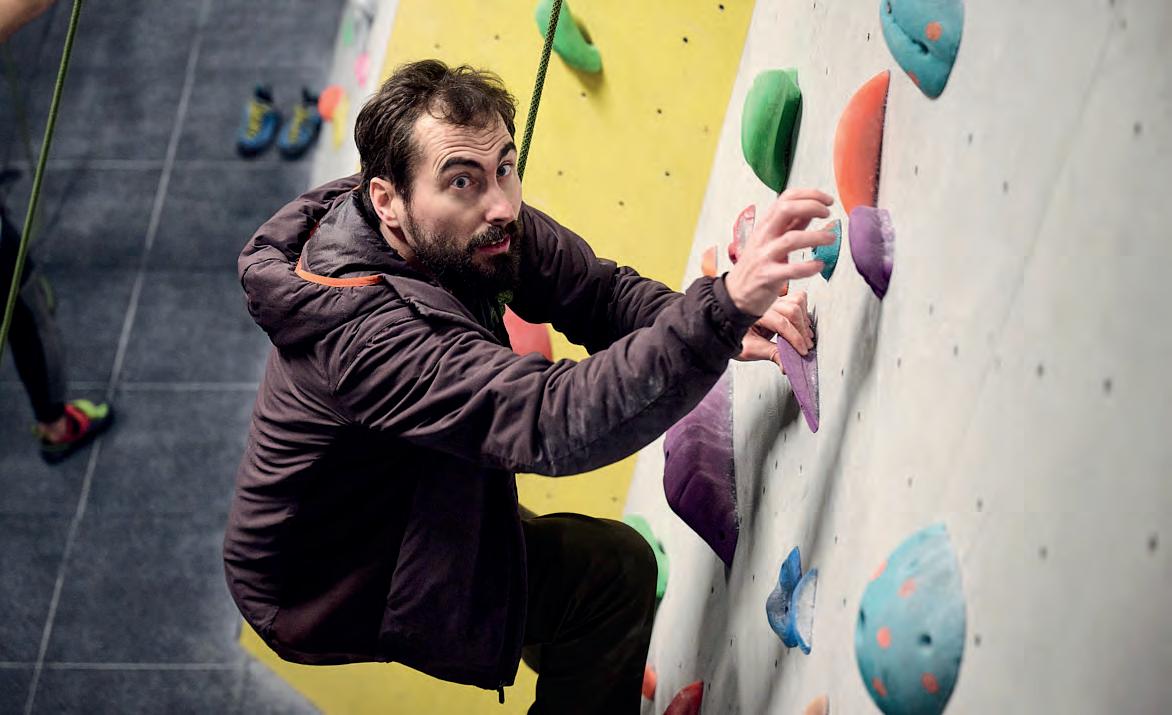
increased modestly, which suggests that inroads are being made into chipping away at the £20 billion of “lost value” identified in the previous report.
The insights show that public facilities are not only bouncing back from the pandemic but are increasingly serving as anchors for community activity and wellbeing. This comes despite the ongoing financial fragility in the sector, which sees many local centres operating just at break-even, while rising operational costs pose a threat to long-term sustainability.
Lisa Dodd-Mayne, Sport England’s Executive Director of Place, commented on the importance of the findings: “Moving Communities continues to shine a light on how public leisure facilities serve communities and drive significant social value … but there is still more we can collectively do to reach more deprived groups.”
The third major report from Sport England, the Active Lives Children and Young People Survey 2024-25, provides the most detailed snapshot yet of how young people in England are moving every day. The large survey (based on more than 130,000 school children) assesses not only activity levels but also volunteering, attitudes, wellbeing, and demographic differences. The headline findings suggest that while activity levels are improving, they aren’t increasing quick enough.
The report shows that nearly half (49.1%) of children aged between five and 16 are meeting the Chief Medical Officers’ guideline of 60 minutes of daily activity – the highest level since the survey began in 2017. The figure represents a 5.8% increase since 2017-18, or an extra 580,000 active children.
One of the clearest themes of the report is that inequalities remain stubborn
Disappointingly, however, there has only been a 1.3% improvement over the previous year, which means that less than half of all children are active enough, so millions are still falling short of the standard that supports long-term health and wellbeing.
When it comes to activity levels, other key findings include that:
28.4 % of young people are classed as less active (less than 30 minutes a day).
22.5 % are fairly active (30-59 minutes a day).
Boys are generally more active than girls, and activity levels vary by age group, with children aged seven to nine among the least active.
One of the clearest themes of the report is that inequalities remain stubborn. Children from least affluent families are less likely to meet activity guidelines than those from affluent backgrounds, while those with two or more characteristics of inequality are the least likely to be active overall. Differences by ethnicity endure, with Black
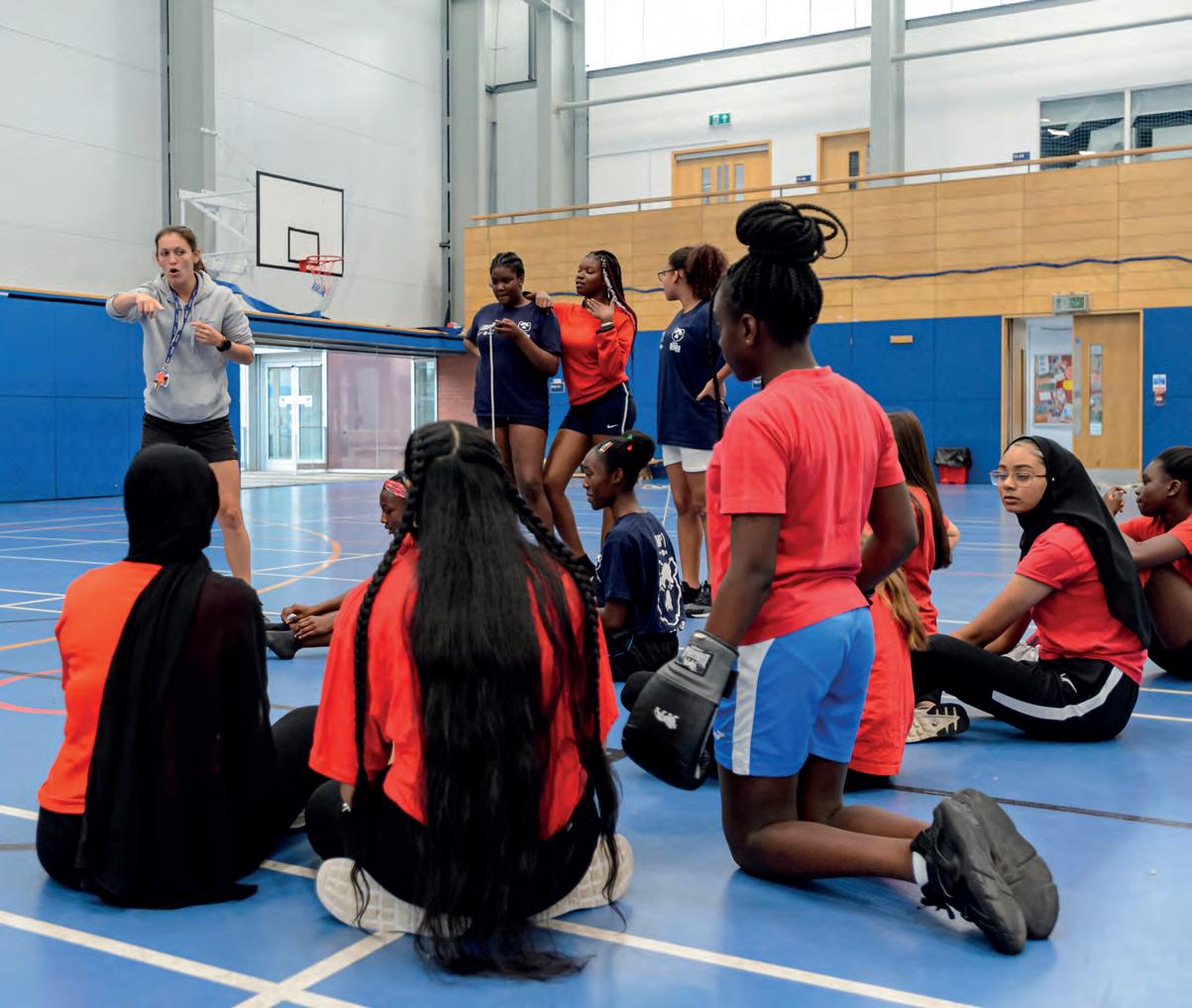
and Asian children less likely to reach activity targets compared to White counterparts.
The survey also tracked volunteering, showing that almost 48% of children aged 9-16 gave up their time to support sport or activity, though levels have not yet returned to pre-pandemic norms. Importantly, the survey reinforces that being active correlates with better self-reported wellbeing – echoing findings in the Social Value Model about the mental health value of activity.
Taken together, the three streams of research provide a powerful narrative about sport and activity in England today. They paint a picture of sport and physical activity being enormously valuable – socially, economically and, unquestionably, for wellbeing.
Local facilities remain crucial hubs for engagement, but face economic pressures and must continue evolving to reach under-served communities.
While there are encouraging trends when it comes to children and young people (the highest activity levels since monitoring began) the fact that a substantial proportion fall short of recommended activity levels are a major concern –as is the persistent inequality in access to sport.
What emerges is a call not just for celebration, but for targeted action: better investment, smarter local delivery, and a strategic focus on closing gaps in participation across communities, ages, and demographic groups. Only by tackling these disparities head-on will the sector unlock the full potential of sport as a cornerstone of public health, education and social cohesion.
The 29th edition of the IAKS Congress, held as part of the FSB trade show in Cologne, attracted nearly 500 delegates from 41 countries. SportsNation attended the event, which mixed a comprehensive educational programme with networking opportunities
The 2025 IAKS Congress offered four days of activities, from keynote speakers and panel discussions to the opportunity to take part in a pre-congress pool study tour. The theme of the educational sessions this year was “Creating high-performing facilities for an active future”.
The opening session introduced delegates to the Davos Baukultur Alliance (DBA) and how its principles are implemented in practice. Baukultur is a German word that translates to ‘building culture’ and during the session, Dr Anne Pfeil from DBA explained how the initiative’s eight-principle quality system promotes better living environments worldwide.
This was followed by an informative session which looked at the latest strategies and trends that are driving the sector towards net-zero sports and leisure facilities. Led by Mike Hall from architects FaulknerBrowns and Mark Palmer, Director at consultants Max Fordham, delegates were offered


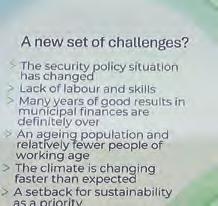


insights into how a “soft landings” approach is often crucial to ensure buildings achieve the energy performance they have been designed to produce. The approach encourages a gradual handing over of a new building, extending involvement from designers and builders past completion for a period of time, ensuring a smooth transition by focusing on training, fine-tuning systems and verifying performance against initial goals.
Sometimes, a soft-landing approach can be as simple as designers guiding operational staff through the way a building is “meant to operate”.
“Designing a sports building so it utilises natural light – with the goal of saving energy – is pointless, if the staff don’t realise the intention and keep switching on the lights even when they don’t need to,” Hall said.
The effects of the climate crisis on building design – and the drive to create more environmentally sustainable facilities – was among the key themes of this year’s congress. Over the four days, the more than 45 international speakers unanimously agreed



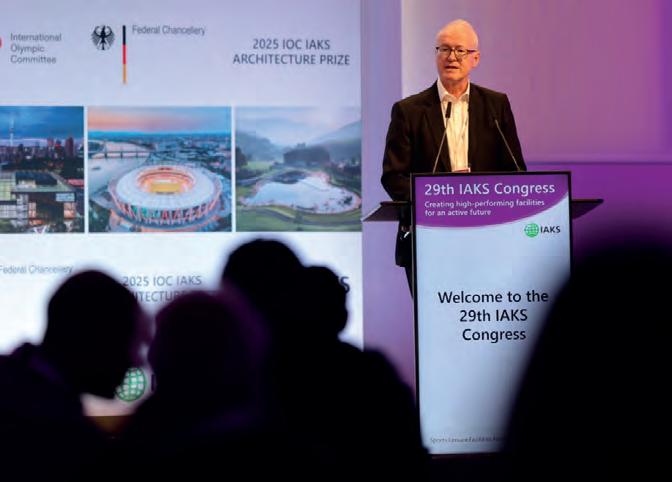
that sports and leisure facilities must do much more than just be energy efficient. The topics discussed on stage ranged from sustainable public pools to futureproofing models for venues of all sizes. A common theme emerged: to successfully produce more sustainable buildings requires an “interplay between government, research, design and operation”.
Another theme that was explored in detail was the way future sports and leisure facilities will likely be required to perform dual (or even triple functions) to be both economically viable and sustainable. Facility operators – from local authorities to private owners – are increasingly looking for spaces that are capable of hosting multiple activities while also being able to respond to climate risks. The multi-functionality and flexibility also extends beyond the ability to host different sports. Delegates learnt of examples where sports spaces which serve as playing courts in normal weather can store water in the event of heavy rainfall – and
thus prevent damage to adjacent neighbourhoods. Examples of the approach were given from the Netherlands, Denmark and Germany, where they have become a “cornerstone of urban resilience”.
Commenting on the four-day event, Klaus Meinel, Secretary General of IAKS, said: “The IAKS Congress 2025 communicated a clear message: sports facilities are no longer add-ons, but integral to the central future strategy of modern local authorities. They must be climate-friendly, socially effective, economically viable and architecturally appealing – all at the same time.
“Whether net-zero strategies, the circular economy, ecological and social sustainability, integrated planning, inclusion, public value or social return: a common core emerged across all topics. Sports facilities are becoming locations that have an impact far beyond sport – as safe spaces, places of education and locations for social interaction. Those who design, build or operate them are helping to shape the future viability of municipalities and society.”

As sport grapples with ever-faster cycles of innovation, 2025 stood out as a year where AI, connected performance systems, and smarter athlete monitoring crossed from prototype to real world use. SportsNation collected 10 essential technologies that are making an impact in professional and grassroots sport – from coaching and spectating to performance analysis
Look anywhere within sport and you can see new, innovative technology solutions popping up everywhere. Performance and fan engagement are increasingly powered by real-time data – from athlete biometrics to AI-generated insights that inform coaching and broadcast – while AI tools are taking over everything from analytics and video summarisation to tactical decision support. Meanwhile, wearables now blend biometric, physiological and even clinical data to help athletes (both elite performers and casual exercisers) train smarter and more safely. As a result, there has been a huge step change from simple step counts to holistic performance ecosystems. So what else is out there? What are the sports technology trends as we welcome 2026? We had a look.
A growing number of grassroots clubs in the UK are utilising technology to provide them with low-barrier access to tactical analytics that once required dedicated video crews. Camera tracking providers such as Veo, XBotGo and Pixellot are becoming hugely popular within team sports – particularly in football, rugby, hockey and netball. There are also venue and facility-specific providers, such as Spiideo, which has continued rolling out its advanced capture and AI analytics systems across thousands of facilities globally. Spiideo offers automated production, tracking and analytics via cloud-based video tools and has become popular with academies.


Camera technologies, such as Veo, are becoming increasingly popular at grassroots level
Innovations in digital signage and venue tech –including weather-proof interactive displays and smart signage tailored for clubs – have meant that price points are now more accessible for clubs at all levels. Digital signage can provide a flexible way to improve communication and fan engagement at grounds from grassroots to professional levels. The systems can be used to amplify sponsorship, information delivery and match day experiences in an age where consumers are increasingly techsavvy. Companies like Screenfluence, Metroclick, HandyAV and TIG are specialising in this area, creating solutions for sport venues of all sizes.
Broadcasters and production teams of all sizes – from global media giants like Sky to one-man bands covering their local team – are deploying AI platforms that ingest live sporting data and use it to augment commentary, stats and visuals. Tools that transform raw live feeds into enriched tales are now part of major coverage workflows, from football and cricket to cycling and hockey. With UK audiences deeply engaged in following sports, these systems are shaping next-gen viewer experiences and begin to influence both fan expectations and how UK rights holders package live sport.
As digital engagement is becoming omnipresent across all sectors, sports is increasingly joining in. At the elite level, automated content generation is directly supporting fan growth and commercial ROI – and grassroots clubs are following suite with their own versions. A number of semi-professional clubs, whose “media teams” often consists of volunteers, are using automated video capture to create immediate highlight packages for social media feeds. Some are also increasing their reach by using AI to produce multilingual content. Platforms like Quickplay Shorts and related AI video summarisation tools automatically generate social-ready highlight reels and vertical media formats from live and recorded sport – enabling more engaging, scalable digital content creation.
Apps like SportSmart, by Podium Analytics, offer free, science-backed tracking of injuries and return-to-play protocols, feeding anonymised data into research and helping clinicians make safer decisions. With safety, welfare and safeguarding issues now at the heart of sports and strategic agendas, it is easy to see how these accessible digital tools will increasingly be adopted by clubs, coaches and organisations.

WHOOP 5.0 & Advanced Labs — wearables meet clinical data
WHOOP devices – widely used by elite cricketers and other professionals globally, including in the UK – bridge wearable tech and personalised performance insights for teams and individuals. WHOOP’s 2025 hardware and software upgrade, WHOOP 5.0 and WHOOP MG, significantly extends sensor capability and battery life. The standout, however, is WHOOP’s Advanced Labs, which lets athletes upload clinical blood biomarker results to be analysed alongside 24/7 biometric data. This improves interpretation of recovery, strain and overall health for performance planning.










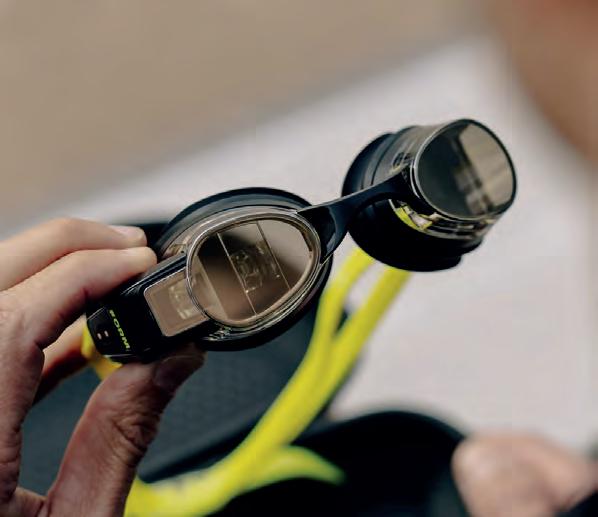
The latest generation of FORM AR swim goggles provides athletes with real-time metrics underwater. The innovative solution tracks pace, distance, stroke rate and heart rate without needing additional wearables. The goggles blend augmented reality with biometric feedback at the point of performance to provide a product that would’ve been seen as science fiction not so long ago.

Sports clubs and academies are increasingly adopting smart video systems to provide analytics that were once the preserve of elite programmes – boosting player development pathways and competitive data capture. One of the tech providers leading the sector is PlaySight which, with its AI-enabled SmartCourt systems, continued to expand in 2025 with new partnerships and features that integrate video capture, automated highlights and coaching analytics across racquet sports (tennis, padel, pickleball). The technology captures HD video, produces analytics, and assists coaching and player development. With the growth of padel, expect more courts to feature technology such as SmartCourt in 2026.





A new initiative looks to put football rivalries into good use and utilise the passion of fans to get them more physically active. Called Fans to 5k, the app-based programme will allow fans to track their fitness activities, which are then recorded and turned into points for their football team of choice. The points then feed into the Fans to 5k 12-week challenge, which will see teams battle it out to gain the most points as well as bragging rights before the end of the programme.
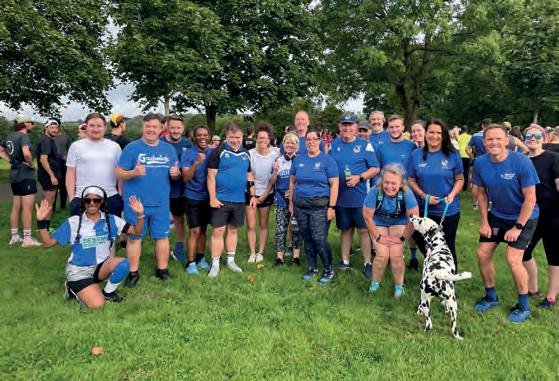

Wearable specialist, Myzone, has unveiled its new Myzone Go as part of the introduction of what it calls an entirely new category, “motivation technology” (MoTech). Myzone Go is a softwarefirst experience that will track workouts and activity wherever the user moves, with the aim of helping operators drive long-term member engagement and individuals build lasting exercise habits.
Myzone says the new MoTech approach will deliver a “deeper level of personalised motivation and seamless community connection” by turning the “science of motivation into a seamless digital experience” that rewards effort, builds habits and sustains long-term engagement.



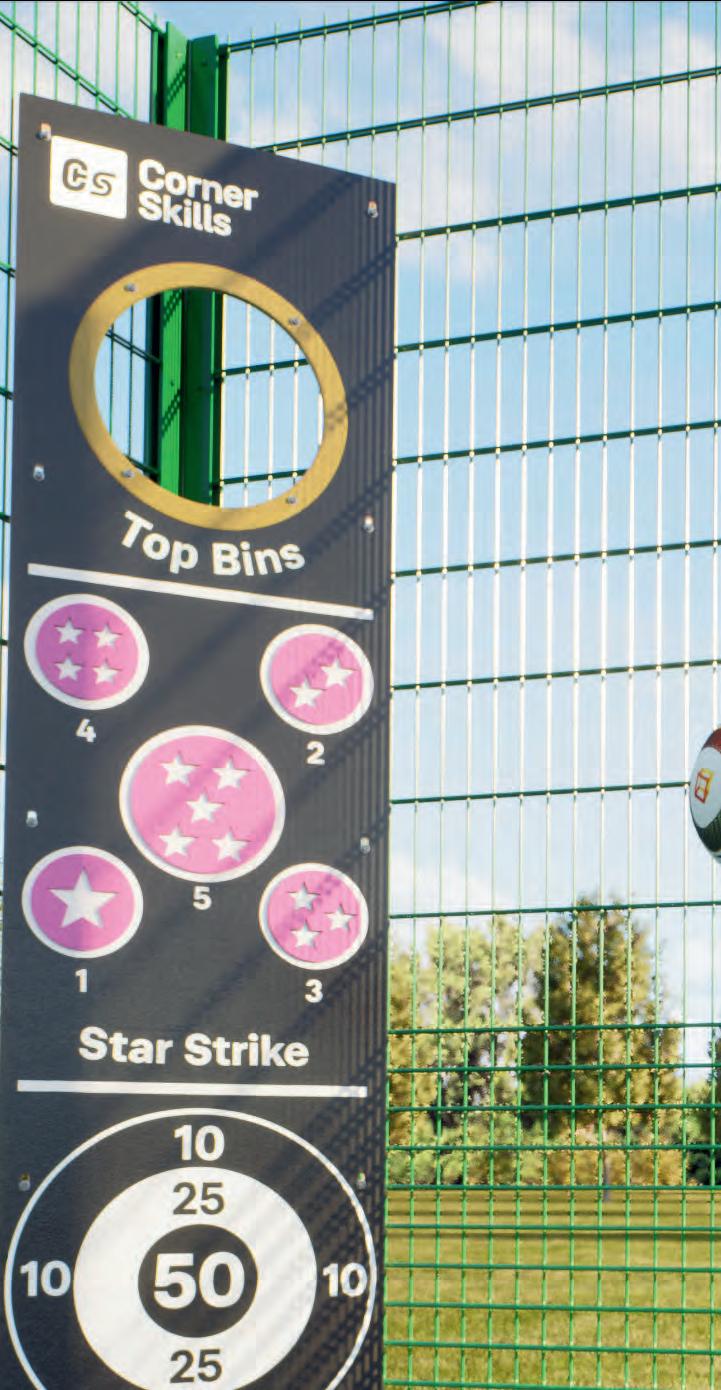
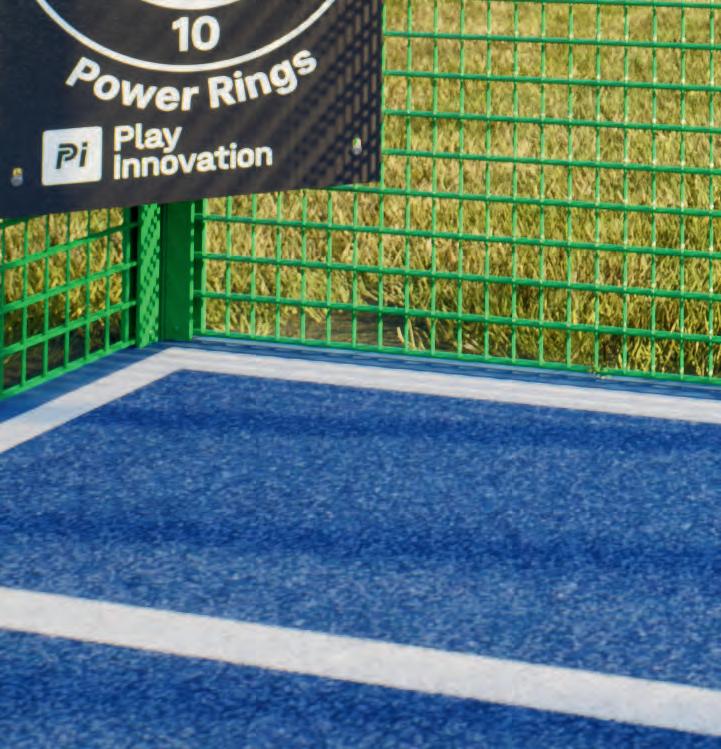



Canopy solutions specialist and SAPCA member, Fordingbridge, has completed two recent multi-sports facility projects at schools – at St Hugh’s School in Scunthorpe, Lincolnshire and Essex Primary School in Newham, London.
At St Hugh’s, Lincolnshire’s weather has made it difficult for the school to offer year-round sports, so the school needed a solution that would keep their students (ages 11-19) active through every season. The school commissioned a striking 20m x 31m taper trellis canopy, designed, engineered and installed by Fordingbridge. The result is an impressive all-weather sports zone that transforms St Hugh’s sports offering. Similarly, Essex Primary School wanted to ensure its pupils could benefit from playing sports whatever the weather. Working closely with the school’s leadership team, Fordingbridge designed, engineered and installed
Blakedown enhances sports provision at Sutton primary school
Blakedown Sport & Play, working in partnership with Vertis Buildings, delivered a new multi-use games area (MUGA) for Sutton VA Primary School, transforming an underused section of the grounds into a durable, all-weather sports facility. The project included essential site preparation, installation of a
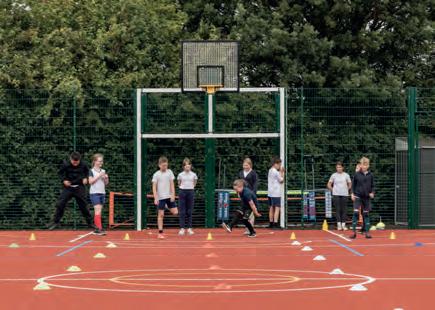
Multi-sport facilities are becoming increasingly popular. SportsNation looks at some recently completed projects
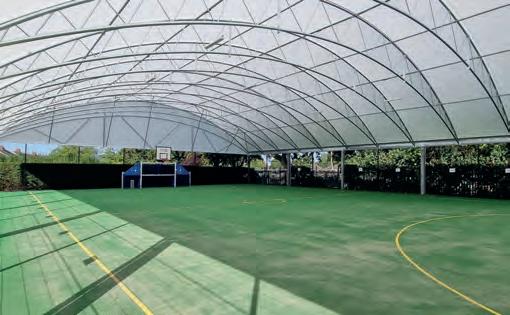
a bright, future-proof MUGA canopy that transforms how the school’s pupils stay active year-round. The result is a striking 16m x 30m steel structure – robust, low-maintenance and backed by a 25-year guarantee –ensuring generations of pupils can benefit from the gamechanging impact of the all-weather sports environment.
resilient polymeric surface, and the addition of secure perimeter fencing, clear line markings and integrated equipment storage to ensure the space is safe, practical and suitable for year-round use.
During early groundworks, the project gained unexpected attention when archaeologists uncovered a wellpreserved 15th–16th century pottery kiln beneath the site. The discovery attracted significant coverage from local news outlets and prompted strong community interest, with pupils and residents gaining valuable insight into the area’s historic craft industry. The excavation revealed over 300kg of pottery fragments, offering rare evidence of local production and enriching the school’s connection to its past. Although carefully documented and preserved, the archaeological work was managed with minimal disruption to the construction programme.
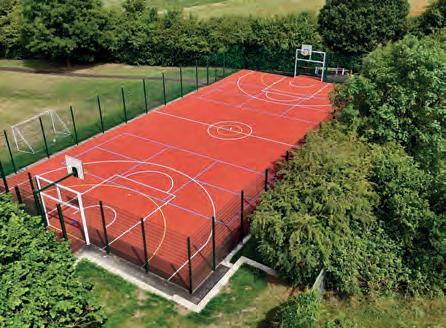
The completed MUGA now provides Sutton VA Primary School with a versatile, long-lasting facility that enhances curriculum PE, extra-curricular sport and daily physical activity. Enriched by the heritage discovery beneath it, the project represents both a modern investment in pupil wellbeing and a renewed connection to the area’s historical landscape.
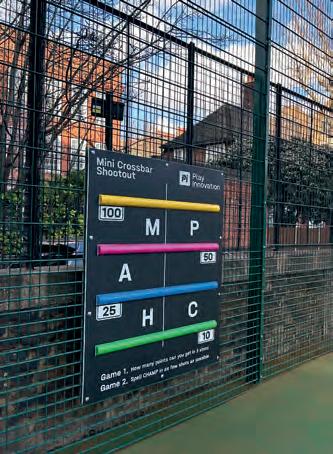
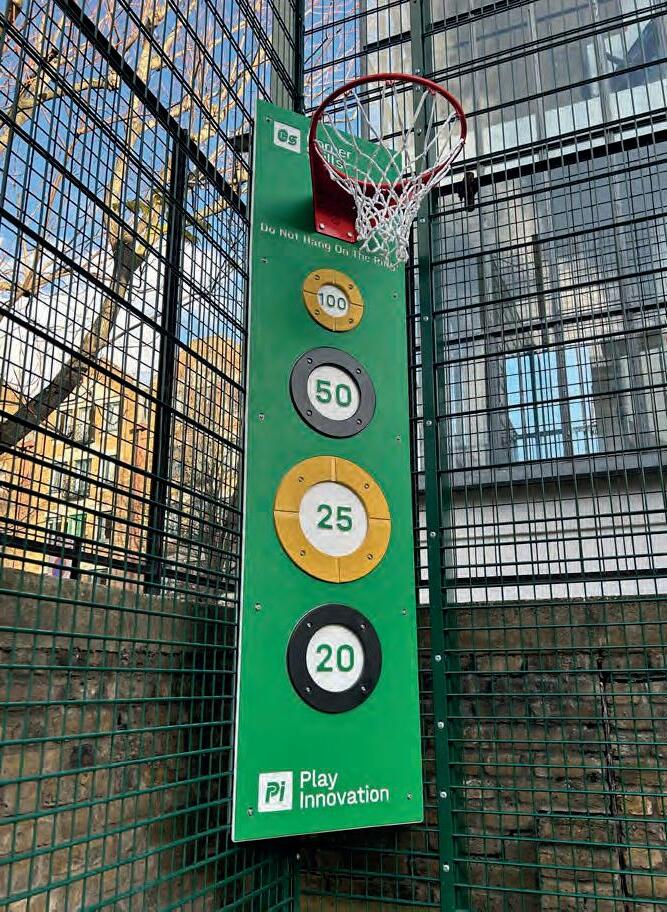




Play Innovation and Playrite provide two community sports areas in Westminster
Westminster City Council appointed SAPCA member, Play Innovation, to refurbish two under-used and ageing sports areas.
The first one to be completed was the Kennet House multi-use games area (MUGA), located just off Church Street, which underwent
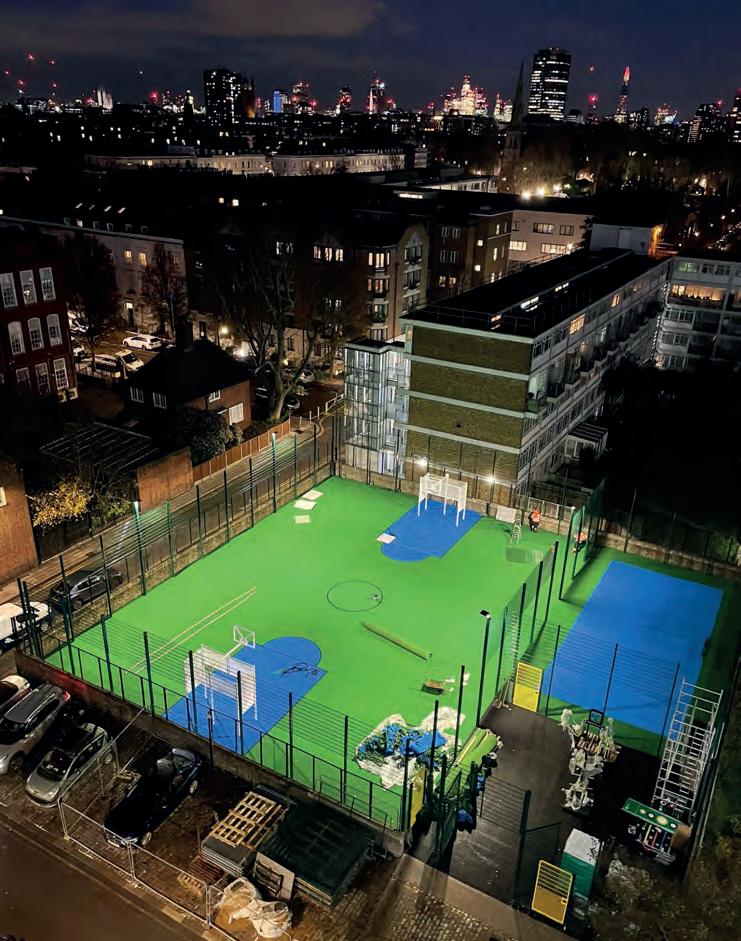
These projects stand out because they demonstrate that excellence is not defined by scale - it is defined by innovation, quality and impact
a major revamp. Delivered through the Active Westminster Programme, Play Innovation worked with MSC Consultants on the site, with Playrite’s Matchplay 2 surface playing a key role in delivering a durable, low maintenance and high-performance facility.
The second site, Johnsons Place, demanded innovation under strict budget constraints. Play Innovation’s
engineering approach featured a new layer of open-graded sports tarmac, drainage drilling and new Matchplay 2 surfacing for multi-sport. There are also Play Innovation’s trademark Corner Skills panels – one with a netball hoop and another featuring Street Snooker X. In addition, a separate outdoor fitness area has been created with equipment supplied by The Great Outdoor Gym Company.
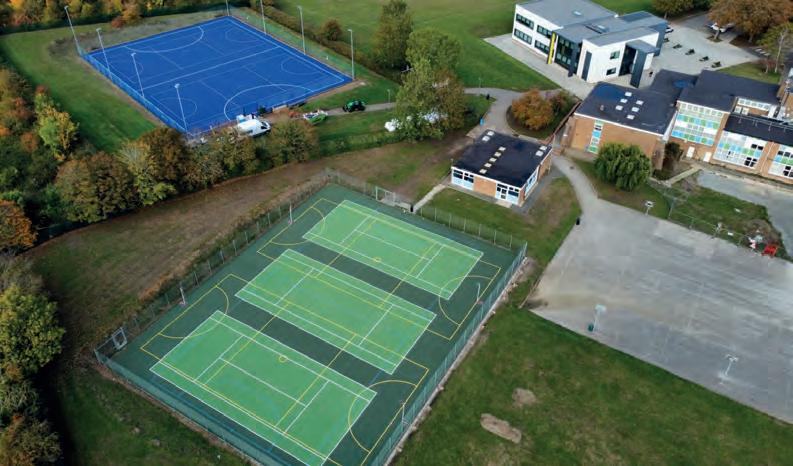
from tired tarmac to a modern multi-sport hub
Shipston High School’s outdoor courts had reached the end of their life. The old tarmac was cracked and worn, the perimeter edging was failing and the lighting and fencing no longer matched the standard of sport the school wanted to deliver.
SAPCA member, Synthetic Turf Management (STM), was appointed to transform the area into a modern, multi-sport facility – combining new synthetic turf surfacing, LED floodlighting, upgraded fencing and freshly painted courts with clear, multi-sport markings.
A team of SAPCA members partnered up to provide the Buckhurst Crescent Playzone in Swindon. Plans to build the Buckhurst Field multiuse games area (MUGA) were first announced in June 2024 by South Swindon Parish Council and given the green light in August 2024.
The Football Foundation PlayZones Programme is a nationwide initiative dedicated to creating safe, accessible, and inclusive sports spaces. In Swindon, the Buckhurst Crescent Playzone MUGA was developed to provide opportunities for football, basketball, netball and other recreational activities.
STM replaced the tired tarmac playing surface with a highperformance synthetic turf system designed for intensive school use. Key elements included a new 25mm open-textured porous macadam – providing a free-draining, stable base for the new surface – and shock pad installation to improve player comfort and safety. The choice of new playing surface is TigerTurf Evo Pro, a durable, sand-dressed synthetic turf with long warranties, ideal for netball, hockey, tennis and general exercise. The perimeter detailing includes nap lock carpet gripper edging and kickboards to protect the surface and create a clean, professional finish.

SAPCA members Chiltern Sports, McArdle Sport Tec and JHP Electrical Services, working in partnership with Swindon Borough Council, delivered the project to the highest standards of safety, performance and compliance.
The fact that the delivery team comprised SAPCA-accredited companies provided reassurance to
For operators and contractors delivering safe, durable and visually striking MUGAs, Britannia Paints provides specialist surface coatings trusted across the UK sports and play sector.
Its Decatone SR75 system is a twopart acrylic coating engineered specifically for MUGAs, netball courts, tennis courts and community play spaces. Designed for yearround use, Decatone SR75 achieves a slip resistance value (SRV) of 75+ on suitable surfaces – even in wet conditions – while delivering a longlasting, colour-rich finish that resists wear, algae and fungal growth.
Beyond MUGAs, the Britannia Paints portfolio – with more than 40 years of experience – includes dedicated tennis and netball coatings, playground paint and offroad marking systems, supporting clear, durable demarcation across cycleways, sports arenas and recreational environments.
stakeholders that the Playzone would be completed to industry best practice, with high-quality workmanship and compliance guaranteed.
The new facility, opened ahead of schedule, forms part of the £600,000 Buckhurst Field improvement project – the largest-ever investment by South Swindon Parish Council into recreation. Constructed in just six weeks instead of the expected twelve, the Playzone is now operated by South Swindon Parish Council, with support from the Football Foundation and Swindon Borough Council. The wider scheme also included restored football pitches, new changing rooms, a rebuilt skatepark, a cycleway, a tarmacked car park, and upgraded play facilities.

Adam Collier, Head of Sales at sports canopy specialist, Fordingbridge, explain how covered MUGAs can “change everything”


All MUGAs are not created equal. In the UK where blue skies are a treat rather than a guarantee, one addition instantly elevates a MUGA from a useful facility into the beating heart of a school or sports site: a purpose-designed all-weather canopy. And the impact of a MUGA canopy goes far beyond keeping the rain off.
The canopy effect: unlocking revenue, participation and possibility
All-weather canopies don’t just protect play – they unlock countless, often hidden, benefits that transform a simple court into a year-round asset.
A reliable revenue stream


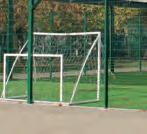




A covered MUGA doesn’t just create a year-round sports space. With a bit of imagination, it transforms seamlessly into invaluable sheltered semi-outdoor space for community gatherings and annual events like Open Days and Xmas Fairs
The impact of a MUGA canopy goes far beyond keeping the rain off
A covered MUGA becomes instantly more appealing to outside sports clubs and community groups. With no downtime due to rain, frost or snow, schools and sports clubs can hire out the space more reliably and frequently – providing a dependable new income source at a time when budgets are under pressure
A catalyst for active, healthier lifestyles
When sport is possible 365 days a year, participation rises. Covered MUGAs support sustained PE delivery and regular training sessions – helping young people build healthy habits and discover the confidence that physical activity brings
boost
Schools with canopied MUGAs become sought-after hosts for inter-school fixtures and tournaments, and having quality year-round facilities elevates their reputation by signalling their commitment to pupil development both inside and outside the classroom
Rain and cold are obvious challenges – but intense sun can be just as disruptive. Canopies using fabrics such as Fordingbridge’s Opal 60 filter harmful UV rays, enabling teachers to confidently encourage outdoor play even on the brightest days
Wet kit that sits in lockers or cloakrooms all day is the bane of teachers and parents’ lives! But with a covered MUGA those days are over with a canopy protecting students and their sports kit from the worst of the elements
A well designed MUGA has the power to enhance wellbeing, build community and inject fresh energy into disused corners of a site. But without a canopy, its full potential is always at the mercy of the forecast. Add one and the equation changes completely.
A canopied MUGA becomes a year-round asset –financially, academically and socially – delivering returns that far exceed the initial investment and reshaping how a site functions for decades to come.
If you’d like to discover how a covered MUGA could transform your site, why not book a complimentary site visit with MUGA canopy experts Fordingbridge today: https://www.fordingbridge.co.uk/contact-us/



















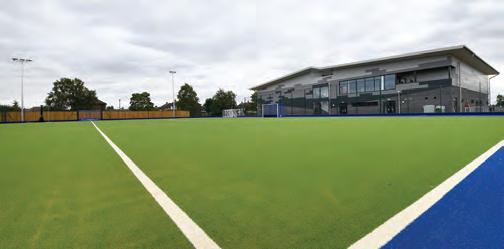


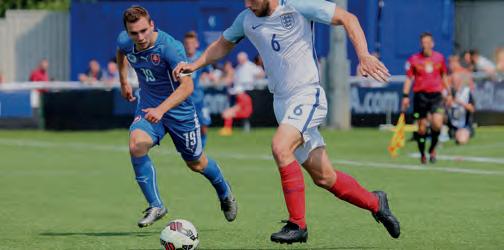














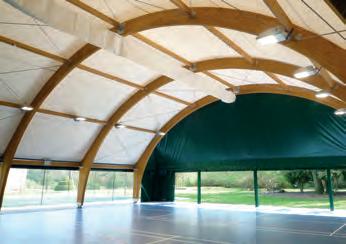






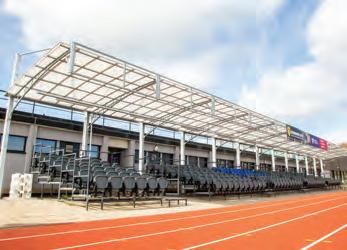


















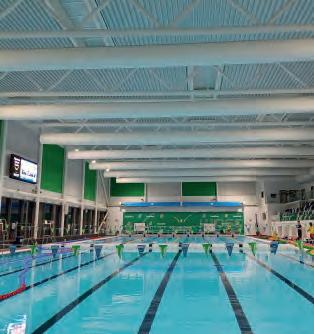














































































































































SPATEX represents all sectors of the water leisure industry from pools, spas, saunas to hydrotherapy, steam rooms and play equipment, in both the domestic and commercial arena.






























Interview with Immediate past chair of
The Swimming Alliance Danielle Obe
NEURODIVERSITY
AQUATICS’ SECRET SUPERPOWER
RLSS UK Chief Executive
SIMMY AKHTAR
‘Aquatics needs to keep focus on the bigger picture’
Swim England sets a new standard of excellence in swimming teacher training with the NEW SEQ Level 2 in Teaching Swimming.

This means:
Learners qualify faster
Our new qualification delivers quality without compromise combining a streamlined pathway with flexible entry routes to attract and retain the best talent.
Developed in line with CIMSPA’s updated Swimming Teacher Professional Standard and delivered by licensed educators, our qualification ensures learners and employers can trust the training to meet the highest industry standards.
Learners qualify faster with all the skills they need to teach confidently from day one.
Improved delivery model
Licensed educators benefit from an improved delivery model, supported by modern assessment technology.
Poolside-ready teachers
Providers get poolside-ready teachers equipped with the skills and confidence to deliver exceptional learn to swim lessons.
Flexible pathways to success
Whether learners start directly, begin as a Learn to Swim Helper, or upgrade from Level 1, there’s an option that’s right for every individual.
Join us in shaping the future of swimming teaching.
Courses will be available to book from January 2026. Visit swimenglandqualifications.com to learn more.
Welcome to the first issue of SwimNation
Whether you’re holding these pages in your hands or reading on screen, this launch edition marks the start of a new, dedicated voice for the UK swimming and aquatics sector.

SwimNation has been created in partnership with The Swimming Alliance, to support its work in addressing the shared challenges facing public pools and open water provision. From rising energy costs and ageing facilities to workforce shortages and sustained pressure on local authority budgets, the sector is navigating a critical period – one with direct implications for participation, public health and children’s access to swimming.
As the Alliance’s official media partner, we aim to provide a podium for those conversations.
Across each issue, SwimNation will bring together sector news, policy developments, facility and workforce insights, innovation and informed opinion from leaders working at every level of aquatics. The aim is not to amplify noise, but to support constructive, evidence-led discussion and practical solutions.
Published three times a year in both print and digital formats, SwimNation is designed to inform, connect and represent a sector that matters. We’re pleased to have you with us at the start.
So if you work in aquatics and have a pressing issue you want to highlight, or news to share, let us know. The SwimNation team will also be at SPATEX, the UK’s dedicated aquatics trade show, which is held at Coventry Building Society Arena from 3 to 5 February 2026. Come and say hello!
Tom Walker, Editor
Tom Walker
Editor
T: +44 (0)7796 512769
E: tom@nationmedia.uk
John Challinor
Publisher
T: +44 (0)7971 043396
E: john@nationmedia.uk
Register for your free subscription at www.swimnation.uk















































www.rlss.org.uk/swimming-pools-consultancy-service



















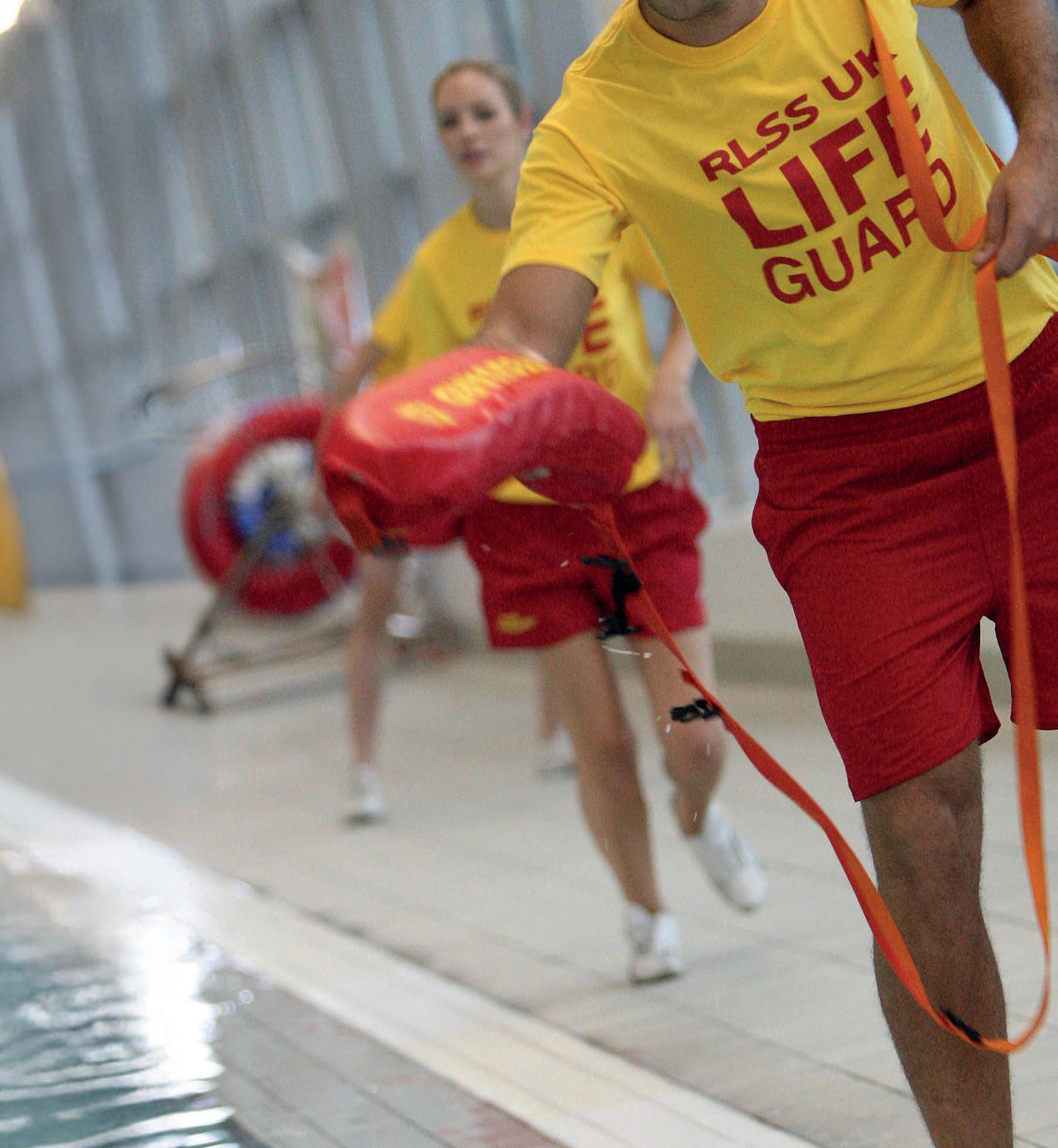


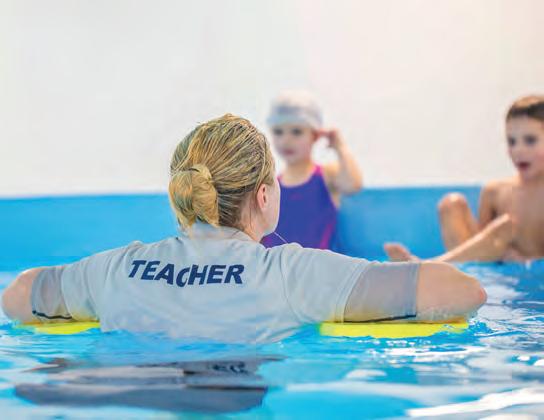
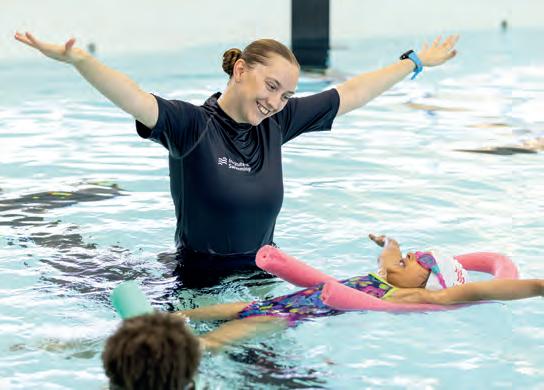












98 Shaping the future STA launches new Level 2 Qualification
102 Diving deeper
Will swimming benefit from £400m
104 Preview: RLSS UK Technical Conference CPR, First Aid and water safety on the agenda
106 Column: Tara Dillon, CIMSPA CEO
Meeting demand and telling our professional story
108 Preview: One Swim England Summit
Setting the scene for the future of aquatics
114 Celebrating excellence
Full list of Aquatic Excellence Award 2025 winners
116 In conversation: Comfort Academy
An interview with a STA Award winner





122 Interview: Danielle Obe
Outgoing Swimming Alliance Chair on future plans
130 Swimming against the tide
A look at the State of the Industry Report 2025
136 Interview: Simmy Akhtar
“We need to focus on the bigger picture”
142 Aquatics’ secret superpower
How can neurodivergency help aquatics?
146 Inclusion in practice
Breaking down barriers for the deaf community
150 Preview: SPATEX 2026
The event’s 30th edition will be “biggest ever”
156 Lifeguards and technology
How tech can help keep pools safe


Simmy Akhtar
CEO
RLSS UK
@RLSSUK


Michelle Bridle
Exhibition Organiser SPATEX
@SPATEX_show
Dave Candler
CEO Swimming Teachers’ Association
@davecandler1

Danielle Obe Chair
The Swimming Alliance

Rebecca Cox
Managing Director Institute of Swimming @InstituteofSwim

Andy Salmon CEO
Swim England @Swim_England
Dedicated to the aquatics sector
SwimNation is at the heart of the UK’s swimming and aquatics sector. Published in partnership with the Swimming Alliance, it is the go-to publication and news website for anyone involved in swimming and aquatic provision across the UK. From facility development and operations, research and technology though to sustainability, training and programming, SwimNation covers it all. SwimNation is published three times a year as a standalone title, with each issue also included within SportsNation. The Swimming Alliance advocates for equity, sustainability, and strategic investment in swimming as a life-saving skill, public health priority and as a national development asset. You can find out more about the Swimming Alliance at www.theswimmingalliance.org

Everyone Active has secured a deal to operate leisure centres in Northampton and Daventry –which include a historic, Grade II-listed Art Deco indoor pool.
The company will manage Daventry Leisure Centre, Daventry Sports Park, Moulton Leisure Centre, Danes Camp Leisure Centre, Mounts Baths and Lings Forum Leisure Centre from April 2026. The centres are currently operated by Trilogy Active, which chose not to bid for the new contract.
The Mounts Baths in Northampton was built in 1936 and is one of just a few Art Deco pools still open in the UK.
As part of the deal, the facilities will see a comprehensive programme of modernisation and refurbishment. According to West Northamptonshire Council – which owns the facilities – the investment forms a key part of its long-term commitment
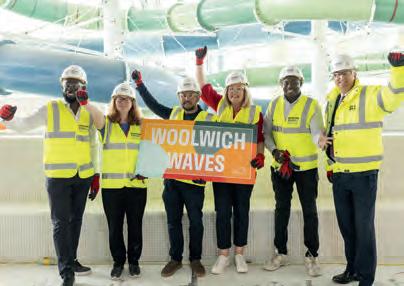
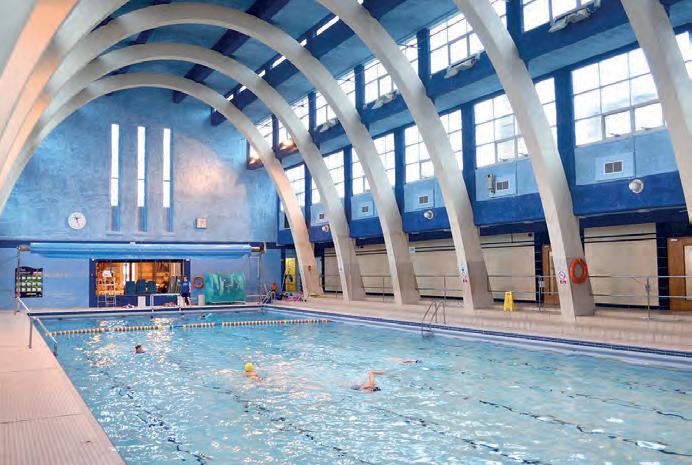
to “boost health and wellbeing, increase participation in physical activity and ensure leisure facilities continue to meet local need”.
The council’s other facilities, Towcester Centre for Leisure and Brackley Leisure Centre,
will continue to be operated by Legacy Leisure under an existing contract which runs until 2036.
Councillor James Petter said: “This new service represents a major investment in the future of leisure provision in West Northants.”
Woolwich Waves leisure centre in east London opened its doors to the public on New Year’s Day 2026.
The centre, designed by FaulknerBrowns Architects, features a 25m, eight-lane swimming pool, leisure pool with flumes and slides, a teacher training pool and a large health club.
Owned by The Royal Borough of Greenwich (RBG) council, the centre was built by Morgan Sindall with Buro Happold providing engineering support.
RBG has now handed the building over to leisure management company GLL, which will operate the facility under its Better brand.
The Swimming Alliance has elected Andy Salmon, Chief Executive of Swim England, as its new Chair, with Andrew Clark, Head of Sports & Aquatics at GLL, elected to the role of ViceChair. In his new role, Salmon will spearhead efforts to further enhance collaboration across the swimming sector, jointly campaign for the pools the country needs, strengthen school swimming programmes, and raise water safety standards nationwide.
“I’m honoured to take on the role of Chair,” Salmon said. “Since joining the Alliance I’ve been struck by the positive way it has brought the swimming sector together to strengthen our collective voice. I’d like to pay tribute to our past Chairs, Debbie Kaye and Danielle Obe, whose leadership and dedication have built a strong foundation for our shared objectives. Now, more than ever, it’s vital we collaborate closely – across government, providers, and community organisations – to drive forward our key ambitions like protecting access to water, improving school swimming and water safety and tackling the inequalities we see within aquatics.”
Andrew Clark brings more than 18 years of experience leading GLL’s aquatics programmes, championing


Andrew Clark
Together, we can build a robust, inclusive pathway from school swimming lessons to lifelong safe enjoyment of the water
accessible and inclusive swimming. As Vice Chair, he will play a key role in expanding national coordination and support for educational initiatives.
“It’s a privilege to be elected Vice-Chair of the Swimming Alliance,” Clark said. “I’m particularly passionate about working alongside our sector partners to support the School Swimming and Water Safety Taskforce, ensuring every child not only successfully learns to swim, but gains essential rescue and water safety skills. Together, we can build a robust, inclusive pathway from school swimming lessons to lifelong safe enjoyment of the water.”
The Swimming Alliance is a collaborative group of over 25 leading national organisations united to address the urgent and systemic challenges facing swimming and aquatic participation across the UK. It advocates for equity, sustainability, and strategic investment in swimming as a life-saving skill, public health priority and national development asset.
The Alliance represents voices from across the aquatic sector, including national governing bodies, community organisations, educators, facilities operators, charities and policy advocates. It is committed to ensuring that every child, every family, and every community can access the benefits of swimming – regardless of ability, gender, geography, ethnicity, income or background.
The alliance consists of the Black Swimming Association, CLOA, Children’s Alliance, CIMSPA, CLUK, Everyone Active, Freedom Leisure, Future Lidos, GLL, Level Water, Outdoor Swimmer, The Outdoor Swimming Society, Places Leisure, RLSS UK, Swim England and STA.



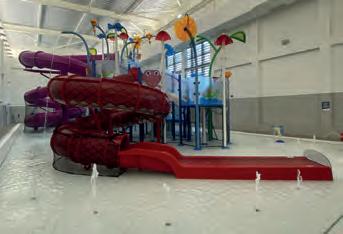
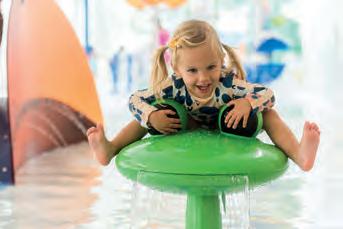


In what has been described as a “national first”, Swim England and Plymouth Active have formed a strategic partnership that aims to help people lead healthier, more active lives through swimming and aquatic activity.
The two organisations have signed a memorandum of understanding with a goal of making Plymouth the most active coastal city by 2034. The MoU will see the two organisations work together to champion inclusion, support wellbeing and create “inspiring opportunities for people of all ages to enjoy, learn and thrive in the water”. Through a new joint steering group, the partners will share their expertise, insight and resources to drive meaningful, long-term community impact.
In a joint statement, the organisations said: “The partnership lays the foundation for a longterm, collaborative approach to growing aquatic participation, supporting local ambition and
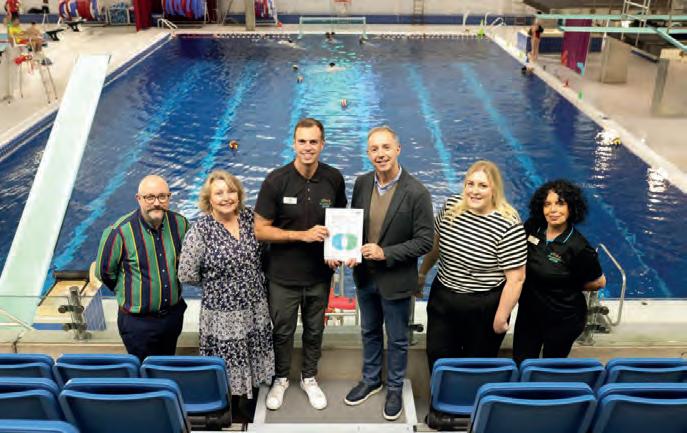
Plymouth aims to be the most active coastal city by 2034
championing Plymouth as a leading destination for aquatic sport, recreation and wellbeing.”
Central to the partnership is harnessing aquatics as a way to improve physical and mental health, build community and connect people to Plymouth’s unique coastal environment. The collaboration will
focus on developing welcoming, inclusive programmes; strengthening links with schools, clubs, and local partners; expanding grassroots and performance pathways; and celebrating Plymouth’s role as Britain’s Ocean City. Swim England CEO, Andy Salmon, said it is the first partnership of its kind.
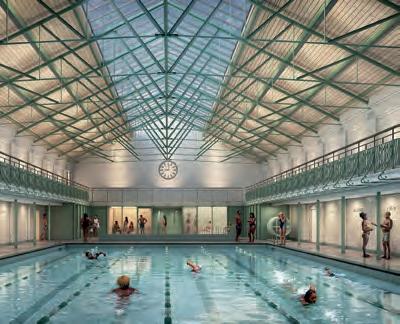
Works will include a comprehensive refurbishment of the existing swimming pool
The redevelopment of Kings Hall Leisure Centre in Hackney, London, is entering its next phase, following the historic building’s closure on 24 December 2025.
Preparatory works on the Grade II-listed site, owned by Hackney Council, are scheduled to begin in the new year, with equipment removal planned for January 2026, and construction expected to start in February 2026. The refurbished centre is expected to become operational and reopen in early 2029.
The redevelopment plans, designed by FaulknerBrowns Architects, aim to secure the long-term future of Kings Hall Leisure Centre and “significantly improve” facilities for residents. Works will include a comprehensive refurbishment of the existing swimming pool, alongside the creation of a new teaching pool with a movable floor.

STA has confirmed that, for 2026, membership fees will remain frozen for the 13th consecutive year. STA said the decision reaffirms its longstanding commitment to keeping membership affordable.
For 2026, STA has also further bolstered the educational package to give members “even more value”. From January 2026, members will benefit from an expanded CPD and webinar library, including the new Mental Health Awareness CPD. This has been developed in response to member feedback and the increasing
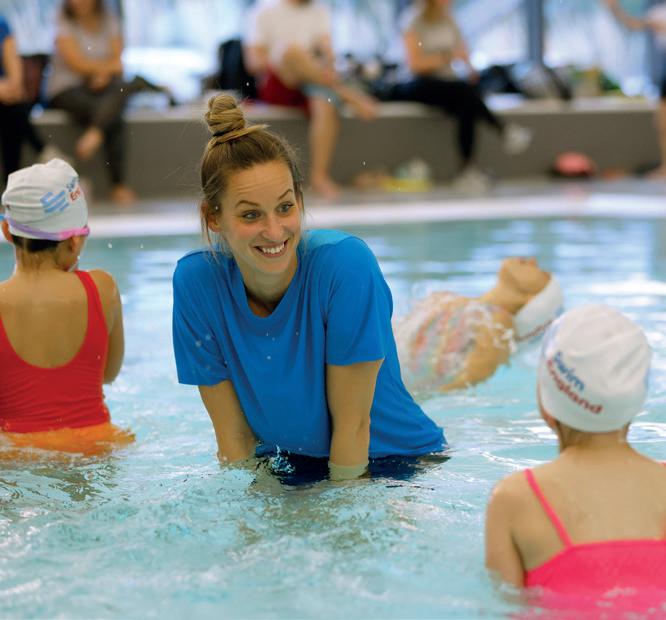
importance of wellbeing within aquatic and leisure environments.
Dave Candler, STA’s CEO, said: “Our membership package is designed around what swimming teachers and our tutor workforce tell us they need. It provides professional recognition, essential personal insurance, and access to a wide range of tools that support them in their day-to-day roles. Our extensive library of educational and marketing resources continues to be highlighted as a major benefit, alongside the cost savings available through discounts on awards, STA events, and more.”
North Warwickshire Borough Council has revealed plans to build a £27m leisure centre in Atherstone.
The proposed development would feature a wide range of facilities, designed to meet the needs of residents of all ages and abilities. Set to replace the town’s existing leisure venue, plans for the new Atherstone Leisure Centre include a main, four-lane swimming pool and a learner pool, a toddler splash pad for water play and a health club with a large gym floor and dedicated studio for group exercise classes.
Other proposed facilities include a community space for events and activities, an adventure play zone for children and café.
The new building will sit in a similar location as the existing leisure centre and the council will now be engaging with the public and key stakeholders over the coming weeks to gather feedback and ensure the final plans “reflect local priorities”.
Swim England, the national governing body for swimming, has overhauled its teaching qualification structure, introducing a new streamlined, “one qualification” pathway to becoming a swimming teacher.
The new SEQ Level 2 in Teaching Swimming qualification has been
designed to consolidate the learning journey, allowing individuals to become fully qualified and poolside ready more efficiently. Developed following a sectorwide consultation, the new qualification directly aligns with CIMSPA’s updated Swimming Teacher Professional Standard.
Making public leisure sustainable and building healthier communities.
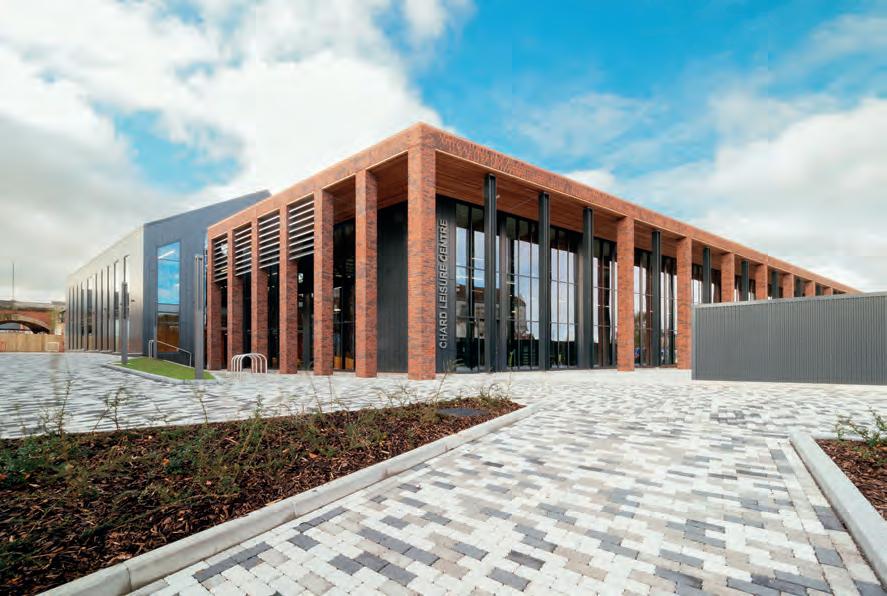
285+ completed projects
81% of clients choose us for further projects
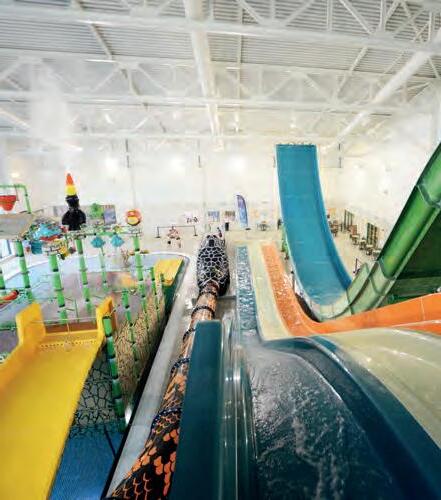
£465m+ investment in local authority leisure
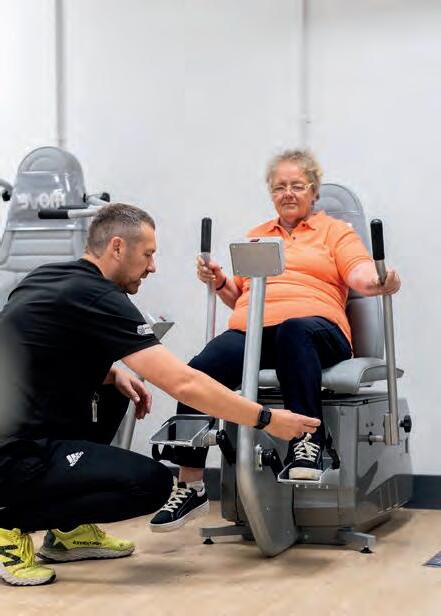
Alliance Leisure are a trusted and experienced leisure development partner, with over 25 years’ experience transforming leisure facilities for local authorities.


The new Lichfield Leisure Centre has opened its doors to the public.
Owned by Lichfield District Council, the centre – estimated to have cost around £11m – offers a range of amenities and has replaced the ageing Friary Grange leisure centre. Facilities include a 25m, six-lane variable depth swimming
The latest figures from Sport England’s Active Lives Children’s Survey show that the number of children leaving primary school able to swim 25 metres has increased to 73%, an increase of 3% in the last 12 months. Attainment levels for pupils in Years 3 and 4 also showed an improvement of 2.8%.
Speaking after the release of the figures, Swim England Chief Executive Andy Salmon, said: “It is positive to see these figures heading in the right direction which is testament to the hard work of Learn to Swim and Swim
school providers, schools and teachers, but it is clear there is still so much work to be done.
“We want every child to be safe in, on and around the water. These figures are still below where they were in 2017 and far too many children are leaving school unable to meet the requirements so we must all redouble our efforts.
“Swimming remains one of the most popular activities amongst children and it is more than just an activity, it’s a life-saving skill. Every child should leave primary school able to be safe in, on and around the water.”
pool; poolside seating and changing village. The centre was designed by ReCreation, a company founded by British Olympians – including swimmers Rebecca Adlington OBE and Steve Parry – which provides more affordable swimming pools featuring an above-ground design, which doesn’t require excavation.
Swim England has launched a comprehensive governance review to evaluate and shape the organisation’s governance structures and procedures.
The objective of the review will be to address some of the recommendations within the Listening Report, and to ensure the organisation is in “the best place” to deliver its One Swim England strategy.
“Starting with a blank sheet of paper, the governance review will explore what best practice governance structures and procedures could look like,” Swim England said in a statement.
“It will be rooted in the current sporting landscape with an eye on future challenges and opportunities rather than how things have always been done.”
The project will be guided by a Governance Review Steering Group, which will provide strategic support and guidance, acting as a “critical friend” by making suggestions regarding how to conduct the review.

The winners of the Swim England National Awards 2025 have been revealed, with a total of 25 awards being presented during a fantastic celebration at Birmingham University’s Great Hall. Winners included West Grinstead Swimming Academy (Swim School of the Year), Tees Active (School Swimming Award), Freedom Leisure (Pioneering Pool Operator), Active Aquatics (Aquatics For All Award), Link Centre (Health Impact Award) and Winsford Swimming Club (Club of the Year).
Swim England CEO Andy Salmon said: “These awards are one of my

favourite events of the year, an opportunity to take a moment to rightly applaud and give thanks to so many people who do so much for our sports and activities.
“Congratulations and a huge thank you from everyone at Swim England and from the whole aquatics community who owe you all so much.”
• To read the full list of the 2025 National Award winners and to view a selection of images from the awards event, visit the Swim England website: swimming.org/swimengland/ national-awards-winners-2025/
RLSS UK has appointed Sarah Don-Bramah to the role of Director of Membership and Education. She will lead a team in the Society’s newly created Membership and Education Directorate, focusing on membership, branches, volunteers, education, and events. She will work to strengthen and grow the RLSS UK membership support and offering. Sarah will also deepen engagement with current and prospective members and volunteers. She will report to CEO Simmy Akhtar and inform the board on the directorate strategy. RLSS UK CEO, Simmy Akhtar, said: “Joining our Senior Leadership Team, Sarah will lead the development and implementation of the directorates’ operational plan, in collaboration with members and branches, all of whom are critical to the success of achieving our mission and to ultimately create communities free from drowning.”
STA has confirmed that Virgin Active has re-signed its partnership with the association, continuing the collaboration first established in 2021 to support the delivery of aquatic and safety training across Virgin Active’s UK clubs.
Over the last four years, Virgin Active’s Learning & Development
(L&D) Team has significantly expanded its internal training capability, delivering thousands of face-to-face and blended learning opportunities for team members across its nationwide estate. Virgin Active will continue to deliver STA’s full portfolio of swimming teaching qualifications
Dave Candler, CEO, Swimming Teachers’ Association (STA), reveals details of the new Level 2 Qualification, which launched in January 2026
In January, STA officially launched its brandnew Level 2 Swimming Teacher Qualification. Developed and endorsed against CIMSPA’s updated Professional Standard - and shaped by extensive feedback from members, swim schools, tutors, learners and employers across the UK - this new regulated qualification represents an important step forward for our sector. It will not only shape the future of the swimming teaching profession, but also significantly streamline how courses are delivered and managed.
A priority throughout development has been ensuring the qualification reflects the realities of today’s poolside environment. The curriculum has been completely refreshed and aligned with CIMSPA’s updated Professional Standard across the full learn-toswim pathway, bringing together everything teachers need to deliver safe, high-quality, inclusive lessons. This enhanced curriculum includes key strokes, aquatic skills, personal survival, rescue techniques and essential water safety - all informed by industry insight and the changing needs of learners. The structure enables teachers to build strong technical knowledge while also developing the broader skills required for effective, learner-centred teaching. Importantly, we have placed a much stronger emphasis on practical, work-ready skills. Across
consultation, employers consistently told us that new teachers needed more hands-on experience to ensure they felt confident from the moment they stepped onto poolside. In response, this qualification includes significantly more practical teaching and real-world application. It equips learners not only with the knowledge of what to teach, but also the confidence and capability to teach effectively.
This focus on practical readiness marks a real shift in the industry and is one of the most important developments of the new programme.
Just as the needs of learners have evolved, so too have the needs of tutors and Approved Training Centres. ATCs highlighted the need for clearer delivery structures, more flexible models and reduced administrative strain. We listened closely to those insights.
The result is a fully modernised delivery model supported by new digital tools and blended learning options. Tutors will now benefit from updated resources designed specifically to simplify planning, running and assessing courses. These enhancements mean courses can be delivered more efficiently, whether face-toface, online, or through a combination of both.
One of the most transformative innovations is our AI-assisted marking. This technology will automatically check and process defined elements of learners’
portfolios, reducing the marking burden during courses while maintaining consistency and accuracy. This ensures tutors can spend more time teaching and supporting their learners, rather than managing paperwork.
Learners, in turn, will receive feedback more quickly, which is vital for their progress and confidence.
We have also introduced a fully digital learner portfolio and a standalone online safeguarding module. This allows learners to complete safeguarding independently and flexibly, ensuring that tutor-led time is focused on the core programme itself.
By embracing modern learning methodologies and prioritising tutor contact time, this qualification provides a more flexible, streamlined and supportive experience for everyone involved in training delivery.
To truly modernise training, it was essential that this qualification created clarity and consistency across the sector. The new structure supports the full pathway of teaching across all ability levels, ensuring teachers can confidently support learners at every stage of the learn-to-swim journey.
At the same time, one of the qualification’s real strengths lies in its comprehensive scope. By bringing together the skills needed to teach every ability and the full range of aquatic skills into one clear pathway, it creates consistency for teachers and employers alike. This is particularly important
Crucially, this qualification is designed to train teachers - not to prescribe a specific awards programme
for operators, local authorities and swim schools who need a predictable, high-quality standard of teacher training to support workforce planning.
Crucially, this qualification is designed to train teachers - not to prescribe a specific awards programme. This ensures STA-qualified teachers remain equipped to work confidently across different learn-to-swim frameworks used throughout the UK. This flexibility remains one of STA’s defining strengths, and it is central to supporting employers’ needs in a diverse sector.
Throughout consultation, employers were clear that training should not end the moment a teacher becomes qualified. They emphasised the need for
structured post-qualification development to help new teachers grow in confidence, embed best practice and remain aligned with industry expectations. In response, this qualification includes built-in support beyond certification: every learner who completes the programme receives a bundle of CPDs and 12 months of STA membership. This ensures teachers continue to develop professionally during their first year in the workforce, while giving employers the reassurance that their teams are supported, up to date and equipped for long-term progression.
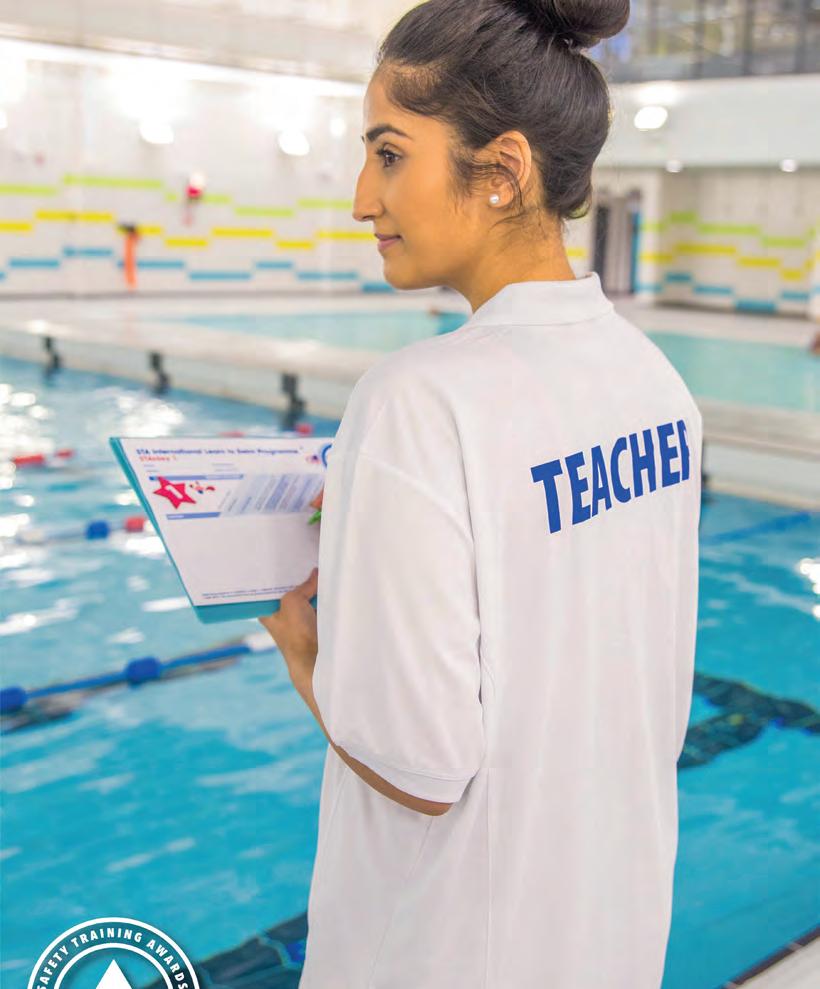
As part of this launch, we have invested heavily in supporting the entire training network. Throughout 2025, we delivered a comprehensive programme of live webinars, tutor upskills, resources and implementation briefings to ensure that ATCs, tutors, IQAs and swim schools are fully prepared for the transition.
This collective preparation would ensure that when courses went live, teachers and training providers would be able to confidently adopt the new approach and take full advantage of the enhanced delivery model.
Our new Level 2 qualification sets a new benchmark for swimming teacher training in the UK, and we are proud to lead the way as a national governing body for swimming. By embedding digital tools, embracing innovations such as AI-assisted marking and strengthening the practical, learner-focused design, we are addressing today’s challenges while shaping the learners of tomorrow.
This qualification reflects STA’s long-standing
commitment to listening to the industry, adapting to change and leading with solutions that support tutors, empower learners and build a stronger, more confident workforce. As we look ahead to the coming years, this launch marks the beginning of a new chapter - one where training is more efficient, more consistent and more aligned with the future needs of aquatics.
For the 20,000+ teachers we represent, for the swim schools and operators we support, and for the millions of learners who rely on safe, high-quality swimming lessons, this qualification sets the standard for what comes next. For more information and to register / search for the first courses, visit www.sta.co.uk
Dave Candler is the CEO of the Swimming Teachers’ Association (STA), a position he has held for 10 years, supporting more than 20,000 swimming teacher members across the UK. Alongside this, he is CEO of the International Federation of Swimming Teachers’ Associations (IFSTA), representing organisations in 22 countries worldwide. Dave also holds Chartered Manager Fellow status with CIMSPA and sits on the Swimming Alliance Steering Group, helping to shape national standards, workforce development, and the future direction of the aquatics sector.




















STA's new Level 2 Swimming Teacher Qualification is reshaping how courses are delivered to meet the needs of today's workforce, tutors and learners.







• Endorsed Against CIMSPA’s Updated Professional Standard
• Modernised Delivery Model, Including AI Assisted Marking


• Flexible Study Options

• Support Beyond CertificationCPD Bundle and STA Membership





























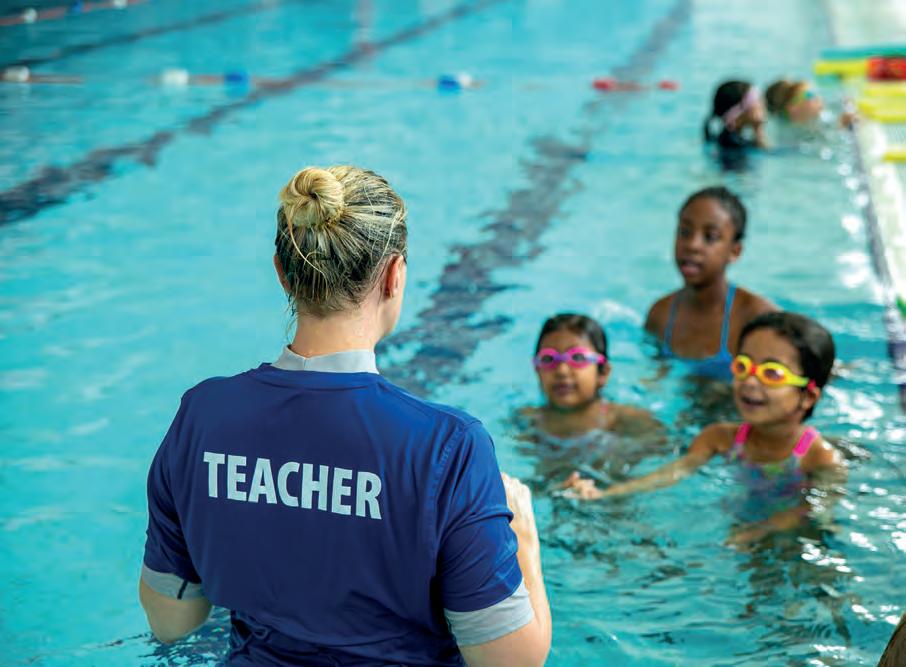








Grassroots sport is set to benefit from an extra £400m worth of funding. But will the investment allocated to swimming and aquatics go deep enough to save Britain’s pools?
When the Government announced a £400 million boost for grassroots sports facilities as part of a wider, £900 million investment in sport in June 2025, it sounded like a lifeline. But for millions of swimmers and communities across England, the question remains: will that money actually reach the pools and leisure centres that keep Britain moving, and is it enough to make a real difference?
Earlier this year, a coalition of sector leaders from across leisure and local government – including Swim England, ukactive, the Local Government Association, and Community Leisure UK – launched a campaign urging ministers to channel this funding through local authorities. Their message was simple: if we want healthier communities, we need sustainable swimming pools and leisure centres at the heart of the plan.

The coalition’s open letter to Government highlighted a stark reality. Since 2010, more than 500 pools have closed, stripping away 34,000 m² of water space. Nearly 60% of existing pools are past their design life or in need of refurbishment. And with energy and staffing costs soaring, one in four councils is considering cutting leisure services.
The stakes couldn’t be higher. Physical inactivity is projected to rise by 35% by 2030 if facilities continue to vanish. That means more pressure on the NHS, even greater health inequalities and fewer opportunities for communities to stay active.
The coalition argued that councils are best placed to allocate funds strategically, ensuring investment reaches the facilities that matter most.
Huw Edwards, Chief Executive at ukactive said: “Investing strategically in gyms, pools and leisure centres will demonstrate the Government’s commitment to the major drivers of physical activity”.
This approach would also align with the Labour government’s 10-year health plan, which prioritises prevention and community wellbeing.
Following the campaign, Swim England Chief Executive Andy Salmon joined sector leaders at a Westminster roundtable with the Minister for Sport and DCMS officials. Their goal: to turn words into action.
Speaking after the meeting, Salmon didn’t mince his words: “Swimming is particularly popular amongst older age groups, and those with a disability or long-term health condition. If we want to tackle health inequalities and best support a healthier and happier nation then it’s vital we have a network of sustainable pools for people to access. That’s why we need to see this investment targeted at the pools and leisure centres the nation needs.”
His point was backed by hard data. 12.4 million adults
If we want to tackle health inequalities and best support a healthier and happier nation then it’s vital we have a network of sustainable pools for people to access

swam last year. The popularity of swimming is growing amongst older age groups, with 280,600 additional regular swimmers aged 55+ in the last two years.
When it comes to accessibility, more adults with a disability or long term health condition swim than play football, tennis, rugby, hockey and cricket combined. Almost 20 per cent of adults with three or more health impairments swim. 1.4 million adults said swimming has helped ease their anxiety or depression and regular swimming can cut the risk of chronic disease by up to 40% – making it one of the most effective tools for public health.
Swimming isn’t just a sport; it’s a lifeline. For families, it’s a safe way to stay active together. For older adults and those with disabilities, it’s often the only accessible form of exercise. And for millions, it’s a proven antidote to stress and isolation.
Yet without urgent investment, these benefits could disappear. Leisure centres and pools are community anchors – places where health, social connection, and opportunity intersect.
The NHS’ performance relies on public leisure facilities to deliver its services - two thirds of cancer rehabilitation services and 79 per cent of social prescribing initiatives are delivered in leisure centres. In addition, 75 per cent of grassroots sports clubs rely on affordable leisure facilities to operate.
Losing them would mean more than losing a lane; it would mean losing a vital part of Britain’s wellbeing infrastructure.
The Government’s £400 million pledge is a start, but the sector is clear: it must be spent wisely. Channelling funds through local authorities ensures accountability, strategic planning and alignment with health priorities.
As Andy Salmon summed up: “We need to make sure swimming pools and leisure centres are recognised as essential to community sport and public health. This is about building a sustainable network for the future – not just patching holes today.”
The message to ministers is loud and clear: invest where it counts. Because when pools thrive, communities do too.





Some of the UK’s leading medical and safety experts will take the stage at the RLSS UK Technical Conference in February to share the latest insights into CPR, First Aid and water safety
As the leading organisation for water safety and lifeguarding, Royal Life Saving Society UK (RLSS UK) works with some of the most experienced and respected medical professionals and safety experts to keep its industry-leading awards and qualifications robust and aligned with the latest evidence-based guidance.
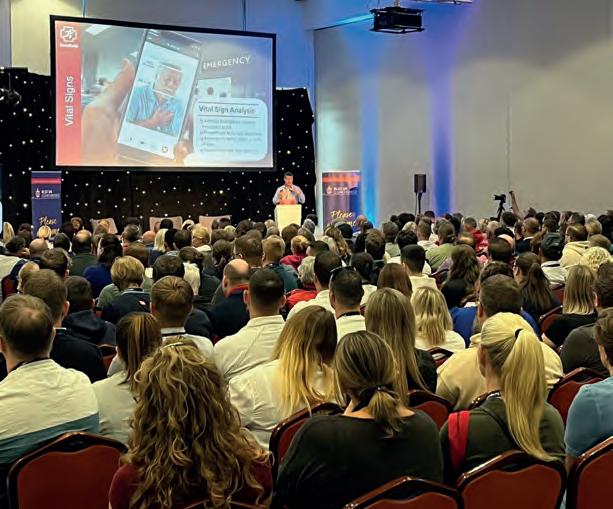
On 12 February 2026 at the Coventry Building Society Arena in Coventry, the RLSS UK Technical Conference will explore the science behind new guidelines from the Resuscitation Council UK (RCUK), which are based on systematic evidence reviews, consensus development and broad stakeholder engagement, including healthcare professionals, the public and cardiac arrest survivors.
Designed to improve survival, strengthen emergency care systems and ensure consistent, high-quality training and practice across the four nations, the Technical Conference will show delegates how these guidelines will impact RLSS UK’s qualifications and awards.
Attendees can also join presentations and workshops on the importance of AEDs, first aid and swimming pool safety, as well as meet the experts.
Jo Talbot, Commercial Director, RLSS UK, says: “It’s an honour to welcome such high-calibre speakers to our Technical Conference. Our expert presenters have extensive theoretical knowledge and practical clinical experience and will provide clear guidance on the latest changes to CPR and First Aid within RLSS UK qualifications and awards, as well as insights into swimming pool safety and operations. This event is an excellent opportunity to learn, network and hear directly from leading experts in the field. We look forward to seeing you there.”

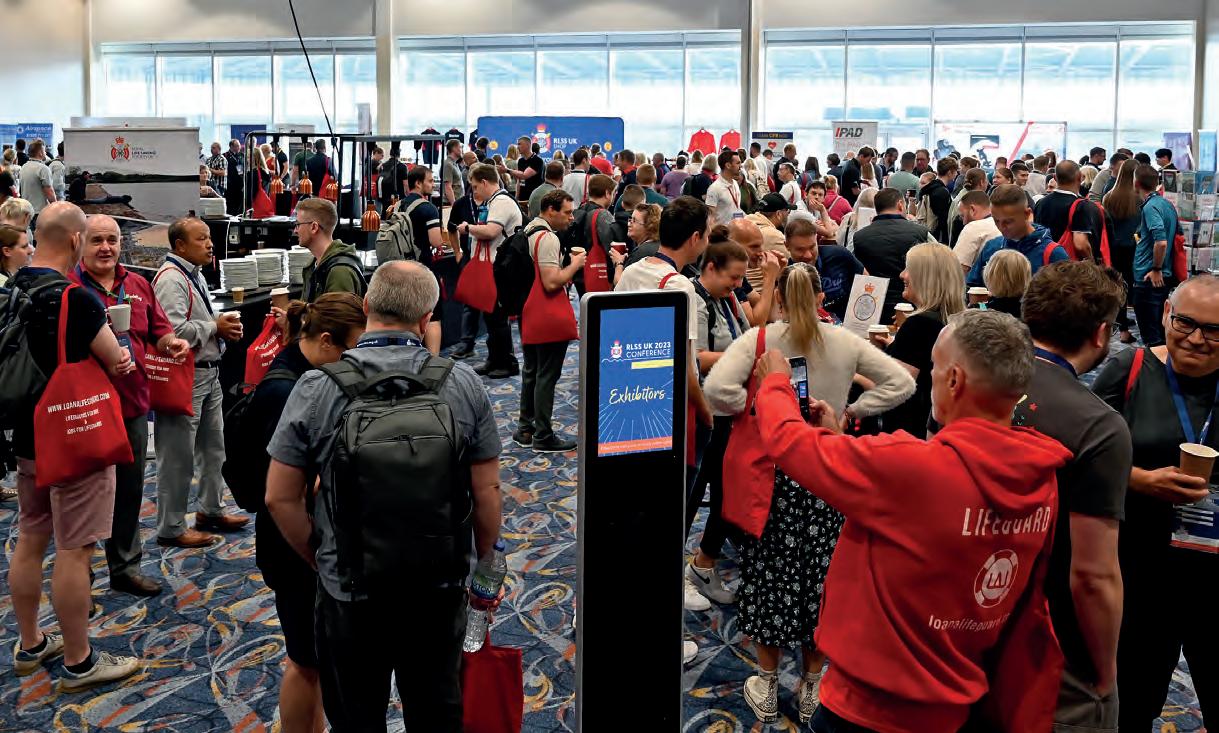
This event is an excellent opportunity to learn, network and hear directly from leading experts in the field
Jessica Rogers, Emergency Medicine Resident with a specialist interest in trauma and first aid. Rogers currently sits on the ILCOR First Aid task force and the MDEI committee and was an author of the ERC Guidelines 2025 for First Aid and Basic Life Support. She was one of the founders of the Young ERC.

Martin Horton, Consultant Advanced Clinical Practitioner in Emergency Medicine and credentialed in both adult and paediatric emergency care. Horton holds the Royal College of Surgeons Diploma in Immediate Care and is an educator in Advanced Life Support for both adults and paediatrics on the European Major Trauma Course. He also lectures in Advanced Clinical Practice at the MSc level.
Simon Dunn (MBE), Head of The Circuit Operations at the British Heart Foundation. Responsible for the operational delivery of the UK’s national defibrillator registry, The Circuit, Dunn works with the 14 NHS ambulance services and the national partnership that funds and
delivers a system that now has over 115,000 defibrillators registered by over 75,000 individual guardians and organisations.
Alex Gleeson, Paramedic. Gleeson began his career as a lifeguard and held several roles in the leisure industry before transitioning to a career in emergency services. Gleeson has been responding to 999 calls for the past four years at West Midlands Ambulance Service and forms part of the Special Operations Response Team that provides support at major incidents. Ian Ogilvie, Chartered Health and Safety Practitioner. Passionate about the safe supervision of swimming pools, open water and drowning prevention, Ogilvie has been involved in several UK publications and course development for awarding bodies in the UK and the Commonwealth. He was instrumental in the creation of the National Pool Supervisor Qualification (NPSQ) and is a co-author and editor of several pool plant manuals and publications. For more information, please contact a member of the Conference team at events@rlss.org.uk
Tara Dillon CEO CIMSPA
Careers in aquatics is at a pivotal moment, with demand for skilled professionals higher than it’s ever been and the opportunities for progression significant. But alongside filling vacancies, we have a bigger responsibility and that’s to tell a strong, positive story about aquatics as a professional career, and one that reflects the diversity, impact and potential that aquatics has.
Recent data from CIMSPA and Lightcast shows the depth of opportunity in lifeguarding and swimming instruction. Between November 2024 and November 2025, the UK recorded 5,211 lifeguard vacancies across 422 employers, including 194 management roles.
For swim instructors, coaches and teachers, the picture is equally compelling with 1,813 vacancies across 128 employers in the past year.
As with other professions across the physical activity sector, the aquatics profession’s future isn’t just about filling traditional roles, because it’s also about developing specialist and adapted skillsets that meet the needs of diverse participants and communities. Aquatics professionals are increasingly called upon to support people with long-term health conditions as water-based exercise is proven to aid rehabilitation, improve mobility and reduce pain for conditions

It’s important to recognise that professionalisation isn’t just about qualifications - it’s about pride

including arthritis. Teachers and instructors who are trained in adapted exercise to support those with long-term conditions can transform lives.
Equally, as the population ages, demand for safe, low-impact activity that supports both physical and mental wellbeing grows. Aquatic programmes tailored for older adults help maintain strength, balance and independence, helping to reduce falls which currently costs the NHS and social care system over £2.3 billion a year, as well as improving quality of life. Cultural barriers, lack of representation and accessibility challenges mean some communities have historically had lower participation levels in swimming than others, so growing the number of professionals with the skillset to support diverse communities is crucial. More professionals who are equipped with cultural awareness and inclusive teaching strategies are key to breaking down barriers and ensuring swimming is truly for everyone.
These specialist areas require additional skillsets, but they also offer immense professional reward and recognition. They position aquatics professionals as health advocates, inclusion champions and community leaders.
Despite these opportunities, the sector often struggles with perception. Too often, lifeguarding and swim teaching are seen as temporary jobs rather than respected careers. That narrative must change. We need to champion the professionalism of our workforce, highlight structured pathways and showcase the impact we make every day - whether that’s teaching a child to swim, helping an older adult regain confidence or supporting someone with a chronic health condition to stay active. The sector’s professional standards and accredited qualifications underpin this story. These frameworks give us credibility and a clear
message that aquatics is a skilled, professional sector with recognised career routes.
Continuing Professional Development (CPD) is key to unlocking these opportunities with learning in adaptive and inclusive practice as well as working with specific populations. Employers and customers value CPD as a marker of quality, but it’s important to recognise that professionalisation isn’t just about qualifications - it’s about pride. It’s about positioning aquatics as a career of choice, not chance, because when we tell that story effectively, we attract talent, retain experienced professionals, and elevate the sector as a whole. Aquatics is a career that saves lives, promotes health, and builds confidence. As a career it offers flexibility, progression and purpose. With thousands of vacancies and growing demand for specialist skills to support a more diverse participant community, the opportunities are real and now is the time to make sure the world knows it.



The One Swim England Summit, to be held in March 2026, will set the scene for a transformational journey for the future of aquatics

Swim England is reaffirming its commitment to listening, collaborating and leading the aquatics community through a series of bold initiatives designed to shape the future of swimming and water-based activity in England. This is not just evolution, it is a transformational change journey that places inclusion, innovation, and sustainability at the heart of everything we do.



At the centre of this vision is the One Swim England Summit, taking place on Thursday 19 March 2026 at The Vox Conference Centre, Resorts World Birmingham. This landmark event will unite every part of the sector including clubs, operators, teachers, coaches, volunteers and partners to cocreate great experiences in and around the water.
The Summit marks a pivotal moment in our shared journey and a chance to turn vision into action and shape the future of aquatics together. It builds on the foundations laid during Swim England’s nationwide Vision and Values Roadshows in 2024, which engaged thousands of voices across the aquatics ecosystem to define a shared purpose and set the stage for cultural change. Insights from these conversations informed the One Swim England strategy, launched in November 2024, and continue to guide the organisation’s priorities today.







The Summit will create spaces where collaboration thrives, where every voice is valued




At the heart of the event are three key themes: Lead, Learn, and Inspire.
LEAD – driving strategic conversations that set the course for the future of aquatics, from governance and safeguarding to workforce development and sector-wide standards.


LEARN – providing opportunities for professional growth through workshops, co-design sessions, and knowledge sharing that empower individuals and organisations to deliver excellence.
INSPIRE – showcasing innovation, celebrating success stories, and highlighting the transformative power of water to change lives and communities.
These themes will be underpinned by opportunities to collaborate, explore product showcases, and understand Swim England’s evolving role in serving the community. The Summit is designed to be interactive, inclusive, and future-focused bringing together expertise and ambition to create lasting impact.




Andy Salmon, Swim England CEO, said: “The summit is a moment for our sector to unite, listen, and lead. The Summit will create spaces where collaboration thrives, where every voice is valued, and where decisions are shaped by a shared commitment to the long-term health and sustainability of aquatics. Our vision (great experiences in water, for all and for life) is ambitious and together we can continue the journey toward safer, more enjoyable environments, stronger clubs and provision and a skilled, supported workforce that can deliver excellence across the leisure ecosystem. The Summit is where that commitment takes shape.”













The commitment to collaboration is matched by tangible action. In January 2026, Swim England will launch its new SEQ Level 2 in Teaching Swimming qualification, setting a new standard for excellence in swimming teacher training. This streamlined qualification replaces the previous two-step pathway, enabling learners to qualify faster with all the skills they need to teach confidently from day one.

lessons supporting our goals for lifelong participation and a sustainable future for aquatics. By streamlining the pathway, we’re helping operators build stronger workforces and ensuring more people can access high-quality swimming lessons. Ultimately, this is about future-proofing the sector and ensuring that everyone has access to great experiences in water.”


Built on sector-wide consultation and aligned with CIMSPA’s updated professional standards, the qualification combines theory with hands-on experience, modern assessment technology, and flexible entry routes including direct entry, Learn to Swim Helper progression, and upgrades for existing Level 1 teachers.
The new qualification combines theory and handson experience, modern assessment technology, and flexible entry routes, including direct entry, progression from the Learn to Swim Helper CPD, and upgrades for existing Level 1 teachers.




The Summit will build on this momentum, offering delegates a unique opportunity to engage in strategic discussions, professional development, and co-design sessions focused on the sector’s most important priorities from workforce development and retention to safeguarding, accessibility, and innovation.

It features 50 hours in total qualification time, including 38 hours of guided learning with a tutor, convenient online self-directed learning and practical experiences assessment time. The course qualification offers a balance of theory and hands-on teaching, with practical assessments taking place in live lesson environments to ensure learners are confident and capable from the moment they step onto the poolside.
Andy Salmon, Chief Executive of Swim England, said: “This qualification is about quality without compromise. It delivers poolside-ready teachers equipped to provide safe, inclusive, and inspiring

This is where the future of aquatics will be shaped. Delegates will hear from inspiring speakers, explore cutting-edge products and services, and participate in interactive sessions designed to turn ideas into action. The event will spotlight innovation and celebrate the power of water to transform lives physically, mentally, and socially.
Swim England invites everyone with a stake in aquatics including operators, providers, teachers, coaches, tutors, volunteers, and suppliers to join this movement for change.


● For more information and to secure your place, visit www.swimming.org/swimengland/one-swim-england-summit/ or contact onesummit@swimming.org for exhibiting and sponsorship opportunities.


The opening of Lichfield Leisure Centre is a statement of intent for public leisure centres
The opening of the new Lichfield Leisure Centre at Stychbrook Park marks more than the launch of a building; it represents a statement of intent for community health, inclusion and long-term investment in swimming. Now open and already welcoming residents through its doors, the centre stands as a proud example of what can be achieved when a forwardthinking local authority works in true partnership with an experienced, values-led development partner.
From the outset, Lichfield District Council set out an ambitious brief: to replace the ageing provision at Friary Grage with a modern, efficient and welcoming leisure destination that would serve the district for generations. The journey from concept to completion has been collaborative and purposeful, shaped by
a shared commitment to social value, sustainability and quality. ReCreation, appointed as development partner following a robust and transparent procurement process, brought not only technical expertise but a deep understanding of aquatic sport and community leisure. That understanding is rooted in ReCreation’s unique leadership. Founded by Olympians, Adrian Turner, Steve Parry and Rebecca Adlington OBE, the organisation carries elite sporting insight and a shared love of swimming into every project it undertakes. Their experience of world-class facilities, athlete-centred design and the transformative power of swimming has been evident throughout the development. This was not about building to minimum standards; it was about creating a facility that inspires participation, supports talent pathways and makes everyday swimming accessible and enjoyable for all.
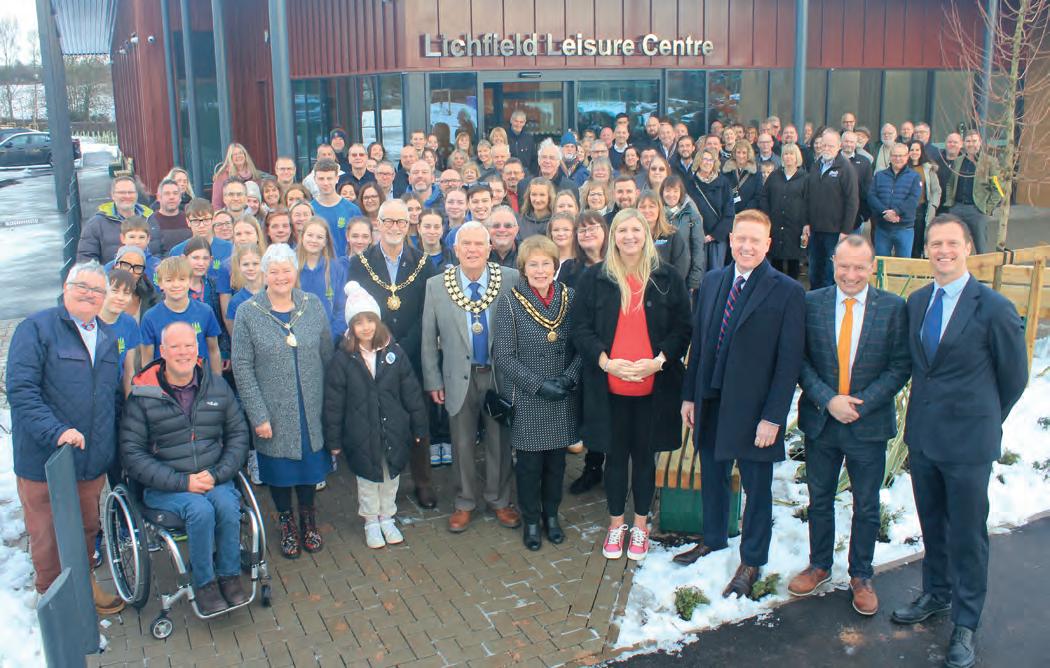
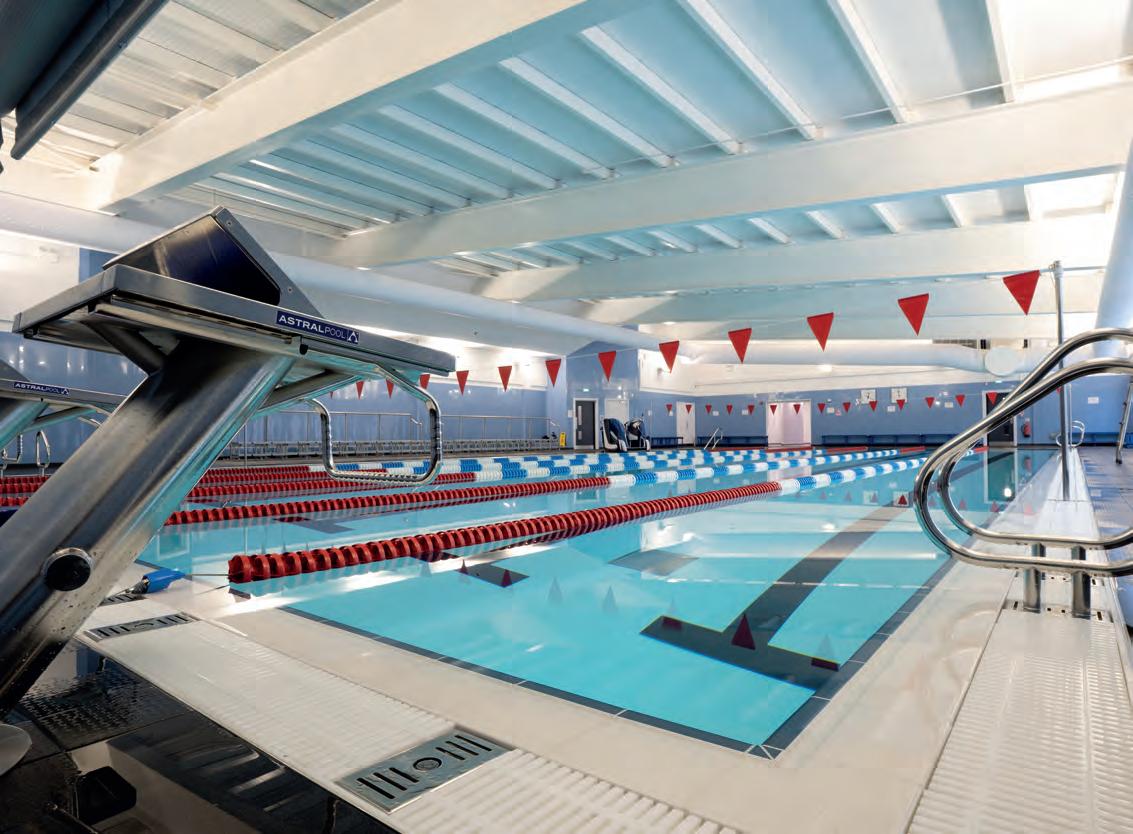
The completed leisure centre is a contemporary, light-filled building set within the green surroundings of Stychbrook Park. At its heart is a new swimming pool hall designed to accommodate learn-to-swim, fitness swimming, club training and community sessions. Additional facilities –including an indoor cycling studio, 100-station gym, adaptable fitness studio and community room – provide flexible space for health, wellbeing and dry-side activity, while a children’s play area and 3G football pitches encourage wider participation ensuring the centre operates as a true community hub rather than a single-use venue.
Delivered over a tightly managed construction programme, the project demonstrates how clarity of vision and partnership working can translate into efficient delivery on site. Modern methods of construction, careful phasing and early engagement with specialist suppliers helped to control risk, reduce disruption and maintain momentum from ground-breaking to opening.
A defining feature of the project is the above-ground pool solution supplied by Astral Pools UK. Selected through the procurement process for its proven performance and whole-life value, the modular pool tank has delivered significant advantages over traditional in-ground construction.
At its heart is a new swimming pool hall designed to accommodate learn-to-swim, fitness swimming, club training and community sessions
The above-ground system enabled faster installation and reduced groundworks, contributing to programme certainty and cost control. Financial savings were achieved not only at construction stage but also through the long-term durability of the pool tank. Designed for longevity, the system offers excellent resistance to structural movement and wear, reducing future maintenance liabilities and providing confidence that the pool will remain operational and efficient for decades. From an operational perspective, the precision engineering of the Astral Pools UK solution supports consistent water quality, thermal efficiency and ease of access for maintenance teams. For users, these technical benefits translate into a high-quality swimming environment: comfortable water temperatures, clean lines of sight and a sense of space and safety.
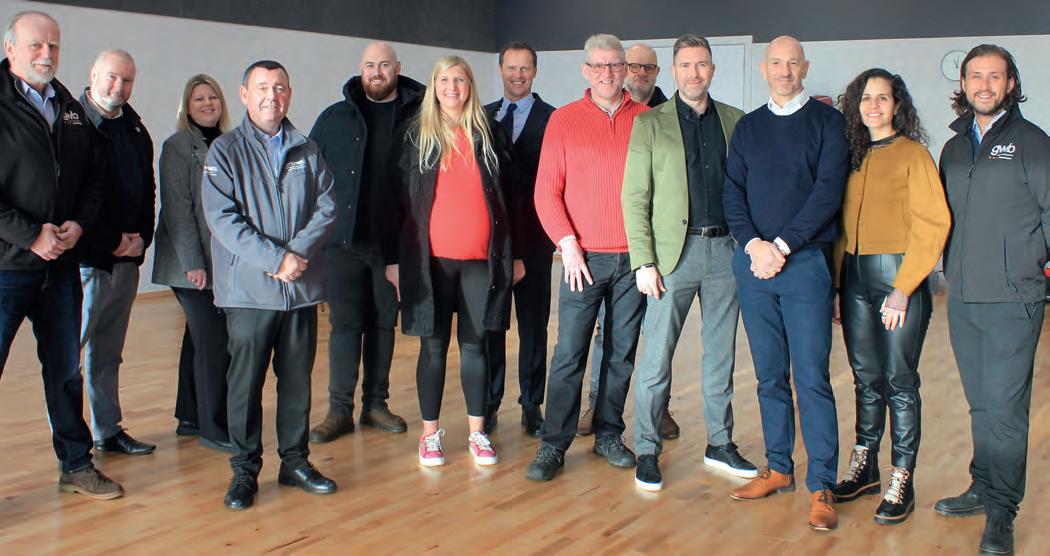
Beyond bricks, mortar and steel, the true measure of the Lichfield Leisure Centre lies in its social value. Throughout development, the council and ReCreation embedded social outcomes into decision-making. Local employment and supply chain opportunities were prioritised during construction, while the completed facility is already supporting jobs, volunteering and skills development.
The centre is designed to be inclusive and affordable, encouraging participation from all sections of the community. Partnering with Swim England, the facility benefits from Water Wellbeing accreditation, enabling a more inclusive aquatics programme, ongoing support and training for staff, creating a supported environment for those with long term health conditions. Learn-toswim programmes, school access, disability-friendly design and targeted health initiatives ensures that the benefits of the investment are widely shared. In a time when physical inactivity presents a growing challenge, the new centre plays a vital role in supporting public health, mental wellbeing and social connection.
Environmental responsibility has also been a key consideration. Efficient plant, thoughtful building design
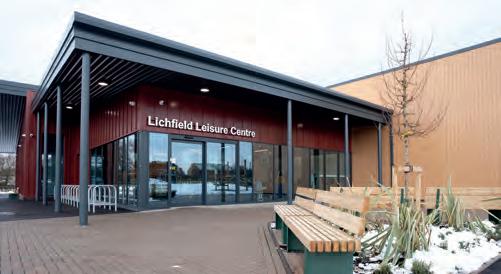
and the inherent efficiencies of the above-ground pool system contribute to lower energy consumption and reduced carbon impact. Suds technology and BNG of 20% align the project with wider sustainability goals while boasting Bream Very Good status.
The relationship between Lichfield District Council and ReCreation has been central to the project’s success. Built on trust, transparency and shared purpose, the partnership model allowed challenges to be addressed collaboratively and opportunities to be maximised. The result is a facility that reflects local needs while benefiting from national and international best practice in aquatic development.
Councillor Doug Pullen, Leader of Lichfield District Council, said: “We are delighted that we have been able to deliver a brand-new leisure centre for the residents of Lichfield District. It is already proving to be very popular offering state-of-the-art sports and fitness facilities, and with its community room and outdoor play area it’s a fantastic hub for the whole community.
“This vitally important leisure centre has been made possible through our collaboration with ReCreation. It has been a positive relationship with both parties working in support of a shared vision. The result is a facility that we are very proud of and one that will enhance the lives of our residents for many years to come.”
As the first swimmers dive in and families make the centre part of their weekly routine, Lichfield Leisure Centre already feels like an established part of the community. Its opening signals a positive future for swimming in the district and sets a benchmark for how councils, developers and specialist partners can work together to deliver lasting value.
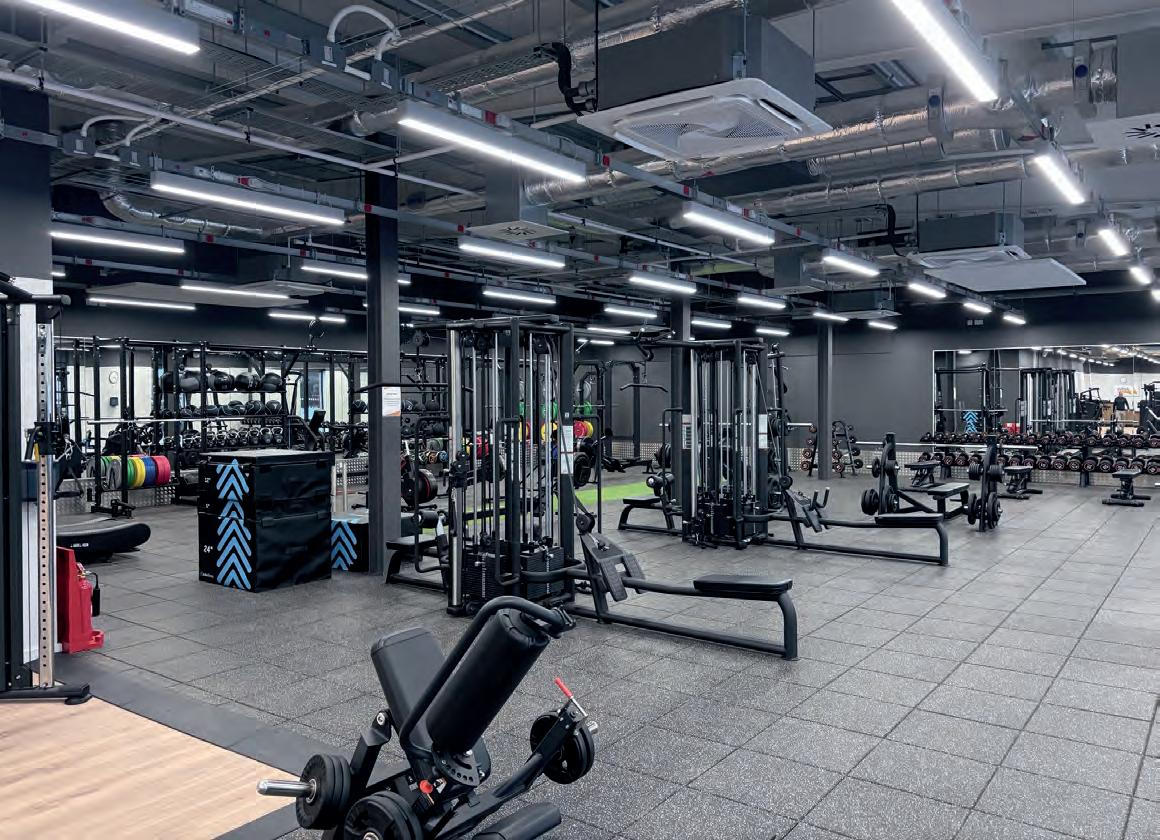
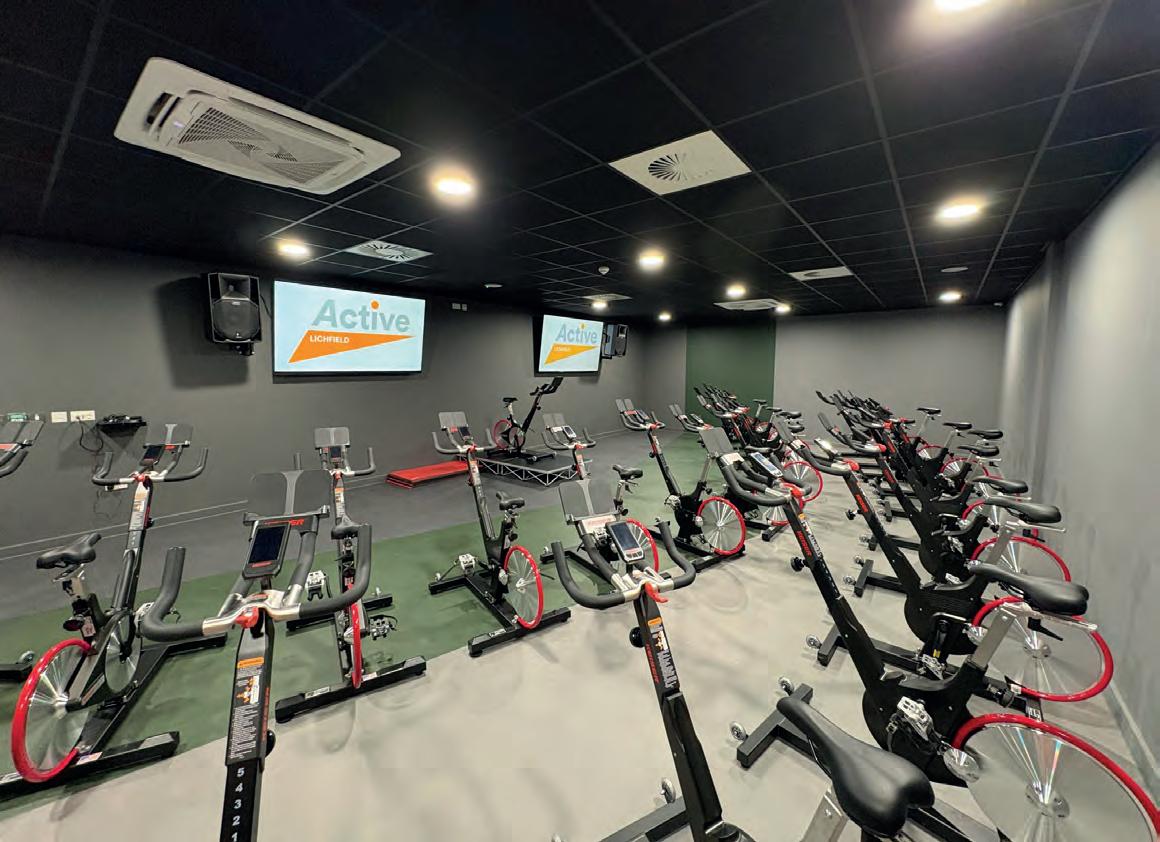
The result is a facility that we are very proud of and one that will enhance the lives of our residents for many years to come










On Friday 17th October, STA hosted its annual Aquatic Excellence Awards to celebrate and showcase the achievements of all those who have been involved in delivering learn to swim programmes and aquatics training over the last 12 months, in line with STA’s charity objectives.
For 2025, 12 STAr winners were announced, as three new categories were added this year for STAr Aquatics, Lifesaving and First Aid, and Pool Plant Tutors of the Year. The presentation ceremony was held at the Radisson Blu East Midlands Airport Hotel, as part of STA’s twoday national conference, and hosted by STA’s President Ali Beckman, STA’s CEO Dave Candler and STA’s Water Safety Ambassador Mike Goody.
Dave Candler, STA’s CEO said: “Every year, the Aquatic Excellence Awards remind us just how many inspiring people there are within our STA family and the wider aquatics community.
From teachers and tutors to training centres and campaigners, this year’s winners represent the very best of what our industry stands for – dedication, compassion, and a shared commitment to making swimming and water safety accessible to all.”

STAr Swimming Teacher –sponsored by Splash About Winner: Justyna Sandomierska-Wasik




STAr Tutor (Pool Plant) – sponsored by AFM (Activated Filter Media) Winner: Aaron Bower
STAr Not-for-Profit Community Campaign – sponsored by AFM (Activated Filter Media) Winner: Sophie Mann & Adam Comfort



STAr Swim School Provider of the Year (over 500 participants per week) – sponsored by Soakly Winner: GLL




STAr Tutor (Aquatics) –sponsored by Splash About Winner: Becky Dowling



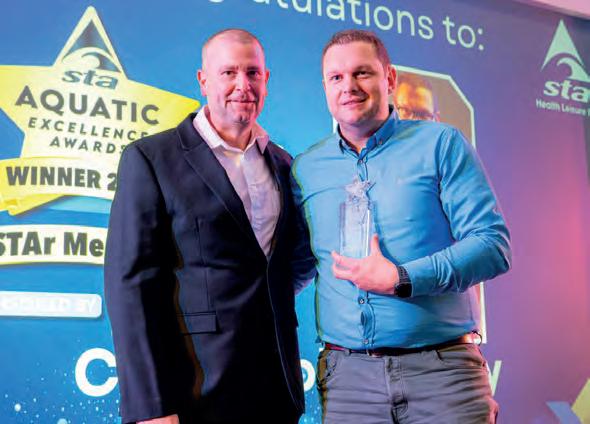

STAr Member –sponsored by SwimSure Winner: Christopher Kelly
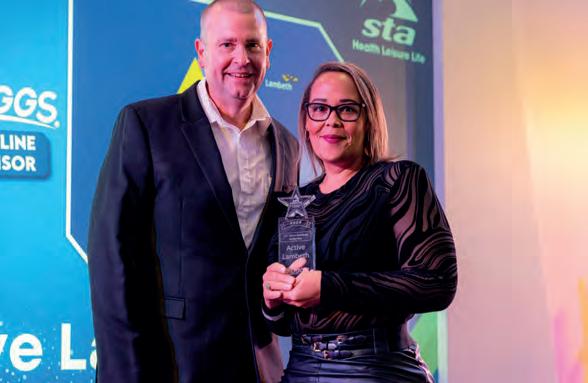
STAr Swim Academy – sponsored by Atlantis, the Swimming Teachers App Winner: Active Lambeth





STAr Tutor (Lifesaving & First Aid) –sponsored by Atlantis, the Swimming Teachers App Winner: Ross Othen


STAr Water Safety Educator –sponsored by SwimSoft MOR Solutions Winner: Rebecca Ramsay – Doing it for Dylan


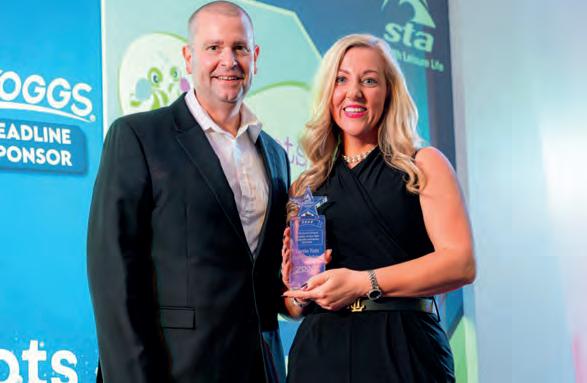

STAr Swim School Provider of the Year (under 500 participants per week) – sponsored by Soakly Winner: Turtle Tots – Staffordshire

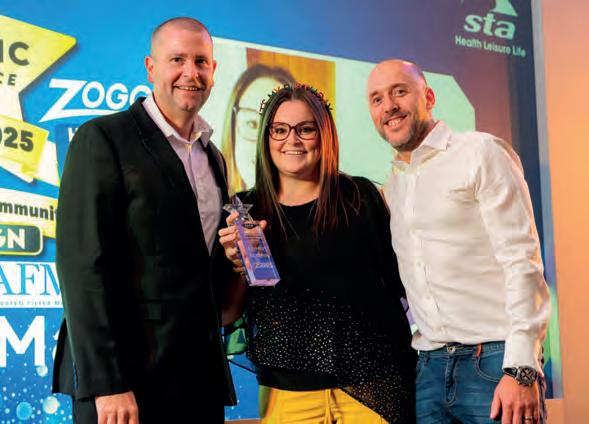

STAr Approved Training Centre of the Year (less than 50 courses) – sponsored by Atlantis, the Swimming Teachers App Winner: Comfort Academy
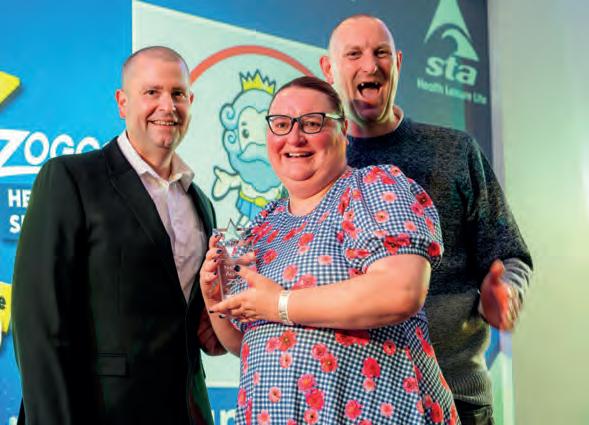

STAr Approved Training Centre of the Year (more than 50 courses) –– sponsored by SwimSoft MOR Solutions Winner: Neptune Aquatics




Comfort Academy not only trains swimming teachers, it has also made an extraordinary impact on young carers by removing financial barriers and offering free swimming lessons. For its work, the company won two STA Awards in 2025 – Approved Training Centre of the Year and Notfor-Profit Community Campaign of the year. SwimNation spoke to founders, Sophie Mann and Adam Comfort and
What is Comfort Academy and what does it do?
Comfort Academy is an STA Accredited Training Centre (ATC), meaning we deliver courses to train and qualify individuals wishing to enter the world of aquatics. We offer multiple qualifications and will continue to expand this range in the future.
Comfort Academy has multiple partnerships with local leisure centres, schools, colleges, charities, and swim schools across Essex, Surrey, Kent, London, and Dorset. We are also happy to support any aquatic business by delivering qualifications tailored to their needs and are always looking to expand our locations.
What was the motivation behind setting up Comfort Academy?
We started Comfort Academy initially due to a lack of instructors in the industry. Adam owns Comfort Aquatics, with Sophie as the Swim Coordinator, and we were struggling to recruit good-quality instructors into the swim school. Recruitment of experienced, high-quality instructors was extremely challenging; however, we noticed an increasing number of newly qualified instructors applying who needed a little more training and nurturing.
As we are both qualified and experienced tutors, we decided to start our own training centre to bridge this gap. Running our own STA ATC allows us to deliver courses in line with STA standards while also ensuring that instructors are trained to a
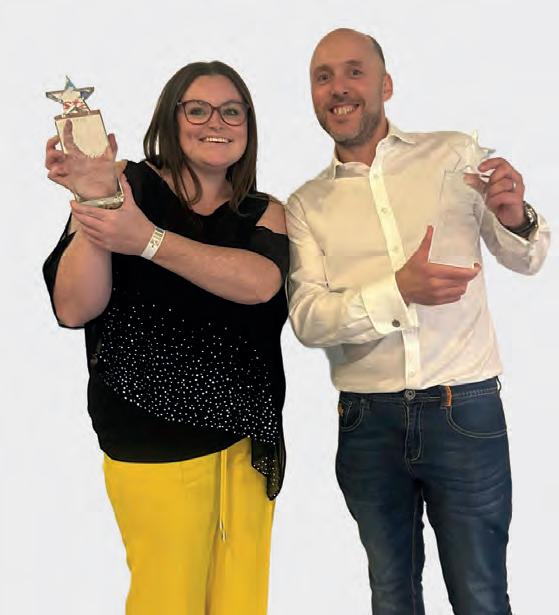
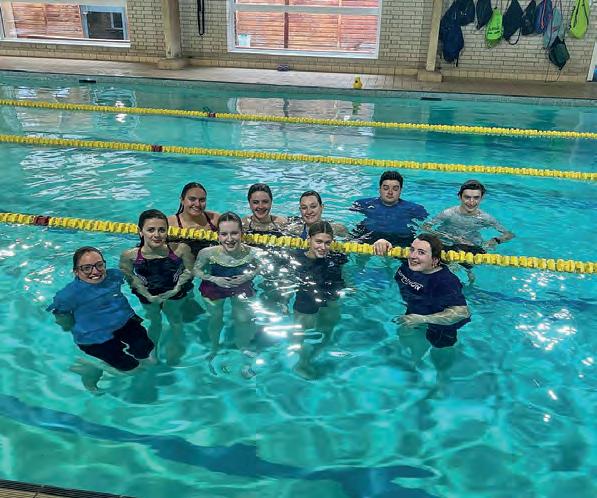
high standard and are ready to integrate into swim schools. We are also able to run additional qualifications within our ATC, such as Baby and Preschool, Lifesaving, and Certificate courses. These are valuable upskilling opportunities that can be offered to instructors to ensure they are continuously developing throughout their swimming careers.
Additionally, we are affiliated with NOWCA, through which we offer Open Water Coaching qualifications. This partnership is extremely important to us, as Adam started

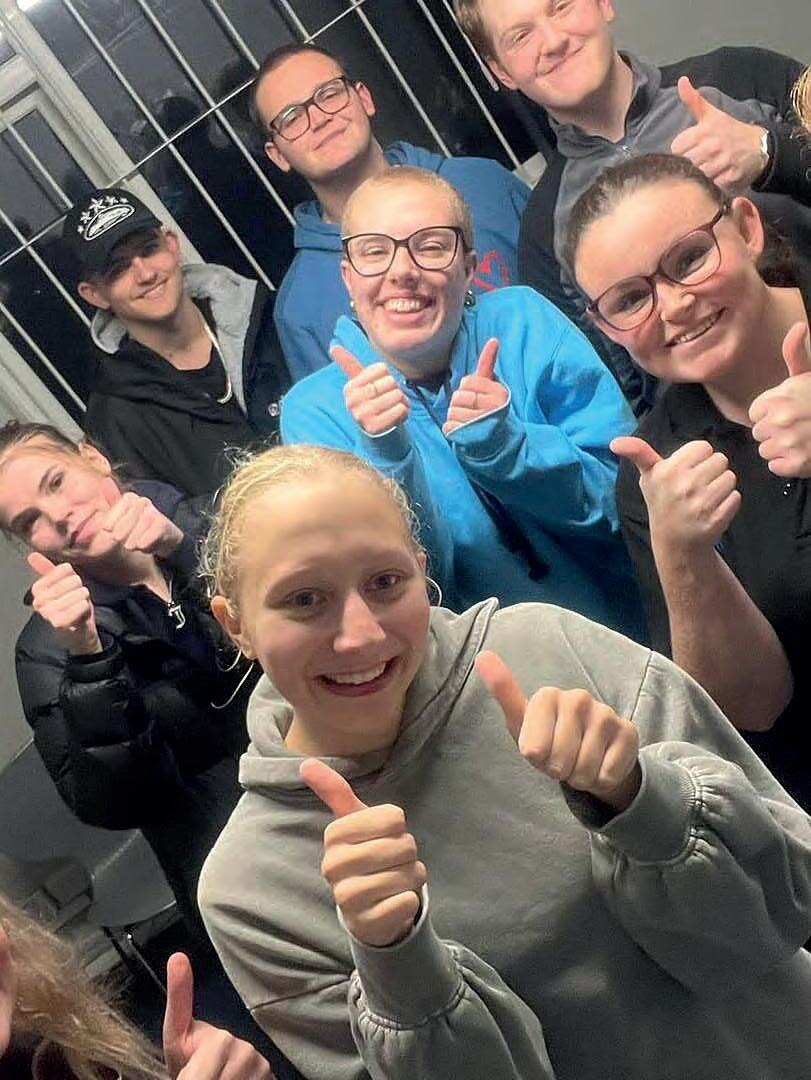
with NOWCA as Head Coach, then progressed to Head Tutor, and we are now their sole Training Provider.
Comfort Academy was originally established to support recruitment within Comfort Aquatics; however, in less than a year we have delivered over 35 courses and now work with multiple contracts, networks, and locations, not only across the UK but internationally.
So the motivation behind Comfort Academy was initially to support recruitment. However, we have both worked for multiple ATCs where we were unable to deliver courses in the way we wanted. We were working for multiple organisations, following different processes, and began to lose the fun, sparkle, and value of being an STA Aquatic Tutor.
As a result, we decided to establish our own ATC, where we could take a more hands-on, fully engaged, and involved approach. By doing so, we were able to carefully select the very best freelance tutors and elevate Comfort Academy into one of the leading ATCs.
We have qualified 180 people across multiple aquatic disciplines during 2025, which is an incredible achievement for our first year. We have also worked with three leisure centres, six swim schools, and three charities.
In 2026, we aim to increase our locations and partnerships, allowing us to qualify and upskill even more people. Our charity work will also continue, and we are committed to providing as many opportunities as possible.

How would you describe the current state of the swimming teaching sector?
We see the sector as building a new and brighter future in aquatics. Since the pandemic, we have seen a significant reduction in swimming instructors, with many experienced professionals leaving the industry permanently, which has been extremely sad to witness. In response, STA launched the STAnd Up for Swimming campaign, which offered free training and qualifications to hundreds of people to introduce a new generation of swimming instructors into the sector. This campaign has had a hugely positive impact, and over the past five years STA has delivered more campaigns, conferences, and Level 2 aquatic qualifications than any other governing body.
The next exciting development is the launch of the new STA Level 2 Swimming Teacher Qualification, which removes the confusion created by multiple courses and levels for becoming a swimming teacher. This new qualification brings together the most important content to ensure instructors are fully prepared to work immediately upon successfully completing their course. It represents a major step forward in standardising the industry and raising professional standards.
The biggest threat to the industry at present is the closure of many pools and leisure facilities across the UK. With fewer pools available, many people have limited opportunities to learn the basics of swimming, lifesaving, and personal survival— skills we consider extremely vital. From a training perspective, one of the challenges is the lack of full alignment between different organisations delivering swim teaching qualifications. STA has embedded a prior learning and RPL process into its courses, allowing individuals holding other regulated qualifications to have their prior learning recognised, which supports progression and mobility. However, differences in how qualifications are positioned and applied across the sector can influence recruitment practices, with some employers favouring one over another. While often unintended, this can narrow the available teaching workforce. We hope that the introduction of STA’s new course, alongside equivalent qualifications, will help encourage a more standardised and flexible approach to swim teacher recruitment. Employers should be encouraged to recruit individuals holding any recognised Level 2 qualification, to ensure access to the widest possible talent pool at a time of ongoing staffing shortages.
And what about opportunities?
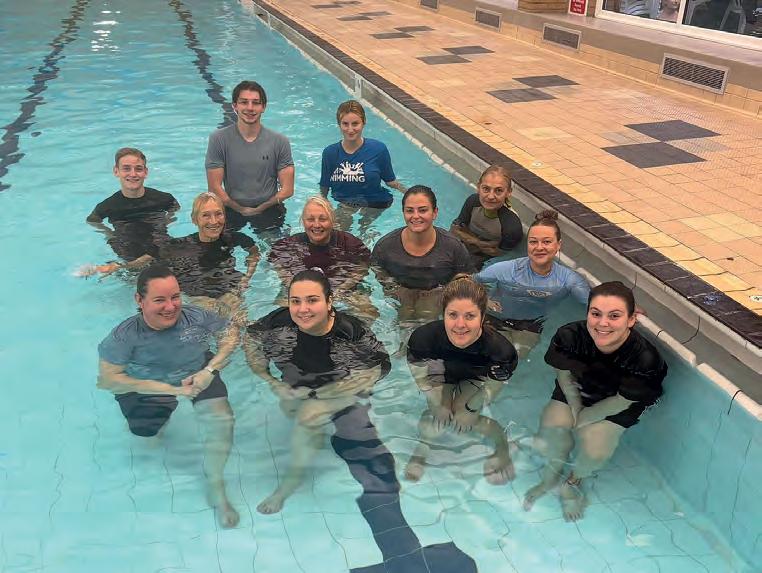
We are both immensely proud of ourselves and our incredible team of tutors
and, through hard work and dedication, it became a reality.
We were also fortunate not only to be recognised but to win the Non-for-Profit STAr Award 2025 for our work with local Young Carer charities. We were extremely proud, particularly as we were up against one of the largest charitable leisure companies in the UK.
We are both immensely proud of ourselves and our incredible team of tutors. We are truly humbled to be able to support, engage, and promote STA values within our business, and we will continue to do so throughout 2026 and beyond.
Comfort Academy is looking forward to supporting the launch of the new STA qualification and integrating it into our course offerings alongside many others. We are continually taking on new contracts, locations, and partnerships across the UK. Alongside this growth, we are welcoming many new tutors to our company and supporting as many probationary tutors as possible.
Winning not just one but two STAr Awards in 2025 was everything. We went from a single conversation (“shall we just open our own ATC?”) to being awarded ATC of the Year after only ten months of operation. It was a huge achievement, and we are incredibly grateful. Adam mentioned at the previous awards ceremony that “next year, I want to win that one,”
are your plans for Comfort Academy for the year ahead?
Comfort Academy has ambitious plans for this year. One of our key priorities is to support the launch of some of the initial new Level 2 qualifications, having worked closely with Kayle, Jodie, and Brett, who are all part of the Qualification Development Team at STA.
We aim to continue supporting our tutors, swimmers, and learners through a wide range of qualifications while expanding our course offerings. We strive to thrive within the aquatics industry and to further establish ourselves as a leading ATC.
A core passion of ours is our charity work, through which we offer free swimming lessons, fun swim sessions, and free training and qualifications to young carers across Dorset and Essex. We would love to expand this charitable work as we move into 2026 and beyond.
In today’s competitive marketplace, your team’s attire does more than just clothe them; it embodies and amplifies your brand’s identity. BLU Leisure, known for its bespoke leisure-related uniforms, has evolved. Now, they bring the same level of innovation and service to staff-branded uniforms across diverse sectors, including leisure, health + fitness, hotels + hospitality, food + beverage, holiday parks and beyond.
1
Bespoke designs that enhance a brand’s identity
BLU Leisure creates individual designs that align perfectly with clients’ corporate identity – garments that are as unique as the brand itself. This ensures teams are always looking and feeling professional.
2
Ranges for all roles
BLU’s expansion into new categories brings together high-performance leisure + workwear and powerful branding which allows them to create ranges for all types of roles on large sites, from gym instructors to life-guards, from bar staff to maintenance. Think polo shirts and shorts, branded hi-vis gear, hoodies, softshell jackets – designed for safety, comfort and visibility in demanding environments
3

Seamless stock management and convenience
With a proven stock management system, BLU ensures clients can call off required items when needed – simplifying distribution, reducing downtime and keeping operations efficiently branded.
4
Proactive service and purchasing insights
BLU Leisure doesn’t stop at fulfilment. BLU monitors usage and ordering patterns to suggest updates that enhance comfort, performance, and team cohesion.
Everyone Active, with more than 150 leisure centres nationally, relies on BLU’s streamlined stock-management systems
Who’s already benefiting?
Clients such as Bannatyne and Everyone Active have long trusted BLU not just for fitness uniforms but for a wide range of branded apparel. From personalised items to staff uniforms across spa, café, and frontof-house teams, BLU’s bespoke solutions have supported numerous operations for over a decade
Everyone Active, with more than 150 leisure centres nationally, relies on BLU’s streamlined stockmanagement systems – delivering at-scale uniforms and branded accessories across hundreds of locations.
Multi-functional branded uniform:
Performance meets presentation: uniforms built to work hard and look sharp across sectors: from logistics to hospitality.
Branding that works overtime: uniforms designed to reflect and elevate your brand identity, in and out of the work place.
Intelligent inventory for your brand’s needs: robust systems ensure the right items arrive when and where they are needed.
Service that scales: proactive, client-centred service that supports evolving team dynamics and branding goals.
Looking to elevate your team’s look, efficiency, and brand presence – no matter the environment? BLU Leisure brings decades of bespoke design, operationssmart systems, and promotional flair to every garment. Whether you’re preparing a warehousing team for peak season or outfitting your customerfacing staff, BLU delivers with reliability and style.
Is your brand ready to explore tailored uniform solutions that work as hard as your teams do?
Contact BLU Leisure directly: Tel: 01908 582525 Email: info@bluleisure.co.uk
SwimNation speaks to Danielle Obe, Immediate Past Chair of the Swimming Alliance and Founding Chair Emeritus of the Black Swimming Association (BSA)
When asked whether she has always been passionate about physical activity, Danielle Obe – the immediate past chair of the Swimming Alliance and the founder of the Black Swimming Association (BSA) –says that her interest has always been in systems, not slogans. Or, as she puts it “how people access everyday life safely, confidently and with dignity”.
“Sport and aquatics are powerful spaces to explore that, because they sit at the intersection of health, education, community and wellbeing,” she says. In a wide ranging interview, SwimNation spoke to Obe about her role as the chair of Swimming Alliance (from which she stepped down in January 2026), her founding of the BSA and her views on what lies ahead for the UK’s aquatics sector.
Where did the motivation to set up the Swimming Alliance come from?
The Alliance emerged from a recognition that fragmentation was limiting impact. Declining participation, inconsistent school swimming outcomes, workforce instability, facility pressure and fragmented policy engagement were not issues any single organisation could solve alone. The aquatics sector needed a formal mechanism for coordination, alignment and collective influence.

The Alliance provides that space - a national convening platform bringing together organisations with the authority to act, not simply observe. The Alliance is collective and has been shaped by governing bodies, operators and system leaders who recognised that shared challenges require shared leadership.
What does the Alliance do?
The Alliance convenes, coordinates and advocates. It aligns sector priorities, supports evidence-led engagement with government and strengthens coherence across four interlocking areas: school swimming, workforce sustainability, inclusion and policy influence.
What have been its biggest achievements so far?
Establishing credibility. The Alliance is now recognised as a trusted convening space, with active subgroups, clear priorities and a growing influence on national conversations.
The Alliance’s most significant achievement to date is the establishment of the National School Swimming Taskforce as a formal flagship project.
This has created, for the first time, a unified sector response to the persistent problem of inconsistent and ineffective school swimming provision. The Taskforce is now the primary mechanism through which the sector is shaping a coherent national approach to school swimming and water safety. Alongside this, the Alliance has

embedded a clear governance structure through its Steering Group and subgroups, enabling focus and alignment to its agreed priorities.
Deepening impact through the National School Swimming Taskforce, workforce reform and sustained policy engagement. The School Swimming Taskforce will lead the development of a national framework for school swimming and water safety. This work responds directly to the Department for Education’s Curriculum and Assessment Review, particularly the call for a more concise, scaffolded approach to attainment targets and progression. The framework will include:
l Delivery guidance setting out a standardised, evidence-led approach to teaching swimming and water safety
l Best practice guidance for operators, schools and parents
l Clear alignment between educational outcomes and aquatic delivery
This will be delivered through three defined structures: A Strategic Working Group, a Technical Working Group of nominated subject experts and a dedicated Education Group, bringing together specialists from education and water safety Workforce development is the second major priority. The Alliance will use findings from its workforce survey to support recruitment and retention across aquatic roles. This includes continued collaboration with CIMSPA on pathways for young people not in education, employment or training, supporting the rollout of new professional standards and qualifications, and ensuring workforce planning aligns with the evolving school swimming model. Inclusion work will be more focused and deliberate. Rather than spreading effort too thinly, the Alliance will identify one priority needs group in 2026 and develop targeted guidance, case studies and influence activity. This approach allows depth, learning and transferability across the sector. Communications underpin all of this work. The Alliance will launch a Knowledge Hub on its website, supported by SwimNation and
member channels, alongside a structured pipeline for best practice and case studies to ensure consistent dissemination of learning.
At a policy level, priorities include engagement around the £400 million grassroots sport investment, rebuilding government relationships, and adapting sector communications to reflect changes in local government structures following devolution and reorganisation.
You’re also the founder of the Black Swimming Association. For those who might not be familiar with it, what is it and what does it do?
The Black Swimming Association (BSA) began, in March 2020, as a response to a very simple but serious reality: too many communities in the UK were excluded from water safety knowledge and aquatic participation long before they ever reached a swimming lesson.
What the BSA does is address what happens before access. We recognised early on that traditional entry points into aquatics assumed familiarity, confidence and trust that simply did not exist for many families. So instead of starting at “learn to swim”, we built pathways that start earlier – with orientation, safety, confidence and understanding.
Over the past five years, the BSA has developed programmes, research and delivery models that support people from complete unfamiliarity with water through to safe participation and onward progression. Alongside delivery, the organisation has played a growing role in shaping policy, influencing sector strategy and reframing swimming as a public health and safety issue, not just a sport.
The BSA was born from lived experience, but it was shaped through listening. Early conversations across the aquatics sector, local authorities, health professionals, community organisations, families, teachers, operators and national bodies made it clear that this was not just about motivation or culture; it was about systems.
What quickly became apparent was that everyone could see the problem, but no one was positioned to bridge the gap between communities and the sector in a structured, credible way.
So the process became one of design. We researched, mapped barriers, tested assumptions and began building something that could operate both on the poolside and in policy rooms.

The organisation has grown from an idea into a nationally recognised awardwinning institution

What were the biggest challenges in getting the BSA up and running?
Legitimacy. When you are naming gaps that systems have normalised, you have to work twice as hard to be taken seriously.
Building trust with communities while simultaneously earning credibility with institutions required patience and consistency. We were very intentional about grounding everything we did in research and outcomes. Another challenge was pace. The need was urgent, but systems move slowly. Learning how to navigate that tension without compromising the integrity of the work was a defining part of the early years.
The original mission was for BSA to be a bridge between aquatics and disenfranchised communities. That is still the case, but the definition of that bridge has matured. Initially, the focus was access. Today, it is infrastructure. The BSA has helped the sector understand that inclusion is not an addon; it must be designed into systems, training, programmes and policy from the outset.
The shift has been tangible. The BSA’s frameworks and research are now referenced in national conversations, funding discussions and strategic planning. That
represents meaningful progress from where we started.
The organisation has grown from an idea into a nationally recognised award-winning institution with a professional team, a body of evidence, proven programmes and established partnerships across health, education, sport and government. Importantly, the BSA is now entering a new phase. With the appointment of its first Chief Executive, I am transitioning into the role of Founding Chair Emeritus, ensuring continuity of ethos while releasing operational leadership to the next chapter.
There is a perception that Black people do not traditionally engage with aquatics. Is that still true?
That perception exists, but it is misleading. Our research consistently shows that the issue is not disinterest. It is unfamiliarity, fear, cost, lack of early water safety knowledge, hair etc. When these barriers are addressed properly, participation follows.
Language matters here. When we describe communities as “hard to reach”, we often ignore the fact that systems themselves can be hard to enter. The work of the BSA has been about shifting that lens.

We recognised early on that traditional entry points into aquatics assumed familiarity, confidence and trust that simply did not exist for many families
Why is the BSA so important? What does it do that no one else does?
The BSA starts where others do not. By recognising the space before access, what we describe as “-3”, the organisation has created tools, insights and pathways that allow the sector to work upstream, not just at the point of delivery. That systemsfirst perspective is what differentiates the BSA.
A clear example of this is the FLOAT research, developed in partnership with the University of Portsmouth and the RNLI. FLOAT examined one of the most persistent and damaging myths in aquatics - that certain bodies cannot float.
What the research demonstrated is that floating is not a fixed or innate ability. It is a learned, individual skill shaped by body composition, breath, technique and confidence. When people are taught how their body floats rather than measured against a single standard, fear reduces and safety improves.
This matters because myths like these have kept generations away from water, not through lack of interest, but through lack of understanding. FLOAT reframes aquatic competence as adaptable, teachable and inclusive by design.
No other organisation has combined community
delivery, pioneering research and systems influence in this way. That combination is what allows the BSA to shift practice, not just participation.
The next phase of the BSA’s work is about embedding learning into systems. A key focus is translating the insights from FLOAT into wider practice - training, guidance and national conversations about what water competence really looks like. This phase is about integration and scale, ensuring that evidence informs workforce development, policy and sector standards.
How can facility owners and operators support the BSA?
“By thinking beyond programming and towards design. That means investing in workforce capability, supporting inclusive practice and recognising that water safety begins long before someone enters a pool. Collaboration, rather than duplication, is where lasting impact sits.”
If you could change one thing, what would it be?
I would treat water safety education as essential literacy. When people understand water, fear reduces, confidence grows and participation becomes a choice rather than a risk.
Lighting a commercial swimming pool isn’t just about ensuring visibility — it’s about safety, performance, and long-term sustainability. From leisure centres to competition venues, achieving the right lighting levels is critical for both pool users and operators. That’s where Earlsmann Lighting brings real value.
With more than 15 years of specialist experience, Earlsmann designs, supplies and installs LED lighting systems for indoor pools across the UK. The team understands the unique challenges posed by pool environments – high humidity chlorine environment, reflective surfaces, and stringent safety demands – and delivers lighting schemes that meet those challenges head-on. Compliance is essential. Lighting must adhere to BSEN12193 and Swim England/Sport England
guidelines, ensuring the correct lux levels, uniformity, and glare control. Poor lighting not only affects visibility for swimmers and lifeguards but can compromise safety, comfort, and operational approval. Earlsmann uses advanced modelling to design lighting schemes that are fully compliant and tailored to any space, giving pool operators confidence from the start. But compliance is just the beginning. Energy efficiency is increasingly important as facility managers face rising energy costs and carbon reduction targets. Earlsmann’s LED lighting solutions are engineered for efficiency — cutting energy usage by 60% or more compared to outdated fluorescent or metal halide systems. Where possible, by integrating smart controls, daylight sensors and dimming functions the company helps pools reduce consumption further without compromising



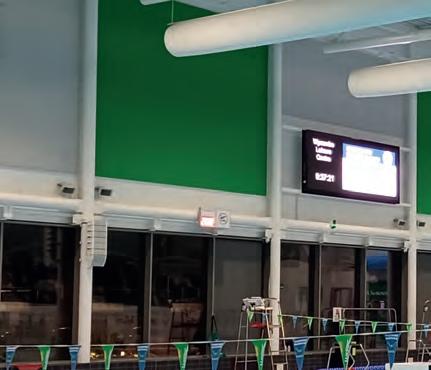

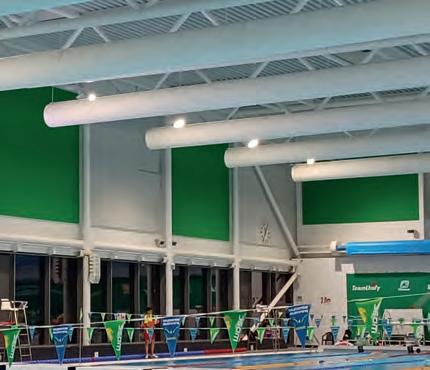
performance. Earlsmann also knows the importance of the bigger picture. Lighting impacts aesthetics, ambience, and the overall user experience. From competition-standard pools to community swim centres, it creates lighting that enhances visibility, improves safety, and lowers ongoing costs – all while supporting net-zero ambitions.

absorption and dynamic fatigue
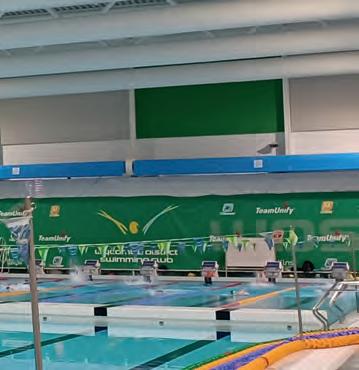

Every project starts with a no-obligation survey and consultation. Whether you’re planning a refurbishment or a new installation, the team at Earlsmann is ready to help.
● To discuss your next pool lighting project, contact Earlsmann Lighting on 01884 259917 email sales@earlsmann.co.uk or visit www.earlsmann.co.uk. Let’s light your space the right way – safely, efficiently, and brilliantly.

UK’s pool stock continues to shrink, but less dramatically than last year, according to Leisure DB’s State of the UKSwimmingIndustryReport2025
The UK’s pool stock has shrunk again this year, with the decline more marked in the public than in the private sector.
In the 12 months to 31 March 2025, the total number of UK sites operating a pool fell to 2,882 – a fall of 0.5 per cent since 31 March 2024. This compares to a 2 per cent drop in the previous 12 months. In addition, the total number of pools also fell by 0.4 per cent this year, to 4,257 pools.

The figures come from the State of the UK Swimming Industry Report 2025, compiled by market intelligence expert Leisure DB, published in July. The full report is available to read, for free, at www.leisuredb.com/publications
Interviewing operators and experts for the report, it is clear this year’s slower rate of decline fails to alleviate concerns over the bigger trend.
Swim England CEO, Andy Salmon, notes that “76 per cent of the publicly accessible water space lost in the past 15 years has been lost since 2020”, while GLL’s Andrew Clark comments: “Pools are drowning. Without increased support, smaller operators will disappear and pool closures will continue to accelerate.”
There is some good news from within the sector, with many referencing a new era of collaboration and pointing to early wins being achieved by The Swimming Alliance. The alliance is a collaborative group


The full report is available to read, for free, by using the QR code or visiting www.leisuredb.com/publications
of more than 25 leading national organisations united to address the urgent and systemic challenges facing swimming and aquatic participation across the UK. It advocates for equity, sustainability, and strategic investment in swimming as a life-saving skill, public health priority, and national development asset.
Operators interviewed this year also report continued strong demand for swimming; although many acknowledge a plateau being reached following the post-COVID-19 boom, they also report this sitting at a higher level of participation than pre-pandemic. The average public sector pay-per-swim fee has also risen again, to £5.80, while GLL reports a 10 per cent increase in swimming lesson income following price rises.

“In spite of these price rises, sales have rocketed this year. It just shows that in a lot of cases, public leisure is still under-pricing what it does,” says GLL’s Clark.
Nevertheless, there is broad agreement with the findings of Sport England’s Moving Communities survey (October 2024), which found that although “swimming still represents the most quoted main activity”, people’s “activity mix has changed gradually over the last four years, with swimming decreasing and fitness and group exercise increasing”.
As a result, several operators interviewed this year reference a need for greater innovation and investment – including in programming and staff training – to drive further growth.
“Although there is some good news for the UK’s swim sector – notably where new pools are a major
component of regeneration – this year’s State of the UK Swimming Industry Report continues to highlight net losses of pool provision,” says Leisure DB founder David Minton in his foreword to the report.
“Those still operating have to work harder to satisfy the demand from the myriad of users; this report shows how constant innovation and programming continues to drive the carrying capacity of the reduced water volume.”
Alongside interviews, commentary and analysis, this flagship report for the UK’s swim sector also provides a full breakdown of pool numbers and locations, openings and closures, public and private sector leaders, fees, facilities and more.
“Our thanks go to all our expert commentators and, of course, to our partners who have enabled us to share this fantastic report for free,” says Minton.
The main findings from this year’s report highlight the challenges and opportunities faced by the aquatics sector
1,603
1,279
KEY STATS FOR 2025
n Across the UK, the total number of clubs/centres with a pool is down -0.5% since the 2024 report.
n The number of pools is also down -0.4% compared to last year.
n At the end of March 2025, there were 2,882 sites with pools across the UK, accounting for a total of 4,257 pools; some locations have multiple pools.
n Of this total, the public sector operates 1,603 sites and the private sector 1,279.
n GLL and Nuffield Health remain the UK’s leading public and private operators, respectively.
2,646
9
16
1,611
n Nuffield Health is #1 in the private sector, operating 109 private clubs with a swimming pool.
n Leisure trust GLL leads the way in the public sector, with 142 centres with a pool. Everyone Active (SLM) is a close second place.
n Places Leisure and Serco Leisure are the only top-ranking operators to have added five or more sites with a swimming pool in the last 12 months, logging 10 and nine, respectively.
n Trusts dominate in the public sector, managing 49% of all UK pools; in Scotland, the figure is 67%.
n In the 12 months to 31 March 2025, the average public sector pay-per-swim fee increased by 3.8% to £5.80.
7
13
7 of the 10
Local authorities with the biggest declines in pool space have higher than average indices of deprivation, risking an exacerbation of health inequalities
82% of children with high family affluence can swim, dropping to just
39% of children with low family affluence
Swimming contributes £2.4bn of social value to the UK economy every year, primarily through the prevention of 80,000 cases of ill health
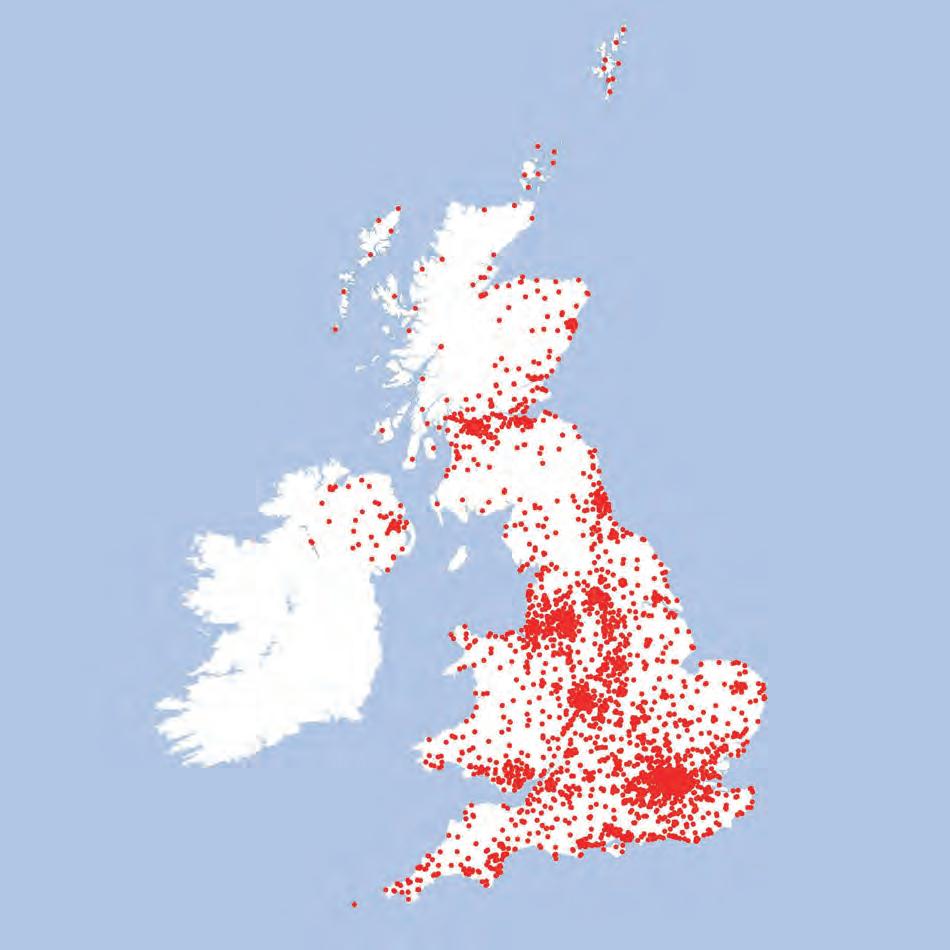
Swim England has announced a landmark overhaul of its teaching qualification structure, introducing a new streamlined, one qualification pathway to becoming a swimming teacher. SwimNation speaks to Sarah Green, Head of Workforce Education at Swim England, about the new Level 2 in Teaching Swimming and what the changes mean for the sector and for future swimming teachers.
Why did you make the changes to Level 2 qualification?
We completed a sector wide consultation with our operators, our approved training centres (ATCs), our tutors and our swimming teachers. It highlighted a clear need for changes. Learners are seeking faster, more accessible training with a stronger emphasis on practical skills rather than academic content. There is also growing demand for a ‘one-course’ approach, without the intensity of a combined course. At the same time, our partners need highquality teachers with the confidence and capability to deliver exceptional lessons from day one.
How’s it been received by your ATCs and tutors?
The new qualification has been extremely well received. It offers a clear, streamlined pathway to becoming a swimming teacher, making the process simpler and more accessible for learners. It places a strong emphasis on practical skills and real-world readiness, ensuring learners feel confident from day one. For tutors, the structure is more balanced and supportive, reducing pressure and allowing them to deliver exceptional lessons. Overall, this approach creates a better experience for everyone involved and will ensure the sector is equipped with highly skilled, confident swimming teachers.
Why should someone choose to qualify via Swim England?
Our Learn to Swim programme is the foundation of aquatic learning in the UK. It’s used across an estimated 80 per cent of all swimming
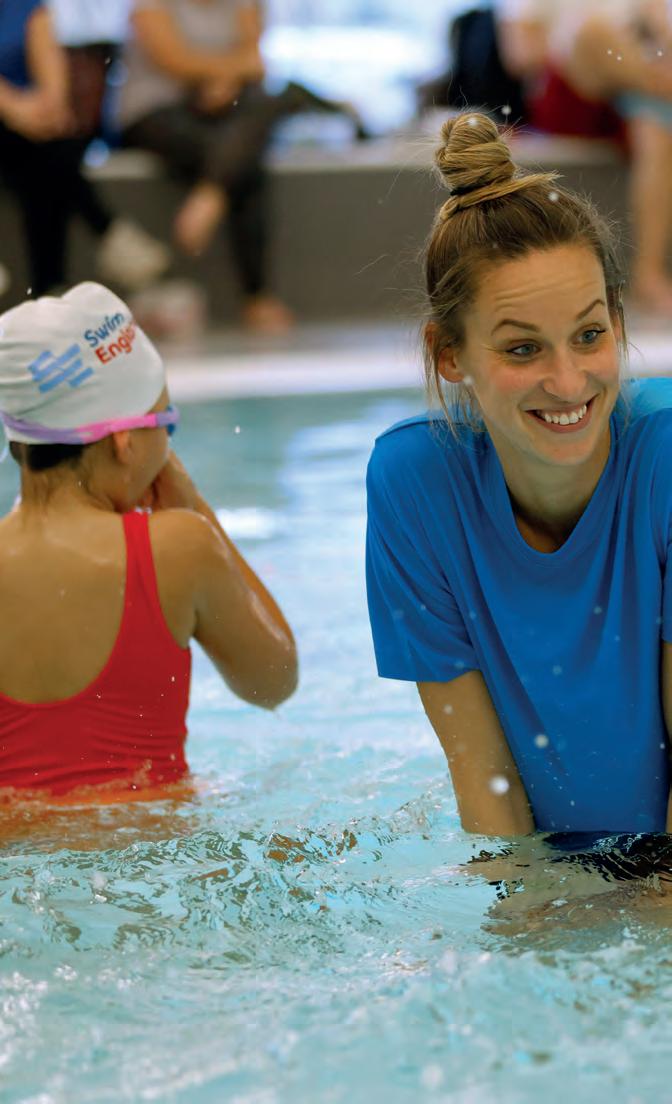
lessons, which equates to around 1.77 million people (primarily children) each year.
The new ‘one-stop-shop’ qualification consolidates the learning journey for our future swimming teachers whilst maintaining Swim England’s high professional standards and has been designed in direct alignment with our Learn to Swim programme. This guarantees that new teachers possess the skills, methods and syllabus knowledge needed to deliver our Learn to Swim programme effectively.
Why is the new qualification good for the sector?
Accelerating the qualification process for learners gives operators the necessary leverage to develop their professional workforce more easily and expand their aquatic offerings, so that more people can access high-quality swimming lessons.
Does quicker mean less quality?
No, definitely not. Just because the route to becoming certified is quicker, doesn’t mean corners are being cut. The SEQ Level 2 in Teaching Swimming features






a total of 50 hours’ qualification time, including 38 hours of guided learning with a tutor, convenient online self-directed learning and assessment time. The qualification offers a balance of theory and hands-on teaching, with practical assessments taking place in live lesson environments.
We have found people learn better from guided learning and practical sessions, rather than writing pages and pages of lesson plans. We want our teachers to feel ready to start from day one – the dedicated guided learning really supports them to be confident from the get-go. It also helps learners who may have SEN requirements, such as dyslexia, and benefit from more practical learning.
Tell us more about how you are making training more straightforward?
We are currently developing a new, integrated online platform for our learners, similar to a ‘google classroom’, which will launch later in 2026. This platform will feature multiple-choice assessments and a central resource hub for all learning materials,
For tutors, the structure is more balanced and supportive, reducing pressure and allowing them to deliver exceptional lessons

Sarah Green, Swim England


significantly streamlining the process for both learners and tutors. This in turn will help our tutors dedicate more time to providing high-quality, real-time practical training and feedback.
What happens if you already have the Level One Swimming Assistant qualification and want to upskill to become a swimming teacher?
The most straightforward way, whether you’re completely new to teaching or hold a Level 1 Swimming Assistant qualification, is to complete the new SEQ Level 2 in Teaching Swimming.
What if you’re not confident to dive straight into being a swimming teacher?
We’ve also introduced a fantastic new one-day CPD, Learn to Swim Helper, which is an entry pathway available for people aged 14+. It’s a great stepping stone and can support young learners and any individuals who, for whatever reason, want to build their confidence and ‘test the water’ before committing to the SEQ Level 2 in Teaching Swimming.
SwimNation speaks to the CEO of RLSS UK, who, after 12 months in her role, talks to us about the aquatics sector’s “bigger picture”
The Royal Life Saving Society UK (RLSS UK) appointed Simmy Akhtar as its CEO in late 2024. Joining the charity from Air Ambulances UK, where she had been CEO since March 2021, Akhtar started in the role in January 2025. With more than 15 years of experience in leadership roles, she brings diverse experience from the charity, private legal, public and not-for-profit sectors.
You have a background across several sectors – could you give readers a flavour of your career journey?
I’ve always been drawn to roles where I can make a difference in others’ lives, and I wanted a career where I could contribute to meaningful causes. I was quite academic, which led me to pursue a career in law and qualify as a solicitor. I was still in my twenties when I decided to give myself two years to try something new, knowing that I could return to law if it didn’t work out. I moved into the not-for-profit sector, and once I made the move, there was no going back. I’d found my place. Since then, I’ve worked across several organisations, most recently in public health roles in the NHS, focusing on community wellbeing, advocacy and strengthening

the patient voice. As CEO of Air Ambulances UK, I drove national growth and collaboration across emergency services. Much of my work has focused on raising income and profile, alongside advocacy, governance and compliance, areas where my strengths naturally lie.
What attracted you to the role of CEO at RLSS UK?
I was drawn to the charity’s heritage, its impact, and the chance to help shape a future where everyone can enjoy water safely and be free from drowning. Water safety is a fundamental life skill, and the role of leading an organisation dedicated to drowning prevention aligns perfectly with my values and my experience in health, safety and charitable leadership.
RLSS UK has a unique model. It combines a not-for-profit and commercial arm, with a shared goal of saving lives in all communities. The charity side of the organisation funds critical work in lifesaving sports and provides support for members and grassroots clubs. The commercial side delivers high-quality training and expert services to the sector, ensuring safe participation in swimming and aquatics. My role is to focus on governance and running an organisation that grows sustainably, supporting our lifeguards, our customers, and our communities.

The role of leading an organisation dedicated to drowning prevention aligns perfectly with my values
We must normalise diversity through inclusive imagery, women-only sessions and programming that re ects local demographics
RLSS UK published its Strategic Framework for 2025-2030 in June. What does it set out to do?
It sets out a bold and ambitious vision: communities free from drowning.
It’s built around three core pillars: Engagement, Education, and Expertise. For operators, this means practical, tangible support, embedding water safety into every customer experience, expanding access to high-quality lifeguard and first aid training, and using digital tools to streamline compliance, CPD, and operational excellence. Collaboration is central to the framework. We want to make it as easy as possible for facilities to meet safety standards while encouraging more people to enjoy aquatic activity.
The framework is concise, accessible and provides real clarity about who we are and what we do, which is saving lives through lifeguarding, education and drowning prevention.

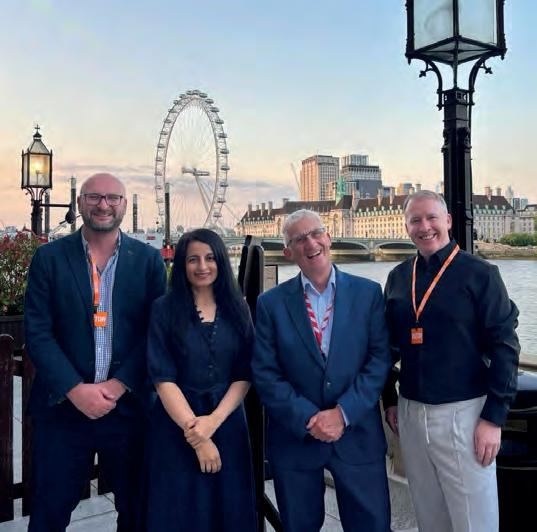
Operators will see increasing support from us as the framework is delivered. We are expanding our first aid qualifications and continually horizon-scanning to ensure operators are informed, supported, and equipped to stay ahead of emerging challenges. For example, our Technical Conference in February will provide the very latest advice, guidance, and qualifications, helping to strengthen safety across the sector.
We will prioritise making water safety education mandatory in schools across all UK nations, which will naturally increase demand for swimming lessons and the use of leisure facilities. We’re also investing in digital solutions that streamline training, qualifications and compliance, reducing the administrative and cost burden for operators. And we will work with operators to address the ongoing recruitment challenges in lifeguarding. All of this will be achieved in partnership with the sector. By listening, engaging and collaborating, we aim to make water safety simpler, more accessible, and easier for operators to embed across their organisations.

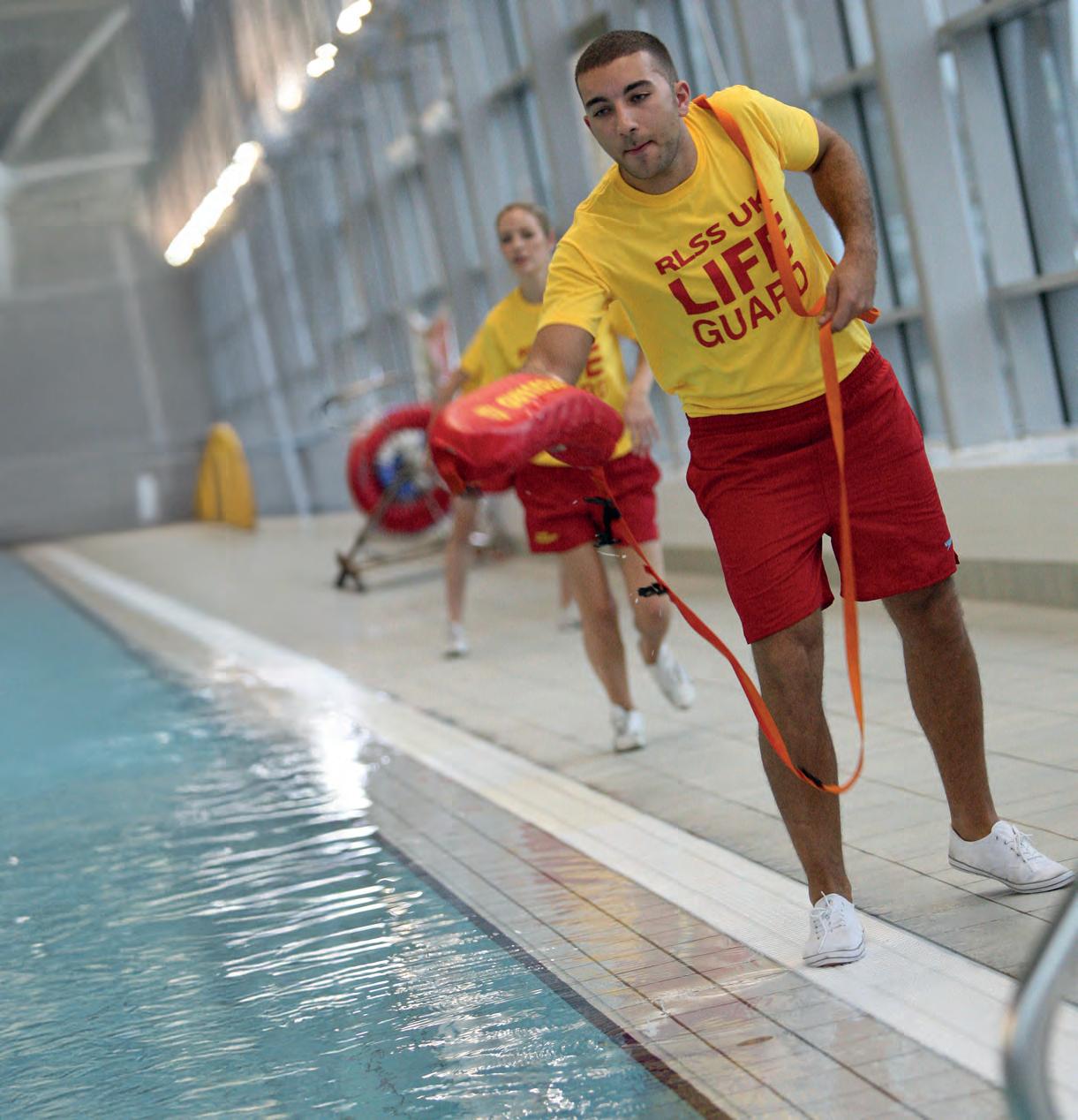
We’re proud of our heritage, but our focus is firmly on the future and collaborating with partners to tackle drowning prevention. Our campaigns, qualifications and community initiatives are central to our mission. Being able to swim doesn’t automatically mean being able to survive in water, which is why education and awareness are so important. Ultimately, we want the sector to implement the Water Safety Code - Stop and Think, Stay Together, Float and Call 999 - to ensure people are safe in and around all water environments. This could include initiatives such as dry-side lessons in water safety at leisure centres; I’d happily take my children to sessions like these if they were on offer.
What would you describe as the biggest challenges the sector faces at the moment?
Operators face significant pressures, including rising energy costs and staffing shortages. At the same time, there has been a decline in swimming lesson uptake, which impacts revenue and future participation. Maintaining consistent, high safety standards across a diverse range of facilities is also an ongoing challenge.
There’s a critical need to make swimming and aquatic activities accessible and inclusive for everyone. Facilities must consider accessibility in all its forms, from pricing structures that ensure financial sustainability while keeping sessions affordable for their communities, to convenient session times for working parents, and inclusive programming that allows everyone the chance to learn to swim and enjoy the pool safely.
I’m fortunate to have grown up with parents who are fantastic swimmers. I learned to swim at school and swim regularly at my local leisure centre. I have seen women swimming in burkinis, T-shirts and leggings to feel more comfortable. If we want to grow participation and create welcoming spaces for all communities, we must normalise diversity through inclusive imagery, women-only sessions, and programming that reflects local demographics.
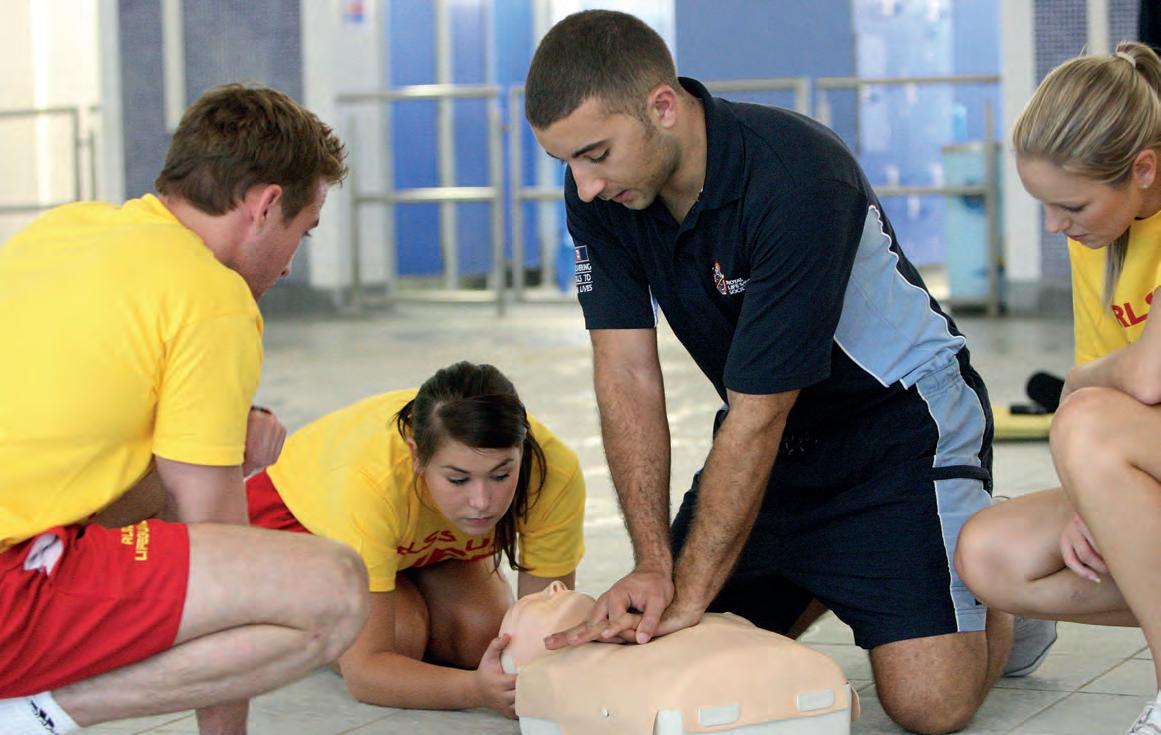
And what about the opportunities?
We need to think about the bigger picture. The NHS 10-Year Health Plan for England: fit for the future emphasises prevention and community health, and it’s crucial that the leisure industry, including aquatics, has a seat at the table. The sector must align with government policy with a unified voice. My background in health gives me a strong understanding of the benefits our sector brings to public health. I still work in the NHS as a non-executive director and understand its priorities, see the opportunities, and know how to work effectively with government and NHS partners. This expertise is invaluable in advocating for the sector.
I don’t think we shout loudly enough about the value of swimming pools. Pools are often the unsung heroes of the leisure sector, despite providing vital benefits for both physical and mental health. We need to raise awareness of these benefits and encourage more people to overcome the natural discomfort of getting undressed and into the water in our cold climate. We need to champion pools and the positive impact of swimming for public health and wellbeing.
If you could change one thing to improve the sector, what would that be?
I would make water safety education a compulsory part of the curricula across all UK nations. Providing every child with the knowledge and skills to stay safe around water
I would make water safety education a compulsory part of the curricula across all UK nations
would save lives and instil a lifelong culture of safety. Water safety education for parents and carers is also critical to drowning prevention. To make this effective, all local pools must be accessible to deliver this education. Water safety education is not just about learning to swim; it’s about using pools as community hubs where families and children can socialise, access essential skills safely and inclusively, to benefit both the public and the sector.
In my first year in this role, I’ve engaged with partners and operators across the sector and seen how we share a common vision to prevent drowning. I’ve seen the huge amount of respect the sector has for RLSS UK as an expert not-for-profit leader in lifesaving and lifeguarding awards and qualifications, as well as water safety consultancy. Operators value our expert advice and support, and the fact that we’re not about making profit for profit’s sake, we’re about reinvesting to strengthen lifesaving and community impact.



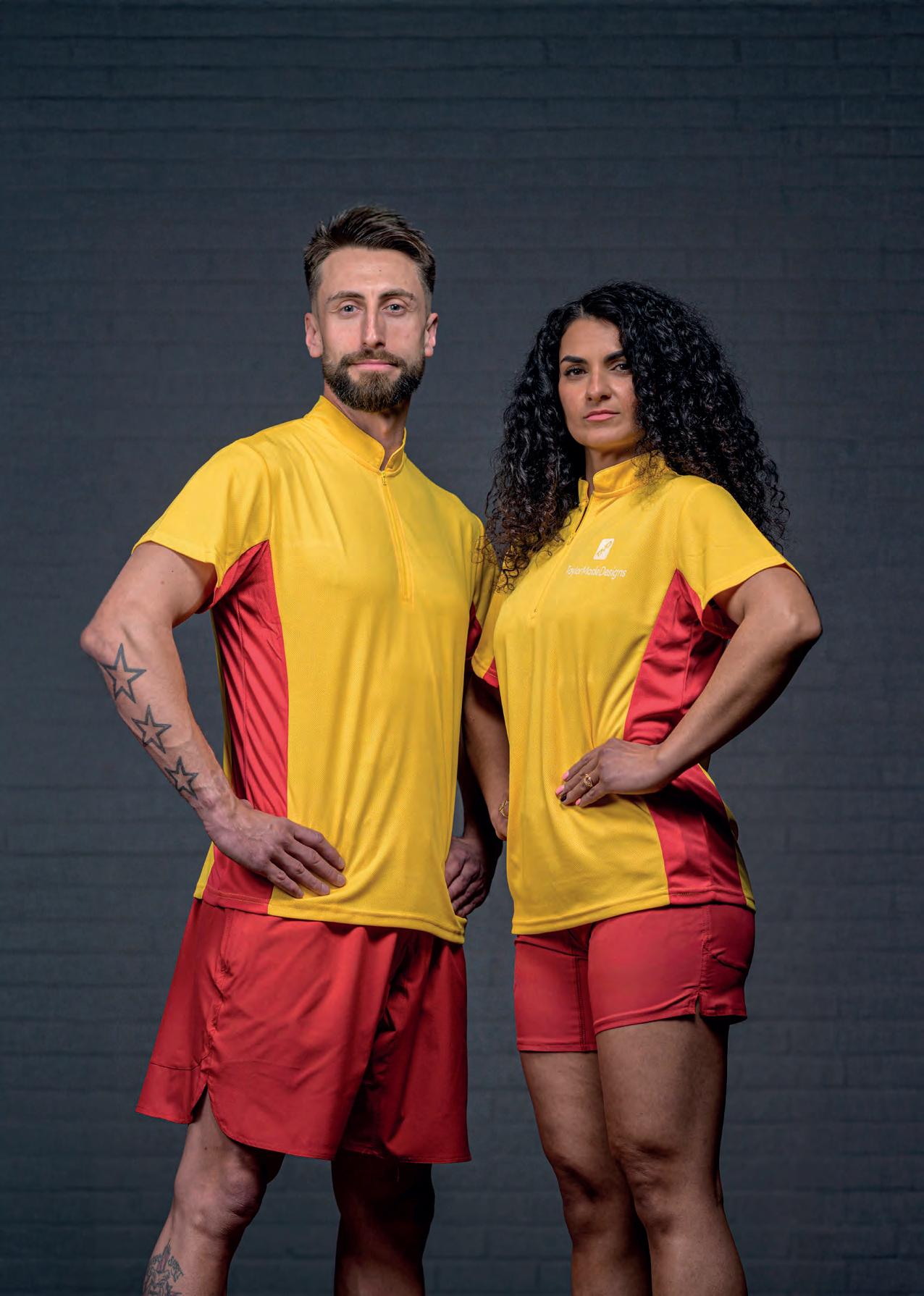
Neurodivergent traits and aquatics environment can work remarkably well together
Conversations about neurodiversity in swimming often understandably focus on supporting children to learn how to swim.
However, there is a parallel story that requires attention too, as it’s widely reported that neurodivergent traits align remarkably well with what makes an outstanding swimming teacher.
Rebecca Cox, Managing Director, Institute of Swimming (IOS) says: “The swimming pool is full of sensory information; light reflecting off the pool, echoes bouncing off tiles, bodies splashing through water. For many, it’s just background noise. But neurodivergent swimming teachers process this environment differently.
“Some neurodivergent teachers have heightened sensory awareness, allowing them to notice subtle changes, for example in a learner’s breathing pattern or tension in their body, that others might miss. Others excel at pattern recognition, spotting recurring mistakes in a swimmer’s stroke. Whilst different communication processing means some neurodiverse teachers naturally use more visual demonstrations and physical guidance rather than lengthy verbal instructions. These differences are a huge strength, something to actively celebrate.”


Simon is a 47-year-old swimming teacher who has ADHD and dyslexia. He says: “At school I existed in a constant state of hyper-alertness because I felt so overwhelmed. This wasn’t just about exams. Normal lessons left me feeling lost and anxious.
“Swimming was my safe space; a place I could find sanctuary. Being in the water shuts out those noises

and distractions, and the water always calms me. I wanted to share this love of water with others and retrained with the Institute of Swimming to become a swimming teacher 10 years ago.

“The written components were extremely difficult for me, but the course tutor checked if I had any additional learning needs beforehand and would translate the questions in a way I could understand. The use of technical language and very specific phrasing proved tricky too, but thanks to the tutor and the modifications they provided, I passed. I loved all the practical stuff and flew through.”
Since qualifying, Simon has developed insights into supporting children with a variety of SEN and neurodiversity. He says: “I can spot the SEN kids almost
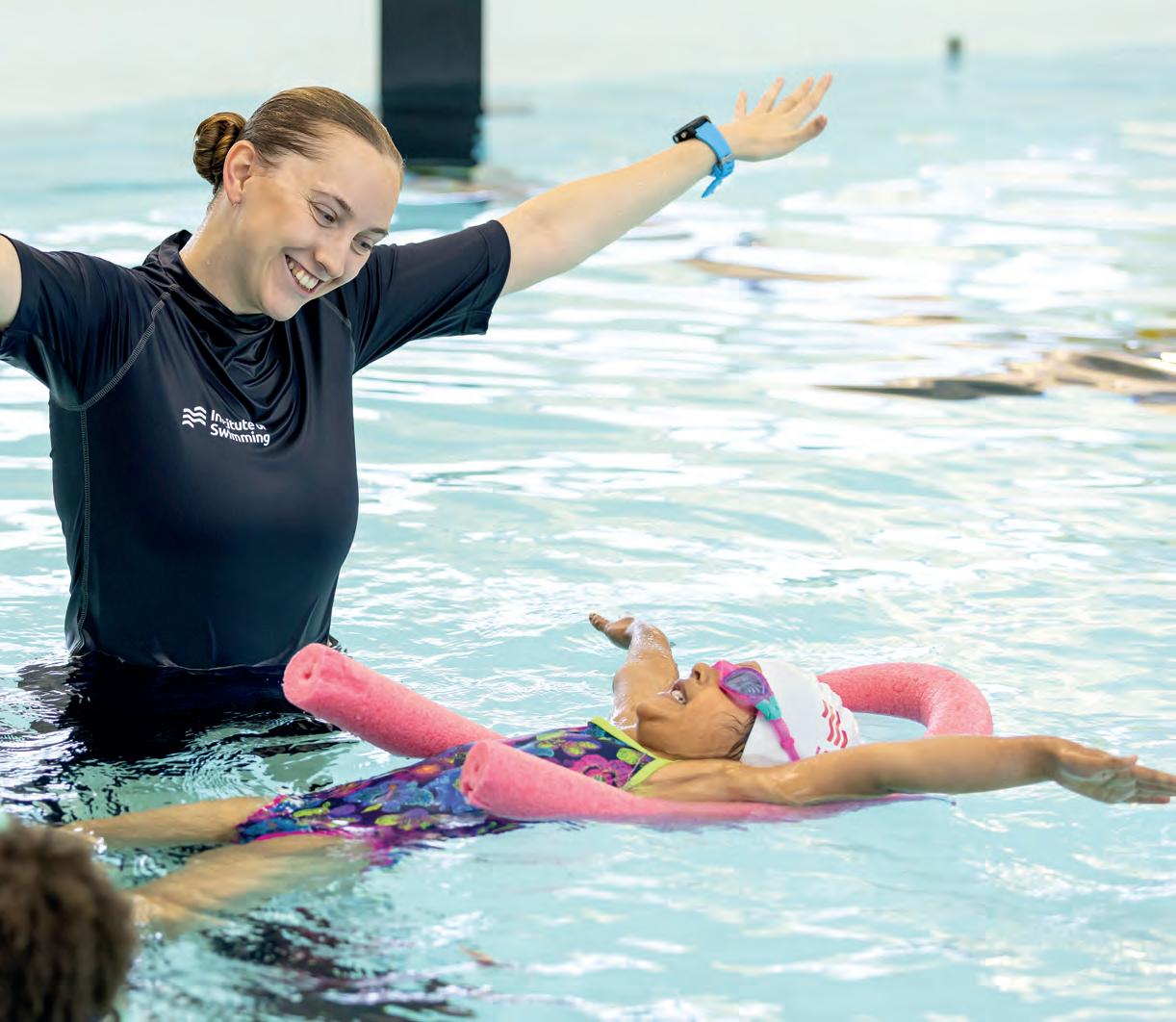
instantly and for the lively ADHD kids who literally cannot sit still, I often give them more responsibility. My lessons are intentionally quite fast paced, loud and really good fun. I keep the pace fast to help with the children’s concentration, and vary my voice pitch, rhythm and volume to maintain attention. These subtle changes keep them engaged.”


His own ADHD and hyperalert state has given Simon what colleagues recognise as a superpower. He says: “I’m good at spotting technical problems in learners’ strokes because I can hear when a splash sounds slightly different, indicating that stroke corrections may be needed.”
Tagan is a 30-year-old swimming teacher and lifeguard, who has just been diagnosed with autism, and is waiting


for her ADHD diagnosis. She has lived with anxiety for years. Working at her local pool, Tagan has discovered that many of her students are neurodivergent too. She explains: “Swimming is particularly beneficial for neurodivergent children because many triggers and the need for self-regulation through stimming - repetitive actions or sounds used to self-soothe, cope with stress and manage sensory input - can be managed through water.
I recognise myself in them! Stimming behaviours such as spinning and splashing are far less noticeable in a pool setting, allowing children to feel relaxed. The muffled sounds underwater also create a different world that many neurodivergent people find comforting.
“What’s great for me is the kids don’t judge me, they
accept me as who I am. I know my teaching style is energetic and somewhat chaotic, but my learners don’t mind. If I say something peculiar they just giggle, and when I stim, whether through hand flapping, wrapping elastic bands around my fingers or even vocal stimming, the children just accept me. In fact, sometimes when I make unusual sounds the kids join in with me.”
As a lifeguard too, Tagan is often the first person to notice when someone is struggling. She explains: “I’m generally the first person to move or spot an issue, and I attribute this to being highly sensory aware of sounds and my surroundings. It’s a trait that comes with my neurodiversity and is a genuine strength in this role.”
Swimming teachers responding to the Institute of Swimming’s 2025 survey reported having neurodivergent traits including ADHD, dyslexia and autism (both diagnosed and undiagnosed). Many had felt misunderstood or unsupported during their traditional academic education and had also struggled with more desk-bound jobs.
Recognising the one-size-fits-all approach to training doesn’t work for everyone, the IOS offers qualifications through multiple formats, including online, blended learning and in-person, allowing prospective teachers to choose the learning environment that suits them best.
The introduction of a new, streamlined Swim England qualification means learners can qualify as swimming teachers through a single comprehensive Level 2 qualification, making the journey more straightforward.

95% of our members surveyed found their IOS tutor helpful and encouraging
Rebecca Cox explains: “Our approach to training is helpful for all but may be particularly valuable for neurodivergent learners. The smaller class sizes, the more personalised approach, the modifications made to training, be that extra time, extra help, visual cues or readers and scribes, as well as the practical sessions in the pool, can really make a difference to someone that learns differently. It’s testament that 95% of our members surveyed found their IOS tutor helpful and encouraging, and 85% found the smaller class size of the IOS training, with a maximum capacity of 12 people, better for learning in comparison to their school education.
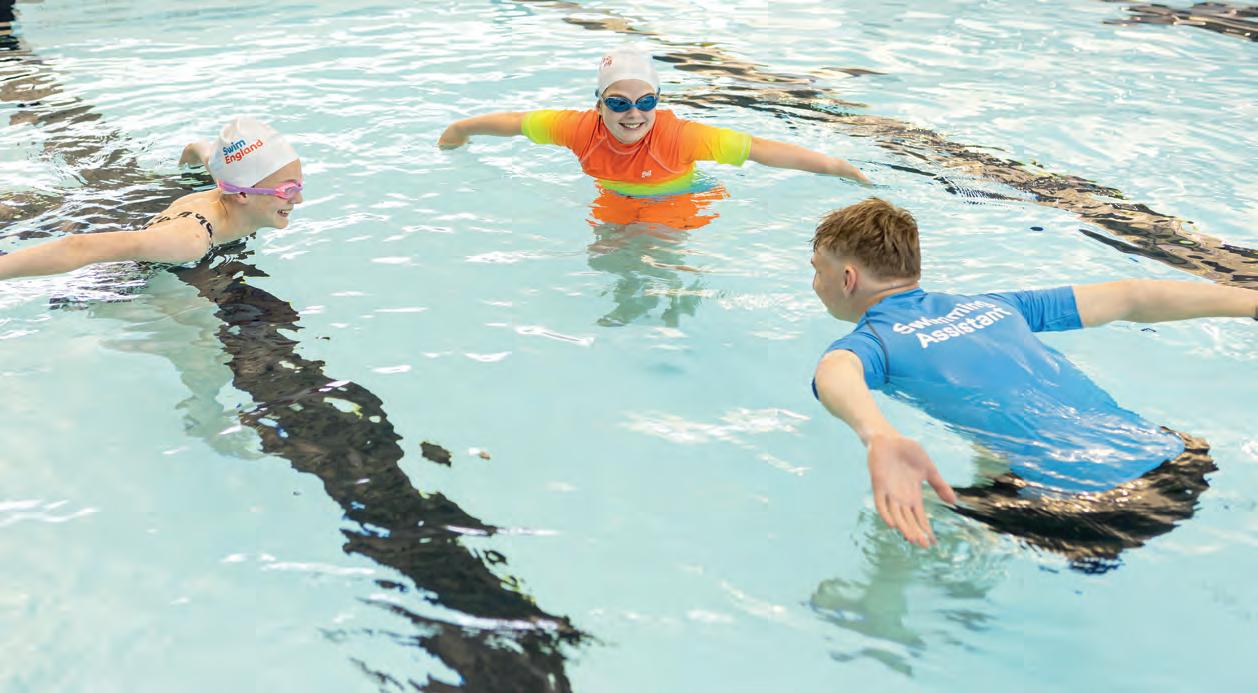
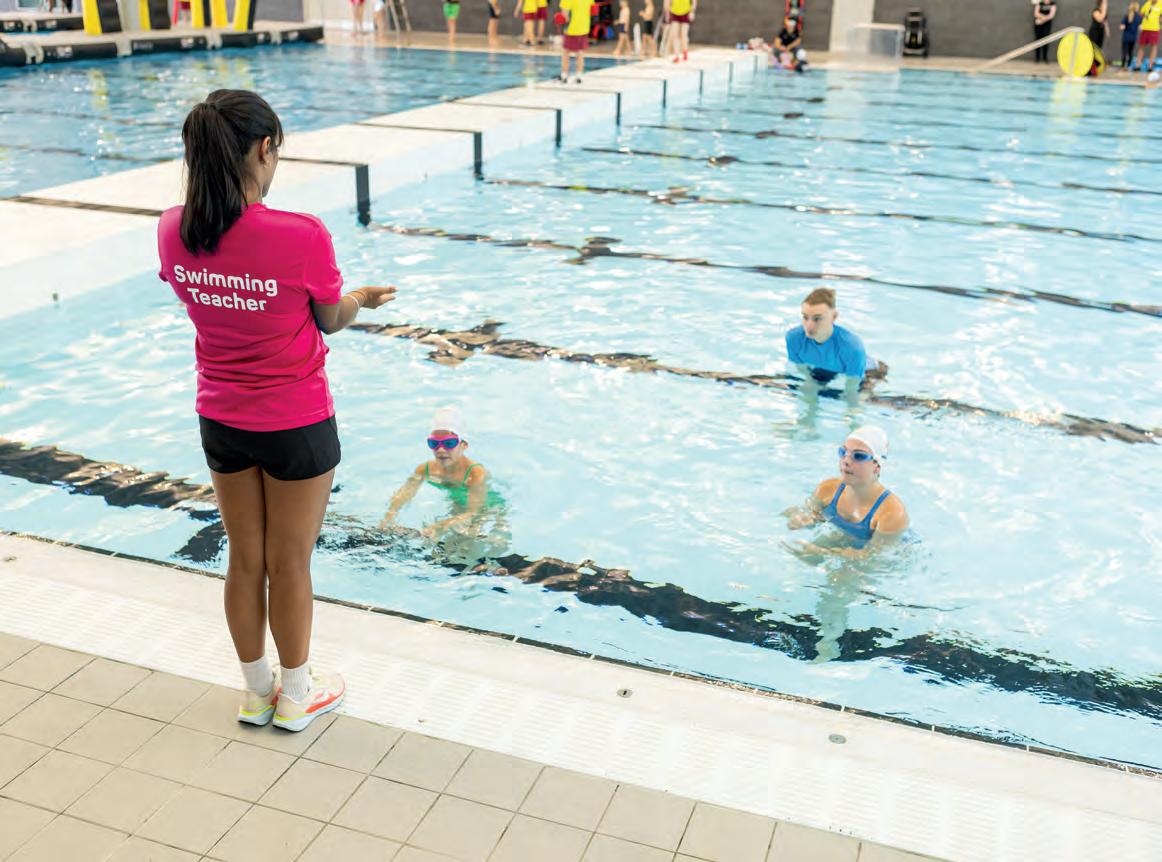
Marie, a tutor delivering Swim England qualifications for the IOS, has developed innovative teaching methods to accommodate different learning styles, personalities, experiences and demographics. She says: “Traditional educational models don’t work for everyone. I regularly meet trainee teachers who describe themselves as ‘not very bright’ because they didn’t succeed in a school setting. Yet they often become some of my most successful teachers.

“I proactively reach out to each learner before courses begin, gathering information about conditions or learning differences that might affect their experience. This allows me to tailor my teaching methods – whether it’s creating waterproof prompt cards for students with short-term memory or providing additional oneto-one support for those who need extra guidance.
“My experience as a tutor has reinforced my belief that swimming teaching can attract individuals who may not always thrive in more academic environments. They excel in the hands-on, people-focused environment poolside. My role becomes not just about imparting technical knowledge
but about rebuilding confidence, demonstrating there are alternative pathways to success.” The impact of this confidence-building approach extends beyond just Marie’s classroom. Among IOS members surveyed, 81% reported that becoming a swimming teacher has improved their overall wellbeing and self-esteem, suggesting the IOS’s methodology resonates throughout the profession.
These stories represent a fraction of the neurodivergent talent already working in aquatics, and the potential talent still waiting to find their place in the industry. Rebecca Cox continues: “The aquatics industry faces ongoing recruitment and retention challenges, and we need more professionals who can connect with the increasingly diverse communities wanting to learn to swim. Neurodivergent teachers aren’t just a solution; they tell us they’ve found somewhere they truly fit in, where they can excel at reaching learners others may find difficult, and can innovate the sector specifically because they think differently.”
As part of the collection of case studies, the Swimming Alliance is highlighting the great work already happening across the aquatics sector. One of these is a project aimed to create a pathway into swimming teaching with STA for deaf learners. The initiative focuses on removing the cost barrier of interpretation, adapt delivery for visual learning and ensure assessment is genuinely equitable.
Deaf learners face predictable but solvable barriers in swimming lessons: spoken content without interpretation; fast-paced delivery that assumes hearing; assessment instructions that aren’t fully accessible; and anxiety about communication on poolside. The result is underrepresentation in the aquatics workforce and fewer role models on poolside for deaf swimmers.
STA (Swimming Teachers’ Association) led and funded accessibility, covering two qualified BSL interpreters for the full course to guarantee realtime access to all teaching and assessment.
UK Deaf Sport promoted the opportunity into Deaf networks so the offer met the right audience, amplifying reach and trust.
GLL provided the venue (Royal Greenwich Centre, London), the teaching staff, quality assurance and community engagement.
The pilot provided real-time sign-language coverage throughout theory, demonstrations, poolside practice and safety briefings. This meant that deaf learners could participate on equal terms rather than “making do”. With support from GLL and interpreters, learners could focus more on technical skill development without a communication barrier.
The course promotes “visual-first teaching”: clear line-of-sight to instructors and interpreters; adjusted pacing to allow processing time; greater use of demonstrations, diagrams; and written prompts.
The assessment criteria and instructions were presented accessibly from the outset, to prevent disadvantage and support fair achievement.
Funding the interpreters: training budgets rarely include interpretation costs. STA’s charitable funding removed the biggest barrier without passing costs to learners.
Clear roles: STA owned accessibility; GLL owned delivery; UK Deaf Sport owned outreach. That clarity avoided “everyone’s job, no one’s job.”
Integrated interpreters: interpreters weren’t an add-on; they were scheduled, briefed and positioned as part of the teaching team.
Targeted promotion: direct routes into deaf communities replaced generic marketing, improving relevance and trust.

Funding and adaptations opened a realistic route for deaf candidates to gain a professional swimming qualification from STA. Progressing deaf trainees into teaching roles builds visibility and creates role models; a proven driver of participation and confidence for others. The lower communication barrier supported technical understanding and increased poolside safety. The delivery model shows how an awarding body, a national charity and a major operator can work smoothly together to deliver inclusion as standard.

Cost is the biggest barrier. Interpreter funding is the critical line item. This must be treated as a core delivery item, not a discretionary extra. Many deaf adults don’t see aquatics qualifications as accessible, and so partnering with UK Deaf Sport materially improved reach and confidence. Delivery requires consistency; inclusion must hold across theory, pool sessions and assessments, not just the classroom, so planning and staffing need to reflect that.
Budget the interpreters first. If funds are tight, secure a sponsor or apply for targeted inclusion grants before opening bookings. Write inclusion into the course plan. Specify interpreter hours, room layout, line-of-sight, and assessment adaptations in advance.
Recruit through deaf networks. Co-create copy and imagery with deaf advisors; avoid generic marketing. Train the team. Brief tutors, assessors, lifeguards and reception so inclusion is joined-up from arrival to assessment.
Measure the basics. Applications, starts, completions, assessment outcomes and learner feedback – reported alongside costs – to prove the model and unlock repeat funding.
This model currently relies on charitable funding from STA. If demand grows, STA will seek sponsorship or grant support so interpreting remains standard, not exceptional. The partners aim to repeat and expand provision, building a visible pipeline of deaf swimming
The Swimming Alliance is collecting short, practical case studies of inclusion from across the aquatics sector
There are many wonderful examples of inclusion across the sector, and the Swimming Alliance wants to share these stories and methods widely. This will help to improve access and belonging in pools, clubs and programmes. Please share your stories to inspire others, learn from each other, and together the aquatics sector can scale what works.
The Swimming Alliance is looking for examples where you have helped improve access for any under-represented groups. Keep it simple and practical – who did you help and why; what you changed; the results, costs and lessons learned. Please submit project-level information only. If you include identifiable people or photos, ensure you have consent for publication.
The Swimming Alliance is developing a Knowledge Hub to make these best practice examples available to the industry, and help the sector move faster on inclusion. If you’ve trialled something that made a differencebig or small - they’d like to hear from you.
Please complete the form here to submit your case study








SPATEX 2026 will be the event to remember for everyone involved in water leisure, whatever their role or profession. This year’s bumper edition, celebrating 30 years as the UK’s only dedicated water leisure expo, will boast more exhibiting companies than ever before and a new double seminar programme focusing on the needs of commercial pool operators. Free to attend, and open to all, SPATEX will take place at the Coventry Building Society Arena Tuesday 3rd to Thursday 5th February
Swimming pools, wellness suites, spas, ice baths, saunas, steam rooms, water features, including several water-filled and working models for both the commercial and domestic markets, will all be displayed under one roof. And, not forgetting the ancillary but essential equipment, such as heating, ventilation, tiles, chemicals and lighting. SPATEX 2026 has it all, and more.
SPATEX Organiser, Michele Bridle. “Thirty years ago, SPATEX brought a water leisure expo to the UK, now SPATEX is bringing you its biggest show. As an international shop window, it showcases the latest trends, innovations and services of 125 exhibiting companies from 13 countries, many offering exclusive show discounts. Plus, thanks to support from all the industry’s main associations, it’s a unique theatre of expertise and learning.”
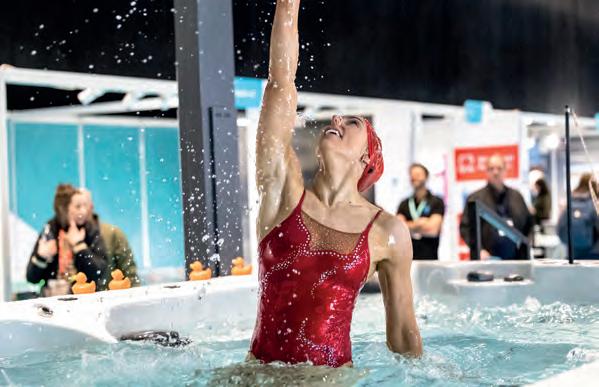
A free double seminar programme is as broad in its diversity as it is as steeped in expertise. Across the two seminar arenas over the three days of the show, there are 42 talks given by esteemed leaders of industry.
Arena 1 features three days of ISPE’s (Institute of Swimming Pool Engineers) CPDaccredited technical workshops, such as:
The latest on Legionella prevention Understanding the management of biofilms in swimming pools Results of new research into the health benefits of ice baths and hot tubs The removal of phosphates and chlorine protection in outdoor pools
Arena 2 – features a further 21 seminars including: For leisure centre managers, a Pool Plant Theatre features the specialist knowledge of ISPE, STA (Swimming Teachers’ Association), IoS (Institute of Swimming), RLSS UK (Royal Life Saving Society UK) and CBA (Chemical Business Association), to offer the latest on pool operator training and water testing. The STA gives keynote talks on topics such as hidden dangers in pools, spas and water features. 2026 updates from PWTAG (Pool Water Treatment Advisory Group).
For details of the full programme, please visit www.spatex.co.uk
New for 2026 is an exciting new initiative called The Industry Hub with five of the leading industry associations all conveniently grouped on one stand (adjacent to seminar Arena 2) - PWTAG, STA, RLSS UK, IOS and the BSPF’s (British Swimming Pool Federation) SPATA (Swimming Pool & Allied Trades Association) and BISHTA (British & Irish Spa & Hot Tub Association). The LCA (Legionella Control Association) and WMSoc (Water Management Society) will also be out in force at the show, with speakers from both associations giving keynote talks in the seminar arenas.
Energy saving is at the heart of SPATEX 2026 with seminars and the latest innovations on display, both on the stands and in the New Product Zone, from new variable speed pumps, heat retention covers and LED lighting to air source heat pumps and super insulated one-piece pools.
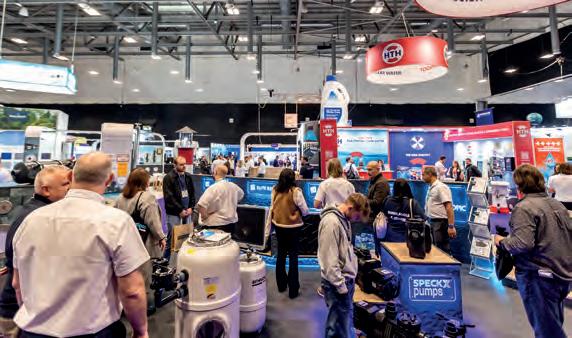
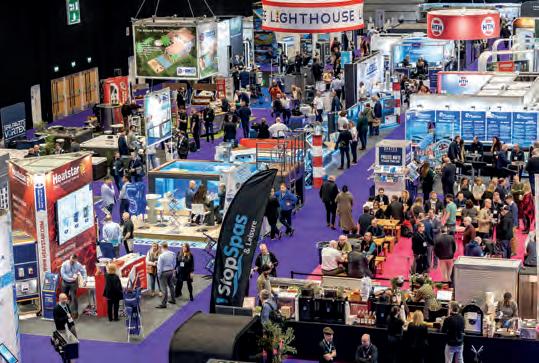
With all the water leisure community gathered, we plan to celebrate in style and make it a BIG reunion. The now famous SPATEX Networking Party, taking place at 5pm on the Wednesday Feb 4th, with free drinks, light bites, interactive games and lots of fun and chat, is open to all visitors and exhibitors.
SPATEX provides free car parking for its visitors and is within two-hour drive time of 75 per cent of the population.
We look forward to welcoming you. Register for free here: www.spatex.co.uk
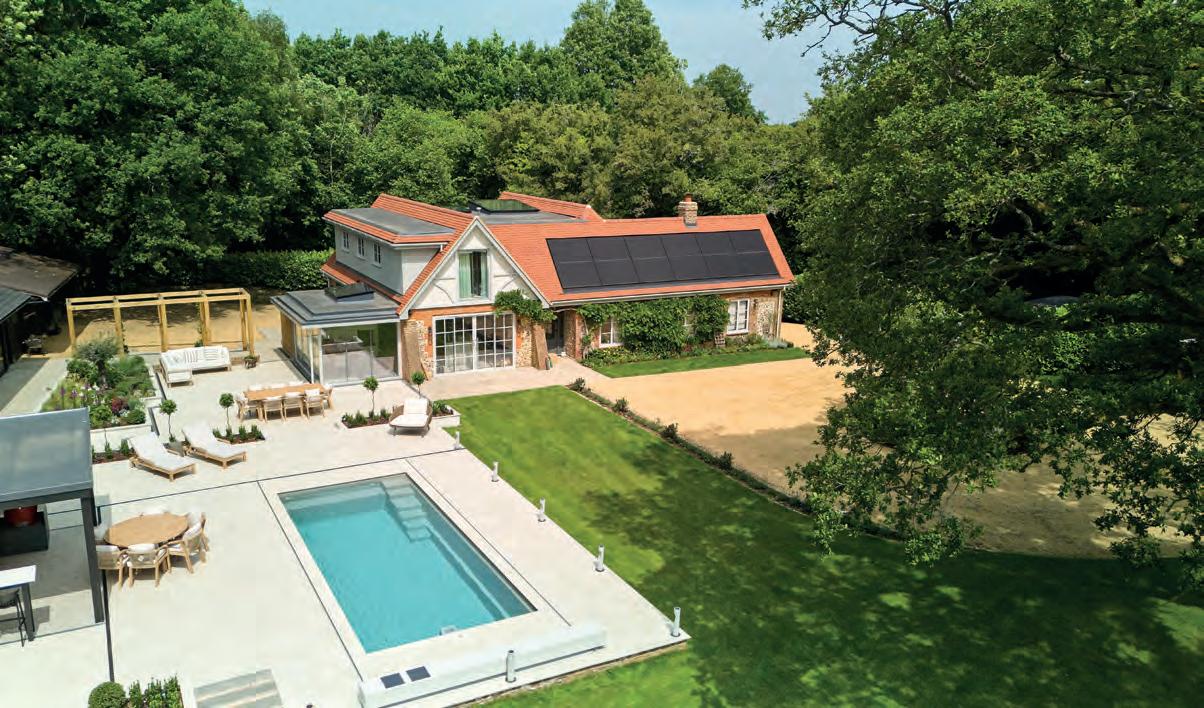
Born from years of dedicated research and development, EVi Pools delivers a premium, “ready-to-install” solution designed to seamlessly complement their clients’ existing portfolio. Providing a high-spec, one-piece trade package that is designed to reduce on-site hours and increase annual turnover.
Featuring our pre-wired, pre-plumbed ‘Pool Pod’ and air source heat pump, the system is designed for instant integration. Alongside our fully fitted shells,
Founded in 2006 in the south of France, Poolstar was born from a simple idea: to make the pool experience accessible to everyone. This spirit of innovation and accessibility, deeply rooted in the company’s DNA, has guided its growth from day one.
In less than twenty years, Poolstar has become a key player in both the French and international markets. Supported by a team of 85 passionate employees, the company now shines worldwide, with more than a third of its revenue coming from exports ; a testament to its dynamism and the trust of its global partners.
Initially recognized for its expertise in heat pumps, Poolstar has expanded into the entire pool technical environment, as well as a complete range dedicated to home wellness and aquatic sports. Today, its activities are structured around three complementary worlds, all connected by water - Pool & Garden, Relaxation & Wellness and Sports & Leisure
this plug-and-play format ensures technical accuracy while drastically cutting down project times.
Whether the pool owner prefers the EVi 6 or the EVi X, integrating EVi into our clients’ offering enables them to scale their business and take on more projects per season. Partner with EVi Pools to access a product that combines cutting-edge efficiency with premium aesthetics, allowing you to maximize profitability and minimize hassle.
Revolutionise your approach to installations today. Contact us to discover how EVi Pools can become your competitive advantage.

Through this diversified approach, Poolstar supports all types of projects, from family pools to collective facilities, as well as residential and professional wellness spaces. Committed, creative, and forward-looking, Poolstar continues its mission: to make aquatic leisure accessible to all, without compromising performance or quality.
- Energy-efficient pool control
Heatstar have long been established as the market leader in the design and manufacture of modern, highly energy efficient, environmental control systems for swimming pools, with an enviable reputation for quality.
For nearly 50 years Heatstar have been guiding their clients towards responsible energy solutions for swimming pools, setting the benchmark in an environmentally conscious industry.
Heatstar use the highest-grade materials and components to ensure absolute quality and reliability in everything they manufacture, no matter how unique or challenging the swimming pool application. The result, a range of genuine made to last products, with energy efficiency at the forefront of the design which are built to perform, and built to last.
Heatstar is proud of its heritage as a British manufacturer. It is one of the reasons why Heatstar, in addition to its UK success, exports to customers all around the world including Europe, USA, China and a multitude of other prominent territories. Although Heatstar products are designed, developed and manufactured in the UK, they are still very much applied worldwide, and can be found in leading hotels and leisure facilities, internationally renowned spas and luxury developments around the globe.
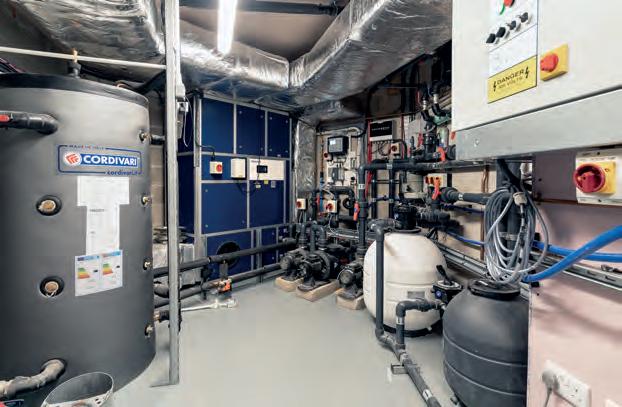
For more than three decades, NIVEKO has been one of Europe’s leading manufacturers of premium one-piece swimming pools, combining traditional craftsmanship with modern technology. Each pool is custom-made to reflect the individual lifestyle and aesthetic vision of its owner — from private wellness retreats to architectural statement pieces. Originality for us is not about following trends, but about authenticity and the constant pursuit of perfection. Since 1991, we’ve been pioneers in custom-made pool solutions, and in 2026 we continue our journey — pushing the boundaries

Paragon Pool Services Ltd are market leading pool cover specialists with over 20 years of dedicated industry experience. Since its founding, the company has been the go-to supplier for high-quality, bespoke pool cover systems. Supplying exclusively to the UK trade, Paragon serve pool companies of every size with tailored, technically reliable solutions. For two decades, Paragon has been the official and long-standing partner of T&A, the renowned manufacturer of automatic pool covers, reinforcing its reputation for exceptional product knowledge and consistent service standards. Paragon’s portfolio includes the AquaGuard safety cover, designed to deliver robust protection and peace of mind with every installation, and the AquaTop slatted cover, engineered for energy efficiency, durability, and seamless integration into new or existing pools. Continuing its commitment to innovation within the pool trade, the company has recently introduced the AquaMove moving pool floor, an advanced, space-optimising system that transforms pool areas with versatile, height-adjustable functionality.
With an unwavering focus on trade-only supply, technical support, and precision-built solutions, Paragon Pool Services Ltd remains a trusted partner to the UK pool industry, recognised for quality, expertise, and long-term reliability.
of quality, design, comfort, and innovation even further.
A new year brings new challenges – and new innovations that once again redefine the world of pool design. Among them, the mosaic – a design element that transforms every pool into a piece of art, adding depth, light, and individuality to the pool. Another highlight for 2026 is the ZEN POOL – bringing the full NIVEKO experience even to compact spaces. Its self-standing design and balanced proportions make it perfect for terraces and smaller gardens.
At NIVEKO, every detail matters – from concept to precision manufacturing.
Discover Austrian-crafted Swim Spas – now vailable in the UK Waterwave Spas brings Austrian precision engineering, energy-saving performance and timeless design to the UK, creating swim spas that transform any garden into a private training and wellness retreat.
Built to exacting Austrian standards, every Waterwave Swim Spa is designed for year-round use. Expect powerful countercurrent technology for serious swim training, ergonomically sculpted massage seats for full-body relaxation, and advanced insulation that keeps operating costs low in the British climate.
Whether for holiday parks, hotels, leisure centres or private homes, our modular range offers flexible dimensions, multiple installation options and premium finishes to suit any project. Durable construction and carefully selected components ensure long service life and minimal maintenance—vital benefits for UK operators and homeowners alike.
Waterwave Spas is proud to introduce its collection to the UK market at SPATEX. Visit our stand to experience Austrian craftsmanship firsthand, explore bespoke configurations and discover how a Waterwave Swim Spa can add lasting value to your business or home.”
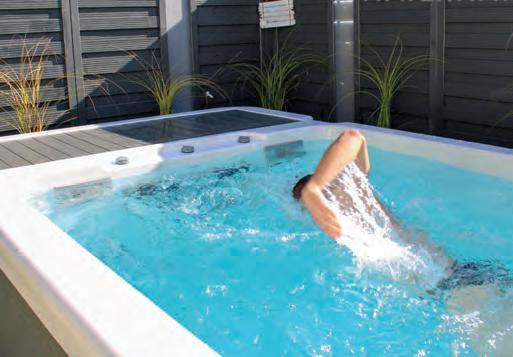
Darlly is proud to introduce its new, expanded range of premium pool filters, now offering more than 60 SKUs designed to meet the diverse needs of the commercial and residential pool market. Engineered for reliability and performance, the collection includes high-quality replacement cartridges compatible with all leading pool filter brands, ensuring distributors and service professionals can access a comprehensive solution from a single trusted supplier. All products in the new range are stocked across Darlly’s UK and European warehouses, providing fast, efficient
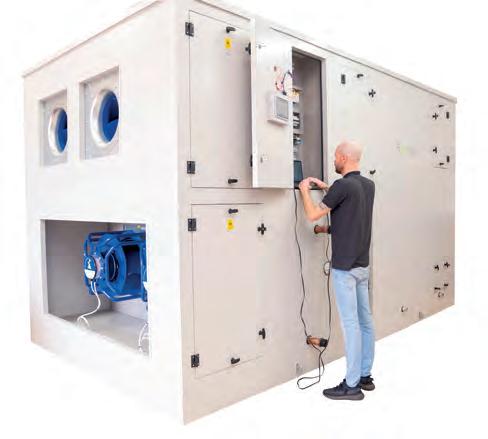
For more than 41 years, Recotherm has been setting the standard for premium swimming pool air handling units (AHUs) that are engineered to perform and built to last. Our units combine precision manufacturing with innovative, energy-efficient design, delivering the highest air quality with proven reductions in operating costs.
Every Recotherm AHU is created with ease of maintenance and long-term reliability at its core.
Intelligent layouts, durable components and user-friendly access ensure minimal disruption throughout its life cycle. This robust construction, paired with our commitment to engineering excellence, results in exceptional longevity, providing maximum return on investment for our customers.
Our technology now includes advanced remote monitoring, allowing performance to be tracked in real time and enabling proactive servicing, optimisation, and fault detection—further protecting your investment and ensuring consistent environmental control.
Recotherm’s dedication goes far beyond installation. We provide extended warranties and comprehensive technical support for the entire life of your unit, ensuring customers are supported today, tomorrow, and decades from now.
Trusted by prestigious clients across luxury hotels, elite health clubs, leisure centres and highend residential developments, Recotherm continues to prove that reliability, efficiency and customer care are the cornerstones of our success.
fulfilment and reducing downtime for trade customers. With a strong focus on performance and durability, each Darlly pool filter comes with a one year Guarantee.
Darlly continues to prioritise value for partners by offering competitive trade pricing without compromising on quality. Supported by dependable logistics and expert customer service, the expanded portfolio strengthens Darlly’s position as a go-to filtration specialist for retailers, wholesalers, and pool technicians across the UK and mainland Europe. This new range reflects the company’s commitment to innovation, availability, and long-term support for its trade clients.
SPECK has been moving water and other liquids efficiently and climate-consciously since 1909. What sounds simple requires deep expertise, global know-how and reliable technologies - for industry and commerce, public facilities, private households and aquaculture.
Under the BADU brand, SPECK provides pool technologies for private and public swimming pools worldwide. Customers value the excellent workmanship, tested safety, long service life and outstanding energy efficiency of BADU products. From backyard pools to hotel complexes and major public facilities, BADU always delivers state-of-the-art solutions. Alongside advanced pump technologies, SPECK produces counter swim units that combine innovative engineering, strong performance and elegant design – ideal for both competitive and recreational swimmers.
Beyond the pool sector, SPECK supplies customised pump solutions for domestic and industrial applications. The portfolio covers powerful, efficient systems for water supply, water disposal, rainwater utilisation and heating, as well as robust technologies for large and small industrial plants.
SPECK also serves the aquaculture and aquafarming market with tailored products for fish farming in closed recirculating systems, large aquariums, koi ponds, natural streams and shrimp farms. As an internationally operating, medium-sized family business with over 110 years in pump construction and more than 50 years of expertise in plastics processing, SPECK continues to drive innovation and shape the future of fluid technology.
Origin Aqua’s Mineral+Biome is a living bio-filter and natural alternative to chlorine that uses beneficial microbes and spa-grade minerals to purify pool water, delivering crystal-clear, mineralised “living water” completely without chlorine, salt or other chemical disinfectants. The system recreates nature inside a compact, modular filtration unit, where biological predation out-competes pathogens; so there’s no chlorine smell, no harsh by-products, and water that’s kinder to skin, lungs and the environment. Designed and built in the UK after a decade of scientific research,
Certikin supplies wet leisure and water treatment equipment in the UK. As well as being a major innovator and manufacturer, it also takes pride in the strategic relationships it builds with other key global suppliers in order to enhance its portfolio. It holds stock of more than 8,000 different product lines to equip both domestic and commercial installations, with products as diverse as spas, water park slides, dosing equipment and mono-pools, as well as all the core essentials and spare parts. The Certikin brand has become synonymous with premium quality and is a technical specialist for a wide range of products such as pool covers, heating and ventilation equipment and pool cleaners. Established in 1963, Certikin currently operates at two locations, with a combined total of four acres of office, warehouse and factory space, including specialist elements for storing pipe and fittings, testing and servicing pool cleaners and CNC machining of HDPE products at its headquarters and main distribution hub in Witney. Certikin North, its state-of-the-art computer-controlled manufacturing plant in Leeds, produces tailor-made pool liners and covers.
Mineral+Biome is automated and retrofit ready for most plant rooms, with smart IoT control of dosing, temperature, flow and backwash. Compared with conventional chlorine systems, Mineral+Biome typically cuts energy and wastewater use by around 50%, reducing running costs while raising comfort and water quality. You get the best in bathingstandard performance without disinfection chemicals, pH-firefighting or heavy maintenance—just naturally balanced, crystal-clear pool water that feels as good as it looks. Why swim in chemicals when you can swim in fresh, mineralised water?
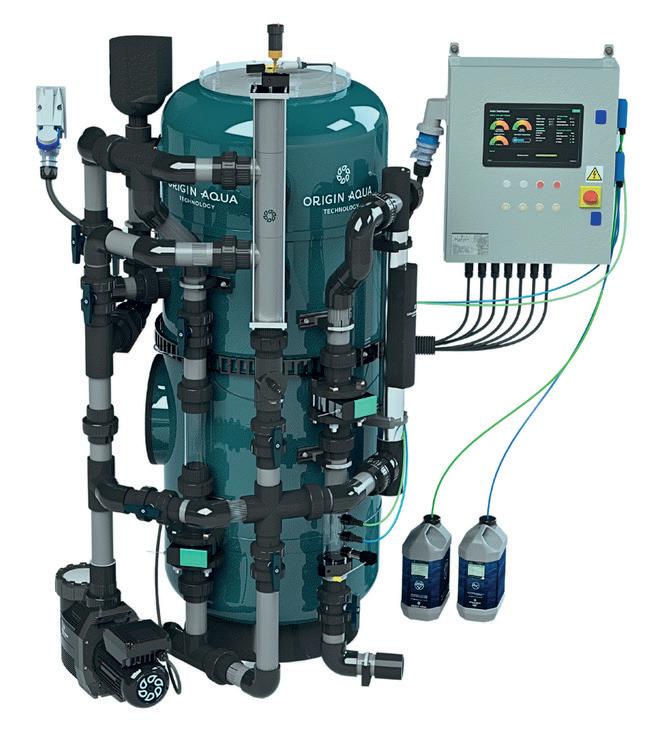
Jo Talbot Commercial Director RLSS UK
Technology is integral to everyday life, from commuting to work and helping children with their schoolwork to doing the weekly shop and enjoying sports. Our industry is no exception, with swimming pools increasingly embracing technology.
Today, almost 10% of swimming pools are utilising swimming pool supervision technology to enhance safety and to support their lifeguards; a development that is encouraged by RLSS UK.
As the UK’s leading water safety experts, swimming pool safety sits at the very heart of RLSS UK’s purpose: to prevent drowning, so everyone can enjoy water safely.
We are committed to supporting operators in all aspects of pool safety, starting with our researchbacked National Pool Lifeguard Qualification (NPLQ), which was awarded over 45,000 times in 2025. In addition, we provide free, expert-led guidance to help operators navigate new activities, challenging situations and implement best-practice safety standards.
We are proud to have played a key role in helping the industry embrace technology by offering clear, practical guidance for operators. Swimming pool supervision technology is widely available across the UK and Ireland through four main suppliers. These systems provide automated monitoring and detection, alerting lifeguards when a swimmer may need help, which significantly enhances safety and operational confidence.
Why is technology adoption increasing in the industry?
Operators are facing significant challenges, including rising operational costs, energy prices, staffing shortages and increased staffing costs.
Many operators are turning to technology to help address these pressures. Technology enables smarter management of resources, for example, optimising low-risk sessions and monitoring pool occupancy to improve programming and reduce costs.

Beyond operational efficiency, enhancing safety is a key reason for adopting technology. Swimming pool supervision technology provides lifeguards with extra support and adds a layer of protection, reassuring both operators and pool users.
Will technology replace lifeguards?
We are commonly asked: “Will lifeguards still have a role in the future?” The answer is clear: lifeguards are essential. Their role extends far beyond rescue; they are critical in prevention. Lifeguards actively educate pool users and intervene before incidents occur, whether it’s identifying a child who has wandered from the changing rooms alone, preventing a backstroke swimmer from colliding with the wall, or assisting a parent who has momentarily lost sight of their toddler.
While technology can detect emergencies such as a swimmer becoming submerged, lifeguards often prevent these situations from happening in the first place.
They are also essential for rescue, recovery and immediate first aid. Unless technology evolves into robotic systems capable of performing these tasks, lifeguards will continue to be a permanent and vital fixture in swimming pool safety.
To support operators who are considering adopting technology or are already using these systems, we have worked with CIMSPA, Swim England and ukactive to provide free and comprehensive guidance since 2023. Join us to meet with the four main pool supervision technology suppliers, see a system demonstrated and hear from leading experts at a dedicated Swimming Pool Supervision Technology event, proudly sponsored by RLSS UK. The event will take place on Thursday 29 January 2026, at Kirby Leisure Centre, Nottingham. For further details, email learnmore@rlss.org.uk
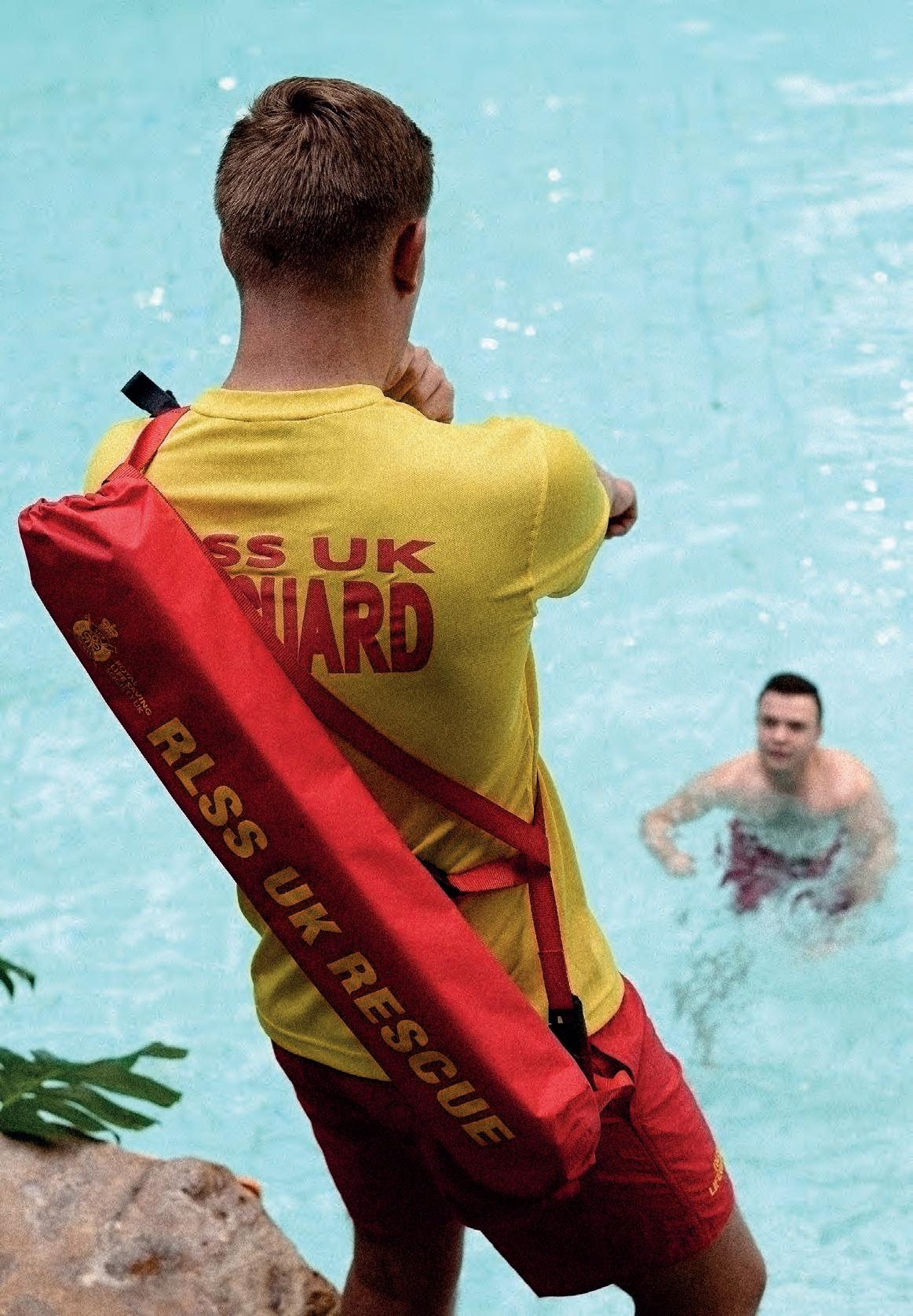
While technology can detect emergencies such as a swimmer becoming submerged, lifeguards often prevent these situations from happening in the first place
looks at some of the solutions designed to help

Founded in 2006, AngelEye was among the first to apply artificial intelligence and computer vision to aquatic safety. Today, AngelEye’s drowning-detection systems are deployed in hundreds of pools across more than 30 countries, supporting lifeguards and facility operators with reliable, data-driven supervision tools. AngelEye solutions are developed in line with recognised industry best practice and comply with ISO 20380:2017, the international standard for drowning detection systems in public swimming pools. The system design also reflects established principles promoted within the UK aquatic sector, including those set out by organisations such as RLSS UK, with a strong focus on prevention, rapid response and continuous supervision.



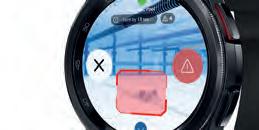








At the core of the portfolio is AngelEye LifeGuard, an advanced supervision system that combines intelligent video analysis with flexible camera configurations. LifeGuard can operate using underwater cameras, which may integrate LED lighting, or through aerial infrared cameras installed above the pool. This modular approach allows the system to be adapted to different pool layouts, operating conditions and environmental constraints. AngelEye LifeGuard provides continuous monitoring of the pool environment, identifying behaviours or situations that may indicate increased risk. When an event is detected, the system generates immediate visual and audible alerts, enabling fast and focused intervention. Recorded timelines and event data can also be reviewed to support staff training, incident analysis and the ongoing improvement of safety procedures. that combines intelligent video analysis with flexible camera configurations. LifeGuard can

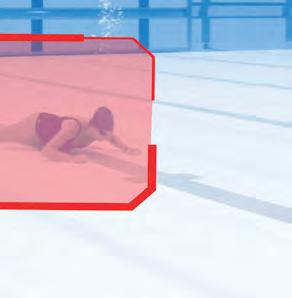








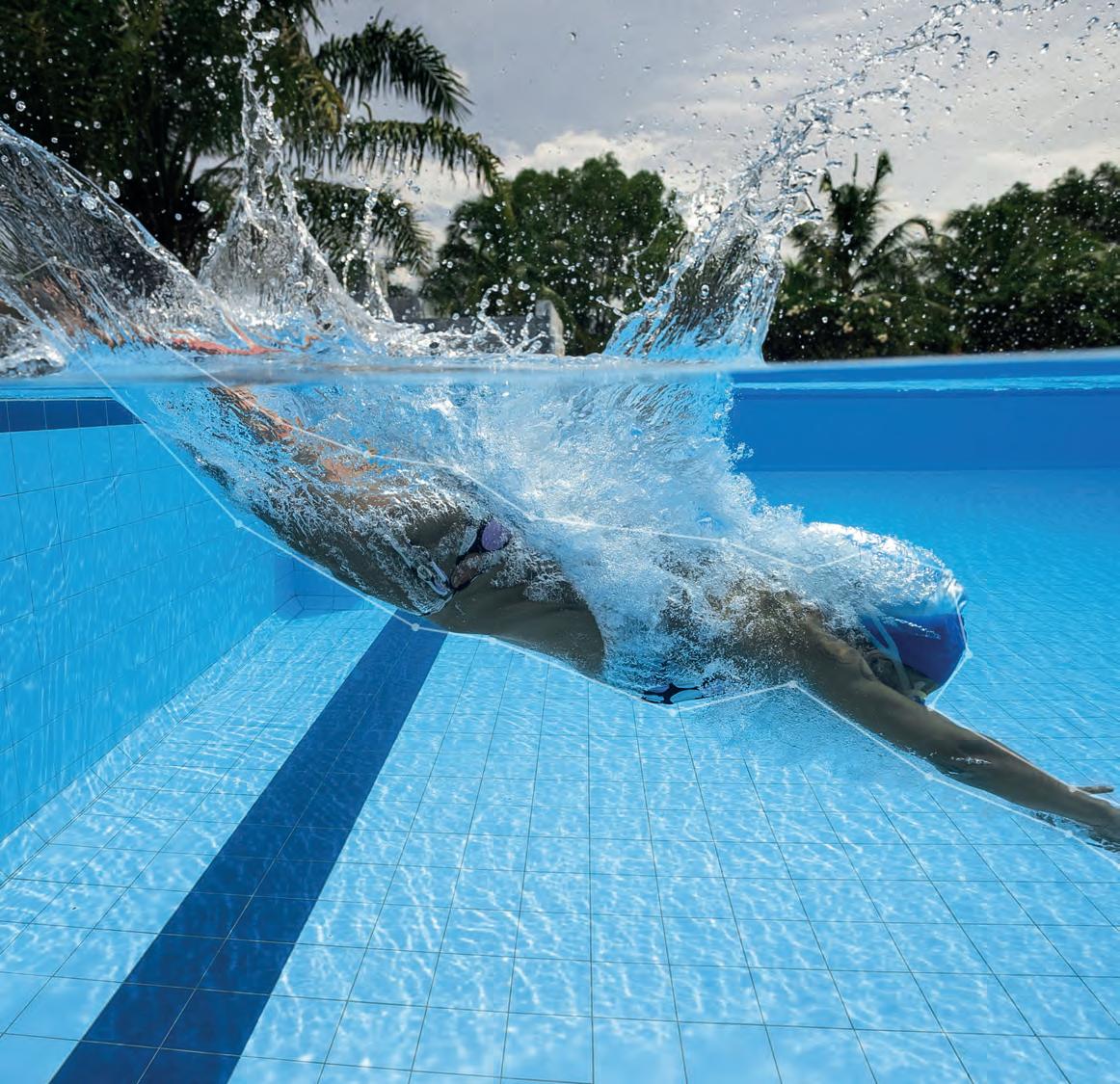
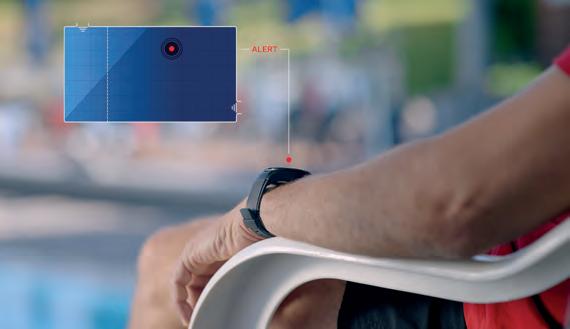
Lynxight provides AI-powered pool safety solutions that work invisibly in the background, supporting lifeguards and operators while keeping the focus where it belongs – on swimmer safety, so every moment is carefree. Lynxight’s technology makes standard overhead security cameras smarter with AI, turning existing infrastructure into an always-on safety net. By analysing swimmer movement in real time, the system identifies early signs of distress and alerts pool staff before situations escalate, not after. Alerts are delivered directly to lifeguards via smartwatches, enabling faster, more confident responses without tying staff to screens or fixed positions
Designed for real-world pool operations, Lynxight installs quickly and with minimal disruption. The result is rapid onboarding across all pool types. Once live, the system operates continuously, eliminating blind spots and enhancing human vigilance rather than replacing it. Beyond safety, Lynxight also supports smarter pool management. Operational insights help teams allocate lifeguard resources more effectively, understand pool usage patterns, and run facilities more efficiently. Lynxight’s technology is advanced, yet trust is fundamental. Lynxight complies with the strictest global data security and privacy standards, ensuring ethical and responsible use of its technology across all markets. Lynxight helps keep more than 1 million swimmers safe every month and is trusted by more than 10,000 pool staff worldwide.
Drowning remains a major public health issue, including in supervised swimming pools. Poseidon’s AIdriven pool supervision solutions focus on supporting lifeguards with technology that is capable of detecting signs of distress at the earliest possible stage. Built through long-term collaboration with leading research institutions and experts worldwide, Poseidon combines
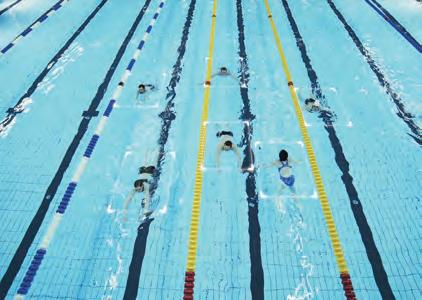
proprietary hardware (overhead and/or underwater cameras, central processing units, alert interfaces) with highly specialised AI software.
Poseidon is in service mostly in public swimming pools, where continuous supervision is mandatory. Its clients include public authorities and operators working under public service delegation contracts. The system is deployed in a wide range of facilities, from small teaching pools to Olympic-size pools, both indoor and outdoor. Poseidon has been installed in the UK for over 20 years, with numerous pools equipped. The industry particularly values Poseidon’s ability to demonstrate documented evidence of lives saved in the UK and across the world, based on real operational experience.
The AI detects a person in distress before full submersion by
Poolview supports operators with intelligent systems designed to enhance vigilance, reduce risk and strengthen compliance. From leisure pools with complex sightlines to facilities with high bather loads, Poolview’s suite of above and below-water technologies provides operators with the confidence and clarity they need to keep swimmers safe.
Above water cameras deliver high-definition coverage of leisure pools and blind-spot areas, giving lifeguards enhanced visibility where direct line of sight is limited.
Below water detection technology provides continuous monitoring beneath the surface, helping teams identify potential incidents early - even in busy or visually complex pools. Poolview’s above water detection technology, the company’s newest innovation, introduces advanced analytics and intelligent alerting to support lifeguards and wider response teams in real time.
Poolview’s long-standing partners consistently highlight the impact of these systems. One national operatorwho has installed around 90 Poolview systems since 2013 - describes Poolview as “the only provider we trust to safeguard our pools.” They praise Poolview’s ability to overcome complex installation challenges, their unwavering
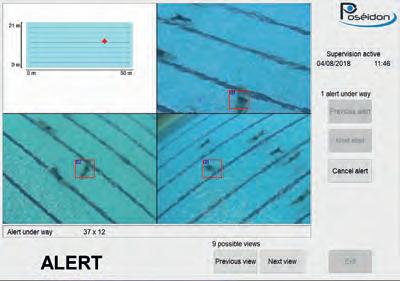
analysing behaviour in real time. Trained on data from more than 300 equipped pools and dozens of real incidents, the system evaluates robust criteria such as trajectory, posture, speed of movement and degree of immersion, allowing it to distinguish genuine distress from normal swimming behaviour.
Beyond safety, Poseidon provides real-time swimmer tracking and attendance data, offering longterm opportunities for optimised lane management and resource allocation. With over two decades of continuous investment in R&D and AI, Poseidon represents the most mature and proven drowning prevention solution available today.



commitment to industry guidance, and the reassurance offered by responsive aftercare. The systems, they note, have become “essential eyes where lifeguards simply cannot maintain constant visibility,” significantly reducing organisational risk and strengthening client confidence. Behind every installation is a dedicated UK-based team of engineers, project managers, and safety specialists who work closely with operators from planning through to ongoing servicing. Their expertise, responsiveness, and genuine passion for safer swimming environments are key reasons Poolview continues to set the benchmark for bather safety technology.
SPATEX represents all sectors of the water leisure industry from pools, spas, saunas to hydrotherapy, steam rooms and play equipment, in both the domestic and commercial arena.