theSopris Stars

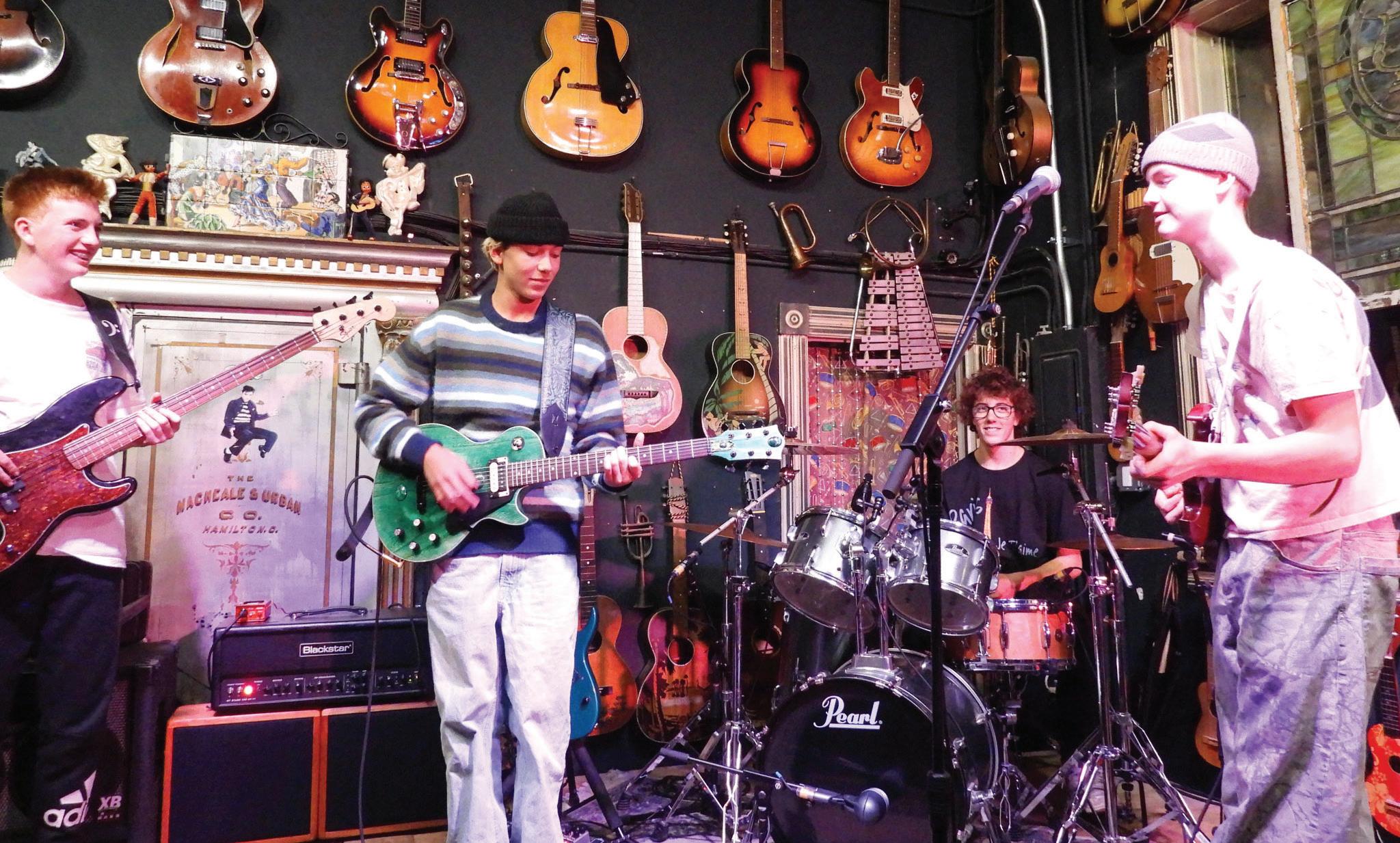
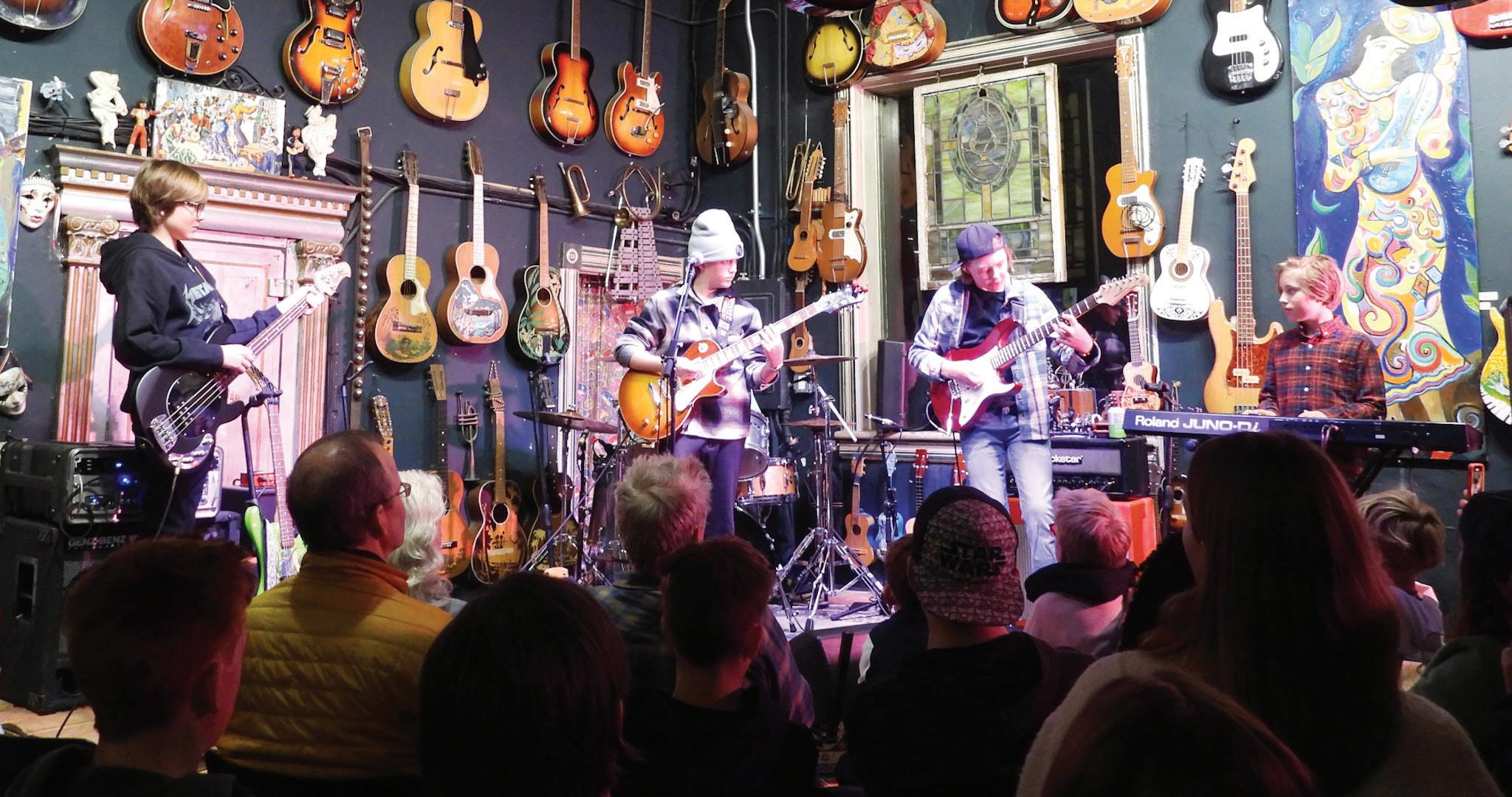
On Jan. 13, the Andy Zanca Youth Empowerment Program (AZYEP) hosted a concert at Steve’s Guitars in Carbondale featuring Rock and Roll Academy Aspen bands Unrestricted and The Halfcabs. The AZYEP show was the first of a series to be held monthly at the fun and funky small-town venue spotlighting local young artists. The next show is Feb. 10 at 7pm. Parents, tell your kids! Kids, ask your parents!
There is a new epidemic sweeping across local schools, and it isn’t the flu, a new variant of COVID or any type of sickness. It is the e-hall pass. As a senior at Basalt High School, I have a few thoughts on the matter.
The e-hall pass system was first introduced at Glenwood Spring High School two years ago, and was just implemented at Basalt and Roaring Fork high schools this semester. So far, it is not popular among the student body.
At Basalt, a student has to enter their student ID and submit a request to leave the room for any given reason through a tablet. After the teacher approves it, a timer is set. After the student returns to class, they stop the timer by entering in their student ID number again. Students are permitted three breaks a day. What’s interesting is the control over who is in the hallway when, so that friends don’t use the time to dawdle or misbehave during class time. The system can deny some students from leaving the room because of behavioral concerns associated with another particular student who may be in the hall at the same time. Plus, the school can take your phone if you disobey the e-hall pass. All of this supposedly promotes a better learning environment, but, so far, it seems to distract from class time and can be a point of contention between students and teachers.
By Hana Creyts
enough to drive our friends around the country, go to college and live on our own, we should be able to have access to our phones (even if they have to be parked in the phone pockets where students have to put up their phones during class time).
How would you like it if your breaks were monitored throughout the day by a machine? Alas, that is the new reality for now. It doesn’t seem fair to me.
In fact, most students who I have heard talk about the e-hall pass detest it. There have even been students who have tried to bypass this new system and not use the hall pass, only to have a teacher shut them down.
Schools are supposed to be about fostering a positive learning environment for students, not about tracking where students are and are not supposed to be at that exact minute.
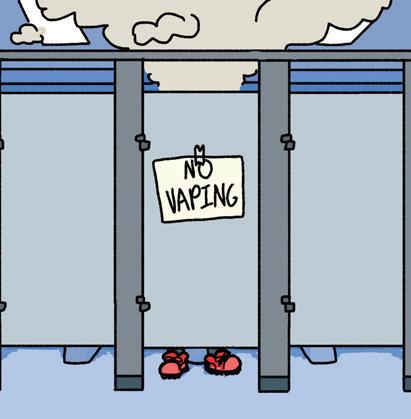
Why was the e-hall pass implemented in the Roaring Fork School District in the first place? I don't know the entire story, but I suspect it was because a small group of people made the same bad decisions, such as vaping in the bathroom.
We are all being controlled because of the bad decisions of only a few students. Sure, the students who have made those mistakes may be being punished, but now so is every single other student.
Youth Editor Lou Gall lou@soprissun.com
Anna Sophia Brown anna@soprissun.com
Arthur Cherith arthur@soprissun.com
Hana Creyts hana@soprissun.com
Aurora Egan aurora@soprissun.com
Kate Ott katelynn@soprissun.com
Giselle “Gigi” Rascon giselle@soprissun.com
Vivienne Shapiro vivienne@soprissun.com
Youth Journalism Director
James Steindler james@soprissun.com
Youth Journalism Instructor Skyler Stark-Ragsdale
Every time a teacher has to grant permission for someone to leave the classroom, it disrupts class — which seems to happen almost every five minutes!
As seniors, most of us are already 18, so adults. If we are old enough to enlist in the military and register to vote, old
What
Under the Geneva Convention, collective punishment is classified as a war crime. This goes against international law! Well, that got dark quickly … Joking aside, it seems to me that the old fashioned hall passes worked just fine holding things together. They were like the duct tape of the school.
BY GISELLE "GIGI" RASCON Sopris Stars Columnist
I keep coming back to the same question every winter.
What makes a fur jacket any different from a leather one?
Both are sourced from an animal's exterior, both have a place in our culture's history, and both are praised for their quality and visual appeal. Yet, why does one invite more backlash while the other quietly hangs in many of our closets — mine included?
Before fur was viewed as a controversial issue, within the early chapters of our civilization it was practicality, animal pelts were essential for warmth and survival, it was used for protection before it became a symbolic notion within our society. Aside from its essential use, animal use became cultural — it was spiritual and sacred. At what point did it become a sign of status?
As I began digging deeper into this loophole, I came across an opening line from one of Vogue's archived issues, “The Fur Story of 1929.”
“Go without jewels, pocket money or every-day clothes, Vogue advises, but never try to scrimp on fur. For the fur you wear will reveal to everyone the kind of woman you are
and the kind of life you lead,” the line reads.
My left eyebrow spiked up reading that, reminding me of our Valley's fashion output, specifically Aspen’s. Aspen’s culture is known for its frontier history and the wealth alongside it. Those who have strolled Aspen's retail spaces have no doubt spotted tourists in fur and Kemo Sabe hats with a strip of leather wrapping the circumference of the head piece, while shopping in high end luxury stores.
Wearing a fur coat in Aspen is like going to Disneyland with your Mickey ears. Fur coats went from mountain survival to symbols of status, like costumes for Aspen's social language. I attempted to contact a couple local sellers on their ethical outputs when it comes to their market. One politely declined to comment and the other didn’t respond by press deadline.
Earlier this year (three weeks ago) I boomeranged back to the question previously mentioned as I sat in a conference room in New York City with Vogue's operatives, listening to their say on sustainability in the fashion industry (pretty complex I must say).
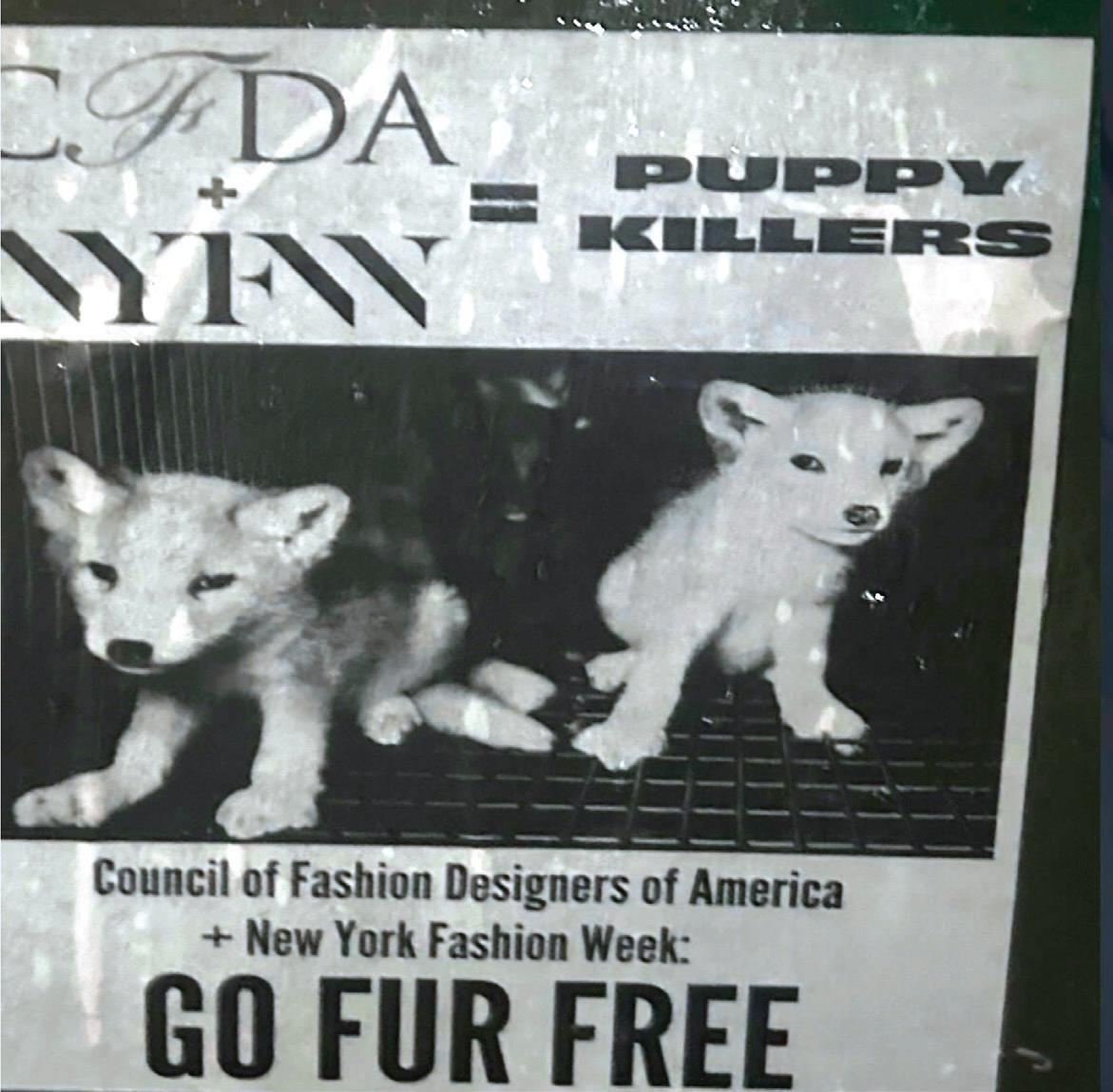
On my way to the financial district I came across a poster that quickly grasped my attention: “CFDA [Council of Fashion Designers of America] + NYFW [New york fashion week] = puppy killers. GO FUR FREE.”
As a fashion fanatic myself, I digitally dug into the regulations that come with the craftsmanship behind these goods, when I happened to see Kim Kardashian's recent paparazzi pictures in a W Magazine article highlighting a carousel of her looks during her stay in Aspen. The magazine describes her as “dressed to the nines, of course, in an outfit that looked straight out of the 2000s.”
“She layered a Roberto Cavalli fur coat from 2000 over the Italian brand’s lace-up leather trousers,” the magazine continues, depicting one of her multiple Aspen outfits.
“A vintage Dolce & Gabbana corset held it all together and an extra-long fur scarf from Hermès completed the look.”
Last Christmas, she received backlash from People for the Ethical Treatment of Animals (PETA) for giving each of her children a puppy of their own. Her response? Cover her hourglass figure in
Graphic Designer Terri Ritchie
The Sopris Sun, Inc. is a 501(c)(3) nonprofit corporation with a mission to inform, inspire and build community by fostering diverse and independent journalism. Donations are fully tax deductible. The Sopris Stars is made possible thanks to The Sopris Sun.
Support The Sopris Stars Youth News Bureau by making a donation at www.soprissun.com/donate
fur and leather goods, from head-to-toe.
Circling back to CFDA, the organization's new policy on fur use states, “Beginning with September 2026 New York Fashion Week, the CFDA will no longer permit animal fur in collections on the Official NYFW Schedule. This timeline gives designers space to adjust their materials and show plans. … An exemption applies only to animal fur obtained by Indigenous communities through traditional subsis-
tence hunting practices.” What stood out to me was what wasn't addressed: leather.
“Many people happily wear leather on the grounds that it's a byproduct of animal slaughter for meat and therefore a form of recycling,” a 2008 The Guardian column states. Is it though?
The column continues to describe that a lot of bovine leather (cow skin), specifically, is a byproduct coming from
ANNA SOPHIA BROWN Sopris Stars Correspondent
EDITOR’S NOTE: The source living in Venezuela is referred to by alias initials (FA) to help ensure anonymity and safety.
“Its culture is incredible. I don’t think there is a culture that has more joy in life and incredible charisma," Mike De La Rosa, a Roaring Fork Valley resident originally from Venezuela said of his home country. "There is amazing warmth interpersonally."
On Jan. 3 at 2am, FA was awoken by the sound of his windows shaking in Caracas. At first, the confusion of calamity set in, but then: hope.
“For an hour or an hour and a half, just every once in a while, you’d hear boom boom boom. We didn’t know if it was the army, or if that was the start of a war,” FA told The Sopris Stars. “I was scared, but at the same time I was excited. Maybe things are finally going to start changing.”
The latter described a descent into authoritarianism after Chávez was elected as a socialist, initially popular among the working class. After his second term as president, the constitution was altered to make way for his third. Utilities provided to the people became contingent on their continued support and the opposition's presence in the media dwindled.
“WE HOPE THE U.S. CAN HELP BRING DEMOCRACY AND FREEDOM TO VENEZUELA, WITHOUT LOSING YOUR OWN DEMOCRACY AND FREEDOM IN THE PROCESS.”
- Venezuelan Citizen
While the United States’ arrest of Nicol�s Maduro on Jan. 3 is highly contested, it represented a crack in the wall of a longstanding regime in Venezuela.
Rosa cautioned against forming assumptions and opinions about Venezuela's sovereignty and political atmosphere. He said that Venezuela is being instrumentalized and people are trying to defend their own narratives, often without considering the country's current and historical contexts.
Rosa and FA, a resident in Caracas, have lived under the preceding Hugo Chávez and Maduro regimes.

“It became difficult to tell where Chávez ended and the government began,” FA said.
In 2006, Rosa’s father, a former consultant to Chávez challengers Claudio Fermín and Manuel Rosales and a political columnist, felt rising tensions and was pressured to stay silent or leave. After receiving a threatening email detailing his son’s school bus route, the family sold the house, gave up their assets and left for the United States. This became the story for many individuals. Rosa explained that qualified and experienced Venezuelans fled to countries where they were criminalized, leaving behind property, family and familiarity in an effort to survive.
“The Venezuelans coming into America are not the narco-trafficking warlords or whatever. These are invented narratives,” Rosa stated. “It’s easy to overreport Venezuelan crimes, even though they are not truly an outlier. These crimes probably arise from being a refugee in survival straits. These people are the victims of lifelong oppression.”
Once Venezuela’s economy crashed and inflation reached over 40,000%, both criminal activity and censorship were exacerbated. According to the Center for Strategic and International Studies, in 2018, 92% of the



population didn’t have access to clean water, targeted blackouts left cities incapacitated, 90% of Venezuelans fell into poverty and about a quarter of the population left in a mass exodus.
“I have two sisters; they both left the country [and] live abroad. Most of my friends have left the country, because there was no economic opportunity; or if you say anything, criticize the government, you’re at risk,” FA explained. “If you do anything to make your life better. If you say, ‘We should change policy to make the economy better’ or ‘We should free these innocent people,’ saying those kinds of things that are true and reasonable can get you in jail. So either you play their little corrupt game … or you keep quiet.”
“It was a setting incomprehensible for most Americans,” Rosa said. “It was a culture dominated by violence … Almost every Venezuelan has an experience where a friend, a cousin has been abducted, sequestered for money.”
FA explained that while crime worsened, “The government went against crime in the worst possible way: just killing people — extrajudicial killings.”
Rosa explained that Venezuelans actively protest. There were months of boycotts, frequent opposition and resistance, but because the government controlled the oil revenue its power prevailed.
continued on page 8

















AURORA EGAN
Sopris Stars Correspondent
With the stress that modern life presents to the youth, it is no surprise that many have turned to controversial sources for relief. Throughout the Roaring Fork School District (RFSD), tobacco and vaping use in schools appear to be a large problem.
According to Joel Hathaway, executive director of schools at RFSD, there have been 24 recorded incidents of tobacco use or possession during the 2025-26 school year. These offenses include tobacco products such as vape pens that are used in school vehicles, during school activities or on school grounds across Roaring Fork schools.
Suzanne Fitzgerald, the principal at Bridges High School, an alternative high school in Carbondale, explains that vaping is quite a large problem at her school. She has both noticed the issue herself and had students self-report their use to her.
When asked about the main reason behind the influx of students vaping, Fitzgerald believes that students truly don’t understand the distress vapes are going to produce.
“It’s something that has been encouraged socially and encouraged among young, young people,” Fitzgerald said. “People truly don’t understand the long-term harm it’s causing.”
To confront this problem, Fitzgerald said that bathroom monitoring has increased, which has seemed to have reduced vaping in bathroom settings. However, Fitzgerald has heard from students that this may have pushed vaping to other areas where teachers are not present, such as in cars and in the parking lot.
After a student is caught vaping, the punishment for a first-time offense includes a notice to parents, the Second Chance educational resource and a conversation with a counselor. After a second offense, a student resource officer would be brought in.
Paul Freeman, principal of Glenwood Springs High School (GSHS), believes that nicotine use and vaping are not only a problem at GSHS, but a problem surrounding all schools. Issues in high school often parallel issues in society, Freeman said.
Throughout Freeman’s 47 years of teaching, he said that the issues of nicotine and tobacco use have neither increased nor decreased, and have only switched forms. When Freeman first started teaching, the main nicotine product students used was a cigarette. Compared to now, Freeman believes that though a minimal number of students continue to smoke, addiction has shifted towards vaping.
Concerning the reasons behind the large amounts of vaping among students, Freeman shares a similar belief to Fitzgerald that students lack the judgment to understand what they are risking when using nicotine products. Freeman also relays that many turn to these products as a way of coping with mental health problems, such as depression.
“I have no doubt that a vulnerable population of students are those who are susceptible to feeling depressed, or to feeling low,” Freeman said. “And those drugs that are available can make those feelings somewhat go away.”
Similar to Bridges, GSHS has also increased monitoring in areas where
The fact and fiction
Teenage caffeine related hospital visits are rare, but the number of visits have roughly doubled over the past six years.
That’s according to Indiana University’s Riley Children's Health hospital, which analyzed over 223 million hospital visits of patients ages 11 to 35, from 2017 to 2023.
According to a 2024 national poll by C.S. Motts Children’s Hospital, 43% of teens drink caffeinated beverages because it's their favorite product, 23% because their peers drink them, 18% to stay awake and 13% to help study and focus.
“There are guidelines for children ages 12 to 18 that suggest a limit of 100 milligrams of caffeine per day,” roughly equivalent to about two cans of soda a day, the hospital states on their website.
Maddie Hawkins, a Colorado Rocky Mountain School junior, said she drinks “about one Red Bull a day.”
Dr. Greg Feinsinger, a retired local physician in the Valley, gave a breakdown of ingredients in a 8.4oz Red Bull, and the recommended consumption limits for each. A Red Bull contains 105 milli-
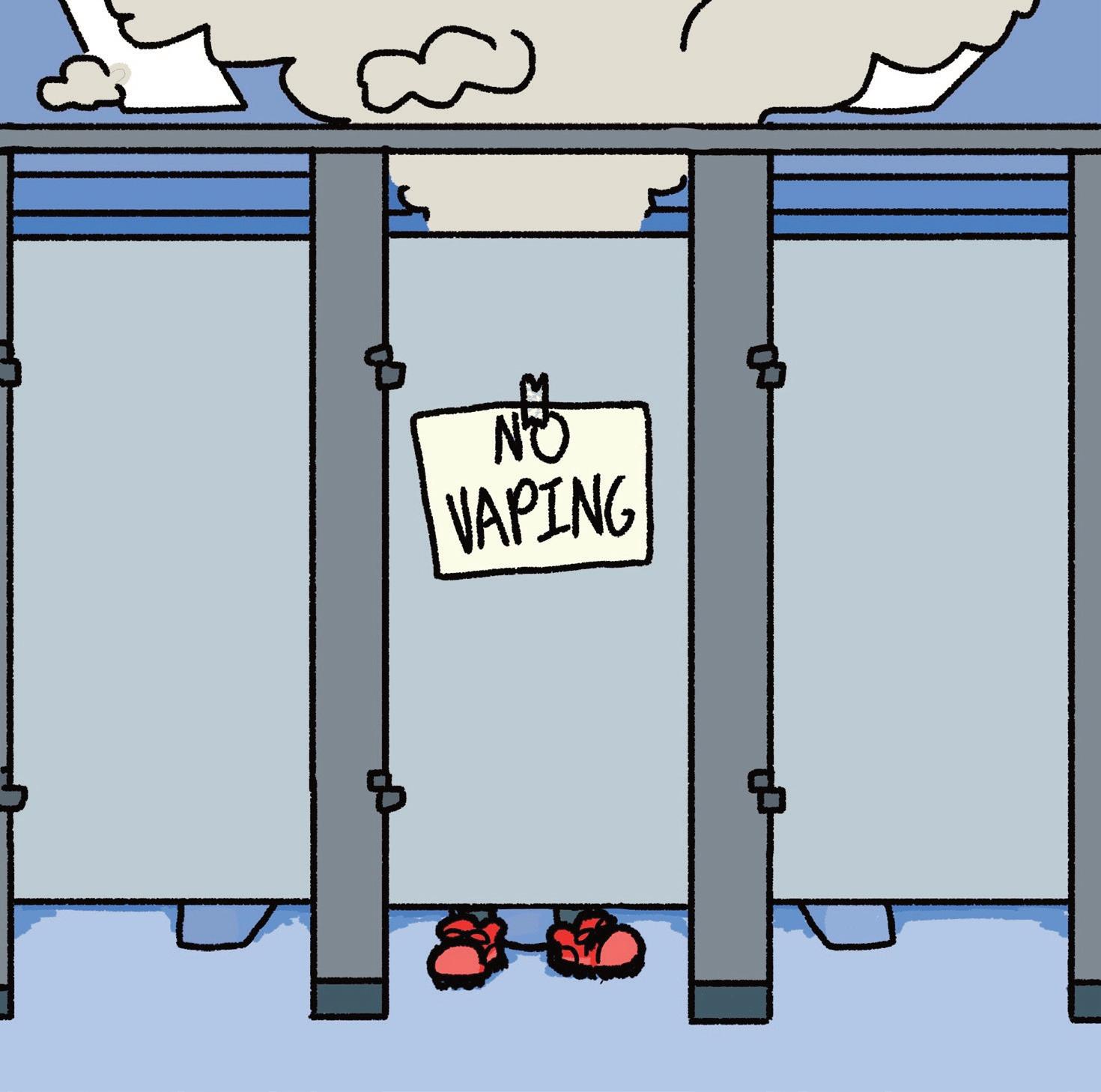
vaping is common, specifically in bathrooms, making vaping extremely inconvenient for students. Freeman also encourages educating students on the dangers of nicotine and vaping use. Though it is not what GSHS reaches for first, if a student needs more of a shock to their system, Freeman said that the student may be referred to law enforcement for using substances illegal for minors.
Across Bridges High School, Glenwood Springs High School and the whole Roaring Fork School District, Policy ADC: Tobacco and Nicotine Free Schools is enforced. If a student is caught vaping in school, they will face consequences such as in-school suspension.
Apart from that, online educational programs like Second Chance and the
Truth Initiative are resources used to respond to vaping incidents and are utilized in schools such as Bridges and Glenwood Springs high schools. Through Mountain Family Health Clinics, students are also able to connect with a substance counselor. Other resources that RFSD offers include socio-emotional curricula such as the Second Step, Why Try and Comprehensive Health Skills. If students or staff desire to report an incident regarding vaping or other risky behaviors, Safe to Tell is an online resource that allows this reporting to be done anonymously. According to Hathaway, every report received is responded to. When appropriate, administrators collaborate with local law enforcement to ensure safety regarding the reports.
“IF SOMEONE DRINKS EVEN A CUP OF COFFEE IN THE MORNING, SOME OF THE CAFFEINE IS STILL IN THEIR BLOODSTREAM WHEN THEY ARE TRYING TO FALL ASLEEP.”
- Dr. Greg Feinsinger
grams of sodium, while the maximum amount recommended in 24 hours is 1,500 milligrams, according to Feinsinger. The energy drink contains 26 grams of sugar.
“That’s a lot of sugar, which for optimal health should be avoided,” Feinsinger wrote in an email to The Sopris Stars.
A can also contains 80 milligrams of caffeine, “which is equivalent to a cup of coffee,”
Feinsinger said.
“So, if you drink just one can of Red Bull it’s not terrible for you, but certainly it doesn’t enhance your health,” he said.
Coffee is commonly mentioned in conversations as a healthier alternative.
“Coffee has some health benefits, in that coffee beans have lots of antioxidants and other micronutrients,” Feinsinger said.
He added, however, that coffee can cause raised blood pressure, contribute to heartburn and create sleep problems in individuals of all ages.
“If someone drinks even a cup of coffee in the morning, some of the caffeine is still in their bloodstream when they are trying to fall asleep,” Feinsinger said.
A single energy drink does not necessarily have any more adverse health effects than coffee, though it doesn't carry some of the same benefits.
Hawkins said she drinks coffee occasionally.
“When I walk to Starbucks, yeah, but making it is complicated,” she said, adding that a Red Bull is easier and takes less time to prepare.
LOU GALL Sopris Stars Editor
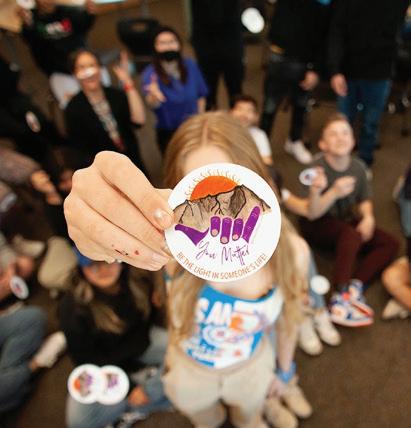
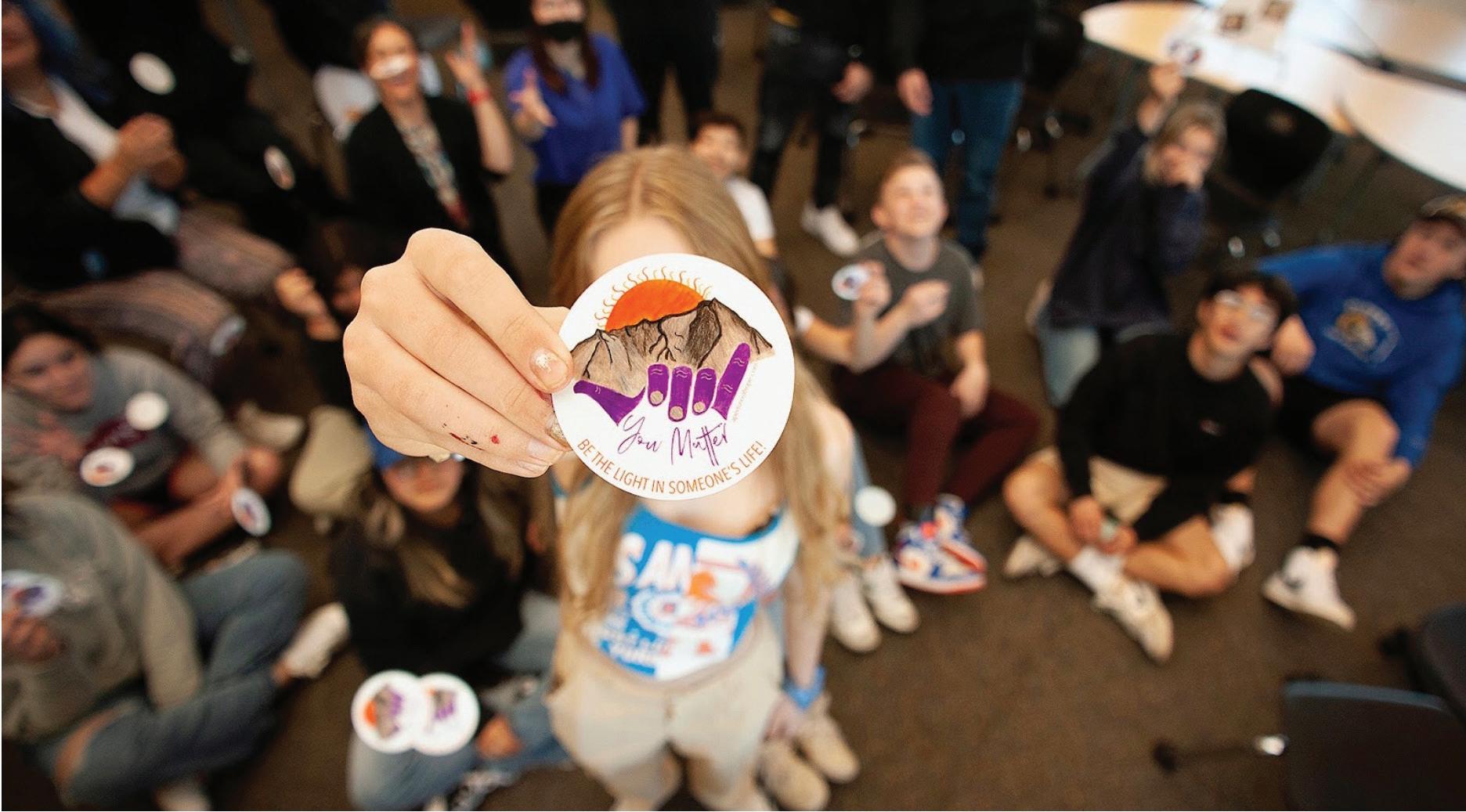
Aperture of Hope, an organization operated by Cath Adams, focuses on community building and exploration for teenagers. Through the Glenwood Community Center, Adams runs teen-centered events and workshops intended to build hope for young people who may be struggling or just trying to figure life out.
The organization, an offshoot of Adams and her husband’s photography business, honors her late daughter, Emily Irene, who tragically passed away due to fentanyl poisoning in 2020. Every program offered through Aperture of Hope is a means to keep kids engaged, to make them feel important and to prevent such needless loss.
Adams works closely with the Roaring Fork School District, educating high school students about the fentanyl crisis and offering a plethora of opportunities.
Starting from humble beginnings, Adams’ first program, “If You Give a Kid a Camera,” was inspired by her own childhood, when she started looking at the outside world with intention for the first time.
“The whole world was just so big, and there was so much to explore,” she told The Sopris Stars.
She aimed to share the joys of her childhood by rekindling participants’ connections with nature, while also
highlighting the damaging effects of the digital age. Adams noticed a downward spiral when it came to teenagers and healthy coping skills, many often turning to substances or spending all their spare time online.
Her workshops serve to help kids stoke their passions. “I ask teens: What do you want to do? And how can we make that happen?” she explained.
She’s helped kids pull off events such as GlenwoodStock, an annual concert at the Glenwood Community Center with a strictly teen lineup, and the regular Teen Jam sessions.
“Teen Jam helped me connect with my peers musically,” said Iggy Richardson, a local teen and junior at Roaring Fork High School. “I think it is a fantastic outlet for musicians to connect, especially in such a small valley.”
This is reflective of Aperture of Hope’s overall goals to help inspire youth to create and take a step back from the digital world. “It's creating possibilities,” Adams said.
Adams tends to let young people inspire the direction of the programming. “I have allowed it to naturally unfold itself,” she shared. She keeps an open mind and focuses on helping as many young people as possible while also holding their interest.
Currently, Adams is working on multiple projects. She is particularly excited about “Digital Detox,” which requires youth to put their phone

down and find a creative outlet. That group comes together weekly to take photos and “reclaim” their brain.The act of photography forces the brain into active observation, which can help to rebuild the structures eroded by our digital age, according to Adams.
Aperture of Hope builds community and guides participants through the tunnel of adolescence to a brighter day.
“It’s basically a place of unity,” concluded Adams.
For more information, visit www.greggandcathphotographers.com/ community/aperture-of-hope
Welcome, Dr. Megan Hiles

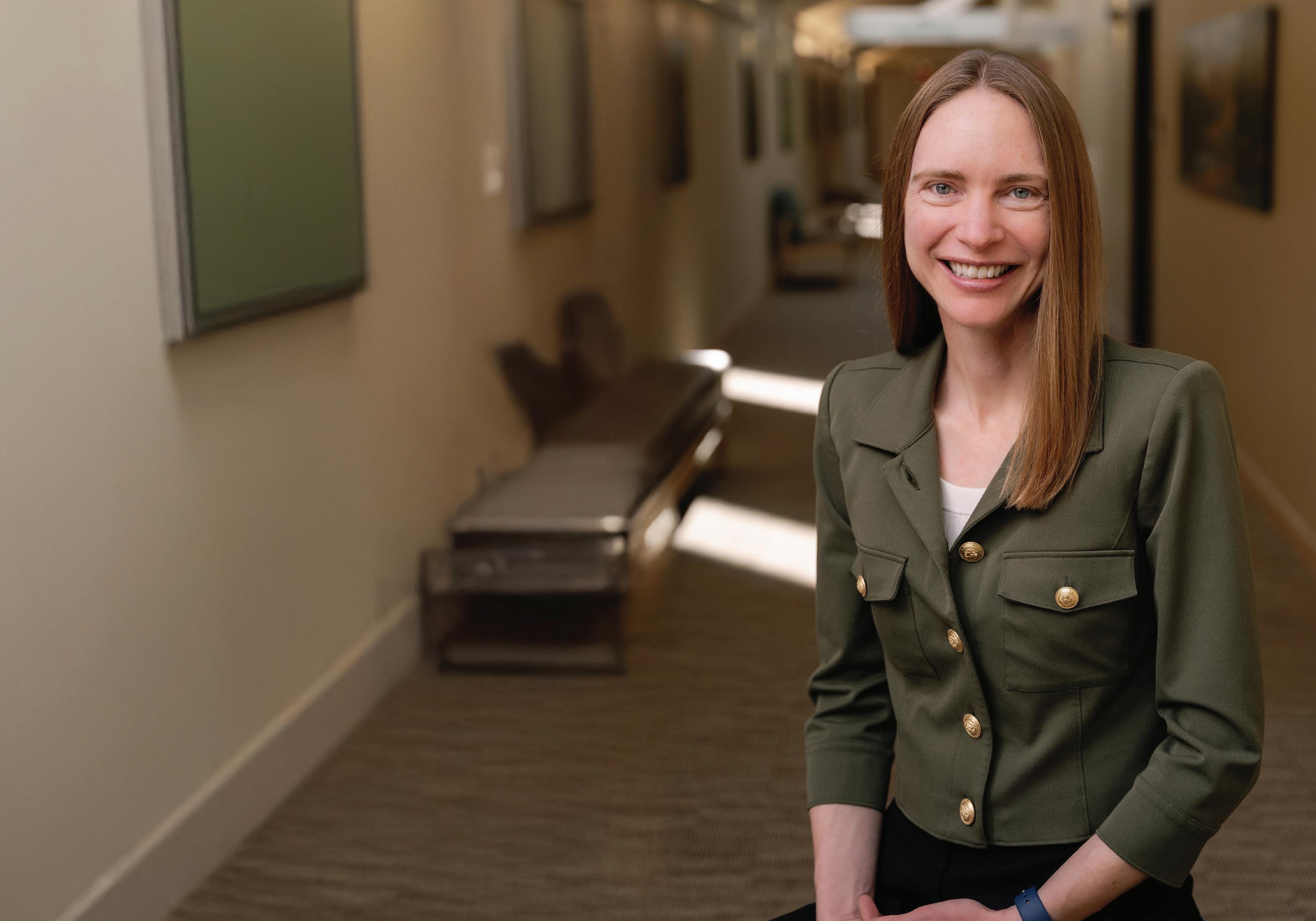
We are proud to introduce Dr. Megan Hiles to our community, joining our Primary Care team at Aspen Valley Health. As our new internist, Dr. Hiles focuses on preventative medicine and partners with patients to support lifelong wellness and longevity.
• Annual physicals
• Chronic health management
• Acute and urgent care
• Telemedicine virtual visits

• Preventative care
• Comprehensive laboratory analysis
• Pelvic exam / Pap smear


• Nutritional counseling

• Reproductive health










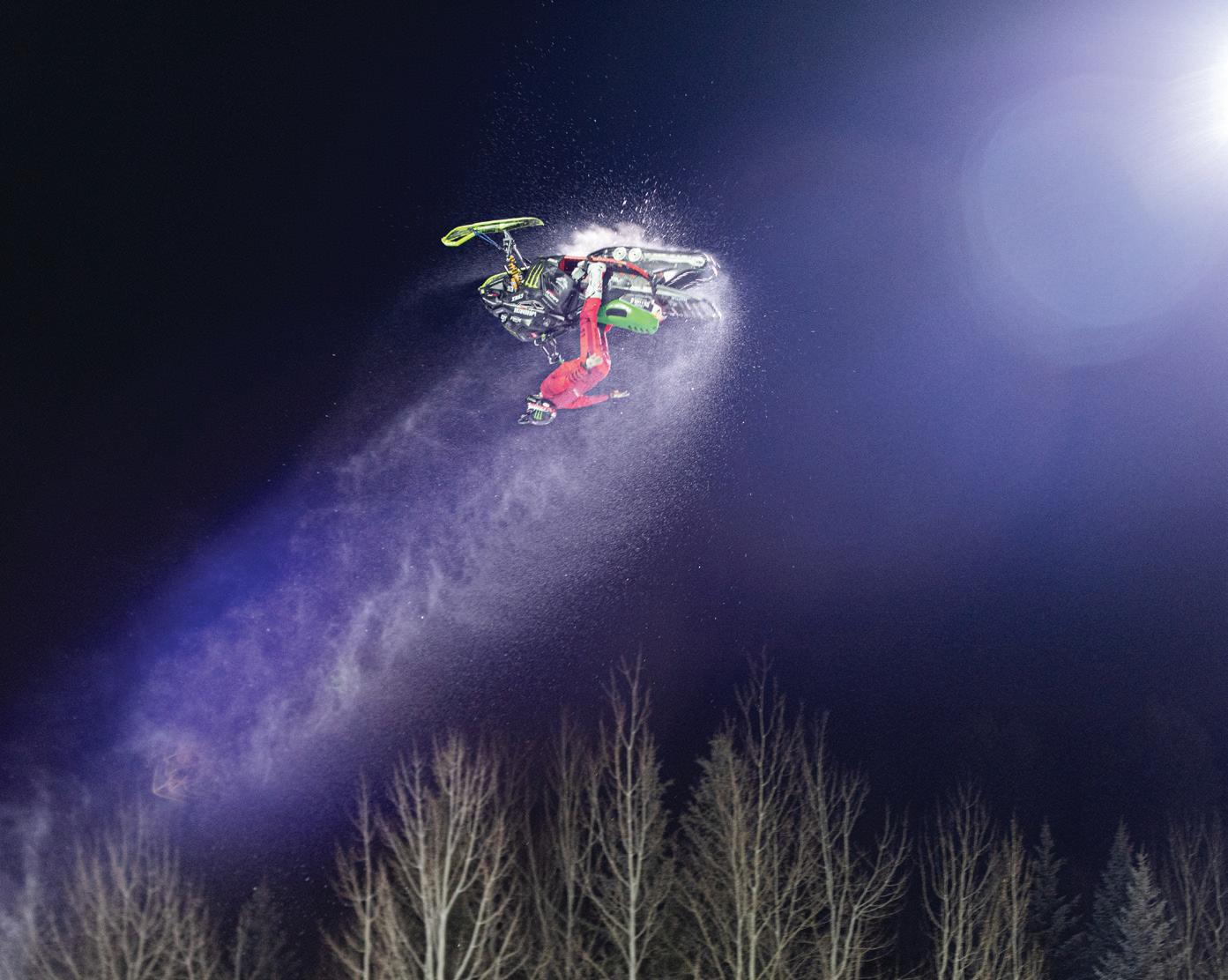


REFLECTION & PHOTOS BY ISAAC STERLING
Twenty-five years of X Games Aspen, so many memories made, records broken and dreams coming true. The X Games would not be the event it is without the people coming out in all sorts of weather to support and watch these athletes throw down. This year, spectators got to see the return of Snowmobiling after a pause in 2020. The energy surrounding this particular event was palpable. The second I saw that first rider go off that jump and do a backflip on a sled, I instantly understood the hype. It was truly insane.
Last year, as an intern for The Sopris Stars Youth News Bureau, I had learned so much getting to cover the X Games
for the first time. This year, I was excited to incorporate those lessons learned and cover the event as a graduate of the program now studying journalism at the University of Colorado Boulder. I had the chance to reconnect with other photojournalists I’d met and network with new ones, and even shared a laugh with Aspen Daily News photographer Jason Charme about my slide down the half pipe last year.
I didn’t realize how impactful the X Games were for me, until it occurred to me that not only has it furthered my love for skiing but it’s also given me the opportunity to capture the memories for others through photography. I hope you enjoy this snapshot of last weekend’s X Games.
Designed by Lou Gall
What were you up to in 2025? Use this BINGO card to see how trendy you really were. If you get a blackout, you might be Gen-Z. Let The Sopris Stars know how many boxes you checked by emailing youthnews@soprissun.com
What were you up to in 2025? Use this BINGO card to see how trendy you really were. If you get a blackout, you might be Gen-Z. Let The Sopris Stars know how many boxes you checked by emailed youthnews@soprissun.com
BOUGHT LABUBU HAD GREAT JEANS LAUGHED AT 6-7
WATCHED “STRANGER THINGS” SEASON 5
HAD MOONBEAM ICECREAM
WATCHED “MINECRAFT” MOVIE
DYED HAIR TAKEN A JET TO HOLIDAY RAISED YOUR YA YA YA
HAD A SITUATIONSHIP SPOTTED A preformative MALE
ATE DUBAI CHOCOLATE
HAD A WABI SABI HAIRCUT LOCKED IN
BEEN THE YOUNGEST PERSON EVER FEATURED ON A JUMBOTRON
REACHED A FLOW STATE WITH FRIENDS THIRSTED FOR JONATHAN BAILEY
AURA FARMED GOT LIKE HELLA MONEY (zum zum zum)
“YOUR MAMA WAS HOME WHEN YOU LEFT” GOT RAGE BAITED
Letters to the Editor
Have something to shout about? Email letters to the editor for publication in The Sopris Stars to youthnews@soprissun.com
JOINED REDNOTE
WATCHED “HUNGER GAMES (BUT BETTER)” REFRAINED FROM BULLYING BBNO$
Congratulations to the Doherty Family, who during the holidays successfully completed last month's Gen-Z slang crossword puzzle together!
SOPRIS STARS TEAM

the meat industry. According to Leather Naturally, “99% of the leathers are made from livestock, (that is cattle, sheep, goats and pigs) and they are a by-product of the meat industry.”
What about the 1%? Especially with pattern-driven facades, how does that supply and demand aspect of the industry affect that percentage?
Snake print for instance increased its presence in various wardrobes in 2025. Production-wise, the Collective Fashion Justice summarizes the process: “Sold skins ripped from snakes are then tanned with largely the same carcinogenic chemicals used in the leather industry. These chemicals harm workers and communities surrounding tanneries, as well as the environment.”
Alongside that, a short video from PETA Asia further walks us through the barbarized process, describing how, “workers place rubber bands around their [the snakes’] mouths and anus,” and “slowly kill them by inflating them with an air compressor.”
“One worker alleged that these snakes were improperly stunned using a car battery — suggesting that they are alive and able to feel pain,” the video continues.
And that's just for clothes made from python. What about fashion made with ostriches, zebras?
Fashion doesn’t just operate on logical use — it partakes in storytelling, communicating our values, history and personal narratives. Did we take our anthropologic traditions too far?
Maybe the question isn’t whether these goods belong in fashion anymore — but why we’re still drawing moral lines that feel selective rather than resolved. Fashion, after all, is fluent in illusion. It teaches us what to look away from just as much as what to admire. And maybe that’s the real discomfort beneath all of this — not the pieces hanging in our closets, but the stories we tell ourselves to keep them there.
“I don’t think Trump has any altruism in him,” he said. “No one is against humanitarian aid, no one is against careful and calculated support, but the impulsivity is offensive. He’s stumbling into this in a very destructive way, but the potential that the regime is unstable, when before things were so set in stone, presents the possibility for actual … change.”
While many Americans dislike the idea of the United States acting as an imperial power, Rosa said Venezuela has not been truly sovereign for years. Russia, China and Iran have been influencing Venezuelan politics and exerting control over the economy.
“It's disgusting to be converted into a footnote in some larger ideological battle. Oppression doesn’t operate in Cold War logic,” he said.
A return to normalcy, although a certainly complicated and convoluted path, is what FA and Rosa both expressed a longing for. Neither saw an obvious path forward, but each highlighted the importance of finding a way to independent democracy.
“There are two levels of hope: Maybe the economy will get better; maybe we won’t get blackouts; maybe there will be investments and economic opportunity. Then, the bigger hope: There will be political change; voting will mean something; you won’t go to jail for criticizing something; your voice will count for [something]. So many people want to work to make this country better,” FA stated. “I studied economics and political policy to make things work. This is a transitional period. We all hope that the people in power won’t just become puppets of the U.S.”
“For decades, we have looked up to the U.S. as a symbol of democracy and freedom,” he continued. “We hope the U.S. can help bring democracy and freedom to Venezuela, without losing your own democracy and freedom in the process.”