Computer Science
Seesaw Instruction & Insights Exclusive Collections
Seesaw’s Computer Science curriculum engages every student in foundational computer science concepts, starting in kindergarten. Address core strands in New York’s K-5 Computer Science and Digital Fluency standards on the platform built for student voice and creation.
Designed for Elementary
Empower young learners with inclusive characters, plugged and unplugged activities, and crosscurricular and real-life connections that inspire every student to see the impact of computer science in their lives.
Powered by the Most Powerful Learning Tools
Pencil and paper only go so far in supporting computer science skills, and other platforms are hard for young learners to use. Seesaw’s multimodal tools amplify fundamental skills at the core of computer science instruction.
Fits Every Classroom Throughout the Year
Lessons flex to fit into any instructional day, so they’re simple to integrate into core instruction, specials rotations, or designated computer science blocks with enough content to support Computer Science all year.
Seesaw allows me to differentiate instruction so that students can show me what they know in ways that feel the most comfortable to them. Students are able to type, write on paper then take a photo, digitally write or record themselves answering the questions.
-
Suzana Silva, First Grade Teaacher, New York
NEW YORK
The Building Blocks for Student Success Start in Elementary
Everything Teachers Need to Teach with Confidence



Grab-and-Go Lessons
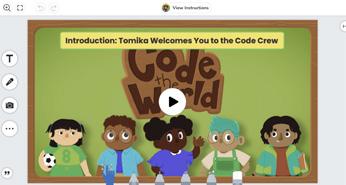

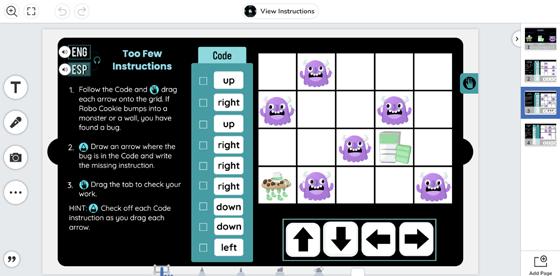
Instructional videos, discussion questions, facilitative prompts, practice activities, and assessments
Instructional Resources
Lesson plans, instructional templates, standard-alignments, answer keys, professional development, printable posters, family handouts, and a generative AI question assistant
Inclusive and Relevant Content
Diverse characters and real-life examples provide equal opportunity for all students to engage in computer science





Balance of Plugged & Unplugged Activities
Seesaw tools make it easy for students to capture hands-on learning and add layers of explanation and reflection
Explore full alignments to your standards here.



K-5 Computer Science Curriculum on Seesaw
Digital Leadership With Bean Grades K-2
AI Literacy
Grades K-5
TinkerClass Grades K-5
The Digital Leaders Grades 3-5
Computational Thinking Grades K-2
Computational Thinking Adventures Grades 3-5
Code the World Grades K-2
Mission Code Grades 3-5
Code.org Computer Science Grades 3-5
Visual Data Talks Grades K-5
STEAM Grades K-2
STEAM: Design Thinking Grades 3-5
Students jump into Bean’s life and make real-world, hands-on choices that teach them what it takes to be safe, balance screen time, handle cyberbullying, and other critical digital citizenship skills.
The topic of artificial intelligence is demystified in these lessons as students define AI, recognize how AI is commonly used, think critically about AI’s impacts, and apply AI to solve problems.
Students explore the world of artificial intelligence through exciting podcasts on different AI topics, then extend their learning as they tinker, think, wonder, make, reflect, and more on the podcast content.
In a graphic novel experience, seven diverse superheroes bring students through real-world choices that build leadership skills and teach critical digital citizenship skills.
Applying problem solving to the world around them, students learn the concepts of decomposition, abstraction, pattern recognition, and algorithmic thinking in a fun storybook format.
Students to explore the world with the Adventure Team to learn the four pillars of computational thinking – cognitive skills are the foundation for problem solving and future learning in computer science.
Through fun narratives and real-world scenarios, students join the Code Crew to collaborate, problem solve, and create engaging projects through plugged and unplugged activities in Scratch and ScratchJr.
Students become secret agents and digitally code, problem solve, and explain programming decisions to help robots save planets from impending doom and collect motivating badges along the way.
In this collection, students engage in cross-curricular Code.org coding activities and capture their learning on Seesaw.
Follow Hops and friends as they help students interact with interesting data all around them. Students create different types of visual data and engage in short classroom discussions that develop data literacy.
Spark curiosity with lessons that get students investigating real-world questions and applying their knowledge.
Students team up with an engineer to solve problems using the design thinking method, complete hands-on challenges, and explore informational texts that build vocabulary and background knowledge.