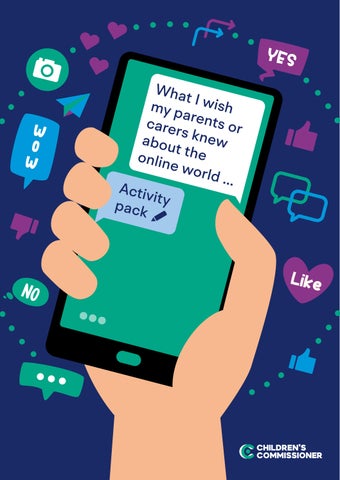
What I wish my parents or carers knew about the online world …
packActivity

In my role as the Children’s Commissioner for England, I hear first hand from children and young people as well as parents and carers about worries and hopes for your online lives.
The online world is difficult to navigate but such a big part of our lives - with opportunities to socialise, learn and play, alongside potential online harms and negative experiences.
With so much information about what might be harmful and what might not be, both for mental and physical wellbeing, parents and carers can feel powerless and fearful about your online lives.
It is not just harmful content you are worried about, it’s also habits. How much scrolling is too much scrolling? How much time should we spend on our phones? How can we build more offline activities into our lives? Do we feel comfortable talking to each other especially if something bad happens?
The activities in this pack were created with children and young people to do with your parents or carers to help open up conversations around managing online habits.
1
3 GET
2
5-A-DAY YOUR
5
Have a look at the Digital 5-a-day together and chat through both of your thoughts, ideas, concerns and needs.
You can also use our Digital agreement activity to set ground rules around your digital use.
Dame Rachel de Souza Children’s Commissioner for England
It is important to maintain relationships in person and to build offline activities into your life. Use our Getting Off Grid activity to come up with ideas and plan things to do together. 1
2 CONNECT BE ACTIVE
The internet has enabled us to maintain friendships and family relationships no matter where we are in the world.
It is important to keep in touch with friends, however staying safe online is more important than any benefit the online world may bring e.g. not talking to strangers and thinking about what you are saying to your friends - might they misunderstand your message? You cannot hear the tone of something that is being said via a message.
TRY THIS!
CONNECT OFFLINE
THINK
ABOUT …
YOUR DIGITAL FOOTPRINT
Connecting online can also be via posting and commenting on social media, it is important to think about what you are posting and who can see it, as well as your digital footprint - would you want yourself or anyone else to see that in five, ten or twenty years? Would you be happy if your future boss or someone you work with sees it?
Ask yourself: How much time do you spend offline compared to online? What can you do with friends and family offline? What benefits can this bring?
TRY THIS!
FIND SOMETHING YOU ENJOY
Playing video games or keeping in touch with friends via social media can be great, however being active is key for both your physical and mental wellbeing.
Everyday you should spend time moving, away from a screen. Spending too much time on a screen can be damaging for your mind and physical health.
You don’t have to be an athlete to be active, there is something for everyone - swimming, walking, dancing, yoga –begin at a level that works for you and build it into your week.
DO THIS …
RESEARCH FIRST AND BUILD NEW HABITS
Research an activity or place online together before going out to decide on something you’ll find interesting and will be more likely to stick with, then do it!
Ask yourself: How can you get active? Who can you do these physical activities with? How can you build them into your everyday life?
3 GET CREATIVE
The internet can teach you many new skills and you can try many different activities online – from coding to building your digital media skills such as creating video content.
DO THIS!
LEARN SKILLS ONLINE
Look at the skills you want to develop online such as content creation, photography, editing, coding, making digital posters. You don’t have to spend your time online passively consuming content, you can build skills for later life and be creative.
TRY THIS …
GET CREATIVE OFFLINE
It is also important to remember that you don’t have to rely on the internet to teach you new skills, you can find classes or workshops to go to in person, learn skills from books or other people including different family members, and experiment and play.
GIVE TO OTHERS
The internet offers ideas for local and national volunteering, helping you build skills, broaden your perspective, and boost future job prospects.
TRY THIS!
DON’T FORGET THE SMALL THINGS
A simple thank-you goes a long way. Supporting friends and family with small acts and positive feedback strengthens relationships and boosts everyone’s mental wellbeing. Online, share positivity too – and report negative behaviour to help keep the internet a nicer place for everyone.
Ask yourself:
What skills do you want to develop, offline and online? How can you use your screen time to do these?
Ask yourself: How can you get engaged in your local area and find volunteering roles? How can you support people you know?
BE MINDFUL
Whilst you may fear you are missing out on something if you do not go online, be mindful of the amount of time you are spending online.
TRY THIS!
LIMIT YOUR TIME ONLINE
Set daily limits for your online time and for specific activities like social media or videos. Keep a diary of what you do, what you see, and how it makes you feel. You can also use apps or read our screen-time tips from young people.
Ask yourself:
DO THIS …
BE IN THE MOMENT OFFLINE
If you’re always online, you may miss out on the offline world. Try to focus fully on what you are doing e.g. notice sights, sounds and smells on a walk. Explore mindfulness on the NHS website and try our Note to My Younger Self activity to support your mental wellbeing.
What are you spending your time doing, online and offline? How do the things you do make you feel?
BONUS! STAY SAFE
To protect your digital diet and wellbeing, staying safe online is vital, as the internet can expose you to harmful content.
THINK ABOUT
YOUR PRIVACY
Talking to the right people and using the right sites is key when thinking about your activity online.
• What does oversharing actually look like? (e.g. sharing your location in real time, posting school uniforms)
• Have you checked your privacy settings?
• Do you know who can see what you post?
TRY THIS …
BUILD YOUR SUPPORT NETWORK
Try our My Support Network activity to build your own network of people and places for advice and support you can trust. You can also check our Reach Out for Support list for additional helpful options.
Ask
yourself: What can you do to keep safe online? Who can you turn to if you encounter something negative?
GETTING OFF GRID MY SUPPORT NETWORK
REACH OUT FOR SUPPORT
It is important that if something is distressing you, you reach out to someone you trust who can listen.
In the My Support Network activity, you’ll have an idea of the people and places you can go to for support.
You can speak to a trusted adult e.g. a trusted family member, staff at school, a youth worker or social worker. The following organisations can provide you with expert information, advice and support:
You
If you are
have a social worker or are a care leaver you can contact the Children’s Commissioner’s Help at Hand team
REAL-LIFE SCENARIOS TO DISCUSS
Here are a few short, maybe relatable situations to help you discuss and practice what to do:
Someone pressures you to reply straight away
A friend screenshots your message and forwards it
You see something upsetting but aren’t sure who to tell
You’re tagged in a photo you don’t like
5 TIPS FOR MANAGING SCREEN TIME
DIGITAL AGREEMENT
Digital device use at home and in your bedroom
Which websites, apps and games are ok and which ones you should avoid
What checks to make before setting up an account, posting, or accessing certain content e.g. privacy settings, strong passwords, safety
What to do if you see something you don’t like or don’t feel is trustworthy
Who you can socialise with online Managing screen time –balancing time on your phone with activities such as social media, gaming, and educational content
My Youth Ambassadors and Youth SEND panel have filled out notes to their younger selves. These are the thoughts and advice they had to offer.
A NOTE TO MY YOUNGER SELF
Don’t allow people to change your view of yourself. You don’t have to follow everything you see on social media just because it’s popular or you’re afraid of missing out.
Even if you feel like your parents or carers are the ‘bad guys’, understand that what they’re doing and the rules they’re making are in your best interests. Don’t be so afraid of what others think because they will ALWAYS have an opinion, good or bad. Don’t let anyone pressurize you into thinking you should be online more- for example them pushing you to respond quickly and constantly be online.
You’re not as behind as you think.


Here are some opportinities to have your say on important issues. You can tell the Children’s Commissioner what you think needs to change to make children’s lives better, find opportunities to get involved in and make a difference on issues that matter to you.


childrenscommissioner.gov.uk/youth-voices/