What young athletes can do to Reduce Injury Risk Better Health
Exercise is great for the body.
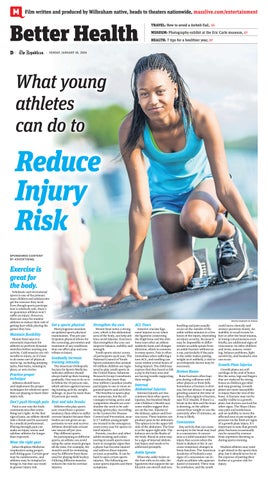
Scholastic and recreational sports is one of the primary ways children and adolescents get the exercise they need. Even though sports participation is relatively safe, there’s no guarantee athletes won’t suffer an injury. However, there are ways for student athletes to reduce their risk of getting hurt while playing the games they love.
Maintain flexibility
Mount Sinai says it is extremely important for athletes to perform dynamic stretches before starting any activity. Cold muscles are vulnerable to injury, so it’s best to do some sort of physical warm-up, including jumping jacks, butt kicks, running in place, or arm circles. Practice proper technique
Athletes should learn and implement the proper techniques for whatever sport they are playing to lower their injury risk.
Don’t push through pain
Pain is one way the body communicates that something isn’t right. At the first sign of pain, an athlete should take a break and be assessed by a medical professional.
Playing through pain can make an injury worse and sideline athletes for longer than expected.
Wear the right gear
Johns Hopkins Medicine emphasizes using proper, well-fitting gear. Certain gear may be cumbersome, and athletes may be tempted to forego it, but that can result in greater injury risk.
Get a sports physical
Most programs mandate an updated sports physical examination. This pre-participation physical allows for the screening, prevention and treatment of any conditions that can affect play and contribute to injury.
Gradually increase training intensity
The American Orthopedic Society for Sports Medicine indicates athletes should always build up their training gradually. One way to do so is to follow the 10 percent rule, which advises against increasing training activity, weight, mileage, or pace by more than 10 percent per week.
Rest and take breaks
Athletes who play sports year-round have a greater tendency than others to suffer overuse injuries because their bodies are not given an opportunity to rest and recover. Athletes should take at least one season off per year. Play different sports. By participating in different sports, an athlete can avoid using the same muscle groups all the time. For example, the muscles used for swimming may be different from those used for playing field hockey. Utilizing different muscles reduces the risk for overuse injuries.
TRAVEL: How to avoid a Airbnb Fail, D5
MUSEUM: Photography exhibit at the Eric Carle museum, D7
HEALTH: 7 tips for a healthier year, D7
Strengthen the core
Mount Sinai notes a strong core, which is the abdominal area of the body, can help athletes avoid injuries. Exercises that strengthen the core can improve balance, stability and strength.
Youth sports attract scores of participants each year. The National Council of Youth Sports estimates that around 60 million children are registered to play youth sports in the United States. Solutions Research Group Consultants estimates that more than four million Canadian youths participate in one or more organized sports and activities. The benefits to sports play are numerous, but the advantages to being active and competitive should not overshadow the need to be safe during sports play. According to the Centers for Disease Control and Prevention, nearly 2.7 million young people are treated in the emergency room every year for sports-related injuries.
Parents, coaches and other adults working and volunteering in youth sports must learn to recognize signs that a player has become injured and address those injuries as soon as possible. It can be hard to spot certain sports injuries. The following are some sports injuries and their symptoms.
ACL Tears
Anterior cruciate ligament injuries occur when the ligament connecting the thigh bone and the shin bone tears after an athlete suddenly turns and changes direction, which is common in many sports. Pain is often immediate when suffering a torn ACL, and swelling can occur within several hours of being injured. The child may express that they heard or felt a pop in the knee area and are having trouble supporting their weight.
Internal
Abdominal Injuries
Internal injuries are less common than other sports injuries, but Stanford Medicine Children’s Health says some studies suggest they are on the rise. Injuries to the kidneys, spleen and liver can occur. These injuries can produce pain in the abdomen. The spleen is in the upper left side of the abdomen. The liver is in the upper right side. The kidneys are on the flanks of the body. Blood in urine may be a sign of internal abdominal injury and needs to be addressed promptly.
Ankle Sprain
When the ankle twists or the foot rolls on its side, the ligaments that support the ankle joint can stretch and tear.
Swelling and pain usually occur on the outside of the ankle within minutes to a few hours of the injury, depending on injury severity. Because it may be impossible to differentiate an ankle sprain from an ankle fracture without an x-ray, particularly if the pain in the ankle makes putting weight on it unlikely, a visit to an orthopedic doctor may be necessary.
Broken Bones
Bone fractures often happen during collisions with other players or from falls. Sometimes a fracture is obvious, but not always. A snap or grinding sound at the time of injury often signals a fracture, says VCU Health. If there’s a break in the skin and the bone is showing, or the athlete cannot bear weight or use the extremity after 15 minutes, an X-ray is likely.
Concussion
Any activity that can cause an injury to the head may lead to a concussion. A concussion is a mild traumatic brain injury that occurs when the brain is shaken or hit. It can cause temporary changes in brain function. The American Academy of Pediatrics says signs of a concussion can include an athlete who appears dazed or stunned. There may be confusion, and the youth
could move clumsily and answer questions slowly. An inability to recall events before or after the head trauma, or losing consciousness even briefly, are additional signs of concussion. In older children and teens, nausea, vomiting, balance problems, light sensitivity, and headache also can occur.
Growth Plate Injuries
Growth plates are soft cartilage at the end of bones like the arms, legs and fingers that are replaced by strong bones as children get older and stop growing. Growth plates are more susceptible to injury than the rest of the bone. A fracture may not be readily visible in a growth plate, but doctors can look for other signs. The Mayo Clinic says pain and tenderness and an inability to move the affected area or put weight or pressure on the limb are signs of a growth plate injury. It’s important to note that growth plate fractures occasionally can be caused by overuse from repetitive throwing or during sports training.
Student athletes may want to get ahead in the sports they play, but it should never be at the expense of putting their bodies at a greater risk for injury.
How to combat seasonal affective disorder
Therapy is a treatment option for individuals diagnosed with SAD.
The common cold is synonymous with times of year when temperatures dip. When people spend more time indoors, they’re more vulnerable to contagious cold viruses. But the common cold is not the only health issue that presents itself most often when the mercury drops.
Seasonal affective disorder, also known as “SAD,” affects millions of people every year. The National Institute of Mental Health notes that SAD is a type of depression characterized by its recurrent seasonal pattern. Symptoms of SAD, which can include nearly daily and day-long feelings of depression, changes in appetite or weight and feelings of lower energy, last around four to five months. Researchers are unsure about the exact cause of SAD, but in most people, its onset is believed to be connected to the reduction in hours of sunlight during the winter. (WebMD notes that around 10 percent of people with SAD get it in the reverse, experiencing symptoms of depression at the onset of summer as opposed to winter.) Despite uncertainty
about the causes of SAD, the NIMH notes there are ways to treat the condition. And it might benefit people who have experienced SAD to begin treatment prior to winter, as NIMH notes treatments that begin before fall could help to prevent or reduce the depression associated with the condition.
Individuals who suspect they have SAD should relay their concerns to their health care provider, who will then ask patients to fill out a questionnaire to determine if symptoms meet the criteria for SAD. If such a diagnosis is confirmed, individuals may be presented with any of the following treatment options.
Light therapy
The NIMH notes that light therapy has been used to treat SAD since the 1980s. The crux of light therapy is to expose individuals with SAD to bright light every day with the hope that such exposure can serve as a stand-in for natural sunlight. Individuals undergoing light therapy typically begin their day sitting in front of a very bright light box for around 30 to 45 minutes. The boxes filter out potentially harmful UV light, but alternative therapies may be recommended for individuals with certain eye diseases or those taking particular medications .
Psychotherapy
According to the NIMH, cognitive behavioral therapy (CBT) has been adapted to
help treat people with SAD. CBT is a type of talk therapy, and CBT-SAD typically entails two weekly group sessions for six weeks. These sessions focus on replacing negative thoughts related to winter with more positive thoughts. The therapy also tries to help individuals identify and schedule pleasant, engaging indoor or outdoor activities. The NIMH notes that researchers’ comparison of CBT-SAD with light therapy found both treatments were effective at improving SAD symptoms.
Medications
Doctors may recommend patients with SAD take medications known as selective serotonin reuptake inhibitors, or SSRIs. Various types of depression have been found to disturb serotonin activity, and SAD is no exception. SSRIs have been proven to effectively improve patients’ moods, but it’s important that individuals discuss the side effects of SSRIs with their physicians prior to taking medication.
Vitamin D has been linked to improving symptoms of SAD, but the NIMH notes this is a misconception, as the research regarding vitamin D supplementation as a treatment for SAD has thus far produced mixed results.
Individuals who suspect they may have SAD are urged to speak with their physicians so they can overcome this often treatable condition.
Sweet
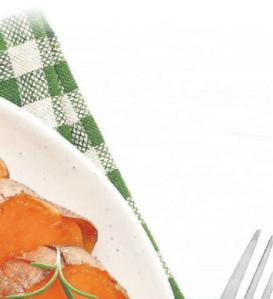
Areference to sweet potatoes may immediately conjure images of Thanksgiving dinner tables, where the popular tuber often is featured during dinner and dessert. Though it’s likely sweet potatoes, also known as yams, are most popular in fall, they’re both available and enjoyable yearround. That’s good news for people aspiring to eat healthy, as sweet potatoes pack quite a nutritional punch.
Sweet potatoes and vitamin A
The food and nutrition database from the United States Department of Agriculture indicates one cup of baked sweet potatoes provides 213 percent of the recommended daily minimum value of vitamin A. That’s nothing to take for granted, as the National Institutes of Health notes that vitamin A is a fat-soluble vitamin that promotes normal vision and a healthy immune system. The NIH also reports that vitamin A is vital for reproduction, growth and development.
Sweet potatoes and vitamin C
Sweet potatoes are high in the antioxidant vitamin C. That’s a notable benefit, as the Mayo Clinic indicates a diet rich in antioxidants has been linked to stronger immune systems and lower risk for diseases such as heart disease and cancer. In addition, the health care experts at Mount Sinai note that vitamin C is vital for healing wounds and repairing and maintaining bones and teeth. Data from the USDA indicates one cup of sweet potatoes contains roughly 44 percent of the recommended daily intake of vitamin C.
Sweet potatoes and gut health
The NIH notes sweet potatoes contain both soluble and insoluble fiber. The body does not digest soluble or insoluble fiber, which is actually beneficial, as the fiber remains in the digestive tract and promotes a healthy gut. The NIH also notes that some soluble and insoluble fibers can be fermented by bacteria in the colon, a process that ultimately keeps cells along the intestinal lining healthy and strong.
Sweet potatoes and vision
The Discovery Eye Foundation notes that sweet potatoes are loaded in vitamins that can help to prevent or delay the development of cataracts and macular degeneration. Vitamin C features prominently in that regard, but so, too, does vitamin E, which the USDA notes is more abundant in sweet potatoes than yellow potatoes. Cataracts and macular degeneration can compromise vision, particularly among the aging population. The next time homemade mashed potatoes are on the menu, consider making mashed sweet potatoes, which pack a flavorful punch and offer some notable nutritional advantages compared to other types of tubers. Sweet potatoes can be enjoyed year-round. Individuals who do so can reap the nutritional rewards of consuming sweet potatoes all year long.
Did you know?













Sweet potatoes and yams may seem similar but they are not one and the same. Even though the names for these foods are used interchangeably, yams and sweet potatoes actually are two distinct foods. Yams and sweet potatoes differ in flavor and appearance and come from different plant families. Sweet potatoes are in the morning glory family while yams are from the lily family. Yams are starchier, harder and not as sweet as sweet potatoes. Their texture is more reminiscent of traditional potatoes or yuca. Yams will have black or brown skin that is bark-like in appearance with white or purple flesh. Yams can grow quite large, even up to 100 pounds. Conversely, sweet potatoes are sweeter, softer and more fibrous than yams. They also can come in a variety of colors of both the skin and flesh. Sweet potatoes only grow to be a few ounces in size. While you cannot use a yam as a substitute for a sweet potato, there are some sweet potatoes that are not as sweet and may replace yams in recipes. Stores don’t seem to recognize the distinction between yams and sweet potatoes. In fact, the next time you go to a store and see “yam” on a sign in the produce section, it is likely a sweet potato.