WINERIES OF THE FUTURE


WINERIES OF THE FUTURE
Wine Communicators of Australia (WCA) has named Otto Dal Zotto as the 2025 Victorian ‘Legend of the Vine’, announcing the news at the 2025 Melbourne Royal Wine Awards Trophy Lunch in November.
The VIC Legend of the Vine Award is presented by WCA to recognise a Victorian who is of excellent character, who is held in high regard by their peers in the world of wine, and who has made an outstanding contribution to the Australian wine industry. The recipient must also demonstrably share WCA’s values on the importance of developing and inspiring excellence in how they communicate about wine.
WCA described Otto Dal Zotto as “an outstanding Legend of the Vine”, having single-handedly brought a new
grape variety to Australian vineyards and pioneered the way for Australians to fall in love with this new home-grown style, earning him the name of ‘Father of Australian Prosecco’.
Dal Zotto was born in the north of Italy in Valdobbiadene, the home of Prosecco. After moving to Australia, he settled in the King Valley, married and together with his wife started their own vineyard. Here they planted well-known grape varieties but also Italian favourites such as Nebbiolo, Barbera, Pinot Grigio and Sangiovese.
However, it was in 1996, sitting in the vineyard and sipping an Italian Prosecco, that Dal Zotto had a lightbulb moment. He decided that the family would start planting Prosecco, and searched far and wide to find a cutting of the grape.
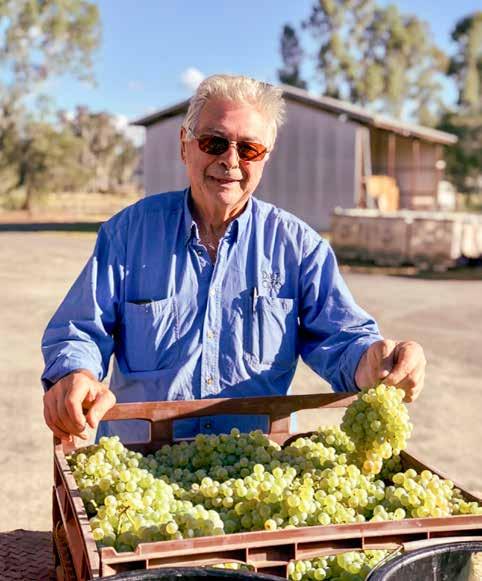
In 1999 an Australian wine industry first was recorded, when Australia’s first Prosecco vineyard was planted in the King Valley by Dal Zotto, and in 2004 Australia’s first home grown Prosecco was released.
This wine helped re-shape the sparkling story in Australia and re-energised the King Valley. Australia is now one of the fastest-growing sparkling wine markets in the world, with the total value of Australian Prosecco production estimated at around $205 million alone.
“The story does not finish here,” said WCA board member Katherine Brown at the presentation ceremony. “In 2009 the European Union, at the behest of Italian winemakers, initiated actions to prohibit the name Prosecco being used by any region outside the geographical area.
“This pushed Otto to ignite the King Valley wine community and lead a relentless charge to stop this action, taking the cause all the way to the Federal Government, who in 2023 refused to sign a proposed free trade agreement with the EU citing Prosecco as a key sticking point. Prime Minister Anthony Albanese stated: ‘The Australian Government has made it clear that it will not sign a deal that does not serve our national interest’. The EU backed down, and the winemakers of the King Valley and the rest of Australia celebrated the win that was bought largely by an impassioned argument from the newest VIC Legend of the Vine, Otto Dal Zotto.”
Otto Dal Zotto is the eighth Victorian to receive Legend of the Vine status. He joins a prestigious list that includes Lindsay McCall, Alister Purbrick, Steve Flamsteed, Jeni Port, Eric Vivian Thomson, Kathleen Quealy, Ross Brown and Colin Campbell, and he will also join them in becoming a Lifetime Member of WCA.
The Legend of the Vine Award was first introduced in NSW in 2012 and to Victoria and South Australia since 2014, with annual awards issued in each of these states. The state chapter committees select nominees from their state and propose their state recipient for that year, with the final winner decided by the WCA National Board.
Preparation

Winemaker James Kalleske dialled in from Bali, where he is growing grapes and making wines against unbelievable odds. Speaking to journalist Meg Riley, Kalleske explains how Hatten Wines has overcome tropical heat, perpetual vintage conditions and unusual local pests, and how he believes you’re only as good as your worst wine.
Imagine having three vintages a year. For some winemakers, the thought alone is enough to induce cold sweats. For James Kalleske, it is just enough to keep him busy.
Being born into a famous winemaking name in the Barossa might explain how James Kalleske came to be in the business of growing grapes and making wines, but it doesn’t explain how on earth he ended up doing so in Indonesia. Based in Bali, Kalleske is the head winemaker at Hatten Wines, as well as the lead on all things research and development.
And you might be thinking, sure, they can make wines in Bali, but they must be using grapes flown in from somewhere else, right? Wrong. Hatten is making wines with grapes grown entirely on the island. Whilst the winery also makes wines with grape juice from Australia (we will get to this), there is no blending going on to give the Balinese-grown grapes an easy boost.
So they’re making wines solely with Balinese-grown grapes, but they can’t be making good wines, can they?
Kalleske has made it his mission to prove that they can.
Coordinating up to three vintages a year, balancing the ever-present threat of disease in a tropical climate, liaising with sometimes stubborn local traditions and fending bats out of the vineyard, Kalleske well and truly has his hands full.
He had just finished his winemaking degree at Curtin University in WA, and was considering further study with a PhD program, when he received a phone call out-of-the-blue from Gus Rai, the founder of Hatten Wines in
We are lucky that this region produces wines that age incredibly well and Vat 47 has an ageing pedigree unmatched by most other Chardonnays.

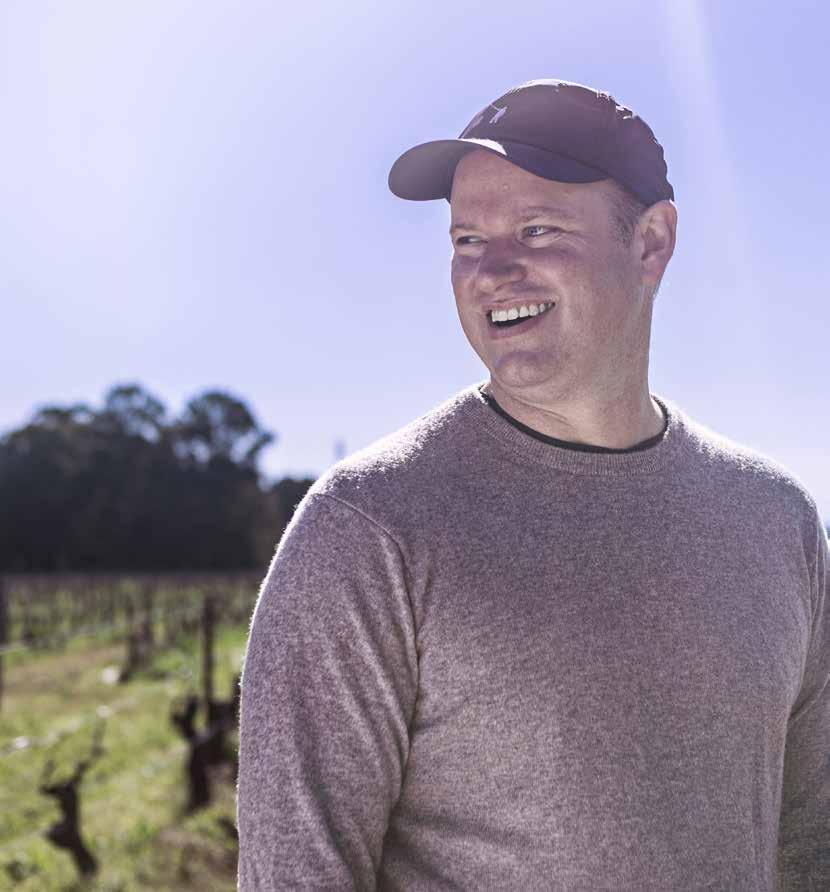
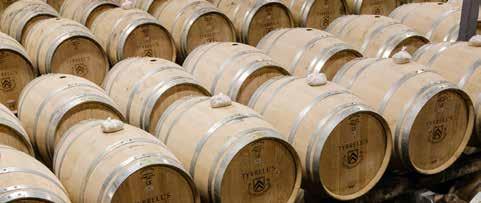
The winemaking and style have evolved continuously over the years in a pursuit to make a better wine. Every part of the process has evolved over time. How do you approach pressing for Vat 47—whole bunch, crushed, oxidative vs reductive—and how does that decision shape the final wine?
Differently to most people, we actually basket press our chardonnay grapes. We
Door Sales
W‘City cellar door’ provides a new model to strengthen sales for regional winemakers
By Nadia Boscaini
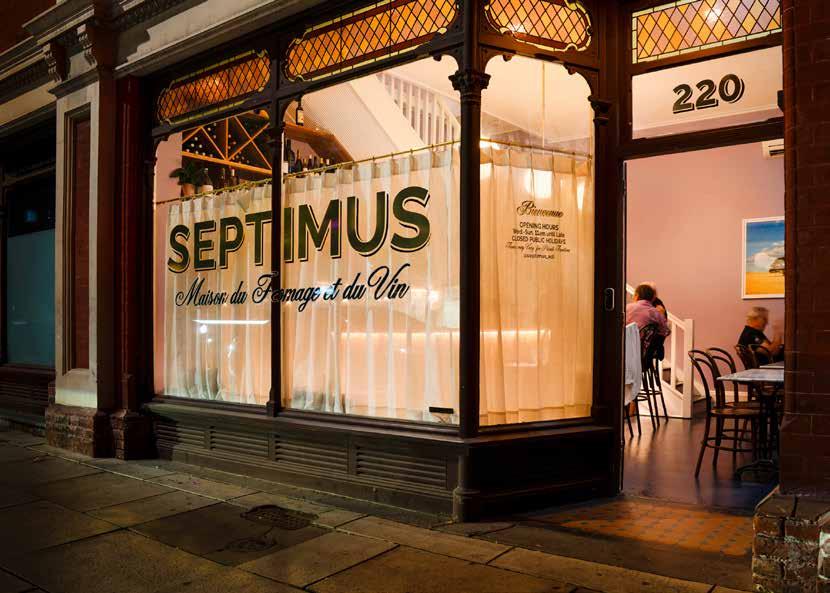
hen Septimus House of Cheese and Wine opened its doors on Grenfell Street in South Australia in April, it brought with it more than just the clink of fine stemware and comforting aroma of aged cheddar.
Nestled just off Adelaide’s East End, Septimus is an emerging epicentre for South Australian wine, bringing new varietals, authentic French wine and the best of South Australian discovered and undiscovered wine, to the mouths of wine connoisseurs.
While operating as an artisinal wine and cheese bar, just months after launching, it’s doing something that could quietly reshape the relationship between metropolitan consumers and the South Australian wine growing regions by offering boutique, emerging winemakers and wineries a ready-made, city-based cellar door.

Septimus owner Ian Coker
What we are offering here is visibility. It’s access. It’s a launchpad.
Ian Coker
For Ian Coker, the man behind Septimus House of Cheese and Wine, this is a personal mission.
“I have spent years in and around the wine industry, savouring iconic and emerging wines, and I’ve always felt that amazing wine does not always get the attention it deserves because it’s hidden away in the hills or behind a locked shed door.
“What we are offering here is visibility. It’s access. It’s a launchpad.”
At its core, the concept is simple. Septimus offers South Australian, region-based wineries, particularly those that are boutique, new to market, or without a traditional cellar door, the chance to showcase, taste, and sell their wines in Adelaide’s city district.
Think of it as a ‘plug-and-play’ city cellar door. Winemakers bring their product, Septimus provides the rest in a beautifully
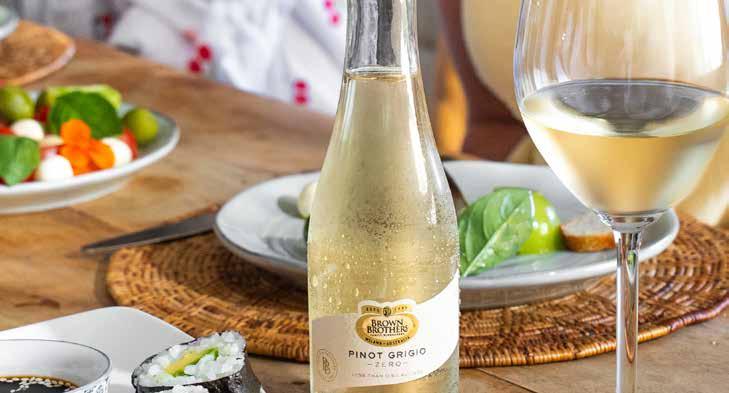
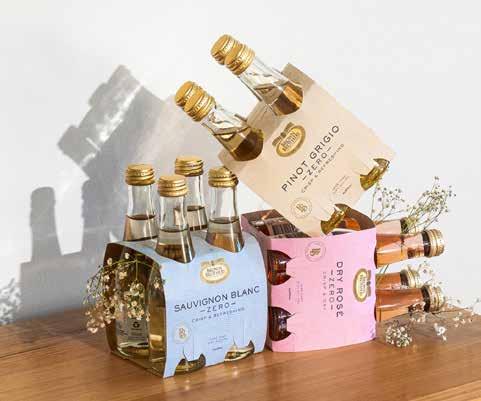
Brown Brothers has launched its new Dry Zero range, featuring a Sauvignon Blanc Zero, Pinot Grigio Zero, and Rosé Zero. All three varietals have been released in the classic 750ml bottle and a portable 200ml option.
The new wines expand Brown Brothers’ zero offering, which already includes Prosecco Zero, Prosecco Rosé Zero, Moscato Zero, Moscato Rosé Zero and Cienna Zero.
The winery said this move taps into the growing consumer demand for moderation and wellness, aligning with the rise of “healthspan”—a view of ageing where people seek to feel better for longer, not just live longer.
“With less than 0.5% alcohol, each wine delivers the full flavour and sophistication of its alcohol counterpart,” Brown Brothers said of the release.
As lighter styles continue to outpace category growth, Brown Brothers said it is responding to the opportunity to recruit and retain consumers seeking mindful drinking options. The expanded portfolio is designed to offer greater choice, supported by a refreshed brand look.