Slices/ 12
How do you say pizza?

How do you say pizza?
CUT, FILL, CLOSE.
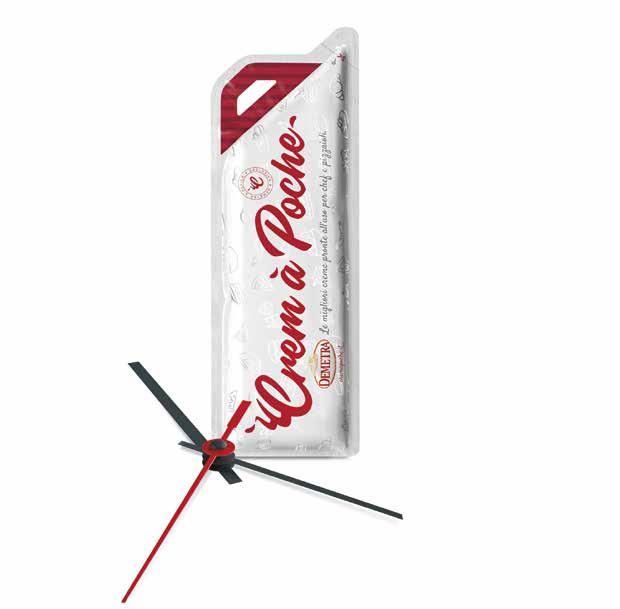

THE BEST DEMETRA’S READY-TO-USE CREAMS IN INNOVATIVE AND EXCLUSIVE PACKAGING DESIGNED TO INSPIRE CHEFS AND PIZZA CHEFS.







BY ANTONIO PUZZI
The world of pizza is particularly interesting from a social point of view, as it allows us to observe with particular accuracy how people attribute differing degrees of importance to the same element. People who do this job are divided between those who see it as an economic lever for their business and those who, on the other hand, perceive their work as an artistic and intellectual creation, albeit an enjoyable one. Those who eat pizza are sometimes great enthusiasts who apply their own critical judgement, and sometimes individuals who simply want to satisfy their
To better understand the importance of pizza, it is important to remember that in 1991, Judge Choppelas, head of the Court of Historical Review and Appeals, was asked to rule on the origin of the recipe. It was to be decided whether it was Mediterranean or Asian, deriving from the Chinese ping tse which Marco Polo brought to Europe, as proposed to the Court. It was the “evidence” provided by restaurateurs Gino Biradelli and Maurice St. Ives that allowed Choppelas to “definitively” attribute its origin to Italy around 1000 BC, with an ancestor of the current pizza known as picea. However, this ruling was not enough for those who claimed a few years later that pizza was invented in America by Italian immigrants in much more recent times.
True? False? Perhaps we will never know, because “pizza” is a word that is repeated identically in all languages of the world, but the infinite variations of this product give it a wonderful plural identity, to which each society associates a different meaning. With our gaze originating in Italy but extending to the four corners of the world, we want to ask ourselves, and ask you: 'How do you say pizza?
BY DOMENICO MARIA JACOBONE AND MONICA PISCIELLA
BY GIAMPIERO RORATO
FROM THE KITCHEN TO THE DINING ROOM, VIA THE PIZZERIA
ANTONELLA MIGNACCA
PROTECTING THE ART OF NEAPOLITAN PIZZA MAKING, A WORLD HERITAGE.
LEANDRO VENTURA DISCUSSES IT WITH ANTONIO PUZZI
GENNY DI VAIO, LA CHAMADE, NICE BY NIO
WHY WE LOVE PIZZA GIRLS SO MUCH
DIRECTOR CARLO FUMO DISCUSSES IT WITH ANTONIO PUZZI
Maria, the heart of Naples
MARIA CACIALLI, THE PRESIDENT'S DAUGHTER
BY NOEMI CARACCIOLO
LAURA PLAGA BRINGS ITALY TO THE TABLE IN PROVENCE
BY ANTONIO PUZZI
How good tomatoes are for you and how best to cook them
BY MARISA CAMMARANO
A great
read BY DMJ
QUALITY OR PRICE?
BY MASSIMILIANO BRUNO GALLO
BY CATERINA VIANELLO
Italy exports much more than just food products: it exports skills, culture and an educational method that represents a pillar of “Made in Italy” around the world. In recent years, Italian training in the restaurant and pizzeria sector has taken on a strategic role, not only as a vehicle for technical knowledge but also as a tool for promoting Italian cultural and gastronomic excellence.
The economic importance of ‘Made in Italy’ in catering can easily be seen in the 2024 update by FIPEConfcommercio, according to which the Italian catering sector comprises over 331,000 businesses, with an added value of €54 billion and 1.4 million workers. Italian restaurants
abroad, on the other hand, number over 30,000, generating a turnover of over €12 billion. This success is not limited to the product served at the table but to the ability to export an educational and cultural system that makes Italian cuisine a global benchmark. Among the institutions, the Ministry of Foreign Affairs, in its annual report on Italian catering abroad, emphasises how this training capacity represents one of the main assets of the qualitative recognition of Made in Italy. When we talk about our national cuisine, it is not just a question of teaching traditional recipes but of transmitting a method that encourages creativity, always with the utmost respect for the quality of raw materials, one of our main strengths.
Among the most important training institutions for internationalisation is ALMA - The International School of Italian Cuisine - which in recent years has strengthened its offering with new and more accessible courses such as ‘Restaurant Revenue Management’ and the module on ‘Gastronomic Pizza’. With over 15,000 students trained from more than 85 countries, ALMA is a global platform for the development of culinary and management skills and one of the first institutes to have created a cult following for Italian training in the world of great international cuisine.
The Scuola Italiana Pizzaioli (Italian School of Pizza Chefs ed.), founded in 1988 in the province of Venice, is internationally recognised for its excellence in pizza training. With a certified training programme and facilities equipped with professional laboratories, it operates both in Italy and abroad. The educational offering is comprehensive and innovative, including basic courses, advanced training and a focus on sustainability and emerging trends, with the aim of training well-rounded professionals capable of meeting the challenges of the sector. With a widespread presence extending from Italy to Europe, Asia, Australia and the Americas, the mission of the Scuola Italiana
Pizzaioli is to promote Italian pizza culture around the world. Thanks to this global network, it contributes to exporting a cultural model that promotes pizza, one of the most representative examples of Italian excellence abroad.
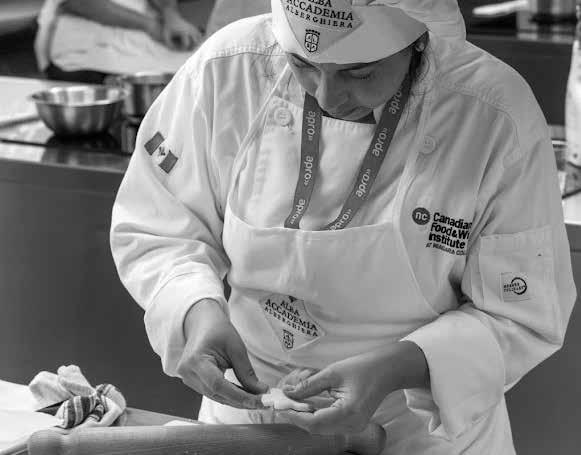
Alba Accademia Alberghiera (Hotel Academy ed.), based in the heart of the Piedmontese Langhe, is a much younger institution. Founded in the early 2000s, it has developed training programmes that go beyond the technical teaching of catering, aiming to train well-rounded professionals. Among its most recent training projects, ‘Ancient Grain’, dedicated to the rediscovery of ancient grains and typical products, and ‘Italian Tradition Chef training’, which explores the identity of the territory through vegetables, biodiversity, butchery, flours and derivatives, truffles and desserts, stand out. With international partnerships in Europe and around the world,
Alba Accademia Alberghiera has trained professionals in recent years who now hold prominent positions in internationally renowned restaurants, wineries and hotels. In recent years, it has developed several international collaborations with Niagara College Canada, Brightwater, Austin Community College and Florida International University.
The examples mentioned above show how the Italian training model is not limited to mere technical teaching but conveys a philosophy that integrates quality, respect for raw materials and creativity, while maintaining a firm adherence to regional food
and wine traditions. This approach translates into a global network of professionals who, once trained, become true ambassadors capable of promoting our cultural heritage in an increasingly competitive and diverse market. Through a ‘double interview’ with Sara Bitti, head of Alba Accademia Alberghiera, and Luca Gaccione, educational director of the Scuola Italiana Pizzaioli, we will explore how these institutions are addressing the challenges of internationalisation and what strategies they intend to adopt to continue promoting Italian educational leadership in the international food and wine sector.
Made in Italy: in your opinion, how valuable is training in the food and wine sector?
Sara Bitti: ‘Training is fundamental to the success of Made in Italy food and wine products. The quality and authenticity of Italian products are closely linked to passion but above all to expertise. Continuous training is the only recipe that can guarantee the preservation of food and wine culture, helping to pass on traditional techniques and recipes and, at the same time, allowing us to keep up with the times by updating ourselves on new techniques and tools in the kitchen while respecting raw materials.
Solid training can improve the sustainability of preparations and production efficiency, helping to maintain the excellence that characterises produce Made in Italy. In-depth knowledge of raw materials, processing techniques and food safety regulations is essential to maintaining high quality standards.
Our Hotel Academy, for example, is located in Alba, a UNESCO Creative City for gastronomy and the ‘capital’ of the Langhe, Roero and Monferrato, also a UNESCO World Heritage Site, with a focus on raw materials, respect for the wine-growing landscape, innovation and a deep connection with tradition, which are the
cornerstones of the success of this corner of Piedmont, where cuisine and wine attract an increasingly attentive and demanding international tourism.”
Luca Gaccione: “Training in the food and wine sector, particularly for an iconic product such as pizza, is a fundamental pillar for ensuring quality and authenticity. When it comes to pizza, it is not just a matter of learning techniques and recipes: it is essential to understand the historical and cultural context that has shaped this symbol of Made in Italy produce. Pizza embodies a tradition rooted in our territory, a history that is envied globally and offers endless opportunities for promotion, allowing us to create variations that enhance both the past and innovation.
A crucial aspect of training is the link with traditions, such as the use of wood-fired ovens and local raw materials. For example, Sicilian flours are not only a technical element but also an expression of the local culture. The same applies to fresh ingredients such as tomatoes and mozzarella, which are the basis of an authentic artisan pizza. These elements require not only technical skills but also a deep knowledge of the production area and its peculiarities.
BY DOMENICO MARIA JACOBONE AND MONICA PISCIELLA
The craftsmanship of pizza must be supported by a rigorous method that guarantees consistent quality over time. A product such as pizza cannot vary significantly from one production to another: training serves precisely to create a system that combines creativity and tradition, but at the same time establishes clear standards. This approach is essential to raise the product to a level of excellence, while maintaining the value of raw materials and craftsmanship, which remains the soul of Italian pizza.
Italian training abroad: how have you organised exchanges with other countries, how do you prepare teachers, and how do you ‘make a difference’ compared to other Italian and foreign institutions?
Sara Bitti: “Alba Accademia
Alberghiera has a training programme tailored to different types of users and age groups:
from young people who choose it for their higher education, to adults who are looking for professional development or want to find work in the sector through upskilling and reskilling courses, to companies in the Horeca world that need specialised training in the field of gastronomy and tourism. Not to mention the Wine & Spirit Education Trust (WSET), the world leader in wine education, for which Alba Accademia is an Approved Programme Provider for Piedmont, Liguria and Valle d’Aosta.
This versatility is the key to our international success, as our teachers and chefs have acquired scalable know-how and skills over time that allow them to interact with various Italian and foreign users at the right level.
Added to this is a whole range of design and project management skills that allow us to be leaders in Europe and around the world. Alba Accademia works with over 53 international partners on various projects, many of which are funded by the European Community, on capacity building, innovation and the exchange of skills in the food and wine and tourism sectors.
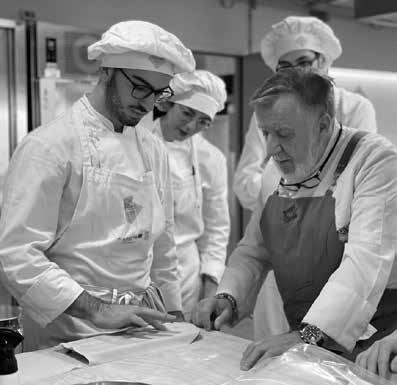
The style? It is that of ‘learning by doing’, which stems from the experience gained in over 65 years of activity as a Professional Training Agency, where laboratory practice hours are fundamental in terms of quantity and quality. It is an approach that foreign students greatly appreciate and which finds its most effective application in the world of food and wine.
Luca Gaccione: “The school favours a teaching style based on two inseparable pillars: theory and practice are two essential components that complement each other. The theoretical component is crucial in providing students with in-depth knowledge of raw materials. The aim is to
convey an understanding that goes beyond simple technique, stimulating the ability to innovate and propose new solutions in the catering market.
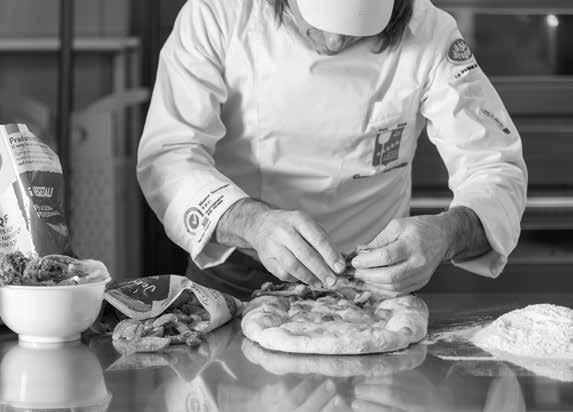
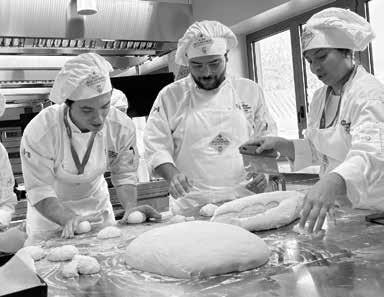
The practical dimension is equally fundamental. Students are actively involved, getting their hands dirty during all stages of preparation. From dough making to subsequent processing, direct experience becomes a central element of the learning process. International projects are one of the school’s strengths, with a carefully developed cultural exchange strategy. A significant example is the twoyear experience in Brazil, where different styles of pizza are presented through participation in major international fairs, such as the one in São Paulo. During these events, the nuances of Italian pizza are illustrated: from the classic Neapolitan version to pan pizza and pizza on a peel.
The ‘Incoming Brazil’ programme offers a high-level training course in Italy for Brazilian students, which goes far beyond simple preparation techniques. A distinctive feature of these exchanges is the cultural component: foreign students are taken on guided tours to learn about Italy, discovering the secrets of products that symbolise ‘Made in Italy’. From Venice to the Prosecco cellars, from tours of Parma ham establishments to Parmesan






cheese factories and Balsamic Vinegar factories of Modena, each stop is a dive into Italian food and wine culture. Direct experience shows that the countries most receptive to Italian culinary culture are Australia, with its extreme curiosity and attention, followed by Brazil and Japan. The Japanese stand out for their particularly surprising manual learning ability, with students able to learn pizza-making techniques in an incredibly short time.
The ultimate goal goes beyond the training of simple professionals: the aim is to create true ambassadors of Made in Italy produce, capable of conveying the authenticity and depth of Italian food and wine culture to every corner of the world.
What does an aspiring chef from another country find at your school? Have you created any exchange programmes between Italy and other countries, and if so, how? Which countries are most attentive and respectful of Italian cuisine or cooking styles?
Sara Bitti: “Thanks to constant work over time, Alba Accademia Alberghiera is now part of partnership and visibility networks both in Italy, such as the Association of Higher Education Schools of Catering of Fipe/Confcommercio, and internationally, such as the Thematic Working Group on Tourism and the European Association of Hotel and Tourism Schools, to name but a few. These networks and other international relationships have brought us visibility to an audience of over 250,000 professionals and students across four continents, involving colleges and universities in five states in North America alone. It is from this audience that the students and teachers of schools, colleges and universities who choose our incoming advanced food and wine training programmes come. And I must say that everyone, especially Americans and Northern Europeans, has a very respectful approach to our cuisine and is literally fascinated by the excellence represented by small local producers.”
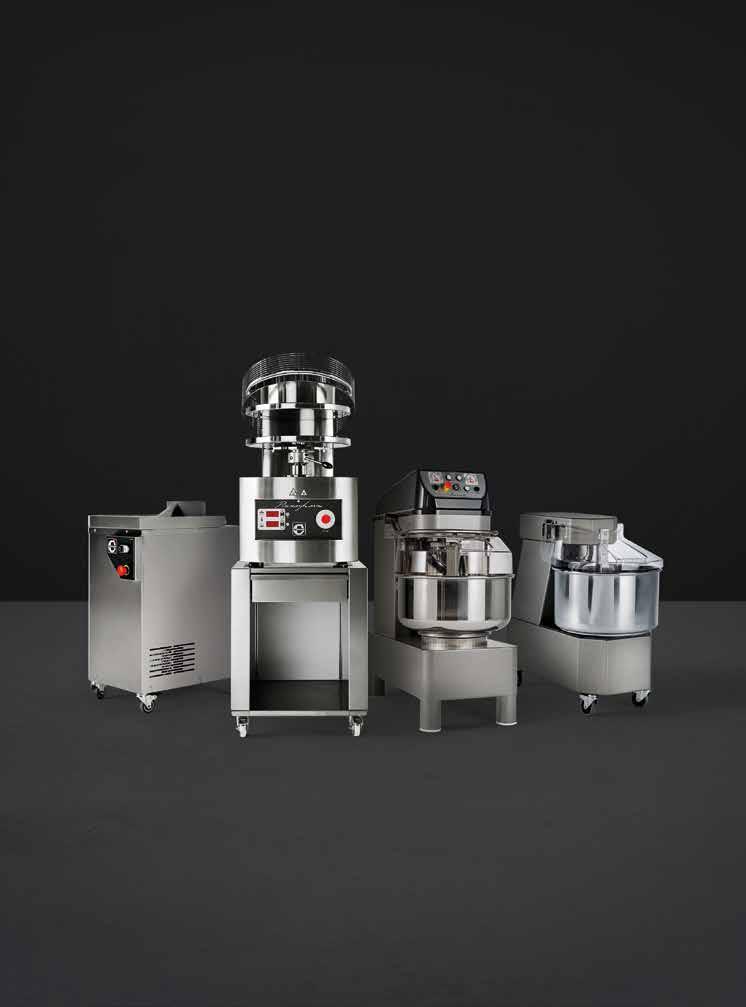
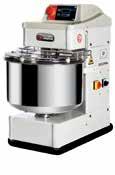
Luca Gaccione: “We wanted to distinguish the Scuola Italiana Pizzaioli from other training institutions by guaranteeing the certification of our teaching method and providing facilities equipped with the most advanced technologies, designed to improve the quality of work and optimise learning. Each location has been designed according to a uniform format, with welcoming environments and state-of-theart tools, to ensure a learning experience that lives up to expectations. At all our locations, students have access to a wide range of professional equipment, including all types of dough mixers: fork, spiral and diving arm. This allows them to familiarise themselves with the diverse technologies used in the industry, understanding both the strengths and limitations of each tool.
This means that when they find themselves working in a company that uses specific equipment, they will already be prepared to handle it competently.
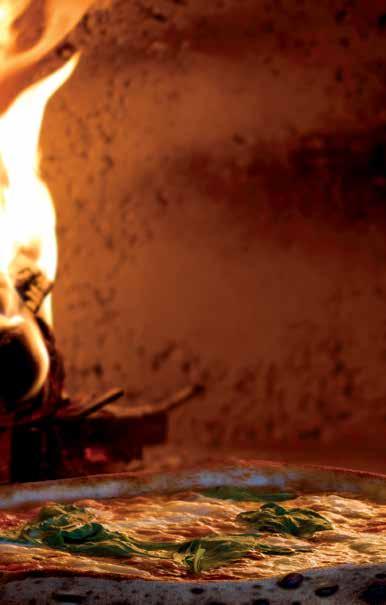
The same approach is taken with ovens: our schools have woodfired and electric ovens, allowing students to experiment with different baking techniques. This not only helps them understand which type of oven is best suited to their style of pizza – from peel pizza to classic Neapolitan pizza – but also helps them develop a clearer vision of their future career choices. For example, the electric oven is ideal for those who want to work on specific products such as peel pizza, while the wood-fired oven, in addition to offering excellent visual appeal, remains an icon of Italian tradition for Neapolitan pizza.
Our goal is for every aspiring pizza chef, both in Italy and abroad, to find a comprehensive environment at our schools, offering all the tools necessary to embark on a successful professional career. We are convinced that this focus on quality and innovation makes us the ideal choice for those who want to grow in the world of pizza.
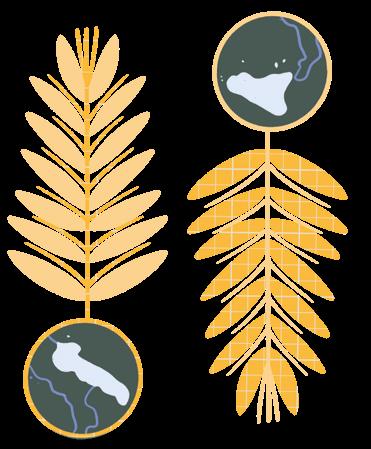
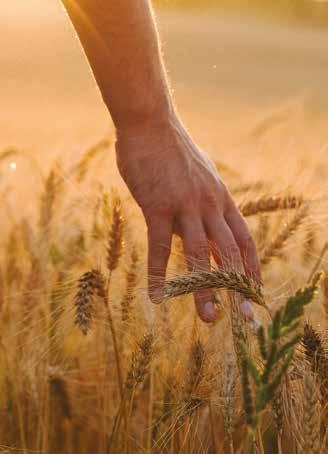
For some time now, there has been a resurgence in the use of ancient wheat varieties, particularly Sicilian Timilia and Apulian Khorasan, in bread making. Wheat varieties obtained in the first half of the last century from Nazareno Strampelli’s crossbreeds, such as “Mentana” and “San Pastore”, among others, are also attracting renewed interest. Strampelli also developed the “Senatore Cappelli” durum wheat, which underwent several genetic improvements in the second half of the last century. This month, we focus on the oldest grains, precisely because they are experiencing a new and interesting revival, both in bread-making and in other related products. Many restaurateurs are already making their businesses more distinctive by using ancient grains, which we would like to introduce to our readers in these pages.
This month, we focus on the oldest grains, precisely because they are experiencing a new and interesting revival, both in breadmaking and in other related products. Many restaurateurs are already making their businesses more distinctive by using ancient grains, which we would like to introduce to our readers in these pages.
This grain was already known in Greek times under the name trimeniaios. The name itself confirms that this grain, like other plants, including vines and olive trees, was brought to Sicily by Greek colonists who arrived on the island between the eighth and seventh centuries BC, enjoying considerable success throughout the island for centuries.
The wholemeal flour is lightly sifted and contains many trace elements from the wheat germ and bran; it has a high protein content and a low gluten index. The flour, with its distinctive and unique greyish colour, is very suitable for bread-making when added to other Sicilian semolina. It is used to make the famous bread of Castelvetrano, in a historical tradition lasting almost three millennia. This fact alone deserves much more consideration and in-depth study, including by the Sicilian authorities who have this ancient wheat among their many agricultural treasures.
At this point, a question arises: if the Greek colonists brought it to Sicily and
BY GIAMPIERO
cultivated it there, where did they find it, given that Greece is not suitable for wheat cultivation? The answer is very simple. Over three thousand years ago, wheat was cultivated in most of the Fertile Crescent, from the highlands of Turkmenistan to the plains of Egypt along the Nile River, although in Egypt this seed had been imported in ancient times from an area stretching from Armenia to the Oriental high plains. There is therefore a very close relationship between the ancient wheat varieties found in southern Italy, known as Magna Graecia, and the East, from which vines, olive trees, rice and numerous fruit trees also arrived.
3) Between the 1920s and 1930s, Italy saw the so-called “battle for wheat” to maximise the production of this essential cereal. As always happens when crops are renewed, something of the old remains, and this is what happened with Khorasan wheat, rediscovered a few decades ago on a tiny farm in the Santa Candida area of Altamura.
This wheat, now grown on over 500 hectares by a local producer, yields a high-quality flour with the following characteristics:
• Energy value per 100g/3.52 oz: 359 cal.
• Protein: 17.3%.
• Total lipids (fats): 2.6%.
• Carbohydrates: 68.2%.
• Crude fibre: 1.8%. 18
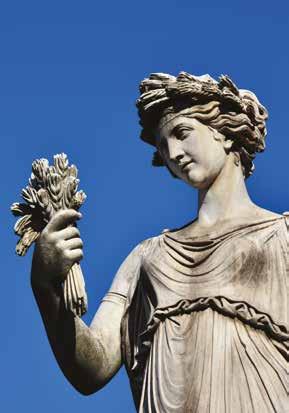
Khorasan is also one of the few ancient grains cultivated in Italy, brought over by Greek colonists and spread around the Apulian city of Altamura. It is possible that, especially in the early decades of the last century, when Nazareno Strampelli produced the wheat he called “Senatore Cappelli” from crossbreeding, Khorasan was gradually abandoned but did not disappear. Strampelli’s grains –several dozen varieties obtained by him from both hard and soft grains – enjoyed enormous success in just a few years for three reasons:
1) The average yield per hectare was at least double that of ancient grains
2) The stem height of ancient grains, which was around 180/190 cm, had been almost halved, reducing lodging caused by wind and rain
BY GIAMPIERO RORATO
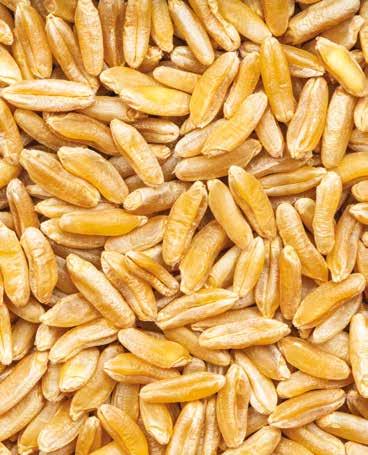
This type of wheat is rich in minerals, in particular: calcium, iron, magnesium, phosphorus and potassium. It has a low glycaemic index. Khorasan flour is highly prized in bread-making and the production of biscuits, focaccia, pasta and pizza.
We have limited ourselves to a quick examination of two ancient varieties of wheat to try to understand the reasons for their current success, which we share. Although the yield of Timilia and Khorasan is much lower per hectare than that of current wheat varieties, particularly those whose seeds are imported from foreign producers, the quality of the food produced with them is very high and meets the dietary requirements for producing good, organic, healthy, wholesome and fully satisfying food.
Our considerations are not a selfish defence of “Made in Italy” but rather an acknowledgement that Italy has the largest number of agri-food products certified by the European Union with the DOC, DOCG, PDO, PGI, IGT and TSG labels. And, even though many of these products have been imported over the centuries, it is on our peninsula that they have found the ideal habitat to fully express their best nutritional characteristics. 20
In
Italy, we therefore have everything we need for a healthy, good and fully satisfying diet and catering. What is still lacking, with a few commendable exceptions, is proper food education, which should start in nursery and primary schools, not least to combat the wealth of misinformation on social media, which is often harmful to our health.
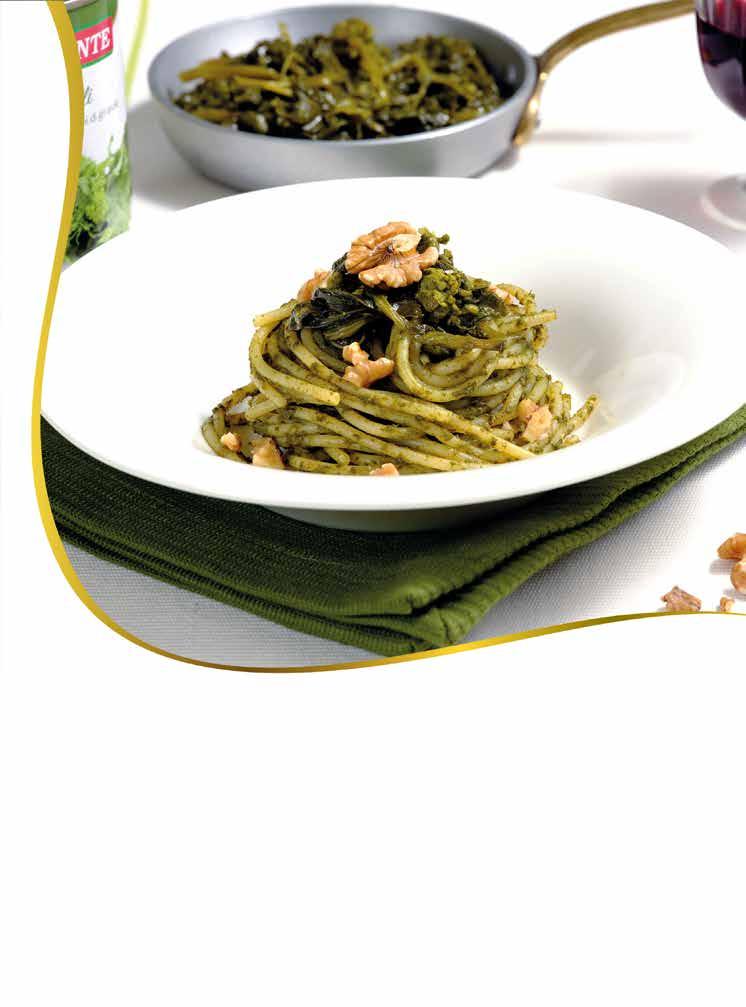
In Naples and Campania they’re called friarielli, in Rome broccoletti, in Tuscany rapini, and in Puglia cime di rapa: different names but one unmistakable taste that brings everyone together. Cleaned, carefully washed, La Torrente Friarielli release their bold aroma and authentic flavor. Our secret? We select only the tenderest part, the one that delivers the richest taste and the best texture for every dish. Perfect for dressing a pasta dish rooted in Italian tradition, and not only for pizza, La Torrente Friarielli are also ideal for vegan recipes, thanks to their naturally intense and versatile flavor. The perfect partner for anyone who seeks real taste, character, and quality in the kitchen every day.

In recent years, the consumption of gluten‑free products in the UK has evolved far beyond a niche for people with coeliac disease. It now appeals to many consumers looking for lightness, better digestion or dietary variety. According to market studies, the UK gluten-free food market was valued around USD 235 million in 2025, with forecasts pointing to robust growth (CAGR ~8.8 %) through 2030. Within the foodservice sector, the demand for reliable gluten-free options is growing. Coeliac UK reports that about 8 % of 16–64 year‑olds identify as following a gluten-free diet, which translates into roughly 2.9 million people in the UK regular outside food consumption base. Many restaurants, pizzerias and cafés now aim to hold the Coeliac UK Gluten Free Accreditation to certify safe practices. In this evolving landscape, Agugiaro & Figna, via its Le 5 Stagioni line, presents two dedicated gluten-free formulations tailored for professional pizza and bakery use:
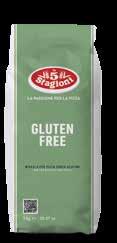
A ready-to-use, naturally gluten-free and dairy-free blend, engineered for both pizza and bread doughs. Its balanced formulation promotes stability of structure, crispness at the base, and reliable oven spring. It handles with ease even in high throughput settings, delivering consistency batch after batch.
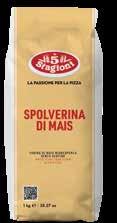
A gluten-free white corn flour perfect for flouring the bench (dusting) in lieu of semolina. Its fine grain allows efficient absorption of surface moisture on dough, helping with ease of sliding and enhancing crust crispness. Beyond dusting, it is suitable for baked snacks, corn‑based breads, pasta and dry products, thus providing versatility in gluten-free lines. Choosing to invest in gluten-free is part of Agugiaro & Figna’s larger vision of milling innovation, dietary inclusivity and sustainability. All productions occur in controlled facilities, with full traceability of ingredients and careful attention to environmental impact—aligned with the ESG principles at the core of the company’s industrial evolution.
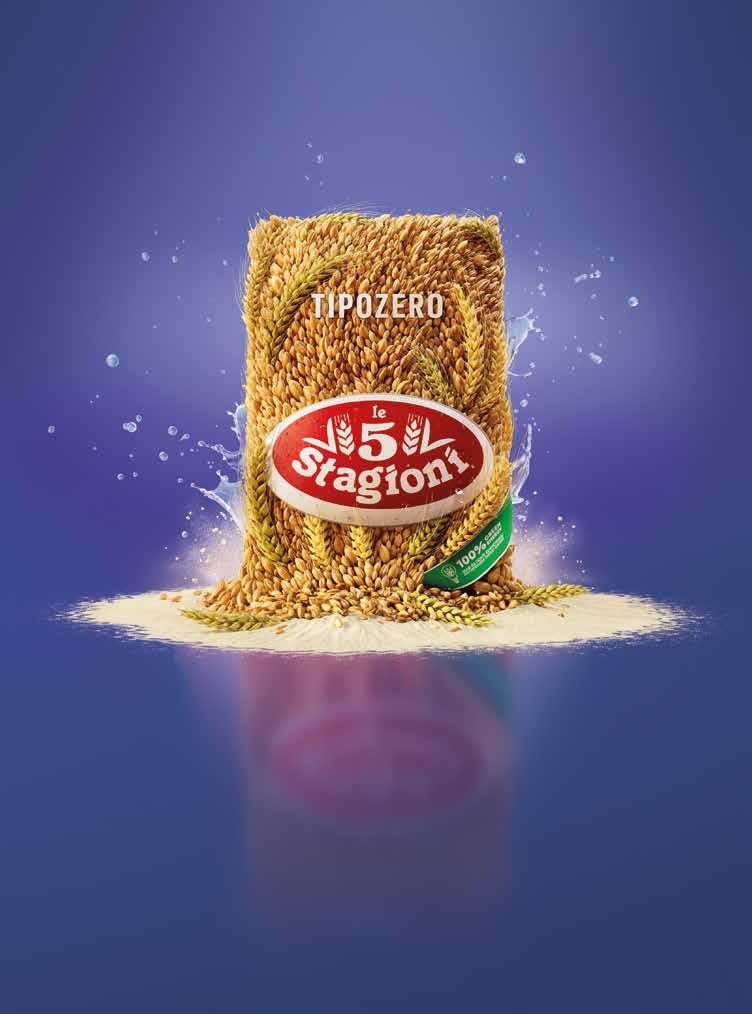
ZERO COMPROMISES, 100% ITALIAN.
From the experience of Le 5 Stagioni, comes TipoZero Superiore, the flour obtained from 100% Italian wheat, versatile and unique, suitable for all types of dough.
le5stagioni.it/en
From the kitchen to the dining room, via the pizzeria
Catering is undergoing a period of great transformation, with a high rate of res taurant openings and closures. Ferran Adrià raised this issue on stage at ‘Iden tità Golose’ a few weeks ago. According to the Catalan chef, the sector lacks a solid financial vision, leading to ineffective management and a high failure rate. Many entrepreneurs focus on the idea of being innovators, but without a concrete strategy and adequate evaluation tools, the risk of failure is high. In the restaurant world, the desire to feel like “inventors” often exceeds the actual ability to implement innovation effectively. Feeling like an inventor can be inspiring, but the real challenge remains doing things well.
The key to finding a balance between vision, management and service quality lies in understanding the market, optimising processes and creating memorable experiences for customers.
At the studio I founded, we deal with ‘food design’, working with companies in the food industry that want support with their business projects. For some years now, the first step with clients has been to work with participatory workshops to bring out their needs, objectives and requirements more clearly.
What often emerges is that even when companies are ready for change, they often lack a clear awareness of their business objectives. Many restaurateurs do not have the necessary tools to measure their performance and evaluate the effectiveness of their strategies. Food Design is a discipline that combines planning and nutrition to improve the food experience in all its forms. It is not just about aesthetics but also functionality, sustainability and emotions. Food becomes an object of design, influencing its presentation, consumption and interaction with the customer. From the creation of new dishes to the design of areas and services, Food Design is a useful tool for contemporary catering because it offers concrete solutions, helping to define a clear identity, improve the user experience and optimise products and internal operations.
The customer experience in the dining room is just as important as the quality of the food. In recent years, there has been much discussion about optimising table management, with some establishments imposing time limits on how long customers can stay. However, the real issue is not the length of the meal, but making the time spent in the restaurant a satisfying experience. The impact of the pandemic has radically transformed consumer habits: while food delivery has become widespread on the one hand, there is also a growing need to experience restaurants as a moment of enjoyment, personal satisfaction and well-being.
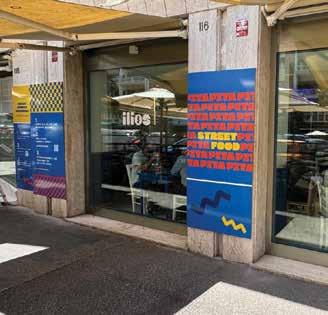
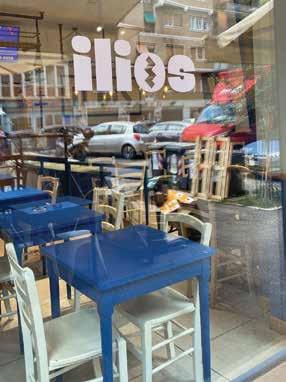
Eating out is no longer just a matter of necessity or convenience, but has become an opportunity to nourish the mind and body, to break away from routine and indulge in a pleasure that goes beyond simply consuming food. Furthermore, restaurants respond to an increasingly strong social need. Modern homes, especially in large cities, are often smaller and less suited to welcoming friends and relatives. Many young people also live in shared accommodation or do not have their own home, making restaurants the ideal place to meet, share special moments and enjoy a space that they do not have at home. The restaurant industry must therefore rethink the role of the dining room, creating environments that promote conviviality without sacrificing efficiency and quality of service.

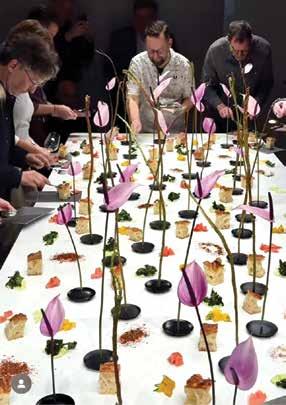
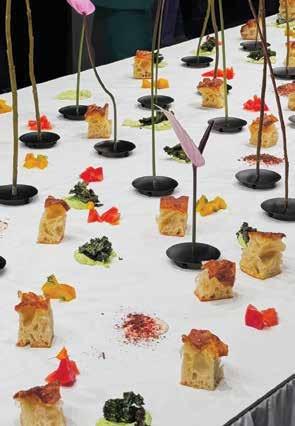
Pizza is a product with enormous potential for innovation. The story of a pizzeria should not be limited to the quality of the ingredients or dough-making techniques, but should build a broader narrative. Food Design applied to pizza means rethinking the presentation, consumption and communication of the product. Mise en place plays a key role: serving pizza on innovative bases or offering diverse tasting experiences can completely change the customer's perception.
With the decline in consumption among young people under the age of twenty-five, pizzerias are a model that can best respond to change and, given their potential, could develop new formats and product innovations. The idea is to experiment with new ways of consuming, moving away from the classic traditional restaurant models. Pizza, which originated as street food, can be reinterpreted in more dynamic and modern contexts, offering diverse and surprising sensory experiences.




Digital technology can revolutionise the kitchen, not only as a marketing tool but as an integral part of an ecosystem of interconnected tools. Websites, management software, booking platforms and social media should not be isolated elements but components of an integrated digital system that optimises production, reduces waste and improves customer interaction.
From a sustainability perspective, digitalisation allows you to monitor ingredient consumption, optimise purchasing and reduce waste, promoting more responsible resource management.
Analysing data from kitchen management and booking systems helps you to forecast demand more accurately, adapting production and reducing excess, with a positive impact on both the environment and on profitability. In terms of efficiency, a well-organised digital system simplifies operational management.
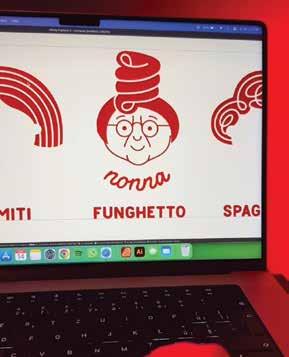
Integrated software between the kitchen, dining room and suppliers allows you to automate orders, manage stock and update menus in real time, ensuring a smoother workflow and reduced operating costs. The integration of the various digital tools also facilitates food cost control, improving the financial management of the entire production process.
In terms of the customer experience, digital technology offers new possibilities for personalisation and interaction. A sophisticated website could allow customers to personalise their dishes or book exclusive dining experiences, for marketing purposes or to optimise purchases and reduce waste.
Social media and apps can become tools for direct dialogue with the public, gathering feedback in real time and creating a sense of community around the restaurant's cuisine.
The integration of technology and cuisine is not just an option, but a necessity for modern catering, with the capacity to improve operational sustainability, management efficiency and customer engagement, dynamically adapting to market changes.
Mignacca is the founder of the gastronomic consultancy firm Into The Food.
Contact: antonella@intothefood.eu
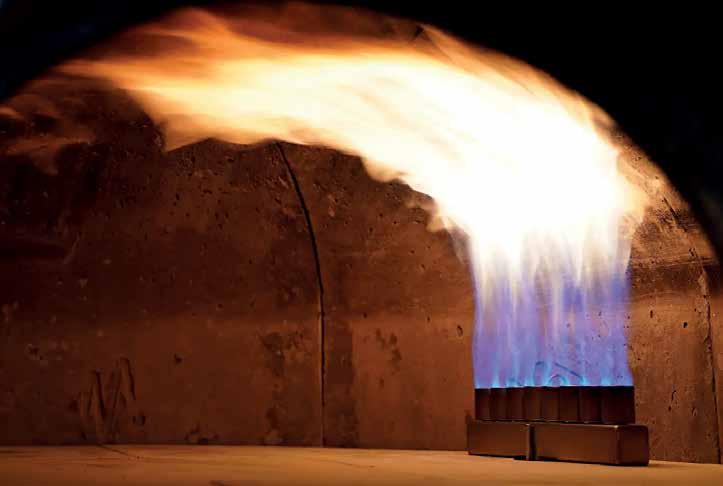
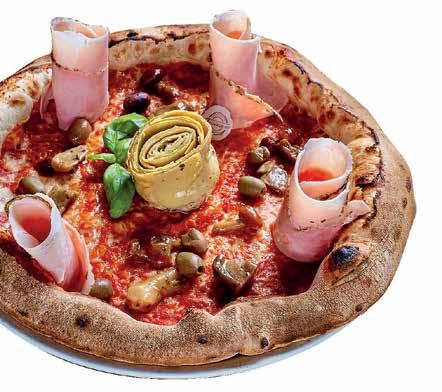

SPITFIRE, il bruciatore a gas perfetto per esaltare il sapore della tua pizza mantenendo inalterato il gusto, l’aspetto e la fragranza di sempre. Ideale per tutti i tipi di pizza.
FINO AL 70% di risparmio sui costi di gestione del tuo forno.



Contattaci per una consulenza gratuita
+39 035 525065
+39 347 2470046
DIRECTOR
The art of Neapolitan pizza making is Intangible World Heritage. However, all UNESCO heritage is subject to periodic review: member states are required to submit a report on the sites and assets included in the “list”. This practice ensures that attention is always focused on the heritage, which must be constantly managed with care and promoted.
One of the most important actions is to continue to keep alive the relationship between the community to which it belong and the asset being protected. In Italy, this task is carried out by the Ministry of Culture, which, for intangible heritage, has been making use of the activities of the Central Institute for Intangible Heritage since 2007. We asked Leandro Ventura, director of this prestigious Instutite, to tell us about the very special approach taken to the project to promote the art of the Neapolitan pizza chef, understood as an “everyday” form of choreographic art, truly a “dance of the hands”.

DIRECTOR, HOW DID THIS IDEA OF DOCUMENTING THE INTANGIBLE HERITAGE OF NEAPOLITAN PIZZAMAKING COME ABOUT?
It arose as part of a project we have been working on for years to document and promote Italian gastronomic heritage in general through the Food Culture Geoportal project, which began in 2015. This project is progressing in various ways. Initially, this audiovisual narrative formula was conceived in collaboration with the University of Gastronomic Sciences in Pollenzo: a 3-4 minute video in which an expert “narrates” a dish, retracing its history and illustrating its preparation.
Then new original video-narrative perspectives opened up, both in collaboration with Verona Ancient Games Society and through the contribution of ethnomusicologist Francesco De Melis. Together with him, and in collaboration with Vincenzo Patierno, who connected us with the Association of Neapolitan Pizza Chefs (APN), this “challenge” was born to “read” and recount the art of the pizza chef as a choreographic and musical art in its own right, thinking precisely of the intense sounds of the preparation and the rhythmic musicality of the gestures.
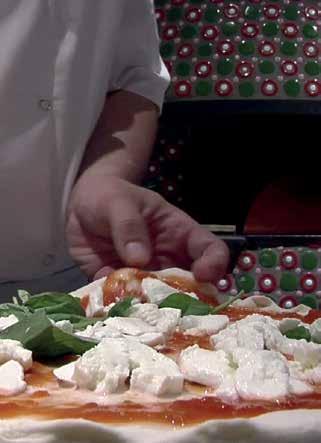
Because the complex gestures of pizza chefs are a true dance of the body, hands and fingers. This can in turn be punctuated and made rhythmic, like in the project's presentation trailer, with an original soundtrack enhanced by the real sounds of preparation and Neapolitan vocal evocations from recordings of the Campania soundscape, from markets to pizzerias. De Melis shot the short film in his “dancing” style, with a “handheld camera”, filming two talented and “energetic” protagonists of this art, in the Roman pizzeria of a well-known Neapolitan pizza chef loved all over the world, near the Pantheon.
THE VIDEO HAS ALREADY BEEN SHOWN ON SEVERAL OCCASIONS, RIGHT?
Yes, it was screened in Turin, as part of “Terra Madre”, in September 2024 and then in Capaccio. The interesting thing is that both at “Terra Madre” and in Capaccio, representatives of the two pizza chefs’ associations (“Verace Pizza” and “Pizzaiuoli Napoletani”) declared themselves to be in complete agreement with our way of recounting their “art”, which is original, but above all “narrative” in both a creative and documentary sense.
We would like this “trailer” to be the starting point for a more detailed audiovisual documentary, covering the whole range of the work phases. We are looking for supporters for the final realisation of the project, and someone has already come forward. It seems that the Campania Region is also enthusiastic about the idea.
HAVE ANY PIZZA CHEFS SAID THAT YOUR FILMING DOES NOT REFLECT THE “TRUE WAY OF MAKING PIZZA”?
No, to be honest, there are some pizza chefs who have admitted: “I don't make it that way, but what you show is the true art of pizza”, so it's really nice that people identify with our representation of this art from different, but also informed, points of view.
WILL ALL THIS THEN BE INCORPORATED INTO THE GEOPORTAL OR WILL IT BECOME A SEPARATE PROJECT?
Let's say that at the moment it is a separate project, but given that the Food Culture Geoportal is a space where Italian gastronomic traditions are constantly recounted from many different points of view, it is clear that it will end up there, perhaps creating a special section, possibly enriched with interviews with some famous pizza chefs. I would also be interested in documenting some pizza chefs who work abroad, in order to recount, for example, how pizza is really “felt” and perceived in New York.
BY ANTONIO PUZZI
WHY DOES THE CENTRAL INSTITUTE FOR INTANGIBLE HERITAGE, AND THEREFORE THE MINISTRY OF CULTURE, NOW BELIEVE THAT THE ART OF THE NEAPOLITAN PIZZA CHEF, AND THEREFORE PIZZA, IS NOT ONLY IMPORTANT TO PRESERVE BUT ALSO TO RECOUNT THROUGH AUDIOVISUAL MEDIA?
Not only because it is a UNESCO heritage, and therefore internationally recognised, but precisely because the art of the pizzaiuolo has very strong roots in the Neapolitan territory and has spread throughout the rest of Italy and the world, certainly with differences and variations, but the pizza dough is the same. There are diverse products, based on traditions, local dishes, typical ingredients and experimentation, but all this is even more interesting because it represents a way of combining a product (which clearly also has commercial value) with the ancient traditions of the region and its communities.
UNESCO PERIODICALLY REVIEWS ITS HERITAGE: WHAT CAN ORDINARY PEOPLE DO TO HELP PRESERVE THIS HERITAGE?
We need to tell people about it, so that even the end user, the “pizza eater”, can feel proud of contributing to the preservation of undisputed “world heritage” through their food choices.
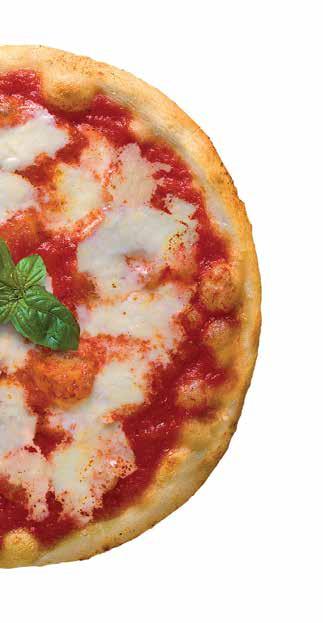
Pinsa Romana was created by Corrado Di Marco in 2001 for the Ho.Re.Ca. sector. Since then, it has become a leading player in retail too, where it ranks as the #1 by value* and drives category growth thanks to its original recipe, loved by Italian consumers. Its story speaks for itself. When a product designed for professionals reaches supermarket shelves and wins over the public, it proves the depth behind it: research, skilled hands and a vision that blends tradition with innovation. In restaurants, Pinsa Romana has become a trusted ally. Created to be light and highly digestible, it adapts easily to different workflows and storage needs. This versatility enabled Di Marco’s original recipe to move beyond professional kitchens and reach a wider audience, while strengthening its identity. Entering large-scale retail didn’t just broaden its reach. It created a virtuous circle of awareness and demand, both
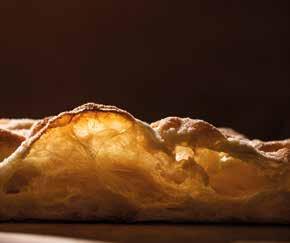
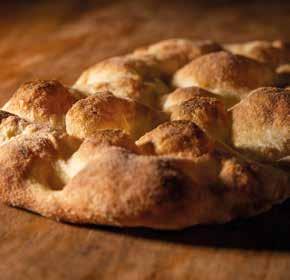
at home and out of home. Anyone who bakes it in their own oven becomes a natural ambassador, reinforcing its presence in Ho.Re.Ca. There is a continuous interplay between home dining and restaurant dining: those who enjoy an excellent pinsa want to experience it again, and the pleasure of discovery continues to grow, even beyond Italy. Its success travels with the product, carrying with it a distinctly Italian idea of quality, immediately recognised by professionals and sought out by consumers, because it delivers the unmistakable flavour of true Made in Italy.
*Source: Circana, YTD October 2025, Total Italy
Hypermarkets + Supermarkets + Small Self-Service Stores + Discount, value sales – chilled, room temperature and frozen products.
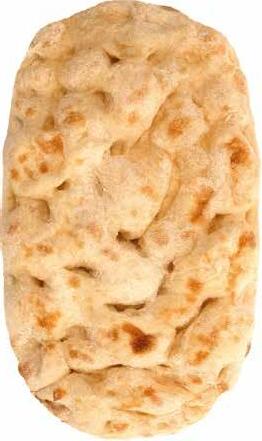
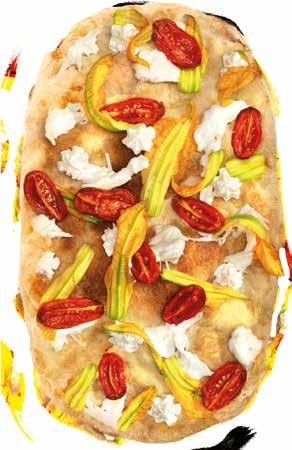
Pre-baked Pinsa Romana bases: ready to top, ready to bake.
Di Marco offers a full range of versatile, pre-baked Pinsa Romana bases crafted with artisan dough and available in several formats and storage options for maximum flexibility. Designed to support the creativity of food professionals and ensure consistent results.
BY ANTONIO PUZZI
DIRECTOR CARLO FUMO DISCUSSES
IT WITH ANTONIO PUZZI
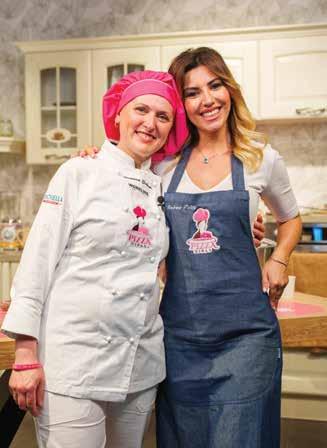
The world of pizza returns to Rai with ‘PizzaGirls’, the format conceived and directed by Salerno-based director Carlo Fumo, available on demand exclusively on RaiPlay from 19th September with four 45-minute episodes and, from 26th September, with another four episodes of the same duration.
Exclusively on RaiPlay, the new season of ‘PizzaGirls’
CARLO, WHAT'S NEW IN THIS EDITION OF ‘PIZZAGIRLS’ AND WHAT, ON THE OTHER HAND, REMAINS UNTOUCHED FROM PREVIOUS SEASONS?
Let's start with the decision to offer it on demand. We chose this formula to give the programme greater visibility and to move closer to the future, to digital platforms. I can reveal that from 2026, an important web project linked to the world of “PizzaGirls”, which continues to grow and expand, will also be launched: we are now in our fifth season, with 116 episodes, and we have exceeded 30 million views. The mission is going very well.
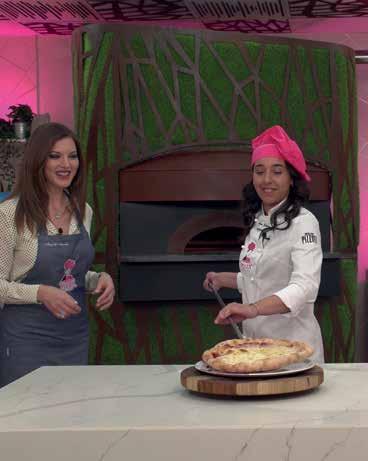
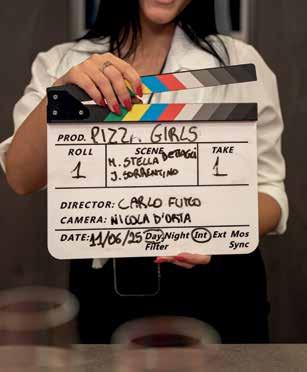
Yes, that's also why the format hasn't changed much since last season: the programme is still set in our studio, where the pizza chefs talk about themselves and share their lives and professional experiences. Each protagonist creates a pizza dedicated to an Italian woman who changed history, just like in the previous edition.
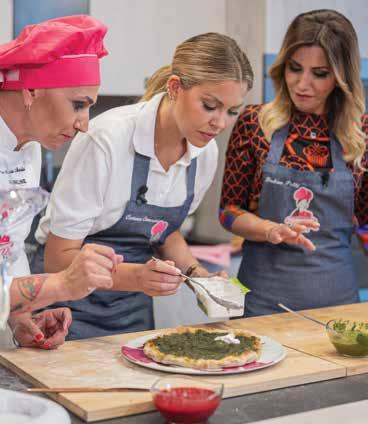
However, the main new feature this year is the “homemade pizza” section, which is now richer and more interesting. The pizza chefs from the previous season will return to prepare pizza, this time homemade, together with well-known celebrities, accompanied by presenter Barbara Politi. The eight celebrity guests will be: Paolo Belli, Ludovica Nasti, Claudio Guerrini, Martina Stella, Costanza Caracciolo, the comedy duo Gli Arteteca, Beppe Convertini and Guillermo Mariotto.
As always, our nutritionist, Dr Alessandra Botta, will be on hand to offer nutritional advice at the end of the episode.
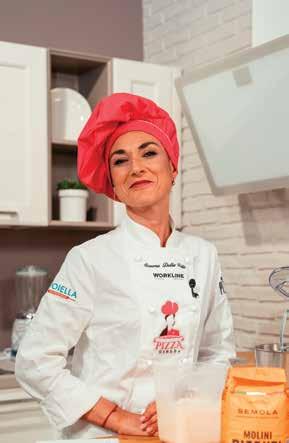
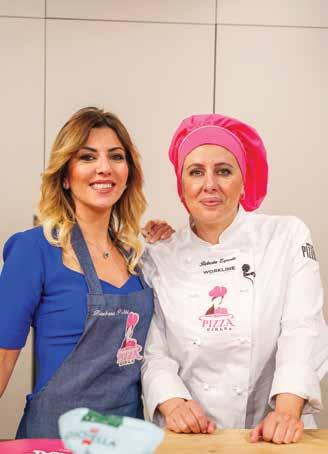
Our presenter, Angela Tuccia, will meet eight new female pizza chefs from all over Italy, plus two special pairs (a total of ten protagonists over eight episodes). The two “doubles” are Entela Mamumanaj and Nelissa Shametaj, a mother and daughter from Albania, who run a pizzeria in Rocchetta Sant'Antonio (FG). Then there are sisters Silvia and Sonia Gabriele (from Turin); Maria Falcone (Padua); Deborah Buglino (San
BY ANTONIO PUZZI
Felice sul Panaro, Modena); Clara Micheli (Massa Carrara); Milena Natale (Caserta); Tiziana Cappiello (Minervino Murge, Puglia); and the youngest, Vittoria Iemma (Battipaglia).
These new protagonists join the pizza chefs from last season, who will return within the homemade pizza section: Petra Antolini (Verona), Roberta Esposito (Aversa), Federica Mignacca (Turin, originally from Campania), Francesca Gerbasio (Padula), Helga Liberto (Battipaglia), Simona Della Valle (Caserta), Jessica Sorrentino (Gragnano) and Francesca Calvi (Florence).
Yes, in Italy, the number of women opening pizzerias has grown steadily, and we are really happy about that. When we started the “PizzaGirls” project back in 2020, we literally had to go out and find female pizza chefs. This year, however, everything was different: sixty female pizza makers from all over Italy took part in the casting. In five years, we have gone from having to search for them to receiving applications from every region.
I must say, however, that in the rest of the world, the situation was already more advanced. From the second edition of “PizzaGirls” onwards, we received lots of contacts from all over the world, especially from America and South America. In the United States, for example, there has been an association dedicated to female pizza chefs for several years, which promotes their presence and values their work. In short, at an international level, the presence of women in the pizza sector was already more structured, while in Italy, giant steps have been made in the last five years. Today, the change is evident and continuous, and I believe this is a very positive sign for the future of the profession.
PIZZA GIRLS IS ALSO VERY POPULAR OUTSIDE ITALY: IN WHICH COUNTRIES HAS IT BEEN MOST SUCCESSFUL? AND CAN YOU GIVE US A SNEAK PREVIEW? It's true, PizzaGirls is also very popular outside Italy and we already have plans to develop international projects, probably with versions in local languages. In particular, we are working on an expansion into South America, where we have already received an important request from an association that promotes the pizza sector and where the pizza-chefs’ movement is very active. In January, we are launching a major web project that will accompany “PizzaGirls” all
year round: hundreds of pieces of content will be distributed on various social media platforms and on the programme's dedicated YouTube channel. It will be a true digital extension of the television project and will open up further opportunities for growth and collaboration at an international level. In short, Pizza Girls will become increasingly global.
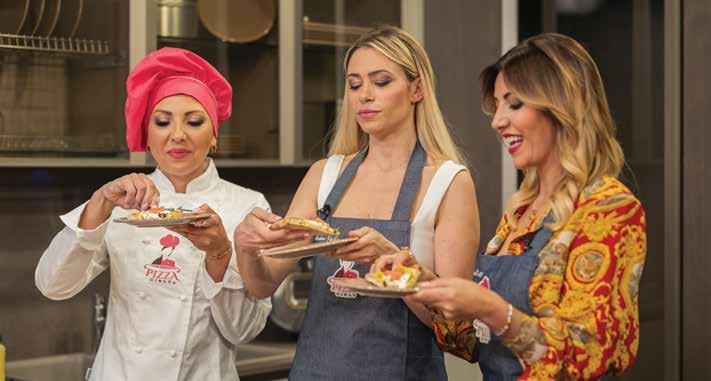
WELL, I CAN ONLY SAY: ‘HATS OFF!’ HOW HAS YOUR APPROACH TO THE WORLD OF PIZZA CHANGED OVER THE YEARS, AND HOW MUCH HAVE FEMALE PIZZA CHEFS CHANGED? My approach has changed a lot. At first, I was simply a pizza lover, a “taster”, so to speak. Today, after five seasons and 116 episodes, I can say that I know this world inside out: I make pizzas myself and I have learned to recognise the stories that each dough can tell. Over time, we have also produced a book and are developing franchising and merchandising related to the brand. But the most important thing is that I have learned about pizza not only from a gastronomic point of view but also from an ethical and cultural one. Before starting the programme, I studied a lot, attended trade fairs and got to know the artisans in the sector up close. I always joke that “as a film director, I went from the Cannes Film Festival to pizza fairs”, but it's true: I immersed myself completely in this world. It's essential for me to have a thorough understanding of a subject before talking about it. And the pizza chefs taught me so much: their passion, professionalism and resilience inspired and motivated me to cultivate the project.
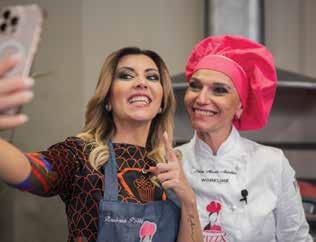
They too have changed: many have grown, both professionally and personally. I always mention Francesca Gerbasio, who was the first to participate in the programme in 2020. At the beginning, it was our first experience — she in front of the camera, us behind it. Everything started from that “episode zero”, and today Francesca is a completely different woman, stronger and more aware.
I don't know if “PizzaGirls” has changed the world of pizza for women, but I do know that it has changed the women who have been part of it: it has given them visibility, confidence and strength. And that, for us, is already a great achievement.
AT A TIME WHEN BEING A “FEMINIST” IS FASHIONABLE (AND OFTEN, UNFORTUNATELY, ONLY IN WORDS), “PIZZAGIRLS” IS NOT A TRENDY PROGRAMME BUT ONE THAT RECOUNTS THE EVERYDAY PROFESSIONAL LIVES OF MANY WOMEN: CAN A TELEVISION PROGRAMME HELP TO OVERCOME A PATRIARCHAL SUBCULTURE IN THE WORLD OF PIZZA?
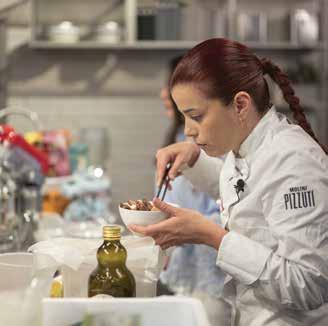
Yes, I think so, and I think that “PizzaGirls” should be given the space it deserves. This year we are on RaiPlay, we have been working on the project at Rai for two years, but we have often encountered obstacles along our road into television. Still today, there is very little courage, and this lack of courage is often hidden behind clichés or phrases such as “it's too feminine a programme”, as if that were a bad thing or as if talking about women were a fad. In reality, that was never the intention. We were once told that perhaps we use too much pink to emphasise the fact that it is a women's programme, but this is a stereotype. Pink is not a flag, it is just a colour that represents sweetness, strength and sensitivity. PizzaGirls is not a trendy programme – that's true – it's a programme that shows the reality, the everyday life of many women who work with passion. And I believe that yes, a television programme can really help to overcome a certain patriarchal subculture in the world of pizza, because it shows a concrete example. It's like when you turn on a light at the end of a dark street: at first, maybe no one sees it, but then, little by little, that light illuminates everything and the street fills with people. Well, we just turned on that light, and now many women are walking down that street with their heads held high.
‘PizzaGirls’ is produced by Italian Movie Award for Rai Direzione Contenuti Digitali e Transmediali and distributed by RaiPlay.



info@campionatomondialedellapizza.it WHEN APRIL 14 | 15 | 16 2026
REGISTRATIONS ARE OPEN! EARLYBIRD UNTIL JANUARY, 15 TH
WHERE RULES AND REGISTRATIONS www.campionatomondialedellapizza.it INFOS













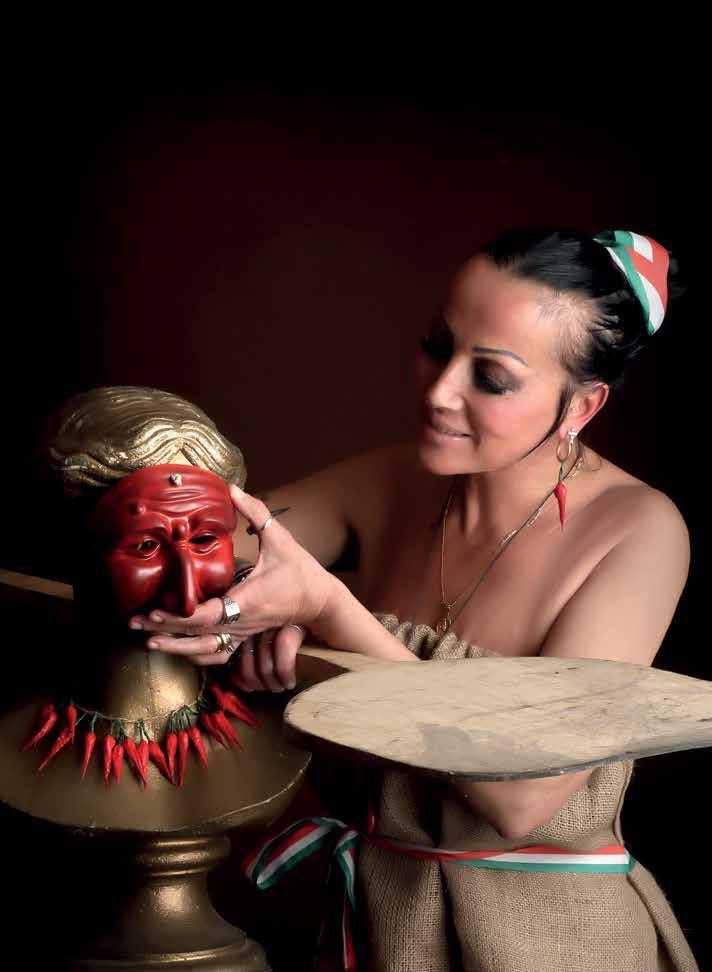
Meeting genuine people like Maria is a rare thing these days. Our chat was a mix of emotions, laughter and reflections. Everyone describes Maria as an exuberant and friendly person, which is certainly accurate, but in reality, there is so much more to her than that. She is a Woman with a capital W, tough, capable of being everything: economist, cook, mother and the beating heart of the family tradition. With passion and generosity, she carries on her father's legacy, without ever distorting the essence of true Neapolitan pizza. Special mention must be made of her fried pizza, her signature dish, loved by Neapolitans and beyond. Maria's strength is undoubtedly the love with which she runs the restaurant, but it doesn't stop there. It can be seen in her attention to customers, employees and quality, in the kitchen that smells like home, inspired by her mother's gestures. And today, that love is still being passed on: her children are already there, behind the counter, inspired by her and their grandfather. One of them even has her same hand. Because certain traditions cannot be taught, they are breathed.
That's madness. It's the madness that lives in me, as it does in all women. Maria is 'the President's daughter'. The daughter of one of the world's masters of Neapolitan pizza. I think everyone knows that. I opened this restaurant with my husband when my father passed away, so I decided to dedicate it to him, to his memory.
DOES IT FEEL TO KNOW THAT YOU ARE CARRYING ON SUCH AN IMPORTANT TRADITION? IT'S A BIG LEGACY. You know what they say: with great power comes great responsibility. So I try to carry on at least what my father taught me. First of all, to make a good product, a good pizza, without ever disfiguring or distorting the true Neapolitan pizza. Now there are contemporary pizzas, something that would have made my father turn in his grave, something inconceivable to us. Ours is a beautiful, large, pizza served on a plate, 'a rota 'e carro, che 'a ggente se n'annammora' (like a cartwheel, which people fall in love with, ed.), and it is also very light.
YOU SAY THAT YOU PUT 'LOVE' INTO YOUR PIZZA, BUT THAT'S NOT ALL. I put my love and passion into it, I put my whole self into it. It's not easy for a woman to embark on this path if you don't have strong roots. Because 'mo' pure 'o scarparo s'è miso 'a fa' 'e pizze' (now even the cobbler has started making pizzas, ed.), everyone thinks that pizza is good business, but there are people who don't even know how to get started and rely on their personnel. Having an important pizzeria like mine, I say this with pride, is like owning a Ferrari. If you don't have a good driver, what do you do? You have to be many things: pizza chef, cook, refrigerator monitor, economist. You have to assume various roles. That's why I say to those starting out in the food industry: it's not easy. I'm there from morning to night. For me, working in the kitchen is like a second family, even if we're not the Mulino Bianco family. The most important thing is to work calmly, because if you work calmly, you make a good product; if I breathe down your neck or wave a stick around, it doesn't work anymore.
My father always told me: once 'ciacchi' (remind, ed.) and once 'medichi' (pamper, ed.). Most of the time I care, I always try to maintain a friendly relationship with the staff. You also need to establish a relationship of trust with people. I could be at home on the sofa, but I'm always here because I'm the figurehead. Even though I have grown-up children who are now doing the job themselves.
RIGHT? Yes, and we are also trying to teach my son's children about Neapolitan pizza. My husband and I haven't retired, we are always here, watching them from afar. When I go downstairs, the first thing I look at is the pizzas. I want them to be perfect every time. Every pizza is like a child to me.
ZA? It's the traditional pizza. As the great master Antonio Pace says, pizza has no father or master, it belongs to no one, but to the Neapolitan people. 54 BY
WHAT
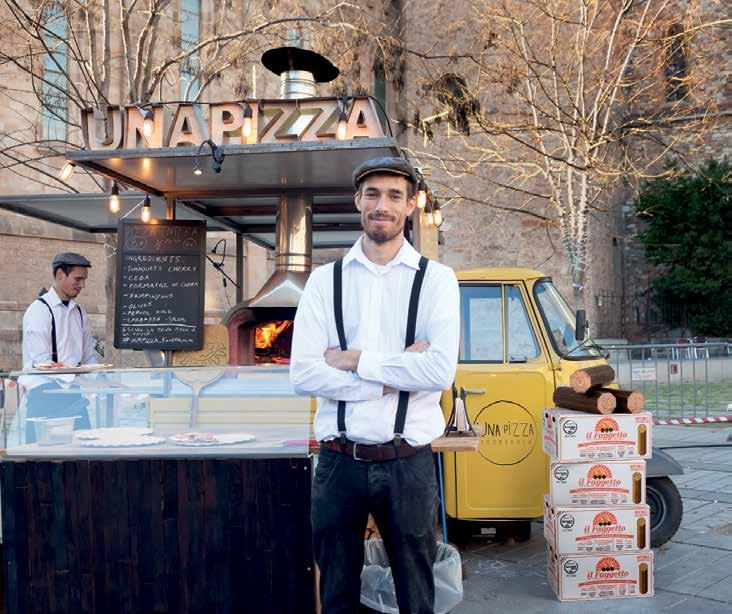
WHO DISTORT IT? Those who distort it are not making Neapolitan pizza. They should make it clear that they are making contemporary pizza, not traditional Neapolitan pizza. It's something I don't agree with, but if they and their customers like it, go ahead and eat it. In my pizzeria, however, you will always find traditional pizzas: Margherita, Marinara. We have made some innovations to please our customers, such as pizza with mortadella and pistachios or frankfurters and chips for children. We get 'truck loads' of families with children, so how can you not please them? My father did the same, even though he considered it something not to be done, but he said that children are always easier to please than adults.
DID YOUR FATHER TEACH YOU HOW TO MAKE PIZZA? Yes, but my father used to say it's a trade that, if you want to learn, you have to stand next to 'o masto' (the master), and learn day after day. Until he trusts you and puts you alongside him, as happened to my father, who taught many young people, including my husband, who became his right-hand man. If someone comes to me now and says, 'Marì, I want to learn how to make pizza', I certainly don't put them to work right away.
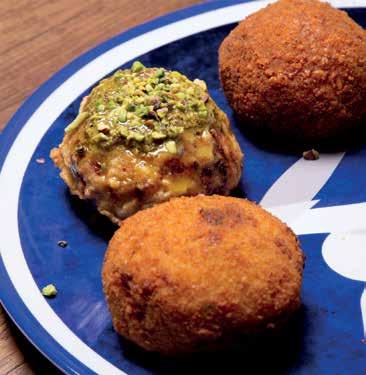
DO YOU REMEMBER THE FIRST PIZZA YOU MADE? The first pizza I made was a 'crazy' one. When I was three, I ran away from home in my pyjamas and slippers and went to my father's pizzeria. First, I went around the house with a pen and paper in my hand asking my mother, grandmother and aunts, 'How do you want your pizza? I never saw my father because now pizza makers have a work schedule, but back then, pizza makers “faticava comm’a nu ciuccio” (they worked without ever stopping, ed.), leaving in the morning and coming home at night. I only saw my father on Sundays. Imagine everyone at home, all scared. I told him I had gone there to make pizzas for everyone, but I also asked him to make me a small pizza for myself. So, he put me on the counter and let me make a small pizza with my own hands. I was small and thin, they called me 'Olivia' (or Palumbella), he had the minced meat and put it on my pizza. My mother arrived from afar with her hair standing on end, and he signalled to her to stop: 'She's eating'. He caressed me, kissed me, and I went home. I was driven by a strong love and desire to be with him, precisely because I never saw him.






DIDN'T THAT STOP YOU? Absolutely not. I don't know how to do anything else. If you locked me in a laboratory or an office I’d die. This is my life.
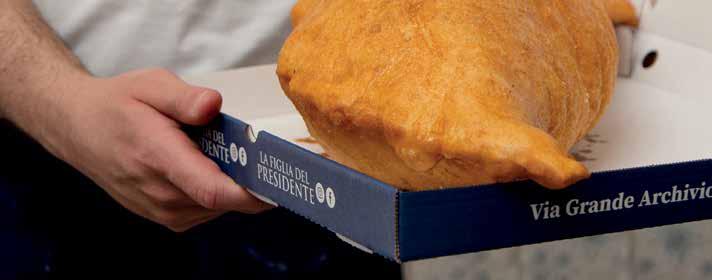
BUT FRIED PIZZA IS WHAT WE CAN CONSIDER YOUR FORTE. IS THERE ONE ESSENTIAL INGREDIENT FOR PERFECT SUCCESS? My fried pizza is famous for its softness, crispiness, and high-quality dough and ingredients. But behind it all there is a lot of knowledge, not just love. Because I may be the 'President's daughter', likeable or not, but if I make a product that is rubbish, who would come back? Surely everyone has told you that the secret is 'love and passion', but in reality, it is knowledge, artistry and skill. Before making love, there are also important preliminaries: choosing top-quality products, preparing the dough, watching the pan, because that too is a licence to drive a Ferrari. Because if you make me a nice fried pizza
and then throw it into black oil, which looks like car oil, what comes out? 'Nu coccodrillo bruciato' (a burnt crocodile)
WHAT HAS CHANGED IN COOKING METHODS? We have always fried in a large pan, which we have been using for 50 years. We don't use electric appliances, which don't allow you to control the temperature like a traditional pan.
YOU PUT LOVE NOT ONLY INTO YOUR PIZZAS BUT ALSO INTO YOUR COOKING. RECENTLY, YOU'VE ALSO CREATED JARS OF SAUCES: HOW DID YOU COME UP WITH THE IDEA? I cook a lot, yes. I dedicated the pizza to my father and prepared a line of ready-made sauces that I dedicated to my mother, who always cooked at home. I made Genovese, sausage and friarielli, pasta and beans with mussels. All dishes that remind me of my childhood. When she passed away last year, I found lots of jars in her freezer. I already knew what they were. Since she cooked as if she were preparing for an army, she made these jars and stored the sauces. I always asked her, 'Mum, sorry, what are you going to do with all these jars?', and she would reply, "My daughter, you go out in the morning and come home in the evening. What am I supposed to do with a Genovese sauce? Am I supposed to chop an onion just for myself? I make a kilo and preserve it." This stuck with me. I had been thinking about it for a year. This is a line designed for home use, then we'll think about one for restaurants.
e e rreur u Pu P P % % 0% 0 00 0 10 1 1
b b b h h ch c ec e ee e e
It does not contain impurities nor bark, sticking , hydrocarbons or aggregation additives.
ll al a na n on o go g ag a ttact c Oc O O
s s s e e pe p ap a ha h h
Shaped and prepacked that ensures Stability, Safety and Easiness.
A constant temperature for the longest time. It works better than traditional wood for it is the Pure Essence of Beech.
IS THERE A PARTICULAR DISH THAT YOU ARE FOND OF? The dish that reminds me of my childhood and that still persists every Sunday is ragù, the smell of ragù. But also aubergine or eggplant parmigiana and 'purpettelle' (meatballs, ed.). When there was a large table set for the adults and another for the children - there were quite a few of us - my grandmother would make 'sti tiane 'e purpette' (pans of meatballs, ed.) on Saturdays, so in memory of this and of my grandparents, I created the 'Casa mia' (‘my home’ ed.) pizza with a tomato base, aubergine parmigiana, meatballs and buffalo stracciatella cheese.
AND WHAT ABOUT FRIED PIZZA? WHICH IS YOUR FAVOURITE? The classic one with cracklings, ricotta, provola cheese and pepper.
IF A CUSTOMER ASKED YOU FOR ADVICE ON A PIZZA, WHAT WOULD YOU SAY?
The pizza maker's pizza: a Margherita with provola cheese and pepper, with pecorino cheese added when it comes out of the oven.
AND WHAT ABOUT THE ONE YOUR DAD USED TO MAKE WHEN HE CAME HOME FROM WORK? The traditional pizza: cherry tomatoes, pork cracklings, provola cheese and pepper. I can guarantee: it's amazing!
IS THERE A LESSON YOUR FATHER TAUGHT YOU THAT HAS STAYED WITH YOU? ‘O rispetto. Respect for others. This is a value that has been lost a little in recent times. And also listening to people. You know, when you meet someone and they say, 'Don't tell me anything, I'm in a hurry', it's awful. I live in the historic centre of Naples, one of the most beautiful areas, no offence to the other neighbourhoods, but this is the heart of the city. It hasn't been easy, it still isn't, but if you show respect, then others will respect you. Whatever you've done in your life, you're a good person if you've treated me well. My father taught me to behave well with everyone, without judging but always with respect.

















E-mail: info@scuolaitalianapizzaioli.it
AND, AS A WOMAN, IN A WORLD THAT HAS ALMOST ALWAYS BEEN DOMINATED BY MEN, HOW DID YOU FIND IT? Another lesson from my father is: 'tu vutta e passa' (you push and pass, ed.), never ask anyone for permission. When there's a race and you know you have to win, you don't ask for permission, so never say, 'can I pass?'. Go for it, achieve your goal.
I WILL TREASURE THAT TOO. I IMAGINE IT WAS THE SAME FOR YOUR CHILDREN. ARE YOU HAPPY THAT THEY HAVE FOLLOWED IN YOUR FOOTSTEPS? Look, it's not that they chose this path, they were brought up in it from an early age. I carried one in my arms and held the other by the hand. Like me, they don't know how to do anything else. They didn't want to study, but not because they aren't intelligent.
They speak English, they are well-behaved and polite, but they didn't want to go to school. I'll tell you, I'm sorry they don't have an academic education but, given the way working life is today, it's fine, I'm happy with that. After all, they earn a scientist's salary, and not just my children but all master pizza chefs. And now, looking back, I see that the figure of the pizza chef has been re-evaluated at last.
Today, it is compared to that of a chef. Before, pizza makers were a bit 'scamazzatielli' (underpaid and poorly regarded, ed.). But the reality is that they have always done the same job, one of sacrifice and passion, perhaps even more so than today. Now there are all these machines, such as dough mixers, but once upon a time everything was done by hand.
DO YOU STILL MAKE PIZZA TODAY, NOT FOR YOURSELF, BUT FOR A CUSTOMER?
No. I passed everything on to my children. Sometimes I stand nearby and watch them, even though they don't really need me to. My eldest son has the same temperament, brain, hands and rolling technique as my father. When you roll out the pizza on the marble, you can hear the noise, and I have a special ear for these things. You'll say, 'Maria, you're crazy,' but look, when my father finished kneading and went up to the kitchen, I told the boys and they didn't believe me. But I was right. I could hear 'o pacchero' (his way of slapping the dough, typical of Neapolitan pizza, ed.). And my eldest son's is the same.
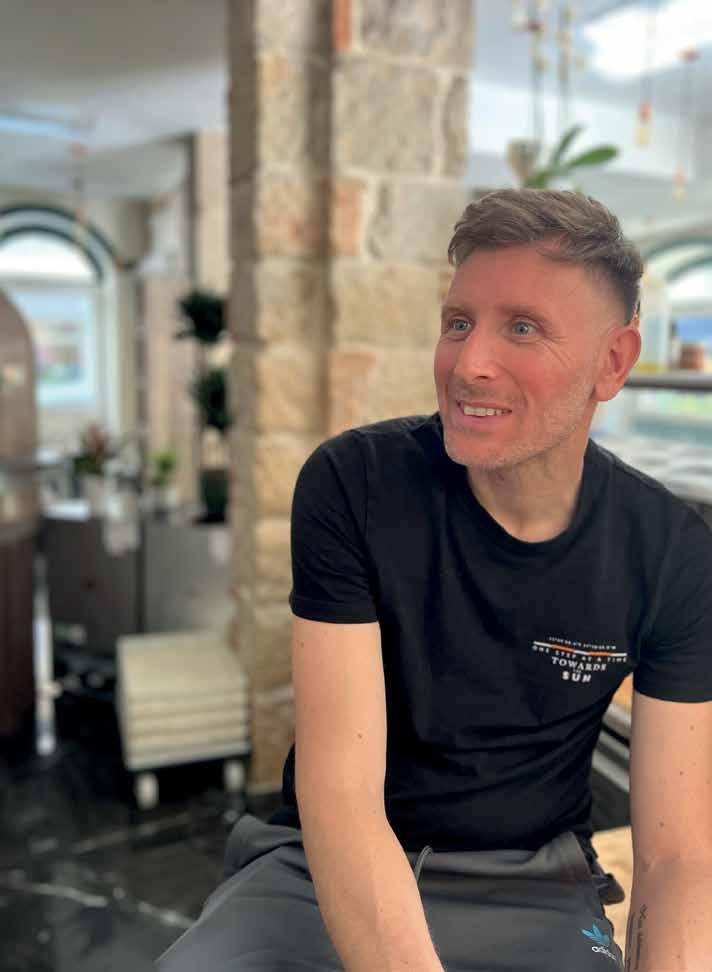
‘La beauté est dans la rue’, say the French: beauty is in the streets. It is one of the most famous and iconic expressions, dating back to the cultural revolution of '68, printed in a thousand ways in the capital city under the Eiffel Tower. A phrase full of meaning that reminds us how important it is to live in the moment and fully appreciate everything it has to offer.
I started here in order to tell you a ‘pizza story’ just outside Italy, half an hour's drive from the border with Ventimiglia: I want to take you with me to the French Riviera, to Nice, close to the Promenade des Anglaises and the most famous hotel in the city, the Negresco. Here, since 2016, Gennaro Di Vaio (Genny to his friends), now 41, has exported not only a dream but, to quote a well-known bank advertisement, “a solid reality”. Genny is the owner of “La Chamade Nice”, the third branch of the historic pizzeria “La Chamade” of Naples, or more precisely of Licola, a hamlet in the municipality of Giugliano in Campania.
In 1994, following the success of his restaurant “Angelica”, Gianni Di Vaio, Genny's father (now known as the TikToker “Gianni Chamade”), decided to open a new restaurant. When he was about to choose the name, an Algerian gentleman, a friend of the father's employee, said: “Call it La Chamade, it's a name that will bring you luck”. And to think that “chamade” in French means “surrender, defeat” but also “calling”, bien sur!
‘At the time, we didn't understand why, but we did it,’ says Genny. ‘And I would never have thought that this name would be so apt for my move to France.’
It's hard to say how long Genny has been making pizzas. While we chat, he video calls his father, who, when I ask him about it, replies: ‘You could say he was born in a sack of flour.’ Genny echoes him: ‘I was forced to make pizzas as a child, ever since 1994 when we opened in Naples.’
WHAT DID IT MEAN FOR YOU TO START SO EARLY, AT JUST OVER 10 YEARS OLD, SPENDING YOUR TIME IN A PIZZERIA? In those years, it meant giving up holidays at the end of school or even a Saturday night out with friends. Today, however, I feel proud to have taken that path to get where I am today.
WHEN AND HOW DID YOU ARRIVE IN FRANCE? It was 23rd April 2015. I left with a suitcase in the car with my current wife (at the time we had been engaged for three months) to look for work, finding a place to stay in the home of her brother who already lived here: I accepted a job paying €1,600 a month, because the role of pizza chef in France is not the same as in Italy; The following year, we opened our first pizzeria in Nice, and in 2018, my brother and I opened “La Chamade Lab” in Beausoleil.
YOU, WHO HAD ALWAYS BEEN YOUR OWN BOSS, HOW DID YOU GET ON AS AN EMPLOYEE WHEN YOU ARRIVED IN FRANCE? To tell the truth, I felt free for the first time. It was a strange feeling because I had never before been forbidden to use the telephone during work to call my wife, for example. Yet I was free because I had no responsibilities.
WHY DID YOU DECIDE TO COME HERE? USUALLY, PEOPLE EMIGRATE TO LOOK FOR WORK OR FORTUNE, BUT YOU ALREADY HAD THAT...
My pizzeria in Lago Patria, which my father opened for me as soon as I graduated at the age of 22, had flats on the upper floor which were offices when I opened. Obviously, since I was only open in the evening, the chimney of my pizzeria didn't bother them. A few years later, they were converted into homes.
So, the residents often complained, and one day the State came to see me about the complaints, while the next day organized crime came to ask me to sign private security contracts or make gadgets for the restaurant. That's why, one day, I took the keys and said to my younger brother (who now has his own restaurant, Panariè, in the centre of Naples, in Piazza Municipio): “I'll be back,” and I came here.
AND WHAT HAS CHANGED HERE?
Everything. I remember when, on the day before Christmas Eve in Naples, we were in the pizzeria preparing dough for fried pizza, which is the typical lunch on 24th December. When I left there late at night, after paying the employees, I had only €20 left in my pocket on my way home. I asked myself: what is all my work worth? Here, people come to the restaurant, ask me how things are going since we opened in the new location, inquire about the types of pizzas and the daily specials, “les formules”: this is really nice.
YES, IT'S TRUE THAT BEAUTY WALKS THE STREETS OF THIS CITY. IN MARCH, YOU MOVED YOUR PREMISES A FEW METRES AWAY FROM THE PREVIOUS ONE, BUT TO A MUCH LARGER SPACE. HOW HAS LA CHAMADE CHANGED IN NICE?
The only change is in terms of customer service: we now have twice as many seats to welcome them. Otherwise, we continue to use only Italian products and Italian flour. For me, that's what quality is all about.
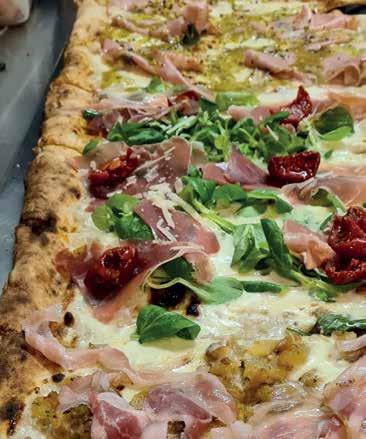
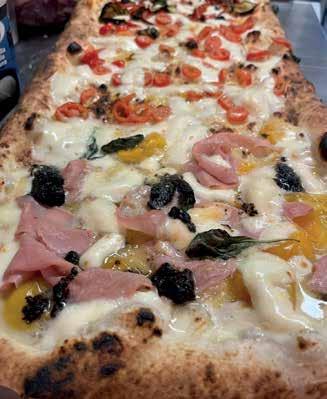
YOU HAVE ALWAYS SPECIALISED IN PIZZA BY THE METRE AND YOU OFFER IT HERE IN NICE TOO: WHAT IS PIZZA BY THE METRE?
It's a way of sharing a pizza with lots of people: if you make a single pizza, your dish is personal, but if a table orders a pizza by the metre, it means they intend to share. Because you can make several varieties and each one is cut into several pieces so that everyone can try everything.
HOW MUCH DOES A BALL OF PIZZA BY THE DOUGH WEIGH? A 50 cm/20" pizza weighs 550 grams/19.4 oz; a 75 cm/ 30" pizza weighs about 800 grams/28 oz, while a metre-long pizza weighs just over a kilo/2lb 3oz.
SO, THERE'S SOMETHING FOR EVERYONE. BUT WHAT'S YOUR FAVOURITE PIZZA?
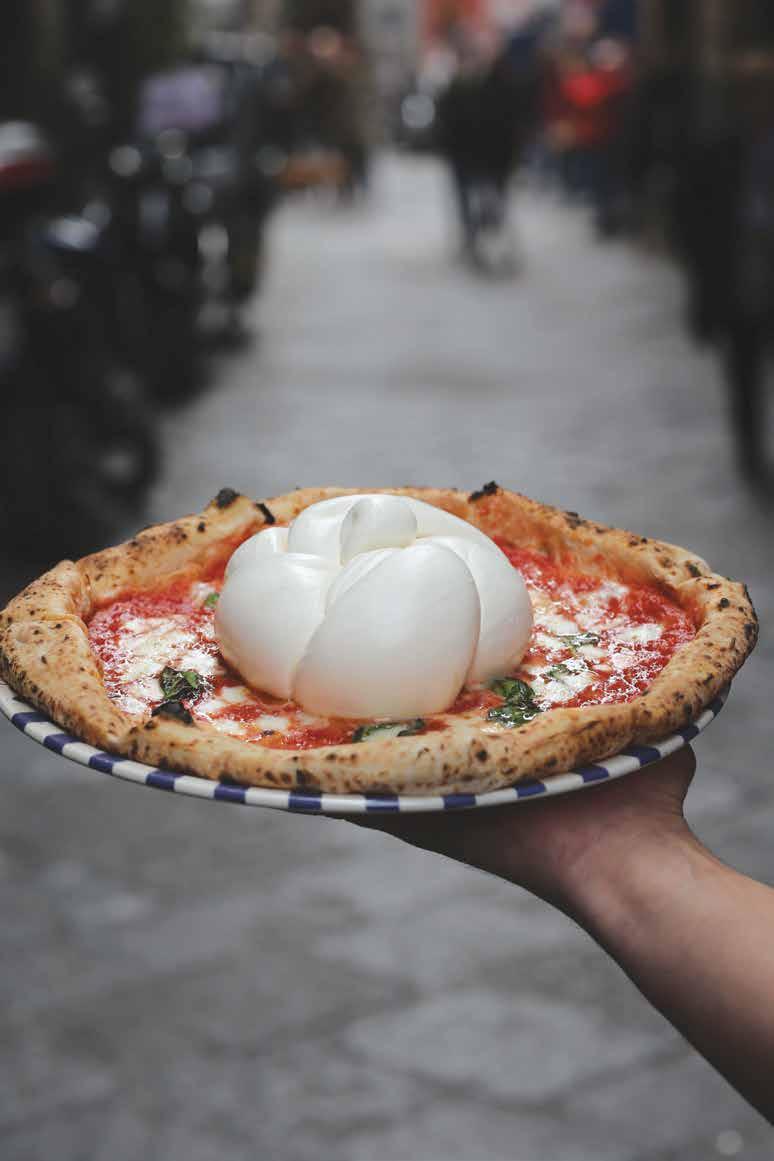
A pizza chef would surely say it's the Margherita, but I'm not one for simple things, I'm more 'nguacchioso (I prefer more complex recipes, ed.), so I recommend my Molisana with four-cheese cream, roast potatoes, provola cheese and, to finish, rolled pancetta.

BY ANTONIO PUZZI
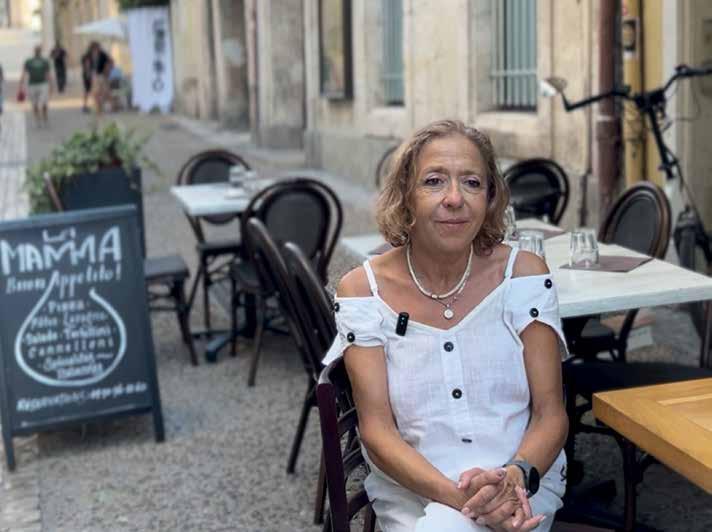
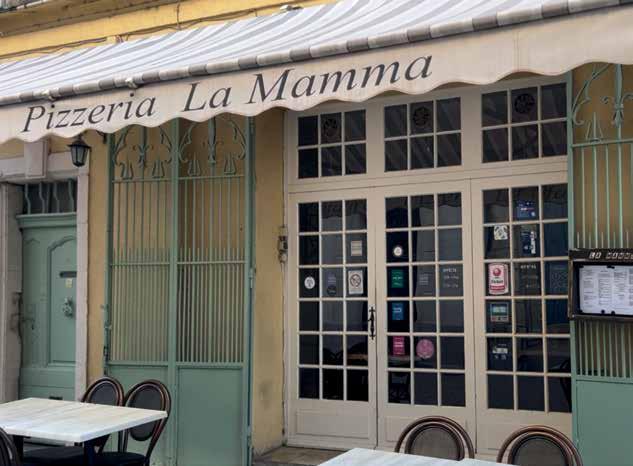
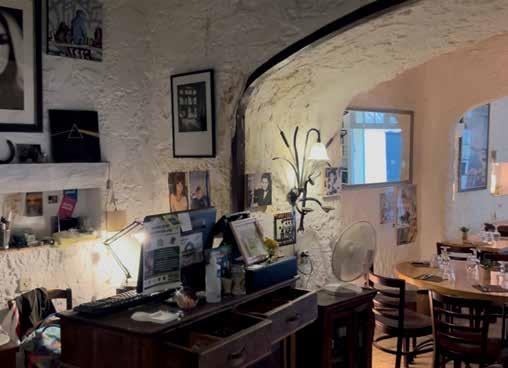
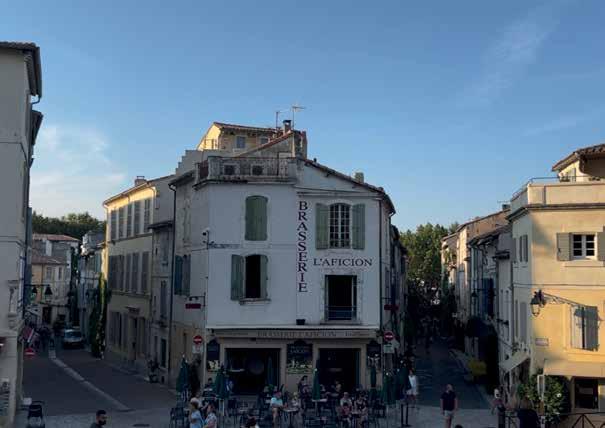
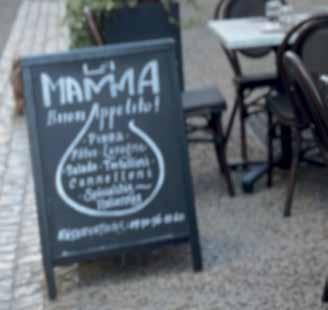
Laura Plaga is the owner of the restaurantpizzeria ‘La mamma’, located a stone's throw from the Roman arena in Arles, at the gateway to Provence and the Camargue. Laura moved to France because she fell madly in love with these places during a study trip to improve her French.
‘My parents had a bar-tobacconist's and trattoria in Italy,’ she tells us. "Then my dad passed away, but my sister and I were too young to run the place on our own, so my mum decided to sell it, promising that one day she would help me buy my own place.
So, since I had been working with them until then, I found myself with a lot of free time and decided to come to France for a while. I came here on holiday and to learn French, to improve my French; by chance, I found a job and stayed here; then, one fine day, I phoned my mother and said, “I'm old enough now, I'm 38, and if you can, it's time to help me buy my own restaurant”. Since I had already worked here, where my restaurant is now, I knew that the place would be great, so I asked the owner if he would sell it to me. At first he said no, but then, after a while, he sold it.
And later he became my partner, but that's another story'.
BY ANTONIO PUZZI
I think it is very much appreciated. Nowadays, there is even a trend for al dente pasta, and you often hear people talking about the Mediterranean diet... and everyone is also really enthusiastic about Italy and Italian culture. People say that we are all artists, that we are musicians, that we have a language “qui chante”, as they say, meaning that it is very musical. And so, in short, you become really proud of being Italian when you are abroad.
Definitely lots of Italians and French people. Then there are lots of Germans, Belgians, Americans, Dutch and Spanish people, so there's a nice mix. If I could go back, I would make the same choice, but I would have gone to hotel school. I have a diploma in graphics and photography, technical graphics, advertising graphics, in short, it has nothing to do with it. But my parents were in this sector, so at the end of the day, I went back to my roots.
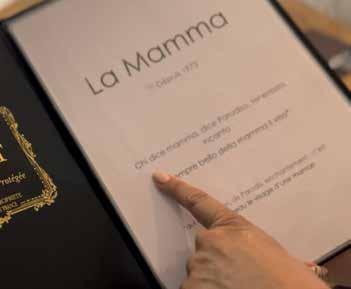
THAT'S A LOVELY STORY! I'M ALSO INTERESTED IN FINDING OUT WHAT SOME OF THE DISHES YOU SERVE IN YOUR RESTAURANT ARE.
Let's say that since the restaurant is called “La mamma”, I can only offer simple, home-style cooking, such as lasagne and cannelloni. And we make everything fresh with fresh ingredients.
YOU'RE FROM MILAN: DO YOU MAKE MILANESE CUTLETS?
Of course! Even though I had to commit sacrilege! Because the French like to eat pasta with meat, so you have to please them. So, I had to serve Milanese cutlet with Bolognese pasta on the side, which is something I've never been able to get used to; every time I bring it out, I say it's not possible. Yet they like it that way. However, if I hear that there's a table of Italians, I don't even ask and I bring the normal side dish with chips, vegetables or a little salad.
WHERE DO YOU GET THE INGREDIENTS FOR THESE ITALIAN RECIPES?
We have some very good suppliers who know me well. In fact, they say I'm a bit of a “pain” because I'm very demanding when it comes to quality: if I don't like something, I send the delivery back. I've found a good supplier here in Arles; actually, I have two, and I also have a neighbour who works at the market, so sometimes he supplies me with vegetables.
EARLIER, HOWEVER, YOU TOLD ME THAT YOU HAD TO MODIFY SOME ITALIAN RECIPES FOR THE LOCAL CLIENTELE: HOW IMPORTANT IS TRADITION TO YOU?
It's important, but let's say I didn't have to change much, apart from the side dish for the cutlet. The saltimbocca (Roman style veal cutlets), for example, we had to roll up because otherwise, when you cook them flat, the ham becomes a little dry and the French don't like that.
AND HAVE YOU CHANGED THE LASAGNE?
No, not the lasagne: you can't touch that, people like it just the way it is.
FRANCE, HOWEVER, HAS AN EXTRAORDINARY CUISINE, RICH IN RECIPES AND INGREDIENTS: WHAT CAN WE ITALIANS OFFER FRANCE?
BY ANTONIO PUZZI
WHAT IS YOUR FAVOURITE DISH THAT YOU SERVE IN THIS RESTAURANT?
Well, I think lasagne or Milanese cutlet.
HOW DO YOU MAKE LASAGNE?
72
72
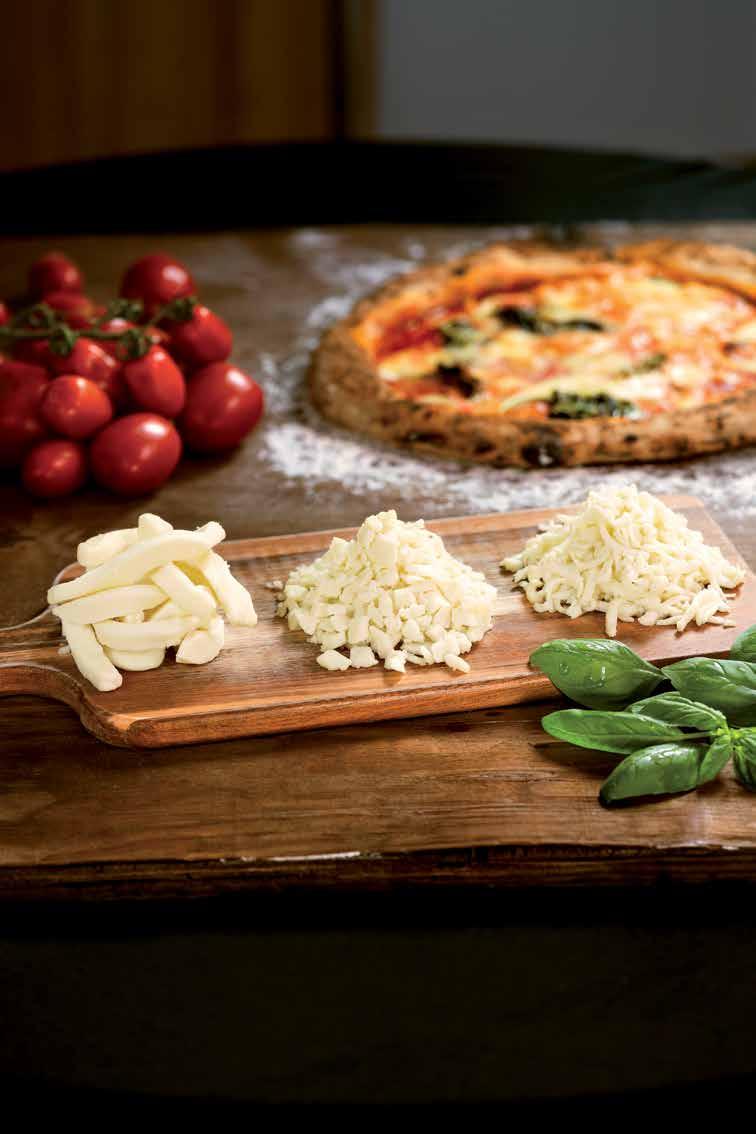
Let's say we can offer simplicity, because the French are always “a bit complicated”. In the end, however, if they discover that even just tomato, mozzarella, two basil leaves and a dash of olive oil can make a delicious dish and that there's no need to make sauces, they get used to it and appreciate it.
Well, the lasagne we make here is called “Bolognese”. So, we make the Bolognese and the white sauces, then we blanch the lasagne sheets (because the packets say you can put them in the oven as they are, but that's not true, it's not the same, you have to blanch them) and then you make layers with the Bolognese and white sauces. Then we put a little Emmenthal on top, because we don't have fontina here, and then we put the Parmesan next to it on the table, because not everyone likes it. However, over the years, I've noticed a change in people's attitude towards Parmesan: they didn't want it at first, but then they got used to it and now they eat it all; they've even become fans of Parmesan.
BY ANTONIO PUZZI
IS THERE A DISH THAT REMINDS YOU OF YOUR CHILDHOOD?
My mum used to make ravioli, which I can't serve at the restaurant because they take too long to prepare: my mum would start cooking the meat the day before. Then she would season them with just butter and sage or make a braised meat and season them with its sauce.
Very important: when shopping, I try to buy locally sourced products to reduce transport distances; then, with food scraps, the assistant chef, who has animals, puts them in a bucket and takes them to his animals.
DON'T YOU HAVE ANY FARM ANIMALS OR A VEGETABLE GARDEN?
I used to have chickens, but then the foxes ate them. I got fed up because foxes are cunning and always manage to get in.


Italian cuisine is a tradition. And it's also a serious matter, because we often get the impression that food is taken lightly abroad; on the contrary, all doctors now say that it is essential for health; therefore, it is also a responsibility to prepare food for others. Italian cuisine, let's say, is almost “instinctively” oriented towards everything that is good for you.
In my opinion, it has a bright future. People like it and it's not expensive; you can make delicious dishes with just a few ingredients.
Antonella Mignacca is the founder of the gastronomic consultancy firm Into The Food.
Contact: antonella@intothefood.eu



























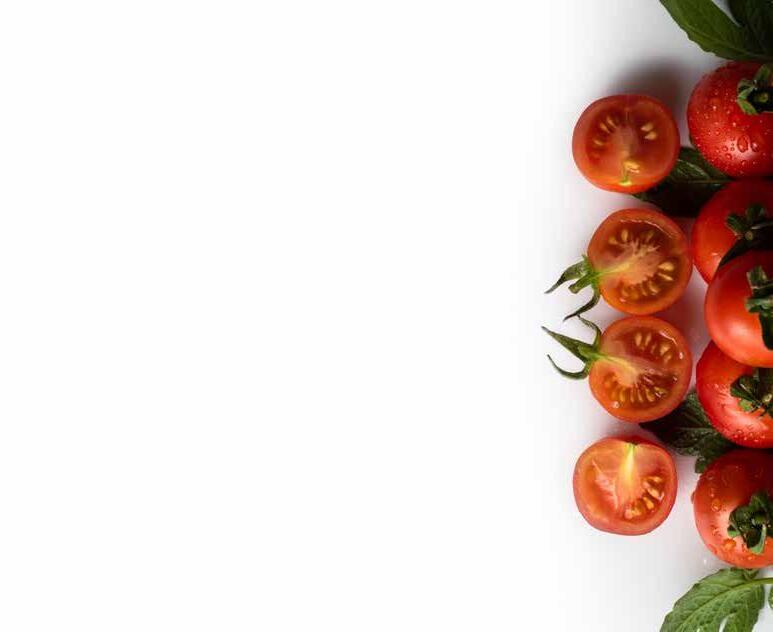
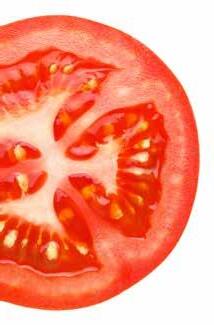
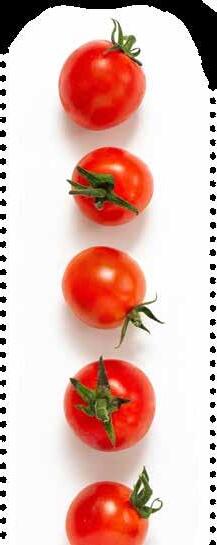
Tomatoes are usually used in the preparation of tasty dishes and although botanically they are considered fruit, from a culinary perspective they are defined as vegetables. So, tomatoes are a food that is rarely missing from Italian tables. They can be eaten raw, used in many recipes or enjoyed in the form of sauce. Tomatoes are rich in nutrients, including lycopene, a powerful antioxidant that can contribute to heart health and the prevention of certain forms of cancer. Cooking increases the bioavailability of lycopene, so it is advisable to consume tomatoes both raw and cooked. Tomatoes are an integral part of our diet. During the summer, we usually eat them raw, while during the rest of the year, if we want to follow the seasonality of vegetables, we can opt for tomato purée, pulp or peeled tomatoes, to be eaten cooked. The phytotherapeutic properties of tomatoes are well known.
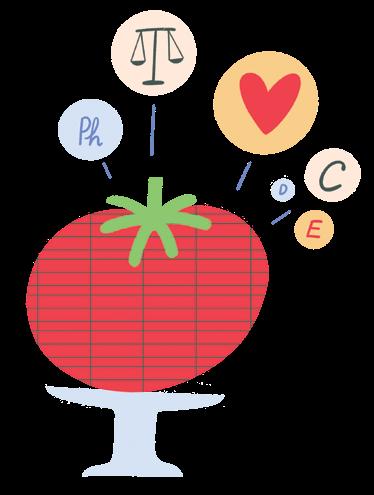
- ANTIOXIDANT PROPERTIES, THANKS TO THE PRESENCE OF VITAMINS INCLUDING E, C, D AND B.
- REMINERALISING PROPERTIES AGAINST FREE RADICALS THANKS TO THE COMBINATION OF MINERAL SALTS IN TOMATOES WITH CITRATES, TARTRATES AND NITRATES.
- DIGESTIVE PROPERTIES BECAUSE TOMATOES LOWER THE PH OF THE STOMACH, SO THEY ARE NOT RECOMMENDED FOR THOSE SUFFERING FROM GASTRITIS OR HEARTBURN.
- HIGH CONTENT OF ORGANIC ACIDS SUCH AS MALIC, CITRIC AND SUCCINIC ACIDS AND MULTIPLE MINERAL SALTS SUCH AS PHOSPHORUS, CALCIUM, SELENIUM, ZINC AND IRON.
- MARKED ABILITY TO STIMULATE DIURESIS, WHICH IS IMPORTANT FOR ELIMINATING EXCESS WASTE.
- STIMULATE INTESTINAL MOTILITY, COMBAT ING CONSTIPATION AND SLUGGISH BOWELS THANKS TO THE FIBRE CONCENTRATED MAINLY IN THE SKIN.
BY MARISA CAMMARANO
- WATER 94% - CARBOHYDRATE3% - PROTEIN 1,2% - FIBRE 1% - FATS 0,2%
Furthermore, tomatoes are a staple food in the Mediterranean diet as they are low in calories: 100 grams of tomatoes provide only 17 kcal. This valuable food contains high doses of vitamin C and vitamin K, fibre and antioxidants such as lycopene, beta-carotene and vitamin E. But in terms of health benefits, is it better to eat tomatoes raw or cooked? In reality, there is no better way to consume tomatoes; both are fine, and the choice may depend not only on taste or seasonality, but also on the type of nutrient we want to absorb most.
In the case of raw tomatoes, we will consume more heat-labile vitamins, such as vitamin C, which would be lost, at least in part, during cooking. Furthermore, ripe, seasonal tomatoes are also better from a nutritional point of view, as vitamin C, for example, is higher if the tomato has ripened properly thanks to exposure to the sun. In the case of cooked tomatoes, on the other hand, we will reap more benefits from lycopene, a powerful antioxidant that some studies have found to be more bioavailable to our bodies, meaning that it is better absorbed after cooking.
Tomato sauce is therefore particularly beneficial for those who want to get their fill of lycopene. The lycopene in tomatoes helps reduce LDL (bad) cholesterol and blood pressure, helping to prevent cardiovascular disease. Lycopene is an antioxidant that can help protect cells from damage caused by free radicals, reducing the risk of developing certain forms of cancer, including prostate, lung and stomach cancer.
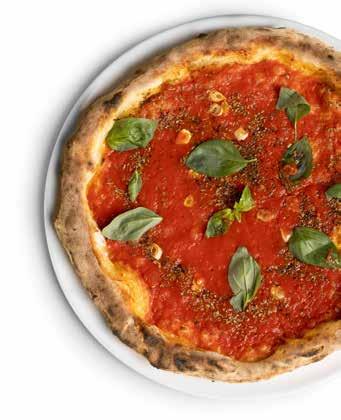
Lycopene and other carotenoids found in tomatoes are important for eye health.
A study conducted a few years ago found that a simple sauce, made with a light sauté of extra virgin olive oil, garlic or onion, contains carotenoids, vitamin C and about 40 antioxidants, which are beneficial to our heart health and help prevent serious diseases such as cancer.
In this case, according to the study's findings, it is not only the cooked tomato that is essential, but rather the synergy between the various ingredients used which increases the amount of polyphenols and carotenoids present in our dish due to this synergy and exchange of nutrients, thus giving the dish a nutraceutical effect.
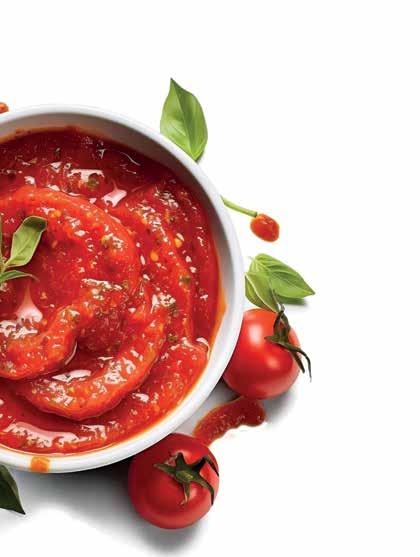
A symbol of Italian culinary tradition and versatile in the kitchen – where it is transformed into pulp, purée, preserves, concentrate and peeled tomatoes – tomatoes come in over 5,000 varieties, differing in shape (round, elongated, pear-shaped, cherry, ribbed, etc.), size and colour (from red to yellow, green and black). Looking at Italy, many varieties boast awards for excellence: a remarkable achievement for a fruit that originated in Central America, was brought to Europe by the Spanish and was initially viewed with suspicion, as it was believed to be poisonous. It was thanks to the close relations between the Bourbons and the ruling families of the time and to Spanish rule over Italian territory that the tomato made its way from Spain to Italy. The first recipe book to include its use was written in Naples in 1692 by Antonio Latini, 'The Modern Carver. It was not until the 19th century that tomatoes became more widespread, thanks in part to advances in preservation techniques. Here is an overview of the most well-known varieties.
The undisputed king of sauces, San Marzano dell'Agro Sarnese-Nocerino PDO is grown in the provinces of Salerno, Naples and Avellino. A symbol of the canning industry, it is an essential ingredient in ragù, pizza sauce and other Neapolitan dishes. It has a sinuous shape, not perfectly regular, and a pronounced apex, the so-called peak, which makes it recognisable and distinguishes it from the 'round' apex of the classic Roma tomato. Only the canned product can bear the PDO mark, which therefore excludes the freshly harvested product. Processing must take place quickly and the ideal harvesting period is from mid-July to late September, for a total of 3 to 4 harvests. Among others, Pier Daniele Seu has made it the star of his pizzeria, offering a Marinara Plus with San Marzano sauce, tomato compote, green sauce, garlic oil, black garlic chips and anchovies.
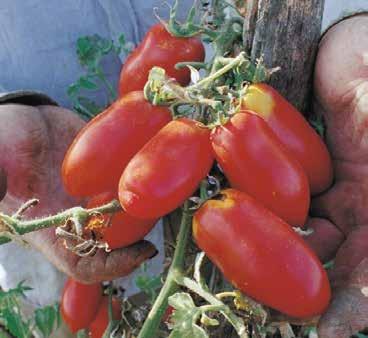
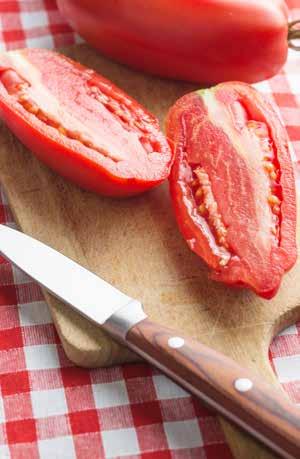
This is a large family, with over 30 ecotypes of the San Marzano variety, and is a Slow Food Presidium. They are characterised by their elongated shape, vermilion red colour with different shades, thin skin and sweet, aromatic flavour. They are grown in the plains of the Nocera Sarno countryside, the Acerra and Nòla area and in the municipalities of Striano, Poggiomarino, Boscoreale, Pompei, Santa Maria La Carità, Sant'Antonio Abate, Castellamare di Stabia, Gragnano, Casola, Lettere and Pimonte. Ciro Salvo enhances them in his Antica Margherita pizza, together with buffalo mozzarella and Conciato Romano cheese.
Here is another great PDO product of Campania, with its unmistakable bunches that decorate the walls of Naples. It owes its name to the preservation technique used, known as piennolo, or pendulum. To make it, the cherry tomatoes are harvested in summer and tied together with hemp twine in a circle, forming a single large bunch that, through slow ripening, manages to stay perfectly fresh until the following spring. It has a leathery skin, which helps with preservation, and firm, compact flesh with a distinctly sweet flavour and a slightly sour aftertaste. It turns golden in the Yellow cherry tomato of Cilento variety. Whether red or yellow, it is very versatile in the kitchen: it can be used in preserves, sauces, bruschetta or salads. Diego Vitagliano offers it in his 'Conciaciccia': with yellow Piennolo from Vesuvius cherry tomatoes, spicy crushed salami, fiordilatte cheese from the Lattari Mountains, flakes of Cilentan Cacioricotta cheese and Neapolitan curly basil.
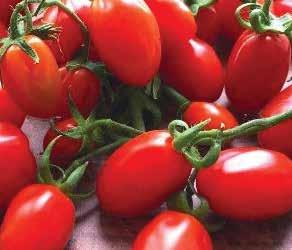
BY CATERINA VIANELLO
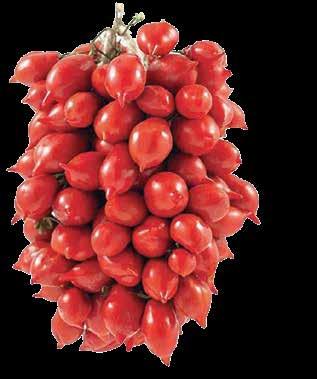
This is the typical Italian vegetable garden red tomato which can be cultivated both in greenhouses and in open fields. It is perhaps the most versatile fruit in the kitchen, used on bruschetta, chopped raw on first courses, pizzas and focaccia, and also excellent in salads. It has a skin that’s not too thick, a regular shape and usually ripens between February and June.
Small and oval in shape, it has a sweet and intense flavour, firm and not too watery flesh, thin skin and few seeds inside. It is the result of a crossbreeding of Asian origin, it forms fishbone-shaped clusters and has a keeps well. Thanks to these characteristics, it quickly became popular on the Italian market, especially for its versatility in the kitchen. At Concettina ai tre Santi, it is served in a 'spicy' version, alongside green chilli, smoked provola cheese, basil and cacioricotta cheese from Cilento.
Small and spherical, it is grown in almost all regions, but has found its ideal environment in south-eastern Sicily, where the climatic and environmental characteristics are most suitable. It develops its fruits in clusters: the flesh is juicy and the flavour very sweet. Undoubtedly, the best-known variety is the Pachino PGI tomato, a variety that was introduced to the island as a cultivar selected by an Israeli multinational in the late 1980s. Francesco Martucci, in his I Masanielli, has made it one of the ingredients of his Absolute Tomato pizza, with roasted cherry tomato cream, sautéed conserved slices of Pien nolo tomatoes, sautéed yellow tomatoes, San Marzano PDO tomato mousse, dried Piennolo tomatoes, baby red plum tomato wafers and Piennolo tomato compote.
Recognisable thanks to the folds that give it a wavy surface and almost regular segments, it has an intense colour and very tasty, firm flesh. It can be used both in fresh salads and in sauces. The most common is the Florentine, but other well-known varieties include the ribbed tomato from Rotonda, a Lucanian variety with sweet, fleshy pulp, the Sorrento tomato which is pink in colour and has a delicate flavour, and the wrinkled San Miniato tomato from the province of Pisa, perfect to give flavour to the typical rustic Tuscan dish, panzanella.
Large and irregular, weighing around 300 grams on average, but easily reaching 800 grams, it has very fleshy and flavoursome pulp, while the skin is smooth and thin. Among the most famous are the Tuscan Bovaiolo, the Albenga tomato grown in the province of Savona and the
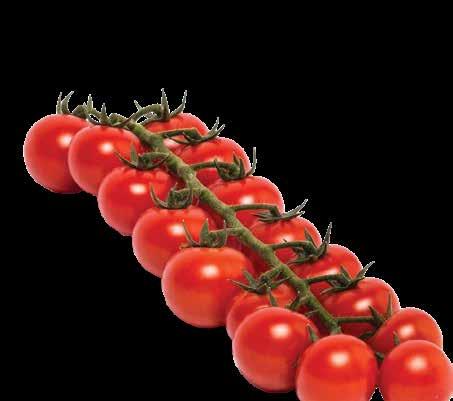
This 'pointed' variety is grown in the area around Vesuvius, which is very fertile and requires very little irrigation, but it is also grown in southern Lazio, northern Calabria and Sicily. It has firm, fleshy pulp and is excellent in purées and sauces. Two names to note are Siccagno from the Bilìci valley, an area with an arid microclimate famous for the production of astrattu, tomato concentrate, and pizzutello from the Erice valleys, a typical product of the province of Trapani. Davide Civitiello has enhanced it in a version of pizza with three tomatoes: Antichi di Napoli, pizzutello and yellow datterino.
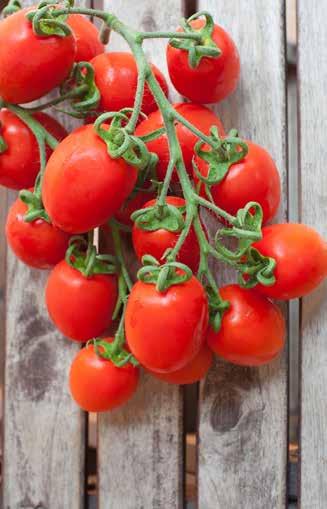
While those mentioned above are the best known and most widely consumed varieties, there are also some lesser-known rarities that are worth discovering. One such variety is Regina di Torre Canne, from Salento, which is grown in front of the sea on salty soil and owes its name to the 'crown' formed by its stalk. It is round, with thick, resistant skin, and is excellent for seasoning focaccia and adding flavour to sauces. Grown on the slopes of Vesuvius is the Verneteca sannita, a very tasty cherry tomato with a flattened shape, pink flesh and golden yellow skin. Then there is the Canestrino di Lucca, a ribbed tomato shaped like a basket, red in colour with a hint of green even when fully ripe and with a very sweet taste, and the Giallorosso di Crispiano, a round tomato from the province of Taranto with an orange-yellow colour, thick skin, herbaceous flavour and long shelf life.
BY CATERINA VIANELLO
Then there is the Fiaschetto di Torre Guaceto, small in size, oval in shape and sweet in flavour. It is a Brindisi speciality and a Slow Food presidium. Round, smooth and streaked with green is the Camone di Sardegna, easily recognisable for its firm, crunchy flesh and full flavour that perfectly balances sweetness, acidity and flavour. Finally, a mention for a pizza created with the aim of enhancing the Caiazzo curly tomato, a cultivar dating back to the mid19th century that resembles the Sorrento oxheart tomato but is the size of a cherry tomato: this is, of course, Franco Pepe's Margherita sbagliata (wrong Margherita). It is very simple, with oil and Campania PDO buffalo mozzarella during cooking, with the addition of a raw curly tomato purée and basil reduction when served.
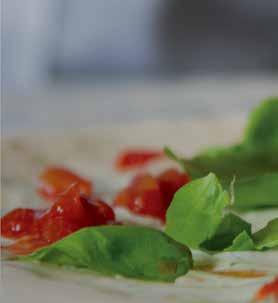





Founded in 1875, Molini Pivetti is a leading company in the flour market, recognized in Italy and internationally for the production of highquality flours that guarantee excellent workability, consistent leavening performance, and maximum yield in both sweet and savory applications. With 150 years of history, Molini Pivetti is a family‑owned company now in its fifth generation, distinguished by solid industrial capabilities and an advanced production and storage infrastructure, including multiple milling plants and storage centers. The company exports to more than 50 countries and offers a comprehensive range of soft wheat flours developed for different professional channels and applications, including pizza, breadmaking, pastry, and fresh pasta. This combination of technical performance, reliability, and quality is widely recognized at both national and international level, positioning Molini Pivetti among the leading industrial players in the milling sector
Beyond products, Molini Pivetti provides consulting, training, and technical support services to assist professionals, restaurant chains, and distributors in developing their businesses across all channels — food industry, food service, Ho.Re.Ca., and retail — through dedicated product ranges and formats tailored to different markets, with a strong focus on local culture and marketspecific needs. “The Asia‑Pacific region offers new growth opportunities thanks to an evolving market, where the focus is shifting from generic Made in Italy products to solutions designed for local tastes, using premium Italian raw materials and know-how. In this context, Molini Pivetti is strengthening its international development strategy by focusing on innovation, certified quality, and the enhancement of the Italian milling tradition,” stated Federico Maldarizzi, Export Director. In line with this strategy, Molini Pivetti will participate in several major international trade fairs in 2026, including Bakery China in Shanghai (May 20–23) and THAIFEX – Anuga Asia in Bangkok (May 26–30)
www.molinipivetti.it
EXPORT CONTACT
Federico Maldarizzi Export Director
federico.maldarizzi@pivetti.it




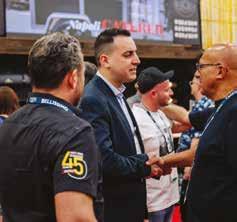


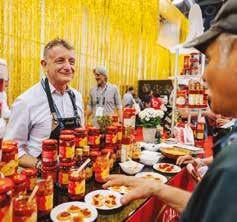







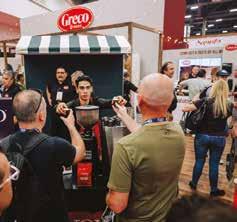


















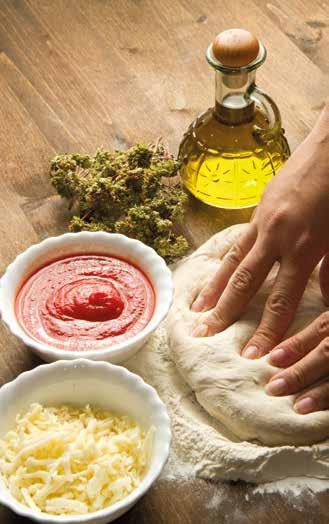
BY MASSIMILIANO BRUNO GALLO
How often do we hear chefs and pizza makers say: ‘Extra virgin olive oil? I don’t use it because it’s too expensive’; or ‘I only use it for dressing’; or even ‘Extra virgin olive oil for frying? No, it’s heavy and I can’t afford it, peanut oil is better’. Without fail, my response to these statements debunks the seemingly solid convictions mentioned above. Because it is not enough to compare the price of high-quality extra virgin olive oil with peanut oil to conclude that it is ‘better’ to buy the latter.
In this article, we will look at the factors that influence the price of oil and why it is more cost-effective to buy highquality extra virgin olive oil rather than an industrial product.
There are several factors that influence the end price of oil, here are the main ones:
✦ Agricultural activities: pruning and various treatments that olive trees may undergo, such as pest control, fertilisation, etc.;
✦ Raw materials: the labour required to harvest the olives, the fuel to operate the machinery and the quality of the olives; the greener the olives are when harvested, the higher the quality and the lower the yield, which means higher costs;
✦ Equipment: if the company has its own oil mill, it will certainly have purchased equipment that will be depreciated over time;
✦ Processing: all expenses related to the extraction phase are clearly lower if the company has its own mill but higher if the company uses a “third party” mill;
✦ Packaging costs: i.e. the bottle, cap, label, etc.;
✦ Costs related to communication of the product and the company.
There are also other costs related to personnel, land rental and other factors, but we will not discuss these as they are too specific.
SO, HOW MUCH DOES A QUALITY OLIVE OIL COST?
There’s no precise answer to this question. I’ve tasted excellent oils sold for €13 a liter and terrible oils sold for €20 a liter. If you consider that, at the supermarket, an industrial olive oil sold as extra virgin doesn’t cost less than €10 a liter, it’s clear that the price range is definitely a relative factor. I would say, however, that a “good” olive oil can’t cost less than €12 a liter.
DOES IT MAKE SENSE TO USE ONE OIL FOR COOKING AND ONE FOR DRESSING?
From my point of view, it makes a lot of sense to have one oil that is used for the “basics” in cooking and one or more oils that are used for seasoning, because they are more expensive and more expressive in terms of flavour. The important thing is that both are of high quality.
HOW MUCH DOES IT COST TO COOK WITH HIGH-QUALITY EXTRA VIRGIN OLIVE OIL?
Less than you think! Let’s see why... Let’s say we have an excellent extra virgin olive oil that we paid €20 per litre for and an industrial extra virgin olive oil that we paid €12 per litre for. With a half-litre bottle, we could make about 80 combinations on our pizzas (6.25g of oil per pizza). The cost of quality oil is 0.125 cents per pizza, while industrial olive oil costs 0.075 cents, a difference of about 5 cents.
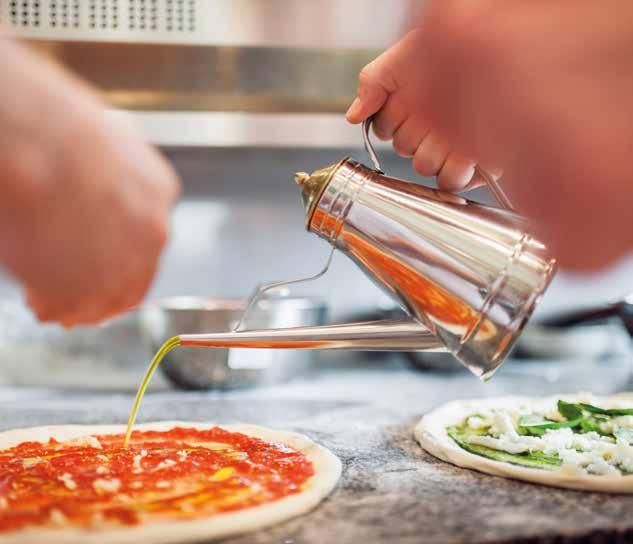
Given that the master pizza chef will probably tend to use more of the product on his pizza in the case of industrial oil (because it has no smell or aroma), the overall quality of his product cannot be worth so little, i.e. only 5 cents!
Using an excellent extra virgin olive oil on your pizzas, correctly paired and correctly described both on the menu and by the waiter, not only increases the overall quality of the product, but also justifies a potentially higher price. If you then offer customers an oil-pizza pairing option with a surcharge of €1, the profit will be around €70 per half-litre bottle.This would be unthinkable with industrial oil.
BY MASSIMILIANO BRUNO GALLO
Choosing one or more high-quality oils to pair with your pizzas is a smart and cost-effective move in terms of both price and quality, and it increases the value of your pizzeria. The important thing is to present it in the right way, with high-level background story that comes from proper training of kitchen and frontof-house staff and a company vision focused on quality in all its aspects.
So, when asked whether to prioritise quality or price when choosing extra virgin olive oil, the answer can only be: quality and price!
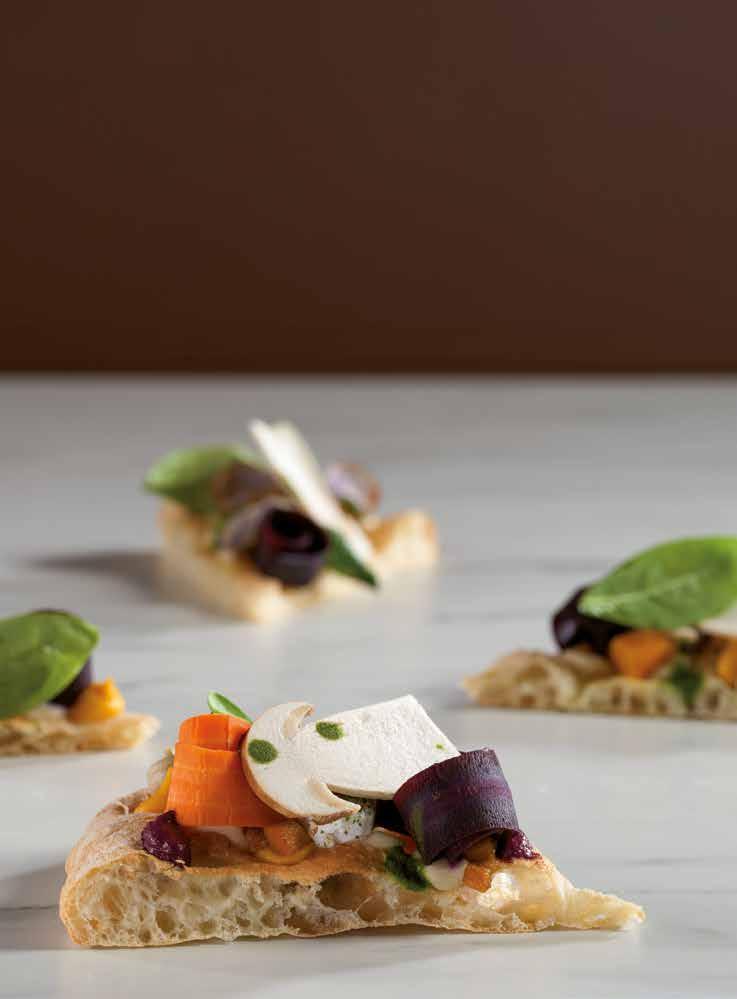

An edition that wove together technologies, ingredients and formats with exceptionally high-level content, further strengthening the event as an international platform for the Bakery world—driven by innovation, competitions and new professional languages.
Five intense days, shaped by ideas, connections and fresh ways of interpreting hospitality: Host 2025, presented by Fiera Milano, confirmed its role as an international platform where innovation, tradition and creativity engage in dialogue. Professionals from across the globe observed a sector in full transformation, with growing attendance from Europe, the Americas, the Middle East, Oceania, as well as Italy. Host 2025 demonstrated what it truly means to gather the entire universe of professional hospitality in a single place—creating ideas, sparking business opportunities and reaffirming itself as a hub for interpreting market signals and building the future of the industry
Within this framework, the renewed MIPPP – Milano Pane Pizza Pasta, organised also with the support of the SIPAN Consortium, became one of the event’s focal points. It brought to Fiera Milano companies, master bakers and experts capable of narrating the new balance between tradition and innovation, placing value on sustainable technologies, advanced processes and a public increasingly attentive to quality. Showcooking sessions, talks, masterclasses and original formats transformed MIPPP into a dynamic space where the cross-pollination between bakery, fresh pasta and pizza offered an upto-date perspective on emerging tastes and the evolving nature of the retail environment. Europe’s pizza stars shine at Host 2025 The 21st edition of the European Pizza Championship showcased the talent of 60 pizza chefs from 9 countries, celebrating outstanding doughs, meticulous ingredient selection and contemporary interpretations of pizza. On the podium were Alberto Paolino, Alessandro Damiano and Luca Di Benedetto. The dialogue between MIPPP and the Championship highlighted how the Art of Baking is reinventing itself through the meeting of craftsmanship, smart equipment, research into flours and yeasts, hybrid formats and a growing commitment to sustainability.
The next edition of Host will take place at Fiera Milano from 22 to 26 October 2027. host.fieramilano.it press.host@fieramilano.it
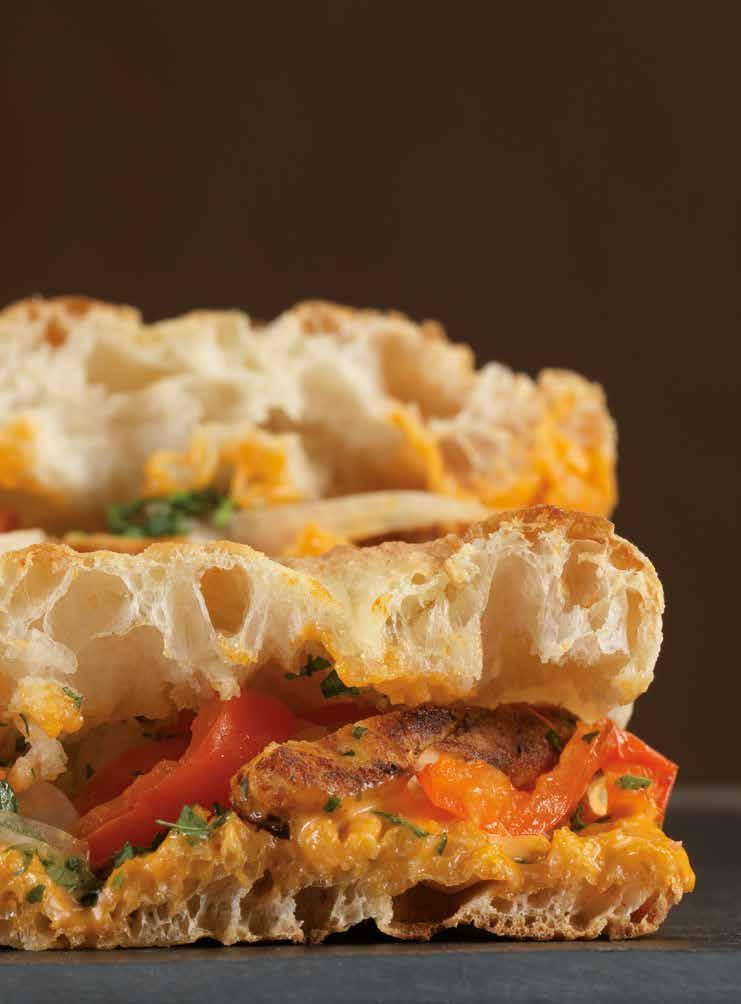
BY DMJ
Food in Italy. The industrial and food and wine sector
Edited by Simonetta Pattuglia
Publisher: Guerini e Associati
Year: 2024
Cover price: €24.00
Pages: 248
In the beating heart of Italian gastronomic culture, where ancient knowledge is handed down from generation to generation, an economic landscape is emerging that tells a story far beyond mere figures: it is the story of an Italy that has been able to transform its territorial vocation into a pillar of national identity.
The Italian agri-food sector is experiencing a period of extraordinary vitality. With growth of 2.2%, four times that of the national GDP, this sector represents not only an economic phenomenon but also a cultural renaissance rooted in Italy’s deepest gastronomic heritage.
The figures paint an impressive picture: over 1.1 million farms, one million workers, 90,000 organic operators spread across 84,000 businesses. But behind these figures lies a more intimate story: that of rural communities that have managed to preserve ancient knowledge while embracing the challenges of modernity.
Italian agri-food exports, which reached almost €70 billion with a 7.5% increase on 2023, are not simply a commercial success: they are testimony to how Italian regions have been able to convey their uniqueness to the world. Every exported
product carries with it a fragment of the landscape, a family memory, a craftsmanship that spans the centuries.
Europe, with its €19.5 billion worth of Italian imports, remains the main stage for this gastronomic tale, where Germany and France are the leading performers in a symphony of flavours that speaks of Tuscan hills, Po Valley plains and sunkissed southern coasts.
The book ‘FOOD IN ITALY - Il settore industriale ed enogastronomico’ (FOOD IN ITALY - The industrial and food and wine sector), edited by Professor Simonetta Pattuglia of the University of Rome Tor Vergata, is part of this evolution. This work is not only an academic analysis but a journey through the transformations of a sector that has been able to combine sustainability and competitiveness, new technologies and respect for cultural roots.
The book explores contemporary dynamics in the sector, from the digital revolution to internationalisation, without ever losing sight of the deep soul of an industry rooted in Italian farming and artisan culture.
The phenomenon of food and wine tourism deserves special attention and is given pride of place in the book. This is not simply a matter of tasting, but an immersive experience that allows readers to explore ancient agricultural practices, artisanal production techniques and the history of local communities. Each Italian region thus becomes a chapter in a larger story, where gastronomic diversity reflects the cultural richness of a multifaceted country.
As Professor Pattuglia points out, this type of tourism allows visitors to ‘immerse themselves in the cultural peculiarities of a territory, a fundamental element that determines the identity of the various Italian products.’ A journey that is not limited to tasting, but becomes ‘a journey through agricultural practices, artisanal production techniques and the history of local communities.’
The book, enriched by contributions from numerous experts and professionals in the sector, serves as a roadmap for navigating future challenges: from environmental sustainability to digitalisation, from the promotion of organic products to the fight against food poverty.
This narrative strongly conveys the image of an Italy that has been able to transform its unique characteristics into competitive advantages, building what Professor Pattuglia defines as a “solid Italian backbone” in the agri-food sector. It is a heritage that goes beyond economic boundaries, touching the deepest chords of national identity and collective memory.
The future of the Italian agri-food sector is thus shaping up to be a delicate balance between new technologies and the preservation of historical roots, between global markets and territorial specificities, between economic efficiency and environmental sustainability. It is a story that continues to be written every day, in the countryside as well as in companies, in international markets as well as on family tables, where every flavour preserves a fragment of Italian history.
PIZZA E PASTA ITALIANA
Monthly food and food culture magazine
Published by
PIZZA NEW S.p.A.
With permission of the court of Venice n. 1019 del 02/04/1990 n.11/BIS, December, 2025
English Issue
Repertorio ROC n. 5768
EDITORIAL DIRECTOR
Massimo Puggina
EDITOR
Antonio Puzzi ADVERTISING
Caterina Orlandi
EDITING OFFICE
30021 CAORLE (Venezia) via Sansonessa, 49 Tel. +39 0421 212348
E-mail: redazione@pizzaepastaitaliana.it follow us www.pizzaepastaitaliana.it
GRAPHIC DESIGN
Manuel Rigo, Paola Dus — Mediagraf lab
ILLUSTRATIONS
Giulia Serafin
PRINTING OFFICE
MEDIAGRAF SpA
Noventa Padovana (Pd) - ITALY
EDITORIAL AND TECHNICAL COMMITTEE
Marisa Cammarano, Alfonso Del Forno, Caterina Orlandi, Caterina Vianello.

ASSOCIATED WITH THE ITALIAN UNION FOR PERIODICAL PRESS FOR
ADVERTISING OF FOREIGN MAGAZINES
ITALIA Pizza e Pasta Italiana U.S.A. Pizza Today, P.M.Q.
–TEL +39 0421 212348
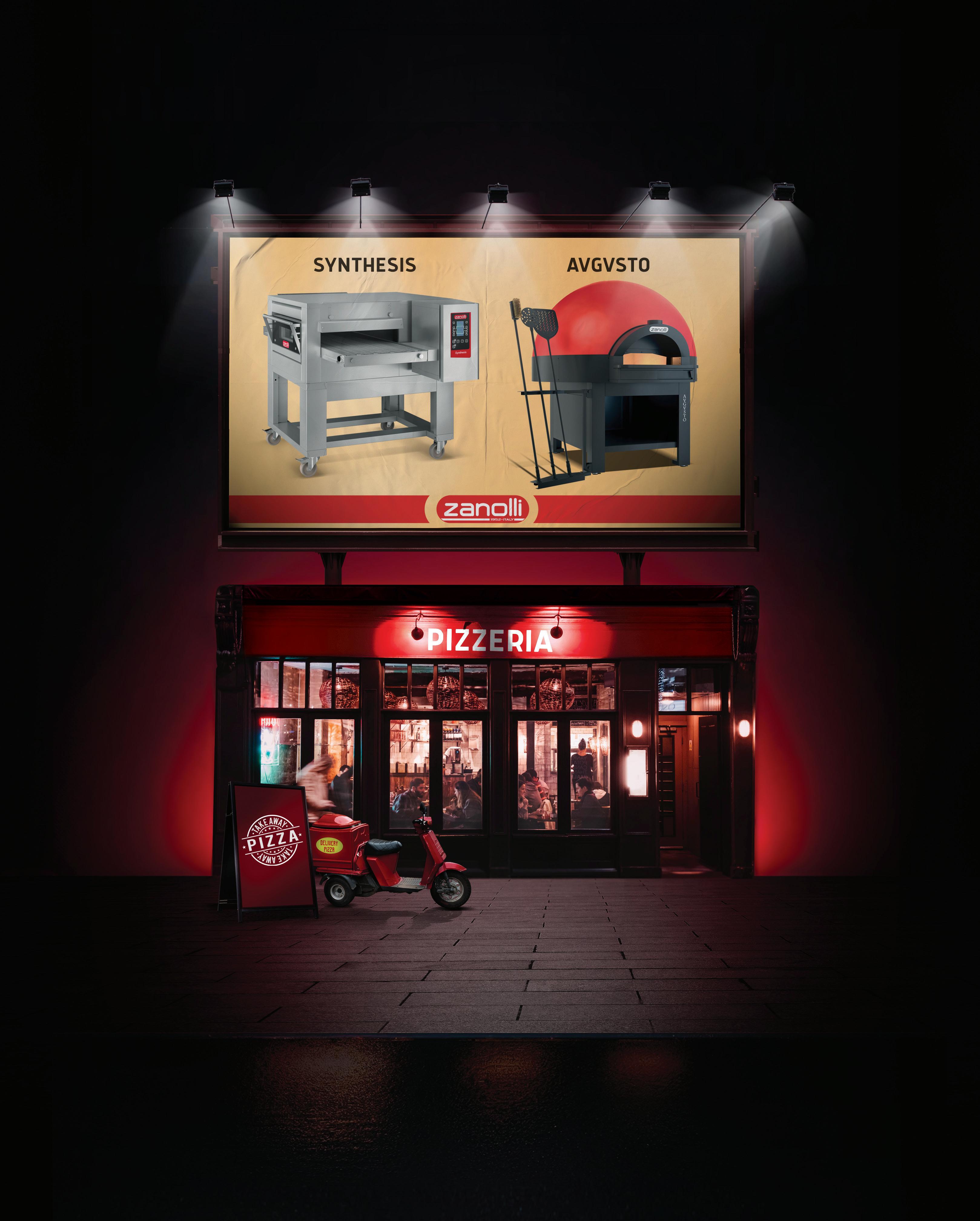

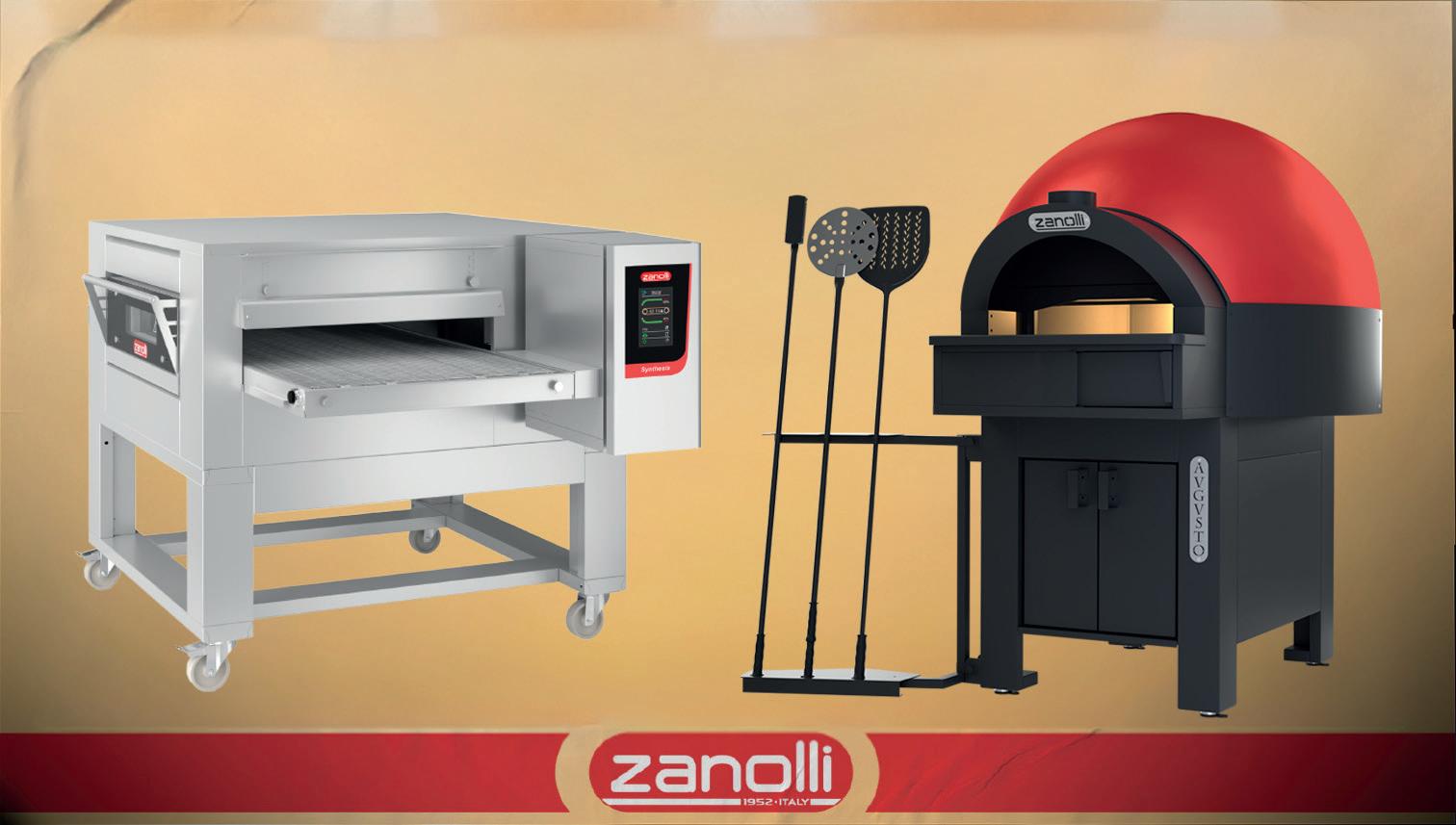
Since 1990, Pizza e Pasta Italiana has been the Italian magazine of reference for professionals working in the pizza sector. As the organiser of international events such as the Pizza World Championship, Pizza e Pasta Italiana magazine tells the story of pizza over time, in Italy and in the world, through scientific articles, interviews with professionals, thematic insights on toppings, ingredients and specialities, processing techniques and new trends, with a constant spirit of service towards the restaurateur.
Slices is a print and digital publishing project that continues to grow by looking into some of the basic raw materials to make pizza to perfection. "Slices" of culture for professionals only, offering them a practical and immediate tool to progressively contribute to spreading knowledge of raw materials, processing techniques, technologies and the most suitable tools to prepare, with passion and love, one of the most loved dishes in the world.
Fifth Year:
/How do you say pizza? Part 12
www.pizzaepastaitaliana.it