Designing for Age Diversity in Healthcare:
Clinical Work Environments for the Aging Staff

Think What’s Possible
Page is a full-service architecture, engineering, and design firm dedicated to advancing the world through performance-based design. The firm offers comprehensive services across diverse markets, including academia, advanced manufacturing, aviation, healthcare, government, multi-family, workplace, and more.
At Page, Performance by Design is more than a tagline— it’s the foundation of every project. The firm integrates innovative problem-solving and technical precision to deliver exceptional outcomes.
Page is a powerfully imaginative and collaborative architecture and engineering firm: one that’s ready for today and designed for what comes next. We pair form with function, reason with emotion, and ideas with expert implementation. At Page, the potential of what’s possible is paired with the practicality of how to make it happen. Our purpose is designing places smarter, while improving the experiences of those who work, live, and learn in them. From thought to finish, Page experts—of all disciplines—see the big picture, figure the best way forward, and deliver solutions in inventive and amazing ways. Imagine that.
With 1500+ employees and offices in 20 cities, Page operates as an interdisciplinary team, adeptly navigating complex projects and optimizing every detail—from client collaboration to building functionality.
The firm’s commitment to excellence has earned national AIA architecture and engineering awards, sustainability accolades, and international interior design honors.
Visit our website at pagethink.com
Visit our website at pagethink.com

Introduction
The gradual increase in the older adult population in the US has resulted in conversations around aging initiatives and design approaches to environmental responses. The need for change in our built environments is now. The good news is that cities and municipalities are responding to this population shift in their jurisdiction. Examples include a focus on the paucity of senior housing, planning walkable neighborhoods for ease of access to retail settings, and updating airport amenities and other public spaces to go beyond ADA requirements. For instance, public toilets are being upgraded to include more grab bars for traveling seniors.
Workers are retiring three years later, on average, than they did in the 1980s, according to Boston College’s Center for Retirement Research. Indeed, older workers are returning to the workforce, driven by financial need, cost-of-living increases, and a rebound from the wave of retirement that occurred during COVID. Even before the pandemic, the workforce in hospitals, mirroring the workforce in general, was getting older, with the median age of workers increasing each year. The number of people aged 65 and older working or seeking work has increased by 144 percent over the past few decades, according to the US Department of Labor. Aging can bring skills, wisdom, and experience but it can also increase a worker’s vulnerability to injury and illness.
years
Statistics show that a hospital is one of the most hazardous places to work, with rates comparable to construction or manufacturing jobs. Workers in hospitals encounter unique risks that are uncommon in other industries. Hospital workers lift, reposition, and transfer patients who have limited mobility or might be individuals of size. To address the physical demands associated with repetitive repositioning, some hospitals have dedicated staff to assist in patient lifting and patient transfers. Other risks for staff may include working with infectious disease patients requiring isolation, or handling of contaminated needles.
Diverse safety challenges also are associated with other departments in healthcare settings such as food services, biomedical departments, clean and soiled materials handling, facility management, environmental services, transport, and other behind-the-scenes functions that may exceed the biomechanical capabilities of both the young and the aging workforce.
Additionally, healthcare workplace violence incidents are increasing. Patients (and their families) may be in pain, under stress, or suffering from mental health issues, which can lead to outbursts. Overall, work in hospitals is dynamic and unpredictable. A worker must be prepared to react quickly and may even put themselves at risk protecting patients from themselves.
Distribution of nonfatal occupational injuries and illnesses to registered nurses
Overexertion and bodily reaction
Contact
with objects or equipment
Exposure to harmful substances or environments
Falls,slips and trips
Transportation incidents
Violent events
LEGEND
Overexertion and bodily reaction
LEGEND
Overexertion and bodily reaction
Integumentary
Factors affecting non-fatal injuries or accidents on the aging process.
Taste and Smell
Injuries, Accidents
Eyesight Presbyopia
LEGEND
Overexertion and bodily reaction
Contact with objects or equipment
Contact with objects or equipment
Disabilities
LEGEND
Overexertion and bodily reaction
Contact with objects or equipment
Osteoporosis
Osteoarthritis
LEGEND
Overexertion and bodily reaction
Contact with objects or equipment
LEGEND
Overexertion and bodily reaction
Contact with objects or equipment
Contact with or equipment
Exposure substances environments
Exposure to harmful substances or environments Falls, slips trips
Exposure to harmful substances or environments Falls, slips and trips Transportation incidents
Exposure to harmful substances or environments Falls, slips and trips Transportation incidents Violent Events
How does this relate to hospital design?
A survey by The Bureau of Labor Statistics revealed that 58 percent of all healthcare workplace injuries were a result of the built environment (floors, walkways, surfaces, furniture, fixtures) and caring for patients (transfers, lifting, violence). The most common staff injuries were strains and sprains, followed by bruises, soreness, cuts or punctures, and fractures. Nearly half of these injuries (48 percent) were caused by overexertion or bodily reaction, including lifting, bending, reaching, or slipping without falling. The current injury rates in conjunction with the growing aging population can have a detrimental effect on the healthcare workforce in the future. Additionally, public access to the Patient Handling and Mobility Assessment document, available on the Facility Guidelines institute (FGI) website, provides valuable information on the benefits of offering full-body sling lift systems, and informs the reader of the spatial requirements (footprint) needed to safely conduct typical patient-handling procedures. While there is a significant body of research on aging, caring for the elderly patient, and the design of assisted living facilities or “nursing homes,” there is limited research on the needs of the aging staff (nurses, physicians, and support staff) and how the built environment can be an asset to older staff members. The FGI has addressed the special needs of the aging population regarding specification of surface materials.
By examining existing literature, case studies, and future trends articulated by subject matter experts in the field, designers develop a better understanding of the impact of aging on humans. Design solutions and ways to assist older healthcare workers can be planned and implemented using the best available evidence. This includes taking into consideration problems associated with every age range relative to absenteeism, the major causes for “Days Away from Work” in the healthcare industry. By better understanding the relationship between physical environmental conditions and absenteeism by age group, designers will gain a deeper understanding in designing to prevent adverse events for healthcare workforces. This paper focuses on the inpatient environment and staff.
Non-fatal occupational injuries and illnesses to registered nurses
Categories that can be addressed through design
Source: Bureau of Labor Statistics
“A Days Away from Work (DAFW) is a situation in which an employee suffers an accident at the workplace and, as a result of the injuries sustained, must stay at home for more than one day. The count of days away from work begins on the day after the day that the injury was sustained.”

Understanding the Challenge and Identifying Key Issues
The research process undertaken for this study was designed to systematically investigate the challenges faced by aging healthcare staff and identify potential design solutions. The methodology involved the following steps:
Demographic Analysis - The Age Dilemma
Gathering data on the age distribution and composition of the healthcare workforce to understand the scope and implications of an aging staff.
Review of Workplace Injury Data:
Analyzing reports on common workplace injuries and their causes to pinpoint areas of concern specific to aging workers.
Understanding the impacts of aging:
Analyzing how aging affects physical, cognitive, and sensory abilities, including vulnerabilities to injuries, illnesses, and stress.
Considering how these changes influence the capacity of healthcare workers to perform their duties effectively.
Deriving Design Strategies - Literature and Standards Review:
Reviewing guidelines from established sources, such as the FGI and IES, to ensure design recommendations align with evidence-based practices and regulatory standards.
Deriving Design Strategies - Case Study Analysis:
Studying existing healthcare facilities and design projects to extract insights on successful interventions and strategies that cater to aging workers.
This structured approach ensured a comprehensive understanding of the interplay between aging, the work environment, and design solutions. The findings from this research process informed the subsequent development of targeted strategies to enhance the clinical workspace for aging staff.

22M
U.S. workers employed in Healthcare Industry
31% of Healthcare Workers are RN’s

203,200
Additional RN’s needed each year from now through 2031
Largest segment of nursing population falls between 50 to 69 years of age
The Age Dilemma
According to the Census Bureau’s American Community Survey, 22 million (or 14 percent) of U.S. workers are employed in the healthcare industry.
RNs at these facilities account for 31 percent of the workforce in this industry. According to a study by the U.S. Bureau of Labor Statistics, the country will need an additional 203,200 registered nurses (RNs) each year through 2031. The largest segment of the nursing population falls between 50 and 69 years of age. This signifies an expanding, aging healthcare workforce.
During a recent interview at a healthcare facility, a nursing supervisor said she had retired during COVID-19 but returned to work after vaccinations were available and the pandemic had calmed somewhat. She was not willing to take the risk of dying from COVID as an older worker, but when the risk seemed manageable her desire to continue to earn money for her family and engage in a career she enjoyed won out. Also, her workplace lured her back with more money, more time off, and more perks than were offered before the pandemic, as the healthcare system was facing a nursing shortage, especially of highly skilled nurses with decades of experience who were familiar with the facility and could train younger and newer nurses and aides.
Health Issues Needing Additional Consideration for Inclusive Environments:
Musculoskeletal Design Considerations
With age, the body becomes more vulnerable to certain illnesses and musculoskeletal injuries. Bones begin to weaken as people enter their 40s and 50s, increasing the likelihood of fractures and cumulative trauma associated with repetitive patient handling tasks. Falls are also likely to occur due to the gradual loss in ability to maintain one’s balance. Beyond age 65, half of the U.S. population suffers from arthritis, a wearing away of the cartilage in joints resulting in painful movement. The immune system also weakens with age, which can result in higher susceptibility to illness and prolonged recovery time. In isolation, an aging workforce is likely to lead to an increase in the frequency and severity of workrelated injuries.
Work-related Musculoskeletal Disorders (MSDs) affect the muscles, nerves and tendons, musculoskeletal system, and connective tissue. MSDs may include sprains, strains, tears; herniated discs; pain, swelling and numbness; carpal or tarsal tunnel syndrome. Aging employees may need more environmental options to sit at regular intervals of time in addition to the opportunity to get a snack or a beverage.
Sensitivity to Light and Noise
Addressing the physical and cognitive demands of the clinical workplace setting can be addressed with informed choices in lighting fixtures, illumination levels and surface characteristics.
Visual acuity declines with age, as does one’s tolerance of glare conditions. Referring to the IES standards provide considerations specific to age groups, with recommendations varying after 30 years of age. Referencing the FGI guidelines will inform the designer of the appropriate gloss level. According to 2022 FGI guidelines, to maximize luminance in a space, wall surfaces should have a low sheen or matte finish with a light reflectance value (LRV)of 50 –70 percent, particularly in hallways and elevator interiors. Ceilings should have a low sheen or matte finish, with LRV of 75-90 percent, as this will ensure that a greater percentage of light striking the ceiling surface will be reflected evenly into the space. In general, all interior spaces benefit from even and consistent vertical (wall) luminance distribution.
It is wise to design for glare reduction. According to the occupational ergonomic subject matter experts, visibly bright light sources within the normal field of vision should be avoided as they can result in discomfort and temporary vison loss. To accomplish this, indirect lighting conceals the source and spreads light over a large surface, diffusing the light and reducing the intensity of unwanted reflections.
To optimize acoustic comfort, speech privacy and oral communications, several design steps can be deployed, one is to mitigate alarm fatigue which can be more draining and be distracting to older employees. Material and products selected should meet the noise-reduction requirements for the specific areas (room types) of work and caregiving, according to the FGI. Noise can be a contributing factor to worker fatigue, human error, and perception of workload. In addition to mitigating noise with the specification of sound-attenuating interior materials, known sources of loud noise can be blocked with architectural elements, which keeps ambient noise from reaching the healthcare workers and patients.
Cognitive and Sensory Design Adaptations
Stressors can increase with age. According to a 2022 CDC survey, 93 percent of health workers reported being stressed out and stretched too thin; 82 percent said they were emotionally and physically exhausted; and 45 percent of nurses said they were not getting enough emotional support. For older employees, stress at work can be exacerbated by personal family struggles such as caring for grandchildren, a spouse or an aging parent, thus contributing to tiring more easily.
Sleep disorders may also be a factor. Irregular shift work among healthcare staff leads to abnormal cortisol production causing disruption to sleep cycles, fatigue, lower productivity, and higher stress levels. Not only do sleep disorders increase with age, but a lack of sleep may also have more impact on older employees who can’t “bounce back” or “push through” as they once could.
Sensory sensitivity can increase with age, contributing to sensory overload. There may be an elevated sensitivity to excessive ambient noise levels while conducting tasks requiring concentration at nurse stations and radiology reading rooms. For example: anxiety, cognitive issues, hearing loss/ hearing aids, or post-traumatic stress disorder can lessen older employees’ ability to cope, hurry, make decisions quickly, or adapt to new and changing circumstances or overstimulating environments.
The most important changes in cognition with normal aging are declines in performance on cognitive tasks that require one to process or transform information, including measures of speed of processing and working memory. While experience and established skill sets can make up for some of this decline, the built environment should offer extra support: quiet spaces to work or take respite, sound-buffering devices, calming colors and art, biophilic elements, comfortable seating, and clustering priority areas to reduce daily walking distances.




Research Overview and Analysis
Research
Research related to Staff (Doctors, nurses, nurse practitioners, orderlies.
Research related to Medical surgical, Intensive care units.
The detailed visualization diagram ties design strategies derived from multiple research papers to various critical problem areas within healthcare environments, such as musculoskeletal disorders, circadian rhythm disruptions, stress, memory recall and cognition, sensory disruptions, and physical comfort. The spider web diagram allows for an easy, comparative view of how these strategies intersect with different health and wellness challenges faced by healthcare staff, especially in in-patient settings.
At the core, the more frequently a design strategy appears across these diverse categories, the larger and more expansive the corresponding web becomes, indicating a greater impact or breadth of applicability. The use of a spider web layout helps to emphasize the interconnectedness of the strategies across multiple problem areas.
The use of color-coded webs further categorizes the design strategies according to four distinct scales of application: the room level, the unit level, the site level, and the policy level. This multi-layered categorization provides a granular perspective on where each design intervention can be most effectively implemented, ranging from micro-level interventions (such as within a specific patient room) to macro-level approaches (such as policy-driven solutions).
By using these color-coded webs and layered scales, we can not only visualize the direct correlations between design strategies and health challenges but also provides an overarching view of how design can be operationalized at different levels of healthcare facilities to improve the health, well-being, and comfort of staff. This multidimensional approach enriches the understanding of how architectural interventions can be tailored to mitigate specific risks, such as injury prevention or promoting better circadian rhythm alignment, while simultaneously addressing broader environmental or organizational needs.
CATAGORIES ADDRESSABLE BY DESIGN
CIRCADIAN RHYTHM
CIRCADIAN RHYTHYM
MEMORY RECALL
Implementation of interventional programs may prevent work related pain and reduce work absence.
Promote and incentivise using public transportation.
Phase shifting of the circadian clock: maximum 3 consecutive night shifts followed by 3 consecutive morning shifts and 3 consectutive evening shifts which will be forward rotated. Avoid permanent night shifts.
Minimize consumption of food during night shift hours.
Training to all staff to ensure best practices are followed for patient handling and to ensure staff safety.
Limiting work weeks to 40 hours to reduce patient care errors.
15 minute Booster Breaks.
Opportunities to improve work environment?
CDC Work assessment.
MBSR.
Increase staff (male), reducing nurse to patient ratios and limiting visitation
Provision of subsidized deal/discounts on footwear, ice packs or heating socks.
Site selection - access to nature views results in a 40% reduction in age related depression, anxiety and mental health disorders.
Reduced walking distances to staff break and outdoor areas.
Separate dedicated outdoor respite areas for staff and patients.
Restorative break areas with access to outdoor spaces, proximity to patient areas.
Access to nature, views of nature.
Single bed patient rooms with outdoor views, wide corridors and visibility from nurse stations.
Increase floor space of patient rooms including bathrooms and nurse stations to provide more workspace.
Spatial adjustments need to be made for nurses with BMI of 25 or more and/or who are 68 inches or taller.
Decentralized or hybrid nurse station configurations of the inpatient floor.
Staff break attached or in close proximity to nurse station.
Absence of dead end corridors.
Higher ceiling heights to allow for increased sunlight into spaces.
Seating to face away from the view/front of the windows to avoid light falling on face of seated person.
Avoid highly polished floors near glazing or windows and patterned flooring.
Active/passive resilience/recharge/serenity rooms.
Redesign and re-organize the clinical environments to ensure storage and supply rooms are distributed well on the plan and that the shelving is at appropriate heights.
Provision of lactation rooms with physical, sound privacy and appropriate equipment and storage.
Provision of dedicated spaceswhere staff can take naps or recoer from fatigue. Ex: On-call rooms, break rooms with appropriate furniture and seclusion.
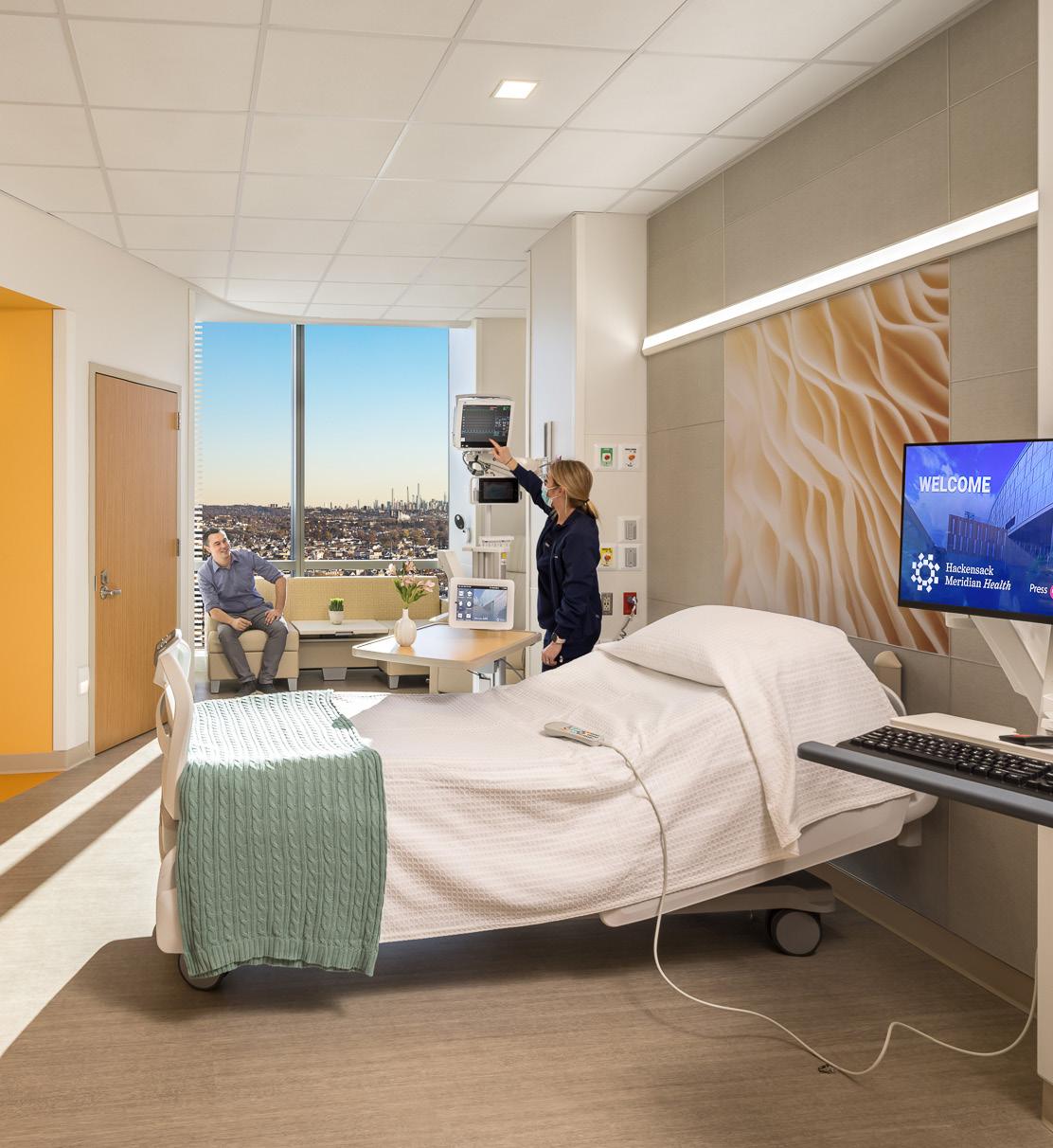
Sill of the inpatient room windows to be low enough to allow visibility into room from nurse station without staff having to sit or stand repeatedly.
Strategic location of surfaces that absorb, reflect and block noise will provide an optimal healing environment for patients and staff. Acoustic layering can also be used as a design strategy to combat noise levels.
Storage /parking space for mobile equipment to reduce trip hazardsor fall risks.
Inclusion of mechanical lifts/ ceiling lifts in inpatient rooms.
Radient heat panels in staff reak rooms with controls at appropriate heights.
Provision of simple, intuitive controls to adjust temperature, lighting, noise, air flow in staff break, relaxation spaces.
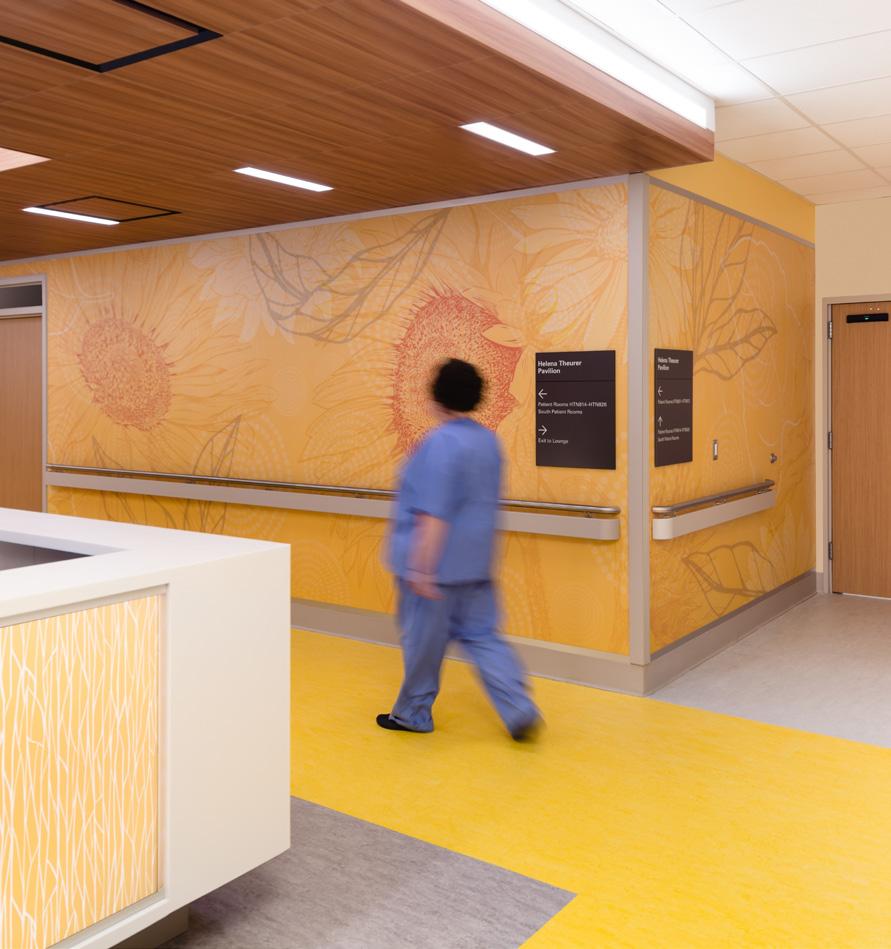
Wayfinding signs preferred on walls between 55 - 67 inches. If using overhead aids, the minimum mounting height 84 inches.
Wayfinding signs should be a high contrast color compared to surrounding surfaces. The signs should have electric lighting that does not result in glare.
Promote the use of ergonomically tested step stools.
Blue lights in nurse station during late hours.
Nature Photography where limited access to nature.
Indirect addition of plants - nature themed stains on glass.
Design Strategies Derived from Research Papers and Case Studies
In healthcare environments, the design of physical spaces plays a pivotal role in shaping the experiences of both patients and staff. While the needs of patients are often the primary focus, the aging workforce in healthcare also requires thoughtful consideration. As the population of healthcare workers ages, the physical demands of the job, combined with repetitive tasks and extended hours, can lead to fatigue, strain, and injuries. Design strategies that prioritize the wellbeing of aging staff members are essential to creating efficient, supportive, and sustainable healthcare environments. These strategies, informed by research and case studies, focus on reducing physical strain, enhancing ergonomics, and fostering a comfortable work environment.
Design Responses to Musculoskeletal problems
One of the most critical factors in designing for an aging workforce is addressing the physical limitations that come with age, such as decreased muscle strength, mobility, and stamina. To accommodate these changes, healthcare facilities need to incorporate design elements that minimize physical strain during daily tasks. For instance, decentralizing nurse stations can significantly reduce the distance healthcare workers need to walk between patient rooms and work areas. As older staff members may tire more quickly or experience joint pain from prolonged walking, reducing the distance covered throughout the day can alleviate strain and improve overall productivity. Additionally, ensuring that supply rooms and storage areas are evenly distributed across the facility can reduce unnecessary movement. Shelving at accessible heights can minimize bending, stretching, or climbing, which can lead to injuries over time.
Ergonomics plays a key role in supporting the health and well-being of aging healthcare workers. The design of workspaces must account for age-related physical changes, such as reduced flexibility and slower reaction times. Seating and workstation design must be tailored to the needs of older staff. Healthcare professionals often spend long hours on their feet, which can lead to musculoskeletal issues over time. By providing fixed seating with specific ergonomic dimensions—such as armrests at 24-26 inches, seat heights at 18-19 inches, and seat depths no greater than 20 inches—staff can rest comfortably during breaks or in workspaces without putting additional stress on their bodies. This is particularly important for aging workers who may already experience joint pain or reduced mobility.
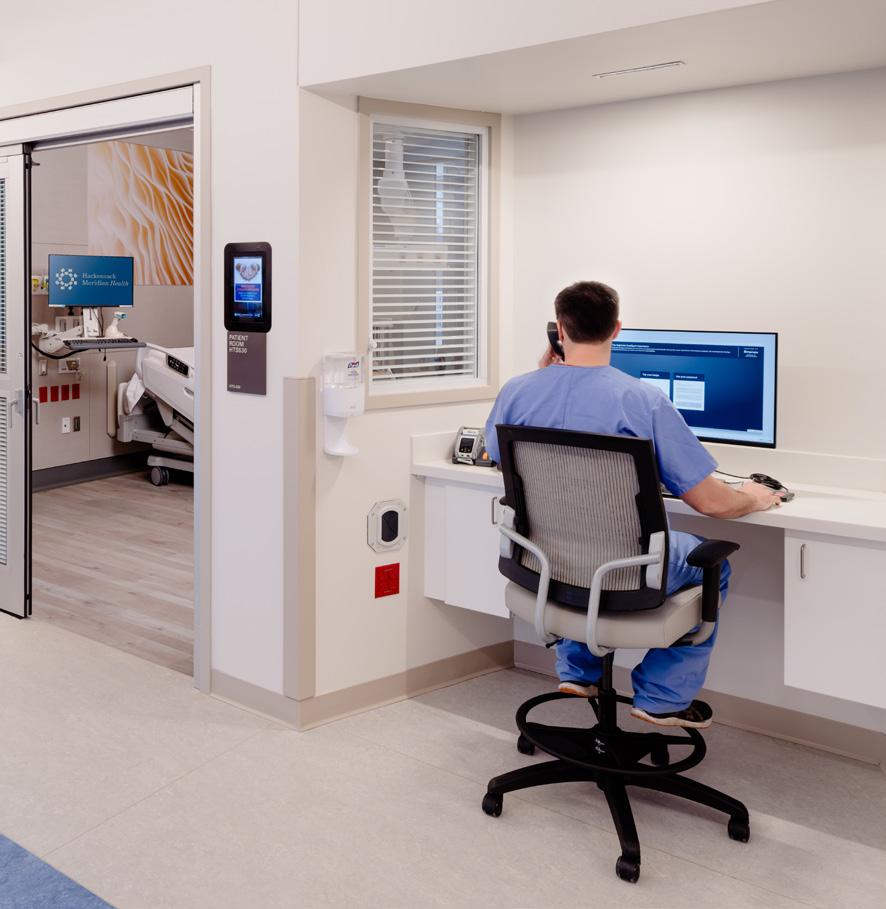
In spaces where frequent movement or repetitive tasks are required, such as nurse stations or transaction counters, attention to detail regarding proportions and reach is essential. Work surface heights should be compatible with the height and reach of the staff, allowing them to perform tasks without excessive stretching or repetitive sit-to-stand movements. For example, the height of vison panels in inpatient rooms should be low enough to allow staff to observe patients from a seated position, reducing the need for constant standing and sitting. Similarly, the depth of work surfaces behind transaction counters must be designed to minimize overreaching, which can lead to repetitive strain injuries over time.
Design Responses to Light and Noise Sensitivity
For example, in high-vigilance areas like medication rooms and pharmacies, appropriate lighting levels are critical for accuracy and safety. The Illuminating Engineering Society of North America (IES) guidelines recommend that light intensity be adapted to the task at hand, with higher illumination levels for precision work. As vision tends to decline with age, ensuring that these spaces are well-lit helps aging staff members avoid eye strain and maintain focus, ultimately leading to fewer errors. Lighting strategies are informed by the need to regulate patients’ circadian rhythms, which can have significant effects on mood and recovery. Bright light exposure during the day is recommended to support these natural rhythms, while the use of amber-colored lights at night minimizes disruptions to sleep and reduces the risk of falls. Light Reflectance Values (LRV) between different surfaces must also be carefully considered to enhance visibility and contrast. For example, a 30 percent difference in LRV between doors, door frames, and walls helps patients with impaired vision navigate spaces more easily. In areas where level changes, such as stairs, are present, increasing this LRV to 50 percent provides a clear visual cue, improving safety.
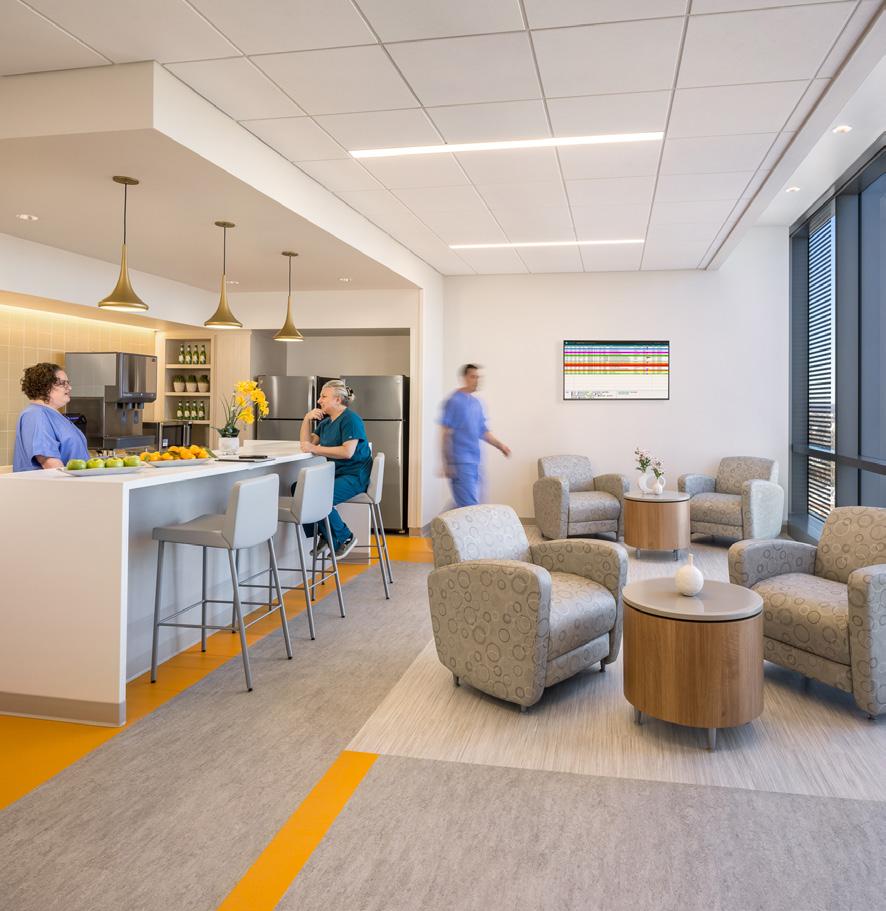
Temperature and noise control also play a significant role in supporting the well-being of an aging workforce. Break rooms and relaxation spaces should be equipped with radiant heat panels and easy-to-use controls that allow staff to adjust the temperature, lighting, noise, and airflow to their comfort. As workers age, they may become more sensitive to temperature fluctuations or require different lighting levels for optimal comfort. Providing these adjustable features allows staff to recharge during their breaks in an environment that supports their physical and emotional needs.
Noise management is another critical consideration, as excessive noise can lead to stress and fatigue, particularly in high-stress healthcare environments. Aging staff members may be more sensitive to noise, making it important to maintain lower sound levels in workspaces and break areas. Strategic use of acoustic materials that absorb, reflect, or block noise can create a calmer, more focused atmosphere. This is particularly important in communal areas, where the noise of conversations, equipment, and patient activity can quickly become overwhelming. Research recommends maintaining noise levels around 40 decibels in communal areas and as low as 20 decibels in private spaces to reduce auditory strain and create a more peaceful environment.
Design Responses to Cognitive and Sensory limitations
Wayfinding is another important element to consider for aging healthcare workers. As cognitive processing speeds may slow with age, clear and intuitive navigation through the facility becomes increasingly important. High-contrast signage with easy-to-read text and glare-free lighting can help staff quickly find their way through the facility, reducing cognitive load and minimizing stress in fast-paced environments.
Designing healthcare environments that support an aging workforce requires a holistic approach that addresses the physical, cognitive, and emotional needs of older staff members. By incorporating strategies such as reducing walking distances, optimizing ergonomics, providing adjustable comfort controls, managing noise, and enhancing wayfinding, healthcare facilities can create spaces that promote staff well-being, increase productivity, and reduce the risk of injury or fatigue. These design principles, derived from research and case studies, ensure that aging healthcare workers can continue to perform their duties effectively and comfortably, ultimately benefiting both staff and patients in the long term.